User login
CHMP recommends panobinostat for MM

Photo courtesy of the CDC
The European Medicines Agency’s Committee for Medicinal Products for Human Use (CHMP) is recommending regulatory approval for panobinostat (Farydak) to treat relapsed and/or refractory multiple myeloma (MM).
The drug is indicated for use in combination with bortezomib and dexamethasone to treat adults with MM who have received at least 2 prior treatment regimens, including bortezomib and an immunomodulatory agent (IMiD).
Panobinostat is already approved for this indication in the US and Chile.
If the European Commission follows the CHMP’s recommendation, panobinostat will be the first histone deacetylase (HDAC) inhibitor approved to treat MM in the European Union.
The European Commission generally follows CHMP recommendations and delivers its final decision within 3 months of the recommendation. The decision will be applicable to all 28 European Union member states, plus Iceland, Norway, and Liechtenstein.
“Panobinostat is the first and only HDAC inhibitor recommended by the CHMP for the treatment of patients living with multiple myeloma who have progressed after standard-of-care therapy with bortezomib and an IMiD,” said Alessandro Riva, MD, Global Head of Oncology Development and Medical Affairs at Novartis Oncology, the company developing panobinostat.
“We are pleased with the positive CHMP opinion on panobinostat for previously treated patients because it brings us one step closer to providing a new treatment option for patients in need in Europe.”
The CHMP’s recommendation is based on efficacy and safety data in a subgroup analysis of 147 patients on the phase 3 PANORAMA-1 trial. Results from this analysis were recently presented at the 2015 ASCO Annual Meeting.
PANORAMA-1 was designed to compare panobinostat in combination with bortezomib and dexamethasone to bortezomib and dexamethasone alone in patients who had relapsed or relapsed and refractory MM.
At ASCO, researchers presented results in 147 patients who had received 2 or more prior treatment regimens, including bortezomib and an IMiD.
The patients who received panobinostat, bortezomib, and dexamethasone had a longer median progression-free survival than patients who received bortezomib and dexamethasone alone—12.5 months and 4.7 months, respectively (hazard ratio=0.47).
Common grade 3/4 adverse events in both treatment arms were thrombocytopenia, lymphopenia, neutropenia, diarrhea, asthenia/fatigue, and peripheral neuropathy. About 7% of patients in both arms died while on treatment. 
Photo courtesy of the CDC
The European Medicines Agency’s Committee for Medicinal Products for Human Use (CHMP) is recommending regulatory approval for panobinostat (Farydak) to treat relapsed and/or refractory multiple myeloma (MM).
The drug is indicated for use in combination with bortezomib and dexamethasone to treat adults with MM who have received at least 2 prior treatment regimens, including bortezomib and an immunomodulatory agent (IMiD).
Panobinostat is already approved for this indication in the US and Chile.
If the European Commission follows the CHMP’s recommendation, panobinostat will be the first histone deacetylase (HDAC) inhibitor approved to treat MM in the European Union.
The European Commission generally follows CHMP recommendations and delivers its final decision within 3 months of the recommendation. The decision will be applicable to all 28 European Union member states, plus Iceland, Norway, and Liechtenstein.
“Panobinostat is the first and only HDAC inhibitor recommended by the CHMP for the treatment of patients living with multiple myeloma who have progressed after standard-of-care therapy with bortezomib and an IMiD,” said Alessandro Riva, MD, Global Head of Oncology Development and Medical Affairs at Novartis Oncology, the company developing panobinostat.
“We are pleased with the positive CHMP opinion on panobinostat for previously treated patients because it brings us one step closer to providing a new treatment option for patients in need in Europe.”
The CHMP’s recommendation is based on efficacy and safety data in a subgroup analysis of 147 patients on the phase 3 PANORAMA-1 trial. Results from this analysis were recently presented at the 2015 ASCO Annual Meeting.
PANORAMA-1 was designed to compare panobinostat in combination with bortezomib and dexamethasone to bortezomib and dexamethasone alone in patients who had relapsed or relapsed and refractory MM.
At ASCO, researchers presented results in 147 patients who had received 2 or more prior treatment regimens, including bortezomib and an IMiD.
The patients who received panobinostat, bortezomib, and dexamethasone had a longer median progression-free survival than patients who received bortezomib and dexamethasone alone—12.5 months and 4.7 months, respectively (hazard ratio=0.47).
Common grade 3/4 adverse events in both treatment arms were thrombocytopenia, lymphopenia, neutropenia, diarrhea, asthenia/fatigue, and peripheral neuropathy. About 7% of patients in both arms died while on treatment.
Photo courtesy of the CDC
The European Medicines Agency’s Committee for Medicinal Products for Human Use (CHMP) is recommending regulatory approval for panobinostat (Farydak) to treat relapsed and/or refractory multiple myeloma (MM).
The drug is indicated for use in combination with bortezomib and dexamethasone to treat adults with MM who have received at least 2 prior treatment regimens, including bortezomib and an immunomodulatory agent (IMiD).
Panobinostat is already approved for this indication in the US and Chile.
If the European Commission follows the CHMP’s recommendation, panobinostat will be the first histone deacetylase (HDAC) inhibitor approved to treat MM in the European Union.
The European Commission generally follows CHMP recommendations and delivers its final decision within 3 months of the recommendation. The decision will be applicable to all 28 European Union member states, plus Iceland, Norway, and Liechtenstein.
“Panobinostat is the first and only HDAC inhibitor recommended by the CHMP for the treatment of patients living with multiple myeloma who have progressed after standard-of-care therapy with bortezomib and an IMiD,” said Alessandro Riva, MD, Global Head of Oncology Development and Medical Affairs at Novartis Oncology, the company developing panobinostat.
“We are pleased with the positive CHMP opinion on panobinostat for previously treated patients because it brings us one step closer to providing a new treatment option for patients in need in Europe.”
The CHMP’s recommendation is based on efficacy and safety data in a subgroup analysis of 147 patients on the phase 3 PANORAMA-1 trial. Results from this analysis were recently presented at the 2015 ASCO Annual Meeting.
PANORAMA-1 was designed to compare panobinostat in combination with bortezomib and dexamethasone to bortezomib and dexamethasone alone in patients who had relapsed or relapsed and refractory MM.
At ASCO, researchers presented results in 147 patients who had received 2 or more prior treatment regimens, including bortezomib and an IMiD.
The patients who received panobinostat, bortezomib, and dexamethasone had a longer median progression-free survival than patients who received bortezomib and dexamethasone alone—12.5 months and 4.7 months, respectively (hazard ratio=0.47).
Common grade 3/4 adverse events in both treatment arms were thrombocytopenia, lymphopenia, neutropenia, diarrhea, asthenia/fatigue, and peripheral neuropathy. About 7% of patients in both arms died while on treatment.
Approach could build bridge to HSCT in T-PLL

Photo by Chad McNeeley
A treatment approach that combines epigenetics and immunotherapy could provide a bridge to transplant in patients with T-cell prolymphocytic leukemia (T-PLL), according to researchers.
In a pilot study, the team found that combining alemtuzumab with epigenetic agents could override alemtuzumab resistance in T-PLL.
The approach produced complete responses (CRs) in 7 of 8 patients. The eighth patient achieved a partial response (PR).
However, 5 of the patients ultimately died of persistent disease, and 2 are alive in early relapse. One patient remains in remission after allogeneic hematopoietic stem cell transplant (HSCT).
“There’s been a revolution in the last few years seeing success with immunotherapy, and people speculated that, perhaps, if you combined epigenetic and immunotherapy, that might be even more spectacular,” said Thomas P. Loughran Jr, MD, of the University of Virginia Cancer Center in Charlottesville. “This is proof of principle that this might be true.”
Dr Loughran and his colleagues described this research in Science Translational Medicine.
The researchers evaluated 8 patients with T-PLL, 4 of whom were previously untreated (patients 3, 4, 5, and 6).
Patient 2 presented with alemtuzumab-resistant disease but achieved a CR after receiving the drug along with cladribine and vorinostat. He achieved PRs with the same regimen after a second and third relapse but ultimately progressed and died.
“It was unbelievable, really, seeing a patient who had already failed [alemtuzumab] literally going back into remission,” Dr Loughran said.
Patients 1, 4, 6, and 8 achieved a CR with cladribine and alemtuzumab, and patient 3 achieved a PR on the same regimen.
Patient 7 received cladribine and alemtuzumab as well but only achieved a CR with the addition of valproic acid. Patient 5 achieved a CR with cladribine, alemtuzumab, and vorinostat.
Patients 3, 4, and 5 ultimately died. Patient 4 experienced a grade 5 intracranial hemorrhage that may have been treatment-related.
Patients 7 and 8 are in relapse, but they are receiving treatment and are under consideration for HSCT. Patient 6 went on to HSCT after achieving a CR and has been in remission for 4 years.
Major adverse events in this study include neutropenia (5 grade 4, 3 grade 3), thrombocytopenia (2 grade 4, 1 grade 3), anemia (1 grade 2, 2 grade 3), grade 3 febrile neutropenia (n=2), grade 2 lung infection (n=2), grade 1 CMV reactivation (n=1), grade 3 oral mucositis (n=1), grade 3 skin infection (n=1), and grade 5 intracranial hemorrhage (n=1).
Photo by Chad McNeeley
A treatment approach that combines epigenetics and immunotherapy could provide a bridge to transplant in patients with T-cell prolymphocytic leukemia (T-PLL), according to researchers.
In a pilot study, the team found that combining alemtuzumab with epigenetic agents could override alemtuzumab resistance in T-PLL.
The approach produced complete responses (CRs) in 7 of 8 patients. The eighth patient achieved a partial response (PR).
However, 5 of the patients ultimately died of persistent disease, and 2 are alive in early relapse. One patient remains in remission after allogeneic hematopoietic stem cell transplant (HSCT).
“There’s been a revolution in the last few years seeing success with immunotherapy, and people speculated that, perhaps, if you combined epigenetic and immunotherapy, that might be even more spectacular,” said Thomas P. Loughran Jr, MD, of the University of Virginia Cancer Center in Charlottesville. “This is proof of principle that this might be true.”
Dr Loughran and his colleagues described this research in Science Translational Medicine.
The researchers evaluated 8 patients with T-PLL, 4 of whom were previously untreated (patients 3, 4, 5, and 6).
Patient 2 presented with alemtuzumab-resistant disease but achieved a CR after receiving the drug along with cladribine and vorinostat. He achieved PRs with the same regimen after a second and third relapse but ultimately progressed and died.
“It was unbelievable, really, seeing a patient who had already failed [alemtuzumab] literally going back into remission,” Dr Loughran said.
Patients 1, 4, 6, and 8 achieved a CR with cladribine and alemtuzumab, and patient 3 achieved a PR on the same regimen.
Patient 7 received cladribine and alemtuzumab as well but only achieved a CR with the addition of valproic acid. Patient 5 achieved a CR with cladribine, alemtuzumab, and vorinostat.
Patients 3, 4, and 5 ultimately died. Patient 4 experienced a grade 5 intracranial hemorrhage that may have been treatment-related.
Patients 7 and 8 are in relapse, but they are receiving treatment and are under consideration for HSCT. Patient 6 went on to HSCT after achieving a CR and has been in remission for 4 years.
Major adverse events in this study include neutropenia (5 grade 4, 3 grade 3), thrombocytopenia (2 grade 4, 1 grade 3), anemia (1 grade 2, 2 grade 3), grade 3 febrile neutropenia (n=2), grade 2 lung infection (n=2), grade 1 CMV reactivation (n=1), grade 3 oral mucositis (n=1), grade 3 skin infection (n=1), and grade 5 intracranial hemorrhage (n=1).
Photo by Chad McNeeley
A treatment approach that combines epigenetics and immunotherapy could provide a bridge to transplant in patients with T-cell prolymphocytic leukemia (T-PLL), according to researchers.
In a pilot study, the team found that combining alemtuzumab with epigenetic agents could override alemtuzumab resistance in T-PLL.
The approach produced complete responses (CRs) in 7 of 8 patients. The eighth patient achieved a partial response (PR).
However, 5 of the patients ultimately died of persistent disease, and 2 are alive in early relapse. One patient remains in remission after allogeneic hematopoietic stem cell transplant (HSCT).
“There’s been a revolution in the last few years seeing success with immunotherapy, and people speculated that, perhaps, if you combined epigenetic and immunotherapy, that might be even more spectacular,” said Thomas P. Loughran Jr, MD, of the University of Virginia Cancer Center in Charlottesville. “This is proof of principle that this might be true.”
Dr Loughran and his colleagues described this research in Science Translational Medicine.
The researchers evaluated 8 patients with T-PLL, 4 of whom were previously untreated (patients 3, 4, 5, and 6).
Patient 2 presented with alemtuzumab-resistant disease but achieved a CR after receiving the drug along with cladribine and vorinostat. He achieved PRs with the same regimen after a second and third relapse but ultimately progressed and died.
“It was unbelievable, really, seeing a patient who had already failed [alemtuzumab] literally going back into remission,” Dr Loughran said.
Patients 1, 4, 6, and 8 achieved a CR with cladribine and alemtuzumab, and patient 3 achieved a PR on the same regimen.
Patient 7 received cladribine and alemtuzumab as well but only achieved a CR with the addition of valproic acid. Patient 5 achieved a CR with cladribine, alemtuzumab, and vorinostat.
Patients 3, 4, and 5 ultimately died. Patient 4 experienced a grade 5 intracranial hemorrhage that may have been treatment-related.
Patients 7 and 8 are in relapse, but they are receiving treatment and are under consideration for HSCT. Patient 6 went on to HSCT after achieving a CR and has been in remission for 4 years.
Major adverse events in this study include neutropenia (5 grade 4, 3 grade 3), thrombocytopenia (2 grade 4, 1 grade 3), anemia (1 grade 2, 2 grade 3), grade 3 febrile neutropenia (n=2), grade 2 lung infection (n=2), grade 1 CMV reactivation (n=1), grade 3 oral mucositis (n=1), grade 3 skin infection (n=1), and grade 5 intracranial hemorrhage (n=1).
Agent reduces fibrosis, improves platelet counts in MF

VIENNA—The immunotherapeutic agent PRM-151, when given alone or in combination with ruxolitinib, can reduce bone marrow fibrosis and improve platelet counts in patients with myelofibrosis (MF), results of a phase 2 trial suggest.
Using a novel assessment technique known as computer-assisted image analysis (CIA), researchers found that PRM-151, with or without ruxolitinib, prompted fibrosis responses in nearly three-quarters of patients studied.
And nearly 60% of thrombocytopenic patients saw improvements in their platelet counts.
“Thrombocytopenia remains a significant problem for many patients with myelofibrosis, and a new treatment that is not myelosuppressive and actually increases platelet counts would be of great benefit to patients,” said Srdan Verstovsek, MD, PhD, of the University of Texas MD Anderson Cancer Center in Houston.
He and his colleagues presented this research—the first part of a 2-stage study—at the 20th Congress of the European Hematology Association (abstract P677*). The trial is sponsored by Promedior, the company developing PRM-151.
Stage 1 of the study included 27 patients with a median age of 67 (range, 51-85). They had been diagnosed with primary MF, post-polycythemia vera MF, or post-essential thrombocythemia MF.
The patients received PRM-151 at 10 mg/kg IV dosed weekly (n=8) or monthly (n=7), or ruxolitinib plus PRM-151 at 10 mg/kg IV dosed weekly (n=6) or monthly (n=6). The patients who received ruxolitinib were already taking the drug, and doses varied. The mean duration of ruxolitinib treatment was 1.6 years (range, 0.6-3 years).
Patients were set to receive study treatment for 24 weeks but could continue beyond that if they experienced clinical improvement.
Response assessment: Using CIA
Hematopathologists who were blinded to the patient, treatment, and time point performed morphologic analysis on bone marrow specimens taken at baseline and at 12, 24, and 36 weeks (if available).
The pathologists also performed CIA on whole-slide scans from specimens taken at the same time points. The idea to use CIA came after morphologic analyses revealed some surprising findings.
“[The pathologists] were really struck by the fact that, in the patients who had reductions in fibrosis, there were other elements in the bone marrow that showed improvements,” said Beth Trehu, MD, Chief Medical Officer at Promedior. “There were trends toward normalization of the red cells and of the megakaryocytes.”
“They also remarked that, whereas the baseline samples were totally homogeneous—a grade 3 was a grade 3 throughout the bone marrow—after treatment, the samples became very heterogeneous. There were areas of grade 3, grade 2, grade 1, and 0, all in one sample.”
To solve this problem, the pathologists decided that a sample’s WHO grade would be defined as whatever grade was present in at least 50% of the sample. But the team still thought these grades weren’t accurately quantifying the effects of PRM-151.
So they turned to CIA, which allowed them to quantify the volume of collagen or reticulin fibers in the bone marrow.
Fibrosis and platelet responses
According to CIA, 73% of evaluable patients (19/26) experienced reductions in bone marrow fibrosis at any time during the trial.
Of the 23 evaluable patients who had grade 2 or 3 fibrosis at baseline, 11 patients had a reduction of 1 grade or more during the study period, according to morphologic analysis. Nine patients had a fibrosis response by morphology at the last time point they were assessed.
Reductions in fibrosis correlated with increased platelet counts in thrombocytopenic patients. Fifty-seven percent of thrombocytopenic patients (8/14) saw an improvement in platelet counts after treatment.
Results across treatment groups were as follows:
| Treatment group (n) | WHO fibrosis
response at any time |
CIA fibrosis
response at any time |
Platelet
improvement |
| PRM-151 QW (7) | 3 | 4 | 2 |
| PRM-151 Q4W (7) | 3 | 6 | 4 |
| PRM-151 QW + RUX (6) | 2 | 4 | 1 |
| PRM-151 Q4W + RUX (6) | 3 | 5 | 1 |
“The responses we saw with single-agent PRM-151, in particular, give us a lot of confidence that this drug is absolutely reversing fibrosis in the bone marrow,” Dr Trehu said. “And that is very nicely correlated with improvements in platelets, which are much harder to see in patients who are getting ruxolitinib because it’s a myelosuppressive agent.”
Dr Trehu added that these data suggest a monthly dose of PRM-151 is sufficient to treat MF patients, and there is a path forward for PRM-151 both alone and in combination with ruxolitinib.
Hemoglobin and spleen responses
The researchers also observed some improvements in hemoglobin levels and spleen size after treatment.
Of the 15 patients who had hemoglobin levels below 100 g/L at baseline, 3 met criteria for hemoglobin improvement. This included becoming transfusion independent, having a 50% reduction in the need for transfusion, or experiencing a 2 g/L increase in hemoglobin.
“Other patients had a nice trend toward hemoglobin improvement,” Dr Trehu noted.
Of the 20 patients with palpable spleen at baseline, reductions occurred in all but 1 patient. Four patients had a 50% or greater reduction in spleen size, but this response did not last beyond 12 weeks.
Adverse events
Forty-eight percent of patients (13/27) had at least 1 treatment-related adverse event (AE). Grade 1 AEs included diarrhea (n=3), fatigue (n=2), bruising at the infusion site (n=2), oral herpes (n=1), joint swelling (n=2), and headache (n=2). One patient had grade 2 oral herpes.
There were 5 serious AEs that were possibly treatment-related. Three events, from which patients recovered, were abdominal pain, sialadenitis, and pneumonia. The other 2 serious AEs were gastroenteritis and pneumonia, which resulted in death in an 85-year-old patient.
There were 2 deaths unrelated to treatment. One was due to pneumonia, and the other was a result of multi-organ failure and cardiac arrest.
*Information in the abstract differs from that presented at the meeting.
VIENNA—The immunotherapeutic agent PRM-151, when given alone or in combination with ruxolitinib, can reduce bone marrow fibrosis and improve platelet counts in patients with myelofibrosis (MF), results of a phase 2 trial suggest.
Using a novel assessment technique known as computer-assisted image analysis (CIA), researchers found that PRM-151, with or without ruxolitinib, prompted fibrosis responses in nearly three-quarters of patients studied.
And nearly 60% of thrombocytopenic patients saw improvements in their platelet counts.
“Thrombocytopenia remains a significant problem for many patients with myelofibrosis, and a new treatment that is not myelosuppressive and actually increases platelet counts would be of great benefit to patients,” said Srdan Verstovsek, MD, PhD, of the University of Texas MD Anderson Cancer Center in Houston.
He and his colleagues presented this research—the first part of a 2-stage study—at the 20th Congress of the European Hematology Association (abstract P677*). The trial is sponsored by Promedior, the company developing PRM-151.
Stage 1 of the study included 27 patients with a median age of 67 (range, 51-85). They had been diagnosed with primary MF, post-polycythemia vera MF, or post-essential thrombocythemia MF.
The patients received PRM-151 at 10 mg/kg IV dosed weekly (n=8) or monthly (n=7), or ruxolitinib plus PRM-151 at 10 mg/kg IV dosed weekly (n=6) or monthly (n=6). The patients who received ruxolitinib were already taking the drug, and doses varied. The mean duration of ruxolitinib treatment was 1.6 years (range, 0.6-3 years).
Patients were set to receive study treatment for 24 weeks but could continue beyond that if they experienced clinical improvement.
Response assessment: Using CIA
Hematopathologists who were blinded to the patient, treatment, and time point performed morphologic analysis on bone marrow specimens taken at baseline and at 12, 24, and 36 weeks (if available).
The pathologists also performed CIA on whole-slide scans from specimens taken at the same time points. The idea to use CIA came after morphologic analyses revealed some surprising findings.
“[The pathologists] were really struck by the fact that, in the patients who had reductions in fibrosis, there were other elements in the bone marrow that showed improvements,” said Beth Trehu, MD, Chief Medical Officer at Promedior. “There were trends toward normalization of the red cells and of the megakaryocytes.”
“They also remarked that, whereas the baseline samples were totally homogeneous—a grade 3 was a grade 3 throughout the bone marrow—after treatment, the samples became very heterogeneous. There were areas of grade 3, grade 2, grade 1, and 0, all in one sample.”
To solve this problem, the pathologists decided that a sample’s WHO grade would be defined as whatever grade was present in at least 50% of the sample. But the team still thought these grades weren’t accurately quantifying the effects of PRM-151.
So they turned to CIA, which allowed them to quantify the volume of collagen or reticulin fibers in the bone marrow.
Fibrosis and platelet responses
According to CIA, 73% of evaluable patients (19/26) experienced reductions in bone marrow fibrosis at any time during the trial.
Of the 23 evaluable patients who had grade 2 or 3 fibrosis at baseline, 11 patients had a reduction of 1 grade or more during the study period, according to morphologic analysis. Nine patients had a fibrosis response by morphology at the last time point they were assessed.
Reductions in fibrosis correlated with increased platelet counts in thrombocytopenic patients. Fifty-seven percent of thrombocytopenic patients (8/14) saw an improvement in platelet counts after treatment.
Results across treatment groups were as follows:
| Treatment group (n) | WHO fibrosis
response at any time |
CIA fibrosis
response at any time |
Platelet
improvement |
| PRM-151 QW (7) | 3 | 4 | 2 |
| PRM-151 Q4W (7) | 3 | 6 | 4 |
| PRM-151 QW + RUX (6) | 2 | 4 | 1 |
| PRM-151 Q4W + RUX (6) | 3 | 5 | 1 |
“The responses we saw with single-agent PRM-151, in particular, give us a lot of confidence that this drug is absolutely reversing fibrosis in the bone marrow,” Dr Trehu said. “And that is very nicely correlated with improvements in platelets, which are much harder to see in patients who are getting ruxolitinib because it’s a myelosuppressive agent.”
Dr Trehu added that these data suggest a monthly dose of PRM-151 is sufficient to treat MF patients, and there is a path forward for PRM-151 both alone and in combination with ruxolitinib.
Hemoglobin and spleen responses
The researchers also observed some improvements in hemoglobin levels and spleen size after treatment.
Of the 15 patients who had hemoglobin levels below 100 g/L at baseline, 3 met criteria for hemoglobin improvement. This included becoming transfusion independent, having a 50% reduction in the need for transfusion, or experiencing a 2 g/L increase in hemoglobin.
“Other patients had a nice trend toward hemoglobin improvement,” Dr Trehu noted.
Of the 20 patients with palpable spleen at baseline, reductions occurred in all but 1 patient. Four patients had a 50% or greater reduction in spleen size, but this response did not last beyond 12 weeks.
Adverse events
Forty-eight percent of patients (13/27) had at least 1 treatment-related adverse event (AE). Grade 1 AEs included diarrhea (n=3), fatigue (n=2), bruising at the infusion site (n=2), oral herpes (n=1), joint swelling (n=2), and headache (n=2). One patient had grade 2 oral herpes.
There were 5 serious AEs that were possibly treatment-related. Three events, from which patients recovered, were abdominal pain, sialadenitis, and pneumonia. The other 2 serious AEs were gastroenteritis and pneumonia, which resulted in death in an 85-year-old patient.
There were 2 deaths unrelated to treatment. One was due to pneumonia, and the other was a result of multi-organ failure and cardiac arrest.
*Information in the abstract differs from that presented at the meeting.
VIENNA—The immunotherapeutic agent PRM-151, when given alone or in combination with ruxolitinib, can reduce bone marrow fibrosis and improve platelet counts in patients with myelofibrosis (MF), results of a phase 2 trial suggest.
Using a novel assessment technique known as computer-assisted image analysis (CIA), researchers found that PRM-151, with or without ruxolitinib, prompted fibrosis responses in nearly three-quarters of patients studied.
And nearly 60% of thrombocytopenic patients saw improvements in their platelet counts.
“Thrombocytopenia remains a significant problem for many patients with myelofibrosis, and a new treatment that is not myelosuppressive and actually increases platelet counts would be of great benefit to patients,” said Srdan Verstovsek, MD, PhD, of the University of Texas MD Anderson Cancer Center in Houston.
He and his colleagues presented this research—the first part of a 2-stage study—at the 20th Congress of the European Hematology Association (abstract P677*). The trial is sponsored by Promedior, the company developing PRM-151.
Stage 1 of the study included 27 patients with a median age of 67 (range, 51-85). They had been diagnosed with primary MF, post-polycythemia vera MF, or post-essential thrombocythemia MF.
The patients received PRM-151 at 10 mg/kg IV dosed weekly (n=8) or monthly (n=7), or ruxolitinib plus PRM-151 at 10 mg/kg IV dosed weekly (n=6) or monthly (n=6). The patients who received ruxolitinib were already taking the drug, and doses varied. The mean duration of ruxolitinib treatment was 1.6 years (range, 0.6-3 years).
Patients were set to receive study treatment for 24 weeks but could continue beyond that if they experienced clinical improvement.
Response assessment: Using CIA
Hematopathologists who were blinded to the patient, treatment, and time point performed morphologic analysis on bone marrow specimens taken at baseline and at 12, 24, and 36 weeks (if available).
The pathologists also performed CIA on whole-slide scans from specimens taken at the same time points. The idea to use CIA came after morphologic analyses revealed some surprising findings.
“[The pathologists] were really struck by the fact that, in the patients who had reductions in fibrosis, there were other elements in the bone marrow that showed improvements,” said Beth Trehu, MD, Chief Medical Officer at Promedior. “There were trends toward normalization of the red cells and of the megakaryocytes.”
“They also remarked that, whereas the baseline samples were totally homogeneous—a grade 3 was a grade 3 throughout the bone marrow—after treatment, the samples became very heterogeneous. There were areas of grade 3, grade 2, grade 1, and 0, all in one sample.”
To solve this problem, the pathologists decided that a sample’s WHO grade would be defined as whatever grade was present in at least 50% of the sample. But the team still thought these grades weren’t accurately quantifying the effects of PRM-151.
So they turned to CIA, which allowed them to quantify the volume of collagen or reticulin fibers in the bone marrow.
Fibrosis and platelet responses
According to CIA, 73% of evaluable patients (19/26) experienced reductions in bone marrow fibrosis at any time during the trial.
Of the 23 evaluable patients who had grade 2 or 3 fibrosis at baseline, 11 patients had a reduction of 1 grade or more during the study period, according to morphologic analysis. Nine patients had a fibrosis response by morphology at the last time point they were assessed.
Reductions in fibrosis correlated with increased platelet counts in thrombocytopenic patients. Fifty-seven percent of thrombocytopenic patients (8/14) saw an improvement in platelet counts after treatment.
Results across treatment groups were as follows:
| Treatment group (n) | WHO fibrosis
response at any time |
CIA fibrosis
response at any time |
Platelet
improvement |
| PRM-151 QW (7) | 3 | 4 | 2 |
| PRM-151 Q4W (7) | 3 | 6 | 4 |
| PRM-151 QW + RUX (6) | 2 | 4 | 1 |
| PRM-151 Q4W + RUX (6) | 3 | 5 | 1 |
“The responses we saw with single-agent PRM-151, in particular, give us a lot of confidence that this drug is absolutely reversing fibrosis in the bone marrow,” Dr Trehu said. “And that is very nicely correlated with improvements in platelets, which are much harder to see in patients who are getting ruxolitinib because it’s a myelosuppressive agent.”
Dr Trehu added that these data suggest a monthly dose of PRM-151 is sufficient to treat MF patients, and there is a path forward for PRM-151 both alone and in combination with ruxolitinib.
Hemoglobin and spleen responses
The researchers also observed some improvements in hemoglobin levels and spleen size after treatment.
Of the 15 patients who had hemoglobin levels below 100 g/L at baseline, 3 met criteria for hemoglobin improvement. This included becoming transfusion independent, having a 50% reduction in the need for transfusion, or experiencing a 2 g/L increase in hemoglobin.
“Other patients had a nice trend toward hemoglobin improvement,” Dr Trehu noted.
Of the 20 patients with palpable spleen at baseline, reductions occurred in all but 1 patient. Four patients had a 50% or greater reduction in spleen size, but this response did not last beyond 12 weeks.
Adverse events
Forty-eight percent of patients (13/27) had at least 1 treatment-related adverse event (AE). Grade 1 AEs included diarrhea (n=3), fatigue (n=2), bruising at the infusion site (n=2), oral herpes (n=1), joint swelling (n=2), and headache (n=2). One patient had grade 2 oral herpes.
There were 5 serious AEs that were possibly treatment-related. Three events, from which patients recovered, were abdominal pain, sialadenitis, and pneumonia. The other 2 serious AEs were gastroenteritis and pneumonia, which resulted in death in an 85-year-old patient.
There were 2 deaths unrelated to treatment. One was due to pneumonia, and the other was a result of multi-organ failure and cardiac arrest.
*Information in the abstract differs from that presented at the meeting.
Nanobody can help treat acquired TTP
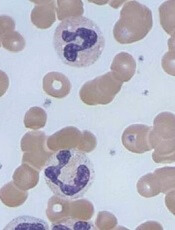
Image by Erhabor Osaro
TORONTO—Adding the anti-von Willebrand factor nanobody caplacizumab to standard therapy can provide clinical benefits for patients with
acquired thrombotic thrombocytopenic purpura (TTP), according to research presented at the 2015 ISTH Congress.
In the phase 2 TITAN trial, patients who received caplacizumab and standard therapy had a significantly shorter time to platelet normalization than patients who received standard therapy and placebo.
Caplacizumab was also associated with a shorter time to troponin, creatinine, and lactate dehydrogenase (LDH) normalization, as well as a reduced need for plasma exchange (PE).
However, some patients relapsed after stopping caplacizumab, and the majority of these relapses could be linked to unresolved disease activity. The drug also increased the risk of mild-to-moderate bleeding compared to placebo.
Flora Peyvandi, MD, PhD, of the University of Milan in Italy, presented data from the TITAN trial at ISTH as abstract LB006. Information on using ADAMTS13 activity for treatment monitoring in the TITAN trial was also presented at the meeting, as abstract OR363.
TITAN was sponsored by Ablynx, the company developing caplacizumab.
The study enrolled 75 patients with acquired TTP from January 2011 to January 2014. Patients were randomized to receive caplacizumab (n=36) or placebo (n=39).
All patients also received the current standard of care, which is, primarily, multiple PEs. The protocol for the study was adapted in September 2013 to allow 1 day of PE prior to study enrollment.
Patients in the caplacizumab arm immediately received an intravenous bolus dose of 10 mg and then a 10 mg subcutaneous dose of the drug daily until 30 days had elapsed after the final PE. Patients in the control arm received placebo at the same time points.
Platelet responses and relapse
The study’s primary endpoint was the time to platelet normalization. And patients in the caplacizumab arm achieved platelet normalization at more than twice the rate of patients in the placebo arm (overall hazard rate ratio=2.2, P=0.005).
Among patients with no prior PE, the median time to platelet normalization was 3 days in caplacizumab-treated patients (n=34) and 4.9 days in controls (n=35). Among patients with 1 prior PE, the median time to platelet normalization was 2.4 days in the caplacizumab arm (n=2) and 4.3 days in the placebo arm (n=4).
In the caplacizumab arm, a higher proportion of patients achieved a complete remission, and fewer patients had exacerbations of TTP. The complete remission rates were 81% and 46%, respectively. And the exacerbation rates were 8% and 28%, respectively.
However, the rate of exacerbation and/or relapse at up to 1 month of follow-up was the same in both arms, at 28%.
Seven patients relapsed within 10 days of stopping caplacizumab. All of these patients had continuous low ADAMTS13 activity (<10%) during and near the end of treatment.
Cardiac, renal, and tissue responses
Additional analyses revealed that patients in the caplacizumab arm had a faster time to troponin normalization than those in the placebo arm. At baseline, 53% of caplacizumab-treated patients and 46% of controls had elevated troponin. The median time to normalization was 9 days and 27 days, respectively.
Patients in the caplacizumab arm also had a faster time to creatinine normalization than those in the placebo arm. At baseline, 31% of caplacizumab-treated patients and 41% of controls had elevated creatinine. The median time to normalization was 4 days and 6 days, respectively.
And patients in the caplacizumab arm had a faster time to LDH normalization than those in the placebo arm. At baseline, 91% of caplacizumab-treated patients and 87% of controls had elevated LDH. The median time to normalization was 3 days and 4 days, respectively.
However, the investigators said they could not rule out a possible effect of PE therapy on LDH, creatinine, and troponin levels.
Need for PE
Results showed that caplacizumab could reduce the need for PE, at least while patients continued to receive the drug.
Patients in the caplacizumab arm required fewer PEs during the daily PE treatment period and the overall treatment period. But this benefit was lost during the 1-month follow-up period, which is reflective of the increased number of relapses, according to the investigators.
During the daily PE treatment period, the mean number of PE days was 5.9 in the caplacizumab arm and 7.9 in the placebo arm. During the overall treatment period, it was 7.7 and 11.7 days, respectively. And during the overall treatment and follow-up period, it was 10.2 and 11.7 days, respectively.
Adverse events
The investigators said caplacizumab increased the risk of bleeding events, but these were readily managed.
Treatment-emergent adverse events (AEs) occurred in 97% of patients in the caplacizumab arm and 100% of patients in the placebo arm. Eight percent of caplacizumab-treated patients discontinued treatment due to AEs, but none of the controls did.
Fifty-four percent of patients in the caplacizumab arm had a bleeding event, as did 38% of patients in the placebo arm. Eighty percent of the bleeding events in the caplacizumab arm were mild. Three patients required drug treatment. None required von Willebrand factor or factor VIII substitution.
Serious AEs occurred in 57% of caplacizumab-treated patients and 51% of controls. Serious bleeding events occurred in 6% and 5%, respectively.
Image by Erhabor Osaro
TORONTO—Adding the anti-von Willebrand factor nanobody caplacizumab to standard therapy can provide clinical benefits for patients with
acquired thrombotic thrombocytopenic purpura (TTP), according to research presented at the 2015 ISTH Congress.
In the phase 2 TITAN trial, patients who received caplacizumab and standard therapy had a significantly shorter time to platelet normalization than patients who received standard therapy and placebo.
Caplacizumab was also associated with a shorter time to troponin, creatinine, and lactate dehydrogenase (LDH) normalization, as well as a reduced need for plasma exchange (PE).
However, some patients relapsed after stopping caplacizumab, and the majority of these relapses could be linked to unresolved disease activity. The drug also increased the risk of mild-to-moderate bleeding compared to placebo.
Flora Peyvandi, MD, PhD, of the University of Milan in Italy, presented data from the TITAN trial at ISTH as abstract LB006. Information on using ADAMTS13 activity for treatment monitoring in the TITAN trial was also presented at the meeting, as abstract OR363.
TITAN was sponsored by Ablynx, the company developing caplacizumab.
The study enrolled 75 patients with acquired TTP from January 2011 to January 2014. Patients were randomized to receive caplacizumab (n=36) or placebo (n=39).
All patients also received the current standard of care, which is, primarily, multiple PEs. The protocol for the study was adapted in September 2013 to allow 1 day of PE prior to study enrollment.
Patients in the caplacizumab arm immediately received an intravenous bolus dose of 10 mg and then a 10 mg subcutaneous dose of the drug daily until 30 days had elapsed after the final PE. Patients in the control arm received placebo at the same time points.
Platelet responses and relapse
The study’s primary endpoint was the time to platelet normalization. And patients in the caplacizumab arm achieved platelet normalization at more than twice the rate of patients in the placebo arm (overall hazard rate ratio=2.2, P=0.005).
Among patients with no prior PE, the median time to platelet normalization was 3 days in caplacizumab-treated patients (n=34) and 4.9 days in controls (n=35). Among patients with 1 prior PE, the median time to platelet normalization was 2.4 days in the caplacizumab arm (n=2) and 4.3 days in the placebo arm (n=4).
In the caplacizumab arm, a higher proportion of patients achieved a complete remission, and fewer patients had exacerbations of TTP. The complete remission rates were 81% and 46%, respectively. And the exacerbation rates were 8% and 28%, respectively.
However, the rate of exacerbation and/or relapse at up to 1 month of follow-up was the same in both arms, at 28%.
Seven patients relapsed within 10 days of stopping caplacizumab. All of these patients had continuous low ADAMTS13 activity (<10%) during and near the end of treatment.
Cardiac, renal, and tissue responses
Additional analyses revealed that patients in the caplacizumab arm had a faster time to troponin normalization than those in the placebo arm. At baseline, 53% of caplacizumab-treated patients and 46% of controls had elevated troponin. The median time to normalization was 9 days and 27 days, respectively.
Patients in the caplacizumab arm also had a faster time to creatinine normalization than those in the placebo arm. At baseline, 31% of caplacizumab-treated patients and 41% of controls had elevated creatinine. The median time to normalization was 4 days and 6 days, respectively.
And patients in the caplacizumab arm had a faster time to LDH normalization than those in the placebo arm. At baseline, 91% of caplacizumab-treated patients and 87% of controls had elevated LDH. The median time to normalization was 3 days and 4 days, respectively.
However, the investigators said they could not rule out a possible effect of PE therapy on LDH, creatinine, and troponin levels.
Need for PE
Results showed that caplacizumab could reduce the need for PE, at least while patients continued to receive the drug.
Patients in the caplacizumab arm required fewer PEs during the daily PE treatment period and the overall treatment period. But this benefit was lost during the 1-month follow-up period, which is reflective of the increased number of relapses, according to the investigators.
During the daily PE treatment period, the mean number of PE days was 5.9 in the caplacizumab arm and 7.9 in the placebo arm. During the overall treatment period, it was 7.7 and 11.7 days, respectively. And during the overall treatment and follow-up period, it was 10.2 and 11.7 days, respectively.
Adverse events
The investigators said caplacizumab increased the risk of bleeding events, but these were readily managed.
Treatment-emergent adverse events (AEs) occurred in 97% of patients in the caplacizumab arm and 100% of patients in the placebo arm. Eight percent of caplacizumab-treated patients discontinued treatment due to AEs, but none of the controls did.
Fifty-four percent of patients in the caplacizumab arm had a bleeding event, as did 38% of patients in the placebo arm. Eighty percent of the bleeding events in the caplacizumab arm were mild. Three patients required drug treatment. None required von Willebrand factor or factor VIII substitution.
Serious AEs occurred in 57% of caplacizumab-treated patients and 51% of controls. Serious bleeding events occurred in 6% and 5%, respectively.
Image by Erhabor Osaro
TORONTO—Adding the anti-von Willebrand factor nanobody caplacizumab to standard therapy can provide clinical benefits for patients with
acquired thrombotic thrombocytopenic purpura (TTP), according to research presented at the 2015 ISTH Congress.
In the phase 2 TITAN trial, patients who received caplacizumab and standard therapy had a significantly shorter time to platelet normalization than patients who received standard therapy and placebo.
Caplacizumab was also associated with a shorter time to troponin, creatinine, and lactate dehydrogenase (LDH) normalization, as well as a reduced need for plasma exchange (PE).
However, some patients relapsed after stopping caplacizumab, and the majority of these relapses could be linked to unresolved disease activity. The drug also increased the risk of mild-to-moderate bleeding compared to placebo.
Flora Peyvandi, MD, PhD, of the University of Milan in Italy, presented data from the TITAN trial at ISTH as abstract LB006. Information on using ADAMTS13 activity for treatment monitoring in the TITAN trial was also presented at the meeting, as abstract OR363.
TITAN was sponsored by Ablynx, the company developing caplacizumab.
The study enrolled 75 patients with acquired TTP from January 2011 to January 2014. Patients were randomized to receive caplacizumab (n=36) or placebo (n=39).
All patients also received the current standard of care, which is, primarily, multiple PEs. The protocol for the study was adapted in September 2013 to allow 1 day of PE prior to study enrollment.
Patients in the caplacizumab arm immediately received an intravenous bolus dose of 10 mg and then a 10 mg subcutaneous dose of the drug daily until 30 days had elapsed after the final PE. Patients in the control arm received placebo at the same time points.
Platelet responses and relapse
The study’s primary endpoint was the time to platelet normalization. And patients in the caplacizumab arm achieved platelet normalization at more than twice the rate of patients in the placebo arm (overall hazard rate ratio=2.2, P=0.005).
Among patients with no prior PE, the median time to platelet normalization was 3 days in caplacizumab-treated patients (n=34) and 4.9 days in controls (n=35). Among patients with 1 prior PE, the median time to platelet normalization was 2.4 days in the caplacizumab arm (n=2) and 4.3 days in the placebo arm (n=4).
In the caplacizumab arm, a higher proportion of patients achieved a complete remission, and fewer patients had exacerbations of TTP. The complete remission rates were 81% and 46%, respectively. And the exacerbation rates were 8% and 28%, respectively.
However, the rate of exacerbation and/or relapse at up to 1 month of follow-up was the same in both arms, at 28%.
Seven patients relapsed within 10 days of stopping caplacizumab. All of these patients had continuous low ADAMTS13 activity (<10%) during and near the end of treatment.
Cardiac, renal, and tissue responses
Additional analyses revealed that patients in the caplacizumab arm had a faster time to troponin normalization than those in the placebo arm. At baseline, 53% of caplacizumab-treated patients and 46% of controls had elevated troponin. The median time to normalization was 9 days and 27 days, respectively.
Patients in the caplacizumab arm also had a faster time to creatinine normalization than those in the placebo arm. At baseline, 31% of caplacizumab-treated patients and 41% of controls had elevated creatinine. The median time to normalization was 4 days and 6 days, respectively.
And patients in the caplacizumab arm had a faster time to LDH normalization than those in the placebo arm. At baseline, 91% of caplacizumab-treated patients and 87% of controls had elevated LDH. The median time to normalization was 3 days and 4 days, respectively.
However, the investigators said they could not rule out a possible effect of PE therapy on LDH, creatinine, and troponin levels.
Need for PE
Results showed that caplacizumab could reduce the need for PE, at least while patients continued to receive the drug.
Patients in the caplacizumab arm required fewer PEs during the daily PE treatment period and the overall treatment period. But this benefit was lost during the 1-month follow-up period, which is reflective of the increased number of relapses, according to the investigators.
During the daily PE treatment period, the mean number of PE days was 5.9 in the caplacizumab arm and 7.9 in the placebo arm. During the overall treatment period, it was 7.7 and 11.7 days, respectively. And during the overall treatment and follow-up period, it was 10.2 and 11.7 days, respectively.
Adverse events
The investigators said caplacizumab increased the risk of bleeding events, but these were readily managed.
Treatment-emergent adverse events (AEs) occurred in 97% of patients in the caplacizumab arm and 100% of patients in the placebo arm. Eight percent of caplacizumab-treated patients discontinued treatment due to AEs, but none of the controls did.
Fifty-four percent of patients in the caplacizumab arm had a bleeding event, as did 38% of patients in the placebo arm. Eighty percent of the bleeding events in the caplacizumab arm were mild. Three patients required drug treatment. None required von Willebrand factor or factor VIII substitution.
Serious AEs occurred in 57% of caplacizumab-treated patients and 51% of controls. Serious bleeding events occurred in 6% and 5%, respectively.
Bivalirudin provides no net benefit in PCI, doc says
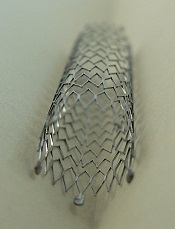
Photo by Frank C. Muller
Results of a large meta-analysis indicate that bivalirudin may not be appropriate thromboprophylaxis for patients undergoing percutaneous coronary intervention (PCI).
Investigators found that bivalirudin was associated with an increased risk of stent thrombosis, when compared to an active control group.
Bivalirudin did confer a lower risk of major bleeding and cardiac death than the other anticoagulants studied.
But the drug had “no discernible impact” on all-cause mortality, according to the investigators.
“The take-home message is that, essentially, we didn’t find a net benefit with bivalirudin,” said Behnood Bikdeli, MD, of Yale-New Haven Hospital in Connecticut.
He and his colleagues detailed this discovery in Thrombosis Research.
The team analyzed data from 25 trials involving 41,243 PCI patients. The trials compared bivalirudin to other anticoagulants—largely unfractionated heparin, with or without other agents.
Compared with the active control group, bivalirudin use was associated with a significantly increased risk of definite stent thrombosis (risk ratio[RR]=1.73, P<0.001) and a significantly decreased risk of major bleeding (RR=0.59, P<0.001) and cardiac death (RR=0.72, P=0.05).
The risk of acute myocardial infarction was similar between the 2 groups (RR=1.00, P=0.96), as was the risk of all-cause mortality (RR=0.96, P=0.69).
The investigators said these results were consistent across a wide set of subgroup and sensitivity analyses.
“In our extensive analyses, we could not identify any patient subgroups that had less bleeding but no increase in the risk of clots, or stent thrombosis [with bivalirudin],” Dr Bikdeli said.
“This expensive medication, which is being used in a widespread manner, is not doing a slam-dunk better job. We might need more studies to see if a select minority of patients could potentially fare better with it.”
Photo by Frank C. Muller
Results of a large meta-analysis indicate that bivalirudin may not be appropriate thromboprophylaxis for patients undergoing percutaneous coronary intervention (PCI).
Investigators found that bivalirudin was associated with an increased risk of stent thrombosis, when compared to an active control group.
Bivalirudin did confer a lower risk of major bleeding and cardiac death than the other anticoagulants studied.
But the drug had “no discernible impact” on all-cause mortality, according to the investigators.
“The take-home message is that, essentially, we didn’t find a net benefit with bivalirudin,” said Behnood Bikdeli, MD, of Yale-New Haven Hospital in Connecticut.
He and his colleagues detailed this discovery in Thrombosis Research.
The team analyzed data from 25 trials involving 41,243 PCI patients. The trials compared bivalirudin to other anticoagulants—largely unfractionated heparin, with or without other agents.
Compared with the active control group, bivalirudin use was associated with a significantly increased risk of definite stent thrombosis (risk ratio[RR]=1.73, P<0.001) and a significantly decreased risk of major bleeding (RR=0.59, P<0.001) and cardiac death (RR=0.72, P=0.05).
The risk of acute myocardial infarction was similar between the 2 groups (RR=1.00, P=0.96), as was the risk of all-cause mortality (RR=0.96, P=0.69).
The investigators said these results were consistent across a wide set of subgroup and sensitivity analyses.
“In our extensive analyses, we could not identify any patient subgroups that had less bleeding but no increase in the risk of clots, or stent thrombosis [with bivalirudin],” Dr Bikdeli said.
“This expensive medication, which is being used in a widespread manner, is not doing a slam-dunk better job. We might need more studies to see if a select minority of patients could potentially fare better with it.”
Photo by Frank C. Muller
Results of a large meta-analysis indicate that bivalirudin may not be appropriate thromboprophylaxis for patients undergoing percutaneous coronary intervention (PCI).
Investigators found that bivalirudin was associated with an increased risk of stent thrombosis, when compared to an active control group.
Bivalirudin did confer a lower risk of major bleeding and cardiac death than the other anticoagulants studied.
But the drug had “no discernible impact” on all-cause mortality, according to the investigators.
“The take-home message is that, essentially, we didn’t find a net benefit with bivalirudin,” said Behnood Bikdeli, MD, of Yale-New Haven Hospital in Connecticut.
He and his colleagues detailed this discovery in Thrombosis Research.
The team analyzed data from 25 trials involving 41,243 PCI patients. The trials compared bivalirudin to other anticoagulants—largely unfractionated heparin, with or without other agents.
Compared with the active control group, bivalirudin use was associated with a significantly increased risk of definite stent thrombosis (risk ratio[RR]=1.73, P<0.001) and a significantly decreased risk of major bleeding (RR=0.59, P<0.001) and cardiac death (RR=0.72, P=0.05).
The risk of acute myocardial infarction was similar between the 2 groups (RR=1.00, P=0.96), as was the risk of all-cause mortality (RR=0.96, P=0.69).
The investigators said these results were consistent across a wide set of subgroup and sensitivity analyses.
“In our extensive analyses, we could not identify any patient subgroups that had less bleeding but no increase in the risk of clots, or stent thrombosis [with bivalirudin],” Dr Bikdeli said.
“This expensive medication, which is being used in a widespread manner, is not doing a slam-dunk better job. We might need more studies to see if a select minority of patients could potentially fare better with it.”
Nivolumab produces ‘dramatic’ responses in HL

Photo courtesy of UCLA
LUGANO—The PD-1 checkpoint inhibitor nivolumab produces rapid, durable, and, in some cases, “dramatic” responses in Hodgkin lymphoma (HL), according to a speaker at the 13th International Congress on Malignant Lymphoma.
The drug has also produced durable responses in follicular lymphoma (FL), cutaneous T-cell lymphoma (CTCL), and peripheral T-cell lymphoma (PTCL), although patient numbers for these malignancies are small.
John Timmerman, MD, of the University of California, Los Angeles, presented these results from a phase 1 study of patients with relapsed or refractory lymphoid malignancies and chronic HL (abstract 010).
Bristol-Myers Squibb and Ono Pharmaceutical Company are sponsors of the trial.
Original results of the study, with a data cutoff of June 2014, were reported at ASH 2014, with 40 weeks of median follow-up.
The update presented at 13-ICML, with a data lock in April 2015, includes an additional 10 months of data, for a median follow-up of 76 weeks.
Investigators enrolled 105 patients in this dose-escalation study to receive nivolumab at 1 mg/kg, then 3 mg/kg, every 2 weeks for 2 years.
Twenty-three patients had HL. Thirty-one had B-cell non-Hodgkin lymphoma (NHL), including 11 with FL and 10 with diffuse large B-cell lymphoma (DLBCL).
Twenty-three patients had T-cell NHL, including 5 with PTCL and 13 with CTCL/mycosis fungoides (MF). Twenty-seven patients had multiple myeloma (MM), and 1 had chronic myeloid leukemia.
Patients were heavily pretreated. Seventy-eight percent of HL patients and 26% of T-NHL patients had prior brentuximab vedotin. And 78% (HL), 14% (B-NHL), 9% (T-NHL), and 56% (MM) of patients had a prior autologous transplant.
The median number of prior therapies was 5 (range, 2-15) for HL patients and ranged from 1 to 16 for all patients.
The study’s primary endpoint was safety and tolerability, and the secondary endpoint was efficacy.
Safety and tolerability
Ninety-seven percent of patients had an adverse event, 69% of them related to study treatment and 21% of them treatment-related grade 3-4 events.
Fifteen patients (14%) discontinued treatment due to a related adverse event, including 3 with pneumonitis and 1 each with enteritis, stomatitis, pancreatitis, rash, conjunctivitis, sepsis, diplopia, myositis, neutropenia, myelodysplastic syndrome, increased creatinine phosphokinase, and peripheral neuropathy.
“Immune-related adverse events were generally seen early on and generally of low grade,” Dr Timmerman said. “However, it is notable that there were several grade 3 immune-related adverse events that can be seen as far as 6 months out after the start of therapy.”
These included skin, gastrointestinal, and pulmonary events. Most immune-related adverse events (83%) were resolved using protocol-prescribed procedures.
Efficacy
The overall response rate was 87% for HL, 36% for DLBCL, 40% for FL, 15% for CTCL/MF, 40% for PTCL, and 4% for MM.
Dr Timmerman pointed out that, since ASH, 2 additional conversions from partial response (PR) to complete response (CR) occurred in patients with HL. To date, 6 of 23 HL patients have achieved a CR and 14 a PR.
In B-cell NHL, there were additional conversions from PR to CR in DLBCL, while responses remained the same in FL and in the 4 responders with T-cell lymphomas.
“Intriguingly, there has been 1 late CR in the multiple myeloma cohort, which previously had shown no responses,” Dr Timmerman said.
Durability of response
This study suggests PD-1 blockade can produce durable responses in hematologic malignancies, as it does in melanoma and renal cell carcinoma.
In HL, the median response duration at a median follow-up of 86 weeks has not yet been reached, and half (n=10) of the responses are still ongoing.
In FL, CTCL, and PTCL, the median response duration has not been reached at a median follow-up of 81, 43, and 31 weeks, respectively. Of note, there are ongoing responses in at least half of patients in these tumor types.
In HL, none of the 6 patients in CR has progressed, although there have been some progressions in the PR group.
The rapidity of responses is also notable, Dr Timmerman said.
“[I]t’s very interesting that some patients have resolution of symptoms and improvement of symptoms within even 1 day of starting nivolumab therapy,” he said.
And responses to nivolumab in HL “can be very dramatic,” he added, as illustrated in the following case from the Mayo Clinic.
A patient with multiple sites of bulky FDG-avid tumors was scheduled to enter hospice. But first, he entered the nivolumab trial. Within 6 weeks of initiating treatment, he had achieved a near-CR. This response has been maintained for 2 years.
“The occurrence of very durable responses in the PR and CR groups has led us to question whether patients should go on to allogeneic stem cell transplantation after achieving responses with nivolumab or, rather, continue on nivolumab as long as their response remains,” Dr Timmerman said.
He added that an international, phase 2 trial in HL is underway and is accruing briskly.
Nivolumab was awarded breakthrough designation by the US Food and Drug Administration last year. Breakthrough designation is intended to expedite the development and review of drugs for serious or life-threatening conditions.
Photo courtesy of UCLA
LUGANO—The PD-1 checkpoint inhibitor nivolumab produces rapid, durable, and, in some cases, “dramatic” responses in Hodgkin lymphoma (HL), according to a speaker at the 13th International Congress on Malignant Lymphoma.
The drug has also produced durable responses in follicular lymphoma (FL), cutaneous T-cell lymphoma (CTCL), and peripheral T-cell lymphoma (PTCL), although patient numbers for these malignancies are small.
John Timmerman, MD, of the University of California, Los Angeles, presented these results from a phase 1 study of patients with relapsed or refractory lymphoid malignancies and chronic HL (abstract 010).
Bristol-Myers Squibb and Ono Pharmaceutical Company are sponsors of the trial.
Original results of the study, with a data cutoff of June 2014, were reported at ASH 2014, with 40 weeks of median follow-up.
The update presented at 13-ICML, with a data lock in April 2015, includes an additional 10 months of data, for a median follow-up of 76 weeks.
Investigators enrolled 105 patients in this dose-escalation study to receive nivolumab at 1 mg/kg, then 3 mg/kg, every 2 weeks for 2 years.
Twenty-three patients had HL. Thirty-one had B-cell non-Hodgkin lymphoma (NHL), including 11 with FL and 10 with diffuse large B-cell lymphoma (DLBCL).
Twenty-three patients had T-cell NHL, including 5 with PTCL and 13 with CTCL/mycosis fungoides (MF). Twenty-seven patients had multiple myeloma (MM), and 1 had chronic myeloid leukemia.
Patients were heavily pretreated. Seventy-eight percent of HL patients and 26% of T-NHL patients had prior brentuximab vedotin. And 78% (HL), 14% (B-NHL), 9% (T-NHL), and 56% (MM) of patients had a prior autologous transplant.
The median number of prior therapies was 5 (range, 2-15) for HL patients and ranged from 1 to 16 for all patients.
The study’s primary endpoint was safety and tolerability, and the secondary endpoint was efficacy.
Safety and tolerability
Ninety-seven percent of patients had an adverse event, 69% of them related to study treatment and 21% of them treatment-related grade 3-4 events.
Fifteen patients (14%) discontinued treatment due to a related adverse event, including 3 with pneumonitis and 1 each with enteritis, stomatitis, pancreatitis, rash, conjunctivitis, sepsis, diplopia, myositis, neutropenia, myelodysplastic syndrome, increased creatinine phosphokinase, and peripheral neuropathy.
“Immune-related adverse events were generally seen early on and generally of low grade,” Dr Timmerman said. “However, it is notable that there were several grade 3 immune-related adverse events that can be seen as far as 6 months out after the start of therapy.”
These included skin, gastrointestinal, and pulmonary events. Most immune-related adverse events (83%) were resolved using protocol-prescribed procedures.
Efficacy
The overall response rate was 87% for HL, 36% for DLBCL, 40% for FL, 15% for CTCL/MF, 40% for PTCL, and 4% for MM.
Dr Timmerman pointed out that, since ASH, 2 additional conversions from partial response (PR) to complete response (CR) occurred in patients with HL. To date, 6 of 23 HL patients have achieved a CR and 14 a PR.
In B-cell NHL, there were additional conversions from PR to CR in DLBCL, while responses remained the same in FL and in the 4 responders with T-cell lymphomas.
“Intriguingly, there has been 1 late CR in the multiple myeloma cohort, which previously had shown no responses,” Dr Timmerman said.
Durability of response
This study suggests PD-1 blockade can produce durable responses in hematologic malignancies, as it does in melanoma and renal cell carcinoma.
In HL, the median response duration at a median follow-up of 86 weeks has not yet been reached, and half (n=10) of the responses are still ongoing.
In FL, CTCL, and PTCL, the median response duration has not been reached at a median follow-up of 81, 43, and 31 weeks, respectively. Of note, there are ongoing responses in at least half of patients in these tumor types.
In HL, none of the 6 patients in CR has progressed, although there have been some progressions in the PR group.
The rapidity of responses is also notable, Dr Timmerman said.
“[I]t’s very interesting that some patients have resolution of symptoms and improvement of symptoms within even 1 day of starting nivolumab therapy,” he said.
And responses to nivolumab in HL “can be very dramatic,” he added, as illustrated in the following case from the Mayo Clinic.
A patient with multiple sites of bulky FDG-avid tumors was scheduled to enter hospice. But first, he entered the nivolumab trial. Within 6 weeks of initiating treatment, he had achieved a near-CR. This response has been maintained for 2 years.
“The occurrence of very durable responses in the PR and CR groups has led us to question whether patients should go on to allogeneic stem cell transplantation after achieving responses with nivolumab or, rather, continue on nivolumab as long as their response remains,” Dr Timmerman said.
He added that an international, phase 2 trial in HL is underway and is accruing briskly.
Nivolumab was awarded breakthrough designation by the US Food and Drug Administration last year. Breakthrough designation is intended to expedite the development and review of drugs for serious or life-threatening conditions.
Photo courtesy of UCLA
LUGANO—The PD-1 checkpoint inhibitor nivolumab produces rapid, durable, and, in some cases, “dramatic” responses in Hodgkin lymphoma (HL), according to a speaker at the 13th International Congress on Malignant Lymphoma.
The drug has also produced durable responses in follicular lymphoma (FL), cutaneous T-cell lymphoma (CTCL), and peripheral T-cell lymphoma (PTCL), although patient numbers for these malignancies are small.
John Timmerman, MD, of the University of California, Los Angeles, presented these results from a phase 1 study of patients with relapsed or refractory lymphoid malignancies and chronic HL (abstract 010).
Bristol-Myers Squibb and Ono Pharmaceutical Company are sponsors of the trial.
Original results of the study, with a data cutoff of June 2014, were reported at ASH 2014, with 40 weeks of median follow-up.
The update presented at 13-ICML, with a data lock in April 2015, includes an additional 10 months of data, for a median follow-up of 76 weeks.
Investigators enrolled 105 patients in this dose-escalation study to receive nivolumab at 1 mg/kg, then 3 mg/kg, every 2 weeks for 2 years.
Twenty-three patients had HL. Thirty-one had B-cell non-Hodgkin lymphoma (NHL), including 11 with FL and 10 with diffuse large B-cell lymphoma (DLBCL).
Twenty-three patients had T-cell NHL, including 5 with PTCL and 13 with CTCL/mycosis fungoides (MF). Twenty-seven patients had multiple myeloma (MM), and 1 had chronic myeloid leukemia.
Patients were heavily pretreated. Seventy-eight percent of HL patients and 26% of T-NHL patients had prior brentuximab vedotin. And 78% (HL), 14% (B-NHL), 9% (T-NHL), and 56% (MM) of patients had a prior autologous transplant.
The median number of prior therapies was 5 (range, 2-15) for HL patients and ranged from 1 to 16 for all patients.
The study’s primary endpoint was safety and tolerability, and the secondary endpoint was efficacy.
Safety and tolerability
Ninety-seven percent of patients had an adverse event, 69% of them related to study treatment and 21% of them treatment-related grade 3-4 events.
Fifteen patients (14%) discontinued treatment due to a related adverse event, including 3 with pneumonitis and 1 each with enteritis, stomatitis, pancreatitis, rash, conjunctivitis, sepsis, diplopia, myositis, neutropenia, myelodysplastic syndrome, increased creatinine phosphokinase, and peripheral neuropathy.
“Immune-related adverse events were generally seen early on and generally of low grade,” Dr Timmerman said. “However, it is notable that there were several grade 3 immune-related adverse events that can be seen as far as 6 months out after the start of therapy.”
These included skin, gastrointestinal, and pulmonary events. Most immune-related adverse events (83%) were resolved using protocol-prescribed procedures.
Efficacy
The overall response rate was 87% for HL, 36% for DLBCL, 40% for FL, 15% for CTCL/MF, 40% for PTCL, and 4% for MM.
Dr Timmerman pointed out that, since ASH, 2 additional conversions from partial response (PR) to complete response (CR) occurred in patients with HL. To date, 6 of 23 HL patients have achieved a CR and 14 a PR.
In B-cell NHL, there were additional conversions from PR to CR in DLBCL, while responses remained the same in FL and in the 4 responders with T-cell lymphomas.
“Intriguingly, there has been 1 late CR in the multiple myeloma cohort, which previously had shown no responses,” Dr Timmerman said.
Durability of response
This study suggests PD-1 blockade can produce durable responses in hematologic malignancies, as it does in melanoma and renal cell carcinoma.
In HL, the median response duration at a median follow-up of 86 weeks has not yet been reached, and half (n=10) of the responses are still ongoing.
In FL, CTCL, and PTCL, the median response duration has not been reached at a median follow-up of 81, 43, and 31 weeks, respectively. Of note, there are ongoing responses in at least half of patients in these tumor types.
In HL, none of the 6 patients in CR has progressed, although there have been some progressions in the PR group.
The rapidity of responses is also notable, Dr Timmerman said.
“[I]t’s very interesting that some patients have resolution of symptoms and improvement of symptoms within even 1 day of starting nivolumab therapy,” he said.
And responses to nivolumab in HL “can be very dramatic,” he added, as illustrated in the following case from the Mayo Clinic.
A patient with multiple sites of bulky FDG-avid tumors was scheduled to enter hospice. But first, he entered the nivolumab trial. Within 6 weeks of initiating treatment, he had achieved a near-CR. This response has been maintained for 2 years.
“The occurrence of very durable responses in the PR and CR groups has led us to question whether patients should go on to allogeneic stem cell transplantation after achieving responses with nivolumab or, rather, continue on nivolumab as long as their response remains,” Dr Timmerman said.
He added that an international, phase 2 trial in HL is underway and is accruing briskly.
Nivolumab was awarded breakthrough designation by the US Food and Drug Administration last year. Breakthrough designation is intended to expedite the development and review of drugs for serious or life-threatening conditions.
CT after unexplained VTE unnecessary, study suggests

Photo by Angela Mary Butler
TORONTO—A CT scan of the abdomen and pelvis does not improve cancer detection in people with unexplained venous thromboembolism (VTE), results of the SOME trial suggest.
“Unexplained blood clots have long been thought of as a possible early warning sign of cancer, with previous studies suggesting that up to 10% of patients with unexplained clots will be diagnosed with cancer within the year,” said Marc Carrier, MD, of Ottawa Hospital Research Institute in Ontario, Canada.
“Some clinical guidelines recommend a CT scan of the abdomen and pelvis in these patients, in addition to other cancer screening, but there has been very little evidence to know if the added CT scan is helpful. We did this study to find out.”
Dr Carrier and his colleagues described this research in an article published in NEJM and in a presentation given at the 2015 ISTH Congress (abstract LB001*).
The trial involved 854 patients treated at 9 Canadian centers who had an unexplained VTE—deep vein thrombosis, pulmonary embolism, or both.
The patients were randomized to receive basic cancer screening or basic cancer screening plus a CT scan of the abdomen and pelvis. Basic cancer screening included blood work and a chest X-ray, in addition to gender-specific screening (such as a breast exam, Pap smear, and prostate exam) if it had not been conducted in the last year.
Overall, 33 patients (3.9%) had a new diagnosis of occult cancer during the 1-year follow-up period.
There was no significant difference in the rate of diagnosis between the patients who received only basic screening and the patients who underwent CT as well—3.2% (14/431) and 4.5% (19/423), respectively (P=0.28).
Likewise, there was no significant difference in the number of cancers that were not diagnosed by the screening strategies. Basic screening failed to uncover 4 cancers (29%), and basic screening plus CT failed to reveal 5 cancers (26%, P=1.0).
In addition, there was no significant difference between the screening strategies in the time to cancer diagnosis or cancer-related mortality. The mean time to cancer diagnosis was 4.2 months in the basic screening group and 4.0 months in the CT group (P=0.88). And the rate of cancer-related mortality was 1.4% and 0.9%, respectively (P=0.75).
“Although it is tempting to believe that more cancer screening is always better, our study shows that this is not necessarily the case,” Dr Carrier said. “And in fact, unnecessary CT scanning has real risks. It can cause stress and anxiety in patients, as well as radiation exposure, and it can lead to over-investigation of false-positive findings. Our study means many patients will now be able to avoid this.”
That could lead to significant savings for the healthcare system, according to the researchers. For example, approximately 30,000 Canadians suffer from an unexplained VTE every year, and a CT scan costs approximately $300. So avoiding unnecessary CT scans could result in a potential saving of $9 million per year in Canada alone.
*Information in the abstract differs from that presented at the meeting.
Photo by Angela Mary Butler
TORONTO—A CT scan of the abdomen and pelvis does not improve cancer detection in people with unexplained venous thromboembolism (VTE), results of the SOME trial suggest.
“Unexplained blood clots have long been thought of as a possible early warning sign of cancer, with previous studies suggesting that up to 10% of patients with unexplained clots will be diagnosed with cancer within the year,” said Marc Carrier, MD, of Ottawa Hospital Research Institute in Ontario, Canada.
“Some clinical guidelines recommend a CT scan of the abdomen and pelvis in these patients, in addition to other cancer screening, but there has been very little evidence to know if the added CT scan is helpful. We did this study to find out.”
Dr Carrier and his colleagues described this research in an article published in NEJM and in a presentation given at the 2015 ISTH Congress (abstract LB001*).
The trial involved 854 patients treated at 9 Canadian centers who had an unexplained VTE—deep vein thrombosis, pulmonary embolism, or both.
The patients were randomized to receive basic cancer screening or basic cancer screening plus a CT scan of the abdomen and pelvis. Basic cancer screening included blood work and a chest X-ray, in addition to gender-specific screening (such as a breast exam, Pap smear, and prostate exam) if it had not been conducted in the last year.
Overall, 33 patients (3.9%) had a new diagnosis of occult cancer during the 1-year follow-up period.
There was no significant difference in the rate of diagnosis between the patients who received only basic screening and the patients who underwent CT as well—3.2% (14/431) and 4.5% (19/423), respectively (P=0.28).
Likewise, there was no significant difference in the number of cancers that were not diagnosed by the screening strategies. Basic screening failed to uncover 4 cancers (29%), and basic screening plus CT failed to reveal 5 cancers (26%, P=1.0).
In addition, there was no significant difference between the screening strategies in the time to cancer diagnosis or cancer-related mortality. The mean time to cancer diagnosis was 4.2 months in the basic screening group and 4.0 months in the CT group (P=0.88). And the rate of cancer-related mortality was 1.4% and 0.9%, respectively (P=0.75).
“Although it is tempting to believe that more cancer screening is always better, our study shows that this is not necessarily the case,” Dr Carrier said. “And in fact, unnecessary CT scanning has real risks. It can cause stress and anxiety in patients, as well as radiation exposure, and it can lead to over-investigation of false-positive findings. Our study means many patients will now be able to avoid this.”
That could lead to significant savings for the healthcare system, according to the researchers. For example, approximately 30,000 Canadians suffer from an unexplained VTE every year, and a CT scan costs approximately $300. So avoiding unnecessary CT scans could result in a potential saving of $9 million per year in Canada alone.
*Information in the abstract differs from that presented at the meeting.
Photo by Angela Mary Butler
TORONTO—A CT scan of the abdomen and pelvis does not improve cancer detection in people with unexplained venous thromboembolism (VTE), results of the SOME trial suggest.
“Unexplained blood clots have long been thought of as a possible early warning sign of cancer, with previous studies suggesting that up to 10% of patients with unexplained clots will be diagnosed with cancer within the year,” said Marc Carrier, MD, of Ottawa Hospital Research Institute in Ontario, Canada.
“Some clinical guidelines recommend a CT scan of the abdomen and pelvis in these patients, in addition to other cancer screening, but there has been very little evidence to know if the added CT scan is helpful. We did this study to find out.”
Dr Carrier and his colleagues described this research in an article published in NEJM and in a presentation given at the 2015 ISTH Congress (abstract LB001*).
The trial involved 854 patients treated at 9 Canadian centers who had an unexplained VTE—deep vein thrombosis, pulmonary embolism, or both.
The patients were randomized to receive basic cancer screening or basic cancer screening plus a CT scan of the abdomen and pelvis. Basic cancer screening included blood work and a chest X-ray, in addition to gender-specific screening (such as a breast exam, Pap smear, and prostate exam) if it had not been conducted in the last year.
Overall, 33 patients (3.9%) had a new diagnosis of occult cancer during the 1-year follow-up period.
There was no significant difference in the rate of diagnosis between the patients who received only basic screening and the patients who underwent CT as well—3.2% (14/431) and 4.5% (19/423), respectively (P=0.28).
Likewise, there was no significant difference in the number of cancers that were not diagnosed by the screening strategies. Basic screening failed to uncover 4 cancers (29%), and basic screening plus CT failed to reveal 5 cancers (26%, P=1.0).
In addition, there was no significant difference between the screening strategies in the time to cancer diagnosis or cancer-related mortality. The mean time to cancer diagnosis was 4.2 months in the basic screening group and 4.0 months in the CT group (P=0.88). And the rate of cancer-related mortality was 1.4% and 0.9%, respectively (P=0.75).
“Although it is tempting to believe that more cancer screening is always better, our study shows that this is not necessarily the case,” Dr Carrier said. “And in fact, unnecessary CT scanning has real risks. It can cause stress and anxiety in patients, as well as radiation exposure, and it can lead to over-investigation of false-positive findings. Our study means many patients will now be able to avoid this.”
That could lead to significant savings for the healthcare system, according to the researchers. For example, approximately 30,000 Canadians suffer from an unexplained VTE every year, and a CT scan costs approximately $300. So avoiding unnecessary CT scans could result in a potential saving of $9 million per year in Canada alone.
*Information in the abstract differs from that presented at the meeting.
Targeted agent shows early promise for NHL
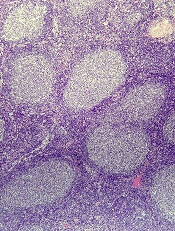
follicular lymphoma
LUGANO—An anti-CD37 antibody-radionuclide conjugate provides sustained efficacy and a manageable safety profile in patients with relapsed, CD37+ non-Hodgkin lymphoma (NHL), according to researchers.
The drug, 177Lu-DOTA-HH1 (Betalutin), consists of the tumor-specific antibody HH1, which targets the CD37 antigen on the surface of NHL cells, conjugated to the β-emitting isotope lutetium-177 (Lu-177) via the chemical linker DOTA.
In an ongoing, phase 1/2 trial, Betalutin has produced responses in 7 of 12 evaluable patients with relapsed NHL, and 5 of those responses are ongoing.
Grade 3/4 adverse events (AEs) were largely hematologic in nature, and many were transient and reversible. However, grade 3/4 AEs occurred at all 3 dose levels investigated in this study, as did serious AEs.
Arne Kolstad, MD, PhD, of Oslo University Hospital in Norway, and his colleagues reported these results at the 13th International Conference on Malignant Lymphoma (abstract 287*). The study was sponsored by Nordic Nanovector, the company developing Betalutin.
Thus far, the researchers have evaluated 13 patients with relapsed, CD37+ NHL. Twelve patients had a primary diagnosis of follicular lymphoma, and 1 had mantle cell lymphoma (MCL). The patients’ median age was 68 (range, 41-78), and they had received 1 to 8 prior treatments.
In this dose-finding study, the researchers investigated 3 dose levels of Betalutin. Four patients received Betalutin at 10 MBq/kg biweekly, 6 received 15 MBq/kg biweekly, and 3 (including the MCL patient) received 20 MBq/kg biweekly.
All patients received 50 mg of HH1 prior to Betalutin. Patients also received rituximab at 375 mg/m2 on days -28 and -21 (prior to Betalutin on day 0).
Safety and dosing
Dose-limiting toxicities occurred at the 20 MBq/kg biweekly dose, so researchers said 15 MBq/kg biweekly, with HH1 pre-dosing, is the current recommended dose of Betalutin.
Treatment-emergent grade 3 AEs in the 10 MBq/kg group included thrombocytopenia (n=1), neutropenia (n=2), pneumonia (n=1), and pulmonary embolism (n=1). There were no grade 4 AEs in this group.
In the 15 MBq/kg group, 2 patients had grade 3 thrombocytopenia, and 1 had grade 4. One patient each had grade 3 and 4 neutropenia.
Grade 3/4 AEs in the 20 MBq/kg group included grade 4 thrombocytopenia (n=3), grade 3 (n=1) and grade 4 (n=2) neutropenia, and grade 3 epistaxis (n=1).
Serious AEs included pulmonary embolism (1 in the 10 MBq/kg group), pneumonia (1 in the 10 MBq/kg group), atrial fibrillation (2 in the 15 MBq/kg group), thrombocytopenia (1 in the 20 MBq/kg group), and epistaxis (1 in the 20 MBq/kg group).
The researchers said all hematologic AEs were transient and reversible. They also pointed out that 6 patients in this trial have been followed for a year or more, and there have been no secondary malignancies or other events that would suggest long-term toxicity.
Efficacy and next steps
Twelve patients were evaluable for efficacy. Seven patients responded to treatment, including 4 complete responses (CRs) and 3 partial responses. Two patients had stable disease, and 3 progressed. Eight patients had a 50% or greater reduction in tumor volume.
The median response duration has not been reached, and 5 patients’ responses are ongoing. The duration of response in these patients ranges from 6 months to more than 21 months. All 4 patients who achieved a CR (including the MCL patient) are still in CR.
The researchers concluded that Betalutin delivers a highly favorable response rate, with durable clinical responses, and the drug has a predictable and manageable safety profile.
They have opened a new arm of this study to evaluate the safety and efficacy of Betalutin at 15 MBq/kg biweekly and 17.5 MBq/kg biweekly without HH1 pre-dosing.
*Information in the abstract differs from that presented at the meeting.
follicular lymphoma
LUGANO—An anti-CD37 antibody-radionuclide conjugate provides sustained efficacy and a manageable safety profile in patients with relapsed, CD37+ non-Hodgkin lymphoma (NHL), according to researchers.
The drug, 177Lu-DOTA-HH1 (Betalutin), consists of the tumor-specific antibody HH1, which targets the CD37 antigen on the surface of NHL cells, conjugated to the β-emitting isotope lutetium-177 (Lu-177) via the chemical linker DOTA.
In an ongoing, phase 1/2 trial, Betalutin has produced responses in 7 of 12 evaluable patients with relapsed NHL, and 5 of those responses are ongoing.
Grade 3/4 adverse events (AEs) were largely hematologic in nature, and many were transient and reversible. However, grade 3/4 AEs occurred at all 3 dose levels investigated in this study, as did serious AEs.
Arne Kolstad, MD, PhD, of Oslo University Hospital in Norway, and his colleagues reported these results at the 13th International Conference on Malignant Lymphoma (abstract 287*). The study was sponsored by Nordic Nanovector, the company developing Betalutin.
Thus far, the researchers have evaluated 13 patients with relapsed, CD37+ NHL. Twelve patients had a primary diagnosis of follicular lymphoma, and 1 had mantle cell lymphoma (MCL). The patients’ median age was 68 (range, 41-78), and they had received 1 to 8 prior treatments.
In this dose-finding study, the researchers investigated 3 dose levels of Betalutin. Four patients received Betalutin at 10 MBq/kg biweekly, 6 received 15 MBq/kg biweekly, and 3 (including the MCL patient) received 20 MBq/kg biweekly.
All patients received 50 mg of HH1 prior to Betalutin. Patients also received rituximab at 375 mg/m2 on days -28 and -21 (prior to Betalutin on day 0).
Safety and dosing
Dose-limiting toxicities occurred at the 20 MBq/kg biweekly dose, so researchers said 15 MBq/kg biweekly, with HH1 pre-dosing, is the current recommended dose of Betalutin.
Treatment-emergent grade 3 AEs in the 10 MBq/kg group included thrombocytopenia (n=1), neutropenia (n=2), pneumonia (n=1), and pulmonary embolism (n=1). There were no grade 4 AEs in this group.
In the 15 MBq/kg group, 2 patients had grade 3 thrombocytopenia, and 1 had grade 4. One patient each had grade 3 and 4 neutropenia.
Grade 3/4 AEs in the 20 MBq/kg group included grade 4 thrombocytopenia (n=3), grade 3 (n=1) and grade 4 (n=2) neutropenia, and grade 3 epistaxis (n=1).
Serious AEs included pulmonary embolism (1 in the 10 MBq/kg group), pneumonia (1 in the 10 MBq/kg group), atrial fibrillation (2 in the 15 MBq/kg group), thrombocytopenia (1 in the 20 MBq/kg group), and epistaxis (1 in the 20 MBq/kg group).
The researchers said all hematologic AEs were transient and reversible. They also pointed out that 6 patients in this trial have been followed for a year or more, and there have been no secondary malignancies or other events that would suggest long-term toxicity.
Efficacy and next steps
Twelve patients were evaluable for efficacy. Seven patients responded to treatment, including 4 complete responses (CRs) and 3 partial responses. Two patients had stable disease, and 3 progressed. Eight patients had a 50% or greater reduction in tumor volume.
The median response duration has not been reached, and 5 patients’ responses are ongoing. The duration of response in these patients ranges from 6 months to more than 21 months. All 4 patients who achieved a CR (including the MCL patient) are still in CR.
The researchers concluded that Betalutin delivers a highly favorable response rate, with durable clinical responses, and the drug has a predictable and manageable safety profile.
They have opened a new arm of this study to evaluate the safety and efficacy of Betalutin at 15 MBq/kg biweekly and 17.5 MBq/kg biweekly without HH1 pre-dosing.
*Information in the abstract differs from that presented at the meeting.
follicular lymphoma
LUGANO—An anti-CD37 antibody-radionuclide conjugate provides sustained efficacy and a manageable safety profile in patients with relapsed, CD37+ non-Hodgkin lymphoma (NHL), according to researchers.
The drug, 177Lu-DOTA-HH1 (Betalutin), consists of the tumor-specific antibody HH1, which targets the CD37 antigen on the surface of NHL cells, conjugated to the β-emitting isotope lutetium-177 (Lu-177) via the chemical linker DOTA.
In an ongoing, phase 1/2 trial, Betalutin has produced responses in 7 of 12 evaluable patients with relapsed NHL, and 5 of those responses are ongoing.
Grade 3/4 adverse events (AEs) were largely hematologic in nature, and many were transient and reversible. However, grade 3/4 AEs occurred at all 3 dose levels investigated in this study, as did serious AEs.
Arne Kolstad, MD, PhD, of Oslo University Hospital in Norway, and his colleagues reported these results at the 13th International Conference on Malignant Lymphoma (abstract 287*). The study was sponsored by Nordic Nanovector, the company developing Betalutin.
Thus far, the researchers have evaluated 13 patients with relapsed, CD37+ NHL. Twelve patients had a primary diagnosis of follicular lymphoma, and 1 had mantle cell lymphoma (MCL). The patients’ median age was 68 (range, 41-78), and they had received 1 to 8 prior treatments.
In this dose-finding study, the researchers investigated 3 dose levels of Betalutin. Four patients received Betalutin at 10 MBq/kg biweekly, 6 received 15 MBq/kg biweekly, and 3 (including the MCL patient) received 20 MBq/kg biweekly.
All patients received 50 mg of HH1 prior to Betalutin. Patients also received rituximab at 375 mg/m2 on days -28 and -21 (prior to Betalutin on day 0).
Safety and dosing
Dose-limiting toxicities occurred at the 20 MBq/kg biweekly dose, so researchers said 15 MBq/kg biweekly, with HH1 pre-dosing, is the current recommended dose of Betalutin.
Treatment-emergent grade 3 AEs in the 10 MBq/kg group included thrombocytopenia (n=1), neutropenia (n=2), pneumonia (n=1), and pulmonary embolism (n=1). There were no grade 4 AEs in this group.
In the 15 MBq/kg group, 2 patients had grade 3 thrombocytopenia, and 1 had grade 4. One patient each had grade 3 and 4 neutropenia.
Grade 3/4 AEs in the 20 MBq/kg group included grade 4 thrombocytopenia (n=3), grade 3 (n=1) and grade 4 (n=2) neutropenia, and grade 3 epistaxis (n=1).
Serious AEs included pulmonary embolism (1 in the 10 MBq/kg group), pneumonia (1 in the 10 MBq/kg group), atrial fibrillation (2 in the 15 MBq/kg group), thrombocytopenia (1 in the 20 MBq/kg group), and epistaxis (1 in the 20 MBq/kg group).
The researchers said all hematologic AEs were transient and reversible. They also pointed out that 6 patients in this trial have been followed for a year or more, and there have been no secondary malignancies or other events that would suggest long-term toxicity.
Efficacy and next steps
Twelve patients were evaluable for efficacy. Seven patients responded to treatment, including 4 complete responses (CRs) and 3 partial responses. Two patients had stable disease, and 3 progressed. Eight patients had a 50% or greater reduction in tumor volume.
The median response duration has not been reached, and 5 patients’ responses are ongoing. The duration of response in these patients ranges from 6 months to more than 21 months. All 4 patients who achieved a CR (including the MCL patient) are still in CR.
The researchers concluded that Betalutin delivers a highly favorable response rate, with durable clinical responses, and the drug has a predictable and manageable safety profile.
They have opened a new arm of this study to evaluate the safety and efficacy of Betalutin at 15 MBq/kg biweekly and 17.5 MBq/kg biweekly without HH1 pre-dosing.
*Information in the abstract differs from that presented at the meeting.
Inactivating an enzyme can eradicate T-ALL

Preclinical research suggests that inactivating a single enzyme could eradicate or prevent T-cell acute lymphoblastic leukemia (T-ALL).
The researchers knew that T-ALL onset is linked to microRNAs, and most are generated with the help of the enzyme Dicer1.
Now, the team has found evidence to suggest that Dicer1 is crucial for the development of T-ALL, and inhibiting Dicer1 can actually prevent the disease altogether.
They reported these findings in Blood.
The researchers used mice that were genetically modified to develop T-ALL and in which Dicer1 could be abrogated. The team “switched off” Dicer1 in the mice at different stages of T-ALL development to see what role the enzyme plays in disease evolution.
Switching Dicer1 off at an early stage completely prevented T-ALL. In mice where Dicer1 was completely abrogated, T-ALL cells were entirely eliminated, allowing all the mice to survive.
The researchers were able to confirm this effect by monitoring the few residual leukemic cells taken from these animals.
“You can actually see the cancer cells dying off after Dicer1 has been abrogated,” said study author Freddy Radtke, PhD, of Ecole Polytechnique Fédérale de Lausanne in Lausanne, Switzerland.
He and his colleagues found that the key to this cell death is Dicer1’s role in producing microRNAs. The team discovered that a previously unrecognized microRNA, miR-21, was deregulated in both mouse and human T-ALL.
In the context of T-ALL, miR-21 inhibits the tumor suppressor gene Pdcd4. Without Dicer1, there is no miR-21 to do this, which allows Pdcd4 to fight the disease.
This study is the first to conclusively demonstrate that Dicer1 plays a role in T-ALL, the researchers said. The work paves the way for a new set of treatment for this malignancy and possibly others.
However, the team also noted that it can be challenging to target cells of interest when dealing with molecules that are so fundamental to the cell’s life.
“We can’t just go shutting down Dicer1 across the board,” Dr Radtke explained. “Otherwise, we’ll end up killing healthy cells as well.”
His lab is now focused on tackling this obstacle.
Preclinical research suggests that inactivating a single enzyme could eradicate or prevent T-cell acute lymphoblastic leukemia (T-ALL).
The researchers knew that T-ALL onset is linked to microRNAs, and most are generated with the help of the enzyme Dicer1.
Now, the team has found evidence to suggest that Dicer1 is crucial for the development of T-ALL, and inhibiting Dicer1 can actually prevent the disease altogether.
They reported these findings in Blood.
The researchers used mice that were genetically modified to develop T-ALL and in which Dicer1 could be abrogated. The team “switched off” Dicer1 in the mice at different stages of T-ALL development to see what role the enzyme plays in disease evolution.
Switching Dicer1 off at an early stage completely prevented T-ALL. In mice where Dicer1 was completely abrogated, T-ALL cells were entirely eliminated, allowing all the mice to survive.
The researchers were able to confirm this effect by monitoring the few residual leukemic cells taken from these animals.
“You can actually see the cancer cells dying off after Dicer1 has been abrogated,” said study author Freddy Radtke, PhD, of Ecole Polytechnique Fédérale de Lausanne in Lausanne, Switzerland.
He and his colleagues found that the key to this cell death is Dicer1’s role in producing microRNAs. The team discovered that a previously unrecognized microRNA, miR-21, was deregulated in both mouse and human T-ALL.
In the context of T-ALL, miR-21 inhibits the tumor suppressor gene Pdcd4. Without Dicer1, there is no miR-21 to do this, which allows Pdcd4 to fight the disease.
This study is the first to conclusively demonstrate that Dicer1 plays a role in T-ALL, the researchers said. The work paves the way for a new set of treatment for this malignancy and possibly others.
However, the team also noted that it can be challenging to target cells of interest when dealing with molecules that are so fundamental to the cell’s life.
“We can’t just go shutting down Dicer1 across the board,” Dr Radtke explained. “Otherwise, we’ll end up killing healthy cells as well.”
His lab is now focused on tackling this obstacle.
Preclinical research suggests that inactivating a single enzyme could eradicate or prevent T-cell acute lymphoblastic leukemia (T-ALL).
The researchers knew that T-ALL onset is linked to microRNAs, and most are generated with the help of the enzyme Dicer1.
Now, the team has found evidence to suggest that Dicer1 is crucial for the development of T-ALL, and inhibiting Dicer1 can actually prevent the disease altogether.
They reported these findings in Blood.
The researchers used mice that were genetically modified to develop T-ALL and in which Dicer1 could be abrogated. The team “switched off” Dicer1 in the mice at different stages of T-ALL development to see what role the enzyme plays in disease evolution.
Switching Dicer1 off at an early stage completely prevented T-ALL. In mice where Dicer1 was completely abrogated, T-ALL cells were entirely eliminated, allowing all the mice to survive.
The researchers were able to confirm this effect by monitoring the few residual leukemic cells taken from these animals.
“You can actually see the cancer cells dying off after Dicer1 has been abrogated,” said study author Freddy Radtke, PhD, of Ecole Polytechnique Fédérale de Lausanne in Lausanne, Switzerland.
He and his colleagues found that the key to this cell death is Dicer1’s role in producing microRNAs. The team discovered that a previously unrecognized microRNA, miR-21, was deregulated in both mouse and human T-ALL.
In the context of T-ALL, miR-21 inhibits the tumor suppressor gene Pdcd4. Without Dicer1, there is no miR-21 to do this, which allows Pdcd4 to fight the disease.
This study is the first to conclusively demonstrate that Dicer1 plays a role in T-ALL, the researchers said. The work paves the way for a new set of treatment for this malignancy and possibly others.
However, the team also noted that it can be challenging to target cells of interest when dealing with molecules that are so fundamental to the cell’s life.
“We can’t just go shutting down Dicer1 across the board,” Dr Radtke explained. “Otherwise, we’ll end up killing healthy cells as well.”
His lab is now focused on tackling this obstacle.
Drug reverses anticoagulant effect of dabigatran
TORONTO—Interim results of a phase 3 study suggest idarucizumab, a humanized antibody fragment, can reverse the anticoagulant effect of
dabigatran in real-world situations.
In the RE-VERSE AD trial, idarucizumab normalized diluted thrombin time (dTT) and ecarin clotting time (ECT) in a majority of patients with uncontrolled or life-threatening bleeding complications and most patients who required emergency surgery or an invasive procedure.
In addition, researchers said there were no safety concerns related to idarucizumab. However, 23% of patients in this trial experienced serious adverse events, 20% of patients died, and several patients had thrombotic or bleeding events.
These results have been published in NEJM and presented at the 2015 ISTH Congress (abstract LB005). The study was sponsored by Boehringer Ingelheim, the company developing idarucizumab and dabigatran.
“The interim analysis from RE-VERSE AD is important for healthcare professionals as it provides the first insights into the effect of a specific reversal agent to a non-vitamin K antagonist oral anticoagulant during real-world emergency situations,” said study investigator Charles Pollack, MD, of the University of Pennsylvania in Philadelphia.
Because RE-VERSE AD was designed to evaluate how idarucizumab would perform in real-world situations, severely ill or injured patients were eligible for enrollment. The interim analysis included data from 90 patients in emergency settings who were taking dabigatran and required reversal.
The patients were divided into 2 groups: those with uncontrolled or life-threatening bleeding complications, such as intracranial hemorrhage or severe trauma (group A, n=51), and patients requiring emergency surgery or an invasive procedure (group B, n=39).
The primary endpoint of the study is the degree to which 5 g of idarucizumab reversed the anticoagulant effect of dabigatran within 4 hours, measured by dTT and ECT.
The researchers were able to evaluate the percentage of reversal by dTT in 68 patients (40 in group A and 28 in group B) and the percentage of reversal by ECT in 81 patients (47 in group A and 34 in group B).
The dTT was normalized in 98% of evaluable patients in group A and 93% in group B. The ECT was normalized in 89% of evaluable patients in group A and 88% in group B.
At 12 hours and 24 hours, the dTT was below the upper limit of the normal range in 90% of evaluable patients in group A and 81% in group B. The ECT was below the upper limit of the normal range in 72% of evaluable group A patients and 54% of evaluable group B patients.
Among the 35 evaluable patients in group A, hemostasis was restored at a median of 11.4 hours. Among the 36 patients in group B who underwent a procedure, 33 had normal intraoperative hemostasis. Two patients had mildly abnormal hemostasis, and 1 patient had moderately abnormal hemostasis.
“As observed in earlier research in volunteers, idarucizumab reversed the anticoagulant effect of dabigatran in patients completely within minutes, even in those rare critical care situations studied in RE-VERSE AD,” Dr Pollack said.
“These data demonstrate that use of idarucizumab can help physicians focus on other vital aspects of emergency management beyond anticoagulant reversal in dabigatran-treated patients.”
Twenty-one patients (13 in group A and 8 in group B) experienced serious adverse events during the study.
This included 18 events that led to death, 5 thrombotic events, 2 cases of gastrointestinal hemorrhage, a postoperative wound infection, a case of delirium, a case of right ventricular failure, and a case of pulmonary edema. (Some patients had more than one serious adverse event.)
TORONTO—Interim results of a phase 3 study suggest idarucizumab, a humanized antibody fragment, can reverse the anticoagulant effect of
dabigatran in real-world situations.
In the RE-VERSE AD trial, idarucizumab normalized diluted thrombin time (dTT) and ecarin clotting time (ECT) in a majority of patients with uncontrolled or life-threatening bleeding complications and most patients who required emergency surgery or an invasive procedure.
In addition, researchers said there were no safety concerns related to idarucizumab. However, 23% of patients in this trial experienced serious adverse events, 20% of patients died, and several patients had thrombotic or bleeding events.
These results have been published in NEJM and presented at the 2015 ISTH Congress (abstract LB005). The study was sponsored by Boehringer Ingelheim, the company developing idarucizumab and dabigatran.
“The interim analysis from RE-VERSE AD is important for healthcare professionals as it provides the first insights into the effect of a specific reversal agent to a non-vitamin K antagonist oral anticoagulant during real-world emergency situations,” said study investigator Charles Pollack, MD, of the University of Pennsylvania in Philadelphia.
Because RE-VERSE AD was designed to evaluate how idarucizumab would perform in real-world situations, severely ill or injured patients were eligible for enrollment. The interim analysis included data from 90 patients in emergency settings who were taking dabigatran and required reversal.
The patients were divided into 2 groups: those with uncontrolled or life-threatening bleeding complications, such as intracranial hemorrhage or severe trauma (group A, n=51), and patients requiring emergency surgery or an invasive procedure (group B, n=39).
The primary endpoint of the study is the degree to which 5 g of idarucizumab reversed the anticoagulant effect of dabigatran within 4 hours, measured by dTT and ECT.
The researchers were able to evaluate the percentage of reversal by dTT in 68 patients (40 in group A and 28 in group B) and the percentage of reversal by ECT in 81 patients (47 in group A and 34 in group B).
The dTT was normalized in 98% of evaluable patients in group A and 93% in group B. The ECT was normalized in 89% of evaluable patients in group A and 88% in group B.
At 12 hours and 24 hours, the dTT was below the upper limit of the normal range in 90% of evaluable patients in group A and 81% in group B. The ECT was below the upper limit of the normal range in 72% of evaluable group A patients and 54% of evaluable group B patients.
Among the 35 evaluable patients in group A, hemostasis was restored at a median of 11.4 hours. Among the 36 patients in group B who underwent a procedure, 33 had normal intraoperative hemostasis. Two patients had mildly abnormal hemostasis, and 1 patient had moderately abnormal hemostasis.
“As observed in earlier research in volunteers, idarucizumab reversed the anticoagulant effect of dabigatran in patients completely within minutes, even in those rare critical care situations studied in RE-VERSE AD,” Dr Pollack said.
“These data demonstrate that use of idarucizumab can help physicians focus on other vital aspects of emergency management beyond anticoagulant reversal in dabigatran-treated patients.”
Twenty-one patients (13 in group A and 8 in group B) experienced serious adverse events during the study.
This included 18 events that led to death, 5 thrombotic events, 2 cases of gastrointestinal hemorrhage, a postoperative wound infection, a case of delirium, a case of right ventricular failure, and a case of pulmonary edema. (Some patients had more than one serious adverse event.)
TORONTO—Interim results of a phase 3 study suggest idarucizumab, a humanized antibody fragment, can reverse the anticoagulant effect of
dabigatran in real-world situations.
In the RE-VERSE AD trial, idarucizumab normalized diluted thrombin time (dTT) and ecarin clotting time (ECT) in a majority of patients with uncontrolled or life-threatening bleeding complications and most patients who required emergency surgery or an invasive procedure.
In addition, researchers said there were no safety concerns related to idarucizumab. However, 23% of patients in this trial experienced serious adverse events, 20% of patients died, and several patients had thrombotic or bleeding events.
These results have been published in NEJM and presented at the 2015 ISTH Congress (abstract LB005). The study was sponsored by Boehringer Ingelheim, the company developing idarucizumab and dabigatran.
“The interim analysis from RE-VERSE AD is important for healthcare professionals as it provides the first insights into the effect of a specific reversal agent to a non-vitamin K antagonist oral anticoagulant during real-world emergency situations,” said study investigator Charles Pollack, MD, of the University of Pennsylvania in Philadelphia.
Because RE-VERSE AD was designed to evaluate how idarucizumab would perform in real-world situations, severely ill or injured patients were eligible for enrollment. The interim analysis included data from 90 patients in emergency settings who were taking dabigatran and required reversal.
The patients were divided into 2 groups: those with uncontrolled or life-threatening bleeding complications, such as intracranial hemorrhage or severe trauma (group A, n=51), and patients requiring emergency surgery or an invasive procedure (group B, n=39).
The primary endpoint of the study is the degree to which 5 g of idarucizumab reversed the anticoagulant effect of dabigatran within 4 hours, measured by dTT and ECT.
The researchers were able to evaluate the percentage of reversal by dTT in 68 patients (40 in group A and 28 in group B) and the percentage of reversal by ECT in 81 patients (47 in group A and 34 in group B).
The dTT was normalized in 98% of evaluable patients in group A and 93% in group B. The ECT was normalized in 89% of evaluable patients in group A and 88% in group B.
At 12 hours and 24 hours, the dTT was below the upper limit of the normal range in 90% of evaluable patients in group A and 81% in group B. The ECT was below the upper limit of the normal range in 72% of evaluable group A patients and 54% of evaluable group B patients.
Among the 35 evaluable patients in group A, hemostasis was restored at a median of 11.4 hours. Among the 36 patients in group B who underwent a procedure, 33 had normal intraoperative hemostasis. Two patients had mildly abnormal hemostasis, and 1 patient had moderately abnormal hemostasis.
“As observed in earlier research in volunteers, idarucizumab reversed the anticoagulant effect of dabigatran in patients completely within minutes, even in those rare critical care situations studied in RE-VERSE AD,” Dr Pollack said.
“These data demonstrate that use of idarucizumab can help physicians focus on other vital aspects of emergency management beyond anticoagulant reversal in dabigatran-treated patients.”
Twenty-one patients (13 in group A and 8 in group B) experienced serious adverse events during the study.
This included 18 events that led to death, 5 thrombotic events, 2 cases of gastrointestinal hemorrhage, a postoperative wound infection, a case of delirium, a case of right ventricular failure, and a case of pulmonary edema. (Some patients had more than one serious adverse event.)