User login
CDC issues interim guidance for Zika testing

The US Centers for Disease Control and Prevention (CDC) has released an interim guidance for testing urine for the Zika virus.
The agency noted that, in most patients, Zika virus RNA is unlikely to be detected in serum after the first week of illness.
However, recent reports have suggested that Zika virus RNA can be detected in urine for at least 2 weeks after the onset of symptoms.
Therefore, the CDC recommends that real-time reverse transcription–polymerase chain reaction (rRT-PCR) be performed on urine collected less than 14 days after the onset of symptoms in patients with suspected Zika virus.
The agency said further investigation is needed to determine the utility of rRT-PCR on urine specimens collected at 14 days or beyond.
The CDC also recommends that urine testing be performed in conjunction with serum testing for specimens collected less than 7 days after symptom onset. The agency said its recommendations for testing serum and other clinical specimens for Zika virus have not changed.
At present, the CDC’s Trioplex rRT-PCR assay is the only diagnostic tool authorized by the US Food and Drug Administration to test urine for Zika virus. 
The US Centers for Disease Control and Prevention (CDC) has released an interim guidance for testing urine for the Zika virus.
The agency noted that, in most patients, Zika virus RNA is unlikely to be detected in serum after the first week of illness.
However, recent reports have suggested that Zika virus RNA can be detected in urine for at least 2 weeks after the onset of symptoms.
Therefore, the CDC recommends that real-time reverse transcription–polymerase chain reaction (rRT-PCR) be performed on urine collected less than 14 days after the onset of symptoms in patients with suspected Zika virus.
The agency said further investigation is needed to determine the utility of rRT-PCR on urine specimens collected at 14 days or beyond.
The CDC also recommends that urine testing be performed in conjunction with serum testing for specimens collected less than 7 days after symptom onset. The agency said its recommendations for testing serum and other clinical specimens for Zika virus have not changed.
At present, the CDC’s Trioplex rRT-PCR assay is the only diagnostic tool authorized by the US Food and Drug Administration to test urine for Zika virus.
The US Centers for Disease Control and Prevention (CDC) has released an interim guidance for testing urine for the Zika virus.
The agency noted that, in most patients, Zika virus RNA is unlikely to be detected in serum after the first week of illness.
However, recent reports have suggested that Zika virus RNA can be detected in urine for at least 2 weeks after the onset of symptoms.
Therefore, the CDC recommends that real-time reverse transcription–polymerase chain reaction (rRT-PCR) be performed on urine collected less than 14 days after the onset of symptoms in patients with suspected Zika virus.
The agency said further investigation is needed to determine the utility of rRT-PCR on urine specimens collected at 14 days or beyond.
The CDC also recommends that urine testing be performed in conjunction with serum testing for specimens collected less than 7 days after symptom onset. The agency said its recommendations for testing serum and other clinical specimens for Zika virus have not changed.
At present, the CDC’s Trioplex rRT-PCR assay is the only diagnostic tool authorized by the US Food and Drug Administration to test urine for Zika virus.
Health Canada approves ibrutinib for WM
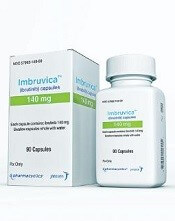
Photo from Janssen Biotech
Health Canada has approved the BTK inhibitor ibrutinib (Imbruvica) as a treatment for patients with Waldenström’s macroglobulinemia (WM).
Ibrutinib was first approved in Canada in November 2014 for the treatment of patients with chronic lymphocytic leukemia (CLL), including those with 17p deletion, who have received at least one prior therapy, or for the frontline treatment of patients with CLL and 17p deletion.
In July 2015, ibrutinib was granted conditional approval for the treatment of patients with relapsed or refractory mantle cell lymphoma.
Health Canada’s approval of ibrutinib for WM was based on results of a multicenter, phase 2 study in which researchers tested the drug (given at 420 mg once daily) in 63 patients with previously treated WM.
The patients’ median age was 63 (range, 44-86), and their median number of prior therapies was 2 (range, 1-11).
Initial data showed an overall response rate of 87.3% in patients who received ibrutinib for a median of 11.7 months.
Updated results from the study were published in NEJM in April 2015. After a median treatment duration of 19.1 months, the overall response rate was 91%.
At 24 months, the estimated rate of progression-free survival was 69%, and the estimated rate of overall survival was 95%.
The most common grade 2-4 adverse events were neutropenia (22%) and thrombocytopenia (14%). Ibrutinib-related neutropenia and thrombocytopenia were reversible but required a dose reduction in 3 patients and treatment discontinuation in 4 patients.
Grade 2 or higher bleeding events occurred in 4 patients, and there were 15 infections considered possibly related to ibrutinib.
Treatment-related atrial fibrillation (AFib) occurred in 3 patients, all of whom had a prior history of paroxysmal AFib. AFib resolved when treatment was withheld, and all 3 patients were able to continue on therapy per protocol without an additional event.
Ibrutinib is co-developed by Cilag GmbH International (a member of the Janssen Pharmaceutical Companies) and Pharmacyclics LLC, an AbbVie company. Janssen Inc. markets ibrutinib as Imbruvica in Canada.
Photo from Janssen Biotech
Health Canada has approved the BTK inhibitor ibrutinib (Imbruvica) as a treatment for patients with Waldenström’s macroglobulinemia (WM).
Ibrutinib was first approved in Canada in November 2014 for the treatment of patients with chronic lymphocytic leukemia (CLL), including those with 17p deletion, who have received at least one prior therapy, or for the frontline treatment of patients with CLL and 17p deletion.
In July 2015, ibrutinib was granted conditional approval for the treatment of patients with relapsed or refractory mantle cell lymphoma.
Health Canada’s approval of ibrutinib for WM was based on results of a multicenter, phase 2 study in which researchers tested the drug (given at 420 mg once daily) in 63 patients with previously treated WM.
The patients’ median age was 63 (range, 44-86), and their median number of prior therapies was 2 (range, 1-11).
Initial data showed an overall response rate of 87.3% in patients who received ibrutinib for a median of 11.7 months.
Updated results from the study were published in NEJM in April 2015. After a median treatment duration of 19.1 months, the overall response rate was 91%.
At 24 months, the estimated rate of progression-free survival was 69%, and the estimated rate of overall survival was 95%.
The most common grade 2-4 adverse events were neutropenia (22%) and thrombocytopenia (14%). Ibrutinib-related neutropenia and thrombocytopenia were reversible but required a dose reduction in 3 patients and treatment discontinuation in 4 patients.
Grade 2 or higher bleeding events occurred in 4 patients, and there were 15 infections considered possibly related to ibrutinib.
Treatment-related atrial fibrillation (AFib) occurred in 3 patients, all of whom had a prior history of paroxysmal AFib. AFib resolved when treatment was withheld, and all 3 patients were able to continue on therapy per protocol without an additional event.
Ibrutinib is co-developed by Cilag GmbH International (a member of the Janssen Pharmaceutical Companies) and Pharmacyclics LLC, an AbbVie company. Janssen Inc. markets ibrutinib as Imbruvica in Canada.
Photo from Janssen Biotech
Health Canada has approved the BTK inhibitor ibrutinib (Imbruvica) as a treatment for patients with Waldenström’s macroglobulinemia (WM).
Ibrutinib was first approved in Canada in November 2014 for the treatment of patients with chronic lymphocytic leukemia (CLL), including those with 17p deletion, who have received at least one prior therapy, or for the frontline treatment of patients with CLL and 17p deletion.
In July 2015, ibrutinib was granted conditional approval for the treatment of patients with relapsed or refractory mantle cell lymphoma.
Health Canada’s approval of ibrutinib for WM was based on results of a multicenter, phase 2 study in which researchers tested the drug (given at 420 mg once daily) in 63 patients with previously treated WM.
The patients’ median age was 63 (range, 44-86), and their median number of prior therapies was 2 (range, 1-11).
Initial data showed an overall response rate of 87.3% in patients who received ibrutinib for a median of 11.7 months.
Updated results from the study were published in NEJM in April 2015. After a median treatment duration of 19.1 months, the overall response rate was 91%.
At 24 months, the estimated rate of progression-free survival was 69%, and the estimated rate of overall survival was 95%.
The most common grade 2-4 adverse events were neutropenia (22%) and thrombocytopenia (14%). Ibrutinib-related neutropenia and thrombocytopenia were reversible but required a dose reduction in 3 patients and treatment discontinuation in 4 patients.
Grade 2 or higher bleeding events occurred in 4 patients, and there were 15 infections considered possibly related to ibrutinib.
Treatment-related atrial fibrillation (AFib) occurred in 3 patients, all of whom had a prior history of paroxysmal AFib. AFib resolved when treatment was withheld, and all 3 patients were able to continue on therapy per protocol without an additional event.
Ibrutinib is co-developed by Cilag GmbH International (a member of the Janssen Pharmaceutical Companies) and Pharmacyclics LLC, an AbbVie company. Janssen Inc. markets ibrutinib as Imbruvica in Canada.
Drug may reduce severity of AEs from dexamethasone

Photo by Bill Branson
Adding a physiologic dose of hydrocortisone to treatment with dexamethasone can reduce the severity of certain adverse effects (AEs) in pediatric patients with acute lymphoblastic leukemia (ALL), according to researchers.
Hydrocortisone did not decrease the incidence of psychosocial problems or sleep-related issues in these patients, but the drug did reduce the severity of these problems among patients who experienced them.
Lidewij T. Warris, MD, of Erasmus MC-Sophia Children’s Hospital in Rotterdam, the Netherlands, and her colleagues reported these results in the Journal of Clinical Oncology.
The team conducted this study to determine whether a physiologic dose of hydrocortisone could reduce neuropsychologic and metabolic AEs in children with ALL who were receiving dexamethasone.
The study enrolled 50 patients (ages 3 to 16) who were set to receive 2 consecutive courses of dexamethasone in accordance with Dutch Childhood Oncology Group ALL protocols.
The patients were randomized to receive either hydrocortisone or placebo in a circadian rhythm (10 mg/m2/d) during their first dexamethasone course. During their second course, the patients were assigned to the opposite arm.
The treatment groups were similar with regard to age, type of leukemia, treatment protocol, and CNS status at diagnosis.
Psychosocial problems
The researchers assessed psychosocial problems by having parents complete the Strength and Difficulties Questionnaire (SDQ). Forty-six parents completed the questionnaire at all 4 time points tested.
The results showed that 4 days of dexamethasone treatment significantly increased patient problems, as reported by all SDQ scales and subscales. However, one-third of the population did not have any increase in SDQ total difficulties with dexamethasone.
The addition of hydrocortisone did not affect patients’ total difficulties score (mean difference, -0.8 ± 5.5; P=0.33), emotional symptoms (mean difference, -0.6 ± 2.3; P=0.08), conduct problems (mean difference, 0.0 ± 1.5; P=1.00), or other SDQ subscales.
However, hydrocortisone did have a clinically significant effect in the subset of 16 patients who had clinically relevant dexamethasone-related AEs. This was defined as an increase of ≥5 in their SDQ total difficulties score.
In these patients, hydrocortisone improved the total difficulties delta-score (median difference, -5.0; IQR, -7.8 to -3.0), emotional symptoms score (median difference, -1.5; IQR, -4.0 to -1.0), conduct problems score (median difference, -1.0; IQR, -2.0 to 0.0), and impact of stress score (median difference, -1.0; IQR, -2.0 to 0.0).
Sleep issues
The researchers used the Sleep Disturbance Scale for Children (SDSC) to assess sleep quality and sleep disturbances. Forty-seven parents completed the questionnaire at all 4 time points tested.
Results showed that dexamethasone significantly increased disorders of arousal (P=0.04), sleep-wake transition disorders (P=0.01), and disorders of excessive somnolence (P=0.01).
The addition of hydrocortisone had no significant effect on patients’ total SDSC score (P=0.84), disorders of initiating and maintaining sleep (P=0.74), disorders of excessive somnolence (P=0.29), or sleep-wake transition disorder (P=0.29).
However, hydrocortisone did have a clinically significant effect in the subset of 9 children who had clinically relevant dexamethasone-induced sleeping problems, which were defined as a change of ≥7 in SDSC total score.
Hydrocortisone reduced SDSC total scores (median difference, -11.0; IQR, -16.0 to 0.0) and disorders of initiating and maintaining sleep scores (median difference, -3.0; IQR, -7.0 to –0.5).
Other outcomes
The researchers also found that dexamethasone treatment alone did not affect patients’ attention, visual-spatial functions, memory, or processing speed.
However, the addition of hydrocortisone significantly improved patients’ long-term visual memory (P=0.01).
Hydrocortisone did not have any effect on other neuropsychological tests or on metabolic parameters.
Photo by Bill Branson
Adding a physiologic dose of hydrocortisone to treatment with dexamethasone can reduce the severity of certain adverse effects (AEs) in pediatric patients with acute lymphoblastic leukemia (ALL), according to researchers.
Hydrocortisone did not decrease the incidence of psychosocial problems or sleep-related issues in these patients, but the drug did reduce the severity of these problems among patients who experienced them.
Lidewij T. Warris, MD, of Erasmus MC-Sophia Children’s Hospital in Rotterdam, the Netherlands, and her colleagues reported these results in the Journal of Clinical Oncology.
The team conducted this study to determine whether a physiologic dose of hydrocortisone could reduce neuropsychologic and metabolic AEs in children with ALL who were receiving dexamethasone.
The study enrolled 50 patients (ages 3 to 16) who were set to receive 2 consecutive courses of dexamethasone in accordance with Dutch Childhood Oncology Group ALL protocols.
The patients were randomized to receive either hydrocortisone or placebo in a circadian rhythm (10 mg/m2/d) during their first dexamethasone course. During their second course, the patients were assigned to the opposite arm.
The treatment groups were similar with regard to age, type of leukemia, treatment protocol, and CNS status at diagnosis.
Psychosocial problems
The researchers assessed psychosocial problems by having parents complete the Strength and Difficulties Questionnaire (SDQ). Forty-six parents completed the questionnaire at all 4 time points tested.
The results showed that 4 days of dexamethasone treatment significantly increased patient problems, as reported by all SDQ scales and subscales. However, one-third of the population did not have any increase in SDQ total difficulties with dexamethasone.
The addition of hydrocortisone did not affect patients’ total difficulties score (mean difference, -0.8 ± 5.5; P=0.33), emotional symptoms (mean difference, -0.6 ± 2.3; P=0.08), conduct problems (mean difference, 0.0 ± 1.5; P=1.00), or other SDQ subscales.
However, hydrocortisone did have a clinically significant effect in the subset of 16 patients who had clinically relevant dexamethasone-related AEs. This was defined as an increase of ≥5 in their SDQ total difficulties score.
In these patients, hydrocortisone improved the total difficulties delta-score (median difference, -5.0; IQR, -7.8 to -3.0), emotional symptoms score (median difference, -1.5; IQR, -4.0 to -1.0), conduct problems score (median difference, -1.0; IQR, -2.0 to 0.0), and impact of stress score (median difference, -1.0; IQR, -2.0 to 0.0).
Sleep issues
The researchers used the Sleep Disturbance Scale for Children (SDSC) to assess sleep quality and sleep disturbances. Forty-seven parents completed the questionnaire at all 4 time points tested.
Results showed that dexamethasone significantly increased disorders of arousal (P=0.04), sleep-wake transition disorders (P=0.01), and disorders of excessive somnolence (P=0.01).
The addition of hydrocortisone had no significant effect on patients’ total SDSC score (P=0.84), disorders of initiating and maintaining sleep (P=0.74), disorders of excessive somnolence (P=0.29), or sleep-wake transition disorder (P=0.29).
However, hydrocortisone did have a clinically significant effect in the subset of 9 children who had clinically relevant dexamethasone-induced sleeping problems, which were defined as a change of ≥7 in SDSC total score.
Hydrocortisone reduced SDSC total scores (median difference, -11.0; IQR, -16.0 to 0.0) and disorders of initiating and maintaining sleep scores (median difference, -3.0; IQR, -7.0 to –0.5).
Other outcomes
The researchers also found that dexamethasone treatment alone did not affect patients’ attention, visual-spatial functions, memory, or processing speed.
However, the addition of hydrocortisone significantly improved patients’ long-term visual memory (P=0.01).
Hydrocortisone did not have any effect on other neuropsychological tests or on metabolic parameters.
Photo by Bill Branson
Adding a physiologic dose of hydrocortisone to treatment with dexamethasone can reduce the severity of certain adverse effects (AEs) in pediatric patients with acute lymphoblastic leukemia (ALL), according to researchers.
Hydrocortisone did not decrease the incidence of psychosocial problems or sleep-related issues in these patients, but the drug did reduce the severity of these problems among patients who experienced them.
Lidewij T. Warris, MD, of Erasmus MC-Sophia Children’s Hospital in Rotterdam, the Netherlands, and her colleagues reported these results in the Journal of Clinical Oncology.
The team conducted this study to determine whether a physiologic dose of hydrocortisone could reduce neuropsychologic and metabolic AEs in children with ALL who were receiving dexamethasone.
The study enrolled 50 patients (ages 3 to 16) who were set to receive 2 consecutive courses of dexamethasone in accordance with Dutch Childhood Oncology Group ALL protocols.
The patients were randomized to receive either hydrocortisone or placebo in a circadian rhythm (10 mg/m2/d) during their first dexamethasone course. During their second course, the patients were assigned to the opposite arm.
The treatment groups were similar with regard to age, type of leukemia, treatment protocol, and CNS status at diagnosis.
Psychosocial problems
The researchers assessed psychosocial problems by having parents complete the Strength and Difficulties Questionnaire (SDQ). Forty-six parents completed the questionnaire at all 4 time points tested.
The results showed that 4 days of dexamethasone treatment significantly increased patient problems, as reported by all SDQ scales and subscales. However, one-third of the population did not have any increase in SDQ total difficulties with dexamethasone.
The addition of hydrocortisone did not affect patients’ total difficulties score (mean difference, -0.8 ± 5.5; P=0.33), emotional symptoms (mean difference, -0.6 ± 2.3; P=0.08), conduct problems (mean difference, 0.0 ± 1.5; P=1.00), or other SDQ subscales.
However, hydrocortisone did have a clinically significant effect in the subset of 16 patients who had clinically relevant dexamethasone-related AEs. This was defined as an increase of ≥5 in their SDQ total difficulties score.
In these patients, hydrocortisone improved the total difficulties delta-score (median difference, -5.0; IQR, -7.8 to -3.0), emotional symptoms score (median difference, -1.5; IQR, -4.0 to -1.0), conduct problems score (median difference, -1.0; IQR, -2.0 to 0.0), and impact of stress score (median difference, -1.0; IQR, -2.0 to 0.0).
Sleep issues
The researchers used the Sleep Disturbance Scale for Children (SDSC) to assess sleep quality and sleep disturbances. Forty-seven parents completed the questionnaire at all 4 time points tested.
Results showed that dexamethasone significantly increased disorders of arousal (P=0.04), sleep-wake transition disorders (P=0.01), and disorders of excessive somnolence (P=0.01).
The addition of hydrocortisone had no significant effect on patients’ total SDSC score (P=0.84), disorders of initiating and maintaining sleep (P=0.74), disorders of excessive somnolence (P=0.29), or sleep-wake transition disorder (P=0.29).
However, hydrocortisone did have a clinically significant effect in the subset of 9 children who had clinically relevant dexamethasone-induced sleeping problems, which were defined as a change of ≥7 in SDSC total score.
Hydrocortisone reduced SDSC total scores (median difference, -11.0; IQR, -16.0 to 0.0) and disorders of initiating and maintaining sleep scores (median difference, -3.0; IQR, -7.0 to –0.5).
Other outcomes
The researchers also found that dexamethasone treatment alone did not affect patients’ attention, visual-spatial functions, memory, or processing speed.
However, the addition of hydrocortisone significantly improved patients’ long-term visual memory (P=0.01).
Hydrocortisone did not have any effect on other neuropsychological tests or on metabolic parameters.
EC approves first immunostimulatory antibody to treat MM
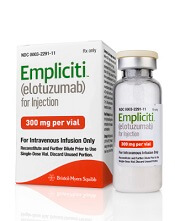
Photo courtesy of
Bristol-Myers Squibb
The European Commission (EC) has approved elotuzumab (Empliciti) for use in combination with lenalidomide and dexamethasone to treat patients with multiple myeloma (MM) who have received at least one prior therapy.
Elotuzumab is an immunostimulatory antibody that specifically targets signaling lymphocyte activation molecule family member 7 (SLAMF7), a cell-surface glycoprotein expressed on myeloma cells, natural killer (NK) cells, plasma cells, and specific immune cell subsets of differentiated cells in the hematopoietic lineage.
Elotuzumab has a dual mechanism of action. It directly activates the immune system through NK cells via the SLAMF7 pathway, and it targets SLAMF7 on myeloma cells, tagging them for NK-cell-mediated destruction via antibody-dependent cellular toxicity.
Elotuzumab is the first immunostimulatory antibody approved to treat MM in the European Union.
Bristol-Myers Squibb and AbbVie are co-developing elotuzumab, with Bristol-Myers Squibb solely responsible for commercial activities.
Phase 3 trial
The EC approved elotuzumab based on data from the phase 3 ELOQUENT-2 trial, which were presented at ASCO 2015 and published in NEJM.
The trial included 646 MM patients who had received 1 to 3 prior therapies.
The patients were randomized 1:1 to receive either elotuzumab at 10 mg/kg in combination with lenalidomide and dexamethasone (len-dex) or len-dex alone in 4-week cycles until disease progression or unacceptable toxicity.
Baseline patient demographics and disease characteristics were well balanced between treatment arms.
The minimum follow-up for all study subjects was 24 months. The co-primary endpoints were progression-free survival (PFS) and overall response rate.
The overall response rate was 78.5% in the elotuzumab arm and 65.5% in the len-dex arm (P=0.0002).
The median PFS was 19.4 months in the elotuzumab arm and 14.9 months in the len-dex arm (P=0.0004). At 1 year, the PFS was 68% in the elotuzumab arm and 57% in the len-dex arm. At 2 years, the PFS was 41% and 27%, respectively.
The most common adverse events in the elotuzumab arm and len-dex arm, respectively, were fatigue (61.6% vs 51.7%), diarrhea (46.9% vs 36.0%), pyrexia (37.4% vs 24.6%), constipation (35.5% vs 27.1%), cough (34.3% vs 18.9%), peripheral neuropathy (26.7% vs 20.8%), nasopharyngitis (24.5% vs 19.2%), upper respiratory tract infection (22.6% vs 17.4%), decreased appetite (20.8% vs 12.6%), and pneumonia (20.1% vs 14.2%).
Serious adverse events occurred in 65.4% of patients in the elotuzumab arm and 56.5% in the len-dex arm. The most frequent events were pneumonia, pyrexia, respiratory tract infection, anemia, pulmonary embolism, and acute renal failure.
Photo courtesy of
Bristol-Myers Squibb
The European Commission (EC) has approved elotuzumab (Empliciti) for use in combination with lenalidomide and dexamethasone to treat patients with multiple myeloma (MM) who have received at least one prior therapy.
Elotuzumab is an immunostimulatory antibody that specifically targets signaling lymphocyte activation molecule family member 7 (SLAMF7), a cell-surface glycoprotein expressed on myeloma cells, natural killer (NK) cells, plasma cells, and specific immune cell subsets of differentiated cells in the hematopoietic lineage.
Elotuzumab has a dual mechanism of action. It directly activates the immune system through NK cells via the SLAMF7 pathway, and it targets SLAMF7 on myeloma cells, tagging them for NK-cell-mediated destruction via antibody-dependent cellular toxicity.
Elotuzumab is the first immunostimulatory antibody approved to treat MM in the European Union.
Bristol-Myers Squibb and AbbVie are co-developing elotuzumab, with Bristol-Myers Squibb solely responsible for commercial activities.
Phase 3 trial
The EC approved elotuzumab based on data from the phase 3 ELOQUENT-2 trial, which were presented at ASCO 2015 and published in NEJM.
The trial included 646 MM patients who had received 1 to 3 prior therapies.
The patients were randomized 1:1 to receive either elotuzumab at 10 mg/kg in combination with lenalidomide and dexamethasone (len-dex) or len-dex alone in 4-week cycles until disease progression or unacceptable toxicity.
Baseline patient demographics and disease characteristics were well balanced between treatment arms.
The minimum follow-up for all study subjects was 24 months. The co-primary endpoints were progression-free survival (PFS) and overall response rate.
The overall response rate was 78.5% in the elotuzumab arm and 65.5% in the len-dex arm (P=0.0002).
The median PFS was 19.4 months in the elotuzumab arm and 14.9 months in the len-dex arm (P=0.0004). At 1 year, the PFS was 68% in the elotuzumab arm and 57% in the len-dex arm. At 2 years, the PFS was 41% and 27%, respectively.
The most common adverse events in the elotuzumab arm and len-dex arm, respectively, were fatigue (61.6% vs 51.7%), diarrhea (46.9% vs 36.0%), pyrexia (37.4% vs 24.6%), constipation (35.5% vs 27.1%), cough (34.3% vs 18.9%), peripheral neuropathy (26.7% vs 20.8%), nasopharyngitis (24.5% vs 19.2%), upper respiratory tract infection (22.6% vs 17.4%), decreased appetite (20.8% vs 12.6%), and pneumonia (20.1% vs 14.2%).
Serious adverse events occurred in 65.4% of patients in the elotuzumab arm and 56.5% in the len-dex arm. The most frequent events were pneumonia, pyrexia, respiratory tract infection, anemia, pulmonary embolism, and acute renal failure.
Photo courtesy of
Bristol-Myers Squibb
The European Commission (EC) has approved elotuzumab (Empliciti) for use in combination with lenalidomide and dexamethasone to treat patients with multiple myeloma (MM) who have received at least one prior therapy.
Elotuzumab is an immunostimulatory antibody that specifically targets signaling lymphocyte activation molecule family member 7 (SLAMF7), a cell-surface glycoprotein expressed on myeloma cells, natural killer (NK) cells, plasma cells, and specific immune cell subsets of differentiated cells in the hematopoietic lineage.
Elotuzumab has a dual mechanism of action. It directly activates the immune system through NK cells via the SLAMF7 pathway, and it targets SLAMF7 on myeloma cells, tagging them for NK-cell-mediated destruction via antibody-dependent cellular toxicity.
Elotuzumab is the first immunostimulatory antibody approved to treat MM in the European Union.
Bristol-Myers Squibb and AbbVie are co-developing elotuzumab, with Bristol-Myers Squibb solely responsible for commercial activities.
Phase 3 trial
The EC approved elotuzumab based on data from the phase 3 ELOQUENT-2 trial, which were presented at ASCO 2015 and published in NEJM.
The trial included 646 MM patients who had received 1 to 3 prior therapies.
The patients were randomized 1:1 to receive either elotuzumab at 10 mg/kg in combination with lenalidomide and dexamethasone (len-dex) or len-dex alone in 4-week cycles until disease progression or unacceptable toxicity.
Baseline patient demographics and disease characteristics were well balanced between treatment arms.
The minimum follow-up for all study subjects was 24 months. The co-primary endpoints were progression-free survival (PFS) and overall response rate.
The overall response rate was 78.5% in the elotuzumab arm and 65.5% in the len-dex arm (P=0.0002).
The median PFS was 19.4 months in the elotuzumab arm and 14.9 months in the len-dex arm (P=0.0004). At 1 year, the PFS was 68% in the elotuzumab arm and 57% in the len-dex arm. At 2 years, the PFS was 41% and 27%, respectively.
The most common adverse events in the elotuzumab arm and len-dex arm, respectively, were fatigue (61.6% vs 51.7%), diarrhea (46.9% vs 36.0%), pyrexia (37.4% vs 24.6%), constipation (35.5% vs 27.1%), cough (34.3% vs 18.9%), peripheral neuropathy (26.7% vs 20.8%), nasopharyngitis (24.5% vs 19.2%), upper respiratory tract infection (22.6% vs 17.4%), decreased appetite (20.8% vs 12.6%), and pneumonia (20.1% vs 14.2%).
Serious adverse events occurred in 65.4% of patients in the elotuzumab arm and 56.5% in the len-dex arm. The most frequent events were pneumonia, pyrexia, respiratory tract infection, anemia, pulmonary embolism, and acute renal failure.
Study reveals potential treatment avenue for DBA, MDS
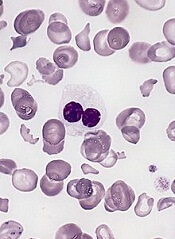
The production of two components of hemoglobin may be out of sync in Diamond Blackfan anemia (DBA) and myelodysplastic syndromes (MDS), according to a new study.
Researchers found that, in samples from patients with DBA or MDS, ribosome dysfunction delayed globin production, while heme synthesis proceeded normally.
This disruption in heme-globin coordination led to a buildup of toxic heme that killed red blood cell (RBC) precursors.
However, treating patient samples with a compound that blocks heme synthesis increased RBC production in both DBA and MDS.
Zhantao Yang, MD, of the University of Washington in Seattle, and his colleagues reported these findings in Science Translational Medicine.
Both DBA and MDS have been linked to defects in ribosome assembly, which is critical to protein production, but how this leads to anemia remains unknown.
To find out, Dr Yang and his colleagues analyzed bone marrow cells from patients with DBA (n=3) or MDS with del(5q) (n=6).
The researchers found that globin translation proceeded slowly in these samples, but heme synthesis proceeded normally.
This resulted in insufficient globin, excess heme, and excess reactive oxygen species in early erythroid precursors and, ultimately, the death of colony-forming unit–erythroid/proerythroblast cells.
The cells that were able to rapidly export heme or slow its synthesis survived and matured into RBCs, but the other colony-forming unit–erythroid cells/early proerythroblasts died.
The researchers noted that it is not clear how excess heme induces cell death in RBC precursors, but they said it likely involves both ferroptosis and apoptosis.
Regardless of the mechanism of cell death, the team found that treating the patients’ cells with succinylacetone (10 mM), a compound that blocks heme synthesis, improved RBC production.
The treatment improved RBC production in DBA and del(5q) MDS marrow cultures by 68% to 95% (P=0.03 to 0.05). In comparison, RBC production in control marrow cultures decreased by 4% to 13%.
The researchers said their experiments revealed additional important findings. First, they found that erythroid differentiation in the marrow cultures “excellently” phenocopied erythroid differentiation in vivo. This suggests these cultures can serve as a reliable platform in preclinical studies.
Second, the team said the fact that epigenetic differences between RBC precursors can lead to their preferential death or survival has broad implications. And querying the cells that preferentially survive could provide important insights.
The production of two components of hemoglobin may be out of sync in Diamond Blackfan anemia (DBA) and myelodysplastic syndromes (MDS), according to a new study.
Researchers found that, in samples from patients with DBA or MDS, ribosome dysfunction delayed globin production, while heme synthesis proceeded normally.
This disruption in heme-globin coordination led to a buildup of toxic heme that killed red blood cell (RBC) precursors.
However, treating patient samples with a compound that blocks heme synthesis increased RBC production in both DBA and MDS.
Zhantao Yang, MD, of the University of Washington in Seattle, and his colleagues reported these findings in Science Translational Medicine.
Both DBA and MDS have been linked to defects in ribosome assembly, which is critical to protein production, but how this leads to anemia remains unknown.
To find out, Dr Yang and his colleagues analyzed bone marrow cells from patients with DBA (n=3) or MDS with del(5q) (n=6).
The researchers found that globin translation proceeded slowly in these samples, but heme synthesis proceeded normally.
This resulted in insufficient globin, excess heme, and excess reactive oxygen species in early erythroid precursors and, ultimately, the death of colony-forming unit–erythroid/proerythroblast cells.
The cells that were able to rapidly export heme or slow its synthesis survived and matured into RBCs, but the other colony-forming unit–erythroid cells/early proerythroblasts died.
The researchers noted that it is not clear how excess heme induces cell death in RBC precursors, but they said it likely involves both ferroptosis and apoptosis.
Regardless of the mechanism of cell death, the team found that treating the patients’ cells with succinylacetone (10 mM), a compound that blocks heme synthesis, improved RBC production.
The treatment improved RBC production in DBA and del(5q) MDS marrow cultures by 68% to 95% (P=0.03 to 0.05). In comparison, RBC production in control marrow cultures decreased by 4% to 13%.
The researchers said their experiments revealed additional important findings. First, they found that erythroid differentiation in the marrow cultures “excellently” phenocopied erythroid differentiation in vivo. This suggests these cultures can serve as a reliable platform in preclinical studies.
Second, the team said the fact that epigenetic differences between RBC precursors can lead to their preferential death or survival has broad implications. And querying the cells that preferentially survive could provide important insights.
The production of two components of hemoglobin may be out of sync in Diamond Blackfan anemia (DBA) and myelodysplastic syndromes (MDS), according to a new study.
Researchers found that, in samples from patients with DBA or MDS, ribosome dysfunction delayed globin production, while heme synthesis proceeded normally.
This disruption in heme-globin coordination led to a buildup of toxic heme that killed red blood cell (RBC) precursors.
However, treating patient samples with a compound that blocks heme synthesis increased RBC production in both DBA and MDS.
Zhantao Yang, MD, of the University of Washington in Seattle, and his colleagues reported these findings in Science Translational Medicine.
Both DBA and MDS have been linked to defects in ribosome assembly, which is critical to protein production, but how this leads to anemia remains unknown.
To find out, Dr Yang and his colleagues analyzed bone marrow cells from patients with DBA (n=3) or MDS with del(5q) (n=6).
The researchers found that globin translation proceeded slowly in these samples, but heme synthesis proceeded normally.
This resulted in insufficient globin, excess heme, and excess reactive oxygen species in early erythroid precursors and, ultimately, the death of colony-forming unit–erythroid/proerythroblast cells.
The cells that were able to rapidly export heme or slow its synthesis survived and matured into RBCs, but the other colony-forming unit–erythroid cells/early proerythroblasts died.
The researchers noted that it is not clear how excess heme induces cell death in RBC precursors, but they said it likely involves both ferroptosis and apoptosis.
Regardless of the mechanism of cell death, the team found that treating the patients’ cells with succinylacetone (10 mM), a compound that blocks heme synthesis, improved RBC production.
The treatment improved RBC production in DBA and del(5q) MDS marrow cultures by 68% to 95% (P=0.03 to 0.05). In comparison, RBC production in control marrow cultures decreased by 4% to 13%.
The researchers said their experiments revealed additional important findings. First, they found that erythroid differentiation in the marrow cultures “excellently” phenocopied erythroid differentiation in vivo. This suggests these cultures can serve as a reliable platform in preclinical studies.
Second, the team said the fact that epigenetic differences between RBC precursors can lead to their preferential death or survival has broad implications. And querying the cells that preferentially survive could provide important insights.
Long-term PPI use damages endothelial cells

Image courtesy of NIH
Chronic exposure to proton pump inhibitors (PPIs) accelerates biological aging in human endothelial cells, according to preclinical research.
Investigators said this finding, published in Circulation Research, supports recent epidemiological and retrospective studies that revealed associations between the long-term use of PPIs and an increased risk of heart attack, renal failure, and dementia.
“When we exposed human endothelial cells over a period of time to these PPIs, we observed accelerated aging of the cells,” said John P. Cooke, MD, PhD, of the Houston Methodist Research Institute in Texas.
“The PPIs also reduce acidity in lysosomes of the endothelial cell. The lysosomes are like cellular garbage disposals and need acid to work properly. We observed cellular garbage accumulating in the endothelial cells, which sped up the aging process.”
Dr Cooke suspects this may be the unifying mechanism that explains the increased risk of heart attack, renal failure, and dementia observed in long-term PPI users.
“These drugs do not seem to adversely affect the heart and blood vessels when taken for a few weeks,” he said. “However, we urgently need studies to assess the impact of long-term use of these drugs on vascular health in a broad patient population. We also need to consider if these drugs should be so accessible without medical supervision.”
Dr Cooke and his colleagues noted that, while PPIs like esomeprazole (Nexium) were shown to affect vascular aging, H2 blockers like ranitidine (Zantac) did not adversely affect the endothelium.
Therefore, other approaches to long-term treatment that should be considered for gastroesophageal reflux disease include H2 antagonists, lifestyle modifications, and, in severe cases, surgical approaches.
The investigators also pointed out that this study had some limitations. Although two different PPIs were tested, only one of these, esomeprazole, is commercially available.
In addition, the study did not show how PPIs actually impair the lysosome’s ability to produce enough acid to clear waste.
Finally, since this study was conducted in a laboratory setting, it did not show whether PPIs act in the same way within the human body as they do in vitro.
Image courtesy of NIH
Chronic exposure to proton pump inhibitors (PPIs) accelerates biological aging in human endothelial cells, according to preclinical research.
Investigators said this finding, published in Circulation Research, supports recent epidemiological and retrospective studies that revealed associations between the long-term use of PPIs and an increased risk of heart attack, renal failure, and dementia.
“When we exposed human endothelial cells over a period of time to these PPIs, we observed accelerated aging of the cells,” said John P. Cooke, MD, PhD, of the Houston Methodist Research Institute in Texas.
“The PPIs also reduce acidity in lysosomes of the endothelial cell. The lysosomes are like cellular garbage disposals and need acid to work properly. We observed cellular garbage accumulating in the endothelial cells, which sped up the aging process.”
Dr Cooke suspects this may be the unifying mechanism that explains the increased risk of heart attack, renal failure, and dementia observed in long-term PPI users.
“These drugs do not seem to adversely affect the heart and blood vessels when taken for a few weeks,” he said. “However, we urgently need studies to assess the impact of long-term use of these drugs on vascular health in a broad patient population. We also need to consider if these drugs should be so accessible without medical supervision.”
Dr Cooke and his colleagues noted that, while PPIs like esomeprazole (Nexium) were shown to affect vascular aging, H2 blockers like ranitidine (Zantac) did not adversely affect the endothelium.
Therefore, other approaches to long-term treatment that should be considered for gastroesophageal reflux disease include H2 antagonists, lifestyle modifications, and, in severe cases, surgical approaches.
The investigators also pointed out that this study had some limitations. Although two different PPIs were tested, only one of these, esomeprazole, is commercially available.
In addition, the study did not show how PPIs actually impair the lysosome’s ability to produce enough acid to clear waste.
Finally, since this study was conducted in a laboratory setting, it did not show whether PPIs act in the same way within the human body as they do in vitro.
Image courtesy of NIH
Chronic exposure to proton pump inhibitors (PPIs) accelerates biological aging in human endothelial cells, according to preclinical research.
Investigators said this finding, published in Circulation Research, supports recent epidemiological and retrospective studies that revealed associations between the long-term use of PPIs and an increased risk of heart attack, renal failure, and dementia.
“When we exposed human endothelial cells over a period of time to these PPIs, we observed accelerated aging of the cells,” said John P. Cooke, MD, PhD, of the Houston Methodist Research Institute in Texas.
“The PPIs also reduce acidity in lysosomes of the endothelial cell. The lysosomes are like cellular garbage disposals and need acid to work properly. We observed cellular garbage accumulating in the endothelial cells, which sped up the aging process.”
Dr Cooke suspects this may be the unifying mechanism that explains the increased risk of heart attack, renal failure, and dementia observed in long-term PPI users.
“These drugs do not seem to adversely affect the heart and blood vessels when taken for a few weeks,” he said. “However, we urgently need studies to assess the impact of long-term use of these drugs on vascular health in a broad patient population. We also need to consider if these drugs should be so accessible without medical supervision.”
Dr Cooke and his colleagues noted that, while PPIs like esomeprazole (Nexium) were shown to affect vascular aging, H2 blockers like ranitidine (Zantac) did not adversely affect the endothelium.
Therefore, other approaches to long-term treatment that should be considered for gastroesophageal reflux disease include H2 antagonists, lifestyle modifications, and, in severe cases, surgical approaches.
The investigators also pointed out that this study had some limitations. Although two different PPIs were tested, only one of these, esomeprazole, is commercially available.
In addition, the study did not show how PPIs actually impair the lysosome’s ability to produce enough acid to clear waste.
Finally, since this study was conducted in a laboratory setting, it did not show whether PPIs act in the same way within the human body as they do in vitro.
EC approves long-acting hemophilia B therapy

The European Commission (EC) has approved albutrepenonacog alfa (Idelvion) to treat and prevent bleeding in children and adults with hemophilia B.
Albutrepenonacog alfa is a long-acting albumin fusion protein linking recombinant coagulation factor IX with recombinant albumin.
The product is now approved for use as routine prophylaxis, for on-demand control of bleeding, and for the perioperative management of bleeding.
Appropriate patients age 12 and older can go up to 14 days between albutrepenonacog alfa infusions. This dosing interval has been achieved while maintaining high levels of factor IX activity—above 5% over 14 days at 75 IU/kg.
“Offering 14-day dosing, Idelvion helps patients maintain higher factor IX levels over a long period of time, providing them with greater freedom from frequent infusions,” said Elena Santagostino, MD, PhD, of the University of Milan/IRCCS Maggiore Hospital in Italy.
“This is an important attribute for my patients who require a prophylactic regimen but don’t want treatment to disrupt their active lives.”
Albutrepenonacog alfa is being developed by CSL Behring. The company said the product will be launched in European markets in the coming months, as market access and pricing are obtained.
Phase 3 trial
The EC approved albutrepenonacog alfa based on results of the PROLONG-9FP clinical development program. PROLONG-9FP includes phase 1, 2, and 3 studies evaluating the safety and efficacy of albutrepenonacog alfa in adults and children (ages 1 to 61) with hemophilia B.
Data from the phase 3 study were recently published in Blood. This study included 63 previously treated male patients with severe hemophilia B. They had a mean age of 33 (range, 12 to 61).
The patients were divided into 2 groups. Group 1 (n=40) received routine prophylaxis with albutrepenonacog alfa once every 7 days for 26 weeks,
followed by a 7-, 10-, or 14-day prophylaxis regimen for a mean of 50, 38, or 51 weeks, respectively.
Group 2 received on-demand treatment with albutrepenonacog alfa for bleeding episodes for 26 weeks (n=23) and then switched to a 7-day prophylaxis regimen for a mean of 45 weeks (n=19).
The median annualized bleeding rate (ABR) was 2.0 in the prophylaxis arm (group 1) and 23.5 in the on-demand treatment arm (group 2). The median spontaneous ABRs were 0.0 and 17.0, respectively.
For patients in group 2, there was a significant reduction in median ABRs when patients switched from on-demand treatment to prophylaxis—19.22 and 1.58, respectively (P<0.0001). And there was a significant reduction in median spontaneous ABRs—15.43 and 0.00, respectively (P<0.0001).
Overall, 98.6% of bleeding episodes were treated successfully, including 93.6% that were treated with a single injection of albutrepenonacog alfa.
None of the patients developed inhibitors or experienced thromboembolic events, anaphylaxis, or life-threatening adverse events (AEs).
There were 347 treatment-emergent AEs reported in 54 (85.7%) patients. The most common were nasopharyngitis (25.4%), headache (23.8%), arthralgia (4.3%), and influenza (11.1%).
Eleven mild/moderate AEs in 5 patients (7.9%) were considered possibly related to albutrepenonacog alfa. Two patients discontinued treatment due to AEs—1 with hypersensitivity and 1 with headache.
The European Commission (EC) has approved albutrepenonacog alfa (Idelvion) to treat and prevent bleeding in children and adults with hemophilia B.
Albutrepenonacog alfa is a long-acting albumin fusion protein linking recombinant coagulation factor IX with recombinant albumin.
The product is now approved for use as routine prophylaxis, for on-demand control of bleeding, and for the perioperative management of bleeding.
Appropriate patients age 12 and older can go up to 14 days between albutrepenonacog alfa infusions. This dosing interval has been achieved while maintaining high levels of factor IX activity—above 5% over 14 days at 75 IU/kg.
“Offering 14-day dosing, Idelvion helps patients maintain higher factor IX levels over a long period of time, providing them with greater freedom from frequent infusions,” said Elena Santagostino, MD, PhD, of the University of Milan/IRCCS Maggiore Hospital in Italy.
“This is an important attribute for my patients who require a prophylactic regimen but don’t want treatment to disrupt their active lives.”
Albutrepenonacog alfa is being developed by CSL Behring. The company said the product will be launched in European markets in the coming months, as market access and pricing are obtained.
Phase 3 trial
The EC approved albutrepenonacog alfa based on results of the PROLONG-9FP clinical development program. PROLONG-9FP includes phase 1, 2, and 3 studies evaluating the safety and efficacy of albutrepenonacog alfa in adults and children (ages 1 to 61) with hemophilia B.
Data from the phase 3 study were recently published in Blood. This study included 63 previously treated male patients with severe hemophilia B. They had a mean age of 33 (range, 12 to 61).
The patients were divided into 2 groups. Group 1 (n=40) received routine prophylaxis with albutrepenonacog alfa once every 7 days for 26 weeks,
followed by a 7-, 10-, or 14-day prophylaxis regimen for a mean of 50, 38, or 51 weeks, respectively.
Group 2 received on-demand treatment with albutrepenonacog alfa for bleeding episodes for 26 weeks (n=23) and then switched to a 7-day prophylaxis regimen for a mean of 45 weeks (n=19).
The median annualized bleeding rate (ABR) was 2.0 in the prophylaxis arm (group 1) and 23.5 in the on-demand treatment arm (group 2). The median spontaneous ABRs were 0.0 and 17.0, respectively.
For patients in group 2, there was a significant reduction in median ABRs when patients switched from on-demand treatment to prophylaxis—19.22 and 1.58, respectively (P<0.0001). And there was a significant reduction in median spontaneous ABRs—15.43 and 0.00, respectively (P<0.0001).
Overall, 98.6% of bleeding episodes were treated successfully, including 93.6% that were treated with a single injection of albutrepenonacog alfa.
None of the patients developed inhibitors or experienced thromboembolic events, anaphylaxis, or life-threatening adverse events (AEs).
There were 347 treatment-emergent AEs reported in 54 (85.7%) patients. The most common were nasopharyngitis (25.4%), headache (23.8%), arthralgia (4.3%), and influenza (11.1%).
Eleven mild/moderate AEs in 5 patients (7.9%) were considered possibly related to albutrepenonacog alfa. Two patients discontinued treatment due to AEs—1 with hypersensitivity and 1 with headache.
The European Commission (EC) has approved albutrepenonacog alfa (Idelvion) to treat and prevent bleeding in children and adults with hemophilia B.
Albutrepenonacog alfa is a long-acting albumin fusion protein linking recombinant coagulation factor IX with recombinant albumin.
The product is now approved for use as routine prophylaxis, for on-demand control of bleeding, and for the perioperative management of bleeding.
Appropriate patients age 12 and older can go up to 14 days between albutrepenonacog alfa infusions. This dosing interval has been achieved while maintaining high levels of factor IX activity—above 5% over 14 days at 75 IU/kg.
“Offering 14-day dosing, Idelvion helps patients maintain higher factor IX levels over a long period of time, providing them with greater freedom from frequent infusions,” said Elena Santagostino, MD, PhD, of the University of Milan/IRCCS Maggiore Hospital in Italy.
“This is an important attribute for my patients who require a prophylactic regimen but don’t want treatment to disrupt their active lives.”
Albutrepenonacog alfa is being developed by CSL Behring. The company said the product will be launched in European markets in the coming months, as market access and pricing are obtained.
Phase 3 trial
The EC approved albutrepenonacog alfa based on results of the PROLONG-9FP clinical development program. PROLONG-9FP includes phase 1, 2, and 3 studies evaluating the safety and efficacy of albutrepenonacog alfa in adults and children (ages 1 to 61) with hemophilia B.
Data from the phase 3 study were recently published in Blood. This study included 63 previously treated male patients with severe hemophilia B. They had a mean age of 33 (range, 12 to 61).
The patients were divided into 2 groups. Group 1 (n=40) received routine prophylaxis with albutrepenonacog alfa once every 7 days for 26 weeks,
followed by a 7-, 10-, or 14-day prophylaxis regimen for a mean of 50, 38, or 51 weeks, respectively.
Group 2 received on-demand treatment with albutrepenonacog alfa for bleeding episodes for 26 weeks (n=23) and then switched to a 7-day prophylaxis regimen for a mean of 45 weeks (n=19).
The median annualized bleeding rate (ABR) was 2.0 in the prophylaxis arm (group 1) and 23.5 in the on-demand treatment arm (group 2). The median spontaneous ABRs were 0.0 and 17.0, respectively.
For patients in group 2, there was a significant reduction in median ABRs when patients switched from on-demand treatment to prophylaxis—19.22 and 1.58, respectively (P<0.0001). And there was a significant reduction in median spontaneous ABRs—15.43 and 0.00, respectively (P<0.0001).
Overall, 98.6% of bleeding episodes were treated successfully, including 93.6% that were treated with a single injection of albutrepenonacog alfa.
None of the patients developed inhibitors or experienced thromboembolic events, anaphylaxis, or life-threatening adverse events (AEs).
There were 347 treatment-emergent AEs reported in 54 (85.7%) patients. The most common were nasopharyngitis (25.4%), headache (23.8%), arthralgia (4.3%), and influenza (11.1%).
Eleven mild/moderate AEs in 5 patients (7.9%) were considered possibly related to albutrepenonacog alfa. Two patients discontinued treatment due to AEs—1 with hypersensitivity and 1 with headache.
Silk keeps blood samples stable at high temps
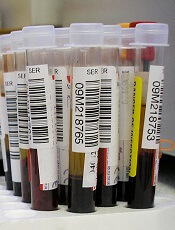
Photo by Graham Colm
A new technique provides a way to keep blood samples stable for long periods at high temperatures, according to research published in PNAS.
Investigators found they could keep blood samples stable for nearly 3 months at temperatures as high as 113 degrees F by encapsulating them in air-dried silk protein.
The team believes this technique could have broad applications for clinical care and research.
“This approach should facilitate outpatient blood collection for disease screening and monitoring, particularly for underserved populations, and also serve needs of researchers and clinicians without access to centralized testing facilities,” said study author David L. Kaplan, PhD, of the Department of Biomedical Engineering at Tufts University in Medford, Massachusetts.
For this approach, Dr Kaplan and his colleagues mixed a solution or a powder of purified silk fibroin protein extracted from silkworm cocoons with blood or plasma and air-dried the mixture.
The air-dried silk films were stored at temperatures between 22 and 45 degrees C (71.6 to 113 degrees F). At set intervals, the researchers recovered the encapsulated blood samples by dissolving the films in water and analyzed them.
“We found that biomarkers could be successfully analyzed even after storage for 84 days at temperatures up to 113 degrees F,” said study author Jonathan A. Kluge, PhD, formerly of Tufts University but now at Vaxess Technologies in Cambridge, Massachusetts.
“Encapsulation of samples in silk provided better protection than the traditional approach of drying on paper, especially at these elevated temperatures, which a shipment might encounter during overseas or summer transport.”
The investigators noted that the silk-based technique requires accurate starting volumes of the blood or other specimens to be known, and salts or other buffers are needed to reconstitute samples for accurate testing of certain markers.
Photo by Graham Colm
A new technique provides a way to keep blood samples stable for long periods at high temperatures, according to research published in PNAS.
Investigators found they could keep blood samples stable for nearly 3 months at temperatures as high as 113 degrees F by encapsulating them in air-dried silk protein.
The team believes this technique could have broad applications for clinical care and research.
“This approach should facilitate outpatient blood collection for disease screening and monitoring, particularly for underserved populations, and also serve needs of researchers and clinicians without access to centralized testing facilities,” said study author David L. Kaplan, PhD, of the Department of Biomedical Engineering at Tufts University in Medford, Massachusetts.
For this approach, Dr Kaplan and his colleagues mixed a solution or a powder of purified silk fibroin protein extracted from silkworm cocoons with blood or plasma and air-dried the mixture.
The air-dried silk films were stored at temperatures between 22 and 45 degrees C (71.6 to 113 degrees F). At set intervals, the researchers recovered the encapsulated blood samples by dissolving the films in water and analyzed them.
“We found that biomarkers could be successfully analyzed even after storage for 84 days at temperatures up to 113 degrees F,” said study author Jonathan A. Kluge, PhD, formerly of Tufts University but now at Vaxess Technologies in Cambridge, Massachusetts.
“Encapsulation of samples in silk provided better protection than the traditional approach of drying on paper, especially at these elevated temperatures, which a shipment might encounter during overseas or summer transport.”
The investigators noted that the silk-based technique requires accurate starting volumes of the blood or other specimens to be known, and salts or other buffers are needed to reconstitute samples for accurate testing of certain markers.
Photo by Graham Colm
A new technique provides a way to keep blood samples stable for long periods at high temperatures, according to research published in PNAS.
Investigators found they could keep blood samples stable for nearly 3 months at temperatures as high as 113 degrees F by encapsulating them in air-dried silk protein.
The team believes this technique could have broad applications for clinical care and research.
“This approach should facilitate outpatient blood collection for disease screening and monitoring, particularly for underserved populations, and also serve needs of researchers and clinicians without access to centralized testing facilities,” said study author David L. Kaplan, PhD, of the Department of Biomedical Engineering at Tufts University in Medford, Massachusetts.
For this approach, Dr Kaplan and his colleagues mixed a solution or a powder of purified silk fibroin protein extracted from silkworm cocoons with blood or plasma and air-dried the mixture.
The air-dried silk films were stored at temperatures between 22 and 45 degrees C (71.6 to 113 degrees F). At set intervals, the researchers recovered the encapsulated blood samples by dissolving the films in water and analyzed them.
“We found that biomarkers could be successfully analyzed even after storage for 84 days at temperatures up to 113 degrees F,” said study author Jonathan A. Kluge, PhD, formerly of Tufts University but now at Vaxess Technologies in Cambridge, Massachusetts.
“Encapsulation of samples in silk provided better protection than the traditional approach of drying on paper, especially at these elevated temperatures, which a shipment might encounter during overseas or summer transport.”
The investigators noted that the silk-based technique requires accurate starting volumes of the blood or other specimens to be known, and salts or other buffers are needed to reconstitute samples for accurate testing of certain markers.
Change to EHR can increase use of generic drugs

Photo courtesy of NIH
Changing the default prescription settings in the electronic health record (EHR) can increase the prescribing rates of generic drugs, according to a study published in JAMA Internal Medicine.
The study showed an increase in generic prescribing rates from 75% to 98% when prescriptions were defaulted to a generic medication (if available) in the EHR.
To order the brand name drug, physicians had to opt out by checking a box labelled “dispense as written.”
The study, which builds upon previous research, indicates that the manner in which default options are designed and implemented can influence physician behavior.
“Many of the decisions physicians make are shifting from pen and paper to digital platforms, like the electronic health record, yet there lacks sufficient evidence on how to design choice architecture within these environments to improve healthcare value and outcomes,” said study author Mitesh S. Patel, MD, of the Perelman School of Medicine at the University of Pennsylvania in Philadelphia.
“Our results demonstrate that default options are a powerful tool for influencing physician behaviors but that they have to be well-designed to achieve the intended goals.”
For the study, Dr Patel and his colleagues tracked prescribing rates of oral medications for 10 common medical conditions across the University of Pennsylvania Health System.
Rather than changing prescription default settings to display generic names instead of brand names—a change that previously resulted in a 5% change in prescribing habits—in the new study, an opt-out checkbox was used.
When a physician prescribed a drug for a patient, the EHR would default to an equivalent generic. However, the physician could still prescribe the brand name when warranted by selecting the “dispense as written” checkbox.
The researchers compared prescribing rates between the pre-intervention period (January 2014 to October 2014) and the post-intervention period (December 2014 to June 2015).
The results showed that, during the pre-intervention period, generic drugs were prescribed 75.3% of the time, compared to 98.4% of the time during the post-intervention period (P<0.001).
The researchers said this indicates that, for most drugs, physicians specified the brand name should be prescribed only 2% of the time.
The exception to the trend was when physicians prescribed Synthroid for patients with thyroid conditions, as this brand name drug is known to have different hormone levels than its generic version, levothyroxine. In this case, physicians opted out and selected the brand name 22% of the time.
“Studies examining these seemingly minute details point to the importance of design when implementing defaults, which is something that could in result in a significant savings for patients and health systems, and hasn’t previously been examined closely in a healthcare setting,” said study author C. William Hanson, MD, of the Perelman School of Medicine.
“If a simple, low-cost change like adding an opt-out check box to prescription settings can make such a significant impact, there are likely other refinements that can be made just as easily that will also result in cost savings for patients and health systems. It’s a valuable area of research to continue exploring.”
Photo courtesy of NIH
Changing the default prescription settings in the electronic health record (EHR) can increase the prescribing rates of generic drugs, according to a study published in JAMA Internal Medicine.
The study showed an increase in generic prescribing rates from 75% to 98% when prescriptions were defaulted to a generic medication (if available) in the EHR.
To order the brand name drug, physicians had to opt out by checking a box labelled “dispense as written.”
The study, which builds upon previous research, indicates that the manner in which default options are designed and implemented can influence physician behavior.
“Many of the decisions physicians make are shifting from pen and paper to digital platforms, like the electronic health record, yet there lacks sufficient evidence on how to design choice architecture within these environments to improve healthcare value and outcomes,” said study author Mitesh S. Patel, MD, of the Perelman School of Medicine at the University of Pennsylvania in Philadelphia.
“Our results demonstrate that default options are a powerful tool for influencing physician behaviors but that they have to be well-designed to achieve the intended goals.”
For the study, Dr Patel and his colleagues tracked prescribing rates of oral medications for 10 common medical conditions across the University of Pennsylvania Health System.
Rather than changing prescription default settings to display generic names instead of brand names—a change that previously resulted in a 5% change in prescribing habits—in the new study, an opt-out checkbox was used.
When a physician prescribed a drug for a patient, the EHR would default to an equivalent generic. However, the physician could still prescribe the brand name when warranted by selecting the “dispense as written” checkbox.
The researchers compared prescribing rates between the pre-intervention period (January 2014 to October 2014) and the post-intervention period (December 2014 to June 2015).
The results showed that, during the pre-intervention period, generic drugs were prescribed 75.3% of the time, compared to 98.4% of the time during the post-intervention period (P<0.001).
The researchers said this indicates that, for most drugs, physicians specified the brand name should be prescribed only 2% of the time.
The exception to the trend was when physicians prescribed Synthroid for patients with thyroid conditions, as this brand name drug is known to have different hormone levels than its generic version, levothyroxine. In this case, physicians opted out and selected the brand name 22% of the time.
“Studies examining these seemingly minute details point to the importance of design when implementing defaults, which is something that could in result in a significant savings for patients and health systems, and hasn’t previously been examined closely in a healthcare setting,” said study author C. William Hanson, MD, of the Perelman School of Medicine.
“If a simple, low-cost change like adding an opt-out check box to prescription settings can make such a significant impact, there are likely other refinements that can be made just as easily that will also result in cost savings for patients and health systems. It’s a valuable area of research to continue exploring.”
Photo courtesy of NIH
Changing the default prescription settings in the electronic health record (EHR) can increase the prescribing rates of generic drugs, according to a study published in JAMA Internal Medicine.
The study showed an increase in generic prescribing rates from 75% to 98% when prescriptions were defaulted to a generic medication (if available) in the EHR.
To order the brand name drug, physicians had to opt out by checking a box labelled “dispense as written.”
The study, which builds upon previous research, indicates that the manner in which default options are designed and implemented can influence physician behavior.
“Many of the decisions physicians make are shifting from pen and paper to digital platforms, like the electronic health record, yet there lacks sufficient evidence on how to design choice architecture within these environments to improve healthcare value and outcomes,” said study author Mitesh S. Patel, MD, of the Perelman School of Medicine at the University of Pennsylvania in Philadelphia.
“Our results demonstrate that default options are a powerful tool for influencing physician behaviors but that they have to be well-designed to achieve the intended goals.”
For the study, Dr Patel and his colleagues tracked prescribing rates of oral medications for 10 common medical conditions across the University of Pennsylvania Health System.
Rather than changing prescription default settings to display generic names instead of brand names—a change that previously resulted in a 5% change in prescribing habits—in the new study, an opt-out checkbox was used.
When a physician prescribed a drug for a patient, the EHR would default to an equivalent generic. However, the physician could still prescribe the brand name when warranted by selecting the “dispense as written” checkbox.
The researchers compared prescribing rates between the pre-intervention period (January 2014 to October 2014) and the post-intervention period (December 2014 to June 2015).
The results showed that, during the pre-intervention period, generic drugs were prescribed 75.3% of the time, compared to 98.4% of the time during the post-intervention period (P<0.001).
The researchers said this indicates that, for most drugs, physicians specified the brand name should be prescribed only 2% of the time.
The exception to the trend was when physicians prescribed Synthroid for patients with thyroid conditions, as this brand name drug is known to have different hormone levels than its generic version, levothyroxine. In this case, physicians opted out and selected the brand name 22% of the time.
“Studies examining these seemingly minute details point to the importance of design when implementing defaults, which is something that could in result in a significant savings for patients and health systems, and hasn’t previously been examined closely in a healthcare setting,” said study author C. William Hanson, MD, of the Perelman School of Medicine.
“If a simple, low-cost change like adding an opt-out check box to prescription settings can make such a significant impact, there are likely other refinements that can be made just as easily that will also result in cost savings for patients and health systems. It’s a valuable area of research to continue exploring.”
Study suggests ticagrelor comparable to aspirin

Photo courtesy of AstraZeneca
Results of the SOCRATES trial suggest that ticagrelor is about as safe and effective as aspirin for patients with acute ischemic stroke or transient ischemic attack.
The incidence of the study’s primary endpoint—a composite of stroke, myocardial infarction, and death at 90 days—was similar between the aspirin and ticagrelor arms.
Likewise, there was no significant difference between the arms with regard to safety endpoints.
These results were published in NEJM. The trial was funded by AstraZeneca, which markets ticagrelor as Brilinta.
SOCRATES was a double-blind, controlled trial that enrolled 13,199 patients with a nonsevere ischemic stroke or high-risk transient ischemic attack. The patients had not received intravenous or intra-arterial thrombolysis and were not considered to have had a cardioembolic stroke.
Within 24 hours of symptom onset, the patients were randomized to receive ticagrelor (n=6589) or aspirin (n=6610).
Patients received ticagrelor at a loading dose of 180 mg on day 1, followed by 90 mg twice daily for days 2 through 90. Patients received aspirin at 300 mg on day 1, followed by 100 mg daily for days 2 through 90.
Overall, the differences in baseline characteristics between the treatment arms were not significant. The exceptions were the proportions of patients with a history of diabetes (higher in the ticagrelor arm) or hypertension (higher in the aspirin arm; P<0.05 for both).
The study’s primary endpoint was the occurrence of stroke, myocardial infarction, or death within 90 days. This endpoint occurred in 6.7% of patients in the ticagrelor arm and 7.5% of those in the aspirin arm. The hazard ratio (HR) was 0.89 (P=0.07).
One percent of patients in the ticagrelor arm died, as did 0.9% of patients in the aspirin arm (HR=1.18, P=0.36). The rates of myocardial infarction were 0.4% and 0.3%, respectively (HR=1.20, P=0.55).
The rates of all stroke were 5.9% and 6.8%, respectively (HR=0.86, P=0.03), and the rates of ischemic stroke were 5.8% and 6.7%, respectively (HR=0.87, P=0.046).
The researchers said the P values for all stroke and ischemic stroke were considered nonsignificant in accordance with the hierarchical testing plan used in this study.
Major bleeding occurred in 0.5% of patients in the ticagrelor arm and 0.6% of patients in the aspirin arm (HR=0.83, P=0.45).
Intracranial hemorrhage occurred in 0.2% and 0.3% of patients (HR=0.68, P=0.30), respectively. And fatal bleeding occurred in 0.1% of patients in both arms.
Photo courtesy of AstraZeneca
Results of the SOCRATES trial suggest that ticagrelor is about as safe and effective as aspirin for patients with acute ischemic stroke or transient ischemic attack.
The incidence of the study’s primary endpoint—a composite of stroke, myocardial infarction, and death at 90 days—was similar between the aspirin and ticagrelor arms.
Likewise, there was no significant difference between the arms with regard to safety endpoints.
These results were published in NEJM. The trial was funded by AstraZeneca, which markets ticagrelor as Brilinta.
SOCRATES was a double-blind, controlled trial that enrolled 13,199 patients with a nonsevere ischemic stroke or high-risk transient ischemic attack. The patients had not received intravenous or intra-arterial thrombolysis and were not considered to have had a cardioembolic stroke.
Within 24 hours of symptom onset, the patients were randomized to receive ticagrelor (n=6589) or aspirin (n=6610).
Patients received ticagrelor at a loading dose of 180 mg on day 1, followed by 90 mg twice daily for days 2 through 90. Patients received aspirin at 300 mg on day 1, followed by 100 mg daily for days 2 through 90.
Overall, the differences in baseline characteristics between the treatment arms were not significant. The exceptions were the proportions of patients with a history of diabetes (higher in the ticagrelor arm) or hypertension (higher in the aspirin arm; P<0.05 for both).
The study’s primary endpoint was the occurrence of stroke, myocardial infarction, or death within 90 days. This endpoint occurred in 6.7% of patients in the ticagrelor arm and 7.5% of those in the aspirin arm. The hazard ratio (HR) was 0.89 (P=0.07).
One percent of patients in the ticagrelor arm died, as did 0.9% of patients in the aspirin arm (HR=1.18, P=0.36). The rates of myocardial infarction were 0.4% and 0.3%, respectively (HR=1.20, P=0.55).
The rates of all stroke were 5.9% and 6.8%, respectively (HR=0.86, P=0.03), and the rates of ischemic stroke were 5.8% and 6.7%, respectively (HR=0.87, P=0.046).
The researchers said the P values for all stroke and ischemic stroke were considered nonsignificant in accordance with the hierarchical testing plan used in this study.
Major bleeding occurred in 0.5% of patients in the ticagrelor arm and 0.6% of patients in the aspirin arm (HR=0.83, P=0.45).
Intracranial hemorrhage occurred in 0.2% and 0.3% of patients (HR=0.68, P=0.30), respectively. And fatal bleeding occurred in 0.1% of patients in both arms.
Photo courtesy of AstraZeneca
Results of the SOCRATES trial suggest that ticagrelor is about as safe and effective as aspirin for patients with acute ischemic stroke or transient ischemic attack.
The incidence of the study’s primary endpoint—a composite of stroke, myocardial infarction, and death at 90 days—was similar between the aspirin and ticagrelor arms.
Likewise, there was no significant difference between the arms with regard to safety endpoints.
These results were published in NEJM. The trial was funded by AstraZeneca, which markets ticagrelor as Brilinta.
SOCRATES was a double-blind, controlled trial that enrolled 13,199 patients with a nonsevere ischemic stroke or high-risk transient ischemic attack. The patients had not received intravenous or intra-arterial thrombolysis and were not considered to have had a cardioembolic stroke.
Within 24 hours of symptom onset, the patients were randomized to receive ticagrelor (n=6589) or aspirin (n=6610).
Patients received ticagrelor at a loading dose of 180 mg on day 1, followed by 90 mg twice daily for days 2 through 90. Patients received aspirin at 300 mg on day 1, followed by 100 mg daily for days 2 through 90.
Overall, the differences in baseline characteristics between the treatment arms were not significant. The exceptions were the proportions of patients with a history of diabetes (higher in the ticagrelor arm) or hypertension (higher in the aspirin arm; P<0.05 for both).
The study’s primary endpoint was the occurrence of stroke, myocardial infarction, or death within 90 days. This endpoint occurred in 6.7% of patients in the ticagrelor arm and 7.5% of those in the aspirin arm. The hazard ratio (HR) was 0.89 (P=0.07).
One percent of patients in the ticagrelor arm died, as did 0.9% of patients in the aspirin arm (HR=1.18, P=0.36). The rates of myocardial infarction were 0.4% and 0.3%, respectively (HR=1.20, P=0.55).
The rates of all stroke were 5.9% and 6.8%, respectively (HR=0.86, P=0.03), and the rates of ischemic stroke were 5.8% and 6.7%, respectively (HR=0.87, P=0.046).
The researchers said the P values for all stroke and ischemic stroke were considered nonsignificant in accordance with the hierarchical testing plan used in this study.
Major bleeding occurred in 0.5% of patients in the ticagrelor arm and 0.6% of patients in the aspirin arm (HR=0.83, P=0.45).
Intracranial hemorrhage occurred in 0.2% and 0.3% of patients (HR=0.68, P=0.30), respectively. And fatal bleeding occurred in 0.1% of patients in both arms.