User login
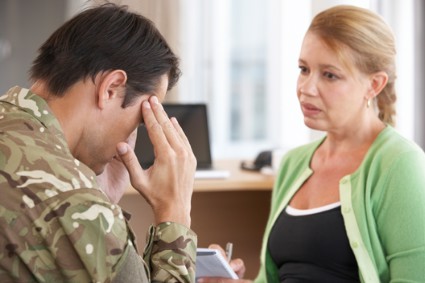
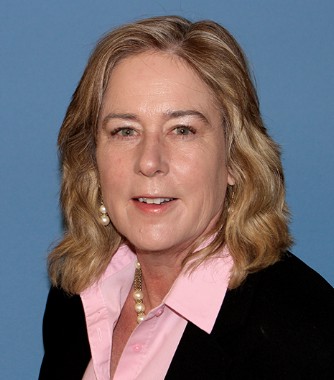
Providing sensitive mental health treatment to patients who have served in the military requires better understanding of this unique culture. Toward that end, this news organization recently sat down with Col. (Ret.) Elspeth Cameron Ritchie, former chief of psychiatry for the U.S. Army and the current chief clinical officer in the department of behavioral health for the District of Columbia. The following is an edited transcript of a discussion with Dr. Ritchie*.
Question: Why are there more suicides among service members who’ve never deployed than in those who have been in-country?

Dr. Ritchie: For many years, there was a relatively stable suicide rate at about 10 per 100,000 troops per year. Starting in 2004, the rate more than doubled, so that by 2010, 2011, and 2013, we had very high suicide rates for the military. The suicide pattern also shifted over time. In the beginning, there was a lot of concern that the rates were related to deployment; although in individual cases, the deployment may have caused some stresses, by and large the suicides did not seem to be directly related to individual deployment, and now more than half the suicides occur in those who’ve never deployed.
Why is that? Well, it’s complex, but one of the reasons I look at is that the army itself has been on a high operations tempo, so troops are deploying all the time; they’re tired, so one of the things that’s going on is that when a new soldier joins a unit, they might not be welcomed in the same way as they would have been in the past, because everyone’s so busy. So, that’s one piece of it.
But, let me go big picture. For a long time, the stressors that led to suicide have been all about failed relationships and also getting into trouble at work or having financial troubles. And that pattern has stayed the same over time, but the number of troops who have suicided has risen over time.
Question: So it’s the social structure of the military driving this, at least in part?
Dr. Ritchie: That’s one of the drivers. The people are just so busy, by that I mean the units, who have so busy going back and forth. So, for example, if you look at the 101st Division at Fort Campbell, they have been in and out of the theater of war almost every other year for a long time, they’re slowing down now a little, and they had a very high suicide rate for a number of years. And that’s not dissimilar to the other bases like Fort Stewart and Fort Hood; they are all deploying troops very rapidly in and out of the theater of war.
Question: Does the military need to sensitize its troops to welcoming in recruits?
Dr. Ritchie: The military has been very concerned about the suicide rate, and they have done a lot about it, with perhaps the beginning of some success in that the suicide rate among active duty troops is starting to level off, but the rate is rising in the Reserves and National Guard. But, for example, there was a Department of the Army task force to look at this, and it started out as suicide prevention, but then they added risk reduction, and they then added health promotion as part of it. Then there was the Department of Defense task force with many, many recommendations. And basically, the easy recommendations are all done. Recommendations that are harder to do, like ending the conflicts of wars, well, the wars are finally winding down, but that’s not something you can just "stop," and as the military, it’s your job to go to war.
Question: Is the military screening recruits well enough? Maybe they are coming in with too many problems to begin with.
Dr. Ritchie: There already is quite a bit of screening. There are some misconceptions about that. As a matter of fact, there is a bill going to Congress about that now, that calls for adding mental health screening. There already is a history and physical done as a young recruit tries to enter the military, and they’re asked about mental health problems. But one of the realities is that if you’re motivated to come into the service, you’re probably not going to talk about your mental health problems, because you’re worried that will disqualify you from service. Already, only about a third of people who apply to the military are able to make the mental health and physical standards. So, there is a screening.
We have tried pen-and-paper screenings for 100 years, literally, since World War I, and what we’ve found is that generally, they don’t work. Again, these are based on self-report. If somebody fills out a piece of paper that asks about suicidal ideation, if the person wants to get into the military, they’re not going to answer that. And the military doesn’t have access to previous records unless the person chooses to offer them.
Let me add to that, the best screen is basic training. So, remember when a recruit comes in, they have 8 to 13 weeks, depending on the service, of very intense interaction with other recruits, and with the drill sergeants, and about 8% of troops actually wash out of basic training. What we’ve tried over and over to do is to develop a paper-and-pencil screen, but it either isn’t sensitive or isn’t specific enough.
Question: What about "checkpoint" screenings that you do periodically after some time in the service?
Dr. Ritchie: As people come back from deployment, they are screened, and 3 to 6 months later, they have a postdeployment reassessment because we realized that people weren’t going to tell the truth as they were coming back home because they just wanted to go home. So, we asked them again. And, there is a yearly assessment done, but again, a lot of what this relies on is the soldier’s willingness to share what’s really going on. There are questions for depression, and suicidal ideation, and posttraumatic stress disorder as part of the whole assessment process.
Question: But will they answer truthfully at all times, regardless of how they feel about deployment, because they are afraid of being stigmatized?
Dr. Ritchie: Remember that this is an all-volunteer army, and we’ve been at war since 9/11/2001, so troops who have been in the service know they’re going to be deployed and want to be deployed. And with the difficult economy, they want to stay in the service and they want to be promoted. So, they are concerned if they answer "yes" to a mental health question, they will be made to see a psychiatrist, which might have an impact on their career, or they won’t be allowed to deploy. So, there is a lot of motivation to minimize symptoms.
Now, that’s true of people who want to make the military a career. I have also seen that people who have decided to leave the military, or the military has decided that the person shouldn’t stay, then there is often a lot of incentive to answer yes to all the mental and physical health symptoms. For example, on your retirement physical, you’re told, "Make sure you put down every condition you’ve got because you want to have access to the VA" and maybe you’ll get disability or get compensated. So you’ll often see underreporting if a soldier wants to stay on active duty, and perhaps there’s some embellishment of symptoms as they’re going out the door.
Question: What about therapies that are said to address other physical symptoms, like acupuncture, but which are actually addressing the mental health aspect as well?
Dr. Ritchie: There are two main types of evidence-based therapies for PTSD. There’s the cognitive-behavioral therapy, which has cognitive processing therapy as part of it, and there is exposure-based therapy, as evidence-based psychotherapies. And then there are medications – the selective serotonin reuptake inhibitors for PTSD – as well. However, many, many service members don’t want to take medication, and/or they don’t want to go and talk to someone about their trauma. In most cases, these are young men, and young men often don’t want to talk about anything, much less their feelings or a traumatic experience where perhaps one of their friends was killed or wounded. So, I have gotten very interested in the various forms of integrative medicine – such as acupuncture, yoga, mindfulness – which many of our troops really enjoy doing. They probably don’t treat the PTSD by themselves, but they provide a bridge to treatment.
And, perhaps they do treat the symptoms themselves. Certainly, service members have reported vast improvements from acupuncture, from stellate ganglion block, from yoga. They say: "It cools my brain so I can concentrate on other things."
Question: Please explain to us how stellate ganglion block, which is an anesthesia, is used to treat PTSD.
Dr. Ritchie: It is an anesthetic technique used for pain, where lidocaine is injected into the stellate ganglion by an anesthesiologist. It has been seen to dramatically reduce PTSD symptoms in some. There is not yet a robust body of literature, but there are certainly a lot of very promising case studies and anecdotal reports on it.
Question: So, how does a soldier who would like to try these integrative therapies to help minimize their discomfort and anguish without overtly asking and risking being stigmatized, go about receiving them?
Dr. Ritchie: Good question. To be honest, it’s highly variable as to what their access is to those treatments. At a place like the NICoE (National Intrepid Center of Excellence) in Bethesda at the new Walter Reed Military Medical Center, there is a very intense program that includes art therapy, acupuncture, and virtual reality exposure therapy. There are also other facilities, such as one in San Diego, but if a service member doesn’t have access to these facilities it might be difficult to get this kind of treatment.
Question: How does the Veterans Health Administration deal with this?
Dr. Ritchie: I need to separate what I have just been talking about, which is to deal with the military health care system, from the VA. There is a lot of confusion over this. They are not the same health care system; they’re very different. When someone is on active duty, by and large they will be seen in the military health care system. If someone is a veteran, they may or may not be able to be seen in the VA depending on their priority level, their income, whether they had a disability, whether they had a service-related condition, et cetera.
The larger question is, how does the VA deal with PTSD? Well, I think the VA does a really good job providing evidence-based therapies, and in other cases, it’s quite overwhelmed by the number of veterans coming to it for treatment. It’s hard, because many people will say that the VA is 141 different hospitals, and it has centers and clinics, so it’s highly variable.
Question: So, if I am a service member seeking treatment without stigma, would I go to a community-based clinician?
Dr. Ritchie: The military actually has been quite active in trying to provide confidential treatment. Military OneSource has a website and phone number to call to refer troops to resources. Although a military member can go on his or her own to a community doctor for treatment, they’re not really supposed to, although certainly people do it.
On every base, there are chaplains and a mental health clinic, and there are other programs such as resiliency training, like the Comprehensive Soldier Fitness Program, and other programs that try to provide treatment while minimizing stigma, and to reach out to the service member who might not be willing to reach out to the military. So, the military is trying, but it’s not easy. It’s not as simple as hiring 20 more psychologists, because a lot of people are worried about their career and so won’t come into a clinic.
I didn’t talk about this before, but the army also uses therapy dogs, or animal-assisted therapy, because a lot of times the soldier won’t come talk to you as a shrink, but they will come talk to you about their dog. So, there are a lot of bridges that can be made.
Question: Well, then is there really a stigma? Or if it’s there, is it really as impactful as a soldier might fear?
Dr. Ritchie: I wish I could say that there is no reality behind the stigma, but there is a reality there. If someone is known to seek mental health treatment, some people will think less of them. This is true elsewhere in law enforcement and in the civilian world. So the approach taken in many cases in the military is to combine mental health with primary care, because if someone goes into the primary care clinic, that’s a lot less stigmatizing than sitting in the mental health clinic. But simply saying that stigma should end doesn’t work.
This is a downsizing military, and there is lots of talk about troop cuts, especially in the Army, so you don’t want to be the one who has something less than perfect on your record.
Question: Let’s back up to something you said before about the purpose of a soldier being to win wars. If the military is scaling back, are troops worried they won’t have that job to do any more, and maybe are wondering about their purpose, so that there is an existential component to the anguish these service members face? In other words, is the term "posttraumatic stress disorder" wholly appropriate to explain what is happening before some of these people try, and in some cases, succeed, to take their lives?
Dr. Ritchie: There is a term I will throw in here that I think will help the discussion. Moral injury. It’s related, but not the same as PTSD, which is a diagnosis in the DSM-IV and DSM-5, while "moral injury" is not. Moral injury refers to the feelings of guilt and shame that might be related to killing others or having your friends killed: being tainted by being at war.
So when I look at PTSD, it isn’t as a risk factor for suicide itself. As we talked about, more than half of the suicides now happen in those who have not deployed. PTSD does factor in, in the sense that it can contribute to the breakup of relationships, the feeling that you don’t fit in, and those are risk factors for suicide. So, I am not saying PTSD is unrelated, but if you look at the number of completed suicides, only 10% had a PTSD diagnosis. More could have had PTSD, and it just wasn’t in their records. But, back to the question about existential angst, I think it’s around having seen vast amounts of death and destruction.
Question: Is that your point of view, or does the military recognize this?
Dr. Ritchie: There is increasing recognition, but there are no systematic studies that have been done on it yet. And, the issue about asking people if they’ve killed is difficult, because in many of these cases there is a gray area. If someone is shooting at you, there is no question that you can defend yourself, but people worry whether they have committed a war crime, so it’s difficult to study this scientifically without getting into questions about ethics and legal quandaries.
Question: So language is very important. PTSD used to be called "shell shock." When did it broaden out to become PTSD and become used to address anything that traumatizes a person, not just soldiers?
Dr. Ritchie: Here’s a brief answer. We have called PTSD many things: shell shock, battle fatigue, combat neurosis, and combat stress injury. There have been many names. The term PTSD began in 1980, after the Vietnam War. And a lot of the concepts were based on soldiers and service members from that war. It also encompasses other trauma, the largest amount of literature being on sexual assault victims and disaster victims.
The diagnosis was upgraded in the DSM-5, meaning that there were more symptoms added to the classic symptoms, which were hypervigilance – being jumpy and nervous, the flashbacks and memories, and the numbness, and being detached. Now, the symptoms include sleep difficulties, depression, irritability, cognitive difficulties, and somatic reactions. So, it’s a wider diagnosis now, and it will be interesting to see how that affects the prevalence of the disorder.
Question: People have been traumatized since the beginning of humanity, and have needed to cope with it. That’s where the existentialism comes in. Does PTSD offer an opportunity to find meaning in life that wasn’t seen before?
Dr. Ritchie: Certainly, people talk about posttraumatic growth. People used to join the army because it "made a man out of you." I think there are certainly good things that come out of military service on all kinds of levels. Seeing trauma and being around trauma don’t mean you are scarred for life. You can grow as a result of the experience.
Question: Barbara Rothbaum, Ph.D., a leading expert in exposure therapy, says that the trauma will always be sad, but that it doesn’t mean you can’t feel joy again. People forget that you can come out the other side – that PTSD isn’t permanently debilitating.
Dr. Ritchie: PTSD has a range of severity. Dr. Robert Ursano at the Center for the Study of Traumatic Stress in Bethesda, likened it to being the common cold of psychiatry. A lot of people are exposed, have symptoms; most become better quickly, but in some it becomes chronic bronchitis or pneumonia. So, it’s important to recognize there is both a range in the severity of the trauma and people’s reaction to it.
It’s also important to remember that people who are going to combat now are well trained, well armed, and in combat gear, and they are expecting traumatic things. That’s different than if you’ve been the victim of sexual assault, and you’re surprised and feel vulnerable and helpless. So, I think the vast majority of those who experience the psychological effects of war go on to grow from the experience.
–Interview by Whitney McKnight
*CORRECTION, 4/30/2014: An earlier version of this article misidentified Col. (Ret.) Elspeth Cameron Ritchie.
Providing sensitive mental health treatment to patients who have served in the military requires better understanding of this unique culture. Toward that end, this news organization recently sat down with Col. (Ret.) Elspeth Cameron Ritchie, former chief of psychiatry for the U.S. Army and the current chief clinical officer in the department of behavioral health for the District of Columbia. The following is an edited transcript of a discussion with Dr. Ritchie*.
Question: Why are there more suicides among service members who’ve never deployed than in those who have been in-country?
Dr. Ritchie: For many years, there was a relatively stable suicide rate at about 10 per 100,000 troops per year. Starting in 2004, the rate more than doubled, so that by 2010, 2011, and 2013, we had very high suicide rates for the military. The suicide pattern also shifted over time. In the beginning, there was a lot of concern that the rates were related to deployment; although in individual cases, the deployment may have caused some stresses, by and large the suicides did not seem to be directly related to individual deployment, and now more than half the suicides occur in those who’ve never deployed.
Why is that? Well, it’s complex, but one of the reasons I look at is that the army itself has been on a high operations tempo, so troops are deploying all the time; they’re tired, so one of the things that’s going on is that when a new soldier joins a unit, they might not be welcomed in the same way as they would have been in the past, because everyone’s so busy. So, that’s one piece of it.
But, let me go big picture. For a long time, the stressors that led to suicide have been all about failed relationships and also getting into trouble at work or having financial troubles. And that pattern has stayed the same over time, but the number of troops who have suicided has risen over time.
Question: So it’s the social structure of the military driving this, at least in part?
Dr. Ritchie: That’s one of the drivers. The people are just so busy, by that I mean the units, who have so busy going back and forth. So, for example, if you look at the 101st Division at Fort Campbell, they have been in and out of the theater of war almost every other year for a long time, they’re slowing down now a little, and they had a very high suicide rate for a number of years. And that’s not dissimilar to the other bases like Fort Stewart and Fort Hood; they are all deploying troops very rapidly in and out of the theater of war.
Question: Does the military need to sensitize its troops to welcoming in recruits?
Dr. Ritchie: The military has been very concerned about the suicide rate, and they have done a lot about it, with perhaps the beginning of some success in that the suicide rate among active duty troops is starting to level off, but the rate is rising in the Reserves and National Guard. But, for example, there was a Department of the Army task force to look at this, and it started out as suicide prevention, but then they added risk reduction, and they then added health promotion as part of it. Then there was the Department of Defense task force with many, many recommendations. And basically, the easy recommendations are all done. Recommendations that are harder to do, like ending the conflicts of wars, well, the wars are finally winding down, but that’s not something you can just "stop," and as the military, it’s your job to go to war.
Question: Is the military screening recruits well enough? Maybe they are coming in with too many problems to begin with.
Dr. Ritchie: There already is quite a bit of screening. There are some misconceptions about that. As a matter of fact, there is a bill going to Congress about that now, that calls for adding mental health screening. There already is a history and physical done as a young recruit tries to enter the military, and they’re asked about mental health problems. But one of the realities is that if you’re motivated to come into the service, you’re probably not going to talk about your mental health problems, because you’re worried that will disqualify you from service. Already, only about a third of people who apply to the military are able to make the mental health and physical standards. So, there is a screening.
We have tried pen-and-paper screenings for 100 years, literally, since World War I, and what we’ve found is that generally, they don’t work. Again, these are based on self-report. If somebody fills out a piece of paper that asks about suicidal ideation, if the person wants to get into the military, they’re not going to answer that. And the military doesn’t have access to previous records unless the person chooses to offer them.
Let me add to that, the best screen is basic training. So, remember when a recruit comes in, they have 8 to 13 weeks, depending on the service, of very intense interaction with other recruits, and with the drill sergeants, and about 8% of troops actually wash out of basic training. What we’ve tried over and over to do is to develop a paper-and-pencil screen, but it either isn’t sensitive or isn’t specific enough.
Question: What about "checkpoint" screenings that you do periodically after some time in the service?
Dr. Ritchie: As people come back from deployment, they are screened, and 3 to 6 months later, they have a postdeployment reassessment because we realized that people weren’t going to tell the truth as they were coming back home because they just wanted to go home. So, we asked them again. And, there is a yearly assessment done, but again, a lot of what this relies on is the soldier’s willingness to share what’s really going on. There are questions for depression, and suicidal ideation, and posttraumatic stress disorder as part of the whole assessment process.
Question: But will they answer truthfully at all times, regardless of how they feel about deployment, because they are afraid of being stigmatized?
Dr. Ritchie: Remember that this is an all-volunteer army, and we’ve been at war since 9/11/2001, so troops who have been in the service know they’re going to be deployed and want to be deployed. And with the difficult economy, they want to stay in the service and they want to be promoted. So, they are concerned if they answer "yes" to a mental health question, they will be made to see a psychiatrist, which might have an impact on their career, or they won’t be allowed to deploy. So, there is a lot of motivation to minimize symptoms.
Now, that’s true of people who want to make the military a career. I have also seen that people who have decided to leave the military, or the military has decided that the person shouldn’t stay, then there is often a lot of incentive to answer yes to all the mental and physical health symptoms. For example, on your retirement physical, you’re told, "Make sure you put down every condition you’ve got because you want to have access to the VA" and maybe you’ll get disability or get compensated. So you’ll often see underreporting if a soldier wants to stay on active duty, and perhaps there’s some embellishment of symptoms as they’re going out the door.
Question: What about therapies that are said to address other physical symptoms, like acupuncture, but which are actually addressing the mental health aspect as well?
Dr. Ritchie: There are two main types of evidence-based therapies for PTSD. There’s the cognitive-behavioral therapy, which has cognitive processing therapy as part of it, and there is exposure-based therapy, as evidence-based psychotherapies. And then there are medications – the selective serotonin reuptake inhibitors for PTSD – as well. However, many, many service members don’t want to take medication, and/or they don’t want to go and talk to someone about their trauma. In most cases, these are young men, and young men often don’t want to talk about anything, much less their feelings or a traumatic experience where perhaps one of their friends was killed or wounded. So, I have gotten very interested in the various forms of integrative medicine – such as acupuncture, yoga, mindfulness – which many of our troops really enjoy doing. They probably don’t treat the PTSD by themselves, but they provide a bridge to treatment.
And, perhaps they do treat the symptoms themselves. Certainly, service members have reported vast improvements from acupuncture, from stellate ganglion block, from yoga. They say: "It cools my brain so I can concentrate on other things."
Question: Please explain to us how stellate ganglion block, which is an anesthesia, is used to treat PTSD.
Dr. Ritchie: It is an anesthetic technique used for pain, where lidocaine is injected into the stellate ganglion by an anesthesiologist. It has been seen to dramatically reduce PTSD symptoms in some. There is not yet a robust body of literature, but there are certainly a lot of very promising case studies and anecdotal reports on it.
Question: So, how does a soldier who would like to try these integrative therapies to help minimize their discomfort and anguish without overtly asking and risking being stigmatized, go about receiving them?
Dr. Ritchie: Good question. To be honest, it’s highly variable as to what their access is to those treatments. At a place like the NICoE (National Intrepid Center of Excellence) in Bethesda at the new Walter Reed Military Medical Center, there is a very intense program that includes art therapy, acupuncture, and virtual reality exposure therapy. There are also other facilities, such as one in San Diego, but if a service member doesn’t have access to these facilities it might be difficult to get this kind of treatment.
Question: How does the Veterans Health Administration deal with this?
Dr. Ritchie: I need to separate what I have just been talking about, which is to deal with the military health care system, from the VA. There is a lot of confusion over this. They are not the same health care system; they’re very different. When someone is on active duty, by and large they will be seen in the military health care system. If someone is a veteran, they may or may not be able to be seen in the VA depending on their priority level, their income, whether they had a disability, whether they had a service-related condition, et cetera.
The larger question is, how does the VA deal with PTSD? Well, I think the VA does a really good job providing evidence-based therapies, and in other cases, it’s quite overwhelmed by the number of veterans coming to it for treatment. It’s hard, because many people will say that the VA is 141 different hospitals, and it has centers and clinics, so it’s highly variable.
Question: So, if I am a service member seeking treatment without stigma, would I go to a community-based clinician?
Dr. Ritchie: The military actually has been quite active in trying to provide confidential treatment. Military OneSource has a website and phone number to call to refer troops to resources. Although a military member can go on his or her own to a community doctor for treatment, they’re not really supposed to, although certainly people do it.
On every base, there are chaplains and a mental health clinic, and there are other programs such as resiliency training, like the Comprehensive Soldier Fitness Program, and other programs that try to provide treatment while minimizing stigma, and to reach out to the service member who might not be willing to reach out to the military. So, the military is trying, but it’s not easy. It’s not as simple as hiring 20 more psychologists, because a lot of people are worried about their career and so won’t come into a clinic.
I didn’t talk about this before, but the army also uses therapy dogs, or animal-assisted therapy, because a lot of times the soldier won’t come talk to you as a shrink, but they will come talk to you about their dog. So, there are a lot of bridges that can be made.
Question: Well, then is there really a stigma? Or if it’s there, is it really as impactful as a soldier might fear?
Dr. Ritchie: I wish I could say that there is no reality behind the stigma, but there is a reality there. If someone is known to seek mental health treatment, some people will think less of them. This is true elsewhere in law enforcement and in the civilian world. So the approach taken in many cases in the military is to combine mental health with primary care, because if someone goes into the primary care clinic, that’s a lot less stigmatizing than sitting in the mental health clinic. But simply saying that stigma should end doesn’t work.
This is a downsizing military, and there is lots of talk about troop cuts, especially in the Army, so you don’t want to be the one who has something less than perfect on your record.
Question: Let’s back up to something you said before about the purpose of a soldier being to win wars. If the military is scaling back, are troops worried they won’t have that job to do any more, and maybe are wondering about their purpose, so that there is an existential component to the anguish these service members face? In other words, is the term "posttraumatic stress disorder" wholly appropriate to explain what is happening before some of these people try, and in some cases, succeed, to take their lives?
Dr. Ritchie: There is a term I will throw in here that I think will help the discussion. Moral injury. It’s related, but not the same as PTSD, which is a diagnosis in the DSM-IV and DSM-5, while "moral injury" is not. Moral injury refers to the feelings of guilt and shame that might be related to killing others or having your friends killed: being tainted by being at war.
So when I look at PTSD, it isn’t as a risk factor for suicide itself. As we talked about, more than half of the suicides now happen in those who have not deployed. PTSD does factor in, in the sense that it can contribute to the breakup of relationships, the feeling that you don’t fit in, and those are risk factors for suicide. So, I am not saying PTSD is unrelated, but if you look at the number of completed suicides, only 10% had a PTSD diagnosis. More could have had PTSD, and it just wasn’t in their records. But, back to the question about existential angst, I think it’s around having seen vast amounts of death and destruction.
Question: Is that your point of view, or does the military recognize this?
Dr. Ritchie: There is increasing recognition, but there are no systematic studies that have been done on it yet. And, the issue about asking people if they’ve killed is difficult, because in many of these cases there is a gray area. If someone is shooting at you, there is no question that you can defend yourself, but people worry whether they have committed a war crime, so it’s difficult to study this scientifically without getting into questions about ethics and legal quandaries.
Question: So language is very important. PTSD used to be called "shell shock." When did it broaden out to become PTSD and become used to address anything that traumatizes a person, not just soldiers?
Dr. Ritchie: Here’s a brief answer. We have called PTSD many things: shell shock, battle fatigue, combat neurosis, and combat stress injury. There have been many names. The term PTSD began in 1980, after the Vietnam War. And a lot of the concepts were based on soldiers and service members from that war. It also encompasses other trauma, the largest amount of literature being on sexual assault victims and disaster victims.
The diagnosis was upgraded in the DSM-5, meaning that there were more symptoms added to the classic symptoms, which were hypervigilance – being jumpy and nervous, the flashbacks and memories, and the numbness, and being detached. Now, the symptoms include sleep difficulties, depression, irritability, cognitive difficulties, and somatic reactions. So, it’s a wider diagnosis now, and it will be interesting to see how that affects the prevalence of the disorder.
Question: People have been traumatized since the beginning of humanity, and have needed to cope with it. That’s where the existentialism comes in. Does PTSD offer an opportunity to find meaning in life that wasn’t seen before?
Dr. Ritchie: Certainly, people talk about posttraumatic growth. People used to join the army because it "made a man out of you." I think there are certainly good things that come out of military service on all kinds of levels. Seeing trauma and being around trauma don’t mean you are scarred for life. You can grow as a result of the experience.
Question: Barbara Rothbaum, Ph.D., a leading expert in exposure therapy, says that the trauma will always be sad, but that it doesn’t mean you can’t feel joy again. People forget that you can come out the other side – that PTSD isn’t permanently debilitating.
Dr. Ritchie: PTSD has a range of severity. Dr. Robert Ursano at the Center for the Study of Traumatic Stress in Bethesda, likened it to being the common cold of psychiatry. A lot of people are exposed, have symptoms; most become better quickly, but in some it becomes chronic bronchitis or pneumonia. So, it’s important to recognize there is both a range in the severity of the trauma and people’s reaction to it.
It’s also important to remember that people who are going to combat now are well trained, well armed, and in combat gear, and they are expecting traumatic things. That’s different than if you’ve been the victim of sexual assault, and you’re surprised and feel vulnerable and helpless. So, I think the vast majority of those who experience the psychological effects of war go on to grow from the experience.
–Interview by Whitney McKnight
*CORRECTION, 4/30/2014: An earlier version of this article misidentified Col. (Ret.) Elspeth Cameron Ritchie.
Providing sensitive mental health treatment to patients who have served in the military requires better understanding of this unique culture. Toward that end, this news organization recently sat down with Col. (Ret.) Elspeth Cameron Ritchie, former chief of psychiatry for the U.S. Army and the current chief clinical officer in the department of behavioral health for the District of Columbia. The following is an edited transcript of a discussion with Dr. Ritchie*.
Question: Why are there more suicides among service members who’ve never deployed than in those who have been in-country?
Dr. Ritchie: For many years, there was a relatively stable suicide rate at about 10 per 100,000 troops per year. Starting in 2004, the rate more than doubled, so that by 2010, 2011, and 2013, we had very high suicide rates for the military. The suicide pattern also shifted over time. In the beginning, there was a lot of concern that the rates were related to deployment; although in individual cases, the deployment may have caused some stresses, by and large the suicides did not seem to be directly related to individual deployment, and now more than half the suicides occur in those who’ve never deployed.
Why is that? Well, it’s complex, but one of the reasons I look at is that the army itself has been on a high operations tempo, so troops are deploying all the time; they’re tired, so one of the things that’s going on is that when a new soldier joins a unit, they might not be welcomed in the same way as they would have been in the past, because everyone’s so busy. So, that’s one piece of it.
But, let me go big picture. For a long time, the stressors that led to suicide have been all about failed relationships and also getting into trouble at work or having financial troubles. And that pattern has stayed the same over time, but the number of troops who have suicided has risen over time.
Question: So it’s the social structure of the military driving this, at least in part?
Dr. Ritchie: That’s one of the drivers. The people are just so busy, by that I mean the units, who have so busy going back and forth. So, for example, if you look at the 101st Division at Fort Campbell, they have been in and out of the theater of war almost every other year for a long time, they’re slowing down now a little, and they had a very high suicide rate for a number of years. And that’s not dissimilar to the other bases like Fort Stewart and Fort Hood; they are all deploying troops very rapidly in and out of the theater of war.
Question: Does the military need to sensitize its troops to welcoming in recruits?
Dr. Ritchie: The military has been very concerned about the suicide rate, and they have done a lot about it, with perhaps the beginning of some success in that the suicide rate among active duty troops is starting to level off, but the rate is rising in the Reserves and National Guard. But, for example, there was a Department of the Army task force to look at this, and it started out as suicide prevention, but then they added risk reduction, and they then added health promotion as part of it. Then there was the Department of Defense task force with many, many recommendations. And basically, the easy recommendations are all done. Recommendations that are harder to do, like ending the conflicts of wars, well, the wars are finally winding down, but that’s not something you can just "stop," and as the military, it’s your job to go to war.
Question: Is the military screening recruits well enough? Maybe they are coming in with too many problems to begin with.
Dr. Ritchie: There already is quite a bit of screening. There are some misconceptions about that. As a matter of fact, there is a bill going to Congress about that now, that calls for adding mental health screening. There already is a history and physical done as a young recruit tries to enter the military, and they’re asked about mental health problems. But one of the realities is that if you’re motivated to come into the service, you’re probably not going to talk about your mental health problems, because you’re worried that will disqualify you from service. Already, only about a third of people who apply to the military are able to make the mental health and physical standards. So, there is a screening.
We have tried pen-and-paper screenings for 100 years, literally, since World War I, and what we’ve found is that generally, they don’t work. Again, these are based on self-report. If somebody fills out a piece of paper that asks about suicidal ideation, if the person wants to get into the military, they’re not going to answer that. And the military doesn’t have access to previous records unless the person chooses to offer them.
Let me add to that, the best screen is basic training. So, remember when a recruit comes in, they have 8 to 13 weeks, depending on the service, of very intense interaction with other recruits, and with the drill sergeants, and about 8% of troops actually wash out of basic training. What we’ve tried over and over to do is to develop a paper-and-pencil screen, but it either isn’t sensitive or isn’t specific enough.
Question: What about "checkpoint" screenings that you do periodically after some time in the service?
Dr. Ritchie: As people come back from deployment, they are screened, and 3 to 6 months later, they have a postdeployment reassessment because we realized that people weren’t going to tell the truth as they were coming back home because they just wanted to go home. So, we asked them again. And, there is a yearly assessment done, but again, a lot of what this relies on is the soldier’s willingness to share what’s really going on. There are questions for depression, and suicidal ideation, and posttraumatic stress disorder as part of the whole assessment process.
Question: But will they answer truthfully at all times, regardless of how they feel about deployment, because they are afraid of being stigmatized?
Dr. Ritchie: Remember that this is an all-volunteer army, and we’ve been at war since 9/11/2001, so troops who have been in the service know they’re going to be deployed and want to be deployed. And with the difficult economy, they want to stay in the service and they want to be promoted. So, they are concerned if they answer "yes" to a mental health question, they will be made to see a psychiatrist, which might have an impact on their career, or they won’t be allowed to deploy. So, there is a lot of motivation to minimize symptoms.
Now, that’s true of people who want to make the military a career. I have also seen that people who have decided to leave the military, or the military has decided that the person shouldn’t stay, then there is often a lot of incentive to answer yes to all the mental and physical health symptoms. For example, on your retirement physical, you’re told, "Make sure you put down every condition you’ve got because you want to have access to the VA" and maybe you’ll get disability or get compensated. So you’ll often see underreporting if a soldier wants to stay on active duty, and perhaps there’s some embellishment of symptoms as they’re going out the door.
Question: What about therapies that are said to address other physical symptoms, like acupuncture, but which are actually addressing the mental health aspect as well?
Dr. Ritchie: There are two main types of evidence-based therapies for PTSD. There’s the cognitive-behavioral therapy, which has cognitive processing therapy as part of it, and there is exposure-based therapy, as evidence-based psychotherapies. And then there are medications – the selective serotonin reuptake inhibitors for PTSD – as well. However, many, many service members don’t want to take medication, and/or they don’t want to go and talk to someone about their trauma. In most cases, these are young men, and young men often don’t want to talk about anything, much less their feelings or a traumatic experience where perhaps one of their friends was killed or wounded. So, I have gotten very interested in the various forms of integrative medicine – such as acupuncture, yoga, mindfulness – which many of our troops really enjoy doing. They probably don’t treat the PTSD by themselves, but they provide a bridge to treatment.
And, perhaps they do treat the symptoms themselves. Certainly, service members have reported vast improvements from acupuncture, from stellate ganglion block, from yoga. They say: "It cools my brain so I can concentrate on other things."
Question: Please explain to us how stellate ganglion block, which is an anesthesia, is used to treat PTSD.
Dr. Ritchie: It is an anesthetic technique used for pain, where lidocaine is injected into the stellate ganglion by an anesthesiologist. It has been seen to dramatically reduce PTSD symptoms in some. There is not yet a robust body of literature, but there are certainly a lot of very promising case studies and anecdotal reports on it.
Question: So, how does a soldier who would like to try these integrative therapies to help minimize their discomfort and anguish without overtly asking and risking being stigmatized, go about receiving them?
Dr. Ritchie: Good question. To be honest, it’s highly variable as to what their access is to those treatments. At a place like the NICoE (National Intrepid Center of Excellence) in Bethesda at the new Walter Reed Military Medical Center, there is a very intense program that includes art therapy, acupuncture, and virtual reality exposure therapy. There are also other facilities, such as one in San Diego, but if a service member doesn’t have access to these facilities it might be difficult to get this kind of treatment.
Question: How does the Veterans Health Administration deal with this?
Dr. Ritchie: I need to separate what I have just been talking about, which is to deal with the military health care system, from the VA. There is a lot of confusion over this. They are not the same health care system; they’re very different. When someone is on active duty, by and large they will be seen in the military health care system. If someone is a veteran, they may or may not be able to be seen in the VA depending on their priority level, their income, whether they had a disability, whether they had a service-related condition, et cetera.
The larger question is, how does the VA deal with PTSD? Well, I think the VA does a really good job providing evidence-based therapies, and in other cases, it’s quite overwhelmed by the number of veterans coming to it for treatment. It’s hard, because many people will say that the VA is 141 different hospitals, and it has centers and clinics, so it’s highly variable.
Question: So, if I am a service member seeking treatment without stigma, would I go to a community-based clinician?
Dr. Ritchie: The military actually has been quite active in trying to provide confidential treatment. Military OneSource has a website and phone number to call to refer troops to resources. Although a military member can go on his or her own to a community doctor for treatment, they’re not really supposed to, although certainly people do it.
On every base, there are chaplains and a mental health clinic, and there are other programs such as resiliency training, like the Comprehensive Soldier Fitness Program, and other programs that try to provide treatment while minimizing stigma, and to reach out to the service member who might not be willing to reach out to the military. So, the military is trying, but it’s not easy. It’s not as simple as hiring 20 more psychologists, because a lot of people are worried about their career and so won’t come into a clinic.
I didn’t talk about this before, but the army also uses therapy dogs, or animal-assisted therapy, because a lot of times the soldier won’t come talk to you as a shrink, but they will come talk to you about their dog. So, there are a lot of bridges that can be made.
Question: Well, then is there really a stigma? Or if it’s there, is it really as impactful as a soldier might fear?
Dr. Ritchie: I wish I could say that there is no reality behind the stigma, but there is a reality there. If someone is known to seek mental health treatment, some people will think less of them. This is true elsewhere in law enforcement and in the civilian world. So the approach taken in many cases in the military is to combine mental health with primary care, because if someone goes into the primary care clinic, that’s a lot less stigmatizing than sitting in the mental health clinic. But simply saying that stigma should end doesn’t work.
This is a downsizing military, and there is lots of talk about troop cuts, especially in the Army, so you don’t want to be the one who has something less than perfect on your record.
Question: Let’s back up to something you said before about the purpose of a soldier being to win wars. If the military is scaling back, are troops worried they won’t have that job to do any more, and maybe are wondering about their purpose, so that there is an existential component to the anguish these service members face? In other words, is the term "posttraumatic stress disorder" wholly appropriate to explain what is happening before some of these people try, and in some cases, succeed, to take their lives?
Dr. Ritchie: There is a term I will throw in here that I think will help the discussion. Moral injury. It’s related, but not the same as PTSD, which is a diagnosis in the DSM-IV and DSM-5, while "moral injury" is not. Moral injury refers to the feelings of guilt and shame that might be related to killing others or having your friends killed: being tainted by being at war.
So when I look at PTSD, it isn’t as a risk factor for suicide itself. As we talked about, more than half of the suicides now happen in those who have not deployed. PTSD does factor in, in the sense that it can contribute to the breakup of relationships, the feeling that you don’t fit in, and those are risk factors for suicide. So, I am not saying PTSD is unrelated, but if you look at the number of completed suicides, only 10% had a PTSD diagnosis. More could have had PTSD, and it just wasn’t in their records. But, back to the question about existential angst, I think it’s around having seen vast amounts of death and destruction.
Question: Is that your point of view, or does the military recognize this?
Dr. Ritchie: There is increasing recognition, but there are no systematic studies that have been done on it yet. And, the issue about asking people if they’ve killed is difficult, because in many of these cases there is a gray area. If someone is shooting at you, there is no question that you can defend yourself, but people worry whether they have committed a war crime, so it’s difficult to study this scientifically without getting into questions about ethics and legal quandaries.
Question: So language is very important. PTSD used to be called "shell shock." When did it broaden out to become PTSD and become used to address anything that traumatizes a person, not just soldiers?
Dr. Ritchie: Here’s a brief answer. We have called PTSD many things: shell shock, battle fatigue, combat neurosis, and combat stress injury. There have been many names. The term PTSD began in 1980, after the Vietnam War. And a lot of the concepts were based on soldiers and service members from that war. It also encompasses other trauma, the largest amount of literature being on sexual assault victims and disaster victims.
The diagnosis was upgraded in the DSM-5, meaning that there were more symptoms added to the classic symptoms, which were hypervigilance – being jumpy and nervous, the flashbacks and memories, and the numbness, and being detached. Now, the symptoms include sleep difficulties, depression, irritability, cognitive difficulties, and somatic reactions. So, it’s a wider diagnosis now, and it will be interesting to see how that affects the prevalence of the disorder.
Question: People have been traumatized since the beginning of humanity, and have needed to cope with it. That’s where the existentialism comes in. Does PTSD offer an opportunity to find meaning in life that wasn’t seen before?
Dr. Ritchie: Certainly, people talk about posttraumatic growth. People used to join the army because it "made a man out of you." I think there are certainly good things that come out of military service on all kinds of levels. Seeing trauma and being around trauma don’t mean you are scarred for life. You can grow as a result of the experience.
Question: Barbara Rothbaum, Ph.D., a leading expert in exposure therapy, says that the trauma will always be sad, but that it doesn’t mean you can’t feel joy again. People forget that you can come out the other side – that PTSD isn’t permanently debilitating.
Dr. Ritchie: PTSD has a range of severity. Dr. Robert Ursano at the Center for the Study of Traumatic Stress in Bethesda, likened it to being the common cold of psychiatry. A lot of people are exposed, have symptoms; most become better quickly, but in some it becomes chronic bronchitis or pneumonia. So, it’s important to recognize there is both a range in the severity of the trauma and people’s reaction to it.
It’s also important to remember that people who are going to combat now are well trained, well armed, and in combat gear, and they are expecting traumatic things. That’s different than if you’ve been the victim of sexual assault, and you’re surprised and feel vulnerable and helpless. So, I think the vast majority of those who experience the psychological effects of war go on to grow from the experience.
–Interview by Whitney McKnight
*CORRECTION, 4/30/2014: An earlier version of this article misidentified Col. (Ret.) Elspeth Cameron Ritchie.