User login
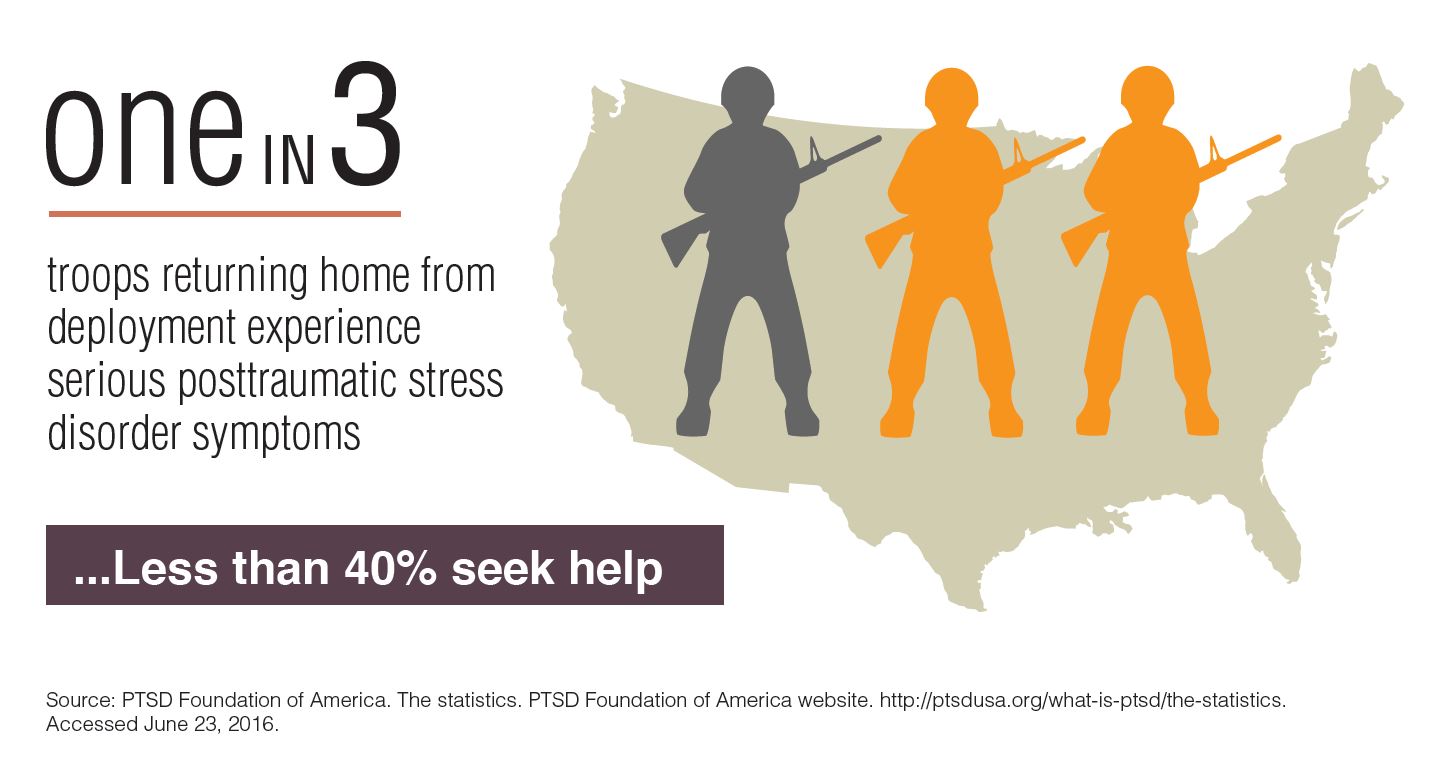
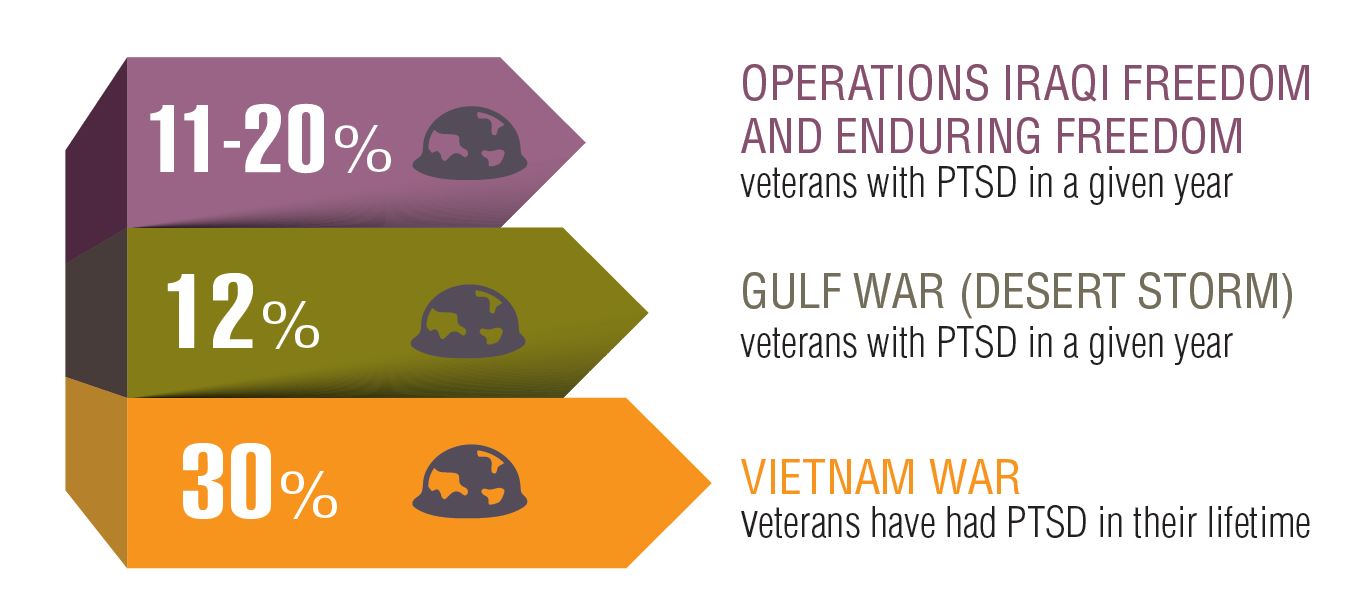
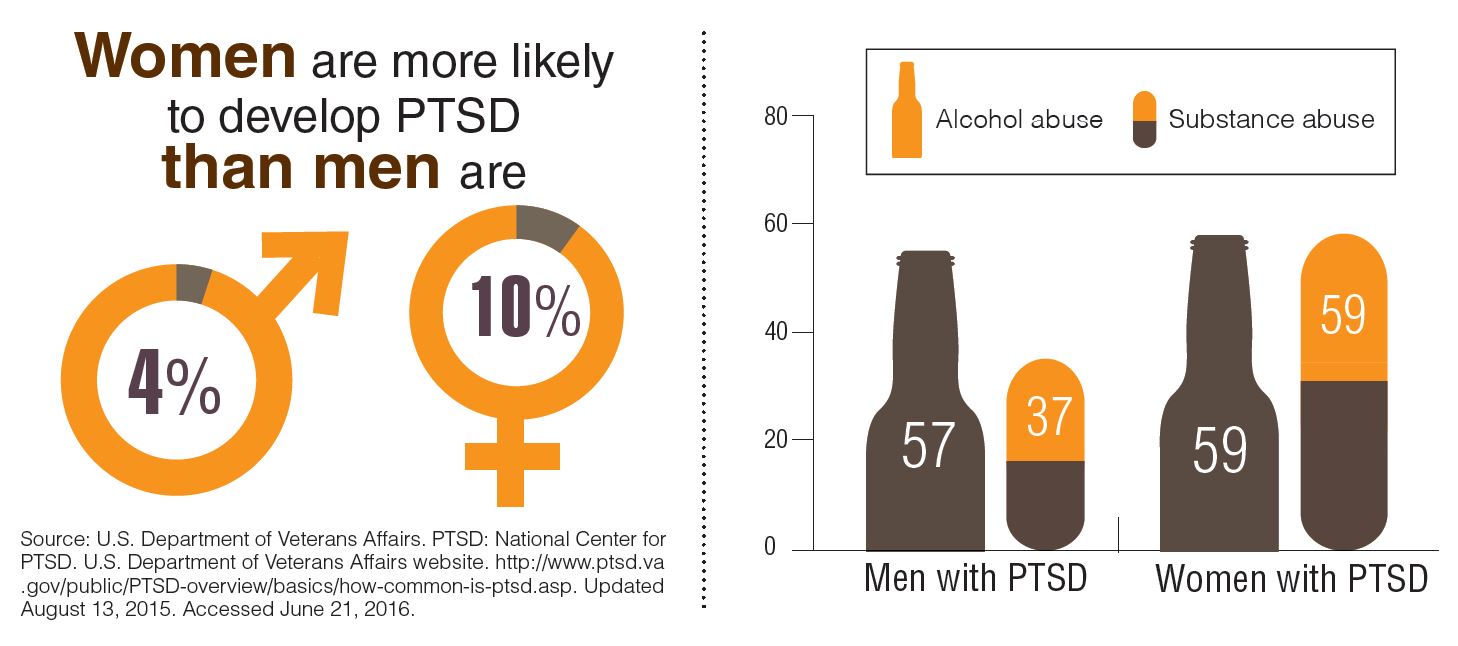
Given the nature of active duty, service members are exposed to higher levels of stress and greater risk of posttraumatic stress disorder (PTSD). The comorbid conditions that often accompany a PTSD diagnosis, such as substance abuse or depression, can complicate treatment and threaten a veteran’s overall health. These factors place PTSD at the forefront of treatments the VA offers its patients. All veterans now are screened for symptoms of both PTSD and depression at their first visit to the VA facility. Mental health services overall remain a priority within the VA. The VA has requested that its 2017 budget include a 4.6% increase in funding for mental health services—boosting its funding to $7.8 billion. This increase will allow the VA to provide a high level of medical service and promote future research, such as a brain tissue biorepository launched in 2015, which supports research on the causes, progression, and treatment of veterans with PTSD.
“Understanding the cellular and circuit contributions to abnormal brain activity in PTSD is critical in the search for potential biomarkers of susceptibility, illness and treatment response and for developing new treatments targeting the conditions at the cellular level,” said Matthew J. Friedman, MD, PhD, senior advisor to the National Center for PTSD.

Click here to read the digital edition.
Given the nature of active duty, service members are exposed to higher levels of stress and greater risk of posttraumatic stress disorder (PTSD). The comorbid conditions that often accompany a PTSD diagnosis, such as substance abuse or depression, can complicate treatment and threaten a veteran’s overall health. These factors place PTSD at the forefront of treatments the VA offers its patients. All veterans now are screened for symptoms of both PTSD and depression at their first visit to the VA facility. Mental health services overall remain a priority within the VA. The VA has requested that its 2017 budget include a 4.6% increase in funding for mental health services—boosting its funding to $7.8 billion. This increase will allow the VA to provide a high level of medical service and promote future research, such as a brain tissue biorepository launched in 2015, which supports research on the causes, progression, and treatment of veterans with PTSD.
“Understanding the cellular and circuit contributions to abnormal brain activity in PTSD is critical in the search for potential biomarkers of susceptibility, illness and treatment response and for developing new treatments targeting the conditions at the cellular level,” said Matthew J. Friedman, MD, PhD, senior advisor to the National Center for PTSD.
Click here to read the digital edition.
Given the nature of active duty, service members are exposed to higher levels of stress and greater risk of posttraumatic stress disorder (PTSD). The comorbid conditions that often accompany a PTSD diagnosis, such as substance abuse or depression, can complicate treatment and threaten a veteran’s overall health. These factors place PTSD at the forefront of treatments the VA offers its patients. All veterans now are screened for symptoms of both PTSD and depression at their first visit to the VA facility. Mental health services overall remain a priority within the VA. The VA has requested that its 2017 budget include a 4.6% increase in funding for mental health services—boosting its funding to $7.8 billion. This increase will allow the VA to provide a high level of medical service and promote future research, such as a brain tissue biorepository launched in 2015, which supports research on the causes, progression, and treatment of veterans with PTSD.
“Understanding the cellular and circuit contributions to abnormal brain activity in PTSD is critical in the search for potential biomarkers of susceptibility, illness and treatment response and for developing new treatments targeting the conditions at the cellular level,” said Matthew J. Friedman, MD, PhD, senior advisor to the National Center for PTSD.