User login
Sharon Worcester is an award-winning medical journalist for MDedge News. She has been with the company since 1996, first as the Southeast Bureau Chief (1996-2009) when the company was known as International Medical News Group, then as a freelance writer (2010-2015) before returning as a reporter in 2015. She previously worked as a daily newspaper reporter covering health and local government. Sharon currently reports primarily on oncology and hematology. She has a BA from Eckerd College and an MA in Mass Communication/Print Journalism from the University of Florida. Connect with her via LinkedIn and follow her on twitter @SW_MedReporter.
EVOLVE-MS-1 study: ALKS 8700 shows promise for RRMS
LOS ANGELES – ALKS 8700, a novel prodrug of monomethyl fumarate, looks promising as an oral, disease-modifying treatment for relapsing forms of multiple sclerosis, according to interim findings from the phase 3 EVOLVE-MS-1 study.
The annualized relapse rate at a median follow-up of 0.93 patient-years (total, 497.1 patient-years) in 578 patients enrolled to date in the 2-year, open-label study was just 0.16, Robert T. Naismith, MD, reported during an emerging science session at the annual meeting of the American Academy of Neurology.
Further, a statistically significant 80% reduction from baseline was seen in the number of gadolinium-enhancing lesions in 374 patients who completed a 1-year MRI assessment (from a mean of 1.5 to 0.3), said Dr. Naismith of Washington University, St. Louis.
Patients enrolled in the ongoing study are adults aged 18-65 years (mean, 41 years) with confirmed relapsing-remitting MS (RRMS), Expanded Disability Status Scale score of 6.0 or less (mean, 2.7), and no evidence of relapse within 30 days prior to starting ALKS 8700. Those with progressive forms of MS are excluded, as are patients who are pregnant or breastfeeding, patients with a history of other clinically significant conditions, and those with clinically significant abnormal laboratory tests at screening or absolute lymphocyte counts less than 0.9 x 10³/mcL.
Of those enrolled so far, 72.5% received prior MS therapies, and their mean time since onset and diagnosis of MS was 9.7 and 7.6 years, respectively. The mean number of relapses in the prior year was 0.8.
ALKS 8700, also known as BIIB098, is given at a dose of 462 mg twice daily for up to 96 weeks; planned enrollment in EVOLVE-MS-1 is approximately 900 patients, Dr. Naismith said.
The preliminary findings from EVOLE-MS-1, which is limited by its single-arm, open-label design, “lend credence to ALKS 8700 as an oral treatment for patients with relapsing-remitting MS,” he said.
In addition to continued evaluation for long-term safety and tolerability in the current study, ALKS 8700 is also being evaluated in combination with 240 mg of twice daily dimethyl fumarate (DMF; Tecfidera) in the 5-week, randomized, double-blind EVOLVE-MS-2 study, which is looking at the gastrointestinal tolerability of the combination in patients with RRMS.
Oral DMF is approved for RRMS, and has been shown to significantly reduce clinical and MRI disease activity, but is commonly associated with GI events. Monomethyl fumarate is the active metabolite of DMF, and as a prodrug of monomethyl fumarate, ALKS 8700 is being developed to work in a manner similar to that of DMF, but with improved GI tolerability, Dr. Naismith explained.
EVOLE-MS-1 is funded by Alkermes. Dr. Naismith has served as a consultant and/or speaker for Alkermes, as well as for Acorda, Bayer, Biogen, Genentech, Genzyme, EMD Serono, Novartis, and Teva. He has received research support from the National Institutes of Health and the National Multiple Sclerosis Society.
SOURCE: Naismith R et al. AAN 2018 Emerging Science Abstract 006.
LOS ANGELES – ALKS 8700, a novel prodrug of monomethyl fumarate, looks promising as an oral, disease-modifying treatment for relapsing forms of multiple sclerosis, according to interim findings from the phase 3 EVOLVE-MS-1 study.
The annualized relapse rate at a median follow-up of 0.93 patient-years (total, 497.1 patient-years) in 578 patients enrolled to date in the 2-year, open-label study was just 0.16, Robert T. Naismith, MD, reported during an emerging science session at the annual meeting of the American Academy of Neurology.
Further, a statistically significant 80% reduction from baseline was seen in the number of gadolinium-enhancing lesions in 374 patients who completed a 1-year MRI assessment (from a mean of 1.5 to 0.3), said Dr. Naismith of Washington University, St. Louis.
Patients enrolled in the ongoing study are adults aged 18-65 years (mean, 41 years) with confirmed relapsing-remitting MS (RRMS), Expanded Disability Status Scale score of 6.0 or less (mean, 2.7), and no evidence of relapse within 30 days prior to starting ALKS 8700. Those with progressive forms of MS are excluded, as are patients who are pregnant or breastfeeding, patients with a history of other clinically significant conditions, and those with clinically significant abnormal laboratory tests at screening or absolute lymphocyte counts less than 0.9 x 10³/mcL.
Of those enrolled so far, 72.5% received prior MS therapies, and their mean time since onset and diagnosis of MS was 9.7 and 7.6 years, respectively. The mean number of relapses in the prior year was 0.8.
ALKS 8700, also known as BIIB098, is given at a dose of 462 mg twice daily for up to 96 weeks; planned enrollment in EVOLVE-MS-1 is approximately 900 patients, Dr. Naismith said.
The preliminary findings from EVOLE-MS-1, which is limited by its single-arm, open-label design, “lend credence to ALKS 8700 as an oral treatment for patients with relapsing-remitting MS,” he said.
In addition to continued evaluation for long-term safety and tolerability in the current study, ALKS 8700 is also being evaluated in combination with 240 mg of twice daily dimethyl fumarate (DMF; Tecfidera) in the 5-week, randomized, double-blind EVOLVE-MS-2 study, which is looking at the gastrointestinal tolerability of the combination in patients with RRMS.
Oral DMF is approved for RRMS, and has been shown to significantly reduce clinical and MRI disease activity, but is commonly associated with GI events. Monomethyl fumarate is the active metabolite of DMF, and as a prodrug of monomethyl fumarate, ALKS 8700 is being developed to work in a manner similar to that of DMF, but with improved GI tolerability, Dr. Naismith explained.
EVOLE-MS-1 is funded by Alkermes. Dr. Naismith has served as a consultant and/or speaker for Alkermes, as well as for Acorda, Bayer, Biogen, Genentech, Genzyme, EMD Serono, Novartis, and Teva. He has received research support from the National Institutes of Health and the National Multiple Sclerosis Society.
SOURCE: Naismith R et al. AAN 2018 Emerging Science Abstract 006.
LOS ANGELES – ALKS 8700, a novel prodrug of monomethyl fumarate, looks promising as an oral, disease-modifying treatment for relapsing forms of multiple sclerosis, according to interim findings from the phase 3 EVOLVE-MS-1 study.
The annualized relapse rate at a median follow-up of 0.93 patient-years (total, 497.1 patient-years) in 578 patients enrolled to date in the 2-year, open-label study was just 0.16, Robert T. Naismith, MD, reported during an emerging science session at the annual meeting of the American Academy of Neurology.
Further, a statistically significant 80% reduction from baseline was seen in the number of gadolinium-enhancing lesions in 374 patients who completed a 1-year MRI assessment (from a mean of 1.5 to 0.3), said Dr. Naismith of Washington University, St. Louis.
Patients enrolled in the ongoing study are adults aged 18-65 years (mean, 41 years) with confirmed relapsing-remitting MS (RRMS), Expanded Disability Status Scale score of 6.0 or less (mean, 2.7), and no evidence of relapse within 30 days prior to starting ALKS 8700. Those with progressive forms of MS are excluded, as are patients who are pregnant or breastfeeding, patients with a history of other clinically significant conditions, and those with clinically significant abnormal laboratory tests at screening or absolute lymphocyte counts less than 0.9 x 10³/mcL.
Of those enrolled so far, 72.5% received prior MS therapies, and their mean time since onset and diagnosis of MS was 9.7 and 7.6 years, respectively. The mean number of relapses in the prior year was 0.8.
ALKS 8700, also known as BIIB098, is given at a dose of 462 mg twice daily for up to 96 weeks; planned enrollment in EVOLVE-MS-1 is approximately 900 patients, Dr. Naismith said.
The preliminary findings from EVOLE-MS-1, which is limited by its single-arm, open-label design, “lend credence to ALKS 8700 as an oral treatment for patients with relapsing-remitting MS,” he said.
In addition to continued evaluation for long-term safety and tolerability in the current study, ALKS 8700 is also being evaluated in combination with 240 mg of twice daily dimethyl fumarate (DMF; Tecfidera) in the 5-week, randomized, double-blind EVOLVE-MS-2 study, which is looking at the gastrointestinal tolerability of the combination in patients with RRMS.
Oral DMF is approved for RRMS, and has been shown to significantly reduce clinical and MRI disease activity, but is commonly associated with GI events. Monomethyl fumarate is the active metabolite of DMF, and as a prodrug of monomethyl fumarate, ALKS 8700 is being developed to work in a manner similar to that of DMF, but with improved GI tolerability, Dr. Naismith explained.
EVOLE-MS-1 is funded by Alkermes. Dr. Naismith has served as a consultant and/or speaker for Alkermes, as well as for Acorda, Bayer, Biogen, Genentech, Genzyme, EMD Serono, Novartis, and Teva. He has received research support from the National Institutes of Health and the National Multiple Sclerosis Society.
SOURCE: Naismith R et al. AAN 2018 Emerging Science Abstract 006.
Key clinical point:
Major finding: The annualized relapse rate at 1 year was just 0.16 vs. 0.8 in the prior year.
Study details: One-year results from 578 patients in an ongoing phase 3, open-label study.
Disclosures: EVOLE-MS-1 is funded by Alkermes. Dr. Naismith has served as a consultant and/or speaker for Alkermes, as well as for Acorda, Bayer, Biogen, Genentech, Genzyme, EMD Serono, Novartis, and Teva. He has received research support from the National Institutes of Health and the National Multiple Sclerosis Society.
Source: Naismith R et al. AAN 2018 Emerging Science Abstract 006.
Simplified HCT-CI better predicts outcomes in young patients
NEWPORT BEACH, CALIF. – A revised hematopoietic stem cell transplantation comorbidity index developed for adolescents and young adults is useful for predicting nonrelapse mortality in this specific population, according to Brian Friend, MD.
In a retrospective study of 241 patients aged 15-39 years who underwent a first allogeneic hematopoietic stem cell transplant (HCT) between 2005 and 2015 at the University of California, Los Angeles, nonrelapse mortality incidence was particularly high, with rates of 26%, 28%, and 30% at 1, 2, and 3 years, respectively, Dr. Friend, a clinical research fellow at the David Geffen School of Medicine, Los Angeles, reported in a poster at the Acute Leukemia Forum of Hemedicus.

Rather, a history of pulmonary disease – found in 44% of the patients – was the most common comorbidity, and although this was based on pulmonary function tests alone and not necessarily on patient symptoms, it was a surprising finding, he said. It was associated with lower overall survival and with nonrelapse mortality, he added.
A psychosocial component, which took into account factors such as stressors, social support, financial issues, and substance abuse, was also fairly frequent in the patients, but was not necessarily associated with worse outcomes, he noted.
“In multivariable analysis, only a history of prior malignancy (hazard ratio, 2.04) and moderate and severe pulmonary disease (hazard ratios, 1.39 and 1.84, respectively) were associated with a higher incidence of nonrelapse mortality,” he reported.
The existing HCT-CI was developed in adults to help risk-stratify patients undergoing transplant, but adolescents and young adults undergoing HCT tend to have fewer comorbidities compared with older adults, though they still having a significant nonrelapse mortality rate, Dr. Friend said.
“We sought to develop a modified HCT-CI that would be more practical and efficient in predicting outcomes of adolescent and young adult patients,” he wrote.
Data were collected on 15 comorbidities included in the original HCT-CI study, as well as the psychosocial risk factors. The relationship between multiple variables and the incidence of nonrelapse mortality was investigated via the Fine and Gray competing risk model with adjustments for patient- and transplant-specific factors.
A few things were “looked at differently,” he said, explaining, for example, that multiple cardiovascular risk factors were combined into one since they are rare in younger patients.
The study demonstrated that an index including only a few comorbidities important in adolescents and young adults is more predictive in these younger patients vs. adults, suggesting that a simpler model is more practical and useful, Dr. Friend said.
A larger study is planned in conjunction with the Center for International Blood and Marrow Transplant Research (CIBMTR). The researchers for that study will take an in-depth look at this younger population in an effort to develop a novel risk score for them. Other future efforts will focus on developing interventions to target high risk patients – and in particular, modifiable risk factors – with a focus on preventive measures, he said.
Dr. Friend reported having no financial disclosures.
NEWPORT BEACH, CALIF. – A revised hematopoietic stem cell transplantation comorbidity index developed for adolescents and young adults is useful for predicting nonrelapse mortality in this specific population, according to Brian Friend, MD.
In a retrospective study of 241 patients aged 15-39 years who underwent a first allogeneic hematopoietic stem cell transplant (HCT) between 2005 and 2015 at the University of California, Los Angeles, nonrelapse mortality incidence was particularly high, with rates of 26%, 28%, and 30% at 1, 2, and 3 years, respectively, Dr. Friend, a clinical research fellow at the David Geffen School of Medicine, Los Angeles, reported in a poster at the Acute Leukemia Forum of Hemedicus.
Rather, a history of pulmonary disease – found in 44% of the patients – was the most common comorbidity, and although this was based on pulmonary function tests alone and not necessarily on patient symptoms, it was a surprising finding, he said. It was associated with lower overall survival and with nonrelapse mortality, he added.
A psychosocial component, which took into account factors such as stressors, social support, financial issues, and substance abuse, was also fairly frequent in the patients, but was not necessarily associated with worse outcomes, he noted.
“In multivariable analysis, only a history of prior malignancy (hazard ratio, 2.04) and moderate and severe pulmonary disease (hazard ratios, 1.39 and 1.84, respectively) were associated with a higher incidence of nonrelapse mortality,” he reported.
The existing HCT-CI was developed in adults to help risk-stratify patients undergoing transplant, but adolescents and young adults undergoing HCT tend to have fewer comorbidities compared with older adults, though they still having a significant nonrelapse mortality rate, Dr. Friend said.
“We sought to develop a modified HCT-CI that would be more practical and efficient in predicting outcomes of adolescent and young adult patients,” he wrote.
Data were collected on 15 comorbidities included in the original HCT-CI study, as well as the psychosocial risk factors. The relationship between multiple variables and the incidence of nonrelapse mortality was investigated via the Fine and Gray competing risk model with adjustments for patient- and transplant-specific factors.
A few things were “looked at differently,” he said, explaining, for example, that multiple cardiovascular risk factors were combined into one since they are rare in younger patients.
The study demonstrated that an index including only a few comorbidities important in adolescents and young adults is more predictive in these younger patients vs. adults, suggesting that a simpler model is more practical and useful, Dr. Friend said.
A larger study is planned in conjunction with the Center for International Blood and Marrow Transplant Research (CIBMTR). The researchers for that study will take an in-depth look at this younger population in an effort to develop a novel risk score for them. Other future efforts will focus on developing interventions to target high risk patients – and in particular, modifiable risk factors – with a focus on preventive measures, he said.
Dr. Friend reported having no financial disclosures.
NEWPORT BEACH, CALIF. – A revised hematopoietic stem cell transplantation comorbidity index developed for adolescents and young adults is useful for predicting nonrelapse mortality in this specific population, according to Brian Friend, MD.
In a retrospective study of 241 patients aged 15-39 years who underwent a first allogeneic hematopoietic stem cell transplant (HCT) between 2005 and 2015 at the University of California, Los Angeles, nonrelapse mortality incidence was particularly high, with rates of 26%, 28%, and 30% at 1, 2, and 3 years, respectively, Dr. Friend, a clinical research fellow at the David Geffen School of Medicine, Los Angeles, reported in a poster at the Acute Leukemia Forum of Hemedicus.
Rather, a history of pulmonary disease – found in 44% of the patients – was the most common comorbidity, and although this was based on pulmonary function tests alone and not necessarily on patient symptoms, it was a surprising finding, he said. It was associated with lower overall survival and with nonrelapse mortality, he added.
A psychosocial component, which took into account factors such as stressors, social support, financial issues, and substance abuse, was also fairly frequent in the patients, but was not necessarily associated with worse outcomes, he noted.
“In multivariable analysis, only a history of prior malignancy (hazard ratio, 2.04) and moderate and severe pulmonary disease (hazard ratios, 1.39 and 1.84, respectively) were associated with a higher incidence of nonrelapse mortality,” he reported.
The existing HCT-CI was developed in adults to help risk-stratify patients undergoing transplant, but adolescents and young adults undergoing HCT tend to have fewer comorbidities compared with older adults, though they still having a significant nonrelapse mortality rate, Dr. Friend said.
“We sought to develop a modified HCT-CI that would be more practical and efficient in predicting outcomes of adolescent and young adult patients,” he wrote.
Data were collected on 15 comorbidities included in the original HCT-CI study, as well as the psychosocial risk factors. The relationship between multiple variables and the incidence of nonrelapse mortality was investigated via the Fine and Gray competing risk model with adjustments for patient- and transplant-specific factors.
A few things were “looked at differently,” he said, explaining, for example, that multiple cardiovascular risk factors were combined into one since they are rare in younger patients.
The study demonstrated that an index including only a few comorbidities important in adolescents and young adults is more predictive in these younger patients vs. adults, suggesting that a simpler model is more practical and useful, Dr. Friend said.
A larger study is planned in conjunction with the Center for International Blood and Marrow Transplant Research (CIBMTR). The researchers for that study will take an in-depth look at this younger population in an effort to develop a novel risk score for them. Other future efforts will focus on developing interventions to target high risk patients – and in particular, modifiable risk factors – with a focus on preventive measures, he said.
Dr. Friend reported having no financial disclosures.
REPORTING FROM ALF 2018
Key clinical point:
Major finding: As many as 60% of the comorbidities included in the HCT-CI had no significant prevalence in young patients.
Study details: A retrospective study of 241 adolescents and young adults.
Disclosures: Dr. Friend reported having no financial disclosures.
Source: Friend B et al. ALF 2018, Poster Session.
Genetic markers may help predict allogeneic SCT outcomes
SALT LAKE CITY – The presence of p2X7 receptor single nucleotide polymorphisms (SNPs) associated with gain and loss of function may help predict outcomes after allogeneic stem cell transplantation, according to findings from a clinical correlate analysis of recipient and donor DNA samples.
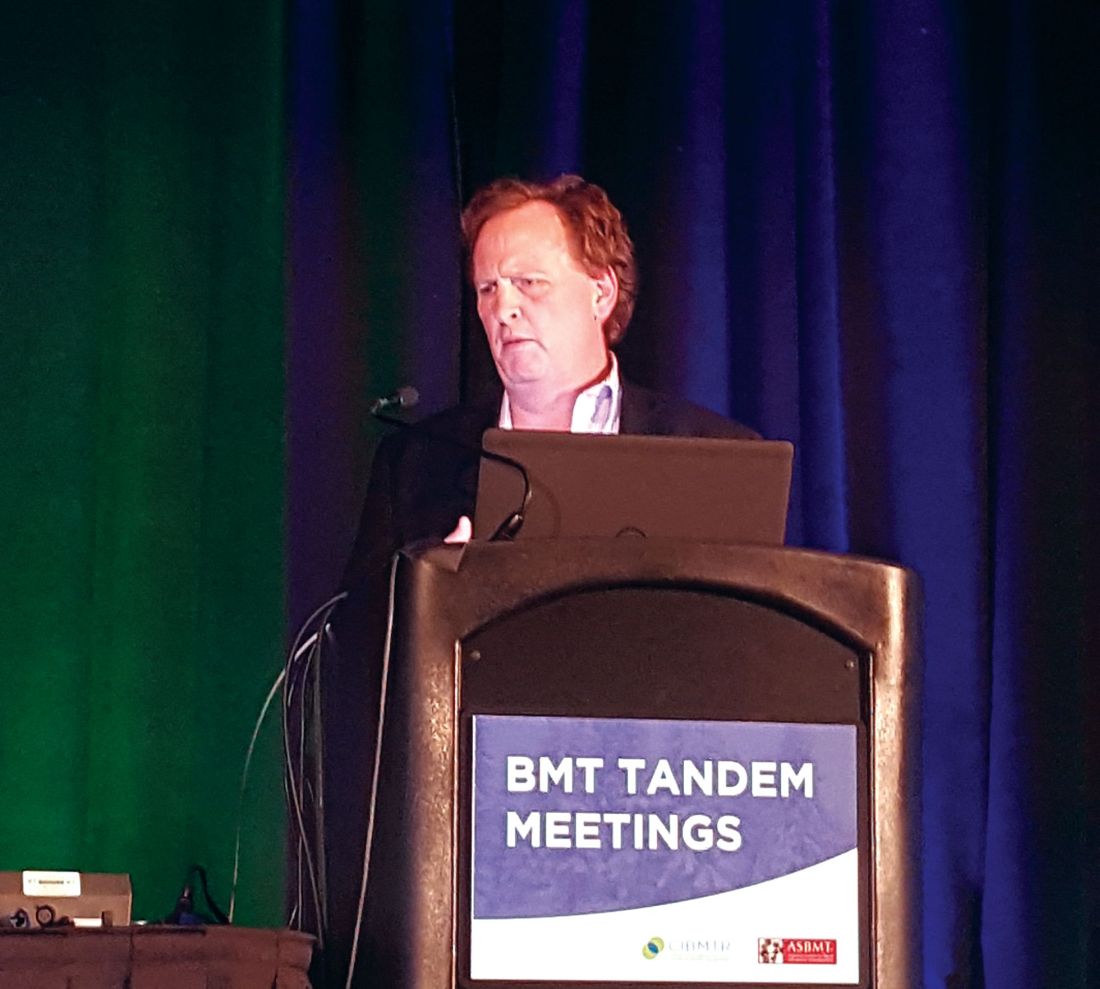
The findings require validation in future studies, but suggest that the presence of the SNPs and p2X7 haplotypes 2 and 4 could be incorporated into disease risk models to improve transplant decision making, David Stuart Ritchie, MD, reported at the combined annual meetings of the Center for International Blood & Marrow Transplant Research and the American Society for Blood and Marrow Transplantation.
The analysis, which specifically looked for the presence of 16 previously identified SNPs and the haplotypes 2 and 4 in p2x7, was performed on pretransplant DNA samples from 333 allogeneic stem cell transplant recipients and 228 donors at a single center between 2002 and 2013. The findings were correlated with patient outcomes.
Five SNPs were excluded from correlation because of low frequency, and of the 11 remaining SNPs, 3 were found to be significantly associated with reduced incidence of acute and/or chronic graft-versus-host disease (GVHD), and 2 were significantly associated with increased relapse or transplant-related mortality, said Dr. Ritchie of the University of Melbourne, Parkville, Australia.
The loss-of-function SNPs rs28360457 and rs3751133 – each linked with decreased inflammation – were significantly associated with a reduced incidence of acute GVHD when comparing grade 0 with grades 1-4 GVHD (P = .0234 and P = .0411, respectively), but not when comparing grades 0-1 and grades 2-4 GVHD.
SNP rs3751133 was also significantly associated with reduced incidence of chronic GVHD when comparing grade 0 with grades 0-4 GVHD (P = .01), but not when comparing grades 0-1 and grades 2-4 GVHD, he said.
The loss-of-function SNP rs1653624 – which is linked with decreased phagocytosis – was associated with an increased incidence of acute GVHD when comparing grade 0 vs. grade 1-4 GVHD (P = .01), but not when comparing grades 0-1 and grades 2-4 GVHD (P = NS).
SNP rs7958311, which had increased surface expression, was associated with a trend toward increased relapse risk (P = .053), and the loss-of-function SNP rs1653624 was associated with an excess of early transplant-related mortality (P = .0471).
“Individual SNPs are interesting, but perhaps more interesting are the haplotypes,” Dr. Ritchie said.
Haplotype 4, which was found in 8 recipients, involves rs1718119 and rs7958311. Those SNPs were previously shown to have 300% and 195% increased expression, respectively, with or without rs2230912, which has been shown to be decreased by 72%, and with or without loss of function rs1653624. Haplotype 4 is associated with a net increase in p2X7 activity, he explained.
In the current study, haplotype 4 was only found to involve rs1718119 co-inherited with rs2230912, and was associated with substantially decreased relapse-free survival overall (hazard ratio, 0.6946), when compared with haplotype 2 (HR, 0.2078), he said.
The differences between haplotype 4 and haplotype 2, and between haplotype 4 and patients with neither haplotype, were highly statistically significant.
Relapse-free survival did not differ significantly between those with haplotype 2 and those with neither haplotype (HR, 0.7717). Similarly, overall survival was significantly poorer among those with haplotype 4 versus haplotype 2 or no haplotype (HR, 0.2812 and 0.2882, respectively), but no difference was seen in overall survival between those with haplotype 2 and those with no haplotype (HR, 1.003), he said.
P2X7 is a purinergic signaling receptor located at chromosome 12q24–a region associated with inflammatory disorders. It plays an important role in immunogenic cell death. It is expressed in all leukocytes, with the highest level of expression seen in monocyte lineage. Binding of its ligand – extracellular adenosine 5’-triphosphate – leads to activation of dendritic cells and release of IL1b leading to T cell recruitment and the production of memory T cells.
Both gain- and loss-of-function SNPs in p2X7 have been reported and implicated in GVHD and other inflammatory disorders, Dr. Ritchie said, explaining the rationale for studying their correlations with outcomes after allogeneic stem cell transplantation.
While such transplants are highly effective for treating hematologic malignancies, outcomes can be adversely affected by infection, acute organ dysfunction, and GVHD. Pretransplant conditioning regimens are associated with high levels of immunogenic cell death and the release of extracellular adenosine 5’-triphosphate, therefore signaling through the p2X7 receptor may lead to activation of downstream effectors that influence transplant outcome, he noted.
“We hypothesized that germline gain or loss of function polymorphisms in this receptor in recipients of allogeneic transplantation would result in an adverse outcome,” he said.
The mean age of the recipients whose samples were analyzed was 46 years, and about half were women. Most (83.8%) had a peripheral blood graft source and 64% of transplants were from related donors. The nonrelapse mortality at 24 months was 12.98%, Dr. Ritchie said, noting that their indications for transplantation were “fairly representative of the adult transplant population, dominated by acute leukemia with a range of other acute conditions.”
The findings – particularly those with respect to haplotype 4, which had the most substantial impact – could play a role in patient risk assessment.
“Potentially, although it is a relatively uncommon haplotype, pretransplant identification of haplotype 4 may well have implications for transplant decision making, given the fact that the majority of our patients with this haplotype did not survive posttransplant,” he concluded, noting that an effort to validate the findings is ongoing in an additional 300 patients.
Dr. Ritchie reported having no financial disclosures.
SOURCE: Koldej R et al. The 2018 BMT Tandem Meetings, Abstract 22.
SALT LAKE CITY – The presence of p2X7 receptor single nucleotide polymorphisms (SNPs) associated with gain and loss of function may help predict outcomes after allogeneic stem cell transplantation, according to findings from a clinical correlate analysis of recipient and donor DNA samples.
The findings require validation in future studies, but suggest that the presence of the SNPs and p2X7 haplotypes 2 and 4 could be incorporated into disease risk models to improve transplant decision making, David Stuart Ritchie, MD, reported at the combined annual meetings of the Center for International Blood & Marrow Transplant Research and the American Society for Blood and Marrow Transplantation.
The analysis, which specifically looked for the presence of 16 previously identified SNPs and the haplotypes 2 and 4 in p2x7, was performed on pretransplant DNA samples from 333 allogeneic stem cell transplant recipients and 228 donors at a single center between 2002 and 2013. The findings were correlated with patient outcomes.
Five SNPs were excluded from correlation because of low frequency, and of the 11 remaining SNPs, 3 were found to be significantly associated with reduced incidence of acute and/or chronic graft-versus-host disease (GVHD), and 2 were significantly associated with increased relapse or transplant-related mortality, said Dr. Ritchie of the University of Melbourne, Parkville, Australia.
The loss-of-function SNPs rs28360457 and rs3751133 – each linked with decreased inflammation – were significantly associated with a reduced incidence of acute GVHD when comparing grade 0 with grades 1-4 GVHD (P = .0234 and P = .0411, respectively), but not when comparing grades 0-1 and grades 2-4 GVHD.
SNP rs3751133 was also significantly associated with reduced incidence of chronic GVHD when comparing grade 0 with grades 0-4 GVHD (P = .01), but not when comparing grades 0-1 and grades 2-4 GVHD, he said.
The loss-of-function SNP rs1653624 – which is linked with decreased phagocytosis – was associated with an increased incidence of acute GVHD when comparing grade 0 vs. grade 1-4 GVHD (P = .01), but not when comparing grades 0-1 and grades 2-4 GVHD (P = NS).
SNP rs7958311, which had increased surface expression, was associated with a trend toward increased relapse risk (P = .053), and the loss-of-function SNP rs1653624 was associated with an excess of early transplant-related mortality (P = .0471).
“Individual SNPs are interesting, but perhaps more interesting are the haplotypes,” Dr. Ritchie said.
Haplotype 4, which was found in 8 recipients, involves rs1718119 and rs7958311. Those SNPs were previously shown to have 300% and 195% increased expression, respectively, with or without rs2230912, which has been shown to be decreased by 72%, and with or without loss of function rs1653624. Haplotype 4 is associated with a net increase in p2X7 activity, he explained.
In the current study, haplotype 4 was only found to involve rs1718119 co-inherited with rs2230912, and was associated with substantially decreased relapse-free survival overall (hazard ratio, 0.6946), when compared with haplotype 2 (HR, 0.2078), he said.
The differences between haplotype 4 and haplotype 2, and between haplotype 4 and patients with neither haplotype, were highly statistically significant.
Relapse-free survival did not differ significantly between those with haplotype 2 and those with neither haplotype (HR, 0.7717). Similarly, overall survival was significantly poorer among those with haplotype 4 versus haplotype 2 or no haplotype (HR, 0.2812 and 0.2882, respectively), but no difference was seen in overall survival between those with haplotype 2 and those with no haplotype (HR, 1.003), he said.
P2X7 is a purinergic signaling receptor located at chromosome 12q24–a region associated with inflammatory disorders. It plays an important role in immunogenic cell death. It is expressed in all leukocytes, with the highest level of expression seen in monocyte lineage. Binding of its ligand – extracellular adenosine 5’-triphosphate – leads to activation of dendritic cells and release of IL1b leading to T cell recruitment and the production of memory T cells.
Both gain- and loss-of-function SNPs in p2X7 have been reported and implicated in GVHD and other inflammatory disorders, Dr. Ritchie said, explaining the rationale for studying their correlations with outcomes after allogeneic stem cell transplantation.
While such transplants are highly effective for treating hematologic malignancies, outcomes can be adversely affected by infection, acute organ dysfunction, and GVHD. Pretransplant conditioning regimens are associated with high levels of immunogenic cell death and the release of extracellular adenosine 5’-triphosphate, therefore signaling through the p2X7 receptor may lead to activation of downstream effectors that influence transplant outcome, he noted.
“We hypothesized that germline gain or loss of function polymorphisms in this receptor in recipients of allogeneic transplantation would result in an adverse outcome,” he said.
The mean age of the recipients whose samples were analyzed was 46 years, and about half were women. Most (83.8%) had a peripheral blood graft source and 64% of transplants were from related donors. The nonrelapse mortality at 24 months was 12.98%, Dr. Ritchie said, noting that their indications for transplantation were “fairly representative of the adult transplant population, dominated by acute leukemia with a range of other acute conditions.”
The findings – particularly those with respect to haplotype 4, which had the most substantial impact – could play a role in patient risk assessment.
“Potentially, although it is a relatively uncommon haplotype, pretransplant identification of haplotype 4 may well have implications for transplant decision making, given the fact that the majority of our patients with this haplotype did not survive posttransplant,” he concluded, noting that an effort to validate the findings is ongoing in an additional 300 patients.
Dr. Ritchie reported having no financial disclosures.
SOURCE: Koldej R et al. The 2018 BMT Tandem Meetings, Abstract 22.
SALT LAKE CITY – The presence of p2X7 receptor single nucleotide polymorphisms (SNPs) associated with gain and loss of function may help predict outcomes after allogeneic stem cell transplantation, according to findings from a clinical correlate analysis of recipient and donor DNA samples.
The findings require validation in future studies, but suggest that the presence of the SNPs and p2X7 haplotypes 2 and 4 could be incorporated into disease risk models to improve transplant decision making, David Stuart Ritchie, MD, reported at the combined annual meetings of the Center for International Blood & Marrow Transplant Research and the American Society for Blood and Marrow Transplantation.
The analysis, which specifically looked for the presence of 16 previously identified SNPs and the haplotypes 2 and 4 in p2x7, was performed on pretransplant DNA samples from 333 allogeneic stem cell transplant recipients and 228 donors at a single center between 2002 and 2013. The findings were correlated with patient outcomes.
Five SNPs were excluded from correlation because of low frequency, and of the 11 remaining SNPs, 3 were found to be significantly associated with reduced incidence of acute and/or chronic graft-versus-host disease (GVHD), and 2 were significantly associated with increased relapse or transplant-related mortality, said Dr. Ritchie of the University of Melbourne, Parkville, Australia.
The loss-of-function SNPs rs28360457 and rs3751133 – each linked with decreased inflammation – were significantly associated with a reduced incidence of acute GVHD when comparing grade 0 with grades 1-4 GVHD (P = .0234 and P = .0411, respectively), but not when comparing grades 0-1 and grades 2-4 GVHD.
SNP rs3751133 was also significantly associated with reduced incidence of chronic GVHD when comparing grade 0 with grades 0-4 GVHD (P = .01), but not when comparing grades 0-1 and grades 2-4 GVHD, he said.
The loss-of-function SNP rs1653624 – which is linked with decreased phagocytosis – was associated with an increased incidence of acute GVHD when comparing grade 0 vs. grade 1-4 GVHD (P = .01), but not when comparing grades 0-1 and grades 2-4 GVHD (P = NS).
SNP rs7958311, which had increased surface expression, was associated with a trend toward increased relapse risk (P = .053), and the loss-of-function SNP rs1653624 was associated with an excess of early transplant-related mortality (P = .0471).
“Individual SNPs are interesting, but perhaps more interesting are the haplotypes,” Dr. Ritchie said.
Haplotype 4, which was found in 8 recipients, involves rs1718119 and rs7958311. Those SNPs were previously shown to have 300% and 195% increased expression, respectively, with or without rs2230912, which has been shown to be decreased by 72%, and with or without loss of function rs1653624. Haplotype 4 is associated with a net increase in p2X7 activity, he explained.
In the current study, haplotype 4 was only found to involve rs1718119 co-inherited with rs2230912, and was associated with substantially decreased relapse-free survival overall (hazard ratio, 0.6946), when compared with haplotype 2 (HR, 0.2078), he said.
The differences between haplotype 4 and haplotype 2, and between haplotype 4 and patients with neither haplotype, were highly statistically significant.
Relapse-free survival did not differ significantly between those with haplotype 2 and those with neither haplotype (HR, 0.7717). Similarly, overall survival was significantly poorer among those with haplotype 4 versus haplotype 2 or no haplotype (HR, 0.2812 and 0.2882, respectively), but no difference was seen in overall survival between those with haplotype 2 and those with no haplotype (HR, 1.003), he said.
P2X7 is a purinergic signaling receptor located at chromosome 12q24–a region associated with inflammatory disorders. It plays an important role in immunogenic cell death. It is expressed in all leukocytes, with the highest level of expression seen in monocyte lineage. Binding of its ligand – extracellular adenosine 5’-triphosphate – leads to activation of dendritic cells and release of IL1b leading to T cell recruitment and the production of memory T cells.
Both gain- and loss-of-function SNPs in p2X7 have been reported and implicated in GVHD and other inflammatory disorders, Dr. Ritchie said, explaining the rationale for studying their correlations with outcomes after allogeneic stem cell transplantation.
While such transplants are highly effective for treating hematologic malignancies, outcomes can be adversely affected by infection, acute organ dysfunction, and GVHD. Pretransplant conditioning regimens are associated with high levels of immunogenic cell death and the release of extracellular adenosine 5’-triphosphate, therefore signaling through the p2X7 receptor may lead to activation of downstream effectors that influence transplant outcome, he noted.
“We hypothesized that germline gain or loss of function polymorphisms in this receptor in recipients of allogeneic transplantation would result in an adverse outcome,” he said.
The mean age of the recipients whose samples were analyzed was 46 years, and about half were women. Most (83.8%) had a peripheral blood graft source and 64% of transplants were from related donors. The nonrelapse mortality at 24 months was 12.98%, Dr. Ritchie said, noting that their indications for transplantation were “fairly representative of the adult transplant population, dominated by acute leukemia with a range of other acute conditions.”
The findings – particularly those with respect to haplotype 4, which had the most substantial impact – could play a role in patient risk assessment.
“Potentially, although it is a relatively uncommon haplotype, pretransplant identification of haplotype 4 may well have implications for transplant decision making, given the fact that the majority of our patients with this haplotype did not survive posttransplant,” he concluded, noting that an effort to validate the findings is ongoing in an additional 300 patients.
Dr. Ritchie reported having no financial disclosures.
SOURCE: Koldej R et al. The 2018 BMT Tandem Meetings, Abstract 22.
REPORTING FROM THE 2018 BMT TANDEM MEETINGS
Key clinical point:
Major finding: Haplotype 4 was associated with substantially decreased relapse-free survival overall (hazard ratio, 0.6946) versus haplotype 2 (HR, 0.2078).
Study details: A clinical correlate analysis of 561 DNA samples.
Disclosures: Dr. Ritchie reported having no financial disclosures.
Source: Koldej R et al. The 2018 BMT Tandem Meetings, Abstract 22.
Study shows value of pretransplant assessment of function, endurance
SALT LAKE CITY – Comprehensive assessment of functional status and endurance prior to allogeneic hematopoietic cell transplantation (HCT) provides important insights into posttransplant outcomes, and when used in combination with other measures may improve the patient selection process, a chart review suggests.
In 349 patients, results of the prospective assessment of physical performance and endurance, along with HCT Comorbidity Index (HCT-CI) score and Karnofsky Performance Scale score (KPS), were compared with day 100-plus nonrelapse mortality and overall survival. The measures were also compared with the novel measures of hospital length of stay, and death during HCT admission, Shabnam Rehman, MD, reported at the combined annual meetings of the Center for International Blood & Marrow Transplant Research and the American Society for Blood and Marrow Transplantation.
However, heart rate recovery in less than 3 minutes after performing 25 step-ups on each side was associated with shorter length of stay with 89% of those patients, compared with 11% of patients who were not able to recover their heart rate in less than 3 minutes, being discharged within 30 days, she said.
“Similarly, patients who are able to perform at least 11 sit-to-stands in 30 seconds are more likely to be discharged earlier (63% vs. 14% discharged within 30 days),” she said. “The converse is also true.”
That is, only 16% of those not able to recover their heart rate within 3 minutes had a 30-day or shorter stay, while 31% had at least a 60-day stay. In addition, just 13% of those with limited endurance had a 30-day stay or shorter, while 24% had at least a 60-day stay, she explained.
Further, patients with limited endurance, and those unable to perform 10 or more sit-to-stands in 30 seconds were more likely to die during their first transplant admission. Of those with limited endurance, 31% died during admission and 13% survived, and of those with good endurance 69% died during admission and 87% survived. Among patients who were unable to perform more than 10 sit-to-stands, 42% died during admission and 20% survived, and of those able to perform 11 or more, 38% died during admission, and 53% survived.
Overall survival was associated with age, KPS, HCT-CI, and age-adjusted HCT-CI, she noted.
“Patients who were over age 40 and more, and patients with a KPS of 60 or 70, belong to the high- to intermediate-risk group more likely to have decreased overall survival as has been shown in previous studies,” she said. “In addition to validating these findings, we also found that the semiquantitative measures, including pain and endurance, were also associated with overall survival.”
Those with pain present or limited endurance had significantly poorer overall survival (P = .007 and P = .01, respectively), and this finding was reflected in the quantitative measures of sit-to-stands (P = .01) and step-ups (P = .001), even when stratified by age-adjusted HCT-CI, she said.
In addition, a number of risk factors present at the pretreatment assessment were found to be significantly associated with requirement of an assistive device at discharge. These included pain, weakness in the lower extremities, use of an assistive device, inability to perform 25 step-ups and more than 10 sit-to-stands in 30 seconds, and limited endurance (P values ranging from .02 to less than .0001). Requirement of a device was associated with poorer overall survival (P = .03), she said.
Study participants were adults aged 18 years and older (median, 58 years) undergoing a first allogeneic HCT at a single center between 2010 and 2016. Most (83%) were older than age 40 years and 58% were men. About half (51%) had acute myeloid leukemia, and 64% overall had a KPS score of 60-70.
Physical therapists assessed physical performance of all patients within 4 weeks pre-HCT; testing included 25 7-inch step-ups on each side, unassisted sit-to-stands from an 18-inch chair in 30 seconds, weight-bearing ability, need for assistance with ambulation, motor strength in four extremities, sensory or coordination impairment, self-reported pain, and time to recovery of heart rate and oxygen saturation to pre-exercise levels.
“The HCT-CI is a validated tool that predicts nonrelapse mortality and overall survival, but comorbidity alone as a single domain is not a surrogate of overall health or reflection on the true biological age of our patients,” Dr. Rehman said, noting that studies have shown that functional impairment is associated with shorter overall survival, and that patient-reported physical functioning is predictive of overall survival. “The assessment of functional impairment becomes more critical given the aging U.S. population and older patients receiving transplant.”
Traditionally, functional status has been assessed via the KPS, which is a subjective measure and lacks precision, and the HCT-CI has not been studied in the context of the novel outcome measures addressed in the current study, she noted.
The current findings highlight the prognostic value of a more quantitative pretransplant assessment, which can help improve the patient selection process.
“We are in the process of analyzing some more outcomes of these pretransplant assessments, and developing a score that can, in conjunction with other predictive tools, help us improve pretransplant risk stratification and devise interventions that can improve the endurance and overall survival of the patients,” she concluded.
Dr. Rehman reported having no financial disclosures.
SOURCE: Rehman S et al., The 2018 BTM Tandem Meetings, Abstract 19.
SALT LAKE CITY – Comprehensive assessment of functional status and endurance prior to allogeneic hematopoietic cell transplantation (HCT) provides important insights into posttransplant outcomes, and when used in combination with other measures may improve the patient selection process, a chart review suggests.
In 349 patients, results of the prospective assessment of physical performance and endurance, along with HCT Comorbidity Index (HCT-CI) score and Karnofsky Performance Scale score (KPS), were compared with day 100-plus nonrelapse mortality and overall survival. The measures were also compared with the novel measures of hospital length of stay, and death during HCT admission, Shabnam Rehman, MD, reported at the combined annual meetings of the Center for International Blood & Marrow Transplant Research and the American Society for Blood and Marrow Transplantation.
However, heart rate recovery in less than 3 minutes after performing 25 step-ups on each side was associated with shorter length of stay with 89% of those patients, compared with 11% of patients who were not able to recover their heart rate in less than 3 minutes, being discharged within 30 days, she said.
“Similarly, patients who are able to perform at least 11 sit-to-stands in 30 seconds are more likely to be discharged earlier (63% vs. 14% discharged within 30 days),” she said. “The converse is also true.”
That is, only 16% of those not able to recover their heart rate within 3 minutes had a 30-day or shorter stay, while 31% had at least a 60-day stay. In addition, just 13% of those with limited endurance had a 30-day stay or shorter, while 24% had at least a 60-day stay, she explained.
Further, patients with limited endurance, and those unable to perform 10 or more sit-to-stands in 30 seconds were more likely to die during their first transplant admission. Of those with limited endurance, 31% died during admission and 13% survived, and of those with good endurance 69% died during admission and 87% survived. Among patients who were unable to perform more than 10 sit-to-stands, 42% died during admission and 20% survived, and of those able to perform 11 or more, 38% died during admission, and 53% survived.
Overall survival was associated with age, KPS, HCT-CI, and age-adjusted HCT-CI, she noted.
“Patients who were over age 40 and more, and patients with a KPS of 60 or 70, belong to the high- to intermediate-risk group more likely to have decreased overall survival as has been shown in previous studies,” she said. “In addition to validating these findings, we also found that the semiquantitative measures, including pain and endurance, were also associated with overall survival.”
Those with pain present or limited endurance had significantly poorer overall survival (P = .007 and P = .01, respectively), and this finding was reflected in the quantitative measures of sit-to-stands (P = .01) and step-ups (P = .001), even when stratified by age-adjusted HCT-CI, she said.
In addition, a number of risk factors present at the pretreatment assessment were found to be significantly associated with requirement of an assistive device at discharge. These included pain, weakness in the lower extremities, use of an assistive device, inability to perform 25 step-ups and more than 10 sit-to-stands in 30 seconds, and limited endurance (P values ranging from .02 to less than .0001). Requirement of a device was associated with poorer overall survival (P = .03), she said.
Study participants were adults aged 18 years and older (median, 58 years) undergoing a first allogeneic HCT at a single center between 2010 and 2016. Most (83%) were older than age 40 years and 58% were men. About half (51%) had acute myeloid leukemia, and 64% overall had a KPS score of 60-70.
Physical therapists assessed physical performance of all patients within 4 weeks pre-HCT; testing included 25 7-inch step-ups on each side, unassisted sit-to-stands from an 18-inch chair in 30 seconds, weight-bearing ability, need for assistance with ambulation, motor strength in four extremities, sensory or coordination impairment, self-reported pain, and time to recovery of heart rate and oxygen saturation to pre-exercise levels.
“The HCT-CI is a validated tool that predicts nonrelapse mortality and overall survival, but comorbidity alone as a single domain is not a surrogate of overall health or reflection on the true biological age of our patients,” Dr. Rehman said, noting that studies have shown that functional impairment is associated with shorter overall survival, and that patient-reported physical functioning is predictive of overall survival. “The assessment of functional impairment becomes more critical given the aging U.S. population and older patients receiving transplant.”
Traditionally, functional status has been assessed via the KPS, which is a subjective measure and lacks precision, and the HCT-CI has not been studied in the context of the novel outcome measures addressed in the current study, she noted.
The current findings highlight the prognostic value of a more quantitative pretransplant assessment, which can help improve the patient selection process.
“We are in the process of analyzing some more outcomes of these pretransplant assessments, and developing a score that can, in conjunction with other predictive tools, help us improve pretransplant risk stratification and devise interventions that can improve the endurance and overall survival of the patients,” she concluded.
Dr. Rehman reported having no financial disclosures.
SOURCE: Rehman S et al., The 2018 BTM Tandem Meetings, Abstract 19.
SALT LAKE CITY – Comprehensive assessment of functional status and endurance prior to allogeneic hematopoietic cell transplantation (HCT) provides important insights into posttransplant outcomes, and when used in combination with other measures may improve the patient selection process, a chart review suggests.
In 349 patients, results of the prospective assessment of physical performance and endurance, along with HCT Comorbidity Index (HCT-CI) score and Karnofsky Performance Scale score (KPS), were compared with day 100-plus nonrelapse mortality and overall survival. The measures were also compared with the novel measures of hospital length of stay, and death during HCT admission, Shabnam Rehman, MD, reported at the combined annual meetings of the Center for International Blood & Marrow Transplant Research and the American Society for Blood and Marrow Transplantation.
However, heart rate recovery in less than 3 minutes after performing 25 step-ups on each side was associated with shorter length of stay with 89% of those patients, compared with 11% of patients who were not able to recover their heart rate in less than 3 minutes, being discharged within 30 days, she said.
“Similarly, patients who are able to perform at least 11 sit-to-stands in 30 seconds are more likely to be discharged earlier (63% vs. 14% discharged within 30 days),” she said. “The converse is also true.”
That is, only 16% of those not able to recover their heart rate within 3 minutes had a 30-day or shorter stay, while 31% had at least a 60-day stay. In addition, just 13% of those with limited endurance had a 30-day stay or shorter, while 24% had at least a 60-day stay, she explained.
Further, patients with limited endurance, and those unable to perform 10 or more sit-to-stands in 30 seconds were more likely to die during their first transplant admission. Of those with limited endurance, 31% died during admission and 13% survived, and of those with good endurance 69% died during admission and 87% survived. Among patients who were unable to perform more than 10 sit-to-stands, 42% died during admission and 20% survived, and of those able to perform 11 or more, 38% died during admission, and 53% survived.
Overall survival was associated with age, KPS, HCT-CI, and age-adjusted HCT-CI, she noted.
“Patients who were over age 40 and more, and patients with a KPS of 60 or 70, belong to the high- to intermediate-risk group more likely to have decreased overall survival as has been shown in previous studies,” she said. “In addition to validating these findings, we also found that the semiquantitative measures, including pain and endurance, were also associated with overall survival.”
Those with pain present or limited endurance had significantly poorer overall survival (P = .007 and P = .01, respectively), and this finding was reflected in the quantitative measures of sit-to-stands (P = .01) and step-ups (P = .001), even when stratified by age-adjusted HCT-CI, she said.
In addition, a number of risk factors present at the pretreatment assessment were found to be significantly associated with requirement of an assistive device at discharge. These included pain, weakness in the lower extremities, use of an assistive device, inability to perform 25 step-ups and more than 10 sit-to-stands in 30 seconds, and limited endurance (P values ranging from .02 to less than .0001). Requirement of a device was associated with poorer overall survival (P = .03), she said.
Study participants were adults aged 18 years and older (median, 58 years) undergoing a first allogeneic HCT at a single center between 2010 and 2016. Most (83%) were older than age 40 years and 58% were men. About half (51%) had acute myeloid leukemia, and 64% overall had a KPS score of 60-70.
Physical therapists assessed physical performance of all patients within 4 weeks pre-HCT; testing included 25 7-inch step-ups on each side, unassisted sit-to-stands from an 18-inch chair in 30 seconds, weight-bearing ability, need for assistance with ambulation, motor strength in four extremities, sensory or coordination impairment, self-reported pain, and time to recovery of heart rate and oxygen saturation to pre-exercise levels.
“The HCT-CI is a validated tool that predicts nonrelapse mortality and overall survival, but comorbidity alone as a single domain is not a surrogate of overall health or reflection on the true biological age of our patients,” Dr. Rehman said, noting that studies have shown that functional impairment is associated with shorter overall survival, and that patient-reported physical functioning is predictive of overall survival. “The assessment of functional impairment becomes more critical given the aging U.S. population and older patients receiving transplant.”
Traditionally, functional status has been assessed via the KPS, which is a subjective measure and lacks precision, and the HCT-CI has not been studied in the context of the novel outcome measures addressed in the current study, she noted.
The current findings highlight the prognostic value of a more quantitative pretransplant assessment, which can help improve the patient selection process.
“We are in the process of analyzing some more outcomes of these pretransplant assessments, and developing a score that can, in conjunction with other predictive tools, help us improve pretransplant risk stratification and devise interventions that can improve the endurance and overall survival of the patients,” she concluded.
Dr. Rehman reported having no financial disclosures.
SOURCE: Rehman S et al., The 2018 BTM Tandem Meetings, Abstract 19.
REPORTING FROM THE 2018 BMT TANDEM MEETINGS
Key clinical point:
Major finding: The 30-day discharge rates were 89% versus 11% in those with and without good heart rate recovery, respectively.
Study details: A retrospective review of prospectively collected data for 349 patients.
Disclosures: Dr. Rehman reported having no financial disclosures.
Source: Rehman S et al. The 2018 BMT Tandem Meetings, Abstract 19.
Coming soon: CAR T-cell approvals in multiple myeloma
, and will “completely transform oncology,” according to Carl June, MD.
That approval is anticipated sometime in 2019.
“Myeloma is the most common blood cancer in adults, and there’s never been a curative therapy, but now there is a subset of patients who look like they’re cured with CAR T cells,” Dr. June, the Richard W. Vague Professor in Immunotherapy and a pioneer in CAR T-cell research at the University of Pennsylvania, Philadelphia, said in an interview.
The first treated patient in a trial of a novel anti-B-cell maturation antigen (BCMA)-specific CAR T-cell therapy (CART-BCMA) developed by University of Pennsylvania researchers in collaboration with Novartis is part of that subset.
Woodring Wright, MD, a professor of cell biology and medicine at the University of Texas Southwestern Medical Center (UT Southwestern) in Dallas recently outed himself as that first patient, announcing in a Feb. 14, 2018, UT Southwestern press report that CART-BCMA saved his life.
Dr. Wright, who holds the Southland Financial Corporation Distinguished Chair in Geriatrics at UT Southwestern, was diagnosed with multiple myeloma about 12 years ago and failed 11 prior chemotherapies before he was enrolled in the CART-BCMA trial.
“Now he considers himself cured,” Dr. June said.
More than 2 years after receiving CART-BCMA he remains cancer free, and is now conducting CAR T-cell-related research in his lab at UT Southwestern in an effort to broaden the effectiveness of current CAR T-cell therapies. Specifically, he is looking at whether the small percentage of patients in whom CAR T-cell therapy does not work might benefit from telomerase to lengthen telomeres, as most patients who fail CAR T-cell therapy are elderly patients who might have terminally short telomeres, UT Southwestern reported.
The ongoing University of Pennsylvania trial led by Adam D. Cohen, MD, director of myeloma immunotherapy at the Abramson Cancer Center, has an overall response rate of 64%; initial phase 1 efficacy and safety results were reported at the American Society of Hematology (ASH) annual meeting in 2016, and multiple companies are currently pursuing registration trials for CAR T therapies in myeloma, Dr. June said.
Among them are bluebird bio and Celgene, which together are developing an anti-BCMA CAR T-cell therapy known as bb2121. That product was granted breakthrough therapy designation by the Food and Drug Administration in November 2017, and will thus receive expedited review. It has also been fast-tracked in Europe.
The decision to fast-track bb2121 in the United States was based on preliminary results from the CRB-410 trial. Updated findings from that trial were presented in December 2017 at ASH and showed an overall response rate of 94% in 21 patients, with 17 of 18 patients who received doses above 50 x 106 CAR+ T cells having an overall response, and 10 of the 18 achieving complete remission. The progression-free survival rates were 81% at 6 months, and 71% at 9 months, with responses deepening over time. The complete response rates were 27% and 56% in May and October of 2017, respectively.
Responses were durable, lasting more than 1 year in several patients, the investigators reported. Phase 2 of the trial – the global pivotal KarMMA trial – is currently enrolling and will dose patients at between 150 and 350 x 106 CAR+ T cells.
Janssen Biotech Inc. (a Johnson & Johnson company) and Legend Biotech USA Inc./Legend Biotech Ireland Limited (of Genscript Biotech Corporation) have also joined forces to develop an anti-BCMA CAR T-cell product for multiple myeloma, Dr. June said.

The companies announced in December that they had entered into “a worldwide collaboration and license agreement” to develop the CAR T-cell drug candidate.
LCAR-B38M is currently accepted for review by the China Food and Drug Administration and is in the planning phase of clinical studies in the United States for multiple myeloma, according to that announcement.
The “race between companies” for a CAR T myeloma approval will lead to a welcome addition to the treatment armamentarium, because while myeloma represents only about 2% of all cancers, it is responsible for 7% of cancer costs, Dr. June said.
Since many patients live with their disease for a long time, that can mean huge “financial toxicity” associated with treatment and patients still usually have “an awful outcome involving a long death,” he said.
“So CAR T-cell therapy for myeloma will bring a huge change to the practice of oncology,” he added, explaining that the first CAR T-cell therapy approved (tisagenlecleucel, in August 2017) was for pediatric acute lymphoblastic leukemia that had relapsed at least twice. “That’s only about 600 kids a year in the U.S., so it’s an ultra-orphan market,” he said.
With the subsequent approval of axicabtagene ciloleucel (in October 2017) and the anticipated myeloma approval, CAR T-cell therapy will move away from orphan status.
“There are a lot of difficulties whenever you change to something new,” he said, comparing the CAR T-cell therapy evolution to that of bone marrow transplantation in the 1980s.
Early on, there were only two places in the country where a patient could get a bone marrow transplant – Fred Hutchinson Cancer Center in Seattle and Johns Hopkins University in Baltimore. “Everyone said ‘you’ll never be able to do it routinely, it’s only at these two referral centers,’ because of the skill needed and the intensity of it,” he said. “But over the years, millions of transplants have now been done; they’re done at many community centers. And it’s the same thing with CARs; Novartis now has 30 centers and people have to be trained. It’s a new skill set, and it will take time,” he said.
That can be particularly frustrating because there are many patients with diseases that “might benefit in a major way” from CAR T-cell therapy, but who can’t get on a clinical trial, Dr. June noted.
“There’s more demand than availability, and it’s going to take awhile ... it’s like liver transplants – there aren’t enough donors to go around, so people die, they get on lists, and it’s really hard to see that, but eventually it will get solved,” he said, adding that the solution will most likely involve the complementary use of off-the-shelf CAR T cells in certain patients to induce remission and perhaps provide a bridge to some other definitive therapy, and ultra-personalized CAR T therapy in others, as well as combinations that include CAR T cells and targeted agents or checkpoint inhibitors.
CRISPR-Cas9 gene editing is also being looked at as a tool for engineering multiple myeloma cellular immunotherapy (and other cancer treatments), as in the Parker Institute–funded NYCE study, Dr. June said.
“We’re actually removing the [programmed death-1] gene and the T-cell receptors ... it shows enormous potential for gene editing. CRISPR is going to be used for a lot of things, but the first use is with T-cell therapies, so we’re really excited about that trial,” he said. “We just opened and we’re screening patients now.”
Dr. June reported royalties and research funding from Novartis and an ownership interest in Tmunity Therapeutics.
, and will “completely transform oncology,” according to Carl June, MD.
That approval is anticipated sometime in 2019.
“Myeloma is the most common blood cancer in adults, and there’s never been a curative therapy, but now there is a subset of patients who look like they’re cured with CAR T cells,” Dr. June, the Richard W. Vague Professor in Immunotherapy and a pioneer in CAR T-cell research at the University of Pennsylvania, Philadelphia, said in an interview.
The first treated patient in a trial of a novel anti-B-cell maturation antigen (BCMA)-specific CAR T-cell therapy (CART-BCMA) developed by University of Pennsylvania researchers in collaboration with Novartis is part of that subset.
Woodring Wright, MD, a professor of cell biology and medicine at the University of Texas Southwestern Medical Center (UT Southwestern) in Dallas recently outed himself as that first patient, announcing in a Feb. 14, 2018, UT Southwestern press report that CART-BCMA saved his life.
Dr. Wright, who holds the Southland Financial Corporation Distinguished Chair in Geriatrics at UT Southwestern, was diagnosed with multiple myeloma about 12 years ago and failed 11 prior chemotherapies before he was enrolled in the CART-BCMA trial.
“Now he considers himself cured,” Dr. June said.
More than 2 years after receiving CART-BCMA he remains cancer free, and is now conducting CAR T-cell-related research in his lab at UT Southwestern in an effort to broaden the effectiveness of current CAR T-cell therapies. Specifically, he is looking at whether the small percentage of patients in whom CAR T-cell therapy does not work might benefit from telomerase to lengthen telomeres, as most patients who fail CAR T-cell therapy are elderly patients who might have terminally short telomeres, UT Southwestern reported.
The ongoing University of Pennsylvania trial led by Adam D. Cohen, MD, director of myeloma immunotherapy at the Abramson Cancer Center, has an overall response rate of 64%; initial phase 1 efficacy and safety results were reported at the American Society of Hematology (ASH) annual meeting in 2016, and multiple companies are currently pursuing registration trials for CAR T therapies in myeloma, Dr. June said.
Among them are bluebird bio and Celgene, which together are developing an anti-BCMA CAR T-cell therapy known as bb2121. That product was granted breakthrough therapy designation by the Food and Drug Administration in November 2017, and will thus receive expedited review. It has also been fast-tracked in Europe.
The decision to fast-track bb2121 in the United States was based on preliminary results from the CRB-410 trial. Updated findings from that trial were presented in December 2017 at ASH and showed an overall response rate of 94% in 21 patients, with 17 of 18 patients who received doses above 50 x 106 CAR+ T cells having an overall response, and 10 of the 18 achieving complete remission. The progression-free survival rates were 81% at 6 months, and 71% at 9 months, with responses deepening over time. The complete response rates were 27% and 56% in May and October of 2017, respectively.
Responses were durable, lasting more than 1 year in several patients, the investigators reported. Phase 2 of the trial – the global pivotal KarMMA trial – is currently enrolling and will dose patients at between 150 and 350 x 106 CAR+ T cells.
Janssen Biotech Inc. (a Johnson & Johnson company) and Legend Biotech USA Inc./Legend Biotech Ireland Limited (of Genscript Biotech Corporation) have also joined forces to develop an anti-BCMA CAR T-cell product for multiple myeloma, Dr. June said.
The companies announced in December that they had entered into “a worldwide collaboration and license agreement” to develop the CAR T-cell drug candidate.
LCAR-B38M is currently accepted for review by the China Food and Drug Administration and is in the planning phase of clinical studies in the United States for multiple myeloma, according to that announcement.
The “race between companies” for a CAR T myeloma approval will lead to a welcome addition to the treatment armamentarium, because while myeloma represents only about 2% of all cancers, it is responsible for 7% of cancer costs, Dr. June said.
Since many patients live with their disease for a long time, that can mean huge “financial toxicity” associated with treatment and patients still usually have “an awful outcome involving a long death,” he said.
“So CAR T-cell therapy for myeloma will bring a huge change to the practice of oncology,” he added, explaining that the first CAR T-cell therapy approved (tisagenlecleucel, in August 2017) was for pediatric acute lymphoblastic leukemia that had relapsed at least twice. “That’s only about 600 kids a year in the U.S., so it’s an ultra-orphan market,” he said.
With the subsequent approval of axicabtagene ciloleucel (in October 2017) and the anticipated myeloma approval, CAR T-cell therapy will move away from orphan status.
“There are a lot of difficulties whenever you change to something new,” he said, comparing the CAR T-cell therapy evolution to that of bone marrow transplantation in the 1980s.
Early on, there were only two places in the country where a patient could get a bone marrow transplant – Fred Hutchinson Cancer Center in Seattle and Johns Hopkins University in Baltimore. “Everyone said ‘you’ll never be able to do it routinely, it’s only at these two referral centers,’ because of the skill needed and the intensity of it,” he said. “But over the years, millions of transplants have now been done; they’re done at many community centers. And it’s the same thing with CARs; Novartis now has 30 centers and people have to be trained. It’s a new skill set, and it will take time,” he said.
That can be particularly frustrating because there are many patients with diseases that “might benefit in a major way” from CAR T-cell therapy, but who can’t get on a clinical trial, Dr. June noted.
“There’s more demand than availability, and it’s going to take awhile ... it’s like liver transplants – there aren’t enough donors to go around, so people die, they get on lists, and it’s really hard to see that, but eventually it will get solved,” he said, adding that the solution will most likely involve the complementary use of off-the-shelf CAR T cells in certain patients to induce remission and perhaps provide a bridge to some other definitive therapy, and ultra-personalized CAR T therapy in others, as well as combinations that include CAR T cells and targeted agents or checkpoint inhibitors.
CRISPR-Cas9 gene editing is also being looked at as a tool for engineering multiple myeloma cellular immunotherapy (and other cancer treatments), as in the Parker Institute–funded NYCE study, Dr. June said.
“We’re actually removing the [programmed death-1] gene and the T-cell receptors ... it shows enormous potential for gene editing. CRISPR is going to be used for a lot of things, but the first use is with T-cell therapies, so we’re really excited about that trial,” he said. “We just opened and we’re screening patients now.”
Dr. June reported royalties and research funding from Novartis and an ownership interest in Tmunity Therapeutics.
, and will “completely transform oncology,” according to Carl June, MD.
That approval is anticipated sometime in 2019.
“Myeloma is the most common blood cancer in adults, and there’s never been a curative therapy, but now there is a subset of patients who look like they’re cured with CAR T cells,” Dr. June, the Richard W. Vague Professor in Immunotherapy and a pioneer in CAR T-cell research at the University of Pennsylvania, Philadelphia, said in an interview.
The first treated patient in a trial of a novel anti-B-cell maturation antigen (BCMA)-specific CAR T-cell therapy (CART-BCMA) developed by University of Pennsylvania researchers in collaboration with Novartis is part of that subset.
Woodring Wright, MD, a professor of cell biology and medicine at the University of Texas Southwestern Medical Center (UT Southwestern) in Dallas recently outed himself as that first patient, announcing in a Feb. 14, 2018, UT Southwestern press report that CART-BCMA saved his life.
Dr. Wright, who holds the Southland Financial Corporation Distinguished Chair in Geriatrics at UT Southwestern, was diagnosed with multiple myeloma about 12 years ago and failed 11 prior chemotherapies before he was enrolled in the CART-BCMA trial.
“Now he considers himself cured,” Dr. June said.
More than 2 years after receiving CART-BCMA he remains cancer free, and is now conducting CAR T-cell-related research in his lab at UT Southwestern in an effort to broaden the effectiveness of current CAR T-cell therapies. Specifically, he is looking at whether the small percentage of patients in whom CAR T-cell therapy does not work might benefit from telomerase to lengthen telomeres, as most patients who fail CAR T-cell therapy are elderly patients who might have terminally short telomeres, UT Southwestern reported.
The ongoing University of Pennsylvania trial led by Adam D. Cohen, MD, director of myeloma immunotherapy at the Abramson Cancer Center, has an overall response rate of 64%; initial phase 1 efficacy and safety results were reported at the American Society of Hematology (ASH) annual meeting in 2016, and multiple companies are currently pursuing registration trials for CAR T therapies in myeloma, Dr. June said.
Among them are bluebird bio and Celgene, which together are developing an anti-BCMA CAR T-cell therapy known as bb2121. That product was granted breakthrough therapy designation by the Food and Drug Administration in November 2017, and will thus receive expedited review. It has also been fast-tracked in Europe.
The decision to fast-track bb2121 in the United States was based on preliminary results from the CRB-410 trial. Updated findings from that trial were presented in December 2017 at ASH and showed an overall response rate of 94% in 21 patients, with 17 of 18 patients who received doses above 50 x 106 CAR+ T cells having an overall response, and 10 of the 18 achieving complete remission. The progression-free survival rates were 81% at 6 months, and 71% at 9 months, with responses deepening over time. The complete response rates were 27% and 56% in May and October of 2017, respectively.
Responses were durable, lasting more than 1 year in several patients, the investigators reported. Phase 2 of the trial – the global pivotal KarMMA trial – is currently enrolling and will dose patients at between 150 and 350 x 106 CAR+ T cells.
Janssen Biotech Inc. (a Johnson & Johnson company) and Legend Biotech USA Inc./Legend Biotech Ireland Limited (of Genscript Biotech Corporation) have also joined forces to develop an anti-BCMA CAR T-cell product for multiple myeloma, Dr. June said.
The companies announced in December that they had entered into “a worldwide collaboration and license agreement” to develop the CAR T-cell drug candidate.
LCAR-B38M is currently accepted for review by the China Food and Drug Administration and is in the planning phase of clinical studies in the United States for multiple myeloma, according to that announcement.
The “race between companies” for a CAR T myeloma approval will lead to a welcome addition to the treatment armamentarium, because while myeloma represents only about 2% of all cancers, it is responsible for 7% of cancer costs, Dr. June said.
Since many patients live with their disease for a long time, that can mean huge “financial toxicity” associated with treatment and patients still usually have “an awful outcome involving a long death,” he said.
“So CAR T-cell therapy for myeloma will bring a huge change to the practice of oncology,” he added, explaining that the first CAR T-cell therapy approved (tisagenlecleucel, in August 2017) was for pediatric acute lymphoblastic leukemia that had relapsed at least twice. “That’s only about 600 kids a year in the U.S., so it’s an ultra-orphan market,” he said.
With the subsequent approval of axicabtagene ciloleucel (in October 2017) and the anticipated myeloma approval, CAR T-cell therapy will move away from orphan status.
“There are a lot of difficulties whenever you change to something new,” he said, comparing the CAR T-cell therapy evolution to that of bone marrow transplantation in the 1980s.
Early on, there were only two places in the country where a patient could get a bone marrow transplant – Fred Hutchinson Cancer Center in Seattle and Johns Hopkins University in Baltimore. “Everyone said ‘you’ll never be able to do it routinely, it’s only at these two referral centers,’ because of the skill needed and the intensity of it,” he said. “But over the years, millions of transplants have now been done; they’re done at many community centers. And it’s the same thing with CARs; Novartis now has 30 centers and people have to be trained. It’s a new skill set, and it will take time,” he said.
That can be particularly frustrating because there are many patients with diseases that “might benefit in a major way” from CAR T-cell therapy, but who can’t get on a clinical trial, Dr. June noted.
“There’s more demand than availability, and it’s going to take awhile ... it’s like liver transplants – there aren’t enough donors to go around, so people die, they get on lists, and it’s really hard to see that, but eventually it will get solved,” he said, adding that the solution will most likely involve the complementary use of off-the-shelf CAR T cells in certain patients to induce remission and perhaps provide a bridge to some other definitive therapy, and ultra-personalized CAR T therapy in others, as well as combinations that include CAR T cells and targeted agents or checkpoint inhibitors.
CRISPR-Cas9 gene editing is also being looked at as a tool for engineering multiple myeloma cellular immunotherapy (and other cancer treatments), as in the Parker Institute–funded NYCE study, Dr. June said.
“We’re actually removing the [programmed death-1] gene and the T-cell receptors ... it shows enormous potential for gene editing. CRISPR is going to be used for a lot of things, but the first use is with T-cell therapies, so we’re really excited about that trial,” he said. “We just opened and we’re screening patients now.”
Dr. June reported royalties and research funding from Novartis and an ownership interest in Tmunity Therapeutics.
Checkpoint inhibition after HiDAC shows promise in AML
NEWPORT BEACH, CALIF. – Adding pembrolizumab after high-dose cytarabine in patients with relapsed or refractory acute myeloid leukemia (AML) appears safe and feasible and shows promising efficacy, according to early results from a multicenter phase 2 study.
The overall response rate to this novel treatment approach in 19 evaluable patients (of 20 enrolled to date) was 42%, with 7 patients (37%) achieving a complete response or complete response with incomplete blood count recovery, and 1 (5%) achieving a partial response, reported Joshua Zeidner, MD, in a poster at the Acute Leukemia Forum of Hemedicus.
Those who went on to allogeneic stem cell transplant included three patients in complete response and one of the five who received pembrolizumab maintenance. That patient on pembrolizumab maintenance went to transplant after two cycles, three others on it relapsed after a median duration of 2.8 months in complete response, and one initially achieved a partial response and had stable disease for a “pretty remarkable” 12 cycles before progressing, he said.
Preliminary analyses in the first six patients, including three with complete response and three nonresponders, showed increased posttreatment diversity of the T-cell receptor repertoire versus baseline in peripheral blood CD8+ T cells in the complete response patients, compared with nonresponders. This suggests that T-cell diversity at baseline is a promising biomarker for programmed death-1 (PD-1) blockade response, Dr. Zeidner noted.
PD-1 suppresses immune activation, and the PD-1 pathway is exploited by AML cells to evade immune surveillance, Dr. Zeidner explained. PD-1 blockade has been shown to have antileukemic effects in vivo, there is expression of multiple coinhibitory receptors in AML patients at the time of diagnosis (that persists in refractory AML), and the ligand for PD-1 is up-regulated on AML blasts, particularly in relapsed/refractory disease, he added.
He and his colleagues hypothesized that targeting PD-1 with pembrolizumab after high-dose cytarabine (HiDAC) salvage chemotherapy would stimulate a T cell–mediated antileukemic immune response and lead to improved efficacy in patients with relapsed or refractory AML.
The ongoing study, with planned enrollment of 37 patients, includes patients aged 18-70 years with relapsed/refractory AML (median age of first 20 enrolled is 54 years). Those under age 60 years receive 2 g/m2 of intravenous HiDAC every 12 hours on days 1-5, and those over age 60 years receive 1.5 g/m2 every 12 hours on days 1-5. In both age groups, this is followed by intravenous pembrolizumab given at 200 mg on day 14.
Overall responders receive maintenance phase intravenous pembrolizumab at 200 mg every 3 weeks for up to 2 years until relapse or progression. Patients are allowed to proceed to stem cell transplant before or after the maintenance phase.
A number of correlative studies, including serial peripheral blood and bone marrow flow cytometry and T-cell receptor clonality studies, also are being conducted to look for predictive biomarkers of response, Dr. Zeidner said.
The study population to date is a relatively young, very-high-risk subgroup of AML patients; European LeukemiaNet-2017 genetic risk status was favorable in only 3 of the first 20 patients (15%), intermediate in 7 (35%), and adverse in 10 (50%). Treatment has been well tolerated; toxicities have been rare and manageable. “Overall, there have been no unexpected toxicities,” he said.
The most common overall toxicities included febrile neutropenia in 70% of patients; transaminitis (including one grade 3 case) in 50%, hyperbilirubinemia in 35%, and fatigue, increased alkaline phosphatase, and rash in 25% each.
Novel therapies for relapsed/refractory AML are urgently needed, and these early results demonstrated the safety and feasibility of adding pembrolizumab after HiDAC chemotherapy in relapsed/refractory AML patients. The preliminary finding that broadening of the immune repertoire, which may occur via increasing T-cell responses beyond endogenous viral responses, was associated with complete response was particularly encouraging, Dr. Zeidner said. The investigators hope to determine predictors of response to immune checkpoint blockade in AML through a comprehensive immune biomarker discovery approach, he added.
This study was funded by Merck. Dr. Zeidner reported having no financial disclosures. The Acute Leukemia Forum is held by Hemedicus, which is owned by the same company as this news organization.
SOURCE: Zeidner J et al. ALF 2018, Poster Session.
NEWPORT BEACH, CALIF. – Adding pembrolizumab after high-dose cytarabine in patients with relapsed or refractory acute myeloid leukemia (AML) appears safe and feasible and shows promising efficacy, according to early results from a multicenter phase 2 study.
The overall response rate to this novel treatment approach in 19 evaluable patients (of 20 enrolled to date) was 42%, with 7 patients (37%) achieving a complete response or complete response with incomplete blood count recovery, and 1 (5%) achieving a partial response, reported Joshua Zeidner, MD, in a poster at the Acute Leukemia Forum of Hemedicus.
Those who went on to allogeneic stem cell transplant included three patients in complete response and one of the five who received pembrolizumab maintenance. That patient on pembrolizumab maintenance went to transplant after two cycles, three others on it relapsed after a median duration of 2.8 months in complete response, and one initially achieved a partial response and had stable disease for a “pretty remarkable” 12 cycles before progressing, he said.
Preliminary analyses in the first six patients, including three with complete response and three nonresponders, showed increased posttreatment diversity of the T-cell receptor repertoire versus baseline in peripheral blood CD8+ T cells in the complete response patients, compared with nonresponders. This suggests that T-cell diversity at baseline is a promising biomarker for programmed death-1 (PD-1) blockade response, Dr. Zeidner noted.
PD-1 suppresses immune activation, and the PD-1 pathway is exploited by AML cells to evade immune surveillance, Dr. Zeidner explained. PD-1 blockade has been shown to have antileukemic effects in vivo, there is expression of multiple coinhibitory receptors in AML patients at the time of diagnosis (that persists in refractory AML), and the ligand for PD-1 is up-regulated on AML blasts, particularly in relapsed/refractory disease, he added.
He and his colleagues hypothesized that targeting PD-1 with pembrolizumab after high-dose cytarabine (HiDAC) salvage chemotherapy would stimulate a T cell–mediated antileukemic immune response and lead to improved efficacy in patients with relapsed or refractory AML.
The ongoing study, with planned enrollment of 37 patients, includes patients aged 18-70 years with relapsed/refractory AML (median age of first 20 enrolled is 54 years). Those under age 60 years receive 2 g/m2 of intravenous HiDAC every 12 hours on days 1-5, and those over age 60 years receive 1.5 g/m2 every 12 hours on days 1-5. In both age groups, this is followed by intravenous pembrolizumab given at 200 mg on day 14.
Overall responders receive maintenance phase intravenous pembrolizumab at 200 mg every 3 weeks for up to 2 years until relapse or progression. Patients are allowed to proceed to stem cell transplant before or after the maintenance phase.
A number of correlative studies, including serial peripheral blood and bone marrow flow cytometry and T-cell receptor clonality studies, also are being conducted to look for predictive biomarkers of response, Dr. Zeidner said.
The study population to date is a relatively young, very-high-risk subgroup of AML patients; European LeukemiaNet-2017 genetic risk status was favorable in only 3 of the first 20 patients (15%), intermediate in 7 (35%), and adverse in 10 (50%). Treatment has been well tolerated; toxicities have been rare and manageable. “Overall, there have been no unexpected toxicities,” he said.
The most common overall toxicities included febrile neutropenia in 70% of patients; transaminitis (including one grade 3 case) in 50%, hyperbilirubinemia in 35%, and fatigue, increased alkaline phosphatase, and rash in 25% each.
Novel therapies for relapsed/refractory AML are urgently needed, and these early results demonstrated the safety and feasibility of adding pembrolizumab after HiDAC chemotherapy in relapsed/refractory AML patients. The preliminary finding that broadening of the immune repertoire, which may occur via increasing T-cell responses beyond endogenous viral responses, was associated with complete response was particularly encouraging, Dr. Zeidner said. The investigators hope to determine predictors of response to immune checkpoint blockade in AML through a comprehensive immune biomarker discovery approach, he added.
This study was funded by Merck. Dr. Zeidner reported having no financial disclosures. The Acute Leukemia Forum is held by Hemedicus, which is owned by the same company as this news organization.
SOURCE: Zeidner J et al. ALF 2018, Poster Session.
NEWPORT BEACH, CALIF. – Adding pembrolizumab after high-dose cytarabine in patients with relapsed or refractory acute myeloid leukemia (AML) appears safe and feasible and shows promising efficacy, according to early results from a multicenter phase 2 study.
The overall response rate to this novel treatment approach in 19 evaluable patients (of 20 enrolled to date) was 42%, with 7 patients (37%) achieving a complete response or complete response with incomplete blood count recovery, and 1 (5%) achieving a partial response, reported Joshua Zeidner, MD, in a poster at the Acute Leukemia Forum of Hemedicus.
Those who went on to allogeneic stem cell transplant included three patients in complete response and one of the five who received pembrolizumab maintenance. That patient on pembrolizumab maintenance went to transplant after two cycles, three others on it relapsed after a median duration of 2.8 months in complete response, and one initially achieved a partial response and had stable disease for a “pretty remarkable” 12 cycles before progressing, he said.
Preliminary analyses in the first six patients, including three with complete response and three nonresponders, showed increased posttreatment diversity of the T-cell receptor repertoire versus baseline in peripheral blood CD8+ T cells in the complete response patients, compared with nonresponders. This suggests that T-cell diversity at baseline is a promising biomarker for programmed death-1 (PD-1) blockade response, Dr. Zeidner noted.
PD-1 suppresses immune activation, and the PD-1 pathway is exploited by AML cells to evade immune surveillance, Dr. Zeidner explained. PD-1 blockade has been shown to have antileukemic effects in vivo, there is expression of multiple coinhibitory receptors in AML patients at the time of diagnosis (that persists in refractory AML), and the ligand for PD-1 is up-regulated on AML blasts, particularly in relapsed/refractory disease, he added.
He and his colleagues hypothesized that targeting PD-1 with pembrolizumab after high-dose cytarabine (HiDAC) salvage chemotherapy would stimulate a T cell–mediated antileukemic immune response and lead to improved efficacy in patients with relapsed or refractory AML.
The ongoing study, with planned enrollment of 37 patients, includes patients aged 18-70 years with relapsed/refractory AML (median age of first 20 enrolled is 54 years). Those under age 60 years receive 2 g/m2 of intravenous HiDAC every 12 hours on days 1-5, and those over age 60 years receive 1.5 g/m2 every 12 hours on days 1-5. In both age groups, this is followed by intravenous pembrolizumab given at 200 mg on day 14.
Overall responders receive maintenance phase intravenous pembrolizumab at 200 mg every 3 weeks for up to 2 years until relapse or progression. Patients are allowed to proceed to stem cell transplant before or after the maintenance phase.
A number of correlative studies, including serial peripheral blood and bone marrow flow cytometry and T-cell receptor clonality studies, also are being conducted to look for predictive biomarkers of response, Dr. Zeidner said.
The study population to date is a relatively young, very-high-risk subgroup of AML patients; European LeukemiaNet-2017 genetic risk status was favorable in only 3 of the first 20 patients (15%), intermediate in 7 (35%), and adverse in 10 (50%). Treatment has been well tolerated; toxicities have been rare and manageable. “Overall, there have been no unexpected toxicities,” he said.
The most common overall toxicities included febrile neutropenia in 70% of patients; transaminitis (including one grade 3 case) in 50%, hyperbilirubinemia in 35%, and fatigue, increased alkaline phosphatase, and rash in 25% each.
Novel therapies for relapsed/refractory AML are urgently needed, and these early results demonstrated the safety and feasibility of adding pembrolizumab after HiDAC chemotherapy in relapsed/refractory AML patients. The preliminary finding that broadening of the immune repertoire, which may occur via increasing T-cell responses beyond endogenous viral responses, was associated with complete response was particularly encouraging, Dr. Zeidner said. The investigators hope to determine predictors of response to immune checkpoint blockade in AML through a comprehensive immune biomarker discovery approach, he added.
This study was funded by Merck. Dr. Zeidner reported having no financial disclosures. The Acute Leukemia Forum is held by Hemedicus, which is owned by the same company as this news organization.
SOURCE: Zeidner J et al. ALF 2018, Poster Session.
REPORTING FROM ALF 2018
Key clinical point:
Major finding: The overall response rate was 42%; 37% of patients achieved complete response or CR with incomplete blood count recovery, and 5% achieved partial response.
Study details: A multicenter, phase 2 study with early results from the first 20 patients enrolled.
Disclosures: This study was funded by Merck. Dr. Zeidner reported having no financial disclosures. The Acute Leukemia Forum is held by Hemedicus, which is owned by the same company as this news organization.
Source: Zeidner J et al. ALF 2018, Poster Session.
5- and 10-day decitabine go head-to-head in poor-risk AML
NEWPORT BEACH, CALIF. – Response and survival rates are similar with 5- and 10-day dosing of decitabine in poor-risk older adults with previously untreated acute myeloid leukemia, according to findings from a randomized phase 2 trial.
The overall response rates in 25 patients randomized to receive 5 days of decitabine and 40 patients randomized to receive 10 days of decitabine were 44% and 38%, respectively. Complete response rates were 28% and 30%, respectively, and the median number of cycles to best response was two in both arms, Nicholas J. Short, MD, reported in a poster at the Acute Leukemia Forum of Hemedicus.

Patients were followed for a median of 38 months. Median remission duration was 9.4 months in 11 responders who received 5 days of decitabine, and 6.4 months in 15 responders in the 10-day treatment arm. The 1-year continued remission rates were 25% and 30%, respectively (P = .85). Median overall survival was 4.9 and 7.1 months, respectively, and 1-year overall survival rates were 27% and 25%, respectively, he said, adding that none of the differences in the groups were statistically significant.
Further, no differences in survival were seen when patients in the two treatment arms were stratified by cytogenetics, de novo versus secondary or treatment-related disease, or TP53 mutations; however, these subgroups were small, he noted.
Study subjects were adults aged 60 years or older (median, 77 and 78 years) with newly diagnosed and untreated acute myeloid leukemia (AML), and adults under age 60 years who were not suitable candidates for intensive chemotherapy. They were enrolled between February 2013 and July 2017. About 30% of patients had performance status scores of 2-3, and 45% of patients had secondary AML.
“About 40% of patients in the 5-day arm had poor-risk cytogenetics, and about half in the 10-day arm had poor-risk cytogenetics,” Dr. Short said in an interview, adding that 6 of 21 tested patients in the 5-day arm and 16 of 38 tested patients in the 10-day arm had a TP53 mutation.
Patients received intravenous decitabine at a dose of 20 mg/m2 for the assigned duration of either 5 or 10 consecutive days for the first three cycles of induction, and those who responded to treatment received additional consolidation cycles every 4-8 weeks for up to 24 total cycles. Patients in the 10-day arm were switched to 5-day dosing after achieving complete response or complete response with incomplete blood count recovery.
The groups were well balanced with respect to baseline characteristics and the imbalance in patient numbers in the arms was mainly because of adaptive randomization; the 10-day patients had better responses during the early part of the study, Dr. Short explained.
None of the patients underwent allogeneic stem cell transplantation, he added.
Older patients with acute AML often have poor tolerance for intensive chemotherapy, but decitabine has been shown to improve survival when compared with supportive care or low-dose cytarabine in these patients. However, while some single-arm studies have suggested that 5- and 10-day dosing may result in similar outcomes, and another suggested that 10-day dosing may be superior in TP53-mutated AML, no studies have directly compared 5- and 10-day dosing, he said.
“In this relatively poor-risk cohort of older adults with newly diagnosed AML, decitabine for 5 and 10 days resulted in similar response rates, survival, and early mortality,” he concluded.
This study was funded by a University of Texas MD Anderson Cancer Center support grant. Dr. Short reported having no financial disclosures.
The Acute Leukemia Forum is held by Hemedicus, which is owned by the same company as this news organization.
SOURCE: Short NJ et al. ALF 2018, Poster Session.
NEWPORT BEACH, CALIF. – Response and survival rates are similar with 5- and 10-day dosing of decitabine in poor-risk older adults with previously untreated acute myeloid leukemia, according to findings from a randomized phase 2 trial.
The overall response rates in 25 patients randomized to receive 5 days of decitabine and 40 patients randomized to receive 10 days of decitabine were 44% and 38%, respectively. Complete response rates were 28% and 30%, respectively, and the median number of cycles to best response was two in both arms, Nicholas J. Short, MD, reported in a poster at the Acute Leukemia Forum of Hemedicus.
Patients were followed for a median of 38 months. Median remission duration was 9.4 months in 11 responders who received 5 days of decitabine, and 6.4 months in 15 responders in the 10-day treatment arm. The 1-year continued remission rates were 25% and 30%, respectively (P = .85). Median overall survival was 4.9 and 7.1 months, respectively, and 1-year overall survival rates were 27% and 25%, respectively, he said, adding that none of the differences in the groups were statistically significant.
Further, no differences in survival were seen when patients in the two treatment arms were stratified by cytogenetics, de novo versus secondary or treatment-related disease, or TP53 mutations; however, these subgroups were small, he noted.
Study subjects were adults aged 60 years or older (median, 77 and 78 years) with newly diagnosed and untreated acute myeloid leukemia (AML), and adults under age 60 years who were not suitable candidates for intensive chemotherapy. They were enrolled between February 2013 and July 2017. About 30% of patients had performance status scores of 2-3, and 45% of patients had secondary AML.
“About 40% of patients in the 5-day arm had poor-risk cytogenetics, and about half in the 10-day arm had poor-risk cytogenetics,” Dr. Short said in an interview, adding that 6 of 21 tested patients in the 5-day arm and 16 of 38 tested patients in the 10-day arm had a TP53 mutation.
Patients received intravenous decitabine at a dose of 20 mg/m2 for the assigned duration of either 5 or 10 consecutive days for the first three cycles of induction, and those who responded to treatment received additional consolidation cycles every 4-8 weeks for up to 24 total cycles. Patients in the 10-day arm were switched to 5-day dosing after achieving complete response or complete response with incomplete blood count recovery.
The groups were well balanced with respect to baseline characteristics and the imbalance in patient numbers in the arms was mainly because of adaptive randomization; the 10-day patients had better responses during the early part of the study, Dr. Short explained.
None of the patients underwent allogeneic stem cell transplantation, he added.
Older patients with acute AML often have poor tolerance for intensive chemotherapy, but decitabine has been shown to improve survival when compared with supportive care or low-dose cytarabine in these patients. However, while some single-arm studies have suggested that 5- and 10-day dosing may result in similar outcomes, and another suggested that 10-day dosing may be superior in TP53-mutated AML, no studies have directly compared 5- and 10-day dosing, he said.
“In this relatively poor-risk cohort of older adults with newly diagnosed AML, decitabine for 5 and 10 days resulted in similar response rates, survival, and early mortality,” he concluded.
This study was funded by a University of Texas MD Anderson Cancer Center support grant. Dr. Short reported having no financial disclosures.
The Acute Leukemia Forum is held by Hemedicus, which is owned by the same company as this news organization.
SOURCE: Short NJ et al. ALF 2018, Poster Session.
NEWPORT BEACH, CALIF. – Response and survival rates are similar with 5- and 10-day dosing of decitabine in poor-risk older adults with previously untreated acute myeloid leukemia, according to findings from a randomized phase 2 trial.
The overall response rates in 25 patients randomized to receive 5 days of decitabine and 40 patients randomized to receive 10 days of decitabine were 44% and 38%, respectively. Complete response rates were 28% and 30%, respectively, and the median number of cycles to best response was two in both arms, Nicholas J. Short, MD, reported in a poster at the Acute Leukemia Forum of Hemedicus.
Patients were followed for a median of 38 months. Median remission duration was 9.4 months in 11 responders who received 5 days of decitabine, and 6.4 months in 15 responders in the 10-day treatment arm. The 1-year continued remission rates were 25% and 30%, respectively (P = .85). Median overall survival was 4.9 and 7.1 months, respectively, and 1-year overall survival rates were 27% and 25%, respectively, he said, adding that none of the differences in the groups were statistically significant.
Further, no differences in survival were seen when patients in the two treatment arms were stratified by cytogenetics, de novo versus secondary or treatment-related disease, or TP53 mutations; however, these subgroups were small, he noted.
Study subjects were adults aged 60 years or older (median, 77 and 78 years) with newly diagnosed and untreated acute myeloid leukemia (AML), and adults under age 60 years who were not suitable candidates for intensive chemotherapy. They were enrolled between February 2013 and July 2017. About 30% of patients had performance status scores of 2-3, and 45% of patients had secondary AML.
“About 40% of patients in the 5-day arm had poor-risk cytogenetics, and about half in the 10-day arm had poor-risk cytogenetics,” Dr. Short said in an interview, adding that 6 of 21 tested patients in the 5-day arm and 16 of 38 tested patients in the 10-day arm had a TP53 mutation.
Patients received intravenous decitabine at a dose of 20 mg/m2 for the assigned duration of either 5 or 10 consecutive days for the first three cycles of induction, and those who responded to treatment received additional consolidation cycles every 4-8 weeks for up to 24 total cycles. Patients in the 10-day arm were switched to 5-day dosing after achieving complete response or complete response with incomplete blood count recovery.
The groups were well balanced with respect to baseline characteristics and the imbalance in patient numbers in the arms was mainly because of adaptive randomization; the 10-day patients had better responses during the early part of the study, Dr. Short explained.
None of the patients underwent allogeneic stem cell transplantation, he added.
Older patients with acute AML often have poor tolerance for intensive chemotherapy, but decitabine has been shown to improve survival when compared with supportive care or low-dose cytarabine in these patients. However, while some single-arm studies have suggested that 5- and 10-day dosing may result in similar outcomes, and another suggested that 10-day dosing may be superior in TP53-mutated AML, no studies have directly compared 5- and 10-day dosing, he said.
“In this relatively poor-risk cohort of older adults with newly diagnosed AML, decitabine for 5 and 10 days resulted in similar response rates, survival, and early mortality,” he concluded.
This study was funded by a University of Texas MD Anderson Cancer Center support grant. Dr. Short reported having no financial disclosures.
The Acute Leukemia Forum is held by Hemedicus, which is owned by the same company as this news organization.
SOURCE: Short NJ et al. ALF 2018, Poster Session.
REPORTING FROM ALF 2018
Key clinical point:
Major finding: Overall response rates were 44% with 5-day dosing and 38% with 10-day dosing.
Study details: A randomized phase 2 study of 65 patients.
Disclosures: This study was funded by an University of Texas MD Anderson Cancer Center support grant. Dr. Short reported having no financial disclosures.
Source: Short NJ et al. ALF 2018, Poster Session.
Study: Stick with TMP-SMX for posttransplant PJP prophylaxis
NEWPORT BEACH, CALIF. – Use of atovaquone or pentamidine for Pneumocystis jiroveci pneumonia (PJP) prophylaxis was associated with an increased incidence of nocardiosis in allogeneic hematopoietic stem call transplant (HSCT) recipients at the University of California, Los Angeles, according to a review of patient records.
Of 10 cases of late-onset nocardiosis identified among patients who received HSCT between Jan. 1, 2000, and Aug. 30, 2017, 9 cases occurred in 411 patients (2.2%) treated between 2012 and 2017 – a period of increased use of atovaquone prophylaxis, compared with only 1 in 575 patients (0.17%) treated in the prior 12 years when trimethoprim-sulfamethoxazole (TMP-SMX) was used for prophylaxis, Alfonso Molina reported in a poster at the Acute Leukemia Forum of Hemedicus.
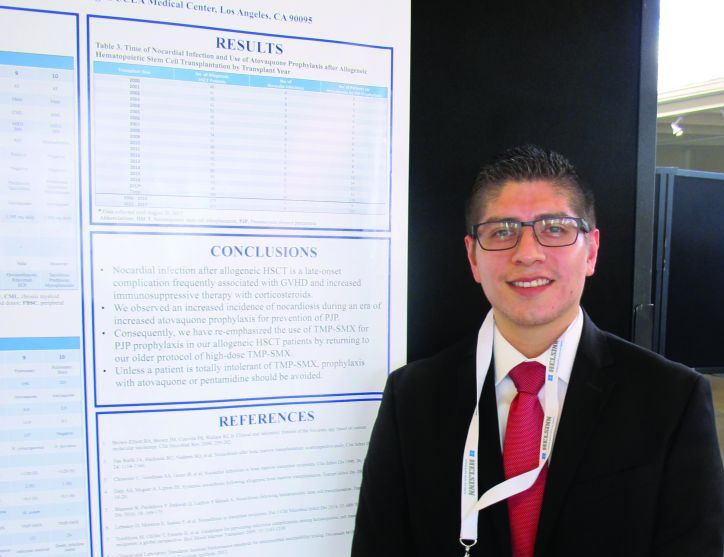
None of the 575 patients treated between 2000 and 2012, versus 119 of the 411 treated after 2012, received atovaquone, he reported.
To assess the potential relationship between the use of atovaquone and the increased incidence of nocardiosis, he and his colleagues reviewed patient medical records and UCLA Clinical Microbiology Laboratory culture results.
Nocardiosis occurred mainly in patients on high doses of corticosteroids for graft-versus-host disease, and 8 of the 10 affected patients were not receiving TMP-SMX for PJP prophylaxis; 7 were on atovaquone, and 1 was on intravenous pentamidine, Mr. Molina said.
The findings suggest that TMP-SMX should remain the agent of choice for PJP prophylaxis in HSCT recipients and have prompted a return to the older protocol of high-dose TMP-SMX for this purpose at UCLA, he said.
“Unless a patient is totally intolerant of TMP-SMX, prophylaxis with atovaquone or pentamidine should be avoided,” he concluded.
Mr. Molina reported having no financial disclosures. The Acute Leukemia Forum is held by Hemedicus, which is owned by the same company as this news organization.
SOURCE: Molina A et al., ALF 2018, Poster Session.
NEWPORT BEACH, CALIF. – Use of atovaquone or pentamidine for Pneumocystis jiroveci pneumonia (PJP) prophylaxis was associated with an increased incidence of nocardiosis in allogeneic hematopoietic stem call transplant (HSCT) recipients at the University of California, Los Angeles, according to a review of patient records.
Of 10 cases of late-onset nocardiosis identified among patients who received HSCT between Jan. 1, 2000, and Aug. 30, 2017, 9 cases occurred in 411 patients (2.2%) treated between 2012 and 2017 – a period of increased use of atovaquone prophylaxis, compared with only 1 in 575 patients (0.17%) treated in the prior 12 years when trimethoprim-sulfamethoxazole (TMP-SMX) was used for prophylaxis, Alfonso Molina reported in a poster at the Acute Leukemia Forum of Hemedicus.
None of the 575 patients treated between 2000 and 2012, versus 119 of the 411 treated after 2012, received atovaquone, he reported.
To assess the potential relationship between the use of atovaquone and the increased incidence of nocardiosis, he and his colleagues reviewed patient medical records and UCLA Clinical Microbiology Laboratory culture results.
Nocardiosis occurred mainly in patients on high doses of corticosteroids for graft-versus-host disease, and 8 of the 10 affected patients were not receiving TMP-SMX for PJP prophylaxis; 7 were on atovaquone, and 1 was on intravenous pentamidine, Mr. Molina said.
The findings suggest that TMP-SMX should remain the agent of choice for PJP prophylaxis in HSCT recipients and have prompted a return to the older protocol of high-dose TMP-SMX for this purpose at UCLA, he said.
“Unless a patient is totally intolerant of TMP-SMX, prophylaxis with atovaquone or pentamidine should be avoided,” he concluded.
Mr. Molina reported having no financial disclosures. The Acute Leukemia Forum is held by Hemedicus, which is owned by the same company as this news organization.
SOURCE: Molina A et al., ALF 2018, Poster Session.
NEWPORT BEACH, CALIF. – Use of atovaquone or pentamidine for Pneumocystis jiroveci pneumonia (PJP) prophylaxis was associated with an increased incidence of nocardiosis in allogeneic hematopoietic stem call transplant (HSCT) recipients at the University of California, Los Angeles, according to a review of patient records.
Of 10 cases of late-onset nocardiosis identified among patients who received HSCT between Jan. 1, 2000, and Aug. 30, 2017, 9 cases occurred in 411 patients (2.2%) treated between 2012 and 2017 – a period of increased use of atovaquone prophylaxis, compared with only 1 in 575 patients (0.17%) treated in the prior 12 years when trimethoprim-sulfamethoxazole (TMP-SMX) was used for prophylaxis, Alfonso Molina reported in a poster at the Acute Leukemia Forum of Hemedicus.
None of the 575 patients treated between 2000 and 2012, versus 119 of the 411 treated after 2012, received atovaquone, he reported.
To assess the potential relationship between the use of atovaquone and the increased incidence of nocardiosis, he and his colleagues reviewed patient medical records and UCLA Clinical Microbiology Laboratory culture results.
Nocardiosis occurred mainly in patients on high doses of corticosteroids for graft-versus-host disease, and 8 of the 10 affected patients were not receiving TMP-SMX for PJP prophylaxis; 7 were on atovaquone, and 1 was on intravenous pentamidine, Mr. Molina said.
The findings suggest that TMP-SMX should remain the agent of choice for PJP prophylaxis in HSCT recipients and have prompted a return to the older protocol of high-dose TMP-SMX for this purpose at UCLA, he said.
“Unless a patient is totally intolerant of TMP-SMX, prophylaxis with atovaquone or pentamidine should be avoided,” he concluded.
Mr. Molina reported having no financial disclosures. The Acute Leukemia Forum is held by Hemedicus, which is owned by the same company as this news organization.
SOURCE: Molina A et al., ALF 2018, Poster Session.
REPORTING FROM ALF 2018
Key clinical point:
Major finding: The incidence of nocardiosis was 2.2% during atovaquone use versus 0.17% prior to its use.
Study details: A retrospective review of records for 986 patients.
Disclosures: Mr. Molina reported having no financial disclosures.
Source: Molina A et al. ALF 2018, Poster Session.
ERAS reduced opioid use, improved same-day discharge after gyn surgery
ORLANDO – The implementation of enhanced recovery after surgery (ERAS) pathways increased same-day discharge rates, but also was associated with a slight increase in readmissions within 30 days, according to a retrospective review of urogynecology cases at a single institution.
ERAS implementation also decreased total opioid use and pain scores, increased preemptive antiemetic use, and reduced rescue antiemetic needs in the postanesthesia care unit, Charelle M. Carter-Brooks, MD, reported at the annual scientific meeting of the Society of Gynecologic Surgeons.
In a separate study at an urban safety-net hospital, ERAS implementation was feasible and rapidly accomplished, and resulted in a number of improved outcomes among gynecologic surgery patients, including reduced intraoperative opioid and intravenous fluid use, reduced postoperative intravenous opioid use, and shorter Foley catheter duration – all without an increase in total adverse events.
In the first study, same-day discharge rates were 91.7% in 137 women who underwent urogynecologic surgery after ERAS implementation vs. 25.9% in 121 patients who underwent surgery before ERAS implementation, and average length of admission decreased by 17.4 hours (27.7 vs. 10.3 hours), Dr. Carter-Brooks of Magee-Womens Hospital, University of Pittsburgh Medical Center, reported in an oral paper presentation.
Operative time and postsurgical recovery room times were similar before and after ERAS implementation, but earlier discharge in the ERAS group was associated with about a 5% increase in readmission rates within 30 days (readmission rates of 1.5% and 6.7% before and after implementation), she noted.
Other outcomes, including postoperative complications, urinary tract infections, emergency room visits, unanticipated office visits, and returns to the operating room were similar in the two groups, she said.
After adjusting for age, body mass index, comorbidities, and operative time, length of stay decreased by 13.6 hours after ERAS implementation; after adjusting for age and operative time, same-day discharge was 32 times more likely after ERAS implementation; and after adjusting for age, operative time, and prolapse surgery type, readmission was 5.7 times more likely after ERAS implementation, she said.
In a survey of 77 post-ERAS implementation patients conducted during postoperative nursing calls, 86.7%, 89.6%, and 93.5% reported very good or excellent pain control, surgery preparedness, and overall surgical experience, respectively, and 90% said they did not recall experiencing postoperative nausea during recovery, she added.
In a poster presented at the meeting, Dr. Carter-Brooks further noted that there was a 69% reduction in overall opioid use in the patients who underwent surgery after ERAS implementation, as well as a doubling in the median number of preemptive antiemetic doses (4 vs. 2) and a significant reduction in the percentage of patients receiving a rescue antiemetic after implementation (21.6% vs. 13.6%).
Patients included in the study were women with a mean age of 65.5 years and mean body mass index of 28.2 kg/m2. The most common preoperative diagnosis (in 93.8% of patients) was prolapse. Apical suspension procedures performed were transvaginal in 58 cases, laparoscopic or robotic in 112, and obliterative in 61. Most patients had a hysterectomy, including 83 laparoscopic or robotic, 64 transvaginal, and 1 combined procedure. Demographic and surgical procedures did not differ significantly in the pre- and post-ERAS groups, Dr. Carter-Brooks noted.
Surgeries were performed by seven different surgeons either before ERAS implementation (Jan. 1 to June 30, 2016) or after implementation (Feb. 2 to July 31, 2017).
ERAS – a multidisciplinary approach to patient perioperative care – involves implementation of evidence-based interventions to improve early discharge and length of stay in patients undergoing major elective surgery.
ERAS pathways, which are commonly used in colorectal surgery, were developed to hasten postoperative recovery and are now being increasingly adopted for gynecologic procedures, but data focusing on outcomes with ERAS in the prolapse repair setting are limited, Dr. Carter-Brooks noted.
The ERAS pathway in her study involved a preoperative optimization phase that included counseling about tobacco and alcohol cessation, education about ERAS pathway expectations, and recommendations regarding diet and exercise 1-2 weeks prior to surgery. On the day of surgery, the pathway involved a multimodal pain regimen and postoperative nausea and vomiting prevention.
In response to discussion questions about which interventions contributed most to improvements in same-day discharge rates and patient satisfaction, which interventions were most difficult to implement, and whether additional interventions could prevent readmissions, Dr. Carter-Brooks said that, in her experience the multimodal focus on pain and nausea/vomiting prevention has been particularly helpful, as has the emphasis on educating patients about the interventions and expectations.
“For the preoperative appointment we really spend about 15-30 minutes on education and expectations and prepare the patient to go home. We also encourage them to be advocates and stakeholders in their own recovery, and ... we think that has significantly improved our patients wanting to go home the day of surgery,” she said.
The most difficult aspect of implementation was changing the culture in the hospital, she added.
Support of leadership team members who advocated for change was key to achieving that. Regular audits to review outcomes and make changes as needed to achieve the intended benefit were also important, she noted.
As for readmissions, the numbers overall were small, and their relation to ERAS is questionable and something that is still being tracked and assessed, she said.
In the second study, early outcomes after ERAS implementation were encouraging. Compared with 96 patients who underwent gynecologic surgery between June 1 and Aug. 31, 2015 (before ERAS implementation), 65 who underwent surgery afterward (between February and April 2017) had decreased intraoperative opioid use in open surgery (95 mg vs. 115 mg) and in minimally invasive surgery (75 mg vs. 95 mg), as well as decreased intravenous opioid use postoperatively for open surgery (44% vs. 71%), Mary Louise Fowler, a 4th-year medical student at Boston University, reported at the conference.
The ERAS patients also had shorter Foley catheter duration for minimally invasive surgery (16 vs. 2.3 hours), and they had a trend toward decreased intraoperative fluids for minimally invasive surgery (3.3 vs. 4.2 mL/kg per hour), Ms. Fowler said.
“We also found that there was no significant difference in the length of stay and postdischarge 3-day adverse outcomes,” she said.
The multidisciplinary consensus-based ERAS pathway developed at her institution was implemented beginning Feb. 1, 2017, in response to the national call to reduce opioid use, she explained, noting that a predetermined 4-month time line facilitated implementation by the target date.
Eligible patients included those undergoing benign or oncologic gynecologic surgery with a planned overnight stay.
“Preliminary positive outcomes have been found [with ERAS] at our urban safety-net hospital, specifically in looking at decreased opioid use without a resultant total adverse event increase. It is important for us to continue to monitor ERAS in terms of long-term care to ensure adherence, safety, and effectiveness,” she said, adding that tracking of outcomes will continue, and a future goal is to assess impacts on cost.
Dr. Carter-Brooks’s study was supported by a National Institutes of Health grant. She and Ms. Fowler each reported having no disclosures.
SOURCES: Carter-Brooks C et al.; Fowler M et al. SGS 2018, Oral presentation 2; Oral posters 1 and 16.
The ERAS pathway described by Dr. Carter-Brooks embraces the core tenets of enhanced recovery, including standardized patient education, multimodal analgesia, and predefined postoperative metrics, according to invited discussant Mark Walters, MD.
In fact, systematic culture change requires the involvement of surgeons, nurses, anesthesiologists, and administrative staff, Dr. Walters added.
“Additionally, such significant behavioral changes inevitably result in unintended consequences that must be carefully documented to learn how to mitigate harm in future patients,” he said.
Dr. Walters is professor and vice chair of gynecology in the Center of Urogynecology and Reconstructive Pelvic Surgery, department of obstetrics and gynecology at the Cleveland Clinic. He is a consultant and teacher for Coloplast.
The ERAS pathway described by Dr. Carter-Brooks embraces the core tenets of enhanced recovery, including standardized patient education, multimodal analgesia, and predefined postoperative metrics, according to invited discussant Mark Walters, MD.
In fact, systematic culture change requires the involvement of surgeons, nurses, anesthesiologists, and administrative staff, Dr. Walters added.
“Additionally, such significant behavioral changes inevitably result in unintended consequences that must be carefully documented to learn how to mitigate harm in future patients,” he said.
Dr. Walters is professor and vice chair of gynecology in the Center of Urogynecology and Reconstructive Pelvic Surgery, department of obstetrics and gynecology at the Cleveland Clinic. He is a consultant and teacher for Coloplast.
The ERAS pathway described by Dr. Carter-Brooks embraces the core tenets of enhanced recovery, including standardized patient education, multimodal analgesia, and predefined postoperative metrics, according to invited discussant Mark Walters, MD.
In fact, systematic culture change requires the involvement of surgeons, nurses, anesthesiologists, and administrative staff, Dr. Walters added.
“Additionally, such significant behavioral changes inevitably result in unintended consequences that must be carefully documented to learn how to mitigate harm in future patients,” he said.
Dr. Walters is professor and vice chair of gynecology in the Center of Urogynecology and Reconstructive Pelvic Surgery, department of obstetrics and gynecology at the Cleveland Clinic. He is a consultant and teacher for Coloplast.
ORLANDO – The implementation of enhanced recovery after surgery (ERAS) pathways increased same-day discharge rates, but also was associated with a slight increase in readmissions within 30 days, according to a retrospective review of urogynecology cases at a single institution.
ERAS implementation also decreased total opioid use and pain scores, increased preemptive antiemetic use, and reduced rescue antiemetic needs in the postanesthesia care unit, Charelle M. Carter-Brooks, MD, reported at the annual scientific meeting of the Society of Gynecologic Surgeons.
In a separate study at an urban safety-net hospital, ERAS implementation was feasible and rapidly accomplished, and resulted in a number of improved outcomes among gynecologic surgery patients, including reduced intraoperative opioid and intravenous fluid use, reduced postoperative intravenous opioid use, and shorter Foley catheter duration – all without an increase in total adverse events.
In the first study, same-day discharge rates were 91.7% in 137 women who underwent urogynecologic surgery after ERAS implementation vs. 25.9% in 121 patients who underwent surgery before ERAS implementation, and average length of admission decreased by 17.4 hours (27.7 vs. 10.3 hours), Dr. Carter-Brooks of Magee-Womens Hospital, University of Pittsburgh Medical Center, reported in an oral paper presentation.
Operative time and postsurgical recovery room times were similar before and after ERAS implementation, but earlier discharge in the ERAS group was associated with about a 5% increase in readmission rates within 30 days (readmission rates of 1.5% and 6.7% before and after implementation), she noted.
Other outcomes, including postoperative complications, urinary tract infections, emergency room visits, unanticipated office visits, and returns to the operating room were similar in the two groups, she said.
After adjusting for age, body mass index, comorbidities, and operative time, length of stay decreased by 13.6 hours after ERAS implementation; after adjusting for age and operative time, same-day discharge was 32 times more likely after ERAS implementation; and after adjusting for age, operative time, and prolapse surgery type, readmission was 5.7 times more likely after ERAS implementation, she said.
In a survey of 77 post-ERAS implementation patients conducted during postoperative nursing calls, 86.7%, 89.6%, and 93.5% reported very good or excellent pain control, surgery preparedness, and overall surgical experience, respectively, and 90% said they did not recall experiencing postoperative nausea during recovery, she added.
In a poster presented at the meeting, Dr. Carter-Brooks further noted that there was a 69% reduction in overall opioid use in the patients who underwent surgery after ERAS implementation, as well as a doubling in the median number of preemptive antiemetic doses (4 vs. 2) and a significant reduction in the percentage of patients receiving a rescue antiemetic after implementation (21.6% vs. 13.6%).
Patients included in the study were women with a mean age of 65.5 years and mean body mass index of 28.2 kg/m2. The most common preoperative diagnosis (in 93.8% of patients) was prolapse. Apical suspension procedures performed were transvaginal in 58 cases, laparoscopic or robotic in 112, and obliterative in 61. Most patients had a hysterectomy, including 83 laparoscopic or robotic, 64 transvaginal, and 1 combined procedure. Demographic and surgical procedures did not differ significantly in the pre- and post-ERAS groups, Dr. Carter-Brooks noted.
Surgeries were performed by seven different surgeons either before ERAS implementation (Jan. 1 to June 30, 2016) or after implementation (Feb. 2 to July 31, 2017).
ERAS – a multidisciplinary approach to patient perioperative care – involves implementation of evidence-based interventions to improve early discharge and length of stay in patients undergoing major elective surgery.
ERAS pathways, which are commonly used in colorectal surgery, were developed to hasten postoperative recovery and are now being increasingly adopted for gynecologic procedures, but data focusing on outcomes with ERAS in the prolapse repair setting are limited, Dr. Carter-Brooks noted.
The ERAS pathway in her study involved a preoperative optimization phase that included counseling about tobacco and alcohol cessation, education about ERAS pathway expectations, and recommendations regarding diet and exercise 1-2 weeks prior to surgery. On the day of surgery, the pathway involved a multimodal pain regimen and postoperative nausea and vomiting prevention.
In response to discussion questions about which interventions contributed most to improvements in same-day discharge rates and patient satisfaction, which interventions were most difficult to implement, and whether additional interventions could prevent readmissions, Dr. Carter-Brooks said that, in her experience the multimodal focus on pain and nausea/vomiting prevention has been particularly helpful, as has the emphasis on educating patients about the interventions and expectations.
“For the preoperative appointment we really spend about 15-30 minutes on education and expectations and prepare the patient to go home. We also encourage them to be advocates and stakeholders in their own recovery, and ... we think that has significantly improved our patients wanting to go home the day of surgery,” she said.
The most difficult aspect of implementation was changing the culture in the hospital, she added.
Support of leadership team members who advocated for change was key to achieving that. Regular audits to review outcomes and make changes as needed to achieve the intended benefit were also important, she noted.
As for readmissions, the numbers overall were small, and their relation to ERAS is questionable and something that is still being tracked and assessed, she said.
In the second study, early outcomes after ERAS implementation were encouraging. Compared with 96 patients who underwent gynecologic surgery between June 1 and Aug. 31, 2015 (before ERAS implementation), 65 who underwent surgery afterward (between February and April 2017) had decreased intraoperative opioid use in open surgery (95 mg vs. 115 mg) and in minimally invasive surgery (75 mg vs. 95 mg), as well as decreased intravenous opioid use postoperatively for open surgery (44% vs. 71%), Mary Louise Fowler, a 4th-year medical student at Boston University, reported at the conference.
The ERAS patients also had shorter Foley catheter duration for minimally invasive surgery (16 vs. 2.3 hours), and they had a trend toward decreased intraoperative fluids for minimally invasive surgery (3.3 vs. 4.2 mL/kg per hour), Ms. Fowler said.
“We also found that there was no significant difference in the length of stay and postdischarge 3-day adverse outcomes,” she said.
The multidisciplinary consensus-based ERAS pathway developed at her institution was implemented beginning Feb. 1, 2017, in response to the national call to reduce opioid use, she explained, noting that a predetermined 4-month time line facilitated implementation by the target date.
Eligible patients included those undergoing benign or oncologic gynecologic surgery with a planned overnight stay.
“Preliminary positive outcomes have been found [with ERAS] at our urban safety-net hospital, specifically in looking at decreased opioid use without a resultant total adverse event increase. It is important for us to continue to monitor ERAS in terms of long-term care to ensure adherence, safety, and effectiveness,” she said, adding that tracking of outcomes will continue, and a future goal is to assess impacts on cost.
Dr. Carter-Brooks’s study was supported by a National Institutes of Health grant. She and Ms. Fowler each reported having no disclosures.
SOURCES: Carter-Brooks C et al.; Fowler M et al. SGS 2018, Oral presentation 2; Oral posters 1 and 16.
ORLANDO – The implementation of enhanced recovery after surgery (ERAS) pathways increased same-day discharge rates, but also was associated with a slight increase in readmissions within 30 days, according to a retrospective review of urogynecology cases at a single institution.
ERAS implementation also decreased total opioid use and pain scores, increased preemptive antiemetic use, and reduced rescue antiemetic needs in the postanesthesia care unit, Charelle M. Carter-Brooks, MD, reported at the annual scientific meeting of the Society of Gynecologic Surgeons.
In a separate study at an urban safety-net hospital, ERAS implementation was feasible and rapidly accomplished, and resulted in a number of improved outcomes among gynecologic surgery patients, including reduced intraoperative opioid and intravenous fluid use, reduced postoperative intravenous opioid use, and shorter Foley catheter duration – all without an increase in total adverse events.
In the first study, same-day discharge rates were 91.7% in 137 women who underwent urogynecologic surgery after ERAS implementation vs. 25.9% in 121 patients who underwent surgery before ERAS implementation, and average length of admission decreased by 17.4 hours (27.7 vs. 10.3 hours), Dr. Carter-Brooks of Magee-Womens Hospital, University of Pittsburgh Medical Center, reported in an oral paper presentation.
Operative time and postsurgical recovery room times were similar before and after ERAS implementation, but earlier discharge in the ERAS group was associated with about a 5% increase in readmission rates within 30 days (readmission rates of 1.5% and 6.7% before and after implementation), she noted.
Other outcomes, including postoperative complications, urinary tract infections, emergency room visits, unanticipated office visits, and returns to the operating room were similar in the two groups, she said.
After adjusting for age, body mass index, comorbidities, and operative time, length of stay decreased by 13.6 hours after ERAS implementation; after adjusting for age and operative time, same-day discharge was 32 times more likely after ERAS implementation; and after adjusting for age, operative time, and prolapse surgery type, readmission was 5.7 times more likely after ERAS implementation, she said.
In a survey of 77 post-ERAS implementation patients conducted during postoperative nursing calls, 86.7%, 89.6%, and 93.5% reported very good or excellent pain control, surgery preparedness, and overall surgical experience, respectively, and 90% said they did not recall experiencing postoperative nausea during recovery, she added.
In a poster presented at the meeting, Dr. Carter-Brooks further noted that there was a 69% reduction in overall opioid use in the patients who underwent surgery after ERAS implementation, as well as a doubling in the median number of preemptive antiemetic doses (4 vs. 2) and a significant reduction in the percentage of patients receiving a rescue antiemetic after implementation (21.6% vs. 13.6%).
Patients included in the study were women with a mean age of 65.5 years and mean body mass index of 28.2 kg/m2. The most common preoperative diagnosis (in 93.8% of patients) was prolapse. Apical suspension procedures performed were transvaginal in 58 cases, laparoscopic or robotic in 112, and obliterative in 61. Most patients had a hysterectomy, including 83 laparoscopic or robotic, 64 transvaginal, and 1 combined procedure. Demographic and surgical procedures did not differ significantly in the pre- and post-ERAS groups, Dr. Carter-Brooks noted.
Surgeries were performed by seven different surgeons either before ERAS implementation (Jan. 1 to June 30, 2016) or after implementation (Feb. 2 to July 31, 2017).
ERAS – a multidisciplinary approach to patient perioperative care – involves implementation of evidence-based interventions to improve early discharge and length of stay in patients undergoing major elective surgery.
ERAS pathways, which are commonly used in colorectal surgery, were developed to hasten postoperative recovery and are now being increasingly adopted for gynecologic procedures, but data focusing on outcomes with ERAS in the prolapse repair setting are limited, Dr. Carter-Brooks noted.
The ERAS pathway in her study involved a preoperative optimization phase that included counseling about tobacco and alcohol cessation, education about ERAS pathway expectations, and recommendations regarding diet and exercise 1-2 weeks prior to surgery. On the day of surgery, the pathway involved a multimodal pain regimen and postoperative nausea and vomiting prevention.
In response to discussion questions about which interventions contributed most to improvements in same-day discharge rates and patient satisfaction, which interventions were most difficult to implement, and whether additional interventions could prevent readmissions, Dr. Carter-Brooks said that, in her experience the multimodal focus on pain and nausea/vomiting prevention has been particularly helpful, as has the emphasis on educating patients about the interventions and expectations.
“For the preoperative appointment we really spend about 15-30 minutes on education and expectations and prepare the patient to go home. We also encourage them to be advocates and stakeholders in their own recovery, and ... we think that has significantly improved our patients wanting to go home the day of surgery,” she said.
The most difficult aspect of implementation was changing the culture in the hospital, she added.
Support of leadership team members who advocated for change was key to achieving that. Regular audits to review outcomes and make changes as needed to achieve the intended benefit were also important, she noted.
As for readmissions, the numbers overall were small, and their relation to ERAS is questionable and something that is still being tracked and assessed, she said.
In the second study, early outcomes after ERAS implementation were encouraging. Compared with 96 patients who underwent gynecologic surgery between June 1 and Aug. 31, 2015 (before ERAS implementation), 65 who underwent surgery afterward (between February and April 2017) had decreased intraoperative opioid use in open surgery (95 mg vs. 115 mg) and in minimally invasive surgery (75 mg vs. 95 mg), as well as decreased intravenous opioid use postoperatively for open surgery (44% vs. 71%), Mary Louise Fowler, a 4th-year medical student at Boston University, reported at the conference.
The ERAS patients also had shorter Foley catheter duration for minimally invasive surgery (16 vs. 2.3 hours), and they had a trend toward decreased intraoperative fluids for minimally invasive surgery (3.3 vs. 4.2 mL/kg per hour), Ms. Fowler said.
“We also found that there was no significant difference in the length of stay and postdischarge 3-day adverse outcomes,” she said.
The multidisciplinary consensus-based ERAS pathway developed at her institution was implemented beginning Feb. 1, 2017, in response to the national call to reduce opioid use, she explained, noting that a predetermined 4-month time line facilitated implementation by the target date.
Eligible patients included those undergoing benign or oncologic gynecologic surgery with a planned overnight stay.
“Preliminary positive outcomes have been found [with ERAS] at our urban safety-net hospital, specifically in looking at decreased opioid use without a resultant total adverse event increase. It is important for us to continue to monitor ERAS in terms of long-term care to ensure adherence, safety, and effectiveness,” she said, adding that tracking of outcomes will continue, and a future goal is to assess impacts on cost.
Dr. Carter-Brooks’s study was supported by a National Institutes of Health grant. She and Ms. Fowler each reported having no disclosures.
SOURCES: Carter-Brooks C et al.; Fowler M et al. SGS 2018, Oral presentation 2; Oral posters 1 and 16.
REPORTING FROM SGS 2018
Key clinical point: ERAS pathways improve same-day discharge rates and reduce opioid use in gynecologic surgery.
Major finding: Same-day discharge rates before and after ERAS were 25.9% and 91.7%, respectively.
Study details: A retrospective review of 258 patients; a study of 161 patients.
Disclosures: Dr. Carter-Brooks’s study was supported by a National Institutes of Health grant. She and Ms. Fowler each reported having no disclosures.
Sources: Carter-Brooks C et al.; Fowler M et al. SGS 2018, Oral presentation 2; Oral posters 1 and 16.
Study: Preop EKGs have little utility for benign hysterectomy
ORLANDO – Preoperative electrocardiograms (EKGs) had no effect on management or perioperative complications in women undergoing benign hysterectomy over a 12-month period at a single medical center, according to a review of records.
Of 587 patients included in the review, 182 (31%) underwent EKG as part of their preoperative evaluation, and the majority of those were indicated according to institutional criteria (166; 28%) or National Institute for Health Care Excellence (NICE) guidelines (177; 30%), Nemi M. Shah, MD, reported at the annual scientific meeting of the Society of Gynecologic Surgeons.
“EKG was indicated in 91% of these patients according to institutional criteria, and in 97% of patients per NICE criteria,” said Dr. Shah, a third-year resident at the University of Texas Southwestern Medical Center, Dallas.
By institutional criteria, hypertension was the most common indication (68% of cases), and by NICE criteria, American Society of Anesthesia class 2 physical status was the most common indication (80% of cases), she noted, adding that obesity, which was present in 70% of patients, was the most common comorbidity classifying patients with American Society of Anesthesia class 2 or above.
Of the 182 EKGs performed, findings were abnormal in 89, but further workup was pursued in only 16 patients, and included repeat EKG, echocardiogram, and/or stress testing and cardiology consultation. Surgical delays of 1 and 4 months occurred in 2 patients as a result of the additional workup, and ultimately, all planned hysterectomies were completed by the primary surgical team without changes in management, she said.
Perioperative complications occurred in two patients, and included nonspecific postinduction EKG changes that led to surgery being aborted in one patient who had left ventricular hypertrophy on the preoperative EKG, and failed extubation in a patient with airway edema whose preoperative EKG showed a nonacute inferior infarct.
For the first, cardiology was consulted and determined the findings to be benign; the patient underwent hysterectomy at a later date without complications. The second patient was taken to the surgical intensive care unit for management, Dr. Shah said.
“Preoperative testing for benign hysterectomy is variable as there is no single standard of care,” she explained. “Though tests such as EKG are commonly ordered, there are no data linking study results to surgical outcomes.”
The current study was conducted to evaluate the rate of preoperative EKG performed in concordance with institutional and NICE guidelines, and to assess implications for management and perioperative complications.
Patients included in the review were adult women who underwent scheduled benign hysterectomy during 2016. Women who underwent emergency surgery or whose surgery was performed by gynecologic oncologists were excluded.
Subjects were primarily Hispanic, and had a mean age of 45 years, Dr. Shah noted.
Though limited by the single-center design and retrospective nature of the study, the findings suggest that preoperative EKG has little clinical utility.
“We found that practice patterns were highly concordant with institutional and NICE guidelines. However, EKG resulted in minimal impact on perioperative management, and no association between abnormal EKG and perioperative complications was found,” she said. “EKG may not accurately stratify perioperative cardiopulmonary risk, and alternative methods for preoperative evaluation should be considered.”
Dr. Shah reported having no disclosures.
SOURCE: Shah N et al. SGS 2018 Oral Poster 3.
ORLANDO – Preoperative electrocardiograms (EKGs) had no effect on management or perioperative complications in women undergoing benign hysterectomy over a 12-month period at a single medical center, according to a review of records.
Of 587 patients included in the review, 182 (31%) underwent EKG as part of their preoperative evaluation, and the majority of those were indicated according to institutional criteria (166; 28%) or National Institute for Health Care Excellence (NICE) guidelines (177; 30%), Nemi M. Shah, MD, reported at the annual scientific meeting of the Society of Gynecologic Surgeons.
“EKG was indicated in 91% of these patients according to institutional criteria, and in 97% of patients per NICE criteria,” said Dr. Shah, a third-year resident at the University of Texas Southwestern Medical Center, Dallas.
By institutional criteria, hypertension was the most common indication (68% of cases), and by NICE criteria, American Society of Anesthesia class 2 physical status was the most common indication (80% of cases), she noted, adding that obesity, which was present in 70% of patients, was the most common comorbidity classifying patients with American Society of Anesthesia class 2 or above.
Of the 182 EKGs performed, findings were abnormal in 89, but further workup was pursued in only 16 patients, and included repeat EKG, echocardiogram, and/or stress testing and cardiology consultation. Surgical delays of 1 and 4 months occurred in 2 patients as a result of the additional workup, and ultimately, all planned hysterectomies were completed by the primary surgical team without changes in management, she said.
Perioperative complications occurred in two patients, and included nonspecific postinduction EKG changes that led to surgery being aborted in one patient who had left ventricular hypertrophy on the preoperative EKG, and failed extubation in a patient with airway edema whose preoperative EKG showed a nonacute inferior infarct.
For the first, cardiology was consulted and determined the findings to be benign; the patient underwent hysterectomy at a later date without complications. The second patient was taken to the surgical intensive care unit for management, Dr. Shah said.
“Preoperative testing for benign hysterectomy is variable as there is no single standard of care,” she explained. “Though tests such as EKG are commonly ordered, there are no data linking study results to surgical outcomes.”
The current study was conducted to evaluate the rate of preoperative EKG performed in concordance with institutional and NICE guidelines, and to assess implications for management and perioperative complications.
Patients included in the review were adult women who underwent scheduled benign hysterectomy during 2016. Women who underwent emergency surgery or whose surgery was performed by gynecologic oncologists were excluded.
Subjects were primarily Hispanic, and had a mean age of 45 years, Dr. Shah noted.
Though limited by the single-center design and retrospective nature of the study, the findings suggest that preoperative EKG has little clinical utility.
“We found that practice patterns were highly concordant with institutional and NICE guidelines. However, EKG resulted in minimal impact on perioperative management, and no association between abnormal EKG and perioperative complications was found,” she said. “EKG may not accurately stratify perioperative cardiopulmonary risk, and alternative methods for preoperative evaluation should be considered.”
Dr. Shah reported having no disclosures.
SOURCE: Shah N et al. SGS 2018 Oral Poster 3.
ORLANDO – Preoperative electrocardiograms (EKGs) had no effect on management or perioperative complications in women undergoing benign hysterectomy over a 12-month period at a single medical center, according to a review of records.
Of 587 patients included in the review, 182 (31%) underwent EKG as part of their preoperative evaluation, and the majority of those were indicated according to institutional criteria (166; 28%) or National Institute for Health Care Excellence (NICE) guidelines (177; 30%), Nemi M. Shah, MD, reported at the annual scientific meeting of the Society of Gynecologic Surgeons.
“EKG was indicated in 91% of these patients according to institutional criteria, and in 97% of patients per NICE criteria,” said Dr. Shah, a third-year resident at the University of Texas Southwestern Medical Center, Dallas.
By institutional criteria, hypertension was the most common indication (68% of cases), and by NICE criteria, American Society of Anesthesia class 2 physical status was the most common indication (80% of cases), she noted, adding that obesity, which was present in 70% of patients, was the most common comorbidity classifying patients with American Society of Anesthesia class 2 or above.
Of the 182 EKGs performed, findings were abnormal in 89, but further workup was pursued in only 16 patients, and included repeat EKG, echocardiogram, and/or stress testing and cardiology consultation. Surgical delays of 1 and 4 months occurred in 2 patients as a result of the additional workup, and ultimately, all planned hysterectomies were completed by the primary surgical team without changes in management, she said.
Perioperative complications occurred in two patients, and included nonspecific postinduction EKG changes that led to surgery being aborted in one patient who had left ventricular hypertrophy on the preoperative EKG, and failed extubation in a patient with airway edema whose preoperative EKG showed a nonacute inferior infarct.
For the first, cardiology was consulted and determined the findings to be benign; the patient underwent hysterectomy at a later date without complications. The second patient was taken to the surgical intensive care unit for management, Dr. Shah said.
“Preoperative testing for benign hysterectomy is variable as there is no single standard of care,” she explained. “Though tests such as EKG are commonly ordered, there are no data linking study results to surgical outcomes.”
The current study was conducted to evaluate the rate of preoperative EKG performed in concordance with institutional and NICE guidelines, and to assess implications for management and perioperative complications.
Patients included in the review were adult women who underwent scheduled benign hysterectomy during 2016. Women who underwent emergency surgery or whose surgery was performed by gynecologic oncologists were excluded.
Subjects were primarily Hispanic, and had a mean age of 45 years, Dr. Shah noted.
Though limited by the single-center design and retrospective nature of the study, the findings suggest that preoperative EKG has little clinical utility.
“We found that practice patterns were highly concordant with institutional and NICE guidelines. However, EKG resulted in minimal impact on perioperative management, and no association between abnormal EKG and perioperative complications was found,” she said. “EKG may not accurately stratify perioperative cardiopulmonary risk, and alternative methods for preoperative evaluation should be considered.”
Dr. Shah reported having no disclosures.
SOURCE: Shah N et al. SGS 2018 Oral Poster 3.
REPORTING FROM SGS 2018
Key clinical point: Preoperative EKG appears to have little utility in patients undergoing benign hysterectomy.
Major finding: Only 16 of 89 patients with abnormal preoperative EKG underwent further workup, and surgery was delayed in only two cases.
Study details: A retrospective review of 587 cases.
Disclosures: Dr. Shah reported having no disclosures.
Source: Shah N et al. SGS 2018 Oral Poster 3.