User login
Serotonergic dysfunction documented in hoarding disorder
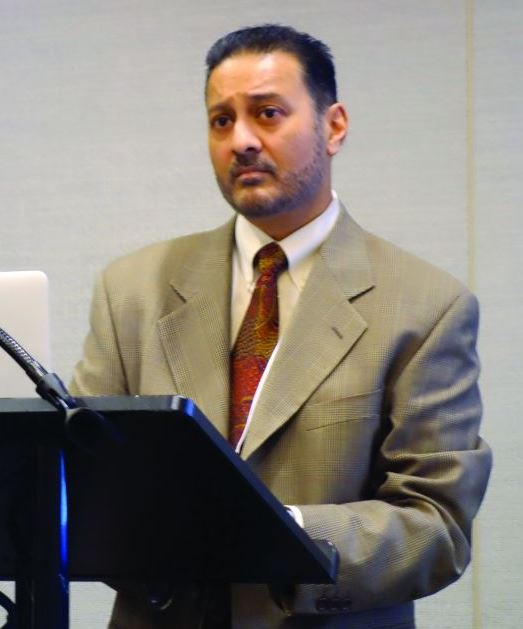
SAN FRANCISCO – Hoarding disorder is characterized by a distinct pattern of serotonergic dysfunction different from that seen in obsessive-compulsive disorder (OCD) or major depression, Sanjaya Saxena, MD, reported at the annual conference of the Anxiety and Depression Association of America.
He presented the findings of the first-ever study to examine neurotransmitter function in patients with hoarding disorder. In contrast to hoarding disorder, the neurobiology of OCD is among the most extensively studied and best understood of any psychiatric disorder, with Dr. Saxena having made important contributions to this body of knowledge.
The findings underscore the prescience of the authors of DSM-5 in removing hoarding disorder from under the umbrella of OCD and giving it its own separate diagnostic category.
“Our study provides more evidence suggesting that OCD and hoarding disorder are two separate disorders that do sometimes occur together in patients, but not necessarily more often than other disorders do. OCD is found in only about 15% of patients with hoarding disorder, and vice versa. Depression is much more commonly comorbid, and [attention-deficit/hyperactivity disorder] is present in about one-quarter of hoarding disorder patients,” according to the psychiatrist.
His study included 8 patients with hoarding disorder and 14 age- and sex-matched normal controls who underwent positron emission tomography with carbon-11-labeled DASP, a ligand that binds with high selectivity to the brain serotonin transporter. The serotonin transporter is a neuronal membrane protein whose main function is to recycle serotonin from synapse back into the neuronal cell body. The serotonin transporter also is the primary site to which serotonin reuptake inhibitor medications bind. Serotonin transporter binding is associated with fear conditioning, amygdala reactivity, the cortisol response, and state anxiety.
Subjects with hoarding disorder proved to have significantly greater serotonin transporter binding than healthy controls in the bilateral amygdala, nucleus accumbens, putamen, and right caudate nucleus. In contrast, their serotonin transporter binding was significantly diminished, compared with controls, in the bilateral retrosplenial posterior cingulate cortex. Severity of hoarding symptoms was correlated with serotonin transporter binding in the right anterior cingulate cortex and right orbitofrontal cortex, but negatively correlated with serotonin transporter binding in the bilateral posterior thalamus, Dr. Saxena reported.
“The binding pattern is almost opposite that seen in OCD,” he observed.
The new study of serotonergic function in hoarding disorder, taken together with earlier brain imaging studies of regional glucose metabolism and functional MRI studies conducted by Dr. Saxena and other research groups, point to a couple of areas of the brain as being strongly implicated in the pathophysiology of hoarding disorder – most notably, the anterior and posterior cingulate cortex.
Particularly intriguing, in Dr. Saxena’s view, is the retrosplenial posterior cingulate cortex, located in Brodmann areas 29 and 30. The retrosplenial posterior cingulate cortex, part of the default mode network, is involved in emotional functioning, learning, planning, navigation, as well as autobiographical, episodic, and visuospatial memory.
“Abnormalities of all those functions are found in hoarding disorder patients, so the retrosplenial posterior cingulate cortex is a candidate for further study,” according to Dr. Saxena.
His neurotransmitter study was funded by the university’s department of psychiatry. He reported having no financial conflicts.
SAN FRANCISCO – Hoarding disorder is characterized by a distinct pattern of serotonergic dysfunction different from that seen in obsessive-compulsive disorder (OCD) or major depression, Sanjaya Saxena, MD, reported at the annual conference of the Anxiety and Depression Association of America.
He presented the findings of the first-ever study to examine neurotransmitter function in patients with hoarding disorder. In contrast to hoarding disorder, the neurobiology of OCD is among the most extensively studied and best understood of any psychiatric disorder, with Dr. Saxena having made important contributions to this body of knowledge.
The findings underscore the prescience of the authors of DSM-5 in removing hoarding disorder from under the umbrella of OCD and giving it its own separate diagnostic category.
“Our study provides more evidence suggesting that OCD and hoarding disorder are two separate disorders that do sometimes occur together in patients, but not necessarily more often than other disorders do. OCD is found in only about 15% of patients with hoarding disorder, and vice versa. Depression is much more commonly comorbid, and [attention-deficit/hyperactivity disorder] is present in about one-quarter of hoarding disorder patients,” according to the psychiatrist.
His study included 8 patients with hoarding disorder and 14 age- and sex-matched normal controls who underwent positron emission tomography with carbon-11-labeled DASP, a ligand that binds with high selectivity to the brain serotonin transporter. The serotonin transporter is a neuronal membrane protein whose main function is to recycle serotonin from synapse back into the neuronal cell body. The serotonin transporter also is the primary site to which serotonin reuptake inhibitor medications bind. Serotonin transporter binding is associated with fear conditioning, amygdala reactivity, the cortisol response, and state anxiety.
Subjects with hoarding disorder proved to have significantly greater serotonin transporter binding than healthy controls in the bilateral amygdala, nucleus accumbens, putamen, and right caudate nucleus. In contrast, their serotonin transporter binding was significantly diminished, compared with controls, in the bilateral retrosplenial posterior cingulate cortex. Severity of hoarding symptoms was correlated with serotonin transporter binding in the right anterior cingulate cortex and right orbitofrontal cortex, but negatively correlated with serotonin transporter binding in the bilateral posterior thalamus, Dr. Saxena reported.
“The binding pattern is almost opposite that seen in OCD,” he observed.
The new study of serotonergic function in hoarding disorder, taken together with earlier brain imaging studies of regional glucose metabolism and functional MRI studies conducted by Dr. Saxena and other research groups, point to a couple of areas of the brain as being strongly implicated in the pathophysiology of hoarding disorder – most notably, the anterior and posterior cingulate cortex.
Particularly intriguing, in Dr. Saxena’s view, is the retrosplenial posterior cingulate cortex, located in Brodmann areas 29 and 30. The retrosplenial posterior cingulate cortex, part of the default mode network, is involved in emotional functioning, learning, planning, navigation, as well as autobiographical, episodic, and visuospatial memory.
“Abnormalities of all those functions are found in hoarding disorder patients, so the retrosplenial posterior cingulate cortex is a candidate for further study,” according to Dr. Saxena.
His neurotransmitter study was funded by the university’s department of psychiatry. He reported having no financial conflicts.
SAN FRANCISCO – Hoarding disorder is characterized by a distinct pattern of serotonergic dysfunction different from that seen in obsessive-compulsive disorder (OCD) or major depression, Sanjaya Saxena, MD, reported at the annual conference of the Anxiety and Depression Association of America.
He presented the findings of the first-ever study to examine neurotransmitter function in patients with hoarding disorder. In contrast to hoarding disorder, the neurobiology of OCD is among the most extensively studied and best understood of any psychiatric disorder, with Dr. Saxena having made important contributions to this body of knowledge.
The findings underscore the prescience of the authors of DSM-5 in removing hoarding disorder from under the umbrella of OCD and giving it its own separate diagnostic category.
“Our study provides more evidence suggesting that OCD and hoarding disorder are two separate disorders that do sometimes occur together in patients, but not necessarily more often than other disorders do. OCD is found in only about 15% of patients with hoarding disorder, and vice versa. Depression is much more commonly comorbid, and [attention-deficit/hyperactivity disorder] is present in about one-quarter of hoarding disorder patients,” according to the psychiatrist.
His study included 8 patients with hoarding disorder and 14 age- and sex-matched normal controls who underwent positron emission tomography with carbon-11-labeled DASP, a ligand that binds with high selectivity to the brain serotonin transporter. The serotonin transporter is a neuronal membrane protein whose main function is to recycle serotonin from synapse back into the neuronal cell body. The serotonin transporter also is the primary site to which serotonin reuptake inhibitor medications bind. Serotonin transporter binding is associated with fear conditioning, amygdala reactivity, the cortisol response, and state anxiety.
Subjects with hoarding disorder proved to have significantly greater serotonin transporter binding than healthy controls in the bilateral amygdala, nucleus accumbens, putamen, and right caudate nucleus. In contrast, their serotonin transporter binding was significantly diminished, compared with controls, in the bilateral retrosplenial posterior cingulate cortex. Severity of hoarding symptoms was correlated with serotonin transporter binding in the right anterior cingulate cortex and right orbitofrontal cortex, but negatively correlated with serotonin transporter binding in the bilateral posterior thalamus, Dr. Saxena reported.
“The binding pattern is almost opposite that seen in OCD,” he observed.
The new study of serotonergic function in hoarding disorder, taken together with earlier brain imaging studies of regional glucose metabolism and functional MRI studies conducted by Dr. Saxena and other research groups, point to a couple of areas of the brain as being strongly implicated in the pathophysiology of hoarding disorder – most notably, the anterior and posterior cingulate cortex.
Particularly intriguing, in Dr. Saxena’s view, is the retrosplenial posterior cingulate cortex, located in Brodmann areas 29 and 30. The retrosplenial posterior cingulate cortex, part of the default mode network, is involved in emotional functioning, learning, planning, navigation, as well as autobiographical, episodic, and visuospatial memory.
“Abnormalities of all those functions are found in hoarding disorder patients, so the retrosplenial posterior cingulate cortex is a candidate for further study,” according to Dr. Saxena.
His neurotransmitter study was funded by the university’s department of psychiatry. He reported having no financial conflicts.
Key clinical point:
Major finding: Serotonin transporter binding is markedly reduced in the retrosplenial posterior cingulate cortex of hoarding disorder patients, compared with normal controls.
Data source: This positron emission tomography study, the first ever to examine brain serotonin transporter binding patterns in hoarding disorder, included 8 affected patients and 14 matched normal controls.
Disclosures: The study was funded by the University of California, San Diego, department of psychiatry. The presenter reported having no financial conflicts.
Gut microbiome dysregulation implicated in OCD
SAN FRANCISCO – Patients with obsessive-compulsive disorder have a gut bacterial microbiome marked by diminished species diversity and abundance, compared with that of healthy controls, according to the first study to examine the issue.
Results of this pilot study also suggest that OCD patients with tic disorder have a distinctly different gut microbiome, compared with other OCD patients, Jasmine Turna said at the annual conference of the Anxiety and Depression Association of America.
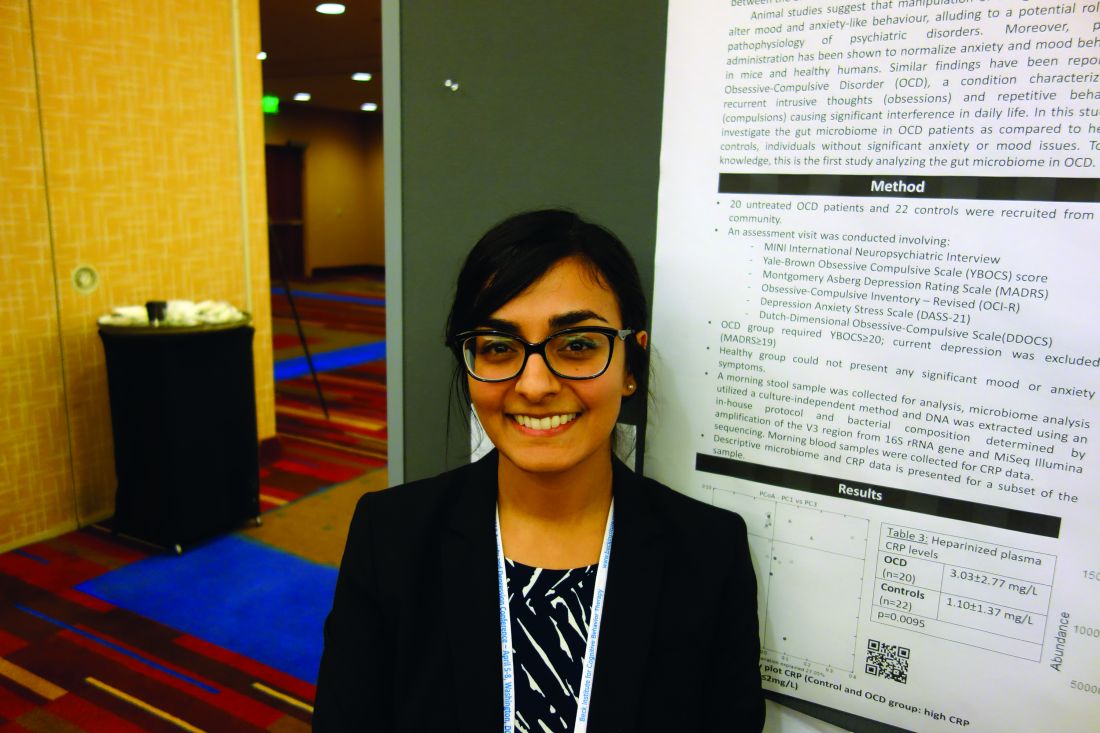
She reported on 11 OCD patients and 12 healthy controls who underwent gut microbiome analysis using DNA extracted from their morning stool samples. Results from another nine OCD patients and 10 controls remained pending at the time of the conference but will be completed shortly.
In addition to the decreased abundance and diversity of bacteria present in the microbiomes of the OCD patients, compared with controls, another key finding was that the OCD patients had increased levels of systemic inflammation. Their mean level of high-sensitivity C-reactive protein was 3.03 mg/L, compared with 1.1 mg/L in the controls. In addition, the microbiome in those OCD patients who had elevated systemic inflammation as defined by a CRP level greater than 2.0 mg/L was more restricted than was that of OCD patients with a normal-range CRP.
In an interview, Ms. Turna noted that a cross-sectional study such as this is hypothesis generating and not definitive. Even if these findings are replicated, that will not answer the key question of whether the altered microbiome present in OCD patients is a contributing cause or a consequence of the psychiatric disorder. But she and her coinvestigators already have launched a prospective randomized controlled trial that attempts to address this question by having a group of OCD patients regularly consume a probiotic in an effort to diversify their gut microbiome.
“Maybe getting more fermented foods into the diet – kimchi, miso, yogurt, kefir – could be an adjunctive therapy,” she said. “Right now, OCD research is kind of at a standstill. Our treatments work in a lot of people, but they also don’t work in a lot of people. Our research opens up a new place to explore.”
Ms. Turna reported having no financial conflicts.
SAN FRANCISCO – Patients with obsessive-compulsive disorder have a gut bacterial microbiome marked by diminished species diversity and abundance, compared with that of healthy controls, according to the first study to examine the issue.
Results of this pilot study also suggest that OCD patients with tic disorder have a distinctly different gut microbiome, compared with other OCD patients, Jasmine Turna said at the annual conference of the Anxiety and Depression Association of America.
She reported on 11 OCD patients and 12 healthy controls who underwent gut microbiome analysis using DNA extracted from their morning stool samples. Results from another nine OCD patients and 10 controls remained pending at the time of the conference but will be completed shortly.
In addition to the decreased abundance and diversity of bacteria present in the microbiomes of the OCD patients, compared with controls, another key finding was that the OCD patients had increased levels of systemic inflammation. Their mean level of high-sensitivity C-reactive protein was 3.03 mg/L, compared with 1.1 mg/L in the controls. In addition, the microbiome in those OCD patients who had elevated systemic inflammation as defined by a CRP level greater than 2.0 mg/L was more restricted than was that of OCD patients with a normal-range CRP.
In an interview, Ms. Turna noted that a cross-sectional study such as this is hypothesis generating and not definitive. Even if these findings are replicated, that will not answer the key question of whether the altered microbiome present in OCD patients is a contributing cause or a consequence of the psychiatric disorder. But she and her coinvestigators already have launched a prospective randomized controlled trial that attempts to address this question by having a group of OCD patients regularly consume a probiotic in an effort to diversify their gut microbiome.
“Maybe getting more fermented foods into the diet – kimchi, miso, yogurt, kefir – could be an adjunctive therapy,” she said. “Right now, OCD research is kind of at a standstill. Our treatments work in a lot of people, but they also don’t work in a lot of people. Our research opens up a new place to explore.”
Ms. Turna reported having no financial conflicts.
SAN FRANCISCO – Patients with obsessive-compulsive disorder have a gut bacterial microbiome marked by diminished species diversity and abundance, compared with that of healthy controls, according to the first study to examine the issue.
Results of this pilot study also suggest that OCD patients with tic disorder have a distinctly different gut microbiome, compared with other OCD patients, Jasmine Turna said at the annual conference of the Anxiety and Depression Association of America.
She reported on 11 OCD patients and 12 healthy controls who underwent gut microbiome analysis using DNA extracted from their morning stool samples. Results from another nine OCD patients and 10 controls remained pending at the time of the conference but will be completed shortly.
In addition to the decreased abundance and diversity of bacteria present in the microbiomes of the OCD patients, compared with controls, another key finding was that the OCD patients had increased levels of systemic inflammation. Their mean level of high-sensitivity C-reactive protein was 3.03 mg/L, compared with 1.1 mg/L in the controls. In addition, the microbiome in those OCD patients who had elevated systemic inflammation as defined by a CRP level greater than 2.0 mg/L was more restricted than was that of OCD patients with a normal-range CRP.
In an interview, Ms. Turna noted that a cross-sectional study such as this is hypothesis generating and not definitive. Even if these findings are replicated, that will not answer the key question of whether the altered microbiome present in OCD patients is a contributing cause or a consequence of the psychiatric disorder. But she and her coinvestigators already have launched a prospective randomized controlled trial that attempts to address this question by having a group of OCD patients regularly consume a probiotic in an effort to diversify their gut microbiome.
“Maybe getting more fermented foods into the diet – kimchi, miso, yogurt, kefir – could be an adjunctive therapy,” she said. “Right now, OCD research is kind of at a standstill. Our treatments work in a lot of people, but they also don’t work in a lot of people. Our research opens up a new place to explore.”
Ms. Turna reported having no financial conflicts.
AT ANXIETY AND DEPRESSION CONFERENCE 2017
Key clinical point:
Major finding: Patients with obsessive-compulsive disorder have a gut bacterial microbiome that is distinctly different from healthy controls, with less abundance and species diversity.
Data source: This study analyzed DNA extracted from morning stool samples to map the gut microbiomes of 11 patients with obsessive-compulsive disorder and 12 healthy controls.
Disclosures: The study presenter reported having no financial conflicts.
Know your new hyaluronic acid–based fillers
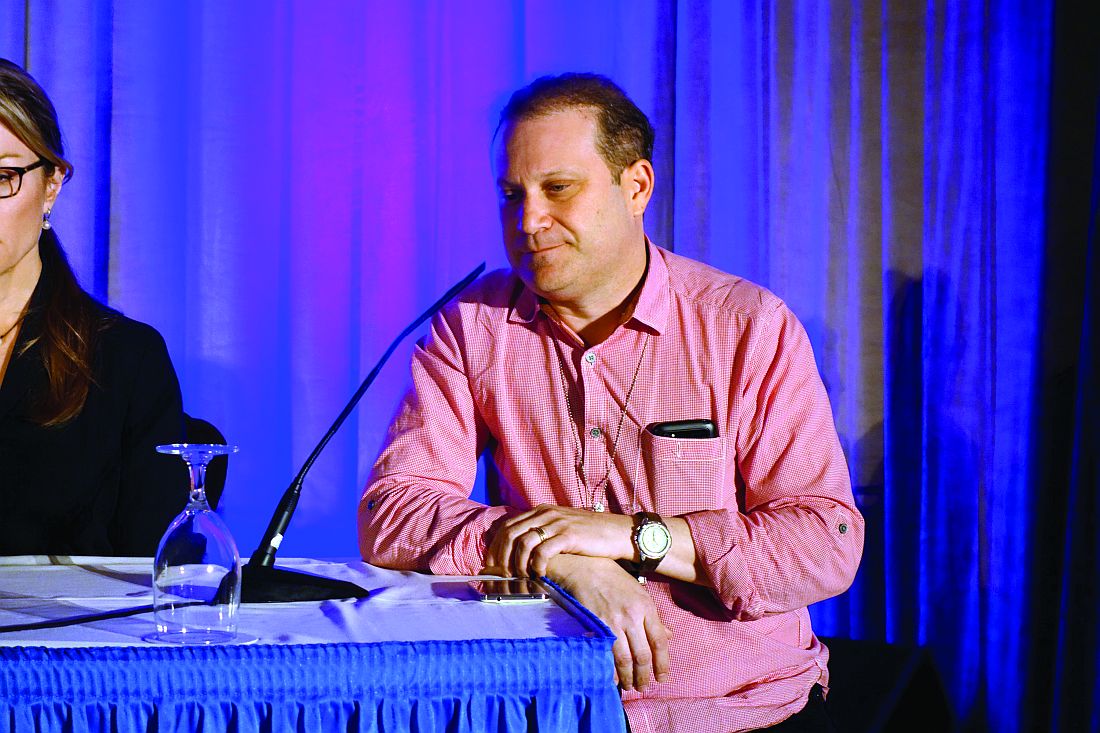
WAILEA, HAWAII – American dermatologists are now gaining access to a lot of new hyaluronic acid-based fillers, designed to address limitations in the older, tried-and-true product lines, according to Nowell Solish, MD.
These products have been available in Canada for years. Dr. Solish, a dermatologist at the University of Toronto, shared insights regarding their optimal use, based on his extensive experience with them.
Allergan’s earlier Juvéderm Ultra range of dermal fillers is based on Hylacross, which utilizes crosslinked high–molecular weight HA.
“These products have been around a long time and have lots of benefits, but there were definitely some things missing in the product line,” he explained. “We wanted more control of gel swelling – that is, how much water the hyaluronic acid takes up.”
The Vycross technology employs a proprietary mix of low– and high–molecular weight HA, which results in a highly crosslinked gel that’s moldable immediately after injection, displays minimal gel swelling, and is designed to last longer than earlier-generation fillers.
The main difference between the three products lies in their HA concentrations: Juvéderm Voluma XC has the highest concentration of HA and Juvéderm Volbella XC the lowest, with Volift in between.
The company claims that outcomes with Volbella and Volift last up to 12 months, while Voluma outcomes lasts for up to 24 months. Dr. Solish suggested that his American colleagues take that with a grain of salt.
“I would say I always underpromise and overdeliver with my patients,” he noted. “I think you can probably detect Voluma at 2 years, but, the question is, how good is the effect? How happy is the patient? I think 2 years is a little bit of a stretch. I think it lasts for about 9 months to a year before reinjection.”
Voluma has been available in the United States for several years, while Dr. Solish has been using it far longer. His impression is that Voluma is great for creating volume, especially in the cheeks, midface, and submalar area. He finds that he gets his best results by implanting the product in a series of small, 0.2-mL, tent-like boluses. The reinjection volume is typically substantially less than that employed in initial treatment.
Volbella received approval from the FDA in autumn 2016 for perioral injection and is just now reaching the U.S. marketplace.
“In my humble opinion, I don’t think Volbella is really good for volume,” he explained. “I think it’s great for what I call lip hydration, to give that lip a lipstick look. Where I find that I use this product the most is for the perioral rhytids – the vertical lip lines people sometimes call smokers’ lines. I implant it in the lip mucosa to straighten out the folds.”
Dr. Solish cautioned that Volbella is a fast-flowing product.
“The thing you have to be careful about with Volbella is it has a very low extrusion force,” he noted. “That means it’s very easy to unload the syringe and get too much product out. And there’s no question that there’s a direct correlation between speed of injection and adverse events, mainly edema. So, just remember to slow your hand down, or off-label to add a 31- or even 32-gauge needle to the syringe.”
Volift is not yet approved in the United States, but it’s coming. Dr. Solish called it “a good workhorse product” for mild-to-moderate lines around the face.
“Sales will be much higher than for Volbella, because Volift is great for the in-between things,” the dermatologist continued. “You have Voluma for volume on the midface and cheeks, but Volift is great for nasolabial folds and, especially, for marionette lines and smile lines, where you don’t want a lot of bulk.”
The main adverse event encountered with any of the three products is delayed-onset development of nonpainful inflammatory nodules arising 3-6 months post injection. In one Canadian study, the incidence was less than 0.5% (Dermatol Surg. 2015 Sep;41[9]:1060-7).
Dr. Solish recommended treating the nodules with weekly or biweekly intralesional injections of hyaluronidase, followed by intralesional injections of 0.1 mL/cm2 of triamcinolone (Kenalog) at 2.5 mg/mL to 5.0 mg/mL.
Turning to Galderma’s NASHA technology, Dr. Solish explained that it relies on naturally occurring entanglement of HA chains to create gel particles formulated at 20 mg/dL. By varying the gel particle size and the amount of crosslinking, the company has created a series of products with different properties.
Restylane Refyne features smaller-size particles and less crosslinking, which makes for a softer gel. It’s an excellent option for marionette lines, mild nasolabial folds, and small perioral lines, and “it’s my absolute go-to for tear troughs,” Dr. Solish said.
In contrast, Restylane Defyne has bigger gel particles and more extensive HA crosslinking. It is firmer than Refyne and is best suited for achieving lift and volume. He implants it in the cheeks, forehead, temples, and deeper nasolabial folds.
In addition to these two products, which are new to the United States, Galderma has rebranded Perlane as Restylane Lyft, approved for midfacial augmentation. Another product, Restylane Silk, is similar to Volbella in that it is fast-flowing and not a big volumizer. Dr. Solish called it “lipstick in a syringe,” best suited for improving definition of the lips and for addressing perioral fine lines.
Dr. Solish reported serving as an investigator and/or consultant for Allergan, Galderma, Indeed, Merz, Revance Therapeutics, and Valeant. The SDEF and this news organization are owned by the same parent company.
WAILEA, HAWAII – American dermatologists are now gaining access to a lot of new hyaluronic acid-based fillers, designed to address limitations in the older, tried-and-true product lines, according to Nowell Solish, MD.
These products have been available in Canada for years. Dr. Solish, a dermatologist at the University of Toronto, shared insights regarding their optimal use, based on his extensive experience with them.
Allergan’s earlier Juvéderm Ultra range of dermal fillers is based on Hylacross, which utilizes crosslinked high–molecular weight HA.
“These products have been around a long time and have lots of benefits, but there were definitely some things missing in the product line,” he explained. “We wanted more control of gel swelling – that is, how much water the hyaluronic acid takes up.”
The Vycross technology employs a proprietary mix of low– and high–molecular weight HA, which results in a highly crosslinked gel that’s moldable immediately after injection, displays minimal gel swelling, and is designed to last longer than earlier-generation fillers.
The main difference between the three products lies in their HA concentrations: Juvéderm Voluma XC has the highest concentration of HA and Juvéderm Volbella XC the lowest, with Volift in between.
The company claims that outcomes with Volbella and Volift last up to 12 months, while Voluma outcomes lasts for up to 24 months. Dr. Solish suggested that his American colleagues take that with a grain of salt.
“I would say I always underpromise and overdeliver with my patients,” he noted. “I think you can probably detect Voluma at 2 years, but, the question is, how good is the effect? How happy is the patient? I think 2 years is a little bit of a stretch. I think it lasts for about 9 months to a year before reinjection.”
Voluma has been available in the United States for several years, while Dr. Solish has been using it far longer. His impression is that Voluma is great for creating volume, especially in the cheeks, midface, and submalar area. He finds that he gets his best results by implanting the product in a series of small, 0.2-mL, tent-like boluses. The reinjection volume is typically substantially less than that employed in initial treatment.
Volbella received approval from the FDA in autumn 2016 for perioral injection and is just now reaching the U.S. marketplace.
“In my humble opinion, I don’t think Volbella is really good for volume,” he explained. “I think it’s great for what I call lip hydration, to give that lip a lipstick look. Where I find that I use this product the most is for the perioral rhytids – the vertical lip lines people sometimes call smokers’ lines. I implant it in the lip mucosa to straighten out the folds.”
Dr. Solish cautioned that Volbella is a fast-flowing product.
“The thing you have to be careful about with Volbella is it has a very low extrusion force,” he noted. “That means it’s very easy to unload the syringe and get too much product out. And there’s no question that there’s a direct correlation between speed of injection and adverse events, mainly edema. So, just remember to slow your hand down, or off-label to add a 31- or even 32-gauge needle to the syringe.”
Volift is not yet approved in the United States, but it’s coming. Dr. Solish called it “a good workhorse product” for mild-to-moderate lines around the face.
“Sales will be much higher than for Volbella, because Volift is great for the in-between things,” the dermatologist continued. “You have Voluma for volume on the midface and cheeks, but Volift is great for nasolabial folds and, especially, for marionette lines and smile lines, where you don’t want a lot of bulk.”
The main adverse event encountered with any of the three products is delayed-onset development of nonpainful inflammatory nodules arising 3-6 months post injection. In one Canadian study, the incidence was less than 0.5% (Dermatol Surg. 2015 Sep;41[9]:1060-7).
Dr. Solish recommended treating the nodules with weekly or biweekly intralesional injections of hyaluronidase, followed by intralesional injections of 0.1 mL/cm2 of triamcinolone (Kenalog) at 2.5 mg/mL to 5.0 mg/mL.
Turning to Galderma’s NASHA technology, Dr. Solish explained that it relies on naturally occurring entanglement of HA chains to create gel particles formulated at 20 mg/dL. By varying the gel particle size and the amount of crosslinking, the company has created a series of products with different properties.
Restylane Refyne features smaller-size particles and less crosslinking, which makes for a softer gel. It’s an excellent option for marionette lines, mild nasolabial folds, and small perioral lines, and “it’s my absolute go-to for tear troughs,” Dr. Solish said.
In contrast, Restylane Defyne has bigger gel particles and more extensive HA crosslinking. It is firmer than Refyne and is best suited for achieving lift and volume. He implants it in the cheeks, forehead, temples, and deeper nasolabial folds.
In addition to these two products, which are new to the United States, Galderma has rebranded Perlane as Restylane Lyft, approved for midfacial augmentation. Another product, Restylane Silk, is similar to Volbella in that it is fast-flowing and not a big volumizer. Dr. Solish called it “lipstick in a syringe,” best suited for improving definition of the lips and for addressing perioral fine lines.
Dr. Solish reported serving as an investigator and/or consultant for Allergan, Galderma, Indeed, Merz, Revance Therapeutics, and Valeant. The SDEF and this news organization are owned by the same parent company.
WAILEA, HAWAII – American dermatologists are now gaining access to a lot of new hyaluronic acid-based fillers, designed to address limitations in the older, tried-and-true product lines, according to Nowell Solish, MD.
These products have been available in Canada for years. Dr. Solish, a dermatologist at the University of Toronto, shared insights regarding their optimal use, based on his extensive experience with them.
Allergan’s earlier Juvéderm Ultra range of dermal fillers is based on Hylacross, which utilizes crosslinked high–molecular weight HA.
“These products have been around a long time and have lots of benefits, but there were definitely some things missing in the product line,” he explained. “We wanted more control of gel swelling – that is, how much water the hyaluronic acid takes up.”
The Vycross technology employs a proprietary mix of low– and high–molecular weight HA, which results in a highly crosslinked gel that’s moldable immediately after injection, displays minimal gel swelling, and is designed to last longer than earlier-generation fillers.
The main difference between the three products lies in their HA concentrations: Juvéderm Voluma XC has the highest concentration of HA and Juvéderm Volbella XC the lowest, with Volift in between.
The company claims that outcomes with Volbella and Volift last up to 12 months, while Voluma outcomes lasts for up to 24 months. Dr. Solish suggested that his American colleagues take that with a grain of salt.
“I would say I always underpromise and overdeliver with my patients,” he noted. “I think you can probably detect Voluma at 2 years, but, the question is, how good is the effect? How happy is the patient? I think 2 years is a little bit of a stretch. I think it lasts for about 9 months to a year before reinjection.”
Voluma has been available in the United States for several years, while Dr. Solish has been using it far longer. His impression is that Voluma is great for creating volume, especially in the cheeks, midface, and submalar area. He finds that he gets his best results by implanting the product in a series of small, 0.2-mL, tent-like boluses. The reinjection volume is typically substantially less than that employed in initial treatment.
Volbella received approval from the FDA in autumn 2016 for perioral injection and is just now reaching the U.S. marketplace.
“In my humble opinion, I don’t think Volbella is really good for volume,” he explained. “I think it’s great for what I call lip hydration, to give that lip a lipstick look. Where I find that I use this product the most is for the perioral rhytids – the vertical lip lines people sometimes call smokers’ lines. I implant it in the lip mucosa to straighten out the folds.”
Dr. Solish cautioned that Volbella is a fast-flowing product.
“The thing you have to be careful about with Volbella is it has a very low extrusion force,” he noted. “That means it’s very easy to unload the syringe and get too much product out. And there’s no question that there’s a direct correlation between speed of injection and adverse events, mainly edema. So, just remember to slow your hand down, or off-label to add a 31- or even 32-gauge needle to the syringe.”
Volift is not yet approved in the United States, but it’s coming. Dr. Solish called it “a good workhorse product” for mild-to-moderate lines around the face.
“Sales will be much higher than for Volbella, because Volift is great for the in-between things,” the dermatologist continued. “You have Voluma for volume on the midface and cheeks, but Volift is great for nasolabial folds and, especially, for marionette lines and smile lines, where you don’t want a lot of bulk.”
The main adverse event encountered with any of the three products is delayed-onset development of nonpainful inflammatory nodules arising 3-6 months post injection. In one Canadian study, the incidence was less than 0.5% (Dermatol Surg. 2015 Sep;41[9]:1060-7).
Dr. Solish recommended treating the nodules with weekly or biweekly intralesional injections of hyaluronidase, followed by intralesional injections of 0.1 mL/cm2 of triamcinolone (Kenalog) at 2.5 mg/mL to 5.0 mg/mL.
Turning to Galderma’s NASHA technology, Dr. Solish explained that it relies on naturally occurring entanglement of HA chains to create gel particles formulated at 20 mg/dL. By varying the gel particle size and the amount of crosslinking, the company has created a series of products with different properties.
Restylane Refyne features smaller-size particles and less crosslinking, which makes for a softer gel. It’s an excellent option for marionette lines, mild nasolabial folds, and small perioral lines, and “it’s my absolute go-to for tear troughs,” Dr. Solish said.
In contrast, Restylane Defyne has bigger gel particles and more extensive HA crosslinking. It is firmer than Refyne and is best suited for achieving lift and volume. He implants it in the cheeks, forehead, temples, and deeper nasolabial folds.
In addition to these two products, which are new to the United States, Galderma has rebranded Perlane as Restylane Lyft, approved for midfacial augmentation. Another product, Restylane Silk, is similar to Volbella in that it is fast-flowing and not a big volumizer. Dr. Solish called it “lipstick in a syringe,” best suited for improving definition of the lips and for addressing perioral fine lines.
Dr. Solish reported serving as an investigator and/or consultant for Allergan, Galderma, Indeed, Merz, Revance Therapeutics, and Valeant. The SDEF and this news organization are owned by the same parent company.
EXPERT ANALYSIS FROM THE SDEF HAWAII DERMATOLOGY SEMINAR
Hoarding disorder patients deem few treatments as acceptable
SAN FRANCISCO – Patients with hoarding disorder are notoriously difficult to engage in treatment. They are embarrassed by their behavior and reluctant to seek help. And Carolyn I. Rodriguez, MD, PhD, has a good idea why: Her first-of-its-kind survey of individuals with hoarding disorder showed they find the currently available array of treatments and services by and large unacceptable.
The online survey included 203 individuals with clinically significant hoarding symptoms as defined by a Saving Inventory–Revised score of at least 40. The survey contained written and audio thumbnail descriptions of 11 current treatments and services, some evidence based, others not. Participants were asked to rate the acceptability of each of the 11 interventions on a 0-10 scale, with 0 being not at all acceptable.

The results? “Nobody wanted anything!” Dr. Rodriguez said at the annual conference of the Anxiety and Depression Association of America.
Acceptability of a given intervention was defined a priori as an average score of 6 or more on the Likert Scale. She had hoped to see some 7s and 8s, strong endorsements that might have helped guide her efforts to develop attractive and engaging new therapies for this common disorder. But in fact, only 3 of the 11 items squeaked by the acceptability threshold with tepid endorsements hovering around 6: individual cognitive-behavioral therapy (CBT), with an average rating of 6.2; use of a professional organizing service, at 6.1; and use of a self-help book, at 6.0.
The least acceptable of the 11 options, not surprisingly, was a court-appointed guardian, with an average score of less than 1. Next most unpopular was use of a cleaning and removal service, followed by pharmacotherapy with a serotonin reuptake inhibitor, drug therapy with a stimulant, and group CBT.
Rounding out the list of 11 treatments and services were an online support group, a facilitated support group based upon the model described in the book “Buried in Treasures” (Oxford University Press, 2013), by David F. Tolin, PhD; Randy O. Frost, PhD; and Gail Steketee, PhD; and involvement of a case manager.
Participants were asked to describe what they liked and disliked about the 11 options. What they liked about the three that were acceptable – albeit barely – was the prospect of personalized care, being held accountable, and their belief that those three strategies really work. What they disliked about the least acceptable interventions was the feeling that they would have no control over the process, anticipation that these treatments and services would cause them distress, and skepticism about their efficacy.
Actually, while the evidence regarding pharmacotherapy is limited to a few open-label, uncontrolled, prospective case series involving hoarding disorder patients not concurrently in psychotherapy, the medication data look quite promising, according to Dr. Rodriguez, who is affiliated with the department of psychiatry and behavioral sciences at Stanford (Calif.) University.
Investigators at the University of California, San Diego, treated 24 patients meeting DSM-5 criteria for hoarding disorder with extended-release venlafaxine (Effexor XR) for 12 weeks. Twenty-three of the 24 completed the study, achieving a mean 32% reduction in Saving Inventory–Revised scores and a 36% reduction in UCLA Hoarding Severity Scale scores (Int Clin Psychopharmacol. 2014 Sep;29[5]:266-73).
Sixteen of the 23 completers were categorized as treatment responders. The investigators noted that this 70% efficacy rate for venlafaxine extended-release was markedly better than published CBT success rates, which hover around 28% for individual CBT and range from 10% to 30% for group CBT.
Also, Dr. Rodriguez has published her experience in prescribing extended-release methylphenidate for four patients with hoarding disorder without comorbid attention-deficit/hyperactivity disorder, all of whom previously had failed to respond to at least one serotonin reuptake inhibitor. The therapeutic rationale for stimulant therapy was that patients with hoarding disorder have problems with attention and decision making that may contribute to accumulation of clutter.
In this 4-week study, patients were started on methylphenidate extended-release at 18 mg/day, with the dosing increased by 18 mg/day each week to a maximum of 72 mg/day. Three of the four patients achieved at least a 50% reduction in measures of inattention, and two patients showed decreases in hoarding symptoms of 25% and 32% on the Saving Inventory–Revised. But at the end of 4 weeks, all four patients opted not to continue on the medication because they didn’t like the side effects, mainly insomnia and palpitations (J Clin Psychopharmacol. 2013 Jun;33[3]:444-7).
Pharmacotherapy has a couple of other potentially appealing features: It works much faster than does psychotherapy, and it also is effective therapy for some of the other psychiatric conditions commonly comorbid with hoarding disorder.
Several audience members observed that even though survey participants did not rate group CBT or facilitated support groups as acceptable treatments, in their own experience as therapists, they’ve found these interventions to be among the most successful. Dr. Rodriguez agreed. Based in part upon her survey findings, her new research initiatives emphasize offering choice, since there’s clearly no one-size-fits-all intervention. She’s also stressing accountability, incorporation of tools aimed at reducing shame and stigma, and providing more information about evidence-based therapies to strengthen patients’ beliefs that treatment actually works.
Toward that end, she recently has trained individuals from the community in how to run a 3-month, skills-based, group therapy program using the Buried in Treasures approach with group in-home visits and decluttering sessions. These group therapy modules will be evaluated formally as to acceptability and efficacy.
Hoarding disorder has a prevalence of 2%-6%. It’s a condition that poses significant public health risks, including fire hazard and pest infestation. Hoarding disorder typically starts in childhood or the teen years and follows a chronic, progressive course. Affected individuals do not initiate treatment until age 50, on average. The condition is more common in men than women. They are often single, highly educated, and live alone. Insight is often poor. A family history of hoarding is common. Psychiatric comorbidity also is common, with depression topping the list.
Dr. Rodriguez’s survey was funded by the National Institute of Mental Health and foundation grants. She reported serving as a consultant to Allergan, Rugen Therapeutics, and BlackThorn Therapeutics.
SAN FRANCISCO – Patients with hoarding disorder are notoriously difficult to engage in treatment. They are embarrassed by their behavior and reluctant to seek help. And Carolyn I. Rodriguez, MD, PhD, has a good idea why: Her first-of-its-kind survey of individuals with hoarding disorder showed they find the currently available array of treatments and services by and large unacceptable.
The online survey included 203 individuals with clinically significant hoarding symptoms as defined by a Saving Inventory–Revised score of at least 40. The survey contained written and audio thumbnail descriptions of 11 current treatments and services, some evidence based, others not. Participants were asked to rate the acceptability of each of the 11 interventions on a 0-10 scale, with 0 being not at all acceptable.
The results? “Nobody wanted anything!” Dr. Rodriguez said at the annual conference of the Anxiety and Depression Association of America.
Acceptability of a given intervention was defined a priori as an average score of 6 or more on the Likert Scale. She had hoped to see some 7s and 8s, strong endorsements that might have helped guide her efforts to develop attractive and engaging new therapies for this common disorder. But in fact, only 3 of the 11 items squeaked by the acceptability threshold with tepid endorsements hovering around 6: individual cognitive-behavioral therapy (CBT), with an average rating of 6.2; use of a professional organizing service, at 6.1; and use of a self-help book, at 6.0.
The least acceptable of the 11 options, not surprisingly, was a court-appointed guardian, with an average score of less than 1. Next most unpopular was use of a cleaning and removal service, followed by pharmacotherapy with a serotonin reuptake inhibitor, drug therapy with a stimulant, and group CBT.
Rounding out the list of 11 treatments and services were an online support group, a facilitated support group based upon the model described in the book “Buried in Treasures” (Oxford University Press, 2013), by David F. Tolin, PhD; Randy O. Frost, PhD; and Gail Steketee, PhD; and involvement of a case manager.
Participants were asked to describe what they liked and disliked about the 11 options. What they liked about the three that were acceptable – albeit barely – was the prospect of personalized care, being held accountable, and their belief that those three strategies really work. What they disliked about the least acceptable interventions was the feeling that they would have no control over the process, anticipation that these treatments and services would cause them distress, and skepticism about their efficacy.
Actually, while the evidence regarding pharmacotherapy is limited to a few open-label, uncontrolled, prospective case series involving hoarding disorder patients not concurrently in psychotherapy, the medication data look quite promising, according to Dr. Rodriguez, who is affiliated with the department of psychiatry and behavioral sciences at Stanford (Calif.) University.
Investigators at the University of California, San Diego, treated 24 patients meeting DSM-5 criteria for hoarding disorder with extended-release venlafaxine (Effexor XR) for 12 weeks. Twenty-three of the 24 completed the study, achieving a mean 32% reduction in Saving Inventory–Revised scores and a 36% reduction in UCLA Hoarding Severity Scale scores (Int Clin Psychopharmacol. 2014 Sep;29[5]:266-73).
Sixteen of the 23 completers were categorized as treatment responders. The investigators noted that this 70% efficacy rate for venlafaxine extended-release was markedly better than published CBT success rates, which hover around 28% for individual CBT and range from 10% to 30% for group CBT.
Also, Dr. Rodriguez has published her experience in prescribing extended-release methylphenidate for four patients with hoarding disorder without comorbid attention-deficit/hyperactivity disorder, all of whom previously had failed to respond to at least one serotonin reuptake inhibitor. The therapeutic rationale for stimulant therapy was that patients with hoarding disorder have problems with attention and decision making that may contribute to accumulation of clutter.
In this 4-week study, patients were started on methylphenidate extended-release at 18 mg/day, with the dosing increased by 18 mg/day each week to a maximum of 72 mg/day. Three of the four patients achieved at least a 50% reduction in measures of inattention, and two patients showed decreases in hoarding symptoms of 25% and 32% on the Saving Inventory–Revised. But at the end of 4 weeks, all four patients opted not to continue on the medication because they didn’t like the side effects, mainly insomnia and palpitations (J Clin Psychopharmacol. 2013 Jun;33[3]:444-7).
Pharmacotherapy has a couple of other potentially appealing features: It works much faster than does psychotherapy, and it also is effective therapy for some of the other psychiatric conditions commonly comorbid with hoarding disorder.
Several audience members observed that even though survey participants did not rate group CBT or facilitated support groups as acceptable treatments, in their own experience as therapists, they’ve found these interventions to be among the most successful. Dr. Rodriguez agreed. Based in part upon her survey findings, her new research initiatives emphasize offering choice, since there’s clearly no one-size-fits-all intervention. She’s also stressing accountability, incorporation of tools aimed at reducing shame and stigma, and providing more information about evidence-based therapies to strengthen patients’ beliefs that treatment actually works.
Toward that end, she recently has trained individuals from the community in how to run a 3-month, skills-based, group therapy program using the Buried in Treasures approach with group in-home visits and decluttering sessions. These group therapy modules will be evaluated formally as to acceptability and efficacy.
Hoarding disorder has a prevalence of 2%-6%. It’s a condition that poses significant public health risks, including fire hazard and pest infestation. Hoarding disorder typically starts in childhood or the teen years and follows a chronic, progressive course. Affected individuals do not initiate treatment until age 50, on average. The condition is more common in men than women. They are often single, highly educated, and live alone. Insight is often poor. A family history of hoarding is common. Psychiatric comorbidity also is common, with depression topping the list.
Dr. Rodriguez’s survey was funded by the National Institute of Mental Health and foundation grants. She reported serving as a consultant to Allergan, Rugen Therapeutics, and BlackThorn Therapeutics.
SAN FRANCISCO – Patients with hoarding disorder are notoriously difficult to engage in treatment. They are embarrassed by their behavior and reluctant to seek help. And Carolyn I. Rodriguez, MD, PhD, has a good idea why: Her first-of-its-kind survey of individuals with hoarding disorder showed they find the currently available array of treatments and services by and large unacceptable.
The online survey included 203 individuals with clinically significant hoarding symptoms as defined by a Saving Inventory–Revised score of at least 40. The survey contained written and audio thumbnail descriptions of 11 current treatments and services, some evidence based, others not. Participants were asked to rate the acceptability of each of the 11 interventions on a 0-10 scale, with 0 being not at all acceptable.
The results? “Nobody wanted anything!” Dr. Rodriguez said at the annual conference of the Anxiety and Depression Association of America.
Acceptability of a given intervention was defined a priori as an average score of 6 or more on the Likert Scale. She had hoped to see some 7s and 8s, strong endorsements that might have helped guide her efforts to develop attractive and engaging new therapies for this common disorder. But in fact, only 3 of the 11 items squeaked by the acceptability threshold with tepid endorsements hovering around 6: individual cognitive-behavioral therapy (CBT), with an average rating of 6.2; use of a professional organizing service, at 6.1; and use of a self-help book, at 6.0.
The least acceptable of the 11 options, not surprisingly, was a court-appointed guardian, with an average score of less than 1. Next most unpopular was use of a cleaning and removal service, followed by pharmacotherapy with a serotonin reuptake inhibitor, drug therapy with a stimulant, and group CBT.
Rounding out the list of 11 treatments and services were an online support group, a facilitated support group based upon the model described in the book “Buried in Treasures” (Oxford University Press, 2013), by David F. Tolin, PhD; Randy O. Frost, PhD; and Gail Steketee, PhD; and involvement of a case manager.
Participants were asked to describe what they liked and disliked about the 11 options. What they liked about the three that were acceptable – albeit barely – was the prospect of personalized care, being held accountable, and their belief that those three strategies really work. What they disliked about the least acceptable interventions was the feeling that they would have no control over the process, anticipation that these treatments and services would cause them distress, and skepticism about their efficacy.
Actually, while the evidence regarding pharmacotherapy is limited to a few open-label, uncontrolled, prospective case series involving hoarding disorder patients not concurrently in psychotherapy, the medication data look quite promising, according to Dr. Rodriguez, who is affiliated with the department of psychiatry and behavioral sciences at Stanford (Calif.) University.
Investigators at the University of California, San Diego, treated 24 patients meeting DSM-5 criteria for hoarding disorder with extended-release venlafaxine (Effexor XR) for 12 weeks. Twenty-three of the 24 completed the study, achieving a mean 32% reduction in Saving Inventory–Revised scores and a 36% reduction in UCLA Hoarding Severity Scale scores (Int Clin Psychopharmacol. 2014 Sep;29[5]:266-73).
Sixteen of the 23 completers were categorized as treatment responders. The investigators noted that this 70% efficacy rate for venlafaxine extended-release was markedly better than published CBT success rates, which hover around 28% for individual CBT and range from 10% to 30% for group CBT.
Also, Dr. Rodriguez has published her experience in prescribing extended-release methylphenidate for four patients with hoarding disorder without comorbid attention-deficit/hyperactivity disorder, all of whom previously had failed to respond to at least one serotonin reuptake inhibitor. The therapeutic rationale for stimulant therapy was that patients with hoarding disorder have problems with attention and decision making that may contribute to accumulation of clutter.
In this 4-week study, patients were started on methylphenidate extended-release at 18 mg/day, with the dosing increased by 18 mg/day each week to a maximum of 72 mg/day. Three of the four patients achieved at least a 50% reduction in measures of inattention, and two patients showed decreases in hoarding symptoms of 25% and 32% on the Saving Inventory–Revised. But at the end of 4 weeks, all four patients opted not to continue on the medication because they didn’t like the side effects, mainly insomnia and palpitations (J Clin Psychopharmacol. 2013 Jun;33[3]:444-7).
Pharmacotherapy has a couple of other potentially appealing features: It works much faster than does psychotherapy, and it also is effective therapy for some of the other psychiatric conditions commonly comorbid with hoarding disorder.
Several audience members observed that even though survey participants did not rate group CBT or facilitated support groups as acceptable treatments, in their own experience as therapists, they’ve found these interventions to be among the most successful. Dr. Rodriguez agreed. Based in part upon her survey findings, her new research initiatives emphasize offering choice, since there’s clearly no one-size-fits-all intervention. She’s also stressing accountability, incorporation of tools aimed at reducing shame and stigma, and providing more information about evidence-based therapies to strengthen patients’ beliefs that treatment actually works.
Toward that end, she recently has trained individuals from the community in how to run a 3-month, skills-based, group therapy program using the Buried in Treasures approach with group in-home visits and decluttering sessions. These group therapy modules will be evaluated formally as to acceptability and efficacy.
Hoarding disorder has a prevalence of 2%-6%. It’s a condition that poses significant public health risks, including fire hazard and pest infestation. Hoarding disorder typically starts in childhood or the teen years and follows a chronic, progressive course. Affected individuals do not initiate treatment until age 50, on average. The condition is more common in men than women. They are often single, highly educated, and live alone. Insight is often poor. A family history of hoarding is common. Psychiatric comorbidity also is common, with depression topping the list.
Dr. Rodriguez’s survey was funded by the National Institute of Mental Health and foundation grants. She reported serving as a consultant to Allergan, Rugen Therapeutics, and BlackThorn Therapeutics.
AT ANXIETY AND DEPRESSION CONFERENCE 2017
Key clinical point:
Major finding: Only three interventions received even lukewarm endorsement: individual cognitive-behavioral therapy, a professional organizing service, and self-help books.
Data source: In an online survey, 203 individuals with clinically significant hoarding disorder symptoms rated the acceptability of 11 different therapies and services.
Disclosures: This work was funded by the National Institute of Mental Health and foundation grants. The study presenter reported serving as a consultant to Allergan, Rugen Therapeutics, and BlackThorn Therapeutics.
PTSD linked to cognitive decline in middle-aged women
SAN FRANCISCO – Posttraumatic stress disorder is associated with worse cognitive function in middle-aged women, Jennifer A. Sumner, PhD, reported at the annual conference of the Anxiety and Depression Association of America.
The strongest link between PTSD and impaired cognitive function found in this new analysis from the Nurses’ Health Study 2 was observed among those women with elevated PTSD symptoms indicative of probable PTSD and comorbid depression, added Dr. Sumner, a clinical psychologist affiliated with Columbia University in New York.

The findings are important, in part because they help fill a gender gap in PTSD research. The great majority of studies of PTSD and its long-term consequences for physical and mental health have focused on male military veterans. Yet PTSD is twice as common in women as in men and is on average more severe and causes more impairment in women as well.
Growing evidence suggests that brain aging and cognitive decline begin in midlife, long before the dysfunction becomes manifest as dementia. The Nurses’ Health Study 2 findings raise the testable hypothesis that PTSD might be a modifiable risk factor for early cognitive decline, Dr. Sumner observed.
The Nurses’ Health Study 2 is one of the largest ongoing longitudinal studies of women’s health in the world. Dr. Sumner’s analysis focused on 14,029 participants who in 2008 underwent assessment of lifetime exposure to 16 types of trauma included in the Brief Trauma Questionnaire, lifetime PTSD symptoms using the Short Screening Scale for PTSD, and current depressive symptoms via the Center for Epidemiologic Studies Depression Scale. The women then completed the Cogstate Brief Battery in 2014-2016. The Cogstate is a validated, sensitive, self-administered online cognitive battery that measures psychomotor speed, attention, working memory, and learning. It takes 10-15 minutes to complete.
Seventeen percent of women had both a lifetime history of exposure to trauma and probable PTSD based upon having four or more of the seven symptoms listed on the Short Screening Scale for PTSD. These women had, on average, a lower educational level, income, and self-assessed social standing, more medical comorbidities, and more depressive symptoms than the other subjects. However, in a multivariate analysis controlling for these potential confounders, the group with both trauma and PTSD performed significantly worse on the Cogstate measures of psychomotor speed/attention and learning/working memory than women with no trauma and no PTSD symptoms.
Similarly, the 17% of women with both probable PTSD and probable depression as defined by a score of 10 or more on the Center for Epidemiologic Studies Depression Scale demonstrated significantly worse cognitive function on the Cogstate, compared with women with neither condition.
In regard to potential mechanisms that might explain the observed association between PTSD and worse cognitive function, Dr. Sumner noted that other investigators have reported that PTSD is characterized by oxidative stress, systemic inflammation, and hypothalamic-pituitary-adrenal axis and neuroendocrine dysfunction. This could promote neuronal death. Moreover, PTSD also is associated with increased risk of poor health behaviors, including sleep disturbances, physical inactivity, obesity, and smoking, which also could contribute to cognitive decline down the line.
Dr. Sumner’s study, which was supported by the National Institutes of Health, recently has been published (Depress Anxiety. 2017 Apr;34[4]:356-66). She reported having no financial conflicts.
SAN FRANCISCO – Posttraumatic stress disorder is associated with worse cognitive function in middle-aged women, Jennifer A. Sumner, PhD, reported at the annual conference of the Anxiety and Depression Association of America.
The strongest link between PTSD and impaired cognitive function found in this new analysis from the Nurses’ Health Study 2 was observed among those women with elevated PTSD symptoms indicative of probable PTSD and comorbid depression, added Dr. Sumner, a clinical psychologist affiliated with Columbia University in New York.
The findings are important, in part because they help fill a gender gap in PTSD research. The great majority of studies of PTSD and its long-term consequences for physical and mental health have focused on male military veterans. Yet PTSD is twice as common in women as in men and is on average more severe and causes more impairment in women as well.
Growing evidence suggests that brain aging and cognitive decline begin in midlife, long before the dysfunction becomes manifest as dementia. The Nurses’ Health Study 2 findings raise the testable hypothesis that PTSD might be a modifiable risk factor for early cognitive decline, Dr. Sumner observed.
The Nurses’ Health Study 2 is one of the largest ongoing longitudinal studies of women’s health in the world. Dr. Sumner’s analysis focused on 14,029 participants who in 2008 underwent assessment of lifetime exposure to 16 types of trauma included in the Brief Trauma Questionnaire, lifetime PTSD symptoms using the Short Screening Scale for PTSD, and current depressive symptoms via the Center for Epidemiologic Studies Depression Scale. The women then completed the Cogstate Brief Battery in 2014-2016. The Cogstate is a validated, sensitive, self-administered online cognitive battery that measures psychomotor speed, attention, working memory, and learning. It takes 10-15 minutes to complete.
Seventeen percent of women had both a lifetime history of exposure to trauma and probable PTSD based upon having four or more of the seven symptoms listed on the Short Screening Scale for PTSD. These women had, on average, a lower educational level, income, and self-assessed social standing, more medical comorbidities, and more depressive symptoms than the other subjects. However, in a multivariate analysis controlling for these potential confounders, the group with both trauma and PTSD performed significantly worse on the Cogstate measures of psychomotor speed/attention and learning/working memory than women with no trauma and no PTSD symptoms.
Similarly, the 17% of women with both probable PTSD and probable depression as defined by a score of 10 or more on the Center for Epidemiologic Studies Depression Scale demonstrated significantly worse cognitive function on the Cogstate, compared with women with neither condition.
In regard to potential mechanisms that might explain the observed association between PTSD and worse cognitive function, Dr. Sumner noted that other investigators have reported that PTSD is characterized by oxidative stress, systemic inflammation, and hypothalamic-pituitary-adrenal axis and neuroendocrine dysfunction. This could promote neuronal death. Moreover, PTSD also is associated with increased risk of poor health behaviors, including sleep disturbances, physical inactivity, obesity, and smoking, which also could contribute to cognitive decline down the line.
Dr. Sumner’s study, which was supported by the National Institutes of Health, recently has been published (Depress Anxiety. 2017 Apr;34[4]:356-66). She reported having no financial conflicts.
SAN FRANCISCO – Posttraumatic stress disorder is associated with worse cognitive function in middle-aged women, Jennifer A. Sumner, PhD, reported at the annual conference of the Anxiety and Depression Association of America.
The strongest link between PTSD and impaired cognitive function found in this new analysis from the Nurses’ Health Study 2 was observed among those women with elevated PTSD symptoms indicative of probable PTSD and comorbid depression, added Dr. Sumner, a clinical psychologist affiliated with Columbia University in New York.
The findings are important, in part because they help fill a gender gap in PTSD research. The great majority of studies of PTSD and its long-term consequences for physical and mental health have focused on male military veterans. Yet PTSD is twice as common in women as in men and is on average more severe and causes more impairment in women as well.
Growing evidence suggests that brain aging and cognitive decline begin in midlife, long before the dysfunction becomes manifest as dementia. The Nurses’ Health Study 2 findings raise the testable hypothesis that PTSD might be a modifiable risk factor for early cognitive decline, Dr. Sumner observed.
The Nurses’ Health Study 2 is one of the largest ongoing longitudinal studies of women’s health in the world. Dr. Sumner’s analysis focused on 14,029 participants who in 2008 underwent assessment of lifetime exposure to 16 types of trauma included in the Brief Trauma Questionnaire, lifetime PTSD symptoms using the Short Screening Scale for PTSD, and current depressive symptoms via the Center for Epidemiologic Studies Depression Scale. The women then completed the Cogstate Brief Battery in 2014-2016. The Cogstate is a validated, sensitive, self-administered online cognitive battery that measures psychomotor speed, attention, working memory, and learning. It takes 10-15 minutes to complete.
Seventeen percent of women had both a lifetime history of exposure to trauma and probable PTSD based upon having four or more of the seven symptoms listed on the Short Screening Scale for PTSD. These women had, on average, a lower educational level, income, and self-assessed social standing, more medical comorbidities, and more depressive symptoms than the other subjects. However, in a multivariate analysis controlling for these potential confounders, the group with both trauma and PTSD performed significantly worse on the Cogstate measures of psychomotor speed/attention and learning/working memory than women with no trauma and no PTSD symptoms.
Similarly, the 17% of women with both probable PTSD and probable depression as defined by a score of 10 or more on the Center for Epidemiologic Studies Depression Scale demonstrated significantly worse cognitive function on the Cogstate, compared with women with neither condition.
In regard to potential mechanisms that might explain the observed association between PTSD and worse cognitive function, Dr. Sumner noted that other investigators have reported that PTSD is characterized by oxidative stress, systemic inflammation, and hypothalamic-pituitary-adrenal axis and neuroendocrine dysfunction. This could promote neuronal death. Moreover, PTSD also is associated with increased risk of poor health behaviors, including sleep disturbances, physical inactivity, obesity, and smoking, which also could contribute to cognitive decline down the line.
Dr. Sumner’s study, which was supported by the National Institutes of Health, recently has been published (Depress Anxiety. 2017 Apr;34[4]:356-66). She reported having no financial conflicts.
AT ANXIETY AND DEPRESSION CONFERENCE 2017
Key clinical point:
Major finding: A large group of middle-aged civilian women with a history of exposure to trauma at any point in their lives along with elevated PTSD symptoms scored significantly worse on a cognitive function battery than women with no history of trauma or PTSD symptoms.
Data source: This was an analysis of more than 14,000 middle-aged women participating in the ongoing longitudinal Nurses’ Health Study 2.
Disclosures: The study was supported by the National Institutes of Health. Dr. Sumner reported having no financial conflicts.
It’s been a good year for heart failure research ... mostly
WASHINGTON – It’s been a “relatively positive” year for heart failure research and advances in patient care, Christopher M. O’Connor, MD, said at the annual meeting of the American College of Cardiology.
“Having been in this field for 30 years looking at clinical trials, generally for every 10 important trials done in a year, 1 has been positive and 9 have been negative; if we look at the past year, it’s more like 5 and 6. So, not a bad year for cardiomyopathy,” declared Dr. O’Connor, CEO and executive director of the Inova Heart and Vascular Institute in Falls Church, Va., and president-elect of the Heart Failure Society of America.

The good news
• Empagliflozin (Jardiance) earns FDA approval for reduction in risk of cardiovascular death in type 2 diabetes patients. “This is one of the most amazing stories in heart failure,” said Dr. O’Connor, who is also professor of medicine at Duke University in Durham, N.C.
The pivotal EMPA-REG OUTCOME study showed a highly significant 35% reduction in the secondary endpoint of risk of hospitalization for heart failure, as well the decrease in cardiovascular mortality which was the primary endpoint and proved persuasive to the FDA (N Engl J Med. 2015 Nov 26;373[22]:2117-28).
“It was a remarkable development. Because of this trial, there are now a number of ongoing phase III clinical trials looking at this class of drugs in heart failure patients with and without diabetes, which makes this a very important research movement. We are now looking deeper at phenotypes and trying to get more specific with these drug therapies,” he said.
• A new and improved LVAD. This fully magnetically levitated centrifugal-flow pump type of left ventricular assist device for advanced heart failure showed superior event-free survival, compared with a commercially available axial continuous-flow pump LVAD in the randomized MOMENTUM-3 trial (N Engl J Med. 2017 Feb 2;376[5]:440-50).
The novel pump was designed to overcome a significant problem with axial continuous-flow LVADs: a proclivity for pump thrombosis. The magnetically levitated centrifugal-flow pump proved a smashing success in this regard, with zero cases of pump thrombosis occurring during the 6-month study.
“This may be the first time in the history of heart failure research that the engineers have beaten the biologists in important clinical outcomes,” the cardiologist quipped.
• Omecamtiv mecarbil successfully addresses impaired contractility in heart failure with reduced ejection fraction (HFrEF). This drug, a selective cardiac myosin activator, resulted in increased duration of systole and improved stroke volume accompanied by reductions in heart rate, left ventricular end-diastolic and -systolic dimensions, and NT-proBNP in the 87-site, 13-country, phase II COSMIC-HF study (Lancet. 2016 Dec 10;388[10062]:2895-903).
“This is probably the most novel new drug mechanism out there in clinical trials,” according to Dr. O’Connor.
On the basis of the highly encouraging results for the surrogate endpoints assessed in COSMIC-HF, a large phase III clinical trial known as GALACTIC is underway.
• Palliative care gets a welcome boost. Dr. O’Connor was a coinvestigator in PAL-HF, a single-center study presented at the 2016 annual meeting of the Heart Failure Society of America.
“This is a very important trial of palliative care in advanced heart failure. We probably don’t have as much evidence in this space as we should,” he observed. “This was a multidisciplinary intervention in which we gave the patients a medical tool kit to alleviate pain, dyspnea, and discomfort. The tool kit included benzodiazepines, sleep medications, sublingual nitroglycerin, and morphinelike products, all very carefully monitored by staff coordinators.”
The primary outcome was change in two validated heart failure quality of life measures. Both instruments documented significant improvement compared with usual care.
“There was no decrease in mortality, which wasn’t a goal in this advanced heart failure population, and no reduction in heart failure hospitalizations, but there were significant reductions in depression and anxiety,” Dr. O’Connor said.
• Vericiguat. This oral soluble cyclic guanylate cyclase stimulator missed its primary endpoint in the phase II dose-escalation SOCRATES-REDUCED trial in patients with HFrEF (JAMA. 2015 Dec 1;314[21]:2251-62), but showed an impressive improvement in quality of life. It is now the subject of the ongoing, randomized, phase III VICTORIA trial involving a planned 4,000 patients with HFrEF with the composite primary endpoint of cardiovascular death or heart failure hospitalization.
The phase II SOCRATES-PRESERVED trial also missed its primary endpoint but showed a clinically meaningful improvement in quality of life in patients with heart failure with preserved ejection fraction (HFpEF) (Eur Heart J. 2017 Mar 22. doi: 10.1093/eurheartj/ehw593). Discussions are ongoing as to whether the next step should be a confirmatory phase II study or a move straight to phase III.
The bad news
• NSAIDs linked to increased risk of heart failure. European investigators analyzed five population-based databases totaling more than 8.3 million individuals and determined that current use of any of more than two dozen NSAIDs was associated with significantly increased risk of hospital admission for heart failure. The risk appeared to be dose dependent and varied between individual agents, ranging from a 16% increased risk with naproxen to an 83% increase with ketorolac (Toradol) (BMJ. 2016 Sep 28. doi: 10.1136/bmj.4857).
• Therapeutic natriuretic peptides hit bottom. The negative results for the investigational agent ularitide in patients with acute decompensated heart failure in the large phase III TRUE-AHF trial presented at the 2016 meeting of the American Heart Association, following upon an earlier negative study of the related drug nesiritide (Natrecor) in more than 7,100 acute heart failure patients (N Engl J Med. 2011 Jul 7; 365:32-43), probably spells the end of the line for this strategy of boosting outcomes in acute heart failure, according to Dr. O’Connor.
Moreover, Novartis has announced that the phase III RELAX-AHF-2 trial of serelaxin in 6,600 patients with acute heart failure failed to meet its primary endpoints of reduced cardiovascular deaths or reduced worsening of heart failure. The trial will be formally presented later this year.
“Ularitide seemed to show an early improvement in heart failure events that was not sustained in-hospital, and there was absolutely no difference in mortality. The drug probably acts like a pharmacologic tourniquet, in my view. So I think this field of therapeutic natriuretic peptides is probably closed,” he said.
• ICDs don’t reduce mortality in patients with nonischemic heart failure. This was the conclusion reached in the DANISH trial, in which more than 1,100 patients with symptomatic systolic heart failure were randomized to an ICD or usual care (N Engl J Med. 2016 Sep 29;375[13]:1221-30).
“This study really shook up the field, raising the question, ‘Are we using defibrillators too frequently in this population?’ It has stimulated a lot of discussion, including within the guidelines committee,” according to Dr. O’Connor.
• Tolvaptan nixed for acute decompensated heart failure. The TACTICS-HF trial studied the use of tolvaptan (Samsca), an oral vasopressin-2 receptor antagonist, to reduce dyspnea in patients hospitalized with acute decompensated heart failure. Dr. O’Connor was a coinvestigator in the study, which showed that tolvaptan was no better than placebo at 8 and 24 hours (J Am Coll Cardiol. 2017 Mar 21;69[11]:1399-406).
“For now, the routine use of vasopressin antagonists in acute heart failure is not to be encouraged, although there may still be subsets where it’s worth trying – certainly in severe hyponatremia,” the cardiologist said.
• GUIDE-IT gets lost. This was a roughly 1,000-patient randomized trial of a treatment strategy aimed at improving clinical outcomes by aggressively titrating evidence-based heart failure therapies in order to suppress natriuretic peptide biomarkers. GUIDE-IT was stopped early by the data safety monitoring board due to a lack of discernible difference in outcomes, compared with usual care. Dr. O’Connor, a coinvestigator, termed the soon-to-be-published study “a disappointment.”
Sleep apnea studies show silver lining
Sleep apnea is common in patients with heart failure and is associated with worse clinical heart failure outcomes. But in the large, randomized SERVE-HF trial, investigators showed that treatment of central sleep apnea with adaptive servo-ventilation in patients with HFrEF unexpectedly increased mortality, compared with optimal medical therapy (N Engl J Med. 2015 Sep 17;373:1095-105). In a more recent secondary analysis, however, the SERVE-HF investigators found that the increased risk for cardiovascular death associated with adaptive servo-ventilation was actually restricted to patients with a very poor left ventricular ejection fraction of 30% or less, and there was a signal of possible benefit in patients in the top tier of LVEF, at 36%-45% (Lancet Respir Med. 2016 Nov; 4[11]:873-81).
This observation dovetails nicely with the findings of the CAT-HF trial presented by Dr. O’Connor at the 2016 World Congress on Heart Failure. In this phase II study, 215 patients with acute decompensated heart failure and either obstructive or central sleep apnea were randomized to optimal medical therapy alone or in combination with adaptive servo-ventilation. There was no overall difference in outcome between the two groups; however, in the subgroup of patients with HFpEF, the risk of the primary composite endpoint was reduced by 62% with adaptive servo-ventilation.
As a result of these intriguing findings from SERVE-HF and CAT-HF, a registry and/or randomized clinical trial of adaptive servo-ventilation in patients with HFpEF is now being considered under NIH sponsorship, according to Dr. O’Connor.
He reported having no financial conflicts.
WASHINGTON – It’s been a “relatively positive” year for heart failure research and advances in patient care, Christopher M. O’Connor, MD, said at the annual meeting of the American College of Cardiology.
“Having been in this field for 30 years looking at clinical trials, generally for every 10 important trials done in a year, 1 has been positive and 9 have been negative; if we look at the past year, it’s more like 5 and 6. So, not a bad year for cardiomyopathy,” declared Dr. O’Connor, CEO and executive director of the Inova Heart and Vascular Institute in Falls Church, Va., and president-elect of the Heart Failure Society of America.
The good news
• Empagliflozin (Jardiance) earns FDA approval for reduction in risk of cardiovascular death in type 2 diabetes patients. “This is one of the most amazing stories in heart failure,” said Dr. O’Connor, who is also professor of medicine at Duke University in Durham, N.C.
The pivotal EMPA-REG OUTCOME study showed a highly significant 35% reduction in the secondary endpoint of risk of hospitalization for heart failure, as well the decrease in cardiovascular mortality which was the primary endpoint and proved persuasive to the FDA (N Engl J Med. 2015 Nov 26;373[22]:2117-28).
“It was a remarkable development. Because of this trial, there are now a number of ongoing phase III clinical trials looking at this class of drugs in heart failure patients with and without diabetes, which makes this a very important research movement. We are now looking deeper at phenotypes and trying to get more specific with these drug therapies,” he said.
• A new and improved LVAD. This fully magnetically levitated centrifugal-flow pump type of left ventricular assist device for advanced heart failure showed superior event-free survival, compared with a commercially available axial continuous-flow pump LVAD in the randomized MOMENTUM-3 trial (N Engl J Med. 2017 Feb 2;376[5]:440-50).
The novel pump was designed to overcome a significant problem with axial continuous-flow LVADs: a proclivity for pump thrombosis. The magnetically levitated centrifugal-flow pump proved a smashing success in this regard, with zero cases of pump thrombosis occurring during the 6-month study.
“This may be the first time in the history of heart failure research that the engineers have beaten the biologists in important clinical outcomes,” the cardiologist quipped.
• Omecamtiv mecarbil successfully addresses impaired contractility in heart failure with reduced ejection fraction (HFrEF). This drug, a selective cardiac myosin activator, resulted in increased duration of systole and improved stroke volume accompanied by reductions in heart rate, left ventricular end-diastolic and -systolic dimensions, and NT-proBNP in the 87-site, 13-country, phase II COSMIC-HF study (Lancet. 2016 Dec 10;388[10062]:2895-903).
“This is probably the most novel new drug mechanism out there in clinical trials,” according to Dr. O’Connor.
On the basis of the highly encouraging results for the surrogate endpoints assessed in COSMIC-HF, a large phase III clinical trial known as GALACTIC is underway.
• Palliative care gets a welcome boost. Dr. O’Connor was a coinvestigator in PAL-HF, a single-center study presented at the 2016 annual meeting of the Heart Failure Society of America.
“This is a very important trial of palliative care in advanced heart failure. We probably don’t have as much evidence in this space as we should,” he observed. “This was a multidisciplinary intervention in which we gave the patients a medical tool kit to alleviate pain, dyspnea, and discomfort. The tool kit included benzodiazepines, sleep medications, sublingual nitroglycerin, and morphinelike products, all very carefully monitored by staff coordinators.”
The primary outcome was change in two validated heart failure quality of life measures. Both instruments documented significant improvement compared with usual care.
“There was no decrease in mortality, which wasn’t a goal in this advanced heart failure population, and no reduction in heart failure hospitalizations, but there were significant reductions in depression and anxiety,” Dr. O’Connor said.
• Vericiguat. This oral soluble cyclic guanylate cyclase stimulator missed its primary endpoint in the phase II dose-escalation SOCRATES-REDUCED trial in patients with HFrEF (JAMA. 2015 Dec 1;314[21]:2251-62), but showed an impressive improvement in quality of life. It is now the subject of the ongoing, randomized, phase III VICTORIA trial involving a planned 4,000 patients with HFrEF with the composite primary endpoint of cardiovascular death or heart failure hospitalization.
The phase II SOCRATES-PRESERVED trial also missed its primary endpoint but showed a clinically meaningful improvement in quality of life in patients with heart failure with preserved ejection fraction (HFpEF) (Eur Heart J. 2017 Mar 22. doi: 10.1093/eurheartj/ehw593). Discussions are ongoing as to whether the next step should be a confirmatory phase II study or a move straight to phase III.
The bad news
• NSAIDs linked to increased risk of heart failure. European investigators analyzed five population-based databases totaling more than 8.3 million individuals and determined that current use of any of more than two dozen NSAIDs was associated with significantly increased risk of hospital admission for heart failure. The risk appeared to be dose dependent and varied between individual agents, ranging from a 16% increased risk with naproxen to an 83% increase with ketorolac (Toradol) (BMJ. 2016 Sep 28. doi: 10.1136/bmj.4857).
• Therapeutic natriuretic peptides hit bottom. The negative results for the investigational agent ularitide in patients with acute decompensated heart failure in the large phase III TRUE-AHF trial presented at the 2016 meeting of the American Heart Association, following upon an earlier negative study of the related drug nesiritide (Natrecor) in more than 7,100 acute heart failure patients (N Engl J Med. 2011 Jul 7; 365:32-43), probably spells the end of the line for this strategy of boosting outcomes in acute heart failure, according to Dr. O’Connor.
Moreover, Novartis has announced that the phase III RELAX-AHF-2 trial of serelaxin in 6,600 patients with acute heart failure failed to meet its primary endpoints of reduced cardiovascular deaths or reduced worsening of heart failure. The trial will be formally presented later this year.
“Ularitide seemed to show an early improvement in heart failure events that was not sustained in-hospital, and there was absolutely no difference in mortality. The drug probably acts like a pharmacologic tourniquet, in my view. So I think this field of therapeutic natriuretic peptides is probably closed,” he said.
• ICDs don’t reduce mortality in patients with nonischemic heart failure. This was the conclusion reached in the DANISH trial, in which more than 1,100 patients with symptomatic systolic heart failure were randomized to an ICD or usual care (N Engl J Med. 2016 Sep 29;375[13]:1221-30).
“This study really shook up the field, raising the question, ‘Are we using defibrillators too frequently in this population?’ It has stimulated a lot of discussion, including within the guidelines committee,” according to Dr. O’Connor.
• Tolvaptan nixed for acute decompensated heart failure. The TACTICS-HF trial studied the use of tolvaptan (Samsca), an oral vasopressin-2 receptor antagonist, to reduce dyspnea in patients hospitalized with acute decompensated heart failure. Dr. O’Connor was a coinvestigator in the study, which showed that tolvaptan was no better than placebo at 8 and 24 hours (J Am Coll Cardiol. 2017 Mar 21;69[11]:1399-406).
“For now, the routine use of vasopressin antagonists in acute heart failure is not to be encouraged, although there may still be subsets where it’s worth trying – certainly in severe hyponatremia,” the cardiologist said.
• GUIDE-IT gets lost. This was a roughly 1,000-patient randomized trial of a treatment strategy aimed at improving clinical outcomes by aggressively titrating evidence-based heart failure therapies in order to suppress natriuretic peptide biomarkers. GUIDE-IT was stopped early by the data safety monitoring board due to a lack of discernible difference in outcomes, compared with usual care. Dr. O’Connor, a coinvestigator, termed the soon-to-be-published study “a disappointment.”
Sleep apnea studies show silver lining
Sleep apnea is common in patients with heart failure and is associated with worse clinical heart failure outcomes. But in the large, randomized SERVE-HF trial, investigators showed that treatment of central sleep apnea with adaptive servo-ventilation in patients with HFrEF unexpectedly increased mortality, compared with optimal medical therapy (N Engl J Med. 2015 Sep 17;373:1095-105). In a more recent secondary analysis, however, the SERVE-HF investigators found that the increased risk for cardiovascular death associated with adaptive servo-ventilation was actually restricted to patients with a very poor left ventricular ejection fraction of 30% or less, and there was a signal of possible benefit in patients in the top tier of LVEF, at 36%-45% (Lancet Respir Med. 2016 Nov; 4[11]:873-81).
This observation dovetails nicely with the findings of the CAT-HF trial presented by Dr. O’Connor at the 2016 World Congress on Heart Failure. In this phase II study, 215 patients with acute decompensated heart failure and either obstructive or central sleep apnea were randomized to optimal medical therapy alone or in combination with adaptive servo-ventilation. There was no overall difference in outcome between the two groups; however, in the subgroup of patients with HFpEF, the risk of the primary composite endpoint was reduced by 62% with adaptive servo-ventilation.
As a result of these intriguing findings from SERVE-HF and CAT-HF, a registry and/or randomized clinical trial of adaptive servo-ventilation in patients with HFpEF is now being considered under NIH sponsorship, according to Dr. O’Connor.
He reported having no financial conflicts.
WASHINGTON – It’s been a “relatively positive” year for heart failure research and advances in patient care, Christopher M. O’Connor, MD, said at the annual meeting of the American College of Cardiology.
“Having been in this field for 30 years looking at clinical trials, generally for every 10 important trials done in a year, 1 has been positive and 9 have been negative; if we look at the past year, it’s more like 5 and 6. So, not a bad year for cardiomyopathy,” declared Dr. O’Connor, CEO and executive director of the Inova Heart and Vascular Institute in Falls Church, Va., and president-elect of the Heart Failure Society of America.
The good news
• Empagliflozin (Jardiance) earns FDA approval for reduction in risk of cardiovascular death in type 2 diabetes patients. “This is one of the most amazing stories in heart failure,” said Dr. O’Connor, who is also professor of medicine at Duke University in Durham, N.C.
The pivotal EMPA-REG OUTCOME study showed a highly significant 35% reduction in the secondary endpoint of risk of hospitalization for heart failure, as well the decrease in cardiovascular mortality which was the primary endpoint and proved persuasive to the FDA (N Engl J Med. 2015 Nov 26;373[22]:2117-28).
“It was a remarkable development. Because of this trial, there are now a number of ongoing phase III clinical trials looking at this class of drugs in heart failure patients with and without diabetes, which makes this a very important research movement. We are now looking deeper at phenotypes and trying to get more specific with these drug therapies,” he said.
• A new and improved LVAD. This fully magnetically levitated centrifugal-flow pump type of left ventricular assist device for advanced heart failure showed superior event-free survival, compared with a commercially available axial continuous-flow pump LVAD in the randomized MOMENTUM-3 trial (N Engl J Med. 2017 Feb 2;376[5]:440-50).
The novel pump was designed to overcome a significant problem with axial continuous-flow LVADs: a proclivity for pump thrombosis. The magnetically levitated centrifugal-flow pump proved a smashing success in this regard, with zero cases of pump thrombosis occurring during the 6-month study.
“This may be the first time in the history of heart failure research that the engineers have beaten the biologists in important clinical outcomes,” the cardiologist quipped.
• Omecamtiv mecarbil successfully addresses impaired contractility in heart failure with reduced ejection fraction (HFrEF). This drug, a selective cardiac myosin activator, resulted in increased duration of systole and improved stroke volume accompanied by reductions in heart rate, left ventricular end-diastolic and -systolic dimensions, and NT-proBNP in the 87-site, 13-country, phase II COSMIC-HF study (Lancet. 2016 Dec 10;388[10062]:2895-903).
“This is probably the most novel new drug mechanism out there in clinical trials,” according to Dr. O’Connor.
On the basis of the highly encouraging results for the surrogate endpoints assessed in COSMIC-HF, a large phase III clinical trial known as GALACTIC is underway.
• Palliative care gets a welcome boost. Dr. O’Connor was a coinvestigator in PAL-HF, a single-center study presented at the 2016 annual meeting of the Heart Failure Society of America.
“This is a very important trial of palliative care in advanced heart failure. We probably don’t have as much evidence in this space as we should,” he observed. “This was a multidisciplinary intervention in which we gave the patients a medical tool kit to alleviate pain, dyspnea, and discomfort. The tool kit included benzodiazepines, sleep medications, sublingual nitroglycerin, and morphinelike products, all very carefully monitored by staff coordinators.”
The primary outcome was change in two validated heart failure quality of life measures. Both instruments documented significant improvement compared with usual care.
“There was no decrease in mortality, which wasn’t a goal in this advanced heart failure population, and no reduction in heart failure hospitalizations, but there were significant reductions in depression and anxiety,” Dr. O’Connor said.
• Vericiguat. This oral soluble cyclic guanylate cyclase stimulator missed its primary endpoint in the phase II dose-escalation SOCRATES-REDUCED trial in patients with HFrEF (JAMA. 2015 Dec 1;314[21]:2251-62), but showed an impressive improvement in quality of life. It is now the subject of the ongoing, randomized, phase III VICTORIA trial involving a planned 4,000 patients with HFrEF with the composite primary endpoint of cardiovascular death or heart failure hospitalization.
The phase II SOCRATES-PRESERVED trial also missed its primary endpoint but showed a clinically meaningful improvement in quality of life in patients with heart failure with preserved ejection fraction (HFpEF) (Eur Heart J. 2017 Mar 22. doi: 10.1093/eurheartj/ehw593). Discussions are ongoing as to whether the next step should be a confirmatory phase II study or a move straight to phase III.
The bad news
• NSAIDs linked to increased risk of heart failure. European investigators analyzed five population-based databases totaling more than 8.3 million individuals and determined that current use of any of more than two dozen NSAIDs was associated with significantly increased risk of hospital admission for heart failure. The risk appeared to be dose dependent and varied between individual agents, ranging from a 16% increased risk with naproxen to an 83% increase with ketorolac (Toradol) (BMJ. 2016 Sep 28. doi: 10.1136/bmj.4857).
• Therapeutic natriuretic peptides hit bottom. The negative results for the investigational agent ularitide in patients with acute decompensated heart failure in the large phase III TRUE-AHF trial presented at the 2016 meeting of the American Heart Association, following upon an earlier negative study of the related drug nesiritide (Natrecor) in more than 7,100 acute heart failure patients (N Engl J Med. 2011 Jul 7; 365:32-43), probably spells the end of the line for this strategy of boosting outcomes in acute heart failure, according to Dr. O’Connor.
Moreover, Novartis has announced that the phase III RELAX-AHF-2 trial of serelaxin in 6,600 patients with acute heart failure failed to meet its primary endpoints of reduced cardiovascular deaths or reduced worsening of heart failure. The trial will be formally presented later this year.
“Ularitide seemed to show an early improvement in heart failure events that was not sustained in-hospital, and there was absolutely no difference in mortality. The drug probably acts like a pharmacologic tourniquet, in my view. So I think this field of therapeutic natriuretic peptides is probably closed,” he said.
• ICDs don’t reduce mortality in patients with nonischemic heart failure. This was the conclusion reached in the DANISH trial, in which more than 1,100 patients with symptomatic systolic heart failure were randomized to an ICD or usual care (N Engl J Med. 2016 Sep 29;375[13]:1221-30).
“This study really shook up the field, raising the question, ‘Are we using defibrillators too frequently in this population?’ It has stimulated a lot of discussion, including within the guidelines committee,” according to Dr. O’Connor.
• Tolvaptan nixed for acute decompensated heart failure. The TACTICS-HF trial studied the use of tolvaptan (Samsca), an oral vasopressin-2 receptor antagonist, to reduce dyspnea in patients hospitalized with acute decompensated heart failure. Dr. O’Connor was a coinvestigator in the study, which showed that tolvaptan was no better than placebo at 8 and 24 hours (J Am Coll Cardiol. 2017 Mar 21;69[11]:1399-406).
“For now, the routine use of vasopressin antagonists in acute heart failure is not to be encouraged, although there may still be subsets where it’s worth trying – certainly in severe hyponatremia,” the cardiologist said.
• GUIDE-IT gets lost. This was a roughly 1,000-patient randomized trial of a treatment strategy aimed at improving clinical outcomes by aggressively titrating evidence-based heart failure therapies in order to suppress natriuretic peptide biomarkers. GUIDE-IT was stopped early by the data safety monitoring board due to a lack of discernible difference in outcomes, compared with usual care. Dr. O’Connor, a coinvestigator, termed the soon-to-be-published study “a disappointment.”
Sleep apnea studies show silver lining
Sleep apnea is common in patients with heart failure and is associated with worse clinical heart failure outcomes. But in the large, randomized SERVE-HF trial, investigators showed that treatment of central sleep apnea with adaptive servo-ventilation in patients with HFrEF unexpectedly increased mortality, compared with optimal medical therapy (N Engl J Med. 2015 Sep 17;373:1095-105). In a more recent secondary analysis, however, the SERVE-HF investigators found that the increased risk for cardiovascular death associated with adaptive servo-ventilation was actually restricted to patients with a very poor left ventricular ejection fraction of 30% or less, and there was a signal of possible benefit in patients in the top tier of LVEF, at 36%-45% (Lancet Respir Med. 2016 Nov; 4[11]:873-81).
This observation dovetails nicely with the findings of the CAT-HF trial presented by Dr. O’Connor at the 2016 World Congress on Heart Failure. In this phase II study, 215 patients with acute decompensated heart failure and either obstructive or central sleep apnea were randomized to optimal medical therapy alone or in combination with adaptive servo-ventilation. There was no overall difference in outcome between the two groups; however, in the subgroup of patients with HFpEF, the risk of the primary composite endpoint was reduced by 62% with adaptive servo-ventilation.
As a result of these intriguing findings from SERVE-HF and CAT-HF, a registry and/or randomized clinical trial of adaptive servo-ventilation in patients with HFpEF is now being considered under NIH sponsorship, according to Dr. O’Connor.
He reported having no financial conflicts.
EXPERT ANALYSIS FROM ACC 17
New topical field therapies on the way for actinic keratoses
WAILEA, HAWAII – The search is on for new topical therapies for actinic keratoses (AKs) that patients will find more appealing than what’s now available, according to Neal Bhatia, MD.
Compliance with current topical field agents for actinic keratoses is not great. Many patients balk at the intense local skin reactions these agents elicit. There is a misplaced sense, especially among patients who don’t grasp the relationship between AKs and squamous cell carcinoma, that the treatment is worse than the disease, Dr. Bhatia said at the Hawaii Dermatology Seminar provided by Global Academy for Medical Education/Skin Disease Research Foundation.
One that he said he is particularly excited about is a novel formulation of 4% 5-fluorouracil (5-FU) in an aqueous vehicle cream containing peanut oil. In a recently published, double-blind, multicenter clinical trial involving 841 patients, once-daily application of this product for 4 weeks provided better outcomes and superior tolerability, compared with the old-school regimen of 5% 5-FU cream twice daily.
One hundred percent of patients on 4% 5-FU in peanut oil achieved at least 75% clearance of AKs, as did 95% of those on twice daily 5% 5-FU. The incidence of application site skin irritation in the group on the novel product was only 30%, compared with 60% in the comparison group (J Drugs Dermatol. 2016 Oct 1;15[10]:1218-24).
The peanut oil provided a moisturizing effect and was safe even in patients with peanut allergy, Dr. Bhatia noted.
Another product in development as a topical field therapy for AKs is ingenol disoxate gel, a relative of ingenol mebutate (Picato). Unlike ingenol mebutate, ingenol disoxate remains stable without refrigeration. It’s also a more potent activator of protein kinase C. In mouse models, it shows significantly more cytotoxic potency than does ingenol mebutate.
Based upon the favorable results of a short-term, double-blind phase II study, Leo Pharma now has ingenol disoxate in larger clinical trials as field therapy for AKs on the full face, scalp, or chest, with treatment of larger surface areas than those for which ingenol mebutate is approved (J Dermatolog Treat. 2017 Apr 4:1-7).
Actikerall is also in the developmental pipeline. It consists of 0.5% 5-FU, in combination with 10% salicylic acid, in a film-forming base. Developed by Almirall, it is marketed in Canada by Cipher Pharmaceuticals.
SR-T100 gel utilizes as its active ingredient an antiproliferative extract of Solanum lycocarpum, the Brazilian wolf apple. Taiwan-based G & E Herbal Biotechnology is developing the product, which is in an ongoing phase II clinical trial.
Other novel agents for topical field therapy in phase II studies are KX2-391 ointment, a dual Src kinase/tubulin polymerization inhibitor that causes apoptosis of hyperproliferating cells, under development by Athenex, and Vidac Pharma’s VDA-1102 ointment, which selectively triggers apoptosis in neoplastic cells by modulating voltage-dependent anion channel 1/hexokinase enzyme 2, with minimal impact upon surrounding normal cells.
The principle underlying topical field therapy, compared with simply freezing AKs once they arise, is straightforward, Dr. Bhatia stressed. “It’s the difference between treating only what we can see and treating what’s also on the way.”
Dr. Bhatia reported having financial relationships with more than two dozen pharmaceutical companies. SDEF and this news organization are owned by the same parent company.
WAILEA, HAWAII – The search is on for new topical therapies for actinic keratoses (AKs) that patients will find more appealing than what’s now available, according to Neal Bhatia, MD.
Compliance with current topical field agents for actinic keratoses is not great. Many patients balk at the intense local skin reactions these agents elicit. There is a misplaced sense, especially among patients who don’t grasp the relationship between AKs and squamous cell carcinoma, that the treatment is worse than the disease, Dr. Bhatia said at the Hawaii Dermatology Seminar provided by Global Academy for Medical Education/Skin Disease Research Foundation.
One that he said he is particularly excited about is a novel formulation of 4% 5-fluorouracil (5-FU) in an aqueous vehicle cream containing peanut oil. In a recently published, double-blind, multicenter clinical trial involving 841 patients, once-daily application of this product for 4 weeks provided better outcomes and superior tolerability, compared with the old-school regimen of 5% 5-FU cream twice daily.
One hundred percent of patients on 4% 5-FU in peanut oil achieved at least 75% clearance of AKs, as did 95% of those on twice daily 5% 5-FU. The incidence of application site skin irritation in the group on the novel product was only 30%, compared with 60% in the comparison group (J Drugs Dermatol. 2016 Oct 1;15[10]:1218-24).
The peanut oil provided a moisturizing effect and was safe even in patients with peanut allergy, Dr. Bhatia noted.
Another product in development as a topical field therapy for AKs is ingenol disoxate gel, a relative of ingenol mebutate (Picato). Unlike ingenol mebutate, ingenol disoxate remains stable without refrigeration. It’s also a more potent activator of protein kinase C. In mouse models, it shows significantly more cytotoxic potency than does ingenol mebutate.
Based upon the favorable results of a short-term, double-blind phase II study, Leo Pharma now has ingenol disoxate in larger clinical trials as field therapy for AKs on the full face, scalp, or chest, with treatment of larger surface areas than those for which ingenol mebutate is approved (J Dermatolog Treat. 2017 Apr 4:1-7).
Actikerall is also in the developmental pipeline. It consists of 0.5% 5-FU, in combination with 10% salicylic acid, in a film-forming base. Developed by Almirall, it is marketed in Canada by Cipher Pharmaceuticals.
SR-T100 gel utilizes as its active ingredient an antiproliferative extract of Solanum lycocarpum, the Brazilian wolf apple. Taiwan-based G & E Herbal Biotechnology is developing the product, which is in an ongoing phase II clinical trial.
Other novel agents for topical field therapy in phase II studies are KX2-391 ointment, a dual Src kinase/tubulin polymerization inhibitor that causes apoptosis of hyperproliferating cells, under development by Athenex, and Vidac Pharma’s VDA-1102 ointment, which selectively triggers apoptosis in neoplastic cells by modulating voltage-dependent anion channel 1/hexokinase enzyme 2, with minimal impact upon surrounding normal cells.
The principle underlying topical field therapy, compared with simply freezing AKs once they arise, is straightforward, Dr. Bhatia stressed. “It’s the difference between treating only what we can see and treating what’s also on the way.”
Dr. Bhatia reported having financial relationships with more than two dozen pharmaceutical companies. SDEF and this news organization are owned by the same parent company.
WAILEA, HAWAII – The search is on for new topical therapies for actinic keratoses (AKs) that patients will find more appealing than what’s now available, according to Neal Bhatia, MD.
Compliance with current topical field agents for actinic keratoses is not great. Many patients balk at the intense local skin reactions these agents elicit. There is a misplaced sense, especially among patients who don’t grasp the relationship between AKs and squamous cell carcinoma, that the treatment is worse than the disease, Dr. Bhatia said at the Hawaii Dermatology Seminar provided by Global Academy for Medical Education/Skin Disease Research Foundation.
One that he said he is particularly excited about is a novel formulation of 4% 5-fluorouracil (5-FU) in an aqueous vehicle cream containing peanut oil. In a recently published, double-blind, multicenter clinical trial involving 841 patients, once-daily application of this product for 4 weeks provided better outcomes and superior tolerability, compared with the old-school regimen of 5% 5-FU cream twice daily.
One hundred percent of patients on 4% 5-FU in peanut oil achieved at least 75% clearance of AKs, as did 95% of those on twice daily 5% 5-FU. The incidence of application site skin irritation in the group on the novel product was only 30%, compared with 60% in the comparison group (J Drugs Dermatol. 2016 Oct 1;15[10]:1218-24).
The peanut oil provided a moisturizing effect and was safe even in patients with peanut allergy, Dr. Bhatia noted.
Another product in development as a topical field therapy for AKs is ingenol disoxate gel, a relative of ingenol mebutate (Picato). Unlike ingenol mebutate, ingenol disoxate remains stable without refrigeration. It’s also a more potent activator of protein kinase C. In mouse models, it shows significantly more cytotoxic potency than does ingenol mebutate.
Based upon the favorable results of a short-term, double-blind phase II study, Leo Pharma now has ingenol disoxate in larger clinical trials as field therapy for AKs on the full face, scalp, or chest, with treatment of larger surface areas than those for which ingenol mebutate is approved (J Dermatolog Treat. 2017 Apr 4:1-7).
Actikerall is also in the developmental pipeline. It consists of 0.5% 5-FU, in combination with 10% salicylic acid, in a film-forming base. Developed by Almirall, it is marketed in Canada by Cipher Pharmaceuticals.
SR-T100 gel utilizes as its active ingredient an antiproliferative extract of Solanum lycocarpum, the Brazilian wolf apple. Taiwan-based G & E Herbal Biotechnology is developing the product, which is in an ongoing phase II clinical trial.
Other novel agents for topical field therapy in phase II studies are KX2-391 ointment, a dual Src kinase/tubulin polymerization inhibitor that causes apoptosis of hyperproliferating cells, under development by Athenex, and Vidac Pharma’s VDA-1102 ointment, which selectively triggers apoptosis in neoplastic cells by modulating voltage-dependent anion channel 1/hexokinase enzyme 2, with minimal impact upon surrounding normal cells.
The principle underlying topical field therapy, compared with simply freezing AKs once they arise, is straightforward, Dr. Bhatia stressed. “It’s the difference between treating only what we can see and treating what’s also on the way.”
Dr. Bhatia reported having financial relationships with more than two dozen pharmaceutical companies. SDEF and this news organization are owned by the same parent company.
EXPERT ANALYSIS FROM SDEF HAWAII DERMATOLOGY SEMINAR
Caution urged in extending dual antiplatelet therapy
SNOWMASS, COLO. – Think very carefully before extending the duration of dual antiplatelet therapy beyond 6 months in drug-eluting stent recipients with stable ischemic heart disease, Patrick T. O’Gara, MD, advised at the Annual Cardiovascular Conference at Snowmass.
Six months of dual antiplatelet therapy (DAPT) in this setting received a Class I recommendation in the 2016 American College of Cardiology/American Heart Association guideline focused update on DAPT duration (J Am Coll Cardiol. 2016 Sep 6;68[10]:1082-115). That’s a departure from previous guidelines, which recommended 12 months of DAPT. The shortened DAPT duration of 6 months is consistent with European Society of Cardiology recommendations.
In contrast, extending DAPT beyond the 6-month mark garnered a relatively weak Class IIb recommendation in the ACC/AHA focused update, meaning it “could be considered,” noted Dr. O’Gara, director of clinical cardiology at Brigham and Women’s Hospital, Boston, and professor of medicine at Harvard Medical School.
Considerable enthusiasm for extending DAPT well beyond 6 months after drug-eluting stent implantation has been generated in some quarters by the positive results of the PEGASUS TIMI 54 trial. But Dr. O’Gara and the other members of the guideline writing committee had reservations about the study, which together with other concerning evidence led to the weak Class IIb recommendation.
PEGASUS TIMI 54 included 21,162 patients with stable ischemic heart disease 1-3 years after a myocardial infarction who were randomized to low-dose aspirin plus either placebo or ticagrelor (Brilinta) at 60 mg or 90 mg b.i.d. and followed prospectively for a median of 33 months (N Engl J Med. 2015 May 7;372[19]:1791-800).
The primary efficacy endpoint, a composite of cardiovascular death, MI, or stroke, occurred in 9.0% of placebo-treated patients, compared with 7.8% of patients on either ticagrelor regimen, for a statistically significant 15% relative risk reduction in the DAPT group.
But there is more to the study than first meets the eye.
“I think what we as practitioners sometimes lose track of is that the investigators in this particular trial were very careful to enroll patients with stable ischemic heart disease who were at high risk of ischemic events over the next 3-5 years,” Dr. O’Gara noted. “These were patients who were generally older, patients with diabetes, chronic kidney disease, multivessel coronary disease, or who had had a second MI.”
Thus, the deck was stacked in favor of obtaining a result showing maximum efficacy. Yet, for every 10,000 patients treated with ticagrelor at 90 mg b.i.d., there were only 40 fewer cardiovascular events per year, compared with placebo. And that came at a cost of 41 more TIMI major bleeding events.
“That’s a wash at 90 mg,” the cardiologist said.
At 60 mg b.i.d. – the dose ultimately approved by the Food and Drug Administration – there were 42 fewer primary cardiovascular events per year per 10,000 treated patients, a benefit that came at the expense of 31 more TIMI major bleeding events.
“These are really razor thin margins, and I would encourage you to make a risk-benefit assessment of the trade-off between ischemia and bleeding in your decision-making,” Dr. O’Gara said.
The ACC/AHA guideline writing committee also took into account a meta-analysis of six randomized clinical trials totaling more than 33,000 high-risk patients post-MI who were assigned to more than 1 year of DAPT or aspirin alone. Extended DAPT brought a 22% reduction in the relative risk of major adverse cardiovascular events, but this was accompanied with a 73% increase in the risk of major bleeding (Eur Heart J. 2016 Jan 21;37[4]:390-9).
Turning to DAPT duration post-PCI in patients with an acute coronary syndrome, Dr. O’Gara noted that the 2016 ACC/AHA guideline focused update gave a Class I indication for 12 months of DAPT in recipients of a drug-eluting stent, but a weaker IIb recommendation for consideration of extending DAPT beyond that point – provided the patient was not at high bleeding risk and didn’t have significant bleeding during the first 12 months on DAPT.
“I think there’s a lot of individual and institutional variation with respect to this kind of decision-making, and I don’t think our guidelines are meant to be proscriptive, because our patients are quite nuanced,” the cardiologist observed.
The question physicians always have to ask in considering extended DAPT is, “How many ischemic events am I going to prevent at the expense of how many bleeding events?”
The investigators in the landmark DAPT study of extended therapy have analyzed their data in a fashion that has enabled them to develop a risk scoring system, known as the DAPT prediction rule, which is readily calculated based on factors including age, presence of diabetes, heart failure, and the size of the treated vessel.
For patients with a high DAPT score, assignment to an additional 18 months of DAPT after the initial 12 months of dual therapy was associated with a net 1.67% reduction in adverse events – both ischemic and bleeding – compared with the rate in patients who stopped DAPT at 12 months. For those with a low DAPT score, extended dual antiplatelet therapy resulted in a 1.03% net increase in adverse events (JAMA. 2016 Apr 26;315[16]:1735-49).
“I should warn you that the discriminatory power of this particular score is relatively modest,” Dr. O’Gara noted. “The C-statistic is not higher than about 0.7. But I do think that the DAPT score meets the sniff test biologically and clinically. It’s a real good first step. I do think this particular score needs to be validated externally in other populations going forward.”
Dr. O’Gara reported having no financial conflicts of interest.
SNOWMASS, COLO. – Think very carefully before extending the duration of dual antiplatelet therapy beyond 6 months in drug-eluting stent recipients with stable ischemic heart disease, Patrick T. O’Gara, MD, advised at the Annual Cardiovascular Conference at Snowmass.
Six months of dual antiplatelet therapy (DAPT) in this setting received a Class I recommendation in the 2016 American College of Cardiology/American Heart Association guideline focused update on DAPT duration (J Am Coll Cardiol. 2016 Sep 6;68[10]:1082-115). That’s a departure from previous guidelines, which recommended 12 months of DAPT. The shortened DAPT duration of 6 months is consistent with European Society of Cardiology recommendations.
In contrast, extending DAPT beyond the 6-month mark garnered a relatively weak Class IIb recommendation in the ACC/AHA focused update, meaning it “could be considered,” noted Dr. O’Gara, director of clinical cardiology at Brigham and Women’s Hospital, Boston, and professor of medicine at Harvard Medical School.
Considerable enthusiasm for extending DAPT well beyond 6 months after drug-eluting stent implantation has been generated in some quarters by the positive results of the PEGASUS TIMI 54 trial. But Dr. O’Gara and the other members of the guideline writing committee had reservations about the study, which together with other concerning evidence led to the weak Class IIb recommendation.
PEGASUS TIMI 54 included 21,162 patients with stable ischemic heart disease 1-3 years after a myocardial infarction who were randomized to low-dose aspirin plus either placebo or ticagrelor (Brilinta) at 60 mg or 90 mg b.i.d. and followed prospectively for a median of 33 months (N Engl J Med. 2015 May 7;372[19]:1791-800).
The primary efficacy endpoint, a composite of cardiovascular death, MI, or stroke, occurred in 9.0% of placebo-treated patients, compared with 7.8% of patients on either ticagrelor regimen, for a statistically significant 15% relative risk reduction in the DAPT group.
But there is more to the study than first meets the eye.
“I think what we as practitioners sometimes lose track of is that the investigators in this particular trial were very careful to enroll patients with stable ischemic heart disease who were at high risk of ischemic events over the next 3-5 years,” Dr. O’Gara noted. “These were patients who were generally older, patients with diabetes, chronic kidney disease, multivessel coronary disease, or who had had a second MI.”
Thus, the deck was stacked in favor of obtaining a result showing maximum efficacy. Yet, for every 10,000 patients treated with ticagrelor at 90 mg b.i.d., there were only 40 fewer cardiovascular events per year, compared with placebo. And that came at a cost of 41 more TIMI major bleeding events.
“That’s a wash at 90 mg,” the cardiologist said.
At 60 mg b.i.d. – the dose ultimately approved by the Food and Drug Administration – there were 42 fewer primary cardiovascular events per year per 10,000 treated patients, a benefit that came at the expense of 31 more TIMI major bleeding events.
“These are really razor thin margins, and I would encourage you to make a risk-benefit assessment of the trade-off between ischemia and bleeding in your decision-making,” Dr. O’Gara said.
The ACC/AHA guideline writing committee also took into account a meta-analysis of six randomized clinical trials totaling more than 33,000 high-risk patients post-MI who were assigned to more than 1 year of DAPT or aspirin alone. Extended DAPT brought a 22% reduction in the relative risk of major adverse cardiovascular events, but this was accompanied with a 73% increase in the risk of major bleeding (Eur Heart J. 2016 Jan 21;37[4]:390-9).
Turning to DAPT duration post-PCI in patients with an acute coronary syndrome, Dr. O’Gara noted that the 2016 ACC/AHA guideline focused update gave a Class I indication for 12 months of DAPT in recipients of a drug-eluting stent, but a weaker IIb recommendation for consideration of extending DAPT beyond that point – provided the patient was not at high bleeding risk and didn’t have significant bleeding during the first 12 months on DAPT.
“I think there’s a lot of individual and institutional variation with respect to this kind of decision-making, and I don’t think our guidelines are meant to be proscriptive, because our patients are quite nuanced,” the cardiologist observed.
The question physicians always have to ask in considering extended DAPT is, “How many ischemic events am I going to prevent at the expense of how many bleeding events?”
The investigators in the landmark DAPT study of extended therapy have analyzed their data in a fashion that has enabled them to develop a risk scoring system, known as the DAPT prediction rule, which is readily calculated based on factors including age, presence of diabetes, heart failure, and the size of the treated vessel.
For patients with a high DAPT score, assignment to an additional 18 months of DAPT after the initial 12 months of dual therapy was associated with a net 1.67% reduction in adverse events – both ischemic and bleeding – compared with the rate in patients who stopped DAPT at 12 months. For those with a low DAPT score, extended dual antiplatelet therapy resulted in a 1.03% net increase in adverse events (JAMA. 2016 Apr 26;315[16]:1735-49).
“I should warn you that the discriminatory power of this particular score is relatively modest,” Dr. O’Gara noted. “The C-statistic is not higher than about 0.7. But I do think that the DAPT score meets the sniff test biologically and clinically. It’s a real good first step. I do think this particular score needs to be validated externally in other populations going forward.”
Dr. O’Gara reported having no financial conflicts of interest.
SNOWMASS, COLO. – Think very carefully before extending the duration of dual antiplatelet therapy beyond 6 months in drug-eluting stent recipients with stable ischemic heart disease, Patrick T. O’Gara, MD, advised at the Annual Cardiovascular Conference at Snowmass.
Six months of dual antiplatelet therapy (DAPT) in this setting received a Class I recommendation in the 2016 American College of Cardiology/American Heart Association guideline focused update on DAPT duration (J Am Coll Cardiol. 2016 Sep 6;68[10]:1082-115). That’s a departure from previous guidelines, which recommended 12 months of DAPT. The shortened DAPT duration of 6 months is consistent with European Society of Cardiology recommendations.
In contrast, extending DAPT beyond the 6-month mark garnered a relatively weak Class IIb recommendation in the ACC/AHA focused update, meaning it “could be considered,” noted Dr. O’Gara, director of clinical cardiology at Brigham and Women’s Hospital, Boston, and professor of medicine at Harvard Medical School.
Considerable enthusiasm for extending DAPT well beyond 6 months after drug-eluting stent implantation has been generated in some quarters by the positive results of the PEGASUS TIMI 54 trial. But Dr. O’Gara and the other members of the guideline writing committee had reservations about the study, which together with other concerning evidence led to the weak Class IIb recommendation.
PEGASUS TIMI 54 included 21,162 patients with stable ischemic heart disease 1-3 years after a myocardial infarction who were randomized to low-dose aspirin plus either placebo or ticagrelor (Brilinta) at 60 mg or 90 mg b.i.d. and followed prospectively for a median of 33 months (N Engl J Med. 2015 May 7;372[19]:1791-800).
The primary efficacy endpoint, a composite of cardiovascular death, MI, or stroke, occurred in 9.0% of placebo-treated patients, compared with 7.8% of patients on either ticagrelor regimen, for a statistically significant 15% relative risk reduction in the DAPT group.
But there is more to the study than first meets the eye.
“I think what we as practitioners sometimes lose track of is that the investigators in this particular trial were very careful to enroll patients with stable ischemic heart disease who were at high risk of ischemic events over the next 3-5 years,” Dr. O’Gara noted. “These were patients who were generally older, patients with diabetes, chronic kidney disease, multivessel coronary disease, or who had had a second MI.”
Thus, the deck was stacked in favor of obtaining a result showing maximum efficacy. Yet, for every 10,000 patients treated with ticagrelor at 90 mg b.i.d., there were only 40 fewer cardiovascular events per year, compared with placebo. And that came at a cost of 41 more TIMI major bleeding events.
“That’s a wash at 90 mg,” the cardiologist said.
At 60 mg b.i.d. – the dose ultimately approved by the Food and Drug Administration – there were 42 fewer primary cardiovascular events per year per 10,000 treated patients, a benefit that came at the expense of 31 more TIMI major bleeding events.
“These are really razor thin margins, and I would encourage you to make a risk-benefit assessment of the trade-off between ischemia and bleeding in your decision-making,” Dr. O’Gara said.
The ACC/AHA guideline writing committee also took into account a meta-analysis of six randomized clinical trials totaling more than 33,000 high-risk patients post-MI who were assigned to more than 1 year of DAPT or aspirin alone. Extended DAPT brought a 22% reduction in the relative risk of major adverse cardiovascular events, but this was accompanied with a 73% increase in the risk of major bleeding (Eur Heart J. 2016 Jan 21;37[4]:390-9).
Turning to DAPT duration post-PCI in patients with an acute coronary syndrome, Dr. O’Gara noted that the 2016 ACC/AHA guideline focused update gave a Class I indication for 12 months of DAPT in recipients of a drug-eluting stent, but a weaker IIb recommendation for consideration of extending DAPT beyond that point – provided the patient was not at high bleeding risk and didn’t have significant bleeding during the first 12 months on DAPT.
“I think there’s a lot of individual and institutional variation with respect to this kind of decision-making, and I don’t think our guidelines are meant to be proscriptive, because our patients are quite nuanced,” the cardiologist observed.
The question physicians always have to ask in considering extended DAPT is, “How many ischemic events am I going to prevent at the expense of how many bleeding events?”
The investigators in the landmark DAPT study of extended therapy have analyzed their data in a fashion that has enabled them to develop a risk scoring system, known as the DAPT prediction rule, which is readily calculated based on factors including age, presence of diabetes, heart failure, and the size of the treated vessel.
For patients with a high DAPT score, assignment to an additional 18 months of DAPT after the initial 12 months of dual therapy was associated with a net 1.67% reduction in adverse events – both ischemic and bleeding – compared with the rate in patients who stopped DAPT at 12 months. For those with a low DAPT score, extended dual antiplatelet therapy resulted in a 1.03% net increase in adverse events (JAMA. 2016 Apr 26;315[16]:1735-49).
“I should warn you that the discriminatory power of this particular score is relatively modest,” Dr. O’Gara noted. “The C-statistic is not higher than about 0.7. But I do think that the DAPT score meets the sniff test biologically and clinically. It’s a real good first step. I do think this particular score needs to be validated externally in other populations going forward.”
Dr. O’Gara reported having no financial conflicts of interest.
EXPERT ANALYSIS FROM THE CARDIOVASCULAR CONFERENCE AT SNOWMASS
Coronary flow reserve reveals hidden cardiovascular risk
SNOWMASS, COLO. – Mounting evidence attests to the value of noninvasive measurement of coronary flow reserve as a means of classifying cardiovascular risk in patients with stable coronary artery disease (CAD) more accurately than is possible via coronary angiography or measurement of fractional flow reserve, Marcelo F. Di Carli, MD, reported at the Annual Cardiovascular Conference at Snowmass.
“We use CFR [coronary flow reserve] as a way to exclude coronary disease. It’s a good practical measure of multivessel ischemic CAD. When the CFR is normal, you can with high confidence exclude the possibility of high-risk CAD,” according to Dr. Di Carli, executive director of the cardiovascular imaging program and chief of the division of nuclear medicine and molecular imaging at Brigham and Women’s Hospital, Boston.
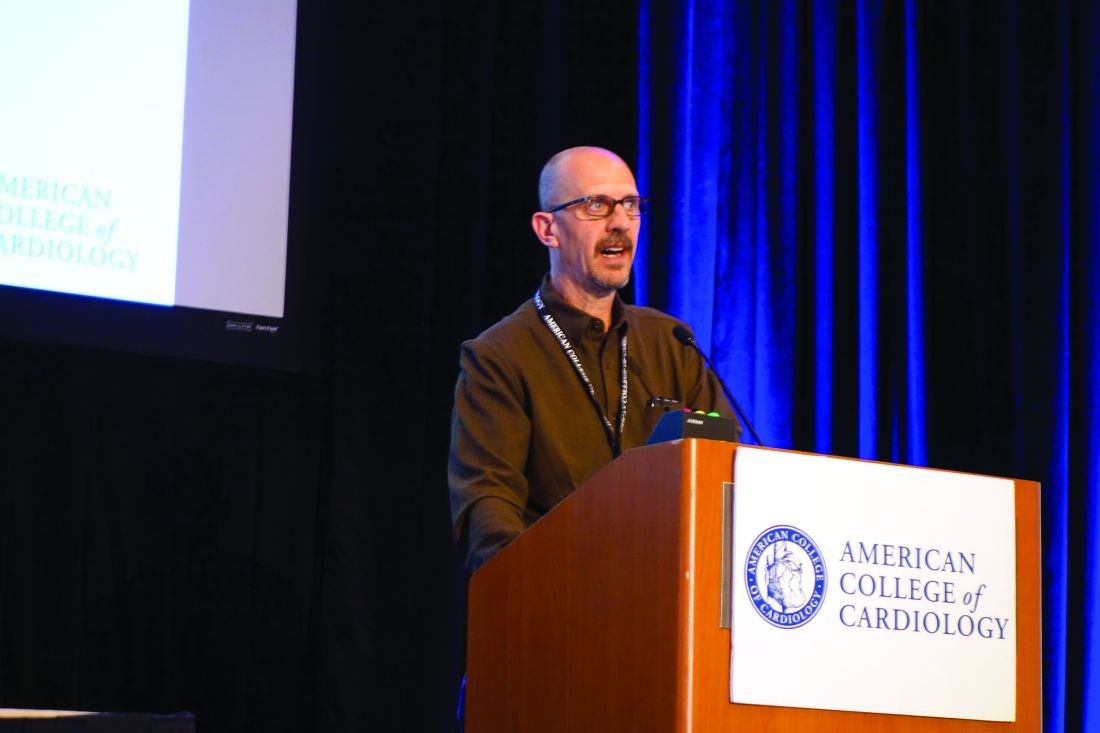
Most recently, he and his coinvestigators utilized CFR to provide new insight into the paradox that women have a higher cardiovascular disease death rate than men, even though their prevalence of obstructive CAD is lower.
Their NIH-sponsored study included 329 consecutive patients with a left ventricular ejection fraction greater than 40% – 43% of them women – who underwent coronary angiography several days after noninvasive assessment of CFR via myocardial perfusion positron emission tomography. The women had a lower burden of angiographic CAD and a lower pretest clinical risk score than the men. Nevertheless, during a median of 3 years of follow-up, the women had an adjusted twofold greater risk of the composite endpoint of cardiovascular death, nonfatal MI, or heart failure.
This excess cardiovascular risk in women was independently associated with a very low CFR, defined as less than 1.6. Dr. Di Carli and his coinvestigators calculated that this impaired CFR mediated 40% of the excess risk in women. Thus, a low CFR represents a novel hidden biologic risk for ischemic heart disease (Circulation. 2017 Feb 7;135[6]:566-77).
CFR is defined as the ratio of absolute coronary flow or myocardial perfusion between drug-induced hyperemia and rest. It can be quantified noninvasively using positron emission tomography or MRI.
CFR integrates into a single measure the three components of CAD: the focal stenosis, the diffuse atherosclerotic plaque typically present to a varying degree throughout a target vessel, and microvascular dysfunction.
CFR is a measure of coronary physiology, as is invasive fractional flow reserve (FFR). However, FFR measures only the severity of stenosis and extent of diffuse disease; it doesn’t assess microvascular dysfunction. This is a limitation because it means FFR can give false-negative readings in patients without significant obstructive coronary disease who have severe microvascular dysfunction.
As for angiography, Dr. Di Carli continued, it’s now evident that this purely anatomic assessment is of limited value as a marker of clinical risk and is inadequate to guide management decisions in the setting of stable CAD. After all, angiographically guided revascularization has not reduced cardiovascular events in clinical trials comparing it with optimal medical therapy, as in the COURAGE and BARI-2D trials.
“It’s clear that there’s been a paradigm shift in how we manage patients with stable CAD. For many years the coronary angiogram was the cornerstone of what we did: how we understand the symptoms, the patient’s risk, and ultimately how we proceed with treatment. But there is no benefit in basing treatment solely on what the lesions look like anatomically. That’s why we’ve turned to functional testing of coronary physiology,” he said.
CFR has opened a window on the importance of microvascular dysfunction, which is present in about half of patients with stable CAD and has been shown to predict cardiovascular risk independent of whether or not severe obstructive disease is present.
In an earlier study, Dr. Di Carli and coworkers demonstrated that quantification of CFR enhances stratification for risk of cardiac death among diabetes patients (Circulation. 2012 Oct 9;126[15]:1858-68). The study included 2,783 patients, of whom 1,172 were diabetic, who underwent measurement of CFR and were subsequently followed for a median of 1.4 years, during which 137 cardiac deaths occurred.
Diabetes patients without known CAD who had a low CFR had a high cardiac death rate of 2.8%/year, similar to the 2.0%/year rate in nondiabetic patients with a history of acute MI or revascularization. On the other hand, diabetes patients with a normal CFR and without known CAD had a cardiac mortality rate of only 0.3%/year, comparable to the 0.5% rate in nondiabetics without known CAD who had preserved systolic function and a normal stress perfusion study.
In the future, CFR may aid in decision making as to whether an individual with stable CAD is best treated by percutaneous coronary intervention, surgical revascularization, or guideline-directed medical therapy. For example, if CFR indicates the presence of an isolated severe focal stenosis, and this is confirmed by angiography and FFR, PCI may be the best option, while diffuse disease as demonstrated by CFR may be better treated surgically or using optimal medical therapy. But this needs to be established in prospective clinical trials, added Dr. Di Carli.
He reported having no financial conflicts regarding his presentation.
SNOWMASS, COLO. – Mounting evidence attests to the value of noninvasive measurement of coronary flow reserve as a means of classifying cardiovascular risk in patients with stable coronary artery disease (CAD) more accurately than is possible via coronary angiography or measurement of fractional flow reserve, Marcelo F. Di Carli, MD, reported at the Annual Cardiovascular Conference at Snowmass.
“We use CFR [coronary flow reserve] as a way to exclude coronary disease. It’s a good practical measure of multivessel ischemic CAD. When the CFR is normal, you can with high confidence exclude the possibility of high-risk CAD,” according to Dr. Di Carli, executive director of the cardiovascular imaging program and chief of the division of nuclear medicine and molecular imaging at Brigham and Women’s Hospital, Boston.
Most recently, he and his coinvestigators utilized CFR to provide new insight into the paradox that women have a higher cardiovascular disease death rate than men, even though their prevalence of obstructive CAD is lower.
Their NIH-sponsored study included 329 consecutive patients with a left ventricular ejection fraction greater than 40% – 43% of them women – who underwent coronary angiography several days after noninvasive assessment of CFR via myocardial perfusion positron emission tomography. The women had a lower burden of angiographic CAD and a lower pretest clinical risk score than the men. Nevertheless, during a median of 3 years of follow-up, the women had an adjusted twofold greater risk of the composite endpoint of cardiovascular death, nonfatal MI, or heart failure.
This excess cardiovascular risk in women was independently associated with a very low CFR, defined as less than 1.6. Dr. Di Carli and his coinvestigators calculated that this impaired CFR mediated 40% of the excess risk in women. Thus, a low CFR represents a novel hidden biologic risk for ischemic heart disease (Circulation. 2017 Feb 7;135[6]:566-77).
CFR is defined as the ratio of absolute coronary flow or myocardial perfusion between drug-induced hyperemia and rest. It can be quantified noninvasively using positron emission tomography or MRI.
CFR integrates into a single measure the three components of CAD: the focal stenosis, the diffuse atherosclerotic plaque typically present to a varying degree throughout a target vessel, and microvascular dysfunction.
CFR is a measure of coronary physiology, as is invasive fractional flow reserve (FFR). However, FFR measures only the severity of stenosis and extent of diffuse disease; it doesn’t assess microvascular dysfunction. This is a limitation because it means FFR can give false-negative readings in patients without significant obstructive coronary disease who have severe microvascular dysfunction.
As for angiography, Dr. Di Carli continued, it’s now evident that this purely anatomic assessment is of limited value as a marker of clinical risk and is inadequate to guide management decisions in the setting of stable CAD. After all, angiographically guided revascularization has not reduced cardiovascular events in clinical trials comparing it with optimal medical therapy, as in the COURAGE and BARI-2D trials.
“It’s clear that there’s been a paradigm shift in how we manage patients with stable CAD. For many years the coronary angiogram was the cornerstone of what we did: how we understand the symptoms, the patient’s risk, and ultimately how we proceed with treatment. But there is no benefit in basing treatment solely on what the lesions look like anatomically. That’s why we’ve turned to functional testing of coronary physiology,” he said.
CFR has opened a window on the importance of microvascular dysfunction, which is present in about half of patients with stable CAD and has been shown to predict cardiovascular risk independent of whether or not severe obstructive disease is present.
In an earlier study, Dr. Di Carli and coworkers demonstrated that quantification of CFR enhances stratification for risk of cardiac death among diabetes patients (Circulation. 2012 Oct 9;126[15]:1858-68). The study included 2,783 patients, of whom 1,172 were diabetic, who underwent measurement of CFR and were subsequently followed for a median of 1.4 years, during which 137 cardiac deaths occurred.
Diabetes patients without known CAD who had a low CFR had a high cardiac death rate of 2.8%/year, similar to the 2.0%/year rate in nondiabetic patients with a history of acute MI or revascularization. On the other hand, diabetes patients with a normal CFR and without known CAD had a cardiac mortality rate of only 0.3%/year, comparable to the 0.5% rate in nondiabetics without known CAD who had preserved systolic function and a normal stress perfusion study.
In the future, CFR may aid in decision making as to whether an individual with stable CAD is best treated by percutaneous coronary intervention, surgical revascularization, or guideline-directed medical therapy. For example, if CFR indicates the presence of an isolated severe focal stenosis, and this is confirmed by angiography and FFR, PCI may be the best option, while diffuse disease as demonstrated by CFR may be better treated surgically or using optimal medical therapy. But this needs to be established in prospective clinical trials, added Dr. Di Carli.
He reported having no financial conflicts regarding his presentation.
SNOWMASS, COLO. – Mounting evidence attests to the value of noninvasive measurement of coronary flow reserve as a means of classifying cardiovascular risk in patients with stable coronary artery disease (CAD) more accurately than is possible via coronary angiography or measurement of fractional flow reserve, Marcelo F. Di Carli, MD, reported at the Annual Cardiovascular Conference at Snowmass.
“We use CFR [coronary flow reserve] as a way to exclude coronary disease. It’s a good practical measure of multivessel ischemic CAD. When the CFR is normal, you can with high confidence exclude the possibility of high-risk CAD,” according to Dr. Di Carli, executive director of the cardiovascular imaging program and chief of the division of nuclear medicine and molecular imaging at Brigham and Women’s Hospital, Boston.
Most recently, he and his coinvestigators utilized CFR to provide new insight into the paradox that women have a higher cardiovascular disease death rate than men, even though their prevalence of obstructive CAD is lower.
Their NIH-sponsored study included 329 consecutive patients with a left ventricular ejection fraction greater than 40% – 43% of them women – who underwent coronary angiography several days after noninvasive assessment of CFR via myocardial perfusion positron emission tomography. The women had a lower burden of angiographic CAD and a lower pretest clinical risk score than the men. Nevertheless, during a median of 3 years of follow-up, the women had an adjusted twofold greater risk of the composite endpoint of cardiovascular death, nonfatal MI, or heart failure.
This excess cardiovascular risk in women was independently associated with a very low CFR, defined as less than 1.6. Dr. Di Carli and his coinvestigators calculated that this impaired CFR mediated 40% of the excess risk in women. Thus, a low CFR represents a novel hidden biologic risk for ischemic heart disease (Circulation. 2017 Feb 7;135[6]:566-77).
CFR is defined as the ratio of absolute coronary flow or myocardial perfusion between drug-induced hyperemia and rest. It can be quantified noninvasively using positron emission tomography or MRI.
CFR integrates into a single measure the three components of CAD: the focal stenosis, the diffuse atherosclerotic plaque typically present to a varying degree throughout a target vessel, and microvascular dysfunction.
CFR is a measure of coronary physiology, as is invasive fractional flow reserve (FFR). However, FFR measures only the severity of stenosis and extent of diffuse disease; it doesn’t assess microvascular dysfunction. This is a limitation because it means FFR can give false-negative readings in patients without significant obstructive coronary disease who have severe microvascular dysfunction.
As for angiography, Dr. Di Carli continued, it’s now evident that this purely anatomic assessment is of limited value as a marker of clinical risk and is inadequate to guide management decisions in the setting of stable CAD. After all, angiographically guided revascularization has not reduced cardiovascular events in clinical trials comparing it with optimal medical therapy, as in the COURAGE and BARI-2D trials.
“It’s clear that there’s been a paradigm shift in how we manage patients with stable CAD. For many years the coronary angiogram was the cornerstone of what we did: how we understand the symptoms, the patient’s risk, and ultimately how we proceed with treatment. But there is no benefit in basing treatment solely on what the lesions look like anatomically. That’s why we’ve turned to functional testing of coronary physiology,” he said.
CFR has opened a window on the importance of microvascular dysfunction, which is present in about half of patients with stable CAD and has been shown to predict cardiovascular risk independent of whether or not severe obstructive disease is present.
In an earlier study, Dr. Di Carli and coworkers demonstrated that quantification of CFR enhances stratification for risk of cardiac death among diabetes patients (Circulation. 2012 Oct 9;126[15]:1858-68). The study included 2,783 patients, of whom 1,172 were diabetic, who underwent measurement of CFR and were subsequently followed for a median of 1.4 years, during which 137 cardiac deaths occurred.
Diabetes patients without known CAD who had a low CFR had a high cardiac death rate of 2.8%/year, similar to the 2.0%/year rate in nondiabetic patients with a history of acute MI or revascularization. On the other hand, diabetes patients with a normal CFR and without known CAD had a cardiac mortality rate of only 0.3%/year, comparable to the 0.5% rate in nondiabetics without known CAD who had preserved systolic function and a normal stress perfusion study.
In the future, CFR may aid in decision making as to whether an individual with stable CAD is best treated by percutaneous coronary intervention, surgical revascularization, or guideline-directed medical therapy. For example, if CFR indicates the presence of an isolated severe focal stenosis, and this is confirmed by angiography and FFR, PCI may be the best option, while diffuse disease as demonstrated by CFR may be better treated surgically or using optimal medical therapy. But this needs to be established in prospective clinical trials, added Dr. Di Carli.
He reported having no financial conflicts regarding his presentation.
EXPERT ANALYSIS FROM THE CARDIOVASCULAR CONFERENCE AT SNOWMASS
Uptake of new heart failure drugs slow despite guidelines
SNOWMASS, COLO. – As William T. Abraham, MD, speaks to colleagues around the country about heart failure therapy, he has noticed that the first-in-class drug ivabradine remains below the radar of most physicians.
“I’ve found that this is an agent that very few people know about, even though it’s been FDA [Food and Drug Administration] approved for about 3 years. It’s used fairly extensively in Europe because that’s where the pivotal SHIFT trial was done, but not very much in the United States,” according to Dr. Abraham, professor of medicine, physiology, and cell biology and director of the division of cardiovascular medicine at Ohio State University in Columbus.
That’s likely to change as word spreads about the May 2016 update of the American College of Cardiology/American Heart Association Guideline for the Management of Heart Failure. The update incorporated evidence-based recommendations on the use of two important new heart failure medications: ivabradine (Corlanor), which received a moderate class IIa recommendation, meaning the drug “should be considered,” and sacubitril/valsartan (Entresto), which received the strongest class I recommendation.
In the right patients, these two oral medications improve heart failure morbidity and mortality significantly beyond what’s achievable with what has been the gold standard, guideline-directed medical therapy. Dr. Abraham described how to get started using the two medications at the Annual Cardiovascular Conference at Snowmass.
Ivabradine
Ivabradine is a selective inhibitor of the sinoatrial pacemaker modulating I(f) current. It acts by slowing the sinus rate without reducing myocardial contractility.
“This agent does one thing and one thing alone: It lowers heart rate,” the cardiologist explained.
And that, he added, was sufficient to significantly reduce the risks of death due to heart failure and recurrent hospitalization for worsening heart failure in the pivotal SHIFT trial.
SHIFT included 6,505 patients with moderate to severe heart failure with reduced left ventricular ejection fraction (LVEF) and a resting heart rate above 70 bpm despite background guideline-directed medical therapy. Participants were randomized double blind to ivabradine titrated to a maximum of 7.5 mg twice daily or placebo and followed for a median of about 23 months. The rate of death due to heart failure was 3% with ivabradine and 5% with placebo, for a statistically significant 26% relative risk reduction favoring ivabradine.
But the drug’s main benefit was in reducing recurrent hospitalizations for heart failure, an endpoint of particular interest to health policy officials given that heart failure hospitalizations chew up a substantial proportion of the Medicare budget. Ivabradine reduced first hospitalizations for heart failure during the study period by 25%, second hospitalizations by 34%, and third hospitalizations by 29% (Eur Heart J. 2012 Nov;33[22]:2813-20).
The ACC/AHA guideline update stresses the importance of reserving ivabradine for heart failure patients whose resting heart rate exceeds 70 bpm, despite being on their maximum tolerated dose of a beta-blocker, Dr. Abraham noted.
Ivabradine is contraindicated in the setting of acute decompensated heart failure, severe liver disease, or hypotension, in patients on any of the numerous agents that strongly inhibit the enzyme cytochrome P450 3A4, and in those who have sick sinus syndrome, have sinoatrial block, or are pacemaker dependent.
Sacubitril/valsartan
Sacubitril inhibits neprilysin, an enzyme that blocks the action of endogenous vasoactive peptides including bradykinin, substance P, and natriuretic peptides, all of which counter important maladaptive mechanisms in heart failure. Sacubitril has been combined with the angiotensin receptor blocker valsartan to form the first-in-class angiotensin receptor neprilysin inhibitor, or ARNI, formerly known as LCZ696 and now marketed as Entresto.
In the pivotal double-blind PARADIGM-HF trial, 8,442 patients with heart failure with reduced ejection fraction were randomized to the ARNI at 200 mg b.i.d. or to enalapril at 10 mg b.i.d. on top of background guideline-directed medical therapy. The trial was stopped early because of evidence of overwhelming benefit: a 20% relative risk reduction in cardiovascular death and a 21% decrease in the risk of heart failure hospitalizations in the sacubitril/valsartan group, as well as significant reductions in heart failure symptoms and physical limitations (N Engl J Med. 2014 Sep 11;371[11]:993-1004).
The updated heart failure guidelines strongly recommend that patients with heart failure should be treated with either an ACE inhibitor, an angiotensin receptor blocker, or an ARNI. Further, patients who remain symptomatic on an ACE inhibitor or angiotensin receptor blocker should be switched to an ARNI; that’s a class Ib recommendation based upon the results of PARADIGM-HF.
In getting started using the ARNI, Dr. Abraham said it’s important to understand as background the selective nature of the PARADIGM-HF study design. During the single-blind run-in period of 5-8 weeks, roughly 10% of patients dropped out because they couldn’t tolerate enalapril at 10 mg b.i.d., and a similar percentage dropped out during the ARNI run-in. Thus, patients who couldn’t tolerate a low dose of an ACE inhibitor weren’t in the study. And patients capable of tolerating guideline-recommended full-dose ACE inhibitor therapy were not specifically sought for participation.
“So there are some unanswered questions about the ARNI. If you’re just getting started with this compound in treating your heart failure patients, my own feeling is you should maybe aim for the type of patient that was included in this trial: patients who could tolerate a moderate dose of an ACE inhibitor and had generally good blood pressure. That’s a great way to begin to get experience with this agent in heart failure,” the cardiologist advised.
He reported serving as a consultant to Abbott Vascular, Medtronic, Novartis, and St. Jude Medical.
SNOWMASS, COLO. – As William T. Abraham, MD, speaks to colleagues around the country about heart failure therapy, he has noticed that the first-in-class drug ivabradine remains below the radar of most physicians.
“I’ve found that this is an agent that very few people know about, even though it’s been FDA [Food and Drug Administration] approved for about 3 years. It’s used fairly extensively in Europe because that’s where the pivotal SHIFT trial was done, but not very much in the United States,” according to Dr. Abraham, professor of medicine, physiology, and cell biology and director of the division of cardiovascular medicine at Ohio State University in Columbus.
That’s likely to change as word spreads about the May 2016 update of the American College of Cardiology/American Heart Association Guideline for the Management of Heart Failure. The update incorporated evidence-based recommendations on the use of two important new heart failure medications: ivabradine (Corlanor), which received a moderate class IIa recommendation, meaning the drug “should be considered,” and sacubitril/valsartan (Entresto), which received the strongest class I recommendation.
In the right patients, these two oral medications improve heart failure morbidity and mortality significantly beyond what’s achievable with what has been the gold standard, guideline-directed medical therapy. Dr. Abraham described how to get started using the two medications at the Annual Cardiovascular Conference at Snowmass.
Ivabradine
Ivabradine is a selective inhibitor of the sinoatrial pacemaker modulating I(f) current. It acts by slowing the sinus rate without reducing myocardial contractility.
“This agent does one thing and one thing alone: It lowers heart rate,” the cardiologist explained.
And that, he added, was sufficient to significantly reduce the risks of death due to heart failure and recurrent hospitalization for worsening heart failure in the pivotal SHIFT trial.
SHIFT included 6,505 patients with moderate to severe heart failure with reduced left ventricular ejection fraction (LVEF) and a resting heart rate above 70 bpm despite background guideline-directed medical therapy. Participants were randomized double blind to ivabradine titrated to a maximum of 7.5 mg twice daily or placebo and followed for a median of about 23 months. The rate of death due to heart failure was 3% with ivabradine and 5% with placebo, for a statistically significant 26% relative risk reduction favoring ivabradine.
But the drug’s main benefit was in reducing recurrent hospitalizations for heart failure, an endpoint of particular interest to health policy officials given that heart failure hospitalizations chew up a substantial proportion of the Medicare budget. Ivabradine reduced first hospitalizations for heart failure during the study period by 25%, second hospitalizations by 34%, and third hospitalizations by 29% (Eur Heart J. 2012 Nov;33[22]:2813-20).
The ACC/AHA guideline update stresses the importance of reserving ivabradine for heart failure patients whose resting heart rate exceeds 70 bpm, despite being on their maximum tolerated dose of a beta-blocker, Dr. Abraham noted.
Ivabradine is contraindicated in the setting of acute decompensated heart failure, severe liver disease, or hypotension, in patients on any of the numerous agents that strongly inhibit the enzyme cytochrome P450 3A4, and in those who have sick sinus syndrome, have sinoatrial block, or are pacemaker dependent.
Sacubitril/valsartan
Sacubitril inhibits neprilysin, an enzyme that blocks the action of endogenous vasoactive peptides including bradykinin, substance P, and natriuretic peptides, all of which counter important maladaptive mechanisms in heart failure. Sacubitril has been combined with the angiotensin receptor blocker valsartan to form the first-in-class angiotensin receptor neprilysin inhibitor, or ARNI, formerly known as LCZ696 and now marketed as Entresto.
In the pivotal double-blind PARADIGM-HF trial, 8,442 patients with heart failure with reduced ejection fraction were randomized to the ARNI at 200 mg b.i.d. or to enalapril at 10 mg b.i.d. on top of background guideline-directed medical therapy. The trial was stopped early because of evidence of overwhelming benefit: a 20% relative risk reduction in cardiovascular death and a 21% decrease in the risk of heart failure hospitalizations in the sacubitril/valsartan group, as well as significant reductions in heart failure symptoms and physical limitations (N Engl J Med. 2014 Sep 11;371[11]:993-1004).
The updated heart failure guidelines strongly recommend that patients with heart failure should be treated with either an ACE inhibitor, an angiotensin receptor blocker, or an ARNI. Further, patients who remain symptomatic on an ACE inhibitor or angiotensin receptor blocker should be switched to an ARNI; that’s a class Ib recommendation based upon the results of PARADIGM-HF.
In getting started using the ARNI, Dr. Abraham said it’s important to understand as background the selective nature of the PARADIGM-HF study design. During the single-blind run-in period of 5-8 weeks, roughly 10% of patients dropped out because they couldn’t tolerate enalapril at 10 mg b.i.d., and a similar percentage dropped out during the ARNI run-in. Thus, patients who couldn’t tolerate a low dose of an ACE inhibitor weren’t in the study. And patients capable of tolerating guideline-recommended full-dose ACE inhibitor therapy were not specifically sought for participation.
“So there are some unanswered questions about the ARNI. If you’re just getting started with this compound in treating your heart failure patients, my own feeling is you should maybe aim for the type of patient that was included in this trial: patients who could tolerate a moderate dose of an ACE inhibitor and had generally good blood pressure. That’s a great way to begin to get experience with this agent in heart failure,” the cardiologist advised.
He reported serving as a consultant to Abbott Vascular, Medtronic, Novartis, and St. Jude Medical.
SNOWMASS, COLO. – As William T. Abraham, MD, speaks to colleagues around the country about heart failure therapy, he has noticed that the first-in-class drug ivabradine remains below the radar of most physicians.
“I’ve found that this is an agent that very few people know about, even though it’s been FDA [Food and Drug Administration] approved for about 3 years. It’s used fairly extensively in Europe because that’s where the pivotal SHIFT trial was done, but not very much in the United States,” according to Dr. Abraham, professor of medicine, physiology, and cell biology and director of the division of cardiovascular medicine at Ohio State University in Columbus.
That’s likely to change as word spreads about the May 2016 update of the American College of Cardiology/American Heart Association Guideline for the Management of Heart Failure. The update incorporated evidence-based recommendations on the use of two important new heart failure medications: ivabradine (Corlanor), which received a moderate class IIa recommendation, meaning the drug “should be considered,” and sacubitril/valsartan (Entresto), which received the strongest class I recommendation.
In the right patients, these two oral medications improve heart failure morbidity and mortality significantly beyond what’s achievable with what has been the gold standard, guideline-directed medical therapy. Dr. Abraham described how to get started using the two medications at the Annual Cardiovascular Conference at Snowmass.
Ivabradine
Ivabradine is a selective inhibitor of the sinoatrial pacemaker modulating I(f) current. It acts by slowing the sinus rate without reducing myocardial contractility.
“This agent does one thing and one thing alone: It lowers heart rate,” the cardiologist explained.
And that, he added, was sufficient to significantly reduce the risks of death due to heart failure and recurrent hospitalization for worsening heart failure in the pivotal SHIFT trial.
SHIFT included 6,505 patients with moderate to severe heart failure with reduced left ventricular ejection fraction (LVEF) and a resting heart rate above 70 bpm despite background guideline-directed medical therapy. Participants were randomized double blind to ivabradine titrated to a maximum of 7.5 mg twice daily or placebo and followed for a median of about 23 months. The rate of death due to heart failure was 3% with ivabradine and 5% with placebo, for a statistically significant 26% relative risk reduction favoring ivabradine.
But the drug’s main benefit was in reducing recurrent hospitalizations for heart failure, an endpoint of particular interest to health policy officials given that heart failure hospitalizations chew up a substantial proportion of the Medicare budget. Ivabradine reduced first hospitalizations for heart failure during the study period by 25%, second hospitalizations by 34%, and third hospitalizations by 29% (Eur Heart J. 2012 Nov;33[22]:2813-20).
The ACC/AHA guideline update stresses the importance of reserving ivabradine for heart failure patients whose resting heart rate exceeds 70 bpm, despite being on their maximum tolerated dose of a beta-blocker, Dr. Abraham noted.
Ivabradine is contraindicated in the setting of acute decompensated heart failure, severe liver disease, or hypotension, in patients on any of the numerous agents that strongly inhibit the enzyme cytochrome P450 3A4, and in those who have sick sinus syndrome, have sinoatrial block, or are pacemaker dependent.
Sacubitril/valsartan
Sacubitril inhibits neprilysin, an enzyme that blocks the action of endogenous vasoactive peptides including bradykinin, substance P, and natriuretic peptides, all of which counter important maladaptive mechanisms in heart failure. Sacubitril has been combined with the angiotensin receptor blocker valsartan to form the first-in-class angiotensin receptor neprilysin inhibitor, or ARNI, formerly known as LCZ696 and now marketed as Entresto.
In the pivotal double-blind PARADIGM-HF trial, 8,442 patients with heart failure with reduced ejection fraction were randomized to the ARNI at 200 mg b.i.d. or to enalapril at 10 mg b.i.d. on top of background guideline-directed medical therapy. The trial was stopped early because of evidence of overwhelming benefit: a 20% relative risk reduction in cardiovascular death and a 21% decrease in the risk of heart failure hospitalizations in the sacubitril/valsartan group, as well as significant reductions in heart failure symptoms and physical limitations (N Engl J Med. 2014 Sep 11;371[11]:993-1004).
The updated heart failure guidelines strongly recommend that patients with heart failure should be treated with either an ACE inhibitor, an angiotensin receptor blocker, or an ARNI. Further, patients who remain symptomatic on an ACE inhibitor or angiotensin receptor blocker should be switched to an ARNI; that’s a class Ib recommendation based upon the results of PARADIGM-HF.
In getting started using the ARNI, Dr. Abraham said it’s important to understand as background the selective nature of the PARADIGM-HF study design. During the single-blind run-in period of 5-8 weeks, roughly 10% of patients dropped out because they couldn’t tolerate enalapril at 10 mg b.i.d., and a similar percentage dropped out during the ARNI run-in. Thus, patients who couldn’t tolerate a low dose of an ACE inhibitor weren’t in the study. And patients capable of tolerating guideline-recommended full-dose ACE inhibitor therapy were not specifically sought for participation.
“So there are some unanswered questions about the ARNI. If you’re just getting started with this compound in treating your heart failure patients, my own feeling is you should maybe aim for the type of patient that was included in this trial: patients who could tolerate a moderate dose of an ACE inhibitor and had generally good blood pressure. That’s a great way to begin to get experience with this agent in heart failure,” the cardiologist advised.
He reported serving as a consultant to Abbott Vascular, Medtronic, Novartis, and St. Jude Medical.
EXPERT ANALYSIS FROM THE CARDIOVASCULAR CONFERENCE AT SNOWMASS