User login
EXACT-HF: Allopurinol flops for heart failure
WASHINGTON – Allopurinol has no effect on heart failure, according to results from the multicenter, double-blind EXACT-HF study.
"In heart failure patients with reduced ejection fraction and hyperuricemia, xanthine oxidase inhibition with allopurinol safely lowers uric acid levels, but has no beneficial effect on clinical status, exercise capacity, quality of life, or left ventricular structure and function. Other adjunctive therapies for high-risk heart failure patients are clearly needed," Dr. Michael M. Givertz said in presenting the EXACT-HF results at the annual meeting of the American College of Cardiology.
Hopes were high going into EXACT-HF that xanthine oxidase inhibition would provide a much needed novel therapeutic approach to heart failure. A growing body of evidence suggests that oxidative stress plays a major role in ventricular remodeling and disease progression, and xanthine oxidase – a potential source of oxidative stress in heart failure – was a logical therapeutic target.

Moreover, in animal models of heart failure, as well as earlier short-term patient studies, allopurinol caused regression of left ventricular hypertrophy, improved endothelial function, and boosted myocardial efficiency while reducing myocardial oxygen demand, noted Dr. Givertz, medical director of heart transplant and circulatory assist at Brigham and Women’s Hospital, Boston.
EXACT-HF was a double-blind study in which 253 hyperuricemic heart failure patients with a median left ventricular ejection fraction (LVEF) of 24% and a median uric acid level of 11 mg/dL were placed on allopurinol or placebo and followed prospectively for 6 months. Allopurinol was started at 300 mg/day and, after 1 week, boosted to a target dose of 600 mg/day if tolerated.
The primary endpoint was a composite comprising death, hospitalization, or an emergency department or urgent care clinic visit for worsening heart failure; a medication change due to worsening heart failure; and patient global assessment. By this standard, roughly 45% of patients in both study arms were worse after 6 months, 16% were improved, and the rest were unchanged. Nor did the two groups differ significantly in terms of the various secondary and tertiary endpoints, including quality of life as assessed by the Kansas City Cardiomyopathy Score; the 6-minute walk test; levels of cystatin C, myeloperoxidase, and NT-proBNP (N-terminal of the prohormone brain natriuretic peptide); and left ventricular volume, mass, and ejection fraction.
Uric acid levels were reduced by about 45% in the allopurinol group. However, investigators never viewed hyperuricemia as a mediator of heart failure, but rather as a marker of more severe disease. And this was a population with fairly severe disease, as reflected in the 6% mortality rate at 6 months, along with a 30% rate of unscheduled outpatient visits and 38% rate of all-cause hospitalization, Dr. Givertz said.
Asked if he thought a longer treatment period might have shown therapeutic benefit, the cardiologist replied that there was one positive signal: The risk of heart failure hospitalization over the 6-month study was reduced by 33% in the allopurinol group, with the curves separating after 8-10 weeks, although the difference wasn’t statistically significant. But he was reluctant to make too much of this.
"It’s conceivable that if one treated for a year or longer with high doses of allopurinol, perhaps one might see a benefit. The argument against that is the consistency in the neutrality of the other endpoints at 6 months," according to Dr. Givertz.
Intriguingly, several recent studies suggest that colchicine – an even more venerable gout drug than allopurinol – may protect gout patients against cardiovascular events.
The EXACT-HF trial was sponsored by the National Heart, Lung, and Blood Institute and carried out by the NHLBI Heart Failure Clinical Research Network. Dr. Givertz reported serving as a consultant to Merck, Cardioxyl, and Janssen.
WASHINGTON – Allopurinol has no effect on heart failure, according to results from the multicenter, double-blind EXACT-HF study.
"In heart failure patients with reduced ejection fraction and hyperuricemia, xanthine oxidase inhibition with allopurinol safely lowers uric acid levels, but has no beneficial effect on clinical status, exercise capacity, quality of life, or left ventricular structure and function. Other adjunctive therapies for high-risk heart failure patients are clearly needed," Dr. Michael M. Givertz said in presenting the EXACT-HF results at the annual meeting of the American College of Cardiology.
Hopes were high going into EXACT-HF that xanthine oxidase inhibition would provide a much needed novel therapeutic approach to heart failure. A growing body of evidence suggests that oxidative stress plays a major role in ventricular remodeling and disease progression, and xanthine oxidase – a potential source of oxidative stress in heart failure – was a logical therapeutic target.
Moreover, in animal models of heart failure, as well as earlier short-term patient studies, allopurinol caused regression of left ventricular hypertrophy, improved endothelial function, and boosted myocardial efficiency while reducing myocardial oxygen demand, noted Dr. Givertz, medical director of heart transplant and circulatory assist at Brigham and Women’s Hospital, Boston.
EXACT-HF was a double-blind study in which 253 hyperuricemic heart failure patients with a median left ventricular ejection fraction (LVEF) of 24% and a median uric acid level of 11 mg/dL were placed on allopurinol or placebo and followed prospectively for 6 months. Allopurinol was started at 300 mg/day and, after 1 week, boosted to a target dose of 600 mg/day if tolerated.
The primary endpoint was a composite comprising death, hospitalization, or an emergency department or urgent care clinic visit for worsening heart failure; a medication change due to worsening heart failure; and patient global assessment. By this standard, roughly 45% of patients in both study arms were worse after 6 months, 16% were improved, and the rest were unchanged. Nor did the two groups differ significantly in terms of the various secondary and tertiary endpoints, including quality of life as assessed by the Kansas City Cardiomyopathy Score; the 6-minute walk test; levels of cystatin C, myeloperoxidase, and NT-proBNP (N-terminal of the prohormone brain natriuretic peptide); and left ventricular volume, mass, and ejection fraction.
Uric acid levels were reduced by about 45% in the allopurinol group. However, investigators never viewed hyperuricemia as a mediator of heart failure, but rather as a marker of more severe disease. And this was a population with fairly severe disease, as reflected in the 6% mortality rate at 6 months, along with a 30% rate of unscheduled outpatient visits and 38% rate of all-cause hospitalization, Dr. Givertz said.
Asked if he thought a longer treatment period might have shown therapeutic benefit, the cardiologist replied that there was one positive signal: The risk of heart failure hospitalization over the 6-month study was reduced by 33% in the allopurinol group, with the curves separating after 8-10 weeks, although the difference wasn’t statistically significant. But he was reluctant to make too much of this.
"It’s conceivable that if one treated for a year or longer with high doses of allopurinol, perhaps one might see a benefit. The argument against that is the consistency in the neutrality of the other endpoints at 6 months," according to Dr. Givertz.
Intriguingly, several recent studies suggest that colchicine – an even more venerable gout drug than allopurinol – may protect gout patients against cardiovascular events.
The EXACT-HF trial was sponsored by the National Heart, Lung, and Blood Institute and carried out by the NHLBI Heart Failure Clinical Research Network. Dr. Givertz reported serving as a consultant to Merck, Cardioxyl, and Janssen.
WASHINGTON – Allopurinol has no effect on heart failure, according to results from the multicenter, double-blind EXACT-HF study.
"In heart failure patients with reduced ejection fraction and hyperuricemia, xanthine oxidase inhibition with allopurinol safely lowers uric acid levels, but has no beneficial effect on clinical status, exercise capacity, quality of life, or left ventricular structure and function. Other adjunctive therapies for high-risk heart failure patients are clearly needed," Dr. Michael M. Givertz said in presenting the EXACT-HF results at the annual meeting of the American College of Cardiology.
Hopes were high going into EXACT-HF that xanthine oxidase inhibition would provide a much needed novel therapeutic approach to heart failure. A growing body of evidence suggests that oxidative stress plays a major role in ventricular remodeling and disease progression, and xanthine oxidase – a potential source of oxidative stress in heart failure – was a logical therapeutic target.
Moreover, in animal models of heart failure, as well as earlier short-term patient studies, allopurinol caused regression of left ventricular hypertrophy, improved endothelial function, and boosted myocardial efficiency while reducing myocardial oxygen demand, noted Dr. Givertz, medical director of heart transplant and circulatory assist at Brigham and Women’s Hospital, Boston.
EXACT-HF was a double-blind study in which 253 hyperuricemic heart failure patients with a median left ventricular ejection fraction (LVEF) of 24% and a median uric acid level of 11 mg/dL were placed on allopurinol or placebo and followed prospectively for 6 months. Allopurinol was started at 300 mg/day and, after 1 week, boosted to a target dose of 600 mg/day if tolerated.
The primary endpoint was a composite comprising death, hospitalization, or an emergency department or urgent care clinic visit for worsening heart failure; a medication change due to worsening heart failure; and patient global assessment. By this standard, roughly 45% of patients in both study arms were worse after 6 months, 16% were improved, and the rest were unchanged. Nor did the two groups differ significantly in terms of the various secondary and tertiary endpoints, including quality of life as assessed by the Kansas City Cardiomyopathy Score; the 6-minute walk test; levels of cystatin C, myeloperoxidase, and NT-proBNP (N-terminal of the prohormone brain natriuretic peptide); and left ventricular volume, mass, and ejection fraction.
Uric acid levels were reduced by about 45% in the allopurinol group. However, investigators never viewed hyperuricemia as a mediator of heart failure, but rather as a marker of more severe disease. And this was a population with fairly severe disease, as reflected in the 6% mortality rate at 6 months, along with a 30% rate of unscheduled outpatient visits and 38% rate of all-cause hospitalization, Dr. Givertz said.
Asked if he thought a longer treatment period might have shown therapeutic benefit, the cardiologist replied that there was one positive signal: The risk of heart failure hospitalization over the 6-month study was reduced by 33% in the allopurinol group, with the curves separating after 8-10 weeks, although the difference wasn’t statistically significant. But he was reluctant to make too much of this.
"It’s conceivable that if one treated for a year or longer with high doses of allopurinol, perhaps one might see a benefit. The argument against that is the consistency in the neutrality of the other endpoints at 6 months," according to Dr. Givertz.
Intriguingly, several recent studies suggest that colchicine – an even more venerable gout drug than allopurinol – may protect gout patients against cardiovascular events.
The EXACT-HF trial was sponsored by the National Heart, Lung, and Blood Institute and carried out by the NHLBI Heart Failure Clinical Research Network. Dr. Givertz reported serving as a consultant to Merck, Cardioxyl, and Janssen.
AT ACC 14
Major finding: Six months of therapy with allopurinol in patients with hyperuricemia and heart failure with reduced ejection fraction lowered their serum uric acid levels but had no effect on their heart failure.
Data source: EXACT-HF, a 6-month, double-blind, placebo-controlled trial conducted in 253 patients.
Disclosures: The EXACT-HF trial was sponsored by the National Heart, Lung, and Blood Institute and carried out by the NHLBI Heart Failure Clinical Research Network. Dr. Givertz reported serving as a consultant to Merck, Cardioxyl, and Janssen.
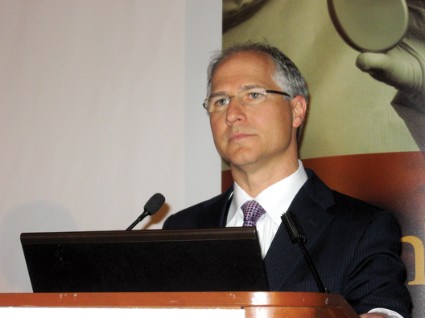
Marriage protects against vascular disease
WASHINGTON - Being married is independently associated with a significantly reduced rate of vascular disease across all arterial beds, according to a population-based study of more than 3.5 million subjects, Dr. Carlos L. Alviar reported at the annual meeting of the American College of Cardiology.
This apparent protective effect was strongest in younger individuals. In a multivariate regression analysis adjusted for demographics and cardiovascular risk factors, married subjects under age 50 years were 12% less likely to have prevalent vascular disease than were those who were single. The risk advantage shrank with advancing age such that married participants above age 70 years had a 4% lower risk of vascular disease than did those who were single, a difference that was statistically significant because of the huge size of the study population. And those who were single were at lower risk than were widowed or divorced subjects.
He presented an analysis of slightly more than 3.5 million participants in the Life Line Screening Diabetes Mellitus and Vascular Disease survey conducted during 2003-2008. Unlike most other studies of the relationship between marital status and health, which have focused on the risk of coronary disease, this study also included screening for peripheral artery disease, abdominal aortic aneurysm, and cerebrovascular disease.
Among participants of all ages, the risk of prevalent vascular disease was 5% less in those who were married than in those who were single. The risk was 3.2% greater in subjects who were divorced than in those who were single, and 5.1% greater in subjects who were widowed, according to Dr. Alviar of New York University.
The mean age of the study population was 63.7 years. Among women, 63.4% were married, 8.1% were single, 10.5% divorced, and 18% widowed. The male demographics were somewhat different: 80.4% of the men were married, 8.8% single, 6.1% divorced, and 4.7% were widowed.
Being widowed was associated with a higher prevalence of diabetes, hypertension, physical inactivity, and dyslipidemia, although investigators adjusted for that in their multivariate analysis. Divorced subjects were more likely to be smokers and have a family history of premature cardiovascular disease.
Dr. Alviar proposed as potential explanations for the reduced prevalence of vascular disease among married individuals their possibly lower levels of psychologic and physical stress, better access to medical care, and improved adherence to medication.
He reported having no financial disclosures regarding this study.
My group runs a course every October where we help vascular fellows learn how to run a successful practice, be it academic or community oriented. One of the most popular lectures is by a renowned lawyer. His take home message is "You will retire rich if you don’t buy a big house, don’t buy a fancy car and don’t get divorced." After reading this news item we can now add one other reason to follow his advice.
Dr. Russell Samson, Medical Editor, Vascular Specialist.
My group runs a course every October where we help vascular fellows learn how to run a successful practice, be it academic or community oriented. One of the most popular lectures is by a renowned lawyer. His take home message is "You will retire rich if you don’t buy a big house, don’t buy a fancy car and don’t get divorced." After reading this news item we can now add one other reason to follow his advice.
Dr. Russell Samson, Medical Editor, Vascular Specialist.
My group runs a course every October where we help vascular fellows learn how to run a successful practice, be it academic or community oriented. One of the most popular lectures is by a renowned lawyer. His take home message is "You will retire rich if you don’t buy a big house, don’t buy a fancy car and don’t get divorced." After reading this news item we can now add one other reason to follow his advice.
Dr. Russell Samson, Medical Editor, Vascular Specialist.
WASHINGTON - Being married is independently associated with a significantly reduced rate of vascular disease across all arterial beds, according to a population-based study of more than 3.5 million subjects, Dr. Carlos L. Alviar reported at the annual meeting of the American College of Cardiology.
This apparent protective effect was strongest in younger individuals. In a multivariate regression analysis adjusted for demographics and cardiovascular risk factors, married subjects under age 50 years were 12% less likely to have prevalent vascular disease than were those who were single. The risk advantage shrank with advancing age such that married participants above age 70 years had a 4% lower risk of vascular disease than did those who were single, a difference that was statistically significant because of the huge size of the study population. And those who were single were at lower risk than were widowed or divorced subjects.
He presented an analysis of slightly more than 3.5 million participants in the Life Line Screening Diabetes Mellitus and Vascular Disease survey conducted during 2003-2008. Unlike most other studies of the relationship between marital status and health, which have focused on the risk of coronary disease, this study also included screening for peripheral artery disease, abdominal aortic aneurysm, and cerebrovascular disease.
Among participants of all ages, the risk of prevalent vascular disease was 5% less in those who were married than in those who were single. The risk was 3.2% greater in subjects who were divorced than in those who were single, and 5.1% greater in subjects who were widowed, according to Dr. Alviar of New York University.
The mean age of the study population was 63.7 years. Among women, 63.4% were married, 8.1% were single, 10.5% divorced, and 18% widowed. The male demographics were somewhat different: 80.4% of the men were married, 8.8% single, 6.1% divorced, and 4.7% were widowed.
Being widowed was associated with a higher prevalence of diabetes, hypertension, physical inactivity, and dyslipidemia, although investigators adjusted for that in their multivariate analysis. Divorced subjects were more likely to be smokers and have a family history of premature cardiovascular disease.
Dr. Alviar proposed as potential explanations for the reduced prevalence of vascular disease among married individuals their possibly lower levels of psychologic and physical stress, better access to medical care, and improved adherence to medication.
He reported having no financial disclosures regarding this study.
WASHINGTON - Being married is independently associated with a significantly reduced rate of vascular disease across all arterial beds, according to a population-based study of more than 3.5 million subjects, Dr. Carlos L. Alviar reported at the annual meeting of the American College of Cardiology.
This apparent protective effect was strongest in younger individuals. In a multivariate regression analysis adjusted for demographics and cardiovascular risk factors, married subjects under age 50 years were 12% less likely to have prevalent vascular disease than were those who were single. The risk advantage shrank with advancing age such that married participants above age 70 years had a 4% lower risk of vascular disease than did those who were single, a difference that was statistically significant because of the huge size of the study population. And those who were single were at lower risk than were widowed or divorced subjects.
He presented an analysis of slightly more than 3.5 million participants in the Life Line Screening Diabetes Mellitus and Vascular Disease survey conducted during 2003-2008. Unlike most other studies of the relationship between marital status and health, which have focused on the risk of coronary disease, this study also included screening for peripheral artery disease, abdominal aortic aneurysm, and cerebrovascular disease.
Among participants of all ages, the risk of prevalent vascular disease was 5% less in those who were married than in those who were single. The risk was 3.2% greater in subjects who were divorced than in those who were single, and 5.1% greater in subjects who were widowed, according to Dr. Alviar of New York University.
The mean age of the study population was 63.7 years. Among women, 63.4% were married, 8.1% were single, 10.5% divorced, and 18% widowed. The male demographics were somewhat different: 80.4% of the men were married, 8.8% single, 6.1% divorced, and 4.7% were widowed.
Being widowed was associated with a higher prevalence of diabetes, hypertension, physical inactivity, and dyslipidemia, although investigators adjusted for that in their multivariate analysis. Divorced subjects were more likely to be smokers and have a family history of premature cardiovascular disease.
Dr. Alviar proposed as potential explanations for the reduced prevalence of vascular disease among married individuals their possibly lower levels of psychologic and physical stress, better access to medical care, and improved adherence to medication.
He reported having no financial disclosures regarding this study.
Major finding: Married men under age 50 years were 14.4% less likely than their single counterparts were to have vascular disease, and married women were 10.7% less likely. This advantage remained significant, albeit attenuated, in older married individuals.
Data source: This was an analysis of 3,532,189 adult participants in the Life Line Screening Diabetes Mellitus and Vascular Disease survey.
Disclosures: The study presenter reported having no financial conflicts of interest.
Mortality nearly halved with dual antiplatelet therapy in severe PAD
WASHINGTON – Long-term dual-antiplatelet therapy may provide a mortality benefit over aspirin alone in patients with symptomatic peripheral artery disease.
In an observational study of 629 patients with claudication or critical limb ischemia, the 348 who were on dual antiplatelet therapy (DAPT) with aspirin plus clopidogrel had a 3-year all-cause mortality rate of 11%, compared with 21% for those on aspirin monotherapy, Dr. Ehrin J. Armstrong said at the annual meeting of the American College of Cardiology.
The group on DAPT also had a significantly lower 3-year rate of major adverse cardiovascular events: 20%, compared with 28% in the monotherapy group. However, this was driven by the reduced risk of mortality. Rates of nonfatal MI and stroke were similar in the two groups. So were rates of lower extremity bypass surgery and major amputations, according to Dr. Armstrong, a cardiologist at the University of California, Davis.
The group on DAPT had a significantly higher baseline prevalence of diabetes at the time of angiography: 54%, compared with 45% for patients on aspirin alone. The DAPT group also had a higher baseline prevalence of known coronary artery disease – 56% vs. 45% – and greater use of beta-blockers, by a margin of 55%, compared with 48%. In a multivariate regression analysis adjusted for these and other potential confounders, DAPT was associated with a 45% reduction in the risk of mortality and a 35% decrease in major adverse cardiovascular events.
The rate of the combined endpoint of death or major amputation was 18% in the DAPT group and 27% with aspirin monotherapy, for a highly significant 47% relative risk reduction.
Although a study such as this can’t be considered definitive, these data suggest DAPT is worth considering in patients with symptomatic peripheral artery disease, the cardiologist said.
He reported having no financial conflicts of interest.
WASHINGTON – Long-term dual-antiplatelet therapy may provide a mortality benefit over aspirin alone in patients with symptomatic peripheral artery disease.
In an observational study of 629 patients with claudication or critical limb ischemia, the 348 who were on dual antiplatelet therapy (DAPT) with aspirin plus clopidogrel had a 3-year all-cause mortality rate of 11%, compared with 21% for those on aspirin monotherapy, Dr. Ehrin J. Armstrong said at the annual meeting of the American College of Cardiology.
The group on DAPT also had a significantly lower 3-year rate of major adverse cardiovascular events: 20%, compared with 28% in the monotherapy group. However, this was driven by the reduced risk of mortality. Rates of nonfatal MI and stroke were similar in the two groups. So were rates of lower extremity bypass surgery and major amputations, according to Dr. Armstrong, a cardiologist at the University of California, Davis.
The group on DAPT had a significantly higher baseline prevalence of diabetes at the time of angiography: 54%, compared with 45% for patients on aspirin alone. The DAPT group also had a higher baseline prevalence of known coronary artery disease – 56% vs. 45% – and greater use of beta-blockers, by a margin of 55%, compared with 48%. In a multivariate regression analysis adjusted for these and other potential confounders, DAPT was associated with a 45% reduction in the risk of mortality and a 35% decrease in major adverse cardiovascular events.
The rate of the combined endpoint of death or major amputation was 18% in the DAPT group and 27% with aspirin monotherapy, for a highly significant 47% relative risk reduction.
Although a study such as this can’t be considered definitive, these data suggest DAPT is worth considering in patients with symptomatic peripheral artery disease, the cardiologist said.
He reported having no financial conflicts of interest.
WASHINGTON – Long-term dual-antiplatelet therapy may provide a mortality benefit over aspirin alone in patients with symptomatic peripheral artery disease.
In an observational study of 629 patients with claudication or critical limb ischemia, the 348 who were on dual antiplatelet therapy (DAPT) with aspirin plus clopidogrel had a 3-year all-cause mortality rate of 11%, compared with 21% for those on aspirin monotherapy, Dr. Ehrin J. Armstrong said at the annual meeting of the American College of Cardiology.
The group on DAPT also had a significantly lower 3-year rate of major adverse cardiovascular events: 20%, compared with 28% in the monotherapy group. However, this was driven by the reduced risk of mortality. Rates of nonfatal MI and stroke were similar in the two groups. So were rates of lower extremity bypass surgery and major amputations, according to Dr. Armstrong, a cardiologist at the University of California, Davis.
The group on DAPT had a significantly higher baseline prevalence of diabetes at the time of angiography: 54%, compared with 45% for patients on aspirin alone. The DAPT group also had a higher baseline prevalence of known coronary artery disease – 56% vs. 45% – and greater use of beta-blockers, by a margin of 55%, compared with 48%. In a multivariate regression analysis adjusted for these and other potential confounders, DAPT was associated with a 45% reduction in the risk of mortality and a 35% decrease in major adverse cardiovascular events.
The rate of the combined endpoint of death or major amputation was 18% in the DAPT group and 27% with aspirin monotherapy, for a highly significant 47% relative risk reduction.
Although a study such as this can’t be considered definitive, these data suggest DAPT is worth considering in patients with symptomatic peripheral artery disease, the cardiologist said.
He reported having no financial conflicts of interest.
AT ACC 14
Major finding: Patients with severe peripheral artery disease who were on dual antiplatelet therapy had an adjusted 45% reduction in the 3-year risk of all-cause mortality compared with those on aspirin monotherapy.
Data source: A retrospective, single-center study of 348 patients on DAPT with aspirin and clopidogrel and 281 on aspirin alone, all with PAD marked by claudication or critical limb ischemia.
Disclosures: This study was conducted free of commercial support. The presenter reported having no financial conflicts.
Harness the ‘placebo’ in late-life depression
ORLANDO – The bad news about antidepressant therapy for patients whose first episode of depression occurs in late life is that the randomized trials show it’s no better than placebo. The good news is that placebo is pretty darn effective.
What are clinicians to make of these research findings?

In everyday practice, make sure to give patients with late-life depression the sort of TLC they would have received in the placebo arm of a randomized drug trial. Only don’t call it placebo therapy. First of all, it’s not ethical to give patients a placebo outside of a formal clinical trial, and secondly, what goes on in the control arm of a randomized antidepressant trial is not really a placebo anyway, Dr. J. Craig Nelson explained at the annual meeting of the American Association for Geriatric Psychiatry.
"I don’t know that it’s a mistake to give those people antidepressants. I think it is a mistake, though, not to provide the elements of clinical management that those people really seem most responsive to. So if you do use an antidepressant, don’t just prescribe it and then see that person 2 months later. You want to see the patient on a regular basis and take advantage of what’s often called a placebo response but is really a response to clinical management," said Dr. Nelson, professor of psychiatry and director of geriatric psychiatry at the University of California, San Francisco.
"Provide those elements of supportive care that are important," he urged. "It’s being human, but to be more specific it’s being human and providing attention, reassurance, support, education about depression, and monitoring of symptoms and side effects. You want to see the patient regularly and take advantage of that effect."
In his meta-analysis of 10 randomized, placebo-controlled trials of antidepressant therapy, using data on more than 2,300 outpatients aged 60 years or older with late-life major depressive disorder, he was able to identify one specific subgroup with a markedly better response to antidepressant medication than to placebo.
Among the 385 patients with at least a 10-year duration of depression along with at least moderately severe disease as defined by a baseline Hamilton Depression Rating Scale score of 21 or more, there was a 58% response rate to medication, compared with a 31% response to placebo. The number needed to treat with an antidepressant rather than placebo to achieve one additional response in this group was a very respectable four. For all others, however, the number needed to treat was a whopping 21 (Am. J. Psychiatry 2013;170:651-9).
Antidepressants are clearly ineffective in patients with depression and dementia. Dr. Nelson demonstrated this in a meta-analysis of seven randomized trials with 330 patients, in which antidepressants showed no significant benefit over placebo in terms of response or remission rates (J. Am. Geriatr. Soc. 2011;59:577-85). Moreover, a subsequent large, placebo-controlled randomized trial of sertraline or mirtazapine involving 326 patients with depression and dementia also showed no suggestion of an advantage for drug therapy over placebo (Lancet 2011;378:403-11).
Another group for whom randomized trials have shown antidepressant medications are likely to fail is patients with late-life depression plus executive dysfunction. This is a population for whom problem-solving therapy has proved to be quite effective, the psychiatrist noted.
He highlighted what he called "arguably the best controlled study of psychotherapy in older depressed adults." It included 221 subjects aged 60 years and older with executive dysfunction who were randomized to 12 weekly sessions of problem-solving therapy or supportive therapy. The two groups showed comparable reduction of depressive symptoms for the first 6 weeks, then the group assigned to problem-solving therapy pulled ahead.
At week 9 they had a response rate of 47%, compared with 29% in the supportive therapy group. By week 12 the margin had grown to 57% vs. 34%. The week 12 remission rates were 46% and 28% (Am. J. Psychiatry 2010;167:1391-8). The group that received problem-solving therapy also showed a significant advantage in terms of improvement in disability, as measured using the 12-item WHO Disability Assessment Schedule II (Arch. Gen. Psychiatry 2011;68:33-41).
Dr. Nelson reported serving as a consultant to Bristol-Myers Squibb, Eli Lilly, Lundbeck, Otsuka America, Pfizer, Shire, and Sunovion.
ORLANDO – The bad news about antidepressant therapy for patients whose first episode of depression occurs in late life is that the randomized trials show it’s no better than placebo. The good news is that placebo is pretty darn effective.
What are clinicians to make of these research findings?
In everyday practice, make sure to give patients with late-life depression the sort of TLC they would have received in the placebo arm of a randomized drug trial. Only don’t call it placebo therapy. First of all, it’s not ethical to give patients a placebo outside of a formal clinical trial, and secondly, what goes on in the control arm of a randomized antidepressant trial is not really a placebo anyway, Dr. J. Craig Nelson explained at the annual meeting of the American Association for Geriatric Psychiatry.
"I don’t know that it’s a mistake to give those people antidepressants. I think it is a mistake, though, not to provide the elements of clinical management that those people really seem most responsive to. So if you do use an antidepressant, don’t just prescribe it and then see that person 2 months later. You want to see the patient on a regular basis and take advantage of what’s often called a placebo response but is really a response to clinical management," said Dr. Nelson, professor of psychiatry and director of geriatric psychiatry at the University of California, San Francisco.
"Provide those elements of supportive care that are important," he urged. "It’s being human, but to be more specific it’s being human and providing attention, reassurance, support, education about depression, and monitoring of symptoms and side effects. You want to see the patient regularly and take advantage of that effect."
In his meta-analysis of 10 randomized, placebo-controlled trials of antidepressant therapy, using data on more than 2,300 outpatients aged 60 years or older with late-life major depressive disorder, he was able to identify one specific subgroup with a markedly better response to antidepressant medication than to placebo.
Among the 385 patients with at least a 10-year duration of depression along with at least moderately severe disease as defined by a baseline Hamilton Depression Rating Scale score of 21 or more, there was a 58% response rate to medication, compared with a 31% response to placebo. The number needed to treat with an antidepressant rather than placebo to achieve one additional response in this group was a very respectable four. For all others, however, the number needed to treat was a whopping 21 (Am. J. Psychiatry 2013;170:651-9).
Antidepressants are clearly ineffective in patients with depression and dementia. Dr. Nelson demonstrated this in a meta-analysis of seven randomized trials with 330 patients, in which antidepressants showed no significant benefit over placebo in terms of response or remission rates (J. Am. Geriatr. Soc. 2011;59:577-85). Moreover, a subsequent large, placebo-controlled randomized trial of sertraline or mirtazapine involving 326 patients with depression and dementia also showed no suggestion of an advantage for drug therapy over placebo (Lancet 2011;378:403-11).
Another group for whom randomized trials have shown antidepressant medications are likely to fail is patients with late-life depression plus executive dysfunction. This is a population for whom problem-solving therapy has proved to be quite effective, the psychiatrist noted.
He highlighted what he called "arguably the best controlled study of psychotherapy in older depressed adults." It included 221 subjects aged 60 years and older with executive dysfunction who were randomized to 12 weekly sessions of problem-solving therapy or supportive therapy. The two groups showed comparable reduction of depressive symptoms for the first 6 weeks, then the group assigned to problem-solving therapy pulled ahead.
At week 9 they had a response rate of 47%, compared with 29% in the supportive therapy group. By week 12 the margin had grown to 57% vs. 34%. The week 12 remission rates were 46% and 28% (Am. J. Psychiatry 2010;167:1391-8). The group that received problem-solving therapy also showed a significant advantage in terms of improvement in disability, as measured using the 12-item WHO Disability Assessment Schedule II (Arch. Gen. Psychiatry 2011;68:33-41).
Dr. Nelson reported serving as a consultant to Bristol-Myers Squibb, Eli Lilly, Lundbeck, Otsuka America, Pfizer, Shire, and Sunovion.
ORLANDO – The bad news about antidepressant therapy for patients whose first episode of depression occurs in late life is that the randomized trials show it’s no better than placebo. The good news is that placebo is pretty darn effective.
What are clinicians to make of these research findings?
In everyday practice, make sure to give patients with late-life depression the sort of TLC they would have received in the placebo arm of a randomized drug trial. Only don’t call it placebo therapy. First of all, it’s not ethical to give patients a placebo outside of a formal clinical trial, and secondly, what goes on in the control arm of a randomized antidepressant trial is not really a placebo anyway, Dr. J. Craig Nelson explained at the annual meeting of the American Association for Geriatric Psychiatry.
"I don’t know that it’s a mistake to give those people antidepressants. I think it is a mistake, though, not to provide the elements of clinical management that those people really seem most responsive to. So if you do use an antidepressant, don’t just prescribe it and then see that person 2 months later. You want to see the patient on a regular basis and take advantage of what’s often called a placebo response but is really a response to clinical management," said Dr. Nelson, professor of psychiatry and director of geriatric psychiatry at the University of California, San Francisco.
"Provide those elements of supportive care that are important," he urged. "It’s being human, but to be more specific it’s being human and providing attention, reassurance, support, education about depression, and monitoring of symptoms and side effects. You want to see the patient regularly and take advantage of that effect."
In his meta-analysis of 10 randomized, placebo-controlled trials of antidepressant therapy, using data on more than 2,300 outpatients aged 60 years or older with late-life major depressive disorder, he was able to identify one specific subgroup with a markedly better response to antidepressant medication than to placebo.
Among the 385 patients with at least a 10-year duration of depression along with at least moderately severe disease as defined by a baseline Hamilton Depression Rating Scale score of 21 or more, there was a 58% response rate to medication, compared with a 31% response to placebo. The number needed to treat with an antidepressant rather than placebo to achieve one additional response in this group was a very respectable four. For all others, however, the number needed to treat was a whopping 21 (Am. J. Psychiatry 2013;170:651-9).
Antidepressants are clearly ineffective in patients with depression and dementia. Dr. Nelson demonstrated this in a meta-analysis of seven randomized trials with 330 patients, in which antidepressants showed no significant benefit over placebo in terms of response or remission rates (J. Am. Geriatr. Soc. 2011;59:577-85). Moreover, a subsequent large, placebo-controlled randomized trial of sertraline or mirtazapine involving 326 patients with depression and dementia also showed no suggestion of an advantage for drug therapy over placebo (Lancet 2011;378:403-11).
Another group for whom randomized trials have shown antidepressant medications are likely to fail is patients with late-life depression plus executive dysfunction. This is a population for whom problem-solving therapy has proved to be quite effective, the psychiatrist noted.
He highlighted what he called "arguably the best controlled study of psychotherapy in older depressed adults." It included 221 subjects aged 60 years and older with executive dysfunction who were randomized to 12 weekly sessions of problem-solving therapy or supportive therapy. The two groups showed comparable reduction of depressive symptoms for the first 6 weeks, then the group assigned to problem-solving therapy pulled ahead.
At week 9 they had a response rate of 47%, compared with 29% in the supportive therapy group. By week 12 the margin had grown to 57% vs. 34%. The week 12 remission rates were 46% and 28% (Am. J. Psychiatry 2010;167:1391-8). The group that received problem-solving therapy also showed a significant advantage in terms of improvement in disability, as measured using the 12-item WHO Disability Assessment Schedule II (Arch. Gen. Psychiatry 2011;68:33-41).
Dr. Nelson reported serving as a consultant to Bristol-Myers Squibb, Eli Lilly, Lundbeck, Otsuka America, Pfizer, Shire, and Sunovion.
EXPERT OPINION FROM THE AAGP ANNUAL MEETING

LDL particle number advantageous in managing cardiovascular risk
WASHINGTON – High-risk patients managed to a target LDL particle number rather than to an LDL cholesterol goal had 25% fewer cardiovascular events over 3 years of follow-up.
"These new data add to the growing body of evidence suggesting that [nuclear magnetic resonance] measurement of LDL particle number, when used in conjunction with other lipid measurements, is a valuable cardiovascular risk management tool," Dr. Terry A. Jacobson declared at the annual meeting of the American College of Cardiology.
LDL cholesterol level and LDL particle number are often discordant, particularly in patients with diabetes, metabolic syndrome, or hypertriglyceridemia. Data from several major epidemiologic studies, including the Framingham Offspring Study (J. Clin. Lipidol. 2007;1:583-92), have shown that LDL particle number better predicts cardiovascular events than LDL cholesterol level.

Until now, however, what has been missing is real-world evidence that treating to a target LDL particle number leads to better clinical outcomes than treating to a target LDL cholesterol number, explained Dr. Jacobson, professor of medicine at Emory University and director of the Office of Health Promotion and Disease Prevention at Grady Health Systems, both in Atlanta.
He presented a retrospective, nonrandomized analysis of 705 patients with coronary heart disease or a CHD equivalent who were placed on lipid-lowering therapy aimed at lowering their LDL particle number to less than 1,000 nmol/L and were then followed for 3 years. They were matched based upon demographics and comorbidities to an equal number of high-risk patients whose lipid-lowering regimen brought them below a target LDL cholesterol of 100 mg/dL.
During 3 years of follow-up, one or more CHD events or strokes – the composite primary end point – occurred in 14.6% of the group targeted to an LDL particle number below 1,000 nmol/L, compared with 19% of those whose goal was an LDL cholesterol level below 100 mg/dL, for a 25% relative risk reduction.
In a separate cohort of 4,188 matched high-risk patients followed for 12 months, the composite end point occurred in 6.3% of the group with an LDL particle number target, compared with 8.1% with an LDL cholesterol target of less than 100 mg/dL, for a 24% relative risk reduction, he added.
All participants in this study were selected from the HealthCore Integrated Research Database, which is associated with WellPoint, a large commercial health plan. These were high-risk patients: 60% had cardiovascular disease at baseline, and 57% had diabetes.
Attaining an LDL particle number of less than 1,000 nmol/L entailed a more aggressive lipid-lowering strategy than the one employed to drive LDL cholesterol below 100 mg/dL. Patients managed to the LDL particle number target were more likely to receive higher-potency statins at baseline. As a result, their mean LDL cholesterol was lower: 73 mg/dL in the group followed for 3 years, compared with 79 mg/dL in patients with an LDL cholesterol target of less than 100 mg/dL.
LDL particle number was measured via nuclear magnetic resonance technology using the NMR LipoProfile test, the sole Food and Drug Administration-approved blood test for this purpose.
The proprietary test is marketed by LipoScience, which funded this study. Dr. Jacobson is a consultant to the company as well as to Amarin, AstraZeneca, HealthCore, Merck, and Regeneron/Sanofi.
WASHINGTON – High-risk patients managed to a target LDL particle number rather than to an LDL cholesterol goal had 25% fewer cardiovascular events over 3 years of follow-up.
"These new data add to the growing body of evidence suggesting that [nuclear magnetic resonance] measurement of LDL particle number, when used in conjunction with other lipid measurements, is a valuable cardiovascular risk management tool," Dr. Terry A. Jacobson declared at the annual meeting of the American College of Cardiology.
LDL cholesterol level and LDL particle number are often discordant, particularly in patients with diabetes, metabolic syndrome, or hypertriglyceridemia. Data from several major epidemiologic studies, including the Framingham Offspring Study (J. Clin. Lipidol. 2007;1:583-92), have shown that LDL particle number better predicts cardiovascular events than LDL cholesterol level.
Until now, however, what has been missing is real-world evidence that treating to a target LDL particle number leads to better clinical outcomes than treating to a target LDL cholesterol number, explained Dr. Jacobson, professor of medicine at Emory University and director of the Office of Health Promotion and Disease Prevention at Grady Health Systems, both in Atlanta.
He presented a retrospective, nonrandomized analysis of 705 patients with coronary heart disease or a CHD equivalent who were placed on lipid-lowering therapy aimed at lowering their LDL particle number to less than 1,000 nmol/L and were then followed for 3 years. They were matched based upon demographics and comorbidities to an equal number of high-risk patients whose lipid-lowering regimen brought them below a target LDL cholesterol of 100 mg/dL.
During 3 years of follow-up, one or more CHD events or strokes – the composite primary end point – occurred in 14.6% of the group targeted to an LDL particle number below 1,000 nmol/L, compared with 19% of those whose goal was an LDL cholesterol level below 100 mg/dL, for a 25% relative risk reduction.
In a separate cohort of 4,188 matched high-risk patients followed for 12 months, the composite end point occurred in 6.3% of the group with an LDL particle number target, compared with 8.1% with an LDL cholesterol target of less than 100 mg/dL, for a 24% relative risk reduction, he added.
All participants in this study were selected from the HealthCore Integrated Research Database, which is associated with WellPoint, a large commercial health plan. These were high-risk patients: 60% had cardiovascular disease at baseline, and 57% had diabetes.
Attaining an LDL particle number of less than 1,000 nmol/L entailed a more aggressive lipid-lowering strategy than the one employed to drive LDL cholesterol below 100 mg/dL. Patients managed to the LDL particle number target were more likely to receive higher-potency statins at baseline. As a result, their mean LDL cholesterol was lower: 73 mg/dL in the group followed for 3 years, compared with 79 mg/dL in patients with an LDL cholesterol target of less than 100 mg/dL.
LDL particle number was measured via nuclear magnetic resonance technology using the NMR LipoProfile test, the sole Food and Drug Administration-approved blood test for this purpose.
The proprietary test is marketed by LipoScience, which funded this study. Dr. Jacobson is a consultant to the company as well as to Amarin, AstraZeneca, HealthCore, Merck, and Regeneron/Sanofi.
WASHINGTON – High-risk patients managed to a target LDL particle number rather than to an LDL cholesterol goal had 25% fewer cardiovascular events over 3 years of follow-up.
"These new data add to the growing body of evidence suggesting that [nuclear magnetic resonance] measurement of LDL particle number, when used in conjunction with other lipid measurements, is a valuable cardiovascular risk management tool," Dr. Terry A. Jacobson declared at the annual meeting of the American College of Cardiology.
LDL cholesterol level and LDL particle number are often discordant, particularly in patients with diabetes, metabolic syndrome, or hypertriglyceridemia. Data from several major epidemiologic studies, including the Framingham Offspring Study (J. Clin. Lipidol. 2007;1:583-92), have shown that LDL particle number better predicts cardiovascular events than LDL cholesterol level.
Until now, however, what has been missing is real-world evidence that treating to a target LDL particle number leads to better clinical outcomes than treating to a target LDL cholesterol number, explained Dr. Jacobson, professor of medicine at Emory University and director of the Office of Health Promotion and Disease Prevention at Grady Health Systems, both in Atlanta.
He presented a retrospective, nonrandomized analysis of 705 patients with coronary heart disease or a CHD equivalent who were placed on lipid-lowering therapy aimed at lowering their LDL particle number to less than 1,000 nmol/L and were then followed for 3 years. They were matched based upon demographics and comorbidities to an equal number of high-risk patients whose lipid-lowering regimen brought them below a target LDL cholesterol of 100 mg/dL.
During 3 years of follow-up, one or more CHD events or strokes – the composite primary end point – occurred in 14.6% of the group targeted to an LDL particle number below 1,000 nmol/L, compared with 19% of those whose goal was an LDL cholesterol level below 100 mg/dL, for a 25% relative risk reduction.
In a separate cohort of 4,188 matched high-risk patients followed for 12 months, the composite end point occurred in 6.3% of the group with an LDL particle number target, compared with 8.1% with an LDL cholesterol target of less than 100 mg/dL, for a 24% relative risk reduction, he added.
All participants in this study were selected from the HealthCore Integrated Research Database, which is associated with WellPoint, a large commercial health plan. These were high-risk patients: 60% had cardiovascular disease at baseline, and 57% had diabetes.
Attaining an LDL particle number of less than 1,000 nmol/L entailed a more aggressive lipid-lowering strategy than the one employed to drive LDL cholesterol below 100 mg/dL. Patients managed to the LDL particle number target were more likely to receive higher-potency statins at baseline. As a result, their mean LDL cholesterol was lower: 73 mg/dL in the group followed for 3 years, compared with 79 mg/dL in patients with an LDL cholesterol target of less than 100 mg/dL.
LDL particle number was measured via nuclear magnetic resonance technology using the NMR LipoProfile test, the sole Food and Drug Administration-approved blood test for this purpose.
The proprietary test is marketed by LipoScience, which funded this study. Dr. Jacobson is a consultant to the company as well as to Amarin, AstraZeneca, HealthCore, Merck, and Regeneron/Sanofi.
AT ACC 14
Major finding: The 3-year incidence of coronary heart disease events or stroke was 14.6% in high-risk patients managed to an LDL particle number target of less than 1,000 nmol/L, compared with 19% in those managed to a target LDL cholesterol of less than 100 mg/dL.
Data source: This was a retrospective case-control study in which 1,410 patients with baseline coronary heart disease or a CHD equivalent were placed on lipid-lowering therapy with a target of either an LDL cholesterol below 100 mg/dL or an LDL particle number of less than 1,000 nmol/L.
Disclosures: The study was sponsored by LipoScience. The presenter is a consultant to the company.
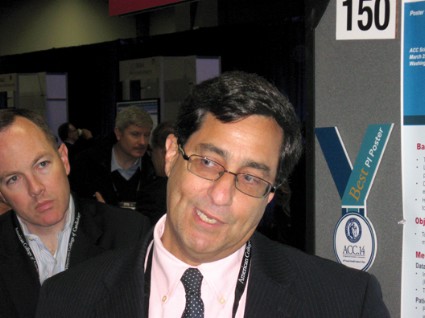
Key points in managing late-life anxiety
ORLANDO – Do SSRIs actually work for late-life generalized anxiety disorder?
"I think the answer is, ‘Yes, a little.’ The benefits are limited in the randomized controlled trials and in my own clinical experience. Many people will get some benefit, but fairly few will get such a substantial benefit that that’s all they need. Maybe on the order of 40% at most," Dr. Eric J. Lenze said at the annual meeting of the American Association for Geriatric Psychiatry.
He should know. He was the principal investigator in two of the three randomized, placebo-controlled trials that have established the efficacy of selective serotonin reuptake inhibitors for later-life generalized anxiety disorder (GAD), including by far the largest study, involving escitalopram (JAMA 2009;301:295-303).
For patients who don’t achieve remission of anxiety symptoms with SSRI monotherapy, a good option – and one of proven benefit – is dual therapy along with cognitive-behavioral therapy (CBT). In a randomized, placebo-controlled clinical trial involving 73 older adults with GAD, Dr. Lenze and his coinvestigators showed that during a lead-in phase with 12 weeks of open-label escitalopram, participants showed a modest reduction in worry symptoms on the Penn State Worry Questionnaire, but if they then had CBT added, they showed a substantial further reduction in worry, compared with those who did not receive CBT. Continued escitalopram prevented relapse, but for many patients CBT allowed sustained drug-free remission (Am. J. Psychiatry 2013;170:782-9).
The concept is that starting out with an SSRI helps reduce the patient’s distress and somatization, then adding the CBT addresses the underlying pathologic worry.

"The combination seems to be effective, and it’s an attractive one. CBT has what the psychologists call ‘durable’ benefits: You get a course of CBT, it’s stopped, and those benefits are maintained," explained Dr. Lenze, professor of psychiatry at Washington University in St. Louis.
The beauty of CBT in the context of late-life anxiety is that relaxation training appears to be the single most effective component of CBT for this condition, as has been shown by investigators at the University of California, San Diego (Am. J. Geriatr. Psychiatry 2009;17:105-15).
"This is important because relaxation training – deep breathing, muscle relaxation, and pleasant imagery – is also the easiest component of CBT, which means that if I had the time in my clinic, even I could probably pull this off with patients. If you have a bevy of therapists you can refer to, your patients will get benefit from it," the psychopharmacologist continued.
Pharmacologic options beyond the three SSRIs supported by placebo-controlled, randomized trial evidence – sertraline, citalopram, and escitalopram – include the various other SSRIs. In addition, two selective norepinephrine reuptake inhibitors (SNRIs) – venlafaxine and duloxetine – are supported by retrospective analyses of earlier Food and Drug Administration approval studies that showed the drugs appeared equally efficacious in young adults and the elderly with GAD.
Also, a large multisite study of pregabalin for late-life GAD showed it was effective starting at 50 mg b.i.d. and titrating up as tolerated to 100 mg t.i.d. And a multicenter study showed quetiapine XR was effective at much lower doses than those used for schizophrenia. But neither pregabalin nor quetiapine XR approved for GAD.
The use of benzodiazepines is problematic. They induce falls and cognitive impairment at a lower dose than is effective for anxiety. And short-acting benzodiazepines are not safer than long-acting ones. Yet benzodiazepines, to Dr. Lenze’s dismay, are heavily prescribed for late-life anxiety, especially by primary care physicians.
"I sometimes do use benzos, but I would say about 10 times less than many of my colleagues. By the time a patient with anxiety gets to a psychiatrist, they’re probably already on a benzo. For most of my patients, one of the key questions in my mind is, ‘When am I going to start tapering that benzo someone else put them on?’ " according to Dr. Lenze.
That’s why "Think twice about prescribing a benzodiazepine" is on his list of eight rules for the management of anxiety.
Dr. Lenze reported having received research grants from Roche and Lundbeck.
Eight rules for managing late-life anxiety
Dr. Lenze’s work with older patients who have anxiety has led him to develop the following checklist that should help you respond to these patients with compassion:
• Include an objective measurement of severity in assessment. Patients with GAD will often come in for a follow-up visit unaware that they’re now spending much less of their day wracked by worry and that they now feel they have some ability to stop it. It helps to show them the earlier numbers.
• Think twice about prescribing a benzodiazepine.
• Provide psychoeducation about anxiety. "A lot of the bite of anxiety is defanged if you just understand what anxiety is. It’s not going to kill you. It’s a set of alarm systems in your brain that helps you survive by responding to threats at the cost of making you miserable. That’s all it is. If you can get that across to a patient and the family, that’s a crucial part of getting well and staying well," Dr. Lenze said.
Physicians often don’t have a lot of time for patient education in the office, and patients might not remember much of what was said anyway, because they were stressed out about the visit. So recommendations for good self-help books are useful, added Dr. Lenze.
• Start low and go slow in elderly patients – but go slow. "Starting low is a good exercise in graduated exposure for these patients so they feel more comfortable. But get them up to the same doses of SSRIs (selective serotonin reuptake inhibitors) and SNRIs (selective norepinephrine reuptake inhibitors) you use in younger adults as quickly as you can for their level of comfort. Ten weeks of escitalopram at 2.5 mg is not the way to treat these individuals," he continued.
• Arrange for frequent follow-up within the first month of starting therapy or a dose change in order to monitor response and encourage adherence. "This is really important," he said. "They get anxious about treatment, scared of medication, and frequently stop therapy."
• For first-line therapy, stick to what you’re used to prescribing. You’ll project more confidence when a patient calls back about side effects.
• Consider augmentation and switch strategies for inadequate responders.
• Provide maintenance therapy. "An area where many in our field make errors is in letting people drop out of long-term treatment. Antidepressants have maintenance benefits. That means they prevent relapse if you keep taking them. One place where we can all do better is in continuing to remind our patients of the benefits of maintenance treatment," Dr. Lenze emphasized.
ORLANDO – Do SSRIs actually work for late-life generalized anxiety disorder?
"I think the answer is, ‘Yes, a little.’ The benefits are limited in the randomized controlled trials and in my own clinical experience. Many people will get some benefit, but fairly few will get such a substantial benefit that that’s all they need. Maybe on the order of 40% at most," Dr. Eric J. Lenze said at the annual meeting of the American Association for Geriatric Psychiatry.
He should know. He was the principal investigator in two of the three randomized, placebo-controlled trials that have established the efficacy of selective serotonin reuptake inhibitors for later-life generalized anxiety disorder (GAD), including by far the largest study, involving escitalopram (JAMA 2009;301:295-303).
For patients who don’t achieve remission of anxiety symptoms with SSRI monotherapy, a good option – and one of proven benefit – is dual therapy along with cognitive-behavioral therapy (CBT). In a randomized, placebo-controlled clinical trial involving 73 older adults with GAD, Dr. Lenze and his coinvestigators showed that during a lead-in phase with 12 weeks of open-label escitalopram, participants showed a modest reduction in worry symptoms on the Penn State Worry Questionnaire, but if they then had CBT added, they showed a substantial further reduction in worry, compared with those who did not receive CBT. Continued escitalopram prevented relapse, but for many patients CBT allowed sustained drug-free remission (Am. J. Psychiatry 2013;170:782-9).
The concept is that starting out with an SSRI helps reduce the patient’s distress and somatization, then adding the CBT addresses the underlying pathologic worry.
"The combination seems to be effective, and it’s an attractive one. CBT has what the psychologists call ‘durable’ benefits: You get a course of CBT, it’s stopped, and those benefits are maintained," explained Dr. Lenze, professor of psychiatry at Washington University in St. Louis.
The beauty of CBT in the context of late-life anxiety is that relaxation training appears to be the single most effective component of CBT for this condition, as has been shown by investigators at the University of California, San Diego (Am. J. Geriatr. Psychiatry 2009;17:105-15).
"This is important because relaxation training – deep breathing, muscle relaxation, and pleasant imagery – is also the easiest component of CBT, which means that if I had the time in my clinic, even I could probably pull this off with patients. If you have a bevy of therapists you can refer to, your patients will get benefit from it," the psychopharmacologist continued.
Pharmacologic options beyond the three SSRIs supported by placebo-controlled, randomized trial evidence – sertraline, citalopram, and escitalopram – include the various other SSRIs. In addition, two selective norepinephrine reuptake inhibitors (SNRIs) – venlafaxine and duloxetine – are supported by retrospective analyses of earlier Food and Drug Administration approval studies that showed the drugs appeared equally efficacious in young adults and the elderly with GAD.
Also, a large multisite study of pregabalin for late-life GAD showed it was effective starting at 50 mg b.i.d. and titrating up as tolerated to 100 mg t.i.d. And a multicenter study showed quetiapine XR was effective at much lower doses than those used for schizophrenia. But neither pregabalin nor quetiapine XR approved for GAD.
The use of benzodiazepines is problematic. They induce falls and cognitive impairment at a lower dose than is effective for anxiety. And short-acting benzodiazepines are not safer than long-acting ones. Yet benzodiazepines, to Dr. Lenze’s dismay, are heavily prescribed for late-life anxiety, especially by primary care physicians.
"I sometimes do use benzos, but I would say about 10 times less than many of my colleagues. By the time a patient with anxiety gets to a psychiatrist, they’re probably already on a benzo. For most of my patients, one of the key questions in my mind is, ‘When am I going to start tapering that benzo someone else put them on?’ " according to Dr. Lenze.
That’s why "Think twice about prescribing a benzodiazepine" is on his list of eight rules for the management of anxiety.
Dr. Lenze reported having received research grants from Roche and Lundbeck.
Eight rules for managing late-life anxiety
Dr. Lenze’s work with older patients who have anxiety has led him to develop the following checklist that should help you respond to these patients with compassion:
• Include an objective measurement of severity in assessment. Patients with GAD will often come in for a follow-up visit unaware that they’re now spending much less of their day wracked by worry and that they now feel they have some ability to stop it. It helps to show them the earlier numbers.
• Think twice about prescribing a benzodiazepine.
• Provide psychoeducation about anxiety. "A lot of the bite of anxiety is defanged if you just understand what anxiety is. It’s not going to kill you. It’s a set of alarm systems in your brain that helps you survive by responding to threats at the cost of making you miserable. That’s all it is. If you can get that across to a patient and the family, that’s a crucial part of getting well and staying well," Dr. Lenze said.
Physicians often don’t have a lot of time for patient education in the office, and patients might not remember much of what was said anyway, because they were stressed out about the visit. So recommendations for good self-help books are useful, added Dr. Lenze.
• Start low and go slow in elderly patients – but go slow. "Starting low is a good exercise in graduated exposure for these patients so they feel more comfortable. But get them up to the same doses of SSRIs (selective serotonin reuptake inhibitors) and SNRIs (selective norepinephrine reuptake inhibitors) you use in younger adults as quickly as you can for their level of comfort. Ten weeks of escitalopram at 2.5 mg is not the way to treat these individuals," he continued.
• Arrange for frequent follow-up within the first month of starting therapy or a dose change in order to monitor response and encourage adherence. "This is really important," he said. "They get anxious about treatment, scared of medication, and frequently stop therapy."
• For first-line therapy, stick to what you’re used to prescribing. You’ll project more confidence when a patient calls back about side effects.
• Consider augmentation and switch strategies for inadequate responders.
• Provide maintenance therapy. "An area where many in our field make errors is in letting people drop out of long-term treatment. Antidepressants have maintenance benefits. That means they prevent relapse if you keep taking them. One place where we can all do better is in continuing to remind our patients of the benefits of maintenance treatment," Dr. Lenze emphasized.
ORLANDO – Do SSRIs actually work for late-life generalized anxiety disorder?
"I think the answer is, ‘Yes, a little.’ The benefits are limited in the randomized controlled trials and in my own clinical experience. Many people will get some benefit, but fairly few will get such a substantial benefit that that’s all they need. Maybe on the order of 40% at most," Dr. Eric J. Lenze said at the annual meeting of the American Association for Geriatric Psychiatry.
He should know. He was the principal investigator in two of the three randomized, placebo-controlled trials that have established the efficacy of selective serotonin reuptake inhibitors for later-life generalized anxiety disorder (GAD), including by far the largest study, involving escitalopram (JAMA 2009;301:295-303).
For patients who don’t achieve remission of anxiety symptoms with SSRI monotherapy, a good option – and one of proven benefit – is dual therapy along with cognitive-behavioral therapy (CBT). In a randomized, placebo-controlled clinical trial involving 73 older adults with GAD, Dr. Lenze and his coinvestigators showed that during a lead-in phase with 12 weeks of open-label escitalopram, participants showed a modest reduction in worry symptoms on the Penn State Worry Questionnaire, but if they then had CBT added, they showed a substantial further reduction in worry, compared with those who did not receive CBT. Continued escitalopram prevented relapse, but for many patients CBT allowed sustained drug-free remission (Am. J. Psychiatry 2013;170:782-9).
The concept is that starting out with an SSRI helps reduce the patient’s distress and somatization, then adding the CBT addresses the underlying pathologic worry.
"The combination seems to be effective, and it’s an attractive one. CBT has what the psychologists call ‘durable’ benefits: You get a course of CBT, it’s stopped, and those benefits are maintained," explained Dr. Lenze, professor of psychiatry at Washington University in St. Louis.
The beauty of CBT in the context of late-life anxiety is that relaxation training appears to be the single most effective component of CBT for this condition, as has been shown by investigators at the University of California, San Diego (Am. J. Geriatr. Psychiatry 2009;17:105-15).
"This is important because relaxation training – deep breathing, muscle relaxation, and pleasant imagery – is also the easiest component of CBT, which means that if I had the time in my clinic, even I could probably pull this off with patients. If you have a bevy of therapists you can refer to, your patients will get benefit from it," the psychopharmacologist continued.
Pharmacologic options beyond the three SSRIs supported by placebo-controlled, randomized trial evidence – sertraline, citalopram, and escitalopram – include the various other SSRIs. In addition, two selective norepinephrine reuptake inhibitors (SNRIs) – venlafaxine and duloxetine – are supported by retrospective analyses of earlier Food and Drug Administration approval studies that showed the drugs appeared equally efficacious in young adults and the elderly with GAD.
Also, a large multisite study of pregabalin for late-life GAD showed it was effective starting at 50 mg b.i.d. and titrating up as tolerated to 100 mg t.i.d. And a multicenter study showed quetiapine XR was effective at much lower doses than those used for schizophrenia. But neither pregabalin nor quetiapine XR approved for GAD.
The use of benzodiazepines is problematic. They induce falls and cognitive impairment at a lower dose than is effective for anxiety. And short-acting benzodiazepines are not safer than long-acting ones. Yet benzodiazepines, to Dr. Lenze’s dismay, are heavily prescribed for late-life anxiety, especially by primary care physicians.
"I sometimes do use benzos, but I would say about 10 times less than many of my colleagues. By the time a patient with anxiety gets to a psychiatrist, they’re probably already on a benzo. For most of my patients, one of the key questions in my mind is, ‘When am I going to start tapering that benzo someone else put them on?’ " according to Dr. Lenze.
That’s why "Think twice about prescribing a benzodiazepine" is on his list of eight rules for the management of anxiety.
Dr. Lenze reported having received research grants from Roche and Lundbeck.
Eight rules for managing late-life anxiety
Dr. Lenze’s work with older patients who have anxiety has led him to develop the following checklist that should help you respond to these patients with compassion:
• Include an objective measurement of severity in assessment. Patients with GAD will often come in for a follow-up visit unaware that they’re now spending much less of their day wracked by worry and that they now feel they have some ability to stop it. It helps to show them the earlier numbers.
• Think twice about prescribing a benzodiazepine.
• Provide psychoeducation about anxiety. "A lot of the bite of anxiety is defanged if you just understand what anxiety is. It’s not going to kill you. It’s a set of alarm systems in your brain that helps you survive by responding to threats at the cost of making you miserable. That’s all it is. If you can get that across to a patient and the family, that’s a crucial part of getting well and staying well," Dr. Lenze said.
Physicians often don’t have a lot of time for patient education in the office, and patients might not remember much of what was said anyway, because they were stressed out about the visit. So recommendations for good self-help books are useful, added Dr. Lenze.
• Start low and go slow in elderly patients – but go slow. "Starting low is a good exercise in graduated exposure for these patients so they feel more comfortable. But get them up to the same doses of SSRIs (selective serotonin reuptake inhibitors) and SNRIs (selective norepinephrine reuptake inhibitors) you use in younger adults as quickly as you can for their level of comfort. Ten weeks of escitalopram at 2.5 mg is not the way to treat these individuals," he continued.
• Arrange for frequent follow-up within the first month of starting therapy or a dose change in order to monitor response and encourage adherence. "This is really important," he said. "They get anxious about treatment, scared of medication, and frequently stop therapy."
• For first-line therapy, stick to what you’re used to prescribing. You’ll project more confidence when a patient calls back about side effects.
• Consider augmentation and switch strategies for inadequate responders.
• Provide maintenance therapy. "An area where many in our field make errors is in letting people drop out of long-term treatment. Antidepressants have maintenance benefits. That means they prevent relapse if you keep taking them. One place where we can all do better is in continuing to remind our patients of the benefits of maintenance treatment," Dr. Lenze emphasized.
EXPERT OPINION FROM THE AAGP ANNUAL MEETING
Bivalirudin called safe and effective in HIT
WASHINGTON – Bivalirudin is an attractive off-label option for the treatment of heparin-induced thrombocytopenia, Dr. Lee Joseph said at the annual meeting of the American College of Cardiology.
She presented what is believed to be the largest-ever case series of patients treated for heparin-induced thrombocytopenia (HIT) using bivalirudin (Angiomax): 641 patients treated over a 9-year period at the Cleveland Clinic, where bivalirudin has been the treatment of choice for HIT since 2002.

Roughly half of the bivalirudin-treated patients with confirmed or suspected HIT were medical patients, the other half surgical. One-quarter of the patients were in the intensive care unit. Chronic renal failure was present in 27% of patients, and 8% had chronic liver disease. Their average duration of heparin exposure was 7 days. At the time when HIT was diagnosed, 55% of the patients had a venous thromboembolism, and 10% had an arterial thromboembolic event.
The treatment outcomes were impressive, particularly when compared with studies involving the other anticoagulants used in treating HIT, Dr. Joseph said. There were no HIT-related amputations in bivalirudin-treated patients. The rate of new thrombosis was 4.6%. All-cause 30-day mortality was 14.5%, with a 0.2% incidence of death due to HIT-related thrombosis. The major bleeding rate was 7.6%, with a 2.4% rate of nonmajor bleeding. Fatal bleeding occurred in 1.5% of patients treated with the direct thrombin inhibitor.
Patients received bivalirudin for a median of 9 days. A therapeutic activated partial thromboplastin time was attained within a median of 12 hours.
A search for predictors of treatment outcome turned up three risk factors for major bleeding events and/or 30-day mortality on bivalirudin: dialysis dependence, being in the intensive care unit, and having a platelet count nadir below 60,000/uL, according to Dr. Joseph, who is now with the department of cardiovascular medicine at the University of Iowa in Iowa City.
The sole available agent approved in the United States for treatment of HIT is argatroban. Its use is problematic because of its very long half-life and resulting difficulty in transitioning to long-term anticoagulation with warfarin. Bivalirudin and fondaparinux (Arixtra), an indirect factor Xa inhibitor, are used off-label in treating HIT. Physicians at the Cleveland Clinic have used bivalirudin almost exclusively for more than a decade because of its short half-life of about 25 minutes, its low immunogenicity, the fact that only 20% of the medication is eliminated renally, the potential for rapid dose titration with no need for an initial bolus, and bivalirudin’s minimal interference with INR measurement. Plus cardiologists were already comfortable using bivalirudin in the cardiac catheterization lab, she explained.
In published studies of argatroban, fondaparinux, and lepirudin – an agent no longer available in the United States – HIT-related amputation rates of 5%-14% were reported, along with 30-day all-cause mortality rates of 7%-18% and major bleeding rates of 6%-15%.
Dr. Joseph said a prospective study comparing bivalirudin with other agents for HIT is in the planning stages.
An audience member noted that bivalirudin is an expensive drug and wondered about the possibility of using dabigatran, a less costly oral direct thrombin inhibitor, in treating HIT. Dr. Joseph replied that nearly all patients with HIT are hospitalized, and many are seriously ill, so an intravenously administered agent with a short half-life or rapid reversibility is the preferred strategy.
She reported having no financial conflicts with regard to this study, which was free of commercial support.
WASHINGTON – Bivalirudin is an attractive off-label option for the treatment of heparin-induced thrombocytopenia, Dr. Lee Joseph said at the annual meeting of the American College of Cardiology.
She presented what is believed to be the largest-ever case series of patients treated for heparin-induced thrombocytopenia (HIT) using bivalirudin (Angiomax): 641 patients treated over a 9-year period at the Cleveland Clinic, where bivalirudin has been the treatment of choice for HIT since 2002.
Roughly half of the bivalirudin-treated patients with confirmed or suspected HIT were medical patients, the other half surgical. One-quarter of the patients were in the intensive care unit. Chronic renal failure was present in 27% of patients, and 8% had chronic liver disease. Their average duration of heparin exposure was 7 days. At the time when HIT was diagnosed, 55% of the patients had a venous thromboembolism, and 10% had an arterial thromboembolic event.
The treatment outcomes were impressive, particularly when compared with studies involving the other anticoagulants used in treating HIT, Dr. Joseph said. There were no HIT-related amputations in bivalirudin-treated patients. The rate of new thrombosis was 4.6%. All-cause 30-day mortality was 14.5%, with a 0.2% incidence of death due to HIT-related thrombosis. The major bleeding rate was 7.6%, with a 2.4% rate of nonmajor bleeding. Fatal bleeding occurred in 1.5% of patients treated with the direct thrombin inhibitor.
Patients received bivalirudin for a median of 9 days. A therapeutic activated partial thromboplastin time was attained within a median of 12 hours.
A search for predictors of treatment outcome turned up three risk factors for major bleeding events and/or 30-day mortality on bivalirudin: dialysis dependence, being in the intensive care unit, and having a platelet count nadir below 60,000/uL, according to Dr. Joseph, who is now with the department of cardiovascular medicine at the University of Iowa in Iowa City.
The sole available agent approved in the United States for treatment of HIT is argatroban. Its use is problematic because of its very long half-life and resulting difficulty in transitioning to long-term anticoagulation with warfarin. Bivalirudin and fondaparinux (Arixtra), an indirect factor Xa inhibitor, are used off-label in treating HIT. Physicians at the Cleveland Clinic have used bivalirudin almost exclusively for more than a decade because of its short half-life of about 25 minutes, its low immunogenicity, the fact that only 20% of the medication is eliminated renally, the potential for rapid dose titration with no need for an initial bolus, and bivalirudin’s minimal interference with INR measurement. Plus cardiologists were already comfortable using bivalirudin in the cardiac catheterization lab, she explained.
In published studies of argatroban, fondaparinux, and lepirudin – an agent no longer available in the United States – HIT-related amputation rates of 5%-14% were reported, along with 30-day all-cause mortality rates of 7%-18% and major bleeding rates of 6%-15%.
Dr. Joseph said a prospective study comparing bivalirudin with other agents for HIT is in the planning stages.
An audience member noted that bivalirudin is an expensive drug and wondered about the possibility of using dabigatran, a less costly oral direct thrombin inhibitor, in treating HIT. Dr. Joseph replied that nearly all patients with HIT are hospitalized, and many are seriously ill, so an intravenously administered agent with a short half-life or rapid reversibility is the preferred strategy.
She reported having no financial conflicts with regard to this study, which was free of commercial support.
WASHINGTON – Bivalirudin is an attractive off-label option for the treatment of heparin-induced thrombocytopenia, Dr. Lee Joseph said at the annual meeting of the American College of Cardiology.
She presented what is believed to be the largest-ever case series of patients treated for heparin-induced thrombocytopenia (HIT) using bivalirudin (Angiomax): 641 patients treated over a 9-year period at the Cleveland Clinic, where bivalirudin has been the treatment of choice for HIT since 2002.
Roughly half of the bivalirudin-treated patients with confirmed or suspected HIT were medical patients, the other half surgical. One-quarter of the patients were in the intensive care unit. Chronic renal failure was present in 27% of patients, and 8% had chronic liver disease. Their average duration of heparin exposure was 7 days. At the time when HIT was diagnosed, 55% of the patients had a venous thromboembolism, and 10% had an arterial thromboembolic event.
The treatment outcomes were impressive, particularly when compared with studies involving the other anticoagulants used in treating HIT, Dr. Joseph said. There were no HIT-related amputations in bivalirudin-treated patients. The rate of new thrombosis was 4.6%. All-cause 30-day mortality was 14.5%, with a 0.2% incidence of death due to HIT-related thrombosis. The major bleeding rate was 7.6%, with a 2.4% rate of nonmajor bleeding. Fatal bleeding occurred in 1.5% of patients treated with the direct thrombin inhibitor.
Patients received bivalirudin for a median of 9 days. A therapeutic activated partial thromboplastin time was attained within a median of 12 hours.
A search for predictors of treatment outcome turned up three risk factors for major bleeding events and/or 30-day mortality on bivalirudin: dialysis dependence, being in the intensive care unit, and having a platelet count nadir below 60,000/uL, according to Dr. Joseph, who is now with the department of cardiovascular medicine at the University of Iowa in Iowa City.
The sole available agent approved in the United States for treatment of HIT is argatroban. Its use is problematic because of its very long half-life and resulting difficulty in transitioning to long-term anticoagulation with warfarin. Bivalirudin and fondaparinux (Arixtra), an indirect factor Xa inhibitor, are used off-label in treating HIT. Physicians at the Cleveland Clinic have used bivalirudin almost exclusively for more than a decade because of its short half-life of about 25 minutes, its low immunogenicity, the fact that only 20% of the medication is eliminated renally, the potential for rapid dose titration with no need for an initial bolus, and bivalirudin’s minimal interference with INR measurement. Plus cardiologists were already comfortable using bivalirudin in the cardiac catheterization lab, she explained.
In published studies of argatroban, fondaparinux, and lepirudin – an agent no longer available in the United States – HIT-related amputation rates of 5%-14% were reported, along with 30-day all-cause mortality rates of 7%-18% and major bleeding rates of 6%-15%.
Dr. Joseph said a prospective study comparing bivalirudin with other agents for HIT is in the planning stages.
An audience member noted that bivalirudin is an expensive drug and wondered about the possibility of using dabigatran, a less costly oral direct thrombin inhibitor, in treating HIT. Dr. Joseph replied that nearly all patients with HIT are hospitalized, and many are seriously ill, so an intravenously administered agent with a short half-life or rapid reversibility is the preferred strategy.
She reported having no financial conflicts with regard to this study, which was free of commercial support.
AT ACC 14
Major finding: In a large series of patients who received bivalirudin for heparin-induced thrombocytopenia, there were no amputations, a 4.6% rate of new thrombosis, a 0.2% incidence of death due to thrombosis, and a 7.6% major bleeding rate.
Data source: This was a retrospective case series of 641 patients with heparin-induced thrombocytopenia treated with bivalirudin at the Cleveland Clinic over a 9-year period.
Disclosures: The presenter reported having no financial conflicts regarding this study, which was conducted without commercial support.

Demand Rises for National Melanoma Screening Program
WAIKOLOA, HAWAII – Momentum is building – perhaps unstoppably – for creation of a national, population-based melanoma screening program.
"Demand for screening is going up as we speak. The incidence of melanoma is going up dramatically, and it’s really important to understand that this is happening in the absence of formal screening for melanoma. So imagine what would happen if we did screen for melanoma routinely," Dr. Allan C. Halpern observed at the Hawaii Dermatology Seminar sponsored by Global Academy for Medical Education/Skin Disease Education Foundation.
Also, public awareness is increasing dramatically.
"We’ve spent a lot of time as dermatologists educating the public. And there may be as many as a million people walking around the U.S. right now who’ve personally had melanoma. We want to see them in follow-up visits, and their family members want to see us as well," said Dr. Halpern, chief of the dermatology service at Memorial Sloan Kettering Cancer Center in New York.
The current position of the U.S. Preventive Services Task Force (Ann. Intern. Med. 2009;150:194-8), the American Cancer Society, and other influential organizations is that formal guidelines for population-based screening for melanoma are not warranted at this time, because there is no randomized clinical trial evidence of net benefit. That position could change, however, even in the absence of such evidence. For example, the U.S. Preventive Services Task Force strongly supports cervical cancer screening, even though it has never been subjected to a randomized trial. The task force became convinced that cervical cancer screening works on the basis of observational data showing that by the time 80% of women were screened, mortality due to cervical cancer dropped by nearly 50%, Dr. Halpern noted.
The ‘extraordinary’ German example
The ongoing German national experience with melanoma screening may provide a big push for a shift in U.S. health policy in favor of routine screening for melanoma, according to Dr. Halpern.
The German melanoma screening program is one of the most extraordinary stories in dermatology, he said. The program is mainly the work of one determined and persuasive German dermatologist – Dr. Eckhard Breitbart – who has been pushing for melanoma screening in Germany for 45 years. Dr. Breitbart received funding for a pilot study conducted in Germany’s northernmost state, Schleswig-Holstein. The state’s primary care physicians were persuaded to conduct the first-tier screening of all Schleswig-Holstein residents. They received a financial incentive on a per-case basis, provided they first completed an 8-hour training course. The bottom line: After just 2 years of screening, mortality caused by melanoma dropped by 48% over the next 7 years while remaining unchanged in the neighboring states (Cancer 2012;118:5395-402).
Armed with the data, Dr. Breitbart persuaded the German federal government to expand screening nationally. That program began in 2005.
"I don’t think melanoma mortality will come down by 50% across all of Germany, but if the German data show it comes down by 20%-30%, then it’s the cervical cancer story revisited. I think that would be very strong endorsement that screening for melanoma can save lives," Dr. Halpern said.
He injected a cautionary note, however.
"I must warn you; the German experience may not give us definitive answers. It turns out that Eckhard Breitbart was so persuasive when he went to convince the German government to do the screening program that they ‘knew’ for a fact that it was going to work. So they didn’t allocate any money for an assessment of whether it actually works," Dr. Halpern explained.
Also, the study was limited by the German government’s concern about medical records privacy.
"Trying to get the data on who was screened versus who got melanoma and died of it is proving amazingly difficult. There are actually a bunch of melanoma experts here in the states, including Marty Weinstock and Alan Geller, who have been working closely with the German group to try to get some of the data. We’ll just have to wait and see how the German experience plays out," Dr. Halpern continued.
As pressure for routine melanoma screening mounts in the United States, it’s apparent that there is a major supply-and-demand issue involved. The supply of the medical dermatology workforce is shrinking relative to the growing demand, Dr. Halpern said. Going forward, the most promising solution in his view is to train primary care physicians and physician extenders to perform the screening, as is done in Germany. There is an enormous opportunity here for these nondermatologists to harness the emerging automated imaging and molecular sensing technologies for detection of lesion changes and diagnosis of melanoma, he added.
First do no harm
Dr. Halpern offered a note of caution regarding melanoma screening: Although it sounds great in theory because it’s relatively cheap, the lesions are accessible on the surface of the skin, and there is the potential to save many life-years, it’s also imperative to consider the potential harms. Perhaps the biggest of these, Dr. Halpern said, is the psychological damage caused by turning a patient with an indolent, low-risk melanoma or nonmelanoma skin cancer into a cancer patient.
"We have to be really, really careful to look at the harms involved in screening. To my mind, one of the biggest problems of melanoma screening is the psychological harm we do by giving people cancer. I’m especially bothered about the way we do that with patients who develop melanoma in situ or microinvasive disease," he said.
"Believe me, if I had melanoma in situ or microinvasive melanoma, I would want you to find it and take if off for me. What I don’t want you to do is to turn me into a cancer patient. I don’t think that’s in the patient’s best interest whatsoever. We don’t do it intentionally, but as dermatologists we have this tendency to dramatically overplay the importance of these diagnoses," Dr. Halpern said.
Dr. Halpern reported having financial relationships with Scibase, DermTech, Caliber, and Canfield.
SDEF and this news organization are owned by the same parent company.
WAIKOLOA, HAWAII – Momentum is building – perhaps unstoppably – for creation of a national, population-based melanoma screening program.
"Demand for screening is going up as we speak. The incidence of melanoma is going up dramatically, and it’s really important to understand that this is happening in the absence of formal screening for melanoma. So imagine what would happen if we did screen for melanoma routinely," Dr. Allan C. Halpern observed at the Hawaii Dermatology Seminar sponsored by Global Academy for Medical Education/Skin Disease Education Foundation.
Also, public awareness is increasing dramatically.
"We’ve spent a lot of time as dermatologists educating the public. And there may be as many as a million people walking around the U.S. right now who’ve personally had melanoma. We want to see them in follow-up visits, and their family members want to see us as well," said Dr. Halpern, chief of the dermatology service at Memorial Sloan Kettering Cancer Center in New York.
The current position of the U.S. Preventive Services Task Force (Ann. Intern. Med. 2009;150:194-8), the American Cancer Society, and other influential organizations is that formal guidelines for population-based screening for melanoma are not warranted at this time, because there is no randomized clinical trial evidence of net benefit. That position could change, however, even in the absence of such evidence. For example, the U.S. Preventive Services Task Force strongly supports cervical cancer screening, even though it has never been subjected to a randomized trial. The task force became convinced that cervical cancer screening works on the basis of observational data showing that by the time 80% of women were screened, mortality due to cervical cancer dropped by nearly 50%, Dr. Halpern noted.
The ‘extraordinary’ German example
The ongoing German national experience with melanoma screening may provide a big push for a shift in U.S. health policy in favor of routine screening for melanoma, according to Dr. Halpern.
The German melanoma screening program is one of the most extraordinary stories in dermatology, he said. The program is mainly the work of one determined and persuasive German dermatologist – Dr. Eckhard Breitbart – who has been pushing for melanoma screening in Germany for 45 years. Dr. Breitbart received funding for a pilot study conducted in Germany’s northernmost state, Schleswig-Holstein. The state’s primary care physicians were persuaded to conduct the first-tier screening of all Schleswig-Holstein residents. They received a financial incentive on a per-case basis, provided they first completed an 8-hour training course. The bottom line: After just 2 years of screening, mortality caused by melanoma dropped by 48% over the next 7 years while remaining unchanged in the neighboring states (Cancer 2012;118:5395-402).
Armed with the data, Dr. Breitbart persuaded the German federal government to expand screening nationally. That program began in 2005.
"I don’t think melanoma mortality will come down by 50% across all of Germany, but if the German data show it comes down by 20%-30%, then it’s the cervical cancer story revisited. I think that would be very strong endorsement that screening for melanoma can save lives," Dr. Halpern said.
He injected a cautionary note, however.
"I must warn you; the German experience may not give us definitive answers. It turns out that Eckhard Breitbart was so persuasive when he went to convince the German government to do the screening program that they ‘knew’ for a fact that it was going to work. So they didn’t allocate any money for an assessment of whether it actually works," Dr. Halpern explained.
Also, the study was limited by the German government’s concern about medical records privacy.
"Trying to get the data on who was screened versus who got melanoma and died of it is proving amazingly difficult. There are actually a bunch of melanoma experts here in the states, including Marty Weinstock and Alan Geller, who have been working closely with the German group to try to get some of the data. We’ll just have to wait and see how the German experience plays out," Dr. Halpern continued.
As pressure for routine melanoma screening mounts in the United States, it’s apparent that there is a major supply-and-demand issue involved. The supply of the medical dermatology workforce is shrinking relative to the growing demand, Dr. Halpern said. Going forward, the most promising solution in his view is to train primary care physicians and physician extenders to perform the screening, as is done in Germany. There is an enormous opportunity here for these nondermatologists to harness the emerging automated imaging and molecular sensing technologies for detection of lesion changes and diagnosis of melanoma, he added.
First do no harm
Dr. Halpern offered a note of caution regarding melanoma screening: Although it sounds great in theory because it’s relatively cheap, the lesions are accessible on the surface of the skin, and there is the potential to save many life-years, it’s also imperative to consider the potential harms. Perhaps the biggest of these, Dr. Halpern said, is the psychological damage caused by turning a patient with an indolent, low-risk melanoma or nonmelanoma skin cancer into a cancer patient.
"We have to be really, really careful to look at the harms involved in screening. To my mind, one of the biggest problems of melanoma screening is the psychological harm we do by giving people cancer. I’m especially bothered about the way we do that with patients who develop melanoma in situ or microinvasive disease," he said.
"Believe me, if I had melanoma in situ or microinvasive melanoma, I would want you to find it and take if off for me. What I don’t want you to do is to turn me into a cancer patient. I don’t think that’s in the patient’s best interest whatsoever. We don’t do it intentionally, but as dermatologists we have this tendency to dramatically overplay the importance of these diagnoses," Dr. Halpern said.
Dr. Halpern reported having financial relationships with Scibase, DermTech, Caliber, and Canfield.
SDEF and this news organization are owned by the same parent company.
WAIKOLOA, HAWAII – Momentum is building – perhaps unstoppably – for creation of a national, population-based melanoma screening program.
"Demand for screening is going up as we speak. The incidence of melanoma is going up dramatically, and it’s really important to understand that this is happening in the absence of formal screening for melanoma. So imagine what would happen if we did screen for melanoma routinely," Dr. Allan C. Halpern observed at the Hawaii Dermatology Seminar sponsored by Global Academy for Medical Education/Skin Disease Education Foundation.
Also, public awareness is increasing dramatically.
"We’ve spent a lot of time as dermatologists educating the public. And there may be as many as a million people walking around the U.S. right now who’ve personally had melanoma. We want to see them in follow-up visits, and their family members want to see us as well," said Dr. Halpern, chief of the dermatology service at Memorial Sloan Kettering Cancer Center in New York.
The current position of the U.S. Preventive Services Task Force (Ann. Intern. Med. 2009;150:194-8), the American Cancer Society, and other influential organizations is that formal guidelines for population-based screening for melanoma are not warranted at this time, because there is no randomized clinical trial evidence of net benefit. That position could change, however, even in the absence of such evidence. For example, the U.S. Preventive Services Task Force strongly supports cervical cancer screening, even though it has never been subjected to a randomized trial. The task force became convinced that cervical cancer screening works on the basis of observational data showing that by the time 80% of women were screened, mortality due to cervical cancer dropped by nearly 50%, Dr. Halpern noted.
The ‘extraordinary’ German example
The ongoing German national experience with melanoma screening may provide a big push for a shift in U.S. health policy in favor of routine screening for melanoma, according to Dr. Halpern.
The German melanoma screening program is one of the most extraordinary stories in dermatology, he said. The program is mainly the work of one determined and persuasive German dermatologist – Dr. Eckhard Breitbart – who has been pushing for melanoma screening in Germany for 45 years. Dr. Breitbart received funding for a pilot study conducted in Germany’s northernmost state, Schleswig-Holstein. The state’s primary care physicians were persuaded to conduct the first-tier screening of all Schleswig-Holstein residents. They received a financial incentive on a per-case basis, provided they first completed an 8-hour training course. The bottom line: After just 2 years of screening, mortality caused by melanoma dropped by 48% over the next 7 years while remaining unchanged in the neighboring states (Cancer 2012;118:5395-402).
Armed with the data, Dr. Breitbart persuaded the German federal government to expand screening nationally. That program began in 2005.
"I don’t think melanoma mortality will come down by 50% across all of Germany, but if the German data show it comes down by 20%-30%, then it’s the cervical cancer story revisited. I think that would be very strong endorsement that screening for melanoma can save lives," Dr. Halpern said.
He injected a cautionary note, however.
"I must warn you; the German experience may not give us definitive answers. It turns out that Eckhard Breitbart was so persuasive when he went to convince the German government to do the screening program that they ‘knew’ for a fact that it was going to work. So they didn’t allocate any money for an assessment of whether it actually works," Dr. Halpern explained.
Also, the study was limited by the German government’s concern about medical records privacy.
"Trying to get the data on who was screened versus who got melanoma and died of it is proving amazingly difficult. There are actually a bunch of melanoma experts here in the states, including Marty Weinstock and Alan Geller, who have been working closely with the German group to try to get some of the data. We’ll just have to wait and see how the German experience plays out," Dr. Halpern continued.
As pressure for routine melanoma screening mounts in the United States, it’s apparent that there is a major supply-and-demand issue involved. The supply of the medical dermatology workforce is shrinking relative to the growing demand, Dr. Halpern said. Going forward, the most promising solution in his view is to train primary care physicians and physician extenders to perform the screening, as is done in Germany. There is an enormous opportunity here for these nondermatologists to harness the emerging automated imaging and molecular sensing technologies for detection of lesion changes and diagnosis of melanoma, he added.
First do no harm
Dr. Halpern offered a note of caution regarding melanoma screening: Although it sounds great in theory because it’s relatively cheap, the lesions are accessible on the surface of the skin, and there is the potential to save many life-years, it’s also imperative to consider the potential harms. Perhaps the biggest of these, Dr. Halpern said, is the psychological damage caused by turning a patient with an indolent, low-risk melanoma or nonmelanoma skin cancer into a cancer patient.
"We have to be really, really careful to look at the harms involved in screening. To my mind, one of the biggest problems of melanoma screening is the psychological harm we do by giving people cancer. I’m especially bothered about the way we do that with patients who develop melanoma in situ or microinvasive disease," he said.
"Believe me, if I had melanoma in situ or microinvasive melanoma, I would want you to find it and take if off for me. What I don’t want you to do is to turn me into a cancer patient. I don’t think that’s in the patient’s best interest whatsoever. We don’t do it intentionally, but as dermatologists we have this tendency to dramatically overplay the importance of these diagnoses," Dr. Halpern said.
Dr. Halpern reported having financial relationships with Scibase, DermTech, Caliber, and Canfield.
SDEF and this news organization are owned by the same parent company.
EXPERT ANALYSIS FROM SDEF HAWAII DERMATOLOGY SEMINAR

Demand rises for national melanoma screening program
WAIKOLOA, HAWAII – Momentum is building – perhaps unstoppably – for creation of a national, population-based melanoma screening program.
"Demand for screening is going up as we speak. The incidence of melanoma is going up dramatically, and it’s really important to understand that this is happening in the absence of formal screening for melanoma. So imagine what would happen if we did screen for melanoma routinely," Dr. Allan C. Halpern observed at the Hawaii Dermatology Seminar sponsored by Global Academy for Medical Education/Skin Disease Education Foundation.

Also, public awareness is increasing dramatically.
"We’ve spent a lot of time as dermatologists educating the public. And there may be as many as a million people walking around the U.S. right now who’ve personally had melanoma. We want to see them in follow-up visits, and their family members want to see us as well," said Dr. Halpern, chief of the dermatology service at Memorial Sloan Kettering Cancer Center in New York.
The current position of the U.S. Preventive Services Task Force (Ann. Intern. Med. 2009;150:194-8), the American Cancer Society, and other influential organizations is that formal guidelines for population-based screening for melanoma are not warranted at this time, because there is no randomized clinical trial evidence of net benefit. That position could change, however, even in the absence of such evidence. For example, the U.S. Preventive Services Task Force strongly supports cervical cancer screening, even though it has never been subjected to a randomized trial. The task force became convinced that cervical cancer screening works on the basis of observational data showing that by the time 80% of women were screened, mortality due to cervical cancer dropped by nearly 50%, Dr. Halpern noted.
The ‘extraordinary’ German example
The ongoing German national experience with melanoma screening may provide a big push for a shift in U.S. health policy in favor of routine screening for melanoma, according to Dr. Halpern.
The German melanoma screening program is one of the most extraordinary stories in dermatology, he said. The program is mainly the work of one determined and persuasive German dermatologist – Dr. Eckhard Breitbart – who has been pushing for melanoma screening in Germany for 45 years. Dr. Breitbart received funding for a pilot study conducted in Germany’s northernmost state, Schleswig-Holstein. The state’s primary care physicians were persuaded to conduct the first-tier screening of all Schleswig-Holstein residents. They received a financial incentive on a per-case basis, provided they first completed an 8-hour training course. The bottom line: After just 2 years of screening, mortality caused by melanoma dropped by 48% over the next 7 years while remaining unchanged in the neighboring states (Cancer 2012;118:5395-402).
Armed with the data, Dr. Breitbart persuaded the German federal government to expand screening nationally. That program began in 2005.
"I don’t think melanoma mortality will come down by 50% across all of Germany, but if the German data show it comes down by 20%-30%, then it’s the cervical cancer story revisited. I think that would be very strong endorsement that screening for melanoma can save lives," Dr. Halpern said.
He injected a cautionary note, however.
"I must warn you; the German experience may not give us definitive answers. It turns out that Eckhard Breitbart was so persuasive when he went to convince the German government to do the screening program that they ‘knew’ for a fact that it was going to work. So they didn’t allocate any money for an assessment of whether it actually works," Dr. Halpern explained.
Also, the study was limited by the German government’s concern about medical records privacy.
"Trying to get the data on who was screened versus who got melanoma and died of it is proving amazingly difficult. There are actually a bunch of melanoma experts here in the states, including Marty Weinstock and Alan Geller, who have been working closely with the German group to try to get some of the data. We’ll just have to wait and see how the German experience plays out," Dr. Halpern continued.
As pressure for routine melanoma screening mounts in the United States, it’s apparent that there is a major supply-and-demand issue involved. The supply of the medical dermatology workforce is shrinking relative to the growing demand, Dr. Halpern said. Going forward, the most promising solution in his view is to train primary care physicians and physician extenders to perform the screening, as is done in Germany. There is an enormous opportunity here for these nondermatologists to harness the emerging automated imaging and molecular sensing technologies for detection of lesion changes and diagnosis of melanoma, he added.
First do no harm
Dr. Halpern offered a note of caution regarding melanoma screening: Although it sounds great in theory because it’s relatively cheap, the lesions are accessible on the surface of the skin, and there is the potential to save many life-years, it’s also imperative to consider the potential harms. Perhaps the biggest of these, Dr. Halpern said, is the psychological damage caused by turning a patient with an indolent, low-risk melanoma or nonmelanoma skin cancer into a cancer patient.
"We have to be really, really careful to look at the harms involved in screening. To my mind, one of the biggest problems of melanoma screening is the psychological harm we do by giving people cancer. I’m especially bothered about the way we do that with patients who develop melanoma in situ or microinvasive disease," he said.
"Believe me, if I had melanoma in situ or microinvasive melanoma, I would want you to find it and take if off for me. What I don’t want you to do is to turn me into a cancer patient. I don’t think that’s in the patient’s best interest whatsoever. We don’t do it intentionally, but as dermatologists we have this tendency to dramatically overplay the importance of these diagnoses," Dr. Halpern said.
Dr. Halpern reported having financial relationships with Scibase, DermTech, Caliber, and Canfield.
SDEF and this news organization are owned by the same parent company.
WAIKOLOA, HAWAII – Momentum is building – perhaps unstoppably – for creation of a national, population-based melanoma screening program.
"Demand for screening is going up as we speak. The incidence of melanoma is going up dramatically, and it’s really important to understand that this is happening in the absence of formal screening for melanoma. So imagine what would happen if we did screen for melanoma routinely," Dr. Allan C. Halpern observed at the Hawaii Dermatology Seminar sponsored by Global Academy for Medical Education/Skin Disease Education Foundation.
Also, public awareness is increasing dramatically.
"We’ve spent a lot of time as dermatologists educating the public. And there may be as many as a million people walking around the U.S. right now who’ve personally had melanoma. We want to see them in follow-up visits, and their family members want to see us as well," said Dr. Halpern, chief of the dermatology service at Memorial Sloan Kettering Cancer Center in New York.
The current position of the U.S. Preventive Services Task Force (Ann. Intern. Med. 2009;150:194-8), the American Cancer Society, and other influential organizations is that formal guidelines for population-based screening for melanoma are not warranted at this time, because there is no randomized clinical trial evidence of net benefit. That position could change, however, even in the absence of such evidence. For example, the U.S. Preventive Services Task Force strongly supports cervical cancer screening, even though it has never been subjected to a randomized trial. The task force became convinced that cervical cancer screening works on the basis of observational data showing that by the time 80% of women were screened, mortality due to cervical cancer dropped by nearly 50%, Dr. Halpern noted.
The ‘extraordinary’ German example
The ongoing German national experience with melanoma screening may provide a big push for a shift in U.S. health policy in favor of routine screening for melanoma, according to Dr. Halpern.
The German melanoma screening program is one of the most extraordinary stories in dermatology, he said. The program is mainly the work of one determined and persuasive German dermatologist – Dr. Eckhard Breitbart – who has been pushing for melanoma screening in Germany for 45 years. Dr. Breitbart received funding for a pilot study conducted in Germany’s northernmost state, Schleswig-Holstein. The state’s primary care physicians were persuaded to conduct the first-tier screening of all Schleswig-Holstein residents. They received a financial incentive on a per-case basis, provided they first completed an 8-hour training course. The bottom line: After just 2 years of screening, mortality caused by melanoma dropped by 48% over the next 7 years while remaining unchanged in the neighboring states (Cancer 2012;118:5395-402).
Armed with the data, Dr. Breitbart persuaded the German federal government to expand screening nationally. That program began in 2005.
"I don’t think melanoma mortality will come down by 50% across all of Germany, but if the German data show it comes down by 20%-30%, then it’s the cervical cancer story revisited. I think that would be very strong endorsement that screening for melanoma can save lives," Dr. Halpern said.
He injected a cautionary note, however.
"I must warn you; the German experience may not give us definitive answers. It turns out that Eckhard Breitbart was so persuasive when he went to convince the German government to do the screening program that they ‘knew’ for a fact that it was going to work. So they didn’t allocate any money for an assessment of whether it actually works," Dr. Halpern explained.
Also, the study was limited by the German government’s concern about medical records privacy.
"Trying to get the data on who was screened versus who got melanoma and died of it is proving amazingly difficult. There are actually a bunch of melanoma experts here in the states, including Marty Weinstock and Alan Geller, who have been working closely with the German group to try to get some of the data. We’ll just have to wait and see how the German experience plays out," Dr. Halpern continued.
As pressure for routine melanoma screening mounts in the United States, it’s apparent that there is a major supply-and-demand issue involved. The supply of the medical dermatology workforce is shrinking relative to the growing demand, Dr. Halpern said. Going forward, the most promising solution in his view is to train primary care physicians and physician extenders to perform the screening, as is done in Germany. There is an enormous opportunity here for these nondermatologists to harness the emerging automated imaging and molecular sensing technologies for detection of lesion changes and diagnosis of melanoma, he added.
First do no harm
Dr. Halpern offered a note of caution regarding melanoma screening: Although it sounds great in theory because it’s relatively cheap, the lesions are accessible on the surface of the skin, and there is the potential to save many life-years, it’s also imperative to consider the potential harms. Perhaps the biggest of these, Dr. Halpern said, is the psychological damage caused by turning a patient with an indolent, low-risk melanoma or nonmelanoma skin cancer into a cancer patient.
"We have to be really, really careful to look at the harms involved in screening. To my mind, one of the biggest problems of melanoma screening is the psychological harm we do by giving people cancer. I’m especially bothered about the way we do that with patients who develop melanoma in situ or microinvasive disease," he said.
"Believe me, if I had melanoma in situ or microinvasive melanoma, I would want you to find it and take if off for me. What I don’t want you to do is to turn me into a cancer patient. I don’t think that’s in the patient’s best interest whatsoever. We don’t do it intentionally, but as dermatologists we have this tendency to dramatically overplay the importance of these diagnoses," Dr. Halpern said.
Dr. Halpern reported having financial relationships with Scibase, DermTech, Caliber, and Canfield.
SDEF and this news organization are owned by the same parent company.
WAIKOLOA, HAWAII – Momentum is building – perhaps unstoppably – for creation of a national, population-based melanoma screening program.
"Demand for screening is going up as we speak. The incidence of melanoma is going up dramatically, and it’s really important to understand that this is happening in the absence of formal screening for melanoma. So imagine what would happen if we did screen for melanoma routinely," Dr. Allan C. Halpern observed at the Hawaii Dermatology Seminar sponsored by Global Academy for Medical Education/Skin Disease Education Foundation.
Also, public awareness is increasing dramatically.
"We’ve spent a lot of time as dermatologists educating the public. And there may be as many as a million people walking around the U.S. right now who’ve personally had melanoma. We want to see them in follow-up visits, and their family members want to see us as well," said Dr. Halpern, chief of the dermatology service at Memorial Sloan Kettering Cancer Center in New York.
The current position of the U.S. Preventive Services Task Force (Ann. Intern. Med. 2009;150:194-8), the American Cancer Society, and other influential organizations is that formal guidelines for population-based screening for melanoma are not warranted at this time, because there is no randomized clinical trial evidence of net benefit. That position could change, however, even in the absence of such evidence. For example, the U.S. Preventive Services Task Force strongly supports cervical cancer screening, even though it has never been subjected to a randomized trial. The task force became convinced that cervical cancer screening works on the basis of observational data showing that by the time 80% of women were screened, mortality due to cervical cancer dropped by nearly 50%, Dr. Halpern noted.
The ‘extraordinary’ German example
The ongoing German national experience with melanoma screening may provide a big push for a shift in U.S. health policy in favor of routine screening for melanoma, according to Dr. Halpern.
The German melanoma screening program is one of the most extraordinary stories in dermatology, he said. The program is mainly the work of one determined and persuasive German dermatologist – Dr. Eckhard Breitbart – who has been pushing for melanoma screening in Germany for 45 years. Dr. Breitbart received funding for a pilot study conducted in Germany’s northernmost state, Schleswig-Holstein. The state’s primary care physicians were persuaded to conduct the first-tier screening of all Schleswig-Holstein residents. They received a financial incentive on a per-case basis, provided they first completed an 8-hour training course. The bottom line: After just 2 years of screening, mortality caused by melanoma dropped by 48% over the next 7 years while remaining unchanged in the neighboring states (Cancer 2012;118:5395-402).
Armed with the data, Dr. Breitbart persuaded the German federal government to expand screening nationally. That program began in 2005.
"I don’t think melanoma mortality will come down by 50% across all of Germany, but if the German data show it comes down by 20%-30%, then it’s the cervical cancer story revisited. I think that would be very strong endorsement that screening for melanoma can save lives," Dr. Halpern said.
He injected a cautionary note, however.
"I must warn you; the German experience may not give us definitive answers. It turns out that Eckhard Breitbart was so persuasive when he went to convince the German government to do the screening program that they ‘knew’ for a fact that it was going to work. So they didn’t allocate any money for an assessment of whether it actually works," Dr. Halpern explained.
Also, the study was limited by the German government’s concern about medical records privacy.
"Trying to get the data on who was screened versus who got melanoma and died of it is proving amazingly difficult. There are actually a bunch of melanoma experts here in the states, including Marty Weinstock and Alan Geller, who have been working closely with the German group to try to get some of the data. We’ll just have to wait and see how the German experience plays out," Dr. Halpern continued.
As pressure for routine melanoma screening mounts in the United States, it’s apparent that there is a major supply-and-demand issue involved. The supply of the medical dermatology workforce is shrinking relative to the growing demand, Dr. Halpern said. Going forward, the most promising solution in his view is to train primary care physicians and physician extenders to perform the screening, as is done in Germany. There is an enormous opportunity here for these nondermatologists to harness the emerging automated imaging and molecular sensing technologies for detection of lesion changes and diagnosis of melanoma, he added.
First do no harm
Dr. Halpern offered a note of caution regarding melanoma screening: Although it sounds great in theory because it’s relatively cheap, the lesions are accessible on the surface of the skin, and there is the potential to save many life-years, it’s also imperative to consider the potential harms. Perhaps the biggest of these, Dr. Halpern said, is the psychological damage caused by turning a patient with an indolent, low-risk melanoma or nonmelanoma skin cancer into a cancer patient.
"We have to be really, really careful to look at the harms involved in screening. To my mind, one of the biggest problems of melanoma screening is the psychological harm we do by giving people cancer. I’m especially bothered about the way we do that with patients who develop melanoma in situ or microinvasive disease," he said.
"Believe me, if I had melanoma in situ or microinvasive melanoma, I would want you to find it and take if off for me. What I don’t want you to do is to turn me into a cancer patient. I don’t think that’s in the patient’s best interest whatsoever. We don’t do it intentionally, but as dermatologists we have this tendency to dramatically overplay the importance of these diagnoses," Dr. Halpern said.
Dr. Halpern reported having financial relationships with Scibase, DermTech, Caliber, and Canfield.
SDEF and this news organization are owned by the same parent company.
EXPERT ANALYSIS FROM SDEF HAWAII DERMATOLOGY SEMINAR

Pulsatile tinnitus looms large in fibromuscular dysplasia
WASHINGTON – Think cerebrovascular fibromuscular dysplasia in a middle-aged woman who presents with a complaint of pulsatile tinnitus.
That’s the take-home message from a new analysis of the United States Registry for Fibromuscular Dysplasia. The data highlight pulsatile tinnitus as an important clinical manifestation of fibromuscular dysplasia (FMD). Indeed, it was a presenting symptom in one-third of 720 patients included in the national registry, Dr. Redah Z. Mahmood reported at the annual meeting of the American College of Cardiology.
FMD is a nonatherosclerotic, noninflammatory form of vascular disease. It is predominantly a disease of middle-aged women: 91% of patients in the registry were women, as were 98% of patients who presented with pulsatile tinnitus. The mean age at symptom onset for registry participants was 48.8 years, although on average another 4.2 years passed before FMD was diagnosed on the basis of angiography or noninvasive imaging, noted Dr. Mahmood of the Cleveland Clinic.
FMD presents a formidable diagnostic challenge because of its potential to appear in virtually any arterial vascular bed and its lack of specific symptoms. The FMD registry was formed in 2008 in an effort to shed new light on the disorder. The association with pulsatile tinnitus is particularly helpful in raising the index of suspicion, he continued.
Patients with pulsatile tinnitus as a presenting symptom of FMD were more likely than those without that complaint to have frequent headaches, by a margin of 71%-47%. Nearly half of FMD patients with pulsatile tinnitus reported neck pain, compared with 19% without pulsatile tinnitus. Dizziness, transient ischemic attacks, cervical bruit, and Horner syndrome also were significantly more common in the pulsatile tinnitus group. This cluster of symptoms reflects the pulsatile tinnitus group’s increased prevalence of FMD of the medial fibroplasia type involving the extracranial carotid and vertebral artery beds. Patients with pulsatile tinnitus were not more likely, however, to present with stroke, which was a presenting symptom in only about 8% of patients.
Patients with pulsatile tinnitus had a reduced likelihood of renal and mesenteric involvement. Fifty-three percent of them had hypertension, compared with 67% of FMD patients without pulsatile tinnitus.
Thirty-two percent of FMD patients with pulsatile tinnitus had a history of an anxiety disorder, a rate twice that of patients without pulsatile tinnitus. Intriguingly, 84% of patients with pulsatile tinnitus had a history of use of oral contraceptives or hormone replacement therapy, compared with 56% of those without pulsatile tinnitus.
This study was sponsored by the Fibromuscular Dysplasia Study of America, a nonprofit organization. Dr. Mahmood reported having no financial conflicts.
WASHINGTON – Think cerebrovascular fibromuscular dysplasia in a middle-aged woman who presents with a complaint of pulsatile tinnitus.
That’s the take-home message from a new analysis of the United States Registry for Fibromuscular Dysplasia. The data highlight pulsatile tinnitus as an important clinical manifestation of fibromuscular dysplasia (FMD). Indeed, it was a presenting symptom in one-third of 720 patients included in the national registry, Dr. Redah Z. Mahmood reported at the annual meeting of the American College of Cardiology.
FMD is a nonatherosclerotic, noninflammatory form of vascular disease. It is predominantly a disease of middle-aged women: 91% of patients in the registry were women, as were 98% of patients who presented with pulsatile tinnitus. The mean age at symptom onset for registry participants was 48.8 years, although on average another 4.2 years passed before FMD was diagnosed on the basis of angiography or noninvasive imaging, noted Dr. Mahmood of the Cleveland Clinic.
FMD presents a formidable diagnostic challenge because of its potential to appear in virtually any arterial vascular bed and its lack of specific symptoms. The FMD registry was formed in 2008 in an effort to shed new light on the disorder. The association with pulsatile tinnitus is particularly helpful in raising the index of suspicion, he continued.
Patients with pulsatile tinnitus as a presenting symptom of FMD were more likely than those without that complaint to have frequent headaches, by a margin of 71%-47%. Nearly half of FMD patients with pulsatile tinnitus reported neck pain, compared with 19% without pulsatile tinnitus. Dizziness, transient ischemic attacks, cervical bruit, and Horner syndrome also were significantly more common in the pulsatile tinnitus group. This cluster of symptoms reflects the pulsatile tinnitus group’s increased prevalence of FMD of the medial fibroplasia type involving the extracranial carotid and vertebral artery beds. Patients with pulsatile tinnitus were not more likely, however, to present with stroke, which was a presenting symptom in only about 8% of patients.
Patients with pulsatile tinnitus had a reduced likelihood of renal and mesenteric involvement. Fifty-three percent of them had hypertension, compared with 67% of FMD patients without pulsatile tinnitus.
Thirty-two percent of FMD patients with pulsatile tinnitus had a history of an anxiety disorder, a rate twice that of patients without pulsatile tinnitus. Intriguingly, 84% of patients with pulsatile tinnitus had a history of use of oral contraceptives or hormone replacement therapy, compared with 56% of those without pulsatile tinnitus.
This study was sponsored by the Fibromuscular Dysplasia Study of America, a nonprofit organization. Dr. Mahmood reported having no financial conflicts.
WASHINGTON – Think cerebrovascular fibromuscular dysplasia in a middle-aged woman who presents with a complaint of pulsatile tinnitus.
That’s the take-home message from a new analysis of the United States Registry for Fibromuscular Dysplasia. The data highlight pulsatile tinnitus as an important clinical manifestation of fibromuscular dysplasia (FMD). Indeed, it was a presenting symptom in one-third of 720 patients included in the national registry, Dr. Redah Z. Mahmood reported at the annual meeting of the American College of Cardiology.
FMD is a nonatherosclerotic, noninflammatory form of vascular disease. It is predominantly a disease of middle-aged women: 91% of patients in the registry were women, as were 98% of patients who presented with pulsatile tinnitus. The mean age at symptom onset for registry participants was 48.8 years, although on average another 4.2 years passed before FMD was diagnosed on the basis of angiography or noninvasive imaging, noted Dr. Mahmood of the Cleveland Clinic.
FMD presents a formidable diagnostic challenge because of its potential to appear in virtually any arterial vascular bed and its lack of specific symptoms. The FMD registry was formed in 2008 in an effort to shed new light on the disorder. The association with pulsatile tinnitus is particularly helpful in raising the index of suspicion, he continued.
Patients with pulsatile tinnitus as a presenting symptom of FMD were more likely than those without that complaint to have frequent headaches, by a margin of 71%-47%. Nearly half of FMD patients with pulsatile tinnitus reported neck pain, compared with 19% without pulsatile tinnitus. Dizziness, transient ischemic attacks, cervical bruit, and Horner syndrome also were significantly more common in the pulsatile tinnitus group. This cluster of symptoms reflects the pulsatile tinnitus group’s increased prevalence of FMD of the medial fibroplasia type involving the extracranial carotid and vertebral artery beds. Patients with pulsatile tinnitus were not more likely, however, to present with stroke, which was a presenting symptom in only about 8% of patients.
Patients with pulsatile tinnitus had a reduced likelihood of renal and mesenteric involvement. Fifty-three percent of them had hypertension, compared with 67% of FMD patients without pulsatile tinnitus.
Thirty-two percent of FMD patients with pulsatile tinnitus had a history of an anxiety disorder, a rate twice that of patients without pulsatile tinnitus. Intriguingly, 84% of patients with pulsatile tinnitus had a history of use of oral contraceptives or hormone replacement therapy, compared with 56% of those without pulsatile tinnitus.
This study was sponsored by the Fibromuscular Dysplasia Study of America, a nonprofit organization. Dr. Mahmood reported having no financial conflicts.
AT ACC 14
Major finding: Pulsatile tinnitus was a presenting symptom in one-third of a large group of patients with fibromuscular dysplasia.
Data source: This was a study of 720 patients with confirmed fibromuscular dysplasia at 11 centers participating in the United States Registry for Fibromuscular Dysplasia.
Disclosures: The study was sponsored by the Fibromuscular Dysplasia Study of America. The presenter reported having no financial conflicts.