User login
FDA aims for tighter regulation of diagnostic tests
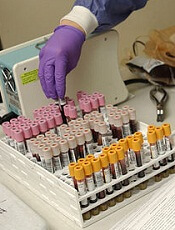
Credit: William Weinert
The US Food and Drug Administration (FDA) is taking steps to ensure better regulation of certain diagnostic tests.
The agency has issued a final guidance on the development, review, and approval of companion diagnostics.
The FDA has also notified Congress of its intention to publish a draft guidance outlining a plan for regulating laboratory-developed tests (LDTs).
The FDA is required to notify Congress before making the draft guidance public. This is mandated by the Food and Drug Administration Safety and Innovation Act of 2012 (FDASIA).
Companion diagnostics guidance
A companion diagnostic is a medical device that provides information essential for the safe and effective use of a corresponding drug or biological product. These tests are commonly used to detect certain types of gene-based cancers.
The FDA’s companion diagnostics guidance is intended to help companies identify the need for these tests during the earliest stages of drug development and to plan for the development of a drug and a companion test at the same time.
The ultimate goal of the final guidance is to stimulate early collaborations that will result in faster access to promising new treatments for patients living with serious and life-threatening diseases. This guidance finalizes and takes into consideration public comments on the draft guidance issued in 2011.
LDT oversight
An LDT is a type of in vitro diagnostic test that is designed, manufactured, and used within a single lab. LDTs include some genetic tests and tests used by healthcare professionals to guide patient treatment.
The FDA already oversees direct-to-consumer tests, regardless of whether they are LDTs or traditional diagnostics.
And while the FDA has historically exercised enforcement discretion over LDTs (generally not enforced applicable regulatory requirements), today, these tests may compete with FDA-approved tests without clinical studies to support their use.
The LDT notification to Congress provides the details of a draft guidance in which the FDA would propose to establish an LDT oversight framework. This would include pre-market review for higher-risk LDTs, such as those that have the same intended use as FDA-approved or cleared companion diagnostics currently on the market.
The draft guidance would also propose to phase in enforcement of pre-market review for other high-risk and moderate-risk LDTs over time.
In addition, the FDA intends to propose that it continue to exercise enforcement discretion for low-risk LDTs, LDTs for rare diseases and, under certain circumstances, LDTs for which there is no FDA-approved or cleared test.
“With today’s notification of the agency’s intent to issue the lab-developed test draft guidance, the FDA is seeking a better balanced approach for all diagnostics,” said Jeffrey Shuren, MD, director of the FDA’s Center for Devices and Radiological Health.
“The agency’s oversight would be based on a test’s level of risk to patients, not on whether it is made by a conventional manufacturer or in a single laboratory, while still providing flexibility to encourage innovation that addresses unmet medical needs.”
Finally, the FDA intends to publish a draft guidance outlining how labs can notify the FDA that they are manufacturing and using LDTs, how to provide information about their LDTs, and how they can comply with the medical device reporting requirements.
A provision in FDASIA requires the FDA to provide at least 60 days’ notice to Congress before the agency publishes for public comment any draft guidance on the regulation of LDTs.
As such, the comment period will open at a later date, when the draft guidances are published in the Federal Register and the public is alerted to the start of the comment period. The agency also intends to hold a public meeting during the comment period to collect additional input. 
Credit: William Weinert
The US Food and Drug Administration (FDA) is taking steps to ensure better regulation of certain diagnostic tests.
The agency has issued a final guidance on the development, review, and approval of companion diagnostics.
The FDA has also notified Congress of its intention to publish a draft guidance outlining a plan for regulating laboratory-developed tests (LDTs).
The FDA is required to notify Congress before making the draft guidance public. This is mandated by the Food and Drug Administration Safety and Innovation Act of 2012 (FDASIA).
Companion diagnostics guidance
A companion diagnostic is a medical device that provides information essential for the safe and effective use of a corresponding drug or biological product. These tests are commonly used to detect certain types of gene-based cancers.
The FDA’s companion diagnostics guidance is intended to help companies identify the need for these tests during the earliest stages of drug development and to plan for the development of a drug and a companion test at the same time.
The ultimate goal of the final guidance is to stimulate early collaborations that will result in faster access to promising new treatments for patients living with serious and life-threatening diseases. This guidance finalizes and takes into consideration public comments on the draft guidance issued in 2011.
LDT oversight
An LDT is a type of in vitro diagnostic test that is designed, manufactured, and used within a single lab. LDTs include some genetic tests and tests used by healthcare professionals to guide patient treatment.
The FDA already oversees direct-to-consumer tests, regardless of whether they are LDTs or traditional diagnostics.
And while the FDA has historically exercised enforcement discretion over LDTs (generally not enforced applicable regulatory requirements), today, these tests may compete with FDA-approved tests without clinical studies to support their use.
The LDT notification to Congress provides the details of a draft guidance in which the FDA would propose to establish an LDT oversight framework. This would include pre-market review for higher-risk LDTs, such as those that have the same intended use as FDA-approved or cleared companion diagnostics currently on the market.
The draft guidance would also propose to phase in enforcement of pre-market review for other high-risk and moderate-risk LDTs over time.
In addition, the FDA intends to propose that it continue to exercise enforcement discretion for low-risk LDTs, LDTs for rare diseases and, under certain circumstances, LDTs for which there is no FDA-approved or cleared test.
“With today’s notification of the agency’s intent to issue the lab-developed test draft guidance, the FDA is seeking a better balanced approach for all diagnostics,” said Jeffrey Shuren, MD, director of the FDA’s Center for Devices and Radiological Health.
“The agency’s oversight would be based on a test’s level of risk to patients, not on whether it is made by a conventional manufacturer or in a single laboratory, while still providing flexibility to encourage innovation that addresses unmet medical needs.”
Finally, the FDA intends to publish a draft guidance outlining how labs can notify the FDA that they are manufacturing and using LDTs, how to provide information about their LDTs, and how they can comply with the medical device reporting requirements.
A provision in FDASIA requires the FDA to provide at least 60 days’ notice to Congress before the agency publishes for public comment any draft guidance on the regulation of LDTs.
As such, the comment period will open at a later date, when the draft guidances are published in the Federal Register and the public is alerted to the start of the comment period. The agency also intends to hold a public meeting during the comment period to collect additional input.
Credit: William Weinert
The US Food and Drug Administration (FDA) is taking steps to ensure better regulation of certain diagnostic tests.
The agency has issued a final guidance on the development, review, and approval of companion diagnostics.
The FDA has also notified Congress of its intention to publish a draft guidance outlining a plan for regulating laboratory-developed tests (LDTs).
The FDA is required to notify Congress before making the draft guidance public. This is mandated by the Food and Drug Administration Safety and Innovation Act of 2012 (FDASIA).
Companion diagnostics guidance
A companion diagnostic is a medical device that provides information essential for the safe and effective use of a corresponding drug or biological product. These tests are commonly used to detect certain types of gene-based cancers.
The FDA’s companion diagnostics guidance is intended to help companies identify the need for these tests during the earliest stages of drug development and to plan for the development of a drug and a companion test at the same time.
The ultimate goal of the final guidance is to stimulate early collaborations that will result in faster access to promising new treatments for patients living with serious and life-threatening diseases. This guidance finalizes and takes into consideration public comments on the draft guidance issued in 2011.
LDT oversight
An LDT is a type of in vitro diagnostic test that is designed, manufactured, and used within a single lab. LDTs include some genetic tests and tests used by healthcare professionals to guide patient treatment.
The FDA already oversees direct-to-consumer tests, regardless of whether they are LDTs or traditional diagnostics.
And while the FDA has historically exercised enforcement discretion over LDTs (generally not enforced applicable regulatory requirements), today, these tests may compete with FDA-approved tests without clinical studies to support their use.
The LDT notification to Congress provides the details of a draft guidance in which the FDA would propose to establish an LDT oversight framework. This would include pre-market review for higher-risk LDTs, such as those that have the same intended use as FDA-approved or cleared companion diagnostics currently on the market.
The draft guidance would also propose to phase in enforcement of pre-market review for other high-risk and moderate-risk LDTs over time.
In addition, the FDA intends to propose that it continue to exercise enforcement discretion for low-risk LDTs, LDTs for rare diseases and, under certain circumstances, LDTs for which there is no FDA-approved or cleared test.
“With today’s notification of the agency’s intent to issue the lab-developed test draft guidance, the FDA is seeking a better balanced approach for all diagnostics,” said Jeffrey Shuren, MD, director of the FDA’s Center for Devices and Radiological Health.
“The agency’s oversight would be based on a test’s level of risk to patients, not on whether it is made by a conventional manufacturer or in a single laboratory, while still providing flexibility to encourage innovation that addresses unmet medical needs.”
Finally, the FDA intends to publish a draft guidance outlining how labs can notify the FDA that they are manufacturing and using LDTs, how to provide information about their LDTs, and how they can comply with the medical device reporting requirements.
A provision in FDASIA requires the FDA to provide at least 60 days’ notice to Congress before the agency publishes for public comment any draft guidance on the regulation of LDTs.
As such, the comment period will open at a later date, when the draft guidances are published in the Federal Register and the public is alerted to the start of the comment period. The agency also intends to hold a public meeting during the comment period to collect additional input.
Apixaban gets European approval for DVT, PE

Credit: Kevin MacKenzie
The European Commission has approved apixaban (Eliquis) to treat and prevent deep vein thrombosis (DVT) and pulmonary embolism (PE).
The approval applies to all European Union (EU) member states, as well as Iceland and Norway.
Apixaban was already approved in the EU to prevent venous thromboembolism (VTE) in adults who have undergone total hip or knee replacement surgery, and to prevent stroke and systemic embolism in adults with nonvalvular atrial fibrillation.
The new marketing authorization for apixaban follows the positive opinion issued by the European Medicines Agency’s Committee for Medicinal Products for Human Use in June and is supported by results of 2 phase 3 clinical trials, AMPLIFY and AMPLIFY-EXT.
Results of AMPLIFY
The AMPLIFY trial included 5395 patients with confirmed, symptomatic DVT or PE requiring treatment for 6 months. They had a mean age of 56.9 years, and 89.8% of randomized patients had unprovoked VTE.
About half of patients (n=2691) were randomized to receive apixaban at 10 mg twice daily for 7 days, followed by 5 mg twice daily for 6 months.
The other half (n=2704) were randomized to the standard of care, which was enoxaparin at 1 mg/kg twice daily for at least 5 days until INR ≥ 2 and warfarin (target INR range 2.0-3.0) for 6 months.
Apixaban proved noninferior to standard therapy in the combined primary endpoint of adjudicated recurrent symptomatic VTE (nonfatal DVT or PE) or VTE-related death.
This outcome occurred in 2.3% of patients in the apixaban arm and 2.7% of patients in the standard-therapy arm (P<0.0001 for noninferiority).
Apixaban also proved superior to standard therapy with regard to bleeding. The composite endpoint of major bleeding and clinically relevant, nonmajor bleeding occurred in 4.3% of patients in the apixaban arm and 9.7% of patients in the standard-therapy arm (P<0.001).
Results of AMPLIFY-EXT
The AMPLIFY-EXT trial included 2486 patients who had completed 6 to 12 months of anticoagulation treatment for DVT or PE. The mean age was 56.7 years, and 91.7% of randomized patients had unprovoked VTE.
Patients were randomized to receive apixaban at 2.5 mg (n=842), apixaban at 5 mg (n=815), or placebo (n=829).
Both apixaban doses were significantly superior to placebo (P<0.001) with regard to the primary efficacy endpoint, which was recurrent VTE or all-cause death.
During the 12-month active study period, these events occurred in 3.8% of patients in the 2.5-mg arm, 4.2% of patients in the 5-mg arm, and 11.6% of patients in the placebo arm.
The primary safety endpoint was the incidence of major bleeding, and there was no significant difference among the treatment arms. Major bleeding occurred in 0.2% of patients in the 2.5-mg arm, 0.1% of patients in the 5-mg arm, and 0.5% of patients in the placebo arm.
About apixaban
Apixaban is approved to reduce the risk of stroke and systemic embolism in adult patients with nonvalvular atrial fibrillation in the US, EU, Japan, and a number of other countries around the world.
The drug is approved to prevent VTE in adult patients who have undergone elective hip or knee replacement surgery in the US, EU, and a number of other countries.
And now, apixaban is approved for the treatment of DVT/PE and the prevention of recurrent DVT/PE in the EU. The drug is not approved for this indication in the US.
Apixaban is under joint development by Pfizer and Bristol-Myers Squibb.
Credit: Kevin MacKenzie
The European Commission has approved apixaban (Eliquis) to treat and prevent deep vein thrombosis (DVT) and pulmonary embolism (PE).
The approval applies to all European Union (EU) member states, as well as Iceland and Norway.
Apixaban was already approved in the EU to prevent venous thromboembolism (VTE) in adults who have undergone total hip or knee replacement surgery, and to prevent stroke and systemic embolism in adults with nonvalvular atrial fibrillation.
The new marketing authorization for apixaban follows the positive opinion issued by the European Medicines Agency’s Committee for Medicinal Products for Human Use in June and is supported by results of 2 phase 3 clinical trials, AMPLIFY and AMPLIFY-EXT.
Results of AMPLIFY
The AMPLIFY trial included 5395 patients with confirmed, symptomatic DVT or PE requiring treatment for 6 months. They had a mean age of 56.9 years, and 89.8% of randomized patients had unprovoked VTE.
About half of patients (n=2691) were randomized to receive apixaban at 10 mg twice daily for 7 days, followed by 5 mg twice daily for 6 months.
The other half (n=2704) were randomized to the standard of care, which was enoxaparin at 1 mg/kg twice daily for at least 5 days until INR ≥ 2 and warfarin (target INR range 2.0-3.0) for 6 months.
Apixaban proved noninferior to standard therapy in the combined primary endpoint of adjudicated recurrent symptomatic VTE (nonfatal DVT or PE) or VTE-related death.
This outcome occurred in 2.3% of patients in the apixaban arm and 2.7% of patients in the standard-therapy arm (P<0.0001 for noninferiority).
Apixaban also proved superior to standard therapy with regard to bleeding. The composite endpoint of major bleeding and clinically relevant, nonmajor bleeding occurred in 4.3% of patients in the apixaban arm and 9.7% of patients in the standard-therapy arm (P<0.001).
Results of AMPLIFY-EXT
The AMPLIFY-EXT trial included 2486 patients who had completed 6 to 12 months of anticoagulation treatment for DVT or PE. The mean age was 56.7 years, and 91.7% of randomized patients had unprovoked VTE.
Patients were randomized to receive apixaban at 2.5 mg (n=842), apixaban at 5 mg (n=815), or placebo (n=829).
Both apixaban doses were significantly superior to placebo (P<0.001) with regard to the primary efficacy endpoint, which was recurrent VTE or all-cause death.
During the 12-month active study period, these events occurred in 3.8% of patients in the 2.5-mg arm, 4.2% of patients in the 5-mg arm, and 11.6% of patients in the placebo arm.
The primary safety endpoint was the incidence of major bleeding, and there was no significant difference among the treatment arms. Major bleeding occurred in 0.2% of patients in the 2.5-mg arm, 0.1% of patients in the 5-mg arm, and 0.5% of patients in the placebo arm.
About apixaban
Apixaban is approved to reduce the risk of stroke and systemic embolism in adult patients with nonvalvular atrial fibrillation in the US, EU, Japan, and a number of other countries around the world.
The drug is approved to prevent VTE in adult patients who have undergone elective hip or knee replacement surgery in the US, EU, and a number of other countries.
And now, apixaban is approved for the treatment of DVT/PE and the prevention of recurrent DVT/PE in the EU. The drug is not approved for this indication in the US.
Apixaban is under joint development by Pfizer and Bristol-Myers Squibb.
Credit: Kevin MacKenzie
The European Commission has approved apixaban (Eliquis) to treat and prevent deep vein thrombosis (DVT) and pulmonary embolism (PE).
The approval applies to all European Union (EU) member states, as well as Iceland and Norway.
Apixaban was already approved in the EU to prevent venous thromboembolism (VTE) in adults who have undergone total hip or knee replacement surgery, and to prevent stroke and systemic embolism in adults with nonvalvular atrial fibrillation.
The new marketing authorization for apixaban follows the positive opinion issued by the European Medicines Agency’s Committee for Medicinal Products for Human Use in June and is supported by results of 2 phase 3 clinical trials, AMPLIFY and AMPLIFY-EXT.
Results of AMPLIFY
The AMPLIFY trial included 5395 patients with confirmed, symptomatic DVT or PE requiring treatment for 6 months. They had a mean age of 56.9 years, and 89.8% of randomized patients had unprovoked VTE.
About half of patients (n=2691) were randomized to receive apixaban at 10 mg twice daily for 7 days, followed by 5 mg twice daily for 6 months.
The other half (n=2704) were randomized to the standard of care, which was enoxaparin at 1 mg/kg twice daily for at least 5 days until INR ≥ 2 and warfarin (target INR range 2.0-3.0) for 6 months.
Apixaban proved noninferior to standard therapy in the combined primary endpoint of adjudicated recurrent symptomatic VTE (nonfatal DVT or PE) or VTE-related death.
This outcome occurred in 2.3% of patients in the apixaban arm and 2.7% of patients in the standard-therapy arm (P<0.0001 for noninferiority).
Apixaban also proved superior to standard therapy with regard to bleeding. The composite endpoint of major bleeding and clinically relevant, nonmajor bleeding occurred in 4.3% of patients in the apixaban arm and 9.7% of patients in the standard-therapy arm (P<0.001).
Results of AMPLIFY-EXT
The AMPLIFY-EXT trial included 2486 patients who had completed 6 to 12 months of anticoagulation treatment for DVT or PE. The mean age was 56.7 years, and 91.7% of randomized patients had unprovoked VTE.
Patients were randomized to receive apixaban at 2.5 mg (n=842), apixaban at 5 mg (n=815), or placebo (n=829).
Both apixaban doses were significantly superior to placebo (P<0.001) with regard to the primary efficacy endpoint, which was recurrent VTE or all-cause death.
During the 12-month active study period, these events occurred in 3.8% of patients in the 2.5-mg arm, 4.2% of patients in the 5-mg arm, and 11.6% of patients in the placebo arm.
The primary safety endpoint was the incidence of major bleeding, and there was no significant difference among the treatment arms. Major bleeding occurred in 0.2% of patients in the 2.5-mg arm, 0.1% of patients in the 5-mg arm, and 0.5% of patients in the placebo arm.
About apixaban
Apixaban is approved to reduce the risk of stroke and systemic embolism in adult patients with nonvalvular atrial fibrillation in the US, EU, Japan, and a number of other countries around the world.
The drug is approved to prevent VTE in adult patients who have undergone elective hip or knee replacement surgery in the US, EU, and a number of other countries.
And now, apixaban is approved for the treatment of DVT/PE and the prevention of recurrent DVT/PE in the EU. The drug is not approved for this indication in the US.
Apixaban is under joint development by Pfizer and Bristol-Myers Squibb.
Obinutuzumab approved for CLL in Europe
The European Commission has approved the anti-CD20 monoclonal antibody obinutuzumab for use in the European Union (EU).
Obinutuzumab can now be used in combination with chlorambucil to treat patients with previously untreated chronic lymphocytic leukemia (CLL) who have comorbidities that make them ineligible to receive fludarabine-based therapy.
Obinutuzumab is already approved for this indication in the US.
Obinutuzumab is marketed as Gazyvaro in the EU and Switzerland but as Gazyva in the US and the rest of the world.
The European Commission’s approval follows a positive opinion granted by The European Medicine Agency’s Committee for Medicinal Products for Human Use in May.
The approval is based on results of the phase 3 CLL11 study, which showed that obinutuzumab plus chlorambucil improved progression-free survival (PFS), when compared to chlorambucil alone or in combination with rituximab.
This 2-stage study included 781 previously untreated CLL patients with comorbidities. In stage 1 (n=589), researchers compared obinutuzumab plus chlorambucil to chlorambucil alone and rituximab plus chlorambucil to chlorambucil alone.
Stage 2 (n=663) was a direct comparison of obinutuzumab plus chlorambucil and rituximab plus chlorambucil.
Stage 1 results were presented at ASCO 2013, stage 2 results were presented at ASH 2013, and the complete results were published in NEJM last March.
Obinutuzumab plus chlorambucil improved PFS when compared to chlorambucil alone. The median PFS was 26.7 months and 11.1 months, respectively (P<0.001).
Obinutuzumab plus chlorambucil also improved PFS when compared to rituximab plus chlorambucil. The median PFS was 26.7 months and 16.3 months, respectively (P<0.001).
Infusion-related reactions and neutropenia were more common in the obinutuzumab arm than in the rituximab arm. But obinutuzumab-treated patients did not have an increased risk of infection.
Obinutuzumab is being developed by Roche. The company said it expects to begin launching the drug in a number of European countries this year.
The European Commission has approved the anti-CD20 monoclonal antibody obinutuzumab for use in the European Union (EU).
Obinutuzumab can now be used in combination with chlorambucil to treat patients with previously untreated chronic lymphocytic leukemia (CLL) who have comorbidities that make them ineligible to receive fludarabine-based therapy.
Obinutuzumab is already approved for this indication in the US.
Obinutuzumab is marketed as Gazyvaro in the EU and Switzerland but as Gazyva in the US and the rest of the world.
The European Commission’s approval follows a positive opinion granted by The European Medicine Agency’s Committee for Medicinal Products for Human Use in May.
The approval is based on results of the phase 3 CLL11 study, which showed that obinutuzumab plus chlorambucil improved progression-free survival (PFS), when compared to chlorambucil alone or in combination with rituximab.
This 2-stage study included 781 previously untreated CLL patients with comorbidities. In stage 1 (n=589), researchers compared obinutuzumab plus chlorambucil to chlorambucil alone and rituximab plus chlorambucil to chlorambucil alone.
Stage 2 (n=663) was a direct comparison of obinutuzumab plus chlorambucil and rituximab plus chlorambucil.
Stage 1 results were presented at ASCO 2013, stage 2 results were presented at ASH 2013, and the complete results were published in NEJM last March.
Obinutuzumab plus chlorambucil improved PFS when compared to chlorambucil alone. The median PFS was 26.7 months and 11.1 months, respectively (P<0.001).
Obinutuzumab plus chlorambucil also improved PFS when compared to rituximab plus chlorambucil. The median PFS was 26.7 months and 16.3 months, respectively (P<0.001).
Infusion-related reactions and neutropenia were more common in the obinutuzumab arm than in the rituximab arm. But obinutuzumab-treated patients did not have an increased risk of infection.
Obinutuzumab is being developed by Roche. The company said it expects to begin launching the drug in a number of European countries this year.
The European Commission has approved the anti-CD20 monoclonal antibody obinutuzumab for use in the European Union (EU).
Obinutuzumab can now be used in combination with chlorambucil to treat patients with previously untreated chronic lymphocytic leukemia (CLL) who have comorbidities that make them ineligible to receive fludarabine-based therapy.
Obinutuzumab is already approved for this indication in the US.
Obinutuzumab is marketed as Gazyvaro in the EU and Switzerland but as Gazyva in the US and the rest of the world.
The European Commission’s approval follows a positive opinion granted by The European Medicine Agency’s Committee for Medicinal Products for Human Use in May.
The approval is based on results of the phase 3 CLL11 study, which showed that obinutuzumab plus chlorambucil improved progression-free survival (PFS), when compared to chlorambucil alone or in combination with rituximab.
This 2-stage study included 781 previously untreated CLL patients with comorbidities. In stage 1 (n=589), researchers compared obinutuzumab plus chlorambucil to chlorambucil alone and rituximab plus chlorambucil to chlorambucil alone.
Stage 2 (n=663) was a direct comparison of obinutuzumab plus chlorambucil and rituximab plus chlorambucil.
Stage 1 results were presented at ASCO 2013, stage 2 results were presented at ASH 2013, and the complete results were published in NEJM last March.
Obinutuzumab plus chlorambucil improved PFS when compared to chlorambucil alone. The median PFS was 26.7 months and 11.1 months, respectively (P<0.001).
Obinutuzumab plus chlorambucil also improved PFS when compared to rituximab plus chlorambucil. The median PFS was 26.7 months and 16.3 months, respectively (P<0.001).
Infusion-related reactions and neutropenia were more common in the obinutuzumab arm than in the rituximab arm. But obinutuzumab-treated patients did not have an increased risk of infection.
Obinutuzumab is being developed by Roche. The company said it expects to begin launching the drug in a number of European countries this year.
FDA expands approved use of ibrutinib in CLL

Credit: Steven Harbour
The US Food and Drug Administration (FDA) has expanded the approved use of ibrutinib (Imbruvica) in patients with chronic lymphocytic leukemia (CLL).
The agency previously granted the drug accelerated approval to treat CLL patients who had received at least 1 prior therapy.
Now, the FDA has granted ibrutinib full approval for that indication and expanded the drug’s approved use to include previously treated and untreated CLL patients with 17p deletion.
The FDA’s decision to grant ibrutinib accelerated approval in CLL was based on the drug’s ability to elicit responses in previously treated patients.
Recent trial results have shown the drug can improve survival rates in CLL, which signifies a clinical benefit and allows the FDA to grant ibrutinib full approval.
Ibrutinib in CLL: Trial results
The expanded approval for ibrutinib is based on results of the phase 3 RESONATE trial, which were presented at this year’s ASCO and EHA meetings.
The trial included 391 previously treated patients, 127 of whom had 17p deletion. Patients were randomized to receive ibrutinib or the anti-CD20 monoclonal antibody ofatumumab until disease progression or unacceptable toxicity.
The trial was stopped early after a pre-planned interim analysis showed that ibrutinib-treated patients experienced a 78% reduction in the risk of disease progression or death.
At the time of interim analysis, the patients’ median time on study was 9.4 months. The best overall response among evaluable patients was 78% in the ibrutinib arm and 11% in the ofatumumab arm.
Ibrutinib significantly prolonged progression-free and overall survival. The median progression-free survival was 8.1 months in the ofatumumab arm and was not reached in the ibrutinib arm (P<0.0001). The median overall survival was not reached in either arm, but the hazard ratio was 0.434 (P=0.0049).
Of the 127 patients with 17p deletion, those treated with ibrutinib experienced a 75% reduction in the risk of disease progression or death.
Adverse events occurred in 99% of patients in the ibrutinib arm and 98% of those in the ofatumumab arm. Grade 3/4 events occurred in 51% and 39%, respectively.
Atrial fibrillation, bleeding-related events, diarrhea, and arthralgia were more common in the ibrutinib arm. Infusion-related reactions, peripheral sensory neuropathy, urticaria, night sweats, and pruritus were more common in the ofatumumab arm.
Ibrutinib in development
Ibrutinib is being studied alone and in combination with other treatments in several hematologic malignancies, including CLL, mantle cell lymphoma (MCL), Waldenstrom’s macroglobulinemia, diffuse large B-cell lymphoma, follicular lymphoma, and multiple myeloma.
Before the FDA granted ibrutinib accelerated approval in CLL, the agency granted the drug accelerated approval for use in previously treated MCL patients. Studies to verify ibrutinib’s clinical benefit in MCL are ongoing.
The European Medicines Agency’s Committee for Medicinal Products for Human Use has recommended marketing authorization for ibrutinib to treat adults with relapsed or refractory MCL.
The committee has also recommended the drug for adults with CLL who have received at least 1 prior therapy and CLL patients with 17p deletion or TP53 mutation who cannot receive chemo-immunotherapy.
Ibrutinib is already approved in Israel for the treatment of adults with MCL who have received at least 1 prior therapy.
Ibrutinib is under development by Janssen Biotech and Pharmacyclics, Inc. The companies co-market ibrutinib in the US, but Janssen markets (or will market) ibrutinib in the rest of the world.
Credit: Steven Harbour
The US Food and Drug Administration (FDA) has expanded the approved use of ibrutinib (Imbruvica) in patients with chronic lymphocytic leukemia (CLL).
The agency previously granted the drug accelerated approval to treat CLL patients who had received at least 1 prior therapy.
Now, the FDA has granted ibrutinib full approval for that indication and expanded the drug’s approved use to include previously treated and untreated CLL patients with 17p deletion.
The FDA’s decision to grant ibrutinib accelerated approval in CLL was based on the drug’s ability to elicit responses in previously treated patients.
Recent trial results have shown the drug can improve survival rates in CLL, which signifies a clinical benefit and allows the FDA to grant ibrutinib full approval.
Ibrutinib in CLL: Trial results
The expanded approval for ibrutinib is based on results of the phase 3 RESONATE trial, which were presented at this year’s ASCO and EHA meetings.
The trial included 391 previously treated patients, 127 of whom had 17p deletion. Patients were randomized to receive ibrutinib or the anti-CD20 monoclonal antibody ofatumumab until disease progression or unacceptable toxicity.
The trial was stopped early after a pre-planned interim analysis showed that ibrutinib-treated patients experienced a 78% reduction in the risk of disease progression or death.
At the time of interim analysis, the patients’ median time on study was 9.4 months. The best overall response among evaluable patients was 78% in the ibrutinib arm and 11% in the ofatumumab arm.
Ibrutinib significantly prolonged progression-free and overall survival. The median progression-free survival was 8.1 months in the ofatumumab arm and was not reached in the ibrutinib arm (P<0.0001). The median overall survival was not reached in either arm, but the hazard ratio was 0.434 (P=0.0049).
Of the 127 patients with 17p deletion, those treated with ibrutinib experienced a 75% reduction in the risk of disease progression or death.
Adverse events occurred in 99% of patients in the ibrutinib arm and 98% of those in the ofatumumab arm. Grade 3/4 events occurred in 51% and 39%, respectively.
Atrial fibrillation, bleeding-related events, diarrhea, and arthralgia were more common in the ibrutinib arm. Infusion-related reactions, peripheral sensory neuropathy, urticaria, night sweats, and pruritus were more common in the ofatumumab arm.
Ibrutinib in development
Ibrutinib is being studied alone and in combination with other treatments in several hematologic malignancies, including CLL, mantle cell lymphoma (MCL), Waldenstrom’s macroglobulinemia, diffuse large B-cell lymphoma, follicular lymphoma, and multiple myeloma.
Before the FDA granted ibrutinib accelerated approval in CLL, the agency granted the drug accelerated approval for use in previously treated MCL patients. Studies to verify ibrutinib’s clinical benefit in MCL are ongoing.
The European Medicines Agency’s Committee for Medicinal Products for Human Use has recommended marketing authorization for ibrutinib to treat adults with relapsed or refractory MCL.
The committee has also recommended the drug for adults with CLL who have received at least 1 prior therapy and CLL patients with 17p deletion or TP53 mutation who cannot receive chemo-immunotherapy.
Ibrutinib is already approved in Israel for the treatment of adults with MCL who have received at least 1 prior therapy.
Ibrutinib is under development by Janssen Biotech and Pharmacyclics, Inc. The companies co-market ibrutinib in the US, but Janssen markets (or will market) ibrutinib in the rest of the world.
Credit: Steven Harbour
The US Food and Drug Administration (FDA) has expanded the approved use of ibrutinib (Imbruvica) in patients with chronic lymphocytic leukemia (CLL).
The agency previously granted the drug accelerated approval to treat CLL patients who had received at least 1 prior therapy.
Now, the FDA has granted ibrutinib full approval for that indication and expanded the drug’s approved use to include previously treated and untreated CLL patients with 17p deletion.
The FDA’s decision to grant ibrutinib accelerated approval in CLL was based on the drug’s ability to elicit responses in previously treated patients.
Recent trial results have shown the drug can improve survival rates in CLL, which signifies a clinical benefit and allows the FDA to grant ibrutinib full approval.
Ibrutinib in CLL: Trial results
The expanded approval for ibrutinib is based on results of the phase 3 RESONATE trial, which were presented at this year’s ASCO and EHA meetings.
The trial included 391 previously treated patients, 127 of whom had 17p deletion. Patients were randomized to receive ibrutinib or the anti-CD20 monoclonal antibody ofatumumab until disease progression or unacceptable toxicity.
The trial was stopped early after a pre-planned interim analysis showed that ibrutinib-treated patients experienced a 78% reduction in the risk of disease progression or death.
At the time of interim analysis, the patients’ median time on study was 9.4 months. The best overall response among evaluable patients was 78% in the ibrutinib arm and 11% in the ofatumumab arm.
Ibrutinib significantly prolonged progression-free and overall survival. The median progression-free survival was 8.1 months in the ofatumumab arm and was not reached in the ibrutinib arm (P<0.0001). The median overall survival was not reached in either arm, but the hazard ratio was 0.434 (P=0.0049).
Of the 127 patients with 17p deletion, those treated with ibrutinib experienced a 75% reduction in the risk of disease progression or death.
Adverse events occurred in 99% of patients in the ibrutinib arm and 98% of those in the ofatumumab arm. Grade 3/4 events occurred in 51% and 39%, respectively.
Atrial fibrillation, bleeding-related events, diarrhea, and arthralgia were more common in the ibrutinib arm. Infusion-related reactions, peripheral sensory neuropathy, urticaria, night sweats, and pruritus were more common in the ofatumumab arm.
Ibrutinib in development
Ibrutinib is being studied alone and in combination with other treatments in several hematologic malignancies, including CLL, mantle cell lymphoma (MCL), Waldenstrom’s macroglobulinemia, diffuse large B-cell lymphoma, follicular lymphoma, and multiple myeloma.
Before the FDA granted ibrutinib accelerated approval in CLL, the agency granted the drug accelerated approval for use in previously treated MCL patients. Studies to verify ibrutinib’s clinical benefit in MCL are ongoing.
The European Medicines Agency’s Committee for Medicinal Products for Human Use has recommended marketing authorization for ibrutinib to treat adults with relapsed or refractory MCL.
The committee has also recommended the drug for adults with CLL who have received at least 1 prior therapy and CLL patients with 17p deletion or TP53 mutation who cannot receive chemo-immunotherapy.
Ibrutinib is already approved in Israel for the treatment of adults with MCL who have received at least 1 prior therapy.
Ibrutinib is under development by Janssen Biotech and Pharmacyclics, Inc. The companies co-market ibrutinib in the US, but Janssen markets (or will market) ibrutinib in the rest of the world.
CHMP recommends ibrutinib for CLL, MCL

The European Medicines Agency’s Committee for Medicinal Products for Human Use (CHMP) is recommending marketing authorization for ibrutinib (Imbruvica).
The committee is endorsing the Bruton’s tyrosine kinase (BTK) inhibitor for use in adults with relapsed or refractory mantle cell lymphoma (MCL) and certain adults with chronic lymphocytic leukemia (CLL).
This includes untreated CLL patients with 17p deletion or TP53 mutation who cannot receive chemo-immunotherapy and patients who have received at least 1 prior therapy.
The European Commission will take the CHMP’s opinion into account when deciding whether to authorize the commercialization of ibrutinib in the European Union.
The CHMP based its recommendations on data from 2 CLL studies—the phase 3 RESONATE trial (PCYC-1112) and a phase 1b/2 trial (PCYC-1102)—as well as a phase 2 trial (PCYC-1104) in MCL.
RESONATE trial
Results of RESONATE were recently presented at the 2014 EHA Congress. The trial included 391 patients with relapsed or refractory CLL or small lymphocytic lymphoma (SLL).
Patients were randomized to receive ibrutinib (n=195) or ofatumumab (n=196). Patients in the ofatumumab arm were allowed to cross over to ibrutinib if they progressed (n=57). The median time on study was 9.4 months.
The best overall response rate was higher in the ibrutinib arm than the ofatumumab arm, at 78% and 11%, respectively. And ibrutinib significantly prolonged progression-free survival. The median was 8.1 months in the ofatumumab arm and was not reached in the ibrutinib arm (P<0.0001).
Ibrutinib significantly prolonged overall survival as well. The median overall survival was not reached in either arm, but the hazard ratio was 0.434 (P=0.0049).
Adverse events occurred in 99% of patients in the ibrutinib arm and 98% of those in the ofatumumab arm. Grade 3/4 events occurred in 51% and 39%, respectively.
Atrial fibrillation, bleeding-related events, diarrhea, and arthralgia were more common in the ibrutinib arm. Infusion-related reactions, peripheral sensory neuropathy, urticaria, night sweats, and pruritus were more common in the ofatumumab arm.
PCYC-1102: Ibrutinib in CLL/SLL
Results of this phase 1b/2 trial were published in The Lancet Oncology in January. The trial enrolled 29 patients with previously untreated CLL and 2 with SLL.
They received 28-day cycles of once-daily ibrutinib at 420 mg or 840 mg. The 840 mg dose was discontinued after enrollment had begun because the doses showed comparable activity.
After a median follow-up of 22.1 months, 71% of patients achieved an objective response. Four patients (13%) had a complete response. The median time to response was 1.9 months.
Study investigators did not establish whether ibrutinib confers improvements in survival or disease-related symptoms.
Common adverse events included diarrhea (68%), nausea (48%), fatigue (32%), peripheral edema (29%), hypertension (29%), dizziness (26%), dyspepsia (26%), upper respiratory tract infection (26%), arthralgia (23%), constipation (23%), urinary tract infection (23%), and vomiting (23%).
Grade 3 adverse events included diarrhea (13%), fatigue (3%), hypertension (6%), dizziness (3%), urinary tract infection (3%), headache (3%), back pain (3%), and neutropenia (3%). One patient (3%) had grade 4 thrombocytopenia.
PCYC-1104 trial: Ibrutinib in MCL
Results of this trial were presented at ASH 2012 and published in NEJM in 2013. The NEJM data included 111 patients who received ibrutinib at 560 mg daily in continuous, 28-day cycles until disease progression.
The overall response rate was 68%, with a complete response rate of 21% and a partial response rate of 47%. With an estimated median follow-up of 15.3 months, the estimated median response duration was 17.5 months.
The estimated progression-free survival was 13.9 months, and the overall survival was not reached. The estimated rate of overall survival was 58% at 18 months.
Common nonhematologic adverse events included diarrhea (50%), fatigue (41%), nausea (31%), peripheral edema (28%), dyspnea (27%), constipation (25%), upper respiratory tract infection (23%), vomiting (23%), and decreased appetite (21%). The most common grade 3, 4, or 5 infection was pneumonia (6%).
Grade 3 and 4 hematologic adverse events included neutropenia (16%), thrombocytopenia (11%), and anemia (10%). Grade 3 bleeding events occurred in 5 patients.
About ibrutinib
Ibrutinib works by inhibiting BTK, a protein involved in mediating the cellular signaling pathways that control B-cell maturation and survival. In malignant B cells, there is excessive signaling through the B-cell receptor signaling pathway, which includes BTK.
Ibrutinib forms a strong covalent bond with BTK, which inhibits the excessive transmission of cell survival signals within the malignant B cells and stops their excessive build-up in protected environmental areas such as the lymph nodes.
Ibrutinib is being studied alone and in combination with other treatments in several hematologic malignancies, including CLL, MCL, Waldenstrom’s macroglobulinemia, diffuse large B-cell lymphoma, follicular lymphoma, and multiple myeloma.
Ibrutinib received accelerated approval from the US Food and Drug Administration in November 2013 to treat MCL. The drug received accelerated approval in February 2014 to treat CLL patients who have received at least 1 prior therapy.
Ibrutinib is also approved in Israel for the treatment of adults with MCL who have received at least 1 prior therapy.
Ibrutinib is under development by Janssen and Pharmacyclics. The companies co-market ibrutinib in the US, but, pending the drug’s approval, Janssen will market ibrutinib in the rest of the world.
The European Medicines Agency’s Committee for Medicinal Products for Human Use (CHMP) is recommending marketing authorization for ibrutinib (Imbruvica).
The committee is endorsing the Bruton’s tyrosine kinase (BTK) inhibitor for use in adults with relapsed or refractory mantle cell lymphoma (MCL) and certain adults with chronic lymphocytic leukemia (CLL).
This includes untreated CLL patients with 17p deletion or TP53 mutation who cannot receive chemo-immunotherapy and patients who have received at least 1 prior therapy.
The European Commission will take the CHMP’s opinion into account when deciding whether to authorize the commercialization of ibrutinib in the European Union.
The CHMP based its recommendations on data from 2 CLL studies—the phase 3 RESONATE trial (PCYC-1112) and a phase 1b/2 trial (PCYC-1102)—as well as a phase 2 trial (PCYC-1104) in MCL.
RESONATE trial
Results of RESONATE were recently presented at the 2014 EHA Congress. The trial included 391 patients with relapsed or refractory CLL or small lymphocytic lymphoma (SLL).
Patients were randomized to receive ibrutinib (n=195) or ofatumumab (n=196). Patients in the ofatumumab arm were allowed to cross over to ibrutinib if they progressed (n=57). The median time on study was 9.4 months.
The best overall response rate was higher in the ibrutinib arm than the ofatumumab arm, at 78% and 11%, respectively. And ibrutinib significantly prolonged progression-free survival. The median was 8.1 months in the ofatumumab arm and was not reached in the ibrutinib arm (P<0.0001).
Ibrutinib significantly prolonged overall survival as well. The median overall survival was not reached in either arm, but the hazard ratio was 0.434 (P=0.0049).
Adverse events occurred in 99% of patients in the ibrutinib arm and 98% of those in the ofatumumab arm. Grade 3/4 events occurred in 51% and 39%, respectively.
Atrial fibrillation, bleeding-related events, diarrhea, and arthralgia were more common in the ibrutinib arm. Infusion-related reactions, peripheral sensory neuropathy, urticaria, night sweats, and pruritus were more common in the ofatumumab arm.
PCYC-1102: Ibrutinib in CLL/SLL
Results of this phase 1b/2 trial were published in The Lancet Oncology in January. The trial enrolled 29 patients with previously untreated CLL and 2 with SLL.
They received 28-day cycles of once-daily ibrutinib at 420 mg or 840 mg. The 840 mg dose was discontinued after enrollment had begun because the doses showed comparable activity.
After a median follow-up of 22.1 months, 71% of patients achieved an objective response. Four patients (13%) had a complete response. The median time to response was 1.9 months.
Study investigators did not establish whether ibrutinib confers improvements in survival or disease-related symptoms.
Common adverse events included diarrhea (68%), nausea (48%), fatigue (32%), peripheral edema (29%), hypertension (29%), dizziness (26%), dyspepsia (26%), upper respiratory tract infection (26%), arthralgia (23%), constipation (23%), urinary tract infection (23%), and vomiting (23%).
Grade 3 adverse events included diarrhea (13%), fatigue (3%), hypertension (6%), dizziness (3%), urinary tract infection (3%), headache (3%), back pain (3%), and neutropenia (3%). One patient (3%) had grade 4 thrombocytopenia.
PCYC-1104 trial: Ibrutinib in MCL
Results of this trial were presented at ASH 2012 and published in NEJM in 2013. The NEJM data included 111 patients who received ibrutinib at 560 mg daily in continuous, 28-day cycles until disease progression.
The overall response rate was 68%, with a complete response rate of 21% and a partial response rate of 47%. With an estimated median follow-up of 15.3 months, the estimated median response duration was 17.5 months.
The estimated progression-free survival was 13.9 months, and the overall survival was not reached. The estimated rate of overall survival was 58% at 18 months.
Common nonhematologic adverse events included diarrhea (50%), fatigue (41%), nausea (31%), peripheral edema (28%), dyspnea (27%), constipation (25%), upper respiratory tract infection (23%), vomiting (23%), and decreased appetite (21%). The most common grade 3, 4, or 5 infection was pneumonia (6%).
Grade 3 and 4 hematologic adverse events included neutropenia (16%), thrombocytopenia (11%), and anemia (10%). Grade 3 bleeding events occurred in 5 patients.
About ibrutinib
Ibrutinib works by inhibiting BTK, a protein involved in mediating the cellular signaling pathways that control B-cell maturation and survival. In malignant B cells, there is excessive signaling through the B-cell receptor signaling pathway, which includes BTK.
Ibrutinib forms a strong covalent bond with BTK, which inhibits the excessive transmission of cell survival signals within the malignant B cells and stops their excessive build-up in protected environmental areas such as the lymph nodes.
Ibrutinib is being studied alone and in combination with other treatments in several hematologic malignancies, including CLL, MCL, Waldenstrom’s macroglobulinemia, diffuse large B-cell lymphoma, follicular lymphoma, and multiple myeloma.
Ibrutinib received accelerated approval from the US Food and Drug Administration in November 2013 to treat MCL. The drug received accelerated approval in February 2014 to treat CLL patients who have received at least 1 prior therapy.
Ibrutinib is also approved in Israel for the treatment of adults with MCL who have received at least 1 prior therapy.
Ibrutinib is under development by Janssen and Pharmacyclics. The companies co-market ibrutinib in the US, but, pending the drug’s approval, Janssen will market ibrutinib in the rest of the world.
The European Medicines Agency’s Committee for Medicinal Products for Human Use (CHMP) is recommending marketing authorization for ibrutinib (Imbruvica).
The committee is endorsing the Bruton’s tyrosine kinase (BTK) inhibitor for use in adults with relapsed or refractory mantle cell lymphoma (MCL) and certain adults with chronic lymphocytic leukemia (CLL).
This includes untreated CLL patients with 17p deletion or TP53 mutation who cannot receive chemo-immunotherapy and patients who have received at least 1 prior therapy.
The European Commission will take the CHMP’s opinion into account when deciding whether to authorize the commercialization of ibrutinib in the European Union.
The CHMP based its recommendations on data from 2 CLL studies—the phase 3 RESONATE trial (PCYC-1112) and a phase 1b/2 trial (PCYC-1102)—as well as a phase 2 trial (PCYC-1104) in MCL.
RESONATE trial
Results of RESONATE were recently presented at the 2014 EHA Congress. The trial included 391 patients with relapsed or refractory CLL or small lymphocytic lymphoma (SLL).
Patients were randomized to receive ibrutinib (n=195) or ofatumumab (n=196). Patients in the ofatumumab arm were allowed to cross over to ibrutinib if they progressed (n=57). The median time on study was 9.4 months.
The best overall response rate was higher in the ibrutinib arm than the ofatumumab arm, at 78% and 11%, respectively. And ibrutinib significantly prolonged progression-free survival. The median was 8.1 months in the ofatumumab arm and was not reached in the ibrutinib arm (P<0.0001).
Ibrutinib significantly prolonged overall survival as well. The median overall survival was not reached in either arm, but the hazard ratio was 0.434 (P=0.0049).
Adverse events occurred in 99% of patients in the ibrutinib arm and 98% of those in the ofatumumab arm. Grade 3/4 events occurred in 51% and 39%, respectively.
Atrial fibrillation, bleeding-related events, diarrhea, and arthralgia were more common in the ibrutinib arm. Infusion-related reactions, peripheral sensory neuropathy, urticaria, night sweats, and pruritus were more common in the ofatumumab arm.
PCYC-1102: Ibrutinib in CLL/SLL
Results of this phase 1b/2 trial were published in The Lancet Oncology in January. The trial enrolled 29 patients with previously untreated CLL and 2 with SLL.
They received 28-day cycles of once-daily ibrutinib at 420 mg or 840 mg. The 840 mg dose was discontinued after enrollment had begun because the doses showed comparable activity.
After a median follow-up of 22.1 months, 71% of patients achieved an objective response. Four patients (13%) had a complete response. The median time to response was 1.9 months.
Study investigators did not establish whether ibrutinib confers improvements in survival or disease-related symptoms.
Common adverse events included diarrhea (68%), nausea (48%), fatigue (32%), peripheral edema (29%), hypertension (29%), dizziness (26%), dyspepsia (26%), upper respiratory tract infection (26%), arthralgia (23%), constipation (23%), urinary tract infection (23%), and vomiting (23%).
Grade 3 adverse events included diarrhea (13%), fatigue (3%), hypertension (6%), dizziness (3%), urinary tract infection (3%), headache (3%), back pain (3%), and neutropenia (3%). One patient (3%) had grade 4 thrombocytopenia.
PCYC-1104 trial: Ibrutinib in MCL
Results of this trial were presented at ASH 2012 and published in NEJM in 2013. The NEJM data included 111 patients who received ibrutinib at 560 mg daily in continuous, 28-day cycles until disease progression.
The overall response rate was 68%, with a complete response rate of 21% and a partial response rate of 47%. With an estimated median follow-up of 15.3 months, the estimated median response duration was 17.5 months.
The estimated progression-free survival was 13.9 months, and the overall survival was not reached. The estimated rate of overall survival was 58% at 18 months.
Common nonhematologic adverse events included diarrhea (50%), fatigue (41%), nausea (31%), peripheral edema (28%), dyspnea (27%), constipation (25%), upper respiratory tract infection (23%), vomiting (23%), and decreased appetite (21%). The most common grade 3, 4, or 5 infection was pneumonia (6%).
Grade 3 and 4 hematologic adverse events included neutropenia (16%), thrombocytopenia (11%), and anemia (10%). Grade 3 bleeding events occurred in 5 patients.
About ibrutinib
Ibrutinib works by inhibiting BTK, a protein involved in mediating the cellular signaling pathways that control B-cell maturation and survival. In malignant B cells, there is excessive signaling through the B-cell receptor signaling pathway, which includes BTK.
Ibrutinib forms a strong covalent bond with BTK, which inhibits the excessive transmission of cell survival signals within the malignant B cells and stops their excessive build-up in protected environmental areas such as the lymph nodes.
Ibrutinib is being studied alone and in combination with other treatments in several hematologic malignancies, including CLL, MCL, Waldenstrom’s macroglobulinemia, diffuse large B-cell lymphoma, follicular lymphoma, and multiple myeloma.
Ibrutinib received accelerated approval from the US Food and Drug Administration in November 2013 to treat MCL. The drug received accelerated approval in February 2014 to treat CLL patients who have received at least 1 prior therapy.
Ibrutinib is also approved in Israel for the treatment of adults with MCL who have received at least 1 prior therapy.
Ibrutinib is under development by Janssen and Pharmacyclics. The companies co-market ibrutinib in the US, but, pending the drug’s approval, Janssen will market ibrutinib in the rest of the world.
CHMP recommends idelalisib for CLL, FL

Days after gaining approval for 3 indications in the US, idelalisib (Zydelig) has earned a positive opinion from the European Medicine Agency’s Committee for Medicinal Products for Human Use (CHMP).
The CHMP is recommending the PI3K delta inhibitor for the treatment of chronic lymphocytic leukemia (CLL) and follicular lymphoma (FL).
If approved, the drug would be used as monotherapy for adults with FL that is refractory to 2 prior lines of treatment.
Idelalisib would also be used in combination with rituximab for adults with CLL who have received at least 1 prior therapy or as first-line treatment in CLL patients who have 17p deletion or TP53 mutation and cannot receive chemo-immunotherapy.
The CHMP’s recommendation for idelalisib (150 mg film-coated tablets) will be reviewed by the European Commission, which has the authority to approve medicines for use in the 28 countries of the European Union.
The CHMP’s positive opinion of idelalisib is based on data from 2 clinical trials—Study 116 and Study 101-09.
Study 116: Idelalisib in CLL
This phase 3 trial was stopped early because idelalisib had a significant impact on progression-free survival.
The study included 220 CLL patients who could not receive chemotherapy. Half were randomized to receive idelalisib plus rituximab, and the other half were randomized to rituximab plus placebo.
Patients in the idelalisib arm had a much higher overall response rate than patients in the placebo arm—81% and 13%, respectively (P<0.001). But all responses were partial.
At 24 weeks, the rate of progression-free survival was 93% in the idelalisib arm and 46% in the placebo arm (P<0.001). The median progression-free survival was 5.5 months in the placebo arm and not reached in the idelalisib arm (P<0.001).
At 12 months, the overall survival rate was 92% in the idelalisib arm and 80% in the placebo arm (P=0.02).
Most adverse events, in either treatment arm, were grade 2 or lower. The most common events in the idelalisib arm were pyrexia, fatigue, nausea, chills, and diarrhea. In the placebo arm, the most common events were infusion-related reactions, fatigue, cough, nausea, and dyspnea.
There were more serious adverse events in the idelalisib arm than in the placebo arm—40% and 35%, respectively. The most frequent serious events were pneumonia, pyrexia, and febrile neutropenia (in both treatment arms).
Study 101-09: Idelalisib in FL
In this phase 2 trial, idelalisib was given as a single agent to patients with indolent non-Hodgkin lymphoma who were refractory to rituximab and chemotherapy containing an alkylating agent.
In the 72 patients with FL, the overall response rate was 54%, and the complete response rate was 8%. The median duration of response was not reached (range, 0-14.8 months).
Improvements in patient survival or disease-related symptoms have not been established.
The most common grade 3 or higher adverse events were neutropenia (27%), elevations in aminotransferase levels (13%), diarrhea (13%), and pneumonia (7%).
About idelalisib
Idelalisib is an oral inhibitor of PI3K delta, a protein that plays a role in the activation, proliferation, and viability of B cells. PI3K delta signaling is active in many B-cell leukemias and lymphomas, and, by inhibiting the protein, idelalisib blocks several cellular signaling pathways that drive B-cell viability.
Idelalisib is being developed by Gilead Sciences. On July 23, the drug received US Food and Drug Administration approval for use in combination with rituximab to treat patients with relapsed CLL who cannot receive rituximab alone. The agency also granted idelalisib accelerated approval to treat patients with relapsed FL or small lymphocytic lymphoma who have received at least 2 prior systemic therapies.
Days after gaining approval for 3 indications in the US, idelalisib (Zydelig) has earned a positive opinion from the European Medicine Agency’s Committee for Medicinal Products for Human Use (CHMP).
The CHMP is recommending the PI3K delta inhibitor for the treatment of chronic lymphocytic leukemia (CLL) and follicular lymphoma (FL).
If approved, the drug would be used as monotherapy for adults with FL that is refractory to 2 prior lines of treatment.
Idelalisib would also be used in combination with rituximab for adults with CLL who have received at least 1 prior therapy or as first-line treatment in CLL patients who have 17p deletion or TP53 mutation and cannot receive chemo-immunotherapy.
The CHMP’s recommendation for idelalisib (150 mg film-coated tablets) will be reviewed by the European Commission, which has the authority to approve medicines for use in the 28 countries of the European Union.
The CHMP’s positive opinion of idelalisib is based on data from 2 clinical trials—Study 116 and Study 101-09.
Study 116: Idelalisib in CLL
This phase 3 trial was stopped early because idelalisib had a significant impact on progression-free survival.
The study included 220 CLL patients who could not receive chemotherapy. Half were randomized to receive idelalisib plus rituximab, and the other half were randomized to rituximab plus placebo.
Patients in the idelalisib arm had a much higher overall response rate than patients in the placebo arm—81% and 13%, respectively (P<0.001). But all responses were partial.
At 24 weeks, the rate of progression-free survival was 93% in the idelalisib arm and 46% in the placebo arm (P<0.001). The median progression-free survival was 5.5 months in the placebo arm and not reached in the idelalisib arm (P<0.001).
At 12 months, the overall survival rate was 92% in the idelalisib arm and 80% in the placebo arm (P=0.02).
Most adverse events, in either treatment arm, were grade 2 or lower. The most common events in the idelalisib arm were pyrexia, fatigue, nausea, chills, and diarrhea. In the placebo arm, the most common events were infusion-related reactions, fatigue, cough, nausea, and dyspnea.
There were more serious adverse events in the idelalisib arm than in the placebo arm—40% and 35%, respectively. The most frequent serious events were pneumonia, pyrexia, and febrile neutropenia (in both treatment arms).
Study 101-09: Idelalisib in FL
In this phase 2 trial, idelalisib was given as a single agent to patients with indolent non-Hodgkin lymphoma who were refractory to rituximab and chemotherapy containing an alkylating agent.
In the 72 patients with FL, the overall response rate was 54%, and the complete response rate was 8%. The median duration of response was not reached (range, 0-14.8 months).
Improvements in patient survival or disease-related symptoms have not been established.
The most common grade 3 or higher adverse events were neutropenia (27%), elevations in aminotransferase levels (13%), diarrhea (13%), and pneumonia (7%).
About idelalisib
Idelalisib is an oral inhibitor of PI3K delta, a protein that plays a role in the activation, proliferation, and viability of B cells. PI3K delta signaling is active in many B-cell leukemias and lymphomas, and, by inhibiting the protein, idelalisib blocks several cellular signaling pathways that drive B-cell viability.
Idelalisib is being developed by Gilead Sciences. On July 23, the drug received US Food and Drug Administration approval for use in combination with rituximab to treat patients with relapsed CLL who cannot receive rituximab alone. The agency also granted idelalisib accelerated approval to treat patients with relapsed FL or small lymphocytic lymphoma who have received at least 2 prior systemic therapies.
Days after gaining approval for 3 indications in the US, idelalisib (Zydelig) has earned a positive opinion from the European Medicine Agency’s Committee for Medicinal Products for Human Use (CHMP).
The CHMP is recommending the PI3K delta inhibitor for the treatment of chronic lymphocytic leukemia (CLL) and follicular lymphoma (FL).
If approved, the drug would be used as monotherapy for adults with FL that is refractory to 2 prior lines of treatment.
Idelalisib would also be used in combination with rituximab for adults with CLL who have received at least 1 prior therapy or as first-line treatment in CLL patients who have 17p deletion or TP53 mutation and cannot receive chemo-immunotherapy.
The CHMP’s recommendation for idelalisib (150 mg film-coated tablets) will be reviewed by the European Commission, which has the authority to approve medicines for use in the 28 countries of the European Union.
The CHMP’s positive opinion of idelalisib is based on data from 2 clinical trials—Study 116 and Study 101-09.
Study 116: Idelalisib in CLL
This phase 3 trial was stopped early because idelalisib had a significant impact on progression-free survival.
The study included 220 CLL patients who could not receive chemotherapy. Half were randomized to receive idelalisib plus rituximab, and the other half were randomized to rituximab plus placebo.
Patients in the idelalisib arm had a much higher overall response rate than patients in the placebo arm—81% and 13%, respectively (P<0.001). But all responses were partial.
At 24 weeks, the rate of progression-free survival was 93% in the idelalisib arm and 46% in the placebo arm (P<0.001). The median progression-free survival was 5.5 months in the placebo arm and not reached in the idelalisib arm (P<0.001).
At 12 months, the overall survival rate was 92% in the idelalisib arm and 80% in the placebo arm (P=0.02).
Most adverse events, in either treatment arm, were grade 2 or lower. The most common events in the idelalisib arm were pyrexia, fatigue, nausea, chills, and diarrhea. In the placebo arm, the most common events were infusion-related reactions, fatigue, cough, nausea, and dyspnea.
There were more serious adverse events in the idelalisib arm than in the placebo arm—40% and 35%, respectively. The most frequent serious events were pneumonia, pyrexia, and febrile neutropenia (in both treatment arms).
Study 101-09: Idelalisib in FL
In this phase 2 trial, idelalisib was given as a single agent to patients with indolent non-Hodgkin lymphoma who were refractory to rituximab and chemotherapy containing an alkylating agent.
In the 72 patients with FL, the overall response rate was 54%, and the complete response rate was 8%. The median duration of response was not reached (range, 0-14.8 months).
Improvements in patient survival or disease-related symptoms have not been established.
The most common grade 3 or higher adverse events were neutropenia (27%), elevations in aminotransferase levels (13%), diarrhea (13%), and pneumonia (7%).
About idelalisib
Idelalisib is an oral inhibitor of PI3K delta, a protein that plays a role in the activation, proliferation, and viability of B cells. PI3K delta signaling is active in many B-cell leukemias and lymphomas, and, by inhibiting the protein, idelalisib blocks several cellular signaling pathways that drive B-cell viability.
Idelalisib is being developed by Gilead Sciences. On July 23, the drug received US Food and Drug Administration approval for use in combination with rituximab to treat patients with relapsed CLL who cannot receive rituximab alone. The agency also granted idelalisib accelerated approval to treat patients with relapsed FL or small lymphocytic lymphoma who have received at least 2 prior systemic therapies.
BI denies allegations about dabigatran

Credit: CDC
A series of papers published in The BMJ have raised concerns about the anticoagulant dabigatran (Pradaxa).
The papers claim the company developing dabigatran has underreported events associated with the drug and withheld data showing that monitoring and dose adjustment could improve the safety of dabigatran without compromising its efficacy.
The company, Boehringer Ingelheim (BI), has denied these allegations.
“During the course of litigation involving Pradaxa, specifically hand-picked fragments of our robust internal discussions were made available to the media by external parties, which resulted in a gross distortion of the facts about Pradaxa and Boehringer Ingelheim,” said John Smith, a regional medical director at BI.
“As a result, some media reports have wrongfully suggested that BI purposefully suppressed data and have questioned the company’s ethics in efforts to alert regulators, healthcare professionals, and patients of the risks associated with Pradaxa. Some reports have even accused BI of improper trial conduct. All of these allegations are absolutely false . . . .”
Concerns about the RE-LY trial
One of the papers published in The BMJ, “Concerns over data in key dabigatran trial,” said the design and oversight of the RE-LY trial were poor.
The trial compared dabigatran at 110 mg or 150 mg twice daily to dose-adjusted warfarin in patients with atrial fibrillation. Results suggested dabigatran was noninferior, and in some cases superior, to warfarin.
The BMJ article said the open-label design of this trial allowed for bias. And events—such as bleeding and myocardial infarctions—have been misreported.
The article also suggested that reviews by BI have failed to uncover all of the inaccuracies in the trial data, and all of the information has not been released—either to regulators or the public.
BI refuted these claims, saying regulators found RE-LY’s design “robust and valid.” And although reviews have uncovered inaccuracies, the results have not affected the trial’s conclusions.
In fact, the US Food and Drug Administration (FDA) “reaffirmed the positive efficacy-safety profile of Pradaxa” when it reviewed data from more than 134,000 patients.
BI also said it has provided the FDA and the European Medicines Agency (EMA) with the complete data set, and both regulators have affirmed the conclusions of the trial.
Allegations of withheld data
Another article in The BMJ, “Dabigatran: how the drug company withheld important analyses,” suggested BI withheld information indicating that monitoring and dose adjustment could improve the safety of dabigatran.
The article said the company did not provide regulators with data showing a 5.5-fold variation in plasma levels among dabigatran-treated patients. And the company withheld data garnered from analyses calculating how many major bleeds could be prevented by dose adjustment.
The analyses suggested that monitoring and dose adjustment could reduce major bleeds by 30% to 40% compared with well-controlled warfarin. And the adjustment would have little or no effect on the risk of ischemic stroke.
BI conceded that, in 2012, company scientists performed exploratory simulations with mathematical models to understand whether dose adjustments based on plasma concentrations might further improve the efficacy and safety profile of dabigatran.
However, the initial hypothesis “could not be supported when applied to the actual clinical data from the RE-LY population.” So the company did not supply the data to the FDA or EMA.
Furthermore, “the totality of scientific evidence does not support dosing decisions for Pradaxa based solely on blood levels.” Instead, the company said that patient characteristics such as age, kidney function, and certain medications are the critical factors that contribute to the risk of bleeding.
The role of regulators, physicians, and patients
A third article in The BMJ, “Dabigatran, bleeding, and the regulators,” investigated the role the FDA and the EMA have played in all this.
The author said the EMA has made information, tests, and varying strengths of dabigatran available to promote safer use of the drug.
The FDA, on the other hand, has focused on efficacy rather than reducing the risk of bleeding. The agency approved only the 150-mg dose of the drug and has not approved a plasma-level diagnostic test.
The BMJ also published an editorial titled “The trouble with dabigatran.” It suggested that doctors and patients should “tread carefully” due to emerging risks associated with the drug. 
Credit: CDC
A series of papers published in The BMJ have raised concerns about the anticoagulant dabigatran (Pradaxa).
The papers claim the company developing dabigatran has underreported events associated with the drug and withheld data showing that monitoring and dose adjustment could improve the safety of dabigatran without compromising its efficacy.
The company, Boehringer Ingelheim (BI), has denied these allegations.
“During the course of litigation involving Pradaxa, specifically hand-picked fragments of our robust internal discussions were made available to the media by external parties, which resulted in a gross distortion of the facts about Pradaxa and Boehringer Ingelheim,” said John Smith, a regional medical director at BI.
“As a result, some media reports have wrongfully suggested that BI purposefully suppressed data and have questioned the company’s ethics in efforts to alert regulators, healthcare professionals, and patients of the risks associated with Pradaxa. Some reports have even accused BI of improper trial conduct. All of these allegations are absolutely false . . . .”
Concerns about the RE-LY trial
One of the papers published in The BMJ, “Concerns over data in key dabigatran trial,” said the design and oversight of the RE-LY trial were poor.
The trial compared dabigatran at 110 mg or 150 mg twice daily to dose-adjusted warfarin in patients with atrial fibrillation. Results suggested dabigatran was noninferior, and in some cases superior, to warfarin.
The BMJ article said the open-label design of this trial allowed for bias. And events—such as bleeding and myocardial infarctions—have been misreported.
The article also suggested that reviews by BI have failed to uncover all of the inaccuracies in the trial data, and all of the information has not been released—either to regulators or the public.
BI refuted these claims, saying regulators found RE-LY’s design “robust and valid.” And although reviews have uncovered inaccuracies, the results have not affected the trial’s conclusions.
In fact, the US Food and Drug Administration (FDA) “reaffirmed the positive efficacy-safety profile of Pradaxa” when it reviewed data from more than 134,000 patients.
BI also said it has provided the FDA and the European Medicines Agency (EMA) with the complete data set, and both regulators have affirmed the conclusions of the trial.
Allegations of withheld data
Another article in The BMJ, “Dabigatran: how the drug company withheld important analyses,” suggested BI withheld information indicating that monitoring and dose adjustment could improve the safety of dabigatran.
The article said the company did not provide regulators with data showing a 5.5-fold variation in plasma levels among dabigatran-treated patients. And the company withheld data garnered from analyses calculating how many major bleeds could be prevented by dose adjustment.
The analyses suggested that monitoring and dose adjustment could reduce major bleeds by 30% to 40% compared with well-controlled warfarin. And the adjustment would have little or no effect on the risk of ischemic stroke.
BI conceded that, in 2012, company scientists performed exploratory simulations with mathematical models to understand whether dose adjustments based on plasma concentrations might further improve the efficacy and safety profile of dabigatran.
However, the initial hypothesis “could not be supported when applied to the actual clinical data from the RE-LY population.” So the company did not supply the data to the FDA or EMA.
Furthermore, “the totality of scientific evidence does not support dosing decisions for Pradaxa based solely on blood levels.” Instead, the company said that patient characteristics such as age, kidney function, and certain medications are the critical factors that contribute to the risk of bleeding.
The role of regulators, physicians, and patients
A third article in The BMJ, “Dabigatran, bleeding, and the regulators,” investigated the role the FDA and the EMA have played in all this.
The author said the EMA has made information, tests, and varying strengths of dabigatran available to promote safer use of the drug.
The FDA, on the other hand, has focused on efficacy rather than reducing the risk of bleeding. The agency approved only the 150-mg dose of the drug and has not approved a plasma-level diagnostic test.
The BMJ also published an editorial titled “The trouble with dabigatran.” It suggested that doctors and patients should “tread carefully” due to emerging risks associated with the drug.
Credit: CDC
A series of papers published in The BMJ have raised concerns about the anticoagulant dabigatran (Pradaxa).
The papers claim the company developing dabigatran has underreported events associated with the drug and withheld data showing that monitoring and dose adjustment could improve the safety of dabigatran without compromising its efficacy.
The company, Boehringer Ingelheim (BI), has denied these allegations.
“During the course of litigation involving Pradaxa, specifically hand-picked fragments of our robust internal discussions were made available to the media by external parties, which resulted in a gross distortion of the facts about Pradaxa and Boehringer Ingelheim,” said John Smith, a regional medical director at BI.
“As a result, some media reports have wrongfully suggested that BI purposefully suppressed data and have questioned the company’s ethics in efforts to alert regulators, healthcare professionals, and patients of the risks associated with Pradaxa. Some reports have even accused BI of improper trial conduct. All of these allegations are absolutely false . . . .”
Concerns about the RE-LY trial
One of the papers published in The BMJ, “Concerns over data in key dabigatran trial,” said the design and oversight of the RE-LY trial were poor.
The trial compared dabigatran at 110 mg or 150 mg twice daily to dose-adjusted warfarin in patients with atrial fibrillation. Results suggested dabigatran was noninferior, and in some cases superior, to warfarin.
The BMJ article said the open-label design of this trial allowed for bias. And events—such as bleeding and myocardial infarctions—have been misreported.
The article also suggested that reviews by BI have failed to uncover all of the inaccuracies in the trial data, and all of the information has not been released—either to regulators or the public.
BI refuted these claims, saying regulators found RE-LY’s design “robust and valid.” And although reviews have uncovered inaccuracies, the results have not affected the trial’s conclusions.
In fact, the US Food and Drug Administration (FDA) “reaffirmed the positive efficacy-safety profile of Pradaxa” when it reviewed data from more than 134,000 patients.
BI also said it has provided the FDA and the European Medicines Agency (EMA) with the complete data set, and both regulators have affirmed the conclusions of the trial.
Allegations of withheld data
Another article in The BMJ, “Dabigatran: how the drug company withheld important analyses,” suggested BI withheld information indicating that monitoring and dose adjustment could improve the safety of dabigatran.
The article said the company did not provide regulators with data showing a 5.5-fold variation in plasma levels among dabigatran-treated patients. And the company withheld data garnered from analyses calculating how many major bleeds could be prevented by dose adjustment.
The analyses suggested that monitoring and dose adjustment could reduce major bleeds by 30% to 40% compared with well-controlled warfarin. And the adjustment would have little or no effect on the risk of ischemic stroke.
BI conceded that, in 2012, company scientists performed exploratory simulations with mathematical models to understand whether dose adjustments based on plasma concentrations might further improve the efficacy and safety profile of dabigatran.
However, the initial hypothesis “could not be supported when applied to the actual clinical data from the RE-LY population.” So the company did not supply the data to the FDA or EMA.
Furthermore, “the totality of scientific evidence does not support dosing decisions for Pradaxa based solely on blood levels.” Instead, the company said that patient characteristics such as age, kidney function, and certain medications are the critical factors that contribute to the risk of bleeding.
The role of regulators, physicians, and patients
A third article in The BMJ, “Dabigatran, bleeding, and the regulators,” investigated the role the FDA and the EMA have played in all this.
The author said the EMA has made information, tests, and varying strengths of dabigatran available to promote safer use of the drug.
The FDA, on the other hand, has focused on efficacy rather than reducing the risk of bleeding. The agency approved only the 150-mg dose of the drug and has not approved a plasma-level diagnostic test.
The BMJ also published an editorial titled “The trouble with dabigatran.” It suggested that doctors and patients should “tread carefully” due to emerging risks associated with the drug.
NICE expands recommended use for prasugrel

Credit: Mass. General Hospital
The UK’s National Institute for Health and Care Excellence (NICE) has decided to expand its recommendation for the antiplatelet agent prasugrel (Efient).
NICE’s new guidance recommends prasugrel in combination with aspirin to prevent thrombosis in patients with unstable angina, ST segment elevation myocardial infarction (STEMI), or non-ST segment elevation myocardial infarction (NSTEMI) who are undergoing percutaneous coronary intervention (PCI).
The previous guidance recommended prasugrel in combination with aspirin for patients with acute coronary syndromes undergoing PCI only when immediate primary PCI for STEMI was necessary, stent thrombosis occurred during clopidogrel treatment, or the patient had diabetes.
“[A NICE committee] assessed the clinical and cost effectiveness of prasugrel, noting that, since the original guidance was published in 2009, NICE has also published guidance on the use of ticagrelor for the same indication, and the price of another drug, clopidogrel, has reduced as generic versions have become available,” said Carole Longson, Director of the Centre for Health Technology Evaluation at NICE.
“Taking these factors into consideration, we are now recommending prasugrel as an option for more people with acute coronary syndromes than our previous guidance. The committee also heard from clinical experts that the faster action of prasugrel compared to clopidogrel could be an advantage for STEMI patients who need immediate percutaneous coronary intervention. The guidance also recommends prasugrel as an option for people with NSTEMI and unstable angina, with or without diabetes.”
The price of prasugrel is £47.56 per 28-tab pack (excluding value-added tax). The cost of treatment for 12 months is £628.48 (excluding value-added tax). Costs may vary in different settings because of negotiated procurement discounts.
The incremental cost-effectiveness ratios for all 4 of the patient subgroups reviewed (STEMI with diabetes, STEMI without diabetes, unstable angina or NSTEMI with diabetes, unstable angina and NSTEMI without diabetes) were lower than £20,000 per quality-adjusted life-year gained.
For patients with unstable angina or NSTEMI and diabetes, prasugrel proved more effective and less costly than clopidogrel.
Credit: Mass. General Hospital
The UK’s National Institute for Health and Care Excellence (NICE) has decided to expand its recommendation for the antiplatelet agent prasugrel (Efient).
NICE’s new guidance recommends prasugrel in combination with aspirin to prevent thrombosis in patients with unstable angina, ST segment elevation myocardial infarction (STEMI), or non-ST segment elevation myocardial infarction (NSTEMI) who are undergoing percutaneous coronary intervention (PCI).
The previous guidance recommended prasugrel in combination with aspirin for patients with acute coronary syndromes undergoing PCI only when immediate primary PCI for STEMI was necessary, stent thrombosis occurred during clopidogrel treatment, or the patient had diabetes.
“[A NICE committee] assessed the clinical and cost effectiveness of prasugrel, noting that, since the original guidance was published in 2009, NICE has also published guidance on the use of ticagrelor for the same indication, and the price of another drug, clopidogrel, has reduced as generic versions have become available,” said Carole Longson, Director of the Centre for Health Technology Evaluation at NICE.
“Taking these factors into consideration, we are now recommending prasugrel as an option for more people with acute coronary syndromes than our previous guidance. The committee also heard from clinical experts that the faster action of prasugrel compared to clopidogrel could be an advantage for STEMI patients who need immediate percutaneous coronary intervention. The guidance also recommends prasugrel as an option for people with NSTEMI and unstable angina, with or without diabetes.”
The price of prasugrel is £47.56 per 28-tab pack (excluding value-added tax). The cost of treatment for 12 months is £628.48 (excluding value-added tax). Costs may vary in different settings because of negotiated procurement discounts.
The incremental cost-effectiveness ratios for all 4 of the patient subgroups reviewed (STEMI with diabetes, STEMI without diabetes, unstable angina or NSTEMI with diabetes, unstable angina and NSTEMI without diabetes) were lower than £20,000 per quality-adjusted life-year gained.
For patients with unstable angina or NSTEMI and diabetes, prasugrel proved more effective and less costly than clopidogrel.
Credit: Mass. General Hospital
The UK’s National Institute for Health and Care Excellence (NICE) has decided to expand its recommendation for the antiplatelet agent prasugrel (Efient).
NICE’s new guidance recommends prasugrel in combination with aspirin to prevent thrombosis in patients with unstable angina, ST segment elevation myocardial infarction (STEMI), or non-ST segment elevation myocardial infarction (NSTEMI) who are undergoing percutaneous coronary intervention (PCI).
The previous guidance recommended prasugrel in combination with aspirin for patients with acute coronary syndromes undergoing PCI only when immediate primary PCI for STEMI was necessary, stent thrombosis occurred during clopidogrel treatment, or the patient had diabetes.
“[A NICE committee] assessed the clinical and cost effectiveness of prasugrel, noting that, since the original guidance was published in 2009, NICE has also published guidance on the use of ticagrelor for the same indication, and the price of another drug, clopidogrel, has reduced as generic versions have become available,” said Carole Longson, Director of the Centre for Health Technology Evaluation at NICE.
“Taking these factors into consideration, we are now recommending prasugrel as an option for more people with acute coronary syndromes than our previous guidance. The committee also heard from clinical experts that the faster action of prasugrel compared to clopidogrel could be an advantage for STEMI patients who need immediate percutaneous coronary intervention. The guidance also recommends prasugrel as an option for people with NSTEMI and unstable angina, with or without diabetes.”
The price of prasugrel is £47.56 per 28-tab pack (excluding value-added tax). The cost of treatment for 12 months is £628.48 (excluding value-added tax). Costs may vary in different settings because of negotiated procurement discounts.
The incremental cost-effectiveness ratios for all 4 of the patient subgroups reviewed (STEMI with diabetes, STEMI without diabetes, unstable angina or NSTEMI with diabetes, unstable angina and NSTEMI without diabetes) were lower than £20,000 per quality-adjusted life-year gained.
For patients with unstable angina or NSTEMI and diabetes, prasugrel proved more effective and less costly than clopidogrel.
FDA approves idelalisib for CLL, SLL and FL
The US Food and Drug Administration (FDA) has approved the PI3K delta inhibitor idelalisib (Zydelig) for the treatment of chronic lymphocytic leukemia (CLL), small lymphocytic lymphoma (SLL), and follicular lymphoma (FL).
The drug was granted traditional approval for use in combination with rituximab to treat patients with relapsed CLL who cannot receive rituximab alone.
Idelalisib has also received accelerated approval to treat patients with relapsed FL or SLL who have received at least 2 prior systemic therapies.
The FDA’s accelerated approval program allows for approval of a drug to treat a serious or life-threatening disease based on clinical data showing the drug has an effect on a surrogate endpoint that is reasonably likely to predict a clinical benefit to patients.
This program provides earlier patient access to a drug while the developer—in this case, Gilead Sciences—conducts trials confirming the drug’s benefit.
Idelalisib in CLL: Results of a phase 3 study
The approval of idelalisib in CLL is based on results of a phase 3 trial (Study 116), which was stopped early because idelalisib had a significant impact on progression-free survival.
The study included 220 CLL patients who could not receive chemotherapy. Half were randomized to receive idelalisib plus rituximab, and the other half were randomized to rituximab plus placebo.
Patients in the idelalisib arm had a much higher overall response rate than patients in the placebo arm—81% and 13%, respectively (P<0.001). But all responses were partial responses.
At 24 weeks, the rate of progression-free survival was 93% in the idelalisib arm and 46% in the placebo arm (P<0.001). The median progression-free survival was 5.5 months in the placebo arm and not reached in the idelalisib arm (P<0.001).
At 12 months, the overall survival rate was 92% in the idelalisib arm and 80% in the placebo arm (P=0.02).
Most adverse events, in either treatment group, were grade 2 or lower. The most common events in the idelalisib arm were pyrexia, fatigue, nausea, chills, and diarrhea. In the placebo arm, the most common events were infusion-related reactions, fatigue, cough, nausea, and dyspnea.
There were more serious adverse events in the idelalisib arm than in the placebo arm—40% and 35%, respectively. The most frequent serious events were pneumonia, pyrexia, and febrile neutropenia (in both treatment arms).
Idelalisib in FL and SLL: Results of a phase 2 study
Idelalisib’s accelerated approval in FL and SLL is supported by data from a single-arm, phase 2 trial (Study 101-09).
The drug was given as a single agent to patients who were refractory to rituximab and alkylating-agent-containing chemotherapy. Seventy-two patients had FL, and 26 had SLL.
The overall response rate was 54% in FL and 58% in SLL. Eight percent of FL responses were complete, and all responses in SLL patients were partial.
The median duration of response was 11.9 months in SLL patients (range, 0-14.7 months) but was not reached in FL patients (range, 0-14.8 months).
Improvements in patient survival or disease-related symptoms have not been established.
In all patients, the most common grade 3 or higher adverse events were neutropenia (27%), elevations in aminotransferase levels (13%), diarrhea (13%), and pneumonia (7%).
About idelalisib: Dosing, boxed warning and REMS
Idelalisib is an oral inhibitor of PI3K delta, a protein that plays a role in the activation, proliferation, and viability of B cells. PI3K delta signaling is active in many B-cell leukemias and lymphomas, and, by inhibiting the protein, idelalisib blocks several cellular signaling pathways that drive B-cell viability.
The drug is available as 150 mg and 100 mg tablets, administered orally twice-daily, but 150 mg is the recommended starting dose.
Idelalisib has a boxed warning on its label communicating the risks of fatal and serious toxicities, which include hepatic toxicity, severe diarrhea, colitis, pneumonitis, and intestinal perforation.
The drug is being approved with a risk evaluation and mitigation strategy (REMS) comprised of a communication plan to ensure healthcare providers are fully informed about these risks. For more information on this program, visit www.ZydeligREMS.com.
The US Food and Drug Administration (FDA) has approved the PI3K delta inhibitor idelalisib (Zydelig) for the treatment of chronic lymphocytic leukemia (CLL), small lymphocytic lymphoma (SLL), and follicular lymphoma (FL).
The drug was granted traditional approval for use in combination with rituximab to treat patients with relapsed CLL who cannot receive rituximab alone.
Idelalisib has also received accelerated approval to treat patients with relapsed FL or SLL who have received at least 2 prior systemic therapies.
The FDA’s accelerated approval program allows for approval of a drug to treat a serious or life-threatening disease based on clinical data showing the drug has an effect on a surrogate endpoint that is reasonably likely to predict a clinical benefit to patients.
This program provides earlier patient access to a drug while the developer—in this case, Gilead Sciences—conducts trials confirming the drug’s benefit.
Idelalisib in CLL: Results of a phase 3 study
The approval of idelalisib in CLL is based on results of a phase 3 trial (Study 116), which was stopped early because idelalisib had a significant impact on progression-free survival.
The study included 220 CLL patients who could not receive chemotherapy. Half were randomized to receive idelalisib plus rituximab, and the other half were randomized to rituximab plus placebo.
Patients in the idelalisib arm had a much higher overall response rate than patients in the placebo arm—81% and 13%, respectively (P<0.001). But all responses were partial responses.
At 24 weeks, the rate of progression-free survival was 93% in the idelalisib arm and 46% in the placebo arm (P<0.001). The median progression-free survival was 5.5 months in the placebo arm and not reached in the idelalisib arm (P<0.001).
At 12 months, the overall survival rate was 92% in the idelalisib arm and 80% in the placebo arm (P=0.02).
Most adverse events, in either treatment group, were grade 2 or lower. The most common events in the idelalisib arm were pyrexia, fatigue, nausea, chills, and diarrhea. In the placebo arm, the most common events were infusion-related reactions, fatigue, cough, nausea, and dyspnea.
There were more serious adverse events in the idelalisib arm than in the placebo arm—40% and 35%, respectively. The most frequent serious events were pneumonia, pyrexia, and febrile neutropenia (in both treatment arms).
Idelalisib in FL and SLL: Results of a phase 2 study
Idelalisib’s accelerated approval in FL and SLL is supported by data from a single-arm, phase 2 trial (Study 101-09).
The drug was given as a single agent to patients who were refractory to rituximab and alkylating-agent-containing chemotherapy. Seventy-two patients had FL, and 26 had SLL.
The overall response rate was 54% in FL and 58% in SLL. Eight percent of FL responses were complete, and all responses in SLL patients were partial.
The median duration of response was 11.9 months in SLL patients (range, 0-14.7 months) but was not reached in FL patients (range, 0-14.8 months).
Improvements in patient survival or disease-related symptoms have not been established.
In all patients, the most common grade 3 or higher adverse events were neutropenia (27%), elevations in aminotransferase levels (13%), diarrhea (13%), and pneumonia (7%).
About idelalisib: Dosing, boxed warning and REMS
Idelalisib is an oral inhibitor of PI3K delta, a protein that plays a role in the activation, proliferation, and viability of B cells. PI3K delta signaling is active in many B-cell leukemias and lymphomas, and, by inhibiting the protein, idelalisib blocks several cellular signaling pathways that drive B-cell viability.
The drug is available as 150 mg and 100 mg tablets, administered orally twice-daily, but 150 mg is the recommended starting dose.
Idelalisib has a boxed warning on its label communicating the risks of fatal and serious toxicities, which include hepatic toxicity, severe diarrhea, colitis, pneumonitis, and intestinal perforation.
The drug is being approved with a risk evaluation and mitigation strategy (REMS) comprised of a communication plan to ensure healthcare providers are fully informed about these risks. For more information on this program, visit www.ZydeligREMS.com.
The US Food and Drug Administration (FDA) has approved the PI3K delta inhibitor idelalisib (Zydelig) for the treatment of chronic lymphocytic leukemia (CLL), small lymphocytic lymphoma (SLL), and follicular lymphoma (FL).
The drug was granted traditional approval for use in combination with rituximab to treat patients with relapsed CLL who cannot receive rituximab alone.
Idelalisib has also received accelerated approval to treat patients with relapsed FL or SLL who have received at least 2 prior systemic therapies.
The FDA’s accelerated approval program allows for approval of a drug to treat a serious or life-threatening disease based on clinical data showing the drug has an effect on a surrogate endpoint that is reasonably likely to predict a clinical benefit to patients.
This program provides earlier patient access to a drug while the developer—in this case, Gilead Sciences—conducts trials confirming the drug’s benefit.
Idelalisib in CLL: Results of a phase 3 study
The approval of idelalisib in CLL is based on results of a phase 3 trial (Study 116), which was stopped early because idelalisib had a significant impact on progression-free survival.
The study included 220 CLL patients who could not receive chemotherapy. Half were randomized to receive idelalisib plus rituximab, and the other half were randomized to rituximab plus placebo.
Patients in the idelalisib arm had a much higher overall response rate than patients in the placebo arm—81% and 13%, respectively (P<0.001). But all responses were partial responses.
At 24 weeks, the rate of progression-free survival was 93% in the idelalisib arm and 46% in the placebo arm (P<0.001). The median progression-free survival was 5.5 months in the placebo arm and not reached in the idelalisib arm (P<0.001).
At 12 months, the overall survival rate was 92% in the idelalisib arm and 80% in the placebo arm (P=0.02).
Most adverse events, in either treatment group, were grade 2 or lower. The most common events in the idelalisib arm were pyrexia, fatigue, nausea, chills, and diarrhea. In the placebo arm, the most common events were infusion-related reactions, fatigue, cough, nausea, and dyspnea.
There were more serious adverse events in the idelalisib arm than in the placebo arm—40% and 35%, respectively. The most frequent serious events were pneumonia, pyrexia, and febrile neutropenia (in both treatment arms).
Idelalisib in FL and SLL: Results of a phase 2 study
Idelalisib’s accelerated approval in FL and SLL is supported by data from a single-arm, phase 2 trial (Study 101-09).
The drug was given as a single agent to patients who were refractory to rituximab and alkylating-agent-containing chemotherapy. Seventy-two patients had FL, and 26 had SLL.
The overall response rate was 54% in FL and 58% in SLL. Eight percent of FL responses were complete, and all responses in SLL patients were partial.
The median duration of response was 11.9 months in SLL patients (range, 0-14.7 months) but was not reached in FL patients (range, 0-14.8 months).
Improvements in patient survival or disease-related symptoms have not been established.
In all patients, the most common grade 3 or higher adverse events were neutropenia (27%), elevations in aminotransferase levels (13%), diarrhea (13%), and pneumonia (7%).
About idelalisib: Dosing, boxed warning and REMS
Idelalisib is an oral inhibitor of PI3K delta, a protein that plays a role in the activation, proliferation, and viability of B cells. PI3K delta signaling is active in many B-cell leukemias and lymphomas, and, by inhibiting the protein, idelalisib blocks several cellular signaling pathways that drive B-cell viability.
The drug is available as 150 mg and 100 mg tablets, administered orally twice-daily, but 150 mg is the recommended starting dose.
Idelalisib has a boxed warning on its label communicating the risks of fatal and serious toxicities, which include hepatic toxicity, severe diarrhea, colitis, pneumonitis, and intestinal perforation.
The drug is being approved with a risk evaluation and mitigation strategy (REMS) comprised of a communication plan to ensure healthcare providers are fully informed about these risks. For more information on this program, visit www.ZydeligREMS.com.
Drug approved to treat NHL in Israel
The Israeli Ministry of Health has granted approval for the antineoplastic agent pixantrone (Pixuvri).
The drug is now approved as monotherapy for adults with relapsed or refractory aggressive B-cell non-Hodgkin lymphoma (NHL) who have received fewer than 4 previous courses of treatment.
The benefit of pixantrone has not been established when used as fifth-line or greater treatment in patients who were refractory to their last therapy.
Pixantrone will be distributed in Israel by the Neopharm Group.
“The approval of Pixuvri in Israel provides patients with aggressive B-cell NHL who have failed second- or third-line therapy a new approved option, where none existed before, that can effectively treat their disease with manageable side effects,” said Abraham Avigdor, MD, of Tel Aviv University.
“Patients who have relapsed after second-line therapy have a poor survival outcome. It is vital to have additional treatment options available, like Pixuvri, so we can provide these patients the best care possible and help them battle their disease.”
The main study of pixantrone, the phase 3 EXTEND PIX301 trial, compared the drug to other chemotherapeutic agents in patients with relapsed or refractory NHL. The response rate was 20% in the pixantrone arm and 6% in the comparator arm.
In addition, patients receiving pixantrone had longer progression-free survival than patients in the comparator group, with a median of 10.2 months and 7.6 months, respectively.
However, grade 3/4 adverse events—including neutropenia, leukopenia, and thrombocytopenia—were more common in the pixantrone arm.
Pixantrone is already marketed in the European Union. In 2012, the European Commission granted conditional marketing authorization for the drug as monotherapy for adults with relapsed or refractory aggressive B-cell NHL.
Under the provisions of the conditional marketing authorization, Cell Therapeutics, Inc., the company developing pixantrone, will be required to complete a post-marketing study aimed at confirming the drug’s clinical benefit.
The European Medicines Agency’s Committee for Medicinal Products for Human Use has accepted PIX306, a randomized, phase 3 trial comparing pixantrone plus rituximab to gemcitabine plus rituximab in patients who have relapsed after 1 to 3 prior regimens for aggressive B-cell NHL and who are not eligible for autologous stem cell transplant.
As a condition of approval, Cell Therapeutics has agreed to have the trial data available by June 2015.
Pixantrone is not approved for use in the US.
The Israeli Ministry of Health has granted approval for the antineoplastic agent pixantrone (Pixuvri).
The drug is now approved as monotherapy for adults with relapsed or refractory aggressive B-cell non-Hodgkin lymphoma (NHL) who have received fewer than 4 previous courses of treatment.
The benefit of pixantrone has not been established when used as fifth-line or greater treatment in patients who were refractory to their last therapy.
Pixantrone will be distributed in Israel by the Neopharm Group.
“The approval of Pixuvri in Israel provides patients with aggressive B-cell NHL who have failed second- or third-line therapy a new approved option, where none existed before, that can effectively treat their disease with manageable side effects,” said Abraham Avigdor, MD, of Tel Aviv University.
“Patients who have relapsed after second-line therapy have a poor survival outcome. It is vital to have additional treatment options available, like Pixuvri, so we can provide these patients the best care possible and help them battle their disease.”
The main study of pixantrone, the phase 3 EXTEND PIX301 trial, compared the drug to other chemotherapeutic agents in patients with relapsed or refractory NHL. The response rate was 20% in the pixantrone arm and 6% in the comparator arm.
In addition, patients receiving pixantrone had longer progression-free survival than patients in the comparator group, with a median of 10.2 months and 7.6 months, respectively.
However, grade 3/4 adverse events—including neutropenia, leukopenia, and thrombocytopenia—were more common in the pixantrone arm.
Pixantrone is already marketed in the European Union. In 2012, the European Commission granted conditional marketing authorization for the drug as monotherapy for adults with relapsed or refractory aggressive B-cell NHL.
Under the provisions of the conditional marketing authorization, Cell Therapeutics, Inc., the company developing pixantrone, will be required to complete a post-marketing study aimed at confirming the drug’s clinical benefit.
The European Medicines Agency’s Committee for Medicinal Products for Human Use has accepted PIX306, a randomized, phase 3 trial comparing pixantrone plus rituximab to gemcitabine plus rituximab in patients who have relapsed after 1 to 3 prior regimens for aggressive B-cell NHL and who are not eligible for autologous stem cell transplant.
As a condition of approval, Cell Therapeutics has agreed to have the trial data available by June 2015.
Pixantrone is not approved for use in the US.
The Israeli Ministry of Health has granted approval for the antineoplastic agent pixantrone (Pixuvri).
The drug is now approved as monotherapy for adults with relapsed or refractory aggressive B-cell non-Hodgkin lymphoma (NHL) who have received fewer than 4 previous courses of treatment.
The benefit of pixantrone has not been established when used as fifth-line or greater treatment in patients who were refractory to their last therapy.
Pixantrone will be distributed in Israel by the Neopharm Group.
“The approval of Pixuvri in Israel provides patients with aggressive B-cell NHL who have failed second- or third-line therapy a new approved option, where none existed before, that can effectively treat their disease with manageable side effects,” said Abraham Avigdor, MD, of Tel Aviv University.
“Patients who have relapsed after second-line therapy have a poor survival outcome. It is vital to have additional treatment options available, like Pixuvri, so we can provide these patients the best care possible and help them battle their disease.”
The main study of pixantrone, the phase 3 EXTEND PIX301 trial, compared the drug to other chemotherapeutic agents in patients with relapsed or refractory NHL. The response rate was 20% in the pixantrone arm and 6% in the comparator arm.
In addition, patients receiving pixantrone had longer progression-free survival than patients in the comparator group, with a median of 10.2 months and 7.6 months, respectively.
However, grade 3/4 adverse events—including neutropenia, leukopenia, and thrombocytopenia—were more common in the pixantrone arm.
Pixantrone is already marketed in the European Union. In 2012, the European Commission granted conditional marketing authorization for the drug as monotherapy for adults with relapsed or refractory aggressive B-cell NHL.
Under the provisions of the conditional marketing authorization, Cell Therapeutics, Inc., the company developing pixantrone, will be required to complete a post-marketing study aimed at confirming the drug’s clinical benefit.
The European Medicines Agency’s Committee for Medicinal Products for Human Use has accepted PIX306, a randomized, phase 3 trial comparing pixantrone plus rituximab to gemcitabine plus rituximab in patients who have relapsed after 1 to 3 prior regimens for aggressive B-cell NHL and who are not eligible for autologous stem cell transplant.
As a condition of approval, Cell Therapeutics has agreed to have the trial data available by June 2015.
Pixantrone is not approved for use in the US.