User login
Phone calls offer ‘early warning’ in IBD
Inflammatory bowel disease patients rely on phone communication as much as or more than doctor visits for management of their disease, and heavier reliance may be a sign of impending emergency department visits.
Indeed, monitoring telephone activity among this population not only serves as a "clinical barometer," but also offers a glimpse into the "the currently unrecognized and unreimbursed effort that is made by clinic support staff in handling telephone calls in the care of IBD," wrote Dr. Claudia Ramos-Rivers and her colleagues in the June issue of Clinical Gastroenterology and Hepatology (2014 [doi:10.1016/j.cgh.2013.11.015]).
Dr. Ramos-Rivers of the University of Pittsburgh looked at all incoming and outgoing calls registered at a tertiary care IBD clinic over 2 years, 2009 and 2010.

In total, the clinic served 2,475 patients in 2009 and 3,118 in 2010, and logged 21,979 and 32,667 calls in each year, respectively.
According to the authors, during the 2-year period there were no spikes in activity from month to month.
Overall, more than half (52%) of patient-generated calls were related to a problem or follow-up question, and 25% were nurse-generated calls with a resolution or plan.
The remaining calls were for refill requests (12%), insurance authorizations (10%), and form completion or records requests (1%).
The mean number of calls was 8.9/patient in 2009 and 10.5/patient in 2010.
Next, the researchers looked at clinical factors associated with higher telephone usage. They found that being female as well as having a diagnosis of Crohn’s disease conferred a greater likelihood of frequent phone contact, as did a history of previous IBD-related surgeries and clinic visits.
In fact, these so-called "high telephone encounter" patients had an average of five visits annually, vs. just one for less frequent callers (P less than .001).
Increased telephone encounters were also associated with CRP elevation (P less than 0.001), erythrocyte sedimentation rate (ESR) elevation (P less than .001), and prednisone prescriptions (P less than .001).
Finally, the researchers looked at the association between phone use and emergency department visits and/or hospitalizations.
As predicted, they found that in 2009, ED visits occurred among 6.4% of the "low" telephone contact group, compared with 36.4% of the high-volume calls group.
Hospitalizations followed a similar trend (3.9% of low-volume callers in 2009, vs. 39.7% of high-volume callers), as did 2010 data.
The authors conceded that their study is limited by the fact that all data were gathered from a single center.
Furthermore, "Correlating poor clinical outcome with telephone calls in patients who are instructed to contact our clinic if they are experiencing problems can be criticized as being tautologic," they added.
"We acknowledge this, but point out that the goal of our study was to identify a common ‘red flag’ that would function for all heterogenous subgroups of patients with IBD ... who were at risk of complications."
They concluded: "Increased telephone encounters recorded in the [electronic medical record] may function as an early warning mechanism to identify at-risk patients with IBD who may benefit from improved inflammatory and multidisciplinary treatment."
The authors disclosed no conflicts of interest. They stated that one researcher was supported by a grant from the Doris Duke Charitable Research Foundation, and two others by grants from the U.S. Army Medical Research and Materiel Command.

|
|
Inflammatory bowel disease (IBD) is characterized by periodic flares of disease. Flares often occur outside of an office visit, resulting in telephone calls to the practice. Busy practices must triage these calls and coordinate clinical care in between office visits. The present study is the first of its kind to characterize telephone call volume, characteristics of high telephone encounter (HTE) patients, and outcomes associated with HTEs. Telephone call volume at the University of Pittsburgh Medical Center ranged from 21,979 to 32,667 calls between 2009 and 2010 (9-10.5 calls/patient per year). A total of 75% of calls were generated by the patient or were outgoing from the nurse, while a small percentage were for prescription refills, insurance authorization, and form completion and records requests. Just 15% of patients were responsible for half of the calls (more than 10 calls/year). Factors associated with HTE included female sex, a diagnosis of Crohn’s disease, previous IBD surgery, prednisone use, elevated inflammatory markers, narcotics, psychiatric comorbidities, and chronic abdominal pain. HTE patients underwent more clinic visits, ED visits, and hospitalizations. Additionally, IBD patients with at least eight telephone encounters over the preceding 30 days were more likely to visit the ED or to be hospitalized than were patients with only one encounter.
Providers are acutely aware of the call volume that IBD patients generate; the present study demonstrated that more than 100 calls/day occur in large IBD practices! The present study identifies "at-risk" IBD patients, based on telephone call volume, who are more likely to utilize health care resources. It is likely that HTE patients represent two patient phenotypes. The first are patients with escalating disease activity who require a change in medical therapy or surgery. The second is a group of difficult-to-treat patients with coexistent psychiatric disease, superimposed functional bowel disease, and narcotic dependence/addiction. The latter group of patients will be best served by early identification, exclusion of active disease, and referral to a psychiatric professional for treatment.
The findings of this study will hopefully result in increased support for physicians in busy IBD centers. We anticipate that health care reform will "reward" providers if care is provided outside of the hospital. Prospective studies that use a variety of techniques such as employment of a case manager, psychotherapy, and telemedicine are needed to determine if alternative and perhaps adjunctive techniques can improve clinical outcomes and decrease health care utilization.
Dr. Raymond K. Cross, AGAF, is associate professor of medicine and director of the IBD program at the University of Maryland, Baltimore, and codirector of the digestive health center at the University of Maryland Medical Center. He has no relevant disclosures.
|
|
|
Inflammatory bowel disease (IBD) is characterized by periodic flares of disease. Flares often occur outside of an office visit, resulting in telephone calls to the practice. Busy practices must triage these calls and coordinate clinical care in between office visits. The present study is the first of its kind to characterize telephone call volume, characteristics of high telephone encounter (HTE) patients, and outcomes associated with HTEs. Telephone call volume at the University of Pittsburgh Medical Center ranged from 21,979 to 32,667 calls between 2009 and 2010 (9-10.5 calls/patient per year). A total of 75% of calls were generated by the patient or were outgoing from the nurse, while a small percentage were for prescription refills, insurance authorization, and form completion and records requests. Just 15% of patients were responsible for half of the calls (more than 10 calls/year). Factors associated with HTE included female sex, a diagnosis of Crohn’s disease, previous IBD surgery, prednisone use, elevated inflammatory markers, narcotics, psychiatric comorbidities, and chronic abdominal pain. HTE patients underwent more clinic visits, ED visits, and hospitalizations. Additionally, IBD patients with at least eight telephone encounters over the preceding 30 days were more likely to visit the ED or to be hospitalized than were patients with only one encounter.
Providers are acutely aware of the call volume that IBD patients generate; the present study demonstrated that more than 100 calls/day occur in large IBD practices! The present study identifies "at-risk" IBD patients, based on telephone call volume, who are more likely to utilize health care resources. It is likely that HTE patients represent two patient phenotypes. The first are patients with escalating disease activity who require a change in medical therapy or surgery. The second is a group of difficult-to-treat patients with coexistent psychiatric disease, superimposed functional bowel disease, and narcotic dependence/addiction. The latter group of patients will be best served by early identification, exclusion of active disease, and referral to a psychiatric professional for treatment.
The findings of this study will hopefully result in increased support for physicians in busy IBD centers. We anticipate that health care reform will "reward" providers if care is provided outside of the hospital. Prospective studies that use a variety of techniques such as employment of a case manager, psychotherapy, and telemedicine are needed to determine if alternative and perhaps adjunctive techniques can improve clinical outcomes and decrease health care utilization.
Dr. Raymond K. Cross, AGAF, is associate professor of medicine and director of the IBD program at the University of Maryland, Baltimore, and codirector of the digestive health center at the University of Maryland Medical Center. He has no relevant disclosures.
|
|
|
Inflammatory bowel disease (IBD) is characterized by periodic flares of disease. Flares often occur outside of an office visit, resulting in telephone calls to the practice. Busy practices must triage these calls and coordinate clinical care in between office visits. The present study is the first of its kind to characterize telephone call volume, characteristics of high telephone encounter (HTE) patients, and outcomes associated with HTEs. Telephone call volume at the University of Pittsburgh Medical Center ranged from 21,979 to 32,667 calls between 2009 and 2010 (9-10.5 calls/patient per year). A total of 75% of calls were generated by the patient or were outgoing from the nurse, while a small percentage were for prescription refills, insurance authorization, and form completion and records requests. Just 15% of patients were responsible for half of the calls (more than 10 calls/year). Factors associated with HTE included female sex, a diagnosis of Crohn’s disease, previous IBD surgery, prednisone use, elevated inflammatory markers, narcotics, psychiatric comorbidities, and chronic abdominal pain. HTE patients underwent more clinic visits, ED visits, and hospitalizations. Additionally, IBD patients with at least eight telephone encounters over the preceding 30 days were more likely to visit the ED or to be hospitalized than were patients with only one encounter.
Providers are acutely aware of the call volume that IBD patients generate; the present study demonstrated that more than 100 calls/day occur in large IBD practices! The present study identifies "at-risk" IBD patients, based on telephone call volume, who are more likely to utilize health care resources. It is likely that HTE patients represent two patient phenotypes. The first are patients with escalating disease activity who require a change in medical therapy or surgery. The second is a group of difficult-to-treat patients with coexistent psychiatric disease, superimposed functional bowel disease, and narcotic dependence/addiction. The latter group of patients will be best served by early identification, exclusion of active disease, and referral to a psychiatric professional for treatment.
The findings of this study will hopefully result in increased support for physicians in busy IBD centers. We anticipate that health care reform will "reward" providers if care is provided outside of the hospital. Prospective studies that use a variety of techniques such as employment of a case manager, psychotherapy, and telemedicine are needed to determine if alternative and perhaps adjunctive techniques can improve clinical outcomes and decrease health care utilization.
Dr. Raymond K. Cross, AGAF, is associate professor of medicine and director of the IBD program at the University of Maryland, Baltimore, and codirector of the digestive health center at the University of Maryland Medical Center. He has no relevant disclosures.
Inflammatory bowel disease patients rely on phone communication as much as or more than doctor visits for management of their disease, and heavier reliance may be a sign of impending emergency department visits.
Indeed, monitoring telephone activity among this population not only serves as a "clinical barometer," but also offers a glimpse into the "the currently unrecognized and unreimbursed effort that is made by clinic support staff in handling telephone calls in the care of IBD," wrote Dr. Claudia Ramos-Rivers and her colleagues in the June issue of Clinical Gastroenterology and Hepatology (2014 [doi:10.1016/j.cgh.2013.11.015]).
Dr. Ramos-Rivers of the University of Pittsburgh looked at all incoming and outgoing calls registered at a tertiary care IBD clinic over 2 years, 2009 and 2010.
In total, the clinic served 2,475 patients in 2009 and 3,118 in 2010, and logged 21,979 and 32,667 calls in each year, respectively.
According to the authors, during the 2-year period there were no spikes in activity from month to month.
Overall, more than half (52%) of patient-generated calls were related to a problem or follow-up question, and 25% were nurse-generated calls with a resolution or plan.
The remaining calls were for refill requests (12%), insurance authorizations (10%), and form completion or records requests (1%).
The mean number of calls was 8.9/patient in 2009 and 10.5/patient in 2010.
Next, the researchers looked at clinical factors associated with higher telephone usage. They found that being female as well as having a diagnosis of Crohn’s disease conferred a greater likelihood of frequent phone contact, as did a history of previous IBD-related surgeries and clinic visits.
In fact, these so-called "high telephone encounter" patients had an average of five visits annually, vs. just one for less frequent callers (P less than .001).
Increased telephone encounters were also associated with CRP elevation (P less than 0.001), erythrocyte sedimentation rate (ESR) elevation (P less than .001), and prednisone prescriptions (P less than .001).
Finally, the researchers looked at the association between phone use and emergency department visits and/or hospitalizations.
As predicted, they found that in 2009, ED visits occurred among 6.4% of the "low" telephone contact group, compared with 36.4% of the high-volume calls group.
Hospitalizations followed a similar trend (3.9% of low-volume callers in 2009, vs. 39.7% of high-volume callers), as did 2010 data.
The authors conceded that their study is limited by the fact that all data were gathered from a single center.
Furthermore, "Correlating poor clinical outcome with telephone calls in patients who are instructed to contact our clinic if they are experiencing problems can be criticized as being tautologic," they added.
"We acknowledge this, but point out that the goal of our study was to identify a common ‘red flag’ that would function for all heterogenous subgroups of patients with IBD ... who were at risk of complications."
They concluded: "Increased telephone encounters recorded in the [electronic medical record] may function as an early warning mechanism to identify at-risk patients with IBD who may benefit from improved inflammatory and multidisciplinary treatment."
The authors disclosed no conflicts of interest. They stated that one researcher was supported by a grant from the Doris Duke Charitable Research Foundation, and two others by grants from the U.S. Army Medical Research and Materiel Command.
Inflammatory bowel disease patients rely on phone communication as much as or more than doctor visits for management of their disease, and heavier reliance may be a sign of impending emergency department visits.
Indeed, monitoring telephone activity among this population not only serves as a "clinical barometer," but also offers a glimpse into the "the currently unrecognized and unreimbursed effort that is made by clinic support staff in handling telephone calls in the care of IBD," wrote Dr. Claudia Ramos-Rivers and her colleagues in the June issue of Clinical Gastroenterology and Hepatology (2014 [doi:10.1016/j.cgh.2013.11.015]).
Dr. Ramos-Rivers of the University of Pittsburgh looked at all incoming and outgoing calls registered at a tertiary care IBD clinic over 2 years, 2009 and 2010.
In total, the clinic served 2,475 patients in 2009 and 3,118 in 2010, and logged 21,979 and 32,667 calls in each year, respectively.
According to the authors, during the 2-year period there were no spikes in activity from month to month.
Overall, more than half (52%) of patient-generated calls were related to a problem or follow-up question, and 25% were nurse-generated calls with a resolution or plan.
The remaining calls were for refill requests (12%), insurance authorizations (10%), and form completion or records requests (1%).
The mean number of calls was 8.9/patient in 2009 and 10.5/patient in 2010.
Next, the researchers looked at clinical factors associated with higher telephone usage. They found that being female as well as having a diagnosis of Crohn’s disease conferred a greater likelihood of frequent phone contact, as did a history of previous IBD-related surgeries and clinic visits.
In fact, these so-called "high telephone encounter" patients had an average of five visits annually, vs. just one for less frequent callers (P less than .001).
Increased telephone encounters were also associated with CRP elevation (P less than 0.001), erythrocyte sedimentation rate (ESR) elevation (P less than .001), and prednisone prescriptions (P less than .001).
Finally, the researchers looked at the association between phone use and emergency department visits and/or hospitalizations.
As predicted, they found that in 2009, ED visits occurred among 6.4% of the "low" telephone contact group, compared with 36.4% of the high-volume calls group.
Hospitalizations followed a similar trend (3.9% of low-volume callers in 2009, vs. 39.7% of high-volume callers), as did 2010 data.
The authors conceded that their study is limited by the fact that all data were gathered from a single center.
Furthermore, "Correlating poor clinical outcome with telephone calls in patients who are instructed to contact our clinic if they are experiencing problems can be criticized as being tautologic," they added.
"We acknowledge this, but point out that the goal of our study was to identify a common ‘red flag’ that would function for all heterogenous subgroups of patients with IBD ... who were at risk of complications."
They concluded: "Increased telephone encounters recorded in the [electronic medical record] may function as an early warning mechanism to identify at-risk patients with IBD who may benefit from improved inflammatory and multidisciplinary treatment."
The authors disclosed no conflicts of interest. They stated that one researcher was supported by a grant from the Doris Duke Charitable Research Foundation, and two others by grants from the U.S. Army Medical Research and Materiel Command.
FROM Clinical Gastroenterology and Hepatology
Major finding: Patients who frequently telephoned an IBD care center were also hospitalized at a rate that was 10 times greater than patients who were less frequent callers.
Data source: A prospective, observational study of more than 50,000 incoming and outgoing calls over 2 years at a tertiary IBD center.
Disclosures: The authors disclosed no conflicts of interest. They stated that one researcher was supported by a grant from the Doris Duke Charitable Research Foundation, and two others by grants from the U.S. Army Medical Research and Materiel Command.

Etrolizumab leads to clinical remission in some patients with refractory ulcerative colitis
The investigational monoclonal antibody etrolizumab effected clinical remission in significantly more patients with refractory ulcerative colitis than did placebo, an industry-sponsored trial showed.
Two tested doses of the drug achieved significant benefit over placebo, although the larger – 300 mg biweekly with a 420-mg loading dose – was slightly less effective, Dr. Séverine Vermeire and colleagues wrote in the May 9 issue of the Lancet (2014 [dx.doi.org/10.1016/S0140-6736(14)60661-9]).
The drug also significantly improved the incidence of endoscopic remission, which the authors said was a more stringent test of effect than was the clinical score.
"In our study, a relatively high proportion of patients in the placebo group achieved a clinical response – probably because ... this endpoint is less rigorous," wrote Dr. Vermeire of the University of Leuven (Belgium) and coauthors. "By contrast, endoscopic remission is an extremely rigorous endpoint, especially for the treatment-refractory patients included in this study, and thus was achieved in a small proportion of actively treated patients compared with no patients in the placebo group."
The 10-week phase II study comprised 124 patients with ulcerative colitis who had been unresponsive to conventional therapy. They were randomized to placebo injections or to etrolizumab: either 100 mg at weeks 0, 4, and 8, with placebo at week 2, or a 420-mg loading dose at week 0 followed by 300 mg at weeks 2, 4, and 8.
By 10 weeks, clinical remission had occurred in 21% of the 100-mg group, 10% of the 300-mg group, and none of the placebo group. Clinical response had occurred in 33% of the 10-mg group, 31% of the 300-mg group, and 29% of the placebo group – not significantly different.
By week 8, endoscopic and rectal bleeding subscores of 0 (endoscopic remission) had occurred in one patient in the placebo group, three in the 100-mg group, and one in the 300-mg group – also not significantly different.
By week 10, however, this endpoint did reach statistical significance, with no patients in the placebo group achieving the 0 score, compared with four in the 100-mg group and three in the 300-mg group.
Adverse events occurred in 61% of the 100-mg group, 48% of the 300-mg group, and 72% of the placebo group. These included rash (7%, 3%, and 2%, respectively), influenzalike illness (7%, 0%, and 2%), and arthralgia (15%, 5%, and 9%).
There were 12 serious adverse events: 5 (12%) in the 100-mg group, 2 (5%) in the 300-mg group, and 5 (12%) in the placebo group. These were related to the disease, the investigators said. There were no serious opportunistic infections. Four patients in the 300-mg group and two in the placebo group experienced mild injection site reactions.
Etrolizumab works by inhibiting the interaction of alpha-4 beta-7 integrin with mucosal addressin cell adhesion molecule-1. This action inhibits the movement of immune cells into the intestine while avoiding the broad immunosuppressive effects of other antibodies.
Genentech sponsored the study. Dr. Vermeire had no financial ties with the company, although she disclosed relationships with other pharmaceutical companies. The coauthors also had multiple relationships with drug manufacturers, including Genentech.
On Twitter @Alz_Gal
The investigational monoclonal antibody etrolizumab effected clinical remission in significantly more patients with refractory ulcerative colitis than did placebo, an industry-sponsored trial showed.
Two tested doses of the drug achieved significant benefit over placebo, although the larger – 300 mg biweekly with a 420-mg loading dose – was slightly less effective, Dr. Séverine Vermeire and colleagues wrote in the May 9 issue of the Lancet (2014 [dx.doi.org/10.1016/S0140-6736(14)60661-9]).
The drug also significantly improved the incidence of endoscopic remission, which the authors said was a more stringent test of effect than was the clinical score.
"In our study, a relatively high proportion of patients in the placebo group achieved a clinical response – probably because ... this endpoint is less rigorous," wrote Dr. Vermeire of the University of Leuven (Belgium) and coauthors. "By contrast, endoscopic remission is an extremely rigorous endpoint, especially for the treatment-refractory patients included in this study, and thus was achieved in a small proportion of actively treated patients compared with no patients in the placebo group."
The 10-week phase II study comprised 124 patients with ulcerative colitis who had been unresponsive to conventional therapy. They were randomized to placebo injections or to etrolizumab: either 100 mg at weeks 0, 4, and 8, with placebo at week 2, or a 420-mg loading dose at week 0 followed by 300 mg at weeks 2, 4, and 8.
By 10 weeks, clinical remission had occurred in 21% of the 100-mg group, 10% of the 300-mg group, and none of the placebo group. Clinical response had occurred in 33% of the 10-mg group, 31% of the 300-mg group, and 29% of the placebo group – not significantly different.
By week 8, endoscopic and rectal bleeding subscores of 0 (endoscopic remission) had occurred in one patient in the placebo group, three in the 100-mg group, and one in the 300-mg group – also not significantly different.
By week 10, however, this endpoint did reach statistical significance, with no patients in the placebo group achieving the 0 score, compared with four in the 100-mg group and three in the 300-mg group.
Adverse events occurred in 61% of the 100-mg group, 48% of the 300-mg group, and 72% of the placebo group. These included rash (7%, 3%, and 2%, respectively), influenzalike illness (7%, 0%, and 2%), and arthralgia (15%, 5%, and 9%).
There were 12 serious adverse events: 5 (12%) in the 100-mg group, 2 (5%) in the 300-mg group, and 5 (12%) in the placebo group. These were related to the disease, the investigators said. There were no serious opportunistic infections. Four patients in the 300-mg group and two in the placebo group experienced mild injection site reactions.
Etrolizumab works by inhibiting the interaction of alpha-4 beta-7 integrin with mucosal addressin cell adhesion molecule-1. This action inhibits the movement of immune cells into the intestine while avoiding the broad immunosuppressive effects of other antibodies.
Genentech sponsored the study. Dr. Vermeire had no financial ties with the company, although she disclosed relationships with other pharmaceutical companies. The coauthors also had multiple relationships with drug manufacturers, including Genentech.
On Twitter @Alz_Gal
The investigational monoclonal antibody etrolizumab effected clinical remission in significantly more patients with refractory ulcerative colitis than did placebo, an industry-sponsored trial showed.
Two tested doses of the drug achieved significant benefit over placebo, although the larger – 300 mg biweekly with a 420-mg loading dose – was slightly less effective, Dr. Séverine Vermeire and colleagues wrote in the May 9 issue of the Lancet (2014 [dx.doi.org/10.1016/S0140-6736(14)60661-9]).
The drug also significantly improved the incidence of endoscopic remission, which the authors said was a more stringent test of effect than was the clinical score.
"In our study, a relatively high proportion of patients in the placebo group achieved a clinical response – probably because ... this endpoint is less rigorous," wrote Dr. Vermeire of the University of Leuven (Belgium) and coauthors. "By contrast, endoscopic remission is an extremely rigorous endpoint, especially for the treatment-refractory patients included in this study, and thus was achieved in a small proportion of actively treated patients compared with no patients in the placebo group."
The 10-week phase II study comprised 124 patients with ulcerative colitis who had been unresponsive to conventional therapy. They were randomized to placebo injections or to etrolizumab: either 100 mg at weeks 0, 4, and 8, with placebo at week 2, or a 420-mg loading dose at week 0 followed by 300 mg at weeks 2, 4, and 8.
By 10 weeks, clinical remission had occurred in 21% of the 100-mg group, 10% of the 300-mg group, and none of the placebo group. Clinical response had occurred in 33% of the 10-mg group, 31% of the 300-mg group, and 29% of the placebo group – not significantly different.
By week 8, endoscopic and rectal bleeding subscores of 0 (endoscopic remission) had occurred in one patient in the placebo group, three in the 100-mg group, and one in the 300-mg group – also not significantly different.
By week 10, however, this endpoint did reach statistical significance, with no patients in the placebo group achieving the 0 score, compared with four in the 100-mg group and three in the 300-mg group.
Adverse events occurred in 61% of the 100-mg group, 48% of the 300-mg group, and 72% of the placebo group. These included rash (7%, 3%, and 2%, respectively), influenzalike illness (7%, 0%, and 2%), and arthralgia (15%, 5%, and 9%).
There were 12 serious adverse events: 5 (12%) in the 100-mg group, 2 (5%) in the 300-mg group, and 5 (12%) in the placebo group. These were related to the disease, the investigators said. There were no serious opportunistic infections. Four patients in the 300-mg group and two in the placebo group experienced mild injection site reactions.
Etrolizumab works by inhibiting the interaction of alpha-4 beta-7 integrin with mucosal addressin cell adhesion molecule-1. This action inhibits the movement of immune cells into the intestine while avoiding the broad immunosuppressive effects of other antibodies.
Genentech sponsored the study. Dr. Vermeire had no financial ties with the company, although she disclosed relationships with other pharmaceutical companies. The coauthors also had multiple relationships with drug manufacturers, including Genentech.
On Twitter @Alz_Gal
FROM THE LANCET
Key clinical point: The investigational antibody etrolizumab was linked to clinical remission in some patients with treatment-resistant ulcerative colitis.
Major finding: By 10 weeks, clinical remission had occurred in 21% of the 100-mg group, 10% of the 300-mg group, and in none of the placebo group.
Data source: The phase II placebo-controlled trial involved 124 patients.
Disclosures: Genentech sponsored the study. Dr. Vermeire had no financial ties with the company although she disclosed relationships with other pharmaceutical companies. The coauthors also had multiple relationships with drug manufacturers, including Genentech.
Integrin receptor antagonist approved for IBD, with postmarketing safety plans
Vedolizumab, an integrin receptor antagonist, has been approved as a treatment for moderate to severe inflammatory bowel disease in adults who have not had an adequate response to one or more standard treatments, the Food and Drug Administration announced on May 20.
Vedolizumab is administered intravenously, and will be marketed as Entyvio by Takeda Pharmaceuticals America. In trials, vedolizumab was administered intravenously at 0, 2, and 6 weeks, followed by once every 8 weeks for maintenance therapy.

Approval was based on five studies of patients who had not had an adequate response to treatment with corticosteroids, immunomodulators, or tumor necrosis factor blockers. In the two studies of about 900 patients with ulcerative colitis, a higher proportion of patients on vedolizumab achieved and maintained a clinical response and a clinical remission; achieved a corticosteroid-free clinical remission; and "as seen during endoscopy, had improved appearance of the colon," compared with patients on placebo, according to the Food and Drug Administration (FDA).
In the three studies of about 1,500 patients with Crohn’s disease, a greater proportion of those treated with vedolizumab achieved a clinical response, clinical remission, and a corticosteroid-free clinical remission, compared with those on placebo.
Headache, joint pain, nausea, and fever were among the most common adverse events associated with treatment. The most serious events included serious infections; hypersensitivity and infusion-related reactions; and hepatotoxicity.
Because natalizumab (Tysabri), another integrin receptor antagonist, approved for treating multiple sclerosis and Crohn’s disease, has been associated with progressive multifocal leukoencephalopathy (PML), a usually fatal infection, patients in vedolizumab studies were closely followed for PML. Although no cases were reported, "there remains uncertainty regarding the risk of PML in patients taking Entyvio," and the FDA is recommending that health care professionals monitor their patients on vedolizumab for "any new onset, or worsening, of neurological signs and symptoms," according to the FDA statement.
Takeda also will conduct a postmarketing study to evaluate the risk of PML associated with vedolizumab.
At a meeting in December 2013, the FDA’s Gastrointestinal Drugs and Drug Safety and Risk Management advisory committees unanimously supported approval of vedolizumab for Crohn’s disease and ulcerative colitis, agreeing that the benefits of vedolizumab outweighed the potential for progressive multifocal encephalopathy and other possible risks. They recommended that safety be closely monitored after approval, monitoring for potential risks including PML and other infections.
Vedolizumab "blocks the interaction of a specific integrin receptor (expressed on circulating inflammatory cells) with a specific protein (expressed on cells in the interior wall of blood vessels), and thereby blocks the migration of those circulating inflammatory cells across those blood vessels and into areas of inflammation in the gastrointestinal tract," according to the FDA statement announcing the approval.
Serious adverse events associated with vedolizumab should be reported to the FDA at 800-332-1088 or www.fda.gov/MedWatch.
Vedolizumab, an integrin receptor antagonist, has been approved as a treatment for moderate to severe inflammatory bowel disease in adults who have not had an adequate response to one or more standard treatments, the Food and Drug Administration announced on May 20.
Vedolizumab is administered intravenously, and will be marketed as Entyvio by Takeda Pharmaceuticals America. In trials, vedolizumab was administered intravenously at 0, 2, and 6 weeks, followed by once every 8 weeks for maintenance therapy.
Approval was based on five studies of patients who had not had an adequate response to treatment with corticosteroids, immunomodulators, or tumor necrosis factor blockers. In the two studies of about 900 patients with ulcerative colitis, a higher proportion of patients on vedolizumab achieved and maintained a clinical response and a clinical remission; achieved a corticosteroid-free clinical remission; and "as seen during endoscopy, had improved appearance of the colon," compared with patients on placebo, according to the Food and Drug Administration (FDA).
In the three studies of about 1,500 patients with Crohn’s disease, a greater proportion of those treated with vedolizumab achieved a clinical response, clinical remission, and a corticosteroid-free clinical remission, compared with those on placebo.
Headache, joint pain, nausea, and fever were among the most common adverse events associated with treatment. The most serious events included serious infections; hypersensitivity and infusion-related reactions; and hepatotoxicity.
Because natalizumab (Tysabri), another integrin receptor antagonist, approved for treating multiple sclerosis and Crohn’s disease, has been associated with progressive multifocal leukoencephalopathy (PML), a usually fatal infection, patients in vedolizumab studies were closely followed for PML. Although no cases were reported, "there remains uncertainty regarding the risk of PML in patients taking Entyvio," and the FDA is recommending that health care professionals monitor their patients on vedolizumab for "any new onset, or worsening, of neurological signs and symptoms," according to the FDA statement.
Takeda also will conduct a postmarketing study to evaluate the risk of PML associated with vedolizumab.
At a meeting in December 2013, the FDA’s Gastrointestinal Drugs and Drug Safety and Risk Management advisory committees unanimously supported approval of vedolizumab for Crohn’s disease and ulcerative colitis, agreeing that the benefits of vedolizumab outweighed the potential for progressive multifocal encephalopathy and other possible risks. They recommended that safety be closely monitored after approval, monitoring for potential risks including PML and other infections.
Vedolizumab "blocks the interaction of a specific integrin receptor (expressed on circulating inflammatory cells) with a specific protein (expressed on cells in the interior wall of blood vessels), and thereby blocks the migration of those circulating inflammatory cells across those blood vessels and into areas of inflammation in the gastrointestinal tract," according to the FDA statement announcing the approval.
Serious adverse events associated with vedolizumab should be reported to the FDA at 800-332-1088 or www.fda.gov/MedWatch.
Vedolizumab, an integrin receptor antagonist, has been approved as a treatment for moderate to severe inflammatory bowel disease in adults who have not had an adequate response to one or more standard treatments, the Food and Drug Administration announced on May 20.
Vedolizumab is administered intravenously, and will be marketed as Entyvio by Takeda Pharmaceuticals America. In trials, vedolizumab was administered intravenously at 0, 2, and 6 weeks, followed by once every 8 weeks for maintenance therapy.
Approval was based on five studies of patients who had not had an adequate response to treatment with corticosteroids, immunomodulators, or tumor necrosis factor blockers. In the two studies of about 900 patients with ulcerative colitis, a higher proportion of patients on vedolizumab achieved and maintained a clinical response and a clinical remission; achieved a corticosteroid-free clinical remission; and "as seen during endoscopy, had improved appearance of the colon," compared with patients on placebo, according to the Food and Drug Administration (FDA).
In the three studies of about 1,500 patients with Crohn’s disease, a greater proportion of those treated with vedolizumab achieved a clinical response, clinical remission, and a corticosteroid-free clinical remission, compared with those on placebo.
Headache, joint pain, nausea, and fever were among the most common adverse events associated with treatment. The most serious events included serious infections; hypersensitivity and infusion-related reactions; and hepatotoxicity.
Because natalizumab (Tysabri), another integrin receptor antagonist, approved for treating multiple sclerosis and Crohn’s disease, has been associated with progressive multifocal leukoencephalopathy (PML), a usually fatal infection, patients in vedolizumab studies were closely followed for PML. Although no cases were reported, "there remains uncertainty regarding the risk of PML in patients taking Entyvio," and the FDA is recommending that health care professionals monitor their patients on vedolizumab for "any new onset, or worsening, of neurological signs and symptoms," according to the FDA statement.
Takeda also will conduct a postmarketing study to evaluate the risk of PML associated with vedolizumab.
At a meeting in December 2013, the FDA’s Gastrointestinal Drugs and Drug Safety and Risk Management advisory committees unanimously supported approval of vedolizumab for Crohn’s disease and ulcerative colitis, agreeing that the benefits of vedolizumab outweighed the potential for progressive multifocal encephalopathy and other possible risks. They recommended that safety be closely monitored after approval, monitoring for potential risks including PML and other infections.
Vedolizumab "blocks the interaction of a specific integrin receptor (expressed on circulating inflammatory cells) with a specific protein (expressed on cells in the interior wall of blood vessels), and thereby blocks the migration of those circulating inflammatory cells across those blood vessels and into areas of inflammation in the gastrointestinal tract," according to the FDA statement announcing the approval.
Serious adverse events associated with vedolizumab should be reported to the FDA at 800-332-1088 or www.fda.gov/MedWatch.

Fecal transplant falls short in UC, but may not be the end
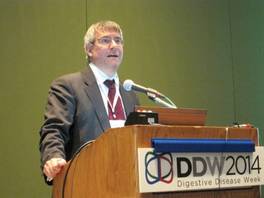
CHICAGO – Results were negative from the first randomized placebo-controlled trial of fecal microbiota transplant in ulcerative colitis, but enthusiasm remains for this newly regulated and trendy therapy.
"We need to get more data and we need to understand how better to use this approach, but I don’t think this study is telling us we should stop exploring. I still think it is an interesting avenue that we need to evaluate," study author Dr. Paul Moayyedi said during a late-breaking abstract session at Digestive Disease Week.
Part of the enthusiasm for what was described as "the new kid on the block for altering gut flora," has been fueled by a roughly 90% success rate for fecal transplant in treating Clostridium difficile infection.
Dr. Moayyedi also showcased a success story from the trial that "typifies a few patients in this study." The patient had ulcerative colitis for almost 20 years that was unresponsive to steroids and 5-aminosalicylic acid for 2 years before the study and so severe it caused bloody diarrhea 10-20 times per day. No improvement was seen after 6 weeks of placebo therapy and his Mayo Clinic score was "about as bad as it can be" at 12.
After crossing over to 6 weeks of open-label fecal microbiota transplantation (FMT), symptoms were much improved and his Mayo score dropped to 5. After 20 weeks, mucosa healed throughout the colon, his Mayo score reached 0, and he was "fine" on no medication.
"What we’re finding is that 6 weeks is usually not enough and that if you continue longer, you can get remission in some patients," said Dr. Moayyedi, the Richard Hunt-Astra Zeneca Chair in Gastroenterology, McMaster University, Hamilton, Ontario.
He went on to say, "I’m a very big proponent of evidenced-based medicine, but cases like these make you think something must be going on in some patients, but we don’t have the funding to do the 500-patient trial you need to get that signal."
Dr. Moayyedi and his associates enrolled ambulatory patients with active ulcerative colitis, defined as a Mayo score of at least 4 and an endoscopic Mayo score of at least 1, who tested negative for the C. difficile gene. Patients could be on ulcerative colitis medications, if doses were stable for at least 12 weeks but had to be off antibiotics for 30 days.
Patients were randomly assigned to receive a 50-mL retention enema containing fecal microbiota from an anonymous donor or water, once per week for 6 weeks. The primary outcome was remission of ulcerative colitis, defined as a Mayo score of 2 or less and an endoscopic Mayo score of 0 at week 7. Patients, clinicians, and investigators were blinded to therapy.
The 31 FMT and 30 placebo patients were well matched at baseline, except for significantly more pancolitis in the FMT group (64% vs. 36%).
Remission was achieved by seven FMT patients (23%) and two placebo patients (7%), which was not significantly different (P = .15), Dr. Moayyedi said.
There also were no differences between the FMT and placebo groups in any of the secondary outcomes: 6-week Mayo score (6.36 vs. 6.30; P = .95), 6-week Inflammatory Bowel Disease Questionnaire (148.4 vs. 146.4; P = .85), and 6-week EQ-5D health questionnaire (61.0 vs. 66.2; P = .34).
Based on these findings, the study is being stopped for futility, he said.
There were no major adverse events, although the diagnosis changed to Crohn’s colitis for two patients given FMT and one on placebo.
This was "much bigger than you’d expect," Dr. Moayyedi said. "We’re not sure why, and of course the worry is that FMT may change the phenotype, which would not be good."
If FMT is to succeed in ulcerative colitis, he suggested more data will be needed on the fecal microbiome and the best approach to administer FMT, including donor selection, timing, preparation, and duration of treatment. The group has not done an analysis of enema dwell time and response, and no signal was seen that FMT is more effective in left-sided disease.
More detailed microbiome analyses of the patient highlighted during the talk, however, revealed the man had a "very diverse and unstable" microbiome at baseline that gradually became more stable, "with a loss of Ruminococcus that seems to be a feature of improvement and a movement toward the phenotype of the donor," Dr. Moayyedi said.
During a discussion of the results, some audience members expressed concern that FMT might change the phenotype, while others were more enthusiastic about the therapy.
Dr. Scott Harris, a gastroenterologist and professor of medicine, Georgetown University Medical Center, Washington, said the trial was likely underpowered, and that by including patients with less severe disease, it may have been more difficult to see a treatment effect. Other trials have also shown that 6 weeks of therapy may not be enough for refractory patients.
"I’m very optimistic, I wouldn’t stop at this point," he said.
Session cochair Dr. John M. Inadomi, professor of medicine and head of gastroenterology, University of Washington School of Medicine, Seattle, agreed that the length of treatment as well as the study’s use of anonymous donors could have affected results. One of the big questions is whether the donor feces actually grafted and thus affected the recipient.
"If you use the wrong donor stool, if the stool didn’t graft, these kinds of things can obviously make a negative result, even if the concept is potentially fine," he said in an interview.
Last year, the Food and Drug Administration moved to require an investigational new drug permit to treat C. difficile with fecal microbiota, but changed course within weeks citing public pressure. While researchers are studying the potential to deliver feces via capsule, Dr. Moayyedi observed that some enthusiasts are offering Internet advice on how to mix your own FMT at home.
Dr. Moayyedi reported financial ties with AstraZeneca Pharmaceuticals, Forest Laboratories, and Shire Canada. Dr. Harris reported no conflicting interests. Dr. Inadomi reported financial relationships with Given Imaging, ChemImage, Cernostics, and Epigenomics.
CHICAGO – Results were negative from the first randomized placebo-controlled trial of fecal microbiota transplant in ulcerative colitis, but enthusiasm remains for this newly regulated and trendy therapy.
"We need to get more data and we need to understand how better to use this approach, but I don’t think this study is telling us we should stop exploring. I still think it is an interesting avenue that we need to evaluate," study author Dr. Paul Moayyedi said during a late-breaking abstract session at Digestive Disease Week.
Part of the enthusiasm for what was described as "the new kid on the block for altering gut flora," has been fueled by a roughly 90% success rate for fecal transplant in treating Clostridium difficile infection.
Dr. Moayyedi also showcased a success story from the trial that "typifies a few patients in this study." The patient had ulcerative colitis for almost 20 years that was unresponsive to steroids and 5-aminosalicylic acid for 2 years before the study and so severe it caused bloody diarrhea 10-20 times per day. No improvement was seen after 6 weeks of placebo therapy and his Mayo Clinic score was "about as bad as it can be" at 12.
After crossing over to 6 weeks of open-label fecal microbiota transplantation (FMT), symptoms were much improved and his Mayo score dropped to 5. After 20 weeks, mucosa healed throughout the colon, his Mayo score reached 0, and he was "fine" on no medication.
"What we’re finding is that 6 weeks is usually not enough and that if you continue longer, you can get remission in some patients," said Dr. Moayyedi, the Richard Hunt-Astra Zeneca Chair in Gastroenterology, McMaster University, Hamilton, Ontario.
He went on to say, "I’m a very big proponent of evidenced-based medicine, but cases like these make you think something must be going on in some patients, but we don’t have the funding to do the 500-patient trial you need to get that signal."
Dr. Moayyedi and his associates enrolled ambulatory patients with active ulcerative colitis, defined as a Mayo score of at least 4 and an endoscopic Mayo score of at least 1, who tested negative for the C. difficile gene. Patients could be on ulcerative colitis medications, if doses were stable for at least 12 weeks but had to be off antibiotics for 30 days.
Patients were randomly assigned to receive a 50-mL retention enema containing fecal microbiota from an anonymous donor or water, once per week for 6 weeks. The primary outcome was remission of ulcerative colitis, defined as a Mayo score of 2 or less and an endoscopic Mayo score of 0 at week 7. Patients, clinicians, and investigators were blinded to therapy.
The 31 FMT and 30 placebo patients were well matched at baseline, except for significantly more pancolitis in the FMT group (64% vs. 36%).
Remission was achieved by seven FMT patients (23%) and two placebo patients (7%), which was not significantly different (P = .15), Dr. Moayyedi said.
There also were no differences between the FMT and placebo groups in any of the secondary outcomes: 6-week Mayo score (6.36 vs. 6.30; P = .95), 6-week Inflammatory Bowel Disease Questionnaire (148.4 vs. 146.4; P = .85), and 6-week EQ-5D health questionnaire (61.0 vs. 66.2; P = .34).
Based on these findings, the study is being stopped for futility, he said.
There were no major adverse events, although the diagnosis changed to Crohn’s colitis for two patients given FMT and one on placebo.
This was "much bigger than you’d expect," Dr. Moayyedi said. "We’re not sure why, and of course the worry is that FMT may change the phenotype, which would not be good."
If FMT is to succeed in ulcerative colitis, he suggested more data will be needed on the fecal microbiome and the best approach to administer FMT, including donor selection, timing, preparation, and duration of treatment. The group has not done an analysis of enema dwell time and response, and no signal was seen that FMT is more effective in left-sided disease.
More detailed microbiome analyses of the patient highlighted during the talk, however, revealed the man had a "very diverse and unstable" microbiome at baseline that gradually became more stable, "with a loss of Ruminococcus that seems to be a feature of improvement and a movement toward the phenotype of the donor," Dr. Moayyedi said.
During a discussion of the results, some audience members expressed concern that FMT might change the phenotype, while others were more enthusiastic about the therapy.
Dr. Scott Harris, a gastroenterologist and professor of medicine, Georgetown University Medical Center, Washington, said the trial was likely underpowered, and that by including patients with less severe disease, it may have been more difficult to see a treatment effect. Other trials have also shown that 6 weeks of therapy may not be enough for refractory patients.
"I’m very optimistic, I wouldn’t stop at this point," he said.
Session cochair Dr. John M. Inadomi, professor of medicine and head of gastroenterology, University of Washington School of Medicine, Seattle, agreed that the length of treatment as well as the study’s use of anonymous donors could have affected results. One of the big questions is whether the donor feces actually grafted and thus affected the recipient.
"If you use the wrong donor stool, if the stool didn’t graft, these kinds of things can obviously make a negative result, even if the concept is potentially fine," he said in an interview.
Last year, the Food and Drug Administration moved to require an investigational new drug permit to treat C. difficile with fecal microbiota, but changed course within weeks citing public pressure. While researchers are studying the potential to deliver feces via capsule, Dr. Moayyedi observed that some enthusiasts are offering Internet advice on how to mix your own FMT at home.
Dr. Moayyedi reported financial ties with AstraZeneca Pharmaceuticals, Forest Laboratories, and Shire Canada. Dr. Harris reported no conflicting interests. Dr. Inadomi reported financial relationships with Given Imaging, ChemImage, Cernostics, and Epigenomics.
CHICAGO – Results were negative from the first randomized placebo-controlled trial of fecal microbiota transplant in ulcerative colitis, but enthusiasm remains for this newly regulated and trendy therapy.
"We need to get more data and we need to understand how better to use this approach, but I don’t think this study is telling us we should stop exploring. I still think it is an interesting avenue that we need to evaluate," study author Dr. Paul Moayyedi said during a late-breaking abstract session at Digestive Disease Week.
Part of the enthusiasm for what was described as "the new kid on the block for altering gut flora," has been fueled by a roughly 90% success rate for fecal transplant in treating Clostridium difficile infection.
Dr. Moayyedi also showcased a success story from the trial that "typifies a few patients in this study." The patient had ulcerative colitis for almost 20 years that was unresponsive to steroids and 5-aminosalicylic acid for 2 years before the study and so severe it caused bloody diarrhea 10-20 times per day. No improvement was seen after 6 weeks of placebo therapy and his Mayo Clinic score was "about as bad as it can be" at 12.
After crossing over to 6 weeks of open-label fecal microbiota transplantation (FMT), symptoms were much improved and his Mayo score dropped to 5. After 20 weeks, mucosa healed throughout the colon, his Mayo score reached 0, and he was "fine" on no medication.
"What we’re finding is that 6 weeks is usually not enough and that if you continue longer, you can get remission in some patients," said Dr. Moayyedi, the Richard Hunt-Astra Zeneca Chair in Gastroenterology, McMaster University, Hamilton, Ontario.
He went on to say, "I’m a very big proponent of evidenced-based medicine, but cases like these make you think something must be going on in some patients, but we don’t have the funding to do the 500-patient trial you need to get that signal."
Dr. Moayyedi and his associates enrolled ambulatory patients with active ulcerative colitis, defined as a Mayo score of at least 4 and an endoscopic Mayo score of at least 1, who tested negative for the C. difficile gene. Patients could be on ulcerative colitis medications, if doses were stable for at least 12 weeks but had to be off antibiotics for 30 days.
Patients were randomly assigned to receive a 50-mL retention enema containing fecal microbiota from an anonymous donor or water, once per week for 6 weeks. The primary outcome was remission of ulcerative colitis, defined as a Mayo score of 2 or less and an endoscopic Mayo score of 0 at week 7. Patients, clinicians, and investigators were blinded to therapy.
The 31 FMT and 30 placebo patients were well matched at baseline, except for significantly more pancolitis in the FMT group (64% vs. 36%).
Remission was achieved by seven FMT patients (23%) and two placebo patients (7%), which was not significantly different (P = .15), Dr. Moayyedi said.
There also were no differences between the FMT and placebo groups in any of the secondary outcomes: 6-week Mayo score (6.36 vs. 6.30; P = .95), 6-week Inflammatory Bowel Disease Questionnaire (148.4 vs. 146.4; P = .85), and 6-week EQ-5D health questionnaire (61.0 vs. 66.2; P = .34).
Based on these findings, the study is being stopped for futility, he said.
There were no major adverse events, although the diagnosis changed to Crohn’s colitis for two patients given FMT and one on placebo.
This was "much bigger than you’d expect," Dr. Moayyedi said. "We’re not sure why, and of course the worry is that FMT may change the phenotype, which would not be good."
If FMT is to succeed in ulcerative colitis, he suggested more data will be needed on the fecal microbiome and the best approach to administer FMT, including donor selection, timing, preparation, and duration of treatment. The group has not done an analysis of enema dwell time and response, and no signal was seen that FMT is more effective in left-sided disease.
More detailed microbiome analyses of the patient highlighted during the talk, however, revealed the man had a "very diverse and unstable" microbiome at baseline that gradually became more stable, "with a loss of Ruminococcus that seems to be a feature of improvement and a movement toward the phenotype of the donor," Dr. Moayyedi said.
During a discussion of the results, some audience members expressed concern that FMT might change the phenotype, while others were more enthusiastic about the therapy.
Dr. Scott Harris, a gastroenterologist and professor of medicine, Georgetown University Medical Center, Washington, said the trial was likely underpowered, and that by including patients with less severe disease, it may have been more difficult to see a treatment effect. Other trials have also shown that 6 weeks of therapy may not be enough for refractory patients.
"I’m very optimistic, I wouldn’t stop at this point," he said.
Session cochair Dr. John M. Inadomi, professor of medicine and head of gastroenterology, University of Washington School of Medicine, Seattle, agreed that the length of treatment as well as the study’s use of anonymous donors could have affected results. One of the big questions is whether the donor feces actually grafted and thus affected the recipient.
"If you use the wrong donor stool, if the stool didn’t graft, these kinds of things can obviously make a negative result, even if the concept is potentially fine," he said in an interview.
Last year, the Food and Drug Administration moved to require an investigational new drug permit to treat C. difficile with fecal microbiota, but changed course within weeks citing public pressure. While researchers are studying the potential to deliver feces via capsule, Dr. Moayyedi observed that some enthusiasts are offering Internet advice on how to mix your own FMT at home.
Dr. Moayyedi reported financial ties with AstraZeneca Pharmaceuticals, Forest Laboratories, and Shire Canada. Dr. Harris reported no conflicting interests. Dr. Inadomi reported financial relationships with Given Imaging, ChemImage, Cernostics, and Epigenomics.
AT DDW 2014
Key clinical finding: Fecal microbiota transplant is not ready for ulcerative colitis yet.
Major finding: Remission was achieved by seven FMT patients (23%) and two placebo patients (7%) (P = .15).
Data source: A double-blind, prospective study of 61 patients with ulcerative colitis.
Disclosures: Dr. Moayyedi reported financial ties with AstraZeneca Pharmaceuticals, Forest Laboratories, and Shire Canada. Dr. Harris reported no conflicting interests. Dr. Inadomi reported financial relationships with Given Imaging, ChemImage, Cernostics, and Epigenomics.
Undiagnosed joint hypermobility syndrome prevalent in GI clinics
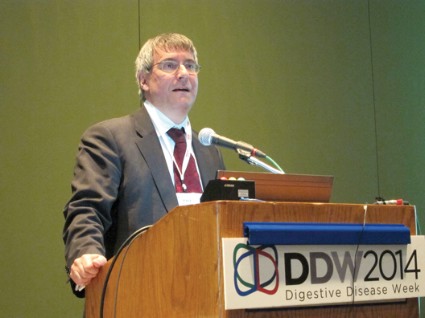
Joint hypermobility syndrome is significantly associated with gastrointestinal symptoms, say researchers who found the undiagnosed condition in one-third of unselected patients attending a gastrointestinal clinic.
The prospective, cross-sectional cohort study enrolled 552 patients referred to gastrointestinal clinics from primary care and who were unaware of their hypermobility status, as well as a positive control group of 54 consecutive patients with diagnosed joint hypermobility syndrome (JHS) referred from specialist rheumatology clinics.
Researchers found that 180 (33%) of the 552 unselected patients attending the clinics had undiagnosed JHS, according to a paper published online in Clinical Gastroenterology and Hepatology.
"Although these JHS patients were previously undiagnosed, they had the same pattern of features as the JHS-Rh [rheumatology clinic–referred] patients, with increased musculoskeletal symptoms, autonomic symptoms, chronic widespread pain, and fibromyalgia, albeit to a lesser degree, suggesting they have a milder phenotype than JHS-Rh," wrote Dr. Asma Fikree of Queen Mary, University of London and her colleagues.
After adjustment for age and gender, the data showed that increasing JHS phenotype was associated with a significant increase in gastrointestinal symptoms.
"Although at first it would appear that JHS-Rh patients have a completely different set of GI symptoms than JHS-G [JH-positive, primary care–referred] patients, it becomes apparent when all three groups are compared that a whole range of symptoms previously deemed to be associated with JHS in tertiary non-GI settings, e.g., bloating, alternating bowel habit, dysphagia, and abdominal pain, show significantly increasing trends with increasing JHS phenotype," the authors wrote.
The patients with undiagnosed JHS presenting to the gastrointestinal clinics were significantly younger, and a higher proportion were female, compared with clinic attendees without JHS. The patients referred from rheumatology clinics were significantly younger than the patients in both these groups, and 95.5% were female.
The rheumatology clinic patients had a higher incidence of polyarthralgia, dislocations, soft tissue injuries, marfanoid habitus, skin changes, eye signs, varicose veins, and organ prolapse, compared with the primary care patients (Clin. Gastroenterol. Hepatol. 2014 [doi: 10.1016/j.cgh.2014.01.014]).
While gastrointestinal complaints are commonly found in inflammatory connective tissue disorders, the association between JHS and gastrointestinal symptoms was first documented in a 2003 study, which found 37% of JHS patients attending rheumatology clinics exhibited gastrointestinal symptoms such as nausea, abdominal pain, bloating, constipation, and diarrhea.
Researchers in this study used questionnaires to assess gastrointestinal symptoms, psychopathology, and autonomic symptoms, with the aim of identifying any particular gastrointestinal symptoms that might be associated with other known characteristics of JHS.
They found that only autonomic scores and the number of tender points affected the strength of the association between JHS and gastrointestinal symptoms, although the association with tender points was greater for the symptoms of heartburn and postprandial fullness.
There were no conflicts of interest declared.
Joint hypermobility syndrome is significantly associated with gastrointestinal symptoms, say researchers who found the undiagnosed condition in one-third of unselected patients attending a gastrointestinal clinic.
The prospective, cross-sectional cohort study enrolled 552 patients referred to gastrointestinal clinics from primary care and who were unaware of their hypermobility status, as well as a positive control group of 54 consecutive patients with diagnosed joint hypermobility syndrome (JHS) referred from specialist rheumatology clinics.
Researchers found that 180 (33%) of the 552 unselected patients attending the clinics had undiagnosed JHS, according to a paper published online in Clinical Gastroenterology and Hepatology.
"Although these JHS patients were previously undiagnosed, they had the same pattern of features as the JHS-Rh [rheumatology clinic–referred] patients, with increased musculoskeletal symptoms, autonomic symptoms, chronic widespread pain, and fibromyalgia, albeit to a lesser degree, suggesting they have a milder phenotype than JHS-Rh," wrote Dr. Asma Fikree of Queen Mary, University of London and her colleagues.
After adjustment for age and gender, the data showed that increasing JHS phenotype was associated with a significant increase in gastrointestinal symptoms.
"Although at first it would appear that JHS-Rh patients have a completely different set of GI symptoms than JHS-G [JH-positive, primary care–referred] patients, it becomes apparent when all three groups are compared that a whole range of symptoms previously deemed to be associated with JHS in tertiary non-GI settings, e.g., bloating, alternating bowel habit, dysphagia, and abdominal pain, show significantly increasing trends with increasing JHS phenotype," the authors wrote.
The patients with undiagnosed JHS presenting to the gastrointestinal clinics were significantly younger, and a higher proportion were female, compared with clinic attendees without JHS. The patients referred from rheumatology clinics were significantly younger than the patients in both these groups, and 95.5% were female.
The rheumatology clinic patients had a higher incidence of polyarthralgia, dislocations, soft tissue injuries, marfanoid habitus, skin changes, eye signs, varicose veins, and organ prolapse, compared with the primary care patients (Clin. Gastroenterol. Hepatol. 2014 [doi: 10.1016/j.cgh.2014.01.014]).
While gastrointestinal complaints are commonly found in inflammatory connective tissue disorders, the association between JHS and gastrointestinal symptoms was first documented in a 2003 study, which found 37% of JHS patients attending rheumatology clinics exhibited gastrointestinal symptoms such as nausea, abdominal pain, bloating, constipation, and diarrhea.
Researchers in this study used questionnaires to assess gastrointestinal symptoms, psychopathology, and autonomic symptoms, with the aim of identifying any particular gastrointestinal symptoms that might be associated with other known characteristics of JHS.
They found that only autonomic scores and the number of tender points affected the strength of the association between JHS and gastrointestinal symptoms, although the association with tender points was greater for the symptoms of heartburn and postprandial fullness.
There were no conflicts of interest declared.
Joint hypermobility syndrome is significantly associated with gastrointestinal symptoms, say researchers who found the undiagnosed condition in one-third of unselected patients attending a gastrointestinal clinic.
The prospective, cross-sectional cohort study enrolled 552 patients referred to gastrointestinal clinics from primary care and who were unaware of their hypermobility status, as well as a positive control group of 54 consecutive patients with diagnosed joint hypermobility syndrome (JHS) referred from specialist rheumatology clinics.
Researchers found that 180 (33%) of the 552 unselected patients attending the clinics had undiagnosed JHS, according to a paper published online in Clinical Gastroenterology and Hepatology.
"Although these JHS patients were previously undiagnosed, they had the same pattern of features as the JHS-Rh [rheumatology clinic–referred] patients, with increased musculoskeletal symptoms, autonomic symptoms, chronic widespread pain, and fibromyalgia, albeit to a lesser degree, suggesting they have a milder phenotype than JHS-Rh," wrote Dr. Asma Fikree of Queen Mary, University of London and her colleagues.
After adjustment for age and gender, the data showed that increasing JHS phenotype was associated with a significant increase in gastrointestinal symptoms.
"Although at first it would appear that JHS-Rh patients have a completely different set of GI symptoms than JHS-G [JH-positive, primary care–referred] patients, it becomes apparent when all three groups are compared that a whole range of symptoms previously deemed to be associated with JHS in tertiary non-GI settings, e.g., bloating, alternating bowel habit, dysphagia, and abdominal pain, show significantly increasing trends with increasing JHS phenotype," the authors wrote.
The patients with undiagnosed JHS presenting to the gastrointestinal clinics were significantly younger, and a higher proportion were female, compared with clinic attendees without JHS. The patients referred from rheumatology clinics were significantly younger than the patients in both these groups, and 95.5% were female.
The rheumatology clinic patients had a higher incidence of polyarthralgia, dislocations, soft tissue injuries, marfanoid habitus, skin changes, eye signs, varicose veins, and organ prolapse, compared with the primary care patients (Clin. Gastroenterol. Hepatol. 2014 [doi: 10.1016/j.cgh.2014.01.014]).
While gastrointestinal complaints are commonly found in inflammatory connective tissue disorders, the association between JHS and gastrointestinal symptoms was first documented in a 2003 study, which found 37% of JHS patients attending rheumatology clinics exhibited gastrointestinal symptoms such as nausea, abdominal pain, bloating, constipation, and diarrhea.
Researchers in this study used questionnaires to assess gastrointestinal symptoms, psychopathology, and autonomic symptoms, with the aim of identifying any particular gastrointestinal symptoms that might be associated with other known characteristics of JHS.
They found that only autonomic scores and the number of tender points affected the strength of the association between JHS and gastrointestinal symptoms, although the association with tender points was greater for the symptoms of heartburn and postprandial fullness.
There were no conflicts of interest declared.
FROM CLINICAL GASTROENTEROLOGY AND HEPATOLOGY
Major finding: Joint hypermobility syndrome is significantly associated with gastrointestinal symptoms such as abdominal pain, bloating, and dysphagia, say researchers who found one-third of unselected patients attending a gastrointestinal clinic had undiagnosed joint hypermobility syndrome.
Data source: Prospective cross-sectional cohort study of 552 consecutive patients referred to a gastrointestinal clinic from primary care (33% with undiagnosed joint hypermobility syndrome) and 54 positive controls with JHS referred from rheumatology clinics.
Disclosures: There were no conflicts of interest declared.
Oral PPI therapy gets nod following bleeding ulcer repair
CHICAGO – Oral proton pump inhibitor therapy on the medical ward following endoscopic treatment of patients with a bleeding ulcer is equally effective as the current guideline-recommended practice of administering a PPI bolus followed by a 72-hour continuous intravenous infusion – and a lot less resource intensive.
That’s the highly practical message from a meta-analysis of randomized trials addressing the issue that Dr. Hamita Sachar presented at the annual Digestive Disease Week.

Current national and international guidelines recommend an intravenous 80-mg bolus of PPI followed by a 72-hour infusion at 8 mg/hr after successful endoscopic therapy of a high-risk bleeding ulcer. These guidelines need to be revisited in light of the new data, according to Dr. Sachar, a fellow in digestive diseases at Yale University, New Haven, Conn.
"This is practice changing. Intermittent oral therapy is less expensive. Also, it’s quite easy to administer. If you can get away with twice-daily oral dosing, it’s preferred over an IV infusion by patients, it requires less nursing time, and there’s less pharmacy personnel time. As long as patients don’t have nausea and vomiting, I think it’s reasonable for them to get oral therapy because equivalent doses of IV and oral drug have exactly the same pharmacokinetic profiles," she said in an interview.
The meta-analysis, which featured a noninferiority design, included a dozen randomized trials totaling more than 1,600 patients. The primary outcome was the rate of rebleeding within 7 days. It turned out to be virtually identical in the two groups.
Moreover, there was no significant difference between patients who received intermittent oral PPI therapy at standard doses and those who got the guideline-recommended bolus, continuous-infusion regimen in terms of any of the secondary endpoints in the meta-analysis, which included rebleeding within 30 days, rebleeding within 3 days, need for blood transfusion, urgent surgical or endoscopic interventions, and length of hospital stay.
Dr. Sachar and her coinvestigators performed the meta-analysis because their physiologic model suggested that intravenous therapy was safely avoidable. They noted that several randomized trials in the literature concluded that the two treatment strategies might yield comparable outcomes; however, the individual studies were too small to allow any firm conclusions to be drawn.
The study was supported by institutional funds. Dr. Sachar reported having no financial conflicts regarding this study.
Sachar and colleagues presented an interesting systematic review and meta-analysis at DDW 2014 (Gastroenterology 2014;146(5 Suppl 1):S-75). This presentation has fueled discussions on whether high-risk patients with peptic ulcer bleeding (those who had successful endoscopic hemostasis for high-risk stigmata) should receive PPIs intermittently (intravenously or even orally) as opposed to the current practice of high-dose continuous intravenous infusion.

|
| Dr. Grigorios I. Leontiadis |
In conclusion, until the quality of the evidence can be fully assessed, it would be prudent to adhere to the recommendations from the existing practice guidelines and treat high-risk patients with peptic ulcer bleeding with high-dose intravenous infusion PPI treatment, since this is the only dose that has been proven to reduce not only rebleeding but also mortality.
Dr. Grigorios I. Leontiadis is assistant professor of medicine, division of gastroenterology, McMaster University, Hamilton, Ont. He was a consultant to a PPI manufacturer more than 5 years ago.
Sachar and colleagues presented an interesting systematic review and meta-analysis at DDW 2014 (Gastroenterology 2014;146(5 Suppl 1):S-75). This presentation has fueled discussions on whether high-risk patients with peptic ulcer bleeding (those who had successful endoscopic hemostasis for high-risk stigmata) should receive PPIs intermittently (intravenously or even orally) as opposed to the current practice of high-dose continuous intravenous infusion.
|
|
| Dr. Grigorios I. Leontiadis |
In conclusion, until the quality of the evidence can be fully assessed, it would be prudent to adhere to the recommendations from the existing practice guidelines and treat high-risk patients with peptic ulcer bleeding with high-dose intravenous infusion PPI treatment, since this is the only dose that has been proven to reduce not only rebleeding but also mortality.
Dr. Grigorios I. Leontiadis is assistant professor of medicine, division of gastroenterology, McMaster University, Hamilton, Ont. He was a consultant to a PPI manufacturer more than 5 years ago.
Sachar and colleagues presented an interesting systematic review and meta-analysis at DDW 2014 (Gastroenterology 2014;146(5 Suppl 1):S-75). This presentation has fueled discussions on whether high-risk patients with peptic ulcer bleeding (those who had successful endoscopic hemostasis for high-risk stigmata) should receive PPIs intermittently (intravenously or even orally) as opposed to the current practice of high-dose continuous intravenous infusion.
|
|
| Dr. Grigorios I. Leontiadis |
In conclusion, until the quality of the evidence can be fully assessed, it would be prudent to adhere to the recommendations from the existing practice guidelines and treat high-risk patients with peptic ulcer bleeding with high-dose intravenous infusion PPI treatment, since this is the only dose that has been proven to reduce not only rebleeding but also mortality.
Dr. Grigorios I. Leontiadis is assistant professor of medicine, division of gastroenterology, McMaster University, Hamilton, Ont. He was a consultant to a PPI manufacturer more than 5 years ago.
CHICAGO – Oral proton pump inhibitor therapy on the medical ward following endoscopic treatment of patients with a bleeding ulcer is equally effective as the current guideline-recommended practice of administering a PPI bolus followed by a 72-hour continuous intravenous infusion – and a lot less resource intensive.
That’s the highly practical message from a meta-analysis of randomized trials addressing the issue that Dr. Hamita Sachar presented at the annual Digestive Disease Week.
Current national and international guidelines recommend an intravenous 80-mg bolus of PPI followed by a 72-hour infusion at 8 mg/hr after successful endoscopic therapy of a high-risk bleeding ulcer. These guidelines need to be revisited in light of the new data, according to Dr. Sachar, a fellow in digestive diseases at Yale University, New Haven, Conn.
"This is practice changing. Intermittent oral therapy is less expensive. Also, it’s quite easy to administer. If you can get away with twice-daily oral dosing, it’s preferred over an IV infusion by patients, it requires less nursing time, and there’s less pharmacy personnel time. As long as patients don’t have nausea and vomiting, I think it’s reasonable for them to get oral therapy because equivalent doses of IV and oral drug have exactly the same pharmacokinetic profiles," she said in an interview.
The meta-analysis, which featured a noninferiority design, included a dozen randomized trials totaling more than 1,600 patients. The primary outcome was the rate of rebleeding within 7 days. It turned out to be virtually identical in the two groups.
Moreover, there was no significant difference between patients who received intermittent oral PPI therapy at standard doses and those who got the guideline-recommended bolus, continuous-infusion regimen in terms of any of the secondary endpoints in the meta-analysis, which included rebleeding within 30 days, rebleeding within 3 days, need for blood transfusion, urgent surgical or endoscopic interventions, and length of hospital stay.
Dr. Sachar and her coinvestigators performed the meta-analysis because their physiologic model suggested that intravenous therapy was safely avoidable. They noted that several randomized trials in the literature concluded that the two treatment strategies might yield comparable outcomes; however, the individual studies were too small to allow any firm conclusions to be drawn.
The study was supported by institutional funds. Dr. Sachar reported having no financial conflicts regarding this study.
CHICAGO – Oral proton pump inhibitor therapy on the medical ward following endoscopic treatment of patients with a bleeding ulcer is equally effective as the current guideline-recommended practice of administering a PPI bolus followed by a 72-hour continuous intravenous infusion – and a lot less resource intensive.
That’s the highly practical message from a meta-analysis of randomized trials addressing the issue that Dr. Hamita Sachar presented at the annual Digestive Disease Week.
Current national and international guidelines recommend an intravenous 80-mg bolus of PPI followed by a 72-hour infusion at 8 mg/hr after successful endoscopic therapy of a high-risk bleeding ulcer. These guidelines need to be revisited in light of the new data, according to Dr. Sachar, a fellow in digestive diseases at Yale University, New Haven, Conn.
"This is practice changing. Intermittent oral therapy is less expensive. Also, it’s quite easy to administer. If you can get away with twice-daily oral dosing, it’s preferred over an IV infusion by patients, it requires less nursing time, and there’s less pharmacy personnel time. As long as patients don’t have nausea and vomiting, I think it’s reasonable for them to get oral therapy because equivalent doses of IV and oral drug have exactly the same pharmacokinetic profiles," she said in an interview.
The meta-analysis, which featured a noninferiority design, included a dozen randomized trials totaling more than 1,600 patients. The primary outcome was the rate of rebleeding within 7 days. It turned out to be virtually identical in the two groups.
Moreover, there was no significant difference between patients who received intermittent oral PPI therapy at standard doses and those who got the guideline-recommended bolus, continuous-infusion regimen in terms of any of the secondary endpoints in the meta-analysis, which included rebleeding within 30 days, rebleeding within 3 days, need for blood transfusion, urgent surgical or endoscopic interventions, and length of hospital stay.
Dr. Sachar and her coinvestigators performed the meta-analysis because their physiologic model suggested that intravenous therapy was safely avoidable. They noted that several randomized trials in the literature concluded that the two treatment strategies might yield comparable outcomes; however, the individual studies were too small to allow any firm conclusions to be drawn.
The study was supported by institutional funds. Dr. Sachar reported having no financial conflicts regarding this study.
AT DDW 2014
Major finding: Oral proton pump inhibitor therapy can safely and effectively replace the guideline-recommended standard regimen consisting of a PPI bolus followed by 72 hours of continuous intravenous infusion after endoscopic treatment of a bleeding ulcer.
Data source: This was a meta-analysis with a noninferiority design. It included 12 randomized trials totaling 1,653 patients who had undergone endoscopic hemostasis for a bleeding ulcer.
Disclosures: The study was supported by institutional funds. Dr. Sachar reported having no financial conflicts regarding this study.

Eluxadoline scores in phase III for irritable bowel syndrome
CHICAGO – A first-in-class oral drug targeting diarrhea-predominant irritable bowel syndrome achieved its primary and secondary endpoints in a pair of large phase III trials presented at the annual Digestive Disease Week.
Eluxadoline is a locally active mixed mu-opioid receptor agonist and delta-opioid receptor antagonist. It was compared with placebo at doses of 75 mg and 100 mg b.i.d. in the two double-blind phase III trials, which totaled 2,427 patients with diarrhea-predominant irritable bowel syndrome (IBS-D) by Rome III criteria. The trials featured identical outcome measures; however, one study entailed 12 weeks of double-blind therapy in accord with a Food and Drug Administration request, while the other involved 26 weeks as stipulated by the European Medicines Agency, explained Dr. Anthony Lembo, director of the GI motility center at Beth Israel Deaconess Medical Center, Boston.

The primary endpoint was a composite requiring at least 30% improvement in daily abdominal pain, compared with baseline, and improved stool consistency as reflected in a Bristol Stool Score of less than 5. In the 12-week trial, this was achieved by 27% of patients on eluxadoline at 100 mg b.i.d. and by 26.2% on 75 mg b.i.d., both significantly better rates than the 16.7% in placebo-treated controls. In the 26-week study, the rates were 31%, 26.7%, and 19.5%, respectively. Improvement in the eluxadoline group was seen within the first several days of treatment.
The drug was equally effective in men and women.
Turning to secondary endpoints, Dr. Lembo highlighted the finding that 42% of the eluxadoline 100 mg b.i.d. group reported more than 50% of their days during weeks 1-12 as being urgency free, compared with 21% of controls. Twenty-nine percent of those on the higher dose reported more than 75% of days were urgency free, compared with 12% on placebo.
Bowel movement frequency improved from a baseline average of 4.9 per day to 2.9 per day at week 26 in the group on eluxadoline 100 mg b.i.d., significantly better than the 3.3 movements per day in controls. A 40% or greater improvement in abdominal pain score was reported at week 12 by 43.2% of patients on eluxadoline 100 mg b.i.d. compared with 35.8% of controls.
Safety concerns arose. Eight confirmed cases of hepatobiliary sphincter of Oddi spasm occurred, all in patients on eluxadoline, and all in patients with prior cholecystectomy. Seven of the eight patients were in the high-dose therapy arm. Six cases occurred during the first week of therapy. All eight cases were rapidly reversed upon prompt drug discontinuation; seven were managed on an outpatient basis.
In addition, there were five confirmed cases of pancreatitis, again all in the eluxadoline group. All five cases were mild, and all occurred in patients with pancreatitis risk factors: Three were chronic heavy alcohol abusers, one had biliary sludge, and one had a history of cholecystectomy with sphincter of Oddi spasm. These five patients had brief hospitalizations with no sequelae.
Several audience members greeted this news as a potential roadblock in the drug’s development. Dr. Lembo took a different view.
"These risks can be mitigated through appropriate patient selection and education," the gastroenterologist said. "There does seem to be a group of patients that seem to be particularly at risk: those with prior cholecystectomy or chronic alcohol use. If that’s true and the drug is relatively safe in the remainder of the population, then I think the risk/benefit ratio would be acceptable, especially since there are relatively few other treatment options for these patients."
Other audience members were critical of eluxadoline’s efficacy. "You have a drug that has at best extremely modest effects, with about a 10% absolute overall improvement over placebo, which is statistically significant primarily because you had so many patients in the studies," one gastroenterologist asserted.
Dr. Lembo replied that this magnitude of benefit is similar to what’s seen with drugs now approved for the common and vexing problem of IBS-D.
The phase III trials were sponsored by Furiex Pharmaceuticals. Dr. Lembo reported serving as an adviser or consultant to five pharmaceutical companies, not including Furiex.
CHICAGO – A first-in-class oral drug targeting diarrhea-predominant irritable bowel syndrome achieved its primary and secondary endpoints in a pair of large phase III trials presented at the annual Digestive Disease Week.
Eluxadoline is a locally active mixed mu-opioid receptor agonist and delta-opioid receptor antagonist. It was compared with placebo at doses of 75 mg and 100 mg b.i.d. in the two double-blind phase III trials, which totaled 2,427 patients with diarrhea-predominant irritable bowel syndrome (IBS-D) by Rome III criteria. The trials featured identical outcome measures; however, one study entailed 12 weeks of double-blind therapy in accord with a Food and Drug Administration request, while the other involved 26 weeks as stipulated by the European Medicines Agency, explained Dr. Anthony Lembo, director of the GI motility center at Beth Israel Deaconess Medical Center, Boston.
The primary endpoint was a composite requiring at least 30% improvement in daily abdominal pain, compared with baseline, and improved stool consistency as reflected in a Bristol Stool Score of less than 5. In the 12-week trial, this was achieved by 27% of patients on eluxadoline at 100 mg b.i.d. and by 26.2% on 75 mg b.i.d., both significantly better rates than the 16.7% in placebo-treated controls. In the 26-week study, the rates were 31%, 26.7%, and 19.5%, respectively. Improvement in the eluxadoline group was seen within the first several days of treatment.
The drug was equally effective in men and women.
Turning to secondary endpoints, Dr. Lembo highlighted the finding that 42% of the eluxadoline 100 mg b.i.d. group reported more than 50% of their days during weeks 1-12 as being urgency free, compared with 21% of controls. Twenty-nine percent of those on the higher dose reported more than 75% of days were urgency free, compared with 12% on placebo.
Bowel movement frequency improved from a baseline average of 4.9 per day to 2.9 per day at week 26 in the group on eluxadoline 100 mg b.i.d., significantly better than the 3.3 movements per day in controls. A 40% or greater improvement in abdominal pain score was reported at week 12 by 43.2% of patients on eluxadoline 100 mg b.i.d. compared with 35.8% of controls.
Safety concerns arose. Eight confirmed cases of hepatobiliary sphincter of Oddi spasm occurred, all in patients on eluxadoline, and all in patients with prior cholecystectomy. Seven of the eight patients were in the high-dose therapy arm. Six cases occurred during the first week of therapy. All eight cases were rapidly reversed upon prompt drug discontinuation; seven were managed on an outpatient basis.
In addition, there were five confirmed cases of pancreatitis, again all in the eluxadoline group. All five cases were mild, and all occurred in patients with pancreatitis risk factors: Three were chronic heavy alcohol abusers, one had biliary sludge, and one had a history of cholecystectomy with sphincter of Oddi spasm. These five patients had brief hospitalizations with no sequelae.
Several audience members greeted this news as a potential roadblock in the drug’s development. Dr. Lembo took a different view.
"These risks can be mitigated through appropriate patient selection and education," the gastroenterologist said. "There does seem to be a group of patients that seem to be particularly at risk: those with prior cholecystectomy or chronic alcohol use. If that’s true and the drug is relatively safe in the remainder of the population, then I think the risk/benefit ratio would be acceptable, especially since there are relatively few other treatment options for these patients."
Other audience members were critical of eluxadoline’s efficacy. "You have a drug that has at best extremely modest effects, with about a 10% absolute overall improvement over placebo, which is statistically significant primarily because you had so many patients in the studies," one gastroenterologist asserted.
Dr. Lembo replied that this magnitude of benefit is similar to what’s seen with drugs now approved for the common and vexing problem of IBS-D.
The phase III trials were sponsored by Furiex Pharmaceuticals. Dr. Lembo reported serving as an adviser or consultant to five pharmaceutical companies, not including Furiex.
CHICAGO – A first-in-class oral drug targeting diarrhea-predominant irritable bowel syndrome achieved its primary and secondary endpoints in a pair of large phase III trials presented at the annual Digestive Disease Week.
Eluxadoline is a locally active mixed mu-opioid receptor agonist and delta-opioid receptor antagonist. It was compared with placebo at doses of 75 mg and 100 mg b.i.d. in the two double-blind phase III trials, which totaled 2,427 patients with diarrhea-predominant irritable bowel syndrome (IBS-D) by Rome III criteria. The trials featured identical outcome measures; however, one study entailed 12 weeks of double-blind therapy in accord with a Food and Drug Administration request, while the other involved 26 weeks as stipulated by the European Medicines Agency, explained Dr. Anthony Lembo, director of the GI motility center at Beth Israel Deaconess Medical Center, Boston.
The primary endpoint was a composite requiring at least 30% improvement in daily abdominal pain, compared with baseline, and improved stool consistency as reflected in a Bristol Stool Score of less than 5. In the 12-week trial, this was achieved by 27% of patients on eluxadoline at 100 mg b.i.d. and by 26.2% on 75 mg b.i.d., both significantly better rates than the 16.7% in placebo-treated controls. In the 26-week study, the rates were 31%, 26.7%, and 19.5%, respectively. Improvement in the eluxadoline group was seen within the first several days of treatment.
The drug was equally effective in men and women.
Turning to secondary endpoints, Dr. Lembo highlighted the finding that 42% of the eluxadoline 100 mg b.i.d. group reported more than 50% of their days during weeks 1-12 as being urgency free, compared with 21% of controls. Twenty-nine percent of those on the higher dose reported more than 75% of days were urgency free, compared with 12% on placebo.
Bowel movement frequency improved from a baseline average of 4.9 per day to 2.9 per day at week 26 in the group on eluxadoline 100 mg b.i.d., significantly better than the 3.3 movements per day in controls. A 40% or greater improvement in abdominal pain score was reported at week 12 by 43.2% of patients on eluxadoline 100 mg b.i.d. compared with 35.8% of controls.
Safety concerns arose. Eight confirmed cases of hepatobiliary sphincter of Oddi spasm occurred, all in patients on eluxadoline, and all in patients with prior cholecystectomy. Seven of the eight patients were in the high-dose therapy arm. Six cases occurred during the first week of therapy. All eight cases were rapidly reversed upon prompt drug discontinuation; seven were managed on an outpatient basis.
In addition, there were five confirmed cases of pancreatitis, again all in the eluxadoline group. All five cases were mild, and all occurred in patients with pancreatitis risk factors: Three were chronic heavy alcohol abusers, one had biliary sludge, and one had a history of cholecystectomy with sphincter of Oddi spasm. These five patients had brief hospitalizations with no sequelae.
Several audience members greeted this news as a potential roadblock in the drug’s development. Dr. Lembo took a different view.
"These risks can be mitigated through appropriate patient selection and education," the gastroenterologist said. "There does seem to be a group of patients that seem to be particularly at risk: those with prior cholecystectomy or chronic alcohol use. If that’s true and the drug is relatively safe in the remainder of the population, then I think the risk/benefit ratio would be acceptable, especially since there are relatively few other treatment options for these patients."
Other audience members were critical of eluxadoline’s efficacy. "You have a drug that has at best extremely modest effects, with about a 10% absolute overall improvement over placebo, which is statistically significant primarily because you had so many patients in the studies," one gastroenterologist asserted.
Dr. Lembo replied that this magnitude of benefit is similar to what’s seen with drugs now approved for the common and vexing problem of IBS-D.
The phase III trials were sponsored by Furiex Pharmaceuticals. Dr. Lembo reported serving as an adviser or consultant to five pharmaceutical companies, not including Furiex.
AT DDW 2014
Major finding: Thirty-one percent of patients with diarrhea-predominant irritable bowel syndrome on 100 mg b.i.d. of the investigational oral agent eluxadoline for 26 weeks met the primary composite study efficacy endpoint, compared with 19.5% on placebo.
Data source: These two phase III, double-blind, randomized, placebo-controlled trials included 2,427 patients with diarrhea-predominant irritable bowel syndrome.
Disclosures: The phase III trials were sponsored by Furiex Pharmaceuticals. Dr. Lembo reported serving as an adviser or consultant to five pharmaceutical companies, not including Furiex.

Larazotide eased symptoms in phase II celiac trial
CHICAGO – Larazotide acetate, a first-in-class oral medication developed specifically to treat celiac disease, reduced both gastrointestinal and non-GI symptoms in patients who were symptomatic despite being on a gluten-free diet in a 74-site, randomized, double-blind phase II study.
"Safety and tolerability were comparable to placebo, setting this drug up, we believe, for phase III trials," Dr. Joseph A. Murray said at the annual Digestive Disease Week.
The study included 342 adult patients with celiac disease who had been on a gluten-free diet (GFD) for at least 12 months and continued on the GFD throughout the 12-week treatment period. Thus, this was a study of larazotide as an adjunct to the GFD, not as an alternative to it.

A GFD is of well-established efficacy as the sole proven therapy for celiac disease. However, the diet can be challenging. Surveys indicate 70% of celiac disease patients on a GFD experience recurrent symptoms due to inadvertent exposure or lapses in the strict adherence required. Thus, there is a significant unmet need for an effective pharmacologic therapy for this common disease, observed Dr. Murray, professor of medicine at the Mayo Clinic in Rochester, Minn.
Study participants were randomized to 12 weeks of double-blind treatment with larazotide at 0.5, 1, or 2 mg three times daily or to placebo. The study provided a successful opportunity to validate a new instrument designed for evaluation of celiac disease symptoms both in clinical trials and in daily practice. The instrument, known as the Celiac Disease Patient Reported Outcome (CeD PRO), entails daily assessment of symptoms in three key domains: abdominal symptoms such as cramping, bloating, and pain; diarrhea and loose stools; and the non-GI symptoms of headache and tiredness, which figure prominently in the disease but aren’t included in the older Celiac Disease Gastrointestinal Symptom Rating Scale.
Patients in the larazotide 0.5-mg t.i.d. group showed a significant 26% reduction in the average weekly number of CeD PRO symptomatic days, compared with placebo-treated controls. Twenty-nine percent of patients in the larazotide 0.5-mg group also achieved at least a 50% decrease from baseline in the weekly average CeD PRO abdominal symptom domain scores for at least 6 of the 12 weeks of treatment, significantly greater than the 14% rate with placebo. In addition, the larazotide 0.5-mg t.i.d. group had a 31% increase in the average number of CeD PRO days with minimal or no symptoms, compared with controls. Moreover, patients on the lowest dose of larazotide showed a significant reduction in CeD PRO non-GI symptoms, the only study arm to do so.
Of note, patients on the two higher doses of larazotide didn’t significantly outperform the control group in any of these study endpoints, although favorable trends were seen.
No changes in serially measured levels of anti–tissue transglutaminase antibodies or anti–deaminated gliadin antibodies were seen in any treatment arm.
Larazotide is an oral peptide that prevents the opening of epithelial tight junctions in the small bowel, an event that occurs in response to gluten exposure and inflammatory cytokines in patients with celiac disease. When these tight junctions are open inappropriately, the result is increased intestinal permeability and inflammation.
One audience member expressed reservations about the finding that only the lowest tested dose in a dose-ranging study proved effective.
"I’m troubled by drugs that don’t show a dose-response curve. This positive result could just be the play of chance," he cautioned.

Dr. Murray replied that he believes the consistency of the positive results with the 0.5-mg dose across multiple endpoints reduces that likelihood. Also, the lowest tested dose was the one that was effective in all the prior challenge studies. In any case, he added, the larger patient numbers planned for the phase III trials will sort out this issue.
Dr. Benjamin Lebwohl was enthusiastic about the larazotide results.
"It’s a very exciting time in the celiac disease community. Larazotide is one of several nondietary treatments currently in the pipeline," noted Dr. Lebwohl of the celiac disease center at Columbia University, New York.
The time is at hand, he added, to think big in terms of celiac disease research questions.
"Is it possible to prevent celiac disease in those individuals at increased risk? And among those individuals who come to us having been diagnosed with celiac disease, can we stop it in its tracks? Can we tolerize patients to gluten, allowing them to eat gluten either intermittently or even resume a full gluten-containing diet? Will there be a cure for celiac disease?" Dr. Lebwohl asked.
The study was supported by Alba Therapeutics. Dr. Murray reported serving as a consultant to or on the advisory boards of nearly a dozen pharmaceutical companies, Alba not among them. Dr. Lebwohl reported having no financial conflicts.
CHICAGO – Larazotide acetate, a first-in-class oral medication developed specifically to treat celiac disease, reduced both gastrointestinal and non-GI symptoms in patients who were symptomatic despite being on a gluten-free diet in a 74-site, randomized, double-blind phase II study.
"Safety and tolerability were comparable to placebo, setting this drug up, we believe, for phase III trials," Dr. Joseph A. Murray said at the annual Digestive Disease Week.
The study included 342 adult patients with celiac disease who had been on a gluten-free diet (GFD) for at least 12 months and continued on the GFD throughout the 12-week treatment period. Thus, this was a study of larazotide as an adjunct to the GFD, not as an alternative to it.
A GFD is of well-established efficacy as the sole proven therapy for celiac disease. However, the diet can be challenging. Surveys indicate 70% of celiac disease patients on a GFD experience recurrent symptoms due to inadvertent exposure or lapses in the strict adherence required. Thus, there is a significant unmet need for an effective pharmacologic therapy for this common disease, observed Dr. Murray, professor of medicine at the Mayo Clinic in Rochester, Minn.
Study participants were randomized to 12 weeks of double-blind treatment with larazotide at 0.5, 1, or 2 mg three times daily or to placebo. The study provided a successful opportunity to validate a new instrument designed for evaluation of celiac disease symptoms both in clinical trials and in daily practice. The instrument, known as the Celiac Disease Patient Reported Outcome (CeD PRO), entails daily assessment of symptoms in three key domains: abdominal symptoms such as cramping, bloating, and pain; diarrhea and loose stools; and the non-GI symptoms of headache and tiredness, which figure prominently in the disease but aren’t included in the older Celiac Disease Gastrointestinal Symptom Rating Scale.
Patients in the larazotide 0.5-mg t.i.d. group showed a significant 26% reduction in the average weekly number of CeD PRO symptomatic days, compared with placebo-treated controls. Twenty-nine percent of patients in the larazotide 0.5-mg group also achieved at least a 50% decrease from baseline in the weekly average CeD PRO abdominal symptom domain scores for at least 6 of the 12 weeks of treatment, significantly greater than the 14% rate with placebo. In addition, the larazotide 0.5-mg t.i.d. group had a 31% increase in the average number of CeD PRO days with minimal or no symptoms, compared with controls. Moreover, patients on the lowest dose of larazotide showed a significant reduction in CeD PRO non-GI symptoms, the only study arm to do so.
Of note, patients on the two higher doses of larazotide didn’t significantly outperform the control group in any of these study endpoints, although favorable trends were seen.
No changes in serially measured levels of anti–tissue transglutaminase antibodies or anti–deaminated gliadin antibodies were seen in any treatment arm.
Larazotide is an oral peptide that prevents the opening of epithelial tight junctions in the small bowel, an event that occurs in response to gluten exposure and inflammatory cytokines in patients with celiac disease. When these tight junctions are open inappropriately, the result is increased intestinal permeability and inflammation.
One audience member expressed reservations about the finding that only the lowest tested dose in a dose-ranging study proved effective.
"I’m troubled by drugs that don’t show a dose-response curve. This positive result could just be the play of chance," he cautioned.
Dr. Murray replied that he believes the consistency of the positive results with the 0.5-mg dose across multiple endpoints reduces that likelihood. Also, the lowest tested dose was the one that was effective in all the prior challenge studies. In any case, he added, the larger patient numbers planned for the phase III trials will sort out this issue.
Dr. Benjamin Lebwohl was enthusiastic about the larazotide results.
"It’s a very exciting time in the celiac disease community. Larazotide is one of several nondietary treatments currently in the pipeline," noted Dr. Lebwohl of the celiac disease center at Columbia University, New York.
The time is at hand, he added, to think big in terms of celiac disease research questions.
"Is it possible to prevent celiac disease in those individuals at increased risk? And among those individuals who come to us having been diagnosed with celiac disease, can we stop it in its tracks? Can we tolerize patients to gluten, allowing them to eat gluten either intermittently or even resume a full gluten-containing diet? Will there be a cure for celiac disease?" Dr. Lebwohl asked.
The study was supported by Alba Therapeutics. Dr. Murray reported serving as a consultant to or on the advisory boards of nearly a dozen pharmaceutical companies, Alba not among them. Dr. Lebwohl reported having no financial conflicts.
CHICAGO – Larazotide acetate, a first-in-class oral medication developed specifically to treat celiac disease, reduced both gastrointestinal and non-GI symptoms in patients who were symptomatic despite being on a gluten-free diet in a 74-site, randomized, double-blind phase II study.
"Safety and tolerability were comparable to placebo, setting this drug up, we believe, for phase III trials," Dr. Joseph A. Murray said at the annual Digestive Disease Week.
The study included 342 adult patients with celiac disease who had been on a gluten-free diet (GFD) for at least 12 months and continued on the GFD throughout the 12-week treatment period. Thus, this was a study of larazotide as an adjunct to the GFD, not as an alternative to it.
A GFD is of well-established efficacy as the sole proven therapy for celiac disease. However, the diet can be challenging. Surveys indicate 70% of celiac disease patients on a GFD experience recurrent symptoms due to inadvertent exposure or lapses in the strict adherence required. Thus, there is a significant unmet need for an effective pharmacologic therapy for this common disease, observed Dr. Murray, professor of medicine at the Mayo Clinic in Rochester, Minn.
Study participants were randomized to 12 weeks of double-blind treatment with larazotide at 0.5, 1, or 2 mg three times daily or to placebo. The study provided a successful opportunity to validate a new instrument designed for evaluation of celiac disease symptoms both in clinical trials and in daily practice. The instrument, known as the Celiac Disease Patient Reported Outcome (CeD PRO), entails daily assessment of symptoms in three key domains: abdominal symptoms such as cramping, bloating, and pain; diarrhea and loose stools; and the non-GI symptoms of headache and tiredness, which figure prominently in the disease but aren’t included in the older Celiac Disease Gastrointestinal Symptom Rating Scale.
Patients in the larazotide 0.5-mg t.i.d. group showed a significant 26% reduction in the average weekly number of CeD PRO symptomatic days, compared with placebo-treated controls. Twenty-nine percent of patients in the larazotide 0.5-mg group also achieved at least a 50% decrease from baseline in the weekly average CeD PRO abdominal symptom domain scores for at least 6 of the 12 weeks of treatment, significantly greater than the 14% rate with placebo. In addition, the larazotide 0.5-mg t.i.d. group had a 31% increase in the average number of CeD PRO days with minimal or no symptoms, compared with controls. Moreover, patients on the lowest dose of larazotide showed a significant reduction in CeD PRO non-GI symptoms, the only study arm to do so.
Of note, patients on the two higher doses of larazotide didn’t significantly outperform the control group in any of these study endpoints, although favorable trends were seen.
No changes in serially measured levels of anti–tissue transglutaminase antibodies or anti–deaminated gliadin antibodies were seen in any treatment arm.
Larazotide is an oral peptide that prevents the opening of epithelial tight junctions in the small bowel, an event that occurs in response to gluten exposure and inflammatory cytokines in patients with celiac disease. When these tight junctions are open inappropriately, the result is increased intestinal permeability and inflammation.
One audience member expressed reservations about the finding that only the lowest tested dose in a dose-ranging study proved effective.
"I’m troubled by drugs that don’t show a dose-response curve. This positive result could just be the play of chance," he cautioned.
Dr. Murray replied that he believes the consistency of the positive results with the 0.5-mg dose across multiple endpoints reduces that likelihood. Also, the lowest tested dose was the one that was effective in all the prior challenge studies. In any case, he added, the larger patient numbers planned for the phase III trials will sort out this issue.
Dr. Benjamin Lebwohl was enthusiastic about the larazotide results.
"It’s a very exciting time in the celiac disease community. Larazotide is one of several nondietary treatments currently in the pipeline," noted Dr. Lebwohl of the celiac disease center at Columbia University, New York.
The time is at hand, he added, to think big in terms of celiac disease research questions.
"Is it possible to prevent celiac disease in those individuals at increased risk? And among those individuals who come to us having been diagnosed with celiac disease, can we stop it in its tracks? Can we tolerize patients to gluten, allowing them to eat gluten either intermittently or even resume a full gluten-containing diet? Will there be a cure for celiac disease?" Dr. Lebwohl asked.
The study was supported by Alba Therapeutics. Dr. Murray reported serving as a consultant to or on the advisory boards of nearly a dozen pharmaceutical companies, Alba not among them. Dr. Lebwohl reported having no financial conflicts.
AT DDW 2014
Major finding: Patients with symptomatic celiac disease despite being on a gluten-free diet showed a 26% greater reduction in a composite symptom score combining GI and non-GI symptoms in response to oral larazotide acetate, compared with placebo-treated controls.
Data source: This was a randomized, double-blind, placebo-controlled, 74-site, phase II study including 342 adult celiac disease patients who were symptomatic despite being on a gluten-free diet.
Disclosures: The study was sponsored by Alba Therapeutics. Dr. Murray reported having no financial relationship with that company.

Phase III study: Prucalopride eases severe chronic constipation in men
CHICAGO – Prucalopride, a high-affinity serotonin 5-hydroxytryptamine4 receptor agonist, proved effective for the treatment of severe chronic constipation in men in a phase III clinical trial.
In this randomized, 66-site European trial involving 358 subjects on once-daily prucalopride at 2 mg or placebo, 37.9% of the prucalopride group achieved the primary endpoint of a mean of at least three spontaneous complete bowel movements per week over the course of the 12-week treatment period, significantly better than the 17.7% rate in controls, reported Dr. Kevin Etherson of Durham (England) University.

This was no small feat, he noted. Participants had a mean 9.2-year duration of chronic constipation. One-third of controls and 42% of the prucalopride group had experienced less than one spontaneous complete bowel movement per week during the 6 months prior to enrollment.
Prucalopride is already approved in the European Union for the treatment of chronic constipation in women for whom laxatives fail to provide adequate relief. The new phase III data pave the way for an expanded European indication including men. As for when U.S. physicians can expect to be able to prescribe the drug, a Shire spokesperson said the company is "working with the FDA [Food and Drug Administration] to create a regulatory pathway forward."
The new phase III results were consistent with the outcomes seen in the four published pivotal phase III trials conducted with the same endpoints in women, Dr. Etherson said at the annual Digestive Disease Week.
At baseline, 68% of the prucalopride group rated their constipation as "severe" or "very severe." After 12 weeks of active treatment, that was the case for only 22% of the men. At follow-up, 47% of the prucalopride group rated their global treatment efficacy as "quite a bit" or "extremely effective," compared with 30% of placebo-treated controls.
No significant ECG changes occurred during the study. Six men discontinued prucalopride, and seven stopped taking placebo. Gastrointestinal adverse events – mostly diarrhea, nausea, and abdominal pain – were reported by 20% of the men on prucalopride and 14% of the controls. Headaches and dizziness were also more common in the prucalopride group.
The phase III study was sponsored by Shire. Dr. Etherson reported having no financial conflicts of interest.
CHICAGO – Prucalopride, a high-affinity serotonin 5-hydroxytryptamine4 receptor agonist, proved effective for the treatment of severe chronic constipation in men in a phase III clinical trial.
In this randomized, 66-site European trial involving 358 subjects on once-daily prucalopride at 2 mg or placebo, 37.9% of the prucalopride group achieved the primary endpoint of a mean of at least three spontaneous complete bowel movements per week over the course of the 12-week treatment period, significantly better than the 17.7% rate in controls, reported Dr. Kevin Etherson of Durham (England) University.
This was no small feat, he noted. Participants had a mean 9.2-year duration of chronic constipation. One-third of controls and 42% of the prucalopride group had experienced less than one spontaneous complete bowel movement per week during the 6 months prior to enrollment.
Prucalopride is already approved in the European Union for the treatment of chronic constipation in women for whom laxatives fail to provide adequate relief. The new phase III data pave the way for an expanded European indication including men. As for when U.S. physicians can expect to be able to prescribe the drug, a Shire spokesperson said the company is "working with the FDA [Food and Drug Administration] to create a regulatory pathway forward."
The new phase III results were consistent with the outcomes seen in the four published pivotal phase III trials conducted with the same endpoints in women, Dr. Etherson said at the annual Digestive Disease Week.
At baseline, 68% of the prucalopride group rated their constipation as "severe" or "very severe." After 12 weeks of active treatment, that was the case for only 22% of the men. At follow-up, 47% of the prucalopride group rated their global treatment efficacy as "quite a bit" or "extremely effective," compared with 30% of placebo-treated controls.
No significant ECG changes occurred during the study. Six men discontinued prucalopride, and seven stopped taking placebo. Gastrointestinal adverse events – mostly diarrhea, nausea, and abdominal pain – were reported by 20% of the men on prucalopride and 14% of the controls. Headaches and dizziness were also more common in the prucalopride group.
The phase III study was sponsored by Shire. Dr. Etherson reported having no financial conflicts of interest.
CHICAGO – Prucalopride, a high-affinity serotonin 5-hydroxytryptamine4 receptor agonist, proved effective for the treatment of severe chronic constipation in men in a phase III clinical trial.
In this randomized, 66-site European trial involving 358 subjects on once-daily prucalopride at 2 mg or placebo, 37.9% of the prucalopride group achieved the primary endpoint of a mean of at least three spontaneous complete bowel movements per week over the course of the 12-week treatment period, significantly better than the 17.7% rate in controls, reported Dr. Kevin Etherson of Durham (England) University.
This was no small feat, he noted. Participants had a mean 9.2-year duration of chronic constipation. One-third of controls and 42% of the prucalopride group had experienced less than one spontaneous complete bowel movement per week during the 6 months prior to enrollment.
Prucalopride is already approved in the European Union for the treatment of chronic constipation in women for whom laxatives fail to provide adequate relief. The new phase III data pave the way for an expanded European indication including men. As for when U.S. physicians can expect to be able to prescribe the drug, a Shire spokesperson said the company is "working with the FDA [Food and Drug Administration] to create a regulatory pathway forward."
The new phase III results were consistent with the outcomes seen in the four published pivotal phase III trials conducted with the same endpoints in women, Dr. Etherson said at the annual Digestive Disease Week.
At baseline, 68% of the prucalopride group rated their constipation as "severe" or "very severe." After 12 weeks of active treatment, that was the case for only 22% of the men. At follow-up, 47% of the prucalopride group rated their global treatment efficacy as "quite a bit" or "extremely effective," compared with 30% of placebo-treated controls.
No significant ECG changes occurred during the study. Six men discontinued prucalopride, and seven stopped taking placebo. Gastrointestinal adverse events – mostly diarrhea, nausea, and abdominal pain – were reported by 20% of the men on prucalopride and 14% of the controls. Headaches and dizziness were also more common in the prucalopride group.
The phase III study was sponsored by Shire. Dr. Etherson reported having no financial conflicts of interest.
AT DDW 2014
Major finding: Thirty-eight percent of men with longstanding severe chronic constipation achieved a mean of three or more spontaneous complete bowel movements per week while being treated with prucalopride, compared with 17.7% on placebo.
Data source: This was a phase III, randomized, double-blind clinical trial in which 358 evaluable men with chronic constipation received prucalopride at 2 mg once daily or placebo for 12 weeks.
Disclosures: The phase III trial was sponsored by Shire. The presenter reported having no financial conflicts.

VIDEO: Vibrating pill may shake up constipation treatment
CHICAGO – A newly developed oral capsule may offer chronic idiopathic constipation patients a novel, nonpharmacologic approach to treatment: It vibrates as it moves through the intestines.
In a video interview at the annual Digestive Disease Week, the study’s lead researcher, Dr. Yishai Ron of Tel Aviv Sourasky Medical Center, explained how the mechanical pill works, what effects it had on users’ spontaneous bowel movements and constipation symptoms, and why such an approach may have promise in treating chronic idiopathic constipation.
The video associated with this article is no longer available on this site. Please view all of our videos on the MDedge YouTube channel
CHICAGO – A newly developed oral capsule may offer chronic idiopathic constipation patients a novel, nonpharmacologic approach to treatment: It vibrates as it moves through the intestines.
In a video interview at the annual Digestive Disease Week, the study’s lead researcher, Dr. Yishai Ron of Tel Aviv Sourasky Medical Center, explained how the mechanical pill works, what effects it had on users’ spontaneous bowel movements and constipation symptoms, and why such an approach may have promise in treating chronic idiopathic constipation.
The video associated with this article is no longer available on this site. Please view all of our videos on the MDedge YouTube channel
CHICAGO – A newly developed oral capsule may offer chronic idiopathic constipation patients a novel, nonpharmacologic approach to treatment: It vibrates as it moves through the intestines.
In a video interview at the annual Digestive Disease Week, the study’s lead researcher, Dr. Yishai Ron of Tel Aviv Sourasky Medical Center, explained how the mechanical pill works, what effects it had on users’ spontaneous bowel movements and constipation symptoms, and why such an approach may have promise in treating chronic idiopathic constipation.
The video associated with this article is no longer available on this site. Please view all of our videos on the MDedge YouTube channel
AT DDW 2014