User login
MDedge conference coverage features onsite reporting of the latest study results and expert perspectives from leading researchers.
Intensive BP lowering harmful in acute ischemic stroke: ENCHANTED2/MT
“Intensive control of systolic blood pressure to lower than 120 mm Hg should be avoided to prevent compromising the functional recovery of patients who have received endovascular thrombectomy for acute ischemic stroke due to intracranial large-vessel occlusion,” the investigators conclude.
Results from the ENCHANTED2/MT trial were presented by Craig Anderson, MD, professor of neurology and epidemiology, University of New South Wales, Sydney, during the 14th World Stroke Congress (WSC) in Singapore.
The study was simultaneously published online in The Lancet.
“What our results have pretty convincingly shown is that in acute stroke patients who have undergone mechanical thrombectomy, lowering blood pressure down to a systolic of 120 mm Hg for 3 days is too low for too long. We shouldn’t go that far down,” Dr. Anderson said in an interview.
Dr. Anderson said the trial has provided an important message for clinical practice.
“This result is not what we expected, but it is a definitive result and gives us a lower safety margin for blood pressure in acute ischemic stroke patients. This, in itself, is a big step forward.”
He noted that the optimum blood pressure for these patients is not known.
“We need to do further trials to determine optimum blood pressure in these acute patients, but perhaps we should be aiming more towards 140 mm Hg,” he suggested.
“But this trial shows us that in patients who have had successful clot retrieval with endovascular treatment for acute ischemic stroke, careful blood pressure management is important to avoid levels becoming too low. We have to make sure we don’t overshoot down to 120 mm Hg or below.”
The chair of the WSC session at which the trial was presented, Jeyaraj Pandian, MD, head of neurology at Christian Medical College, Ludhiana, India, who is the current vice-president of the World Stroke Organization, said: “This is a very important result. It has major practical implications.”
As background, Dr. Anderson explained that elevated blood pressure is very common in patients who have an acute ischemic stroke, and the higher the blood pressure, the higher the chances of having a worse outcome.
“Theoretically, if we can control the blood pressure, we may be able to improve outcomes,” he said.
In 2019, the first ENCHANTED trial reported that controlling blood pressure by a moderate amount – to around 140 mm Hg, which is lower than currently recommended in the guidelines – was linked to a reduction in bleeding complications of thrombolysis and appeared safe, but it did not improve recovery, Dr. Anderson noted.
“This trial was done before mechanical thrombectomy became routinely adopted, and this procedure has now become the standard of care for large-vessel occlusion strokes, but we don’t know what we should do about blood pressure in these patients,” he added.
A smaller French trial has suggested lowering blood pressure to 130 mm Hg, rather than a more liberal 130-180 mm Hg, was safe after successful mechanical thrombectomy, but there was no effect on functional outcome.
“In stroke patients with a large-vessel occlusion, blood pressure is often elevated to very high levels. There are wide ranges of opinions on what to do about this – whether it should be lowered, and by how much,” Dr. Anderson said. “We conducted the current ENCHANTED2/MT trial to look at this issue.”
The trial randomly assigned patients who had undergone successful mechanical clot retrieval and reperfusion but whose blood pressure was still elevated to two groups. In one group, blood pressure was aggressively lowered to less than 120 mm Hg within 1 hour of reperfusion, and blood pressure was kept at this level for 3 days. In the other group, a more liberal approach was used: Blood pressure was kept at 140-180 mm Hg.
The primary endpoint was disability, as measured by the Modified Rankin Scale (mRS) score at 90 days.
The study was started in China with the intention of expanding recruitment internationally. The planned enrollment was more than 2,000 patients.
However, in March of 2022, after 821 patients had been enrolled, the data safety monitoring board (DSMB) recommended that recruitment into the trial be suspended because of a safety signal. All of the patients who had been recruited were from China.
These patients were followed to obtain the 3-month outcome results, after which the DSMB recommended that the trial be stopped because safety was still a problem.
Mean systolic blood pressure was 125 mm Hg at 1 hour and 121 mm Hg at 24 hours in the more intensive-treatment group; it was 143 mm Hg at 1 hour and 139 mm Hg at 24 hours in the less intensive-treatment group, giving an adjusted mean difference over 24 hours of 18 mm Hg.
Worse disability scores
Results showed that the patients who underwent the more intensive blood pressure lowering had more disability at 3-month follow-up, with worse scores on a shift analysis of the mRS than those in the less intensive group (common odds ratio, 1.37; 95% confidence interval, 1.07-1.76).
The unfavorable shift in mRS scores in the more intensive group was consistent in adjusted sensitivity analysis, and there was no significant heterogeneity in the treatment effect on the primary outcome across all prespecified subgroups.
The incidence of death or neurologic deterioration at 7 days was higher in the more intensive-treatment group than the less intensive-treatment group (common OR, 1.53), and a between-group difference emerged at 24 hours.
The incidence of death or disability (mRS scores, 3-6) at 90 days was higher among patients in the more intensive-treatment group than the less intensive-treatment group (53% vs. 39%; OR, 1.85; P = .0001).
Among those who survived, more patients in the more intensive-treatment group had major disability (mRS scores, 3-5) at 90 days than did patients in the less intensive-treatment group (43% vs. 28%; OR, 2.07; P = .0001).
No difference in ICH or severe hypotension episodes
The incidence of symptomatic intracranial hemorrhage, mortality, and serious adverse events did not significantly differ between the two groups. There were no significant differences in recurrent ischemic stroke events at 90 days, and no episodes of severe hypotension were reported as a serious adverse event.
“Our results show that intensive lowering of blood pressure appears to be associated with worsening physical disability. While there was no difference in mortality rates between the two groups, the lower blood pressure appeared to compromise the ability to recover from the stroke,” Dr. Anderson said.
On the possible mechanism of harm, he suggested that the intensive blood pressure reduction might be interfering with blood flow through the injured part of the brain and impeding the ability to recover from the clot removal procedure.
What levels should be aimed for?
Dr. Anderson stressed that it was important to have conducted this trial.
“Current guidelines recommend very conservative level of blood pressure in acute ischemic stroke patients – to below 180 mm Hg. But no lower limit is recommended.
“Most clinicians aim for about the 140 mm Hg mark, but there is a large variation in opinion on what to do,” he said. “Some doctors treat aggressively, believing that lower pressures could be beneficial in preventing bleeding and swelling, and others prefer to keep levels higher. Our results have helped to give some guidance on this.”
Asked what he thought an optimum target would be, Dr. Anderson replied: “For now, I think a target of around 140 mm Hg systolic would be reasonable, and there is no evidence to move below that.”
Yvo Roos, MD, professor of acute neurology at University Medical Center, Amsterdam, a co-author of the ENCHANTED2/MT trial, also commented: “The real importance of these study results is that they show that lowering blood pressure too much is detrimental on outcome. My personal interpretation, looking at the results of this study but also on the previous studies, is that we should aim for a target of 140-150 mm Hg. This is true for patients with recanalization therapy. For patients without any therapy, I would even be more careful in lowering blood pressure and recommend just staying below 180 mm Hg.”
As to whether these results are generalizable to other populations, given that the patients were Chinese, Dr. Anderson noted that Asian people have higher rates of intracranial atherosclerosis and more blood pressure complications in the heart and kidney than White patients. Stroke management patterns also differ.
“These points raise questions about generalizability, and while I think this is an issue for consideration, I do not think it should detract from the clarity of these results,” he commented.
The study is supported by grants from the Shanghai Hospital Development Center, the National Health and Medical Research Council of Australia, the China Stroke Prevention Project, Shanghai Changhai Hospital, the Science and Technology Commission of Shanghai Municipality, Takeda China, Genesis Medtech, and Penumbra. Dr. Anderson has received grants from the National Health and Medical Research Council and Medical Research Futures Fund of Australia, the UK Medical Research Council, Penumbra, and Takeda China.
A version of this article first appeared on Medscape.com.
“Intensive control of systolic blood pressure to lower than 120 mm Hg should be avoided to prevent compromising the functional recovery of patients who have received endovascular thrombectomy for acute ischemic stroke due to intracranial large-vessel occlusion,” the investigators conclude.
Results from the ENCHANTED2/MT trial were presented by Craig Anderson, MD, professor of neurology and epidemiology, University of New South Wales, Sydney, during the 14th World Stroke Congress (WSC) in Singapore.
The study was simultaneously published online in The Lancet.
“What our results have pretty convincingly shown is that in acute stroke patients who have undergone mechanical thrombectomy, lowering blood pressure down to a systolic of 120 mm Hg for 3 days is too low for too long. We shouldn’t go that far down,” Dr. Anderson said in an interview.
Dr. Anderson said the trial has provided an important message for clinical practice.
“This result is not what we expected, but it is a definitive result and gives us a lower safety margin for blood pressure in acute ischemic stroke patients. This, in itself, is a big step forward.”
He noted that the optimum blood pressure for these patients is not known.
“We need to do further trials to determine optimum blood pressure in these acute patients, but perhaps we should be aiming more towards 140 mm Hg,” he suggested.
“But this trial shows us that in patients who have had successful clot retrieval with endovascular treatment for acute ischemic stroke, careful blood pressure management is important to avoid levels becoming too low. We have to make sure we don’t overshoot down to 120 mm Hg or below.”
The chair of the WSC session at which the trial was presented, Jeyaraj Pandian, MD, head of neurology at Christian Medical College, Ludhiana, India, who is the current vice-president of the World Stroke Organization, said: “This is a very important result. It has major practical implications.”
As background, Dr. Anderson explained that elevated blood pressure is very common in patients who have an acute ischemic stroke, and the higher the blood pressure, the higher the chances of having a worse outcome.
“Theoretically, if we can control the blood pressure, we may be able to improve outcomes,” he said.
In 2019, the first ENCHANTED trial reported that controlling blood pressure by a moderate amount – to around 140 mm Hg, which is lower than currently recommended in the guidelines – was linked to a reduction in bleeding complications of thrombolysis and appeared safe, but it did not improve recovery, Dr. Anderson noted.
“This trial was done before mechanical thrombectomy became routinely adopted, and this procedure has now become the standard of care for large-vessel occlusion strokes, but we don’t know what we should do about blood pressure in these patients,” he added.
A smaller French trial has suggested lowering blood pressure to 130 mm Hg, rather than a more liberal 130-180 mm Hg, was safe after successful mechanical thrombectomy, but there was no effect on functional outcome.
“In stroke patients with a large-vessel occlusion, blood pressure is often elevated to very high levels. There are wide ranges of opinions on what to do about this – whether it should be lowered, and by how much,” Dr. Anderson said. “We conducted the current ENCHANTED2/MT trial to look at this issue.”
The trial randomly assigned patients who had undergone successful mechanical clot retrieval and reperfusion but whose blood pressure was still elevated to two groups. In one group, blood pressure was aggressively lowered to less than 120 mm Hg within 1 hour of reperfusion, and blood pressure was kept at this level for 3 days. In the other group, a more liberal approach was used: Blood pressure was kept at 140-180 mm Hg.
The primary endpoint was disability, as measured by the Modified Rankin Scale (mRS) score at 90 days.
The study was started in China with the intention of expanding recruitment internationally. The planned enrollment was more than 2,000 patients.
However, in March of 2022, after 821 patients had been enrolled, the data safety monitoring board (DSMB) recommended that recruitment into the trial be suspended because of a safety signal. All of the patients who had been recruited were from China.
These patients were followed to obtain the 3-month outcome results, after which the DSMB recommended that the trial be stopped because safety was still a problem.
Mean systolic blood pressure was 125 mm Hg at 1 hour and 121 mm Hg at 24 hours in the more intensive-treatment group; it was 143 mm Hg at 1 hour and 139 mm Hg at 24 hours in the less intensive-treatment group, giving an adjusted mean difference over 24 hours of 18 mm Hg.
Worse disability scores
Results showed that the patients who underwent the more intensive blood pressure lowering had more disability at 3-month follow-up, with worse scores on a shift analysis of the mRS than those in the less intensive group (common odds ratio, 1.37; 95% confidence interval, 1.07-1.76).
The unfavorable shift in mRS scores in the more intensive group was consistent in adjusted sensitivity analysis, and there was no significant heterogeneity in the treatment effect on the primary outcome across all prespecified subgroups.
The incidence of death or neurologic deterioration at 7 days was higher in the more intensive-treatment group than the less intensive-treatment group (common OR, 1.53), and a between-group difference emerged at 24 hours.
The incidence of death or disability (mRS scores, 3-6) at 90 days was higher among patients in the more intensive-treatment group than the less intensive-treatment group (53% vs. 39%; OR, 1.85; P = .0001).
Among those who survived, more patients in the more intensive-treatment group had major disability (mRS scores, 3-5) at 90 days than did patients in the less intensive-treatment group (43% vs. 28%; OR, 2.07; P = .0001).
No difference in ICH or severe hypotension episodes
The incidence of symptomatic intracranial hemorrhage, mortality, and serious adverse events did not significantly differ between the two groups. There were no significant differences in recurrent ischemic stroke events at 90 days, and no episodes of severe hypotension were reported as a serious adverse event.
“Our results show that intensive lowering of blood pressure appears to be associated with worsening physical disability. While there was no difference in mortality rates between the two groups, the lower blood pressure appeared to compromise the ability to recover from the stroke,” Dr. Anderson said.
On the possible mechanism of harm, he suggested that the intensive blood pressure reduction might be interfering with blood flow through the injured part of the brain and impeding the ability to recover from the clot removal procedure.
What levels should be aimed for?
Dr. Anderson stressed that it was important to have conducted this trial.
“Current guidelines recommend very conservative level of blood pressure in acute ischemic stroke patients – to below 180 mm Hg. But no lower limit is recommended.
“Most clinicians aim for about the 140 mm Hg mark, but there is a large variation in opinion on what to do,” he said. “Some doctors treat aggressively, believing that lower pressures could be beneficial in preventing bleeding and swelling, and others prefer to keep levels higher. Our results have helped to give some guidance on this.”
Asked what he thought an optimum target would be, Dr. Anderson replied: “For now, I think a target of around 140 mm Hg systolic would be reasonable, and there is no evidence to move below that.”
Yvo Roos, MD, professor of acute neurology at University Medical Center, Amsterdam, a co-author of the ENCHANTED2/MT trial, also commented: “The real importance of these study results is that they show that lowering blood pressure too much is detrimental on outcome. My personal interpretation, looking at the results of this study but also on the previous studies, is that we should aim for a target of 140-150 mm Hg. This is true for patients with recanalization therapy. For patients without any therapy, I would even be more careful in lowering blood pressure and recommend just staying below 180 mm Hg.”
As to whether these results are generalizable to other populations, given that the patients were Chinese, Dr. Anderson noted that Asian people have higher rates of intracranial atherosclerosis and more blood pressure complications in the heart and kidney than White patients. Stroke management patterns also differ.
“These points raise questions about generalizability, and while I think this is an issue for consideration, I do not think it should detract from the clarity of these results,” he commented.
The study is supported by grants from the Shanghai Hospital Development Center, the National Health and Medical Research Council of Australia, the China Stroke Prevention Project, Shanghai Changhai Hospital, the Science and Technology Commission of Shanghai Municipality, Takeda China, Genesis Medtech, and Penumbra. Dr. Anderson has received grants from the National Health and Medical Research Council and Medical Research Futures Fund of Australia, the UK Medical Research Council, Penumbra, and Takeda China.
A version of this article first appeared on Medscape.com.
“Intensive control of systolic blood pressure to lower than 120 mm Hg should be avoided to prevent compromising the functional recovery of patients who have received endovascular thrombectomy for acute ischemic stroke due to intracranial large-vessel occlusion,” the investigators conclude.
Results from the ENCHANTED2/MT trial were presented by Craig Anderson, MD, professor of neurology and epidemiology, University of New South Wales, Sydney, during the 14th World Stroke Congress (WSC) in Singapore.
The study was simultaneously published online in The Lancet.
“What our results have pretty convincingly shown is that in acute stroke patients who have undergone mechanical thrombectomy, lowering blood pressure down to a systolic of 120 mm Hg for 3 days is too low for too long. We shouldn’t go that far down,” Dr. Anderson said in an interview.
Dr. Anderson said the trial has provided an important message for clinical practice.
“This result is not what we expected, but it is a definitive result and gives us a lower safety margin for blood pressure in acute ischemic stroke patients. This, in itself, is a big step forward.”
He noted that the optimum blood pressure for these patients is not known.
“We need to do further trials to determine optimum blood pressure in these acute patients, but perhaps we should be aiming more towards 140 mm Hg,” he suggested.
“But this trial shows us that in patients who have had successful clot retrieval with endovascular treatment for acute ischemic stroke, careful blood pressure management is important to avoid levels becoming too low. We have to make sure we don’t overshoot down to 120 mm Hg or below.”
The chair of the WSC session at which the trial was presented, Jeyaraj Pandian, MD, head of neurology at Christian Medical College, Ludhiana, India, who is the current vice-president of the World Stroke Organization, said: “This is a very important result. It has major practical implications.”
As background, Dr. Anderson explained that elevated blood pressure is very common in patients who have an acute ischemic stroke, and the higher the blood pressure, the higher the chances of having a worse outcome.
“Theoretically, if we can control the blood pressure, we may be able to improve outcomes,” he said.
In 2019, the first ENCHANTED trial reported that controlling blood pressure by a moderate amount – to around 140 mm Hg, which is lower than currently recommended in the guidelines – was linked to a reduction in bleeding complications of thrombolysis and appeared safe, but it did not improve recovery, Dr. Anderson noted.
“This trial was done before mechanical thrombectomy became routinely adopted, and this procedure has now become the standard of care for large-vessel occlusion strokes, but we don’t know what we should do about blood pressure in these patients,” he added.
A smaller French trial has suggested lowering blood pressure to 130 mm Hg, rather than a more liberal 130-180 mm Hg, was safe after successful mechanical thrombectomy, but there was no effect on functional outcome.
“In stroke patients with a large-vessel occlusion, blood pressure is often elevated to very high levels. There are wide ranges of opinions on what to do about this – whether it should be lowered, and by how much,” Dr. Anderson said. “We conducted the current ENCHANTED2/MT trial to look at this issue.”
The trial randomly assigned patients who had undergone successful mechanical clot retrieval and reperfusion but whose blood pressure was still elevated to two groups. In one group, blood pressure was aggressively lowered to less than 120 mm Hg within 1 hour of reperfusion, and blood pressure was kept at this level for 3 days. In the other group, a more liberal approach was used: Blood pressure was kept at 140-180 mm Hg.
The primary endpoint was disability, as measured by the Modified Rankin Scale (mRS) score at 90 days.
The study was started in China with the intention of expanding recruitment internationally. The planned enrollment was more than 2,000 patients.
However, in March of 2022, after 821 patients had been enrolled, the data safety monitoring board (DSMB) recommended that recruitment into the trial be suspended because of a safety signal. All of the patients who had been recruited were from China.
These patients were followed to obtain the 3-month outcome results, after which the DSMB recommended that the trial be stopped because safety was still a problem.
Mean systolic blood pressure was 125 mm Hg at 1 hour and 121 mm Hg at 24 hours in the more intensive-treatment group; it was 143 mm Hg at 1 hour and 139 mm Hg at 24 hours in the less intensive-treatment group, giving an adjusted mean difference over 24 hours of 18 mm Hg.
Worse disability scores
Results showed that the patients who underwent the more intensive blood pressure lowering had more disability at 3-month follow-up, with worse scores on a shift analysis of the mRS than those in the less intensive group (common odds ratio, 1.37; 95% confidence interval, 1.07-1.76).
The unfavorable shift in mRS scores in the more intensive group was consistent in adjusted sensitivity analysis, and there was no significant heterogeneity in the treatment effect on the primary outcome across all prespecified subgroups.
The incidence of death or neurologic deterioration at 7 days was higher in the more intensive-treatment group than the less intensive-treatment group (common OR, 1.53), and a between-group difference emerged at 24 hours.
The incidence of death or disability (mRS scores, 3-6) at 90 days was higher among patients in the more intensive-treatment group than the less intensive-treatment group (53% vs. 39%; OR, 1.85; P = .0001).
Among those who survived, more patients in the more intensive-treatment group had major disability (mRS scores, 3-5) at 90 days than did patients in the less intensive-treatment group (43% vs. 28%; OR, 2.07; P = .0001).
No difference in ICH or severe hypotension episodes
The incidence of symptomatic intracranial hemorrhage, mortality, and serious adverse events did not significantly differ between the two groups. There were no significant differences in recurrent ischemic stroke events at 90 days, and no episodes of severe hypotension were reported as a serious adverse event.
“Our results show that intensive lowering of blood pressure appears to be associated with worsening physical disability. While there was no difference in mortality rates between the two groups, the lower blood pressure appeared to compromise the ability to recover from the stroke,” Dr. Anderson said.
On the possible mechanism of harm, he suggested that the intensive blood pressure reduction might be interfering with blood flow through the injured part of the brain and impeding the ability to recover from the clot removal procedure.
What levels should be aimed for?
Dr. Anderson stressed that it was important to have conducted this trial.
“Current guidelines recommend very conservative level of blood pressure in acute ischemic stroke patients – to below 180 mm Hg. But no lower limit is recommended.
“Most clinicians aim for about the 140 mm Hg mark, but there is a large variation in opinion on what to do,” he said. “Some doctors treat aggressively, believing that lower pressures could be beneficial in preventing bleeding and swelling, and others prefer to keep levels higher. Our results have helped to give some guidance on this.”
Asked what he thought an optimum target would be, Dr. Anderson replied: “For now, I think a target of around 140 mm Hg systolic would be reasonable, and there is no evidence to move below that.”
Yvo Roos, MD, professor of acute neurology at University Medical Center, Amsterdam, a co-author of the ENCHANTED2/MT trial, also commented: “The real importance of these study results is that they show that lowering blood pressure too much is detrimental on outcome. My personal interpretation, looking at the results of this study but also on the previous studies, is that we should aim for a target of 140-150 mm Hg. This is true for patients with recanalization therapy. For patients without any therapy, I would even be more careful in lowering blood pressure and recommend just staying below 180 mm Hg.”
As to whether these results are generalizable to other populations, given that the patients were Chinese, Dr. Anderson noted that Asian people have higher rates of intracranial atherosclerosis and more blood pressure complications in the heart and kidney than White patients. Stroke management patterns also differ.
“These points raise questions about generalizability, and while I think this is an issue for consideration, I do not think it should detract from the clarity of these results,” he commented.
The study is supported by grants from the Shanghai Hospital Development Center, the National Health and Medical Research Council of Australia, the China Stroke Prevention Project, Shanghai Changhai Hospital, the Science and Technology Commission of Shanghai Municipality, Takeda China, Genesis Medtech, and Penumbra. Dr. Anderson has received grants from the National Health and Medical Research Council and Medical Research Futures Fund of Australia, the UK Medical Research Council, Penumbra, and Takeda China.
A version of this article first appeared on Medscape.com.
FROM THE WORLD STROKE CONGRESS
Poor control of serum urate linked to cardiovascular risk in patients with gout
A new study based on U.S. veterans’ medical records adds to the evidence for a link between gout – especially poorly controlled cases – and cardiovascular disease (CVD) risk, Tate Johnson, MD, reported at the annual research symposium of the Gout, Hyperuricemia, and Crystal Associated Disease Network.
Gout was associated with a 68% increased risk of heart failure (HF) hospitalization, 25% increased risk of HF-related death, and a 22% increased risk of major adverse cardiovascular events (MACE), said Dr. Johnson, of the division of rheumatology at the University of Nebraska, Omaha.
Poorly controlled serum urate was associated with a higher risk of cardiovascular events, regardless of the use of urate-lowering therapy (ULT). He said more research is needed to see if there is a causal link between gout, hyperuricemia – or its treatment – and CVD risk.

Dr. Johnson and colleagues used records from the Veterans Health Administration for this study. They created a retrospective, matched cohort study that looked at records dating from January 1999 to September 2015. Patients with gout (≥ 2 ICD-9 codes) were matched 1:10 on age, sex, and year of VHA enrollment to patients without a gout ICD-9 code or a record of receiving ULT. They matched 559,243 people with gout to 5,407,379 people who did not have a diagnosis or a recorded treatment for this condition.
Over 43,331,604 person-years, Dr. Johnson and colleagues observed 137,162 CVD events in gout (incidence rate 33.96 per 1,000 person-years) vs. 879,903 in non-gout patients (IR 22.37 per 1,000 person-years). Gout was most strongly associated with HF hospitalization, with a nearly threefold higher risk (hazard ratio, 2.78; 95% confidence interval, 2.73-2.83), which attenuated but persisted after adjustment for additional CVD risk factors (adjusted hazard ratio, 1.68; 95% CI, 1.65-1.70) and excluding patients with prevalent HF (aHR, 1.60; 95% CI, 1.57-1.64).
People with gout were also at higher risk of HF-related death (aHR, 1.25; 95% CI, 1.21-1.29), MACE (aHR, 1.22; 95% CI, 1.21-1.23), and coronary artery disease–related death (aHR, 1.21; 95% CI, 1.20-1.22).
Among people with gout in the study, poor serum urate control was associated with a higher risk of all CVD events, with the highest CVD risk occurring in patients with inadequately controlled serum urate despite receipt of ULT, particularly related to HF hospitalization (aHR, 1.43; 95% CI, 1.34-1.52) and HF-related death (aHR, 1.47; 95% CI, 1.34-1.61).
Limits of the study include the generalizability of the study population. Reflecting the VHA’s patient population, 99% of the cohort were men, with 62% of the gout group and 59.4% of the control group identifying as White and non-Hispanic.
The study provides evidence that may be found only by studying medical records, Richard J. Johnson, MD, of the University of Colorado at Denver, Aurora, said in an interview.
Dr. Richard Johnson, who is not related to the author, said that only about one-third of people with gout are adequately treated, and about another one-third take urate-lowering therapy (ULT) but fail to get their serum urate level under control. But it would be unethical to design a clinical trial to study CVD risk and poorly controlled serum urate without ULT treatment.
“The only way you can figure out if uric acid lowering is going to help these guys is to actually do a study like this where you see the ones who don’t get adequate treatment versus adequate treatment and you show that there’s going to be a difference in outcome,” he said.
Dr. Richard Johnson contrasted this approach with the one used in the recently reported study that appeared to cast doubt on the link between serum uric acid levels and cardiovascular disease. The ALL-HEART trial found that allopurinol, a drug commonly used to treat gout, provided no benefit in terms of reducing cardiovascular events in patients with ischemic heart disease. But these patients did not have gout, and that was a critical difference, he said.
He noted that it was not surprising that the results of ALL-HEART were negative, given the study design.
“The ALL-HEART study treated people regardless of their uric acid level, and they also excluded subjects who had a history of gout,” he said. “Yet the risk associated with uric acid occurs primarily among those with elevated serum uric acid levels and those with gout.”
The study received funding from the Rheumatology Research Foundation and the VHA. Neither Dr. Tate Johnson nor Dr. Richard Johnson had any relevant disclosures.
A new study based on U.S. veterans’ medical records adds to the evidence for a link between gout – especially poorly controlled cases – and cardiovascular disease (CVD) risk, Tate Johnson, MD, reported at the annual research symposium of the Gout, Hyperuricemia, and Crystal Associated Disease Network.
Gout was associated with a 68% increased risk of heart failure (HF) hospitalization, 25% increased risk of HF-related death, and a 22% increased risk of major adverse cardiovascular events (MACE), said Dr. Johnson, of the division of rheumatology at the University of Nebraska, Omaha.
Poorly controlled serum urate was associated with a higher risk of cardiovascular events, regardless of the use of urate-lowering therapy (ULT). He said more research is needed to see if there is a causal link between gout, hyperuricemia – or its treatment – and CVD risk.
Dr. Johnson and colleagues used records from the Veterans Health Administration for this study. They created a retrospective, matched cohort study that looked at records dating from January 1999 to September 2015. Patients with gout (≥ 2 ICD-9 codes) were matched 1:10 on age, sex, and year of VHA enrollment to patients without a gout ICD-9 code or a record of receiving ULT. They matched 559,243 people with gout to 5,407,379 people who did not have a diagnosis or a recorded treatment for this condition.
Over 43,331,604 person-years, Dr. Johnson and colleagues observed 137,162 CVD events in gout (incidence rate 33.96 per 1,000 person-years) vs. 879,903 in non-gout patients (IR 22.37 per 1,000 person-years). Gout was most strongly associated with HF hospitalization, with a nearly threefold higher risk (hazard ratio, 2.78; 95% confidence interval, 2.73-2.83), which attenuated but persisted after adjustment for additional CVD risk factors (adjusted hazard ratio, 1.68; 95% CI, 1.65-1.70) and excluding patients with prevalent HF (aHR, 1.60; 95% CI, 1.57-1.64).
People with gout were also at higher risk of HF-related death (aHR, 1.25; 95% CI, 1.21-1.29), MACE (aHR, 1.22; 95% CI, 1.21-1.23), and coronary artery disease–related death (aHR, 1.21; 95% CI, 1.20-1.22).
Among people with gout in the study, poor serum urate control was associated with a higher risk of all CVD events, with the highest CVD risk occurring in patients with inadequately controlled serum urate despite receipt of ULT, particularly related to HF hospitalization (aHR, 1.43; 95% CI, 1.34-1.52) and HF-related death (aHR, 1.47; 95% CI, 1.34-1.61).
Limits of the study include the generalizability of the study population. Reflecting the VHA’s patient population, 99% of the cohort were men, with 62% of the gout group and 59.4% of the control group identifying as White and non-Hispanic.
The study provides evidence that may be found only by studying medical records, Richard J. Johnson, MD, of the University of Colorado at Denver, Aurora, said in an interview.
Dr. Richard Johnson, who is not related to the author, said that only about one-third of people with gout are adequately treated, and about another one-third take urate-lowering therapy (ULT) but fail to get their serum urate level under control. But it would be unethical to design a clinical trial to study CVD risk and poorly controlled serum urate without ULT treatment.
“The only way you can figure out if uric acid lowering is going to help these guys is to actually do a study like this where you see the ones who don’t get adequate treatment versus adequate treatment and you show that there’s going to be a difference in outcome,” he said.
Dr. Richard Johnson contrasted this approach with the one used in the recently reported study that appeared to cast doubt on the link between serum uric acid levels and cardiovascular disease. The ALL-HEART trial found that allopurinol, a drug commonly used to treat gout, provided no benefit in terms of reducing cardiovascular events in patients with ischemic heart disease. But these patients did not have gout, and that was a critical difference, he said.
He noted that it was not surprising that the results of ALL-HEART were negative, given the study design.
“The ALL-HEART study treated people regardless of their uric acid level, and they also excluded subjects who had a history of gout,” he said. “Yet the risk associated with uric acid occurs primarily among those with elevated serum uric acid levels and those with gout.”
The study received funding from the Rheumatology Research Foundation and the VHA. Neither Dr. Tate Johnson nor Dr. Richard Johnson had any relevant disclosures.
A new study based on U.S. veterans’ medical records adds to the evidence for a link between gout – especially poorly controlled cases – and cardiovascular disease (CVD) risk, Tate Johnson, MD, reported at the annual research symposium of the Gout, Hyperuricemia, and Crystal Associated Disease Network.
Gout was associated with a 68% increased risk of heart failure (HF) hospitalization, 25% increased risk of HF-related death, and a 22% increased risk of major adverse cardiovascular events (MACE), said Dr. Johnson, of the division of rheumatology at the University of Nebraska, Omaha.
Poorly controlled serum urate was associated with a higher risk of cardiovascular events, regardless of the use of urate-lowering therapy (ULT). He said more research is needed to see if there is a causal link between gout, hyperuricemia – or its treatment – and CVD risk.
Dr. Johnson and colleagues used records from the Veterans Health Administration for this study. They created a retrospective, matched cohort study that looked at records dating from January 1999 to September 2015. Patients with gout (≥ 2 ICD-9 codes) were matched 1:10 on age, sex, and year of VHA enrollment to patients without a gout ICD-9 code or a record of receiving ULT. They matched 559,243 people with gout to 5,407,379 people who did not have a diagnosis or a recorded treatment for this condition.
Over 43,331,604 person-years, Dr. Johnson and colleagues observed 137,162 CVD events in gout (incidence rate 33.96 per 1,000 person-years) vs. 879,903 in non-gout patients (IR 22.37 per 1,000 person-years). Gout was most strongly associated with HF hospitalization, with a nearly threefold higher risk (hazard ratio, 2.78; 95% confidence interval, 2.73-2.83), which attenuated but persisted after adjustment for additional CVD risk factors (adjusted hazard ratio, 1.68; 95% CI, 1.65-1.70) and excluding patients with prevalent HF (aHR, 1.60; 95% CI, 1.57-1.64).
People with gout were also at higher risk of HF-related death (aHR, 1.25; 95% CI, 1.21-1.29), MACE (aHR, 1.22; 95% CI, 1.21-1.23), and coronary artery disease–related death (aHR, 1.21; 95% CI, 1.20-1.22).
Among people with gout in the study, poor serum urate control was associated with a higher risk of all CVD events, with the highest CVD risk occurring in patients with inadequately controlled serum urate despite receipt of ULT, particularly related to HF hospitalization (aHR, 1.43; 95% CI, 1.34-1.52) and HF-related death (aHR, 1.47; 95% CI, 1.34-1.61).
Limits of the study include the generalizability of the study population. Reflecting the VHA’s patient population, 99% of the cohort were men, with 62% of the gout group and 59.4% of the control group identifying as White and non-Hispanic.
The study provides evidence that may be found only by studying medical records, Richard J. Johnson, MD, of the University of Colorado at Denver, Aurora, said in an interview.
Dr. Richard Johnson, who is not related to the author, said that only about one-third of people with gout are adequately treated, and about another one-third take urate-lowering therapy (ULT) but fail to get their serum urate level under control. But it would be unethical to design a clinical trial to study CVD risk and poorly controlled serum urate without ULT treatment.
“The only way you can figure out if uric acid lowering is going to help these guys is to actually do a study like this where you see the ones who don’t get adequate treatment versus adequate treatment and you show that there’s going to be a difference in outcome,” he said.
Dr. Richard Johnson contrasted this approach with the one used in the recently reported study that appeared to cast doubt on the link between serum uric acid levels and cardiovascular disease. The ALL-HEART trial found that allopurinol, a drug commonly used to treat gout, provided no benefit in terms of reducing cardiovascular events in patients with ischemic heart disease. But these patients did not have gout, and that was a critical difference, he said.
He noted that it was not surprising that the results of ALL-HEART were negative, given the study design.
“The ALL-HEART study treated people regardless of their uric acid level, and they also excluded subjects who had a history of gout,” he said. “Yet the risk associated with uric acid occurs primarily among those with elevated serum uric acid levels and those with gout.”
The study received funding from the Rheumatology Research Foundation and the VHA. Neither Dr. Tate Johnson nor Dr. Richard Johnson had any relevant disclosures.
FROM G-CAN 2022
Endoscopic severity score helps guide treatment in immune-mediated colitis
, according to new research presented at the annual meeting of the American College of Gastroenterology.
An endoscopy score cutoff of 4 or higher had a specificity of 82.8% across all colitis grades, and a cutoff of 5 or higher had a specificity of 87.6%, said Yinghong Wang, MD, PhD, a gastroenterologist at the University of Texas MD Anderson Cancer Center, Houston.
Immune-mediated colitis (IMC) is a common immune-related adverse event associated with immune checkpoint inhibitors. Dr. Wang and colleagues previously reported on endoscopic presentations of IMC, including severe inflammation with deep ulcerated mucosa; moderate to severe inflammation with diffuse erythema, superficial ulcers, exudate, and loss of vasculature; and mild inflammation with patchy erythema, aphtha, edema, or normal mucosa associated with histological inflammation.

Endoscopic scoring systems haven’t been established for IMC, but previous studies have shown benefits from early endoscopic evaluation. The current Common Terminology Criteria for Adverse Events (CTCAE) grading system for clinical symptoms alone has been poorly correlated with endoscopic findings and unable to provide accurate assessments, Dr. Wang said.
“There is a critical and urgent need to develop a new scoring system that could provide accurate and comprehensive assessment for IMC severity to better predict the requirement of more aggressive selective immunosuppressive therapy (SIT), which includes infliximab and vedolizumab,” she said.
Dr. Wang and colleagues conducted a retrospective international study across 14 centers to develop a new comprehensive endoscopic scoring system to assess the severity of IMC and explore its utility in predicting the need for aggressive treatment with SIT. They included 674 adult cancer patients in the United States, United Kingdom, Germany, and Australia with IMC who underwent endoscopic evaluation between 2010 and 2020.
All patients had received immune checkpoint inhibitors, an IMC diagnosis, and endoscopy and histology evaluations for IMC. In addition, all patients had diarrhea, including 92% who had grade 2 diarrhea and higher and 80% who had grade 2 colitis and higher. About 85% were treated with corticosteroids, 31% were treated with infliximab, 10% were treated with vedolizumab, and 5% were treated with both treatment types, corticosteroids and SIT.
Based on endoscopic reports, the research team looked at 10 endoscopic features and assigned one point each for erythema, edema, loss of vasculature, friability, erosions, exudate, any ulcers, large ulcers, deep ulcers, and more than two ulcers. The median IMC endoscopic score was 2.
The scoring system was devised by measuring the specificity of a selected score cutoff in predicting the need for SIT based on clinical consensus from the study group.
The researchers divided the cohort into a training set and a validation set. In the training set, an IMC endoscopy score cutoff of 4 or more had a specificity of 82.8% across all colitis grades and 96.4% among grade 1 colitis to predict SIT use. A cutoff of 5 or more had a specificity of 87.6% across all colitis grades and 98.2% among grade 1. These specificities were comparable to those of the validation sets.
At the same time, the CTCAE score was poorly associated with prediction of future SIT use, with a specificity of 27.4% for clinical colitis grading and 12.3% for diarrhea grading.
In addition, an IMC endoscopic score of 4 or 5 plus ulcer factors had a numerically higher specificity than a Mayo Endoscopic Score of 3. The IMC endoscopic score had a specificity of 85% at a cutoff of 4 and 88.2% at a cutoff of 5, as compared with 74.6% for the Mayo score.
Early endoscopic evaluation in disease course was associated with early SIT use, with a P value of less than .001.
“Implementation of this novel endoscopic scoring system could guide future IMC treatment more precisely,” Dr. Wang said.
The study funding was not disclosed. The authors reported consultant roles, advisory roles, and research support from several pharmaceutical companies.
, according to new research presented at the annual meeting of the American College of Gastroenterology.
An endoscopy score cutoff of 4 or higher had a specificity of 82.8% across all colitis grades, and a cutoff of 5 or higher had a specificity of 87.6%, said Yinghong Wang, MD, PhD, a gastroenterologist at the University of Texas MD Anderson Cancer Center, Houston.
Immune-mediated colitis (IMC) is a common immune-related adverse event associated with immune checkpoint inhibitors. Dr. Wang and colleagues previously reported on endoscopic presentations of IMC, including severe inflammation with deep ulcerated mucosa; moderate to severe inflammation with diffuse erythema, superficial ulcers, exudate, and loss of vasculature; and mild inflammation with patchy erythema, aphtha, edema, or normal mucosa associated with histological inflammation.
Endoscopic scoring systems haven’t been established for IMC, but previous studies have shown benefits from early endoscopic evaluation. The current Common Terminology Criteria for Adverse Events (CTCAE) grading system for clinical symptoms alone has been poorly correlated with endoscopic findings and unable to provide accurate assessments, Dr. Wang said.
“There is a critical and urgent need to develop a new scoring system that could provide accurate and comprehensive assessment for IMC severity to better predict the requirement of more aggressive selective immunosuppressive therapy (SIT), which includes infliximab and vedolizumab,” she said.
Dr. Wang and colleagues conducted a retrospective international study across 14 centers to develop a new comprehensive endoscopic scoring system to assess the severity of IMC and explore its utility in predicting the need for aggressive treatment with SIT. They included 674 adult cancer patients in the United States, United Kingdom, Germany, and Australia with IMC who underwent endoscopic evaluation between 2010 and 2020.
All patients had received immune checkpoint inhibitors, an IMC diagnosis, and endoscopy and histology evaluations for IMC. In addition, all patients had diarrhea, including 92% who had grade 2 diarrhea and higher and 80% who had grade 2 colitis and higher. About 85% were treated with corticosteroids, 31% were treated with infliximab, 10% were treated with vedolizumab, and 5% were treated with both treatment types, corticosteroids and SIT.
Based on endoscopic reports, the research team looked at 10 endoscopic features and assigned one point each for erythema, edema, loss of vasculature, friability, erosions, exudate, any ulcers, large ulcers, deep ulcers, and more than two ulcers. The median IMC endoscopic score was 2.
The scoring system was devised by measuring the specificity of a selected score cutoff in predicting the need for SIT based on clinical consensus from the study group.
The researchers divided the cohort into a training set and a validation set. In the training set, an IMC endoscopy score cutoff of 4 or more had a specificity of 82.8% across all colitis grades and 96.4% among grade 1 colitis to predict SIT use. A cutoff of 5 or more had a specificity of 87.6% across all colitis grades and 98.2% among grade 1. These specificities were comparable to those of the validation sets.
At the same time, the CTCAE score was poorly associated with prediction of future SIT use, with a specificity of 27.4% for clinical colitis grading and 12.3% for diarrhea grading.
In addition, an IMC endoscopic score of 4 or 5 plus ulcer factors had a numerically higher specificity than a Mayo Endoscopic Score of 3. The IMC endoscopic score had a specificity of 85% at a cutoff of 4 and 88.2% at a cutoff of 5, as compared with 74.6% for the Mayo score.
Early endoscopic evaluation in disease course was associated with early SIT use, with a P value of less than .001.
“Implementation of this novel endoscopic scoring system could guide future IMC treatment more precisely,” Dr. Wang said.
The study funding was not disclosed. The authors reported consultant roles, advisory roles, and research support from several pharmaceutical companies.
, according to new research presented at the annual meeting of the American College of Gastroenterology.
An endoscopy score cutoff of 4 or higher had a specificity of 82.8% across all colitis grades, and a cutoff of 5 or higher had a specificity of 87.6%, said Yinghong Wang, MD, PhD, a gastroenterologist at the University of Texas MD Anderson Cancer Center, Houston.
Immune-mediated colitis (IMC) is a common immune-related adverse event associated with immune checkpoint inhibitors. Dr. Wang and colleagues previously reported on endoscopic presentations of IMC, including severe inflammation with deep ulcerated mucosa; moderate to severe inflammation with diffuse erythema, superficial ulcers, exudate, and loss of vasculature; and mild inflammation with patchy erythema, aphtha, edema, or normal mucosa associated with histological inflammation.
Endoscopic scoring systems haven’t been established for IMC, but previous studies have shown benefits from early endoscopic evaluation. The current Common Terminology Criteria for Adverse Events (CTCAE) grading system for clinical symptoms alone has been poorly correlated with endoscopic findings and unable to provide accurate assessments, Dr. Wang said.
“There is a critical and urgent need to develop a new scoring system that could provide accurate and comprehensive assessment for IMC severity to better predict the requirement of more aggressive selective immunosuppressive therapy (SIT), which includes infliximab and vedolizumab,” she said.
Dr. Wang and colleagues conducted a retrospective international study across 14 centers to develop a new comprehensive endoscopic scoring system to assess the severity of IMC and explore its utility in predicting the need for aggressive treatment with SIT. They included 674 adult cancer patients in the United States, United Kingdom, Germany, and Australia with IMC who underwent endoscopic evaluation between 2010 and 2020.
All patients had received immune checkpoint inhibitors, an IMC diagnosis, and endoscopy and histology evaluations for IMC. In addition, all patients had diarrhea, including 92% who had grade 2 diarrhea and higher and 80% who had grade 2 colitis and higher. About 85% were treated with corticosteroids, 31% were treated with infliximab, 10% were treated with vedolizumab, and 5% were treated with both treatment types, corticosteroids and SIT.
Based on endoscopic reports, the research team looked at 10 endoscopic features and assigned one point each for erythema, edema, loss of vasculature, friability, erosions, exudate, any ulcers, large ulcers, deep ulcers, and more than two ulcers. The median IMC endoscopic score was 2.
The scoring system was devised by measuring the specificity of a selected score cutoff in predicting the need for SIT based on clinical consensus from the study group.
The researchers divided the cohort into a training set and a validation set. In the training set, an IMC endoscopy score cutoff of 4 or more had a specificity of 82.8% across all colitis grades and 96.4% among grade 1 colitis to predict SIT use. A cutoff of 5 or more had a specificity of 87.6% across all colitis grades and 98.2% among grade 1. These specificities were comparable to those of the validation sets.
At the same time, the CTCAE score was poorly associated with prediction of future SIT use, with a specificity of 27.4% for clinical colitis grading and 12.3% for diarrhea grading.
In addition, an IMC endoscopic score of 4 or 5 plus ulcer factors had a numerically higher specificity than a Mayo Endoscopic Score of 3. The IMC endoscopic score had a specificity of 85% at a cutoff of 4 and 88.2% at a cutoff of 5, as compared with 74.6% for the Mayo score.
Early endoscopic evaluation in disease course was associated with early SIT use, with a P value of less than .001.
“Implementation of this novel endoscopic scoring system could guide future IMC treatment more precisely,” Dr. Wang said.
The study funding was not disclosed. The authors reported consultant roles, advisory roles, and research support from several pharmaceutical companies.
FROM ACG 2022
Guselkumab induction improves moderate to severe active UC at week 12
according to findings presented at the annual meeting of the American College of Gastroenterology.
The efficacy of the 200-mg dose and the 400-mg dose was comparable, said David Rubin, MD, a gastroenterologist at the University of Chicago Medicine Inflammatory Bowel Disease Center. Outcomes improved in all patients, with or without a history of inadequate response or intolerance to advanced therapy.
Guselkumab, an interleukin-12 p19 subunit antagonist, is currently being investigated in inflammatory bowel disease.
The QUASAR Induction Study 1 (NCT04033445) is a phase 2b, randomized, double-blind, placebo-controlled study that evaluates guselkumab as induction therapy in patients with moderately to severely active UC. Inclusion criteria specify a demonstrated inadequate response or intolerance to conventional therapy, such as thiopurines or corticosteroids, or to advanced therapy, such as tumor necrosis factor–alpha antagonists, vedolizumab, or tofacitinib. The study didn’t include patients exposed to ustekinumab.
Study participants were age 18 and older with moderately to severely active UC, defined as a modified Mayo score of 5-9 with a Mayo rectal bleeding subscore of 1 or greater and a Mayo endoscopy subscore of 2 or greater at baseline. The groups were randomized 1:1:1 to receive 400 mg of IV guselkumab, 200 mg of guselkumab, or placebo at weeks 0, 4, and 8.
At week 12, the research team looked for several key endpoints. Clinical response was defined as a modified Mayo score decrease of 30% or more and a drop in 2 or more points, with either a 1-point decrease or more in the rectal bleeding subscore or a rectal bleeding subscore of 0 or 1.
Clinical remission was defined as a stool frequency subscore of 0 or 1 that hadn’t increased from baseline, a rectal bleeding subscore of 0, and an endoscopy subscore of 0 or 1 with no friability present on the endoscopy.
In addition, symptomatic remission was defined as a stool subscore of 0 or 1 that hadn’t increased from baseline and rectal bleeding subscore of 0.
Endoscopic improvement was defined as an endoscopy subscore of 0 or 1 with no friability present on the endoscopy. Endoscopic normalization was an endoscopy subscore of 0.
Notably, the research team looked at histoendoscopic mucosal improvement, which includes a combination of endoscopic improvement and histologic improvement (neutrophil infiltration in less than 5% of crypts, no crypt destruction, and no erosions, ulcerations, or granulation tissue, according to the Geboes grading system).
Among the 313 total patients, 47% had a history of inadequate response or intolerance to advanced therapy, and about half of these patients had prior inadequate response or intolerance to two or more advanced therapy classes.
At baseline, about 90% of patients had an endoscopic subscore of 3 (severe). More than half had extensive UC, and the average UC duration was 9 years. About 20% overall had extraintestinal manifestations present, which were noted in 33% of the 400 mg guselkumab treatment arm.
At week 12, clinical response was achieved by a higher proportion of patients treated with guselkumab versus placebo, at 50.5% versus 25.5% for patients with prior inadequate response or intolerance to advanced therapy and 70.3% versus 29.6% for those without prior inadequate response or intolerance to advanced therapy, the authors reported in the abstract.
Compared with placebo, higher proportions of patients treated with guselkumab achieved clinical, endoscopic, and histologic outcomes in both groups with or without inadequate response or intolerance to advanced therapy. Generally, those without a history of inadequate response had higher response rates across all endpoints.
Overall, both the 200-mg and 400-mg doses of guselkumab were statistically superior to the placebo across all endpoints for both groups (with or without inadequate response or intolerance). Although the efficacy was comparable for the two doses, the 400-mg dose was associated with greater histoendoscopic mucosal improvement in both groups.
“It’s of interest to think about how we position and sequence our therapies with this additional data,” Dr. Rubin said.
The study was sponsored by Janssen Research & Development. Several authors are employees for and have stock options with Johnson & Johnson and Janssen. The other authors reported consultant roles, advisory roles, and research support from numerous pharmaceutical companies, including Janssen.
according to findings presented at the annual meeting of the American College of Gastroenterology.
The efficacy of the 200-mg dose and the 400-mg dose was comparable, said David Rubin, MD, a gastroenterologist at the University of Chicago Medicine Inflammatory Bowel Disease Center. Outcomes improved in all patients, with or without a history of inadequate response or intolerance to advanced therapy.
Guselkumab, an interleukin-12 p19 subunit antagonist, is currently being investigated in inflammatory bowel disease.
The QUASAR Induction Study 1 (NCT04033445) is a phase 2b, randomized, double-blind, placebo-controlled study that evaluates guselkumab as induction therapy in patients with moderately to severely active UC. Inclusion criteria specify a demonstrated inadequate response or intolerance to conventional therapy, such as thiopurines or corticosteroids, or to advanced therapy, such as tumor necrosis factor–alpha antagonists, vedolizumab, or tofacitinib. The study didn’t include patients exposed to ustekinumab.
Study participants were age 18 and older with moderately to severely active UC, defined as a modified Mayo score of 5-9 with a Mayo rectal bleeding subscore of 1 or greater and a Mayo endoscopy subscore of 2 or greater at baseline. The groups were randomized 1:1:1 to receive 400 mg of IV guselkumab, 200 mg of guselkumab, or placebo at weeks 0, 4, and 8.
At week 12, the research team looked for several key endpoints. Clinical response was defined as a modified Mayo score decrease of 30% or more and a drop in 2 or more points, with either a 1-point decrease or more in the rectal bleeding subscore or a rectal bleeding subscore of 0 or 1.
Clinical remission was defined as a stool frequency subscore of 0 or 1 that hadn’t increased from baseline, a rectal bleeding subscore of 0, and an endoscopy subscore of 0 or 1 with no friability present on the endoscopy.
In addition, symptomatic remission was defined as a stool subscore of 0 or 1 that hadn’t increased from baseline and rectal bleeding subscore of 0.
Endoscopic improvement was defined as an endoscopy subscore of 0 or 1 with no friability present on the endoscopy. Endoscopic normalization was an endoscopy subscore of 0.
Notably, the research team looked at histoendoscopic mucosal improvement, which includes a combination of endoscopic improvement and histologic improvement (neutrophil infiltration in less than 5% of crypts, no crypt destruction, and no erosions, ulcerations, or granulation tissue, according to the Geboes grading system).
Among the 313 total patients, 47% had a history of inadequate response or intolerance to advanced therapy, and about half of these patients had prior inadequate response or intolerance to two or more advanced therapy classes.
At baseline, about 90% of patients had an endoscopic subscore of 3 (severe). More than half had extensive UC, and the average UC duration was 9 years. About 20% overall had extraintestinal manifestations present, which were noted in 33% of the 400 mg guselkumab treatment arm.
At week 12, clinical response was achieved by a higher proportion of patients treated with guselkumab versus placebo, at 50.5% versus 25.5% for patients with prior inadequate response or intolerance to advanced therapy and 70.3% versus 29.6% for those without prior inadequate response or intolerance to advanced therapy, the authors reported in the abstract.
Compared with placebo, higher proportions of patients treated with guselkumab achieved clinical, endoscopic, and histologic outcomes in both groups with or without inadequate response or intolerance to advanced therapy. Generally, those without a history of inadequate response had higher response rates across all endpoints.
Overall, both the 200-mg and 400-mg doses of guselkumab were statistically superior to the placebo across all endpoints for both groups (with or without inadequate response or intolerance). Although the efficacy was comparable for the two doses, the 400-mg dose was associated with greater histoendoscopic mucosal improvement in both groups.
“It’s of interest to think about how we position and sequence our therapies with this additional data,” Dr. Rubin said.
The study was sponsored by Janssen Research & Development. Several authors are employees for and have stock options with Johnson & Johnson and Janssen. The other authors reported consultant roles, advisory roles, and research support from numerous pharmaceutical companies, including Janssen.
according to findings presented at the annual meeting of the American College of Gastroenterology.
The efficacy of the 200-mg dose and the 400-mg dose was comparable, said David Rubin, MD, a gastroenterologist at the University of Chicago Medicine Inflammatory Bowel Disease Center. Outcomes improved in all patients, with or without a history of inadequate response or intolerance to advanced therapy.
Guselkumab, an interleukin-12 p19 subunit antagonist, is currently being investigated in inflammatory bowel disease.
The QUASAR Induction Study 1 (NCT04033445) is a phase 2b, randomized, double-blind, placebo-controlled study that evaluates guselkumab as induction therapy in patients with moderately to severely active UC. Inclusion criteria specify a demonstrated inadequate response or intolerance to conventional therapy, such as thiopurines or corticosteroids, or to advanced therapy, such as tumor necrosis factor–alpha antagonists, vedolizumab, or tofacitinib. The study didn’t include patients exposed to ustekinumab.
Study participants were age 18 and older with moderately to severely active UC, defined as a modified Mayo score of 5-9 with a Mayo rectal bleeding subscore of 1 or greater and a Mayo endoscopy subscore of 2 or greater at baseline. The groups were randomized 1:1:1 to receive 400 mg of IV guselkumab, 200 mg of guselkumab, or placebo at weeks 0, 4, and 8.
At week 12, the research team looked for several key endpoints. Clinical response was defined as a modified Mayo score decrease of 30% or more and a drop in 2 or more points, with either a 1-point decrease or more in the rectal bleeding subscore or a rectal bleeding subscore of 0 or 1.
Clinical remission was defined as a stool frequency subscore of 0 or 1 that hadn’t increased from baseline, a rectal bleeding subscore of 0, and an endoscopy subscore of 0 or 1 with no friability present on the endoscopy.
In addition, symptomatic remission was defined as a stool subscore of 0 or 1 that hadn’t increased from baseline and rectal bleeding subscore of 0.
Endoscopic improvement was defined as an endoscopy subscore of 0 or 1 with no friability present on the endoscopy. Endoscopic normalization was an endoscopy subscore of 0.
Notably, the research team looked at histoendoscopic mucosal improvement, which includes a combination of endoscopic improvement and histologic improvement (neutrophil infiltration in less than 5% of crypts, no crypt destruction, and no erosions, ulcerations, or granulation tissue, according to the Geboes grading system).
Among the 313 total patients, 47% had a history of inadequate response or intolerance to advanced therapy, and about half of these patients had prior inadequate response or intolerance to two or more advanced therapy classes.
At baseline, about 90% of patients had an endoscopic subscore of 3 (severe). More than half had extensive UC, and the average UC duration was 9 years. About 20% overall had extraintestinal manifestations present, which were noted in 33% of the 400 mg guselkumab treatment arm.
At week 12, clinical response was achieved by a higher proportion of patients treated with guselkumab versus placebo, at 50.5% versus 25.5% for patients with prior inadequate response or intolerance to advanced therapy and 70.3% versus 29.6% for those without prior inadequate response or intolerance to advanced therapy, the authors reported in the abstract.
Compared with placebo, higher proportions of patients treated with guselkumab achieved clinical, endoscopic, and histologic outcomes in both groups with or without inadequate response or intolerance to advanced therapy. Generally, those without a history of inadequate response had higher response rates across all endpoints.
Overall, both the 200-mg and 400-mg doses of guselkumab were statistically superior to the placebo across all endpoints for both groups (with or without inadequate response or intolerance). Although the efficacy was comparable for the two doses, the 400-mg dose was associated with greater histoendoscopic mucosal improvement in both groups.
“It’s of interest to think about how we position and sequence our therapies with this additional data,” Dr. Rubin said.
The study was sponsored by Janssen Research & Development. Several authors are employees for and have stock options with Johnson & Johnson and Janssen. The other authors reported consultant roles, advisory roles, and research support from numerous pharmaceutical companies, including Janssen.
FROM ACG 2022
Dupilumab improves eosinophilic esophagitis up to 24 weeks
Dupilumab appears to improve clinical, symptomatic, histologic, and endoscopic aspects of eosinophilic esophagitis (EoE) up to 24 weeks, according to findings presented at the annual meeting of the American College of Gastroenterology.
The drug was also well tolerated, demonstrating consistency with the known dupilumab safety profile, said Evan S. Dellon, MD, a gastroenterologist at the University of North Carolina at Chapel Hill.

In May, the Food and Drug Administration approved dupilumab (Dupixent) for the treatment of EoE in adults and adolescents who are 12 years and older and weigh at least 40 kg (about 88 pounds), based on safety and efficacy data previously presented by Dr. Dellon and colleagues as part of the phase 3 LIBERTY-EoE-TREET study (NCT03633617).
“Dupilumab is now the only medication FDA approved to treat EoE in the U.S.,” Dr. Dellon said. “The findings here are that the pooled efficacy and safety data for parts A and B of the phase 3 trial are consistent with the results of the individual parts of the study that were previously reported, and which led to the drug being approved for EoE.”
EoE is a chronic, progressive, type 2 inflammatory disease of the esophagus, which can lead to symptoms of esophageal dysfunction that affect quality of life. Current treatment options often lack specificity, present adherence challenges, and provide suboptimal long-term disease control, Dr. Dellon said.
Dupilumab, a fully human monoclonal antibody manufactured by Regeneron Pharmaceuticals, blocks the shared receptor component for interleukin-4 and IL-13, which are central drivers of type 2 inflammation in EoE.
Study population difficult to treat
In the three-part, double-blind, placebo-controlled, phase 3 study, dupilumab was administered to 122 patients as 300-mg weekly doses through subcutaneous injection. In parts A and B, dupilumab demonstrated statistically significant and clinically meaningful improvement in adults and adolescents up to 24 weeks. In patients from part A who continued to an extended active treatment period called part C, efficacy was sustained to week 52.
Participants were included if they had EoE that hadn’t responded to high-dose proton pump inhibitors, had baseline esophageal biopsies with a peak intraepithelial eosinophilic count of 15 eosinophils per high-power field (eos/HPF) or higher in two or more esophageal regions, had a history of an average of two or more episodes of dysphagia per week in the 4 weeks prior to screening, had four or more episodes of dysphagia in the 2 weeks prior to randomization with two or more episodes that required liquids or medical attention, and had a baseline Dysphagia Symptom Questionnaire (DSQ) score of 10 or higher.
On the other hand, participants were excluded if they initiated or changed a food-elimination diet regimen or reintroduced a previously eliminated food group in the 6 weeks before screening, had other causes of esophageal eosinophilia, had a history of other inflammatory diseases such as Crohn’s disease or ulcerative colitis, or were treated with swallowed topical corticosteroids within 8 weeks prior to baseline.
Dr. Dellon and colleagues focused on co–primary endpoints: The proportion of patients who achieved peak esophageal intraepithelial eosinophil count of 6 eos/HPF or less, and the absolute change in DSQ score from baseline to week 24.
Key secondary endpoints included percentage change in eos/HPF, absolute change in EoE-Endoscopic Reference Score (EREFS), absolute change in EoE-Histologic Scoring System (EoE-HSS) grade score, and EoE-HSS stage score. Other secondary endpoints included percentage change in DSQ score and proportion of patients achieving less than 15 eos/HPF.
The baseline demographics and clinical characteristics were similar between the treatment and placebo groups. Importantly, about 70% had been treated with topical corticosteroids, and about 40% had a history of esophageal dilation, Dr. Dellon said. The DSQ scores, peak eosinophil counts, and EREFS scores were high, indicating an inflamed, symptomatic, and difficult-to-treat population.
Pooled parts A and B findings
Overall, dupilumab reduced peak esophageal intraepithelial eosinophil counts at week 24. In the dupilumab group, 59% of patients were down to 6 eos/HPF or less, compared with 5.9% in the placebo group. In a secondary endpoint, 77% of dupilumab patients were down to 15 eos/HPF, compared with 7.6% in the placebo group. The dupilumab group saw an 80% drop in baseline change, compared with 1.5% in the placebo group.
Dupilumab also reduced dysphagia symptoms and improved endoscopic features of EoE at week 24. The absolute change in DSQ score was –23.21 in the dupilumab group, compared with –12.69 in the placebo group. The percent change in DSQ score was –65.5% in the dupilumab group, compared with –38.2% in the placebo group. The absolute change in EREFS score was –3.95 in the dupilumab group, compared with –0.41 in the placebo group.
In addition, dupilumab reduced histologic scores at week 24. The absolute change in EoE-HSS grade score was –0.82 in the dupilumab group, compared with –0.1 in the placebo group. The absolute change in EoE-HSS stage score was –0.79 in the dupilumab group, compared with –0.09 in the placebo group.
Dupilumab demonstrated an acceptable safety profile, and no new safety signals were noted, Dr. Dellon said. The most common adverse events was injection-site reaction at 37.5% in the dupilumab group and 33.3% in the placebo group. The severe adverse events were not related to the medication.
“If patients have EoE, dupilumab might be an option for treatment. However, it’s important to realize that, in the phase 3 study, all patients were PPI nonresponders, most had been treated with topical steroids [and many were not responsive], and many had prior esophageal dilation,” Dr. Dellon said. “We don’t have a lot of data in more mild EoE patients, and insurances are currently requiring a series of authorization before patients might be able to get this medication. It’s best to talk to their doctor about whether the medication is a good fit for not.”
The study was sponsored by Sanofi and Regeneron Pharmaceuticals. Three of the authors are employees for and have stock options with Regeneron or Sanofi. The other authors reported consultant roles, advisory roles, and research support from numerous pharmaceutical companies, including Regeneron and Sanofi.
Dupilumab appears to improve clinical, symptomatic, histologic, and endoscopic aspects of eosinophilic esophagitis (EoE) up to 24 weeks, according to findings presented at the annual meeting of the American College of Gastroenterology.
The drug was also well tolerated, demonstrating consistency with the known dupilumab safety profile, said Evan S. Dellon, MD, a gastroenterologist at the University of North Carolina at Chapel Hill.
In May, the Food and Drug Administration approved dupilumab (Dupixent) for the treatment of EoE in adults and adolescents who are 12 years and older and weigh at least 40 kg (about 88 pounds), based on safety and efficacy data previously presented by Dr. Dellon and colleagues as part of the phase 3 LIBERTY-EoE-TREET study (NCT03633617).
“Dupilumab is now the only medication FDA approved to treat EoE in the U.S.,” Dr. Dellon said. “The findings here are that the pooled efficacy and safety data for parts A and B of the phase 3 trial are consistent with the results of the individual parts of the study that were previously reported, and which led to the drug being approved for EoE.”
EoE is a chronic, progressive, type 2 inflammatory disease of the esophagus, which can lead to symptoms of esophageal dysfunction that affect quality of life. Current treatment options often lack specificity, present adherence challenges, and provide suboptimal long-term disease control, Dr. Dellon said.
Dupilumab, a fully human monoclonal antibody manufactured by Regeneron Pharmaceuticals, blocks the shared receptor component for interleukin-4 and IL-13, which are central drivers of type 2 inflammation in EoE.
Study population difficult to treat
In the three-part, double-blind, placebo-controlled, phase 3 study, dupilumab was administered to 122 patients as 300-mg weekly doses through subcutaneous injection. In parts A and B, dupilumab demonstrated statistically significant and clinically meaningful improvement in adults and adolescents up to 24 weeks. In patients from part A who continued to an extended active treatment period called part C, efficacy was sustained to week 52.
Participants were included if they had EoE that hadn’t responded to high-dose proton pump inhibitors, had baseline esophageal biopsies with a peak intraepithelial eosinophilic count of 15 eosinophils per high-power field (eos/HPF) or higher in two or more esophageal regions, had a history of an average of two or more episodes of dysphagia per week in the 4 weeks prior to screening, had four or more episodes of dysphagia in the 2 weeks prior to randomization with two or more episodes that required liquids or medical attention, and had a baseline Dysphagia Symptom Questionnaire (DSQ) score of 10 or higher.
On the other hand, participants were excluded if they initiated or changed a food-elimination diet regimen or reintroduced a previously eliminated food group in the 6 weeks before screening, had other causes of esophageal eosinophilia, had a history of other inflammatory diseases such as Crohn’s disease or ulcerative colitis, or were treated with swallowed topical corticosteroids within 8 weeks prior to baseline.
Dr. Dellon and colleagues focused on co–primary endpoints: The proportion of patients who achieved peak esophageal intraepithelial eosinophil count of 6 eos/HPF or less, and the absolute change in DSQ score from baseline to week 24.
Key secondary endpoints included percentage change in eos/HPF, absolute change in EoE-Endoscopic Reference Score (EREFS), absolute change in EoE-Histologic Scoring System (EoE-HSS) grade score, and EoE-HSS stage score. Other secondary endpoints included percentage change in DSQ score and proportion of patients achieving less than 15 eos/HPF.
The baseline demographics and clinical characteristics were similar between the treatment and placebo groups. Importantly, about 70% had been treated with topical corticosteroids, and about 40% had a history of esophageal dilation, Dr. Dellon said. The DSQ scores, peak eosinophil counts, and EREFS scores were high, indicating an inflamed, symptomatic, and difficult-to-treat population.
Pooled parts A and B findings
Overall, dupilumab reduced peak esophageal intraepithelial eosinophil counts at week 24. In the dupilumab group, 59% of patients were down to 6 eos/HPF or less, compared with 5.9% in the placebo group. In a secondary endpoint, 77% of dupilumab patients were down to 15 eos/HPF, compared with 7.6% in the placebo group. The dupilumab group saw an 80% drop in baseline change, compared with 1.5% in the placebo group.
Dupilumab also reduced dysphagia symptoms and improved endoscopic features of EoE at week 24. The absolute change in DSQ score was –23.21 in the dupilumab group, compared with –12.69 in the placebo group. The percent change in DSQ score was –65.5% in the dupilumab group, compared with –38.2% in the placebo group. The absolute change in EREFS score was –3.95 in the dupilumab group, compared with –0.41 in the placebo group.
In addition, dupilumab reduced histologic scores at week 24. The absolute change in EoE-HSS grade score was –0.82 in the dupilumab group, compared with –0.1 in the placebo group. The absolute change in EoE-HSS stage score was –0.79 in the dupilumab group, compared with –0.09 in the placebo group.
Dupilumab demonstrated an acceptable safety profile, and no new safety signals were noted, Dr. Dellon said. The most common adverse events was injection-site reaction at 37.5% in the dupilumab group and 33.3% in the placebo group. The severe adverse events were not related to the medication.
“If patients have EoE, dupilumab might be an option for treatment. However, it’s important to realize that, in the phase 3 study, all patients were PPI nonresponders, most had been treated with topical steroids [and many were not responsive], and many had prior esophageal dilation,” Dr. Dellon said. “We don’t have a lot of data in more mild EoE patients, and insurances are currently requiring a series of authorization before patients might be able to get this medication. It’s best to talk to their doctor about whether the medication is a good fit for not.”
The study was sponsored by Sanofi and Regeneron Pharmaceuticals. Three of the authors are employees for and have stock options with Regeneron or Sanofi. The other authors reported consultant roles, advisory roles, and research support from numerous pharmaceutical companies, including Regeneron and Sanofi.
Dupilumab appears to improve clinical, symptomatic, histologic, and endoscopic aspects of eosinophilic esophagitis (EoE) up to 24 weeks, according to findings presented at the annual meeting of the American College of Gastroenterology.
The drug was also well tolerated, demonstrating consistency with the known dupilumab safety profile, said Evan S. Dellon, MD, a gastroenterologist at the University of North Carolina at Chapel Hill.
In May, the Food and Drug Administration approved dupilumab (Dupixent) for the treatment of EoE in adults and adolescents who are 12 years and older and weigh at least 40 kg (about 88 pounds), based on safety and efficacy data previously presented by Dr. Dellon and colleagues as part of the phase 3 LIBERTY-EoE-TREET study (NCT03633617).
“Dupilumab is now the only medication FDA approved to treat EoE in the U.S.,” Dr. Dellon said. “The findings here are that the pooled efficacy and safety data for parts A and B of the phase 3 trial are consistent with the results of the individual parts of the study that were previously reported, and which led to the drug being approved for EoE.”
EoE is a chronic, progressive, type 2 inflammatory disease of the esophagus, which can lead to symptoms of esophageal dysfunction that affect quality of life. Current treatment options often lack specificity, present adherence challenges, and provide suboptimal long-term disease control, Dr. Dellon said.
Dupilumab, a fully human monoclonal antibody manufactured by Regeneron Pharmaceuticals, blocks the shared receptor component for interleukin-4 and IL-13, which are central drivers of type 2 inflammation in EoE.
Study population difficult to treat
In the three-part, double-blind, placebo-controlled, phase 3 study, dupilumab was administered to 122 patients as 300-mg weekly doses through subcutaneous injection. In parts A and B, dupilumab demonstrated statistically significant and clinically meaningful improvement in adults and adolescents up to 24 weeks. In patients from part A who continued to an extended active treatment period called part C, efficacy was sustained to week 52.
Participants were included if they had EoE that hadn’t responded to high-dose proton pump inhibitors, had baseline esophageal biopsies with a peak intraepithelial eosinophilic count of 15 eosinophils per high-power field (eos/HPF) or higher in two or more esophageal regions, had a history of an average of two or more episodes of dysphagia per week in the 4 weeks prior to screening, had four or more episodes of dysphagia in the 2 weeks prior to randomization with two or more episodes that required liquids or medical attention, and had a baseline Dysphagia Symptom Questionnaire (DSQ) score of 10 or higher.
On the other hand, participants were excluded if they initiated or changed a food-elimination diet regimen or reintroduced a previously eliminated food group in the 6 weeks before screening, had other causes of esophageal eosinophilia, had a history of other inflammatory diseases such as Crohn’s disease or ulcerative colitis, or were treated with swallowed topical corticosteroids within 8 weeks prior to baseline.
Dr. Dellon and colleagues focused on co–primary endpoints: The proportion of patients who achieved peak esophageal intraepithelial eosinophil count of 6 eos/HPF or less, and the absolute change in DSQ score from baseline to week 24.
Key secondary endpoints included percentage change in eos/HPF, absolute change in EoE-Endoscopic Reference Score (EREFS), absolute change in EoE-Histologic Scoring System (EoE-HSS) grade score, and EoE-HSS stage score. Other secondary endpoints included percentage change in DSQ score and proportion of patients achieving less than 15 eos/HPF.
The baseline demographics and clinical characteristics were similar between the treatment and placebo groups. Importantly, about 70% had been treated with topical corticosteroids, and about 40% had a history of esophageal dilation, Dr. Dellon said. The DSQ scores, peak eosinophil counts, and EREFS scores were high, indicating an inflamed, symptomatic, and difficult-to-treat population.
Pooled parts A and B findings
Overall, dupilumab reduced peak esophageal intraepithelial eosinophil counts at week 24. In the dupilumab group, 59% of patients were down to 6 eos/HPF or less, compared with 5.9% in the placebo group. In a secondary endpoint, 77% of dupilumab patients were down to 15 eos/HPF, compared with 7.6% in the placebo group. The dupilumab group saw an 80% drop in baseline change, compared with 1.5% in the placebo group.
Dupilumab also reduced dysphagia symptoms and improved endoscopic features of EoE at week 24. The absolute change in DSQ score was –23.21 in the dupilumab group, compared with –12.69 in the placebo group. The percent change in DSQ score was –65.5% in the dupilumab group, compared with –38.2% in the placebo group. The absolute change in EREFS score was –3.95 in the dupilumab group, compared with –0.41 in the placebo group.
In addition, dupilumab reduced histologic scores at week 24. The absolute change in EoE-HSS grade score was –0.82 in the dupilumab group, compared with –0.1 in the placebo group. The absolute change in EoE-HSS stage score was –0.79 in the dupilumab group, compared with –0.09 in the placebo group.
Dupilumab demonstrated an acceptable safety profile, and no new safety signals were noted, Dr. Dellon said. The most common adverse events was injection-site reaction at 37.5% in the dupilumab group and 33.3% in the placebo group. The severe adverse events were not related to the medication.
“If patients have EoE, dupilumab might be an option for treatment. However, it’s important to realize that, in the phase 3 study, all patients were PPI nonresponders, most had been treated with topical steroids [and many were not responsive], and many had prior esophageal dilation,” Dr. Dellon said. “We don’t have a lot of data in more mild EoE patients, and insurances are currently requiring a series of authorization before patients might be able to get this medication. It’s best to talk to their doctor about whether the medication is a good fit for not.”
The study was sponsored by Sanofi and Regeneron Pharmaceuticals. Three of the authors are employees for and have stock options with Regeneron or Sanofi. The other authors reported consultant roles, advisory roles, and research support from numerous pharmaceutical companies, including Regeneron and Sanofi.
FROM ACG 2022

Collateral flow flags stroke patients for late thrombectomy
Patients with acute ischemic stroke presenting late at the hospital can be selected for endovascular thrombectomy by the presence of collateral flow on CT angiography (CTA), a new study shows.
The MR CLEAN-LATE trial found that patients selected for thrombectomy in this way had a greater chance of a better functional outcome than patients who did not receive endovascular therapy.
The study was presented at the 14th World Stroke Congress in Singapore by study investigator Susanne Olthuis, MD, of Maastricht (the Netherlands) University Medical Center.
Patients in the intervention group were more likely to show a benefit on the primary endpoint of modified Rankin Scale (mRS) score at 90 days with a significant common odds ratio of 1.68, a finding that received applause from attendees of the plenary WSC session at which the study was presented.
“This means that patients treated with endovascular therapy in this trial had about a 1.7 times higher chance of achieving a better functional outcome at 90 days,” Dr. Olthuis said.
“Selection based on collateral flow identifies an additional group of patients eligible for late-window endovascular therapy in addition to those eligible based on perfusion and clinical criteria,” Dr. Olthuis concluded.
“We recommend implementation of collateral selection in routine clinical practice as it is time efficient. The CTA is already available, and it involves a low-complexity assessment. The only distinction that needs to be made is whether or not there are any collaterals visible on CTA. If collaterals are absent or there is any doubt, then CT perfusion [CTP] imaging can still be used,” she added.
Co–principal investigator Wim H. van Zwam, MD, interventional radiologist at Maastricht, said in a comment:“My take-home message is that now in the late window we can select patients based on the presence of collaterals on CT angiography, which makes selection easier and faster and more widely available.
“If any collaterals are seen – and that is easily done just by looking at the CTA scan – then the patient can be selected for endovascular treatment,” Dr. van Zwam added. “We don’t need to wait for calculations of core and penumbra volumes from the CTP scan. There will also be additional patients who can benefit from endovascular therapy who do not fulfill the CTP criteria but do have visible collaterals.”
Explaining the background to the study, Dr. Olthuis noted that endovascular thrombectomy for large vessel occlusion stroke is safe and effective if performed within 6 hours and the effect then diminishes over time. In the original trial of endovascular treatment, MR CLEAN, patients with higher collateral grades had more treatment benefit, leading to the hypothesis that the assessment of collateral blood flow could help identify patients who would still benefit in the late time window.
The current MR CLEAN-LATE trial therefore set out to compare safety and efficacy of endovascular therapy in patients with acute ischemic stroke in the anterior circulation presenting within 6-24 hours from symptom onset with patients selected based on the presence of collateral flow on CTA.
At the time the trial was starting, the DAWN and DEFUSE 3 trials reported showing benefit of endovascular therapy in patients presenting in the late window who had been selected for endovascular treatment based on a combination of perfusion imaging and clinical criteria, so patients who fitted these criteria were also excluded from MR CLEAN-LATE as they would now be eligible for endovascular therapy under the latest clinical guidelines.
But the study continued, as “we believed collateral selection may still be able to identify an additional group of patients that may benefit from endovascular therapy in the late window,” Dr. Olthuis said.
The trial randomly assigned 502 such patients with a National Institutes of Health Stroke Scale (NIHSS) score of at least 2 and with collateral flow grades of 1-3 to receive endovascular therapy (intervention) or control.
Safety data showed a slightly but nonsignificantly higher mortality rate at 90 days in the control group (30%) versus 24% in the intervention group.
The rate of symptomatic intracranial hemorrhage was higher in the intervention group (6.7%) versus 1.6% in the control group, but Dr. Olthuis pointed out that the rate of sICH in the intervention group was similar to that in the endovascular groups of the DAWN and DEFUSE 3 trials.
The primary endpoint – mRS score at 90 days – showed a shift toward better outcome in the intervention group, with an adjusted common OR of 1.68 (95% confidence interval, 1.21-2.33).
The median mRS score in the intervention group was 3 (95% CI, 2-5) versus 4 (95% CI, 2-6) in the control group.
Secondary outcomes also showed benefits for the intervention group for the endpoints of mRS score 0-1 versus 2-6 (OR, 1.63); mRS 0-2 versus 3-6 (OR 1.54); and mRS 0-3 versus 4-6 (OR, 1.74).
In addition, NIHSS score was reduced by 17% at 24 hours and by 27% by 5-7 days or discharge in the intervention group. Recanalization at 24 hours was also improved in the intervention group (81% vs. 52%) and infarct size was reduced by 32%.
Dr. Olthuis explained that collateral grade was defined as the amount of collateral flow in the affected hemisphere as a percentage of the contralateral site, with grade 0 correlating to an absence of collaterals (and these were the only patients excluded).
Grade 1 included patients with 50% or less collaterals, grade 2 more than 50%, and grade 3 excellent collaterals – around 100%. “We included grade 1, 2 and 3, and subgroup analysis suggested no treatment interactions between different collateral grades in the patients included,” she said.
Dr. van Zwam noted that there has been evidence from other studies suggesting that the presence of collateral flow could be used to select patients for late thrombectomy, but MR CLEAN-LATE is the first randomized trial to show this and provides confirmation that this strategy is valid.
“Our results show that patients can be selected with just standard CT angiography imaging and that CT perfusion is not necessary. This will make it easier and faster to select patients especially for centers in low-resource areas who do not yet have CT perfusion imaging,” he commented.
“But even in centers where CT perfusion imaging is performed, these results should mean that we do not have to wait to analyze these results before going ahead with thrombectomy. It will also give us an additional tool, as some patients do not meet the criteria on perfusion imaging but still have identifiable collaterals and thus would now qualify for endovascular thrombectomy,” he added.
Could collateral assessment replace CT perfusion?
Commenting on the MR CLEAN-LATE trial, Stefan Kiechl, MD, Medical University of Innsbruck (Austria), who is cochair of the WSC scientific committee, said it was an “excellent study.”
“This study does not rely on advanced imaging (e.g., mismatch) and criteria can easily be interpreted on CT/CTA. If the study is published and all details are available this study may substantially ease endovascular therapy in the late time window,” Dr. Kiechl told this news organization.
Also commenting, Urs Fischer, MD, chairman of the department of neurology at the University Hospital Basel (Switzerland), who was not involved with MR CLEAN-LATE, said: “This is another study that has nicely shown that endovascular therapy in patients in the later time window is highly effective.”
Dr. Fischer said he was not surprised by the results.
“I was expecting the trial to be positive,” he said. “What we can say is that endovascular therapy in patients with proximal vessel occlusion is a very effective intervention – probably one of the most important interventions in the history of medicine – and now we have another subgroup to whom we can offer this therapy. So, this is an important study that will improve the outcome of many further patients.”
Yvo Roos, MD, professor of acute neurology at University Medical Center, Amsterdam, who was a MR CLEAN-LATE investigator, agreed that the trial has the potential to increase number of patients who can be treated with endovascular therapy.
But both Dr. Roos and Dr. Fischer were not convinced that collateral assessment would replace CT perfusion as the first-line choice in selecting patients for endovascular treatment.
“We need to see what kind of patients were included in the trial and what kind of perfusion imaging characteristics they had, to see how they compare with patients selected by perfusion imaging,” Dr. Roos noted. “I think CT perfusion is here. But if the data shows that collateral score is better able to identify patients for endovascular treatment than CT perfusion, then this has the potential to change practice. But that needs to be shown.”
All patients screened for the MR CLEAN-LATE trial also received CT perfusion imaging as part of the standard imaging protocol, and many were selected for endovascular therapy directly on this basis, so would not have entered the trial. The researchers plan to analyze these results and to compare how the two approaches differ.
MR CLEAN-LATE is an investigator-driven study, funded by the Dutch Heart Foundation, the Brain Foundation Netherlands, and Medtronic. The study was designed and conducted, analyzed, and interpreted by the investigators independently of all sponsors. Dr. Olthuis reported no relevant financial relationships.
A version of this article first appeared on Medscape.com.
Patients with acute ischemic stroke presenting late at the hospital can be selected for endovascular thrombectomy by the presence of collateral flow on CT angiography (CTA), a new study shows.
The MR CLEAN-LATE trial found that patients selected for thrombectomy in this way had a greater chance of a better functional outcome than patients who did not receive endovascular therapy.
The study was presented at the 14th World Stroke Congress in Singapore by study investigator Susanne Olthuis, MD, of Maastricht (the Netherlands) University Medical Center.
Patients in the intervention group were more likely to show a benefit on the primary endpoint of modified Rankin Scale (mRS) score at 90 days with a significant common odds ratio of 1.68, a finding that received applause from attendees of the plenary WSC session at which the study was presented.
“This means that patients treated with endovascular therapy in this trial had about a 1.7 times higher chance of achieving a better functional outcome at 90 days,” Dr. Olthuis said.
“Selection based on collateral flow identifies an additional group of patients eligible for late-window endovascular therapy in addition to those eligible based on perfusion and clinical criteria,” Dr. Olthuis concluded.
“We recommend implementation of collateral selection in routine clinical practice as it is time efficient. The CTA is already available, and it involves a low-complexity assessment. The only distinction that needs to be made is whether or not there are any collaterals visible on CTA. If collaterals are absent or there is any doubt, then CT perfusion [CTP] imaging can still be used,” she added.
Co–principal investigator Wim H. van Zwam, MD, interventional radiologist at Maastricht, said in a comment:“My take-home message is that now in the late window we can select patients based on the presence of collaterals on CT angiography, which makes selection easier and faster and more widely available.
“If any collaterals are seen – and that is easily done just by looking at the CTA scan – then the patient can be selected for endovascular treatment,” Dr. van Zwam added. “We don’t need to wait for calculations of core and penumbra volumes from the CTP scan. There will also be additional patients who can benefit from endovascular therapy who do not fulfill the CTP criteria but do have visible collaterals.”
Explaining the background to the study, Dr. Olthuis noted that endovascular thrombectomy for large vessel occlusion stroke is safe and effective if performed within 6 hours and the effect then diminishes over time. In the original trial of endovascular treatment, MR CLEAN, patients with higher collateral grades had more treatment benefit, leading to the hypothesis that the assessment of collateral blood flow could help identify patients who would still benefit in the late time window.
The current MR CLEAN-LATE trial therefore set out to compare safety and efficacy of endovascular therapy in patients with acute ischemic stroke in the anterior circulation presenting within 6-24 hours from symptom onset with patients selected based on the presence of collateral flow on CTA.
At the time the trial was starting, the DAWN and DEFUSE 3 trials reported showing benefit of endovascular therapy in patients presenting in the late window who had been selected for endovascular treatment based on a combination of perfusion imaging and clinical criteria, so patients who fitted these criteria were also excluded from MR CLEAN-LATE as they would now be eligible for endovascular therapy under the latest clinical guidelines.
But the study continued, as “we believed collateral selection may still be able to identify an additional group of patients that may benefit from endovascular therapy in the late window,” Dr. Olthuis said.
The trial randomly assigned 502 such patients with a National Institutes of Health Stroke Scale (NIHSS) score of at least 2 and with collateral flow grades of 1-3 to receive endovascular therapy (intervention) or control.
Safety data showed a slightly but nonsignificantly higher mortality rate at 90 days in the control group (30%) versus 24% in the intervention group.
The rate of symptomatic intracranial hemorrhage was higher in the intervention group (6.7%) versus 1.6% in the control group, but Dr. Olthuis pointed out that the rate of sICH in the intervention group was similar to that in the endovascular groups of the DAWN and DEFUSE 3 trials.
The primary endpoint – mRS score at 90 days – showed a shift toward better outcome in the intervention group, with an adjusted common OR of 1.68 (95% confidence interval, 1.21-2.33).
The median mRS score in the intervention group was 3 (95% CI, 2-5) versus 4 (95% CI, 2-6) in the control group.
Secondary outcomes also showed benefits for the intervention group for the endpoints of mRS score 0-1 versus 2-6 (OR, 1.63); mRS 0-2 versus 3-6 (OR 1.54); and mRS 0-3 versus 4-6 (OR, 1.74).
In addition, NIHSS score was reduced by 17% at 24 hours and by 27% by 5-7 days or discharge in the intervention group. Recanalization at 24 hours was also improved in the intervention group (81% vs. 52%) and infarct size was reduced by 32%.
Dr. Olthuis explained that collateral grade was defined as the amount of collateral flow in the affected hemisphere as a percentage of the contralateral site, with grade 0 correlating to an absence of collaterals (and these were the only patients excluded).
Grade 1 included patients with 50% or less collaterals, grade 2 more than 50%, and grade 3 excellent collaterals – around 100%. “We included grade 1, 2 and 3, and subgroup analysis suggested no treatment interactions between different collateral grades in the patients included,” she said.
Dr. van Zwam noted that there has been evidence from other studies suggesting that the presence of collateral flow could be used to select patients for late thrombectomy, but MR CLEAN-LATE is the first randomized trial to show this and provides confirmation that this strategy is valid.
“Our results show that patients can be selected with just standard CT angiography imaging and that CT perfusion is not necessary. This will make it easier and faster to select patients especially for centers in low-resource areas who do not yet have CT perfusion imaging,” he commented.
“But even in centers where CT perfusion imaging is performed, these results should mean that we do not have to wait to analyze these results before going ahead with thrombectomy. It will also give us an additional tool, as some patients do not meet the criteria on perfusion imaging but still have identifiable collaterals and thus would now qualify for endovascular thrombectomy,” he added.
Could collateral assessment replace CT perfusion?
Commenting on the MR CLEAN-LATE trial, Stefan Kiechl, MD, Medical University of Innsbruck (Austria), who is cochair of the WSC scientific committee, said it was an “excellent study.”
“This study does not rely on advanced imaging (e.g., mismatch) and criteria can easily be interpreted on CT/CTA. If the study is published and all details are available this study may substantially ease endovascular therapy in the late time window,” Dr. Kiechl told this news organization.
Also commenting, Urs Fischer, MD, chairman of the department of neurology at the University Hospital Basel (Switzerland), who was not involved with MR CLEAN-LATE, said: “This is another study that has nicely shown that endovascular therapy in patients in the later time window is highly effective.”
Dr. Fischer said he was not surprised by the results.
“I was expecting the trial to be positive,” he said. “What we can say is that endovascular therapy in patients with proximal vessel occlusion is a very effective intervention – probably one of the most important interventions in the history of medicine – and now we have another subgroup to whom we can offer this therapy. So, this is an important study that will improve the outcome of many further patients.”
Yvo Roos, MD, professor of acute neurology at University Medical Center, Amsterdam, who was a MR CLEAN-LATE investigator, agreed that the trial has the potential to increase number of patients who can be treated with endovascular therapy.
But both Dr. Roos and Dr. Fischer were not convinced that collateral assessment would replace CT perfusion as the first-line choice in selecting patients for endovascular treatment.
“We need to see what kind of patients were included in the trial and what kind of perfusion imaging characteristics they had, to see how they compare with patients selected by perfusion imaging,” Dr. Roos noted. “I think CT perfusion is here. But if the data shows that collateral score is better able to identify patients for endovascular treatment than CT perfusion, then this has the potential to change practice. But that needs to be shown.”
All patients screened for the MR CLEAN-LATE trial also received CT perfusion imaging as part of the standard imaging protocol, and many were selected for endovascular therapy directly on this basis, so would not have entered the trial. The researchers plan to analyze these results and to compare how the two approaches differ.
MR CLEAN-LATE is an investigator-driven study, funded by the Dutch Heart Foundation, the Brain Foundation Netherlands, and Medtronic. The study was designed and conducted, analyzed, and interpreted by the investigators independently of all sponsors. Dr. Olthuis reported no relevant financial relationships.
A version of this article first appeared on Medscape.com.
Patients with acute ischemic stroke presenting late at the hospital can be selected for endovascular thrombectomy by the presence of collateral flow on CT angiography (CTA), a new study shows.
The MR CLEAN-LATE trial found that patients selected for thrombectomy in this way had a greater chance of a better functional outcome than patients who did not receive endovascular therapy.
The study was presented at the 14th World Stroke Congress in Singapore by study investigator Susanne Olthuis, MD, of Maastricht (the Netherlands) University Medical Center.
Patients in the intervention group were more likely to show a benefit on the primary endpoint of modified Rankin Scale (mRS) score at 90 days with a significant common odds ratio of 1.68, a finding that received applause from attendees of the plenary WSC session at which the study was presented.
“This means that patients treated with endovascular therapy in this trial had about a 1.7 times higher chance of achieving a better functional outcome at 90 days,” Dr. Olthuis said.
“Selection based on collateral flow identifies an additional group of patients eligible for late-window endovascular therapy in addition to those eligible based on perfusion and clinical criteria,” Dr. Olthuis concluded.
“We recommend implementation of collateral selection in routine clinical practice as it is time efficient. The CTA is already available, and it involves a low-complexity assessment. The only distinction that needs to be made is whether or not there are any collaterals visible on CTA. If collaterals are absent or there is any doubt, then CT perfusion [CTP] imaging can still be used,” she added.
Co–principal investigator Wim H. van Zwam, MD, interventional radiologist at Maastricht, said in a comment:“My take-home message is that now in the late window we can select patients based on the presence of collaterals on CT angiography, which makes selection easier and faster and more widely available.
“If any collaterals are seen – and that is easily done just by looking at the CTA scan – then the patient can be selected for endovascular treatment,” Dr. van Zwam added. “We don’t need to wait for calculations of core and penumbra volumes from the CTP scan. There will also be additional patients who can benefit from endovascular therapy who do not fulfill the CTP criteria but do have visible collaterals.”
Explaining the background to the study, Dr. Olthuis noted that endovascular thrombectomy for large vessel occlusion stroke is safe and effective if performed within 6 hours and the effect then diminishes over time. In the original trial of endovascular treatment, MR CLEAN, patients with higher collateral grades had more treatment benefit, leading to the hypothesis that the assessment of collateral blood flow could help identify patients who would still benefit in the late time window.
The current MR CLEAN-LATE trial therefore set out to compare safety and efficacy of endovascular therapy in patients with acute ischemic stroke in the anterior circulation presenting within 6-24 hours from symptom onset with patients selected based on the presence of collateral flow on CTA.
At the time the trial was starting, the DAWN and DEFUSE 3 trials reported showing benefit of endovascular therapy in patients presenting in the late window who had been selected for endovascular treatment based on a combination of perfusion imaging and clinical criteria, so patients who fitted these criteria were also excluded from MR CLEAN-LATE as they would now be eligible for endovascular therapy under the latest clinical guidelines.
But the study continued, as “we believed collateral selection may still be able to identify an additional group of patients that may benefit from endovascular therapy in the late window,” Dr. Olthuis said.
The trial randomly assigned 502 such patients with a National Institutes of Health Stroke Scale (NIHSS) score of at least 2 and with collateral flow grades of 1-3 to receive endovascular therapy (intervention) or control.
Safety data showed a slightly but nonsignificantly higher mortality rate at 90 days in the control group (30%) versus 24% in the intervention group.
The rate of symptomatic intracranial hemorrhage was higher in the intervention group (6.7%) versus 1.6% in the control group, but Dr. Olthuis pointed out that the rate of sICH in the intervention group was similar to that in the endovascular groups of the DAWN and DEFUSE 3 trials.
The primary endpoint – mRS score at 90 days – showed a shift toward better outcome in the intervention group, with an adjusted common OR of 1.68 (95% confidence interval, 1.21-2.33).
The median mRS score in the intervention group was 3 (95% CI, 2-5) versus 4 (95% CI, 2-6) in the control group.
Secondary outcomes also showed benefits for the intervention group for the endpoints of mRS score 0-1 versus 2-6 (OR, 1.63); mRS 0-2 versus 3-6 (OR 1.54); and mRS 0-3 versus 4-6 (OR, 1.74).
In addition, NIHSS score was reduced by 17% at 24 hours and by 27% by 5-7 days or discharge in the intervention group. Recanalization at 24 hours was also improved in the intervention group (81% vs. 52%) and infarct size was reduced by 32%.
Dr. Olthuis explained that collateral grade was defined as the amount of collateral flow in the affected hemisphere as a percentage of the contralateral site, with grade 0 correlating to an absence of collaterals (and these were the only patients excluded).
Grade 1 included patients with 50% or less collaterals, grade 2 more than 50%, and grade 3 excellent collaterals – around 100%. “We included grade 1, 2 and 3, and subgroup analysis suggested no treatment interactions between different collateral grades in the patients included,” she said.
Dr. van Zwam noted that there has been evidence from other studies suggesting that the presence of collateral flow could be used to select patients for late thrombectomy, but MR CLEAN-LATE is the first randomized trial to show this and provides confirmation that this strategy is valid.
“Our results show that patients can be selected with just standard CT angiography imaging and that CT perfusion is not necessary. This will make it easier and faster to select patients especially for centers in low-resource areas who do not yet have CT perfusion imaging,” he commented.
“But even in centers where CT perfusion imaging is performed, these results should mean that we do not have to wait to analyze these results before going ahead with thrombectomy. It will also give us an additional tool, as some patients do not meet the criteria on perfusion imaging but still have identifiable collaterals and thus would now qualify for endovascular thrombectomy,” he added.
Could collateral assessment replace CT perfusion?
Commenting on the MR CLEAN-LATE trial, Stefan Kiechl, MD, Medical University of Innsbruck (Austria), who is cochair of the WSC scientific committee, said it was an “excellent study.”
“This study does not rely on advanced imaging (e.g., mismatch) and criteria can easily be interpreted on CT/CTA. If the study is published and all details are available this study may substantially ease endovascular therapy in the late time window,” Dr. Kiechl told this news organization.
Also commenting, Urs Fischer, MD, chairman of the department of neurology at the University Hospital Basel (Switzerland), who was not involved with MR CLEAN-LATE, said: “This is another study that has nicely shown that endovascular therapy in patients in the later time window is highly effective.”
Dr. Fischer said he was not surprised by the results.
“I was expecting the trial to be positive,” he said. “What we can say is that endovascular therapy in patients with proximal vessel occlusion is a very effective intervention – probably one of the most important interventions in the history of medicine – and now we have another subgroup to whom we can offer this therapy. So, this is an important study that will improve the outcome of many further patients.”
Yvo Roos, MD, professor of acute neurology at University Medical Center, Amsterdam, who was a MR CLEAN-LATE investigator, agreed that the trial has the potential to increase number of patients who can be treated with endovascular therapy.
But both Dr. Roos and Dr. Fischer were not convinced that collateral assessment would replace CT perfusion as the first-line choice in selecting patients for endovascular treatment.
“We need to see what kind of patients were included in the trial and what kind of perfusion imaging characteristics they had, to see how they compare with patients selected by perfusion imaging,” Dr. Roos noted. “I think CT perfusion is here. But if the data shows that collateral score is better able to identify patients for endovascular treatment than CT perfusion, then this has the potential to change practice. But that needs to be shown.”
All patients screened for the MR CLEAN-LATE trial also received CT perfusion imaging as part of the standard imaging protocol, and many were selected for endovascular therapy directly on this basis, so would not have entered the trial. The researchers plan to analyze these results and to compare how the two approaches differ.
MR CLEAN-LATE is an investigator-driven study, funded by the Dutch Heart Foundation, the Brain Foundation Netherlands, and Medtronic. The study was designed and conducted, analyzed, and interpreted by the investigators independently of all sponsors. Dr. Olthuis reported no relevant financial relationships.
A version of this article first appeared on Medscape.com.
Thyroid dysfunction may linger a year after severe COVID-19
MONTREAL – Patients hospitalized with severe COVID-19 and no prior history of thyroid dysfunction show signs of thyroiditis that, although asymptomatic, continue to persist for up to a year after infection, according to research that adds to evidence on the complex involvement of the thyroid in COVID-19.
“To our knowledge these findings are novel,” first author Ilaria Muller, MD, PhD, an assistant professor in endocrinology in the department of clinical sciences and community health, University of Milan, told this news organization.
“Little has been written about the long-term follow-up of thyroid function after severe COVID-19 disease, and we have followed patients up to 1 year after infection.”
The effects are seen in about 10%-15% of patients, and “[while] the thyroid dysfunction is transient, ultrasound areas of thyroiditis may persist after 1 year, even if they progressively shrink,” said Dr. Muller, who presented the findings at the American Thyroid Association annual meeting.
Immunological scars? Clinical implications unclear
The nature and implications of the persistent thyroiditis areas are uncertain, Dr. Muller noted. “These areas of thyroiditis are likely a sort of ‘immunologic scar’ of the previous SARS-CoV-2 infection,” she explained. “We still don’t know if there are clinical implications, even if they seem unlikely.”
Of note, increases in autoimmune processes or a higher incidence of thyroid dysfunction after COVID-19 have not been observed, and the shrinkage of the areas of thyroiditis over time is encouraging, she said.
The reasons why some patients develop atypical thyroiditis and others don’t are also unclear, with Dr. Muller’s team investigating further. Importantly, similar effects have been associated with other severe infections, not just COVID-19. “It is well known that in classic subacute thyroiditis due to other viral infections, the areas of thyroiditis persist for months, so this phenomenon might not be unique to COVID-19,” she explained.
Commenting on the story, Jeffrey R. Garber, MD, also noted that such thyroiditis areas stemming from other types of infection may persist – but go unnoticed.
“Resolution is the clinical rule, [and] we generally do not restudy in detail those who clinically recover,” he said in an interview. “However, there is evidence of impaired thyroid reserve in those who recover from viral thyroiditis due to other sources.”
“Thyroid symptoms are often not specific, so ‘atypical’ [cases] are common, [and] resolution with restoring thyroid status to normal is mixed,” noted Dr. Garber, an associate professor of medicine at Harvard Medical School and chief of the division of endocrinology at Atrius Health, Boston.
In terms of clinical practice, while such issues should be kept in mind when evaluating abnormal thyroid tests during severe COVID-19, “it is not a call for routinely checking it in the absence of clinical suspicion,” he observed.
Study details
Dr. Muller and her team previously observed that patients hospitalized in intensive care with COVID-19 often had low or suppressed serum thyroid-stimulating hormone (TSH) levels, with and without elevated free thyroxine (FT4) concentrations, suggestive of thyrotoxicosis.
Upon investigating those cases, they found, as in their previous study reported by this news organization, that a painless, atypical thyroiditis occurs with nonthyroidal illness syndrome among patients hospitalized with severe COVID-19. The atypical thyroiditis was slightly more common in men and was associated with lymphopenia.
To further investigate those cases and follow patients up to 1 year, the team conducted a longitudinal study of 183 patients hospitalized with severe COVID-19 in Italy. The patients, who had no known prior history of thyroid dysfunction, were assessed for serum thyroid function, autoantibodies, and inflammatory markers.
At baseline, 10% of the patients were found to have thyrotoxicosis, and ultrasound performed within 2-3 months postinfection on 65 patients showed that 18 (28%) had areas of thyroiditis.
Importantly, 60% of those patients with the areas of thyroiditis had low TSH levels, while 25% had normal TSH levels (P = .034).
In addition, those showing the presence of thyroiditis on ultrasound at 23 months were more likely to have elevated serum concentrations of FT4 (P = .018) and higher levels of interleukin-26 (P = .016), compared with those with normal ultrasound readings.
In a longitudinal analysis further following patients post infection, among 15 patients who were evaluated at 6 months, most, 13 (87%), still had areas of thyroiditis, and 6 of 12 (50%) had thyroiditis areas that, though reduced in size, still persisted even at 12 months.
In terms of thyroid uptake, at 3 months, 14 of 17 patients (82%) had diffused or focal areas of a reduction of uptake. After 6 months, there was a recovery, with a median of 28% of thyroid uptake recovered, however, 67% of patients still had some focal or diffused reduction in thyroid uptake.
Of note, the indications of thyroiditis on imaging persisted even though patients’ TSH levels had quickly normalized at the end of infection and remained normal up to 1 year of follow-up.
The patients showed no apparent development of thyroglobulin antibody, thyroid peroxidase antibodies, or TSH receptor antibodies.
A further fine needle aspiration analysis of eight patients with atypical thyroiditis at 3 months after infection showed that those patients had tissue resident memory T cells (CD4+/CD8+/CD103+/CD69+) within the thyroid, but not in the blood as expected.
Additional assessments at 8 months after infection showed those tissue resident memory T cells continued to be present on imaging.
The results showed “SARS-CoV-2–specific T cells were enriched within the thyroid compared with the blood, many with a tissue resident phenotype,” Dr. Muller explained.
The findings are notable in that “such an in-depth characterization of areas of thyroiditis triggered by SARS-CoV-2 infection combining ultrasound, scintigraphy, and immunological phenotyping has not been performed so far,” she said.
“In particular, SARS-CoV-2–specific tissue-resident memory T lymphocytes have not been described before in the thyroid gland.”
Dr. Muller and Dr. Garber have reported no relevant financial relationships.
A version of this article first appeared on Medscape.com.
MONTREAL – Patients hospitalized with severe COVID-19 and no prior history of thyroid dysfunction show signs of thyroiditis that, although asymptomatic, continue to persist for up to a year after infection, according to research that adds to evidence on the complex involvement of the thyroid in COVID-19.
“To our knowledge these findings are novel,” first author Ilaria Muller, MD, PhD, an assistant professor in endocrinology in the department of clinical sciences and community health, University of Milan, told this news organization.
“Little has been written about the long-term follow-up of thyroid function after severe COVID-19 disease, and we have followed patients up to 1 year after infection.”
The effects are seen in about 10%-15% of patients, and “[while] the thyroid dysfunction is transient, ultrasound areas of thyroiditis may persist after 1 year, even if they progressively shrink,” said Dr. Muller, who presented the findings at the American Thyroid Association annual meeting.
Immunological scars? Clinical implications unclear
The nature and implications of the persistent thyroiditis areas are uncertain, Dr. Muller noted. “These areas of thyroiditis are likely a sort of ‘immunologic scar’ of the previous SARS-CoV-2 infection,” she explained. “We still don’t know if there are clinical implications, even if they seem unlikely.”
Of note, increases in autoimmune processes or a higher incidence of thyroid dysfunction after COVID-19 have not been observed, and the shrinkage of the areas of thyroiditis over time is encouraging, she said.
The reasons why some patients develop atypical thyroiditis and others don’t are also unclear, with Dr. Muller’s team investigating further. Importantly, similar effects have been associated with other severe infections, not just COVID-19. “It is well known that in classic subacute thyroiditis due to other viral infections, the areas of thyroiditis persist for months, so this phenomenon might not be unique to COVID-19,” she explained.
Commenting on the story, Jeffrey R. Garber, MD, also noted that such thyroiditis areas stemming from other types of infection may persist – but go unnoticed.
“Resolution is the clinical rule, [and] we generally do not restudy in detail those who clinically recover,” he said in an interview. “However, there is evidence of impaired thyroid reserve in those who recover from viral thyroiditis due to other sources.”
“Thyroid symptoms are often not specific, so ‘atypical’ [cases] are common, [and] resolution with restoring thyroid status to normal is mixed,” noted Dr. Garber, an associate professor of medicine at Harvard Medical School and chief of the division of endocrinology at Atrius Health, Boston.
In terms of clinical practice, while such issues should be kept in mind when evaluating abnormal thyroid tests during severe COVID-19, “it is not a call for routinely checking it in the absence of clinical suspicion,” he observed.
Study details
Dr. Muller and her team previously observed that patients hospitalized in intensive care with COVID-19 often had low or suppressed serum thyroid-stimulating hormone (TSH) levels, with and without elevated free thyroxine (FT4) concentrations, suggestive of thyrotoxicosis.
Upon investigating those cases, they found, as in their previous study reported by this news organization, that a painless, atypical thyroiditis occurs with nonthyroidal illness syndrome among patients hospitalized with severe COVID-19. The atypical thyroiditis was slightly more common in men and was associated with lymphopenia.
To further investigate those cases and follow patients up to 1 year, the team conducted a longitudinal study of 183 patients hospitalized with severe COVID-19 in Italy. The patients, who had no known prior history of thyroid dysfunction, were assessed for serum thyroid function, autoantibodies, and inflammatory markers.
At baseline, 10% of the patients were found to have thyrotoxicosis, and ultrasound performed within 2-3 months postinfection on 65 patients showed that 18 (28%) had areas of thyroiditis.
Importantly, 60% of those patients with the areas of thyroiditis had low TSH levels, while 25% had normal TSH levels (P = .034).
In addition, those showing the presence of thyroiditis on ultrasound at 23 months were more likely to have elevated serum concentrations of FT4 (P = .018) and higher levels of interleukin-26 (P = .016), compared with those with normal ultrasound readings.
In a longitudinal analysis further following patients post infection, among 15 patients who were evaluated at 6 months, most, 13 (87%), still had areas of thyroiditis, and 6 of 12 (50%) had thyroiditis areas that, though reduced in size, still persisted even at 12 months.
In terms of thyroid uptake, at 3 months, 14 of 17 patients (82%) had diffused or focal areas of a reduction of uptake. After 6 months, there was a recovery, with a median of 28% of thyroid uptake recovered, however, 67% of patients still had some focal or diffused reduction in thyroid uptake.
Of note, the indications of thyroiditis on imaging persisted even though patients’ TSH levels had quickly normalized at the end of infection and remained normal up to 1 year of follow-up.
The patients showed no apparent development of thyroglobulin antibody, thyroid peroxidase antibodies, or TSH receptor antibodies.
A further fine needle aspiration analysis of eight patients with atypical thyroiditis at 3 months after infection showed that those patients had tissue resident memory T cells (CD4+/CD8+/CD103+/CD69+) within the thyroid, but not in the blood as expected.
Additional assessments at 8 months after infection showed those tissue resident memory T cells continued to be present on imaging.
The results showed “SARS-CoV-2–specific T cells were enriched within the thyroid compared with the blood, many with a tissue resident phenotype,” Dr. Muller explained.
The findings are notable in that “such an in-depth characterization of areas of thyroiditis triggered by SARS-CoV-2 infection combining ultrasound, scintigraphy, and immunological phenotyping has not been performed so far,” she said.
“In particular, SARS-CoV-2–specific tissue-resident memory T lymphocytes have not been described before in the thyroid gland.”
Dr. Muller and Dr. Garber have reported no relevant financial relationships.
A version of this article first appeared on Medscape.com.
MONTREAL – Patients hospitalized with severe COVID-19 and no prior history of thyroid dysfunction show signs of thyroiditis that, although asymptomatic, continue to persist for up to a year after infection, according to research that adds to evidence on the complex involvement of the thyroid in COVID-19.
“To our knowledge these findings are novel,” first author Ilaria Muller, MD, PhD, an assistant professor in endocrinology in the department of clinical sciences and community health, University of Milan, told this news organization.
“Little has been written about the long-term follow-up of thyroid function after severe COVID-19 disease, and we have followed patients up to 1 year after infection.”
The effects are seen in about 10%-15% of patients, and “[while] the thyroid dysfunction is transient, ultrasound areas of thyroiditis may persist after 1 year, even if they progressively shrink,” said Dr. Muller, who presented the findings at the American Thyroid Association annual meeting.
Immunological scars? Clinical implications unclear
The nature and implications of the persistent thyroiditis areas are uncertain, Dr. Muller noted. “These areas of thyroiditis are likely a sort of ‘immunologic scar’ of the previous SARS-CoV-2 infection,” she explained. “We still don’t know if there are clinical implications, even if they seem unlikely.”
Of note, increases in autoimmune processes or a higher incidence of thyroid dysfunction after COVID-19 have not been observed, and the shrinkage of the areas of thyroiditis over time is encouraging, she said.
The reasons why some patients develop atypical thyroiditis and others don’t are also unclear, with Dr. Muller’s team investigating further. Importantly, similar effects have been associated with other severe infections, not just COVID-19. “It is well known that in classic subacute thyroiditis due to other viral infections, the areas of thyroiditis persist for months, so this phenomenon might not be unique to COVID-19,” she explained.
Commenting on the story, Jeffrey R. Garber, MD, also noted that such thyroiditis areas stemming from other types of infection may persist – but go unnoticed.
“Resolution is the clinical rule, [and] we generally do not restudy in detail those who clinically recover,” he said in an interview. “However, there is evidence of impaired thyroid reserve in those who recover from viral thyroiditis due to other sources.”
“Thyroid symptoms are often not specific, so ‘atypical’ [cases] are common, [and] resolution with restoring thyroid status to normal is mixed,” noted Dr. Garber, an associate professor of medicine at Harvard Medical School and chief of the division of endocrinology at Atrius Health, Boston.
In terms of clinical practice, while such issues should be kept in mind when evaluating abnormal thyroid tests during severe COVID-19, “it is not a call for routinely checking it in the absence of clinical suspicion,” he observed.
Study details
Dr. Muller and her team previously observed that patients hospitalized in intensive care with COVID-19 often had low or suppressed serum thyroid-stimulating hormone (TSH) levels, with and without elevated free thyroxine (FT4) concentrations, suggestive of thyrotoxicosis.
Upon investigating those cases, they found, as in their previous study reported by this news organization, that a painless, atypical thyroiditis occurs with nonthyroidal illness syndrome among patients hospitalized with severe COVID-19. The atypical thyroiditis was slightly more common in men and was associated with lymphopenia.
To further investigate those cases and follow patients up to 1 year, the team conducted a longitudinal study of 183 patients hospitalized with severe COVID-19 in Italy. The patients, who had no known prior history of thyroid dysfunction, were assessed for serum thyroid function, autoantibodies, and inflammatory markers.
At baseline, 10% of the patients were found to have thyrotoxicosis, and ultrasound performed within 2-3 months postinfection on 65 patients showed that 18 (28%) had areas of thyroiditis.
Importantly, 60% of those patients with the areas of thyroiditis had low TSH levels, while 25% had normal TSH levels (P = .034).
In addition, those showing the presence of thyroiditis on ultrasound at 23 months were more likely to have elevated serum concentrations of FT4 (P = .018) and higher levels of interleukin-26 (P = .016), compared with those with normal ultrasound readings.
In a longitudinal analysis further following patients post infection, among 15 patients who were evaluated at 6 months, most, 13 (87%), still had areas of thyroiditis, and 6 of 12 (50%) had thyroiditis areas that, though reduced in size, still persisted even at 12 months.
In terms of thyroid uptake, at 3 months, 14 of 17 patients (82%) had diffused or focal areas of a reduction of uptake. After 6 months, there was a recovery, with a median of 28% of thyroid uptake recovered, however, 67% of patients still had some focal or diffused reduction in thyroid uptake.
Of note, the indications of thyroiditis on imaging persisted even though patients’ TSH levels had quickly normalized at the end of infection and remained normal up to 1 year of follow-up.
The patients showed no apparent development of thyroglobulin antibody, thyroid peroxidase antibodies, or TSH receptor antibodies.
A further fine needle aspiration analysis of eight patients with atypical thyroiditis at 3 months after infection showed that those patients had tissue resident memory T cells (CD4+/CD8+/CD103+/CD69+) within the thyroid, but not in the blood as expected.
Additional assessments at 8 months after infection showed those tissue resident memory T cells continued to be present on imaging.
The results showed “SARS-CoV-2–specific T cells were enriched within the thyroid compared with the blood, many with a tissue resident phenotype,” Dr. Muller explained.
The findings are notable in that “such an in-depth characterization of areas of thyroiditis triggered by SARS-CoV-2 infection combining ultrasound, scintigraphy, and immunological phenotyping has not been performed so far,” she said.
“In particular, SARS-CoV-2–specific tissue-resident memory T lymphocytes have not been described before in the thyroid gland.”
Dr. Muller and Dr. Garber have reported no relevant financial relationships.
A version of this article first appeared on Medscape.com.
AT ATA 2022
Can MS be stopped early in its tracks?
, the earliest detected preclinical phase of multiple sclerosis (MS). Researchers found that dimethyl fumarate reduced the risk of a first acute or progressive event related to CNS demyelination by more than 80%, compared with placebo.
Patients with RIS have incidental MRI abnormalities typical of MS but have no symptoms of the disease. The condition is usually detected when a patient seeks treatment for another issue, such as migraines or head trauma.
The study is the first randomized clinical trial to examine efficacy of a disease-modifying therapy in delaying symptoms in RIS. “It really supports the concept of the benefit of early treatment intervention within this given MS disease spectrum,” lead investigator Darin Okuda, MD, professor of neurology at the University of Texas Southwestern Medical Center in Dallas, told delegates attending the annual meeting of the European Committee for Treatment and Research in Multiple Sclerosis.
Topic of debate
RIS was first identified by Dr. Okuda in 2008. Increased use of brain imaging led to the detection of patients with incidental white-matter pathology in the central nervous system on MRI. Some of the findings were nonspecific, but others were highly suggestive of demyelinating pathology based on their location and morphology in the central nervous system.
Although the prevalence of RIS is unknown, incidentally discovered white matter lesions resembling demyelination occur in an estimated 0.1%-0.7% of the general population. Up to half of patients with RIS experience a first clinical MS event within 10 years.
Diagnostic criteria and whether to treat patients with RIS prophylactically has long been a topic of debate among neurologists and radiologists.
Researchers conducted the multicenter, randomized, double-blinded, placebo-controlled ARISE study in 2016, recruiting 87 patients with RIS. The majority of participants were women, and most were diagnosed in their early 40s.
Patients received oral dimethyl fumarate at 240 mg twice daily or placebo and were followed for 96 weeks (1 year, 10 months). Clinical assessments were completed at baseline, at weeks 48 and 96, and at the time of the first clinical event. MRI scans were performed only at the beginning and end of the study.
Those who received dimethyl fumarate had a significantly lower risk of experiencing a first clinical demyelinating event during the study period (adjusted hazard ratio, 0.07; P = .005).
After adjusting for the number of gadolinium-enhancing lesions at baseline, there was a significant reduction in the number of new or newly enlarged T2-weighted hyperintense lesions, a secondary endpoint, in the dimethyl fumarate group, compared with those on placebo (HR, 0.20; P = .042).
“In the future we’d like to see further studies performed to assess the impact on disability outcome measures following treatment for a meaningful amount of time,” Dr. Okuda said.
‘Striking’ findings
Barbara Giesser, MD, a neurologist at Pacific Neuroscience Institute in Santa Monica, Calif., called the results “striking,” but noted that questions remain.
“Up until this study we haven’t had anything like it to guide us in determining whether we should treat RIS or not,” she said. “Obviously, larger studies are needed, but I think this is a very important and well-done study.”
In addition to the small sample size, Dr. Giesser noted that the study lacked data on the presence of risk factors that are known to increase RIS patients’ risk of developing MS, such as evidence of spinal cord lesions. That issue was also raised during discussion of the paper in Amsterdam.
“I don’t think this means you should treat everybody with RIS necessarily,” Dr. Giesser said. “But I think it suggests that in people with RIS, particularly if they do have risk factors, you could consider treatment with dimethyl fumarate.”
The study was funded by Biogen. Dr. Okuda has received support from Biogen and EMD Serono/Merck; and consulting fees from Alexion, Biogen, EMD Serono, Genzyme, Novartis, RVL Pharmaceuticals, TG Therapeutics, Viela Bio, Celgene/Bristol Myers Squibb, Genentech, Janssen Pharmaceuticals, and Osmotica Pharmaceuticals. Dr. Giesser reports no relevant financial relationships.
A version of this article first appeared on Medscape.com.
, the earliest detected preclinical phase of multiple sclerosis (MS). Researchers found that dimethyl fumarate reduced the risk of a first acute or progressive event related to CNS demyelination by more than 80%, compared with placebo.
Patients with RIS have incidental MRI abnormalities typical of MS but have no symptoms of the disease. The condition is usually detected when a patient seeks treatment for another issue, such as migraines or head trauma.
The study is the first randomized clinical trial to examine efficacy of a disease-modifying therapy in delaying symptoms in RIS. “It really supports the concept of the benefit of early treatment intervention within this given MS disease spectrum,” lead investigator Darin Okuda, MD, professor of neurology at the University of Texas Southwestern Medical Center in Dallas, told delegates attending the annual meeting of the European Committee for Treatment and Research in Multiple Sclerosis.
Topic of debate
RIS was first identified by Dr. Okuda in 2008. Increased use of brain imaging led to the detection of patients with incidental white-matter pathology in the central nervous system on MRI. Some of the findings were nonspecific, but others were highly suggestive of demyelinating pathology based on their location and morphology in the central nervous system.
Although the prevalence of RIS is unknown, incidentally discovered white matter lesions resembling demyelination occur in an estimated 0.1%-0.7% of the general population. Up to half of patients with RIS experience a first clinical MS event within 10 years.
Diagnostic criteria and whether to treat patients with RIS prophylactically has long been a topic of debate among neurologists and radiologists.
Researchers conducted the multicenter, randomized, double-blinded, placebo-controlled ARISE study in 2016, recruiting 87 patients with RIS. The majority of participants were women, and most were diagnosed in their early 40s.
Patients received oral dimethyl fumarate at 240 mg twice daily or placebo and were followed for 96 weeks (1 year, 10 months). Clinical assessments were completed at baseline, at weeks 48 and 96, and at the time of the first clinical event. MRI scans were performed only at the beginning and end of the study.
Those who received dimethyl fumarate had a significantly lower risk of experiencing a first clinical demyelinating event during the study period (adjusted hazard ratio, 0.07; P = .005).
After adjusting for the number of gadolinium-enhancing lesions at baseline, there was a significant reduction in the number of new or newly enlarged T2-weighted hyperintense lesions, a secondary endpoint, in the dimethyl fumarate group, compared with those on placebo (HR, 0.20; P = .042).
“In the future we’d like to see further studies performed to assess the impact on disability outcome measures following treatment for a meaningful amount of time,” Dr. Okuda said.
‘Striking’ findings
Barbara Giesser, MD, a neurologist at Pacific Neuroscience Institute in Santa Monica, Calif., called the results “striking,” but noted that questions remain.
“Up until this study we haven’t had anything like it to guide us in determining whether we should treat RIS or not,” she said. “Obviously, larger studies are needed, but I think this is a very important and well-done study.”
In addition to the small sample size, Dr. Giesser noted that the study lacked data on the presence of risk factors that are known to increase RIS patients’ risk of developing MS, such as evidence of spinal cord lesions. That issue was also raised during discussion of the paper in Amsterdam.
“I don’t think this means you should treat everybody with RIS necessarily,” Dr. Giesser said. “But I think it suggests that in people with RIS, particularly if they do have risk factors, you could consider treatment with dimethyl fumarate.”
The study was funded by Biogen. Dr. Okuda has received support from Biogen and EMD Serono/Merck; and consulting fees from Alexion, Biogen, EMD Serono, Genzyme, Novartis, RVL Pharmaceuticals, TG Therapeutics, Viela Bio, Celgene/Bristol Myers Squibb, Genentech, Janssen Pharmaceuticals, and Osmotica Pharmaceuticals. Dr. Giesser reports no relevant financial relationships.
A version of this article first appeared on Medscape.com.
, the earliest detected preclinical phase of multiple sclerosis (MS). Researchers found that dimethyl fumarate reduced the risk of a first acute or progressive event related to CNS demyelination by more than 80%, compared with placebo.
Patients with RIS have incidental MRI abnormalities typical of MS but have no symptoms of the disease. The condition is usually detected when a patient seeks treatment for another issue, such as migraines or head trauma.
The study is the first randomized clinical trial to examine efficacy of a disease-modifying therapy in delaying symptoms in RIS. “It really supports the concept of the benefit of early treatment intervention within this given MS disease spectrum,” lead investigator Darin Okuda, MD, professor of neurology at the University of Texas Southwestern Medical Center in Dallas, told delegates attending the annual meeting of the European Committee for Treatment and Research in Multiple Sclerosis.
Topic of debate
RIS was first identified by Dr. Okuda in 2008. Increased use of brain imaging led to the detection of patients with incidental white-matter pathology in the central nervous system on MRI. Some of the findings were nonspecific, but others were highly suggestive of demyelinating pathology based on their location and morphology in the central nervous system.
Although the prevalence of RIS is unknown, incidentally discovered white matter lesions resembling demyelination occur in an estimated 0.1%-0.7% of the general population. Up to half of patients with RIS experience a first clinical MS event within 10 years.
Diagnostic criteria and whether to treat patients with RIS prophylactically has long been a topic of debate among neurologists and radiologists.
Researchers conducted the multicenter, randomized, double-blinded, placebo-controlled ARISE study in 2016, recruiting 87 patients with RIS. The majority of participants were women, and most were diagnosed in their early 40s.
Patients received oral dimethyl fumarate at 240 mg twice daily or placebo and were followed for 96 weeks (1 year, 10 months). Clinical assessments were completed at baseline, at weeks 48 and 96, and at the time of the first clinical event. MRI scans were performed only at the beginning and end of the study.
Those who received dimethyl fumarate had a significantly lower risk of experiencing a first clinical demyelinating event during the study period (adjusted hazard ratio, 0.07; P = .005).
After adjusting for the number of gadolinium-enhancing lesions at baseline, there was a significant reduction in the number of new or newly enlarged T2-weighted hyperintense lesions, a secondary endpoint, in the dimethyl fumarate group, compared with those on placebo (HR, 0.20; P = .042).
“In the future we’d like to see further studies performed to assess the impact on disability outcome measures following treatment for a meaningful amount of time,” Dr. Okuda said.
‘Striking’ findings
Barbara Giesser, MD, a neurologist at Pacific Neuroscience Institute in Santa Monica, Calif., called the results “striking,” but noted that questions remain.
“Up until this study we haven’t had anything like it to guide us in determining whether we should treat RIS or not,” she said. “Obviously, larger studies are needed, but I think this is a very important and well-done study.”
In addition to the small sample size, Dr. Giesser noted that the study lacked data on the presence of risk factors that are known to increase RIS patients’ risk of developing MS, such as evidence of spinal cord lesions. That issue was also raised during discussion of the paper in Amsterdam.
“I don’t think this means you should treat everybody with RIS necessarily,” Dr. Giesser said. “But I think it suggests that in people with RIS, particularly if they do have risk factors, you could consider treatment with dimethyl fumarate.”
The study was funded by Biogen. Dr. Okuda has received support from Biogen and EMD Serono/Merck; and consulting fees from Alexion, Biogen, EMD Serono, Genzyme, Novartis, RVL Pharmaceuticals, TG Therapeutics, Viela Bio, Celgene/Bristol Myers Squibb, Genentech, Janssen Pharmaceuticals, and Osmotica Pharmaceuticals. Dr. Giesser reports no relevant financial relationships.
A version of this article first appeared on Medscape.com.
FROM ECTRIMS 2022
NAFLD progresses to cirrhosis in young and old at similar rate
CHARLOTTE, N.C. – Metabolic and genetic risk factors for nonalcoholic fatty liver disease (NAFLD) vary across the age spectrum, but once steatosis has started, the risk of progression to cirrhosis is similar for both young and old, investigators found.
At a large Midwest medical center, younger adults were more likely than older patients to have a high-risk gene variant predisposing carriers to NAFLD. And they were less likely than their senior counterparts to have metabolic risk factors, reported Matthew J. Miller, MD, a 3rd-year resident in the department of internal medicine at the University of Michigan Hospital in Ann Arbor.
“Progression to cirrhosis was similar in patients younger than 40, compared to older patients, suggesting NAFLD in the young should not be considered more benign than in older patients,” he said in an oral abstract presented at the annual meeting of the American College of Gastroenterology.
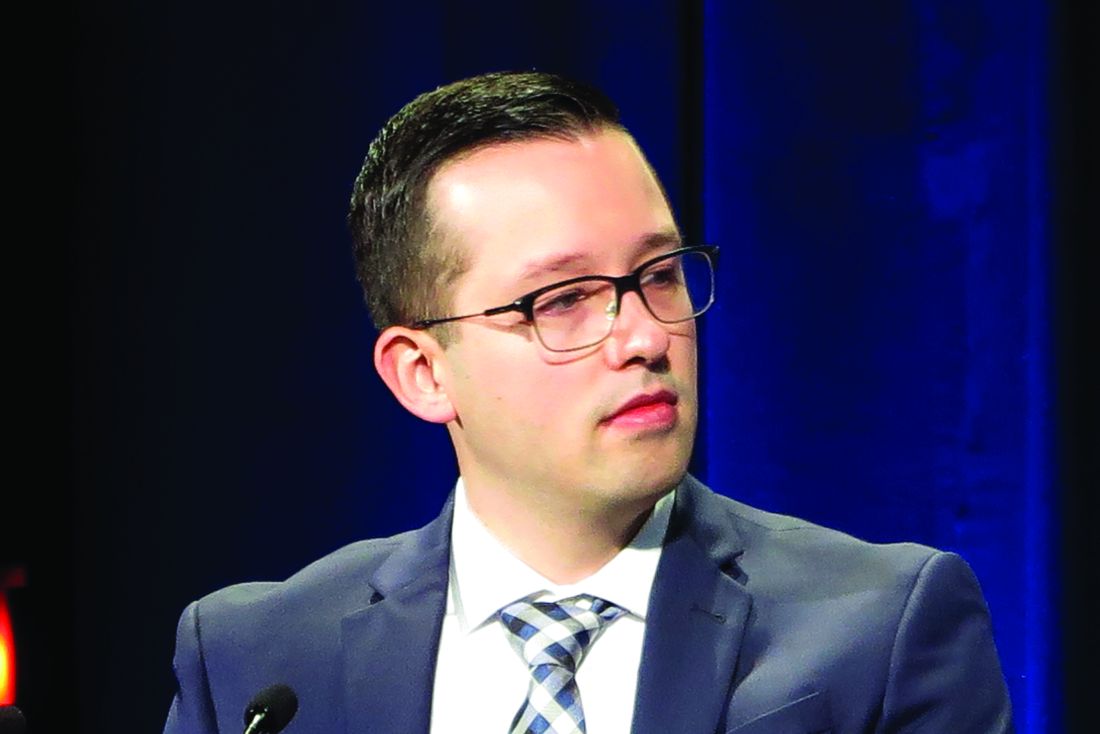
The prevalence of NAFLD among younger adults is increasing, but it’s still unknown whether the course of NAFLD is more benign in these patients than in older adults.
In addition, the rate of progression to cirrhosis in patients with NAFLD can vary, making it difficult to predict those patients most at risk for advanced liver disease, Dr. Miller said.
He and his colleagues sought to characterize genetic and metabolic risk factors for NAFLD and their effects on disease progression in patients from 18 to 40 years, 40 to 59 years, and 60 and older.
The investigators collected data on patients with documented objective evidence of NAFLD seen at the Michigan Medicine health care system from 2010 through 2021.
They identified NAFLD by hepatic steatosis on imaging, biopsy, or transient elastography in the absence of other chronic liver diseases, with the earliest date of a hepatic steatosis diagnosis determined to be the index date.
The investigators determined the presence of cirrhosis using validated International Classification of Diseases version 9 or 10 codes, with incident cirrhosis defined as any new cirrhosis diagnosis at least 1 year after the index date.
They also looked at the frequency of known NAFLD risk alleles in a subset of patients with available genetic data.
They divided 31,505 patients into three age groups for comparison: 8,252 patients age 18-39 at the time of steatosis identification, 15,035 age 40-59, and 8,218 age 60 or older.
Of the full cohort, 804 had cirrhosis at the index date, and 388 others developed incident cirrhosis during 128,090 person-years of follow-up.
The prevalence of hypertension, hyperlipidemia, and diabetes were significantly lower in the youngest group, compared with the two older groups, but the youngest patients had a higher prevalence of obesity than the other two groups, with a significantly higher prevalence of class 3 (morbid) obesity.
Of the 4,359 patients with genetic data available, the NAFLD-promoting PNPLA3-rs738409-G allele was more common in the young, compared with the other two age groups (P = .016).
When the investigators looked at the ability of three laboratory tests – the AST to Platelet Ratio Index (APRI), Fibrosis-4 (FIB4), and NAFLD fibrosis score for identifying prevalent cirrhosis – they found that the scores performed similarly for patients in the 40-59 group, but the NFS did less well among patients in the 18-39 group. There were no significant differences among the three age groups in the risk for incident cirrhosis over 10 years.
The study helps to answer some of the questions surrounding differences in risk factors across the age spectrum, commented Patricia Jones, MD, MSCR, from the University of Miami.
“We wonder how these people with fatty liver are different. Do younger people have a more malignant course? Are they going to progress more rapidly than others, or not? Because if you think of a disease like fatty liver or for that matter any metabolic syndrome–based disease, it’s a spectrum and a continuum, and by the time you’re diagnosed you’ve already had that condition, so it’s really more interesting to me when people are diagnosed, because diagnosing at a younger age allows you to intervene earlier,” she said in an interview.
Dr. Jones said that she was also interested in exploring how the genetic data might be used to improve care for patients, perhaps by testing for the high-risk allele in routine clinical practice.
“It will be interesting to see how people with this allele progress, independently of whether they’re diagnosed at 40, 50, or 60,” she said.
Dr. Jones was a moderator of the session where Dr. Williams presented his data.
Comoderator Mitchell A. Mah’moud, MD, FACG from Duke University in Durham, N.C., commented in an interview that, “with the medications we have available, maybe we can target these patients and prevent progression to cirrhosis and some of the decompensation that we see.”
The study authors did not disclose a funding source. Dr. Miller, Dr. Jones, and Dr. Mah’moud all reported having no relevant financial disclosures.
CHARLOTTE, N.C. – Metabolic and genetic risk factors for nonalcoholic fatty liver disease (NAFLD) vary across the age spectrum, but once steatosis has started, the risk of progression to cirrhosis is similar for both young and old, investigators found.
At a large Midwest medical center, younger adults were more likely than older patients to have a high-risk gene variant predisposing carriers to NAFLD. And they were less likely than their senior counterparts to have metabolic risk factors, reported Matthew J. Miller, MD, a 3rd-year resident in the department of internal medicine at the University of Michigan Hospital in Ann Arbor.
“Progression to cirrhosis was similar in patients younger than 40, compared to older patients, suggesting NAFLD in the young should not be considered more benign than in older patients,” he said in an oral abstract presented at the annual meeting of the American College of Gastroenterology.
The prevalence of NAFLD among younger adults is increasing, but it’s still unknown whether the course of NAFLD is more benign in these patients than in older adults.
In addition, the rate of progression to cirrhosis in patients with NAFLD can vary, making it difficult to predict those patients most at risk for advanced liver disease, Dr. Miller said.
He and his colleagues sought to characterize genetic and metabolic risk factors for NAFLD and their effects on disease progression in patients from 18 to 40 years, 40 to 59 years, and 60 and older.
The investigators collected data on patients with documented objective evidence of NAFLD seen at the Michigan Medicine health care system from 2010 through 2021.
They identified NAFLD by hepatic steatosis on imaging, biopsy, or transient elastography in the absence of other chronic liver diseases, with the earliest date of a hepatic steatosis diagnosis determined to be the index date.
The investigators determined the presence of cirrhosis using validated International Classification of Diseases version 9 or 10 codes, with incident cirrhosis defined as any new cirrhosis diagnosis at least 1 year after the index date.
They also looked at the frequency of known NAFLD risk alleles in a subset of patients with available genetic data.
They divided 31,505 patients into three age groups for comparison: 8,252 patients age 18-39 at the time of steatosis identification, 15,035 age 40-59, and 8,218 age 60 or older.
Of the full cohort, 804 had cirrhosis at the index date, and 388 others developed incident cirrhosis during 128,090 person-years of follow-up.
The prevalence of hypertension, hyperlipidemia, and diabetes were significantly lower in the youngest group, compared with the two older groups, but the youngest patients had a higher prevalence of obesity than the other two groups, with a significantly higher prevalence of class 3 (morbid) obesity.
Of the 4,359 patients with genetic data available, the NAFLD-promoting PNPLA3-rs738409-G allele was more common in the young, compared with the other two age groups (P = .016).
When the investigators looked at the ability of three laboratory tests – the AST to Platelet Ratio Index (APRI), Fibrosis-4 (FIB4), and NAFLD fibrosis score for identifying prevalent cirrhosis – they found that the scores performed similarly for patients in the 40-59 group, but the NFS did less well among patients in the 18-39 group. There were no significant differences among the three age groups in the risk for incident cirrhosis over 10 years.
The study helps to answer some of the questions surrounding differences in risk factors across the age spectrum, commented Patricia Jones, MD, MSCR, from the University of Miami.
“We wonder how these people with fatty liver are different. Do younger people have a more malignant course? Are they going to progress more rapidly than others, or not? Because if you think of a disease like fatty liver or for that matter any metabolic syndrome–based disease, it’s a spectrum and a continuum, and by the time you’re diagnosed you’ve already had that condition, so it’s really more interesting to me when people are diagnosed, because diagnosing at a younger age allows you to intervene earlier,” she said in an interview.
Dr. Jones said that she was also interested in exploring how the genetic data might be used to improve care for patients, perhaps by testing for the high-risk allele in routine clinical practice.
“It will be interesting to see how people with this allele progress, independently of whether they’re diagnosed at 40, 50, or 60,” she said.
Dr. Jones was a moderator of the session where Dr. Williams presented his data.
Comoderator Mitchell A. Mah’moud, MD, FACG from Duke University in Durham, N.C., commented in an interview that, “with the medications we have available, maybe we can target these patients and prevent progression to cirrhosis and some of the decompensation that we see.”
The study authors did not disclose a funding source. Dr. Miller, Dr. Jones, and Dr. Mah’moud all reported having no relevant financial disclosures.
CHARLOTTE, N.C. – Metabolic and genetic risk factors for nonalcoholic fatty liver disease (NAFLD) vary across the age spectrum, but once steatosis has started, the risk of progression to cirrhosis is similar for both young and old, investigators found.
At a large Midwest medical center, younger adults were more likely than older patients to have a high-risk gene variant predisposing carriers to NAFLD. And they were less likely than their senior counterparts to have metabolic risk factors, reported Matthew J. Miller, MD, a 3rd-year resident in the department of internal medicine at the University of Michigan Hospital in Ann Arbor.
“Progression to cirrhosis was similar in patients younger than 40, compared to older patients, suggesting NAFLD in the young should not be considered more benign than in older patients,” he said in an oral abstract presented at the annual meeting of the American College of Gastroenterology.
The prevalence of NAFLD among younger adults is increasing, but it’s still unknown whether the course of NAFLD is more benign in these patients than in older adults.
In addition, the rate of progression to cirrhosis in patients with NAFLD can vary, making it difficult to predict those patients most at risk for advanced liver disease, Dr. Miller said.
He and his colleagues sought to characterize genetic and metabolic risk factors for NAFLD and their effects on disease progression in patients from 18 to 40 years, 40 to 59 years, and 60 and older.
The investigators collected data on patients with documented objective evidence of NAFLD seen at the Michigan Medicine health care system from 2010 through 2021.
They identified NAFLD by hepatic steatosis on imaging, biopsy, or transient elastography in the absence of other chronic liver diseases, with the earliest date of a hepatic steatosis diagnosis determined to be the index date.
The investigators determined the presence of cirrhosis using validated International Classification of Diseases version 9 or 10 codes, with incident cirrhosis defined as any new cirrhosis diagnosis at least 1 year after the index date.
They also looked at the frequency of known NAFLD risk alleles in a subset of patients with available genetic data.
They divided 31,505 patients into three age groups for comparison: 8,252 patients age 18-39 at the time of steatosis identification, 15,035 age 40-59, and 8,218 age 60 or older.
Of the full cohort, 804 had cirrhosis at the index date, and 388 others developed incident cirrhosis during 128,090 person-years of follow-up.
The prevalence of hypertension, hyperlipidemia, and diabetes were significantly lower in the youngest group, compared with the two older groups, but the youngest patients had a higher prevalence of obesity than the other two groups, with a significantly higher prevalence of class 3 (morbid) obesity.
Of the 4,359 patients with genetic data available, the NAFLD-promoting PNPLA3-rs738409-G allele was more common in the young, compared with the other two age groups (P = .016).
When the investigators looked at the ability of three laboratory tests – the AST to Platelet Ratio Index (APRI), Fibrosis-4 (FIB4), and NAFLD fibrosis score for identifying prevalent cirrhosis – they found that the scores performed similarly for patients in the 40-59 group, but the NFS did less well among patients in the 18-39 group. There were no significant differences among the three age groups in the risk for incident cirrhosis over 10 years.
The study helps to answer some of the questions surrounding differences in risk factors across the age spectrum, commented Patricia Jones, MD, MSCR, from the University of Miami.
“We wonder how these people with fatty liver are different. Do younger people have a more malignant course? Are they going to progress more rapidly than others, or not? Because if you think of a disease like fatty liver or for that matter any metabolic syndrome–based disease, it’s a spectrum and a continuum, and by the time you’re diagnosed you’ve already had that condition, so it’s really more interesting to me when people are diagnosed, because diagnosing at a younger age allows you to intervene earlier,” she said in an interview.
Dr. Jones said that she was also interested in exploring how the genetic data might be used to improve care for patients, perhaps by testing for the high-risk allele in routine clinical practice.
“It will be interesting to see how people with this allele progress, independently of whether they’re diagnosed at 40, 50, or 60,” she said.
Dr. Jones was a moderator of the session where Dr. Williams presented his data.
Comoderator Mitchell A. Mah’moud, MD, FACG from Duke University in Durham, N.C., commented in an interview that, “with the medications we have available, maybe we can target these patients and prevent progression to cirrhosis and some of the decompensation that we see.”
The study authors did not disclose a funding source. Dr. Miller, Dr. Jones, and Dr. Mah’moud all reported having no relevant financial disclosures.
AT ACG 2022
Research ties gout in women to comorbidities more than genetics
Comorbidities may play a greater role than genetics women with gout, although this appears not to be true for men, Nicholas Sumpter, MSc, of the University of Alabama at Birmingham said at the annual research symposium of the Gout, Hyperuricemia, and Crystal Associated Disease Network (G-CAN).
Mr. Sumpter was among the authors of a recent paper in Arthritis & Rheumatology that suggested that earlier gout onset involves the accumulation of certain allelic variants in men. This genetic risk was shared across multiple ancestral groups in the study, conducted with men of European and Polynesian ancestry, Mr. Sumpter and colleagues reported.
“There might be more than one factor in gout in men, but in women we’ve been getting at this idea that comorbidities are the big thing,” he said.
During his presentation, Mr. Sumpter offered a hypothesis that in men there might be a kind of “two-pronged attack,” with increases in serum urate linked to genetic risk, but comorbidities also playing a role. “But that may not be the case for women.”
In his presentation, Mr. Sumpter noted a paper published in March 2022 from his University of Alabama at Birmingham colleagues, Aakash V. Patel, MD, and Angelo L. Gaffo, MD. In the article, Dr. Patel and Dr. Gaffo delved into the challenges of treating women with gout given “the paucity of appropriately well-powered, randomized-controlled trials investigating the efficacy” of commonly used treatments.
“This poses major challenges for the management of female gout patients since they carry a greater burden of cardiovascular and renal morbidity, which is known to modulate the pathophysiology of gout; as such, conclusions regarding the efficacy of treatments for females cannot be extrapolated from investigative studies that are predominantly male,” they wrote, calling for increased efforts to enroll women in studies of treatments for this condition.
There’s increased interest in how gout affects women, including findings in a paper published in September in Arthritis & Rheumatology that found people with gout, especially women, appear to be at higher risk for poor COVID-19 outcomes, including hospitalization and death, regardless of COVID-19 vaccination status.
Gout has become more common in women, although this remains a condition that is far more likely to strike men.
The age-standardized prevalence of gout among women rose from 233.52 per 100,000 in 1990 to 253.49 in 2017, a gain of about 9%, according to a systematic analysis of the Global Burden of Disease Study.
That topped the roughly 5% gain seen for men in the same time frame, with the rate going from 747.48 per 100,000 to 790.90. With the aging of the global population, gout’s burden in terms of prevalence and disability is expected to increase.
Impact of obesity and healthy eating patterns
Obesity, or excess adiposity, appears to be of particular concern for women in terms of gout risk.
While obesity and genetic predisposition both are strongly associated with a higher risk of gout, the excess risk of both combined was higher than the sum of each, particularly among women, Natalie McCormick, PhD, of Massachusetts General Hospital, Boston, and coauthors reported in Annals of the Rheumatic Diseases.
These findings suggested that “addressing excess adiposity could prevent a large proportion of female gout cases in particular, as well as its cardiometabolic comorbidities, and the benefit could be greater in genetically predisposed women,” they wrote.
In general, there’s a need to re-examine the advice given by many clinicians in the past that people with gout, or those at risk for it, should follow a low-protein diet to avoid purines, Dr. McCormick said in an interview.
“Now we’re finding that a healthier diet that balances protein as well as fat intake can actually be better both for cardiovascular health and for gout prevention,” she said.
Dr. McCormick’s research on this topic includes a 2022 JAMA Internal Medicine article, and a 2021 article in Current Rheumatology Reports. In the latter article, Dr. McCormick and colleagues examined the benefits of changing habits for patients, such as following one of several well-established healthy eating patterns, including the Mediterranean and DASH diets.
With excess weight and associated cardiovascular and endocrine risks already elevated among people with gout, especially women, the “conventional low-purine (i.e., low-protein) approach to gout dietary guidance is neither helpful nor sustainable and may lead to detrimental effects related to worsening insulin resistance as a result of substitution of healthy proteins with unhealthy carbohydrates or fats,” they wrote. “Rather, by focusing our dietary recommendations on healthy eating patterns which have been proven to reduce cardiometabolic risk factors, as opposed to singular ‘good’ or ‘bad’ food items or groups, the beneficial effects of such diets on relevant gout endpoints should naturally follow for the majority of typical gout cases, mediated through changes in insulin resistance.”
Mr. Sumpter and Dr. McCormick had no competing interests to declare.
Comorbidities may play a greater role than genetics women with gout, although this appears not to be true for men, Nicholas Sumpter, MSc, of the University of Alabama at Birmingham said at the annual research symposium of the Gout, Hyperuricemia, and Crystal Associated Disease Network (G-CAN).
Mr. Sumpter was among the authors of a recent paper in Arthritis & Rheumatology that suggested that earlier gout onset involves the accumulation of certain allelic variants in men. This genetic risk was shared across multiple ancestral groups in the study, conducted with men of European and Polynesian ancestry, Mr. Sumpter and colleagues reported.
“There might be more than one factor in gout in men, but in women we’ve been getting at this idea that comorbidities are the big thing,” he said.
During his presentation, Mr. Sumpter offered a hypothesis that in men there might be a kind of “two-pronged attack,” with increases in serum urate linked to genetic risk, but comorbidities also playing a role. “But that may not be the case for women.”
In his presentation, Mr. Sumpter noted a paper published in March 2022 from his University of Alabama at Birmingham colleagues, Aakash V. Patel, MD, and Angelo L. Gaffo, MD. In the article, Dr. Patel and Dr. Gaffo delved into the challenges of treating women with gout given “the paucity of appropriately well-powered, randomized-controlled trials investigating the efficacy” of commonly used treatments.
“This poses major challenges for the management of female gout patients since they carry a greater burden of cardiovascular and renal morbidity, which is known to modulate the pathophysiology of gout; as such, conclusions regarding the efficacy of treatments for females cannot be extrapolated from investigative studies that are predominantly male,” they wrote, calling for increased efforts to enroll women in studies of treatments for this condition.
There’s increased interest in how gout affects women, including findings in a paper published in September in Arthritis & Rheumatology that found people with gout, especially women, appear to be at higher risk for poor COVID-19 outcomes, including hospitalization and death, regardless of COVID-19 vaccination status.
Gout has become more common in women, although this remains a condition that is far more likely to strike men.
The age-standardized prevalence of gout among women rose from 233.52 per 100,000 in 1990 to 253.49 in 2017, a gain of about 9%, according to a systematic analysis of the Global Burden of Disease Study.
That topped the roughly 5% gain seen for men in the same time frame, with the rate going from 747.48 per 100,000 to 790.90. With the aging of the global population, gout’s burden in terms of prevalence and disability is expected to increase.
Impact of obesity and healthy eating patterns
Obesity, or excess adiposity, appears to be of particular concern for women in terms of gout risk.
While obesity and genetic predisposition both are strongly associated with a higher risk of gout, the excess risk of both combined was higher than the sum of each, particularly among women, Natalie McCormick, PhD, of Massachusetts General Hospital, Boston, and coauthors reported in Annals of the Rheumatic Diseases.
These findings suggested that “addressing excess adiposity could prevent a large proportion of female gout cases in particular, as well as its cardiometabolic comorbidities, and the benefit could be greater in genetically predisposed women,” they wrote.
In general, there’s a need to re-examine the advice given by many clinicians in the past that people with gout, or those at risk for it, should follow a low-protein diet to avoid purines, Dr. McCormick said in an interview.
“Now we’re finding that a healthier diet that balances protein as well as fat intake can actually be better both for cardiovascular health and for gout prevention,” she said.
Dr. McCormick’s research on this topic includes a 2022 JAMA Internal Medicine article, and a 2021 article in Current Rheumatology Reports. In the latter article, Dr. McCormick and colleagues examined the benefits of changing habits for patients, such as following one of several well-established healthy eating patterns, including the Mediterranean and DASH diets.
With excess weight and associated cardiovascular and endocrine risks already elevated among people with gout, especially women, the “conventional low-purine (i.e., low-protein) approach to gout dietary guidance is neither helpful nor sustainable and may lead to detrimental effects related to worsening insulin resistance as a result of substitution of healthy proteins with unhealthy carbohydrates or fats,” they wrote. “Rather, by focusing our dietary recommendations on healthy eating patterns which have been proven to reduce cardiometabolic risk factors, as opposed to singular ‘good’ or ‘bad’ food items or groups, the beneficial effects of such diets on relevant gout endpoints should naturally follow for the majority of typical gout cases, mediated through changes in insulin resistance.”
Mr. Sumpter and Dr. McCormick had no competing interests to declare.
Comorbidities may play a greater role than genetics women with gout, although this appears not to be true for men, Nicholas Sumpter, MSc, of the University of Alabama at Birmingham said at the annual research symposium of the Gout, Hyperuricemia, and Crystal Associated Disease Network (G-CAN).
Mr. Sumpter was among the authors of a recent paper in Arthritis & Rheumatology that suggested that earlier gout onset involves the accumulation of certain allelic variants in men. This genetic risk was shared across multiple ancestral groups in the study, conducted with men of European and Polynesian ancestry, Mr. Sumpter and colleagues reported.
“There might be more than one factor in gout in men, but in women we’ve been getting at this idea that comorbidities are the big thing,” he said.
During his presentation, Mr. Sumpter offered a hypothesis that in men there might be a kind of “two-pronged attack,” with increases in serum urate linked to genetic risk, but comorbidities also playing a role. “But that may not be the case for women.”
In his presentation, Mr. Sumpter noted a paper published in March 2022 from his University of Alabama at Birmingham colleagues, Aakash V. Patel, MD, and Angelo L. Gaffo, MD. In the article, Dr. Patel and Dr. Gaffo delved into the challenges of treating women with gout given “the paucity of appropriately well-powered, randomized-controlled trials investigating the efficacy” of commonly used treatments.
“This poses major challenges for the management of female gout patients since they carry a greater burden of cardiovascular and renal morbidity, which is known to modulate the pathophysiology of gout; as such, conclusions regarding the efficacy of treatments for females cannot be extrapolated from investigative studies that are predominantly male,” they wrote, calling for increased efforts to enroll women in studies of treatments for this condition.
There’s increased interest in how gout affects women, including findings in a paper published in September in Arthritis & Rheumatology that found people with gout, especially women, appear to be at higher risk for poor COVID-19 outcomes, including hospitalization and death, regardless of COVID-19 vaccination status.
Gout has become more common in women, although this remains a condition that is far more likely to strike men.
The age-standardized prevalence of gout among women rose from 233.52 per 100,000 in 1990 to 253.49 in 2017, a gain of about 9%, according to a systematic analysis of the Global Burden of Disease Study.
That topped the roughly 5% gain seen for men in the same time frame, with the rate going from 747.48 per 100,000 to 790.90. With the aging of the global population, gout’s burden in terms of prevalence and disability is expected to increase.
Impact of obesity and healthy eating patterns
Obesity, or excess adiposity, appears to be of particular concern for women in terms of gout risk.
While obesity and genetic predisposition both are strongly associated with a higher risk of gout, the excess risk of both combined was higher than the sum of each, particularly among women, Natalie McCormick, PhD, of Massachusetts General Hospital, Boston, and coauthors reported in Annals of the Rheumatic Diseases.
These findings suggested that “addressing excess adiposity could prevent a large proportion of female gout cases in particular, as well as its cardiometabolic comorbidities, and the benefit could be greater in genetically predisposed women,” they wrote.
In general, there’s a need to re-examine the advice given by many clinicians in the past that people with gout, or those at risk for it, should follow a low-protein diet to avoid purines, Dr. McCormick said in an interview.
“Now we’re finding that a healthier diet that balances protein as well as fat intake can actually be better both for cardiovascular health and for gout prevention,” she said.
Dr. McCormick’s research on this topic includes a 2022 JAMA Internal Medicine article, and a 2021 article in Current Rheumatology Reports. In the latter article, Dr. McCormick and colleagues examined the benefits of changing habits for patients, such as following one of several well-established healthy eating patterns, including the Mediterranean and DASH diets.
With excess weight and associated cardiovascular and endocrine risks already elevated among people with gout, especially women, the “conventional low-purine (i.e., low-protein) approach to gout dietary guidance is neither helpful nor sustainable and may lead to detrimental effects related to worsening insulin resistance as a result of substitution of healthy proteins with unhealthy carbohydrates or fats,” they wrote. “Rather, by focusing our dietary recommendations on healthy eating patterns which have been proven to reduce cardiometabolic risk factors, as opposed to singular ‘good’ or ‘bad’ food items or groups, the beneficial effects of such diets on relevant gout endpoints should naturally follow for the majority of typical gout cases, mediated through changes in insulin resistance.”
Mr. Sumpter and Dr. McCormick had no competing interests to declare.
FROM G-CAN 2022