User login
Proposed Payment Raise to Health Insurers May be Beneficial
NEW YORK (Reuters) - The U.S. government on Friday proposed raising payments by 1.35 percent on average next year to the health insurers who offer Medicare Advantage health benefits to elderly and disabled Americans.
Payments to insurers will vary under the 2017 Medicare Advantage proposal, based on the region the plans are sold and on the size of bonus payments insurers can receive based on quality ratings, the government said.
Shares of health insurers rose in after-hours trade. Analysts said the proposal looked positive for insurers at first glance, but cautioned that they needed to parse it fully.
"Looks like the best case scenario has played itself out,"said Ipsita Smolinski of Capitol Street, a Washington D.C. research firm, who had anticipated about 1 percent increase in payments.
Insurers and lawmakers have pressured the government not to cut payments, saying any decrease would hurt older Americans by forcing insurers to cut benefits.
Insurer lobbyist America's Health Insurance Plans President Marilyn Tavenner said it was important that the final policy ensure the long-term stability of Medicare Advantage. She said in a statement that the group was looking closely at the proposal.
About 17 million Americans have healthcare coverage through Medicare Advantage, offered by insurers including UnitedHealth Group Inc, Aetna Inc, and Anthem Inc among others. Another more than 30 million people receive benefits through the government Medicare fee-for-service program.
Shares of Anthem Inc rose 1.4 percent in after-hours trading, while UnitedHealth Group gained 1.6 percent.
Some insurers may benefit more than others from the proposal to pay more to insurers who are managing plans for people who qualify for both Medicare and Medicaid for the poor, said Kim Monk, managing director of Capital Alpha Partners.
The 1.35 percent increase is based mostly on anticipated medical cost increases next year. The government expects a 3 percent payment growth rate, which is in line with estimates the government provided to insurers in December.
That 3 percent increase is then reduced to 1.35 percent due to lower payments to insurers for sicker-than-average customers and some medical coding changes, the U.S. Department of Health and Human Services Medicare agency said on Friday.
The 1.35 percent also takes into account an increase in how it pays insurers based on quality measures, called star ratings, it said.
The final rate for 2017 Medicare Advantage payments is based on this proposed figure and will be released in April.
NEW YORK (Reuters) - The U.S. government on Friday proposed raising payments by 1.35 percent on average next year to the health insurers who offer Medicare Advantage health benefits to elderly and disabled Americans.
Payments to insurers will vary under the 2017 Medicare Advantage proposal, based on the region the plans are sold and on the size of bonus payments insurers can receive based on quality ratings, the government said.
Shares of health insurers rose in after-hours trade. Analysts said the proposal looked positive for insurers at first glance, but cautioned that they needed to parse it fully.
"Looks like the best case scenario has played itself out,"said Ipsita Smolinski of Capitol Street, a Washington D.C. research firm, who had anticipated about 1 percent increase in payments.
Insurers and lawmakers have pressured the government not to cut payments, saying any decrease would hurt older Americans by forcing insurers to cut benefits.
Insurer lobbyist America's Health Insurance Plans President Marilyn Tavenner said it was important that the final policy ensure the long-term stability of Medicare Advantage. She said in a statement that the group was looking closely at the proposal.
About 17 million Americans have healthcare coverage through Medicare Advantage, offered by insurers including UnitedHealth Group Inc, Aetna Inc, and Anthem Inc among others. Another more than 30 million people receive benefits through the government Medicare fee-for-service program.
Shares of Anthem Inc rose 1.4 percent in after-hours trading, while UnitedHealth Group gained 1.6 percent.
Some insurers may benefit more than others from the proposal to pay more to insurers who are managing plans for people who qualify for both Medicare and Medicaid for the poor, said Kim Monk, managing director of Capital Alpha Partners.
The 1.35 percent increase is based mostly on anticipated medical cost increases next year. The government expects a 3 percent payment growth rate, which is in line with estimates the government provided to insurers in December.
That 3 percent increase is then reduced to 1.35 percent due to lower payments to insurers for sicker-than-average customers and some medical coding changes, the U.S. Department of Health and Human Services Medicare agency said on Friday.
The 1.35 percent also takes into account an increase in how it pays insurers based on quality measures, called star ratings, it said.
The final rate for 2017 Medicare Advantage payments is based on this proposed figure and will be released in April.
NEW YORK (Reuters) - The U.S. government on Friday proposed raising payments by 1.35 percent on average next year to the health insurers who offer Medicare Advantage health benefits to elderly and disabled Americans.
Payments to insurers will vary under the 2017 Medicare Advantage proposal, based on the region the plans are sold and on the size of bonus payments insurers can receive based on quality ratings, the government said.
Shares of health insurers rose in after-hours trade. Analysts said the proposal looked positive for insurers at first glance, but cautioned that they needed to parse it fully.
"Looks like the best case scenario has played itself out,"said Ipsita Smolinski of Capitol Street, a Washington D.C. research firm, who had anticipated about 1 percent increase in payments.
Insurers and lawmakers have pressured the government not to cut payments, saying any decrease would hurt older Americans by forcing insurers to cut benefits.
Insurer lobbyist America's Health Insurance Plans President Marilyn Tavenner said it was important that the final policy ensure the long-term stability of Medicare Advantage. She said in a statement that the group was looking closely at the proposal.
About 17 million Americans have healthcare coverage through Medicare Advantage, offered by insurers including UnitedHealth Group Inc, Aetna Inc, and Anthem Inc among others. Another more than 30 million people receive benefits through the government Medicare fee-for-service program.
Shares of Anthem Inc rose 1.4 percent in after-hours trading, while UnitedHealth Group gained 1.6 percent.
Some insurers may benefit more than others from the proposal to pay more to insurers who are managing plans for people who qualify for both Medicare and Medicaid for the poor, said Kim Monk, managing director of Capital Alpha Partners.
The 1.35 percent increase is based mostly on anticipated medical cost increases next year. The government expects a 3 percent payment growth rate, which is in line with estimates the government provided to insurers in December.
That 3 percent increase is then reduced to 1.35 percent due to lower payments to insurers for sicker-than-average customers and some medical coding changes, the U.S. Department of Health and Human Services Medicare agency said on Friday.
The 1.35 percent also takes into account an increase in how it pays insurers based on quality measures, called star ratings, it said.
The final rate for 2017 Medicare Advantage payments is based on this proposed figure and will be released in April.
5 Tips to Finding a Good Locum Tenens Company
Over the past five years, I have worked as a locum tenens hospitalist with more than 12 different locum tenens companies. I have learned a lot through this process. At one point, I even considered starting my own locum tenens company because of the frustrations I was feeling about the inefficiencies of many of these companies. I would like to help those of you either already practicing as a locum tenens physician or considering practicing through this process to make it as painless as possible.
Here are my tips to be aware of when choosing a locum tenens company to work with.
- Bigger isn’t necessarily better. There are a few companies that advertise a lot. I’m sure you are all very well aware of them. They send out many emails, call numerous times, and somehow have a banner on every website you visit. These companies tend to have large overhead costs. These costs mean that your hourly rate may be lower. Smaller companies are sometimes less efficient, but as long as you make sure your expectations are heard, they will often give you a rate that the bigger companies cannot afford.
- State your terms. As physicians, we are often not the most business savvy. Remember that locum tenens companies exist because there is a shortage of hospitalists in some areas. We need to be able to state certain terms; if you don’t like something, then make sure you add that into your contract. For example, patient safety should always come first; make sure you establish a cap for the number of patients you are willing to see per day.
- Be protective of your CV. Remember that locum tenens companies profit when you work, so they will want to hand out your CV to as many hospitals as possible. While they make it sound like it is in your best interest, it may not be. If a company presents you to a hospital, most of the time the contract you sign with them states that they “own” your presentation for two years. This means that if you do not like the locum tenens company or if another company is offering you more for the same hospital, you have to work with the company that presented you first. Make sure you have a written agreement between you and your locum tenens company with regard to presentations stating which hospitals the locum tenens company can present you to, with a follow-up response from the locum tenens company stating when they presented you.
- Your recruiter is your best advocate. Make sure you get along. Make sure you have very good communication with your recruiter, who is the one who will be doing all of your scheduling and negotiating. If you do not have a good relationship, move on to a new recruiter or to a new company.
- Have fun! Working as a locum tenens physician, in my opinion, is the best of everything combined. There are very few jobs where you can decide when you want to work, dictate your terms, and get paid well doing something you love. Locum tenens takes a little bit of getting used to; when you have it figured out, it is empowering and enjoyable. TH
Geeta Arora, MD, is board certified in internal medicine and integrative holistic medicine.
Over the past five years, I have worked as a locum tenens hospitalist with more than 12 different locum tenens companies. I have learned a lot through this process. At one point, I even considered starting my own locum tenens company because of the frustrations I was feeling about the inefficiencies of many of these companies. I would like to help those of you either already practicing as a locum tenens physician or considering practicing through this process to make it as painless as possible.
Here are my tips to be aware of when choosing a locum tenens company to work with.
- Bigger isn’t necessarily better. There are a few companies that advertise a lot. I’m sure you are all very well aware of them. They send out many emails, call numerous times, and somehow have a banner on every website you visit. These companies tend to have large overhead costs. These costs mean that your hourly rate may be lower. Smaller companies are sometimes less efficient, but as long as you make sure your expectations are heard, they will often give you a rate that the bigger companies cannot afford.
- State your terms. As physicians, we are often not the most business savvy. Remember that locum tenens companies exist because there is a shortage of hospitalists in some areas. We need to be able to state certain terms; if you don’t like something, then make sure you add that into your contract. For example, patient safety should always come first; make sure you establish a cap for the number of patients you are willing to see per day.
- Be protective of your CV. Remember that locum tenens companies profit when you work, so they will want to hand out your CV to as many hospitals as possible. While they make it sound like it is in your best interest, it may not be. If a company presents you to a hospital, most of the time the contract you sign with them states that they “own” your presentation for two years. This means that if you do not like the locum tenens company or if another company is offering you more for the same hospital, you have to work with the company that presented you first. Make sure you have a written agreement between you and your locum tenens company with regard to presentations stating which hospitals the locum tenens company can present you to, with a follow-up response from the locum tenens company stating when they presented you.
- Your recruiter is your best advocate. Make sure you get along. Make sure you have very good communication with your recruiter, who is the one who will be doing all of your scheduling and negotiating. If you do not have a good relationship, move on to a new recruiter or to a new company.
- Have fun! Working as a locum tenens physician, in my opinion, is the best of everything combined. There are very few jobs where you can decide when you want to work, dictate your terms, and get paid well doing something you love. Locum tenens takes a little bit of getting used to; when you have it figured out, it is empowering and enjoyable. TH
Geeta Arora, MD, is board certified in internal medicine and integrative holistic medicine.
Over the past five years, I have worked as a locum tenens hospitalist with more than 12 different locum tenens companies. I have learned a lot through this process. At one point, I even considered starting my own locum tenens company because of the frustrations I was feeling about the inefficiencies of many of these companies. I would like to help those of you either already practicing as a locum tenens physician or considering practicing through this process to make it as painless as possible.
Here are my tips to be aware of when choosing a locum tenens company to work with.
- Bigger isn’t necessarily better. There are a few companies that advertise a lot. I’m sure you are all very well aware of them. They send out many emails, call numerous times, and somehow have a banner on every website you visit. These companies tend to have large overhead costs. These costs mean that your hourly rate may be lower. Smaller companies are sometimes less efficient, but as long as you make sure your expectations are heard, they will often give you a rate that the bigger companies cannot afford.
- State your terms. As physicians, we are often not the most business savvy. Remember that locum tenens companies exist because there is a shortage of hospitalists in some areas. We need to be able to state certain terms; if you don’t like something, then make sure you add that into your contract. For example, patient safety should always come first; make sure you establish a cap for the number of patients you are willing to see per day.
- Be protective of your CV. Remember that locum tenens companies profit when you work, so they will want to hand out your CV to as many hospitals as possible. While they make it sound like it is in your best interest, it may not be. If a company presents you to a hospital, most of the time the contract you sign with them states that they “own” your presentation for two years. This means that if you do not like the locum tenens company or if another company is offering you more for the same hospital, you have to work with the company that presented you first. Make sure you have a written agreement between you and your locum tenens company with regard to presentations stating which hospitals the locum tenens company can present you to, with a follow-up response from the locum tenens company stating when they presented you.
- Your recruiter is your best advocate. Make sure you get along. Make sure you have very good communication with your recruiter, who is the one who will be doing all of your scheduling and negotiating. If you do not have a good relationship, move on to a new recruiter or to a new company.
- Have fun! Working as a locum tenens physician, in my opinion, is the best of everything combined. There are very few jobs where you can decide when you want to work, dictate your terms, and get paid well doing something you love. Locum tenens takes a little bit of getting used to; when you have it figured out, it is empowering and enjoyable. TH
Geeta Arora, MD, is board certified in internal medicine and integrative holistic medicine.
Medicare Patient Outcomes of Inpatient Laparoscopic Cholecystectomy Varies Among Hospitals
NEW YORK (Reuters Health) - Outcomes of inpatient laparoscopic cholecystectomy in Medicare patients vary widely among hospitals, and most adverse outcomes occur well after patients have been discharged, new findings show.
While the overall adverse outcome rate was 20.7%, risk-adjusted adverse outcomes ranged from 10% in the best-performing decile of hospitals to 32.1% for the worst-performing decile, Dr. Donald E. Fry of MPA Healthcare Solutions in Chicago and colleagues found.
"These differences indicate that a significant number of readmissions and overall adverse outcomes of care after laparoscopic cholecystectomy are potentially preventable," Dr. Fry and his team state in their report, online February 1 in the Annals of Surgery.
Risk-adjusted measurement of care has typically been limited to inpatient events and 30-day mortality rates, they note, but declines in mortality rates, shorter patient stays and a shift toward ambulatory procedures have made this measurement more difficult.
"Surgery for gallbladder disease has experienced one of the most dramatic transitions from extended inpatient care to outpatient or limited inpatient care," they write.
To compare outcomes among hospitals, Dr. Fry and his team looked at Medicare data for 2010-2012 including both inpatient and 90-day post-discharge adverse outcomes for inpatient laparoscopic cholecystectomy.
They created a developmental database including more than 73,000 patients to construct predictive models for adverse outcomes, and a database of more than 83,000 patients treated at 1,570 hospitals, each with 20 or more qualifying cases and 4.5 or more predicted total adverse outcomes, to compare performance.
A total of 509 patients (0.6%) died in the hospital, 5,761 (6.9%) had prolonged length of stay, 1,154 (1.4%) died within 90 days of discharge without being readmitted, and 12,038 (14.5%) were readmitted at least once in the 90 days after discharge.
Gastrointestinal, infectious and cardiovascular events were the most common readmission causes.
"Strategies for improvement begin with hospitals and surgeons knowing what the results of their care happen to be," Dr. Fry told Reuters Health by email. "Since many readmissions and Emergency Department visits of post-discharge surgical cases occur at hospitals other than the facility of the index
hospitalization, the actual results of care may not be appreciated by the providers."
He added: "Improvement strategies need to focus on the reasons patients were readmitted. Better pain management will reduce readmissions for constipation, abdominal distention, nausea and vomiting. Increased contact by clinicians with their patients after discharge can identify early evidence of
pulmonary problems or potential urinary tract infection. Earlier recognition of evolving issues can provide interventions that avoid readmissions. Better overall strategies to avoid cardiac events and hypovolemia that may play in central nervous system events and renal failure should be of benefit."
Dr. Fry and his colleagues are now investigating whether similar differences in outcomes occur with other types of surgical procedures, as well as the frequency of and reasons for post-discharge emergency room visits.
"A final message for surgeons in this research is that Medicare has begun an initiative into bundled payments," Dr. Fry said. "Surgeons and hospitals need to establish better trackingmethods for post-discharge patients so that they know the results of care and so that they can develop focused strategies for better outcomes. There will be a substantial financial penalty for those who cannot adapt to the new payment model that CMS is implementing."
NEW YORK (Reuters Health) - Outcomes of inpatient laparoscopic cholecystectomy in Medicare patients vary widely among hospitals, and most adverse outcomes occur well after patients have been discharged, new findings show.
While the overall adverse outcome rate was 20.7%, risk-adjusted adverse outcomes ranged from 10% in the best-performing decile of hospitals to 32.1% for the worst-performing decile, Dr. Donald E. Fry of MPA Healthcare Solutions in Chicago and colleagues found.
"These differences indicate that a significant number of readmissions and overall adverse outcomes of care after laparoscopic cholecystectomy are potentially preventable," Dr. Fry and his team state in their report, online February 1 in the Annals of Surgery.
Risk-adjusted measurement of care has typically been limited to inpatient events and 30-day mortality rates, they note, but declines in mortality rates, shorter patient stays and a shift toward ambulatory procedures have made this measurement more difficult.
"Surgery for gallbladder disease has experienced one of the most dramatic transitions from extended inpatient care to outpatient or limited inpatient care," they write.
To compare outcomes among hospitals, Dr. Fry and his team looked at Medicare data for 2010-2012 including both inpatient and 90-day post-discharge adverse outcomes for inpatient laparoscopic cholecystectomy.
They created a developmental database including more than 73,000 patients to construct predictive models for adverse outcomes, and a database of more than 83,000 patients treated at 1,570 hospitals, each with 20 or more qualifying cases and 4.5 or more predicted total adverse outcomes, to compare performance.
A total of 509 patients (0.6%) died in the hospital, 5,761 (6.9%) had prolonged length of stay, 1,154 (1.4%) died within 90 days of discharge without being readmitted, and 12,038 (14.5%) were readmitted at least once in the 90 days after discharge.
Gastrointestinal, infectious and cardiovascular events were the most common readmission causes.
"Strategies for improvement begin with hospitals and surgeons knowing what the results of their care happen to be," Dr. Fry told Reuters Health by email. "Since many readmissions and Emergency Department visits of post-discharge surgical cases occur at hospitals other than the facility of the index
hospitalization, the actual results of care may not be appreciated by the providers."
He added: "Improvement strategies need to focus on the reasons patients were readmitted. Better pain management will reduce readmissions for constipation, abdominal distention, nausea and vomiting. Increased contact by clinicians with their patients after discharge can identify early evidence of
pulmonary problems or potential urinary tract infection. Earlier recognition of evolving issues can provide interventions that avoid readmissions. Better overall strategies to avoid cardiac events and hypovolemia that may play in central nervous system events and renal failure should be of benefit."
Dr. Fry and his colleagues are now investigating whether similar differences in outcomes occur with other types of surgical procedures, as well as the frequency of and reasons for post-discharge emergency room visits.
"A final message for surgeons in this research is that Medicare has begun an initiative into bundled payments," Dr. Fry said. "Surgeons and hospitals need to establish better trackingmethods for post-discharge patients so that they know the results of care and so that they can develop focused strategies for better outcomes. There will be a substantial financial penalty for those who cannot adapt to the new payment model that CMS is implementing."
NEW YORK (Reuters Health) - Outcomes of inpatient laparoscopic cholecystectomy in Medicare patients vary widely among hospitals, and most adverse outcomes occur well after patients have been discharged, new findings show.
While the overall adverse outcome rate was 20.7%, risk-adjusted adverse outcomes ranged from 10% in the best-performing decile of hospitals to 32.1% for the worst-performing decile, Dr. Donald E. Fry of MPA Healthcare Solutions in Chicago and colleagues found.
"These differences indicate that a significant number of readmissions and overall adverse outcomes of care after laparoscopic cholecystectomy are potentially preventable," Dr. Fry and his team state in their report, online February 1 in the Annals of Surgery.
Risk-adjusted measurement of care has typically been limited to inpatient events and 30-day mortality rates, they note, but declines in mortality rates, shorter patient stays and a shift toward ambulatory procedures have made this measurement more difficult.
"Surgery for gallbladder disease has experienced one of the most dramatic transitions from extended inpatient care to outpatient or limited inpatient care," they write.
To compare outcomes among hospitals, Dr. Fry and his team looked at Medicare data for 2010-2012 including both inpatient and 90-day post-discharge adverse outcomes for inpatient laparoscopic cholecystectomy.
They created a developmental database including more than 73,000 patients to construct predictive models for adverse outcomes, and a database of more than 83,000 patients treated at 1,570 hospitals, each with 20 or more qualifying cases and 4.5 or more predicted total adverse outcomes, to compare performance.
A total of 509 patients (0.6%) died in the hospital, 5,761 (6.9%) had prolonged length of stay, 1,154 (1.4%) died within 90 days of discharge without being readmitted, and 12,038 (14.5%) were readmitted at least once in the 90 days after discharge.
Gastrointestinal, infectious and cardiovascular events were the most common readmission causes.
"Strategies for improvement begin with hospitals and surgeons knowing what the results of their care happen to be," Dr. Fry told Reuters Health by email. "Since many readmissions and Emergency Department visits of post-discharge surgical cases occur at hospitals other than the facility of the index
hospitalization, the actual results of care may not be appreciated by the providers."
He added: "Improvement strategies need to focus on the reasons patients were readmitted. Better pain management will reduce readmissions for constipation, abdominal distention, nausea and vomiting. Increased contact by clinicians with their patients after discharge can identify early evidence of
pulmonary problems or potential urinary tract infection. Earlier recognition of evolving issues can provide interventions that avoid readmissions. Better overall strategies to avoid cardiac events and hypovolemia that may play in central nervous system events and renal failure should be of benefit."
Dr. Fry and his colleagues are now investigating whether similar differences in outcomes occur with other types of surgical procedures, as well as the frequency of and reasons for post-discharge emergency room visits.
"A final message for surgeons in this research is that Medicare has begun an initiative into bundled payments," Dr. Fry said. "Surgeons and hospitals need to establish better trackingmethods for post-discharge patients so that they know the results of care and so that they can develop focused strategies for better outcomes. There will be a substantial financial penalty for those who cannot adapt to the new payment model that CMS is implementing."
New Study Shows PCMH Resulted in Positive Changes
NEW YORK (Reuters Health) - Implementation of a patient-centered medical home (PCMH) resulted in small changes in utilization patterns and modest quality improvements over a three-year period, according to a new report.
Dr. Lisa M. Kern of Weill Cornell Medical College in New York City and colleagues found more primary care visits, fewer specialist visits, fewer lab and radiologic tests, and fewer hospitalizations and rehospitalizations in the practices that adopted the PCMH.
Most changes occurred in the last year of the study, three years after PCMH implementation, they report in the Annals of Internal Medicine, online February 15.
The PCMH model "attempts to shift the medical paradigm from care for individual patients to care for populations, from care by physicians to care by a team of providers, from a focus on acute illness to an emphasis on chronic disease management, and from care at a single site to coordinated care across providers and settings," Dr. Kern and her team write. However, they add, studies looking at the effectiveness of the approach have had mixed results.
To date, most studies attempting to look at PCMH have had follow-up periods lasting just 1.5 to 2 years after implementation, the researchers note. "These changes take time, and studies with relatively short follow-up may have underestimated the effects of the intervention," they add.
The new study included 438 primary care physicians in 226 practices with more than 136,000 patients enrolled in five health plans. Insurers offered incentives of $2 to $10 per patient per month to practices that achieved level III PCMH recognition from the National Committee for Quality Assurance
(NCQA).
Twelve practices including 125 physicians volunteered for the PCMH initiative, and were assisted by two outside consulting groups. All of these practices achieved level III PCMH recognition. Among the remaining physicians, 87 doctors in 45 practices adopted electronic health records (EHR) without the
PCMH intervention, and 226 physicians in 169 practices continued using paper records.
For the eight quality measures the researchers looked at, two showed greater improvements over time in the PCMH group compared to one or both of the control groups: eye examination and hemoglobin A1c testing for patients with diabetes.
From 2008 to 2012, the PCMH group showed improvements over the paper group and the EHR group for six of seven utilization measures.
NCQA recognition was one aspect of the PCMH intervention in the new study, but this doesn't represent the entire intervention, Dr. Mark W. Friedberg of RAND Corporation and Brigham and Women's Hospital in Boston, who wrote an editorial accompanying the study, told Reuters Health.
"What they evaluated was a different way of paying practices, combined with some technical assistance, combined with some shared savings in the last year of the pilot," Dr. Friedberg explained. And this also requires defining what improving care means, he added, for example "better technical quality of care, better patient experience, better effectiveness of care, better professional satisfaction and lower burnout for people working in the practices. It's also hard to measure all of those, and most studies don't."
The new study is well done, according to Dr. Friedberg, but the challenge will be to understand how it fits in with the rest of the medical home literature, he said. "There's a lot of trials still out there and the results are still coming in, including some very large Medicare medical home pilots. I think we'll have a much better sense of what works in a year or two as those results come back."
Dr. Kern did not respond to an interview request by press time.
The study was funded by The Commonwealth Fund and the New York State Department of Health.
NEW YORK (Reuters Health) - Implementation of a patient-centered medical home (PCMH) resulted in small changes in utilization patterns and modest quality improvements over a three-year period, according to a new report.
Dr. Lisa M. Kern of Weill Cornell Medical College in New York City and colleagues found more primary care visits, fewer specialist visits, fewer lab and radiologic tests, and fewer hospitalizations and rehospitalizations in the practices that adopted the PCMH.
Most changes occurred in the last year of the study, three years after PCMH implementation, they report in the Annals of Internal Medicine, online February 15.
The PCMH model "attempts to shift the medical paradigm from care for individual patients to care for populations, from care by physicians to care by a team of providers, from a focus on acute illness to an emphasis on chronic disease management, and from care at a single site to coordinated care across providers and settings," Dr. Kern and her team write. However, they add, studies looking at the effectiveness of the approach have had mixed results.
To date, most studies attempting to look at PCMH have had follow-up periods lasting just 1.5 to 2 years after implementation, the researchers note. "These changes take time, and studies with relatively short follow-up may have underestimated the effects of the intervention," they add.
The new study included 438 primary care physicians in 226 practices with more than 136,000 patients enrolled in five health plans. Insurers offered incentives of $2 to $10 per patient per month to practices that achieved level III PCMH recognition from the National Committee for Quality Assurance
(NCQA).
Twelve practices including 125 physicians volunteered for the PCMH initiative, and were assisted by two outside consulting groups. All of these practices achieved level III PCMH recognition. Among the remaining physicians, 87 doctors in 45 practices adopted electronic health records (EHR) without the
PCMH intervention, and 226 physicians in 169 practices continued using paper records.
For the eight quality measures the researchers looked at, two showed greater improvements over time in the PCMH group compared to one or both of the control groups: eye examination and hemoglobin A1c testing for patients with diabetes.
From 2008 to 2012, the PCMH group showed improvements over the paper group and the EHR group for six of seven utilization measures.
NCQA recognition was one aspect of the PCMH intervention in the new study, but this doesn't represent the entire intervention, Dr. Mark W. Friedberg of RAND Corporation and Brigham and Women's Hospital in Boston, who wrote an editorial accompanying the study, told Reuters Health.
"What they evaluated was a different way of paying practices, combined with some technical assistance, combined with some shared savings in the last year of the pilot," Dr. Friedberg explained. And this also requires defining what improving care means, he added, for example "better technical quality of care, better patient experience, better effectiveness of care, better professional satisfaction and lower burnout for people working in the practices. It's also hard to measure all of those, and most studies don't."
The new study is well done, according to Dr. Friedberg, but the challenge will be to understand how it fits in with the rest of the medical home literature, he said. "There's a lot of trials still out there and the results are still coming in, including some very large Medicare medical home pilots. I think we'll have a much better sense of what works in a year or two as those results come back."
Dr. Kern did not respond to an interview request by press time.
The study was funded by The Commonwealth Fund and the New York State Department of Health.
NEW YORK (Reuters Health) - Implementation of a patient-centered medical home (PCMH) resulted in small changes in utilization patterns and modest quality improvements over a three-year period, according to a new report.
Dr. Lisa M. Kern of Weill Cornell Medical College in New York City and colleagues found more primary care visits, fewer specialist visits, fewer lab and radiologic tests, and fewer hospitalizations and rehospitalizations in the practices that adopted the PCMH.
Most changes occurred in the last year of the study, three years after PCMH implementation, they report in the Annals of Internal Medicine, online February 15.
The PCMH model "attempts to shift the medical paradigm from care for individual patients to care for populations, from care by physicians to care by a team of providers, from a focus on acute illness to an emphasis on chronic disease management, and from care at a single site to coordinated care across providers and settings," Dr. Kern and her team write. However, they add, studies looking at the effectiveness of the approach have had mixed results.
To date, most studies attempting to look at PCMH have had follow-up periods lasting just 1.5 to 2 years after implementation, the researchers note. "These changes take time, and studies with relatively short follow-up may have underestimated the effects of the intervention," they add.
The new study included 438 primary care physicians in 226 practices with more than 136,000 patients enrolled in five health plans. Insurers offered incentives of $2 to $10 per patient per month to practices that achieved level III PCMH recognition from the National Committee for Quality Assurance
(NCQA).
Twelve practices including 125 physicians volunteered for the PCMH initiative, and were assisted by two outside consulting groups. All of these practices achieved level III PCMH recognition. Among the remaining physicians, 87 doctors in 45 practices adopted electronic health records (EHR) without the
PCMH intervention, and 226 physicians in 169 practices continued using paper records.
For the eight quality measures the researchers looked at, two showed greater improvements over time in the PCMH group compared to one or both of the control groups: eye examination and hemoglobin A1c testing for patients with diabetes.
From 2008 to 2012, the PCMH group showed improvements over the paper group and the EHR group for six of seven utilization measures.
NCQA recognition was one aspect of the PCMH intervention in the new study, but this doesn't represent the entire intervention, Dr. Mark W. Friedberg of RAND Corporation and Brigham and Women's Hospital in Boston, who wrote an editorial accompanying the study, told Reuters Health.
"What they evaluated was a different way of paying practices, combined with some technical assistance, combined with some shared savings in the last year of the pilot," Dr. Friedberg explained. And this also requires defining what improving care means, he added, for example "better technical quality of care, better patient experience, better effectiveness of care, better professional satisfaction and lower burnout for people working in the practices. It's also hard to measure all of those, and most studies don't."
The new study is well done, according to Dr. Friedberg, but the challenge will be to understand how it fits in with the rest of the medical home literature, he said. "There's a lot of trials still out there and the results are still coming in, including some very large Medicare medical home pilots. I think we'll have a much better sense of what works in a year or two as those results come back."
Dr. Kern did not respond to an interview request by press time.
The study was funded by The Commonwealth Fund and the New York State Department of Health.
Name Recognition, Personalization Key to Patient Experience
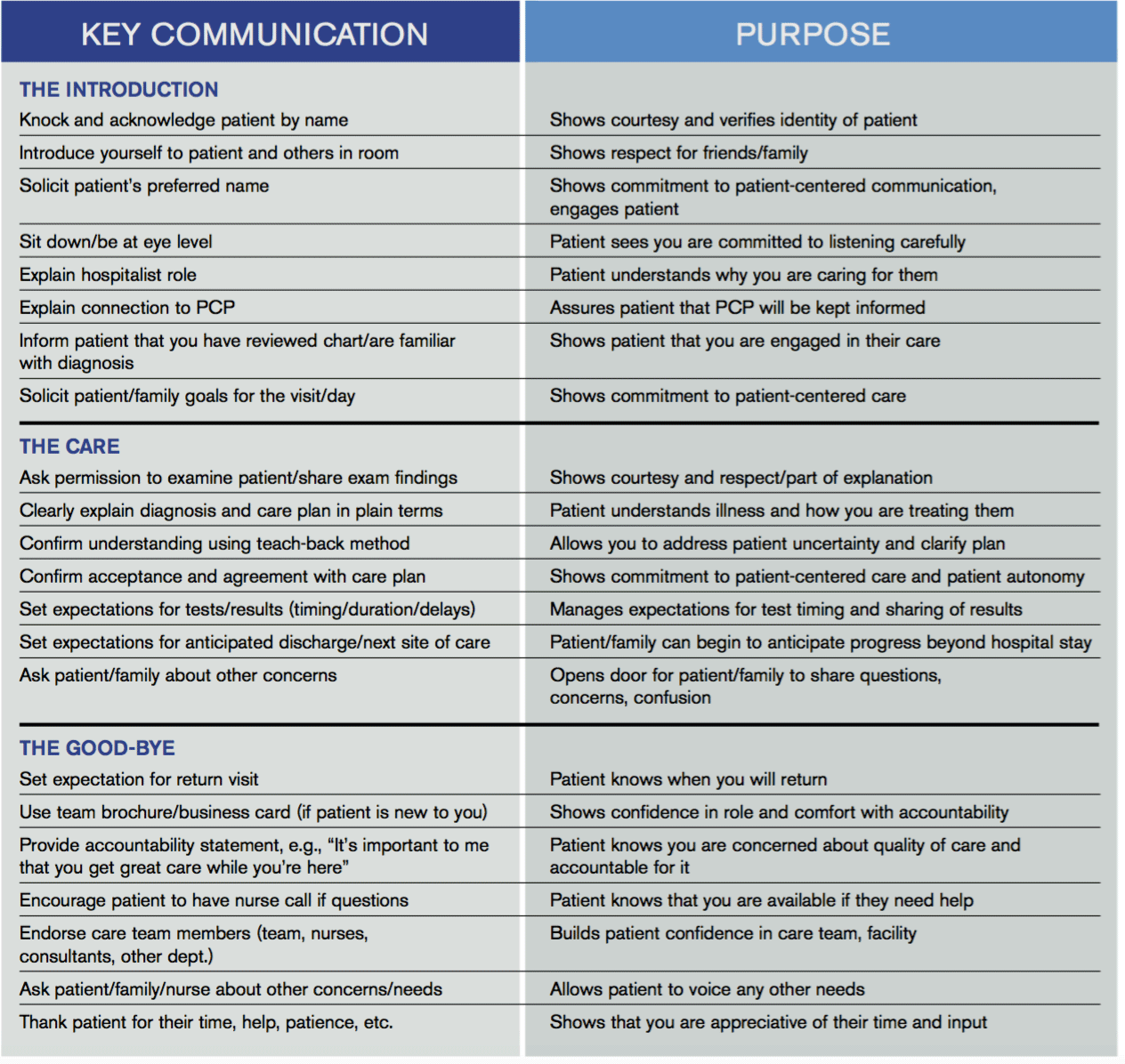
Editor’s note: “Everything We Say and Do” is an informational series developed by SHM’s Patient Experience Committee to provide readers with thoughtful and actionable communication tactics that have great potential to positively impact patients’ experience of care. Each article will focus on how the contributor applies one ormore of the “key communication” tactics in practice to maintain provider accountability for “Everything we say and do that affects our patients’ thoughts, feelings and well-being.”
What I Say and Do
I address patients by their preferred name and introduce myself with my full name.

Why I Do It
I have been surprised by how little discussion I have seen regarding how we address our patients. All the literature I have seen tells us that patients generally prefer first names, yet most doctors use last names. They also want us to introduce ourselves with our first and last name.
I have really found that using a first name personalizes the encounter a lot more than the formal Mr. or Mrs. Jones. Take, for example, “I am sorry you are still in pain, Mr. Jones,” versus, “I am sorry you are still in pain, Bill.”
Or for a family meeting regarding end of life: “What would Mrs. Jones want from us at this point in her life?” versus “What would Jenny want from us at this point in her life?”
I know that, for me personally, I feel treated more like an individual when someone uses my first name versus my last. This may seem like a small point, but I think it can truly improve communication and connectedness.
How I Do It
About four years ago, I began starting every encounter by addressing my patients by their first and last name. I then ask them what they would prefer to be called. Every patient has responded with either their first name or with a preferred nickname.
I always introduce myself as Dr. Rob Hoffman. About 90% of patients call me Dr. Hoffman, and the rest call me Rob. I used to be taken aback by being called Rob but eventually realized how egocentric that was. What should I care what my patient calls me? TH
Dr. Hoffman is a clinical associate professor and medical director for patient relations at the University of Wisconsin Hospital and Clinics and University of Wisconsin School of Medicine and Public Health in Madison.
Table 1.

Editor’s note: “Everything We Say and Do” is an informational series developed by SHM’s Patient Experience Committee to provide readers with thoughtful and actionable communication tactics that have great potential to positively impact patients’ experience of care. Each article will focus on how the contributor applies one ormore of the “key communication” tactics in practice to maintain provider accountability for “Everything we say and do that affects our patients’ thoughts, feelings and well-being.”
What I Say and Do
I address patients by their preferred name and introduce myself with my full name.
Why I Do It
I have been surprised by how little discussion I have seen regarding how we address our patients. All the literature I have seen tells us that patients generally prefer first names, yet most doctors use last names. They also want us to introduce ourselves with our first and last name.
I have really found that using a first name personalizes the encounter a lot more than the formal Mr. or Mrs. Jones. Take, for example, “I am sorry you are still in pain, Mr. Jones,” versus, “I am sorry you are still in pain, Bill.”
Or for a family meeting regarding end of life: “What would Mrs. Jones want from us at this point in her life?” versus “What would Jenny want from us at this point in her life?”
I know that, for me personally, I feel treated more like an individual when someone uses my first name versus my last. This may seem like a small point, but I think it can truly improve communication and connectedness.
How I Do It
About four years ago, I began starting every encounter by addressing my patients by their first and last name. I then ask them what they would prefer to be called. Every patient has responded with either their first name or with a preferred nickname.
I always introduce myself as Dr. Rob Hoffman. About 90% of patients call me Dr. Hoffman, and the rest call me Rob. I used to be taken aback by being called Rob but eventually realized how egocentric that was. What should I care what my patient calls me? TH
Dr. Hoffman is a clinical associate professor and medical director for patient relations at the University of Wisconsin Hospital and Clinics and University of Wisconsin School of Medicine and Public Health in Madison.
Table 1.
Editor’s note: “Everything We Say and Do” is an informational series developed by SHM’s Patient Experience Committee to provide readers with thoughtful and actionable communication tactics that have great potential to positively impact patients’ experience of care. Each article will focus on how the contributor applies one ormore of the “key communication” tactics in practice to maintain provider accountability for “Everything we say and do that affects our patients’ thoughts, feelings and well-being.”
What I Say and Do
I address patients by their preferred name and introduce myself with my full name.
Why I Do It
I have been surprised by how little discussion I have seen regarding how we address our patients. All the literature I have seen tells us that patients generally prefer first names, yet most doctors use last names. They also want us to introduce ourselves with our first and last name.
I have really found that using a first name personalizes the encounter a lot more than the formal Mr. or Mrs. Jones. Take, for example, “I am sorry you are still in pain, Mr. Jones,” versus, “I am sorry you are still in pain, Bill.”
Or for a family meeting regarding end of life: “What would Mrs. Jones want from us at this point in her life?” versus “What would Jenny want from us at this point in her life?”
I know that, for me personally, I feel treated more like an individual when someone uses my first name versus my last. This may seem like a small point, but I think it can truly improve communication and connectedness.
How I Do It
About four years ago, I began starting every encounter by addressing my patients by their first and last name. I then ask them what they would prefer to be called. Every patient has responded with either their first name or with a preferred nickname.
I always introduce myself as Dr. Rob Hoffman. About 90% of patients call me Dr. Hoffman, and the rest call me Rob. I used to be taken aback by being called Rob but eventually realized how egocentric that was. What should I care what my patient calls me? TH
Dr. Hoffman is a clinical associate professor and medical director for patient relations at the University of Wisconsin Hospital and Clinics and University of Wisconsin School of Medicine and Public Health in Madison.
Table 1.
Only Two Strategies Offer some Effectiveness in Preventing Contrast-induced CIN
NEW YORK (Reuters Health) - Only two strategies offer some effectiveness in preventing contrast-induced nephropathy (CIN), according to a systematic review and meta-analysis of 86 randomized, controlled trials.
Those are use of N-acetylcysteine (NAc) in patients receiving low-osmolar contrast media (LOCM), and statins plus NAc.
The reported incidence of CIN, defined as an increase in serum creatinine levels >25% or 44.2 mmol/L (0.5 mg/dL) within three days of IV administration of contrast media, ranges from 7% to 11% and adds an average $10,345 to a CIN-related hospital stay. There is no clear consensus about the most effective intervention to prevent or reduce CIN.
Dr. Rathan M. Subramaniam and colleagues from Johns Hopkins University in Baltimore compared five strategies for preventing CIN in their systematic review and meta-analysis: IV NAc plus saline versus IV saline alone; IV sodium bicarbonate versus IV saline; NAc plus IV saline versus IV sodium bicarbonate; statins with or without NAc versus IV saline; and ascorbic acid versus NAc or IV saline.
In the NAc studies, all of which had low strength of evidence, NAc had a clinically important benefit in reducing CIN risk only when LOCM were used.
Low-dose NAc had a borderline clinically important effect on preventing CIN, whereas high-dose NAc had a statistically significant (but clinically unimportant) effect on reducing CIN risk (with low strength of evidence).
Similarly, statins when added to NAc showed a clinically important reduction in CIN risk, although with low strength of evidence.
IV sodium bicarbonate (versus IV saline), NAc (versus IV sodium bicarbonate), and ascorbic acid (versus other strategies) showed no statistically significant, clinically important benefit in reducing CIN risk, according to the report onine February 1 in Annals of Internal Medicine online.
"The studies span over two decades, and there may have been changes in the practice of CIN prevention, such as increased screening, variation in definition of acute kidney injury, and variation in hydration, over time," the researchers noted. "Such changes could contribute to differences in outcomes."
"This comprehensive review highlights the generally low strength of evidence on interventions for preventing CIN while indicating that the greatest reduction in CIN risk has been achieved with low-dose N-acetylcysteine in patients receiving LOCM or with statins plus N-acetylcysteine," they concluded.
In a related article, the group from Johns Hopkins University found no differences in CIN risk among the different types of LOCM. Iodixanol had a slightly lower risk of CIN than LOCM did, but the difference was not clinically important.
Dr. Guillaume Mahe from CHU de Rennes, Rennes, France recently reviewed remote ischemic preconditioning, another proposed method for preventing CIN (http://bit.ly/23EU40a). He told Reuters Health by email, "It seems of interest to use N-acetylcysteine, which is a low cost drug. Statins might be also a good option. This is another interesting effect of the statins, which is unknown by most physicians."
Even more important, Dr. Mahe said, is to "be sure that the patients need a computed tomography angiography with contrast media."
He expressed surprise that the authors did not assess the role of remote ischemic preconditioning in their review.
Dr. Subramaniam did not respond to a request for comments. The Agency for Healthcare Research and Quality funded both studies.
NEW YORK (Reuters Health) - Only two strategies offer some effectiveness in preventing contrast-induced nephropathy (CIN), according to a systematic review and meta-analysis of 86 randomized, controlled trials.
Those are use of N-acetylcysteine (NAc) in patients receiving low-osmolar contrast media (LOCM), and statins plus NAc.
The reported incidence of CIN, defined as an increase in serum creatinine levels >25% or 44.2 mmol/L (0.5 mg/dL) within three days of IV administration of contrast media, ranges from 7% to 11% and adds an average $10,345 to a CIN-related hospital stay. There is no clear consensus about the most effective intervention to prevent or reduce CIN.
Dr. Rathan M. Subramaniam and colleagues from Johns Hopkins University in Baltimore compared five strategies for preventing CIN in their systematic review and meta-analysis: IV NAc plus saline versus IV saline alone; IV sodium bicarbonate versus IV saline; NAc plus IV saline versus IV sodium bicarbonate; statins with or without NAc versus IV saline; and ascorbic acid versus NAc or IV saline.
In the NAc studies, all of which had low strength of evidence, NAc had a clinically important benefit in reducing CIN risk only when LOCM were used.
Low-dose NAc had a borderline clinically important effect on preventing CIN, whereas high-dose NAc had a statistically significant (but clinically unimportant) effect on reducing CIN risk (with low strength of evidence).
Similarly, statins when added to NAc showed a clinically important reduction in CIN risk, although with low strength of evidence.
IV sodium bicarbonate (versus IV saline), NAc (versus IV sodium bicarbonate), and ascorbic acid (versus other strategies) showed no statistically significant, clinically important benefit in reducing CIN risk, according to the report onine February 1 in Annals of Internal Medicine online.
"The studies span over two decades, and there may have been changes in the practice of CIN prevention, such as increased screening, variation in definition of acute kidney injury, and variation in hydration, over time," the researchers noted. "Such changes could contribute to differences in outcomes."
"This comprehensive review highlights the generally low strength of evidence on interventions for preventing CIN while indicating that the greatest reduction in CIN risk has been achieved with low-dose N-acetylcysteine in patients receiving LOCM or with statins plus N-acetylcysteine," they concluded.
In a related article, the group from Johns Hopkins University found no differences in CIN risk among the different types of LOCM. Iodixanol had a slightly lower risk of CIN than LOCM did, but the difference was not clinically important.
Dr. Guillaume Mahe from CHU de Rennes, Rennes, France recently reviewed remote ischemic preconditioning, another proposed method for preventing CIN (http://bit.ly/23EU40a). He told Reuters Health by email, "It seems of interest to use N-acetylcysteine, which is a low cost drug. Statins might be also a good option. This is another interesting effect of the statins, which is unknown by most physicians."
Even more important, Dr. Mahe said, is to "be sure that the patients need a computed tomography angiography with contrast media."
He expressed surprise that the authors did not assess the role of remote ischemic preconditioning in their review.
Dr. Subramaniam did not respond to a request for comments. The Agency for Healthcare Research and Quality funded both studies.
NEW YORK (Reuters Health) - Only two strategies offer some effectiveness in preventing contrast-induced nephropathy (CIN), according to a systematic review and meta-analysis of 86 randomized, controlled trials.
Those are use of N-acetylcysteine (NAc) in patients receiving low-osmolar contrast media (LOCM), and statins plus NAc.
The reported incidence of CIN, defined as an increase in serum creatinine levels >25% or 44.2 mmol/L (0.5 mg/dL) within three days of IV administration of contrast media, ranges from 7% to 11% and adds an average $10,345 to a CIN-related hospital stay. There is no clear consensus about the most effective intervention to prevent or reduce CIN.
Dr. Rathan M. Subramaniam and colleagues from Johns Hopkins University in Baltimore compared five strategies for preventing CIN in their systematic review and meta-analysis: IV NAc plus saline versus IV saline alone; IV sodium bicarbonate versus IV saline; NAc plus IV saline versus IV sodium bicarbonate; statins with or without NAc versus IV saline; and ascorbic acid versus NAc or IV saline.
In the NAc studies, all of which had low strength of evidence, NAc had a clinically important benefit in reducing CIN risk only when LOCM were used.
Low-dose NAc had a borderline clinically important effect on preventing CIN, whereas high-dose NAc had a statistically significant (but clinically unimportant) effect on reducing CIN risk (with low strength of evidence).
Similarly, statins when added to NAc showed a clinically important reduction in CIN risk, although with low strength of evidence.
IV sodium bicarbonate (versus IV saline), NAc (versus IV sodium bicarbonate), and ascorbic acid (versus other strategies) showed no statistically significant, clinically important benefit in reducing CIN risk, according to the report onine February 1 in Annals of Internal Medicine online.
"The studies span over two decades, and there may have been changes in the practice of CIN prevention, such as increased screening, variation in definition of acute kidney injury, and variation in hydration, over time," the researchers noted. "Such changes could contribute to differences in outcomes."
"This comprehensive review highlights the generally low strength of evidence on interventions for preventing CIN while indicating that the greatest reduction in CIN risk has been achieved with low-dose N-acetylcysteine in patients receiving LOCM or with statins plus N-acetylcysteine," they concluded.
In a related article, the group from Johns Hopkins University found no differences in CIN risk among the different types of LOCM. Iodixanol had a slightly lower risk of CIN than LOCM did, but the difference was not clinically important.
Dr. Guillaume Mahe from CHU de Rennes, Rennes, France recently reviewed remote ischemic preconditioning, another proposed method for preventing CIN (http://bit.ly/23EU40a). He told Reuters Health by email, "It seems of interest to use N-acetylcysteine, which is a low cost drug. Statins might be also a good option. This is another interesting effect of the statins, which is unknown by most physicians."
Even more important, Dr. Mahe said, is to "be sure that the patients need a computed tomography angiography with contrast media."
He expressed surprise that the authors did not assess the role of remote ischemic preconditioning in their review.
Dr. Subramaniam did not respond to a request for comments. The Agency for Healthcare Research and Quality funded both studies.
Effects of Low-Literacy Asthma Action Plans on Provider Counseling
Clinical question: Can physician counseling for asthma care be improved by using low-literacy asthma action plans?
Background: Although asthma action plans are recommended for all children with asthma and have been associated with improved medication adherence, written asthma action plans are given to fewer than half of patients with asthma. Children with asthma whose parents have low health literacy have worse asthma-related outcomes; most asthma action plans do not use principles of health literacy. Researchers sought to investigate if asthma counseling was improved when providers were given a low-literacy asthma action plan versus a standard plan to structure their counseling.
Study design: Randomized controlled trial.
Setting: Two large, academic medical centers.
Synopsis: The study enrolled 126 physicians, of which 119 were randomized, with 61 counseling based on the low-literacy asthma action plan and 58 counseling based on a standard asthma action plan. There were no significant differences between the two groups of physicians in terms of age, gender, frequency in providing asthma care, confidence in asthma counseling, or training category (resident, fellow, attending).
These physicians counseled research assistants acting in the role of parents of children with moderate persistent asthma. The children were on a regimen of daily orally inhaled fluticasone and montelukast by mouth and as-needed albuterol. The low-literacy plan used photographs of medications, pictograms, and colors to delineate asthma severity and was prepopulated with the patient’s regimen. The standard plan was from the American Academy of Allergy, Asthma & Immunology (AAAAI); it required the physician to write in the names and doses of the patient’s medications and had no photos or pictograms. Counseling sessions were recorded and coded for content.
Using health literacy principles, the authors valued plain-language descriptions (e.g., “ribs show when breathing”) over jargon (e.g., “respiratory distress”) and specific times (e.g., “morning and night”) over times-per-day dosing (e.g., “two times a day”).
Physicians using the low-literacy plan were much more likely to use specific time of day rather than doses per day (odds ratio = 27.5; 95% CI, 6.1–123.4), much more likely to mention spacers (odds ratio = 6; 95% CI, 2.8–15), and much more likely to use plain-language descriptors of respiratory distress (odds ratio = 33; 95% CI, 7.4–147.5). These differences were present regardless of physicians’ stated comfort with asthma counseling or experience level. There was no significant difference in duration of counseling between the two plans. Physicians stated a preference for the low-literacy plan.
Bottom line: Use of low-literacy asthma action plans improves the quality of physician counseling for asthma.
Citation: Yin HS, Gupta RS, Tomopoulos S, et al. A low-literacy asthma action plan to improve provider asthma counseling: a randomized study. Pediatrics. 2016;137(1):1-11. doi:10.1542/peds.2015-0468.
Dr. Stubblefield is a pediatric hospitalist at Nemours/Alfred I. Dupont Hospital for Children in Wilmington, Del., and assistant professor of pediatrics at Thomas Jefferson Medical College in Philadelphia.
Clinical question: Can physician counseling for asthma care be improved by using low-literacy asthma action plans?
Background: Although asthma action plans are recommended for all children with asthma and have been associated with improved medication adherence, written asthma action plans are given to fewer than half of patients with asthma. Children with asthma whose parents have low health literacy have worse asthma-related outcomes; most asthma action plans do not use principles of health literacy. Researchers sought to investigate if asthma counseling was improved when providers were given a low-literacy asthma action plan versus a standard plan to structure their counseling.
Study design: Randomized controlled trial.
Setting: Two large, academic medical centers.
Synopsis: The study enrolled 126 physicians, of which 119 were randomized, with 61 counseling based on the low-literacy asthma action plan and 58 counseling based on a standard asthma action plan. There were no significant differences between the two groups of physicians in terms of age, gender, frequency in providing asthma care, confidence in asthma counseling, or training category (resident, fellow, attending).
These physicians counseled research assistants acting in the role of parents of children with moderate persistent asthma. The children were on a regimen of daily orally inhaled fluticasone and montelukast by mouth and as-needed albuterol. The low-literacy plan used photographs of medications, pictograms, and colors to delineate asthma severity and was prepopulated with the patient’s regimen. The standard plan was from the American Academy of Allergy, Asthma & Immunology (AAAAI); it required the physician to write in the names and doses of the patient’s medications and had no photos or pictograms. Counseling sessions were recorded and coded for content.
Using health literacy principles, the authors valued plain-language descriptions (e.g., “ribs show when breathing”) over jargon (e.g., “respiratory distress”) and specific times (e.g., “morning and night”) over times-per-day dosing (e.g., “two times a day”).
Physicians using the low-literacy plan were much more likely to use specific time of day rather than doses per day (odds ratio = 27.5; 95% CI, 6.1–123.4), much more likely to mention spacers (odds ratio = 6; 95% CI, 2.8–15), and much more likely to use plain-language descriptors of respiratory distress (odds ratio = 33; 95% CI, 7.4–147.5). These differences were present regardless of physicians’ stated comfort with asthma counseling or experience level. There was no significant difference in duration of counseling between the two plans. Physicians stated a preference for the low-literacy plan.
Bottom line: Use of low-literacy asthma action plans improves the quality of physician counseling for asthma.
Citation: Yin HS, Gupta RS, Tomopoulos S, et al. A low-literacy asthma action plan to improve provider asthma counseling: a randomized study. Pediatrics. 2016;137(1):1-11. doi:10.1542/peds.2015-0468.
Dr. Stubblefield is a pediatric hospitalist at Nemours/Alfred I. Dupont Hospital for Children in Wilmington, Del., and assistant professor of pediatrics at Thomas Jefferson Medical College in Philadelphia.
Clinical question: Can physician counseling for asthma care be improved by using low-literacy asthma action plans?
Background: Although asthma action plans are recommended for all children with asthma and have been associated with improved medication adherence, written asthma action plans are given to fewer than half of patients with asthma. Children with asthma whose parents have low health literacy have worse asthma-related outcomes; most asthma action plans do not use principles of health literacy. Researchers sought to investigate if asthma counseling was improved when providers were given a low-literacy asthma action plan versus a standard plan to structure their counseling.
Study design: Randomized controlled trial.
Setting: Two large, academic medical centers.
Synopsis: The study enrolled 126 physicians, of which 119 were randomized, with 61 counseling based on the low-literacy asthma action plan and 58 counseling based on a standard asthma action plan. There were no significant differences between the two groups of physicians in terms of age, gender, frequency in providing asthma care, confidence in asthma counseling, or training category (resident, fellow, attending).
These physicians counseled research assistants acting in the role of parents of children with moderate persistent asthma. The children were on a regimen of daily orally inhaled fluticasone and montelukast by mouth and as-needed albuterol. The low-literacy plan used photographs of medications, pictograms, and colors to delineate asthma severity and was prepopulated with the patient’s regimen. The standard plan was from the American Academy of Allergy, Asthma & Immunology (AAAAI); it required the physician to write in the names and doses of the patient’s medications and had no photos or pictograms. Counseling sessions were recorded and coded for content.
Using health literacy principles, the authors valued plain-language descriptions (e.g., “ribs show when breathing”) over jargon (e.g., “respiratory distress”) and specific times (e.g., “morning and night”) over times-per-day dosing (e.g., “two times a day”).
Physicians using the low-literacy plan were much more likely to use specific time of day rather than doses per day (odds ratio = 27.5; 95% CI, 6.1–123.4), much more likely to mention spacers (odds ratio = 6; 95% CI, 2.8–15), and much more likely to use plain-language descriptors of respiratory distress (odds ratio = 33; 95% CI, 7.4–147.5). These differences were present regardless of physicians’ stated comfort with asthma counseling or experience level. There was no significant difference in duration of counseling between the two plans. Physicians stated a preference for the low-literacy plan.
Bottom line: Use of low-literacy asthma action plans improves the quality of physician counseling for asthma.
Citation: Yin HS, Gupta RS, Tomopoulos S, et al. A low-literacy asthma action plan to improve provider asthma counseling: a randomized study. Pediatrics. 2016;137(1):1-11. doi:10.1542/peds.2015-0468.
Dr. Stubblefield is a pediatric hospitalist at Nemours/Alfred I. Dupont Hospital for Children in Wilmington, Del., and assistant professor of pediatrics at Thomas Jefferson Medical College in Philadelphia.
Medicaid Coverage Differs in Many States Opposed to Medicare
(Reuters Health) - Medicaid, the U.S. health program for the poor, pays far less for common surgical procedures in many states than does Medicare, the federal insurance plan for the elderly, according to a new study.
Some of the discounts are so steep that they may threaten access to care, the authors argue.
Medicaid is the biggest public health program in the U.S. and currently accounts for about $1 out of every $6 spent on medical care. Medicaid expenditures also represent almost half of all federal funds spent by states.
When Medicaid fees are too low relative to payments from Medicare, doctors may refuse to treat Medicaid patients, potentially making it much harder for poor people to get treatment, argue Dr. Charles Mabry of the University of Arkansas in Little Rock and colleagues in a paper released online January 13 in the Journal of the American College of Surgeons.
"Lack of proper payment can cause some Medicaid patients to have needed surgical procedures delayed," Mabry told Reuters Health by email. "Our hope was that by researching and publishing on these wide variations in payment, it would spur states to rethink the methodology for how they determine payment."
Even though the federal government picks up part of the tab for care, Medicaid payment rates as well as enrollment eligibility and covered benefits are determined by individual states.
To assess the degree of variation between Medicare and Medicaid payments for surgery, Mabry and colleagues calculated how much fees varied for some of the most common procedures done by general surgeons in nearly every state across the country.
The analysis excluded only Kansas and Tennessee.
The largest discount they found was in New Jersey, where Medicaid paid $1,011 (about 933 euros) less than Medicare for surgery to remove all or part of the small intestine.
At the other extreme, the biggest premium was in Alaska, which paid $1,382 more for insertion of a tunneled central venous port under Medicaid than Medicare would pay for the procedure.
When they looked at mastectomy, Medicaid paid $226.47 in Connecticut, 69% less than the $725.35 Medicare payment for the same procedure in the same state.
For an enterectomy, New Jersey's Medicaid payment of $332 was 75% less than the $1,343.16 payment under Medicare.
To fix a ventral hernia, Medicaid in New Hampshire pays $300, 61% less than the $762.28 Medicare payment in the state.
The analysis has several limitations, including the narrow focus on a handful of surgical procedures and the reliance on published payment schedules in each state, which may not necessarily reflect what surgeons actually get paid, the authors note. The analysis also lacked data on certain bulk payments or additional funds paid by Medicaid that might minimize the apparent discounts in some cases.
The paper didn't examine how access to care might be adversely affected by steep discounts in Medicaid payments relative to Medicare or private insurance. But, the authors conclude, it's likely some people struggle to find surgeons or experience delays in care as a direct result of low fees that motivate doctors to refuse Medicaid patients.
One woman with sickle-cell disease and Medicaid coverage is a case-in-point for Dr. Constantine Manthous, who retired from Yale University and works in private practice in New London, Connecticut.
He recalled meeting her after she had spent a decade in a wheelchair because she couldn't find a surgeon to repair her hip. She didn't receive surgery until the hip fell out of its socket, requiring constant hospitalization and morphine.
"By that time she was so ill she died of late complications from the decade delay," Manthous, who wasn't involved in the study, said by email. "You and I would have gotten the hip immediately."
(Reuters Health) - Medicaid, the U.S. health program for the poor, pays far less for common surgical procedures in many states than does Medicare, the federal insurance plan for the elderly, according to a new study.
Some of the discounts are so steep that they may threaten access to care, the authors argue.
Medicaid is the biggest public health program in the U.S. and currently accounts for about $1 out of every $6 spent on medical care. Medicaid expenditures also represent almost half of all federal funds spent by states.
When Medicaid fees are too low relative to payments from Medicare, doctors may refuse to treat Medicaid patients, potentially making it much harder for poor people to get treatment, argue Dr. Charles Mabry of the University of Arkansas in Little Rock and colleagues in a paper released online January 13 in the Journal of the American College of Surgeons.
"Lack of proper payment can cause some Medicaid patients to have needed surgical procedures delayed," Mabry told Reuters Health by email. "Our hope was that by researching and publishing on these wide variations in payment, it would spur states to rethink the methodology for how they determine payment."
Even though the federal government picks up part of the tab for care, Medicaid payment rates as well as enrollment eligibility and covered benefits are determined by individual states.
To assess the degree of variation between Medicare and Medicaid payments for surgery, Mabry and colleagues calculated how much fees varied for some of the most common procedures done by general surgeons in nearly every state across the country.
The analysis excluded only Kansas and Tennessee.
The largest discount they found was in New Jersey, where Medicaid paid $1,011 (about 933 euros) less than Medicare for surgery to remove all or part of the small intestine.
At the other extreme, the biggest premium was in Alaska, which paid $1,382 more for insertion of a tunneled central venous port under Medicaid than Medicare would pay for the procedure.
When they looked at mastectomy, Medicaid paid $226.47 in Connecticut, 69% less than the $725.35 Medicare payment for the same procedure in the same state.
For an enterectomy, New Jersey's Medicaid payment of $332 was 75% less than the $1,343.16 payment under Medicare.
To fix a ventral hernia, Medicaid in New Hampshire pays $300, 61% less than the $762.28 Medicare payment in the state.
The analysis has several limitations, including the narrow focus on a handful of surgical procedures and the reliance on published payment schedules in each state, which may not necessarily reflect what surgeons actually get paid, the authors note. The analysis also lacked data on certain bulk payments or additional funds paid by Medicaid that might minimize the apparent discounts in some cases.
The paper didn't examine how access to care might be adversely affected by steep discounts in Medicaid payments relative to Medicare or private insurance. But, the authors conclude, it's likely some people struggle to find surgeons or experience delays in care as a direct result of low fees that motivate doctors to refuse Medicaid patients.
One woman with sickle-cell disease and Medicaid coverage is a case-in-point for Dr. Constantine Manthous, who retired from Yale University and works in private practice in New London, Connecticut.
He recalled meeting her after she had spent a decade in a wheelchair because she couldn't find a surgeon to repair her hip. She didn't receive surgery until the hip fell out of its socket, requiring constant hospitalization and morphine.
"By that time she was so ill she died of late complications from the decade delay," Manthous, who wasn't involved in the study, said by email. "You and I would have gotten the hip immediately."
(Reuters Health) - Medicaid, the U.S. health program for the poor, pays far less for common surgical procedures in many states than does Medicare, the federal insurance plan for the elderly, according to a new study.
Some of the discounts are so steep that they may threaten access to care, the authors argue.
Medicaid is the biggest public health program in the U.S. and currently accounts for about $1 out of every $6 spent on medical care. Medicaid expenditures also represent almost half of all federal funds spent by states.
When Medicaid fees are too low relative to payments from Medicare, doctors may refuse to treat Medicaid patients, potentially making it much harder for poor people to get treatment, argue Dr. Charles Mabry of the University of Arkansas in Little Rock and colleagues in a paper released online January 13 in the Journal of the American College of Surgeons.
"Lack of proper payment can cause some Medicaid patients to have needed surgical procedures delayed," Mabry told Reuters Health by email. "Our hope was that by researching and publishing on these wide variations in payment, it would spur states to rethink the methodology for how they determine payment."
Even though the federal government picks up part of the tab for care, Medicaid payment rates as well as enrollment eligibility and covered benefits are determined by individual states.
To assess the degree of variation between Medicare and Medicaid payments for surgery, Mabry and colleagues calculated how much fees varied for some of the most common procedures done by general surgeons in nearly every state across the country.
The analysis excluded only Kansas and Tennessee.
The largest discount they found was in New Jersey, where Medicaid paid $1,011 (about 933 euros) less than Medicare for surgery to remove all or part of the small intestine.
At the other extreme, the biggest premium was in Alaska, which paid $1,382 more for insertion of a tunneled central venous port under Medicaid than Medicare would pay for the procedure.
When they looked at mastectomy, Medicaid paid $226.47 in Connecticut, 69% less than the $725.35 Medicare payment for the same procedure in the same state.
For an enterectomy, New Jersey's Medicaid payment of $332 was 75% less than the $1,343.16 payment under Medicare.
To fix a ventral hernia, Medicaid in New Hampshire pays $300, 61% less than the $762.28 Medicare payment in the state.
The analysis has several limitations, including the narrow focus on a handful of surgical procedures and the reliance on published payment schedules in each state, which may not necessarily reflect what surgeons actually get paid, the authors note. The analysis also lacked data on certain bulk payments or additional funds paid by Medicaid that might minimize the apparent discounts in some cases.
The paper didn't examine how access to care might be adversely affected by steep discounts in Medicaid payments relative to Medicare or private insurance. But, the authors conclude, it's likely some people struggle to find surgeons or experience delays in care as a direct result of low fees that motivate doctors to refuse Medicaid patients.
One woman with sickle-cell disease and Medicaid coverage is a case-in-point for Dr. Constantine Manthous, who retired from Yale University and works in private practice in New London, Connecticut.
He recalled meeting her after she had spent a decade in a wheelchair because she couldn't find a surgeon to repair her hip. She didn't receive surgery until the hip fell out of its socket, requiring constant hospitalization and morphine.
"By that time she was so ill she died of late complications from the decade delay," Manthous, who wasn't involved in the study, said by email. "You and I would have gotten the hip immediately."
Team Hospitalist Seats 8 Members
Eight hospitalists have joined Team Hospitalist, the only reader involvement group of its kind in hospital medicine. Each of the new members has experience in the practice of HM; many offer specialized backgrounds in pediatrics, academics, quality and patient safety, and group administration. The new members will serve two-year terms and act as special editorial consultants to the magazine.
Geeta Arora, MD, is a locum tenens hospitalist. She travels around the country practicing hospitalist medicine, telemedicine and travels the world practicing global medicine. Dr. Arora currently resides in New York City and holds board certifications in both internal medicine as well as integrative holistic medicine.
Michael J. Beck, MD, FAAP, is division chief of pediatric hospital medicine in the Department of Pediatrics, associate professor of pediatrics and internal medicine, and assistant program director, medicine/pediatrics residency program at Penn State Children's Hospital and Milton S. Hershey Medical Center in Pennsylvania.
Kevin M. Conrad, MD, MBA, is a hospitalist and medical director of community affairs and health policy at Ochsner Health Systems in New Orleans, La. He is an associate professor of medicine at Tulane University.
Stella Fitzgibbons, MD, FACP, FHM, is a hospitalist and emergency physician with Mint Physicians, primarily in Apollo Hospital System.
Benjamin Frizner, MD, FHM, is a hospitalist and director of the ventilator unit at Future Care, a Baltimore, Md.-based organization providing post-acute care across 12 facilities throughout southern Maryland.
Sarah A. Stella, MD, is an academic hospitalist in the division of hospital medicine and physician advisor for the department of care management at Denver Health in Colorado. She is an assistant professor of medicine at the University of Colorado School of Medicine in Aurora.
Miguel Angel Villagra Diaz, MD, is a hospitalist and medical director for the hospital medicine program at White River Medical Center in Batesville, Ark.
Jill Slater Waldman, MD, SFHM, is director of the adult hospital service at Phelps Memorial Hospital Center in Sleepy Hollow, N.Y. She is medical director and physician advisor for utilization management, assistant to the CMO, and course coordinator for the internal medicine rotation.
Eight hospitalists have joined Team Hospitalist, the only reader involvement group of its kind in hospital medicine. Each of the new members has experience in the practice of HM; many offer specialized backgrounds in pediatrics, academics, quality and patient safety, and group administration. The new members will serve two-year terms and act as special editorial consultants to the magazine.
Geeta Arora, MD, is a locum tenens hospitalist. She travels around the country practicing hospitalist medicine, telemedicine and travels the world practicing global medicine. Dr. Arora currently resides in New York City and holds board certifications in both internal medicine as well as integrative holistic medicine.
Michael J. Beck, MD, FAAP, is division chief of pediatric hospital medicine in the Department of Pediatrics, associate professor of pediatrics and internal medicine, and assistant program director, medicine/pediatrics residency program at Penn State Children's Hospital and Milton S. Hershey Medical Center in Pennsylvania.
Kevin M. Conrad, MD, MBA, is a hospitalist and medical director of community affairs and health policy at Ochsner Health Systems in New Orleans, La. He is an associate professor of medicine at Tulane University.
Stella Fitzgibbons, MD, FACP, FHM, is a hospitalist and emergency physician with Mint Physicians, primarily in Apollo Hospital System.
Benjamin Frizner, MD, FHM, is a hospitalist and director of the ventilator unit at Future Care, a Baltimore, Md.-based organization providing post-acute care across 12 facilities throughout southern Maryland.
Sarah A. Stella, MD, is an academic hospitalist in the division of hospital medicine and physician advisor for the department of care management at Denver Health in Colorado. She is an assistant professor of medicine at the University of Colorado School of Medicine in Aurora.
Miguel Angel Villagra Diaz, MD, is a hospitalist and medical director for the hospital medicine program at White River Medical Center in Batesville, Ark.
Jill Slater Waldman, MD, SFHM, is director of the adult hospital service at Phelps Memorial Hospital Center in Sleepy Hollow, N.Y. She is medical director and physician advisor for utilization management, assistant to the CMO, and course coordinator for the internal medicine rotation.
Eight hospitalists have joined Team Hospitalist, the only reader involvement group of its kind in hospital medicine. Each of the new members has experience in the practice of HM; many offer specialized backgrounds in pediatrics, academics, quality and patient safety, and group administration. The new members will serve two-year terms and act as special editorial consultants to the magazine.
Geeta Arora, MD, is a locum tenens hospitalist. She travels around the country practicing hospitalist medicine, telemedicine and travels the world practicing global medicine. Dr. Arora currently resides in New York City and holds board certifications in both internal medicine as well as integrative holistic medicine.
Michael J. Beck, MD, FAAP, is division chief of pediatric hospital medicine in the Department of Pediatrics, associate professor of pediatrics and internal medicine, and assistant program director, medicine/pediatrics residency program at Penn State Children's Hospital and Milton S. Hershey Medical Center in Pennsylvania.
Kevin M. Conrad, MD, MBA, is a hospitalist and medical director of community affairs and health policy at Ochsner Health Systems in New Orleans, La. He is an associate professor of medicine at Tulane University.
Stella Fitzgibbons, MD, FACP, FHM, is a hospitalist and emergency physician with Mint Physicians, primarily in Apollo Hospital System.
Benjamin Frizner, MD, FHM, is a hospitalist and director of the ventilator unit at Future Care, a Baltimore, Md.-based organization providing post-acute care across 12 facilities throughout southern Maryland.
Sarah A. Stella, MD, is an academic hospitalist in the division of hospital medicine and physician advisor for the department of care management at Denver Health in Colorado. She is an assistant professor of medicine at the University of Colorado School of Medicine in Aurora.
Miguel Angel Villagra Diaz, MD, is a hospitalist and medical director for the hospital medicine program at White River Medical Center in Batesville, Ark.
Jill Slater Waldman, MD, SFHM, is director of the adult hospital service at Phelps Memorial Hospital Center in Sleepy Hollow, N.Y. She is medical director and physician advisor for utilization management, assistant to the CMO, and course coordinator for the internal medicine rotation.
Hospital Medicine's Movers and Shakers – March 2016

Zeshan Anwar, MD, is the new medical director of the hospitalist group at Evangelical Community Hospital in Lewisburg, Pa. Before arriving at Evangelical as a hospitalist in 2013, Dr. Anwar served as a hospitalist at Lock Haven Hospital in Linden, Pa., where he was also chair of the quality improvement committee and a physician advisor.


Deshini Moonesinghe, MD, is the new senior vice president and chief medical officer for the Howard Region of Community Howard Regional Health in Kokomo, Ind. Dr. Moonesinghe spearheaded the foundation of Community Howard’s hospitalist program in 2010, and she currently serves as lead hospitalist of the health system. Dr. Moonesinghe received Community Howard’s Physician of the Year Award in 2014.


Business Deals


Sound Physicians is celebrating with one of its partner hospitals, OSF St. Francis Hospital in Escanaba, Mich., which was recently named one of The Leapfrog Group’s Top Hospitals in the U.S. for the fourth consecutive year. Sound Physicians manages OSF St. Francis’s hospitalist physicians and oversees more than half of the hospital’s total inpatient admissions. The Leapfrog Group’s Top Hospitals list is compiled from survey results based on Leapfrog’s quality and safety standards.
Michael O’Neal is a freelance writer in New York City.
Zeshan Anwar, MD, is the new medical director of the hospitalist group at Evangelical Community Hospital in Lewisburg, Pa. Before arriving at Evangelical as a hospitalist in 2013, Dr. Anwar served as a hospitalist at Lock Haven Hospital in Linden, Pa., where he was also chair of the quality improvement committee and a physician advisor.
Deshini Moonesinghe, MD, is the new senior vice president and chief medical officer for the Howard Region of Community Howard Regional Health in Kokomo, Ind. Dr. Moonesinghe spearheaded the foundation of Community Howard’s hospitalist program in 2010, and she currently serves as lead hospitalist of the health system. Dr. Moonesinghe received Community Howard’s Physician of the Year Award in 2014.
Business Deals
Sound Physicians is celebrating with one of its partner hospitals, OSF St. Francis Hospital in Escanaba, Mich., which was recently named one of The Leapfrog Group’s Top Hospitals in the U.S. for the fourth consecutive year. Sound Physicians manages OSF St. Francis’s hospitalist physicians and oversees more than half of the hospital’s total inpatient admissions. The Leapfrog Group’s Top Hospitals list is compiled from survey results based on Leapfrog’s quality and safety standards.
Michael O’Neal is a freelance writer in New York City.
Zeshan Anwar, MD, is the new medical director of the hospitalist group at Evangelical Community Hospital in Lewisburg, Pa. Before arriving at Evangelical as a hospitalist in 2013, Dr. Anwar served as a hospitalist at Lock Haven Hospital in Linden, Pa., where he was also chair of the quality improvement committee and a physician advisor.
Deshini Moonesinghe, MD, is the new senior vice president and chief medical officer for the Howard Region of Community Howard Regional Health in Kokomo, Ind. Dr. Moonesinghe spearheaded the foundation of Community Howard’s hospitalist program in 2010, and she currently serves as lead hospitalist of the health system. Dr. Moonesinghe received Community Howard’s Physician of the Year Award in 2014.
Business Deals
Sound Physicians is celebrating with one of its partner hospitals, OSF St. Francis Hospital in Escanaba, Mich., which was recently named one of The Leapfrog Group’s Top Hospitals in the U.S. for the fourth consecutive year. Sound Physicians manages OSF St. Francis’s hospitalist physicians and oversees more than half of the hospital’s total inpatient admissions. The Leapfrog Group’s Top Hospitals list is compiled from survey results based on Leapfrog’s quality and safety standards.
Michael O’Neal is a freelance writer in New York City.