User login
The Official Newspaper of the American Association for Thoracic Surgery
New Adenocarcinoma Classification
A joint effort by three medical groups has enabled a variety of specialists to join pathologists in revising the classification of lung adenocarcinoma, and they've made some major changes.
A new section addresses diagnosis and classification of non-small cell lung carcinoma (NSCLC) in small biopsies and cytology, including criteria to distinguish adenocarcinoma from squamous cell carcinoma.
The new classification also recommends epidermal growth factor receptor (EGFR) mutation testing in patients with advanced lung adenocarcinoma to help predict response to tyrosine kinase inhibitors.
And it dumps the term �bronchioalveolar carcinoma� while elsewhere adding some new terms (adenocarcinoma in situ and minimally invasive adenocarcinoma) in the document published in the February issue of the Journal of Thoracic Oncology (J. Thorac. Oncol. 2011;6:244-85).
The International Association for the Study of Lung Cancer convened the multidisciplinary panel of experts to revise the previous World Health Organization classification of lung adenocarcinoma, with support and scientific oversight from the American Thoracic Society and the European Respiratory Society. Pathologists, oncologists, pulmonologists, radiologists, thoracic surgeons, and molecular biologists joined the effort.
The revisions should make it easier to stratify patients and to individualize treatment, Dr. William D. Travis, chair of the expert panel, said in an interview. The changes also could significantly influence the next revision of the TNM (tumor, node, metastases) staging system, �not only for pathologic staging but also for clinical staging,� said Dr. Travis, a thoracic pathologist at Memorial Sloan-Kettering Cancer Center, New York.
The new section on small biopsies and cytology specimens is especially important because 70% of lung cancers are diagnosed in samples like these, the consensus panel's statement said. New criteria for diagnosing adenocarcinoma vs. squamous cell carcinoma include the use of special stains in difficult cases, and emphasize the importance of preserving tissue for molecular studies.
Dr. Travis outlined three important clinical reasons to distinguish adenocarcinomas from squamous cell carcinoma, especially in advanced disease.
P Patients with advanced lung adenocarcinoma or unspecified NSCLC who test positive for EGFR mutation are more likely to respond to treatment with tyrosine kinase inhibitors than are patients without mutation.
P Patients with adenocarcinoma or unspecific NSCLC are more likely to respond to pemetrexed (Alimta) than are patients with squamous cell carcinoma.
P Bevacizumab is contraindicated in patients with squamous cell carcinoma because it can lead to life-threatening hemorrhage, he said.
The statement attempts to banish the term bronchioloalveolar carcinoma from histopathology because it is used in ways that confuse five distinct categories: adenocarcinoma in situ; minimally invasive adenocarcinoma; lepidic predominant adenocarcinoma; adenocarcinoma that is predominantly invasive with some nonmucinous lepidic component; and invasive mucinous adenocarcinoma.
�Adenocarcinoma in situ� and �minimally invasive adenocarcinoma� appear in the classification for the first time for small solitary adenocarcinomas with either pure lepidic growth or predominant lepidic growth and no more than 5 mm invasion, because these terms identify patients who have nearly a sure shot at disease-free survival after complete resection.
The statement recommends a new approach for classification of resected invasive lung adenocarcinomas using comprehensive histologic subtyping and classification according to the predominant histologic subtype.
�This allows for improved stratification of patients compared to the 2004 WHO classification, and allows for identification of subtypes that have prognostic significance and that can be correlated with molecular findings,� according to Dr. Travis.
Introducing the concept of in situ carcinoma raised the consideration that tumor size measured according to the size of the invasive component may be a better approach than measuring total tumor size in predicting survival for patients with small solitary adenocarcinomas with a lepidic component. This concept potentially could affect both pathologic and clinical staging in the next TNM, he said.
Using CT, prognosis may be better predicted by the size of the solid component in partly solid nodules rather than by total tumor size including the ground-glass component, Dr. Travis explained.
�Hopefully, this will be investigated by lung cancer groups around the world in the next 5 years, so the TNM committee can address this issue in developing the 8th edition of TNM based on validated data,� he said.
One of the consensus committee members, Dr. Giorgio Scagliotti, has received honoraria from Sanofi-Aventis, Roche, Eli Lilly, and AstraZeneca.
Another committee member, Dr. David Yankelevitz, is a named inventor on some patents related to the evaluation of diseases; the patents are licensed to General Electric and may produce compensation if they are commercialized.
The rest of the committee reported no financial conflicts of interest.
A joint effort by three medical groups has enabled a variety of specialists to join pathologists in revising the classification of lung adenocarcinoma, and they've made some major changes.
A new section addresses diagnosis and classification of non-small cell lung carcinoma (NSCLC) in small biopsies and cytology, including criteria to distinguish adenocarcinoma from squamous cell carcinoma.
The new classification also recommends epidermal growth factor receptor (EGFR) mutation testing in patients with advanced lung adenocarcinoma to help predict response to tyrosine kinase inhibitors.
And it dumps the term �bronchioalveolar carcinoma� while elsewhere adding some new terms (adenocarcinoma in situ and minimally invasive adenocarcinoma) in the document published in the February issue of the Journal of Thoracic Oncology (J. Thorac. Oncol. 2011;6:244-85).
The International Association for the Study of Lung Cancer convened the multidisciplinary panel of experts to revise the previous World Health Organization classification of lung adenocarcinoma, with support and scientific oversight from the American Thoracic Society and the European Respiratory Society. Pathologists, oncologists, pulmonologists, radiologists, thoracic surgeons, and molecular biologists joined the effort.
The revisions should make it easier to stratify patients and to individualize treatment, Dr. William D. Travis, chair of the expert panel, said in an interview. The changes also could significantly influence the next revision of the TNM (tumor, node, metastases) staging system, �not only for pathologic staging but also for clinical staging,� said Dr. Travis, a thoracic pathologist at Memorial Sloan-Kettering Cancer Center, New York.
The new section on small biopsies and cytology specimens is especially important because 70% of lung cancers are diagnosed in samples like these, the consensus panel's statement said. New criteria for diagnosing adenocarcinoma vs. squamous cell carcinoma include the use of special stains in difficult cases, and emphasize the importance of preserving tissue for molecular studies.
Dr. Travis outlined three important clinical reasons to distinguish adenocarcinomas from squamous cell carcinoma, especially in advanced disease.
P Patients with advanced lung adenocarcinoma or unspecified NSCLC who test positive for EGFR mutation are more likely to respond to treatment with tyrosine kinase inhibitors than are patients without mutation.
P Patients with adenocarcinoma or unspecific NSCLC are more likely to respond to pemetrexed (Alimta) than are patients with squamous cell carcinoma.
P Bevacizumab is contraindicated in patients with squamous cell carcinoma because it can lead to life-threatening hemorrhage, he said.
The statement attempts to banish the term bronchioloalveolar carcinoma from histopathology because it is used in ways that confuse five distinct categories: adenocarcinoma in situ; minimally invasive adenocarcinoma; lepidic predominant adenocarcinoma; adenocarcinoma that is predominantly invasive with some nonmucinous lepidic component; and invasive mucinous adenocarcinoma.
�Adenocarcinoma in situ� and �minimally invasive adenocarcinoma� appear in the classification for the first time for small solitary adenocarcinomas with either pure lepidic growth or predominant lepidic growth and no more than 5 mm invasion, because these terms identify patients who have nearly a sure shot at disease-free survival after complete resection.
The statement recommends a new approach for classification of resected invasive lung adenocarcinomas using comprehensive histologic subtyping and classification according to the predominant histologic subtype.
�This allows for improved stratification of patients compared to the 2004 WHO classification, and allows for identification of subtypes that have prognostic significance and that can be correlated with molecular findings,� according to Dr. Travis.
Introducing the concept of in situ carcinoma raised the consideration that tumor size measured according to the size of the invasive component may be a better approach than measuring total tumor size in predicting survival for patients with small solitary adenocarcinomas with a lepidic component. This concept potentially could affect both pathologic and clinical staging in the next TNM, he said.
Using CT, prognosis may be better predicted by the size of the solid component in partly solid nodules rather than by total tumor size including the ground-glass component, Dr. Travis explained.
�Hopefully, this will be investigated by lung cancer groups around the world in the next 5 years, so the TNM committee can address this issue in developing the 8th edition of TNM based on validated data,� he said.
One of the consensus committee members, Dr. Giorgio Scagliotti, has received honoraria from Sanofi-Aventis, Roche, Eli Lilly, and AstraZeneca.
Another committee member, Dr. David Yankelevitz, is a named inventor on some patents related to the evaluation of diseases; the patents are licensed to General Electric and may produce compensation if they are commercialized.
The rest of the committee reported no financial conflicts of interest.
A joint effort by three medical groups has enabled a variety of specialists to join pathologists in revising the classification of lung adenocarcinoma, and they've made some major changes.
A new section addresses diagnosis and classification of non-small cell lung carcinoma (NSCLC) in small biopsies and cytology, including criteria to distinguish adenocarcinoma from squamous cell carcinoma.
The new classification also recommends epidermal growth factor receptor (EGFR) mutation testing in patients with advanced lung adenocarcinoma to help predict response to tyrosine kinase inhibitors.
And it dumps the term �bronchioalveolar carcinoma� while elsewhere adding some new terms (adenocarcinoma in situ and minimally invasive adenocarcinoma) in the document published in the February issue of the Journal of Thoracic Oncology (J. Thorac. Oncol. 2011;6:244-85).
The International Association for the Study of Lung Cancer convened the multidisciplinary panel of experts to revise the previous World Health Organization classification of lung adenocarcinoma, with support and scientific oversight from the American Thoracic Society and the European Respiratory Society. Pathologists, oncologists, pulmonologists, radiologists, thoracic surgeons, and molecular biologists joined the effort.
The revisions should make it easier to stratify patients and to individualize treatment, Dr. William D. Travis, chair of the expert panel, said in an interview. The changes also could significantly influence the next revision of the TNM (tumor, node, metastases) staging system, �not only for pathologic staging but also for clinical staging,� said Dr. Travis, a thoracic pathologist at Memorial Sloan-Kettering Cancer Center, New York.
The new section on small biopsies and cytology specimens is especially important because 70% of lung cancers are diagnosed in samples like these, the consensus panel's statement said. New criteria for diagnosing adenocarcinoma vs. squamous cell carcinoma include the use of special stains in difficult cases, and emphasize the importance of preserving tissue for molecular studies.
Dr. Travis outlined three important clinical reasons to distinguish adenocarcinomas from squamous cell carcinoma, especially in advanced disease.
P Patients with advanced lung adenocarcinoma or unspecified NSCLC who test positive for EGFR mutation are more likely to respond to treatment with tyrosine kinase inhibitors than are patients without mutation.
P Patients with adenocarcinoma or unspecific NSCLC are more likely to respond to pemetrexed (Alimta) than are patients with squamous cell carcinoma.
P Bevacizumab is contraindicated in patients with squamous cell carcinoma because it can lead to life-threatening hemorrhage, he said.
The statement attempts to banish the term bronchioloalveolar carcinoma from histopathology because it is used in ways that confuse five distinct categories: adenocarcinoma in situ; minimally invasive adenocarcinoma; lepidic predominant adenocarcinoma; adenocarcinoma that is predominantly invasive with some nonmucinous lepidic component; and invasive mucinous adenocarcinoma.
�Adenocarcinoma in situ� and �minimally invasive adenocarcinoma� appear in the classification for the first time for small solitary adenocarcinomas with either pure lepidic growth or predominant lepidic growth and no more than 5 mm invasion, because these terms identify patients who have nearly a sure shot at disease-free survival after complete resection.
The statement recommends a new approach for classification of resected invasive lung adenocarcinomas using comprehensive histologic subtyping and classification according to the predominant histologic subtype.
�This allows for improved stratification of patients compared to the 2004 WHO classification, and allows for identification of subtypes that have prognostic significance and that can be correlated with molecular findings,� according to Dr. Travis.
Introducing the concept of in situ carcinoma raised the consideration that tumor size measured according to the size of the invasive component may be a better approach than measuring total tumor size in predicting survival for patients with small solitary adenocarcinomas with a lepidic component. This concept potentially could affect both pathologic and clinical staging in the next TNM, he said.
Using CT, prognosis may be better predicted by the size of the solid component in partly solid nodules rather than by total tumor size including the ground-glass component, Dr. Travis explained.
�Hopefully, this will be investigated by lung cancer groups around the world in the next 5 years, so the TNM committee can address this issue in developing the 8th edition of TNM based on validated data,� he said.
One of the consensus committee members, Dr. Giorgio Scagliotti, has received honoraria from Sanofi-Aventis, Roche, Eli Lilly, and AstraZeneca.
Another committee member, Dr. David Yankelevitz, is a named inventor on some patents related to the evaluation of diseases; the patents are licensed to General Electric and may produce compensation if they are commercialized.
The rest of the committee reported no financial conflicts of interest.
New Adenocarcinoma Classification
A joint effort by three medical groups has enabled a variety of specialists to join pathologists in revising the classification of lung adenocarcinoma, and they've made some major changes.
A new section addresses diagnosis and classification of non-small cell lung carcinoma (NSCLC) in small biopsies and cytology, including criteria to distinguish adenocarcinoma from squamous cell carcinoma.
The new classification also recommends epidermal growth factor receptor (EGFR) mutation testing in patients with advanced lung adenocarcinoma to help predict response to tyrosine kinase inhibitors.
And it dumps the term �bronchioalveolar carcinoma� while elsewhere adding some new terms (adenocarcinoma in situ and minimally invasive adenocarcinoma) in the document published in the February issue of the Journal of Thoracic Oncology (J. Thorac. Oncol. 2011;6:244-85).
The International Association for the Study of Lung Cancer convened the multidisciplinary panel of experts to revise the previous World Health Organization classification of lung adenocarcinoma, with support and scientific oversight from the American Thoracic Society and the European Respiratory Society. Pathologists, oncologists, pulmonologists, radiologists, thoracic surgeons, and molecular biologists joined the effort.
The revisions should make it easier to stratify patients and to individualize treatment, Dr. William D. Travis, chair of the expert panel, said in an interview. The changes also could significantly influence the next revision of the TNM (tumor, node, metastases) staging system, �not only for pathologic staging but also for clinical staging,� said Dr. Travis, a thoracic pathologist at Memorial Sloan-Kettering Cancer Center, New York.
The new section on small biopsies and cytology specimens is especially important because 70% of lung cancers are diagnosed in samples like these, the consensus panel's statement said. New criteria for diagnosing adenocarcinoma vs. squamous cell carcinoma include the use of special stains in difficult cases, and emphasize the importance of preserving tissue for molecular studies.
Dr. Travis outlined three important clinical reasons to distinguish adenocarcinomas from squamous cell carcinoma, especially in advanced disease.
P Patients with advanced lung adenocarcinoma or unspecified NSCLC who test positive for EGFR mutation are more likely to respond to treatment with tyrosine kinase inhibitors than are patients without mutation.
P Patients with adenocarcinoma or unspecific NSCLC are more likely to respond to pemetrexed (Alimta) than are patients with squamous cell carcinoma.
P Bevacizumab is contraindicated in patients with squamous cell carcinoma because it can lead to life-threatening hemorrhage, he said.
The statement attempts to banish the term bronchioloalveolar carcinoma from histopathology because it is used in ways that confuse five distinct categories: adenocarcinoma in situ; minimally invasive adenocarcinoma; lepidic predominant adenocarcinoma; adenocarcinoma that is predominantly invasive with some nonmucinous lepidic component; and invasive mucinous adenocarcinoma.
�Adenocarcinoma in situ� and �minimally invasive adenocarcinoma� appear in the classification for the first time for small solitary adenocarcinomas with either pure lepidic growth or predominant lepidic growth and no more than 5 mm invasion, because these terms identify patients who have nearly a sure shot at disease-free survival after complete resection.
The statement recommends a new approach for classification of resected invasive lung adenocarcinomas using comprehensive histologic subtyping and classification according to the predominant histologic subtype.
�This allows for improved stratification of patients compared to the 2004 WHO classification, and allows for identification of subtypes that have prognostic significance and that can be correlated with molecular findings,� according to Dr. Travis.
Introducing the concept of in situ carcinoma raised the consideration that tumor size measured according to the size of the invasive component may be a better approach than measuring total tumor size in predicting survival for patients with small solitary adenocarcinomas with a lepidic component. This concept potentially could affect both pathologic and clinical staging in the next TNM, he said.
Using CT, prognosis may be better predicted by the size of the solid component in partly solid nodules rather than by total tumor size including the ground-glass component, Dr. Travis explained.
�Hopefully, this will be investigated by lung cancer groups around the world in the next 5 years, so the TNM committee can address this issue in developing the 8th edition of TNM based on validated data,� he said.
One of the consensus committee members, Dr. Giorgio Scagliotti, has received honoraria from Sanofi-Aventis, Roche, Eli Lilly, and AstraZeneca.
Another committee member, Dr. David Yankelevitz, is a named inventor on some patents related to the evaluation of diseases; the patents are licensed to General Electric and may produce compensation if they are commercialized.
The rest of the committee reported no financial conflicts of interest.
A joint effort by three medical groups has enabled a variety of specialists to join pathologists in revising the classification of lung adenocarcinoma, and they've made some major changes.
A new section addresses diagnosis and classification of non-small cell lung carcinoma (NSCLC) in small biopsies and cytology, including criteria to distinguish adenocarcinoma from squamous cell carcinoma.
The new classification also recommends epidermal growth factor receptor (EGFR) mutation testing in patients with advanced lung adenocarcinoma to help predict response to tyrosine kinase inhibitors.
And it dumps the term �bronchioalveolar carcinoma� while elsewhere adding some new terms (adenocarcinoma in situ and minimally invasive adenocarcinoma) in the document published in the February issue of the Journal of Thoracic Oncology (J. Thorac. Oncol. 2011;6:244-85).
The International Association for the Study of Lung Cancer convened the multidisciplinary panel of experts to revise the previous World Health Organization classification of lung adenocarcinoma, with support and scientific oversight from the American Thoracic Society and the European Respiratory Society. Pathologists, oncologists, pulmonologists, radiologists, thoracic surgeons, and molecular biologists joined the effort.
The revisions should make it easier to stratify patients and to individualize treatment, Dr. William D. Travis, chair of the expert panel, said in an interview. The changes also could significantly influence the next revision of the TNM (tumor, node, metastases) staging system, �not only for pathologic staging but also for clinical staging,� said Dr. Travis, a thoracic pathologist at Memorial Sloan-Kettering Cancer Center, New York.
The new section on small biopsies and cytology specimens is especially important because 70% of lung cancers are diagnosed in samples like these, the consensus panel's statement said. New criteria for diagnosing adenocarcinoma vs. squamous cell carcinoma include the use of special stains in difficult cases, and emphasize the importance of preserving tissue for molecular studies.
Dr. Travis outlined three important clinical reasons to distinguish adenocarcinomas from squamous cell carcinoma, especially in advanced disease.
P Patients with advanced lung adenocarcinoma or unspecified NSCLC who test positive for EGFR mutation are more likely to respond to treatment with tyrosine kinase inhibitors than are patients without mutation.
P Patients with adenocarcinoma or unspecific NSCLC are more likely to respond to pemetrexed (Alimta) than are patients with squamous cell carcinoma.
P Bevacizumab is contraindicated in patients with squamous cell carcinoma because it can lead to life-threatening hemorrhage, he said.
The statement attempts to banish the term bronchioloalveolar carcinoma from histopathology because it is used in ways that confuse five distinct categories: adenocarcinoma in situ; minimally invasive adenocarcinoma; lepidic predominant adenocarcinoma; adenocarcinoma that is predominantly invasive with some nonmucinous lepidic component; and invasive mucinous adenocarcinoma.
�Adenocarcinoma in situ� and �minimally invasive adenocarcinoma� appear in the classification for the first time for small solitary adenocarcinomas with either pure lepidic growth or predominant lepidic growth and no more than 5 mm invasion, because these terms identify patients who have nearly a sure shot at disease-free survival after complete resection.
The statement recommends a new approach for classification of resected invasive lung adenocarcinomas using comprehensive histologic subtyping and classification according to the predominant histologic subtype.
�This allows for improved stratification of patients compared to the 2004 WHO classification, and allows for identification of subtypes that have prognostic significance and that can be correlated with molecular findings,� according to Dr. Travis.
Introducing the concept of in situ carcinoma raised the consideration that tumor size measured according to the size of the invasive component may be a better approach than measuring total tumor size in predicting survival for patients with small solitary adenocarcinomas with a lepidic component. This concept potentially could affect both pathologic and clinical staging in the next TNM, he said.
Using CT, prognosis may be better predicted by the size of the solid component in partly solid nodules rather than by total tumor size including the ground-glass component, Dr. Travis explained.
�Hopefully, this will be investigated by lung cancer groups around the world in the next 5 years, so the TNM committee can address this issue in developing the 8th edition of TNM based on validated data,� he said.
One of the consensus committee members, Dr. Giorgio Scagliotti, has received honoraria from Sanofi-Aventis, Roche, Eli Lilly, and AstraZeneca.
Another committee member, Dr. David Yankelevitz, is a named inventor on some patents related to the evaluation of diseases; the patents are licensed to General Electric and may produce compensation if they are commercialized.
The rest of the committee reported no financial conflicts of interest.
A joint effort by three medical groups has enabled a variety of specialists to join pathologists in revising the classification of lung adenocarcinoma, and they've made some major changes.
A new section addresses diagnosis and classification of non-small cell lung carcinoma (NSCLC) in small biopsies and cytology, including criteria to distinguish adenocarcinoma from squamous cell carcinoma.
The new classification also recommends epidermal growth factor receptor (EGFR) mutation testing in patients with advanced lung adenocarcinoma to help predict response to tyrosine kinase inhibitors.
And it dumps the term �bronchioalveolar carcinoma� while elsewhere adding some new terms (adenocarcinoma in situ and minimally invasive adenocarcinoma) in the document published in the February issue of the Journal of Thoracic Oncology (J. Thorac. Oncol. 2011;6:244-85).
The International Association for the Study of Lung Cancer convened the multidisciplinary panel of experts to revise the previous World Health Organization classification of lung adenocarcinoma, with support and scientific oversight from the American Thoracic Society and the European Respiratory Society. Pathologists, oncologists, pulmonologists, radiologists, thoracic surgeons, and molecular biologists joined the effort.
The revisions should make it easier to stratify patients and to individualize treatment, Dr. William D. Travis, chair of the expert panel, said in an interview. The changes also could significantly influence the next revision of the TNM (tumor, node, metastases) staging system, �not only for pathologic staging but also for clinical staging,� said Dr. Travis, a thoracic pathologist at Memorial Sloan-Kettering Cancer Center, New York.
The new section on small biopsies and cytology specimens is especially important because 70% of lung cancers are diagnosed in samples like these, the consensus panel's statement said. New criteria for diagnosing adenocarcinoma vs. squamous cell carcinoma include the use of special stains in difficult cases, and emphasize the importance of preserving tissue for molecular studies.
Dr. Travis outlined three important clinical reasons to distinguish adenocarcinomas from squamous cell carcinoma, especially in advanced disease.
P Patients with advanced lung adenocarcinoma or unspecified NSCLC who test positive for EGFR mutation are more likely to respond to treatment with tyrosine kinase inhibitors than are patients without mutation.
P Patients with adenocarcinoma or unspecific NSCLC are more likely to respond to pemetrexed (Alimta) than are patients with squamous cell carcinoma.
P Bevacizumab is contraindicated in patients with squamous cell carcinoma because it can lead to life-threatening hemorrhage, he said.
The statement attempts to banish the term bronchioloalveolar carcinoma from histopathology because it is used in ways that confuse five distinct categories: adenocarcinoma in situ; minimally invasive adenocarcinoma; lepidic predominant adenocarcinoma; adenocarcinoma that is predominantly invasive with some nonmucinous lepidic component; and invasive mucinous adenocarcinoma.
�Adenocarcinoma in situ� and �minimally invasive adenocarcinoma� appear in the classification for the first time for small solitary adenocarcinomas with either pure lepidic growth or predominant lepidic growth and no more than 5 mm invasion, because these terms identify patients who have nearly a sure shot at disease-free survival after complete resection.
The statement recommends a new approach for classification of resected invasive lung adenocarcinomas using comprehensive histologic subtyping and classification according to the predominant histologic subtype.
�This allows for improved stratification of patients compared to the 2004 WHO classification, and allows for identification of subtypes that have prognostic significance and that can be correlated with molecular findings,� according to Dr. Travis.
Introducing the concept of in situ carcinoma raised the consideration that tumor size measured according to the size of the invasive component may be a better approach than measuring total tumor size in predicting survival for patients with small solitary adenocarcinomas with a lepidic component. This concept potentially could affect both pathologic and clinical staging in the next TNM, he said.
Using CT, prognosis may be better predicted by the size of the solid component in partly solid nodules rather than by total tumor size including the ground-glass component, Dr. Travis explained.
�Hopefully, this will be investigated by lung cancer groups around the world in the next 5 years, so the TNM committee can address this issue in developing the 8th edition of TNM based on validated data,� he said.
One of the consensus committee members, Dr. Giorgio Scagliotti, has received honoraria from Sanofi-Aventis, Roche, Eli Lilly, and AstraZeneca.
Another committee member, Dr. David Yankelevitz, is a named inventor on some patents related to the evaluation of diseases; the patents are licensed to General Electric and may produce compensation if they are commercialized.
The rest of the committee reported no financial conflicts of interest.
New Adenocarcinoma Classification
A joint effort by three medical groups has enabled a variety of specialists to join pathologists in revising the classification of lung adenocarcinoma, and they've made some major changes.
A new section addresses diagnosis and classification of non-small cell lung carcinoma (NSCLC) in small biopsies and cytology, including criteria to distinguish adenocarcinoma from squamous cell carcinoma.
The new classification also recommends epidermal growth factor receptor (EGFR) mutation testing in patients with advanced lung adenocarcinoma to help predict response to tyrosine kinase inhibitors.
And it dumps the term �bronchioalveolar carcinoma� while elsewhere adding some new terms (adenocarcinoma in situ and minimally invasive adenocarcinoma) in the document published in the February issue of the Journal of Thoracic Oncology (J. Thorac. Oncol. 2011;6:244-85).
The International Association for the Study of Lung Cancer convened the multidisciplinary panel of experts to revise the previous World Health Organization classification of lung adenocarcinoma, with support and scientific oversight from the American Thoracic Society and the European Respiratory Society. Pathologists, oncologists, pulmonologists, radiologists, thoracic surgeons, and molecular biologists joined the effort.
The revisions should make it easier to stratify patients and to individualize treatment, Dr. William D. Travis, chair of the expert panel, said in an interview. The changes also could significantly influence the next revision of the TNM (tumor, node, metastases) staging system, �not only for pathologic staging but also for clinical staging,� said Dr. Travis, a thoracic pathologist at Memorial Sloan-Kettering Cancer Center, New York.
The new section on small biopsies and cytology specimens is especially important because 70% of lung cancers are diagnosed in samples like these, the consensus panel's statement said. New criteria for diagnosing adenocarcinoma vs. squamous cell carcinoma include the use of special stains in difficult cases, and emphasize the importance of preserving tissue for molecular studies.
Dr. Travis outlined three important clinical reasons to distinguish adenocarcinomas from squamous cell carcinoma, especially in advanced disease.
P Patients with advanced lung adenocarcinoma or unspecified NSCLC who test positive for EGFR mutation are more likely to respond to treatment with tyrosine kinase inhibitors than are patients without mutation.
P Patients with adenocarcinoma or unspecific NSCLC are more likely to respond to pemetrexed (Alimta) than are patients with squamous cell carcinoma.
P Bevacizumab is contraindicated in patients with squamous cell carcinoma because it can lead to life-threatening hemorrhage, he said.
The statement attempts to banish the term bronchioloalveolar carcinoma from histopathology because it is used in ways that confuse five distinct categories: adenocarcinoma in situ; minimally invasive adenocarcinoma; lepidic predominant adenocarcinoma; adenocarcinoma that is predominantly invasive with some nonmucinous lepidic component; and invasive mucinous adenocarcinoma.
�Adenocarcinoma in situ� and �minimally invasive adenocarcinoma� appear in the classification for the first time for small solitary adenocarcinomas with either pure lepidic growth or predominant lepidic growth and no more than 5 mm invasion, because these terms identify patients who have nearly a sure shot at disease-free survival after complete resection.
The statement recommends a new approach for classification of resected invasive lung adenocarcinomas using comprehensive histologic subtyping and classification according to the predominant histologic subtype.
�This allows for improved stratification of patients compared to the 2004 WHO classification, and allows for identification of subtypes that have prognostic significance and that can be correlated with molecular findings,� according to Dr. Travis.
Introducing the concept of in situ carcinoma raised the consideration that tumor size measured according to the size of the invasive component may be a better approach than measuring total tumor size in predicting survival for patients with small solitary adenocarcinomas with a lepidic component. This concept potentially could affect both pathologic and clinical staging in the next TNM, he said.
Using CT, prognosis may be better predicted by the size of the solid component in partly solid nodules rather than by total tumor size including the ground-glass component, Dr. Travis explained.
�Hopefully, this will be investigated by lung cancer groups around the world in the next 5 years, so the TNM committee can address this issue in developing the 8th edition of TNM based on validated data,� he said.
One of the consensus committee members, Dr. Giorgio Scagliotti, has received honoraria from Sanofi-Aventis, Roche, Eli Lilly, and AstraZeneca.
Another committee member, Dr. David Yankelevitz, is a named inventor on some patents related to the evaluation of diseases; the patents are licensed to General Electric and may produce compensation if they are commercialized.
The rest of the committee reported no financial conflicts of interest.
A joint effort by three medical groups has enabled a variety of specialists to join pathologists in revising the classification of lung adenocarcinoma, and they've made some major changes.
A new section addresses diagnosis and classification of non-small cell lung carcinoma (NSCLC) in small biopsies and cytology, including criteria to distinguish adenocarcinoma from squamous cell carcinoma.
The new classification also recommends epidermal growth factor receptor (EGFR) mutation testing in patients with advanced lung adenocarcinoma to help predict response to tyrosine kinase inhibitors.
And it dumps the term �bronchioalveolar carcinoma� while elsewhere adding some new terms (adenocarcinoma in situ and minimally invasive adenocarcinoma) in the document published in the February issue of the Journal of Thoracic Oncology (J. Thorac. Oncol. 2011;6:244-85).
The International Association for the Study of Lung Cancer convened the multidisciplinary panel of experts to revise the previous World Health Organization classification of lung adenocarcinoma, with support and scientific oversight from the American Thoracic Society and the European Respiratory Society. Pathologists, oncologists, pulmonologists, radiologists, thoracic surgeons, and molecular biologists joined the effort.
The revisions should make it easier to stratify patients and to individualize treatment, Dr. William D. Travis, chair of the expert panel, said in an interview. The changes also could significantly influence the next revision of the TNM (tumor, node, metastases) staging system, �not only for pathologic staging but also for clinical staging,� said Dr. Travis, a thoracic pathologist at Memorial Sloan-Kettering Cancer Center, New York.
The new section on small biopsies and cytology specimens is especially important because 70% of lung cancers are diagnosed in samples like these, the consensus panel's statement said. New criteria for diagnosing adenocarcinoma vs. squamous cell carcinoma include the use of special stains in difficult cases, and emphasize the importance of preserving tissue for molecular studies.
Dr. Travis outlined three important clinical reasons to distinguish adenocarcinomas from squamous cell carcinoma, especially in advanced disease.
P Patients with advanced lung adenocarcinoma or unspecified NSCLC who test positive for EGFR mutation are more likely to respond to treatment with tyrosine kinase inhibitors than are patients without mutation.
P Patients with adenocarcinoma or unspecific NSCLC are more likely to respond to pemetrexed (Alimta) than are patients with squamous cell carcinoma.
P Bevacizumab is contraindicated in patients with squamous cell carcinoma because it can lead to life-threatening hemorrhage, he said.
The statement attempts to banish the term bronchioloalveolar carcinoma from histopathology because it is used in ways that confuse five distinct categories: adenocarcinoma in situ; minimally invasive adenocarcinoma; lepidic predominant adenocarcinoma; adenocarcinoma that is predominantly invasive with some nonmucinous lepidic component; and invasive mucinous adenocarcinoma.
�Adenocarcinoma in situ� and �minimally invasive adenocarcinoma� appear in the classification for the first time for small solitary adenocarcinomas with either pure lepidic growth or predominant lepidic growth and no more than 5 mm invasion, because these terms identify patients who have nearly a sure shot at disease-free survival after complete resection.
The statement recommends a new approach for classification of resected invasive lung adenocarcinomas using comprehensive histologic subtyping and classification according to the predominant histologic subtype.
�This allows for improved stratification of patients compared to the 2004 WHO classification, and allows for identification of subtypes that have prognostic significance and that can be correlated with molecular findings,� according to Dr. Travis.
Introducing the concept of in situ carcinoma raised the consideration that tumor size measured according to the size of the invasive component may be a better approach than measuring total tumor size in predicting survival for patients with small solitary adenocarcinomas with a lepidic component. This concept potentially could affect both pathologic and clinical staging in the next TNM, he said.
Using CT, prognosis may be better predicted by the size of the solid component in partly solid nodules rather than by total tumor size including the ground-glass component, Dr. Travis explained.
�Hopefully, this will be investigated by lung cancer groups around the world in the next 5 years, so the TNM committee can address this issue in developing the 8th edition of TNM based on validated data,� he said.
One of the consensus committee members, Dr. Giorgio Scagliotti, has received honoraria from Sanofi-Aventis, Roche, Eli Lilly, and AstraZeneca.
Another committee member, Dr. David Yankelevitz, is a named inventor on some patents related to the evaluation of diseases; the patents are licensed to General Electric and may produce compensation if they are commercialized.
The rest of the committee reported no financial conflicts of interest.
A joint effort by three medical groups has enabled a variety of specialists to join pathologists in revising the classification of lung adenocarcinoma, and they've made some major changes.
A new section addresses diagnosis and classification of non-small cell lung carcinoma (NSCLC) in small biopsies and cytology, including criteria to distinguish adenocarcinoma from squamous cell carcinoma.
The new classification also recommends epidermal growth factor receptor (EGFR) mutation testing in patients with advanced lung adenocarcinoma to help predict response to tyrosine kinase inhibitors.
And it dumps the term �bronchioalveolar carcinoma� while elsewhere adding some new terms (adenocarcinoma in situ and minimally invasive adenocarcinoma) in the document published in the February issue of the Journal of Thoracic Oncology (J. Thorac. Oncol. 2011;6:244-85).
The International Association for the Study of Lung Cancer convened the multidisciplinary panel of experts to revise the previous World Health Organization classification of lung adenocarcinoma, with support and scientific oversight from the American Thoracic Society and the European Respiratory Society. Pathologists, oncologists, pulmonologists, radiologists, thoracic surgeons, and molecular biologists joined the effort.
The revisions should make it easier to stratify patients and to individualize treatment, Dr. William D. Travis, chair of the expert panel, said in an interview. The changes also could significantly influence the next revision of the TNM (tumor, node, metastases) staging system, �not only for pathologic staging but also for clinical staging,� said Dr. Travis, a thoracic pathologist at Memorial Sloan-Kettering Cancer Center, New York.
The new section on small biopsies and cytology specimens is especially important because 70% of lung cancers are diagnosed in samples like these, the consensus panel's statement said. New criteria for diagnosing adenocarcinoma vs. squamous cell carcinoma include the use of special stains in difficult cases, and emphasize the importance of preserving tissue for molecular studies.
Dr. Travis outlined three important clinical reasons to distinguish adenocarcinomas from squamous cell carcinoma, especially in advanced disease.
P Patients with advanced lung adenocarcinoma or unspecified NSCLC who test positive for EGFR mutation are more likely to respond to treatment with tyrosine kinase inhibitors than are patients without mutation.
P Patients with adenocarcinoma or unspecific NSCLC are more likely to respond to pemetrexed (Alimta) than are patients with squamous cell carcinoma.
P Bevacizumab is contraindicated in patients with squamous cell carcinoma because it can lead to life-threatening hemorrhage, he said.
The statement attempts to banish the term bronchioloalveolar carcinoma from histopathology because it is used in ways that confuse five distinct categories: adenocarcinoma in situ; minimally invasive adenocarcinoma; lepidic predominant adenocarcinoma; adenocarcinoma that is predominantly invasive with some nonmucinous lepidic component; and invasive mucinous adenocarcinoma.
�Adenocarcinoma in situ� and �minimally invasive adenocarcinoma� appear in the classification for the first time for small solitary adenocarcinomas with either pure lepidic growth or predominant lepidic growth and no more than 5 mm invasion, because these terms identify patients who have nearly a sure shot at disease-free survival after complete resection.
The statement recommends a new approach for classification of resected invasive lung adenocarcinomas using comprehensive histologic subtyping and classification according to the predominant histologic subtype.
�This allows for improved stratification of patients compared to the 2004 WHO classification, and allows for identification of subtypes that have prognostic significance and that can be correlated with molecular findings,� according to Dr. Travis.
Introducing the concept of in situ carcinoma raised the consideration that tumor size measured according to the size of the invasive component may be a better approach than measuring total tumor size in predicting survival for patients with small solitary adenocarcinomas with a lepidic component. This concept potentially could affect both pathologic and clinical staging in the next TNM, he said.
Using CT, prognosis may be better predicted by the size of the solid component in partly solid nodules rather than by total tumor size including the ground-glass component, Dr. Travis explained.
�Hopefully, this will be investigated by lung cancer groups around the world in the next 5 years, so the TNM committee can address this issue in developing the 8th edition of TNM based on validated data,� he said.
One of the consensus committee members, Dr. Giorgio Scagliotti, has received honoraria from Sanofi-Aventis, Roche, Eli Lilly, and AstraZeneca.
Another committee member, Dr. David Yankelevitz, is a named inventor on some patents related to the evaluation of diseases; the patents are licensed to General Electric and may produce compensation if they are commercialized.
The rest of the committee reported no financial conflicts of interest.
Lung Resection Mortality Rate Varies by Surgeon Specialty
SAN DIEGO - General surgeons perform the majority of lung resections for cancer in the United States, yet lung cancer resections performed by thoracic surgeons had significantly lower in-hospital mortality rates than did those performed by general surgeons and cardiac surgeons, according to results of a large analysis of national hospital data.
When performing a lung cancer resection, thoracic surgeons performed lymphadenectomy significantly more often than did general surgeons and cardiac surgeons.
"Lymph node status in lung cancer is the main determinant of stage, prognosis, and need for further therapy," Dr. Michelle Ellis said at the annual meeting of the Society of Thoracic Surgeons.
"The performance of lymphadenectomy at the time of lung cancer resection can be considered a process measure of quality."
Previously published studies have demonstrated that general surgeons perform the majority of thoracic cases in the United States, while surgeons who specialize in thoracic surgery have lower perioperative morbidity and mortality.
"Furthermore, patients who have their lung resection performed by a board-certified cardiothoracic surgeon specializing in general thoracic surgery have longer overall and cancer-specific survival," said Dr. Ellis of Oregon Health and Science University, Portland.
"We hypothesized that the completeness of intraoperative oncologic staging at the time of primary lung cancer resection varies by surgeon specialty, and may explain the observed differences in outcome."
To test the hypothesis, Dr. Ellis, with the assistance of Dr. Paul H. Schipper and Dr. John T. Vetto, reviewed 222,233 primary lung cancer cases from the Nationwide Inpatient Sample from 1998 to 2007 who were treated surgically with limited lung resection, lobectomy, or pneumonectomy.
The main outcome measure was the presence of lymphadenectomy or mediastinoscopy performed during the same admission.
The researchers divided the surgeons into three main groups based on their case mix of thoracic, cardiac, or other types of surgery. A thoracic surgeon was defined as someone who performed greater than 75% general thoracic surgery operations and less than 10% cardiac operations; a general surgeon was defined as someone who performed fewer than 75% thoracic operations and fewer than 10% cardiac operations, and a cardiac surgeon was defined as someone who performed greater than 10% cardiac operations.
Dr. Ellis reported that lung cancer resections were performed by general surgeons in 62% of cases, by cardiac surgeons in 35% of cases, and by thoracic surgeons in 3% of cases.
The median annual case volume was 21 for thoracic surgeons, 23 for cardiac surgeons, and 8 for general surgeons.
In-hospital mortality rates for thoracic, cardiac, and general surgeons were 2.3%, 3.4%, and 4.0%, respectively. This translated into an odds ratio for in-hospital mortality of 1.33 for cases performed by cardiac surgeons and 1.55 for those performed by general surgeons.
Thoracic surgeons performed lymphadenectomy significantly more often than did their counterparts (73% vs. 55% for both cardiac and general surgeons). Thoracic surgeons also performed mediastinoscopy significantly more often (16% vs. 10% by cardiac surgeons and 11% by general surgeons).
Multivariate analysis revealed that patients were significantly less likely to undergo lymphadenectomy if they were in the lowest two quartiles of household income (odds ratio, 0.74); insured by Medicare (OR, 0.93); received their care at a rural hospital (OR, 0.60) or at an urban nonteaching hospital (OR, 0.74); or had their resection performed by a general surgeon (OR, 0.47) or by a cardiac surgeon (OR, 0.47).
"A patient was more than twice as likely to have a lymphadenectomy performed if the lung cancer resection was performed by a thoracic surgeon," Dr. Ellis said.
Next, the researchers assessed the impact of case volume on their multivariate model. They determined that for every doubling of thoracic surgery case volume, there was a significant increase in the likelihood that a lymphadenectomy would be performed (OR, 1.28).
On the other hand, for every doubling of general surgery case volume, there was a significant decrease in lymphadenectomy rates (OR, 0.95). Doubling of cardiac surgery case volume did not affect lymphadenectomy rates.
"Lymphadenectomy rates for all surgeon groups did improve over the study period," Dr. Ellis said.
"However, despite these improvements, cardiac and general surgeons still have lymphadenectomy rates significantly lower than [those of] cardiac surgeons. The next step is to ensure that all patients receive adequate staging of the mediastinum, possibly through disseminating knowledge, creating centers of excellence, or providing opportunities to learn the skills necessary to perform adequate lung cancer surgery."
She acknowledged certain limitations of the study, including the fact that it contains only single-admission information. "It also has limited cancer-specific data such as stage, and has no mechanism for long-term follow-up," she said. In addition, surgeons are anonymous in the database, so board certification could not be determined.
Dr. Ellis said that she had no relevant financial disclosures to make.
SAN DIEGO - General surgeons perform the majority of lung resections for cancer in the United States, yet lung cancer resections performed by thoracic surgeons had significantly lower in-hospital mortality rates than did those performed by general surgeons and cardiac surgeons, according to results of a large analysis of national hospital data.
When performing a lung cancer resection, thoracic surgeons performed lymphadenectomy significantly more often than did general surgeons and cardiac surgeons.
"Lymph node status in lung cancer is the main determinant of stage, prognosis, and need for further therapy," Dr. Michelle Ellis said at the annual meeting of the Society of Thoracic Surgeons.
"The performance of lymphadenectomy at the time of lung cancer resection can be considered a process measure of quality."
Previously published studies have demonstrated that general surgeons perform the majority of thoracic cases in the United States, while surgeons who specialize in thoracic surgery have lower perioperative morbidity and mortality.
"Furthermore, patients who have their lung resection performed by a board-certified cardiothoracic surgeon specializing in general thoracic surgery have longer overall and cancer-specific survival," said Dr. Ellis of Oregon Health and Science University, Portland.
"We hypothesized that the completeness of intraoperative oncologic staging at the time of primary lung cancer resection varies by surgeon specialty, and may explain the observed differences in outcome."
To test the hypothesis, Dr. Ellis, with the assistance of Dr. Paul H. Schipper and Dr. John T. Vetto, reviewed 222,233 primary lung cancer cases from the Nationwide Inpatient Sample from 1998 to 2007 who were treated surgically with limited lung resection, lobectomy, or pneumonectomy.
The main outcome measure was the presence of lymphadenectomy or mediastinoscopy performed during the same admission.
The researchers divided the surgeons into three main groups based on their case mix of thoracic, cardiac, or other types of surgery. A thoracic surgeon was defined as someone who performed greater than 75% general thoracic surgery operations and less than 10% cardiac operations; a general surgeon was defined as someone who performed fewer than 75% thoracic operations and fewer than 10% cardiac operations, and a cardiac surgeon was defined as someone who performed greater than 10% cardiac operations.
Dr. Ellis reported that lung cancer resections were performed by general surgeons in 62% of cases, by cardiac surgeons in 35% of cases, and by thoracic surgeons in 3% of cases.
The median annual case volume was 21 for thoracic surgeons, 23 for cardiac surgeons, and 8 for general surgeons.
In-hospital mortality rates for thoracic, cardiac, and general surgeons were 2.3%, 3.4%, and 4.0%, respectively. This translated into an odds ratio for in-hospital mortality of 1.33 for cases performed by cardiac surgeons and 1.55 for those performed by general surgeons.
Thoracic surgeons performed lymphadenectomy significantly more often than did their counterparts (73% vs. 55% for both cardiac and general surgeons). Thoracic surgeons also performed mediastinoscopy significantly more often (16% vs. 10% by cardiac surgeons and 11% by general surgeons).
Multivariate analysis revealed that patients were significantly less likely to undergo lymphadenectomy if they were in the lowest two quartiles of household income (odds ratio, 0.74); insured by Medicare (OR, 0.93); received their care at a rural hospital (OR, 0.60) or at an urban nonteaching hospital (OR, 0.74); or had their resection performed by a general surgeon (OR, 0.47) or by a cardiac surgeon (OR, 0.47).
"A patient was more than twice as likely to have a lymphadenectomy performed if the lung cancer resection was performed by a thoracic surgeon," Dr. Ellis said.
Next, the researchers assessed the impact of case volume on their multivariate model. They determined that for every doubling of thoracic surgery case volume, there was a significant increase in the likelihood that a lymphadenectomy would be performed (OR, 1.28).
On the other hand, for every doubling of general surgery case volume, there was a significant decrease in lymphadenectomy rates (OR, 0.95). Doubling of cardiac surgery case volume did not affect lymphadenectomy rates.
"Lymphadenectomy rates for all surgeon groups did improve over the study period," Dr. Ellis said.
"However, despite these improvements, cardiac and general surgeons still have lymphadenectomy rates significantly lower than [those of] cardiac surgeons. The next step is to ensure that all patients receive adequate staging of the mediastinum, possibly through disseminating knowledge, creating centers of excellence, or providing opportunities to learn the skills necessary to perform adequate lung cancer surgery."
She acknowledged certain limitations of the study, including the fact that it contains only single-admission information. "It also has limited cancer-specific data such as stage, and has no mechanism for long-term follow-up," she said. In addition, surgeons are anonymous in the database, so board certification could not be determined.
Dr. Ellis said that she had no relevant financial disclosures to make.
SAN DIEGO - General surgeons perform the majority of lung resections for cancer in the United States, yet lung cancer resections performed by thoracic surgeons had significantly lower in-hospital mortality rates than did those performed by general surgeons and cardiac surgeons, according to results of a large analysis of national hospital data.
When performing a lung cancer resection, thoracic surgeons performed lymphadenectomy significantly more often than did general surgeons and cardiac surgeons.
"Lymph node status in lung cancer is the main determinant of stage, prognosis, and need for further therapy," Dr. Michelle Ellis said at the annual meeting of the Society of Thoracic Surgeons.
"The performance of lymphadenectomy at the time of lung cancer resection can be considered a process measure of quality."
Previously published studies have demonstrated that general surgeons perform the majority of thoracic cases in the United States, while surgeons who specialize in thoracic surgery have lower perioperative morbidity and mortality.
"Furthermore, patients who have their lung resection performed by a board-certified cardiothoracic surgeon specializing in general thoracic surgery have longer overall and cancer-specific survival," said Dr. Ellis of Oregon Health and Science University, Portland.
"We hypothesized that the completeness of intraoperative oncologic staging at the time of primary lung cancer resection varies by surgeon specialty, and may explain the observed differences in outcome."
To test the hypothesis, Dr. Ellis, with the assistance of Dr. Paul H. Schipper and Dr. John T. Vetto, reviewed 222,233 primary lung cancer cases from the Nationwide Inpatient Sample from 1998 to 2007 who were treated surgically with limited lung resection, lobectomy, or pneumonectomy.
The main outcome measure was the presence of lymphadenectomy or mediastinoscopy performed during the same admission.
The researchers divided the surgeons into three main groups based on their case mix of thoracic, cardiac, or other types of surgery. A thoracic surgeon was defined as someone who performed greater than 75% general thoracic surgery operations and less than 10% cardiac operations; a general surgeon was defined as someone who performed fewer than 75% thoracic operations and fewer than 10% cardiac operations, and a cardiac surgeon was defined as someone who performed greater than 10% cardiac operations.
Dr. Ellis reported that lung cancer resections were performed by general surgeons in 62% of cases, by cardiac surgeons in 35% of cases, and by thoracic surgeons in 3% of cases.
The median annual case volume was 21 for thoracic surgeons, 23 for cardiac surgeons, and 8 for general surgeons.
In-hospital mortality rates for thoracic, cardiac, and general surgeons were 2.3%, 3.4%, and 4.0%, respectively. This translated into an odds ratio for in-hospital mortality of 1.33 for cases performed by cardiac surgeons and 1.55 for those performed by general surgeons.
Thoracic surgeons performed lymphadenectomy significantly more often than did their counterparts (73% vs. 55% for both cardiac and general surgeons). Thoracic surgeons also performed mediastinoscopy significantly more often (16% vs. 10% by cardiac surgeons and 11% by general surgeons).
Multivariate analysis revealed that patients were significantly less likely to undergo lymphadenectomy if they were in the lowest two quartiles of household income (odds ratio, 0.74); insured by Medicare (OR, 0.93); received their care at a rural hospital (OR, 0.60) or at an urban nonteaching hospital (OR, 0.74); or had their resection performed by a general surgeon (OR, 0.47) or by a cardiac surgeon (OR, 0.47).
"A patient was more than twice as likely to have a lymphadenectomy performed if the lung cancer resection was performed by a thoracic surgeon," Dr. Ellis said.
Next, the researchers assessed the impact of case volume on their multivariate model. They determined that for every doubling of thoracic surgery case volume, there was a significant increase in the likelihood that a lymphadenectomy would be performed (OR, 1.28).
On the other hand, for every doubling of general surgery case volume, there was a significant decrease in lymphadenectomy rates (OR, 0.95). Doubling of cardiac surgery case volume did not affect lymphadenectomy rates.
"Lymphadenectomy rates for all surgeon groups did improve over the study period," Dr. Ellis said.
"However, despite these improvements, cardiac and general surgeons still have lymphadenectomy rates significantly lower than [those of] cardiac surgeons. The next step is to ensure that all patients receive adequate staging of the mediastinum, possibly through disseminating knowledge, creating centers of excellence, or providing opportunities to learn the skills necessary to perform adequate lung cancer surgery."
She acknowledged certain limitations of the study, including the fact that it contains only single-admission information. "It also has limited cancer-specific data such as stage, and has no mechanism for long-term follow-up," she said. In addition, surgeons are anonymous in the database, so board certification could not be determined.
Dr. Ellis said that she had no relevant financial disclosures to make.
Lung Resection Mortality Rate Varies by Surgeon Specialty
SAN DIEGO - General surgeons perform the majority of lung resections for cancer in the United States, yet lung cancer resections performed by thoracic surgeons had significantly lower in-hospital mortality rates than did those performed by general surgeons and cardiac surgeons, according to results of a large analysis of national hospital data.
When performing a lung cancer resection, thoracic surgeons performed lymphadenectomy significantly more often than did general surgeons and cardiac surgeons.
"Lymph node status in lung cancer is the main determinant of stage, prognosis, and need for further therapy," Dr. Michelle Ellis said at the annual meeting of the Society of Thoracic Surgeons.
"The performance of lymphadenectomy at the time of lung cancer resection can be considered a process measure of quality."
Previously published studies have demonstrated that general surgeons perform the majority of thoracic cases in the United States, while surgeons who specialize in thoracic surgery have lower perioperative morbidity and mortality.
"Furthermore, patients who have their lung resection performed by a board-certified cardiothoracic surgeon specializing in general thoracic surgery have longer overall and cancer-specific survival," said Dr. Ellis of Oregon Health and Science University, Portland.
"We hypothesized that the completeness of intraoperative oncologic staging at the time of primary lung cancer resection varies by surgeon specialty, and may explain the observed differences in outcome."
To test the hypothesis, Dr. Ellis, with the assistance of Dr. Paul H. Schipper and Dr. John T. Vetto, reviewed 222,233 primary lung cancer cases from the Nationwide Inpatient Sample from 1998 to 2007 who were treated surgically with limited lung resection, lobectomy, or pneumonectomy.
The main outcome measure was the presence of lymphadenectomy or mediastinoscopy performed during the same admission.
The researchers divided the surgeons into three main groups based on their case mix of thoracic, cardiac, or other types of surgery. A thoracic surgeon was defined as someone who performed greater than 75% general thoracic surgery operations and less than 10% cardiac operations; a general surgeon was defined as someone who performed fewer than 75% thoracic operations and fewer than 10% cardiac operations, and a cardiac surgeon was defined as someone who performed greater than 10% cardiac operations.
Dr. Ellis reported that lung cancer resections were performed by general surgeons in 62% of cases, by cardiac surgeons in 35% of cases, and by thoracic surgeons in 3% of cases.
The median annual case volume was 21 for thoracic surgeons, 23 for cardiac surgeons, and 8 for general surgeons.
In-hospital mortality rates for thoracic, cardiac, and general surgeons were 2.3%, 3.4%, and 4.0%, respectively. This translated into an odds ratio for in-hospital mortality of 1.33 for cases performed by cardiac surgeons and 1.55 for those performed by general surgeons.
Thoracic surgeons performed lymphadenectomy significantly more often than did their counterparts (73% vs. 55% for both cardiac and general surgeons). Thoracic surgeons also performed mediastinoscopy significantly more often (16% vs. 10% by cardiac surgeons and 11% by general surgeons).
Multivariate analysis revealed that patients were significantly less likely to undergo lymphadenectomy if they were in the lowest two quartiles of household income (odds ratio, 0.74); insured by Medicare (OR, 0.93); received their care at a rural hospital (OR, 0.60) or at an urban nonteaching hospital (OR, 0.74); or had their resection performed by a general surgeon (OR, 0.47) or by a cardiac surgeon (OR, 0.47).
"A patient was more than twice as likely to have a lymphadenectomy performed if the lung cancer resection was performed by a thoracic surgeon," Dr. Ellis said.
Next, the researchers assessed the impact of case volume on their multivariate model. They determined that for every doubling of thoracic surgery case volume, there was a significant increase in the likelihood that a lymphadenectomy would be performed (OR, 1.28).
On the other hand, for every doubling of general surgery case volume, there was a significant decrease in lymphadenectomy rates (OR, 0.95). Doubling of cardiac surgery case volume did not affect lymphadenectomy rates.
"Lymphadenectomy rates for all surgeon groups did improve over the study period," Dr. Ellis said.
"However, despite these improvements, cardiac and general surgeons still have lymphadenectomy rates significantly lower than [those of] cardiac surgeons. The next step is to ensure that all patients receive adequate staging of the mediastinum, possibly through disseminating knowledge, creating centers of excellence, or providing opportunities to learn the skills necessary to perform adequate lung cancer surgery."
She acknowledged certain limitations of the study, including the fact that it contains only single-admission information. "It also has limited cancer-specific data such as stage, and has no mechanism for long-term follow-up," she said. In addition, surgeons are anonymous in the database, so board certification could not be determined.
Dr. Ellis said that she had no relevant financial disclosures to make.
SAN DIEGO - General surgeons perform the majority of lung resections for cancer in the United States, yet lung cancer resections performed by thoracic surgeons had significantly lower in-hospital mortality rates than did those performed by general surgeons and cardiac surgeons, according to results of a large analysis of national hospital data.
When performing a lung cancer resection, thoracic surgeons performed lymphadenectomy significantly more often than did general surgeons and cardiac surgeons.
"Lymph node status in lung cancer is the main determinant of stage, prognosis, and need for further therapy," Dr. Michelle Ellis said at the annual meeting of the Society of Thoracic Surgeons.
"The performance of lymphadenectomy at the time of lung cancer resection can be considered a process measure of quality."
Previously published studies have demonstrated that general surgeons perform the majority of thoracic cases in the United States, while surgeons who specialize in thoracic surgery have lower perioperative morbidity and mortality.
"Furthermore, patients who have their lung resection performed by a board-certified cardiothoracic surgeon specializing in general thoracic surgery have longer overall and cancer-specific survival," said Dr. Ellis of Oregon Health and Science University, Portland.
"We hypothesized that the completeness of intraoperative oncologic staging at the time of primary lung cancer resection varies by surgeon specialty, and may explain the observed differences in outcome."
To test the hypothesis, Dr. Ellis, with the assistance of Dr. Paul H. Schipper and Dr. John T. Vetto, reviewed 222,233 primary lung cancer cases from the Nationwide Inpatient Sample from 1998 to 2007 who were treated surgically with limited lung resection, lobectomy, or pneumonectomy.
The main outcome measure was the presence of lymphadenectomy or mediastinoscopy performed during the same admission.
The researchers divided the surgeons into three main groups based on their case mix of thoracic, cardiac, or other types of surgery. A thoracic surgeon was defined as someone who performed greater than 75% general thoracic surgery operations and less than 10% cardiac operations; a general surgeon was defined as someone who performed fewer than 75% thoracic operations and fewer than 10% cardiac operations, and a cardiac surgeon was defined as someone who performed greater than 10% cardiac operations.
Dr. Ellis reported that lung cancer resections were performed by general surgeons in 62% of cases, by cardiac surgeons in 35% of cases, and by thoracic surgeons in 3% of cases.
The median annual case volume was 21 for thoracic surgeons, 23 for cardiac surgeons, and 8 for general surgeons.
In-hospital mortality rates for thoracic, cardiac, and general surgeons were 2.3%, 3.4%, and 4.0%, respectively. This translated into an odds ratio for in-hospital mortality of 1.33 for cases performed by cardiac surgeons and 1.55 for those performed by general surgeons.
Thoracic surgeons performed lymphadenectomy significantly more often than did their counterparts (73% vs. 55% for both cardiac and general surgeons). Thoracic surgeons also performed mediastinoscopy significantly more often (16% vs. 10% by cardiac surgeons and 11% by general surgeons).
Multivariate analysis revealed that patients were significantly less likely to undergo lymphadenectomy if they were in the lowest two quartiles of household income (odds ratio, 0.74); insured by Medicare (OR, 0.93); received their care at a rural hospital (OR, 0.60) or at an urban nonteaching hospital (OR, 0.74); or had their resection performed by a general surgeon (OR, 0.47) or by a cardiac surgeon (OR, 0.47).
"A patient was more than twice as likely to have a lymphadenectomy performed if the lung cancer resection was performed by a thoracic surgeon," Dr. Ellis said.
Next, the researchers assessed the impact of case volume on their multivariate model. They determined that for every doubling of thoracic surgery case volume, there was a significant increase in the likelihood that a lymphadenectomy would be performed (OR, 1.28).
On the other hand, for every doubling of general surgery case volume, there was a significant decrease in lymphadenectomy rates (OR, 0.95). Doubling of cardiac surgery case volume did not affect lymphadenectomy rates.
"Lymphadenectomy rates for all surgeon groups did improve over the study period," Dr. Ellis said.
"However, despite these improvements, cardiac and general surgeons still have lymphadenectomy rates significantly lower than [those of] cardiac surgeons. The next step is to ensure that all patients receive adequate staging of the mediastinum, possibly through disseminating knowledge, creating centers of excellence, or providing opportunities to learn the skills necessary to perform adequate lung cancer surgery."
She acknowledged certain limitations of the study, including the fact that it contains only single-admission information. "It also has limited cancer-specific data such as stage, and has no mechanism for long-term follow-up," she said. In addition, surgeons are anonymous in the database, so board certification could not be determined.
Dr. Ellis said that she had no relevant financial disclosures to make.
SAN DIEGO - General surgeons perform the majority of lung resections for cancer in the United States, yet lung cancer resections performed by thoracic surgeons had significantly lower in-hospital mortality rates than did those performed by general surgeons and cardiac surgeons, according to results of a large analysis of national hospital data.
When performing a lung cancer resection, thoracic surgeons performed lymphadenectomy significantly more often than did general surgeons and cardiac surgeons.
"Lymph node status in lung cancer is the main determinant of stage, prognosis, and need for further therapy," Dr. Michelle Ellis said at the annual meeting of the Society of Thoracic Surgeons.
"The performance of lymphadenectomy at the time of lung cancer resection can be considered a process measure of quality."
Previously published studies have demonstrated that general surgeons perform the majority of thoracic cases in the United States, while surgeons who specialize in thoracic surgery have lower perioperative morbidity and mortality.
"Furthermore, patients who have their lung resection performed by a board-certified cardiothoracic surgeon specializing in general thoracic surgery have longer overall and cancer-specific survival," said Dr. Ellis of Oregon Health and Science University, Portland.
"We hypothesized that the completeness of intraoperative oncologic staging at the time of primary lung cancer resection varies by surgeon specialty, and may explain the observed differences in outcome."
To test the hypothesis, Dr. Ellis, with the assistance of Dr. Paul H. Schipper and Dr. John T. Vetto, reviewed 222,233 primary lung cancer cases from the Nationwide Inpatient Sample from 1998 to 2007 who were treated surgically with limited lung resection, lobectomy, or pneumonectomy.
The main outcome measure was the presence of lymphadenectomy or mediastinoscopy performed during the same admission.
The researchers divided the surgeons into three main groups based on their case mix of thoracic, cardiac, or other types of surgery. A thoracic surgeon was defined as someone who performed greater than 75% general thoracic surgery operations and less than 10% cardiac operations; a general surgeon was defined as someone who performed fewer than 75% thoracic operations and fewer than 10% cardiac operations, and a cardiac surgeon was defined as someone who performed greater than 10% cardiac operations.
Dr. Ellis reported that lung cancer resections were performed by general surgeons in 62% of cases, by cardiac surgeons in 35% of cases, and by thoracic surgeons in 3% of cases.
The median annual case volume was 21 for thoracic surgeons, 23 for cardiac surgeons, and 8 for general surgeons.
In-hospital mortality rates for thoracic, cardiac, and general surgeons were 2.3%, 3.4%, and 4.0%, respectively. This translated into an odds ratio for in-hospital mortality of 1.33 for cases performed by cardiac surgeons and 1.55 for those performed by general surgeons.
Thoracic surgeons performed lymphadenectomy significantly more often than did their counterparts (73% vs. 55% for both cardiac and general surgeons). Thoracic surgeons also performed mediastinoscopy significantly more often (16% vs. 10% by cardiac surgeons and 11% by general surgeons).
Multivariate analysis revealed that patients were significantly less likely to undergo lymphadenectomy if they were in the lowest two quartiles of household income (odds ratio, 0.74); insured by Medicare (OR, 0.93); received their care at a rural hospital (OR, 0.60) or at an urban nonteaching hospital (OR, 0.74); or had their resection performed by a general surgeon (OR, 0.47) or by a cardiac surgeon (OR, 0.47).
"A patient was more than twice as likely to have a lymphadenectomy performed if the lung cancer resection was performed by a thoracic surgeon," Dr. Ellis said.
Next, the researchers assessed the impact of case volume on their multivariate model. They determined that for every doubling of thoracic surgery case volume, there was a significant increase in the likelihood that a lymphadenectomy would be performed (OR, 1.28).
On the other hand, for every doubling of general surgery case volume, there was a significant decrease in lymphadenectomy rates (OR, 0.95). Doubling of cardiac surgery case volume did not affect lymphadenectomy rates.
"Lymphadenectomy rates for all surgeon groups did improve over the study period," Dr. Ellis said.
"However, despite these improvements, cardiac and general surgeons still have lymphadenectomy rates significantly lower than [those of] cardiac surgeons. The next step is to ensure that all patients receive adequate staging of the mediastinum, possibly through disseminating knowledge, creating centers of excellence, or providing opportunities to learn the skills necessary to perform adequate lung cancer surgery."
She acknowledged certain limitations of the study, including the fact that it contains only single-admission information. "It also has limited cancer-specific data such as stage, and has no mechanism for long-term follow-up," she said. In addition, surgeons are anonymous in the database, so board certification could not be determined.
Dr. Ellis said that she had no relevant financial disclosures to make.
Lung Resection Mortality Rate Varies by Surgeon Specialty
SAN DIEGO - General surgeons perform the majority of lung resections for cancer in the United States, yet lung cancer resections performed by thoracic surgeons had significantly lower in-hospital mortality rates than did those performed by general surgeons and cardiac surgeons, according to results of a large analysis of national hospital data.
When performing a lung cancer resection, thoracic surgeons performed lymphadenectomy significantly more often than did general surgeons and cardiac surgeons.
"Lymph node status in lung cancer is the main determinant of stage, prognosis, and need for further therapy," Dr. Michelle Ellis said at the annual meeting of the Society of Thoracic Surgeons.
"The performance of lymphadenectomy at the time of lung cancer resection can be considered a process measure of quality."
Previously published studies have demonstrated that general surgeons perform the majority of thoracic cases in the United States, while surgeons who specialize in thoracic surgery have lower perioperative morbidity and mortality.
"Furthermore, patients who have their lung resection performed by a board-certified cardiothoracic surgeon specializing in general thoracic surgery have longer overall and cancer-specific survival," said Dr. Ellis of Oregon Health and Science University, Portland.
"We hypothesized that the completeness of intraoperative oncologic staging at the time of primary lung cancer resection varies by surgeon specialty, and may explain the observed differences in outcome."
To test the hypothesis, Dr. Ellis, with the assistance of Dr. Paul H. Schipper and Dr. John T. Vetto, reviewed 222,233 primary lung cancer cases from the Nationwide Inpatient Sample from 1998 to 2007 who were treated surgically with limited lung resection, lobectomy, or pneumonectomy.
The main outcome measure was the presence of lymphadenectomy or mediastinoscopy performed during the same admission.
The researchers divided the surgeons into three main groups based on their case mix of thoracic, cardiac, or other types of surgery. A thoracic surgeon was defined as someone who performed greater than 75% general thoracic surgery operations and less than 10% cardiac operations; a general surgeon was defined as someone who performed fewer than 75% thoracic operations and fewer than 10% cardiac operations, and a cardiac surgeon was defined as someone who performed greater than 10% cardiac operations.
Dr. Ellis reported that lung cancer resections were performed by general surgeons in 62% of cases, by cardiac surgeons in 35% of cases, and by thoracic surgeons in 3% of cases.
The median annual case volume was 21 for thoracic surgeons, 23 for cardiac surgeons, and 8 for general surgeons.
In-hospital mortality rates for thoracic, cardiac, and general surgeons were 2.3%, 3.4%, and 4.0%, respectively. This translated into an odds ratio for in-hospital mortality of 1.33 for cases performed by cardiac surgeons and 1.55 for those performed by general surgeons.
Thoracic surgeons performed lymphadenectomy significantly more often than did their counterparts (73% vs. 55% for both cardiac and general surgeons). Thoracic surgeons also performed mediastinoscopy significantly more often (16% vs. 10% by cardiac surgeons and 11% by general surgeons).
Multivariate analysis revealed that patients were significantly less likely to undergo lymphadenectomy if they were in the lowest two quartiles of household income (odds ratio, 0.74); insured by Medicare (OR, 0.93); received their care at a rural hospital (OR, 0.60) or at an urban nonteaching hospital (OR, 0.74); or had their resection performed by a general surgeon (OR, 0.47) or by a cardiac surgeon (OR, 0.47).
"A patient was more than twice as likely to have a lymphadenectomy performed if the lung cancer resection was performed by a thoracic surgeon," Dr. Ellis said.
Next, the researchers assessed the impact of case volume on their multivariate model. They determined that for every doubling of thoracic surgery case volume, there was a significant increase in the likelihood that a lymphadenectomy would be performed (OR, 1.28).
On the other hand, for every doubling of general surgery case volume, there was a significant decrease in lymphadenectomy rates (OR, 0.95). Doubling of cardiac surgery case volume did not affect lymphadenectomy rates.
"Lymphadenectomy rates for all surgeon groups did improve over the study period," Dr. Ellis said.
"However, despite these improvements, cardiac and general surgeons still have lymphadenectomy rates significantly lower than [those of] cardiac surgeons. The next step is to ensure that all patients receive adequate staging of the mediastinum, possibly through disseminating knowledge, creating centers of excellence, or providing opportunities to learn the skills necessary to perform adequate lung cancer surgery."
She acknowledged certain limitations of the study, including the fact that it contains only single-admission information. "It also has limited cancer-specific data such as stage, and has no mechanism for long-term follow-up," she said. In addition, surgeons are anonymous in the database, so board certification could not be determined.
Dr. Ellis said that she had no relevant financial disclosures to make.
SAN DIEGO - General surgeons perform the majority of lung resections for cancer in the United States, yet lung cancer resections performed by thoracic surgeons had significantly lower in-hospital mortality rates than did those performed by general surgeons and cardiac surgeons, according to results of a large analysis of national hospital data.
When performing a lung cancer resection, thoracic surgeons performed lymphadenectomy significantly more often than did general surgeons and cardiac surgeons.
"Lymph node status in lung cancer is the main determinant of stage, prognosis, and need for further therapy," Dr. Michelle Ellis said at the annual meeting of the Society of Thoracic Surgeons.
"The performance of lymphadenectomy at the time of lung cancer resection can be considered a process measure of quality."
Previously published studies have demonstrated that general surgeons perform the majority of thoracic cases in the United States, while surgeons who specialize in thoracic surgery have lower perioperative morbidity and mortality.
"Furthermore, patients who have their lung resection performed by a board-certified cardiothoracic surgeon specializing in general thoracic surgery have longer overall and cancer-specific survival," said Dr. Ellis of Oregon Health and Science University, Portland.
"We hypothesized that the completeness of intraoperative oncologic staging at the time of primary lung cancer resection varies by surgeon specialty, and may explain the observed differences in outcome."
To test the hypothesis, Dr. Ellis, with the assistance of Dr. Paul H. Schipper and Dr. John T. Vetto, reviewed 222,233 primary lung cancer cases from the Nationwide Inpatient Sample from 1998 to 2007 who were treated surgically with limited lung resection, lobectomy, or pneumonectomy.
The main outcome measure was the presence of lymphadenectomy or mediastinoscopy performed during the same admission.
The researchers divided the surgeons into three main groups based on their case mix of thoracic, cardiac, or other types of surgery. A thoracic surgeon was defined as someone who performed greater than 75% general thoracic surgery operations and less than 10% cardiac operations; a general surgeon was defined as someone who performed fewer than 75% thoracic operations and fewer than 10% cardiac operations, and a cardiac surgeon was defined as someone who performed greater than 10% cardiac operations.
Dr. Ellis reported that lung cancer resections were performed by general surgeons in 62% of cases, by cardiac surgeons in 35% of cases, and by thoracic surgeons in 3% of cases.
The median annual case volume was 21 for thoracic surgeons, 23 for cardiac surgeons, and 8 for general surgeons.
In-hospital mortality rates for thoracic, cardiac, and general surgeons were 2.3%, 3.4%, and 4.0%, respectively. This translated into an odds ratio for in-hospital mortality of 1.33 for cases performed by cardiac surgeons and 1.55 for those performed by general surgeons.
Thoracic surgeons performed lymphadenectomy significantly more often than did their counterparts (73% vs. 55% for both cardiac and general surgeons). Thoracic surgeons also performed mediastinoscopy significantly more often (16% vs. 10% by cardiac surgeons and 11% by general surgeons).
Multivariate analysis revealed that patients were significantly less likely to undergo lymphadenectomy if they were in the lowest two quartiles of household income (odds ratio, 0.74); insured by Medicare (OR, 0.93); received their care at a rural hospital (OR, 0.60) or at an urban nonteaching hospital (OR, 0.74); or had their resection performed by a general surgeon (OR, 0.47) or by a cardiac surgeon (OR, 0.47).
"A patient was more than twice as likely to have a lymphadenectomy performed if the lung cancer resection was performed by a thoracic surgeon," Dr. Ellis said.
Next, the researchers assessed the impact of case volume on their multivariate model. They determined that for every doubling of thoracic surgery case volume, there was a significant increase in the likelihood that a lymphadenectomy would be performed (OR, 1.28).
On the other hand, for every doubling of general surgery case volume, there was a significant decrease in lymphadenectomy rates (OR, 0.95). Doubling of cardiac surgery case volume did not affect lymphadenectomy rates.
"Lymphadenectomy rates for all surgeon groups did improve over the study period," Dr. Ellis said.
"However, despite these improvements, cardiac and general surgeons still have lymphadenectomy rates significantly lower than [those of] cardiac surgeons. The next step is to ensure that all patients receive adequate staging of the mediastinum, possibly through disseminating knowledge, creating centers of excellence, or providing opportunities to learn the skills necessary to perform adequate lung cancer surgery."
She acknowledged certain limitations of the study, including the fact that it contains only single-admission information. "It also has limited cancer-specific data such as stage, and has no mechanism for long-term follow-up," she said. In addition, surgeons are anonymous in the database, so board certification could not be determined.
Dr. Ellis said that she had no relevant financial disclosures to make.
SAN DIEGO - General surgeons perform the majority of lung resections for cancer in the United States, yet lung cancer resections performed by thoracic surgeons had significantly lower in-hospital mortality rates than did those performed by general surgeons and cardiac surgeons, according to results of a large analysis of national hospital data.
When performing a lung cancer resection, thoracic surgeons performed lymphadenectomy significantly more often than did general surgeons and cardiac surgeons.
"Lymph node status in lung cancer is the main determinant of stage, prognosis, and need for further therapy," Dr. Michelle Ellis said at the annual meeting of the Society of Thoracic Surgeons.
"The performance of lymphadenectomy at the time of lung cancer resection can be considered a process measure of quality."
Previously published studies have demonstrated that general surgeons perform the majority of thoracic cases in the United States, while surgeons who specialize in thoracic surgery have lower perioperative morbidity and mortality.
"Furthermore, patients who have their lung resection performed by a board-certified cardiothoracic surgeon specializing in general thoracic surgery have longer overall and cancer-specific survival," said Dr. Ellis of Oregon Health and Science University, Portland.
"We hypothesized that the completeness of intraoperative oncologic staging at the time of primary lung cancer resection varies by surgeon specialty, and may explain the observed differences in outcome."
To test the hypothesis, Dr. Ellis, with the assistance of Dr. Paul H. Schipper and Dr. John T. Vetto, reviewed 222,233 primary lung cancer cases from the Nationwide Inpatient Sample from 1998 to 2007 who were treated surgically with limited lung resection, lobectomy, or pneumonectomy.
The main outcome measure was the presence of lymphadenectomy or mediastinoscopy performed during the same admission.
The researchers divided the surgeons into three main groups based on their case mix of thoracic, cardiac, or other types of surgery. A thoracic surgeon was defined as someone who performed greater than 75% general thoracic surgery operations and less than 10% cardiac operations; a general surgeon was defined as someone who performed fewer than 75% thoracic operations and fewer than 10% cardiac operations, and a cardiac surgeon was defined as someone who performed greater than 10% cardiac operations.
Dr. Ellis reported that lung cancer resections were performed by general surgeons in 62% of cases, by cardiac surgeons in 35% of cases, and by thoracic surgeons in 3% of cases.
The median annual case volume was 21 for thoracic surgeons, 23 for cardiac surgeons, and 8 for general surgeons.
In-hospital mortality rates for thoracic, cardiac, and general surgeons were 2.3%, 3.4%, and 4.0%, respectively. This translated into an odds ratio for in-hospital mortality of 1.33 for cases performed by cardiac surgeons and 1.55 for those performed by general surgeons.
Thoracic surgeons performed lymphadenectomy significantly more often than did their counterparts (73% vs. 55% for both cardiac and general surgeons). Thoracic surgeons also performed mediastinoscopy significantly more often (16% vs. 10% by cardiac surgeons and 11% by general surgeons).
Multivariate analysis revealed that patients were significantly less likely to undergo lymphadenectomy if they were in the lowest two quartiles of household income (odds ratio, 0.74); insured by Medicare (OR, 0.93); received their care at a rural hospital (OR, 0.60) or at an urban nonteaching hospital (OR, 0.74); or had their resection performed by a general surgeon (OR, 0.47) or by a cardiac surgeon (OR, 0.47).
"A patient was more than twice as likely to have a lymphadenectomy performed if the lung cancer resection was performed by a thoracic surgeon," Dr. Ellis said.
Next, the researchers assessed the impact of case volume on their multivariate model. They determined that for every doubling of thoracic surgery case volume, there was a significant increase in the likelihood that a lymphadenectomy would be performed (OR, 1.28).
On the other hand, for every doubling of general surgery case volume, there was a significant decrease in lymphadenectomy rates (OR, 0.95). Doubling of cardiac surgery case volume did not affect lymphadenectomy rates.
"Lymphadenectomy rates for all surgeon groups did improve over the study period," Dr. Ellis said.
"However, despite these improvements, cardiac and general surgeons still have lymphadenectomy rates significantly lower than [those of] cardiac surgeons. The next step is to ensure that all patients receive adequate staging of the mediastinum, possibly through disseminating knowledge, creating centers of excellence, or providing opportunities to learn the skills necessary to perform adequate lung cancer surgery."
She acknowledged certain limitations of the study, including the fact that it contains only single-admission information. "It also has limited cancer-specific data such as stage, and has no mechanism for long-term follow-up," she said. In addition, surgeons are anonymous in the database, so board certification could not be determined.
Dr. Ellis said that she had no relevant financial disclosures to make.
FDA Clears Imaging App for iPhone/iPad
The Food and Drug Administration gave its first clearance to an application that will allow physicians to review radiology images on Apple's iPad and iPhone in the absence of a standard workstation. 
The FDA cleared the Mobile MIM app for viewing images and making diagnoses using computed tomography, magnetic resonance imaging, and positron emission tomography. The agency cautioned that it is not intended to replace standard workstations, and should only be used when one is not available.
The app can measure distance on the image as well as image intensity; it can also display measurement lines, regions of interest, and annotations.
The FDA noted that the luminance displayed by a mobile device can vary greatly, even among identical models. The image's luminance also can vary based on ambient lighting. The app includes an interactive contrast test that will allow a user to determine if he or she can properly distinguish subtle differences in contrast.
The Mobile MIM app was created by Cleveland-based MIM Software Inc. The company said on its Web site Mobile MIM is now available in Apple's App Store.
The Food and Drug Administration gave its first clearance to an application that will allow physicians to review radiology images on Apple's iPad and iPhone in the absence of a standard workstation.
The FDA cleared the Mobile MIM app for viewing images and making diagnoses using computed tomography, magnetic resonance imaging, and positron emission tomography. The agency cautioned that it is not intended to replace standard workstations, and should only be used when one is not available.
The app can measure distance on the image as well as image intensity; it can also display measurement lines, regions of interest, and annotations.
The FDA noted that the luminance displayed by a mobile device can vary greatly, even among identical models. The image's luminance also can vary based on ambient lighting. The app includes an interactive contrast test that will allow a user to determine if he or she can properly distinguish subtle differences in contrast.
The Mobile MIM app was created by Cleveland-based MIM Software Inc. The company said on its Web site Mobile MIM is now available in Apple's App Store.
The Food and Drug Administration gave its first clearance to an application that will allow physicians to review radiology images on Apple's iPad and iPhone in the absence of a standard workstation.
The FDA cleared the Mobile MIM app for viewing images and making diagnoses using computed tomography, magnetic resonance imaging, and positron emission tomography. The agency cautioned that it is not intended to replace standard workstations, and should only be used when one is not available.
The app can measure distance on the image as well as image intensity; it can also display measurement lines, regions of interest, and annotations.
The FDA noted that the luminance displayed by a mobile device can vary greatly, even among identical models. The image's luminance also can vary based on ambient lighting. The app includes an interactive contrast test that will allow a user to determine if he or she can properly distinguish subtle differences in contrast.
The Mobile MIM app was created by Cleveland-based MIM Software Inc. The company said on its Web site Mobile MIM is now available in Apple's App Store.
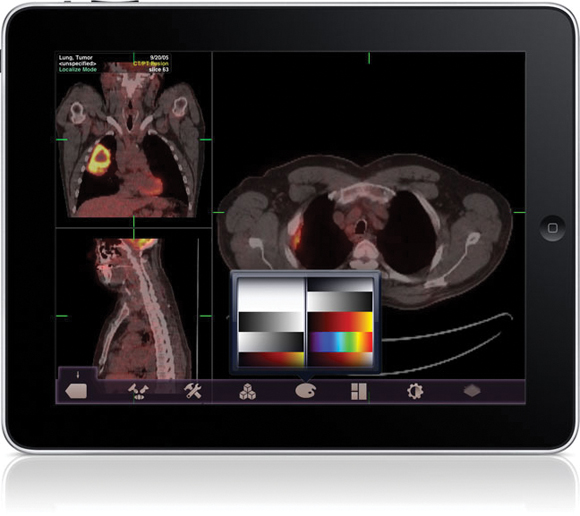
FDA Clears Imaging App for iPhone/iPad
The Food and Drug Administration gave its first clearance to an application that will allow physicians to review radiology images on Apple's iPad and iPhone in the absence of a standard workstation. 
The FDA cleared the Mobile MIM app for viewing images and making diagnoses using computed tomography, magnetic resonance imaging, and positron emission tomography. The agency cautioned that it is not intended to replace standard workstations, and should only be used when one is not available.
The app can measure distance on the image as well as image intensity; it can also display measurement lines, regions of interest, and annotations.
The FDA noted that the luminance displayed by a mobile device can vary greatly, even among identical models. The image's luminance also can vary based on ambient lighting. The app includes an interactive contrast test that will allow a user to determine if he or she can properly distinguish subtle differences in contrast.
The Mobile MIM app was created by Cleveland-based MIM Software Inc. The company said on its Web site Mobile MIM is now available in Apple's App Store.
The Food and Drug Administration gave its first clearance to an application that will allow physicians to review radiology images on Apple's iPad and iPhone in the absence of a standard workstation.
The FDA cleared the Mobile MIM app for viewing images and making diagnoses using computed tomography, magnetic resonance imaging, and positron emission tomography. The agency cautioned that it is not intended to replace standard workstations, and should only be used when one is not available.
The app can measure distance on the image as well as image intensity; it can also display measurement lines, regions of interest, and annotations.
The FDA noted that the luminance displayed by a mobile device can vary greatly, even among identical models. The image's luminance also can vary based on ambient lighting. The app includes an interactive contrast test that will allow a user to determine if he or she can properly distinguish subtle differences in contrast.
The Mobile MIM app was created by Cleveland-based MIM Software Inc. The company said on its Web site Mobile MIM is now available in Apple's App Store.
The Food and Drug Administration gave its first clearance to an application that will allow physicians to review radiology images on Apple's iPad and iPhone in the absence of a standard workstation.
The FDA cleared the Mobile MIM app for viewing images and making diagnoses using computed tomography, magnetic resonance imaging, and positron emission tomography. The agency cautioned that it is not intended to replace standard workstations, and should only be used when one is not available.
The app can measure distance on the image as well as image intensity; it can also display measurement lines, regions of interest, and annotations.
The FDA noted that the luminance displayed by a mobile device can vary greatly, even among identical models. The image's luminance also can vary based on ambient lighting. The app includes an interactive contrast test that will allow a user to determine if he or she can properly distinguish subtle differences in contrast.
The Mobile MIM app was created by Cleveland-based MIM Software Inc. The company said on its Web site Mobile MIM is now available in Apple's App Store.
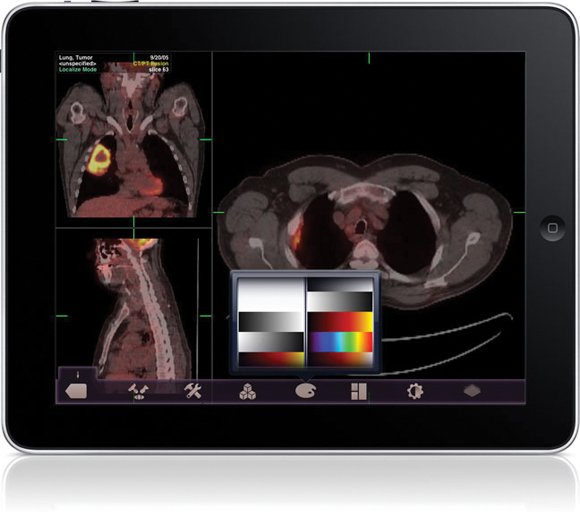
FDA Clears Imaging App for iPhone/iPad
The Food and Drug Administration gave its first clearance to an application that will allow physicians to review radiology images on Apple's iPad and iPhone in the absence of a standard workstation. 
The FDA cleared the Mobile MIM app for viewing images and making diagnoses using computed tomography, magnetic resonance imaging, and positron emission tomography. The agency cautioned that it is not intended to replace standard workstations, and should only be used when one is not available.
The app can measure distance on the image as well as image intensity; it can also display measurement lines, regions of interest, and annotations.
The FDA noted that the luminance displayed by a mobile device can vary greatly, even among identical models. The image's luminance also can vary based on ambient lighting. The app includes an interactive contrast test that will allow a user to determine if he or she can properly distinguish subtle differences in contrast.
The Mobile MIM app was created by Cleveland-based MIM Software Inc. The company said on its Web site Mobile MIM is now available in Apple's App Store.
The Food and Drug Administration gave its first clearance to an application that will allow physicians to review radiology images on Apple's iPad and iPhone in the absence of a standard workstation.
The FDA cleared the Mobile MIM app for viewing images and making diagnoses using computed tomography, magnetic resonance imaging, and positron emission tomography. The agency cautioned that it is not intended to replace standard workstations, and should only be used when one is not available.
The app can measure distance on the image as well as image intensity; it can also display measurement lines, regions of interest, and annotations.
The FDA noted that the luminance displayed by a mobile device can vary greatly, even among identical models. The image's luminance also can vary based on ambient lighting. The app includes an interactive contrast test that will allow a user to determine if he or she can properly distinguish subtle differences in contrast.
The Mobile MIM app was created by Cleveland-based MIM Software Inc. The company said on its Web site Mobile MIM is now available in Apple's App Store.
The Food and Drug Administration gave its first clearance to an application that will allow physicians to review radiology images on Apple's iPad and iPhone in the absence of a standard workstation.
The FDA cleared the Mobile MIM app for viewing images and making diagnoses using computed tomography, magnetic resonance imaging, and positron emission tomography. The agency cautioned that it is not intended to replace standard workstations, and should only be used when one is not available.
The app can measure distance on the image as well as image intensity; it can also display measurement lines, regions of interest, and annotations.
The FDA noted that the luminance displayed by a mobile device can vary greatly, even among identical models. The image's luminance also can vary based on ambient lighting. The app includes an interactive contrast test that will allow a user to determine if he or she can properly distinguish subtle differences in contrast.
The Mobile MIM app was created by Cleveland-based MIM Software Inc. The company said on its Web site Mobile MIM is now available in Apple's App Store.
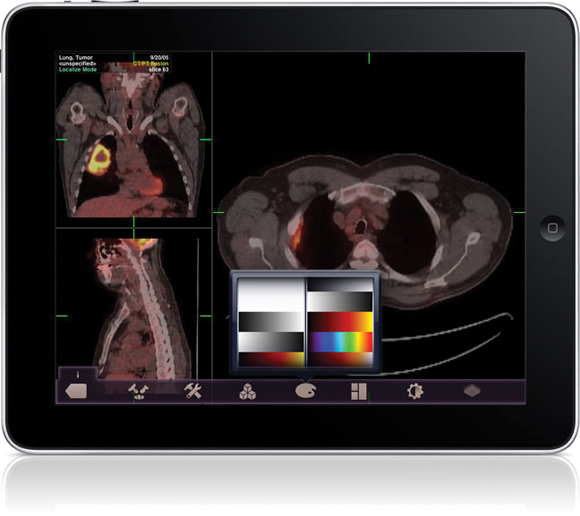
PROM Score Predicts Long-Term Survival
SAN DIEGO - The Society of Thoracic Surgeons Predicted Risk of Mortality score is a well-validated predictor of mortality during the first 30 days after cardiac surgery. The PROM score's role in predicting longer-term survival, however, has not been investigated, according to Dr. John D. Puskas at the annual meeting of the Society of Thoracic Surgeons.
To fill this void, Dr. Puskas and his colleagues from Emory University, Atlanta, undertook a study to statistically validate PROM at 1, 3, 5, and 10 years after cardiac surgery. He presented the study's results at the meeting.
The investigators found that the STS PROM algorithm accurately predicted mortality both at 30 days and during 12 years of follow-up with almost equally strong discriminatory power. "This may have profound implications for informed consent as well as for longitudinal comparative effectiveness studies," Dr. Puskas said in an interview.
"The STS Predicted Risk of Mortality models are probably underutilized and underappreciated in their power to predict short and long-term outcomes for our patients. The STS provides this service free of charge, and it is available online 24/7. I am hopeful that this newfound ability to predict longer-term survival after cardiac surgery will find utility in comparative effectiveness research and ultimately in shaping health policy," he added.
Dr. Puskas and his colleagues evaluated the survival rates for 24,222 patients who underwent cardiac surgery at a single academic center during 1996-2009. Long-term all-cause mortality was determined by referencing the national Social Security Death Master File. Logistic and Cox survival regression analyses were used to evaluate the long-term predictive utility of PROM.
The AUROC (area under the receiver operator characteristic) curve measured the discrimination of PROM at 1, 3, 5, and 10 years. Kaplan-Meier curves were stratified by quartiles of PROM risk to compare long-term survival. All analyses were performed for both the whole sample and 30-day survivors.
The investigators found an overall 30-day mortality rate of 2.78%.
Among all patients and 30-day survivors, AUROC values for PROM at 1, 3, 5, and 10 years were remarkably similar to the 30-day end point for which PROM is calibrated.
Moreover, PROM was highly predictive of Kaplan-Meier survival, even when this analysis was restricted to patients surviving beyond 30 days, he added.
Among 30-day survivors, each percent increase in PROM score was significantly associated with a 9.6% increase in instantaneous hazard of death (P less than .001).
Dr. Puskas and his colleagues reported no relevant disclosures with regard to their study.
SAN DIEGO - The Society of Thoracic Surgeons Predicted Risk of Mortality score is a well-validated predictor of mortality during the first 30 days after cardiac surgery. The PROM score's role in predicting longer-term survival, however, has not been investigated, according to Dr. John D. Puskas at the annual meeting of the Society of Thoracic Surgeons.
To fill this void, Dr. Puskas and his colleagues from Emory University, Atlanta, undertook a study to statistically validate PROM at 1, 3, 5, and 10 years after cardiac surgery. He presented the study's results at the meeting.
The investigators found that the STS PROM algorithm accurately predicted mortality both at 30 days and during 12 years of follow-up with almost equally strong discriminatory power. "This may have profound implications for informed consent as well as for longitudinal comparative effectiveness studies," Dr. Puskas said in an interview.
"The STS Predicted Risk of Mortality models are probably underutilized and underappreciated in their power to predict short and long-term outcomes for our patients. The STS provides this service free of charge, and it is available online 24/7. I am hopeful that this newfound ability to predict longer-term survival after cardiac surgery will find utility in comparative effectiveness research and ultimately in shaping health policy," he added.
Dr. Puskas and his colleagues evaluated the survival rates for 24,222 patients who underwent cardiac surgery at a single academic center during 1996-2009. Long-term all-cause mortality was determined by referencing the national Social Security Death Master File. Logistic and Cox survival regression analyses were used to evaluate the long-term predictive utility of PROM.
The AUROC (area under the receiver operator characteristic) curve measured the discrimination of PROM at 1, 3, 5, and 10 years. Kaplan-Meier curves were stratified by quartiles of PROM risk to compare long-term survival. All analyses were performed for both the whole sample and 30-day survivors.
The investigators found an overall 30-day mortality rate of 2.78%.
Among all patients and 30-day survivors, AUROC values for PROM at 1, 3, 5, and 10 years were remarkably similar to the 30-day end point for which PROM is calibrated.
Moreover, PROM was highly predictive of Kaplan-Meier survival, even when this analysis was restricted to patients surviving beyond 30 days, he added.
Among 30-day survivors, each percent increase in PROM score was significantly associated with a 9.6% increase in instantaneous hazard of death (P less than .001).
Dr. Puskas and his colleagues reported no relevant disclosures with regard to their study.
SAN DIEGO - The Society of Thoracic Surgeons Predicted Risk of Mortality score is a well-validated predictor of mortality during the first 30 days after cardiac surgery. The PROM score's role in predicting longer-term survival, however, has not been investigated, according to Dr. John D. Puskas at the annual meeting of the Society of Thoracic Surgeons.
To fill this void, Dr. Puskas and his colleagues from Emory University, Atlanta, undertook a study to statistically validate PROM at 1, 3, 5, and 10 years after cardiac surgery. He presented the study's results at the meeting.
The investigators found that the STS PROM algorithm accurately predicted mortality both at 30 days and during 12 years of follow-up with almost equally strong discriminatory power. "This may have profound implications for informed consent as well as for longitudinal comparative effectiveness studies," Dr. Puskas said in an interview.
"The STS Predicted Risk of Mortality models are probably underutilized and underappreciated in their power to predict short and long-term outcomes for our patients. The STS provides this service free of charge, and it is available online 24/7. I am hopeful that this newfound ability to predict longer-term survival after cardiac surgery will find utility in comparative effectiveness research and ultimately in shaping health policy," he added.
Dr. Puskas and his colleagues evaluated the survival rates for 24,222 patients who underwent cardiac surgery at a single academic center during 1996-2009. Long-term all-cause mortality was determined by referencing the national Social Security Death Master File. Logistic and Cox survival regression analyses were used to evaluate the long-term predictive utility of PROM.
The AUROC (area under the receiver operator characteristic) curve measured the discrimination of PROM at 1, 3, 5, and 10 years. Kaplan-Meier curves were stratified by quartiles of PROM risk to compare long-term survival. All analyses were performed for both the whole sample and 30-day survivors.
The investigators found an overall 30-day mortality rate of 2.78%.
Among all patients and 30-day survivors, AUROC values for PROM at 1, 3, 5, and 10 years were remarkably similar to the 30-day end point for which PROM is calibrated.
Moreover, PROM was highly predictive of Kaplan-Meier survival, even when this analysis was restricted to patients surviving beyond 30 days, he added.
Among 30-day survivors, each percent increase in PROM score was significantly associated with a 9.6% increase in instantaneous hazard of death (P less than .001).
Dr. Puskas and his colleagues reported no relevant disclosures with regard to their study.