User login
The Official Newspaper of the American Association for Thoracic Surgery
Weathering the ‘Perfect Storm?’
The era of the Affordable Care Act is upon us, and short of an unlikely repeal following midterm elections, this will remain the law of the land. As surgical residents, most of us have neither the time nor mental stamina to become significantly entrenched in politics. As a result, many of us know less about the impact that the Affordable Care Act will have on our future livelihood than many of the Senators did when they passed the bill on December 24, 2009. While most of the public focus has been on the individual mandate, pre-existing conditions, and insurance exchanges, further hidden from the public eye are the methods by which our fundamental model for health care reimbursement will change.
Much of the mystery was dispelled for me this May, when I heard a lecture entitled "The Perfect Storm: The Affordable Care Act and the Repeal of the SGR" by Dr. Jeffrey Rich. Dr. Rich’s presentation was the 2014 Norman E. Shumway, MD, Visiting Professorship Lecture at Stanford (Calif.) University, a webcast of which is available at http://ctsurgery.stanford.edu/media/.
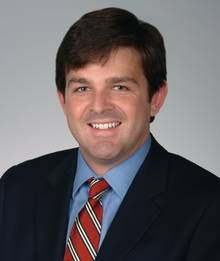
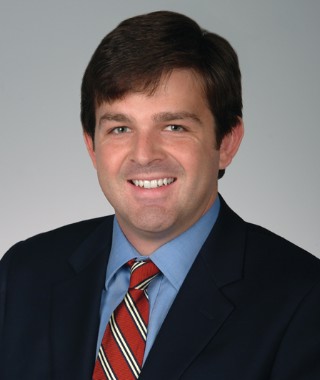
Dr. Rich has a unique perspective on the issue of health care reimbursement, as he has served both as president of STS from 2012-2013 and director of the Center for Medicare Management, part of the Centers for Medicare & Medicaid Services, in 2008, in the political tumult leading up to the passage of the Affordable Care Act. On top of this, he has remained a practicing cardiothoracic surgeon in the Sentara Health System and sits as director-at-large for the Virginia Cardiac Surgery Quality Initiative. It is impossible to overstate the impact that he and his staff have had on the future of health care reimbursement. His recent lecture highlighted the ideological change in payment models that the Affordable Care Act embodies, along with the carrots and the sticks that the government will be wielding over the next 5 years to change physician and hospital behavior. This, along with the untenable continuation of the Sustainable Growth Rate (SGR) with all of its problems, portends huge swings both positive and negative for the reimbursement of all doctors, and cardiothoracic surgeons in particular. Early adopters may find themselves with a much-needed windfall, while those who do not anticipate the changes may find themselves in dire financial straits.
First, let us examine where we stand. The United States spends 17.6% of its gross domestic product (GDP) on health care. The nearest rival sits at 12%. State and federal government together spent $1.5 trillion on health care in 2013. Add private insurance into the mix and the figure is $2.8 trillion. Our life expectancy has not followed the money, and the rate of increase in health care spending is far outstripping inflation and the growth in our GDP. Our spending has increased exponentially since the passage of the Social Security Amendments of 1965 and shows no sign of slowing down. These statistics are well publicized, and should no longer be a surprise to anyone.
Keeping in mind that hindsight is 20/20, it seems obvious how we got here. The private health insurance industry took off during WWII, when competitive wage controls were put in place to keep skilled laborers in jobs supporting the war effort. To compete for laborers, private sector employers began offering health insurance policies. Shortly thereafter, public pressure to provide a health care safety net culminated in the creation of Medicare and Medicaid in 1965, and our complex public/private health insurance environment was born. For the first decade or so, physician reimbursement was based on "reasonable charge," meaning that doctors sent a bill to Medicare and, if it was considered reasonable, the doctor was paid. This fee-for-service model can be seen as a blank check of sorts, in that it contained few stipulations to withhold repayment for redundant or unnecessary tests and procedures. Expenses associated with complications also were reimbursable. The incentive to "do more" was set. It is worth noting that the Social Security Amendments of 1965 are federal law, and the law stipulates that reimbursement is tied to the amount of work that a physician performs, which also forbids associating reimbursement with the quality of work that the physician produces. It takes an act of Congress to change such law.
The Affordable Care Act is that act. Dr. Rich’s work at CMS paved the way for the inclusion of "Title III: Improving the quality and efficiency of health care," which allows Medicare and Medicaid reimbursements to be altered based on efficiency and outcomes, moving away (although not disintegrating) the fee-for-service model. It incentivizes the development of Accountable Care Organizations and Clinically Integrated Networks to encourage cross-specialty collaboration within the fee-for-service model and lays the groundwork for physician and hospital reimbursement to be based on high-quality, efficient, and appropriate care.
This is the most comprehensive change to the status quo, but it is by no means the first. By 1975, the federal government could see that open fee-for-service was leading to skyrocketing health care costs. It began experimenting with ways to curb physician charges. It pegged reimbursements to the Medicare Economic Index (still used to update hospital reimbursements by 3.2%-3.6% per year) and then tried basing reimbursement on relative value units. Costs continued to rise. Thirty years after the 1965 law, as health care spending continued to spiral out of control, the Sustainable Growth Rate was applied to physician repayment as an attempt to reel it in. The basic premise was that increased costs from increased patient and procedure volume would be curbed by decreasing the reimbursement per procedure.
The sustainable growth model essentially placed a spending target that would grow in step with GDP using the total expenditures beginning in 1996 as a benchmark. If, during a given year, spending outstripped the target, the following year a compensatory decrease in physician reimbursement would be enacted. If spending were less than the target, then physician payments would increase. Expenditures have exceeded the target every year since 2002, and each year our spending gets further and further from the benchmark, compounding the penalty. If the SGR penalties were allowed, it is estimated that physician repayment would drop by 25%-35% in the next few years. Each time the penalty is about to be applied, a fix is passed by Congress, saving our livelihoods at the last minute. Although we should be thankful not to take a 35% pay cut, the SGR and its fixes increased physician repayment by a mere 5.1% between 1992 and 2012. For comparison, Social Security benefits, adjusted annually to compensate increasing cost of living, have risen 52.9% in the same period. Meanwhile, as I mentioned earlier, hospital reimbursement continues to be tied to the Medicare Economic Index, which yields a fairly predictable payment increase of 3.2%-3.6% each year. The Affordable Care Act operates as a law separate from the SGR law, though the two are closely intertwined.
Title III of the Affordable Care Act provides a number of new incentives and penalties that will help make efficiency and quality goals that affect profit at least as much as procedural volume. It will impact hospitals and physicians in a number of new and potentially positive ways. Most immediately concerning to hospitals and medical groups are the incentives for quality. With value-based purchasing, Medicare will withhold 2% of diagnosis-related group (DRG) reimbursements to hospitals at the beginning of a year, giving them the chance to earn it back at the end of the year if they meet quality and efficiency performance goals. The top performers will receive a bonus from the funds collected from those who do not meet goals, making this a budget-neutral operation. Cardiothoracic surgeons will feel this scrutiny early, as the first five DRGs subject to the law are acute myocardial infarction, heart failure, pneumonia, surgeries, and health care–associated infections. As time passes, more diagnoses will be added.
Payments will be based on bundled care, meaning that a hospital will be paid one sum to cover the peri-admission period, starting from 3 days prior to 30 days after admission. Complications, readmissions, and repeat tests will not generate additional funds for the hospital. You can expect that daily chest x-rays and multiple echocardiograms will generate a lot of e-mails to attending physicians. Other preventable hospital-acquired conditions, such as catheter-associated urinary tract infections and pressure ulcers, if present in rates beyond the norm for the country, could cut reimbursements an additional 1%. Patient satisfaction scores will influence hospital reimbursement. Readmission rates beyond the specified cutoff for each admission will result in a 3% hospital pay cut, again, starting with the same set of diagnoses. When meaningful use of electronic health records incentives are factored in, hospitals are looking at a 7% swing on reimbursements for the DRGs listed above by 2017. Hospitals typically operate on a profit margin around 3.5%.
On the individual physician level, there are a number of changes. Already in place was a bonus for participating in physician quality reporting systems (PQRS), such as the STS database. By 2016 the bonus for participating will become a 2% pay cut for not participating. Thankfully, our specialty has been forward thinking in this regard, and the majority of cardiothoracic practices already participate in the STS database. Similar to value-based purchasing, the physician value modifier will apply a 2% bonus or penalty to reimbursements, based on a broad spectrum of quality measures, including patient safety, population and community health, total cost per patient by condition, and patient experience. Again, this will be budget neutral. When all of the items are tallied, the lowest-performing providers could see a 6% decrease in their personal reimbursement.
The SGR has not been fixed with the Affordable Care Act. Dr. Rich, in his role as STS president, provided testimony to Congress leading up to the most recent attempt to reform the law. Part of the main thrust of his testimony was that each specialty needs to set its own outcomes standards through database-driven research. Incentives for improved outcomes need to be in place for all members of the heart team, not just the physicians. All three of the proposed bills that followed his testimony included such incentives, but they also included even more dismal updates to physician payments than we have seen in the past 20 years. For better or for worse, none of the bills passed, and we can look forward to more anxiety as we await the next SGR patch. Whatever durable solution passes will likely focus on these new models of payment but without a significant boost in hospital income.
Currently, the alternative payment model (APM) pilot programs are still being developed. CMS has a $10 billion budget to fund the pilot programs, and consulting groups that advised the agency chose cardiothoracic surgery as a top priority for APM development. Current discussions indicate that participants in APMs could get a 5% bonus and would not be subject to the physician value modifier.
So how does this apply to us residents? Despite our ground-level perspective, we must recognize that we are straddling two drastically different eras in the practice of medicine. It will be the duty of all of us, not just our attendings, to reduce our costs and provide better patient care. This may mean using our stethoscope more effectively or making those extra phone calls to avoid unnecessary or repeated tests. We need to rebel against the ideology of physician shift work by owning our patients, but still work effectively in that system. When it comes time to seek our first jobs, we should focus not just on the department that we will work on, but its context within the local hospital system. The most vibrant department within an unresponsive hospital system will drown in the future penalties, and likewise for an unenthusiastic department within a forward-thinking system. In short, we need to start training ourselves to be keener, sharper, and more agile physicians, and to position ourselves within like-minded environments. Perhaps more important than any of these, we need to reclaim the right to shape our own profession. In recent history there has not been a better opportunity for cardiothoracic surgeons as a group to assert themselves as adept physicians and leaders. Whether we become head of CMS, participate in STS fly-ins to Capitol Hill, write our congressman about the issues we face, or engage our hospitals to anticipate the coming changes, it is up to us to ensure that we have a future.
Dr. Zeigler is one of the outgoing resident medical editors for Thoracic Surgery News.
The era of the Affordable Care Act is upon us, and short of an unlikely repeal following midterm elections, this will remain the law of the land. As surgical residents, most of us have neither the time nor mental stamina to become significantly entrenched in politics. As a result, many of us know less about the impact that the Affordable Care Act will have on our future livelihood than many of the Senators did when they passed the bill on December 24, 2009. While most of the public focus has been on the individual mandate, pre-existing conditions, and insurance exchanges, further hidden from the public eye are the methods by which our fundamental model for health care reimbursement will change.
Much of the mystery was dispelled for me this May, when I heard a lecture entitled "The Perfect Storm: The Affordable Care Act and the Repeal of the SGR" by Dr. Jeffrey Rich. Dr. Rich’s presentation was the 2014 Norman E. Shumway, MD, Visiting Professorship Lecture at Stanford (Calif.) University, a webcast of which is available at http://ctsurgery.stanford.edu/media/.
Dr. Rich has a unique perspective on the issue of health care reimbursement, as he has served both as president of STS from 2012-2013 and director of the Center for Medicare Management, part of the Centers for Medicare & Medicaid Services, in 2008, in the political tumult leading up to the passage of the Affordable Care Act. On top of this, he has remained a practicing cardiothoracic surgeon in the Sentara Health System and sits as director-at-large for the Virginia Cardiac Surgery Quality Initiative. It is impossible to overstate the impact that he and his staff have had on the future of health care reimbursement. His recent lecture highlighted the ideological change in payment models that the Affordable Care Act embodies, along with the carrots and the sticks that the government will be wielding over the next 5 years to change physician and hospital behavior. This, along with the untenable continuation of the Sustainable Growth Rate (SGR) with all of its problems, portends huge swings both positive and negative for the reimbursement of all doctors, and cardiothoracic surgeons in particular. Early adopters may find themselves with a much-needed windfall, while those who do not anticipate the changes may find themselves in dire financial straits.
First, let us examine where we stand. The United States spends 17.6% of its gross domestic product (GDP) on health care. The nearest rival sits at 12%. State and federal government together spent $1.5 trillion on health care in 2013. Add private insurance into the mix and the figure is $2.8 trillion. Our life expectancy has not followed the money, and the rate of increase in health care spending is far outstripping inflation and the growth in our GDP. Our spending has increased exponentially since the passage of the Social Security Amendments of 1965 and shows no sign of slowing down. These statistics are well publicized, and should no longer be a surprise to anyone.
Keeping in mind that hindsight is 20/20, it seems obvious how we got here. The private health insurance industry took off during WWII, when competitive wage controls were put in place to keep skilled laborers in jobs supporting the war effort. To compete for laborers, private sector employers began offering health insurance policies. Shortly thereafter, public pressure to provide a health care safety net culminated in the creation of Medicare and Medicaid in 1965, and our complex public/private health insurance environment was born. For the first decade or so, physician reimbursement was based on "reasonable charge," meaning that doctors sent a bill to Medicare and, if it was considered reasonable, the doctor was paid. This fee-for-service model can be seen as a blank check of sorts, in that it contained few stipulations to withhold repayment for redundant or unnecessary tests and procedures. Expenses associated with complications also were reimbursable. The incentive to "do more" was set. It is worth noting that the Social Security Amendments of 1965 are federal law, and the law stipulates that reimbursement is tied to the amount of work that a physician performs, which also forbids associating reimbursement with the quality of work that the physician produces. It takes an act of Congress to change such law.
The Affordable Care Act is that act. Dr. Rich’s work at CMS paved the way for the inclusion of "Title III: Improving the quality and efficiency of health care," which allows Medicare and Medicaid reimbursements to be altered based on efficiency and outcomes, moving away (although not disintegrating) the fee-for-service model. It incentivizes the development of Accountable Care Organizations and Clinically Integrated Networks to encourage cross-specialty collaboration within the fee-for-service model and lays the groundwork for physician and hospital reimbursement to be based on high-quality, efficient, and appropriate care.
This is the most comprehensive change to the status quo, but it is by no means the first. By 1975, the federal government could see that open fee-for-service was leading to skyrocketing health care costs. It began experimenting with ways to curb physician charges. It pegged reimbursements to the Medicare Economic Index (still used to update hospital reimbursements by 3.2%-3.6% per year) and then tried basing reimbursement on relative value units. Costs continued to rise. Thirty years after the 1965 law, as health care spending continued to spiral out of control, the Sustainable Growth Rate was applied to physician repayment as an attempt to reel it in. The basic premise was that increased costs from increased patient and procedure volume would be curbed by decreasing the reimbursement per procedure.
The sustainable growth model essentially placed a spending target that would grow in step with GDP using the total expenditures beginning in 1996 as a benchmark. If, during a given year, spending outstripped the target, the following year a compensatory decrease in physician reimbursement would be enacted. If spending were less than the target, then physician payments would increase. Expenditures have exceeded the target every year since 2002, and each year our spending gets further and further from the benchmark, compounding the penalty. If the SGR penalties were allowed, it is estimated that physician repayment would drop by 25%-35% in the next few years. Each time the penalty is about to be applied, a fix is passed by Congress, saving our livelihoods at the last minute. Although we should be thankful not to take a 35% pay cut, the SGR and its fixes increased physician repayment by a mere 5.1% between 1992 and 2012. For comparison, Social Security benefits, adjusted annually to compensate increasing cost of living, have risen 52.9% in the same period. Meanwhile, as I mentioned earlier, hospital reimbursement continues to be tied to the Medicare Economic Index, which yields a fairly predictable payment increase of 3.2%-3.6% each year. The Affordable Care Act operates as a law separate from the SGR law, though the two are closely intertwined.
Title III of the Affordable Care Act provides a number of new incentives and penalties that will help make efficiency and quality goals that affect profit at least as much as procedural volume. It will impact hospitals and physicians in a number of new and potentially positive ways. Most immediately concerning to hospitals and medical groups are the incentives for quality. With value-based purchasing, Medicare will withhold 2% of diagnosis-related group (DRG) reimbursements to hospitals at the beginning of a year, giving them the chance to earn it back at the end of the year if they meet quality and efficiency performance goals. The top performers will receive a bonus from the funds collected from those who do not meet goals, making this a budget-neutral operation. Cardiothoracic surgeons will feel this scrutiny early, as the first five DRGs subject to the law are acute myocardial infarction, heart failure, pneumonia, surgeries, and health care–associated infections. As time passes, more diagnoses will be added.
Payments will be based on bundled care, meaning that a hospital will be paid one sum to cover the peri-admission period, starting from 3 days prior to 30 days after admission. Complications, readmissions, and repeat tests will not generate additional funds for the hospital. You can expect that daily chest x-rays and multiple echocardiograms will generate a lot of e-mails to attending physicians. Other preventable hospital-acquired conditions, such as catheter-associated urinary tract infections and pressure ulcers, if present in rates beyond the norm for the country, could cut reimbursements an additional 1%. Patient satisfaction scores will influence hospital reimbursement. Readmission rates beyond the specified cutoff for each admission will result in a 3% hospital pay cut, again, starting with the same set of diagnoses. When meaningful use of electronic health records incentives are factored in, hospitals are looking at a 7% swing on reimbursements for the DRGs listed above by 2017. Hospitals typically operate on a profit margin around 3.5%.
On the individual physician level, there are a number of changes. Already in place was a bonus for participating in physician quality reporting systems (PQRS), such as the STS database. By 2016 the bonus for participating will become a 2% pay cut for not participating. Thankfully, our specialty has been forward thinking in this regard, and the majority of cardiothoracic practices already participate in the STS database. Similar to value-based purchasing, the physician value modifier will apply a 2% bonus or penalty to reimbursements, based on a broad spectrum of quality measures, including patient safety, population and community health, total cost per patient by condition, and patient experience. Again, this will be budget neutral. When all of the items are tallied, the lowest-performing providers could see a 6% decrease in their personal reimbursement.
The SGR has not been fixed with the Affordable Care Act. Dr. Rich, in his role as STS president, provided testimony to Congress leading up to the most recent attempt to reform the law. Part of the main thrust of his testimony was that each specialty needs to set its own outcomes standards through database-driven research. Incentives for improved outcomes need to be in place for all members of the heart team, not just the physicians. All three of the proposed bills that followed his testimony included such incentives, but they also included even more dismal updates to physician payments than we have seen in the past 20 years. For better or for worse, none of the bills passed, and we can look forward to more anxiety as we await the next SGR patch. Whatever durable solution passes will likely focus on these new models of payment but without a significant boost in hospital income.
Currently, the alternative payment model (APM) pilot programs are still being developed. CMS has a $10 billion budget to fund the pilot programs, and consulting groups that advised the agency chose cardiothoracic surgery as a top priority for APM development. Current discussions indicate that participants in APMs could get a 5% bonus and would not be subject to the physician value modifier.
So how does this apply to us residents? Despite our ground-level perspective, we must recognize that we are straddling two drastically different eras in the practice of medicine. It will be the duty of all of us, not just our attendings, to reduce our costs and provide better patient care. This may mean using our stethoscope more effectively or making those extra phone calls to avoid unnecessary or repeated tests. We need to rebel against the ideology of physician shift work by owning our patients, but still work effectively in that system. When it comes time to seek our first jobs, we should focus not just on the department that we will work on, but its context within the local hospital system. The most vibrant department within an unresponsive hospital system will drown in the future penalties, and likewise for an unenthusiastic department within a forward-thinking system. In short, we need to start training ourselves to be keener, sharper, and more agile physicians, and to position ourselves within like-minded environments. Perhaps more important than any of these, we need to reclaim the right to shape our own profession. In recent history there has not been a better opportunity for cardiothoracic surgeons as a group to assert themselves as adept physicians and leaders. Whether we become head of CMS, participate in STS fly-ins to Capitol Hill, write our congressman about the issues we face, or engage our hospitals to anticipate the coming changes, it is up to us to ensure that we have a future.
Dr. Zeigler is one of the outgoing resident medical editors for Thoracic Surgery News.
The era of the Affordable Care Act is upon us, and short of an unlikely repeal following midterm elections, this will remain the law of the land. As surgical residents, most of us have neither the time nor mental stamina to become significantly entrenched in politics. As a result, many of us know less about the impact that the Affordable Care Act will have on our future livelihood than many of the Senators did when they passed the bill on December 24, 2009. While most of the public focus has been on the individual mandate, pre-existing conditions, and insurance exchanges, further hidden from the public eye are the methods by which our fundamental model for health care reimbursement will change.
Much of the mystery was dispelled for me this May, when I heard a lecture entitled "The Perfect Storm: The Affordable Care Act and the Repeal of the SGR" by Dr. Jeffrey Rich. Dr. Rich’s presentation was the 2014 Norman E. Shumway, MD, Visiting Professorship Lecture at Stanford (Calif.) University, a webcast of which is available at http://ctsurgery.stanford.edu/media/.
Dr. Rich has a unique perspective on the issue of health care reimbursement, as he has served both as president of STS from 2012-2013 and director of the Center for Medicare Management, part of the Centers for Medicare & Medicaid Services, in 2008, in the political tumult leading up to the passage of the Affordable Care Act. On top of this, he has remained a practicing cardiothoracic surgeon in the Sentara Health System and sits as director-at-large for the Virginia Cardiac Surgery Quality Initiative. It is impossible to overstate the impact that he and his staff have had on the future of health care reimbursement. His recent lecture highlighted the ideological change in payment models that the Affordable Care Act embodies, along with the carrots and the sticks that the government will be wielding over the next 5 years to change physician and hospital behavior. This, along with the untenable continuation of the Sustainable Growth Rate (SGR) with all of its problems, portends huge swings both positive and negative for the reimbursement of all doctors, and cardiothoracic surgeons in particular. Early adopters may find themselves with a much-needed windfall, while those who do not anticipate the changes may find themselves in dire financial straits.
First, let us examine where we stand. The United States spends 17.6% of its gross domestic product (GDP) on health care. The nearest rival sits at 12%. State and federal government together spent $1.5 trillion on health care in 2013. Add private insurance into the mix and the figure is $2.8 trillion. Our life expectancy has not followed the money, and the rate of increase in health care spending is far outstripping inflation and the growth in our GDP. Our spending has increased exponentially since the passage of the Social Security Amendments of 1965 and shows no sign of slowing down. These statistics are well publicized, and should no longer be a surprise to anyone.
Keeping in mind that hindsight is 20/20, it seems obvious how we got here. The private health insurance industry took off during WWII, when competitive wage controls were put in place to keep skilled laborers in jobs supporting the war effort. To compete for laborers, private sector employers began offering health insurance policies. Shortly thereafter, public pressure to provide a health care safety net culminated in the creation of Medicare and Medicaid in 1965, and our complex public/private health insurance environment was born. For the first decade or so, physician reimbursement was based on "reasonable charge," meaning that doctors sent a bill to Medicare and, if it was considered reasonable, the doctor was paid. This fee-for-service model can be seen as a blank check of sorts, in that it contained few stipulations to withhold repayment for redundant or unnecessary tests and procedures. Expenses associated with complications also were reimbursable. The incentive to "do more" was set. It is worth noting that the Social Security Amendments of 1965 are federal law, and the law stipulates that reimbursement is tied to the amount of work that a physician performs, which also forbids associating reimbursement with the quality of work that the physician produces. It takes an act of Congress to change such law.
The Affordable Care Act is that act. Dr. Rich’s work at CMS paved the way for the inclusion of "Title III: Improving the quality and efficiency of health care," which allows Medicare and Medicaid reimbursements to be altered based on efficiency and outcomes, moving away (although not disintegrating) the fee-for-service model. It incentivizes the development of Accountable Care Organizations and Clinically Integrated Networks to encourage cross-specialty collaboration within the fee-for-service model and lays the groundwork for physician and hospital reimbursement to be based on high-quality, efficient, and appropriate care.
This is the most comprehensive change to the status quo, but it is by no means the first. By 1975, the federal government could see that open fee-for-service was leading to skyrocketing health care costs. It began experimenting with ways to curb physician charges. It pegged reimbursements to the Medicare Economic Index (still used to update hospital reimbursements by 3.2%-3.6% per year) and then tried basing reimbursement on relative value units. Costs continued to rise. Thirty years after the 1965 law, as health care spending continued to spiral out of control, the Sustainable Growth Rate was applied to physician repayment as an attempt to reel it in. The basic premise was that increased costs from increased patient and procedure volume would be curbed by decreasing the reimbursement per procedure.
The sustainable growth model essentially placed a spending target that would grow in step with GDP using the total expenditures beginning in 1996 as a benchmark. If, during a given year, spending outstripped the target, the following year a compensatory decrease in physician reimbursement would be enacted. If spending were less than the target, then physician payments would increase. Expenditures have exceeded the target every year since 2002, and each year our spending gets further and further from the benchmark, compounding the penalty. If the SGR penalties were allowed, it is estimated that physician repayment would drop by 25%-35% in the next few years. Each time the penalty is about to be applied, a fix is passed by Congress, saving our livelihoods at the last minute. Although we should be thankful not to take a 35% pay cut, the SGR and its fixes increased physician repayment by a mere 5.1% between 1992 and 2012. For comparison, Social Security benefits, adjusted annually to compensate increasing cost of living, have risen 52.9% in the same period. Meanwhile, as I mentioned earlier, hospital reimbursement continues to be tied to the Medicare Economic Index, which yields a fairly predictable payment increase of 3.2%-3.6% each year. The Affordable Care Act operates as a law separate from the SGR law, though the two are closely intertwined.
Title III of the Affordable Care Act provides a number of new incentives and penalties that will help make efficiency and quality goals that affect profit at least as much as procedural volume. It will impact hospitals and physicians in a number of new and potentially positive ways. Most immediately concerning to hospitals and medical groups are the incentives for quality. With value-based purchasing, Medicare will withhold 2% of diagnosis-related group (DRG) reimbursements to hospitals at the beginning of a year, giving them the chance to earn it back at the end of the year if they meet quality and efficiency performance goals. The top performers will receive a bonus from the funds collected from those who do not meet goals, making this a budget-neutral operation. Cardiothoracic surgeons will feel this scrutiny early, as the first five DRGs subject to the law are acute myocardial infarction, heart failure, pneumonia, surgeries, and health care–associated infections. As time passes, more diagnoses will be added.
Payments will be based on bundled care, meaning that a hospital will be paid one sum to cover the peri-admission period, starting from 3 days prior to 30 days after admission. Complications, readmissions, and repeat tests will not generate additional funds for the hospital. You can expect that daily chest x-rays and multiple echocardiograms will generate a lot of e-mails to attending physicians. Other preventable hospital-acquired conditions, such as catheter-associated urinary tract infections and pressure ulcers, if present in rates beyond the norm for the country, could cut reimbursements an additional 1%. Patient satisfaction scores will influence hospital reimbursement. Readmission rates beyond the specified cutoff for each admission will result in a 3% hospital pay cut, again, starting with the same set of diagnoses. When meaningful use of electronic health records incentives are factored in, hospitals are looking at a 7% swing on reimbursements for the DRGs listed above by 2017. Hospitals typically operate on a profit margin around 3.5%.
On the individual physician level, there are a number of changes. Already in place was a bonus for participating in physician quality reporting systems (PQRS), such as the STS database. By 2016 the bonus for participating will become a 2% pay cut for not participating. Thankfully, our specialty has been forward thinking in this regard, and the majority of cardiothoracic practices already participate in the STS database. Similar to value-based purchasing, the physician value modifier will apply a 2% bonus or penalty to reimbursements, based on a broad spectrum of quality measures, including patient safety, population and community health, total cost per patient by condition, and patient experience. Again, this will be budget neutral. When all of the items are tallied, the lowest-performing providers could see a 6% decrease in their personal reimbursement.
The SGR has not been fixed with the Affordable Care Act. Dr. Rich, in his role as STS president, provided testimony to Congress leading up to the most recent attempt to reform the law. Part of the main thrust of his testimony was that each specialty needs to set its own outcomes standards through database-driven research. Incentives for improved outcomes need to be in place for all members of the heart team, not just the physicians. All three of the proposed bills that followed his testimony included such incentives, but they also included even more dismal updates to physician payments than we have seen in the past 20 years. For better or for worse, none of the bills passed, and we can look forward to more anxiety as we await the next SGR patch. Whatever durable solution passes will likely focus on these new models of payment but without a significant boost in hospital income.
Currently, the alternative payment model (APM) pilot programs are still being developed. CMS has a $10 billion budget to fund the pilot programs, and consulting groups that advised the agency chose cardiothoracic surgery as a top priority for APM development. Current discussions indicate that participants in APMs could get a 5% bonus and would not be subject to the physician value modifier.
So how does this apply to us residents? Despite our ground-level perspective, we must recognize that we are straddling two drastically different eras in the practice of medicine. It will be the duty of all of us, not just our attendings, to reduce our costs and provide better patient care. This may mean using our stethoscope more effectively or making those extra phone calls to avoid unnecessary or repeated tests. We need to rebel against the ideology of physician shift work by owning our patients, but still work effectively in that system. When it comes time to seek our first jobs, we should focus not just on the department that we will work on, but its context within the local hospital system. The most vibrant department within an unresponsive hospital system will drown in the future penalties, and likewise for an unenthusiastic department within a forward-thinking system. In short, we need to start training ourselves to be keener, sharper, and more agile physicians, and to position ourselves within like-minded environments. Perhaps more important than any of these, we need to reclaim the right to shape our own profession. In recent history there has not been a better opportunity for cardiothoracic surgeons as a group to assert themselves as adept physicians and leaders. Whether we become head of CMS, participate in STS fly-ins to Capitol Hill, write our congressman about the issues we face, or engage our hospitals to anticipate the coming changes, it is up to us to ensure that we have a future.
Dr. Zeigler is one of the outgoing resident medical editors for Thoracic Surgery News.
AATS Focus on Thoracic Surgery: Novel Technologies in Lung Cancer
November 21 – 22 Renaissance Boston Waterfront Hotel, Boston, MA
Preliminary Scientific Program, Registration and Housing Now Available at http://aats.org/lungcancer
Program Directors:
G. Alec Patterson
David J. Sugarbaker
Program Committee Members:
Thomas A. D’Amico, Duke University
Shaf Keshavjee, University of Toronto
James D. Luketich, University of Pittsburgh
Bryan F. Meyers, Washington University
Scott J. Swanson, Brigham and Women’s Hospital
Overview:
Lung cancer is the second most common malignancy in the Western world and the most common cause of cancer-related death. Recent innovations in diagnosis, staging, and management of early stage and locally advanced non-small cell lung cancer have changed the paradigm for surgical management of lung cancer patients. A virtual explosion of technological development has enabled widespread use of minimally invasive approaches which current and future thoracic surgeons must embrace to improve the care of patients with lung cancer.
Join us in Boston once again as the AATS highlights these recent developments in its 2014 "Focus on Thoracic Surgery" program which will focus on Novel Technologies in Lung Cancer. The faculty includes internationally recognized experts in lung cancer and application of new technology for its surgical management.
Preliminary Program Highlights:
• Imaging and Staging
• Surgical Alternatives
• Simulation, Education, and Training
• Optimal Management of Lung Metastases
• Credentialing/ Efficiencies
• Intraoperative Management
• Video Sessions – Advanced Minimally Invasive Techniques
Honored Guest Speaker:
Larry R. Kaiser, Dean, Temple University School of Medicine
November 21 – 22 Renaissance Boston Waterfront Hotel, Boston, MA
Preliminary Scientific Program, Registration and Housing Now Available at http://aats.org/lungcancer
Program Directors:
G. Alec Patterson
David J. Sugarbaker
Program Committee Members:
Thomas A. D’Amico, Duke University
Shaf Keshavjee, University of Toronto
James D. Luketich, University of Pittsburgh
Bryan F. Meyers, Washington University
Scott J. Swanson, Brigham and Women’s Hospital
Overview:
Lung cancer is the second most common malignancy in the Western world and the most common cause of cancer-related death. Recent innovations in diagnosis, staging, and management of early stage and locally advanced non-small cell lung cancer have changed the paradigm for surgical management of lung cancer patients. A virtual explosion of technological development has enabled widespread use of minimally invasive approaches which current and future thoracic surgeons must embrace to improve the care of patients with lung cancer.
Join us in Boston once again as the AATS highlights these recent developments in its 2014 "Focus on Thoracic Surgery" program which will focus on Novel Technologies in Lung Cancer. The faculty includes internationally recognized experts in lung cancer and application of new technology for its surgical management.
Preliminary Program Highlights:
• Imaging and Staging
• Surgical Alternatives
• Simulation, Education, and Training
• Optimal Management of Lung Metastases
• Credentialing/ Efficiencies
• Intraoperative Management
• Video Sessions – Advanced Minimally Invasive Techniques
Honored Guest Speaker:
Larry R. Kaiser, Dean, Temple University School of Medicine
November 21 – 22 Renaissance Boston Waterfront Hotel, Boston, MA
Preliminary Scientific Program, Registration and Housing Now Available at http://aats.org/lungcancer
Program Directors:
G. Alec Patterson
David J. Sugarbaker
Program Committee Members:
Thomas A. D’Amico, Duke University
Shaf Keshavjee, University of Toronto
James D. Luketich, University of Pittsburgh
Bryan F. Meyers, Washington University
Scott J. Swanson, Brigham and Women’s Hospital
Overview:
Lung cancer is the second most common malignancy in the Western world and the most common cause of cancer-related death. Recent innovations in diagnosis, staging, and management of early stage and locally advanced non-small cell lung cancer have changed the paradigm for surgical management of lung cancer patients. A virtual explosion of technological development has enabled widespread use of minimally invasive approaches which current and future thoracic surgeons must embrace to improve the care of patients with lung cancer.
Join us in Boston once again as the AATS highlights these recent developments in its 2014 "Focus on Thoracic Surgery" program which will focus on Novel Technologies in Lung Cancer. The faculty includes internationally recognized experts in lung cancer and application of new technology for its surgical management.
Preliminary Program Highlights:
• Imaging and Staging
• Surgical Alternatives
• Simulation, Education, and Training
• Optimal Management of Lung Metastases
• Credentialing/ Efficiencies
• Intraoperative Management
• Video Sessions – Advanced Minimally Invasive Techniques
Honored Guest Speaker:
Larry R. Kaiser, Dean, Temple University School of Medicine
Most U.S. surgeons, centers do little off-pump CABG
TORONTO – In the United States, fewer than one in five coronary artery bypass graft surgeries are done without cardiopulmonary bypass, according to a large Society of Thoracic Surgeons database study conducted by Dr. Faisal G. Bakaeen of Baylor College of Medicine, the Michael E. DeBakey VA Medical Center, and the Texas Heart Institute, Houston, and colleagues.
As of 2012, 84% of the centers in the United States were doing either 0 or fewer than 50 off-pump cases per year. Among U.S. surgeons, 86% did either no off-pump coronary artery bypass grafts (CABG) or 20 or fewer cases per year.
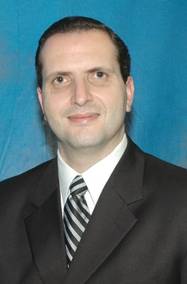
"We speculate that this decline is because off-pump is technically a more demanding operation than on-pump," said Dr. Bakaeen during his presentation at the annual meeting of the American Association of Thoracic Surgery.
"There are [also] concerns about graft patency and the completeness of revascularization and randomized, controlled trials have shown no mortality or major – and I emphasize major – morbidity benefit."
The invited discussant for the abstract, Dr. Harold L. Lazar, the director of cardiothoracic surgery research at Boston Medical Center, suggested that off-pump CABG numbers "will continue to decline" as overall CABG volume continues to decline, and as higher-volume centers and surgeons opt to do fewer off-pump cases.
"Cardiac surgeons have always been motivated to adopt new techniques that will result in improved outcomes for their patients," said Dr. Lazar. "The continuing decline in the use of OP-CABG [off-pump CABG ] by U.S. surgeons is an indication that OP-CABG is not this type of technique."
Introduced in the early 1990s, off-pump CABG was initially touted as a means of avoiding several of the adverse effects of cardiopulmonary bypass and aortic manipulation. However, the relative benefits of off-pump as compared to on-pump CABG continue to be hotly debated.
Dr. Bakaeen and colleagues used the Society of Thoracic Surgeons Adult Cardiac Surgery Database to examine national trends in the use of off- versus on-pump CABG, looking specifically at volume-specific trends among centers and surgeons.
"This is a megadatabase with a huge number of patients, over 2.1 million patients and over 1,200 centers," said Dr. Bakaeen.
The off-pump and on-pump CABG percentages were calculated in aggregate, by center, and by surgeon for a total of 2,137,841 isolated primary CABG procedures performed between Jan. 1, 1997 and Sept. 30, 2012.
Based on 2007/2008 yearly off-pump volume, the analysis subgroups were "high" [center number greater than 200 cases, surgeon number greater than 100 cases], "intermediate" [center number equals 50-200, surgeon number equals 20-100], and "low" [center number less than 50, surgeon number less than 20].
The utilization of off-pump peaked in 2002 at about 23% but then decreased to 17% in 2012. Most of this decrease was found to be driven by higher-volume centers and higher-volume surgeons doing fewer off-pump cases.
Indeed, for the most recent years studied (2011-2012), 12% of U.S. centers (1,056) and 34% of U.S. surgeons (2,626) did not do any off-pump CABG cases.
Another 72% of centers and 52% of surgeons were low-volume operators (less than 50 cases/year and less than 20 cases/year, respectively.
Only 1% of centers (150) and 1% of surgeons (38) were classified as high-volume off-pump operators.
Of note, while the overall conversion rate – cases that were started as on- or off-pump and switched midprocedure – has remained fairly steady at 6%, the rate of unplanned conversions has risen from a low of about 1% in 2004 to about 3.2% in 2012.
"What was interesting was that there was a direct correlation between off-pump volume and the experience of the surgeon and the conversion rate," reported Dr. Bakaeen.
"So, if you are a higher-volume, experienced off-pump surgeon, you are three times less likely to convert than a low-volume surgeon [P less than .01]."
Dr. Bakaeen concluded that, "off-pump CABG utilization will likely continue to be concentrated in specialized centers and performed by dedicated off-pump surgeons."
Dr. Lazar added: "No operation that can only be performed by a select group of experienced, talented surgeons has ever achieved the test of time. CABG surgery must be performed expertly under all circumstances in all patients and at all hospitals, regardless of cardiac volume. These goals appear to be best achieved with on-pump CABG, which remains the gold standard."
Dr. Bakaeen reported having no financial disclosures.
Dr. Lazar reported that he receives grants and research support from Eli Lilly.
TORONTO – In the United States, fewer than one in five coronary artery bypass graft surgeries are done without cardiopulmonary bypass, according to a large Society of Thoracic Surgeons database study conducted by Dr. Faisal G. Bakaeen of Baylor College of Medicine, the Michael E. DeBakey VA Medical Center, and the Texas Heart Institute, Houston, and colleagues.
As of 2012, 84% of the centers in the United States were doing either 0 or fewer than 50 off-pump cases per year. Among U.S. surgeons, 86% did either no off-pump coronary artery bypass grafts (CABG) or 20 or fewer cases per year.
"We speculate that this decline is because off-pump is technically a more demanding operation than on-pump," said Dr. Bakaeen during his presentation at the annual meeting of the American Association of Thoracic Surgery.
"There are [also] concerns about graft patency and the completeness of revascularization and randomized, controlled trials have shown no mortality or major – and I emphasize major – morbidity benefit."
The invited discussant for the abstract, Dr. Harold L. Lazar, the director of cardiothoracic surgery research at Boston Medical Center, suggested that off-pump CABG numbers "will continue to decline" as overall CABG volume continues to decline, and as higher-volume centers and surgeons opt to do fewer off-pump cases.
"Cardiac surgeons have always been motivated to adopt new techniques that will result in improved outcomes for their patients," said Dr. Lazar. "The continuing decline in the use of OP-CABG [off-pump CABG ] by U.S. surgeons is an indication that OP-CABG is not this type of technique."
Introduced in the early 1990s, off-pump CABG was initially touted as a means of avoiding several of the adverse effects of cardiopulmonary bypass and aortic manipulation. However, the relative benefits of off-pump as compared to on-pump CABG continue to be hotly debated.
Dr. Bakaeen and colleagues used the Society of Thoracic Surgeons Adult Cardiac Surgery Database to examine national trends in the use of off- versus on-pump CABG, looking specifically at volume-specific trends among centers and surgeons.
"This is a megadatabase with a huge number of patients, over 2.1 million patients and over 1,200 centers," said Dr. Bakaeen.
The off-pump and on-pump CABG percentages were calculated in aggregate, by center, and by surgeon for a total of 2,137,841 isolated primary CABG procedures performed between Jan. 1, 1997 and Sept. 30, 2012.
Based on 2007/2008 yearly off-pump volume, the analysis subgroups were "high" [center number greater than 200 cases, surgeon number greater than 100 cases], "intermediate" [center number equals 50-200, surgeon number equals 20-100], and "low" [center number less than 50, surgeon number less than 20].
The utilization of off-pump peaked in 2002 at about 23% but then decreased to 17% in 2012. Most of this decrease was found to be driven by higher-volume centers and higher-volume surgeons doing fewer off-pump cases.
Indeed, for the most recent years studied (2011-2012), 12% of U.S. centers (1,056) and 34% of U.S. surgeons (2,626) did not do any off-pump CABG cases.
Another 72% of centers and 52% of surgeons were low-volume operators (less than 50 cases/year and less than 20 cases/year, respectively.
Only 1% of centers (150) and 1% of surgeons (38) were classified as high-volume off-pump operators.
Of note, while the overall conversion rate – cases that were started as on- or off-pump and switched midprocedure – has remained fairly steady at 6%, the rate of unplanned conversions has risen from a low of about 1% in 2004 to about 3.2% in 2012.
"What was interesting was that there was a direct correlation between off-pump volume and the experience of the surgeon and the conversion rate," reported Dr. Bakaeen.
"So, if you are a higher-volume, experienced off-pump surgeon, you are three times less likely to convert than a low-volume surgeon [P less than .01]."
Dr. Bakaeen concluded that, "off-pump CABG utilization will likely continue to be concentrated in specialized centers and performed by dedicated off-pump surgeons."
Dr. Lazar added: "No operation that can only be performed by a select group of experienced, talented surgeons has ever achieved the test of time. CABG surgery must be performed expertly under all circumstances in all patients and at all hospitals, regardless of cardiac volume. These goals appear to be best achieved with on-pump CABG, which remains the gold standard."
Dr. Bakaeen reported having no financial disclosures.
Dr. Lazar reported that he receives grants and research support from Eli Lilly.
TORONTO – In the United States, fewer than one in five coronary artery bypass graft surgeries are done without cardiopulmonary bypass, according to a large Society of Thoracic Surgeons database study conducted by Dr. Faisal G. Bakaeen of Baylor College of Medicine, the Michael E. DeBakey VA Medical Center, and the Texas Heart Institute, Houston, and colleagues.
As of 2012, 84% of the centers in the United States were doing either 0 or fewer than 50 off-pump cases per year. Among U.S. surgeons, 86% did either no off-pump coronary artery bypass grafts (CABG) or 20 or fewer cases per year.
"We speculate that this decline is because off-pump is technically a more demanding operation than on-pump," said Dr. Bakaeen during his presentation at the annual meeting of the American Association of Thoracic Surgery.
"There are [also] concerns about graft patency and the completeness of revascularization and randomized, controlled trials have shown no mortality or major – and I emphasize major – morbidity benefit."
The invited discussant for the abstract, Dr. Harold L. Lazar, the director of cardiothoracic surgery research at Boston Medical Center, suggested that off-pump CABG numbers "will continue to decline" as overall CABG volume continues to decline, and as higher-volume centers and surgeons opt to do fewer off-pump cases.
"Cardiac surgeons have always been motivated to adopt new techniques that will result in improved outcomes for their patients," said Dr. Lazar. "The continuing decline in the use of OP-CABG [off-pump CABG ] by U.S. surgeons is an indication that OP-CABG is not this type of technique."
Introduced in the early 1990s, off-pump CABG was initially touted as a means of avoiding several of the adverse effects of cardiopulmonary bypass and aortic manipulation. However, the relative benefits of off-pump as compared to on-pump CABG continue to be hotly debated.
Dr. Bakaeen and colleagues used the Society of Thoracic Surgeons Adult Cardiac Surgery Database to examine national trends in the use of off- versus on-pump CABG, looking specifically at volume-specific trends among centers and surgeons.
"This is a megadatabase with a huge number of patients, over 2.1 million patients and over 1,200 centers," said Dr. Bakaeen.
The off-pump and on-pump CABG percentages were calculated in aggregate, by center, and by surgeon for a total of 2,137,841 isolated primary CABG procedures performed between Jan. 1, 1997 and Sept. 30, 2012.
Based on 2007/2008 yearly off-pump volume, the analysis subgroups were "high" [center number greater than 200 cases, surgeon number greater than 100 cases], "intermediate" [center number equals 50-200, surgeon number equals 20-100], and "low" [center number less than 50, surgeon number less than 20].
The utilization of off-pump peaked in 2002 at about 23% but then decreased to 17% in 2012. Most of this decrease was found to be driven by higher-volume centers and higher-volume surgeons doing fewer off-pump cases.
Indeed, for the most recent years studied (2011-2012), 12% of U.S. centers (1,056) and 34% of U.S. surgeons (2,626) did not do any off-pump CABG cases.
Another 72% of centers and 52% of surgeons were low-volume operators (less than 50 cases/year and less than 20 cases/year, respectively.
Only 1% of centers (150) and 1% of surgeons (38) were classified as high-volume off-pump operators.
Of note, while the overall conversion rate – cases that were started as on- or off-pump and switched midprocedure – has remained fairly steady at 6%, the rate of unplanned conversions has risen from a low of about 1% in 2004 to about 3.2% in 2012.
"What was interesting was that there was a direct correlation between off-pump volume and the experience of the surgeon and the conversion rate," reported Dr. Bakaeen.
"So, if you are a higher-volume, experienced off-pump surgeon, you are three times less likely to convert than a low-volume surgeon [P less than .01]."
Dr. Bakaeen concluded that, "off-pump CABG utilization will likely continue to be concentrated in specialized centers and performed by dedicated off-pump surgeons."
Dr. Lazar added: "No operation that can only be performed by a select group of experienced, talented surgeons has ever achieved the test of time. CABG surgery must be performed expertly under all circumstances in all patients and at all hospitals, regardless of cardiac volume. These goals appear to be best achieved with on-pump CABG, which remains the gold standard."
Dr. Bakaeen reported having no financial disclosures.
Dr. Lazar reported that he receives grants and research support from Eli Lilly.
Major finding: Currently, fewer than one in five CABGs done in the US are off-pump. Most surgeons and centers are doing either no off-pump CABG or are low-volume operators.
Data source: STS Adult Cardiac Surgery Database, 2,137,841 CABG procedures conducted between 1997 and 2012 at 1,263 U.S. centers with 2,626 surgeons.
Disclosures: Dr. Bakaeen reported having no financial disclosures. Dr. Lazar reported that he receives grants and research support from Eli Lilly.
Attend AATS Clinical Trials Methods Course
October 23-25, 2014
Hyatt Regency O’Hare, Chicago, IL
The inaugural AATS Clinical Trials Methods Course co-chaired by Drs. David H. Harpole and Marco Zenati, will enable 40 CT surgeons across all subspecialties to acquire the critical skills and understanding of effective clinical trial design and implementation.
The program will include an expert faculty of both CT surgeons and biostatisticians to help attendees go from "bench" to clinical protocols and level-A comparative effectiveness research. For more information and registration or housing visit www.aats.org.
October 23-25, 2014
Hyatt Regency O’Hare, Chicago, IL
The inaugural AATS Clinical Trials Methods Course co-chaired by Drs. David H. Harpole and Marco Zenati, will enable 40 CT surgeons across all subspecialties to acquire the critical skills and understanding of effective clinical trial design and implementation.
The program will include an expert faculty of both CT surgeons and biostatisticians to help attendees go from "bench" to clinical protocols and level-A comparative effectiveness research. For more information and registration or housing visit www.aats.org.
October 23-25, 2014
Hyatt Regency O’Hare, Chicago, IL
The inaugural AATS Clinical Trials Methods Course co-chaired by Drs. David H. Harpole and Marco Zenati, will enable 40 CT surgeons across all subspecialties to acquire the critical skills and understanding of effective clinical trial design and implementation.
The program will include an expert faculty of both CT surgeons and biostatisticians to help attendees go from "bench" to clinical protocols and level-A comparative effectiveness research. For more information and registration or housing visit www.aats.org.
Procedure volume predicts repair vs. mitral replacement
TORONTO – Mitral valve repair rates continue to show great variability, ranging from 0% to 90% for patients with moderate to severe mitral regurgitation, according to data presented by Dr. Damien J. LaPar, a thoracic surgeon at the University of Virginia, Charlottesville.
Surgeons performing more than 20 mitral cases per year were about three times more likely to perform a repair over a replacement compared with surgeons performing fewer than 20 mitral surgeries per year.
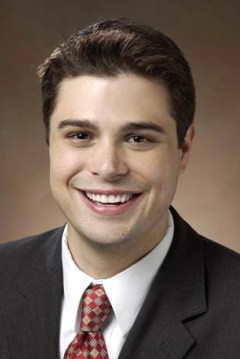
"Average annual surgeon volume appears more significantly associated with an increased likelihood for mitral repair than institutional volume," Dr. LaPar reported at the annual meeting of the American Association for Thoracic Surgery. A video of his live presentation is available at the AATS website.
Mitral valve repair appears to be underused despite accumulated data favoring repair over replacement in the treatment of patients with moderate to severe mitral regurgitation. Dr. LaPar and colleagues evaluated the relationship between procedure volume and propensity for mitral repair (over replacement) in a multi-institution cohort of patients.
The Virginia Cardiac Surgery Quality Initiative is a voluntary consortium of 17 collaborating cardiac surgery centers in Virginia that captures about 99% of all the operations performed in the state, with each center contributing their data to the Society of Thoracic Surgeons (STS) Adult Cardiac Surgery Database.
Records for 4,178 patients were evaluated for 2001-2012; 2,516 of these patients underwent isolated mitral valve replacement and 1,662 underwent isolated mitral valve repair. To examine confounding, a propensity-matched cohort was developed with 1,661 patients in each group.
Median annual mitral procedure volume was 54 cases per year for hospitals, ranging from 5 to 128, and 13 cases per year for individual surgeons, ranging from 0 to 58 cases. Mitral valve repair rates also ranged significantly, from 35% to 70% of all mitral valve procedures for hospitals and from 0% to 90% for surgeons.
Mitral valve replacement patients presented with higher STS PROM (5.6% vs. 1.7%, P less than .001), higher age, and a greater number of comorbidities. When the researchers adjusted for STS PROM, both average annual hospital (P = .04) and surgeon (P less than .0001) mitral procedure volumes were associated with probability of mitral repair, with surgeon volume showing more influence in the decision to repair rather than replace the mitral valve.
When the propensity to perform mitral valve repair was plotted against surgeon volume, there was a clear "inflection point" of increased probability for repair over replacement when the average annual surgeon mitral volume (a surrogate for surgeon experience) exceeded 20 operations yearly. This finding was validated in the propensity-matched cohort.
"We did a post hoc analysis and demonstrated that when you categorize volume by our visible threshold of 20 cases per year, for both hospital and surgeon volume in the overall cohort, hospitals and surgeons performing more than 20 cases per year, more strongly performed mitral valve repair," said Dr. LaPar.
Indeed, among surgeons and hospitals performing more than 20 mitral operations annually, repairs were done in 62% of cases, compared to 37% for lower-volume centers. Among surgeons performing more than 20 mitral cases per year, repair rates were 73% compared to 26% for lower-volume mitral operators (both P less than .001).
Similarly significant differences were seen in the propensity-matched cohort, although the effect was more muted (53% vs. 47% for high- and low-volume hospitals and 67% vs. 39% for high- and low-volume surgeons; P less than .001 for both).
"In the upcoming era of percutaneous mitral valve repair technology, we believe that surgeon volume and expertise should act as a gatekeeper and should dictate not only access to this technology but the role of surgeons and cardiologists in this," concluded Dr. LaPar.
"This will be an excellent contribution to the literature further defining the relationship between surgeon volume and hospital center volume in mitral valve surgical outcomes and choice of operation," said the invited discussant, Dr. David A Fullerton of the University of Colorado at Denver, Aurora.
Dr. Daniel Drake, head of the Michigan Society of Thoracic and Cardiovascular Surgeons Mitral Initiative, added that in his state they have started to see a greater number of referrals – based on an assessment of case complexity – from less experienced surgeons to more experienced surgeons. Dr. LaPar noted that he hadn’t yet seen this widely in Virginia.
Dr. LaPar and Dr. Fullerton reported no disclosures.
TORONTO – Mitral valve repair rates continue to show great variability, ranging from 0% to 90% for patients with moderate to severe mitral regurgitation, according to data presented by Dr. Damien J. LaPar, a thoracic surgeon at the University of Virginia, Charlottesville.
Surgeons performing more than 20 mitral cases per year were about three times more likely to perform a repair over a replacement compared with surgeons performing fewer than 20 mitral surgeries per year.
"Average annual surgeon volume appears more significantly associated with an increased likelihood for mitral repair than institutional volume," Dr. LaPar reported at the annual meeting of the American Association for Thoracic Surgery. A video of his live presentation is available at the AATS website.
Mitral valve repair appears to be underused despite accumulated data favoring repair over replacement in the treatment of patients with moderate to severe mitral regurgitation. Dr. LaPar and colleagues evaluated the relationship between procedure volume and propensity for mitral repair (over replacement) in a multi-institution cohort of patients.
The Virginia Cardiac Surgery Quality Initiative is a voluntary consortium of 17 collaborating cardiac surgery centers in Virginia that captures about 99% of all the operations performed in the state, with each center contributing their data to the Society of Thoracic Surgeons (STS) Adult Cardiac Surgery Database.
Records for 4,178 patients were evaluated for 2001-2012; 2,516 of these patients underwent isolated mitral valve replacement and 1,662 underwent isolated mitral valve repair. To examine confounding, a propensity-matched cohort was developed with 1,661 patients in each group.
Median annual mitral procedure volume was 54 cases per year for hospitals, ranging from 5 to 128, and 13 cases per year for individual surgeons, ranging from 0 to 58 cases. Mitral valve repair rates also ranged significantly, from 35% to 70% of all mitral valve procedures for hospitals and from 0% to 90% for surgeons.
Mitral valve replacement patients presented with higher STS PROM (5.6% vs. 1.7%, P less than .001), higher age, and a greater number of comorbidities. When the researchers adjusted for STS PROM, both average annual hospital (P = .04) and surgeon (P less than .0001) mitral procedure volumes were associated with probability of mitral repair, with surgeon volume showing more influence in the decision to repair rather than replace the mitral valve.
When the propensity to perform mitral valve repair was plotted against surgeon volume, there was a clear "inflection point" of increased probability for repair over replacement when the average annual surgeon mitral volume (a surrogate for surgeon experience) exceeded 20 operations yearly. This finding was validated in the propensity-matched cohort.
"We did a post hoc analysis and demonstrated that when you categorize volume by our visible threshold of 20 cases per year, for both hospital and surgeon volume in the overall cohort, hospitals and surgeons performing more than 20 cases per year, more strongly performed mitral valve repair," said Dr. LaPar.
Indeed, among surgeons and hospitals performing more than 20 mitral operations annually, repairs were done in 62% of cases, compared to 37% for lower-volume centers. Among surgeons performing more than 20 mitral cases per year, repair rates were 73% compared to 26% for lower-volume mitral operators (both P less than .001).
Similarly significant differences were seen in the propensity-matched cohort, although the effect was more muted (53% vs. 47% for high- and low-volume hospitals and 67% vs. 39% for high- and low-volume surgeons; P less than .001 for both).
"In the upcoming era of percutaneous mitral valve repair technology, we believe that surgeon volume and expertise should act as a gatekeeper and should dictate not only access to this technology but the role of surgeons and cardiologists in this," concluded Dr. LaPar.
"This will be an excellent contribution to the literature further defining the relationship between surgeon volume and hospital center volume in mitral valve surgical outcomes and choice of operation," said the invited discussant, Dr. David A Fullerton of the University of Colorado at Denver, Aurora.
Dr. Daniel Drake, head of the Michigan Society of Thoracic and Cardiovascular Surgeons Mitral Initiative, added that in his state they have started to see a greater number of referrals – based on an assessment of case complexity – from less experienced surgeons to more experienced surgeons. Dr. LaPar noted that he hadn’t yet seen this widely in Virginia.
Dr. LaPar and Dr. Fullerton reported no disclosures.
TORONTO – Mitral valve repair rates continue to show great variability, ranging from 0% to 90% for patients with moderate to severe mitral regurgitation, according to data presented by Dr. Damien J. LaPar, a thoracic surgeon at the University of Virginia, Charlottesville.
Surgeons performing more than 20 mitral cases per year were about three times more likely to perform a repair over a replacement compared with surgeons performing fewer than 20 mitral surgeries per year.
"Average annual surgeon volume appears more significantly associated with an increased likelihood for mitral repair than institutional volume," Dr. LaPar reported at the annual meeting of the American Association for Thoracic Surgery. A video of his live presentation is available at the AATS website.
Mitral valve repair appears to be underused despite accumulated data favoring repair over replacement in the treatment of patients with moderate to severe mitral regurgitation. Dr. LaPar and colleagues evaluated the relationship between procedure volume and propensity for mitral repair (over replacement) in a multi-institution cohort of patients.
The Virginia Cardiac Surgery Quality Initiative is a voluntary consortium of 17 collaborating cardiac surgery centers in Virginia that captures about 99% of all the operations performed in the state, with each center contributing their data to the Society of Thoracic Surgeons (STS) Adult Cardiac Surgery Database.
Records for 4,178 patients were evaluated for 2001-2012; 2,516 of these patients underwent isolated mitral valve replacement and 1,662 underwent isolated mitral valve repair. To examine confounding, a propensity-matched cohort was developed with 1,661 patients in each group.
Median annual mitral procedure volume was 54 cases per year for hospitals, ranging from 5 to 128, and 13 cases per year for individual surgeons, ranging from 0 to 58 cases. Mitral valve repair rates also ranged significantly, from 35% to 70% of all mitral valve procedures for hospitals and from 0% to 90% for surgeons.
Mitral valve replacement patients presented with higher STS PROM (5.6% vs. 1.7%, P less than .001), higher age, and a greater number of comorbidities. When the researchers adjusted for STS PROM, both average annual hospital (P = .04) and surgeon (P less than .0001) mitral procedure volumes were associated with probability of mitral repair, with surgeon volume showing more influence in the decision to repair rather than replace the mitral valve.
When the propensity to perform mitral valve repair was plotted against surgeon volume, there was a clear "inflection point" of increased probability for repair over replacement when the average annual surgeon mitral volume (a surrogate for surgeon experience) exceeded 20 operations yearly. This finding was validated in the propensity-matched cohort.
"We did a post hoc analysis and demonstrated that when you categorize volume by our visible threshold of 20 cases per year, for both hospital and surgeon volume in the overall cohort, hospitals and surgeons performing more than 20 cases per year, more strongly performed mitral valve repair," said Dr. LaPar.
Indeed, among surgeons and hospitals performing more than 20 mitral operations annually, repairs were done in 62% of cases, compared to 37% for lower-volume centers. Among surgeons performing more than 20 mitral cases per year, repair rates were 73% compared to 26% for lower-volume mitral operators (both P less than .001).
Similarly significant differences were seen in the propensity-matched cohort, although the effect was more muted (53% vs. 47% for high- and low-volume hospitals and 67% vs. 39% for high- and low-volume surgeons; P less than .001 for both).
"In the upcoming era of percutaneous mitral valve repair technology, we believe that surgeon volume and expertise should act as a gatekeeper and should dictate not only access to this technology but the role of surgeons and cardiologists in this," concluded Dr. LaPar.
"This will be an excellent contribution to the literature further defining the relationship between surgeon volume and hospital center volume in mitral valve surgical outcomes and choice of operation," said the invited discussant, Dr. David A Fullerton of the University of Colorado at Denver, Aurora.
Dr. Daniel Drake, head of the Michigan Society of Thoracic and Cardiovascular Surgeons Mitral Initiative, added that in his state they have started to see a greater number of referrals – based on an assessment of case complexity – from less experienced surgeons to more experienced surgeons. Dr. LaPar noted that he hadn’t yet seen this widely in Virginia.
Dr. LaPar and Dr. Fullerton reported no disclosures.
Key clinical point: Surgeon volume appears more significantly associated with an increased likelihood for mitral repair than institutional volume.
Major finding: MV repair rates among surgeons ranged from 0 to 90% for patients with moderate to severe mitral regurgitation. Surgeons with lower annual mitral valve procedure volumes were about three times less likely to perform the procedure than were surgeons with higher volumes.
Data source: STS certified patients records from 17 surgical centers in Virginia, representing 100 surgeons and 99% of cardiac operations performed in the state.
Disclosures: Dr. LaPar and Dr. Fullerton reported having no financial disclosures.
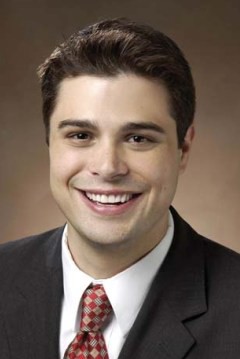
Wireless endocardial left ventricular stimulation for CRT shows promise
SAN FRANCISCO – Wireless endocardial left ventricular pacing provides an alternative approach to cardiac resynchronization pacing in heart failure patients, according to preliminary results from an ongoing multicenter trial.
At the annual scientific sessions of the Heart Rhythm Society, Dr. Vivek Y. Reddy presented preliminary results from 19 patients enrolled in the SELECT-LV (Safety and Performance of Electrodes Implanted in the Left Ventricle) study. The purpose of the open-label trial is to evaluate the safety and feasibility of leadless, ultrasound-based pacing using a wireless cardiac stimulation system (WiCS-LV) developed by EBR Systems.
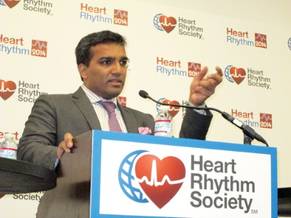
"The idea is to use an existing standard ICD [implantable cardioverter defibrillator] or pacemaker and place this device, which has a transmitter as well as a battery, in a subcutaneous location, and then place a receiver-electrode ‘pellet’ on the left ventricle endocardial wall," explained Dr. Reddy, professor of medicine at Mount Sinai Hospital, New York. "The idea is that the transmitter emits ultrasound impulses detected by the pellet. In turn, the pellet transduces the ultrasound impulse into an electrical pacing pulse to stimulate the heart."
The battery, which is 42 cc in size, is placed subcutaneously in the subaxillary region. The transmitter, which is 13 cc in size, is placed between the ribs "in an optimal position so that there is an echo window which allows you to see the left ventricle," Dr. Reddy said. "Then, on the same day or the next day, the pellet (which is 0.05 cc in size) is placed on the left ventricle via a transfemoral catheter approach."
The SELECT-LV investigators intend to enroll 40 patients at seven centers to evaluate the performance and efficacy of the approach. The primary endpoints are device- and procedure-related complications perioperatively and at 1 month, and biventricular pacing capture on 12-lead ECG at 1 month. Secondary endpoints are device-related or major complications up to 6 months and LV pacing capture at 1, 2, and 6 months, as well as biventricular capture at 6 months on 12-lead ECG. Preliminary efficacy is measured by a composite score of all-cause mortality, heart failure hospitalization, New York Heart Association (NYHA) class, and patient global assessment at 6 months, as well as LV end systolic/diastolic volumes and LV ejection fraction at 6 months.
Patients are eligible for the trial if they have a failed implant of a coronary sinus lead or a chronic issue with their CS lead; if they have no clinical status improvement in 6 months of cardiac resynchronization pacing (CRT); or if they have a previously implanted pacemaker or ICD with a new indication for biventricular pacing but are at risk for a CRT upgrade due to venous occlusion or other factors.
Of the 19 patients who have been implanted to date, 16 (84%) were male, their mean age was 68 years, and they were relatively evenly split between ischemic and nonischemic substrates. Nearly half (47%) had a failed CS lead implant and their mean LV ejection fraction at baseline was 26%.
Primary and secondary endpoint data were available for 15 of the 19 patients, and 6-month data were available for 8 patients. At 1 month, all 15 patients demonstrated Bi-V pacing on 12-lead ECG. The QRS narrowed by 46 ms at 1 month and by 23 ms at 6 months. NYHA class also significantly improved between baseline and 6 months (from II to I; decline of 0.63 points). All patients experienced improvements on their clinical composite score.
No periprocedural adverse events and no device-related serious adverse events occurred within the first month of implant, but 10 serious adverse events occurred in six patients within the first 6 months, including one patient with a hematoma at the transmitter pocket and one patient who had a stroke 3 days after the procedure. "This is a patient who had atrial fibrillation," Dr. Reddy noted. "At the time of the procedure the [warfarin] was stopped. The patient was implanted, did well, but the [warfarin] hadn’t been restarted at the 3-day time point and the patient suffered a stroke. After this experience, we altered the protocol so that patients on anticoagulation for any indication need to continue active coagulation [with no interruption]. We’ll see how that fares."
The study was funded by EBR Systems. Dr. Reddy is a consultant to the company.
On Twitter @dougbrunk
SAN FRANCISCO – Wireless endocardial left ventricular pacing provides an alternative approach to cardiac resynchronization pacing in heart failure patients, according to preliminary results from an ongoing multicenter trial.
At the annual scientific sessions of the Heart Rhythm Society, Dr. Vivek Y. Reddy presented preliminary results from 19 patients enrolled in the SELECT-LV (Safety and Performance of Electrodes Implanted in the Left Ventricle) study. The purpose of the open-label trial is to evaluate the safety and feasibility of leadless, ultrasound-based pacing using a wireless cardiac stimulation system (WiCS-LV) developed by EBR Systems.
"The idea is to use an existing standard ICD [implantable cardioverter defibrillator] or pacemaker and place this device, which has a transmitter as well as a battery, in a subcutaneous location, and then place a receiver-electrode ‘pellet’ on the left ventricle endocardial wall," explained Dr. Reddy, professor of medicine at Mount Sinai Hospital, New York. "The idea is that the transmitter emits ultrasound impulses detected by the pellet. In turn, the pellet transduces the ultrasound impulse into an electrical pacing pulse to stimulate the heart."
The battery, which is 42 cc in size, is placed subcutaneously in the subaxillary region. The transmitter, which is 13 cc in size, is placed between the ribs "in an optimal position so that there is an echo window which allows you to see the left ventricle," Dr. Reddy said. "Then, on the same day or the next day, the pellet (which is 0.05 cc in size) is placed on the left ventricle via a transfemoral catheter approach."
The SELECT-LV investigators intend to enroll 40 patients at seven centers to evaluate the performance and efficacy of the approach. The primary endpoints are device- and procedure-related complications perioperatively and at 1 month, and biventricular pacing capture on 12-lead ECG at 1 month. Secondary endpoints are device-related or major complications up to 6 months and LV pacing capture at 1, 2, and 6 months, as well as biventricular capture at 6 months on 12-lead ECG. Preliminary efficacy is measured by a composite score of all-cause mortality, heart failure hospitalization, New York Heart Association (NYHA) class, and patient global assessment at 6 months, as well as LV end systolic/diastolic volumes and LV ejection fraction at 6 months.
Patients are eligible for the trial if they have a failed implant of a coronary sinus lead or a chronic issue with their CS lead; if they have no clinical status improvement in 6 months of cardiac resynchronization pacing (CRT); or if they have a previously implanted pacemaker or ICD with a new indication for biventricular pacing but are at risk for a CRT upgrade due to venous occlusion or other factors.
Of the 19 patients who have been implanted to date, 16 (84%) were male, their mean age was 68 years, and they were relatively evenly split between ischemic and nonischemic substrates. Nearly half (47%) had a failed CS lead implant and their mean LV ejection fraction at baseline was 26%.
Primary and secondary endpoint data were available for 15 of the 19 patients, and 6-month data were available for 8 patients. At 1 month, all 15 patients demonstrated Bi-V pacing on 12-lead ECG. The QRS narrowed by 46 ms at 1 month and by 23 ms at 6 months. NYHA class also significantly improved between baseline and 6 months (from II to I; decline of 0.63 points). All patients experienced improvements on their clinical composite score.
No periprocedural adverse events and no device-related serious adverse events occurred within the first month of implant, but 10 serious adverse events occurred in six patients within the first 6 months, including one patient with a hematoma at the transmitter pocket and one patient who had a stroke 3 days after the procedure. "This is a patient who had atrial fibrillation," Dr. Reddy noted. "At the time of the procedure the [warfarin] was stopped. The patient was implanted, did well, but the [warfarin] hadn’t been restarted at the 3-day time point and the patient suffered a stroke. After this experience, we altered the protocol so that patients on anticoagulation for any indication need to continue active coagulation [with no interruption]. We’ll see how that fares."
The study was funded by EBR Systems. Dr. Reddy is a consultant to the company.
On Twitter @dougbrunk
SAN FRANCISCO – Wireless endocardial left ventricular pacing provides an alternative approach to cardiac resynchronization pacing in heart failure patients, according to preliminary results from an ongoing multicenter trial.
At the annual scientific sessions of the Heart Rhythm Society, Dr. Vivek Y. Reddy presented preliminary results from 19 patients enrolled in the SELECT-LV (Safety and Performance of Electrodes Implanted in the Left Ventricle) study. The purpose of the open-label trial is to evaluate the safety and feasibility of leadless, ultrasound-based pacing using a wireless cardiac stimulation system (WiCS-LV) developed by EBR Systems.
"The idea is to use an existing standard ICD [implantable cardioverter defibrillator] or pacemaker and place this device, which has a transmitter as well as a battery, in a subcutaneous location, and then place a receiver-electrode ‘pellet’ on the left ventricle endocardial wall," explained Dr. Reddy, professor of medicine at Mount Sinai Hospital, New York. "The idea is that the transmitter emits ultrasound impulses detected by the pellet. In turn, the pellet transduces the ultrasound impulse into an electrical pacing pulse to stimulate the heart."
The battery, which is 42 cc in size, is placed subcutaneously in the subaxillary region. The transmitter, which is 13 cc in size, is placed between the ribs "in an optimal position so that there is an echo window which allows you to see the left ventricle," Dr. Reddy said. "Then, on the same day or the next day, the pellet (which is 0.05 cc in size) is placed on the left ventricle via a transfemoral catheter approach."
The SELECT-LV investigators intend to enroll 40 patients at seven centers to evaluate the performance and efficacy of the approach. The primary endpoints are device- and procedure-related complications perioperatively and at 1 month, and biventricular pacing capture on 12-lead ECG at 1 month. Secondary endpoints are device-related or major complications up to 6 months and LV pacing capture at 1, 2, and 6 months, as well as biventricular capture at 6 months on 12-lead ECG. Preliminary efficacy is measured by a composite score of all-cause mortality, heart failure hospitalization, New York Heart Association (NYHA) class, and patient global assessment at 6 months, as well as LV end systolic/diastolic volumes and LV ejection fraction at 6 months.
Patients are eligible for the trial if they have a failed implant of a coronary sinus lead or a chronic issue with their CS lead; if they have no clinical status improvement in 6 months of cardiac resynchronization pacing (CRT); or if they have a previously implanted pacemaker or ICD with a new indication for biventricular pacing but are at risk for a CRT upgrade due to venous occlusion or other factors.
Of the 19 patients who have been implanted to date, 16 (84%) were male, their mean age was 68 years, and they were relatively evenly split between ischemic and nonischemic substrates. Nearly half (47%) had a failed CS lead implant and their mean LV ejection fraction at baseline was 26%.
Primary and secondary endpoint data were available for 15 of the 19 patients, and 6-month data were available for 8 patients. At 1 month, all 15 patients demonstrated Bi-V pacing on 12-lead ECG. The QRS narrowed by 46 ms at 1 month and by 23 ms at 6 months. NYHA class also significantly improved between baseline and 6 months (from II to I; decline of 0.63 points). All patients experienced improvements on their clinical composite score.
No periprocedural adverse events and no device-related serious adverse events occurred within the first month of implant, but 10 serious adverse events occurred in six patients within the first 6 months, including one patient with a hematoma at the transmitter pocket and one patient who had a stroke 3 days after the procedure. "This is a patient who had atrial fibrillation," Dr. Reddy noted. "At the time of the procedure the [warfarin] was stopped. The patient was implanted, did well, but the [warfarin] hadn’t been restarted at the 3-day time point and the patient suffered a stroke. After this experience, we altered the protocol so that patients on anticoagulation for any indication need to continue active coagulation [with no interruption]. We’ll see how that fares."
The study was funded by EBR Systems. Dr. Reddy is a consultant to the company.
On Twitter @dougbrunk
AT HEART RHYTHM 2014
Key clinical point: Wireless endocardial left ventricular pacing provided an alternative approach to cardiac resynchronization pacing.
Major finding: At 1 month, all patients demonstrated biventricular pacing on 12-lead ECG. The QRS narrowed by 46 ms at 1 month and by 23 ms at 6 months. NYHA class also significantly improved between baseline and 6 months (from II to I).
Data source: Preliminary results from 19 patients enrolled in the SELECT-LV trial, which intends to enroll a total of 40 patients at seven clinical centers.
Disclosures: The study was funded by EBR Systems. Dr. Reddy disclosed that he is a consultant to the company.
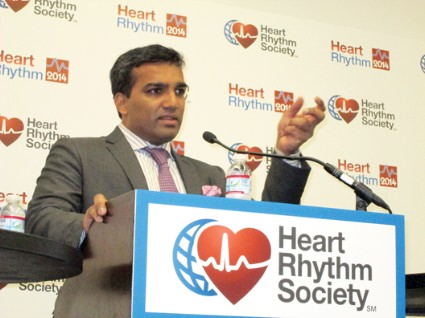
Device positioning may be culprit behind post-LVAD pump thrombosis
TORONTO – Device positioning may help explain significant increases in pump thrombosis after left ventricular assist device implantation, according to a single-center study presented at the 2014 annual meeting of the American Association for Thoracic Surgery.
Dr. Jay Bhama, associate director of lung and heart transplantation at the University of Pittsburgh, found that more device-positioning issues coincided with more occurrences of pump thrombosis (PT). The adequacy of anticoagulation, major adverse events, and medical noncompliance were not found to be contributing factors, Dr. Bhama said.
His investigation joins recently published data indicating that left ventricular assist device (LVAD) thrombosis nearly quadrupled in less than 2 years in a multicenter study.
The purported mechanisms of PT in patients supported with the HeartMate II LVAD are thought to be multifactorial, but possibly related to design modifications, expansion of use to the destination therapy indication, nonuniform surgical implant technique, and nonuniform anticoagulation strategies across centers and over time.
"Starting in 2010, we started to notice a rapid and sudden increase in the rate of pump thrombosis, which has increased steadily over the last 3 years," said Dr. Bhama, who reported that PT occurred in 10 of 62 patients (16%) treated at the University of Pittsburgh Medical Center, with an overall event rate of 0.281 per patient-year.
In response to the increase, the group at the medical center investigated how potential contributing factors may have changed over time. They retrospectively assessed all primary LVAD implants in patients who survived hospitalization (62 of 74 total implants) between 2004 and 2012, grouping patients according to the era of implant: from June 2004 to December 2009 (era 1; n = 24) and from January 2010 (when FDA approval was given to expand use to destination therapy) to December 2012 (era 2; n = 38).
None of those who died during the index hospitalization experienced PT, Dr. Bhama noted.
PT was defined as either visualized thrombus within the pump at device exchange or significant hemolysis in the setting of heart failure symptoms or pump malfunction.
The actuarial freedom from PT at 24 months was significantly lower in era 2 than in era 1 (57% vs. 100%; P = .016).
Effective anticoagulation (percent of all international normalized ratio [INR] measurements greater than 1.8) was more reliably achieved in era 2 than in era 1 (50% vs. 34%; P less than .001).
To assess device positioning, the researchers looked at the angle of the inflow cannula, defining malposition as either less than the 5th or greater than the 95th percentile of the median of all the inflow cannula angles. Regarding the outflow cannula, they looked at patients who had bend-relief disconnects, either partial or complete, and those who had radiographic evidence of outflow graft malposition or kink.
Device positioning issues were significantly more prevalent during era 2 than during era 1 (29% vs. 4%). Most of this difference was driven by inflow cannula positioning problems, Dr. Bhama noted.
When the patients with concerns related to device positioning were excluded, the freedom from PT at 24 months no longer differed significantly between groups (P = .094).
The groups were demographically similar except for age, which was higher in the era 2 group (57 years, vs. 50 years for era 1; P = .037). More patients in the era 2 group received an LVAD for destination therapy, although this difference actually wasn’t significant (61% vs. 38%; P = .066).
The groups were also similar with regard to early major adverse events (right ventricular failure, bleeding, infection, and stroke) and medical noncompliance.
In the earlier multicenter study, Dr. Randall C. Starling, of the Cleveland Clinic, and his colleagues reported an abrupt increase in LVAD thrombosis: Between March 2011 and Jan. 1, 2013, the occurrence of PT at 3 months after implantation increased from 2.2% to 8.4% (N. Engl. J. Med. 2014;370:33-40).
"Dissecting the root cause of this problem is an extremely difficult task," said Dr. Nader Moazami, the invited discussant for Dr. Bhama’s presentation and the second author on the Starling paper. Dr. Moazami is surgical director of the Kaufman Center for Heart Failure at the Cleveland Clinic.
"While recent advances in LVAD technology with continuous-flow pumps have saved the lives of thousands of dying patients, issues related to adverse events and the associated morbidity and mortality are of immense importance, specifically as we consider the relevance of this technology to the more ambulatory heart failure patients," said Dr. Moazami, commenting on the study.
However, he suggested that the real cause of the recent increase in PT has not yet been discovered, and questioned the validity of assessing inflow cannula angulation based on a chest x-ray. "This to my knowledge has never been validated and was a concern in about half of the patients in the pump thrombosis group," Dr. Moazami said. Patients with "a demonstrable mechanical reason for pump thrombosis" were excluded from the Starling team’s analysis, he added.
In response, Dr. Bhama cited a study by Dr. Abeel Mangi, a cardiac surgeon at Yale University, New Haven, Conn., which found that greater angulation of the HeartMate II inflow cannula, along with the depth of the pump pocket, correlated with the development of PT (Ann. Thorac. Surg. 2013;96:1259-65).
"These aren’t just angles that are slightly off here and there," noted Dr. Bhama. "These are splayed very widely, situations I think where we all would say this is something we should be concerned about."
Dr. Bhama reported no relevant disclosures.
TORONTO – Device positioning may help explain significant increases in pump thrombosis after left ventricular assist device implantation, according to a single-center study presented at the 2014 annual meeting of the American Association for Thoracic Surgery.
Dr. Jay Bhama, associate director of lung and heart transplantation at the University of Pittsburgh, found that more device-positioning issues coincided with more occurrences of pump thrombosis (PT). The adequacy of anticoagulation, major adverse events, and medical noncompliance were not found to be contributing factors, Dr. Bhama said.
His investigation joins recently published data indicating that left ventricular assist device (LVAD) thrombosis nearly quadrupled in less than 2 years in a multicenter study.
The purported mechanisms of PT in patients supported with the HeartMate II LVAD are thought to be multifactorial, but possibly related to design modifications, expansion of use to the destination therapy indication, nonuniform surgical implant technique, and nonuniform anticoagulation strategies across centers and over time.
"Starting in 2010, we started to notice a rapid and sudden increase in the rate of pump thrombosis, which has increased steadily over the last 3 years," said Dr. Bhama, who reported that PT occurred in 10 of 62 patients (16%) treated at the University of Pittsburgh Medical Center, with an overall event rate of 0.281 per patient-year.
In response to the increase, the group at the medical center investigated how potential contributing factors may have changed over time. They retrospectively assessed all primary LVAD implants in patients who survived hospitalization (62 of 74 total implants) between 2004 and 2012, grouping patients according to the era of implant: from June 2004 to December 2009 (era 1; n = 24) and from January 2010 (when FDA approval was given to expand use to destination therapy) to December 2012 (era 2; n = 38).
None of those who died during the index hospitalization experienced PT, Dr. Bhama noted.
PT was defined as either visualized thrombus within the pump at device exchange or significant hemolysis in the setting of heart failure symptoms or pump malfunction.
The actuarial freedom from PT at 24 months was significantly lower in era 2 than in era 1 (57% vs. 100%; P = .016).
Effective anticoagulation (percent of all international normalized ratio [INR] measurements greater than 1.8) was more reliably achieved in era 2 than in era 1 (50% vs. 34%; P less than .001).
To assess device positioning, the researchers looked at the angle of the inflow cannula, defining malposition as either less than the 5th or greater than the 95th percentile of the median of all the inflow cannula angles. Regarding the outflow cannula, they looked at patients who had bend-relief disconnects, either partial or complete, and those who had radiographic evidence of outflow graft malposition or kink.
Device positioning issues were significantly more prevalent during era 2 than during era 1 (29% vs. 4%). Most of this difference was driven by inflow cannula positioning problems, Dr. Bhama noted.
When the patients with concerns related to device positioning were excluded, the freedom from PT at 24 months no longer differed significantly between groups (P = .094).
The groups were demographically similar except for age, which was higher in the era 2 group (57 years, vs. 50 years for era 1; P = .037). More patients in the era 2 group received an LVAD for destination therapy, although this difference actually wasn’t significant (61% vs. 38%; P = .066).
The groups were also similar with regard to early major adverse events (right ventricular failure, bleeding, infection, and stroke) and medical noncompliance.
In the earlier multicenter study, Dr. Randall C. Starling, of the Cleveland Clinic, and his colleagues reported an abrupt increase in LVAD thrombosis: Between March 2011 and Jan. 1, 2013, the occurrence of PT at 3 months after implantation increased from 2.2% to 8.4% (N. Engl. J. Med. 2014;370:33-40).
"Dissecting the root cause of this problem is an extremely difficult task," said Dr. Nader Moazami, the invited discussant for Dr. Bhama’s presentation and the second author on the Starling paper. Dr. Moazami is surgical director of the Kaufman Center for Heart Failure at the Cleveland Clinic.
"While recent advances in LVAD technology with continuous-flow pumps have saved the lives of thousands of dying patients, issues related to adverse events and the associated morbidity and mortality are of immense importance, specifically as we consider the relevance of this technology to the more ambulatory heart failure patients," said Dr. Moazami, commenting on the study.
However, he suggested that the real cause of the recent increase in PT has not yet been discovered, and questioned the validity of assessing inflow cannula angulation based on a chest x-ray. "This to my knowledge has never been validated and was a concern in about half of the patients in the pump thrombosis group," Dr. Moazami said. Patients with "a demonstrable mechanical reason for pump thrombosis" were excluded from the Starling team’s analysis, he added.
In response, Dr. Bhama cited a study by Dr. Abeel Mangi, a cardiac surgeon at Yale University, New Haven, Conn., which found that greater angulation of the HeartMate II inflow cannula, along with the depth of the pump pocket, correlated with the development of PT (Ann. Thorac. Surg. 2013;96:1259-65).
"These aren’t just angles that are slightly off here and there," noted Dr. Bhama. "These are splayed very widely, situations I think where we all would say this is something we should be concerned about."
Dr. Bhama reported no relevant disclosures.
TORONTO – Device positioning may help explain significant increases in pump thrombosis after left ventricular assist device implantation, according to a single-center study presented at the 2014 annual meeting of the American Association for Thoracic Surgery.
Dr. Jay Bhama, associate director of lung and heart transplantation at the University of Pittsburgh, found that more device-positioning issues coincided with more occurrences of pump thrombosis (PT). The adequacy of anticoagulation, major adverse events, and medical noncompliance were not found to be contributing factors, Dr. Bhama said.
His investigation joins recently published data indicating that left ventricular assist device (LVAD) thrombosis nearly quadrupled in less than 2 years in a multicenter study.
The purported mechanisms of PT in patients supported with the HeartMate II LVAD are thought to be multifactorial, but possibly related to design modifications, expansion of use to the destination therapy indication, nonuniform surgical implant technique, and nonuniform anticoagulation strategies across centers and over time.
"Starting in 2010, we started to notice a rapid and sudden increase in the rate of pump thrombosis, which has increased steadily over the last 3 years," said Dr. Bhama, who reported that PT occurred in 10 of 62 patients (16%) treated at the University of Pittsburgh Medical Center, with an overall event rate of 0.281 per patient-year.
In response to the increase, the group at the medical center investigated how potential contributing factors may have changed over time. They retrospectively assessed all primary LVAD implants in patients who survived hospitalization (62 of 74 total implants) between 2004 and 2012, grouping patients according to the era of implant: from June 2004 to December 2009 (era 1; n = 24) and from January 2010 (when FDA approval was given to expand use to destination therapy) to December 2012 (era 2; n = 38).
None of those who died during the index hospitalization experienced PT, Dr. Bhama noted.
PT was defined as either visualized thrombus within the pump at device exchange or significant hemolysis in the setting of heart failure symptoms or pump malfunction.
The actuarial freedom from PT at 24 months was significantly lower in era 2 than in era 1 (57% vs. 100%; P = .016).
Effective anticoagulation (percent of all international normalized ratio [INR] measurements greater than 1.8) was more reliably achieved in era 2 than in era 1 (50% vs. 34%; P less than .001).
To assess device positioning, the researchers looked at the angle of the inflow cannula, defining malposition as either less than the 5th or greater than the 95th percentile of the median of all the inflow cannula angles. Regarding the outflow cannula, they looked at patients who had bend-relief disconnects, either partial or complete, and those who had radiographic evidence of outflow graft malposition or kink.
Device positioning issues were significantly more prevalent during era 2 than during era 1 (29% vs. 4%). Most of this difference was driven by inflow cannula positioning problems, Dr. Bhama noted.
When the patients with concerns related to device positioning were excluded, the freedom from PT at 24 months no longer differed significantly between groups (P = .094).
The groups were demographically similar except for age, which was higher in the era 2 group (57 years, vs. 50 years for era 1; P = .037). More patients in the era 2 group received an LVAD for destination therapy, although this difference actually wasn’t significant (61% vs. 38%; P = .066).
The groups were also similar with regard to early major adverse events (right ventricular failure, bleeding, infection, and stroke) and medical noncompliance.
In the earlier multicenter study, Dr. Randall C. Starling, of the Cleveland Clinic, and his colleagues reported an abrupt increase in LVAD thrombosis: Between March 2011 and Jan. 1, 2013, the occurrence of PT at 3 months after implantation increased from 2.2% to 8.4% (N. Engl. J. Med. 2014;370:33-40).
"Dissecting the root cause of this problem is an extremely difficult task," said Dr. Nader Moazami, the invited discussant for Dr. Bhama’s presentation and the second author on the Starling paper. Dr. Moazami is surgical director of the Kaufman Center for Heart Failure at the Cleveland Clinic.
"While recent advances in LVAD technology with continuous-flow pumps have saved the lives of thousands of dying patients, issues related to adverse events and the associated morbidity and mortality are of immense importance, specifically as we consider the relevance of this technology to the more ambulatory heart failure patients," said Dr. Moazami, commenting on the study.
However, he suggested that the real cause of the recent increase in PT has not yet been discovered, and questioned the validity of assessing inflow cannula angulation based on a chest x-ray. "This to my knowledge has never been validated and was a concern in about half of the patients in the pump thrombosis group," Dr. Moazami said. Patients with "a demonstrable mechanical reason for pump thrombosis" were excluded from the Starling team’s analysis, he added.
In response, Dr. Bhama cited a study by Dr. Abeel Mangi, a cardiac surgeon at Yale University, New Haven, Conn., which found that greater angulation of the HeartMate II inflow cannula, along with the depth of the pump pocket, correlated with the development of PT (Ann. Thorac. Surg. 2013;96:1259-65).
"These aren’t just angles that are slightly off here and there," noted Dr. Bhama. "These are splayed very widely, situations I think where we all would say this is something we should be concerned about."
Dr. Bhama reported no relevant disclosures.
AT THE AATS ANNUAL MEETING
Key clinical point: Cannula malpositioning may be related to pump thrombosis after LVAD placement.
Major finding: The rate of pump thrombosis after LVAD implantation has rapidly increased since 2010, increasing steadily over the past 3 years. Excluding patients with device positioning concerns eliminated the significant difference seen in pump thrombosis across time.
Data source: Single-center, retrospective study of 63 LVAD implant patient records.
Disclosures: Dr. Bhama reported no relevant disclosures.
Efficacy, safety seen with transcatheter pulmonary valve
WASHINGTON - A transcatheter pulmonary valve system that provides a new right ventricle to pulmonary artery conduit to congenital heart disease patients without the need for open heart surgery performed a little better in a real-world registry at 10 U.S. centers than it had in the pivotal trial that led to the system's 2010 FDA approval.
The new results "confirm the strong performance of the Melody transcatheter pulmonary valve achieved by real-world providers with results comparable to the U.S. investigational device exemption [IDE] trial," Dr. Aimee K. Armstrong said at the annual meeting of the American College of Cardiology. The "high level" of 97% freedom from transcatheter pulmonary valve (TPV) dysfunction at 1 year "was better than in the IDE trial," where the level reached 94%, noted Dr. Armstrong of the University of Michigan in Ann Arbor.

The registry study, which the FDA mandated when it approved the Melody valve in 2010, ran during July 2010 to July 2012 at 10 U.S. centers that had not participated in the pivotal trial. The 99 patients who received an implant that stayed in place for at least 1 day ranged from 5 to 45 years old, with an average age of 20 years. Although patient follow-up averaged 22 months, the study's primary endpoint was acceptable hemodynamic function within the conduit at 6 months, with a prespecified performance goal of 75% of patients achieving this outcome. The outcome actually occurred in 97% of the 90 evaluable patients at 6 months, and in 88% of all 99 patients who received a conduit. The difference between each of these rates and the performance goal was statistically significant, Dr. Armstrong said.
The transcatheter valve showed excellent performance by other criteria as well. Acceptable hemodynamic function continued through 1 year in 94% of the 87 implanted patients with evaluable data at 12 months, which translated to 83% of the entire 99 patients in the implanted group. Severe or moderate pulmonary valve regurgitation existed in 85% of the patients before treatment; after treatment no patient had severe or moderate regurgitation, and after 1 year 63% had no regurgitation, 24% had trace, and 12% had mild regurgitation (figures total 99% because of rounding). The 1-year rate of 97% of patients free from dysfunction of their implanted valve appeared to surpass the 94% rate seen in the pivotal trial (Circulation 2010;122:507-16).
The results also showed that high right ventricular pressure prior to valve placement was the only variable independently associated with subsequent valve dysfunction. "Patients who go into the procedure with a very stenotic conduit are probably at higher risk for transcatheter pulmonary valve dysfunction down the road," she said.
The study was sponsored by Medtronic, which markets the Melody transcatheter pulmonary valve. Dr. Armstrong said she has received research funding from Medtronic and Edwards Lifesciences.

|
| Dr. Robert Jaquiss |
This study is an important post-approval demonstration that the excellent early results obtained in the original IDE trial in the United States can be reproduced or even exceeded with a broader rollout of the Melody valve to many more centers. The next set of data, which is eagerly anticipated, is the mid-term and longer results for the Melody valve, which will begin to answer questions about the durability of valve competence. Additional information about the performance of the valve in alternative anatomic settings, such as in failing stented bioprostheses - so-called "valve-in-valve" usage - is also beginning to accumulate.
Dr. Robert Jaquiss is professor of surgery and pediatrics and chief of pediatric heart surgery at Duke University School of Medicine and an associate medical editor for Vascular Specialist.
|
|
| Dr. Robert Jaquiss |
This study is an important post-approval demonstration that the excellent early results obtained in the original IDE trial in the United States can be reproduced or even exceeded with a broader rollout of the Melody valve to many more centers. The next set of data, which is eagerly anticipated, is the mid-term and longer results for the Melody valve, which will begin to answer questions about the durability of valve competence. Additional information about the performance of the valve in alternative anatomic settings, such as in failing stented bioprostheses - so-called "valve-in-valve" usage - is also beginning to accumulate.
Dr. Robert Jaquiss is professor of surgery and pediatrics and chief of pediatric heart surgery at Duke University School of Medicine and an associate medical editor for Vascular Specialist.
|
|
| Dr. Robert Jaquiss |
This study is an important post-approval demonstration that the excellent early results obtained in the original IDE trial in the United States can be reproduced or even exceeded with a broader rollout of the Melody valve to many more centers. The next set of data, which is eagerly anticipated, is the mid-term and longer results for the Melody valve, which will begin to answer questions about the durability of valve competence. Additional information about the performance of the valve in alternative anatomic settings, such as in failing stented bioprostheses - so-called "valve-in-valve" usage - is also beginning to accumulate.
Dr. Robert Jaquiss is professor of surgery and pediatrics and chief of pediatric heart surgery at Duke University School of Medicine and an associate medical editor for Vascular Specialist.
WASHINGTON - A transcatheter pulmonary valve system that provides a new right ventricle to pulmonary artery conduit to congenital heart disease patients without the need for open heart surgery performed a little better in a real-world registry at 10 U.S. centers than it had in the pivotal trial that led to the system's 2010 FDA approval.
The new results "confirm the strong performance of the Melody transcatheter pulmonary valve achieved by real-world providers with results comparable to the U.S. investigational device exemption [IDE] trial," Dr. Aimee K. Armstrong said at the annual meeting of the American College of Cardiology. The "high level" of 97% freedom from transcatheter pulmonary valve (TPV) dysfunction at 1 year "was better than in the IDE trial," where the level reached 94%, noted Dr. Armstrong of the University of Michigan in Ann Arbor.
The registry study, which the FDA mandated when it approved the Melody valve in 2010, ran during July 2010 to July 2012 at 10 U.S. centers that had not participated in the pivotal trial. The 99 patients who received an implant that stayed in place for at least 1 day ranged from 5 to 45 years old, with an average age of 20 years. Although patient follow-up averaged 22 months, the study's primary endpoint was acceptable hemodynamic function within the conduit at 6 months, with a prespecified performance goal of 75% of patients achieving this outcome. The outcome actually occurred in 97% of the 90 evaluable patients at 6 months, and in 88% of all 99 patients who received a conduit. The difference between each of these rates and the performance goal was statistically significant, Dr. Armstrong said.
The transcatheter valve showed excellent performance by other criteria as well. Acceptable hemodynamic function continued through 1 year in 94% of the 87 implanted patients with evaluable data at 12 months, which translated to 83% of the entire 99 patients in the implanted group. Severe or moderate pulmonary valve regurgitation existed in 85% of the patients before treatment; after treatment no patient had severe or moderate regurgitation, and after 1 year 63% had no regurgitation, 24% had trace, and 12% had mild regurgitation (figures total 99% because of rounding). The 1-year rate of 97% of patients free from dysfunction of their implanted valve appeared to surpass the 94% rate seen in the pivotal trial (Circulation 2010;122:507-16).
The results also showed that high right ventricular pressure prior to valve placement was the only variable independently associated with subsequent valve dysfunction. "Patients who go into the procedure with a very stenotic conduit are probably at higher risk for transcatheter pulmonary valve dysfunction down the road," she said.
The study was sponsored by Medtronic, which markets the Melody transcatheter pulmonary valve. Dr. Armstrong said she has received research funding from Medtronic and Edwards Lifesciences.
WASHINGTON - A transcatheter pulmonary valve system that provides a new right ventricle to pulmonary artery conduit to congenital heart disease patients without the need for open heart surgery performed a little better in a real-world registry at 10 U.S. centers than it had in the pivotal trial that led to the system's 2010 FDA approval.
The new results "confirm the strong performance of the Melody transcatheter pulmonary valve achieved by real-world providers with results comparable to the U.S. investigational device exemption [IDE] trial," Dr. Aimee K. Armstrong said at the annual meeting of the American College of Cardiology. The "high level" of 97% freedom from transcatheter pulmonary valve (TPV) dysfunction at 1 year "was better than in the IDE trial," where the level reached 94%, noted Dr. Armstrong of the University of Michigan in Ann Arbor.
The registry study, which the FDA mandated when it approved the Melody valve in 2010, ran during July 2010 to July 2012 at 10 U.S. centers that had not participated in the pivotal trial. The 99 patients who received an implant that stayed in place for at least 1 day ranged from 5 to 45 years old, with an average age of 20 years. Although patient follow-up averaged 22 months, the study's primary endpoint was acceptable hemodynamic function within the conduit at 6 months, with a prespecified performance goal of 75% of patients achieving this outcome. The outcome actually occurred in 97% of the 90 evaluable patients at 6 months, and in 88% of all 99 patients who received a conduit. The difference between each of these rates and the performance goal was statistically significant, Dr. Armstrong said.
The transcatheter valve showed excellent performance by other criteria as well. Acceptable hemodynamic function continued through 1 year in 94% of the 87 implanted patients with evaluable data at 12 months, which translated to 83% of the entire 99 patients in the implanted group. Severe or moderate pulmonary valve regurgitation existed in 85% of the patients before treatment; after treatment no patient had severe or moderate regurgitation, and after 1 year 63% had no regurgitation, 24% had trace, and 12% had mild regurgitation (figures total 99% because of rounding). The 1-year rate of 97% of patients free from dysfunction of their implanted valve appeared to surpass the 94% rate seen in the pivotal trial (Circulation 2010;122:507-16).
The results also showed that high right ventricular pressure prior to valve placement was the only variable independently associated with subsequent valve dysfunction. "Patients who go into the procedure with a very stenotic conduit are probably at higher risk for transcatheter pulmonary valve dysfunction down the road," she said.
The study was sponsored by Medtronic, which markets the Melody transcatheter pulmonary valve. Dr. Armstrong said she has received research funding from Medtronic and Edwards Lifesciences.
Key clinical point: The Melody transcatheter pulmonary valve system worked as well in a real world registry as it did in its pivotal trial as a conduit between the right ventricle and pulmonary artery.
Major finding: Acceptable hemodynamic function at 6 months occurred in 88% of implanted patients, significantly surpassing the 75% performance goal.
Data source: A series of 99 patients who received a transcatheter pulmonary valve at any of 10 participating U.S. centers.
Disclosures: The study was sponsored by Medtronic, which markets the Melody transcatheter pulmonary valve. Dr. Armstrong said that she has received consultant fees and honoraria from Siemens Healthcare and St. Jude Medical, and has received research funding from Medtronic and Edwards Lifesciences.

Subclinical seizures a risk during cardiac surgery
TORONTO – Routine EEG monitoring after surgery with cardiopulmonary bypass in neonates revealed a seizure incidence of 8% in a recent study. In most cases (85%), seizure activity was detectable only on EEG and would not have been identified or treated without EEG monitoring, reported Dr. Maryam Y. Naim, of Children’s Hospital of Philadelphia, during the AATS Annual Meeting.
Of concern, status epilepticus was noted in 62% of neonates with seizures, and mortality was higher in babies with seizures versus those without (38% vs. 3%; P less than .01). "Postoperative seizures are associated with worse neurological outcomes," said Dr. Naim. In addition to being a biomarker of underlying brain injury, there is some evidence that the seizures themselves may cause secondary brain injury.
A total of 161 neonates had 48-hours of EEG monitoring begun within 6 hours of cardiac surgery with CPB. The median gestational age of the cohort was 39 weeks, 16% were premature, and 13% had identified genetic defects. The median age at surgery was 5 days. Deep hypothermic circulatory arrest was used in 48% of surgeries (median time, 48 minutes), 16% had open chest with delayed sternal closure, and 9% had a cardiac arrest.
Seizures were detected in 13 (8%), with a median onset of 20 hours after return to the cardiac ICU (CICU) from surgery. Seizures were subclinical, or EEG only, in 11 patients (85%), electroclinical in the other 2 (15%), and status epilepticus was seen in 8 (62%). When seizures occurred, the patient was treated with antiseizure medications. Abnormal vital signs or movements suggestive of seizure activity were noted at the bedside; although such events were recorded in 32 patients (22%), none had EEG correlates consistent with seizure activity.
"Neonates with all types of heart disease had seizures ... " said Dr. Naim. " ... with a highest percentage occurring in those with single ventricles and arch obstruction."
Neuroimaging studies were reviewed by a neurologist to determine any association between injury and seizure location. Although neonates with and without seizures had similar CICU lengths of stay, mortality was higher in those with seizures (38% vs. 3%; P less than .01). No predictors of seizures were identified on multivariable analysis.
"Based on these data, we are continuing routine postoperative EEG monitoring in all neonates following surgery with CPB," she said.
While not discredited in any way, Dr. Naim’s data were met with a fair amount of pushback from the gathered group of pediatric cardiothoracic surgical experts. An informal poll of the audience showed that 80%-90% do not routinely monitor neonates for seizures post-CPB despite ACNS recommendations, and several of the comments questioned the technical and financial feasibility of routine EEG monitoring.
Said the invited discussant, Dr. Frank Pigula, a cardiac surgeon from Boston Children’s Hospital, "In all the groups that have studied this, in all patients who have had a seizure, there were documented brain abnormalities. So, the ways I picture these data are that a seizure is a sign of an underlying brain injury, much like a fever is a sign of an underlying infection.
"And you’ve made a good case for the routine postoperative surveillance for seizures; I’m sure everyone would agree that treating seizures is a good thing, but is there any evidence showing us that the early identification and treatment of seizures improves outcomes, either developmental delays or mortality?
In response, Dr. Naim noted that all the CHOP seizure sufferers were treated, whether they had EEG only or clinical seizures, and, at the 4-year mark, they are showing fewer neurodevelopmental issues than previous cohorts of untreated neonates.
"I think one thing that is very concerning is emerging evidence that the seizures themselves cause secondary brain injury," she said.
Dr. Naim and Dr. Pigula reported having no financial disclosures.
TORONTO – Routine EEG monitoring after surgery with cardiopulmonary bypass in neonates revealed a seizure incidence of 8% in a recent study. In most cases (85%), seizure activity was detectable only on EEG and would not have been identified or treated without EEG monitoring, reported Dr. Maryam Y. Naim, of Children’s Hospital of Philadelphia, during the AATS Annual Meeting.
Of concern, status epilepticus was noted in 62% of neonates with seizures, and mortality was higher in babies with seizures versus those without (38% vs. 3%; P less than .01). "Postoperative seizures are associated with worse neurological outcomes," said Dr. Naim. In addition to being a biomarker of underlying brain injury, there is some evidence that the seizures themselves may cause secondary brain injury.
A total of 161 neonates had 48-hours of EEG monitoring begun within 6 hours of cardiac surgery with CPB. The median gestational age of the cohort was 39 weeks, 16% were premature, and 13% had identified genetic defects. The median age at surgery was 5 days. Deep hypothermic circulatory arrest was used in 48% of surgeries (median time, 48 minutes), 16% had open chest with delayed sternal closure, and 9% had a cardiac arrest.
Seizures were detected in 13 (8%), with a median onset of 20 hours after return to the cardiac ICU (CICU) from surgery. Seizures were subclinical, or EEG only, in 11 patients (85%), electroclinical in the other 2 (15%), and status epilepticus was seen in 8 (62%). When seizures occurred, the patient was treated with antiseizure medications. Abnormal vital signs or movements suggestive of seizure activity were noted at the bedside; although such events were recorded in 32 patients (22%), none had EEG correlates consistent with seizure activity.
"Neonates with all types of heart disease had seizures ... " said Dr. Naim. " ... with a highest percentage occurring in those with single ventricles and arch obstruction."
Neuroimaging studies were reviewed by a neurologist to determine any association between injury and seizure location. Although neonates with and without seizures had similar CICU lengths of stay, mortality was higher in those with seizures (38% vs. 3%; P less than .01). No predictors of seizures were identified on multivariable analysis.
"Based on these data, we are continuing routine postoperative EEG monitoring in all neonates following surgery with CPB," she said.
While not discredited in any way, Dr. Naim’s data were met with a fair amount of pushback from the gathered group of pediatric cardiothoracic surgical experts. An informal poll of the audience showed that 80%-90% do not routinely monitor neonates for seizures post-CPB despite ACNS recommendations, and several of the comments questioned the technical and financial feasibility of routine EEG monitoring.
Said the invited discussant, Dr. Frank Pigula, a cardiac surgeon from Boston Children’s Hospital, "In all the groups that have studied this, in all patients who have had a seizure, there were documented brain abnormalities. So, the ways I picture these data are that a seizure is a sign of an underlying brain injury, much like a fever is a sign of an underlying infection.
"And you’ve made a good case for the routine postoperative surveillance for seizures; I’m sure everyone would agree that treating seizures is a good thing, but is there any evidence showing us that the early identification and treatment of seizures improves outcomes, either developmental delays or mortality?
In response, Dr. Naim noted that all the CHOP seizure sufferers were treated, whether they had EEG only or clinical seizures, and, at the 4-year mark, they are showing fewer neurodevelopmental issues than previous cohorts of untreated neonates.
"I think one thing that is very concerning is emerging evidence that the seizures themselves cause secondary brain injury," she said.
Dr. Naim and Dr. Pigula reported having no financial disclosures.
TORONTO – Routine EEG monitoring after surgery with cardiopulmonary bypass in neonates revealed a seizure incidence of 8% in a recent study. In most cases (85%), seizure activity was detectable only on EEG and would not have been identified or treated without EEG monitoring, reported Dr. Maryam Y. Naim, of Children’s Hospital of Philadelphia, during the AATS Annual Meeting.
Of concern, status epilepticus was noted in 62% of neonates with seizures, and mortality was higher in babies with seizures versus those without (38% vs. 3%; P less than .01). "Postoperative seizures are associated with worse neurological outcomes," said Dr. Naim. In addition to being a biomarker of underlying brain injury, there is some evidence that the seizures themselves may cause secondary brain injury.
A total of 161 neonates had 48-hours of EEG monitoring begun within 6 hours of cardiac surgery with CPB. The median gestational age of the cohort was 39 weeks, 16% were premature, and 13% had identified genetic defects. The median age at surgery was 5 days. Deep hypothermic circulatory arrest was used in 48% of surgeries (median time, 48 minutes), 16% had open chest with delayed sternal closure, and 9% had a cardiac arrest.
Seizures were detected in 13 (8%), with a median onset of 20 hours after return to the cardiac ICU (CICU) from surgery. Seizures were subclinical, or EEG only, in 11 patients (85%), electroclinical in the other 2 (15%), and status epilepticus was seen in 8 (62%). When seizures occurred, the patient was treated with antiseizure medications. Abnormal vital signs or movements suggestive of seizure activity were noted at the bedside; although such events were recorded in 32 patients (22%), none had EEG correlates consistent with seizure activity.
"Neonates with all types of heart disease had seizures ... " said Dr. Naim. " ... with a highest percentage occurring in those with single ventricles and arch obstruction."
Neuroimaging studies were reviewed by a neurologist to determine any association between injury and seizure location. Although neonates with and without seizures had similar CICU lengths of stay, mortality was higher in those with seizures (38% vs. 3%; P less than .01). No predictors of seizures were identified on multivariable analysis.
"Based on these data, we are continuing routine postoperative EEG monitoring in all neonates following surgery with CPB," she said.
While not discredited in any way, Dr. Naim’s data were met with a fair amount of pushback from the gathered group of pediatric cardiothoracic surgical experts. An informal poll of the audience showed that 80%-90% do not routinely monitor neonates for seizures post-CPB despite ACNS recommendations, and several of the comments questioned the technical and financial feasibility of routine EEG monitoring.
Said the invited discussant, Dr. Frank Pigula, a cardiac surgeon from Boston Children’s Hospital, "In all the groups that have studied this, in all patients who have had a seizure, there were documented brain abnormalities. So, the ways I picture these data are that a seizure is a sign of an underlying brain injury, much like a fever is a sign of an underlying infection.
"And you’ve made a good case for the routine postoperative surveillance for seizures; I’m sure everyone would agree that treating seizures is a good thing, but is there any evidence showing us that the early identification and treatment of seizures improves outcomes, either developmental delays or mortality?
In response, Dr. Naim noted that all the CHOP seizure sufferers were treated, whether they had EEG only or clinical seizures, and, at the 4-year mark, they are showing fewer neurodevelopmental issues than previous cohorts of untreated neonates.
"I think one thing that is very concerning is emerging evidence that the seizures themselves cause secondary brain injury," she said.
Dr. Naim and Dr. Pigula reported having no financial disclosures.
Delayed revisions led to worse congenital outcomes
In previous studies on patients under 6 months of age undergoing a wide range of congenital cardiac operations, Dr. Meena Nathan and her colleagues at Boston Children’s Hospital found that immediate revisions of procedures intraoperatively that resulted in adequate anatomic correction of residual defects did not affect outcomes, but that delayed revisions of residual lesions resulted in worse patient outcomes.
Dr. Nathan presented the results of a larger prospective cohort of patients that she and her colleagues studied who were followed from index surgery to discharge from January 2011 to September 2013.

Patients were divided into four groups: a) intraoperative revisions of residual lesion, b) delayed postoperative revision of residual lesions during the same hospital stay, c) both intraoperative and delayed (BOTH) revision of residual lesions, d) and no revisions (neither intraoperative nor postoperative revision), Dr. Nathan said at the annual meeting of the American Association for Thoracic Surgery.
They used linear and logistic regression to compare the outcomes mortality, complications (excluding unplanned postoperative reinterventions) and postoperative hospital length of stay across the four groups (using patients who had intraoperative revisions only as reference group).
"We adjusted for baseline patient risk including age, prematurity, presence of extracardiac anomalies, and RACHS-1 risk category, each of which could contribute to the difference in outcomes," according to Dr. Nathan.
"In addition, to allow inclusion of all patients in the risk-adjusted analyses, we added two additional categories to the RACHS-1 categories: all patients less than 18 years of age with non–RACHS-1 categorizable procedures, and adults greater than 18 years who are not eligible for RACHS-1 risk adjustment," Dr. Nathan added.
A total of 2,427 patients were discharged after congenital cardiac operations during the time period studied.
As might be expected, on multivariable modeling, adjusting for other significant patient factors, the no-revisions group fared better than the other three groups. The intraoperative revision group had significantly lower postoperative length of stay and complication rates when compared to the delayed postoperative revision and the BOTH group, but they showed no significant differences in mortality compared to these two groups.
On subgroup analysis of the intraoperative revision group, 86% left the hospital with an optimal or adequate repair on discharge echocardiogram, Dr. Nathan added.
"We found that the intraoperative correction of residual lesions results in a shorter length of stay and lower complications when compared to those patients who underwent delayed postoperative revision of residual lesion," she concluded.
Dr. Nathan reported that she had no relevant disclosures.
In previous studies on patients under 6 months of age undergoing a wide range of congenital cardiac operations, Dr. Meena Nathan and her colleagues at Boston Children’s Hospital found that immediate revisions of procedures intraoperatively that resulted in adequate anatomic correction of residual defects did not affect outcomes, but that delayed revisions of residual lesions resulted in worse patient outcomes.
Dr. Nathan presented the results of a larger prospective cohort of patients that she and her colleagues studied who were followed from index surgery to discharge from January 2011 to September 2013.
Patients were divided into four groups: a) intraoperative revisions of residual lesion, b) delayed postoperative revision of residual lesions during the same hospital stay, c) both intraoperative and delayed (BOTH) revision of residual lesions, d) and no revisions (neither intraoperative nor postoperative revision), Dr. Nathan said at the annual meeting of the American Association for Thoracic Surgery.
They used linear and logistic regression to compare the outcomes mortality, complications (excluding unplanned postoperative reinterventions) and postoperative hospital length of stay across the four groups (using patients who had intraoperative revisions only as reference group).
"We adjusted for baseline patient risk including age, prematurity, presence of extracardiac anomalies, and RACHS-1 risk category, each of which could contribute to the difference in outcomes," according to Dr. Nathan.
"In addition, to allow inclusion of all patients in the risk-adjusted analyses, we added two additional categories to the RACHS-1 categories: all patients less than 18 years of age with non–RACHS-1 categorizable procedures, and adults greater than 18 years who are not eligible for RACHS-1 risk adjustment," Dr. Nathan added.
A total of 2,427 patients were discharged after congenital cardiac operations during the time period studied.
As might be expected, on multivariable modeling, adjusting for other significant patient factors, the no-revisions group fared better than the other three groups. The intraoperative revision group had significantly lower postoperative length of stay and complication rates when compared to the delayed postoperative revision and the BOTH group, but they showed no significant differences in mortality compared to these two groups.
On subgroup analysis of the intraoperative revision group, 86% left the hospital with an optimal or adequate repair on discharge echocardiogram, Dr. Nathan added.
"We found that the intraoperative correction of residual lesions results in a shorter length of stay and lower complications when compared to those patients who underwent delayed postoperative revision of residual lesion," she concluded.
Dr. Nathan reported that she had no relevant disclosures.
In previous studies on patients under 6 months of age undergoing a wide range of congenital cardiac operations, Dr. Meena Nathan and her colleagues at Boston Children’s Hospital found that immediate revisions of procedures intraoperatively that resulted in adequate anatomic correction of residual defects did not affect outcomes, but that delayed revisions of residual lesions resulted in worse patient outcomes.
Dr. Nathan presented the results of a larger prospective cohort of patients that she and her colleagues studied who were followed from index surgery to discharge from January 2011 to September 2013.
Patients were divided into four groups: a) intraoperative revisions of residual lesion, b) delayed postoperative revision of residual lesions during the same hospital stay, c) both intraoperative and delayed (BOTH) revision of residual lesions, d) and no revisions (neither intraoperative nor postoperative revision), Dr. Nathan said at the annual meeting of the American Association for Thoracic Surgery.
They used linear and logistic regression to compare the outcomes mortality, complications (excluding unplanned postoperative reinterventions) and postoperative hospital length of stay across the four groups (using patients who had intraoperative revisions only as reference group).
"We adjusted for baseline patient risk including age, prematurity, presence of extracardiac anomalies, and RACHS-1 risk category, each of which could contribute to the difference in outcomes," according to Dr. Nathan.
"In addition, to allow inclusion of all patients in the risk-adjusted analyses, we added two additional categories to the RACHS-1 categories: all patients less than 18 years of age with non–RACHS-1 categorizable procedures, and adults greater than 18 years who are not eligible for RACHS-1 risk adjustment," Dr. Nathan added.
A total of 2,427 patients were discharged after congenital cardiac operations during the time period studied.
As might be expected, on multivariable modeling, adjusting for other significant patient factors, the no-revisions group fared better than the other three groups. The intraoperative revision group had significantly lower postoperative length of stay and complication rates when compared to the delayed postoperative revision and the BOTH group, but they showed no significant differences in mortality compared to these two groups.
On subgroup analysis of the intraoperative revision group, 86% left the hospital with an optimal or adequate repair on discharge echocardiogram, Dr. Nathan added.
"We found that the intraoperative correction of residual lesions results in a shorter length of stay and lower complications when compared to those patients who underwent delayed postoperative revision of residual lesion," she concluded.
Dr. Nathan reported that she had no relevant disclosures.