User login
Fewer interventions after sleeve gastrectomy vs. Roux-en-Y, real-world data show
Sleeve gastrectomy was associated with significantly fewer postsurgical interventions and operations than was Roux-en-Y gastric bypass over longer-term follow-up in a recent cohort study based on real-world clinical data, according to investigators.
Interventions, operations, and hospitalizations were “relatively common” for both procedures over the 5-year follow-up, though significantly less so with sleeve gastrectomy, which has become the most common bariatric operation, the investigators said in a recent report on the study.
The benefit of sleeve gastrectomy seemed to be most pronounced in patients with lower body mass index and those with fewer comorbidities, according to the authors of the report, led by bariatric and general surgeon Anita Courcoulas, MD, of the University of Pittsburgh Medical Center.
That finding is counterintuitive, since in clinical practice, sleeve gastrectomy is frequently thought of as the preferred procedure for individuals with higher BMI or more comorbidities, though Dr. Courcoulas and colleagues cautioned that the findings were “exploratory” and require further investigation. Historically, Roux-en-Y gastric bypass provided more weight loss.
Safety results from this study, balanced by weight loss and health outcomes data, will “help inform procedure-specific decision making for prospective patients and physicians,” said Dr. Courcoulas and coauthors of the report, which appears in JAMA Surgery.
The study included 33,560 adults who had undergone the Roux-en-Y procedure or sleeve gastrectomy, making it one of the largest bariatric cohort studies ever to be done, according to the investigators.
The majority of patients in the study (54%) underwent Roux-en-Y gastric bypass, though the number of sleeve gastrectomy procedures increased each year in the study, which included patients who underwent a primary bariatric surgery procedure between January 2005 and September 2015 at 1 of 10 sites in the National Patient-Centered Clinical Research Network.
Most of the patients were female (80%) and white (66%), and 26% were Hispanic, according to the researchers, who said their study was more racially diverse than other bariatric studies, and therefore potentially more generalizable to real-world clinical practice.
Over the 5-year follow-up period, patients who underwent sleeve gastrectomy were less likely to subsequently undergo operations involving the abdomen, or interventions for enteral access, such as placement of gastrostomy tubes, according to the investigators, who reported a hazard ratio (HR) of 0.72 (95% confidence interval [CI], 0.65-0.79; P less than .001).
The estimated cumulative rate of operations or interventions at 5 years was 8.94% (95% CI, 8.23%-9.65%) for the patients who underwent sleeve gastrectomy, compared with 12.27% (95% CI, 11.49%-13.05%) for those who underwent the Roux-en-Y procedure, according to the report.
Hospitalization was also less likely for sleeve gastrectomy versus Roux-en-Y gastric bypass, with a hazard ratio of 0.82 and estimated cumulative incidence rates of 32.79% and 38.33%, respectively. Likewise, endoscopy was less likely in the sleeve gastrectomy group.
All-cause mortality did not differ between the groups at this 5-year follow-up, the investigators said.
“The present data were gathered from clinical care in the real world, yet the results are comparable to controlled studies and therefore lend additional support to the findings of these other types of studies that operation and intervention occur less commonly after sleeve gastrectomy than after Roux-en-Y gastric bypass for up to 5 years,” Dr. Courcoulas and coauthors noted in a discussion of their results.
This work was funded by the Patient-Centered Outcomes Research Institute. Dr. Courcoulas reported receiving a grant from Allurion. Coauthors provided disclosures related to the National Institutes of Health, IFSO Latin America Chapter, and the Food and Drug Administration.
*This story was updated on January 16, 2020.
SOURCE: Courcoulas A et al. JAMA Surg. 2020 Jan 15. doi: 10.1001/jamasurg.2019.5470.
This study by Courcoulas and colleagues adds to an established body of data showing that bariatric surgery is safe, according to authors of an invited commentary on the study.
More specifically, the study provides data that sleeve gastrectomy – which has become the most common bariatric procedure in the United States – is safe in the long term, said Anne P. Ehlers, MD, MPH, and Amir A. Ghaferi, MD, MS.
Barriers to surgery need to come down in response to the worsening public health crisis that these procedures address, according to Dr. Ehlers and Dr. Ghaferi.
“It is time we stop questioning the safety or efficacy of surgery and begin advocating for comprehensive obesity care for patients,” they said in their invited commentary.
Less than 1% of patients eligible for bariatric surgery undergo this “life-saving” treatment, they said, adding that obesity bias delays surgical referrals, while some “continue to fear” surgical risks, and decades-old guidelines restrict procedures to patients with higher body mass index.
The present study shows that sleeve gastrectomy is at least as safe, if not safer, than the Roux-en-Y gastric bypass procedure, said Dr. Ehlers and Dr. Ghaferi.
The study also answers the question of whether sleeve gastrectomy has an “unacceptably high” rate of gastroesophageal reflux disease (GERD) prompting revision surgeries, they said.
On the contrary, sleeve gastrectomy was associated with lower rates of reoperation, and lower rates of endoscopies, which almost always come before reoperations related to GERD, they explained.
Anne P. Ehlers, MD, MPH, and Amir A. Ghaferi, MD, MS, are with the department of surgery at the University of Michigan in Ann Arbor. They reported no conflicts of interests related to their invited commentary, which appears in JAMA Surgery .
This study by Courcoulas and colleagues adds to an established body of data showing that bariatric surgery is safe, according to authors of an invited commentary on the study.
More specifically, the study provides data that sleeve gastrectomy – which has become the most common bariatric procedure in the United States – is safe in the long term, said Anne P. Ehlers, MD, MPH, and Amir A. Ghaferi, MD, MS.
Barriers to surgery need to come down in response to the worsening public health crisis that these procedures address, according to Dr. Ehlers and Dr. Ghaferi.
“It is time we stop questioning the safety or efficacy of surgery and begin advocating for comprehensive obesity care for patients,” they said in their invited commentary.
Less than 1% of patients eligible for bariatric surgery undergo this “life-saving” treatment, they said, adding that obesity bias delays surgical referrals, while some “continue to fear” surgical risks, and decades-old guidelines restrict procedures to patients with higher body mass index.
The present study shows that sleeve gastrectomy is at least as safe, if not safer, than the Roux-en-Y gastric bypass procedure, said Dr. Ehlers and Dr. Ghaferi.
The study also answers the question of whether sleeve gastrectomy has an “unacceptably high” rate of gastroesophageal reflux disease (GERD) prompting revision surgeries, they said.
On the contrary, sleeve gastrectomy was associated with lower rates of reoperation, and lower rates of endoscopies, which almost always come before reoperations related to GERD, they explained.
Anne P. Ehlers, MD, MPH, and Amir A. Ghaferi, MD, MS, are with the department of surgery at the University of Michigan in Ann Arbor. They reported no conflicts of interests related to their invited commentary, which appears in JAMA Surgery .
This study by Courcoulas and colleagues adds to an established body of data showing that bariatric surgery is safe, according to authors of an invited commentary on the study.
More specifically, the study provides data that sleeve gastrectomy – which has become the most common bariatric procedure in the United States – is safe in the long term, said Anne P. Ehlers, MD, MPH, and Amir A. Ghaferi, MD, MS.
Barriers to surgery need to come down in response to the worsening public health crisis that these procedures address, according to Dr. Ehlers and Dr. Ghaferi.
“It is time we stop questioning the safety or efficacy of surgery and begin advocating for comprehensive obesity care for patients,” they said in their invited commentary.
Less than 1% of patients eligible for bariatric surgery undergo this “life-saving” treatment, they said, adding that obesity bias delays surgical referrals, while some “continue to fear” surgical risks, and decades-old guidelines restrict procedures to patients with higher body mass index.
The present study shows that sleeve gastrectomy is at least as safe, if not safer, than the Roux-en-Y gastric bypass procedure, said Dr. Ehlers and Dr. Ghaferi.
The study also answers the question of whether sleeve gastrectomy has an “unacceptably high” rate of gastroesophageal reflux disease (GERD) prompting revision surgeries, they said.
On the contrary, sleeve gastrectomy was associated with lower rates of reoperation, and lower rates of endoscopies, which almost always come before reoperations related to GERD, they explained.
Anne P. Ehlers, MD, MPH, and Amir A. Ghaferi, MD, MS, are with the department of surgery at the University of Michigan in Ann Arbor. They reported no conflicts of interests related to their invited commentary, which appears in JAMA Surgery .
Sleeve gastrectomy was associated with significantly fewer postsurgical interventions and operations than was Roux-en-Y gastric bypass over longer-term follow-up in a recent cohort study based on real-world clinical data, according to investigators.
Interventions, operations, and hospitalizations were “relatively common” for both procedures over the 5-year follow-up, though significantly less so with sleeve gastrectomy, which has become the most common bariatric operation, the investigators said in a recent report on the study.
The benefit of sleeve gastrectomy seemed to be most pronounced in patients with lower body mass index and those with fewer comorbidities, according to the authors of the report, led by bariatric and general surgeon Anita Courcoulas, MD, of the University of Pittsburgh Medical Center.
That finding is counterintuitive, since in clinical practice, sleeve gastrectomy is frequently thought of as the preferred procedure for individuals with higher BMI or more comorbidities, though Dr. Courcoulas and colleagues cautioned that the findings were “exploratory” and require further investigation. Historically, Roux-en-Y gastric bypass provided more weight loss.
Safety results from this study, balanced by weight loss and health outcomes data, will “help inform procedure-specific decision making for prospective patients and physicians,” said Dr. Courcoulas and coauthors of the report, which appears in JAMA Surgery.
The study included 33,560 adults who had undergone the Roux-en-Y procedure or sleeve gastrectomy, making it one of the largest bariatric cohort studies ever to be done, according to the investigators.
The majority of patients in the study (54%) underwent Roux-en-Y gastric bypass, though the number of sleeve gastrectomy procedures increased each year in the study, which included patients who underwent a primary bariatric surgery procedure between January 2005 and September 2015 at 1 of 10 sites in the National Patient-Centered Clinical Research Network.
Most of the patients were female (80%) and white (66%), and 26% were Hispanic, according to the researchers, who said their study was more racially diverse than other bariatric studies, and therefore potentially more generalizable to real-world clinical practice.
Over the 5-year follow-up period, patients who underwent sleeve gastrectomy were less likely to subsequently undergo operations involving the abdomen, or interventions for enteral access, such as placement of gastrostomy tubes, according to the investigators, who reported a hazard ratio (HR) of 0.72 (95% confidence interval [CI], 0.65-0.79; P less than .001).
The estimated cumulative rate of operations or interventions at 5 years was 8.94% (95% CI, 8.23%-9.65%) for the patients who underwent sleeve gastrectomy, compared with 12.27% (95% CI, 11.49%-13.05%) for those who underwent the Roux-en-Y procedure, according to the report.
Hospitalization was also less likely for sleeve gastrectomy versus Roux-en-Y gastric bypass, with a hazard ratio of 0.82 and estimated cumulative incidence rates of 32.79% and 38.33%, respectively. Likewise, endoscopy was less likely in the sleeve gastrectomy group.
All-cause mortality did not differ between the groups at this 5-year follow-up, the investigators said.
“The present data were gathered from clinical care in the real world, yet the results are comparable to controlled studies and therefore lend additional support to the findings of these other types of studies that operation and intervention occur less commonly after sleeve gastrectomy than after Roux-en-Y gastric bypass for up to 5 years,” Dr. Courcoulas and coauthors noted in a discussion of their results.
This work was funded by the Patient-Centered Outcomes Research Institute. Dr. Courcoulas reported receiving a grant from Allurion. Coauthors provided disclosures related to the National Institutes of Health, IFSO Latin America Chapter, and the Food and Drug Administration.
*This story was updated on January 16, 2020.
SOURCE: Courcoulas A et al. JAMA Surg. 2020 Jan 15. doi: 10.1001/jamasurg.2019.5470.
Sleeve gastrectomy was associated with significantly fewer postsurgical interventions and operations than was Roux-en-Y gastric bypass over longer-term follow-up in a recent cohort study based on real-world clinical data, according to investigators.
Interventions, operations, and hospitalizations were “relatively common” for both procedures over the 5-year follow-up, though significantly less so with sleeve gastrectomy, which has become the most common bariatric operation, the investigators said in a recent report on the study.
The benefit of sleeve gastrectomy seemed to be most pronounced in patients with lower body mass index and those with fewer comorbidities, according to the authors of the report, led by bariatric and general surgeon Anita Courcoulas, MD, of the University of Pittsburgh Medical Center.
That finding is counterintuitive, since in clinical practice, sleeve gastrectomy is frequently thought of as the preferred procedure for individuals with higher BMI or more comorbidities, though Dr. Courcoulas and colleagues cautioned that the findings were “exploratory” and require further investigation. Historically, Roux-en-Y gastric bypass provided more weight loss.
Safety results from this study, balanced by weight loss and health outcomes data, will “help inform procedure-specific decision making for prospective patients and physicians,” said Dr. Courcoulas and coauthors of the report, which appears in JAMA Surgery.
The study included 33,560 adults who had undergone the Roux-en-Y procedure or sleeve gastrectomy, making it one of the largest bariatric cohort studies ever to be done, according to the investigators.
The majority of patients in the study (54%) underwent Roux-en-Y gastric bypass, though the number of sleeve gastrectomy procedures increased each year in the study, which included patients who underwent a primary bariatric surgery procedure between January 2005 and September 2015 at 1 of 10 sites in the National Patient-Centered Clinical Research Network.
Most of the patients were female (80%) and white (66%), and 26% were Hispanic, according to the researchers, who said their study was more racially diverse than other bariatric studies, and therefore potentially more generalizable to real-world clinical practice.
Over the 5-year follow-up period, patients who underwent sleeve gastrectomy were less likely to subsequently undergo operations involving the abdomen, or interventions for enteral access, such as placement of gastrostomy tubes, according to the investigators, who reported a hazard ratio (HR) of 0.72 (95% confidence interval [CI], 0.65-0.79; P less than .001).
The estimated cumulative rate of operations or interventions at 5 years was 8.94% (95% CI, 8.23%-9.65%) for the patients who underwent sleeve gastrectomy, compared with 12.27% (95% CI, 11.49%-13.05%) for those who underwent the Roux-en-Y procedure, according to the report.
Hospitalization was also less likely for sleeve gastrectomy versus Roux-en-Y gastric bypass, with a hazard ratio of 0.82 and estimated cumulative incidence rates of 32.79% and 38.33%, respectively. Likewise, endoscopy was less likely in the sleeve gastrectomy group.
All-cause mortality did not differ between the groups at this 5-year follow-up, the investigators said.
“The present data were gathered from clinical care in the real world, yet the results are comparable to controlled studies and therefore lend additional support to the findings of these other types of studies that operation and intervention occur less commonly after sleeve gastrectomy than after Roux-en-Y gastric bypass for up to 5 years,” Dr. Courcoulas and coauthors noted in a discussion of their results.
This work was funded by the Patient-Centered Outcomes Research Institute. Dr. Courcoulas reported receiving a grant from Allurion. Coauthors provided disclosures related to the National Institutes of Health, IFSO Latin America Chapter, and the Food and Drug Administration.
*This story was updated on January 16, 2020.
SOURCE: Courcoulas A et al. JAMA Surg. 2020 Jan 15. doi: 10.1001/jamasurg.2019.5470.
FROM JAMA SURGERY
Bariatric surgery is most effective early in the diabetes trajectory
LOS ANGELES – In the clinical experience of Kurt GMM Alberti, DPhil, FRCP, FRCPath, The problem is, far fewer people with diabetes are being referred for the surgery than would benefit from it.

At the World Congress on Insulin Resistance, Diabetes, and Cardiovascular Disease, Dr. Alberti said that only about 1% of eligible patients in the United States undergo bariatric surgery, compared with just 0.22% of eligible patients in the United Kingdom.
“Obesity is an increasing problem,” said Dr. Alberti, a senior research investigator in the section of diabetes, endocrinology, and metabolism at Imperial College, London. “The United States is leading the field [in obesity], and it doesn’t seem to be going away. This is in parallel with diabetes. According to the 2019 International Diabetes Federation’s Diabetes Atlas, the diabetes prevalence worldwide is now 463 million. It’s projected to reach 578 million by 2030 and 700 million by 2045. We have a major problem.”
Lifestyle modification with diet and exercise have been the cornerstone of diabetes therapy for more than 100 years, with only modest success. “A range of oral agents have been added [and they] certainly improve glycemic control, but few achieve lasting success, and few achieve remission,” Dr. Alberti said. Findings from DiRECT (Lancet. 2018;391:541-51) and the Look AHEAD (Action for Health in Diabetes) study (N Engl J Med. 2013;369:145-54) have shown dramatic improvements in glycemia, but only in the minority of patients who achieved weight loss of 10 kg or more. “In this group, 80% achieved remission after 2 years in DiRECT,” he said. “It is uncertain whether this can be sustained long term in real life, and how many people will respond. Major community prevention programs are under way in the U.S. and [United Kingdom], but many target individuals with prediabetes. Currently, it is unknown how successful these programs will be.”
The 2018 American Diabetes Association/European Association for the Study of Diabetes clinical guidelines state that bariatric surgery is a recommended treatment option for adults with type 2 diabetes and a body mass index of either 40.0 kg/m2 or higher (or 37.5 kg/m2 or higher in people of Asian ancestry) or 35.0-39.9 kg/m2 (32.5-37.4 kg/m2 in people of Asian ancestry) and who do not achieve durable weight loss and improvement in comorbidities with reasonable nonsurgical methods. According to Dr. Alberti, surgery should be an accepted option in people who have type 2 diabetes and a body mass index of 30 kg/m2 or higher, and priority should be given to adolescents, young adults, and those with a shorter duration of diabetes.
The main suggestive evidence in favor of bariatric surgery having an impact on diabetes comes from the Swedish Obese Subjects Study, which had a median follow-up of 10 years (J Intern Med. 2013;273[3]:219-34). In patients with diabetes at baseline, 30% were still in remission at 15 years after surgery. After 18 years, cumulative microvascular disease had fallen from 42 to 21 per 1,000 person-years, and macrovascular complications had fallen by 25%. “This was not a randomized, controlled trial, however,” Dr. Alberti said. Several of these studies have now been performed, including the STAMPEDE trial (N Engl J Med. 2017;376:641-51) and recent studies led by Geltrude Mingrone, MD, PhD, which show major glycemic benefit (Lancet. 2015;386[9997]:P964-73) with bariatric surgery.
According to Dr. Alberti, laparoscopic adjustable gastric lap band is the easiest bariatric surgery to perform but it has fallen out of favor because of lower diabetes remission rates, compared with the other procedures. Roux-en-Y gastric bypass, sleeve gastrectomy, and biliary pancreatic diversion are all in use. Slightly higher remission rates have been shown with biliary pancreatic diversion. “There have also been consistent improvements in quality of life and cardiovascular risk factors,” he said. “Long-term follow-up is still [needed], but, in general, it seems that diabetic complications are lower than in medically treated control groups, and mortality may also be lower. The real question is, what is the impact on complications? There we have a problem, because we do not have any good randomized, controlled trials covering a 10- to 20-year period, which would give us clear evidence. There is reasonable evidence from cohort studies, though.”
Added benefits of bariatric surgery include improved quality of life, decreased blood pressure, less sleep apnea, improved cardiovascular risk factors, and better musculoskeletal function. For now, though, an unmet need persists. “The problem is that far fewer people are referred for bariatric surgery than would benefit,” Dr. Alberti said. “There are several barriers to greater use of bariatric surgery in those with diabetes. These include physician attitudes, inadequate referrals, patient perceptions, lack of awareness among patients, inadequate insurance coverage, and particularly health system capacity. There is also a lack of sympathy for overweight people in some places.”
Dr. Alberti reported having no financial disclosures.
LOS ANGELES – In the clinical experience of Kurt GMM Alberti, DPhil, FRCP, FRCPath, The problem is, far fewer people with diabetes are being referred for the surgery than would benefit from it.
At the World Congress on Insulin Resistance, Diabetes, and Cardiovascular Disease, Dr. Alberti said that only about 1% of eligible patients in the United States undergo bariatric surgery, compared with just 0.22% of eligible patients in the United Kingdom.
“Obesity is an increasing problem,” said Dr. Alberti, a senior research investigator in the section of diabetes, endocrinology, and metabolism at Imperial College, London. “The United States is leading the field [in obesity], and it doesn’t seem to be going away. This is in parallel with diabetes. According to the 2019 International Diabetes Federation’s Diabetes Atlas, the diabetes prevalence worldwide is now 463 million. It’s projected to reach 578 million by 2030 and 700 million by 2045. We have a major problem.”
Lifestyle modification with diet and exercise have been the cornerstone of diabetes therapy for more than 100 years, with only modest success. “A range of oral agents have been added [and they] certainly improve glycemic control, but few achieve lasting success, and few achieve remission,” Dr. Alberti said. Findings from DiRECT (Lancet. 2018;391:541-51) and the Look AHEAD (Action for Health in Diabetes) study (N Engl J Med. 2013;369:145-54) have shown dramatic improvements in glycemia, but only in the minority of patients who achieved weight loss of 10 kg or more. “In this group, 80% achieved remission after 2 years in DiRECT,” he said. “It is uncertain whether this can be sustained long term in real life, and how many people will respond. Major community prevention programs are under way in the U.S. and [United Kingdom], but many target individuals with prediabetes. Currently, it is unknown how successful these programs will be.”
The 2018 American Diabetes Association/European Association for the Study of Diabetes clinical guidelines state that bariatric surgery is a recommended treatment option for adults with type 2 diabetes and a body mass index of either 40.0 kg/m2 or higher (or 37.5 kg/m2 or higher in people of Asian ancestry) or 35.0-39.9 kg/m2 (32.5-37.4 kg/m2 in people of Asian ancestry) and who do not achieve durable weight loss and improvement in comorbidities with reasonable nonsurgical methods. According to Dr. Alberti, surgery should be an accepted option in people who have type 2 diabetes and a body mass index of 30 kg/m2 or higher, and priority should be given to adolescents, young adults, and those with a shorter duration of diabetes.
The main suggestive evidence in favor of bariatric surgery having an impact on diabetes comes from the Swedish Obese Subjects Study, which had a median follow-up of 10 years (J Intern Med. 2013;273[3]:219-34). In patients with diabetes at baseline, 30% were still in remission at 15 years after surgery. After 18 years, cumulative microvascular disease had fallen from 42 to 21 per 1,000 person-years, and macrovascular complications had fallen by 25%. “This was not a randomized, controlled trial, however,” Dr. Alberti said. Several of these studies have now been performed, including the STAMPEDE trial (N Engl J Med. 2017;376:641-51) and recent studies led by Geltrude Mingrone, MD, PhD, which show major glycemic benefit (Lancet. 2015;386[9997]:P964-73) with bariatric surgery.
According to Dr. Alberti, laparoscopic adjustable gastric lap band is the easiest bariatric surgery to perform but it has fallen out of favor because of lower diabetes remission rates, compared with the other procedures. Roux-en-Y gastric bypass, sleeve gastrectomy, and biliary pancreatic diversion are all in use. Slightly higher remission rates have been shown with biliary pancreatic diversion. “There have also been consistent improvements in quality of life and cardiovascular risk factors,” he said. “Long-term follow-up is still [needed], but, in general, it seems that diabetic complications are lower than in medically treated control groups, and mortality may also be lower. The real question is, what is the impact on complications? There we have a problem, because we do not have any good randomized, controlled trials covering a 10- to 20-year period, which would give us clear evidence. There is reasonable evidence from cohort studies, though.”
Added benefits of bariatric surgery include improved quality of life, decreased blood pressure, less sleep apnea, improved cardiovascular risk factors, and better musculoskeletal function. For now, though, an unmet need persists. “The problem is that far fewer people are referred for bariatric surgery than would benefit,” Dr. Alberti said. “There are several barriers to greater use of bariatric surgery in those with diabetes. These include physician attitudes, inadequate referrals, patient perceptions, lack of awareness among patients, inadequate insurance coverage, and particularly health system capacity. There is also a lack of sympathy for overweight people in some places.”
Dr. Alberti reported having no financial disclosures.
LOS ANGELES – In the clinical experience of Kurt GMM Alberti, DPhil, FRCP, FRCPath, The problem is, far fewer people with diabetes are being referred for the surgery than would benefit from it.
At the World Congress on Insulin Resistance, Diabetes, and Cardiovascular Disease, Dr. Alberti said that only about 1% of eligible patients in the United States undergo bariatric surgery, compared with just 0.22% of eligible patients in the United Kingdom.
“Obesity is an increasing problem,” said Dr. Alberti, a senior research investigator in the section of diabetes, endocrinology, and metabolism at Imperial College, London. “The United States is leading the field [in obesity], and it doesn’t seem to be going away. This is in parallel with diabetes. According to the 2019 International Diabetes Federation’s Diabetes Atlas, the diabetes prevalence worldwide is now 463 million. It’s projected to reach 578 million by 2030 and 700 million by 2045. We have a major problem.”
Lifestyle modification with diet and exercise have been the cornerstone of diabetes therapy for more than 100 years, with only modest success. “A range of oral agents have been added [and they] certainly improve glycemic control, but few achieve lasting success, and few achieve remission,” Dr. Alberti said. Findings from DiRECT (Lancet. 2018;391:541-51) and the Look AHEAD (Action for Health in Diabetes) study (N Engl J Med. 2013;369:145-54) have shown dramatic improvements in glycemia, but only in the minority of patients who achieved weight loss of 10 kg or more. “In this group, 80% achieved remission after 2 years in DiRECT,” he said. “It is uncertain whether this can be sustained long term in real life, and how many people will respond. Major community prevention programs are under way in the U.S. and [United Kingdom], but many target individuals with prediabetes. Currently, it is unknown how successful these programs will be.”
The 2018 American Diabetes Association/European Association for the Study of Diabetes clinical guidelines state that bariatric surgery is a recommended treatment option for adults with type 2 diabetes and a body mass index of either 40.0 kg/m2 or higher (or 37.5 kg/m2 or higher in people of Asian ancestry) or 35.0-39.9 kg/m2 (32.5-37.4 kg/m2 in people of Asian ancestry) and who do not achieve durable weight loss and improvement in comorbidities with reasonable nonsurgical methods. According to Dr. Alberti, surgery should be an accepted option in people who have type 2 diabetes and a body mass index of 30 kg/m2 or higher, and priority should be given to adolescents, young adults, and those with a shorter duration of diabetes.
The main suggestive evidence in favor of bariatric surgery having an impact on diabetes comes from the Swedish Obese Subjects Study, which had a median follow-up of 10 years (J Intern Med. 2013;273[3]:219-34). In patients with diabetes at baseline, 30% were still in remission at 15 years after surgery. After 18 years, cumulative microvascular disease had fallen from 42 to 21 per 1,000 person-years, and macrovascular complications had fallen by 25%. “This was not a randomized, controlled trial, however,” Dr. Alberti said. Several of these studies have now been performed, including the STAMPEDE trial (N Engl J Med. 2017;376:641-51) and recent studies led by Geltrude Mingrone, MD, PhD, which show major glycemic benefit (Lancet. 2015;386[9997]:P964-73) with bariatric surgery.
According to Dr. Alberti, laparoscopic adjustable gastric lap band is the easiest bariatric surgery to perform but it has fallen out of favor because of lower diabetes remission rates, compared with the other procedures. Roux-en-Y gastric bypass, sleeve gastrectomy, and biliary pancreatic diversion are all in use. Slightly higher remission rates have been shown with biliary pancreatic diversion. “There have also been consistent improvements in quality of life and cardiovascular risk factors,” he said. “Long-term follow-up is still [needed], but, in general, it seems that diabetic complications are lower than in medically treated control groups, and mortality may also be lower. The real question is, what is the impact on complications? There we have a problem, because we do not have any good randomized, controlled trials covering a 10- to 20-year period, which would give us clear evidence. There is reasonable evidence from cohort studies, though.”
Added benefits of bariatric surgery include improved quality of life, decreased blood pressure, less sleep apnea, improved cardiovascular risk factors, and better musculoskeletal function. For now, though, an unmet need persists. “The problem is that far fewer people are referred for bariatric surgery than would benefit,” Dr. Alberti said. “There are several barriers to greater use of bariatric surgery in those with diabetes. These include physician attitudes, inadequate referrals, patient perceptions, lack of awareness among patients, inadequate insurance coverage, and particularly health system capacity. There is also a lack of sympathy for overweight people in some places.”
Dr. Alberti reported having no financial disclosures.
EXPERT ANALYSIS FROM WCIRDC 2019
FDA warns of possible cancer risk with lorcaserin
after results from a clinical trial assessing the drug’s safety showed a possible increased risk of cancer.

“At this time, the cause of the cancer is uncertain, and we cannot conclude that lorcaserin contributes to the cancer risk. However, we wanted to make the public aware of this potential risk,” the agency said in a press release.
The agency advised that health care providers consider whether the benefits of taking lorcaserin outweighed the potential cancer risk, and that patients currently taking the medication should talk to their providers about the risks.
“We are continuing to evaluate the clinical trial results and will communicate our final conclusions and recommendations when we have completed our review,” the FDA noted in the statement.
Lorcaserin, a serotonin 2C receptor agonist, was approved by the FDA in 2012 at a dosage of 20 mg once daily for use with a reduced-calorie diet and increased physical activity as a means to improve weight loss in adults who are obese or overweight and have at least one weight-related medical problem, such as such as hypertension, type 2 diabetes, or dyslipidemia. In July 2016, the agency approved a New Drug Application for an extended-release, once-daily formulation.
Headache, dizziness, fatigue, nausea, dry mouth, and constipation are the more common adverse effects in patients without diabetes, whereas hypoglycemia, headache, back pain, cough, and fatigue are more common in patients with diabetes. The treatment is contraindicated for pregnancy.
Lorcaserin is distributed by Eisai.*
*Correction, 1/15/2020: An earlier version of this story misstated the manufacturer of lorcaserin.
after results from a clinical trial assessing the drug’s safety showed a possible increased risk of cancer.
“At this time, the cause of the cancer is uncertain, and we cannot conclude that lorcaserin contributes to the cancer risk. However, we wanted to make the public aware of this potential risk,” the agency said in a press release.
The agency advised that health care providers consider whether the benefits of taking lorcaserin outweighed the potential cancer risk, and that patients currently taking the medication should talk to their providers about the risks.
“We are continuing to evaluate the clinical trial results and will communicate our final conclusions and recommendations when we have completed our review,” the FDA noted in the statement.
Lorcaserin, a serotonin 2C receptor agonist, was approved by the FDA in 2012 at a dosage of 20 mg once daily for use with a reduced-calorie diet and increased physical activity as a means to improve weight loss in adults who are obese or overweight and have at least one weight-related medical problem, such as such as hypertension, type 2 diabetes, or dyslipidemia. In July 2016, the agency approved a New Drug Application for an extended-release, once-daily formulation.
Headache, dizziness, fatigue, nausea, dry mouth, and constipation are the more common adverse effects in patients without diabetes, whereas hypoglycemia, headache, back pain, cough, and fatigue are more common in patients with diabetes. The treatment is contraindicated for pregnancy.
Lorcaserin is distributed by Eisai.*
*Correction, 1/15/2020: An earlier version of this story misstated the manufacturer of lorcaserin.
after results from a clinical trial assessing the drug’s safety showed a possible increased risk of cancer.
“At this time, the cause of the cancer is uncertain, and we cannot conclude that lorcaserin contributes to the cancer risk. However, we wanted to make the public aware of this potential risk,” the agency said in a press release.
The agency advised that health care providers consider whether the benefits of taking lorcaserin outweighed the potential cancer risk, and that patients currently taking the medication should talk to their providers about the risks.
“We are continuing to evaluate the clinical trial results and will communicate our final conclusions and recommendations when we have completed our review,” the FDA noted in the statement.
Lorcaserin, a serotonin 2C receptor agonist, was approved by the FDA in 2012 at a dosage of 20 mg once daily for use with a reduced-calorie diet and increased physical activity as a means to improve weight loss in adults who are obese or overweight and have at least one weight-related medical problem, such as such as hypertension, type 2 diabetes, or dyslipidemia. In July 2016, the agency approved a New Drug Application for an extended-release, once-daily formulation.
Headache, dizziness, fatigue, nausea, dry mouth, and constipation are the more common adverse effects in patients without diabetes, whereas hypoglycemia, headache, back pain, cough, and fatigue are more common in patients with diabetes. The treatment is contraindicated for pregnancy.
Lorcaserin is distributed by Eisai.*
*Correction, 1/15/2020: An earlier version of this story misstated the manufacturer of lorcaserin.
Diabetes boosts bariatric surgery complications
LAS VEGAS – compared with patients without diabetes, in an analysis of more than 550,000 patients who underwent this surgery.

The analysis also showed that among patients with diabetes undergoing bariatric surgery, those with insulin-dependent diabetes had significantly higher rates of these and other complications, compared with patients with diabetes but no insulin dependence, Andrew A. Wheeler, MD, said at a meeting presented by The Obesity Society and the American Society for Metabolic and Bariatric Surgery.
The specific factors driving these observations remain unknown, but may relate at least in part to the efficacy of glycemic control in patients during the months and weeks before surgery, said Dr. Wheeler, chief of metabolic and bariatric surgery at the University of Missouri in Columbia.
“Perioperative blood glucose control reflected in hemoglobin A1c may help us understand if certain patients with diabetes are at increased risk of surgical complications,” Dr. Wheeler said during his talk. “We need to see whether preoperative hemoglobin A1c tracks with the rate of complications,” he added in an interview. “Some surgeons will defer surgery until the level goes down, but right now, everyone uses a different level.”
The study by Dr. Wheeler and associates used data collected from essentially all the bariatric surgeries done at the roughly 840 U.S. centers accredited to do the surgery during 2015-2017 – a total of 555,239 patients – in the Metabolic and Bariatric Surgery Accreditation and Quality Improvement Program run by the American College of Surgeons and the American Society for Metabolic and Bariatric Surgery. The cohort included 413,239 patients without diabetes and 136,010 with diabetes, with the remainder having an unknown status. Nearly all patients underwent either sleeve gastrectomy or gastric bypass, with significantly more patients, 74%, having sleeve gastrectomy in the group without diabetes, and 62% of those with diabetes undergoing sleeve gastrectomy.
Patients with diabetes uniformly had significantly higher rates of complications as measured by several parameters, and among those with diabetes, the complication rates were highest in those with insulin dependence. The researchers ran a multivariate analysis that controlled for many demographic and clinical variables, and found that despite these corrections, patients with diabetes, and especially those with insulin dependence, had higher relative rates of many complications that were statistically significant. In addition to the increased rates of deep surgical-site infections and 30-day ICU admissions, patients with diabetes had a 54% relatively increased rate of wound disruption, and a 29% increased relative rate of superficial surgical-site infections, compared with those without diabetes. And among patients with diabetes, those with insulin dependence had a 40% increased rate of surgical-site infections, a 74% increase in progressive renal failure, and a 39% increased rate of hospital readmission relative to patients with diabetes that was not insulin dependent, Dr. Wheeler reported.
The absolute complication rates were, in general, low. For example, the total rate of superficial plus deep surgical-site infections was less than 1% both in patients with diabetes and those without, although the rate rose above 1% in patients with insulin-dependent diabetes. The most common complication reported by Dr. Wheeler was 30-day hospital readmission, which was 4.0% in patients without diabetes, 4.8% in those with diabetes, and 6.4% in patients with insulin-dependent diabetes. The data also showed that gastric bypass led to more complications than did sleeve gastrectomy, but complications with both types of surgeries increased in patients with diabetes, compared with those without diabetes.
Dr. Wheeler had no disclosures.
SOURCE: Wheeler AA et al. Obesity Week 2019, Abstract A133.
Most bariatric surgeons believe that patients with diabetes who undergo this surgery will have more complications than will patients without diabetes, based on their anecdotal experience and findings from previous, smaller studies. But in Dr. Wheeler’s report, we see this demonstrated in an incredibly large number of patients. This is one of the first studies to use 3 years of data from the Metabolic and Bariatric Surgery Accreditation and Quality Improvement Program, which included more than half a million patients.
A randomized study involving more than 18,000 cases showed that putting bariatric surgery patients on an “enhanced recovery program” before surgery and including measures that minimized insulin resistance and catabolism perioperatively led to a substantial reduction in extended length of stay (Surg Obes Relat Dis. 2019 Nov;15[11]:1977-89). In routine care, bariatric surgeons are now often routinely using “prehabilitation” to prepare patients for surgery.
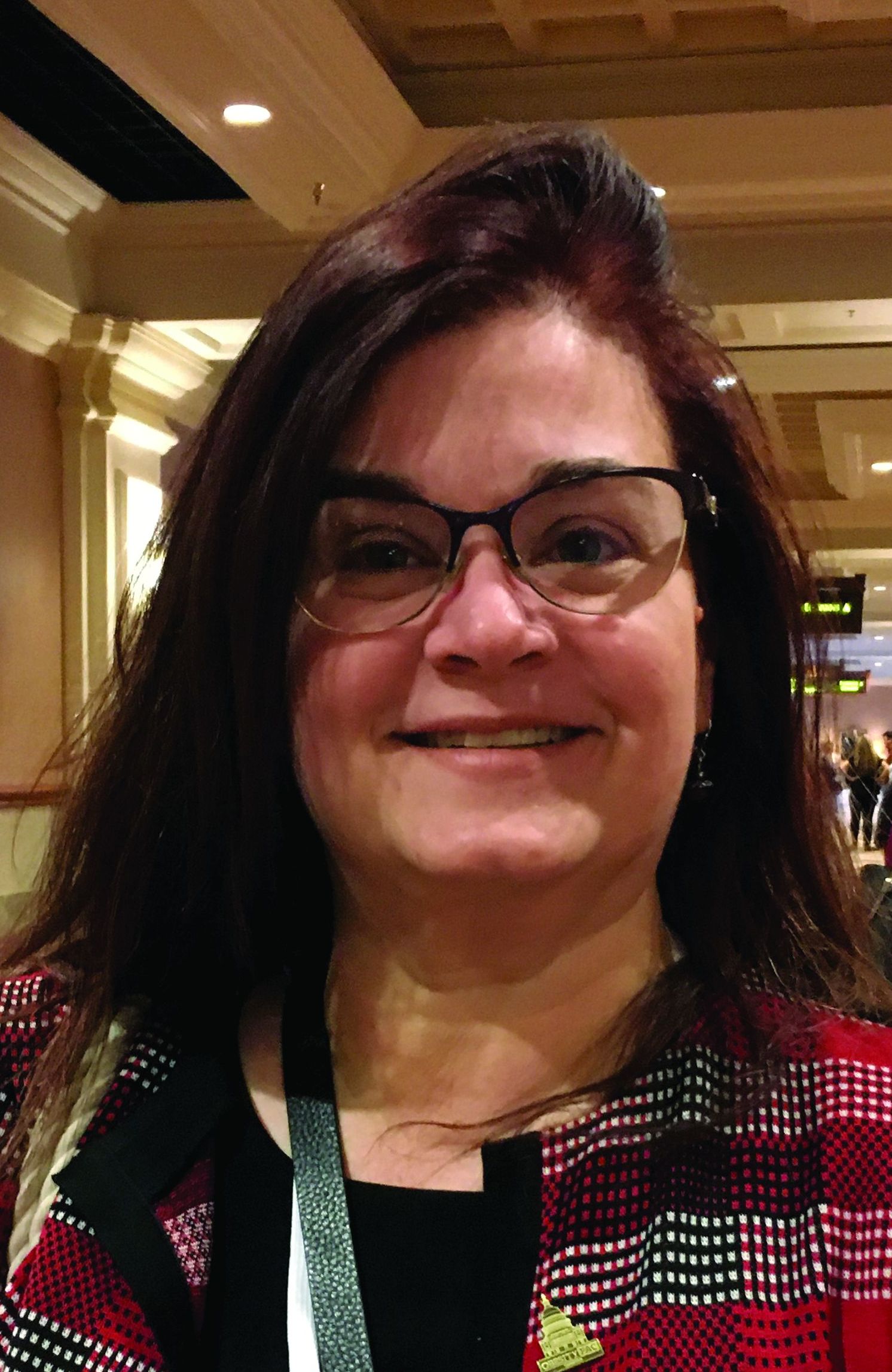
Corrigan McBride, MD , is professor of surgery and director of bariatric surgery at the University of Nebraska Medical Center in Omaha. She had no disclosures. She made these comments in an interview.
Most bariatric surgeons believe that patients with diabetes who undergo this surgery will have more complications than will patients without diabetes, based on their anecdotal experience and findings from previous, smaller studies. But in Dr. Wheeler’s report, we see this demonstrated in an incredibly large number of patients. This is one of the first studies to use 3 years of data from the Metabolic and Bariatric Surgery Accreditation and Quality Improvement Program, which included more than half a million patients.
A randomized study involving more than 18,000 cases showed that putting bariatric surgery patients on an “enhanced recovery program” before surgery and including measures that minimized insulin resistance and catabolism perioperatively led to a substantial reduction in extended length of stay (Surg Obes Relat Dis. 2019 Nov;15[11]:1977-89). In routine care, bariatric surgeons are now often routinely using “prehabilitation” to prepare patients for surgery.
Corrigan McBride, MD , is professor of surgery and director of bariatric surgery at the University of Nebraska Medical Center in Omaha. She had no disclosures. She made these comments in an interview.
Most bariatric surgeons believe that patients with diabetes who undergo this surgery will have more complications than will patients without diabetes, based on their anecdotal experience and findings from previous, smaller studies. But in Dr. Wheeler’s report, we see this demonstrated in an incredibly large number of patients. This is one of the first studies to use 3 years of data from the Metabolic and Bariatric Surgery Accreditation and Quality Improvement Program, which included more than half a million patients.
A randomized study involving more than 18,000 cases showed that putting bariatric surgery patients on an “enhanced recovery program” before surgery and including measures that minimized insulin resistance and catabolism perioperatively led to a substantial reduction in extended length of stay (Surg Obes Relat Dis. 2019 Nov;15[11]:1977-89). In routine care, bariatric surgeons are now often routinely using “prehabilitation” to prepare patients for surgery.
Corrigan McBride, MD , is professor of surgery and director of bariatric surgery at the University of Nebraska Medical Center in Omaha. She had no disclosures. She made these comments in an interview.
LAS VEGAS – compared with patients without diabetes, in an analysis of more than 550,000 patients who underwent this surgery.
The analysis also showed that among patients with diabetes undergoing bariatric surgery, those with insulin-dependent diabetes had significantly higher rates of these and other complications, compared with patients with diabetes but no insulin dependence, Andrew A. Wheeler, MD, said at a meeting presented by The Obesity Society and the American Society for Metabolic and Bariatric Surgery.
The specific factors driving these observations remain unknown, but may relate at least in part to the efficacy of glycemic control in patients during the months and weeks before surgery, said Dr. Wheeler, chief of metabolic and bariatric surgery at the University of Missouri in Columbia.
“Perioperative blood glucose control reflected in hemoglobin A1c may help us understand if certain patients with diabetes are at increased risk of surgical complications,” Dr. Wheeler said during his talk. “We need to see whether preoperative hemoglobin A1c tracks with the rate of complications,” he added in an interview. “Some surgeons will defer surgery until the level goes down, but right now, everyone uses a different level.”
The study by Dr. Wheeler and associates used data collected from essentially all the bariatric surgeries done at the roughly 840 U.S. centers accredited to do the surgery during 2015-2017 – a total of 555,239 patients – in the Metabolic and Bariatric Surgery Accreditation and Quality Improvement Program run by the American College of Surgeons and the American Society for Metabolic and Bariatric Surgery. The cohort included 413,239 patients without diabetes and 136,010 with diabetes, with the remainder having an unknown status. Nearly all patients underwent either sleeve gastrectomy or gastric bypass, with significantly more patients, 74%, having sleeve gastrectomy in the group without diabetes, and 62% of those with diabetes undergoing sleeve gastrectomy.
Patients with diabetes uniformly had significantly higher rates of complications as measured by several parameters, and among those with diabetes, the complication rates were highest in those with insulin dependence. The researchers ran a multivariate analysis that controlled for many demographic and clinical variables, and found that despite these corrections, patients with diabetes, and especially those with insulin dependence, had higher relative rates of many complications that were statistically significant. In addition to the increased rates of deep surgical-site infections and 30-day ICU admissions, patients with diabetes had a 54% relatively increased rate of wound disruption, and a 29% increased relative rate of superficial surgical-site infections, compared with those without diabetes. And among patients with diabetes, those with insulin dependence had a 40% increased rate of surgical-site infections, a 74% increase in progressive renal failure, and a 39% increased rate of hospital readmission relative to patients with diabetes that was not insulin dependent, Dr. Wheeler reported.
The absolute complication rates were, in general, low. For example, the total rate of superficial plus deep surgical-site infections was less than 1% both in patients with diabetes and those without, although the rate rose above 1% in patients with insulin-dependent diabetes. The most common complication reported by Dr. Wheeler was 30-day hospital readmission, which was 4.0% in patients without diabetes, 4.8% in those with diabetes, and 6.4% in patients with insulin-dependent diabetes. The data also showed that gastric bypass led to more complications than did sleeve gastrectomy, but complications with both types of surgeries increased in patients with diabetes, compared with those without diabetes.
Dr. Wheeler had no disclosures.
SOURCE: Wheeler AA et al. Obesity Week 2019, Abstract A133.
LAS VEGAS – compared with patients without diabetes, in an analysis of more than 550,000 patients who underwent this surgery.
The analysis also showed that among patients with diabetes undergoing bariatric surgery, those with insulin-dependent diabetes had significantly higher rates of these and other complications, compared with patients with diabetes but no insulin dependence, Andrew A. Wheeler, MD, said at a meeting presented by The Obesity Society and the American Society for Metabolic and Bariatric Surgery.
The specific factors driving these observations remain unknown, but may relate at least in part to the efficacy of glycemic control in patients during the months and weeks before surgery, said Dr. Wheeler, chief of metabolic and bariatric surgery at the University of Missouri in Columbia.
“Perioperative blood glucose control reflected in hemoglobin A1c may help us understand if certain patients with diabetes are at increased risk of surgical complications,” Dr. Wheeler said during his talk. “We need to see whether preoperative hemoglobin A1c tracks with the rate of complications,” he added in an interview. “Some surgeons will defer surgery until the level goes down, but right now, everyone uses a different level.”
The study by Dr. Wheeler and associates used data collected from essentially all the bariatric surgeries done at the roughly 840 U.S. centers accredited to do the surgery during 2015-2017 – a total of 555,239 patients – in the Metabolic and Bariatric Surgery Accreditation and Quality Improvement Program run by the American College of Surgeons and the American Society for Metabolic and Bariatric Surgery. The cohort included 413,239 patients without diabetes and 136,010 with diabetes, with the remainder having an unknown status. Nearly all patients underwent either sleeve gastrectomy or gastric bypass, with significantly more patients, 74%, having sleeve gastrectomy in the group without diabetes, and 62% of those with diabetes undergoing sleeve gastrectomy.
Patients with diabetes uniformly had significantly higher rates of complications as measured by several parameters, and among those with diabetes, the complication rates were highest in those with insulin dependence. The researchers ran a multivariate analysis that controlled for many demographic and clinical variables, and found that despite these corrections, patients with diabetes, and especially those with insulin dependence, had higher relative rates of many complications that were statistically significant. In addition to the increased rates of deep surgical-site infections and 30-day ICU admissions, patients with diabetes had a 54% relatively increased rate of wound disruption, and a 29% increased relative rate of superficial surgical-site infections, compared with those without diabetes. And among patients with diabetes, those with insulin dependence had a 40% increased rate of surgical-site infections, a 74% increase in progressive renal failure, and a 39% increased rate of hospital readmission relative to patients with diabetes that was not insulin dependent, Dr. Wheeler reported.
The absolute complication rates were, in general, low. For example, the total rate of superficial plus deep surgical-site infections was less than 1% both in patients with diabetes and those without, although the rate rose above 1% in patients with insulin-dependent diabetes. The most common complication reported by Dr. Wheeler was 30-day hospital readmission, which was 4.0% in patients without diabetes, 4.8% in those with diabetes, and 6.4% in patients with insulin-dependent diabetes. The data also showed that gastric bypass led to more complications than did sleeve gastrectomy, but complications with both types of surgeries increased in patients with diabetes, compared with those without diabetes.
Dr. Wheeler had no disclosures.
SOURCE: Wheeler AA et al. Obesity Week 2019, Abstract A133.
REPORTING FROM OBESITY WEEK 2019
Evidence builds for bariatric surgery’s role in cancer prevention
LAS VEGAS – The ability of bariatric surgery and substantial subsequent weight loss to cut the incidence of a variety of obesity-related cancers and other malignancies received further confirmation in results from two studies reported at a meeting presented by the Obesity Society and the American Society for Metabolic and Bariatric Surgery.
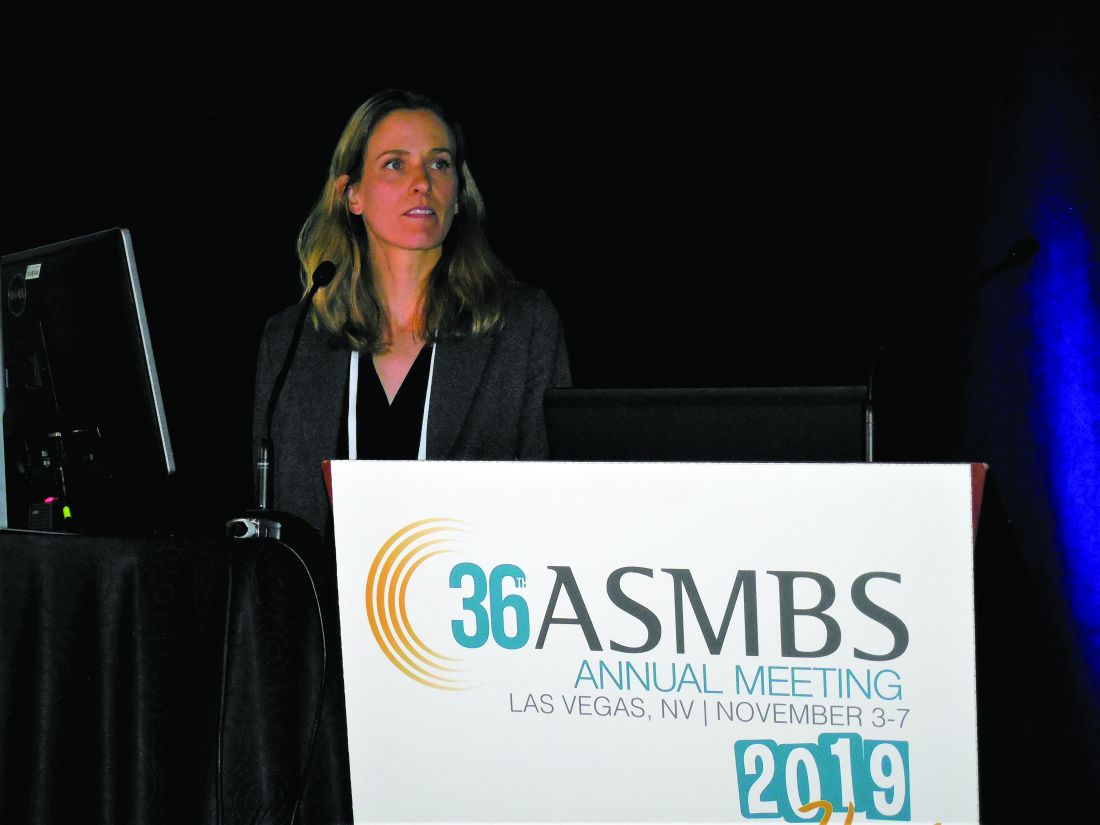
In one study, 2,107 adults enrolled in the Longitudinal Assessment of Bariatric Surgery (LABS-2) study showed a statistically significant halving of the cancer incidence during 7 years of follow-up in patients who underwent bariatric surgery and had a reduction of at least 20% in their presurgical body mass index (BMI), compared with patients in the study who underwent bariatric surgery but lost less weight, reported Andrea M. Stroud, MD, a bariatric surgeon at the Oregon Health & Science University, Portland.
In the second study, analysis of about 1.7 million hospitalized U.S. patients in the National Inpatient Sample showed that the incidence of an obesity-related cancer was 21% higher in more than 1.4 million obese individuals (BMI, 35 kg/m2 or greater) with no history of bariatric surgery, compared with nearly 247,000 people in the same database with a history of both obesity and bariatric surgery, said Juliana Henrique, MD, a bariatric surgeon at the Cleveland Clinic Florida in Weston.
The study reported by Dr. Henrique focused specifically on the 13 cancer types identified by the Centers for Disease Control and Prevention as having an incidence that links with overweight and obesity (Morb Mortal Wkly Rep. 2017;66[39]:1052-8), whereas the study presented by Dr. Stroud included all incident cancers during follow-up, but which were predominantly obesity related, with breast cancer – an obesity-related malignancy – having the highest incidence. Overall, 40% of all U.S. cancers in 2014 were obesity related, according to the CDC’s report.

“A number of studies have shown decreases in cancer rates after bariatric surgery, especially female cancers like breast and ovarian,” commented John Scott, MD, director of metabolic and bariatric surgery for Prism Health–Upstate in Greenville, S.C. “These two reports build on that.”
The evidence for weight loss after bariatric surgery as a means to cut the risk of a first or recurrent cancer has become strong enough for some patients to see cancer prophylaxis as a prime reason to undergo the procedure, said surgeons at the meeting.
Bariatric surgery and subsequent weight loss “is a substantial preventive factor for cancer, especially in patients who have obesity and diabetes,” commented Theresa LaMasters, MD, a bariatric surgeon in West Des Moines, Iowa. “It might not just be weight loss. It’s likely a multifactorial effect, including reduced inflammation after bariatric surgery, but weight loss is a component” of the effect, Dr. LaMasters said in an interview. It is now common for her to see patients seeking bariatric surgery because of a family or personal history of cancer. “Patients are trying to reduce their future risk” for cancer with bariatric surgery, she added.
The LABS-2 study enrolled 2,458 patients who were part of the first LABS cohort, LABS-1, but followed them longer term. The data Dr. Stroud reported came from 2,107 of the LABS-2 patients without a history of cancer, no cancer diagnosed in the first year after bariatric surgery, and longer-term follow-up of 7 years. About three-quarters of the patients underwent gastric bypass, with the rest undergoing laparoscopic gastric band placement. Nearly half of those included had diabetes. Their average BMI was 45-50 kg/m2.
Dr. Stroud and associates ran an analysis that divided the populations into tertiles based on percentage of baseline body mass lost at 12 months after surgery and cancer-free survival during the 7 years after the 12-month follow-up. The incidence of cancer was 51% lower in patients who lost 20%-34% of their BMI, compared with those who lost less than 20%, a statistically significant difference, and patients who lost 35% or more of their BMI had a 31% reduced cancer rate, compared with those who lost less than 20%, a difference that was not statistically significant, Dr. Stroud reported. The patients who lost less weight after surgery mostly underwent gastric banding, whereas those who lost more mostly underwent gastric bypass.
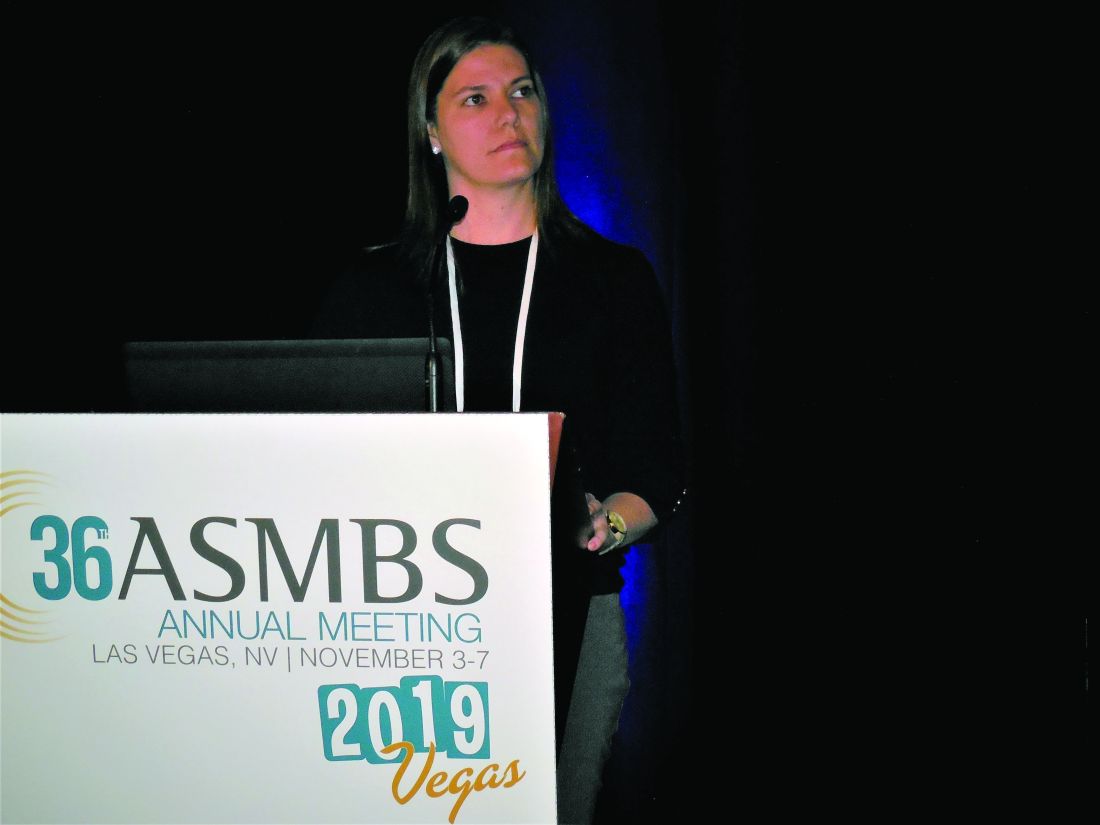
The analysis reported by Dr. Henrique used data collected in the U.S. National Inpatient Sample during 2010-2014, which totaled more than 7 million patients hospitalized for cancer, including 1,423,367 with a history of obesity and 246,668 with obesity who had undergone bariatric surgery. Those without bariatric surgery had a 21% higher rate of developing obesity-related cancers after adjustment for many baseline demographic and clinical features, Dr. Henrique said. The cancer protection after bariatric surgery was especially notable in the subset of patients in the sample with a genetic predisposition to developing cancer.
LABS-1 and LABS-2 were funded by the National Institute of Diabetes and Digestive and Kidney Diseases. Dr. Stroud and Dr. Henrique had no disclosures.
SOURCES: Stroud AM et al. Obesity Week, Abstract A107; Henrique J et al. Obesity Week, Abstract A108.
LAS VEGAS – The ability of bariatric surgery and substantial subsequent weight loss to cut the incidence of a variety of obesity-related cancers and other malignancies received further confirmation in results from two studies reported at a meeting presented by the Obesity Society and the American Society for Metabolic and Bariatric Surgery.
In one study, 2,107 adults enrolled in the Longitudinal Assessment of Bariatric Surgery (LABS-2) study showed a statistically significant halving of the cancer incidence during 7 years of follow-up in patients who underwent bariatric surgery and had a reduction of at least 20% in their presurgical body mass index (BMI), compared with patients in the study who underwent bariatric surgery but lost less weight, reported Andrea M. Stroud, MD, a bariatric surgeon at the Oregon Health & Science University, Portland.
In the second study, analysis of about 1.7 million hospitalized U.S. patients in the National Inpatient Sample showed that the incidence of an obesity-related cancer was 21% higher in more than 1.4 million obese individuals (BMI, 35 kg/m2 or greater) with no history of bariatric surgery, compared with nearly 247,000 people in the same database with a history of both obesity and bariatric surgery, said Juliana Henrique, MD, a bariatric surgeon at the Cleveland Clinic Florida in Weston.
The study reported by Dr. Henrique focused specifically on the 13 cancer types identified by the Centers for Disease Control and Prevention as having an incidence that links with overweight and obesity (Morb Mortal Wkly Rep. 2017;66[39]:1052-8), whereas the study presented by Dr. Stroud included all incident cancers during follow-up, but which were predominantly obesity related, with breast cancer – an obesity-related malignancy – having the highest incidence. Overall, 40% of all U.S. cancers in 2014 were obesity related, according to the CDC’s report.
“A number of studies have shown decreases in cancer rates after bariatric surgery, especially female cancers like breast and ovarian,” commented John Scott, MD, director of metabolic and bariatric surgery for Prism Health–Upstate in Greenville, S.C. “These two reports build on that.”
The evidence for weight loss after bariatric surgery as a means to cut the risk of a first or recurrent cancer has become strong enough for some patients to see cancer prophylaxis as a prime reason to undergo the procedure, said surgeons at the meeting.
Bariatric surgery and subsequent weight loss “is a substantial preventive factor for cancer, especially in patients who have obesity and diabetes,” commented Theresa LaMasters, MD, a bariatric surgeon in West Des Moines, Iowa. “It might not just be weight loss. It’s likely a multifactorial effect, including reduced inflammation after bariatric surgery, but weight loss is a component” of the effect, Dr. LaMasters said in an interview. It is now common for her to see patients seeking bariatric surgery because of a family or personal history of cancer. “Patients are trying to reduce their future risk” for cancer with bariatric surgery, she added.
The LABS-2 study enrolled 2,458 patients who were part of the first LABS cohort, LABS-1, but followed them longer term. The data Dr. Stroud reported came from 2,107 of the LABS-2 patients without a history of cancer, no cancer diagnosed in the first year after bariatric surgery, and longer-term follow-up of 7 years. About three-quarters of the patients underwent gastric bypass, with the rest undergoing laparoscopic gastric band placement. Nearly half of those included had diabetes. Their average BMI was 45-50 kg/m2.
Dr. Stroud and associates ran an analysis that divided the populations into tertiles based on percentage of baseline body mass lost at 12 months after surgery and cancer-free survival during the 7 years after the 12-month follow-up. The incidence of cancer was 51% lower in patients who lost 20%-34% of their BMI, compared with those who lost less than 20%, a statistically significant difference, and patients who lost 35% or more of their BMI had a 31% reduced cancer rate, compared with those who lost less than 20%, a difference that was not statistically significant, Dr. Stroud reported. The patients who lost less weight after surgery mostly underwent gastric banding, whereas those who lost more mostly underwent gastric bypass.
The analysis reported by Dr. Henrique used data collected in the U.S. National Inpatient Sample during 2010-2014, which totaled more than 7 million patients hospitalized for cancer, including 1,423,367 with a history of obesity and 246,668 with obesity who had undergone bariatric surgery. Those without bariatric surgery had a 21% higher rate of developing obesity-related cancers after adjustment for many baseline demographic and clinical features, Dr. Henrique said. The cancer protection after bariatric surgery was especially notable in the subset of patients in the sample with a genetic predisposition to developing cancer.
LABS-1 and LABS-2 were funded by the National Institute of Diabetes and Digestive and Kidney Diseases. Dr. Stroud and Dr. Henrique had no disclosures.
SOURCES: Stroud AM et al. Obesity Week, Abstract A107; Henrique J et al. Obesity Week, Abstract A108.
LAS VEGAS – The ability of bariatric surgery and substantial subsequent weight loss to cut the incidence of a variety of obesity-related cancers and other malignancies received further confirmation in results from two studies reported at a meeting presented by the Obesity Society and the American Society for Metabolic and Bariatric Surgery.
In one study, 2,107 adults enrolled in the Longitudinal Assessment of Bariatric Surgery (LABS-2) study showed a statistically significant halving of the cancer incidence during 7 years of follow-up in patients who underwent bariatric surgery and had a reduction of at least 20% in their presurgical body mass index (BMI), compared with patients in the study who underwent bariatric surgery but lost less weight, reported Andrea M. Stroud, MD, a bariatric surgeon at the Oregon Health & Science University, Portland.
In the second study, analysis of about 1.7 million hospitalized U.S. patients in the National Inpatient Sample showed that the incidence of an obesity-related cancer was 21% higher in more than 1.4 million obese individuals (BMI, 35 kg/m2 or greater) with no history of bariatric surgery, compared with nearly 247,000 people in the same database with a history of both obesity and bariatric surgery, said Juliana Henrique, MD, a bariatric surgeon at the Cleveland Clinic Florida in Weston.
The study reported by Dr. Henrique focused specifically on the 13 cancer types identified by the Centers for Disease Control and Prevention as having an incidence that links with overweight and obesity (Morb Mortal Wkly Rep. 2017;66[39]:1052-8), whereas the study presented by Dr. Stroud included all incident cancers during follow-up, but which were predominantly obesity related, with breast cancer – an obesity-related malignancy – having the highest incidence. Overall, 40% of all U.S. cancers in 2014 were obesity related, according to the CDC’s report.
“A number of studies have shown decreases in cancer rates after bariatric surgery, especially female cancers like breast and ovarian,” commented John Scott, MD, director of metabolic and bariatric surgery for Prism Health–Upstate in Greenville, S.C. “These two reports build on that.”
The evidence for weight loss after bariatric surgery as a means to cut the risk of a first or recurrent cancer has become strong enough for some patients to see cancer prophylaxis as a prime reason to undergo the procedure, said surgeons at the meeting.
Bariatric surgery and subsequent weight loss “is a substantial preventive factor for cancer, especially in patients who have obesity and diabetes,” commented Theresa LaMasters, MD, a bariatric surgeon in West Des Moines, Iowa. “It might not just be weight loss. It’s likely a multifactorial effect, including reduced inflammation after bariatric surgery, but weight loss is a component” of the effect, Dr. LaMasters said in an interview. It is now common for her to see patients seeking bariatric surgery because of a family or personal history of cancer. “Patients are trying to reduce their future risk” for cancer with bariatric surgery, she added.
The LABS-2 study enrolled 2,458 patients who were part of the first LABS cohort, LABS-1, but followed them longer term. The data Dr. Stroud reported came from 2,107 of the LABS-2 patients without a history of cancer, no cancer diagnosed in the first year after bariatric surgery, and longer-term follow-up of 7 years. About three-quarters of the patients underwent gastric bypass, with the rest undergoing laparoscopic gastric band placement. Nearly half of those included had diabetes. Their average BMI was 45-50 kg/m2.
Dr. Stroud and associates ran an analysis that divided the populations into tertiles based on percentage of baseline body mass lost at 12 months after surgery and cancer-free survival during the 7 years after the 12-month follow-up. The incidence of cancer was 51% lower in patients who lost 20%-34% of their BMI, compared with those who lost less than 20%, a statistically significant difference, and patients who lost 35% or more of their BMI had a 31% reduced cancer rate, compared with those who lost less than 20%, a difference that was not statistically significant, Dr. Stroud reported. The patients who lost less weight after surgery mostly underwent gastric banding, whereas those who lost more mostly underwent gastric bypass.
The analysis reported by Dr. Henrique used data collected in the U.S. National Inpatient Sample during 2010-2014, which totaled more than 7 million patients hospitalized for cancer, including 1,423,367 with a history of obesity and 246,668 with obesity who had undergone bariatric surgery. Those without bariatric surgery had a 21% higher rate of developing obesity-related cancers after adjustment for many baseline demographic and clinical features, Dr. Henrique said. The cancer protection after bariatric surgery was especially notable in the subset of patients in the sample with a genetic predisposition to developing cancer.
LABS-1 and LABS-2 were funded by the National Institute of Diabetes and Digestive and Kidney Diseases. Dr. Stroud and Dr. Henrique had no disclosures.
SOURCES: Stroud AM et al. Obesity Week, Abstract A107; Henrique J et al. Obesity Week, Abstract A108.
REPORTING FROM OBESITY WEEK 2019
Bariatric surgery candidates show high prevalence of thrombophilia
LAS VEGAS – More than half the patients seeking laparoscopic sleeve gastrectomy at a pair of large U.S. programs tested positive for thrombophilia, and for most of these patients, their thrombophilia stemmed from an abnormally elevated level of clotting factor VIII. This thrombophilia seemed to link with a small, but potentially meaningful, excess of portomesenteric venous thrombosis that could warrant treating patients with an anticoagulation regimen for an extended, 30-day period post surgery, Manish S. Parikh, MD, said at a meeting presented by The Obesity Society and the American Society for Metabolic and Bariatric Surgery.
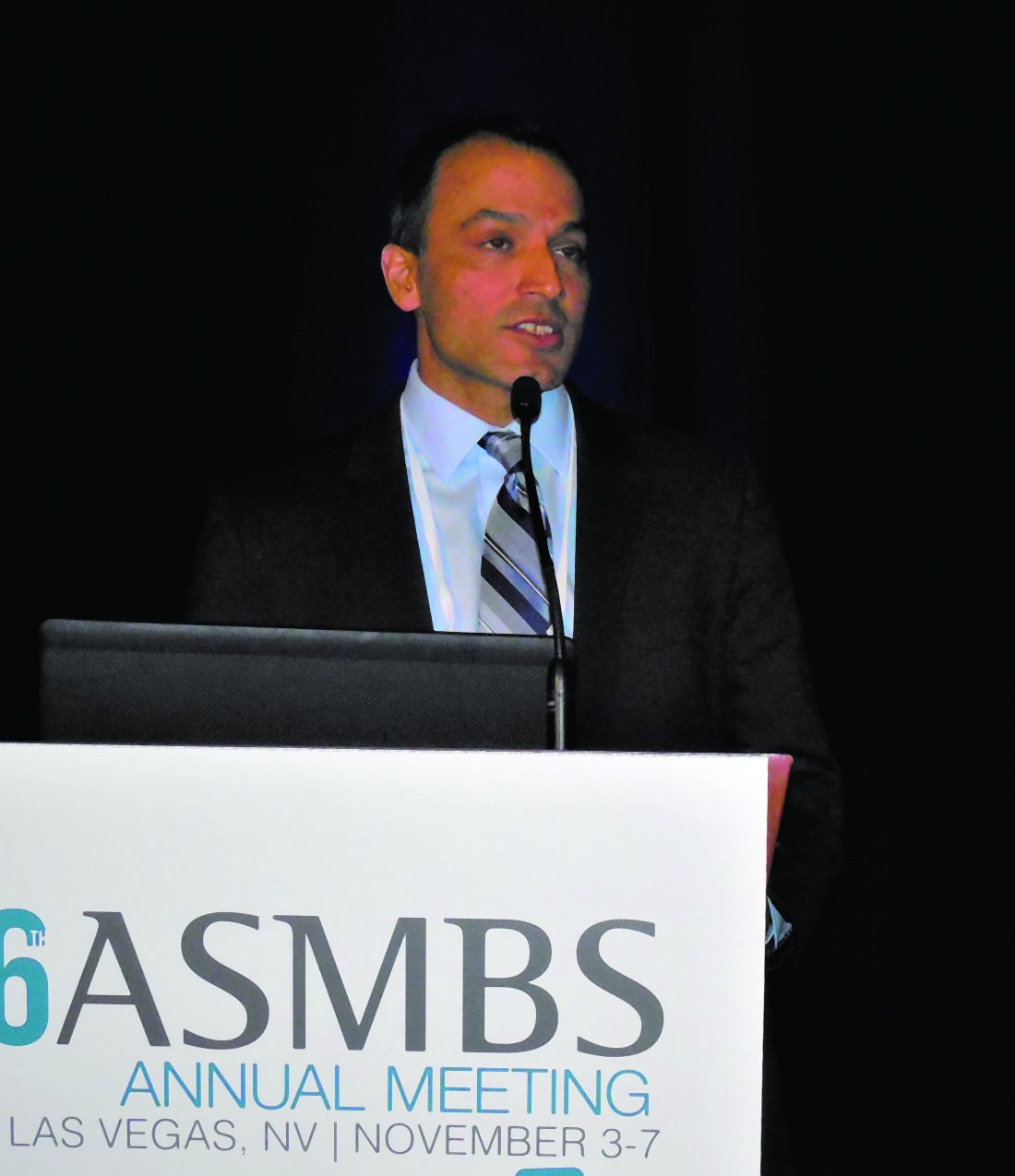
Although measurement of factor VIII excess can be done with a test that costs about $25, Dr. Parikh suggested that giving extended, 30-day anticoagulant prophylaxis to all patients undergoing laparoscopic sleeve gastrectomy (LSG) is a reasonable alternative to screening all patients first. “You could use our data to support 30-day prophylaxis for all LSG patients,” said Dr. Parikh, a metabolic and bariatric surgeon at NYU Langone Health in New York. He acknowledged that some logistic barriers can hamper the efficacy of extended prophylaxis.
The factor VIII elevations seen in many of these obese patients seeking metabolic surgery seems to be inherent and independent of their current weight. Although Dr. Parikh and his associates do not have long-term follow-up for all their LSG patients, “we’ve followed some patients, and their factor VIII is still elevated years later, after they’ve lost weight. We encourage lifelong anticoagulation [for these patients] because of their high risk for recurrent clot. This reflects their factor VIII and is independent of weight,” he said.
For their study, the researchers considered a factor VIII level above 150% of the normal level as abnormally elevated and prothrombotic.
The increased rate of portomesenteric venous thrombosis (PMVT) seen in the thrombophilic patients after LSG “is strongly related to the sleeve specifically,” added Dr. Parikh. He suggested that “something related to redirection of blood flow by taking the branches of the gastroepiploic arcade may lead to this.”
The interest of Dr. Parikh and his associates in thrombophilia and factor VIII excess began with a review they ran of more than 25,000 patients who underwent bariatric surgery at six U.S. centers during 2006-2016 that identified 40 patients who developed PMVT, all from the subgroup of nearly 10,000 patients who had LSG for their bariatric procedure. The prevalence of thrombophilia among those 40 patients with PMVT was 92%, with 76% having excess factor VIII (Surg Obes Relat Dis. 2017;13[11]:1835-9).
Based on those findings, the researchers began a practice of prospectively testing for thrombophilia in all patients who were assessed for LSG at two New York centers during August 2018–March 2019, a total of 1,075 patients, of whom 745 subsequently underwent the procedure. They tested the patients for factor VIII and four additional proteins in the clotting cascade that flag thrombophilia, a test panel that cost $103 per patient. That identified 563 surgery candidates (52%) with any thrombophilia, of whom 92% had excess factor VIII (48% of the total cohort of 1,075). Those patients received an extended, 30-day anticoagulant regimen.
To estimate the impact of this approach, the researchers compared the incidence of PMVT among the recent 745 patients who underwent LSG with a historic control group of 4,228 patients who underwent LSG at the two centers during the 4.5 years before routine thrombophilia screening. None of those 4,228 controls received extended anticoagulation.
During 30-day follow-up, 1 patient in the recent group of 745 patients (0.1%) developed PMVT, whereas 18 of the controls (0.4%) had PMVT. The incidence of bleeding was 0.6% in the recent patients and 0.4% in the controls. The researchers did not report a statistical analysis of these data, because the number of PMVT episodes was too small to allow reliable calculations, Dr. Parikh said. He also cautioned that the generalizability of the finding of thrombophilia prevalence is uncertain because the study population of 1,075 patients considering LSG was 84% Hispanic and 15% non-Hispanic African American.
Dr. Parikh had no disclosures.
SOURCE: Parikh MS et al. Obesity Week 2019, Abstract A109.

Vivek N. Prachand, MD , is professor of surgery and director of minimally invasive surgery at the University of Chicago. He had no disclosures. He made these comments as designated discussant for the report.
Vivek N. Prachand, MD , is professor of surgery and director of minimally invasive surgery at the University of Chicago. He had no disclosures. He made these comments as designated discussant for the report.
Vivek N. Prachand, MD , is professor of surgery and director of minimally invasive surgery at the University of Chicago. He had no disclosures. He made these comments as designated discussant for the report.
LAS VEGAS – More than half the patients seeking laparoscopic sleeve gastrectomy at a pair of large U.S. programs tested positive for thrombophilia, and for most of these patients, their thrombophilia stemmed from an abnormally elevated level of clotting factor VIII. This thrombophilia seemed to link with a small, but potentially meaningful, excess of portomesenteric venous thrombosis that could warrant treating patients with an anticoagulation regimen for an extended, 30-day period post surgery, Manish S. Parikh, MD, said at a meeting presented by The Obesity Society and the American Society for Metabolic and Bariatric Surgery.
Although measurement of factor VIII excess can be done with a test that costs about $25, Dr. Parikh suggested that giving extended, 30-day anticoagulant prophylaxis to all patients undergoing laparoscopic sleeve gastrectomy (LSG) is a reasonable alternative to screening all patients first. “You could use our data to support 30-day prophylaxis for all LSG patients,” said Dr. Parikh, a metabolic and bariatric surgeon at NYU Langone Health in New York. He acknowledged that some logistic barriers can hamper the efficacy of extended prophylaxis.
The factor VIII elevations seen in many of these obese patients seeking metabolic surgery seems to be inherent and independent of their current weight. Although Dr. Parikh and his associates do not have long-term follow-up for all their LSG patients, “we’ve followed some patients, and their factor VIII is still elevated years later, after they’ve lost weight. We encourage lifelong anticoagulation [for these patients] because of their high risk for recurrent clot. This reflects their factor VIII and is independent of weight,” he said.
For their study, the researchers considered a factor VIII level above 150% of the normal level as abnormally elevated and prothrombotic.
The increased rate of portomesenteric venous thrombosis (PMVT) seen in the thrombophilic patients after LSG “is strongly related to the sleeve specifically,” added Dr. Parikh. He suggested that “something related to redirection of blood flow by taking the branches of the gastroepiploic arcade may lead to this.”
The interest of Dr. Parikh and his associates in thrombophilia and factor VIII excess began with a review they ran of more than 25,000 patients who underwent bariatric surgery at six U.S. centers during 2006-2016 that identified 40 patients who developed PMVT, all from the subgroup of nearly 10,000 patients who had LSG for their bariatric procedure. The prevalence of thrombophilia among those 40 patients with PMVT was 92%, with 76% having excess factor VIII (Surg Obes Relat Dis. 2017;13[11]:1835-9).
Based on those findings, the researchers began a practice of prospectively testing for thrombophilia in all patients who were assessed for LSG at two New York centers during August 2018–March 2019, a total of 1,075 patients, of whom 745 subsequently underwent the procedure. They tested the patients for factor VIII and four additional proteins in the clotting cascade that flag thrombophilia, a test panel that cost $103 per patient. That identified 563 surgery candidates (52%) with any thrombophilia, of whom 92% had excess factor VIII (48% of the total cohort of 1,075). Those patients received an extended, 30-day anticoagulant regimen.
To estimate the impact of this approach, the researchers compared the incidence of PMVT among the recent 745 patients who underwent LSG with a historic control group of 4,228 patients who underwent LSG at the two centers during the 4.5 years before routine thrombophilia screening. None of those 4,228 controls received extended anticoagulation.
During 30-day follow-up, 1 patient in the recent group of 745 patients (0.1%) developed PMVT, whereas 18 of the controls (0.4%) had PMVT. The incidence of bleeding was 0.6% in the recent patients and 0.4% in the controls. The researchers did not report a statistical analysis of these data, because the number of PMVT episodes was too small to allow reliable calculations, Dr. Parikh said. He also cautioned that the generalizability of the finding of thrombophilia prevalence is uncertain because the study population of 1,075 patients considering LSG was 84% Hispanic and 15% non-Hispanic African American.
Dr. Parikh had no disclosures.
SOURCE: Parikh MS et al. Obesity Week 2019, Abstract A109.
LAS VEGAS – More than half the patients seeking laparoscopic sleeve gastrectomy at a pair of large U.S. programs tested positive for thrombophilia, and for most of these patients, their thrombophilia stemmed from an abnormally elevated level of clotting factor VIII. This thrombophilia seemed to link with a small, but potentially meaningful, excess of portomesenteric venous thrombosis that could warrant treating patients with an anticoagulation regimen for an extended, 30-day period post surgery, Manish S. Parikh, MD, said at a meeting presented by The Obesity Society and the American Society for Metabolic and Bariatric Surgery.
Although measurement of factor VIII excess can be done with a test that costs about $25, Dr. Parikh suggested that giving extended, 30-day anticoagulant prophylaxis to all patients undergoing laparoscopic sleeve gastrectomy (LSG) is a reasonable alternative to screening all patients first. “You could use our data to support 30-day prophylaxis for all LSG patients,” said Dr. Parikh, a metabolic and bariatric surgeon at NYU Langone Health in New York. He acknowledged that some logistic barriers can hamper the efficacy of extended prophylaxis.
The factor VIII elevations seen in many of these obese patients seeking metabolic surgery seems to be inherent and independent of their current weight. Although Dr. Parikh and his associates do not have long-term follow-up for all their LSG patients, “we’ve followed some patients, and their factor VIII is still elevated years later, after they’ve lost weight. We encourage lifelong anticoagulation [for these patients] because of their high risk for recurrent clot. This reflects their factor VIII and is independent of weight,” he said.
For their study, the researchers considered a factor VIII level above 150% of the normal level as abnormally elevated and prothrombotic.
The increased rate of portomesenteric venous thrombosis (PMVT) seen in the thrombophilic patients after LSG “is strongly related to the sleeve specifically,” added Dr. Parikh. He suggested that “something related to redirection of blood flow by taking the branches of the gastroepiploic arcade may lead to this.”
The interest of Dr. Parikh and his associates in thrombophilia and factor VIII excess began with a review they ran of more than 25,000 patients who underwent bariatric surgery at six U.S. centers during 2006-2016 that identified 40 patients who developed PMVT, all from the subgroup of nearly 10,000 patients who had LSG for their bariatric procedure. The prevalence of thrombophilia among those 40 patients with PMVT was 92%, with 76% having excess factor VIII (Surg Obes Relat Dis. 2017;13[11]:1835-9).
Based on those findings, the researchers began a practice of prospectively testing for thrombophilia in all patients who were assessed for LSG at two New York centers during August 2018–March 2019, a total of 1,075 patients, of whom 745 subsequently underwent the procedure. They tested the patients for factor VIII and four additional proteins in the clotting cascade that flag thrombophilia, a test panel that cost $103 per patient. That identified 563 surgery candidates (52%) with any thrombophilia, of whom 92% had excess factor VIII (48% of the total cohort of 1,075). Those patients received an extended, 30-day anticoagulant regimen.
To estimate the impact of this approach, the researchers compared the incidence of PMVT among the recent 745 patients who underwent LSG with a historic control group of 4,228 patients who underwent LSG at the two centers during the 4.5 years before routine thrombophilia screening. None of those 4,228 controls received extended anticoagulation.
During 30-day follow-up, 1 patient in the recent group of 745 patients (0.1%) developed PMVT, whereas 18 of the controls (0.4%) had PMVT. The incidence of bleeding was 0.6% in the recent patients and 0.4% in the controls. The researchers did not report a statistical analysis of these data, because the number of PMVT episodes was too small to allow reliable calculations, Dr. Parikh said. He also cautioned that the generalizability of the finding of thrombophilia prevalence is uncertain because the study population of 1,075 patients considering LSG was 84% Hispanic and 15% non-Hispanic African American.
Dr. Parikh had no disclosures.
SOURCE: Parikh MS et al. Obesity Week 2019, Abstract A109.
REPORTING FROM OBESITY WEEK 2019
Score predicts bariatric surgery’s benefits for obesity, type 2 diabetes
LAS VEGAS –
The Individualized Diabetes Complications risk score “can provide personalized, evidence-based risk information for patients with type 2 diabetes and obesity about their future cardiovascular disease outcomes and mortality with and without metabolic surgery,” Ali Aminian, MD, said at a meeting presented by the Obesity Society and the American Society for Metabolic and Bariatric Surgery.
Although the calculator needs validation in a prospective, randomized study to document its impact on practice, it is now available on two separate websites and as a downloadable app, said Dr. Aminian, a surgeon at the Cleveland Clinic.
The calculator inputs data for 26 distinct, “readily available” demographic and clinical entries, and based on that, estimates the patient’s 10-year risk for all-cause death, diabetic kidney disease, cerebrovascular disease, heart failure, and coronary artery disease if no surgery occurs or after some type of metabolic or bariatric surgery. The calculator does not currently have the ability to individualize predicted risks based on the specific type of metabolic surgery performed, but that is planned as a future refinement of the score.
“We validated the model in the nonsurgical patients, which showed it was very accurate. The next step is to run a randomized trial to see how useful the calculator is” for assisting in patients’ decision making, Dr. Aminian said.
The data for deriving the risk calculator, and for a preliminary validation of it, came from 13,722 patients with obesity (body mass index, 30 kg/m2 or greater) and type 2 diabetes, who were managed at the Cleveland Clinic during 1998-2017, drawn from more than 287,000 such patients in the clinic’s database. The study focused on 2,287 patients who underwent metabolic (bariatric) surgery and 11,435 patients from the same database who did not have surgery and matched by propensity scoring on a 5:1 basis with those who had surgery. The two cohorts this created matched well for age (about 54 years), sex (about two-thirds women), body mass index (about 44 kg/m2), and the prevalence of various comorbidities at baseline.
Dr. Aminian and associates then analyzed the incidence of all-cause mortality and various cardiovascular disease endpoints, as well as nephropathy during follow-up, through December 2018. Patients who had undergone metabolic surgery showed statistically significant reductions in the incidence of each of those events, compared with patients who did not have surgery (JAMA. 2019;322[13]:1271-82).
The investigators used these findings to create their model for calculating a patient’s risk score. For example, to calculate an estimate for the 10-year risk from all-cause mortality, the results showed that the most powerful risk factors were age; baseline body mass index, heart failure, and need for insulin; and smoking status. For the endpoint of nephropathy, the most important factors were estimated glomerular filtration rate at baseline and age. Identified risk factors could account for about 80% of the 10-year risk for all-cause death and for about 75% of the risk for developing nephropathy during 10 years, based on the area-under-the-curve values the model produced.
The risk score may help patients better understand the potential role that metabolic surgery can have in reducing their future event risk, thereby helping them better appreciate the benefit they stand to gain from undergoing surgery, Dr. Aminian said.
The calculator is available at a website maintained by the Cleveland Clinic, at a site of the American Society for Metabolic and Bariatric Surgery, and in app stores, he said.
The work was partially funded by Medtronic. Dr. Aminian has received grants from Medtronic.
SOURCE: Aminian A et al. Obesity Week 2019, Abstract A101.
LAS VEGAS –
The Individualized Diabetes Complications risk score “can provide personalized, evidence-based risk information for patients with type 2 diabetes and obesity about their future cardiovascular disease outcomes and mortality with and without metabolic surgery,” Ali Aminian, MD, said at a meeting presented by the Obesity Society and the American Society for Metabolic and Bariatric Surgery.
Although the calculator needs validation in a prospective, randomized study to document its impact on practice, it is now available on two separate websites and as a downloadable app, said Dr. Aminian, a surgeon at the Cleveland Clinic.
The calculator inputs data for 26 distinct, “readily available” demographic and clinical entries, and based on that, estimates the patient’s 10-year risk for all-cause death, diabetic kidney disease, cerebrovascular disease, heart failure, and coronary artery disease if no surgery occurs or after some type of metabolic or bariatric surgery. The calculator does not currently have the ability to individualize predicted risks based on the specific type of metabolic surgery performed, but that is planned as a future refinement of the score.
“We validated the model in the nonsurgical patients, which showed it was very accurate. The next step is to run a randomized trial to see how useful the calculator is” for assisting in patients’ decision making, Dr. Aminian said.
The data for deriving the risk calculator, and for a preliminary validation of it, came from 13,722 patients with obesity (body mass index, 30 kg/m2 or greater) and type 2 diabetes, who were managed at the Cleveland Clinic during 1998-2017, drawn from more than 287,000 such patients in the clinic’s database. The study focused on 2,287 patients who underwent metabolic (bariatric) surgery and 11,435 patients from the same database who did not have surgery and matched by propensity scoring on a 5:1 basis with those who had surgery. The two cohorts this created matched well for age (about 54 years), sex (about two-thirds women), body mass index (about 44 kg/m2), and the prevalence of various comorbidities at baseline.
Dr. Aminian and associates then analyzed the incidence of all-cause mortality and various cardiovascular disease endpoints, as well as nephropathy during follow-up, through December 2018. Patients who had undergone metabolic surgery showed statistically significant reductions in the incidence of each of those events, compared with patients who did not have surgery (JAMA. 2019;322[13]:1271-82).
The investigators used these findings to create their model for calculating a patient’s risk score. For example, to calculate an estimate for the 10-year risk from all-cause mortality, the results showed that the most powerful risk factors were age; baseline body mass index, heart failure, and need for insulin; and smoking status. For the endpoint of nephropathy, the most important factors were estimated glomerular filtration rate at baseline and age. Identified risk factors could account for about 80% of the 10-year risk for all-cause death and for about 75% of the risk for developing nephropathy during 10 years, based on the area-under-the-curve values the model produced.
The risk score may help patients better understand the potential role that metabolic surgery can have in reducing their future event risk, thereby helping them better appreciate the benefit they stand to gain from undergoing surgery, Dr. Aminian said.
The calculator is available at a website maintained by the Cleveland Clinic, at a site of the American Society for Metabolic and Bariatric Surgery, and in app stores, he said.
The work was partially funded by Medtronic. Dr. Aminian has received grants from Medtronic.
SOURCE: Aminian A et al. Obesity Week 2019, Abstract A101.
LAS VEGAS –
The Individualized Diabetes Complications risk score “can provide personalized, evidence-based risk information for patients with type 2 diabetes and obesity about their future cardiovascular disease outcomes and mortality with and without metabolic surgery,” Ali Aminian, MD, said at a meeting presented by the Obesity Society and the American Society for Metabolic and Bariatric Surgery.
Although the calculator needs validation in a prospective, randomized study to document its impact on practice, it is now available on two separate websites and as a downloadable app, said Dr. Aminian, a surgeon at the Cleveland Clinic.
The calculator inputs data for 26 distinct, “readily available” demographic and clinical entries, and based on that, estimates the patient’s 10-year risk for all-cause death, diabetic kidney disease, cerebrovascular disease, heart failure, and coronary artery disease if no surgery occurs or after some type of metabolic or bariatric surgery. The calculator does not currently have the ability to individualize predicted risks based on the specific type of metabolic surgery performed, but that is planned as a future refinement of the score.
“We validated the model in the nonsurgical patients, which showed it was very accurate. The next step is to run a randomized trial to see how useful the calculator is” for assisting in patients’ decision making, Dr. Aminian said.
The data for deriving the risk calculator, and for a preliminary validation of it, came from 13,722 patients with obesity (body mass index, 30 kg/m2 or greater) and type 2 diabetes, who were managed at the Cleveland Clinic during 1998-2017, drawn from more than 287,000 such patients in the clinic’s database. The study focused on 2,287 patients who underwent metabolic (bariatric) surgery and 11,435 patients from the same database who did not have surgery and matched by propensity scoring on a 5:1 basis with those who had surgery. The two cohorts this created matched well for age (about 54 years), sex (about two-thirds women), body mass index (about 44 kg/m2), and the prevalence of various comorbidities at baseline.
Dr. Aminian and associates then analyzed the incidence of all-cause mortality and various cardiovascular disease endpoints, as well as nephropathy during follow-up, through December 2018. Patients who had undergone metabolic surgery showed statistically significant reductions in the incidence of each of those events, compared with patients who did not have surgery (JAMA. 2019;322[13]:1271-82).
The investigators used these findings to create their model for calculating a patient’s risk score. For example, to calculate an estimate for the 10-year risk from all-cause mortality, the results showed that the most powerful risk factors were age; baseline body mass index, heart failure, and need for insulin; and smoking status. For the endpoint of nephropathy, the most important factors were estimated glomerular filtration rate at baseline and age. Identified risk factors could account for about 80% of the 10-year risk for all-cause death and for about 75% of the risk for developing nephropathy during 10 years, based on the area-under-the-curve values the model produced.
The risk score may help patients better understand the potential role that metabolic surgery can have in reducing their future event risk, thereby helping them better appreciate the benefit they stand to gain from undergoing surgery, Dr. Aminian said.
The calculator is available at a website maintained by the Cleveland Clinic, at a site of the American Society for Metabolic and Bariatric Surgery, and in app stores, he said.
The work was partially funded by Medtronic. Dr. Aminian has received grants from Medtronic.
SOURCE: Aminian A et al. Obesity Week 2019, Abstract A101.
REPORTING FROM OBESITY WEEK 2019
Nearly 25% of U.S. adults take an obesogenic prescription drug
LAS VEGAS – based on national U.S. data collected during 2013-2016.
The Endocrine Society, the STOP Obesity Alliance, and other medical societies have recommended that clinicians try to minimize use of obesogenic drugs and focus on prescribing agents that are weight neutral or that trigger weight loss when those options are available and appropriate, and the new findings add further evidence that clinicians need to be more mindful of this issue, Craig M. Hales, MD, said at a meeting presented by the Obesity Society and the American Society for Metabolic and Bariatric Surgery.
Among the American adults interviewed for the survey, 40% of those on at least one prescription medication were on at least one drug that is considered obesogenic, said Dr. Hales, a medical epidemiologist at the Centers for Disease Control and Prevention in Hyattsville, Md.
According to practice guidelines published by the Endocrine Society, all drugs in the classes of glucocorticoids, beta-blockers, and antihistamines are obesogenic, as well as selected agents in the classes of antidepressant drugs, antipsychotics, antidepressants, antidiabetics, and contraceptives that are progestin only, said Dr. Hales (J Clin Endocrinol Metab. 2015 Feb;100[2]:342-62).
The data he reported came from the National Health and Nutrition Examination Survey (NHANES) run by the CDC during 2013-2016 that included 11,055 adults who were at least 20 years old. The findings showed that 23% of those adults had taken at least one drug that was considered obesogenic during the 30 days preceding the survey date. By comparison, 35% of the same adults had taken any type of prescription drug during the previous 30 days. That meant that overall, 40% of surveyed adults who had recently used any prescription medication had taken an obesogenic drug.
The 23% prevalence of recent obesogenic drug use was fairly stable at that level during several preceding NHANES surveys going back to 2001, suggesting that the increasing use of obesogenic drugs during the period since 2001 was not a factor in the recent increased prevalence of obesity among U.S. residents, added Dr. Hales.
The 2013-2016 analysis also showed a strong link between obesogenic drug use and increasing obesity severity. Among survey participants with a body mass index (BMI) in the normal range (18.5-24 kg/m2), 16% had recent use of an obesogenic drug. This prevalence increased to 22% among those who were overweight (BMI, 25-29 kg/m2), 29% among those with class 1 or 2 obesity (BMI, 30-39 kg/m2), and 33% among those with class 3 obesity (BMI, 40 kg/m2 or greater).
In contrast, recent use of prescription medications that do not contribute to obesity showed no significant relationship with BMI, with rates that ranged from 34% among those with a normal BMI, to 37% among those with class 3 obesity.
As an example of this relationship for a specific obesogenic drug class, the prevalence of beta-blocker use was about 7% among people with a normal BMI, about 10% among those who were overweight, about 14% among people with class 1 or 2 obesity, and about 17% among people with class 3 obesity, a statistically significant link suggesting that the relationship between use of obesogenic drugs and obesity is “bidirectional,” Dr. Hales said, in that increasing obesogenic drug use likely contributes to obesity, while simultaneously, the more obese people become, the more likely they are to take additional prescription drugs, particularly those that are obesogenic.
NHANES is run by the CDC and receives no commercial funding. The authors reported no conflicts of interest.
SOURCE: Hales CM et al. Obesity Week 2019, Abstract T-OR-2037.
LAS VEGAS – based on national U.S. data collected during 2013-2016.
The Endocrine Society, the STOP Obesity Alliance, and other medical societies have recommended that clinicians try to minimize use of obesogenic drugs and focus on prescribing agents that are weight neutral or that trigger weight loss when those options are available and appropriate, and the new findings add further evidence that clinicians need to be more mindful of this issue, Craig M. Hales, MD, said at a meeting presented by the Obesity Society and the American Society for Metabolic and Bariatric Surgery.
Among the American adults interviewed for the survey, 40% of those on at least one prescription medication were on at least one drug that is considered obesogenic, said Dr. Hales, a medical epidemiologist at the Centers for Disease Control and Prevention in Hyattsville, Md.
According to practice guidelines published by the Endocrine Society, all drugs in the classes of glucocorticoids, beta-blockers, and antihistamines are obesogenic, as well as selected agents in the classes of antidepressant drugs, antipsychotics, antidepressants, antidiabetics, and contraceptives that are progestin only, said Dr. Hales (J Clin Endocrinol Metab. 2015 Feb;100[2]:342-62).
The data he reported came from the National Health and Nutrition Examination Survey (NHANES) run by the CDC during 2013-2016 that included 11,055 adults who were at least 20 years old. The findings showed that 23% of those adults had taken at least one drug that was considered obesogenic during the 30 days preceding the survey date. By comparison, 35% of the same adults had taken any type of prescription drug during the previous 30 days. That meant that overall, 40% of surveyed adults who had recently used any prescription medication had taken an obesogenic drug.
The 23% prevalence of recent obesogenic drug use was fairly stable at that level during several preceding NHANES surveys going back to 2001, suggesting that the increasing use of obesogenic drugs during the period since 2001 was not a factor in the recent increased prevalence of obesity among U.S. residents, added Dr. Hales.
The 2013-2016 analysis also showed a strong link between obesogenic drug use and increasing obesity severity. Among survey participants with a body mass index (BMI) in the normal range (18.5-24 kg/m2), 16% had recent use of an obesogenic drug. This prevalence increased to 22% among those who were overweight (BMI, 25-29 kg/m2), 29% among those with class 1 or 2 obesity (BMI, 30-39 kg/m2), and 33% among those with class 3 obesity (BMI, 40 kg/m2 or greater).
In contrast, recent use of prescription medications that do not contribute to obesity showed no significant relationship with BMI, with rates that ranged from 34% among those with a normal BMI, to 37% among those with class 3 obesity.
As an example of this relationship for a specific obesogenic drug class, the prevalence of beta-blocker use was about 7% among people with a normal BMI, about 10% among those who were overweight, about 14% among people with class 1 or 2 obesity, and about 17% among people with class 3 obesity, a statistically significant link suggesting that the relationship between use of obesogenic drugs and obesity is “bidirectional,” Dr. Hales said, in that increasing obesogenic drug use likely contributes to obesity, while simultaneously, the more obese people become, the more likely they are to take additional prescription drugs, particularly those that are obesogenic.
NHANES is run by the CDC and receives no commercial funding. The authors reported no conflicts of interest.
SOURCE: Hales CM et al. Obesity Week 2019, Abstract T-OR-2037.
LAS VEGAS – based on national U.S. data collected during 2013-2016.
The Endocrine Society, the STOP Obesity Alliance, and other medical societies have recommended that clinicians try to minimize use of obesogenic drugs and focus on prescribing agents that are weight neutral or that trigger weight loss when those options are available and appropriate, and the new findings add further evidence that clinicians need to be more mindful of this issue, Craig M. Hales, MD, said at a meeting presented by the Obesity Society and the American Society for Metabolic and Bariatric Surgery.
Among the American adults interviewed for the survey, 40% of those on at least one prescription medication were on at least one drug that is considered obesogenic, said Dr. Hales, a medical epidemiologist at the Centers for Disease Control and Prevention in Hyattsville, Md.
According to practice guidelines published by the Endocrine Society, all drugs in the classes of glucocorticoids, beta-blockers, and antihistamines are obesogenic, as well as selected agents in the classes of antidepressant drugs, antipsychotics, antidepressants, antidiabetics, and contraceptives that are progestin only, said Dr. Hales (J Clin Endocrinol Metab. 2015 Feb;100[2]:342-62).
The data he reported came from the National Health and Nutrition Examination Survey (NHANES) run by the CDC during 2013-2016 that included 11,055 adults who were at least 20 years old. The findings showed that 23% of those adults had taken at least one drug that was considered obesogenic during the 30 days preceding the survey date. By comparison, 35% of the same adults had taken any type of prescription drug during the previous 30 days. That meant that overall, 40% of surveyed adults who had recently used any prescription medication had taken an obesogenic drug.
The 23% prevalence of recent obesogenic drug use was fairly stable at that level during several preceding NHANES surveys going back to 2001, suggesting that the increasing use of obesogenic drugs during the period since 2001 was not a factor in the recent increased prevalence of obesity among U.S. residents, added Dr. Hales.
The 2013-2016 analysis also showed a strong link between obesogenic drug use and increasing obesity severity. Among survey participants with a body mass index (BMI) in the normal range (18.5-24 kg/m2), 16% had recent use of an obesogenic drug. This prevalence increased to 22% among those who were overweight (BMI, 25-29 kg/m2), 29% among those with class 1 or 2 obesity (BMI, 30-39 kg/m2), and 33% among those with class 3 obesity (BMI, 40 kg/m2 or greater).
In contrast, recent use of prescription medications that do not contribute to obesity showed no significant relationship with BMI, with rates that ranged from 34% among those with a normal BMI, to 37% among those with class 3 obesity.
As an example of this relationship for a specific obesogenic drug class, the prevalence of beta-blocker use was about 7% among people with a normal BMI, about 10% among those who were overweight, about 14% among people with class 1 or 2 obesity, and about 17% among people with class 3 obesity, a statistically significant link suggesting that the relationship between use of obesogenic drugs and obesity is “bidirectional,” Dr. Hales said, in that increasing obesogenic drug use likely contributes to obesity, while simultaneously, the more obese people become, the more likely they are to take additional prescription drugs, particularly those that are obesogenic.
NHANES is run by the CDC and receives no commercial funding. The authors reported no conflicts of interest.
SOURCE: Hales CM et al. Obesity Week 2019, Abstract T-OR-2037.
REPORTING FROM OBESITY WEEK 2019
Replacement meals boost nutrient intake by pregnant women with obesity
LAS VEGAS – Pregnant women with overweight or obesity who replaced two meals a day with bars or shakes starting at their second trimester not only had a significantly reduced rate of gestational weight gain but also benefited from significant improvements in their intake of several micronutrients, in a randomized study of 211 women who completed the regimen.
Further research needs “to examine the generalizability and effectiveness of this prenatal lifestyle modification program in improving micronutrient sufficiency in other populations and settings,” Suzanne Phelan, PhD, said at a meeting presented by The Obesity Society and the American Society for Metabolic and Bariatric Surgery. The study she presented ran at two U.S. sites, in California and Rhode Island, and enrolled a population that was 42% Hispanic/Latina. Despite uncertainty about the applicability of the findings to other populations, the results suggested that partial meal replacement is a way to better control gestational weight gain in women with overweight or obesity while simultaneously increasing micronutrient intake, said Dr. Phelan, a clinical psychologist and professor of kinesiology and public health at the California Polytechnic State University in San Luis Obispo.
She reported data from the Healthy Beginnings/Comienzos Saludables (Preventing Excessive Gestational Weight Gain in Obese Women) study, which enrolled 257 women with overweight or obesity (body mass index of at least 25 kg/m2) at week 9-16 of pregnancy and randomized them to either a multifactorial behavioral lifestyle intervention that included two daily meal replacements, or to “enhanced” usual care. About 80% of participants in both arms, a total of 211 women, completed the study with final follow-up at 35-36 weeks’ gestational age, after enrolling at an average gestational age of just under 14 weeks. In addition to eating nutrition bars or drinking nutrition shakes as the replacement meal options, participants also ate one conventional meal daily as well as 2-4 healthy snacks. The enrolled women included 41% with overweight and 59% with obesity.
The study’s primary endpoint was the rate of gestational weight gain per week, which was 0.33 kg in the intervention group and 0.39 kg in the controls, a statistically significant difference. The proportion of women who exceeded the Institute of Medicine’s recommended maximum gestational weight gain maximum was 41% among those in the intervention group and 54% among the controls, also a statistically significant difference (Am J Clin Nutr. 2018 Feb;107[2]:183-94).
The secondary micronutrient analysis that Dr. Phelan reported documented the high prevalence of micronutrient deficiencies among the study participants at baseline. More than 90% had deficient intake of vitamin D and fiber, more than 80% had inadequate dietary levels of iron, vitamin E, and choline, and more than half had too little dietary magnesium, vitamin K, and folate. There were additional deficiencies for other micronutrients in lesser proportions of study participants.
The analysis also showed how the behavioral and diet intervention through the end of the third trimester normalized many of these deficiencies, compared with the placebo arm. For example, the prevalence of a magnesium dietary deficiency in the intervention arm dropped from 69% at baseline to 37% at follow-up, compared with hardly any change in the control arm, so that women in the intervention group had a 64% reduced rate of magnesium deficiency compared with the controls, a statistically significant difference.
Other micronutrients that had significant drops in deficiency rate included calcium, with a 63% relative reduction in the deficiency prevalence, vitamin A with a 61% cut, vitamin E with an 83% relative reduction, and vitamin K with a 51% relative drop. Other micronutrient intake levels that showed statistically significant increases during the study compared with controls included vitamin D and copper, but choline showed an inexplicable drop in consumption in the intervention group, a “potential concern,” Dr. Phelan said. The intervention also significantly reduced sodium intake. Dr. Phelan and her associates published these findings (Nutrients. 2019 May 14;11[5]:1071; doi: 10.3390/nu11051071).
“The diet quality of many of the pregnant women we have studied was poor, often eating less than half the recommended amounts of fruits and vegetables,” said Leanne M. Redman, PhD, a professor at Louisiana State University and director of the Reproductive Endocrinology and Women’s Health Laboratory at the university’s Pennington Biomedical Research Center in Baton Rouge. “Meal replacement with bars and shakes will be really important for future efforts at improving diet quality” in pregnant women with obesity, predicted Dr. Redman, who did not collaborate on the study Dr. Phelan reported.
SOURCE: Phelan S et al. Obesity Week 2019. Abstract T-OR-2081.
LAS VEGAS – Pregnant women with overweight or obesity who replaced two meals a day with bars or shakes starting at their second trimester not only had a significantly reduced rate of gestational weight gain but also benefited from significant improvements in their intake of several micronutrients, in a randomized study of 211 women who completed the regimen.
Further research needs “to examine the generalizability and effectiveness of this prenatal lifestyle modification program in improving micronutrient sufficiency in other populations and settings,” Suzanne Phelan, PhD, said at a meeting presented by The Obesity Society and the American Society for Metabolic and Bariatric Surgery. The study she presented ran at two U.S. sites, in California and Rhode Island, and enrolled a population that was 42% Hispanic/Latina. Despite uncertainty about the applicability of the findings to other populations, the results suggested that partial meal replacement is a way to better control gestational weight gain in women with overweight or obesity while simultaneously increasing micronutrient intake, said Dr. Phelan, a clinical psychologist and professor of kinesiology and public health at the California Polytechnic State University in San Luis Obispo.
She reported data from the Healthy Beginnings/Comienzos Saludables (Preventing Excessive Gestational Weight Gain in Obese Women) study, which enrolled 257 women with overweight or obesity (body mass index of at least 25 kg/m2) at week 9-16 of pregnancy and randomized them to either a multifactorial behavioral lifestyle intervention that included two daily meal replacements, or to “enhanced” usual care. About 80% of participants in both arms, a total of 211 women, completed the study with final follow-up at 35-36 weeks’ gestational age, after enrolling at an average gestational age of just under 14 weeks. In addition to eating nutrition bars or drinking nutrition shakes as the replacement meal options, participants also ate one conventional meal daily as well as 2-4 healthy snacks. The enrolled women included 41% with overweight and 59% with obesity.
The study’s primary endpoint was the rate of gestational weight gain per week, which was 0.33 kg in the intervention group and 0.39 kg in the controls, a statistically significant difference. The proportion of women who exceeded the Institute of Medicine’s recommended maximum gestational weight gain maximum was 41% among those in the intervention group and 54% among the controls, also a statistically significant difference (Am J Clin Nutr. 2018 Feb;107[2]:183-94).
The secondary micronutrient analysis that Dr. Phelan reported documented the high prevalence of micronutrient deficiencies among the study participants at baseline. More than 90% had deficient intake of vitamin D and fiber, more than 80% had inadequate dietary levels of iron, vitamin E, and choline, and more than half had too little dietary magnesium, vitamin K, and folate. There were additional deficiencies for other micronutrients in lesser proportions of study participants.
The analysis also showed how the behavioral and diet intervention through the end of the third trimester normalized many of these deficiencies, compared with the placebo arm. For example, the prevalence of a magnesium dietary deficiency in the intervention arm dropped from 69% at baseline to 37% at follow-up, compared with hardly any change in the control arm, so that women in the intervention group had a 64% reduced rate of magnesium deficiency compared with the controls, a statistically significant difference.
Other micronutrients that had significant drops in deficiency rate included calcium, with a 63% relative reduction in the deficiency prevalence, vitamin A with a 61% cut, vitamin E with an 83% relative reduction, and vitamin K with a 51% relative drop. Other micronutrient intake levels that showed statistically significant increases during the study compared with controls included vitamin D and copper, but choline showed an inexplicable drop in consumption in the intervention group, a “potential concern,” Dr. Phelan said. The intervention also significantly reduced sodium intake. Dr. Phelan and her associates published these findings (Nutrients. 2019 May 14;11[5]:1071; doi: 10.3390/nu11051071).
“The diet quality of many of the pregnant women we have studied was poor, often eating less than half the recommended amounts of fruits and vegetables,” said Leanne M. Redman, PhD, a professor at Louisiana State University and director of the Reproductive Endocrinology and Women’s Health Laboratory at the university’s Pennington Biomedical Research Center in Baton Rouge. “Meal replacement with bars and shakes will be really important for future efforts at improving diet quality” in pregnant women with obesity, predicted Dr. Redman, who did not collaborate on the study Dr. Phelan reported.
SOURCE: Phelan S et al. Obesity Week 2019. Abstract T-OR-2081.
LAS VEGAS – Pregnant women with overweight or obesity who replaced two meals a day with bars or shakes starting at their second trimester not only had a significantly reduced rate of gestational weight gain but also benefited from significant improvements in their intake of several micronutrients, in a randomized study of 211 women who completed the regimen.
Further research needs “to examine the generalizability and effectiveness of this prenatal lifestyle modification program in improving micronutrient sufficiency in other populations and settings,” Suzanne Phelan, PhD, said at a meeting presented by The Obesity Society and the American Society for Metabolic and Bariatric Surgery. The study she presented ran at two U.S. sites, in California and Rhode Island, and enrolled a population that was 42% Hispanic/Latina. Despite uncertainty about the applicability of the findings to other populations, the results suggested that partial meal replacement is a way to better control gestational weight gain in women with overweight or obesity while simultaneously increasing micronutrient intake, said Dr. Phelan, a clinical psychologist and professor of kinesiology and public health at the California Polytechnic State University in San Luis Obispo.
She reported data from the Healthy Beginnings/Comienzos Saludables (Preventing Excessive Gestational Weight Gain in Obese Women) study, which enrolled 257 women with overweight or obesity (body mass index of at least 25 kg/m2) at week 9-16 of pregnancy and randomized them to either a multifactorial behavioral lifestyle intervention that included two daily meal replacements, or to “enhanced” usual care. About 80% of participants in both arms, a total of 211 women, completed the study with final follow-up at 35-36 weeks’ gestational age, after enrolling at an average gestational age of just under 14 weeks. In addition to eating nutrition bars or drinking nutrition shakes as the replacement meal options, participants also ate one conventional meal daily as well as 2-4 healthy snacks. The enrolled women included 41% with overweight and 59% with obesity.
The study’s primary endpoint was the rate of gestational weight gain per week, which was 0.33 kg in the intervention group and 0.39 kg in the controls, a statistically significant difference. The proportion of women who exceeded the Institute of Medicine’s recommended maximum gestational weight gain maximum was 41% among those in the intervention group and 54% among the controls, also a statistically significant difference (Am J Clin Nutr. 2018 Feb;107[2]:183-94).
The secondary micronutrient analysis that Dr. Phelan reported documented the high prevalence of micronutrient deficiencies among the study participants at baseline. More than 90% had deficient intake of vitamin D and fiber, more than 80% had inadequate dietary levels of iron, vitamin E, and choline, and more than half had too little dietary magnesium, vitamin K, and folate. There were additional deficiencies for other micronutrients in lesser proportions of study participants.
The analysis also showed how the behavioral and diet intervention through the end of the third trimester normalized many of these deficiencies, compared with the placebo arm. For example, the prevalence of a magnesium dietary deficiency in the intervention arm dropped from 69% at baseline to 37% at follow-up, compared with hardly any change in the control arm, so that women in the intervention group had a 64% reduced rate of magnesium deficiency compared with the controls, a statistically significant difference.
Other micronutrients that had significant drops in deficiency rate included calcium, with a 63% relative reduction in the deficiency prevalence, vitamin A with a 61% cut, vitamin E with an 83% relative reduction, and vitamin K with a 51% relative drop. Other micronutrient intake levels that showed statistically significant increases during the study compared with controls included vitamin D and copper, but choline showed an inexplicable drop in consumption in the intervention group, a “potential concern,” Dr. Phelan said. The intervention also significantly reduced sodium intake. Dr. Phelan and her associates published these findings (Nutrients. 2019 May 14;11[5]:1071; doi: 10.3390/nu11051071).
“The diet quality of many of the pregnant women we have studied was poor, often eating less than half the recommended amounts of fruits and vegetables,” said Leanne M. Redman, PhD, a professor at Louisiana State University and director of the Reproductive Endocrinology and Women’s Health Laboratory at the university’s Pennington Biomedical Research Center in Baton Rouge. “Meal replacement with bars and shakes will be really important for future efforts at improving diet quality” in pregnant women with obesity, predicted Dr. Redman, who did not collaborate on the study Dr. Phelan reported.
SOURCE: Phelan S et al. Obesity Week 2019. Abstract T-OR-2081.
REPORTING FROM OBESITY WEEK 2019
Clinic goes to bat for bullied kids
NEW ORLEANS – After Massachusetts passed antibullying legislation in 2009, Peter C. Raffalli, MD, saw an opportunity to improve care for the increasing numbers of children presenting to his neurology practice at Boston Children’s Hospital who were victims of bullying – especially those with developmental disabilities.

“I had been thinking of a clinic to help kids with these issues, aside from just helping them deal with the fallout: the depression, anxiety, et cetera, that comes with being bullied,” Dr. Raffalli recalled at the annual meeting of the American Academy of Pediatrics. “I wanted to do something to help present to families the evidence-based strategies regarding bullying prevention, detection, and intervention that might help to stop the bullying.”
This led him to launch the Bullying and Cyberbullying Prevention and Advocacy Collaborative (BACPAC) at Boston Children’s Hospital, which began in 2009 as an educational resource for families, medical colleagues, and schools. Dr. Raffalli also formed an alliance with the Massachusetts Aggression Reduction Center at Bridgewater State University (Ann Neurol. 2016;79[2]:167-8).
Two years later in 2011, BACPAC became a formal clinic at Boston Children’s that serves as a subspecialty consult service for victims of bullying and their families. The clinic team consists of a child neurologist, a social worker, and an education resource specialist who meet with the bullying victim and his/her family in initial consultation for 90 minutes. The goal is to develop an evidence-based plan for bullying prevention, detection, and intervention that is individualized to the patient’s developmental and social needs.
“We tell families that bullying is recognized medically and legally as a form of abuse,” said Dr. Raffalli. “The medical and psychological consequences are similar to other forms of abuse. You’d be surprised how often patients do think the bullying is their fault.”
The extent of the problem
Researchers estimate that 25%-30% of children will experience some form of bullying between kindergarten and grade 12, and about 8% will engage in bullying themselves. When BACPAC began in 2009, Dr. Raffalli conducted an informal search of peer-reviewed literature on bullying in children with special needs; it yielded just four articles. “Since then, there’s been an exponential explosion of literature on various aspects of bullying,” he said. Now there is ample evidence in the peer-reviewed literature to show the increased risk for bullying/cyberbullying in children/teens, not just with neurodevelopmental disorders, but also for kids with other medical disorders such as obesity, asthma, and allergies.
“We’ve had a good number of kids over the years with peanut allergy who were literally threatened physically with peanut butter at school,” he said. “It’s incredible how callous some kids can be. Kids with oppositional defiant disorder, impulse control disorder, and callous/unemotional traits from a psychological standpoint are hardest to reach when it comes to getting them to stop bullying. You’d be surprised how frequently bullies use the phrase [to their victims], ‘You should kill yourself.’ They don’t realize the damage they’re doing to people. Bullying can lead to severe psychological but also long-term medical problems, including suicidal ideation.”
Published studies show that the highest incidences of bullying occur in children with neurodevelopmental conditions such as ADHD, autistic spectrum disorders, Tourette syndrome, and other learning disabilities (Eur J Spec Needs Ed. 2010;25[1]:77-91). This population of children is overrepresented in bullying “because the services they receive at school make their disabilities more visible,” explained Dr. Raffalli, who is also an assistant professor of neurology at Harvard Medical School, Boston. “They stand out, and they have social information–processing deficits or distortions that exacerbate bullying involvement. They also have difficulty interpreting social cues or attributing hostile characteristics to their peer’s behavior.”
The consequences of bullying
The psychological and educational consequences of bullying among children in general include being more likely to develop depression, loneliness, low self-esteem, alcohol and drug abuse, sleeping difficulties, self-harm, and suicidal ideation and attempts. “We’re social creatures, and when we don’t have those social connections, we get very depressed.”
Bullying victims also are more likely to develop school avoidance and absence, decreased school performance, poor concentration, high anxiety, and social withdrawal – all of which limit their opportunities to learn. “The No. 1 thing you can do to help these kids is to believe their story – to explain to them that it’s not their fault, and to explain that you are there for them and that you support them,” he said. “When a kid gets the feeling that someone is willing to listen to them and believe them, it does an enormous good for their emotional state.”

Dr. Raffalli added that a toxic stress response can occur when a child experiences strong, frequent, and/or prolonged adversity – such as physical or emotional abuse, chronic neglect, caregiver substance abuse or mental illness, exposure to violence, and/or the accumulated burdens of family economic hardship – without adequate adult support. This kind of prolonged activation of the stress response systems can disrupt the development of brain architecture and other organ systems, and increase the risk for stress-related disease and cognitive impairment well into the adult years.
In the Harvard Review of Psychiatry, researchers set out to investigate what’s known about the long-term health effects of childhood bullying. They found that bullying can induce “aspects of the stress response, via epigenetic, inflammatory, and metabolic mediators [that] have the capacity to compromise mental and physical health, and to increase the risk of disease.” The researchers advised clinicians who care for children to assess the mental and physical health effects of bullying (Harv Rev Psychiatry. 2017;25[2]:89-95).
Additional vulnerabilities for bullying victims include parents and children whose primary language is not English, as well as parents with mental illness or substance abuse and families living in poverty. “We have to keep in mind how much additional stress they may be dealing with. This can make it harder for them to cope. Bullies also are shown to be at higher risk for psychological and legal trouble into adulthood, so we should be trying to help them too. We have to keep in mind that these are all developing kids.”
Cyberbullying
In Dr. Raffalli’s clinical experience, cyberbullying has become the bully’s weapon of choice. “I call it the stealth bomber of bullying,” he said. “Cyberbullying can start as early as the second or third grade. Most parents are not giving phones to second-graders. I’m worried that it’s going to get worse, though, with the excuse that ‘I feel safer if they have a cell phone so they can call me.’ I tell parents that they still make flip phones. You don’t have to get a smartphone for a second- or third-grader, or even for a sixth-grader.”
By the time kids reach fourth and fifth grade, he continued, they begin to form their opinion “about what they believe is cool and not cool, and they begin to get into cliques that have similar beliefs, and support each other, and may break off from old friends.” He added that, while adult predation “makes the news and is certainly something we should all be concerned about, the incidence of being harassed and bullied by someone in your own age group at school is actually much higher and still has serious outcomes, including the possibility of death.”
The Massachusetts antibullying law stipulates that all teachers and all school personnel have to participate in mandatory bullying training. Schools also are required to draft and follow a bullying investigative protocol.
“Apparently the schools have all done this, yet the number of times that schools use interventions that are not advisable, such as mediation, is incredible to me,” Dr. Raffalli said. “Bringing the bully and the victim together for a ‘cup of coffee and a handshake’ is not advisable. Mediation has been shown in a number of studies to be detrimental in bullying situations. Things can easily get worse.”
Often, family members who bring their child to the BACPAC “feel that their child’s school is not helping them,” he said. “We should try to figure out why those schools are having such a hard time and see if we can help them.”
Dr. Raffalli reported having no financial disclosures.
NEW ORLEANS – After Massachusetts passed antibullying legislation in 2009, Peter C. Raffalli, MD, saw an opportunity to improve care for the increasing numbers of children presenting to his neurology practice at Boston Children’s Hospital who were victims of bullying – especially those with developmental disabilities.
“I had been thinking of a clinic to help kids with these issues, aside from just helping them deal with the fallout: the depression, anxiety, et cetera, that comes with being bullied,” Dr. Raffalli recalled at the annual meeting of the American Academy of Pediatrics. “I wanted to do something to help present to families the evidence-based strategies regarding bullying prevention, detection, and intervention that might help to stop the bullying.”
This led him to launch the Bullying and Cyberbullying Prevention and Advocacy Collaborative (BACPAC) at Boston Children’s Hospital, which began in 2009 as an educational resource for families, medical colleagues, and schools. Dr. Raffalli also formed an alliance with the Massachusetts Aggression Reduction Center at Bridgewater State University (Ann Neurol. 2016;79[2]:167-8).
Two years later in 2011, BACPAC became a formal clinic at Boston Children’s that serves as a subspecialty consult service for victims of bullying and their families. The clinic team consists of a child neurologist, a social worker, and an education resource specialist who meet with the bullying victim and his/her family in initial consultation for 90 minutes. The goal is to develop an evidence-based plan for bullying prevention, detection, and intervention that is individualized to the patient’s developmental and social needs.
“We tell families that bullying is recognized medically and legally as a form of abuse,” said Dr. Raffalli. “The medical and psychological consequences are similar to other forms of abuse. You’d be surprised how often patients do think the bullying is their fault.”
The extent of the problem
Researchers estimate that 25%-30% of children will experience some form of bullying between kindergarten and grade 12, and about 8% will engage in bullying themselves. When BACPAC began in 2009, Dr. Raffalli conducted an informal search of peer-reviewed literature on bullying in children with special needs; it yielded just four articles. “Since then, there’s been an exponential explosion of literature on various aspects of bullying,” he said. Now there is ample evidence in the peer-reviewed literature to show the increased risk for bullying/cyberbullying in children/teens, not just with neurodevelopmental disorders, but also for kids with other medical disorders such as obesity, asthma, and allergies.
“We’ve had a good number of kids over the years with peanut allergy who were literally threatened physically with peanut butter at school,” he said. “It’s incredible how callous some kids can be. Kids with oppositional defiant disorder, impulse control disorder, and callous/unemotional traits from a psychological standpoint are hardest to reach when it comes to getting them to stop bullying. You’d be surprised how frequently bullies use the phrase [to their victims], ‘You should kill yourself.’ They don’t realize the damage they’re doing to people. Bullying can lead to severe psychological but also long-term medical problems, including suicidal ideation.”
Published studies show that the highest incidences of bullying occur in children with neurodevelopmental conditions such as ADHD, autistic spectrum disorders, Tourette syndrome, and other learning disabilities (Eur J Spec Needs Ed. 2010;25[1]:77-91). This population of children is overrepresented in bullying “because the services they receive at school make their disabilities more visible,” explained Dr. Raffalli, who is also an assistant professor of neurology at Harvard Medical School, Boston. “They stand out, and they have social information–processing deficits or distortions that exacerbate bullying involvement. They also have difficulty interpreting social cues or attributing hostile characteristics to their peer’s behavior.”
The consequences of bullying
The psychological and educational consequences of bullying among children in general include being more likely to develop depression, loneliness, low self-esteem, alcohol and drug abuse, sleeping difficulties, self-harm, and suicidal ideation and attempts. “We’re social creatures, and when we don’t have those social connections, we get very depressed.”
Bullying victims also are more likely to develop school avoidance and absence, decreased school performance, poor concentration, high anxiety, and social withdrawal – all of which limit their opportunities to learn. “The No. 1 thing you can do to help these kids is to believe their story – to explain to them that it’s not their fault, and to explain that you are there for them and that you support them,” he said. “When a kid gets the feeling that someone is willing to listen to them and believe them, it does an enormous good for their emotional state.”
Dr. Raffalli added that a toxic stress response can occur when a child experiences strong, frequent, and/or prolonged adversity – such as physical or emotional abuse, chronic neglect, caregiver substance abuse or mental illness, exposure to violence, and/or the accumulated burdens of family economic hardship – without adequate adult support. This kind of prolonged activation of the stress response systems can disrupt the development of brain architecture and other organ systems, and increase the risk for stress-related disease and cognitive impairment well into the adult years.
In the Harvard Review of Psychiatry, researchers set out to investigate what’s known about the long-term health effects of childhood bullying. They found that bullying can induce “aspects of the stress response, via epigenetic, inflammatory, and metabolic mediators [that] have the capacity to compromise mental and physical health, and to increase the risk of disease.” The researchers advised clinicians who care for children to assess the mental and physical health effects of bullying (Harv Rev Psychiatry. 2017;25[2]:89-95).
Additional vulnerabilities for bullying victims include parents and children whose primary language is not English, as well as parents with mental illness or substance abuse and families living in poverty. “We have to keep in mind how much additional stress they may be dealing with. This can make it harder for them to cope. Bullies also are shown to be at higher risk for psychological and legal trouble into adulthood, so we should be trying to help them too. We have to keep in mind that these are all developing kids.”
Cyberbullying
In Dr. Raffalli’s clinical experience, cyberbullying has become the bully’s weapon of choice. “I call it the stealth bomber of bullying,” he said. “Cyberbullying can start as early as the second or third grade. Most parents are not giving phones to second-graders. I’m worried that it’s going to get worse, though, with the excuse that ‘I feel safer if they have a cell phone so they can call me.’ I tell parents that they still make flip phones. You don’t have to get a smartphone for a second- or third-grader, or even for a sixth-grader.”
By the time kids reach fourth and fifth grade, he continued, they begin to form their opinion “about what they believe is cool and not cool, and they begin to get into cliques that have similar beliefs, and support each other, and may break off from old friends.” He added that, while adult predation “makes the news and is certainly something we should all be concerned about, the incidence of being harassed and bullied by someone in your own age group at school is actually much higher and still has serious outcomes, including the possibility of death.”
The Massachusetts antibullying law stipulates that all teachers and all school personnel have to participate in mandatory bullying training. Schools also are required to draft and follow a bullying investigative protocol.
“Apparently the schools have all done this, yet the number of times that schools use interventions that are not advisable, such as mediation, is incredible to me,” Dr. Raffalli said. “Bringing the bully and the victim together for a ‘cup of coffee and a handshake’ is not advisable. Mediation has been shown in a number of studies to be detrimental in bullying situations. Things can easily get worse.”
Often, family members who bring their child to the BACPAC “feel that their child’s school is not helping them,” he said. “We should try to figure out why those schools are having such a hard time and see if we can help them.”
Dr. Raffalli reported having no financial disclosures.
NEW ORLEANS – After Massachusetts passed antibullying legislation in 2009, Peter C. Raffalli, MD, saw an opportunity to improve care for the increasing numbers of children presenting to his neurology practice at Boston Children’s Hospital who were victims of bullying – especially those with developmental disabilities.
“I had been thinking of a clinic to help kids with these issues, aside from just helping them deal with the fallout: the depression, anxiety, et cetera, that comes with being bullied,” Dr. Raffalli recalled at the annual meeting of the American Academy of Pediatrics. “I wanted to do something to help present to families the evidence-based strategies regarding bullying prevention, detection, and intervention that might help to stop the bullying.”
This led him to launch the Bullying and Cyberbullying Prevention and Advocacy Collaborative (BACPAC) at Boston Children’s Hospital, which began in 2009 as an educational resource for families, medical colleagues, and schools. Dr. Raffalli also formed an alliance with the Massachusetts Aggression Reduction Center at Bridgewater State University (Ann Neurol. 2016;79[2]:167-8).
Two years later in 2011, BACPAC became a formal clinic at Boston Children’s that serves as a subspecialty consult service for victims of bullying and their families. The clinic team consists of a child neurologist, a social worker, and an education resource specialist who meet with the bullying victim and his/her family in initial consultation for 90 minutes. The goal is to develop an evidence-based plan for bullying prevention, detection, and intervention that is individualized to the patient’s developmental and social needs.
“We tell families that bullying is recognized medically and legally as a form of abuse,” said Dr. Raffalli. “The medical and psychological consequences are similar to other forms of abuse. You’d be surprised how often patients do think the bullying is their fault.”
The extent of the problem
Researchers estimate that 25%-30% of children will experience some form of bullying between kindergarten and grade 12, and about 8% will engage in bullying themselves. When BACPAC began in 2009, Dr. Raffalli conducted an informal search of peer-reviewed literature on bullying in children with special needs; it yielded just four articles. “Since then, there’s been an exponential explosion of literature on various aspects of bullying,” he said. Now there is ample evidence in the peer-reviewed literature to show the increased risk for bullying/cyberbullying in children/teens, not just with neurodevelopmental disorders, but also for kids with other medical disorders such as obesity, asthma, and allergies.
“We’ve had a good number of kids over the years with peanut allergy who were literally threatened physically with peanut butter at school,” he said. “It’s incredible how callous some kids can be. Kids with oppositional defiant disorder, impulse control disorder, and callous/unemotional traits from a psychological standpoint are hardest to reach when it comes to getting them to stop bullying. You’d be surprised how frequently bullies use the phrase [to their victims], ‘You should kill yourself.’ They don’t realize the damage they’re doing to people. Bullying can lead to severe psychological but also long-term medical problems, including suicidal ideation.”
Published studies show that the highest incidences of bullying occur in children with neurodevelopmental conditions such as ADHD, autistic spectrum disorders, Tourette syndrome, and other learning disabilities (Eur J Spec Needs Ed. 2010;25[1]:77-91). This population of children is overrepresented in bullying “because the services they receive at school make their disabilities more visible,” explained Dr. Raffalli, who is also an assistant professor of neurology at Harvard Medical School, Boston. “They stand out, and they have social information–processing deficits or distortions that exacerbate bullying involvement. They also have difficulty interpreting social cues or attributing hostile characteristics to their peer’s behavior.”
The consequences of bullying
The psychological and educational consequences of bullying among children in general include being more likely to develop depression, loneliness, low self-esteem, alcohol and drug abuse, sleeping difficulties, self-harm, and suicidal ideation and attempts. “We’re social creatures, and when we don’t have those social connections, we get very depressed.”
Bullying victims also are more likely to develop school avoidance and absence, decreased school performance, poor concentration, high anxiety, and social withdrawal – all of which limit their opportunities to learn. “The No. 1 thing you can do to help these kids is to believe their story – to explain to them that it’s not their fault, and to explain that you are there for them and that you support them,” he said. “When a kid gets the feeling that someone is willing to listen to them and believe them, it does an enormous good for their emotional state.”
Dr. Raffalli added that a toxic stress response can occur when a child experiences strong, frequent, and/or prolonged adversity – such as physical or emotional abuse, chronic neglect, caregiver substance abuse or mental illness, exposure to violence, and/or the accumulated burdens of family economic hardship – without adequate adult support. This kind of prolonged activation of the stress response systems can disrupt the development of brain architecture and other organ systems, and increase the risk for stress-related disease and cognitive impairment well into the adult years.
In the Harvard Review of Psychiatry, researchers set out to investigate what’s known about the long-term health effects of childhood bullying. They found that bullying can induce “aspects of the stress response, via epigenetic, inflammatory, and metabolic mediators [that] have the capacity to compromise mental and physical health, and to increase the risk of disease.” The researchers advised clinicians who care for children to assess the mental and physical health effects of bullying (Harv Rev Psychiatry. 2017;25[2]:89-95).
Additional vulnerabilities for bullying victims include parents and children whose primary language is not English, as well as parents with mental illness or substance abuse and families living in poverty. “We have to keep in mind how much additional stress they may be dealing with. This can make it harder for them to cope. Bullies also are shown to be at higher risk for psychological and legal trouble into adulthood, so we should be trying to help them too. We have to keep in mind that these are all developing kids.”
Cyberbullying
In Dr. Raffalli’s clinical experience, cyberbullying has become the bully’s weapon of choice. “I call it the stealth bomber of bullying,” he said. “Cyberbullying can start as early as the second or third grade. Most parents are not giving phones to second-graders. I’m worried that it’s going to get worse, though, with the excuse that ‘I feel safer if they have a cell phone so they can call me.’ I tell parents that they still make flip phones. You don’t have to get a smartphone for a second- or third-grader, or even for a sixth-grader.”
By the time kids reach fourth and fifth grade, he continued, they begin to form their opinion “about what they believe is cool and not cool, and they begin to get into cliques that have similar beliefs, and support each other, and may break off from old friends.” He added that, while adult predation “makes the news and is certainly something we should all be concerned about, the incidence of being harassed and bullied by someone in your own age group at school is actually much higher and still has serious outcomes, including the possibility of death.”
The Massachusetts antibullying law stipulates that all teachers and all school personnel have to participate in mandatory bullying training. Schools also are required to draft and follow a bullying investigative protocol.
“Apparently the schools have all done this, yet the number of times that schools use interventions that are not advisable, such as mediation, is incredible to me,” Dr. Raffalli said. “Bringing the bully and the victim together for a ‘cup of coffee and a handshake’ is not advisable. Mediation has been shown in a number of studies to be detrimental in bullying situations. Things can easily get worse.”
Often, family members who bring their child to the BACPAC “feel that their child’s school is not helping them,” he said. “We should try to figure out why those schools are having such a hard time and see if we can help them.”
Dr. Raffalli reported having no financial disclosures.
EXPERT ANALYSIS FROM AAP 2019