User login
Race, geography play role in MGUS incidence
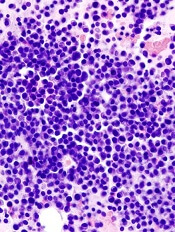
showing multiple myeloma
Blacks may be twice as likely as whites to develop multiple myeloma (MM) because they are more likely to have monoclonal gammopathy of undetermined significance (MGUS), according to research published in Leukemia.
In a US-wide study, researchers found that MGUS is more common in blacks than in whites or Hispanics.
And the type of MGUS seen in the black population is more apt to have features associated with a higher risk of progression to full-blown MM.
The study also revealed different rates of MGUS in different parts of the country, which suggests there may be an environmental component to the racial disparities.
“We have known for a long time that there is a marked racial disparity in multiple myeloma, but the big question has been why that disparity exists,” said study author Vincent Rajkumar, MD, of the Mayo Clinic in Rochester, Minnesota.
“We suspected it may be genetic or it may be environmental. We also thought that the predisposing factor is more common, or it may be that the predisposing factor progresses to cancer much more quickly. We found that the answer is all of the above.”
A number of studies have investigated the prevalence of MGUS in various populations. The most prominent took place in the predominantly white community of Olmsted County, Minnesota. There, researchers estimated that MGUS occurred in approximately 3.2% of individuals aged 50 and older.
In the current study, Dr Rajkumar and his colleagues set out to determine the prevalence of MGUS in blacks and Hispanics, as well as whites in other parts of the country. They analyzed stored serum samples of 12,482 people older than 50 years of age taken from the National Health and Nutritional Examination Survey.
By examining the M protein present in each sample, the researchers assessed both the prevalence of MGUS and its likelihood for progression. They found that the prevalence of MGUS was significantly higher in blacks (3.7%) compared with whites (2.3%) or Hispanics (1.8%), as were features that posed a higher risk of progression to MM.
The researchers were surprised that the prevalence of MGUS in whites in their national sample was significantly lower than the rates previously reported for Olmsted County. However, when they broke down the national numbers into geographic regions, they found that people living in Northern and Midwestern states have a higher incidence of MGUS than those living in Southern and Western states.
“We would have missed this geographic difference if we hadn’t looked at the whole country,” Dr Rajkumar said. “This is the largest study of its kind and the first to look at MGUS in a sample of the entire US population.”
Dr Rajkumar and his colleagues are now investigating the underlying causes of these geographic variations to see if they can identify the genetic and environmental factors contributing to the risk of MGUS. They are also repeating their experiments in samples from individuals under age 50 in an effort to pinpoint when the risk of MGUS and, ultimately, MM begins. 
showing multiple myeloma
Blacks may be twice as likely as whites to develop multiple myeloma (MM) because they are more likely to have monoclonal gammopathy of undetermined significance (MGUS), according to research published in Leukemia.
In a US-wide study, researchers found that MGUS is more common in blacks than in whites or Hispanics.
And the type of MGUS seen in the black population is more apt to have features associated with a higher risk of progression to full-blown MM.
The study also revealed different rates of MGUS in different parts of the country, which suggests there may be an environmental component to the racial disparities.
“We have known for a long time that there is a marked racial disparity in multiple myeloma, but the big question has been why that disparity exists,” said study author Vincent Rajkumar, MD, of the Mayo Clinic in Rochester, Minnesota.
“We suspected it may be genetic or it may be environmental. We also thought that the predisposing factor is more common, or it may be that the predisposing factor progresses to cancer much more quickly. We found that the answer is all of the above.”
A number of studies have investigated the prevalence of MGUS in various populations. The most prominent took place in the predominantly white community of Olmsted County, Minnesota. There, researchers estimated that MGUS occurred in approximately 3.2% of individuals aged 50 and older.
In the current study, Dr Rajkumar and his colleagues set out to determine the prevalence of MGUS in blacks and Hispanics, as well as whites in other parts of the country. They analyzed stored serum samples of 12,482 people older than 50 years of age taken from the National Health and Nutritional Examination Survey.
By examining the M protein present in each sample, the researchers assessed both the prevalence of MGUS and its likelihood for progression. They found that the prevalence of MGUS was significantly higher in blacks (3.7%) compared with whites (2.3%) or Hispanics (1.8%), as were features that posed a higher risk of progression to MM.
The researchers were surprised that the prevalence of MGUS in whites in their national sample was significantly lower than the rates previously reported for Olmsted County. However, when they broke down the national numbers into geographic regions, they found that people living in Northern and Midwestern states have a higher incidence of MGUS than those living in Southern and Western states.
“We would have missed this geographic difference if we hadn’t looked at the whole country,” Dr Rajkumar said. “This is the largest study of its kind and the first to look at MGUS in a sample of the entire US population.”
Dr Rajkumar and his colleagues are now investigating the underlying causes of these geographic variations to see if they can identify the genetic and environmental factors contributing to the risk of MGUS. They are also repeating their experiments in samples from individuals under age 50 in an effort to pinpoint when the risk of MGUS and, ultimately, MM begins.
showing multiple myeloma
Blacks may be twice as likely as whites to develop multiple myeloma (MM) because they are more likely to have monoclonal gammopathy of undetermined significance (MGUS), according to research published in Leukemia.
In a US-wide study, researchers found that MGUS is more common in blacks than in whites or Hispanics.
And the type of MGUS seen in the black population is more apt to have features associated with a higher risk of progression to full-blown MM.
The study also revealed different rates of MGUS in different parts of the country, which suggests there may be an environmental component to the racial disparities.
“We have known for a long time that there is a marked racial disparity in multiple myeloma, but the big question has been why that disparity exists,” said study author Vincent Rajkumar, MD, of the Mayo Clinic in Rochester, Minnesota.
“We suspected it may be genetic or it may be environmental. We also thought that the predisposing factor is more common, or it may be that the predisposing factor progresses to cancer much more quickly. We found that the answer is all of the above.”
A number of studies have investigated the prevalence of MGUS in various populations. The most prominent took place in the predominantly white community of Olmsted County, Minnesota. There, researchers estimated that MGUS occurred in approximately 3.2% of individuals aged 50 and older.
In the current study, Dr Rajkumar and his colleagues set out to determine the prevalence of MGUS in blacks and Hispanics, as well as whites in other parts of the country. They analyzed stored serum samples of 12,482 people older than 50 years of age taken from the National Health and Nutritional Examination Survey.
By examining the M protein present in each sample, the researchers assessed both the prevalence of MGUS and its likelihood for progression. They found that the prevalence of MGUS was significantly higher in blacks (3.7%) compared with whites (2.3%) or Hispanics (1.8%), as were features that posed a higher risk of progression to MM.
The researchers were surprised that the prevalence of MGUS in whites in their national sample was significantly lower than the rates previously reported for Olmsted County. However, when they broke down the national numbers into geographic regions, they found that people living in Northern and Midwestern states have a higher incidence of MGUS than those living in Southern and Western states.
“We would have missed this geographic difference if we hadn’t looked at the whole country,” Dr Rajkumar said. “This is the largest study of its kind and the first to look at MGUS in a sample of the entire US population.”
Dr Rajkumar and his colleagues are now investigating the underlying causes of these geographic variations to see if they can identify the genetic and environmental factors contributing to the risk of MGUS. They are also repeating their experiments in samples from individuals under age 50 in an effort to pinpoint when the risk of MGUS and, ultimately, MM begins.
Drug could enhance effects of chemo

Credit: Rhoda Baer
The drug spironolactone could improve the efficacy of platinum-based chemotherapy by preventing tumor cell repair, according to research published in Chemistry & Biology.
The researchers knew that platinum-based chemotherapy drugs bind to cellular DNA to induce damage.
So they theorized that blocking DNA repair mechanisms would help potentiate chemotherapy by reducing cancer cells’ resistance to treatment.
The team focused their efforts on inhibiting nucleotide excision repair (NER), in which a damaged DNA fragment is replaced with an intact fragment.
Frédéric Coin, PhD, of the Institute of Genetics and Molecular and Cellular Biology in Illkirch, France, and his colleagues screened more than 1200 drugs looking for one that would inhibit NER activity.
And they found that spironolactone—a drug already used to treat fluid retention, high blood pressure, and other conditions—affects NER activity.
Specifically, the team found that, when combined with platinum derivatives, spironolactone significantly increased cytotoxicity in ovarian and colon cancer cells.
As platinum-based chemotherapy is used to treat a range of cancers, similar results might occur in other malignancies as well.
The researchers also noted that, because spironolactone is already in use for other purposes, it doesn’t require a new application for marketing authorization. And its side effects are already known.
The team said this suggests that protocols testing spironolactone in combination with platinum-based chemotherapy could be organized rather quickly.
Credit: Rhoda Baer
The drug spironolactone could improve the efficacy of platinum-based chemotherapy by preventing tumor cell repair, according to research published in Chemistry & Biology.
The researchers knew that platinum-based chemotherapy drugs bind to cellular DNA to induce damage.
So they theorized that blocking DNA repair mechanisms would help potentiate chemotherapy by reducing cancer cells’ resistance to treatment.
The team focused their efforts on inhibiting nucleotide excision repair (NER), in which a damaged DNA fragment is replaced with an intact fragment.
Frédéric Coin, PhD, of the Institute of Genetics and Molecular and Cellular Biology in Illkirch, France, and his colleagues screened more than 1200 drugs looking for one that would inhibit NER activity.
And they found that spironolactone—a drug already used to treat fluid retention, high blood pressure, and other conditions—affects NER activity.
Specifically, the team found that, when combined with platinum derivatives, spironolactone significantly increased cytotoxicity in ovarian and colon cancer cells.
As platinum-based chemotherapy is used to treat a range of cancers, similar results might occur in other malignancies as well.
The researchers also noted that, because spironolactone is already in use for other purposes, it doesn’t require a new application for marketing authorization. And its side effects are already known.
The team said this suggests that protocols testing spironolactone in combination with platinum-based chemotherapy could be organized rather quickly.
Credit: Rhoda Baer
The drug spironolactone could improve the efficacy of platinum-based chemotherapy by preventing tumor cell repair, according to research published in Chemistry & Biology.
The researchers knew that platinum-based chemotherapy drugs bind to cellular DNA to induce damage.
So they theorized that blocking DNA repair mechanisms would help potentiate chemotherapy by reducing cancer cells’ resistance to treatment.
The team focused their efforts on inhibiting nucleotide excision repair (NER), in which a damaged DNA fragment is replaced with an intact fragment.
Frédéric Coin, PhD, of the Institute of Genetics and Molecular and Cellular Biology in Illkirch, France, and his colleagues screened more than 1200 drugs looking for one that would inhibit NER activity.
And they found that spironolactone—a drug already used to treat fluid retention, high blood pressure, and other conditions—affects NER activity.
Specifically, the team found that, when combined with platinum derivatives, spironolactone significantly increased cytotoxicity in ovarian and colon cancer cells.
As platinum-based chemotherapy is used to treat a range of cancers, similar results might occur in other malignancies as well.
The researchers also noted that, because spironolactone is already in use for other purposes, it doesn’t require a new application for marketing authorization. And its side effects are already known.
The team said this suggests that protocols testing spironolactone in combination with platinum-based chemotherapy could be organized rather quickly.
Study reveals potential target for mucositis, GVHD prevention

Results of preclinical research point to a possible way of preventing mucositis, graft-vs-host disease, and other disorders associated with epithelial permeability.
Investigators created a mouse model of mucositis and discovered that interleukin-1 (IL-1) beta, a protein secreted by the stressed mucosa, played an important role in the condition.
But inhibiting IL-1 beta alleviated mucositis. So the researchers speculated that targeting IL-1 beta might prevent mucositis in humans.
Naama Kanarek, a doctoral student at Hebrew University Hadassah Medical School in Jerusalem, and her colleagues described this research in PNAS.
The investigators began by generating a mouse model deficient in a gene encoding the enzyme beta-TrCP. They chose this enzyme because it’s a major regulator of inflammatory cascades.
The team found that beta-TrCP deletion in the gut caused mucosal DNA damage in the mice, mimicking the effects of chemotherapy and irradiation. Similar to human patients, a severe mucositis reaction occurred in mice that were genetically engineered to be beta-TrCP-deficient.
Tracing the pathological basis of the mouse mucositis revealed that the source of the problem was IL-1 beta. IL-1 beta opened the gut lining, allowing gut bacteria to penetrate and destroy the gut interior.
To confirm this finding, the researchers treated mice with an antibody neutralizing IL-1 beta prior to deleting beta-TrCP. They found this prevented the onset of mucositis.
Therefore, the team has proposed that IL-1 receptor agonists should be tested as mucositis prophylaxis in humans. An example is anakinra (Kineret), which is used to treat chronic inflammatory conditions, such as rheumatoid arthritis and Crohn’s disease.
The investigators believe such treatments might also be used to prevent graft-vs-host disease, burn injuries, head and neck trauma, and other disorders associated with
epithelial permeability.
Results of preclinical research point to a possible way of preventing mucositis, graft-vs-host disease, and other disorders associated with epithelial permeability.
Investigators created a mouse model of mucositis and discovered that interleukin-1 (IL-1) beta, a protein secreted by the stressed mucosa, played an important role in the condition.
But inhibiting IL-1 beta alleviated mucositis. So the researchers speculated that targeting IL-1 beta might prevent mucositis in humans.
Naama Kanarek, a doctoral student at Hebrew University Hadassah Medical School in Jerusalem, and her colleagues described this research in PNAS.
The investigators began by generating a mouse model deficient in a gene encoding the enzyme beta-TrCP. They chose this enzyme because it’s a major regulator of inflammatory cascades.
The team found that beta-TrCP deletion in the gut caused mucosal DNA damage in the mice, mimicking the effects of chemotherapy and irradiation. Similar to human patients, a severe mucositis reaction occurred in mice that were genetically engineered to be beta-TrCP-deficient.
Tracing the pathological basis of the mouse mucositis revealed that the source of the problem was IL-1 beta. IL-1 beta opened the gut lining, allowing gut bacteria to penetrate and destroy the gut interior.
To confirm this finding, the researchers treated mice with an antibody neutralizing IL-1 beta prior to deleting beta-TrCP. They found this prevented the onset of mucositis.
Therefore, the team has proposed that IL-1 receptor agonists should be tested as mucositis prophylaxis in humans. An example is anakinra (Kineret), which is used to treat chronic inflammatory conditions, such as rheumatoid arthritis and Crohn’s disease.
The investigators believe such treatments might also be used to prevent graft-vs-host disease, burn injuries, head and neck trauma, and other disorders associated with
epithelial permeability.
Results of preclinical research point to a possible way of preventing mucositis, graft-vs-host disease, and other disorders associated with epithelial permeability.
Investigators created a mouse model of mucositis and discovered that interleukin-1 (IL-1) beta, a protein secreted by the stressed mucosa, played an important role in the condition.
But inhibiting IL-1 beta alleviated mucositis. So the researchers speculated that targeting IL-1 beta might prevent mucositis in humans.
Naama Kanarek, a doctoral student at Hebrew University Hadassah Medical School in Jerusalem, and her colleagues described this research in PNAS.
The investigators began by generating a mouse model deficient in a gene encoding the enzyme beta-TrCP. They chose this enzyme because it’s a major regulator of inflammatory cascades.
The team found that beta-TrCP deletion in the gut caused mucosal DNA damage in the mice, mimicking the effects of chemotherapy and irradiation. Similar to human patients, a severe mucositis reaction occurred in mice that were genetically engineered to be beta-TrCP-deficient.
Tracing the pathological basis of the mouse mucositis revealed that the source of the problem was IL-1 beta. IL-1 beta opened the gut lining, allowing gut bacteria to penetrate and destroy the gut interior.
To confirm this finding, the researchers treated mice with an antibody neutralizing IL-1 beta prior to deleting beta-TrCP. They found this prevented the onset of mucositis.
Therefore, the team has proposed that IL-1 receptor agonists should be tested as mucositis prophylaxis in humans. An example is anakinra (Kineret), which is used to treat chronic inflammatory conditions, such as rheumatoid arthritis and Crohn’s disease.
The investigators believe such treatments might also be used to prevent graft-vs-host disease, burn injuries, head and neck trauma, and other disorders associated with
epithelial permeability.
Inhibitor shows preclinical promise in leukemia, MM

Credit: VCU
The experimental drug dinaciclib could potentially improve the treatment of multiple myeloma (MM) and myeloid leukemias, according to preclinical research published in Molecular Cancer Therapeutics.
The study showed that dinaciclib disrupts a cell survival mechanism known as the unfolded protein response (UPR).
And without the UPR, MM and myeloid leukemia cells were unable to combat damage caused by anticancer agents that induce stress in the endoplasmic reticulum (ER).
“Although dinaciclib has shown promising preclinical activity against a variety of tumor cells and is currently undergoing phase 1/2 clinical trials in several malignancies, the mechanisms responsible for its antitumor activity are not fully understood,” said study author Steven Grant, MD, of the Virginia Commonwealth University Massey Cancer Center.
“Our research highlights a potentially new mechanism of dinaciclib action and raises the possibility that this agent could be a useful addition to current multiple myeloma and myeloid leukemia therapies.”
Dinaciclib is a cyclin-dependent kinase (CDK) inhibitor. CDKs are overactive in many cancers, which results in unregulated proliferation of cancer cells.
Observations from this study suggest that 2 specific CDKs, CDK1 and CDK5, play key roles in regulating the UPR by helping to control the production and accumulation of X-box binding pretein-1 (XBP-1). The spliced form of XBP-1 (XBP-1s) helps regulate the expression of genes critical to cellular stress responses.
External stressors, including certain anticancer agents, can cause misfolded proteins to accumulate in the ER. These stressors can also cause XBP-1s to accumulate in the cell’s nucleus, which promotes the UPR and helps cells withstand the damaging effects of misfolded proteins.
This research showed that dinaciclib, by interfering with UPR activation, caused MM and myeloid leukemia cells to initiate apoptosis when exposed to thapsigargin and tunicamycin—2 agents that induce ER stress.
And single-agent dinaciclib treatment significantly decreased tumor growth in mouse models of MM, when compared to vehicle control.
“These findings build on a long history of work in our laboratory investigating mechanisms by which cancer cells respond to environmental stresses,” Dr Grant said.
“We intend to continue investigating ways in which dinaciclib and other CDK inhibitors might be used to disrupt the UPR and potentially improve the effectiveness of certain agents for the treatment of multiple myeloma or myeloid leukemia.”
Credit: VCU
The experimental drug dinaciclib could potentially improve the treatment of multiple myeloma (MM) and myeloid leukemias, according to preclinical research published in Molecular Cancer Therapeutics.
The study showed that dinaciclib disrupts a cell survival mechanism known as the unfolded protein response (UPR).
And without the UPR, MM and myeloid leukemia cells were unable to combat damage caused by anticancer agents that induce stress in the endoplasmic reticulum (ER).
“Although dinaciclib has shown promising preclinical activity against a variety of tumor cells and is currently undergoing phase 1/2 clinical trials in several malignancies, the mechanisms responsible for its antitumor activity are not fully understood,” said study author Steven Grant, MD, of the Virginia Commonwealth University Massey Cancer Center.
“Our research highlights a potentially new mechanism of dinaciclib action and raises the possibility that this agent could be a useful addition to current multiple myeloma and myeloid leukemia therapies.”
Dinaciclib is a cyclin-dependent kinase (CDK) inhibitor. CDKs are overactive in many cancers, which results in unregulated proliferation of cancer cells.
Observations from this study suggest that 2 specific CDKs, CDK1 and CDK5, play key roles in regulating the UPR by helping to control the production and accumulation of X-box binding pretein-1 (XBP-1). The spliced form of XBP-1 (XBP-1s) helps regulate the expression of genes critical to cellular stress responses.
External stressors, including certain anticancer agents, can cause misfolded proteins to accumulate in the ER. These stressors can also cause XBP-1s to accumulate in the cell’s nucleus, which promotes the UPR and helps cells withstand the damaging effects of misfolded proteins.
This research showed that dinaciclib, by interfering with UPR activation, caused MM and myeloid leukemia cells to initiate apoptosis when exposed to thapsigargin and tunicamycin—2 agents that induce ER stress.
And single-agent dinaciclib treatment significantly decreased tumor growth in mouse models of MM, when compared to vehicle control.
“These findings build on a long history of work in our laboratory investigating mechanisms by which cancer cells respond to environmental stresses,” Dr Grant said.
“We intend to continue investigating ways in which dinaciclib and other CDK inhibitors might be used to disrupt the UPR and potentially improve the effectiveness of certain agents for the treatment of multiple myeloma or myeloid leukemia.”
Credit: VCU
The experimental drug dinaciclib could potentially improve the treatment of multiple myeloma (MM) and myeloid leukemias, according to preclinical research published in Molecular Cancer Therapeutics.
The study showed that dinaciclib disrupts a cell survival mechanism known as the unfolded protein response (UPR).
And without the UPR, MM and myeloid leukemia cells were unable to combat damage caused by anticancer agents that induce stress in the endoplasmic reticulum (ER).
“Although dinaciclib has shown promising preclinical activity against a variety of tumor cells and is currently undergoing phase 1/2 clinical trials in several malignancies, the mechanisms responsible for its antitumor activity are not fully understood,” said study author Steven Grant, MD, of the Virginia Commonwealth University Massey Cancer Center.
“Our research highlights a potentially new mechanism of dinaciclib action and raises the possibility that this agent could be a useful addition to current multiple myeloma and myeloid leukemia therapies.”
Dinaciclib is a cyclin-dependent kinase (CDK) inhibitor. CDKs are overactive in many cancers, which results in unregulated proliferation of cancer cells.
Observations from this study suggest that 2 specific CDKs, CDK1 and CDK5, play key roles in regulating the UPR by helping to control the production and accumulation of X-box binding pretein-1 (XBP-1). The spliced form of XBP-1 (XBP-1s) helps regulate the expression of genes critical to cellular stress responses.
External stressors, including certain anticancer agents, can cause misfolded proteins to accumulate in the ER. These stressors can also cause XBP-1s to accumulate in the cell’s nucleus, which promotes the UPR and helps cells withstand the damaging effects of misfolded proteins.
This research showed that dinaciclib, by interfering with UPR activation, caused MM and myeloid leukemia cells to initiate apoptosis when exposed to thapsigargin and tunicamycin—2 agents that induce ER stress.
And single-agent dinaciclib treatment significantly decreased tumor growth in mouse models of MM, when compared to vehicle control.
“These findings build on a long history of work in our laboratory investigating mechanisms by which cancer cells respond to environmental stresses,” Dr Grant said.
“We intend to continue investigating ways in which dinaciclib and other CDK inhibitors might be used to disrupt the UPR and potentially improve the effectiveness of certain agents for the treatment of multiple myeloma or myeloid leukemia.”
Making K-Ras cancers druggable
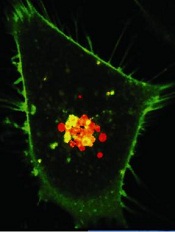
Credit: PNAS
New findings suggest drugs can effectively fight K-Ras-mutant cancers—if they have a little help.
Experiments in human cancer cells showed that K-Ras-mutant tumor growth was highly dependent on the cells’ constant need to check and mend their DNA.
However, inhibiting the activity of H-Ras and N-Ras prevented the DNA damage response. And this made the cells more vulnerable to treatment.
“Our finding suggests that K-Ras cancers can be made more susceptible to existing therapies by interfering with their DNA repair mechanisms,” said Dafna Bar-Sagi, PhD, of the New York University School of Medicine.
“What some researchers have described as therapeutic ‘mission impossible’ may now become a ‘mission doable.’”
Dr Bar-Sagi and her colleagues reported this discovery in Cancer Cell.
The group’s research began with experiments to determine how Ras signaling leads to the uncontrolled growth of cancer cells. The team found that downregulation of wild-type H-Ras and N-Ras in mutant K-Ras cells caused the buildup of damaged DNA and slowed cell growth.
In the absence of H-Ras and N-Ras, K-Ras-mutant cancer cells failed to repair their DNA at the G2 phase of cell division. And this defect was caused by failure to properly activate Chk1.
With this in mind, the researchers decided to test the effects of H-Ras or N-Ras knockdown on treatment with DNA-damaging agents.
Knockdown of H-Ras or N-Ras sensitized K-Ras-mutant cancer cells to SN38 and oxaliplatin in vitro. But the same effect did not occur when H-Ras or N-Ras was knocked down in K-Ras-wild-type cancer cells.
K-Ras-mutant cancer cells were also sensitive to treatment with the Chk1/Chk2 inhibitor AZD7726 when H-Ras or N-Ras was knocked down in vitro.
To further support these findings, the researchers conducted experiments in mice with K-Ras-mutant tumors. Mice with H-Ras knockdown experienced tumor growth similar to controls.
But when the mice with H-Ras-suppressed tumors received the chemotherapy drug irinotecan, they experienced tumor regression that lasted up to 18 days post-treatment. On the other hand, mice without H-Ras suppression experienced modest tumor growth after treatment with irinotecan.
“Discovering more about how these different forms of Ras act on one another—including how they control DNA damage repair at Chk1 in combination with chemotherapy—could help us design drugs that greatly stall disease progression,” said study author Elda Grabocka, PhD, also of the New York University School of Medicine.
The researchers are now planning additional experiments on the biological interdependency of Ras proteins and what other chemotherapies might be involved in slowing cancer growth. Their goal is to map the Ras signaling pathways and identify as many therapeutic targets as possible.
Credit: PNAS
New findings suggest drugs can effectively fight K-Ras-mutant cancers—if they have a little help.
Experiments in human cancer cells showed that K-Ras-mutant tumor growth was highly dependent on the cells’ constant need to check and mend their DNA.
However, inhibiting the activity of H-Ras and N-Ras prevented the DNA damage response. And this made the cells more vulnerable to treatment.
“Our finding suggests that K-Ras cancers can be made more susceptible to existing therapies by interfering with their DNA repair mechanisms,” said Dafna Bar-Sagi, PhD, of the New York University School of Medicine.
“What some researchers have described as therapeutic ‘mission impossible’ may now become a ‘mission doable.’”
Dr Bar-Sagi and her colleagues reported this discovery in Cancer Cell.
The group’s research began with experiments to determine how Ras signaling leads to the uncontrolled growth of cancer cells. The team found that downregulation of wild-type H-Ras and N-Ras in mutant K-Ras cells caused the buildup of damaged DNA and slowed cell growth.
In the absence of H-Ras and N-Ras, K-Ras-mutant cancer cells failed to repair their DNA at the G2 phase of cell division. And this defect was caused by failure to properly activate Chk1.
With this in mind, the researchers decided to test the effects of H-Ras or N-Ras knockdown on treatment with DNA-damaging agents.
Knockdown of H-Ras or N-Ras sensitized K-Ras-mutant cancer cells to SN38 and oxaliplatin in vitro. But the same effect did not occur when H-Ras or N-Ras was knocked down in K-Ras-wild-type cancer cells.
K-Ras-mutant cancer cells were also sensitive to treatment with the Chk1/Chk2 inhibitor AZD7726 when H-Ras or N-Ras was knocked down in vitro.
To further support these findings, the researchers conducted experiments in mice with K-Ras-mutant tumors. Mice with H-Ras knockdown experienced tumor growth similar to controls.
But when the mice with H-Ras-suppressed tumors received the chemotherapy drug irinotecan, they experienced tumor regression that lasted up to 18 days post-treatment. On the other hand, mice without H-Ras suppression experienced modest tumor growth after treatment with irinotecan.
“Discovering more about how these different forms of Ras act on one another—including how they control DNA damage repair at Chk1 in combination with chemotherapy—could help us design drugs that greatly stall disease progression,” said study author Elda Grabocka, PhD, also of the New York University School of Medicine.
The researchers are now planning additional experiments on the biological interdependency of Ras proteins and what other chemotherapies might be involved in slowing cancer growth. Their goal is to map the Ras signaling pathways and identify as many therapeutic targets as possible.
Credit: PNAS
New findings suggest drugs can effectively fight K-Ras-mutant cancers—if they have a little help.
Experiments in human cancer cells showed that K-Ras-mutant tumor growth was highly dependent on the cells’ constant need to check and mend their DNA.
However, inhibiting the activity of H-Ras and N-Ras prevented the DNA damage response. And this made the cells more vulnerable to treatment.
“Our finding suggests that K-Ras cancers can be made more susceptible to existing therapies by interfering with their DNA repair mechanisms,” said Dafna Bar-Sagi, PhD, of the New York University School of Medicine.
“What some researchers have described as therapeutic ‘mission impossible’ may now become a ‘mission doable.’”
Dr Bar-Sagi and her colleagues reported this discovery in Cancer Cell.
The group’s research began with experiments to determine how Ras signaling leads to the uncontrolled growth of cancer cells. The team found that downregulation of wild-type H-Ras and N-Ras in mutant K-Ras cells caused the buildup of damaged DNA and slowed cell growth.
In the absence of H-Ras and N-Ras, K-Ras-mutant cancer cells failed to repair their DNA at the G2 phase of cell division. And this defect was caused by failure to properly activate Chk1.
With this in mind, the researchers decided to test the effects of H-Ras or N-Ras knockdown on treatment with DNA-damaging agents.
Knockdown of H-Ras or N-Ras sensitized K-Ras-mutant cancer cells to SN38 and oxaliplatin in vitro. But the same effect did not occur when H-Ras or N-Ras was knocked down in K-Ras-wild-type cancer cells.
K-Ras-mutant cancer cells were also sensitive to treatment with the Chk1/Chk2 inhibitor AZD7726 when H-Ras or N-Ras was knocked down in vitro.
To further support these findings, the researchers conducted experiments in mice with K-Ras-mutant tumors. Mice with H-Ras knockdown experienced tumor growth similar to controls.
But when the mice with H-Ras-suppressed tumors received the chemotherapy drug irinotecan, they experienced tumor regression that lasted up to 18 days post-treatment. On the other hand, mice without H-Ras suppression experienced modest tumor growth after treatment with irinotecan.
“Discovering more about how these different forms of Ras act on one another—including how they control DNA damage repair at Chk1 in combination with chemotherapy—could help us design drugs that greatly stall disease progression,” said study author Elda Grabocka, PhD, also of the New York University School of Medicine.
The researchers are now planning additional experiments on the biological interdependency of Ras proteins and what other chemotherapies might be involved in slowing cancer growth. Their goal is to map the Ras signaling pathways and identify as many therapeutic targets as possible.
Health Canada approves pomalidomide for MM

Credit: CDC
Health Canada has approved pomalidomide (Pomalyst) for use in combination with dexamethasone to treat patients with relapsed or refractory multiple myeloma (MM).
Patients must have received at least 2 prior therapies, failed treatment with lenalidomide and bortezomib, and experienced disease progression while on their last treatment regimen.
Health Canada had given pomalidomide priority review status due to the unmet need of effective therapies for patients with aggressive MM.
“Until now, there have been no approved options for patients whose disease has progressed despite available treatments,” said Donna E. Reece, MD, of the Princess Margaret Cancer Centre in Toronto.
“With Pomalyst, we have a new option that extends periods of remission, is generally well-tolerated, and can be taken in the convenience of a patient’s home.”
Trial prompts approval
Health Canada based its approval of pomalidomide on findings from the MM-003 trial. Regulatory agencies in the United States and European Union, both of which approved pomalidomide last year, based their decisions on the results of this study as well.
The phase 3 trial included 455 patients with relapsed or refractory MM who had received a median of 5 prior treatment regimens.
Patients were randomized to receive pomalidomide plus low-dose dexamethasone (POM-LoDEX, n=302) or high-dose dexamethasone alone (HiDEX, n=153). The median follow-up was 10 months.
Researchers found that response and survival rates were superior in the POM-LoDEX arm, and rates of adverse events were largely similar between the 2 arms.
The overall response rate was 31% (n=95) in the POM-LoDEX arm and 10% (n=15) in the HiDEX arm. The median duration of response was 7.0 months and 6.1 months, respectively.
The median progression-free survival was 4.0 months in the POM-LoDEX arm and 1.9 months in the HiDEX arm (P<0.001). And the median overall survival was 12.7 months in the POM-LoDEX arm and 8.1 months in the HiDEX arm (P=0.028).
Patients in the POM-LoDEX arm experienced more grade 3/4 neutropenia than patients in the HiDEX arm. But rates of grade 3/4 anemia and thrombocytopenia were similar.
Rates of grade 3/4 non-hematologic toxicities were also comparable and included infection, pneumonia, hemorrhage, glucose intolerance, and fatigue. Other adverse events of note included venous thromboembolism and peripheral neuropathy, which occurred at similar rates in both arms.
These results were presented at the 2013 ASCO Annual Meeting and published in The Lancet Oncology in October.
Drug availability
Pomalidomide is expected to be commercially available in Canada in March.
The drug will be distributed through a risk-management program called RevAid, which was developed in 2008. By adding pomalidomide to the program, regulators are aiming to prevent fetal exposure to the drug because of its structural similarities to thalidomide, a known human teratogen.
Under the program, only prescribers and pharmacists registered with RevAid are able to prescribe and dispense pomalidomide. In addition, only those patients who are registered and meet all the conditions of the RevAid program will receive the drug.
Credit: CDC
Health Canada has approved pomalidomide (Pomalyst) for use in combination with dexamethasone to treat patients with relapsed or refractory multiple myeloma (MM).
Patients must have received at least 2 prior therapies, failed treatment with lenalidomide and bortezomib, and experienced disease progression while on their last treatment regimen.
Health Canada had given pomalidomide priority review status due to the unmet need of effective therapies for patients with aggressive MM.
“Until now, there have been no approved options for patients whose disease has progressed despite available treatments,” said Donna E. Reece, MD, of the Princess Margaret Cancer Centre in Toronto.
“With Pomalyst, we have a new option that extends periods of remission, is generally well-tolerated, and can be taken in the convenience of a patient’s home.”
Trial prompts approval
Health Canada based its approval of pomalidomide on findings from the MM-003 trial. Regulatory agencies in the United States and European Union, both of which approved pomalidomide last year, based their decisions on the results of this study as well.
The phase 3 trial included 455 patients with relapsed or refractory MM who had received a median of 5 prior treatment regimens.
Patients were randomized to receive pomalidomide plus low-dose dexamethasone (POM-LoDEX, n=302) or high-dose dexamethasone alone (HiDEX, n=153). The median follow-up was 10 months.
Researchers found that response and survival rates were superior in the POM-LoDEX arm, and rates of adverse events were largely similar between the 2 arms.
The overall response rate was 31% (n=95) in the POM-LoDEX arm and 10% (n=15) in the HiDEX arm. The median duration of response was 7.0 months and 6.1 months, respectively.
The median progression-free survival was 4.0 months in the POM-LoDEX arm and 1.9 months in the HiDEX arm (P<0.001). And the median overall survival was 12.7 months in the POM-LoDEX arm and 8.1 months in the HiDEX arm (P=0.028).
Patients in the POM-LoDEX arm experienced more grade 3/4 neutropenia than patients in the HiDEX arm. But rates of grade 3/4 anemia and thrombocytopenia were similar.
Rates of grade 3/4 non-hematologic toxicities were also comparable and included infection, pneumonia, hemorrhage, glucose intolerance, and fatigue. Other adverse events of note included venous thromboembolism and peripheral neuropathy, which occurred at similar rates in both arms.
These results were presented at the 2013 ASCO Annual Meeting and published in The Lancet Oncology in October.
Drug availability
Pomalidomide is expected to be commercially available in Canada in March.
The drug will be distributed through a risk-management program called RevAid, which was developed in 2008. By adding pomalidomide to the program, regulators are aiming to prevent fetal exposure to the drug because of its structural similarities to thalidomide, a known human teratogen.
Under the program, only prescribers and pharmacists registered with RevAid are able to prescribe and dispense pomalidomide. In addition, only those patients who are registered and meet all the conditions of the RevAid program will receive the drug.
Credit: CDC
Health Canada has approved pomalidomide (Pomalyst) for use in combination with dexamethasone to treat patients with relapsed or refractory multiple myeloma (MM).
Patients must have received at least 2 prior therapies, failed treatment with lenalidomide and bortezomib, and experienced disease progression while on their last treatment regimen.
Health Canada had given pomalidomide priority review status due to the unmet need of effective therapies for patients with aggressive MM.
“Until now, there have been no approved options for patients whose disease has progressed despite available treatments,” said Donna E. Reece, MD, of the Princess Margaret Cancer Centre in Toronto.
“With Pomalyst, we have a new option that extends periods of remission, is generally well-tolerated, and can be taken in the convenience of a patient’s home.”
Trial prompts approval
Health Canada based its approval of pomalidomide on findings from the MM-003 trial. Regulatory agencies in the United States and European Union, both of which approved pomalidomide last year, based their decisions on the results of this study as well.
The phase 3 trial included 455 patients with relapsed or refractory MM who had received a median of 5 prior treatment regimens.
Patients were randomized to receive pomalidomide plus low-dose dexamethasone (POM-LoDEX, n=302) or high-dose dexamethasone alone (HiDEX, n=153). The median follow-up was 10 months.
Researchers found that response and survival rates were superior in the POM-LoDEX arm, and rates of adverse events were largely similar between the 2 arms.
The overall response rate was 31% (n=95) in the POM-LoDEX arm and 10% (n=15) in the HiDEX arm. The median duration of response was 7.0 months and 6.1 months, respectively.
The median progression-free survival was 4.0 months in the POM-LoDEX arm and 1.9 months in the HiDEX arm (P<0.001). And the median overall survival was 12.7 months in the POM-LoDEX arm and 8.1 months in the HiDEX arm (P=0.028).
Patients in the POM-LoDEX arm experienced more grade 3/4 neutropenia than patients in the HiDEX arm. But rates of grade 3/4 anemia and thrombocytopenia were similar.
Rates of grade 3/4 non-hematologic toxicities were also comparable and included infection, pneumonia, hemorrhage, glucose intolerance, and fatigue. Other adverse events of note included venous thromboembolism and peripheral neuropathy, which occurred at similar rates in both arms.
These results were presented at the 2013 ASCO Annual Meeting and published in The Lancet Oncology in October.
Drug availability
Pomalidomide is expected to be commercially available in Canada in March.
The drug will be distributed through a risk-management program called RevAid, which was developed in 2008. By adding pomalidomide to the program, regulators are aiming to prevent fetal exposure to the drug because of its structural similarities to thalidomide, a known human teratogen.
Under the program, only prescribers and pharmacists registered with RevAid are able to prescribe and dispense pomalidomide. In addition, only those patients who are registered and meet all the conditions of the RevAid program will receive the drug.
Improving the efficacy of etoposide

after treatment with etoposide
Credit: CNIO
A compound that interferes with the cell cycle can increase the antineoplastic effects of etoposide, according to research published in Cell Reports.
Etoposide works by inhibiting topoisomerase II (TOP2), a protein needed for DNA repair during cell division.
Researchers discovered a relationship between TOP2 and Cdh1, a protein that (along with Cdc20) controls cell division by activating the anaphase-promoting complex/cyclosome (APC/C).
So the team hypothesized that combining etoposide with a compound that inhibits Cdh1 might improve etoposide’s antineoplastic effects. Experiments in cancer cell lines confirmed this theory.
Marcos Malumbres, PhD, of the Spanish National Cancer Research Centre (CNIO) in Madrid, and his colleagues began this research by investigating Cdh1 in vitro and in mouse models.
The team found that a decrease in Cdh1 activity increases cells’ TOP2 levels. So they decided to combine etoposide with a Cdh1 inhibitor and evaluate the effect on cancer cells, which divide more than normal cells and therefore have a greater dependency on TOP2 to maintain DNA integrity.
The researchers tested proTAME, a small molecule that targets APC/C-Cdh1 and APC/C-Cdc20, in combination with etoposide. And they found the drugs had a synergistic effect against cancer cells.
In experiments with a lung cancer cell line (A549) and 2 breast cancer cell lines (HeLa and MCF7), administering proTAME and etoposide together proved more effective than administering either compound alone.
The researchers believe these findings could apply to other malignancies as well. Etoposide has demonstrated activity against a number of cancers, including leukemias, lymphomas, and multiple myeloma.
The team said their next step is to study the etoposide-proTAME combination in patients and investigate the malignancies in which this therapeutic strategy would be most effective.
The researchers also noted that previous studies have shown Cdh1 is inactive in some patients due to various oncogenic mutations. So stratifying patients according to their tumor’s Cdh1 status could optimize treatment with etoposide.
after treatment with etoposide
Credit: CNIO
A compound that interferes with the cell cycle can increase the antineoplastic effects of etoposide, according to research published in Cell Reports.
Etoposide works by inhibiting topoisomerase II (TOP2), a protein needed for DNA repair during cell division.
Researchers discovered a relationship between TOP2 and Cdh1, a protein that (along with Cdc20) controls cell division by activating the anaphase-promoting complex/cyclosome (APC/C).
So the team hypothesized that combining etoposide with a compound that inhibits Cdh1 might improve etoposide’s antineoplastic effects. Experiments in cancer cell lines confirmed this theory.
Marcos Malumbres, PhD, of the Spanish National Cancer Research Centre (CNIO) in Madrid, and his colleagues began this research by investigating Cdh1 in vitro and in mouse models.
The team found that a decrease in Cdh1 activity increases cells’ TOP2 levels. So they decided to combine etoposide with a Cdh1 inhibitor and evaluate the effect on cancer cells, which divide more than normal cells and therefore have a greater dependency on TOP2 to maintain DNA integrity.
The researchers tested proTAME, a small molecule that targets APC/C-Cdh1 and APC/C-Cdc20, in combination with etoposide. And they found the drugs had a synergistic effect against cancer cells.
In experiments with a lung cancer cell line (A549) and 2 breast cancer cell lines (HeLa and MCF7), administering proTAME and etoposide together proved more effective than administering either compound alone.
The researchers believe these findings could apply to other malignancies as well. Etoposide has demonstrated activity against a number of cancers, including leukemias, lymphomas, and multiple myeloma.
The team said their next step is to study the etoposide-proTAME combination in patients and investigate the malignancies in which this therapeutic strategy would be most effective.
The researchers also noted that previous studies have shown Cdh1 is inactive in some patients due to various oncogenic mutations. So stratifying patients according to their tumor’s Cdh1 status could optimize treatment with etoposide.
after treatment with etoposide
Credit: CNIO
A compound that interferes with the cell cycle can increase the antineoplastic effects of etoposide, according to research published in Cell Reports.
Etoposide works by inhibiting topoisomerase II (TOP2), a protein needed for DNA repair during cell division.
Researchers discovered a relationship between TOP2 and Cdh1, a protein that (along with Cdc20) controls cell division by activating the anaphase-promoting complex/cyclosome (APC/C).
So the team hypothesized that combining etoposide with a compound that inhibits Cdh1 might improve etoposide’s antineoplastic effects. Experiments in cancer cell lines confirmed this theory.
Marcos Malumbres, PhD, of the Spanish National Cancer Research Centre (CNIO) in Madrid, and his colleagues began this research by investigating Cdh1 in vitro and in mouse models.
The team found that a decrease in Cdh1 activity increases cells’ TOP2 levels. So they decided to combine etoposide with a Cdh1 inhibitor and evaluate the effect on cancer cells, which divide more than normal cells and therefore have a greater dependency on TOP2 to maintain DNA integrity.
The researchers tested proTAME, a small molecule that targets APC/C-Cdh1 and APC/C-Cdc20, in combination with etoposide. And they found the drugs had a synergistic effect against cancer cells.
In experiments with a lung cancer cell line (A549) and 2 breast cancer cell lines (HeLa and MCF7), administering proTAME and etoposide together proved more effective than administering either compound alone.
The researchers believe these findings could apply to other malignancies as well. Etoposide has demonstrated activity against a number of cancers, including leukemias, lymphomas, and multiple myeloma.
The team said their next step is to study the etoposide-proTAME combination in patients and investigate the malignancies in which this therapeutic strategy would be most effective.
The researchers also noted that previous studies have shown Cdh1 is inactive in some patients due to various oncogenic mutations. So stratifying patients according to their tumor’s Cdh1 status could optimize treatment with etoposide.
Unique protein found in MM patients

Credit: Rhoda Baer
Researchers say they have discovered a bacterial protein that attaches to virtually any antibody and prevents it from binding to its target.
It appears that this molecule, called mycoplasma protein (or protein M), helps some bacteria evade the immune response and establish long-term infections.
The researchers discovered protein M in samples from multiple myeloma (MM) patients.
And the team believes the protein could be engineered to target cancerous B cells in patients with MM and other B-cell malignancies.
Protein M might also become a target for new antibacterial drugs, and it could prove useful for preparing highly pure antibodies for research and drug manufacturing.
Richard A. Lerner, MD, of The Scripps Research Institute (TSRI) in La Jolla, California, and his colleagues described their discovery of protein M in Science.
The discovery originated from an effort to understand the origin of MM. Clonal B-cell proliferation, as well as MM and lymphomas, can result from chronic infections by organisms such as Escherichia coli, Helicobacter pylori, and hepatitis C virus.
To better understand this process, Dr Lerner and his colleagues investigated mycoplasma, a parasite that infects people chronically and is largely confined to the cell surface.
In a search for factors associated with long-term mycoplasma infection, the team tested samples of antibodies from MM patients’ blood against a variety of mycoplasma species. One of the proteins recognized by the antibodies was from Mycoplasma genitalium, which causes sexually transmitted infections.
To the researchers’ surprise, every antibody sample tested showed reactivity to this protein. But further tests made it clear that these antibody reactions were not in response to mass infection with M genitalium.
Instead, the M genitalium protein, which the team named protein M, appeared to have evolved simply to bind to any antibody it encounters.
“It binds to every antibody generically—capable of hijacking the entire diversity of antibody repertoire—but, at the same time, it blocks the specific interaction between that antibody and its intended biomolecular target,” said Rajesh Grover, PhD, of TSRI.
To better understand how protein M works, the researchers took a structural biology approach. Using X-ray crystallography and other techniques, the team determined the protein’s 3D atomic structure while it was bound to various human antibodies.
Compared to thousands of known structures in the Protein Data Bank, the worldwide structure database, protein M appeared to be unique. The data also revealed that protein M binds to a small, conserved region at the outer tip of every antibody’s antigen-binding arm.
“It likely extends the other end of itself, like a tail, over the antibody’s main antigen-binding region,” said Xueyong Zhu, PhD, of TSRI.
The team is now studying protein M’s function during M genitalium infections. It seems likely that the protein evolved to help M genitalium cope with the immune response, as it has one of the smallest bacterial genomes in nature.
“It appears to represent an elegant evolutionary solution to the special problem that mycoplasma have in evading the adaptive immune system,” Dr Grover said. “The smallest parasitic [bacterium] on planet Earth seems to have evolved the most sophisticated invading molecular machine.”
If protein M is confirmed as a universal “decoy” for antibodies, it will become a target for new drugs, the researchers said. This could make it easier to treat chronic, sometimes silent, infections by M genitalium and any other microbes that have evolved a similar antibody-thwarting defense.
In principle, protein M also could be engineered to target specific groups of B cells, delivering cytotoxic agents to cancerous B cells in patients with MM and lymphomas.
But the most immediate use of protein M, according to the researchers, is likely to be as a tool for grabbing antibodies in test tubes and cell cultures. This would allow the preparation of highly pure antibodies for research and drug manufacturing. Other generic antibody-binding proteins have been put to use in this way, but, so far, it appears that none does the job quite as well as protein M.
“It may be the most useful antibody purification device ever found,” said Dr Lerner, who is now working to commercialize the protein.
Credit: Rhoda Baer
Researchers say they have discovered a bacterial protein that attaches to virtually any antibody and prevents it from binding to its target.
It appears that this molecule, called mycoplasma protein (or protein M), helps some bacteria evade the immune response and establish long-term infections.
The researchers discovered protein M in samples from multiple myeloma (MM) patients.
And the team believes the protein could be engineered to target cancerous B cells in patients with MM and other B-cell malignancies.
Protein M might also become a target for new antibacterial drugs, and it could prove useful for preparing highly pure antibodies for research and drug manufacturing.
Richard A. Lerner, MD, of The Scripps Research Institute (TSRI) in La Jolla, California, and his colleagues described their discovery of protein M in Science.
The discovery originated from an effort to understand the origin of MM. Clonal B-cell proliferation, as well as MM and lymphomas, can result from chronic infections by organisms such as Escherichia coli, Helicobacter pylori, and hepatitis C virus.
To better understand this process, Dr Lerner and his colleagues investigated mycoplasma, a parasite that infects people chronically and is largely confined to the cell surface.
In a search for factors associated with long-term mycoplasma infection, the team tested samples of antibodies from MM patients’ blood against a variety of mycoplasma species. One of the proteins recognized by the antibodies was from Mycoplasma genitalium, which causes sexually transmitted infections.
To the researchers’ surprise, every antibody sample tested showed reactivity to this protein. But further tests made it clear that these antibody reactions were not in response to mass infection with M genitalium.
Instead, the M genitalium protein, which the team named protein M, appeared to have evolved simply to bind to any antibody it encounters.
“It binds to every antibody generically—capable of hijacking the entire diversity of antibody repertoire—but, at the same time, it blocks the specific interaction between that antibody and its intended biomolecular target,” said Rajesh Grover, PhD, of TSRI.
To better understand how protein M works, the researchers took a structural biology approach. Using X-ray crystallography and other techniques, the team determined the protein’s 3D atomic structure while it was bound to various human antibodies.
Compared to thousands of known structures in the Protein Data Bank, the worldwide structure database, protein M appeared to be unique. The data also revealed that protein M binds to a small, conserved region at the outer tip of every antibody’s antigen-binding arm.
“It likely extends the other end of itself, like a tail, over the antibody’s main antigen-binding region,” said Xueyong Zhu, PhD, of TSRI.
The team is now studying protein M’s function during M genitalium infections. It seems likely that the protein evolved to help M genitalium cope with the immune response, as it has one of the smallest bacterial genomes in nature.
“It appears to represent an elegant evolutionary solution to the special problem that mycoplasma have in evading the adaptive immune system,” Dr Grover said. “The smallest parasitic [bacterium] on planet Earth seems to have evolved the most sophisticated invading molecular machine.”
If protein M is confirmed as a universal “decoy” for antibodies, it will become a target for new drugs, the researchers said. This could make it easier to treat chronic, sometimes silent, infections by M genitalium and any other microbes that have evolved a similar antibody-thwarting defense.
In principle, protein M also could be engineered to target specific groups of B cells, delivering cytotoxic agents to cancerous B cells in patients with MM and lymphomas.
But the most immediate use of protein M, according to the researchers, is likely to be as a tool for grabbing antibodies in test tubes and cell cultures. This would allow the preparation of highly pure antibodies for research and drug manufacturing. Other generic antibody-binding proteins have been put to use in this way, but, so far, it appears that none does the job quite as well as protein M.
“It may be the most useful antibody purification device ever found,” said Dr Lerner, who is now working to commercialize the protein.
Credit: Rhoda Baer
Researchers say they have discovered a bacterial protein that attaches to virtually any antibody and prevents it from binding to its target.
It appears that this molecule, called mycoplasma protein (or protein M), helps some bacteria evade the immune response and establish long-term infections.
The researchers discovered protein M in samples from multiple myeloma (MM) patients.
And the team believes the protein could be engineered to target cancerous B cells in patients with MM and other B-cell malignancies.
Protein M might also become a target for new antibacterial drugs, and it could prove useful for preparing highly pure antibodies for research and drug manufacturing.
Richard A. Lerner, MD, of The Scripps Research Institute (TSRI) in La Jolla, California, and his colleagues described their discovery of protein M in Science.
The discovery originated from an effort to understand the origin of MM. Clonal B-cell proliferation, as well as MM and lymphomas, can result from chronic infections by organisms such as Escherichia coli, Helicobacter pylori, and hepatitis C virus.
To better understand this process, Dr Lerner and his colleagues investigated mycoplasma, a parasite that infects people chronically and is largely confined to the cell surface.
In a search for factors associated with long-term mycoplasma infection, the team tested samples of antibodies from MM patients’ blood against a variety of mycoplasma species. One of the proteins recognized by the antibodies was from Mycoplasma genitalium, which causes sexually transmitted infections.
To the researchers’ surprise, every antibody sample tested showed reactivity to this protein. But further tests made it clear that these antibody reactions were not in response to mass infection with M genitalium.
Instead, the M genitalium protein, which the team named protein M, appeared to have evolved simply to bind to any antibody it encounters.
“It binds to every antibody generically—capable of hijacking the entire diversity of antibody repertoire—but, at the same time, it blocks the specific interaction between that antibody and its intended biomolecular target,” said Rajesh Grover, PhD, of TSRI.
To better understand how protein M works, the researchers took a structural biology approach. Using X-ray crystallography and other techniques, the team determined the protein’s 3D atomic structure while it was bound to various human antibodies.
Compared to thousands of known structures in the Protein Data Bank, the worldwide structure database, protein M appeared to be unique. The data also revealed that protein M binds to a small, conserved region at the outer tip of every antibody’s antigen-binding arm.
“It likely extends the other end of itself, like a tail, over the antibody’s main antigen-binding region,” said Xueyong Zhu, PhD, of TSRI.
The team is now studying protein M’s function during M genitalium infections. It seems likely that the protein evolved to help M genitalium cope with the immune response, as it has one of the smallest bacterial genomes in nature.
“It appears to represent an elegant evolutionary solution to the special problem that mycoplasma have in evading the adaptive immune system,” Dr Grover said. “The smallest parasitic [bacterium] on planet Earth seems to have evolved the most sophisticated invading molecular machine.”
If protein M is confirmed as a universal “decoy” for antibodies, it will become a target for new drugs, the researchers said. This could make it easier to treat chronic, sometimes silent, infections by M genitalium and any other microbes that have evolved a similar antibody-thwarting defense.
In principle, protein M also could be engineered to target specific groups of B cells, delivering cytotoxic agents to cancerous B cells in patients with MM and lymphomas.
But the most immediate use of protein M, according to the researchers, is likely to be as a tool for grabbing antibodies in test tubes and cell cultures. This would allow the preparation of highly pure antibodies for research and drug manufacturing. Other generic antibody-binding proteins have been put to use in this way, but, so far, it appears that none does the job quite as well as protein M.
“It may be the most useful antibody purification device ever found,” said Dr Lerner, who is now working to commercialize the protein.
Physical activity may cut death risk in male cancer survivors

Credit: Jason E. Miller
Physical activity may reduce the risk of mortality in male cancer survivors, according to research published in the Journal of Physical Activity & Health.
In a study of more than 1000 male cancer survivors, participants who were most active—expending more than 12,600 kilojoules per week in physical activity—cut their risk of death roughly in half.
This was in comparison to the least active cancer survivors—those who burned fewer than 2100 kilojoules per week.
Kathleen Y. Wolin, PhD, of Loyola University Chicago Stritch School of Medicine, and her colleagues conducted this research using data from the Harvard Alumni Health Study, an ongoing study of men who entered Harvard as undergraduates between 1916 and 1950.
The researchers looked at 1021 men, with an average age of 71, who had been diagnosed with cancers.
In 1988, the men completed questionnaires reporting their physical activities, including walking, stair-climbing, and participation in sports and recreational activities. Their physical activities were updated in 1993, and researchers followed the men until 2008.
In all, 777 of the men died—337 from cancer, 190 from cardiovascular disease, 228 from other causes, and 22 from unknown causes.
Compared with men who expended fewer than 2100 kilojoules per week in physical activity, men who expended more than 12,600 kilojoules per week were 48% less likely to die of any cause during the follow-up period. (Expending 12,600 kilojoules can be achieved with about 6 to 8 hours of moderate-intensity physical activity.)
This finding was adjusted for age, smoking habits, body mass index, early parental mortality, and dietary variables.
When the researchers tried to adjust for cancer severity and treatment, they were only able to collect data for 70 men. But the results were not very different from the prior analysis. The most active men were 49% less likely to die of any cause than the least active men.
The team also decided to analyze men who were diagnosed with cancer at least 5 years before baseline (n=421). And among these men, the most active were 52% less likely than the least active to die.
Similarly, among men diagnosed at least 10 years before baseline (n=262), the most active cancer survivors were 63% less likely to die of any cause than the least active survivors.
The researchers also obtained similar results when they assessed mortality from cancer and cardiovascular disease. The most physically active cancer survivors were 38% less likely to die of cancer and 49% less likely to die of cardiovascular disease during follow-up.
Credit: Jason E. Miller
Physical activity may reduce the risk of mortality in male cancer survivors, according to research published in the Journal of Physical Activity & Health.
In a study of more than 1000 male cancer survivors, participants who were most active—expending more than 12,600 kilojoules per week in physical activity—cut their risk of death roughly in half.
This was in comparison to the least active cancer survivors—those who burned fewer than 2100 kilojoules per week.
Kathleen Y. Wolin, PhD, of Loyola University Chicago Stritch School of Medicine, and her colleagues conducted this research using data from the Harvard Alumni Health Study, an ongoing study of men who entered Harvard as undergraduates between 1916 and 1950.
The researchers looked at 1021 men, with an average age of 71, who had been diagnosed with cancers.
In 1988, the men completed questionnaires reporting their physical activities, including walking, stair-climbing, and participation in sports and recreational activities. Their physical activities were updated in 1993, and researchers followed the men until 2008.
In all, 777 of the men died—337 from cancer, 190 from cardiovascular disease, 228 from other causes, and 22 from unknown causes.
Compared with men who expended fewer than 2100 kilojoules per week in physical activity, men who expended more than 12,600 kilojoules per week were 48% less likely to die of any cause during the follow-up period. (Expending 12,600 kilojoules can be achieved with about 6 to 8 hours of moderate-intensity physical activity.)
This finding was adjusted for age, smoking habits, body mass index, early parental mortality, and dietary variables.
When the researchers tried to adjust for cancer severity and treatment, they were only able to collect data for 70 men. But the results were not very different from the prior analysis. The most active men were 49% less likely to die of any cause than the least active men.
The team also decided to analyze men who were diagnosed with cancer at least 5 years before baseline (n=421). And among these men, the most active were 52% less likely than the least active to die.
Similarly, among men diagnosed at least 10 years before baseline (n=262), the most active cancer survivors were 63% less likely to die of any cause than the least active survivors.
The researchers also obtained similar results when they assessed mortality from cancer and cardiovascular disease. The most physically active cancer survivors were 38% less likely to die of cancer and 49% less likely to die of cardiovascular disease during follow-up.
Credit: Jason E. Miller
Physical activity may reduce the risk of mortality in male cancer survivors, according to research published in the Journal of Physical Activity & Health.
In a study of more than 1000 male cancer survivors, participants who were most active—expending more than 12,600 kilojoules per week in physical activity—cut their risk of death roughly in half.
This was in comparison to the least active cancer survivors—those who burned fewer than 2100 kilojoules per week.
Kathleen Y. Wolin, PhD, of Loyola University Chicago Stritch School of Medicine, and her colleagues conducted this research using data from the Harvard Alumni Health Study, an ongoing study of men who entered Harvard as undergraduates between 1916 and 1950.
The researchers looked at 1021 men, with an average age of 71, who had been diagnosed with cancers.
In 1988, the men completed questionnaires reporting their physical activities, including walking, stair-climbing, and participation in sports and recreational activities. Their physical activities were updated in 1993, and researchers followed the men until 2008.
In all, 777 of the men died—337 from cancer, 190 from cardiovascular disease, 228 from other causes, and 22 from unknown causes.
Compared with men who expended fewer than 2100 kilojoules per week in physical activity, men who expended more than 12,600 kilojoules per week were 48% less likely to die of any cause during the follow-up period. (Expending 12,600 kilojoules can be achieved with about 6 to 8 hours of moderate-intensity physical activity.)
This finding was adjusted for age, smoking habits, body mass index, early parental mortality, and dietary variables.
When the researchers tried to adjust for cancer severity and treatment, they were only able to collect data for 70 men. But the results were not very different from the prior analysis. The most active men were 49% less likely to die of any cause than the least active men.
The team also decided to analyze men who were diagnosed with cancer at least 5 years before baseline (n=421). And among these men, the most active were 52% less likely than the least active to die.
Similarly, among men diagnosed at least 10 years before baseline (n=262), the most active cancer survivors were 63% less likely to die of any cause than the least active survivors.
The researchers also obtained similar results when they assessed mortality from cancer and cardiovascular disease. The most physically active cancer survivors were 38% less likely to die of cancer and 49% less likely to die of cardiovascular disease during follow-up.
Technique could improve assessment of MM patients

the WB-DWI scans
Photo courtesy of the
Institute of Cancer Research
A novel imaging technique could improve care for patients with multiple myeloma (MM) and reduce physicians’ reliance on bone marrow biopsies, according to researchers.
The group found that whole-body, diffusion-weighted imaging (WB-DWI) scans accurately showed the spread of MM throughout patients’ bone marrow.
And, most of the time, doctors were able to accurately determine which patients were responding to treatment by consulting the scans.
The investigators reported these results in Radiology.
They first performed WB-DWI on 8 healthy volunteers and 7 patients with MM, to assess the repeatability of quantitative apparent diffusion coefficient (ADC) estimates. ADC records how restricted water movement is within tissues.
The researchers found that ADC measurement was highly repeatable. The mean coefficient of variation was 3.8% in healthy volunteers and 2.8% in MM patients.
The team also performed pre-treatment WB-DWI scans on an additional 34 MM patients. Twenty-six of these patients had a post-treatment scan as well.
Physicians trained in imaging could pinpoint the exact sites of MM with WB-DWI, as the scans could show MM in nearly all bones. The skull remained difficult to image, however, partly because of the frequency of metal dental implants and fillings.
“This is the first time we’ve been able to obtain information from all the bones in the entire body for myeloma in 1 scan without having to rely on individual bone X-rays,” said study author Nandita deSouza, MD, of The Royal Marsden NHS Foundation Trust in the UK. “It enables us to measure the involvement of individual bones and follow their response to treatment.”
In 86% of cases, doctors were able to correctly identify whether patients responded to treatment. The physicians identified non-responders 80% of the time.
The investigators also assessed the visible changes on these scans using ADC. Changes in ADC correctly identified treatment response for 24 of 25 MM patients.
The mean ADC increased in 95% of responding patients and decreased in all non-responders (P=0.002). A 3.3% increase in ADC allowed the researchers to identify responding patients with 90% sensitivity and 100% specificity. An 8% increase in ADC yielded 70% sensitivity and 100% specificity.
The investigators said WB-DWI was suitable for more patients than conventional tests. For example, 7 patients had bone marrow biopsies, but their samples were inadequate for analysis.
“The scan is better than blood tests, which don’t tell us in which bones the cancer is located,” Dr deSouza said. “It also reduces the need for uncomfortable biopsies, which don’t reveal the extent or severity of the disease.”
The researchers did note that this study was conducted in a small number of patients. So the team plans to test the technology in more patients and refine the technique.
the WB-DWI scans
Photo courtesy of the
Institute of Cancer Research
A novel imaging technique could improve care for patients with multiple myeloma (MM) and reduce physicians’ reliance on bone marrow biopsies, according to researchers.
The group found that whole-body, diffusion-weighted imaging (WB-DWI) scans accurately showed the spread of MM throughout patients’ bone marrow.
And, most of the time, doctors were able to accurately determine which patients were responding to treatment by consulting the scans.
The investigators reported these results in Radiology.
They first performed WB-DWI on 8 healthy volunteers and 7 patients with MM, to assess the repeatability of quantitative apparent diffusion coefficient (ADC) estimates. ADC records how restricted water movement is within tissues.
The researchers found that ADC measurement was highly repeatable. The mean coefficient of variation was 3.8% in healthy volunteers and 2.8% in MM patients.
The team also performed pre-treatment WB-DWI scans on an additional 34 MM patients. Twenty-six of these patients had a post-treatment scan as well.
Physicians trained in imaging could pinpoint the exact sites of MM with WB-DWI, as the scans could show MM in nearly all bones. The skull remained difficult to image, however, partly because of the frequency of metal dental implants and fillings.
“This is the first time we’ve been able to obtain information from all the bones in the entire body for myeloma in 1 scan without having to rely on individual bone X-rays,” said study author Nandita deSouza, MD, of The Royal Marsden NHS Foundation Trust in the UK. “It enables us to measure the involvement of individual bones and follow their response to treatment.”
In 86% of cases, doctors were able to correctly identify whether patients responded to treatment. The physicians identified non-responders 80% of the time.
The investigators also assessed the visible changes on these scans using ADC. Changes in ADC correctly identified treatment response for 24 of 25 MM patients.
The mean ADC increased in 95% of responding patients and decreased in all non-responders (P=0.002). A 3.3% increase in ADC allowed the researchers to identify responding patients with 90% sensitivity and 100% specificity. An 8% increase in ADC yielded 70% sensitivity and 100% specificity.
The investigators said WB-DWI was suitable for more patients than conventional tests. For example, 7 patients had bone marrow biopsies, but their samples were inadequate for analysis.
“The scan is better than blood tests, which don’t tell us in which bones the cancer is located,” Dr deSouza said. “It also reduces the need for uncomfortable biopsies, which don’t reveal the extent or severity of the disease.”
The researchers did note that this study was conducted in a small number of patients. So the team plans to test the technology in more patients and refine the technique.
the WB-DWI scans
Photo courtesy of the
Institute of Cancer Research
A novel imaging technique could improve care for patients with multiple myeloma (MM) and reduce physicians’ reliance on bone marrow biopsies, according to researchers.
The group found that whole-body, diffusion-weighted imaging (WB-DWI) scans accurately showed the spread of MM throughout patients’ bone marrow.
And, most of the time, doctors were able to accurately determine which patients were responding to treatment by consulting the scans.
The investigators reported these results in Radiology.
They first performed WB-DWI on 8 healthy volunteers and 7 patients with MM, to assess the repeatability of quantitative apparent diffusion coefficient (ADC) estimates. ADC records how restricted water movement is within tissues.
The researchers found that ADC measurement was highly repeatable. The mean coefficient of variation was 3.8% in healthy volunteers and 2.8% in MM patients.
The team also performed pre-treatment WB-DWI scans on an additional 34 MM patients. Twenty-six of these patients had a post-treatment scan as well.
Physicians trained in imaging could pinpoint the exact sites of MM with WB-DWI, as the scans could show MM in nearly all bones. The skull remained difficult to image, however, partly because of the frequency of metal dental implants and fillings.
“This is the first time we’ve been able to obtain information from all the bones in the entire body for myeloma in 1 scan without having to rely on individual bone X-rays,” said study author Nandita deSouza, MD, of The Royal Marsden NHS Foundation Trust in the UK. “It enables us to measure the involvement of individual bones and follow their response to treatment.”
In 86% of cases, doctors were able to correctly identify whether patients responded to treatment. The physicians identified non-responders 80% of the time.
The investigators also assessed the visible changes on these scans using ADC. Changes in ADC correctly identified treatment response for 24 of 25 MM patients.
The mean ADC increased in 95% of responding patients and decreased in all non-responders (P=0.002). A 3.3% increase in ADC allowed the researchers to identify responding patients with 90% sensitivity and 100% specificity. An 8% increase in ADC yielded 70% sensitivity and 100% specificity.
The investigators said WB-DWI was suitable for more patients than conventional tests. For example, 7 patients had bone marrow biopsies, but their samples were inadequate for analysis.
“The scan is better than blood tests, which don’t tell us in which bones the cancer is located,” Dr deSouza said. “It also reduces the need for uncomfortable biopsies, which don’t reveal the extent or severity of the disease.”
The researchers did note that this study was conducted in a small number of patients. So the team plans to test the technology in more patients and refine the technique.