User login
Reducing chemo drug’s cardiac side effects

Investigators have identified compounds that appear to prevent the cardiac damage caused by the chemotherapy drug doxorubicin.
The compounds target MDH2, an enzyme key to the generation of cellular energy in mitochondria.
And preclinical experiments showed that inhibiting MDH2 could prevent doxorubicin-induced damage to cardiac cells without reducing the drug’s antitumor effects.
The investigators detailed these experiments in Science Translational Medicine.
“Doxorubicin-induced cardiomyopathy limits the amount of the drug a patient can receive—which limits the ability to treat cancer—and even low, safer doses can lead to heart failure in up to 8% of patients,” explained study author Randall Peterson, PhD, of Massachusetts General Hospital in Charlestown.
“Finding an effective cardioprotective drug—essentially separating the good and bad effects of this form of chemotherapy—could increase the beneficial effects of doxorubicin against cancer while reducing the rate of heart failure in treated patients.”
To conduct a broad search for potential protective compounds, Dr Peterson and his colleagues developed a zebrafish model of doxorubicin-induced heart failure. They used this model to screen 3000 molecules from 2 chemical libraries for the ability to prevent the kind of cardiac damage caused by the drug.
Eight of the tested chemicals reduced damage to the hearts of zebrafish embryos, and two compounds—visnagin and diphenylurea—were the most potent in preventing both structural and functional damage.
Further in vitro and in vivo experiments revealed that either compound almost completely prevented the death of cardiac cells caused by doxorubicin. In mouse models of both high- and low-dose doxorubicin treatment, visnagin—a natural compound synthesized by the toothpick weed—was able to maintain cardiac function.
Investigation into the possible mechanism behind visnagin’s protective ability showed that the compound binds to and inhibits the action of MDH2, an enzyme essential to the generation of cellular energy by mitochondria.
Other agents that block MDH2 activity also protected zebrafish against doxorubicin-induced cardiac damage. And tests in both cellular and animal models of several types of cancer showed that neither visnagin nor diphenylurea reduced the antitumor action of doxorubicin.
“We are still trying to determine exactly how inhibition of MDH2 protects the heart, but one intriguing idea is that doxorubicin may kill cardiac and tumor cells in different ways,” Dr Peterson said. “Given the intense energy requirements of the beating heart, we speculate that cardiac cells may be especially susceptible to metabolic disturbance caused by doxorubicin and that inhibiting MDH2 may correct the metabolic imbalance and prevent the cells from dying.”
“It remains to be seen if visnagin’s protective effects are restricted to doxorubicin or if it can protect the heart from other kinds of damage. We are pursuing this question by testing its ability to protect heart muscle from oxygen deprivation during heart attacks and from the effects of other heart-damaging chemotherapy drugs.” 
Investigators have identified compounds that appear to prevent the cardiac damage caused by the chemotherapy drug doxorubicin.
The compounds target MDH2, an enzyme key to the generation of cellular energy in mitochondria.
And preclinical experiments showed that inhibiting MDH2 could prevent doxorubicin-induced damage to cardiac cells without reducing the drug’s antitumor effects.
The investigators detailed these experiments in Science Translational Medicine.
“Doxorubicin-induced cardiomyopathy limits the amount of the drug a patient can receive—which limits the ability to treat cancer—and even low, safer doses can lead to heart failure in up to 8% of patients,” explained study author Randall Peterson, PhD, of Massachusetts General Hospital in Charlestown.
“Finding an effective cardioprotective drug—essentially separating the good and bad effects of this form of chemotherapy—could increase the beneficial effects of doxorubicin against cancer while reducing the rate of heart failure in treated patients.”
To conduct a broad search for potential protective compounds, Dr Peterson and his colleagues developed a zebrafish model of doxorubicin-induced heart failure. They used this model to screen 3000 molecules from 2 chemical libraries for the ability to prevent the kind of cardiac damage caused by the drug.
Eight of the tested chemicals reduced damage to the hearts of zebrafish embryos, and two compounds—visnagin and diphenylurea—were the most potent in preventing both structural and functional damage.
Further in vitro and in vivo experiments revealed that either compound almost completely prevented the death of cardiac cells caused by doxorubicin. In mouse models of both high- and low-dose doxorubicin treatment, visnagin—a natural compound synthesized by the toothpick weed—was able to maintain cardiac function.
Investigation into the possible mechanism behind visnagin’s protective ability showed that the compound binds to and inhibits the action of MDH2, an enzyme essential to the generation of cellular energy by mitochondria.
Other agents that block MDH2 activity also protected zebrafish against doxorubicin-induced cardiac damage. And tests in both cellular and animal models of several types of cancer showed that neither visnagin nor diphenylurea reduced the antitumor action of doxorubicin.
“We are still trying to determine exactly how inhibition of MDH2 protects the heart, but one intriguing idea is that doxorubicin may kill cardiac and tumor cells in different ways,” Dr Peterson said. “Given the intense energy requirements of the beating heart, we speculate that cardiac cells may be especially susceptible to metabolic disturbance caused by doxorubicin and that inhibiting MDH2 may correct the metabolic imbalance and prevent the cells from dying.”
“It remains to be seen if visnagin’s protective effects are restricted to doxorubicin or if it can protect the heart from other kinds of damage. We are pursuing this question by testing its ability to protect heart muscle from oxygen deprivation during heart attacks and from the effects of other heart-damaging chemotherapy drugs.”
Investigators have identified compounds that appear to prevent the cardiac damage caused by the chemotherapy drug doxorubicin.
The compounds target MDH2, an enzyme key to the generation of cellular energy in mitochondria.
And preclinical experiments showed that inhibiting MDH2 could prevent doxorubicin-induced damage to cardiac cells without reducing the drug’s antitumor effects.
The investigators detailed these experiments in Science Translational Medicine.
“Doxorubicin-induced cardiomyopathy limits the amount of the drug a patient can receive—which limits the ability to treat cancer—and even low, safer doses can lead to heart failure in up to 8% of patients,” explained study author Randall Peterson, PhD, of Massachusetts General Hospital in Charlestown.
“Finding an effective cardioprotective drug—essentially separating the good and bad effects of this form of chemotherapy—could increase the beneficial effects of doxorubicin against cancer while reducing the rate of heart failure in treated patients.”
To conduct a broad search for potential protective compounds, Dr Peterson and his colleagues developed a zebrafish model of doxorubicin-induced heart failure. They used this model to screen 3000 molecules from 2 chemical libraries for the ability to prevent the kind of cardiac damage caused by the drug.
Eight of the tested chemicals reduced damage to the hearts of zebrafish embryos, and two compounds—visnagin and diphenylurea—were the most potent in preventing both structural and functional damage.
Further in vitro and in vivo experiments revealed that either compound almost completely prevented the death of cardiac cells caused by doxorubicin. In mouse models of both high- and low-dose doxorubicin treatment, visnagin—a natural compound synthesized by the toothpick weed—was able to maintain cardiac function.
Investigation into the possible mechanism behind visnagin’s protective ability showed that the compound binds to and inhibits the action of MDH2, an enzyme essential to the generation of cellular energy by mitochondria.
Other agents that block MDH2 activity also protected zebrafish against doxorubicin-induced cardiac damage. And tests in both cellular and animal models of several types of cancer showed that neither visnagin nor diphenylurea reduced the antitumor action of doxorubicin.
“We are still trying to determine exactly how inhibition of MDH2 protects the heart, but one intriguing idea is that doxorubicin may kill cardiac and tumor cells in different ways,” Dr Peterson said. “Given the intense energy requirements of the beating heart, we speculate that cardiac cells may be especially susceptible to metabolic disturbance caused by doxorubicin and that inhibiting MDH2 may correct the metabolic imbalance and prevent the cells from dying.”
“It remains to be seen if visnagin’s protective effects are restricted to doxorubicin or if it can protect the heart from other kinds of damage. We are pursuing this question by testing its ability to protect heart muscle from oxygen deprivation during heart attacks and from the effects of other heart-damaging chemotherapy drugs.”
Ixazomib induces durable responses in hard-to-treat amyloidosis

Photo courtesy of ASH
SAN FRANCISCO—The oral proteasome inhibitor ixazomib induces high-quality hematologic responses in patients with relapsed/refractory systemic light-chain (AL) amyloidosis, with generally manageable side effects, a phase 1 study suggests.
Preliminary results from this study indicated that ixazomib had promise for treating AL amyloidosis.
Now, researchers have reported updated safety data and figures for hematologic and organ responses, progression-free survival, and overall survival.
The study was presented at the 2014 ASH Annual Meeting (abstract 3450) 5 days after the US Food and Drug Administration granted ixazomib breakthrough status for the treatment of relapsed/refractory AL amyloidosis.
“To have an oral drug that is well-tolerated and extremely effective in patients exposed to all lines of other therapy is remarkable in this disease,” said study investigator Giampaolo Merlini, MD, of the Amyloidosis Research and Treatment Center, Fondazione IRCCS Policlinico San Matteo, at the University of Pavia in Italy.
He and his colleagues evaluated ixazomib in 22 patients with a median age of 65 years. They were heavily pretreated, with 95% exposed to melphalan and 73% to bortezomib.
The patients received 4 mg of ixazomib on days 1, 8, and 15 of 28-day cycles for up to 12 cycles. Those who did not achieve a hematologic partial response after 3 cycles received added dexamethasone.
In 21 evaluable patients, the overall response rate was 52%, including a complete response and very good partial response in 43% of patients.
Dr Merlini noted that responses were deep and durable. And the high response rates translated into high organ response rates.
“End-organ damage is what kills patients,” he said. “In 18 evaluable patients, both the heart and kidney response rate was 45%.”
At 1 year, progression-free survival was 60%. At 2 years, overall survival was 63%.
The drug was well-tolerated as well. The 3 most common side effects—nausea, diarrhea, and fatigue—were mild and seen in about 30% of patients.
Severe grade 3 or higher side effects included thrombocytopenia, diarrhea, and rash, occurring in about 10% of patients.
The development program for ixazomib in AL amyloidosis progressed directly from this phase 1 trial to a phase 3 study, TOURMALINE-AL1. The trial is already underway, with 80 patients enrolled thus far.
TOURMALINE-AL1 investigators are comparing ixazomib plus dexamethasone to physician’s choice of treatment in patients with relapsed/refractory AL amyloidosis. Data from this trial are expected by the end of 2015.
“For the first time, we have evidence of an oral drug that is extremely effective,” Dr Merlini said. “We need to see the phase 3 data, but it could be a breakthrough.”
Photo courtesy of ASH
SAN FRANCISCO—The oral proteasome inhibitor ixazomib induces high-quality hematologic responses in patients with relapsed/refractory systemic light-chain (AL) amyloidosis, with generally manageable side effects, a phase 1 study suggests.
Preliminary results from this study indicated that ixazomib had promise for treating AL amyloidosis.
Now, researchers have reported updated safety data and figures for hematologic and organ responses, progression-free survival, and overall survival.
The study was presented at the 2014 ASH Annual Meeting (abstract 3450) 5 days after the US Food and Drug Administration granted ixazomib breakthrough status for the treatment of relapsed/refractory AL amyloidosis.
“To have an oral drug that is well-tolerated and extremely effective in patients exposed to all lines of other therapy is remarkable in this disease,” said study investigator Giampaolo Merlini, MD, of the Amyloidosis Research and Treatment Center, Fondazione IRCCS Policlinico San Matteo, at the University of Pavia in Italy.
He and his colleagues evaluated ixazomib in 22 patients with a median age of 65 years. They were heavily pretreated, with 95% exposed to melphalan and 73% to bortezomib.
The patients received 4 mg of ixazomib on days 1, 8, and 15 of 28-day cycles for up to 12 cycles. Those who did not achieve a hematologic partial response after 3 cycles received added dexamethasone.
In 21 evaluable patients, the overall response rate was 52%, including a complete response and very good partial response in 43% of patients.
Dr Merlini noted that responses were deep and durable. And the high response rates translated into high organ response rates.
“End-organ damage is what kills patients,” he said. “In 18 evaluable patients, both the heart and kidney response rate was 45%.”
At 1 year, progression-free survival was 60%. At 2 years, overall survival was 63%.
The drug was well-tolerated as well. The 3 most common side effects—nausea, diarrhea, and fatigue—were mild and seen in about 30% of patients.
Severe grade 3 or higher side effects included thrombocytopenia, diarrhea, and rash, occurring in about 10% of patients.
The development program for ixazomib in AL amyloidosis progressed directly from this phase 1 trial to a phase 3 study, TOURMALINE-AL1. The trial is already underway, with 80 patients enrolled thus far.
TOURMALINE-AL1 investigators are comparing ixazomib plus dexamethasone to physician’s choice of treatment in patients with relapsed/refractory AL amyloidosis. Data from this trial are expected by the end of 2015.
“For the first time, we have evidence of an oral drug that is extremely effective,” Dr Merlini said. “We need to see the phase 3 data, but it could be a breakthrough.”
Photo courtesy of ASH
SAN FRANCISCO—The oral proteasome inhibitor ixazomib induces high-quality hematologic responses in patients with relapsed/refractory systemic light-chain (AL) amyloidosis, with generally manageable side effects, a phase 1 study suggests.
Preliminary results from this study indicated that ixazomib had promise for treating AL amyloidosis.
Now, researchers have reported updated safety data and figures for hematologic and organ responses, progression-free survival, and overall survival.
The study was presented at the 2014 ASH Annual Meeting (abstract 3450) 5 days after the US Food and Drug Administration granted ixazomib breakthrough status for the treatment of relapsed/refractory AL amyloidosis.
“To have an oral drug that is well-tolerated and extremely effective in patients exposed to all lines of other therapy is remarkable in this disease,” said study investigator Giampaolo Merlini, MD, of the Amyloidosis Research and Treatment Center, Fondazione IRCCS Policlinico San Matteo, at the University of Pavia in Italy.
He and his colleagues evaluated ixazomib in 22 patients with a median age of 65 years. They were heavily pretreated, with 95% exposed to melphalan and 73% to bortezomib.
The patients received 4 mg of ixazomib on days 1, 8, and 15 of 28-day cycles for up to 12 cycles. Those who did not achieve a hematologic partial response after 3 cycles received added dexamethasone.
In 21 evaluable patients, the overall response rate was 52%, including a complete response and very good partial response in 43% of patients.
Dr Merlini noted that responses were deep and durable. And the high response rates translated into high organ response rates.
“End-organ damage is what kills patients,” he said. “In 18 evaluable patients, both the heart and kidney response rate was 45%.”
At 1 year, progression-free survival was 60%. At 2 years, overall survival was 63%.
The drug was well-tolerated as well. The 3 most common side effects—nausea, diarrhea, and fatigue—were mild and seen in about 30% of patients.
Severe grade 3 or higher side effects included thrombocytopenia, diarrhea, and rash, occurring in about 10% of patients.
The development program for ixazomib in AL amyloidosis progressed directly from this phase 1 trial to a phase 3 study, TOURMALINE-AL1. The trial is already underway, with 80 patients enrolled thus far.
TOURMALINE-AL1 investigators are comparing ixazomib plus dexamethasone to physician’s choice of treatment in patients with relapsed/refractory AL amyloidosis. Data from this trial are expected by the end of 2015.
“For the first time, we have evidence of an oral drug that is extremely effective,” Dr Merlini said. “We need to see the phase 3 data, but it could be a breakthrough.”
FDA approves drug for HCM
The US Food and Drug Administration (FDA) has approved denosumab (XGEVA) to treat hypercalcemia of malignancy (HCM) that is refractory to bisphosphonate therapy.
HCM results from cancer-driven increases in bone resorption. If left untreated, the condition can lead to renal failure, progressive mental impairment, coma, and death.
Denosumab works by binding to RANK ligand, a protein essential for the formation, function, and survival of osteoclasts.
The drug prevents RANK ligand from activating its receptor, RANK, on the surface of osteoclasts, thereby decreasing bone destruction and calcium release.
Denosumab previously received FDA approval to treat giant cell tumor of the bone and for the prevention of skeletal-related events in patients with bone metastases from solid tumors.
The FDA’s approval of denosumab for HCM is based on positive results from an open-label, single-arm study, which enrolled 33 patients with advanced cancer and persistent hypercalcemia after recent bisphosphonate treatment.
The primary endpoint was the proportion of patients with a response, defined as albumin-corrected serum calcium (CSC) < 11.5 mg/dL (2.9 mmol/L; adverse events grade < 1) within 10 days of the first dose of denosumab.
Secondary endpoints included the proportion of patients who experienced a complete response (defined as CSC < 10.8 mg/dL [2.7 mmol/L]) by day 10, time to response, and response duration (defined as the number of days from the first occurrence of CSC < 11.5 mg/dL).
The primary endpoint was met. At day 10, the response rate was 63.6%. Likewise, the overall complete response rate was 63.6%. The estimated median time to response was 9 days, and the median duration of response was 104 days.
The most common adverse events were nausea, dyspnea, decreased appetite, headache, peripheral edema, vomiting, anemia, constipation, and diarrhea.
Potential safety risks
Patients with HCM should receive 120 mg of denosumab as a subcutaneous injection every 4 weeks with additional doses of 120 mg on days 8 and 15 of the first month of therapy.
Pre-existing hypocalcemia must be corrected prior to initiating denosumab therapy. The drug can cause severe, symptomatic hypocalcemia, and fatal cases have been reported.
Physicians should monitor patients’ calcium levels and administer calcium, magnesium, and vitamin D as necessary. Levels should be monitored more frequently when denosumab is given with other drugs that can lower calcium levels. Patients should be advised to contact a healthcare professional if they experience symptoms of hypocalcemia.
Osteonecrosis of the jaw can occur in patients receiving denosumab. Patients who are suspected of having or who develop osteonecrosis of the jaw while on treatment should receive care by a dentist or an oral surgeon.
Atypical femoral fracture has been reported with denosumab, so patients should be advised to report new or unusual thigh, hip, or groin pain. Patients presenting with an atypical femur fracture should be assessed for signs of fracture in the contralateral limb. Physicians should consider interrupting denosumab pending a risk/benefit assessment.
Denosumab can cause fetal harm when administered to a pregnant woman. Physicians should advise females of reproductive potential to use highly effective contraception during therapy and for at least 5 months after the last dose of denosumab.
Amgen, the company developing denosumab, markets the drug as both XGEVA and Prolia (for different indications). Patients receiving XGEVA should not take Prolia.
For more information on denosumab (XGEVA), visit www.xgeva.com.
The US Food and Drug Administration (FDA) has approved denosumab (XGEVA) to treat hypercalcemia of malignancy (HCM) that is refractory to bisphosphonate therapy.
HCM results from cancer-driven increases in bone resorption. If left untreated, the condition can lead to renal failure, progressive mental impairment, coma, and death.
Denosumab works by binding to RANK ligand, a protein essential for the formation, function, and survival of osteoclasts.
The drug prevents RANK ligand from activating its receptor, RANK, on the surface of osteoclasts, thereby decreasing bone destruction and calcium release.
Denosumab previously received FDA approval to treat giant cell tumor of the bone and for the prevention of skeletal-related events in patients with bone metastases from solid tumors.
The FDA’s approval of denosumab for HCM is based on positive results from an open-label, single-arm study, which enrolled 33 patients with advanced cancer and persistent hypercalcemia after recent bisphosphonate treatment.
The primary endpoint was the proportion of patients with a response, defined as albumin-corrected serum calcium (CSC) < 11.5 mg/dL (2.9 mmol/L; adverse events grade < 1) within 10 days of the first dose of denosumab.
Secondary endpoints included the proportion of patients who experienced a complete response (defined as CSC < 10.8 mg/dL [2.7 mmol/L]) by day 10, time to response, and response duration (defined as the number of days from the first occurrence of CSC < 11.5 mg/dL).
The primary endpoint was met. At day 10, the response rate was 63.6%. Likewise, the overall complete response rate was 63.6%. The estimated median time to response was 9 days, and the median duration of response was 104 days.
The most common adverse events were nausea, dyspnea, decreased appetite, headache, peripheral edema, vomiting, anemia, constipation, and diarrhea.
Potential safety risks
Patients with HCM should receive 120 mg of denosumab as a subcutaneous injection every 4 weeks with additional doses of 120 mg on days 8 and 15 of the first month of therapy.
Pre-existing hypocalcemia must be corrected prior to initiating denosumab therapy. The drug can cause severe, symptomatic hypocalcemia, and fatal cases have been reported.
Physicians should monitor patients’ calcium levels and administer calcium, magnesium, and vitamin D as necessary. Levels should be monitored more frequently when denosumab is given with other drugs that can lower calcium levels. Patients should be advised to contact a healthcare professional if they experience symptoms of hypocalcemia.
Osteonecrosis of the jaw can occur in patients receiving denosumab. Patients who are suspected of having or who develop osteonecrosis of the jaw while on treatment should receive care by a dentist or an oral surgeon.
Atypical femoral fracture has been reported with denosumab, so patients should be advised to report new or unusual thigh, hip, or groin pain. Patients presenting with an atypical femur fracture should be assessed for signs of fracture in the contralateral limb. Physicians should consider interrupting denosumab pending a risk/benefit assessment.
Denosumab can cause fetal harm when administered to a pregnant woman. Physicians should advise females of reproductive potential to use highly effective contraception during therapy and for at least 5 months after the last dose of denosumab.
Amgen, the company developing denosumab, markets the drug as both XGEVA and Prolia (for different indications). Patients receiving XGEVA should not take Prolia.
For more information on denosumab (XGEVA), visit www.xgeva.com.
The US Food and Drug Administration (FDA) has approved denosumab (XGEVA) to treat hypercalcemia of malignancy (HCM) that is refractory to bisphosphonate therapy.
HCM results from cancer-driven increases in bone resorption. If left untreated, the condition can lead to renal failure, progressive mental impairment, coma, and death.
Denosumab works by binding to RANK ligand, a protein essential for the formation, function, and survival of osteoclasts.
The drug prevents RANK ligand from activating its receptor, RANK, on the surface of osteoclasts, thereby decreasing bone destruction and calcium release.
Denosumab previously received FDA approval to treat giant cell tumor of the bone and for the prevention of skeletal-related events in patients with bone metastases from solid tumors.
The FDA’s approval of denosumab for HCM is based on positive results from an open-label, single-arm study, which enrolled 33 patients with advanced cancer and persistent hypercalcemia after recent bisphosphonate treatment.
The primary endpoint was the proportion of patients with a response, defined as albumin-corrected serum calcium (CSC) < 11.5 mg/dL (2.9 mmol/L; adverse events grade < 1) within 10 days of the first dose of denosumab.
Secondary endpoints included the proportion of patients who experienced a complete response (defined as CSC < 10.8 mg/dL [2.7 mmol/L]) by day 10, time to response, and response duration (defined as the number of days from the first occurrence of CSC < 11.5 mg/dL).
The primary endpoint was met. At day 10, the response rate was 63.6%. Likewise, the overall complete response rate was 63.6%. The estimated median time to response was 9 days, and the median duration of response was 104 days.
The most common adverse events were nausea, dyspnea, decreased appetite, headache, peripheral edema, vomiting, anemia, constipation, and diarrhea.
Potential safety risks
Patients with HCM should receive 120 mg of denosumab as a subcutaneous injection every 4 weeks with additional doses of 120 mg on days 8 and 15 of the first month of therapy.
Pre-existing hypocalcemia must be corrected prior to initiating denosumab therapy. The drug can cause severe, symptomatic hypocalcemia, and fatal cases have been reported.
Physicians should monitor patients’ calcium levels and administer calcium, magnesium, and vitamin D as necessary. Levels should be monitored more frequently when denosumab is given with other drugs that can lower calcium levels. Patients should be advised to contact a healthcare professional if they experience symptoms of hypocalcemia.
Osteonecrosis of the jaw can occur in patients receiving denosumab. Patients who are suspected of having or who develop osteonecrosis of the jaw while on treatment should receive care by a dentist or an oral surgeon.
Atypical femoral fracture has been reported with denosumab, so patients should be advised to report new or unusual thigh, hip, or groin pain. Patients presenting with an atypical femur fracture should be assessed for signs of fracture in the contralateral limb. Physicians should consider interrupting denosumab pending a risk/benefit assessment.
Denosumab can cause fetal harm when administered to a pregnant woman. Physicians should advise females of reproductive potential to use highly effective contraception during therapy and for at least 5 months after the last dose of denosumab.
Amgen, the company developing denosumab, markets the drug as both XGEVA and Prolia (for different indications). Patients receiving XGEVA should not take Prolia.
For more information on denosumab (XGEVA), visit www.xgeva.com.
Encapsulating doxorubicin can reduce heart damage

Credit: USDA
VIENNA—Encapsulating the anthracycline doxorubicin in a liposome can reduce the risk of developing heart damage, according to a study presented at EuroEcho-Imaging 2014.
Researchers administered doxorubicin encased in a liposome to a small group of pigs and compared cardiac outcomes to those in pigs that received unmanipulated doxorubicin or epirubicin.
Pigs that received encapsulated doxorubicin still developed cardiotoxicity, but at lower rates than pigs that received traditional doxorubicin.
Pigs that received epirubicin were excluded due to low survival rates.
“[M]any chemotherapies—in particular, anthracyclines—cause cardiac side effects that can lead to cardiomyopathy and severe heart failure,” said study investigator Jutta Bergler-Klein, MD, of the Medical University of Vienna in Austria. “Cardiotoxicity can occur acutely or up to 30 years after chemotherapy and is the second most common cause of death in cancer patients, after secondary malignancy in childhood cancer survivors.”
“Liposomal encapsulation is a new technique which wraps the chemotherapy drug in a fatty cover called a liposome. More of the drug reaches the cancer cells because there is less degradation, and there are fewer side effects on healthy cells because the fat cover acts as a barrier.”
“The drug stays in the bloodstream longer, allowing higher cumulative doses to be given. We tested whether non-pegylated liposome encapsulation of the anthracycline doxorubicin (called Myocet) could decrease its cardiotoxicity compared to conventional doxorubicin or epirubicin, another anthracycline.”
The study included 24 pigs that were randomized to receive the human dose-equivalent of Myocet, conventional doxorubicin, or epirubicin in 3 cycles. The epirubicin group was excluded from the final analyses because of low survival levels.
The researchers assessed cardiac function by echocardiography and MRI at baseline and follow-up (after about 3 months). Laboratory follow-up included hematology, renal function, and measurement of the cardiac enzymes troponin and BNP.
“The dose, imaging methodology, and blood parameters simulate the monitoring that patients on this treatment would receive and produces valuable translational data,” Dr Bergler-Klein said.
The researchers found that the group receiving Myocet had better diastolic and systolic function in the left and right ventricles, compared to conventional doxorubicin. The Myocet group also had less fibrosis in the myocardium, as shown by MRI and histology staining.
“Our study shows that doxorubicin encapsulated in a liposome had fewer cardiac side effects than doxorubicin given in the conventional way,” Dr Bergler-Klein said.
“We did find cardiac toxicity in the Myocet group as well, despite the fact that the pigs were young, healthy, and received anthracyclines for only a short period. This emphasizes how important it is for all cancer patients taking anthracyclines to receive cardiac monitoring using echocardiography and biomarkers, and MRI where indicated.”
“Many patients who recover after chemotherapy have asymptomatic heart damage, which can become symptomatic as they get older. When heart problems are picked up early, patients can be given preventive treatment, including ACE inhibitors, angiotensin receptor blockers, or beta-blockers, to prevent the progression to overt heart failure.”
The researchers are now conducting gene-expression profiling on the histology samples, hoping to explain the better outcome and cardiac function after Myocet therapy. They have found differences in the expression of genes that control energy use and the metabolic state, with better regulation in the Myocet group.
Credit: USDA
VIENNA—Encapsulating the anthracycline doxorubicin in a liposome can reduce the risk of developing heart damage, according to a study presented at EuroEcho-Imaging 2014.
Researchers administered doxorubicin encased in a liposome to a small group of pigs and compared cardiac outcomes to those in pigs that received unmanipulated doxorubicin or epirubicin.
Pigs that received encapsulated doxorubicin still developed cardiotoxicity, but at lower rates than pigs that received traditional doxorubicin.
Pigs that received epirubicin were excluded due to low survival rates.
“[M]any chemotherapies—in particular, anthracyclines—cause cardiac side effects that can lead to cardiomyopathy and severe heart failure,” said study investigator Jutta Bergler-Klein, MD, of the Medical University of Vienna in Austria. “Cardiotoxicity can occur acutely or up to 30 years after chemotherapy and is the second most common cause of death in cancer patients, after secondary malignancy in childhood cancer survivors.”
“Liposomal encapsulation is a new technique which wraps the chemotherapy drug in a fatty cover called a liposome. More of the drug reaches the cancer cells because there is less degradation, and there are fewer side effects on healthy cells because the fat cover acts as a barrier.”
“The drug stays in the bloodstream longer, allowing higher cumulative doses to be given. We tested whether non-pegylated liposome encapsulation of the anthracycline doxorubicin (called Myocet) could decrease its cardiotoxicity compared to conventional doxorubicin or epirubicin, another anthracycline.”
The study included 24 pigs that were randomized to receive the human dose-equivalent of Myocet, conventional doxorubicin, or epirubicin in 3 cycles. The epirubicin group was excluded from the final analyses because of low survival levels.
The researchers assessed cardiac function by echocardiography and MRI at baseline and follow-up (after about 3 months). Laboratory follow-up included hematology, renal function, and measurement of the cardiac enzymes troponin and BNP.
“The dose, imaging methodology, and blood parameters simulate the monitoring that patients on this treatment would receive and produces valuable translational data,” Dr Bergler-Klein said.
The researchers found that the group receiving Myocet had better diastolic and systolic function in the left and right ventricles, compared to conventional doxorubicin. The Myocet group also had less fibrosis in the myocardium, as shown by MRI and histology staining.
“Our study shows that doxorubicin encapsulated in a liposome had fewer cardiac side effects than doxorubicin given in the conventional way,” Dr Bergler-Klein said.
“We did find cardiac toxicity in the Myocet group as well, despite the fact that the pigs were young, healthy, and received anthracyclines for only a short period. This emphasizes how important it is for all cancer patients taking anthracyclines to receive cardiac monitoring using echocardiography and biomarkers, and MRI where indicated.”
“Many patients who recover after chemotherapy have asymptomatic heart damage, which can become symptomatic as they get older. When heart problems are picked up early, patients can be given preventive treatment, including ACE inhibitors, angiotensin receptor blockers, or beta-blockers, to prevent the progression to overt heart failure.”
The researchers are now conducting gene-expression profiling on the histology samples, hoping to explain the better outcome and cardiac function after Myocet therapy. They have found differences in the expression of genes that control energy use and the metabolic state, with better regulation in the Myocet group.
Credit: USDA
VIENNA—Encapsulating the anthracycline doxorubicin in a liposome can reduce the risk of developing heart damage, according to a study presented at EuroEcho-Imaging 2014.
Researchers administered doxorubicin encased in a liposome to a small group of pigs and compared cardiac outcomes to those in pigs that received unmanipulated doxorubicin or epirubicin.
Pigs that received encapsulated doxorubicin still developed cardiotoxicity, but at lower rates than pigs that received traditional doxorubicin.
Pigs that received epirubicin were excluded due to low survival rates.
“[M]any chemotherapies—in particular, anthracyclines—cause cardiac side effects that can lead to cardiomyopathy and severe heart failure,” said study investigator Jutta Bergler-Klein, MD, of the Medical University of Vienna in Austria. “Cardiotoxicity can occur acutely or up to 30 years after chemotherapy and is the second most common cause of death in cancer patients, after secondary malignancy in childhood cancer survivors.”
“Liposomal encapsulation is a new technique which wraps the chemotherapy drug in a fatty cover called a liposome. More of the drug reaches the cancer cells because there is less degradation, and there are fewer side effects on healthy cells because the fat cover acts as a barrier.”
“The drug stays in the bloodstream longer, allowing higher cumulative doses to be given. We tested whether non-pegylated liposome encapsulation of the anthracycline doxorubicin (called Myocet) could decrease its cardiotoxicity compared to conventional doxorubicin or epirubicin, another anthracycline.”
The study included 24 pigs that were randomized to receive the human dose-equivalent of Myocet, conventional doxorubicin, or epirubicin in 3 cycles. The epirubicin group was excluded from the final analyses because of low survival levels.
The researchers assessed cardiac function by echocardiography and MRI at baseline and follow-up (after about 3 months). Laboratory follow-up included hematology, renal function, and measurement of the cardiac enzymes troponin and BNP.
“The dose, imaging methodology, and blood parameters simulate the monitoring that patients on this treatment would receive and produces valuable translational data,” Dr Bergler-Klein said.
The researchers found that the group receiving Myocet had better diastolic and systolic function in the left and right ventricles, compared to conventional doxorubicin. The Myocet group also had less fibrosis in the myocardium, as shown by MRI and histology staining.
“Our study shows that doxorubicin encapsulated in a liposome had fewer cardiac side effects than doxorubicin given in the conventional way,” Dr Bergler-Klein said.
“We did find cardiac toxicity in the Myocet group as well, despite the fact that the pigs were young, healthy, and received anthracyclines for only a short period. This emphasizes how important it is for all cancer patients taking anthracyclines to receive cardiac monitoring using echocardiography and biomarkers, and MRI where indicated.”
“Many patients who recover after chemotherapy have asymptomatic heart damage, which can become symptomatic as they get older. When heart problems are picked up early, patients can be given preventive treatment, including ACE inhibitors, angiotensin receptor blockers, or beta-blockers, to prevent the progression to overt heart failure.”
The researchers are now conducting gene-expression profiling on the histology samples, hoping to explain the better outcome and cardiac function after Myocet therapy. They have found differences in the expression of genes that control energy use and the metabolic state, with better regulation in the Myocet group.
Team identifies cells responsible for metastasis in MM

SAN FRANCISCO—Multiple myeloma (MM) is driven to spread by only a subset of the myeloma cells within a patient’s body, according to research presented at the 2014 ASH Annual Meeting.
Attacking those cells with targeted drugs may degrade MM’s ability to spread throughout the bone marrow, study investigators said.
The team had used a mouse model of MM to track which of 15 subclones of myeloma cells spread beyond their initial site in the animals’ hind legs.
By labeling the different subgroups with fluorescent dyes, the researchers determined that just one of the subclones was responsible for disease metastasis.
They then compared the pattern of gene abnormalities in the initial myeloma tissue and the metastatic tumors. And they found that 238 genes were significantly less active in the latter group, comprising a gene signature of metastatic myeloma.
“Out of all the genes that were differently expressed in the 2 groups, we found 11 that played a functional role in metastasis and therefore may be drivers of the disease,” said study investigator Irene Ghobrial, MD, of the Dana-Farber Cancer Institute in Boston.
If future studies confirm that role, the genes may become targets for therapies that inhibit MM metastasis, she added.
Dr Ghobrial and her colleagues presented this research in a poster session at ASH (abstract 3370).
SAN FRANCISCO—Multiple myeloma (MM) is driven to spread by only a subset of the myeloma cells within a patient’s body, according to research presented at the 2014 ASH Annual Meeting.
Attacking those cells with targeted drugs may degrade MM’s ability to spread throughout the bone marrow, study investigators said.
The team had used a mouse model of MM to track which of 15 subclones of myeloma cells spread beyond their initial site in the animals’ hind legs.
By labeling the different subgroups with fluorescent dyes, the researchers determined that just one of the subclones was responsible for disease metastasis.
They then compared the pattern of gene abnormalities in the initial myeloma tissue and the metastatic tumors. And they found that 238 genes were significantly less active in the latter group, comprising a gene signature of metastatic myeloma.
“Out of all the genes that were differently expressed in the 2 groups, we found 11 that played a functional role in metastasis and therefore may be drivers of the disease,” said study investigator Irene Ghobrial, MD, of the Dana-Farber Cancer Institute in Boston.
If future studies confirm that role, the genes may become targets for therapies that inhibit MM metastasis, she added.
Dr Ghobrial and her colleagues presented this research in a poster session at ASH (abstract 3370).
SAN FRANCISCO—Multiple myeloma (MM) is driven to spread by only a subset of the myeloma cells within a patient’s body, according to research presented at the 2014 ASH Annual Meeting.
Attacking those cells with targeted drugs may degrade MM’s ability to spread throughout the bone marrow, study investigators said.
The team had used a mouse model of MM to track which of 15 subclones of myeloma cells spread beyond their initial site in the animals’ hind legs.
By labeling the different subgroups with fluorescent dyes, the researchers determined that just one of the subclones was responsible for disease metastasis.
They then compared the pattern of gene abnormalities in the initial myeloma tissue and the metastatic tumors. And they found that 238 genes were significantly less active in the latter group, comprising a gene signature of metastatic myeloma.
“Out of all the genes that were differently expressed in the 2 groups, we found 11 that played a functional role in metastasis and therefore may be drivers of the disease,” said study investigator Irene Ghobrial, MD, of the Dana-Farber Cancer Institute in Boston.
If future studies confirm that role, the genes may become targets for therapies that inhibit MM metastasis, she added.
Dr Ghobrial and her colleagues presented this research in a poster session at ASH (abstract 3370).
A new standard of care for relapsed MM?
SAN FRANCISCO—Trial results suggest a 3-drug regimen could represent a new standard of care for relapsed multiple myeloma (MM), according to a speaker at the 2014 ASH Annual Meeting.
In the phase 3 ASPIRE trial, patients who received combination carfilzomib, lenalidomide, and dexamethasone (KRd) had superior progression-free survival compared to patients who received only lenalidomide and dexamethasone (Rd).
There was a trend toward improved overall survival with KRd as well.
Patients who received KRd did experience more adverse events (AEs), but fewer patients discontinued treatment due to AEs in the KRd arm than in the Rd arm.
Keith Stewart, MBChB, of the Mayo Clinic in Arizona, presented these results at the meeting as abstract 79. The data were published in The New England Journal of Medicine as well. The trial was sponsored by Onyx Pharmaceuticals, Inc., the company developing carfilzomib.
ASPIRE included 792 patients with relapsed MM who had received 1 to 3 prior treatment regimens. Patients were randomized to treatment with KRd (n=396) or Rd (n=396), and baseline characteristics were similar between the arms.
“There was a slight preponderance of patients over the age of 65 in the Rd arm of the trial,” Dr Stewart noted. “Conversely, there were more patients on the Rd arm of the trial who had lower-risk cytogenetics.”
“Patients were also well-balanced for baseline exposure to prior therapies. Prior therapies included transplant in 55% of patients, bortezomib in two-thirds of patients, and lenalidomide in 20% of patients—again, equal in both arms of the trial.”
All patients received a standard dosing schedule of lenalidomide (25 mg on days 1-21) and low-dose dexamethasone (40 mg on days 1, 8, 15, and 22).
Patients in the KRd arm also received carfilzomib (20 mg/m2 on days 1 and 2 of cycle 1 and 27 mg/m2 thereafter). They received a 10-minute infusion of the drug on days 1, 2, 8, 9, 15, and 16. Carfilzomib was not given on days 8 and 9 in cycles 13 to 18 and not administered beyond 18 cycles.
‘Unprecedented’ results
The study’s primary endpoint was progression-free survival. And results showed progression-free survival was significantly longer in the KRd arm than in the Rd arm—26.3 months and 17.6 months, respectively (hazard ratio=0.69; P<0.0001).
“Progression-free survival was significantly improved by 8.7 months with KRd,” Dr Stewart noted. “In a phase 3 clinical trial setting, this is unprecedented.”
“In all prespecified subgroups, the advantage of KRd in progression-free survival was maintained. That includes age, international staging system, and prior exposure to either bortezomib or lenalidomide, or both drugs.”
The secondary endpoints of the trial were overall survival, overall response rate, duration of response, health-related quality of life, and safety.
The data for median overall survival are not yet mature based on the prespecified statistical boundary at the interim analysis (P=0.005). However, there was a trend in favor of KRd (hazard ratio, 0.79; P=0.018).
The overall response rate was 87.1% with KRd and 66.7% with Rd (P<0.0001), and the complete response rates were 14.1% and 4.3%, respectively (P<0.001). The median duration of response was 28.6 months and 21.2 months, respectively.
In addition, KRd improved global health-related quality of life compared with Rd over 18 cycles of treatment (P=0.0001).
‘Reassuring’ toxicity data
“In the discussion of adverse events,” Dr Stewart said, “it’s important to note that the median treatment duration was 88 weeks with KRd and 57 weeks with Rd.”
Most patients in each arm experienced at least one AE—96.9% in the KRd arm and 97.2% in the RD arm.
In the KRd arm, 7.7% of patients died while still on treatment or within 30 days of receiving their last dose of treatment, as did 8.5% of patients in the Rd arm. The percentage of deaths attributable to AEs was 6.9% in both arms.
The rates of treatment discontinuation were 69.9% in the KRd arm and 77.9% in the Rd arm. More patients discontinued treatment due to disease progression—39.8% in the KRd arm and 50.1% in the Rd arm—than to AEs—15.3% in the KRd arm and 17.7% in the Rd arm.
The most common grade 3 or higher hematologic treatment-emergent AEs (in the KRd and Rd arms, respectively) were neutropenia (29.6% vs 26.5%), anemia (17.9% vs 17.2%), and thrombocytopenia (16.6% vs 12.3%).
The most common grade 3 or higher nonhematologic treatment-emergent AEs (in the KRd and Rd arms, respectively) were hypokalemia (9.4% vs 4.9%), fatigue (7.7% vs 6.4%), and diarrhea (3.8% vs 4.1%).
Other treatment-emergent AEs of any grade (in the KRd and Rd arms, respectively) included dyspnea (19.4% vs 14.9%), hypertension (14.3% vs 6.9%), acute renal failure (8.4% vs 7.2%), cardiac failure (6.4% vs 4.1%), ischemic heart disease (5.9% vs 4.6%), and peripheral neuropathy (17.1% vs 17.0%).
“The results [are] very reassuring with respect to cardiac and renal events, which were reported at rates consistent with, or even lower than, those reported in prior studies of single-agent carfilzomib or more heavily pretreated patients,” Dr Stewart said.
“Based on the results of this phase 3 trial, I think it’s fair to say that KRd could represent a new standard of care in relapsed multiple myeloma.”
SAN FRANCISCO—Trial results suggest a 3-drug regimen could represent a new standard of care for relapsed multiple myeloma (MM), according to a speaker at the 2014 ASH Annual Meeting.
In the phase 3 ASPIRE trial, patients who received combination carfilzomib, lenalidomide, and dexamethasone (KRd) had superior progression-free survival compared to patients who received only lenalidomide and dexamethasone (Rd).
There was a trend toward improved overall survival with KRd as well.
Patients who received KRd did experience more adverse events (AEs), but fewer patients discontinued treatment due to AEs in the KRd arm than in the Rd arm.
Keith Stewart, MBChB, of the Mayo Clinic in Arizona, presented these results at the meeting as abstract 79. The data were published in The New England Journal of Medicine as well. The trial was sponsored by Onyx Pharmaceuticals, Inc., the company developing carfilzomib.
ASPIRE included 792 patients with relapsed MM who had received 1 to 3 prior treatment regimens. Patients were randomized to treatment with KRd (n=396) or Rd (n=396), and baseline characteristics were similar between the arms.
“There was a slight preponderance of patients over the age of 65 in the Rd arm of the trial,” Dr Stewart noted. “Conversely, there were more patients on the Rd arm of the trial who had lower-risk cytogenetics.”
“Patients were also well-balanced for baseline exposure to prior therapies. Prior therapies included transplant in 55% of patients, bortezomib in two-thirds of patients, and lenalidomide in 20% of patients—again, equal in both arms of the trial.”
All patients received a standard dosing schedule of lenalidomide (25 mg on days 1-21) and low-dose dexamethasone (40 mg on days 1, 8, 15, and 22).
Patients in the KRd arm also received carfilzomib (20 mg/m2 on days 1 and 2 of cycle 1 and 27 mg/m2 thereafter). They received a 10-minute infusion of the drug on days 1, 2, 8, 9, 15, and 16. Carfilzomib was not given on days 8 and 9 in cycles 13 to 18 and not administered beyond 18 cycles.
‘Unprecedented’ results
The study’s primary endpoint was progression-free survival. And results showed progression-free survival was significantly longer in the KRd arm than in the Rd arm—26.3 months and 17.6 months, respectively (hazard ratio=0.69; P<0.0001).
“Progression-free survival was significantly improved by 8.7 months with KRd,” Dr Stewart noted. “In a phase 3 clinical trial setting, this is unprecedented.”
“In all prespecified subgroups, the advantage of KRd in progression-free survival was maintained. That includes age, international staging system, and prior exposure to either bortezomib or lenalidomide, or both drugs.”
The secondary endpoints of the trial were overall survival, overall response rate, duration of response, health-related quality of life, and safety.
The data for median overall survival are not yet mature based on the prespecified statistical boundary at the interim analysis (P=0.005). However, there was a trend in favor of KRd (hazard ratio, 0.79; P=0.018).
The overall response rate was 87.1% with KRd and 66.7% with Rd (P<0.0001), and the complete response rates were 14.1% and 4.3%, respectively (P<0.001). The median duration of response was 28.6 months and 21.2 months, respectively.
In addition, KRd improved global health-related quality of life compared with Rd over 18 cycles of treatment (P=0.0001).
‘Reassuring’ toxicity data
“In the discussion of adverse events,” Dr Stewart said, “it’s important to note that the median treatment duration was 88 weeks with KRd and 57 weeks with Rd.”
Most patients in each arm experienced at least one AE—96.9% in the KRd arm and 97.2% in the RD arm.
In the KRd arm, 7.7% of patients died while still on treatment or within 30 days of receiving their last dose of treatment, as did 8.5% of patients in the Rd arm. The percentage of deaths attributable to AEs was 6.9% in both arms.
The rates of treatment discontinuation were 69.9% in the KRd arm and 77.9% in the Rd arm. More patients discontinued treatment due to disease progression—39.8% in the KRd arm and 50.1% in the Rd arm—than to AEs—15.3% in the KRd arm and 17.7% in the Rd arm.
The most common grade 3 or higher hematologic treatment-emergent AEs (in the KRd and Rd arms, respectively) were neutropenia (29.6% vs 26.5%), anemia (17.9% vs 17.2%), and thrombocytopenia (16.6% vs 12.3%).
The most common grade 3 or higher nonhematologic treatment-emergent AEs (in the KRd and Rd arms, respectively) were hypokalemia (9.4% vs 4.9%), fatigue (7.7% vs 6.4%), and diarrhea (3.8% vs 4.1%).
Other treatment-emergent AEs of any grade (in the KRd and Rd arms, respectively) included dyspnea (19.4% vs 14.9%), hypertension (14.3% vs 6.9%), acute renal failure (8.4% vs 7.2%), cardiac failure (6.4% vs 4.1%), ischemic heart disease (5.9% vs 4.6%), and peripheral neuropathy (17.1% vs 17.0%).
“The results [are] very reassuring with respect to cardiac and renal events, which were reported at rates consistent with, or even lower than, those reported in prior studies of single-agent carfilzomib or more heavily pretreated patients,” Dr Stewart said.
“Based on the results of this phase 3 trial, I think it’s fair to say that KRd could represent a new standard of care in relapsed multiple myeloma.”
SAN FRANCISCO—Trial results suggest a 3-drug regimen could represent a new standard of care for relapsed multiple myeloma (MM), according to a speaker at the 2014 ASH Annual Meeting.
In the phase 3 ASPIRE trial, patients who received combination carfilzomib, lenalidomide, and dexamethasone (KRd) had superior progression-free survival compared to patients who received only lenalidomide and dexamethasone (Rd).
There was a trend toward improved overall survival with KRd as well.
Patients who received KRd did experience more adverse events (AEs), but fewer patients discontinued treatment due to AEs in the KRd arm than in the Rd arm.
Keith Stewart, MBChB, of the Mayo Clinic in Arizona, presented these results at the meeting as abstract 79. The data were published in The New England Journal of Medicine as well. The trial was sponsored by Onyx Pharmaceuticals, Inc., the company developing carfilzomib.
ASPIRE included 792 patients with relapsed MM who had received 1 to 3 prior treatment regimens. Patients were randomized to treatment with KRd (n=396) or Rd (n=396), and baseline characteristics were similar between the arms.
“There was a slight preponderance of patients over the age of 65 in the Rd arm of the trial,” Dr Stewart noted. “Conversely, there were more patients on the Rd arm of the trial who had lower-risk cytogenetics.”
“Patients were also well-balanced for baseline exposure to prior therapies. Prior therapies included transplant in 55% of patients, bortezomib in two-thirds of patients, and lenalidomide in 20% of patients—again, equal in both arms of the trial.”
All patients received a standard dosing schedule of lenalidomide (25 mg on days 1-21) and low-dose dexamethasone (40 mg on days 1, 8, 15, and 22).
Patients in the KRd arm also received carfilzomib (20 mg/m2 on days 1 and 2 of cycle 1 and 27 mg/m2 thereafter). They received a 10-minute infusion of the drug on days 1, 2, 8, 9, 15, and 16. Carfilzomib was not given on days 8 and 9 in cycles 13 to 18 and not administered beyond 18 cycles.
‘Unprecedented’ results
The study’s primary endpoint was progression-free survival. And results showed progression-free survival was significantly longer in the KRd arm than in the Rd arm—26.3 months and 17.6 months, respectively (hazard ratio=0.69; P<0.0001).
“Progression-free survival was significantly improved by 8.7 months with KRd,” Dr Stewart noted. “In a phase 3 clinical trial setting, this is unprecedented.”
“In all prespecified subgroups, the advantage of KRd in progression-free survival was maintained. That includes age, international staging system, and prior exposure to either bortezomib or lenalidomide, or both drugs.”
The secondary endpoints of the trial were overall survival, overall response rate, duration of response, health-related quality of life, and safety.
The data for median overall survival are not yet mature based on the prespecified statistical boundary at the interim analysis (P=0.005). However, there was a trend in favor of KRd (hazard ratio, 0.79; P=0.018).
The overall response rate was 87.1% with KRd and 66.7% with Rd (P<0.0001), and the complete response rates were 14.1% and 4.3%, respectively (P<0.001). The median duration of response was 28.6 months and 21.2 months, respectively.
In addition, KRd improved global health-related quality of life compared with Rd over 18 cycles of treatment (P=0.0001).
‘Reassuring’ toxicity data
“In the discussion of adverse events,” Dr Stewart said, “it’s important to note that the median treatment duration was 88 weeks with KRd and 57 weeks with Rd.”
Most patients in each arm experienced at least one AE—96.9% in the KRd arm and 97.2% in the RD arm.
In the KRd arm, 7.7% of patients died while still on treatment or within 30 days of receiving their last dose of treatment, as did 8.5% of patients in the Rd arm. The percentage of deaths attributable to AEs was 6.9% in both arms.
The rates of treatment discontinuation were 69.9% in the KRd arm and 77.9% in the Rd arm. More patients discontinued treatment due to disease progression—39.8% in the KRd arm and 50.1% in the Rd arm—than to AEs—15.3% in the KRd arm and 17.7% in the Rd arm.
The most common grade 3 or higher hematologic treatment-emergent AEs (in the KRd and Rd arms, respectively) were neutropenia (29.6% vs 26.5%), anemia (17.9% vs 17.2%), and thrombocytopenia (16.6% vs 12.3%).
The most common grade 3 or higher nonhematologic treatment-emergent AEs (in the KRd and Rd arms, respectively) were hypokalemia (9.4% vs 4.9%), fatigue (7.7% vs 6.4%), and diarrhea (3.8% vs 4.1%).
Other treatment-emergent AEs of any grade (in the KRd and Rd arms, respectively) included dyspnea (19.4% vs 14.9%), hypertension (14.3% vs 6.9%), acute renal failure (8.4% vs 7.2%), cardiac failure (6.4% vs 4.1%), ischemic heart disease (5.9% vs 4.6%), and peripheral neuropathy (17.1% vs 17.0%).
“The results [are] very reassuring with respect to cardiac and renal events, which were reported at rates consistent with, or even lower than, those reported in prior studies of single-agent carfilzomib or more heavily pretreated patients,” Dr Stewart said.
“Based on the results of this phase 3 trial, I think it’s fair to say that KRd could represent a new standard of care in relapsed multiple myeloma.”
ASPIRE: Carfilzomib-Len-Dex ‘a new standard of care’ for relapsed multiple myeloma
SAN FRANCISCO – New standards of care are hard to come by in the treatment of relapsed/refractory multiple myeloma, but interim results of a phase III trial of the combination of carfilzomib, lenalidomide, and dexamethasone suggest that it might just fit the bill, investigators say.
In a randomized controlled trial comparing the combination, the comination, labeled KRd (the K is for carfilzomib’s tradename, Kyrpolis), was associated with significantly better progression-free survival (PFS) and a trend toward better overall survival than lenalidomide (Revlimid) and dexamethasone combined (RD), reported Dr. A. Keith Stewart, principal investigator and dean for research at the Mayo Clinic in Scottsdale, Arizona, at the annual meeting of the American Society of Hematology.
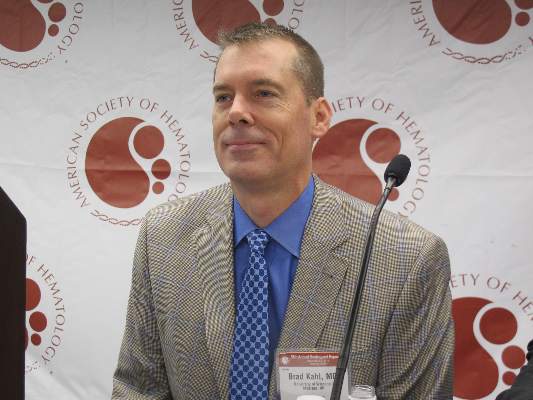
“Dr. Stewart’s study will, I think, establish a new standard of care in this patient population,” commented Dr. Brad Kahl of the University of Wisconsin School of Medicine and Public Health in Madison, who moderated a briefing where the data were presented. They were published simultaneously online in the New England Journal of Medicine (NEJM, Dec. 6, 2014 [DOI: 10.1056/NEJMoa1411321]).
Among 792 patients with relapsed/refractory multiple myeloma, PFS with patients randomized to receive KRd was 26.3 months, compared with 17.6 months for patients randomized to RD. The hazard ratio for progression or death with KRd was 0.69 (P = .0001, crossing the pre-specified stopping boundary). Median overall survival had not been reached for either group. Kaplan-Meier 24 month overall survival rates were 73.3% and 65.0%, respec-tively, trending in favor of KRd, but with a P value (.04) that did not meet the pre-specified stopping boundary for survival (P = .005).
“In this same population of patients – this is patients who have relapsed one, two or three times – the best result ever reported before with any combina-tion of chemotherapy was about 19 months, with a very similar cocktail of bortezomib, thalidomide and dexamethasone,” Dr. Stewart said at the briefing.

The KRd combination also appeared to be safe.
“Despite the fact that we added a third drug and patients were on treatment significantly longer, there was a fairly well balanced ratio of patients who had to discontinue treatment due to side effects. It’s important to note that cardiac and renal events which have been reported in some studies of heavily pre-treated patients [with carfilzomib] in the past, were marginally higher in the three-drug regimen, but overall were very consistent or even lower than had previously been reported [with single-agent carilzomib],” Dr. Stewart said.
Carfilzomib is an epoxyketone proteasome inhibitor that binds selectively to the constitutive proteasome and immunoproteasome. Unlike the first-in-class proteasome inhibitor, bortezomib (Velcade), carfilzomib irreversibly binds to and disables its targets, Dr. Stewart said in an interview.
In the ASPIRE (Carfilzomib, Lenalidomide, and Dexamethasone versus Lenalidomide and Dexamethasone for the Treatment of Patients with Relapsed Multiple Myeloma) trial, investigators enrolled 792 adults with relapsed multiple myeloma from 20 countries in North America, Europe, and the Middle East. The patients, who had previously received 1-3 prior lines of therapy, were randomly assigned to receive either KRd (carfilzomib 20 mg/m2 on days 1 and 2 of the first 28-day cycle, then 27 mg/m2 for days 8,9,15, and 16, and all days of subsequent cycles), oral lenolidamide 25 mg days 1-21, and oral dexamethasone days 1, 8, 15 and 22 of each cycle; or RD, which consisted of lenalidomide and dexamethasone in the same doses and on the same schedule as in KRd.
At the time of the data cutoff for the interim analysis in June 2014, 118 of 396 patients assigned to KRd were still on treatment, as were 86 of 396 in the RD group.
At the time of the analysis, 431 PFS events had been documented, and the study met its primary endpoint of superior PFS with the addition of carfilzomib.
Common adverse events, including diarrhea, cough, fever and hypertension were reported more frequently in the KRd group.
Remissions were more durable among patients who received carfilzomib, and these patients reported higher quality-of-life scores on the QLQ-C30 Global Health Status and Quality of Life scale, Dr. Stewart noted.
SAN FRANCISCO – New standards of care are hard to come by in the treatment of relapsed/refractory multiple myeloma, but interim results of a phase III trial of the combination of carfilzomib, lenalidomide, and dexamethasone suggest that it might just fit the bill, investigators say.
In a randomized controlled trial comparing the combination, the comination, labeled KRd (the K is for carfilzomib’s tradename, Kyrpolis), was associated with significantly better progression-free survival (PFS) and a trend toward better overall survival than lenalidomide (Revlimid) and dexamethasone combined (RD), reported Dr. A. Keith Stewart, principal investigator and dean for research at the Mayo Clinic in Scottsdale, Arizona, at the annual meeting of the American Society of Hematology.
“Dr. Stewart’s study will, I think, establish a new standard of care in this patient population,” commented Dr. Brad Kahl of the University of Wisconsin School of Medicine and Public Health in Madison, who moderated a briefing where the data were presented. They were published simultaneously online in the New England Journal of Medicine (NEJM, Dec. 6, 2014 [DOI: 10.1056/NEJMoa1411321]).
Among 792 patients with relapsed/refractory multiple myeloma, PFS with patients randomized to receive KRd was 26.3 months, compared with 17.6 months for patients randomized to RD. The hazard ratio for progression or death with KRd was 0.69 (P = .0001, crossing the pre-specified stopping boundary). Median overall survival had not been reached for either group. Kaplan-Meier 24 month overall survival rates were 73.3% and 65.0%, respec-tively, trending in favor of KRd, but with a P value (.04) that did not meet the pre-specified stopping boundary for survival (P = .005).
“In this same population of patients – this is patients who have relapsed one, two or three times – the best result ever reported before with any combina-tion of chemotherapy was about 19 months, with a very similar cocktail of bortezomib, thalidomide and dexamethasone,” Dr. Stewart said at the briefing.
The KRd combination also appeared to be safe.
“Despite the fact that we added a third drug and patients were on treatment significantly longer, there was a fairly well balanced ratio of patients who had to discontinue treatment due to side effects. It’s important to note that cardiac and renal events which have been reported in some studies of heavily pre-treated patients [with carfilzomib] in the past, were marginally higher in the three-drug regimen, but overall were very consistent or even lower than had previously been reported [with single-agent carilzomib],” Dr. Stewart said.
Carfilzomib is an epoxyketone proteasome inhibitor that binds selectively to the constitutive proteasome and immunoproteasome. Unlike the first-in-class proteasome inhibitor, bortezomib (Velcade), carfilzomib irreversibly binds to and disables its targets, Dr. Stewart said in an interview.
In the ASPIRE (Carfilzomib, Lenalidomide, and Dexamethasone versus Lenalidomide and Dexamethasone for the Treatment of Patients with Relapsed Multiple Myeloma) trial, investigators enrolled 792 adults with relapsed multiple myeloma from 20 countries in North America, Europe, and the Middle East. The patients, who had previously received 1-3 prior lines of therapy, were randomly assigned to receive either KRd (carfilzomib 20 mg/m2 on days 1 and 2 of the first 28-day cycle, then 27 mg/m2 for days 8,9,15, and 16, and all days of subsequent cycles), oral lenolidamide 25 mg days 1-21, and oral dexamethasone days 1, 8, 15 and 22 of each cycle; or RD, which consisted of lenalidomide and dexamethasone in the same doses and on the same schedule as in KRd.
At the time of the data cutoff for the interim analysis in June 2014, 118 of 396 patients assigned to KRd were still on treatment, as were 86 of 396 in the RD group.
At the time of the analysis, 431 PFS events had been documented, and the study met its primary endpoint of superior PFS with the addition of carfilzomib.
Common adverse events, including diarrhea, cough, fever and hypertension were reported more frequently in the KRd group.
Remissions were more durable among patients who received carfilzomib, and these patients reported higher quality-of-life scores on the QLQ-C30 Global Health Status and Quality of Life scale, Dr. Stewart noted.
SAN FRANCISCO – New standards of care are hard to come by in the treatment of relapsed/refractory multiple myeloma, but interim results of a phase III trial of the combination of carfilzomib, lenalidomide, and dexamethasone suggest that it might just fit the bill, investigators say.
In a randomized controlled trial comparing the combination, the comination, labeled KRd (the K is for carfilzomib’s tradename, Kyrpolis), was associated with significantly better progression-free survival (PFS) and a trend toward better overall survival than lenalidomide (Revlimid) and dexamethasone combined (RD), reported Dr. A. Keith Stewart, principal investigator and dean for research at the Mayo Clinic in Scottsdale, Arizona, at the annual meeting of the American Society of Hematology.
“Dr. Stewart’s study will, I think, establish a new standard of care in this patient population,” commented Dr. Brad Kahl of the University of Wisconsin School of Medicine and Public Health in Madison, who moderated a briefing where the data were presented. They were published simultaneously online in the New England Journal of Medicine (NEJM, Dec. 6, 2014 [DOI: 10.1056/NEJMoa1411321]).
Among 792 patients with relapsed/refractory multiple myeloma, PFS with patients randomized to receive KRd was 26.3 months, compared with 17.6 months for patients randomized to RD. The hazard ratio for progression or death with KRd was 0.69 (P = .0001, crossing the pre-specified stopping boundary). Median overall survival had not been reached for either group. Kaplan-Meier 24 month overall survival rates were 73.3% and 65.0%, respec-tively, trending in favor of KRd, but with a P value (.04) that did not meet the pre-specified stopping boundary for survival (P = .005).
“In this same population of patients – this is patients who have relapsed one, two or three times – the best result ever reported before with any combina-tion of chemotherapy was about 19 months, with a very similar cocktail of bortezomib, thalidomide and dexamethasone,” Dr. Stewart said at the briefing.
The KRd combination also appeared to be safe.
“Despite the fact that we added a third drug and patients were on treatment significantly longer, there was a fairly well balanced ratio of patients who had to discontinue treatment due to side effects. It’s important to note that cardiac and renal events which have been reported in some studies of heavily pre-treated patients [with carfilzomib] in the past, were marginally higher in the three-drug regimen, but overall were very consistent or even lower than had previously been reported [with single-agent carilzomib],” Dr. Stewart said.
Carfilzomib is an epoxyketone proteasome inhibitor that binds selectively to the constitutive proteasome and immunoproteasome. Unlike the first-in-class proteasome inhibitor, bortezomib (Velcade), carfilzomib irreversibly binds to and disables its targets, Dr. Stewart said in an interview.
In the ASPIRE (Carfilzomib, Lenalidomide, and Dexamethasone versus Lenalidomide and Dexamethasone for the Treatment of Patients with Relapsed Multiple Myeloma) trial, investigators enrolled 792 adults with relapsed multiple myeloma from 20 countries in North America, Europe, and the Middle East. The patients, who had previously received 1-3 prior lines of therapy, were randomly assigned to receive either KRd (carfilzomib 20 mg/m2 on days 1 and 2 of the first 28-day cycle, then 27 mg/m2 for days 8,9,15, and 16, and all days of subsequent cycles), oral lenolidamide 25 mg days 1-21, and oral dexamethasone days 1, 8, 15 and 22 of each cycle; or RD, which consisted of lenalidomide and dexamethasone in the same doses and on the same schedule as in KRd.
At the time of the data cutoff for the interim analysis in June 2014, 118 of 396 patients assigned to KRd were still on treatment, as were 86 of 396 in the RD group.
At the time of the analysis, 431 PFS events had been documented, and the study met its primary endpoint of superior PFS with the addition of carfilzomib.
Common adverse events, including diarrhea, cough, fever and hypertension were reported more frequently in the KRd group.
Remissions were more durable among patients who received carfilzomib, and these patients reported higher quality-of-life scores on the QLQ-C30 Global Health Status and Quality of Life scale, Dr. Stewart noted.
AT ASH 2014
Key clinical point: Adding the proteasome inhibitor carfilzomib to lenalidomide and dexamethasone resulted in a significantly better PFS in patients with relapsed/refractory multiple myeloma.
Major finding: Progresion-free survival was 26.3 months for the 3-drug combo compared with 17.6 months for len-dex alone.
Data source: Phase III open-label randomized controlled trial in 792 patients with relapsed/refractory multiple myeloma.
Disclosures: The study was supported by Onyx Pharmaceuticals. Dr. Stewart reports support from Onyx during the conduct of the study, and grant support from Onyx and personal fees from Celgene outside the study.
People often dismiss cancer symptoms, survey suggests

Credit: NIH
People could be putting their lives at risk by dismissing potential warning signs of cancer as less serious symptoms, according to a study published in PLOS ONE.
In a survey of about 1700 people, more than half of respondents said they had experienced at least
one red-flag cancer “alarm” symptom—such as persistent, unexplained pain or an unexplained lump—during the previous 3 months, but
only 2% of them thought cancer was a possible cause.
The survey had been sent to people aged 50 and older who were registered with 3 London general practices. The questionnaire listed 17 symptoms, including 10 widely publicized potential cancer warning signs, such as an unexplained cough, bleeding, and a persistent change in bowel or bladder habits.
Cancer was not mentioned, but the survey asked which of the symptoms subjects had experienced, what they thought caused them, if they were concerned that symptoms were serious, and whether they had consulted their doctor.
Of the 1724 subjects who responded, 53% had experienced at least one cancer “alarm” symptom in the previous 3 months.
This included unexplained cough or hoarseness; persistent change in bowel habits; persistent, unexplained pain; persistent change in bladder habits; unexplained lump; a change in the appearance of a mole; a sore that does not heal; unexplained bleeding; unexplained weight loss; and persistent difficulty swallowing.
Persistent cough (20%) and persistent change in bowel habits (18%) were the most common symptoms. Difficulty swallowing and unexplained weight loss (both 4%) were least common.
Overall, subjects appraised the cancer warning “alarm” symptoms as more serious than “non-alarm” symptoms, such as sore throat and feeling tired. Fifty-nine percent of respondents said they contacted a doctor about their “alarm” symptoms.
However, subjects rarely attributed potential signs of cancer to the disease, putting them down to other reasons, such as age, infection, arthritis, piles, and cysts.
“Most people with potential warning symptoms don’t have cancer, but some will, and others may have other diseases that would benefit from early attention,” said study author Katriina Whitaker, PhD, of University College London in the UK.
“That’s why it’s important that these symptoms are checked out, especially if they don’t go away. But people could delay seeing a doctor if they don’t acknowledge cancer as a possible cause. It’s worrying that even the more obvious warning symptoms, such as unexplained lumps or changes to the appearance of a mole, were rarely attributed to cancer, although they are often well recognized in surveys that assess the public’s knowledge of the disease.”
“Even when people thought warning symptoms might be serious, cancer didn’t tend to spring to mind. This might be because people were frightened and reluctant to mention cancer, thought cancer wouldn’t happen to them, or believed other causes were more likely.”
Credit: NIH
People could be putting their lives at risk by dismissing potential warning signs of cancer as less serious symptoms, according to a study published in PLOS ONE.
In a survey of about 1700 people, more than half of respondents said they had experienced at least
one red-flag cancer “alarm” symptom—such as persistent, unexplained pain or an unexplained lump—during the previous 3 months, but
only 2% of them thought cancer was a possible cause.
The survey had been sent to people aged 50 and older who were registered with 3 London general practices. The questionnaire listed 17 symptoms, including 10 widely publicized potential cancer warning signs, such as an unexplained cough, bleeding, and a persistent change in bowel or bladder habits.
Cancer was not mentioned, but the survey asked which of the symptoms subjects had experienced, what they thought caused them, if they were concerned that symptoms were serious, and whether they had consulted their doctor.
Of the 1724 subjects who responded, 53% had experienced at least one cancer “alarm” symptom in the previous 3 months.
This included unexplained cough or hoarseness; persistent change in bowel habits; persistent, unexplained pain; persistent change in bladder habits; unexplained lump; a change in the appearance of a mole; a sore that does not heal; unexplained bleeding; unexplained weight loss; and persistent difficulty swallowing.
Persistent cough (20%) and persistent change in bowel habits (18%) were the most common symptoms. Difficulty swallowing and unexplained weight loss (both 4%) were least common.
Overall, subjects appraised the cancer warning “alarm” symptoms as more serious than “non-alarm” symptoms, such as sore throat and feeling tired. Fifty-nine percent of respondents said they contacted a doctor about their “alarm” symptoms.
However, subjects rarely attributed potential signs of cancer to the disease, putting them down to other reasons, such as age, infection, arthritis, piles, and cysts.
“Most people with potential warning symptoms don’t have cancer, but some will, and others may have other diseases that would benefit from early attention,” said study author Katriina Whitaker, PhD, of University College London in the UK.
“That’s why it’s important that these symptoms are checked out, especially if they don’t go away. But people could delay seeing a doctor if they don’t acknowledge cancer as a possible cause. It’s worrying that even the more obvious warning symptoms, such as unexplained lumps or changes to the appearance of a mole, were rarely attributed to cancer, although they are often well recognized in surveys that assess the public’s knowledge of the disease.”
“Even when people thought warning symptoms might be serious, cancer didn’t tend to spring to mind. This might be because people were frightened and reluctant to mention cancer, thought cancer wouldn’t happen to them, or believed other causes were more likely.”
Credit: NIH
People could be putting their lives at risk by dismissing potential warning signs of cancer as less serious symptoms, according to a study published in PLOS ONE.
In a survey of about 1700 people, more than half of respondents said they had experienced at least
one red-flag cancer “alarm” symptom—such as persistent, unexplained pain or an unexplained lump—during the previous 3 months, but
only 2% of them thought cancer was a possible cause.
The survey had been sent to people aged 50 and older who were registered with 3 London general practices. The questionnaire listed 17 symptoms, including 10 widely publicized potential cancer warning signs, such as an unexplained cough, bleeding, and a persistent change in bowel or bladder habits.
Cancer was not mentioned, but the survey asked which of the symptoms subjects had experienced, what they thought caused them, if they were concerned that symptoms were serious, and whether they had consulted their doctor.
Of the 1724 subjects who responded, 53% had experienced at least one cancer “alarm” symptom in the previous 3 months.
This included unexplained cough or hoarseness; persistent change in bowel habits; persistent, unexplained pain; persistent change in bladder habits; unexplained lump; a change in the appearance of a mole; a sore that does not heal; unexplained bleeding; unexplained weight loss; and persistent difficulty swallowing.
Persistent cough (20%) and persistent change in bowel habits (18%) were the most common symptoms. Difficulty swallowing and unexplained weight loss (both 4%) were least common.
Overall, subjects appraised the cancer warning “alarm” symptoms as more serious than “non-alarm” symptoms, such as sore throat and feeling tired. Fifty-nine percent of respondents said they contacted a doctor about their “alarm” symptoms.
However, subjects rarely attributed potential signs of cancer to the disease, putting them down to other reasons, such as age, infection, arthritis, piles, and cysts.
“Most people with potential warning symptoms don’t have cancer, but some will, and others may have other diseases that would benefit from early attention,” said study author Katriina Whitaker, PhD, of University College London in the UK.
“That’s why it’s important that these symptoms are checked out, especially if they don’t go away. But people could delay seeing a doctor if they don’t acknowledge cancer as a possible cause. It’s worrying that even the more obvious warning symptoms, such as unexplained lumps or changes to the appearance of a mole, were rarely attributed to cancer, although they are often well recognized in surveys that assess the public’s knowledge of the disease.”
“Even when people thought warning symptoms might be serious, cancer didn’t tend to spring to mind. This might be because people were frightened and reluctant to mention cancer, thought cancer wouldn’t happen to them, or believed other causes were more likely.”
Study shows long-term survival improvements in blood cancers

Credit: Rhoda Baer
A new study suggests that half of all people recently diagnosed with cancer in England and Wales should survive their disease for at least 10 years, whereas, 40 years ago, only about a quarter of cancer patients could expect the same.
The research, published in The Lancet, showed significant improvements in long-term cancer survival rates from 1971 to 2011, particularly among patients with hematologic malignancies.
Unfortunately, the outlook for some malignancies remained extremely poor over the period studied.
“Although survival for some cancers has improved dramatically over the past 40 years, others are lagging far behind,” said Manuela Quaresma, of the London School of Hygiene & Tropical Medicine in the UK.
“More investment is urgently needed to improve early diagnosis and provide the best treatment, including more specialist surgeons for poor-prognosis cancers like lung cancer, which have shown little or no evidence of improvement in long-term survival (5 and 10 years after diagnosis) over the past 40 years.”
Quaresma and her colleagues analyzed survival trends for more than 7 million adults (aged 15 to 99 years) diagnosed with one of 21 common cancers in England and Wales between 1971 and 2011, and followed up to the end of 2012.
The researchers observed an increase in 10-year survival for all cancers combined. Twenty-four percent of patients diagnosed in 1971-1972 survived at least 10 years. And 49.8% of patients diagnosed in 2010-2011 are expected to survive at least 10 years.
The data revealed substantial improvements for patients with hematologic malignancies as well. For Hodgkin lymphoma, the 10-year survival rate rose from 47.7% for patients diagnosed in 1971-1972 to 80% for those diagnosed in 2010-2011.
For non-Hodgkin lymphoma, the 10-year survival rate increased from 22% to 63.1%. For multiple myeloma, it rose from 6.2% to 32.6%. And for leukemia, it rose from 6.9% to 46.1%.
The researchers noted that the most recent 10-year survival estimates are above 70% for cancers of the breast, prostate, testis, and uterus, as well as for melanoma and Hodgkin lymphoma. Furthermore, improvements in survival are greatest for these cancers.
Unfortunately, several other malignancies continue to have poor long-term survival. For cancers of the brain, stomach, lung, esophagus, and pancreas, 10-year survival after diagnosis is still below 15% for patients diagnosed in 2010-2011.
“These 5 cancers impose a huge public health burden, both because they are common and because they are often diagnosed at a late stage, when they are much harder to treat,” said study author Bernard Rachet, MD, PhD, of the London School of Hygiene & Tropical Medicine.
Dr Rachet also noted that this research confirms a persistent “age gap” in survival between younger and older patients for all cancers.
“Even after we have adjusted for the fact that older people have much higher death rates from other diseases than younger people, elderly cancer patients are doing worse for all cancers,” he said.
“This problem is particularly marked in the UK. In other countries, the age gap in cancer survival has become much narrower over the last 15 to 20 years than in England and Wales.”
Credit: Rhoda Baer
A new study suggests that half of all people recently diagnosed with cancer in England and Wales should survive their disease for at least 10 years, whereas, 40 years ago, only about a quarter of cancer patients could expect the same.
The research, published in The Lancet, showed significant improvements in long-term cancer survival rates from 1971 to 2011, particularly among patients with hematologic malignancies.
Unfortunately, the outlook for some malignancies remained extremely poor over the period studied.
“Although survival for some cancers has improved dramatically over the past 40 years, others are lagging far behind,” said Manuela Quaresma, of the London School of Hygiene & Tropical Medicine in the UK.
“More investment is urgently needed to improve early diagnosis and provide the best treatment, including more specialist surgeons for poor-prognosis cancers like lung cancer, which have shown little or no evidence of improvement in long-term survival (5 and 10 years after diagnosis) over the past 40 years.”
Quaresma and her colleagues analyzed survival trends for more than 7 million adults (aged 15 to 99 years) diagnosed with one of 21 common cancers in England and Wales between 1971 and 2011, and followed up to the end of 2012.
The researchers observed an increase in 10-year survival for all cancers combined. Twenty-four percent of patients diagnosed in 1971-1972 survived at least 10 years. And 49.8% of patients diagnosed in 2010-2011 are expected to survive at least 10 years.
The data revealed substantial improvements for patients with hematologic malignancies as well. For Hodgkin lymphoma, the 10-year survival rate rose from 47.7% for patients diagnosed in 1971-1972 to 80% for those diagnosed in 2010-2011.
For non-Hodgkin lymphoma, the 10-year survival rate increased from 22% to 63.1%. For multiple myeloma, it rose from 6.2% to 32.6%. And for leukemia, it rose from 6.9% to 46.1%.
The researchers noted that the most recent 10-year survival estimates are above 70% for cancers of the breast, prostate, testis, and uterus, as well as for melanoma and Hodgkin lymphoma. Furthermore, improvements in survival are greatest for these cancers.
Unfortunately, several other malignancies continue to have poor long-term survival. For cancers of the brain, stomach, lung, esophagus, and pancreas, 10-year survival after diagnosis is still below 15% for patients diagnosed in 2010-2011.
“These 5 cancers impose a huge public health burden, both because they are common and because they are often diagnosed at a late stage, when they are much harder to treat,” said study author Bernard Rachet, MD, PhD, of the London School of Hygiene & Tropical Medicine.
Dr Rachet also noted that this research confirms a persistent “age gap” in survival between younger and older patients for all cancers.
“Even after we have adjusted for the fact that older people have much higher death rates from other diseases than younger people, elderly cancer patients are doing worse for all cancers,” he said.
“This problem is particularly marked in the UK. In other countries, the age gap in cancer survival has become much narrower over the last 15 to 20 years than in England and Wales.”
Credit: Rhoda Baer
A new study suggests that half of all people recently diagnosed with cancer in England and Wales should survive their disease for at least 10 years, whereas, 40 years ago, only about a quarter of cancer patients could expect the same.
The research, published in The Lancet, showed significant improvements in long-term cancer survival rates from 1971 to 2011, particularly among patients with hematologic malignancies.
Unfortunately, the outlook for some malignancies remained extremely poor over the period studied.
“Although survival for some cancers has improved dramatically over the past 40 years, others are lagging far behind,” said Manuela Quaresma, of the London School of Hygiene & Tropical Medicine in the UK.
“More investment is urgently needed to improve early diagnosis and provide the best treatment, including more specialist surgeons for poor-prognosis cancers like lung cancer, which have shown little or no evidence of improvement in long-term survival (5 and 10 years after diagnosis) over the past 40 years.”
Quaresma and her colleagues analyzed survival trends for more than 7 million adults (aged 15 to 99 years) diagnosed with one of 21 common cancers in England and Wales between 1971 and 2011, and followed up to the end of 2012.
The researchers observed an increase in 10-year survival for all cancers combined. Twenty-four percent of patients diagnosed in 1971-1972 survived at least 10 years. And 49.8% of patients diagnosed in 2010-2011 are expected to survive at least 10 years.
The data revealed substantial improvements for patients with hematologic malignancies as well. For Hodgkin lymphoma, the 10-year survival rate rose from 47.7% for patients diagnosed in 1971-1972 to 80% for those diagnosed in 2010-2011.
For non-Hodgkin lymphoma, the 10-year survival rate increased from 22% to 63.1%. For multiple myeloma, it rose from 6.2% to 32.6%. And for leukemia, it rose from 6.9% to 46.1%.
The researchers noted that the most recent 10-year survival estimates are above 70% for cancers of the breast, prostate, testis, and uterus, as well as for melanoma and Hodgkin lymphoma. Furthermore, improvements in survival are greatest for these cancers.
Unfortunately, several other malignancies continue to have poor long-term survival. For cancers of the brain, stomach, lung, esophagus, and pancreas, 10-year survival after diagnosis is still below 15% for patients diagnosed in 2010-2011.
“These 5 cancers impose a huge public health burden, both because they are common and because they are often diagnosed at a late stage, when they are much harder to treat,” said study author Bernard Rachet, MD, PhD, of the London School of Hygiene & Tropical Medicine.
Dr Rachet also noted that this research confirms a persistent “age gap” in survival between younger and older patients for all cancers.
“Even after we have adjusted for the fact that older people have much higher death rates from other diseases than younger people, elderly cancer patients are doing worse for all cancers,” he said.
“This problem is particularly marked in the UK. In other countries, the age gap in cancer survival has become much narrower over the last 15 to 20 years than in England and Wales.”
Drug gets orphan designation for MM & CLL/SLL
The European Medicines Agency (EMA) has granted orphan drug designation for selinexor (KPT-330) to treat multiple myeloma (MM) and chronic lymphocytic leukemia (CLL)/small lymphocytic lymphoma (SLL), including Richter’s transformation.
Selinexor previously received orphan designation from both the EMA and the US Food and Drug Administration to treat patients with acute myeloid leukemia and those with diffuse large B-cell lymphoma.
Orphan designation is granted to promote the development of drugs that target rare, life-threatening or debilitating conditions and are expected to provide a significant therapeutic advantage over existing treatments.
Orphan designation qualifies a company—in this case, Karyopharm Therapeutics Inc.—for benefits that include targeted scientific advice from the EMA regarding drug development and 10 years of market exclusivity following the drug’s approval.
About selinexor
Selinexor (KPT-330) is a first-in-class, oral selective inhibitor of nuclear export (SINE) compound. Selinexor functions by inhibiting the nuclear export protein XPO1 (also called CRM1).
This leads to the accumulation of tumor suppressor proteins in the cell nucleus, which subsequently reinitiates and amplifies their tumor suppressor function. This is thought to prompt apoptosis in cancer cells while largely sparing normal cells.
Selinexor has shown promise in an ongoing phase 1 study of patients with a range of hematologic malignancies. Results of this trial were presented at the 2014 ASCO Annual Meeting.
At that point, the study included 51 patients who had received selinexor across 8 dose levels, ranging from 3 mg/m2 to 60 mg/m2.
Among the 43 patients evaluable for response, the overall response rate was 28%, and the complete response rate was 5%.
Most adverse events were gastrointestinal in nature, and most of them were grade 1 or 2. The most common adverse events were nausea, anorexia, and fatigue.
There were 3 dose-limiting toxicities, including 1 MM patient with grade 4 thrombocytopenia, 1 follicular lymphoma patient with grade 4 thrombocytopenia, and 1 CLL patient with grade 2 fatigue.
The European Medicines Agency (EMA) has granted orphan drug designation for selinexor (KPT-330) to treat multiple myeloma (MM) and chronic lymphocytic leukemia (CLL)/small lymphocytic lymphoma (SLL), including Richter’s transformation.
Selinexor previously received orphan designation from both the EMA and the US Food and Drug Administration to treat patients with acute myeloid leukemia and those with diffuse large B-cell lymphoma.
Orphan designation is granted to promote the development of drugs that target rare, life-threatening or debilitating conditions and are expected to provide a significant therapeutic advantage over existing treatments.
Orphan designation qualifies a company—in this case, Karyopharm Therapeutics Inc.—for benefits that include targeted scientific advice from the EMA regarding drug development and 10 years of market exclusivity following the drug’s approval.
About selinexor
Selinexor (KPT-330) is a first-in-class, oral selective inhibitor of nuclear export (SINE) compound. Selinexor functions by inhibiting the nuclear export protein XPO1 (also called CRM1).
This leads to the accumulation of tumor suppressor proteins in the cell nucleus, which subsequently reinitiates and amplifies their tumor suppressor function. This is thought to prompt apoptosis in cancer cells while largely sparing normal cells.
Selinexor has shown promise in an ongoing phase 1 study of patients with a range of hematologic malignancies. Results of this trial were presented at the 2014 ASCO Annual Meeting.
At that point, the study included 51 patients who had received selinexor across 8 dose levels, ranging from 3 mg/m2 to 60 mg/m2.
Among the 43 patients evaluable for response, the overall response rate was 28%, and the complete response rate was 5%.
Most adverse events were gastrointestinal in nature, and most of them were grade 1 or 2. The most common adverse events were nausea, anorexia, and fatigue.
There were 3 dose-limiting toxicities, including 1 MM patient with grade 4 thrombocytopenia, 1 follicular lymphoma patient with grade 4 thrombocytopenia, and 1 CLL patient with grade 2 fatigue.
The European Medicines Agency (EMA) has granted orphan drug designation for selinexor (KPT-330) to treat multiple myeloma (MM) and chronic lymphocytic leukemia (CLL)/small lymphocytic lymphoma (SLL), including Richter’s transformation.
Selinexor previously received orphan designation from both the EMA and the US Food and Drug Administration to treat patients with acute myeloid leukemia and those with diffuse large B-cell lymphoma.
Orphan designation is granted to promote the development of drugs that target rare, life-threatening or debilitating conditions and are expected to provide a significant therapeutic advantage over existing treatments.
Orphan designation qualifies a company—in this case, Karyopharm Therapeutics Inc.—for benefits that include targeted scientific advice from the EMA regarding drug development and 10 years of market exclusivity following the drug’s approval.
About selinexor
Selinexor (KPT-330) is a first-in-class, oral selective inhibitor of nuclear export (SINE) compound. Selinexor functions by inhibiting the nuclear export protein XPO1 (also called CRM1).
This leads to the accumulation of tumor suppressor proteins in the cell nucleus, which subsequently reinitiates and amplifies their tumor suppressor function. This is thought to prompt apoptosis in cancer cells while largely sparing normal cells.
Selinexor has shown promise in an ongoing phase 1 study of patients with a range of hematologic malignancies. Results of this trial were presented at the 2014 ASCO Annual Meeting.
At that point, the study included 51 patients who had received selinexor across 8 dose levels, ranging from 3 mg/m2 to 60 mg/m2.
Among the 43 patients evaluable for response, the overall response rate was 28%, and the complete response rate was 5%.
Most adverse events were gastrointestinal in nature, and most of them were grade 1 or 2. The most common adverse events were nausea, anorexia, and fatigue.
There were 3 dose-limiting toxicities, including 1 MM patient with grade 4 thrombocytopenia, 1 follicular lymphoma patient with grade 4 thrombocytopenia, and 1 CLL patient with grade 2 fatigue.