User login
For MD-IQ use only
Unleashing Our Immune Response to Quash Cancer
This article was originally published on February 10 in Eric Topol’s substack “Ground Truths.”
It’s astounding how devious cancer cells and tumor tissue can be. This week in Science we learned how certain lung cancer cells can function like “Catch Me If You Can” — changing their driver mutation and cell identity to escape targeted therapy. This histologic transformation, as seen in an experimental model, is just one of so many cancer tricks that we are learning about.
Recently, as shown by single-cell sequencing, cancer cells can steal the mitochondria from T cells, a double whammy that turbocharges cancer cells with the hijacked fuel supply and, at the same time, dismantles the immune response.
Last week, we saw how tumor cells can release a virus-like protein that unleashes a vicious autoimmune response.
And then there’s the finding that cancer cell spread predominantly is occurring while we sleep.
As I previously reviewed, the ability for cancer cells to hijack neurons and neural circuits is now well established, no less their ability to reprogram neurons to become adrenergic and stimulate tumor progression, and interfere with the immune response. Stay tuned on that for a new Ground Truths podcast with Prof Michelle Monje, a leader in cancer neuroscience, which will post soon.
Add advancing age’s immunosenescence as yet another challenge to the long and growing list of formidable ways that cancer cells, and the tumor microenvironment, evade our immune response.
An Ever-Expanding Armamentarium
Immune Checkpoint Inhibitors
The field of immunotherapies took off with the immune checkpoint inhibitors, first approved by the FDA in 2011, that take the brakes off of T cells, with the programmed death-1 (PD-1), PD-ligand1, and anti-CTLA-4 monoclonal antibodies.
But we’re clearly learning they are not enough to prevail over cancer with common recurrences, only short term success in most patients, with some notable exceptions. Adding other immune response strategies, such as a vaccine, or antibody-drug conjugates, or engineered T cells, are showing improved chances for success.
Therapeutic Cancer Vaccines
There are many therapeutic cancer vaccines in the works, as reviewed in depth here.
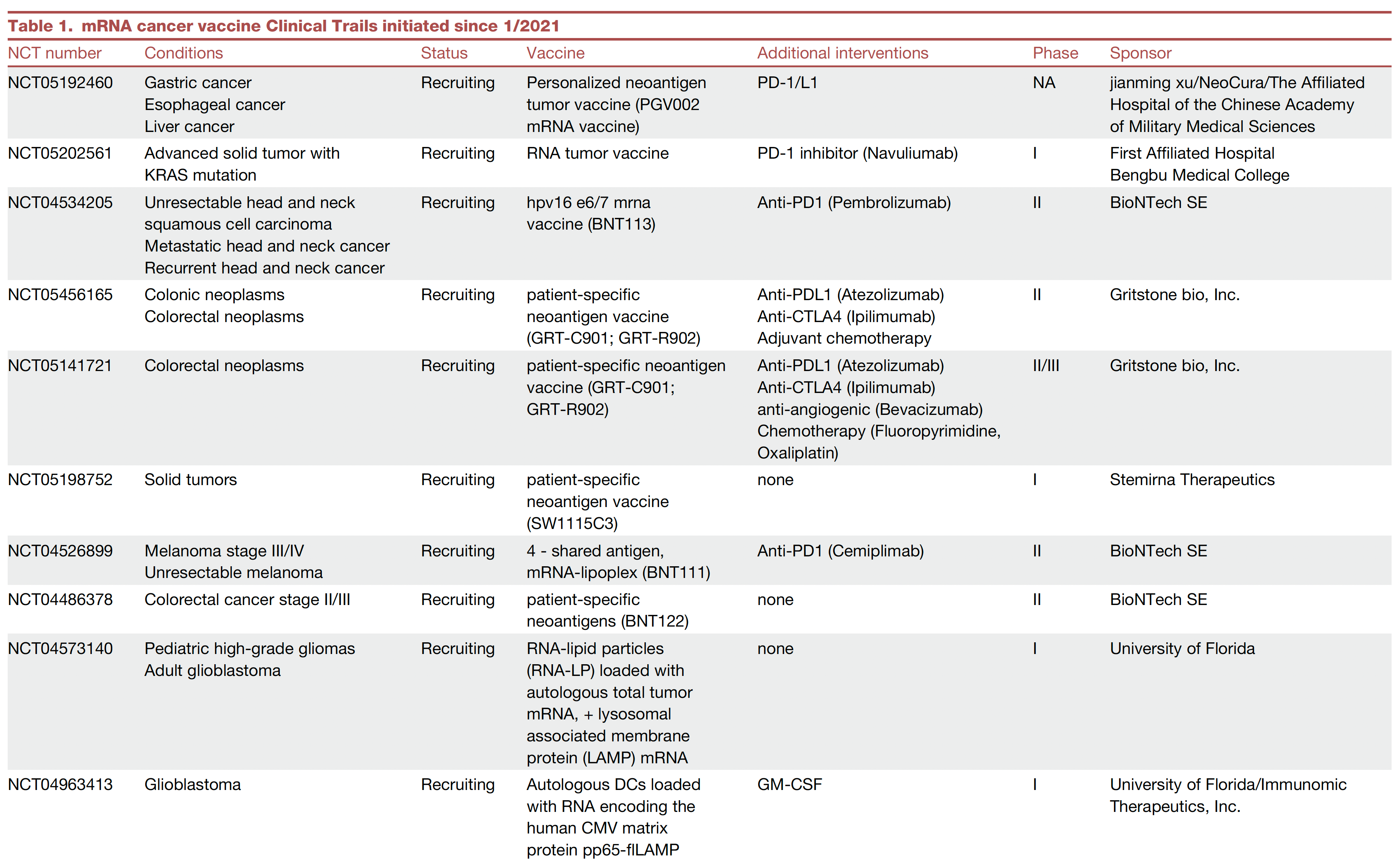
Here’s a list of ongoing clinical trials of cancer vaccines. You’ll note most of these are on top of a checkpoint inhibitor and use personalized neoantigens (cancer cell surface proteins) derived from sequencing (whole-exome or whole genome, RNA-sequencing and HLA-profiling) the patient’s tumor.
An example of positive findings is with the combination of an mRNA-nanoparticle vaccine with up to 34 personalized neoantigens and pembrolizumab (Keytruda) vs pembrolizumab alone in advanced melanoma after resection, with improved outcomes at 3-year follow-up, cutting death or relapse rate in half.
Antibody-Drug Conjugates (ADC)
There is considerable excitement about antibody-drug conjugates (ADC) whereby a linker is used to attach a chemotherapy agent to the checkpoint inhibitor antibody, specifically targeting the cancer cell and facilitating entry of the chemotherapy into the cell. Akin to these are bispecific antibodies (BiTEs, binding to a tumor antigen and T cell receptor simultaneously), both of these conjugates acting as “biologic” or “guided” missiles.
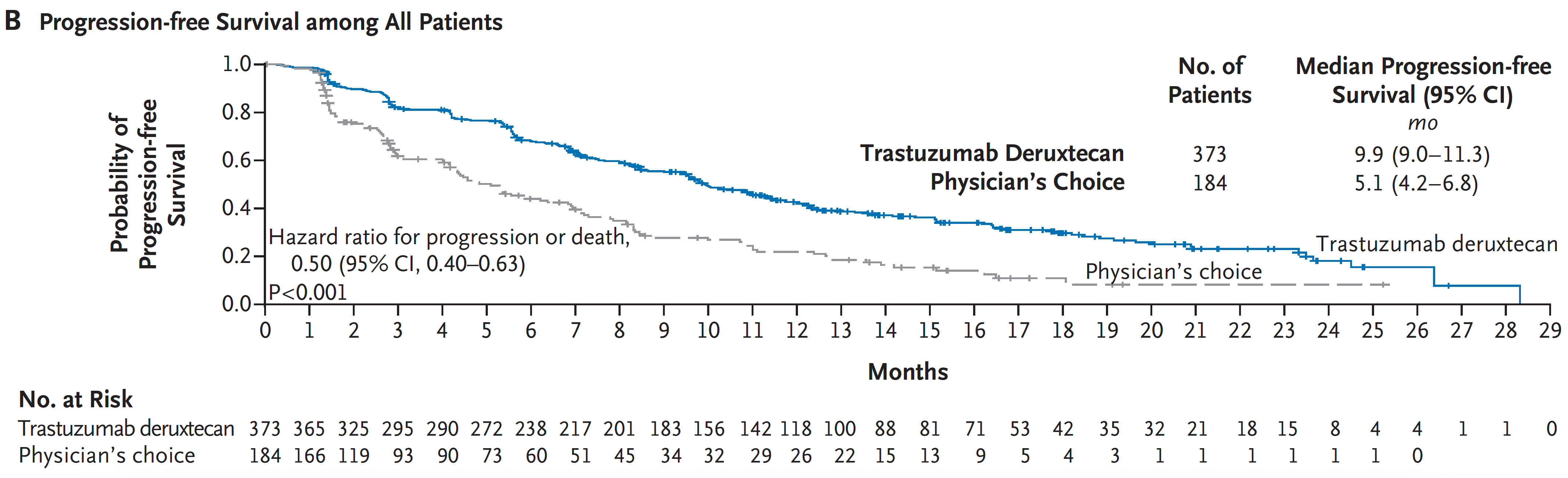
A very good example of the potency of an ADC was seen in a “HER2-low” breast cancer randomized trial. The absence or very low expression or amplification of the HER2 receptor is common in breast cancer and successful treatment has been elusive. A randomized trial of an ADC (trastuzumab deruxtecan) compared to physician’s choice therapy demonstrated a marked success for progression-free survival in HER2-low patients, which was characterized as “unheard-of success” by media coverage.
This strategy is being used to target some of the most difficult cancer driver mutations such as TP53 and KRAS.
Oncolytic Viruses
Modifying viruses to infect the tumor and make it more visible to the immune system, potentiating anti-tumor responses, known as oncolytic viruses, have been proposed as a way to rev up the immune response for a long time but without positive Phase 3 clinical trials.
After decades of failure, a recent trial in refractory bladder cancer showed marked success, along with others, summarized here, now providing very encouraging results. It looks like oncolytic viruses are on a comeback path.
Engineering T Cells (Chimeric Antigen Receptor [CAR-T])
As I recently reviewed, there are over 500 ongoing clinical trials to build on the success of the first CAR-T approval for leukemia 7 years ago. I won’t go through that all again here, but to reiterate most of the success to date has been in “liquid” blood (leukemia and lymphoma) cancer tumors. This week in Nature is the discovery of a T cell cancer mutation, a gene fusion CARD11-PIK3R3, from a T cell lymphoma that can potentially be used to augment CAR-T efficacy. It has pronounced and prolonged effects in the experimental model. Instead of 1 million cells needed for treatment, even 20,000 were enough to melt the tumor. This is a noteworthy discovery since CAR-T work to date has largely not exploited such naturally occurring mutations, while instead concentrating on those seen in the patient’s set of key tumor mutations.
As currently conceived, CAR-T, and what is being referred to more broadly as adoptive cell therapies, involves removing T cells from the patient’s body and engineering their activation, then reintroducing them back to the patient. This is laborious, technically difficult, and very expensive. Recently, the idea of achieving all of this via an injection of virus that specifically infects T cells and inserts the genes needed, was advanced by two biotech companies with preclinical results, one in non-human primates.
Gearing up to meet the challenge of solid tumor CAR-T intervention, there’s more work using CRISPR genome editing of T cell receptors. A.I. is increasingly being exploited to process the data from sequencing and identify optimal neoantigens.
Instead of just CAR-T, we’re seeing the emergence of CAR-macrophage and CAR-natural killer (NK) cells strategies, and rapidly expanding potential combinations of all the strategies I’ve mentioned. No less, there’s been maturation of on-off suicide switches programmed in, to limit cytokine release and promote safety of these interventions. Overall, major side effects of immunotherapies are not only cytokine release syndromes, but also include interstitial pneumonitis and neurotoxicity.
Summary
Given the multitude of ways cancer cells and tumor tissue can evade our immune response, durably successful treatment remains a daunting challenge. But the ingenuity of so many different approaches to unleash our immune response, and their combinations, provides considerable hope that we’ll increasingly meet the challenge in the years ahead. We have clearly learned that combining different immunotherapy strategies will be essential for many patients with the most resilient solid tumors.
Of concern, as noted by a recent editorial in The Lancet, entitled “Cancer Research Equity: Innovations For The Many, Not The Few,” is that these individualized, sophisticated strategies are not scalable; they will have limited reach and benefit. The movement towards “off the shelf” CAR-T and inexpensive, orally active checkpoint inhibitors may help mitigate this issue.
Notwithstanding this important concern, we’re seeing an array of diverse and potent immunotherapy strategies that are providing highly encouraging results, engendering more excitement than we’ve seen in this space for some time. These should propel substantial improvements in outcomes for patients in the years ahead. It can’t happen soon enough.
Thanks for reading this edition of Ground Truths. If you found it informative, please share it with your colleagues.
Dr. Topol has disclosed the following relevant financial relationships: Serve(d) as a director, officer, partner, employee, advisor, consultant, or trustee for Dexcom; Illumina; Molecular Stethoscope; Quest Diagnostics; Blue Cross Blue Shield Association. Received research grant from National Institutes of Health.
A version of this article appeared on Medscape.com.
This article was originally published on February 10 in Eric Topol’s substack “Ground Truths.”
It’s astounding how devious cancer cells and tumor tissue can be. This week in Science we learned how certain lung cancer cells can function like “Catch Me If You Can” — changing their driver mutation and cell identity to escape targeted therapy. This histologic transformation, as seen in an experimental model, is just one of so many cancer tricks that we are learning about.
Recently, as shown by single-cell sequencing, cancer cells can steal the mitochondria from T cells, a double whammy that turbocharges cancer cells with the hijacked fuel supply and, at the same time, dismantles the immune response.
Last week, we saw how tumor cells can release a virus-like protein that unleashes a vicious autoimmune response.
And then there’s the finding that cancer cell spread predominantly is occurring while we sleep.
As I previously reviewed, the ability for cancer cells to hijack neurons and neural circuits is now well established, no less their ability to reprogram neurons to become adrenergic and stimulate tumor progression, and interfere with the immune response. Stay tuned on that for a new Ground Truths podcast with Prof Michelle Monje, a leader in cancer neuroscience, which will post soon.
Add advancing age’s immunosenescence as yet another challenge to the long and growing list of formidable ways that cancer cells, and the tumor microenvironment, evade our immune response.
An Ever-Expanding Armamentarium
Immune Checkpoint Inhibitors
The field of immunotherapies took off with the immune checkpoint inhibitors, first approved by the FDA in 2011, that take the brakes off of T cells, with the programmed death-1 (PD-1), PD-ligand1, and anti-CTLA-4 monoclonal antibodies.
But we’re clearly learning they are not enough to prevail over cancer with common recurrences, only short term success in most patients, with some notable exceptions. Adding other immune response strategies, such as a vaccine, or antibody-drug conjugates, or engineered T cells, are showing improved chances for success.
Therapeutic Cancer Vaccines
There are many therapeutic cancer vaccines in the works, as reviewed in depth here.
Here’s a list of ongoing clinical trials of cancer vaccines. You’ll note most of these are on top of a checkpoint inhibitor and use personalized neoantigens (cancer cell surface proteins) derived from sequencing (whole-exome or whole genome, RNA-sequencing and HLA-profiling) the patient’s tumor.
An example of positive findings is with the combination of an mRNA-nanoparticle vaccine with up to 34 personalized neoantigens and pembrolizumab (Keytruda) vs pembrolizumab alone in advanced melanoma after resection, with improved outcomes at 3-year follow-up, cutting death or relapse rate in half.
Antibody-Drug Conjugates (ADC)
There is considerable excitement about antibody-drug conjugates (ADC) whereby a linker is used to attach a chemotherapy agent to the checkpoint inhibitor antibody, specifically targeting the cancer cell and facilitating entry of the chemotherapy into the cell. Akin to these are bispecific antibodies (BiTEs, binding to a tumor antigen and T cell receptor simultaneously), both of these conjugates acting as “biologic” or “guided” missiles.
A very good example of the potency of an ADC was seen in a “HER2-low” breast cancer randomized trial. The absence or very low expression or amplification of the HER2 receptor is common in breast cancer and successful treatment has been elusive. A randomized trial of an ADC (trastuzumab deruxtecan) compared to physician’s choice therapy demonstrated a marked success for progression-free survival in HER2-low patients, which was characterized as “unheard-of success” by media coverage.
This strategy is being used to target some of the most difficult cancer driver mutations such as TP53 and KRAS.
Oncolytic Viruses
Modifying viruses to infect the tumor and make it more visible to the immune system, potentiating anti-tumor responses, known as oncolytic viruses, have been proposed as a way to rev up the immune response for a long time but without positive Phase 3 clinical trials.
After decades of failure, a recent trial in refractory bladder cancer showed marked success, along with others, summarized here, now providing very encouraging results. It looks like oncolytic viruses are on a comeback path.
Engineering T Cells (Chimeric Antigen Receptor [CAR-T])
As I recently reviewed, there are over 500 ongoing clinical trials to build on the success of the first CAR-T approval for leukemia 7 years ago. I won’t go through that all again here, but to reiterate most of the success to date has been in “liquid” blood (leukemia and lymphoma) cancer tumors. This week in Nature is the discovery of a T cell cancer mutation, a gene fusion CARD11-PIK3R3, from a T cell lymphoma that can potentially be used to augment CAR-T efficacy. It has pronounced and prolonged effects in the experimental model. Instead of 1 million cells needed for treatment, even 20,000 were enough to melt the tumor. This is a noteworthy discovery since CAR-T work to date has largely not exploited such naturally occurring mutations, while instead concentrating on those seen in the patient’s set of key tumor mutations.
As currently conceived, CAR-T, and what is being referred to more broadly as adoptive cell therapies, involves removing T cells from the patient’s body and engineering their activation, then reintroducing them back to the patient. This is laborious, technically difficult, and very expensive. Recently, the idea of achieving all of this via an injection of virus that specifically infects T cells and inserts the genes needed, was advanced by two biotech companies with preclinical results, one in non-human primates.
Gearing up to meet the challenge of solid tumor CAR-T intervention, there’s more work using CRISPR genome editing of T cell receptors. A.I. is increasingly being exploited to process the data from sequencing and identify optimal neoantigens.
Instead of just CAR-T, we’re seeing the emergence of CAR-macrophage and CAR-natural killer (NK) cells strategies, and rapidly expanding potential combinations of all the strategies I’ve mentioned. No less, there’s been maturation of on-off suicide switches programmed in, to limit cytokine release and promote safety of these interventions. Overall, major side effects of immunotherapies are not only cytokine release syndromes, but also include interstitial pneumonitis and neurotoxicity.
Summary
Given the multitude of ways cancer cells and tumor tissue can evade our immune response, durably successful treatment remains a daunting challenge. But the ingenuity of so many different approaches to unleash our immune response, and their combinations, provides considerable hope that we’ll increasingly meet the challenge in the years ahead. We have clearly learned that combining different immunotherapy strategies will be essential for many patients with the most resilient solid tumors.
Of concern, as noted by a recent editorial in The Lancet, entitled “Cancer Research Equity: Innovations For The Many, Not The Few,” is that these individualized, sophisticated strategies are not scalable; they will have limited reach and benefit. The movement towards “off the shelf” CAR-T and inexpensive, orally active checkpoint inhibitors may help mitigate this issue.
Notwithstanding this important concern, we’re seeing an array of diverse and potent immunotherapy strategies that are providing highly encouraging results, engendering more excitement than we’ve seen in this space for some time. These should propel substantial improvements in outcomes for patients in the years ahead. It can’t happen soon enough.
Thanks for reading this edition of Ground Truths. If you found it informative, please share it with your colleagues.
Dr. Topol has disclosed the following relevant financial relationships: Serve(d) as a director, officer, partner, employee, advisor, consultant, or trustee for Dexcom; Illumina; Molecular Stethoscope; Quest Diagnostics; Blue Cross Blue Shield Association. Received research grant from National Institutes of Health.
A version of this article appeared on Medscape.com.
This article was originally published on February 10 in Eric Topol’s substack “Ground Truths.”
It’s astounding how devious cancer cells and tumor tissue can be. This week in Science we learned how certain lung cancer cells can function like “Catch Me If You Can” — changing their driver mutation and cell identity to escape targeted therapy. This histologic transformation, as seen in an experimental model, is just one of so many cancer tricks that we are learning about.
Recently, as shown by single-cell sequencing, cancer cells can steal the mitochondria from T cells, a double whammy that turbocharges cancer cells with the hijacked fuel supply and, at the same time, dismantles the immune response.
Last week, we saw how tumor cells can release a virus-like protein that unleashes a vicious autoimmune response.
And then there’s the finding that cancer cell spread predominantly is occurring while we sleep.
As I previously reviewed, the ability for cancer cells to hijack neurons and neural circuits is now well established, no less their ability to reprogram neurons to become adrenergic and stimulate tumor progression, and interfere with the immune response. Stay tuned on that for a new Ground Truths podcast with Prof Michelle Monje, a leader in cancer neuroscience, which will post soon.
Add advancing age’s immunosenescence as yet another challenge to the long and growing list of formidable ways that cancer cells, and the tumor microenvironment, evade our immune response.
An Ever-Expanding Armamentarium
Immune Checkpoint Inhibitors
The field of immunotherapies took off with the immune checkpoint inhibitors, first approved by the FDA in 2011, that take the brakes off of T cells, with the programmed death-1 (PD-1), PD-ligand1, and anti-CTLA-4 monoclonal antibodies.
But we’re clearly learning they are not enough to prevail over cancer with common recurrences, only short term success in most patients, with some notable exceptions. Adding other immune response strategies, such as a vaccine, or antibody-drug conjugates, or engineered T cells, are showing improved chances for success.
Therapeutic Cancer Vaccines
There are many therapeutic cancer vaccines in the works, as reviewed in depth here.
Here’s a list of ongoing clinical trials of cancer vaccines. You’ll note most of these are on top of a checkpoint inhibitor and use personalized neoantigens (cancer cell surface proteins) derived from sequencing (whole-exome or whole genome, RNA-sequencing and HLA-profiling) the patient’s tumor.
An example of positive findings is with the combination of an mRNA-nanoparticle vaccine with up to 34 personalized neoantigens and pembrolizumab (Keytruda) vs pembrolizumab alone in advanced melanoma after resection, with improved outcomes at 3-year follow-up, cutting death or relapse rate in half.
Antibody-Drug Conjugates (ADC)
There is considerable excitement about antibody-drug conjugates (ADC) whereby a linker is used to attach a chemotherapy agent to the checkpoint inhibitor antibody, specifically targeting the cancer cell and facilitating entry of the chemotherapy into the cell. Akin to these are bispecific antibodies (BiTEs, binding to a tumor antigen and T cell receptor simultaneously), both of these conjugates acting as “biologic” or “guided” missiles.
A very good example of the potency of an ADC was seen in a “HER2-low” breast cancer randomized trial. The absence or very low expression or amplification of the HER2 receptor is common in breast cancer and successful treatment has been elusive. A randomized trial of an ADC (trastuzumab deruxtecan) compared to physician’s choice therapy demonstrated a marked success for progression-free survival in HER2-low patients, which was characterized as “unheard-of success” by media coverage.
This strategy is being used to target some of the most difficult cancer driver mutations such as TP53 and KRAS.
Oncolytic Viruses
Modifying viruses to infect the tumor and make it more visible to the immune system, potentiating anti-tumor responses, known as oncolytic viruses, have been proposed as a way to rev up the immune response for a long time but without positive Phase 3 clinical trials.
After decades of failure, a recent trial in refractory bladder cancer showed marked success, along with others, summarized here, now providing very encouraging results. It looks like oncolytic viruses are on a comeback path.
Engineering T Cells (Chimeric Antigen Receptor [CAR-T])
As I recently reviewed, there are over 500 ongoing clinical trials to build on the success of the first CAR-T approval for leukemia 7 years ago. I won’t go through that all again here, but to reiterate most of the success to date has been in “liquid” blood (leukemia and lymphoma) cancer tumors. This week in Nature is the discovery of a T cell cancer mutation, a gene fusion CARD11-PIK3R3, from a T cell lymphoma that can potentially be used to augment CAR-T efficacy. It has pronounced and prolonged effects in the experimental model. Instead of 1 million cells needed for treatment, even 20,000 were enough to melt the tumor. This is a noteworthy discovery since CAR-T work to date has largely not exploited such naturally occurring mutations, while instead concentrating on those seen in the patient’s set of key tumor mutations.
As currently conceived, CAR-T, and what is being referred to more broadly as adoptive cell therapies, involves removing T cells from the patient’s body and engineering their activation, then reintroducing them back to the patient. This is laborious, technically difficult, and very expensive. Recently, the idea of achieving all of this via an injection of virus that specifically infects T cells and inserts the genes needed, was advanced by two biotech companies with preclinical results, one in non-human primates.
Gearing up to meet the challenge of solid tumor CAR-T intervention, there’s more work using CRISPR genome editing of T cell receptors. A.I. is increasingly being exploited to process the data from sequencing and identify optimal neoantigens.
Instead of just CAR-T, we’re seeing the emergence of CAR-macrophage and CAR-natural killer (NK) cells strategies, and rapidly expanding potential combinations of all the strategies I’ve mentioned. No less, there’s been maturation of on-off suicide switches programmed in, to limit cytokine release and promote safety of these interventions. Overall, major side effects of immunotherapies are not only cytokine release syndromes, but also include interstitial pneumonitis and neurotoxicity.
Summary
Given the multitude of ways cancer cells and tumor tissue can evade our immune response, durably successful treatment remains a daunting challenge. But the ingenuity of so many different approaches to unleash our immune response, and their combinations, provides considerable hope that we’ll increasingly meet the challenge in the years ahead. We have clearly learned that combining different immunotherapy strategies will be essential for many patients with the most resilient solid tumors.
Of concern, as noted by a recent editorial in The Lancet, entitled “Cancer Research Equity: Innovations For The Many, Not The Few,” is that these individualized, sophisticated strategies are not scalable; they will have limited reach and benefit. The movement towards “off the shelf” CAR-T and inexpensive, orally active checkpoint inhibitors may help mitigate this issue.
Notwithstanding this important concern, we’re seeing an array of diverse and potent immunotherapy strategies that are providing highly encouraging results, engendering more excitement than we’ve seen in this space for some time. These should propel substantial improvements in outcomes for patients in the years ahead. It can’t happen soon enough.
Thanks for reading this edition of Ground Truths. If you found it informative, please share it with your colleagues.
Dr. Topol has disclosed the following relevant financial relationships: Serve(d) as a director, officer, partner, employee, advisor, consultant, or trustee for Dexcom; Illumina; Molecular Stethoscope; Quest Diagnostics; Blue Cross Blue Shield Association. Received research grant from National Institutes of Health.
A version of this article appeared on Medscape.com.
Balancing Patient Satisfaction With Saying No
Your patients come in wanting a script for the latest medication they saw on a television commercial (Ozempic anyone?), a request for a medical marijuana card for their shoulder ache, or any number of pleas for drugs, procedures, or tests that are medically inappropriate.
One of the toughest parts of the job as a physician is balancing patient requests with patient satisfaction.
Turns out, you can likely reroute those patient-driven requests if you can get to the heart of the issue the patient is looking to resolve, suggested Peter Lee, MD, a plastic surgeon at Wave Plastic Surgery in Los Angeles.
“The conversation between physicians and patients hinges less on the answer ‘no’ than it does on being a careful listener,” he said. “This includes focusing on the different available treatment options and then deciding which of these is most suitable to the particular situation facing that patient.”
Here are a few failsafe ways to say no — and why physicians think these approaches can make the difference between a contentious appointment and a positive one.
Hear Patients Out
When patients book an appointment with a physician to discuss a noncritical issue, they likely have a sense from Google of what they might need, which is why Dara Kass, MD, an emergency medicine physician in Hartford, Connecticut, always asks patients “why did you come in” and “what test do you think you need.”
“For example, they may say, ‘I came for a CT scan of my head because I’ve had a headache for 2 years, and it’s frustrating trying to find a neurologist,’” she said. “Maybe they don’t need a CT scan after all, but it’s up to me to figure that out, and letting them share what they think they need frames out a feeling that we’re making joint decisions.”
Help Patients Rethink Requests
The ubiquity of online searching is just one reason patients may tend to arrive at your office armed with “information.” This is especially true for patients seeking plastic surgery, said Dr. Lee. “A plastic surgeon’s reaction to such a request may be less about saying ‘no’ than taking the patient a few steps back in the decision-making process,” he said. “The goal should be to educate the patient, in the case of plastic surgery, about what is actually causing the appearance he or she is trying to correct.”
For something like a marijuana card for a slight ache, explaining that it may not be appropriate and “here’s what we can do instead” goes a long way in getting the patient to rethink and understand that their request may not be legitimate.
Use Safety Concerns as an Out
Often, a patient just isn’t a good candidate for a procedure, said Samuel Lin, MD, a plastic surgeon in Boston and an associate professor of surgery at Harvard Medical School, Boston. “They may think they need to have a procedure, but it might not be a safe thing for them to have it,” he said.
“I would lean heavily on the fact that it may not be medically safe for this patient to have this procedure due to elements of their medical history or the fact that they have had prior surgeries. Then, if you pivot to the more conservative things you can do, this can help you say no when a patient is seeking a certain procedure.”
Likewise, explaining that a weight loss drug may have more risks than benefits and isn’t appropriate for that 15 pounds they’re struggling with couched as a safety concern can ease the disappointment of a no.
Remind Patients That Tests Can Be Costly
It’s one thing for a patient to request certain tests, say an MRI or a CT scan, but those same patients may grumble when they get the bill for the tests. That said, it’s always a good idea to remind them of the costs of these tests, said Dr. Kass. Patients will get bills in the mail after their visit for those extra tests and scans. “They may not realize this until after they asked for it, and if they, for example, have $1000 in coinsurance, that bill may be a very upsetting surprise.”
You Can’t Always Prevent a Negative Patient Review
No matter how hard you try, a patient may still be unhappy that you’ve declined their request, and this may show up in the form of a negative review for all to see. However, it’s always best to keep these reviews in perspective. “The ‘no’ that might result in a bad review can happen for everything from waiting 15 minutes to see the doctor to not getting a discount at checkout and everything in between including being told they don’t need the drug, test, or procedure they requested.”
“I feel like people who write bad reviews want money back, or they have an alternative agenda. That’s why, I educate patients and empower them to make the right decisions,” said Jody A. Levine, MD, director of dermatology at Plastic Surgery & Dermatology of New York City.
Dr. Lee told this news organization that the fundamental pledge to “do no harm” is as good as any other credo when saying no to patients. “If we don’t believe there is a likely probability that a surgery will be safe to perform on a patient and leave the patient satisfied with the result, then it is our duty to decline to perform that surgery.”
Ultimately, being transparent leads to a happy doctor-patient relationship. “As long as you are clear and honest in explaining to a patient why you are declining to perform a procedure, most patients, rather than being angry with you, will thank you for your candor,” he said. “They’ll leave your office a little bit wiser, too.”
A version of this article appeared on Medscape.com.
Your patients come in wanting a script for the latest medication they saw on a television commercial (Ozempic anyone?), a request for a medical marijuana card for their shoulder ache, or any number of pleas for drugs, procedures, or tests that are medically inappropriate.
One of the toughest parts of the job as a physician is balancing patient requests with patient satisfaction.
Turns out, you can likely reroute those patient-driven requests if you can get to the heart of the issue the patient is looking to resolve, suggested Peter Lee, MD, a plastic surgeon at Wave Plastic Surgery in Los Angeles.
“The conversation between physicians and patients hinges less on the answer ‘no’ than it does on being a careful listener,” he said. “This includes focusing on the different available treatment options and then deciding which of these is most suitable to the particular situation facing that patient.”
Here are a few failsafe ways to say no — and why physicians think these approaches can make the difference between a contentious appointment and a positive one.
Hear Patients Out
When patients book an appointment with a physician to discuss a noncritical issue, they likely have a sense from Google of what they might need, which is why Dara Kass, MD, an emergency medicine physician in Hartford, Connecticut, always asks patients “why did you come in” and “what test do you think you need.”
“For example, they may say, ‘I came for a CT scan of my head because I’ve had a headache for 2 years, and it’s frustrating trying to find a neurologist,’” she said. “Maybe they don’t need a CT scan after all, but it’s up to me to figure that out, and letting them share what they think they need frames out a feeling that we’re making joint decisions.”
Help Patients Rethink Requests
The ubiquity of online searching is just one reason patients may tend to arrive at your office armed with “information.” This is especially true for patients seeking plastic surgery, said Dr. Lee. “A plastic surgeon’s reaction to such a request may be less about saying ‘no’ than taking the patient a few steps back in the decision-making process,” he said. “The goal should be to educate the patient, in the case of plastic surgery, about what is actually causing the appearance he or she is trying to correct.”
For something like a marijuana card for a slight ache, explaining that it may not be appropriate and “here’s what we can do instead” goes a long way in getting the patient to rethink and understand that their request may not be legitimate.
Use Safety Concerns as an Out
Often, a patient just isn’t a good candidate for a procedure, said Samuel Lin, MD, a plastic surgeon in Boston and an associate professor of surgery at Harvard Medical School, Boston. “They may think they need to have a procedure, but it might not be a safe thing for them to have it,” he said.
“I would lean heavily on the fact that it may not be medically safe for this patient to have this procedure due to elements of their medical history or the fact that they have had prior surgeries. Then, if you pivot to the more conservative things you can do, this can help you say no when a patient is seeking a certain procedure.”
Likewise, explaining that a weight loss drug may have more risks than benefits and isn’t appropriate for that 15 pounds they’re struggling with couched as a safety concern can ease the disappointment of a no.
Remind Patients That Tests Can Be Costly
It’s one thing for a patient to request certain tests, say an MRI or a CT scan, but those same patients may grumble when they get the bill for the tests. That said, it’s always a good idea to remind them of the costs of these tests, said Dr. Kass. Patients will get bills in the mail after their visit for those extra tests and scans. “They may not realize this until after they asked for it, and if they, for example, have $1000 in coinsurance, that bill may be a very upsetting surprise.”
You Can’t Always Prevent a Negative Patient Review
No matter how hard you try, a patient may still be unhappy that you’ve declined their request, and this may show up in the form of a negative review for all to see. However, it’s always best to keep these reviews in perspective. “The ‘no’ that might result in a bad review can happen for everything from waiting 15 minutes to see the doctor to not getting a discount at checkout and everything in between including being told they don’t need the drug, test, or procedure they requested.”
“I feel like people who write bad reviews want money back, or they have an alternative agenda. That’s why, I educate patients and empower them to make the right decisions,” said Jody A. Levine, MD, director of dermatology at Plastic Surgery & Dermatology of New York City.
Dr. Lee told this news organization that the fundamental pledge to “do no harm” is as good as any other credo when saying no to patients. “If we don’t believe there is a likely probability that a surgery will be safe to perform on a patient and leave the patient satisfied with the result, then it is our duty to decline to perform that surgery.”
Ultimately, being transparent leads to a happy doctor-patient relationship. “As long as you are clear and honest in explaining to a patient why you are declining to perform a procedure, most patients, rather than being angry with you, will thank you for your candor,” he said. “They’ll leave your office a little bit wiser, too.”
A version of this article appeared on Medscape.com.
Your patients come in wanting a script for the latest medication they saw on a television commercial (Ozempic anyone?), a request for a medical marijuana card for their shoulder ache, or any number of pleas for drugs, procedures, or tests that are medically inappropriate.
One of the toughest parts of the job as a physician is balancing patient requests with patient satisfaction.
Turns out, you can likely reroute those patient-driven requests if you can get to the heart of the issue the patient is looking to resolve, suggested Peter Lee, MD, a plastic surgeon at Wave Plastic Surgery in Los Angeles.
“The conversation between physicians and patients hinges less on the answer ‘no’ than it does on being a careful listener,” he said. “This includes focusing on the different available treatment options and then deciding which of these is most suitable to the particular situation facing that patient.”
Here are a few failsafe ways to say no — and why physicians think these approaches can make the difference between a contentious appointment and a positive one.
Hear Patients Out
When patients book an appointment with a physician to discuss a noncritical issue, they likely have a sense from Google of what they might need, which is why Dara Kass, MD, an emergency medicine physician in Hartford, Connecticut, always asks patients “why did you come in” and “what test do you think you need.”
“For example, they may say, ‘I came for a CT scan of my head because I’ve had a headache for 2 years, and it’s frustrating trying to find a neurologist,’” she said. “Maybe they don’t need a CT scan after all, but it’s up to me to figure that out, and letting them share what they think they need frames out a feeling that we’re making joint decisions.”
Help Patients Rethink Requests
The ubiquity of online searching is just one reason patients may tend to arrive at your office armed with “information.” This is especially true for patients seeking plastic surgery, said Dr. Lee. “A plastic surgeon’s reaction to such a request may be less about saying ‘no’ than taking the patient a few steps back in the decision-making process,” he said. “The goal should be to educate the patient, in the case of plastic surgery, about what is actually causing the appearance he or she is trying to correct.”
For something like a marijuana card for a slight ache, explaining that it may not be appropriate and “here’s what we can do instead” goes a long way in getting the patient to rethink and understand that their request may not be legitimate.
Use Safety Concerns as an Out
Often, a patient just isn’t a good candidate for a procedure, said Samuel Lin, MD, a plastic surgeon in Boston and an associate professor of surgery at Harvard Medical School, Boston. “They may think they need to have a procedure, but it might not be a safe thing for them to have it,” he said.
“I would lean heavily on the fact that it may not be medically safe for this patient to have this procedure due to elements of their medical history or the fact that they have had prior surgeries. Then, if you pivot to the more conservative things you can do, this can help you say no when a patient is seeking a certain procedure.”
Likewise, explaining that a weight loss drug may have more risks than benefits and isn’t appropriate for that 15 pounds they’re struggling with couched as a safety concern can ease the disappointment of a no.
Remind Patients That Tests Can Be Costly
It’s one thing for a patient to request certain tests, say an MRI or a CT scan, but those same patients may grumble when they get the bill for the tests. That said, it’s always a good idea to remind them of the costs of these tests, said Dr. Kass. Patients will get bills in the mail after their visit for those extra tests and scans. “They may not realize this until after they asked for it, and if they, for example, have $1000 in coinsurance, that bill may be a very upsetting surprise.”
You Can’t Always Prevent a Negative Patient Review
No matter how hard you try, a patient may still be unhappy that you’ve declined their request, and this may show up in the form of a negative review for all to see. However, it’s always best to keep these reviews in perspective. “The ‘no’ that might result in a bad review can happen for everything from waiting 15 minutes to see the doctor to not getting a discount at checkout and everything in between including being told they don’t need the drug, test, or procedure they requested.”
“I feel like people who write bad reviews want money back, or they have an alternative agenda. That’s why, I educate patients and empower them to make the right decisions,” said Jody A. Levine, MD, director of dermatology at Plastic Surgery & Dermatology of New York City.
Dr. Lee told this news organization that the fundamental pledge to “do no harm” is as good as any other credo when saying no to patients. “If we don’t believe there is a likely probability that a surgery will be safe to perform on a patient and leave the patient satisfied with the result, then it is our duty to decline to perform that surgery.”
Ultimately, being transparent leads to a happy doctor-patient relationship. “As long as you are clear and honest in explaining to a patient why you are declining to perform a procedure, most patients, rather than being angry with you, will thank you for your candor,” he said. “They’ll leave your office a little bit wiser, too.”
A version of this article appeared on Medscape.com.
New Antibiotic Promising for Complicated UTIs
TOPLINE:
, according to a study published in The New England Journal of Medicine.
METHODOLOGY:
- Cefepime-taniborbactam is an antibiotic currently being explored as a treatment for antibiotic-resistant bacteria.
- The phase 3, double-blind, randomized trial included participants from 15 countries, including a safety group of 657 patients who were studied for adverse events and 436 in the micro intention-to-treat group who were studied for drug effectiveness.
- Each drug’s efficacy was measured as a combination of reduced bacteria levels and a resolution of symptoms and signs of infection.
- Patients in the study were over age 18; had a diagnosis of either complicated UTI or acute pyelonephritis; and had pyuria, at least one systemic sign, and at least one local sign or symptom. People were excluded if they had already received antibacterial drug therapy for more than 24 hours before randomization or had an infection with a meropenem-resistant pathogen.
TAKEAWAY:
- At days 19-23, 70.6% of patients in the cefepime-taniborbactam group showed a successful reduction in bacteria and symptoms compared with 58.0% in the meropenem group.
- Cefepime-taniborbactam was more effective than meropenem during follow-up, with 89.1% efficacy less than 24 hours after the last dose, compared to meropenem’s 86%. Cefepime-taniborbactam continued to have 63.8% efficacy up to 35 days after starting treatment, while meropenem was 51.7% during that timeframe.
- In the cefepime-taniborbactam group, 35.5% of patients experienced adverse effects that were mild to moderate, including headache, diarrhea, constipation, hypertension, and nausea, compared to 29% in the meropenem group.
- Overall, 3% of participants discontinued cefepime-taniborbactam and 1.8% discontinued meropenem, but reasons were heterogeneous.
IN PRACTICE:
“Cefepime-taniborbactam was superior to meropenem for the treatment of complicated UTI that included acute pyelonephritis, with a safety profile similar to that of meropenem,” the study authors wrote.
SOURCE:
Paul McGovern, MD, infectious disease specialist and senior vice president of Venatorx Pharmaceuticals, was the corresponding author of the study.
LIMITATIONS:
The authors reported no limitations.
DISCLOSURES:
The study was funded by Venatorx Pharmaceuticals, which received funding from the US Department of Health and Human Services, the Administration for Strategic Preparedness and Response, the Biomedical Advanced Research and Development Authority, the Global Antibiotic Research and Development Partnership, and Everest Medicines.
A version of this article appeared on Medscape.com.
TOPLINE:
, according to a study published in The New England Journal of Medicine.
METHODOLOGY:
- Cefepime-taniborbactam is an antibiotic currently being explored as a treatment for antibiotic-resistant bacteria.
- The phase 3, double-blind, randomized trial included participants from 15 countries, including a safety group of 657 patients who were studied for adverse events and 436 in the micro intention-to-treat group who were studied for drug effectiveness.
- Each drug’s efficacy was measured as a combination of reduced bacteria levels and a resolution of symptoms and signs of infection.
- Patients in the study were over age 18; had a diagnosis of either complicated UTI or acute pyelonephritis; and had pyuria, at least one systemic sign, and at least one local sign or symptom. People were excluded if they had already received antibacterial drug therapy for more than 24 hours before randomization or had an infection with a meropenem-resistant pathogen.
TAKEAWAY:
- At days 19-23, 70.6% of patients in the cefepime-taniborbactam group showed a successful reduction in bacteria and symptoms compared with 58.0% in the meropenem group.
- Cefepime-taniborbactam was more effective than meropenem during follow-up, with 89.1% efficacy less than 24 hours after the last dose, compared to meropenem’s 86%. Cefepime-taniborbactam continued to have 63.8% efficacy up to 35 days after starting treatment, while meropenem was 51.7% during that timeframe.
- In the cefepime-taniborbactam group, 35.5% of patients experienced adverse effects that were mild to moderate, including headache, diarrhea, constipation, hypertension, and nausea, compared to 29% in the meropenem group.
- Overall, 3% of participants discontinued cefepime-taniborbactam and 1.8% discontinued meropenem, but reasons were heterogeneous.
IN PRACTICE:
“Cefepime-taniborbactam was superior to meropenem for the treatment of complicated UTI that included acute pyelonephritis, with a safety profile similar to that of meropenem,” the study authors wrote.
SOURCE:
Paul McGovern, MD, infectious disease specialist and senior vice president of Venatorx Pharmaceuticals, was the corresponding author of the study.
LIMITATIONS:
The authors reported no limitations.
DISCLOSURES:
The study was funded by Venatorx Pharmaceuticals, which received funding from the US Department of Health and Human Services, the Administration for Strategic Preparedness and Response, the Biomedical Advanced Research and Development Authority, the Global Antibiotic Research and Development Partnership, and Everest Medicines.
A version of this article appeared on Medscape.com.
TOPLINE:
, according to a study published in The New England Journal of Medicine.
METHODOLOGY:
- Cefepime-taniborbactam is an antibiotic currently being explored as a treatment for antibiotic-resistant bacteria.
- The phase 3, double-blind, randomized trial included participants from 15 countries, including a safety group of 657 patients who were studied for adverse events and 436 in the micro intention-to-treat group who were studied for drug effectiveness.
- Each drug’s efficacy was measured as a combination of reduced bacteria levels and a resolution of symptoms and signs of infection.
- Patients in the study were over age 18; had a diagnosis of either complicated UTI or acute pyelonephritis; and had pyuria, at least one systemic sign, and at least one local sign or symptom. People were excluded if they had already received antibacterial drug therapy for more than 24 hours before randomization or had an infection with a meropenem-resistant pathogen.
TAKEAWAY:
- At days 19-23, 70.6% of patients in the cefepime-taniborbactam group showed a successful reduction in bacteria and symptoms compared with 58.0% in the meropenem group.
- Cefepime-taniborbactam was more effective than meropenem during follow-up, with 89.1% efficacy less than 24 hours after the last dose, compared to meropenem’s 86%. Cefepime-taniborbactam continued to have 63.8% efficacy up to 35 days after starting treatment, while meropenem was 51.7% during that timeframe.
- In the cefepime-taniborbactam group, 35.5% of patients experienced adverse effects that were mild to moderate, including headache, diarrhea, constipation, hypertension, and nausea, compared to 29% in the meropenem group.
- Overall, 3% of participants discontinued cefepime-taniborbactam and 1.8% discontinued meropenem, but reasons were heterogeneous.
IN PRACTICE:
“Cefepime-taniborbactam was superior to meropenem for the treatment of complicated UTI that included acute pyelonephritis, with a safety profile similar to that of meropenem,” the study authors wrote.
SOURCE:
Paul McGovern, MD, infectious disease specialist and senior vice president of Venatorx Pharmaceuticals, was the corresponding author of the study.
LIMITATIONS:
The authors reported no limitations.
DISCLOSURES:
The study was funded by Venatorx Pharmaceuticals, which received funding from the US Department of Health and Human Services, the Administration for Strategic Preparedness and Response, the Biomedical Advanced Research and Development Authority, the Global Antibiotic Research and Development Partnership, and Everest Medicines.
A version of this article appeared on Medscape.com.
Long-Term Follow-Up Emphasizes HPV Vaccination Importance
This transcript has been edited for clarity.
I want to briefly discuss a critically important topic that cannot be overly emphasized. It is the relevance, the importance, the benefits, and the outcome of HPV vaccination.
The paper I’m referring to was published in Pediatrics in October 2023. It’s titled, “Ten-Year Follow-up of 9-Valent Human Papillomavirus Vaccine: Immunogenicity, Effectiveness, and Safety.”
Let me emphasize that we’re talking about a 10-year follow-up. In this particular paper and analysis, 301 boys — I emphasize boys — were included and 971 girls at 40 different sites in 13 countries, who received the 9-valent vaccine, which includes HPV 16, 18, and seven other types.
Most importantly, there was not a single case. Not one. Let me repeat this: There was not a single case of high-grade intraepithelial neoplasia, or worse, or condyloma in either males or females. There was not a single case in over 1000 individuals with a follow-up of more than 10 years.
It is difficult to overstate the magnitude of the benefit associated with HPV vaccination for our children and young adults on their risk of developing highly relevant, life-changing, potentially deadly cancers.
For those of you who are interested in this topic — which should include almost all of you, if not all of you — I encourage you to read this very important follow-up paper, again, demonstrating the simple, overwhelming magnitude of the benefit of HPV vaccination. I thank you for your attention.
Dr. Markman is a professor in the department of medical oncology and therapeutics research, City of Hope, Duarte, California, and president of medicine and science, City of Hope Atlanta, Chicago, and Phoenix. He disclosed ties with GlaxoSmithKline; AstraZeneca.
A version of this article appeared on Medscape.com.
This transcript has been edited for clarity.
I want to briefly discuss a critically important topic that cannot be overly emphasized. It is the relevance, the importance, the benefits, and the outcome of HPV vaccination.
The paper I’m referring to was published in Pediatrics in October 2023. It’s titled, “Ten-Year Follow-up of 9-Valent Human Papillomavirus Vaccine: Immunogenicity, Effectiveness, and Safety.”
Let me emphasize that we’re talking about a 10-year follow-up. In this particular paper and analysis, 301 boys — I emphasize boys — were included and 971 girls at 40 different sites in 13 countries, who received the 9-valent vaccine, which includes HPV 16, 18, and seven other types.
Most importantly, there was not a single case. Not one. Let me repeat this: There was not a single case of high-grade intraepithelial neoplasia, or worse, or condyloma in either males or females. There was not a single case in over 1000 individuals with a follow-up of more than 10 years.
It is difficult to overstate the magnitude of the benefit associated with HPV vaccination for our children and young adults on their risk of developing highly relevant, life-changing, potentially deadly cancers.
For those of you who are interested in this topic — which should include almost all of you, if not all of you — I encourage you to read this very important follow-up paper, again, demonstrating the simple, overwhelming magnitude of the benefit of HPV vaccination. I thank you for your attention.
Dr. Markman is a professor in the department of medical oncology and therapeutics research, City of Hope, Duarte, California, and president of medicine and science, City of Hope Atlanta, Chicago, and Phoenix. He disclosed ties with GlaxoSmithKline; AstraZeneca.
A version of this article appeared on Medscape.com.
This transcript has been edited for clarity.
I want to briefly discuss a critically important topic that cannot be overly emphasized. It is the relevance, the importance, the benefits, and the outcome of HPV vaccination.
The paper I’m referring to was published in Pediatrics in October 2023. It’s titled, “Ten-Year Follow-up of 9-Valent Human Papillomavirus Vaccine: Immunogenicity, Effectiveness, and Safety.”
Let me emphasize that we’re talking about a 10-year follow-up. In this particular paper and analysis, 301 boys — I emphasize boys — were included and 971 girls at 40 different sites in 13 countries, who received the 9-valent vaccine, which includes HPV 16, 18, and seven other types.
Most importantly, there was not a single case. Not one. Let me repeat this: There was not a single case of high-grade intraepithelial neoplasia, or worse, or condyloma in either males or females. There was not a single case in over 1000 individuals with a follow-up of more than 10 years.
It is difficult to overstate the magnitude of the benefit associated with HPV vaccination for our children and young adults on their risk of developing highly relevant, life-changing, potentially deadly cancers.
For those of you who are interested in this topic — which should include almost all of you, if not all of you — I encourage you to read this very important follow-up paper, again, demonstrating the simple, overwhelming magnitude of the benefit of HPV vaccination. I thank you for your attention.
Dr. Markman is a professor in the department of medical oncology and therapeutics research, City of Hope, Duarte, California, and president of medicine and science, City of Hope Atlanta, Chicago, and Phoenix. He disclosed ties with GlaxoSmithKline; AstraZeneca.
A version of this article appeared on Medscape.com.
5 Things to Know About the Future of Obesity Medicine
As more and more treatments for obesity become available, what does the future hold for these patients? Here are five things that clinicians need to know.
1. Public health officials will prioritize dietary quality over quantity.
Dietitians, healthcare providers, and scientists are already prioritizing the quality of calories, and now policymakers are aligning with this goal, with calls for more research on ultraprocessed foods (UPFs) to answer the key question, “Why do UPFs cause people to eat 500 more calories per day compared with unprocessed foods?” The food industry has taken notice of the potential “Ozempic effect” associated with reduced spending on groceries and is responding with product lines “designed to complement” glucagon-like peptide-1 receptor agonists (GLP-1 RAs) while simultaneously lobbying against any UPF reform. However, with emerging data on how sugar taxes may reduce sales and Congress honing in on the diabetes epidemic, we are hopeful that change is coming in 2024.
2. Antiobesity medications will target fat loss instead of weight loss.
The focus on weight has been long-standing, but with highly effective medications like tirzepatide causing about 20% weight loss, attention is shifting to body composition — namely, how do we optimize fat loss while preserving muscle? We are seeing this transition in the research community. Bimagrumab, for example, a once-monthly injection that increases muscle mass and decreases fat mass, is being tested in a phase 3 clinical trial alongside semaglutide. Agents initially designed for spinal muscular atrophy, like apitegromab and taldefgrobep alfa, are being repurposed for obesity. Watch for results of these phase 2 trials in 2024.
3. Increasing energy expenditure is the holy grail of obesity research.
The success of GLP-1 RAs, and the even greater success of dual- and triple-target agents like tirzepatide and retatrutide, tells us that obesity is, indeed, a hormone problem. These medications primarily cause weight loss by suppressing appetite and reducing caloric intake. As scientists develop more therapeutics to normalize appetite regulation, attention will shift to optimizing energy expenditure. Researchers are already investigating brown fat, mitochondrial uncouplers, and skeletal muscle metabolism, but no agent thus far has been proven to be both safe and effective in increasing energy expenditure. Of these, keep an eye on clinical trials involving brown fat and the excitement over the anti-inflammatory cytokine growth differentiating factor 15 (GDF15).
4. Chronic disease without chronic medications.
Obesity is a chronic disease, just like hypertension or diabetes. Similarly, medications that treat chronic diseases are expected to be taken long-term because discontinuation often results in disease recurrence. However, obesity research is getting closer and closer to options that require less frequent administration. Bimagrumab, for example, is a once-monthly injection. In endocrinology, the premier example is osteoporosis: Osteoporosis can be treated with just 3 years of an annual injection and never require treatment again. In obesity, anticipate more basic science discoveries aimed at developing safe and specific treatments that are truly disease-modifying — ones that reverse appetitive dysregulation, reduce proinflammatory adiposity, and optimize anabolic metabolism.
5. Barriers to access are barriers to progress.
The biggest challenge to obesity treatment today is access: drug shortages, medication costs, and lack of obesity medicine providers. Shortages of medications like semaglutide 2.4 mg are being driven by high “demand”; in other words, manufacturers failed to anticipate the massive interest in antiobesity medications.
Medicare and most state Medicaid programs don’t cover these medications; commercial payers are refusing, reversing, or limiting coverage. An out-of-pocket monthly cost over $1000 limits affordability for the majority of Americans.
Seeking care from an obesity medicine doctor is a challenge as well. Over 40% of US adults have obesity, but less than 1% of doctors are certified in obesity medicine. Meanwhile, private equity is eager to address the lack of access through compounding pharmacies, medispas, or telemedicine services, but the quality of care varies greatly. Some companies purposely avoid the term “patient,” preferring ethics-free labels like “consumers” or “members.”
The $100 billion–dollar weight loss industry unfortunately has created financial incentives that drive obesity commerce over obesity care. Because of these barriers, the epidemic of obesity, with a prevalence projected to be 50% by 2030, will not be solved or slowed despite the scientific progress in obesity treatment. A single silver lining exists among policymakers who are aiming to correct our costly sick-care system in steps, starting with pharmacy benefit manager reform. Five of these bills are the ones to track in 2024: Pharmacy Benefit Manager Reform Act, Pharmacy Benefits Manager Accountability Act, Pharmacy Benefit Manager Sunshine and Accountability Act, Pharmacy Benefit Manager Transparency Act of 2023, and Lower Costs, More Transparency Act.
I believe that these five things will have the most impact on the treatment of our patients with obesity. Stay tuned throughout the year as I share updates in obesity research, pharmacotherapy, and public policy.
Dr. Tchang is Assistant Professor, Clinical Medicine, Division of Endocrinology, Diabetes, and Metabolism, Weill Cornell Medicine; Physician, Department of Medicine, Iris Cantor Women’s Health Center, Comprehensive Weight Control Center, New York, NY. She disclosed ties with Gelesis and Novo Nordisk.
A version of this article appeared on Medscape.com.
As more and more treatments for obesity become available, what does the future hold for these patients? Here are five things that clinicians need to know.
1. Public health officials will prioritize dietary quality over quantity.
Dietitians, healthcare providers, and scientists are already prioritizing the quality of calories, and now policymakers are aligning with this goal, with calls for more research on ultraprocessed foods (UPFs) to answer the key question, “Why do UPFs cause people to eat 500 more calories per day compared with unprocessed foods?” The food industry has taken notice of the potential “Ozempic effect” associated with reduced spending on groceries and is responding with product lines “designed to complement” glucagon-like peptide-1 receptor agonists (GLP-1 RAs) while simultaneously lobbying against any UPF reform. However, with emerging data on how sugar taxes may reduce sales and Congress honing in on the diabetes epidemic, we are hopeful that change is coming in 2024.
2. Antiobesity medications will target fat loss instead of weight loss.
The focus on weight has been long-standing, but with highly effective medications like tirzepatide causing about 20% weight loss, attention is shifting to body composition — namely, how do we optimize fat loss while preserving muscle? We are seeing this transition in the research community. Bimagrumab, for example, a once-monthly injection that increases muscle mass and decreases fat mass, is being tested in a phase 3 clinical trial alongside semaglutide. Agents initially designed for spinal muscular atrophy, like apitegromab and taldefgrobep alfa, are being repurposed for obesity. Watch for results of these phase 2 trials in 2024.
3. Increasing energy expenditure is the holy grail of obesity research.
The success of GLP-1 RAs, and the even greater success of dual- and triple-target agents like tirzepatide and retatrutide, tells us that obesity is, indeed, a hormone problem. These medications primarily cause weight loss by suppressing appetite and reducing caloric intake. As scientists develop more therapeutics to normalize appetite regulation, attention will shift to optimizing energy expenditure. Researchers are already investigating brown fat, mitochondrial uncouplers, and skeletal muscle metabolism, but no agent thus far has been proven to be both safe and effective in increasing energy expenditure. Of these, keep an eye on clinical trials involving brown fat and the excitement over the anti-inflammatory cytokine growth differentiating factor 15 (GDF15).
4. Chronic disease without chronic medications.
Obesity is a chronic disease, just like hypertension or diabetes. Similarly, medications that treat chronic diseases are expected to be taken long-term because discontinuation often results in disease recurrence. However, obesity research is getting closer and closer to options that require less frequent administration. Bimagrumab, for example, is a once-monthly injection. In endocrinology, the premier example is osteoporosis: Osteoporosis can be treated with just 3 years of an annual injection and never require treatment again. In obesity, anticipate more basic science discoveries aimed at developing safe and specific treatments that are truly disease-modifying — ones that reverse appetitive dysregulation, reduce proinflammatory adiposity, and optimize anabolic metabolism.
5. Barriers to access are barriers to progress.
The biggest challenge to obesity treatment today is access: drug shortages, medication costs, and lack of obesity medicine providers. Shortages of medications like semaglutide 2.4 mg are being driven by high “demand”; in other words, manufacturers failed to anticipate the massive interest in antiobesity medications.
Medicare and most state Medicaid programs don’t cover these medications; commercial payers are refusing, reversing, or limiting coverage. An out-of-pocket monthly cost over $1000 limits affordability for the majority of Americans.
Seeking care from an obesity medicine doctor is a challenge as well. Over 40% of US adults have obesity, but less than 1% of doctors are certified in obesity medicine. Meanwhile, private equity is eager to address the lack of access through compounding pharmacies, medispas, or telemedicine services, but the quality of care varies greatly. Some companies purposely avoid the term “patient,” preferring ethics-free labels like “consumers” or “members.”
The $100 billion–dollar weight loss industry unfortunately has created financial incentives that drive obesity commerce over obesity care. Because of these barriers, the epidemic of obesity, with a prevalence projected to be 50% by 2030, will not be solved or slowed despite the scientific progress in obesity treatment. A single silver lining exists among policymakers who are aiming to correct our costly sick-care system in steps, starting with pharmacy benefit manager reform. Five of these bills are the ones to track in 2024: Pharmacy Benefit Manager Reform Act, Pharmacy Benefits Manager Accountability Act, Pharmacy Benefit Manager Sunshine and Accountability Act, Pharmacy Benefit Manager Transparency Act of 2023, and Lower Costs, More Transparency Act.
I believe that these five things will have the most impact on the treatment of our patients with obesity. Stay tuned throughout the year as I share updates in obesity research, pharmacotherapy, and public policy.
Dr. Tchang is Assistant Professor, Clinical Medicine, Division of Endocrinology, Diabetes, and Metabolism, Weill Cornell Medicine; Physician, Department of Medicine, Iris Cantor Women’s Health Center, Comprehensive Weight Control Center, New York, NY. She disclosed ties with Gelesis and Novo Nordisk.
A version of this article appeared on Medscape.com.
As more and more treatments for obesity become available, what does the future hold for these patients? Here are five things that clinicians need to know.
1. Public health officials will prioritize dietary quality over quantity.
Dietitians, healthcare providers, and scientists are already prioritizing the quality of calories, and now policymakers are aligning with this goal, with calls for more research on ultraprocessed foods (UPFs) to answer the key question, “Why do UPFs cause people to eat 500 more calories per day compared with unprocessed foods?” The food industry has taken notice of the potential “Ozempic effect” associated with reduced spending on groceries and is responding with product lines “designed to complement” glucagon-like peptide-1 receptor agonists (GLP-1 RAs) while simultaneously lobbying against any UPF reform. However, with emerging data on how sugar taxes may reduce sales and Congress honing in on the diabetes epidemic, we are hopeful that change is coming in 2024.
2. Antiobesity medications will target fat loss instead of weight loss.
The focus on weight has been long-standing, but with highly effective medications like tirzepatide causing about 20% weight loss, attention is shifting to body composition — namely, how do we optimize fat loss while preserving muscle? We are seeing this transition in the research community. Bimagrumab, for example, a once-monthly injection that increases muscle mass and decreases fat mass, is being tested in a phase 3 clinical trial alongside semaglutide. Agents initially designed for spinal muscular atrophy, like apitegromab and taldefgrobep alfa, are being repurposed for obesity. Watch for results of these phase 2 trials in 2024.
3. Increasing energy expenditure is the holy grail of obesity research.
The success of GLP-1 RAs, and the even greater success of dual- and triple-target agents like tirzepatide and retatrutide, tells us that obesity is, indeed, a hormone problem. These medications primarily cause weight loss by suppressing appetite and reducing caloric intake. As scientists develop more therapeutics to normalize appetite regulation, attention will shift to optimizing energy expenditure. Researchers are already investigating brown fat, mitochondrial uncouplers, and skeletal muscle metabolism, but no agent thus far has been proven to be both safe and effective in increasing energy expenditure. Of these, keep an eye on clinical trials involving brown fat and the excitement over the anti-inflammatory cytokine growth differentiating factor 15 (GDF15).
4. Chronic disease without chronic medications.
Obesity is a chronic disease, just like hypertension or diabetes. Similarly, medications that treat chronic diseases are expected to be taken long-term because discontinuation often results in disease recurrence. However, obesity research is getting closer and closer to options that require less frequent administration. Bimagrumab, for example, is a once-monthly injection. In endocrinology, the premier example is osteoporosis: Osteoporosis can be treated with just 3 years of an annual injection and never require treatment again. In obesity, anticipate more basic science discoveries aimed at developing safe and specific treatments that are truly disease-modifying — ones that reverse appetitive dysregulation, reduce proinflammatory adiposity, and optimize anabolic metabolism.
5. Barriers to access are barriers to progress.
The biggest challenge to obesity treatment today is access: drug shortages, medication costs, and lack of obesity medicine providers. Shortages of medications like semaglutide 2.4 mg are being driven by high “demand”; in other words, manufacturers failed to anticipate the massive interest in antiobesity medications.
Medicare and most state Medicaid programs don’t cover these medications; commercial payers are refusing, reversing, or limiting coverage. An out-of-pocket monthly cost over $1000 limits affordability for the majority of Americans.
Seeking care from an obesity medicine doctor is a challenge as well. Over 40% of US adults have obesity, but less than 1% of doctors are certified in obesity medicine. Meanwhile, private equity is eager to address the lack of access through compounding pharmacies, medispas, or telemedicine services, but the quality of care varies greatly. Some companies purposely avoid the term “patient,” preferring ethics-free labels like “consumers” or “members.”
The $100 billion–dollar weight loss industry unfortunately has created financial incentives that drive obesity commerce over obesity care. Because of these barriers, the epidemic of obesity, with a prevalence projected to be 50% by 2030, will not be solved or slowed despite the scientific progress in obesity treatment. A single silver lining exists among policymakers who are aiming to correct our costly sick-care system in steps, starting with pharmacy benefit manager reform. Five of these bills are the ones to track in 2024: Pharmacy Benefit Manager Reform Act, Pharmacy Benefits Manager Accountability Act, Pharmacy Benefit Manager Sunshine and Accountability Act, Pharmacy Benefit Manager Transparency Act of 2023, and Lower Costs, More Transparency Act.
I believe that these five things will have the most impact on the treatment of our patients with obesity. Stay tuned throughout the year as I share updates in obesity research, pharmacotherapy, and public policy.
Dr. Tchang is Assistant Professor, Clinical Medicine, Division of Endocrinology, Diabetes, and Metabolism, Weill Cornell Medicine; Physician, Department of Medicine, Iris Cantor Women’s Health Center, Comprehensive Weight Control Center, New York, NY. She disclosed ties with Gelesis and Novo Nordisk.
A version of this article appeared on Medscape.com.
Mixing Paxlovid With Specific Immunosuppressants Risks Serious Adverse Reactions
The Pharmacovigilance Risk Assessment Committee (PRAC) of the European Medicines Agency (EMA) has issued a reminder to healthcare professionals regarding the potential serious adverse reactions associated with Paxlovid when administered in combination with specific immunosuppressants.
These immunosuppressants, encompassing calcineurin inhibitors (tacrolimus and ciclosporin) and mTOR inhibitors (everolimus and sirolimus), possess a narrow safe dosage range. They are recognized for their role in diminishing the activity of the immune system and are typically prescribed for autoimmune conditions and organ transplant recipients.
The highlighted risk arises due to drug-drug interactions, which can compromise the body’s ability to eliminate these medicines effectively.
Paxlovid, also known as nirmatrelvir with ritonavir, is an antiviral medication used to treat COVID-19 in adults who do not require supplemental oxygen and who are at an increased risk of progressing to severe COVID-19. It should be administered as soon as possible after a diagnosis of COVID-19 has been made and within 5 days of symptom onset.
Conditional marketing authorization for Paxlovid was granted across the European Union (EU) on January 28, 2022, and subsequently transitioned to full marketing authorization on February 24, 2023.
Developed by Pfizer, Paxlovid exhibited an 89% reduction in the risk for hospitalization or death among unvaccinated individuals in a phase 2-3 clinical trial. This led the National Institutes of Health to prioritize Paxlovid over other COVID-19 treatments. Subsequent real-world studies have affirmed its effectiveness, even among the vaccinated.
When combining Paxlovid with tacrolimus, ciclosporin, everolimus, or sirolimus, healthcare professionals need to actively monitor their blood levels. This proactive approach is essential to mitigate the risk for drug-drug interactions and potential serious reactions. They should collaborate with a multidisciplinary team of specialists to navigate the complexities of administering these medications concurrently.
Further, Paxlovid must not be coadministered with medications highly reliant on CYP3A liver enzymes for elimination, such as the immunosuppressant voclosporin. When administered together, there is a risk for these drugs interfering with each other’s metabolism, potentially leading to altered blood levels, reduced effectiveness, or an increased risk for adverse reactions.
After a thorough review, PRAC has highlighted potential serious adverse reactions, including fatal cases, due to drug interactions between Paxlovid and specified immunosuppressants. Thus, it issued a direct healthcare professional communication (DHPC) to emphasize the recognized risk for these interactions, as previously outlined in Paxlovid’s product information.
The DHPC for Paxlovid will undergo further evaluation by EMA’s Committee for Medicinal Products for Human Use and, upon adoption, will be disseminated to healthcare professionals. The communication plan will include publication on the DHPCs page and in national registers across EU Member States.
A version of this article appeared on Medscape.com.
The Pharmacovigilance Risk Assessment Committee (PRAC) of the European Medicines Agency (EMA) has issued a reminder to healthcare professionals regarding the potential serious adverse reactions associated with Paxlovid when administered in combination with specific immunosuppressants.
These immunosuppressants, encompassing calcineurin inhibitors (tacrolimus and ciclosporin) and mTOR inhibitors (everolimus and sirolimus), possess a narrow safe dosage range. They are recognized for their role in diminishing the activity of the immune system and are typically prescribed for autoimmune conditions and organ transplant recipients.
The highlighted risk arises due to drug-drug interactions, which can compromise the body’s ability to eliminate these medicines effectively.
Paxlovid, also known as nirmatrelvir with ritonavir, is an antiviral medication used to treat COVID-19 in adults who do not require supplemental oxygen and who are at an increased risk of progressing to severe COVID-19. It should be administered as soon as possible after a diagnosis of COVID-19 has been made and within 5 days of symptom onset.
Conditional marketing authorization for Paxlovid was granted across the European Union (EU) on January 28, 2022, and subsequently transitioned to full marketing authorization on February 24, 2023.
Developed by Pfizer, Paxlovid exhibited an 89% reduction in the risk for hospitalization or death among unvaccinated individuals in a phase 2-3 clinical trial. This led the National Institutes of Health to prioritize Paxlovid over other COVID-19 treatments. Subsequent real-world studies have affirmed its effectiveness, even among the vaccinated.
When combining Paxlovid with tacrolimus, ciclosporin, everolimus, or sirolimus, healthcare professionals need to actively monitor their blood levels. This proactive approach is essential to mitigate the risk for drug-drug interactions and potential serious reactions. They should collaborate with a multidisciplinary team of specialists to navigate the complexities of administering these medications concurrently.
Further, Paxlovid must not be coadministered with medications highly reliant on CYP3A liver enzymes for elimination, such as the immunosuppressant voclosporin. When administered together, there is a risk for these drugs interfering with each other’s metabolism, potentially leading to altered blood levels, reduced effectiveness, or an increased risk for adverse reactions.
After a thorough review, PRAC has highlighted potential serious adverse reactions, including fatal cases, due to drug interactions between Paxlovid and specified immunosuppressants. Thus, it issued a direct healthcare professional communication (DHPC) to emphasize the recognized risk for these interactions, as previously outlined in Paxlovid’s product information.
The DHPC for Paxlovid will undergo further evaluation by EMA’s Committee for Medicinal Products for Human Use and, upon adoption, will be disseminated to healthcare professionals. The communication plan will include publication on the DHPCs page and in national registers across EU Member States.
A version of this article appeared on Medscape.com.
The Pharmacovigilance Risk Assessment Committee (PRAC) of the European Medicines Agency (EMA) has issued a reminder to healthcare professionals regarding the potential serious adverse reactions associated with Paxlovid when administered in combination with specific immunosuppressants.
These immunosuppressants, encompassing calcineurin inhibitors (tacrolimus and ciclosporin) and mTOR inhibitors (everolimus and sirolimus), possess a narrow safe dosage range. They are recognized for their role in diminishing the activity of the immune system and are typically prescribed for autoimmune conditions and organ transplant recipients.
The highlighted risk arises due to drug-drug interactions, which can compromise the body’s ability to eliminate these medicines effectively.
Paxlovid, also known as nirmatrelvir with ritonavir, is an antiviral medication used to treat COVID-19 in adults who do not require supplemental oxygen and who are at an increased risk of progressing to severe COVID-19. It should be administered as soon as possible after a diagnosis of COVID-19 has been made and within 5 days of symptom onset.
Conditional marketing authorization for Paxlovid was granted across the European Union (EU) on January 28, 2022, and subsequently transitioned to full marketing authorization on February 24, 2023.
Developed by Pfizer, Paxlovid exhibited an 89% reduction in the risk for hospitalization or death among unvaccinated individuals in a phase 2-3 clinical trial. This led the National Institutes of Health to prioritize Paxlovid over other COVID-19 treatments. Subsequent real-world studies have affirmed its effectiveness, even among the vaccinated.
When combining Paxlovid with tacrolimus, ciclosporin, everolimus, or sirolimus, healthcare professionals need to actively monitor their blood levels. This proactive approach is essential to mitigate the risk for drug-drug interactions and potential serious reactions. They should collaborate with a multidisciplinary team of specialists to navigate the complexities of administering these medications concurrently.
Further, Paxlovid must not be coadministered with medications highly reliant on CYP3A liver enzymes for elimination, such as the immunosuppressant voclosporin. When administered together, there is a risk for these drugs interfering with each other’s metabolism, potentially leading to altered blood levels, reduced effectiveness, or an increased risk for adverse reactions.
After a thorough review, PRAC has highlighted potential serious adverse reactions, including fatal cases, due to drug interactions between Paxlovid and specified immunosuppressants. Thus, it issued a direct healthcare professional communication (DHPC) to emphasize the recognized risk for these interactions, as previously outlined in Paxlovid’s product information.
The DHPC for Paxlovid will undergo further evaluation by EMA’s Committee for Medicinal Products for Human Use and, upon adoption, will be disseminated to healthcare professionals. The communication plan will include publication on the DHPCs page and in national registers across EU Member States.
A version of this article appeared on Medscape.com.
Plant-Based Diet a Boon for Men With Prostate Cancer
, new research showed.
The findings, published on February 13, 2024, in the journal Cancer, bolster previous research showing plant-based diets can reduce the risk for recurrence and improve survivorship in men with prostate cancer.
“The current study shows for the first time an association between eating more plant-based food with better scores for quality of life among patients diagnosed with prostate cancer,” Stacy Loeb, MD, a urologist in the departments of Urology and Population Health at NYU Langone Health, in New York City, who led the research.
For the new study, Dr. Loeb and her colleagues looked at data from more than 3500 men with prostate cancer in the Health Professionals Follow-Up Study, an ongoing investigation begun in 1986 and sponsored by Harvard T.H. Chan School of Public Health. The dataset included more than 50,000 male dentists, pharmacists, optometrists, osteopaths, podiatrists, and veterinarians.
The median age of prostate cancer diagnosis was 68 years; 48% of patients underwent radical prostatectomy and 35% had radiation as primary therapy. None of the patients were known to have had metastatic disease.
Men in the study answered a questionnaire every 4 years about the kinds of foods they ate and in what proportions. Another survey, administered every 2 years, assessed the frequency of incontinence, difficulties maintaining an erection, and problems with bowels, energy, and mood, among many other health concerns.
Dr. Loeb and her colleagues sorted patients into quintiles based on the proportion of plant vs animal foods the men said they eat. The authors found those who consumed the most plant-based foods scored 8%-11% better in measures of sexual function than the group that consumed the least of these products.
These men also reported up to 14% better scores for urinary health, with fewer instances of incontinence, obstruction, and irritation, and up to 13% better scores in hormonal health, marked by symptoms like low energy, depression, and hot flashes.
Justin Gregg, MD, a urology researcher at the University of Texas MD Anderson Cancer Center, in Houston, Texas, whose research has found the Mediterranean diet can slow tumor progression among men with localized prostate cancer on active surveillance, called the results “not entirely surprising, as prior studies have shown associations between plant-based diet and outcomes like erectile function among men who do not have prostate cancer.”
But Kenneth Jacobsohn, MD, professor of urology and director of lifestyle medicine at the Medical College of Wisconsin, in Milwaukee, said the new findings help establish “the positive role of diet quality and plant-based diets, specifically on quality of life after prostate cancer diagnosis and treatment for men with nonmetastatic prostate cancer.”
Dr. Jacobsohn said the study was limited by its retrospective nature and the manner of the dietary assessment.
“As the authors point out, a plant-based diet may be helpful, though it’s important to keep in mind the strong data for its protective effect in terms of cardiovascular disease risk, which is very important for men who have a history of prostate cancer as many will die of cardiovascular disease,” Dr. Gregg added.
Dr. Loeb, Dr. Gregg, and Dr. Jacobsohn reported no conflicts of interest. Some of the study authors reported a variety of potential conflicts.
A version of this article appeared on Medscape.com .
, new research showed.
The findings, published on February 13, 2024, in the journal Cancer, bolster previous research showing plant-based diets can reduce the risk for recurrence and improve survivorship in men with prostate cancer.
“The current study shows for the first time an association between eating more plant-based food with better scores for quality of life among patients diagnosed with prostate cancer,” Stacy Loeb, MD, a urologist in the departments of Urology and Population Health at NYU Langone Health, in New York City, who led the research.
For the new study, Dr. Loeb and her colleagues looked at data from more than 3500 men with prostate cancer in the Health Professionals Follow-Up Study, an ongoing investigation begun in 1986 and sponsored by Harvard T.H. Chan School of Public Health. The dataset included more than 50,000 male dentists, pharmacists, optometrists, osteopaths, podiatrists, and veterinarians.
The median age of prostate cancer diagnosis was 68 years; 48% of patients underwent radical prostatectomy and 35% had radiation as primary therapy. None of the patients were known to have had metastatic disease.
Men in the study answered a questionnaire every 4 years about the kinds of foods they ate and in what proportions. Another survey, administered every 2 years, assessed the frequency of incontinence, difficulties maintaining an erection, and problems with bowels, energy, and mood, among many other health concerns.
Dr. Loeb and her colleagues sorted patients into quintiles based on the proportion of plant vs animal foods the men said they eat. The authors found those who consumed the most plant-based foods scored 8%-11% better in measures of sexual function than the group that consumed the least of these products.
These men also reported up to 14% better scores for urinary health, with fewer instances of incontinence, obstruction, and irritation, and up to 13% better scores in hormonal health, marked by symptoms like low energy, depression, and hot flashes.
Justin Gregg, MD, a urology researcher at the University of Texas MD Anderson Cancer Center, in Houston, Texas, whose research has found the Mediterranean diet can slow tumor progression among men with localized prostate cancer on active surveillance, called the results “not entirely surprising, as prior studies have shown associations between plant-based diet and outcomes like erectile function among men who do not have prostate cancer.”
But Kenneth Jacobsohn, MD, professor of urology and director of lifestyle medicine at the Medical College of Wisconsin, in Milwaukee, said the new findings help establish “the positive role of diet quality and plant-based diets, specifically on quality of life after prostate cancer diagnosis and treatment for men with nonmetastatic prostate cancer.”
Dr. Jacobsohn said the study was limited by its retrospective nature and the manner of the dietary assessment.
“As the authors point out, a plant-based diet may be helpful, though it’s important to keep in mind the strong data for its protective effect in terms of cardiovascular disease risk, which is very important for men who have a history of prostate cancer as many will die of cardiovascular disease,” Dr. Gregg added.
Dr. Loeb, Dr. Gregg, and Dr. Jacobsohn reported no conflicts of interest. Some of the study authors reported a variety of potential conflicts.
A version of this article appeared on Medscape.com .
, new research showed.
The findings, published on February 13, 2024, in the journal Cancer, bolster previous research showing plant-based diets can reduce the risk for recurrence and improve survivorship in men with prostate cancer.
“The current study shows for the first time an association between eating more plant-based food with better scores for quality of life among patients diagnosed with prostate cancer,” Stacy Loeb, MD, a urologist in the departments of Urology and Population Health at NYU Langone Health, in New York City, who led the research.
For the new study, Dr. Loeb and her colleagues looked at data from more than 3500 men with prostate cancer in the Health Professionals Follow-Up Study, an ongoing investigation begun in 1986 and sponsored by Harvard T.H. Chan School of Public Health. The dataset included more than 50,000 male dentists, pharmacists, optometrists, osteopaths, podiatrists, and veterinarians.
The median age of prostate cancer diagnosis was 68 years; 48% of patients underwent radical prostatectomy and 35% had radiation as primary therapy. None of the patients were known to have had metastatic disease.
Men in the study answered a questionnaire every 4 years about the kinds of foods they ate and in what proportions. Another survey, administered every 2 years, assessed the frequency of incontinence, difficulties maintaining an erection, and problems with bowels, energy, and mood, among many other health concerns.
Dr. Loeb and her colleagues sorted patients into quintiles based on the proportion of plant vs animal foods the men said they eat. The authors found those who consumed the most plant-based foods scored 8%-11% better in measures of sexual function than the group that consumed the least of these products.
These men also reported up to 14% better scores for urinary health, with fewer instances of incontinence, obstruction, and irritation, and up to 13% better scores in hormonal health, marked by symptoms like low energy, depression, and hot flashes.
Justin Gregg, MD, a urology researcher at the University of Texas MD Anderson Cancer Center, in Houston, Texas, whose research has found the Mediterranean diet can slow tumor progression among men with localized prostate cancer on active surveillance, called the results “not entirely surprising, as prior studies have shown associations between plant-based diet and outcomes like erectile function among men who do not have prostate cancer.”
But Kenneth Jacobsohn, MD, professor of urology and director of lifestyle medicine at the Medical College of Wisconsin, in Milwaukee, said the new findings help establish “the positive role of diet quality and plant-based diets, specifically on quality of life after prostate cancer diagnosis and treatment for men with nonmetastatic prostate cancer.”
Dr. Jacobsohn said the study was limited by its retrospective nature and the manner of the dietary assessment.
“As the authors point out, a plant-based diet may be helpful, though it’s important to keep in mind the strong data for its protective effect in terms of cardiovascular disease risk, which is very important for men who have a history of prostate cancer as many will die of cardiovascular disease,” Dr. Gregg added.
Dr. Loeb, Dr. Gregg, and Dr. Jacobsohn reported no conflicts of interest. Some of the study authors reported a variety of potential conflicts.
A version of this article appeared on Medscape.com .
CAR T-Cell: Do Benefits Still Outweigh Risks?
Importantly, most specialists agree, so far the risk appears no greater than the known risk of secondary primary malignancies that is well established with other cancer therapies.
“The data that we have so far suggest that the risk of secondary T-cell lymphoma in patients treated with CAR T-cells is similar to [that] of patients treated with other cancer therapies, [including] chemotherapy, radiation, transplantation,” Marco Ruella, MD, said in an interview. He reported on a case of a T-cell lymphoma occurring following CAR-T therapy at the University of Pennsylvania.
While his team is still investigating the development of such malignancies, “the FDA notice does not change our clinical practice and patients should be reassured that the benefit of CAR-T therapy significantly outweighs the potential risk of secondary malignancies including T-cell lymphoma,” said Dr. Ruella, scientific director of the Lymphoma Program, Division of Hematology and Oncology and Center for Cellular Immunotherapies, at the University of Pennsylvania, Philadelphia.
FDA: 28 Reports of Malignancies; 3 with Evidence of ‘Likely’ CAR T Involvement
Concerns were raised last November when the FDA announced in a safety communication that it was investigating the “serious risk of T-cell malignancy” following B-cell maturation antigen (BCMA)-directed or CD19-directed CAR T-cell immunotherapies, citing reports from clinical trials and/or postmarketing adverse event data sources. Subsequently, in January, the FDA called for the boxed warning on all approved BCMA- and CD19-targeted genetically modified autologous T-cell immunotherapies, which include: Abecma (idecabtagene vicleucel); Breyanzi (lisocabtagene maraleucel); Carvykti (ciltacabtagene autoleucel); Kymriah (tisagenlecleucel); Tecartus (brexucabtagene autoleucel); and Yescarta (axicabtagene ciloleucel).
“Although the overall benefits of these products continue to outweigh their potential risks for their approved uses, the FDA continues to investigate the identified risk of T-cell malignancy with serious outcomes, including hospitalization and death,” the FDA reported in discussing the safety warnings.
The cases were detailed in a report from FDA researchers published in the New England Journal of Medicine, noting that as of December 31, 2023, the FDA had become aware of 22 cases of T-cell cancers occurring following CAR T-cell treatment, including T-cell lymphoma, T-cell large granular lymphocytosis, peripheral T-cell lymphoma, and cutaneous T-cell lymphoma.
Report coauthor Peter Marks, MD, PhD, of the FDA’s Center for Biologics Evaluation and Research in Silver Spring, Maryland, said in an interview that since the publication of their report, six new cases have emerged.
“As reported in the NEJM Perspective, there were 22 cases of T-cell malignancy after treatment with CAR T-cell immunotherapies as of December 31, 2023, but we have received additional reports and, as of February 9, 2024, FDA has now received 28 reports,” he said. “Note that as new cases are being reported, there will be updates to the total number of cases under ongoing review by FDA.”
The initial 22 cases all occurred relatively soon after treatment. Of 14 cases with sufficient data, all developed within 2 years of the CAR-T therapy, ranging from 1 to 19 months, with about half occurring in the first year after administration.
The cases involved five of the six FDA-approved CAR-T products, with the numbers too low to suggest an association with any particular product.
In three of the cases, the lymphoma was found in genetic testing to contain the CAR construction, “indicating that the CAR-T product was most likely involved in the development of the T-cell cancer,” according to the FDA researchers.
With inadequate genetic sampling in most of the remaining 19 cases, the association is less clear, however “the timing of several of the cases makes association a possibility,” Dr. Marks said. In their report, Dr. Marks and colleagues added that “determination of whether the T-cell cancer is associated with the CAR construct ... most likely won’t be possible for every case reported to date.”
Even if all the reported cases are assumed to be related to CAR-T treatment, the numbers still represent a very small proportion of the more than 27,000 doses of the six CAR-T therapies approved in the United States, the authors noted, but they cautioned that the numbers could indeed be higher than reported.
“Relying on postmarketing reporting may lead to underestimates of such cases,” they said.
Life-Long Monitoring Recommended
In response to the reports, the FDA is urging that clinicians’ monitoring of patients treated with CAR-T therapy should be lifelong.
“Patients and clinical trial participants receiving treatment with these products should be monitored lifelong for new malignancies,” Dr. Marks said.
“In the event that a new malignancy occurs following treatment with these products, contact the manufacturer to report the event and obtain instructions on collection of patient samples for testing for the presence of the CAR transgene.”
In addition, cases should be reported to the FDA, either by calling or through the FDA’s medical product safety reporting program.
T-Cell Malignancy Case Report
In describing the case at their medical center in the report in Nature Medicine, Dr. Ruella and colleagues said a T-cell lymphoma occurred in a patient with non-Hodgkin B-cell lymphoma 3 months after an anti-CD19 CAR T-cell treatment.
As a result, the team conducted a subsequent analysis of 449 patients treated with CAR-T therapy at the University of Pennsylvania center, and with a median follow-up of 10.3 months, 16 patients (3.6%) had developed a secondary primary malignancy, with a median onset time of 26.4 months for solid and 9.7 months for hematological malignancies.
The patient who had developed a T-cell lymphoma tested negative for CAR integration upon diagnosis, and regarding the other cancers, Dr. Ruella noted that “we have no indication that the secondary malignancies are directly caused by the CAR-T therapy.
“We have many patients with a very long follow-up beyond 5 and even 10 years,” he said. “In these patients, we don’t see an increased risk of T-cell lymphoma.”
‘Cautious Reassurance’ Urged in Discussion with Patients
With alarming headlines on the findings suggesting that CAR-T therapy may cause cancer, Rahul Banerjee, MD, and colleagues at the University of Washington, Seattle, recommend the use of “cautious reassurance” in discussing the issue with patients. In a paper published in January in Blood Advances, they suggest a three-part response: underscoring that the benefits of CAR T “far outweigh” the risks in relapsed/refractory malignancies, that the ‘one-and-done’ nature of CAR-T infusions provide meaningful improvements in quality of life, and that the active cancer at hand is “a much larger threat than a hypothetical cancer years later.”
In many cases, patients may only have months to live without CAR-T therapy and will have already had multiple prior lines of therapy, therefore the CAR-T treatment itself may provide time for the secondary primary cancers from any of the treatments to emerge, as experts have noted.
“One has to be alive to be diagnosed with a secondary primary malignancy, and it’s thus very possible that CAR-T may be creating a type of ‘immortal time bias’ wherein patients live long enough to experience the unfortunate sequelae of their previous therapies,” Dr. Banerjee explained in an interview.
Nevertheless, the potential for substantial improvements in quality of life with CAR-T therapy compared with traditional treatments addresses a top priority for patients, he added.
“For most patients with [for instance], myeloma, the ability of CAR-T to put them rapidly into a deep remission without the need for maintenance is an unheard-of potential for them,” Dr. Banerjee said.
“In multiple myeloma, no CAR-T therapy has (yet) demonstrated an overall survival benefit — but I think the substantial quality-of-life benefit stands by itself as a big reason why patients continue to prefer CAR-T.”
Keep Patients In Touch with CAR T Centers
In light of the concerns regarding the secondary malignancies, Dr. Banerjee underscored that CAR-T patients should be kept in close touch with centers that have CAR-T treatment expertise.
With most patients followed primarily at community practices where CAR-T therapy is not administered, “I’d strongly encourage my colleagues in community practices to refer all eligible patients to a CAR-T-capable center for evaluation regardless of what their risk of post-CAR-T secondary primary malignancies may be,” Dr. Banerjee urged.
“Based on the evidence we have currently, which includes the FDA’s updated information, there are many more unknowns about this potential secondary primary malignancy risk than knowns,” he said. “This is of course a much more nuanced issue than any one package insert can convey, and CAR-T experts at treating centers can have these conversations at length with eligible patients who are nervous about these recent updates.”
Dr. Ruella disclosed that he holds patents related to CD19 CAR T cells, as well as relationships with NanoString, Bristol Myers Squibb, GlaxoSmithKline, Scailyte, Bayer, AbClon, Oxford NanoImaging, CURIOX, and Beckman Coulter, and he was the scientific founder of viTToria Biotherapeutics. Dr. Banerjee reported ties with BMS, Caribou Biosciences, Genentech, Janssen, Karyopharm, Pfizer, Sanofi, SparkCures, Novartis, and Pack Health.
Importantly, most specialists agree, so far the risk appears no greater than the known risk of secondary primary malignancies that is well established with other cancer therapies.
“The data that we have so far suggest that the risk of secondary T-cell lymphoma in patients treated with CAR T-cells is similar to [that] of patients treated with other cancer therapies, [including] chemotherapy, radiation, transplantation,” Marco Ruella, MD, said in an interview. He reported on a case of a T-cell lymphoma occurring following CAR-T therapy at the University of Pennsylvania.
While his team is still investigating the development of such malignancies, “the FDA notice does not change our clinical practice and patients should be reassured that the benefit of CAR-T therapy significantly outweighs the potential risk of secondary malignancies including T-cell lymphoma,” said Dr. Ruella, scientific director of the Lymphoma Program, Division of Hematology and Oncology and Center for Cellular Immunotherapies, at the University of Pennsylvania, Philadelphia.
FDA: 28 Reports of Malignancies; 3 with Evidence of ‘Likely’ CAR T Involvement
Concerns were raised last November when the FDA announced in a safety communication that it was investigating the “serious risk of T-cell malignancy” following B-cell maturation antigen (BCMA)-directed or CD19-directed CAR T-cell immunotherapies, citing reports from clinical trials and/or postmarketing adverse event data sources. Subsequently, in January, the FDA called for the boxed warning on all approved BCMA- and CD19-targeted genetically modified autologous T-cell immunotherapies, which include: Abecma (idecabtagene vicleucel); Breyanzi (lisocabtagene maraleucel); Carvykti (ciltacabtagene autoleucel); Kymriah (tisagenlecleucel); Tecartus (brexucabtagene autoleucel); and Yescarta (axicabtagene ciloleucel).
“Although the overall benefits of these products continue to outweigh their potential risks for their approved uses, the FDA continues to investigate the identified risk of T-cell malignancy with serious outcomes, including hospitalization and death,” the FDA reported in discussing the safety warnings.
The cases were detailed in a report from FDA researchers published in the New England Journal of Medicine, noting that as of December 31, 2023, the FDA had become aware of 22 cases of T-cell cancers occurring following CAR T-cell treatment, including T-cell lymphoma, T-cell large granular lymphocytosis, peripheral T-cell lymphoma, and cutaneous T-cell lymphoma.
Report coauthor Peter Marks, MD, PhD, of the FDA’s Center for Biologics Evaluation and Research in Silver Spring, Maryland, said in an interview that since the publication of their report, six new cases have emerged.
“As reported in the NEJM Perspective, there were 22 cases of T-cell malignancy after treatment with CAR T-cell immunotherapies as of December 31, 2023, but we have received additional reports and, as of February 9, 2024, FDA has now received 28 reports,” he said. “Note that as new cases are being reported, there will be updates to the total number of cases under ongoing review by FDA.”
The initial 22 cases all occurred relatively soon after treatment. Of 14 cases with sufficient data, all developed within 2 years of the CAR-T therapy, ranging from 1 to 19 months, with about half occurring in the first year after administration.
The cases involved five of the six FDA-approved CAR-T products, with the numbers too low to suggest an association with any particular product.
In three of the cases, the lymphoma was found in genetic testing to contain the CAR construction, “indicating that the CAR-T product was most likely involved in the development of the T-cell cancer,” according to the FDA researchers.
With inadequate genetic sampling in most of the remaining 19 cases, the association is less clear, however “the timing of several of the cases makes association a possibility,” Dr. Marks said. In their report, Dr. Marks and colleagues added that “determination of whether the T-cell cancer is associated with the CAR construct ... most likely won’t be possible for every case reported to date.”
Even if all the reported cases are assumed to be related to CAR-T treatment, the numbers still represent a very small proportion of the more than 27,000 doses of the six CAR-T therapies approved in the United States, the authors noted, but they cautioned that the numbers could indeed be higher than reported.
“Relying on postmarketing reporting may lead to underestimates of such cases,” they said.
Life-Long Monitoring Recommended
In response to the reports, the FDA is urging that clinicians’ monitoring of patients treated with CAR-T therapy should be lifelong.
“Patients and clinical trial participants receiving treatment with these products should be monitored lifelong for new malignancies,” Dr. Marks said.
“In the event that a new malignancy occurs following treatment with these products, contact the manufacturer to report the event and obtain instructions on collection of patient samples for testing for the presence of the CAR transgene.”
In addition, cases should be reported to the FDA, either by calling or through the FDA’s medical product safety reporting program.
T-Cell Malignancy Case Report
In describing the case at their medical center in the report in Nature Medicine, Dr. Ruella and colleagues said a T-cell lymphoma occurred in a patient with non-Hodgkin B-cell lymphoma 3 months after an anti-CD19 CAR T-cell treatment.
As a result, the team conducted a subsequent analysis of 449 patients treated with CAR-T therapy at the University of Pennsylvania center, and with a median follow-up of 10.3 months, 16 patients (3.6%) had developed a secondary primary malignancy, with a median onset time of 26.4 months for solid and 9.7 months for hematological malignancies.
The patient who had developed a T-cell lymphoma tested negative for CAR integration upon diagnosis, and regarding the other cancers, Dr. Ruella noted that “we have no indication that the secondary malignancies are directly caused by the CAR-T therapy.
“We have many patients with a very long follow-up beyond 5 and even 10 years,” he said. “In these patients, we don’t see an increased risk of T-cell lymphoma.”
‘Cautious Reassurance’ Urged in Discussion with Patients
With alarming headlines on the findings suggesting that CAR-T therapy may cause cancer, Rahul Banerjee, MD, and colleagues at the University of Washington, Seattle, recommend the use of “cautious reassurance” in discussing the issue with patients. In a paper published in January in Blood Advances, they suggest a three-part response: underscoring that the benefits of CAR T “far outweigh” the risks in relapsed/refractory malignancies, that the ‘one-and-done’ nature of CAR-T infusions provide meaningful improvements in quality of life, and that the active cancer at hand is “a much larger threat than a hypothetical cancer years later.”
In many cases, patients may only have months to live without CAR-T therapy and will have already had multiple prior lines of therapy, therefore the CAR-T treatment itself may provide time for the secondary primary cancers from any of the treatments to emerge, as experts have noted.
“One has to be alive to be diagnosed with a secondary primary malignancy, and it’s thus very possible that CAR-T may be creating a type of ‘immortal time bias’ wherein patients live long enough to experience the unfortunate sequelae of their previous therapies,” Dr. Banerjee explained in an interview.
Nevertheless, the potential for substantial improvements in quality of life with CAR-T therapy compared with traditional treatments addresses a top priority for patients, he added.
“For most patients with [for instance], myeloma, the ability of CAR-T to put them rapidly into a deep remission without the need for maintenance is an unheard-of potential for them,” Dr. Banerjee said.
“In multiple myeloma, no CAR-T therapy has (yet) demonstrated an overall survival benefit — but I think the substantial quality-of-life benefit stands by itself as a big reason why patients continue to prefer CAR-T.”
Keep Patients In Touch with CAR T Centers
In light of the concerns regarding the secondary malignancies, Dr. Banerjee underscored that CAR-T patients should be kept in close touch with centers that have CAR-T treatment expertise.
With most patients followed primarily at community practices where CAR-T therapy is not administered, “I’d strongly encourage my colleagues in community practices to refer all eligible patients to a CAR-T-capable center for evaluation regardless of what their risk of post-CAR-T secondary primary malignancies may be,” Dr. Banerjee urged.
“Based on the evidence we have currently, which includes the FDA’s updated information, there are many more unknowns about this potential secondary primary malignancy risk than knowns,” he said. “This is of course a much more nuanced issue than any one package insert can convey, and CAR-T experts at treating centers can have these conversations at length with eligible patients who are nervous about these recent updates.”
Dr. Ruella disclosed that he holds patents related to CD19 CAR T cells, as well as relationships with NanoString, Bristol Myers Squibb, GlaxoSmithKline, Scailyte, Bayer, AbClon, Oxford NanoImaging, CURIOX, and Beckman Coulter, and he was the scientific founder of viTToria Biotherapeutics. Dr. Banerjee reported ties with BMS, Caribou Biosciences, Genentech, Janssen, Karyopharm, Pfizer, Sanofi, SparkCures, Novartis, and Pack Health.
Importantly, most specialists agree, so far the risk appears no greater than the known risk of secondary primary malignancies that is well established with other cancer therapies.
“The data that we have so far suggest that the risk of secondary T-cell lymphoma in patients treated with CAR T-cells is similar to [that] of patients treated with other cancer therapies, [including] chemotherapy, radiation, transplantation,” Marco Ruella, MD, said in an interview. He reported on a case of a T-cell lymphoma occurring following CAR-T therapy at the University of Pennsylvania.
While his team is still investigating the development of such malignancies, “the FDA notice does not change our clinical practice and patients should be reassured that the benefit of CAR-T therapy significantly outweighs the potential risk of secondary malignancies including T-cell lymphoma,” said Dr. Ruella, scientific director of the Lymphoma Program, Division of Hematology and Oncology and Center for Cellular Immunotherapies, at the University of Pennsylvania, Philadelphia.
FDA: 28 Reports of Malignancies; 3 with Evidence of ‘Likely’ CAR T Involvement
Concerns were raised last November when the FDA announced in a safety communication that it was investigating the “serious risk of T-cell malignancy” following B-cell maturation antigen (BCMA)-directed or CD19-directed CAR T-cell immunotherapies, citing reports from clinical trials and/or postmarketing adverse event data sources. Subsequently, in January, the FDA called for the boxed warning on all approved BCMA- and CD19-targeted genetically modified autologous T-cell immunotherapies, which include: Abecma (idecabtagene vicleucel); Breyanzi (lisocabtagene maraleucel); Carvykti (ciltacabtagene autoleucel); Kymriah (tisagenlecleucel); Tecartus (brexucabtagene autoleucel); and Yescarta (axicabtagene ciloleucel).
“Although the overall benefits of these products continue to outweigh their potential risks for their approved uses, the FDA continues to investigate the identified risk of T-cell malignancy with serious outcomes, including hospitalization and death,” the FDA reported in discussing the safety warnings.
The cases were detailed in a report from FDA researchers published in the New England Journal of Medicine, noting that as of December 31, 2023, the FDA had become aware of 22 cases of T-cell cancers occurring following CAR T-cell treatment, including T-cell lymphoma, T-cell large granular lymphocytosis, peripheral T-cell lymphoma, and cutaneous T-cell lymphoma.
Report coauthor Peter Marks, MD, PhD, of the FDA’s Center for Biologics Evaluation and Research in Silver Spring, Maryland, said in an interview that since the publication of their report, six new cases have emerged.
“As reported in the NEJM Perspective, there were 22 cases of T-cell malignancy after treatment with CAR T-cell immunotherapies as of December 31, 2023, but we have received additional reports and, as of February 9, 2024, FDA has now received 28 reports,” he said. “Note that as new cases are being reported, there will be updates to the total number of cases under ongoing review by FDA.”
The initial 22 cases all occurred relatively soon after treatment. Of 14 cases with sufficient data, all developed within 2 years of the CAR-T therapy, ranging from 1 to 19 months, with about half occurring in the first year after administration.
The cases involved five of the six FDA-approved CAR-T products, with the numbers too low to suggest an association with any particular product.
In three of the cases, the lymphoma was found in genetic testing to contain the CAR construction, “indicating that the CAR-T product was most likely involved in the development of the T-cell cancer,” according to the FDA researchers.
With inadequate genetic sampling in most of the remaining 19 cases, the association is less clear, however “the timing of several of the cases makes association a possibility,” Dr. Marks said. In their report, Dr. Marks and colleagues added that “determination of whether the T-cell cancer is associated with the CAR construct ... most likely won’t be possible for every case reported to date.”
Even if all the reported cases are assumed to be related to CAR-T treatment, the numbers still represent a very small proportion of the more than 27,000 doses of the six CAR-T therapies approved in the United States, the authors noted, but they cautioned that the numbers could indeed be higher than reported.
“Relying on postmarketing reporting may lead to underestimates of such cases,” they said.
Life-Long Monitoring Recommended
In response to the reports, the FDA is urging that clinicians’ monitoring of patients treated with CAR-T therapy should be lifelong.
“Patients and clinical trial participants receiving treatment with these products should be monitored lifelong for new malignancies,” Dr. Marks said.
“In the event that a new malignancy occurs following treatment with these products, contact the manufacturer to report the event and obtain instructions on collection of patient samples for testing for the presence of the CAR transgene.”
In addition, cases should be reported to the FDA, either by calling or through the FDA’s medical product safety reporting program.
T-Cell Malignancy Case Report
In describing the case at their medical center in the report in Nature Medicine, Dr. Ruella and colleagues said a T-cell lymphoma occurred in a patient with non-Hodgkin B-cell lymphoma 3 months after an anti-CD19 CAR T-cell treatment.
As a result, the team conducted a subsequent analysis of 449 patients treated with CAR-T therapy at the University of Pennsylvania center, and with a median follow-up of 10.3 months, 16 patients (3.6%) had developed a secondary primary malignancy, with a median onset time of 26.4 months for solid and 9.7 months for hematological malignancies.
The patient who had developed a T-cell lymphoma tested negative for CAR integration upon diagnosis, and regarding the other cancers, Dr. Ruella noted that “we have no indication that the secondary malignancies are directly caused by the CAR-T therapy.
“We have many patients with a very long follow-up beyond 5 and even 10 years,” he said. “In these patients, we don’t see an increased risk of T-cell lymphoma.”
‘Cautious Reassurance’ Urged in Discussion with Patients
With alarming headlines on the findings suggesting that CAR-T therapy may cause cancer, Rahul Banerjee, MD, and colleagues at the University of Washington, Seattle, recommend the use of “cautious reassurance” in discussing the issue with patients. In a paper published in January in Blood Advances, they suggest a three-part response: underscoring that the benefits of CAR T “far outweigh” the risks in relapsed/refractory malignancies, that the ‘one-and-done’ nature of CAR-T infusions provide meaningful improvements in quality of life, and that the active cancer at hand is “a much larger threat than a hypothetical cancer years later.”
In many cases, patients may only have months to live without CAR-T therapy and will have already had multiple prior lines of therapy, therefore the CAR-T treatment itself may provide time for the secondary primary cancers from any of the treatments to emerge, as experts have noted.
“One has to be alive to be diagnosed with a secondary primary malignancy, and it’s thus very possible that CAR-T may be creating a type of ‘immortal time bias’ wherein patients live long enough to experience the unfortunate sequelae of their previous therapies,” Dr. Banerjee explained in an interview.
Nevertheless, the potential for substantial improvements in quality of life with CAR-T therapy compared with traditional treatments addresses a top priority for patients, he added.
“For most patients with [for instance], myeloma, the ability of CAR-T to put them rapidly into a deep remission without the need for maintenance is an unheard-of potential for them,” Dr. Banerjee said.
“In multiple myeloma, no CAR-T therapy has (yet) demonstrated an overall survival benefit — but I think the substantial quality-of-life benefit stands by itself as a big reason why patients continue to prefer CAR-T.”
Keep Patients In Touch with CAR T Centers
In light of the concerns regarding the secondary malignancies, Dr. Banerjee underscored that CAR-T patients should be kept in close touch with centers that have CAR-T treatment expertise.
With most patients followed primarily at community practices where CAR-T therapy is not administered, “I’d strongly encourage my colleagues in community practices to refer all eligible patients to a CAR-T-capable center for evaluation regardless of what their risk of post-CAR-T secondary primary malignancies may be,” Dr. Banerjee urged.
“Based on the evidence we have currently, which includes the FDA’s updated information, there are many more unknowns about this potential secondary primary malignancy risk than knowns,” he said. “This is of course a much more nuanced issue than any one package insert can convey, and CAR-T experts at treating centers can have these conversations at length with eligible patients who are nervous about these recent updates.”
Dr. Ruella disclosed that he holds patents related to CD19 CAR T cells, as well as relationships with NanoString, Bristol Myers Squibb, GlaxoSmithKline, Scailyte, Bayer, AbClon, Oxford NanoImaging, CURIOX, and Beckman Coulter, and he was the scientific founder of viTToria Biotherapeutics. Dr. Banerjee reported ties with BMS, Caribou Biosciences, Genentech, Janssen, Karyopharm, Pfizer, Sanofi, SparkCures, Novartis, and Pack Health.
How the New MRSA Antibiotic Cracked AI’s ‘Black Box’
“New antibiotics discovered using AI!”
That’s how headlines read in December 2023, when MIT researchers announced a new class of antibiotics that could wipe out the drug-resistant superbug methicillin-resistant Staphylococcus aureus (MRSA) in mice.
Powered by deep learning, the study was a significant breakthrough. Few new antibiotics have come out since the 1960s, and this one in particular could be crucial in fighting tough-to-treat MRSA, which kills more than 10,000 people annually in the United States.
But as remarkable as the antibiotic discovery was, it may not be the most impactful part of this study.
“Of course, we view the antibiotic-discovery angle to be very important,” said Felix Wong, PhD, a colead author of the study and postdoctoral fellow at the Broad Institute of MIT and Harvard, Cambridge, Massachusetts. “But I think equally important, or maybe even more important, is really our method of opening up the black box.”
The black box is generally thought of as impenetrable in complex machine learning models, and that poses a challenge in the drug discovery realm.
“A major bottleneck in AI-ML-driven drug discovery is that nobody knows what the heck is going on,” said Dr. Wong. Models have such powerful architectures that their decision-making is mysterious.
Researchers input data, such as patient features, and the model says what drugs might be effective. But researchers have no idea how the model arrived at its predictions — until now.
What the Researchers Did
Dr. Wong and his colleagues first mined 39,000 compounds for antibiotic activity against MRSA. They fed information about the compounds’ chemical structures and antibiotic activity into their machine learning model. With this, they “trained” the model to predict whether a compound is antibacterial.
Next, they used additional deep learning to narrow the field, ruling out compounds toxic to humans. Then, deploying their various models at once, they screened 12 million commercially available compounds. Five classes emerged as likely MRSA fighters. Further testing of 280 compounds from the five classes produced the final results: Two compounds from the same class. Both reduced MRSA infection in mouse models.
How did the computer flag these compounds? The researchers sought to answer that question by figuring out which chemical structures the model had been looking for.
A chemical structure can be “pruned” — that is, scientists can remove certain atoms and bonds to reveal an underlying substructure. The MIT researchers used the Monte Carlo Tree Search, a commonly used algorithm in machine learning, to select which atoms and bonds to edit out. Then they fed the pruned substructures into their model to find out which was likely responsible for the antibacterial activity.
“The main idea is we can pinpoint which substructure of a chemical structure is causative instead of just correlated with high antibiotic activity,” Dr. Wong said.
This could fuel new “design-driven” or generative AI approaches where these substructures become “starting points to design entirely unseen, unprecedented antibiotics,” Dr. Wong said. “That’s one of the key efforts that we’ve been working on since the publication of this paper.”
More broadly, their method could lead to discoveries in drug classes beyond antibiotics, such as antivirals and anticancer drugs, according to Dr. Wong.
“This is the first major study that I’ve seen seeking to incorporate explainability into deep learning models in the context of antibiotics,” said César de la Fuente, PhD, an assistant professor at the University of Pennsylvania, Philadelphia, Pennsylvania, whose lab has been engaged in AI for antibiotic discovery for the past 5 years.
“It’s kind of like going into the black box with a magnifying lens and figuring out what is actually happening in there,” Dr. de la Fuente said. “And that will open up possibilities for leveraging those different steps to make better drugs.”
How Explainable AI Could Revolutionize Medicine
In studies, explainable AI is showing its potential for informing clinical decisions as well — flagging high-risk patients and letting doctors know why that calculation was made. University of Washington researchers have used the technology to predict whether a patient will have hypoxemia during surgery, revealing which features contributed to the prediction, such as blood pressure or body mass index. Another study used explainable AI to help emergency medical services providers and emergency room clinicians optimize time — for example, by identifying trauma patients at high risk for acute traumatic coagulopathy more quickly.
A crucial benefit of explainable AI is its ability to audit machine learning models for mistakes, said Su-In Lee, PhD, a computer scientist who led the UW research.
For example, a surge of research during the pandemic suggested that AI models could predict COVID-19 infection based on chest x-rays. Dr. Lee’s research used explainable AI to show that many of the studies were not as accurate as they claimed. Her lab revealed that many models› decisions were based not on pathologies but rather on other aspects such as laterality markers in the corners of x-rays or medical devices worn by patients (like pacemakers). She applied the same model auditing technique to AI-powered dermatology devices, digging into the flawed reasoning in their melanoma predictions.
Explainable AI is beginning to affect drug development too. A 2023 study led by Dr. Lee used it to explain how to select complementary drugs for acute myeloid leukemia patients based on the differentiation levels of cancer cells. And in two other studies aimed at identifying Alzheimer’s therapeutic targets, “explainable AI played a key role in terms of identifying the driver pathway,” she said.
Currently, the US Food and Drug Administration (FDA) approval doesn’t require an understanding of a drug’s mechanism of action. But the issue is being raised more often, including at December’s Health Regulatory Policy Conference at MIT’s Jameel Clinic. And just over a year ago, Dr. Lee predicted that the FDA approval process would come to incorporate explainable AI analysis.
“I didn’t hesitate,” Dr. Lee said, regarding her prediction. “We didn’t see this in 2023, so I won’t assert that I was right, but I can confidently say that we are progressing in that direction.”
What’s Next?
The MIT study is part of the Antibiotics-AI project, a 7-year effort to leverage AI to find new antibiotics. Phare Bio, a nonprofit started by MIT professor James Collins, PhD, and others, will do clinical testing on the antibiotic candidates.
Even with the AI’s assistance, there’s still a long way to go before clinical approval.
But knowing which elements contribute to a candidate’s effectiveness against MRSA could help the researchers formulate scientific hypotheses and design better validation, Dr. Lee noted. In other words, because they used explainable AI, they could be better positioned for clinical trial success.
A version of this article appeared on Medscape.com.
“New antibiotics discovered using AI!”
That’s how headlines read in December 2023, when MIT researchers announced a new class of antibiotics that could wipe out the drug-resistant superbug methicillin-resistant Staphylococcus aureus (MRSA) in mice.
Powered by deep learning, the study was a significant breakthrough. Few new antibiotics have come out since the 1960s, and this one in particular could be crucial in fighting tough-to-treat MRSA, which kills more than 10,000 people annually in the United States.
But as remarkable as the antibiotic discovery was, it may not be the most impactful part of this study.
“Of course, we view the antibiotic-discovery angle to be very important,” said Felix Wong, PhD, a colead author of the study and postdoctoral fellow at the Broad Institute of MIT and Harvard, Cambridge, Massachusetts. “But I think equally important, or maybe even more important, is really our method of opening up the black box.”
The black box is generally thought of as impenetrable in complex machine learning models, and that poses a challenge in the drug discovery realm.
“A major bottleneck in AI-ML-driven drug discovery is that nobody knows what the heck is going on,” said Dr. Wong. Models have such powerful architectures that their decision-making is mysterious.
Researchers input data, such as patient features, and the model says what drugs might be effective. But researchers have no idea how the model arrived at its predictions — until now.
What the Researchers Did
Dr. Wong and his colleagues first mined 39,000 compounds for antibiotic activity against MRSA. They fed information about the compounds’ chemical structures and antibiotic activity into their machine learning model. With this, they “trained” the model to predict whether a compound is antibacterial.
Next, they used additional deep learning to narrow the field, ruling out compounds toxic to humans. Then, deploying their various models at once, they screened 12 million commercially available compounds. Five classes emerged as likely MRSA fighters. Further testing of 280 compounds from the five classes produced the final results: Two compounds from the same class. Both reduced MRSA infection in mouse models.
How did the computer flag these compounds? The researchers sought to answer that question by figuring out which chemical structures the model had been looking for.
A chemical structure can be “pruned” — that is, scientists can remove certain atoms and bonds to reveal an underlying substructure. The MIT researchers used the Monte Carlo Tree Search, a commonly used algorithm in machine learning, to select which atoms and bonds to edit out. Then they fed the pruned substructures into their model to find out which was likely responsible for the antibacterial activity.
“The main idea is we can pinpoint which substructure of a chemical structure is causative instead of just correlated with high antibiotic activity,” Dr. Wong said.
This could fuel new “design-driven” or generative AI approaches where these substructures become “starting points to design entirely unseen, unprecedented antibiotics,” Dr. Wong said. “That’s one of the key efforts that we’ve been working on since the publication of this paper.”
More broadly, their method could lead to discoveries in drug classes beyond antibiotics, such as antivirals and anticancer drugs, according to Dr. Wong.
“This is the first major study that I’ve seen seeking to incorporate explainability into deep learning models in the context of antibiotics,” said César de la Fuente, PhD, an assistant professor at the University of Pennsylvania, Philadelphia, Pennsylvania, whose lab has been engaged in AI for antibiotic discovery for the past 5 years.
“It’s kind of like going into the black box with a magnifying lens and figuring out what is actually happening in there,” Dr. de la Fuente said. “And that will open up possibilities for leveraging those different steps to make better drugs.”
How Explainable AI Could Revolutionize Medicine
In studies, explainable AI is showing its potential for informing clinical decisions as well — flagging high-risk patients and letting doctors know why that calculation was made. University of Washington researchers have used the technology to predict whether a patient will have hypoxemia during surgery, revealing which features contributed to the prediction, such as blood pressure or body mass index. Another study used explainable AI to help emergency medical services providers and emergency room clinicians optimize time — for example, by identifying trauma patients at high risk for acute traumatic coagulopathy more quickly.
A crucial benefit of explainable AI is its ability to audit machine learning models for mistakes, said Su-In Lee, PhD, a computer scientist who led the UW research.
For example, a surge of research during the pandemic suggested that AI models could predict COVID-19 infection based on chest x-rays. Dr. Lee’s research used explainable AI to show that many of the studies were not as accurate as they claimed. Her lab revealed that many models› decisions were based not on pathologies but rather on other aspects such as laterality markers in the corners of x-rays or medical devices worn by patients (like pacemakers). She applied the same model auditing technique to AI-powered dermatology devices, digging into the flawed reasoning in their melanoma predictions.
Explainable AI is beginning to affect drug development too. A 2023 study led by Dr. Lee used it to explain how to select complementary drugs for acute myeloid leukemia patients based on the differentiation levels of cancer cells. And in two other studies aimed at identifying Alzheimer’s therapeutic targets, “explainable AI played a key role in terms of identifying the driver pathway,” she said.
Currently, the US Food and Drug Administration (FDA) approval doesn’t require an understanding of a drug’s mechanism of action. But the issue is being raised more often, including at December’s Health Regulatory Policy Conference at MIT’s Jameel Clinic. And just over a year ago, Dr. Lee predicted that the FDA approval process would come to incorporate explainable AI analysis.
“I didn’t hesitate,” Dr. Lee said, regarding her prediction. “We didn’t see this in 2023, so I won’t assert that I was right, but I can confidently say that we are progressing in that direction.”
What’s Next?
The MIT study is part of the Antibiotics-AI project, a 7-year effort to leverage AI to find new antibiotics. Phare Bio, a nonprofit started by MIT professor James Collins, PhD, and others, will do clinical testing on the antibiotic candidates.
Even with the AI’s assistance, there’s still a long way to go before clinical approval.
But knowing which elements contribute to a candidate’s effectiveness against MRSA could help the researchers formulate scientific hypotheses and design better validation, Dr. Lee noted. In other words, because they used explainable AI, they could be better positioned for clinical trial success.
A version of this article appeared on Medscape.com.
“New antibiotics discovered using AI!”
That’s how headlines read in December 2023, when MIT researchers announced a new class of antibiotics that could wipe out the drug-resistant superbug methicillin-resistant Staphylococcus aureus (MRSA) in mice.
Powered by deep learning, the study was a significant breakthrough. Few new antibiotics have come out since the 1960s, and this one in particular could be crucial in fighting tough-to-treat MRSA, which kills more than 10,000 people annually in the United States.
But as remarkable as the antibiotic discovery was, it may not be the most impactful part of this study.
“Of course, we view the antibiotic-discovery angle to be very important,” said Felix Wong, PhD, a colead author of the study and postdoctoral fellow at the Broad Institute of MIT and Harvard, Cambridge, Massachusetts. “But I think equally important, or maybe even more important, is really our method of opening up the black box.”
The black box is generally thought of as impenetrable in complex machine learning models, and that poses a challenge in the drug discovery realm.
“A major bottleneck in AI-ML-driven drug discovery is that nobody knows what the heck is going on,” said Dr. Wong. Models have such powerful architectures that their decision-making is mysterious.
Researchers input data, such as patient features, and the model says what drugs might be effective. But researchers have no idea how the model arrived at its predictions — until now.
What the Researchers Did
Dr. Wong and his colleagues first mined 39,000 compounds for antibiotic activity against MRSA. They fed information about the compounds’ chemical structures and antibiotic activity into their machine learning model. With this, they “trained” the model to predict whether a compound is antibacterial.
Next, they used additional deep learning to narrow the field, ruling out compounds toxic to humans. Then, deploying their various models at once, they screened 12 million commercially available compounds. Five classes emerged as likely MRSA fighters. Further testing of 280 compounds from the five classes produced the final results: Two compounds from the same class. Both reduced MRSA infection in mouse models.
How did the computer flag these compounds? The researchers sought to answer that question by figuring out which chemical structures the model had been looking for.
A chemical structure can be “pruned” — that is, scientists can remove certain atoms and bonds to reveal an underlying substructure. The MIT researchers used the Monte Carlo Tree Search, a commonly used algorithm in machine learning, to select which atoms and bonds to edit out. Then they fed the pruned substructures into their model to find out which was likely responsible for the antibacterial activity.
“The main idea is we can pinpoint which substructure of a chemical structure is causative instead of just correlated with high antibiotic activity,” Dr. Wong said.
This could fuel new “design-driven” or generative AI approaches where these substructures become “starting points to design entirely unseen, unprecedented antibiotics,” Dr. Wong said. “That’s one of the key efforts that we’ve been working on since the publication of this paper.”
More broadly, their method could lead to discoveries in drug classes beyond antibiotics, such as antivirals and anticancer drugs, according to Dr. Wong.
“This is the first major study that I’ve seen seeking to incorporate explainability into deep learning models in the context of antibiotics,” said César de la Fuente, PhD, an assistant professor at the University of Pennsylvania, Philadelphia, Pennsylvania, whose lab has been engaged in AI for antibiotic discovery for the past 5 years.
“It’s kind of like going into the black box with a magnifying lens and figuring out what is actually happening in there,” Dr. de la Fuente said. “And that will open up possibilities for leveraging those different steps to make better drugs.”
How Explainable AI Could Revolutionize Medicine
In studies, explainable AI is showing its potential for informing clinical decisions as well — flagging high-risk patients and letting doctors know why that calculation was made. University of Washington researchers have used the technology to predict whether a patient will have hypoxemia during surgery, revealing which features contributed to the prediction, such as blood pressure or body mass index. Another study used explainable AI to help emergency medical services providers and emergency room clinicians optimize time — for example, by identifying trauma patients at high risk for acute traumatic coagulopathy more quickly.
A crucial benefit of explainable AI is its ability to audit machine learning models for mistakes, said Su-In Lee, PhD, a computer scientist who led the UW research.
For example, a surge of research during the pandemic suggested that AI models could predict COVID-19 infection based on chest x-rays. Dr. Lee’s research used explainable AI to show that many of the studies were not as accurate as they claimed. Her lab revealed that many models› decisions were based not on pathologies but rather on other aspects such as laterality markers in the corners of x-rays or medical devices worn by patients (like pacemakers). She applied the same model auditing technique to AI-powered dermatology devices, digging into the flawed reasoning in their melanoma predictions.
Explainable AI is beginning to affect drug development too. A 2023 study led by Dr. Lee used it to explain how to select complementary drugs for acute myeloid leukemia patients based on the differentiation levels of cancer cells. And in two other studies aimed at identifying Alzheimer’s therapeutic targets, “explainable AI played a key role in terms of identifying the driver pathway,” she said.
Currently, the US Food and Drug Administration (FDA) approval doesn’t require an understanding of a drug’s mechanism of action. But the issue is being raised more often, including at December’s Health Regulatory Policy Conference at MIT’s Jameel Clinic. And just over a year ago, Dr. Lee predicted that the FDA approval process would come to incorporate explainable AI analysis.
“I didn’t hesitate,” Dr. Lee said, regarding her prediction. “We didn’t see this in 2023, so I won’t assert that I was right, but I can confidently say that we are progressing in that direction.”
What’s Next?
The MIT study is part of the Antibiotics-AI project, a 7-year effort to leverage AI to find new antibiotics. Phare Bio, a nonprofit started by MIT professor James Collins, PhD, and others, will do clinical testing on the antibiotic candidates.
Even with the AI’s assistance, there’s still a long way to go before clinical approval.
But knowing which elements contribute to a candidate’s effectiveness against MRSA could help the researchers formulate scientific hypotheses and design better validation, Dr. Lee noted. In other words, because they used explainable AI, they could be better positioned for clinical trial success.
A version of this article appeared on Medscape.com.
Hospital Marriage Proposals: The Good, the Bad, the Helipad
Picture your marriage proposal fantasy. Do you see a beautiful beach at sunset? The place where you first met your partner? Maybe a dream vacation — Paris, anyone? And perhaps most popular of all ... the ER?
Why not? For some couples who share medical careers, the hospital is home, and they turn the moment into something just as romantic as any Eiffel Tower backdrop. (And admittedly, sometimes they don’t.)
We spoke with three couples whose medical-themed proposals ended in the word “yes!”
Heaven on the Helipad
When emergency medicine physician Anna Darby, MD, heard a trauma patient was arriving and urgently needed to be intubated, she raced up to the rooftop helipad. As soon as the elevator doors opened, she was met with quite a different scene than expected. There were rose petals ... lots and lots of rose petals.
With her best friends and colleagues lining a red carpet, the roof had been turned into a scene from The Bachelor. Each person gave her a rose. A friend even touched up her makeup and handed over her favorite hoop earrings, transforming her from busy doctor to soon-to-be fiancée. Her boyfriend, cardiologist Merije Chukumerije, MD, stood waiting. You can guess what happened next.
Dr. Chukumerije later wrote in an Instagram post, “We met at this hospital. So, it was only right that I bring her to its highest place as we’ve reached the peak of our union.” The couple actually met in the hospital cafeteria “like all the clichés,” Dr. Darby jokes. For them, the helipad experience was just as Insta-worthy as any braggable, grandiose proposal at a fancy restaurant or on a mountaintop.
“Seeing that scene was totally not what I expected,” Dr. Darby says. “I can’t even describe it. It’s like the second biggest hormonal shift, [second only to] having a baby.” She and Dr. Chukumerije now have two babies of their own, aged 2 months and 2 years old.
Good Morning, Doctor
It was February 2021, the height of the pandemic, and Raaga Vemula, MD, now in her palliative care/hospice care fellowship, was “selected” for a local news interview on COVID-19. Except the interview was really with Good Morning America. And the topic was really a proposal.
Dr. Vemula met Steven Bean, MD, now doing a sleep medicine fellowship, in 2015. “I first saw her, and thought she was one of the prettiest women I’d ever seen. ... We ended up being in the same study group,” he says. “Let’s be honest, I applied to every med school she applied to.”
Six years later, Dr. Bean connected with GMA through The Knot, a wedding planning website and registry. The made-up interview request for Dr. Vemula came from the residency program director, who was in on the surprise. Dr. Vemula’s family also knew what was up when she called with the “news.”
The live broadcast took place at the hospital. Dr. Bean had an earpiece for the producers to give him directions. But “I was so nervous, I walked out immediately,” he says. He ended up standing behind Dr. Vemula. The mistake worked well for viewers though, building anticipation while she answered a COVID-19 question. “We got everybody excited,” says Dr. Bean. “So, when they said ’Raaga, turn around’ it worked out perfectly. She was confused as hell.”
Luckily, Dr. Vemula loves a good surprise. “He knows me very well,” she says.
For her, the proposal was even more meaningful given their background together. “Medicine means so much to both of us and was such a big part of our lives,” she says. “That’s what shaped us to do this. ... I think in our hearts it was meant to be this way.”
Who Says Masks Don’t Work?
Masks conjure up feelings for anyone living through the pandemic, especially medical personnel. But for Rhett Franklin and wife Lauren Gray, they will always symbolize of one of the biggest days of their lives.
Mr. Franklin worked in registration, often following Ms. Gray, an emergency room nurse, around with a wheeled computer station to gather patient information (what’s known as a “creeper,” which isn’t as creepy as it sounds). Eventually, she offered to grab a coffee with him, and when he suggested another coffee, she said it was time for him to buy her a drink.
Mr. Franklin, now a manager of business operations for nursing administration, originally planned to propose to Ms. Gray on a trip to England. But the pandemic prevented their vacation with its potential castle backdrop.
Mr. Franklin often picked up shifts making masks for frontline workers, and an alternate proposal idea started brewing. He schemed to have two very special masks made. “Mine was a black tuxedo that said, ‘Will you marry me?’ and hers resembled a white dress that said, ‘I said yes!’ ” Mr. Franklin says.
But a text almost ruined the surprise. When Mr. Franklin messaged family members about his proposal plan the day before, one relative responded in a group chat that included Ms. Gray. This was when the busy ER came to the rescue — no time to read texts. Family members also started calling Ms. Gray on the hospital’s phoneline as a distraction. Unfazed, Mr. Franklin simply moved up the proposal to that night.
At their favorite dog beach, as the sunset gleamed on the water, Mr. Franklin pulled his mask out and took a knee. He can’t recall what he said behind that mask. “It was kind of one of those blackout moments.” But Ms. Gray remembers for him — “You said ‘Let’s do this.’ ”
Warning Label
Everyone has different tastes. Some healthcare professionals have taken the medical theme further than these couples — maybe too far. A few have even faked life-threatening emergencies, showing up in the ER on a gurney with a made-up peanut allergy reaction or a severe injury and then pulling out a ring.
But who’s to judge? For some, thinking your partner is “dying” and then learning you’ve been tricked might not conjure up the warmest feelings. For others, apparently, it’s a virtual bouquet of roses.
A Few Proposal Pointers
If you’re planning to pop the question, this group says, “go for the medical setting!” But according to them, there are other must-haves to get that “yes” and the lifetime of wedded bliss, of course:
- Make it a hospital-wide morale-booster. “Everyone loves surprises,” Dr. Bean maintains. So, why not bring your colleagues in on the conspiracy? “Involving coworkers will strengthen relationships with their work family by leaving lasting memories for everyone,” he says. “In a busy medical setting, it’s usually unexpected, so it makes it extra special.”
- Have a backup plan. As healthcare professionals, you know that schedules get in the way of everything. So, practice that flexibility you will need as a marriage skill. When Mr. Franklin’s first two engagement locations fell though, he says, it was important to adapt and not panic when things went awry.
- Seize the moment. Think you can’t get engaged during residency? “Planning a proposal during intern year of residency is totally manageable,” Dr. Vemula says. “That way as residency progresses and you have more time, there is more time to focus on the wedding planning.” But she cautions that, “wedding planning during the intern year would be quite difficult.”
A version of this article appeared on Medscape.com.
Picture your marriage proposal fantasy. Do you see a beautiful beach at sunset? The place where you first met your partner? Maybe a dream vacation — Paris, anyone? And perhaps most popular of all ... the ER?
Why not? For some couples who share medical careers, the hospital is home, and they turn the moment into something just as romantic as any Eiffel Tower backdrop. (And admittedly, sometimes they don’t.)
We spoke with three couples whose medical-themed proposals ended in the word “yes!”
Heaven on the Helipad
When emergency medicine physician Anna Darby, MD, heard a trauma patient was arriving and urgently needed to be intubated, she raced up to the rooftop helipad. As soon as the elevator doors opened, she was met with quite a different scene than expected. There were rose petals ... lots and lots of rose petals.
With her best friends and colleagues lining a red carpet, the roof had been turned into a scene from The Bachelor. Each person gave her a rose. A friend even touched up her makeup and handed over her favorite hoop earrings, transforming her from busy doctor to soon-to-be fiancée. Her boyfriend, cardiologist Merije Chukumerije, MD, stood waiting. You can guess what happened next.
Dr. Chukumerije later wrote in an Instagram post, “We met at this hospital. So, it was only right that I bring her to its highest place as we’ve reached the peak of our union.” The couple actually met in the hospital cafeteria “like all the clichés,” Dr. Darby jokes. For them, the helipad experience was just as Insta-worthy as any braggable, grandiose proposal at a fancy restaurant or on a mountaintop.
“Seeing that scene was totally not what I expected,” Dr. Darby says. “I can’t even describe it. It’s like the second biggest hormonal shift, [second only to] having a baby.” She and Dr. Chukumerije now have two babies of their own, aged 2 months and 2 years old.
Good Morning, Doctor
It was February 2021, the height of the pandemic, and Raaga Vemula, MD, now in her palliative care/hospice care fellowship, was “selected” for a local news interview on COVID-19. Except the interview was really with Good Morning America. And the topic was really a proposal.
Dr. Vemula met Steven Bean, MD, now doing a sleep medicine fellowship, in 2015. “I first saw her, and thought she was one of the prettiest women I’d ever seen. ... We ended up being in the same study group,” he says. “Let’s be honest, I applied to every med school she applied to.”
Six years later, Dr. Bean connected with GMA through The Knot, a wedding planning website and registry. The made-up interview request for Dr. Vemula came from the residency program director, who was in on the surprise. Dr. Vemula’s family also knew what was up when she called with the “news.”
The live broadcast took place at the hospital. Dr. Bean had an earpiece for the producers to give him directions. But “I was so nervous, I walked out immediately,” he says. He ended up standing behind Dr. Vemula. The mistake worked well for viewers though, building anticipation while she answered a COVID-19 question. “We got everybody excited,” says Dr. Bean. “So, when they said ’Raaga, turn around’ it worked out perfectly. She was confused as hell.”
Luckily, Dr. Vemula loves a good surprise. “He knows me very well,” she says.
For her, the proposal was even more meaningful given their background together. “Medicine means so much to both of us and was such a big part of our lives,” she says. “That’s what shaped us to do this. ... I think in our hearts it was meant to be this way.”
Who Says Masks Don’t Work?
Masks conjure up feelings for anyone living through the pandemic, especially medical personnel. But for Rhett Franklin and wife Lauren Gray, they will always symbolize of one of the biggest days of their lives.
Mr. Franklin worked in registration, often following Ms. Gray, an emergency room nurse, around with a wheeled computer station to gather patient information (what’s known as a “creeper,” which isn’t as creepy as it sounds). Eventually, she offered to grab a coffee with him, and when he suggested another coffee, she said it was time for him to buy her a drink.
Mr. Franklin, now a manager of business operations for nursing administration, originally planned to propose to Ms. Gray on a trip to England. But the pandemic prevented their vacation with its potential castle backdrop.
Mr. Franklin often picked up shifts making masks for frontline workers, and an alternate proposal idea started brewing. He schemed to have two very special masks made. “Mine was a black tuxedo that said, ‘Will you marry me?’ and hers resembled a white dress that said, ‘I said yes!’ ” Mr. Franklin says.
But a text almost ruined the surprise. When Mr. Franklin messaged family members about his proposal plan the day before, one relative responded in a group chat that included Ms. Gray. This was when the busy ER came to the rescue — no time to read texts. Family members also started calling Ms. Gray on the hospital’s phoneline as a distraction. Unfazed, Mr. Franklin simply moved up the proposal to that night.
At their favorite dog beach, as the sunset gleamed on the water, Mr. Franklin pulled his mask out and took a knee. He can’t recall what he said behind that mask. “It was kind of one of those blackout moments.” But Ms. Gray remembers for him — “You said ‘Let’s do this.’ ”
Warning Label
Everyone has different tastes. Some healthcare professionals have taken the medical theme further than these couples — maybe too far. A few have even faked life-threatening emergencies, showing up in the ER on a gurney with a made-up peanut allergy reaction or a severe injury and then pulling out a ring.
But who’s to judge? For some, thinking your partner is “dying” and then learning you’ve been tricked might not conjure up the warmest feelings. For others, apparently, it’s a virtual bouquet of roses.
A Few Proposal Pointers
If you’re planning to pop the question, this group says, “go for the medical setting!” But according to them, there are other must-haves to get that “yes” and the lifetime of wedded bliss, of course:
- Make it a hospital-wide morale-booster. “Everyone loves surprises,” Dr. Bean maintains. So, why not bring your colleagues in on the conspiracy? “Involving coworkers will strengthen relationships with their work family by leaving lasting memories for everyone,” he says. “In a busy medical setting, it’s usually unexpected, so it makes it extra special.”
- Have a backup plan. As healthcare professionals, you know that schedules get in the way of everything. So, practice that flexibility you will need as a marriage skill. When Mr. Franklin’s first two engagement locations fell though, he says, it was important to adapt and not panic when things went awry.
- Seize the moment. Think you can’t get engaged during residency? “Planning a proposal during intern year of residency is totally manageable,” Dr. Vemula says. “That way as residency progresses and you have more time, there is more time to focus on the wedding planning.” But she cautions that, “wedding planning during the intern year would be quite difficult.”
A version of this article appeared on Medscape.com.
Picture your marriage proposal fantasy. Do you see a beautiful beach at sunset? The place where you first met your partner? Maybe a dream vacation — Paris, anyone? And perhaps most popular of all ... the ER?
Why not? For some couples who share medical careers, the hospital is home, and they turn the moment into something just as romantic as any Eiffel Tower backdrop. (And admittedly, sometimes they don’t.)
We spoke with three couples whose medical-themed proposals ended in the word “yes!”
Heaven on the Helipad
When emergency medicine physician Anna Darby, MD, heard a trauma patient was arriving and urgently needed to be intubated, she raced up to the rooftop helipad. As soon as the elevator doors opened, she was met with quite a different scene than expected. There were rose petals ... lots and lots of rose petals.
With her best friends and colleagues lining a red carpet, the roof had been turned into a scene from The Bachelor. Each person gave her a rose. A friend even touched up her makeup and handed over her favorite hoop earrings, transforming her from busy doctor to soon-to-be fiancée. Her boyfriend, cardiologist Merije Chukumerije, MD, stood waiting. You can guess what happened next.
Dr. Chukumerije later wrote in an Instagram post, “We met at this hospital. So, it was only right that I bring her to its highest place as we’ve reached the peak of our union.” The couple actually met in the hospital cafeteria “like all the clichés,” Dr. Darby jokes. For them, the helipad experience was just as Insta-worthy as any braggable, grandiose proposal at a fancy restaurant or on a mountaintop.
“Seeing that scene was totally not what I expected,” Dr. Darby says. “I can’t even describe it. It’s like the second biggest hormonal shift, [second only to] having a baby.” She and Dr. Chukumerije now have two babies of their own, aged 2 months and 2 years old.
Good Morning, Doctor
It was February 2021, the height of the pandemic, and Raaga Vemula, MD, now in her palliative care/hospice care fellowship, was “selected” for a local news interview on COVID-19. Except the interview was really with Good Morning America. And the topic was really a proposal.
Dr. Vemula met Steven Bean, MD, now doing a sleep medicine fellowship, in 2015. “I first saw her, and thought she was one of the prettiest women I’d ever seen. ... We ended up being in the same study group,” he says. “Let’s be honest, I applied to every med school she applied to.”
Six years later, Dr. Bean connected with GMA through The Knot, a wedding planning website and registry. The made-up interview request for Dr. Vemula came from the residency program director, who was in on the surprise. Dr. Vemula’s family also knew what was up when she called with the “news.”
The live broadcast took place at the hospital. Dr. Bean had an earpiece for the producers to give him directions. But “I was so nervous, I walked out immediately,” he says. He ended up standing behind Dr. Vemula. The mistake worked well for viewers though, building anticipation while she answered a COVID-19 question. “We got everybody excited,” says Dr. Bean. “So, when they said ’Raaga, turn around’ it worked out perfectly. She was confused as hell.”
Luckily, Dr. Vemula loves a good surprise. “He knows me very well,” she says.
For her, the proposal was even more meaningful given their background together. “Medicine means so much to both of us and was such a big part of our lives,” she says. “That’s what shaped us to do this. ... I think in our hearts it was meant to be this way.”
Who Says Masks Don’t Work?
Masks conjure up feelings for anyone living through the pandemic, especially medical personnel. But for Rhett Franklin and wife Lauren Gray, they will always symbolize of one of the biggest days of their lives.
Mr. Franklin worked in registration, often following Ms. Gray, an emergency room nurse, around with a wheeled computer station to gather patient information (what’s known as a “creeper,” which isn’t as creepy as it sounds). Eventually, she offered to grab a coffee with him, and when he suggested another coffee, she said it was time for him to buy her a drink.
Mr. Franklin, now a manager of business operations for nursing administration, originally planned to propose to Ms. Gray on a trip to England. But the pandemic prevented their vacation with its potential castle backdrop.
Mr. Franklin often picked up shifts making masks for frontline workers, and an alternate proposal idea started brewing. He schemed to have two very special masks made. “Mine was a black tuxedo that said, ‘Will you marry me?’ and hers resembled a white dress that said, ‘I said yes!’ ” Mr. Franklin says.
But a text almost ruined the surprise. When Mr. Franklin messaged family members about his proposal plan the day before, one relative responded in a group chat that included Ms. Gray. This was when the busy ER came to the rescue — no time to read texts. Family members also started calling Ms. Gray on the hospital’s phoneline as a distraction. Unfazed, Mr. Franklin simply moved up the proposal to that night.
At their favorite dog beach, as the sunset gleamed on the water, Mr. Franklin pulled his mask out and took a knee. He can’t recall what he said behind that mask. “It was kind of one of those blackout moments.” But Ms. Gray remembers for him — “You said ‘Let’s do this.’ ”
Warning Label
Everyone has different tastes. Some healthcare professionals have taken the medical theme further than these couples — maybe too far. A few have even faked life-threatening emergencies, showing up in the ER on a gurney with a made-up peanut allergy reaction or a severe injury and then pulling out a ring.
But who’s to judge? For some, thinking your partner is “dying” and then learning you’ve been tricked might not conjure up the warmest feelings. For others, apparently, it’s a virtual bouquet of roses.
A Few Proposal Pointers
If you’re planning to pop the question, this group says, “go for the medical setting!” But according to them, there are other must-haves to get that “yes” and the lifetime of wedded bliss, of course:
- Make it a hospital-wide morale-booster. “Everyone loves surprises,” Dr. Bean maintains. So, why not bring your colleagues in on the conspiracy? “Involving coworkers will strengthen relationships with their work family by leaving lasting memories for everyone,” he says. “In a busy medical setting, it’s usually unexpected, so it makes it extra special.”
- Have a backup plan. As healthcare professionals, you know that schedules get in the way of everything. So, practice that flexibility you will need as a marriage skill. When Mr. Franklin’s first two engagement locations fell though, he says, it was important to adapt and not panic when things went awry.
- Seize the moment. Think you can’t get engaged during residency? “Planning a proposal during intern year of residency is totally manageable,” Dr. Vemula says. “That way as residency progresses and you have more time, there is more time to focus on the wedding planning.” But she cautions that, “wedding planning during the intern year would be quite difficult.”
A version of this article appeared on Medscape.com.