User login
Mycosis fungoides increases risk for second cancers
LA JOLLA, CALIF. – Patients with mycosis fungoides are at increased risk for developing other cancers and should be screened for second primary and hematologic malignancies, results of a cancer registry survey suggest.
A study of data on 6,196 patients included in 18 population-based cancer registries comprising the SEER-18 (Surveillance, Epidemiology, and End Results 18) database who were diagnosed and followed from 2000 to 2014 showed that 514 (8.3%) developed second cancers, compared with the 70.8 secondary malignancies that would be expected in the general population. This difference translated into a standardized incidence ratio (SIR) of 7.3, reported Amrita Goyal, MD, and Aleksandr Lazaryan, MD, PhD, of the University of Minnesota, Minneapolis.
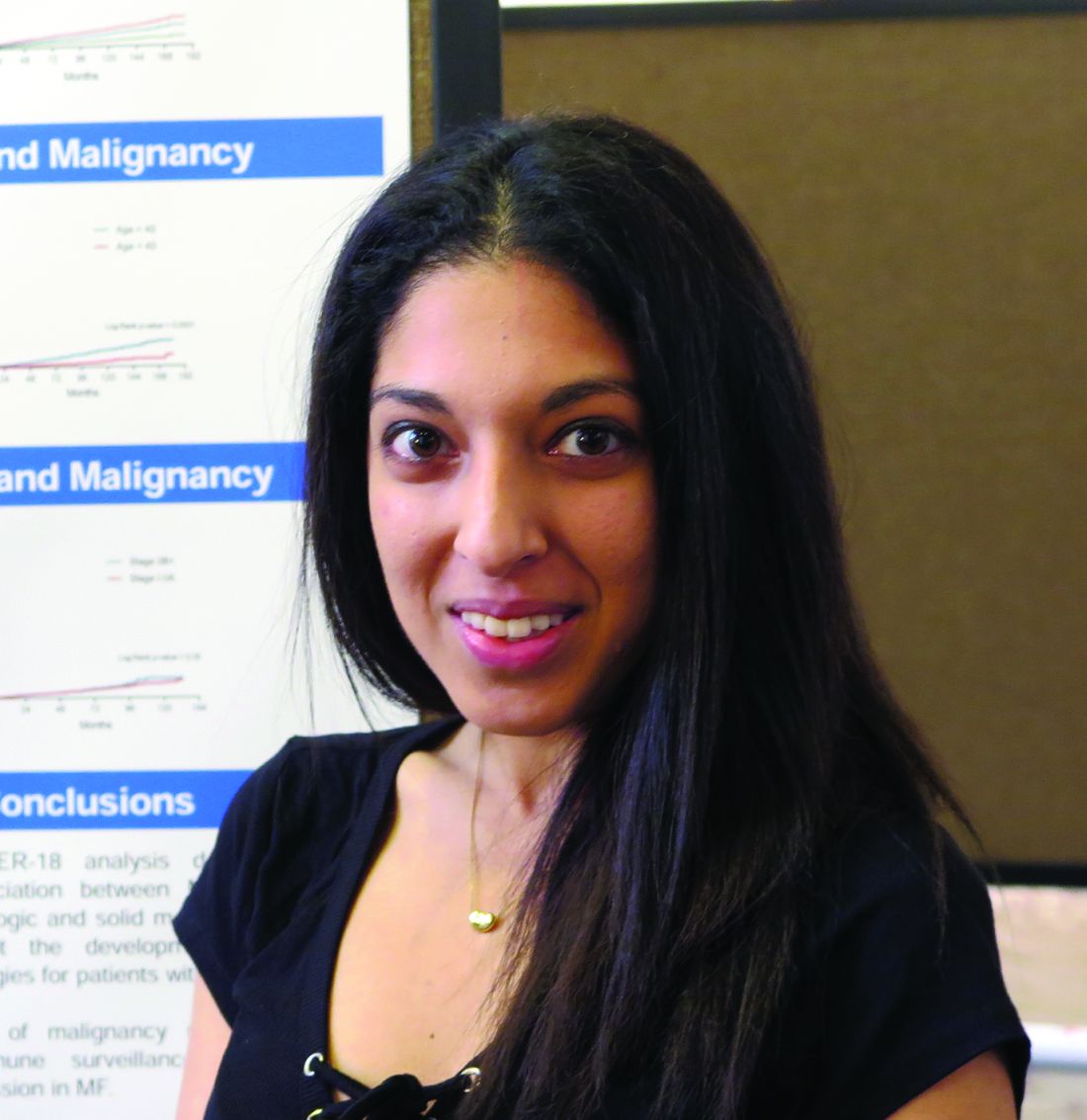
Patients with MF have a 500% greater risk for developing a second solid malignancy and a 2700% greater likelihood of developing a second hematologic malignancy, she said.
The investigators hypothesized that MF predisposes patients to second malignancies because of its immunocompromising effects.
Dr. Goyal said that, although the SEER data set does not include information on disease stage for all patients, when they looked at a separate cohort of 173 University of Minnesota patients with MF, they saw that patients with higher-stage MF were significantly more likely to develop secondary malignancies than patients with lower-stage disease.
The investigators looked at the actual and expected cancer incidence rates for the SEER-18 population sample, and used data on age, sex, race, and calendar year to generate incidence estimates for the general population.
They found that 514 patients in the SEER-18 population developed a total of 170 second primary hematologic malignancies, for a SIR of 27.4, compared with the general population. The most common hematologic cancers were Hodgkin lymphoma (SIR 69.8) and non-Hodgkin lymphoma (SIR 46.5), and other second hematologic malignancies included multiple myeloma (SIR 4.5), chronic lymphocytic leukemia (SIR 9.1). and acute leukemias (SIR 8.1).
The most frequently occurring second solid tumors included cancers of the nose, nasal cavity, and middle ear (SIR 30.4); thyroid (SIR 16.1); brain (SIR 15.1); and breast (SIR 8.0).
Other solid tumors with an approximately 400%-500% higher incidence included cancers of the prostate, bladder, colon, and kidneys.
Dr. Goyal and Dr. Lazaryan recommend development of targeted cancer screening strategies for patients with MF.
The study was funded in part by an American Society of Hematology HONORS grant. The researchers reported having no conflicts of interest. The T-Cell Lymphoma Forum is held by Jonathan Wood & Associates, which is owned by the same company as this news organization.
hematologynews@frontlinemedcom.com
SOURCE: Goyal A et al. TCLF 2018 Abstract EP18_2.
LA JOLLA, CALIF. – Patients with mycosis fungoides are at increased risk for developing other cancers and should be screened for second primary and hematologic malignancies, results of a cancer registry survey suggest.
A study of data on 6,196 patients included in 18 population-based cancer registries comprising the SEER-18 (Surveillance, Epidemiology, and End Results 18) database who were diagnosed and followed from 2000 to 2014 showed that 514 (8.3%) developed second cancers, compared with the 70.8 secondary malignancies that would be expected in the general population. This difference translated into a standardized incidence ratio (SIR) of 7.3, reported Amrita Goyal, MD, and Aleksandr Lazaryan, MD, PhD, of the University of Minnesota, Minneapolis.
Patients with MF have a 500% greater risk for developing a second solid malignancy and a 2700% greater likelihood of developing a second hematologic malignancy, she said.
The investigators hypothesized that MF predisposes patients to second malignancies because of its immunocompromising effects.
Dr. Goyal said that, although the SEER data set does not include information on disease stage for all patients, when they looked at a separate cohort of 173 University of Minnesota patients with MF, they saw that patients with higher-stage MF were significantly more likely to develop secondary malignancies than patients with lower-stage disease.
The investigators looked at the actual and expected cancer incidence rates for the SEER-18 population sample, and used data on age, sex, race, and calendar year to generate incidence estimates for the general population.
They found that 514 patients in the SEER-18 population developed a total of 170 second primary hematologic malignancies, for a SIR of 27.4, compared with the general population. The most common hematologic cancers were Hodgkin lymphoma (SIR 69.8) and non-Hodgkin lymphoma (SIR 46.5), and other second hematologic malignancies included multiple myeloma (SIR 4.5), chronic lymphocytic leukemia (SIR 9.1). and acute leukemias (SIR 8.1).
The most frequently occurring second solid tumors included cancers of the nose, nasal cavity, and middle ear (SIR 30.4); thyroid (SIR 16.1); brain (SIR 15.1); and breast (SIR 8.0).
Other solid tumors with an approximately 400%-500% higher incidence included cancers of the prostate, bladder, colon, and kidneys.
Dr. Goyal and Dr. Lazaryan recommend development of targeted cancer screening strategies for patients with MF.
The study was funded in part by an American Society of Hematology HONORS grant. The researchers reported having no conflicts of interest. The T-Cell Lymphoma Forum is held by Jonathan Wood & Associates, which is owned by the same company as this news organization.
hematologynews@frontlinemedcom.com
SOURCE: Goyal A et al. TCLF 2018 Abstract EP18_2.
LA JOLLA, CALIF. – Patients with mycosis fungoides are at increased risk for developing other cancers and should be screened for second primary and hematologic malignancies, results of a cancer registry survey suggest.
A study of data on 6,196 patients included in 18 population-based cancer registries comprising the SEER-18 (Surveillance, Epidemiology, and End Results 18) database who were diagnosed and followed from 2000 to 2014 showed that 514 (8.3%) developed second cancers, compared with the 70.8 secondary malignancies that would be expected in the general population. This difference translated into a standardized incidence ratio (SIR) of 7.3, reported Amrita Goyal, MD, and Aleksandr Lazaryan, MD, PhD, of the University of Minnesota, Minneapolis.
Patients with MF have a 500% greater risk for developing a second solid malignancy and a 2700% greater likelihood of developing a second hematologic malignancy, she said.
The investigators hypothesized that MF predisposes patients to second malignancies because of its immunocompromising effects.
Dr. Goyal said that, although the SEER data set does not include information on disease stage for all patients, when they looked at a separate cohort of 173 University of Minnesota patients with MF, they saw that patients with higher-stage MF were significantly more likely to develop secondary malignancies than patients with lower-stage disease.
The investigators looked at the actual and expected cancer incidence rates for the SEER-18 population sample, and used data on age, sex, race, and calendar year to generate incidence estimates for the general population.
They found that 514 patients in the SEER-18 population developed a total of 170 second primary hematologic malignancies, for a SIR of 27.4, compared with the general population. The most common hematologic cancers were Hodgkin lymphoma (SIR 69.8) and non-Hodgkin lymphoma (SIR 46.5), and other second hematologic malignancies included multiple myeloma (SIR 4.5), chronic lymphocytic leukemia (SIR 9.1). and acute leukemias (SIR 8.1).
The most frequently occurring second solid tumors included cancers of the nose, nasal cavity, and middle ear (SIR 30.4); thyroid (SIR 16.1); brain (SIR 15.1); and breast (SIR 8.0).
Other solid tumors with an approximately 400%-500% higher incidence included cancers of the prostate, bladder, colon, and kidneys.
Dr. Goyal and Dr. Lazaryan recommend development of targeted cancer screening strategies for patients with MF.
The study was funded in part by an American Society of Hematology HONORS grant. The researchers reported having no conflicts of interest. The T-Cell Lymphoma Forum is held by Jonathan Wood & Associates, which is owned by the same company as this news organization.
hematologynews@frontlinemedcom.com
SOURCE: Goyal A et al. TCLF 2018 Abstract EP18_2.
REPORTING FROM TCLF 2018
Key clinical point:
Major finding: Patients with MF have a 730% greater likelihood of developing a second primary hematologic malignancy.
Study details: A retrospective review of data on 6,196 patients in the SEER-18 database.
Disclosures: The study was funded in part by an American Society of Hematology HONORS grant. The researchers reported having no conflicts of interest.
Source: Goyal A et al. TCLF 2018 Abstract EP18_2.
Expanded UCB product can stand alone
SALT LAKE CITY—The expanded umbilical cord blood (UCB) product NiCord can be used as a stand-alone graft, according to research presented at the 2018 BMT Tandem Meetings.
Researchers found that a single NiCord unit provided “robust” engraftment in a phase 1/2 study of patients with high-risk hematologic malignancies.
NiCord recipients had quicker neutrophil and platelet engraftment than matched control subjects who received standard myeloablative UCB transplant (single or double).
Mitchell Horwitz, MD, of the Duke University Medical Center in Durham, North Carolina, presented these results at the meeting as abstract 49.* The research was sponsored by Gamida Cell, the company developing NiCord.
“[NiCord] is an ex vivo expanded cell product that’s derived from an entire unit of umbilical cord blood,” Dr Horwitz explained. “It’s manufactured starting with a CD133-positive selection, which is the progenitor cell population that’s cultured, and a T-cell containing CD133-negative fraction that is provided also at the time of transplant.”
“The culture system contains nicotinamide—that’s the active ingredient in the culture. And that’s supplemented with cytokines—thrombopoietin, IL-6, FLT-3 ligand, and stem cell factor. The culture is 21 days.”
Previous research showed that double UCB transplant including a NiCord unit could provide benefits over standard double UCB transplant. This led Dr Horwitz and his colleagues to wonder if NiCord could be used as a stand-alone graft.
So the team evaluated the safety and efficacy of NiCord alone in 36 adolescents/adults with high-risk hematologic malignancies.
Patients had acute myelogenous leukemia (n=17), acute lymphoblastic leukemia (n=9), myelodysplastic syndrome (n=7), chronic myelogenous leukemia (n=2), and Hodgkin lymphoma (n=1).
Most patients had intermediate (n=15) or high-risk (n=13) disease. They had a median age of 44 (range, 13-63) and a median weight of 75 kg (range, 41-125).
Treatment
For conditioning, 19 patients received thiotepa, busulfan, and fludarabine. Fifteen patients received total body irradiation and fludarabine with or without cyclophosphamide or thiotepa. And 2 patients received clofarabine, fludarabine, and busulfan.
Most patients had a 4/6 human leukocyte antigen (HLA) match (n=26), 8 had a 5/6 HLA match, and 2 had a 6/6 HLA match.
The median total nucleated cell dose was 2.4 x 10⁷/kg prior to expansion of the UCB unit and 3.7 x 10⁷/kg after expansion. The median CD34+ cell dose was 0.2 x 10⁶/kg and 6.3 x 10⁶/kg, respectively.
“CD34 cells were expanded 33-fold in the 3-week culture system,” Dr Horwitz noted. “That translated to a median CD34 dose of 6.3 x 10⁶/kg, a dose comparable to what would be obtained from an adult donor graft.”
Engraftment
There was 1 case of primary graft failure and 2 cases of secondary graft failure. One case of secondary graft failure was associated with an HHV-6 infection, and the other was due to a lethal adenovirus infection.
Of those patients who engrafted, 97% achieved full donor chimerism, and 3% had mixed chimerism.
Dr Horwitz and his colleagues compared engraftment results in the NiCord recipients to results in a cohort of patients from the CIBMTR registry who underwent UCB transplants from 2010 to 2013. They had similar characteristics as the NiCord patients—age, conditioning regimen, disease status, etc.
In total, there were 148 CIBMTR registry patients, 20% of whom received a single UCB unit.
The median time to neutrophil engraftment was 11.5 days (range, 6-26) with NiCord and 21 days in the CIBMTR matched control cohort (P<0.001). The cumulative incidence of neutrophil engraftment was 94.4% and 89.7%, respectively.
The median time to platelet engraftment was 34 days (range, 25-96) with NiCord and 46 days in the CIBMTR controls (P<0.001). The cumulative incidence of platelet engraftment was 80.6% and 67.1%, respectively.
“There’s a median 10-day reduction in neutrophil recovery [and] 12-day reduction in time to platelet recovery [with NiCord],” Dr Horwitz noted. “There is evidence of robust and durable engraftment with a NiCord unit, with one patient now over 7 years from his first transplant on the pilot trial.”
Relapse, survival, and GVHD
Dr Horwitz reported other outcomes in the NiCord recipients without making comparisons to the CIBMTR matched controls.
The estimated 2-year rate of non-relapse mortality in NiCord recipients was 23.8%, and the estimated 2-year incidence of relapse was 33.2%.
The estimated disease-free survival was 49.1% at 1 year and 43.0% at 2 years. The estimated overall survival was 51.2% at 1 year and 2 years.
At 100 days, the rate of grade 2-4 acute GVHD was 44.0%, and the rate of grade 3-4 acute GVHD was 11.1%.
The estimated 1-year rate of mild to severe chronic GVHD was 40.5%, and the estimated 2-year rate of moderate to severe chronic GVHD was 9.8%.
Dr Horwitz said these “promising results” have led to the launch of a phase 3 registration trial in which researchers are comparing NiCord to standard single or double UCB transplant. The trial is open for accrual.
*Information in the abstract differs from the presentation.
SALT LAKE CITY—The expanded umbilical cord blood (UCB) product NiCord can be used as a stand-alone graft, according to research presented at the 2018 BMT Tandem Meetings.
Researchers found that a single NiCord unit provided “robust” engraftment in a phase 1/2 study of patients with high-risk hematologic malignancies.
NiCord recipients had quicker neutrophil and platelet engraftment than matched control subjects who received standard myeloablative UCB transplant (single or double).
Mitchell Horwitz, MD, of the Duke University Medical Center in Durham, North Carolina, presented these results at the meeting as abstract 49.* The research was sponsored by Gamida Cell, the company developing NiCord.
“[NiCord] is an ex vivo expanded cell product that’s derived from an entire unit of umbilical cord blood,” Dr Horwitz explained. “It’s manufactured starting with a CD133-positive selection, which is the progenitor cell population that’s cultured, and a T-cell containing CD133-negative fraction that is provided also at the time of transplant.”
“The culture system contains nicotinamide—that’s the active ingredient in the culture. And that’s supplemented with cytokines—thrombopoietin, IL-6, FLT-3 ligand, and stem cell factor. The culture is 21 days.”
Previous research showed that double UCB transplant including a NiCord unit could provide benefits over standard double UCB transplant. This led Dr Horwitz and his colleagues to wonder if NiCord could be used as a stand-alone graft.
So the team evaluated the safety and efficacy of NiCord alone in 36 adolescents/adults with high-risk hematologic malignancies.
Patients had acute myelogenous leukemia (n=17), acute lymphoblastic leukemia (n=9), myelodysplastic syndrome (n=7), chronic myelogenous leukemia (n=2), and Hodgkin lymphoma (n=1).
Most patients had intermediate (n=15) or high-risk (n=13) disease. They had a median age of 44 (range, 13-63) and a median weight of 75 kg (range, 41-125).
Treatment
For conditioning, 19 patients received thiotepa, busulfan, and fludarabine. Fifteen patients received total body irradiation and fludarabine with or without cyclophosphamide or thiotepa. And 2 patients received clofarabine, fludarabine, and busulfan.
Most patients had a 4/6 human leukocyte antigen (HLA) match (n=26), 8 had a 5/6 HLA match, and 2 had a 6/6 HLA match.
The median total nucleated cell dose was 2.4 x 10⁷/kg prior to expansion of the UCB unit and 3.7 x 10⁷/kg after expansion. The median CD34+ cell dose was 0.2 x 10⁶/kg and 6.3 x 10⁶/kg, respectively.
“CD34 cells were expanded 33-fold in the 3-week culture system,” Dr Horwitz noted. “That translated to a median CD34 dose of 6.3 x 10⁶/kg, a dose comparable to what would be obtained from an adult donor graft.”
Engraftment
There was 1 case of primary graft failure and 2 cases of secondary graft failure. One case of secondary graft failure was associated with an HHV-6 infection, and the other was due to a lethal adenovirus infection.
Of those patients who engrafted, 97% achieved full donor chimerism, and 3% had mixed chimerism.
Dr Horwitz and his colleagues compared engraftment results in the NiCord recipients to results in a cohort of patients from the CIBMTR registry who underwent UCB transplants from 2010 to 2013. They had similar characteristics as the NiCord patients—age, conditioning regimen, disease status, etc.
In total, there were 148 CIBMTR registry patients, 20% of whom received a single UCB unit.
The median time to neutrophil engraftment was 11.5 days (range, 6-26) with NiCord and 21 days in the CIBMTR matched control cohort (P<0.001). The cumulative incidence of neutrophil engraftment was 94.4% and 89.7%, respectively.
The median time to platelet engraftment was 34 days (range, 25-96) with NiCord and 46 days in the CIBMTR controls (P<0.001). The cumulative incidence of platelet engraftment was 80.6% and 67.1%, respectively.
“There’s a median 10-day reduction in neutrophil recovery [and] 12-day reduction in time to platelet recovery [with NiCord],” Dr Horwitz noted. “There is evidence of robust and durable engraftment with a NiCord unit, with one patient now over 7 years from his first transplant on the pilot trial.”
Relapse, survival, and GVHD
Dr Horwitz reported other outcomes in the NiCord recipients without making comparisons to the CIBMTR matched controls.
The estimated 2-year rate of non-relapse mortality in NiCord recipients was 23.8%, and the estimated 2-year incidence of relapse was 33.2%.
The estimated disease-free survival was 49.1% at 1 year and 43.0% at 2 years. The estimated overall survival was 51.2% at 1 year and 2 years.
At 100 days, the rate of grade 2-4 acute GVHD was 44.0%, and the rate of grade 3-4 acute GVHD was 11.1%.
The estimated 1-year rate of mild to severe chronic GVHD was 40.5%, and the estimated 2-year rate of moderate to severe chronic GVHD was 9.8%.
Dr Horwitz said these “promising results” have led to the launch of a phase 3 registration trial in which researchers are comparing NiCord to standard single or double UCB transplant. The trial is open for accrual.
*Information in the abstract differs from the presentation.
SALT LAKE CITY—The expanded umbilical cord blood (UCB) product NiCord can be used as a stand-alone graft, according to research presented at the 2018 BMT Tandem Meetings.
Researchers found that a single NiCord unit provided “robust” engraftment in a phase 1/2 study of patients with high-risk hematologic malignancies.
NiCord recipients had quicker neutrophil and platelet engraftment than matched control subjects who received standard myeloablative UCB transplant (single or double).
Mitchell Horwitz, MD, of the Duke University Medical Center in Durham, North Carolina, presented these results at the meeting as abstract 49.* The research was sponsored by Gamida Cell, the company developing NiCord.
“[NiCord] is an ex vivo expanded cell product that’s derived from an entire unit of umbilical cord blood,” Dr Horwitz explained. “It’s manufactured starting with a CD133-positive selection, which is the progenitor cell population that’s cultured, and a T-cell containing CD133-negative fraction that is provided also at the time of transplant.”
“The culture system contains nicotinamide—that’s the active ingredient in the culture. And that’s supplemented with cytokines—thrombopoietin, IL-6, FLT-3 ligand, and stem cell factor. The culture is 21 days.”
Previous research showed that double UCB transplant including a NiCord unit could provide benefits over standard double UCB transplant. This led Dr Horwitz and his colleagues to wonder if NiCord could be used as a stand-alone graft.
So the team evaluated the safety and efficacy of NiCord alone in 36 adolescents/adults with high-risk hematologic malignancies.
Patients had acute myelogenous leukemia (n=17), acute lymphoblastic leukemia (n=9), myelodysplastic syndrome (n=7), chronic myelogenous leukemia (n=2), and Hodgkin lymphoma (n=1).
Most patients had intermediate (n=15) or high-risk (n=13) disease. They had a median age of 44 (range, 13-63) and a median weight of 75 kg (range, 41-125).
Treatment
For conditioning, 19 patients received thiotepa, busulfan, and fludarabine. Fifteen patients received total body irradiation and fludarabine with or without cyclophosphamide or thiotepa. And 2 patients received clofarabine, fludarabine, and busulfan.
Most patients had a 4/6 human leukocyte antigen (HLA) match (n=26), 8 had a 5/6 HLA match, and 2 had a 6/6 HLA match.
The median total nucleated cell dose was 2.4 x 10⁷/kg prior to expansion of the UCB unit and 3.7 x 10⁷/kg after expansion. The median CD34+ cell dose was 0.2 x 10⁶/kg and 6.3 x 10⁶/kg, respectively.
“CD34 cells were expanded 33-fold in the 3-week culture system,” Dr Horwitz noted. “That translated to a median CD34 dose of 6.3 x 10⁶/kg, a dose comparable to what would be obtained from an adult donor graft.”
Engraftment
There was 1 case of primary graft failure and 2 cases of secondary graft failure. One case of secondary graft failure was associated with an HHV-6 infection, and the other was due to a lethal adenovirus infection.
Of those patients who engrafted, 97% achieved full donor chimerism, and 3% had mixed chimerism.
Dr Horwitz and his colleagues compared engraftment results in the NiCord recipients to results in a cohort of patients from the CIBMTR registry who underwent UCB transplants from 2010 to 2013. They had similar characteristics as the NiCord patients—age, conditioning regimen, disease status, etc.
In total, there were 148 CIBMTR registry patients, 20% of whom received a single UCB unit.
The median time to neutrophil engraftment was 11.5 days (range, 6-26) with NiCord and 21 days in the CIBMTR matched control cohort (P<0.001). The cumulative incidence of neutrophil engraftment was 94.4% and 89.7%, respectively.
The median time to platelet engraftment was 34 days (range, 25-96) with NiCord and 46 days in the CIBMTR controls (P<0.001). The cumulative incidence of platelet engraftment was 80.6% and 67.1%, respectively.
“There’s a median 10-day reduction in neutrophil recovery [and] 12-day reduction in time to platelet recovery [with NiCord],” Dr Horwitz noted. “There is evidence of robust and durable engraftment with a NiCord unit, with one patient now over 7 years from his first transplant on the pilot trial.”
Relapse, survival, and GVHD
Dr Horwitz reported other outcomes in the NiCord recipients without making comparisons to the CIBMTR matched controls.
The estimated 2-year rate of non-relapse mortality in NiCord recipients was 23.8%, and the estimated 2-year incidence of relapse was 33.2%.
The estimated disease-free survival was 49.1% at 1 year and 43.0% at 2 years. The estimated overall survival was 51.2% at 1 year and 2 years.
At 100 days, the rate of grade 2-4 acute GVHD was 44.0%, and the rate of grade 3-4 acute GVHD was 11.1%.
The estimated 1-year rate of mild to severe chronic GVHD was 40.5%, and the estimated 2-year rate of moderate to severe chronic GVHD was 9.8%.
Dr Horwitz said these “promising results” have led to the launch of a phase 3 registration trial in which researchers are comparing NiCord to standard single or double UCB transplant. The trial is open for accrual.
*Information in the abstract differs from the presentation.
High objective response rate, OS seen with ATA129 in PTLD
SALT LAKE CITY, UTAH – An allogeneic off-the-shelf Epstein-Barr virus–targeted cytotoxic T lymphocyte–cell product known as ATA129 (tabelecleucel), is associated with a high response rate and a low rate of serious adverse events in patients with posttransplant lymphoproliferative disorder (PTLD), according to interim findings from an ongoing multicenter study.
The objective response rate at a median of 3.3 months among patients who were treated with ATA129 and who had sufficient follow-up to assess response was 80% in six patients treated following hematopoietic cell transplantation (HCT), and 83% in six who were treated after solid organ transplant (SOT), Susan E. Prockop, MD, reported at the combined annual meetings of the Center for International Blood & Marrow Transplant Research and the American Society for Blood and Marrow Transplantation.
Study participants included those with or without underlying immune deficiency with Epstein-Barr virus (EBV)–positive PTLD, EBV-positive lymphoma, EBV-positive hemophagocytic lymphohistiocytosis, or EBV viremia, and they had to have measurable disease. All had adequate organ function and performance status. The overall median age of the cohort was 41 years, and among the transplant recipients the median age was 24.5 years. They received a median of 5 weeks of therapy (2.1 months among post-HCT patients and 12.9 months among post-SOT patients), she said.
Patients in the trial underwent the adoptive T cell therapy with partially human leukocyte antigen (HLA)–matched ATA129 that shared at least 2 of 10 HLA alleles at high resolution, including at least 1 through which ATA129 exerted cytotoxicity, or “HLA restriction,” Dr. Prockop said, noting that the product was licensed and obtained breakthrough designation in February 2015.
The ATA129 dose was 1.6-2 million T cells/kg infused on days 1, 8, and 15 of every 35-day cycle. Those without toxicity were eligible to receive additional cycles, and patients with progressive disease after one cycle were allowed to switch to an ATA129 product with a different HLA restriction, she noted.
Treatment-emergent adverse events occurred in 21 patients, including 17 who experienced grade 3 or greater adverse events or serious adverse events. Six were treatment related; one of those was grade 3 or greater, and five were considered serious adverse events. One patient had a grade 5 treatment-emergent adverse event (disease progression); two in the post-HCT group experienced graft-versus-host disease (GVHD), including one with grade 3 skin GVHD after sun exposure, which resolved with topical therapy; and one had grade 4 GVHD of the gastrointestinal tract and liver. One patient had a tumor flare that resolved, Dr. Prockop said.
“The most common safety events were GI disorders in seven patients, infections and infestations in five patients, and general disorders and administration site conditions in four,” she said. “No events have been categorized as drug reactions.”
PTLD, an EBV-driven lymphoproliferative disorder, is a life-threatening condition typically involving aggressive, clonal, diffuse large B cell lymphomas. Survival without therapy is a median of 31 days, she explained. Patients at high risk have a mortality rate of 72%, and these included those over age 30 years, those with GVHD at the time of diagnosis, and those with extranodal disease, three or more sites of disease involved, or central nervous system disease.
Although some patients respond to single-agent rituximab (Rituxan) therapy, those with rituximab-refractory disease have a median overall survival of 16-56 days, she said.
SOT recipients who develop indolent PTLD may respond to reduction of immunosuppression. Two-year risk-based survival in these patients is 88% with zero or one risk factors, and 0% with three or more risk factors, which include older age, poor performance status at diagnosis, high lactate dehydrogenase, CNS involvement, and short time from transplant to development of PTLD.
Rituximab monotherapy response rates are 76% in those with early lesions, and 47% in those with high-grade lesions, she said.
“Two-year overall survival in this patient population is 33%, reflecting their eligibility for multiagent chemotherapy, although this approach comes with significant morbidity,” she added, noting that patients failing rituximab experience increased chemotherapy-induced treatment-related mortality, compared with other lymphoma patients.
The benefit-risk profile observed in this multicenter trial is favorable with maximum response rates being reached after two cycles of therapy, and the findings confirm those from prior single-center studies, she said, noting that based on those earlier findings in patients treated with both primary and third-party donor EBV-cytotoxic T lymphocytes, the therapy is now an established National Comprehensive Cancer Network guideline therapeutic alternative for PTLD.
“Further evaluation in rituximab-refractory PTLD is ongoing in phase 3 registration trials,” she said.
Atara Biotherapeutics sponsored the trial. Dr. Prockop reported having no disclosures.
sworcester@frontlinemedcom.com
SOURCE: Prockop S et al. BMT Tandem Meetings Abstract 21.
SALT LAKE CITY, UTAH – An allogeneic off-the-shelf Epstein-Barr virus–targeted cytotoxic T lymphocyte–cell product known as ATA129 (tabelecleucel), is associated with a high response rate and a low rate of serious adverse events in patients with posttransplant lymphoproliferative disorder (PTLD), according to interim findings from an ongoing multicenter study.
The objective response rate at a median of 3.3 months among patients who were treated with ATA129 and who had sufficient follow-up to assess response was 80% in six patients treated following hematopoietic cell transplantation (HCT), and 83% in six who were treated after solid organ transplant (SOT), Susan E. Prockop, MD, reported at the combined annual meetings of the Center for International Blood & Marrow Transplant Research and the American Society for Blood and Marrow Transplantation.
Study participants included those with or without underlying immune deficiency with Epstein-Barr virus (EBV)–positive PTLD, EBV-positive lymphoma, EBV-positive hemophagocytic lymphohistiocytosis, or EBV viremia, and they had to have measurable disease. All had adequate organ function and performance status. The overall median age of the cohort was 41 years, and among the transplant recipients the median age was 24.5 years. They received a median of 5 weeks of therapy (2.1 months among post-HCT patients and 12.9 months among post-SOT patients), she said.
Patients in the trial underwent the adoptive T cell therapy with partially human leukocyte antigen (HLA)–matched ATA129 that shared at least 2 of 10 HLA alleles at high resolution, including at least 1 through which ATA129 exerted cytotoxicity, or “HLA restriction,” Dr. Prockop said, noting that the product was licensed and obtained breakthrough designation in February 2015.
The ATA129 dose was 1.6-2 million T cells/kg infused on days 1, 8, and 15 of every 35-day cycle. Those without toxicity were eligible to receive additional cycles, and patients with progressive disease after one cycle were allowed to switch to an ATA129 product with a different HLA restriction, she noted.
Treatment-emergent adverse events occurred in 21 patients, including 17 who experienced grade 3 or greater adverse events or serious adverse events. Six were treatment related; one of those was grade 3 or greater, and five were considered serious adverse events. One patient had a grade 5 treatment-emergent adverse event (disease progression); two in the post-HCT group experienced graft-versus-host disease (GVHD), including one with grade 3 skin GVHD after sun exposure, which resolved with topical therapy; and one had grade 4 GVHD of the gastrointestinal tract and liver. One patient had a tumor flare that resolved, Dr. Prockop said.
“The most common safety events were GI disorders in seven patients, infections and infestations in five patients, and general disorders and administration site conditions in four,” she said. “No events have been categorized as drug reactions.”
PTLD, an EBV-driven lymphoproliferative disorder, is a life-threatening condition typically involving aggressive, clonal, diffuse large B cell lymphomas. Survival without therapy is a median of 31 days, she explained. Patients at high risk have a mortality rate of 72%, and these included those over age 30 years, those with GVHD at the time of diagnosis, and those with extranodal disease, three or more sites of disease involved, or central nervous system disease.
Although some patients respond to single-agent rituximab (Rituxan) therapy, those with rituximab-refractory disease have a median overall survival of 16-56 days, she said.
SOT recipients who develop indolent PTLD may respond to reduction of immunosuppression. Two-year risk-based survival in these patients is 88% with zero or one risk factors, and 0% with three or more risk factors, which include older age, poor performance status at diagnosis, high lactate dehydrogenase, CNS involvement, and short time from transplant to development of PTLD.
Rituximab monotherapy response rates are 76% in those with early lesions, and 47% in those with high-grade lesions, she said.
“Two-year overall survival in this patient population is 33%, reflecting their eligibility for multiagent chemotherapy, although this approach comes with significant morbidity,” she added, noting that patients failing rituximab experience increased chemotherapy-induced treatment-related mortality, compared with other lymphoma patients.
The benefit-risk profile observed in this multicenter trial is favorable with maximum response rates being reached after two cycles of therapy, and the findings confirm those from prior single-center studies, she said, noting that based on those earlier findings in patients treated with both primary and third-party donor EBV-cytotoxic T lymphocytes, the therapy is now an established National Comprehensive Cancer Network guideline therapeutic alternative for PTLD.
“Further evaluation in rituximab-refractory PTLD is ongoing in phase 3 registration trials,” she said.
Atara Biotherapeutics sponsored the trial. Dr. Prockop reported having no disclosures.
sworcester@frontlinemedcom.com
SOURCE: Prockop S et al. BMT Tandem Meetings Abstract 21.
SALT LAKE CITY, UTAH – An allogeneic off-the-shelf Epstein-Barr virus–targeted cytotoxic T lymphocyte–cell product known as ATA129 (tabelecleucel), is associated with a high response rate and a low rate of serious adverse events in patients with posttransplant lymphoproliferative disorder (PTLD), according to interim findings from an ongoing multicenter study.
The objective response rate at a median of 3.3 months among patients who were treated with ATA129 and who had sufficient follow-up to assess response was 80% in six patients treated following hematopoietic cell transplantation (HCT), and 83% in six who were treated after solid organ transplant (SOT), Susan E. Prockop, MD, reported at the combined annual meetings of the Center for International Blood & Marrow Transplant Research and the American Society for Blood and Marrow Transplantation.
Study participants included those with or without underlying immune deficiency with Epstein-Barr virus (EBV)–positive PTLD, EBV-positive lymphoma, EBV-positive hemophagocytic lymphohistiocytosis, or EBV viremia, and they had to have measurable disease. All had adequate organ function and performance status. The overall median age of the cohort was 41 years, and among the transplant recipients the median age was 24.5 years. They received a median of 5 weeks of therapy (2.1 months among post-HCT patients and 12.9 months among post-SOT patients), she said.
Patients in the trial underwent the adoptive T cell therapy with partially human leukocyte antigen (HLA)–matched ATA129 that shared at least 2 of 10 HLA alleles at high resolution, including at least 1 through which ATA129 exerted cytotoxicity, or “HLA restriction,” Dr. Prockop said, noting that the product was licensed and obtained breakthrough designation in February 2015.
The ATA129 dose was 1.6-2 million T cells/kg infused on days 1, 8, and 15 of every 35-day cycle. Those without toxicity were eligible to receive additional cycles, and patients with progressive disease after one cycle were allowed to switch to an ATA129 product with a different HLA restriction, she noted.
Treatment-emergent adverse events occurred in 21 patients, including 17 who experienced grade 3 or greater adverse events or serious adverse events. Six were treatment related; one of those was grade 3 or greater, and five were considered serious adverse events. One patient had a grade 5 treatment-emergent adverse event (disease progression); two in the post-HCT group experienced graft-versus-host disease (GVHD), including one with grade 3 skin GVHD after sun exposure, which resolved with topical therapy; and one had grade 4 GVHD of the gastrointestinal tract and liver. One patient had a tumor flare that resolved, Dr. Prockop said.
“The most common safety events were GI disorders in seven patients, infections and infestations in five patients, and general disorders and administration site conditions in four,” she said. “No events have been categorized as drug reactions.”
PTLD, an EBV-driven lymphoproliferative disorder, is a life-threatening condition typically involving aggressive, clonal, diffuse large B cell lymphomas. Survival without therapy is a median of 31 days, she explained. Patients at high risk have a mortality rate of 72%, and these included those over age 30 years, those with GVHD at the time of diagnosis, and those with extranodal disease, three or more sites of disease involved, or central nervous system disease.
Although some patients respond to single-agent rituximab (Rituxan) therapy, those with rituximab-refractory disease have a median overall survival of 16-56 days, she said.
SOT recipients who develop indolent PTLD may respond to reduction of immunosuppression. Two-year risk-based survival in these patients is 88% with zero or one risk factors, and 0% with three or more risk factors, which include older age, poor performance status at diagnosis, high lactate dehydrogenase, CNS involvement, and short time from transplant to development of PTLD.
Rituximab monotherapy response rates are 76% in those with early lesions, and 47% in those with high-grade lesions, she said.
“Two-year overall survival in this patient population is 33%, reflecting their eligibility for multiagent chemotherapy, although this approach comes with significant morbidity,” she added, noting that patients failing rituximab experience increased chemotherapy-induced treatment-related mortality, compared with other lymphoma patients.
The benefit-risk profile observed in this multicenter trial is favorable with maximum response rates being reached after two cycles of therapy, and the findings confirm those from prior single-center studies, she said, noting that based on those earlier findings in patients treated with both primary and third-party donor EBV-cytotoxic T lymphocytes, the therapy is now an established National Comprehensive Cancer Network guideline therapeutic alternative for PTLD.
“Further evaluation in rituximab-refractory PTLD is ongoing in phase 3 registration trials,” she said.
Atara Biotherapeutics sponsored the trial. Dr. Prockop reported having no disclosures.
sworcester@frontlinemedcom.com
SOURCE: Prockop S et al. BMT Tandem Meetings Abstract 21.
REPORTING FROM THE 2018 BMT TANDEM MEETINGS
Key clinical point:
Major finding: Overall 1-year survival was 90.3%.
Study details: Interim results in 23 patients from a multicenter study.
Disclosures: Atara Biotherapeutics sponsored the trial. Dr. Prockop reported having no disclosures.
Source: Prockop S et al. BMT Tandem Meetings Abstract 21.
Baseline stress signals need for psychological help in CLL
, according to a prospective study of 152 patients.
“These findings suggest that integration of psychological intervention for patients who have high cancer-specific stress at baseline might be appropriate for this population,” wrote investigators led by Neha G. Goyal, PhD, a research fellow at Wake Forest University, Winston-Salem, N.C.
The subjects all had relapsed/refractory chronic lymphocytic leukemia (CLL). They filled out mental and physical function questionnaires at baseline, then at months 1, 2, and 5 during a nonrandomized phase 2 trial of ibrutinib (Imbruvica). The findings were published in the Annals of Behavioral Medicine.
Cancer-specific stress – essentially traumatic stress associated with cancer diagnosis, recurrence, and treatment – was assessed by the Impact of Event Scale, a common cancer research tool in which patients rate the intensity of intrusive thoughts and avoidant thoughts and behaviors. A score of 8 – out of a range of 0-64 – was the cut point used to separate patients with low versus high stress; higher scores mean worse symptoms.
“At treatment initiation, cancer-specific stress was associated with higher levels of cognitive-affective depressive symptoms, negative mood, fatigue interference, and sleep problems, and lower mental health quality of life. While patients with higher cancer-specific stress at baseline improved more rapidly on these outcomes ... higher cancer-specific stress at baseline was still associated with poorer psychological outcomes, but not physical outcomes, at 5 months,” the investigators said (Ann Behav Med. 2018 Feb 9. doi: 10.1093/abm/kax004).
For instance, high-stress patients started the trial with mean scores of about 4.5 on the 42-point cognitive-affective subscale of the Beck Depression Inventory; scores improved to about 2.5 after 5 months of treatment. Low-stress patients, however, started and ended the study with scores of about 1.5.
Cancer-specific stress has been associated with poorer outcomes in previous cancer studies, but its impact on CLL hasn’t been clear until now. It might be a particularly bad problem in CLL, because the disease is incurable and patients go through multiple relapses and treatment cycles.
“There has been a call to screen cancer patients to determine those who may be at risk for poor outcomes, and assessment of cancer-specific stress may have clinical utility as an individual difference predictor of psychological responses,” the team noted.
The mean age in the study was 64.1 years; 71% of the subjects were men. The majority were educated beyond high school, and almost all reported significant, supportive relationships. Patients had a median of three prior therapies, but one patients had been through 16.
Dr. Goyal reported having no financial disclosures. One author disclosed ties to Pharmacyclics and Janssen, marketers of ibrutinib. The work was supported by the National Cancer Institute and Pharmacyclics, among others.
, according to a prospective study of 152 patients.
“These findings suggest that integration of psychological intervention for patients who have high cancer-specific stress at baseline might be appropriate for this population,” wrote investigators led by Neha G. Goyal, PhD, a research fellow at Wake Forest University, Winston-Salem, N.C.
The subjects all had relapsed/refractory chronic lymphocytic leukemia (CLL). They filled out mental and physical function questionnaires at baseline, then at months 1, 2, and 5 during a nonrandomized phase 2 trial of ibrutinib (Imbruvica). The findings were published in the Annals of Behavioral Medicine.
Cancer-specific stress – essentially traumatic stress associated with cancer diagnosis, recurrence, and treatment – was assessed by the Impact of Event Scale, a common cancer research tool in which patients rate the intensity of intrusive thoughts and avoidant thoughts and behaviors. A score of 8 – out of a range of 0-64 – was the cut point used to separate patients with low versus high stress; higher scores mean worse symptoms.
“At treatment initiation, cancer-specific stress was associated with higher levels of cognitive-affective depressive symptoms, negative mood, fatigue interference, and sleep problems, and lower mental health quality of life. While patients with higher cancer-specific stress at baseline improved more rapidly on these outcomes ... higher cancer-specific stress at baseline was still associated with poorer psychological outcomes, but not physical outcomes, at 5 months,” the investigators said (Ann Behav Med. 2018 Feb 9. doi: 10.1093/abm/kax004).
For instance, high-stress patients started the trial with mean scores of about 4.5 on the 42-point cognitive-affective subscale of the Beck Depression Inventory; scores improved to about 2.5 after 5 months of treatment. Low-stress patients, however, started and ended the study with scores of about 1.5.
Cancer-specific stress has been associated with poorer outcomes in previous cancer studies, but its impact on CLL hasn’t been clear until now. It might be a particularly bad problem in CLL, because the disease is incurable and patients go through multiple relapses and treatment cycles.
“There has been a call to screen cancer patients to determine those who may be at risk for poor outcomes, and assessment of cancer-specific stress may have clinical utility as an individual difference predictor of psychological responses,” the team noted.
The mean age in the study was 64.1 years; 71% of the subjects were men. The majority were educated beyond high school, and almost all reported significant, supportive relationships. Patients had a median of three prior therapies, but one patients had been through 16.
Dr. Goyal reported having no financial disclosures. One author disclosed ties to Pharmacyclics and Janssen, marketers of ibrutinib. The work was supported by the National Cancer Institute and Pharmacyclics, among others.
, according to a prospective study of 152 patients.
“These findings suggest that integration of psychological intervention for patients who have high cancer-specific stress at baseline might be appropriate for this population,” wrote investigators led by Neha G. Goyal, PhD, a research fellow at Wake Forest University, Winston-Salem, N.C.
The subjects all had relapsed/refractory chronic lymphocytic leukemia (CLL). They filled out mental and physical function questionnaires at baseline, then at months 1, 2, and 5 during a nonrandomized phase 2 trial of ibrutinib (Imbruvica). The findings were published in the Annals of Behavioral Medicine.
Cancer-specific stress – essentially traumatic stress associated with cancer diagnosis, recurrence, and treatment – was assessed by the Impact of Event Scale, a common cancer research tool in which patients rate the intensity of intrusive thoughts and avoidant thoughts and behaviors. A score of 8 – out of a range of 0-64 – was the cut point used to separate patients with low versus high stress; higher scores mean worse symptoms.
“At treatment initiation, cancer-specific stress was associated with higher levels of cognitive-affective depressive symptoms, negative mood, fatigue interference, and sleep problems, and lower mental health quality of life. While patients with higher cancer-specific stress at baseline improved more rapidly on these outcomes ... higher cancer-specific stress at baseline was still associated with poorer psychological outcomes, but not physical outcomes, at 5 months,” the investigators said (Ann Behav Med. 2018 Feb 9. doi: 10.1093/abm/kax004).
For instance, high-stress patients started the trial with mean scores of about 4.5 on the 42-point cognitive-affective subscale of the Beck Depression Inventory; scores improved to about 2.5 after 5 months of treatment. Low-stress patients, however, started and ended the study with scores of about 1.5.
Cancer-specific stress has been associated with poorer outcomes in previous cancer studies, but its impact on CLL hasn’t been clear until now. It might be a particularly bad problem in CLL, because the disease is incurable and patients go through multiple relapses and treatment cycles.
“There has been a call to screen cancer patients to determine those who may be at risk for poor outcomes, and assessment of cancer-specific stress may have clinical utility as an individual difference predictor of psychological responses,” the team noted.
The mean age in the study was 64.1 years; 71% of the subjects were men. The majority were educated beyond high school, and almost all reported significant, supportive relationships. Patients had a median of three prior therapies, but one patients had been through 16.
Dr. Goyal reported having no financial disclosures. One author disclosed ties to Pharmacyclics and Janssen, marketers of ibrutinib. The work was supported by the National Cancer Institute and Pharmacyclics, among others.
FROM ANNALS OF BEHAVIORAL MEDICINE
Basiliximab/BEAM may improve post-ASCT outcomes in PTCL
LA JOLLA, CALIF. – Combining a radio-labeled, anti-CD25, monoclonal antibody with BEAM chemotherapy appears to be an effective and safe conditioning regimen prior to autologous stem cell transplant in patients with peripheral T-cell lymphoma (PTCL), investigators report.
In a phase 1 trial, median progression-free survival (PFS) was 10.6 months for patients treated with the yttrium-90–labeled, chimeric, anti-CD25 antibody basiliximab (Simulect) at one of three dose levels plus standard dose BEAM (carmustine, etoposide, cytarabine, and melphalan), said Jasmine Zain, MD, of the City of Hope Medical Center in Duarte, Calif.
There have been no significant cases of delayed transplant engraftment or unexpected increases in either mucositis or infectious complications, she said at the annual T-cell Lymphoma Forum.
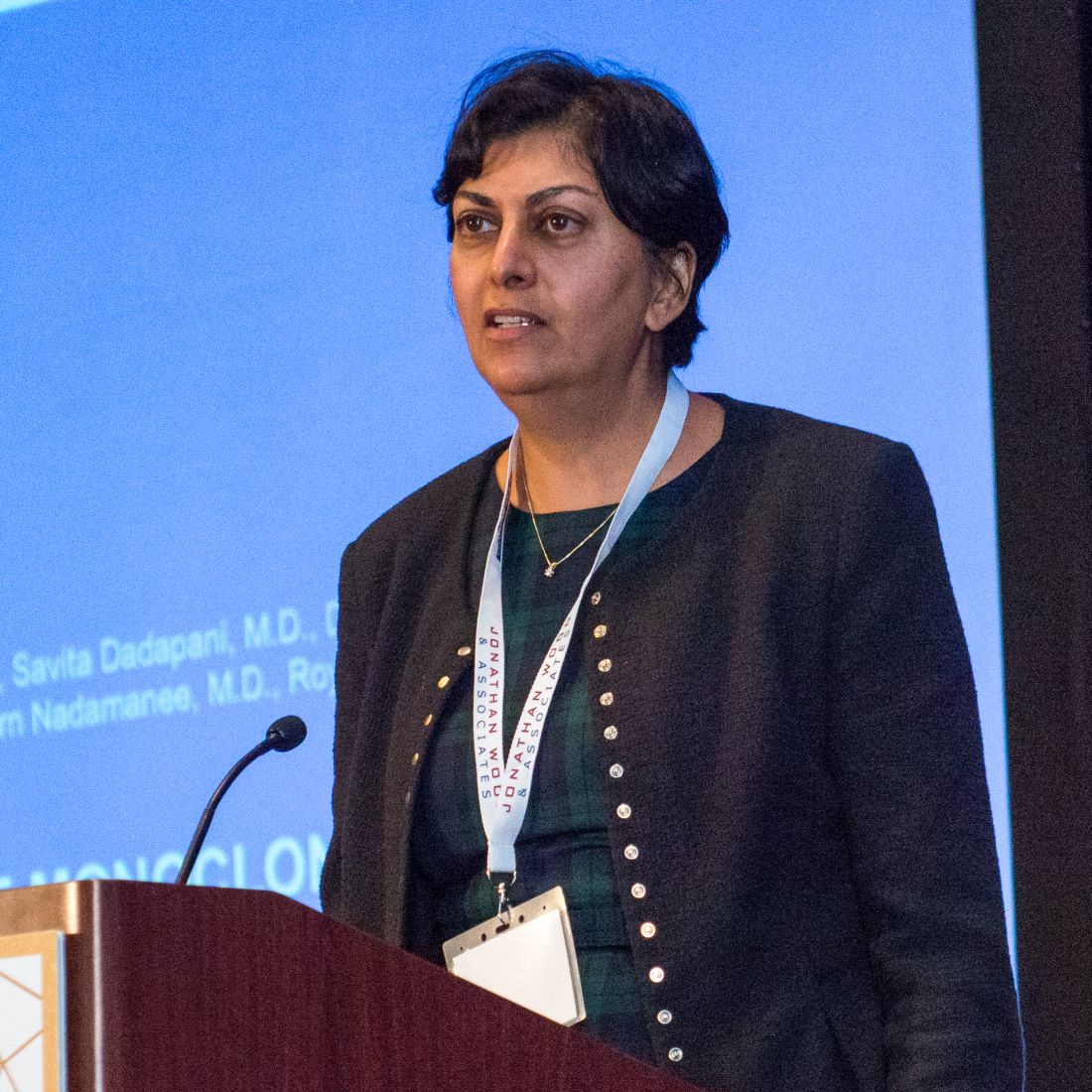
“With standard conditioning, I think the best outcome we have seen is that at 5 years we have about 45% to 50% event-free survival, depending on the histology,” she said. “So we’re hoping we will surpass that.”
The first patient to receive a transplant in the study was treated in July 2015, and since most relapses in this patient population tend to occur within 2 years of transplant, the investigators expect that they will get a better idea of the results in the near future, Dr. Zain said.
PTCL generally has a poor prognosis, and many centers have turned to high-dose therapy followed by autologous stem cell transplant as a consolidation strategy for patients who are in their first or subsequent complete remissions, as well as for patients with relapsed or refractory disease.
“We in this field consider autologous stem cell transplant to be not curative for PTCL. It is true that some patients will achieve long-term remission and even long-term survival,” she said. ”But overall, even with long-term data, it seems like most patients will eventually relapse.”
The goal of the ongoing study is to determine whether adding basiliximab to BEAM could improve outcomes in the long run.
Unlike ibritumomab tiuxetan (Zevalin) – an yttrium-90–labeled antibody that’s been combined with rituximab to target CD20 in relapsed or refractory low-grade follicular B-cell non-Hodgkin lymphoma – basiliximab is targeted to CD25, which is preferentially expressed on T cells.
Basiliximab has been shown to inhibit growth of human anaplastic large cell lymphoma (ALCL) tumors and improve survival in mice bearing human tumor xenografts.
Because the beta particles that basiliximab emits cannot be detected on conventional scans, the antibody is also labeled with an indium-111 radiotracer for purposes of tracking.
At the time of Dr. Zain’s presentation, 13 patients ranging from 19 to 77 years of age were enrolled in the phase 1 trial. The patients were assigned to receive basiliximab at a dose of either 0.4, 0.5, or 0.6 mCi/kg in combination with standard dose BEAM.
The first patient treated had delayed engraftment of platelets; all subsequent patients had engraftment as expected.
There were no grade 3 or 4 toxicities at any dose level and no treatment-related mortality. The most frequent toxicity was grade 2 stomatitis, which occurred in three patients each in the 0.4 and 0.6 miC/kg levels and in four patients at the 0.5 miC/kg level of basiliximab. There were no dose-limiting toxicities.
As of the data cutoff, three patients have experienced relapses, and two of those patients died from disease progression. The times from transplant to relapse were 301 days and 218 days in the two patients who died, and it was 108 days in the third patient.
Dose expansion is continuing in the study, with an additional seven patients scheduled for treatment at the 0.6 miC/kg dose, Dr. Zain said.
Dr. Zain did not report information on conflicts of interest. The study is supported by City of Hope Medical Center and the National Cancer Institute. The T-cell Lymphoma Forum is held by Jonathan Wood & Associates, which is owned by the same company as this news organization.
hematologynews@frontlinemedcom.com
SOURCE: Zain J et al. TCLF 2018.
LA JOLLA, CALIF. – Combining a radio-labeled, anti-CD25, monoclonal antibody with BEAM chemotherapy appears to be an effective and safe conditioning regimen prior to autologous stem cell transplant in patients with peripheral T-cell lymphoma (PTCL), investigators report.
In a phase 1 trial, median progression-free survival (PFS) was 10.6 months for patients treated with the yttrium-90–labeled, chimeric, anti-CD25 antibody basiliximab (Simulect) at one of three dose levels plus standard dose BEAM (carmustine, etoposide, cytarabine, and melphalan), said Jasmine Zain, MD, of the City of Hope Medical Center in Duarte, Calif.
There have been no significant cases of delayed transplant engraftment or unexpected increases in either mucositis or infectious complications, she said at the annual T-cell Lymphoma Forum.
“With standard conditioning, I think the best outcome we have seen is that at 5 years we have about 45% to 50% event-free survival, depending on the histology,” she said. “So we’re hoping we will surpass that.”
The first patient to receive a transplant in the study was treated in July 2015, and since most relapses in this patient population tend to occur within 2 years of transplant, the investigators expect that they will get a better idea of the results in the near future, Dr. Zain said.
PTCL generally has a poor prognosis, and many centers have turned to high-dose therapy followed by autologous stem cell transplant as a consolidation strategy for patients who are in their first or subsequent complete remissions, as well as for patients with relapsed or refractory disease.
“We in this field consider autologous stem cell transplant to be not curative for PTCL. It is true that some patients will achieve long-term remission and even long-term survival,” she said. ”But overall, even with long-term data, it seems like most patients will eventually relapse.”
The goal of the ongoing study is to determine whether adding basiliximab to BEAM could improve outcomes in the long run.
Unlike ibritumomab tiuxetan (Zevalin) – an yttrium-90–labeled antibody that’s been combined with rituximab to target CD20 in relapsed or refractory low-grade follicular B-cell non-Hodgkin lymphoma – basiliximab is targeted to CD25, which is preferentially expressed on T cells.
Basiliximab has been shown to inhibit growth of human anaplastic large cell lymphoma (ALCL) tumors and improve survival in mice bearing human tumor xenografts.
Because the beta particles that basiliximab emits cannot be detected on conventional scans, the antibody is also labeled with an indium-111 radiotracer for purposes of tracking.
At the time of Dr. Zain’s presentation, 13 patients ranging from 19 to 77 years of age were enrolled in the phase 1 trial. The patients were assigned to receive basiliximab at a dose of either 0.4, 0.5, or 0.6 mCi/kg in combination with standard dose BEAM.
The first patient treated had delayed engraftment of platelets; all subsequent patients had engraftment as expected.
There were no grade 3 or 4 toxicities at any dose level and no treatment-related mortality. The most frequent toxicity was grade 2 stomatitis, which occurred in three patients each in the 0.4 and 0.6 miC/kg levels and in four patients at the 0.5 miC/kg level of basiliximab. There were no dose-limiting toxicities.
As of the data cutoff, three patients have experienced relapses, and two of those patients died from disease progression. The times from transplant to relapse were 301 days and 218 days in the two patients who died, and it was 108 days in the third patient.
Dose expansion is continuing in the study, with an additional seven patients scheduled for treatment at the 0.6 miC/kg dose, Dr. Zain said.
Dr. Zain did not report information on conflicts of interest. The study is supported by City of Hope Medical Center and the National Cancer Institute. The T-cell Lymphoma Forum is held by Jonathan Wood & Associates, which is owned by the same company as this news organization.
hematologynews@frontlinemedcom.com
SOURCE: Zain J et al. TCLF 2018.
LA JOLLA, CALIF. – Combining a radio-labeled, anti-CD25, monoclonal antibody with BEAM chemotherapy appears to be an effective and safe conditioning regimen prior to autologous stem cell transplant in patients with peripheral T-cell lymphoma (PTCL), investigators report.
In a phase 1 trial, median progression-free survival (PFS) was 10.6 months for patients treated with the yttrium-90–labeled, chimeric, anti-CD25 antibody basiliximab (Simulect) at one of three dose levels plus standard dose BEAM (carmustine, etoposide, cytarabine, and melphalan), said Jasmine Zain, MD, of the City of Hope Medical Center in Duarte, Calif.
There have been no significant cases of delayed transplant engraftment or unexpected increases in either mucositis or infectious complications, she said at the annual T-cell Lymphoma Forum.
“With standard conditioning, I think the best outcome we have seen is that at 5 years we have about 45% to 50% event-free survival, depending on the histology,” she said. “So we’re hoping we will surpass that.”
The first patient to receive a transplant in the study was treated in July 2015, and since most relapses in this patient population tend to occur within 2 years of transplant, the investigators expect that they will get a better idea of the results in the near future, Dr. Zain said.
PTCL generally has a poor prognosis, and many centers have turned to high-dose therapy followed by autologous stem cell transplant as a consolidation strategy for patients who are in their first or subsequent complete remissions, as well as for patients with relapsed or refractory disease.
“We in this field consider autologous stem cell transplant to be not curative for PTCL. It is true that some patients will achieve long-term remission and even long-term survival,” she said. ”But overall, even with long-term data, it seems like most patients will eventually relapse.”
The goal of the ongoing study is to determine whether adding basiliximab to BEAM could improve outcomes in the long run.
Unlike ibritumomab tiuxetan (Zevalin) – an yttrium-90–labeled antibody that’s been combined with rituximab to target CD20 in relapsed or refractory low-grade follicular B-cell non-Hodgkin lymphoma – basiliximab is targeted to CD25, which is preferentially expressed on T cells.
Basiliximab has been shown to inhibit growth of human anaplastic large cell lymphoma (ALCL) tumors and improve survival in mice bearing human tumor xenografts.
Because the beta particles that basiliximab emits cannot be detected on conventional scans, the antibody is also labeled with an indium-111 radiotracer for purposes of tracking.
At the time of Dr. Zain’s presentation, 13 patients ranging from 19 to 77 years of age were enrolled in the phase 1 trial. The patients were assigned to receive basiliximab at a dose of either 0.4, 0.5, or 0.6 mCi/kg in combination with standard dose BEAM.
The first patient treated had delayed engraftment of platelets; all subsequent patients had engraftment as expected.
There were no grade 3 or 4 toxicities at any dose level and no treatment-related mortality. The most frequent toxicity was grade 2 stomatitis, which occurred in three patients each in the 0.4 and 0.6 miC/kg levels and in four patients at the 0.5 miC/kg level of basiliximab. There were no dose-limiting toxicities.
As of the data cutoff, three patients have experienced relapses, and two of those patients died from disease progression. The times from transplant to relapse were 301 days and 218 days in the two patients who died, and it was 108 days in the third patient.
Dose expansion is continuing in the study, with an additional seven patients scheduled for treatment at the 0.6 miC/kg dose, Dr. Zain said.
Dr. Zain did not report information on conflicts of interest. The study is supported by City of Hope Medical Center and the National Cancer Institute. The T-cell Lymphoma Forum is held by Jonathan Wood & Associates, which is owned by the same company as this news organization.
hematologynews@frontlinemedcom.com
SOURCE: Zain J et al. TCLF 2018.
REPORTING FROM TLCF 2018
Key clinical point:
Major finding: Median progression-free survival posttransplant was 10.6 months.
Study details: A phase 1, dose-finding trial in 13 patients with PTCL.
Disclosures: Dr. Zain did not report information on conflicts of interest. The study is supported by City of Hope Medical Center, Duarte, Calif., and the National Cancer Institute.
Source: Zain J et al. TLCF 2018.
AYA cancer patients lost to follow-up

ORLANDO—Many adolescent and young adult (AYA) cancer survivors don’t continue with follow-up care, according to a new study.
Researchers analyzed nearly 2400 AYAs diagnosed with cancer between 2000 and 2015 and found that 37% of these patients had no follow-up visits since 2015.
The proportion of patients with follow-up visits in 2016 did not vary according to cancer type or insurance status, but it did vary according to patients’ time since last cancer treatment.
These findings were presented at the 2018 Cancer Survivorship Symposium (abstract 29).
“Many adolescents and young adults are unaware of what their long-term risks are after they have finished their cancer treatment,” said study investigator Lynda M. Beaupin, MD, of the Roswell Park Cancer Institute in Buffalo, New York.
“Doctors and other healthcare providers need to be more diligent in letting these patients know about future potential side effects and health risks that could occur based on certain aspects of their cancer treatment.”
In a previous study, Dr Beaupin and her colleagues conducted a focus group discussion with 27 AYAs, ages 18 to 39, to query them about the major barriers that prevented them from seeking follow-up care.
Among the factors mentioned were poor communication with their oncologists, ongoing problems in adjusting to life as a cancer survivor, and loss of health insurance.
As a follow-up to that focus group session, the investigators looked at a larger group of AYAs who were treated at Roswell Park Comprehensive Cancer Center.
The team analyzed data from the cancer center’s tumor registry, which included information on a patient’s current age, age at cancer diagnosis, gender, date of diagnosis, date of most recent doctor visit, and type of cancer.
The investigators also looked at patient-provided information on follow-up doctor appointments and insurance status for 2 cohorts of AYA cancer survivors. Patients in cohort A were diagnosed with cancer between 2010 and 2014, and patients in cohort B were diagnosed between 2005 and 2009.
The most common types of cancer were leukemia/lymphoma, melanoma, germ cell tumors, and thyroid and breast cancers.
Findings
There were 2367 patients, ages 18 to 39, who were diagnosed with cancer between 2000 and 2015.
Thirty-seven percent of these patients did not have a follow-up visit since 2015.
There was no difference in follow-up contact according to cancer type or insurance status. However, length of time since patients’ final cancer treatment was a factor in not scheduling a follow-up appointment.
Regardless of insurance status, 33% of cohort A (diagnosed 2010-2014) and 48% of cohort B (diagnosed 2005-2009) did not have a follow-up visit in 2016.
Among insured patients, 33% of those in cohort A and 47% of those in cohort B did not have a visit in 2016. Among uninsured patients, the percentages were 39% and 46%, respectively.
Next steps
The investigators hope to conduct future studies looking at other factors that may affect AYAs’ willingness to seek follow-up care, such as employment status, distance to a cancer center, whether they are getting tested or treated at a facility other than a cancer center, and how AYAs perceive their current quality of life.
“These patients have the potential to live a normal lifespan, and we need to educate them to become their own advocates so they may receive follow-up care on a regular basis,” Dr Beaupin said.
“We hope they continue to receive that follow-up at an established cancer center that has the facilities to assess cardiac health and provide rehabilitation if needed. There are now established survivorship programs nationwide that can provide follow-up care for those who have completed treatment.”
This study was supported by the National Cancer Institute.
ORLANDO—Many adolescent and young adult (AYA) cancer survivors don’t continue with follow-up care, according to a new study.
Researchers analyzed nearly 2400 AYAs diagnosed with cancer between 2000 and 2015 and found that 37% of these patients had no follow-up visits since 2015.
The proportion of patients with follow-up visits in 2016 did not vary according to cancer type or insurance status, but it did vary according to patients’ time since last cancer treatment.
These findings were presented at the 2018 Cancer Survivorship Symposium (abstract 29).
“Many adolescents and young adults are unaware of what their long-term risks are after they have finished their cancer treatment,” said study investigator Lynda M. Beaupin, MD, of the Roswell Park Cancer Institute in Buffalo, New York.
“Doctors and other healthcare providers need to be more diligent in letting these patients know about future potential side effects and health risks that could occur based on certain aspects of their cancer treatment.”
In a previous study, Dr Beaupin and her colleagues conducted a focus group discussion with 27 AYAs, ages 18 to 39, to query them about the major barriers that prevented them from seeking follow-up care.
Among the factors mentioned were poor communication with their oncologists, ongoing problems in adjusting to life as a cancer survivor, and loss of health insurance.
As a follow-up to that focus group session, the investigators looked at a larger group of AYAs who were treated at Roswell Park Comprehensive Cancer Center.
The team analyzed data from the cancer center’s tumor registry, which included information on a patient’s current age, age at cancer diagnosis, gender, date of diagnosis, date of most recent doctor visit, and type of cancer.
The investigators also looked at patient-provided information on follow-up doctor appointments and insurance status for 2 cohorts of AYA cancer survivors. Patients in cohort A were diagnosed with cancer between 2010 and 2014, and patients in cohort B were diagnosed between 2005 and 2009.
The most common types of cancer were leukemia/lymphoma, melanoma, germ cell tumors, and thyroid and breast cancers.
Findings
There were 2367 patients, ages 18 to 39, who were diagnosed with cancer between 2000 and 2015.
Thirty-seven percent of these patients did not have a follow-up visit since 2015.
There was no difference in follow-up contact according to cancer type or insurance status. However, length of time since patients’ final cancer treatment was a factor in not scheduling a follow-up appointment.
Regardless of insurance status, 33% of cohort A (diagnosed 2010-2014) and 48% of cohort B (diagnosed 2005-2009) did not have a follow-up visit in 2016.
Among insured patients, 33% of those in cohort A and 47% of those in cohort B did not have a visit in 2016. Among uninsured patients, the percentages were 39% and 46%, respectively.
Next steps
The investigators hope to conduct future studies looking at other factors that may affect AYAs’ willingness to seek follow-up care, such as employment status, distance to a cancer center, whether they are getting tested or treated at a facility other than a cancer center, and how AYAs perceive their current quality of life.
“These patients have the potential to live a normal lifespan, and we need to educate them to become their own advocates so they may receive follow-up care on a regular basis,” Dr Beaupin said.
“We hope they continue to receive that follow-up at an established cancer center that has the facilities to assess cardiac health and provide rehabilitation if needed. There are now established survivorship programs nationwide that can provide follow-up care for those who have completed treatment.”
This study was supported by the National Cancer Institute.
ORLANDO—Many adolescent and young adult (AYA) cancer survivors don’t continue with follow-up care, according to a new study.
Researchers analyzed nearly 2400 AYAs diagnosed with cancer between 2000 and 2015 and found that 37% of these patients had no follow-up visits since 2015.
The proportion of patients with follow-up visits in 2016 did not vary according to cancer type or insurance status, but it did vary according to patients’ time since last cancer treatment.
These findings were presented at the 2018 Cancer Survivorship Symposium (abstract 29).
“Many adolescents and young adults are unaware of what their long-term risks are after they have finished their cancer treatment,” said study investigator Lynda M. Beaupin, MD, of the Roswell Park Cancer Institute in Buffalo, New York.
“Doctors and other healthcare providers need to be more diligent in letting these patients know about future potential side effects and health risks that could occur based on certain aspects of their cancer treatment.”
In a previous study, Dr Beaupin and her colleagues conducted a focus group discussion with 27 AYAs, ages 18 to 39, to query them about the major barriers that prevented them from seeking follow-up care.
Among the factors mentioned were poor communication with their oncologists, ongoing problems in adjusting to life as a cancer survivor, and loss of health insurance.
As a follow-up to that focus group session, the investigators looked at a larger group of AYAs who were treated at Roswell Park Comprehensive Cancer Center.
The team analyzed data from the cancer center’s tumor registry, which included information on a patient’s current age, age at cancer diagnosis, gender, date of diagnosis, date of most recent doctor visit, and type of cancer.
The investigators also looked at patient-provided information on follow-up doctor appointments and insurance status for 2 cohorts of AYA cancer survivors. Patients in cohort A were diagnosed with cancer between 2010 and 2014, and patients in cohort B were diagnosed between 2005 and 2009.
The most common types of cancer were leukemia/lymphoma, melanoma, germ cell tumors, and thyroid and breast cancers.
Findings
There were 2367 patients, ages 18 to 39, who were diagnosed with cancer between 2000 and 2015.
Thirty-seven percent of these patients did not have a follow-up visit since 2015.
There was no difference in follow-up contact according to cancer type or insurance status. However, length of time since patients’ final cancer treatment was a factor in not scheduling a follow-up appointment.
Regardless of insurance status, 33% of cohort A (diagnosed 2010-2014) and 48% of cohort B (diagnosed 2005-2009) did not have a follow-up visit in 2016.
Among insured patients, 33% of those in cohort A and 47% of those in cohort B did not have a visit in 2016. Among uninsured patients, the percentages were 39% and 46%, respectively.
Next steps
The investigators hope to conduct future studies looking at other factors that may affect AYAs’ willingness to seek follow-up care, such as employment status, distance to a cancer center, whether they are getting tested or treated at a facility other than a cancer center, and how AYAs perceive their current quality of life.
“These patients have the potential to live a normal lifespan, and we need to educate them to become their own advocates so they may receive follow-up care on a regular basis,” Dr Beaupin said.
“We hope they continue to receive that follow-up at an established cancer center that has the facilities to assess cardiac health and provide rehabilitation if needed. There are now established survivorship programs nationwide that can provide follow-up care for those who have completed treatment.”
This study was supported by the National Cancer Institute.
Intervention helps kids stay active after cancer treatment

ORLANDO—Results of a pilot study suggest a web-based, reward-driven intervention can motivate adolescent cancer survivors to stay physically active.
Time spent performing moderate-to-vigorous physical activity (MVPA) increased by an average of 5 minutes a week for subjects who were randomized to the intervention.
For control subjects, MVPA decreased by an average of 24 minutes a week.
These findings were presented at the 2018 Cancer Survivorship Symposium (abstract 102).
“Compared to the general population, childhood cancer survivors have an increased risk for obesity and metabolic syndrome, conditions that can lead to heart disease, stroke, and diabetes, so it is really important that they are physically active,” said study investigator Carrie R. Howell, PhD, of St. Jude Children’s Research Hospital in Memphis, Tennessee.
“By intervening in this young age group, we hope to help kids develop healthy exercise habits for life.”
Dr Howell and her colleagues studied cancer survivors, ages 11 to 15, who were no longer receiving cancer treatment and were physically active less than 60 minutes a day.
The subjects were randomized to the intervention or to a control group. Controls received a wearable activity monitor and an educational handout with information about the importance of physical activity and examples of activities.
The intervention group received the handout and activity monitor but also had access to an interactive website. On at least a weekly basis, subjects would connect their monitor to a computer and log their activity through the website. Upon achieving certain thresholds of activity, they received rewards, such as T-shirts and gift cards by mail.
At the beginning and end of the study, participants visited St. Jude for an assessment of their physical fitness (strength, flexibility, and endurance) and neurocognitive measures (attention and memory), as well as health-related quality of life (assessed using the Pediatric Quality of Life Inventory questionnaire).
Results
Seventy-eight cancer survivors completed the 24-week study, 53 of them in the intervention group and 25 in the control group.
MVPA increased by an average of 4.7 minutes per week in the intervention group and decreased by an average of 24.3 minutes per week in the control group.
“In this age group, it is common to see a decrease in physical activity over time, even among healthy kids,” Dr Howell said. “Therefore, we are encouraged that our intervention was successful at maintaining physical activity levels, but a longer program may be needed to create lasting exercise habits.”
In addition to increases in MVPA, the intervention group had the following improvements in fitness:
- Increase in hand grip strength from an average of 19.9 kg to 21.0 kg
- Increase in number of push-ups from an average of 15 to 18
- Increase in number of sit-ups from an average of 11 to 14.
Furthermore, subjects in the intervention group saw their verbal fluency z-score increase by an average of 0.13 points and their general cognition z-score increase by an average of 0.23 points.
Their quality of life scores increased as well. Both overall quality of life and physical-function-related quality of life scores increased from an average of 74.2 to 78.0.
Control subjects had no significant changes in fitness, neurocognitive measures, or quality of life.
This study was supported by the National Cancer Institute, the American Lebanese Syrian Associated Charities, and HopeLab.
Based on the results of this study, the investigators have designed a larger trial (ALTE1631) to test a web-based physical activity intervention. They hope to enroll 384 survivors of childhood acute lymphoblastic leukemia at institutions across the US. The intervention will last a year, with follow-up at 18 months.
Further down the line, the investigators plan to explore the relationship between physical activity and cognition.
ORLANDO—Results of a pilot study suggest a web-based, reward-driven intervention can motivate adolescent cancer survivors to stay physically active.
Time spent performing moderate-to-vigorous physical activity (MVPA) increased by an average of 5 minutes a week for subjects who were randomized to the intervention.
For control subjects, MVPA decreased by an average of 24 minutes a week.
These findings were presented at the 2018 Cancer Survivorship Symposium (abstract 102).
“Compared to the general population, childhood cancer survivors have an increased risk for obesity and metabolic syndrome, conditions that can lead to heart disease, stroke, and diabetes, so it is really important that they are physically active,” said study investigator Carrie R. Howell, PhD, of St. Jude Children’s Research Hospital in Memphis, Tennessee.
“By intervening in this young age group, we hope to help kids develop healthy exercise habits for life.”
Dr Howell and her colleagues studied cancer survivors, ages 11 to 15, who were no longer receiving cancer treatment and were physically active less than 60 minutes a day.
The subjects were randomized to the intervention or to a control group. Controls received a wearable activity monitor and an educational handout with information about the importance of physical activity and examples of activities.
The intervention group received the handout and activity monitor but also had access to an interactive website. On at least a weekly basis, subjects would connect their monitor to a computer and log their activity through the website. Upon achieving certain thresholds of activity, they received rewards, such as T-shirts and gift cards by mail.
At the beginning and end of the study, participants visited St. Jude for an assessment of their physical fitness (strength, flexibility, and endurance) and neurocognitive measures (attention and memory), as well as health-related quality of life (assessed using the Pediatric Quality of Life Inventory questionnaire).
Results
Seventy-eight cancer survivors completed the 24-week study, 53 of them in the intervention group and 25 in the control group.
MVPA increased by an average of 4.7 minutes per week in the intervention group and decreased by an average of 24.3 minutes per week in the control group.
“In this age group, it is common to see a decrease in physical activity over time, even among healthy kids,” Dr Howell said. “Therefore, we are encouraged that our intervention was successful at maintaining physical activity levels, but a longer program may be needed to create lasting exercise habits.”
In addition to increases in MVPA, the intervention group had the following improvements in fitness:
- Increase in hand grip strength from an average of 19.9 kg to 21.0 kg
- Increase in number of push-ups from an average of 15 to 18
- Increase in number of sit-ups from an average of 11 to 14.
Furthermore, subjects in the intervention group saw their verbal fluency z-score increase by an average of 0.13 points and their general cognition z-score increase by an average of 0.23 points.
Their quality of life scores increased as well. Both overall quality of life and physical-function-related quality of life scores increased from an average of 74.2 to 78.0.
Control subjects had no significant changes in fitness, neurocognitive measures, or quality of life.
This study was supported by the National Cancer Institute, the American Lebanese Syrian Associated Charities, and HopeLab.
Based on the results of this study, the investigators have designed a larger trial (ALTE1631) to test a web-based physical activity intervention. They hope to enroll 384 survivors of childhood acute lymphoblastic leukemia at institutions across the US. The intervention will last a year, with follow-up at 18 months.
Further down the line, the investigators plan to explore the relationship between physical activity and cognition.
ORLANDO—Results of a pilot study suggest a web-based, reward-driven intervention can motivate adolescent cancer survivors to stay physically active.
Time spent performing moderate-to-vigorous physical activity (MVPA) increased by an average of 5 minutes a week for subjects who were randomized to the intervention.
For control subjects, MVPA decreased by an average of 24 minutes a week.
These findings were presented at the 2018 Cancer Survivorship Symposium (abstract 102).
“Compared to the general population, childhood cancer survivors have an increased risk for obesity and metabolic syndrome, conditions that can lead to heart disease, stroke, and diabetes, so it is really important that they are physically active,” said study investigator Carrie R. Howell, PhD, of St. Jude Children’s Research Hospital in Memphis, Tennessee.
“By intervening in this young age group, we hope to help kids develop healthy exercise habits for life.”
Dr Howell and her colleagues studied cancer survivors, ages 11 to 15, who were no longer receiving cancer treatment and were physically active less than 60 minutes a day.
The subjects were randomized to the intervention or to a control group. Controls received a wearable activity monitor and an educational handout with information about the importance of physical activity and examples of activities.
The intervention group received the handout and activity monitor but also had access to an interactive website. On at least a weekly basis, subjects would connect their monitor to a computer and log their activity through the website. Upon achieving certain thresholds of activity, they received rewards, such as T-shirts and gift cards by mail.
At the beginning and end of the study, participants visited St. Jude for an assessment of their physical fitness (strength, flexibility, and endurance) and neurocognitive measures (attention and memory), as well as health-related quality of life (assessed using the Pediatric Quality of Life Inventory questionnaire).
Results
Seventy-eight cancer survivors completed the 24-week study, 53 of them in the intervention group and 25 in the control group.
MVPA increased by an average of 4.7 minutes per week in the intervention group and decreased by an average of 24.3 minutes per week in the control group.
“In this age group, it is common to see a decrease in physical activity over time, even among healthy kids,” Dr Howell said. “Therefore, we are encouraged that our intervention was successful at maintaining physical activity levels, but a longer program may be needed to create lasting exercise habits.”
In addition to increases in MVPA, the intervention group had the following improvements in fitness:
- Increase in hand grip strength from an average of 19.9 kg to 21.0 kg
- Increase in number of push-ups from an average of 15 to 18
- Increase in number of sit-ups from an average of 11 to 14.
Furthermore, subjects in the intervention group saw their verbal fluency z-score increase by an average of 0.13 points and their general cognition z-score increase by an average of 0.23 points.
Their quality of life scores increased as well. Both overall quality of life and physical-function-related quality of life scores increased from an average of 74.2 to 78.0.
Control subjects had no significant changes in fitness, neurocognitive measures, or quality of life.
This study was supported by the National Cancer Institute, the American Lebanese Syrian Associated Charities, and HopeLab.
Based on the results of this study, the investigators have designed a larger trial (ALTE1631) to test a web-based physical activity intervention. They hope to enroll 384 survivors of childhood acute lymphoblastic leukemia at institutions across the US. The intervention will last a year, with follow-up at 18 months.
Further down the line, the investigators plan to explore the relationship between physical activity and cognition.
Study reveals lack of sexual aids for cancer survivors

ORLANDO—A new study suggests many US cancer centers do not have therapeutic aids for patients who experience sexual dysfunction after cancer treatment.
Of 25 cancer centers polled, 80% said they had no sexual aids available on site for men, and 64% said they had no such aids for women.
Sharon Bober, PhD, of the Dana-Farber Cancer Institute in Boston, Massachusetts, and her colleagues presented this research at the 2018 Cancer Survivorship Symposium (abstract 134*).
“[P]roviding sexual aids is one step toward treating sexual health like any other aspect of survivorship care,” Dr Bober said.
“It should be no different than providing wigs and head coverings to women who have lost their hair due to chemotherapy. It’s important to give patients the message that regaining sexual health is a perfectly valid and life-affirming aspect of regaining overall quality of life.”
Dr Bober and her colleagues conducted this study to determine the availability of sexual aids at 25 National Cancer Institute-designated cancer centers.
The researchers called these centers posing as a spouse, adult child, or sibling of a patient. The team made separate calls to ask about sexual aids for women and those for men.
Women’s sexual aids
Twenty-four percent of cancer centers (n=6) said they had sexual aids for women, 64% (n=16) did not, and 12% of centers were unreachable (n=3).
The most common aids were personal lubrication, vaginal moisturizer, and vaginal dilators—all of which were available at 5 centers.
Three centers had vibrators, 2 had books/pamphlets, 2 had pelvic floor exercisers, and 2 had product lists.
Men’s sexual aids
Twelve percent of cancer centers (n=3) said they had sexual aids for men, 80% (n=20) did not, and 8% (n=2) were unreachable.
Two centers said they had personal lubrication available for men, 2 had penile support rings, 1 had vacuum erection devices, and 1 had books/pamphlets.
Next steps
Now, Dr Bober and her colleagues hope to query the other 44 National Cancer Institute-designated cancer centers to see what products they are selling and perhaps conduct patient surveys to find out what types of resources are most useful for cancer survivors.
“What we really need to do is go to the centers that are successfully providing sexual health products and find out how they promote and provide resources to their patients,” Dr Bober said.
“We can’t keep the conversation at the 10,000-foot level. We need to talk concretely about how to partner with providers to make sexual health resources, including sexual health aids, available so cancer survivors can get the help that they need.”
*Information presented differs from the abstract.
ORLANDO—A new study suggests many US cancer centers do not have therapeutic aids for patients who experience sexual dysfunction after cancer treatment.
Of 25 cancer centers polled, 80% said they had no sexual aids available on site for men, and 64% said they had no such aids for women.
Sharon Bober, PhD, of the Dana-Farber Cancer Institute in Boston, Massachusetts, and her colleagues presented this research at the 2018 Cancer Survivorship Symposium (abstract 134*).
“[P]roviding sexual aids is one step toward treating sexual health like any other aspect of survivorship care,” Dr Bober said.
“It should be no different than providing wigs and head coverings to women who have lost their hair due to chemotherapy. It’s important to give patients the message that regaining sexual health is a perfectly valid and life-affirming aspect of regaining overall quality of life.”
Dr Bober and her colleagues conducted this study to determine the availability of sexual aids at 25 National Cancer Institute-designated cancer centers.
The researchers called these centers posing as a spouse, adult child, or sibling of a patient. The team made separate calls to ask about sexual aids for women and those for men.
Women’s sexual aids
Twenty-four percent of cancer centers (n=6) said they had sexual aids for women, 64% (n=16) did not, and 12% of centers were unreachable (n=3).
The most common aids were personal lubrication, vaginal moisturizer, and vaginal dilators—all of which were available at 5 centers.
Three centers had vibrators, 2 had books/pamphlets, 2 had pelvic floor exercisers, and 2 had product lists.
Men’s sexual aids
Twelve percent of cancer centers (n=3) said they had sexual aids for men, 80% (n=20) did not, and 8% (n=2) were unreachable.
Two centers said they had personal lubrication available for men, 2 had penile support rings, 1 had vacuum erection devices, and 1 had books/pamphlets.
Next steps
Now, Dr Bober and her colleagues hope to query the other 44 National Cancer Institute-designated cancer centers to see what products they are selling and perhaps conduct patient surveys to find out what types of resources are most useful for cancer survivors.
“What we really need to do is go to the centers that are successfully providing sexual health products and find out how they promote and provide resources to their patients,” Dr Bober said.
“We can’t keep the conversation at the 10,000-foot level. We need to talk concretely about how to partner with providers to make sexual health resources, including sexual health aids, available so cancer survivors can get the help that they need.”
*Information presented differs from the abstract.
ORLANDO—A new study suggests many US cancer centers do not have therapeutic aids for patients who experience sexual dysfunction after cancer treatment.
Of 25 cancer centers polled, 80% said they had no sexual aids available on site for men, and 64% said they had no such aids for women.
Sharon Bober, PhD, of the Dana-Farber Cancer Institute in Boston, Massachusetts, and her colleagues presented this research at the 2018 Cancer Survivorship Symposium (abstract 134*).
“[P]roviding sexual aids is one step toward treating sexual health like any other aspect of survivorship care,” Dr Bober said.
“It should be no different than providing wigs and head coverings to women who have lost their hair due to chemotherapy. It’s important to give patients the message that regaining sexual health is a perfectly valid and life-affirming aspect of regaining overall quality of life.”
Dr Bober and her colleagues conducted this study to determine the availability of sexual aids at 25 National Cancer Institute-designated cancer centers.
The researchers called these centers posing as a spouse, adult child, or sibling of a patient. The team made separate calls to ask about sexual aids for women and those for men.
Women’s sexual aids
Twenty-four percent of cancer centers (n=6) said they had sexual aids for women, 64% (n=16) did not, and 12% of centers were unreachable (n=3).
The most common aids were personal lubrication, vaginal moisturizer, and vaginal dilators—all of which were available at 5 centers.
Three centers had vibrators, 2 had books/pamphlets, 2 had pelvic floor exercisers, and 2 had product lists.
Men’s sexual aids
Twelve percent of cancer centers (n=3) said they had sexual aids for men, 80% (n=20) did not, and 8% (n=2) were unreachable.
Two centers said they had personal lubrication available for men, 2 had penile support rings, 1 had vacuum erection devices, and 1 had books/pamphlets.
Next steps
Now, Dr Bober and her colleagues hope to query the other 44 National Cancer Institute-designated cancer centers to see what products they are selling and perhaps conduct patient surveys to find out what types of resources are most useful for cancer survivors.
“What we really need to do is go to the centers that are successfully providing sexual health products and find out how they promote and provide resources to their patients,” Dr Bober said.
“We can’t keep the conversation at the 10,000-foot level. We need to talk concretely about how to partner with providers to make sexual health resources, including sexual health aids, available so cancer survivors can get the help that they need.”
*Information presented differs from the abstract.
NF-kappaB pathway could help solve resistance problem in mantle cell lymphoma
B-cell receptor (BCR) resistance is a significant treatment obstacle in mantle cell lymphoma (MCL), but a new study highlights the potential protective role for cells expressing specific ligands.
Hilka Rauert-Wunderlich, of the University of Würzburg and Comprehensive Cancer Center, Germany, and her colleagues stimulated the REC-1, MAVER-1, and L-929 cell lines to show the role of the alternative nuclear factor-kappa B (NF-kappaB) pathway and the tumor necrosis factor ligand CD40L.
Viability assays showed a protective effect of CD40L prestimulation on BCR inhibitor treatment. The effect was detectable and significant in the REC-1 cell line for both ibrutinib and sotrastaurin at “clinically relevant concentrations” and in the resistant MAVER-1 cell line at “nonphysiologically high” sotrastaurin concentrations. CD40L stimulation also induced alternative NF-kappaB pathway signaling in both REC-1 and MAVER-1 cell lines.
“The data presented in this study argue for the protective potential of microenvironmentally mediated activation of the alternative [NF-kappaB] pathway in MCL cell against BCR signaling-associated drugs, which might represent a physiologic niche for MCL relapse. Additionally, these data provide evidence for the potential of the alternative [NF-kappaB] pathway as a possible therapeutic target in MCL,” the researchers wrote in Cell Death & Disease.
The researchers reported having no conflicts of interest.
SOURCE: Rauert-Wunderlich H et al. Cell Death Dis. 2018 Jan 24. doi: 10.1038/s41419-017-0157-6.
B-cell receptor (BCR) resistance is a significant treatment obstacle in mantle cell lymphoma (MCL), but a new study highlights the potential protective role for cells expressing specific ligands.
Hilka Rauert-Wunderlich, of the University of Würzburg and Comprehensive Cancer Center, Germany, and her colleagues stimulated the REC-1, MAVER-1, and L-929 cell lines to show the role of the alternative nuclear factor-kappa B (NF-kappaB) pathway and the tumor necrosis factor ligand CD40L.
Viability assays showed a protective effect of CD40L prestimulation on BCR inhibitor treatment. The effect was detectable and significant in the REC-1 cell line for both ibrutinib and sotrastaurin at “clinically relevant concentrations” and in the resistant MAVER-1 cell line at “nonphysiologically high” sotrastaurin concentrations. CD40L stimulation also induced alternative NF-kappaB pathway signaling in both REC-1 and MAVER-1 cell lines.
“The data presented in this study argue for the protective potential of microenvironmentally mediated activation of the alternative [NF-kappaB] pathway in MCL cell against BCR signaling-associated drugs, which might represent a physiologic niche for MCL relapse. Additionally, these data provide evidence for the potential of the alternative [NF-kappaB] pathway as a possible therapeutic target in MCL,” the researchers wrote in Cell Death & Disease.
The researchers reported having no conflicts of interest.
SOURCE: Rauert-Wunderlich H et al. Cell Death Dis. 2018 Jan 24. doi: 10.1038/s41419-017-0157-6.
B-cell receptor (BCR) resistance is a significant treatment obstacle in mantle cell lymphoma (MCL), but a new study highlights the potential protective role for cells expressing specific ligands.
Hilka Rauert-Wunderlich, of the University of Würzburg and Comprehensive Cancer Center, Germany, and her colleagues stimulated the REC-1, MAVER-1, and L-929 cell lines to show the role of the alternative nuclear factor-kappa B (NF-kappaB) pathway and the tumor necrosis factor ligand CD40L.
Viability assays showed a protective effect of CD40L prestimulation on BCR inhibitor treatment. The effect was detectable and significant in the REC-1 cell line for both ibrutinib and sotrastaurin at “clinically relevant concentrations” and in the resistant MAVER-1 cell line at “nonphysiologically high” sotrastaurin concentrations. CD40L stimulation also induced alternative NF-kappaB pathway signaling in both REC-1 and MAVER-1 cell lines.
“The data presented in this study argue for the protective potential of microenvironmentally mediated activation of the alternative [NF-kappaB] pathway in MCL cell against BCR signaling-associated drugs, which might represent a physiologic niche for MCL relapse. Additionally, these data provide evidence for the potential of the alternative [NF-kappaB] pathway as a possible therapeutic target in MCL,” the researchers wrote in Cell Death & Disease.
The researchers reported having no conflicts of interest.
SOURCE: Rauert-Wunderlich H et al. Cell Death Dis. 2018 Jan 24. doi: 10.1038/s41419-017-0157-6.
FROM CELL DEATH & DISEASE
Denosumab on par with zoledronic acid for multiple myeloma bone disease
Denosumab was noninferior to zoledronic acid at delaying skeletal-related events in patients with newly diagnosed multiple myeloma and one or more lytic bone lesions, according to findings from an international randomized trial.
In a phase 3 double-blind, double-dummy, controlled trial, patients were randomly assigned to receive either subcutaneous denosumab or intravenous zoledronic acid, plus the investigator’s choice of first-line antimyeloma therapy. The primary endpoint of noninferiority of denosumab at preventing time to first skeletal-related event, compared with zoledronic acid, was met, reported Noopur Raje, MD, of the Massachusetts General Hospital Cancer Center, Boston, and colleagues.
Median progression-free survival, an exploratory endpoint, was significantly longer with denosumab – 46.1 months vs. 35.4 months – translating into a hazard ratio of 0.82 (P = .036) for progression on denosumab. There was no difference in overall survival, however.
Denosumab is a monoclonal antibody that binds to and inactivates receptor activator of nuclear factor kappa-B ligand, a promoter of osteoclast formation, activation, and survival. Zoledronic acid is a bisphosphonate that may have antimyeloma effects, the investigators noted.
“The greater progression-free survival with denosumab than with zoledronic acid is compelling in view of the previous preclinical and clinical evidence supporting an anti-RANKL[receptor factor kappa-B ligand]–mediated, antimyeloma effect. These results, in combination with the improved renal adverse event profile, support denosumab as an additional option to the standard of care for patients with multiple myeloma,” the investigators wrote in The Lancet Oncology.
The trial included 1,718 patients age 18 and older treated at 259 centers in 29 countries. All patients had newly diagnosed multiple myeloma with at least one documented lytic bone lesion. The patients were randomly assigned to denosumab or zoledronic acid, and were stratified by intent to undergo autologous stem cell transplant, antimyeloma therapy regimen, stage according to the International Staging System, previous skeletal-related events, and region.
As noted, the trial met the primary endpoint of noninferiority of denosumab, with a hazard ratio for time to first skeletal-related event vs. zoledronic acid of 0.98 (P = .010).
The safety analysis, which included all patients who were randomized and received at least one dose of study medication (850 on denosumab and 852 on zoledronic acid) showed that the agents were associated with similar incidences of neutropenia, thrombocytopenia, anemia, febrile neutropenia, and pneumonia. The incidence of renal toxicity, however, was lower with denosumab than with zoledronic acid (10% vs. 17%, respectively), whereas hypocalcemia was higher with denosumab (17% vs. 12%). There were no significant differences in the incidence of osteonecrosis of the jaw, a common problem with osteoclast inhibitors.
There was one treatment-related death, a case of cardiac arrest in a patient treated with zoledronic acid.
The investigators noted that the study was limited by a lack of response data, and by the fact that patients with creatinine clearance less than 30 mL/minute were not enrolled because of study blinding and the product label of zoledronic acid.
The study was sponsored by Amgen. Dr. Raje and multiple coauthors disclosed personal fees from Amgen and other companies. Three of the coauthors are current or former Amgen employees.
SOURCE: Raje NS et al. Lancet Oncol. 2018 Feb 8. doi: 10.1016/S1470-2045(18)30072-X.
The study by Dr. Raje and colleagues is the largest placebo-controlled study ever done in patients with myeloma, but there are still many questions about how to move forward with this treatment. For instance, since only patients with myeloma-related bone disease at diagnosis were enrolled, the benefit of denosumab in patients without bone disease is uncertain. Additionally, the study did not show a survival benefit for denosumab over zoledronic acid.
Cost is also a factor, as denosumab is a higher priced treatment and requires continuous therapy. New treatment options, such as anti-CD38 monoclonal antibodies, are also available. It’s unclear how denosumab adds value in the context of these new therapies.
Meletios A. Dimopoulos, MD, and Efstathios Kastritis, MD, are with the department of clinical therapeutics at the National and Kapodistrian University of Athens, Greece. Dr. Dimopoulos had received honoraria from Celgene, Amgen, Takeda, Janssen, and Novartis. Dr. Kastritis has received honoraria from Janssen, Amgen, Prothena, Takeda, and Genesis Pharma. Their remarks are adapted from an accompanying editorial (Lancet Oncol. 2018 Feb 8. doi: 10.1016/S1470-2045(18)30075-5).
The study by Dr. Raje and colleagues is the largest placebo-controlled study ever done in patients with myeloma, but there are still many questions about how to move forward with this treatment. For instance, since only patients with myeloma-related bone disease at diagnosis were enrolled, the benefit of denosumab in patients without bone disease is uncertain. Additionally, the study did not show a survival benefit for denosumab over zoledronic acid.
Cost is also a factor, as denosumab is a higher priced treatment and requires continuous therapy. New treatment options, such as anti-CD38 monoclonal antibodies, are also available. It’s unclear how denosumab adds value in the context of these new therapies.
Meletios A. Dimopoulos, MD, and Efstathios Kastritis, MD, are with the department of clinical therapeutics at the National and Kapodistrian University of Athens, Greece. Dr. Dimopoulos had received honoraria from Celgene, Amgen, Takeda, Janssen, and Novartis. Dr. Kastritis has received honoraria from Janssen, Amgen, Prothena, Takeda, and Genesis Pharma. Their remarks are adapted from an accompanying editorial (Lancet Oncol. 2018 Feb 8. doi: 10.1016/S1470-2045(18)30075-5).
The study by Dr. Raje and colleagues is the largest placebo-controlled study ever done in patients with myeloma, but there are still many questions about how to move forward with this treatment. For instance, since only patients with myeloma-related bone disease at diagnosis were enrolled, the benefit of denosumab in patients without bone disease is uncertain. Additionally, the study did not show a survival benefit for denosumab over zoledronic acid.
Cost is also a factor, as denosumab is a higher priced treatment and requires continuous therapy. New treatment options, such as anti-CD38 monoclonal antibodies, are also available. It’s unclear how denosumab adds value in the context of these new therapies.
Meletios A. Dimopoulos, MD, and Efstathios Kastritis, MD, are with the department of clinical therapeutics at the National and Kapodistrian University of Athens, Greece. Dr. Dimopoulos had received honoraria from Celgene, Amgen, Takeda, Janssen, and Novartis. Dr. Kastritis has received honoraria from Janssen, Amgen, Prothena, Takeda, and Genesis Pharma. Their remarks are adapted from an accompanying editorial (Lancet Oncol. 2018 Feb 8. doi: 10.1016/S1470-2045(18)30075-5).
Denosumab was noninferior to zoledronic acid at delaying skeletal-related events in patients with newly diagnosed multiple myeloma and one or more lytic bone lesions, according to findings from an international randomized trial.
In a phase 3 double-blind, double-dummy, controlled trial, patients were randomly assigned to receive either subcutaneous denosumab or intravenous zoledronic acid, plus the investigator’s choice of first-line antimyeloma therapy. The primary endpoint of noninferiority of denosumab at preventing time to first skeletal-related event, compared with zoledronic acid, was met, reported Noopur Raje, MD, of the Massachusetts General Hospital Cancer Center, Boston, and colleagues.
Median progression-free survival, an exploratory endpoint, was significantly longer with denosumab – 46.1 months vs. 35.4 months – translating into a hazard ratio of 0.82 (P = .036) for progression on denosumab. There was no difference in overall survival, however.
Denosumab is a monoclonal antibody that binds to and inactivates receptor activator of nuclear factor kappa-B ligand, a promoter of osteoclast formation, activation, and survival. Zoledronic acid is a bisphosphonate that may have antimyeloma effects, the investigators noted.
“The greater progression-free survival with denosumab than with zoledronic acid is compelling in view of the previous preclinical and clinical evidence supporting an anti-RANKL[receptor factor kappa-B ligand]–mediated, antimyeloma effect. These results, in combination with the improved renal adverse event profile, support denosumab as an additional option to the standard of care for patients with multiple myeloma,” the investigators wrote in The Lancet Oncology.
The trial included 1,718 patients age 18 and older treated at 259 centers in 29 countries. All patients had newly diagnosed multiple myeloma with at least one documented lytic bone lesion. The patients were randomly assigned to denosumab or zoledronic acid, and were stratified by intent to undergo autologous stem cell transplant, antimyeloma therapy regimen, stage according to the International Staging System, previous skeletal-related events, and region.
As noted, the trial met the primary endpoint of noninferiority of denosumab, with a hazard ratio for time to first skeletal-related event vs. zoledronic acid of 0.98 (P = .010).
The safety analysis, which included all patients who were randomized and received at least one dose of study medication (850 on denosumab and 852 on zoledronic acid) showed that the agents were associated with similar incidences of neutropenia, thrombocytopenia, anemia, febrile neutropenia, and pneumonia. The incidence of renal toxicity, however, was lower with denosumab than with zoledronic acid (10% vs. 17%, respectively), whereas hypocalcemia was higher with denosumab (17% vs. 12%). There were no significant differences in the incidence of osteonecrosis of the jaw, a common problem with osteoclast inhibitors.
There was one treatment-related death, a case of cardiac arrest in a patient treated with zoledronic acid.
The investigators noted that the study was limited by a lack of response data, and by the fact that patients with creatinine clearance less than 30 mL/minute were not enrolled because of study blinding and the product label of zoledronic acid.
The study was sponsored by Amgen. Dr. Raje and multiple coauthors disclosed personal fees from Amgen and other companies. Three of the coauthors are current or former Amgen employees.
SOURCE: Raje NS et al. Lancet Oncol. 2018 Feb 8. doi: 10.1016/S1470-2045(18)30072-X.
Denosumab was noninferior to zoledronic acid at delaying skeletal-related events in patients with newly diagnosed multiple myeloma and one or more lytic bone lesions, according to findings from an international randomized trial.
In a phase 3 double-blind, double-dummy, controlled trial, patients were randomly assigned to receive either subcutaneous denosumab or intravenous zoledronic acid, plus the investigator’s choice of first-line antimyeloma therapy. The primary endpoint of noninferiority of denosumab at preventing time to first skeletal-related event, compared with zoledronic acid, was met, reported Noopur Raje, MD, of the Massachusetts General Hospital Cancer Center, Boston, and colleagues.
Median progression-free survival, an exploratory endpoint, was significantly longer with denosumab – 46.1 months vs. 35.4 months – translating into a hazard ratio of 0.82 (P = .036) for progression on denosumab. There was no difference in overall survival, however.
Denosumab is a monoclonal antibody that binds to and inactivates receptor activator of nuclear factor kappa-B ligand, a promoter of osteoclast formation, activation, and survival. Zoledronic acid is a bisphosphonate that may have antimyeloma effects, the investigators noted.
“The greater progression-free survival with denosumab than with zoledronic acid is compelling in view of the previous preclinical and clinical evidence supporting an anti-RANKL[receptor factor kappa-B ligand]–mediated, antimyeloma effect. These results, in combination with the improved renal adverse event profile, support denosumab as an additional option to the standard of care for patients with multiple myeloma,” the investigators wrote in The Lancet Oncology.
The trial included 1,718 patients age 18 and older treated at 259 centers in 29 countries. All patients had newly diagnosed multiple myeloma with at least one documented lytic bone lesion. The patients were randomly assigned to denosumab or zoledronic acid, and were stratified by intent to undergo autologous stem cell transplant, antimyeloma therapy regimen, stage according to the International Staging System, previous skeletal-related events, and region.
As noted, the trial met the primary endpoint of noninferiority of denosumab, with a hazard ratio for time to first skeletal-related event vs. zoledronic acid of 0.98 (P = .010).
The safety analysis, which included all patients who were randomized and received at least one dose of study medication (850 on denosumab and 852 on zoledronic acid) showed that the agents were associated with similar incidences of neutropenia, thrombocytopenia, anemia, febrile neutropenia, and pneumonia. The incidence of renal toxicity, however, was lower with denosumab than with zoledronic acid (10% vs. 17%, respectively), whereas hypocalcemia was higher with denosumab (17% vs. 12%). There were no significant differences in the incidence of osteonecrosis of the jaw, a common problem with osteoclast inhibitors.
There was one treatment-related death, a case of cardiac arrest in a patient treated with zoledronic acid.
The investigators noted that the study was limited by a lack of response data, and by the fact that patients with creatinine clearance less than 30 mL/minute were not enrolled because of study blinding and the product label of zoledronic acid.
The study was sponsored by Amgen. Dr. Raje and multiple coauthors disclosed personal fees from Amgen and other companies. Three of the coauthors are current or former Amgen employees.
SOURCE: Raje NS et al. Lancet Oncol. 2018 Feb 8. doi: 10.1016/S1470-2045(18)30072-X.
FROM LANCET ONCOLOGY
Key clinical point: Denosumab was noninferior to zoledronic acid for time to skeletal-related events in patients with multiple myeloma with bone involvement.
Major finding: The hazard ratio for noninferiority of denosumab was 0.98 (P = .010).
Data source: A phase 3 randomized double-blind, double-dummy, controlled trial in 1,718 patients with newly diagnosed multiple myeloma with one or more lytic bone lesions.
Disclosures: The study was sponsored by Amgen. Dr. Raje and multiple coauthors disclosed personal fees from Amgen and other companies. Three of the coauthors are current or former Amgen employees.
Source: Raje NS et al. Lancet Oncol. 2018 Feb 8. doi: 10.1016/S1470-2045(18)30072-X.