User login
Group finds master regulator of MYC

Credit: Juha Klefstrom
New research indicates that an unexpected partnership between the MYC oncogene and a non-coding RNA called PVT1 could be the key to understanding how MYC fuels cancers.
The researchers knew that MYC amplifications cause cancer, but MYC does not amplify alone. It often pairs with adjacent chromosomal regions.
“We wanted to know if the neighboring genes played a role,” said study author Anindya Bagchi, PhD, of the University of Minnesota in Minneapolis.
“We took a chance and were surprised to find this unexpected and counter-intuitive partnership between MYC and its neighbor, PVT1. Not only do these genes amplify together, PVT1 helps boost the MYC protein’s ability to carry out its dangerous activities in the cell.”
The researchers reported this finding in Nature.
Dr Bagchi and his team focused on a region of the genome, 8q24, which contains the MYC gene and is commonly expressed in cancer. The team separated MYC from the neighboring region containing the non-coding RNA PVT1.
Using chromosome engineering, the researchers developed mouse strains in 3 separate iterations: MYC only, the rest of the region containing PVT1 but without MYC, and the pairing of MYC with the regional genes.
The expected outcome, if MYC was the sole driver of the cancer, was tumor growth on the MYC line as well as the paired line. However, the researchers found growth only on the paired line. This suggests MYC is not acting alone and needs help from adjacent genes.
“The discovery of this partnership gives us a stronger understanding of how MYC amplification is fueled,” said David Largaespada, PhD, also of the University of Minnesota.
“When cancer promotes a cell to make more MYC, it also increases the PVT1 in the cell, which, in turn, boosts the amount of MYC. It’s a cycle, and now we’ve identified it, we can look for ways to uncouple this dangerous partnership.”
Testing this theory of uncoupling, the researchers looked closely at several breast and colorectal cancers that are driven by MYC. For example, in colorectal cancer lab models, where a mutation in the beta-catenin gene drives MYC to cancerous levels, eliminating PVT1 from these cells made the tumors nearly disappear.
“Finding the cooperation between MYC and PVT1 could be a game changer,” said Yuen-Yi Tseng, a graduate student at the University of Minnesota.
“We used to think MYC amplification is the major issue but ignored that other co-amplified genes, such as PVT1, can be significant. In this study, we show that PVT1 can be a key regulator of MYC protein, which can shift the paradigm in our understanding of MYC-amplified cancers.”
MYC has been notoriously elusive as a drug target. By uncoupling MYC and PVT1, the researchers suspect they could disable the cancer growth and limit MYC to precancerous levels. This would make PVT1 an ideal drug target to potentially control a major cancer gene.
“This is a thrilling discovery, but there are more questions that follow,” Dr Bagchi said. “Two major areas present themselves now for research. Will breaking the nexus between MYC and PVT1 perform the same in any MYC-driven cancer, even those not driven by this specific genetic location?”
“And how is PVT1 stabilizing or boosting MYC within the cells? This relationship will be a key to developing any drugs to target this mechanism.” 
Credit: Juha Klefstrom
New research indicates that an unexpected partnership between the MYC oncogene and a non-coding RNA called PVT1 could be the key to understanding how MYC fuels cancers.
The researchers knew that MYC amplifications cause cancer, but MYC does not amplify alone. It often pairs with adjacent chromosomal regions.
“We wanted to know if the neighboring genes played a role,” said study author Anindya Bagchi, PhD, of the University of Minnesota in Minneapolis.
“We took a chance and were surprised to find this unexpected and counter-intuitive partnership between MYC and its neighbor, PVT1. Not only do these genes amplify together, PVT1 helps boost the MYC protein’s ability to carry out its dangerous activities in the cell.”
The researchers reported this finding in Nature.
Dr Bagchi and his team focused on a region of the genome, 8q24, which contains the MYC gene and is commonly expressed in cancer. The team separated MYC from the neighboring region containing the non-coding RNA PVT1.
Using chromosome engineering, the researchers developed mouse strains in 3 separate iterations: MYC only, the rest of the region containing PVT1 but without MYC, and the pairing of MYC with the regional genes.
The expected outcome, if MYC was the sole driver of the cancer, was tumor growth on the MYC line as well as the paired line. However, the researchers found growth only on the paired line. This suggests MYC is not acting alone and needs help from adjacent genes.
“The discovery of this partnership gives us a stronger understanding of how MYC amplification is fueled,” said David Largaespada, PhD, also of the University of Minnesota.
“When cancer promotes a cell to make more MYC, it also increases the PVT1 in the cell, which, in turn, boosts the amount of MYC. It’s a cycle, and now we’ve identified it, we can look for ways to uncouple this dangerous partnership.”
Testing this theory of uncoupling, the researchers looked closely at several breast and colorectal cancers that are driven by MYC. For example, in colorectal cancer lab models, where a mutation in the beta-catenin gene drives MYC to cancerous levels, eliminating PVT1 from these cells made the tumors nearly disappear.
“Finding the cooperation between MYC and PVT1 could be a game changer,” said Yuen-Yi Tseng, a graduate student at the University of Minnesota.
“We used to think MYC amplification is the major issue but ignored that other co-amplified genes, such as PVT1, can be significant. In this study, we show that PVT1 can be a key regulator of MYC protein, which can shift the paradigm in our understanding of MYC-amplified cancers.”
MYC has been notoriously elusive as a drug target. By uncoupling MYC and PVT1, the researchers suspect they could disable the cancer growth and limit MYC to precancerous levels. This would make PVT1 an ideal drug target to potentially control a major cancer gene.
“This is a thrilling discovery, but there are more questions that follow,” Dr Bagchi said. “Two major areas present themselves now for research. Will breaking the nexus between MYC and PVT1 perform the same in any MYC-driven cancer, even those not driven by this specific genetic location?”
“And how is PVT1 stabilizing or boosting MYC within the cells? This relationship will be a key to developing any drugs to target this mechanism.”
Credit: Juha Klefstrom
New research indicates that an unexpected partnership between the MYC oncogene and a non-coding RNA called PVT1 could be the key to understanding how MYC fuels cancers.
The researchers knew that MYC amplifications cause cancer, but MYC does not amplify alone. It often pairs with adjacent chromosomal regions.
“We wanted to know if the neighboring genes played a role,” said study author Anindya Bagchi, PhD, of the University of Minnesota in Minneapolis.
“We took a chance and were surprised to find this unexpected and counter-intuitive partnership between MYC and its neighbor, PVT1. Not only do these genes amplify together, PVT1 helps boost the MYC protein’s ability to carry out its dangerous activities in the cell.”
The researchers reported this finding in Nature.
Dr Bagchi and his team focused on a region of the genome, 8q24, which contains the MYC gene and is commonly expressed in cancer. The team separated MYC from the neighboring region containing the non-coding RNA PVT1.
Using chromosome engineering, the researchers developed mouse strains in 3 separate iterations: MYC only, the rest of the region containing PVT1 but without MYC, and the pairing of MYC with the regional genes.
The expected outcome, if MYC was the sole driver of the cancer, was tumor growth on the MYC line as well as the paired line. However, the researchers found growth only on the paired line. This suggests MYC is not acting alone and needs help from adjacent genes.
“The discovery of this partnership gives us a stronger understanding of how MYC amplification is fueled,” said David Largaespada, PhD, also of the University of Minnesota.
“When cancer promotes a cell to make more MYC, it also increases the PVT1 in the cell, which, in turn, boosts the amount of MYC. It’s a cycle, and now we’ve identified it, we can look for ways to uncouple this dangerous partnership.”
Testing this theory of uncoupling, the researchers looked closely at several breast and colorectal cancers that are driven by MYC. For example, in colorectal cancer lab models, where a mutation in the beta-catenin gene drives MYC to cancerous levels, eliminating PVT1 from these cells made the tumors nearly disappear.
“Finding the cooperation between MYC and PVT1 could be a game changer,” said Yuen-Yi Tseng, a graduate student at the University of Minnesota.
“We used to think MYC amplification is the major issue but ignored that other co-amplified genes, such as PVT1, can be significant. In this study, we show that PVT1 can be a key regulator of MYC protein, which can shift the paradigm in our understanding of MYC-amplified cancers.”
MYC has been notoriously elusive as a drug target. By uncoupling MYC and PVT1, the researchers suspect they could disable the cancer growth and limit MYC to precancerous levels. This would make PVT1 an ideal drug target to potentially control a major cancer gene.
“This is a thrilling discovery, but there are more questions that follow,” Dr Bagchi said. “Two major areas present themselves now for research. Will breaking the nexus between MYC and PVT1 perform the same in any MYC-driven cancer, even those not driven by this specific genetic location?”
“And how is PVT1 stabilizing or boosting MYC within the cells? This relationship will be a key to developing any drugs to target this mechanism.”
PVAG-14 trims chemotherapy toxicity in unfavorable Hodgkin’s lymphoma
MILAN – A new chemotherapy regimen of prednisone, vinblastine, doxorubicin, and gemcitabine provides tumor control with far less toxicity than standard therapy for early, unfavorable Hodgkin’s lymphoma, according to a phase II study.
After a median follow-up of 27 months, 95%, or all but 1 of the 41 patients, achieved complete remission (CR or CR unconfirmed) with PVAG-14 chemotherapy. The study had aimed for a CR rate of 50% or more. Grade 3/4 hematologic toxicity occurred in 9.8% of patients, markedly lower than the study’s target of 50% or less.

Any grade 3/4 toxicity was reported in 36.6% of patients. This also betters the 51% grade 3/4 toxicity rate reported with four cycles of standard ABVD (Adriamycin [doxorubicin], bleomycin, vinblastine, and dacarbazine) chemotherapy in the German Hodgkin Study Group’s HD14 trial, Dr. Diana Wongso reported at the annual congress of the European Hematology Association.
"PVAG-14 might be an effective and less toxic alternative to 2+2 [chemotherapy] and should be tested in a phase III trial," she said.
The German Hodgkin Study Group designed the PVAG-14 regimen because treatment for early, unfavorable disease with two cycles each of ABVD and BEACOPP (bleomycin, etoposide, doxorubicin, cyclophosphamide, vincristine, procarbazine, and prednisone) chemotherapy (2+2) is toxic, more cycles do not improve outcome, and gemcitabine (Gemzar) has shown promising activity in relapsed Hodgkin’s lymphoma, explained Dr. Wongso of the University Hospital of Cologne (Germany).
The phase II study randomized patients with stage I/II newly diagnosed Hodgkin’s lymphoma to receive eight cycles of prednisone 50 mg on days 1-3, vinblastine 6 mg/m2 on day 1, and gemcitabine 1,000 mg/m2 on day 1 with two different doses of doxorubicin (25 or 35 mg/m2 on day 1) followed by 30 Gy of involved-field radiotherapy. Pegfilgrastim (Neulasta) 6 mg was given on day 2 of each cycle.
The trial was designed to enroll 50 patients per arm, but recruitment was stopped because of poor accrual after 41 patients, she said.
Most patients (76%) had stage IIA disease and a WHO Activity Index of 0. A large mediastinal mass was present in 20% of patients, 61% had at least three nodal areas involved, and 51% had a high erythrocyte sedimentation rate. Patients’ median age was 38 years.
All but one patient received eight cycles of PVAG-14 with a median dose intensity of 97.6%, and 27 patients received pegfilgrastim in each cycle.
Grade 3/4 hematologic toxicity was 9.8% overall, 4.8% in patients receiving doxorubicin at the 25-mg dose, and 15% in those given the doxorubicin 35-mg dose, Dr. Wongso said.
The most common grade 3/4 toxicities were leucopenia in 9.8%, infection in 7.3%, nausea/vomiting in 7.3%, and skin toxicity in 7.3%. There was no treatment-associated anemia or thrombocytopenia.
Overall survival was 94.4% at 30 months, and 2-year progression-free survival was 94.2%. This is comparable with a progression-free survival rate of 93% in the HD14 trial and a rate of 97% reported with 2+2 chemotherapy, she said. Comparison with the different doxorubicin doses was not possible because of the low number of patients.
One patient progressed 5 months after the end of therapy, and one relapsed 15 months after completing therapy. One Hodgkin’s-related death occurred on study, 27 months after first diagnosis and 1 month after the diagnosis of a second relapse, Dr. Wongso reported on behalf of lead author and colleague Dr. Michael Fuchs.
Dr. Wongso disclosed that participation in the EHA Congress was financed by Takeda Pharmaceuticals. Dr. Fuchs reported no conflicting interests.
MILAN – A new chemotherapy regimen of prednisone, vinblastine, doxorubicin, and gemcitabine provides tumor control with far less toxicity than standard therapy for early, unfavorable Hodgkin’s lymphoma, according to a phase II study.
After a median follow-up of 27 months, 95%, or all but 1 of the 41 patients, achieved complete remission (CR or CR unconfirmed) with PVAG-14 chemotherapy. The study had aimed for a CR rate of 50% or more. Grade 3/4 hematologic toxicity occurred in 9.8% of patients, markedly lower than the study’s target of 50% or less.
Any grade 3/4 toxicity was reported in 36.6% of patients. This also betters the 51% grade 3/4 toxicity rate reported with four cycles of standard ABVD (Adriamycin [doxorubicin], bleomycin, vinblastine, and dacarbazine) chemotherapy in the German Hodgkin Study Group’s HD14 trial, Dr. Diana Wongso reported at the annual congress of the European Hematology Association.
"PVAG-14 might be an effective and less toxic alternative to 2+2 [chemotherapy] and should be tested in a phase III trial," she said.
The German Hodgkin Study Group designed the PVAG-14 regimen because treatment for early, unfavorable disease with two cycles each of ABVD and BEACOPP (bleomycin, etoposide, doxorubicin, cyclophosphamide, vincristine, procarbazine, and prednisone) chemotherapy (2+2) is toxic, more cycles do not improve outcome, and gemcitabine (Gemzar) has shown promising activity in relapsed Hodgkin’s lymphoma, explained Dr. Wongso of the University Hospital of Cologne (Germany).
The phase II study randomized patients with stage I/II newly diagnosed Hodgkin’s lymphoma to receive eight cycles of prednisone 50 mg on days 1-3, vinblastine 6 mg/m2 on day 1, and gemcitabine 1,000 mg/m2 on day 1 with two different doses of doxorubicin (25 or 35 mg/m2 on day 1) followed by 30 Gy of involved-field radiotherapy. Pegfilgrastim (Neulasta) 6 mg was given on day 2 of each cycle.
The trial was designed to enroll 50 patients per arm, but recruitment was stopped because of poor accrual after 41 patients, she said.
Most patients (76%) had stage IIA disease and a WHO Activity Index of 0. A large mediastinal mass was present in 20% of patients, 61% had at least three nodal areas involved, and 51% had a high erythrocyte sedimentation rate. Patients’ median age was 38 years.
All but one patient received eight cycles of PVAG-14 with a median dose intensity of 97.6%, and 27 patients received pegfilgrastim in each cycle.
Grade 3/4 hematologic toxicity was 9.8% overall, 4.8% in patients receiving doxorubicin at the 25-mg dose, and 15% in those given the doxorubicin 35-mg dose, Dr. Wongso said.
The most common grade 3/4 toxicities were leucopenia in 9.8%, infection in 7.3%, nausea/vomiting in 7.3%, and skin toxicity in 7.3%. There was no treatment-associated anemia or thrombocytopenia.
Overall survival was 94.4% at 30 months, and 2-year progression-free survival was 94.2%. This is comparable with a progression-free survival rate of 93% in the HD14 trial and a rate of 97% reported with 2+2 chemotherapy, she said. Comparison with the different doxorubicin doses was not possible because of the low number of patients.
One patient progressed 5 months after the end of therapy, and one relapsed 15 months after completing therapy. One Hodgkin’s-related death occurred on study, 27 months after first diagnosis and 1 month after the diagnosis of a second relapse, Dr. Wongso reported on behalf of lead author and colleague Dr. Michael Fuchs.
Dr. Wongso disclosed that participation in the EHA Congress was financed by Takeda Pharmaceuticals. Dr. Fuchs reported no conflicting interests.
MILAN – A new chemotherapy regimen of prednisone, vinblastine, doxorubicin, and gemcitabine provides tumor control with far less toxicity than standard therapy for early, unfavorable Hodgkin’s lymphoma, according to a phase II study.
After a median follow-up of 27 months, 95%, or all but 1 of the 41 patients, achieved complete remission (CR or CR unconfirmed) with PVAG-14 chemotherapy. The study had aimed for a CR rate of 50% or more. Grade 3/4 hematologic toxicity occurred in 9.8% of patients, markedly lower than the study’s target of 50% or less.
Any grade 3/4 toxicity was reported in 36.6% of patients. This also betters the 51% grade 3/4 toxicity rate reported with four cycles of standard ABVD (Adriamycin [doxorubicin], bleomycin, vinblastine, and dacarbazine) chemotherapy in the German Hodgkin Study Group’s HD14 trial, Dr. Diana Wongso reported at the annual congress of the European Hematology Association.
"PVAG-14 might be an effective and less toxic alternative to 2+2 [chemotherapy] and should be tested in a phase III trial," she said.
The German Hodgkin Study Group designed the PVAG-14 regimen because treatment for early, unfavorable disease with two cycles each of ABVD and BEACOPP (bleomycin, etoposide, doxorubicin, cyclophosphamide, vincristine, procarbazine, and prednisone) chemotherapy (2+2) is toxic, more cycles do not improve outcome, and gemcitabine (Gemzar) has shown promising activity in relapsed Hodgkin’s lymphoma, explained Dr. Wongso of the University Hospital of Cologne (Germany).
The phase II study randomized patients with stage I/II newly diagnosed Hodgkin’s lymphoma to receive eight cycles of prednisone 50 mg on days 1-3, vinblastine 6 mg/m2 on day 1, and gemcitabine 1,000 mg/m2 on day 1 with two different doses of doxorubicin (25 or 35 mg/m2 on day 1) followed by 30 Gy of involved-field radiotherapy. Pegfilgrastim (Neulasta) 6 mg was given on day 2 of each cycle.
The trial was designed to enroll 50 patients per arm, but recruitment was stopped because of poor accrual after 41 patients, she said.
Most patients (76%) had stage IIA disease and a WHO Activity Index of 0. A large mediastinal mass was present in 20% of patients, 61% had at least three nodal areas involved, and 51% had a high erythrocyte sedimentation rate. Patients’ median age was 38 years.
All but one patient received eight cycles of PVAG-14 with a median dose intensity of 97.6%, and 27 patients received pegfilgrastim in each cycle.
Grade 3/4 hematologic toxicity was 9.8% overall, 4.8% in patients receiving doxorubicin at the 25-mg dose, and 15% in those given the doxorubicin 35-mg dose, Dr. Wongso said.
The most common grade 3/4 toxicities were leucopenia in 9.8%, infection in 7.3%, nausea/vomiting in 7.3%, and skin toxicity in 7.3%. There was no treatment-associated anemia or thrombocytopenia.
Overall survival was 94.4% at 30 months, and 2-year progression-free survival was 94.2%. This is comparable with a progression-free survival rate of 93% in the HD14 trial and a rate of 97% reported with 2+2 chemotherapy, she said. Comparison with the different doxorubicin doses was not possible because of the low number of patients.
One patient progressed 5 months after the end of therapy, and one relapsed 15 months after completing therapy. One Hodgkin’s-related death occurred on study, 27 months after first diagnosis and 1 month after the diagnosis of a second relapse, Dr. Wongso reported on behalf of lead author and colleague Dr. Michael Fuchs.
Dr. Wongso disclosed that participation in the EHA Congress was financed by Takeda Pharmaceuticals. Dr. Fuchs reported no conflicting interests.
AT THE EHA CONGRESS
Major finding: Any grade 3/4 toxicity was reported in 36.6% of patients and grade 3/4 hematologic toxicity, in 9.8%.
Data source: A phase II study in 41 patients with early, unfavorable Hodgkin’s lymphoma.
Key clinical point: PVAG-14 may provide a less toxic alternative to 2+2 chemotherapy for early, unfavorable Hodgkin’s lymphoma.
Disclosures: Dr. Wongso disclosed that participation in the EHA Congress was financed by Takeda Pharmaceuticals. Dr. Fuchs reported no conflicting interests.

BET inhibitor proves active in murine lymphoma

A bromodomain and extraterminal (BET) inhibitor known as RVX2135 has shown preclinical activity against Myc-driven lymphoma.
Both in vitro and in vivo, RVX2135 inhibited proliferation and prompted apoptosis in lymphoma cells.
Investigation revealed that RVX2135 induces effects similar to those of histone deacetylase (HDAC) inhibitors. Furthermore, RVX2135 and the HDAC inhibitor vorinostat demonstrated synergy in lymphoma-bearing mice.
Jonas Nilsson, PhD, of the University of Gothenburg in Sweden, and his colleagues reported these results in Proceedings of the National Academy of Sciences.
The researchers first evaluated the in vitro antiproliferative effects of RVX2135 and another BET inhibitor called JQ1. They tested the inhibitors on lymphoma cells from Myc-transgenic mice and found that both restricted proliferation and induced apoptosis in a dose-dependent manner.
Next, the team tested RVX2135 in 2 mouse models of lymphoma. The inhibitor was most effective in mice transplanted with dispersed lymphoma from a λ-Myc mouse (ID 2749).
In fact, RVX2135 doubled both the median and overall survival of mice carrying 2749 lymphoma, when compared to vehicle-treated controls.
Dr Nilsson and his colleagues then investigated the mechanism behind these effects. They found that RVX2135 induces a complex transcriptional program without specifically inactivating transgenic Myc transcription.
By examining the genes induced by BET inhibition, the researchers discovered that RVX2135 activates the same genes as those activated by HDAC inhibitors.
So the team tested the HDAC inhibitor vorinostat in combination with RVX2135. And the combination increased survival in mice with 2749 lymphoma, when compared to either inhibitor alone.
“It was also possible to reduce the dose of HDAC inhibitors when used in combination with RVX2135, and this reduced adverse effects,” Dr Nilsson said.
“We see this as a breakthrough in the clinical development of this type of treatment. [W]e believe that the prospects for success with combination treatments are good.”
A bromodomain and extraterminal (BET) inhibitor known as RVX2135 has shown preclinical activity against Myc-driven lymphoma.
Both in vitro and in vivo, RVX2135 inhibited proliferation and prompted apoptosis in lymphoma cells.
Investigation revealed that RVX2135 induces effects similar to those of histone deacetylase (HDAC) inhibitors. Furthermore, RVX2135 and the HDAC inhibitor vorinostat demonstrated synergy in lymphoma-bearing mice.
Jonas Nilsson, PhD, of the University of Gothenburg in Sweden, and his colleagues reported these results in Proceedings of the National Academy of Sciences.
The researchers first evaluated the in vitro antiproliferative effects of RVX2135 and another BET inhibitor called JQ1. They tested the inhibitors on lymphoma cells from Myc-transgenic mice and found that both restricted proliferation and induced apoptosis in a dose-dependent manner.
Next, the team tested RVX2135 in 2 mouse models of lymphoma. The inhibitor was most effective in mice transplanted with dispersed lymphoma from a λ-Myc mouse (ID 2749).
In fact, RVX2135 doubled both the median and overall survival of mice carrying 2749 lymphoma, when compared to vehicle-treated controls.
Dr Nilsson and his colleagues then investigated the mechanism behind these effects. They found that RVX2135 induces a complex transcriptional program without specifically inactivating transgenic Myc transcription.
By examining the genes induced by BET inhibition, the researchers discovered that RVX2135 activates the same genes as those activated by HDAC inhibitors.
So the team tested the HDAC inhibitor vorinostat in combination with RVX2135. And the combination increased survival in mice with 2749 lymphoma, when compared to either inhibitor alone.
“It was also possible to reduce the dose of HDAC inhibitors when used in combination with RVX2135, and this reduced adverse effects,” Dr Nilsson said.
“We see this as a breakthrough in the clinical development of this type of treatment. [W]e believe that the prospects for success with combination treatments are good.”
A bromodomain and extraterminal (BET) inhibitor known as RVX2135 has shown preclinical activity against Myc-driven lymphoma.
Both in vitro and in vivo, RVX2135 inhibited proliferation and prompted apoptosis in lymphoma cells.
Investigation revealed that RVX2135 induces effects similar to those of histone deacetylase (HDAC) inhibitors. Furthermore, RVX2135 and the HDAC inhibitor vorinostat demonstrated synergy in lymphoma-bearing mice.
Jonas Nilsson, PhD, of the University of Gothenburg in Sweden, and his colleagues reported these results in Proceedings of the National Academy of Sciences.
The researchers first evaluated the in vitro antiproliferative effects of RVX2135 and another BET inhibitor called JQ1. They tested the inhibitors on lymphoma cells from Myc-transgenic mice and found that both restricted proliferation and induced apoptosis in a dose-dependent manner.
Next, the team tested RVX2135 in 2 mouse models of lymphoma. The inhibitor was most effective in mice transplanted with dispersed lymphoma from a λ-Myc mouse (ID 2749).
In fact, RVX2135 doubled both the median and overall survival of mice carrying 2749 lymphoma, when compared to vehicle-treated controls.
Dr Nilsson and his colleagues then investigated the mechanism behind these effects. They found that RVX2135 induces a complex transcriptional program without specifically inactivating transgenic Myc transcription.
By examining the genes induced by BET inhibition, the researchers discovered that RVX2135 activates the same genes as those activated by HDAC inhibitors.
So the team tested the HDAC inhibitor vorinostat in combination with RVX2135. And the combination increased survival in mice with 2749 lymphoma, when compared to either inhibitor alone.
“It was also possible to reduce the dose of HDAC inhibitors when used in combination with RVX2135, and this reduced adverse effects,” Dr Nilsson said.
“We see this as a breakthrough in the clinical development of this type of treatment. [W]e believe that the prospects for success with combination treatments are good.”
Targeting B-cell signaling pathways: a central role for Bruton’s tyrosine kinase
B-cell cancers constitute a large group of diseases with diverse clinical and pathological characteristics that arise from the B (bursal- or bone marrow-derived) lymphocytes of the immune system. B cells are involved in humoral immunity as part of the adaptive immune response. They display a unique B-cell receptor (BCR) on their surface which binds to a specific antigen. Antigen- binding activates the process of clonal expansion, during which the B cell reproduces to form an army of clones that secrete the same antibody. These antibodies then bind to the target antigen on foreign cells and initiate a range of immune responses that ultimately lead to the destruction of that cell.
Click on the PDF icon at the top of this introduction to read the full article.
B-cell cancers constitute a large group of diseases with diverse clinical and pathological characteristics that arise from the B (bursal- or bone marrow-derived) lymphocytes of the immune system. B cells are involved in humoral immunity as part of the adaptive immune response. They display a unique B-cell receptor (BCR) on their surface which binds to a specific antigen. Antigen- binding activates the process of clonal expansion, during which the B cell reproduces to form an army of clones that secrete the same antibody. These antibodies then bind to the target antigen on foreign cells and initiate a range of immune responses that ultimately lead to the destruction of that cell.
Click on the PDF icon at the top of this introduction to read the full article.
B-cell cancers constitute a large group of diseases with diverse clinical and pathological characteristics that arise from the B (bursal- or bone marrow-derived) lymphocytes of the immune system. B cells are involved in humoral immunity as part of the adaptive immune response. They display a unique B-cell receptor (BCR) on their surface which binds to a specific antigen. Antigen- binding activates the process of clonal expansion, during which the B cell reproduces to form an army of clones that secrete the same antibody. These antibodies then bind to the target antigen on foreign cells and initiate a range of immune responses that ultimately lead to the destruction of that cell.
Click on the PDF icon at the top of this introduction to read the full article.
Team reports new method of chemo delivery

Credit: Kathy Atkinson
Researchers have devised a novel way to deliver chemotherapy drugs “on demand,” according to a paper published in Proceedings of the National Academy of Sciences.
The team loaded a biocompatible hydrogel with a chemotherapy drug and used ultrasound to trigger the gel to release the drug.
Like many other injectable gels, this one gradually releases a low level of the drug by diffusion over time. But the new hydrogel differs from others in a key way.
Researchers previously applied ultrasound to gels to temporarily increase doses of drug, but that approach was a one-shot deal, as the ultrasound was used to destroy those gels.
In the current study, the researchers used ultrasound to temporarily disrupt the gel so that it released short, high-dose bursts of the drug. But when they stopped the ultrasound, the hydrogels self-healed.
By closing back up, they were ready to go for the next “on demand” drug burst, providing a way to administer drugs with a greater level of control than was possible before.
The researchers also demonstrated in lab cultures and in mouse models of breast cancer that the pulsed, ultrasound-triggered hydrogel approach to drug delivery was more effective at stopping the growth of tumor cells than traditional, sustained-release drug therapy.
“Our approach counters the whole idea of sustained drug release and offers a double whammy,” said study author David J. Mooney, PhD, of the Harvard School of Engineering and Applied Sciences in Boston.
“We have shown that we can use the hydrogels repeatedly and turn the drug pulses on and off at will, and that the drug bursts in concert with the baseline low-level drug delivery seems to be particularly effective in killing cancer cells.”
Self-healing hydrogel
Key to the researchers’ success in designing a hydrogel that self-heals was choosing the right kind of hydrogel with the right kind of drug and applying the right intensity of ultrasound.
“We were able to trigger our system with a level of ultrasound that was much lower than high-intensity focused ultrasound that is used clinically to heat and destroy tumors,” said study author Cathal Kearney, PhD, of the Royal College of Surgeons in Ireland. “The careful selection of materials and properties make it a reversible process.”
The team carried out the majority of their work for this study with a gel made out of alginate, a natural polysaccharide from algae that is held together with calcium ions.
In a series of tests, they found that, with the right level of ultrasound, the bonds break up and enable the gel to release its drug cargo. But as long as the gel is in the presence of more calcium, the bonds reform and the gel self-heals.
Drug testing
Once the researchers knew the gel would self-heal, they tested out a drug they suspected it would hold well: the chemotherapy drug mitoxantrone.
Sure enough, the ultrasound triggered the gel to release the blue-colored drug, as indicated by the newly blue color of the surrounding medium. Just a single ultrasound dose was effective, and the gel reformed after it was disrupted, making multiple cycles possible.
Next, the team tested the treatment in mouse models of breast cancer. They injected the drug-laden gel close to the tumors.
Over the course of 6 months, the mice that received a low-level, sustained release of the drug with a daily concentrated pulse of ultrasound (2.5 minutes) fared significantly better than mice treated the same but without ultrasound.
In contrast to controls, the tumors in the ultrasound-treated mice did not grow substantially. And the mice survived for an additional 80 days.
Potential applications
The researchers believe their technique could help improve cancer treatment and other therapies requiring drugs to be delivered at the right place and the right time—from post-surgery pain medications to protein-based drugs that require daily injections.
It requires an initial injection of the hydrogel, but the approach could be a much less traumatic, minimally invasive, and more effective method of drug delivery than current methods, Dr Mooney said.
The researchers also found their hydrogel can release cargo other than drugs, including proteins and condensed plasmid DNA. This lays the groundwork for using these hydrogels for tissue regeneration and gene therapy.
Dr Mooney said he and his colleagues plan to explore these potential applications, as well as the possibility of unleashing 2 different drugs independently from the same hydrogel.
Credit: Kathy Atkinson
Researchers have devised a novel way to deliver chemotherapy drugs “on demand,” according to a paper published in Proceedings of the National Academy of Sciences.
The team loaded a biocompatible hydrogel with a chemotherapy drug and used ultrasound to trigger the gel to release the drug.
Like many other injectable gels, this one gradually releases a low level of the drug by diffusion over time. But the new hydrogel differs from others in a key way.
Researchers previously applied ultrasound to gels to temporarily increase doses of drug, but that approach was a one-shot deal, as the ultrasound was used to destroy those gels.
In the current study, the researchers used ultrasound to temporarily disrupt the gel so that it released short, high-dose bursts of the drug. But when they stopped the ultrasound, the hydrogels self-healed.
By closing back up, they were ready to go for the next “on demand” drug burst, providing a way to administer drugs with a greater level of control than was possible before.
The researchers also demonstrated in lab cultures and in mouse models of breast cancer that the pulsed, ultrasound-triggered hydrogel approach to drug delivery was more effective at stopping the growth of tumor cells than traditional, sustained-release drug therapy.
“Our approach counters the whole idea of sustained drug release and offers a double whammy,” said study author David J. Mooney, PhD, of the Harvard School of Engineering and Applied Sciences in Boston.
“We have shown that we can use the hydrogels repeatedly and turn the drug pulses on and off at will, and that the drug bursts in concert with the baseline low-level drug delivery seems to be particularly effective in killing cancer cells.”
Self-healing hydrogel
Key to the researchers’ success in designing a hydrogel that self-heals was choosing the right kind of hydrogel with the right kind of drug and applying the right intensity of ultrasound.
“We were able to trigger our system with a level of ultrasound that was much lower than high-intensity focused ultrasound that is used clinically to heat and destroy tumors,” said study author Cathal Kearney, PhD, of the Royal College of Surgeons in Ireland. “The careful selection of materials and properties make it a reversible process.”
The team carried out the majority of their work for this study with a gel made out of alginate, a natural polysaccharide from algae that is held together with calcium ions.
In a series of tests, they found that, with the right level of ultrasound, the bonds break up and enable the gel to release its drug cargo. But as long as the gel is in the presence of more calcium, the bonds reform and the gel self-heals.
Drug testing
Once the researchers knew the gel would self-heal, they tested out a drug they suspected it would hold well: the chemotherapy drug mitoxantrone.
Sure enough, the ultrasound triggered the gel to release the blue-colored drug, as indicated by the newly blue color of the surrounding medium. Just a single ultrasound dose was effective, and the gel reformed after it was disrupted, making multiple cycles possible.
Next, the team tested the treatment in mouse models of breast cancer. They injected the drug-laden gel close to the tumors.
Over the course of 6 months, the mice that received a low-level, sustained release of the drug with a daily concentrated pulse of ultrasound (2.5 minutes) fared significantly better than mice treated the same but without ultrasound.
In contrast to controls, the tumors in the ultrasound-treated mice did not grow substantially. And the mice survived for an additional 80 days.
Potential applications
The researchers believe their technique could help improve cancer treatment and other therapies requiring drugs to be delivered at the right place and the right time—from post-surgery pain medications to protein-based drugs that require daily injections.
It requires an initial injection of the hydrogel, but the approach could be a much less traumatic, minimally invasive, and more effective method of drug delivery than current methods, Dr Mooney said.
The researchers also found their hydrogel can release cargo other than drugs, including proteins and condensed plasmid DNA. This lays the groundwork for using these hydrogels for tissue regeneration and gene therapy.
Dr Mooney said he and his colleagues plan to explore these potential applications, as well as the possibility of unleashing 2 different drugs independently from the same hydrogel.
Credit: Kathy Atkinson
Researchers have devised a novel way to deliver chemotherapy drugs “on demand,” according to a paper published in Proceedings of the National Academy of Sciences.
The team loaded a biocompatible hydrogel with a chemotherapy drug and used ultrasound to trigger the gel to release the drug.
Like many other injectable gels, this one gradually releases a low level of the drug by diffusion over time. But the new hydrogel differs from others in a key way.
Researchers previously applied ultrasound to gels to temporarily increase doses of drug, but that approach was a one-shot deal, as the ultrasound was used to destroy those gels.
In the current study, the researchers used ultrasound to temporarily disrupt the gel so that it released short, high-dose bursts of the drug. But when they stopped the ultrasound, the hydrogels self-healed.
By closing back up, they were ready to go for the next “on demand” drug burst, providing a way to administer drugs with a greater level of control than was possible before.
The researchers also demonstrated in lab cultures and in mouse models of breast cancer that the pulsed, ultrasound-triggered hydrogel approach to drug delivery was more effective at stopping the growth of tumor cells than traditional, sustained-release drug therapy.
“Our approach counters the whole idea of sustained drug release and offers a double whammy,” said study author David J. Mooney, PhD, of the Harvard School of Engineering and Applied Sciences in Boston.
“We have shown that we can use the hydrogels repeatedly and turn the drug pulses on and off at will, and that the drug bursts in concert with the baseline low-level drug delivery seems to be particularly effective in killing cancer cells.”
Self-healing hydrogel
Key to the researchers’ success in designing a hydrogel that self-heals was choosing the right kind of hydrogel with the right kind of drug and applying the right intensity of ultrasound.
“We were able to trigger our system with a level of ultrasound that was much lower than high-intensity focused ultrasound that is used clinically to heat and destroy tumors,” said study author Cathal Kearney, PhD, of the Royal College of Surgeons in Ireland. “The careful selection of materials and properties make it a reversible process.”
The team carried out the majority of their work for this study with a gel made out of alginate, a natural polysaccharide from algae that is held together with calcium ions.
In a series of tests, they found that, with the right level of ultrasound, the bonds break up and enable the gel to release its drug cargo. But as long as the gel is in the presence of more calcium, the bonds reform and the gel self-heals.
Drug testing
Once the researchers knew the gel would self-heal, they tested out a drug they suspected it would hold well: the chemotherapy drug mitoxantrone.
Sure enough, the ultrasound triggered the gel to release the blue-colored drug, as indicated by the newly blue color of the surrounding medium. Just a single ultrasound dose was effective, and the gel reformed after it was disrupted, making multiple cycles possible.
Next, the team tested the treatment in mouse models of breast cancer. They injected the drug-laden gel close to the tumors.
Over the course of 6 months, the mice that received a low-level, sustained release of the drug with a daily concentrated pulse of ultrasound (2.5 minutes) fared significantly better than mice treated the same but without ultrasound.
In contrast to controls, the tumors in the ultrasound-treated mice did not grow substantially. And the mice survived for an additional 80 days.
Potential applications
The researchers believe their technique could help improve cancer treatment and other therapies requiring drugs to be delivered at the right place and the right time—from post-surgery pain medications to protein-based drugs that require daily injections.
It requires an initial injection of the hydrogel, but the approach could be a much less traumatic, minimally invasive, and more effective method of drug delivery than current methods, Dr Mooney said.
The researchers also found their hydrogel can release cargo other than drugs, including proteins and condensed plasmid DNA. This lays the groundwork for using these hydrogels for tissue regeneration and gene therapy.
Dr Mooney said he and his colleagues plan to explore these potential applications, as well as the possibility of unleashing 2 different drugs independently from the same hydrogel.
Predicting problems in families of cancer patients

Credit: Rhoda Baer
A new analysis suggests family dysfunction is the greatest predictor of emotional and behavioral problems among children who have a parent with cancer.
Other variables, such as the child’s age, did not predict the risk as accurately.
And illness-related factors, such as the parent’s prognosis, did not appear to have an impact at all.
Birgit Möller, PhD, of the University Medical Center Hamburg-Eppendorf in Germany, and her colleagues reported these findings in Cancer.
The researchers evaluated 235 families in which at least 1 parent was diagnosed with cancer. This included 402 parents and 324 children aged 11 to 21 years. Parents and children completed questionnaires that assessed emotional and behavioral health.
Responses suggested that children of cancer patients have higher-than-average levels of emotional and behavioral symptoms.
The overall mean values for emotional and behavioral problems—from both the parents’ and children’s perspectives—were significantly higher in the study population than the average values from a representative non-cancer population.
General family functioning was the strongest predictor of children’s symptom status from both the parents’ and child’s perspectives.
The effects of the child’s age and gender on behavioral and emotional symptoms varied according to the subject asked. But none of the respondents reported an association between child adjustment and illness-related factors such as poor prognoses or recurrent illness.
Dr Möller noted that screening for child mental health problems, family dysfunction, and parental depression can be easily adopted into cancer care so that families in need of support can be identified.
“Additional training of oncologists, interdisciplinary approaches, and family-based mental health liaison services are recommended to meet the needs of minor
children and their families and to minimize negative long-term effects in children,” she said.
Dr Möller and her team have developed a preventive counseling program—called the Children of Somatically Ill Parents (COSIP) program—that focuses on family communication, involvement of family members, flexible problem solving, mutual support, and parenting issues.
Credit: Rhoda Baer
A new analysis suggests family dysfunction is the greatest predictor of emotional and behavioral problems among children who have a parent with cancer.
Other variables, such as the child’s age, did not predict the risk as accurately.
And illness-related factors, such as the parent’s prognosis, did not appear to have an impact at all.
Birgit Möller, PhD, of the University Medical Center Hamburg-Eppendorf in Germany, and her colleagues reported these findings in Cancer.
The researchers evaluated 235 families in which at least 1 parent was diagnosed with cancer. This included 402 parents and 324 children aged 11 to 21 years. Parents and children completed questionnaires that assessed emotional and behavioral health.
Responses suggested that children of cancer patients have higher-than-average levels of emotional and behavioral symptoms.
The overall mean values for emotional and behavioral problems—from both the parents’ and children’s perspectives—were significantly higher in the study population than the average values from a representative non-cancer population.
General family functioning was the strongest predictor of children’s symptom status from both the parents’ and child’s perspectives.
The effects of the child’s age and gender on behavioral and emotional symptoms varied according to the subject asked. But none of the respondents reported an association between child adjustment and illness-related factors such as poor prognoses or recurrent illness.
Dr Möller noted that screening for child mental health problems, family dysfunction, and parental depression can be easily adopted into cancer care so that families in need of support can be identified.
“Additional training of oncologists, interdisciplinary approaches, and family-based mental health liaison services are recommended to meet the needs of minor
children and their families and to minimize negative long-term effects in children,” she said.
Dr Möller and her team have developed a preventive counseling program—called the Children of Somatically Ill Parents (COSIP) program—that focuses on family communication, involvement of family members, flexible problem solving, mutual support, and parenting issues.
Credit: Rhoda Baer
A new analysis suggests family dysfunction is the greatest predictor of emotional and behavioral problems among children who have a parent with cancer.
Other variables, such as the child’s age, did not predict the risk as accurately.
And illness-related factors, such as the parent’s prognosis, did not appear to have an impact at all.
Birgit Möller, PhD, of the University Medical Center Hamburg-Eppendorf in Germany, and her colleagues reported these findings in Cancer.
The researchers evaluated 235 families in which at least 1 parent was diagnosed with cancer. This included 402 parents and 324 children aged 11 to 21 years. Parents and children completed questionnaires that assessed emotional and behavioral health.
Responses suggested that children of cancer patients have higher-than-average levels of emotional and behavioral symptoms.
The overall mean values for emotional and behavioral problems—from both the parents’ and children’s perspectives—were significantly higher in the study population than the average values from a representative non-cancer population.
General family functioning was the strongest predictor of children’s symptom status from both the parents’ and child’s perspectives.
The effects of the child’s age and gender on behavioral and emotional symptoms varied according to the subject asked. But none of the respondents reported an association between child adjustment and illness-related factors such as poor prognoses or recurrent illness.
Dr Möller noted that screening for child mental health problems, family dysfunction, and parental depression can be easily adopted into cancer care so that families in need of support can be identified.
“Additional training of oncologists, interdisciplinary approaches, and family-based mental health liaison services are recommended to meet the needs of minor
children and their families and to minimize negative long-term effects in children,” she said.
Dr Möller and her team have developed a preventive counseling program—called the Children of Somatically Ill Parents (COSIP) program—that focuses on family communication, involvement of family members, flexible problem solving, mutual support, and parenting issues.
Engineered protein targets EBV lymphoma
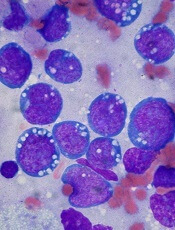
Credit: Ed Uthman
Preclinical research suggests a newly engineered protein can suppress tumor growth and extend survival in a mouse model of lymphoma.
The molecule, called BINDI (BHRF1-inhibiting design acting intracellularly), was designed to trigger the self-destruction of cancer cells infected with the Epstein-Barr virus (EBV).
EBV can disrupt the body’s clearance of old, abnormal, infected, and damaged cells. And BINDI works by overriding this interference.
Erik Procko, PhD, of the University of Washington in Seattle, and his colleagues described results observed with BINDI in Cell.
The researchers used computational design and experimental optimization to generate BINDI. The protein was designed to recognize and attach itself to an EBV protein called BHRF1 and to ignore similar proteins. BHRF1 keeps cancer cells alive, but, when bound to BINDI, it can no longer fend off cell death.
By examining the crystal structure of BINDI, the researchers saw that it nearly matched their computationally designed architecture for the protein molecule.
Furthermore, experiments showed that BINDI could prompt EBV-infected cancer cell lines to shrivel, disassemble their components, and burst into small pieces.
The researchers also tested BINDI in a mouse model of EBV-positive lymphoma. They delivered BINDI into cancer cells via an antibody-targeted nanocarrier designed to deliver protein cargo to intracellular cancer targets.
And BINDI behaved as ordered. It suppressed tumor growth and enabled the mice to live longer than control mice.
The researchers said this work demonstrates the potential to develop new classes of more effective, intracellular protein drugs, as current protein therapeutics are limited to extracellular targets.
Credit: Ed Uthman
Preclinical research suggests a newly engineered protein can suppress tumor growth and extend survival in a mouse model of lymphoma.
The molecule, called BINDI (BHRF1-inhibiting design acting intracellularly), was designed to trigger the self-destruction of cancer cells infected with the Epstein-Barr virus (EBV).
EBV can disrupt the body’s clearance of old, abnormal, infected, and damaged cells. And BINDI works by overriding this interference.
Erik Procko, PhD, of the University of Washington in Seattle, and his colleagues described results observed with BINDI in Cell.
The researchers used computational design and experimental optimization to generate BINDI. The protein was designed to recognize and attach itself to an EBV protein called BHRF1 and to ignore similar proteins. BHRF1 keeps cancer cells alive, but, when bound to BINDI, it can no longer fend off cell death.
By examining the crystal structure of BINDI, the researchers saw that it nearly matched their computationally designed architecture for the protein molecule.
Furthermore, experiments showed that BINDI could prompt EBV-infected cancer cell lines to shrivel, disassemble their components, and burst into small pieces.
The researchers also tested BINDI in a mouse model of EBV-positive lymphoma. They delivered BINDI into cancer cells via an antibody-targeted nanocarrier designed to deliver protein cargo to intracellular cancer targets.
And BINDI behaved as ordered. It suppressed tumor growth and enabled the mice to live longer than control mice.
The researchers said this work demonstrates the potential to develop new classes of more effective, intracellular protein drugs, as current protein therapeutics are limited to extracellular targets.
Credit: Ed Uthman
Preclinical research suggests a newly engineered protein can suppress tumor growth and extend survival in a mouse model of lymphoma.
The molecule, called BINDI (BHRF1-inhibiting design acting intracellularly), was designed to trigger the self-destruction of cancer cells infected with the Epstein-Barr virus (EBV).
EBV can disrupt the body’s clearance of old, abnormal, infected, and damaged cells. And BINDI works by overriding this interference.
Erik Procko, PhD, of the University of Washington in Seattle, and his colleagues described results observed with BINDI in Cell.
The researchers used computational design and experimental optimization to generate BINDI. The protein was designed to recognize and attach itself to an EBV protein called BHRF1 and to ignore similar proteins. BHRF1 keeps cancer cells alive, but, when bound to BINDI, it can no longer fend off cell death.
By examining the crystal structure of BINDI, the researchers saw that it nearly matched their computationally designed architecture for the protein molecule.
Furthermore, experiments showed that BINDI could prompt EBV-infected cancer cell lines to shrivel, disassemble their components, and burst into small pieces.
The researchers also tested BINDI in a mouse model of EBV-positive lymphoma. They delivered BINDI into cancer cells via an antibody-targeted nanocarrier designed to deliver protein cargo to intracellular cancer targets.
And BINDI behaved as ordered. It suppressed tumor growth and enabled the mice to live longer than control mice.
The researchers said this work demonstrates the potential to develop new classes of more effective, intracellular protein drugs, as current protein therapeutics are limited to extracellular targets.
Tool may predict cancer patients’ risk of financial stress

patient and her father
Credit: Rhoda Baer
A new questionnaire can measure a cancer patient’s risk for financial stress, according to a paper published in Cancer.
Researchers developed the 11-item questionnaire, called the COmprehensive Score for financial Toxicity (COST), through conversations with more than 150 cancer patients.
The team used the term “financial toxicity” to describe the expense, anxiety, and loss of confidence confronting patients who face big, unpredictable costs of cancer treatment.
And the researchers said financial toxicity can be considered another side effect of cancer care.
“Few physicians discuss this increasingly significant side effect with their patients,” said study author Jonas de Souza, MD, of the University of Chicago Medicine in Illinois.
“Physicians aren’t trained to do this. It makes them, as well as patients, feel uncomfortable. [However,] we believe that a thoughtful, concise tool that could help predict a patient’s risk for financial toxicity might open the lines of communication. This gives us a way to launch that discussion.”
Development of the COST questionnaire began with a literature review and a series of extensive interviews. Dr de Souza and his colleagues spoke with 20 patients and 6 cancer professionals, as well as nurses and social workers, and this produced a list of 147 questions.
The researchers pared the list down to 58 questions. Then, they asked 35 patients to help them decide which of the remaining questions were the most important. And the patients narrowed the list down to 30.
“In the end, 155 patients led us, with some judicious editing, to a set of 11 statements,” Dr de Souza said. “This was sufficiently brief to prevent annoying those responding to the questions but thorough enough to get us the information we need.”
All 11 entries are short and easy to understand, according to the researchers. For example, item 2 states, “My out-of-pocket medical expenses are more than I thought they would be.” And item 7 states, “I am able to meet my monthly expenses.”
For each question, patients choose from 5 potential responses: “not at all”, “a little bit,” “somewhat,” “quite a bit,” or “very much.”
Learning how a patient responds may help caregivers determine who is likely to need education, financial counseling, or referral to a support network. The quiz may also predict who is likely to have problems and require interventions.
All patients who helped develop the study had been in treatment for at least 2 months and had received bills. Excluding the top 10% and the bottom 10%, patients in the study earned between $37,000 and $111,000. The median annual income for these patients was about $63,000.
The researchers expected that financial toxicity would correlate with income.
“But, in our small sample, that did not hold up,” Dr de Souza said. “People with less education seemed to have more financial distress, but variations in income did not make much difference. We need bigger studies to confirm that, but at least we now have a tool we can use to study this.”
The researchers are now conducting a larger study to validate these findings and correlate the newly developed scale with quality of life and anxiety in cancer patients.
“We need to assess outcomes that are important for patients,” Dr de Souza said. “[T]his is another important piece of information in the shared-decision-making process.”
patient and her father
Credit: Rhoda Baer
A new questionnaire can measure a cancer patient’s risk for financial stress, according to a paper published in Cancer.
Researchers developed the 11-item questionnaire, called the COmprehensive Score for financial Toxicity (COST), through conversations with more than 150 cancer patients.
The team used the term “financial toxicity” to describe the expense, anxiety, and loss of confidence confronting patients who face big, unpredictable costs of cancer treatment.
And the researchers said financial toxicity can be considered another side effect of cancer care.
“Few physicians discuss this increasingly significant side effect with their patients,” said study author Jonas de Souza, MD, of the University of Chicago Medicine in Illinois.
“Physicians aren’t trained to do this. It makes them, as well as patients, feel uncomfortable. [However,] we believe that a thoughtful, concise tool that could help predict a patient’s risk for financial toxicity might open the lines of communication. This gives us a way to launch that discussion.”
Development of the COST questionnaire began with a literature review and a series of extensive interviews. Dr de Souza and his colleagues spoke with 20 patients and 6 cancer professionals, as well as nurses and social workers, and this produced a list of 147 questions.
The researchers pared the list down to 58 questions. Then, they asked 35 patients to help them decide which of the remaining questions were the most important. And the patients narrowed the list down to 30.
“In the end, 155 patients led us, with some judicious editing, to a set of 11 statements,” Dr de Souza said. “This was sufficiently brief to prevent annoying those responding to the questions but thorough enough to get us the information we need.”
All 11 entries are short and easy to understand, according to the researchers. For example, item 2 states, “My out-of-pocket medical expenses are more than I thought they would be.” And item 7 states, “I am able to meet my monthly expenses.”
For each question, patients choose from 5 potential responses: “not at all”, “a little bit,” “somewhat,” “quite a bit,” or “very much.”
Learning how a patient responds may help caregivers determine who is likely to need education, financial counseling, or referral to a support network. The quiz may also predict who is likely to have problems and require interventions.
All patients who helped develop the study had been in treatment for at least 2 months and had received bills. Excluding the top 10% and the bottom 10%, patients in the study earned between $37,000 and $111,000. The median annual income for these patients was about $63,000.
The researchers expected that financial toxicity would correlate with income.
“But, in our small sample, that did not hold up,” Dr de Souza said. “People with less education seemed to have more financial distress, but variations in income did not make much difference. We need bigger studies to confirm that, but at least we now have a tool we can use to study this.”
The researchers are now conducting a larger study to validate these findings and correlate the newly developed scale with quality of life and anxiety in cancer patients.
“We need to assess outcomes that are important for patients,” Dr de Souza said. “[T]his is another important piece of information in the shared-decision-making process.”
patient and her father
Credit: Rhoda Baer
A new questionnaire can measure a cancer patient’s risk for financial stress, according to a paper published in Cancer.
Researchers developed the 11-item questionnaire, called the COmprehensive Score for financial Toxicity (COST), through conversations with more than 150 cancer patients.
The team used the term “financial toxicity” to describe the expense, anxiety, and loss of confidence confronting patients who face big, unpredictable costs of cancer treatment.
And the researchers said financial toxicity can be considered another side effect of cancer care.
“Few physicians discuss this increasingly significant side effect with their patients,” said study author Jonas de Souza, MD, of the University of Chicago Medicine in Illinois.
“Physicians aren’t trained to do this. It makes them, as well as patients, feel uncomfortable. [However,] we believe that a thoughtful, concise tool that could help predict a patient’s risk for financial toxicity might open the lines of communication. This gives us a way to launch that discussion.”
Development of the COST questionnaire began with a literature review and a series of extensive interviews. Dr de Souza and his colleagues spoke with 20 patients and 6 cancer professionals, as well as nurses and social workers, and this produced a list of 147 questions.
The researchers pared the list down to 58 questions. Then, they asked 35 patients to help them decide which of the remaining questions were the most important. And the patients narrowed the list down to 30.
“In the end, 155 patients led us, with some judicious editing, to a set of 11 statements,” Dr de Souza said. “This was sufficiently brief to prevent annoying those responding to the questions but thorough enough to get us the information we need.”
All 11 entries are short and easy to understand, according to the researchers. For example, item 2 states, “My out-of-pocket medical expenses are more than I thought they would be.” And item 7 states, “I am able to meet my monthly expenses.”
For each question, patients choose from 5 potential responses: “not at all”, “a little bit,” “somewhat,” “quite a bit,” or “very much.”
Learning how a patient responds may help caregivers determine who is likely to need education, financial counseling, or referral to a support network. The quiz may also predict who is likely to have problems and require interventions.
All patients who helped develop the study had been in treatment for at least 2 months and had received bills. Excluding the top 10% and the bottom 10%, patients in the study earned between $37,000 and $111,000. The median annual income for these patients was about $63,000.
The researchers expected that financial toxicity would correlate with income.
“But, in our small sample, that did not hold up,” Dr de Souza said. “People with less education seemed to have more financial distress, but variations in income did not make much difference. We need bigger studies to confirm that, but at least we now have a tool we can use to study this.”
The researchers are now conducting a larger study to validate these findings and correlate the newly developed scale with quality of life and anxiety in cancer patients.
“We need to assess outcomes that are important for patients,” Dr de Souza said. “[T]his is another important piece of information in the shared-decision-making process.”
Tool predicts lymphoma, death in primary Sjögren’s syndrome patients
The European League Against Rheumatism Sjögren’s Syndrome Disease Activity Index measured at the time of diagnosis predicted the development of lymphoma and death in Spanish patients with severe primary Sjögren’s syndrome in a large, multicenter registry.
"We identified a specific hematological and immunological profile (cytopenias, hypocomplementemia, monoclonal band, and cryoglobulinemia) as laboratory predictors of hematological neoplasia in these patients," said lead study author Dr. Pilar Brito Zerón. "If you have an SS [Sjögren’s syndrome] patient with these features, you have to be very careful because this patient has a higher probability of developing a lymphoma."
"Physicians have had an activity index tool for other diseases for a long time, but there was nothing for SS until recently," when the EULAR Sjögren’s Syndrome Disease Activity Index (ESSDAI) was published in 2010, Dr. Brito Zerón said. "In Spain, we have one of the largest cohorts of SS patients in the world," so it was a good opportunity to test the ESSDAI.
Dr. Brito Zerón of Hospital Clinic in Barcelona and her colleagues studied patient records from the GEAS-SS multicenter registry, a cohort of 921 patients with SS from 20 medical centers in Spain, and retrospectively calculated their 2010 ESSDAI. During a mean follow-up period of 75 months, 25 (3%) of 904 patients developed lymphoproliferative disease; 17 were excluded because they had lymphoma before their primary SS diagnosis. Two-thirds were MALT (mucosa-associated lymphoid tissue) lymphomas, 80% of which were located in the parotid glands.
The investigators found that the following baseline features at diagnosis were most associated with lymphoma development: male gender (hazard ratio [HR], 5.78; 95% confidence interval [CI], 2.14-15.63); cryoglobulins (HR, 4.44; 95% CI, 1.86-10.58); monoclonal serum band (HR, 4.23; 95% CI, 1.38-13.02); C3 values less than 0.82 g/L (HR, 3.75; 95% CI, 1.38-10.19); C4 values less than 0.07 g/L (HR, 3.22, 95% CI, 1.08-9.61); and older age (HR, 1.04; 95% CI, 1.00-1.07). Gender, low C3, monoclonal band, and cryoglobulins were significant independent variables related to lymphoma, Dr. Brito Zerón reported at the annual European Congress of Rheumatology.
An ESSDAI score of one or greater in the constitutional (HR, 4.06; 95% CI, 1.54-10.70) and hematologic (HR, 2.59; 95% CI 1.16-5.78) domains was associated with the development of lymphoma, with hematologic activity being independently associated. In the constitutional domain, patients with the highest degree of activity – including fever greater than 38.5° C, night sweats, and/or involuntary weight loss of at least 10% – showed the highest risk of developing lymphoma (HR, 9.11; 95% CI, 2.51-33.12).
At the time of diagnosis with the 2002 primary SS classification criteria, patients had a mean baseline ESSDAI of 5.81. During follow-up, the patients accumulated another mean 3.34 points for a cumulative ESSADI of 9.15. A large majority of patients were women (94%) and had a mean age of nearly 54 years at the time of diagnosis. Most of the 921 patients in the registry had xerostomia (96%), xerophthalmia (95%), positive ocular tests (93%; 805 of 863), grade 3-4 parotid scintigraphy (88%; 598 of 676), and positive salivary gland biopsy (88%; 424 of 482). Cytopenias occurred in 34% overall, including anemia (17%), leucopenia (20%), and thrombocytopenia (9%). Immunologic disease characteristics of the patients included positive autoantibody tests for antinuclear antibodies (90%), anti-Ro (73%), rheumatoid factor (57%), and anti-La (46%). Others had low C4 (12%) or C3 (9%) levels and low cryoglobulins (12%) or monoclonal gammopathy (9%).
The investigators also correlated the baseline ESSDAI score with mortality. After an average follow-up of 75 months, 83 (9%) patients died. Deaths were attributed to causes related to SS (27 patients), cardiovascular disease (20 patients), infections (17 patients), and other causes (11 patients). The cause of death was unknown in eight patients.
The active ESSDAI domains that were associated with death were the constitutional (HR, 2.66; 95% CI, 1.38-5.11), pulmonary (HR, 2.13; 95% CI, 1.09-4.16), and biologic (HR, 3.01; 95% CI, 1.91-4.76), with the pulmonary and biologic domains being independently associated with death.
Further analysis revealed that a score of one or greater in the constitutional, lymphadenopathy, hematologic, and biologic domains was predictive of death related to SS (HRs ranging from 2.59 to 7.88), while activity at the constitutional, cutaneous, pulmonary, renal, neurologic, and hematologic domains predicted mortality related to infection (HRs ranging from 3.7 to 9.29). The investigators found no associations between activity in specific ESSDAI domains and death from cardiovascular disease or other causes.
"Activity of constitutional and lymphadenopathy domains, closely related to lymphoma, correlated with death caused by SS itself, while activity in the main extraglandular sites of involvement (in which high doses of corticosteroids and immunosuppressive agents are used) correlated principally with death caused by infection," Dr. Brito Zerón said. "ESSDAI is a useful tool to score systemic activity in patients with primary SS not only in prospective studies, but also in clinical trials that evaluate the efficacy of a specific drug."
Since the analysis of these 921 patients was completed in January 2013, an additional 124 patients with primary SS have joined the cohort. In this larger cohort, baseline ESDAI score of 14 or higher and presence of more than one laboratory marker (lymphopenia, low cryoglobulins, hypocomplementemia, and monoclonal band) both were significantly associated with SS-related death.
Dr. Brito Zerón noted that the investigators have not analyzed whether treatment influenced outcomes in the cohort, but they plan to.
The investigators had no financial disclosures.
The European League Against Rheumatism Sjögren’s Syndrome Disease Activity Index measured at the time of diagnosis predicted the development of lymphoma and death in Spanish patients with severe primary Sjögren’s syndrome in a large, multicenter registry.
"We identified a specific hematological and immunological profile (cytopenias, hypocomplementemia, monoclonal band, and cryoglobulinemia) as laboratory predictors of hematological neoplasia in these patients," said lead study author Dr. Pilar Brito Zerón. "If you have an SS [Sjögren’s syndrome] patient with these features, you have to be very careful because this patient has a higher probability of developing a lymphoma."
"Physicians have had an activity index tool for other diseases for a long time, but there was nothing for SS until recently," when the EULAR Sjögren’s Syndrome Disease Activity Index (ESSDAI) was published in 2010, Dr. Brito Zerón said. "In Spain, we have one of the largest cohorts of SS patients in the world," so it was a good opportunity to test the ESSDAI.
Dr. Brito Zerón of Hospital Clinic in Barcelona and her colleagues studied patient records from the GEAS-SS multicenter registry, a cohort of 921 patients with SS from 20 medical centers in Spain, and retrospectively calculated their 2010 ESSDAI. During a mean follow-up period of 75 months, 25 (3%) of 904 patients developed lymphoproliferative disease; 17 were excluded because they had lymphoma before their primary SS diagnosis. Two-thirds were MALT (mucosa-associated lymphoid tissue) lymphomas, 80% of which were located in the parotid glands.
The investigators found that the following baseline features at diagnosis were most associated with lymphoma development: male gender (hazard ratio [HR], 5.78; 95% confidence interval [CI], 2.14-15.63); cryoglobulins (HR, 4.44; 95% CI, 1.86-10.58); monoclonal serum band (HR, 4.23; 95% CI, 1.38-13.02); C3 values less than 0.82 g/L (HR, 3.75; 95% CI, 1.38-10.19); C4 values less than 0.07 g/L (HR, 3.22, 95% CI, 1.08-9.61); and older age (HR, 1.04; 95% CI, 1.00-1.07). Gender, low C3, monoclonal band, and cryoglobulins were significant independent variables related to lymphoma, Dr. Brito Zerón reported at the annual European Congress of Rheumatology.
An ESSDAI score of one or greater in the constitutional (HR, 4.06; 95% CI, 1.54-10.70) and hematologic (HR, 2.59; 95% CI 1.16-5.78) domains was associated with the development of lymphoma, with hematologic activity being independently associated. In the constitutional domain, patients with the highest degree of activity – including fever greater than 38.5° C, night sweats, and/or involuntary weight loss of at least 10% – showed the highest risk of developing lymphoma (HR, 9.11; 95% CI, 2.51-33.12).
At the time of diagnosis with the 2002 primary SS classification criteria, patients had a mean baseline ESSDAI of 5.81. During follow-up, the patients accumulated another mean 3.34 points for a cumulative ESSADI of 9.15. A large majority of patients were women (94%) and had a mean age of nearly 54 years at the time of diagnosis. Most of the 921 patients in the registry had xerostomia (96%), xerophthalmia (95%), positive ocular tests (93%; 805 of 863), grade 3-4 parotid scintigraphy (88%; 598 of 676), and positive salivary gland biopsy (88%; 424 of 482). Cytopenias occurred in 34% overall, including anemia (17%), leucopenia (20%), and thrombocytopenia (9%). Immunologic disease characteristics of the patients included positive autoantibody tests for antinuclear antibodies (90%), anti-Ro (73%), rheumatoid factor (57%), and anti-La (46%). Others had low C4 (12%) or C3 (9%) levels and low cryoglobulins (12%) or monoclonal gammopathy (9%).
The investigators also correlated the baseline ESSDAI score with mortality. After an average follow-up of 75 months, 83 (9%) patients died. Deaths were attributed to causes related to SS (27 patients), cardiovascular disease (20 patients), infections (17 patients), and other causes (11 patients). The cause of death was unknown in eight patients.
The active ESSDAI domains that were associated with death were the constitutional (HR, 2.66; 95% CI, 1.38-5.11), pulmonary (HR, 2.13; 95% CI, 1.09-4.16), and biologic (HR, 3.01; 95% CI, 1.91-4.76), with the pulmonary and biologic domains being independently associated with death.
Further analysis revealed that a score of one or greater in the constitutional, lymphadenopathy, hematologic, and biologic domains was predictive of death related to SS (HRs ranging from 2.59 to 7.88), while activity at the constitutional, cutaneous, pulmonary, renal, neurologic, and hematologic domains predicted mortality related to infection (HRs ranging from 3.7 to 9.29). The investigators found no associations between activity in specific ESSDAI domains and death from cardiovascular disease or other causes.
"Activity of constitutional and lymphadenopathy domains, closely related to lymphoma, correlated with death caused by SS itself, while activity in the main extraglandular sites of involvement (in which high doses of corticosteroids and immunosuppressive agents are used) correlated principally with death caused by infection," Dr. Brito Zerón said. "ESSDAI is a useful tool to score systemic activity in patients with primary SS not only in prospective studies, but also in clinical trials that evaluate the efficacy of a specific drug."
Since the analysis of these 921 patients was completed in January 2013, an additional 124 patients with primary SS have joined the cohort. In this larger cohort, baseline ESDAI score of 14 or higher and presence of more than one laboratory marker (lymphopenia, low cryoglobulins, hypocomplementemia, and monoclonal band) both were significantly associated with SS-related death.
Dr. Brito Zerón noted that the investigators have not analyzed whether treatment influenced outcomes in the cohort, but they plan to.
The investigators had no financial disclosures.
The European League Against Rheumatism Sjögren’s Syndrome Disease Activity Index measured at the time of diagnosis predicted the development of lymphoma and death in Spanish patients with severe primary Sjögren’s syndrome in a large, multicenter registry.
"We identified a specific hematological and immunological profile (cytopenias, hypocomplementemia, monoclonal band, and cryoglobulinemia) as laboratory predictors of hematological neoplasia in these patients," said lead study author Dr. Pilar Brito Zerón. "If you have an SS [Sjögren’s syndrome] patient with these features, you have to be very careful because this patient has a higher probability of developing a lymphoma."
"Physicians have had an activity index tool for other diseases for a long time, but there was nothing for SS until recently," when the EULAR Sjögren’s Syndrome Disease Activity Index (ESSDAI) was published in 2010, Dr. Brito Zerón said. "In Spain, we have one of the largest cohorts of SS patients in the world," so it was a good opportunity to test the ESSDAI.
Dr. Brito Zerón of Hospital Clinic in Barcelona and her colleagues studied patient records from the GEAS-SS multicenter registry, a cohort of 921 patients with SS from 20 medical centers in Spain, and retrospectively calculated their 2010 ESSDAI. During a mean follow-up period of 75 months, 25 (3%) of 904 patients developed lymphoproliferative disease; 17 were excluded because they had lymphoma before their primary SS diagnosis. Two-thirds were MALT (mucosa-associated lymphoid tissue) lymphomas, 80% of which were located in the parotid glands.
The investigators found that the following baseline features at diagnosis were most associated with lymphoma development: male gender (hazard ratio [HR], 5.78; 95% confidence interval [CI], 2.14-15.63); cryoglobulins (HR, 4.44; 95% CI, 1.86-10.58); monoclonal serum band (HR, 4.23; 95% CI, 1.38-13.02); C3 values less than 0.82 g/L (HR, 3.75; 95% CI, 1.38-10.19); C4 values less than 0.07 g/L (HR, 3.22, 95% CI, 1.08-9.61); and older age (HR, 1.04; 95% CI, 1.00-1.07). Gender, low C3, monoclonal band, and cryoglobulins were significant independent variables related to lymphoma, Dr. Brito Zerón reported at the annual European Congress of Rheumatology.
An ESSDAI score of one or greater in the constitutional (HR, 4.06; 95% CI, 1.54-10.70) and hematologic (HR, 2.59; 95% CI 1.16-5.78) domains was associated with the development of lymphoma, with hematologic activity being independently associated. In the constitutional domain, patients with the highest degree of activity – including fever greater than 38.5° C, night sweats, and/or involuntary weight loss of at least 10% – showed the highest risk of developing lymphoma (HR, 9.11; 95% CI, 2.51-33.12).
At the time of diagnosis with the 2002 primary SS classification criteria, patients had a mean baseline ESSDAI of 5.81. During follow-up, the patients accumulated another mean 3.34 points for a cumulative ESSADI of 9.15. A large majority of patients were women (94%) and had a mean age of nearly 54 years at the time of diagnosis. Most of the 921 patients in the registry had xerostomia (96%), xerophthalmia (95%), positive ocular tests (93%; 805 of 863), grade 3-4 parotid scintigraphy (88%; 598 of 676), and positive salivary gland biopsy (88%; 424 of 482). Cytopenias occurred in 34% overall, including anemia (17%), leucopenia (20%), and thrombocytopenia (9%). Immunologic disease characteristics of the patients included positive autoantibody tests for antinuclear antibodies (90%), anti-Ro (73%), rheumatoid factor (57%), and anti-La (46%). Others had low C4 (12%) or C3 (9%) levels and low cryoglobulins (12%) or monoclonal gammopathy (9%).
The investigators also correlated the baseline ESSDAI score with mortality. After an average follow-up of 75 months, 83 (9%) patients died. Deaths were attributed to causes related to SS (27 patients), cardiovascular disease (20 patients), infections (17 patients), and other causes (11 patients). The cause of death was unknown in eight patients.
The active ESSDAI domains that were associated with death were the constitutional (HR, 2.66; 95% CI, 1.38-5.11), pulmonary (HR, 2.13; 95% CI, 1.09-4.16), and biologic (HR, 3.01; 95% CI, 1.91-4.76), with the pulmonary and biologic domains being independently associated with death.
Further analysis revealed that a score of one or greater in the constitutional, lymphadenopathy, hematologic, and biologic domains was predictive of death related to SS (HRs ranging from 2.59 to 7.88), while activity at the constitutional, cutaneous, pulmonary, renal, neurologic, and hematologic domains predicted mortality related to infection (HRs ranging from 3.7 to 9.29). The investigators found no associations between activity in specific ESSDAI domains and death from cardiovascular disease or other causes.
"Activity of constitutional and lymphadenopathy domains, closely related to lymphoma, correlated with death caused by SS itself, while activity in the main extraglandular sites of involvement (in which high doses of corticosteroids and immunosuppressive agents are used) correlated principally with death caused by infection," Dr. Brito Zerón said. "ESSDAI is a useful tool to score systemic activity in patients with primary SS not only in prospective studies, but also in clinical trials that evaluate the efficacy of a specific drug."
Since the analysis of these 921 patients was completed in January 2013, an additional 124 patients with primary SS have joined the cohort. In this larger cohort, baseline ESDAI score of 14 or higher and presence of more than one laboratory marker (lymphopenia, low cryoglobulins, hypocomplementemia, and monoclonal band) both were significantly associated with SS-related death.
Dr. Brito Zerón noted that the investigators have not analyzed whether treatment influenced outcomes in the cohort, but they plan to.
The investigators had no financial disclosures.
FROM THE EULAR CONGRESS 2014
Key clinical point: Patients with specific hematologic and immunologic laboratory markers, as well as high degrees of activity in the constitutional domain of the ESSDAI, should be monitored closely for the development of lymphoma.
Major finding: Male gender (HR, 5.78; 95% CI, 2.14-15.63); low C3 (HR, 3.75; 95% CI, 1.38-10.19); monoclonal band (HR, 4.23; 95% CI, 1.38-13.02); and cryoglobulins (HR, 4.44; 95% CI, 1.86-10.58) were significant independent variables related to lymphoma.
Data source: A retrospective analysis of 921 Spanish patients with primary Sjögren’s syndrome in the GEAS-SS multicenter registry.
Disclosures: The investigators had no financial disclosures.
Treating HIV+ lymphoma patients

©ASCO/Brian Powers
CHICAGO—Hepatitis C reactivation does not worsen survival outcomes for HIV-positive patients diagnosed with lymphoma, new research indicates.
The study showed these patients can tolerate chemotherapy without adverse outcomes and are therefore eligible for aggressive treatment.
They should be closely monitored, however, according to study investigator Stefan K. Barta, MD, of Fox Chase Cancer Center in Philadelphia, Pennsylvania.
Dr Barta and his colleagues presented results observed in HIV-positive lymphoma patients at the 2014 ASCO Annual Meeting as abstract 8578.
The team noted that more than a quarter of HIV-positive patients are also infected with the hepatitis C virus (HCV), which may complicate treatment and care decisions after a cancer diagnosis.
“Patients undergoing chemotherapy can experience reactivation of the hepatitis C virus, which, in turn, can lead to liver failure,” Dr Barta said. “This means we have to dose-reduce chemotherapy, which could negatively affect outcomes.”
In addition, HIV-positive patients often take a host of other medications, including anti-retrovirals, which makes them especially vulnerable to side effects.
However, Dr Barta said these potential risks shouldn’t deter oncologists from treating these patients with chemotherapy because he and his colleagues found that reactivation of HCV did not worsen survival outcomes in this population.
The researchers analyzed the medical records of 190 HIV-positive patients who had been diagnosed with lymphoma at the Albert Einstein Cancer Center in Bronx, New York, from 1997 to 2013. Patients with primary central nervous system lymphomas were excluded.
Fifty-three (28%) eligible patients were also infected with HCV. The virus reactivated in 17 of those patients, or about one-third of the patient population infected with HCV, during treatment.
Patients infected with HCV had an overall survival of 59.7 months, compared to 88.6 months for patients with neither HCV nor hepatitis B virus (HBV).
However, that survival advantage vanished when the researchers adjusted for variables including age, sex, race, CD4 count, the presence of cirrhosis, type of lymphoma, and levels of lactate dehydrogenase (LDH).
The multivariate analysis showed that co-infection with HCV was not associated with lower overall survival in lymphoma patients.
At the same time, the researchers did find worse overall survival outcomes associated with low CD4 count (below 100 cells/cubic millimeter), a diagnosis of non-Hodgkin lymphoma, advanced stage disease, LDH levels over 190, or cirrhosis.
Dr Barta said he hopes this research will open cancer trials up to an understudied patient population. HIV-positive patients with HCV are often excluded from these trials because of concerns about liver failure and toxicity arising from the interaction of retroviral medications with chemotherapy.
“This is really important for a large proportion of patients,” he said. “We want to assure researchers that these patients, as long as they have adequate liver function, should also be enrolled in clinical trials.”
©ASCO/Brian Powers
CHICAGO—Hepatitis C reactivation does not worsen survival outcomes for HIV-positive patients diagnosed with lymphoma, new research indicates.
The study showed these patients can tolerate chemotherapy without adverse outcomes and are therefore eligible for aggressive treatment.
They should be closely monitored, however, according to study investigator Stefan K. Barta, MD, of Fox Chase Cancer Center in Philadelphia, Pennsylvania.
Dr Barta and his colleagues presented results observed in HIV-positive lymphoma patients at the 2014 ASCO Annual Meeting as abstract 8578.
The team noted that more than a quarter of HIV-positive patients are also infected with the hepatitis C virus (HCV), which may complicate treatment and care decisions after a cancer diagnosis.
“Patients undergoing chemotherapy can experience reactivation of the hepatitis C virus, which, in turn, can lead to liver failure,” Dr Barta said. “This means we have to dose-reduce chemotherapy, which could negatively affect outcomes.”
In addition, HIV-positive patients often take a host of other medications, including anti-retrovirals, which makes them especially vulnerable to side effects.
However, Dr Barta said these potential risks shouldn’t deter oncologists from treating these patients with chemotherapy because he and his colleagues found that reactivation of HCV did not worsen survival outcomes in this population.
The researchers analyzed the medical records of 190 HIV-positive patients who had been diagnosed with lymphoma at the Albert Einstein Cancer Center in Bronx, New York, from 1997 to 2013. Patients with primary central nervous system lymphomas were excluded.
Fifty-three (28%) eligible patients were also infected with HCV. The virus reactivated in 17 of those patients, or about one-third of the patient population infected with HCV, during treatment.
Patients infected with HCV had an overall survival of 59.7 months, compared to 88.6 months for patients with neither HCV nor hepatitis B virus (HBV).
However, that survival advantage vanished when the researchers adjusted for variables including age, sex, race, CD4 count, the presence of cirrhosis, type of lymphoma, and levels of lactate dehydrogenase (LDH).
The multivariate analysis showed that co-infection with HCV was not associated with lower overall survival in lymphoma patients.
At the same time, the researchers did find worse overall survival outcomes associated with low CD4 count (below 100 cells/cubic millimeter), a diagnosis of non-Hodgkin lymphoma, advanced stage disease, LDH levels over 190, or cirrhosis.
Dr Barta said he hopes this research will open cancer trials up to an understudied patient population. HIV-positive patients with HCV are often excluded from these trials because of concerns about liver failure and toxicity arising from the interaction of retroviral medications with chemotherapy.
“This is really important for a large proportion of patients,” he said. “We want to assure researchers that these patients, as long as they have adequate liver function, should also be enrolled in clinical trials.”
©ASCO/Brian Powers
CHICAGO—Hepatitis C reactivation does not worsen survival outcomes for HIV-positive patients diagnosed with lymphoma, new research indicates.
The study showed these patients can tolerate chemotherapy without adverse outcomes and are therefore eligible for aggressive treatment.
They should be closely monitored, however, according to study investigator Stefan K. Barta, MD, of Fox Chase Cancer Center in Philadelphia, Pennsylvania.
Dr Barta and his colleagues presented results observed in HIV-positive lymphoma patients at the 2014 ASCO Annual Meeting as abstract 8578.
The team noted that more than a quarter of HIV-positive patients are also infected with the hepatitis C virus (HCV), which may complicate treatment and care decisions after a cancer diagnosis.
“Patients undergoing chemotherapy can experience reactivation of the hepatitis C virus, which, in turn, can lead to liver failure,” Dr Barta said. “This means we have to dose-reduce chemotherapy, which could negatively affect outcomes.”
In addition, HIV-positive patients often take a host of other medications, including anti-retrovirals, which makes them especially vulnerable to side effects.
However, Dr Barta said these potential risks shouldn’t deter oncologists from treating these patients with chemotherapy because he and his colleagues found that reactivation of HCV did not worsen survival outcomes in this population.
The researchers analyzed the medical records of 190 HIV-positive patients who had been diagnosed with lymphoma at the Albert Einstein Cancer Center in Bronx, New York, from 1997 to 2013. Patients with primary central nervous system lymphomas were excluded.
Fifty-three (28%) eligible patients were also infected with HCV. The virus reactivated in 17 of those patients, or about one-third of the patient population infected with HCV, during treatment.
Patients infected with HCV had an overall survival of 59.7 months, compared to 88.6 months for patients with neither HCV nor hepatitis B virus (HBV).
However, that survival advantage vanished when the researchers adjusted for variables including age, sex, race, CD4 count, the presence of cirrhosis, type of lymphoma, and levels of lactate dehydrogenase (LDH).
The multivariate analysis showed that co-infection with HCV was not associated with lower overall survival in lymphoma patients.
At the same time, the researchers did find worse overall survival outcomes associated with low CD4 count (below 100 cells/cubic millimeter), a diagnosis of non-Hodgkin lymphoma, advanced stage disease, LDH levels over 190, or cirrhosis.
Dr Barta said he hopes this research will open cancer trials up to an understudied patient population. HIV-positive patients with HCV are often excluded from these trials because of concerns about liver failure and toxicity arising from the interaction of retroviral medications with chemotherapy.
“This is really important for a large proportion of patients,” he said. “We want to assure researchers that these patients, as long as they have adequate liver function, should also be enrolled in clinical trials.”