User login
Companies abuse orphan drug designation, team says

Photo by Steven Harbour
Health experts are calling on US lawmakers and regulators to “close loopholes” in the Orphan Drug Act.
The experts say the loopholes can provide pharmaceutical companies with millions of dollars in unintended subsidies and tax breaks and fuel skyrocketing medication costs.
They argue that companies are exploiting gaps in the law by claiming orphan status for drugs that end up being marketed for more common conditions.
“The industry has been gaming the system by slicing and dicing indications so that drugs qualify for lucrative orphan status benefits,” says Martin Makary, MD, of Johns Hopkins Hospital in Baltimore, Maryland.
“As a result, funding support intended for rare disease medicine is diverted to fund the development of blockbuster drugs.”
Dr Makary and his colleagues express this viewpoint in a commentary published in the American Journal of Clinical Oncology.
The US Food and Drug Administration (FDA) grants orphan designation to encourage the development of drugs for diseases that affect fewer than 200,000 people in the US. The Orphan Drug Act was enacted in 1983 to provide incentives for drug companies to develop treatments for so-called orphan diseases that would be unprofitable because of the limited market.
Dr Makary and his colleagues say the legislation has accomplished that mission and sparked the development of life-saving therapies for a range of rare disorders. However, the authors say the law has also invited abuse.
Under the terms of the act, companies can receive federal taxpayer subsidies of up to half a million dollars a year for up to 4 years per drug, large tax credits, and waivers of marketing application fees that can cost more than $2 million. In addition, the FDA can grant companies 7 years of marketing exclusivity for an orphan drug to ensure that companies recoup the costs of research and development.
Dr Makary says companies exploit the law by initially listing only a single indication for a drug’s use—one narrow enough to qualify for orphan disease benefits. After FDA approval, however, some such drugs are marketed and used off-label more broadly, thus turning large profits.
“This is a financially toxic practice that is also unethical,” says study author Michael Daniel, also of Johns Hopkins.
“It’s time to ensure that we also render it illegal. The practice inflates drug prices, and the costs are passed on to consumers in the form of higher health insurance premiums.”
For example, the drug rituximab was originally approved to treat follicular B-cell non-Hodgkin lymphoma, a disease that affects about 14,000 patients a year. Now, rituximab is also used to treat several other types of cancer, organ rejection following kidney transplant, and autoimmune diseases, including rheumatoid arthritis, which affects 1.3 million Americans.
Rituximab, marketed under several trade names, is the top-selling medication approved as an orphan drug, the 12th all-time drug best-seller in the US, and it generated $3.7 billion in domestic sales in 2014.
In fact, 7 of the top 10 best-selling drugs in the US for 2014 came on the market with an orphan designation, according to Dr Makary and his colleagues.
Of the 41 drugs approved by the FDA in 2014, 18 had orphan status designations. The authors predict that, in 2015, orphan drugs will generate sales totaling $107 billion. And that number is expected to reach $176 billion by 2020.
Dr Makary says this projection represents a yearly growth rate of nearly 11%, or double the growth rate of the overall prescription drug market. The authors also cite data showing that, by 2020, orphan drugs are expected to account for 19% of global prescription drug sales, up from 6% in the year 2000.
Although the reasons for this boom in orphan drugs are likely multifactorial, the exploitation of the orphan drug act is an important catalyst behind this trend, the authors say.
Because orphan designation guarantees a 7-year exclusivity deal to market the drug and protects it from generic competition, the price tags for such medications often balloon rapidly.
For example, the drug imatinib was initially priced at $30,000 per year in 2001. By 2012, it cost $92,000 a year.
The drug’s original designation was for chronic myelogenous leukemia, and it would therefore treat 9000 patients a year in the US. Subsequently, imatinib was given 6 additional orphan designations for various conditions, including gastric cancers and immune disorders.
Dr Makary says, in essence, the exclusivity clause guarantees a hyperextended government-sponsored monopoly. So it’s not surprising that the median cost for orphan drugs is more than $98,000 per patient per year, compared with a median cost of just over $5000 per patient per year for drugs without orphan status.
Overall, nearly 15% of already approved orphan drugs subsequently add far more common diseases to their treatment repertoires.
Dr Makary and his colleagues recommend that, once a drug exceeds the basic tenets of the act—to treat fewer than 200,000 people—it should no longer receive government support or marketing exclusivity.
This can be achieved, the authors say, through pricing negotiations, clauses that reduce marketing exclusivity, and leveling of taxes once a medication becomes a blockbuster treatment for conditions not listed in the original FDA approval.
They say such measures would ensure the spirit of the original act is followed while continuing to provide critical economic incentives for truly rare diseases. 
Photo by Steven Harbour
Health experts are calling on US lawmakers and regulators to “close loopholes” in the Orphan Drug Act.
The experts say the loopholes can provide pharmaceutical companies with millions of dollars in unintended subsidies and tax breaks and fuel skyrocketing medication costs.
They argue that companies are exploiting gaps in the law by claiming orphan status for drugs that end up being marketed for more common conditions.
“The industry has been gaming the system by slicing and dicing indications so that drugs qualify for lucrative orphan status benefits,” says Martin Makary, MD, of Johns Hopkins Hospital in Baltimore, Maryland.
“As a result, funding support intended for rare disease medicine is diverted to fund the development of blockbuster drugs.”
Dr Makary and his colleagues express this viewpoint in a commentary published in the American Journal of Clinical Oncology.
The US Food and Drug Administration (FDA) grants orphan designation to encourage the development of drugs for diseases that affect fewer than 200,000 people in the US. The Orphan Drug Act was enacted in 1983 to provide incentives for drug companies to develop treatments for so-called orphan diseases that would be unprofitable because of the limited market.
Dr Makary and his colleagues say the legislation has accomplished that mission and sparked the development of life-saving therapies for a range of rare disorders. However, the authors say the law has also invited abuse.
Under the terms of the act, companies can receive federal taxpayer subsidies of up to half a million dollars a year for up to 4 years per drug, large tax credits, and waivers of marketing application fees that can cost more than $2 million. In addition, the FDA can grant companies 7 years of marketing exclusivity for an orphan drug to ensure that companies recoup the costs of research and development.
Dr Makary says companies exploit the law by initially listing only a single indication for a drug’s use—one narrow enough to qualify for orphan disease benefits. After FDA approval, however, some such drugs are marketed and used off-label more broadly, thus turning large profits.
“This is a financially toxic practice that is also unethical,” says study author Michael Daniel, also of Johns Hopkins.
“It’s time to ensure that we also render it illegal. The practice inflates drug prices, and the costs are passed on to consumers in the form of higher health insurance premiums.”
For example, the drug rituximab was originally approved to treat follicular B-cell non-Hodgkin lymphoma, a disease that affects about 14,000 patients a year. Now, rituximab is also used to treat several other types of cancer, organ rejection following kidney transplant, and autoimmune diseases, including rheumatoid arthritis, which affects 1.3 million Americans.
Rituximab, marketed under several trade names, is the top-selling medication approved as an orphan drug, the 12th all-time drug best-seller in the US, and it generated $3.7 billion in domestic sales in 2014.
In fact, 7 of the top 10 best-selling drugs in the US for 2014 came on the market with an orphan designation, according to Dr Makary and his colleagues.
Of the 41 drugs approved by the FDA in 2014, 18 had orphan status designations. The authors predict that, in 2015, orphan drugs will generate sales totaling $107 billion. And that number is expected to reach $176 billion by 2020.
Dr Makary says this projection represents a yearly growth rate of nearly 11%, or double the growth rate of the overall prescription drug market. The authors also cite data showing that, by 2020, orphan drugs are expected to account for 19% of global prescription drug sales, up from 6% in the year 2000.
Although the reasons for this boom in orphan drugs are likely multifactorial, the exploitation of the orphan drug act is an important catalyst behind this trend, the authors say.
Because orphan designation guarantees a 7-year exclusivity deal to market the drug and protects it from generic competition, the price tags for such medications often balloon rapidly.
For example, the drug imatinib was initially priced at $30,000 per year in 2001. By 2012, it cost $92,000 a year.
The drug’s original designation was for chronic myelogenous leukemia, and it would therefore treat 9000 patients a year in the US. Subsequently, imatinib was given 6 additional orphan designations for various conditions, including gastric cancers and immune disorders.
Dr Makary says, in essence, the exclusivity clause guarantees a hyperextended government-sponsored monopoly. So it’s not surprising that the median cost for orphan drugs is more than $98,000 per patient per year, compared with a median cost of just over $5000 per patient per year for drugs without orphan status.
Overall, nearly 15% of already approved orphan drugs subsequently add far more common diseases to their treatment repertoires.
Dr Makary and his colleagues recommend that, once a drug exceeds the basic tenets of the act—to treat fewer than 200,000 people—it should no longer receive government support or marketing exclusivity.
This can be achieved, the authors say, through pricing negotiations, clauses that reduce marketing exclusivity, and leveling of taxes once a medication becomes a blockbuster treatment for conditions not listed in the original FDA approval.
They say such measures would ensure the spirit of the original act is followed while continuing to provide critical economic incentives for truly rare diseases.
Photo by Steven Harbour
Health experts are calling on US lawmakers and regulators to “close loopholes” in the Orphan Drug Act.
The experts say the loopholes can provide pharmaceutical companies with millions of dollars in unintended subsidies and tax breaks and fuel skyrocketing medication costs.
They argue that companies are exploiting gaps in the law by claiming orphan status for drugs that end up being marketed for more common conditions.
“The industry has been gaming the system by slicing and dicing indications so that drugs qualify for lucrative orphan status benefits,” says Martin Makary, MD, of Johns Hopkins Hospital in Baltimore, Maryland.
“As a result, funding support intended for rare disease medicine is diverted to fund the development of blockbuster drugs.”
Dr Makary and his colleagues express this viewpoint in a commentary published in the American Journal of Clinical Oncology.
The US Food and Drug Administration (FDA) grants orphan designation to encourage the development of drugs for diseases that affect fewer than 200,000 people in the US. The Orphan Drug Act was enacted in 1983 to provide incentives for drug companies to develop treatments for so-called orphan diseases that would be unprofitable because of the limited market.
Dr Makary and his colleagues say the legislation has accomplished that mission and sparked the development of life-saving therapies for a range of rare disorders. However, the authors say the law has also invited abuse.
Under the terms of the act, companies can receive federal taxpayer subsidies of up to half a million dollars a year for up to 4 years per drug, large tax credits, and waivers of marketing application fees that can cost more than $2 million. In addition, the FDA can grant companies 7 years of marketing exclusivity for an orphan drug to ensure that companies recoup the costs of research and development.
Dr Makary says companies exploit the law by initially listing only a single indication for a drug’s use—one narrow enough to qualify for orphan disease benefits. After FDA approval, however, some such drugs are marketed and used off-label more broadly, thus turning large profits.
“This is a financially toxic practice that is also unethical,” says study author Michael Daniel, also of Johns Hopkins.
“It’s time to ensure that we also render it illegal. The practice inflates drug prices, and the costs are passed on to consumers in the form of higher health insurance premiums.”
For example, the drug rituximab was originally approved to treat follicular B-cell non-Hodgkin lymphoma, a disease that affects about 14,000 patients a year. Now, rituximab is also used to treat several other types of cancer, organ rejection following kidney transplant, and autoimmune diseases, including rheumatoid arthritis, which affects 1.3 million Americans.
Rituximab, marketed under several trade names, is the top-selling medication approved as an orphan drug, the 12th all-time drug best-seller in the US, and it generated $3.7 billion in domestic sales in 2014.
In fact, 7 of the top 10 best-selling drugs in the US for 2014 came on the market with an orphan designation, according to Dr Makary and his colleagues.
Of the 41 drugs approved by the FDA in 2014, 18 had orphan status designations. The authors predict that, in 2015, orphan drugs will generate sales totaling $107 billion. And that number is expected to reach $176 billion by 2020.
Dr Makary says this projection represents a yearly growth rate of nearly 11%, or double the growth rate of the overall prescription drug market. The authors also cite data showing that, by 2020, orphan drugs are expected to account for 19% of global prescription drug sales, up from 6% in the year 2000.
Although the reasons for this boom in orphan drugs are likely multifactorial, the exploitation of the orphan drug act is an important catalyst behind this trend, the authors say.
Because orphan designation guarantees a 7-year exclusivity deal to market the drug and protects it from generic competition, the price tags for such medications often balloon rapidly.
For example, the drug imatinib was initially priced at $30,000 per year in 2001. By 2012, it cost $92,000 a year.
The drug’s original designation was for chronic myelogenous leukemia, and it would therefore treat 9000 patients a year in the US. Subsequently, imatinib was given 6 additional orphan designations for various conditions, including gastric cancers and immune disorders.
Dr Makary says, in essence, the exclusivity clause guarantees a hyperextended government-sponsored monopoly. So it’s not surprising that the median cost for orphan drugs is more than $98,000 per patient per year, compared with a median cost of just over $5000 per patient per year for drugs without orphan status.
Overall, nearly 15% of already approved orphan drugs subsequently add far more common diseases to their treatment repertoires.
Dr Makary and his colleagues recommend that, once a drug exceeds the basic tenets of the act—to treat fewer than 200,000 people—it should no longer receive government support or marketing exclusivity.
This can be achieved, the authors say, through pricing negotiations, clauses that reduce marketing exclusivity, and leveling of taxes once a medication becomes a blockbuster treatment for conditions not listed in the original FDA approval.
They say such measures would ensure the spirit of the original act is followed while continuing to provide critical economic incentives for truly rare diseases.
Long-term risk of hospitalization in cancer survivors

patient and her father
Photo by Rhoda Baer
Results of a large study suggest that adolescent and young adult cancer survivors have an increased risk of hospitalization up to 34 years after their diagnosis.
Cancer survivors with the highest risk of hospitalization were those who had been diagnosed with leukemia, brain cancer, or Hodgkin lymphoma.
Kathrine Rugbjerg, PhD, and Jørgen H. Olsen, MD, of the Danish Cancer Society Research Center in Copenhagen, Denmark, reported these results in JAMA Oncology.
The pair examined the risk of hospitalization in 33,555 subjects who had cancer as adolescents or young adults and survived at least 5 years. The subjects were diagnosed from 1943 through 2004, when they were 15 to 39 years of age.
The researchers compared the cancer survivors to a cohort of 228,447 subjects from the general population who were matched to the cancer survivors by sex and year of birth.
All study subjects were followed up for hospitalizations in the Danish Patient Register through December 2010. The median follow-up was 14 years.
There were 53,032 hospitalizations among the cancer survivors, but only 38,423 were expected. So the standardized hospitalization rate ratio (RR) was 1.38.
The highest risks of hospitalization were for diseases of blood and blood-forming organs (RR=2.00), infectious and parasitic diseases (RR=1.69), and malignant neoplasms (RR=1.63).
The overall absolute excess risk of hospitalization for the cancer survivors was 2803 per 100,000 person-years. The highest absolute excess risks were for malignant neoplasms (18%), diseases of digestive organs (15%), and diseases of the circulatory system (14%).
The researchers said these results suggest that survivors of adolescent and young adult cancers face persistent risks for a broad range of somatic diseases that require hospitalization. And the morbidity pattern is highly dependent on the type of cancer being treated.
patient and her father
Photo by Rhoda Baer
Results of a large study suggest that adolescent and young adult cancer survivors have an increased risk of hospitalization up to 34 years after their diagnosis.
Cancer survivors with the highest risk of hospitalization were those who had been diagnosed with leukemia, brain cancer, or Hodgkin lymphoma.
Kathrine Rugbjerg, PhD, and Jørgen H. Olsen, MD, of the Danish Cancer Society Research Center in Copenhagen, Denmark, reported these results in JAMA Oncology.
The pair examined the risk of hospitalization in 33,555 subjects who had cancer as adolescents or young adults and survived at least 5 years. The subjects were diagnosed from 1943 through 2004, when they were 15 to 39 years of age.
The researchers compared the cancer survivors to a cohort of 228,447 subjects from the general population who were matched to the cancer survivors by sex and year of birth.
All study subjects were followed up for hospitalizations in the Danish Patient Register through December 2010. The median follow-up was 14 years.
There were 53,032 hospitalizations among the cancer survivors, but only 38,423 were expected. So the standardized hospitalization rate ratio (RR) was 1.38.
The highest risks of hospitalization were for diseases of blood and blood-forming organs (RR=2.00), infectious and parasitic diseases (RR=1.69), and malignant neoplasms (RR=1.63).
The overall absolute excess risk of hospitalization for the cancer survivors was 2803 per 100,000 person-years. The highest absolute excess risks were for malignant neoplasms (18%), diseases of digestive organs (15%), and diseases of the circulatory system (14%).
The researchers said these results suggest that survivors of adolescent and young adult cancers face persistent risks for a broad range of somatic diseases that require hospitalization. And the morbidity pattern is highly dependent on the type of cancer being treated.
patient and her father
Photo by Rhoda Baer
Results of a large study suggest that adolescent and young adult cancer survivors have an increased risk of hospitalization up to 34 years after their diagnosis.
Cancer survivors with the highest risk of hospitalization were those who had been diagnosed with leukemia, brain cancer, or Hodgkin lymphoma.
Kathrine Rugbjerg, PhD, and Jørgen H. Olsen, MD, of the Danish Cancer Society Research Center in Copenhagen, Denmark, reported these results in JAMA Oncology.
The pair examined the risk of hospitalization in 33,555 subjects who had cancer as adolescents or young adults and survived at least 5 years. The subjects were diagnosed from 1943 through 2004, when they were 15 to 39 years of age.
The researchers compared the cancer survivors to a cohort of 228,447 subjects from the general population who were matched to the cancer survivors by sex and year of birth.
All study subjects were followed up for hospitalizations in the Danish Patient Register through December 2010. The median follow-up was 14 years.
There were 53,032 hospitalizations among the cancer survivors, but only 38,423 were expected. So the standardized hospitalization rate ratio (RR) was 1.38.
The highest risks of hospitalization were for diseases of blood and blood-forming organs (RR=2.00), infectious and parasitic diseases (RR=1.69), and malignant neoplasms (RR=1.63).
The overall absolute excess risk of hospitalization for the cancer survivors was 2803 per 100,000 person-years. The highest absolute excess risks were for malignant neoplasms (18%), diseases of digestive organs (15%), and diseases of the circulatory system (14%).
The researchers said these results suggest that survivors of adolescent and young adult cancers face persistent risks for a broad range of somatic diseases that require hospitalization. And the morbidity pattern is highly dependent on the type of cancer being treated.
Unexpected findings in young cancer patients

Photo by Bill Branson
Many young cancer patients—not just those with a family history of cancer—may benefit from comprehensive genomic screening, according to a study published in NEJM.
The research revealed germline mutations in cancer-predisposing genes in 8.5% of the children and adolescents studied.
Information on family history was available for roughly 60% of these cancer patients, and, in this group, only 40% of patients had a family history of cancer.
Prior to this study, the presence of such germline mutations was thought to be extremely rare and restricted to children in families with strong histories of cancer.
“This paper marks an important turning point in our understanding of pediatric cancer risk and will likely change how patients are evaluated,” said James R. Downing, MD, of St. Jude Children’s Research Hospital in Memphis, Tennessee.
“For many pediatric cancer patients, comprehensive next-generation DNA sequencing of both their tumor and normal tissue may provide valuable information that will not only influence their clinical management but also lead to genetic counseling and testing of their parents and siblings who may be at risk and would benefit from ongoing surveillance.”
To conduct this research, Dr Downing and his colleagues performed next-generation sequencing of both the tumor and normal tissues of 1120 cancer patients younger than 20 years of age.
The investigators sequenced the whole genome in 595 patients, the whole exome in 456 patients, and both in 69 patients.
The team analyzed the DNA sequences of 565 genes, including 60 that have been associated with autosomal dominant cancer-predisposition syndromes, for the presence of germline mutations.
A total of 95 patients, or 8.5%, had germline mutations in 21 of the 60 genes. In comparison, only 1.1% of individuals in a non-cancer cohort had alterations in the same genes.
Fifty-eight of the cancer patients who had a cancer-predisposing mutation also had available information on their family history. Forty percent (n=23) of these patients had a family history of cancer.
The frequency of germline mutations in cancer-predisposition genes varied by the type of cancer a patient had. The highest frequency, 16.7%, was in patients with non-central nervous system (CNS) solid tumors, followed by CNS tumors, at 9%, and leukemia, at 4.4%.
The most commonly mutated genes were TP53 (n=50), APC (n=6), BRCA2 (n=6), NF1 (n=4), PMS2 (n=4), RB1 (n=3), and RUNX1 (n=3).
The investigators were surprised to find mutations in the breast and ovarian cancer genes BRCA1 and BRCA2 in a number of the patients. These genes are not currently included in pediatric cancer genetic screening.
“Another surprising finding to emerge from this study was the prevalence of germline mutations in 6 patients with Ewing sarcoma,” said study author Kim Nichols, MD, also of St. Jude. “[This cancer] was not previously thought to be part of any cancer-predisposition syndrome.”
Photo by Bill Branson
Many young cancer patients—not just those with a family history of cancer—may benefit from comprehensive genomic screening, according to a study published in NEJM.
The research revealed germline mutations in cancer-predisposing genes in 8.5% of the children and adolescents studied.
Information on family history was available for roughly 60% of these cancer patients, and, in this group, only 40% of patients had a family history of cancer.
Prior to this study, the presence of such germline mutations was thought to be extremely rare and restricted to children in families with strong histories of cancer.
“This paper marks an important turning point in our understanding of pediatric cancer risk and will likely change how patients are evaluated,” said James R. Downing, MD, of St. Jude Children’s Research Hospital in Memphis, Tennessee.
“For many pediatric cancer patients, comprehensive next-generation DNA sequencing of both their tumor and normal tissue may provide valuable information that will not only influence their clinical management but also lead to genetic counseling and testing of their parents and siblings who may be at risk and would benefit from ongoing surveillance.”
To conduct this research, Dr Downing and his colleagues performed next-generation sequencing of both the tumor and normal tissues of 1120 cancer patients younger than 20 years of age.
The investigators sequenced the whole genome in 595 patients, the whole exome in 456 patients, and both in 69 patients.
The team analyzed the DNA sequences of 565 genes, including 60 that have been associated with autosomal dominant cancer-predisposition syndromes, for the presence of germline mutations.
A total of 95 patients, or 8.5%, had germline mutations in 21 of the 60 genes. In comparison, only 1.1% of individuals in a non-cancer cohort had alterations in the same genes.
Fifty-eight of the cancer patients who had a cancer-predisposing mutation also had available information on their family history. Forty percent (n=23) of these patients had a family history of cancer.
The frequency of germline mutations in cancer-predisposition genes varied by the type of cancer a patient had. The highest frequency, 16.7%, was in patients with non-central nervous system (CNS) solid tumors, followed by CNS tumors, at 9%, and leukemia, at 4.4%.
The most commonly mutated genes were TP53 (n=50), APC (n=6), BRCA2 (n=6), NF1 (n=4), PMS2 (n=4), RB1 (n=3), and RUNX1 (n=3).
The investigators were surprised to find mutations in the breast and ovarian cancer genes BRCA1 and BRCA2 in a number of the patients. These genes are not currently included in pediatric cancer genetic screening.
“Another surprising finding to emerge from this study was the prevalence of germline mutations in 6 patients with Ewing sarcoma,” said study author Kim Nichols, MD, also of St. Jude. “[This cancer] was not previously thought to be part of any cancer-predisposition syndrome.”
Photo by Bill Branson
Many young cancer patients—not just those with a family history of cancer—may benefit from comprehensive genomic screening, according to a study published in NEJM.
The research revealed germline mutations in cancer-predisposing genes in 8.5% of the children and adolescents studied.
Information on family history was available for roughly 60% of these cancer patients, and, in this group, only 40% of patients had a family history of cancer.
Prior to this study, the presence of such germline mutations was thought to be extremely rare and restricted to children in families with strong histories of cancer.
“This paper marks an important turning point in our understanding of pediatric cancer risk and will likely change how patients are evaluated,” said James R. Downing, MD, of St. Jude Children’s Research Hospital in Memphis, Tennessee.
“For many pediatric cancer patients, comprehensive next-generation DNA sequencing of both their tumor and normal tissue may provide valuable information that will not only influence their clinical management but also lead to genetic counseling and testing of their parents and siblings who may be at risk and would benefit from ongoing surveillance.”
To conduct this research, Dr Downing and his colleagues performed next-generation sequencing of both the tumor and normal tissues of 1120 cancer patients younger than 20 years of age.
The investigators sequenced the whole genome in 595 patients, the whole exome in 456 patients, and both in 69 patients.
The team analyzed the DNA sequences of 565 genes, including 60 that have been associated with autosomal dominant cancer-predisposition syndromes, for the presence of germline mutations.
A total of 95 patients, or 8.5%, had germline mutations in 21 of the 60 genes. In comparison, only 1.1% of individuals in a non-cancer cohort had alterations in the same genes.
Fifty-eight of the cancer patients who had a cancer-predisposing mutation also had available information on their family history. Forty percent (n=23) of these patients had a family history of cancer.
The frequency of germline mutations in cancer-predisposition genes varied by the type of cancer a patient had. The highest frequency, 16.7%, was in patients with non-central nervous system (CNS) solid tumors, followed by CNS tumors, at 9%, and leukemia, at 4.4%.
The most commonly mutated genes were TP53 (n=50), APC (n=6), BRCA2 (n=6), NF1 (n=4), PMS2 (n=4), RB1 (n=3), and RUNX1 (n=3).
The investigators were surprised to find mutations in the breast and ovarian cancer genes BRCA1 and BRCA2 in a number of the patients. These genes are not currently included in pediatric cancer genetic screening.
“Another surprising finding to emerge from this study was the prevalence of germline mutations in 6 patients with Ewing sarcoma,” said study author Kim Nichols, MD, also of St. Jude. “[This cancer] was not previously thought to be part of any cancer-predisposition syndrome.”
Group quantifies cardiotoxicity risk with HL treatment

Photo by Rhoda Baer
European researchers say they have quantified the risk of cardiovascular disease associated with treatments for Hodgkin lymphoma (HL).
The group analyzed the risks associated with specific doses of radiation and anthracycline exposure.
They believe their results, published in The Lancet Haematology, could help clinicians identify the optimal treatment regimen for each individual HL patient.
“These study results are exciting,” said Maja V. Maraldo, PhD, of Rigshospitalet in Copenhagen, Denmark.
“They should allow physicians to optimize the combination of systemic therapy and radiation and thereby balance the risks and benefits of different regimens in individual patients.”
Study details
Dr Maraldo and her colleagues analyzed data from patients who participated in 9 trials conducted by the European Organisation for Research and Treatment of Cancer (EORTC) and the Groupe d’Etude des Lymphomes de l’Adulte (GELA, now renamed LYSA) between 1964 and 2004.
In 2009 and 2010, the researchers mailed a Life Situation Questionnaire (LSQ) to the trial participants. The goal was to determine late-onset effects of HL and its treatment.
The team also reconstructed patients’ mean radiation doses to the heart and carotid arteries and the cumulative doses of anthracyclines and vinca-alkaloids they received. The incidence of cardiovascular disease was reported during follow-up and updated through the LSQ.
Patient data
The researchers were able to collect complete information on primary treatment for 6039 HL survivors. Of these patients, 2923 received the LSQ, and 1919 responded. The median follow-up was 9 years, and the patients’ median age at diagnosis was 30.
There were 1238 cardiovascular events in 703 patients, including 46 patients who died from such an event.
The events included ischemic heart disease (24%), congestive heart failure (21%), arrhythmia (17%), valvular disease (14%), disease of the arterial vessels (9%), stroke (6%), venous thromboembolism (5%), pericarditis (3%), peripheral vasculopathy (1%), other vascular events (1%), and other cardiac events (<1%).
Predictors of risk
The researchers found that the mean radiation dose to the heart, per 1 Gy increase, was a significant predictor of cardiovascular disease, with a hazard ratio of 1.015 (P=0.0014).
However, the mean radiation doses to the left internal carotid artery and the right internal carotid artery were not significant predictors of cardiovascular events (P=0.41 and 0.70, respectively).
The dose of anthracyclines, per 50 mg/m2 increase in cumulative dose, was a significant predictor of cardiovascular disease, with a hazard ratio of 1.077 (P=0.0064).
But the cumulative dose of vinblastine or vincristine was not (P=0.77 and 0.36, respectively).
The researchers said a limitation of this study is that they were not able to assess the impact of cardiovascular risk factors such as smoking, hypertension, and diabetes because that information was not consistently available.
Still, the team believes their analyses quantified the effect of radiotherapy and anthracyclines on the risk of cardiovascular disease, and the findings should aid treatment decisions in HL.
Photo by Rhoda Baer
European researchers say they have quantified the risk of cardiovascular disease associated with treatments for Hodgkin lymphoma (HL).
The group analyzed the risks associated with specific doses of radiation and anthracycline exposure.
They believe their results, published in The Lancet Haematology, could help clinicians identify the optimal treatment regimen for each individual HL patient.
“These study results are exciting,” said Maja V. Maraldo, PhD, of Rigshospitalet in Copenhagen, Denmark.
“They should allow physicians to optimize the combination of systemic therapy and radiation and thereby balance the risks and benefits of different regimens in individual patients.”
Study details
Dr Maraldo and her colleagues analyzed data from patients who participated in 9 trials conducted by the European Organisation for Research and Treatment of Cancer (EORTC) and the Groupe d’Etude des Lymphomes de l’Adulte (GELA, now renamed LYSA) between 1964 and 2004.
In 2009 and 2010, the researchers mailed a Life Situation Questionnaire (LSQ) to the trial participants. The goal was to determine late-onset effects of HL and its treatment.
The team also reconstructed patients’ mean radiation doses to the heart and carotid arteries and the cumulative doses of anthracyclines and vinca-alkaloids they received. The incidence of cardiovascular disease was reported during follow-up and updated through the LSQ.
Patient data
The researchers were able to collect complete information on primary treatment for 6039 HL survivors. Of these patients, 2923 received the LSQ, and 1919 responded. The median follow-up was 9 years, and the patients’ median age at diagnosis was 30.
There were 1238 cardiovascular events in 703 patients, including 46 patients who died from such an event.
The events included ischemic heart disease (24%), congestive heart failure (21%), arrhythmia (17%), valvular disease (14%), disease of the arterial vessels (9%), stroke (6%), venous thromboembolism (5%), pericarditis (3%), peripheral vasculopathy (1%), other vascular events (1%), and other cardiac events (<1%).
Predictors of risk
The researchers found that the mean radiation dose to the heart, per 1 Gy increase, was a significant predictor of cardiovascular disease, with a hazard ratio of 1.015 (P=0.0014).
However, the mean radiation doses to the left internal carotid artery and the right internal carotid artery were not significant predictors of cardiovascular events (P=0.41 and 0.70, respectively).
The dose of anthracyclines, per 50 mg/m2 increase in cumulative dose, was a significant predictor of cardiovascular disease, with a hazard ratio of 1.077 (P=0.0064).
But the cumulative dose of vinblastine or vincristine was not (P=0.77 and 0.36, respectively).
The researchers said a limitation of this study is that they were not able to assess the impact of cardiovascular risk factors such as smoking, hypertension, and diabetes because that information was not consistently available.
Still, the team believes their analyses quantified the effect of radiotherapy and anthracyclines on the risk of cardiovascular disease, and the findings should aid treatment decisions in HL.
Photo by Rhoda Baer
European researchers say they have quantified the risk of cardiovascular disease associated with treatments for Hodgkin lymphoma (HL).
The group analyzed the risks associated with specific doses of radiation and anthracycline exposure.
They believe their results, published in The Lancet Haematology, could help clinicians identify the optimal treatment regimen for each individual HL patient.
“These study results are exciting,” said Maja V. Maraldo, PhD, of Rigshospitalet in Copenhagen, Denmark.
“They should allow physicians to optimize the combination of systemic therapy and radiation and thereby balance the risks and benefits of different regimens in individual patients.”
Study details
Dr Maraldo and her colleagues analyzed data from patients who participated in 9 trials conducted by the European Organisation for Research and Treatment of Cancer (EORTC) and the Groupe d’Etude des Lymphomes de l’Adulte (GELA, now renamed LYSA) between 1964 and 2004.
In 2009 and 2010, the researchers mailed a Life Situation Questionnaire (LSQ) to the trial participants. The goal was to determine late-onset effects of HL and its treatment.
The team also reconstructed patients’ mean radiation doses to the heart and carotid arteries and the cumulative doses of anthracyclines and vinca-alkaloids they received. The incidence of cardiovascular disease was reported during follow-up and updated through the LSQ.
Patient data
The researchers were able to collect complete information on primary treatment for 6039 HL survivors. Of these patients, 2923 received the LSQ, and 1919 responded. The median follow-up was 9 years, and the patients’ median age at diagnosis was 30.
There were 1238 cardiovascular events in 703 patients, including 46 patients who died from such an event.
The events included ischemic heart disease (24%), congestive heart failure (21%), arrhythmia (17%), valvular disease (14%), disease of the arterial vessels (9%), stroke (6%), venous thromboembolism (5%), pericarditis (3%), peripheral vasculopathy (1%), other vascular events (1%), and other cardiac events (<1%).
Predictors of risk
The researchers found that the mean radiation dose to the heart, per 1 Gy increase, was a significant predictor of cardiovascular disease, with a hazard ratio of 1.015 (P=0.0014).
However, the mean radiation doses to the left internal carotid artery and the right internal carotid artery were not significant predictors of cardiovascular events (P=0.41 and 0.70, respectively).
The dose of anthracyclines, per 50 mg/m2 increase in cumulative dose, was a significant predictor of cardiovascular disease, with a hazard ratio of 1.077 (P=0.0064).
But the cumulative dose of vinblastine or vincristine was not (P=0.77 and 0.36, respectively).
The researchers said a limitation of this study is that they were not able to assess the impact of cardiovascular risk factors such as smoking, hypertension, and diabetes because that information was not consistently available.
Still, the team believes their analyses quantified the effect of radiotherapy and anthracyclines on the risk of cardiovascular disease, and the findings should aid treatment decisions in HL.
Coconut oil may prevent bloodstream infection

Coconut oil may combat infection with Candida albicans, according to preclinical research published in mSphere.
Mice on a diet that included coconut oil had significantly lower gastrointestinal colonization by C albicans than mice that were fed high-fat diets without coconut oil or mice that received a standard diet.
“We found that diet can be an effective way to reduce the amount of Candida in the mouse,” said study author Carol Kumamoto, PhD, of Tufts University School of Medicine in Boston, Massachusetts.
“The extension of this finding to the human population is something that needs to be addressed in the future.”
Previous research showed that changes to diet, including changes in the amount and type of fat, can alter gastrointestinal microbiota. And in vitro studies showed that coconut oil has antifungal properties.
So Dr Kumamoto and her colleagues studied the effect of different diets on C albicans colonization in mice.
The mice received standard diets or high-fat diets containing coconut oil, beef tallow, or soybean oil. The mice were fed these diets for 14 days prior to inoculation with C albicans and 21 days after.
At 21 days post-inoculation, gastrointestinal colonization with C albicans was significantly lower in the stomach contents of mice fed the coconut oil than mice fed the beef tallow (P<0.0001), the soybean oil (P<0.0001), or the standard diet (P<0.0001).
“When you compared a mouse on a high-fat diet that contained either beef fat or soybean oil to mice eating coconut oil, there was about a 10-fold drop in colonization,” Dr Kumamoto said.
In another experiment, the researchers switched mice receiving beef tallow to coconut oil.
“Four days after the change in diet, the colonization changed so it looked almost exactly like what you saw in a mouse who had been on coconut oil the entire time,” Dr Kumamoto said.
“There are 2 directions that we would like to take with this research now,” she added. “One of them is finding out the mechanism of how this works. That is a big question we would like to answer. The second question is whether this can have any impact on humans.”
The researchers are in discussion with Joseph Bliss, MD, PhD, of Women and Infants Hospital of Rhode Island, about launching a clinical trial testing coconut oil in hospitalized infants at high risk of developing systemic candidiasis.
Coconut oil may combat infection with Candida albicans, according to preclinical research published in mSphere.
Mice on a diet that included coconut oil had significantly lower gastrointestinal colonization by C albicans than mice that were fed high-fat diets without coconut oil or mice that received a standard diet.
“We found that diet can be an effective way to reduce the amount of Candida in the mouse,” said study author Carol Kumamoto, PhD, of Tufts University School of Medicine in Boston, Massachusetts.
“The extension of this finding to the human population is something that needs to be addressed in the future.”
Previous research showed that changes to diet, including changes in the amount and type of fat, can alter gastrointestinal microbiota. And in vitro studies showed that coconut oil has antifungal properties.
So Dr Kumamoto and her colleagues studied the effect of different diets on C albicans colonization in mice.
The mice received standard diets or high-fat diets containing coconut oil, beef tallow, or soybean oil. The mice were fed these diets for 14 days prior to inoculation with C albicans and 21 days after.
At 21 days post-inoculation, gastrointestinal colonization with C albicans was significantly lower in the stomach contents of mice fed the coconut oil than mice fed the beef tallow (P<0.0001), the soybean oil (P<0.0001), or the standard diet (P<0.0001).
“When you compared a mouse on a high-fat diet that contained either beef fat or soybean oil to mice eating coconut oil, there was about a 10-fold drop in colonization,” Dr Kumamoto said.
In another experiment, the researchers switched mice receiving beef tallow to coconut oil.
“Four days after the change in diet, the colonization changed so it looked almost exactly like what you saw in a mouse who had been on coconut oil the entire time,” Dr Kumamoto said.
“There are 2 directions that we would like to take with this research now,” she added. “One of them is finding out the mechanism of how this works. That is a big question we would like to answer. The second question is whether this can have any impact on humans.”
The researchers are in discussion with Joseph Bliss, MD, PhD, of Women and Infants Hospital of Rhode Island, about launching a clinical trial testing coconut oil in hospitalized infants at high risk of developing systemic candidiasis.
Coconut oil may combat infection with Candida albicans, according to preclinical research published in mSphere.
Mice on a diet that included coconut oil had significantly lower gastrointestinal colonization by C albicans than mice that were fed high-fat diets without coconut oil or mice that received a standard diet.
“We found that diet can be an effective way to reduce the amount of Candida in the mouse,” said study author Carol Kumamoto, PhD, of Tufts University School of Medicine in Boston, Massachusetts.
“The extension of this finding to the human population is something that needs to be addressed in the future.”
Previous research showed that changes to diet, including changes in the amount and type of fat, can alter gastrointestinal microbiota. And in vitro studies showed that coconut oil has antifungal properties.
So Dr Kumamoto and her colleagues studied the effect of different diets on C albicans colonization in mice.
The mice received standard diets or high-fat diets containing coconut oil, beef tallow, or soybean oil. The mice were fed these diets for 14 days prior to inoculation with C albicans and 21 days after.
At 21 days post-inoculation, gastrointestinal colonization with C albicans was significantly lower in the stomach contents of mice fed the coconut oil than mice fed the beef tallow (P<0.0001), the soybean oil (P<0.0001), or the standard diet (P<0.0001).
“When you compared a mouse on a high-fat diet that contained either beef fat or soybean oil to mice eating coconut oil, there was about a 10-fold drop in colonization,” Dr Kumamoto said.
In another experiment, the researchers switched mice receiving beef tallow to coconut oil.
“Four days after the change in diet, the colonization changed so it looked almost exactly like what you saw in a mouse who had been on coconut oil the entire time,” Dr Kumamoto said.
“There are 2 directions that we would like to take with this research now,” she added. “One of them is finding out the mechanism of how this works. That is a big question we would like to answer. The second question is whether this can have any impact on humans.”
The researchers are in discussion with Joseph Bliss, MD, PhD, of Women and Infants Hospital of Rhode Island, about launching a clinical trial testing coconut oil in hospitalized infants at high risk of developing systemic candidiasis.
Study: Pediatric cancer patients have high rate of germline mutations in predisposition genes
Children and adolescents with cancer were found to have a significantly higher rate of germline mutations in cancer predisposing genes compared with individuals with no known cancer; however, family history of cancer did not predict the presence of a predisposition syndrome for most patients.
Of the 1,120 children with cancer, 8.5% had mutations in predisposition genes, compared with 1.1% in the control group. Mutations in TP53 were most common (50 patients), followed by APC (6), BRCA2 (6), NF1 (4), PMS2 (4), RB1 (3), and RUNX1 (3). Germline TP53 mutations were present in 27 of 39 patients (69%) with adrenocortical tumors, 9 of 47 (19%) with hypodiploid acute lymphoblastic leukemia, and 1 of 4 (25%) with choroid plexus carcinoma (N Engl J Med. 2015 Nov. 18. doi: 10.1056/NEJMoa1508054).

Only 40% of the pediatric patients with pathogenic germline mutations had a family history of cancer, and in just half of those cases the history was consistent with a known cancer-predisposition syndrome. Among patients without predisposition germline mutations, a similar proportion (42%) had a family history of cancer.
“On the basis of these observations, family history cannot be the sole indication used to guide the provision of genetic testing,” wrote Jinghui Zhang, Ph.D., of the department of computational biology, St. Jude’s Research Hospital, Memphis, Tennessee, and her colleagues.
Unexpected germline mutations were found in several cases. Six patients with Ewing’s sarcoma had unexpected pathogenic germline mutations (TP53 in four patients, PMS2 in one and RET in one). Eight patents had heterozygous mutations in BRCA1, BRCA2, or PALB2, supporting the notion that mutations in these genes may play a role in pediatric as well as adult cancer. Other new associations included germline APC and SDHB mutations with neuroblastoma, and APC, VHL, CDH1, PTCH1, and SDHA germline mutations with leukemia.
The St. Jude–Washington University Pediatric Cancer Genome Project (PCGP) included 1,120 patients representing the major types of pediatric cancer, including 53% with leukemia, 22% with CNS tumors, and 26% with non-CNS tumors. Whole genomes were sequenced from 595 patients, whole exomes (coding regions only) from 456 patients, and both whole genomes and exomes from 69 patients. Whole exomes were sequenced from two control cohorts of individuals with no known cancer: 966 from the 1,000 Genome project and 723 from the National Database for Autism Research (cancer predisposition genes known to be associated with autism, NF1 and PTEN, were excluded from analysis with this control set).
The study sequenced whole genomes and exomes, but focused most of the analysis on 60 autosomal dominant cancer predisposition genes. Tumor types with the highest prevalence of germline mutations in these genes were non-CNS solid tumors (48 of 287 patients, 17%) and CNS tumors (21 of 245, 9%). Among patients with adrenocortical tumors, 69% had germline mutations. Despite inclusion of hypodiploid acute lymphoblastic leukemia, the lowest germline mutation prevalence was found in leukemia (26 of 588, 4%).
Dr. Zhang reported having no disclosures. One coauthor reported financial ties to an industry source.
The sequencing study by Zhang et al. found that 8.5% of 1,120 participants with pediatric cancer had pathogenic mutations in an autosomal dominant cancer-predisposition gene, and four of the mutations were mosaic (i.e., present in only a subset of normal cells, probably indicating the defect was not inherited). The four mosaic mutations probably would not be detected by standard genetic testing strategies.
Not surprisingly, more than 50% of the mutations were in the tumor suppressor gene TP53. A long list of other genes identified as potentially disease causing each occurred at a prevalence of less than 6%.
Although the study’s inclusion of certain high-risk childhood cancers could bias the results toward overestimating the proportion of germline cancer predisposition mutations, more likely the results are an underestimate. By evaluating mutations in only a small subset of candidate autosomal dominant genes, the findings to not reflect a thorough assessment of most genes in the genome. In addition, focusing only on the exome ignores DNA mutations in noncoding regions, especially in tissue-specific enhancers, which may have a role in cancer susceptibility. So-called epimutations may affect cancer susceptibility in a nonmendelian fashion. Finally, the ability to study the interaction of several of these events may contribute to our understanding of tumor initiation.
The study raises several important questions. Are children with mutations in APC, BRCA1, or BRCA2 at risk for childhood cancers? How does germline mosaicism influence disease penetrance, and how many of the mosaic mutations were inherited? How do the mutations identified interact with less well known gene mutations elsewhere in the genome to influence malignant transformation? How can the findings translate to the clinic?
The study highlights the fact that family history is insufficient to assess the likelihood of a cancer-predisposition syndrome in any patient with a newly diagnosed cancer.
Dr. John Maris is a pediatric oncologist in the division of oncology and Center for Childhood Cancer Research, Children’s Hospital of Philadelphia, and in the department of pediatrics at the Perelman School of Medicine, University of Pennsylvania. These remarks were part of an editorial accompanying the report (N Engl J Med. 2015 Nov. 18 doi: 10.1056/NEJMoa1508054). Dr. Maris reported having no disclosures.
The sequencing study by Zhang et al. found that 8.5% of 1,120 participants with pediatric cancer had pathogenic mutations in an autosomal dominant cancer-predisposition gene, and four of the mutations were mosaic (i.e., present in only a subset of normal cells, probably indicating the defect was not inherited). The four mosaic mutations probably would not be detected by standard genetic testing strategies.
Not surprisingly, more than 50% of the mutations were in the tumor suppressor gene TP53. A long list of other genes identified as potentially disease causing each occurred at a prevalence of less than 6%.
Although the study’s inclusion of certain high-risk childhood cancers could bias the results toward overestimating the proportion of germline cancer predisposition mutations, more likely the results are an underestimate. By evaluating mutations in only a small subset of candidate autosomal dominant genes, the findings to not reflect a thorough assessment of most genes in the genome. In addition, focusing only on the exome ignores DNA mutations in noncoding regions, especially in tissue-specific enhancers, which may have a role in cancer susceptibility. So-called epimutations may affect cancer susceptibility in a nonmendelian fashion. Finally, the ability to study the interaction of several of these events may contribute to our understanding of tumor initiation.
The study raises several important questions. Are children with mutations in APC, BRCA1, or BRCA2 at risk for childhood cancers? How does germline mosaicism influence disease penetrance, and how many of the mosaic mutations were inherited? How do the mutations identified interact with less well known gene mutations elsewhere in the genome to influence malignant transformation? How can the findings translate to the clinic?
The study highlights the fact that family history is insufficient to assess the likelihood of a cancer-predisposition syndrome in any patient with a newly diagnosed cancer.
Dr. John Maris is a pediatric oncologist in the division of oncology and Center for Childhood Cancer Research, Children’s Hospital of Philadelphia, and in the department of pediatrics at the Perelman School of Medicine, University of Pennsylvania. These remarks were part of an editorial accompanying the report (N Engl J Med. 2015 Nov. 18 doi: 10.1056/NEJMoa1508054). Dr. Maris reported having no disclosures.
The sequencing study by Zhang et al. found that 8.5% of 1,120 participants with pediatric cancer had pathogenic mutations in an autosomal dominant cancer-predisposition gene, and four of the mutations were mosaic (i.e., present in only a subset of normal cells, probably indicating the defect was not inherited). The four mosaic mutations probably would not be detected by standard genetic testing strategies.
Not surprisingly, more than 50% of the mutations were in the tumor suppressor gene TP53. A long list of other genes identified as potentially disease causing each occurred at a prevalence of less than 6%.
Although the study’s inclusion of certain high-risk childhood cancers could bias the results toward overestimating the proportion of germline cancer predisposition mutations, more likely the results are an underestimate. By evaluating mutations in only a small subset of candidate autosomal dominant genes, the findings to not reflect a thorough assessment of most genes in the genome. In addition, focusing only on the exome ignores DNA mutations in noncoding regions, especially in tissue-specific enhancers, which may have a role in cancer susceptibility. So-called epimutations may affect cancer susceptibility in a nonmendelian fashion. Finally, the ability to study the interaction of several of these events may contribute to our understanding of tumor initiation.
The study raises several important questions. Are children with mutations in APC, BRCA1, or BRCA2 at risk for childhood cancers? How does germline mosaicism influence disease penetrance, and how many of the mosaic mutations were inherited? How do the mutations identified interact with less well known gene mutations elsewhere in the genome to influence malignant transformation? How can the findings translate to the clinic?
The study highlights the fact that family history is insufficient to assess the likelihood of a cancer-predisposition syndrome in any patient with a newly diagnosed cancer.
Dr. John Maris is a pediatric oncologist in the division of oncology and Center for Childhood Cancer Research, Children’s Hospital of Philadelphia, and in the department of pediatrics at the Perelman School of Medicine, University of Pennsylvania. These remarks were part of an editorial accompanying the report (N Engl J Med. 2015 Nov. 18 doi: 10.1056/NEJMoa1508054). Dr. Maris reported having no disclosures.
Children and adolescents with cancer were found to have a significantly higher rate of germline mutations in cancer predisposing genes compared with individuals with no known cancer; however, family history of cancer did not predict the presence of a predisposition syndrome for most patients.
Of the 1,120 children with cancer, 8.5% had mutations in predisposition genes, compared with 1.1% in the control group. Mutations in TP53 were most common (50 patients), followed by APC (6), BRCA2 (6), NF1 (4), PMS2 (4), RB1 (3), and RUNX1 (3). Germline TP53 mutations were present in 27 of 39 patients (69%) with adrenocortical tumors, 9 of 47 (19%) with hypodiploid acute lymphoblastic leukemia, and 1 of 4 (25%) with choroid plexus carcinoma (N Engl J Med. 2015 Nov. 18. doi: 10.1056/NEJMoa1508054).
Only 40% of the pediatric patients with pathogenic germline mutations had a family history of cancer, and in just half of those cases the history was consistent with a known cancer-predisposition syndrome. Among patients without predisposition germline mutations, a similar proportion (42%) had a family history of cancer.
“On the basis of these observations, family history cannot be the sole indication used to guide the provision of genetic testing,” wrote Jinghui Zhang, Ph.D., of the department of computational biology, St. Jude’s Research Hospital, Memphis, Tennessee, and her colleagues.
Unexpected germline mutations were found in several cases. Six patients with Ewing’s sarcoma had unexpected pathogenic germline mutations (TP53 in four patients, PMS2 in one and RET in one). Eight patents had heterozygous mutations in BRCA1, BRCA2, or PALB2, supporting the notion that mutations in these genes may play a role in pediatric as well as adult cancer. Other new associations included germline APC and SDHB mutations with neuroblastoma, and APC, VHL, CDH1, PTCH1, and SDHA germline mutations with leukemia.
The St. Jude–Washington University Pediatric Cancer Genome Project (PCGP) included 1,120 patients representing the major types of pediatric cancer, including 53% with leukemia, 22% with CNS tumors, and 26% with non-CNS tumors. Whole genomes were sequenced from 595 patients, whole exomes (coding regions only) from 456 patients, and both whole genomes and exomes from 69 patients. Whole exomes were sequenced from two control cohorts of individuals with no known cancer: 966 from the 1,000 Genome project and 723 from the National Database for Autism Research (cancer predisposition genes known to be associated with autism, NF1 and PTEN, were excluded from analysis with this control set).
The study sequenced whole genomes and exomes, but focused most of the analysis on 60 autosomal dominant cancer predisposition genes. Tumor types with the highest prevalence of germline mutations in these genes were non-CNS solid tumors (48 of 287 patients, 17%) and CNS tumors (21 of 245, 9%). Among patients with adrenocortical tumors, 69% had germline mutations. Despite inclusion of hypodiploid acute lymphoblastic leukemia, the lowest germline mutation prevalence was found in leukemia (26 of 588, 4%).
Dr. Zhang reported having no disclosures. One coauthor reported financial ties to an industry source.
Children and adolescents with cancer were found to have a significantly higher rate of germline mutations in cancer predisposing genes compared with individuals with no known cancer; however, family history of cancer did not predict the presence of a predisposition syndrome for most patients.
Of the 1,120 children with cancer, 8.5% had mutations in predisposition genes, compared with 1.1% in the control group. Mutations in TP53 were most common (50 patients), followed by APC (6), BRCA2 (6), NF1 (4), PMS2 (4), RB1 (3), and RUNX1 (3). Germline TP53 mutations were present in 27 of 39 patients (69%) with adrenocortical tumors, 9 of 47 (19%) with hypodiploid acute lymphoblastic leukemia, and 1 of 4 (25%) with choroid plexus carcinoma (N Engl J Med. 2015 Nov. 18. doi: 10.1056/NEJMoa1508054).
Only 40% of the pediatric patients with pathogenic germline mutations had a family history of cancer, and in just half of those cases the history was consistent with a known cancer-predisposition syndrome. Among patients without predisposition germline mutations, a similar proportion (42%) had a family history of cancer.
“On the basis of these observations, family history cannot be the sole indication used to guide the provision of genetic testing,” wrote Jinghui Zhang, Ph.D., of the department of computational biology, St. Jude’s Research Hospital, Memphis, Tennessee, and her colleagues.
Unexpected germline mutations were found in several cases. Six patients with Ewing’s sarcoma had unexpected pathogenic germline mutations (TP53 in four patients, PMS2 in one and RET in one). Eight patents had heterozygous mutations in BRCA1, BRCA2, or PALB2, supporting the notion that mutations in these genes may play a role in pediatric as well as adult cancer. Other new associations included germline APC and SDHB mutations with neuroblastoma, and APC, VHL, CDH1, PTCH1, and SDHA germline mutations with leukemia.
The St. Jude–Washington University Pediatric Cancer Genome Project (PCGP) included 1,120 patients representing the major types of pediatric cancer, including 53% with leukemia, 22% with CNS tumors, and 26% with non-CNS tumors. Whole genomes were sequenced from 595 patients, whole exomes (coding regions only) from 456 patients, and both whole genomes and exomes from 69 patients. Whole exomes were sequenced from two control cohorts of individuals with no known cancer: 966 from the 1,000 Genome project and 723 from the National Database for Autism Research (cancer predisposition genes known to be associated with autism, NF1 and PTEN, were excluded from analysis with this control set).
The study sequenced whole genomes and exomes, but focused most of the analysis on 60 autosomal dominant cancer predisposition genes. Tumor types with the highest prevalence of germline mutations in these genes were non-CNS solid tumors (48 of 287 patients, 17%) and CNS tumors (21 of 245, 9%). Among patients with adrenocortical tumors, 69% had germline mutations. Despite inclusion of hypodiploid acute lymphoblastic leukemia, the lowest germline mutation prevalence was found in leukemia (26 of 588, 4%).
Dr. Zhang reported having no disclosures. One coauthor reported financial ties to an industry source.
FROM THE NEW ENGLAND JOURNAL OF MEDICINE
Key clinical point: Children and adolescents with cancer have a significantly higher rate of germline mutations in cancer predisposition genes compared with individuals with no known cancer.
Major finding: Of the 1,120 children with cancer, 8.5% had mutations in predisposition genes, compared with 1.1% in the control group.
Data source: The St. Jude–Washington University Pediatric Cancer Genome Project (PCGP) sequenced whole genomes of 595 patients, whole exomes of 456 patients, and both whole genomes and exomes of 69 patients; whole exomes were sequenced from two control cohorts of 966 and 723 individuals.
Disclosures: Dr. Zhang reported having no disclosures. One coauthor reported financial ties to an industry source.

Team characterizes EMH niche
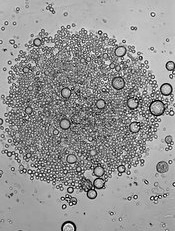
Image by John Perry
Previous studies have shown that hematopoietic stresses—such as myelofibrosis, anemia, and myeloablation—can induce extramedullary hematopoiesis (EMH), in which hematopoietic stem cells (HSCs) are mobilized to sites outside the bone marrow.
The splenic red pulp is known to be a prominent site of EMH in both mice and humans, but not much is known about the EMH niche.
Now, investigators say they have characterized this niche.
They detailed their findings in Nature.
The team used mouse models to examine the expression patterns of 2 known niche cell factors, SCF and CXCL12.
They discovered that the hematopoietic microenvironment in the spleen is found near sinusoidal blood vessels and is created by endothelial cells and perivascular stromal cells, just like the microenvironment in the bone marrow.
“Under emergency conditions, the endothelial cells and perivascular stromal cells that reside in the spleen are induced to proliferate so they can sustain all the new blood-forming stem cells that migrate into the spleen,” explained study author Sean Morrison, PhD, of the University of Texas Southwestern Medical Center, Dallas.
“We determined that this process in the spleen is physiologically important for responding to hematopoietic stress. Without it, the mice we studied could not maintain normal blood cell counts during pregnancy or quickly regenerate blood cell counts after bleeding or chemotherapy.”
The investigators believe these findings could aid the development of therapeutic interventions to enhance blood formation following chemotherapy or HSC transplant and thus accelerate the recovery of blood cell counts.
Image by John Perry
Previous studies have shown that hematopoietic stresses—such as myelofibrosis, anemia, and myeloablation—can induce extramedullary hematopoiesis (EMH), in which hematopoietic stem cells (HSCs) are mobilized to sites outside the bone marrow.
The splenic red pulp is known to be a prominent site of EMH in both mice and humans, but not much is known about the EMH niche.
Now, investigators say they have characterized this niche.
They detailed their findings in Nature.
The team used mouse models to examine the expression patterns of 2 known niche cell factors, SCF and CXCL12.
They discovered that the hematopoietic microenvironment in the spleen is found near sinusoidal blood vessels and is created by endothelial cells and perivascular stromal cells, just like the microenvironment in the bone marrow.
“Under emergency conditions, the endothelial cells and perivascular stromal cells that reside in the spleen are induced to proliferate so they can sustain all the new blood-forming stem cells that migrate into the spleen,” explained study author Sean Morrison, PhD, of the University of Texas Southwestern Medical Center, Dallas.
“We determined that this process in the spleen is physiologically important for responding to hematopoietic stress. Without it, the mice we studied could not maintain normal blood cell counts during pregnancy or quickly regenerate blood cell counts after bleeding or chemotherapy.”
The investigators believe these findings could aid the development of therapeutic interventions to enhance blood formation following chemotherapy or HSC transplant and thus accelerate the recovery of blood cell counts.
Image by John Perry
Previous studies have shown that hematopoietic stresses—such as myelofibrosis, anemia, and myeloablation—can induce extramedullary hematopoiesis (EMH), in which hematopoietic stem cells (HSCs) are mobilized to sites outside the bone marrow.
The splenic red pulp is known to be a prominent site of EMH in both mice and humans, but not much is known about the EMH niche.
Now, investigators say they have characterized this niche.
They detailed their findings in Nature.
The team used mouse models to examine the expression patterns of 2 known niche cell factors, SCF and CXCL12.
They discovered that the hematopoietic microenvironment in the spleen is found near sinusoidal blood vessels and is created by endothelial cells and perivascular stromal cells, just like the microenvironment in the bone marrow.
“Under emergency conditions, the endothelial cells and perivascular stromal cells that reside in the spleen are induced to proliferate so they can sustain all the new blood-forming stem cells that migrate into the spleen,” explained study author Sean Morrison, PhD, of the University of Texas Southwestern Medical Center, Dallas.
“We determined that this process in the spleen is physiologically important for responding to hematopoietic stress. Without it, the mice we studied could not maintain normal blood cell counts during pregnancy or quickly regenerate blood cell counts after bleeding or chemotherapy.”
The investigators believe these findings could aid the development of therapeutic interventions to enhance blood formation following chemotherapy or HSC transplant and thus accelerate the recovery of blood cell counts.
FDA approves daratumumab for multiple myeloma
The Food and Drug Administration has granted accelerated approval to daratumumab for the treatment of patients with multiple myeloma who have received at least three prior lines of therapy, the agency announced Nov. 16. Daratumumab is the first monoclonal antibody approved for the treatment of multiple myeloma.
Approval was based on an objective response rate of 29% (95% confidence interval, 21%-39%) with a median response duration of 7.4 months in 106 patients with relapsed or refractory multiple myeloma treated with daratumumab monotherapy in a multicenter, open-label study.

Safety was evaluated in 156 patients in two open-label studies. The most frequently reported adverse reactions were infusion reactions, fatigue, nausea, back pain, pyrexia, cough, and upper respiratory tract infection. The most common laboratory abnormalities were lymphopenia, neutropenia, anemia, and thrombocytopenia, the FDA said.
Daratumumab, marketed as Darzalex, interferes with blood bank cross-matching, specifically with Indirect Antiglobulin Tests, and the FDA recommends that, if a transfusion is necessary, to inform the blood bank that a patient has received daratumumab.
As a condition of accelerated approval, the FDA is requiring manufacturer Janssen Biotech to follow-up with a randomized trial establishing the superiority of daratumumab over standard therapy. The company has several ongoing multicenter, randomized trials in patients with multiple myeloma with a primary endpoint of progression-free survival.
The recommended dose and schedule for daratumumab is 16 mg/kg once every week for 8 weeks, then once every 2 weeks for 16 weeks, then once every 4 weeks until disease progression.
The Food and Drug Administration has granted accelerated approval to daratumumab for the treatment of patients with multiple myeloma who have received at least three prior lines of therapy, the agency announced Nov. 16. Daratumumab is the first monoclonal antibody approved for the treatment of multiple myeloma.
Approval was based on an objective response rate of 29% (95% confidence interval, 21%-39%) with a median response duration of 7.4 months in 106 patients with relapsed or refractory multiple myeloma treated with daratumumab monotherapy in a multicenter, open-label study.
Safety was evaluated in 156 patients in two open-label studies. The most frequently reported adverse reactions were infusion reactions, fatigue, nausea, back pain, pyrexia, cough, and upper respiratory tract infection. The most common laboratory abnormalities were lymphopenia, neutropenia, anemia, and thrombocytopenia, the FDA said.
Daratumumab, marketed as Darzalex, interferes with blood bank cross-matching, specifically with Indirect Antiglobulin Tests, and the FDA recommends that, if a transfusion is necessary, to inform the blood bank that a patient has received daratumumab.
As a condition of accelerated approval, the FDA is requiring manufacturer Janssen Biotech to follow-up with a randomized trial establishing the superiority of daratumumab over standard therapy. The company has several ongoing multicenter, randomized trials in patients with multiple myeloma with a primary endpoint of progression-free survival.
The recommended dose and schedule for daratumumab is 16 mg/kg once every week for 8 weeks, then once every 2 weeks for 16 weeks, then once every 4 weeks until disease progression.
The Food and Drug Administration has granted accelerated approval to daratumumab for the treatment of patients with multiple myeloma who have received at least three prior lines of therapy, the agency announced Nov. 16. Daratumumab is the first monoclonal antibody approved for the treatment of multiple myeloma.
Approval was based on an objective response rate of 29% (95% confidence interval, 21%-39%) with a median response duration of 7.4 months in 106 patients with relapsed or refractory multiple myeloma treated with daratumumab monotherapy in a multicenter, open-label study.
Safety was evaluated in 156 patients in two open-label studies. The most frequently reported adverse reactions were infusion reactions, fatigue, nausea, back pain, pyrexia, cough, and upper respiratory tract infection. The most common laboratory abnormalities were lymphopenia, neutropenia, anemia, and thrombocytopenia, the FDA said.
Daratumumab, marketed as Darzalex, interferes with blood bank cross-matching, specifically with Indirect Antiglobulin Tests, and the FDA recommends that, if a transfusion is necessary, to inform the blood bank that a patient has received daratumumab.
As a condition of accelerated approval, the FDA is requiring manufacturer Janssen Biotech to follow-up with a randomized trial establishing the superiority of daratumumab over standard therapy. The company has several ongoing multicenter, randomized trials in patients with multiple myeloma with a primary endpoint of progression-free survival.
The recommended dose and schedule for daratumumab is 16 mg/kg once every week for 8 weeks, then once every 2 weeks for 16 weeks, then once every 4 weeks until disease progression.

ESRD treatments linked to different cancers
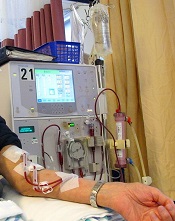
Photo by Anna Frodesiak
Patients with end-stage renal disease (ESRD) may have different cancer risks according to the treatment they are receiving, a new study suggests.
Researchers found that patients had a higher risk of developing infection-related and immune-related cancers—including Hodgkin and non-Hodgkin lymphoma (NHL)—after receiving a kidney transplant.
But patients had a higher risk of ESRD-related cancers when they were on dialysis.
Elizabeth Yanik, PhD, of the National Cancer Institute in Bethesda, Maryland, and her colleagues reported these results in the Journal of the American Society of Nephrology.
The researchers theorized that assessing patterns in ESRD patients across periods of dialysis and kidney transplant might inform cancer etiology.
So the team studied registry data on 202,195 kidney transplant candidates and recipients, comparing the incidence of cancers during kidney function intervals (time with a transplant) to the incidence during nonfunction intervals (waitlist or time after transplant failure [dialysis]). The analysis was adjusted for demographic characteristics.
Results showed the incidence of infection-related and immune-related cancers was higher during kidney function intervals than nonfunction intervals.
Cancers with a significantly higher incidence included Kaposi’s sarcoma (hazard ratio [HR]=9.1, P<0.001), NHL (HR=3.2, P<0.001), Hodgkin lymphoma (HR=3.0, P<0.001), lip cancer (HR=3.4, P<0.001), nonepithelial skin cancers (HR=3.8, P<0.001), melanoma (HR=1.9, P<0.001), prostate cancer (HR=1.2, P=0.003), anal cancer (HR=1.8, P=0.01), other genital cancers (HR=1.5, P=0.03), lung cancer (HR=1.3 P<0.001), and pancreatic cancer (HR=1.5, P=0.004).
Dr Yanik and her colleagues noted that, of these cancers, NHL, anal cancer, lung cancer, melanoma, nonepithelial skin cancers, and pancreatic cancer consistently increased in incidence with each transition to a kidney function interval and decreased with each transition to a nonfunction interval.
And the 2 types of transitions were significant for NHL, lung cancer, melanoma, nonepithelial skin cancers, and pancreatic cancer.
The researchers also identified cancers with a significantly lower incidence during kidney function intervals. This included kidney cancer (HR=0.77, P<0.001), thyroid cancer (HR=0.67, P<0.001), breast cancer (HR=0.81, P=0.002), and liver cancer (HR=0.59, P=0.001).
The team noted that, among cancers with a lower incidence during kidney function intervals, kidney cancer, thyroid cancer, and myeloma consistently decreased in incidence with each transition to a kidney function interval and increased in incidence with each transition to a nonfunction interval. But both transitions were only significant for kidney and thyroid cancers.
“Our study indicates that the needs of individuals with end-stage renal disease, in terms of cancer prevention and cancer screening, will likely differ over time,” Dr Yanik said.
“Vigilance for kidney cancer and thyroid cancer may be of particular importance while these individuals are on dialysis. Extra consideration for screening for melanoma or lung cancer may be called for while taking immunosuppressant medications following a kidney transplant.”
Photo by Anna Frodesiak
Patients with end-stage renal disease (ESRD) may have different cancer risks according to the treatment they are receiving, a new study suggests.
Researchers found that patients had a higher risk of developing infection-related and immune-related cancers—including Hodgkin and non-Hodgkin lymphoma (NHL)—after receiving a kidney transplant.
But patients had a higher risk of ESRD-related cancers when they were on dialysis.
Elizabeth Yanik, PhD, of the National Cancer Institute in Bethesda, Maryland, and her colleagues reported these results in the Journal of the American Society of Nephrology.
The researchers theorized that assessing patterns in ESRD patients across periods of dialysis and kidney transplant might inform cancer etiology.
So the team studied registry data on 202,195 kidney transplant candidates and recipients, comparing the incidence of cancers during kidney function intervals (time with a transplant) to the incidence during nonfunction intervals (waitlist or time after transplant failure [dialysis]). The analysis was adjusted for demographic characteristics.
Results showed the incidence of infection-related and immune-related cancers was higher during kidney function intervals than nonfunction intervals.
Cancers with a significantly higher incidence included Kaposi’s sarcoma (hazard ratio [HR]=9.1, P<0.001), NHL (HR=3.2, P<0.001), Hodgkin lymphoma (HR=3.0, P<0.001), lip cancer (HR=3.4, P<0.001), nonepithelial skin cancers (HR=3.8, P<0.001), melanoma (HR=1.9, P<0.001), prostate cancer (HR=1.2, P=0.003), anal cancer (HR=1.8, P=0.01), other genital cancers (HR=1.5, P=0.03), lung cancer (HR=1.3 P<0.001), and pancreatic cancer (HR=1.5, P=0.004).
Dr Yanik and her colleagues noted that, of these cancers, NHL, anal cancer, lung cancer, melanoma, nonepithelial skin cancers, and pancreatic cancer consistently increased in incidence with each transition to a kidney function interval and decreased with each transition to a nonfunction interval.
And the 2 types of transitions were significant for NHL, lung cancer, melanoma, nonepithelial skin cancers, and pancreatic cancer.
The researchers also identified cancers with a significantly lower incidence during kidney function intervals. This included kidney cancer (HR=0.77, P<0.001), thyroid cancer (HR=0.67, P<0.001), breast cancer (HR=0.81, P=0.002), and liver cancer (HR=0.59, P=0.001).
The team noted that, among cancers with a lower incidence during kidney function intervals, kidney cancer, thyroid cancer, and myeloma consistently decreased in incidence with each transition to a kidney function interval and increased in incidence with each transition to a nonfunction interval. But both transitions were only significant for kidney and thyroid cancers.
“Our study indicates that the needs of individuals with end-stage renal disease, in terms of cancer prevention and cancer screening, will likely differ over time,” Dr Yanik said.
“Vigilance for kidney cancer and thyroid cancer may be of particular importance while these individuals are on dialysis. Extra consideration for screening for melanoma or lung cancer may be called for while taking immunosuppressant medications following a kidney transplant.”
Photo by Anna Frodesiak
Patients with end-stage renal disease (ESRD) may have different cancer risks according to the treatment they are receiving, a new study suggests.
Researchers found that patients had a higher risk of developing infection-related and immune-related cancers—including Hodgkin and non-Hodgkin lymphoma (NHL)—after receiving a kidney transplant.
But patients had a higher risk of ESRD-related cancers when they were on dialysis.
Elizabeth Yanik, PhD, of the National Cancer Institute in Bethesda, Maryland, and her colleagues reported these results in the Journal of the American Society of Nephrology.
The researchers theorized that assessing patterns in ESRD patients across periods of dialysis and kidney transplant might inform cancer etiology.
So the team studied registry data on 202,195 kidney transplant candidates and recipients, comparing the incidence of cancers during kidney function intervals (time with a transplant) to the incidence during nonfunction intervals (waitlist or time after transplant failure [dialysis]). The analysis was adjusted for demographic characteristics.
Results showed the incidence of infection-related and immune-related cancers was higher during kidney function intervals than nonfunction intervals.
Cancers with a significantly higher incidence included Kaposi’s sarcoma (hazard ratio [HR]=9.1, P<0.001), NHL (HR=3.2, P<0.001), Hodgkin lymphoma (HR=3.0, P<0.001), lip cancer (HR=3.4, P<0.001), nonepithelial skin cancers (HR=3.8, P<0.001), melanoma (HR=1.9, P<0.001), prostate cancer (HR=1.2, P=0.003), anal cancer (HR=1.8, P=0.01), other genital cancers (HR=1.5, P=0.03), lung cancer (HR=1.3 P<0.001), and pancreatic cancer (HR=1.5, P=0.004).
Dr Yanik and her colleagues noted that, of these cancers, NHL, anal cancer, lung cancer, melanoma, nonepithelial skin cancers, and pancreatic cancer consistently increased in incidence with each transition to a kidney function interval and decreased with each transition to a nonfunction interval.
And the 2 types of transitions were significant for NHL, lung cancer, melanoma, nonepithelial skin cancers, and pancreatic cancer.
The researchers also identified cancers with a significantly lower incidence during kidney function intervals. This included kidney cancer (HR=0.77, P<0.001), thyroid cancer (HR=0.67, P<0.001), breast cancer (HR=0.81, P=0.002), and liver cancer (HR=0.59, P=0.001).
The team noted that, among cancers with a lower incidence during kidney function intervals, kidney cancer, thyroid cancer, and myeloma consistently decreased in incidence with each transition to a kidney function interval and increased in incidence with each transition to a nonfunction interval. But both transitions were only significant for kidney and thyroid cancers.
“Our study indicates that the needs of individuals with end-stage renal disease, in terms of cancer prevention and cancer screening, will likely differ over time,” Dr Yanik said.
“Vigilance for kidney cancer and thyroid cancer may be of particular importance while these individuals are on dialysis. Extra consideration for screening for melanoma or lung cancer may be called for while taking immunosuppressant medications following a kidney transplant.”
Inhibitor exhibits ‘modest’ activity in lymphoma
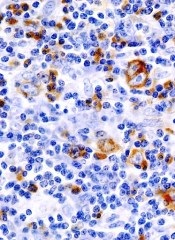
A small-molecule inhibitor has shown modest anticancer activity in a phase 1 trial of patients with relapsed/refractory lymphoma or multiple myeloma (MM), according to an investigator involved in the study.
A majority of patients who recieved the drug, pevonedistat, achieved stable disease, and a few patients with lymphoma experienced partial responses.
Investigators said pevonedistat could be given safely, although 100% of patients experienced adverse events (AEs), and a majority experienced grade 3 or higher AEs.
“The most important findings from our study are that pevonedistat hits its target in cancer cells in patients, can be given safely, and has modest activity in heavily pretreated patients with relapsed/refractory lymphoma, suggesting that we are on the right path,” said Jatin J. Shah, MD, of The University of Texas MD Anderson Cancer Center in Houston.
Dr Shah and his colleagues reported these findings in Clinical Cancer Research. The trial was sponsored by Millennium Pharmaceuticals, Inc., the company developing pevonedistat.
Pevonedistat is a first-in-class, investigational, small-molecule inhibitor of the NEDD8-activating enzyme.
“This enzyme is part of the ubiquitin-proteasome system, which is the target of a number of FDA-approved anticancer therapeutics, including bortezomib . . . ,” Dr Shah explained. “Pevonedistat also alters the ability of cancer cells to repair damaged DNA.”
Patient and treatment characteristics
Dr Shah and his colleagues enrolled 44 patients on this trial. Seventeen patients had relapsed/refractory MM, and 27 had relapsed/refractory lymphoma.
The types of lymphoma were diffuse large B-cell lymphoma (n=10), follicular lymphoma (n=5), Hodgkin lymphoma (n=5), small lymphocytic lymphoma/chronic lymphocytic leukemia (n=2), mantle cell lymphoma (n=1), lymphoplasmacytic lymphoma (n=1), peripheral T-cell lymphoma (n=1), splenic marginal zone B-cell lymphoma (n=1), and “other” (n=1).
Twenty-seven patients received escalating doses of pevonedistat on schedule A, which was days 1, 2, 8, and 9 of a 21-day cycle, and 17 patients received escalating doses of the drug on schedule B, which was days 1, 4, 8, and 11 of a 21-day cycle.
Safety
The maximum tolerated doses were 110 mg/m2 and 196 mg/m2 on schedule A and B, respectively. The dose-limiting toxicities were febrile neutropenia, transaminase elevations, and muscle cramps on schedule A, and thrombocytopenia on schedule B.
On schedule A, 100% of patients experienced AEs, and 59% had AEs of grade 3 or higher. The grade 3 or higher AEs were anemia (19%), thrombocytopenia (4%), neutropenia (7%), fatigue (7%), ALT increase (4%), AST increase (7%), diarrhea (4%), pain (4%), dyspnea (4%), hypercalcemia (7%), hypophosphatemia (11%), hyperkalemia (4%), muscle spasms (4%), abdominal discomfort (4%), and pneumonia (4%).
On schedule B, 100% of patients experienced AEs, and 71% had grade 3 or higher AEs. The grade 3 or higher AEs were anemia (6%), thrombocytopenia (6%), neutropenia (12%), fatigue (6%), ALT increase (6%), pyrexia (6%), pain (6%), dyspnea (6%), hypophosphatemia (6%), muscle spasms (6%), upper respiratory tract infection (6%), dehydration (6%), hyperbilirubinemia (6%), and pneumonia (12%).
Efficacy
Three patients had a partial response to treatment, including 1 patient with relapsed nodular sclerosis Hodgkin lymphoma, 1 with relapsed diffuse large B-cell lymphoma, and 1 with relapsed peripheral T-cell lymphoma.
Another 30 patients, 17 with lymphoma and 13 with MM, had stable disease.
“Although pevonedistat had modest activity as a single-agent treatment, we expect greater activity when it is given in combination with standard therapy,” Dr Shah said.
“The pharmacodynamics data showed that pevonedistat hit its target in cancer cells in patients at low doses. This is important because it may mean that we do not need to escalate the dose in future trials to increase anticancer activity. This has the potential to increase the risk-benefit ratio of pevonedistat.”
Dr Shah said a limitation of this study is that it included a small number of patients, all of whom were very heavily pretreated, which may limit assessment of how active pevonedistat could be.
A small-molecule inhibitor has shown modest anticancer activity in a phase 1 trial of patients with relapsed/refractory lymphoma or multiple myeloma (MM), according to an investigator involved in the study.
A majority of patients who recieved the drug, pevonedistat, achieved stable disease, and a few patients with lymphoma experienced partial responses.
Investigators said pevonedistat could be given safely, although 100% of patients experienced adverse events (AEs), and a majority experienced grade 3 or higher AEs.
“The most important findings from our study are that pevonedistat hits its target in cancer cells in patients, can be given safely, and has modest activity in heavily pretreated patients with relapsed/refractory lymphoma, suggesting that we are on the right path,” said Jatin J. Shah, MD, of The University of Texas MD Anderson Cancer Center in Houston.
Dr Shah and his colleagues reported these findings in Clinical Cancer Research. The trial was sponsored by Millennium Pharmaceuticals, Inc., the company developing pevonedistat.
Pevonedistat is a first-in-class, investigational, small-molecule inhibitor of the NEDD8-activating enzyme.
“This enzyme is part of the ubiquitin-proteasome system, which is the target of a number of FDA-approved anticancer therapeutics, including bortezomib . . . ,” Dr Shah explained. “Pevonedistat also alters the ability of cancer cells to repair damaged DNA.”
Patient and treatment characteristics
Dr Shah and his colleagues enrolled 44 patients on this trial. Seventeen patients had relapsed/refractory MM, and 27 had relapsed/refractory lymphoma.
The types of lymphoma were diffuse large B-cell lymphoma (n=10), follicular lymphoma (n=5), Hodgkin lymphoma (n=5), small lymphocytic lymphoma/chronic lymphocytic leukemia (n=2), mantle cell lymphoma (n=1), lymphoplasmacytic lymphoma (n=1), peripheral T-cell lymphoma (n=1), splenic marginal zone B-cell lymphoma (n=1), and “other” (n=1).
Twenty-seven patients received escalating doses of pevonedistat on schedule A, which was days 1, 2, 8, and 9 of a 21-day cycle, and 17 patients received escalating doses of the drug on schedule B, which was days 1, 4, 8, and 11 of a 21-day cycle.
Safety
The maximum tolerated doses were 110 mg/m2 and 196 mg/m2 on schedule A and B, respectively. The dose-limiting toxicities were febrile neutropenia, transaminase elevations, and muscle cramps on schedule A, and thrombocytopenia on schedule B.
On schedule A, 100% of patients experienced AEs, and 59% had AEs of grade 3 or higher. The grade 3 or higher AEs were anemia (19%), thrombocytopenia (4%), neutropenia (7%), fatigue (7%), ALT increase (4%), AST increase (7%), diarrhea (4%), pain (4%), dyspnea (4%), hypercalcemia (7%), hypophosphatemia (11%), hyperkalemia (4%), muscle spasms (4%), abdominal discomfort (4%), and pneumonia (4%).
On schedule B, 100% of patients experienced AEs, and 71% had grade 3 or higher AEs. The grade 3 or higher AEs were anemia (6%), thrombocytopenia (6%), neutropenia (12%), fatigue (6%), ALT increase (6%), pyrexia (6%), pain (6%), dyspnea (6%), hypophosphatemia (6%), muscle spasms (6%), upper respiratory tract infection (6%), dehydration (6%), hyperbilirubinemia (6%), and pneumonia (12%).
Efficacy
Three patients had a partial response to treatment, including 1 patient with relapsed nodular sclerosis Hodgkin lymphoma, 1 with relapsed diffuse large B-cell lymphoma, and 1 with relapsed peripheral T-cell lymphoma.
Another 30 patients, 17 with lymphoma and 13 with MM, had stable disease.
“Although pevonedistat had modest activity as a single-agent treatment, we expect greater activity when it is given in combination with standard therapy,” Dr Shah said.
“The pharmacodynamics data showed that pevonedistat hit its target in cancer cells in patients at low doses. This is important because it may mean that we do not need to escalate the dose in future trials to increase anticancer activity. This has the potential to increase the risk-benefit ratio of pevonedistat.”
Dr Shah said a limitation of this study is that it included a small number of patients, all of whom were very heavily pretreated, which may limit assessment of how active pevonedistat could be.
A small-molecule inhibitor has shown modest anticancer activity in a phase 1 trial of patients with relapsed/refractory lymphoma or multiple myeloma (MM), according to an investigator involved in the study.
A majority of patients who recieved the drug, pevonedistat, achieved stable disease, and a few patients with lymphoma experienced partial responses.
Investigators said pevonedistat could be given safely, although 100% of patients experienced adverse events (AEs), and a majority experienced grade 3 or higher AEs.
“The most important findings from our study are that pevonedistat hits its target in cancer cells in patients, can be given safely, and has modest activity in heavily pretreated patients with relapsed/refractory lymphoma, suggesting that we are on the right path,” said Jatin J. Shah, MD, of The University of Texas MD Anderson Cancer Center in Houston.
Dr Shah and his colleagues reported these findings in Clinical Cancer Research. The trial was sponsored by Millennium Pharmaceuticals, Inc., the company developing pevonedistat.
Pevonedistat is a first-in-class, investigational, small-molecule inhibitor of the NEDD8-activating enzyme.
“This enzyme is part of the ubiquitin-proteasome system, which is the target of a number of FDA-approved anticancer therapeutics, including bortezomib . . . ,” Dr Shah explained. “Pevonedistat also alters the ability of cancer cells to repair damaged DNA.”
Patient and treatment characteristics
Dr Shah and his colleagues enrolled 44 patients on this trial. Seventeen patients had relapsed/refractory MM, and 27 had relapsed/refractory lymphoma.
The types of lymphoma were diffuse large B-cell lymphoma (n=10), follicular lymphoma (n=5), Hodgkin lymphoma (n=5), small lymphocytic lymphoma/chronic lymphocytic leukemia (n=2), mantle cell lymphoma (n=1), lymphoplasmacytic lymphoma (n=1), peripheral T-cell lymphoma (n=1), splenic marginal zone B-cell lymphoma (n=1), and “other” (n=1).
Twenty-seven patients received escalating doses of pevonedistat on schedule A, which was days 1, 2, 8, and 9 of a 21-day cycle, and 17 patients received escalating doses of the drug on schedule B, which was days 1, 4, 8, and 11 of a 21-day cycle.
Safety
The maximum tolerated doses were 110 mg/m2 and 196 mg/m2 on schedule A and B, respectively. The dose-limiting toxicities were febrile neutropenia, transaminase elevations, and muscle cramps on schedule A, and thrombocytopenia on schedule B.
On schedule A, 100% of patients experienced AEs, and 59% had AEs of grade 3 or higher. The grade 3 or higher AEs were anemia (19%), thrombocytopenia (4%), neutropenia (7%), fatigue (7%), ALT increase (4%), AST increase (7%), diarrhea (4%), pain (4%), dyspnea (4%), hypercalcemia (7%), hypophosphatemia (11%), hyperkalemia (4%), muscle spasms (4%), abdominal discomfort (4%), and pneumonia (4%).
On schedule B, 100% of patients experienced AEs, and 71% had grade 3 or higher AEs. The grade 3 or higher AEs were anemia (6%), thrombocytopenia (6%), neutropenia (12%), fatigue (6%), ALT increase (6%), pyrexia (6%), pain (6%), dyspnea (6%), hypophosphatemia (6%), muscle spasms (6%), upper respiratory tract infection (6%), dehydration (6%), hyperbilirubinemia (6%), and pneumonia (12%).
Efficacy
Three patients had a partial response to treatment, including 1 patient with relapsed nodular sclerosis Hodgkin lymphoma, 1 with relapsed diffuse large B-cell lymphoma, and 1 with relapsed peripheral T-cell lymphoma.
Another 30 patients, 17 with lymphoma and 13 with MM, had stable disease.
“Although pevonedistat had modest activity as a single-agent treatment, we expect greater activity when it is given in combination with standard therapy,” Dr Shah said.
“The pharmacodynamics data showed that pevonedistat hit its target in cancer cells in patients at low doses. This is important because it may mean that we do not need to escalate the dose in future trials to increase anticancer activity. This has the potential to increase the risk-benefit ratio of pevonedistat.”
Dr Shah said a limitation of this study is that it included a small number of patients, all of whom were very heavily pretreated, which may limit assessment of how active pevonedistat could be.