User login
MicroRNA could be used to treat DLBCL, team says
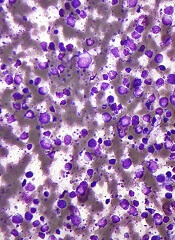
A microRNA known as miR-181a dampens signals from the NF-κB pathway and affects the pathogenesis of diffuse large B-cell lymphoma (DLBCL), according to research published in Blood.
The study showed that, by reducing NF-κB signaling, miR-181a hinders tumor cell proliferation and survival.
And the effect is more pronounced in activated B-cell-like (ABC) DLBCL than in germinal center B-cell-like (GCB) DLBCL.
The researchers therefore believe miR-181a could be used to treat ABC DLBCL.
“The miR-181a microRNA is one of the first examples of a pathway that deactivates NF-κB at multiple levels, functioning as a master regulator,” said study author Izidore S. Lossos, MD, of the University of Miami Miller School of Medicine in Florida.
“In certain tumors, there is no expression of this microRNA, which allows cells to propagate. We believe miR-181a could eventually be used
therapeutically.”
To understand the role of miR-181a in the different types of DLBCL, Dr Lossos and his colleaguese studied both cell lines and mouse models.
The team found that miR-181a levels were significantly lower in ABC DLBCL than in GCB DLBCL.
When they increased miR-181a expression in DLBCL cell lines, the researchers observed a reduction in NF-κB activity and a decrease in cell proliferation and survival. These effects were more potent in ABC DLBCL than in GCB DLBCL.
When the researchers increased miR-181a expression in the mouse models, they observed a significant reduction in tumor growth and a significant increase in animal survival, but only in ABC DLBCL. In GCB DLBCL, there were no significant changes compared to controls.
The researchers said the ability of miR-181a to reduce NF-κB levels may be why the presence of miR-181a has been linked to better outcomes for certain DLBCL patients. Previous studies by Dr Lossos’s group have shown that DLBCL patients whose tumors contain more miR-181a have better prognoses.
With the current study, the team found that miR-181a is a master regulator, turning off a number of genes in the NF-κB pathway, including CARD11, a known DLBCL oncogene, and a number of transcription factors that drive NF-κB signaling.
“We knew that miR181a was biomarker for survival,” Dr Lossos said. “This explains the mechanisms behind it.”
In addition to providing a better understanding of the NF-κB pathway, these results provide hope that miR-181a could be used to improve treatment for patients with ABC DLBCL.
“We are trying to develop miR-181a as a potential therapy,” Dr Lossos said. “But we are only at the beginning. Much more work needs to be done. It will not be a simple journey, but we are sure it can be done and tested in humans eventually to see that it indeed will improve patients’ outcomes.” 
A microRNA known as miR-181a dampens signals from the NF-κB pathway and affects the pathogenesis of diffuse large B-cell lymphoma (DLBCL), according to research published in Blood.
The study showed that, by reducing NF-κB signaling, miR-181a hinders tumor cell proliferation and survival.
And the effect is more pronounced in activated B-cell-like (ABC) DLBCL than in germinal center B-cell-like (GCB) DLBCL.
The researchers therefore believe miR-181a could be used to treat ABC DLBCL.
“The miR-181a microRNA is one of the first examples of a pathway that deactivates NF-κB at multiple levels, functioning as a master regulator,” said study author Izidore S. Lossos, MD, of the University of Miami Miller School of Medicine in Florida.
“In certain tumors, there is no expression of this microRNA, which allows cells to propagate. We believe miR-181a could eventually be used
therapeutically.”
To understand the role of miR-181a in the different types of DLBCL, Dr Lossos and his colleaguese studied both cell lines and mouse models.
The team found that miR-181a levels were significantly lower in ABC DLBCL than in GCB DLBCL.
When they increased miR-181a expression in DLBCL cell lines, the researchers observed a reduction in NF-κB activity and a decrease in cell proliferation and survival. These effects were more potent in ABC DLBCL than in GCB DLBCL.
When the researchers increased miR-181a expression in the mouse models, they observed a significant reduction in tumor growth and a significant increase in animal survival, but only in ABC DLBCL. In GCB DLBCL, there were no significant changes compared to controls.
The researchers said the ability of miR-181a to reduce NF-κB levels may be why the presence of miR-181a has been linked to better outcomes for certain DLBCL patients. Previous studies by Dr Lossos’s group have shown that DLBCL patients whose tumors contain more miR-181a have better prognoses.
With the current study, the team found that miR-181a is a master regulator, turning off a number of genes in the NF-κB pathway, including CARD11, a known DLBCL oncogene, and a number of transcription factors that drive NF-κB signaling.
“We knew that miR181a was biomarker for survival,” Dr Lossos said. “This explains the mechanisms behind it.”
In addition to providing a better understanding of the NF-κB pathway, these results provide hope that miR-181a could be used to improve treatment for patients with ABC DLBCL.
“We are trying to develop miR-181a as a potential therapy,” Dr Lossos said. “But we are only at the beginning. Much more work needs to be done. It will not be a simple journey, but we are sure it can be done and tested in humans eventually to see that it indeed will improve patients’ outcomes.”
A microRNA known as miR-181a dampens signals from the NF-κB pathway and affects the pathogenesis of diffuse large B-cell lymphoma (DLBCL), according to research published in Blood.
The study showed that, by reducing NF-κB signaling, miR-181a hinders tumor cell proliferation and survival.
And the effect is more pronounced in activated B-cell-like (ABC) DLBCL than in germinal center B-cell-like (GCB) DLBCL.
The researchers therefore believe miR-181a could be used to treat ABC DLBCL.
“The miR-181a microRNA is one of the first examples of a pathway that deactivates NF-κB at multiple levels, functioning as a master regulator,” said study author Izidore S. Lossos, MD, of the University of Miami Miller School of Medicine in Florida.
“In certain tumors, there is no expression of this microRNA, which allows cells to propagate. We believe miR-181a could eventually be used
therapeutically.”
To understand the role of miR-181a in the different types of DLBCL, Dr Lossos and his colleaguese studied both cell lines and mouse models.
The team found that miR-181a levels were significantly lower in ABC DLBCL than in GCB DLBCL.
When they increased miR-181a expression in DLBCL cell lines, the researchers observed a reduction in NF-κB activity and a decrease in cell proliferation and survival. These effects were more potent in ABC DLBCL than in GCB DLBCL.
When the researchers increased miR-181a expression in the mouse models, they observed a significant reduction in tumor growth and a significant increase in animal survival, but only in ABC DLBCL. In GCB DLBCL, there were no significant changes compared to controls.
The researchers said the ability of miR-181a to reduce NF-κB levels may be why the presence of miR-181a has been linked to better outcomes for certain DLBCL patients. Previous studies by Dr Lossos’s group have shown that DLBCL patients whose tumors contain more miR-181a have better prognoses.
With the current study, the team found that miR-181a is a master regulator, turning off a number of genes in the NF-κB pathway, including CARD11, a known DLBCL oncogene, and a number of transcription factors that drive NF-κB signaling.
“We knew that miR181a was biomarker for survival,” Dr Lossos said. “This explains the mechanisms behind it.”
In addition to providing a better understanding of the NF-κB pathway, these results provide hope that miR-181a could be used to improve treatment for patients with ABC DLBCL.
“We are trying to develop miR-181a as a potential therapy,” Dr Lossos said. “But we are only at the beginning. Much more work needs to be done. It will not be a simple journey, but we are sure it can be done and tested in humans eventually to see that it indeed will improve patients’ outcomes.”
Vemurafenib and Serum Creatinine Elevation
Used to treat advanced melanoma, vemurafenib has been shown to increase serum creatinine; but neither the prevalence nor the mechanism for the increase is known, say researchers from Assistance-Publique-Hôpitaux de Paris. Their study suggests 2 mechanisms are at work.
In their retrospective study of 70 patients, the researchers found that 97% had an immediate—but stable—increase in their creatinine level after starting vemurafenib. At the first visit, 1 month after starting the drug, 68 patients had a significant increase in serum creatinine levels, with a median variation of 22.8%. However, in 44 of 52 patients who discontinued the drug, because the melanoma had progressed, creatinine levels returned to baseline.
Related: Promising Method to Evaluate Response to Treatment
Serum cystatin C levels also rose, although less than that of serum creatinine. Researchers say the increase showed that the creatinine increase was partly a result of renal function impairment. Moreover, renal explorations showed that vemurafenib led to inhibition of creatinine tubular secretion.
According to the researchers, the dual mechanism of both inhibition of creatinine tubular secretion and slight renal function impairment makes interpreting creatinine variations difficult. They offer a decision tree to help clinicians manage creatinine elevations due to the drug. The researchers suggest testing for serum creatinine and cystatin C before beginning the treatment and during monthly follow-ups.
Related: FDA Approves Rescue Drug for Chemotherapy Overdose
The collected data are reassuring. Apart from rare cases of serious adverse events, such as severe acute renal failure, an increase in serum creatinine below 50% and/or moderate signs of tubular dysfunction should not lead to discontinuing treatment if it is otherwise effective.
Source:
Hurabielle C, Pillebout E, Stehlé T, et al. PLoS ONE. 2016;11(3):e0149873. doi:10.1371/journal.pone.0149873.
Used to treat advanced melanoma, vemurafenib has been shown to increase serum creatinine; but neither the prevalence nor the mechanism for the increase is known, say researchers from Assistance-Publique-Hôpitaux de Paris. Their study suggests 2 mechanisms are at work.
In their retrospective study of 70 patients, the researchers found that 97% had an immediate—but stable—increase in their creatinine level after starting vemurafenib. At the first visit, 1 month after starting the drug, 68 patients had a significant increase in serum creatinine levels, with a median variation of 22.8%. However, in 44 of 52 patients who discontinued the drug, because the melanoma had progressed, creatinine levels returned to baseline.
Related: Promising Method to Evaluate Response to Treatment
Serum cystatin C levels also rose, although less than that of serum creatinine. Researchers say the increase showed that the creatinine increase was partly a result of renal function impairment. Moreover, renal explorations showed that vemurafenib led to inhibition of creatinine tubular secretion.
According to the researchers, the dual mechanism of both inhibition of creatinine tubular secretion and slight renal function impairment makes interpreting creatinine variations difficult. They offer a decision tree to help clinicians manage creatinine elevations due to the drug. The researchers suggest testing for serum creatinine and cystatin C before beginning the treatment and during monthly follow-ups.
Related: FDA Approves Rescue Drug for Chemotherapy Overdose
The collected data are reassuring. Apart from rare cases of serious adverse events, such as severe acute renal failure, an increase in serum creatinine below 50% and/or moderate signs of tubular dysfunction should not lead to discontinuing treatment if it is otherwise effective.
Source:
Hurabielle C, Pillebout E, Stehlé T, et al. PLoS ONE. 2016;11(3):e0149873. doi:10.1371/journal.pone.0149873.
Used to treat advanced melanoma, vemurafenib has been shown to increase serum creatinine; but neither the prevalence nor the mechanism for the increase is known, say researchers from Assistance-Publique-Hôpitaux de Paris. Their study suggests 2 mechanisms are at work.
In their retrospective study of 70 patients, the researchers found that 97% had an immediate—but stable—increase in their creatinine level after starting vemurafenib. At the first visit, 1 month after starting the drug, 68 patients had a significant increase in serum creatinine levels, with a median variation of 22.8%. However, in 44 of 52 patients who discontinued the drug, because the melanoma had progressed, creatinine levels returned to baseline.
Related: Promising Method to Evaluate Response to Treatment
Serum cystatin C levels also rose, although less than that of serum creatinine. Researchers say the increase showed that the creatinine increase was partly a result of renal function impairment. Moreover, renal explorations showed that vemurafenib led to inhibition of creatinine tubular secretion.
According to the researchers, the dual mechanism of both inhibition of creatinine tubular secretion and slight renal function impairment makes interpreting creatinine variations difficult. They offer a decision tree to help clinicians manage creatinine elevations due to the drug. The researchers suggest testing for serum creatinine and cystatin C before beginning the treatment and during monthly follow-ups.
Related: FDA Approves Rescue Drug for Chemotherapy Overdose
The collected data are reassuring. Apart from rare cases of serious adverse events, such as severe acute renal failure, an increase in serum creatinine below 50% and/or moderate signs of tubular dysfunction should not lead to discontinuing treatment if it is otherwise effective.
Source:
Hurabielle C, Pillebout E, Stehlé T, et al. PLoS ONE. 2016;11(3):e0149873. doi:10.1371/journal.pone.0149873.
Drug ‘not powerful enough’ to treat CTCL

mycosis fungoides
Results of a phase 2 trial suggest the drug APO866 is not suitable for the treatment of relapsed or refractory cutaneous T-cell lymphoma (CTCL).
Researchers said APO866 had “a reasonable toxic effect,” but it was “not powerful enough,” so the trial was stopped early.
Two of the 14 patients studied achieved a partial response during the trial, but there were no complete responses, and most patients withdrew from the study early.
The researchers described these results in a letter to JAMA Dermatology. The study was initially sponsored by Apoxis SA and later by TopoTarget A/S, which is now known as Onxeo after merging with BioAlliance Pharma.
According to Onxeo, APO866 is an injectable molecule that induces apoptosis by inhibiting the biosynthesis of NAD+ from niacinamide, which is essential for the cellular metabolism, protein modification, and calcium-dependent messenger synthesis.
In the phase 2 trial, researchers tested APO866 in 14 patients with relapsed or refractory CTCL. The patients were 19 to 83 years of age, and half were female.
Eight patients had mycosis fungoides, 3 had Sézary syndrome, 1 had CD30+ anaplastic large-cell lymphoma, 1 had poikilodermic mycosis fungoides, and 1 had CD30- nonepidermotropic CTCL. One patient had stage IB disease, 2 had stage IIA, 3 had stage IIB, and 8 had stage IVA.
The patients received a continuous intravenous infusion, via pump, of APO866 at 0.126 mg/m2/h over the course of 96 hours. Patients received this treatment every 28 days for a total of 3 cycles.
Five patients completed all 3 treatment cycles and had no major protocol violations. Nine patients discontinued treatment early due to consent withdrawal (n=2), early disease progression (n=5), or adverse events (AEs, n=2).
At week 8, 1 patient had achieved a partial response to treatment, 4 patients had stable disease, 5 had progressed, and 4 patients were not evaluable because they had withdrawn from the study.
At week 16, 1 patient had a partial response (not the same patient as at week 8), 4 patients had stable disease, and 9 patients were not evaluable due to withdrawal.
There were a total of 141 AEs, and 77 of these were considered related to APO866. Most patients (n=12) had mild to moderate AEs, but there were 7 serious AEs thought to be treatment-related. These included pyrexia, lymphopenia (n=2), spondylitis, Staphylococcal sepsis, rhabdomyolysis, and thrombocytopenia.
There were 4 deaths, but they were not considered drug-related.
The researchers said these results suggest APO866 should not be pursued as a treatment for CTCL. However, as the drug induces immunosuppression and has insulin-mimicking effects, it might prove useful for treating other conditions.
mycosis fungoides
Results of a phase 2 trial suggest the drug APO866 is not suitable for the treatment of relapsed or refractory cutaneous T-cell lymphoma (CTCL).
Researchers said APO866 had “a reasonable toxic effect,” but it was “not powerful enough,” so the trial was stopped early.
Two of the 14 patients studied achieved a partial response during the trial, but there were no complete responses, and most patients withdrew from the study early.
The researchers described these results in a letter to JAMA Dermatology. The study was initially sponsored by Apoxis SA and later by TopoTarget A/S, which is now known as Onxeo after merging with BioAlliance Pharma.
According to Onxeo, APO866 is an injectable molecule that induces apoptosis by inhibiting the biosynthesis of NAD+ from niacinamide, which is essential for the cellular metabolism, protein modification, and calcium-dependent messenger synthesis.
In the phase 2 trial, researchers tested APO866 in 14 patients with relapsed or refractory CTCL. The patients were 19 to 83 years of age, and half were female.
Eight patients had mycosis fungoides, 3 had Sézary syndrome, 1 had CD30+ anaplastic large-cell lymphoma, 1 had poikilodermic mycosis fungoides, and 1 had CD30- nonepidermotropic CTCL. One patient had stage IB disease, 2 had stage IIA, 3 had stage IIB, and 8 had stage IVA.
The patients received a continuous intravenous infusion, via pump, of APO866 at 0.126 mg/m2/h over the course of 96 hours. Patients received this treatment every 28 days for a total of 3 cycles.
Five patients completed all 3 treatment cycles and had no major protocol violations. Nine patients discontinued treatment early due to consent withdrawal (n=2), early disease progression (n=5), or adverse events (AEs, n=2).
At week 8, 1 patient had achieved a partial response to treatment, 4 patients had stable disease, 5 had progressed, and 4 patients were not evaluable because they had withdrawn from the study.
At week 16, 1 patient had a partial response (not the same patient as at week 8), 4 patients had stable disease, and 9 patients were not evaluable due to withdrawal.
There were a total of 141 AEs, and 77 of these were considered related to APO866. Most patients (n=12) had mild to moderate AEs, but there were 7 serious AEs thought to be treatment-related. These included pyrexia, lymphopenia (n=2), spondylitis, Staphylococcal sepsis, rhabdomyolysis, and thrombocytopenia.
There were 4 deaths, but they were not considered drug-related.
The researchers said these results suggest APO866 should not be pursued as a treatment for CTCL. However, as the drug induces immunosuppression and has insulin-mimicking effects, it might prove useful for treating other conditions.
mycosis fungoides
Results of a phase 2 trial suggest the drug APO866 is not suitable for the treatment of relapsed or refractory cutaneous T-cell lymphoma (CTCL).
Researchers said APO866 had “a reasonable toxic effect,” but it was “not powerful enough,” so the trial was stopped early.
Two of the 14 patients studied achieved a partial response during the trial, but there were no complete responses, and most patients withdrew from the study early.
The researchers described these results in a letter to JAMA Dermatology. The study was initially sponsored by Apoxis SA and later by TopoTarget A/S, which is now known as Onxeo after merging with BioAlliance Pharma.
According to Onxeo, APO866 is an injectable molecule that induces apoptosis by inhibiting the biosynthesis of NAD+ from niacinamide, which is essential for the cellular metabolism, protein modification, and calcium-dependent messenger synthesis.
In the phase 2 trial, researchers tested APO866 in 14 patients with relapsed or refractory CTCL. The patients were 19 to 83 years of age, and half were female.
Eight patients had mycosis fungoides, 3 had Sézary syndrome, 1 had CD30+ anaplastic large-cell lymphoma, 1 had poikilodermic mycosis fungoides, and 1 had CD30- nonepidermotropic CTCL. One patient had stage IB disease, 2 had stage IIA, 3 had stage IIB, and 8 had stage IVA.
The patients received a continuous intravenous infusion, via pump, of APO866 at 0.126 mg/m2/h over the course of 96 hours. Patients received this treatment every 28 days for a total of 3 cycles.
Five patients completed all 3 treatment cycles and had no major protocol violations. Nine patients discontinued treatment early due to consent withdrawal (n=2), early disease progression (n=5), or adverse events (AEs, n=2).
At week 8, 1 patient had achieved a partial response to treatment, 4 patients had stable disease, 5 had progressed, and 4 patients were not evaluable because they had withdrawn from the study.
At week 16, 1 patient had a partial response (not the same patient as at week 8), 4 patients had stable disease, and 9 patients were not evaluable due to withdrawal.
There were a total of 141 AEs, and 77 of these were considered related to APO866. Most patients (n=12) had mild to moderate AEs, but there were 7 serious AEs thought to be treatment-related. These included pyrexia, lymphopenia (n=2), spondylitis, Staphylococcal sepsis, rhabdomyolysis, and thrombocytopenia.
There were 4 deaths, but they were not considered drug-related.
The researchers said these results suggest APO866 should not be pursued as a treatment for CTCL. However, as the drug induces immunosuppression and has insulin-mimicking effects, it might prove useful for treating other conditions.
Study: Dying at home doesn’t mean dying sooner

patient’s hand
Choosing to die at home does not hasten death for patients with terminal cancer, according to a study published in Cancer.
The research showed that cancer patients who died at home lived at least as long as patients who spent their last days in hospitals.
Investigators say these results suggest oncologists should not hesitate to refer patients for home-based palliative care simply because less medical treatment may be provided.
“The cancer patient and family tend to be concerned that the quality of medical treatment provided at home will be inferior to that given in a hospital and that survival might be shortened,” said study author Jun Hamano, MD, of the University of Tsukuba in Japan.
“However, our finding—that home death does not actually have a negative influence on the survival of cancer patients at all and, rather, may have a positive influence—could suggest that the patient and family can choose the place of death in terms of their preference and values.”
Dr Hamano and his colleagues conducted this research by prospectively studying 2069 patients—1582 receiving hospital-based palliative care and 487 receiving home-based palliative care.
In all, 1607 patients died in the hospital, and 462 died at home.
Among patients thought to have only days to live, the survival of those who died at home was significantly longer than the survival of those who died in a hospital. The estimated median survival times were 13 days and 9 days, respectively (P<0.006).
Similarly, survival was significantly longer in the home group than the hospital group among patients thought to have weeks to live. The estimated median survival times were 36 days and 29 days, respectively (P<0.007).
There was no significant difference between the home and hospital groups among patients thought to have months to live. The estimated median survival times were 59 days and 62 days, respectively (P=0.925).
Finally, analyses suggested the place of death had a significant influence on the survival time in both unadjusted and adjusted models. The hazard ratios were 0.86 (P<0.01) and 0.87 (P=0.01), respectively.
Based on these findings, Dr Hamano concluded that, “Patients, families, and clinicians should be reassured that good home hospice care does not shorten patient life and even may achieve longer survival.”
patient’s hand
Choosing to die at home does not hasten death for patients with terminal cancer, according to a study published in Cancer.
The research showed that cancer patients who died at home lived at least as long as patients who spent their last days in hospitals.
Investigators say these results suggest oncologists should not hesitate to refer patients for home-based palliative care simply because less medical treatment may be provided.
“The cancer patient and family tend to be concerned that the quality of medical treatment provided at home will be inferior to that given in a hospital and that survival might be shortened,” said study author Jun Hamano, MD, of the University of Tsukuba in Japan.
“However, our finding—that home death does not actually have a negative influence on the survival of cancer patients at all and, rather, may have a positive influence—could suggest that the patient and family can choose the place of death in terms of their preference and values.”
Dr Hamano and his colleagues conducted this research by prospectively studying 2069 patients—1582 receiving hospital-based palliative care and 487 receiving home-based palliative care.
In all, 1607 patients died in the hospital, and 462 died at home.
Among patients thought to have only days to live, the survival of those who died at home was significantly longer than the survival of those who died in a hospital. The estimated median survival times were 13 days and 9 days, respectively (P<0.006).
Similarly, survival was significantly longer in the home group than the hospital group among patients thought to have weeks to live. The estimated median survival times were 36 days and 29 days, respectively (P<0.007).
There was no significant difference between the home and hospital groups among patients thought to have months to live. The estimated median survival times were 59 days and 62 days, respectively (P=0.925).
Finally, analyses suggested the place of death had a significant influence on the survival time in both unadjusted and adjusted models. The hazard ratios were 0.86 (P<0.01) and 0.87 (P=0.01), respectively.
Based on these findings, Dr Hamano concluded that, “Patients, families, and clinicians should be reassured that good home hospice care does not shorten patient life and even may achieve longer survival.”
patient’s hand
Choosing to die at home does not hasten death for patients with terminal cancer, according to a study published in Cancer.
The research showed that cancer patients who died at home lived at least as long as patients who spent their last days in hospitals.
Investigators say these results suggest oncologists should not hesitate to refer patients for home-based palliative care simply because less medical treatment may be provided.
“The cancer patient and family tend to be concerned that the quality of medical treatment provided at home will be inferior to that given in a hospital and that survival might be shortened,” said study author Jun Hamano, MD, of the University of Tsukuba in Japan.
“However, our finding—that home death does not actually have a negative influence on the survival of cancer patients at all and, rather, may have a positive influence—could suggest that the patient and family can choose the place of death in terms of their preference and values.”
Dr Hamano and his colleagues conducted this research by prospectively studying 2069 patients—1582 receiving hospital-based palliative care and 487 receiving home-based palliative care.
In all, 1607 patients died in the hospital, and 462 died at home.
Among patients thought to have only days to live, the survival of those who died at home was significantly longer than the survival of those who died in a hospital. The estimated median survival times were 13 days and 9 days, respectively (P<0.006).
Similarly, survival was significantly longer in the home group than the hospital group among patients thought to have weeks to live. The estimated median survival times were 36 days and 29 days, respectively (P<0.007).
There was no significant difference between the home and hospital groups among patients thought to have months to live. The estimated median survival times were 59 days and 62 days, respectively (P=0.925).
Finally, analyses suggested the place of death had a significant influence on the survival time in both unadjusted and adjusted models. The hazard ratios were 0.86 (P<0.01) and 0.87 (P=0.01), respectively.
Based on these findings, Dr Hamano concluded that, “Patients, families, and clinicians should be reassured that good home hospice care does not shorten patient life and even may achieve longer survival.”
A line-up of new therapies and expanded combinations
Click on the PDF icon at the top of this introduction to read the full article.
Click on the PDF icon at the top of this introduction to read the full article.
Click on the PDF icon at the top of this introduction to read the full article.
Lenalidomide prolongs PFS, not OS, in rel/ref MCL
Photo by Esther Dyson
Results of the phase 2 SPRINT trial suggest lenalidomide compares favorably to other single-agent therapies for patients with relapsed/refractory mantle cell lymphoma (MCL).
Patients who received lenalidomide had a significantly higher overall response rate and significantly longer progression-free survival (PFS) compared to patients who received single-agent therapy chosen by investigators.
However, there was no significant difference between the treatment arms with regard to overall survival (OS).
In addition, there were more treatment-related adverse events (AEs) in the lenalidomide arm than the investigator’s choice arm.
These results were published in The Lancet Oncology. The study was funded by Celgene Corporation, the company developing lenalidomide.
“The SPRINT study provided the first head-to-head, randomized, controlled study of single-agent lenalidomide compared with a range of single-agent comparators in previously treated MCL,” said study author Marek Trneny, MD, of Charles University Hospital in Prague, Czech Republic.
“The study demonstrated a statistically significant reduction in the risk of disease progression or death for lenalidomide over investigator’s choice in patients with relapsed/refractory MCL.”
The study enrolled 254 patients with relapsed/refractory MCL who were ineligible for intensive chemotherapy or hematopoietic stem cell transplant. The patients’ median age was 68.5 (range, 44-88), and they had received a median of 2 previous treatment regimens (range, 1-≥4).
Treatment
The patients were randomized (2:1) to receive lenalidomide orally at 25 mg on days 1-21 every 28 days until progressive disease or intolerability (n=170) or single-agent investigator’s choice (n=84), which included rituximab, gemcitabine, fludarabine, chlorambucil, and cytarabine. Patients who progressed on investigator’s choice could cross over to the lenalidomide arm.
In all, 167 patients in the lenalidomide arm and 83 patients in the investigator’s choice arm received at least 1 dose of treatment. In the investigator’s choice arm, 33% of patients received rituximab, 24% got gemcitabine, 22% fludarabine, 13% chlorambucil, and 8% cytarabine.
After disease progression on investigator’s choice, 46% of patients crossed over to the lenalidomide arm.
Before cycle 6, half of the patients in the lenalidomide arm and two-thirds of those in the investigator’s choice arm had discontinued treatment. After discontinuation, 46% of patients in the lenalidomide arm and 50% in the investigator’s choice arm received 1 or more new antilymphoma therapies (excluding crossover patients).
The investigators said the proportion of patients who responded to subsequent therapies or had progressive disease did not substantially differ whether they had previously been randomized to lenalidomide or investigator’s choice.
Efficacy
As of the data cutoff point (March 7, 2014), the median follow-up was 15.9 months (range, 7.6 to 31.7).
The overall response rate was 40% in the lenalidomide arm and 11% in the investigator’s choice arm (P<0.001). The complete response rates were 5% and 0%, respectively (P=0.04). The median duration of response was 16 months and 10.4 months, respectively.
Lenalidomide significantly prolonged PFS. The median PFS was 8.7 months in the lenalidomide arm and 5.2 months in the investigator’s choice arm. The hazard ratio was 0.61 (P=0.004).
There was no significant difference in OS between the treatment arms. The median OS was 27.8 months in the lenalidomide arm and 21.2 months in the investigator’s choice arm. The hazard ratio was 0.89 (P=0.45)
A total of 128 patients (50%) died. Most deaths occurred during follow-up, and the most frequent cause of death was underlying lymphoma.
Safety
The incidence of treatment-related AEs was 84% in the lenalidomide arm and 60% in the investigator’s choice arm.
The most common grade 3 or higher AEs—in the lenalidomide and investigator’s choice arms, respectively—were neutropenia (44% vs 34%) without increased risk of infection, thrombocytopenia (18% vs 28%), leukopenia (8% vs 11%), and anemia (8% vs 7%).
The incidence of any-grade nasopharyngitis was 15% in the lenalidomide arm and 6% in the investigator’s choice arm. The incidence of upper respiratory tract infection was 12% and 6%, respectively. Febrile neutropenia was reported in 6% and 2% of patients, respectively.
Growth factors were used more often in the lenalidomide arm than the investigator’s choice arm—30% and 23%, respectively. But platelet transfusions were used less often in the lenalidomide arm—4% and 11%, respectively.
Photo by Esther Dyson
Results of the phase 2 SPRINT trial suggest lenalidomide compares favorably to other single-agent therapies for patients with relapsed/refractory mantle cell lymphoma (MCL).
Patients who received lenalidomide had a significantly higher overall response rate and significantly longer progression-free survival (PFS) compared to patients who received single-agent therapy chosen by investigators.
However, there was no significant difference between the treatment arms with regard to overall survival (OS).
In addition, there were more treatment-related adverse events (AEs) in the lenalidomide arm than the investigator’s choice arm.
These results were published in The Lancet Oncology. The study was funded by Celgene Corporation, the company developing lenalidomide.
“The SPRINT study provided the first head-to-head, randomized, controlled study of single-agent lenalidomide compared with a range of single-agent comparators in previously treated MCL,” said study author Marek Trneny, MD, of Charles University Hospital in Prague, Czech Republic.
“The study demonstrated a statistically significant reduction in the risk of disease progression or death for lenalidomide over investigator’s choice in patients with relapsed/refractory MCL.”
The study enrolled 254 patients with relapsed/refractory MCL who were ineligible for intensive chemotherapy or hematopoietic stem cell transplant. The patients’ median age was 68.5 (range, 44-88), and they had received a median of 2 previous treatment regimens (range, 1-≥4).
Treatment
The patients were randomized (2:1) to receive lenalidomide orally at 25 mg on days 1-21 every 28 days until progressive disease or intolerability (n=170) or single-agent investigator’s choice (n=84), which included rituximab, gemcitabine, fludarabine, chlorambucil, and cytarabine. Patients who progressed on investigator’s choice could cross over to the lenalidomide arm.
In all, 167 patients in the lenalidomide arm and 83 patients in the investigator’s choice arm received at least 1 dose of treatment. In the investigator’s choice arm, 33% of patients received rituximab, 24% got gemcitabine, 22% fludarabine, 13% chlorambucil, and 8% cytarabine.
After disease progression on investigator’s choice, 46% of patients crossed over to the lenalidomide arm.
Before cycle 6, half of the patients in the lenalidomide arm and two-thirds of those in the investigator’s choice arm had discontinued treatment. After discontinuation, 46% of patients in the lenalidomide arm and 50% in the investigator’s choice arm received 1 or more new antilymphoma therapies (excluding crossover patients).
The investigators said the proportion of patients who responded to subsequent therapies or had progressive disease did not substantially differ whether they had previously been randomized to lenalidomide or investigator’s choice.
Efficacy
As of the data cutoff point (March 7, 2014), the median follow-up was 15.9 months (range, 7.6 to 31.7).
The overall response rate was 40% in the lenalidomide arm and 11% in the investigator’s choice arm (P<0.001). The complete response rates were 5% and 0%, respectively (P=0.04). The median duration of response was 16 months and 10.4 months, respectively.
Lenalidomide significantly prolonged PFS. The median PFS was 8.7 months in the lenalidomide arm and 5.2 months in the investigator’s choice arm. The hazard ratio was 0.61 (P=0.004).
There was no significant difference in OS between the treatment arms. The median OS was 27.8 months in the lenalidomide arm and 21.2 months in the investigator’s choice arm. The hazard ratio was 0.89 (P=0.45)
A total of 128 patients (50%) died. Most deaths occurred during follow-up, and the most frequent cause of death was underlying lymphoma.
Safety
The incidence of treatment-related AEs was 84% in the lenalidomide arm and 60% in the investigator’s choice arm.
The most common grade 3 or higher AEs—in the lenalidomide and investigator’s choice arms, respectively—were neutropenia (44% vs 34%) without increased risk of infection, thrombocytopenia (18% vs 28%), leukopenia (8% vs 11%), and anemia (8% vs 7%).
The incidence of any-grade nasopharyngitis was 15% in the lenalidomide arm and 6% in the investigator’s choice arm. The incidence of upper respiratory tract infection was 12% and 6%, respectively. Febrile neutropenia was reported in 6% and 2% of patients, respectively.
Growth factors were used more often in the lenalidomide arm than the investigator’s choice arm—30% and 23%, respectively. But platelet transfusions were used less often in the lenalidomide arm—4% and 11%, respectively.
Photo by Esther Dyson
Results of the phase 2 SPRINT trial suggest lenalidomide compares favorably to other single-agent therapies for patients with relapsed/refractory mantle cell lymphoma (MCL).
Patients who received lenalidomide had a significantly higher overall response rate and significantly longer progression-free survival (PFS) compared to patients who received single-agent therapy chosen by investigators.
However, there was no significant difference between the treatment arms with regard to overall survival (OS).
In addition, there were more treatment-related adverse events (AEs) in the lenalidomide arm than the investigator’s choice arm.
These results were published in The Lancet Oncology. The study was funded by Celgene Corporation, the company developing lenalidomide.
“The SPRINT study provided the first head-to-head, randomized, controlled study of single-agent lenalidomide compared with a range of single-agent comparators in previously treated MCL,” said study author Marek Trneny, MD, of Charles University Hospital in Prague, Czech Republic.
“The study demonstrated a statistically significant reduction in the risk of disease progression or death for lenalidomide over investigator’s choice in patients with relapsed/refractory MCL.”
The study enrolled 254 patients with relapsed/refractory MCL who were ineligible for intensive chemotherapy or hematopoietic stem cell transplant. The patients’ median age was 68.5 (range, 44-88), and they had received a median of 2 previous treatment regimens (range, 1-≥4).
Treatment
The patients were randomized (2:1) to receive lenalidomide orally at 25 mg on days 1-21 every 28 days until progressive disease or intolerability (n=170) or single-agent investigator’s choice (n=84), which included rituximab, gemcitabine, fludarabine, chlorambucil, and cytarabine. Patients who progressed on investigator’s choice could cross over to the lenalidomide arm.
In all, 167 patients in the lenalidomide arm and 83 patients in the investigator’s choice arm received at least 1 dose of treatment. In the investigator’s choice arm, 33% of patients received rituximab, 24% got gemcitabine, 22% fludarabine, 13% chlorambucil, and 8% cytarabine.
After disease progression on investigator’s choice, 46% of patients crossed over to the lenalidomide arm.
Before cycle 6, half of the patients in the lenalidomide arm and two-thirds of those in the investigator’s choice arm had discontinued treatment. After discontinuation, 46% of patients in the lenalidomide arm and 50% in the investigator’s choice arm received 1 or more new antilymphoma therapies (excluding crossover patients).
The investigators said the proportion of patients who responded to subsequent therapies or had progressive disease did not substantially differ whether they had previously been randomized to lenalidomide or investigator’s choice.
Efficacy
As of the data cutoff point (March 7, 2014), the median follow-up was 15.9 months (range, 7.6 to 31.7).
The overall response rate was 40% in the lenalidomide arm and 11% in the investigator’s choice arm (P<0.001). The complete response rates were 5% and 0%, respectively (P=0.04). The median duration of response was 16 months and 10.4 months, respectively.
Lenalidomide significantly prolonged PFS. The median PFS was 8.7 months in the lenalidomide arm and 5.2 months in the investigator’s choice arm. The hazard ratio was 0.61 (P=0.004).
There was no significant difference in OS between the treatment arms. The median OS was 27.8 months in the lenalidomide arm and 21.2 months in the investigator’s choice arm. The hazard ratio was 0.89 (P=0.45)
A total of 128 patients (50%) died. Most deaths occurred during follow-up, and the most frequent cause of death was underlying lymphoma.
Safety
The incidence of treatment-related AEs was 84% in the lenalidomide arm and 60% in the investigator’s choice arm.
The most common grade 3 or higher AEs—in the lenalidomide and investigator’s choice arms, respectively—were neutropenia (44% vs 34%) without increased risk of infection, thrombocytopenia (18% vs 28%), leukopenia (8% vs 11%), and anemia (8% vs 7%).
The incidence of any-grade nasopharyngitis was 15% in the lenalidomide arm and 6% in the investigator’s choice arm. The incidence of upper respiratory tract infection was 12% and 6%, respectively. Febrile neutropenia was reported in 6% and 2% of patients, respectively.
Growth factors were used more often in the lenalidomide arm than the investigator’s choice arm—30% and 23%, respectively. But platelet transfusions were used less often in the lenalidomide arm—4% and 11%, respectively.
Drug shows early promise for rel/ref NHL
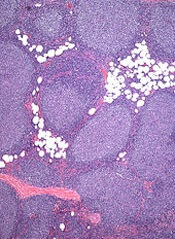
Blinatumomab, a CD19/CD3 bispecific T-cell engager antibody construct, can produce durable responses in patients with relapsed/refractory B-cell non-Hodgkin lymphoma (NHL), according to a phase 1 study.
Among patients who received the maximum-tolerated dose (MTD) of blinatumomab, the overall response rate (ORR) was nearly 70%, and the median duration of response was more than 400 days.
However, there was a high rate of neurologic events, particularly among patients who received higher doses of the drug.
Ralph Bargou, MD, of Wuerzburg University Hospital in Germany, and his colleagues conducted this study and reported the results in the Journal of Clinical Oncology.
The study was supported by Amgen (and Micromet before its acquisition by Amgen), the companies developing blinatumomab.
The study enrolled 76 patients with relapsed/refractory NHL. Most patients (n=52) had indolent NHL. Subtypes included follicular lymphoma (FL, n=28), mantle cell lymphoma (MCL, n=24), diffuse large B-cell lymphoma (DLBCL, n=14), and “other” (n=10).
The “other” category included lymphoplasmacytic lymphoma (n=2), small lymphoplasmacytic lymphoma (n=1), immunocytoma (n=1), Waldenstrom’s macroglobulinemia (n=1), marginal zone NHL (n=1), marginal zone B-cell lymphoma (n=1), marginal zone lymphoma (n=1), chronic lymphocytic leukemia (n=1), and small lymphoplasmacytic lymphoma/chronic lymphocytic leukemia (n=1).
The patients’ median age was 65 (range, 20-80), and the median number of prior treatment regimens was 3 (range, 1-10).
Dosing, toxicity, and discontinuation
This phase 1, dose-escalation study had a 3 + 3 design. Blinatumomab was given over 4 or 8 weeks at 7 different dose levels, ranging from 0.5 μg/m2/day to 90 μg/m2/day.
The researchers found that neurologic events were dose-limiting, and 60 μg/m2/day was the MTD.
Five patients experienced dose-limiting toxicities, including a grade 2 mental disorder (15 μg/m2/day), a case of grade 4 metabolic acidosis due to grand mal seizure (30 μg/m2/day), 2 cases of grade 3 encephalopathy (90 μg/m2/day), and 1 case of grade 3 seizure and aphasia (90 μg/m2/day).
Forty-two patients received treatment in the formal dose-escalation phase. Thirty-four additional patients were recruited to evaluate the antilymphoma activity of blinatumomab and test strategies for mitigating neurologic events at the MTD.
The researchers found that stepwise dosing (5 μg/m2/day to 60 μg/m2/day) plus pentosan polysulfate SP54 (n=3) prompted no treatment discontinuations.
However, single-step (n=5) dosing led to 2 discontinuations, and double-step (n=24) dosing led to 7 discontinuations. All were due to neurologic events.
The most clinically relevant adverse events were neurologic in nature. The overall incidence of these events, regardless of causality, was 71%. The incidence of grade 3 neurologic events was 22%.
Twenty percent of patients experienced serious neurologic events, including encephalopathy (8%), aphasia (4%), and headache (3%). There were no grade 4 or 5 neurologic events.
Response
Among patients treated at the MTD (60 μg/m2/day), the ORR was 69% (24/35). The ORR was 50% at 90 μg/m2/day (2/4), 20% at 15 μg/m2/day (3/15), and 17% at 30 μg/m2/day (1/6).
Complete responses (CRs) occurred in 1 patient at the 15 μg/m2/day dose, 1 at the 30 μg/m2/day dose, 1 at the 90 μg/m2/day dose, and 8 at the 60 μg/m2/day dose. Unconfirmed CRs (CRus) occurred in 5 patients at the 60 μg/m2/day dose.
Among patients who received the MTD, the ORR was 80% in FL patients, 71% in MCL patients, 55% in DLBCL patients, and 50% in the “other” category. There were 6 CR/CRus among FL patients, 3 CR/CRus among MCL patients, and 4 CR/CRus among DLBCL patients.
The median duration of response for patients who received the MTD was 404 days (95% CI, 207 to 1129). The median duration of CR/CRu was 508 days (95% CI, 213 to not estimable). And the median duration of partial response was 185 days (95% CI, 28 to 754).
Nine patients were still in remission at the time of the analysis, and 12 patients had remissions lasting more than 1 year.
“Blinatumomab continues to demonstrate a long duration of response in heavily pretreated non-Hodgkin lymphoma patients,” Dr Bargou said. “Results of the expanded phase 1 experience suggest that blinatumomab has the potential to alter the clinical course of disease in patients with a variety of NHL subtypes.”
Blinatumomab, a CD19/CD3 bispecific T-cell engager antibody construct, can produce durable responses in patients with relapsed/refractory B-cell non-Hodgkin lymphoma (NHL), according to a phase 1 study.
Among patients who received the maximum-tolerated dose (MTD) of blinatumomab, the overall response rate (ORR) was nearly 70%, and the median duration of response was more than 400 days.
However, there was a high rate of neurologic events, particularly among patients who received higher doses of the drug.
Ralph Bargou, MD, of Wuerzburg University Hospital in Germany, and his colleagues conducted this study and reported the results in the Journal of Clinical Oncology.
The study was supported by Amgen (and Micromet before its acquisition by Amgen), the companies developing blinatumomab.
The study enrolled 76 patients with relapsed/refractory NHL. Most patients (n=52) had indolent NHL. Subtypes included follicular lymphoma (FL, n=28), mantle cell lymphoma (MCL, n=24), diffuse large B-cell lymphoma (DLBCL, n=14), and “other” (n=10).
The “other” category included lymphoplasmacytic lymphoma (n=2), small lymphoplasmacytic lymphoma (n=1), immunocytoma (n=1), Waldenstrom’s macroglobulinemia (n=1), marginal zone NHL (n=1), marginal zone B-cell lymphoma (n=1), marginal zone lymphoma (n=1), chronic lymphocytic leukemia (n=1), and small lymphoplasmacytic lymphoma/chronic lymphocytic leukemia (n=1).
The patients’ median age was 65 (range, 20-80), and the median number of prior treatment regimens was 3 (range, 1-10).
Dosing, toxicity, and discontinuation
This phase 1, dose-escalation study had a 3 + 3 design. Blinatumomab was given over 4 or 8 weeks at 7 different dose levels, ranging from 0.5 μg/m2/day to 90 μg/m2/day.
The researchers found that neurologic events were dose-limiting, and 60 μg/m2/day was the MTD.
Five patients experienced dose-limiting toxicities, including a grade 2 mental disorder (15 μg/m2/day), a case of grade 4 metabolic acidosis due to grand mal seizure (30 μg/m2/day), 2 cases of grade 3 encephalopathy (90 μg/m2/day), and 1 case of grade 3 seizure and aphasia (90 μg/m2/day).
Forty-two patients received treatment in the formal dose-escalation phase. Thirty-four additional patients were recruited to evaluate the antilymphoma activity of blinatumomab and test strategies for mitigating neurologic events at the MTD.
The researchers found that stepwise dosing (5 μg/m2/day to 60 μg/m2/day) plus pentosan polysulfate SP54 (n=3) prompted no treatment discontinuations.
However, single-step (n=5) dosing led to 2 discontinuations, and double-step (n=24) dosing led to 7 discontinuations. All were due to neurologic events.
The most clinically relevant adverse events were neurologic in nature. The overall incidence of these events, regardless of causality, was 71%. The incidence of grade 3 neurologic events was 22%.
Twenty percent of patients experienced serious neurologic events, including encephalopathy (8%), aphasia (4%), and headache (3%). There were no grade 4 or 5 neurologic events.
Response
Among patients treated at the MTD (60 μg/m2/day), the ORR was 69% (24/35). The ORR was 50% at 90 μg/m2/day (2/4), 20% at 15 μg/m2/day (3/15), and 17% at 30 μg/m2/day (1/6).
Complete responses (CRs) occurred in 1 patient at the 15 μg/m2/day dose, 1 at the 30 μg/m2/day dose, 1 at the 90 μg/m2/day dose, and 8 at the 60 μg/m2/day dose. Unconfirmed CRs (CRus) occurred in 5 patients at the 60 μg/m2/day dose.
Among patients who received the MTD, the ORR was 80% in FL patients, 71% in MCL patients, 55% in DLBCL patients, and 50% in the “other” category. There were 6 CR/CRus among FL patients, 3 CR/CRus among MCL patients, and 4 CR/CRus among DLBCL patients.
The median duration of response for patients who received the MTD was 404 days (95% CI, 207 to 1129). The median duration of CR/CRu was 508 days (95% CI, 213 to not estimable). And the median duration of partial response was 185 days (95% CI, 28 to 754).
Nine patients were still in remission at the time of the analysis, and 12 patients had remissions lasting more than 1 year.
“Blinatumomab continues to demonstrate a long duration of response in heavily pretreated non-Hodgkin lymphoma patients,” Dr Bargou said. “Results of the expanded phase 1 experience suggest that blinatumomab has the potential to alter the clinical course of disease in patients with a variety of NHL subtypes.”
Blinatumomab, a CD19/CD3 bispecific T-cell engager antibody construct, can produce durable responses in patients with relapsed/refractory B-cell non-Hodgkin lymphoma (NHL), according to a phase 1 study.
Among patients who received the maximum-tolerated dose (MTD) of blinatumomab, the overall response rate (ORR) was nearly 70%, and the median duration of response was more than 400 days.
However, there was a high rate of neurologic events, particularly among patients who received higher doses of the drug.
Ralph Bargou, MD, of Wuerzburg University Hospital in Germany, and his colleagues conducted this study and reported the results in the Journal of Clinical Oncology.
The study was supported by Amgen (and Micromet before its acquisition by Amgen), the companies developing blinatumomab.
The study enrolled 76 patients with relapsed/refractory NHL. Most patients (n=52) had indolent NHL. Subtypes included follicular lymphoma (FL, n=28), mantle cell lymphoma (MCL, n=24), diffuse large B-cell lymphoma (DLBCL, n=14), and “other” (n=10).
The “other” category included lymphoplasmacytic lymphoma (n=2), small lymphoplasmacytic lymphoma (n=1), immunocytoma (n=1), Waldenstrom’s macroglobulinemia (n=1), marginal zone NHL (n=1), marginal zone B-cell lymphoma (n=1), marginal zone lymphoma (n=1), chronic lymphocytic leukemia (n=1), and small lymphoplasmacytic lymphoma/chronic lymphocytic leukemia (n=1).
The patients’ median age was 65 (range, 20-80), and the median number of prior treatment regimens was 3 (range, 1-10).
Dosing, toxicity, and discontinuation
This phase 1, dose-escalation study had a 3 + 3 design. Blinatumomab was given over 4 or 8 weeks at 7 different dose levels, ranging from 0.5 μg/m2/day to 90 μg/m2/day.
The researchers found that neurologic events were dose-limiting, and 60 μg/m2/day was the MTD.
Five patients experienced dose-limiting toxicities, including a grade 2 mental disorder (15 μg/m2/day), a case of grade 4 metabolic acidosis due to grand mal seizure (30 μg/m2/day), 2 cases of grade 3 encephalopathy (90 μg/m2/day), and 1 case of grade 3 seizure and aphasia (90 μg/m2/day).
Forty-two patients received treatment in the formal dose-escalation phase. Thirty-four additional patients were recruited to evaluate the antilymphoma activity of blinatumomab and test strategies for mitigating neurologic events at the MTD.
The researchers found that stepwise dosing (5 μg/m2/day to 60 μg/m2/day) plus pentosan polysulfate SP54 (n=3) prompted no treatment discontinuations.
However, single-step (n=5) dosing led to 2 discontinuations, and double-step (n=24) dosing led to 7 discontinuations. All were due to neurologic events.
The most clinically relevant adverse events were neurologic in nature. The overall incidence of these events, regardless of causality, was 71%. The incidence of grade 3 neurologic events was 22%.
Twenty percent of patients experienced serious neurologic events, including encephalopathy (8%), aphasia (4%), and headache (3%). There were no grade 4 or 5 neurologic events.
Response
Among patients treated at the MTD (60 μg/m2/day), the ORR was 69% (24/35). The ORR was 50% at 90 μg/m2/day (2/4), 20% at 15 μg/m2/day (3/15), and 17% at 30 μg/m2/day (1/6).
Complete responses (CRs) occurred in 1 patient at the 15 μg/m2/day dose, 1 at the 30 μg/m2/day dose, 1 at the 90 μg/m2/day dose, and 8 at the 60 μg/m2/day dose. Unconfirmed CRs (CRus) occurred in 5 patients at the 60 μg/m2/day dose.
Among patients who received the MTD, the ORR was 80% in FL patients, 71% in MCL patients, 55% in DLBCL patients, and 50% in the “other” category. There were 6 CR/CRus among FL patients, 3 CR/CRus among MCL patients, and 4 CR/CRus among DLBCL patients.
The median duration of response for patients who received the MTD was 404 days (95% CI, 207 to 1129). The median duration of CR/CRu was 508 days (95% CI, 213 to not estimable). And the median duration of partial response was 185 days (95% CI, 28 to 754).
Nine patients were still in remission at the time of the analysis, and 12 patients had remissions lasting more than 1 year.
“Blinatumomab continues to demonstrate a long duration of response in heavily pretreated non-Hodgkin lymphoma patients,” Dr Bargou said. “Results of the expanded phase 1 experience suggest that blinatumomab has the potential to alter the clinical course of disease in patients with a variety of NHL subtypes.”
Chemo has greater impact on male fertility

Photo by Nina Matthews
Results of a large study suggest that female survivors of childhood cancer may have more luck than their male peers when it comes to conceiving a child.
Both male and female childhood cancer survivors (CCSs) reported fewer pregnancies and live births than their healthy siblings.
However, chemotherapeutic agents appeared to have a much greater impact on the fertility of male CCSs than female CCSs.
Eric Chow, MD, of the Fred Hutchinson Cancer Research Center in Seattle, Washington, and his colleagues reported these findings in The Lancet Oncology.
Previous research has shown that fertility can be compromised by several types of chemotherapy, mainly alkylating drugs. However, little is known about the dose effects on pregnancy from newer drugs, such as ifosfamide and cisplatin, in CCSs.
With this in mind, Dr Chow and his colleagues analyzed data from the Childhood Cancer Survivor Study, which tracks subjects who were diagnosed with the most common types of childhood cancer before the age of 21 and treated at 27 institutions across the US and Canada between 1970 and 1999.
Patients had been diagnosed with leukemias, lymphomas, and neuroblastoma, as well as kidney, brain, soft tissue, and bone tumors. All had survived at least 5 years after diagnosis.
The researchers examined the impact of various doses of 14 commonly used chemotherapy drugs on pregnancy and live birth in 10,938 male and female CCSs, compared with 3949 siblings.
The team specifically focused on CCSs who were treated with chemotherapy and did not receive any radiotherapy to the pelvis or the brain.
The drugs the researchers evaluated were busulfan, carboplatin, carmustine, chlorambucil, chlormethine, cisplatin, cyclophosphamide, dacarbazine, ifosfamide, lomustine, melphalan, procarbazine, temozolomide, and thiotepa.
Outcomes
Multivariable analysis showed that CCSs were significantly less likely than their siblings to have or sire a pregnancy. For male CCSs, the hazard ratio (HR) was 0.63 (P<0.0001). For female CCSs, the HR was 0.87 (P<0.0001).
CCSs were also significantly less likely to have a live birth. For male CCSs, the HR was 0.63 (P<0.0001). For female CCSs, the HR was 0.82 (P<0.0001).
The researchers noted that, overall, female CCSs were less likely to conceive and have a child when compared to their siblings, but the effect was much smaller than that observed among the men.
In addition, the difference between CCSs and siblings was more pronounced for women who delayed pregnancy until they were 30 or older, possibly because chemotherapy exposure might accelerate the natural depletion of eggs and hasten menopause.
Impact of specific drugs
In male CCSs, the reduced likelihood of siring a pregnancy was associated with upper tertile doses of cyclophosphamide (HR=0.60, P<0.0001), ifosfamide (HR=0.42, P=0.0069), procarbazine (HR=0.30, P<0.0001), and cisplatin (HR=0.56, P=0.0023).
Cyclophosphamide-equivalent dose in male CCSs was significantly associated with a decreased likelihood of siring a pregnancy per 5000 mg/m2 increments (HR=0.82, P<0.0001).
In female CCSs, the reduced likelihood of becoming pregnant was associated with busulfan—both at doses less than 450 mg/m2 (HR=0.22, P=0.020) and at doses of 450 mg/m2 or higher (HR=0.14, P=0.0051)—and with doses of lomustine at 411 mg/m2 or greater (HR=0.41, P=0.046).
Cyclophosphamide-equivalent dose in female CCSs was associated with risk only at the highest doses in analyses categorized by quartile (upper quartile vs no exposure, HR=0.85, P=0.023).
Limitations and implications
The researchers noted that a limitation of this study is that it relied on self-reported pregnancy and live birth, and some pregnancies may go unrecognized.
And although the findings are consistent with others in the field, this study did not account for other factors such as marital or cohabitation status, the intention to conceive, or length of time attempting to conceive.
The researchers also noted that, although the total number of CCSs in this study is large, the number of patients who were exposed to individual drugs varied significantly. So while the overall conclusions of the study are consistent with previous studies, more research is needed to estimate the exact risk of some less commonly used drugs.
“We think these results will be encouraging for most women who were treated with chemotherapy in childhood,” Dr Chow said. “However, I think we, as pediatric oncologists, still need to do a better job discussing fertility and fertility preservation options with patients and families upfront before starting cancer treatment.”
“In particular, all boys diagnosed post-puberty should be encouraged to bank their sperm to maximize their reproductive options in the future. The current options for post-pubertal girls remain more complicated but include oocyte and embryo cryopreservation.”
Photo by Nina Matthews
Results of a large study suggest that female survivors of childhood cancer may have more luck than their male peers when it comes to conceiving a child.
Both male and female childhood cancer survivors (CCSs) reported fewer pregnancies and live births than their healthy siblings.
However, chemotherapeutic agents appeared to have a much greater impact on the fertility of male CCSs than female CCSs.
Eric Chow, MD, of the Fred Hutchinson Cancer Research Center in Seattle, Washington, and his colleagues reported these findings in The Lancet Oncology.
Previous research has shown that fertility can be compromised by several types of chemotherapy, mainly alkylating drugs. However, little is known about the dose effects on pregnancy from newer drugs, such as ifosfamide and cisplatin, in CCSs.
With this in mind, Dr Chow and his colleagues analyzed data from the Childhood Cancer Survivor Study, which tracks subjects who were diagnosed with the most common types of childhood cancer before the age of 21 and treated at 27 institutions across the US and Canada between 1970 and 1999.
Patients had been diagnosed with leukemias, lymphomas, and neuroblastoma, as well as kidney, brain, soft tissue, and bone tumors. All had survived at least 5 years after diagnosis.
The researchers examined the impact of various doses of 14 commonly used chemotherapy drugs on pregnancy and live birth in 10,938 male and female CCSs, compared with 3949 siblings.
The team specifically focused on CCSs who were treated with chemotherapy and did not receive any radiotherapy to the pelvis or the brain.
The drugs the researchers evaluated were busulfan, carboplatin, carmustine, chlorambucil, chlormethine, cisplatin, cyclophosphamide, dacarbazine, ifosfamide, lomustine, melphalan, procarbazine, temozolomide, and thiotepa.
Outcomes
Multivariable analysis showed that CCSs were significantly less likely than their siblings to have or sire a pregnancy. For male CCSs, the hazard ratio (HR) was 0.63 (P<0.0001). For female CCSs, the HR was 0.87 (P<0.0001).
CCSs were also significantly less likely to have a live birth. For male CCSs, the HR was 0.63 (P<0.0001). For female CCSs, the HR was 0.82 (P<0.0001).
The researchers noted that, overall, female CCSs were less likely to conceive and have a child when compared to their siblings, but the effect was much smaller than that observed among the men.
In addition, the difference between CCSs and siblings was more pronounced for women who delayed pregnancy until they were 30 or older, possibly because chemotherapy exposure might accelerate the natural depletion of eggs and hasten menopause.
Impact of specific drugs
In male CCSs, the reduced likelihood of siring a pregnancy was associated with upper tertile doses of cyclophosphamide (HR=0.60, P<0.0001), ifosfamide (HR=0.42, P=0.0069), procarbazine (HR=0.30, P<0.0001), and cisplatin (HR=0.56, P=0.0023).
Cyclophosphamide-equivalent dose in male CCSs was significantly associated with a decreased likelihood of siring a pregnancy per 5000 mg/m2 increments (HR=0.82, P<0.0001).
In female CCSs, the reduced likelihood of becoming pregnant was associated with busulfan—both at doses less than 450 mg/m2 (HR=0.22, P=0.020) and at doses of 450 mg/m2 or higher (HR=0.14, P=0.0051)—and with doses of lomustine at 411 mg/m2 or greater (HR=0.41, P=0.046).
Cyclophosphamide-equivalent dose in female CCSs was associated with risk only at the highest doses in analyses categorized by quartile (upper quartile vs no exposure, HR=0.85, P=0.023).
Limitations and implications
The researchers noted that a limitation of this study is that it relied on self-reported pregnancy and live birth, and some pregnancies may go unrecognized.
And although the findings are consistent with others in the field, this study did not account for other factors such as marital or cohabitation status, the intention to conceive, or length of time attempting to conceive.
The researchers also noted that, although the total number of CCSs in this study is large, the number of patients who were exposed to individual drugs varied significantly. So while the overall conclusions of the study are consistent with previous studies, more research is needed to estimate the exact risk of some less commonly used drugs.
“We think these results will be encouraging for most women who were treated with chemotherapy in childhood,” Dr Chow said. “However, I think we, as pediatric oncologists, still need to do a better job discussing fertility and fertility preservation options with patients and families upfront before starting cancer treatment.”
“In particular, all boys diagnosed post-puberty should be encouraged to bank their sperm to maximize their reproductive options in the future. The current options for post-pubertal girls remain more complicated but include oocyte and embryo cryopreservation.”
Photo by Nina Matthews
Results of a large study suggest that female survivors of childhood cancer may have more luck than their male peers when it comes to conceiving a child.
Both male and female childhood cancer survivors (CCSs) reported fewer pregnancies and live births than their healthy siblings.
However, chemotherapeutic agents appeared to have a much greater impact on the fertility of male CCSs than female CCSs.
Eric Chow, MD, of the Fred Hutchinson Cancer Research Center in Seattle, Washington, and his colleagues reported these findings in The Lancet Oncology.
Previous research has shown that fertility can be compromised by several types of chemotherapy, mainly alkylating drugs. However, little is known about the dose effects on pregnancy from newer drugs, such as ifosfamide and cisplatin, in CCSs.
With this in mind, Dr Chow and his colleagues analyzed data from the Childhood Cancer Survivor Study, which tracks subjects who were diagnosed with the most common types of childhood cancer before the age of 21 and treated at 27 institutions across the US and Canada between 1970 and 1999.
Patients had been diagnosed with leukemias, lymphomas, and neuroblastoma, as well as kidney, brain, soft tissue, and bone tumors. All had survived at least 5 years after diagnosis.
The researchers examined the impact of various doses of 14 commonly used chemotherapy drugs on pregnancy and live birth in 10,938 male and female CCSs, compared with 3949 siblings.
The team specifically focused on CCSs who were treated with chemotherapy and did not receive any radiotherapy to the pelvis or the brain.
The drugs the researchers evaluated were busulfan, carboplatin, carmustine, chlorambucil, chlormethine, cisplatin, cyclophosphamide, dacarbazine, ifosfamide, lomustine, melphalan, procarbazine, temozolomide, and thiotepa.
Outcomes
Multivariable analysis showed that CCSs were significantly less likely than their siblings to have or sire a pregnancy. For male CCSs, the hazard ratio (HR) was 0.63 (P<0.0001). For female CCSs, the HR was 0.87 (P<0.0001).
CCSs were also significantly less likely to have a live birth. For male CCSs, the HR was 0.63 (P<0.0001). For female CCSs, the HR was 0.82 (P<0.0001).
The researchers noted that, overall, female CCSs were less likely to conceive and have a child when compared to their siblings, but the effect was much smaller than that observed among the men.
In addition, the difference between CCSs and siblings was more pronounced for women who delayed pregnancy until they were 30 or older, possibly because chemotherapy exposure might accelerate the natural depletion of eggs and hasten menopause.
Impact of specific drugs
In male CCSs, the reduced likelihood of siring a pregnancy was associated with upper tertile doses of cyclophosphamide (HR=0.60, P<0.0001), ifosfamide (HR=0.42, P=0.0069), procarbazine (HR=0.30, P<0.0001), and cisplatin (HR=0.56, P=0.0023).
Cyclophosphamide-equivalent dose in male CCSs was significantly associated with a decreased likelihood of siring a pregnancy per 5000 mg/m2 increments (HR=0.82, P<0.0001).
In female CCSs, the reduced likelihood of becoming pregnant was associated with busulfan—both at doses less than 450 mg/m2 (HR=0.22, P=0.020) and at doses of 450 mg/m2 or higher (HR=0.14, P=0.0051)—and with doses of lomustine at 411 mg/m2 or greater (HR=0.41, P=0.046).
Cyclophosphamide-equivalent dose in female CCSs was associated with risk only at the highest doses in analyses categorized by quartile (upper quartile vs no exposure, HR=0.85, P=0.023).
Limitations and implications
The researchers noted that a limitation of this study is that it relied on self-reported pregnancy and live birth, and some pregnancies may go unrecognized.
And although the findings are consistent with others in the field, this study did not account for other factors such as marital or cohabitation status, the intention to conceive, or length of time attempting to conceive.
The researchers also noted that, although the total number of CCSs in this study is large, the number of patients who were exposed to individual drugs varied significantly. So while the overall conclusions of the study are consistent with previous studies, more research is needed to estimate the exact risk of some less commonly used drugs.
“We think these results will be encouraging for most women who were treated with chemotherapy in childhood,” Dr Chow said. “However, I think we, as pediatric oncologists, still need to do a better job discussing fertility and fertility preservation options with patients and families upfront before starting cancer treatment.”
“In particular, all boys diagnosed post-puberty should be encouraged to bank their sperm to maximize their reproductive options in the future. The current options for post-pubertal girls remain more complicated but include oocyte and embryo cryopreservation.”
Approvals and presentations flag notable advances in the hem-onc space
Scientific advances and their translation from bench to bedside were front and foremost in the hematology-oncology sphere during 2015 and were bolstered by a record number of therapy approvals by the US Food and Drug Administration (FDA).1 The most recent of those approvals included elotuzumab and ixazomib (both with lenalidomide plus dexamethasone) for previously treated patients with multiple myeloma; and daratumumab as a single agent, also for previously treated multiple myeloma.
Click on the PDF icon at the top of this introduction to read the full article.
Scientific advances and their translation from bench to bedside were front and foremost in the hematology-oncology sphere during 2015 and were bolstered by a record number of therapy approvals by the US Food and Drug Administration (FDA).1 The most recent of those approvals included elotuzumab and ixazomib (both with lenalidomide plus dexamethasone) for previously treated patients with multiple myeloma; and daratumumab as a single agent, also for previously treated multiple myeloma.
Click on the PDF icon at the top of this introduction to read the full article.
Scientific advances and their translation from bench to bedside were front and foremost in the hematology-oncology sphere during 2015 and were bolstered by a record number of therapy approvals by the US Food and Drug Administration (FDA).1 The most recent of those approvals included elotuzumab and ixazomib (both with lenalidomide plus dexamethasone) for previously treated patients with multiple myeloma; and daratumumab as a single agent, also for previously treated multiple myeloma.
Click on the PDF icon at the top of this introduction to read the full article.
Studies explain how mutations promote lymphoma
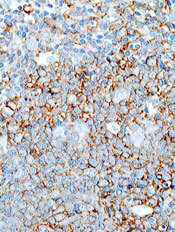
New research suggests there are 4 different “locks” that keep the CARD11 protein in check.
Researchers say these locks, also known as “repressive elements,” work together to prevent unwarranted CARD11 signaling.
But mutations in CARD11 can perturb or bypass the action of the repressive elements, which leads to a level of hyperactive CARD11 signaling that supports lymphoma growth.
Joel Pomerantz, PhD, of the Johns Hopkins University School of Medicine in Baltimore, Maryland, and his colleagues reported these findings in 2 articles published in The Journal of Biological Chemistry.1,2
The researchers noted that mutated CARD11 proteins are sometimes found in patients with lymphoma, particularly diffuse large B-cell lymphoma. But none of the mutations exist in the “lock region” of CARD11, known as the autoinhibitory domain.
To find out why, the team conducted experiments with T cells. They first genetically deleted CARD11’s autoinhibitory domain so that the protein was always “on” and signaling.
Then, to figure out which region of the autoinhibitory domain accounted for its function, the researchers systematically deleted 6 different segments of it one at a time, rather than deleting the whole thing.
They expected most of the deletions to keep CARD11 inactive and 1 or 2 to “unlock” it. However, none of the deletions unlocked it, which suggested there was more than 1 repressive element within the autoinhibitory domain.
To see if that was the case and to find out how many repressive elements there might be, the researchers deleted the full autoinhibitory domain again, then added back small regions of it.
In this way, they pieced together the presence of 4 different biochemical regions, or repressive elements, that are each capable of locking CARD11 on their own.
“Having 4 redundant repressive elements seems to explain why patients with lymphoma don’t have mutations in CARD11’s autoinhibitory domain,” Dr Pomerantz said. “A mutation in any one of the repressive elements would only unlock 1 of the 4 locks, keeping CARD11’s signaling under the control of the other 3.”
So where do the lymphoma-associated mutations occur, and how do they circumvent CARD11’s quadruple locks? Clinical data show that the mutations occur in 3 other regions of CARD11—the CARD, LATCH, and coiled-coil regions.
Dr Pomerantz and his colleagues conducted biochemical tests on T cells and found that those 3 regions clasp the autoinhibitory domain to keep CARD11’s activity on lockdown. This makes sense, Dr Pomerantz said, because CARD11 uses those same regions to connect with other signaling proteins to send its message.
“When they are interacting with the autoinhibitory domain, they can’t be interacting with other proteins,” he said.
According to Dr Pomerantz, single mutations in the CARD, LATCH, or coiled-coil regions appear to be sufficient to disable the 4 repressive elements. And the ultimate goal is to advance the development of therapies that rein in hyperactive CARD11 in patients with lymphoma.
“If we can understand how CARD11 is normally kept off, we might be able to mimic that with a drug,” he said. “We also hope to shed light on how different mutations in CARD11 affect its function and a patient’s prognosis.”
New research suggests there are 4 different “locks” that keep the CARD11 protein in check.
Researchers say these locks, also known as “repressive elements,” work together to prevent unwarranted CARD11 signaling.
But mutations in CARD11 can perturb or bypass the action of the repressive elements, which leads to a level of hyperactive CARD11 signaling that supports lymphoma growth.
Joel Pomerantz, PhD, of the Johns Hopkins University School of Medicine in Baltimore, Maryland, and his colleagues reported these findings in 2 articles published in The Journal of Biological Chemistry.1,2
The researchers noted that mutated CARD11 proteins are sometimes found in patients with lymphoma, particularly diffuse large B-cell lymphoma. But none of the mutations exist in the “lock region” of CARD11, known as the autoinhibitory domain.
To find out why, the team conducted experiments with T cells. They first genetically deleted CARD11’s autoinhibitory domain so that the protein was always “on” and signaling.
Then, to figure out which region of the autoinhibitory domain accounted for its function, the researchers systematically deleted 6 different segments of it one at a time, rather than deleting the whole thing.
They expected most of the deletions to keep CARD11 inactive and 1 or 2 to “unlock” it. However, none of the deletions unlocked it, which suggested there was more than 1 repressive element within the autoinhibitory domain.
To see if that was the case and to find out how many repressive elements there might be, the researchers deleted the full autoinhibitory domain again, then added back small regions of it.
In this way, they pieced together the presence of 4 different biochemical regions, or repressive elements, that are each capable of locking CARD11 on their own.
“Having 4 redundant repressive elements seems to explain why patients with lymphoma don’t have mutations in CARD11’s autoinhibitory domain,” Dr Pomerantz said. “A mutation in any one of the repressive elements would only unlock 1 of the 4 locks, keeping CARD11’s signaling under the control of the other 3.”
So where do the lymphoma-associated mutations occur, and how do they circumvent CARD11’s quadruple locks? Clinical data show that the mutations occur in 3 other regions of CARD11—the CARD, LATCH, and coiled-coil regions.
Dr Pomerantz and his colleagues conducted biochemical tests on T cells and found that those 3 regions clasp the autoinhibitory domain to keep CARD11’s activity on lockdown. This makes sense, Dr Pomerantz said, because CARD11 uses those same regions to connect with other signaling proteins to send its message.
“When they are interacting with the autoinhibitory domain, they can’t be interacting with other proteins,” he said.
According to Dr Pomerantz, single mutations in the CARD, LATCH, or coiled-coil regions appear to be sufficient to disable the 4 repressive elements. And the ultimate goal is to advance the development of therapies that rein in hyperactive CARD11 in patients with lymphoma.
“If we can understand how CARD11 is normally kept off, we might be able to mimic that with a drug,” he said. “We also hope to shed light on how different mutations in CARD11 affect its function and a patient’s prognosis.”
New research suggests there are 4 different “locks” that keep the CARD11 protein in check.
Researchers say these locks, also known as “repressive elements,” work together to prevent unwarranted CARD11 signaling.
But mutations in CARD11 can perturb or bypass the action of the repressive elements, which leads to a level of hyperactive CARD11 signaling that supports lymphoma growth.
Joel Pomerantz, PhD, of the Johns Hopkins University School of Medicine in Baltimore, Maryland, and his colleagues reported these findings in 2 articles published in The Journal of Biological Chemistry.1,2
The researchers noted that mutated CARD11 proteins are sometimes found in patients with lymphoma, particularly diffuse large B-cell lymphoma. But none of the mutations exist in the “lock region” of CARD11, known as the autoinhibitory domain.
To find out why, the team conducted experiments with T cells. They first genetically deleted CARD11’s autoinhibitory domain so that the protein was always “on” and signaling.
Then, to figure out which region of the autoinhibitory domain accounted for its function, the researchers systematically deleted 6 different segments of it one at a time, rather than deleting the whole thing.
They expected most of the deletions to keep CARD11 inactive and 1 or 2 to “unlock” it. However, none of the deletions unlocked it, which suggested there was more than 1 repressive element within the autoinhibitory domain.
To see if that was the case and to find out how many repressive elements there might be, the researchers deleted the full autoinhibitory domain again, then added back small regions of it.
In this way, they pieced together the presence of 4 different biochemical regions, or repressive elements, that are each capable of locking CARD11 on their own.
“Having 4 redundant repressive elements seems to explain why patients with lymphoma don’t have mutations in CARD11’s autoinhibitory domain,” Dr Pomerantz said. “A mutation in any one of the repressive elements would only unlock 1 of the 4 locks, keeping CARD11’s signaling under the control of the other 3.”
So where do the lymphoma-associated mutations occur, and how do they circumvent CARD11’s quadruple locks? Clinical data show that the mutations occur in 3 other regions of CARD11—the CARD, LATCH, and coiled-coil regions.
Dr Pomerantz and his colleagues conducted biochemical tests on T cells and found that those 3 regions clasp the autoinhibitory domain to keep CARD11’s activity on lockdown. This makes sense, Dr Pomerantz said, because CARD11 uses those same regions to connect with other signaling proteins to send its message.
“When they are interacting with the autoinhibitory domain, they can’t be interacting with other proteins,” he said.
According to Dr Pomerantz, single mutations in the CARD, LATCH, or coiled-coil regions appear to be sufficient to disable the 4 repressive elements. And the ultimate goal is to advance the development of therapies that rein in hyperactive CARD11 in patients with lymphoma.
“If we can understand how CARD11 is normally kept off, we might be able to mimic that with a drug,” he said. “We also hope to shed light on how different mutations in CARD11 affect its function and a patient’s prognosis.”