User login
Improving upon results with checkpoint inhibitors

Photo by Rob Press
Manipulating metabolic events might reinvigorate exhausted T cells and complement the effects of checkpoint inhibitors in the treatment of cancers, according to research published in Immunity.
When T cells are activated because of a tumor or microbe, they transition from a catabolic existence of slow metabolic burn to an anabolic one in which the body revs up to generate chemical intermediates to build new cells.
However, T cells are hard-wired to stop the anabolic mode at a certain point because functioning at that level is unsustainable.
PD-1, a cell surface receptor and target of checkpoint inhibitors, tells T cells to turn off the anabolic pathway, but other molecular signals attempt to keep this pathway turned on because growing tumors or chronic infection are still present.
This results in “metabolically confused” T cells, said study author E. John Wherry, PhD, of the University of Pennsylvania School of Medicine in Philadelphia.
To study this, Dr Wherry and his colleagues induced infection in mice using 2 different strains of the lymphocytic choriomeningitis virus, a model system for exploring T-cell biology.
“We found that, as early as the first week of a chronic viral infection, even before severe T-cell dysfunction becomes established, virus-specific T cells are already unable to match the bioenergetic demands of T cells generated during the height of fighting a well-contained viral infection in a mouse model,” Dr Wherry said.
In other words, these experiments revealed when PD-1 turns off the anabolic metabolism signal, and it’s earlier than previously thought.
The researchers said this finding is important because it identifies the altered metabolism as a distinct point in the development of exhausted T cells, rather than as a later consequence of exhausted T cells.
This research also revealed PD-1’s role as the metabolic switch in shutting down anabolic pathways and characterized downstream metabolic regulator targets of PD-1.
For example, restriction of glucose uptake and utilization, despite the upregulation of multiple backup metabolic pathways, was one metabolic defect in the exhausted T cells. PD-1 partially controls the development of this early defect in using glucose as a fuel, as well as the size and quality of mitochondria.
A second pathway repressed by PD-1 involved PGC-1α, a protein that regulates genes involved in metabolism. Correcting this PD-1-induced defect by overexpressing PGC-1α improved exhausted T-cell bioenergetics.
The researchers said these results have implications for therapeutic strategies aimed at the reinvigoration of exhausted T cells in chronic infections and cancer. And targeting exhausted T-cell metabolism could complement the effects of blocking PD-1 and other checkpoints. 
Photo by Rob Press
Manipulating metabolic events might reinvigorate exhausted T cells and complement the effects of checkpoint inhibitors in the treatment of cancers, according to research published in Immunity.
When T cells are activated because of a tumor or microbe, they transition from a catabolic existence of slow metabolic burn to an anabolic one in which the body revs up to generate chemical intermediates to build new cells.
However, T cells are hard-wired to stop the anabolic mode at a certain point because functioning at that level is unsustainable.
PD-1, a cell surface receptor and target of checkpoint inhibitors, tells T cells to turn off the anabolic pathway, but other molecular signals attempt to keep this pathway turned on because growing tumors or chronic infection are still present.
This results in “metabolically confused” T cells, said study author E. John Wherry, PhD, of the University of Pennsylvania School of Medicine in Philadelphia.
To study this, Dr Wherry and his colleagues induced infection in mice using 2 different strains of the lymphocytic choriomeningitis virus, a model system for exploring T-cell biology.
“We found that, as early as the first week of a chronic viral infection, even before severe T-cell dysfunction becomes established, virus-specific T cells are already unable to match the bioenergetic demands of T cells generated during the height of fighting a well-contained viral infection in a mouse model,” Dr Wherry said.
In other words, these experiments revealed when PD-1 turns off the anabolic metabolism signal, and it’s earlier than previously thought.
The researchers said this finding is important because it identifies the altered metabolism as a distinct point in the development of exhausted T cells, rather than as a later consequence of exhausted T cells.
This research also revealed PD-1’s role as the metabolic switch in shutting down anabolic pathways and characterized downstream metabolic regulator targets of PD-1.
For example, restriction of glucose uptake and utilization, despite the upregulation of multiple backup metabolic pathways, was one metabolic defect in the exhausted T cells. PD-1 partially controls the development of this early defect in using glucose as a fuel, as well as the size and quality of mitochondria.
A second pathway repressed by PD-1 involved PGC-1α, a protein that regulates genes involved in metabolism. Correcting this PD-1-induced defect by overexpressing PGC-1α improved exhausted T-cell bioenergetics.
The researchers said these results have implications for therapeutic strategies aimed at the reinvigoration of exhausted T cells in chronic infections and cancer. And targeting exhausted T-cell metabolism could complement the effects of blocking PD-1 and other checkpoints.
Photo by Rob Press
Manipulating metabolic events might reinvigorate exhausted T cells and complement the effects of checkpoint inhibitors in the treatment of cancers, according to research published in Immunity.
When T cells are activated because of a tumor or microbe, they transition from a catabolic existence of slow metabolic burn to an anabolic one in which the body revs up to generate chemical intermediates to build new cells.
However, T cells are hard-wired to stop the anabolic mode at a certain point because functioning at that level is unsustainable.
PD-1, a cell surface receptor and target of checkpoint inhibitors, tells T cells to turn off the anabolic pathway, but other molecular signals attempt to keep this pathway turned on because growing tumors or chronic infection are still present.
This results in “metabolically confused” T cells, said study author E. John Wherry, PhD, of the University of Pennsylvania School of Medicine in Philadelphia.
To study this, Dr Wherry and his colleagues induced infection in mice using 2 different strains of the lymphocytic choriomeningitis virus, a model system for exploring T-cell biology.
“We found that, as early as the first week of a chronic viral infection, even before severe T-cell dysfunction becomes established, virus-specific T cells are already unable to match the bioenergetic demands of T cells generated during the height of fighting a well-contained viral infection in a mouse model,” Dr Wherry said.
In other words, these experiments revealed when PD-1 turns off the anabolic metabolism signal, and it’s earlier than previously thought.
The researchers said this finding is important because it identifies the altered metabolism as a distinct point in the development of exhausted T cells, rather than as a later consequence of exhausted T cells.
This research also revealed PD-1’s role as the metabolic switch in shutting down anabolic pathways and characterized downstream metabolic regulator targets of PD-1.
For example, restriction of glucose uptake and utilization, despite the upregulation of multiple backup metabolic pathways, was one metabolic defect in the exhausted T cells. PD-1 partially controls the development of this early defect in using glucose as a fuel, as well as the size and quality of mitochondria.
A second pathway repressed by PD-1 involved PGC-1α, a protein that regulates genes involved in metabolism. Correcting this PD-1-induced defect by overexpressing PGC-1α improved exhausted T-cell bioenergetics.
The researchers said these results have implications for therapeutic strategies aimed at the reinvigoration of exhausted T cells in chronic infections and cancer. And targeting exhausted T-cell metabolism could complement the effects of blocking PD-1 and other checkpoints.
Compounds can fight lymphoma, other cancers
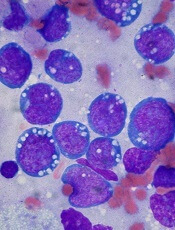
Image by Ed Uthman
Preclinical research suggests a novel class of compounds are effective against pediatric and adult cancers, including lymphoma.
The compounds are amphiphilic amines (RCn) based on a tricyclic amine hydrophilic head and a hydrophobic linear alkyl tail of variable length.
The RCn compounds proved cytotoxic in a range of cancer cell lines, including the Burkitt lymphoma cell line Ramos.
The lead compound, RC16, exhibited antitumor effects in vivo and enhanced the in vitro activity of 3 other anticancer agents.
Timothy Cripe, MD, PhD, of Nationwide Children’s Hospital in Columbus, Ohio, and his colleagues reported these results in Pharmaceutical Research.
The investigators first evaluated the RCn compounds for cytotoxicity and mechanism of cell death in several adult and pediatric cancer cell lines.
“We tested RCn’s tumor killing efficacy in cell lines of numerous cancers, including sarcomas, lymphoma, and neuroblastoma,” Dr Cripe said. “We observed anticancer activity of the RCn amines in all the cancer cell lines analyzed.”
The investigators also found that RC16 was 10 times more effective in harming tumor cells than normal cells, including keratinocytes, fibroblasts, and umbilical vein endothelial cells.
In addition, RC16 demonstrated “significant antitumor effects” in several mouse models of malignancy, both when given intravenously and orally.
Because of the amphiphilic molecular structure of RC16, it self-assembled into micelles in water. This chemical structure allowed complexation of the anticancer drugs doxorubicin, etoposide, and paclitaxel.
The micelles significantly improved the in vitro antitumor activity of these drugs by enhancing their solubility in water.
“The antitumor activity of lipophilic amines was interesting because of its action on the mitochondria and lysosomes of cells,” said study author Isabella Orienti, PhD, of the University of Bologna in Italy.
“Moreover, their amphiphilic character improves their bioavailability. We correctly hypothesized these amphiphilic amines would have high antitumor activity and high bioavailability.”
“We are in the process of determining our next steps with testing this new drug,” Dr Cripe added. “This is a promising new therapy for adult and pediatric cancers, and we look forward to further testing its merits.”
Image by Ed Uthman
Preclinical research suggests a novel class of compounds are effective against pediatric and adult cancers, including lymphoma.
The compounds are amphiphilic amines (RCn) based on a tricyclic amine hydrophilic head and a hydrophobic linear alkyl tail of variable length.
The RCn compounds proved cytotoxic in a range of cancer cell lines, including the Burkitt lymphoma cell line Ramos.
The lead compound, RC16, exhibited antitumor effects in vivo and enhanced the in vitro activity of 3 other anticancer agents.
Timothy Cripe, MD, PhD, of Nationwide Children’s Hospital in Columbus, Ohio, and his colleagues reported these results in Pharmaceutical Research.
The investigators first evaluated the RCn compounds for cytotoxicity and mechanism of cell death in several adult and pediatric cancer cell lines.
“We tested RCn’s tumor killing efficacy in cell lines of numerous cancers, including sarcomas, lymphoma, and neuroblastoma,” Dr Cripe said. “We observed anticancer activity of the RCn amines in all the cancer cell lines analyzed.”
The investigators also found that RC16 was 10 times more effective in harming tumor cells than normal cells, including keratinocytes, fibroblasts, and umbilical vein endothelial cells.
In addition, RC16 demonstrated “significant antitumor effects” in several mouse models of malignancy, both when given intravenously and orally.
Because of the amphiphilic molecular structure of RC16, it self-assembled into micelles in water. This chemical structure allowed complexation of the anticancer drugs doxorubicin, etoposide, and paclitaxel.
The micelles significantly improved the in vitro antitumor activity of these drugs by enhancing their solubility in water.
“The antitumor activity of lipophilic amines was interesting because of its action on the mitochondria and lysosomes of cells,” said study author Isabella Orienti, PhD, of the University of Bologna in Italy.
“Moreover, their amphiphilic character improves their bioavailability. We correctly hypothesized these amphiphilic amines would have high antitumor activity and high bioavailability.”
“We are in the process of determining our next steps with testing this new drug,” Dr Cripe added. “This is a promising new therapy for adult and pediatric cancers, and we look forward to further testing its merits.”
Image by Ed Uthman
Preclinical research suggests a novel class of compounds are effective against pediatric and adult cancers, including lymphoma.
The compounds are amphiphilic amines (RCn) based on a tricyclic amine hydrophilic head and a hydrophobic linear alkyl tail of variable length.
The RCn compounds proved cytotoxic in a range of cancer cell lines, including the Burkitt lymphoma cell line Ramos.
The lead compound, RC16, exhibited antitumor effects in vivo and enhanced the in vitro activity of 3 other anticancer agents.
Timothy Cripe, MD, PhD, of Nationwide Children’s Hospital in Columbus, Ohio, and his colleagues reported these results in Pharmaceutical Research.
The investigators first evaluated the RCn compounds for cytotoxicity and mechanism of cell death in several adult and pediatric cancer cell lines.
“We tested RCn’s tumor killing efficacy in cell lines of numerous cancers, including sarcomas, lymphoma, and neuroblastoma,” Dr Cripe said. “We observed anticancer activity of the RCn amines in all the cancer cell lines analyzed.”
The investigators also found that RC16 was 10 times more effective in harming tumor cells than normal cells, including keratinocytes, fibroblasts, and umbilical vein endothelial cells.
In addition, RC16 demonstrated “significant antitumor effects” in several mouse models of malignancy, both when given intravenously and orally.
Because of the amphiphilic molecular structure of RC16, it self-assembled into micelles in water. This chemical structure allowed complexation of the anticancer drugs doxorubicin, etoposide, and paclitaxel.
The micelles significantly improved the in vitro antitumor activity of these drugs by enhancing their solubility in water.
“The antitumor activity of lipophilic amines was interesting because of its action on the mitochondria and lysosomes of cells,” said study author Isabella Orienti, PhD, of the University of Bologna in Italy.
“Moreover, their amphiphilic character improves their bioavailability. We correctly hypothesized these amphiphilic amines would have high antitumor activity and high bioavailability.”
“We are in the process of determining our next steps with testing this new drug,” Dr Cripe added. “This is a promising new therapy for adult and pediatric cancers, and we look forward to further testing its merits.”
Triptorelin doesn’t prevent ovarian failure in young women treated for lymphoma
Protective treatment with the GnRH agonist triptorelin failed to prevent chemotherapy-induced premature ovarian failure in young women with lymphoma, according to a report published in the Journal of Clinical Oncology.
This type of protective therapy has been used for at least 20 years but is still controversial. Some clinical practice guidelines endorse the practice, but others do not. The evidence is both sparse and ambiguous, said Isabelle Demeestere, MD, of the research laboratory on human reproduction, Université Libre de Bruxelles (Belgium), and her associates.
In what they described as “the first randomized clinical trial providing accurate information on ovarian function and fertility after a median of 5 years of follow-up,” the investigators assessed 67 young women (median age, 26 years) treated for Hodgkin’s or non-Hodgkin’s lymphoma at 15 cancer centers in France, Belgium, and Italy. These patients had been randomly assigned to receive chemotherapy plus triptorelin (32 women) or chemotherapy plus placebo injections (35 women) at baseline.
Premature ovarian failure, as measured by elevated FSH levels, occurred in six of the GnRH group and eight of the control group, a nonsignificant difference. Moreover, the rate of recovery of ovarian function, as measured by at least one FSH level of 15 IU/L or less, was the same between the two study groups. And 17 women (53%) in the GnRH group eventually achieved pregnancy, which is not significantly different from the 43% pregnancy rate in the control group (15 of 35 women).
Five women – two in the GnRH group and three in the control group – achieved pregnancy during long-term follow-up, even though they had been classified as having premature ovarian failure. This “confirms the possibility of incidental ovarian cycle recovery, leading to fertility restoration several years after treatment in this young population,” Dr. Demeestere and her associates wrote (J Clin Oncol. 2016. [doi:10.1200/JCO.2015.65.884]).
The study findings “suggest caution” regarding guidelines that recommend using GnRH agonists to preserve fertility in young women undergoing chemotherapy, they added.
Protective treatment with the GnRH agonist triptorelin failed to prevent chemotherapy-induced premature ovarian failure in young women with lymphoma, according to a report published in the Journal of Clinical Oncology.
This type of protective therapy has been used for at least 20 years but is still controversial. Some clinical practice guidelines endorse the practice, but others do not. The evidence is both sparse and ambiguous, said Isabelle Demeestere, MD, of the research laboratory on human reproduction, Université Libre de Bruxelles (Belgium), and her associates.
In what they described as “the first randomized clinical trial providing accurate information on ovarian function and fertility after a median of 5 years of follow-up,” the investigators assessed 67 young women (median age, 26 years) treated for Hodgkin’s or non-Hodgkin’s lymphoma at 15 cancer centers in France, Belgium, and Italy. These patients had been randomly assigned to receive chemotherapy plus triptorelin (32 women) or chemotherapy plus placebo injections (35 women) at baseline.
Premature ovarian failure, as measured by elevated FSH levels, occurred in six of the GnRH group and eight of the control group, a nonsignificant difference. Moreover, the rate of recovery of ovarian function, as measured by at least one FSH level of 15 IU/L or less, was the same between the two study groups. And 17 women (53%) in the GnRH group eventually achieved pregnancy, which is not significantly different from the 43% pregnancy rate in the control group (15 of 35 women).
Five women – two in the GnRH group and three in the control group – achieved pregnancy during long-term follow-up, even though they had been classified as having premature ovarian failure. This “confirms the possibility of incidental ovarian cycle recovery, leading to fertility restoration several years after treatment in this young population,” Dr. Demeestere and her associates wrote (J Clin Oncol. 2016. [doi:10.1200/JCO.2015.65.884]).
The study findings “suggest caution” regarding guidelines that recommend using GnRH agonists to preserve fertility in young women undergoing chemotherapy, they added.
Protective treatment with the GnRH agonist triptorelin failed to prevent chemotherapy-induced premature ovarian failure in young women with lymphoma, according to a report published in the Journal of Clinical Oncology.
This type of protective therapy has been used for at least 20 years but is still controversial. Some clinical practice guidelines endorse the practice, but others do not. The evidence is both sparse and ambiguous, said Isabelle Demeestere, MD, of the research laboratory on human reproduction, Université Libre de Bruxelles (Belgium), and her associates.
In what they described as “the first randomized clinical trial providing accurate information on ovarian function and fertility after a median of 5 years of follow-up,” the investigators assessed 67 young women (median age, 26 years) treated for Hodgkin’s or non-Hodgkin’s lymphoma at 15 cancer centers in France, Belgium, and Italy. These patients had been randomly assigned to receive chemotherapy plus triptorelin (32 women) or chemotherapy plus placebo injections (35 women) at baseline.
Premature ovarian failure, as measured by elevated FSH levels, occurred in six of the GnRH group and eight of the control group, a nonsignificant difference. Moreover, the rate of recovery of ovarian function, as measured by at least one FSH level of 15 IU/L or less, was the same between the two study groups. And 17 women (53%) in the GnRH group eventually achieved pregnancy, which is not significantly different from the 43% pregnancy rate in the control group (15 of 35 women).
Five women – two in the GnRH group and three in the control group – achieved pregnancy during long-term follow-up, even though they had been classified as having premature ovarian failure. This “confirms the possibility of incidental ovarian cycle recovery, leading to fertility restoration several years after treatment in this young population,” Dr. Demeestere and her associates wrote (J Clin Oncol. 2016. [doi:10.1200/JCO.2015.65.884]).
The study findings “suggest caution” regarding guidelines that recommend using GnRH agonists to preserve fertility in young women undergoing chemotherapy, they added.
FROM JOURNAL OF CLINICAL ONCOLOGY
Key clinical point: The GnRH agonist triptorelin failed to prevent chemotherapy-induced premature ovarian failure in young women with lymphoma.
Major finding: Premature ovarian failure occurred in six of the GnRH group and eight of the control group, a nonsignificant difference.
Data source: A multicenter, randomized clinical trial involving 67 women followed for 5 years.
Disclosures: This study was supported by Fonds National de la Recherche Scientifique and Ipsen Pharmaceutical Group. Dr. Demeestere reported having no relevant financial disclosures; her associates reported ties to numerous industry sources.
ASCO issues guideline on chronic pain management in adult cancer survivors

Photo courtesy of NIH
The American Society of Clinical Oncology (ASCO) has issued a new clinical practice guideline on the management of chronic pain in adult cancer survivors.
ASCO’s recommendations comprise both long-standing and new approaches, including routine screening for chronic pain, the use of alternative pain management approaches, the use of medical cannabis in certain settings where it is legal, and assessing the potential for opioid overuse.
“Many oncologists and primary care physicians are not trained to recognize or treat long-term pain associated with cancer,” said Judith A. Paice, PhD, RN, a co-chair of the ASCO expert panel that developed the guideline.
“This guideline will help clinicians identify pain early and develop comprehensive treatment plans, using a broad range of approaches.”
The guideline recommendations were developed by a multidisciplinary panel of experts in medical oncology, hematology/oncology, pain medicine, palliative care, hospice, radiation oncology, social work, symptom management research, rehabilitation, psychology, and anesthesiology, as well as a patient representative.
The panel conducted a systematic review of the medical literature published from 1996 to 2015. The resulting guideline includes the following key recommendations.
Clinicians should screen for pain at each encounter with a patient. Recurrent disease, second malignancy, or late-onset treatment effects should be evaluated, treated, and monitored.
Clinicians may prescribe non-pharmacologic interventions such as physical medicine and rehabilitation, integrative therapies (eg, acupuncture and massage), interventional therapies, and psychological approaches (eg, guided imagery, hypnosis, and meditation).
Systemic non-opioid analgesics (NSAIDS, acetaminophen) and adjuvant analgesics (selected antidepressants and anticonvulsants) may be prescribed to relieve chronic pain and/or improve physical function.
Clinicians may follow specific state regulations that allow access to medical cannabis or cannabinoids for patients with chronic pain after considering the potential benefits and risks of the available formulations.
Clinicians may prescribe a trial of opioids in carefully selected cancer patients who do not respond to more conservative pain management and who continue to experience pain-related distress or impairment of physical function.
Clinicians should assess the risk of adverse effects of opioids used in pain management and incorporate universal precautions to minimize abuse, addiction, and adverse consequences.
“Of great importance is the attention to appropriate assessment, not only of the individual’s pain, but also of their potential for over-reliance on opioids,” Dr Paice said. “This guideline outlines precautions that help ensure cancer survivors with persistent pain use opioids safely and effectively, while limiting access to those who are struggling with addiction.”
Photo courtesy of NIH
The American Society of Clinical Oncology (ASCO) has issued a new clinical practice guideline on the management of chronic pain in adult cancer survivors.
ASCO’s recommendations comprise both long-standing and new approaches, including routine screening for chronic pain, the use of alternative pain management approaches, the use of medical cannabis in certain settings where it is legal, and assessing the potential for opioid overuse.
“Many oncologists and primary care physicians are not trained to recognize or treat long-term pain associated with cancer,” said Judith A. Paice, PhD, RN, a co-chair of the ASCO expert panel that developed the guideline.
“This guideline will help clinicians identify pain early and develop comprehensive treatment plans, using a broad range of approaches.”
The guideline recommendations were developed by a multidisciplinary panel of experts in medical oncology, hematology/oncology, pain medicine, palliative care, hospice, radiation oncology, social work, symptom management research, rehabilitation, psychology, and anesthesiology, as well as a patient representative.
The panel conducted a systematic review of the medical literature published from 1996 to 2015. The resulting guideline includes the following key recommendations.
Clinicians should screen for pain at each encounter with a patient. Recurrent disease, second malignancy, or late-onset treatment effects should be evaluated, treated, and monitored.
Clinicians may prescribe non-pharmacologic interventions such as physical medicine and rehabilitation, integrative therapies (eg, acupuncture and massage), interventional therapies, and psychological approaches (eg, guided imagery, hypnosis, and meditation).
Systemic non-opioid analgesics (NSAIDS, acetaminophen) and adjuvant analgesics (selected antidepressants and anticonvulsants) may be prescribed to relieve chronic pain and/or improve physical function.
Clinicians may follow specific state regulations that allow access to medical cannabis or cannabinoids for patients with chronic pain after considering the potential benefits and risks of the available formulations.
Clinicians may prescribe a trial of opioids in carefully selected cancer patients who do not respond to more conservative pain management and who continue to experience pain-related distress or impairment of physical function.
Clinicians should assess the risk of adverse effects of opioids used in pain management and incorporate universal precautions to minimize abuse, addiction, and adverse consequences.
“Of great importance is the attention to appropriate assessment, not only of the individual’s pain, but also of their potential for over-reliance on opioids,” Dr Paice said. “This guideline outlines precautions that help ensure cancer survivors with persistent pain use opioids safely and effectively, while limiting access to those who are struggling with addiction.”
Photo courtesy of NIH
The American Society of Clinical Oncology (ASCO) has issued a new clinical practice guideline on the management of chronic pain in adult cancer survivors.
ASCO’s recommendations comprise both long-standing and new approaches, including routine screening for chronic pain, the use of alternative pain management approaches, the use of medical cannabis in certain settings where it is legal, and assessing the potential for opioid overuse.
“Many oncologists and primary care physicians are not trained to recognize or treat long-term pain associated with cancer,” said Judith A. Paice, PhD, RN, a co-chair of the ASCO expert panel that developed the guideline.
“This guideline will help clinicians identify pain early and develop comprehensive treatment plans, using a broad range of approaches.”
The guideline recommendations were developed by a multidisciplinary panel of experts in medical oncology, hematology/oncology, pain medicine, palliative care, hospice, radiation oncology, social work, symptom management research, rehabilitation, psychology, and anesthesiology, as well as a patient representative.
The panel conducted a systematic review of the medical literature published from 1996 to 2015. The resulting guideline includes the following key recommendations.
Clinicians should screen for pain at each encounter with a patient. Recurrent disease, second malignancy, or late-onset treatment effects should be evaluated, treated, and monitored.
Clinicians may prescribe non-pharmacologic interventions such as physical medicine and rehabilitation, integrative therapies (eg, acupuncture and massage), interventional therapies, and psychological approaches (eg, guided imagery, hypnosis, and meditation).
Systemic non-opioid analgesics (NSAIDS, acetaminophen) and adjuvant analgesics (selected antidepressants and anticonvulsants) may be prescribed to relieve chronic pain and/or improve physical function.
Clinicians may follow specific state regulations that allow access to medical cannabis or cannabinoids for patients with chronic pain after considering the potential benefits and risks of the available formulations.
Clinicians may prescribe a trial of opioids in carefully selected cancer patients who do not respond to more conservative pain management and who continue to experience pain-related distress or impairment of physical function.
Clinicians should assess the risk of adverse effects of opioids used in pain management and incorporate universal precautions to minimize abuse, addiction, and adverse consequences.
“Of great importance is the attention to appropriate assessment, not only of the individual’s pain, but also of their potential for over-reliance on opioids,” Dr Paice said. “This guideline outlines precautions that help ensure cancer survivors with persistent pain use opioids safely and effectively, while limiting access to those who are struggling with addiction.”
Lenalidomide maintenance doesn’t improve OS in DLBCL

Photo courtesy of Celgene
Initial results from the phase 3 REMARC study suggest that lenalidomide (Revlimid) maintenance does not prolong overall survival (OS) in patients with diffuse large B-cell lymphoma (DLBCL) who have responded to first-line treatment with R-CHOP.
Based on these results, Celgene Corporation, the company developing lenalidomide, said it does not plan to seek approval for the drug for this indication.
REMARC is a randomized, double-blind study designed to compare lenalidomide maintenance to placebo in 650 patients responding to induction therapy with R-CHOP (rituximab, cyclophosphamide, doxorubicin, vincristine, and prednisone).
Patients in REMARC had received 6 to 8 cycles of the R-CHOP-14 regimen, 6 to 8 cycles of the R-CHOP-21 regimen, or 6 cycles of R-CHOP-14/R-CHOP-21 completed by 2 cycles of rituximab alone.
The primary endpoint of the study—a significant improvement in progression-free survival for patients receiving lenalidomide—was met.
However, the interim analysis of OS showed no benefit for patients in the lenalidomide arm.
Celgene said that, based on these results, the company is not planning to seek approval for lenalidomide as maintenance in this patient population.
“We are continuing to partner with LYSA [Lymphoma Study Association] to complete the analyses of the REMARC study,” said Michael Pehl, of Celgene.
“We remain committed to finishing the 4 ongoing phase 3 trials evaluating Revlimid and are confident about its potential as a treatment option across different settings in lymphoma.”
The REMARC study is part of a research program focused on non-Hodgkin lymphoma. In addition to the REMARC study, lenalidomide is also being evaluated in:
- The RELEVANCE study—in combination with rituximab in previously untreated follicular lymphoma (FL)
- The AUGMENT study—in combination with rituximab in relapsed/refractory FL and marginal zone lymphoma
- The MAGNIFY study—in combination with rituximab in relapsed/refractory FL, marginal zone lymphoma, and mantle cell lymphoma
- The ROBUST study—in combination with R-CHOP in previously untreated ABC-subtype DLBCL.
Data from RELEVANCE and AUGMENT are expected in the first and second half of 2017, respectively.
Photo courtesy of Celgene
Initial results from the phase 3 REMARC study suggest that lenalidomide (Revlimid) maintenance does not prolong overall survival (OS) in patients with diffuse large B-cell lymphoma (DLBCL) who have responded to first-line treatment with R-CHOP.
Based on these results, Celgene Corporation, the company developing lenalidomide, said it does not plan to seek approval for the drug for this indication.
REMARC is a randomized, double-blind study designed to compare lenalidomide maintenance to placebo in 650 patients responding to induction therapy with R-CHOP (rituximab, cyclophosphamide, doxorubicin, vincristine, and prednisone).
Patients in REMARC had received 6 to 8 cycles of the R-CHOP-14 regimen, 6 to 8 cycles of the R-CHOP-21 regimen, or 6 cycles of R-CHOP-14/R-CHOP-21 completed by 2 cycles of rituximab alone.
The primary endpoint of the study—a significant improvement in progression-free survival for patients receiving lenalidomide—was met.
However, the interim analysis of OS showed no benefit for patients in the lenalidomide arm.
Celgene said that, based on these results, the company is not planning to seek approval for lenalidomide as maintenance in this patient population.
“We are continuing to partner with LYSA [Lymphoma Study Association] to complete the analyses of the REMARC study,” said Michael Pehl, of Celgene.
“We remain committed to finishing the 4 ongoing phase 3 trials evaluating Revlimid and are confident about its potential as a treatment option across different settings in lymphoma.”
The REMARC study is part of a research program focused on non-Hodgkin lymphoma. In addition to the REMARC study, lenalidomide is also being evaluated in:
- The RELEVANCE study—in combination with rituximab in previously untreated follicular lymphoma (FL)
- The AUGMENT study—in combination with rituximab in relapsed/refractory FL and marginal zone lymphoma
- The MAGNIFY study—in combination with rituximab in relapsed/refractory FL, marginal zone lymphoma, and mantle cell lymphoma
- The ROBUST study—in combination with R-CHOP in previously untreated ABC-subtype DLBCL.
Data from RELEVANCE and AUGMENT are expected in the first and second half of 2017, respectively.
Photo courtesy of Celgene
Initial results from the phase 3 REMARC study suggest that lenalidomide (Revlimid) maintenance does not prolong overall survival (OS) in patients with diffuse large B-cell lymphoma (DLBCL) who have responded to first-line treatment with R-CHOP.
Based on these results, Celgene Corporation, the company developing lenalidomide, said it does not plan to seek approval for the drug for this indication.
REMARC is a randomized, double-blind study designed to compare lenalidomide maintenance to placebo in 650 patients responding to induction therapy with R-CHOP (rituximab, cyclophosphamide, doxorubicin, vincristine, and prednisone).
Patients in REMARC had received 6 to 8 cycles of the R-CHOP-14 regimen, 6 to 8 cycles of the R-CHOP-21 regimen, or 6 cycles of R-CHOP-14/R-CHOP-21 completed by 2 cycles of rituximab alone.
The primary endpoint of the study—a significant improvement in progression-free survival for patients receiving lenalidomide—was met.
However, the interim analysis of OS showed no benefit for patients in the lenalidomide arm.
Celgene said that, based on these results, the company is not planning to seek approval for lenalidomide as maintenance in this patient population.
“We are continuing to partner with LYSA [Lymphoma Study Association] to complete the analyses of the REMARC study,” said Michael Pehl, of Celgene.
“We remain committed to finishing the 4 ongoing phase 3 trials evaluating Revlimid and are confident about its potential as a treatment option across different settings in lymphoma.”
The REMARC study is part of a research program focused on non-Hodgkin lymphoma. In addition to the REMARC study, lenalidomide is also being evaluated in:
- The RELEVANCE study—in combination with rituximab in previously untreated follicular lymphoma (FL)
- The AUGMENT study—in combination with rituximab in relapsed/refractory FL and marginal zone lymphoma
- The MAGNIFY study—in combination with rituximab in relapsed/refractory FL, marginal zone lymphoma, and mantle cell lymphoma
- The ROBUST study—in combination with R-CHOP in previously untreated ABC-subtype DLBCL.
Data from RELEVANCE and AUGMENT are expected in the first and second half of 2017, respectively.
Long-term health burden of Hodgkin lymphoma treatment

Photo courtesy of St. Jude
Children’s Research Hospital
and Seth Dixon
New research has shown that survivors of pediatric Hodgkin lymphoma (HL) are more likely to have chronic cardiovascular conditions than adults who did not have cancer in childhood.
And cardiovascular conditions are more severe among HL survivors than the general population.
Investigators believe this research, published in The Lancet Oncology, should aid efforts to reduce and better manage the late effects of cancer treatment.
For this study, the investigators used a measurement called “cumulative burden” to better capture the distribution and magnitude of chronic disease in childhood cancer survivors.
The metric showed that, by age 50, HL survivors had more than twice as many cardiovascular problems as adults who had not had cancer as children. HL survivors were also 5 times more likely to have severe, life-threatening, or fatal heart conditions.
“With cure rates for pediatric cancer at historic highs, the question becomes, ‘What is the legacy of that cure?’” said study author Nickhill Bhakta, MD, of St. Jude Children’s Research Hospital in Memphis, Tennessee.
“We are doing a better job of keeping patients alive, but are we doing a better job at addressing the chronic diseases that are sometimes the price of that cure? Cumulative burden is a new tool for studying chronic illness in childhood cancer survivors or any patient population with significant morbidity, such as diabetes or HIV/AIDS.”
Unlike statistical methods that count health conditions once at diagnosis, cumulative burden tracks individuals’ multiple, recurring treatment-related health conditions.
Dr Bhakta and his colleagues focused on calculating the cumulative burden of cardiovascular disease in 670 pediatric HL survivors. The subjects were at least 18 years old and had survived at least 10 years beyond their cancer diagnoses.
The participants had been assessed for 22 chronic cardiovascular conditions, including heart attacks, hypertension, arrhythmias, and structural heart defects. Investigators used those and other clinical findings to calculate the cumulative burden by tracking the incidence and severity of cardiovascular disease.
The team also determined the cumulative burden for a comparison group of 272 community volunteers who underwent the same health assessments. The volunteers were similar in age and gender to the HL survivors but had no history of childhood cancer.
The analysis showed that the cumulative burden of cardiovascular disease, including severe and life-threatening conditions, was greater among HL survivors at 30 and 50 years of age than among the comparison group. In fact, the cumulative burden of the most serious heart problems, including heart attacks, was similar for 30-year-old HL survivors and 50-year-old community volunteers.
At age 50, 45.5% of HL survivors had developed at least one grade 3-5 cardiovascular condition, compared to 15.7% of the control subjects.
The HL survivors had a cumulative burden of 430.6 grade 1-5 cardiovascular conditions per 100 individuals and 100.8 grade 3-5 cardiovascular conditions per 100 individuals. In comparison, controls had 227.4 grade 1-5 conditions and 17.0 grade 3-5 conditions per 100 individuals.
The investigators noted that severe, chronic heart conditions became more common with age in both groups, but serious problems accumulated more rapidly in HL survivors.
“Survivors tended to have more severe disease across the lifespan and likely need an individualized screening and treatment plan,” Dr Bhakta said.
He added that the results of this study highlight trade-offs to consider in designing future clinical trials. For example, the investigators found that reducing the dose of anthracyclines will lower the rate, but not the severity, of cardiovascular disease in pediatric and young adult HL survivors.
In contrast, lowering the heart radiation dose will not significantly lower the rate of cardiovascular disease, but it will reduce the severity.
“Cumulative burden provides us with a global view of tradeoffs between different treatment late effects that must be considered when designing new interventions,” Dr Bhakta concluded.
Photo courtesy of St. Jude
Children’s Research Hospital
and Seth Dixon
New research has shown that survivors of pediatric Hodgkin lymphoma (HL) are more likely to have chronic cardiovascular conditions than adults who did not have cancer in childhood.
And cardiovascular conditions are more severe among HL survivors than the general population.
Investigators believe this research, published in The Lancet Oncology, should aid efforts to reduce and better manage the late effects of cancer treatment.
For this study, the investigators used a measurement called “cumulative burden” to better capture the distribution and magnitude of chronic disease in childhood cancer survivors.
The metric showed that, by age 50, HL survivors had more than twice as many cardiovascular problems as adults who had not had cancer as children. HL survivors were also 5 times more likely to have severe, life-threatening, or fatal heart conditions.
“With cure rates for pediatric cancer at historic highs, the question becomes, ‘What is the legacy of that cure?’” said study author Nickhill Bhakta, MD, of St. Jude Children’s Research Hospital in Memphis, Tennessee.
“We are doing a better job of keeping patients alive, but are we doing a better job at addressing the chronic diseases that are sometimes the price of that cure? Cumulative burden is a new tool for studying chronic illness in childhood cancer survivors or any patient population with significant morbidity, such as diabetes or HIV/AIDS.”
Unlike statistical methods that count health conditions once at diagnosis, cumulative burden tracks individuals’ multiple, recurring treatment-related health conditions.
Dr Bhakta and his colleagues focused on calculating the cumulative burden of cardiovascular disease in 670 pediatric HL survivors. The subjects were at least 18 years old and had survived at least 10 years beyond their cancer diagnoses.
The participants had been assessed for 22 chronic cardiovascular conditions, including heart attacks, hypertension, arrhythmias, and structural heart defects. Investigators used those and other clinical findings to calculate the cumulative burden by tracking the incidence and severity of cardiovascular disease.
The team also determined the cumulative burden for a comparison group of 272 community volunteers who underwent the same health assessments. The volunteers were similar in age and gender to the HL survivors but had no history of childhood cancer.
The analysis showed that the cumulative burden of cardiovascular disease, including severe and life-threatening conditions, was greater among HL survivors at 30 and 50 years of age than among the comparison group. In fact, the cumulative burden of the most serious heart problems, including heart attacks, was similar for 30-year-old HL survivors and 50-year-old community volunteers.
At age 50, 45.5% of HL survivors had developed at least one grade 3-5 cardiovascular condition, compared to 15.7% of the control subjects.
The HL survivors had a cumulative burden of 430.6 grade 1-5 cardiovascular conditions per 100 individuals and 100.8 grade 3-5 cardiovascular conditions per 100 individuals. In comparison, controls had 227.4 grade 1-5 conditions and 17.0 grade 3-5 conditions per 100 individuals.
The investigators noted that severe, chronic heart conditions became more common with age in both groups, but serious problems accumulated more rapidly in HL survivors.
“Survivors tended to have more severe disease across the lifespan and likely need an individualized screening and treatment plan,” Dr Bhakta said.
He added that the results of this study highlight trade-offs to consider in designing future clinical trials. For example, the investigators found that reducing the dose of anthracyclines will lower the rate, but not the severity, of cardiovascular disease in pediatric and young adult HL survivors.
In contrast, lowering the heart radiation dose will not significantly lower the rate of cardiovascular disease, but it will reduce the severity.
“Cumulative burden provides us with a global view of tradeoffs between different treatment late effects that must be considered when designing new interventions,” Dr Bhakta concluded.
Photo courtesy of St. Jude
Children’s Research Hospital
and Seth Dixon
New research has shown that survivors of pediatric Hodgkin lymphoma (HL) are more likely to have chronic cardiovascular conditions than adults who did not have cancer in childhood.
And cardiovascular conditions are more severe among HL survivors than the general population.
Investigators believe this research, published in The Lancet Oncology, should aid efforts to reduce and better manage the late effects of cancer treatment.
For this study, the investigators used a measurement called “cumulative burden” to better capture the distribution and magnitude of chronic disease in childhood cancer survivors.
The metric showed that, by age 50, HL survivors had more than twice as many cardiovascular problems as adults who had not had cancer as children. HL survivors were also 5 times more likely to have severe, life-threatening, or fatal heart conditions.
“With cure rates for pediatric cancer at historic highs, the question becomes, ‘What is the legacy of that cure?’” said study author Nickhill Bhakta, MD, of St. Jude Children’s Research Hospital in Memphis, Tennessee.
“We are doing a better job of keeping patients alive, but are we doing a better job at addressing the chronic diseases that are sometimes the price of that cure? Cumulative burden is a new tool for studying chronic illness in childhood cancer survivors or any patient population with significant morbidity, such as diabetes or HIV/AIDS.”
Unlike statistical methods that count health conditions once at diagnosis, cumulative burden tracks individuals’ multiple, recurring treatment-related health conditions.
Dr Bhakta and his colleagues focused on calculating the cumulative burden of cardiovascular disease in 670 pediatric HL survivors. The subjects were at least 18 years old and had survived at least 10 years beyond their cancer diagnoses.
The participants had been assessed for 22 chronic cardiovascular conditions, including heart attacks, hypertension, arrhythmias, and structural heart defects. Investigators used those and other clinical findings to calculate the cumulative burden by tracking the incidence and severity of cardiovascular disease.
The team also determined the cumulative burden for a comparison group of 272 community volunteers who underwent the same health assessments. The volunteers were similar in age and gender to the HL survivors but had no history of childhood cancer.
The analysis showed that the cumulative burden of cardiovascular disease, including severe and life-threatening conditions, was greater among HL survivors at 30 and 50 years of age than among the comparison group. In fact, the cumulative burden of the most serious heart problems, including heart attacks, was similar for 30-year-old HL survivors and 50-year-old community volunteers.
At age 50, 45.5% of HL survivors had developed at least one grade 3-5 cardiovascular condition, compared to 15.7% of the control subjects.
The HL survivors had a cumulative burden of 430.6 grade 1-5 cardiovascular conditions per 100 individuals and 100.8 grade 3-5 cardiovascular conditions per 100 individuals. In comparison, controls had 227.4 grade 1-5 conditions and 17.0 grade 3-5 conditions per 100 individuals.
The investigators noted that severe, chronic heart conditions became more common with age in both groups, but serious problems accumulated more rapidly in HL survivors.
“Survivors tended to have more severe disease across the lifespan and likely need an individualized screening and treatment plan,” Dr Bhakta said.
He added that the results of this study highlight trade-offs to consider in designing future clinical trials. For example, the investigators found that reducing the dose of anthracyclines will lower the rate, but not the severity, of cardiovascular disease in pediatric and young adult HL survivors.
In contrast, lowering the heart radiation dose will not significantly lower the rate of cardiovascular disease, but it will reduce the severity.
“Cumulative burden provides us with a global view of tradeoffs between different treatment late effects that must be considered when designing new interventions,” Dr Bhakta concluded.
Adolescent and young adult perceptions of cancer survivor care and supportive programming
Background Improvements in cancer therapy have led to an increasing number of adolescent and young adult (AYA) survivors of childhood cancers. Many survivors have ongoing needs for support and information that are not being met.
Objective To conduct a program evaluation to identify AYAs’ perceptions of survivor care services.
Methods Using a community-based approach, 157 AYA childhood cancer survivors (aged 15-30 years) completed a program evaluation survey to assess perceptions of the importance of survivor patient care services and supportive programming using a Likert scale (1, Not At All Important; 2, Of Little Importance; 3, Somewhat Important; 4, Important; 5, Very Important).
Results Receipt of a medical summary was ranked as the most important survivor patient care service (mean, 4.5; SD, 0.91). 70% of respondents reported interest in late-effects education. Informational mailings were the most valued form of supportive programming and were endorsed by 62% of AYAs. Older survivors were more likely to value workshops (P = .01-0.05), whereas those aged 19-22 years valued weekend retreats (P < .01) and social activities (P < .01). Survivors of brain/CNS tumors were more likely to value social activities (P = .03) and support groups (P = .03), compared with leukemia survivors.
Limitations Contact information from the hospital tumor registry was used, which limited the number of correct addresses.
Conclusion The greatest care needs reported by AYA survivors of childhood cancer are services such as generation of a medical summary, late-effects education, and survivor-focused follow-up care, which are provided through cancer survivor programs. Development of additional programming to engage and further educate and encourage AYA survivors will be important to reinforce their adherence with survivor care throughout adulthood.
Funding/Sponsorship LiveStrong Community Based Participatory Research Planning Grant
Click on the PDF icon at the top of this introduction to read the full article.
Background Improvements in cancer therapy have led to an increasing number of adolescent and young adult (AYA) survivors of childhood cancers. Many survivors have ongoing needs for support and information that are not being met.
Objective To conduct a program evaluation to identify AYAs’ perceptions of survivor care services.
Methods Using a community-based approach, 157 AYA childhood cancer survivors (aged 15-30 years) completed a program evaluation survey to assess perceptions of the importance of survivor patient care services and supportive programming using a Likert scale (1, Not At All Important; 2, Of Little Importance; 3, Somewhat Important; 4, Important; 5, Very Important).
Results Receipt of a medical summary was ranked as the most important survivor patient care service (mean, 4.5; SD, 0.91). 70% of respondents reported interest in late-effects education. Informational mailings were the most valued form of supportive programming and were endorsed by 62% of AYAs. Older survivors were more likely to value workshops (P = .01-0.05), whereas those aged 19-22 years valued weekend retreats (P < .01) and social activities (P < .01). Survivors of brain/CNS tumors were more likely to value social activities (P = .03) and support groups (P = .03), compared with leukemia survivors.
Limitations Contact information from the hospital tumor registry was used, which limited the number of correct addresses.
Conclusion The greatest care needs reported by AYA survivors of childhood cancer are services such as generation of a medical summary, late-effects education, and survivor-focused follow-up care, which are provided through cancer survivor programs. Development of additional programming to engage and further educate and encourage AYA survivors will be important to reinforce their adherence with survivor care throughout adulthood.
Funding/Sponsorship LiveStrong Community Based Participatory Research Planning Grant
Click on the PDF icon at the top of this introduction to read the full article.
Background Improvements in cancer therapy have led to an increasing number of adolescent and young adult (AYA) survivors of childhood cancers. Many survivors have ongoing needs for support and information that are not being met.
Objective To conduct a program evaluation to identify AYAs’ perceptions of survivor care services.
Methods Using a community-based approach, 157 AYA childhood cancer survivors (aged 15-30 years) completed a program evaluation survey to assess perceptions of the importance of survivor patient care services and supportive programming using a Likert scale (1, Not At All Important; 2, Of Little Importance; 3, Somewhat Important; 4, Important; 5, Very Important).
Results Receipt of a medical summary was ranked as the most important survivor patient care service (mean, 4.5; SD, 0.91). 70% of respondents reported interest in late-effects education. Informational mailings were the most valued form of supportive programming and were endorsed by 62% of AYAs. Older survivors were more likely to value workshops (P = .01-0.05), whereas those aged 19-22 years valued weekend retreats (P < .01) and social activities (P < .01). Survivors of brain/CNS tumors were more likely to value social activities (P = .03) and support groups (P = .03), compared with leukemia survivors.
Limitations Contact information from the hospital tumor registry was used, which limited the number of correct addresses.
Conclusion The greatest care needs reported by AYA survivors of childhood cancer are services such as generation of a medical summary, late-effects education, and survivor-focused follow-up care, which are provided through cancer survivor programs. Development of additional programming to engage and further educate and encourage AYA survivors will be important to reinforce their adherence with survivor care throughout adulthood.
Funding/Sponsorship LiveStrong Community Based Participatory Research Planning Grant
Click on the PDF icon at the top of this introduction to read the full article.
Delirium in advanced cancer may go undetected

patient and her father
Photo by Rhoda Baer
A new study indicates that delirium is relatively frequent and underdiagnosed in patients with advanced cancer visiting the emergency department.
The research showed that delirium was similarly common among older and younger patients.
According to researchers, this suggests that, in the setting of advanced cancer, all patients should be considered at higher risk for delirium.
The researchers reported their findings in Cancer.
For this study, the team assessed a random sample of 243 advanced cancer patients who presented to the emergency department. They were 19 to 89 years old.
All patients were assessed with 2 methods: the Confusion Assessment Method (CAM) to screen for delirium and the Memorial Delirium Assessment Scale (MDAS) to measure delirium severity (mild ≤15, moderate 16-22, and severe ≥23).
In all, 22 patients (9%) had CAM-positive delirium and a median MDAS score of 14. Among CAM-positive patients, delirium was mild in 18 (82%) and moderate in 4 (18%) according to the MDAS.
Of the 99 patients age 65 and older, 10 (10%) had CAM-positive delirium, compared with 12 (8%) of 144 patients younger than 65.
Emergency department physicians failed to detect delirium in 9 (41%) CAM-positive delirious patients.
“We found evidence of delirium in 1 of every 10 patients with advanced cancer who are treated in the emergency department,” said study author Knox Todd, MD, of The University of Texas MD Anderson Cancer Center in Houston.
“Given that we could only study patients who were able to give consent to enter our study, even 10% is likely to be a low estimate. We also identified many psychoactive medications that could have contributed to delirium, and sharing this information with treating oncologists may help them avoid such complications in the next patient they treat.”
patient and her father
Photo by Rhoda Baer
A new study indicates that delirium is relatively frequent and underdiagnosed in patients with advanced cancer visiting the emergency department.
The research showed that delirium was similarly common among older and younger patients.
According to researchers, this suggests that, in the setting of advanced cancer, all patients should be considered at higher risk for delirium.
The researchers reported their findings in Cancer.
For this study, the team assessed a random sample of 243 advanced cancer patients who presented to the emergency department. They were 19 to 89 years old.
All patients were assessed with 2 methods: the Confusion Assessment Method (CAM) to screen for delirium and the Memorial Delirium Assessment Scale (MDAS) to measure delirium severity (mild ≤15, moderate 16-22, and severe ≥23).
In all, 22 patients (9%) had CAM-positive delirium and a median MDAS score of 14. Among CAM-positive patients, delirium was mild in 18 (82%) and moderate in 4 (18%) according to the MDAS.
Of the 99 patients age 65 and older, 10 (10%) had CAM-positive delirium, compared with 12 (8%) of 144 patients younger than 65.
Emergency department physicians failed to detect delirium in 9 (41%) CAM-positive delirious patients.
“We found evidence of delirium in 1 of every 10 patients with advanced cancer who are treated in the emergency department,” said study author Knox Todd, MD, of The University of Texas MD Anderson Cancer Center in Houston.
“Given that we could only study patients who were able to give consent to enter our study, even 10% is likely to be a low estimate. We also identified many psychoactive medications that could have contributed to delirium, and sharing this information with treating oncologists may help them avoid such complications in the next patient they treat.”
patient and her father
Photo by Rhoda Baer
A new study indicates that delirium is relatively frequent and underdiagnosed in patients with advanced cancer visiting the emergency department.
The research showed that delirium was similarly common among older and younger patients.
According to researchers, this suggests that, in the setting of advanced cancer, all patients should be considered at higher risk for delirium.
The researchers reported their findings in Cancer.
For this study, the team assessed a random sample of 243 advanced cancer patients who presented to the emergency department. They were 19 to 89 years old.
All patients were assessed with 2 methods: the Confusion Assessment Method (CAM) to screen for delirium and the Memorial Delirium Assessment Scale (MDAS) to measure delirium severity (mild ≤15, moderate 16-22, and severe ≥23).
In all, 22 patients (9%) had CAM-positive delirium and a median MDAS score of 14. Among CAM-positive patients, delirium was mild in 18 (82%) and moderate in 4 (18%) according to the MDAS.
Of the 99 patients age 65 and older, 10 (10%) had CAM-positive delirium, compared with 12 (8%) of 144 patients younger than 65.
Emergency department physicians failed to detect delirium in 9 (41%) CAM-positive delirious patients.
“We found evidence of delirium in 1 of every 10 patients with advanced cancer who are treated in the emergency department,” said study author Knox Todd, MD, of The University of Texas MD Anderson Cancer Center in Houston.
“Given that we could only study patients who were able to give consent to enter our study, even 10% is likely to be a low estimate. We also identified many psychoactive medications that could have contributed to delirium, and sharing this information with treating oncologists may help them avoid such complications in the next patient they treat.”
Blood disorders prove costly for European economy
chemotherapy
Photo by Rhoda Baer
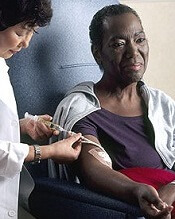
Malignant and non-malignant blood disorders cost 31 European countries a total of €23 billion in 2012, according to a pair of papers published in The Lancet Haematology.
Healthcare costs accounted for €16 billion of the total costs, with €7 billion for hospital inpatient care and €4 billion for medications.
Informal care (from friends and relatives) cost €1.6 billion, productivity losses due to mortality cost €2.5 billion, and morbidity cost €3 billion.
Researchers determined these figures by analyzing data from international health organizations (WHO and EUROSTAT), as well as national ministries of health and statistical institutes.
The team estimated the economic burden of malignant and non-malignant blood disorders in 2012 for all 28 countries in the European Union (EU), as well as Iceland, Norway, and Switzerland.
The costs considered were healthcare costs (primary care, accident and emergency care, hospital inpatient and outpatient care, and drugs), informal care costs (from friends and relatives), and productivity losses (due to premature death and people being unable to work due to illness).
Malignant blood disorders
In one paper, the researchers noted that the total economic cost of blood cancers to the 31 countries studied was €12 billion in 2012. Healthcare costs measured €7.3 billion (62% of total costs), productivity losses cost €3.6 billion (30%), and informal care cost €1 billion (8%).
In the 28 EU countries, blood cancers represented 8% of the total cancer costs (€143 billion), meaning that blood cancers are the fourth most expensive type of cancer after lung (15%), breast (12%), and colorectal (10%) cancers.
When considering healthcare costs alone, blood cancers were second only to breast cancers (12% vs 13% of healthcare costs for all cancers).
In 2012, blood cancers cost, on average, €14,674 per patient in the EU (€15,126 in all 31 countries), which is almost 2 times higher than the average cost per patient across all cancers (€7929 in the EU).
The researchers said this difference may be due to the longer length of hospital stay observed for patients with blood cancers (14 days, on average, compared to 8 days across all cancers).
Another potential reason is that blood cancers are increasingly treated with complex, long-term treatments (including stem cell transplants, multi-agent chemotherapy, and radiotherapy) and diagnosed via extensive procedures.
The costs of blood cancers varied widely between the countries studied, but the reasons for this were unclear. For instance, the average healthcare costs in Finland were nearly twice as high as in Belgium (€18,014 vs €9596), despite both countries having similar national income per capita.
Non-malignant blood disorders
In the other paper, the researchers said the total economic cost of non-malignant blood disorders to the 31 countries studied was €11 billion in 2012. Healthcare costs accounted for €8 billion (75% of total costs), productivity losses for €2 billion (19%), and informal care for €618 million (6%).
Averaged across the population studied, non-malignant blood disorders represented an annual healthcare cost of €159 per 10 citizens.
“Non-malignant blood disorders cost the European economy nearly as much as all blood cancers combined,” said Jose Leal, DPhil, of the University of Oxford in the UK.
“We found wide differences in the cost of treating blood disorders in different countries, likely linked to the significant differences in the access and delivery of care for patients with blood disorders. Our findings suggest there is a need to harmonize care of blood disorders across Europe in a cost-effective way.”
chemotherapy
Photo by Rhoda Baer
Malignant and non-malignant blood disorders cost 31 European countries a total of €23 billion in 2012, according to a pair of papers published in The Lancet Haematology.
Healthcare costs accounted for €16 billion of the total costs, with €7 billion for hospital inpatient care and €4 billion for medications.
Informal care (from friends and relatives) cost €1.6 billion, productivity losses due to mortality cost €2.5 billion, and morbidity cost €3 billion.
Researchers determined these figures by analyzing data from international health organizations (WHO and EUROSTAT), as well as national ministries of health and statistical institutes.
The team estimated the economic burden of malignant and non-malignant blood disorders in 2012 for all 28 countries in the European Union (EU), as well as Iceland, Norway, and Switzerland.
The costs considered were healthcare costs (primary care, accident and emergency care, hospital inpatient and outpatient care, and drugs), informal care costs (from friends and relatives), and productivity losses (due to premature death and people being unable to work due to illness).
Malignant blood disorders
In one paper, the researchers noted that the total economic cost of blood cancers to the 31 countries studied was €12 billion in 2012. Healthcare costs measured €7.3 billion (62% of total costs), productivity losses cost €3.6 billion (30%), and informal care cost €1 billion (8%).
In the 28 EU countries, blood cancers represented 8% of the total cancer costs (€143 billion), meaning that blood cancers are the fourth most expensive type of cancer after lung (15%), breast (12%), and colorectal (10%) cancers.
When considering healthcare costs alone, blood cancers were second only to breast cancers (12% vs 13% of healthcare costs for all cancers).
In 2012, blood cancers cost, on average, €14,674 per patient in the EU (€15,126 in all 31 countries), which is almost 2 times higher than the average cost per patient across all cancers (€7929 in the EU).
The researchers said this difference may be due to the longer length of hospital stay observed for patients with blood cancers (14 days, on average, compared to 8 days across all cancers).
Another potential reason is that blood cancers are increasingly treated with complex, long-term treatments (including stem cell transplants, multi-agent chemotherapy, and radiotherapy) and diagnosed via extensive procedures.
The costs of blood cancers varied widely between the countries studied, but the reasons for this were unclear. For instance, the average healthcare costs in Finland were nearly twice as high as in Belgium (€18,014 vs €9596), despite both countries having similar national income per capita.
Non-malignant blood disorders
In the other paper, the researchers said the total economic cost of non-malignant blood disorders to the 31 countries studied was €11 billion in 2012. Healthcare costs accounted for €8 billion (75% of total costs), productivity losses for €2 billion (19%), and informal care for €618 million (6%).
Averaged across the population studied, non-malignant blood disorders represented an annual healthcare cost of €159 per 10 citizens.
“Non-malignant blood disorders cost the European economy nearly as much as all blood cancers combined,” said Jose Leal, DPhil, of the University of Oxford in the UK.
“We found wide differences in the cost of treating blood disorders in different countries, likely linked to the significant differences in the access and delivery of care for patients with blood disorders. Our findings suggest there is a need to harmonize care of blood disorders across Europe in a cost-effective way.”
chemotherapy
Photo by Rhoda Baer
Malignant and non-malignant blood disorders cost 31 European countries a total of €23 billion in 2012, according to a pair of papers published in The Lancet Haematology.
Healthcare costs accounted for €16 billion of the total costs, with €7 billion for hospital inpatient care and €4 billion for medications.
Informal care (from friends and relatives) cost €1.6 billion, productivity losses due to mortality cost €2.5 billion, and morbidity cost €3 billion.
Researchers determined these figures by analyzing data from international health organizations (WHO and EUROSTAT), as well as national ministries of health and statistical institutes.
The team estimated the economic burden of malignant and non-malignant blood disorders in 2012 for all 28 countries in the European Union (EU), as well as Iceland, Norway, and Switzerland.
The costs considered were healthcare costs (primary care, accident and emergency care, hospital inpatient and outpatient care, and drugs), informal care costs (from friends and relatives), and productivity losses (due to premature death and people being unable to work due to illness).
Malignant blood disorders
In one paper, the researchers noted that the total economic cost of blood cancers to the 31 countries studied was €12 billion in 2012. Healthcare costs measured €7.3 billion (62% of total costs), productivity losses cost €3.6 billion (30%), and informal care cost €1 billion (8%).
In the 28 EU countries, blood cancers represented 8% of the total cancer costs (€143 billion), meaning that blood cancers are the fourth most expensive type of cancer after lung (15%), breast (12%), and colorectal (10%) cancers.
When considering healthcare costs alone, blood cancers were second only to breast cancers (12% vs 13% of healthcare costs for all cancers).
In 2012, blood cancers cost, on average, €14,674 per patient in the EU (€15,126 in all 31 countries), which is almost 2 times higher than the average cost per patient across all cancers (€7929 in the EU).
The researchers said this difference may be due to the longer length of hospital stay observed for patients with blood cancers (14 days, on average, compared to 8 days across all cancers).
Another potential reason is that blood cancers are increasingly treated with complex, long-term treatments (including stem cell transplants, multi-agent chemotherapy, and radiotherapy) and diagnosed via extensive procedures.
The costs of blood cancers varied widely between the countries studied, but the reasons for this were unclear. For instance, the average healthcare costs in Finland were nearly twice as high as in Belgium (€18,014 vs €9596), despite both countries having similar national income per capita.
Non-malignant blood disorders
In the other paper, the researchers said the total economic cost of non-malignant blood disorders to the 31 countries studied was €11 billion in 2012. Healthcare costs accounted for €8 billion (75% of total costs), productivity losses for €2 billion (19%), and informal care for €618 million (6%).
Averaged across the population studied, non-malignant blood disorders represented an annual healthcare cost of €159 per 10 citizens.
“Non-malignant blood disorders cost the European economy nearly as much as all blood cancers combined,” said Jose Leal, DPhil, of the University of Oxford in the UK.
“We found wide differences in the cost of treating blood disorders in different countries, likely linked to the significant differences in the access and delivery of care for patients with blood disorders. Our findings suggest there is a need to harmonize care of blood disorders across Europe in a cost-effective way.”
EC grants immunotherapy orphan designation
among uninfected cells (blue)
Image courtesy of
Benjamin Chaigne-Delalande
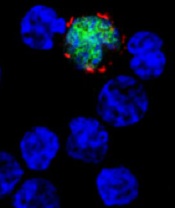
The European Commission (EC) has granted orphan drug designation for CMD-003 (baltaleucel-T) as a treatment for nasal type extranodal NK/T-cell lymphoma and post-transplant lymphoproliferative disorder.
CMD-003 consists of patient-derived T cells that have been activated to kill malignant cells expressing antigens associated with Epstein-Barr virus (EBV).
The T cells specifically target 4 EBV epitopes—LMP1, LMP2, EBNA, and BARF1.
CMD-003 is being developed by Cell Medica and the Baylor College of Medicine, with funding provided, in part, by the Cancer Prevention and Research Institute of Texas.
About orphan designation
Orphan designation from the EC provides regulatory and financial incentives for companies to develop and market therapies that treat a life-threatening or chronically debilitating condition affecting no more than 5 in 10,000 people in the European Union, and where no satisfactory treatment is available.
Orphan designation provides a 10-year period of marketing exclusivity in the European Union if the drug receives regulatory approval. The designation also provides incentives for companies seeking protocol assistance from the European Medicines Agency during the product development phase and direct access to the centralized authorization procedure.
CMD-003 also has orphan designation from the US Food and Drug Administration to treat all EBV-associated non-Hodgkin lymphomas.
CMD-003-related research
CMD-003 is currently under investigation in a phase 2 trial, CITADEL, for the treatment of advanced NK/T-cell lymphoma.
Researchers have not published results from any trials of CMD-003, but they have published results with EBV-specific T-cell products related to CMD-003.
In one study, published in the Journal of Clinical Oncology, researchers administered cytotoxic T lymphocytes (CTLs) in 50 patients with EBV-associated Hodgkin or non-Hodgkin lymphoma.
Twenty-nine of the patients were in remission when they received CTL infusions, but they were at a high risk of relapse. The remaining 21 patients had relapsed or refractory disease at the time of CTL infusion.
Twenty-seven of the patients who received CTLs as an adjuvant treatment remained in remission at 3.1 years after treatment.
Their 2-year event-free survival rate was 82%. None of the patients died of lymphoma, but 9 died from complications associated with the chemotherapy and radiation they had received.
Of the 21 patients with relapsed or refractory disease, 13 responded to CTL infusions, and 11 patients achieved a complete response. In this group, the 2-year event-free survival rate was about 50%.
The researchers said there were no toxicities that were definitively related to CTL infusion.
One patient had central nervous system deterioration 2 weeks after infusion. This was attributed to disease progression but could possibly have been treatment-related.
Another patient developed respiratory complications about 4 weeks after a second CTL infusion that may have been treatment-related. However, the researchers attributed it to an intercurrent infection, and the patient made a complete recovery.
among uninfected cells (blue)
Image courtesy of
Benjamin Chaigne-Delalande
The European Commission (EC) has granted orphan drug designation for CMD-003 (baltaleucel-T) as a treatment for nasal type extranodal NK/T-cell lymphoma and post-transplant lymphoproliferative disorder.
CMD-003 consists of patient-derived T cells that have been activated to kill malignant cells expressing antigens associated with Epstein-Barr virus (EBV).
The T cells specifically target 4 EBV epitopes—LMP1, LMP2, EBNA, and BARF1.
CMD-003 is being developed by Cell Medica and the Baylor College of Medicine, with funding provided, in part, by the Cancer Prevention and Research Institute of Texas.
About orphan designation
Orphan designation from the EC provides regulatory and financial incentives for companies to develop and market therapies that treat a life-threatening or chronically debilitating condition affecting no more than 5 in 10,000 people in the European Union, and where no satisfactory treatment is available.
Orphan designation provides a 10-year period of marketing exclusivity in the European Union if the drug receives regulatory approval. The designation also provides incentives for companies seeking protocol assistance from the European Medicines Agency during the product development phase and direct access to the centralized authorization procedure.
CMD-003 also has orphan designation from the US Food and Drug Administration to treat all EBV-associated non-Hodgkin lymphomas.
CMD-003-related research
CMD-003 is currently under investigation in a phase 2 trial, CITADEL, for the treatment of advanced NK/T-cell lymphoma.
Researchers have not published results from any trials of CMD-003, but they have published results with EBV-specific T-cell products related to CMD-003.
In one study, published in the Journal of Clinical Oncology, researchers administered cytotoxic T lymphocytes (CTLs) in 50 patients with EBV-associated Hodgkin or non-Hodgkin lymphoma.
Twenty-nine of the patients were in remission when they received CTL infusions, but they were at a high risk of relapse. The remaining 21 patients had relapsed or refractory disease at the time of CTL infusion.
Twenty-seven of the patients who received CTLs as an adjuvant treatment remained in remission at 3.1 years after treatment.
Their 2-year event-free survival rate was 82%. None of the patients died of lymphoma, but 9 died from complications associated with the chemotherapy and radiation they had received.
Of the 21 patients with relapsed or refractory disease, 13 responded to CTL infusions, and 11 patients achieved a complete response. In this group, the 2-year event-free survival rate was about 50%.
The researchers said there were no toxicities that were definitively related to CTL infusion.
One patient had central nervous system deterioration 2 weeks after infusion. This was attributed to disease progression but could possibly have been treatment-related.
Another patient developed respiratory complications about 4 weeks after a second CTL infusion that may have been treatment-related. However, the researchers attributed it to an intercurrent infection, and the patient made a complete recovery.
among uninfected cells (blue)
Image courtesy of
Benjamin Chaigne-Delalande
The European Commission (EC) has granted orphan drug designation for CMD-003 (baltaleucel-T) as a treatment for nasal type extranodal NK/T-cell lymphoma and post-transplant lymphoproliferative disorder.
CMD-003 consists of patient-derived T cells that have been activated to kill malignant cells expressing antigens associated with Epstein-Barr virus (EBV).
The T cells specifically target 4 EBV epitopes—LMP1, LMP2, EBNA, and BARF1.
CMD-003 is being developed by Cell Medica and the Baylor College of Medicine, with funding provided, in part, by the Cancer Prevention and Research Institute of Texas.
About orphan designation
Orphan designation from the EC provides regulatory and financial incentives for companies to develop and market therapies that treat a life-threatening or chronically debilitating condition affecting no more than 5 in 10,000 people in the European Union, and where no satisfactory treatment is available.
Orphan designation provides a 10-year period of marketing exclusivity in the European Union if the drug receives regulatory approval. The designation also provides incentives for companies seeking protocol assistance from the European Medicines Agency during the product development phase and direct access to the centralized authorization procedure.
CMD-003 also has orphan designation from the US Food and Drug Administration to treat all EBV-associated non-Hodgkin lymphomas.
CMD-003-related research
CMD-003 is currently under investigation in a phase 2 trial, CITADEL, for the treatment of advanced NK/T-cell lymphoma.
Researchers have not published results from any trials of CMD-003, but they have published results with EBV-specific T-cell products related to CMD-003.
In one study, published in the Journal of Clinical Oncology, researchers administered cytotoxic T lymphocytes (CTLs) in 50 patients with EBV-associated Hodgkin or non-Hodgkin lymphoma.
Twenty-nine of the patients were in remission when they received CTL infusions, but they were at a high risk of relapse. The remaining 21 patients had relapsed or refractory disease at the time of CTL infusion.
Twenty-seven of the patients who received CTLs as an adjuvant treatment remained in remission at 3.1 years after treatment.
Their 2-year event-free survival rate was 82%. None of the patients died of lymphoma, but 9 died from complications associated with the chemotherapy and radiation they had received.
Of the 21 patients with relapsed or refractory disease, 13 responded to CTL infusions, and 11 patients achieved a complete response. In this group, the 2-year event-free survival rate was about 50%.
The researchers said there were no toxicities that were definitively related to CTL infusion.
One patient had central nervous system deterioration 2 weeks after infusion. This was attributed to disease progression but could possibly have been treatment-related.
Another patient developed respiratory complications about 4 weeks after a second CTL infusion that may have been treatment-related. However, the researchers attributed it to an intercurrent infection, and the patient made a complete recovery.