User login
Cutting amino acids from diet could fight lymphoma

Cutting certain amino acids from the diet slows tumor growth and prolongs survival in mouse models of malignancy, according to research published in Nature.
Researchers found that removing 2 non-essential amino acids—serine and glycine (SG)—from the diet of mice slowed the development of lymphoma and intestinal cancer.
The SG-free diet also made lymphoma more susceptible to reactive oxygen species (ROS).
As chemotherapy and radiotherapy boost levels of ROS, the researchers believe an SG-free diet could make conventional cancer treatments more effective.
“Our findings suggest that restricting specific amino acids through a controlled diet plan could be an additional part of treatment for some cancer patients in future, helping to make other treatments more effective,” said study author Oliver Maddocks, PhD, of the University of Glasgow in the UK.
He and his colleagues tested the SG-free diet in mouse models of lymphoma (Eμ-Myc) and observed decreased tumor volume and lymphoma cell numbers as well as a significant improvement in survival compared to controls.
The median survival (from the time of diet change at day 60) was 192 days for mice on the SG-free diet and 59 days for mice on the control diet (P=0.0367).
To test whether increasing ROS could enhance the anticancer effects of the SG-free diet, the researchers crossed Eμ-Myc mice with mice that don’t express Tigar, a protein that can support tumor development by limiting ROS.
The researchers found that Tigar -/- mice on the SG-free diet had significantly better survival than Tigar -/- mice on the control diet (P=0.0451).
The median survival was 50.5 days for Tigar +/+ mice on the control diet, 80 days for Tigar +/+ mice on the SG-free diet, 107 days for Tigar -/- mice on the control diet, and 226 days for Tigar -/- mice on the SG-free diet.
The researchers also found the SG-free diet was less effective in cancers with an activated Kras gene (such as prostate cancer) because the faulty gene boosted the cancer cells’ ability to make their own serine and glycine. The team said this could help in selecting which tumors could be best targeted by diet therapy.
“This is a really interesting look at how cutting off the supply of nutrients essential to cancer cell growth and division could help restrain tumors,” said Emma Smith, PhD, of Cancer Research UK, which funded this study.
“The next steps are clinical trials in people to see if giving a specialized diet that lacks these amino acids is safe and helps slow tumor growth as seen in mice. We’d also need to work out which patients are most likely to benefit, depending on the characteristics of their cancer.” 
Cutting certain amino acids from the diet slows tumor growth and prolongs survival in mouse models of malignancy, according to research published in Nature.
Researchers found that removing 2 non-essential amino acids—serine and glycine (SG)—from the diet of mice slowed the development of lymphoma and intestinal cancer.
The SG-free diet also made lymphoma more susceptible to reactive oxygen species (ROS).
As chemotherapy and radiotherapy boost levels of ROS, the researchers believe an SG-free diet could make conventional cancer treatments more effective.
“Our findings suggest that restricting specific amino acids through a controlled diet plan could be an additional part of treatment for some cancer patients in future, helping to make other treatments more effective,” said study author Oliver Maddocks, PhD, of the University of Glasgow in the UK.
He and his colleagues tested the SG-free diet in mouse models of lymphoma (Eμ-Myc) and observed decreased tumor volume and lymphoma cell numbers as well as a significant improvement in survival compared to controls.
The median survival (from the time of diet change at day 60) was 192 days for mice on the SG-free diet and 59 days for mice on the control diet (P=0.0367).
To test whether increasing ROS could enhance the anticancer effects of the SG-free diet, the researchers crossed Eμ-Myc mice with mice that don’t express Tigar, a protein that can support tumor development by limiting ROS.
The researchers found that Tigar -/- mice on the SG-free diet had significantly better survival than Tigar -/- mice on the control diet (P=0.0451).
The median survival was 50.5 days for Tigar +/+ mice on the control diet, 80 days for Tigar +/+ mice on the SG-free diet, 107 days for Tigar -/- mice on the control diet, and 226 days for Tigar -/- mice on the SG-free diet.
The researchers also found the SG-free diet was less effective in cancers with an activated Kras gene (such as prostate cancer) because the faulty gene boosted the cancer cells’ ability to make their own serine and glycine. The team said this could help in selecting which tumors could be best targeted by diet therapy.
“This is a really interesting look at how cutting off the supply of nutrients essential to cancer cell growth and division could help restrain tumors,” said Emma Smith, PhD, of Cancer Research UK, which funded this study.
“The next steps are clinical trials in people to see if giving a specialized diet that lacks these amino acids is safe and helps slow tumor growth as seen in mice. We’d also need to work out which patients are most likely to benefit, depending on the characteristics of their cancer.”
Cutting certain amino acids from the diet slows tumor growth and prolongs survival in mouse models of malignancy, according to research published in Nature.
Researchers found that removing 2 non-essential amino acids—serine and glycine (SG)—from the diet of mice slowed the development of lymphoma and intestinal cancer.
The SG-free diet also made lymphoma more susceptible to reactive oxygen species (ROS).
As chemotherapy and radiotherapy boost levels of ROS, the researchers believe an SG-free diet could make conventional cancer treatments more effective.
“Our findings suggest that restricting specific amino acids through a controlled diet plan could be an additional part of treatment for some cancer patients in future, helping to make other treatments more effective,” said study author Oliver Maddocks, PhD, of the University of Glasgow in the UK.
He and his colleagues tested the SG-free diet in mouse models of lymphoma (Eμ-Myc) and observed decreased tumor volume and lymphoma cell numbers as well as a significant improvement in survival compared to controls.
The median survival (from the time of diet change at day 60) was 192 days for mice on the SG-free diet and 59 days for mice on the control diet (P=0.0367).
To test whether increasing ROS could enhance the anticancer effects of the SG-free diet, the researchers crossed Eμ-Myc mice with mice that don’t express Tigar, a protein that can support tumor development by limiting ROS.
The researchers found that Tigar -/- mice on the SG-free diet had significantly better survival than Tigar -/- mice on the control diet (P=0.0451).
The median survival was 50.5 days for Tigar +/+ mice on the control diet, 80 days for Tigar +/+ mice on the SG-free diet, 107 days for Tigar -/- mice on the control diet, and 226 days for Tigar -/- mice on the SG-free diet.
The researchers also found the SG-free diet was less effective in cancers with an activated Kras gene (such as prostate cancer) because the faulty gene boosted the cancer cells’ ability to make their own serine and glycine. The team said this could help in selecting which tumors could be best targeted by diet therapy.
“This is a really interesting look at how cutting off the supply of nutrients essential to cancer cell growth and division could help restrain tumors,” said Emma Smith, PhD, of Cancer Research UK, which funded this study.
“The next steps are clinical trials in people to see if giving a specialized diet that lacks these amino acids is safe and helps slow tumor growth as seen in mice. We’d also need to work out which patients are most likely to benefit, depending on the characteristics of their cancer.”
CAR T-cell therapy receives breakthrough designation
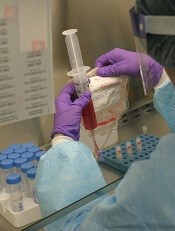
The US Food and Drug Administration (FDA) has granted another breakthrough therapy designation to CTL019 (tisagenlecleucel-T), an investigational chimeric antigen receptor (CAR) T-cell therapy.
CTL019 now has breakthrough designation as a treatment for adults with relapsed or refractory diffuse large B-cell lymphoma (DLBCL) who have failed 2 or more prior therapies.
The FDA previously granted CTL019 breakthrough designation as a treatment for relapsed/refractory B-cell acute lymphoblastic leukemia (ALL) in pediatric and young adult patients.
Breakthrough designation is intended to expedite the development and review of new medicines that treat serious or life-threatening conditions, if those medicines have demonstrated substantial improvement over available therapies.
The breakthrough designation for CTL019 in DLBCL is based on data from the phase 2 JULIET trial (NCT02445248), in which researchers are evaluating the efficacy and safety of CTL019 in adults with relapsed/refractory DLBCL.
Findings from JULIET are expected to be presented at an upcoming medical meeting.
About CTL019
CTL019 consists of autologous T cells expressing a CD19-specific CAR. The therapy was first developed by the University of Pennsylvania.
In 2012, the university and Novartis entered into a global collaboration to further research, develop, and commercialize CAR-T cell therapies, including CTL019. Novartis holds the worldwide rights to CARs developed through the collaboration.
According to Novartis, regulatory submissions for CTL019 in the treatment of relapsed/refractory DLBCL are expected to be filed by the end of the year.
The company has already filed a biologics license application with the FDA for CTL019 as a treatment for patients with relapsed/refractory B-cell ALL. The FDA granted that application priority review.
The US Food and Drug Administration (FDA) has granted another breakthrough therapy designation to CTL019 (tisagenlecleucel-T), an investigational chimeric antigen receptor (CAR) T-cell therapy.
CTL019 now has breakthrough designation as a treatment for adults with relapsed or refractory diffuse large B-cell lymphoma (DLBCL) who have failed 2 or more prior therapies.
The FDA previously granted CTL019 breakthrough designation as a treatment for relapsed/refractory B-cell acute lymphoblastic leukemia (ALL) in pediatric and young adult patients.
Breakthrough designation is intended to expedite the development and review of new medicines that treat serious or life-threatening conditions, if those medicines have demonstrated substantial improvement over available therapies.
The breakthrough designation for CTL019 in DLBCL is based on data from the phase 2 JULIET trial (NCT02445248), in which researchers are evaluating the efficacy and safety of CTL019 in adults with relapsed/refractory DLBCL.
Findings from JULIET are expected to be presented at an upcoming medical meeting.
About CTL019
CTL019 consists of autologous T cells expressing a CD19-specific CAR. The therapy was first developed by the University of Pennsylvania.
In 2012, the university and Novartis entered into a global collaboration to further research, develop, and commercialize CAR-T cell therapies, including CTL019. Novartis holds the worldwide rights to CARs developed through the collaboration.
According to Novartis, regulatory submissions for CTL019 in the treatment of relapsed/refractory DLBCL are expected to be filed by the end of the year.
The company has already filed a biologics license application with the FDA for CTL019 as a treatment for patients with relapsed/refractory B-cell ALL. The FDA granted that application priority review.
The US Food and Drug Administration (FDA) has granted another breakthrough therapy designation to CTL019 (tisagenlecleucel-T), an investigational chimeric antigen receptor (CAR) T-cell therapy.
CTL019 now has breakthrough designation as a treatment for adults with relapsed or refractory diffuse large B-cell lymphoma (DLBCL) who have failed 2 or more prior therapies.
The FDA previously granted CTL019 breakthrough designation as a treatment for relapsed/refractory B-cell acute lymphoblastic leukemia (ALL) in pediatric and young adult patients.
Breakthrough designation is intended to expedite the development and review of new medicines that treat serious or life-threatening conditions, if those medicines have demonstrated substantial improvement over available therapies.
The breakthrough designation for CTL019 in DLBCL is based on data from the phase 2 JULIET trial (NCT02445248), in which researchers are evaluating the efficacy and safety of CTL019 in adults with relapsed/refractory DLBCL.
Findings from JULIET are expected to be presented at an upcoming medical meeting.
About CTL019
CTL019 consists of autologous T cells expressing a CD19-specific CAR. The therapy was first developed by the University of Pennsylvania.
In 2012, the university and Novartis entered into a global collaboration to further research, develop, and commercialize CAR-T cell therapies, including CTL019. Novartis holds the worldwide rights to CARs developed through the collaboration.
According to Novartis, regulatory submissions for CTL019 in the treatment of relapsed/refractory DLBCL are expected to be filed by the end of the year.
The company has already filed a biologics license application with the FDA for CTL019 as a treatment for patients with relapsed/refractory B-cell ALL. The FDA granted that application priority review.
Obinutuzumab vs. rituximab weighed as follicular lymphoma therapy
NEW YORK – Does obinutuzumab have a leg up over rituximab for treating follicular lymphoma?
A strict reading of the efficacy records of the two anti-CD20 antibodies when they went head-to-head suggests that obinutuzumab (Gazyva) edged out rituximab (Rituxan), but a broader view leaves the door open for rituximab as a still viable option depending on a patient’s status and priorities, experts said at the conference held by Imedex.
While conceding that quality of life correlates with progression-free survival (PFS), he stressed that it also correlates with treatment toxicities, treatment duration, and disease-related side effects.
Trial results have indicated that patients with newly diagnosed follicular lymphoma are reasonably treated with rituximab alone, or with rituximab plus bendamustine, without need for maintenance therapy, Dr. Leonard said.
In contrast, GALLIUM, a phase III trial that compared rituximab against obinutuzumab, used a maintenance phase of monotherapy with each of these two drugs following an induction phase when each of the drugs was combined with chemotherapy.
“If you use this approach [tested in GALLIUM] you need to use maintenance therapy,” and it was in GALLIUM that the most dramatic efficacy advantage for obinutuzumab over rituximab appeared, in the form of longer PFS although, so far, without demonstrated advantage in overall survival. The GALLIUM results, reported in December 2016 at the American Society of Hematology meeting, showed a 3-year PFS rate of 80% among patients treated with obinutuzumab and 73% among those treated with rituximab, a hazard ratio of 0.66 in favor of obinutuzumab that was statistically significant (P = .001) for the study’s primary endpoint (Blood. 2016 Dec 4;abstract 6).
“If you follow this study, you commit the patient to maintenance. We need to talk with patients about the pros and cons of maintenance, the pros and cons of chemotherapy, and the pros and cons of single agent therapy” with one of these anti-CD20 antibodies, Dr. Leonard said. “Right now, I think it’s unclear which antibody is best,” he concluded
To further buttress the case for obinutuzumab, he also cited the higher response rate among relapsed patients when single-agent obinutuzumab went against single-agent rituximab (J Clin Oncol. 2015 Oct 20:33[30]:3467-74), and the overall survival advantage that obinutuzumab gave patients when combined with bendamustine in patients refractory to rituximab (Blood. 2016 Dec 5; abstract 615).
Agreeing that the design of GALLIUM focused on combining an anti-CD20 antibody with chemotherapy, Dr. Friedberg acknowledged that, as initial therapy, “using rituximab monotherapy is very reasonable for many patients. I divide [follicular lymphoma] patients into those who are very symptomatic” (for example, those with hydronephrosis) “and need chemotherapy, and those who are not that symptomatic for whom single-agent rituximab is very reasonable,” he said in an interview.
Tumor aggressiveness is another way to identify patients who need chemotherapy plus an antibody, he added. “If the patient is not symptomatic, I generally first observe them, and if the growth is slow, you can sometimes intervene with rituximab alone, but, if the growth is fast, you also need chemotherapy,” Dr. Friedberg said.
Cost may soon become another consideration now that the U.S. patent on rituximab has expired leading to the ongoing development of several biosimilar versions of the antibody. If biosimilar formulations of rituximab soon appear on the U.S. market and if they result in a significant drop in drug price, it would introduce yet another significant variable. “Presuming biosimilar rituximab lowers the cost, that would be another important treatment decision,” he said.
Dr. Friedberg has been a consultant to Bayer. Dr. Leonard has been a consultant to 13 drug companies. Neither disclosed a relationship with the companies that market obinutuzumab or rituximab.
mzoler@frontlinemedcom.com
On Twitter @mitchelzoler
NEW YORK – Does obinutuzumab have a leg up over rituximab for treating follicular lymphoma?
A strict reading of the efficacy records of the two anti-CD20 antibodies when they went head-to-head suggests that obinutuzumab (Gazyva) edged out rituximab (Rituxan), but a broader view leaves the door open for rituximab as a still viable option depending on a patient’s status and priorities, experts said at the conference held by Imedex.
While conceding that quality of life correlates with progression-free survival (PFS), he stressed that it also correlates with treatment toxicities, treatment duration, and disease-related side effects.
Trial results have indicated that patients with newly diagnosed follicular lymphoma are reasonably treated with rituximab alone, or with rituximab plus bendamustine, without need for maintenance therapy, Dr. Leonard said.
In contrast, GALLIUM, a phase III trial that compared rituximab against obinutuzumab, used a maintenance phase of monotherapy with each of these two drugs following an induction phase when each of the drugs was combined with chemotherapy.
“If you use this approach [tested in GALLIUM] you need to use maintenance therapy,” and it was in GALLIUM that the most dramatic efficacy advantage for obinutuzumab over rituximab appeared, in the form of longer PFS although, so far, without demonstrated advantage in overall survival. The GALLIUM results, reported in December 2016 at the American Society of Hematology meeting, showed a 3-year PFS rate of 80% among patients treated with obinutuzumab and 73% among those treated with rituximab, a hazard ratio of 0.66 in favor of obinutuzumab that was statistically significant (P = .001) for the study’s primary endpoint (Blood. 2016 Dec 4;abstract 6).
“If you follow this study, you commit the patient to maintenance. We need to talk with patients about the pros and cons of maintenance, the pros and cons of chemotherapy, and the pros and cons of single agent therapy” with one of these anti-CD20 antibodies, Dr. Leonard said. “Right now, I think it’s unclear which antibody is best,” he concluded
To further buttress the case for obinutuzumab, he also cited the higher response rate among relapsed patients when single-agent obinutuzumab went against single-agent rituximab (J Clin Oncol. 2015 Oct 20:33[30]:3467-74), and the overall survival advantage that obinutuzumab gave patients when combined with bendamustine in patients refractory to rituximab (Blood. 2016 Dec 5; abstract 615).
Agreeing that the design of GALLIUM focused on combining an anti-CD20 antibody with chemotherapy, Dr. Friedberg acknowledged that, as initial therapy, “using rituximab monotherapy is very reasonable for many patients. I divide [follicular lymphoma] patients into those who are very symptomatic” (for example, those with hydronephrosis) “and need chemotherapy, and those who are not that symptomatic for whom single-agent rituximab is very reasonable,” he said in an interview.
Tumor aggressiveness is another way to identify patients who need chemotherapy plus an antibody, he added. “If the patient is not symptomatic, I generally first observe them, and if the growth is slow, you can sometimes intervene with rituximab alone, but, if the growth is fast, you also need chemotherapy,” Dr. Friedberg said.
Cost may soon become another consideration now that the U.S. patent on rituximab has expired leading to the ongoing development of several biosimilar versions of the antibody. If biosimilar formulations of rituximab soon appear on the U.S. market and if they result in a significant drop in drug price, it would introduce yet another significant variable. “Presuming biosimilar rituximab lowers the cost, that would be another important treatment decision,” he said.
Dr. Friedberg has been a consultant to Bayer. Dr. Leonard has been a consultant to 13 drug companies. Neither disclosed a relationship with the companies that market obinutuzumab or rituximab.
mzoler@frontlinemedcom.com
On Twitter @mitchelzoler
NEW YORK – Does obinutuzumab have a leg up over rituximab for treating follicular lymphoma?
A strict reading of the efficacy records of the two anti-CD20 antibodies when they went head-to-head suggests that obinutuzumab (Gazyva) edged out rituximab (Rituxan), but a broader view leaves the door open for rituximab as a still viable option depending on a patient’s status and priorities, experts said at the conference held by Imedex.
While conceding that quality of life correlates with progression-free survival (PFS), he stressed that it also correlates with treatment toxicities, treatment duration, and disease-related side effects.
Trial results have indicated that patients with newly diagnosed follicular lymphoma are reasonably treated with rituximab alone, or with rituximab plus bendamustine, without need for maintenance therapy, Dr. Leonard said.
In contrast, GALLIUM, a phase III trial that compared rituximab against obinutuzumab, used a maintenance phase of monotherapy with each of these two drugs following an induction phase when each of the drugs was combined with chemotherapy.
“If you use this approach [tested in GALLIUM] you need to use maintenance therapy,” and it was in GALLIUM that the most dramatic efficacy advantage for obinutuzumab over rituximab appeared, in the form of longer PFS although, so far, without demonstrated advantage in overall survival. The GALLIUM results, reported in December 2016 at the American Society of Hematology meeting, showed a 3-year PFS rate of 80% among patients treated with obinutuzumab and 73% among those treated with rituximab, a hazard ratio of 0.66 in favor of obinutuzumab that was statistically significant (P = .001) for the study’s primary endpoint (Blood. 2016 Dec 4;abstract 6).
“If you follow this study, you commit the patient to maintenance. We need to talk with patients about the pros and cons of maintenance, the pros and cons of chemotherapy, and the pros and cons of single agent therapy” with one of these anti-CD20 antibodies, Dr. Leonard said. “Right now, I think it’s unclear which antibody is best,” he concluded
To further buttress the case for obinutuzumab, he also cited the higher response rate among relapsed patients when single-agent obinutuzumab went against single-agent rituximab (J Clin Oncol. 2015 Oct 20:33[30]:3467-74), and the overall survival advantage that obinutuzumab gave patients when combined with bendamustine in patients refractory to rituximab (Blood. 2016 Dec 5; abstract 615).
Agreeing that the design of GALLIUM focused on combining an anti-CD20 antibody with chemotherapy, Dr. Friedberg acknowledged that, as initial therapy, “using rituximab monotherapy is very reasonable for many patients. I divide [follicular lymphoma] patients into those who are very symptomatic” (for example, those with hydronephrosis) “and need chemotherapy, and those who are not that symptomatic for whom single-agent rituximab is very reasonable,” he said in an interview.
Tumor aggressiveness is another way to identify patients who need chemotherapy plus an antibody, he added. “If the patient is not symptomatic, I generally first observe them, and if the growth is slow, you can sometimes intervene with rituximab alone, but, if the growth is fast, you also need chemotherapy,” Dr. Friedberg said.
Cost may soon become another consideration now that the U.S. patent on rituximab has expired leading to the ongoing development of several biosimilar versions of the antibody. If biosimilar formulations of rituximab soon appear on the U.S. market and if they result in a significant drop in drug price, it would introduce yet another significant variable. “Presuming biosimilar rituximab lowers the cost, that would be another important treatment decision,” he said.
Dr. Friedberg has been a consultant to Bayer. Dr. Leonard has been a consultant to 13 drug companies. Neither disclosed a relationship with the companies that market obinutuzumab or rituximab.
mzoler@frontlinemedcom.com
On Twitter @mitchelzoler
EXPERT ANALYSIS FROM A MEETING ON HEMATOLOGIC MALIGNANCIES
Inhibitor exhibits activity against hematologic malignancies

A dual kinase inhibitor is active against a range of hematologic malignancies, according to preclinical research.
Investigators found that ASN002, a SYK/JAK inhibitor, exhibited “potent” antiproliferative activity in leukemia, lymphoma, and myeloma cell lines.
ASN002 also inhibited tumor growth in mouse models of these malignancies and proved active against ibrutinib-resistant diffuse large B-cell lymphoma (DLBCL).
The investigators presented these results at the AACR Annual Meeting 2017 (abstract 4204).
The work was conducted by employees of Asana BioSciences, the company developing ASN002.
The investigators tested ASN002 in 178 cell lines and found the drug exhibited “strong antiproliferative activity” in a range of hematologic cancer cell lines, including:
- Leukemia—HEL31, HL60, Jurkat, MOLM-13, and MOLM-16
- Lymphoma—KARPAS-299, OCI-LY10, OCI-LY-19, Pfeiffer, Raji, Ramos, SU-DHL-1, SU-DHL-6, and SU-DHL-10
- Myeloma—H929, JJN3, OPM2, and U266.
In addition, ASN002 was active against ibrutinib-resistant clones derived from the DLBCL cell line SU-DHL-6.
In a SU-DHL-6 xenograft model, the combination of ASN002 and ibrutinib was more effective than either compound alone.
The investigators also found that ASN002 alone demonstrated “strong tumor growth inhibition” in mouse models of DLBCL (Pfeiffer and SU-DHL-6), myeloma (H929), and erythroleukemia (HEL).
The team pointed out that ASN002 is currently under investigation in a phase 1/2 study of patients with B-cell lymphomas (DLBCL, mantle cell lymphoma, and follicular lymphoma) as well as solid tumors.
The investigators said that, to date, ASN002 has been well tolerated and has shown encouraging early evidence of clinical activity and symptomatic benefit in the lymphoma patients.
A dual kinase inhibitor is active against a range of hematologic malignancies, according to preclinical research.
Investigators found that ASN002, a SYK/JAK inhibitor, exhibited “potent” antiproliferative activity in leukemia, lymphoma, and myeloma cell lines.
ASN002 also inhibited tumor growth in mouse models of these malignancies and proved active against ibrutinib-resistant diffuse large B-cell lymphoma (DLBCL).
The investigators presented these results at the AACR Annual Meeting 2017 (abstract 4204).
The work was conducted by employees of Asana BioSciences, the company developing ASN002.
The investigators tested ASN002 in 178 cell lines and found the drug exhibited “strong antiproliferative activity” in a range of hematologic cancer cell lines, including:
- Leukemia—HEL31, HL60, Jurkat, MOLM-13, and MOLM-16
- Lymphoma—KARPAS-299, OCI-LY10, OCI-LY-19, Pfeiffer, Raji, Ramos, SU-DHL-1, SU-DHL-6, and SU-DHL-10
- Myeloma—H929, JJN3, OPM2, and U266.
In addition, ASN002 was active against ibrutinib-resistant clones derived from the DLBCL cell line SU-DHL-6.
In a SU-DHL-6 xenograft model, the combination of ASN002 and ibrutinib was more effective than either compound alone.
The investigators also found that ASN002 alone demonstrated “strong tumor growth inhibition” in mouse models of DLBCL (Pfeiffer and SU-DHL-6), myeloma (H929), and erythroleukemia (HEL).
The team pointed out that ASN002 is currently under investigation in a phase 1/2 study of patients with B-cell lymphomas (DLBCL, mantle cell lymphoma, and follicular lymphoma) as well as solid tumors.
The investigators said that, to date, ASN002 has been well tolerated and has shown encouraging early evidence of clinical activity and symptomatic benefit in the lymphoma patients.
A dual kinase inhibitor is active against a range of hematologic malignancies, according to preclinical research.
Investigators found that ASN002, a SYK/JAK inhibitor, exhibited “potent” antiproliferative activity in leukemia, lymphoma, and myeloma cell lines.
ASN002 also inhibited tumor growth in mouse models of these malignancies and proved active against ibrutinib-resistant diffuse large B-cell lymphoma (DLBCL).
The investigators presented these results at the AACR Annual Meeting 2017 (abstract 4204).
The work was conducted by employees of Asana BioSciences, the company developing ASN002.
The investigators tested ASN002 in 178 cell lines and found the drug exhibited “strong antiproliferative activity” in a range of hematologic cancer cell lines, including:
- Leukemia—HEL31, HL60, Jurkat, MOLM-13, and MOLM-16
- Lymphoma—KARPAS-299, OCI-LY10, OCI-LY-19, Pfeiffer, Raji, Ramos, SU-DHL-1, SU-DHL-6, and SU-DHL-10
- Myeloma—H929, JJN3, OPM2, and U266.
In addition, ASN002 was active against ibrutinib-resistant clones derived from the DLBCL cell line SU-DHL-6.
In a SU-DHL-6 xenograft model, the combination of ASN002 and ibrutinib was more effective than either compound alone.
The investigators also found that ASN002 alone demonstrated “strong tumor growth inhibition” in mouse models of DLBCL (Pfeiffer and SU-DHL-6), myeloma (H929), and erythroleukemia (HEL).
The team pointed out that ASN002 is currently under investigation in a phase 1/2 study of patients with B-cell lymphomas (DLBCL, mantle cell lymphoma, and follicular lymphoma) as well as solid tumors.
The investigators said that, to date, ASN002 has been well tolerated and has shown encouraging early evidence of clinical activity and symptomatic benefit in the lymphoma patients.
Minimal residual disease eyed for myeloma management
NEW YORK – Testing for minimal residual disease is clearly the state-of-the-art way to gauge the status of treated patients with multiple myeloma, agreed experts. The issue now is whether reliance on MRD to guide management remains investigational or ready for routine practice.
Paul G. Richardson, MD, gave MRD full endorsement as the wave of the future, but cautioned against routine use right now. “MRD is an exciting new tool [but] is not yet the standard of care for routine practice,” he said at the conference held by Imedex.
He cited results from a recent meta-analysis that included data from 14 studies of multiple myeloma patients that examined the correlation of MRD status with progression-free survival and 12 studies that addressed how MRD related to overall survival. The meta-analysis results showed that, among patients in complete remission, the average duration of progression-free survival was 56 months in patients who began follow-up without detectable MRD and 34 months in patients with detectable MRD (JAMA Oncology. 2017 Jan;3[1]:28-35). The average duration of overall survival was 112 months in patients with undetectable MRD and 82 months in those with detectable MRD.
But MRD assessment still has several limitations. Evaluations of its strength for prognosis have largely been based on flow cytometry measures of MRD, an approach recently eclipsed by next-generation sequencing and polymerase chain reaction–based assays. Lack of standardization across the multiple tests now available is another hindrance. In addition, undetectable MRD in a myeloma patient in no way means that the malignancy is gone and that treatment can stop. Patients with undetectable MRD may have better medium-term outcomes, compared with patients with detectable MRD, but even patients with undetectable multiple myeloma still succumb to disease progression several years later.
“Patients negative for MRD do better than patients with detectable MRD, but they still relapse and die. You must maintain treatment in patients negative for MRD,” Dr. Richardson said. The clinical experience “supports the idea that, going forward, MRD has real potential, but MRD is not yet standard of care for routine practice,” he said.
In late 2015, Memorial Sloan-Kettering Cancer Center began routinely using MRD to assess multiple myeloma patients, said C. Ola Landgren, MD, PhD, professor of medicine at Weill Cornell Medical College and chief of the Myeloma Service at Memorial Sloan-Kettering.
He and his associates focus on newly diagnosed multiple myeloma patients who have undergone induction therapy. Patients who come out of the regimen with an undetectable level of MRD at a sensitivity of one cell in a million have the option of receiving high-dose melphalan (Alkeran) followed by autologous stem cell transplantation or maintenance therapy with lenalidomide (Revlimid). Patients who finish induction with detectable MRD can either receive immediate treatment with high-dose melphalan followed by autologous stem cell transplantation or further combination treatment with lenalidomide, carfilzomib (Kyprolis), and dexamethasone, then followed by melphalan and stem cell transplantation (Bone Marrow Transplantation. 2016 July;51[7]:913-4).
“The data show that patients who become MRD negative have longer progression-free survival and overall survival, and we find that more and more patients achieve a MRD-negative state,” said Dr. Landgren. “In our practice, it’s about half of newly diagnosed patients. I think that achieving MRD negativity is more important than the specific treatment a patient receives” for predicting prognosis, he said.
Dr. Richardson has been a consultant to Celgene, Genmab, Janssen, Novartis, Oncopeptides, and Takeda and has received research funding from Celgene and Takeda. Dr. Landgren has been a consultant to Amgen and Takeda and a speaker on behalf of Plexus.
mzoler@frontlinemedcom.com
On Twitter @mitchelzoler
NEW YORK – Testing for minimal residual disease is clearly the state-of-the-art way to gauge the status of treated patients with multiple myeloma, agreed experts. The issue now is whether reliance on MRD to guide management remains investigational or ready for routine practice.
Paul G. Richardson, MD, gave MRD full endorsement as the wave of the future, but cautioned against routine use right now. “MRD is an exciting new tool [but] is not yet the standard of care for routine practice,” he said at the conference held by Imedex.
He cited results from a recent meta-analysis that included data from 14 studies of multiple myeloma patients that examined the correlation of MRD status with progression-free survival and 12 studies that addressed how MRD related to overall survival. The meta-analysis results showed that, among patients in complete remission, the average duration of progression-free survival was 56 months in patients who began follow-up without detectable MRD and 34 months in patients with detectable MRD (JAMA Oncology. 2017 Jan;3[1]:28-35). The average duration of overall survival was 112 months in patients with undetectable MRD and 82 months in those with detectable MRD.
But MRD assessment still has several limitations. Evaluations of its strength for prognosis have largely been based on flow cytometry measures of MRD, an approach recently eclipsed by next-generation sequencing and polymerase chain reaction–based assays. Lack of standardization across the multiple tests now available is another hindrance. In addition, undetectable MRD in a myeloma patient in no way means that the malignancy is gone and that treatment can stop. Patients with undetectable MRD may have better medium-term outcomes, compared with patients with detectable MRD, but even patients with undetectable multiple myeloma still succumb to disease progression several years later.
“Patients negative for MRD do better than patients with detectable MRD, but they still relapse and die. You must maintain treatment in patients negative for MRD,” Dr. Richardson said. The clinical experience “supports the idea that, going forward, MRD has real potential, but MRD is not yet standard of care for routine practice,” he said.
In late 2015, Memorial Sloan-Kettering Cancer Center began routinely using MRD to assess multiple myeloma patients, said C. Ola Landgren, MD, PhD, professor of medicine at Weill Cornell Medical College and chief of the Myeloma Service at Memorial Sloan-Kettering.
He and his associates focus on newly diagnosed multiple myeloma patients who have undergone induction therapy. Patients who come out of the regimen with an undetectable level of MRD at a sensitivity of one cell in a million have the option of receiving high-dose melphalan (Alkeran) followed by autologous stem cell transplantation or maintenance therapy with lenalidomide (Revlimid). Patients who finish induction with detectable MRD can either receive immediate treatment with high-dose melphalan followed by autologous stem cell transplantation or further combination treatment with lenalidomide, carfilzomib (Kyprolis), and dexamethasone, then followed by melphalan and stem cell transplantation (Bone Marrow Transplantation. 2016 July;51[7]:913-4).
“The data show that patients who become MRD negative have longer progression-free survival and overall survival, and we find that more and more patients achieve a MRD-negative state,” said Dr. Landgren. “In our practice, it’s about half of newly diagnosed patients. I think that achieving MRD negativity is more important than the specific treatment a patient receives” for predicting prognosis, he said.
Dr. Richardson has been a consultant to Celgene, Genmab, Janssen, Novartis, Oncopeptides, and Takeda and has received research funding from Celgene and Takeda. Dr. Landgren has been a consultant to Amgen and Takeda and a speaker on behalf of Plexus.
mzoler@frontlinemedcom.com
On Twitter @mitchelzoler
NEW YORK – Testing for minimal residual disease is clearly the state-of-the-art way to gauge the status of treated patients with multiple myeloma, agreed experts. The issue now is whether reliance on MRD to guide management remains investigational or ready for routine practice.
Paul G. Richardson, MD, gave MRD full endorsement as the wave of the future, but cautioned against routine use right now. “MRD is an exciting new tool [but] is not yet the standard of care for routine practice,” he said at the conference held by Imedex.
He cited results from a recent meta-analysis that included data from 14 studies of multiple myeloma patients that examined the correlation of MRD status with progression-free survival and 12 studies that addressed how MRD related to overall survival. The meta-analysis results showed that, among patients in complete remission, the average duration of progression-free survival was 56 months in patients who began follow-up without detectable MRD and 34 months in patients with detectable MRD (JAMA Oncology. 2017 Jan;3[1]:28-35). The average duration of overall survival was 112 months in patients with undetectable MRD and 82 months in those with detectable MRD.
But MRD assessment still has several limitations. Evaluations of its strength for prognosis have largely been based on flow cytometry measures of MRD, an approach recently eclipsed by next-generation sequencing and polymerase chain reaction–based assays. Lack of standardization across the multiple tests now available is another hindrance. In addition, undetectable MRD in a myeloma patient in no way means that the malignancy is gone and that treatment can stop. Patients with undetectable MRD may have better medium-term outcomes, compared with patients with detectable MRD, but even patients with undetectable multiple myeloma still succumb to disease progression several years later.
“Patients negative for MRD do better than patients with detectable MRD, but they still relapse and die. You must maintain treatment in patients negative for MRD,” Dr. Richardson said. The clinical experience “supports the idea that, going forward, MRD has real potential, but MRD is not yet standard of care for routine practice,” he said.
In late 2015, Memorial Sloan-Kettering Cancer Center began routinely using MRD to assess multiple myeloma patients, said C. Ola Landgren, MD, PhD, professor of medicine at Weill Cornell Medical College and chief of the Myeloma Service at Memorial Sloan-Kettering.
He and his associates focus on newly diagnosed multiple myeloma patients who have undergone induction therapy. Patients who come out of the regimen with an undetectable level of MRD at a sensitivity of one cell in a million have the option of receiving high-dose melphalan (Alkeran) followed by autologous stem cell transplantation or maintenance therapy with lenalidomide (Revlimid). Patients who finish induction with detectable MRD can either receive immediate treatment with high-dose melphalan followed by autologous stem cell transplantation or further combination treatment with lenalidomide, carfilzomib (Kyprolis), and dexamethasone, then followed by melphalan and stem cell transplantation (Bone Marrow Transplantation. 2016 July;51[7]:913-4).
“The data show that patients who become MRD negative have longer progression-free survival and overall survival, and we find that more and more patients achieve a MRD-negative state,” said Dr. Landgren. “In our practice, it’s about half of newly diagnosed patients. I think that achieving MRD negativity is more important than the specific treatment a patient receives” for predicting prognosis, he said.
Dr. Richardson has been a consultant to Celgene, Genmab, Janssen, Novartis, Oncopeptides, and Takeda and has received research funding from Celgene and Takeda. Dr. Landgren has been a consultant to Amgen and Takeda and a speaker on behalf of Plexus.
mzoler@frontlinemedcom.com
On Twitter @mitchelzoler
EXPERT ANALYSIS FROM A MEETING ON HEMATOLOGIC MALIGNANCIES
Expanded drug combinations produce best myeloma induction
NEW YORK – Optimal induction therapy for patients with multiple myeloma requires all the therapeutic tools currently available for combination therapy, which means using four agents followed by autologous stem cell transplantation, Paul G. Richardson, MD, said at a conference held by Imedex.
He suggested that a rational combination regimen for induction therapy of multiple myeloma would include a second- or third-generation immunomodulator such as lenalidomide (Revlimid) or pomalidomide (Pomalyst); a proteasome inhibitor such as bortezomib (Velcade), carfilzomib (Kyprolis), or ixazomib (Ninlaro); plus standard dexamethasone to form a contemporary backbone regimen for inducing remission in patients with multiple myeloma.
“Therapeutic parsimony is not recommended. You need a combination” of all available drug classes, suggested Dr. Richardson, professor of medicine at Harvard Medical School and clinical program leader of the Multiple Myeloma Center at the Dana-Farber Cancer Institute in Boston.
“It isn’t rational to limit the treatment choices. We need to bring them all together,” he said. The “most rational” combination melds an immunomodulator, proteasome inhibitor, plus a monoclonal antibody that he called a “true game changer. Add the antibody on top of the three-drug platform” of an immunomodulator, proteasome inhibitor, and dexamethasone. Dr. Richardson conceded, however, that a concern with such combinations is how to manage the toxicity that would likely result.
He cited several recent examples of demonstrated superior efficacy in the form of more complete responses from combined regimens, followed by autologous stem cell transplantation.
For example, a recent report from a French-led group compared the efficacy of a combination of an immunomodulator, proteasome inhibitor, and dexamethasone against the same combination, followed by autologous stem cell transplantation (N Engl J Med. 2017 Apr 6;376[14]:1311-20). The combined regimen plus transplant resulted in a 59% complete response rate, “the best response rate we’ve ever seen” in multiple myeloma, Dr. Richardson noted, compared with a 48% complete response rate in patients who did not undergo a stem cell transplant.
Another speaker at the meeting, Ruben Niesvizky, MD, suggested a more cautious approach to using the monoclonal antibody daratumumab for induction. He cited the published experience in adding the antibody to pared-down backbone therapy in the setting of relapsed or relapsed and refractory disease, such as a proteasome inhibitor plus dexamethasone (N Engl J Med. 2016 Aug 25;375[8]:754-66) or an immunomodulator plus dexamethasone (N Engl J Med. 2016 Oct 6;375[14]:1319-31).
Adding a monoclonal antibody such as daratumumab to combination therapy is the “wave of the future,” said Dr. Niesvizky, professor of medicine and director of the Multiple Myeloma Center at New York Presbyterian Hospital/Weill Cornell Medical Center. It provides treatment that reduces disease-related complications and achieves effective and extended disease control with improved overall survival, while being well tolerated and facilitating stem cell collection.
Dr. Richardson has been a consultant to Celgene, Genmab, Janssen, Novartis, Oncopeptides AB, and Takeda and has received research funding from Celgene and Takeda. Dr. Niesvizky has been a consultant to Amgen, Bristol-Myers Squibb, Celgene, Janssen, and Takeda and has received research support from Amgen, Bristol-Myers Squibb, Celgene, and Takeda.
mzoler@frontlinemedcom.com
On Twitter @mitchelzoler
NEW YORK – Optimal induction therapy for patients with multiple myeloma requires all the therapeutic tools currently available for combination therapy, which means using four agents followed by autologous stem cell transplantation, Paul G. Richardson, MD, said at a conference held by Imedex.
He suggested that a rational combination regimen for induction therapy of multiple myeloma would include a second- or third-generation immunomodulator such as lenalidomide (Revlimid) or pomalidomide (Pomalyst); a proteasome inhibitor such as bortezomib (Velcade), carfilzomib (Kyprolis), or ixazomib (Ninlaro); plus standard dexamethasone to form a contemporary backbone regimen for inducing remission in patients with multiple myeloma.
“Therapeutic parsimony is not recommended. You need a combination” of all available drug classes, suggested Dr. Richardson, professor of medicine at Harvard Medical School and clinical program leader of the Multiple Myeloma Center at the Dana-Farber Cancer Institute in Boston.
“It isn’t rational to limit the treatment choices. We need to bring them all together,” he said. The “most rational” combination melds an immunomodulator, proteasome inhibitor, plus a monoclonal antibody that he called a “true game changer. Add the antibody on top of the three-drug platform” of an immunomodulator, proteasome inhibitor, and dexamethasone. Dr. Richardson conceded, however, that a concern with such combinations is how to manage the toxicity that would likely result.
He cited several recent examples of demonstrated superior efficacy in the form of more complete responses from combined regimens, followed by autologous stem cell transplantation.
For example, a recent report from a French-led group compared the efficacy of a combination of an immunomodulator, proteasome inhibitor, and dexamethasone against the same combination, followed by autologous stem cell transplantation (N Engl J Med. 2017 Apr 6;376[14]:1311-20). The combined regimen plus transplant resulted in a 59% complete response rate, “the best response rate we’ve ever seen” in multiple myeloma, Dr. Richardson noted, compared with a 48% complete response rate in patients who did not undergo a stem cell transplant.
Another speaker at the meeting, Ruben Niesvizky, MD, suggested a more cautious approach to using the monoclonal antibody daratumumab for induction. He cited the published experience in adding the antibody to pared-down backbone therapy in the setting of relapsed or relapsed and refractory disease, such as a proteasome inhibitor plus dexamethasone (N Engl J Med. 2016 Aug 25;375[8]:754-66) or an immunomodulator plus dexamethasone (N Engl J Med. 2016 Oct 6;375[14]:1319-31).
Adding a monoclonal antibody such as daratumumab to combination therapy is the “wave of the future,” said Dr. Niesvizky, professor of medicine and director of the Multiple Myeloma Center at New York Presbyterian Hospital/Weill Cornell Medical Center. It provides treatment that reduces disease-related complications and achieves effective and extended disease control with improved overall survival, while being well tolerated and facilitating stem cell collection.
Dr. Richardson has been a consultant to Celgene, Genmab, Janssen, Novartis, Oncopeptides AB, and Takeda and has received research funding from Celgene and Takeda. Dr. Niesvizky has been a consultant to Amgen, Bristol-Myers Squibb, Celgene, Janssen, and Takeda and has received research support from Amgen, Bristol-Myers Squibb, Celgene, and Takeda.
mzoler@frontlinemedcom.com
On Twitter @mitchelzoler
NEW YORK – Optimal induction therapy for patients with multiple myeloma requires all the therapeutic tools currently available for combination therapy, which means using four agents followed by autologous stem cell transplantation, Paul G. Richardson, MD, said at a conference held by Imedex.
He suggested that a rational combination regimen for induction therapy of multiple myeloma would include a second- or third-generation immunomodulator such as lenalidomide (Revlimid) or pomalidomide (Pomalyst); a proteasome inhibitor such as bortezomib (Velcade), carfilzomib (Kyprolis), or ixazomib (Ninlaro); plus standard dexamethasone to form a contemporary backbone regimen for inducing remission in patients with multiple myeloma.
“Therapeutic parsimony is not recommended. You need a combination” of all available drug classes, suggested Dr. Richardson, professor of medicine at Harvard Medical School and clinical program leader of the Multiple Myeloma Center at the Dana-Farber Cancer Institute in Boston.
“It isn’t rational to limit the treatment choices. We need to bring them all together,” he said. The “most rational” combination melds an immunomodulator, proteasome inhibitor, plus a monoclonal antibody that he called a “true game changer. Add the antibody on top of the three-drug platform” of an immunomodulator, proteasome inhibitor, and dexamethasone. Dr. Richardson conceded, however, that a concern with such combinations is how to manage the toxicity that would likely result.
He cited several recent examples of demonstrated superior efficacy in the form of more complete responses from combined regimens, followed by autologous stem cell transplantation.
For example, a recent report from a French-led group compared the efficacy of a combination of an immunomodulator, proteasome inhibitor, and dexamethasone against the same combination, followed by autologous stem cell transplantation (N Engl J Med. 2017 Apr 6;376[14]:1311-20). The combined regimen plus transplant resulted in a 59% complete response rate, “the best response rate we’ve ever seen” in multiple myeloma, Dr. Richardson noted, compared with a 48% complete response rate in patients who did not undergo a stem cell transplant.
Another speaker at the meeting, Ruben Niesvizky, MD, suggested a more cautious approach to using the monoclonal antibody daratumumab for induction. He cited the published experience in adding the antibody to pared-down backbone therapy in the setting of relapsed or relapsed and refractory disease, such as a proteasome inhibitor plus dexamethasone (N Engl J Med. 2016 Aug 25;375[8]:754-66) or an immunomodulator plus dexamethasone (N Engl J Med. 2016 Oct 6;375[14]:1319-31).
Adding a monoclonal antibody such as daratumumab to combination therapy is the “wave of the future,” said Dr. Niesvizky, professor of medicine and director of the Multiple Myeloma Center at New York Presbyterian Hospital/Weill Cornell Medical Center. It provides treatment that reduces disease-related complications and achieves effective and extended disease control with improved overall survival, while being well tolerated and facilitating stem cell collection.
Dr. Richardson has been a consultant to Celgene, Genmab, Janssen, Novartis, Oncopeptides AB, and Takeda and has received research funding from Celgene and Takeda. Dr. Niesvizky has been a consultant to Amgen, Bristol-Myers Squibb, Celgene, Janssen, and Takeda and has received research support from Amgen, Bristol-Myers Squibb, Celgene, and Takeda.
mzoler@frontlinemedcom.com
On Twitter @mitchelzoler
EXPERT ANALYSIS FROM A MEETING ON HEMATOLOGIC MALIGNANCIES
Leukemia, NHL more common in African-born blacks than US-born blacks

The cancer profile of black US immigrants born in sub-Saharan Africa (ABs) differs from that of US-born black individuals (USBs) and varies by region of birth, according to a new study.
For instance, the data showed that ABs who immigrated to the US had a higher incidence of leukemia and non-Hodgkin lymphoma (NHL) than USBs.
And there was a higher incidence of NHL among ABs born in Eastern Africa than among those born in Western Africa.
“Typically, cancer occurrence among blacks in the United States is presented as one homogeneous group, with no breakdown by country or region of birth,” said Ahemdin Jemal, DVM, PhD, of the American Cancer Society in Atlanta, Georgia.
“Our study shows that approach masks important potential differences that may be key to guiding cancer prevention programs for African-born black immigrants.”
Dr Jemal and his colleagues described this study in the journal Cancer.
The team reviewed cancer incidence data from the Surveillance, Epidemiology, and End Results (SEER 17) program covering the period from 2000 through 2012.
They calculated age-standardized proportional incidence ratios (PIRs), comparing the frequency of the top 15 cancers in ABs with that of USBs, by sex and region of birth.
ABs had a significantly higher proportion of hematologic malignancies (leukemia and NHL), infection-related cancers (liver, stomach, and Kaposi sarcoma), prostate cancer, and thyroid cancers (in females only), when compared to USBs.
In females, the incidence of NHL was 3.4% in ABs and 2.5% in USBs, with a PIR of 1.19. The incidence of leukemia was 3.0% in ABs and 1.9% in USBs, with a PIR of 1.62.
In males, the incidence of NHL was 5.9% in ABs and 3.0% in USBs, with a PIR of 1.34. The incidence of leukemia was 3.0% in ABs and 2.2% in USBs, with a PIR of 1.40.
The investigators also calculated the PIRs of the 5 most frequent cancers in ABs compared to USBs by region of origin (Western Africa vs Eastern Africa).
For both sexes, the incidence of NHL was 4.0% in ABs born in Western Africa (PIR=1.17) and 5.5% in ABs born in Eastern Africa (PIR=1.44).
Leukemia was not included in this analysis because it was not among the top 5 cancers.
The cancer profile of black US immigrants born in sub-Saharan Africa (ABs) differs from that of US-born black individuals (USBs) and varies by region of birth, according to a new study.
For instance, the data showed that ABs who immigrated to the US had a higher incidence of leukemia and non-Hodgkin lymphoma (NHL) than USBs.
And there was a higher incidence of NHL among ABs born in Eastern Africa than among those born in Western Africa.
“Typically, cancer occurrence among blacks in the United States is presented as one homogeneous group, with no breakdown by country or region of birth,” said Ahemdin Jemal, DVM, PhD, of the American Cancer Society in Atlanta, Georgia.
“Our study shows that approach masks important potential differences that may be key to guiding cancer prevention programs for African-born black immigrants.”
Dr Jemal and his colleagues described this study in the journal Cancer.
The team reviewed cancer incidence data from the Surveillance, Epidemiology, and End Results (SEER 17) program covering the period from 2000 through 2012.
They calculated age-standardized proportional incidence ratios (PIRs), comparing the frequency of the top 15 cancers in ABs with that of USBs, by sex and region of birth.
ABs had a significantly higher proportion of hematologic malignancies (leukemia and NHL), infection-related cancers (liver, stomach, and Kaposi sarcoma), prostate cancer, and thyroid cancers (in females only), when compared to USBs.
In females, the incidence of NHL was 3.4% in ABs and 2.5% in USBs, with a PIR of 1.19. The incidence of leukemia was 3.0% in ABs and 1.9% in USBs, with a PIR of 1.62.
In males, the incidence of NHL was 5.9% in ABs and 3.0% in USBs, with a PIR of 1.34. The incidence of leukemia was 3.0% in ABs and 2.2% in USBs, with a PIR of 1.40.
The investigators also calculated the PIRs of the 5 most frequent cancers in ABs compared to USBs by region of origin (Western Africa vs Eastern Africa).
For both sexes, the incidence of NHL was 4.0% in ABs born in Western Africa (PIR=1.17) and 5.5% in ABs born in Eastern Africa (PIR=1.44).
Leukemia was not included in this analysis because it was not among the top 5 cancers.
The cancer profile of black US immigrants born in sub-Saharan Africa (ABs) differs from that of US-born black individuals (USBs) and varies by region of birth, according to a new study.
For instance, the data showed that ABs who immigrated to the US had a higher incidence of leukemia and non-Hodgkin lymphoma (NHL) than USBs.
And there was a higher incidence of NHL among ABs born in Eastern Africa than among those born in Western Africa.
“Typically, cancer occurrence among blacks in the United States is presented as one homogeneous group, with no breakdown by country or region of birth,” said Ahemdin Jemal, DVM, PhD, of the American Cancer Society in Atlanta, Georgia.
“Our study shows that approach masks important potential differences that may be key to guiding cancer prevention programs for African-born black immigrants.”
Dr Jemal and his colleagues described this study in the journal Cancer.
The team reviewed cancer incidence data from the Surveillance, Epidemiology, and End Results (SEER 17) program covering the period from 2000 through 2012.
They calculated age-standardized proportional incidence ratios (PIRs), comparing the frequency of the top 15 cancers in ABs with that of USBs, by sex and region of birth.
ABs had a significantly higher proportion of hematologic malignancies (leukemia and NHL), infection-related cancers (liver, stomach, and Kaposi sarcoma), prostate cancer, and thyroid cancers (in females only), when compared to USBs.
In females, the incidence of NHL was 3.4% in ABs and 2.5% in USBs, with a PIR of 1.19. The incidence of leukemia was 3.0% in ABs and 1.9% in USBs, with a PIR of 1.62.
In males, the incidence of NHL was 5.9% in ABs and 3.0% in USBs, with a PIR of 1.34. The incidence of leukemia was 3.0% in ABs and 2.2% in USBs, with a PIR of 1.40.
The investigators also calculated the PIRs of the 5 most frequent cancers in ABs compared to USBs by region of origin (Western Africa vs Eastern Africa).
For both sexes, the incidence of NHL was 4.0% in ABs born in Western Africa (PIR=1.17) and 5.5% in ABs born in Eastern Africa (PIR=1.44).
Leukemia was not included in this analysis because it was not among the top 5 cancers.
Topical HDAC inhibitor shows activity in MF

Results of a phase 2 trial suggest a topical, skin-directed histone deacetylase (HDAC) inhibitor can elicit responses in patients with early stage mycosis fungoides (MF).
The drug, remetinostat, was designed to be active in the skin but rapidly broken down and inactivated in blood in order to limit the adverse effects associated with systemic exposure to HDAC inhibitors.
The trial included 60 MF patients who were randomized to receive 0.5% remetinostat gel twice daily, 1% remetinostat gel once daily, or 1% remetinostat gel twice daily for between 6 and 12 months.
Results from this trial were recently released by Medivir AB, the company developing remetinostat.
The primary endpoint of the study was the proportion of patients with either a complete or partial confirmed response to therapy, assessed using the Composite Assessment of Index Lesion Severity.
Based on an intent-to-treat analysis, patients receiving the 1% remetinostat gel twice daily arm had the highest proportion of confirmed responses. Eight of 20 patients (40%) responded, which included 1 complete response.
Five of 20 patients (25%) receiving 0.5% remetinostat gel twice daily responded, as did 4 of 20 (20%) patients receiving 1% remetinostat gel once daily. None of these responses were complete responses.
Remetinostat was well-tolerated across all the dose groups, according to Medivir. There were no signs of systemic adverse effects, including those associated with systemic HDAC inhibitors.
Based on these data, Medivir expects to initiate discussions with regulatory authorities with the aim of initiating a phase 3 study later this year, and to present full phase 2 trial data at scientific meetings in the second half of 2017.
“Remetinostat was designed to effectively inhibit HDACs within cutaneous lesions but to be rapidly broken down in the bloodstream, preventing the side effects associated with systemically administered HDAC inhibitors,” said Richard Bethell, Medivir’s chief scientific officer.
“Based on the efficacy and safety data from this phase 2 study, we believe that remetinostat is capable of meeting a very important unmet need in patients with this chronic and poorly treated orphan disease.”
Results of a phase 2 trial suggest a topical, skin-directed histone deacetylase (HDAC) inhibitor can elicit responses in patients with early stage mycosis fungoides (MF).
The drug, remetinostat, was designed to be active in the skin but rapidly broken down and inactivated in blood in order to limit the adverse effects associated with systemic exposure to HDAC inhibitors.
The trial included 60 MF patients who were randomized to receive 0.5% remetinostat gel twice daily, 1% remetinostat gel once daily, or 1% remetinostat gel twice daily for between 6 and 12 months.
Results from this trial were recently released by Medivir AB, the company developing remetinostat.
The primary endpoint of the study was the proportion of patients with either a complete or partial confirmed response to therapy, assessed using the Composite Assessment of Index Lesion Severity.
Based on an intent-to-treat analysis, patients receiving the 1% remetinostat gel twice daily arm had the highest proportion of confirmed responses. Eight of 20 patients (40%) responded, which included 1 complete response.
Five of 20 patients (25%) receiving 0.5% remetinostat gel twice daily responded, as did 4 of 20 (20%) patients receiving 1% remetinostat gel once daily. None of these responses were complete responses.
Remetinostat was well-tolerated across all the dose groups, according to Medivir. There were no signs of systemic adverse effects, including those associated with systemic HDAC inhibitors.
Based on these data, Medivir expects to initiate discussions with regulatory authorities with the aim of initiating a phase 3 study later this year, and to present full phase 2 trial data at scientific meetings in the second half of 2017.
“Remetinostat was designed to effectively inhibit HDACs within cutaneous lesions but to be rapidly broken down in the bloodstream, preventing the side effects associated with systemically administered HDAC inhibitors,” said Richard Bethell, Medivir’s chief scientific officer.
“Based on the efficacy and safety data from this phase 2 study, we believe that remetinostat is capable of meeting a very important unmet need in patients with this chronic and poorly treated orphan disease.”
Results of a phase 2 trial suggest a topical, skin-directed histone deacetylase (HDAC) inhibitor can elicit responses in patients with early stage mycosis fungoides (MF).
The drug, remetinostat, was designed to be active in the skin but rapidly broken down and inactivated in blood in order to limit the adverse effects associated with systemic exposure to HDAC inhibitors.
The trial included 60 MF patients who were randomized to receive 0.5% remetinostat gel twice daily, 1% remetinostat gel once daily, or 1% remetinostat gel twice daily for between 6 and 12 months.
Results from this trial were recently released by Medivir AB, the company developing remetinostat.
The primary endpoint of the study was the proportion of patients with either a complete or partial confirmed response to therapy, assessed using the Composite Assessment of Index Lesion Severity.
Based on an intent-to-treat analysis, patients receiving the 1% remetinostat gel twice daily arm had the highest proportion of confirmed responses. Eight of 20 patients (40%) responded, which included 1 complete response.
Five of 20 patients (25%) receiving 0.5% remetinostat gel twice daily responded, as did 4 of 20 (20%) patients receiving 1% remetinostat gel once daily. None of these responses were complete responses.
Remetinostat was well-tolerated across all the dose groups, according to Medivir. There were no signs of systemic adverse effects, including those associated with systemic HDAC inhibitors.
Based on these data, Medivir expects to initiate discussions with regulatory authorities with the aim of initiating a phase 3 study later this year, and to present full phase 2 trial data at scientific meetings in the second half of 2017.
“Remetinostat was designed to effectively inhibit HDACs within cutaneous lesions but to be rapidly broken down in the bloodstream, preventing the side effects associated with systemically administered HDAC inhibitors,” said Richard Bethell, Medivir’s chief scientific officer.
“Based on the efficacy and safety data from this phase 2 study, we believe that remetinostat is capable of meeting a very important unmet need in patients with this chronic and poorly treated orphan disease.”
Cancer risk, burden expected to shift in HIV population
WASHINGTON, DC—New research suggests HIV-positive adults in the US will see a shift in cancer risk and burden in the coming years.
The study indicates that, through 2030, people living with HIV will see a decrease in AIDS-defining cancers, such as non-Hodgkin lymphoma (NHL) and Kaposi sarcoma.
But this group will also see an increase in cancers not linked to AIDS, such as prostate and liver cancers.
Researchers made these projections in a presentation at the AACR Annual Meeting 2017 (abstract 5302).
“Declines in cancer incidence rates, particularly for AIDS-defining cancers, are likely driven by widespread treatment with modern antiretroviral therapies, which reduce immune suppression and decrease risk of some cancers,” said Jessica Y. Islam, a doctoral student at the University of North Carolina Gillings School of Global Public Health in Chapel Hill.
She and her collaborators estimated future cancer risk and burden for HIV-positive people using age-specific cancer incidence data from the National Cancer Institute HIV/AIDS Cancer Match (HACM) Study, and projected HIV prevalence data from the Centers for Disease Control and Prevention.
Cancer incidence
From 2000 to 2012, there were 23,907 cancers reported in 463,300 HIV-infected adults in the HACM Study. Based on trends in this study, the researchers made projections for cancer incidence through 2030.
They projected that HIV-positive adults of all ages will see a significant decrease over time in the incidence of NHL, Kaposi sarcoma, cervical cancer, anal cancer among men who have sex with men (MSM), lung cancer, and Hodgkin lymphoma.
Patients age 65 and older will see a significant decrease in colon cancer incidence over time. However, there will be no significant change for patients younger than 65.
HIV-positive adults of all ages will see no significant change over time in the incidence of liver cancer, oral cavity cancer, anal cancer among non-MSMs, and breast cancer.
The incidence of prostate cancer will increase significantly among patients ages 35 to 44 and among patients ages 45 to 64.
Cancer burden
The researchers said the number of adults living with HIV in the US is projected to increase from 1.06 million in 2006 to 1.17 million in 2018, but it is expected to decline to 1.09 million in 2030.
The team noted that, in 2006, there were an estimated 8241 cancers in patients with HIV—3522 AIDS-defining cancers and 4719 malignancies not associated with AIDS.
In 2030, the total number of cancers in the HIV-positive population is projected to be 6692, with decreases in AIDS-defining cancers (n=716) and increases in other cancers (n=5976) from the 2006 data.
In 2010, the most common cancers among HIV-positive patients were estimated to be NHL (n=1488), Kaposi sarcoma (n=1133), and lung cancer (n=815).
But in 2030, the most common cancers are projected to be prostate (n=1587), lung (n=1027), and liver cancers (n=483).
“It is critical to understand both incidence rates and burden over time, as rates capture changes in cancer risk, and burden quantifies the actual number of cancer cases expected to occur,” said study investigator Meredith S. Shiels, PhD, of the National Cancer Institute in Bethesda, Maryland.
“For example, lung cancer rates are expected to decrease in the future, but the burden is expected to increase due to the growing number of older people living with HIV.”
WASHINGTON, DC—New research suggests HIV-positive adults in the US will see a shift in cancer risk and burden in the coming years.
The study indicates that, through 2030, people living with HIV will see a decrease in AIDS-defining cancers, such as non-Hodgkin lymphoma (NHL) and Kaposi sarcoma.
But this group will also see an increase in cancers not linked to AIDS, such as prostate and liver cancers.
Researchers made these projections in a presentation at the AACR Annual Meeting 2017 (abstract 5302).
“Declines in cancer incidence rates, particularly for AIDS-defining cancers, are likely driven by widespread treatment with modern antiretroviral therapies, which reduce immune suppression and decrease risk of some cancers,” said Jessica Y. Islam, a doctoral student at the University of North Carolina Gillings School of Global Public Health in Chapel Hill.
She and her collaborators estimated future cancer risk and burden for HIV-positive people using age-specific cancer incidence data from the National Cancer Institute HIV/AIDS Cancer Match (HACM) Study, and projected HIV prevalence data from the Centers for Disease Control and Prevention.
Cancer incidence
From 2000 to 2012, there were 23,907 cancers reported in 463,300 HIV-infected adults in the HACM Study. Based on trends in this study, the researchers made projections for cancer incidence through 2030.
They projected that HIV-positive adults of all ages will see a significant decrease over time in the incidence of NHL, Kaposi sarcoma, cervical cancer, anal cancer among men who have sex with men (MSM), lung cancer, and Hodgkin lymphoma.
Patients age 65 and older will see a significant decrease in colon cancer incidence over time. However, there will be no significant change for patients younger than 65.
HIV-positive adults of all ages will see no significant change over time in the incidence of liver cancer, oral cavity cancer, anal cancer among non-MSMs, and breast cancer.
The incidence of prostate cancer will increase significantly among patients ages 35 to 44 and among patients ages 45 to 64.
Cancer burden
The researchers said the number of adults living with HIV in the US is projected to increase from 1.06 million in 2006 to 1.17 million in 2018, but it is expected to decline to 1.09 million in 2030.
The team noted that, in 2006, there were an estimated 8241 cancers in patients with HIV—3522 AIDS-defining cancers and 4719 malignancies not associated with AIDS.
In 2030, the total number of cancers in the HIV-positive population is projected to be 6692, with decreases in AIDS-defining cancers (n=716) and increases in other cancers (n=5976) from the 2006 data.
In 2010, the most common cancers among HIV-positive patients were estimated to be NHL (n=1488), Kaposi sarcoma (n=1133), and lung cancer (n=815).
But in 2030, the most common cancers are projected to be prostate (n=1587), lung (n=1027), and liver cancers (n=483).
“It is critical to understand both incidence rates and burden over time, as rates capture changes in cancer risk, and burden quantifies the actual number of cancer cases expected to occur,” said study investigator Meredith S. Shiels, PhD, of the National Cancer Institute in Bethesda, Maryland.
“For example, lung cancer rates are expected to decrease in the future, but the burden is expected to increase due to the growing number of older people living with HIV.”
WASHINGTON, DC—New research suggests HIV-positive adults in the US will see a shift in cancer risk and burden in the coming years.
The study indicates that, through 2030, people living with HIV will see a decrease in AIDS-defining cancers, such as non-Hodgkin lymphoma (NHL) and Kaposi sarcoma.
But this group will also see an increase in cancers not linked to AIDS, such as prostate and liver cancers.
Researchers made these projections in a presentation at the AACR Annual Meeting 2017 (abstract 5302).
“Declines in cancer incidence rates, particularly for AIDS-defining cancers, are likely driven by widespread treatment with modern antiretroviral therapies, which reduce immune suppression and decrease risk of some cancers,” said Jessica Y. Islam, a doctoral student at the University of North Carolina Gillings School of Global Public Health in Chapel Hill.
She and her collaborators estimated future cancer risk and burden for HIV-positive people using age-specific cancer incidence data from the National Cancer Institute HIV/AIDS Cancer Match (HACM) Study, and projected HIV prevalence data from the Centers for Disease Control and Prevention.
Cancer incidence
From 2000 to 2012, there were 23,907 cancers reported in 463,300 HIV-infected adults in the HACM Study. Based on trends in this study, the researchers made projections for cancer incidence through 2030.
They projected that HIV-positive adults of all ages will see a significant decrease over time in the incidence of NHL, Kaposi sarcoma, cervical cancer, anal cancer among men who have sex with men (MSM), lung cancer, and Hodgkin lymphoma.
Patients age 65 and older will see a significant decrease in colon cancer incidence over time. However, there will be no significant change for patients younger than 65.
HIV-positive adults of all ages will see no significant change over time in the incidence of liver cancer, oral cavity cancer, anal cancer among non-MSMs, and breast cancer.
The incidence of prostate cancer will increase significantly among patients ages 35 to 44 and among patients ages 45 to 64.
Cancer burden
The researchers said the number of adults living with HIV in the US is projected to increase from 1.06 million in 2006 to 1.17 million in 2018, but it is expected to decline to 1.09 million in 2030.
The team noted that, in 2006, there were an estimated 8241 cancers in patients with HIV—3522 AIDS-defining cancers and 4719 malignancies not associated with AIDS.
In 2030, the total number of cancers in the HIV-positive population is projected to be 6692, with decreases in AIDS-defining cancers (n=716) and increases in other cancers (n=5976) from the 2006 data.
In 2010, the most common cancers among HIV-positive patients were estimated to be NHL (n=1488), Kaposi sarcoma (n=1133), and lung cancer (n=815).
But in 2030, the most common cancers are projected to be prostate (n=1587), lung (n=1027), and liver cancers (n=483).
“It is critical to understand both incidence rates and burden over time, as rates capture changes in cancer risk, and burden quantifies the actual number of cancer cases expected to occur,” said study investigator Meredith S. Shiels, PhD, of the National Cancer Institute in Bethesda, Maryland.
“For example, lung cancer rates are expected to decrease in the future, but the burden is expected to increase due to the growing number of older people living with HIV.”
Drug may be new option for difficult-to-treat DLBCL, doc says
WASHINGTON, DC—Selinexor has demonstrated the potential to become a new oral treatment option for patients with difficult-to-treat diffuse large B-cell lymphoma (DLBCL), according to a presenter at the AACR Annual Meeting 2017.
Interim results from the phase 2b SADAL study showed that selinexor produced a 28.6% overall response rate (ORR), with an 11.1% complete response (CR) rate, in a heavily pretreated, older DLBCL population.
Responses were observed in GCB and non-GCB subtypes, and the median duration of response exceeded 7 months.
The most common adverse events (AEs) were fatigue, thrombocytopenia, nausea, anorexia, and vomiting.
Marie Maerevoet, MD, of the Institute Jules Bordet in Brussels, Belgium, presented data from the SADAL study as abstract CT132/13.*
The trial is sponsored by Karyopharm Therapeutics, the company developing selinexor.
Patients and treatment
The study enrolled 72 patients with relapsed or refractory DLBCL. At least 14 weeks had elapsed since their most recent systemic anti-DLBCL therapy.
The patients received selinexor—an oral selective inhibitor of nuclear export (SINE™) compound—at 60 mg or 100 mg twice weekly (days 1 and 3 each week) of each 28-day cycle.
60 mg arm
There were 37 patients in the 60 mg arm. Their median age was 71 (range, 38-87), and most (n=24) were male. Forty-nine percent of these patients (n=18) had GCB DLBCL.
Fourteen percent of patients had high-risk disease (according to the revised international prognostic index). Forty-three percent had high-intermediate-risk, 30% had low-intermediate-risk, and 14% had low-risk disease.
The patients had received a median of 3 prior treatment regimens (range, 2-5). Twenty-seven percent had received a prior transplant.
100 mg arm
There were 35 patients in the 100 mg arm. Their median age was 68 (range, 32-82), and most (n=23) were male. Fifty-one percent of patients (n=18) had GCB DLBCL.
Eleven percent of patients had high-risk, 40% had high-intermediate-risk, 37% had low-intermediate-risk, and 6% had low-risk disease. For 6% of patients, their risk group was unknown.
The patients had received a median of 3 prior treatment regimens (range, 2-5). Forty-six percent had received a prior transplant.
Safety
All 72 patients were evaluable for safety. The most common AEs across both dosing groups were fatigue (65%), thrombocytopenia (54%), nausea (51%), anorexia (49%), vomiting (35%), and anemia (32%).
These events were primarily grades 1 and 2 and were managed with dose modifications and/or standard supportive care.
The 60 mg dose was better tolerated than the 100 mg dose, with fewer dose interruptions and modifications required in the 60 mg arm.
Grade 3/4 AEs that were more common in the 100 mg arm than the 60 mg arm were fatigue (26% vs 11%), thrombocytopenia (46% vs 32%), and anorexia (11% vs 3%).
Efficacy
Sixty-three patients were analyzed for response. The ORR was 28.6% (18/63), with a CR rate of 11.1% (n=7) and a partial response (PR) rate of 17.5% (n=11).
The rate of stable disease (SD) was 14.3% (n=9), and the rate of progressive disease (PD) was 46% (n=29). Seven patients (11.1%) were not evaluable (NE).
The best responses as of March 1, 2017, according to subtype and selinexor dose, were as follows:
| Category | N | ORR | CR | PR | SD | PD | NE |
| 60 mg | 32 | 9 (28.1%) | 4 (12.5%) | 5 (15.6%) | 3 (9.4%) | 17 (53.1%) | 3 (9.4%) |
| 100 mg | 31 | 9 (29.0%) | 3 (9.7%) | 6 (19.4%) | 6 (19.4%) | 12 (38.7%) | 4 (12.9%) |
| GCB subtype | 32 | 8 (25.0%) | 3 (9.4%) | 5 (15.6%) | 6 (18.8%) | 13 (40.6%) | 5 (15.6%) |
| Non-GCB subtype | 31 | 10 (32.3%) | 4 (12.9%) | 6 (19.4%) | 3 (9.7%) | 16 (51.6%) | 2 (6.5%) |
The median duration of response was greater than 7 months. The median time to response was 2 months.
Among responders, the median time on treatment was 9 months, with a median follow-up of 13 months. As of the data cutoff date, 9 responders remained on treatment, including 6 patients with a CR.
The median overall survival was 8 months for all patients. As of the cutoff date, the median survival for the responders had not been reached.
“With the impressive and durable responses observed to date, including in both the GCB and non-GCB subtypes of DLBCL, single-agent selinexor is demonstrating the potential to become a new oral option for this difficult-to-treat patient population who are not candidates for transplantation and whose disease is unlikely to respond to further chemotherapy or targeted agents,” Dr Maerevoet said.
Trial update
As a result of the interim data from SADAL, and in consultation with the US Food and Drug Administration (FDA), Karyopharm is amending the study protocol.
SADAL will become a single-arm study focusing solely on single-agent selinexor dosed at 60 mg twice weekly.
The study is also being amended to reduce the 14-week treatment-free period to 8 weeks in patients who achieved at least a PR on their most recent therapy. Patients who were refractory to or did not achieve at least a PR on their prior therapy will continue with the 14-week treatment-free period.
Karyopharm plans to enroll up to an additional 90 patients to the new 60 mg single-arm cohort and expects to report top-line results from the SADAL study in mid-2018.
The FDA recently lifted a partial clinical hold placed on the SADAL trial and other trials of selinexor.
The FDA had placed the hold due to a lack of information in the investigator’s brochure, including an incomplete list of serious adverse events associated with selinexor.
*Data in the abstract differ from the presentation.
WASHINGTON, DC—Selinexor has demonstrated the potential to become a new oral treatment option for patients with difficult-to-treat diffuse large B-cell lymphoma (DLBCL), according to a presenter at the AACR Annual Meeting 2017.
Interim results from the phase 2b SADAL study showed that selinexor produced a 28.6% overall response rate (ORR), with an 11.1% complete response (CR) rate, in a heavily pretreated, older DLBCL population.
Responses were observed in GCB and non-GCB subtypes, and the median duration of response exceeded 7 months.
The most common adverse events (AEs) were fatigue, thrombocytopenia, nausea, anorexia, and vomiting.
Marie Maerevoet, MD, of the Institute Jules Bordet in Brussels, Belgium, presented data from the SADAL study as abstract CT132/13.*
The trial is sponsored by Karyopharm Therapeutics, the company developing selinexor.
Patients and treatment
The study enrolled 72 patients with relapsed or refractory DLBCL. At least 14 weeks had elapsed since their most recent systemic anti-DLBCL therapy.
The patients received selinexor—an oral selective inhibitor of nuclear export (SINE™) compound—at 60 mg or 100 mg twice weekly (days 1 and 3 each week) of each 28-day cycle.
60 mg arm
There were 37 patients in the 60 mg arm. Their median age was 71 (range, 38-87), and most (n=24) were male. Forty-nine percent of these patients (n=18) had GCB DLBCL.
Fourteen percent of patients had high-risk disease (according to the revised international prognostic index). Forty-three percent had high-intermediate-risk, 30% had low-intermediate-risk, and 14% had low-risk disease.
The patients had received a median of 3 prior treatment regimens (range, 2-5). Twenty-seven percent had received a prior transplant.
100 mg arm
There were 35 patients in the 100 mg arm. Their median age was 68 (range, 32-82), and most (n=23) were male. Fifty-one percent of patients (n=18) had GCB DLBCL.
Eleven percent of patients had high-risk, 40% had high-intermediate-risk, 37% had low-intermediate-risk, and 6% had low-risk disease. For 6% of patients, their risk group was unknown.
The patients had received a median of 3 prior treatment regimens (range, 2-5). Forty-six percent had received a prior transplant.
Safety
All 72 patients were evaluable for safety. The most common AEs across both dosing groups were fatigue (65%), thrombocytopenia (54%), nausea (51%), anorexia (49%), vomiting (35%), and anemia (32%).
These events were primarily grades 1 and 2 and were managed with dose modifications and/or standard supportive care.
The 60 mg dose was better tolerated than the 100 mg dose, with fewer dose interruptions and modifications required in the 60 mg arm.
Grade 3/4 AEs that were more common in the 100 mg arm than the 60 mg arm were fatigue (26% vs 11%), thrombocytopenia (46% vs 32%), and anorexia (11% vs 3%).
Efficacy
Sixty-three patients were analyzed for response. The ORR was 28.6% (18/63), with a CR rate of 11.1% (n=7) and a partial response (PR) rate of 17.5% (n=11).
The rate of stable disease (SD) was 14.3% (n=9), and the rate of progressive disease (PD) was 46% (n=29). Seven patients (11.1%) were not evaluable (NE).
The best responses as of March 1, 2017, according to subtype and selinexor dose, were as follows:
| Category | N | ORR | CR | PR | SD | PD | NE |
| 60 mg | 32 | 9 (28.1%) | 4 (12.5%) | 5 (15.6%) | 3 (9.4%) | 17 (53.1%) | 3 (9.4%) |
| 100 mg | 31 | 9 (29.0%) | 3 (9.7%) | 6 (19.4%) | 6 (19.4%) | 12 (38.7%) | 4 (12.9%) |
| GCB subtype | 32 | 8 (25.0%) | 3 (9.4%) | 5 (15.6%) | 6 (18.8%) | 13 (40.6%) | 5 (15.6%) |
| Non-GCB subtype | 31 | 10 (32.3%) | 4 (12.9%) | 6 (19.4%) | 3 (9.7%) | 16 (51.6%) | 2 (6.5%) |
The median duration of response was greater than 7 months. The median time to response was 2 months.
Among responders, the median time on treatment was 9 months, with a median follow-up of 13 months. As of the data cutoff date, 9 responders remained on treatment, including 6 patients with a CR.
The median overall survival was 8 months for all patients. As of the cutoff date, the median survival for the responders had not been reached.
“With the impressive and durable responses observed to date, including in both the GCB and non-GCB subtypes of DLBCL, single-agent selinexor is demonstrating the potential to become a new oral option for this difficult-to-treat patient population who are not candidates for transplantation and whose disease is unlikely to respond to further chemotherapy or targeted agents,” Dr Maerevoet said.
Trial update
As a result of the interim data from SADAL, and in consultation with the US Food and Drug Administration (FDA), Karyopharm is amending the study protocol.
SADAL will become a single-arm study focusing solely on single-agent selinexor dosed at 60 mg twice weekly.
The study is also being amended to reduce the 14-week treatment-free period to 8 weeks in patients who achieved at least a PR on their most recent therapy. Patients who were refractory to or did not achieve at least a PR on their prior therapy will continue with the 14-week treatment-free period.
Karyopharm plans to enroll up to an additional 90 patients to the new 60 mg single-arm cohort and expects to report top-line results from the SADAL study in mid-2018.
The FDA recently lifted a partial clinical hold placed on the SADAL trial and other trials of selinexor.
The FDA had placed the hold due to a lack of information in the investigator’s brochure, including an incomplete list of serious adverse events associated with selinexor.
*Data in the abstract differ from the presentation.
WASHINGTON, DC—Selinexor has demonstrated the potential to become a new oral treatment option for patients with difficult-to-treat diffuse large B-cell lymphoma (DLBCL), according to a presenter at the AACR Annual Meeting 2017.
Interim results from the phase 2b SADAL study showed that selinexor produced a 28.6% overall response rate (ORR), with an 11.1% complete response (CR) rate, in a heavily pretreated, older DLBCL population.
Responses were observed in GCB and non-GCB subtypes, and the median duration of response exceeded 7 months.
The most common adverse events (AEs) were fatigue, thrombocytopenia, nausea, anorexia, and vomiting.
Marie Maerevoet, MD, of the Institute Jules Bordet in Brussels, Belgium, presented data from the SADAL study as abstract CT132/13.*
The trial is sponsored by Karyopharm Therapeutics, the company developing selinexor.
Patients and treatment
The study enrolled 72 patients with relapsed or refractory DLBCL. At least 14 weeks had elapsed since their most recent systemic anti-DLBCL therapy.
The patients received selinexor—an oral selective inhibitor of nuclear export (SINE™) compound—at 60 mg or 100 mg twice weekly (days 1 and 3 each week) of each 28-day cycle.
60 mg arm
There were 37 patients in the 60 mg arm. Their median age was 71 (range, 38-87), and most (n=24) were male. Forty-nine percent of these patients (n=18) had GCB DLBCL.
Fourteen percent of patients had high-risk disease (according to the revised international prognostic index). Forty-three percent had high-intermediate-risk, 30% had low-intermediate-risk, and 14% had low-risk disease.
The patients had received a median of 3 prior treatment regimens (range, 2-5). Twenty-seven percent had received a prior transplant.
100 mg arm
There were 35 patients in the 100 mg arm. Their median age was 68 (range, 32-82), and most (n=23) were male. Fifty-one percent of patients (n=18) had GCB DLBCL.
Eleven percent of patients had high-risk, 40% had high-intermediate-risk, 37% had low-intermediate-risk, and 6% had low-risk disease. For 6% of patients, their risk group was unknown.
The patients had received a median of 3 prior treatment regimens (range, 2-5). Forty-six percent had received a prior transplant.
Safety
All 72 patients were evaluable for safety. The most common AEs across both dosing groups were fatigue (65%), thrombocytopenia (54%), nausea (51%), anorexia (49%), vomiting (35%), and anemia (32%).
These events were primarily grades 1 and 2 and were managed with dose modifications and/or standard supportive care.
The 60 mg dose was better tolerated than the 100 mg dose, with fewer dose interruptions and modifications required in the 60 mg arm.
Grade 3/4 AEs that were more common in the 100 mg arm than the 60 mg arm were fatigue (26% vs 11%), thrombocytopenia (46% vs 32%), and anorexia (11% vs 3%).
Efficacy
Sixty-three patients were analyzed for response. The ORR was 28.6% (18/63), with a CR rate of 11.1% (n=7) and a partial response (PR) rate of 17.5% (n=11).
The rate of stable disease (SD) was 14.3% (n=9), and the rate of progressive disease (PD) was 46% (n=29). Seven patients (11.1%) were not evaluable (NE).
The best responses as of March 1, 2017, according to subtype and selinexor dose, were as follows:
| Category | N | ORR | CR | PR | SD | PD | NE |
| 60 mg | 32 | 9 (28.1%) | 4 (12.5%) | 5 (15.6%) | 3 (9.4%) | 17 (53.1%) | 3 (9.4%) |
| 100 mg | 31 | 9 (29.0%) | 3 (9.7%) | 6 (19.4%) | 6 (19.4%) | 12 (38.7%) | 4 (12.9%) |
| GCB subtype | 32 | 8 (25.0%) | 3 (9.4%) | 5 (15.6%) | 6 (18.8%) | 13 (40.6%) | 5 (15.6%) |
| Non-GCB subtype | 31 | 10 (32.3%) | 4 (12.9%) | 6 (19.4%) | 3 (9.7%) | 16 (51.6%) | 2 (6.5%) |
The median duration of response was greater than 7 months. The median time to response was 2 months.
Among responders, the median time on treatment was 9 months, with a median follow-up of 13 months. As of the data cutoff date, 9 responders remained on treatment, including 6 patients with a CR.
The median overall survival was 8 months for all patients. As of the cutoff date, the median survival for the responders had not been reached.
“With the impressive and durable responses observed to date, including in both the GCB and non-GCB subtypes of DLBCL, single-agent selinexor is demonstrating the potential to become a new oral option for this difficult-to-treat patient population who are not candidates for transplantation and whose disease is unlikely to respond to further chemotherapy or targeted agents,” Dr Maerevoet said.
Trial update
As a result of the interim data from SADAL, and in consultation with the US Food and Drug Administration (FDA), Karyopharm is amending the study protocol.
SADAL will become a single-arm study focusing solely on single-agent selinexor dosed at 60 mg twice weekly.
The study is also being amended to reduce the 14-week treatment-free period to 8 weeks in patients who achieved at least a PR on their most recent therapy. Patients who were refractory to or did not achieve at least a PR on their prior therapy will continue with the 14-week treatment-free period.
Karyopharm plans to enroll up to an additional 90 patients to the new 60 mg single-arm cohort and expects to report top-line results from the SADAL study in mid-2018.
The FDA recently lifted a partial clinical hold placed on the SADAL trial and other trials of selinexor.
The FDA had placed the hold due to a lack of information in the investigator’s brochure, including an incomplete list of serious adverse events associated with selinexor.
*Data in the abstract differ from the presentation.