User login
Leukemia survival rates vary widely across the globe

Credit: Bill Branson
A large, international study has revealed sizable differences in cancer survival rates between countries.
In particular, investigators observed a wide gap in survival for children with acute lymphoblastic leukemia (ALL).
The most recent 5-year survival rate was less than 60% in several countries—and as low as 16% in one nation—but more than 90% in other countries.
This indicates major deficiencies in managing this largely curable disease, according to researchers.
Results from this study, known as CONCORD-2, appear in The Lancet alongside a linked comment article.
Claudia Allemani, PhD, of the London School of Hygiene & Tropical Medicine in the UK, and her colleagues analyzed individual patient data from 279 cancer registries in 67 countries.
The team reported 5-year survival estimates for 25.7 million cancer patients diagnosed with 1 of 10 common cancers—stomach, colon, rectum, liver, lung, breast (women), cervix, ovary, prostate, and leukemia (n=873,588)—from 1995 through 2009.
The investigators also reported survival estimates for 74,343 children diagnosed with ALL during that period.
Even after they adjusted for differences between countries and regions in the risk of death from other causes by age, sex, and race, and over time, the researchers found very large variations between countries in survival for specific cancers.
Adult leukemia
For adults diagnosed with leukemia from 2005 through 2009, the 5-year net survival was 50% to 60% in 21 countries in North America, west Asia, Europe, and Oceania. Survival rates were generally much lower in the 15 participating Asian countries than in other parts of the world.
Survival rates tended to be low in east Asia—ranging from 19% in Japan to 23% in South Korea and Taiwan—but higher in west Asia—ranging from 33% in Turkey to 53% in Qatar. And results were mixed in other Asian countries—ranging from 7% in Jordan to 40% in Indonesia.
ALL in children
For children diagnosed with ALL from 2005 through 2009, 5-year survival was 90% or higher in Austria, Belgium, Canada, Germany, and Norway. It was 80% to 89% in 21 countries on various continents.
However, 5-year survival was lower than 60% in several countries and the lowest—16%—in Jordan.
The range of survival estimates for childhood ALL in Central/South America and Asia was much lower than the range in North America, Europe, and Oceania.
Solid tumor malignancies
The study also showed that liver and lung cancer have the worst prognosis among the 10 cancers examined, with 5-year survival of less than 20% in both developed and developing countries. The researchers said this suggests most patients still visit their doctors too late for treatment to be effective.
Five-year survival from breast and colorectal cancers increased in most developed countries and in South America (Brazil, Colombia, and Ecuador) from the beginning of the study period to the end. These trends likely reflect earlier diagnosis and the availability of better treatment options, according to the investigators.
Stomach cancer survival was higher in Southeast Asia than in other regions. This is likely a result of intensive diagnostic activity, early stage at diagnosis, and radical surgery, the researchers said. And this suggests important lessons could be learned from these countries about diagnosis and treatment.
Cervical and ovarian cancers showed particularly wide differences in survival, and overall improvements during the study period were slight.
“Our findings show that, in some countries, cancer is far more lethal than in others,” Dr Allemani said. “In the 21st century, there should not be such a dramatic gulf in survival. The majority of the variability in survival is probably due to factors that can be changed, such as the availability and quality of diagnostic and treatment services.”
“The findings can be used to evaluate the extent to which investment in healthcare systems is improving their effectiveness. We expect them to act as a stimulus for politicians to improve health policy and invest in healthcare.” 
Credit: Bill Branson
A large, international study has revealed sizable differences in cancer survival rates between countries.
In particular, investigators observed a wide gap in survival for children with acute lymphoblastic leukemia (ALL).
The most recent 5-year survival rate was less than 60% in several countries—and as low as 16% in one nation—but more than 90% in other countries.
This indicates major deficiencies in managing this largely curable disease, according to researchers.
Results from this study, known as CONCORD-2, appear in The Lancet alongside a linked comment article.
Claudia Allemani, PhD, of the London School of Hygiene & Tropical Medicine in the UK, and her colleagues analyzed individual patient data from 279 cancer registries in 67 countries.
The team reported 5-year survival estimates for 25.7 million cancer patients diagnosed with 1 of 10 common cancers—stomach, colon, rectum, liver, lung, breast (women), cervix, ovary, prostate, and leukemia (n=873,588)—from 1995 through 2009.
The investigators also reported survival estimates for 74,343 children diagnosed with ALL during that period.
Even after they adjusted for differences between countries and regions in the risk of death from other causes by age, sex, and race, and over time, the researchers found very large variations between countries in survival for specific cancers.
Adult leukemia
For adults diagnosed with leukemia from 2005 through 2009, the 5-year net survival was 50% to 60% in 21 countries in North America, west Asia, Europe, and Oceania. Survival rates were generally much lower in the 15 participating Asian countries than in other parts of the world.
Survival rates tended to be low in east Asia—ranging from 19% in Japan to 23% in South Korea and Taiwan—but higher in west Asia—ranging from 33% in Turkey to 53% in Qatar. And results were mixed in other Asian countries—ranging from 7% in Jordan to 40% in Indonesia.
ALL in children
For children diagnosed with ALL from 2005 through 2009, 5-year survival was 90% or higher in Austria, Belgium, Canada, Germany, and Norway. It was 80% to 89% in 21 countries on various continents.
However, 5-year survival was lower than 60% in several countries and the lowest—16%—in Jordan.
The range of survival estimates for childhood ALL in Central/South America and Asia was much lower than the range in North America, Europe, and Oceania.
Solid tumor malignancies
The study also showed that liver and lung cancer have the worst prognosis among the 10 cancers examined, with 5-year survival of less than 20% in both developed and developing countries. The researchers said this suggests most patients still visit their doctors too late for treatment to be effective.
Five-year survival from breast and colorectal cancers increased in most developed countries and in South America (Brazil, Colombia, and Ecuador) from the beginning of the study period to the end. These trends likely reflect earlier diagnosis and the availability of better treatment options, according to the investigators.
Stomach cancer survival was higher in Southeast Asia than in other regions. This is likely a result of intensive diagnostic activity, early stage at diagnosis, and radical surgery, the researchers said. And this suggests important lessons could be learned from these countries about diagnosis and treatment.
Cervical and ovarian cancers showed particularly wide differences in survival, and overall improvements during the study period were slight.
“Our findings show that, in some countries, cancer is far more lethal than in others,” Dr Allemani said. “In the 21st century, there should not be such a dramatic gulf in survival. The majority of the variability in survival is probably due to factors that can be changed, such as the availability and quality of diagnostic and treatment services.”
“The findings can be used to evaluate the extent to which investment in healthcare systems is improving their effectiveness. We expect them to act as a stimulus for politicians to improve health policy and invest in healthcare.”
Credit: Bill Branson
A large, international study has revealed sizable differences in cancer survival rates between countries.
In particular, investigators observed a wide gap in survival for children with acute lymphoblastic leukemia (ALL).
The most recent 5-year survival rate was less than 60% in several countries—and as low as 16% in one nation—but more than 90% in other countries.
This indicates major deficiencies in managing this largely curable disease, according to researchers.
Results from this study, known as CONCORD-2, appear in The Lancet alongside a linked comment article.
Claudia Allemani, PhD, of the London School of Hygiene & Tropical Medicine in the UK, and her colleagues analyzed individual patient data from 279 cancer registries in 67 countries.
The team reported 5-year survival estimates for 25.7 million cancer patients diagnosed with 1 of 10 common cancers—stomach, colon, rectum, liver, lung, breast (women), cervix, ovary, prostate, and leukemia (n=873,588)—from 1995 through 2009.
The investigators also reported survival estimates for 74,343 children diagnosed with ALL during that period.
Even after they adjusted for differences between countries and regions in the risk of death from other causes by age, sex, and race, and over time, the researchers found very large variations between countries in survival for specific cancers.
Adult leukemia
For adults diagnosed with leukemia from 2005 through 2009, the 5-year net survival was 50% to 60% in 21 countries in North America, west Asia, Europe, and Oceania. Survival rates were generally much lower in the 15 participating Asian countries than in other parts of the world.
Survival rates tended to be low in east Asia—ranging from 19% in Japan to 23% in South Korea and Taiwan—but higher in west Asia—ranging from 33% in Turkey to 53% in Qatar. And results were mixed in other Asian countries—ranging from 7% in Jordan to 40% in Indonesia.
ALL in children
For children diagnosed with ALL from 2005 through 2009, 5-year survival was 90% or higher in Austria, Belgium, Canada, Germany, and Norway. It was 80% to 89% in 21 countries on various continents.
However, 5-year survival was lower than 60% in several countries and the lowest—16%—in Jordan.
The range of survival estimates for childhood ALL in Central/South America and Asia was much lower than the range in North America, Europe, and Oceania.
Solid tumor malignancies
The study also showed that liver and lung cancer have the worst prognosis among the 10 cancers examined, with 5-year survival of less than 20% in both developed and developing countries. The researchers said this suggests most patients still visit their doctors too late for treatment to be effective.
Five-year survival from breast and colorectal cancers increased in most developed countries and in South America (Brazil, Colombia, and Ecuador) from the beginning of the study period to the end. These trends likely reflect earlier diagnosis and the availability of better treatment options, according to the investigators.
Stomach cancer survival was higher in Southeast Asia than in other regions. This is likely a result of intensive diagnostic activity, early stage at diagnosis, and radical surgery, the researchers said. And this suggests important lessons could be learned from these countries about diagnosis and treatment.
Cervical and ovarian cancers showed particularly wide differences in survival, and overall improvements during the study period were slight.
“Our findings show that, in some countries, cancer is far more lethal than in others,” Dr Allemani said. “In the 21st century, there should not be such a dramatic gulf in survival. The majority of the variability in survival is probably due to factors that can be changed, such as the availability and quality of diagnostic and treatment services.”
“The findings can be used to evaluate the extent to which investment in healthcare systems is improving their effectiveness. We expect them to act as a stimulus for politicians to improve health policy and invest in healthcare.”
Ponatinib approved in Australia

The Therapeutic Goods Administration (TGA) has approved marketing of ponatinib (Iclusig) in Australia.
The drug is now approved to treat adults with chronic myeloid leukemia (CML) who could not tolerate or were resistant to at least 2 prior tyrosine kinase inhibitors (TKIs), or those patients with a T315I mutation.
Ponatinib is also approved to treat certain adults with Philadelphia-chromosome-positive acute lymphoblastic leukemia (Ph+ ALL).
These patients must be resistant to or intolerant of dasatinib and ineligible for treatment with imatinib, or they must have a T315I mutation.
Ponatinib is the only TKI approved in Australia for an indication that includes CML and Ph+ ALL patients with the T315I mutation.
The drug’s developers, Ariad Pharmaceuticals, Inc., and Specialized Therapeutics Australia Pty. Ltd., expect to launch ponatinib in early 2015.
The PACE trial
The TGA’s decision to approve ponatinib was based on results from the phase 2 PACE trial, which included patients with CML or Ph+ ALL who were resistant to or intolerant of prior TKI therapy, or who had the T315I mutation.
The median follow-up times were 15.3 months in chronic-phase CML patients, 15.8 months in accelerated-phase CML patients, and 6.2 months in patients with blast-phase CML or Ph+ ALL.
In chronic-phase CML, the primary endpoint was major cytogenetic response, and it occurred in 56% of patients. Among chronic-phase patients with the T315I mutation, 70% achieved a major cytogenetic response. Among patients who had failed treatment with dasatinib or nilotinib, 51% achieved a major cytogenetic response.
In accelerated-phase CML, the primary endpoint was major hematologic response. This occurred in 57% of all patients in this group, 50% of patients with the T315I mutation, and 58% of patients who had failed treatment with dasatinib or nilotinib.
The primary endpoint was major hematologic response in blast-phase CML/Ph+ ALL as well. Thirty-four percent of all patients in this group met this endpoint, as did 33% of patients with the T315I mutation and 35% of patients who had failed treatment with dasatinib or nilotinib.
Common non-hematologic adverse events included rash (38%), abdominal pain (38%), headache (35%), dry skin (35%), constipation (34%), fatigue (27%), pyrexia (27%), nausea (26%), arthralgia (25%), hypertension (21%), increased lipase (19%), and increased amylase (7%).
Hematologic events of any grade included thrombocytopenia (42%), neutropenia (24%), and anemia (20%). And serious adverse events of arterial thromboembolism, including arterial stenosis, occurred in patients with cardiovascular risk factors.
Safety concerns
Ponatinib is also approved to treat CML and Ph+ ALL in the European Union and the US. However, the drug was pulled from the US market for a little over 2 months, and ponatinib trials were placed on partial hold, after extended follow-up from the PACE trial showed an increase in thrombotic events.
The drug went back on the market last January, with new safety measures in place.
Ponatinib was not pulled from the market in the European Union, but the European Medicine’s Agency released recommendations for safer use of the drug. The Committee for Medicinal Products for Human Use reviewed data on ponatinib and decided the drug’s benefits outweigh its risks.
The Therapeutic Goods Administration (TGA) has approved marketing of ponatinib (Iclusig) in Australia.
The drug is now approved to treat adults with chronic myeloid leukemia (CML) who could not tolerate or were resistant to at least 2 prior tyrosine kinase inhibitors (TKIs), or those patients with a T315I mutation.
Ponatinib is also approved to treat certain adults with Philadelphia-chromosome-positive acute lymphoblastic leukemia (Ph+ ALL).
These patients must be resistant to or intolerant of dasatinib and ineligible for treatment with imatinib, or they must have a T315I mutation.
Ponatinib is the only TKI approved in Australia for an indication that includes CML and Ph+ ALL patients with the T315I mutation.
The drug’s developers, Ariad Pharmaceuticals, Inc., and Specialized Therapeutics Australia Pty. Ltd., expect to launch ponatinib in early 2015.
The PACE trial
The TGA’s decision to approve ponatinib was based on results from the phase 2 PACE trial, which included patients with CML or Ph+ ALL who were resistant to or intolerant of prior TKI therapy, or who had the T315I mutation.
The median follow-up times were 15.3 months in chronic-phase CML patients, 15.8 months in accelerated-phase CML patients, and 6.2 months in patients with blast-phase CML or Ph+ ALL.
In chronic-phase CML, the primary endpoint was major cytogenetic response, and it occurred in 56% of patients. Among chronic-phase patients with the T315I mutation, 70% achieved a major cytogenetic response. Among patients who had failed treatment with dasatinib or nilotinib, 51% achieved a major cytogenetic response.
In accelerated-phase CML, the primary endpoint was major hematologic response. This occurred in 57% of all patients in this group, 50% of patients with the T315I mutation, and 58% of patients who had failed treatment with dasatinib or nilotinib.
The primary endpoint was major hematologic response in blast-phase CML/Ph+ ALL as well. Thirty-four percent of all patients in this group met this endpoint, as did 33% of patients with the T315I mutation and 35% of patients who had failed treatment with dasatinib or nilotinib.
Common non-hematologic adverse events included rash (38%), abdominal pain (38%), headache (35%), dry skin (35%), constipation (34%), fatigue (27%), pyrexia (27%), nausea (26%), arthralgia (25%), hypertension (21%), increased lipase (19%), and increased amylase (7%).
Hematologic events of any grade included thrombocytopenia (42%), neutropenia (24%), and anemia (20%). And serious adverse events of arterial thromboembolism, including arterial stenosis, occurred in patients with cardiovascular risk factors.
Safety concerns
Ponatinib is also approved to treat CML and Ph+ ALL in the European Union and the US. However, the drug was pulled from the US market for a little over 2 months, and ponatinib trials were placed on partial hold, after extended follow-up from the PACE trial showed an increase in thrombotic events.
The drug went back on the market last January, with new safety measures in place.
Ponatinib was not pulled from the market in the European Union, but the European Medicine’s Agency released recommendations for safer use of the drug. The Committee for Medicinal Products for Human Use reviewed data on ponatinib and decided the drug’s benefits outweigh its risks.
The Therapeutic Goods Administration (TGA) has approved marketing of ponatinib (Iclusig) in Australia.
The drug is now approved to treat adults with chronic myeloid leukemia (CML) who could not tolerate or were resistant to at least 2 prior tyrosine kinase inhibitors (TKIs), or those patients with a T315I mutation.
Ponatinib is also approved to treat certain adults with Philadelphia-chromosome-positive acute lymphoblastic leukemia (Ph+ ALL).
These patients must be resistant to or intolerant of dasatinib and ineligible for treatment with imatinib, or they must have a T315I mutation.
Ponatinib is the only TKI approved in Australia for an indication that includes CML and Ph+ ALL patients with the T315I mutation.
The drug’s developers, Ariad Pharmaceuticals, Inc., and Specialized Therapeutics Australia Pty. Ltd., expect to launch ponatinib in early 2015.
The PACE trial
The TGA’s decision to approve ponatinib was based on results from the phase 2 PACE trial, which included patients with CML or Ph+ ALL who were resistant to or intolerant of prior TKI therapy, or who had the T315I mutation.
The median follow-up times were 15.3 months in chronic-phase CML patients, 15.8 months in accelerated-phase CML patients, and 6.2 months in patients with blast-phase CML or Ph+ ALL.
In chronic-phase CML, the primary endpoint was major cytogenetic response, and it occurred in 56% of patients. Among chronic-phase patients with the T315I mutation, 70% achieved a major cytogenetic response. Among patients who had failed treatment with dasatinib or nilotinib, 51% achieved a major cytogenetic response.
In accelerated-phase CML, the primary endpoint was major hematologic response. This occurred in 57% of all patients in this group, 50% of patients with the T315I mutation, and 58% of patients who had failed treatment with dasatinib or nilotinib.
The primary endpoint was major hematologic response in blast-phase CML/Ph+ ALL as well. Thirty-four percent of all patients in this group met this endpoint, as did 33% of patients with the T315I mutation and 35% of patients who had failed treatment with dasatinib or nilotinib.
Common non-hematologic adverse events included rash (38%), abdominal pain (38%), headache (35%), dry skin (35%), constipation (34%), fatigue (27%), pyrexia (27%), nausea (26%), arthralgia (25%), hypertension (21%), increased lipase (19%), and increased amylase (7%).
Hematologic events of any grade included thrombocytopenia (42%), neutropenia (24%), and anemia (20%). And serious adverse events of arterial thromboembolism, including arterial stenosis, occurred in patients with cardiovascular risk factors.
Safety concerns
Ponatinib is also approved to treat CML and Ph+ ALL in the European Union and the US. However, the drug was pulled from the US market for a little over 2 months, and ponatinib trials were placed on partial hold, after extended follow-up from the PACE trial showed an increase in thrombotic events.
The drug went back on the market last January, with new safety measures in place.
Ponatinib was not pulled from the market in the European Union, but the European Medicine’s Agency released recommendations for safer use of the drug. The Committee for Medicinal Products for Human Use reviewed data on ponatinib and decided the drug’s benefits outweigh its risks.
CAR T-cell therapy gets breakthrough designation
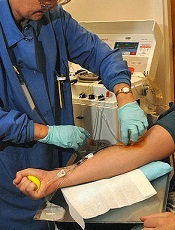
Credit: Charles Haymond
The US Food and Drug Administration (FDA) has granted breakthrough therapy designation for JCAR015, a chimeric antigen receptor (CAR) T-cell therapy, to treat patients with relapsed or refractory B-cell acute lymphoblastic leukemia (ALL).
Breakthrough designation is designed to help accelerate the development and review of new drugs for serious or life-threatening conditions.
The designation comes with potential benefits, including intensive FDA guidance and eligibility for priority review. It is granted to applicants when preliminary clinical evidence indicates the drug may demonstrate substantial improvement over existing therapies on one or more clinical endpoints.
The FDA recently granted JCAR015 orphan designation to treat ALL as well.
JCAR015 consists of autologous T cells expressing a CD19-specific, CD28/CD3z CAR. The treatment has shown promise in an ongoing phase 1 trial of patients with B-cell ALL.
Initial results from this study were published in Science Translational Medicine last year and in February. Updated results were presented at the AACR Annual Meeting in April.
At that point, the researchers had enrolled 22 adult patients with relapsed or refractory B-ALL who were minimal residual disease-positive or were in first complete remission at enrollment. Patients in complete remission were monitored and only received JCAR015 if they relapsed.
The remaining patients received re-induction chemotherapy (physician’s choice), followed by an infusion of JCAR015. After treatment, patients could receive allogeneic transplant, a different salvage therapy, or monitoring.
Eighty-two percent of patients achieved a complete response to JCAR015. The average time to complete response was about 24.5 days.
Twelve of the responders were eligible for transplant. Of the 8 patients who ultimately underwent transplant and survived, 1 relapsed, but the rest remained in remission.
Ten patients had died at the time of the AACR presentation. Six deaths were a result of disease relapse or progression, and 2 patients died of complications from stem cell transplant.
The 2 remaining deaths prompted a temporary suspension of enrollment in this trial. Those deaths were related to complications from cytokine release syndrome. One patient died of cardiovascular disease, and the other died following persistent seizure activity.
So researchers at the Memorial Sloan-Kettering Cancer Center, where the trial is being conducted, reviewed these cases. The results prompted them to amend trial enrollment criteria and dosing recommendations. Now, patients with cardiac disease are ineligible to receive JCAR015.
And the T-cell dose a patient receives will depend on the extent of his or her disease. The hope is that this will reduce the risk of cytokine release syndrome and any resulting seizures. The researchers also noted that the monoclonal antibody tocilizumab has proven effective in treating cytokine release syndrome.
In addition to this trial, JCAR015 is under investigation at Memorial Sloan-Kettering Cancer Center in a phase 1 trial of patients with relapsed and refractory non-Hodgkin lymphoma.
Two other CAR T-cell product candidates under development by the same company, Juno Therapeutics, Inc., are being tested in clinical trials as well. JCAR017 is under investigation at Seattle Children’s Hospital for relapsed/refractory CD19-positive pediatric leukemia.
JCAR014 is being tested for refractory chronic lymphocytic leukemia, non-Hodgkin lymphoma, and ALL at the Fred Hutchinson Cancer Research Center. Data on these programs are set to be presented at the 56th ASH Annual Meeting next week in San Francisco.
Credit: Charles Haymond
The US Food and Drug Administration (FDA) has granted breakthrough therapy designation for JCAR015, a chimeric antigen receptor (CAR) T-cell therapy, to treat patients with relapsed or refractory B-cell acute lymphoblastic leukemia (ALL).
Breakthrough designation is designed to help accelerate the development and review of new drugs for serious or life-threatening conditions.
The designation comes with potential benefits, including intensive FDA guidance and eligibility for priority review. It is granted to applicants when preliminary clinical evidence indicates the drug may demonstrate substantial improvement over existing therapies on one or more clinical endpoints.
The FDA recently granted JCAR015 orphan designation to treat ALL as well.
JCAR015 consists of autologous T cells expressing a CD19-specific, CD28/CD3z CAR. The treatment has shown promise in an ongoing phase 1 trial of patients with B-cell ALL.
Initial results from this study were published in Science Translational Medicine last year and in February. Updated results were presented at the AACR Annual Meeting in April.
At that point, the researchers had enrolled 22 adult patients with relapsed or refractory B-ALL who were minimal residual disease-positive or were in first complete remission at enrollment. Patients in complete remission were monitored and only received JCAR015 if they relapsed.
The remaining patients received re-induction chemotherapy (physician’s choice), followed by an infusion of JCAR015. After treatment, patients could receive allogeneic transplant, a different salvage therapy, or monitoring.
Eighty-two percent of patients achieved a complete response to JCAR015. The average time to complete response was about 24.5 days.
Twelve of the responders were eligible for transplant. Of the 8 patients who ultimately underwent transplant and survived, 1 relapsed, but the rest remained in remission.
Ten patients had died at the time of the AACR presentation. Six deaths were a result of disease relapse or progression, and 2 patients died of complications from stem cell transplant.
The 2 remaining deaths prompted a temporary suspension of enrollment in this trial. Those deaths were related to complications from cytokine release syndrome. One patient died of cardiovascular disease, and the other died following persistent seizure activity.
So researchers at the Memorial Sloan-Kettering Cancer Center, where the trial is being conducted, reviewed these cases. The results prompted them to amend trial enrollment criteria and dosing recommendations. Now, patients with cardiac disease are ineligible to receive JCAR015.
And the T-cell dose a patient receives will depend on the extent of his or her disease. The hope is that this will reduce the risk of cytokine release syndrome and any resulting seizures. The researchers also noted that the monoclonal antibody tocilizumab has proven effective in treating cytokine release syndrome.
In addition to this trial, JCAR015 is under investigation at Memorial Sloan-Kettering Cancer Center in a phase 1 trial of patients with relapsed and refractory non-Hodgkin lymphoma.
Two other CAR T-cell product candidates under development by the same company, Juno Therapeutics, Inc., are being tested in clinical trials as well. JCAR017 is under investigation at Seattle Children’s Hospital for relapsed/refractory CD19-positive pediatric leukemia.
JCAR014 is being tested for refractory chronic lymphocytic leukemia, non-Hodgkin lymphoma, and ALL at the Fred Hutchinson Cancer Research Center. Data on these programs are set to be presented at the 56th ASH Annual Meeting next week in San Francisco.
Credit: Charles Haymond
The US Food and Drug Administration (FDA) has granted breakthrough therapy designation for JCAR015, a chimeric antigen receptor (CAR) T-cell therapy, to treat patients with relapsed or refractory B-cell acute lymphoblastic leukemia (ALL).
Breakthrough designation is designed to help accelerate the development and review of new drugs for serious or life-threatening conditions.
The designation comes with potential benefits, including intensive FDA guidance and eligibility for priority review. It is granted to applicants when preliminary clinical evidence indicates the drug may demonstrate substantial improvement over existing therapies on one or more clinical endpoints.
The FDA recently granted JCAR015 orphan designation to treat ALL as well.
JCAR015 consists of autologous T cells expressing a CD19-specific, CD28/CD3z CAR. The treatment has shown promise in an ongoing phase 1 trial of patients with B-cell ALL.
Initial results from this study were published in Science Translational Medicine last year and in February. Updated results were presented at the AACR Annual Meeting in April.
At that point, the researchers had enrolled 22 adult patients with relapsed or refractory B-ALL who were minimal residual disease-positive or were in first complete remission at enrollment. Patients in complete remission were monitored and only received JCAR015 if they relapsed.
The remaining patients received re-induction chemotherapy (physician’s choice), followed by an infusion of JCAR015. After treatment, patients could receive allogeneic transplant, a different salvage therapy, or monitoring.
Eighty-two percent of patients achieved a complete response to JCAR015. The average time to complete response was about 24.5 days.
Twelve of the responders were eligible for transplant. Of the 8 patients who ultimately underwent transplant and survived, 1 relapsed, but the rest remained in remission.
Ten patients had died at the time of the AACR presentation. Six deaths were a result of disease relapse or progression, and 2 patients died of complications from stem cell transplant.
The 2 remaining deaths prompted a temporary suspension of enrollment in this trial. Those deaths were related to complications from cytokine release syndrome. One patient died of cardiovascular disease, and the other died following persistent seizure activity.
So researchers at the Memorial Sloan-Kettering Cancer Center, where the trial is being conducted, reviewed these cases. The results prompted them to amend trial enrollment criteria and dosing recommendations. Now, patients with cardiac disease are ineligible to receive JCAR015.
And the T-cell dose a patient receives will depend on the extent of his or her disease. The hope is that this will reduce the risk of cytokine release syndrome and any resulting seizures. The researchers also noted that the monoclonal antibody tocilizumab has proven effective in treating cytokine release syndrome.
In addition to this trial, JCAR015 is under investigation at Memorial Sloan-Kettering Cancer Center in a phase 1 trial of patients with relapsed and refractory non-Hodgkin lymphoma.
Two other CAR T-cell product candidates under development by the same company, Juno Therapeutics, Inc., are being tested in clinical trials as well. JCAR017 is under investigation at Seattle Children’s Hospital for relapsed/refractory CD19-positive pediatric leukemia.
JCAR014 is being tested for refractory chronic lymphocytic leukemia, non-Hodgkin lymphoma, and ALL at the Fred Hutchinson Cancer Research Center. Data on these programs are set to be presented at the 56th ASH Annual Meeting next week in San Francisco.
A new treatment option for elderly AML patients?

Credit: NIH
In a phase 2 study, the anticancer quinolone derivative vosaroxin produced responses in poor-risk, elderly patients with previously untreated acute myeloid leukemia (AML), but most patients ultimately died.
Twenty-nine percent of patients achieved a complete response (CR) following treatment with vosaroxin.
However, 84% of patients discontinued treatment, most due to treatment failure. And 91% of patients died, most from disease progression.
Still, study investigators said single-agent vosaroxin shows promise as a treatment option for this group of patients, who are unlikely to benefit from standard induction chemotherapy.
“There remains an acute unmet medical need for new treatment options in AML, including patients 60 years of age and older who are unlikely to benefit from standard induction chemotherapy,” said Farhad Ravandi, MD, of the University of Texas MD Anderson Cancer Center.
“Vosaroxin is active and well-tolerated in this population, both as a single agent, as seen in [this] study, and in combination with decitabine, as seen in an ongoing MD Anderson Cancer Center-sponsored study.”
Dr Ravandi and his colleagues reported results of the phase 2 trial, called REVEAL-1, in the British Journal of Haematology. The study was sponsored by Sunesis Pharmaceuticals, the company developing vosaroxin.
The investigators evaluated vosaroxin in 113 patients aged 60 and older who had previously untreated AML with an unfavorable prognosis.
The patients’ median age was 75 years, and most (82%) had 2 or more risk factors, which included being 70 or older, having antecedent hematologic disease, having an ECOG performance status of 2, and having intermediate/unfavorable cytogenetics.
Patients received vosaroxin in sequential cohorts. In group A, they received 72 mg/m2 on days 1, 8, and 15. In group B, they received 72 mg/m2 on days 1 and 8. And in group C, they received 72 mg/m2 or 90 mg/m2 on days 1 and 4.
The primary efficacy endpoint was the combined CR rate and the rate of CR with incomplete platelet recovery (CRp). CR and CR/CRp rates were 29% and 32%, respectively. Responses occurred in all categories of risk factors, including in patients with 2 or more risk factors.
Ninety-five patients (84%) discontinued treatment due to treatment failure (n=50), death (n=21), unacceptable adverse events (n=6), relapse (n=5), their physician’s decision (n=5) or other reasons (n=8).
The all-cause mortality rate was 12% at 30 days and 31% at 60 days. The median overall survival (OS) was 7.0 months, and the 1-year OS rate was 34%.
Common grade 3/4 hematologic adverse events (occurring in 20% of patients or more) included thrombocytopenia (59%), febrile neutropenia (50%), anemia (49%), and neutropenia (29%).
Common grade 3/4 nonhematologic adverse events included sepsis (39%), pneumonia (30%), hypokalemia (25%), and oral mucositis/stomatitis (22%).
Ninety-one patients (81%) had one or more serious adverse event. The most common were pneumonia (24%), febrile neutropenia (21%), and oral mucositis/stomatitis (10%).
Of the 113 patients treated, 103 died. Most deaths (78%) were due to progressive disease.
Patients in group C (72 mg/m2) had the most favorable balance of safety and efficacy. They had faster hematologic recovery (a median of 27 days) than the other groups and the lowest incidence of aggregate sepsis (24%) and 30-day (7%) and 60-day (17%) all-cause mortality.
At this dose and schedule, CR and CR/CRp rates were 31% and 35%, respectively. The median OS was 7.7 months, and the 1-year OS rate was 38%.
“Publication of these data in the British Journal of Haematology further support our goal of establishing vosaroxin as a new standard of care in AML,” said Adam Craig, chief medical officer of Sunesis.
“Given ongoing demographic shifts in the US and other major territories, the challenge of treating AML in older adults will continue to grow, underscoring a need for new treatment options. We look forward to building on these data through further investigator-sponsored studies and, with the outcome of VALOR in relapsed or refractory AML, progressing towards initial regulatory approval.”
Based on results of the phase 3 VALOR trial, which were recently announced, Sunesis has filed a marketing authorization application with the European Medicines Agency and plans to meet with the US Food and Drug Administration to determine the appropriate regulatory path forward for vosaroxin in the treatment of relapsed or refractory AML.
Credit: NIH
In a phase 2 study, the anticancer quinolone derivative vosaroxin produced responses in poor-risk, elderly patients with previously untreated acute myeloid leukemia (AML), but most patients ultimately died.
Twenty-nine percent of patients achieved a complete response (CR) following treatment with vosaroxin.
However, 84% of patients discontinued treatment, most due to treatment failure. And 91% of patients died, most from disease progression.
Still, study investigators said single-agent vosaroxin shows promise as a treatment option for this group of patients, who are unlikely to benefit from standard induction chemotherapy.
“There remains an acute unmet medical need for new treatment options in AML, including patients 60 years of age and older who are unlikely to benefit from standard induction chemotherapy,” said Farhad Ravandi, MD, of the University of Texas MD Anderson Cancer Center.
“Vosaroxin is active and well-tolerated in this population, both as a single agent, as seen in [this] study, and in combination with decitabine, as seen in an ongoing MD Anderson Cancer Center-sponsored study.”
Dr Ravandi and his colleagues reported results of the phase 2 trial, called REVEAL-1, in the British Journal of Haematology. The study was sponsored by Sunesis Pharmaceuticals, the company developing vosaroxin.
The investigators evaluated vosaroxin in 113 patients aged 60 and older who had previously untreated AML with an unfavorable prognosis.
The patients’ median age was 75 years, and most (82%) had 2 or more risk factors, which included being 70 or older, having antecedent hematologic disease, having an ECOG performance status of 2, and having intermediate/unfavorable cytogenetics.
Patients received vosaroxin in sequential cohorts. In group A, they received 72 mg/m2 on days 1, 8, and 15. In group B, they received 72 mg/m2 on days 1 and 8. And in group C, they received 72 mg/m2 or 90 mg/m2 on days 1 and 4.
The primary efficacy endpoint was the combined CR rate and the rate of CR with incomplete platelet recovery (CRp). CR and CR/CRp rates were 29% and 32%, respectively. Responses occurred in all categories of risk factors, including in patients with 2 or more risk factors.
Ninety-five patients (84%) discontinued treatment due to treatment failure (n=50), death (n=21), unacceptable adverse events (n=6), relapse (n=5), their physician’s decision (n=5) or other reasons (n=8).
The all-cause mortality rate was 12% at 30 days and 31% at 60 days. The median overall survival (OS) was 7.0 months, and the 1-year OS rate was 34%.
Common grade 3/4 hematologic adverse events (occurring in 20% of patients or more) included thrombocytopenia (59%), febrile neutropenia (50%), anemia (49%), and neutropenia (29%).
Common grade 3/4 nonhematologic adverse events included sepsis (39%), pneumonia (30%), hypokalemia (25%), and oral mucositis/stomatitis (22%).
Ninety-one patients (81%) had one or more serious adverse event. The most common were pneumonia (24%), febrile neutropenia (21%), and oral mucositis/stomatitis (10%).
Of the 113 patients treated, 103 died. Most deaths (78%) were due to progressive disease.
Patients in group C (72 mg/m2) had the most favorable balance of safety and efficacy. They had faster hematologic recovery (a median of 27 days) than the other groups and the lowest incidence of aggregate sepsis (24%) and 30-day (7%) and 60-day (17%) all-cause mortality.
At this dose and schedule, CR and CR/CRp rates were 31% and 35%, respectively. The median OS was 7.7 months, and the 1-year OS rate was 38%.
“Publication of these data in the British Journal of Haematology further support our goal of establishing vosaroxin as a new standard of care in AML,” said Adam Craig, chief medical officer of Sunesis.
“Given ongoing demographic shifts in the US and other major territories, the challenge of treating AML in older adults will continue to grow, underscoring a need for new treatment options. We look forward to building on these data through further investigator-sponsored studies and, with the outcome of VALOR in relapsed or refractory AML, progressing towards initial regulatory approval.”
Based on results of the phase 3 VALOR trial, which were recently announced, Sunesis has filed a marketing authorization application with the European Medicines Agency and plans to meet with the US Food and Drug Administration to determine the appropriate regulatory path forward for vosaroxin in the treatment of relapsed or refractory AML.
Credit: NIH
In a phase 2 study, the anticancer quinolone derivative vosaroxin produced responses in poor-risk, elderly patients with previously untreated acute myeloid leukemia (AML), but most patients ultimately died.
Twenty-nine percent of patients achieved a complete response (CR) following treatment with vosaroxin.
However, 84% of patients discontinued treatment, most due to treatment failure. And 91% of patients died, most from disease progression.
Still, study investigators said single-agent vosaroxin shows promise as a treatment option for this group of patients, who are unlikely to benefit from standard induction chemotherapy.
“There remains an acute unmet medical need for new treatment options in AML, including patients 60 years of age and older who are unlikely to benefit from standard induction chemotherapy,” said Farhad Ravandi, MD, of the University of Texas MD Anderson Cancer Center.
“Vosaroxin is active and well-tolerated in this population, both as a single agent, as seen in [this] study, and in combination with decitabine, as seen in an ongoing MD Anderson Cancer Center-sponsored study.”
Dr Ravandi and his colleagues reported results of the phase 2 trial, called REVEAL-1, in the British Journal of Haematology. The study was sponsored by Sunesis Pharmaceuticals, the company developing vosaroxin.
The investigators evaluated vosaroxin in 113 patients aged 60 and older who had previously untreated AML with an unfavorable prognosis.
The patients’ median age was 75 years, and most (82%) had 2 or more risk factors, which included being 70 or older, having antecedent hematologic disease, having an ECOG performance status of 2, and having intermediate/unfavorable cytogenetics.
Patients received vosaroxin in sequential cohorts. In group A, they received 72 mg/m2 on days 1, 8, and 15. In group B, they received 72 mg/m2 on days 1 and 8. And in group C, they received 72 mg/m2 or 90 mg/m2 on days 1 and 4.
The primary efficacy endpoint was the combined CR rate and the rate of CR with incomplete platelet recovery (CRp). CR and CR/CRp rates were 29% and 32%, respectively. Responses occurred in all categories of risk factors, including in patients with 2 or more risk factors.
Ninety-five patients (84%) discontinued treatment due to treatment failure (n=50), death (n=21), unacceptable adverse events (n=6), relapse (n=5), their physician’s decision (n=5) or other reasons (n=8).
The all-cause mortality rate was 12% at 30 days and 31% at 60 days. The median overall survival (OS) was 7.0 months, and the 1-year OS rate was 34%.
Common grade 3/4 hematologic adverse events (occurring in 20% of patients or more) included thrombocytopenia (59%), febrile neutropenia (50%), anemia (49%), and neutropenia (29%).
Common grade 3/4 nonhematologic adverse events included sepsis (39%), pneumonia (30%), hypokalemia (25%), and oral mucositis/stomatitis (22%).
Ninety-one patients (81%) had one or more serious adverse event. The most common were pneumonia (24%), febrile neutropenia (21%), and oral mucositis/stomatitis (10%).
Of the 113 patients treated, 103 died. Most deaths (78%) were due to progressive disease.
Patients in group C (72 mg/m2) had the most favorable balance of safety and efficacy. They had faster hematologic recovery (a median of 27 days) than the other groups and the lowest incidence of aggregate sepsis (24%) and 30-day (7%) and 60-day (17%) all-cause mortality.
At this dose and schedule, CR and CR/CRp rates were 31% and 35%, respectively. The median OS was 7.7 months, and the 1-year OS rate was 38%.
“Publication of these data in the British Journal of Haematology further support our goal of establishing vosaroxin as a new standard of care in AML,” said Adam Craig, chief medical officer of Sunesis.
“Given ongoing demographic shifts in the US and other major territories, the challenge of treating AML in older adults will continue to grow, underscoring a need for new treatment options. We look forward to building on these data through further investigator-sponsored studies and, with the outcome of VALOR in relapsed or refractory AML, progressing towards initial regulatory approval.”
Based on results of the phase 3 VALOR trial, which were recently announced, Sunesis has filed a marketing authorization application with the European Medicines Agency and plans to meet with the US Food and Drug Administration to determine the appropriate regulatory path forward for vosaroxin in the treatment of relapsed or refractory AML.
Exposure to hookah smoke may raise risk of blood cancers

Credit: Steven Damron
A new study indicates that individuals exposed to hookah smoke have an increase in the uptake of benzene, a substance linked to the development of hematologic malignancies.
Levels of S-phenylmercapturic acid (SPMA), a metabolite of benzene, were more than 4 times higher after study subjects smoked a hookah than before they did.
And non-smoking subjects experienced a nearly 3-fold increase in SPMA levels after they visited a hookah lounge.
Nada Kassem, RN, DrPH, of San Diego State University in California, and her colleagues reported these findings in Cancer Epidemiology, Biomarkers & Prevention.
“Hookah smoking involves the use of burning charcoal that is needed to heat the hookah tobacco to generate the smoke that the smoker inhales,” Dr Kassem explained.
“In addition to inhaling toxicants and carcinogens found in the hookah tobacco smoke, hookah smokers and non-smokers who socialize with hookah smokers also inhale large quantities of charcoal combustion-generated toxic and carcinogenic emissions.”
To gain more insight into the dangers of hookah smoke, Dr Kassem and her colleagues analyzed levels of SPMA in the urine of 105 hookah smokers and 103 non-smokers.
The team obtained urine samples the morning of and the morning after participants attended a hookah-only smoking event at a hookah lounge or a private home.
SPMA levels in hookah smokers increased 4.2-fold after smoking at a hookah lounge (P<0.001) and increased 1.9-fold after smoking in a private home (P=0.003).
Non-smokers’ SPMA levels increased 2.6-fold after attending a social event in a hookah lounge (P=0.055).
However, non-smokers had similarly high levels of SPMA before and after attending hookah events in a private home (P=0.933). This suggests these subjects had chronic exposure to benzene before the study, according to Dr Kassem.
Regardless, she and her colleagues said the study’s results suggest hookah smoke increases the uptake of benzene, which has been linked to a range of hematologic malignancies, particularly acute myeloid leukemia.
“In contrast to what is believed, hookah tobacco smoking is not a safe alternative to smoking other forms of tobacco,” Dr Kassem said.
She and her colleagues noted that there is no safe level of exposure to benzene. And this suggests a need for interventions to reduce or prevent the use of hookahs, limit hookah-related exposure to toxic substances, and include hookah smoking in clean indoor air legislation.
Credit: Steven Damron
A new study indicates that individuals exposed to hookah smoke have an increase in the uptake of benzene, a substance linked to the development of hematologic malignancies.
Levels of S-phenylmercapturic acid (SPMA), a metabolite of benzene, were more than 4 times higher after study subjects smoked a hookah than before they did.
And non-smoking subjects experienced a nearly 3-fold increase in SPMA levels after they visited a hookah lounge.
Nada Kassem, RN, DrPH, of San Diego State University in California, and her colleagues reported these findings in Cancer Epidemiology, Biomarkers & Prevention.
“Hookah smoking involves the use of burning charcoal that is needed to heat the hookah tobacco to generate the smoke that the smoker inhales,” Dr Kassem explained.
“In addition to inhaling toxicants and carcinogens found in the hookah tobacco smoke, hookah smokers and non-smokers who socialize with hookah smokers also inhale large quantities of charcoal combustion-generated toxic and carcinogenic emissions.”
To gain more insight into the dangers of hookah smoke, Dr Kassem and her colleagues analyzed levels of SPMA in the urine of 105 hookah smokers and 103 non-smokers.
The team obtained urine samples the morning of and the morning after participants attended a hookah-only smoking event at a hookah lounge or a private home.
SPMA levels in hookah smokers increased 4.2-fold after smoking at a hookah lounge (P<0.001) and increased 1.9-fold after smoking in a private home (P=0.003).
Non-smokers’ SPMA levels increased 2.6-fold after attending a social event in a hookah lounge (P=0.055).
However, non-smokers had similarly high levels of SPMA before and after attending hookah events in a private home (P=0.933). This suggests these subjects had chronic exposure to benzene before the study, according to Dr Kassem.
Regardless, she and her colleagues said the study’s results suggest hookah smoke increases the uptake of benzene, which has been linked to a range of hematologic malignancies, particularly acute myeloid leukemia.
“In contrast to what is believed, hookah tobacco smoking is not a safe alternative to smoking other forms of tobacco,” Dr Kassem said.
She and her colleagues noted that there is no safe level of exposure to benzene. And this suggests a need for interventions to reduce or prevent the use of hookahs, limit hookah-related exposure to toxic substances, and include hookah smoking in clean indoor air legislation.
Credit: Steven Damron
A new study indicates that individuals exposed to hookah smoke have an increase in the uptake of benzene, a substance linked to the development of hematologic malignancies.
Levels of S-phenylmercapturic acid (SPMA), a metabolite of benzene, were more than 4 times higher after study subjects smoked a hookah than before they did.
And non-smoking subjects experienced a nearly 3-fold increase in SPMA levels after they visited a hookah lounge.
Nada Kassem, RN, DrPH, of San Diego State University in California, and her colleagues reported these findings in Cancer Epidemiology, Biomarkers & Prevention.
“Hookah smoking involves the use of burning charcoal that is needed to heat the hookah tobacco to generate the smoke that the smoker inhales,” Dr Kassem explained.
“In addition to inhaling toxicants and carcinogens found in the hookah tobacco smoke, hookah smokers and non-smokers who socialize with hookah smokers also inhale large quantities of charcoal combustion-generated toxic and carcinogenic emissions.”
To gain more insight into the dangers of hookah smoke, Dr Kassem and her colleagues analyzed levels of SPMA in the urine of 105 hookah smokers and 103 non-smokers.
The team obtained urine samples the morning of and the morning after participants attended a hookah-only smoking event at a hookah lounge or a private home.
SPMA levels in hookah smokers increased 4.2-fold after smoking at a hookah lounge (P<0.001) and increased 1.9-fold after smoking in a private home (P=0.003).
Non-smokers’ SPMA levels increased 2.6-fold after attending a social event in a hookah lounge (P=0.055).
However, non-smokers had similarly high levels of SPMA before and after attending hookah events in a private home (P=0.933). This suggests these subjects had chronic exposure to benzene before the study, according to Dr Kassem.
Regardless, she and her colleagues said the study’s results suggest hookah smoke increases the uptake of benzene, which has been linked to a range of hematologic malignancies, particularly acute myeloid leukemia.
“In contrast to what is believed, hookah tobacco smoking is not a safe alternative to smoking other forms of tobacco,” Dr Kassem said.
She and her colleagues noted that there is no safe level of exposure to benzene. And this suggests a need for interventions to reduce or prevent the use of hookahs, limit hookah-related exposure to toxic substances, and include hookah smoking in clean indoor air legislation.
Compounds can target Ras pathway
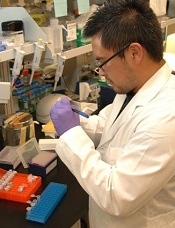
Credit: NIH
A newly identified class of compounds recognize a key target in the Ras signaling pathway and could therefore prove useful in treating a range of malignancies, according to research published in Chemistry & Biology.
The lead compound, NSC-658497, targeted the catalytic activation of Ras by an enzyme called SOS1.
NSC-658497 blocked SOS1-mediated molecular signaling in the Ras pathway that causes rapid cell proliferation, tumor development, and cancer.
“While Ras pathway activation is a dominant event happening in many diseases, so far, the immediate signaling module of the Ras pathway has been difficult to target,” said study author Yi Zheng, PhD, of Cincinnati Children’s Hospital in Ohio.
“Most strategies for treatment have been geared toward hitting molecular effectors that are farther downstream. In this study, we have identified synthetic compounds that specifically recognize the catalytic pocket of SOS1 and demonstrated that they are effective inhibitors of Ras signaling in cells. This establishes a novel targeting approach for cancers and Rasopathies that is useful in developing therapeutics.”
Rasopathies include a group of 9 developmental syndromes that are caused by mutations in the Ras pathway (Noonan, LEOPARD, hereditary Gingival fibromatosis type 1, Capillary malformation-AV malformation, Neurofibromatosis type 1, Legius, Costello, Cardio-facio-cutaneous, and autoimmune lymphoproliferative syndromes).
Dysregulation of the Ras pathway (including its SOS1 catalytic activator) is also linked to a number of malignancies, such as breast, pancreatic, and cervical cancers, as well as leukemia.
To find compounds that could target the Ras pathway, Dr Zheng and his colleagues tested 30,000 synthetic molecular compounds in a database maintained by the National Cancer Institute.
The researchers looked for the compounds’ ability to dock with the catalytic site of SOS1, which led them to identify NSC-658497 and derivatives as lead candidates for the development of a prospective drug.
The team then tested NSC-658497 in cell lines of mouse fibroblasts and prostate cancer. These experiments showed the compound successfully blocked SOS1-to-Ras signaling and the proliferation of cancer cells.
Dr Zheng said one of the researchers’ next steps is to transform NSC-658497 into a drug that can be administered to a living organism so the team can begin testing the inhibitor in mouse models of different Rasopathies and cancers.
One of the targeted approaches the researchers plan to explore is whether NSC-658497 might be most promising in individuals who have a subset of disease in which SOS1 is significantly overexpressed or mutated.
Credit: NIH
A newly identified class of compounds recognize a key target in the Ras signaling pathway and could therefore prove useful in treating a range of malignancies, according to research published in Chemistry & Biology.
The lead compound, NSC-658497, targeted the catalytic activation of Ras by an enzyme called SOS1.
NSC-658497 blocked SOS1-mediated molecular signaling in the Ras pathway that causes rapid cell proliferation, tumor development, and cancer.
“While Ras pathway activation is a dominant event happening in many diseases, so far, the immediate signaling module of the Ras pathway has been difficult to target,” said study author Yi Zheng, PhD, of Cincinnati Children’s Hospital in Ohio.
“Most strategies for treatment have been geared toward hitting molecular effectors that are farther downstream. In this study, we have identified synthetic compounds that specifically recognize the catalytic pocket of SOS1 and demonstrated that they are effective inhibitors of Ras signaling in cells. This establishes a novel targeting approach for cancers and Rasopathies that is useful in developing therapeutics.”
Rasopathies include a group of 9 developmental syndromes that are caused by mutations in the Ras pathway (Noonan, LEOPARD, hereditary Gingival fibromatosis type 1, Capillary malformation-AV malformation, Neurofibromatosis type 1, Legius, Costello, Cardio-facio-cutaneous, and autoimmune lymphoproliferative syndromes).
Dysregulation of the Ras pathway (including its SOS1 catalytic activator) is also linked to a number of malignancies, such as breast, pancreatic, and cervical cancers, as well as leukemia.
To find compounds that could target the Ras pathway, Dr Zheng and his colleagues tested 30,000 synthetic molecular compounds in a database maintained by the National Cancer Institute.
The researchers looked for the compounds’ ability to dock with the catalytic site of SOS1, which led them to identify NSC-658497 and derivatives as lead candidates for the development of a prospective drug.
The team then tested NSC-658497 in cell lines of mouse fibroblasts and prostate cancer. These experiments showed the compound successfully blocked SOS1-to-Ras signaling and the proliferation of cancer cells.
Dr Zheng said one of the researchers’ next steps is to transform NSC-658497 into a drug that can be administered to a living organism so the team can begin testing the inhibitor in mouse models of different Rasopathies and cancers.
One of the targeted approaches the researchers plan to explore is whether NSC-658497 might be most promising in individuals who have a subset of disease in which SOS1 is significantly overexpressed or mutated.
Credit: NIH
A newly identified class of compounds recognize a key target in the Ras signaling pathway and could therefore prove useful in treating a range of malignancies, according to research published in Chemistry & Biology.
The lead compound, NSC-658497, targeted the catalytic activation of Ras by an enzyme called SOS1.
NSC-658497 blocked SOS1-mediated molecular signaling in the Ras pathway that causes rapid cell proliferation, tumor development, and cancer.
“While Ras pathway activation is a dominant event happening in many diseases, so far, the immediate signaling module of the Ras pathway has been difficult to target,” said study author Yi Zheng, PhD, of Cincinnati Children’s Hospital in Ohio.
“Most strategies for treatment have been geared toward hitting molecular effectors that are farther downstream. In this study, we have identified synthetic compounds that specifically recognize the catalytic pocket of SOS1 and demonstrated that they are effective inhibitors of Ras signaling in cells. This establishes a novel targeting approach for cancers and Rasopathies that is useful in developing therapeutics.”
Rasopathies include a group of 9 developmental syndromes that are caused by mutations in the Ras pathway (Noonan, LEOPARD, hereditary Gingival fibromatosis type 1, Capillary malformation-AV malformation, Neurofibromatosis type 1, Legius, Costello, Cardio-facio-cutaneous, and autoimmune lymphoproliferative syndromes).
Dysregulation of the Ras pathway (including its SOS1 catalytic activator) is also linked to a number of malignancies, such as breast, pancreatic, and cervical cancers, as well as leukemia.
To find compounds that could target the Ras pathway, Dr Zheng and his colleagues tested 30,000 synthetic molecular compounds in a database maintained by the National Cancer Institute.
The researchers looked for the compounds’ ability to dock with the catalytic site of SOS1, which led them to identify NSC-658497 and derivatives as lead candidates for the development of a prospective drug.
The team then tested NSC-658497 in cell lines of mouse fibroblasts and prostate cancer. These experiments showed the compound successfully blocked SOS1-to-Ras signaling and the proliferation of cancer cells.
Dr Zheng said one of the researchers’ next steps is to transform NSC-658497 into a drug that can be administered to a living organism so the team can begin testing the inhibitor in mouse models of different Rasopathies and cancers.
One of the targeted approaches the researchers plan to explore is whether NSC-658497 might be most promising in individuals who have a subset of disease in which SOS1 is significantly overexpressed or mutated.
FDA grants drug orphan designation for AML
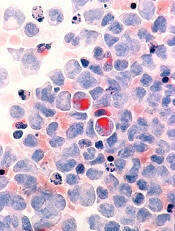
Credit: Lance Liotta
The US Food and Drug Administration (FDA) has granted orphan drug designation for the Axl inhibitor BGB324 to treat acute myeloid leukemia (AML).
BGB324 is a highly selective small molecule inhibitor of the Axl receptor tyrosine kinase. It blocks the epithelial-mesenchymal transition, a key driver in drug resistance and metastasis.
BerGenBio, the company developing BGB324, has estimated that more than 50% of AML patients have elevated levels of Axl.
And a study published in Blood last year showed that Axl inhibition by BGB324 prompts antileukemic activity in FLT3-mutated and FLT3-wild-type AML.
Earlier this month, BerGenBio said the first patient had been dosed in its multicenter phase 1b trial of BGB324 in patients with AML.
The primary goal of this 2-part trial is to investigate the safety and tolerability of BGB324 as a single agent and in combination with cytarabine. Secondary endpoints include clinical response and assessment of novel biomarkers.
The study will be conducted at 6 sites in Norway, Germany, and the US. BerGenBio expects data from this trial to be available in 2015.
The FDA’s orphan designation will provide BerGenBio with access to various development incentives for BGB324.
This includes tax credits for qualified clinical testing, exemption from prescription drug user fees for BGB324 in AML, and 7 years of market exclusivity in the US upon FDA approval.
Credit: Lance Liotta
The US Food and Drug Administration (FDA) has granted orphan drug designation for the Axl inhibitor BGB324 to treat acute myeloid leukemia (AML).
BGB324 is a highly selective small molecule inhibitor of the Axl receptor tyrosine kinase. It blocks the epithelial-mesenchymal transition, a key driver in drug resistance and metastasis.
BerGenBio, the company developing BGB324, has estimated that more than 50% of AML patients have elevated levels of Axl.
And a study published in Blood last year showed that Axl inhibition by BGB324 prompts antileukemic activity in FLT3-mutated and FLT3-wild-type AML.
Earlier this month, BerGenBio said the first patient had been dosed in its multicenter phase 1b trial of BGB324 in patients with AML.
The primary goal of this 2-part trial is to investigate the safety and tolerability of BGB324 as a single agent and in combination with cytarabine. Secondary endpoints include clinical response and assessment of novel biomarkers.
The study will be conducted at 6 sites in Norway, Germany, and the US. BerGenBio expects data from this trial to be available in 2015.
The FDA’s orphan designation will provide BerGenBio with access to various development incentives for BGB324.
This includes tax credits for qualified clinical testing, exemption from prescription drug user fees for BGB324 in AML, and 7 years of market exclusivity in the US upon FDA approval.
Credit: Lance Liotta
The US Food and Drug Administration (FDA) has granted orphan drug designation for the Axl inhibitor BGB324 to treat acute myeloid leukemia (AML).
BGB324 is a highly selective small molecule inhibitor of the Axl receptor tyrosine kinase. It blocks the epithelial-mesenchymal transition, a key driver in drug resistance and metastasis.
BerGenBio, the company developing BGB324, has estimated that more than 50% of AML patients have elevated levels of Axl.
And a study published in Blood last year showed that Axl inhibition by BGB324 prompts antileukemic activity in FLT3-mutated and FLT3-wild-type AML.
Earlier this month, BerGenBio said the first patient had been dosed in its multicenter phase 1b trial of BGB324 in patients with AML.
The primary goal of this 2-part trial is to investigate the safety and tolerability of BGB324 as a single agent and in combination with cytarabine. Secondary endpoints include clinical response and assessment of novel biomarkers.
The study will be conducted at 6 sites in Norway, Germany, and the US. BerGenBio expects data from this trial to be available in 2015.
The FDA’s orphan designation will provide BerGenBio with access to various development incentives for BGB324.
This includes tax credits for qualified clinical testing, exemption from prescription drug user fees for BGB324 in AML, and 7 years of market exclusivity in the US upon FDA approval.
Inhibitor could transform AML therapy, speaker says

Credit: University of Colorado
BARCELONA—An agent that inhibits isocitrate dehydrogenase (IDH) 1 shows the potential to transform therapy for certain patients with acute myeloid leukemia (AML), according to a speaker at the 26th EORTC-NCI-AACR Symposium on Molecular Targets and Cancer Therapeutics.
The drug, known as AG-120, demonstrated clinical activity and was considered to be well-tolerated in a phase 1 study of patients with advanced, IDH1 mutant-positive AML.
Daniel Pollyea, MD, of the University of Colorado School of Medicine in Aurora, presented data on AG-120 at the symposium as abstract LBA1. The research was sponsored by Agios Pharmaceuticals, makers of AG-120.
“This is the first study in humans of an inhibitor of mutant IDH1 and the first demonstration of clinical activity of AG-120 in AML patients whose cancers have the IDH1 mutation,” Dr Pollyea said. “Although the data are early, we are encouraged to see evidence of clinical activity, as the primary objectives of phase 1 studies are to determine safety and tolerability.”
Dr Pollyea noted that mutations in IDH1 lead to a cascade of metabolic events that contribute to malignancy. Mutant IDH1 produces an excess amount of 2-hydroxyglutarate (2-HG), which prevents cells from maturing into normal, functioning cells, and this leads to malignancy.
In this study, the researchers found that AG-120 reduced 2-HG levels in diseased cells to normal levels, allowing them to mature into normal cells.
The trial included 17 patients with relapsed and/or refractory AML, who had received a median of 2 prior treatments. Patients were scheduled to
receive AG-120 in 1 of 4 dose groups: 100 mg twice a day, 300 mg once a day, 500 mg once a day, and 800 mg once a day over continuous 28-day cycles.
Fourteen patients were evaluable for response, and 7 responded. Four patients achieved a complete response, 2 had a complete response in the marrow, and 1 had a partial response.
Responses occurred at all the dose levels tested. In the 4 patients who achieved a complete response, there was early evidence of durability, ranging from 15 days to 5 months. All responding patients remain on AG-120, and 1 patient with stable disease remains on the drug.
“AML is a devastating disease that has historically been very difficult to treat, and these findings suggest that AG-120 has the potential to transform therapy for patients with IDH1-mutant positive AML,” Dr Pollyea said.
He and his colleagues also found that AG-120 was generally well-tolerated. The majority of adverse events were grade 1 and 2. The most common of these were nausea, fatigue, and dyspnea.
Eight patients experienced serious adverse events, but these were primarily related to disease progression.
One patient experienced a dose-limiting toxicity of asymptomatic grade 3 QT prolongation at the highest dose tested to date, which improved to grade 1 with dose reduction. This patient is in complete remission and remains on AG-120.
The maximum-tolerated dose of AG-120 has not been reached.
There were 6 patient deaths, all unrelated to AG-120. Five deaths occurred after patients discontinued treatment due to progressive disease, and 1 patient died due to disease-related intracranial hemorrhage while on treatment.
Dr Pollyea and his colleagues are continuing this study with the aim of fully understanding the safety of the drug, determining the maximum-tolerated dose, and assessing its efficacy in treating AML and myelodysplastic syndromes.
Credit: University of Colorado
BARCELONA—An agent that inhibits isocitrate dehydrogenase (IDH) 1 shows the potential to transform therapy for certain patients with acute myeloid leukemia (AML), according to a speaker at the 26th EORTC-NCI-AACR Symposium on Molecular Targets and Cancer Therapeutics.
The drug, known as AG-120, demonstrated clinical activity and was considered to be well-tolerated in a phase 1 study of patients with advanced, IDH1 mutant-positive AML.
Daniel Pollyea, MD, of the University of Colorado School of Medicine in Aurora, presented data on AG-120 at the symposium as abstract LBA1. The research was sponsored by Agios Pharmaceuticals, makers of AG-120.
“This is the first study in humans of an inhibitor of mutant IDH1 and the first demonstration of clinical activity of AG-120 in AML patients whose cancers have the IDH1 mutation,” Dr Pollyea said. “Although the data are early, we are encouraged to see evidence of clinical activity, as the primary objectives of phase 1 studies are to determine safety and tolerability.”
Dr Pollyea noted that mutations in IDH1 lead to a cascade of metabolic events that contribute to malignancy. Mutant IDH1 produces an excess amount of 2-hydroxyglutarate (2-HG), which prevents cells from maturing into normal, functioning cells, and this leads to malignancy.
In this study, the researchers found that AG-120 reduced 2-HG levels in diseased cells to normal levels, allowing them to mature into normal cells.
The trial included 17 patients with relapsed and/or refractory AML, who had received a median of 2 prior treatments. Patients were scheduled to
receive AG-120 in 1 of 4 dose groups: 100 mg twice a day, 300 mg once a day, 500 mg once a day, and 800 mg once a day over continuous 28-day cycles.
Fourteen patients were evaluable for response, and 7 responded. Four patients achieved a complete response, 2 had a complete response in the marrow, and 1 had a partial response.
Responses occurred at all the dose levels tested. In the 4 patients who achieved a complete response, there was early evidence of durability, ranging from 15 days to 5 months. All responding patients remain on AG-120, and 1 patient with stable disease remains on the drug.
“AML is a devastating disease that has historically been very difficult to treat, and these findings suggest that AG-120 has the potential to transform therapy for patients with IDH1-mutant positive AML,” Dr Pollyea said.
He and his colleagues also found that AG-120 was generally well-tolerated. The majority of adverse events were grade 1 and 2. The most common of these were nausea, fatigue, and dyspnea.
Eight patients experienced serious adverse events, but these were primarily related to disease progression.
One patient experienced a dose-limiting toxicity of asymptomatic grade 3 QT prolongation at the highest dose tested to date, which improved to grade 1 with dose reduction. This patient is in complete remission and remains on AG-120.
The maximum-tolerated dose of AG-120 has not been reached.
There were 6 patient deaths, all unrelated to AG-120. Five deaths occurred after patients discontinued treatment due to progressive disease, and 1 patient died due to disease-related intracranial hemorrhage while on treatment.
Dr Pollyea and his colleagues are continuing this study with the aim of fully understanding the safety of the drug, determining the maximum-tolerated dose, and assessing its efficacy in treating AML and myelodysplastic syndromes.
Credit: University of Colorado
BARCELONA—An agent that inhibits isocitrate dehydrogenase (IDH) 1 shows the potential to transform therapy for certain patients with acute myeloid leukemia (AML), according to a speaker at the 26th EORTC-NCI-AACR Symposium on Molecular Targets and Cancer Therapeutics.
The drug, known as AG-120, demonstrated clinical activity and was considered to be well-tolerated in a phase 1 study of patients with advanced, IDH1 mutant-positive AML.
Daniel Pollyea, MD, of the University of Colorado School of Medicine in Aurora, presented data on AG-120 at the symposium as abstract LBA1. The research was sponsored by Agios Pharmaceuticals, makers of AG-120.
“This is the first study in humans of an inhibitor of mutant IDH1 and the first demonstration of clinical activity of AG-120 in AML patients whose cancers have the IDH1 mutation,” Dr Pollyea said. “Although the data are early, we are encouraged to see evidence of clinical activity, as the primary objectives of phase 1 studies are to determine safety and tolerability.”
Dr Pollyea noted that mutations in IDH1 lead to a cascade of metabolic events that contribute to malignancy. Mutant IDH1 produces an excess amount of 2-hydroxyglutarate (2-HG), which prevents cells from maturing into normal, functioning cells, and this leads to malignancy.
In this study, the researchers found that AG-120 reduced 2-HG levels in diseased cells to normal levels, allowing them to mature into normal cells.
The trial included 17 patients with relapsed and/or refractory AML, who had received a median of 2 prior treatments. Patients were scheduled to
receive AG-120 in 1 of 4 dose groups: 100 mg twice a day, 300 mg once a day, 500 mg once a day, and 800 mg once a day over continuous 28-day cycles.
Fourteen patients were evaluable for response, and 7 responded. Four patients achieved a complete response, 2 had a complete response in the marrow, and 1 had a partial response.
Responses occurred at all the dose levels tested. In the 4 patients who achieved a complete response, there was early evidence of durability, ranging from 15 days to 5 months. All responding patients remain on AG-120, and 1 patient with stable disease remains on the drug.
“AML is a devastating disease that has historically been very difficult to treat, and these findings suggest that AG-120 has the potential to transform therapy for patients with IDH1-mutant positive AML,” Dr Pollyea said.
He and his colleagues also found that AG-120 was generally well-tolerated. The majority of adverse events were grade 1 and 2. The most common of these were nausea, fatigue, and dyspnea.
Eight patients experienced serious adverse events, but these were primarily related to disease progression.
One patient experienced a dose-limiting toxicity of asymptomatic grade 3 QT prolongation at the highest dose tested to date, which improved to grade 1 with dose reduction. This patient is in complete remission and remains on AG-120.
The maximum-tolerated dose of AG-120 has not been reached.
There were 6 patient deaths, all unrelated to AG-120. Five deaths occurred after patients discontinued treatment due to progressive disease, and 1 patient died due to disease-related intracranial hemorrhage while on treatment.
Dr Pollyea and his colleagues are continuing this study with the aim of fully understanding the safety of the drug, determining the maximum-tolerated dose, and assessing its efficacy in treating AML and myelodysplastic syndromes.
Discovery reveals potential approach to treat CML
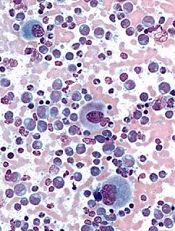
Credit: UCSD School of Medicine
By analyzing structural changes that occur during Abl kinase activation, researchers have gained new insight into this process.
The team discovered a mechanism that links the allosteric regulation of the SH2 domain to two critical phosphorylation events.
As allosteric SH2-kinase domain interactions have proven essential for leukemogenesis caused by Bcr-Abl, the researchers believe this finding has implications for treating chronic myeloid leukemia (CML).
Oliver Hantschel, PhD, of the École polytechnique fédérale de Lausanne (EPFL) in Lausanne, Switzerland, and his colleagues described this work in Nature Communications.
The team made small, strategic mutations to Abl kinase that caused its 3D structure to change. Then, they tested each mutant version of the enzyme to see if its function would change.
The researchers built on previous studies showing that Abl kinase is indirectly controlled by the SH2 region. Normally, the SH2 region regulates the activation loop by opening and closing it. But under the Philadelphia chromosome translocation, that regulation is lost.
The team discovered that when the Philadelphia mutation takes effect, the SH2 region changes the Abl activation loop to a fully open conformation. This enables the trans-autophosphorylation of the activation loop and requires prior phosphorylation of the SH2-kinase linker.
This discovery provides the first-ever picture of the molecular events surrounding the hyperactivity of Abl kinase, the researchers said.
They also found that by disrupting the SH2-kinase interaction, it’s possible to modulate the activity of Abl kinase, which could potentially stop the growth of leukemia.
Since the SH2 region is common to other kinases, the researchers think it’s likely the effect could extend to malignancies other than CML as well, particularly those characterized by abnormal kinase activity.
Finally, the team expects this approach could overcome the problem of drug resistance in CML, as it might offer an alternative way to inhibit Abl kinase, and mutations of rapidly growing cancer cells may be less likely to occur.
Credit: UCSD School of Medicine
By analyzing structural changes that occur during Abl kinase activation, researchers have gained new insight into this process.
The team discovered a mechanism that links the allosteric regulation of the SH2 domain to two critical phosphorylation events.
As allosteric SH2-kinase domain interactions have proven essential for leukemogenesis caused by Bcr-Abl, the researchers believe this finding has implications for treating chronic myeloid leukemia (CML).
Oliver Hantschel, PhD, of the École polytechnique fédérale de Lausanne (EPFL) in Lausanne, Switzerland, and his colleagues described this work in Nature Communications.
The team made small, strategic mutations to Abl kinase that caused its 3D structure to change. Then, they tested each mutant version of the enzyme to see if its function would change.
The researchers built on previous studies showing that Abl kinase is indirectly controlled by the SH2 region. Normally, the SH2 region regulates the activation loop by opening and closing it. But under the Philadelphia chromosome translocation, that regulation is lost.
The team discovered that when the Philadelphia mutation takes effect, the SH2 region changes the Abl activation loop to a fully open conformation. This enables the trans-autophosphorylation of the activation loop and requires prior phosphorylation of the SH2-kinase linker.
This discovery provides the first-ever picture of the molecular events surrounding the hyperactivity of Abl kinase, the researchers said.
They also found that by disrupting the SH2-kinase interaction, it’s possible to modulate the activity of Abl kinase, which could potentially stop the growth of leukemia.
Since the SH2 region is common to other kinases, the researchers think it’s likely the effect could extend to malignancies other than CML as well, particularly those characterized by abnormal kinase activity.
Finally, the team expects this approach could overcome the problem of drug resistance in CML, as it might offer an alternative way to inhibit Abl kinase, and mutations of rapidly growing cancer cells may be less likely to occur.
Credit: UCSD School of Medicine
By analyzing structural changes that occur during Abl kinase activation, researchers have gained new insight into this process.
The team discovered a mechanism that links the allosteric regulation of the SH2 domain to two critical phosphorylation events.
As allosteric SH2-kinase domain interactions have proven essential for leukemogenesis caused by Bcr-Abl, the researchers believe this finding has implications for treating chronic myeloid leukemia (CML).
Oliver Hantschel, PhD, of the École polytechnique fédérale de Lausanne (EPFL) in Lausanne, Switzerland, and his colleagues described this work in Nature Communications.
The team made small, strategic mutations to Abl kinase that caused its 3D structure to change. Then, they tested each mutant version of the enzyme to see if its function would change.
The researchers built on previous studies showing that Abl kinase is indirectly controlled by the SH2 region. Normally, the SH2 region regulates the activation loop by opening and closing it. But under the Philadelphia chromosome translocation, that regulation is lost.
The team discovered that when the Philadelphia mutation takes effect, the SH2 region changes the Abl activation loop to a fully open conformation. This enables the trans-autophosphorylation of the activation loop and requires prior phosphorylation of the SH2-kinase linker.
This discovery provides the first-ever picture of the molecular events surrounding the hyperactivity of Abl kinase, the researchers said.
They also found that by disrupting the SH2-kinase interaction, it’s possible to modulate the activity of Abl kinase, which could potentially stop the growth of leukemia.
Since the SH2 region is common to other kinases, the researchers think it’s likely the effect could extend to malignancies other than CML as well, particularly those characterized by abnormal kinase activity.
Finally, the team expects this approach could overcome the problem of drug resistance in CML, as it might offer an alternative way to inhibit Abl kinase, and mutations of rapidly growing cancer cells may be less likely to occur.
FDA grants CAR T-cell therapy orphan designation
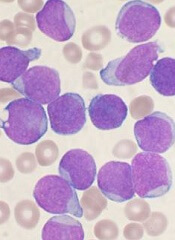
The US Food and Drug Administration (FDA) has granted orphan drug designation for the chimeric antigen receptor (CAR) T-cell therapy JCAR015 to treat acute lymphoblastic leukemia (ALL).
The designation will provide the product’s developer, Juno Therapeutics, with multiple benefits, including the availability of grant money, certain tax credits, and 7 years of market exclusivity, as well as the possibility of an expedited regulatory process.
JCAR015 consists of autologous T cells expressing a CD19-specific, CD28/CD3z CAR. The treatment has shown promise in an ongoing phase 1 trial of patients with B-cell ALL.
Initial results from this study were published in Science Translational Medicine last year and in February. Updated results were presented at the AACR Annual Meeting in April.
At that point, the researchers had enrolled 22 adult patients with relapsed or refractory B-ALL who were minimal residual disease-positive or were in first complete remission at enrollment. Patients in complete remission were monitored and only received JCAR015 if they relapsed.
The remaining patients received re-induction chemotherapy (physician’s choice), followed by an infusion of JCAR015. After treatment, patients could receive allogeneic transplant, a different salvage therapy, or monitoring.
Eighty-two percent of patients achieved a complete response to JCAR015. The average time to complete response was about 24.5 days.
Twelve of the responders were eligible for transplant. Of the 8 patients who ultimately underwent transplant and survived, 1 relapsed, but the rest remained in remission.
Ten patients had died at the time of the AACR presentation. Six deaths were a result of disease relapse or progression, and 2 patients died of complications from stem cell transplant.
The 2 remaining deaths prompted a temporary suspension of enrollment in this trial.
Those deaths were related to complications from cytokine release syndrome. One patient died of cardiovascular disease, and the other died following “persistent seizure activity.”
So researchers at the Memorial Sloan-Kettering Cancer Center, where the trial is being conducted, reviewed these cases.
The results prompted them to amend trial enrollment criteria and dosing recommendations. Now, patients with cardiac disease are ineligible to receive JCAR015.
And the T-cell dose a patient receives will depend on the extent of his or her disease. The hope is that this will reduce the risk of cytokine release syndrome and any resulting seizures.
The researchers also noted that the monoclonal antibody tocilizumab has proven effective in treating cytokine release syndrome.
In addition to this trial, JCAR015 is under investigation in another phase 1 trial of patients with relapsed and refractory non-Hodgkin lymphoma.
The US Food and Drug Administration (FDA) has granted orphan drug designation for the chimeric antigen receptor (CAR) T-cell therapy JCAR015 to treat acute lymphoblastic leukemia (ALL).
The designation will provide the product’s developer, Juno Therapeutics, with multiple benefits, including the availability of grant money, certain tax credits, and 7 years of market exclusivity, as well as the possibility of an expedited regulatory process.
JCAR015 consists of autologous T cells expressing a CD19-specific, CD28/CD3z CAR. The treatment has shown promise in an ongoing phase 1 trial of patients with B-cell ALL.
Initial results from this study were published in Science Translational Medicine last year and in February. Updated results were presented at the AACR Annual Meeting in April.
At that point, the researchers had enrolled 22 adult patients with relapsed or refractory B-ALL who were minimal residual disease-positive or were in first complete remission at enrollment. Patients in complete remission were monitored and only received JCAR015 if they relapsed.
The remaining patients received re-induction chemotherapy (physician’s choice), followed by an infusion of JCAR015. After treatment, patients could receive allogeneic transplant, a different salvage therapy, or monitoring.
Eighty-two percent of patients achieved a complete response to JCAR015. The average time to complete response was about 24.5 days.
Twelve of the responders were eligible for transplant. Of the 8 patients who ultimately underwent transplant and survived, 1 relapsed, but the rest remained in remission.
Ten patients had died at the time of the AACR presentation. Six deaths were a result of disease relapse or progression, and 2 patients died of complications from stem cell transplant.
The 2 remaining deaths prompted a temporary suspension of enrollment in this trial.
Those deaths were related to complications from cytokine release syndrome. One patient died of cardiovascular disease, and the other died following “persistent seizure activity.”
So researchers at the Memorial Sloan-Kettering Cancer Center, where the trial is being conducted, reviewed these cases.
The results prompted them to amend trial enrollment criteria and dosing recommendations. Now, patients with cardiac disease are ineligible to receive JCAR015.
And the T-cell dose a patient receives will depend on the extent of his or her disease. The hope is that this will reduce the risk of cytokine release syndrome and any resulting seizures.
The researchers also noted that the monoclonal antibody tocilizumab has proven effective in treating cytokine release syndrome.
In addition to this trial, JCAR015 is under investigation in another phase 1 trial of patients with relapsed and refractory non-Hodgkin lymphoma.
The US Food and Drug Administration (FDA) has granted orphan drug designation for the chimeric antigen receptor (CAR) T-cell therapy JCAR015 to treat acute lymphoblastic leukemia (ALL).
The designation will provide the product’s developer, Juno Therapeutics, with multiple benefits, including the availability of grant money, certain tax credits, and 7 years of market exclusivity, as well as the possibility of an expedited regulatory process.
JCAR015 consists of autologous T cells expressing a CD19-specific, CD28/CD3z CAR. The treatment has shown promise in an ongoing phase 1 trial of patients with B-cell ALL.
Initial results from this study were published in Science Translational Medicine last year and in February. Updated results were presented at the AACR Annual Meeting in April.
At that point, the researchers had enrolled 22 adult patients with relapsed or refractory B-ALL who were minimal residual disease-positive or were in first complete remission at enrollment. Patients in complete remission were monitored and only received JCAR015 if they relapsed.
The remaining patients received re-induction chemotherapy (physician’s choice), followed by an infusion of JCAR015. After treatment, patients could receive allogeneic transplant, a different salvage therapy, or monitoring.
Eighty-two percent of patients achieved a complete response to JCAR015. The average time to complete response was about 24.5 days.
Twelve of the responders were eligible for transplant. Of the 8 patients who ultimately underwent transplant and survived, 1 relapsed, but the rest remained in remission.
Ten patients had died at the time of the AACR presentation. Six deaths were a result of disease relapse or progression, and 2 patients died of complications from stem cell transplant.
The 2 remaining deaths prompted a temporary suspension of enrollment in this trial.
Those deaths were related to complications from cytokine release syndrome. One patient died of cardiovascular disease, and the other died following “persistent seizure activity.”
So researchers at the Memorial Sloan-Kettering Cancer Center, where the trial is being conducted, reviewed these cases.
The results prompted them to amend trial enrollment criteria and dosing recommendations. Now, patients with cardiac disease are ineligible to receive JCAR015.
And the T-cell dose a patient receives will depend on the extent of his or her disease. The hope is that this will reduce the risk of cytokine release syndrome and any resulting seizures.
The researchers also noted that the monoclonal antibody tocilizumab has proven effective in treating cytokine release syndrome.
In addition to this trial, JCAR015 is under investigation in another phase 1 trial of patients with relapsed and refractory non-Hodgkin lymphoma.