User login
EC grants conditional approval for blinatumomab
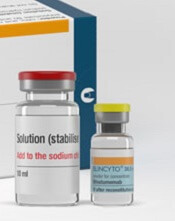
and solution for infusion
Photo courtesy of Amgen
The European Commission (EC) has granted conditional marketing authorization for blinatumomab (Blincyto) to treat adults with Philadelphia chromosome-negative (Ph-) relapsed or refractory B-precursor acute lymphoblastic leukemia (ALL).
This applies to the 28 member countries of the European Union as well as Iceland, Lichtenstein, and Norway.
Conditional marketing authorizations are valid for 1 year, on a renewable basis. The holder is required to complete ongoing studies or conduct new studies with the goal of confirming that a drug’s benefit-risk balance is positive.
Conditional marketing authorization is converted to a full authorization once these commitments have been fulfilled.
The EC granted conditional marketing authorization for blinatumomab based on a pair of phase 2 trials—Study ‘211 and Study ‘206.
Study ‘211
Results of Study ‘211 were presented at EHA 2014. The trial included 189 patients with Ph- relapsed or refractory B-precursor ALL.
The primary endpoint was complete remission or complete remission with partial hematologic recovery (CR/CRh). About 43% of patients achieved this endpoint within 2 cycles of therapy.
According to researchers, the most serious adverse events in this study were infection (31.7%), neurologic events (16.4%), neutropenia/febrile neutropenia (15.3%), cytokine release syndrome (CRS, 0.5%), and tumor lysis syndrome (0.5%).
Study ‘206
Results of Study ‘206 were presented at ASCO 2012. The trial included 36 patients with relapsed or refractory B-precursor ALL.
In this trial, the CR/CRh rate was 69.4% (25/36), with 15 patients achieving a CR (41.7%), and 10 patients achieving CRh (27.8%).
The “medically important” adverse events in this study, according to researchers, were CRS (n=3), central nervous system (CNS) events (3 seizures and 3 cases of encephalopathy), and fungal infection resulting in death (n=1).
However, the researchers found they could prevent CRS with dexamethasone. In addition, the CNS events were reversible, and blinatumomab could be reintroduced in 4 of the 6 patients with CNS events.
About blinatumomab
Blinatumomab is a bispecific T-cell engager (BiTE®) antibody construct that binds to CD19 on the surface of B cells and CD3 on the surface of T cells.
BiTE antibody constructs are intended to help the immune system detect and target malignant cells. The modified antibodies are designed to engage 2 different targets simultaneously, thereby juxtaposing T cells to cancer cells.
BiTE antibody constructs help place the T cells within reach of the targeted cells, with the intent of allowing T cells to inject toxins and trigger apoptosis in the cancer cells.
Blinatumomab was granted orphan drug designation by the European Medicines Agency in 2009 for the treatment of ALL.
The drug was granted breakthrough therapy designation and priority review by the US Food and Drug Administration.
Blinatumomab has conditional approval in the US to treat patients with relapsed or refractory Ph- B-precursor ALL. Continued approval for this indication may be contingent upon verification of clinical benefit in subsequent trials.
Blinatumomab is being developed by Amgen. 
and solution for infusion
Photo courtesy of Amgen
The European Commission (EC) has granted conditional marketing authorization for blinatumomab (Blincyto) to treat adults with Philadelphia chromosome-negative (Ph-) relapsed or refractory B-precursor acute lymphoblastic leukemia (ALL).
This applies to the 28 member countries of the European Union as well as Iceland, Lichtenstein, and Norway.
Conditional marketing authorizations are valid for 1 year, on a renewable basis. The holder is required to complete ongoing studies or conduct new studies with the goal of confirming that a drug’s benefit-risk balance is positive.
Conditional marketing authorization is converted to a full authorization once these commitments have been fulfilled.
The EC granted conditional marketing authorization for blinatumomab based on a pair of phase 2 trials—Study ‘211 and Study ‘206.
Study ‘211
Results of Study ‘211 were presented at EHA 2014. The trial included 189 patients with Ph- relapsed or refractory B-precursor ALL.
The primary endpoint was complete remission or complete remission with partial hematologic recovery (CR/CRh). About 43% of patients achieved this endpoint within 2 cycles of therapy.
According to researchers, the most serious adverse events in this study were infection (31.7%), neurologic events (16.4%), neutropenia/febrile neutropenia (15.3%), cytokine release syndrome (CRS, 0.5%), and tumor lysis syndrome (0.5%).
Study ‘206
Results of Study ‘206 were presented at ASCO 2012. The trial included 36 patients with relapsed or refractory B-precursor ALL.
In this trial, the CR/CRh rate was 69.4% (25/36), with 15 patients achieving a CR (41.7%), and 10 patients achieving CRh (27.8%).
The “medically important” adverse events in this study, according to researchers, were CRS (n=3), central nervous system (CNS) events (3 seizures and 3 cases of encephalopathy), and fungal infection resulting in death (n=1).
However, the researchers found they could prevent CRS with dexamethasone. In addition, the CNS events were reversible, and blinatumomab could be reintroduced in 4 of the 6 patients with CNS events.
About blinatumomab
Blinatumomab is a bispecific T-cell engager (BiTE®) antibody construct that binds to CD19 on the surface of B cells and CD3 on the surface of T cells.
BiTE antibody constructs are intended to help the immune system detect and target malignant cells. The modified antibodies are designed to engage 2 different targets simultaneously, thereby juxtaposing T cells to cancer cells.
BiTE antibody constructs help place the T cells within reach of the targeted cells, with the intent of allowing T cells to inject toxins and trigger apoptosis in the cancer cells.
Blinatumomab was granted orphan drug designation by the European Medicines Agency in 2009 for the treatment of ALL.
The drug was granted breakthrough therapy designation and priority review by the US Food and Drug Administration.
Blinatumomab has conditional approval in the US to treat patients with relapsed or refractory Ph- B-precursor ALL. Continued approval for this indication may be contingent upon verification of clinical benefit in subsequent trials.
Blinatumomab is being developed by Amgen.
and solution for infusion
Photo courtesy of Amgen
The European Commission (EC) has granted conditional marketing authorization for blinatumomab (Blincyto) to treat adults with Philadelphia chromosome-negative (Ph-) relapsed or refractory B-precursor acute lymphoblastic leukemia (ALL).
This applies to the 28 member countries of the European Union as well as Iceland, Lichtenstein, and Norway.
Conditional marketing authorizations are valid for 1 year, on a renewable basis. The holder is required to complete ongoing studies or conduct new studies with the goal of confirming that a drug’s benefit-risk balance is positive.
Conditional marketing authorization is converted to a full authorization once these commitments have been fulfilled.
The EC granted conditional marketing authorization for blinatumomab based on a pair of phase 2 trials—Study ‘211 and Study ‘206.
Study ‘211
Results of Study ‘211 were presented at EHA 2014. The trial included 189 patients with Ph- relapsed or refractory B-precursor ALL.
The primary endpoint was complete remission or complete remission with partial hematologic recovery (CR/CRh). About 43% of patients achieved this endpoint within 2 cycles of therapy.
According to researchers, the most serious adverse events in this study were infection (31.7%), neurologic events (16.4%), neutropenia/febrile neutropenia (15.3%), cytokine release syndrome (CRS, 0.5%), and tumor lysis syndrome (0.5%).
Study ‘206
Results of Study ‘206 were presented at ASCO 2012. The trial included 36 patients with relapsed or refractory B-precursor ALL.
In this trial, the CR/CRh rate was 69.4% (25/36), with 15 patients achieving a CR (41.7%), and 10 patients achieving CRh (27.8%).
The “medically important” adverse events in this study, according to researchers, were CRS (n=3), central nervous system (CNS) events (3 seizures and 3 cases of encephalopathy), and fungal infection resulting in death (n=1).
However, the researchers found they could prevent CRS with dexamethasone. In addition, the CNS events were reversible, and blinatumomab could be reintroduced in 4 of the 6 patients with CNS events.
About blinatumomab
Blinatumomab is a bispecific T-cell engager (BiTE®) antibody construct that binds to CD19 on the surface of B cells and CD3 on the surface of T cells.
BiTE antibody constructs are intended to help the immune system detect and target malignant cells. The modified antibodies are designed to engage 2 different targets simultaneously, thereby juxtaposing T cells to cancer cells.
BiTE antibody constructs help place the T cells within reach of the targeted cells, with the intent of allowing T cells to inject toxins and trigger apoptosis in the cancer cells.
Blinatumomab was granted orphan drug designation by the European Medicines Agency in 2009 for the treatment of ALL.
The drug was granted breakthrough therapy designation and priority review by the US Food and Drug Administration.
Blinatumomab has conditional approval in the US to treat patients with relapsed or refractory Ph- B-precursor ALL. Continued approval for this indication may be contingent upon verification of clinical benefit in subsequent trials.
Blinatumomab is being developed by Amgen.
CHMP recommends pegaspargase for ALL
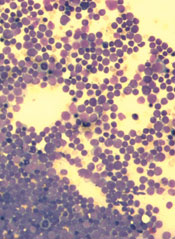
The European Medicines Agency’s Committee for Medicinal Products for Human Use (CHMP) has recommended marketing authorization for pegaspargase (Oncaspar) as part of combination antineoplastic therapy for pediatric and adult patients with acute lymphoblastic leukemia (ALL).
The CHMP’s opinion has been referred to the European Commission, which grants marketing authorization for drugs in the European Union.
If approved, pegaspargase will be marketed for the aforementioned indication in the 28 member countries of the European Union, as well as Iceland, Liechtenstein, and Norway.
Baxalta Incorporated, the company developing pegaspargase, expects a decision from the European Commission early next year.
First-line ALL
Researchers have evaluated the safety and effectiveness of pegaspargase in a study of 118 pediatric patients (ages 1 to 9) with newly diagnosed ALL. The patients were randomized 1:1 to pegaspargase or native E coli L-asparaginase, both as part of combination therapy.
Asparagine depletion (magnitude and duration) was similar between the 2 treatment arms. Event-free survival rates were also similar (about 80% in both arms), but the study was not designed to evaluate differences in event-free survival.
Grade 3/4 adverse events occurring in the pegaspargase and native E coli L-asparaginase arms, respectively, were abnormal liver tests (5% and 8%), elevated transaminases (3% and 7%), hyperbilirubinemia (2% and 2%), hyperglycemia (5% and 3%), central nervous system thrombosis (3% and 3%), coagulopathy (2% and 5%), pancreatitis (2% and 2%), and clinical allergic reactions to asparaginase (2% and 0%).
Previously treated ALL
Researchers have evaluated the effectiveness of pegaspargase in 4 open-label studies of patients with a history of prior clinical allergic reaction to asparaginase. The studies enrolled a total of 42 patients with multiply relapsed acute leukemia (39 with ALL).
Patients received pegaspargase as a single agent or in combination with multi-agent chemotherapy. The re-induction response rate was 50%—36% complete responses and 14% partial responses.
These results were similar to the overall response rates reported for patients with ALL receiving second-line, native E coli L-asparaginase-containing re-induction chemotherapy. However, antitumor activity was observed with single-agent pegaspargase as well (3 responses).
Adverse event information on pegaspargase in relapsed ALL has been compiled from 5 clinical trials. The studies enrolled a total of 174 patients with relapsed ALL who received pegaspargase as a single agent or in combination with multi-agent chemotherapy.
Sixty-two of the patients had prior hypersensitivity reactions to asparaginase, and 112 did not. Allergic reactions to pegaspargase occurred in 32% of previously hypersensitive patients and 10% of non-hypersensitive patients.
The most common adverse events observed in patients who received pegaspargase were clinical allergic reactions, elevated transaminases, hyperbilirubinemia, and coagulopathies. The most common serious adverse events due to pegaspargase were thrombosis (4%), hyperglycemia requiring insulin therapy (3%), and pancreatitis (1%).
For more details on these trials and pegaspargase, see the product information.
The European Medicines Agency’s Committee for Medicinal Products for Human Use (CHMP) has recommended marketing authorization for pegaspargase (Oncaspar) as part of combination antineoplastic therapy for pediatric and adult patients with acute lymphoblastic leukemia (ALL).
The CHMP’s opinion has been referred to the European Commission, which grants marketing authorization for drugs in the European Union.
If approved, pegaspargase will be marketed for the aforementioned indication in the 28 member countries of the European Union, as well as Iceland, Liechtenstein, and Norway.
Baxalta Incorporated, the company developing pegaspargase, expects a decision from the European Commission early next year.
First-line ALL
Researchers have evaluated the safety and effectiveness of pegaspargase in a study of 118 pediatric patients (ages 1 to 9) with newly diagnosed ALL. The patients were randomized 1:1 to pegaspargase or native E coli L-asparaginase, both as part of combination therapy.
Asparagine depletion (magnitude and duration) was similar between the 2 treatment arms. Event-free survival rates were also similar (about 80% in both arms), but the study was not designed to evaluate differences in event-free survival.
Grade 3/4 adverse events occurring in the pegaspargase and native E coli L-asparaginase arms, respectively, were abnormal liver tests (5% and 8%), elevated transaminases (3% and 7%), hyperbilirubinemia (2% and 2%), hyperglycemia (5% and 3%), central nervous system thrombosis (3% and 3%), coagulopathy (2% and 5%), pancreatitis (2% and 2%), and clinical allergic reactions to asparaginase (2% and 0%).
Previously treated ALL
Researchers have evaluated the effectiveness of pegaspargase in 4 open-label studies of patients with a history of prior clinical allergic reaction to asparaginase. The studies enrolled a total of 42 patients with multiply relapsed acute leukemia (39 with ALL).
Patients received pegaspargase as a single agent or in combination with multi-agent chemotherapy. The re-induction response rate was 50%—36% complete responses and 14% partial responses.
These results were similar to the overall response rates reported for patients with ALL receiving second-line, native E coli L-asparaginase-containing re-induction chemotherapy. However, antitumor activity was observed with single-agent pegaspargase as well (3 responses).
Adverse event information on pegaspargase in relapsed ALL has been compiled from 5 clinical trials. The studies enrolled a total of 174 patients with relapsed ALL who received pegaspargase as a single agent or in combination with multi-agent chemotherapy.
Sixty-two of the patients had prior hypersensitivity reactions to asparaginase, and 112 did not. Allergic reactions to pegaspargase occurred in 32% of previously hypersensitive patients and 10% of non-hypersensitive patients.
The most common adverse events observed in patients who received pegaspargase were clinical allergic reactions, elevated transaminases, hyperbilirubinemia, and coagulopathies. The most common serious adverse events due to pegaspargase were thrombosis (4%), hyperglycemia requiring insulin therapy (3%), and pancreatitis (1%).
For more details on these trials and pegaspargase, see the product information.
The European Medicines Agency’s Committee for Medicinal Products for Human Use (CHMP) has recommended marketing authorization for pegaspargase (Oncaspar) as part of combination antineoplastic therapy for pediatric and adult patients with acute lymphoblastic leukemia (ALL).
The CHMP’s opinion has been referred to the European Commission, which grants marketing authorization for drugs in the European Union.
If approved, pegaspargase will be marketed for the aforementioned indication in the 28 member countries of the European Union, as well as Iceland, Liechtenstein, and Norway.
Baxalta Incorporated, the company developing pegaspargase, expects a decision from the European Commission early next year.
First-line ALL
Researchers have evaluated the safety and effectiveness of pegaspargase in a study of 118 pediatric patients (ages 1 to 9) with newly diagnosed ALL. The patients were randomized 1:1 to pegaspargase or native E coli L-asparaginase, both as part of combination therapy.
Asparagine depletion (magnitude and duration) was similar between the 2 treatment arms. Event-free survival rates were also similar (about 80% in both arms), but the study was not designed to evaluate differences in event-free survival.
Grade 3/4 adverse events occurring in the pegaspargase and native E coli L-asparaginase arms, respectively, were abnormal liver tests (5% and 8%), elevated transaminases (3% and 7%), hyperbilirubinemia (2% and 2%), hyperglycemia (5% and 3%), central nervous system thrombosis (3% and 3%), coagulopathy (2% and 5%), pancreatitis (2% and 2%), and clinical allergic reactions to asparaginase (2% and 0%).
Previously treated ALL
Researchers have evaluated the effectiveness of pegaspargase in 4 open-label studies of patients with a history of prior clinical allergic reaction to asparaginase. The studies enrolled a total of 42 patients with multiply relapsed acute leukemia (39 with ALL).
Patients received pegaspargase as a single agent or in combination with multi-agent chemotherapy. The re-induction response rate was 50%—36% complete responses and 14% partial responses.
These results were similar to the overall response rates reported for patients with ALL receiving second-line, native E coli L-asparaginase-containing re-induction chemotherapy. However, antitumor activity was observed with single-agent pegaspargase as well (3 responses).
Adverse event information on pegaspargase in relapsed ALL has been compiled from 5 clinical trials. The studies enrolled a total of 174 patients with relapsed ALL who received pegaspargase as a single agent or in combination with multi-agent chemotherapy.
Sixty-two of the patients had prior hypersensitivity reactions to asparaginase, and 112 did not. Allergic reactions to pegaspargase occurred in 32% of previously hypersensitive patients and 10% of non-hypersensitive patients.
The most common adverse events observed in patients who received pegaspargase were clinical allergic reactions, elevated transaminases, hyperbilirubinemia, and coagulopathies. The most common serious adverse events due to pegaspargase were thrombosis (4%), hyperglycemia requiring insulin therapy (3%), and pancreatitis (1%).
For more details on these trials and pegaspargase, see the product information.
Template can help guide care for cancer survivors

for radiation therapy
Photo by Rhoda Baer
A new template can help standardize plans for long-term care of cancer survivors who have undergone radiation therapy (RT), according to the American Society for Radiation Oncology (ASTRO).
An ASTRO advisory committee created the template to coordinate post-treatment care for cancer survivors among primary care providers (PCPs) and oncology
specialists (radiation, medical, and surgical), as well as patients themselves.
Details on the template appear in Practical Radiation Oncology.
“Factors such as earlier detection of cancer, increasingly effective treatment options, and an aging population lead to a growing number of cancer survivors and, ultimately, a need to educate and empower these individuals for their ongoing care,” said ASTRO chair Bruce D. Minsky, MD.
“The ASTRO template is designed to foster better coordination of post-treatment care for cancer survivors, including greater clarity in the dialogue between radiation oncologists and PCPs for issues such as less common side effects that may appear well after treatment is complete.”
Many radiation oncologists may already provide their patients with post-treatment materials such as diagnosis and treatment summaries, contacts for ancillary services such as financial or nutritional counselling, and information on potential late treatment effects.
But the ASTRO template coordinates these components in a central, plain-language document.
It also enables practices to meet new accreditation requirements set by the American College of Surgeons Commission on Cancer (CoC).
In response to a 2006 recommendation from the Institutes of Medicine that cancer patients be provided with a survivorship care plan (SCP) following treatment, CoC issued a mandate that cancer programs provide SCPs for all curative cancer patients by 2019 to maintain accreditation.
ASTRO’s template includes both elements required by the CoC in SCPs—namely, a summary of past treatment and directions for future care.
The treatment summary outlines the survivor’s diagnosis and stage information; treatment details such as the site, dosage, and schedule of RT; and contact information for providers who delivered the treatment.
The plan for follow-up care covers anticipated toxicities from RT, expected course of recovery from treatment-related toxicities, possible functional and/or social limitations, recommendations for preventative measures and behaviors, cancer information resources, and referrals to supportive care providers.
“This 2-page template facilitates consistency in SCPs across the discipline and also reduces the time and effort required by providers to complete each individual plan,” said Ronald Chen, MD, of the University of North Carolina at Chapel Hill.
“The field of radiation oncology has a long tradition of creating treatment summaries for each patient, even before the Institute of Medicine recommended survivorship care plans in 2006. This radiation-oncology-specific template will serve a dual purpose as both a traditional radiation oncology treatment summary and a plan for survivorship care that meets CoC requirements, thus reducing the burden on radiation oncologists from having to create 2 documents for each patient.”
for radiation therapy
Photo by Rhoda Baer
A new template can help standardize plans for long-term care of cancer survivors who have undergone radiation therapy (RT), according to the American Society for Radiation Oncology (ASTRO).
An ASTRO advisory committee created the template to coordinate post-treatment care for cancer survivors among primary care providers (PCPs) and oncology
specialists (radiation, medical, and surgical), as well as patients themselves.
Details on the template appear in Practical Radiation Oncology.
“Factors such as earlier detection of cancer, increasingly effective treatment options, and an aging population lead to a growing number of cancer survivors and, ultimately, a need to educate and empower these individuals for their ongoing care,” said ASTRO chair Bruce D. Minsky, MD.
“The ASTRO template is designed to foster better coordination of post-treatment care for cancer survivors, including greater clarity in the dialogue between radiation oncologists and PCPs for issues such as less common side effects that may appear well after treatment is complete.”
Many radiation oncologists may already provide their patients with post-treatment materials such as diagnosis and treatment summaries, contacts for ancillary services such as financial or nutritional counselling, and information on potential late treatment effects.
But the ASTRO template coordinates these components in a central, plain-language document.
It also enables practices to meet new accreditation requirements set by the American College of Surgeons Commission on Cancer (CoC).
In response to a 2006 recommendation from the Institutes of Medicine that cancer patients be provided with a survivorship care plan (SCP) following treatment, CoC issued a mandate that cancer programs provide SCPs for all curative cancer patients by 2019 to maintain accreditation.
ASTRO’s template includes both elements required by the CoC in SCPs—namely, a summary of past treatment and directions for future care.
The treatment summary outlines the survivor’s diagnosis and stage information; treatment details such as the site, dosage, and schedule of RT; and contact information for providers who delivered the treatment.
The plan for follow-up care covers anticipated toxicities from RT, expected course of recovery from treatment-related toxicities, possible functional and/or social limitations, recommendations for preventative measures and behaviors, cancer information resources, and referrals to supportive care providers.
“This 2-page template facilitates consistency in SCPs across the discipline and also reduces the time and effort required by providers to complete each individual plan,” said Ronald Chen, MD, of the University of North Carolina at Chapel Hill.
“The field of radiation oncology has a long tradition of creating treatment summaries for each patient, even before the Institute of Medicine recommended survivorship care plans in 2006. This radiation-oncology-specific template will serve a dual purpose as both a traditional radiation oncology treatment summary and a plan for survivorship care that meets CoC requirements, thus reducing the burden on radiation oncologists from having to create 2 documents for each patient.”
for radiation therapy
Photo by Rhoda Baer
A new template can help standardize plans for long-term care of cancer survivors who have undergone radiation therapy (RT), according to the American Society for Radiation Oncology (ASTRO).
An ASTRO advisory committee created the template to coordinate post-treatment care for cancer survivors among primary care providers (PCPs) and oncology
specialists (radiation, medical, and surgical), as well as patients themselves.
Details on the template appear in Practical Radiation Oncology.
“Factors such as earlier detection of cancer, increasingly effective treatment options, and an aging population lead to a growing number of cancer survivors and, ultimately, a need to educate and empower these individuals for their ongoing care,” said ASTRO chair Bruce D. Minsky, MD.
“The ASTRO template is designed to foster better coordination of post-treatment care for cancer survivors, including greater clarity in the dialogue between radiation oncologists and PCPs for issues such as less common side effects that may appear well after treatment is complete.”
Many radiation oncologists may already provide their patients with post-treatment materials such as diagnosis and treatment summaries, contacts for ancillary services such as financial or nutritional counselling, and information on potential late treatment effects.
But the ASTRO template coordinates these components in a central, plain-language document.
It also enables practices to meet new accreditation requirements set by the American College of Surgeons Commission on Cancer (CoC).
In response to a 2006 recommendation from the Institutes of Medicine that cancer patients be provided with a survivorship care plan (SCP) following treatment, CoC issued a mandate that cancer programs provide SCPs for all curative cancer patients by 2019 to maintain accreditation.
ASTRO’s template includes both elements required by the CoC in SCPs—namely, a summary of past treatment and directions for future care.
The treatment summary outlines the survivor’s diagnosis and stage information; treatment details such as the site, dosage, and schedule of RT; and contact information for providers who delivered the treatment.
The plan for follow-up care covers anticipated toxicities from RT, expected course of recovery from treatment-related toxicities, possible functional and/or social limitations, recommendations for preventative measures and behaviors, cancer information resources, and referrals to supportive care providers.
“This 2-page template facilitates consistency in SCPs across the discipline and also reduces the time and effort required by providers to complete each individual plan,” said Ronald Chen, MD, of the University of North Carolina at Chapel Hill.
“The field of radiation oncology has a long tradition of creating treatment summaries for each patient, even before the Institute of Medicine recommended survivorship care plans in 2006. This radiation-oncology-specific template will serve a dual purpose as both a traditional radiation oncology treatment summary and a plan for survivorship care that meets CoC requirements, thus reducing the burden on radiation oncologists from having to create 2 documents for each patient.”
Companies abuse orphan drug designation, team says

Photo by Steven Harbour
Health experts are calling on US lawmakers and regulators to “close loopholes” in the Orphan Drug Act.
The experts say the loopholes can provide pharmaceutical companies with millions of dollars in unintended subsidies and tax breaks and fuel skyrocketing medication costs.
They argue that companies are exploiting gaps in the law by claiming orphan status for drugs that end up being marketed for more common conditions.
“The industry has been gaming the system by slicing and dicing indications so that drugs qualify for lucrative orphan status benefits,” says Martin Makary, MD, of Johns Hopkins Hospital in Baltimore, Maryland.
“As a result, funding support intended for rare disease medicine is diverted to fund the development of blockbuster drugs.”
Dr Makary and his colleagues express this viewpoint in a commentary published in the American Journal of Clinical Oncology.
The US Food and Drug Administration (FDA) grants orphan designation to encourage the development of drugs for diseases that affect fewer than 200,000 people in the US. The Orphan Drug Act was enacted in 1983 to provide incentives for drug companies to develop treatments for so-called orphan diseases that would be unprofitable because of the limited market.
Dr Makary and his colleagues say the legislation has accomplished that mission and sparked the development of life-saving therapies for a range of rare disorders. However, the authors say the law has also invited abuse.
Under the terms of the act, companies can receive federal taxpayer subsidies of up to half a million dollars a year for up to 4 years per drug, large tax credits, and waivers of marketing application fees that can cost more than $2 million. In addition, the FDA can grant companies 7 years of marketing exclusivity for an orphan drug to ensure that companies recoup the costs of research and development.
Dr Makary says companies exploit the law by initially listing only a single indication for a drug’s use—one narrow enough to qualify for orphan disease benefits. After FDA approval, however, some such drugs are marketed and used off-label more broadly, thus turning large profits.
“This is a financially toxic practice that is also unethical,” says study author Michael Daniel, also of Johns Hopkins.
“It’s time to ensure that we also render it illegal. The practice inflates drug prices, and the costs are passed on to consumers in the form of higher health insurance premiums.”
For example, the drug rituximab was originally approved to treat follicular B-cell non-Hodgkin lymphoma, a disease that affects about 14,000 patients a year. Now, rituximab is also used to treat several other types of cancer, organ rejection following kidney transplant, and autoimmune diseases, including rheumatoid arthritis, which affects 1.3 million Americans.
Rituximab, marketed under several trade names, is the top-selling medication approved as an orphan drug, the 12th all-time drug best-seller in the US, and it generated $3.7 billion in domestic sales in 2014.
In fact, 7 of the top 10 best-selling drugs in the US for 2014 came on the market with an orphan designation, according to Dr Makary and his colleagues.
Of the 41 drugs approved by the FDA in 2014, 18 had orphan status designations. The authors predict that, in 2015, orphan drugs will generate sales totaling $107 billion. And that number is expected to reach $176 billion by 2020.
Dr Makary says this projection represents a yearly growth rate of nearly 11%, or double the growth rate of the overall prescription drug market. The authors also cite data showing that, by 2020, orphan drugs are expected to account for 19% of global prescription drug sales, up from 6% in the year 2000.
Although the reasons for this boom in orphan drugs are likely multifactorial, the exploitation of the orphan drug act is an important catalyst behind this trend, the authors say.
Because orphan designation guarantees a 7-year exclusivity deal to market the drug and protects it from generic competition, the price tags for such medications often balloon rapidly.
For example, the drug imatinib was initially priced at $30,000 per year in 2001. By 2012, it cost $92,000 a year.
The drug’s original designation was for chronic myelogenous leukemia, and it would therefore treat 9000 patients a year in the US. Subsequently, imatinib was given 6 additional orphan designations for various conditions, including gastric cancers and immune disorders.
Dr Makary says, in essence, the exclusivity clause guarantees a hyperextended government-sponsored monopoly. So it’s not surprising that the median cost for orphan drugs is more than $98,000 per patient per year, compared with a median cost of just over $5000 per patient per year for drugs without orphan status.
Overall, nearly 15% of already approved orphan drugs subsequently add far more common diseases to their treatment repertoires.
Dr Makary and his colleagues recommend that, once a drug exceeds the basic tenets of the act—to treat fewer than 200,000 people—it should no longer receive government support or marketing exclusivity.
This can be achieved, the authors say, through pricing negotiations, clauses that reduce marketing exclusivity, and leveling of taxes once a medication becomes a blockbuster treatment for conditions not listed in the original FDA approval.
They say such measures would ensure the spirit of the original act is followed while continuing to provide critical economic incentives for truly rare diseases.
Photo by Steven Harbour
Health experts are calling on US lawmakers and regulators to “close loopholes” in the Orphan Drug Act.
The experts say the loopholes can provide pharmaceutical companies with millions of dollars in unintended subsidies and tax breaks and fuel skyrocketing medication costs.
They argue that companies are exploiting gaps in the law by claiming orphan status for drugs that end up being marketed for more common conditions.
“The industry has been gaming the system by slicing and dicing indications so that drugs qualify for lucrative orphan status benefits,” says Martin Makary, MD, of Johns Hopkins Hospital in Baltimore, Maryland.
“As a result, funding support intended for rare disease medicine is diverted to fund the development of blockbuster drugs.”
Dr Makary and his colleagues express this viewpoint in a commentary published in the American Journal of Clinical Oncology.
The US Food and Drug Administration (FDA) grants orphan designation to encourage the development of drugs for diseases that affect fewer than 200,000 people in the US. The Orphan Drug Act was enacted in 1983 to provide incentives for drug companies to develop treatments for so-called orphan diseases that would be unprofitable because of the limited market.
Dr Makary and his colleagues say the legislation has accomplished that mission and sparked the development of life-saving therapies for a range of rare disorders. However, the authors say the law has also invited abuse.
Under the terms of the act, companies can receive federal taxpayer subsidies of up to half a million dollars a year for up to 4 years per drug, large tax credits, and waivers of marketing application fees that can cost more than $2 million. In addition, the FDA can grant companies 7 years of marketing exclusivity for an orphan drug to ensure that companies recoup the costs of research and development.
Dr Makary says companies exploit the law by initially listing only a single indication for a drug’s use—one narrow enough to qualify for orphan disease benefits. After FDA approval, however, some such drugs are marketed and used off-label more broadly, thus turning large profits.
“This is a financially toxic practice that is also unethical,” says study author Michael Daniel, also of Johns Hopkins.
“It’s time to ensure that we also render it illegal. The practice inflates drug prices, and the costs are passed on to consumers in the form of higher health insurance premiums.”
For example, the drug rituximab was originally approved to treat follicular B-cell non-Hodgkin lymphoma, a disease that affects about 14,000 patients a year. Now, rituximab is also used to treat several other types of cancer, organ rejection following kidney transplant, and autoimmune diseases, including rheumatoid arthritis, which affects 1.3 million Americans.
Rituximab, marketed under several trade names, is the top-selling medication approved as an orphan drug, the 12th all-time drug best-seller in the US, and it generated $3.7 billion in domestic sales in 2014.
In fact, 7 of the top 10 best-selling drugs in the US for 2014 came on the market with an orphan designation, according to Dr Makary and his colleagues.
Of the 41 drugs approved by the FDA in 2014, 18 had orphan status designations. The authors predict that, in 2015, orphan drugs will generate sales totaling $107 billion. And that number is expected to reach $176 billion by 2020.
Dr Makary says this projection represents a yearly growth rate of nearly 11%, or double the growth rate of the overall prescription drug market. The authors also cite data showing that, by 2020, orphan drugs are expected to account for 19% of global prescription drug sales, up from 6% in the year 2000.
Although the reasons for this boom in orphan drugs are likely multifactorial, the exploitation of the orphan drug act is an important catalyst behind this trend, the authors say.
Because orphan designation guarantees a 7-year exclusivity deal to market the drug and protects it from generic competition, the price tags for such medications often balloon rapidly.
For example, the drug imatinib was initially priced at $30,000 per year in 2001. By 2012, it cost $92,000 a year.
The drug’s original designation was for chronic myelogenous leukemia, and it would therefore treat 9000 patients a year in the US. Subsequently, imatinib was given 6 additional orphan designations for various conditions, including gastric cancers and immune disorders.
Dr Makary says, in essence, the exclusivity clause guarantees a hyperextended government-sponsored monopoly. So it’s not surprising that the median cost for orphan drugs is more than $98,000 per patient per year, compared with a median cost of just over $5000 per patient per year for drugs without orphan status.
Overall, nearly 15% of already approved orphan drugs subsequently add far more common diseases to their treatment repertoires.
Dr Makary and his colleagues recommend that, once a drug exceeds the basic tenets of the act—to treat fewer than 200,000 people—it should no longer receive government support or marketing exclusivity.
This can be achieved, the authors say, through pricing negotiations, clauses that reduce marketing exclusivity, and leveling of taxes once a medication becomes a blockbuster treatment for conditions not listed in the original FDA approval.
They say such measures would ensure the spirit of the original act is followed while continuing to provide critical economic incentives for truly rare diseases.
Photo by Steven Harbour
Health experts are calling on US lawmakers and regulators to “close loopholes” in the Orphan Drug Act.
The experts say the loopholes can provide pharmaceutical companies with millions of dollars in unintended subsidies and tax breaks and fuel skyrocketing medication costs.
They argue that companies are exploiting gaps in the law by claiming orphan status for drugs that end up being marketed for more common conditions.
“The industry has been gaming the system by slicing and dicing indications so that drugs qualify for lucrative orphan status benefits,” says Martin Makary, MD, of Johns Hopkins Hospital in Baltimore, Maryland.
“As a result, funding support intended for rare disease medicine is diverted to fund the development of blockbuster drugs.”
Dr Makary and his colleagues express this viewpoint in a commentary published in the American Journal of Clinical Oncology.
The US Food and Drug Administration (FDA) grants orphan designation to encourage the development of drugs for diseases that affect fewer than 200,000 people in the US. The Orphan Drug Act was enacted in 1983 to provide incentives for drug companies to develop treatments for so-called orphan diseases that would be unprofitable because of the limited market.
Dr Makary and his colleagues say the legislation has accomplished that mission and sparked the development of life-saving therapies for a range of rare disorders. However, the authors say the law has also invited abuse.
Under the terms of the act, companies can receive federal taxpayer subsidies of up to half a million dollars a year for up to 4 years per drug, large tax credits, and waivers of marketing application fees that can cost more than $2 million. In addition, the FDA can grant companies 7 years of marketing exclusivity for an orphan drug to ensure that companies recoup the costs of research and development.
Dr Makary says companies exploit the law by initially listing only a single indication for a drug’s use—one narrow enough to qualify for orphan disease benefits. After FDA approval, however, some such drugs are marketed and used off-label more broadly, thus turning large profits.
“This is a financially toxic practice that is also unethical,” says study author Michael Daniel, also of Johns Hopkins.
“It’s time to ensure that we also render it illegal. The practice inflates drug prices, and the costs are passed on to consumers in the form of higher health insurance premiums.”
For example, the drug rituximab was originally approved to treat follicular B-cell non-Hodgkin lymphoma, a disease that affects about 14,000 patients a year. Now, rituximab is also used to treat several other types of cancer, organ rejection following kidney transplant, and autoimmune diseases, including rheumatoid arthritis, which affects 1.3 million Americans.
Rituximab, marketed under several trade names, is the top-selling medication approved as an orphan drug, the 12th all-time drug best-seller in the US, and it generated $3.7 billion in domestic sales in 2014.
In fact, 7 of the top 10 best-selling drugs in the US for 2014 came on the market with an orphan designation, according to Dr Makary and his colleagues.
Of the 41 drugs approved by the FDA in 2014, 18 had orphan status designations. The authors predict that, in 2015, orphan drugs will generate sales totaling $107 billion. And that number is expected to reach $176 billion by 2020.
Dr Makary says this projection represents a yearly growth rate of nearly 11%, or double the growth rate of the overall prescription drug market. The authors also cite data showing that, by 2020, orphan drugs are expected to account for 19% of global prescription drug sales, up from 6% in the year 2000.
Although the reasons for this boom in orphan drugs are likely multifactorial, the exploitation of the orphan drug act is an important catalyst behind this trend, the authors say.
Because orphan designation guarantees a 7-year exclusivity deal to market the drug and protects it from generic competition, the price tags for such medications often balloon rapidly.
For example, the drug imatinib was initially priced at $30,000 per year in 2001. By 2012, it cost $92,000 a year.
The drug’s original designation was for chronic myelogenous leukemia, and it would therefore treat 9000 patients a year in the US. Subsequently, imatinib was given 6 additional orphan designations for various conditions, including gastric cancers and immune disorders.
Dr Makary says, in essence, the exclusivity clause guarantees a hyperextended government-sponsored monopoly. So it’s not surprising that the median cost for orphan drugs is more than $98,000 per patient per year, compared with a median cost of just over $5000 per patient per year for drugs without orphan status.
Overall, nearly 15% of already approved orphan drugs subsequently add far more common diseases to their treatment repertoires.
Dr Makary and his colleagues recommend that, once a drug exceeds the basic tenets of the act—to treat fewer than 200,000 people—it should no longer receive government support or marketing exclusivity.
This can be achieved, the authors say, through pricing negotiations, clauses that reduce marketing exclusivity, and leveling of taxes once a medication becomes a blockbuster treatment for conditions not listed in the original FDA approval.
They say such measures would ensure the spirit of the original act is followed while continuing to provide critical economic incentives for truly rare diseases.
Ixazomib approved for multiple myeloma combo treatment
Ixazomib has been approved by the Food and Drug Administration to be used in a combination treatment for patients with multiple myeloma who have received at least one other treatment for their disease, the agency announced on Nov. 20.
Approval was based on a randomized, double-blind clinical trial of 722 patients with multiple myeloma who had received at least one prior treatment. Compared with patients receiving lenalidomide, dexamethasone, and placebo, those receiving lenalidomide, dexamethasone, and ixazomib had a statistically significant improvement in progression-free survival (PFS). The median PFS for the ixazomib arm was 20.6 months, compared with 14.7 months for the placebo, lenalidomide, and dexamethasone arm.

Common adverse reactions occurring more often in ixazomib-treated patients included diarrhea, constipation, thrombocytopenia, peripheral neuropathy, nausea, peripheral edema, vomiting, and back pain.
Secondary outcome measures are still being evaluated for ixazomib in this ongoing trial. Efficacy measures include overall survival, overall response rate, duration of response and time to progression. Secondary safety and quality of life–related measures include tracking adverse events, lab value abnormalities, as well as performance status and global health status.
Ixazomib, marketed as Ninlaro by Takeda Pharmaceuticals, is the first FDA-approved oral proteasome inhibitor. Proteasome inhibitors as a class take advantage of tumor cells’ reliance on proteasomal clearance of unwanted proteins; ixazomib and other proteasome inhibitors have an antiproliferative effect and promote tumor cell apoptosis. The drug was approved early under the FDA’s priority review program.
“The field of cancer treatment, and multiple myeloma in particular, has never seen a watershed moment like this,” Walter M. Capone, president and CEO of the Multiple Myeloma Research Foundation, said in a statement. He noted that on Nov. 16, the FDA approved daratumumab, the first monoclonal antibody approved to treat multiple myeloma.
Clinical trials are currently underway to investigate the use of ixazomib in patients with residual multiple myeloma, as maintenance therapy following autologous and stem cell transplant procedures for multiple myeloma, and in other cancer types.
On Twitter @karioakes
Ixazomib has been approved by the Food and Drug Administration to be used in a combination treatment for patients with multiple myeloma who have received at least one other treatment for their disease, the agency announced on Nov. 20.
Approval was based on a randomized, double-blind clinical trial of 722 patients with multiple myeloma who had received at least one prior treatment. Compared with patients receiving lenalidomide, dexamethasone, and placebo, those receiving lenalidomide, dexamethasone, and ixazomib had a statistically significant improvement in progression-free survival (PFS). The median PFS for the ixazomib arm was 20.6 months, compared with 14.7 months for the placebo, lenalidomide, and dexamethasone arm.
Common adverse reactions occurring more often in ixazomib-treated patients included diarrhea, constipation, thrombocytopenia, peripheral neuropathy, nausea, peripheral edema, vomiting, and back pain.
Secondary outcome measures are still being evaluated for ixazomib in this ongoing trial. Efficacy measures include overall survival, overall response rate, duration of response and time to progression. Secondary safety and quality of life–related measures include tracking adverse events, lab value abnormalities, as well as performance status and global health status.
Ixazomib, marketed as Ninlaro by Takeda Pharmaceuticals, is the first FDA-approved oral proteasome inhibitor. Proteasome inhibitors as a class take advantage of tumor cells’ reliance on proteasomal clearance of unwanted proteins; ixazomib and other proteasome inhibitors have an antiproliferative effect and promote tumor cell apoptosis. The drug was approved early under the FDA’s priority review program.
“The field of cancer treatment, and multiple myeloma in particular, has never seen a watershed moment like this,” Walter M. Capone, president and CEO of the Multiple Myeloma Research Foundation, said in a statement. He noted that on Nov. 16, the FDA approved daratumumab, the first monoclonal antibody approved to treat multiple myeloma.
Clinical trials are currently underway to investigate the use of ixazomib in patients with residual multiple myeloma, as maintenance therapy following autologous and stem cell transplant procedures for multiple myeloma, and in other cancer types.
On Twitter @karioakes
Ixazomib has been approved by the Food and Drug Administration to be used in a combination treatment for patients with multiple myeloma who have received at least one other treatment for their disease, the agency announced on Nov. 20.
Approval was based on a randomized, double-blind clinical trial of 722 patients with multiple myeloma who had received at least one prior treatment. Compared with patients receiving lenalidomide, dexamethasone, and placebo, those receiving lenalidomide, dexamethasone, and ixazomib had a statistically significant improvement in progression-free survival (PFS). The median PFS for the ixazomib arm was 20.6 months, compared with 14.7 months for the placebo, lenalidomide, and dexamethasone arm.
Common adverse reactions occurring more often in ixazomib-treated patients included diarrhea, constipation, thrombocytopenia, peripheral neuropathy, nausea, peripheral edema, vomiting, and back pain.
Secondary outcome measures are still being evaluated for ixazomib in this ongoing trial. Efficacy measures include overall survival, overall response rate, duration of response and time to progression. Secondary safety and quality of life–related measures include tracking adverse events, lab value abnormalities, as well as performance status and global health status.
Ixazomib, marketed as Ninlaro by Takeda Pharmaceuticals, is the first FDA-approved oral proteasome inhibitor. Proteasome inhibitors as a class take advantage of tumor cells’ reliance on proteasomal clearance of unwanted proteins; ixazomib and other proteasome inhibitors have an antiproliferative effect and promote tumor cell apoptosis. The drug was approved early under the FDA’s priority review program.
“The field of cancer treatment, and multiple myeloma in particular, has never seen a watershed moment like this,” Walter M. Capone, president and CEO of the Multiple Myeloma Research Foundation, said in a statement. He noted that on Nov. 16, the FDA approved daratumumab, the first monoclonal antibody approved to treat multiple myeloma.
Clinical trials are currently underway to investigate the use of ixazomib in patients with residual multiple myeloma, as maintenance therapy following autologous and stem cell transplant procedures for multiple myeloma, and in other cancer types.
On Twitter @karioakes

Long-term risk of hospitalization in cancer survivors

patient and her father
Photo by Rhoda Baer
Results of a large study suggest that adolescent and young adult cancer survivors have an increased risk of hospitalization up to 34 years after their diagnosis.
Cancer survivors with the highest risk of hospitalization were those who had been diagnosed with leukemia, brain cancer, or Hodgkin lymphoma.
Kathrine Rugbjerg, PhD, and Jørgen H. Olsen, MD, of the Danish Cancer Society Research Center in Copenhagen, Denmark, reported these results in JAMA Oncology.
The pair examined the risk of hospitalization in 33,555 subjects who had cancer as adolescents or young adults and survived at least 5 years. The subjects were diagnosed from 1943 through 2004, when they were 15 to 39 years of age.
The researchers compared the cancer survivors to a cohort of 228,447 subjects from the general population who were matched to the cancer survivors by sex and year of birth.
All study subjects were followed up for hospitalizations in the Danish Patient Register through December 2010. The median follow-up was 14 years.
There were 53,032 hospitalizations among the cancer survivors, but only 38,423 were expected. So the standardized hospitalization rate ratio (RR) was 1.38.
The highest risks of hospitalization were for diseases of blood and blood-forming organs (RR=2.00), infectious and parasitic diseases (RR=1.69), and malignant neoplasms (RR=1.63).
The overall absolute excess risk of hospitalization for the cancer survivors was 2803 per 100,000 person-years. The highest absolute excess risks were for malignant neoplasms (18%), diseases of digestive organs (15%), and diseases of the circulatory system (14%).
The researchers said these results suggest that survivors of adolescent and young adult cancers face persistent risks for a broad range of somatic diseases that require hospitalization. And the morbidity pattern is highly dependent on the type of cancer being treated.
patient and her father
Photo by Rhoda Baer
Results of a large study suggest that adolescent and young adult cancer survivors have an increased risk of hospitalization up to 34 years after their diagnosis.
Cancer survivors with the highest risk of hospitalization were those who had been diagnosed with leukemia, brain cancer, or Hodgkin lymphoma.
Kathrine Rugbjerg, PhD, and Jørgen H. Olsen, MD, of the Danish Cancer Society Research Center in Copenhagen, Denmark, reported these results in JAMA Oncology.
The pair examined the risk of hospitalization in 33,555 subjects who had cancer as adolescents or young adults and survived at least 5 years. The subjects were diagnosed from 1943 through 2004, when they were 15 to 39 years of age.
The researchers compared the cancer survivors to a cohort of 228,447 subjects from the general population who were matched to the cancer survivors by sex and year of birth.
All study subjects were followed up for hospitalizations in the Danish Patient Register through December 2010. The median follow-up was 14 years.
There were 53,032 hospitalizations among the cancer survivors, but only 38,423 were expected. So the standardized hospitalization rate ratio (RR) was 1.38.
The highest risks of hospitalization were for diseases of blood and blood-forming organs (RR=2.00), infectious and parasitic diseases (RR=1.69), and malignant neoplasms (RR=1.63).
The overall absolute excess risk of hospitalization for the cancer survivors was 2803 per 100,000 person-years. The highest absolute excess risks were for malignant neoplasms (18%), diseases of digestive organs (15%), and diseases of the circulatory system (14%).
The researchers said these results suggest that survivors of adolescent and young adult cancers face persistent risks for a broad range of somatic diseases that require hospitalization. And the morbidity pattern is highly dependent on the type of cancer being treated.
patient and her father
Photo by Rhoda Baer
Results of a large study suggest that adolescent and young adult cancer survivors have an increased risk of hospitalization up to 34 years after their diagnosis.
Cancer survivors with the highest risk of hospitalization were those who had been diagnosed with leukemia, brain cancer, or Hodgkin lymphoma.
Kathrine Rugbjerg, PhD, and Jørgen H. Olsen, MD, of the Danish Cancer Society Research Center in Copenhagen, Denmark, reported these results in JAMA Oncology.
The pair examined the risk of hospitalization in 33,555 subjects who had cancer as adolescents or young adults and survived at least 5 years. The subjects were diagnosed from 1943 through 2004, when they were 15 to 39 years of age.
The researchers compared the cancer survivors to a cohort of 228,447 subjects from the general population who were matched to the cancer survivors by sex and year of birth.
All study subjects were followed up for hospitalizations in the Danish Patient Register through December 2010. The median follow-up was 14 years.
There were 53,032 hospitalizations among the cancer survivors, but only 38,423 were expected. So the standardized hospitalization rate ratio (RR) was 1.38.
The highest risks of hospitalization were for diseases of blood and blood-forming organs (RR=2.00), infectious and parasitic diseases (RR=1.69), and malignant neoplasms (RR=1.63).
The overall absolute excess risk of hospitalization for the cancer survivors was 2803 per 100,000 person-years. The highest absolute excess risks were for malignant neoplasms (18%), diseases of digestive organs (15%), and diseases of the circulatory system (14%).
The researchers said these results suggest that survivors of adolescent and young adult cancers face persistent risks for a broad range of somatic diseases that require hospitalization. And the morbidity pattern is highly dependent on the type of cancer being treated.
Unexpected findings in young cancer patients

Photo by Bill Branson
Many young cancer patients—not just those with a family history of cancer—may benefit from comprehensive genomic screening, according to a study published in NEJM.
The research revealed germline mutations in cancer-predisposing genes in 8.5% of the children and adolescents studied.
Information on family history was available for roughly 60% of these cancer patients, and, in this group, only 40% of patients had a family history of cancer.
Prior to this study, the presence of such germline mutations was thought to be extremely rare and restricted to children in families with strong histories of cancer.
“This paper marks an important turning point in our understanding of pediatric cancer risk and will likely change how patients are evaluated,” said James R. Downing, MD, of St. Jude Children’s Research Hospital in Memphis, Tennessee.
“For many pediatric cancer patients, comprehensive next-generation DNA sequencing of both their tumor and normal tissue may provide valuable information that will not only influence their clinical management but also lead to genetic counseling and testing of their parents and siblings who may be at risk and would benefit from ongoing surveillance.”
To conduct this research, Dr Downing and his colleagues performed next-generation sequencing of both the tumor and normal tissues of 1120 cancer patients younger than 20 years of age.
The investigators sequenced the whole genome in 595 patients, the whole exome in 456 patients, and both in 69 patients.
The team analyzed the DNA sequences of 565 genes, including 60 that have been associated with autosomal dominant cancer-predisposition syndromes, for the presence of germline mutations.
A total of 95 patients, or 8.5%, had germline mutations in 21 of the 60 genes. In comparison, only 1.1% of individuals in a non-cancer cohort had alterations in the same genes.
Fifty-eight of the cancer patients who had a cancer-predisposing mutation also had available information on their family history. Forty percent (n=23) of these patients had a family history of cancer.
The frequency of germline mutations in cancer-predisposition genes varied by the type of cancer a patient had. The highest frequency, 16.7%, was in patients with non-central nervous system (CNS) solid tumors, followed by CNS tumors, at 9%, and leukemia, at 4.4%.
The most commonly mutated genes were TP53 (n=50), APC (n=6), BRCA2 (n=6), NF1 (n=4), PMS2 (n=4), RB1 (n=3), and RUNX1 (n=3).
The investigators were surprised to find mutations in the breast and ovarian cancer genes BRCA1 and BRCA2 in a number of the patients. These genes are not currently included in pediatric cancer genetic screening.
“Another surprising finding to emerge from this study was the prevalence of germline mutations in 6 patients with Ewing sarcoma,” said study author Kim Nichols, MD, also of St. Jude. “[This cancer] was not previously thought to be part of any cancer-predisposition syndrome.”
Photo by Bill Branson
Many young cancer patients—not just those with a family history of cancer—may benefit from comprehensive genomic screening, according to a study published in NEJM.
The research revealed germline mutations in cancer-predisposing genes in 8.5% of the children and adolescents studied.
Information on family history was available for roughly 60% of these cancer patients, and, in this group, only 40% of patients had a family history of cancer.
Prior to this study, the presence of such germline mutations was thought to be extremely rare and restricted to children in families with strong histories of cancer.
“This paper marks an important turning point in our understanding of pediatric cancer risk and will likely change how patients are evaluated,” said James R. Downing, MD, of St. Jude Children’s Research Hospital in Memphis, Tennessee.
“For many pediatric cancer patients, comprehensive next-generation DNA sequencing of both their tumor and normal tissue may provide valuable information that will not only influence their clinical management but also lead to genetic counseling and testing of their parents and siblings who may be at risk and would benefit from ongoing surveillance.”
To conduct this research, Dr Downing and his colleagues performed next-generation sequencing of both the tumor and normal tissues of 1120 cancer patients younger than 20 years of age.
The investigators sequenced the whole genome in 595 patients, the whole exome in 456 patients, and both in 69 patients.
The team analyzed the DNA sequences of 565 genes, including 60 that have been associated with autosomal dominant cancer-predisposition syndromes, for the presence of germline mutations.
A total of 95 patients, or 8.5%, had germline mutations in 21 of the 60 genes. In comparison, only 1.1% of individuals in a non-cancer cohort had alterations in the same genes.
Fifty-eight of the cancer patients who had a cancer-predisposing mutation also had available information on their family history. Forty percent (n=23) of these patients had a family history of cancer.
The frequency of germline mutations in cancer-predisposition genes varied by the type of cancer a patient had. The highest frequency, 16.7%, was in patients with non-central nervous system (CNS) solid tumors, followed by CNS tumors, at 9%, and leukemia, at 4.4%.
The most commonly mutated genes were TP53 (n=50), APC (n=6), BRCA2 (n=6), NF1 (n=4), PMS2 (n=4), RB1 (n=3), and RUNX1 (n=3).
The investigators were surprised to find mutations in the breast and ovarian cancer genes BRCA1 and BRCA2 in a number of the patients. These genes are not currently included in pediatric cancer genetic screening.
“Another surprising finding to emerge from this study was the prevalence of germline mutations in 6 patients with Ewing sarcoma,” said study author Kim Nichols, MD, also of St. Jude. “[This cancer] was not previously thought to be part of any cancer-predisposition syndrome.”
Photo by Bill Branson
Many young cancer patients—not just those with a family history of cancer—may benefit from comprehensive genomic screening, according to a study published in NEJM.
The research revealed germline mutations in cancer-predisposing genes in 8.5% of the children and adolescents studied.
Information on family history was available for roughly 60% of these cancer patients, and, in this group, only 40% of patients had a family history of cancer.
Prior to this study, the presence of such germline mutations was thought to be extremely rare and restricted to children in families with strong histories of cancer.
“This paper marks an important turning point in our understanding of pediatric cancer risk and will likely change how patients are evaluated,” said James R. Downing, MD, of St. Jude Children’s Research Hospital in Memphis, Tennessee.
“For many pediatric cancer patients, comprehensive next-generation DNA sequencing of both their tumor and normal tissue may provide valuable information that will not only influence their clinical management but also lead to genetic counseling and testing of their parents and siblings who may be at risk and would benefit from ongoing surveillance.”
To conduct this research, Dr Downing and his colleagues performed next-generation sequencing of both the tumor and normal tissues of 1120 cancer patients younger than 20 years of age.
The investigators sequenced the whole genome in 595 patients, the whole exome in 456 patients, and both in 69 patients.
The team analyzed the DNA sequences of 565 genes, including 60 that have been associated with autosomal dominant cancer-predisposition syndromes, for the presence of germline mutations.
A total of 95 patients, or 8.5%, had germline mutations in 21 of the 60 genes. In comparison, only 1.1% of individuals in a non-cancer cohort had alterations in the same genes.
Fifty-eight of the cancer patients who had a cancer-predisposing mutation also had available information on their family history. Forty percent (n=23) of these patients had a family history of cancer.
The frequency of germline mutations in cancer-predisposition genes varied by the type of cancer a patient had. The highest frequency, 16.7%, was in patients with non-central nervous system (CNS) solid tumors, followed by CNS tumors, at 9%, and leukemia, at 4.4%.
The most commonly mutated genes were TP53 (n=50), APC (n=6), BRCA2 (n=6), NF1 (n=4), PMS2 (n=4), RB1 (n=3), and RUNX1 (n=3).
The investigators were surprised to find mutations in the breast and ovarian cancer genes BRCA1 and BRCA2 in a number of the patients. These genes are not currently included in pediatric cancer genetic screening.
“Another surprising finding to emerge from this study was the prevalence of germline mutations in 6 patients with Ewing sarcoma,” said study author Kim Nichols, MD, also of St. Jude. “[This cancer] was not previously thought to be part of any cancer-predisposition syndrome.”
Coconut oil may prevent bloodstream infection

Coconut oil may combat infection with Candida albicans, according to preclinical research published in mSphere.
Mice on a diet that included coconut oil had significantly lower gastrointestinal colonization by C albicans than mice that were fed high-fat diets without coconut oil or mice that received a standard diet.
“We found that diet can be an effective way to reduce the amount of Candida in the mouse,” said study author Carol Kumamoto, PhD, of Tufts University School of Medicine in Boston, Massachusetts.
“The extension of this finding to the human population is something that needs to be addressed in the future.”
Previous research showed that changes to diet, including changes in the amount and type of fat, can alter gastrointestinal microbiota. And in vitro studies showed that coconut oil has antifungal properties.
So Dr Kumamoto and her colleagues studied the effect of different diets on C albicans colonization in mice.
The mice received standard diets or high-fat diets containing coconut oil, beef tallow, or soybean oil. The mice were fed these diets for 14 days prior to inoculation with C albicans and 21 days after.
At 21 days post-inoculation, gastrointestinal colonization with C albicans was significantly lower in the stomach contents of mice fed the coconut oil than mice fed the beef tallow (P<0.0001), the soybean oil (P<0.0001), or the standard diet (P<0.0001).
“When you compared a mouse on a high-fat diet that contained either beef fat or soybean oil to mice eating coconut oil, there was about a 10-fold drop in colonization,” Dr Kumamoto said.
In another experiment, the researchers switched mice receiving beef tallow to coconut oil.
“Four days after the change in diet, the colonization changed so it looked almost exactly like what you saw in a mouse who had been on coconut oil the entire time,” Dr Kumamoto said.
“There are 2 directions that we would like to take with this research now,” she added. “One of them is finding out the mechanism of how this works. That is a big question we would like to answer. The second question is whether this can have any impact on humans.”
The researchers are in discussion with Joseph Bliss, MD, PhD, of Women and Infants Hospital of Rhode Island, about launching a clinical trial testing coconut oil in hospitalized infants at high risk of developing systemic candidiasis.
Coconut oil may combat infection with Candida albicans, according to preclinical research published in mSphere.
Mice on a diet that included coconut oil had significantly lower gastrointestinal colonization by C albicans than mice that were fed high-fat diets without coconut oil or mice that received a standard diet.
“We found that diet can be an effective way to reduce the amount of Candida in the mouse,” said study author Carol Kumamoto, PhD, of Tufts University School of Medicine in Boston, Massachusetts.
“The extension of this finding to the human population is something that needs to be addressed in the future.”
Previous research showed that changes to diet, including changes in the amount and type of fat, can alter gastrointestinal microbiota. And in vitro studies showed that coconut oil has antifungal properties.
So Dr Kumamoto and her colleagues studied the effect of different diets on C albicans colonization in mice.
The mice received standard diets or high-fat diets containing coconut oil, beef tallow, or soybean oil. The mice were fed these diets for 14 days prior to inoculation with C albicans and 21 days after.
At 21 days post-inoculation, gastrointestinal colonization with C albicans was significantly lower in the stomach contents of mice fed the coconut oil than mice fed the beef tallow (P<0.0001), the soybean oil (P<0.0001), or the standard diet (P<0.0001).
“When you compared a mouse on a high-fat diet that contained either beef fat or soybean oil to mice eating coconut oil, there was about a 10-fold drop in colonization,” Dr Kumamoto said.
In another experiment, the researchers switched mice receiving beef tallow to coconut oil.
“Four days after the change in diet, the colonization changed so it looked almost exactly like what you saw in a mouse who had been on coconut oil the entire time,” Dr Kumamoto said.
“There are 2 directions that we would like to take with this research now,” she added. “One of them is finding out the mechanism of how this works. That is a big question we would like to answer. The second question is whether this can have any impact on humans.”
The researchers are in discussion with Joseph Bliss, MD, PhD, of Women and Infants Hospital of Rhode Island, about launching a clinical trial testing coconut oil in hospitalized infants at high risk of developing systemic candidiasis.
Coconut oil may combat infection with Candida albicans, according to preclinical research published in mSphere.
Mice on a diet that included coconut oil had significantly lower gastrointestinal colonization by C albicans than mice that were fed high-fat diets without coconut oil or mice that received a standard diet.
“We found that diet can be an effective way to reduce the amount of Candida in the mouse,” said study author Carol Kumamoto, PhD, of Tufts University School of Medicine in Boston, Massachusetts.
“The extension of this finding to the human population is something that needs to be addressed in the future.”
Previous research showed that changes to diet, including changes in the amount and type of fat, can alter gastrointestinal microbiota. And in vitro studies showed that coconut oil has antifungal properties.
So Dr Kumamoto and her colleagues studied the effect of different diets on C albicans colonization in mice.
The mice received standard diets or high-fat diets containing coconut oil, beef tallow, or soybean oil. The mice were fed these diets for 14 days prior to inoculation with C albicans and 21 days after.
At 21 days post-inoculation, gastrointestinal colonization with C albicans was significantly lower in the stomach contents of mice fed the coconut oil than mice fed the beef tallow (P<0.0001), the soybean oil (P<0.0001), or the standard diet (P<0.0001).
“When you compared a mouse on a high-fat diet that contained either beef fat or soybean oil to mice eating coconut oil, there was about a 10-fold drop in colonization,” Dr Kumamoto said.
In another experiment, the researchers switched mice receiving beef tallow to coconut oil.
“Four days after the change in diet, the colonization changed so it looked almost exactly like what you saw in a mouse who had been on coconut oil the entire time,” Dr Kumamoto said.
“There are 2 directions that we would like to take with this research now,” she added. “One of them is finding out the mechanism of how this works. That is a big question we would like to answer. The second question is whether this can have any impact on humans.”
The researchers are in discussion with Joseph Bliss, MD, PhD, of Women and Infants Hospital of Rhode Island, about launching a clinical trial testing coconut oil in hospitalized infants at high risk of developing systemic candidiasis.
Team characterizes EMH niche

Image by John Perry
Previous studies have shown that hematopoietic stresses—such as myelofibrosis, anemia, and myeloablation—can induce extramedullary hematopoiesis (EMH), in which hematopoietic stem cells (HSCs) are mobilized to sites outside the bone marrow.
The splenic red pulp is known to be a prominent site of EMH in both mice and humans, but not much is known about the EMH niche.
Now, investigators say they have characterized this niche.
They detailed their findings in Nature.
The team used mouse models to examine the expression patterns of 2 known niche cell factors, SCF and CXCL12.
They discovered that the hematopoietic microenvironment in the spleen is found near sinusoidal blood vessels and is created by endothelial cells and perivascular stromal cells, just like the microenvironment in the bone marrow.
“Under emergency conditions, the endothelial cells and perivascular stromal cells that reside in the spleen are induced to proliferate so they can sustain all the new blood-forming stem cells that migrate into the spleen,” explained study author Sean Morrison, PhD, of the University of Texas Southwestern Medical Center, Dallas.
“We determined that this process in the spleen is physiologically important for responding to hematopoietic stress. Without it, the mice we studied could not maintain normal blood cell counts during pregnancy or quickly regenerate blood cell counts after bleeding or chemotherapy.”
The investigators believe these findings could aid the development of therapeutic interventions to enhance blood formation following chemotherapy or HSC transplant and thus accelerate the recovery of blood cell counts.
Image by John Perry
Previous studies have shown that hematopoietic stresses—such as myelofibrosis, anemia, and myeloablation—can induce extramedullary hematopoiesis (EMH), in which hematopoietic stem cells (HSCs) are mobilized to sites outside the bone marrow.
The splenic red pulp is known to be a prominent site of EMH in both mice and humans, but not much is known about the EMH niche.
Now, investigators say they have characterized this niche.
They detailed their findings in Nature.
The team used mouse models to examine the expression patterns of 2 known niche cell factors, SCF and CXCL12.
They discovered that the hematopoietic microenvironment in the spleen is found near sinusoidal blood vessels and is created by endothelial cells and perivascular stromal cells, just like the microenvironment in the bone marrow.
“Under emergency conditions, the endothelial cells and perivascular stromal cells that reside in the spleen are induced to proliferate so they can sustain all the new blood-forming stem cells that migrate into the spleen,” explained study author Sean Morrison, PhD, of the University of Texas Southwestern Medical Center, Dallas.
“We determined that this process in the spleen is physiologically important for responding to hematopoietic stress. Without it, the mice we studied could not maintain normal blood cell counts during pregnancy or quickly regenerate blood cell counts after bleeding or chemotherapy.”
The investigators believe these findings could aid the development of therapeutic interventions to enhance blood formation following chemotherapy or HSC transplant and thus accelerate the recovery of blood cell counts.
Image by John Perry
Previous studies have shown that hematopoietic stresses—such as myelofibrosis, anemia, and myeloablation—can induce extramedullary hematopoiesis (EMH), in which hematopoietic stem cells (HSCs) are mobilized to sites outside the bone marrow.
The splenic red pulp is known to be a prominent site of EMH in both mice and humans, but not much is known about the EMH niche.
Now, investigators say they have characterized this niche.
They detailed their findings in Nature.
The team used mouse models to examine the expression patterns of 2 known niche cell factors, SCF and CXCL12.
They discovered that the hematopoietic microenvironment in the spleen is found near sinusoidal blood vessels and is created by endothelial cells and perivascular stromal cells, just like the microenvironment in the bone marrow.
“Under emergency conditions, the endothelial cells and perivascular stromal cells that reside in the spleen are induced to proliferate so they can sustain all the new blood-forming stem cells that migrate into the spleen,” explained study author Sean Morrison, PhD, of the University of Texas Southwestern Medical Center, Dallas.
“We determined that this process in the spleen is physiologically important for responding to hematopoietic stress. Without it, the mice we studied could not maintain normal blood cell counts during pregnancy or quickly regenerate blood cell counts after bleeding or chemotherapy.”
The investigators believe these findings could aid the development of therapeutic interventions to enhance blood formation following chemotherapy or HSC transplant and thus accelerate the recovery of blood cell counts.
Berry-derived compound can fight AML

A compound derived from the berries of the Bloodhorn tree has demonstrated activity against acute myeloid leukemia (AML), according to preclinical research published in Investigational New Drugs.
The compound, 7-formyl-10-methylisoellipticine, induced apoptosis in AML cells in a dose- and time-dependent manner.
It also significantly slowed tumor growth and reduced tumor mass in a mouse model of AML.
7-formyl-10-methylisoellipticine is derived from an ellipticine, which has been isolated from the berries of the Ochrosia Elliptica tree. The tree, also known as the Bloodhorn tree due to the shape and color of the berries, grows on the northeast coast of Australia and in the rainforests of Brazil.
“[We have] taken the natural product and restyled it with unique features to improve the potency and solubility,” explained Florence McCarthy, PhD, of University College Cork in Ireland.
“What is truly exceptional is that these features are not common in drugs, and so we aim to exploit this fully. There is also significant potential to apply this approach to other drugs in a similar fashion.”
For this study, Dr McCarthy and his colleagues first tested 7-formyl-10-methylisoellipticine in the AML cell line MV4-11. They tested a range of concentrations in an attempt to identify the minimum concentration that would cause significant cytotoxicity. It turned out to be 5 μM.
Over a period of 24 hours, 5 μM of 7-formyl-10-methylisoellipticine killed up to 40% of MV4-11 cells. And over 96 hours, 5 μM of 7-formyl-10-methylisoellipticine killed more than 90% of cells.
Further investigation revealed that 5 μM of 7-formyl-10-methylisoellipticine increases the sub-G1 phase of the MV4-11 cell cycle. And the compound functions, at least in part, by generating mitochondrial-derived reactive oxygen species.
The researchers then found that 7-formyl-10-methylisoellipticine is not toxic to BALB/c mice. The team injected the mice with 7-formyl-10-methylisoellipticine at a range of doses—5 mg/kg, 10 mg/kg, 25 mg/kg, and 50 mg/kg.
Regardless of the dose, the compound did not cause a change in body weight, significantly increase levels of alanine aminotransferase or aspartate aminotransferase relative to negative control, or significantly change cell morphology or tissue structure in specified major organs.
Finally, the researchers found that 7-formyl-10-methylisoellipticine has antitumor activity in an AML xenograft mouse model. Based on the toxicity experiments, the team used a dose of 25 mg/kg in these mice.
At this dose, 7-formyl-10-methylisoellipticine significantly slowed tumor growth and reduced tumor mass. Tumor growth was 4 times slower in mice treated with 7-formyl-10-methylisoellipticine than in control mice. And tumor mass was up to 7 times greater in controls than it was in treated mice.
Based on these results, the researchers said they plan to continue investigating the mechanism of action of ellipticines, which “have a clear potential clinical application.”
A compound derived from the berries of the Bloodhorn tree has demonstrated activity against acute myeloid leukemia (AML), according to preclinical research published in Investigational New Drugs.
The compound, 7-formyl-10-methylisoellipticine, induced apoptosis in AML cells in a dose- and time-dependent manner.
It also significantly slowed tumor growth and reduced tumor mass in a mouse model of AML.
7-formyl-10-methylisoellipticine is derived from an ellipticine, which has been isolated from the berries of the Ochrosia Elliptica tree. The tree, also known as the Bloodhorn tree due to the shape and color of the berries, grows on the northeast coast of Australia and in the rainforests of Brazil.
“[We have] taken the natural product and restyled it with unique features to improve the potency and solubility,” explained Florence McCarthy, PhD, of University College Cork in Ireland.
“What is truly exceptional is that these features are not common in drugs, and so we aim to exploit this fully. There is also significant potential to apply this approach to other drugs in a similar fashion.”
For this study, Dr McCarthy and his colleagues first tested 7-formyl-10-methylisoellipticine in the AML cell line MV4-11. They tested a range of concentrations in an attempt to identify the minimum concentration that would cause significant cytotoxicity. It turned out to be 5 μM.
Over a period of 24 hours, 5 μM of 7-formyl-10-methylisoellipticine killed up to 40% of MV4-11 cells. And over 96 hours, 5 μM of 7-formyl-10-methylisoellipticine killed more than 90% of cells.
Further investigation revealed that 5 μM of 7-formyl-10-methylisoellipticine increases the sub-G1 phase of the MV4-11 cell cycle. And the compound functions, at least in part, by generating mitochondrial-derived reactive oxygen species.
The researchers then found that 7-formyl-10-methylisoellipticine is not toxic to BALB/c mice. The team injected the mice with 7-formyl-10-methylisoellipticine at a range of doses—5 mg/kg, 10 mg/kg, 25 mg/kg, and 50 mg/kg.
Regardless of the dose, the compound did not cause a change in body weight, significantly increase levels of alanine aminotransferase or aspartate aminotransferase relative to negative control, or significantly change cell morphology or tissue structure in specified major organs.
Finally, the researchers found that 7-formyl-10-methylisoellipticine has antitumor activity in an AML xenograft mouse model. Based on the toxicity experiments, the team used a dose of 25 mg/kg in these mice.
At this dose, 7-formyl-10-methylisoellipticine significantly slowed tumor growth and reduced tumor mass. Tumor growth was 4 times slower in mice treated with 7-formyl-10-methylisoellipticine than in control mice. And tumor mass was up to 7 times greater in controls than it was in treated mice.
Based on these results, the researchers said they plan to continue investigating the mechanism of action of ellipticines, which “have a clear potential clinical application.”
A compound derived from the berries of the Bloodhorn tree has demonstrated activity against acute myeloid leukemia (AML), according to preclinical research published in Investigational New Drugs.
The compound, 7-formyl-10-methylisoellipticine, induced apoptosis in AML cells in a dose- and time-dependent manner.
It also significantly slowed tumor growth and reduced tumor mass in a mouse model of AML.
7-formyl-10-methylisoellipticine is derived from an ellipticine, which has been isolated from the berries of the Ochrosia Elliptica tree. The tree, also known as the Bloodhorn tree due to the shape and color of the berries, grows on the northeast coast of Australia and in the rainforests of Brazil.
“[We have] taken the natural product and restyled it with unique features to improve the potency and solubility,” explained Florence McCarthy, PhD, of University College Cork in Ireland.
“What is truly exceptional is that these features are not common in drugs, and so we aim to exploit this fully. There is also significant potential to apply this approach to other drugs in a similar fashion.”
For this study, Dr McCarthy and his colleagues first tested 7-formyl-10-methylisoellipticine in the AML cell line MV4-11. They tested a range of concentrations in an attempt to identify the minimum concentration that would cause significant cytotoxicity. It turned out to be 5 μM.
Over a period of 24 hours, 5 μM of 7-formyl-10-methylisoellipticine killed up to 40% of MV4-11 cells. And over 96 hours, 5 μM of 7-formyl-10-methylisoellipticine killed more than 90% of cells.
Further investigation revealed that 5 μM of 7-formyl-10-methylisoellipticine increases the sub-G1 phase of the MV4-11 cell cycle. And the compound functions, at least in part, by generating mitochondrial-derived reactive oxygen species.
The researchers then found that 7-formyl-10-methylisoellipticine is not toxic to BALB/c mice. The team injected the mice with 7-formyl-10-methylisoellipticine at a range of doses—5 mg/kg, 10 mg/kg, 25 mg/kg, and 50 mg/kg.
Regardless of the dose, the compound did not cause a change in body weight, significantly increase levels of alanine aminotransferase or aspartate aminotransferase relative to negative control, or significantly change cell morphology or tissue structure in specified major organs.
Finally, the researchers found that 7-formyl-10-methylisoellipticine has antitumor activity in an AML xenograft mouse model. Based on the toxicity experiments, the team used a dose of 25 mg/kg in these mice.
At this dose, 7-formyl-10-methylisoellipticine significantly slowed tumor growth and reduced tumor mass. Tumor growth was 4 times slower in mice treated with 7-formyl-10-methylisoellipticine than in control mice. And tumor mass was up to 7 times greater in controls than it was in treated mice.
Based on these results, the researchers said they plan to continue investigating the mechanism of action of ellipticines, which “have a clear potential clinical application.”