User login
Danish study finds reassuring data on pregnancy outcomes in atopic dermatitis patients
PARIS – over an 18-year period, which showed no increased risk of pregnancy and birth problems other than modestly increased risks of premature rupture of membranes and neonatal staphylococcal septicemia, according to Jacob P. Thyssen, MD, PhD.

At a session of the European Task Force of Atopic Dermatitis held in conjunction with the annual congress of the European Academy of Dermatology and Venereology, he presented a case control study of 10,668 births to Danish women with atopic dermatitis (AD) during 1997-2014. They were matched 1:10 by age, parity, and birth year to mothers without AD.
The risk of premature rupture of membranes was 15% higher in mothers with AD. And while the increased relative risk of neonatal staphylococcal septicemia was more substantial – a 145% increase – this was in fact a rare complication, observed Dr. Thyssen, a dermatologist at the University of Copenhagen.
There was no significant difference between women with or without AD in rates of preeclampsia, prematurity, pregnancy-induced hypertension, placenta previa, placental abruption, neonatal nonstaphylococcal septicemia, or other complications. The two groups had a similar number of visits to physicians and midwives during pregnancy.
Moreover, although the body mass index was similar in women with or without AD, the risk of gestational diabetes in women with the disease was significantly reduced by 21%; their risk of having a large-for-gestational-age baby with a birth weight of 4,500 g or more was also significantly lower than in controls.
Women received less treatment for AD during their pregnancy than they did beforehand. While pregnant, their disease was managed predominantly with topical corticosteroids and UV therapy. There was very little use of superpotent topical steroids, topical calcineurin inhibitors, or immunosuppressants, although 10% of pregnant women received systemic corticosteroids for their AD.
Dr. Thyssen reported serving as a scientific adviser and paid speaker for Leo Pharma, Roche, Eli Lilly, and Sanofi-Genzyme, although this study was conducted without commercial support.
PARIS – over an 18-year period, which showed no increased risk of pregnancy and birth problems other than modestly increased risks of premature rupture of membranes and neonatal staphylococcal septicemia, according to Jacob P. Thyssen, MD, PhD.
At a session of the European Task Force of Atopic Dermatitis held in conjunction with the annual congress of the European Academy of Dermatology and Venereology, he presented a case control study of 10,668 births to Danish women with atopic dermatitis (AD) during 1997-2014. They were matched 1:10 by age, parity, and birth year to mothers without AD.
The risk of premature rupture of membranes was 15% higher in mothers with AD. And while the increased relative risk of neonatal staphylococcal septicemia was more substantial – a 145% increase – this was in fact a rare complication, observed Dr. Thyssen, a dermatologist at the University of Copenhagen.
There was no significant difference between women with or without AD in rates of preeclampsia, prematurity, pregnancy-induced hypertension, placenta previa, placental abruption, neonatal nonstaphylococcal septicemia, or other complications. The two groups had a similar number of visits to physicians and midwives during pregnancy.
Moreover, although the body mass index was similar in women with or without AD, the risk of gestational diabetes in women with the disease was significantly reduced by 21%; their risk of having a large-for-gestational-age baby with a birth weight of 4,500 g or more was also significantly lower than in controls.
Women received less treatment for AD during their pregnancy than they did beforehand. While pregnant, their disease was managed predominantly with topical corticosteroids and UV therapy. There was very little use of superpotent topical steroids, topical calcineurin inhibitors, or immunosuppressants, although 10% of pregnant women received systemic corticosteroids for their AD.
Dr. Thyssen reported serving as a scientific adviser and paid speaker for Leo Pharma, Roche, Eli Lilly, and Sanofi-Genzyme, although this study was conducted without commercial support.
PARIS – over an 18-year period, which showed no increased risk of pregnancy and birth problems other than modestly increased risks of premature rupture of membranes and neonatal staphylococcal septicemia, according to Jacob P. Thyssen, MD, PhD.
At a session of the European Task Force of Atopic Dermatitis held in conjunction with the annual congress of the European Academy of Dermatology and Venereology, he presented a case control study of 10,668 births to Danish women with atopic dermatitis (AD) during 1997-2014. They were matched 1:10 by age, parity, and birth year to mothers without AD.
The risk of premature rupture of membranes was 15% higher in mothers with AD. And while the increased relative risk of neonatal staphylococcal septicemia was more substantial – a 145% increase – this was in fact a rare complication, observed Dr. Thyssen, a dermatologist at the University of Copenhagen.
There was no significant difference between women with or without AD in rates of preeclampsia, prematurity, pregnancy-induced hypertension, placenta previa, placental abruption, neonatal nonstaphylococcal septicemia, or other complications. The two groups had a similar number of visits to physicians and midwives during pregnancy.
Moreover, although the body mass index was similar in women with or without AD, the risk of gestational diabetes in women with the disease was significantly reduced by 21%; their risk of having a large-for-gestational-age baby with a birth weight of 4,500 g or more was also significantly lower than in controls.
Women received less treatment for AD during their pregnancy than they did beforehand. While pregnant, their disease was managed predominantly with topical corticosteroids and UV therapy. There was very little use of superpotent topical steroids, topical calcineurin inhibitors, or immunosuppressants, although 10% of pregnant women received systemic corticosteroids for their AD.
Dr. Thyssen reported serving as a scientific adviser and paid speaker for Leo Pharma, Roche, Eli Lilly, and Sanofi-Genzyme, although this study was conducted without commercial support.
REPORTING FROM THE EADV CONGRESS
Key clinical point: Birth complications are uncommon for women with atopic dermatitis in pregnancy.
Major finding: The risk of premature rupture of membranes was increased by 15% in women with atopic dermatitis in pregnancy, but their risk of gestational diabetes was reduced by 21%.
Study details: This case control study included 10,668 births to Danish women with atopic dermatitis and 10 times as many matched controls without the disease.
Disclosures: The study presenter reported serving as a scientific adviser and paid speaker for Leo Pharma, Roche, Eli Lilly, and Sanofi-Genzyme, although this study was conducted without commercial support.
Difelikefalin shows promise for hemodialysis-associated itch
PARIS – while achieving across-the-board clinically meaningful improvements in quality of life measures in patients with hemodialysis-associated pruritus in a phase 2 study, Frédérique Menzaghi, PhD, reported at the annual congress of the European Academy of Dermatology and Venereology.

At present there is no approved medication in the United States or Europe for the often intense itching associated with chronic kidney disease. Off-label treatments have limited efficacy.
Dr. Menzaghi is senior vice president for research and development at Cara Therapeutics, which is developing difelikefalin.
More than half – 60% to 70% – of patients on hemodialysis for end-stage renal disease experience chronic pruritus, as do a smaller proportion of individuals with chronic kidney disease (CKD) not requiring dialysis. CKD-associated pruritus is a day-and-night itch that makes life miserable for affected patients. Not only must they endure the predictable complications of skin excoriation, including impetigo, ulcerations, papules, and prurigo nodularis, but they also experience sleep disruption, depressed mood, and a 10%-20% increased mortality risk compared with CKD patients without pruritus.
Difelikefalin is a potent and selective peripheral kappa opioid receptor agonist that doesn’t activate mu or delta opioid receptors. It’s a synthetic drug that mimics endogenous dynorphin. Its key attribute is that it doesn’t cross the blood/brain barrier, so it doesn’t pose a risk for adverse events caused by activation of central opioid receptors. Difelikefalin has two mechanisms of action in CKD-associated pruritus: an antipruritic effect due to inhibition of ion channels responsible for afferent peripheral nerve activity; and an anti-inflammatory effect mediated by activation of kappa opioid receptors expressed by immune system cells, according to Dr. Menzaghi.
She reported on 174 hemodialysis patients with moderate to severe CKD-associated pruritus who were randomized to a double-blind, phase 2, dose-ranging study featuring an intravenous bolus of difelikefalin at 0.5, 1.0, or 1.5 mcg/kg or placebo given immediately after each of the thrice-weekly hemodialysis sessions for 8 weeks.
An oral formulation of difelikefalin is also under investigation for treatment of CKD-associated pruritus. The IV version is being developed for hemodialysis patients because difelikefalin is renally excreted.
“We’re taking advantage of the fact that their kidneys aren’t working. The drug stays in the system until the next dialysis because it can’t be eliminated. It’s quite convenient for these patients,” she explained.
The primary endpoint in the phase 2 study was change from baseline through week 8 in the weekly average of a patient’s daily self-rated 0-10 worst itching intensity numeric rating scale (NRS) scores. All participants had to have a baseline NRS score of at least 4, considered the lower threshold for moderate itch. In fact, the mean baseline score was 6.7-7.1 in the four study arms.
The results
Sixty-four percent of patients on difelikefalin 0.5 mcg/kg – the most effective dose – experienced at least a 3-point reduction, compared with 29% of placebo-treated controls. And a 4-point or greater reduction in NRS from baseline was documented in 51% of patients on difelikefalin at 0.5 mcg/kg, compared with 24% of controls.
Although a 4-point difference is widely considered to represent clinically meaningful improvement in atopic dermatitis studies, Dr. Menzaghi said psychometric analyses of the difelikefalin trial data indicated that a 3-point or greater improvement in NRS score was associated with clinically meaningful change.
“Our data suggest that a 4-point change may not be generalizable to all conditions,” she said.
Hemodialysis patients with severe baseline itch typically improved to moderate itch on difelikefalin, while those with baseline moderate itch – that is, an NRS of 4-6 – dropped down to mild or no itch while on the drug.
“But that’s just a number. The question is, is that really clinically meaningful?” Dr. Menzaghi noted.
The answer, she continued, is yes. A high correlation was seen between reduction in itch intensity and improvement in quality of life. Scores on the 5-D Itch Scale and Skindex-10 improved two- to threefold more in the difelikefalin 0.5-mcg group than in controls. So did scores on the 12-item Medical Outcomes Study Sleep Scale assessing sleep restlessness, awakening during sleep, and trouble falling asleep.
“We think these results suggest that peripheral kappa opioid receptors play an integral role in the modulation of itch signals and represent a primary target for the development of antipruritic agents,” said Dr. Menzaghi.
Indeed, a phase 3 randomized trial of difelikefalin 0.5 mcg/kg versus placebo in 350 hemodialysis patients with CKD-associated itch is ongoing in the United States, Europe, Australia, and Korea. Also ongoing is a phase 2 U.S. study of oral difelikefalin in patients with CKD-associated pruritus, many of whom are not on hemodialysis. In January, the company announced that enrollment in a phase 3 U.S. study of difelikefalin injection (0.5 mcg/kg) in hemodialysis patients with moderate to severe CKD-associated pruritus had been completed. The trials are funded by Cara Therapeutics.
SOURCE: Menzaghi F. EADV Congress, Abstract FC0.4.7.
PARIS – while achieving across-the-board clinically meaningful improvements in quality of life measures in patients with hemodialysis-associated pruritus in a phase 2 study, Frédérique Menzaghi, PhD, reported at the annual congress of the European Academy of Dermatology and Venereology.
At present there is no approved medication in the United States or Europe for the often intense itching associated with chronic kidney disease. Off-label treatments have limited efficacy.
Dr. Menzaghi is senior vice president for research and development at Cara Therapeutics, which is developing difelikefalin.
More than half – 60% to 70% – of patients on hemodialysis for end-stage renal disease experience chronic pruritus, as do a smaller proportion of individuals with chronic kidney disease (CKD) not requiring dialysis. CKD-associated pruritus is a day-and-night itch that makes life miserable for affected patients. Not only must they endure the predictable complications of skin excoriation, including impetigo, ulcerations, papules, and prurigo nodularis, but they also experience sleep disruption, depressed mood, and a 10%-20% increased mortality risk compared with CKD patients without pruritus.
Difelikefalin is a potent and selective peripheral kappa opioid receptor agonist that doesn’t activate mu or delta opioid receptors. It’s a synthetic drug that mimics endogenous dynorphin. Its key attribute is that it doesn’t cross the blood/brain barrier, so it doesn’t pose a risk for adverse events caused by activation of central opioid receptors. Difelikefalin has two mechanisms of action in CKD-associated pruritus: an antipruritic effect due to inhibition of ion channels responsible for afferent peripheral nerve activity; and an anti-inflammatory effect mediated by activation of kappa opioid receptors expressed by immune system cells, according to Dr. Menzaghi.
She reported on 174 hemodialysis patients with moderate to severe CKD-associated pruritus who were randomized to a double-blind, phase 2, dose-ranging study featuring an intravenous bolus of difelikefalin at 0.5, 1.0, or 1.5 mcg/kg or placebo given immediately after each of the thrice-weekly hemodialysis sessions for 8 weeks.
An oral formulation of difelikefalin is also under investigation for treatment of CKD-associated pruritus. The IV version is being developed for hemodialysis patients because difelikefalin is renally excreted.
“We’re taking advantage of the fact that their kidneys aren’t working. The drug stays in the system until the next dialysis because it can’t be eliminated. It’s quite convenient for these patients,” she explained.
The primary endpoint in the phase 2 study was change from baseline through week 8 in the weekly average of a patient’s daily self-rated 0-10 worst itching intensity numeric rating scale (NRS) scores. All participants had to have a baseline NRS score of at least 4, considered the lower threshold for moderate itch. In fact, the mean baseline score was 6.7-7.1 in the four study arms.
The results
Sixty-four percent of patients on difelikefalin 0.5 mcg/kg – the most effective dose – experienced at least a 3-point reduction, compared with 29% of placebo-treated controls. And a 4-point or greater reduction in NRS from baseline was documented in 51% of patients on difelikefalin at 0.5 mcg/kg, compared with 24% of controls.
Although a 4-point difference is widely considered to represent clinically meaningful improvement in atopic dermatitis studies, Dr. Menzaghi said psychometric analyses of the difelikefalin trial data indicated that a 3-point or greater improvement in NRS score was associated with clinically meaningful change.
“Our data suggest that a 4-point change may not be generalizable to all conditions,” she said.
Hemodialysis patients with severe baseline itch typically improved to moderate itch on difelikefalin, while those with baseline moderate itch – that is, an NRS of 4-6 – dropped down to mild or no itch while on the drug.
“But that’s just a number. The question is, is that really clinically meaningful?” Dr. Menzaghi noted.
The answer, she continued, is yes. A high correlation was seen between reduction in itch intensity and improvement in quality of life. Scores on the 5-D Itch Scale and Skindex-10 improved two- to threefold more in the difelikefalin 0.5-mcg group than in controls. So did scores on the 12-item Medical Outcomes Study Sleep Scale assessing sleep restlessness, awakening during sleep, and trouble falling asleep.
“We think these results suggest that peripheral kappa opioid receptors play an integral role in the modulation of itch signals and represent a primary target for the development of antipruritic agents,” said Dr. Menzaghi.
Indeed, a phase 3 randomized trial of difelikefalin 0.5 mcg/kg versus placebo in 350 hemodialysis patients with CKD-associated itch is ongoing in the United States, Europe, Australia, and Korea. Also ongoing is a phase 2 U.S. study of oral difelikefalin in patients with CKD-associated pruritus, many of whom are not on hemodialysis. In January, the company announced that enrollment in a phase 3 U.S. study of difelikefalin injection (0.5 mcg/kg) in hemodialysis patients with moderate to severe CKD-associated pruritus had been completed. The trials are funded by Cara Therapeutics.
SOURCE: Menzaghi F. EADV Congress, Abstract FC0.4.7.
PARIS – while achieving across-the-board clinically meaningful improvements in quality of life measures in patients with hemodialysis-associated pruritus in a phase 2 study, Frédérique Menzaghi, PhD, reported at the annual congress of the European Academy of Dermatology and Venereology.
At present there is no approved medication in the United States or Europe for the often intense itching associated with chronic kidney disease. Off-label treatments have limited efficacy.
Dr. Menzaghi is senior vice president for research and development at Cara Therapeutics, which is developing difelikefalin.
More than half – 60% to 70% – of patients on hemodialysis for end-stage renal disease experience chronic pruritus, as do a smaller proportion of individuals with chronic kidney disease (CKD) not requiring dialysis. CKD-associated pruritus is a day-and-night itch that makes life miserable for affected patients. Not only must they endure the predictable complications of skin excoriation, including impetigo, ulcerations, papules, and prurigo nodularis, but they also experience sleep disruption, depressed mood, and a 10%-20% increased mortality risk compared with CKD patients without pruritus.
Difelikefalin is a potent and selective peripheral kappa opioid receptor agonist that doesn’t activate mu or delta opioid receptors. It’s a synthetic drug that mimics endogenous dynorphin. Its key attribute is that it doesn’t cross the blood/brain barrier, so it doesn’t pose a risk for adverse events caused by activation of central opioid receptors. Difelikefalin has two mechanisms of action in CKD-associated pruritus: an antipruritic effect due to inhibition of ion channels responsible for afferent peripheral nerve activity; and an anti-inflammatory effect mediated by activation of kappa opioid receptors expressed by immune system cells, according to Dr. Menzaghi.
She reported on 174 hemodialysis patients with moderate to severe CKD-associated pruritus who were randomized to a double-blind, phase 2, dose-ranging study featuring an intravenous bolus of difelikefalin at 0.5, 1.0, or 1.5 mcg/kg or placebo given immediately after each of the thrice-weekly hemodialysis sessions for 8 weeks.
An oral formulation of difelikefalin is also under investigation for treatment of CKD-associated pruritus. The IV version is being developed for hemodialysis patients because difelikefalin is renally excreted.
“We’re taking advantage of the fact that their kidneys aren’t working. The drug stays in the system until the next dialysis because it can’t be eliminated. It’s quite convenient for these patients,” she explained.
The primary endpoint in the phase 2 study was change from baseline through week 8 in the weekly average of a patient’s daily self-rated 0-10 worst itching intensity numeric rating scale (NRS) scores. All participants had to have a baseline NRS score of at least 4, considered the lower threshold for moderate itch. In fact, the mean baseline score was 6.7-7.1 in the four study arms.
The results
Sixty-four percent of patients on difelikefalin 0.5 mcg/kg – the most effective dose – experienced at least a 3-point reduction, compared with 29% of placebo-treated controls. And a 4-point or greater reduction in NRS from baseline was documented in 51% of patients on difelikefalin at 0.5 mcg/kg, compared with 24% of controls.
Although a 4-point difference is widely considered to represent clinically meaningful improvement in atopic dermatitis studies, Dr. Menzaghi said psychometric analyses of the difelikefalin trial data indicated that a 3-point or greater improvement in NRS score was associated with clinically meaningful change.
“Our data suggest that a 4-point change may not be generalizable to all conditions,” she said.
Hemodialysis patients with severe baseline itch typically improved to moderate itch on difelikefalin, while those with baseline moderate itch – that is, an NRS of 4-6 – dropped down to mild or no itch while on the drug.
“But that’s just a number. The question is, is that really clinically meaningful?” Dr. Menzaghi noted.
The answer, she continued, is yes. A high correlation was seen between reduction in itch intensity and improvement in quality of life. Scores on the 5-D Itch Scale and Skindex-10 improved two- to threefold more in the difelikefalin 0.5-mcg group than in controls. So did scores on the 12-item Medical Outcomes Study Sleep Scale assessing sleep restlessness, awakening during sleep, and trouble falling asleep.
“We think these results suggest that peripheral kappa opioid receptors play an integral role in the modulation of itch signals and represent a primary target for the development of antipruritic agents,” said Dr. Menzaghi.
Indeed, a phase 3 randomized trial of difelikefalin 0.5 mcg/kg versus placebo in 350 hemodialysis patients with CKD-associated itch is ongoing in the United States, Europe, Australia, and Korea. Also ongoing is a phase 2 U.S. study of oral difelikefalin in patients with CKD-associated pruritus, many of whom are not on hemodialysis. In January, the company announced that enrollment in a phase 3 U.S. study of difelikefalin injection (0.5 mcg/kg) in hemodialysis patients with moderate to severe CKD-associated pruritus had been completed. The trials are funded by Cara Therapeutics.
SOURCE: Menzaghi F. EADV Congress, Abstract FC0.4.7.
REPORTING FROM THE EADV CONGRESS
Key clinical point: Moderate to severe chronic itching associated with chronic kidney disease is a common and underrecognized problem with a huge quality of life impact.
Major finding: Sixty-four percent of hemodialysis patients on difelikefalin 0.5 mcg/kg experienced at least a 3-point reduction on a 0-10 worst daily itch numeric rating scale, compared with 29% of placebo-treated controls.
Study details: This phase 2, multicenter, 8-week, double-blind study comprised 174 patients with moderate to severe hemodialysis-related itching.
Disclosures: The study was sponsored by Cara Therapeutics and presented by a company officer.
Source: Menzaghi F. EADV Congress, Abstract FC0.4.7.
Click for Credit: STIs on the rise; psoriasis & cardiac risk; more
Here are 5 articles from the January issue of Clinician Reviews (individual articles are valid for one year from date of publication—expiration dates below):
1. Can ultrasound screening improve survival in ovarian cancer?
To take the posttest, go to: https://bit.ly/2Vtuc8F
Expires October 17, 2019
2. Higher BMI associated with greater loss of gray matter volume in MS
To take the posttest, go to: https://bit.ly/2ArvFDp
Expires October 29, 2019
3. Psoriasis adds to increased risk of cardiovascular procedures, surgery in patients with hypertension
To take the posttest, go to: https://bit.ly/2sbnkiS
Expires October 31, 2019
4. Fever, intestinal symptoms may delay diagnosis of Kawasaki disease in children
To take the posttest, go to: https://bit.ly/2RdPoBi
Expires October 31, 2019
5. Rate of STIs is rising, and many U.S. teens are sexually active
To take the posttest, go to: https://bit.ly/2CPuYFW
Expires November 8, 2019
Here are 5 articles from the January issue of Clinician Reviews (individual articles are valid for one year from date of publication—expiration dates below):
1. Can ultrasound screening improve survival in ovarian cancer?
To take the posttest, go to: https://bit.ly/2Vtuc8F
Expires October 17, 2019
2. Higher BMI associated with greater loss of gray matter volume in MS
To take the posttest, go to: https://bit.ly/2ArvFDp
Expires October 29, 2019
3. Psoriasis adds to increased risk of cardiovascular procedures, surgery in patients with hypertension
To take the posttest, go to: https://bit.ly/2sbnkiS
Expires October 31, 2019
4. Fever, intestinal symptoms may delay diagnosis of Kawasaki disease in children
To take the posttest, go to: https://bit.ly/2RdPoBi
Expires October 31, 2019
5. Rate of STIs is rising, and many U.S. teens are sexually active
To take the posttest, go to: https://bit.ly/2CPuYFW
Expires November 8, 2019
Here are 5 articles from the January issue of Clinician Reviews (individual articles are valid for one year from date of publication—expiration dates below):
1. Can ultrasound screening improve survival in ovarian cancer?
To take the posttest, go to: https://bit.ly/2Vtuc8F
Expires October 17, 2019
2. Higher BMI associated with greater loss of gray matter volume in MS
To take the posttest, go to: https://bit.ly/2ArvFDp
Expires October 29, 2019
3. Psoriasis adds to increased risk of cardiovascular procedures, surgery in patients with hypertension
To take the posttest, go to: https://bit.ly/2sbnkiS
Expires October 31, 2019
4. Fever, intestinal symptoms may delay diagnosis of Kawasaki disease in children
To take the posttest, go to: https://bit.ly/2RdPoBi
Expires October 31, 2019
5. Rate of STIs is rising, and many U.S. teens are sexually active
To take the posttest, go to: https://bit.ly/2CPuYFW
Expires November 8, 2019

All the Little Lesions in a Row
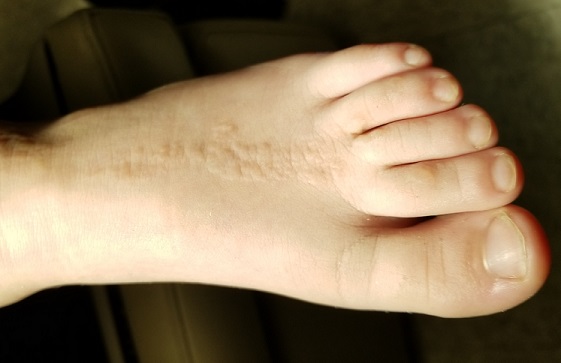
A 10-year-old boy has had a lesion on his left foot for almost a year. It has not responded to either topical antifungal cream (econazole, applied twice daily for weeks) or, subsequently, topical corticosteroid cream (mometazone, also applied twice daily). Frustrated by the lack of resolution, his mother brings him for evaluation.
The condition began with faint linear scaling, the area of which became gradually wider and longer. The child reports no associated symptoms, and the mother denies seeing her son manipulate, rub, or scratch the affected skin.
Aside from mild atopy—in the form of seasonal allergies and asthma—the boy is healthy.
EXAMINATION
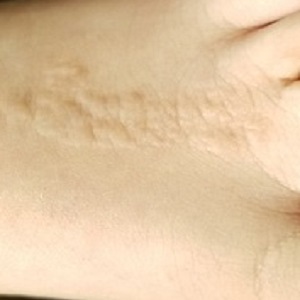
The child is well developed, well nourished, and in no distress. He gladly permits examination of the lesion, which is located on the dorsum of the left foot, running from the lower leg to just proximal to the toes. The linear strip of skin measures 2 cm at its widest point. The lesion is tan and uniformly scaly; it exhibits no overt signs of inflammation or increased warmth or tenderness on palpation.
Examination reveals no other such lesions, or indeed any abnormalities. The adjacent toenails do not appear to be involved.
What is the diagnosis?
DISCUSSION
This child has a common condition called lichen striatus in modern times, but also known as linear lichenoid dermatitis, or (in older texts) Blaschko linear acquired inflammatory skin eruption. It has nothing to do with fungal infection.
This case illustrates a fairly typical presentation, but—as with most dermatologic conditions—there are many variants. For example, lichen striatus can present as a linear collection of scaly skin running the entire length of the leg (often beginning on the buttocks) and can even affect the toenails at its distal terminus. Although the line is usually solitary, lichen striatus can affect multiple locations simultaneously. Likewise, the lesions can run in an uninterrupted line, or stop and start at various points.
Skin type can affect the appearance of the lesions: on children with darker skin, lichen striatus usually appears lighter and on fair-skinned children, darker. The condition is more common in girls than boys (3:1) and occurs most often in those ages 5 to 15. The arms are another typical location, but it can even affect the face in rare instances. There is some support for atopy as a predisposing factor—but since almost 20% of all children are atopic, this is debatable.
Lichen striatus received its historical name because it follows Blaschko’s lines—named for Alfred Blaschko, a German dermatologist who first described the condition in 1901. These bizarre curving lines are now known to follow recognized patterns of embryonic cell migration that have nothing to do with neural, lymphatic, or vascular patterns as one might otherwise imagine. Several other skin conditions involve so-called blaschkoid features, including inflammatory linear verruciform nevi and some forms of epidermal nevi.
LS is not dangerous in any way, though it does cause considerable consternation among parents of affected children. Luckily, it causes few if any symptoms and is self-limited. A few children will complain of mild itching, for which class 4 or 5 topical steroids can be used. Within a year or two at most, the condition will resolve—albeit with occasional postinflammatory hyperpigmentation in those with darker skin.
TAKE-HOME LEARNING POINTS
- Lichen striatus is a common condition affecting children ages 5 to 15 who develop a linear, papulosquamous eruption that favors arms and leg (but can rarely involve the face).
- Not infrequently, the condition can cause dystrophy of the nails at the terminus of the lesions.
- The lesions follow Blaschko’s lines, which are thought to represent patterns of embryonic cell migration.
- The condition is seldom symptomatic, is self-limited, and rarely leaves permanent signs of damage.
A 10-year-old boy has had a lesion on his left foot for almost a year. It has not responded to either topical antifungal cream (econazole, applied twice daily for weeks) or, subsequently, topical corticosteroid cream (mometazone, also applied twice daily). Frustrated by the lack of resolution, his mother brings him for evaluation.
The condition began with faint linear scaling, the area of which became gradually wider and longer. The child reports no associated symptoms, and the mother denies seeing her son manipulate, rub, or scratch the affected skin.
Aside from mild atopy—in the form of seasonal allergies and asthma—the boy is healthy.
EXAMINATION
The child is well developed, well nourished, and in no distress. He gladly permits examination of the lesion, which is located on the dorsum of the left foot, running from the lower leg to just proximal to the toes. The linear strip of skin measures 2 cm at its widest point. The lesion is tan and uniformly scaly; it exhibits no overt signs of inflammation or increased warmth or tenderness on palpation.
Examination reveals no other such lesions, or indeed any abnormalities. The adjacent toenails do not appear to be involved.
What is the diagnosis?
DISCUSSION
This child has a common condition called lichen striatus in modern times, but also known as linear lichenoid dermatitis, or (in older texts) Blaschko linear acquired inflammatory skin eruption. It has nothing to do with fungal infection.
This case illustrates a fairly typical presentation, but—as with most dermatologic conditions—there are many variants. For example, lichen striatus can present as a linear collection of scaly skin running the entire length of the leg (often beginning on the buttocks) and can even affect the toenails at its distal terminus. Although the line is usually solitary, lichen striatus can affect multiple locations simultaneously. Likewise, the lesions can run in an uninterrupted line, or stop and start at various points.
Skin type can affect the appearance of the lesions: on children with darker skin, lichen striatus usually appears lighter and on fair-skinned children, darker. The condition is more common in girls than boys (3:1) and occurs most often in those ages 5 to 15. The arms are another typical location, but it can even affect the face in rare instances. There is some support for atopy as a predisposing factor—but since almost 20% of all children are atopic, this is debatable.
Lichen striatus received its historical name because it follows Blaschko’s lines—named for Alfred Blaschko, a German dermatologist who first described the condition in 1901. These bizarre curving lines are now known to follow recognized patterns of embryonic cell migration that have nothing to do with neural, lymphatic, or vascular patterns as one might otherwise imagine. Several other skin conditions involve so-called blaschkoid features, including inflammatory linear verruciform nevi and some forms of epidermal nevi.
LS is not dangerous in any way, though it does cause considerable consternation among parents of affected children. Luckily, it causes few if any symptoms and is self-limited. A few children will complain of mild itching, for which class 4 or 5 topical steroids can be used. Within a year or two at most, the condition will resolve—albeit with occasional postinflammatory hyperpigmentation in those with darker skin.
TAKE-HOME LEARNING POINTS
- Lichen striatus is a common condition affecting children ages 5 to 15 who develop a linear, papulosquamous eruption that favors arms and leg (but can rarely involve the face).
- Not infrequently, the condition can cause dystrophy of the nails at the terminus of the lesions.
- The lesions follow Blaschko’s lines, which are thought to represent patterns of embryonic cell migration.
- The condition is seldom symptomatic, is self-limited, and rarely leaves permanent signs of damage.
A 10-year-old boy has had a lesion on his left foot for almost a year. It has not responded to either topical antifungal cream (econazole, applied twice daily for weeks) or, subsequently, topical corticosteroid cream (mometazone, also applied twice daily). Frustrated by the lack of resolution, his mother brings him for evaluation.
The condition began with faint linear scaling, the area of which became gradually wider and longer. The child reports no associated symptoms, and the mother denies seeing her son manipulate, rub, or scratch the affected skin.
Aside from mild atopy—in the form of seasonal allergies and asthma—the boy is healthy.
EXAMINATION
The child is well developed, well nourished, and in no distress. He gladly permits examination of the lesion, which is located on the dorsum of the left foot, running from the lower leg to just proximal to the toes. The linear strip of skin measures 2 cm at its widest point. The lesion is tan and uniformly scaly; it exhibits no overt signs of inflammation or increased warmth or tenderness on palpation.
Examination reveals no other such lesions, or indeed any abnormalities. The adjacent toenails do not appear to be involved.
What is the diagnosis?
DISCUSSION
This child has a common condition called lichen striatus in modern times, but also known as linear lichenoid dermatitis, or (in older texts) Blaschko linear acquired inflammatory skin eruption. It has nothing to do with fungal infection.
This case illustrates a fairly typical presentation, but—as with most dermatologic conditions—there are many variants. For example, lichen striatus can present as a linear collection of scaly skin running the entire length of the leg (often beginning on the buttocks) and can even affect the toenails at its distal terminus. Although the line is usually solitary, lichen striatus can affect multiple locations simultaneously. Likewise, the lesions can run in an uninterrupted line, or stop and start at various points.
Skin type can affect the appearance of the lesions: on children with darker skin, lichen striatus usually appears lighter and on fair-skinned children, darker. The condition is more common in girls than boys (3:1) and occurs most often in those ages 5 to 15. The arms are another typical location, but it can even affect the face in rare instances. There is some support for atopy as a predisposing factor—but since almost 20% of all children are atopic, this is debatable.
Lichen striatus received its historical name because it follows Blaschko’s lines—named for Alfred Blaschko, a German dermatologist who first described the condition in 1901. These bizarre curving lines are now known to follow recognized patterns of embryonic cell migration that have nothing to do with neural, lymphatic, or vascular patterns as one might otherwise imagine. Several other skin conditions involve so-called blaschkoid features, including inflammatory linear verruciform nevi and some forms of epidermal nevi.
LS is not dangerous in any way, though it does cause considerable consternation among parents of affected children. Luckily, it causes few if any symptoms and is self-limited. A few children will complain of mild itching, for which class 4 or 5 topical steroids can be used. Within a year or two at most, the condition will resolve—albeit with occasional postinflammatory hyperpigmentation in those with darker skin.
TAKE-HOME LEARNING POINTS
- Lichen striatus is a common condition affecting children ages 5 to 15 who develop a linear, papulosquamous eruption that favors arms and leg (but can rarely involve the face).
- Not infrequently, the condition can cause dystrophy of the nails at the terminus of the lesions.
- The lesions follow Blaschko’s lines, which are thought to represent patterns of embryonic cell migration.
- The condition is seldom symptomatic, is self-limited, and rarely leaves permanent signs of damage.
Painful lesion on lower lip
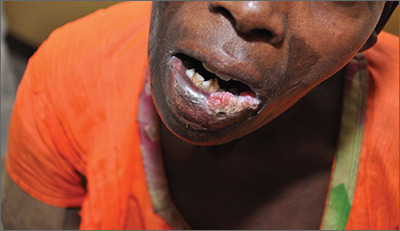
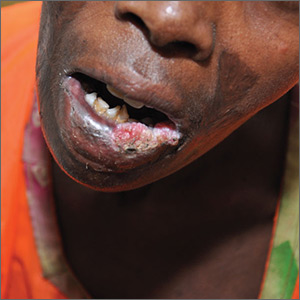
The FP recognized this as a probable squamous cell carcinoma (SCC) arising in a burn, known as a Marjolin ulcer.
The combination of the burn and the location on the lower lip made it extremely likely that this lesion was an SCC. The FP suggested the patient get a biopsy and have surgery for treatment. Unfortunately, the patient lived in poverty with no health insurance, financial means, running water, or electricity and stated that she could not afford any medical treatment. Her local hospital required cash payments, and she did not believe they would help her without funding and hoped that the medical mission team could help her. The FP was saddened by this news, but suggested that she do her best to access treatment in the near future. The FP did not have access to a pathologist (even if he could do the biopsy). Ultimately, the patient would need an experienced surgeon to excise this SCC.
With close to 1 billion people living in extreme poverty in the world, this is one sad example of a person that likely went without medical care for a serious, but treatable, illness.
Photos and text for Photo Rounds Friday courtesy of Richard P. Usatine, MD. This case was adapted from: Karnes J, Usatine R. Squamous cell carcinoma. In: Usatine R, Smith M, Mayeaux EJ, et al. Color Atlas of Family Medicine. 2nd ed. New York, NY: McGraw-Hill; 2013:999-1007.
To learn more about the newest 3rd edition of the Color Atlas and Synopsis of Family Medicine, see: https://www.amazon.com/Color-Atlas-Synopsis-Family-Medicine/dp/1259862046/
You can get the Color Atlas of Family Medicine app by clicking on this link: usatinemedia.com
The FP recognized this as a probable squamous cell carcinoma (SCC) arising in a burn, known as a Marjolin ulcer.
The combination of the burn and the location on the lower lip made it extremely likely that this lesion was an SCC. The FP suggested the patient get a biopsy and have surgery for treatment. Unfortunately, the patient lived in poverty with no health insurance, financial means, running water, or electricity and stated that she could not afford any medical treatment. Her local hospital required cash payments, and she did not believe they would help her without funding and hoped that the medical mission team could help her. The FP was saddened by this news, but suggested that she do her best to access treatment in the near future. The FP did not have access to a pathologist (even if he could do the biopsy). Ultimately, the patient would need an experienced surgeon to excise this SCC.
With close to 1 billion people living in extreme poverty in the world, this is one sad example of a person that likely went without medical care for a serious, but treatable, illness.
Photos and text for Photo Rounds Friday courtesy of Richard P. Usatine, MD. This case was adapted from: Karnes J, Usatine R. Squamous cell carcinoma. In: Usatine R, Smith M, Mayeaux EJ, et al. Color Atlas of Family Medicine. 2nd ed. New York, NY: McGraw-Hill; 2013:999-1007.
To learn more about the newest 3rd edition of the Color Atlas and Synopsis of Family Medicine, see: https://www.amazon.com/Color-Atlas-Synopsis-Family-Medicine/dp/1259862046/
You can get the Color Atlas of Family Medicine app by clicking on this link: usatinemedia.com
The FP recognized this as a probable squamous cell carcinoma (SCC) arising in a burn, known as a Marjolin ulcer.
The combination of the burn and the location on the lower lip made it extremely likely that this lesion was an SCC. The FP suggested the patient get a biopsy and have surgery for treatment. Unfortunately, the patient lived in poverty with no health insurance, financial means, running water, or electricity and stated that she could not afford any medical treatment. Her local hospital required cash payments, and she did not believe they would help her without funding and hoped that the medical mission team could help her. The FP was saddened by this news, but suggested that she do her best to access treatment in the near future. The FP did not have access to a pathologist (even if he could do the biopsy). Ultimately, the patient would need an experienced surgeon to excise this SCC.
With close to 1 billion people living in extreme poverty in the world, this is one sad example of a person that likely went without medical care for a serious, but treatable, illness.
Photos and text for Photo Rounds Friday courtesy of Richard P. Usatine, MD. This case was adapted from: Karnes J, Usatine R. Squamous cell carcinoma. In: Usatine R, Smith M, Mayeaux EJ, et al. Color Atlas of Family Medicine. 2nd ed. New York, NY: McGraw-Hill; 2013:999-1007.
To learn more about the newest 3rd edition of the Color Atlas and Synopsis of Family Medicine, see: https://www.amazon.com/Color-Atlas-Synopsis-Family-Medicine/dp/1259862046/
You can get the Color Atlas of Family Medicine app by clicking on this link: usatinemedia.com
Identifying Melanoma With Dermoscopy
Identifying Melanoma With Dermoscopy: 7- Point Checklist
Fungal failure
Two months ago I met Ed, still working at age 71. “My life’s ambition,” he said, “has been to help high school science teachers do their jobs better.”

“How’s it going?” I asked.
Ed sighed. “I’m still at it,” he said. “Let’s just say we’re not there yet.”
I too, dear colleagues, have had a life’s ambition, secret until right now:
Alas, like Ed’s, my work is not yet done.
I get reminders of this all the time, but last week the evidence got so overwhelming that I had to take a breath to settle down. And a nip. Ten cases. In 24 hours.
1. A 66-year-old woman energetically smeared econazole cream twice daily for weeks for an itchy, lichenified rash on both dorsal feet and ankles. Switched to betamethasone. Cleared in 5 days.
2. A 48-year-old woman with scaly patches on both legs. No response to terbinafine cream, then to ketoconazole cream, then to oral fluconazole. Cleared promptly on triamcinolone.
3. A 26-year-old with an erosive vulvar rash lasting month, unresponsive to Nystatin. After 5 days on a steroid, it was gone.
4. A 45-year-old man with lots of dermatoheliosis and idiopathic guttate hypomelanosis on arms and legs. No luck with topical selenium sulfide for tinea versicolor.
5. A 42-year-old nurse treated for weeks with topical antifungals. She came in with globs of fungus cream sealed in with Tegaderm (to prevent spread). Her roommates wanted to cancel her lease. Cleared of both rash and Tegaderm in 1 week. Now allowed to touch doorknobs.
6. A 27-year-old man with 8 weeks of lichenified patches all over his torso. Antifungal creams not working. Steroids do!
7. A 25-year-old recent émigré from India, where he was treated for his itchy groin rash with a succession of antifungal creams. He cannot sleep. (Imagine the plane trip from Delhi!) Has lichenified inguinal folds and scrotum. Cleared in 1 week with a topical steroid.
8. A 22-year-old woman with widespread atopic dermatitis. No response to antifungals. She had a rash at age 2 that was called “allergy to shampoo.” Clears promptly on a steroid.
9. A 22-year-old man being treated for a scaly, bilateral periocular rash with oral cephalexin. Clears promptly on a weak topical steroid.
10. A 29-year-old woman who has been suffering for months with “sensitivity” of her vulvar skin that has been diagnosed and treated as “a yeast infection,” in the absence of any rash or discharge. Her only visible finding is inverse psoriasis in the gluteal cleft. Guess what clears her up?
And so it goes, and so it has gone, week after week, year after year, decade after decade. Medicine scales Olympus: genomics, immunotherapy, stereotactic surgery. Meantime, the it’s-not-a-fungus problem seems impervious to both education and even to daily observation as obvious as it is ineffective: If a supposed fungus does not respond to antifungal treatment, then it must be a very bad fungus. If it doesn’t respond to yet another antifungal cream, then it must be terrible fungus. Reconsidering that it may not be a fungus at all seems to demand a mental paradigm shift whose achievement will have to await a more discerning generation.
In the meantime, patients not only don’t get better, but they feel defiled and dirty. They avoid human contact, intimate and otherwise, and do a lot of superfluous and expensive cleaning of house and wardrobe. If you doubt this, ask them. If you think I overstate, spend a day with me.
Early in my career I inherited the once-yearly dermatology slot at Medical Grand Rounds at the local community hospital. I spoke about cutaneous fungus, with emphasis on the fact that lots of round rashes are nummular eczema rather than fungus, as well as what it means to patients to be told they are “fungal.”
I didn’t get much direct feedback, but the chief of medicine sprang into action. He canceled the dermatology slot. Not medical enough, I guess.
Ed tells me that many high school science teachers don’t know much science. They teach it because they thought they might like to, or because there was an opening. After Ed hangs up his cleats, there will be plenty of his work left to be done.
But then, there always is.
Dr. Rockoff practices dermatology in Brookline, Mass., and is a longtime contributor to Dermatology News. He serves on the clinical faculty at Tufts University, Boston, and has taught senior medical students and other trainees for 30 years. His second book, “Act Like a Doctor, Think Like a Patient,” is available at amazon.com and barnesandnoble.com. Write to him at dermnews@mdedge.com.
Two months ago I met Ed, still working at age 71. “My life’s ambition,” he said, “has been to help high school science teachers do their jobs better.”
“How’s it going?” I asked.
Ed sighed. “I’m still at it,” he said. “Let’s just say we’re not there yet.”
I too, dear colleagues, have had a life’s ambition, secret until right now:
Alas, like Ed’s, my work is not yet done.
I get reminders of this all the time, but last week the evidence got so overwhelming that I had to take a breath to settle down. And a nip. Ten cases. In 24 hours.
1. A 66-year-old woman energetically smeared econazole cream twice daily for weeks for an itchy, lichenified rash on both dorsal feet and ankles. Switched to betamethasone. Cleared in 5 days.
2. A 48-year-old woman with scaly patches on both legs. No response to terbinafine cream, then to ketoconazole cream, then to oral fluconazole. Cleared promptly on triamcinolone.
3. A 26-year-old with an erosive vulvar rash lasting month, unresponsive to Nystatin. After 5 days on a steroid, it was gone.
4. A 45-year-old man with lots of dermatoheliosis and idiopathic guttate hypomelanosis on arms and legs. No luck with topical selenium sulfide for tinea versicolor.
5. A 42-year-old nurse treated for weeks with topical antifungals. She came in with globs of fungus cream sealed in with Tegaderm (to prevent spread). Her roommates wanted to cancel her lease. Cleared of both rash and Tegaderm in 1 week. Now allowed to touch doorknobs.
6. A 27-year-old man with 8 weeks of lichenified patches all over his torso. Antifungal creams not working. Steroids do!
7. A 25-year-old recent émigré from India, where he was treated for his itchy groin rash with a succession of antifungal creams. He cannot sleep. (Imagine the plane trip from Delhi!) Has lichenified inguinal folds and scrotum. Cleared in 1 week with a topical steroid.
8. A 22-year-old woman with widespread atopic dermatitis. No response to antifungals. She had a rash at age 2 that was called “allergy to shampoo.” Clears promptly on a steroid.
9. A 22-year-old man being treated for a scaly, bilateral periocular rash with oral cephalexin. Clears promptly on a weak topical steroid.
10. A 29-year-old woman who has been suffering for months with “sensitivity” of her vulvar skin that has been diagnosed and treated as “a yeast infection,” in the absence of any rash or discharge. Her only visible finding is inverse psoriasis in the gluteal cleft. Guess what clears her up?
And so it goes, and so it has gone, week after week, year after year, decade after decade. Medicine scales Olympus: genomics, immunotherapy, stereotactic surgery. Meantime, the it’s-not-a-fungus problem seems impervious to both education and even to daily observation as obvious as it is ineffective: If a supposed fungus does not respond to antifungal treatment, then it must be a very bad fungus. If it doesn’t respond to yet another antifungal cream, then it must be terrible fungus. Reconsidering that it may not be a fungus at all seems to demand a mental paradigm shift whose achievement will have to await a more discerning generation.
In the meantime, patients not only don’t get better, but they feel defiled and dirty. They avoid human contact, intimate and otherwise, and do a lot of superfluous and expensive cleaning of house and wardrobe. If you doubt this, ask them. If you think I overstate, spend a day with me.
Early in my career I inherited the once-yearly dermatology slot at Medical Grand Rounds at the local community hospital. I spoke about cutaneous fungus, with emphasis on the fact that lots of round rashes are nummular eczema rather than fungus, as well as what it means to patients to be told they are “fungal.”
I didn’t get much direct feedback, but the chief of medicine sprang into action. He canceled the dermatology slot. Not medical enough, I guess.
Ed tells me that many high school science teachers don’t know much science. They teach it because they thought they might like to, or because there was an opening. After Ed hangs up his cleats, there will be plenty of his work left to be done.
But then, there always is.
Dr. Rockoff practices dermatology in Brookline, Mass., and is a longtime contributor to Dermatology News. He serves on the clinical faculty at Tufts University, Boston, and has taught senior medical students and other trainees for 30 years. His second book, “Act Like a Doctor, Think Like a Patient,” is available at amazon.com and barnesandnoble.com. Write to him at dermnews@mdedge.com.
Two months ago I met Ed, still working at age 71. “My life’s ambition,” he said, “has been to help high school science teachers do their jobs better.”
“How’s it going?” I asked.
Ed sighed. “I’m still at it,” he said. “Let’s just say we’re not there yet.”
I too, dear colleagues, have had a life’s ambition, secret until right now:
Alas, like Ed’s, my work is not yet done.
I get reminders of this all the time, but last week the evidence got so overwhelming that I had to take a breath to settle down. And a nip. Ten cases. In 24 hours.
1. A 66-year-old woman energetically smeared econazole cream twice daily for weeks for an itchy, lichenified rash on both dorsal feet and ankles. Switched to betamethasone. Cleared in 5 days.
2. A 48-year-old woman with scaly patches on both legs. No response to terbinafine cream, then to ketoconazole cream, then to oral fluconazole. Cleared promptly on triamcinolone.
3. A 26-year-old with an erosive vulvar rash lasting month, unresponsive to Nystatin. After 5 days on a steroid, it was gone.
4. A 45-year-old man with lots of dermatoheliosis and idiopathic guttate hypomelanosis on arms and legs. No luck with topical selenium sulfide for tinea versicolor.
5. A 42-year-old nurse treated for weeks with topical antifungals. She came in with globs of fungus cream sealed in with Tegaderm (to prevent spread). Her roommates wanted to cancel her lease. Cleared of both rash and Tegaderm in 1 week. Now allowed to touch doorknobs.
6. A 27-year-old man with 8 weeks of lichenified patches all over his torso. Antifungal creams not working. Steroids do!
7. A 25-year-old recent émigré from India, where he was treated for his itchy groin rash with a succession of antifungal creams. He cannot sleep. (Imagine the plane trip from Delhi!) Has lichenified inguinal folds and scrotum. Cleared in 1 week with a topical steroid.
8. A 22-year-old woman with widespread atopic dermatitis. No response to antifungals. She had a rash at age 2 that was called “allergy to shampoo.” Clears promptly on a steroid.
9. A 22-year-old man being treated for a scaly, bilateral periocular rash with oral cephalexin. Clears promptly on a weak topical steroid.
10. A 29-year-old woman who has been suffering for months with “sensitivity” of her vulvar skin that has been diagnosed and treated as “a yeast infection,” in the absence of any rash or discharge. Her only visible finding is inverse psoriasis in the gluteal cleft. Guess what clears her up?
And so it goes, and so it has gone, week after week, year after year, decade after decade. Medicine scales Olympus: genomics, immunotherapy, stereotactic surgery. Meantime, the it’s-not-a-fungus problem seems impervious to both education and even to daily observation as obvious as it is ineffective: If a supposed fungus does not respond to antifungal treatment, then it must be a very bad fungus. If it doesn’t respond to yet another antifungal cream, then it must be terrible fungus. Reconsidering that it may not be a fungus at all seems to demand a mental paradigm shift whose achievement will have to await a more discerning generation.
In the meantime, patients not only don’t get better, but they feel defiled and dirty. They avoid human contact, intimate and otherwise, and do a lot of superfluous and expensive cleaning of house and wardrobe. If you doubt this, ask them. If you think I overstate, spend a day with me.
Early in my career I inherited the once-yearly dermatology slot at Medical Grand Rounds at the local community hospital. I spoke about cutaneous fungus, with emphasis on the fact that lots of round rashes are nummular eczema rather than fungus, as well as what it means to patients to be told they are “fungal.”
I didn’t get much direct feedback, but the chief of medicine sprang into action. He canceled the dermatology slot. Not medical enough, I guess.
Ed tells me that many high school science teachers don’t know much science. They teach it because they thought they might like to, or because there was an opening. After Ed hangs up his cleats, there will be plenty of his work left to be done.
But then, there always is.
Dr. Rockoff practices dermatology in Brookline, Mass., and is a longtime contributor to Dermatology News. He serves on the clinical faculty at Tufts University, Boston, and has taught senior medical students and other trainees for 30 years. His second book, “Act Like a Doctor, Think Like a Patient,” is available at amazon.com and barnesandnoble.com. Write to him at dermnews@mdedge.com.
Jakinib explosion for RA: Where do they fit in clinical practice?
CHICAGO – A measure of clarity regarding how the emerging class of oral Janus kinase inhibitors might fit into clinical practice for treatment of rheumatoid arthritis was supplied by a fusillade of five consecutive strongly positive phase 3 trials presented during a single session at the annual meeting of the American College of Rheumatology.

The session featured three randomized, double-blind, phase 3 trials of the Janus kinase inhibitor (JAKi) upadacitinib in more than 3,200 participants in three different clinical scenarios, known as the SELECT-COMPARE, SELECT-EARLY, and SELECT-MONOTHERAPY trials, along with two Japanese phase 3 trials of peficitinib, a JAK1 and -3 inhibitor, in a total of more than 1,000 rheumatoid arthritis patients.
Upadacitinib
SELECT-COMPARE: Roy M. Fleischmann, MD, presented the findings of this trial in which 1,629 patients with active RA inadequately responsive to methotrexate were randomized 2:2:1 to 26 weeks of once-daily oral upadacitinib at 15 mg, placebo, or 40 mg of adalimumab (Humira) by subcutaneous injection every 2 weeks, all on top of background stable doses of methotrexate.
Upadacitinib, a JAK1 selective agent, was the clear winner, trouncing placebo, unsurprisingly, but more importantly also proving statistically superior to adalimumab – the current go-to drug in patients with an insufficient response to methotrexate – in terms of across-the-board improvement in RA signs and symptoms, quality-of-life measures, and physical function. This result, coupled with the similarly positive findings of a trial of oral baricitinib (Olumiant) versus adalimumab in inadequate responders to methotrexate alone, and a third positive trial of oral tofacitinib (Xeljanz), have altered Dr. Fleischmann’s treatment philosophy.
“I think that these studies have changed the treatment paradigm. And I think if access – that is, costs – were the same, given a choice, if it were me, I would actually use a JAK inhibitor before I would use adalimumab, based on the results of these multiple studies in different populations,” said Dr. Fleischmann, a rheumatologist at the University of Texas Southwestern Medical Center, Dallas.
The two coprimary endpoints in SELECT-COMPARE were the week 12 American College of Rheumatology–defined 20% level of response (ACR 20) and a 28-joint Disease Activity Score based on C-reactive protein (DAS28-CRP). The ACR 20 response rate was 70.5% with upadacitinib 15 mg, significantly better than the 63% rate with adalimumab and the 36.4% rate with placebo. Similarly, the ACR 50 rate at 12 weeks was 45.2% with upadacitinib versus 29.1% with adalimumab, and ACR 70 rates were 24.9% and 13.5%, respectively.
“These are not small differences,” the rheumatologist observed. “That ACR 70 rate is almost doubled with upadacitinib.”
The rate for DAS28-CRP less than 2.6 at week 12 was 28.7% with upadacitinib, compared with 18% with adalimumab.
Improvements in pain scores and the Health Assessment Questionnaire Disability Index were also significantly greater with the JAKi, both at weeks 12 and 26.
As in the other two SELECT phase 3 trials presented at the meeting, the response to upadacitinib was quick: The JAKi was superior to placebo on the efficacy endpoints by week 2, and superior to adalimumab by week 4.
The week-12 Boolean remission rate, a stringent measure, was 9.8% in the upadacitinib group, more than twice the 4% rate with adalimumab. At week 26, the rates were 18.1% and 9.8%, respectively, a finding Dr. Fleischmann deemed “very impressive.”
Radiographic disease progression as measured by change in modified total Sharp score (mTSS) at week 26 was 0.92 with placebo, 0.24 with upadacitinib, and slightly better at 0.1 with adalimumab. Adalimumab was also slightly better than baricitinib by this metric in a separate randomized trial. But that’s not a deal breaker for Dr. Fleischmann.
“It’s a 0.1–Sharp unit difference over 6 months. So by the time a patient would be able to tell the difference clinically, if my calculation is correct they’ll be 712 years old,” he quipped.
Serious infection rates through 26 weeks were similar in the upadacitinib and adalimumab study arms, with both being higher than placebo. Venous thromboembolism occurred in one patient on placebo, two on upadacitinib, and three on adalimumab.

SELECT-EARLY: This trial involved 947 methotrexate-naive patients with moderately to severely active RA deemed at baseline to be at high risk for disease progression. They were randomized to upadacitinib at 15 or 30 mg once daily or to methotrexate monotherapy. The markers utilized for high-risk disease were positive serology, an elevated CRP, and/or erosions at baseline, explained Ronald van Vollenhoven, MD, PhD, professor of rheumatology at the University of Amsterdam.
The coprimary endpoints were the week 12 ACR 50 and DAS28-CRP-less-than-2.6 response rates. ACR 50 was achieved in 28.3% of patients on methotrexate, 52.1% on the lower dose of upadacitinib, and 56.4% on upadacitinib 30 mg. The corresponding week 24 rates were 33.4%, 60.3%, and 65.6%.
The week 12 DAS28-CRP-less-than-2.6 rates were 13.7%, 35.6%, and 40.8%. By week 24, the rates had improved to 18.5%, 48.3%, and 50%.
Other functional, clinical, and quality-of-life endpoints followed suit. There was no radiographic progression over the course of 24 weeks in 77.7% of patients on methotrexate, 87.5% on upadacitinib 15 mg, and 89.3% on the JAKi at 30 mg.
The safety profile of upadacitinib was generally similar to that of methotrexate. Decreases in hemoglobin and neutrophils were more common in the high-dose upadacitinib group, while increased transaminase levels and reduced lymphocytes occurred more often with methotrexate.
Asked if the SELECT-EARLY results will lead to a change in the major guidelines for treatment of early RA, Dr. van Vollenhoven replied: “The advent of JAKis is changing the treatment of RA. Right now the positioning of JAKis is a big point of discussion: Should they be second or third or even fourth line? But it’s clear that methotrexate stands undisputed as the first-line treatment for RA in clinical practice. That has to do in part with lots and lots of experience, the fact that some patients do well with methotrexate, the convenience, but also the pricing.”
The goal in SELECT-EARLY was to test an individualized approach in which JAKis, which are clearly more effective than methotrexate, might be reserved as first-line therapy for the subgroup of patients with compelling markers for worse prognosis, and who are therefore less likely to turn out to be methotrexate responders.
“The markers we used aren’t good enough yet to engage in individualized treatment with a very specific drug, but we’re all trying very hard to find out who needs which treatment at which point in time,” the rheumatologist said.
SELECT-MONOTHERAPY: This trial randomized 648 patients with active RA and insufficient response to methotrexate to double-blind monotherapy with once-daily upadacitinib at 15 or 30 mg or to continued methotrexate.

Once again, upadacitinib achieved all of its primary and secondary endpoints. The week 14 ACR 20 rates for methotrexate and low- and high-dose upadacitinib were 41.2%, 67.7%, and 71.2%, respectively, with DAS28-CRP-less-than-or-equal-to-3.2 rates of 19.4%, 44.7%, and 53%. Remission as defined by a Clinical Disease Activity Index (CDAI) score of 2.8 or less was achieved in 1% of patients on methotrexate, 15% on upadacitinib 15 mg, and nearly 20% with upadacitinib 30 mg, reported Josef S. Smolen, MD, professor of medicine and chairman of rheumatology at the Medical University of Vienna.
Peficitinib
Yoshiya Tanaka, MD, PhD, professor and chairman of the department of internal medicine at the University of Occupational and Environmental Health in Kitakyushu, Japan, presented the findings of two pivotal phase 3, placebo-controlled, double-blind clinical trials of peficitinib at 100 or 150 mg once daily in 1,025 Asian patients with active RA insufficiently responsive to methotrexate or other disease-modifying antirheumatic drugs. Both studies were positive for all the key endpoints. Based upon these results, the drug’s developer, Astellas Pharma, has filed for Japanese regulatory approval of peficitinib.

Which oral JAKi to use?
Some audience members, numbed by the parade of positive results, asked the investigators for guidance as to which JAKi to choose, and when.
“The upadacitinib dataset mirrors the two approved oral JAKis. The data all look very similar,” said Stanley B. Cohen, MD, codirector of the division of rheumatology at Presbyterian Hospital in Dallas and a former ACR president. “All the JAKis are effective; the safety profiles are similar. Can you help clinicians know what differentiates them? Why should I choose one or the other?”
Dr. Tanaka replied that, although much gets made of the between-agent differences in selectivity for JAK1, 2, and/or 3 inhibition, “In the human body we cannot see much difference in safety and efficacy.”
If indeed such differences exist, head-to-head randomized trials will be required to ferret them out, noted Dr. Fleischmann.
Dr. Smolen indicated rheumatologists ought to rejoice in the looming prospect of a fistful of JAKis to choose from.
“I always wondered which beta-blocker to use, and I always wondered which cholesterol-lowering drug to use, and which NSAID to use – and interestingly enough, one NSAID will work in you but not in me, and another will work in me but not in you. So I think we should be pleased that we will have several oral JAKis to choose from,” he said.
Dr. Fleischmann got in the final word: “The answer to your question is the way we always answer it in the office. It’s access. Whichever one has the best access for the patient is the one you would select.”
The SELECT trials were sponsored by AbbVie, and all the upadacitinib investigators reported receiving research funds from and serving as paid consultants to that company and numerous others. Dr. Tanaka reported receiving research grants from and serving as a paid consultant to Astellas Pharma and close to a dozen other pharmaceutical companies.
CHICAGO – A measure of clarity regarding how the emerging class of oral Janus kinase inhibitors might fit into clinical practice for treatment of rheumatoid arthritis was supplied by a fusillade of five consecutive strongly positive phase 3 trials presented during a single session at the annual meeting of the American College of Rheumatology.
The session featured three randomized, double-blind, phase 3 trials of the Janus kinase inhibitor (JAKi) upadacitinib in more than 3,200 participants in three different clinical scenarios, known as the SELECT-COMPARE, SELECT-EARLY, and SELECT-MONOTHERAPY trials, along with two Japanese phase 3 trials of peficitinib, a JAK1 and -3 inhibitor, in a total of more than 1,000 rheumatoid arthritis patients.
Upadacitinib
SELECT-COMPARE: Roy M. Fleischmann, MD, presented the findings of this trial in which 1,629 patients with active RA inadequately responsive to methotrexate were randomized 2:2:1 to 26 weeks of once-daily oral upadacitinib at 15 mg, placebo, or 40 mg of adalimumab (Humira) by subcutaneous injection every 2 weeks, all on top of background stable doses of methotrexate.
Upadacitinib, a JAK1 selective agent, was the clear winner, trouncing placebo, unsurprisingly, but more importantly also proving statistically superior to adalimumab – the current go-to drug in patients with an insufficient response to methotrexate – in terms of across-the-board improvement in RA signs and symptoms, quality-of-life measures, and physical function. This result, coupled with the similarly positive findings of a trial of oral baricitinib (Olumiant) versus adalimumab in inadequate responders to methotrexate alone, and a third positive trial of oral tofacitinib (Xeljanz), have altered Dr. Fleischmann’s treatment philosophy.
“I think that these studies have changed the treatment paradigm. And I think if access – that is, costs – were the same, given a choice, if it were me, I would actually use a JAK inhibitor before I would use adalimumab, based on the results of these multiple studies in different populations,” said Dr. Fleischmann, a rheumatologist at the University of Texas Southwestern Medical Center, Dallas.
The two coprimary endpoints in SELECT-COMPARE were the week 12 American College of Rheumatology–defined 20% level of response (ACR 20) and a 28-joint Disease Activity Score based on C-reactive protein (DAS28-CRP). The ACR 20 response rate was 70.5% with upadacitinib 15 mg, significantly better than the 63% rate with adalimumab and the 36.4% rate with placebo. Similarly, the ACR 50 rate at 12 weeks was 45.2% with upadacitinib versus 29.1% with adalimumab, and ACR 70 rates were 24.9% and 13.5%, respectively.
“These are not small differences,” the rheumatologist observed. “That ACR 70 rate is almost doubled with upadacitinib.”
The rate for DAS28-CRP less than 2.6 at week 12 was 28.7% with upadacitinib, compared with 18% with adalimumab.
Improvements in pain scores and the Health Assessment Questionnaire Disability Index were also significantly greater with the JAKi, both at weeks 12 and 26.
As in the other two SELECT phase 3 trials presented at the meeting, the response to upadacitinib was quick: The JAKi was superior to placebo on the efficacy endpoints by week 2, and superior to adalimumab by week 4.
The week-12 Boolean remission rate, a stringent measure, was 9.8% in the upadacitinib group, more than twice the 4% rate with adalimumab. At week 26, the rates were 18.1% and 9.8%, respectively, a finding Dr. Fleischmann deemed “very impressive.”
Radiographic disease progression as measured by change in modified total Sharp score (mTSS) at week 26 was 0.92 with placebo, 0.24 with upadacitinib, and slightly better at 0.1 with adalimumab. Adalimumab was also slightly better than baricitinib by this metric in a separate randomized trial. But that’s not a deal breaker for Dr. Fleischmann.
“It’s a 0.1–Sharp unit difference over 6 months. So by the time a patient would be able to tell the difference clinically, if my calculation is correct they’ll be 712 years old,” he quipped.
Serious infection rates through 26 weeks were similar in the upadacitinib and adalimumab study arms, with both being higher than placebo. Venous thromboembolism occurred in one patient on placebo, two on upadacitinib, and three on adalimumab.
SELECT-EARLY: This trial involved 947 methotrexate-naive patients with moderately to severely active RA deemed at baseline to be at high risk for disease progression. They were randomized to upadacitinib at 15 or 30 mg once daily or to methotrexate monotherapy. The markers utilized for high-risk disease were positive serology, an elevated CRP, and/or erosions at baseline, explained Ronald van Vollenhoven, MD, PhD, professor of rheumatology at the University of Amsterdam.
The coprimary endpoints were the week 12 ACR 50 and DAS28-CRP-less-than-2.6 response rates. ACR 50 was achieved in 28.3% of patients on methotrexate, 52.1% on the lower dose of upadacitinib, and 56.4% on upadacitinib 30 mg. The corresponding week 24 rates were 33.4%, 60.3%, and 65.6%.
The week 12 DAS28-CRP-less-than-2.6 rates were 13.7%, 35.6%, and 40.8%. By week 24, the rates had improved to 18.5%, 48.3%, and 50%.
Other functional, clinical, and quality-of-life endpoints followed suit. There was no radiographic progression over the course of 24 weeks in 77.7% of patients on methotrexate, 87.5% on upadacitinib 15 mg, and 89.3% on the JAKi at 30 mg.
The safety profile of upadacitinib was generally similar to that of methotrexate. Decreases in hemoglobin and neutrophils were more common in the high-dose upadacitinib group, while increased transaminase levels and reduced lymphocytes occurred more often with methotrexate.
Asked if the SELECT-EARLY results will lead to a change in the major guidelines for treatment of early RA, Dr. van Vollenhoven replied: “The advent of JAKis is changing the treatment of RA. Right now the positioning of JAKis is a big point of discussion: Should they be second or third or even fourth line? But it’s clear that methotrexate stands undisputed as the first-line treatment for RA in clinical practice. That has to do in part with lots and lots of experience, the fact that some patients do well with methotrexate, the convenience, but also the pricing.”
The goal in SELECT-EARLY was to test an individualized approach in which JAKis, which are clearly more effective than methotrexate, might be reserved as first-line therapy for the subgroup of patients with compelling markers for worse prognosis, and who are therefore less likely to turn out to be methotrexate responders.
“The markers we used aren’t good enough yet to engage in individualized treatment with a very specific drug, but we’re all trying very hard to find out who needs which treatment at which point in time,” the rheumatologist said.
SELECT-MONOTHERAPY: This trial randomized 648 patients with active RA and insufficient response to methotrexate to double-blind monotherapy with once-daily upadacitinib at 15 or 30 mg or to continued methotrexate.
Once again, upadacitinib achieved all of its primary and secondary endpoints. The week 14 ACR 20 rates for methotrexate and low- and high-dose upadacitinib were 41.2%, 67.7%, and 71.2%, respectively, with DAS28-CRP-less-than-or-equal-to-3.2 rates of 19.4%, 44.7%, and 53%. Remission as defined by a Clinical Disease Activity Index (CDAI) score of 2.8 or less was achieved in 1% of patients on methotrexate, 15% on upadacitinib 15 mg, and nearly 20% with upadacitinib 30 mg, reported Josef S. Smolen, MD, professor of medicine and chairman of rheumatology at the Medical University of Vienna.
Peficitinib
Yoshiya Tanaka, MD, PhD, professor and chairman of the department of internal medicine at the University of Occupational and Environmental Health in Kitakyushu, Japan, presented the findings of two pivotal phase 3, placebo-controlled, double-blind clinical trials of peficitinib at 100 or 150 mg once daily in 1,025 Asian patients with active RA insufficiently responsive to methotrexate or other disease-modifying antirheumatic drugs. Both studies were positive for all the key endpoints. Based upon these results, the drug’s developer, Astellas Pharma, has filed for Japanese regulatory approval of peficitinib.
Which oral JAKi to use?
Some audience members, numbed by the parade of positive results, asked the investigators for guidance as to which JAKi to choose, and when.
“The upadacitinib dataset mirrors the two approved oral JAKis. The data all look very similar,” said Stanley B. Cohen, MD, codirector of the division of rheumatology at Presbyterian Hospital in Dallas and a former ACR president. “All the JAKis are effective; the safety profiles are similar. Can you help clinicians know what differentiates them? Why should I choose one or the other?”
Dr. Tanaka replied that, although much gets made of the between-agent differences in selectivity for JAK1, 2, and/or 3 inhibition, “In the human body we cannot see much difference in safety and efficacy.”
If indeed such differences exist, head-to-head randomized trials will be required to ferret them out, noted Dr. Fleischmann.
Dr. Smolen indicated rheumatologists ought to rejoice in the looming prospect of a fistful of JAKis to choose from.
“I always wondered which beta-blocker to use, and I always wondered which cholesterol-lowering drug to use, and which NSAID to use – and interestingly enough, one NSAID will work in you but not in me, and another will work in me but not in you. So I think we should be pleased that we will have several oral JAKis to choose from,” he said.
Dr. Fleischmann got in the final word: “The answer to your question is the way we always answer it in the office. It’s access. Whichever one has the best access for the patient is the one you would select.”
The SELECT trials were sponsored by AbbVie, and all the upadacitinib investigators reported receiving research funds from and serving as paid consultants to that company and numerous others. Dr. Tanaka reported receiving research grants from and serving as a paid consultant to Astellas Pharma and close to a dozen other pharmaceutical companies.
CHICAGO – A measure of clarity regarding how the emerging class of oral Janus kinase inhibitors might fit into clinical practice for treatment of rheumatoid arthritis was supplied by a fusillade of five consecutive strongly positive phase 3 trials presented during a single session at the annual meeting of the American College of Rheumatology.
The session featured three randomized, double-blind, phase 3 trials of the Janus kinase inhibitor (JAKi) upadacitinib in more than 3,200 participants in three different clinical scenarios, known as the SELECT-COMPARE, SELECT-EARLY, and SELECT-MONOTHERAPY trials, along with two Japanese phase 3 trials of peficitinib, a JAK1 and -3 inhibitor, in a total of more than 1,000 rheumatoid arthritis patients.
Upadacitinib
SELECT-COMPARE: Roy M. Fleischmann, MD, presented the findings of this trial in which 1,629 patients with active RA inadequately responsive to methotrexate were randomized 2:2:1 to 26 weeks of once-daily oral upadacitinib at 15 mg, placebo, or 40 mg of adalimumab (Humira) by subcutaneous injection every 2 weeks, all on top of background stable doses of methotrexate.
Upadacitinib, a JAK1 selective agent, was the clear winner, trouncing placebo, unsurprisingly, but more importantly also proving statistically superior to adalimumab – the current go-to drug in patients with an insufficient response to methotrexate – in terms of across-the-board improvement in RA signs and symptoms, quality-of-life measures, and physical function. This result, coupled with the similarly positive findings of a trial of oral baricitinib (Olumiant) versus adalimumab in inadequate responders to methotrexate alone, and a third positive trial of oral tofacitinib (Xeljanz), have altered Dr. Fleischmann’s treatment philosophy.
“I think that these studies have changed the treatment paradigm. And I think if access – that is, costs – were the same, given a choice, if it were me, I would actually use a JAK inhibitor before I would use adalimumab, based on the results of these multiple studies in different populations,” said Dr. Fleischmann, a rheumatologist at the University of Texas Southwestern Medical Center, Dallas.
The two coprimary endpoints in SELECT-COMPARE were the week 12 American College of Rheumatology–defined 20% level of response (ACR 20) and a 28-joint Disease Activity Score based on C-reactive protein (DAS28-CRP). The ACR 20 response rate was 70.5% with upadacitinib 15 mg, significantly better than the 63% rate with adalimumab and the 36.4% rate with placebo. Similarly, the ACR 50 rate at 12 weeks was 45.2% with upadacitinib versus 29.1% with adalimumab, and ACR 70 rates were 24.9% and 13.5%, respectively.
“These are not small differences,” the rheumatologist observed. “That ACR 70 rate is almost doubled with upadacitinib.”
The rate for DAS28-CRP less than 2.6 at week 12 was 28.7% with upadacitinib, compared with 18% with adalimumab.
Improvements in pain scores and the Health Assessment Questionnaire Disability Index were also significantly greater with the JAKi, both at weeks 12 and 26.
As in the other two SELECT phase 3 trials presented at the meeting, the response to upadacitinib was quick: The JAKi was superior to placebo on the efficacy endpoints by week 2, and superior to adalimumab by week 4.
The week-12 Boolean remission rate, a stringent measure, was 9.8% in the upadacitinib group, more than twice the 4% rate with adalimumab. At week 26, the rates were 18.1% and 9.8%, respectively, a finding Dr. Fleischmann deemed “very impressive.”
Radiographic disease progression as measured by change in modified total Sharp score (mTSS) at week 26 was 0.92 with placebo, 0.24 with upadacitinib, and slightly better at 0.1 with adalimumab. Adalimumab was also slightly better than baricitinib by this metric in a separate randomized trial. But that’s not a deal breaker for Dr. Fleischmann.
“It’s a 0.1–Sharp unit difference over 6 months. So by the time a patient would be able to tell the difference clinically, if my calculation is correct they’ll be 712 years old,” he quipped.
Serious infection rates through 26 weeks were similar in the upadacitinib and adalimumab study arms, with both being higher than placebo. Venous thromboembolism occurred in one patient on placebo, two on upadacitinib, and three on adalimumab.
SELECT-EARLY: This trial involved 947 methotrexate-naive patients with moderately to severely active RA deemed at baseline to be at high risk for disease progression. They were randomized to upadacitinib at 15 or 30 mg once daily or to methotrexate monotherapy. The markers utilized for high-risk disease were positive serology, an elevated CRP, and/or erosions at baseline, explained Ronald van Vollenhoven, MD, PhD, professor of rheumatology at the University of Amsterdam.
The coprimary endpoints were the week 12 ACR 50 and DAS28-CRP-less-than-2.6 response rates. ACR 50 was achieved in 28.3% of patients on methotrexate, 52.1% on the lower dose of upadacitinib, and 56.4% on upadacitinib 30 mg. The corresponding week 24 rates were 33.4%, 60.3%, and 65.6%.
The week 12 DAS28-CRP-less-than-2.6 rates were 13.7%, 35.6%, and 40.8%. By week 24, the rates had improved to 18.5%, 48.3%, and 50%.
Other functional, clinical, and quality-of-life endpoints followed suit. There was no radiographic progression over the course of 24 weeks in 77.7% of patients on methotrexate, 87.5% on upadacitinib 15 mg, and 89.3% on the JAKi at 30 mg.
The safety profile of upadacitinib was generally similar to that of methotrexate. Decreases in hemoglobin and neutrophils were more common in the high-dose upadacitinib group, while increased transaminase levels and reduced lymphocytes occurred more often with methotrexate.
Asked if the SELECT-EARLY results will lead to a change in the major guidelines for treatment of early RA, Dr. van Vollenhoven replied: “The advent of JAKis is changing the treatment of RA. Right now the positioning of JAKis is a big point of discussion: Should they be second or third or even fourth line? But it’s clear that methotrexate stands undisputed as the first-line treatment for RA in clinical practice. That has to do in part with lots and lots of experience, the fact that some patients do well with methotrexate, the convenience, but also the pricing.”
The goal in SELECT-EARLY was to test an individualized approach in which JAKis, which are clearly more effective than methotrexate, might be reserved as first-line therapy for the subgroup of patients with compelling markers for worse prognosis, and who are therefore less likely to turn out to be methotrexate responders.
“The markers we used aren’t good enough yet to engage in individualized treatment with a very specific drug, but we’re all trying very hard to find out who needs which treatment at which point in time,” the rheumatologist said.
SELECT-MONOTHERAPY: This trial randomized 648 patients with active RA and insufficient response to methotrexate to double-blind monotherapy with once-daily upadacitinib at 15 or 30 mg or to continued methotrexate.
Once again, upadacitinib achieved all of its primary and secondary endpoints. The week 14 ACR 20 rates for methotrexate and low- and high-dose upadacitinib were 41.2%, 67.7%, and 71.2%, respectively, with DAS28-CRP-less-than-or-equal-to-3.2 rates of 19.4%, 44.7%, and 53%. Remission as defined by a Clinical Disease Activity Index (CDAI) score of 2.8 or less was achieved in 1% of patients on methotrexate, 15% on upadacitinib 15 mg, and nearly 20% with upadacitinib 30 mg, reported Josef S. Smolen, MD, professor of medicine and chairman of rheumatology at the Medical University of Vienna.
Peficitinib
Yoshiya Tanaka, MD, PhD, professor and chairman of the department of internal medicine at the University of Occupational and Environmental Health in Kitakyushu, Japan, presented the findings of two pivotal phase 3, placebo-controlled, double-blind clinical trials of peficitinib at 100 or 150 mg once daily in 1,025 Asian patients with active RA insufficiently responsive to methotrexate or other disease-modifying antirheumatic drugs. Both studies were positive for all the key endpoints. Based upon these results, the drug’s developer, Astellas Pharma, has filed for Japanese regulatory approval of peficitinib.
Which oral JAKi to use?
Some audience members, numbed by the parade of positive results, asked the investigators for guidance as to which JAKi to choose, and when.
“The upadacitinib dataset mirrors the two approved oral JAKis. The data all look very similar,” said Stanley B. Cohen, MD, codirector of the division of rheumatology at Presbyterian Hospital in Dallas and a former ACR president. “All the JAKis are effective; the safety profiles are similar. Can you help clinicians know what differentiates them? Why should I choose one or the other?”
Dr. Tanaka replied that, although much gets made of the between-agent differences in selectivity for JAK1, 2, and/or 3 inhibition, “In the human body we cannot see much difference in safety and efficacy.”
If indeed such differences exist, head-to-head randomized trials will be required to ferret them out, noted Dr. Fleischmann.
Dr. Smolen indicated rheumatologists ought to rejoice in the looming prospect of a fistful of JAKis to choose from.
“I always wondered which beta-blocker to use, and I always wondered which cholesterol-lowering drug to use, and which NSAID to use – and interestingly enough, one NSAID will work in you but not in me, and another will work in me but not in you. So I think we should be pleased that we will have several oral JAKis to choose from,” he said.
Dr. Fleischmann got in the final word: “The answer to your question is the way we always answer it in the office. It’s access. Whichever one has the best access for the patient is the one you would select.”
The SELECT trials were sponsored by AbbVie, and all the upadacitinib investigators reported receiving research funds from and serving as paid consultants to that company and numerous others. Dr. Tanaka reported receiving research grants from and serving as a paid consultant to Astellas Pharma and close to a dozen other pharmaceutical companies.
REPORTING FROM THE ACR ANNUAL MEETING
Growth on right hand
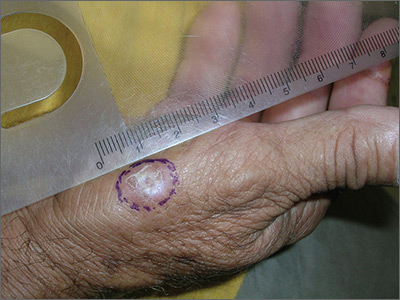
The FP recognized that this could be a wart but was concerned that it might be a squamous cell carcinoma (SCC) related to HPV and sun exposure.
He performed a shave biopsy and the pathology report indicated it was an SCC in situ. (See the Watch & Learn video on “Shave biopsy.”) At the follow-up visit, the FP reviewed the patient’s treatment options, which included topical 5% fluorouracil, topical imiquimod, and surgical excision. He also explained that the topical treatments were off label, so these options might have a lower success rate than the surgery.
The patient chose to have the surgery, even though he’d be out of work while the excision site was healing. The FP provided counseling about sun avoidance, the consistent use of a hat outdoors, and the use of sunscreens when exposed to the sun. He also referred the patient to a dermatologist who had extensive experience doing skin cancer surgery.
Photos and text for Photo Rounds Friday courtesy of Richard P. Usatine, MD. This case was adapted from: Karnes J, Usatine R. Squamous cell carcinoma. In: Usatine R, Smith M, Mayeaux EJ, et al. Color Atlas of Family Medicine. 2nd ed. New York, NY: McGraw-Hill; 2013:999-1007.
To learn more about the Color Atlas of Family Medicine, see: www.amazon.com/Color-Family-Medicine-Richard-Usatine/dp/0071769641/.
The new third edition will be available in January 2019: https://www.amazon.com/Color-Atlas-Synopsis-Family-Medicine/dp/1259862046/.
You can also get the second edition of the Color Atlas of Family Medicine as an app by clicking on this link: usatinemedia.com.
The FP recognized that this could be a wart but was concerned that it might be a squamous cell carcinoma (SCC) related to HPV and sun exposure.
He performed a shave biopsy and the pathology report indicated it was an SCC in situ. (See the Watch & Learn video on “Shave biopsy.”) At the follow-up visit, the FP reviewed the patient’s treatment options, which included topical 5% fluorouracil, topical imiquimod, and surgical excision. He also explained that the topical treatments were off label, so these options might have a lower success rate than the surgery.
The patient chose to have the surgery, even though he’d be out of work while the excision site was healing. The FP provided counseling about sun avoidance, the consistent use of a hat outdoors, and the use of sunscreens when exposed to the sun. He also referred the patient to a dermatologist who had extensive experience doing skin cancer surgery.
Photos and text for Photo Rounds Friday courtesy of Richard P. Usatine, MD. This case was adapted from: Karnes J, Usatine R. Squamous cell carcinoma. In: Usatine R, Smith M, Mayeaux EJ, et al. Color Atlas of Family Medicine. 2nd ed. New York, NY: McGraw-Hill; 2013:999-1007.
To learn more about the Color Atlas of Family Medicine, see: www.amazon.com/Color-Family-Medicine-Richard-Usatine/dp/0071769641/.
The new third edition will be available in January 2019: https://www.amazon.com/Color-Atlas-Synopsis-Family-Medicine/dp/1259862046/.
You can also get the second edition of the Color Atlas of Family Medicine as an app by clicking on this link: usatinemedia.com.
The FP recognized that this could be a wart but was concerned that it might be a squamous cell carcinoma (SCC) related to HPV and sun exposure.
He performed a shave biopsy and the pathology report indicated it was an SCC in situ. (See the Watch & Learn video on “Shave biopsy.”) At the follow-up visit, the FP reviewed the patient’s treatment options, which included topical 5% fluorouracil, topical imiquimod, and surgical excision. He also explained that the topical treatments were off label, so these options might have a lower success rate than the surgery.
The patient chose to have the surgery, even though he’d be out of work while the excision site was healing. The FP provided counseling about sun avoidance, the consistent use of a hat outdoors, and the use of sunscreens when exposed to the sun. He also referred the patient to a dermatologist who had extensive experience doing skin cancer surgery.
Photos and text for Photo Rounds Friday courtesy of Richard P. Usatine, MD. This case was adapted from: Karnes J, Usatine R. Squamous cell carcinoma. In: Usatine R, Smith M, Mayeaux EJ, et al. Color Atlas of Family Medicine. 2nd ed. New York, NY: McGraw-Hill; 2013:999-1007.
To learn more about the Color Atlas of Family Medicine, see: www.amazon.com/Color-Family-Medicine-Richard-Usatine/dp/0071769641/.
The new third edition will be available in January 2019: https://www.amazon.com/Color-Atlas-Synopsis-Family-Medicine/dp/1259862046/.
You can also get the second edition of the Color Atlas of Family Medicine as an app by clicking on this link: usatinemedia.com.