User login
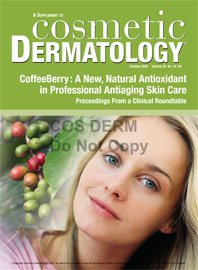
CoffeeBerry: A New, Natural Antioxidant in Professional Antiaging Skin Care: Proceedings From a Clinical Roundtable
Cosmetic Dermatologic Skin Care: The Essence of Our Training
Temporal Brow-lift With Botulinum Toxin Type A: Review of Existing Methods and Description of an Easy and Reliable Method to Achieve a Lateral Temporal Brow-lift
Vascular Malformation of the Tongue Treated With Transmucosal Nd:YAG Laser
Facial Photoaging Treated With Salicylic Acid–Enhanced Photodynamic Therapy
Comment on "Comparison of Poly-L-lactic Acid and Calcium Hydroxylapatite for Treating Human Immunodeficiency Virus–Associated Facial Lipoatrophy" [letter]
Botulinum Toxin Type A for Pediatric Hyperhidrosis
Understanding At-Risk Photobehavior
Efficacy Varies Among Options for Surgical Scar Revision
TORONTO Scar revision can be a challenge for dermatologists.
Many patients who are dissatisfied with their postsurgical result expect immediate improvement. Others request topical treatments recommended by a friend or the Internet. However, clinical efficacy varies widely. Lack of substantial evidence compounds the challenge, Dr. David Zloty said at the annual conference of the Canadian Dermatology Association.
Topical treatments, "pressure therapy," injectable agents, cryotherapy, lasers, and surgical revision are among the many choices for scar management. Although scarring can be minimized through good surgical technique, some patients seek to improve the appearance, making patient education and expectation management important. Some patients might have to adopt a wait-and-see approach because it can take up to 2 years to reach final scar appearance and strength, said Dr. Zloty of the University of British Columbia, Vancouver.
Only minimal strength returns immediately postprocedure, "so when you take stitches out at 12 weeks, the site only has 5%10% of its final strength," he said.
Adhesive tape or semiocclusive dressings are an option, but "I rarely use this except for women on the upper back or chest," Dr. Zloty said.
Topical imiquimod (Aldara) is another possibility. One study in a small number of patients showed efficacy when it was applied following shave excision of earlobe keloids (Dermatol. Surg. 2006;32:3806), but Dr. Zloty said he does not use imiquimod for scar revision.
He is more likely to suggest Cicaplast epidermal recovery accelerator. "It's reasonably priced and may help reduce scar erythema. I don't want to lead you to believe it's a great compound, but minimal improvement is still something," said Dr. Zloty, who disclosed that he was previously paid to lecture on this product.
Another topical, Dermatix C (a formulation available in Canada from Valeant Pharmaceuticals International) is a combination of silicone gel and vitamin C ester. It costs $40$50 (in U.S. dollars) per tube in British Columbia, so it is expensive, said Dr. Zloty, who is also director of the skin care surgery centre at Vancouver General Hospital.
Mederma is a topical gel with allium cepa (onion extract). A prospective, double-blind study indicated that Mederma did not improve scar cosmesis or symptoms compared with Aquaphor petrolatum-based ointment (Dermatol. Surg. 2006;32:1937).
Many fair-skinned patients are distressed by the redness of postsurgical scarring. "Don't forget use of makeup as a topical. Sometimes you have to teach them how to put it on correctly," Dr. Zloty said.
Dermatologists sometimes forget to mention sunscreen in their postsurgical instructions. "I am very strict about sunscreen use, recommending broad spectrum, [with] at least SPF 30, as soon as the site heals over."
Vitamin E "is one of the few topicals that I will say no to," Dr. Zloty said, citing insufficient evidence of its efficacy. This stance can be challenging, though, because many patients specifically ask for vitamin E.
Silicone sheets are another postsurgical scar option, but they "had their heyday about 5 years ago," Dr. Zloty said. He will still suggest the sheets for scars on the chest, back, and shoulders of young women to minimize redness. They must be used 24 hours per day for up to 6 months for best results, so compliance is an issue. A meeting attendee commented that the sheets are difficult to use and often fall off.
"Pressure therapy" for scars is used primarily for earlobes, but can be used anywhere. Massage can aid small scars by altering wound tension. Start 23 weeks after suture removal, he suggested. "This is an accepted part of our scar armamentarium."
Cryotherapy can be 50%80% effective for keloids, Dr. Zloty said. However, he added, "I've never used cryo as a direct modality, but I use it to get steroid in a scar."
Steroid injections can take up to six injections. "Go into the heart of the scar," not too shallow or too deep, Dr. Zloty said.
Dr. Zloty does not use laser treatments like pulse dye or fractional resurfacing as initial therapy for scars. "I use the pulse dye after everything else is done to improve erythema." It is usually effective after one or two treatments. He also refers patients with hypopigmented facial scars for fractional resurfacing to help blend the area between hypopigmented and normal skin.
Surgical scar revision can be very effective. Dr. Zloty uses dermabrasion, direct scar excision, Z-plasty, or W-plasty.
There can be about a 50%60% improvement with dermabrasion, but it can take up to 1 year for erythema to resolve. Dr. Zloty reserves the technique primarily for scars from full-thickness skin grafts on the nose or elsewhere on the face.
Direct surgical excision of the initial scar can "get a better scar with less shadow," he said. Z-plasty, W-plasty, and other surgical techniques change scar direction or reduce the straight line of a scar to make visual recognition of a scar more difficult.

Direct surgical excision can "get a better scar with less shadow," said Dr. David Zloty. The patient above is shown before and 3 months after revision using the W-plasty technique. Photos courtesy Dr. David Zloty

TORONTO Scar revision can be a challenge for dermatologists.
Many patients who are dissatisfied with their postsurgical result expect immediate improvement. Others request topical treatments recommended by a friend or the Internet. However, clinical efficacy varies widely. Lack of substantial evidence compounds the challenge, Dr. David Zloty said at the annual conference of the Canadian Dermatology Association.
Topical treatments, "pressure therapy," injectable agents, cryotherapy, lasers, and surgical revision are among the many choices for scar management. Although scarring can be minimized through good surgical technique, some patients seek to improve the appearance, making patient education and expectation management important. Some patients might have to adopt a wait-and-see approach because it can take up to 2 years to reach final scar appearance and strength, said Dr. Zloty of the University of British Columbia, Vancouver.
Only minimal strength returns immediately postprocedure, "so when you take stitches out at 12 weeks, the site only has 5%10% of its final strength," he said.
Adhesive tape or semiocclusive dressings are an option, but "I rarely use this except for women on the upper back or chest," Dr. Zloty said.
Topical imiquimod (Aldara) is another possibility. One study in a small number of patients showed efficacy when it was applied following shave excision of earlobe keloids (Dermatol. Surg. 2006;32:3806), but Dr. Zloty said he does not use imiquimod for scar revision.
He is more likely to suggest Cicaplast epidermal recovery accelerator. "It's reasonably priced and may help reduce scar erythema. I don't want to lead you to believe it's a great compound, but minimal improvement is still something," said Dr. Zloty, who disclosed that he was previously paid to lecture on this product.
Another topical, Dermatix C (a formulation available in Canada from Valeant Pharmaceuticals International) is a combination of silicone gel and vitamin C ester. It costs $40$50 (in U.S. dollars) per tube in British Columbia, so it is expensive, said Dr. Zloty, who is also director of the skin care surgery centre at Vancouver General Hospital.
Mederma is a topical gel with allium cepa (onion extract). A prospective, double-blind study indicated that Mederma did not improve scar cosmesis or symptoms compared with Aquaphor petrolatum-based ointment (Dermatol. Surg. 2006;32:1937).
Many fair-skinned patients are distressed by the redness of postsurgical scarring. "Don't forget use of makeup as a topical. Sometimes you have to teach them how to put it on correctly," Dr. Zloty said.
Dermatologists sometimes forget to mention sunscreen in their postsurgical instructions. "I am very strict about sunscreen use, recommending broad spectrum, [with] at least SPF 30, as soon as the site heals over."
Vitamin E "is one of the few topicals that I will say no to," Dr. Zloty said, citing insufficient evidence of its efficacy. This stance can be challenging, though, because many patients specifically ask for vitamin E.
Silicone sheets are another postsurgical scar option, but they "had their heyday about 5 years ago," Dr. Zloty said. He will still suggest the sheets for scars on the chest, back, and shoulders of young women to minimize redness. They must be used 24 hours per day for up to 6 months for best results, so compliance is an issue. A meeting attendee commented that the sheets are difficult to use and often fall off.
"Pressure therapy" for scars is used primarily for earlobes, but can be used anywhere. Massage can aid small scars by altering wound tension. Start 23 weeks after suture removal, he suggested. "This is an accepted part of our scar armamentarium."
Cryotherapy can be 50%80% effective for keloids, Dr. Zloty said. However, he added, "I've never used cryo as a direct modality, but I use it to get steroid in a scar."
Steroid injections can take up to six injections. "Go into the heart of the scar," not too shallow or too deep, Dr. Zloty said.
Dr. Zloty does not use laser treatments like pulse dye or fractional resurfacing as initial therapy for scars. "I use the pulse dye after everything else is done to improve erythema." It is usually effective after one or two treatments. He also refers patients with hypopigmented facial scars for fractional resurfacing to help blend the area between hypopigmented and normal skin.
Surgical scar revision can be very effective. Dr. Zloty uses dermabrasion, direct scar excision, Z-plasty, or W-plasty.
There can be about a 50%60% improvement with dermabrasion, but it can take up to 1 year for erythema to resolve. Dr. Zloty reserves the technique primarily for scars from full-thickness skin grafts on the nose or elsewhere on the face.
Direct surgical excision of the initial scar can "get a better scar with less shadow," he said. Z-plasty, W-plasty, and other surgical techniques change scar direction or reduce the straight line of a scar to make visual recognition of a scar more difficult.
Direct surgical excision can "get a better scar with less shadow," said Dr. David Zloty. The patient above is shown before and 3 months after revision using the W-plasty technique. Photos courtesy Dr. David Zloty
TORONTO Scar revision can be a challenge for dermatologists.
Many patients who are dissatisfied with their postsurgical result expect immediate improvement. Others request topical treatments recommended by a friend or the Internet. However, clinical efficacy varies widely. Lack of substantial evidence compounds the challenge, Dr. David Zloty said at the annual conference of the Canadian Dermatology Association.
Topical treatments, "pressure therapy," injectable agents, cryotherapy, lasers, and surgical revision are among the many choices for scar management. Although scarring can be minimized through good surgical technique, some patients seek to improve the appearance, making patient education and expectation management important. Some patients might have to adopt a wait-and-see approach because it can take up to 2 years to reach final scar appearance and strength, said Dr. Zloty of the University of British Columbia, Vancouver.
Only minimal strength returns immediately postprocedure, "so when you take stitches out at 12 weeks, the site only has 5%10% of its final strength," he said.
Adhesive tape or semiocclusive dressings are an option, but "I rarely use this except for women on the upper back or chest," Dr. Zloty said.
Topical imiquimod (Aldara) is another possibility. One study in a small number of patients showed efficacy when it was applied following shave excision of earlobe keloids (Dermatol. Surg. 2006;32:3806), but Dr. Zloty said he does not use imiquimod for scar revision.
He is more likely to suggest Cicaplast epidermal recovery accelerator. "It's reasonably priced and may help reduce scar erythema. I don't want to lead you to believe it's a great compound, but minimal improvement is still something," said Dr. Zloty, who disclosed that he was previously paid to lecture on this product.
Another topical, Dermatix C (a formulation available in Canada from Valeant Pharmaceuticals International) is a combination of silicone gel and vitamin C ester. It costs $40$50 (in U.S. dollars) per tube in British Columbia, so it is expensive, said Dr. Zloty, who is also director of the skin care surgery centre at Vancouver General Hospital.
Mederma is a topical gel with allium cepa (onion extract). A prospective, double-blind study indicated that Mederma did not improve scar cosmesis or symptoms compared with Aquaphor petrolatum-based ointment (Dermatol. Surg. 2006;32:1937).
Many fair-skinned patients are distressed by the redness of postsurgical scarring. "Don't forget use of makeup as a topical. Sometimes you have to teach them how to put it on correctly," Dr. Zloty said.
Dermatologists sometimes forget to mention sunscreen in their postsurgical instructions. "I am very strict about sunscreen use, recommending broad spectrum, [with] at least SPF 30, as soon as the site heals over."
Vitamin E "is one of the few topicals that I will say no to," Dr. Zloty said, citing insufficient evidence of its efficacy. This stance can be challenging, though, because many patients specifically ask for vitamin E.
Silicone sheets are another postsurgical scar option, but they "had their heyday about 5 years ago," Dr. Zloty said. He will still suggest the sheets for scars on the chest, back, and shoulders of young women to minimize redness. They must be used 24 hours per day for up to 6 months for best results, so compliance is an issue. A meeting attendee commented that the sheets are difficult to use and often fall off.
"Pressure therapy" for scars is used primarily for earlobes, but can be used anywhere. Massage can aid small scars by altering wound tension. Start 23 weeks after suture removal, he suggested. "This is an accepted part of our scar armamentarium."
Cryotherapy can be 50%80% effective for keloids, Dr. Zloty said. However, he added, "I've never used cryo as a direct modality, but I use it to get steroid in a scar."
Steroid injections can take up to six injections. "Go into the heart of the scar," not too shallow or too deep, Dr. Zloty said.
Dr. Zloty does not use laser treatments like pulse dye or fractional resurfacing as initial therapy for scars. "I use the pulse dye after everything else is done to improve erythema." It is usually effective after one or two treatments. He also refers patients with hypopigmented facial scars for fractional resurfacing to help blend the area between hypopigmented and normal skin.
Surgical scar revision can be very effective. Dr. Zloty uses dermabrasion, direct scar excision, Z-plasty, or W-plasty.
There can be about a 50%60% improvement with dermabrasion, but it can take up to 1 year for erythema to resolve. Dr. Zloty reserves the technique primarily for scars from full-thickness skin grafts on the nose or elsewhere on the face.
Direct surgical excision of the initial scar can "get a better scar with less shadow," he said. Z-plasty, W-plasty, and other surgical techniques change scar direction or reduce the straight line of a scar to make visual recognition of a scar more difficult.
Direct surgical excision can "get a better scar with less shadow," said Dr. David Zloty. The patient above is shown before and 3 months after revision using the W-plasty technique. Photos courtesy Dr. David Zloty
Future of Dermasurgery in Danger, Expert Says
CORONADO, CALIF. Over the next two decades, dermasurgery will transform into a field in which noninvasive treatments and nonsurgical approaches rule the day, Dr. Ronald Moy predicted at the annual meeting of the Pacific Dermatologic Association.
"It's clear that what we're doing today is going to be considered barbaric if we look 1520 years down the road," said Dr. Moy of the University of California, Los Angeles, and the association's immediate past president.
One key aspect of dermasurgery's future will involve treatment of skin cancer nonsurgically with a cocktail of immunomodulators. "We've done projects on our lab where we can put interleukin-2 into skin cancer and get a 90% cure rate," he said.
Hair transplants won't be necessary because hair cloning will be readily available, and lasers will be used to prevent wrinkles, remove hair and fat, tighten and resurface skin, and for the early treatment of vessels and lentigos.
"Lasers will be handheld and will be used by patients," he added.
Dr. Moy also expects that the use of Botox will be replaced by the permanent relaxing of muscles; resurfacing of the skin will improve with new fractional resurfacing technology; tightening of the skin will improve with new energy devices; and permanent facial fillerssuch as those derived from stem cellswill become mainstream.
Facelifts will fall in popularity because of new resurfacing and tightening devices. DNA repair enzymes, growth factor, and other futuristic creams will treat and prevent aging skin at a molecular level.
Dr. Moy, the past editor in chief of the journal Dermatologic Surgery, was quick to note that, while the long-term future of dermasurgery is questionable, the short-term future is promising.
The American Society for Dermatologic Surgery is the second largest dermatology organization in the world, behind the American Academy of Dermatology, and "dermatologic surgery procedures are the fastest growing and most commonly preferred procedures," he said. "The future promises that new technology will make these procedures better."
However, certain trends in today's practice environment threaten dermasurgery's future. Dr. Moy called the proliferation of nonphysicians performing Botox injections, microdermabrasion, chemical peels, and other cosmetic procedures as "our greatest threat right now. Everybody's doing what we're doing. We might be able to change some of that with legislation, but we won't be able to [prevent] other physicians [from] practicing dermasurgery."
To complicate matters, there is a shortage of dermatologists in the United States, said Dr. Moy, who has served as vice president of the Medical Board of California.
"There's this great shortage and it's hard to get an appointment," he said. "That's only going to get worse. Even if we double the enrollment of all the California medical schools, we won't come close to the need."
The looming possibility of a national health insurance program also could affect the development of dermasurgery. Such a program probably would be modeled on dental insurance, he explained, "where your health insurance will be for catastrophic conditions. But all the little things that we do in dermatology will be on a cash basis."
On the bright side, increasing numbers of women are entering medical school and dermatology residency programs, and the dermatologists of tomorrow have a strong sense of volunteerism. "They're going to be better trained, and they'll be embracing new technology," he said.
Dr. Moy disclosed that he is a member of the scientific advisory boards for Rhytec Inc. and Bioform Medical Inc.

A patient is shown before injection of Sculptra (left)and then 2 months after treatment (right). Sculptra is an example of a long-lasting filler that is becoming an emerging trend. Photos courtesy Dr. Ronald Moy

CORONADO, CALIF. Over the next two decades, dermasurgery will transform into a field in which noninvasive treatments and nonsurgical approaches rule the day, Dr. Ronald Moy predicted at the annual meeting of the Pacific Dermatologic Association.
"It's clear that what we're doing today is going to be considered barbaric if we look 1520 years down the road," said Dr. Moy of the University of California, Los Angeles, and the association's immediate past president.
One key aspect of dermasurgery's future will involve treatment of skin cancer nonsurgically with a cocktail of immunomodulators. "We've done projects on our lab where we can put interleukin-2 into skin cancer and get a 90% cure rate," he said.
Hair transplants won't be necessary because hair cloning will be readily available, and lasers will be used to prevent wrinkles, remove hair and fat, tighten and resurface skin, and for the early treatment of vessels and lentigos.
"Lasers will be handheld and will be used by patients," he added.
Dr. Moy also expects that the use of Botox will be replaced by the permanent relaxing of muscles; resurfacing of the skin will improve with new fractional resurfacing technology; tightening of the skin will improve with new energy devices; and permanent facial fillerssuch as those derived from stem cellswill become mainstream.
Facelifts will fall in popularity because of new resurfacing and tightening devices. DNA repair enzymes, growth factor, and other futuristic creams will treat and prevent aging skin at a molecular level.
Dr. Moy, the past editor in chief of the journal Dermatologic Surgery, was quick to note that, while the long-term future of dermasurgery is questionable, the short-term future is promising.
The American Society for Dermatologic Surgery is the second largest dermatology organization in the world, behind the American Academy of Dermatology, and "dermatologic surgery procedures are the fastest growing and most commonly preferred procedures," he said. "The future promises that new technology will make these procedures better."
However, certain trends in today's practice environment threaten dermasurgery's future. Dr. Moy called the proliferation of nonphysicians performing Botox injections, microdermabrasion, chemical peels, and other cosmetic procedures as "our greatest threat right now. Everybody's doing what we're doing. We might be able to change some of that with legislation, but we won't be able to [prevent] other physicians [from] practicing dermasurgery."
To complicate matters, there is a shortage of dermatologists in the United States, said Dr. Moy, who has served as vice president of the Medical Board of California.
"There's this great shortage and it's hard to get an appointment," he said. "That's only going to get worse. Even if we double the enrollment of all the California medical schools, we won't come close to the need."
The looming possibility of a national health insurance program also could affect the development of dermasurgery. Such a program probably would be modeled on dental insurance, he explained, "where your health insurance will be for catastrophic conditions. But all the little things that we do in dermatology will be on a cash basis."
On the bright side, increasing numbers of women are entering medical school and dermatology residency programs, and the dermatologists of tomorrow have a strong sense of volunteerism. "They're going to be better trained, and they'll be embracing new technology," he said.
Dr. Moy disclosed that he is a member of the scientific advisory boards for Rhytec Inc. and Bioform Medical Inc.
A patient is shown before injection of Sculptra (left)and then 2 months after treatment (right). Sculptra is an example of a long-lasting filler that is becoming an emerging trend. Photos courtesy Dr. Ronald Moy
CORONADO, CALIF. Over the next two decades, dermasurgery will transform into a field in which noninvasive treatments and nonsurgical approaches rule the day, Dr. Ronald Moy predicted at the annual meeting of the Pacific Dermatologic Association.
"It's clear that what we're doing today is going to be considered barbaric if we look 1520 years down the road," said Dr. Moy of the University of California, Los Angeles, and the association's immediate past president.
One key aspect of dermasurgery's future will involve treatment of skin cancer nonsurgically with a cocktail of immunomodulators. "We've done projects on our lab where we can put interleukin-2 into skin cancer and get a 90% cure rate," he said.
Hair transplants won't be necessary because hair cloning will be readily available, and lasers will be used to prevent wrinkles, remove hair and fat, tighten and resurface skin, and for the early treatment of vessels and lentigos.
"Lasers will be handheld and will be used by patients," he added.
Dr. Moy also expects that the use of Botox will be replaced by the permanent relaxing of muscles; resurfacing of the skin will improve with new fractional resurfacing technology; tightening of the skin will improve with new energy devices; and permanent facial fillerssuch as those derived from stem cellswill become mainstream.
Facelifts will fall in popularity because of new resurfacing and tightening devices. DNA repair enzymes, growth factor, and other futuristic creams will treat and prevent aging skin at a molecular level.
Dr. Moy, the past editor in chief of the journal Dermatologic Surgery, was quick to note that, while the long-term future of dermasurgery is questionable, the short-term future is promising.
The American Society for Dermatologic Surgery is the second largest dermatology organization in the world, behind the American Academy of Dermatology, and "dermatologic surgery procedures are the fastest growing and most commonly preferred procedures," he said. "The future promises that new technology will make these procedures better."
However, certain trends in today's practice environment threaten dermasurgery's future. Dr. Moy called the proliferation of nonphysicians performing Botox injections, microdermabrasion, chemical peels, and other cosmetic procedures as "our greatest threat right now. Everybody's doing what we're doing. We might be able to change some of that with legislation, but we won't be able to [prevent] other physicians [from] practicing dermasurgery."
To complicate matters, there is a shortage of dermatologists in the United States, said Dr. Moy, who has served as vice president of the Medical Board of California.
"There's this great shortage and it's hard to get an appointment," he said. "That's only going to get worse. Even if we double the enrollment of all the California medical schools, we won't come close to the need."
The looming possibility of a national health insurance program also could affect the development of dermasurgery. Such a program probably would be modeled on dental insurance, he explained, "where your health insurance will be for catastrophic conditions. But all the little things that we do in dermatology will be on a cash basis."
On the bright side, increasing numbers of women are entering medical school and dermatology residency programs, and the dermatologists of tomorrow have a strong sense of volunteerism. "They're going to be better trained, and they'll be embracing new technology," he said.
Dr. Moy disclosed that he is a member of the scientific advisory boards for Rhytec Inc. and Bioform Medical Inc.
A patient is shown before injection of Sculptra (left)and then 2 months after treatment (right). Sculptra is an example of a long-lasting filler that is becoming an emerging trend. Photos courtesy Dr. Ronald Moy