User login
Recurring Breast Cancer in a Patient With Recessive Dystrophic Epidermolysis Bullosa
Laser Resurfacing for Treatment of Acne Scarring in Fitzpatrick Skin Types V to VI: Practical Approaches to Maximizing Safety
Test your knowledge on laser resurfacing in Fitzpatrick skin types V to VI with MD-IQ: the medical intelligence quiz. Click here to answer 5 questions.
Cosmetic Corner: Dermatologists Weigh in on Facial Moisturizers
To improve patient care and outcomes, leading dermatologists offered their recommendations on the top facial moisturizers. Consideration must be given to:
La Roche-Posay Laboratoire Dermatologique
"This is a great daytime moisturizer that provides UVA and UVB wavelength protection with the addition of Mexoryl."—Anthony M. Rossi, MD, New York, New York
Valeant Consumer Products, a division of Valeant Pharmaceuticals North America LLC
“CeraVe PM is my favorite nighttime moisturizer. It is light, fragrance free, inexpensive, and in an easy-to-use pump.”—Marian Northington, MD, Birmingham, Alabama
• Cetaphil Moisturizing Lotion
Galderma Laboratories, LP
“This product is noncomedogenic, oil free, fragrance free, and contains no lanolins or parabens that could irritate sensitive skin.”—Basil M. Hantash, MD, PhD, Turlock, California
Episciences, Inc
“My favorite facial moisturizer is Epionce Facial Renewal Cream. It is based on barrier-repair technology, which is highly effective without being very greasy or heavy feeling.”—Mark G. Rubin, MD, Beverly Hills, California
Neocutis Inc
“It is a very hydrating moisturizer that has the added benefit of SPF 30. It is one of my favorite light-base day creams.”—Marta I. Rendon, MD, Miami, Florida
Procter & Gamble
“This over-the-counter moisturizer contains retinyl propionate as well as niacinamide (vitamin B3) as its active ingredients to provide the benefits of a retinol derivative.”—Anthony M. Rossi, MD, New York, New York
Cutis invites readers to send us their recommendations. Scar treatments, OTC antifungals, and sunless tanners will be featured in upcoming editions of Cosmetic Corner. Please e-mail your recommendation(s) to msteiger@frontlinemedcom.com.
Disclaimer: Opinions expressed herein do not necessarily reflect those of Cutis or Frontline Medical Communications Inc. and shall not be used for product endorsement purposes. Any reference made to a specific commercial product does not indicate or imply that Cutis or Frontline Medical Communications Inc. endorses, recommends, or favors the product mentioned. No guarantee is given to the effects of recommended products.
To improve patient care and outcomes, leading dermatologists offered their recommendations on the top facial moisturizers. Consideration must be given to:
La Roche-Posay Laboratoire Dermatologique
"This is a great daytime moisturizer that provides UVA and UVB wavelength protection with the addition of Mexoryl."—Anthony M. Rossi, MD, New York, New York
Valeant Consumer Products, a division of Valeant Pharmaceuticals North America LLC
“CeraVe PM is my favorite nighttime moisturizer. It is light, fragrance free, inexpensive, and in an easy-to-use pump.”—Marian Northington, MD, Birmingham, Alabama
• Cetaphil Moisturizing Lotion
Galderma Laboratories, LP
“This product is noncomedogenic, oil free, fragrance free, and contains no lanolins or parabens that could irritate sensitive skin.”—Basil M. Hantash, MD, PhD, Turlock, California
Episciences, Inc
“My favorite facial moisturizer is Epionce Facial Renewal Cream. It is based on barrier-repair technology, which is highly effective without being very greasy or heavy feeling.”—Mark G. Rubin, MD, Beverly Hills, California
Neocutis Inc
“It is a very hydrating moisturizer that has the added benefit of SPF 30. It is one of my favorite light-base day creams.”—Marta I. Rendon, MD, Miami, Florida
Procter & Gamble
“This over-the-counter moisturizer contains retinyl propionate as well as niacinamide (vitamin B3) as its active ingredients to provide the benefits of a retinol derivative.”—Anthony M. Rossi, MD, New York, New York
Cutis invites readers to send us their recommendations. Scar treatments, OTC antifungals, and sunless tanners will be featured in upcoming editions of Cosmetic Corner. Please e-mail your recommendation(s) to msteiger@frontlinemedcom.com.
Disclaimer: Opinions expressed herein do not necessarily reflect those of Cutis or Frontline Medical Communications Inc. and shall not be used for product endorsement purposes. Any reference made to a specific commercial product does not indicate or imply that Cutis or Frontline Medical Communications Inc. endorses, recommends, or favors the product mentioned. No guarantee is given to the effects of recommended products.
To improve patient care and outcomes, leading dermatologists offered their recommendations on the top facial moisturizers. Consideration must be given to:
La Roche-Posay Laboratoire Dermatologique
"This is a great daytime moisturizer that provides UVA and UVB wavelength protection with the addition of Mexoryl."—Anthony M. Rossi, MD, New York, New York
Valeant Consumer Products, a division of Valeant Pharmaceuticals North America LLC
“CeraVe PM is my favorite nighttime moisturizer. It is light, fragrance free, inexpensive, and in an easy-to-use pump.”—Marian Northington, MD, Birmingham, Alabama
• Cetaphil Moisturizing Lotion
Galderma Laboratories, LP
“This product is noncomedogenic, oil free, fragrance free, and contains no lanolins or parabens that could irritate sensitive skin.”—Basil M. Hantash, MD, PhD, Turlock, California
Episciences, Inc
“My favorite facial moisturizer is Epionce Facial Renewal Cream. It is based on barrier-repair technology, which is highly effective without being very greasy or heavy feeling.”—Mark G. Rubin, MD, Beverly Hills, California
Neocutis Inc
“It is a very hydrating moisturizer that has the added benefit of SPF 30. It is one of my favorite light-base day creams.”—Marta I. Rendon, MD, Miami, Florida
Procter & Gamble
“This over-the-counter moisturizer contains retinyl propionate as well as niacinamide (vitamin B3) as its active ingredients to provide the benefits of a retinol derivative.”—Anthony M. Rossi, MD, New York, New York
Cutis invites readers to send us their recommendations. Scar treatments, OTC antifungals, and sunless tanners will be featured in upcoming editions of Cosmetic Corner. Please e-mail your recommendation(s) to msteiger@frontlinemedcom.com.
Disclaimer: Opinions expressed herein do not necessarily reflect those of Cutis or Frontline Medical Communications Inc. and shall not be used for product endorsement purposes. Any reference made to a specific commercial product does not indicate or imply that Cutis or Frontline Medical Communications Inc. endorses, recommends, or favors the product mentioned. No guarantee is given to the effects of recommended products.

Know the standards to protect against laser lawsuits
With the rapid evolution of the field of laser dermatology, it’s important for practitioners to understand "standard of practice" to avoid malpractice suits, according to Dr. David Goldberg, an attorney and director of laser research at Mount Sinai Hospital in New York.
To win a negligence case, plaintiffs must prove that physicians both had a duty to patients and breached that duty, and that doing so caused damages and that the damages were real and substantial.
Meeting practice standards is a key defense against breach of duty arguments. The idea is to demonstrate that laser skin surgery was done "in accordance with the standard of care. The standard of care is the way in which the majority of the physicians in a similar medical community would practice." Physician extenders are held to the same standard, Dr. Goldberg said (Sem. Cut. Med. Surg. 2013;32:205-208).
Doctors don’t need to demonstrate that they’re the best in the field, only that they "used the care and skill ordinarily possessed by a specialist in that field in the same or similar locality under similar circumstances," Dr. Goldberg noted. "Even if one method turns out to be less effective than another, a physician does not fall below the standard of care" if the method was an acceptable alternative, he said. Similarly, an "unfavorable result due to an error in judgment ... is not in and of itself a violation of the standard of care if the physician acted appropriately" before making the judgment call, he added.
A rock solid expert witness is key; "the standard of care is defined by some as whatever an expert witness says it is and what a jury will believe," said Dr. Goldberg. "If the jury believes an expert who testifies for a defendant doctor, then the standard of care in that particular case has been met." Expert witnesses need to back up their testimony by citing their own and others’ practices, plus journal articles, practice guidelines, and statutes, among other things, he emphasized.
It’s important that experts practice like other physicians do; otherwise these witnesses "will have a difficult time explaining why the majority of the medical community does not practice according to their way," Dr. Goldberg said.
Clinical practice guidelines can help prove that laser dermatologists followed professional customs, but an expert is still needed to "introduce the standard and establish its sources and relevancy," said Dr. Goldberg. That’s harder when, as is often the case, guidelines "contain disclaimers stating that they are not intended to displace physician discretion," he said.
The standards test doesn’t necessarily rule out innovation. "Laser surgeons often view themselves as artists in addition to scientists, customizing a treatment for a particular condition," Dr. Goldberg noted. Most clinical innovations fall short of rank experimentation. If a procedure wasn’t vetted by an institutional review board and wasn’t subject to other federal human research requirements, plaintiffs are going to have a hard time proving that "an actual given laser procedure is experimental," he said.
For instance, although "most would suggest that the safest technique for the removal of unwanted hair is by use of the Nd:YAG laser ... a physician using a non-Nd:YAG laser or light source that is also approved by the FDA for the treatment of unwanted hair in darker skin types may be performing laser treatment within the standard of care," said Dr. Goldberg.
Practice location matters, too. Dermatology laser centers aren’t often in hospitals, but when they are "a plaintiff may seek hospital committee proceeding minutes about the allegedly negligent physician," he said.
These individuals are not likely to get anywhere, however; courts have ruled that the "immunity of committee proceedings protects certain communications and encourages the quality review process," Dr. Goldberg noted. Incident reports, however, are a different matter, and less likely to be protected because they are "often more directly related to a single claim for malpractice," he said.
Dr. Goldberg said he had no relevant financial conflicts to disclose.
With the rapid evolution of the field of laser dermatology, it’s important for practitioners to understand "standard of practice" to avoid malpractice suits, according to Dr. David Goldberg, an attorney and director of laser research at Mount Sinai Hospital in New York.
To win a negligence case, plaintiffs must prove that physicians both had a duty to patients and breached that duty, and that doing so caused damages and that the damages were real and substantial.
Meeting practice standards is a key defense against breach of duty arguments. The idea is to demonstrate that laser skin surgery was done "in accordance with the standard of care. The standard of care is the way in which the majority of the physicians in a similar medical community would practice." Physician extenders are held to the same standard, Dr. Goldberg said (Sem. Cut. Med. Surg. 2013;32:205-208).
Doctors don’t need to demonstrate that they’re the best in the field, only that they "used the care and skill ordinarily possessed by a specialist in that field in the same or similar locality under similar circumstances," Dr. Goldberg noted. "Even if one method turns out to be less effective than another, a physician does not fall below the standard of care" if the method was an acceptable alternative, he said. Similarly, an "unfavorable result due to an error in judgment ... is not in and of itself a violation of the standard of care if the physician acted appropriately" before making the judgment call, he added.
A rock solid expert witness is key; "the standard of care is defined by some as whatever an expert witness says it is and what a jury will believe," said Dr. Goldberg. "If the jury believes an expert who testifies for a defendant doctor, then the standard of care in that particular case has been met." Expert witnesses need to back up their testimony by citing their own and others’ practices, plus journal articles, practice guidelines, and statutes, among other things, he emphasized.
It’s important that experts practice like other physicians do; otherwise these witnesses "will have a difficult time explaining why the majority of the medical community does not practice according to their way," Dr. Goldberg said.
Clinical practice guidelines can help prove that laser dermatologists followed professional customs, but an expert is still needed to "introduce the standard and establish its sources and relevancy," said Dr. Goldberg. That’s harder when, as is often the case, guidelines "contain disclaimers stating that they are not intended to displace physician discretion," he said.
The standards test doesn’t necessarily rule out innovation. "Laser surgeons often view themselves as artists in addition to scientists, customizing a treatment for a particular condition," Dr. Goldberg noted. Most clinical innovations fall short of rank experimentation. If a procedure wasn’t vetted by an institutional review board and wasn’t subject to other federal human research requirements, plaintiffs are going to have a hard time proving that "an actual given laser procedure is experimental," he said.
For instance, although "most would suggest that the safest technique for the removal of unwanted hair is by use of the Nd:YAG laser ... a physician using a non-Nd:YAG laser or light source that is also approved by the FDA for the treatment of unwanted hair in darker skin types may be performing laser treatment within the standard of care," said Dr. Goldberg.
Practice location matters, too. Dermatology laser centers aren’t often in hospitals, but when they are "a plaintiff may seek hospital committee proceeding minutes about the allegedly negligent physician," he said.
These individuals are not likely to get anywhere, however; courts have ruled that the "immunity of committee proceedings protects certain communications and encourages the quality review process," Dr. Goldberg noted. Incident reports, however, are a different matter, and less likely to be protected because they are "often more directly related to a single claim for malpractice," he said.
Dr. Goldberg said he had no relevant financial conflicts to disclose.
With the rapid evolution of the field of laser dermatology, it’s important for practitioners to understand "standard of practice" to avoid malpractice suits, according to Dr. David Goldberg, an attorney and director of laser research at Mount Sinai Hospital in New York.
To win a negligence case, plaintiffs must prove that physicians both had a duty to patients and breached that duty, and that doing so caused damages and that the damages were real and substantial.
Meeting practice standards is a key defense against breach of duty arguments. The idea is to demonstrate that laser skin surgery was done "in accordance with the standard of care. The standard of care is the way in which the majority of the physicians in a similar medical community would practice." Physician extenders are held to the same standard, Dr. Goldberg said (Sem. Cut. Med. Surg. 2013;32:205-208).
Doctors don’t need to demonstrate that they’re the best in the field, only that they "used the care and skill ordinarily possessed by a specialist in that field in the same or similar locality under similar circumstances," Dr. Goldberg noted. "Even if one method turns out to be less effective than another, a physician does not fall below the standard of care" if the method was an acceptable alternative, he said. Similarly, an "unfavorable result due to an error in judgment ... is not in and of itself a violation of the standard of care if the physician acted appropriately" before making the judgment call, he added.
A rock solid expert witness is key; "the standard of care is defined by some as whatever an expert witness says it is and what a jury will believe," said Dr. Goldberg. "If the jury believes an expert who testifies for a defendant doctor, then the standard of care in that particular case has been met." Expert witnesses need to back up their testimony by citing their own and others’ practices, plus journal articles, practice guidelines, and statutes, among other things, he emphasized.
It’s important that experts practice like other physicians do; otherwise these witnesses "will have a difficult time explaining why the majority of the medical community does not practice according to their way," Dr. Goldberg said.
Clinical practice guidelines can help prove that laser dermatologists followed professional customs, but an expert is still needed to "introduce the standard and establish its sources and relevancy," said Dr. Goldberg. That’s harder when, as is often the case, guidelines "contain disclaimers stating that they are not intended to displace physician discretion," he said.
The standards test doesn’t necessarily rule out innovation. "Laser surgeons often view themselves as artists in addition to scientists, customizing a treatment for a particular condition," Dr. Goldberg noted. Most clinical innovations fall short of rank experimentation. If a procedure wasn’t vetted by an institutional review board and wasn’t subject to other federal human research requirements, plaintiffs are going to have a hard time proving that "an actual given laser procedure is experimental," he said.
For instance, although "most would suggest that the safest technique for the removal of unwanted hair is by use of the Nd:YAG laser ... a physician using a non-Nd:YAG laser or light source that is also approved by the FDA for the treatment of unwanted hair in darker skin types may be performing laser treatment within the standard of care," said Dr. Goldberg.
Practice location matters, too. Dermatology laser centers aren’t often in hospitals, but when they are "a plaintiff may seek hospital committee proceeding minutes about the allegedly negligent physician," he said.
These individuals are not likely to get anywhere, however; courts have ruled that the "immunity of committee proceedings protects certain communications and encourages the quality review process," Dr. Goldberg noted. Incident reports, however, are a different matter, and less likely to be protected because they are "often more directly related to a single claim for malpractice," he said.
Dr. Goldberg said he had no relevant financial conflicts to disclose.
FROM SEMINARS IN CUTANEOUS MEDICINE AND SURGERY
Electronic Brachytherapy and Superficial Radiation Therapy: Will You Be Adding It to Your Practice?

Battle of the Sexes: “Brotox”

In the October 2013 issue of Dermatologic Surgery (2013;39:1434-1443), Keaney and Alster reviewed the use of botulinum toxin in men. Although botulinum toxin injection was the most common cosmetic procedure performed in 2011 in both sexes, men represented only 6% of participants. The authors reviewed the sexual differences in the anatomy of treatment areas. As described, men were noted to have more prominent supraorbital ridges, which contributed to a flatter eyebrow contour that was positioned lower along the orbital rim compared to women. Also the medial supraorbital ridge blended into the glabellar complex on men, giving a greater forward projection. Additionally, forehead height and width were greater in men and there was a greater backward slope compared to women. The female forehead had a greater contour and the female orbit was proportionally larger in relation to skull size. With regard to facial musculature, men were thought to have greater skeletal muscle mass. Men were reported to have greater upward vertical movement for facial expressions, which was thought to contribute to the differences in rhytide severity and distribution.
The authors also reviewed 2 published studies that accounted for sex in study design or subgroup analysis. In a study performed by Brandt et al (Dermatol Surg. 2009;35:1893-1901) of abobotulinumtoxinA for the treatment of glabellar lines, 158 participants (23 men [15%]) were randomized (2:1 ratio) to receive a single 50-U injection of abobotulinumtoxinA or placebo. This study found that women in the abobotulinumtoxinA group were more likely to respond than men, and therefore Brandt et al concluded that treatment of the male glabella required an abobotulinumtoxinA dose of more than 50 U.
What’s the issue?
The number of men seeking botulinum toxin injections has been increasing and therefore it is important to understand the inherent anatomic differences. There have been numerous clinical articles and trials using botulinum toxin but not all include men. It is important to consider the differences in muscle mass and anatomic differences when injecting botulinum toxin in men. Although clinical trials and studies provide guidelines on dosing, it is important to assess each patient individually according to muscle strength and mass. The standardized doses used in clinical trials may not be appropriate for all patients, especially men, because this patient population is not equally represented in these trials. Some male patients may state that botulinum toxin did not work, which may be due to inherent underdosing for the muscle size or strength. It is important to understand and appreciate these anatomic and structural differences in men when utilizing botulinum toxin. With a growing proportion of men seeking cosmetic treatments, are you equipped to assess the nuances?
In the October 2013 issue of Dermatologic Surgery (2013;39:1434-1443), Keaney and Alster reviewed the use of botulinum toxin in men. Although botulinum toxin injection was the most common cosmetic procedure performed in 2011 in both sexes, men represented only 6% of participants. The authors reviewed the sexual differences in the anatomy of treatment areas. As described, men were noted to have more prominent supraorbital ridges, which contributed to a flatter eyebrow contour that was positioned lower along the orbital rim compared to women. Also the medial supraorbital ridge blended into the glabellar complex on men, giving a greater forward projection. Additionally, forehead height and width were greater in men and there was a greater backward slope compared to women. The female forehead had a greater contour and the female orbit was proportionally larger in relation to skull size. With regard to facial musculature, men were thought to have greater skeletal muscle mass. Men were reported to have greater upward vertical movement for facial expressions, which was thought to contribute to the differences in rhytide severity and distribution.
The authors also reviewed 2 published studies that accounted for sex in study design or subgroup analysis. In a study performed by Brandt et al (Dermatol Surg. 2009;35:1893-1901) of abobotulinumtoxinA for the treatment of glabellar lines, 158 participants (23 men [15%]) were randomized (2:1 ratio) to receive a single 50-U injection of abobotulinumtoxinA or placebo. This study found that women in the abobotulinumtoxinA group were more likely to respond than men, and therefore Brandt et al concluded that treatment of the male glabella required an abobotulinumtoxinA dose of more than 50 U.
What’s the issue?
The number of men seeking botulinum toxin injections has been increasing and therefore it is important to understand the inherent anatomic differences. There have been numerous clinical articles and trials using botulinum toxin but not all include men. It is important to consider the differences in muscle mass and anatomic differences when injecting botulinum toxin in men. Although clinical trials and studies provide guidelines on dosing, it is important to assess each patient individually according to muscle strength and mass. The standardized doses used in clinical trials may not be appropriate for all patients, especially men, because this patient population is not equally represented in these trials. Some male patients may state that botulinum toxin did not work, which may be due to inherent underdosing for the muscle size or strength. It is important to understand and appreciate these anatomic and structural differences in men when utilizing botulinum toxin. With a growing proportion of men seeking cosmetic treatments, are you equipped to assess the nuances?
In the October 2013 issue of Dermatologic Surgery (2013;39:1434-1443), Keaney and Alster reviewed the use of botulinum toxin in men. Although botulinum toxin injection was the most common cosmetic procedure performed in 2011 in both sexes, men represented only 6% of participants. The authors reviewed the sexual differences in the anatomy of treatment areas. As described, men were noted to have more prominent supraorbital ridges, which contributed to a flatter eyebrow contour that was positioned lower along the orbital rim compared to women. Also the medial supraorbital ridge blended into the glabellar complex on men, giving a greater forward projection. Additionally, forehead height and width were greater in men and there was a greater backward slope compared to women. The female forehead had a greater contour and the female orbit was proportionally larger in relation to skull size. With regard to facial musculature, men were thought to have greater skeletal muscle mass. Men were reported to have greater upward vertical movement for facial expressions, which was thought to contribute to the differences in rhytide severity and distribution.
The authors also reviewed 2 published studies that accounted for sex in study design or subgroup analysis. In a study performed by Brandt et al (Dermatol Surg. 2009;35:1893-1901) of abobotulinumtoxinA for the treatment of glabellar lines, 158 participants (23 men [15%]) were randomized (2:1 ratio) to receive a single 50-U injection of abobotulinumtoxinA or placebo. This study found that women in the abobotulinumtoxinA group were more likely to respond than men, and therefore Brandt et al concluded that treatment of the male glabella required an abobotulinumtoxinA dose of more than 50 U.
What’s the issue?
The number of men seeking botulinum toxin injections has been increasing and therefore it is important to understand the inherent anatomic differences. There have been numerous clinical articles and trials using botulinum toxin but not all include men. It is important to consider the differences in muscle mass and anatomic differences when injecting botulinum toxin in men. Although clinical trials and studies provide guidelines on dosing, it is important to assess each patient individually according to muscle strength and mass. The standardized doses used in clinical trials may not be appropriate for all patients, especially men, because this patient population is not equally represented in these trials. Some male patients may state that botulinum toxin did not work, which may be due to inherent underdosing for the muscle size or strength. It is important to understand and appreciate these anatomic and structural differences in men when utilizing botulinum toxin. With a growing proportion of men seeking cosmetic treatments, are you equipped to assess the nuances?
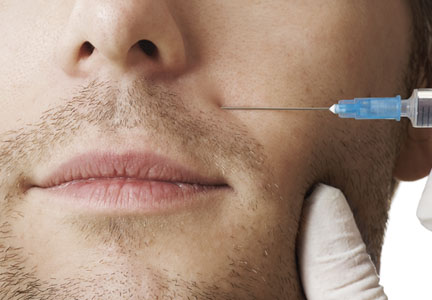
Laser lawsuits, new SGR bill, and a chin-fat buster
In this month's dermatology podcast, we interviewed the author of a study that found non-physicians are disproportionately involved in lawsuits related to cutaneous laser surgery.
We bring you the top news in dermatology and policy, including a new SGR bill, and an investigational drug that could be the non-surgical solution to reducing submental fat.
We wrap up our show with a funny piece from Dr. Alan Rockoff. This time, a newscaster saves a patient's life.
.
In this month's dermatology podcast, we interviewed the author of a study that found non-physicians are disproportionately involved in lawsuits related to cutaneous laser surgery.
We bring you the top news in dermatology and policy, including a new SGR bill, and an investigational drug that could be the non-surgical solution to reducing submental fat.
We wrap up our show with a funny piece from Dr. Alan Rockoff. This time, a newscaster saves a patient's life.
.
In this month's dermatology podcast, we interviewed the author of a study that found non-physicians are disproportionately involved in lawsuits related to cutaneous laser surgery.
We bring you the top news in dermatology and policy, including a new SGR bill, and an investigational drug that could be the non-surgical solution to reducing submental fat.
We wrap up our show with a funny piece from Dr. Alan Rockoff. This time, a newscaster saves a patient's life.
.

ATX-101: ‘You’re gonna like your new chin’
ISTANBUL – Both clinicians and patients gave favorable marks to a novel injectable pharmacologic treatment for removal of unwanted submental fat – the unsightly double chin – in two phase III randomized trials presented at the annual congress of the European Academy of Dermatology and Venereology.
The investigational chin-fat buster, known as ATX-101, is a proprietary purified synthetic form of deoxycholic acid. Upon injection directly into the submental fat, ATX-101 lyses adipocytes by disrupting their cell membranes.
There is an unmet need for a rigorously studied prescription product for nonsurgical treatment of excess submental fat. Not everyone with a double chin is interested in or a good candidate for the established surgical procedures, observed Dr. Berthold Rzany, a dermatologist at Charité University Hospital, Berlin, who presented a 363-patient, randomized, placebo-controlled phase III trial at the meeting. Participants had to have a body mass index no higher than 30 kg/m2, dissatisfaction with the appearance of their submental area, and a physician rating of moderate to severe submental fat. Three-quarters of the subjects were women, with a mean age of 46 years and a mean BMI of 25.7 kg/m2.
One of the two primary efficacy endpoints required at least a 1-point improvement on the 0- to 4-point Clinician-Reported Submental Fat Rating Scale as assessed 12 weeks after the final treatment. This was achieved in 59% of patients randomized to ATX-101 at a dose of 1mg/cm2 and 65% at 2 mg/cm2, both significantly higher rates than the 23% in placebo-treated controls.
The other primary endpoint required a high level of patient satisfaction with the appearance of their face and chin after treatment as expressed in a Subject Self-Rating Scale score of 4 or more on the 0-6 scale. This endpoint was achieved in 53% of patients treated with ATX-101 at 1 mg/cm2, 66% who received the agent at 2 mg/cm2, and 29% of the placebo group.
ATX-101-treated patients were also significantly more likely to report perceived improvement in the visual and psychological impact of their submental fat. For example, 74% of patients who received ATX-101 at 1 mg/cm2 and 80% at 2 mg/cm2 reported improved definition between their chin and neck, compared with baseline and compared with 28% of placebo-treated controls. In addition, 32% of patients who received the lower dose of ATX-101 and 39% who got the higher dose characterized their submental fat as "a great deal better," compared with baseline, as did a mere 7% of controls.
Also, patients who received ATX-101 reported 12 weeks post treatment that they looked less overweight and were less bothered by and self-conscious about their submental fat, compared with controls.
Treatment-emergent induration, redness, bruising, numbness, and/or swelling variously occurred in one-third to two-thirds of ATX-101 recipients. All of these adverse events were more common than in placebo-treated controls. However, the events were transient and mostly mild or moderate in intensity. The exception was injection site pain, which occurred in roughly 80% of ATX-101-treated patients and was mostly moderate to severe, although it lasted a median of only 1 day, according to Dr. Rzany.
The ATX-101 treatment regimen entails up to 50 2-mL fixed-dose subcutaneous injections 1 cm apart per treatment session. Up to four treatment sessions were permitted, each separated by a minimum of 4 weeks.
In a separate presentation, Dr. Benjamin Ascher reported on 360 randomized patients who participated in the other phase III clinical trial. The two studies had the same design and endpoints.
An improvement of at least 1 point on the Clinician-Reported Submental Fat Rating Scale occurred in 58% of patients randomized to ATX-101 at the 1 mg/cm2 dose, 62% of those who received the higher dose, and 35% on placebo. Moreover, 68% of patients who got ATX-101 at 1 mg/cm2 were satisfied with their resultant appearance as reflected in a Subject Self-Rating Scale score of at least 4. So were 65% of those who received the higher dose and 29% of placebo-treated controls. As in the previously mentioned study, indices of self-image and psychological well being were also improved following the aesthetic therapy. Treatment-related adverse events were mostly transient and mild to moderate in intensity, according to Dr. Ascher, who is in the private practice of aesthetic surgery in Paris.
Both phase III studies were supported by Bayer HealthCare and KYTHERA Biopharmaceuticals. Dr. Rzany and Dr. Ascher serve as advisers to the companies.
ISTANBUL – Both clinicians and patients gave favorable marks to a novel injectable pharmacologic treatment for removal of unwanted submental fat – the unsightly double chin – in two phase III randomized trials presented at the annual congress of the European Academy of Dermatology and Venereology.
The investigational chin-fat buster, known as ATX-101, is a proprietary purified synthetic form of deoxycholic acid. Upon injection directly into the submental fat, ATX-101 lyses adipocytes by disrupting their cell membranes.
There is an unmet need for a rigorously studied prescription product for nonsurgical treatment of excess submental fat. Not everyone with a double chin is interested in or a good candidate for the established surgical procedures, observed Dr. Berthold Rzany, a dermatologist at Charité University Hospital, Berlin, who presented a 363-patient, randomized, placebo-controlled phase III trial at the meeting. Participants had to have a body mass index no higher than 30 kg/m2, dissatisfaction with the appearance of their submental area, and a physician rating of moderate to severe submental fat. Three-quarters of the subjects were women, with a mean age of 46 years and a mean BMI of 25.7 kg/m2.
One of the two primary efficacy endpoints required at least a 1-point improvement on the 0- to 4-point Clinician-Reported Submental Fat Rating Scale as assessed 12 weeks after the final treatment. This was achieved in 59% of patients randomized to ATX-101 at a dose of 1mg/cm2 and 65% at 2 mg/cm2, both significantly higher rates than the 23% in placebo-treated controls.
The other primary endpoint required a high level of patient satisfaction with the appearance of their face and chin after treatment as expressed in a Subject Self-Rating Scale score of 4 or more on the 0-6 scale. This endpoint was achieved in 53% of patients treated with ATX-101 at 1 mg/cm2, 66% who received the agent at 2 mg/cm2, and 29% of the placebo group.
ATX-101-treated patients were also significantly more likely to report perceived improvement in the visual and psychological impact of their submental fat. For example, 74% of patients who received ATX-101 at 1 mg/cm2 and 80% at 2 mg/cm2 reported improved definition between their chin and neck, compared with baseline and compared with 28% of placebo-treated controls. In addition, 32% of patients who received the lower dose of ATX-101 and 39% who got the higher dose characterized their submental fat as "a great deal better," compared with baseline, as did a mere 7% of controls.
Also, patients who received ATX-101 reported 12 weeks post treatment that they looked less overweight and were less bothered by and self-conscious about their submental fat, compared with controls.
Treatment-emergent induration, redness, bruising, numbness, and/or swelling variously occurred in one-third to two-thirds of ATX-101 recipients. All of these adverse events were more common than in placebo-treated controls. However, the events were transient and mostly mild or moderate in intensity. The exception was injection site pain, which occurred in roughly 80% of ATX-101-treated patients and was mostly moderate to severe, although it lasted a median of only 1 day, according to Dr. Rzany.
The ATX-101 treatment regimen entails up to 50 2-mL fixed-dose subcutaneous injections 1 cm apart per treatment session. Up to four treatment sessions were permitted, each separated by a minimum of 4 weeks.
In a separate presentation, Dr. Benjamin Ascher reported on 360 randomized patients who participated in the other phase III clinical trial. The two studies had the same design and endpoints.
An improvement of at least 1 point on the Clinician-Reported Submental Fat Rating Scale occurred in 58% of patients randomized to ATX-101 at the 1 mg/cm2 dose, 62% of those who received the higher dose, and 35% on placebo. Moreover, 68% of patients who got ATX-101 at 1 mg/cm2 were satisfied with their resultant appearance as reflected in a Subject Self-Rating Scale score of at least 4. So were 65% of those who received the higher dose and 29% of placebo-treated controls. As in the previously mentioned study, indices of self-image and psychological well being were also improved following the aesthetic therapy. Treatment-related adverse events were mostly transient and mild to moderate in intensity, according to Dr. Ascher, who is in the private practice of aesthetic surgery in Paris.
Both phase III studies were supported by Bayer HealthCare and KYTHERA Biopharmaceuticals. Dr. Rzany and Dr. Ascher serve as advisers to the companies.
ISTANBUL – Both clinicians and patients gave favorable marks to a novel injectable pharmacologic treatment for removal of unwanted submental fat – the unsightly double chin – in two phase III randomized trials presented at the annual congress of the European Academy of Dermatology and Venereology.
The investigational chin-fat buster, known as ATX-101, is a proprietary purified synthetic form of deoxycholic acid. Upon injection directly into the submental fat, ATX-101 lyses adipocytes by disrupting their cell membranes.
There is an unmet need for a rigorously studied prescription product for nonsurgical treatment of excess submental fat. Not everyone with a double chin is interested in or a good candidate for the established surgical procedures, observed Dr. Berthold Rzany, a dermatologist at Charité University Hospital, Berlin, who presented a 363-patient, randomized, placebo-controlled phase III trial at the meeting. Participants had to have a body mass index no higher than 30 kg/m2, dissatisfaction with the appearance of their submental area, and a physician rating of moderate to severe submental fat. Three-quarters of the subjects were women, with a mean age of 46 years and a mean BMI of 25.7 kg/m2.
One of the two primary efficacy endpoints required at least a 1-point improvement on the 0- to 4-point Clinician-Reported Submental Fat Rating Scale as assessed 12 weeks after the final treatment. This was achieved in 59% of patients randomized to ATX-101 at a dose of 1mg/cm2 and 65% at 2 mg/cm2, both significantly higher rates than the 23% in placebo-treated controls.
The other primary endpoint required a high level of patient satisfaction with the appearance of their face and chin after treatment as expressed in a Subject Self-Rating Scale score of 4 or more on the 0-6 scale. This endpoint was achieved in 53% of patients treated with ATX-101 at 1 mg/cm2, 66% who received the agent at 2 mg/cm2, and 29% of the placebo group.
ATX-101-treated patients were also significantly more likely to report perceived improvement in the visual and psychological impact of their submental fat. For example, 74% of patients who received ATX-101 at 1 mg/cm2 and 80% at 2 mg/cm2 reported improved definition between their chin and neck, compared with baseline and compared with 28% of placebo-treated controls. In addition, 32% of patients who received the lower dose of ATX-101 and 39% who got the higher dose characterized their submental fat as "a great deal better," compared with baseline, as did a mere 7% of controls.
Also, patients who received ATX-101 reported 12 weeks post treatment that they looked less overweight and were less bothered by and self-conscious about their submental fat, compared with controls.
Treatment-emergent induration, redness, bruising, numbness, and/or swelling variously occurred in one-third to two-thirds of ATX-101 recipients. All of these adverse events were more common than in placebo-treated controls. However, the events were transient and mostly mild or moderate in intensity. The exception was injection site pain, which occurred in roughly 80% of ATX-101-treated patients and was mostly moderate to severe, although it lasted a median of only 1 day, according to Dr. Rzany.
The ATX-101 treatment regimen entails up to 50 2-mL fixed-dose subcutaneous injections 1 cm apart per treatment session. Up to four treatment sessions were permitted, each separated by a minimum of 4 weeks.
In a separate presentation, Dr. Benjamin Ascher reported on 360 randomized patients who participated in the other phase III clinical trial. The two studies had the same design and endpoints.
An improvement of at least 1 point on the Clinician-Reported Submental Fat Rating Scale occurred in 58% of patients randomized to ATX-101 at the 1 mg/cm2 dose, 62% of those who received the higher dose, and 35% on placebo. Moreover, 68% of patients who got ATX-101 at 1 mg/cm2 were satisfied with their resultant appearance as reflected in a Subject Self-Rating Scale score of at least 4. So were 65% of those who received the higher dose and 29% of placebo-treated controls. As in the previously mentioned study, indices of self-image and psychological well being were also improved following the aesthetic therapy. Treatment-related adverse events were mostly transient and mild to moderate in intensity, according to Dr. Ascher, who is in the private practice of aesthetic surgery in Paris.
Both phase III studies were supported by Bayer HealthCare and KYTHERA Biopharmaceuticals. Dr. Rzany and Dr. Ascher serve as advisers to the companies.
AT THE EADV CONGRESS
Major finding: Patients with excess submental fat who received treatment using a novel subcutaneously injectable agent for the nonsurgical reduction of double chins were significantly more likely to be satisfied with their chin’s appearance afterward than were placebo-treated controls.
Data source: The two studies included a total of 723 patients with moderate to severe excess submental fat.
Disclosures: The studies were funded by Bayer HealthCare and KYTHERA Biopharmaceuticals. The presenters have received research grants from and serve as advisers to the companies.
Novel predictor of poor outcomes in lupus pregnancies
SAN DIEGO – Alteration in the balance of placentally secreted angiogenic factors early in pregnancy provides a potent new predictor of subsequent preeclampsia and other poor outcomes in pregnant women with systemic lupus erythematosus and/or antiphospholipid antibody syndrome.
Patients with systemic lupus erythematosus (SLE) and/or antiphospholipid antibody syndrome (APS) who had an elevated ratio of a splice variant of vascular endothelial growth factor R1 called sFLT1 to placental growth factor (PlGF) when measured at 16-19 weeks’ gestation were at 13.8-fold increased relative risk of preeclampsia before 34 weeks, compared with patients with an sFLT1/PlGF ratio below that cut-point in the large, multicenter, observational PROMISSE (Predictors of Pregnancy Outcome: Biomarkers in Antiphospholipid Antibody Syndrome and SLE) study, Dr. Jane E. Salmon reported at the annual meeting of the American College of Rheumatology.

"Nearly half of the patients with an SFLT1/PlGF ratio greater than 3.45 when measured at 16-19 weeks’ gestation will develop early preeclampsia. On the other hand, a low ratio, as well as low levels of sFLT1 or high levels of PlGF, can reassure physicians and patients that preterm preeclampsia is unlikely: a 3% chance," said Dr. Salmon, professor of medicine and of ob.gyn. at Cornell University and a rheumatologist at the Hospital for Special Surgery, both in New York.
Pregnancy in patients with lupus is associated with obstetric complications placing both mother and fetus at great risk. Yet, until now it hasn’t been possible to predict which patients will have poor outcomes.
The key to identifying those at high risk lies in a recognition that preeclampsia and other poor outcomes are dramatic manifestations of placental insufficiency, which actually begins, initially silently, early in pregnancy. The maternal hypertension, proteinuria, thrombocytopenia, and other end-organ manifestations of preeclampsia are caused by maternal endothelial dysfunction mediated by placental secretion of antiangiogenic factors. Angiogenic growth factors, such as PIGF and vascular endothelial growth factor (VEGF), are essential to a healthy endothelium. But placentally secreted sFLT1 binds to these two angiogenic growth factors, rendering them unavailable to the endothelium, she explained.
Overexpression of sFLT1 in multiple animal models results in hypertension and proteinuria, the hallmarks of preeclampsia. Moreover, cancer patients treated with VEGF inhibitors often develop these two conditions. Based in part on these observations, Dr. Salmon and her coinvestigators turned to the PROMISSE study to test their hypothesis that elevated levels of antiangiogenic factors early in pregnancy predict poor outcomes in patients with SLE and/or APS. The prospective study involved 503 pregnant women with SLE and/or APS and 204 healthy controls, all with monthly blood draws starting before 12 weeks’ gestation.
The composite outcome of preeclampsia, small for gestational age, indicated preterm delivery, and other adverse events occurred in 37% of SLE patients who also had APS. The rate was 16% in patients with SLE alone, 26% in those with APS alone, and 3% in controls.
Subjects with SLE and/or APS who developed preeclampsia and other pregnancy complications displayed significantly higher levels of sFLT1 beginning at 12 weeks and sustained through 31 weeks’ gestation, compared with those with normal pregnancies. Moreover, PlGF levels were significantly lower during weeks 16-31 in the patients with pregnancy complications. The investigators determined that the best predictor of pregnancy complications was the ratio of antiangiogenic sFLT1 to angiogenic PlGF. And the optimal cut-point was 3.45.
Audience members said that while a predictive test for preeclampsia is most welcome, the fact remains that physicians don’t have a lot to offer in terms of prevention or treatment of this feared pregnancy complication. Dr. Salmon responded that the SFLT1/PlGF ratio can be used to risk-stratify pregnant lupus patients for future interventional trials with new drugs looking at new pathways. Already, for example, other investigators have reported some success using a strategy targeting sFLT1 itself. In a small study, they found that women with severe preeclampsia who had their blood run through a heparin column that binds and removes sFLT1 were able to maintain their pregnancies for up to 2 weeks.
"It’s a tiny, open-label trial involving a device, but I think that will move forward," she predicted.
The PROMISSE study was funded by the National Institutes of Health, the Alliance for Lupus Research, and the Mary Kirkland Center for Lupus Research at the Hospital for Special Surgery. Dr. Salmon reported having received research grants from and/or serving as a consultant to Alexion, Novartis, and Roche.
SLE, APS, vascular endothelial growth factor R1, sFLT1, placental growth factor, PlGF, preeclampsia, PROMISSE study, Predictors of Pregnancy Outcome: Biomarkers in Antiphospholipid Antibody Syndrome and SLE study, Dr. Jane E. Salmon, annual meeting of the American College of Rheumatology, early preeclampsia,
SAN DIEGO – Alteration in the balance of placentally secreted angiogenic factors early in pregnancy provides a potent new predictor of subsequent preeclampsia and other poor outcomes in pregnant women with systemic lupus erythematosus and/or antiphospholipid antibody syndrome.
Patients with systemic lupus erythematosus (SLE) and/or antiphospholipid antibody syndrome (APS) who had an elevated ratio of a splice variant of vascular endothelial growth factor R1 called sFLT1 to placental growth factor (PlGF) when measured at 16-19 weeks’ gestation were at 13.8-fold increased relative risk of preeclampsia before 34 weeks, compared with patients with an sFLT1/PlGF ratio below that cut-point in the large, multicenter, observational PROMISSE (Predictors of Pregnancy Outcome: Biomarkers in Antiphospholipid Antibody Syndrome and SLE) study, Dr. Jane E. Salmon reported at the annual meeting of the American College of Rheumatology.
"Nearly half of the patients with an SFLT1/PlGF ratio greater than 3.45 when measured at 16-19 weeks’ gestation will develop early preeclampsia. On the other hand, a low ratio, as well as low levels of sFLT1 or high levels of PlGF, can reassure physicians and patients that preterm preeclampsia is unlikely: a 3% chance," said Dr. Salmon, professor of medicine and of ob.gyn. at Cornell University and a rheumatologist at the Hospital for Special Surgery, both in New York.
Pregnancy in patients with lupus is associated with obstetric complications placing both mother and fetus at great risk. Yet, until now it hasn’t been possible to predict which patients will have poor outcomes.
The key to identifying those at high risk lies in a recognition that preeclampsia and other poor outcomes are dramatic manifestations of placental insufficiency, which actually begins, initially silently, early in pregnancy. The maternal hypertension, proteinuria, thrombocytopenia, and other end-organ manifestations of preeclampsia are caused by maternal endothelial dysfunction mediated by placental secretion of antiangiogenic factors. Angiogenic growth factors, such as PIGF and vascular endothelial growth factor (VEGF), are essential to a healthy endothelium. But placentally secreted sFLT1 binds to these two angiogenic growth factors, rendering them unavailable to the endothelium, she explained.
Overexpression of sFLT1 in multiple animal models results in hypertension and proteinuria, the hallmarks of preeclampsia. Moreover, cancer patients treated with VEGF inhibitors often develop these two conditions. Based in part on these observations, Dr. Salmon and her coinvestigators turned to the PROMISSE study to test their hypothesis that elevated levels of antiangiogenic factors early in pregnancy predict poor outcomes in patients with SLE and/or APS. The prospective study involved 503 pregnant women with SLE and/or APS and 204 healthy controls, all with monthly blood draws starting before 12 weeks’ gestation.
The composite outcome of preeclampsia, small for gestational age, indicated preterm delivery, and other adverse events occurred in 37% of SLE patients who also had APS. The rate was 16% in patients with SLE alone, 26% in those with APS alone, and 3% in controls.
Subjects with SLE and/or APS who developed preeclampsia and other pregnancy complications displayed significantly higher levels of sFLT1 beginning at 12 weeks and sustained through 31 weeks’ gestation, compared with those with normal pregnancies. Moreover, PlGF levels were significantly lower during weeks 16-31 in the patients with pregnancy complications. The investigators determined that the best predictor of pregnancy complications was the ratio of antiangiogenic sFLT1 to angiogenic PlGF. And the optimal cut-point was 3.45.
Audience members said that while a predictive test for preeclampsia is most welcome, the fact remains that physicians don’t have a lot to offer in terms of prevention or treatment of this feared pregnancy complication. Dr. Salmon responded that the SFLT1/PlGF ratio can be used to risk-stratify pregnant lupus patients for future interventional trials with new drugs looking at new pathways. Already, for example, other investigators have reported some success using a strategy targeting sFLT1 itself. In a small study, they found that women with severe preeclampsia who had their blood run through a heparin column that binds and removes sFLT1 were able to maintain their pregnancies for up to 2 weeks.
"It’s a tiny, open-label trial involving a device, but I think that will move forward," she predicted.
The PROMISSE study was funded by the National Institutes of Health, the Alliance for Lupus Research, and the Mary Kirkland Center for Lupus Research at the Hospital for Special Surgery. Dr. Salmon reported having received research grants from and/or serving as a consultant to Alexion, Novartis, and Roche.
SAN DIEGO – Alteration in the balance of placentally secreted angiogenic factors early in pregnancy provides a potent new predictor of subsequent preeclampsia and other poor outcomes in pregnant women with systemic lupus erythematosus and/or antiphospholipid antibody syndrome.
Patients with systemic lupus erythematosus (SLE) and/or antiphospholipid antibody syndrome (APS) who had an elevated ratio of a splice variant of vascular endothelial growth factor R1 called sFLT1 to placental growth factor (PlGF) when measured at 16-19 weeks’ gestation were at 13.8-fold increased relative risk of preeclampsia before 34 weeks, compared with patients with an sFLT1/PlGF ratio below that cut-point in the large, multicenter, observational PROMISSE (Predictors of Pregnancy Outcome: Biomarkers in Antiphospholipid Antibody Syndrome and SLE) study, Dr. Jane E. Salmon reported at the annual meeting of the American College of Rheumatology.
"Nearly half of the patients with an SFLT1/PlGF ratio greater than 3.45 when measured at 16-19 weeks’ gestation will develop early preeclampsia. On the other hand, a low ratio, as well as low levels of sFLT1 or high levels of PlGF, can reassure physicians and patients that preterm preeclampsia is unlikely: a 3% chance," said Dr. Salmon, professor of medicine and of ob.gyn. at Cornell University and a rheumatologist at the Hospital for Special Surgery, both in New York.
Pregnancy in patients with lupus is associated with obstetric complications placing both mother and fetus at great risk. Yet, until now it hasn’t been possible to predict which patients will have poor outcomes.
The key to identifying those at high risk lies in a recognition that preeclampsia and other poor outcomes are dramatic manifestations of placental insufficiency, which actually begins, initially silently, early in pregnancy. The maternal hypertension, proteinuria, thrombocytopenia, and other end-organ manifestations of preeclampsia are caused by maternal endothelial dysfunction mediated by placental secretion of antiangiogenic factors. Angiogenic growth factors, such as PIGF and vascular endothelial growth factor (VEGF), are essential to a healthy endothelium. But placentally secreted sFLT1 binds to these two angiogenic growth factors, rendering them unavailable to the endothelium, she explained.
Overexpression of sFLT1 in multiple animal models results in hypertension and proteinuria, the hallmarks of preeclampsia. Moreover, cancer patients treated with VEGF inhibitors often develop these two conditions. Based in part on these observations, Dr. Salmon and her coinvestigators turned to the PROMISSE study to test their hypothesis that elevated levels of antiangiogenic factors early in pregnancy predict poor outcomes in patients with SLE and/or APS. The prospective study involved 503 pregnant women with SLE and/or APS and 204 healthy controls, all with monthly blood draws starting before 12 weeks’ gestation.
The composite outcome of preeclampsia, small for gestational age, indicated preterm delivery, and other adverse events occurred in 37% of SLE patients who also had APS. The rate was 16% in patients with SLE alone, 26% in those with APS alone, and 3% in controls.
Subjects with SLE and/or APS who developed preeclampsia and other pregnancy complications displayed significantly higher levels of sFLT1 beginning at 12 weeks and sustained through 31 weeks’ gestation, compared with those with normal pregnancies. Moreover, PlGF levels were significantly lower during weeks 16-31 in the patients with pregnancy complications. The investigators determined that the best predictor of pregnancy complications was the ratio of antiangiogenic sFLT1 to angiogenic PlGF. And the optimal cut-point was 3.45.
Audience members said that while a predictive test for preeclampsia is most welcome, the fact remains that physicians don’t have a lot to offer in terms of prevention or treatment of this feared pregnancy complication. Dr. Salmon responded that the SFLT1/PlGF ratio can be used to risk-stratify pregnant lupus patients for future interventional trials with new drugs looking at new pathways. Already, for example, other investigators have reported some success using a strategy targeting sFLT1 itself. In a small study, they found that women with severe preeclampsia who had their blood run through a heparin column that binds and removes sFLT1 were able to maintain their pregnancies for up to 2 weeks.
"It’s a tiny, open-label trial involving a device, but I think that will move forward," she predicted.
The PROMISSE study was funded by the National Institutes of Health, the Alliance for Lupus Research, and the Mary Kirkland Center for Lupus Research at the Hospital for Special Surgery. Dr. Salmon reported having received research grants from and/or serving as a consultant to Alexion, Novartis, and Roche.
SLE, APS, vascular endothelial growth factor R1, sFLT1, placental growth factor, PlGF, preeclampsia, PROMISSE study, Predictors of Pregnancy Outcome: Biomarkers in Antiphospholipid Antibody Syndrome and SLE study, Dr. Jane E. Salmon, annual meeting of the American College of Rheumatology, early preeclampsia,
SLE, APS, vascular endothelial growth factor R1, sFLT1, placental growth factor, PlGF, preeclampsia, PROMISSE study, Predictors of Pregnancy Outcome: Biomarkers in Antiphospholipid Antibody Syndrome and SLE study, Dr. Jane E. Salmon, annual meeting of the American College of Rheumatology, early preeclampsia,
AT THE ACR ANNUAL MEETING
Major finding: Pregnant patients with SLE and/or APS had nearly a 14-fold increased risk of developing preeclampsia before 34 weeks’ gestation when they displayed an abnormal ratio of two key placentally derived angiogenic factors at 16-19 weeks’ gestation.
Data source: This analysis included 503 pregnant women with SLE and/or APS and 204 pregnant controls participating in the prospective, observational, multicenter PROMISSE study.
Disclosures: The study was funded by the National Institutes of Health, the Alliance for Lupus Research, and the Mary Kirkland Center for Lupus Research at the Hospital for Special Surgery. The presenter reported no relevant financial interests.

A rapid-fire update on lasers in dermatologic surgery
If you have 5 minutes and need an update on the latest advancements in lasers in dermatologic surgery, watch our interview with Dr. Elizabeth Tanzi of Washington Institute of Dermatologic Surgery. Dr. Tanzi talks about the new trends in laser treatments, her two favorite laser machines, and shares her thoughts on the future of lasers.
If you have 5 minutes and need an update on the latest advancements in lasers in dermatologic surgery, watch our interview with Dr. Elizabeth Tanzi of Washington Institute of Dermatologic Surgery. Dr. Tanzi talks about the new trends in laser treatments, her two favorite laser machines, and shares her thoughts on the future of lasers.
If you have 5 minutes and need an update on the latest advancements in lasers in dermatologic surgery, watch our interview with Dr. Elizabeth Tanzi of Washington Institute of Dermatologic Surgery. Dr. Tanzi talks about the new trends in laser treatments, her two favorite laser machines, and shares her thoughts on the future of lasers.