User login
DoD, VA Join Federal Response to Harvey
The VA announced medical centers open in Houston and central Arkansas are providing assistance to veterans affected by Hurricane Harvey across southeastern Texas, Arkansas, Mississippi, Louisiana, and Oklahoma. It also has deployed Mobile Vet Centers to veterans in Corpus Christi, Texas and other effected areas to provide counselling services.
Due to the State of Emergency declared in Louisiana and Texas, TRICARE has implemented emergency refill procedures from August 23rd - September 5th. Phone numbers and advice have been provided to assist in refilling prescriptions. The referral requirement also has been waived for those who have been evacuated in southeastern Texas counties from August 24th- September 5th.
The DoD has deployed about 3,000 Texas National Guardsmen and Guardsmen from other states for search and rescue. Director of domestic operations for the National Guard Bureau, Air Force Maj Gen. James C. Witham, says the bureau has identified “20,000 to 30,000 additional soldiers and airmen that could be used.” The Texas National Guardsmen has its personnel and about 16 aircrafts conducting day and night searches. National Guardsmen from all over the country have been involved in the rescue of more than 3,500 people and 300 pets through boats, vehicles, and helicopters. The DoD also is providing 11 generators, and 50,000 gallons of gasoline and diesel fuel through the Defense Logistics Agency for.
On Tuesday alone, 2 U.S. Navy helicopter squadron detachments rescued 227 flood victims while flying from Fort Worth, Texas. Helicopter Sea Combat Squadrons 7 and 28 have relocated to be closer to the epicenter of the flooding in and around Houston.
In order to drastically reduce response time, the 112 Sailors from the Dusty Dogs and Ghostriders of Helicopter Sea Combat Squadrons (HSC) 7 and 28 (respectively) moved their staging site and six MH-60S Knighthawk helicopters in order to be even closer to the disaster zone in the wake of Hurricane Harvey. USA.gov has provided resources on what to do now that the hurricane has subsided for residents in the affected areas. A list of recommendations from federal officials, advice on how to replace vital documents, and the latest news on the storm are provided with links.
FEMA has provided a list of emergency phone numbers to County Emergency Operation centers and the U.S. Coast Guard Sector Huston Command Center for life-threating situations. Other resources for safety tips, the National Flood Insurance Program, how to apply for assistance, and how to help others needing assistance are provided as well.
The VA announced medical centers open in Houston and central Arkansas are providing assistance to veterans affected by Hurricane Harvey across southeastern Texas, Arkansas, Mississippi, Louisiana, and Oklahoma. It also has deployed Mobile Vet Centers to veterans in Corpus Christi, Texas and other effected areas to provide counselling services.
Due to the State of Emergency declared in Louisiana and Texas, TRICARE has implemented emergency refill procedures from August 23rd - September 5th. Phone numbers and advice have been provided to assist in refilling prescriptions. The referral requirement also has been waived for those who have been evacuated in southeastern Texas counties from August 24th- September 5th.
The DoD has deployed about 3,000 Texas National Guardsmen and Guardsmen from other states for search and rescue. Director of domestic operations for the National Guard Bureau, Air Force Maj Gen. James C. Witham, says the bureau has identified “20,000 to 30,000 additional soldiers and airmen that could be used.” The Texas National Guardsmen has its personnel and about 16 aircrafts conducting day and night searches. National Guardsmen from all over the country have been involved in the rescue of more than 3,500 people and 300 pets through boats, vehicles, and helicopters. The DoD also is providing 11 generators, and 50,000 gallons of gasoline and diesel fuel through the Defense Logistics Agency for.
On Tuesday alone, 2 U.S. Navy helicopter squadron detachments rescued 227 flood victims while flying from Fort Worth, Texas. Helicopter Sea Combat Squadrons 7 and 28 have relocated to be closer to the epicenter of the flooding in and around Houston.
In order to drastically reduce response time, the 112 Sailors from the Dusty Dogs and Ghostriders of Helicopter Sea Combat Squadrons (HSC) 7 and 28 (respectively) moved their staging site and six MH-60S Knighthawk helicopters in order to be even closer to the disaster zone in the wake of Hurricane Harvey. USA.gov has provided resources on what to do now that the hurricane has subsided for residents in the affected areas. A list of recommendations from federal officials, advice on how to replace vital documents, and the latest news on the storm are provided with links.
FEMA has provided a list of emergency phone numbers to County Emergency Operation centers and the U.S. Coast Guard Sector Huston Command Center for life-threating situations. Other resources for safety tips, the National Flood Insurance Program, how to apply for assistance, and how to help others needing assistance are provided as well.
The VA announced medical centers open in Houston and central Arkansas are providing assistance to veterans affected by Hurricane Harvey across southeastern Texas, Arkansas, Mississippi, Louisiana, and Oklahoma. It also has deployed Mobile Vet Centers to veterans in Corpus Christi, Texas and other effected areas to provide counselling services.
Due to the State of Emergency declared in Louisiana and Texas, TRICARE has implemented emergency refill procedures from August 23rd - September 5th. Phone numbers and advice have been provided to assist in refilling prescriptions. The referral requirement also has been waived for those who have been evacuated in southeastern Texas counties from August 24th- September 5th.
The DoD has deployed about 3,000 Texas National Guardsmen and Guardsmen from other states for search and rescue. Director of domestic operations for the National Guard Bureau, Air Force Maj Gen. James C. Witham, says the bureau has identified “20,000 to 30,000 additional soldiers and airmen that could be used.” The Texas National Guardsmen has its personnel and about 16 aircrafts conducting day and night searches. National Guardsmen from all over the country have been involved in the rescue of more than 3,500 people and 300 pets through boats, vehicles, and helicopters. The DoD also is providing 11 generators, and 50,000 gallons of gasoline and diesel fuel through the Defense Logistics Agency for.
On Tuesday alone, 2 U.S. Navy helicopter squadron detachments rescued 227 flood victims while flying from Fort Worth, Texas. Helicopter Sea Combat Squadrons 7 and 28 have relocated to be closer to the epicenter of the flooding in and around Houston.
In order to drastically reduce response time, the 112 Sailors from the Dusty Dogs and Ghostriders of Helicopter Sea Combat Squadrons (HSC) 7 and 28 (respectively) moved their staging site and six MH-60S Knighthawk helicopters in order to be even closer to the disaster zone in the wake of Hurricane Harvey. USA.gov has provided resources on what to do now that the hurricane has subsided for residents in the affected areas. A list of recommendations from federal officials, advice on how to replace vital documents, and the latest news on the storm are provided with links.
FEMA has provided a list of emergency phone numbers to County Emergency Operation centers and the U.S. Coast Guard Sector Huston Command Center for life-threating situations. Other resources for safety tips, the National Flood Insurance Program, how to apply for assistance, and how to help others needing assistance are provided as well.
FDA grants Priority Review to Gazyva for follicular lymphoma
Gazyva (obinutuzumab) has been granted a Priority Review by the Food and Drug Administration for the treatment of previously untreated follicular lymphoma, according to a press release from Genentech.
FDA approval was based on results from the GALLIUM study, a phase 3 trial comparing Gazyva to Rituxan (rituximab). Patients who received Gazyva plus chemotherapy followed by Gazyva therapy alone for 2 years had a 32% improvement in progression-free survival during the 41.1 month follow-up period, compared with the patient group who received Rituxan plus chemotherapy followed by 2 years of Rituxan therapy alone. Median progression-free survival has not been reached in either arm of the study.
The most common adverse events that occurred more often in the Gazyva arm of the study were low white blood cell count, infections, infusion-related reactions, low platelet count, new tumors, and cardiac events.
“Based on the GALLIUM study, Gazyva-based treatment significantly improved progression-free survival over the current standard of care, and we are committed to bringing this potential new option to patients as soon as possible,” Dr. Sandra Horning, chief medical officer and head of Genentech’s Global Product Development said in the press release.
The FDA is expected to make a decision on approval under Priority Review by Dec. 23, 2017.
Find the full press release on the Genentech website.
Gazyva (obinutuzumab) has been granted a Priority Review by the Food and Drug Administration for the treatment of previously untreated follicular lymphoma, according to a press release from Genentech.
FDA approval was based on results from the GALLIUM study, a phase 3 trial comparing Gazyva to Rituxan (rituximab). Patients who received Gazyva plus chemotherapy followed by Gazyva therapy alone for 2 years had a 32% improvement in progression-free survival during the 41.1 month follow-up period, compared with the patient group who received Rituxan plus chemotherapy followed by 2 years of Rituxan therapy alone. Median progression-free survival has not been reached in either arm of the study.
The most common adverse events that occurred more often in the Gazyva arm of the study were low white blood cell count, infections, infusion-related reactions, low platelet count, new tumors, and cardiac events.
“Based on the GALLIUM study, Gazyva-based treatment significantly improved progression-free survival over the current standard of care, and we are committed to bringing this potential new option to patients as soon as possible,” Dr. Sandra Horning, chief medical officer and head of Genentech’s Global Product Development said in the press release.
The FDA is expected to make a decision on approval under Priority Review by Dec. 23, 2017.
Find the full press release on the Genentech website.
Gazyva (obinutuzumab) has been granted a Priority Review by the Food and Drug Administration for the treatment of previously untreated follicular lymphoma, according to a press release from Genentech.
FDA approval was based on results from the GALLIUM study, a phase 3 trial comparing Gazyva to Rituxan (rituximab). Patients who received Gazyva plus chemotherapy followed by Gazyva therapy alone for 2 years had a 32% improvement in progression-free survival during the 41.1 month follow-up period, compared with the patient group who received Rituxan plus chemotherapy followed by 2 years of Rituxan therapy alone. Median progression-free survival has not been reached in either arm of the study.
The most common adverse events that occurred more often in the Gazyva arm of the study were low white blood cell count, infections, infusion-related reactions, low platelet count, new tumors, and cardiac events.
“Based on the GALLIUM study, Gazyva-based treatment significantly improved progression-free survival over the current standard of care, and we are committed to bringing this potential new option to patients as soon as possible,” Dr. Sandra Horning, chief medical officer and head of Genentech’s Global Product Development said in the press release.
The FDA is expected to make a decision on approval under Priority Review by Dec. 23, 2017.
Find the full press release on the Genentech website.
What’s in a Name? AIDS.gov Becomes HIV.gov
“HIV” has become a more common internet search term than “AIDS.” That change reflects the fact that more people now are living with HIV than with AIDS. What’s more, the number of annual HIV infections fell 18% between 2008 - 2014. In honor of the progress made in changing AIDS from an almost universally fatal disease to a manageable condition, AIDS.gov has changed its name to HIV.gov.
The name change comes 36 years after the CDC’s first report of the initial cases of what became known as acquired immune deficiency syndrome. “Much progress has been made in HIV/AIDS research since the disease was first recognized in 1981,” said Anthony Fauci, MD, director of the National Institute of Allergy and Infectious Diseases. “Today, lifesaving antiretroviral therapies allow those living with HIV to enjoy longer, healthier lives—an outcome that once seemed unattainable.”
Organizations from the HIV/AIDS community are pleased with the name change. National Minority AIDS Council Executive Director Paul Kawata applauds it, saying it “honors the past while recognizing the power of words and acknowledging that their meanings change over time.”
“HIV” has become a more common internet search term than “AIDS.” That change reflects the fact that more people now are living with HIV than with AIDS. What’s more, the number of annual HIV infections fell 18% between 2008 - 2014. In honor of the progress made in changing AIDS from an almost universally fatal disease to a manageable condition, AIDS.gov has changed its name to HIV.gov.
The name change comes 36 years after the CDC’s first report of the initial cases of what became known as acquired immune deficiency syndrome. “Much progress has been made in HIV/AIDS research since the disease was first recognized in 1981,” said Anthony Fauci, MD, director of the National Institute of Allergy and Infectious Diseases. “Today, lifesaving antiretroviral therapies allow those living with HIV to enjoy longer, healthier lives—an outcome that once seemed unattainable.”
Organizations from the HIV/AIDS community are pleased with the name change. National Minority AIDS Council Executive Director Paul Kawata applauds it, saying it “honors the past while recognizing the power of words and acknowledging that their meanings change over time.”
“HIV” has become a more common internet search term than “AIDS.” That change reflects the fact that more people now are living with HIV than with AIDS. What’s more, the number of annual HIV infections fell 18% between 2008 - 2014. In honor of the progress made in changing AIDS from an almost universally fatal disease to a manageable condition, AIDS.gov has changed its name to HIV.gov.
The name change comes 36 years after the CDC’s first report of the initial cases of what became known as acquired immune deficiency syndrome. “Much progress has been made in HIV/AIDS research since the disease was first recognized in 1981,” said Anthony Fauci, MD, director of the National Institute of Allergy and Infectious Diseases. “Today, lifesaving antiretroviral therapies allow those living with HIV to enjoy longer, healthier lives—an outcome that once seemed unattainable.”
Organizations from the HIV/AIDS community are pleased with the name change. National Minority AIDS Council Executive Director Paul Kawata applauds it, saying it “honors the past while recognizing the power of words and acknowledging that their meanings change over time.”
CANTOS sings of novel strategy for cardiovascular, cancer prevention
BARCELONA – Inhibiting the interleukin-1 beta innate immunity pathway with canakinumab reduced recurrent cardiovascular events and lung cancer in the groundbreaking phase III CANTOS trial, Paul M. Ridker, MD, reported at the annual congress of the European Society of Cardiology.
“These data provide the first proof that inflammation inhibition in the absence of lipid lowering can improve atherogenic outcomes and potentially alter progression of some fatal cancers,” declared Dr. Ridker, director of the Center for Cardiovascular Disease Prevention at Brigham and Women’s Hospital, Boston, and professor of medicine at Harvard Medical School.
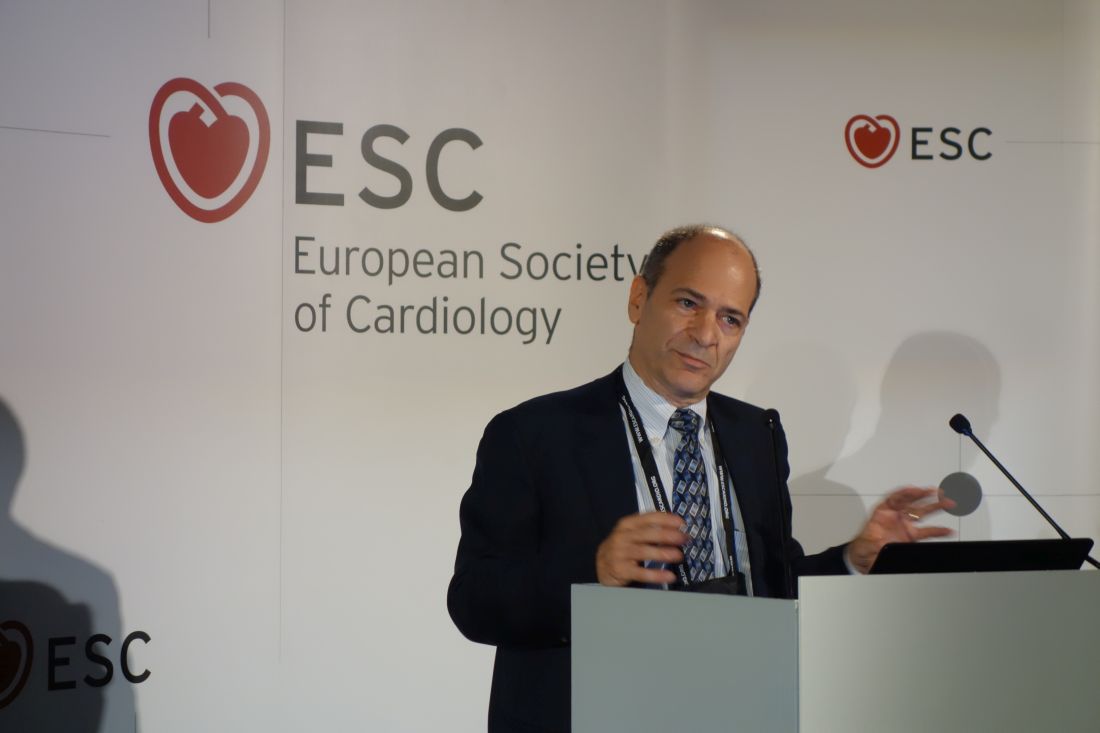
“Just like we’ve learned that lower LDL is better, I think we’re now learning that lower inflammation is better,” he said.
CANTOS (Canakinumab Anti-inflammatory Thrombosis Outcome Study) was a randomized, double-blind, placebo-controlled trial involving 10,061 patients in 39 countries, all of whom had a previous MI and a chronically high level of systemic inflammation as reflected in a median baseline high-sensitivity C-reactive protein (CRP) level of 4.1 mg/L. Ninety-one percent of participants were on statin therapy, with a median LDL cholesterol of 82 mg/dL when randomized to subcutaneous canakinumab at 50, 150, or 300 mg or to placebo once every 3 months.
Canakinumab is a fully human monoclonal antibody targeting IL-1B, a key player in systemic inflammation. The cytokine is activated by the nucleotide-binding oligomerization domain-like receptor protein 3 (NLRP3) inflammasome, a part of the innate immune system. Canakinumab is approved as Ilaris for treatment of several uncommon rheumatologic diseases, including cryopryin-associated periodic syndrome and systemic juvenile idiopathic arthritis.
At a median follow-up of 3.7 years, the incidence of the primary composite efficacy endpoint of nonfatal MI, nonfatal stroke, or cardiovascular death was 4.5 events per 100 person-years in the control group, significantly higher than the 3.86 and 3.9 events per 100 person-years in patients on canakinumab at 150 and 300 mg, respectively.
Since event rates were virtually identical in the 150- and 300-mg study arms, Dr. Ridker combined those two patient groups in his analysis. They showed a 15% reduction in the risk of the primary efficacy endpoint, compared with placebo-treated controls, along with a 39% reduction from baseline in CRP. They also were 30% less likely to undergo percutaneous coronary intervention or coronary artery bypass graft during follow-up.
“That’s quite important, because that’s a progression-of-atherosclerosis endpoint and also obviously a cost and financial endpoint,” he observed.
A key finding in CANTOS was that patients with a reduction in CRP at or exceeding the median decrease just 3 months into the study – that is, after a single injection – had a 27% reduction in major vascular events during follow-up. Patients with a lesser reduction in CRP at that point did not experience a significant reduction in the primary endpoint, compared with placebo.
“The clinician in me would say we probably ought to give a single dose of the drug, see what happens, and if you get a large inflammation reduction we could perhaps consider treating that patient, but if you did not get a large reduction perhaps this is not a therapy for that patient. Why not avoid the toxicity in people who aren’t going to respond?” Dr. Ridker said.
Side effects related to canakinumab consisted of mild leukopenia and a small but statistically significant increase in fatal infections, which he called “not surprising.”
“It’s in the same range as one gets in treating rheumatoid arthritis with a biologic drug, which rheumatologists are very comfortable doing. You would imagine that if this does become a treatment, physicians will get much better at bringing patients in early when they have signs and symptoms of infection,” the cardiologist continued.
Patients on canakinumab showed significant reductions in incident rheumatoid arthritis, gout, and osteoarthritis. The drug had no kidney or liver adverse events.
Cancer was a prespecified secondary outcome in CANTOS. The investigators saw the trial as an opportunity to test a longstanding hypothesis that inhibiting IL-1B would have a positive impact on lung cancer in particular.
“Smoking, exposure to diesel fuel, inhalation of asbestos or other silicates – these cause inflammation which activates the NLRP3 inflammasome, but in the pulmonary system rather than the arteries,” Dr. Ridker explained.
An entry requirement in CANTOS was that patients needed to be free of known cancer. During study follow-up, 129 patients were diagnosed with lung cancer. The risk was reduced in dose-dependent fashion with canakinumab: by 39% relative to placebo in the 150-mg group and by 67% in the 300-mg group. Lung cancer mortality was reduced by 77% in the canakinumab 300-mg group.
“I don’t think this is about oncogenesis per se. I think the tumors are already there, but they don’t progress because we’ve altered the tumor’s inflammatory microenvironment,” he continued.
Since CANTOS was first and foremost a study of atherosclerotic disease prevention, the cancer results need to be replicated on a high-priority basis. Dr. Ridker predicted that Novartis, which sponsored CANTOS, will quickly mount a clinical trial examining canakinumab’s potential as an adjunctive treatment to either chemotherapy or radiation following resection of lung cancer.
He stressed that CANTOS is only the beginning stanza in what will be an entirely new approach to preventive cardiology. Numerous other inflammatory pathways also might serve as targets.
“I think this is going to open up all kinds of approaches using a variety of agents that have really been in the rheumatology and immunology world,” the cardiologist predicted.
For example, he is principal investigator in the ongoing National Heart, Lung, and Blood Institute–sponsored Cardiovascular Inflammation Reduction Trial (CIRT), a randomized, double-blind, placebo-controlled study of low-dose methotrexate for prevention of cardiovascular events in a planned 7,000 patients with type 2 diabetes or metabolic syndrome who’ve had an MI or have multivessel CAD. Results are probably 4-6 years off.
“Right now, we know canakinumab works. If methotrexate were to work, then we’d have a generic, inexpensive approach as well,” Dr. Ridker noted.
Novartis officials indicated that, on the basis of the positive CANTOS results, the company plans to file for an expanded indication for canakinumab for cardiovascular prevention. The company also is gearing up for studies of the drug in oncology.
Simultaneous with Dr. Ridker’s presentation in Barcelona, both the atherosclerotic disease findings (N Engl J Med. 2017 Aug 27. doi: 10.1056/NEJMoa1707914) and the cancer findings (Lancet. 2017 Aug 27. doi: 10.1016/S0140-6736(17)32247-X) were published.
He reported serving as a consultant to Novartis.
BARCELONA – Inhibiting the interleukin-1 beta innate immunity pathway with canakinumab reduced recurrent cardiovascular events and lung cancer in the groundbreaking phase III CANTOS trial, Paul M. Ridker, MD, reported at the annual congress of the European Society of Cardiology.
“These data provide the first proof that inflammation inhibition in the absence of lipid lowering can improve atherogenic outcomes and potentially alter progression of some fatal cancers,” declared Dr. Ridker, director of the Center for Cardiovascular Disease Prevention at Brigham and Women’s Hospital, Boston, and professor of medicine at Harvard Medical School.
“Just like we’ve learned that lower LDL is better, I think we’re now learning that lower inflammation is better,” he said.
CANTOS (Canakinumab Anti-inflammatory Thrombosis Outcome Study) was a randomized, double-blind, placebo-controlled trial involving 10,061 patients in 39 countries, all of whom had a previous MI and a chronically high level of systemic inflammation as reflected in a median baseline high-sensitivity C-reactive protein (CRP) level of 4.1 mg/L. Ninety-one percent of participants were on statin therapy, with a median LDL cholesterol of 82 mg/dL when randomized to subcutaneous canakinumab at 50, 150, or 300 mg or to placebo once every 3 months.
Canakinumab is a fully human monoclonal antibody targeting IL-1B, a key player in systemic inflammation. The cytokine is activated by the nucleotide-binding oligomerization domain-like receptor protein 3 (NLRP3) inflammasome, a part of the innate immune system. Canakinumab is approved as Ilaris for treatment of several uncommon rheumatologic diseases, including cryopryin-associated periodic syndrome and systemic juvenile idiopathic arthritis.
At a median follow-up of 3.7 years, the incidence of the primary composite efficacy endpoint of nonfatal MI, nonfatal stroke, or cardiovascular death was 4.5 events per 100 person-years in the control group, significantly higher than the 3.86 and 3.9 events per 100 person-years in patients on canakinumab at 150 and 300 mg, respectively.
Since event rates were virtually identical in the 150- and 300-mg study arms, Dr. Ridker combined those two patient groups in his analysis. They showed a 15% reduction in the risk of the primary efficacy endpoint, compared with placebo-treated controls, along with a 39% reduction from baseline in CRP. They also were 30% less likely to undergo percutaneous coronary intervention or coronary artery bypass graft during follow-up.
“That’s quite important, because that’s a progression-of-atherosclerosis endpoint and also obviously a cost and financial endpoint,” he observed.
A key finding in CANTOS was that patients with a reduction in CRP at or exceeding the median decrease just 3 months into the study – that is, after a single injection – had a 27% reduction in major vascular events during follow-up. Patients with a lesser reduction in CRP at that point did not experience a significant reduction in the primary endpoint, compared with placebo.
“The clinician in me would say we probably ought to give a single dose of the drug, see what happens, and if you get a large inflammation reduction we could perhaps consider treating that patient, but if you did not get a large reduction perhaps this is not a therapy for that patient. Why not avoid the toxicity in people who aren’t going to respond?” Dr. Ridker said.
Side effects related to canakinumab consisted of mild leukopenia and a small but statistically significant increase in fatal infections, which he called “not surprising.”
“It’s in the same range as one gets in treating rheumatoid arthritis with a biologic drug, which rheumatologists are very comfortable doing. You would imagine that if this does become a treatment, physicians will get much better at bringing patients in early when they have signs and symptoms of infection,” the cardiologist continued.
Patients on canakinumab showed significant reductions in incident rheumatoid arthritis, gout, and osteoarthritis. The drug had no kidney or liver adverse events.
Cancer was a prespecified secondary outcome in CANTOS. The investigators saw the trial as an opportunity to test a longstanding hypothesis that inhibiting IL-1B would have a positive impact on lung cancer in particular.
“Smoking, exposure to diesel fuel, inhalation of asbestos or other silicates – these cause inflammation which activates the NLRP3 inflammasome, but in the pulmonary system rather than the arteries,” Dr. Ridker explained.
An entry requirement in CANTOS was that patients needed to be free of known cancer. During study follow-up, 129 patients were diagnosed with lung cancer. The risk was reduced in dose-dependent fashion with canakinumab: by 39% relative to placebo in the 150-mg group and by 67% in the 300-mg group. Lung cancer mortality was reduced by 77% in the canakinumab 300-mg group.
“I don’t think this is about oncogenesis per se. I think the tumors are already there, but they don’t progress because we’ve altered the tumor’s inflammatory microenvironment,” he continued.
Since CANTOS was first and foremost a study of atherosclerotic disease prevention, the cancer results need to be replicated on a high-priority basis. Dr. Ridker predicted that Novartis, which sponsored CANTOS, will quickly mount a clinical trial examining canakinumab’s potential as an adjunctive treatment to either chemotherapy or radiation following resection of lung cancer.
He stressed that CANTOS is only the beginning stanza in what will be an entirely new approach to preventive cardiology. Numerous other inflammatory pathways also might serve as targets.
“I think this is going to open up all kinds of approaches using a variety of agents that have really been in the rheumatology and immunology world,” the cardiologist predicted.
For example, he is principal investigator in the ongoing National Heart, Lung, and Blood Institute–sponsored Cardiovascular Inflammation Reduction Trial (CIRT), a randomized, double-blind, placebo-controlled study of low-dose methotrexate for prevention of cardiovascular events in a planned 7,000 patients with type 2 diabetes or metabolic syndrome who’ve had an MI or have multivessel CAD. Results are probably 4-6 years off.
“Right now, we know canakinumab works. If methotrexate were to work, then we’d have a generic, inexpensive approach as well,” Dr. Ridker noted.
Novartis officials indicated that, on the basis of the positive CANTOS results, the company plans to file for an expanded indication for canakinumab for cardiovascular prevention. The company also is gearing up for studies of the drug in oncology.
Simultaneous with Dr. Ridker’s presentation in Barcelona, both the atherosclerotic disease findings (N Engl J Med. 2017 Aug 27. doi: 10.1056/NEJMoa1707914) and the cancer findings (Lancet. 2017 Aug 27. doi: 10.1016/S0140-6736(17)32247-X) were published.
He reported serving as a consultant to Novartis.
BARCELONA – Inhibiting the interleukin-1 beta innate immunity pathway with canakinumab reduced recurrent cardiovascular events and lung cancer in the groundbreaking phase III CANTOS trial, Paul M. Ridker, MD, reported at the annual congress of the European Society of Cardiology.
“These data provide the first proof that inflammation inhibition in the absence of lipid lowering can improve atherogenic outcomes and potentially alter progression of some fatal cancers,” declared Dr. Ridker, director of the Center for Cardiovascular Disease Prevention at Brigham and Women’s Hospital, Boston, and professor of medicine at Harvard Medical School.
“Just like we’ve learned that lower LDL is better, I think we’re now learning that lower inflammation is better,” he said.
CANTOS (Canakinumab Anti-inflammatory Thrombosis Outcome Study) was a randomized, double-blind, placebo-controlled trial involving 10,061 patients in 39 countries, all of whom had a previous MI and a chronically high level of systemic inflammation as reflected in a median baseline high-sensitivity C-reactive protein (CRP) level of 4.1 mg/L. Ninety-one percent of participants were on statin therapy, with a median LDL cholesterol of 82 mg/dL when randomized to subcutaneous canakinumab at 50, 150, or 300 mg or to placebo once every 3 months.
Canakinumab is a fully human monoclonal antibody targeting IL-1B, a key player in systemic inflammation. The cytokine is activated by the nucleotide-binding oligomerization domain-like receptor protein 3 (NLRP3) inflammasome, a part of the innate immune system. Canakinumab is approved as Ilaris for treatment of several uncommon rheumatologic diseases, including cryopryin-associated periodic syndrome and systemic juvenile idiopathic arthritis.
At a median follow-up of 3.7 years, the incidence of the primary composite efficacy endpoint of nonfatal MI, nonfatal stroke, or cardiovascular death was 4.5 events per 100 person-years in the control group, significantly higher than the 3.86 and 3.9 events per 100 person-years in patients on canakinumab at 150 and 300 mg, respectively.
Since event rates were virtually identical in the 150- and 300-mg study arms, Dr. Ridker combined those two patient groups in his analysis. They showed a 15% reduction in the risk of the primary efficacy endpoint, compared with placebo-treated controls, along with a 39% reduction from baseline in CRP. They also were 30% less likely to undergo percutaneous coronary intervention or coronary artery bypass graft during follow-up.
“That’s quite important, because that’s a progression-of-atherosclerosis endpoint and also obviously a cost and financial endpoint,” he observed.
A key finding in CANTOS was that patients with a reduction in CRP at or exceeding the median decrease just 3 months into the study – that is, after a single injection – had a 27% reduction in major vascular events during follow-up. Patients with a lesser reduction in CRP at that point did not experience a significant reduction in the primary endpoint, compared with placebo.
“The clinician in me would say we probably ought to give a single dose of the drug, see what happens, and if you get a large inflammation reduction we could perhaps consider treating that patient, but if you did not get a large reduction perhaps this is not a therapy for that patient. Why not avoid the toxicity in people who aren’t going to respond?” Dr. Ridker said.
Side effects related to canakinumab consisted of mild leukopenia and a small but statistically significant increase in fatal infections, which he called “not surprising.”
“It’s in the same range as one gets in treating rheumatoid arthritis with a biologic drug, which rheumatologists are very comfortable doing. You would imagine that if this does become a treatment, physicians will get much better at bringing patients in early when they have signs and symptoms of infection,” the cardiologist continued.
Patients on canakinumab showed significant reductions in incident rheumatoid arthritis, gout, and osteoarthritis. The drug had no kidney or liver adverse events.
Cancer was a prespecified secondary outcome in CANTOS. The investigators saw the trial as an opportunity to test a longstanding hypothesis that inhibiting IL-1B would have a positive impact on lung cancer in particular.
“Smoking, exposure to diesel fuel, inhalation of asbestos or other silicates – these cause inflammation which activates the NLRP3 inflammasome, but in the pulmonary system rather than the arteries,” Dr. Ridker explained.
An entry requirement in CANTOS was that patients needed to be free of known cancer. During study follow-up, 129 patients were diagnosed with lung cancer. The risk was reduced in dose-dependent fashion with canakinumab: by 39% relative to placebo in the 150-mg group and by 67% in the 300-mg group. Lung cancer mortality was reduced by 77% in the canakinumab 300-mg group.
“I don’t think this is about oncogenesis per se. I think the tumors are already there, but they don’t progress because we’ve altered the tumor’s inflammatory microenvironment,” he continued.
Since CANTOS was first and foremost a study of atherosclerotic disease prevention, the cancer results need to be replicated on a high-priority basis. Dr. Ridker predicted that Novartis, which sponsored CANTOS, will quickly mount a clinical trial examining canakinumab’s potential as an adjunctive treatment to either chemotherapy or radiation following resection of lung cancer.
He stressed that CANTOS is only the beginning stanza in what will be an entirely new approach to preventive cardiology. Numerous other inflammatory pathways also might serve as targets.
“I think this is going to open up all kinds of approaches using a variety of agents that have really been in the rheumatology and immunology world,” the cardiologist predicted.
For example, he is principal investigator in the ongoing National Heart, Lung, and Blood Institute–sponsored Cardiovascular Inflammation Reduction Trial (CIRT), a randomized, double-blind, placebo-controlled study of low-dose methotrexate for prevention of cardiovascular events in a planned 7,000 patients with type 2 diabetes or metabolic syndrome who’ve had an MI or have multivessel CAD. Results are probably 4-6 years off.
“Right now, we know canakinumab works. If methotrexate were to work, then we’d have a generic, inexpensive approach as well,” Dr. Ridker noted.
Novartis officials indicated that, on the basis of the positive CANTOS results, the company plans to file for an expanded indication for canakinumab for cardiovascular prevention. The company also is gearing up for studies of the drug in oncology.
Simultaneous with Dr. Ridker’s presentation in Barcelona, both the atherosclerotic disease findings (N Engl J Med. 2017 Aug 27. doi: 10.1056/NEJMoa1707914) and the cancer findings (Lancet. 2017 Aug 27. doi: 10.1016/S0140-6736(17)32247-X) were published.
He reported serving as a consultant to Novartis.
AT THE ESC CONGRESS 2017
Key clinical point:
Major finding: Canakinumab reduced the risk of recurrent cardiovascular events in a very-high-risk population by 15%, compared with placebo, while cutting incident lung cancer by 67% in a major clinical trial.
Data source: CANTOS was a phase III, randomized, double-blind, placebo-controlled trial involving 10,061 patients in 39 countries, all with a previous MI and chronically high systemic inflammation.
Disclosures: The study was sponsored by Novartis. The presenter reported serving as a consultant to the company.
Latest in Ongoing IHS Effort Against Opioid Epidemic
In 2012, the IHS National Prescription Drug Workgroup began focusing its attention on the ongoing threat posed by the opioid epidemic. The Workgroup was tasked with promoting appropriate and effective pain management, reducing prescription pain medication misuse and overdose deaths, focusing efforts on pregnant women with opioid use disorder, and improving access to culturally appropriate treatment.
From that platform, IHS established the multidisciplinary IHS National Committee on Heroin, Opioid, and Pain Efforts (HOPE Committee) in March. The committee will address 6 elements: establishing policies, training health care providers, ensuring effective pain management, increasing access to naloxone, expanding medication-assisted treatment, and reducing the inappropriate use of methadone. Among other things, that has meant updating the Indian Health Manual chapter on chronic non-cancer pain to align with the CDC Guideline for Prescribing Opioids for Chronic Pain.
The IHS also also instituted a mandatory no-cost training course, “IHS Essential Training on Pain and Addiction,” and to date has trained 96% of providers required to attend, including many tribal and urban Indian providers.
Since December 2015, when IHS signed a memorandum of agreement with the Bureau of Indian Affairs to increase access to naloxone, 284 BIA law enforcement officers have been trained and provided with emergency naloxone kits.
IHS is also “actively working” to reduce the use of methadone for pain management, which is associated with a high number of overdose deaths, compared with other opioid pain relievers. IHS policy states that methadone should not be used as a first-line pain management therapy. In an ongoing partnership with the University of New Mexico Pain Center, IHS also offers IHS, tribal, and urban Indian providers weekly real-time consultation with pain-management experts and additional web-based educational services. To help providers provide effective and optimal pain management, IHS maintains 2 websites: on Pain Management (https://www.ihs.gov/painmanagement) and Opioid Use Disorder management (https://www.ihs.gov/odm).
In 2012, the IHS National Prescription Drug Workgroup began focusing its attention on the ongoing threat posed by the opioid epidemic. The Workgroup was tasked with promoting appropriate and effective pain management, reducing prescription pain medication misuse and overdose deaths, focusing efforts on pregnant women with opioid use disorder, and improving access to culturally appropriate treatment.
From that platform, IHS established the multidisciplinary IHS National Committee on Heroin, Opioid, and Pain Efforts (HOPE Committee) in March. The committee will address 6 elements: establishing policies, training health care providers, ensuring effective pain management, increasing access to naloxone, expanding medication-assisted treatment, and reducing the inappropriate use of methadone. Among other things, that has meant updating the Indian Health Manual chapter on chronic non-cancer pain to align with the CDC Guideline for Prescribing Opioids for Chronic Pain.
The IHS also also instituted a mandatory no-cost training course, “IHS Essential Training on Pain and Addiction,” and to date has trained 96% of providers required to attend, including many tribal and urban Indian providers.
Since December 2015, when IHS signed a memorandum of agreement with the Bureau of Indian Affairs to increase access to naloxone, 284 BIA law enforcement officers have been trained and provided with emergency naloxone kits.
IHS is also “actively working” to reduce the use of methadone for pain management, which is associated with a high number of overdose deaths, compared with other opioid pain relievers. IHS policy states that methadone should not be used as a first-line pain management therapy. In an ongoing partnership with the University of New Mexico Pain Center, IHS also offers IHS, tribal, and urban Indian providers weekly real-time consultation with pain-management experts and additional web-based educational services. To help providers provide effective and optimal pain management, IHS maintains 2 websites: on Pain Management (https://www.ihs.gov/painmanagement) and Opioid Use Disorder management (https://www.ihs.gov/odm).
In 2012, the IHS National Prescription Drug Workgroup began focusing its attention on the ongoing threat posed by the opioid epidemic. The Workgroup was tasked with promoting appropriate and effective pain management, reducing prescription pain medication misuse and overdose deaths, focusing efforts on pregnant women with opioid use disorder, and improving access to culturally appropriate treatment.
From that platform, IHS established the multidisciplinary IHS National Committee on Heroin, Opioid, and Pain Efforts (HOPE Committee) in March. The committee will address 6 elements: establishing policies, training health care providers, ensuring effective pain management, increasing access to naloxone, expanding medication-assisted treatment, and reducing the inappropriate use of methadone. Among other things, that has meant updating the Indian Health Manual chapter on chronic non-cancer pain to align with the CDC Guideline for Prescribing Opioids for Chronic Pain.
The IHS also also instituted a mandatory no-cost training course, “IHS Essential Training on Pain and Addiction,” and to date has trained 96% of providers required to attend, including many tribal and urban Indian providers.
Since December 2015, when IHS signed a memorandum of agreement with the Bureau of Indian Affairs to increase access to naloxone, 284 BIA law enforcement officers have been trained and provided with emergency naloxone kits.
IHS is also “actively working” to reduce the use of methadone for pain management, which is associated with a high number of overdose deaths, compared with other opioid pain relievers. IHS policy states that methadone should not be used as a first-line pain management therapy. In an ongoing partnership with the University of New Mexico Pain Center, IHS also offers IHS, tribal, and urban Indian providers weekly real-time consultation with pain-management experts and additional web-based educational services. To help providers provide effective and optimal pain management, IHS maintains 2 websites: on Pain Management (https://www.ihs.gov/painmanagement) and Opioid Use Disorder management (https://www.ihs.gov/odm).
New NIH-Supported HIV Vaccine Efficacy Study Begins
A historic trial to test safety and efficacy of an experimental HIV vaccine is under way at 15 sites in South Africa, where more than 1,000 people become infected with HIV every day, says the NIH.
The Phase2b/3 study, HVTN 702, is the first HIV vaccine efficacy study in 8 years. The regimen involves a new version of the only HIV vaccine candidate ever shown to provide some protection against the virus. That vaccine, tested in the 2009 RV144 clinical trial in Thailand, led by the U.S. military HIV Research program and the Thai Ministry of Health, delivered “landmark results.”
RV144 found for the first time that a vaccine could prevent HIV infection, “albeit modestly.” The vaccine was 31.2% effective at preventing infection over the nearly 4-year follow-up. HVTN 702, researchers hope, will provide more sustained protection; the components of the RV144 regimen have been modified to try to increase the magnitude and duration of immune responses. Recently, interim results were reported for
Researchers aim to enroll 5,400 men and women in HVTN 702, which will make it the largest and most advanced HIV vaccine clinical trial to take place in South Africa. “If an HIV vaccine were found to work in South Africa, it could dramatically alter the course of the pandemic,” said HVTN 702 Protocol Chair Glenda Gray, MBBCH, FC Paed (SA).
“[A] safe and effective vaccine could be the final nail in the coffin for HIV,” said Anthony Fauci, MD, director of the National Institute of Allergy and Infectious Diseases, a cofunder of the study. Results from
Source:
First new HIV vaccine efficacy study in seven years has begun [news release]. National Institute of Allergy and Infectious Disease; November 27, 2016. https://www.niaid.nih.gov/news-events/first-new-hiv-vaccine-efficacy-study-seven-years-has-begun. Accessed August 23, 2017.
A historic trial to test safety and efficacy of an experimental HIV vaccine is under way at 15 sites in South Africa, where more than 1,000 people become infected with HIV every day, says the NIH.
The Phase2b/3 study, HVTN 702, is the first HIV vaccine efficacy study in 8 years. The regimen involves a new version of the only HIV vaccine candidate ever shown to provide some protection against the virus. That vaccine, tested in the 2009 RV144 clinical trial in Thailand, led by the U.S. military HIV Research program and the Thai Ministry of Health, delivered “landmark results.”
RV144 found for the first time that a vaccine could prevent HIV infection, “albeit modestly.” The vaccine was 31.2% effective at preventing infection over the nearly 4-year follow-up. HVTN 702, researchers hope, will provide more sustained protection; the components of the RV144 regimen have been modified to try to increase the magnitude and duration of immune responses. Recently, interim results were reported for
Researchers aim to enroll 5,400 men and women in HVTN 702, which will make it the largest and most advanced HIV vaccine clinical trial to take place in South Africa. “If an HIV vaccine were found to work in South Africa, it could dramatically alter the course of the pandemic,” said HVTN 702 Protocol Chair Glenda Gray, MBBCH, FC Paed (SA).
“[A] safe and effective vaccine could be the final nail in the coffin for HIV,” said Anthony Fauci, MD, director of the National Institute of Allergy and Infectious Diseases, a cofunder of the study. Results from
Source:
First new HIV vaccine efficacy study in seven years has begun [news release]. National Institute of Allergy and Infectious Disease; November 27, 2016. https://www.niaid.nih.gov/news-events/first-new-hiv-vaccine-efficacy-study-seven-years-has-begun. Accessed August 23, 2017.
A historic trial to test safety and efficacy of an experimental HIV vaccine is under way at 15 sites in South Africa, where more than 1,000 people become infected with HIV every day, says the NIH.
The Phase2b/3 study, HVTN 702, is the first HIV vaccine efficacy study in 8 years. The regimen involves a new version of the only HIV vaccine candidate ever shown to provide some protection against the virus. That vaccine, tested in the 2009 RV144 clinical trial in Thailand, led by the U.S. military HIV Research program and the Thai Ministry of Health, delivered “landmark results.”
RV144 found for the first time that a vaccine could prevent HIV infection, “albeit modestly.” The vaccine was 31.2% effective at preventing infection over the nearly 4-year follow-up. HVTN 702, researchers hope, will provide more sustained protection; the components of the RV144 regimen have been modified to try to increase the magnitude and duration of immune responses. Recently, interim results were reported for
Researchers aim to enroll 5,400 men and women in HVTN 702, which will make it the largest and most advanced HIV vaccine clinical trial to take place in South Africa. “If an HIV vaccine were found to work in South Africa, it could dramatically alter the course of the pandemic,” said HVTN 702 Protocol Chair Glenda Gray, MBBCH, FC Paed (SA).
“[A] safe and effective vaccine could be the final nail in the coffin for HIV,” said Anthony Fauci, MD, director of the National Institute of Allergy and Infectious Diseases, a cofunder of the study. Results from
Source:
First new HIV vaccine efficacy study in seven years has begun [news release]. National Institute of Allergy and Infectious Disease; November 27, 2016. https://www.niaid.nih.gov/news-events/first-new-hiv-vaccine-efficacy-study-seven-years-has-begun. Accessed August 23, 2017.
A Patient With Diabetes, Renal Disease, and Melanoma
Patients who are on hemodialysis and who have cancer present a “unique challenge,” say clinicians from Dartmouth-Hitchcock in New Hampshire.
Patients with end-stage renal disease (ESRD) are at risk of drug accumulation and toxicity. Many anticancer drugs and their metabolites are excreted by the kidney, but data to guide dose and schedule adjustments in renal dialysis are “scant,” the clinicians say. They cite a study that found 72% of dialysis patients receiving anticancer drugs needed dosage adjustments for at least 1 drug. The study researchers also found a significant number of chemotherapy drugs for which there were no available recommendations in dialysis patients.
However, a safe and effective alternative for these patients may exist. The clinicians report on a case—to the best of their knowledge, the first such—of a patient with metastatic melanoma who was successfully treated with pembrolizumab while on hemodialysis.
The patient, who had diabetes and ESRD, also had melanoma in his ear, which metastasized. After discussing his therapeutic options—including the limited data on available immunotherapy drugs—clinicians and the patient agreed to proceed with pembrolizumab, an IgG4-κ human antiprogrammed cell death protein 1 (PD-1) monoclonal antibody. Pembrolizumab has been shown to improve survival rates in patients with melanoma, although it had not been reported in patients with melanoma on dialysis.
The patient received pembrolizumab 2 mg/kg/dose, repeated every 3 weeks. After 1 dose, his abdominal pain and appetite improved. Serum lactate dehydrogenase dropped from 1,182 to 354 units/L. He continued on dialysis 3 times a week with stable serum creatinine levels. After 3 cycles, the computerized tomography scan showed the pulmonary nodules had resolved, and retroperitoneal lymphadenopathy was significantly reduced. After 10 cycles, he was in complete remission.
Pembrolizumab has distinct benefits for patients like theirs, the clinicians suggest. For one, the molecular weight of the antibody means it is not dialysable, so ultrafiltration (reducing drug exposure) is not the issue it might be. The drug can likely be given without regard to the timing of dialysis. Another benefit for these patients who are usually immunocompromised is that PD-1 antibodies “disrupt” the interactions that create an “immune-suppressive tumor microenvironment” and allow T-cell antitumor activity, the clinicians say.
Their report demonstrates that PD-1 antibodies can be effective in dialysis-dependent ESRD, they say, but add that further research into the induced immune response is warranted. In clinical trials, a small number of patients on pembrolizumab (0.4%) developed immune-mediated nephritis. That might not be as crucial for patients who are already on hemodialysis, the clinicians note, but they caution that the adverse effect (AE) could be a risk for patients with normal renal function or chronic kidney disease. However, their patient experienced no pembrolizumab-related AEs other than mild fatigue.
Source:
Chang R, Shirai K. BMJ Case Rep. 2016; pii: bcr2016216426.
doi: 10.1136/bcr-2016-216426.
Patients who are on hemodialysis and who have cancer present a “unique challenge,” say clinicians from Dartmouth-Hitchcock in New Hampshire.
Patients with end-stage renal disease (ESRD) are at risk of drug accumulation and toxicity. Many anticancer drugs and their metabolites are excreted by the kidney, but data to guide dose and schedule adjustments in renal dialysis are “scant,” the clinicians say. They cite a study that found 72% of dialysis patients receiving anticancer drugs needed dosage adjustments for at least 1 drug. The study researchers also found a significant number of chemotherapy drugs for which there were no available recommendations in dialysis patients.
However, a safe and effective alternative for these patients may exist. The clinicians report on a case—to the best of their knowledge, the first such—of a patient with metastatic melanoma who was successfully treated with pembrolizumab while on hemodialysis.
The patient, who had diabetes and ESRD, also had melanoma in his ear, which metastasized. After discussing his therapeutic options—including the limited data on available immunotherapy drugs—clinicians and the patient agreed to proceed with pembrolizumab, an IgG4-κ human antiprogrammed cell death protein 1 (PD-1) monoclonal antibody. Pembrolizumab has been shown to improve survival rates in patients with melanoma, although it had not been reported in patients with melanoma on dialysis.
The patient received pembrolizumab 2 mg/kg/dose, repeated every 3 weeks. After 1 dose, his abdominal pain and appetite improved. Serum lactate dehydrogenase dropped from 1,182 to 354 units/L. He continued on dialysis 3 times a week with stable serum creatinine levels. After 3 cycles, the computerized tomography scan showed the pulmonary nodules had resolved, and retroperitoneal lymphadenopathy was significantly reduced. After 10 cycles, he was in complete remission.
Pembrolizumab has distinct benefits for patients like theirs, the clinicians suggest. For one, the molecular weight of the antibody means it is not dialysable, so ultrafiltration (reducing drug exposure) is not the issue it might be. The drug can likely be given without regard to the timing of dialysis. Another benefit for these patients who are usually immunocompromised is that PD-1 antibodies “disrupt” the interactions that create an “immune-suppressive tumor microenvironment” and allow T-cell antitumor activity, the clinicians say.
Their report demonstrates that PD-1 antibodies can be effective in dialysis-dependent ESRD, they say, but add that further research into the induced immune response is warranted. In clinical trials, a small number of patients on pembrolizumab (0.4%) developed immune-mediated nephritis. That might not be as crucial for patients who are already on hemodialysis, the clinicians note, but they caution that the adverse effect (AE) could be a risk for patients with normal renal function or chronic kidney disease. However, their patient experienced no pembrolizumab-related AEs other than mild fatigue.
Source:
Chang R, Shirai K. BMJ Case Rep. 2016; pii: bcr2016216426.
doi: 10.1136/bcr-2016-216426.
Patients who are on hemodialysis and who have cancer present a “unique challenge,” say clinicians from Dartmouth-Hitchcock in New Hampshire.
Patients with end-stage renal disease (ESRD) are at risk of drug accumulation and toxicity. Many anticancer drugs and their metabolites are excreted by the kidney, but data to guide dose and schedule adjustments in renal dialysis are “scant,” the clinicians say. They cite a study that found 72% of dialysis patients receiving anticancer drugs needed dosage adjustments for at least 1 drug. The study researchers also found a significant number of chemotherapy drugs for which there were no available recommendations in dialysis patients.
However, a safe and effective alternative for these patients may exist. The clinicians report on a case—to the best of their knowledge, the first such—of a patient with metastatic melanoma who was successfully treated with pembrolizumab while on hemodialysis.
The patient, who had diabetes and ESRD, also had melanoma in his ear, which metastasized. After discussing his therapeutic options—including the limited data on available immunotherapy drugs—clinicians and the patient agreed to proceed with pembrolizumab, an IgG4-κ human antiprogrammed cell death protein 1 (PD-1) monoclonal antibody. Pembrolizumab has been shown to improve survival rates in patients with melanoma, although it had not been reported in patients with melanoma on dialysis.
The patient received pembrolizumab 2 mg/kg/dose, repeated every 3 weeks. After 1 dose, his abdominal pain and appetite improved. Serum lactate dehydrogenase dropped from 1,182 to 354 units/L. He continued on dialysis 3 times a week with stable serum creatinine levels. After 3 cycles, the computerized tomography scan showed the pulmonary nodules had resolved, and retroperitoneal lymphadenopathy was significantly reduced. After 10 cycles, he was in complete remission.
Pembrolizumab has distinct benefits for patients like theirs, the clinicians suggest. For one, the molecular weight of the antibody means it is not dialysable, so ultrafiltration (reducing drug exposure) is not the issue it might be. The drug can likely be given without regard to the timing of dialysis. Another benefit for these patients who are usually immunocompromised is that PD-1 antibodies “disrupt” the interactions that create an “immune-suppressive tumor microenvironment” and allow T-cell antitumor activity, the clinicians say.
Their report demonstrates that PD-1 antibodies can be effective in dialysis-dependent ESRD, they say, but add that further research into the induced immune response is warranted. In clinical trials, a small number of patients on pembrolizumab (0.4%) developed immune-mediated nephritis. That might not be as crucial for patients who are already on hemodialysis, the clinicians note, but they caution that the adverse effect (AE) could be a risk for patients with normal renal function or chronic kidney disease. However, their patient experienced no pembrolizumab-related AEs other than mild fatigue.
Source:
Chang R, Shirai K. BMJ Case Rep. 2016; pii: bcr2016216426.
doi: 10.1136/bcr-2016-216426.
VA Health Equity Report Details Disparities in Care
“A good understanding of the diverse veteran populations is imperative if the VA is to genuinely resolve the inequities for those at high risk and with the most need,” says the introduction to the first-ever National Veteran Health Equity Report. The report, which contains demographic information on veterans who received VHA care in Fiscal Year (FY) 2013, is designed to provide that comparative information on minorities, women, and other veteran groups. For example:
- Although women represented only about 7% of patients in FY2013, their numbers in VHA have more than doubled since 2000—140% growth, far outstripping the 63% growth among men over the same period;
- In FY2013, 46% of veterans were aged ≥ 65 years;
- More than one-third of veterans lived in rural areas;
- Almost one-half of VHA patients had a service-connected disability. All racial/ethnic minority patient groups, compared with whites, were more likely to have a service-connected disability;
- A higher proportion of women had a service-connected disability, and women are twice as likely to be diagnosed with depression;
- Overall, 33% of VHA patients had ≥ 1 mental health diagnoses. Women and blacks/African Americans were “over-represented” among patients diagnosed with serious mental illness;
- Veterans with serious mental illness also had higher diagnosis rates for musculoskeletal disorders (60% vs 43%) and gastrointestinal conditions (48% vs 30%). In fact, among the top 20 diagnosed conditions, rates for the SMI group exceeded that for the veterans with no mental health diagnosis for 17 conditions by a margin of > 10% for 7. The largest disparities were in tobacco use disorder, psychosocial factors, spine disorders, and housing insufficiency; and
- The only condition in which the diagnosed rate in a racial/ethnic group exceeded that for whites by a margin of 10% was PTSD, diagnosed in 21% of American Indian/Alaska Natives, versus 11% of whites.
Although the report targeted 6 million veterans accessing VA care in FY13, the estimated number of living veterans is about 22 million. It is a “starting place,” the developers promise. Next iterations will continue to evolve to meet the unique needs of diverse veterans.
“A good understanding of the diverse veteran populations is imperative if the VA is to genuinely resolve the inequities for those at high risk and with the most need,” says the introduction to the first-ever National Veteran Health Equity Report. The report, which contains demographic information on veterans who received VHA care in Fiscal Year (FY) 2013, is designed to provide that comparative information on minorities, women, and other veteran groups. For example:
- Although women represented only about 7% of patients in FY2013, their numbers in VHA have more than doubled since 2000—140% growth, far outstripping the 63% growth among men over the same period;
- In FY2013, 46% of veterans were aged ≥ 65 years;
- More than one-third of veterans lived in rural areas;
- Almost one-half of VHA patients had a service-connected disability. All racial/ethnic minority patient groups, compared with whites, were more likely to have a service-connected disability;
- A higher proportion of women had a service-connected disability, and women are twice as likely to be diagnosed with depression;
- Overall, 33% of VHA patients had ≥ 1 mental health diagnoses. Women and blacks/African Americans were “over-represented” among patients diagnosed with serious mental illness;
- Veterans with serious mental illness also had higher diagnosis rates for musculoskeletal disorders (60% vs 43%) and gastrointestinal conditions (48% vs 30%). In fact, among the top 20 diagnosed conditions, rates for the SMI group exceeded that for the veterans with no mental health diagnosis for 17 conditions by a margin of > 10% for 7. The largest disparities were in tobacco use disorder, psychosocial factors, spine disorders, and housing insufficiency; and
- The only condition in which the diagnosed rate in a racial/ethnic group exceeded that for whites by a margin of 10% was PTSD, diagnosed in 21% of American Indian/Alaska Natives, versus 11% of whites.
Although the report targeted 6 million veterans accessing VA care in FY13, the estimated number of living veterans is about 22 million. It is a “starting place,” the developers promise. Next iterations will continue to evolve to meet the unique needs of diverse veterans.
“A good understanding of the diverse veteran populations is imperative if the VA is to genuinely resolve the inequities for those at high risk and with the most need,” says the introduction to the first-ever National Veteran Health Equity Report. The report, which contains demographic information on veterans who received VHA care in Fiscal Year (FY) 2013, is designed to provide that comparative information on minorities, women, and other veteran groups. For example:
- Although women represented only about 7% of patients in FY2013, their numbers in VHA have more than doubled since 2000—140% growth, far outstripping the 63% growth among men over the same period;
- In FY2013, 46% of veterans were aged ≥ 65 years;
- More than one-third of veterans lived in rural areas;
- Almost one-half of VHA patients had a service-connected disability. All racial/ethnic minority patient groups, compared with whites, were more likely to have a service-connected disability;
- A higher proportion of women had a service-connected disability, and women are twice as likely to be diagnosed with depression;
- Overall, 33% of VHA patients had ≥ 1 mental health diagnoses. Women and blacks/African Americans were “over-represented” among patients diagnosed with serious mental illness;
- Veterans with serious mental illness also had higher diagnosis rates for musculoskeletal disorders (60% vs 43%) and gastrointestinal conditions (48% vs 30%). In fact, among the top 20 diagnosed conditions, rates for the SMI group exceeded that for the veterans with no mental health diagnosis for 17 conditions by a margin of > 10% for 7. The largest disparities were in tobacco use disorder, psychosocial factors, spine disorders, and housing insufficiency; and
- The only condition in which the diagnosed rate in a racial/ethnic group exceeded that for whites by a margin of 10% was PTSD, diagnosed in 21% of American Indian/Alaska Natives, versus 11% of whites.
Although the report targeted 6 million veterans accessing VA care in FY13, the estimated number of living veterans is about 22 million. It is a “starting place,” the developers promise. Next iterations will continue to evolve to meet the unique needs of diverse veterans.
The Effect of Time on Arterial Pressure
We already know quite a lot about how brachial blood pressure (BP) varies by day and time—might chronology also influence arterial occlusion pressure? To their knowledge, say researchers from the University of Mississippi and National Institute of Fitness and Sports in Kanoya, Japan, no study has examined that. They hypothesized that arterial occlusion measurements would oscillate in a pattern that mimicked diurnal variation in brachial systolic blood pressure (bSBP)—specifically, that the measurements would be higher in the evening than in the morning.
In their study of 22 participants, the researchers conducted 4 testing sessions, at 8 am and 6 pm, 48 hours apart. They measured arm circumference, bSBP, and bSBP at rest. They measured arterial occlusion pressure using a cuff inflated on the proximal portion of the upper arm, with a Doppler probe placed over the radial artery.
Pressure varied not only between days but within a day. They found significant difference between morning on day 1 and all other visits, although they say that may have been due to anxiousness during the first visit. But they also found a time effect for morning day 2 compared with all other visits. On day 1 there were no differences from morning to evening; on day 2, occlusion pressure increased from morning to evening.
“The interrelationship between the oscillating nature of different variables is extremely difficult to study,” the researchers say, “and makes it hard to ascertain the rhythm of one physiological variable in the absence of others, due to the inability to isolate variables from temporal progression.” To get the most accurate readings, they advise taking multiple measurements.
We already know quite a lot about how brachial blood pressure (BP) varies by day and time—might chronology also influence arterial occlusion pressure? To their knowledge, say researchers from the University of Mississippi and National Institute of Fitness and Sports in Kanoya, Japan, no study has examined that. They hypothesized that arterial occlusion measurements would oscillate in a pattern that mimicked diurnal variation in brachial systolic blood pressure (bSBP)—specifically, that the measurements would be higher in the evening than in the morning.
In their study of 22 participants, the researchers conducted 4 testing sessions, at 8 am and 6 pm, 48 hours apart. They measured arm circumference, bSBP, and bSBP at rest. They measured arterial occlusion pressure using a cuff inflated on the proximal portion of the upper arm, with a Doppler probe placed over the radial artery.
Pressure varied not only between days but within a day. They found significant difference between morning on day 1 and all other visits, although they say that may have been due to anxiousness during the first visit. But they also found a time effect for morning day 2 compared with all other visits. On day 1 there were no differences from morning to evening; on day 2, occlusion pressure increased from morning to evening.
“The interrelationship between the oscillating nature of different variables is extremely difficult to study,” the researchers say, “and makes it hard to ascertain the rhythm of one physiological variable in the absence of others, due to the inability to isolate variables from temporal progression.” To get the most accurate readings, they advise taking multiple measurements.
We already know quite a lot about how brachial blood pressure (BP) varies by day and time—might chronology also influence arterial occlusion pressure? To their knowledge, say researchers from the University of Mississippi and National Institute of Fitness and Sports in Kanoya, Japan, no study has examined that. They hypothesized that arterial occlusion measurements would oscillate in a pattern that mimicked diurnal variation in brachial systolic blood pressure (bSBP)—specifically, that the measurements would be higher in the evening than in the morning.
In their study of 22 participants, the researchers conducted 4 testing sessions, at 8 am and 6 pm, 48 hours apart. They measured arm circumference, bSBP, and bSBP at rest. They measured arterial occlusion pressure using a cuff inflated on the proximal portion of the upper arm, with a Doppler probe placed over the radial artery.
Pressure varied not only between days but within a day. They found significant difference between morning on day 1 and all other visits, although they say that may have been due to anxiousness during the first visit. But they also found a time effect for morning day 2 compared with all other visits. On day 1 there were no differences from morning to evening; on day 2, occlusion pressure increased from morning to evening.
“The interrelationship between the oscillating nature of different variables is extremely difficult to study,” the researchers say, “and makes it hard to ascertain the rhythm of one physiological variable in the absence of others, due to the inability to isolate variables from temporal progression.” To get the most accurate readings, they advise taking multiple measurements.
Protective Foam Gives Wounded a ‘Fighting Chance for Survival’
Exsanguination—bleeding to death—is the most common cause of potentially survivable death among wounded military. But a caulk gun–like device loaded with foam could extend valuable time to trauma patients and provide a “bridge to surgery,” says Leigh Anne Alexander, product manager for the U.S. Army Medical Materiel Agency (USAMMA). The foam is intended to stop massive intracavitary abdominal bleeding until the patient can get surgical care.
The device contains expandable foam that is injected into the patient. Two separate chemicals, when mixed, cause the foam to swell rapidly to about 35 times its original volume. It expands around the internal organs and can be left inside the patient for up to 3 hours.
The USAMMA, a subordinate organization of the U.S. Army Medical Research and Materiel Command, is supporting a “pivotal” clinical trial to test the safety and effectiveness of the device, which received an Investigational Device Exemption earlier this year from the FDA. The clinical trial will start in 2018.
Exsanguination—bleeding to death—is the most common cause of potentially survivable death among wounded military. But a caulk gun–like device loaded with foam could extend valuable time to trauma patients and provide a “bridge to surgery,” says Leigh Anne Alexander, product manager for the U.S. Army Medical Materiel Agency (USAMMA). The foam is intended to stop massive intracavitary abdominal bleeding until the patient can get surgical care.
The device contains expandable foam that is injected into the patient. Two separate chemicals, when mixed, cause the foam to swell rapidly to about 35 times its original volume. It expands around the internal organs and can be left inside the patient for up to 3 hours.
The USAMMA, a subordinate organization of the U.S. Army Medical Research and Materiel Command, is supporting a “pivotal” clinical trial to test the safety and effectiveness of the device, which received an Investigational Device Exemption earlier this year from the FDA. The clinical trial will start in 2018.
Exsanguination—bleeding to death—is the most common cause of potentially survivable death among wounded military. But a caulk gun–like device loaded with foam could extend valuable time to trauma patients and provide a “bridge to surgery,” says Leigh Anne Alexander, product manager for the U.S. Army Medical Materiel Agency (USAMMA). The foam is intended to stop massive intracavitary abdominal bleeding until the patient can get surgical care.
The device contains expandable foam that is injected into the patient. Two separate chemicals, when mixed, cause the foam to swell rapidly to about 35 times its original volume. It expands around the internal organs and can be left inside the patient for up to 3 hours.
The USAMMA, a subordinate organization of the U.S. Army Medical Research and Materiel Command, is supporting a “pivotal” clinical trial to test the safety and effectiveness of the device, which received an Investigational Device Exemption earlier this year from the FDA. The clinical trial will start in 2018.