User login
MDedge conference coverage features onsite reporting of the latest study results and expert perspectives from leading researchers.
Can dietary tweaks improve some skin diseases?
Since 1950, the terms “diet and skin” in the medical literature have markedly increased, said Vivian Shi, MD associate professor of dermatology at the University of Arkansas for Medical Sciences, Little Rock, who talked about nutritional approaches for select skin diseases at MedscapeLive’s Women’s and Pediatric Dermatology Seminar.
Myths abound, but some associations of diet with skin diseases hold water, and she said.
Acne
What’s known, Dr. Shi said, is that the prevalence of acne is substantially lower in non-Westernized countries, and that diets in those countries generally have a low glycemic load, which decreases IGF-1 insulinlike growth factor 1 (IGF-1) concentrations, an accepted risk factor for acne. The Western diet also includes the hormonal effects of cow’s milk products.
Whey protein, which is popular as a supplement, isn’t good for acne, Dr. Shi said. It takes a couple of hours to digest, while casein protein digests more slowly, over 5-7 hours. If casein protein isn’t acceptable, good alternatives to whey protein are hemp seed, plant protein blends (peas, seeds, berries), egg white, brown rice isolate, and soy isolate protein.
Dairy products increase IGF-1 levels, hormonal mediators that can make acne worse. In addition, industrial cow’s milk can contain anabolic steroids and growth factor, leading to sebogenesis, Dr. Shi said. As for the type of milk, skim milk tends to be the most acnegenic and associated with the highest blood levels of IGF-1.
Supplementing with omega-3 fatty acids and gamma-linolenic acid improved mild to moderate acne in a double-blind, controlled study. Researchers randomized 45 patients with mild to moderate acne to an omega-3 fatty acid group (2,000 mg of eicosapentaenoic acid and docosahexaenoic acid), a gamma-linolenic acid group (borage oil with 400 mg gamma-linolenic acid) or a control group. After 10 weeks in both treatment groups, there was a significant reduction in inflammatory and noninflammatory lesions.
Those with acne are more likely to be deficient in Vitamin D, research suggests. Researchers also found that among those who had vitamin D deficiency, supplementing with 1,000 IU daily for 2 months reduced inflammatory lesions by 35% after 8 weeks, compared with a 6% reduction in the control group.
Other research has found that those with a low serum zinc level had more severe acne and that 30-200 mg of zinc orally for 2-4 months reduced inflammatory acne. However, Dr. Shi cautioned that those taking zinc for more than 2 months also need a copper supplement, as zinc reduces the amount of copper absorbed by the body.
Dr. Shi’s “do’s” diet list for acne patients is a follows: Paleolithic and Mediterranean diets, omega-3 fatty acids, gamma-linolenic acids, Vitamin D, zinc, tubers, legumes, vegetables, fruits, and fish.
Unknowns, she said, include chocolate, caffeine, green tea, and high salt.
Hidradenitis suppurativa
Patents with HS who follow a Mediterranean diet most closely have less severe disease, research has found. In this study, those patients with HS with the lowest adherence had a Sartorius HS score of 59.38, while those who followed it the most closely had a score of 39 (of 80).
In another study, patients with HS reported the following foods as exacerbating HS: sweets, bread/pasta/rice, dairy, and high-fat foods. Alleviating foods included vegetables, fruit, chicken, and fish.
Dr. Shi’s dietary recommendations for patients with HS: Follow a Mediterranean diet, avoid high fat foods and highly processed foods, and focus on eating more vegetables, fresh fruit, corn-based cereal, white meat, and fish.
A retrospective study of patients with Hurley stage 1 and 2 found that oral zinc gluconate, 90 mg a day, combined with 2% topical triclosan twice a day, resulted in significantly decreased HS scores and nodules and improved quality of life after 3 months. Expect vitamin D deficiency, she added.
Lastly, Dr. Shi recommended, if necessary, “weight loss to reduce the inflammatory burden.”
Rosacea
Dietary triggers for rosacea are thought to include high-fat foods, dairy foods, spicy foods, hot drinks, cinnamon, and vanilla.
A population-based case-control study in China, which evaluated 1,347 rosacea patients and 1,290 healthy controls, found that a high intake of fatty foods positively correlated with erythematotelangiectatic rosacea (ETR) and phymatous rosacea. High-frequency dairy intake negatively correlated with ETR and papulopustular rosacea, which was a surprise, she said. And in this study, no significant correlations were found between sweets, coffee, and spicy foods. That goes against the traditional thinking, she said, but this was a Chinese cohort and their diet is probably vastly different than those in the United States.
Other rosacea triggers, Dr. Shi said, are niacin-containing foods such as turkey, chicken breast, crustaceans, dried Shiitake mushrooms, peanuts, tuna, and liver, as well as cold drinks, and formalin-containing foods (fish, squid, tofu, wet noodles).
As the field of nutrigenics – how genes affect how the body responds to food – evolves, more answers about the impact of diet on these diseases will be forthcoming, Dr. Shi said.
In an interactive panel discussion, she was asked if she talks about diet with all her patients with acne, rosacea, and HS, or just those not responding to traditional therapy.
“I think it’s an important conversation to have,” Dr. Shi responded. “When I’m done with the medication [instructions], I say: ‘There is something else you can do to augment what I just told you.’ ” That’s when she explains the dietary information. She also has a handout on diet and routinely refers patients for dietary counseling.
MedscapeLive and this news organization are owned by the same parent company. Dr. Shi disclosed consulting, investigative and research funding from several sources, but not directly related to the content of her talk.
Since 1950, the terms “diet and skin” in the medical literature have markedly increased, said Vivian Shi, MD associate professor of dermatology at the University of Arkansas for Medical Sciences, Little Rock, who talked about nutritional approaches for select skin diseases at MedscapeLive’s Women’s and Pediatric Dermatology Seminar.
Myths abound, but some associations of diet with skin diseases hold water, and she said.
Acne
What’s known, Dr. Shi said, is that the prevalence of acne is substantially lower in non-Westernized countries, and that diets in those countries generally have a low glycemic load, which decreases IGF-1 insulinlike growth factor 1 (IGF-1) concentrations, an accepted risk factor for acne. The Western diet also includes the hormonal effects of cow’s milk products.
Whey protein, which is popular as a supplement, isn’t good for acne, Dr. Shi said. It takes a couple of hours to digest, while casein protein digests more slowly, over 5-7 hours. If casein protein isn’t acceptable, good alternatives to whey protein are hemp seed, plant protein blends (peas, seeds, berries), egg white, brown rice isolate, and soy isolate protein.
Dairy products increase IGF-1 levels, hormonal mediators that can make acne worse. In addition, industrial cow’s milk can contain anabolic steroids and growth factor, leading to sebogenesis, Dr. Shi said. As for the type of milk, skim milk tends to be the most acnegenic and associated with the highest blood levels of IGF-1.
Supplementing with omega-3 fatty acids and gamma-linolenic acid improved mild to moderate acne in a double-blind, controlled study. Researchers randomized 45 patients with mild to moderate acne to an omega-3 fatty acid group (2,000 mg of eicosapentaenoic acid and docosahexaenoic acid), a gamma-linolenic acid group (borage oil with 400 mg gamma-linolenic acid) or a control group. After 10 weeks in both treatment groups, there was a significant reduction in inflammatory and noninflammatory lesions.
Those with acne are more likely to be deficient in Vitamin D, research suggests. Researchers also found that among those who had vitamin D deficiency, supplementing with 1,000 IU daily for 2 months reduced inflammatory lesions by 35% after 8 weeks, compared with a 6% reduction in the control group.
Other research has found that those with a low serum zinc level had more severe acne and that 30-200 mg of zinc orally for 2-4 months reduced inflammatory acne. However, Dr. Shi cautioned that those taking zinc for more than 2 months also need a copper supplement, as zinc reduces the amount of copper absorbed by the body.
Dr. Shi’s “do’s” diet list for acne patients is a follows: Paleolithic and Mediterranean diets, omega-3 fatty acids, gamma-linolenic acids, Vitamin D, zinc, tubers, legumes, vegetables, fruits, and fish.
Unknowns, she said, include chocolate, caffeine, green tea, and high salt.
Hidradenitis suppurativa
Patents with HS who follow a Mediterranean diet most closely have less severe disease, research has found. In this study, those patients with HS with the lowest adherence had a Sartorius HS score of 59.38, while those who followed it the most closely had a score of 39 (of 80).
In another study, patients with HS reported the following foods as exacerbating HS: sweets, bread/pasta/rice, dairy, and high-fat foods. Alleviating foods included vegetables, fruit, chicken, and fish.
Dr. Shi’s dietary recommendations for patients with HS: Follow a Mediterranean diet, avoid high fat foods and highly processed foods, and focus on eating more vegetables, fresh fruit, corn-based cereal, white meat, and fish.
A retrospective study of patients with Hurley stage 1 and 2 found that oral zinc gluconate, 90 mg a day, combined with 2% topical triclosan twice a day, resulted in significantly decreased HS scores and nodules and improved quality of life after 3 months. Expect vitamin D deficiency, she added.
Lastly, Dr. Shi recommended, if necessary, “weight loss to reduce the inflammatory burden.”
Rosacea
Dietary triggers for rosacea are thought to include high-fat foods, dairy foods, spicy foods, hot drinks, cinnamon, and vanilla.
A population-based case-control study in China, which evaluated 1,347 rosacea patients and 1,290 healthy controls, found that a high intake of fatty foods positively correlated with erythematotelangiectatic rosacea (ETR) and phymatous rosacea. High-frequency dairy intake negatively correlated with ETR and papulopustular rosacea, which was a surprise, she said. And in this study, no significant correlations were found between sweets, coffee, and spicy foods. That goes against the traditional thinking, she said, but this was a Chinese cohort and their diet is probably vastly different than those in the United States.
Other rosacea triggers, Dr. Shi said, are niacin-containing foods such as turkey, chicken breast, crustaceans, dried Shiitake mushrooms, peanuts, tuna, and liver, as well as cold drinks, and formalin-containing foods (fish, squid, tofu, wet noodles).
As the field of nutrigenics – how genes affect how the body responds to food – evolves, more answers about the impact of diet on these diseases will be forthcoming, Dr. Shi said.
In an interactive panel discussion, she was asked if she talks about diet with all her patients with acne, rosacea, and HS, or just those not responding to traditional therapy.
“I think it’s an important conversation to have,” Dr. Shi responded. “When I’m done with the medication [instructions], I say: ‘There is something else you can do to augment what I just told you.’ ” That’s when she explains the dietary information. She also has a handout on diet and routinely refers patients for dietary counseling.
MedscapeLive and this news organization are owned by the same parent company. Dr. Shi disclosed consulting, investigative and research funding from several sources, but not directly related to the content of her talk.
Since 1950, the terms “diet and skin” in the medical literature have markedly increased, said Vivian Shi, MD associate professor of dermatology at the University of Arkansas for Medical Sciences, Little Rock, who talked about nutritional approaches for select skin diseases at MedscapeLive’s Women’s and Pediatric Dermatology Seminar.
Myths abound, but some associations of diet with skin diseases hold water, and she said.
Acne
What’s known, Dr. Shi said, is that the prevalence of acne is substantially lower in non-Westernized countries, and that diets in those countries generally have a low glycemic load, which decreases IGF-1 insulinlike growth factor 1 (IGF-1) concentrations, an accepted risk factor for acne. The Western diet also includes the hormonal effects of cow’s milk products.
Whey protein, which is popular as a supplement, isn’t good for acne, Dr. Shi said. It takes a couple of hours to digest, while casein protein digests more slowly, over 5-7 hours. If casein protein isn’t acceptable, good alternatives to whey protein are hemp seed, plant protein blends (peas, seeds, berries), egg white, brown rice isolate, and soy isolate protein.
Dairy products increase IGF-1 levels, hormonal mediators that can make acne worse. In addition, industrial cow’s milk can contain anabolic steroids and growth factor, leading to sebogenesis, Dr. Shi said. As for the type of milk, skim milk tends to be the most acnegenic and associated with the highest blood levels of IGF-1.
Supplementing with omega-3 fatty acids and gamma-linolenic acid improved mild to moderate acne in a double-blind, controlled study. Researchers randomized 45 patients with mild to moderate acne to an omega-3 fatty acid group (2,000 mg of eicosapentaenoic acid and docosahexaenoic acid), a gamma-linolenic acid group (borage oil with 400 mg gamma-linolenic acid) or a control group. After 10 weeks in both treatment groups, there was a significant reduction in inflammatory and noninflammatory lesions.
Those with acne are more likely to be deficient in Vitamin D, research suggests. Researchers also found that among those who had vitamin D deficiency, supplementing with 1,000 IU daily for 2 months reduced inflammatory lesions by 35% after 8 weeks, compared with a 6% reduction in the control group.
Other research has found that those with a low serum zinc level had more severe acne and that 30-200 mg of zinc orally for 2-4 months reduced inflammatory acne. However, Dr. Shi cautioned that those taking zinc for more than 2 months also need a copper supplement, as zinc reduces the amount of copper absorbed by the body.
Dr. Shi’s “do’s” diet list for acne patients is a follows: Paleolithic and Mediterranean diets, omega-3 fatty acids, gamma-linolenic acids, Vitamin D, zinc, tubers, legumes, vegetables, fruits, and fish.
Unknowns, she said, include chocolate, caffeine, green tea, and high salt.
Hidradenitis suppurativa
Patents with HS who follow a Mediterranean diet most closely have less severe disease, research has found. In this study, those patients with HS with the lowest adherence had a Sartorius HS score of 59.38, while those who followed it the most closely had a score of 39 (of 80).
In another study, patients with HS reported the following foods as exacerbating HS: sweets, bread/pasta/rice, dairy, and high-fat foods. Alleviating foods included vegetables, fruit, chicken, and fish.
Dr. Shi’s dietary recommendations for patients with HS: Follow a Mediterranean diet, avoid high fat foods and highly processed foods, and focus on eating more vegetables, fresh fruit, corn-based cereal, white meat, and fish.
A retrospective study of patients with Hurley stage 1 and 2 found that oral zinc gluconate, 90 mg a day, combined with 2% topical triclosan twice a day, resulted in significantly decreased HS scores and nodules and improved quality of life after 3 months. Expect vitamin D deficiency, she added.
Lastly, Dr. Shi recommended, if necessary, “weight loss to reduce the inflammatory burden.”
Rosacea
Dietary triggers for rosacea are thought to include high-fat foods, dairy foods, spicy foods, hot drinks, cinnamon, and vanilla.
A population-based case-control study in China, which evaluated 1,347 rosacea patients and 1,290 healthy controls, found that a high intake of fatty foods positively correlated with erythematotelangiectatic rosacea (ETR) and phymatous rosacea. High-frequency dairy intake negatively correlated with ETR and papulopustular rosacea, which was a surprise, she said. And in this study, no significant correlations were found between sweets, coffee, and spicy foods. That goes against the traditional thinking, she said, but this was a Chinese cohort and their diet is probably vastly different than those in the United States.
Other rosacea triggers, Dr. Shi said, are niacin-containing foods such as turkey, chicken breast, crustaceans, dried Shiitake mushrooms, peanuts, tuna, and liver, as well as cold drinks, and formalin-containing foods (fish, squid, tofu, wet noodles).
As the field of nutrigenics – how genes affect how the body responds to food – evolves, more answers about the impact of diet on these diseases will be forthcoming, Dr. Shi said.
In an interactive panel discussion, she was asked if she talks about diet with all her patients with acne, rosacea, and HS, or just those not responding to traditional therapy.
“I think it’s an important conversation to have,” Dr. Shi responded. “When I’m done with the medication [instructions], I say: ‘There is something else you can do to augment what I just told you.’ ” That’s when she explains the dietary information. She also has a handout on diet and routinely refers patients for dietary counseling.
MedscapeLive and this news organization are owned by the same parent company. Dr. Shi disclosed consulting, investigative and research funding from several sources, but not directly related to the content of her talk.
FROM MEDSCAPELIVE WOMEN’S & PEDIATRIC DERMATOLOGY SEMINAR
Finding HBV ‘cure’ may mean going ‘back to the drawing board’
LONDON – Achieving a functional cure for hepatitis B virus (HBV) is not going to be easily achieved with the drugs that are currently in development, according to a presentation at the annual International Liver Congress sponsored by the European Association for the Study of the Liver.
“Intriguing results have been presented at ILC 2022 that must be carefully interpreted,” said Jean-Michel Pawlotsky, MD, PhD, of Henri Mondor Hospital in Créteil, France, during the viral hepatitis highlights session on the closing day of the meeting.
“New HBV drug development looks more complicated than initially expected and its goals and strategies need to be redefined and refocused,” he added

“This is really something that came from the discussions we had during the sessions but also in the corridors,” Dr. Pawlotsky added. “We know it’s going to be difficult; we have to reset, restart – not from zero, but from not much – and revise our strategy,” he suggested.
There are many new drugs under investigation for HBV, Dr. Pawlotsky said, noting that the number of studies being presented at the meeting was reminiscent of the flurry of activity before a functional cure for hepatitis C had been found. “It’s good to see that this is happening again for HBV,” he said.
Indeed, there are many new direct-acting antiviral agents, immunomodulatory, or other approaches being tested, and some of the more advanced studies are “teaching us a few things and probably raising more questions than getting answers,” Dr. Pawlotsky said.
The B-CLEAR study
One these studies is the phase 2b B-CLEAR study presented during the late-breaker session. This study involved bepirovirsen, an antisense oligonucleotide, and tested its efficacy and safety in patients with chronic hepatitis B virus infection who were either on or off stable nucleos(t)ide analogue (NA/NUC) therapy.
A similar proportion (28% and 29%, respectively) of patients achieved an hepatitis B surface antigen (HBsAg) level below the lower limit of quantification at the end of 24 weeks treatment. However, the effect on HBsAg varied according to the treatment arm, with changes to the dosing or switching to placebo indicating that the effect might wane when the treatment is stopped or if the dose is reduced.
“Interestingly, ALT elevations were observed in association with most HBsAg declines,” Dr. Pawlotsky pointed out. “I think we still have to determine whether this is good flare/bad flare, good sign/bad sign, of what is going to happen afterward.”
The REEF studies
Another approach highlighted was the combination of the silencing or small interfering RNA (siRNA) JNJ-3989 with the capsid assembly modulator (CAM) JNJ-6379 in the phase 2 REEF-1 and REEF-2 studies.
REEF-1, conducted in patients who were either hepatitis B e antigen (HBeAg) positive or negative who were not treated with NA/NUC or were NA/NUC suppressed, showed a dose-dependent, but variable effect among individual patients as might be expected at the end of 48 weeks’ treatment. This was sustained at week 72, which was 24 weeks’ follow-up after stopping treatment.
However, pointed out Dr. Pawlotsky “I think the most important part of this is that if you add a CAM on top of the siRNA, you do not improve the effect on HBsAg levels.”
Then there is the REEF-2 study, testing the same combination but in only patients who were NA suppressed or HBeAg negative alongside standard NA/NUC therapy. As well as being the first novel combination treatment trial to report, this was essentially a stopping trial, Kosh Agarwal, BMedSci (Hons), MBBS, MD, one of the study’s investigators explained separately at a media briefing.
Patients (n = 130) were treated for 48 weeks, then all treatment – including NA/NUC – was discontinued, with 48 weeks of follow-up after discontinuation, said Dr. Agarwal, who is a consultant hepatologist based at the Institute of Liver Studies at King’s College Hospital, London. He presented data from the first 24 week period after treatment had ended.
At the end of treatment, the combination had resulted in a mean reduction in HBsAg of 1.89 log10 IU/mL versus a reduction of 0.06 for the NA/NUC-only group, which acted as the control group in this trial. But “no patient in this study lost their surface antigen, i.e., were cured of their hepatitis B in the active arm or in the control arm,” Dr. Agarwal said.
“We didn’t achieve a cure, but a significant proportion were in a ‘controlled’ viral stage,” said Dr. Agarwal. Indeed, during his presentation of the findings, he showed that HBsAg inhibition was maintained in the majority (72%) of patients after stopping the combination.
While the trial’s primary endpoint wasn’t met, “it’s a really important study,” said Dr. Agarwal. “This [study] was fulfilled and delivered in the COVID era, so a lot of patients were looked after very carefully by sites in Europe,” he observed.
Further follow-up from the trial is expected, and Dr. Agarwal said that the subsequent discussion will “take us back to the drawing board to think about whether we need better antiviral treatments or whether we need to think about different combinations, and whether actually stopping treatment with every treatment is the right strategy to take.”
Both Dr. Agarwal and Dr. Pawlotsky flagged up the case of one patient in the trial who had been in the control arm and had experienced severe HBV reactivation that required a liver transplant.
“This patient is a warning signal,” Dr. Pawlotsky suggested in his talk. “When we think about NUC stopping, we have to think about the potential benefit in terms of HbsAg loss but also the potential risks.”
While Dr. Agarwal had noted that it highlights that “careful design of retreatment criteria is important in studies assessing the NA/NUC-stopping concept”.
Monoclonal antibody shows promise
Other combinations could involve an siRNA and an immunomodulatory agent and, during the poster sessions at the meeting, Dr. Agarwal also presented data from an ongoing phase 1 study with a novel, neutralizing monoclonal antibody called VIR-3434.
This monoclonal antibody is novel because it is thought to have several modes of action, first by binding to HBV and affecting its entry into liver cells, then by presenting the virus to T cells and stimulating a ‘vaccinal’ or immune effect, and then by helping the with the clearance of HBsAg and delivery of the virus to dendritic cells.
In the study, single doses of VIR-3434 were found to be well tolerated and to produce rapid reductions in HBsAg, with the highest dose used (300 mg) producing the greatest and most durable effect up to week 8.
VIR-3434 is also being tested in combination with other drugs in the phase 2 MARCH trial. One of these combinations is VIR-3434 together with an investigational siRNA dubbed VIR-2218. Preclinical work presented at ILC 2022 suggests that this combination appears to be capable of reducing HBsAg to a greater extent than using either agent alone.
Rethinking the strategy to get to a cure
Of course, VIR-3434 is one of several immunomodulatory compounds in development. There are therapeutic vaccines, drugs targeting the innate immune response, other monoclonal antibodies, T-cell receptors, checkpoint inhibitors and PD-L1 inhibitors. Then there are other compounds such as entry inhibitors, apoptosis inducers, and farnesoid X receptor agonists.
“I finish this meeting with more questions than answers,” Dr. Pawlotsky said. “What is the right target to enhance specific anti-HBV immunity? Does in vivo induction of immune responses translate into any beneficial effect on HBV infection? Will therapeutic vaccines every work in a viral infection?”
Moreover, he asked, “how can we avoid the side effect of enhancing multiple and complex nonspecific immune responses? Are treatment-induced flares good flares or bad flares? All of these are questions that are really unanswered and that we’ll have to get answers to in the near future.”
The B-CLEAR study was sponsored by GlaxoSmithKline. The REEF-2 study was sponsored by Janssen Research & Development. The VIR-3434 studies were funded by Vir Biotechnology. Dr. Pawlotsky has received grant and research support, acted as a consultant, adviser, or speaker, and participated in advisory boards for multiple pharmaceutical and biotechnology companies. This news organization was unable to verify Dr. Agarwal’s ties to Vir Biotechnology, but he presented one of the posters on VIR-3434 at the meeting and has been involved in the phase 1 study that was reported.
LONDON – Achieving a functional cure for hepatitis B virus (HBV) is not going to be easily achieved with the drugs that are currently in development, according to a presentation at the annual International Liver Congress sponsored by the European Association for the Study of the Liver.
“Intriguing results have been presented at ILC 2022 that must be carefully interpreted,” said Jean-Michel Pawlotsky, MD, PhD, of Henri Mondor Hospital in Créteil, France, during the viral hepatitis highlights session on the closing day of the meeting.
“New HBV drug development looks more complicated than initially expected and its goals and strategies need to be redefined and refocused,” he added
“This is really something that came from the discussions we had during the sessions but also in the corridors,” Dr. Pawlotsky added. “We know it’s going to be difficult; we have to reset, restart – not from zero, but from not much – and revise our strategy,” he suggested.
There are many new drugs under investigation for HBV, Dr. Pawlotsky said, noting that the number of studies being presented at the meeting was reminiscent of the flurry of activity before a functional cure for hepatitis C had been found. “It’s good to see that this is happening again for HBV,” he said.
Indeed, there are many new direct-acting antiviral agents, immunomodulatory, or other approaches being tested, and some of the more advanced studies are “teaching us a few things and probably raising more questions than getting answers,” Dr. Pawlotsky said.
The B-CLEAR study
One these studies is the phase 2b B-CLEAR study presented during the late-breaker session. This study involved bepirovirsen, an antisense oligonucleotide, and tested its efficacy and safety in patients with chronic hepatitis B virus infection who were either on or off stable nucleos(t)ide analogue (NA/NUC) therapy.
A similar proportion (28% and 29%, respectively) of patients achieved an hepatitis B surface antigen (HBsAg) level below the lower limit of quantification at the end of 24 weeks treatment. However, the effect on HBsAg varied according to the treatment arm, with changes to the dosing or switching to placebo indicating that the effect might wane when the treatment is stopped or if the dose is reduced.
“Interestingly, ALT elevations were observed in association with most HBsAg declines,” Dr. Pawlotsky pointed out. “I think we still have to determine whether this is good flare/bad flare, good sign/bad sign, of what is going to happen afterward.”
The REEF studies
Another approach highlighted was the combination of the silencing or small interfering RNA (siRNA) JNJ-3989 with the capsid assembly modulator (CAM) JNJ-6379 in the phase 2 REEF-1 and REEF-2 studies.
REEF-1, conducted in patients who were either hepatitis B e antigen (HBeAg) positive or negative who were not treated with NA/NUC or were NA/NUC suppressed, showed a dose-dependent, but variable effect among individual patients as might be expected at the end of 48 weeks’ treatment. This was sustained at week 72, which was 24 weeks’ follow-up after stopping treatment.
However, pointed out Dr. Pawlotsky “I think the most important part of this is that if you add a CAM on top of the siRNA, you do not improve the effect on HBsAg levels.”
Then there is the REEF-2 study, testing the same combination but in only patients who were NA suppressed or HBeAg negative alongside standard NA/NUC therapy. As well as being the first novel combination treatment trial to report, this was essentially a stopping trial, Kosh Agarwal, BMedSci (Hons), MBBS, MD, one of the study’s investigators explained separately at a media briefing.
Patients (n = 130) were treated for 48 weeks, then all treatment – including NA/NUC – was discontinued, with 48 weeks of follow-up after discontinuation, said Dr. Agarwal, who is a consultant hepatologist based at the Institute of Liver Studies at King’s College Hospital, London. He presented data from the first 24 week period after treatment had ended.
At the end of treatment, the combination had resulted in a mean reduction in HBsAg of 1.89 log10 IU/mL versus a reduction of 0.06 for the NA/NUC-only group, which acted as the control group in this trial. But “no patient in this study lost their surface antigen, i.e., were cured of their hepatitis B in the active arm or in the control arm,” Dr. Agarwal said.
“We didn’t achieve a cure, but a significant proportion were in a ‘controlled’ viral stage,” said Dr. Agarwal. Indeed, during his presentation of the findings, he showed that HBsAg inhibition was maintained in the majority (72%) of patients after stopping the combination.
While the trial’s primary endpoint wasn’t met, “it’s a really important study,” said Dr. Agarwal. “This [study] was fulfilled and delivered in the COVID era, so a lot of patients were looked after very carefully by sites in Europe,” he observed.
Further follow-up from the trial is expected, and Dr. Agarwal said that the subsequent discussion will “take us back to the drawing board to think about whether we need better antiviral treatments or whether we need to think about different combinations, and whether actually stopping treatment with every treatment is the right strategy to take.”
Both Dr. Agarwal and Dr. Pawlotsky flagged up the case of one patient in the trial who had been in the control arm and had experienced severe HBV reactivation that required a liver transplant.
“This patient is a warning signal,” Dr. Pawlotsky suggested in his talk. “When we think about NUC stopping, we have to think about the potential benefit in terms of HbsAg loss but also the potential risks.”
While Dr. Agarwal had noted that it highlights that “careful design of retreatment criteria is important in studies assessing the NA/NUC-stopping concept”.
Monoclonal antibody shows promise
Other combinations could involve an siRNA and an immunomodulatory agent and, during the poster sessions at the meeting, Dr. Agarwal also presented data from an ongoing phase 1 study with a novel, neutralizing monoclonal antibody called VIR-3434.
This monoclonal antibody is novel because it is thought to have several modes of action, first by binding to HBV and affecting its entry into liver cells, then by presenting the virus to T cells and stimulating a ‘vaccinal’ or immune effect, and then by helping the with the clearance of HBsAg and delivery of the virus to dendritic cells.
In the study, single doses of VIR-3434 were found to be well tolerated and to produce rapid reductions in HBsAg, with the highest dose used (300 mg) producing the greatest and most durable effect up to week 8.
VIR-3434 is also being tested in combination with other drugs in the phase 2 MARCH trial. One of these combinations is VIR-3434 together with an investigational siRNA dubbed VIR-2218. Preclinical work presented at ILC 2022 suggests that this combination appears to be capable of reducing HBsAg to a greater extent than using either agent alone.
Rethinking the strategy to get to a cure
Of course, VIR-3434 is one of several immunomodulatory compounds in development. There are therapeutic vaccines, drugs targeting the innate immune response, other monoclonal antibodies, T-cell receptors, checkpoint inhibitors and PD-L1 inhibitors. Then there are other compounds such as entry inhibitors, apoptosis inducers, and farnesoid X receptor agonists.
“I finish this meeting with more questions than answers,” Dr. Pawlotsky said. “What is the right target to enhance specific anti-HBV immunity? Does in vivo induction of immune responses translate into any beneficial effect on HBV infection? Will therapeutic vaccines every work in a viral infection?”
Moreover, he asked, “how can we avoid the side effect of enhancing multiple and complex nonspecific immune responses? Are treatment-induced flares good flares or bad flares? All of these are questions that are really unanswered and that we’ll have to get answers to in the near future.”
The B-CLEAR study was sponsored by GlaxoSmithKline. The REEF-2 study was sponsored by Janssen Research & Development. The VIR-3434 studies were funded by Vir Biotechnology. Dr. Pawlotsky has received grant and research support, acted as a consultant, adviser, or speaker, and participated in advisory boards for multiple pharmaceutical and biotechnology companies. This news organization was unable to verify Dr. Agarwal’s ties to Vir Biotechnology, but he presented one of the posters on VIR-3434 at the meeting and has been involved in the phase 1 study that was reported.
LONDON – Achieving a functional cure for hepatitis B virus (HBV) is not going to be easily achieved with the drugs that are currently in development, according to a presentation at the annual International Liver Congress sponsored by the European Association for the Study of the Liver.
“Intriguing results have been presented at ILC 2022 that must be carefully interpreted,” said Jean-Michel Pawlotsky, MD, PhD, of Henri Mondor Hospital in Créteil, France, during the viral hepatitis highlights session on the closing day of the meeting.
“New HBV drug development looks more complicated than initially expected and its goals and strategies need to be redefined and refocused,” he added
“This is really something that came from the discussions we had during the sessions but also in the corridors,” Dr. Pawlotsky added. “We know it’s going to be difficult; we have to reset, restart – not from zero, but from not much – and revise our strategy,” he suggested.
There are many new drugs under investigation for HBV, Dr. Pawlotsky said, noting that the number of studies being presented at the meeting was reminiscent of the flurry of activity before a functional cure for hepatitis C had been found. “It’s good to see that this is happening again for HBV,” he said.
Indeed, there are many new direct-acting antiviral agents, immunomodulatory, or other approaches being tested, and some of the more advanced studies are “teaching us a few things and probably raising more questions than getting answers,” Dr. Pawlotsky said.
The B-CLEAR study
One these studies is the phase 2b B-CLEAR study presented during the late-breaker session. This study involved bepirovirsen, an antisense oligonucleotide, and tested its efficacy and safety in patients with chronic hepatitis B virus infection who were either on or off stable nucleos(t)ide analogue (NA/NUC) therapy.
A similar proportion (28% and 29%, respectively) of patients achieved an hepatitis B surface antigen (HBsAg) level below the lower limit of quantification at the end of 24 weeks treatment. However, the effect on HBsAg varied according to the treatment arm, with changes to the dosing or switching to placebo indicating that the effect might wane when the treatment is stopped or if the dose is reduced.
“Interestingly, ALT elevations were observed in association with most HBsAg declines,” Dr. Pawlotsky pointed out. “I think we still have to determine whether this is good flare/bad flare, good sign/bad sign, of what is going to happen afterward.”
The REEF studies
Another approach highlighted was the combination of the silencing or small interfering RNA (siRNA) JNJ-3989 with the capsid assembly modulator (CAM) JNJ-6379 in the phase 2 REEF-1 and REEF-2 studies.
REEF-1, conducted in patients who were either hepatitis B e antigen (HBeAg) positive or negative who were not treated with NA/NUC or were NA/NUC suppressed, showed a dose-dependent, but variable effect among individual patients as might be expected at the end of 48 weeks’ treatment. This was sustained at week 72, which was 24 weeks’ follow-up after stopping treatment.
However, pointed out Dr. Pawlotsky “I think the most important part of this is that if you add a CAM on top of the siRNA, you do not improve the effect on HBsAg levels.”
Then there is the REEF-2 study, testing the same combination but in only patients who were NA suppressed or HBeAg negative alongside standard NA/NUC therapy. As well as being the first novel combination treatment trial to report, this was essentially a stopping trial, Kosh Agarwal, BMedSci (Hons), MBBS, MD, one of the study’s investigators explained separately at a media briefing.
Patients (n = 130) were treated for 48 weeks, then all treatment – including NA/NUC – was discontinued, with 48 weeks of follow-up after discontinuation, said Dr. Agarwal, who is a consultant hepatologist based at the Institute of Liver Studies at King’s College Hospital, London. He presented data from the first 24 week period after treatment had ended.
At the end of treatment, the combination had resulted in a mean reduction in HBsAg of 1.89 log10 IU/mL versus a reduction of 0.06 for the NA/NUC-only group, which acted as the control group in this trial. But “no patient in this study lost their surface antigen, i.e., were cured of their hepatitis B in the active arm or in the control arm,” Dr. Agarwal said.
“We didn’t achieve a cure, but a significant proportion were in a ‘controlled’ viral stage,” said Dr. Agarwal. Indeed, during his presentation of the findings, he showed that HBsAg inhibition was maintained in the majority (72%) of patients after stopping the combination.
While the trial’s primary endpoint wasn’t met, “it’s a really important study,” said Dr. Agarwal. “This [study] was fulfilled and delivered in the COVID era, so a lot of patients were looked after very carefully by sites in Europe,” he observed.
Further follow-up from the trial is expected, and Dr. Agarwal said that the subsequent discussion will “take us back to the drawing board to think about whether we need better antiviral treatments or whether we need to think about different combinations, and whether actually stopping treatment with every treatment is the right strategy to take.”
Both Dr. Agarwal and Dr. Pawlotsky flagged up the case of one patient in the trial who had been in the control arm and had experienced severe HBV reactivation that required a liver transplant.
“This patient is a warning signal,” Dr. Pawlotsky suggested in his talk. “When we think about NUC stopping, we have to think about the potential benefit in terms of HbsAg loss but also the potential risks.”
While Dr. Agarwal had noted that it highlights that “careful design of retreatment criteria is important in studies assessing the NA/NUC-stopping concept”.
Monoclonal antibody shows promise
Other combinations could involve an siRNA and an immunomodulatory agent and, during the poster sessions at the meeting, Dr. Agarwal also presented data from an ongoing phase 1 study with a novel, neutralizing monoclonal antibody called VIR-3434.
This monoclonal antibody is novel because it is thought to have several modes of action, first by binding to HBV and affecting its entry into liver cells, then by presenting the virus to T cells and stimulating a ‘vaccinal’ or immune effect, and then by helping the with the clearance of HBsAg and delivery of the virus to dendritic cells.
In the study, single doses of VIR-3434 were found to be well tolerated and to produce rapid reductions in HBsAg, with the highest dose used (300 mg) producing the greatest and most durable effect up to week 8.
VIR-3434 is also being tested in combination with other drugs in the phase 2 MARCH trial. One of these combinations is VIR-3434 together with an investigational siRNA dubbed VIR-2218. Preclinical work presented at ILC 2022 suggests that this combination appears to be capable of reducing HBsAg to a greater extent than using either agent alone.
Rethinking the strategy to get to a cure
Of course, VIR-3434 is one of several immunomodulatory compounds in development. There are therapeutic vaccines, drugs targeting the innate immune response, other monoclonal antibodies, T-cell receptors, checkpoint inhibitors and PD-L1 inhibitors. Then there are other compounds such as entry inhibitors, apoptosis inducers, and farnesoid X receptor agonists.
“I finish this meeting with more questions than answers,” Dr. Pawlotsky said. “What is the right target to enhance specific anti-HBV immunity? Does in vivo induction of immune responses translate into any beneficial effect on HBV infection? Will therapeutic vaccines every work in a viral infection?”
Moreover, he asked, “how can we avoid the side effect of enhancing multiple and complex nonspecific immune responses? Are treatment-induced flares good flares or bad flares? All of these are questions that are really unanswered and that we’ll have to get answers to in the near future.”
The B-CLEAR study was sponsored by GlaxoSmithKline. The REEF-2 study was sponsored by Janssen Research & Development. The VIR-3434 studies were funded by Vir Biotechnology. Dr. Pawlotsky has received grant and research support, acted as a consultant, adviser, or speaker, and participated in advisory boards for multiple pharmaceutical and biotechnology companies. This news organization was unable to verify Dr. Agarwal’s ties to Vir Biotechnology, but he presented one of the posters on VIR-3434 at the meeting and has been involved in the phase 1 study that was reported.
AT ILC 2022
What are the benefits of a fourth vaccination against COVID?
The fourth vaccination against COVID-19 is the subject of intense discussion. Immunity against new Omicron variants (currently BA.4 and BA.5) is getting weaker and weaker. Is another vaccination with the available vaccines worth it?
For Leif Erik Sander, MD, director of infectious diseases and pneumology at Charité University Medicine, Berlin, the latest data send a clear message. “The COVID-19 vaccination is still effective against Omicron. After three doses of the vaccine, it continues to prevent severe diseases, respiratory failures, and death,” he reported at the 62nd Congress of the German Pneumology and Respiratory Medicine Society in Leipzig.
The most recent data from the United Kingdom show that the vaccine’s effectiveness against Omicron decreases after just a few months, which speaks in favor of a fourth vaccination. “Omicron is a development that we did not anticipate occurring so early on,” said Dr. Sander.
In terms of phylogenetics, Omicron is far removed from the previous variants of concern. More than 30 mutations to the spike protein (the antigen that is vaccinated against) foster the loss of immunity.
Boosters broaden immunity
“The booster makes all the difference here,” emphasized Dr. Sander. Experiments at Charité Berlin show that after double vaccination, the vaccination sera from healthy young people no longer neutralizes Omicron.
“The third vaccination broadens the humoral immune response against the spike protein so that conserved epitopes that are unchanged, even in Omicron, are addressed, with the result that you have neutralization capacity again,” the infectious diseases specialist explained.
Continued protection
However, data from the United Kingdom on vaccine effectiveness show where the limit lies. Initially, after three doses, vaccine effectiveness against symptomatic disease after Omicron infection is very good. This effectiveness decreases significantly over the course of the next few months. “Lots of people experience an Omicron infection despite the booster,” said Mr. Sander.
Nonetheless, the high incidence of Omicron infections in the recent past has not overwhelmed the health care system. “This is because the vaccine’s effectiveness against severe diseases that require hospitalization and against respiratory failure is still good in the at-risk population over the age of 65, once they have had their three vaccinations,” said Dr. Sander. The data also show that there is good protection of over 90%, even against mortality.
Waning observed
It could be said that currently, vaccination even continues to work against Omicron, says Dr. Sander. It prevents severe disease, respiratory failure, and death. Nonetheless, after just 3 months, a slight waning of immune protection can be observed in all three endpoints.
Therefore, the question arises as to whether a fourth vaccination is worthwhile. In Israel, “Delta was successfully eradicated with the third vaccination,” and now they are trying this again for Omicron with a fourth vaccination, reported Dr. Sander.
Fourth vaccination protective
The first investigations show that protection against severe disease can be increased once more. “For the over-60s, protection is almost quadrupled through the fourth vaccination,” says Dr. Sander. “However, this is still plagued with a lot of uncertainty; it is still not known how stable it is.”
There is hope on the basis of results of an as yet non–peer-reviewed study from Sweden, which is currently available only as a preprint. That study shows that a fourth vaccination in a high-risk population of care-home residents and people older than 80 years can halve overall mortality. “If this can be confirmed and replicated, it must be recommended quite extensively for this high-risk group,” said Dr. Sander. The Standing Committee on Vaccination in Germany is currently recommending that high-risk groups be vaccinated against COVID-19 for the fourth time. To date, though, this has only been implemented halfheartedly.
Propensity for mutation
Omicron keeps developing. Following BA.1 and the more infectious subvariant BA.2, BA.4 and BA.5 are spreading in Germany. “To date, there is no evidence that vaccine protection against severe diseases has changed as a result of BA.2 emerging,” said Dr. Sander.
However, the loss of immunity against BA.4 and BA.5 is more strongly pronounced. “If you were infected with BA.1, you are not immune to BA.5,” says Dr. Sander. Lessened immunity from BA.4 and BA.5 is even more pronounced. “Anyone who was infected with BA.1 is not immune to BA.5,” says Dr. Sander. The two clades not only have spike protein mutations shared by BA.2 but also additional spike protein mutations. According to the expert, it could well be that these strains will prevail because they are best able to avoid the immunity of the population.
Adapted vaccines feasible?
“Vaccines adapted to BA.1 were developed very early on and were also part of clinical research,” said Dr. Sander. The initial data indicate that additional antibody responses are being mobilized that may neutralize the new variants.
It was deduced from trials on monkeys that the available vaccines were so good that only small improvements were to be expected, said Dr. Sander.
Moderna’s adapted vaccine
The U.S. pharmaceutical company Moderna recently submitted the first results regarding its bivalent Omicron vaccine mRNA-1273.214, which is adapted to Omicron BA.1. Data from BioNTech are expected soon.
Moderna tested a booster that contains both the spike mRNA from the original vaccine and a new mRNA adapted to the Omicron variant BA.1. The experimental vaccine mRNA-1273.214 exhibited an eightfold increase in geometric mean neutralization titer against Omicron in study participants who were seronegative at the start, compared with the already-approved vaccine.
In its latest notice, Moderna did not publish any data on how effective the updated vaccine is against the virus variants BA.4 or BA.5. Data on clinical endpoints, such as hospitalization or mortality, are also not available.
Conservative epitopes
Should it be assumed that the development of vaccines will always lag the emergence of new subvariants? In this respect, Dr. Sander appears optimistic. “The immunological mechanism is clear, that various B cells and antibodies will be formed that are directed against conservative epitopes that have various variants. This is good news, since we do not want to protect against BA.1 now, just for BA.8 to emerge when the vaccine goes to market. We want to protect ourselves as broadly as possible, and it seems like it may be possible to do so with this vaccine.”
Double vaccination?
Dr. Sander anticipates that a fourth vaccination against COVID-19 will occur with the next wave of the coronavirus in September or October. He remarked that coupling it with the influenza vaccination should be considered.
The coronavirus pandemic has led to shifts in other seasonal waves of pathogens. In the summer, pediatric departments were unexpectedly inundated with children suffering from RSV infections. And while the flu season over the past 2 years has been almost absent, the influenza wave may occur significantly earlier than usual this year.
“In Australia, the influenza wave arrived much earlier this year than usual, which may of course also be fruitful for us,” said Dr. Sander. “Perhaps we will also get influenza as early as in September or October. I would then plead for vaccine centers to be allowed to vaccinate against both influenza and COVID-19 at the same time. Maybe then we will also have a reasonable influenza vaccination rate,” he added.
This article was translated from the Medscape German edition.
A version of this article first appeared on Medscape.com.
The fourth vaccination against COVID-19 is the subject of intense discussion. Immunity against new Omicron variants (currently BA.4 and BA.5) is getting weaker and weaker. Is another vaccination with the available vaccines worth it?
For Leif Erik Sander, MD, director of infectious diseases and pneumology at Charité University Medicine, Berlin, the latest data send a clear message. “The COVID-19 vaccination is still effective against Omicron. After three doses of the vaccine, it continues to prevent severe diseases, respiratory failures, and death,” he reported at the 62nd Congress of the German Pneumology and Respiratory Medicine Society in Leipzig.
The most recent data from the United Kingdom show that the vaccine’s effectiveness against Omicron decreases after just a few months, which speaks in favor of a fourth vaccination. “Omicron is a development that we did not anticipate occurring so early on,” said Dr. Sander.
In terms of phylogenetics, Omicron is far removed from the previous variants of concern. More than 30 mutations to the spike protein (the antigen that is vaccinated against) foster the loss of immunity.
Boosters broaden immunity
“The booster makes all the difference here,” emphasized Dr. Sander. Experiments at Charité Berlin show that after double vaccination, the vaccination sera from healthy young people no longer neutralizes Omicron.
“The third vaccination broadens the humoral immune response against the spike protein so that conserved epitopes that are unchanged, even in Omicron, are addressed, with the result that you have neutralization capacity again,” the infectious diseases specialist explained.
Continued protection
However, data from the United Kingdom on vaccine effectiveness show where the limit lies. Initially, after three doses, vaccine effectiveness against symptomatic disease after Omicron infection is very good. This effectiveness decreases significantly over the course of the next few months. “Lots of people experience an Omicron infection despite the booster,” said Mr. Sander.
Nonetheless, the high incidence of Omicron infections in the recent past has not overwhelmed the health care system. “This is because the vaccine’s effectiveness against severe diseases that require hospitalization and against respiratory failure is still good in the at-risk population over the age of 65, once they have had their three vaccinations,” said Dr. Sander. The data also show that there is good protection of over 90%, even against mortality.
Waning observed
It could be said that currently, vaccination even continues to work against Omicron, says Dr. Sander. It prevents severe disease, respiratory failure, and death. Nonetheless, after just 3 months, a slight waning of immune protection can be observed in all three endpoints.
Therefore, the question arises as to whether a fourth vaccination is worthwhile. In Israel, “Delta was successfully eradicated with the third vaccination,” and now they are trying this again for Omicron with a fourth vaccination, reported Dr. Sander.
Fourth vaccination protective
The first investigations show that protection against severe disease can be increased once more. “For the over-60s, protection is almost quadrupled through the fourth vaccination,” says Dr. Sander. “However, this is still plagued with a lot of uncertainty; it is still not known how stable it is.”
There is hope on the basis of results of an as yet non–peer-reviewed study from Sweden, which is currently available only as a preprint. That study shows that a fourth vaccination in a high-risk population of care-home residents and people older than 80 years can halve overall mortality. “If this can be confirmed and replicated, it must be recommended quite extensively for this high-risk group,” said Dr. Sander. The Standing Committee on Vaccination in Germany is currently recommending that high-risk groups be vaccinated against COVID-19 for the fourth time. To date, though, this has only been implemented halfheartedly.
Propensity for mutation
Omicron keeps developing. Following BA.1 and the more infectious subvariant BA.2, BA.4 and BA.5 are spreading in Germany. “To date, there is no evidence that vaccine protection against severe diseases has changed as a result of BA.2 emerging,” said Dr. Sander.
However, the loss of immunity against BA.4 and BA.5 is more strongly pronounced. “If you were infected with BA.1, you are not immune to BA.5,” says Dr. Sander. Lessened immunity from BA.4 and BA.5 is even more pronounced. “Anyone who was infected with BA.1 is not immune to BA.5,” says Dr. Sander. The two clades not only have spike protein mutations shared by BA.2 but also additional spike protein mutations. According to the expert, it could well be that these strains will prevail because they are best able to avoid the immunity of the population.
Adapted vaccines feasible?
“Vaccines adapted to BA.1 were developed very early on and were also part of clinical research,” said Dr. Sander. The initial data indicate that additional antibody responses are being mobilized that may neutralize the new variants.
It was deduced from trials on monkeys that the available vaccines were so good that only small improvements were to be expected, said Dr. Sander.
Moderna’s adapted vaccine
The U.S. pharmaceutical company Moderna recently submitted the first results regarding its bivalent Omicron vaccine mRNA-1273.214, which is adapted to Omicron BA.1. Data from BioNTech are expected soon.
Moderna tested a booster that contains both the spike mRNA from the original vaccine and a new mRNA adapted to the Omicron variant BA.1. The experimental vaccine mRNA-1273.214 exhibited an eightfold increase in geometric mean neutralization titer against Omicron in study participants who were seronegative at the start, compared with the already-approved vaccine.
In its latest notice, Moderna did not publish any data on how effective the updated vaccine is against the virus variants BA.4 or BA.5. Data on clinical endpoints, such as hospitalization or mortality, are also not available.
Conservative epitopes
Should it be assumed that the development of vaccines will always lag the emergence of new subvariants? In this respect, Dr. Sander appears optimistic. “The immunological mechanism is clear, that various B cells and antibodies will be formed that are directed against conservative epitopes that have various variants. This is good news, since we do not want to protect against BA.1 now, just for BA.8 to emerge when the vaccine goes to market. We want to protect ourselves as broadly as possible, and it seems like it may be possible to do so with this vaccine.”
Double vaccination?
Dr. Sander anticipates that a fourth vaccination against COVID-19 will occur with the next wave of the coronavirus in September or October. He remarked that coupling it with the influenza vaccination should be considered.
The coronavirus pandemic has led to shifts in other seasonal waves of pathogens. In the summer, pediatric departments were unexpectedly inundated with children suffering from RSV infections. And while the flu season over the past 2 years has been almost absent, the influenza wave may occur significantly earlier than usual this year.
“In Australia, the influenza wave arrived much earlier this year than usual, which may of course also be fruitful for us,” said Dr. Sander. “Perhaps we will also get influenza as early as in September or October. I would then plead for vaccine centers to be allowed to vaccinate against both influenza and COVID-19 at the same time. Maybe then we will also have a reasonable influenza vaccination rate,” he added.
This article was translated from the Medscape German edition.
A version of this article first appeared on Medscape.com.
The fourth vaccination against COVID-19 is the subject of intense discussion. Immunity against new Omicron variants (currently BA.4 and BA.5) is getting weaker and weaker. Is another vaccination with the available vaccines worth it?
For Leif Erik Sander, MD, director of infectious diseases and pneumology at Charité University Medicine, Berlin, the latest data send a clear message. “The COVID-19 vaccination is still effective against Omicron. After three doses of the vaccine, it continues to prevent severe diseases, respiratory failures, and death,” he reported at the 62nd Congress of the German Pneumology and Respiratory Medicine Society in Leipzig.
The most recent data from the United Kingdom show that the vaccine’s effectiveness against Omicron decreases after just a few months, which speaks in favor of a fourth vaccination. “Omicron is a development that we did not anticipate occurring so early on,” said Dr. Sander.
In terms of phylogenetics, Omicron is far removed from the previous variants of concern. More than 30 mutations to the spike protein (the antigen that is vaccinated against) foster the loss of immunity.
Boosters broaden immunity
“The booster makes all the difference here,” emphasized Dr. Sander. Experiments at Charité Berlin show that after double vaccination, the vaccination sera from healthy young people no longer neutralizes Omicron.
“The third vaccination broadens the humoral immune response against the spike protein so that conserved epitopes that are unchanged, even in Omicron, are addressed, with the result that you have neutralization capacity again,” the infectious diseases specialist explained.
Continued protection
However, data from the United Kingdom on vaccine effectiveness show where the limit lies. Initially, after three doses, vaccine effectiveness against symptomatic disease after Omicron infection is very good. This effectiveness decreases significantly over the course of the next few months. “Lots of people experience an Omicron infection despite the booster,” said Mr. Sander.
Nonetheless, the high incidence of Omicron infections in the recent past has not overwhelmed the health care system. “This is because the vaccine’s effectiveness against severe diseases that require hospitalization and against respiratory failure is still good in the at-risk population over the age of 65, once they have had their three vaccinations,” said Dr. Sander. The data also show that there is good protection of over 90%, even against mortality.
Waning observed
It could be said that currently, vaccination even continues to work against Omicron, says Dr. Sander. It prevents severe disease, respiratory failure, and death. Nonetheless, after just 3 months, a slight waning of immune protection can be observed in all three endpoints.
Therefore, the question arises as to whether a fourth vaccination is worthwhile. In Israel, “Delta was successfully eradicated with the third vaccination,” and now they are trying this again for Omicron with a fourth vaccination, reported Dr. Sander.
Fourth vaccination protective
The first investigations show that protection against severe disease can be increased once more. “For the over-60s, protection is almost quadrupled through the fourth vaccination,” says Dr. Sander. “However, this is still plagued with a lot of uncertainty; it is still not known how stable it is.”
There is hope on the basis of results of an as yet non–peer-reviewed study from Sweden, which is currently available only as a preprint. That study shows that a fourth vaccination in a high-risk population of care-home residents and people older than 80 years can halve overall mortality. “If this can be confirmed and replicated, it must be recommended quite extensively for this high-risk group,” said Dr. Sander. The Standing Committee on Vaccination in Germany is currently recommending that high-risk groups be vaccinated against COVID-19 for the fourth time. To date, though, this has only been implemented halfheartedly.
Propensity for mutation
Omicron keeps developing. Following BA.1 and the more infectious subvariant BA.2, BA.4 and BA.5 are spreading in Germany. “To date, there is no evidence that vaccine protection against severe diseases has changed as a result of BA.2 emerging,” said Dr. Sander.
However, the loss of immunity against BA.4 and BA.5 is more strongly pronounced. “If you were infected with BA.1, you are not immune to BA.5,” says Dr. Sander. Lessened immunity from BA.4 and BA.5 is even more pronounced. “Anyone who was infected with BA.1 is not immune to BA.5,” says Dr. Sander. The two clades not only have spike protein mutations shared by BA.2 but also additional spike protein mutations. According to the expert, it could well be that these strains will prevail because they are best able to avoid the immunity of the population.
Adapted vaccines feasible?
“Vaccines adapted to BA.1 were developed very early on and were also part of clinical research,” said Dr. Sander. The initial data indicate that additional antibody responses are being mobilized that may neutralize the new variants.
It was deduced from trials on monkeys that the available vaccines were so good that only small improvements were to be expected, said Dr. Sander.
Moderna’s adapted vaccine
The U.S. pharmaceutical company Moderna recently submitted the first results regarding its bivalent Omicron vaccine mRNA-1273.214, which is adapted to Omicron BA.1. Data from BioNTech are expected soon.
Moderna tested a booster that contains both the spike mRNA from the original vaccine and a new mRNA adapted to the Omicron variant BA.1. The experimental vaccine mRNA-1273.214 exhibited an eightfold increase in geometric mean neutralization titer against Omicron in study participants who were seronegative at the start, compared with the already-approved vaccine.
In its latest notice, Moderna did not publish any data on how effective the updated vaccine is against the virus variants BA.4 or BA.5. Data on clinical endpoints, such as hospitalization or mortality, are also not available.
Conservative epitopes
Should it be assumed that the development of vaccines will always lag the emergence of new subvariants? In this respect, Dr. Sander appears optimistic. “The immunological mechanism is clear, that various B cells and antibodies will be formed that are directed against conservative epitopes that have various variants. This is good news, since we do not want to protect against BA.1 now, just for BA.8 to emerge when the vaccine goes to market. We want to protect ourselves as broadly as possible, and it seems like it may be possible to do so with this vaccine.”
Double vaccination?
Dr. Sander anticipates that a fourth vaccination against COVID-19 will occur with the next wave of the coronavirus in September or October. He remarked that coupling it with the influenza vaccination should be considered.
The coronavirus pandemic has led to shifts in other seasonal waves of pathogens. In the summer, pediatric departments were unexpectedly inundated with children suffering from RSV infections. And while the flu season over the past 2 years has been almost absent, the influenza wave may occur significantly earlier than usual this year.
“In Australia, the influenza wave arrived much earlier this year than usual, which may of course also be fruitful for us,” said Dr. Sander. “Perhaps we will also get influenza as early as in September or October. I would then plead for vaccine centers to be allowed to vaccinate against both influenza and COVID-19 at the same time. Maybe then we will also have a reasonable influenza vaccination rate,” he added.
This article was translated from the Medscape German edition.
A version of this article first appeared on Medscape.com.
Menstrual phase impacts exercise effects in type 1 diabetes
Women with type 1 diabetes may need additional glucose after exercise during the luteal phase of the menstrual cycle, compared with other times, according to a study in nine women.
“We know that exercise is very beneficial for people with type 1 diabetes; we also know that fear of hypoglycemia is a major barrier to exercise in this population,” said Jane E. Yardley, PhD, in a presentation at the annual scientific sessions of the American Diabetes Association, New Orleans. Women with type 1 diabetes (T1D) perceive more barriers, compared with men, she added.
The menstrual cycle could be an additional barrier to exercise for women with T1D because it increases glucose fluctuations that have not been well documented in the literature to date, said Dr. Yardley, of the University of Alberta, Augustana.
The follicular phase of the menstrual cycle lasts from menses to the midcycle, about 14 days later. This is followed by the luteal phase, which lasts until approximately day 28, Dr. Yardley explained. Data on insulin sensitivity have shown that the late luteal phase is associated with “a little less insulin sensitivity” in women with T1D, she noted.
To assess the relationship between menstrual cycle, glucose control, and exercise, Dr. Yardley and colleagues compared the effects of a moderate aerobic exercise on glycemic responses between the early follicular and late luteal phases of the menstrual cycle in nine female participants with T1D.
The exercise involved 45 minutes of aerobic cycling at 50% of predetermined peak oxygen uptake (VO2peak) for 45 min. The mean age of the participants was 30.2 years, the mean hemoglobin A1C was 7.4%, and the mean VO2peak was 32.5 mL/kg per min. The women reported regular menstrual cycles, and none were using oral contraceptives.
Blood samples were collected before and immediately after exercise and after an hour of recovery. Participants wore continuous glucose monitors for at least 1 hour before and after exercise.
Menstrual cycle was confirmed via estrogen, estradiol, and progesterone.
Insulin levels varied greatly among the study participants, but the differences were not significant, Dr. Yardley said. Glucose levels consistently decreased during exercise and increased after exercise, she noted.
No significant difference in glucose was observed between the follicular and luteal phases.
However, “this needs to be interpreted in the context of the safety profiles that are in place in our lab,” which include carbohydrate supplements for individuals whose blood glucose levels drop below 4.5 mmol/L, she said.
In the current study, 6 of 9 participants required additional carbohydrates during the luteal phase, but only 1 participant needed additional carbohydrates during the follicular phase, she noted. For this reason, no differences were noted. “We actually prevented changes,” she said.
No significant differences were noted in mean glucose levels or number of hypoglycemic episodes at any of the time points between the two phases.
“One place where we did see a difference was in hyperglycemia 24 hours after exercise,” Dr. Yardley said. Level 1 hyperglycemia 24 hours after exercise was significantly more frequent in the follicular phase, compared with the luteal phase (P = .028).
The study findings were limited by the small sample size and homogenous population, and more research is needed to interpret the data, said Dr. Yardley.
However, the need for more glucose supplementation to prevent hypoglycemia during the luteal phase suggests a higher hypoglycemic risk associated with aerobic exercise during this time, she said.
In addition, the results suggest that the menstrual cycle should be taken into consideration when female participants are involved in exercise studies, she noted.
Study supports personalized exercise plans
“It is important to evaluate effects of exercise in people with type 1 diabetes and evaluate whether there is a difference those effects in men and women,” said Helena W. Rodbard, MD, an endocrinologist in private practice in Rockville, Md., in an interview. “There is also a need to evaluate to what extent the changes in blood glucose patterns in women in response to exercise differ depending on the phase of the ovarian cycle,” said Dr. Rodbard, who was not involved in the study.

In the current study, “the researchers observed a decline in glucose during a 45-minute period of moderate aerobic exercise, cycling at 50% VO2peak followed by an increase during a 60-minute recovery period. There was a suggestive finding, in the nine subjects, that more carbohydrate supplementation was needed during the late luteal phase of the menstrual cycle than during the follicular phase,” Dr. Rodbard noted. “In contrast, the authors reported a significantly increased degree of hyperglycemia during the recovery phase for subjects during the follicular phase. These findings are consistent with and extend several recent studies from Dr. Yardley and coworkers, who have been focused on this area of research,” she said.
“This study provides provocative evidence that glucose responses to aerobic exercise in women may depend on the timing in relationship to their ovarian cycle,” said Dr. Rodbard. “These findings are based on a small group of subjects and were present in some but not all subjects. Clinicians should encourage women to evaluate and record their experiences during and after exercise in terms of need for carbohydrate supplementation for documented or symptomatic hypoglycemia and in terms of glucose changes as recorded using continuous glucose monitoring (CGM), both in relation to type of exercise and in relation to time in the menstrual cycle,” she said.
The findings also highlight the importance of individualized therapy that is “based on subjective inputs combined with analysis of CGM data during and following exercise,” said Dr. Rodbard. “It is likely that use of Automated Insulin Delivery (AID) will be helpful in achieving this level of individualization in view of the wide range of types, intensity, and duration of physical activity and exercise in which people with T1D engage and the myriad factors that can influence the glycemic response,” she said.
Looking ahead, “the authors and others should expand the present series of subjects using aerobic exercise and examine other types of exercise as well,” Dr. Rodbard noted. “It will be important to evaluate the consistency of these changes in glucose patterns within individuals on multiple occasions, and it would be helpful to repeat the studies in women using oral contraceptives.”
Dr. Yardley disclosed research support from Abbott, Dexcom, and LifeScan and disclosed serving on the speaker’s bureau for Abbott Diabetes. Dr. Rodbard had no financial conflicts to disclose. She serves on the Editorial Advisory Board of Clinical Endocrinology News.
Women with type 1 diabetes may need additional glucose after exercise during the luteal phase of the menstrual cycle, compared with other times, according to a study in nine women.
“We know that exercise is very beneficial for people with type 1 diabetes; we also know that fear of hypoglycemia is a major barrier to exercise in this population,” said Jane E. Yardley, PhD, in a presentation at the annual scientific sessions of the American Diabetes Association, New Orleans. Women with type 1 diabetes (T1D) perceive more barriers, compared with men, she added.
The menstrual cycle could be an additional barrier to exercise for women with T1D because it increases glucose fluctuations that have not been well documented in the literature to date, said Dr. Yardley, of the University of Alberta, Augustana.
The follicular phase of the menstrual cycle lasts from menses to the midcycle, about 14 days later. This is followed by the luteal phase, which lasts until approximately day 28, Dr. Yardley explained. Data on insulin sensitivity have shown that the late luteal phase is associated with “a little less insulin sensitivity” in women with T1D, she noted.
To assess the relationship between menstrual cycle, glucose control, and exercise, Dr. Yardley and colleagues compared the effects of a moderate aerobic exercise on glycemic responses between the early follicular and late luteal phases of the menstrual cycle in nine female participants with T1D.
The exercise involved 45 minutes of aerobic cycling at 50% of predetermined peak oxygen uptake (VO2peak) for 45 min. The mean age of the participants was 30.2 years, the mean hemoglobin A1C was 7.4%, and the mean VO2peak was 32.5 mL/kg per min. The women reported regular menstrual cycles, and none were using oral contraceptives.
Blood samples were collected before and immediately after exercise and after an hour of recovery. Participants wore continuous glucose monitors for at least 1 hour before and after exercise.
Menstrual cycle was confirmed via estrogen, estradiol, and progesterone.
Insulin levels varied greatly among the study participants, but the differences were not significant, Dr. Yardley said. Glucose levels consistently decreased during exercise and increased after exercise, she noted.
No significant difference in glucose was observed between the follicular and luteal phases.
However, “this needs to be interpreted in the context of the safety profiles that are in place in our lab,” which include carbohydrate supplements for individuals whose blood glucose levels drop below 4.5 mmol/L, she said.
In the current study, 6 of 9 participants required additional carbohydrates during the luteal phase, but only 1 participant needed additional carbohydrates during the follicular phase, she noted. For this reason, no differences were noted. “We actually prevented changes,” she said.
No significant differences were noted in mean glucose levels or number of hypoglycemic episodes at any of the time points between the two phases.
“One place where we did see a difference was in hyperglycemia 24 hours after exercise,” Dr. Yardley said. Level 1 hyperglycemia 24 hours after exercise was significantly more frequent in the follicular phase, compared with the luteal phase (P = .028).
The study findings were limited by the small sample size and homogenous population, and more research is needed to interpret the data, said Dr. Yardley.
However, the need for more glucose supplementation to prevent hypoglycemia during the luteal phase suggests a higher hypoglycemic risk associated with aerobic exercise during this time, she said.
In addition, the results suggest that the menstrual cycle should be taken into consideration when female participants are involved in exercise studies, she noted.
Study supports personalized exercise plans
“It is important to evaluate effects of exercise in people with type 1 diabetes and evaluate whether there is a difference those effects in men and women,” said Helena W. Rodbard, MD, an endocrinologist in private practice in Rockville, Md., in an interview. “There is also a need to evaluate to what extent the changes in blood glucose patterns in women in response to exercise differ depending on the phase of the ovarian cycle,” said Dr. Rodbard, who was not involved in the study.
In the current study, “the researchers observed a decline in glucose during a 45-minute period of moderate aerobic exercise, cycling at 50% VO2peak followed by an increase during a 60-minute recovery period. There was a suggestive finding, in the nine subjects, that more carbohydrate supplementation was needed during the late luteal phase of the menstrual cycle than during the follicular phase,” Dr. Rodbard noted. “In contrast, the authors reported a significantly increased degree of hyperglycemia during the recovery phase for subjects during the follicular phase. These findings are consistent with and extend several recent studies from Dr. Yardley and coworkers, who have been focused on this area of research,” she said.
“This study provides provocative evidence that glucose responses to aerobic exercise in women may depend on the timing in relationship to their ovarian cycle,” said Dr. Rodbard. “These findings are based on a small group of subjects and were present in some but not all subjects. Clinicians should encourage women to evaluate and record their experiences during and after exercise in terms of need for carbohydrate supplementation for documented or symptomatic hypoglycemia and in terms of glucose changes as recorded using continuous glucose monitoring (CGM), both in relation to type of exercise and in relation to time in the menstrual cycle,” she said.
The findings also highlight the importance of individualized therapy that is “based on subjective inputs combined with analysis of CGM data during and following exercise,” said Dr. Rodbard. “It is likely that use of Automated Insulin Delivery (AID) will be helpful in achieving this level of individualization in view of the wide range of types, intensity, and duration of physical activity and exercise in which people with T1D engage and the myriad factors that can influence the glycemic response,” she said.
Looking ahead, “the authors and others should expand the present series of subjects using aerobic exercise and examine other types of exercise as well,” Dr. Rodbard noted. “It will be important to evaluate the consistency of these changes in glucose patterns within individuals on multiple occasions, and it would be helpful to repeat the studies in women using oral contraceptives.”
Dr. Yardley disclosed research support from Abbott, Dexcom, and LifeScan and disclosed serving on the speaker’s bureau for Abbott Diabetes. Dr. Rodbard had no financial conflicts to disclose. She serves on the Editorial Advisory Board of Clinical Endocrinology News.
Women with type 1 diabetes may need additional glucose after exercise during the luteal phase of the menstrual cycle, compared with other times, according to a study in nine women.
“We know that exercise is very beneficial for people with type 1 diabetes; we also know that fear of hypoglycemia is a major barrier to exercise in this population,” said Jane E. Yardley, PhD, in a presentation at the annual scientific sessions of the American Diabetes Association, New Orleans. Women with type 1 diabetes (T1D) perceive more barriers, compared with men, she added.
The menstrual cycle could be an additional barrier to exercise for women with T1D because it increases glucose fluctuations that have not been well documented in the literature to date, said Dr. Yardley, of the University of Alberta, Augustana.
The follicular phase of the menstrual cycle lasts from menses to the midcycle, about 14 days later. This is followed by the luteal phase, which lasts until approximately day 28, Dr. Yardley explained. Data on insulin sensitivity have shown that the late luteal phase is associated with “a little less insulin sensitivity” in women with T1D, she noted.
To assess the relationship between menstrual cycle, glucose control, and exercise, Dr. Yardley and colleagues compared the effects of a moderate aerobic exercise on glycemic responses between the early follicular and late luteal phases of the menstrual cycle in nine female participants with T1D.
The exercise involved 45 minutes of aerobic cycling at 50% of predetermined peak oxygen uptake (VO2peak) for 45 min. The mean age of the participants was 30.2 years, the mean hemoglobin A1C was 7.4%, and the mean VO2peak was 32.5 mL/kg per min. The women reported regular menstrual cycles, and none were using oral contraceptives.
Blood samples were collected before and immediately after exercise and after an hour of recovery. Participants wore continuous glucose monitors for at least 1 hour before and after exercise.
Menstrual cycle was confirmed via estrogen, estradiol, and progesterone.
Insulin levels varied greatly among the study participants, but the differences were not significant, Dr. Yardley said. Glucose levels consistently decreased during exercise and increased after exercise, she noted.
No significant difference in glucose was observed between the follicular and luteal phases.
However, “this needs to be interpreted in the context of the safety profiles that are in place in our lab,” which include carbohydrate supplements for individuals whose blood glucose levels drop below 4.5 mmol/L, she said.
In the current study, 6 of 9 participants required additional carbohydrates during the luteal phase, but only 1 participant needed additional carbohydrates during the follicular phase, she noted. For this reason, no differences were noted. “We actually prevented changes,” she said.
No significant differences were noted in mean glucose levels or number of hypoglycemic episodes at any of the time points between the two phases.
“One place where we did see a difference was in hyperglycemia 24 hours after exercise,” Dr. Yardley said. Level 1 hyperglycemia 24 hours after exercise was significantly more frequent in the follicular phase, compared with the luteal phase (P = .028).
The study findings were limited by the small sample size and homogenous population, and more research is needed to interpret the data, said Dr. Yardley.
However, the need for more glucose supplementation to prevent hypoglycemia during the luteal phase suggests a higher hypoglycemic risk associated with aerobic exercise during this time, she said.
In addition, the results suggest that the menstrual cycle should be taken into consideration when female participants are involved in exercise studies, she noted.
Study supports personalized exercise plans
“It is important to evaluate effects of exercise in people with type 1 diabetes and evaluate whether there is a difference those effects in men and women,” said Helena W. Rodbard, MD, an endocrinologist in private practice in Rockville, Md., in an interview. “There is also a need to evaluate to what extent the changes in blood glucose patterns in women in response to exercise differ depending on the phase of the ovarian cycle,” said Dr. Rodbard, who was not involved in the study.
In the current study, “the researchers observed a decline in glucose during a 45-minute period of moderate aerobic exercise, cycling at 50% VO2peak followed by an increase during a 60-minute recovery period. There was a suggestive finding, in the nine subjects, that more carbohydrate supplementation was needed during the late luteal phase of the menstrual cycle than during the follicular phase,” Dr. Rodbard noted. “In contrast, the authors reported a significantly increased degree of hyperglycemia during the recovery phase for subjects during the follicular phase. These findings are consistent with and extend several recent studies from Dr. Yardley and coworkers, who have been focused on this area of research,” she said.
“This study provides provocative evidence that glucose responses to aerobic exercise in women may depend on the timing in relationship to their ovarian cycle,” said Dr. Rodbard. “These findings are based on a small group of subjects and were present in some but not all subjects. Clinicians should encourage women to evaluate and record their experiences during and after exercise in terms of need for carbohydrate supplementation for documented or symptomatic hypoglycemia and in terms of glucose changes as recorded using continuous glucose monitoring (CGM), both in relation to type of exercise and in relation to time in the menstrual cycle,” she said.
The findings also highlight the importance of individualized therapy that is “based on subjective inputs combined with analysis of CGM data during and following exercise,” said Dr. Rodbard. “It is likely that use of Automated Insulin Delivery (AID) will be helpful in achieving this level of individualization in view of the wide range of types, intensity, and duration of physical activity and exercise in which people with T1D engage and the myriad factors that can influence the glycemic response,” she said.
Looking ahead, “the authors and others should expand the present series of subjects using aerobic exercise and examine other types of exercise as well,” Dr. Rodbard noted. “It will be important to evaluate the consistency of these changes in glucose patterns within individuals on multiple occasions, and it would be helpful to repeat the studies in women using oral contraceptives.”
Dr. Yardley disclosed research support from Abbott, Dexcom, and LifeScan and disclosed serving on the speaker’s bureau for Abbott Diabetes. Dr. Rodbard had no financial conflicts to disclose. She serves on the Editorial Advisory Board of Clinical Endocrinology News.
FROM ADA 2022
Progression from nonradiographic to radiographic axial spondyloarthritis evaluated in multinational study
Four risk factors predicted the progression from nonradiographic to radiographic axial spondyloarthritis (axSpA) over a 5-year period in the PROOF study, a global, real-world, prospective, observational study carried out in 29 countries across six different geographic regions.
The predictors of progression within 5 years, based on the presence of radiographic sacroiliitis, included male gender, fulfillment of imaging criteria, HLA-B27 positivity, and a good response to NSAIDs, Denis Poddubnyy, MD, professor of rheumatology at Charité-Universitätsmedizin Berlin, said in his presentation of the study results at the annual European Congress of Rheumatology.

“In this study, 16% of nonradiographic axSpA patients progressed to radiographic axSpA within 5 years, with the mean time to disease progression of 2.4 years,” he said. PROOF (Patients with Axial Spondyloarthritis: Multicountry Registry of Clinical Characteristics) was originally designed to compare demographic and clinical characteristics of patients with axSpA across geographic regions.
In this particular analysis, Dr. Poddubnyy and colleagues aimed to track structural damage progression in the sacroiliac joint over time, as he explained in an interview. The study enrolled 2,633 adults with chronic back pain lasting for at least 3 months with onset before the age of 45 years. This analysis included patients diagnosed with axSpA who also fulfilled the Assessment of SpondyloArthritis international Society (ASAS) classification criteria for axSpA.
Both baseline and follow-up radiographs of sacroiliac joints were evaluated for those with an initial diagnosis of nonradiographic axSpA by two central readers; in cases when the readers disagreed on the classification – either nonradiographic or radiographic axSpA – images were adjudicated by a third reader. Radiographic progression from nonradiographic to radiographic axSpA was evaluated over the next 5 years.
Among all enrolled patients, 82% (n = 2,165) were diagnosed with axSpA and fulfilled the ASAS classification criteria. Of 1,612 who were classified by central reading, 65% had radiographic axSpA while the remaining 35% had nonradiographic axSpA. About 78% of those with nonradiographic axSpA fulfilled the ASAS classification criteria because of positive findings on imaging plus one or more features of spondyloarthritis. The other 22% were classified according to clinical criteria.
A total of 246 nonradiographic axSpA patients who had one or more follow-up radiographs of the sacroiliac joint were included in the current analysis. In this smaller group of patients, progression from the initial diagnosis of nonradiographic to radiographic axSpA at any one point over the 5-year follow-up occurred in 40 patients (16%) at a range of between 0.9 and 5.1 years.
“Females are more likely to stay in the nonradiographic stage than males,” Dr. Poddubnyy noted. Indeed, male gender conferred an over-threefold higher risk of radiographic progression, compared with females (hazard ratio, 3.16; 95% confidence interval, 1.22-8.17; P = .0174). Fulfillment of imaging criteria – in other words, the presence of inflammation on MRI – was also a strong predictor of progression, conferring an over-sixfold risk of radiographic progression (HR, 6.64; 95% CI, 1.37-32.25; P = .0188).
Interestingly, a good response to NSAIDs – the mainstay treatment for both nonradiographic and radiographic axSpA – was also significantly associated with radiographic progression, conferring an over-fourfold risk among those with an initial diagnosis of nonradiographic axSpA (HR, 4.66; 95% CI, 1.23-17.71; P = .0237). And in a separate model, HLA-B27 positivity was significantly associated with radiographic progression, conferring a nearly fourfold higher risk of progression (HR, 3.99; 95% CI, 1.10-14.49; P = .0353).
Asked if rheumatologists need to manage patients with nonradiographic axSpA differently than those with radiographic progression, Dr. Poddubnyy said that there was a small difference between the two in that biologics such as interleukin-17 inhibitors or Janus kinase inhibitors are approved for radiographic axSpA, whereas they are not approved for nonradiographic disease despite some off-label use. “We need to have high levels of symptoms plus nonresponse to NSAIDs and then we can prescribe a biologic,” he added.
For patients with nonradiographic axSpA, patients similarly need to have a high symptom burden and a nonresponse to NSAIDs, but in addition, physicians need to demonstrate objective signs of inflammatory activity, such as an elevated C-reactive protein level or the presence of inflammation on MRI before moving on the next level.
AbbVie funded the PROOF study. Dr. Poddubnyy declared receiving speaker bureau fees from AbbVie, Bristol-Myers Squibb, Eli Lilly, Merck Sharp & Dohme, Novartis, Pfizer, and UCB. He has also served as a consultant for AbbVie, Biocad, Eli Lilly, Gilead, GlaxoSmithKline, Merck Sharp & Dohme, Novartis, Pfizer, Samsung Bioepis, and UCB, as well as research support from AbbVie, Eli Lilly, Merck Sharp & Dohme, Novartis, and Pfizer. A number of coauthors also disclosed financial relationships with these and other pharmaceutical companies.
Four risk factors predicted the progression from nonradiographic to radiographic axial spondyloarthritis (axSpA) over a 5-year period in the PROOF study, a global, real-world, prospective, observational study carried out in 29 countries across six different geographic regions.
The predictors of progression within 5 years, based on the presence of radiographic sacroiliitis, included male gender, fulfillment of imaging criteria, HLA-B27 positivity, and a good response to NSAIDs, Denis Poddubnyy, MD, professor of rheumatology at Charité-Universitätsmedizin Berlin, said in his presentation of the study results at the annual European Congress of Rheumatology.
“In this study, 16% of nonradiographic axSpA patients progressed to radiographic axSpA within 5 years, with the mean time to disease progression of 2.4 years,” he said. PROOF (Patients with Axial Spondyloarthritis: Multicountry Registry of Clinical Characteristics) was originally designed to compare demographic and clinical characteristics of patients with axSpA across geographic regions.
In this particular analysis, Dr. Poddubnyy and colleagues aimed to track structural damage progression in the sacroiliac joint over time, as he explained in an interview. The study enrolled 2,633 adults with chronic back pain lasting for at least 3 months with onset before the age of 45 years. This analysis included patients diagnosed with axSpA who also fulfilled the Assessment of SpondyloArthritis international Society (ASAS) classification criteria for axSpA.
Both baseline and follow-up radiographs of sacroiliac joints were evaluated for those with an initial diagnosis of nonradiographic axSpA by two central readers; in cases when the readers disagreed on the classification – either nonradiographic or radiographic axSpA – images were adjudicated by a third reader. Radiographic progression from nonradiographic to radiographic axSpA was evaluated over the next 5 years.
Among all enrolled patients, 82% (n = 2,165) were diagnosed with axSpA and fulfilled the ASAS classification criteria. Of 1,612 who were classified by central reading, 65% had radiographic axSpA while the remaining 35% had nonradiographic axSpA. About 78% of those with nonradiographic axSpA fulfilled the ASAS classification criteria because of positive findings on imaging plus one or more features of spondyloarthritis. The other 22% were classified according to clinical criteria.
A total of 246 nonradiographic axSpA patients who had one or more follow-up radiographs of the sacroiliac joint were included in the current analysis. In this smaller group of patients, progression from the initial diagnosis of nonradiographic to radiographic axSpA at any one point over the 5-year follow-up occurred in 40 patients (16%) at a range of between 0.9 and 5.1 years.
“Females are more likely to stay in the nonradiographic stage than males,” Dr. Poddubnyy noted. Indeed, male gender conferred an over-threefold higher risk of radiographic progression, compared with females (hazard ratio, 3.16; 95% confidence interval, 1.22-8.17; P = .0174). Fulfillment of imaging criteria – in other words, the presence of inflammation on MRI – was also a strong predictor of progression, conferring an over-sixfold risk of radiographic progression (HR, 6.64; 95% CI, 1.37-32.25; P = .0188).
Interestingly, a good response to NSAIDs – the mainstay treatment for both nonradiographic and radiographic axSpA – was also significantly associated with radiographic progression, conferring an over-fourfold risk among those with an initial diagnosis of nonradiographic axSpA (HR, 4.66; 95% CI, 1.23-17.71; P = .0237). And in a separate model, HLA-B27 positivity was significantly associated with radiographic progression, conferring a nearly fourfold higher risk of progression (HR, 3.99; 95% CI, 1.10-14.49; P = .0353).
Asked if rheumatologists need to manage patients with nonradiographic axSpA differently than those with radiographic progression, Dr. Poddubnyy said that there was a small difference between the two in that biologics such as interleukin-17 inhibitors or Janus kinase inhibitors are approved for radiographic axSpA, whereas they are not approved for nonradiographic disease despite some off-label use. “We need to have high levels of symptoms plus nonresponse to NSAIDs and then we can prescribe a biologic,” he added.
For patients with nonradiographic axSpA, patients similarly need to have a high symptom burden and a nonresponse to NSAIDs, but in addition, physicians need to demonstrate objective signs of inflammatory activity, such as an elevated C-reactive protein level or the presence of inflammation on MRI before moving on the next level.
AbbVie funded the PROOF study. Dr. Poddubnyy declared receiving speaker bureau fees from AbbVie, Bristol-Myers Squibb, Eli Lilly, Merck Sharp & Dohme, Novartis, Pfizer, and UCB. He has also served as a consultant for AbbVie, Biocad, Eli Lilly, Gilead, GlaxoSmithKline, Merck Sharp & Dohme, Novartis, Pfizer, Samsung Bioepis, and UCB, as well as research support from AbbVie, Eli Lilly, Merck Sharp & Dohme, Novartis, and Pfizer. A number of coauthors also disclosed financial relationships with these and other pharmaceutical companies.
Four risk factors predicted the progression from nonradiographic to radiographic axial spondyloarthritis (axSpA) over a 5-year period in the PROOF study, a global, real-world, prospective, observational study carried out in 29 countries across six different geographic regions.
The predictors of progression within 5 years, based on the presence of radiographic sacroiliitis, included male gender, fulfillment of imaging criteria, HLA-B27 positivity, and a good response to NSAIDs, Denis Poddubnyy, MD, professor of rheumatology at Charité-Universitätsmedizin Berlin, said in his presentation of the study results at the annual European Congress of Rheumatology.
“In this study, 16% of nonradiographic axSpA patients progressed to radiographic axSpA within 5 years, with the mean time to disease progression of 2.4 years,” he said. PROOF (Patients with Axial Spondyloarthritis: Multicountry Registry of Clinical Characteristics) was originally designed to compare demographic and clinical characteristics of patients with axSpA across geographic regions.
In this particular analysis, Dr. Poddubnyy and colleagues aimed to track structural damage progression in the sacroiliac joint over time, as he explained in an interview. The study enrolled 2,633 adults with chronic back pain lasting for at least 3 months with onset before the age of 45 years. This analysis included patients diagnosed with axSpA who also fulfilled the Assessment of SpondyloArthritis international Society (ASAS) classification criteria for axSpA.
Both baseline and follow-up radiographs of sacroiliac joints were evaluated for those with an initial diagnosis of nonradiographic axSpA by two central readers; in cases when the readers disagreed on the classification – either nonradiographic or radiographic axSpA – images were adjudicated by a third reader. Radiographic progression from nonradiographic to radiographic axSpA was evaluated over the next 5 years.
Among all enrolled patients, 82% (n = 2,165) were diagnosed with axSpA and fulfilled the ASAS classification criteria. Of 1,612 who were classified by central reading, 65% had radiographic axSpA while the remaining 35% had nonradiographic axSpA. About 78% of those with nonradiographic axSpA fulfilled the ASAS classification criteria because of positive findings on imaging plus one or more features of spondyloarthritis. The other 22% were classified according to clinical criteria.
A total of 246 nonradiographic axSpA patients who had one or more follow-up radiographs of the sacroiliac joint were included in the current analysis. In this smaller group of patients, progression from the initial diagnosis of nonradiographic to radiographic axSpA at any one point over the 5-year follow-up occurred in 40 patients (16%) at a range of between 0.9 and 5.1 years.
“Females are more likely to stay in the nonradiographic stage than males,” Dr. Poddubnyy noted. Indeed, male gender conferred an over-threefold higher risk of radiographic progression, compared with females (hazard ratio, 3.16; 95% confidence interval, 1.22-8.17; P = .0174). Fulfillment of imaging criteria – in other words, the presence of inflammation on MRI – was also a strong predictor of progression, conferring an over-sixfold risk of radiographic progression (HR, 6.64; 95% CI, 1.37-32.25; P = .0188).
Interestingly, a good response to NSAIDs – the mainstay treatment for both nonradiographic and radiographic axSpA – was also significantly associated with radiographic progression, conferring an over-fourfold risk among those with an initial diagnosis of nonradiographic axSpA (HR, 4.66; 95% CI, 1.23-17.71; P = .0237). And in a separate model, HLA-B27 positivity was significantly associated with radiographic progression, conferring a nearly fourfold higher risk of progression (HR, 3.99; 95% CI, 1.10-14.49; P = .0353).
Asked if rheumatologists need to manage patients with nonradiographic axSpA differently than those with radiographic progression, Dr. Poddubnyy said that there was a small difference between the two in that biologics such as interleukin-17 inhibitors or Janus kinase inhibitors are approved for radiographic axSpA, whereas they are not approved for nonradiographic disease despite some off-label use. “We need to have high levels of symptoms plus nonresponse to NSAIDs and then we can prescribe a biologic,” he added.
For patients with nonradiographic axSpA, patients similarly need to have a high symptom burden and a nonresponse to NSAIDs, but in addition, physicians need to demonstrate objective signs of inflammatory activity, such as an elevated C-reactive protein level or the presence of inflammation on MRI before moving on the next level.
AbbVie funded the PROOF study. Dr. Poddubnyy declared receiving speaker bureau fees from AbbVie, Bristol-Myers Squibb, Eli Lilly, Merck Sharp & Dohme, Novartis, Pfizer, and UCB. He has also served as a consultant for AbbVie, Biocad, Eli Lilly, Gilead, GlaxoSmithKline, Merck Sharp & Dohme, Novartis, Pfizer, Samsung Bioepis, and UCB, as well as research support from AbbVie, Eli Lilly, Merck Sharp & Dohme, Novartis, and Pfizer. A number of coauthors also disclosed financial relationships with these and other pharmaceutical companies.
FROM THE EULAR 2022 CONGRESS
Statins in NAFLD: Taking a closer look at benefits
LONDON – Substantial reductions in liver fat and fibrosis can be achieved with statin therapy, according to research presented at the annual International Liver Congress sponsored by the European Association for the Study of the Liver.
Statins are thought to have multiple beneficial actions in people with fatty liver disease, but there has been little insight into how they may be exerting such effects.
Now, data from the Rotterdam Study and others suggest that statins may be reducing the formation of lipid droplets as well as influencing the expression of important inflammatory genes.
The results “require further confirmation,” the team behind the work said, which was done at Erasmus Medical Center in Rotterdam, the Netherlands, in collaboration with researchers at The First Affiliated Hospital of Wenzhou (China) Medical University.
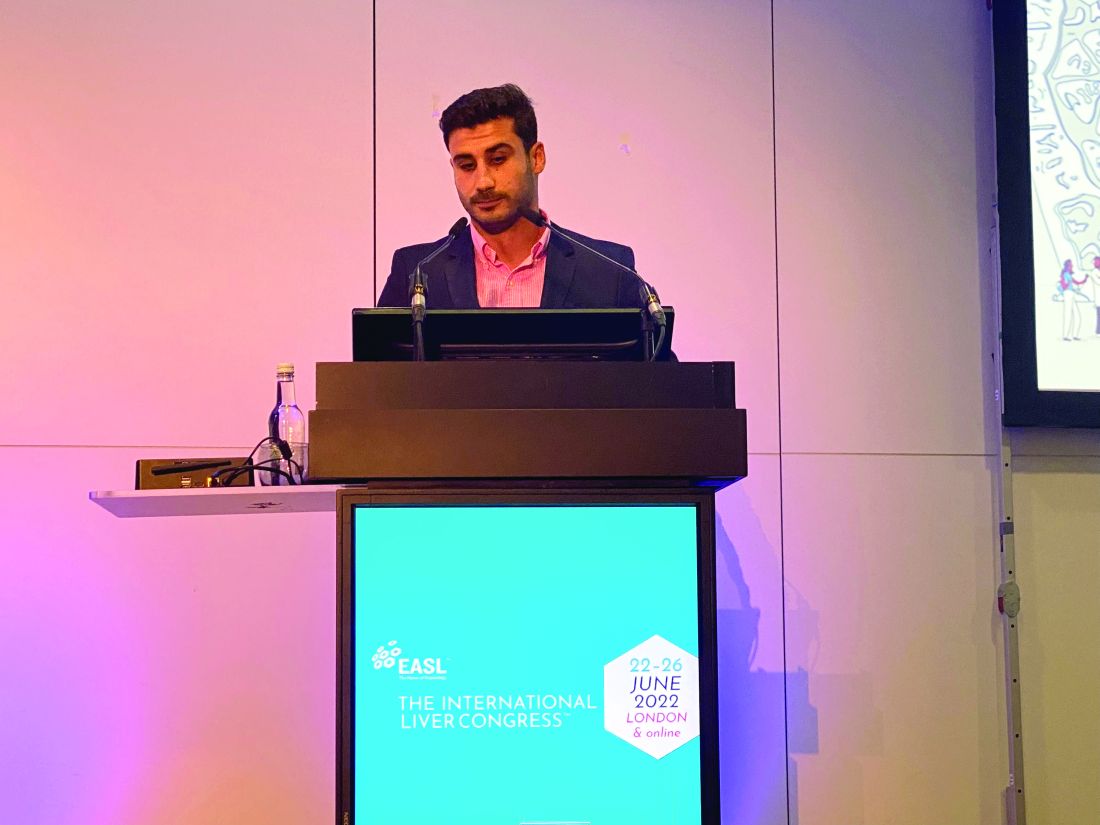
“Statins are inversely associated with multiple components of the NAFLD [nonalcoholic fatty liver disease] spectrum,” said Ibrahim Ayada, a PhD student in the department of gastroenterology and hepatology at Erasmus MC.
“Statins can inhibit lipid synthesis in organoids and statins also exhibit healthy inflammatory effects, which might contribute to the hepatoprotective effects that we observe in our population studies,” Mr. Ayada said.
A rising problem that needs addressing
Together NAFLD and NASH constitute a significant and increasing health burden, Mr. Ayada observed, noting that there were an estimated 64 million people in the United States and 52 million people in Europe, at least, with the rise mirroring the obesity pandemic.
“The number of patients visiting outpatient clinics has nearly doubled within a study period of 5 years,” he said.
“There is no pharmacologic therapy,” he reminded his audience, observing that fatty liver disease was a major indication for liver transplantation.
Statins are a long-standing staple of cardiovascular disease management and are known to have pleiotropic effects, Mr. Ayada explained. Their use in NAFLD and non-alcoholic steatohepatitis (NASH) has been purported but is supported by inconclusive evidence.
Indeed, a prior Cochrane review performed in 2013 found only two studies that were eligible for analysis and had “high risk of bias and a small numbers of participants,” according to the review’s authors.
Examining the connection
To look at the possible benefits of statins in people with NASH and examine how these effects might be occurring, Mr. Ayada and collaborators first took data from the Rotterdam Study, a large population-based prospective cohort that has been collecting data on its participants since the early 90s.
Data on over 4,500 participants were examined and of these, just over 1,000 had NAFLD. Statin versus no statin use was found to be associated with around a 30% reduction in fatty liver disease, with an odds ratio or 0.72 for NAFLD.
Then, looking only at a subset of patients with biopsy-proven NAFLD, statin use was associated with a 45% reduction in NASH (OR, 0.55) and a 24% reduction in fibrosis, although only the NASH reduction was significant (P = .031). The purpose of this cohort is to look at potential biomarkers and all participants had donated blood, urine, and stool samples; all were of Chinese descent, Mr. Ayada said.
“We then pooled our results with existing evidence in a meta-analysis,” said Mr. Ayada, including 16 studies. While results showed an overall inverse association, only the findings for a reduction in NAFLD and fibrosis were significant; the relationship between statins and NASH was not significant.
Investigating mechanistic effects
Then, for the second part of their work, Mr. Ayada and associates looked at potential mechanistic effects of statins.
“We did part two because we knew part one was going to be cross-sectional and we could only show the association and not causality, so we tried to shed some light on possible pathways,” he said.
To do this they used a novel model of liver organoids developed to study fatty liver disease and test potential therapeutics. In this model human liver organoids are exposed to sodium lactate, sodium pyruvate, and octanoic acid, which induce the formation of lipid droplets. Exposing the organoids to statins – simvastatin and lovastatin were used in the experiments – resulted in a reduced number of the induced lipid droplets.
“Although all concentrations of statins significantly inhibited the lipid size versus the control, the major effect was quite modest,” observed Mr. Ayada. The effect was most noticeable at the highest dose used (10 micromolar), and what they think might be happening is that the statins are clearing the smaller droplets first, leaving the larger ones behind.
Next, they looked at the effect of statin treatment on inflammatory gene expression in liver-derived monocytes. These will turn into macrophages and play a key role in chronic inflammation, Mr. Ayada explained. Initial results suggest that several proinflammatory cytokines such as interleukin-1 beta, IL-6, and IL-8 may be downplayed by statin therapy.
An anti-inflammatory effect of statins was also reported in unrelated poster presentations at the congress. While researchers Seul Ki Han and associated from South Korea showed an anti-inflammatory effect of a combination of simvastatin and ezetimibe (SAT083), a Dutch team found that atorvastatin reduced the infiltration of hepatic macrophages, neutrophils, and monocytes, as well as lowering levels of proinflammatory cytokines (SAT033).
Statins for NASH – a missed opportunity?
“As far as I am aware there is no robust evidence from large, randomized trials to suggest statins lessen chances of NAFLD, or improve its surrogate markers such as ALT or GGT [gamma-glutamyltransferase] levels,” Naveed Sattar, PhD, FRCP, FRCPath, FRSE, FMedSci, commented in an interview.
“The Rotterdam study is merely cross-sectional and cannot answer the question of causality,” added Dr. Sattar, who is professor of metabolic medicine and Honorary Consultant in Cardiovascular & Medical Science at the University of Glasgow. “It may be people who have less NAFLD are more likely to be prescribed statins, perhaps because doctors are wary of prescribing statins to those with slightly deranged liver tests,” he qualified.
Moreover, said Dr. Sattar, “prior evidence shows statins are underused in people with heart disease but who have NAFLD, which represents a missed opportunity to prevent heart disease.
“If statins had positive effects for preventing conversion of NAFLD to NASH or lessening fibrosis, I believe we would have known that by now.”
As for use of statins in future treatments of fatty liver disease, Dr. Sattar said: “I would not pin my hopes on statins to improve liver health, but doctors need to remember statins are safe in people with NAFLD or NASH and they should not be withheld in those who have existing cardiovascular disease or at elevated risk.”
The study received no commercial funding. Mr. Ayada and Dr. Sattar had no relevant conflicts of interest.
LONDON – Substantial reductions in liver fat and fibrosis can be achieved with statin therapy, according to research presented at the annual International Liver Congress sponsored by the European Association for the Study of the Liver.
Statins are thought to have multiple beneficial actions in people with fatty liver disease, but there has been little insight into how they may be exerting such effects.
Now, data from the Rotterdam Study and others suggest that statins may be reducing the formation of lipid droplets as well as influencing the expression of important inflammatory genes.
The results “require further confirmation,” the team behind the work said, which was done at Erasmus Medical Center in Rotterdam, the Netherlands, in collaboration with researchers at The First Affiliated Hospital of Wenzhou (China) Medical University.
“Statins are inversely associated with multiple components of the NAFLD [nonalcoholic fatty liver disease] spectrum,” said Ibrahim Ayada, a PhD student in the department of gastroenterology and hepatology at Erasmus MC.
“Statins can inhibit lipid synthesis in organoids and statins also exhibit healthy inflammatory effects, which might contribute to the hepatoprotective effects that we observe in our population studies,” Mr. Ayada said.
A rising problem that needs addressing
Together NAFLD and NASH constitute a significant and increasing health burden, Mr. Ayada observed, noting that there were an estimated 64 million people in the United States and 52 million people in Europe, at least, with the rise mirroring the obesity pandemic.
“The number of patients visiting outpatient clinics has nearly doubled within a study period of 5 years,” he said.
“There is no pharmacologic therapy,” he reminded his audience, observing that fatty liver disease was a major indication for liver transplantation.
Statins are a long-standing staple of cardiovascular disease management and are known to have pleiotropic effects, Mr. Ayada explained. Their use in NAFLD and non-alcoholic steatohepatitis (NASH) has been purported but is supported by inconclusive evidence.
Indeed, a prior Cochrane review performed in 2013 found only two studies that were eligible for analysis and had “high risk of bias and a small numbers of participants,” according to the review’s authors.
Examining the connection
To look at the possible benefits of statins in people with NASH and examine how these effects might be occurring, Mr. Ayada and collaborators first took data from the Rotterdam Study, a large population-based prospective cohort that has been collecting data on its participants since the early 90s.
Data on over 4,500 participants were examined and of these, just over 1,000 had NAFLD. Statin versus no statin use was found to be associated with around a 30% reduction in fatty liver disease, with an odds ratio or 0.72 for NAFLD.
Then, looking only at a subset of patients with biopsy-proven NAFLD, statin use was associated with a 45% reduction in NASH (OR, 0.55) and a 24% reduction in fibrosis, although only the NASH reduction was significant (P = .031). The purpose of this cohort is to look at potential biomarkers and all participants had donated blood, urine, and stool samples; all were of Chinese descent, Mr. Ayada said.
“We then pooled our results with existing evidence in a meta-analysis,” said Mr. Ayada, including 16 studies. While results showed an overall inverse association, only the findings for a reduction in NAFLD and fibrosis were significant; the relationship between statins and NASH was not significant.
Investigating mechanistic effects
Then, for the second part of their work, Mr. Ayada and associates looked at potential mechanistic effects of statins.
“We did part two because we knew part one was going to be cross-sectional and we could only show the association and not causality, so we tried to shed some light on possible pathways,” he said.
To do this they used a novel model of liver organoids developed to study fatty liver disease and test potential therapeutics. In this model human liver organoids are exposed to sodium lactate, sodium pyruvate, and octanoic acid, which induce the formation of lipid droplets. Exposing the organoids to statins – simvastatin and lovastatin were used in the experiments – resulted in a reduced number of the induced lipid droplets.
“Although all concentrations of statins significantly inhibited the lipid size versus the control, the major effect was quite modest,” observed Mr. Ayada. The effect was most noticeable at the highest dose used (10 micromolar), and what they think might be happening is that the statins are clearing the smaller droplets first, leaving the larger ones behind.
Next, they looked at the effect of statin treatment on inflammatory gene expression in liver-derived monocytes. These will turn into macrophages and play a key role in chronic inflammation, Mr. Ayada explained. Initial results suggest that several proinflammatory cytokines such as interleukin-1 beta, IL-6, and IL-8 may be downplayed by statin therapy.
An anti-inflammatory effect of statins was also reported in unrelated poster presentations at the congress. While researchers Seul Ki Han and associated from South Korea showed an anti-inflammatory effect of a combination of simvastatin and ezetimibe (SAT083), a Dutch team found that atorvastatin reduced the infiltration of hepatic macrophages, neutrophils, and monocytes, as well as lowering levels of proinflammatory cytokines (SAT033).
Statins for NASH – a missed opportunity?
“As far as I am aware there is no robust evidence from large, randomized trials to suggest statins lessen chances of NAFLD, or improve its surrogate markers such as ALT or GGT [gamma-glutamyltransferase] levels,” Naveed Sattar, PhD, FRCP, FRCPath, FRSE, FMedSci, commented in an interview.
“The Rotterdam study is merely cross-sectional and cannot answer the question of causality,” added Dr. Sattar, who is professor of metabolic medicine and Honorary Consultant in Cardiovascular & Medical Science at the University of Glasgow. “It may be people who have less NAFLD are more likely to be prescribed statins, perhaps because doctors are wary of prescribing statins to those with slightly deranged liver tests,” he qualified.
Moreover, said Dr. Sattar, “prior evidence shows statins are underused in people with heart disease but who have NAFLD, which represents a missed opportunity to prevent heart disease.
“If statins had positive effects for preventing conversion of NAFLD to NASH or lessening fibrosis, I believe we would have known that by now.”
As for use of statins in future treatments of fatty liver disease, Dr. Sattar said: “I would not pin my hopes on statins to improve liver health, but doctors need to remember statins are safe in people with NAFLD or NASH and they should not be withheld in those who have existing cardiovascular disease or at elevated risk.”
The study received no commercial funding. Mr. Ayada and Dr. Sattar had no relevant conflicts of interest.
LONDON – Substantial reductions in liver fat and fibrosis can be achieved with statin therapy, according to research presented at the annual International Liver Congress sponsored by the European Association for the Study of the Liver.
Statins are thought to have multiple beneficial actions in people with fatty liver disease, but there has been little insight into how they may be exerting such effects.
Now, data from the Rotterdam Study and others suggest that statins may be reducing the formation of lipid droplets as well as influencing the expression of important inflammatory genes.
The results “require further confirmation,” the team behind the work said, which was done at Erasmus Medical Center in Rotterdam, the Netherlands, in collaboration with researchers at The First Affiliated Hospital of Wenzhou (China) Medical University.
“Statins are inversely associated with multiple components of the NAFLD [nonalcoholic fatty liver disease] spectrum,” said Ibrahim Ayada, a PhD student in the department of gastroenterology and hepatology at Erasmus MC.
“Statins can inhibit lipid synthesis in organoids and statins also exhibit healthy inflammatory effects, which might contribute to the hepatoprotective effects that we observe in our population studies,” Mr. Ayada said.
A rising problem that needs addressing
Together NAFLD and NASH constitute a significant and increasing health burden, Mr. Ayada observed, noting that there were an estimated 64 million people in the United States and 52 million people in Europe, at least, with the rise mirroring the obesity pandemic.
“The number of patients visiting outpatient clinics has nearly doubled within a study period of 5 years,” he said.
“There is no pharmacologic therapy,” he reminded his audience, observing that fatty liver disease was a major indication for liver transplantation.
Statins are a long-standing staple of cardiovascular disease management and are known to have pleiotropic effects, Mr. Ayada explained. Their use in NAFLD and non-alcoholic steatohepatitis (NASH) has been purported but is supported by inconclusive evidence.
Indeed, a prior Cochrane review performed in 2013 found only two studies that were eligible for analysis and had “high risk of bias and a small numbers of participants,” according to the review’s authors.
Examining the connection
To look at the possible benefits of statins in people with NASH and examine how these effects might be occurring, Mr. Ayada and collaborators first took data from the Rotterdam Study, a large population-based prospective cohort that has been collecting data on its participants since the early 90s.
Data on over 4,500 participants were examined and of these, just over 1,000 had NAFLD. Statin versus no statin use was found to be associated with around a 30% reduction in fatty liver disease, with an odds ratio or 0.72 for NAFLD.
Then, looking only at a subset of patients with biopsy-proven NAFLD, statin use was associated with a 45% reduction in NASH (OR, 0.55) and a 24% reduction in fibrosis, although only the NASH reduction was significant (P = .031). The purpose of this cohort is to look at potential biomarkers and all participants had donated blood, urine, and stool samples; all were of Chinese descent, Mr. Ayada said.
“We then pooled our results with existing evidence in a meta-analysis,” said Mr. Ayada, including 16 studies. While results showed an overall inverse association, only the findings for a reduction in NAFLD and fibrosis were significant; the relationship between statins and NASH was not significant.
Investigating mechanistic effects
Then, for the second part of their work, Mr. Ayada and associates looked at potential mechanistic effects of statins.
“We did part two because we knew part one was going to be cross-sectional and we could only show the association and not causality, so we tried to shed some light on possible pathways,” he said.
To do this they used a novel model of liver organoids developed to study fatty liver disease and test potential therapeutics. In this model human liver organoids are exposed to sodium lactate, sodium pyruvate, and octanoic acid, which induce the formation of lipid droplets. Exposing the organoids to statins – simvastatin and lovastatin were used in the experiments – resulted in a reduced number of the induced lipid droplets.
“Although all concentrations of statins significantly inhibited the lipid size versus the control, the major effect was quite modest,” observed Mr. Ayada. The effect was most noticeable at the highest dose used (10 micromolar), and what they think might be happening is that the statins are clearing the smaller droplets first, leaving the larger ones behind.
Next, they looked at the effect of statin treatment on inflammatory gene expression in liver-derived monocytes. These will turn into macrophages and play a key role in chronic inflammation, Mr. Ayada explained. Initial results suggest that several proinflammatory cytokines such as interleukin-1 beta, IL-6, and IL-8 may be downplayed by statin therapy.
An anti-inflammatory effect of statins was also reported in unrelated poster presentations at the congress. While researchers Seul Ki Han and associated from South Korea showed an anti-inflammatory effect of a combination of simvastatin and ezetimibe (SAT083), a Dutch team found that atorvastatin reduced the infiltration of hepatic macrophages, neutrophils, and monocytes, as well as lowering levels of proinflammatory cytokines (SAT033).
Statins for NASH – a missed opportunity?
“As far as I am aware there is no robust evidence from large, randomized trials to suggest statins lessen chances of NAFLD, or improve its surrogate markers such as ALT or GGT [gamma-glutamyltransferase] levels,” Naveed Sattar, PhD, FRCP, FRCPath, FRSE, FMedSci, commented in an interview.
“The Rotterdam study is merely cross-sectional and cannot answer the question of causality,” added Dr. Sattar, who is professor of metabolic medicine and Honorary Consultant in Cardiovascular & Medical Science at the University of Glasgow. “It may be people who have less NAFLD are more likely to be prescribed statins, perhaps because doctors are wary of prescribing statins to those with slightly deranged liver tests,” he qualified.
Moreover, said Dr. Sattar, “prior evidence shows statins are underused in people with heart disease but who have NAFLD, which represents a missed opportunity to prevent heart disease.
“If statins had positive effects for preventing conversion of NAFLD to NASH or lessening fibrosis, I believe we would have known that by now.”
As for use of statins in future treatments of fatty liver disease, Dr. Sattar said: “I would not pin my hopes on statins to improve liver health, but doctors need to remember statins are safe in people with NAFLD or NASH and they should not be withheld in those who have existing cardiovascular disease or at elevated risk.”
The study received no commercial funding. Mr. Ayada and Dr. Sattar had no relevant conflicts of interest.
AT ILC 2022
Phase 3 data shows bulevirtide benefit in hepatitis D
LONDON – Bulevirtide may not just treat but perhaps be a potential cure for hepatitis D in some patients, as was suggested at the annual International Liver Congress.
Data from an ongoing phase 3 trial showed that, after 48 weeks of treatment, almost half of those treated with bulevirtide achieved the combined primary endpoint of reduced or undetectable hepatitis delta virus (HDV) RNA levels and normalized ALT levels.
“The good message for our patients is that the initial data of the smaller phase 2 trials will really be confirmed, so the drug works,” Heiner Wedemeyer, MD, said at a media briefing ahead of his presentation at the meeting sponsored by the European Association for the Study of the Liver .

“It induces a decline in viral load and, very importantly for us as hepatologists, liver enzymes normalize, this is really good news” added Dr. Wedemeyer, who is the clinic director of the department of gastroenterology, hepatology, and endocrinology at Hannover (Germany) Medical School.
“This is really an almost historic moment for hepatology,” he said. “It’s the first time that these patients have an antiviral treatment; they are afraid of dying and now they have a hope.”
Giving his thoughts, Thomas Berg, MD, Secretary General of EASL, said: “We are entering into a golden age of hepatology science when it comes to viral hepatitis.
Dr. Berg, also of University Clinic Leipzig (Germany), added: “We have several million people worldwide living with viral hepatitis; we have a cure for hepatitis C but there’s no cure for hepatitis B or hepatitis D, so these data give me great hope that we have scientific momentum with us.”
Pivotal phase 3 study
The MYR301 trial is an important and pivotal study for bulevirtide, which is a first-in-class HDV entry inhibitor. While it was approved for use Europe in 2020 under the brand name Hepcludex, the drug remains investigational in the United States.
“We were really surprised that EMA [European Medicines Agency] went forward, granting approval because there was no alternative available at that time,” Dr. Wedemeyer said. That approval is conditional, however, and was based on the results of phase 2 studies with the proviso that further data needed would need to be provided. Hopefully, the phase 3 findings will mean that the drug will receive full official approval, he said.
Overall, 150 patients with chronic hepatitis D were recruited into the phase 3 study and randomized to receive one of two doses of bulevirtide (2 mg or 10 mg) for 144 weeks or delayed treatment for 48 weeks followed by the higher dose of the drug until the remainder of the treatment period. Bulevirtide was given as once-daily subcutaneous injection.
The mean age of participants was 41 years, the majority (82.7%) were White, and just under half already had liver cirrhosis. For inclusion, Dr. Wedemeyer said that they had to have compensated cirrhosis.
Just over half had received prior interferon therapy and almost two-thirds were receiving concomitant nucleos(t)ide (NUC) treatment.
Key results
The primary endpoint was defined as a combination of decreased HDV RNA (defined as undetectable or a 2 log or greater decrease) and normalized ALT (defined as 3.1 U/L or less in women and 4.1 U/L or less in men). This was assessed after 48 weeks’ treatment and was achieved by 45% of participants given the 2-mg dose of bulevirtide, 48% of those given the 10-mg dose, and by 2% of those who had delayed treatment (P < .0001 for both doses, compared with delayed treatment).
The treatment benefit was consistent across all subgroups of patients, including those with cirrhosis, Dr. Wedemeyer reported.
Looking at some of the secondary endpoints, he reported that, when considering only decreased HDV RNA, the rate of response was over 70% with both dose of bulevirtide at week 48, compared with just 4% for delayed treatment (P < .0001), although there was no significant difference in rates of undetectable HDV RNA between the two doses. ALT normalization rates were 51%-56% versus 12% for delayed treatment (P < .0001).
A further benefit was seen in liver stiffness, with values reduced by at least three points at week 48 with either dose of bulevirtide, compared with an increase of almost 1 point for delayed treatment.
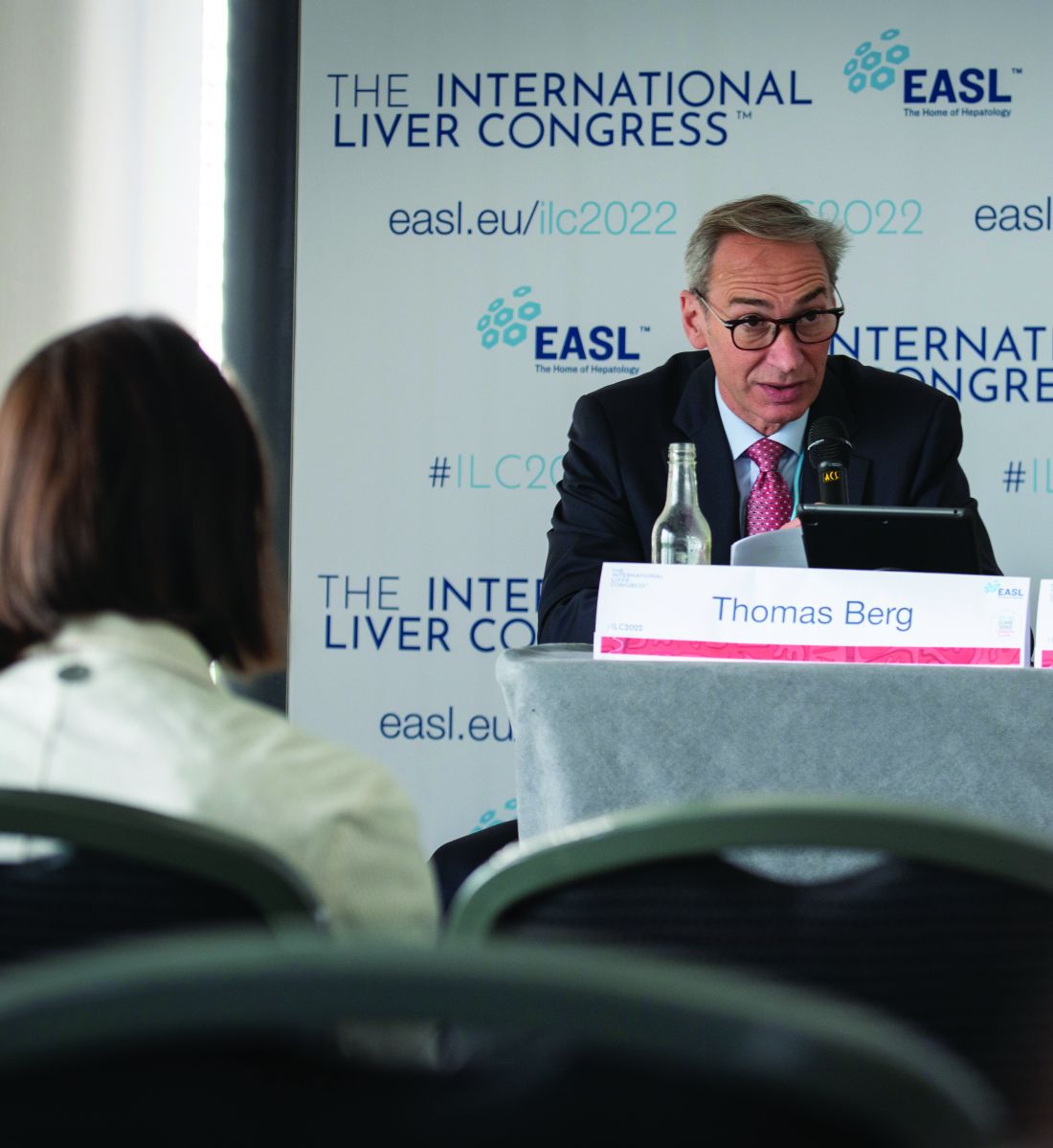
As for side effects, one of the concerns for bulevirtide is an increase in serum bile acids, but when this occurred, it occurred early and remained steady over the course of treatment, with a less pronounced effect in the 2 mg–dosed group than the 10 mg–dosed group. There were no serious adverse reactions related to bulevirtide or any adverse event that led to stopping the drug.
“There are always questions that need to be answered,” Dr. Wedemeyer acknowledged. Indeed, it’s unclear for how long patients need to be treated and if treatment with interferon is needed. In the phase 2 studies (MYR202 and MYR203), bulevirtide was given at the same time as pegylated interferon alpha (peg-IFNa) or tenofovir, whereas in the phase 3 MYR301 trial, it was given as monotherapy.
Real-world experience
“We have already some real-world data in parallel to this phase 3 trial,” Dr. Wedemeyer said. “So, for us in the hepatitis D field, it is a really exciting time; [it’s] completely novel data and game-changing for patients.”
“The results are similar to our real life study, but in our real-life study, we have some patients treated with interferon and some not treated with interferon,” Hélène Fontaine, MD, of Hôpital Cochin in Paris, observed in an interview.
She reported preliminary results from the prospective BuleDelta cohort, which showed a virologic response rate of 58% and ALT normalization in 46% of patients.
“Virologic response was achieved in more patients receiving bulevirtide in combination with interferon,” she said. Indeed, 84% of patient who received peg-IFNa versus 39% of those who did not achieved a virologic response. However, rates of ALT normalization were more frequent in those received bulevirtide monotherapy than in combination with peg-IFN1 (54% vs. 35%).
A greater benefit of combining bulevirtide with interferon therapy was also seen in another real-world study presented by Victor de Lédinghen, MD, PhD, of Bordeaux (France) University Hospital. After 18 months of treatment, bulevirtide plus peg-IFNa was associated with undetectable HDV RNA in 57% of patients versus 33% of those given the drug as monotherapy.
“Of course, if you add interferon, it’s better than without but you cannot use interferon in all patients,” he observed in an interview.
Results are good but could be better, he suggested, noting that the results are dependent on patients injecting themselves correctly on a daily basis.
At the media briefing Dr. Wedemeyer also commented on how bulevirtide must be delivered.
“The only, let’s say, disadvantage is that it has to be injected because it’s a peptide, which requires daily injections, but patients managed very well,” Dr. Wedemeyer said.
“There is some evidence from single cases that we may stop treatment and that the virus does not come back,” he said, but stressed that patients should not stop treatment on their own as the risk is not known.
“For patients with advanced disease I consider this as a maintenance treatment,” Dr. Wedemeyer said, at least for the time being.
The MYR3201 study was funded by Gilead Sciences. The BuleDelta cohort is sponsored by the ANRS Maladies Infectieuses Emergencies. Dr. Wedemeyer acknowledged research funding, acting as a consultant to, and giving paid lectures on behalf of Gilead Sciences and MYR as well as having ties to multiple pharmaceutical and biotechnology companies. Dr. Berg, Dr. Fontaine, and Dr. de Lédinghen had no conflicts of interest to report.
LONDON – Bulevirtide may not just treat but perhaps be a potential cure for hepatitis D in some patients, as was suggested at the annual International Liver Congress.
Data from an ongoing phase 3 trial showed that, after 48 weeks of treatment, almost half of those treated with bulevirtide achieved the combined primary endpoint of reduced or undetectable hepatitis delta virus (HDV) RNA levels and normalized ALT levels.
“The good message for our patients is that the initial data of the smaller phase 2 trials will really be confirmed, so the drug works,” Heiner Wedemeyer, MD, said at a media briefing ahead of his presentation at the meeting sponsored by the European Association for the Study of the Liver .
“It induces a decline in viral load and, very importantly for us as hepatologists, liver enzymes normalize, this is really good news” added Dr. Wedemeyer, who is the clinic director of the department of gastroenterology, hepatology, and endocrinology at Hannover (Germany) Medical School.
“This is really an almost historic moment for hepatology,” he said. “It’s the first time that these patients have an antiviral treatment; they are afraid of dying and now they have a hope.”
Giving his thoughts, Thomas Berg, MD, Secretary General of EASL, said: “We are entering into a golden age of hepatology science when it comes to viral hepatitis.
Dr. Berg, also of University Clinic Leipzig (Germany), added: “We have several million people worldwide living with viral hepatitis; we have a cure for hepatitis C but there’s no cure for hepatitis B or hepatitis D, so these data give me great hope that we have scientific momentum with us.”
Pivotal phase 3 study
The MYR301 trial is an important and pivotal study for bulevirtide, which is a first-in-class HDV entry inhibitor. While it was approved for use Europe in 2020 under the brand name Hepcludex, the drug remains investigational in the United States.
“We were really surprised that EMA [European Medicines Agency] went forward, granting approval because there was no alternative available at that time,” Dr. Wedemeyer said. That approval is conditional, however, and was based on the results of phase 2 studies with the proviso that further data needed would need to be provided. Hopefully, the phase 3 findings will mean that the drug will receive full official approval, he said.
Overall, 150 patients with chronic hepatitis D were recruited into the phase 3 study and randomized to receive one of two doses of bulevirtide (2 mg or 10 mg) for 144 weeks or delayed treatment for 48 weeks followed by the higher dose of the drug until the remainder of the treatment period. Bulevirtide was given as once-daily subcutaneous injection.
The mean age of participants was 41 years, the majority (82.7%) were White, and just under half already had liver cirrhosis. For inclusion, Dr. Wedemeyer said that they had to have compensated cirrhosis.
Just over half had received prior interferon therapy and almost two-thirds were receiving concomitant nucleos(t)ide (NUC) treatment.
Key results
The primary endpoint was defined as a combination of decreased HDV RNA (defined as undetectable or a 2 log or greater decrease) and normalized ALT (defined as 3.1 U/L or less in women and 4.1 U/L or less in men). This was assessed after 48 weeks’ treatment and was achieved by 45% of participants given the 2-mg dose of bulevirtide, 48% of those given the 10-mg dose, and by 2% of those who had delayed treatment (P < .0001 for both doses, compared with delayed treatment).
The treatment benefit was consistent across all subgroups of patients, including those with cirrhosis, Dr. Wedemeyer reported.
Looking at some of the secondary endpoints, he reported that, when considering only decreased HDV RNA, the rate of response was over 70% with both dose of bulevirtide at week 48, compared with just 4% for delayed treatment (P < .0001), although there was no significant difference in rates of undetectable HDV RNA between the two doses. ALT normalization rates were 51%-56% versus 12% for delayed treatment (P < .0001).
A further benefit was seen in liver stiffness, with values reduced by at least three points at week 48 with either dose of bulevirtide, compared with an increase of almost 1 point for delayed treatment.
As for side effects, one of the concerns for bulevirtide is an increase in serum bile acids, but when this occurred, it occurred early and remained steady over the course of treatment, with a less pronounced effect in the 2 mg–dosed group than the 10 mg–dosed group. There were no serious adverse reactions related to bulevirtide or any adverse event that led to stopping the drug.
“There are always questions that need to be answered,” Dr. Wedemeyer acknowledged. Indeed, it’s unclear for how long patients need to be treated and if treatment with interferon is needed. In the phase 2 studies (MYR202 and MYR203), bulevirtide was given at the same time as pegylated interferon alpha (peg-IFNa) or tenofovir, whereas in the phase 3 MYR301 trial, it was given as monotherapy.
Real-world experience
“We have already some real-world data in parallel to this phase 3 trial,” Dr. Wedemeyer said. “So, for us in the hepatitis D field, it is a really exciting time; [it’s] completely novel data and game-changing for patients.”
“The results are similar to our real life study, but in our real-life study, we have some patients treated with interferon and some not treated with interferon,” Hélène Fontaine, MD, of Hôpital Cochin in Paris, observed in an interview.
She reported preliminary results from the prospective BuleDelta cohort, which showed a virologic response rate of 58% and ALT normalization in 46% of patients.
“Virologic response was achieved in more patients receiving bulevirtide in combination with interferon,” she said. Indeed, 84% of patient who received peg-IFNa versus 39% of those who did not achieved a virologic response. However, rates of ALT normalization were more frequent in those received bulevirtide monotherapy than in combination with peg-IFN1 (54% vs. 35%).
A greater benefit of combining bulevirtide with interferon therapy was also seen in another real-world study presented by Victor de Lédinghen, MD, PhD, of Bordeaux (France) University Hospital. After 18 months of treatment, bulevirtide plus peg-IFNa was associated with undetectable HDV RNA in 57% of patients versus 33% of those given the drug as monotherapy.
“Of course, if you add interferon, it’s better than without but you cannot use interferon in all patients,” he observed in an interview.
Results are good but could be better, he suggested, noting that the results are dependent on patients injecting themselves correctly on a daily basis.
At the media briefing Dr. Wedemeyer also commented on how bulevirtide must be delivered.
“The only, let’s say, disadvantage is that it has to be injected because it’s a peptide, which requires daily injections, but patients managed very well,” Dr. Wedemeyer said.
“There is some evidence from single cases that we may stop treatment and that the virus does not come back,” he said, but stressed that patients should not stop treatment on their own as the risk is not known.
“For patients with advanced disease I consider this as a maintenance treatment,” Dr. Wedemeyer said, at least for the time being.
The MYR3201 study was funded by Gilead Sciences. The BuleDelta cohort is sponsored by the ANRS Maladies Infectieuses Emergencies. Dr. Wedemeyer acknowledged research funding, acting as a consultant to, and giving paid lectures on behalf of Gilead Sciences and MYR as well as having ties to multiple pharmaceutical and biotechnology companies. Dr. Berg, Dr. Fontaine, and Dr. de Lédinghen had no conflicts of interest to report.
LONDON – Bulevirtide may not just treat but perhaps be a potential cure for hepatitis D in some patients, as was suggested at the annual International Liver Congress.
Data from an ongoing phase 3 trial showed that, after 48 weeks of treatment, almost half of those treated with bulevirtide achieved the combined primary endpoint of reduced or undetectable hepatitis delta virus (HDV) RNA levels and normalized ALT levels.
“The good message for our patients is that the initial data of the smaller phase 2 trials will really be confirmed, so the drug works,” Heiner Wedemeyer, MD, said at a media briefing ahead of his presentation at the meeting sponsored by the European Association for the Study of the Liver .
“It induces a decline in viral load and, very importantly for us as hepatologists, liver enzymes normalize, this is really good news” added Dr. Wedemeyer, who is the clinic director of the department of gastroenterology, hepatology, and endocrinology at Hannover (Germany) Medical School.
“This is really an almost historic moment for hepatology,” he said. “It’s the first time that these patients have an antiviral treatment; they are afraid of dying and now they have a hope.”
Giving his thoughts, Thomas Berg, MD, Secretary General of EASL, said: “We are entering into a golden age of hepatology science when it comes to viral hepatitis.
Dr. Berg, also of University Clinic Leipzig (Germany), added: “We have several million people worldwide living with viral hepatitis; we have a cure for hepatitis C but there’s no cure for hepatitis B or hepatitis D, so these data give me great hope that we have scientific momentum with us.”
Pivotal phase 3 study
The MYR301 trial is an important and pivotal study for bulevirtide, which is a first-in-class HDV entry inhibitor. While it was approved for use Europe in 2020 under the brand name Hepcludex, the drug remains investigational in the United States.
“We were really surprised that EMA [European Medicines Agency] went forward, granting approval because there was no alternative available at that time,” Dr. Wedemeyer said. That approval is conditional, however, and was based on the results of phase 2 studies with the proviso that further data needed would need to be provided. Hopefully, the phase 3 findings will mean that the drug will receive full official approval, he said.
Overall, 150 patients with chronic hepatitis D were recruited into the phase 3 study and randomized to receive one of two doses of bulevirtide (2 mg or 10 mg) for 144 weeks or delayed treatment for 48 weeks followed by the higher dose of the drug until the remainder of the treatment period. Bulevirtide was given as once-daily subcutaneous injection.
The mean age of participants was 41 years, the majority (82.7%) were White, and just under half already had liver cirrhosis. For inclusion, Dr. Wedemeyer said that they had to have compensated cirrhosis.
Just over half had received prior interferon therapy and almost two-thirds were receiving concomitant nucleos(t)ide (NUC) treatment.
Key results
The primary endpoint was defined as a combination of decreased HDV RNA (defined as undetectable or a 2 log or greater decrease) and normalized ALT (defined as 3.1 U/L or less in women and 4.1 U/L or less in men). This was assessed after 48 weeks’ treatment and was achieved by 45% of participants given the 2-mg dose of bulevirtide, 48% of those given the 10-mg dose, and by 2% of those who had delayed treatment (P < .0001 for both doses, compared with delayed treatment).
The treatment benefit was consistent across all subgroups of patients, including those with cirrhosis, Dr. Wedemeyer reported.
Looking at some of the secondary endpoints, he reported that, when considering only decreased HDV RNA, the rate of response was over 70% with both dose of bulevirtide at week 48, compared with just 4% for delayed treatment (P < .0001), although there was no significant difference in rates of undetectable HDV RNA between the two doses. ALT normalization rates were 51%-56% versus 12% for delayed treatment (P < .0001).
A further benefit was seen in liver stiffness, with values reduced by at least three points at week 48 with either dose of bulevirtide, compared with an increase of almost 1 point for delayed treatment.
As for side effects, one of the concerns for bulevirtide is an increase in serum bile acids, but when this occurred, it occurred early and remained steady over the course of treatment, with a less pronounced effect in the 2 mg–dosed group than the 10 mg–dosed group. There were no serious adverse reactions related to bulevirtide or any adverse event that led to stopping the drug.
“There are always questions that need to be answered,” Dr. Wedemeyer acknowledged. Indeed, it’s unclear for how long patients need to be treated and if treatment with interferon is needed. In the phase 2 studies (MYR202 and MYR203), bulevirtide was given at the same time as pegylated interferon alpha (peg-IFNa) or tenofovir, whereas in the phase 3 MYR301 trial, it was given as monotherapy.
Real-world experience
“We have already some real-world data in parallel to this phase 3 trial,” Dr. Wedemeyer said. “So, for us in the hepatitis D field, it is a really exciting time; [it’s] completely novel data and game-changing for patients.”
“The results are similar to our real life study, but in our real-life study, we have some patients treated with interferon and some not treated with interferon,” Hélène Fontaine, MD, of Hôpital Cochin in Paris, observed in an interview.
She reported preliminary results from the prospective BuleDelta cohort, which showed a virologic response rate of 58% and ALT normalization in 46% of patients.
“Virologic response was achieved in more patients receiving bulevirtide in combination with interferon,” she said. Indeed, 84% of patient who received peg-IFNa versus 39% of those who did not achieved a virologic response. However, rates of ALT normalization were more frequent in those received bulevirtide monotherapy than in combination with peg-IFN1 (54% vs. 35%).
A greater benefit of combining bulevirtide with interferon therapy was also seen in another real-world study presented by Victor de Lédinghen, MD, PhD, of Bordeaux (France) University Hospital. After 18 months of treatment, bulevirtide plus peg-IFNa was associated with undetectable HDV RNA in 57% of patients versus 33% of those given the drug as monotherapy.
“Of course, if you add interferon, it’s better than without but you cannot use interferon in all patients,” he observed in an interview.
Results are good but could be better, he suggested, noting that the results are dependent on patients injecting themselves correctly on a daily basis.
At the media briefing Dr. Wedemeyer also commented on how bulevirtide must be delivered.
“The only, let’s say, disadvantage is that it has to be injected because it’s a peptide, which requires daily injections, but patients managed very well,” Dr. Wedemeyer said.
“There is some evidence from single cases that we may stop treatment and that the virus does not come back,” he said, but stressed that patients should not stop treatment on their own as the risk is not known.
“For patients with advanced disease I consider this as a maintenance treatment,” Dr. Wedemeyer said, at least for the time being.
The MYR3201 study was funded by Gilead Sciences. The BuleDelta cohort is sponsored by the ANRS Maladies Infectieuses Emergencies. Dr. Wedemeyer acknowledged research funding, acting as a consultant to, and giving paid lectures on behalf of Gilead Sciences and MYR as well as having ties to multiple pharmaceutical and biotechnology companies. Dr. Berg, Dr. Fontaine, and Dr. de Lédinghen had no conflicts of interest to report.
AT ILC 2022
Genetic ‘taste score’ could help us eat healthier and reduce disease risk
Addicted to cookies? Can’t stand broccoli? You may be able to blame Mom and Dad.
That’s because our taste preferences are influenced by our genes. And this may play an important role in determining our food choices and, in turn, our health, according to early study findings presented at this year’s annual meeting of the American Society for Nutrition.
“Our genetic predispositions to perceive certain tastes might be one of many reasons why some of us struggle to make healthy food choices,” says the study’s lead researcher, Julie Gervis, a doctoral degree candidate at the Tufts Jean Mayer USDA Human Nutrition Research Center on Aging.
As the field of personalized nutrition – a branch of science that uses technology to help people figure out what to eat for good health – advances, the findings could bring us closer to more effective personalized nutrition advice, better diets, and less risk for things like obesity, type 2 diabetes, and heart disease.
What’s your ‘polygenic taste score’?
We know genes influence our taste, but little is known about how taste-related genes impact diet quality and health. To investigate this, the researchers used data from “genome-wide association studies,” which scientists use to find gene variations associated with a trait, to create something called a polygenic taste score.
Your polygenic taste score shows how your genes impact your unique perception of taste – be it bitter, salty, sweet, sour, or savory (umami). If you have a high score for, say, sweet, that means you may be more sensitive to sweetness than someone with a moderate or low sweet score.
In the study sample of more than 6,000 adults, those with a high “bitter” score tended to eat fewer whole grains (two fewer servings a week), while those scoring high for savory ate fewer vegetables, especially orange and red types like carrots and bell peppers. That matters because whole grains have been shown to reduce heart disease risk, while a higher veggie intake is linked to lower risk of type 2 diabetes.
Meanwhile, genes related to sweet seemed key for health related to your heart and metabolism, as a higher sweet score was linked with lower triglycerides, a type of fat found in the blood.
From lab to shopping list
While we have a long way to go before dietitians and consumers can use polygenic taste scores, the tool could one day help us use – or minimize – the influence our genes has on our food choices, Ms. Gervis says. That may help us improve personalized nutrition advice aimed at reducing disease risk.
But first, other research needs to repeat the findings, Ms. Gervis says. And more large-scale, genome-wide studies on taste perception should be done.
“I hope these preliminary data convey the potential benefit of incorporating taste-related genes, and taste perception, into personalized nutrition,” she says. “After all, while we don’t always choose what foods are good for us, we do always choose what foods taste good to us.”
A version of this article first appeared on WebMD.com.
Addicted to cookies? Can’t stand broccoli? You may be able to blame Mom and Dad.
That’s because our taste preferences are influenced by our genes. And this may play an important role in determining our food choices and, in turn, our health, according to early study findings presented at this year’s annual meeting of the American Society for Nutrition.
“Our genetic predispositions to perceive certain tastes might be one of many reasons why some of us struggle to make healthy food choices,” says the study’s lead researcher, Julie Gervis, a doctoral degree candidate at the Tufts Jean Mayer USDA Human Nutrition Research Center on Aging.
As the field of personalized nutrition – a branch of science that uses technology to help people figure out what to eat for good health – advances, the findings could bring us closer to more effective personalized nutrition advice, better diets, and less risk for things like obesity, type 2 diabetes, and heart disease.
What’s your ‘polygenic taste score’?
We know genes influence our taste, but little is known about how taste-related genes impact diet quality and health. To investigate this, the researchers used data from “genome-wide association studies,” which scientists use to find gene variations associated with a trait, to create something called a polygenic taste score.
Your polygenic taste score shows how your genes impact your unique perception of taste – be it bitter, salty, sweet, sour, or savory (umami). If you have a high score for, say, sweet, that means you may be more sensitive to sweetness than someone with a moderate or low sweet score.
In the study sample of more than 6,000 adults, those with a high “bitter” score tended to eat fewer whole grains (two fewer servings a week), while those scoring high for savory ate fewer vegetables, especially orange and red types like carrots and bell peppers. That matters because whole grains have been shown to reduce heart disease risk, while a higher veggie intake is linked to lower risk of type 2 diabetes.
Meanwhile, genes related to sweet seemed key for health related to your heart and metabolism, as a higher sweet score was linked with lower triglycerides, a type of fat found in the blood.
From lab to shopping list
While we have a long way to go before dietitians and consumers can use polygenic taste scores, the tool could one day help us use – or minimize – the influence our genes has on our food choices, Ms. Gervis says. That may help us improve personalized nutrition advice aimed at reducing disease risk.
But first, other research needs to repeat the findings, Ms. Gervis says. And more large-scale, genome-wide studies on taste perception should be done.
“I hope these preliminary data convey the potential benefit of incorporating taste-related genes, and taste perception, into personalized nutrition,” she says. “After all, while we don’t always choose what foods are good for us, we do always choose what foods taste good to us.”
A version of this article first appeared on WebMD.com.
Addicted to cookies? Can’t stand broccoli? You may be able to blame Mom and Dad.
That’s because our taste preferences are influenced by our genes. And this may play an important role in determining our food choices and, in turn, our health, according to early study findings presented at this year’s annual meeting of the American Society for Nutrition.
“Our genetic predispositions to perceive certain tastes might be one of many reasons why some of us struggle to make healthy food choices,” says the study’s lead researcher, Julie Gervis, a doctoral degree candidate at the Tufts Jean Mayer USDA Human Nutrition Research Center on Aging.
As the field of personalized nutrition – a branch of science that uses technology to help people figure out what to eat for good health – advances, the findings could bring us closer to more effective personalized nutrition advice, better diets, and less risk for things like obesity, type 2 diabetes, and heart disease.
What’s your ‘polygenic taste score’?
We know genes influence our taste, but little is known about how taste-related genes impact diet quality and health. To investigate this, the researchers used data from “genome-wide association studies,” which scientists use to find gene variations associated with a trait, to create something called a polygenic taste score.
Your polygenic taste score shows how your genes impact your unique perception of taste – be it bitter, salty, sweet, sour, or savory (umami). If you have a high score for, say, sweet, that means you may be more sensitive to sweetness than someone with a moderate or low sweet score.
In the study sample of more than 6,000 adults, those with a high “bitter” score tended to eat fewer whole grains (two fewer servings a week), while those scoring high for savory ate fewer vegetables, especially orange and red types like carrots and bell peppers. That matters because whole grains have been shown to reduce heart disease risk, while a higher veggie intake is linked to lower risk of type 2 diabetes.
Meanwhile, genes related to sweet seemed key for health related to your heart and metabolism, as a higher sweet score was linked with lower triglycerides, a type of fat found in the blood.
From lab to shopping list
While we have a long way to go before dietitians and consumers can use polygenic taste scores, the tool could one day help us use – or minimize – the influence our genes has on our food choices, Ms. Gervis says. That may help us improve personalized nutrition advice aimed at reducing disease risk.
But first, other research needs to repeat the findings, Ms. Gervis says. And more large-scale, genome-wide studies on taste perception should be done.
“I hope these preliminary data convey the potential benefit of incorporating taste-related genes, and taste perception, into personalized nutrition,” she says. “After all, while we don’t always choose what foods are good for us, we do always choose what foods taste good to us.”
A version of this article first appeared on WebMD.com.
Mobile devices ‘addictive by design’: Obesity is one of many health effects
Wireless devices, like smart phones and tablets, appear to induce compulsive or even addictive use in many individuals, leading to adverse health consequences that are likely to be curtailed only through often difficult behavior modification, according to a pediatric endocrinologist’s take on the problem.
While the summary was based in part on the analysis of 234 published papers drawn from the medical literature, the lead author, Nidhi Gupta, MD, said the data reinforce her own clinical experience.

“As a pediatric endocrinologist, the trend in smartphone-associated health disorders, such as obesity, sleep, and behavior issues, worries me,” Dr. Gupta, director of KAP Pediatric Endocrinology, Nashville, Tenn., said at the annual meeting of the Endocrine Society.
Based on her search of the medical literature, the available data raise concern. In one study she cited, for example, each hour per day of screen time was found to translate into a body mass index increase of 0.5 to 0.7 kg/m2 (P < .001).
With this type of progressive rise in BMI comes prediabetes, dyslipidemia, and other metabolic disorders associated with major health risks, including cardiovascular disease. And there are others. Dr. Gupta cited data suggesting screen time before bed disturbs sleep, which has its own set of health risks.
“When I say health, it includes physical health, mental health, and emotional health,” said Dr. Gupta.
In the U.S. and other countries with a growing obesity epidemic, lack of physical activity and unhealthy eating are widely considered the major culprits. Excessive screen time contributes to both.
“When we are engaged with our devices, we are often snacking subconsciously and not very mindful that we are making unhealthy choices,” Dr. Gupta said.
The problem is that there is a vicious circle. Compulsive use of devices follows the same loop as other types of addictive behaviors, according to Dr. Gupta. She traced overuse of wireless devices to the dopaminergic system, which is a powerful neuroendocrine-mediated process of craving, response, and reward.
Like fat, sugar, and salt, which provoke a neuroendocrine reward signal, the chimes and buzzes of a cell phone provide their own cues for reward in the form of a dopamine surge. As a result, these become the “triggers of an irresistible and irrational urge to check our device that makes the dopamine go high in our brain,” Dr. Gupta explained.
Although the vicious cycle can be thwarted by turning off the device, Dr. Gupta characterized this as “impractical” when smartphones are so vital to daily communication. Rather, Dr. Gupta advocated a program of moderation, reserving the phone for useful tasks without succumbing to the siren song of apps that waste time.
The most conspicuous culprit is social media, which Dr. Gupta considers to be among the most Pavlovian triggers of cell phone addiction. However, she acknowledged that participation in social media has its justifications.
“I, myself, use social media for my own branding and marketing,” Dr. Gupta said.
The problem that users have is distinguishing between screen time that does and does not have value, according to Dr. Gupta. She indicated that many of those overusing their smart devices are being driven by the dopaminergic reward system, which is generally divorced from the real goals of life, such as personal satisfaction and activity that is rewarding monetarily or in other ways.
“I am not asking for these devices to be thrown out the window. I am advocating for moderation, balance, and real-life engagement,” Dr. Gupta said at the meeting, held in Atlanta and virtually.
She outlined a long list of practical suggestions, including turning off the alarms, chimes, and messages that engage the user into the vicious dopaminergic-reward system loop. She suggested mindfulness so that the user can distinguish between valuable device use and activity that is simply procrastination.
“The devices are designed to be addictive. They are designed to manipulate our brain,” she said. “Eliminate the reward. Let’s try to make our devices boring, unappealing, or enticing so that they only work as tools.”
The medical literature is filled with data that support the potential harms of excessive screen use, leading many others to make some of the same points. In 2017, Thomas N. Robinson, MD, professor of child health at Stanford (Calif.) University, reviewed data showing an association between screen media exposure and obesity in children and adolescents.
“This is an area crying out for more research,” Dr. Robinson said in an interview. The problem of screen time, sedentary behavior, and weight gain has been an issue since the television was invented, which was the point he made in his 2017 paper, but he agreed that the problem is only getting worse.
“Digital technology has become ubiquitous, touching nearly every aspect of people’s lives,” he said. Yet, as evidence grows that overuse of this technology can be harmful, it is creating a problem without a clear solution.
“There are few data about the efficacy of specific strategies to reduce harmful impacts of digital screen use,” he said.
While some of the solutions that Dr. Gupta described make sense, they are more easily described than executed. The dopaminergic reward system is strong and largely experienced subconsciously. Recruiting patients to recognize that dopaminergic rewards are not rewards in any true sense is already a challenge. Enlisting patients to take the difficult steps to avoid the behavioral cues might be even more difficult.
Dr. Gupta and Dr. Robinson report no potential conflicts of interest.
Wireless devices, like smart phones and tablets, appear to induce compulsive or even addictive use in many individuals, leading to adverse health consequences that are likely to be curtailed only through often difficult behavior modification, according to a pediatric endocrinologist’s take on the problem.
While the summary was based in part on the analysis of 234 published papers drawn from the medical literature, the lead author, Nidhi Gupta, MD, said the data reinforce her own clinical experience.
“As a pediatric endocrinologist, the trend in smartphone-associated health disorders, such as obesity, sleep, and behavior issues, worries me,” Dr. Gupta, director of KAP Pediatric Endocrinology, Nashville, Tenn., said at the annual meeting of the Endocrine Society.
Based on her search of the medical literature, the available data raise concern. In one study she cited, for example, each hour per day of screen time was found to translate into a body mass index increase of 0.5 to 0.7 kg/m2 (P < .001).
With this type of progressive rise in BMI comes prediabetes, dyslipidemia, and other metabolic disorders associated with major health risks, including cardiovascular disease. And there are others. Dr. Gupta cited data suggesting screen time before bed disturbs sleep, which has its own set of health risks.
“When I say health, it includes physical health, mental health, and emotional health,” said Dr. Gupta.
In the U.S. and other countries with a growing obesity epidemic, lack of physical activity and unhealthy eating are widely considered the major culprits. Excessive screen time contributes to both.
“When we are engaged with our devices, we are often snacking subconsciously and not very mindful that we are making unhealthy choices,” Dr. Gupta said.
The problem is that there is a vicious circle. Compulsive use of devices follows the same loop as other types of addictive behaviors, according to Dr. Gupta. She traced overuse of wireless devices to the dopaminergic system, which is a powerful neuroendocrine-mediated process of craving, response, and reward.
Like fat, sugar, and salt, which provoke a neuroendocrine reward signal, the chimes and buzzes of a cell phone provide their own cues for reward in the form of a dopamine surge. As a result, these become the “triggers of an irresistible and irrational urge to check our device that makes the dopamine go high in our brain,” Dr. Gupta explained.
Although the vicious cycle can be thwarted by turning off the device, Dr. Gupta characterized this as “impractical” when smartphones are so vital to daily communication. Rather, Dr. Gupta advocated a program of moderation, reserving the phone for useful tasks without succumbing to the siren song of apps that waste time.
The most conspicuous culprit is social media, which Dr. Gupta considers to be among the most Pavlovian triggers of cell phone addiction. However, she acknowledged that participation in social media has its justifications.
“I, myself, use social media for my own branding and marketing,” Dr. Gupta said.
The problem that users have is distinguishing between screen time that does and does not have value, according to Dr. Gupta. She indicated that many of those overusing their smart devices are being driven by the dopaminergic reward system, which is generally divorced from the real goals of life, such as personal satisfaction and activity that is rewarding monetarily or in other ways.
“I am not asking for these devices to be thrown out the window. I am advocating for moderation, balance, and real-life engagement,” Dr. Gupta said at the meeting, held in Atlanta and virtually.
She outlined a long list of practical suggestions, including turning off the alarms, chimes, and messages that engage the user into the vicious dopaminergic-reward system loop. She suggested mindfulness so that the user can distinguish between valuable device use and activity that is simply procrastination.
“The devices are designed to be addictive. They are designed to manipulate our brain,” she said. “Eliminate the reward. Let’s try to make our devices boring, unappealing, or enticing so that they only work as tools.”
The medical literature is filled with data that support the potential harms of excessive screen use, leading many others to make some of the same points. In 2017, Thomas N. Robinson, MD, professor of child health at Stanford (Calif.) University, reviewed data showing an association between screen media exposure and obesity in children and adolescents.
“This is an area crying out for more research,” Dr. Robinson said in an interview. The problem of screen time, sedentary behavior, and weight gain has been an issue since the television was invented, which was the point he made in his 2017 paper, but he agreed that the problem is only getting worse.
“Digital technology has become ubiquitous, touching nearly every aspect of people’s lives,” he said. Yet, as evidence grows that overuse of this technology can be harmful, it is creating a problem without a clear solution.
“There are few data about the efficacy of specific strategies to reduce harmful impacts of digital screen use,” he said.
While some of the solutions that Dr. Gupta described make sense, they are more easily described than executed. The dopaminergic reward system is strong and largely experienced subconsciously. Recruiting patients to recognize that dopaminergic rewards are not rewards in any true sense is already a challenge. Enlisting patients to take the difficult steps to avoid the behavioral cues might be even more difficult.
Dr. Gupta and Dr. Robinson report no potential conflicts of interest.
Wireless devices, like smart phones and tablets, appear to induce compulsive or even addictive use in many individuals, leading to adverse health consequences that are likely to be curtailed only through often difficult behavior modification, according to a pediatric endocrinologist’s take on the problem.
While the summary was based in part on the analysis of 234 published papers drawn from the medical literature, the lead author, Nidhi Gupta, MD, said the data reinforce her own clinical experience.
“As a pediatric endocrinologist, the trend in smartphone-associated health disorders, such as obesity, sleep, and behavior issues, worries me,” Dr. Gupta, director of KAP Pediatric Endocrinology, Nashville, Tenn., said at the annual meeting of the Endocrine Society.
Based on her search of the medical literature, the available data raise concern. In one study she cited, for example, each hour per day of screen time was found to translate into a body mass index increase of 0.5 to 0.7 kg/m2 (P < .001).
With this type of progressive rise in BMI comes prediabetes, dyslipidemia, and other metabolic disorders associated with major health risks, including cardiovascular disease. And there are others. Dr. Gupta cited data suggesting screen time before bed disturbs sleep, which has its own set of health risks.
“When I say health, it includes physical health, mental health, and emotional health,” said Dr. Gupta.
In the U.S. and other countries with a growing obesity epidemic, lack of physical activity and unhealthy eating are widely considered the major culprits. Excessive screen time contributes to both.
“When we are engaged with our devices, we are often snacking subconsciously and not very mindful that we are making unhealthy choices,” Dr. Gupta said.
The problem is that there is a vicious circle. Compulsive use of devices follows the same loop as other types of addictive behaviors, according to Dr. Gupta. She traced overuse of wireless devices to the dopaminergic system, which is a powerful neuroendocrine-mediated process of craving, response, and reward.
Like fat, sugar, and salt, which provoke a neuroendocrine reward signal, the chimes and buzzes of a cell phone provide their own cues for reward in the form of a dopamine surge. As a result, these become the “triggers of an irresistible and irrational urge to check our device that makes the dopamine go high in our brain,” Dr. Gupta explained.
Although the vicious cycle can be thwarted by turning off the device, Dr. Gupta characterized this as “impractical” when smartphones are so vital to daily communication. Rather, Dr. Gupta advocated a program of moderation, reserving the phone for useful tasks without succumbing to the siren song of apps that waste time.
The most conspicuous culprit is social media, which Dr. Gupta considers to be among the most Pavlovian triggers of cell phone addiction. However, she acknowledged that participation in social media has its justifications.
“I, myself, use social media for my own branding and marketing,” Dr. Gupta said.
The problem that users have is distinguishing between screen time that does and does not have value, according to Dr. Gupta. She indicated that many of those overusing their smart devices are being driven by the dopaminergic reward system, which is generally divorced from the real goals of life, such as personal satisfaction and activity that is rewarding monetarily or in other ways.
“I am not asking for these devices to be thrown out the window. I am advocating for moderation, balance, and real-life engagement,” Dr. Gupta said at the meeting, held in Atlanta and virtually.
She outlined a long list of practical suggestions, including turning off the alarms, chimes, and messages that engage the user into the vicious dopaminergic-reward system loop. She suggested mindfulness so that the user can distinguish between valuable device use and activity that is simply procrastination.
“The devices are designed to be addictive. They are designed to manipulate our brain,” she said. “Eliminate the reward. Let’s try to make our devices boring, unappealing, or enticing so that they only work as tools.”
The medical literature is filled with data that support the potential harms of excessive screen use, leading many others to make some of the same points. In 2017, Thomas N. Robinson, MD, professor of child health at Stanford (Calif.) University, reviewed data showing an association between screen media exposure and obesity in children and adolescents.
“This is an area crying out for more research,” Dr. Robinson said in an interview. The problem of screen time, sedentary behavior, and weight gain has been an issue since the television was invented, which was the point he made in his 2017 paper, but he agreed that the problem is only getting worse.
“Digital technology has become ubiquitous, touching nearly every aspect of people’s lives,” he said. Yet, as evidence grows that overuse of this technology can be harmful, it is creating a problem without a clear solution.
“There are few data about the efficacy of specific strategies to reduce harmful impacts of digital screen use,” he said.
While some of the solutions that Dr. Gupta described make sense, they are more easily described than executed. The dopaminergic reward system is strong and largely experienced subconsciously. Recruiting patients to recognize that dopaminergic rewards are not rewards in any true sense is already a challenge. Enlisting patients to take the difficult steps to avoid the behavioral cues might be even more difficult.
Dr. Gupta and Dr. Robinson report no potential conflicts of interest.
FROM ENDO 2022
Promising new tool for better migraine management in primary care
, research suggests.
Early results from a small pilot study showed that the tool, essentially a medical record “best-practice alert,” reduces specialist referrals and MRI studies.
The idea behind the tool is to give primary care physicians “fingertip access” to prompts on patients’ electronic health record, leading to best migraine management and treatment, said coinvestigator, Scott M. Friedenberg, MD, vice chair of clinical practice, Geisinger Medical Center, Danville, Pa.
When clinicians enter a headache diagnosis into a patient’s EHR, a pop-up asks a handful of questions and “prompts them with the right medications so if they just click a button, they can order the medications straight away,” Dr. Friedenberg said.
The findings were presented at the annual meeting of the American Headache Society.
Fewer referrals, MRI testing
Researchers reviewed charts for 693 general neurology referrals. About 20% of the patients were referred for headache. In about 80% of these cases, the final diagnosis was migraine and/or chronic daily headache.
The physicians had documented criteria for identifying migraine, such as sensitivity to light, nausea, and missed social activity or work, in fewer than 1% of cases. There’s roughly an 80% chance that if a headache meets two of these three criteria, it is a migraine, Dr. Friedenberg noted.
About 60% of the participants with headache were referred with no treatment trial. About 20% were referred after having tried two medicines, and 30% were referred after trying one medicine.
“In many cases, we’re being asked to evaluate people with primary headache or uncomplicated headache that has not been treated,” said Dr. Friedenberg.
The investigators developed the tool, and its most recent iteration was tested by 10 physicians at two sites for 3 months. These doctors did not receive education on headache, they were just taught how to use the tool.
Results showed that referrals for neurology consults dropped 77% and MRI ordering dropped 35% after use of the tool. This translated into a savings of $192,000.
However, using the tool didn’t significantly affect prescribing habits of the physicians.
Migraine frequently undertreated
“When you drill it down, the only thing that changed were medications they were comfortable with, so they increased steroids and nonsteroidal prescribing, but preventives didn’t change, narcotics didn’t change, and CGRP [calcitonin gene-related peptide] inhibitors didn’t change,” Dr. Friedenberg said.
Although believing patients are “not bad enough to treat” might help explain why clinicians did not change prescribing habits, the reality is that many patients have migraine and should be treated, he added.
Dr. Friedenberg pointed out that previous research suggests that 60% or more of patients with a primary headache or migraine are undertreated.
The tool should increase awareness about, and comfort level with, diagnosing and treating migraine among primary care doctors, he noted. “We hope it will make it easier for them to do the right thing and have neurology as a readily available partner,” said Dr. Friedenberg.
“Primary care doctors are incredibly busy and incredibly pressured, and anything you can do to help facilitate that is a positive,” he added.
The researchers now plan to train pharmacists to comanage headache along with primary care doctors, as is done, for example, for patients with diabetes. This should result in a reduction in physician burden, said Dr. Friedenberg.
The next step is to conduct a larger study at the 38 sites in the Geisinger health complex. Half the sites will use the new tool, and the other half will continue to use their current headache management process.
“The study will compare everything from MRI ordering to neurology referrals and prescribing, how often patients go to the emergency department, how often they have a clinic visit, whether the provider is satisfied with the tool, and if the patient’s headaches are getting better,” Dr. Friedenberg said.
Lessons for clinical practice
Jessica Ailani, MD, director at MedStar Georgetown Headache Center and associate professor in the department of neurology at Georgetown University, cochaired the session in which the research was presented and called the project “really fantastic.”
The study offers “many lessons” for clinical practice and showed that the tool was effective in improving diagnosis of migraine, said Dr. Ailani, who is also secretary of the American Headache Society.
“There’s a long wait time to see specialists, and most migraine can be diagnosed and basic management can be done by primary care physicians,” she said.
“The next step would be to work on a way to improve prescriptions of migraine-specific treatments,” she added.
Dr. Ailani noted that the AHS would be keen to find ways to engage in “collaborative work” with the investigators.
The investigators and Dr. Ailani reported no relevant financial relationships.
A version of this article first appeared on Medscape.com.
, research suggests.
Early results from a small pilot study showed that the tool, essentially a medical record “best-practice alert,” reduces specialist referrals and MRI studies.
The idea behind the tool is to give primary care physicians “fingertip access” to prompts on patients’ electronic health record, leading to best migraine management and treatment, said coinvestigator, Scott M. Friedenberg, MD, vice chair of clinical practice, Geisinger Medical Center, Danville, Pa.
When clinicians enter a headache diagnosis into a patient’s EHR, a pop-up asks a handful of questions and “prompts them with the right medications so if they just click a button, they can order the medications straight away,” Dr. Friedenberg said.
The findings were presented at the annual meeting of the American Headache Society.
Fewer referrals, MRI testing
Researchers reviewed charts for 693 general neurology referrals. About 20% of the patients were referred for headache. In about 80% of these cases, the final diagnosis was migraine and/or chronic daily headache.
The physicians had documented criteria for identifying migraine, such as sensitivity to light, nausea, and missed social activity or work, in fewer than 1% of cases. There’s roughly an 80% chance that if a headache meets two of these three criteria, it is a migraine, Dr. Friedenberg noted.
About 60% of the participants with headache were referred with no treatment trial. About 20% were referred after having tried two medicines, and 30% were referred after trying one medicine.
“In many cases, we’re being asked to evaluate people with primary headache or uncomplicated headache that has not been treated,” said Dr. Friedenberg.
The investigators developed the tool, and its most recent iteration was tested by 10 physicians at two sites for 3 months. These doctors did not receive education on headache, they were just taught how to use the tool.
Results showed that referrals for neurology consults dropped 77% and MRI ordering dropped 35% after use of the tool. This translated into a savings of $192,000.
However, using the tool didn’t significantly affect prescribing habits of the physicians.
Migraine frequently undertreated
“When you drill it down, the only thing that changed were medications they were comfortable with, so they increased steroids and nonsteroidal prescribing, but preventives didn’t change, narcotics didn’t change, and CGRP [calcitonin gene-related peptide] inhibitors didn’t change,” Dr. Friedenberg said.
Although believing patients are “not bad enough to treat” might help explain why clinicians did not change prescribing habits, the reality is that many patients have migraine and should be treated, he added.
Dr. Friedenberg pointed out that previous research suggests that 60% or more of patients with a primary headache or migraine are undertreated.
The tool should increase awareness about, and comfort level with, diagnosing and treating migraine among primary care doctors, he noted. “We hope it will make it easier for them to do the right thing and have neurology as a readily available partner,” said Dr. Friedenberg.
“Primary care doctors are incredibly busy and incredibly pressured, and anything you can do to help facilitate that is a positive,” he added.
The researchers now plan to train pharmacists to comanage headache along with primary care doctors, as is done, for example, for patients with diabetes. This should result in a reduction in physician burden, said Dr. Friedenberg.
The next step is to conduct a larger study at the 38 sites in the Geisinger health complex. Half the sites will use the new tool, and the other half will continue to use their current headache management process.
“The study will compare everything from MRI ordering to neurology referrals and prescribing, how often patients go to the emergency department, how often they have a clinic visit, whether the provider is satisfied with the tool, and if the patient’s headaches are getting better,” Dr. Friedenberg said.
Lessons for clinical practice
Jessica Ailani, MD, director at MedStar Georgetown Headache Center and associate professor in the department of neurology at Georgetown University, cochaired the session in which the research was presented and called the project “really fantastic.”
The study offers “many lessons” for clinical practice and showed that the tool was effective in improving diagnosis of migraine, said Dr. Ailani, who is also secretary of the American Headache Society.
“There’s a long wait time to see specialists, and most migraine can be diagnosed and basic management can be done by primary care physicians,” she said.
“The next step would be to work on a way to improve prescriptions of migraine-specific treatments,” she added.
Dr. Ailani noted that the AHS would be keen to find ways to engage in “collaborative work” with the investigators.
The investigators and Dr. Ailani reported no relevant financial relationships.
A version of this article first appeared on Medscape.com.
, research suggests.
Early results from a small pilot study showed that the tool, essentially a medical record “best-practice alert,” reduces specialist referrals and MRI studies.
The idea behind the tool is to give primary care physicians “fingertip access” to prompts on patients’ electronic health record, leading to best migraine management and treatment, said coinvestigator, Scott M. Friedenberg, MD, vice chair of clinical practice, Geisinger Medical Center, Danville, Pa.
When clinicians enter a headache diagnosis into a patient’s EHR, a pop-up asks a handful of questions and “prompts them with the right medications so if they just click a button, they can order the medications straight away,” Dr. Friedenberg said.
The findings were presented at the annual meeting of the American Headache Society.
Fewer referrals, MRI testing
Researchers reviewed charts for 693 general neurology referrals. About 20% of the patients were referred for headache. In about 80% of these cases, the final diagnosis was migraine and/or chronic daily headache.
The physicians had documented criteria for identifying migraine, such as sensitivity to light, nausea, and missed social activity or work, in fewer than 1% of cases. There’s roughly an 80% chance that if a headache meets two of these three criteria, it is a migraine, Dr. Friedenberg noted.
About 60% of the participants with headache were referred with no treatment trial. About 20% were referred after having tried two medicines, and 30% were referred after trying one medicine.
“In many cases, we’re being asked to evaluate people with primary headache or uncomplicated headache that has not been treated,” said Dr. Friedenberg.
The investigators developed the tool, and its most recent iteration was tested by 10 physicians at two sites for 3 months. These doctors did not receive education on headache, they were just taught how to use the tool.
Results showed that referrals for neurology consults dropped 77% and MRI ordering dropped 35% after use of the tool. This translated into a savings of $192,000.
However, using the tool didn’t significantly affect prescribing habits of the physicians.
Migraine frequently undertreated
“When you drill it down, the only thing that changed were medications they were comfortable with, so they increased steroids and nonsteroidal prescribing, but preventives didn’t change, narcotics didn’t change, and CGRP [calcitonin gene-related peptide] inhibitors didn’t change,” Dr. Friedenberg said.
Although believing patients are “not bad enough to treat” might help explain why clinicians did not change prescribing habits, the reality is that many patients have migraine and should be treated, he added.
Dr. Friedenberg pointed out that previous research suggests that 60% or more of patients with a primary headache or migraine are undertreated.
The tool should increase awareness about, and comfort level with, diagnosing and treating migraine among primary care doctors, he noted. “We hope it will make it easier for them to do the right thing and have neurology as a readily available partner,” said Dr. Friedenberg.
“Primary care doctors are incredibly busy and incredibly pressured, and anything you can do to help facilitate that is a positive,” he added.
The researchers now plan to train pharmacists to comanage headache along with primary care doctors, as is done, for example, for patients with diabetes. This should result in a reduction in physician burden, said Dr. Friedenberg.
The next step is to conduct a larger study at the 38 sites in the Geisinger health complex. Half the sites will use the new tool, and the other half will continue to use their current headache management process.
“The study will compare everything from MRI ordering to neurology referrals and prescribing, how often patients go to the emergency department, how often they have a clinic visit, whether the provider is satisfied with the tool, and if the patient’s headaches are getting better,” Dr. Friedenberg said.
Lessons for clinical practice
Jessica Ailani, MD, director at MedStar Georgetown Headache Center and associate professor in the department of neurology at Georgetown University, cochaired the session in which the research was presented and called the project “really fantastic.”
The study offers “many lessons” for clinical practice and showed that the tool was effective in improving diagnosis of migraine, said Dr. Ailani, who is also secretary of the American Headache Society.
“There’s a long wait time to see specialists, and most migraine can be diagnosed and basic management can be done by primary care physicians,” she said.
“The next step would be to work on a way to improve prescriptions of migraine-specific treatments,” she added.
Dr. Ailani noted that the AHS would be keen to find ways to engage in “collaborative work” with the investigators.
The investigators and Dr. Ailani reported no relevant financial relationships.
A version of this article first appeared on Medscape.com.
FROM AHS 2022