User login
Bringing you the latest news, research and reviews, exclusive interviews, podcasts, quizzes, and more.
Powered by CHEST Physician, Clinician Reviews, MDedge Family Medicine, Internal Medicine News, and The Journal of Clinical Outcomes Management.
Bronchoconstriction Alone Induces Airway Remodeling
Repeated bronchoconstriction alone, without additional inflammation, induces airway remodeling in asthma patients, according to a report in the May 26 issue of the New England Journal of Medicine.
"Currently, the primary aim of asthma management is to reduce symptoms and control the disease by targeting airway inflammation. The results of this study suggest that an additional target should be to stabilize airway caliber and prevent bronchoconstriction," said Christopher L. Grainge, Ph.D., of the University of Southampton (England) and his associates.
Airway structural changes after an allergen challenge have been attributed to eosinophilic inflammation. But the investigators hypothesized that the mechanical stresses of airway narrowing induced by asthma patients’ exposure to allergens "may itself be a sufficient stimulus for the development of airway remodeling, and that such remodeling is not solely dependent on induced recruitment of airway eosinophils."
They tested the hypothesis by performing repeated inhalation challenges with dust mite allergen (which induces bronchoconstriction with recruitment of eosinophils) or with methacholine (which induces bronchoconstriction alone).
Two control conditions also were tested: repeated inhalation challenges with a saline placebo, and with methacholine after albuterol administration to prevent bronchoconstriction. The latter condition controlled for any nonbronchodilator, receptor-mediated actions of methacholine within the airways.
Twelve adult volunteers with mild atopic asthma were randomly assigned to one of the four study groups. These subjects underwent bronchoscopy at baseline, followed at least 2 weeks later by three consecutive inhalation challenges at 2-day intervals, followed 4 days later by a final bronchoscopy exam. Markers of airway remodeling were assessed in tissue samples from endobronchial biopsy and from bronchoalveolar-lavage fluid obtained at each bronchoscopy exam.
Clear and identical indications of airway remodeling were seen after the inhalation challenges in the groups in which bronchospasm was induced, regardless of the stimulus. The remodeling thus was independent of eosinophil recruitment into the airways, the researchers said (N. Engl. J. Med. 2011;364:2006-15).
Moreover, "since the same degree of allergen-induced or methacholine-induced acute bronchoconstriction produced indistinguishable remodeling changes ... our data suggest that the allergen-induced eosinophil influx in the airway is not crucial for these changes to occur," Dr. Grainge and his colleagues noted.
After the active inhalation challenges, an increase in mucus-secreting cells was seen. This indicates that bronchoconstriction in asthma stimulates excessive mucus production that may contribute further to airway occlusion, they said.
Similarly, after the active inhalation challenges, there was increased expression of proteins that regulate cell proliferation, as well as increased thickness of the sub-basement membrane collagen within the submucosa. These changes point to "compression-induced epithelial damage and ongoing proliferative repair responses," the investigators said.
"We speculate that sustained and safe bronchoprotection in addition to adequate control of inflammation should be the aim in [asthma] patients in order to prevent the long-term adverse consequences of airway remodeling."
The researchers added that the study findings "not only [have] relevance for asthma but may also provide an explanation for the remodeling described in patients with chronic cough."
This study was supported by the U.K. Defence Postgraduate Medical Deanery and the U.K. Medical Research Council. No financial conflicts of interest were reported.
The study by Dr. Grainge and colleagues "offers a tentative, though compelling, rationale for further investigation of whether strategies aimed at preventing bronchoconstriction might positively affect airway remodeling and, by extension, airway function," said Daniel J. Tschumperlin, Ph.D.
The study also opens up other avenues for further investigation. "Additional work is needed to clarify whether the bronchoconstrictor-induced remodeling observed in these subjects with mild atopic asthma can be generalized across a broad spectrum of clinical asthma phenotypes," he said.
In addition, further study is needed to determine whether the airway remodeling in this study "was of sufficient magnitude to alter airway function, and whether the remodeling persisted, progressed, or resolved" after the conclusion of the study.
Dr. Tschumperlin is in the department of environmental health at Harvard School of Public Health, Boston. He reported ties to Sanofi-Aventis, Boehringer Ingelheim, and Pfizer. These remarks were taken from his editorial accompanying Dr. Grainge’s report (N. Engl. J. Med. 2011;364:2058-9).
The study by Dr. Grainge and colleagues "offers a tentative, though compelling, rationale for further investigation of whether strategies aimed at preventing bronchoconstriction might positively affect airway remodeling and, by extension, airway function," said Daniel J. Tschumperlin, Ph.D.
The study also opens up other avenues for further investigation. "Additional work is needed to clarify whether the bronchoconstrictor-induced remodeling observed in these subjects with mild atopic asthma can be generalized across a broad spectrum of clinical asthma phenotypes," he said.
In addition, further study is needed to determine whether the airway remodeling in this study "was of sufficient magnitude to alter airway function, and whether the remodeling persisted, progressed, or resolved" after the conclusion of the study.
Dr. Tschumperlin is in the department of environmental health at Harvard School of Public Health, Boston. He reported ties to Sanofi-Aventis, Boehringer Ingelheim, and Pfizer. These remarks were taken from his editorial accompanying Dr. Grainge’s report (N. Engl. J. Med. 2011;364:2058-9).
The study by Dr. Grainge and colleagues "offers a tentative, though compelling, rationale for further investigation of whether strategies aimed at preventing bronchoconstriction might positively affect airway remodeling and, by extension, airway function," said Daniel J. Tschumperlin, Ph.D.
The study also opens up other avenues for further investigation. "Additional work is needed to clarify whether the bronchoconstrictor-induced remodeling observed in these subjects with mild atopic asthma can be generalized across a broad spectrum of clinical asthma phenotypes," he said.
In addition, further study is needed to determine whether the airway remodeling in this study "was of sufficient magnitude to alter airway function, and whether the remodeling persisted, progressed, or resolved" after the conclusion of the study.
Dr. Tschumperlin is in the department of environmental health at Harvard School of Public Health, Boston. He reported ties to Sanofi-Aventis, Boehringer Ingelheim, and Pfizer. These remarks were taken from his editorial accompanying Dr. Grainge’s report (N. Engl. J. Med. 2011;364:2058-9).
Repeated bronchoconstriction alone, without additional inflammation, induces airway remodeling in asthma patients, according to a report in the May 26 issue of the New England Journal of Medicine.
"Currently, the primary aim of asthma management is to reduce symptoms and control the disease by targeting airway inflammation. The results of this study suggest that an additional target should be to stabilize airway caliber and prevent bronchoconstriction," said Christopher L. Grainge, Ph.D., of the University of Southampton (England) and his associates.
Airway structural changes after an allergen challenge have been attributed to eosinophilic inflammation. But the investigators hypothesized that the mechanical stresses of airway narrowing induced by asthma patients’ exposure to allergens "may itself be a sufficient stimulus for the development of airway remodeling, and that such remodeling is not solely dependent on induced recruitment of airway eosinophils."
They tested the hypothesis by performing repeated inhalation challenges with dust mite allergen (which induces bronchoconstriction with recruitment of eosinophils) or with methacholine (which induces bronchoconstriction alone).
Two control conditions also were tested: repeated inhalation challenges with a saline placebo, and with methacholine after albuterol administration to prevent bronchoconstriction. The latter condition controlled for any nonbronchodilator, receptor-mediated actions of methacholine within the airways.
Twelve adult volunteers with mild atopic asthma were randomly assigned to one of the four study groups. These subjects underwent bronchoscopy at baseline, followed at least 2 weeks later by three consecutive inhalation challenges at 2-day intervals, followed 4 days later by a final bronchoscopy exam. Markers of airway remodeling were assessed in tissue samples from endobronchial biopsy and from bronchoalveolar-lavage fluid obtained at each bronchoscopy exam.
Clear and identical indications of airway remodeling were seen after the inhalation challenges in the groups in which bronchospasm was induced, regardless of the stimulus. The remodeling thus was independent of eosinophil recruitment into the airways, the researchers said (N. Engl. J. Med. 2011;364:2006-15).
Moreover, "since the same degree of allergen-induced or methacholine-induced acute bronchoconstriction produced indistinguishable remodeling changes ... our data suggest that the allergen-induced eosinophil influx in the airway is not crucial for these changes to occur," Dr. Grainge and his colleagues noted.
After the active inhalation challenges, an increase in mucus-secreting cells was seen. This indicates that bronchoconstriction in asthma stimulates excessive mucus production that may contribute further to airway occlusion, they said.
Similarly, after the active inhalation challenges, there was increased expression of proteins that regulate cell proliferation, as well as increased thickness of the sub-basement membrane collagen within the submucosa. These changes point to "compression-induced epithelial damage and ongoing proliferative repair responses," the investigators said.
"We speculate that sustained and safe bronchoprotection in addition to adequate control of inflammation should be the aim in [asthma] patients in order to prevent the long-term adverse consequences of airway remodeling."
The researchers added that the study findings "not only [have] relevance for asthma but may also provide an explanation for the remodeling described in patients with chronic cough."
This study was supported by the U.K. Defence Postgraduate Medical Deanery and the U.K. Medical Research Council. No financial conflicts of interest were reported.
Repeated bronchoconstriction alone, without additional inflammation, induces airway remodeling in asthma patients, according to a report in the May 26 issue of the New England Journal of Medicine.
"Currently, the primary aim of asthma management is to reduce symptoms and control the disease by targeting airway inflammation. The results of this study suggest that an additional target should be to stabilize airway caliber and prevent bronchoconstriction," said Christopher L. Grainge, Ph.D., of the University of Southampton (England) and his associates.
Airway structural changes after an allergen challenge have been attributed to eosinophilic inflammation. But the investigators hypothesized that the mechanical stresses of airway narrowing induced by asthma patients’ exposure to allergens "may itself be a sufficient stimulus for the development of airway remodeling, and that such remodeling is not solely dependent on induced recruitment of airway eosinophils."
They tested the hypothesis by performing repeated inhalation challenges with dust mite allergen (which induces bronchoconstriction with recruitment of eosinophils) or with methacholine (which induces bronchoconstriction alone).
Two control conditions also were tested: repeated inhalation challenges with a saline placebo, and with methacholine after albuterol administration to prevent bronchoconstriction. The latter condition controlled for any nonbronchodilator, receptor-mediated actions of methacholine within the airways.
Twelve adult volunteers with mild atopic asthma were randomly assigned to one of the four study groups. These subjects underwent bronchoscopy at baseline, followed at least 2 weeks later by three consecutive inhalation challenges at 2-day intervals, followed 4 days later by a final bronchoscopy exam. Markers of airway remodeling were assessed in tissue samples from endobronchial biopsy and from bronchoalveolar-lavage fluid obtained at each bronchoscopy exam.
Clear and identical indications of airway remodeling were seen after the inhalation challenges in the groups in which bronchospasm was induced, regardless of the stimulus. The remodeling thus was independent of eosinophil recruitment into the airways, the researchers said (N. Engl. J. Med. 2011;364:2006-15).
Moreover, "since the same degree of allergen-induced or methacholine-induced acute bronchoconstriction produced indistinguishable remodeling changes ... our data suggest that the allergen-induced eosinophil influx in the airway is not crucial for these changes to occur," Dr. Grainge and his colleagues noted.
After the active inhalation challenges, an increase in mucus-secreting cells was seen. This indicates that bronchoconstriction in asthma stimulates excessive mucus production that may contribute further to airway occlusion, they said.
Similarly, after the active inhalation challenges, there was increased expression of proteins that regulate cell proliferation, as well as increased thickness of the sub-basement membrane collagen within the submucosa. These changes point to "compression-induced epithelial damage and ongoing proliferative repair responses," the investigators said.
"We speculate that sustained and safe bronchoprotection in addition to adequate control of inflammation should be the aim in [asthma] patients in order to prevent the long-term adverse consequences of airway remodeling."
The researchers added that the study findings "not only [have] relevance for asthma but may also provide an explanation for the remodeling described in patients with chronic cough."
This study was supported by the U.K. Defence Postgraduate Medical Deanery and the U.K. Medical Research Council. No financial conflicts of interest were reported.
FROM THE NEW ENGLAND JOURNAL OF MEDICINE
Major Finding: Bronchospasm itself, with or without inflammation, induces airway remodeling in mild atopic asthma.
Data Source: A prospective randomized comparison of airway responses to three inhalation challenges and one control challenge in 48 adults with mild atopic asthma.
Disclosures: This study was supported by the U.K. Defence Postgraduate Medical Deanery and the U.K. Medical Research Council. No financial conflicts of interest were reported.
Inhaled Anticholinergics May Up Urinary Retention Risk in Men
Both short- and long-acting inhaled anticholinergic medications appear to raise the risk of acute urinary retention in men taking the drugs for treatment of chronic obstructive pulmonary disease, according to a report in the May 23 issue of the Archives of Internal Medicine.
Men who take both types of anticholinergics concomitantly and men who have benign prostatic hypertrophy (BPH) are at highest risk for developing acute urinary retention, which is considered a urologic emergency, said Dr. Anne Stephenson of St. Michael’s Hospital, Toronto, and her associates.
"Physicians and the public need to be aware of the potential for this significant adverse event so that preventive measures and potential therapy can be considered," they said.
Until now, it has been "uncertain" whether inhaled anticholinergics caused detrimental urologic effects. Canadian, European, and American practice guidelines say little about possible adverse effects on prostatic symptoms, and clinical studies offer conflicting results.
To examine the association between exposure to inhaled anticholinergics and the development of acute urinary retention, Dr. Stephenson and her colleagues performed a population-based case-control study, first identifying all 563,705 Ontario residents aged 66 years and older who had COPD and whose records could be followed in a medical database for a median of 5 years.
During that time, 9,432 of the men and 1,806 of the women developed a first episode of acute urinary retention. These cases were matched with 46,865 men and 9,020 women with COPD who did not develop acute urinary retention and served as control subjects.
Men who used inhaled anticholinergics were at significantly increased risk of developing acute urinary retention, but women were not.
Men who initiated inhaled anticholinergic therapy during the study period had more than a 40% higher chance of developing acute urinary retention than were men who didn’t use the drugs. This was true with either short-acting agents (ipratropium products) or a long-acting agent (tiotropium bromide).
Men who initiated combination therapy with both short- and long-acting inhaled anticholinergics were at 169% higher risk than were those who didn’t take the drugs, suggesting a dose-response relationship.
Men who were already taking inhaled anticholinergics at baseline rather than initiating the therapy were at slightly lower but still significantly increased risk of developing acute urinary retention, with an odds ratio of 1.36.
Men with BPH who began taking the drugs had an 80% greater chance of developing acute urinary retention, compared with nonusers. "According to our risk estimates, for men with BPH newly initiating a regimen of inhaled anticholinergics, 1 in 514 will experience this adverse event," the investigators said (Arch. Intern. Med. 2011;171:914-20).
Among new users of the drugs, acute urinary retention tended to develop within 30 days (median, 14 days), "further strengthening a causal relationship.
"These data suggest that [patients] may benefit from close monitoring for signs and symptoms of impending urinary retention within the first month of starting inhaled anticholinergics," they said.
Moreover, any patient taking these drugs who develops urinary changes should be carefully evaluated for possible preventive or therapeutic interventions, Dr. Stephenson and her associates added.
"We suggest that the association between respiratory inhaler use and bladder dysfunction may be underappreciated by the medical profession and by the public. ... Physicians should highlight for patients the possible connection" to urinary symptoms such as incomplete voiding, urinary incontinence, and decreased urinary flow.
This study was somewhat limited in that there were no data available on patient-related variables such as lung function, smoking history, renal impairment, and severity of COPD, all of which could be confounders.
"The lack of effect among women ... could be a reflection of the small sample size within this subgroup." Also, women are known to have substantially lower rates of urinary retention than men, most likely because of anatomical differences in the urinary tract.
Dr. Stephenson’s study was funded by the Canadian Institutes of Health Research and the Ontario Ministry of Health and Long-Term Care. No financial conflicts of interest were reported.
"Physicians should inform patients with COPD about the risk of acute urinary retention associated with inhaled anticholinergics and determine the optimal choice of therapy for their patients," said Dr. Sonal Singh and Dr. Curt D. Furberg.
In addition, "regulators ought to review safety data for all inhaled bronchodilators, with particular attention to vulnerable subgroups at the highest risk of systemic anticholinergic effects, such as older men with BPH or patients with preexisting arrhythmias, who are often excluded from randomized controlled trials of efficacy," they said.
"Clinicians need reliable, accurate, and comprehensive safety data to determine whether the increasing morbidity and mortality in COPD are due to the underlying disease or are treatment-induced."
Dr. Sonal Singh is at Johns Hopkins University, Baltimore. Dr. Curt D. Furberg is at Wake Forest University, Winston-Salem, N.C. Dr. Singh reported receiving support from the National Center for Research Resources and the National Institutes of Health. These remarks were taken from their invited commentary that accompanied Dr. Stephenson’s report (Arch. Intern. Med. 2011;171:920-2).
"Physicians should inform patients with COPD about the risk of acute urinary retention associated with inhaled anticholinergics and determine the optimal choice of therapy for their patients," said Dr. Sonal Singh and Dr. Curt D. Furberg.
In addition, "regulators ought to review safety data for all inhaled bronchodilators, with particular attention to vulnerable subgroups at the highest risk of systemic anticholinergic effects, such as older men with BPH or patients with preexisting arrhythmias, who are often excluded from randomized controlled trials of efficacy," they said.
"Clinicians need reliable, accurate, and comprehensive safety data to determine whether the increasing morbidity and mortality in COPD are due to the underlying disease or are treatment-induced."
Dr. Sonal Singh is at Johns Hopkins University, Baltimore. Dr. Curt D. Furberg is at Wake Forest University, Winston-Salem, N.C. Dr. Singh reported receiving support from the National Center for Research Resources and the National Institutes of Health. These remarks were taken from their invited commentary that accompanied Dr. Stephenson’s report (Arch. Intern. Med. 2011;171:920-2).
"Physicians should inform patients with COPD about the risk of acute urinary retention associated with inhaled anticholinergics and determine the optimal choice of therapy for their patients," said Dr. Sonal Singh and Dr. Curt D. Furberg.
In addition, "regulators ought to review safety data for all inhaled bronchodilators, with particular attention to vulnerable subgroups at the highest risk of systemic anticholinergic effects, such as older men with BPH or patients with preexisting arrhythmias, who are often excluded from randomized controlled trials of efficacy," they said.
"Clinicians need reliable, accurate, and comprehensive safety data to determine whether the increasing morbidity and mortality in COPD are due to the underlying disease or are treatment-induced."
Dr. Sonal Singh is at Johns Hopkins University, Baltimore. Dr. Curt D. Furberg is at Wake Forest University, Winston-Salem, N.C. Dr. Singh reported receiving support from the National Center for Research Resources and the National Institutes of Health. These remarks were taken from their invited commentary that accompanied Dr. Stephenson’s report (Arch. Intern. Med. 2011;171:920-2).
Both short- and long-acting inhaled anticholinergic medications appear to raise the risk of acute urinary retention in men taking the drugs for treatment of chronic obstructive pulmonary disease, according to a report in the May 23 issue of the Archives of Internal Medicine.
Men who take both types of anticholinergics concomitantly and men who have benign prostatic hypertrophy (BPH) are at highest risk for developing acute urinary retention, which is considered a urologic emergency, said Dr. Anne Stephenson of St. Michael’s Hospital, Toronto, and her associates.
"Physicians and the public need to be aware of the potential for this significant adverse event so that preventive measures and potential therapy can be considered," they said.
Until now, it has been "uncertain" whether inhaled anticholinergics caused detrimental urologic effects. Canadian, European, and American practice guidelines say little about possible adverse effects on prostatic symptoms, and clinical studies offer conflicting results.
To examine the association between exposure to inhaled anticholinergics and the development of acute urinary retention, Dr. Stephenson and her colleagues performed a population-based case-control study, first identifying all 563,705 Ontario residents aged 66 years and older who had COPD and whose records could be followed in a medical database for a median of 5 years.
During that time, 9,432 of the men and 1,806 of the women developed a first episode of acute urinary retention. These cases were matched with 46,865 men and 9,020 women with COPD who did not develop acute urinary retention and served as control subjects.
Men who used inhaled anticholinergics were at significantly increased risk of developing acute urinary retention, but women were not.
Men who initiated inhaled anticholinergic therapy during the study period had more than a 40% higher chance of developing acute urinary retention than were men who didn’t use the drugs. This was true with either short-acting agents (ipratropium products) or a long-acting agent (tiotropium bromide).
Men who initiated combination therapy with both short- and long-acting inhaled anticholinergics were at 169% higher risk than were those who didn’t take the drugs, suggesting a dose-response relationship.
Men who were already taking inhaled anticholinergics at baseline rather than initiating the therapy were at slightly lower but still significantly increased risk of developing acute urinary retention, with an odds ratio of 1.36.
Men with BPH who began taking the drugs had an 80% greater chance of developing acute urinary retention, compared with nonusers. "According to our risk estimates, for men with BPH newly initiating a regimen of inhaled anticholinergics, 1 in 514 will experience this adverse event," the investigators said (Arch. Intern. Med. 2011;171:914-20).
Among new users of the drugs, acute urinary retention tended to develop within 30 days (median, 14 days), "further strengthening a causal relationship.
"These data suggest that [patients] may benefit from close monitoring for signs and symptoms of impending urinary retention within the first month of starting inhaled anticholinergics," they said.
Moreover, any patient taking these drugs who develops urinary changes should be carefully evaluated for possible preventive or therapeutic interventions, Dr. Stephenson and her associates added.
"We suggest that the association between respiratory inhaler use and bladder dysfunction may be underappreciated by the medical profession and by the public. ... Physicians should highlight for patients the possible connection" to urinary symptoms such as incomplete voiding, urinary incontinence, and decreased urinary flow.
This study was somewhat limited in that there were no data available on patient-related variables such as lung function, smoking history, renal impairment, and severity of COPD, all of which could be confounders.
"The lack of effect among women ... could be a reflection of the small sample size within this subgroup." Also, women are known to have substantially lower rates of urinary retention than men, most likely because of anatomical differences in the urinary tract.
Dr. Stephenson’s study was funded by the Canadian Institutes of Health Research and the Ontario Ministry of Health and Long-Term Care. No financial conflicts of interest were reported.
Both short- and long-acting inhaled anticholinergic medications appear to raise the risk of acute urinary retention in men taking the drugs for treatment of chronic obstructive pulmonary disease, according to a report in the May 23 issue of the Archives of Internal Medicine.
Men who take both types of anticholinergics concomitantly and men who have benign prostatic hypertrophy (BPH) are at highest risk for developing acute urinary retention, which is considered a urologic emergency, said Dr. Anne Stephenson of St. Michael’s Hospital, Toronto, and her associates.
"Physicians and the public need to be aware of the potential for this significant adverse event so that preventive measures and potential therapy can be considered," they said.
Until now, it has been "uncertain" whether inhaled anticholinergics caused detrimental urologic effects. Canadian, European, and American practice guidelines say little about possible adverse effects on prostatic symptoms, and clinical studies offer conflicting results.
To examine the association between exposure to inhaled anticholinergics and the development of acute urinary retention, Dr. Stephenson and her colleagues performed a population-based case-control study, first identifying all 563,705 Ontario residents aged 66 years and older who had COPD and whose records could be followed in a medical database for a median of 5 years.
During that time, 9,432 of the men and 1,806 of the women developed a first episode of acute urinary retention. These cases were matched with 46,865 men and 9,020 women with COPD who did not develop acute urinary retention and served as control subjects.
Men who used inhaled anticholinergics were at significantly increased risk of developing acute urinary retention, but women were not.
Men who initiated inhaled anticholinergic therapy during the study period had more than a 40% higher chance of developing acute urinary retention than were men who didn’t use the drugs. This was true with either short-acting agents (ipratropium products) or a long-acting agent (tiotropium bromide).
Men who initiated combination therapy with both short- and long-acting inhaled anticholinergics were at 169% higher risk than were those who didn’t take the drugs, suggesting a dose-response relationship.
Men who were already taking inhaled anticholinergics at baseline rather than initiating the therapy were at slightly lower but still significantly increased risk of developing acute urinary retention, with an odds ratio of 1.36.
Men with BPH who began taking the drugs had an 80% greater chance of developing acute urinary retention, compared with nonusers. "According to our risk estimates, for men with BPH newly initiating a regimen of inhaled anticholinergics, 1 in 514 will experience this adverse event," the investigators said (Arch. Intern. Med. 2011;171:914-20).
Among new users of the drugs, acute urinary retention tended to develop within 30 days (median, 14 days), "further strengthening a causal relationship.
"These data suggest that [patients] may benefit from close monitoring for signs and symptoms of impending urinary retention within the first month of starting inhaled anticholinergics," they said.
Moreover, any patient taking these drugs who develops urinary changes should be carefully evaluated for possible preventive or therapeutic interventions, Dr. Stephenson and her associates added.
"We suggest that the association between respiratory inhaler use and bladder dysfunction may be underappreciated by the medical profession and by the public. ... Physicians should highlight for patients the possible connection" to urinary symptoms such as incomplete voiding, urinary incontinence, and decreased urinary flow.
This study was somewhat limited in that there were no data available on patient-related variables such as lung function, smoking history, renal impairment, and severity of COPD, all of which could be confounders.
"The lack of effect among women ... could be a reflection of the small sample size within this subgroup." Also, women are known to have substantially lower rates of urinary retention than men, most likely because of anatomical differences in the urinary tract.
Dr. Stephenson’s study was funded by the Canadian Institutes of Health Research and the Ontario Ministry of Health and Long-Term Care. No financial conflicts of interest were reported.
FROM ARCHIVES OF INTERNAL MEDICINE
Major Finding: Men who initiated inhaled anticholinergic therapy for COPD were at 40% higher risk of developing acute urinary retention, usually within 30 days, compared with men who did not begin such therapy; men with BPH had an 80% higher relative risk, and men who took combined short-acting and long-acting inhaled anticholinergics had a 169% higher relative risk.
Data Source: A 6-year population-based case-control study of more than 67,000 Canadian older adults with COPD.
Disclosures: This study was funded by the Canadian Institutes of Health Research and the Ontario Ministry of Health and Long-Term Care. No financial conflicts of interest were reported.
Inhaled Anticholinergics May Up Urinary Retention Risk in Men
Both short- and long-acting inhaled anticholinergic medications appear to raise the risk of acute urinary retention in men taking the drugs for treatment of chronic obstructive pulmonary disease, according to a report in the May 23 issue of the Archives of Internal Medicine.
Men who take both types of anticholinergics concomitantly and men who have benign prostatic hypertrophy (BPH) are at highest risk for developing acute urinary retention, which is considered a urologic emergency, said Dr. Anne Stephenson of St. Michael’s Hospital, Toronto, and her associates.
"Physicians and the public need to be aware of the potential for this significant adverse event so that preventive measures and potential therapy can be considered," they said.
Until now, it has been "uncertain" whether inhaled anticholinergics caused detrimental urologic effects. Canadian, European, and American practice guidelines say little about possible adverse effects on prostatic symptoms, and clinical studies offer conflicting results.
To examine the association between exposure to inhaled anticholinergics and the development of acute urinary retention, Dr. Stephenson and her colleagues performed a population-based case-control study, first identifying all 563,705 Ontario residents aged 66 years and older who had COPD and whose records could be followed in a medical database for a median of 5 years.
During that time, 9,432 of the men and 1,806 of the women developed a first episode of acute urinary retention. These cases were matched with 46,865 men and 9,020 women with COPD who did not develop acute urinary retention and served as control subjects.
Men who used inhaled anticholinergics were at significantly increased risk of developing acute urinary retention, but women were not.
Men who initiated inhaled anticholinergic therapy during the study period had more than a 40% higher chance of developing acute urinary retention than were men who didn’t use the drugs. This was true with either short-acting agents (ipratropium products) or a long-acting agent (tiotropium bromide).
Men who initiated combination therapy with both short- and long-acting inhaled anticholinergics were at 169% higher risk than were those who didn’t take the drugs, suggesting a dose-response relationship.
Men who were already taking inhaled anticholinergics at baseline rather than initiating the therapy were at slightly lower but still significantly increased risk of developing acute urinary retention, with an odds ratio of 1.36.
Men with BPH who began taking the drugs had an 80% greater chance of developing acute urinary retention, compared with nonusers. "According to our risk estimates, for men with BPH newly initiating a regimen of inhaled anticholinergics, 1 in 514 will experience this adverse event," the investigators said (Arch. Intern. Med. 2011;171:914-20).
Among new users of the drugs, acute urinary retention tended to develop within 30 days (median, 14 days), "further strengthening a causal relationship.
"These data suggest that [patients] may benefit from close monitoring for signs and symptoms of impending urinary retention within the first month of starting inhaled anticholinergics," they said.
Moreover, any patient taking these drugs who develops urinary changes should be carefully evaluated for possible preventive or therapeutic interventions, Dr. Stephenson and her associates added.
"We suggest that the association between respiratory inhaler use and bladder dysfunction may be underappreciated by the medical profession and by the public. ... Physicians should highlight for patients the possible connection" to urinary symptoms such as incomplete voiding, urinary incontinence, and decreased urinary flow.
This study was somewhat limited in that there were no data available on patient-related variables such as lung function, smoking history, renal impairment, and severity of COPD, all of which could be confounders.
"The lack of effect among women ... could be a reflection of the small sample size within this subgroup." Also, women are known to have substantially lower rates of urinary retention than men, most likely because of anatomical differences in the urinary tract.
Dr. Stephenson’s study was funded by the Canadian Institutes of Health Research and the Ontario Ministry of Health and Long-Term Care. No financial conflicts of interest were reported.
"Physicians should inform patients with COPD about the risk of acute urinary retention associated with inhaled anticholinergics and determine the optimal choice of therapy for their patients," said Dr. Sonal Singh and Dr. Curt D. Furberg.
In addition, "regulators ought to review safety data for all inhaled bronchodilators, with particular attention to vulnerable subgroups at the highest risk of systemic anticholinergic effects, such as older men with BPH or patients with preexisting arrhythmias, who are often excluded from randomized controlled trials of efficacy," they said.
"Clinicians need reliable, accurate, and comprehensive safety data to determine whether the increasing morbidity and mortality in COPD are due to the underlying disease or are treatment-induced."
Dr. Sonal Singh is at Johns Hopkins University, Baltimore. Dr. Curt D. Furberg is at Wake Forest University, Winston-Salem, N.C. Dr. Singh reported receiving support from the National Center for Research Resources and the National Institutes of Health. These remarks were taken from their invited commentary that accompanied Dr. Stephenson’s report (Arch. Intern. Med. 2011;171:920-2).
"Physicians should inform patients with COPD about the risk of acute urinary retention associated with inhaled anticholinergics and determine the optimal choice of therapy for their patients," said Dr. Sonal Singh and Dr. Curt D. Furberg.
In addition, "regulators ought to review safety data for all inhaled bronchodilators, with particular attention to vulnerable subgroups at the highest risk of systemic anticholinergic effects, such as older men with BPH or patients with preexisting arrhythmias, who are often excluded from randomized controlled trials of efficacy," they said.
"Clinicians need reliable, accurate, and comprehensive safety data to determine whether the increasing morbidity and mortality in COPD are due to the underlying disease or are treatment-induced."
Dr. Sonal Singh is at Johns Hopkins University, Baltimore. Dr. Curt D. Furberg is at Wake Forest University, Winston-Salem, N.C. Dr. Singh reported receiving support from the National Center for Research Resources and the National Institutes of Health. These remarks were taken from their invited commentary that accompanied Dr. Stephenson’s report (Arch. Intern. Med. 2011;171:920-2).
"Physicians should inform patients with COPD about the risk of acute urinary retention associated with inhaled anticholinergics and determine the optimal choice of therapy for their patients," said Dr. Sonal Singh and Dr. Curt D. Furberg.
In addition, "regulators ought to review safety data for all inhaled bronchodilators, with particular attention to vulnerable subgroups at the highest risk of systemic anticholinergic effects, such as older men with BPH or patients with preexisting arrhythmias, who are often excluded from randomized controlled trials of efficacy," they said.
"Clinicians need reliable, accurate, and comprehensive safety data to determine whether the increasing morbidity and mortality in COPD are due to the underlying disease or are treatment-induced."
Dr. Sonal Singh is at Johns Hopkins University, Baltimore. Dr. Curt D. Furberg is at Wake Forest University, Winston-Salem, N.C. Dr. Singh reported receiving support from the National Center for Research Resources and the National Institutes of Health. These remarks were taken from their invited commentary that accompanied Dr. Stephenson’s report (Arch. Intern. Med. 2011;171:920-2).
Both short- and long-acting inhaled anticholinergic medications appear to raise the risk of acute urinary retention in men taking the drugs for treatment of chronic obstructive pulmonary disease, according to a report in the May 23 issue of the Archives of Internal Medicine.
Men who take both types of anticholinergics concomitantly and men who have benign prostatic hypertrophy (BPH) are at highest risk for developing acute urinary retention, which is considered a urologic emergency, said Dr. Anne Stephenson of St. Michael’s Hospital, Toronto, and her associates.
"Physicians and the public need to be aware of the potential for this significant adverse event so that preventive measures and potential therapy can be considered," they said.
Until now, it has been "uncertain" whether inhaled anticholinergics caused detrimental urologic effects. Canadian, European, and American practice guidelines say little about possible adverse effects on prostatic symptoms, and clinical studies offer conflicting results.
To examine the association between exposure to inhaled anticholinergics and the development of acute urinary retention, Dr. Stephenson and her colleagues performed a population-based case-control study, first identifying all 563,705 Ontario residents aged 66 years and older who had COPD and whose records could be followed in a medical database for a median of 5 years.
During that time, 9,432 of the men and 1,806 of the women developed a first episode of acute urinary retention. These cases were matched with 46,865 men and 9,020 women with COPD who did not develop acute urinary retention and served as control subjects.
Men who used inhaled anticholinergics were at significantly increased risk of developing acute urinary retention, but women were not.
Men who initiated inhaled anticholinergic therapy during the study period had more than a 40% higher chance of developing acute urinary retention than were men who didn’t use the drugs. This was true with either short-acting agents (ipratropium products) or a long-acting agent (tiotropium bromide).
Men who initiated combination therapy with both short- and long-acting inhaled anticholinergics were at 169% higher risk than were those who didn’t take the drugs, suggesting a dose-response relationship.
Men who were already taking inhaled anticholinergics at baseline rather than initiating the therapy were at slightly lower but still significantly increased risk of developing acute urinary retention, with an odds ratio of 1.36.
Men with BPH who began taking the drugs had an 80% greater chance of developing acute urinary retention, compared with nonusers. "According to our risk estimates, for men with BPH newly initiating a regimen of inhaled anticholinergics, 1 in 514 will experience this adverse event," the investigators said (Arch. Intern. Med. 2011;171:914-20).
Among new users of the drugs, acute urinary retention tended to develop within 30 days (median, 14 days), "further strengthening a causal relationship.
"These data suggest that [patients] may benefit from close monitoring for signs and symptoms of impending urinary retention within the first month of starting inhaled anticholinergics," they said.
Moreover, any patient taking these drugs who develops urinary changes should be carefully evaluated for possible preventive or therapeutic interventions, Dr. Stephenson and her associates added.
"We suggest that the association between respiratory inhaler use and bladder dysfunction may be underappreciated by the medical profession and by the public. ... Physicians should highlight for patients the possible connection" to urinary symptoms such as incomplete voiding, urinary incontinence, and decreased urinary flow.
This study was somewhat limited in that there were no data available on patient-related variables such as lung function, smoking history, renal impairment, and severity of COPD, all of which could be confounders.
"The lack of effect among women ... could be a reflection of the small sample size within this subgroup." Also, women are known to have substantially lower rates of urinary retention than men, most likely because of anatomical differences in the urinary tract.
Dr. Stephenson’s study was funded by the Canadian Institutes of Health Research and the Ontario Ministry of Health and Long-Term Care. No financial conflicts of interest were reported.
Both short- and long-acting inhaled anticholinergic medications appear to raise the risk of acute urinary retention in men taking the drugs for treatment of chronic obstructive pulmonary disease, according to a report in the May 23 issue of the Archives of Internal Medicine.
Men who take both types of anticholinergics concomitantly and men who have benign prostatic hypertrophy (BPH) are at highest risk for developing acute urinary retention, which is considered a urologic emergency, said Dr. Anne Stephenson of St. Michael’s Hospital, Toronto, and her associates.
"Physicians and the public need to be aware of the potential for this significant adverse event so that preventive measures and potential therapy can be considered," they said.
Until now, it has been "uncertain" whether inhaled anticholinergics caused detrimental urologic effects. Canadian, European, and American practice guidelines say little about possible adverse effects on prostatic symptoms, and clinical studies offer conflicting results.
To examine the association between exposure to inhaled anticholinergics and the development of acute urinary retention, Dr. Stephenson and her colleagues performed a population-based case-control study, first identifying all 563,705 Ontario residents aged 66 years and older who had COPD and whose records could be followed in a medical database for a median of 5 years.
During that time, 9,432 of the men and 1,806 of the women developed a first episode of acute urinary retention. These cases were matched with 46,865 men and 9,020 women with COPD who did not develop acute urinary retention and served as control subjects.
Men who used inhaled anticholinergics were at significantly increased risk of developing acute urinary retention, but women were not.
Men who initiated inhaled anticholinergic therapy during the study period had more than a 40% higher chance of developing acute urinary retention than were men who didn’t use the drugs. This was true with either short-acting agents (ipratropium products) or a long-acting agent (tiotropium bromide).
Men who initiated combination therapy with both short- and long-acting inhaled anticholinergics were at 169% higher risk than were those who didn’t take the drugs, suggesting a dose-response relationship.
Men who were already taking inhaled anticholinergics at baseline rather than initiating the therapy were at slightly lower but still significantly increased risk of developing acute urinary retention, with an odds ratio of 1.36.
Men with BPH who began taking the drugs had an 80% greater chance of developing acute urinary retention, compared with nonusers. "According to our risk estimates, for men with BPH newly initiating a regimen of inhaled anticholinergics, 1 in 514 will experience this adverse event," the investigators said (Arch. Intern. Med. 2011;171:914-20).
Among new users of the drugs, acute urinary retention tended to develop within 30 days (median, 14 days), "further strengthening a causal relationship.
"These data suggest that [patients] may benefit from close monitoring for signs and symptoms of impending urinary retention within the first month of starting inhaled anticholinergics," they said.
Moreover, any patient taking these drugs who develops urinary changes should be carefully evaluated for possible preventive or therapeutic interventions, Dr. Stephenson and her associates added.
"We suggest that the association between respiratory inhaler use and bladder dysfunction may be underappreciated by the medical profession and by the public. ... Physicians should highlight for patients the possible connection" to urinary symptoms such as incomplete voiding, urinary incontinence, and decreased urinary flow.
This study was somewhat limited in that there were no data available on patient-related variables such as lung function, smoking history, renal impairment, and severity of COPD, all of which could be confounders.
"The lack of effect among women ... could be a reflection of the small sample size within this subgroup." Also, women are known to have substantially lower rates of urinary retention than men, most likely because of anatomical differences in the urinary tract.
Dr. Stephenson’s study was funded by the Canadian Institutes of Health Research and the Ontario Ministry of Health and Long-Term Care. No financial conflicts of interest were reported.
FROM ARCHIVES OF INTERNAL MEDICINE
Major Finding: Men who initiated inhaled anticholinergic therapy for COPD were at 40% higher risk of developing acute urinary retention, usually within 30 days, compared with men who did not begin such therapy; men with BPH had an 80% higher relative risk, and men who took combined short-acting and long-acting inhaled anticholinergics had a 169% higher relative risk.
Data Source: A 6-year population-based case-control study of more than 67,000 Canadian older adults with COPD.
Disclosures: This study was funded by the Canadian Institutes of Health Research and the Ontario Ministry of Health and Long-Term Care. No financial conflicts of interest were reported.
Daily Azithromycin Cut Acute COPD Exacerbations in High-Risk Patients
DENVER – The addition of daily azithromycin to standard treatment reduced the frequency of chronic obstructive pulmonary disease exacerbations and improved quality of life at 1 year in a large, prospective, randomized, placebo-controlled clinical trial involving more than 1,100 high-risk COPD patients.
Use of the macrolide antibiotic was associated with a significantly greater incidence of hearing decrement, although the overall rate was low and tended to reverse when the drug was stopped, Dr. Richard K. Albert reported at an international conference of the American Thoracic Society.

Macrolide antibiotics have antimicrobial and immunomodulary effects, and chronic administration has been associated with improvements in other inflammatory lung conditions, such as cystic fibrosis. However, previous studies that examined the use of macrolides in COPD have produced conflicting results, with five showing improvements and two failing to demonstrate a benefit. These studies have all been small – the largest included only 109 patients – and all had study-design problems, according Dr. Albert, professor of medicine at the University of Colorado at Denver, and chief of medicine at Denver Health.
Dr. Albert and his colleagues enrolled 1,142 patients with moderate to severe COPD who were at increased risk for acute exacerbations based on having received supplemental oxygen within the previous year, a history of receiving systemic corticosteroids, and/or a history of hospitalization or an emergency department visit for a COPD exacerbation within the past year. Patients with asthma, bronchiectasis, hepatic or renal insufficiency, resting tachycardia, prolonged QTc intervals, or predefined audiometric abnormalities were excluded. The high-risk patient population enrolled in the study represents about a third of all patients with COPD, Dr. Albert noted.
The patients were randomized to receive azithromycin (250 mg/day) or placebo along with usual treatment for 1 year. At baseline, they had a mean age of 65 years, 41% were women, and 82% were white. They had postbudesonide FEV1 (forced expiratory volume in 1 second) of 1.1 mL, FEV1 about 40% of predicted, and an FEV1/FVC (forced vital capacity) ratio of 42%. All had a history of smoking, with an average of about 55 pack-years, and about one-fifth were current smokers. The majority (85%) had received systemic corticosteroids for an acute exacerbation of COPD (AECOPD) in the past year, three-quarters were taking long-acting beta-agonists (LABAs) and/or inhaled corticosteroids, and about two-thirds were on long-acting muscarinic antagonists (LAMAs).
In all, 1,117 patients (558 azithromycin and 559 placebo) were included in the intent-to-treat analysis, and 996 (494 azithromycin and 502 placebo) were actually evaluated at 1 year. The primary end point (the median time to first AECOPD) was 266 days for the azithromycin group, compared with 174 days for those taking placebo, a statistically significant difference (hazard ratio, 0.73). A secondary end point (rate of AECOPD) was 1.48 per patient-year for azithromycin vs. 1.83 per patient-year for placebo, again highly statistically significant, Dr. Albert said.
Improvements seen with azithromycin over placebo were significant, despite the fact that the majority of patients was taking inhaled corticosteroids, LAMAs, and/or LABAs, he noted.
There were trends for reductions in all-cause and COPD-related hospitalizations, as well as emergency department and urgent care visits with azithromycin, but these were not statistically significant. There was a slightly significant difference in frequency of unscheduled office visits favoring the azithromycin group. A reduction in intubation was also seen with azithromycin, but the numbers weren’t large enough to reach significance.
On the St. George’s Respiratory Questionnaire, a standardized self-completed questionnaire for measuring impaired health and perceived well-being in patients with airway diseases (Respir. Med. 1991;85[suppl. B]:25-31; discussion 33-7), the azithromycin group had a drop in its score by 2.8 units at 1 year, compared with just 0.6 units for placebo, also highly statistically significant.
The frequency of serious, nonfatal adverse events including pneumonia, neoplasm, gastrointestinal tract problems, QT prolongation, or other cardiovascular problems did not differ significantly between the two groups. Fatal serious adverse events also did not differ, although there were slightly more neoplasms in the placebo group. Adverse events leading to drug discontinuation did not differ, he said.
However, the measured hearing decrement was significantly more common in the azithromycin group, occurring in 142 (25%) vs. 110 (20%) of the placebo group. The mean change in hearing in decibels was small (0.7 dB), compared with no change in the placebo group at 3 months, with no significant difference seen at 12 months.
Data suggested that the audiometry that was used to assess hearing may have overestimated the degree of hearing decrement. Of 80 azithromycin patients who had hearing decrements detected prior to the 12-month study evaluation, investigators stopped the drug in 61. Of those, hearing returned to normal in 21 patients. Of the 19 patients for whom the azithromycin wasn’t stopped, hearing returned to normal in 6 patients. Similarly, of 45 placebo patients with hearing decrements that was detected prior to 12 months, placebo was stopped in 37 and returned to normal in 14. Of eight patients who continued taking the placebo, hearing returned in two.
"While we believe there are differences in the frequency with which azithromycin causes hearing disorders, we think we have overestimated that frequency in both groups," Dr. Albert said.
At enrollment, 14% of the azithromycin and 15% of the placebo group were colonized with selected respiratory pathogens. Excluding those patients, 12% of the azithromycin group became colonized with respiratory flora during the study, compared with 28% of the placebo group at the 12-month assessment, a highly significant difference. Colonization with macrolide-resistant pathogens did not differ between the groups at baseline. However, during the study, 47 (81% of those who had culture obtained) in the azithromycin group had become colonized with resistant pathogens, compared with 108 (47% of those cultured) in the placebo group. No association was found between colonization and pneumonia, he said.
The study was funded by the National Heart, Lung, and Blood Institute. Dr. Albert stated that he had no relevant disclosures.
DENVER – The addition of daily azithromycin to standard treatment reduced the frequency of chronic obstructive pulmonary disease exacerbations and improved quality of life at 1 year in a large, prospective, randomized, placebo-controlled clinical trial involving more than 1,100 high-risk COPD patients.
Use of the macrolide antibiotic was associated with a significantly greater incidence of hearing decrement, although the overall rate was low and tended to reverse when the drug was stopped, Dr. Richard K. Albert reported at an international conference of the American Thoracic Society.
Macrolide antibiotics have antimicrobial and immunomodulary effects, and chronic administration has been associated with improvements in other inflammatory lung conditions, such as cystic fibrosis. However, previous studies that examined the use of macrolides in COPD have produced conflicting results, with five showing improvements and two failing to demonstrate a benefit. These studies have all been small – the largest included only 109 patients – and all had study-design problems, according Dr. Albert, professor of medicine at the University of Colorado at Denver, and chief of medicine at Denver Health.
Dr. Albert and his colleagues enrolled 1,142 patients with moderate to severe COPD who were at increased risk for acute exacerbations based on having received supplemental oxygen within the previous year, a history of receiving systemic corticosteroids, and/or a history of hospitalization or an emergency department visit for a COPD exacerbation within the past year. Patients with asthma, bronchiectasis, hepatic or renal insufficiency, resting tachycardia, prolonged QTc intervals, or predefined audiometric abnormalities were excluded. The high-risk patient population enrolled in the study represents about a third of all patients with COPD, Dr. Albert noted.
The patients were randomized to receive azithromycin (250 mg/day) or placebo along with usual treatment for 1 year. At baseline, they had a mean age of 65 years, 41% were women, and 82% were white. They had postbudesonide FEV1 (forced expiratory volume in 1 second) of 1.1 mL, FEV1 about 40% of predicted, and an FEV1/FVC (forced vital capacity) ratio of 42%. All had a history of smoking, with an average of about 55 pack-years, and about one-fifth were current smokers. The majority (85%) had received systemic corticosteroids for an acute exacerbation of COPD (AECOPD) in the past year, three-quarters were taking long-acting beta-agonists (LABAs) and/or inhaled corticosteroids, and about two-thirds were on long-acting muscarinic antagonists (LAMAs).
In all, 1,117 patients (558 azithromycin and 559 placebo) were included in the intent-to-treat analysis, and 996 (494 azithromycin and 502 placebo) were actually evaluated at 1 year. The primary end point (the median time to first AECOPD) was 266 days for the azithromycin group, compared with 174 days for those taking placebo, a statistically significant difference (hazard ratio, 0.73). A secondary end point (rate of AECOPD) was 1.48 per patient-year for azithromycin vs. 1.83 per patient-year for placebo, again highly statistically significant, Dr. Albert said.
Improvements seen with azithromycin over placebo were significant, despite the fact that the majority of patients was taking inhaled corticosteroids, LAMAs, and/or LABAs, he noted.
There were trends for reductions in all-cause and COPD-related hospitalizations, as well as emergency department and urgent care visits with azithromycin, but these were not statistically significant. There was a slightly significant difference in frequency of unscheduled office visits favoring the azithromycin group. A reduction in intubation was also seen with azithromycin, but the numbers weren’t large enough to reach significance.
On the St. George’s Respiratory Questionnaire, a standardized self-completed questionnaire for measuring impaired health and perceived well-being in patients with airway diseases (Respir. Med. 1991;85[suppl. B]:25-31; discussion 33-7), the azithromycin group had a drop in its score by 2.8 units at 1 year, compared with just 0.6 units for placebo, also highly statistically significant.
The frequency of serious, nonfatal adverse events including pneumonia, neoplasm, gastrointestinal tract problems, QT prolongation, or other cardiovascular problems did not differ significantly between the two groups. Fatal serious adverse events also did not differ, although there were slightly more neoplasms in the placebo group. Adverse events leading to drug discontinuation did not differ, he said.
However, the measured hearing decrement was significantly more common in the azithromycin group, occurring in 142 (25%) vs. 110 (20%) of the placebo group. The mean change in hearing in decibels was small (0.7 dB), compared with no change in the placebo group at 3 months, with no significant difference seen at 12 months.
Data suggested that the audiometry that was used to assess hearing may have overestimated the degree of hearing decrement. Of 80 azithromycin patients who had hearing decrements detected prior to the 12-month study evaluation, investigators stopped the drug in 61. Of those, hearing returned to normal in 21 patients. Of the 19 patients for whom the azithromycin wasn’t stopped, hearing returned to normal in 6 patients. Similarly, of 45 placebo patients with hearing decrements that was detected prior to 12 months, placebo was stopped in 37 and returned to normal in 14. Of eight patients who continued taking the placebo, hearing returned in two.
"While we believe there are differences in the frequency with which azithromycin causes hearing disorders, we think we have overestimated that frequency in both groups," Dr. Albert said.
At enrollment, 14% of the azithromycin and 15% of the placebo group were colonized with selected respiratory pathogens. Excluding those patients, 12% of the azithromycin group became colonized with respiratory flora during the study, compared with 28% of the placebo group at the 12-month assessment, a highly significant difference. Colonization with macrolide-resistant pathogens did not differ between the groups at baseline. However, during the study, 47 (81% of those who had culture obtained) in the azithromycin group had become colonized with resistant pathogens, compared with 108 (47% of those cultured) in the placebo group. No association was found between colonization and pneumonia, he said.
The study was funded by the National Heart, Lung, and Blood Institute. Dr. Albert stated that he had no relevant disclosures.
DENVER – The addition of daily azithromycin to standard treatment reduced the frequency of chronic obstructive pulmonary disease exacerbations and improved quality of life at 1 year in a large, prospective, randomized, placebo-controlled clinical trial involving more than 1,100 high-risk COPD patients.
Use of the macrolide antibiotic was associated with a significantly greater incidence of hearing decrement, although the overall rate was low and tended to reverse when the drug was stopped, Dr. Richard K. Albert reported at an international conference of the American Thoracic Society.
Macrolide antibiotics have antimicrobial and immunomodulary effects, and chronic administration has been associated with improvements in other inflammatory lung conditions, such as cystic fibrosis. However, previous studies that examined the use of macrolides in COPD have produced conflicting results, with five showing improvements and two failing to demonstrate a benefit. These studies have all been small – the largest included only 109 patients – and all had study-design problems, according Dr. Albert, professor of medicine at the University of Colorado at Denver, and chief of medicine at Denver Health.
Dr. Albert and his colleagues enrolled 1,142 patients with moderate to severe COPD who were at increased risk for acute exacerbations based on having received supplemental oxygen within the previous year, a history of receiving systemic corticosteroids, and/or a history of hospitalization or an emergency department visit for a COPD exacerbation within the past year. Patients with asthma, bronchiectasis, hepatic or renal insufficiency, resting tachycardia, prolonged QTc intervals, or predefined audiometric abnormalities were excluded. The high-risk patient population enrolled in the study represents about a third of all patients with COPD, Dr. Albert noted.
The patients were randomized to receive azithromycin (250 mg/day) or placebo along with usual treatment for 1 year. At baseline, they had a mean age of 65 years, 41% were women, and 82% were white. They had postbudesonide FEV1 (forced expiratory volume in 1 second) of 1.1 mL, FEV1 about 40% of predicted, and an FEV1/FVC (forced vital capacity) ratio of 42%. All had a history of smoking, with an average of about 55 pack-years, and about one-fifth were current smokers. The majority (85%) had received systemic corticosteroids for an acute exacerbation of COPD (AECOPD) in the past year, three-quarters were taking long-acting beta-agonists (LABAs) and/or inhaled corticosteroids, and about two-thirds were on long-acting muscarinic antagonists (LAMAs).
In all, 1,117 patients (558 azithromycin and 559 placebo) were included in the intent-to-treat analysis, and 996 (494 azithromycin and 502 placebo) were actually evaluated at 1 year. The primary end point (the median time to first AECOPD) was 266 days for the azithromycin group, compared with 174 days for those taking placebo, a statistically significant difference (hazard ratio, 0.73). A secondary end point (rate of AECOPD) was 1.48 per patient-year for azithromycin vs. 1.83 per patient-year for placebo, again highly statistically significant, Dr. Albert said.
Improvements seen with azithromycin over placebo were significant, despite the fact that the majority of patients was taking inhaled corticosteroids, LAMAs, and/or LABAs, he noted.
There were trends for reductions in all-cause and COPD-related hospitalizations, as well as emergency department and urgent care visits with azithromycin, but these were not statistically significant. There was a slightly significant difference in frequency of unscheduled office visits favoring the azithromycin group. A reduction in intubation was also seen with azithromycin, but the numbers weren’t large enough to reach significance.
On the St. George’s Respiratory Questionnaire, a standardized self-completed questionnaire for measuring impaired health and perceived well-being in patients with airway diseases (Respir. Med. 1991;85[suppl. B]:25-31; discussion 33-7), the azithromycin group had a drop in its score by 2.8 units at 1 year, compared with just 0.6 units for placebo, also highly statistically significant.
The frequency of serious, nonfatal adverse events including pneumonia, neoplasm, gastrointestinal tract problems, QT prolongation, or other cardiovascular problems did not differ significantly between the two groups. Fatal serious adverse events also did not differ, although there were slightly more neoplasms in the placebo group. Adverse events leading to drug discontinuation did not differ, he said.
However, the measured hearing decrement was significantly more common in the azithromycin group, occurring in 142 (25%) vs. 110 (20%) of the placebo group. The mean change in hearing in decibels was small (0.7 dB), compared with no change in the placebo group at 3 months, with no significant difference seen at 12 months.
Data suggested that the audiometry that was used to assess hearing may have overestimated the degree of hearing decrement. Of 80 azithromycin patients who had hearing decrements detected prior to the 12-month study evaluation, investigators stopped the drug in 61. Of those, hearing returned to normal in 21 patients. Of the 19 patients for whom the azithromycin wasn’t stopped, hearing returned to normal in 6 patients. Similarly, of 45 placebo patients with hearing decrements that was detected prior to 12 months, placebo was stopped in 37 and returned to normal in 14. Of eight patients who continued taking the placebo, hearing returned in two.
"While we believe there are differences in the frequency with which azithromycin causes hearing disorders, we think we have overestimated that frequency in both groups," Dr. Albert said.
At enrollment, 14% of the azithromycin and 15% of the placebo group were colonized with selected respiratory pathogens. Excluding those patients, 12% of the azithromycin group became colonized with respiratory flora during the study, compared with 28% of the placebo group at the 12-month assessment, a highly significant difference. Colonization with macrolide-resistant pathogens did not differ between the groups at baseline. However, during the study, 47 (81% of those who had culture obtained) in the azithromycin group had become colonized with resistant pathogens, compared with 108 (47% of those cultured) in the placebo group. No association was found between colonization and pneumonia, he said.
The study was funded by the National Heart, Lung, and Blood Institute. Dr. Albert stated that he had no relevant disclosures.
FROM AN INTERNATIONAL CONFERENCE OF THE AMERICAN THORACIC SOCIETY
Major Finding: The median time to first acute exacerbation of COPD was 266 days for the azithromycin group, compared with 174 days for those taking placebo, a statistically significant difference (HR, 0.73).
Data Source: A large, prospective, randomized, placebo-controlled clinical trial involving over 1,100 high-risk COPD patients.
Disclosures: The study was funded by the National Heart, Lung, and Blood Institute. Dr. Albert stated that he had no relevant disclosures.
Daily Azithromycin Cut Acute COPD Exacerbations in High-Risk Patients
DENVER – The addition of daily azithromycin to standard treatment reduced the frequency of chronic obstructive pulmonary disease exacerbations and improved quality of life at 1 year in a large, prospective, randomized, placebo-controlled clinical trial involving more than 1,100 high-risk COPD patients.
Use of the macrolide antibiotic was associated with a significantly greater incidence of hearing decrement, although the overall rate was low and tended to reverse when the drug was stopped, Dr. Richard K. Albert reported at an international conference of the American Thoracic Society.
Macrolide antibiotics have antimicrobial and immunomodulary effects, and chronic administration has been associated with improvements in other inflammatory lung conditions, such as cystic fibrosis. However, previous studies that examined the use of macrolides in COPD have produced conflicting results, with five showing improvements and two failing to demonstrate a benefit. These studies have all been small – the largest included only 109 patients – and all had study-design problems, according Dr. Albert, professor of medicine at the University of Colorado at Denver, and chief of medicine at Denver Health.
Dr. Albert and his colleagues enrolled 1,142 patients with moderate to severe COPD who were at increased risk for acute exacerbations based on having received supplemental oxygen within the previous year, a history of receiving systemic corticosteroids, and/or a history of hospitalization or an emergency department visit for a COPD exacerbation within the past year. Patients with asthma, bronchiectasis, hepatic or renal insufficiency, resting tachycardia, prolonged QTc intervals, or predefined audiometric abnormalities were excluded. The high-risk patient population enrolled in the study represents about a third of all patients with COPD, Dr. Albert noted.
The patients were randomized to receive azithromycin (250 mg/day) or placebo along with usual treatment for 1 year. At baseline, they had a mean age of 65 years, 41% were women, and 82% were white. They had postbudesonide FEV1 (forced expiratory volume in 1 second) of 1.1 mL, FEV1 about 40% of predicted, and an FEV1/FVC (forced vital capacity) ratio of 42%. All had a history of smoking, with an average of about 55 pack-years, and about one-fifth were current smokers. The majority (85%) had received systemic corticosteroids for an acute exacerbation of COPD (AECOPD) in the past year, three-quarters were taking long-acting beta-agonists (LABAs) and/or inhaled corticosteroids, and about two-thirds were on long-acting muscarinic antagonists (LAMAs).
In all, 1,117 patients (558 azithromycin and 559 placebo) were included in the intent-to-treat analysis, and 996 (494 azithromycin and 502 placebo) were actually evaluated at 1 year. The primary end point (the median time to first AECOPD) was 266 days for the azithromycin group, compared with 174 days for those taking placebo, a statistically significant difference (hazard ratio, 0.73). A secondary end point (rate of AECOPD) was 1.48 per patient-year for azithromycin vs. 1.83 per patient-year for placebo, again highly statistically significant, Dr. Albert said.
Improvements seen with azithromycin over placebo were significant, despite the fact that the majority of patients was taking inhaled corticosteroids, LAMAs, and/or LABAs, he noted.
There were trends for reductions in all-cause and COPD-related hospitalizations, as well as emergency department and urgent care visits with azithromycin, but these were not statistically significant. There was a slightly significant difference in frequency of unscheduled office visits favoring the azithromycin group. A reduction in intubation was also seen with azithromycin, but the numbers weren’t large enough to reach significance.
On the St. George’s Respiratory Questionnaire, a standardized self-completed questionnaire for measuring impaired health and perceived well-being in patients with airway diseases (Respir. Med. 1991;85[suppl. B]:25-31; discussion 33-7), the azithromycin group had a drop in its score by 2.8 units at 1 year, compared with just 0.6 units for placebo, also highly statistically significant.
The frequency of serious, nonfatal adverse events including pneumonia, neoplasm, gastrointestinal tract problems, QT prolongation, or other cardiovascular problems did not differ significantly between the two groups. Fatal serious adverse events also did not differ, although there were slightly more neoplasms in the placebo group. Adverse events leading to drug discontinuation did not differ, he said.
However, the measured hearing decrement was significantly more common in the azithromycin group, occurring in 142 (25%) vs. 110 (20%) of the placebo group. The mean change in hearing in decibels was small (0.7 dB), compared with no change in the placebo group at 3 months, with no significant difference seen at 12 months.
Data suggested that the audiometry that was used to assess hearing may have overestimated the degree of hearing decrement. Of 80 azithromycin patients who had hearing decrements detected prior to the 12-month study evaluation, investigators stopped the drug in 61. Of those, hearing returned to normal in 21 patients. Of the 19 patients for whom the azithromycin wasn’t stopped, hearing returned to normal in 6 patients. Similarly, of 45 placebo patients with hearing decrements that was detected prior to 12 months, placebo was stopped in 37 and returned to normal in 14. Of eight patients who continued taking the placebo, hearing returned in two.
"While we believe there are differences in the frequency with which azithromycin causes hearing disorders, we think we have overestimated that frequency in both groups," Dr. Albert said.
At enrollment, 14% of the azithromycin and 15% of the placebo group were colonized with selected respiratory pathogens. Excluding those patients, 12% of the azithromycin group became colonized with respiratory flora during the study, compared with 28% of the placebo group at the 12-month assessment, a highly significant difference. Colonization with macrolide-resistant pathogens did not differ between the groups at baseline. However, during the study, 47 (81% of those who had culture obtained) in the azithromycin group had become colonized with resistant pathogens, compared with 108 (47% of those cultured) in the placebo group. No association was found between colonization and pneumonia, he said.
The study was funded by the National Heart, Lung, and Blood Institute. Dr. Albert stated that he had no relevant disclosures.
DENVER – The addition of daily azithromycin to standard treatment reduced the frequency of chronic obstructive pulmonary disease exacerbations and improved quality of life at 1 year in a large, prospective, randomized, placebo-controlled clinical trial involving more than 1,100 high-risk COPD patients.
Use of the macrolide antibiotic was associated with a significantly greater incidence of hearing decrement, although the overall rate was low and tended to reverse when the drug was stopped, Dr. Richard K. Albert reported at an international conference of the American Thoracic Society.
Macrolide antibiotics have antimicrobial and immunomodulary effects, and chronic administration has been associated with improvements in other inflammatory lung conditions, such as cystic fibrosis. However, previous studies that examined the use of macrolides in COPD have produced conflicting results, with five showing improvements and two failing to demonstrate a benefit. These studies have all been small – the largest included only 109 patients – and all had study-design problems, according Dr. Albert, professor of medicine at the University of Colorado at Denver, and chief of medicine at Denver Health.
Dr. Albert and his colleagues enrolled 1,142 patients with moderate to severe COPD who were at increased risk for acute exacerbations based on having received supplemental oxygen within the previous year, a history of receiving systemic corticosteroids, and/or a history of hospitalization or an emergency department visit for a COPD exacerbation within the past year. Patients with asthma, bronchiectasis, hepatic or renal insufficiency, resting tachycardia, prolonged QTc intervals, or predefined audiometric abnormalities were excluded. The high-risk patient population enrolled in the study represents about a third of all patients with COPD, Dr. Albert noted.
The patients were randomized to receive azithromycin (250 mg/day) or placebo along with usual treatment for 1 year. At baseline, they had a mean age of 65 years, 41% were women, and 82% were white. They had postbudesonide FEV1 (forced expiratory volume in 1 second) of 1.1 mL, FEV1 about 40% of predicted, and an FEV1/FVC (forced vital capacity) ratio of 42%. All had a history of smoking, with an average of about 55 pack-years, and about one-fifth were current smokers. The majority (85%) had received systemic corticosteroids for an acute exacerbation of COPD (AECOPD) in the past year, three-quarters were taking long-acting beta-agonists (LABAs) and/or inhaled corticosteroids, and about two-thirds were on long-acting muscarinic antagonists (LAMAs).
In all, 1,117 patients (558 azithromycin and 559 placebo) were included in the intent-to-treat analysis, and 996 (494 azithromycin and 502 placebo) were actually evaluated at 1 year. The primary end point (the median time to first AECOPD) was 266 days for the azithromycin group, compared with 174 days for those taking placebo, a statistically significant difference (hazard ratio, 0.73). A secondary end point (rate of AECOPD) was 1.48 per patient-year for azithromycin vs. 1.83 per patient-year for placebo, again highly statistically significant, Dr. Albert said.
Improvements seen with azithromycin over placebo were significant, despite the fact that the majority of patients was taking inhaled corticosteroids, LAMAs, and/or LABAs, he noted.
There were trends for reductions in all-cause and COPD-related hospitalizations, as well as emergency department and urgent care visits with azithromycin, but these were not statistically significant. There was a slightly significant difference in frequency of unscheduled office visits favoring the azithromycin group. A reduction in intubation was also seen with azithromycin, but the numbers weren’t large enough to reach significance.
On the St. George’s Respiratory Questionnaire, a standardized self-completed questionnaire for measuring impaired health and perceived well-being in patients with airway diseases (Respir. Med. 1991;85[suppl. B]:25-31; discussion 33-7), the azithromycin group had a drop in its score by 2.8 units at 1 year, compared with just 0.6 units for placebo, also highly statistically significant.
The frequency of serious, nonfatal adverse events including pneumonia, neoplasm, gastrointestinal tract problems, QT prolongation, or other cardiovascular problems did not differ significantly between the two groups. Fatal serious adverse events also did not differ, although there were slightly more neoplasms in the placebo group. Adverse events leading to drug discontinuation did not differ, he said.
However, the measured hearing decrement was significantly more common in the azithromycin group, occurring in 142 (25%) vs. 110 (20%) of the placebo group. The mean change in hearing in decibels was small (0.7 dB), compared with no change in the placebo group at 3 months, with no significant difference seen at 12 months.
Data suggested that the audiometry that was used to assess hearing may have overestimated the degree of hearing decrement. Of 80 azithromycin patients who had hearing decrements detected prior to the 12-month study evaluation, investigators stopped the drug in 61. Of those, hearing returned to normal in 21 patients. Of the 19 patients for whom the azithromycin wasn’t stopped, hearing returned to normal in 6 patients. Similarly, of 45 placebo patients with hearing decrements that was detected prior to 12 months, placebo was stopped in 37 and returned to normal in 14. Of eight patients who continued taking the placebo, hearing returned in two.
"While we believe there are differences in the frequency with which azithromycin causes hearing disorders, we think we have overestimated that frequency in both groups," Dr. Albert said.
At enrollment, 14% of the azithromycin and 15% of the placebo group were colonized with selected respiratory pathogens. Excluding those patients, 12% of the azithromycin group became colonized with respiratory flora during the study, compared with 28% of the placebo group at the 12-month assessment, a highly significant difference. Colonization with macrolide-resistant pathogens did not differ between the groups at baseline. However, during the study, 47 (81% of those who had culture obtained) in the azithromycin group had become colonized with resistant pathogens, compared with 108 (47% of those cultured) in the placebo group. No association was found between colonization and pneumonia, he said.
The study was funded by the National Heart, Lung, and Blood Institute. Dr. Albert stated that he had no relevant disclosures.
DENVER – The addition of daily azithromycin to standard treatment reduced the frequency of chronic obstructive pulmonary disease exacerbations and improved quality of life at 1 year in a large, prospective, randomized, placebo-controlled clinical trial involving more than 1,100 high-risk COPD patients.
Use of the macrolide antibiotic was associated with a significantly greater incidence of hearing decrement, although the overall rate was low and tended to reverse when the drug was stopped, Dr. Richard K. Albert reported at an international conference of the American Thoracic Society.
Macrolide antibiotics have antimicrobial and immunomodulary effects, and chronic administration has been associated with improvements in other inflammatory lung conditions, such as cystic fibrosis. However, previous studies that examined the use of macrolides in COPD have produced conflicting results, with five showing improvements and two failing to demonstrate a benefit. These studies have all been small – the largest included only 109 patients – and all had study-design problems, according Dr. Albert, professor of medicine at the University of Colorado at Denver, and chief of medicine at Denver Health.
Dr. Albert and his colleagues enrolled 1,142 patients with moderate to severe COPD who were at increased risk for acute exacerbations based on having received supplemental oxygen within the previous year, a history of receiving systemic corticosteroids, and/or a history of hospitalization or an emergency department visit for a COPD exacerbation within the past year. Patients with asthma, bronchiectasis, hepatic or renal insufficiency, resting tachycardia, prolonged QTc intervals, or predefined audiometric abnormalities were excluded. The high-risk patient population enrolled in the study represents about a third of all patients with COPD, Dr. Albert noted.
The patients were randomized to receive azithromycin (250 mg/day) or placebo along with usual treatment for 1 year. At baseline, they had a mean age of 65 years, 41% were women, and 82% were white. They had postbudesonide FEV1 (forced expiratory volume in 1 second) of 1.1 mL, FEV1 about 40% of predicted, and an FEV1/FVC (forced vital capacity) ratio of 42%. All had a history of smoking, with an average of about 55 pack-years, and about one-fifth were current smokers. The majority (85%) had received systemic corticosteroids for an acute exacerbation of COPD (AECOPD) in the past year, three-quarters were taking long-acting beta-agonists (LABAs) and/or inhaled corticosteroids, and about two-thirds were on long-acting muscarinic antagonists (LAMAs).
In all, 1,117 patients (558 azithromycin and 559 placebo) were included in the intent-to-treat analysis, and 996 (494 azithromycin and 502 placebo) were actually evaluated at 1 year. The primary end point (the median time to first AECOPD) was 266 days for the azithromycin group, compared with 174 days for those taking placebo, a statistically significant difference (hazard ratio, 0.73). A secondary end point (rate of AECOPD) was 1.48 per patient-year for azithromycin vs. 1.83 per patient-year for placebo, again highly statistically significant, Dr. Albert said.
Improvements seen with azithromycin over placebo were significant, despite the fact that the majority of patients was taking inhaled corticosteroids, LAMAs, and/or LABAs, he noted.
There were trends for reductions in all-cause and COPD-related hospitalizations, as well as emergency department and urgent care visits with azithromycin, but these were not statistically significant. There was a slightly significant difference in frequency of unscheduled office visits favoring the azithromycin group. A reduction in intubation was also seen with azithromycin, but the numbers weren’t large enough to reach significance.
On the St. George’s Respiratory Questionnaire, a standardized self-completed questionnaire for measuring impaired health and perceived well-being in patients with airway diseases (Respir. Med. 1991;85[suppl. B]:25-31; discussion 33-7), the azithromycin group had a drop in its score by 2.8 units at 1 year, compared with just 0.6 units for placebo, also highly statistically significant.
The frequency of serious, nonfatal adverse events including pneumonia, neoplasm, gastrointestinal tract problems, QT prolongation, or other cardiovascular problems did not differ significantly between the two groups. Fatal serious adverse events also did not differ, although there were slightly more neoplasms in the placebo group. Adverse events leading to drug discontinuation did not differ, he said.
However, the measured hearing decrement was significantly more common in the azithromycin group, occurring in 142 (25%) vs. 110 (20%) of the placebo group. The mean change in hearing in decibels was small (0.7 dB), compared with no change in the placebo group at 3 months, with no significant difference seen at 12 months.
Data suggested that the audiometry that was used to assess hearing may have overestimated the degree of hearing decrement. Of 80 azithromycin patients who had hearing decrements detected prior to the 12-month study evaluation, investigators stopped the drug in 61. Of those, hearing returned to normal in 21 patients. Of the 19 patients for whom the azithromycin wasn’t stopped, hearing returned to normal in 6 patients. Similarly, of 45 placebo patients with hearing decrements that was detected prior to 12 months, placebo was stopped in 37 and returned to normal in 14. Of eight patients who continued taking the placebo, hearing returned in two.
"While we believe there are differences in the frequency with which azithromycin causes hearing disorders, we think we have overestimated that frequency in both groups," Dr. Albert said.
At enrollment, 14% of the azithromycin and 15% of the placebo group were colonized with selected respiratory pathogens. Excluding those patients, 12% of the azithromycin group became colonized with respiratory flora during the study, compared with 28% of the placebo group at the 12-month assessment, a highly significant difference. Colonization with macrolide-resistant pathogens did not differ between the groups at baseline. However, during the study, 47 (81% of those who had culture obtained) in the azithromycin group had become colonized with resistant pathogens, compared with 108 (47% of those cultured) in the placebo group. No association was found between colonization and pneumonia, he said.
The study was funded by the National Heart, Lung, and Blood Institute. Dr. Albert stated that he had no relevant disclosures.
FROM AN INTERNATIONAL CONFERENCE OF THE AMERICAN THORACIC SOCIETY
Major Finding: The median time to first acute exacerbation of COPD was 266 days for the azithromycin group, compared with 174 days for those taking placebo, a statistically significant difference (HR, 0.73).
Data Source: A large, prospective, randomized, placebo-controlled clinical trial involving over 1,100 high-risk COPD patients.
Disclosures: The study was funded by the National Heart, Lung, and Blood Institute. Dr. Albert stated that he had no relevant disclosures.
COPD Exacerbations: Note Different Onset, Resolution Patterns
DENVER – Exacerbations of chronic obstructive pulmonary disease show distinctly different temporal patterns of onset and resolution, which may have implications for treatment and prognosis, researchers reported.
In a prospective cohort study among patients with COPD who kept daily diaries for at least 2 years, 56% of exacerbations started suddenly; the rest began gradually.

The sudden-onset type were 18% shorter in duration than were the gradual-onset type, reported presenting author Gavin C. Donaldson, Ph.D., a senior lecturer and respiratory medicine specialist at the University College London.
The nature of onset of an exacerbation "is of particular interest because it is the prodrome that is reported to the physician when the patient comes into the clinic and dictates the courses of therapy that they receive," he noted at the International Conference of the American Thoracic Society. Hence, a better understanding of these events could help physicians to time therapy more appropriately, to patient benefit.
Study results additionally showed that patients frequently had episodes of symptom worsening that resolved without ever turning into exacerbations.
"We have all had this concept of ‘a patient is either exacerbating or is stable,’ " Dr. Donaldson commented. "There is increasing evidence coming out that patients actually fluctuate around a level which is not clinically significant, and we are finding that these sorts of symptom episodes are really part of that fluctuation. They are not particularly clinically important [that is, the patient doesn’t report it], but it may be important in terms of their disease progression."
Patients participating in the London COPD study recorded peak flow readings and various symptoms – including major (dyspnea, sputum purulence, and sputum volume) and minor (nasal discharge/congestion, wheeze, sore throat, and cough) symptoms – on a daily basis.
The investigators used the diary data to identify episodes of worsening symptoms and to identify exacerbations (defined according to standard criteria as requiring an increase in at least two symptoms, one of them major, on 2 consecutive days).
Results were based on 212 patients who had an average age of 68 years. In all, 64% were men, and 33% were current smokers. Their FEV1 (forced expiratory volume in 1 second) was 45% of that predicted.
All patients had at least 2 years of follow-up, and the total follow-up for the cohort was 890 patient-years.
The patients experienced 4,439 episodes of worsening symptoms, slightly more than half of which resolved spontaneously and the rest of which resulted in a defined COPD exacerbation. The median number of exacerbations was 2.33 per patient per year.
Analyses revealed two distinct patterns of exacerbation onset, according to Dr. Donaldson. With the sudden-onset pattern (seen in 56%), the median time between initial worsening of symptoms and exacerbation was 0 days. With the gradual-onset pattern (seen in 44%), the time to exacerbation was 4 days.
In addition, the time between the start of an exacerbation and recovery to baseline health status was a significant 18% shorter for sudden-onset vs. gradual-onset exacerbations (11 days vs. 13 days; P less than .001).
The treatments that patients received did not seem to affect these onset or recovery patterns, he noted. If anything, there was a greater tendency for treatment in the exacerbations that went on longer.
Multiple logistic regression analyses showed that certain factors predicted the nature of onset and recovery, according to Dr. Donaldson. Exacerbations were more likely to have a sudden onset in patients who were current smokers (odds ratio, 1.28), had cold symptoms (OR, 1.27), and – especially – had purulent sputum at the time (OR, 13.47). There was less likelihood of a sudden onset in patients with a higher body mass index (OR, 0.98) or cardiovascular disease (OR, 0.78), or if the exacerbations occurred during the spring (OR, 0.71).
Exacerbations were more likely to have a long recovery time (defined as recovery taking more than 12 days) if they had a gradual onset (OR, 1.39) and also if patients were male (OR, 1.27) or had cold symptoms (OR, 1.30), and if they occurred in the winter (OR, 1.36). There was less likelihood of a long recovery time in patients having purulent sputum (OR, 0.91).
Dr. Donaldson did not report any relevant conflicts of interest.
DENVER – Exacerbations of chronic obstructive pulmonary disease show distinctly different temporal patterns of onset and resolution, which may have implications for treatment and prognosis, researchers reported.
In a prospective cohort study among patients with COPD who kept daily diaries for at least 2 years, 56% of exacerbations started suddenly; the rest began gradually.
The sudden-onset type were 18% shorter in duration than were the gradual-onset type, reported presenting author Gavin C. Donaldson, Ph.D., a senior lecturer and respiratory medicine specialist at the University College London.
The nature of onset of an exacerbation "is of particular interest because it is the prodrome that is reported to the physician when the patient comes into the clinic and dictates the courses of therapy that they receive," he noted at the International Conference of the American Thoracic Society. Hence, a better understanding of these events could help physicians to time therapy more appropriately, to patient benefit.
Study results additionally showed that patients frequently had episodes of symptom worsening that resolved without ever turning into exacerbations.
"We have all had this concept of ‘a patient is either exacerbating or is stable,’ " Dr. Donaldson commented. "There is increasing evidence coming out that patients actually fluctuate around a level which is not clinically significant, and we are finding that these sorts of symptom episodes are really part of that fluctuation. They are not particularly clinically important [that is, the patient doesn’t report it], but it may be important in terms of their disease progression."
Patients participating in the London COPD study recorded peak flow readings and various symptoms – including major (dyspnea, sputum purulence, and sputum volume) and minor (nasal discharge/congestion, wheeze, sore throat, and cough) symptoms – on a daily basis.
The investigators used the diary data to identify episodes of worsening symptoms and to identify exacerbations (defined according to standard criteria as requiring an increase in at least two symptoms, one of them major, on 2 consecutive days).
Results were based on 212 patients who had an average age of 68 years. In all, 64% were men, and 33% were current smokers. Their FEV1 (forced expiratory volume in 1 second) was 45% of that predicted.
All patients had at least 2 years of follow-up, and the total follow-up for the cohort was 890 patient-years.
The patients experienced 4,439 episodes of worsening symptoms, slightly more than half of which resolved spontaneously and the rest of which resulted in a defined COPD exacerbation. The median number of exacerbations was 2.33 per patient per year.
Analyses revealed two distinct patterns of exacerbation onset, according to Dr. Donaldson. With the sudden-onset pattern (seen in 56%), the median time between initial worsening of symptoms and exacerbation was 0 days. With the gradual-onset pattern (seen in 44%), the time to exacerbation was 4 days.
In addition, the time between the start of an exacerbation and recovery to baseline health status was a significant 18% shorter for sudden-onset vs. gradual-onset exacerbations (11 days vs. 13 days; P less than .001).
The treatments that patients received did not seem to affect these onset or recovery patterns, he noted. If anything, there was a greater tendency for treatment in the exacerbations that went on longer.
Multiple logistic regression analyses showed that certain factors predicted the nature of onset and recovery, according to Dr. Donaldson. Exacerbations were more likely to have a sudden onset in patients who were current smokers (odds ratio, 1.28), had cold symptoms (OR, 1.27), and – especially – had purulent sputum at the time (OR, 13.47). There was less likelihood of a sudden onset in patients with a higher body mass index (OR, 0.98) or cardiovascular disease (OR, 0.78), or if the exacerbations occurred during the spring (OR, 0.71).
Exacerbations were more likely to have a long recovery time (defined as recovery taking more than 12 days) if they had a gradual onset (OR, 1.39) and also if patients were male (OR, 1.27) or had cold symptoms (OR, 1.30), and if they occurred in the winter (OR, 1.36). There was less likelihood of a long recovery time in patients having purulent sputum (OR, 0.91).
Dr. Donaldson did not report any relevant conflicts of interest.
DENVER – Exacerbations of chronic obstructive pulmonary disease show distinctly different temporal patterns of onset and resolution, which may have implications for treatment and prognosis, researchers reported.
In a prospective cohort study among patients with COPD who kept daily diaries for at least 2 years, 56% of exacerbations started suddenly; the rest began gradually.
The sudden-onset type were 18% shorter in duration than were the gradual-onset type, reported presenting author Gavin C. Donaldson, Ph.D., a senior lecturer and respiratory medicine specialist at the University College London.
The nature of onset of an exacerbation "is of particular interest because it is the prodrome that is reported to the physician when the patient comes into the clinic and dictates the courses of therapy that they receive," he noted at the International Conference of the American Thoracic Society. Hence, a better understanding of these events could help physicians to time therapy more appropriately, to patient benefit.
Study results additionally showed that patients frequently had episodes of symptom worsening that resolved without ever turning into exacerbations.
"We have all had this concept of ‘a patient is either exacerbating or is stable,’ " Dr. Donaldson commented. "There is increasing evidence coming out that patients actually fluctuate around a level which is not clinically significant, and we are finding that these sorts of symptom episodes are really part of that fluctuation. They are not particularly clinically important [that is, the patient doesn’t report it], but it may be important in terms of their disease progression."
Patients participating in the London COPD study recorded peak flow readings and various symptoms – including major (dyspnea, sputum purulence, and sputum volume) and minor (nasal discharge/congestion, wheeze, sore throat, and cough) symptoms – on a daily basis.
The investigators used the diary data to identify episodes of worsening symptoms and to identify exacerbations (defined according to standard criteria as requiring an increase in at least two symptoms, one of them major, on 2 consecutive days).
Results were based on 212 patients who had an average age of 68 years. In all, 64% were men, and 33% were current smokers. Their FEV1 (forced expiratory volume in 1 second) was 45% of that predicted.
All patients had at least 2 years of follow-up, and the total follow-up for the cohort was 890 patient-years.
The patients experienced 4,439 episodes of worsening symptoms, slightly more than half of which resolved spontaneously and the rest of which resulted in a defined COPD exacerbation. The median number of exacerbations was 2.33 per patient per year.
Analyses revealed two distinct patterns of exacerbation onset, according to Dr. Donaldson. With the sudden-onset pattern (seen in 56%), the median time between initial worsening of symptoms and exacerbation was 0 days. With the gradual-onset pattern (seen in 44%), the time to exacerbation was 4 days.
In addition, the time between the start of an exacerbation and recovery to baseline health status was a significant 18% shorter for sudden-onset vs. gradual-onset exacerbations (11 days vs. 13 days; P less than .001).
The treatments that patients received did not seem to affect these onset or recovery patterns, he noted. If anything, there was a greater tendency for treatment in the exacerbations that went on longer.
Multiple logistic regression analyses showed that certain factors predicted the nature of onset and recovery, according to Dr. Donaldson. Exacerbations were more likely to have a sudden onset in patients who were current smokers (odds ratio, 1.28), had cold symptoms (OR, 1.27), and – especially – had purulent sputum at the time (OR, 13.47). There was less likelihood of a sudden onset in patients with a higher body mass index (OR, 0.98) or cardiovascular disease (OR, 0.78), or if the exacerbations occurred during the spring (OR, 0.71).
Exacerbations were more likely to have a long recovery time (defined as recovery taking more than 12 days) if they had a gradual onset (OR, 1.39) and also if patients were male (OR, 1.27) or had cold symptoms (OR, 1.30), and if they occurred in the winter (OR, 1.36). There was less likelihood of a long recovery time in patients having purulent sputum (OR, 0.91).
Dr. Donaldson did not report any relevant conflicts of interest.
FROM THE INTERNATIONAL CONFERENCE OF THE AMERICAN THORACIC SOCIETY
Major Finding: Some 56% of exacerbations had a sudden onset, whereas 44% had a gradual onset. Median recovery time was shorter for the sudden-onset type (11 vs. 13 days).
Data Source: A prospective cohort study of 212 patients with COPD.
Disclosures: Dr. Donaldson did not report any relevant conflicts of interest.
COPD Exacerbations: Note Different Onset, Resolution Patterns
DENVER – Exacerbations of chronic obstructive pulmonary disease show distinctly different temporal patterns of onset and resolution, which may have implications for treatment and prognosis, researchers reported.
In a prospective cohort study among patients with COPD who kept daily diaries for at least 2 years, 56% of exacerbations started suddenly; the rest began gradually.
The sudden-onset type were 18% shorter in duration than were the gradual-onset type, reported presenting author Gavin C. Donaldson, Ph.D., a senior lecturer and respiratory medicine specialist at the University College London.
The nature of onset of an exacerbation "is of particular interest because it is the prodrome that is reported to the physician when the patient comes into the clinic and dictates the courses of therapy that they receive," he noted at the International Conference of the American Thoracic Society. Hence, a better understanding of these events could help physicians to time therapy more appropriately, to patient benefit.
Study results additionally showed that patients frequently had episodes of symptom worsening that resolved without ever turning into exacerbations.
"We have all had this concept of ‘a patient is either exacerbating or is stable,’ " Dr. Donaldson commented. "There is increasing evidence coming out that patients actually fluctuate around a level which is not clinically significant, and we are finding that these sorts of symptom episodes are really part of that fluctuation. They are not particularly clinically important [that is, the patient doesn’t report it], but it may be important in terms of their disease progression."
Patients participating in the London COPD study recorded peak flow readings and various symptoms – including major (dyspnea, sputum purulence, and sputum volume) and minor (nasal discharge/congestion, wheeze, sore throat, and cough) symptoms – on a daily basis.
The investigators used the diary data to identify episodes of worsening symptoms and to identify exacerbations (defined according to standard criteria as requiring an increase in at least two symptoms, one of them major, on 2 consecutive days).
Results were based on 212 patients who had an average age of 68 years. In all, 64% were men, and 33% were current smokers. Their FEV1 (forced expiratory volume in 1 second) was 45% of that predicted.
All patients had at least 2 years of follow-up, and the total follow-up for the cohort was 890 patient-years.
The patients experienced 4,439 episodes of worsening symptoms, slightly more than half of which resolved spontaneously and the rest of which resulted in a defined COPD exacerbation. The median number of exacerbations was 2.33 per patient per year.
Analyses revealed two distinct patterns of exacerbation onset, according to Dr. Donaldson. With the sudden-onset pattern (seen in 56%), the median time between initial worsening of symptoms and exacerbation was 0 days. With the gradual-onset pattern (seen in 44%), the time to exacerbation was 4 days.
In addition, the time between the start of an exacerbation and recovery to baseline health status was a significant 18% shorter for sudden-onset vs. gradual-onset exacerbations (11 days vs. 13 days; P less than .001).
The treatments that patients received did not seem to affect these onset or recovery patterns, he noted. If anything, there was a greater tendency for treatment in the exacerbations that went on longer.
Multiple logistic regression analyses showed that certain factors predicted the nature of onset and recovery, according to Dr. Donaldson. Exacerbations were more likely to have a sudden onset in patients who were current smokers (odds ratio, 1.28), had cold symptoms (OR, 1.27), and – especially – had purulent sputum at the time (OR, 13.47). There was less likelihood of a sudden onset in patients with a higher body mass index (OR, 0.98) or cardiovascular disease (OR, 0.78), or if the exacerbations occurred during the spring (OR, 0.71).
Exacerbations were more likely to have a long recovery time (defined as recovery taking more than 12 days) if they had a gradual onset (OR, 1.39) and also if patients were male (OR, 1.27) or had cold symptoms (OR, 1.30), and if they occurred in the winter (OR, 1.36). There was less likelihood of a long recovery time in patients having purulent sputum (OR, 0.91).
Dr. Donaldson did not report any relevant conflicts of interest.
DENVER – Exacerbations of chronic obstructive pulmonary disease show distinctly different temporal patterns of onset and resolution, which may have implications for treatment and prognosis, researchers reported.
In a prospective cohort study among patients with COPD who kept daily diaries for at least 2 years, 56% of exacerbations started suddenly; the rest began gradually.
The sudden-onset type were 18% shorter in duration than were the gradual-onset type, reported presenting author Gavin C. Donaldson, Ph.D., a senior lecturer and respiratory medicine specialist at the University College London.
The nature of onset of an exacerbation "is of particular interest because it is the prodrome that is reported to the physician when the patient comes into the clinic and dictates the courses of therapy that they receive," he noted at the International Conference of the American Thoracic Society. Hence, a better understanding of these events could help physicians to time therapy more appropriately, to patient benefit.
Study results additionally showed that patients frequently had episodes of symptom worsening that resolved without ever turning into exacerbations.
"We have all had this concept of ‘a patient is either exacerbating or is stable,’ " Dr. Donaldson commented. "There is increasing evidence coming out that patients actually fluctuate around a level which is not clinically significant, and we are finding that these sorts of symptom episodes are really part of that fluctuation. They are not particularly clinically important [that is, the patient doesn’t report it], but it may be important in terms of their disease progression."
Patients participating in the London COPD study recorded peak flow readings and various symptoms – including major (dyspnea, sputum purulence, and sputum volume) and minor (nasal discharge/congestion, wheeze, sore throat, and cough) symptoms – on a daily basis.
The investigators used the diary data to identify episodes of worsening symptoms and to identify exacerbations (defined according to standard criteria as requiring an increase in at least two symptoms, one of them major, on 2 consecutive days).
Results were based on 212 patients who had an average age of 68 years. In all, 64% were men, and 33% were current smokers. Their FEV1 (forced expiratory volume in 1 second) was 45% of that predicted.
All patients had at least 2 years of follow-up, and the total follow-up for the cohort was 890 patient-years.
The patients experienced 4,439 episodes of worsening symptoms, slightly more than half of which resolved spontaneously and the rest of which resulted in a defined COPD exacerbation. The median number of exacerbations was 2.33 per patient per year.
Analyses revealed two distinct patterns of exacerbation onset, according to Dr. Donaldson. With the sudden-onset pattern (seen in 56%), the median time between initial worsening of symptoms and exacerbation was 0 days. With the gradual-onset pattern (seen in 44%), the time to exacerbation was 4 days.
In addition, the time between the start of an exacerbation and recovery to baseline health status was a significant 18% shorter for sudden-onset vs. gradual-onset exacerbations (11 days vs. 13 days; P less than .001).
The treatments that patients received did not seem to affect these onset or recovery patterns, he noted. If anything, there was a greater tendency for treatment in the exacerbations that went on longer.
Multiple logistic regression analyses showed that certain factors predicted the nature of onset and recovery, according to Dr. Donaldson. Exacerbations were more likely to have a sudden onset in patients who were current smokers (odds ratio, 1.28), had cold symptoms (OR, 1.27), and – especially – had purulent sputum at the time (OR, 13.47). There was less likelihood of a sudden onset in patients with a higher body mass index (OR, 0.98) or cardiovascular disease (OR, 0.78), or if the exacerbations occurred during the spring (OR, 0.71).
Exacerbations were more likely to have a long recovery time (defined as recovery taking more than 12 days) if they had a gradual onset (OR, 1.39) and also if patients were male (OR, 1.27) or had cold symptoms (OR, 1.30), and if they occurred in the winter (OR, 1.36). There was less likelihood of a long recovery time in patients having purulent sputum (OR, 0.91).
Dr. Donaldson did not report any relevant conflicts of interest.
DENVER – Exacerbations of chronic obstructive pulmonary disease show distinctly different temporal patterns of onset and resolution, which may have implications for treatment and prognosis, researchers reported.
In a prospective cohort study among patients with COPD who kept daily diaries for at least 2 years, 56% of exacerbations started suddenly; the rest began gradually.
The sudden-onset type were 18% shorter in duration than were the gradual-onset type, reported presenting author Gavin C. Donaldson, Ph.D., a senior lecturer and respiratory medicine specialist at the University College London.
The nature of onset of an exacerbation "is of particular interest because it is the prodrome that is reported to the physician when the patient comes into the clinic and dictates the courses of therapy that they receive," he noted at the International Conference of the American Thoracic Society. Hence, a better understanding of these events could help physicians to time therapy more appropriately, to patient benefit.
Study results additionally showed that patients frequently had episodes of symptom worsening that resolved without ever turning into exacerbations.
"We have all had this concept of ‘a patient is either exacerbating or is stable,’ " Dr. Donaldson commented. "There is increasing evidence coming out that patients actually fluctuate around a level which is not clinically significant, and we are finding that these sorts of symptom episodes are really part of that fluctuation. They are not particularly clinically important [that is, the patient doesn’t report it], but it may be important in terms of their disease progression."
Patients participating in the London COPD study recorded peak flow readings and various symptoms – including major (dyspnea, sputum purulence, and sputum volume) and minor (nasal discharge/congestion, wheeze, sore throat, and cough) symptoms – on a daily basis.
The investigators used the diary data to identify episodes of worsening symptoms and to identify exacerbations (defined according to standard criteria as requiring an increase in at least two symptoms, one of them major, on 2 consecutive days).
Results were based on 212 patients who had an average age of 68 years. In all, 64% were men, and 33% were current smokers. Their FEV1 (forced expiratory volume in 1 second) was 45% of that predicted.
All patients had at least 2 years of follow-up, and the total follow-up for the cohort was 890 patient-years.
The patients experienced 4,439 episodes of worsening symptoms, slightly more than half of which resolved spontaneously and the rest of which resulted in a defined COPD exacerbation. The median number of exacerbations was 2.33 per patient per year.
Analyses revealed two distinct patterns of exacerbation onset, according to Dr. Donaldson. With the sudden-onset pattern (seen in 56%), the median time between initial worsening of symptoms and exacerbation was 0 days. With the gradual-onset pattern (seen in 44%), the time to exacerbation was 4 days.
In addition, the time between the start of an exacerbation and recovery to baseline health status was a significant 18% shorter for sudden-onset vs. gradual-onset exacerbations (11 days vs. 13 days; P less than .001).
The treatments that patients received did not seem to affect these onset or recovery patterns, he noted. If anything, there was a greater tendency for treatment in the exacerbations that went on longer.
Multiple logistic regression analyses showed that certain factors predicted the nature of onset and recovery, according to Dr. Donaldson. Exacerbations were more likely to have a sudden onset in patients who were current smokers (odds ratio, 1.28), had cold symptoms (OR, 1.27), and – especially – had purulent sputum at the time (OR, 13.47). There was less likelihood of a sudden onset in patients with a higher body mass index (OR, 0.98) or cardiovascular disease (OR, 0.78), or if the exacerbations occurred during the spring (OR, 0.71).
Exacerbations were more likely to have a long recovery time (defined as recovery taking more than 12 days) if they had a gradual onset (OR, 1.39) and also if patients were male (OR, 1.27) or had cold symptoms (OR, 1.30), and if they occurred in the winter (OR, 1.36). There was less likelihood of a long recovery time in patients having purulent sputum (OR, 0.91).
Dr. Donaldson did not report any relevant conflicts of interest.
FROM AN INTERNATIONAL CONFERENCE OF THE AMERICAN THORACIC SOCIETY
Major Finding: Some 56% of exacerbations had a sudden onset, whereas 44% had a gradual onset. Median recovery time was shorter for the sudden-onset type (11 vs. 13 days).
Data Source: A prospective cohort study of 212 patients with COPD.
Disclosures: Dr. Donaldson did not report any relevant conflicts of interest.
Beware Cardiac Arrest Soon After Pneumonia Admission
DENVER – Patients with pneumonia may be at risk of sudden cardiovascular collapse within the first 72 hours after admission to the hospital, according to the preliminary findings of a large retrospective analysis.
In addition, almost one in five of those in-hospital cardiac arrests (IHCA) occurred outside of the intensive care unit, and many of the patients were not receiving critical care interventions prior to the cardiac arrest, the study investigators found.
The findings "may indicate that current triage practices or other processes of care are inadequate," the researchers noted (Am. J. Respir. Crit. Care Med. 2011;183:A6339).
The new study is the first of its kind to analyze the characteristics of in-hospital cardiac arrest among pneumonia patients, Dr. Gordon E. Carr, the study’s lead author, said during a briefing at an international conference of the American Thoracic Society.
The sudden and rapid decline in pneumonia patients "is a problem that may happen in 1 in 10 patients but hasn’t received due attention, in part because it’s hard to study," said Dr. Carr, pulmonary and critical care fellow at the University of Chicago Medical Center. "There’s an unmet need to know more about what’s going on with these patients."
More than 1 million patients with pneumonia are admitted to hospitals each year, and 3.4% of in-hospital patient deaths are due to pneumonia, according to national data.
Patients with pneumonia are at risk of following a progressive pathway of severe sepsis, septic shock, and multiple organ failure before having a cardiac arrest, Dr. Carr noted. However, some patients go from developing severe infection straight to cardiopulmonary collapse, without developing severe sepsis or septic shock. Several clinical and epidemiologic studies have shown that not all patients with sepsis go down the typical progressive pathway (Curr. Opin. Anaesthesiol. 2008;21:128-40).
Dr. Carr and his colleagues at the University of Chicago Medical Center conducted the retrospective analysis using the American Heart Association’s Get With The Guidelines Resuscitation database, formerly known as the National Registry of Cardiopulmonary Resuscitation. The data covered 9 years and included 10% of hospitals (approximately 500) in North America.
The team analyzed 166,919 cardiopulmonary arrest events, 44,416 of which occurred within 72 hours after admission. They focused on 5,367 events in which patients had pneumonia as a preexisting condition (12% of the 44,416 events) prior to having their first pulseless event within 72 hours of hospital admission.
The median time from hospital admission to IHCA was 20.7 hours. Only 14.7% of patients with pneumonia and IHCA survived to hospital discharge, according to the analysis. Also, 19.3% of the IHCA events occurred in a general inpatient area, while 77.2% of IHCA events occurred in an intensive care or step-down unit.
At the time of IHCA, 40% of the patients were receiving mechanical ventilation, 12.2% had a central venous catheter in place, and 36.3% were receiving continuous infusions of vasoactive medications.
The analysis showed that arrhythmia was the most common cause of IHCA (65%) among that group of patients, followed by respiratory insufficiency (53.9%), and hypotension/hypoperfusion (49.8%).
In addition, the majority of the rhythms were not "shockable," said Dr. Carr, including pulseless electrical activity (45.2% of cases), asystole (38.4%), and ventricular fibrillation or tachycardia (16.4%).
The study had several limitations, Dr. Carr said. It is based on a large database, and "any huge set of data is going to have the inherent problem in terms of bias," he said. Also, the researchers couldn’t adjust for the severity of pneumonia, and they had no information on the processes of care, such as antibiotic administration.
Given the preliminary nature of the data, it is hard to draw firm conclusions, he noted. However, the study highlights the need for more research on cardiac arrest in pneumonia patients.
The take-away message for physicians is "to be alert to the possibility of abrupt collapse in pneumonia patients," and monitor those patients with comorbidities carefully, Dr. Carr cautioned.
Dr. Carr had no disclosures.
DENVER – Patients with pneumonia may be at risk of sudden cardiovascular collapse within the first 72 hours after admission to the hospital, according to the preliminary findings of a large retrospective analysis.
In addition, almost one in five of those in-hospital cardiac arrests (IHCA) occurred outside of the intensive care unit, and many of the patients were not receiving critical care interventions prior to the cardiac arrest, the study investigators found.
The findings "may indicate that current triage practices or other processes of care are inadequate," the researchers noted (Am. J. Respir. Crit. Care Med. 2011;183:A6339).
The new study is the first of its kind to analyze the characteristics of in-hospital cardiac arrest among pneumonia patients, Dr. Gordon E. Carr, the study’s lead author, said during a briefing at an international conference of the American Thoracic Society.
The sudden and rapid decline in pneumonia patients "is a problem that may happen in 1 in 10 patients but hasn’t received due attention, in part because it’s hard to study," said Dr. Carr, pulmonary and critical care fellow at the University of Chicago Medical Center. "There’s an unmet need to know more about what’s going on with these patients."
More than 1 million patients with pneumonia are admitted to hospitals each year, and 3.4% of in-hospital patient deaths are due to pneumonia, according to national data.
Patients with pneumonia are at risk of following a progressive pathway of severe sepsis, septic shock, and multiple organ failure before having a cardiac arrest, Dr. Carr noted. However, some patients go from developing severe infection straight to cardiopulmonary collapse, without developing severe sepsis or septic shock. Several clinical and epidemiologic studies have shown that not all patients with sepsis go down the typical progressive pathway (Curr. Opin. Anaesthesiol. 2008;21:128-40).
Dr. Carr and his colleagues at the University of Chicago Medical Center conducted the retrospective analysis using the American Heart Association’s Get With The Guidelines Resuscitation database, formerly known as the National Registry of Cardiopulmonary Resuscitation. The data covered 9 years and included 10% of hospitals (approximately 500) in North America.
The team analyzed 166,919 cardiopulmonary arrest events, 44,416 of which occurred within 72 hours after admission. They focused on 5,367 events in which patients had pneumonia as a preexisting condition (12% of the 44,416 events) prior to having their first pulseless event within 72 hours of hospital admission.
The median time from hospital admission to IHCA was 20.7 hours. Only 14.7% of patients with pneumonia and IHCA survived to hospital discharge, according to the analysis. Also, 19.3% of the IHCA events occurred in a general inpatient area, while 77.2% of IHCA events occurred in an intensive care or step-down unit.
At the time of IHCA, 40% of the patients were receiving mechanical ventilation, 12.2% had a central venous catheter in place, and 36.3% were receiving continuous infusions of vasoactive medications.
The analysis showed that arrhythmia was the most common cause of IHCA (65%) among that group of patients, followed by respiratory insufficiency (53.9%), and hypotension/hypoperfusion (49.8%).
In addition, the majority of the rhythms were not "shockable," said Dr. Carr, including pulseless electrical activity (45.2% of cases), asystole (38.4%), and ventricular fibrillation or tachycardia (16.4%).
The study had several limitations, Dr. Carr said. It is based on a large database, and "any huge set of data is going to have the inherent problem in terms of bias," he said. Also, the researchers couldn’t adjust for the severity of pneumonia, and they had no information on the processes of care, such as antibiotic administration.
Given the preliminary nature of the data, it is hard to draw firm conclusions, he noted. However, the study highlights the need for more research on cardiac arrest in pneumonia patients.
The take-away message for physicians is "to be alert to the possibility of abrupt collapse in pneumonia patients," and monitor those patients with comorbidities carefully, Dr. Carr cautioned.
Dr. Carr had no disclosures.
DENVER – Patients with pneumonia may be at risk of sudden cardiovascular collapse within the first 72 hours after admission to the hospital, according to the preliminary findings of a large retrospective analysis.
In addition, almost one in five of those in-hospital cardiac arrests (IHCA) occurred outside of the intensive care unit, and many of the patients were not receiving critical care interventions prior to the cardiac arrest, the study investigators found.
The findings "may indicate that current triage practices or other processes of care are inadequate," the researchers noted (Am. J. Respir. Crit. Care Med. 2011;183:A6339).
The new study is the first of its kind to analyze the characteristics of in-hospital cardiac arrest among pneumonia patients, Dr. Gordon E. Carr, the study’s lead author, said during a briefing at an international conference of the American Thoracic Society.
The sudden and rapid decline in pneumonia patients "is a problem that may happen in 1 in 10 patients but hasn’t received due attention, in part because it’s hard to study," said Dr. Carr, pulmonary and critical care fellow at the University of Chicago Medical Center. "There’s an unmet need to know more about what’s going on with these patients."
More than 1 million patients with pneumonia are admitted to hospitals each year, and 3.4% of in-hospital patient deaths are due to pneumonia, according to national data.
Patients with pneumonia are at risk of following a progressive pathway of severe sepsis, septic shock, and multiple organ failure before having a cardiac arrest, Dr. Carr noted. However, some patients go from developing severe infection straight to cardiopulmonary collapse, without developing severe sepsis or septic shock. Several clinical and epidemiologic studies have shown that not all patients with sepsis go down the typical progressive pathway (Curr. Opin. Anaesthesiol. 2008;21:128-40).
Dr. Carr and his colleagues at the University of Chicago Medical Center conducted the retrospective analysis using the American Heart Association’s Get With The Guidelines Resuscitation database, formerly known as the National Registry of Cardiopulmonary Resuscitation. The data covered 9 years and included 10% of hospitals (approximately 500) in North America.
The team analyzed 166,919 cardiopulmonary arrest events, 44,416 of which occurred within 72 hours after admission. They focused on 5,367 events in which patients had pneumonia as a preexisting condition (12% of the 44,416 events) prior to having their first pulseless event within 72 hours of hospital admission.
The median time from hospital admission to IHCA was 20.7 hours. Only 14.7% of patients with pneumonia and IHCA survived to hospital discharge, according to the analysis. Also, 19.3% of the IHCA events occurred in a general inpatient area, while 77.2% of IHCA events occurred in an intensive care or step-down unit.
At the time of IHCA, 40% of the patients were receiving mechanical ventilation, 12.2% had a central venous catheter in place, and 36.3% were receiving continuous infusions of vasoactive medications.
The analysis showed that arrhythmia was the most common cause of IHCA (65%) among that group of patients, followed by respiratory insufficiency (53.9%), and hypotension/hypoperfusion (49.8%).
In addition, the majority of the rhythms were not "shockable," said Dr. Carr, including pulseless electrical activity (45.2% of cases), asystole (38.4%), and ventricular fibrillation or tachycardia (16.4%).
The study had several limitations, Dr. Carr said. It is based on a large database, and "any huge set of data is going to have the inherent problem in terms of bias," he said. Also, the researchers couldn’t adjust for the severity of pneumonia, and they had no information on the processes of care, such as antibiotic administration.
Given the preliminary nature of the data, it is hard to draw firm conclusions, he noted. However, the study highlights the need for more research on cardiac arrest in pneumonia patients.
The take-away message for physicians is "to be alert to the possibility of abrupt collapse in pneumonia patients," and monitor those patients with comorbidities carefully, Dr. Carr cautioned.
Dr. Carr had no disclosures.
FROM AN INTERNATIONAL CONFERENCE OF THE AMERICAN THORACIC SOCIETY
Major Finding: A total of 12% of in-hospital cardiac events within 72 hours of hospital admission occurred in patients who had pneumonia as a preexisting condition, and 19.3% of the events in pneumonia patients occurred outside an intensive care or step-down unit.
Data Source: A retrospective analysis of 5,367 in-hospital cardiac events from the American Heart Association’s Get With The Guidelines–Resuscitation database.
Disclosures: Dr. Carr had no disclosures.
Thrombolysis Reduced Survival in Acute PE
DENVER – Adding thrombolytic therapy to standard anticoagulation with heparin did not significantly improve overall survival at 3 months in patients with acute symptomatic pulmonary embolism – and reduced survival rates for some normotensive patients, according to a large international retrospective cohort study.
Thrombolytic therapy as initial treatment did produce a nonsignificant trend toward survival among patients who presented with systolic hypotension, according to a subanalysis of the study data, while significantly worsening survival among normotensive patients.
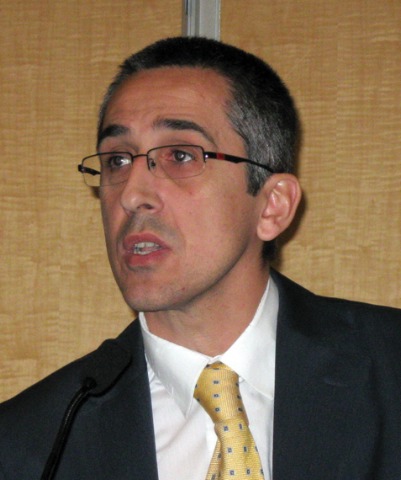
However, thrombolysis had no significant impact on survival among normotensive patients when researchers accounted for differences in troponin and the presence of right ventricular dysfunction.
"Based on these findings, we cannot recommend thrombolysis in normotensive patients without more data from randomized controlled trials. We need to better determine how to risk stratify these patients," said Dr. David Jimenez of the Ramon y Cajal Hospital and Alcala de Henares University, Madrid.
Current guidelines from the American College of Chest Physicians recommend thrombolytic therapy in addition to anticoagulation for patients with evidence of hemodynamic compromise (grade 1B evidence) and for "selected high-risk patients without hypotension who are judged to have a low risk of bleeding (grade 2B)." The guidelines advise physicians to base that decision on the severity of the pulmonary embolism (PE), the patient’s prognosis, and risk of bleeding (Chest 2008;133:454S-545S).
The current study was done to fill in the evidence gap for those recommendations, explained Dr. Jimenez, who presented the study results at an international meeting of the American Thoracic Society. He and his colleagues from Spain and the United States analyzed data from 15,944 patients with acute pulmonary embolism enrolled in the Spanish registry Registro Informatizado de la Enfermedad Tromboembólica. Thrombolytic therapy had been used in 2.7% (430) of the patients.
In general, those patients were younger, had fewer comorbid conditions, and more signs of clinical severity. In order to overcome that bias, a propensity analysis was conducted in order to match patients for those differences.
Patients were also grouped into those with systolic blood pressure less 100 mm Hg (hypotensive) and those with 100 mm Hg and higher (normotensive).
Comparing 94 propensity score–matched patients with systolic hypotension who received thrombolysis with 94 patients who did not, there was a nonsignificant trend in reduction in all-cause mortality with thrombolytic therapy, with an odds ratio of 0.72.
For two groups of 217 normotensive patients each who received or did not receive thrombolysis, there was a statistically significant increased risk of death for those receiving thrombolysis, with an odds ratio of 2.32. However, when missing troponin and echocardiogram data were added to the analysis, the effect of thrombolysis was no longer significant, with an odds ratio 1.67.
The reasons for the increased risks from thrombolysis for normotensive patients with PE aren’t entirely clear, the investigators said.
However, because the risk of dying from pulmonary embolism is low among normotensive, hemodynamically stable PE patients, those patients’ risk of dying from thrombolysis is therefore elevated by comparison and approaches that of hypotensive patients, Dr. Jimenez speculated. Only half of all patients with pulmonary embolism actually die of the embolism, he noted, while the rest die of other causes such as infections, cancer, and bleeding.
Indeed, there has only been one previous randomized clinical trial showing benefit from thrombolysis in patients with PE, Dr. Jimenez said, and that was in 10 patients with life-threatening PE (J. Thromb. Thrombolysis 1995;2:227-9).
"Thrombolysis is only useful for those who are at high risk for dying from PE," Dr. Jimenez said. "I think we have to test in a randomized, controlled trial whether thrombolysis is helpful in a subgroup of normotensive patients who have high risk due to right ventricular dysfunction and elevated troponin," Dr. Jimenez said.
Such a trial is now underway. The prospective, double-blind, placebo-controlled Pulmonary Embolism Thrombolysis Study (PEITHO) will examine the particular subgroup of normotensive patients with acute PE who have echocardiographic and laboratory evidence of right ventricular dysfunction.
The study investigators want to enroll 1,000 patients at 12 European centers, and they hope to have data by the end of 2012, said Dr. Jimenez, whose hospital is one of the study centers.
Dr. Jimenez stated that he has no financial disclosures.
DENVER – Adding thrombolytic therapy to standard anticoagulation with heparin did not significantly improve overall survival at 3 months in patients with acute symptomatic pulmonary embolism – and reduced survival rates for some normotensive patients, according to a large international retrospective cohort study.
Thrombolytic therapy as initial treatment did produce a nonsignificant trend toward survival among patients who presented with systolic hypotension, according to a subanalysis of the study data, while significantly worsening survival among normotensive patients.
However, thrombolysis had no significant impact on survival among normotensive patients when researchers accounted for differences in troponin and the presence of right ventricular dysfunction.
"Based on these findings, we cannot recommend thrombolysis in normotensive patients without more data from randomized controlled trials. We need to better determine how to risk stratify these patients," said Dr. David Jimenez of the Ramon y Cajal Hospital and Alcala de Henares University, Madrid.
Current guidelines from the American College of Chest Physicians recommend thrombolytic therapy in addition to anticoagulation for patients with evidence of hemodynamic compromise (grade 1B evidence) and for "selected high-risk patients without hypotension who are judged to have a low risk of bleeding (grade 2B)." The guidelines advise physicians to base that decision on the severity of the pulmonary embolism (PE), the patient’s prognosis, and risk of bleeding (Chest 2008;133:454S-545S).
The current study was done to fill in the evidence gap for those recommendations, explained Dr. Jimenez, who presented the study results at an international meeting of the American Thoracic Society. He and his colleagues from Spain and the United States analyzed data from 15,944 patients with acute pulmonary embolism enrolled in the Spanish registry Registro Informatizado de la Enfermedad Tromboembólica. Thrombolytic therapy had been used in 2.7% (430) of the patients.
In general, those patients were younger, had fewer comorbid conditions, and more signs of clinical severity. In order to overcome that bias, a propensity analysis was conducted in order to match patients for those differences.
Patients were also grouped into those with systolic blood pressure less 100 mm Hg (hypotensive) and those with 100 mm Hg and higher (normotensive).
Comparing 94 propensity score–matched patients with systolic hypotension who received thrombolysis with 94 patients who did not, there was a nonsignificant trend in reduction in all-cause mortality with thrombolytic therapy, with an odds ratio of 0.72.
For two groups of 217 normotensive patients each who received or did not receive thrombolysis, there was a statistically significant increased risk of death for those receiving thrombolysis, with an odds ratio of 2.32. However, when missing troponin and echocardiogram data were added to the analysis, the effect of thrombolysis was no longer significant, with an odds ratio 1.67.
The reasons for the increased risks from thrombolysis for normotensive patients with PE aren’t entirely clear, the investigators said.
However, because the risk of dying from pulmonary embolism is low among normotensive, hemodynamically stable PE patients, those patients’ risk of dying from thrombolysis is therefore elevated by comparison and approaches that of hypotensive patients, Dr. Jimenez speculated. Only half of all patients with pulmonary embolism actually die of the embolism, he noted, while the rest die of other causes such as infections, cancer, and bleeding.
Indeed, there has only been one previous randomized clinical trial showing benefit from thrombolysis in patients with PE, Dr. Jimenez said, and that was in 10 patients with life-threatening PE (J. Thromb. Thrombolysis 1995;2:227-9).
"Thrombolysis is only useful for those who are at high risk for dying from PE," Dr. Jimenez said. "I think we have to test in a randomized, controlled trial whether thrombolysis is helpful in a subgroup of normotensive patients who have high risk due to right ventricular dysfunction and elevated troponin," Dr. Jimenez said.
Such a trial is now underway. The prospective, double-blind, placebo-controlled Pulmonary Embolism Thrombolysis Study (PEITHO) will examine the particular subgroup of normotensive patients with acute PE who have echocardiographic and laboratory evidence of right ventricular dysfunction.
The study investigators want to enroll 1,000 patients at 12 European centers, and they hope to have data by the end of 2012, said Dr. Jimenez, whose hospital is one of the study centers.
Dr. Jimenez stated that he has no financial disclosures.
DENVER – Adding thrombolytic therapy to standard anticoagulation with heparin did not significantly improve overall survival at 3 months in patients with acute symptomatic pulmonary embolism – and reduced survival rates for some normotensive patients, according to a large international retrospective cohort study.
Thrombolytic therapy as initial treatment did produce a nonsignificant trend toward survival among patients who presented with systolic hypotension, according to a subanalysis of the study data, while significantly worsening survival among normotensive patients.
However, thrombolysis had no significant impact on survival among normotensive patients when researchers accounted for differences in troponin and the presence of right ventricular dysfunction.
"Based on these findings, we cannot recommend thrombolysis in normotensive patients without more data from randomized controlled trials. We need to better determine how to risk stratify these patients," said Dr. David Jimenez of the Ramon y Cajal Hospital and Alcala de Henares University, Madrid.
Current guidelines from the American College of Chest Physicians recommend thrombolytic therapy in addition to anticoagulation for patients with evidence of hemodynamic compromise (grade 1B evidence) and for "selected high-risk patients without hypotension who are judged to have a low risk of bleeding (grade 2B)." The guidelines advise physicians to base that decision on the severity of the pulmonary embolism (PE), the patient’s prognosis, and risk of bleeding (Chest 2008;133:454S-545S).
The current study was done to fill in the evidence gap for those recommendations, explained Dr. Jimenez, who presented the study results at an international meeting of the American Thoracic Society. He and his colleagues from Spain and the United States analyzed data from 15,944 patients with acute pulmonary embolism enrolled in the Spanish registry Registro Informatizado de la Enfermedad Tromboembólica. Thrombolytic therapy had been used in 2.7% (430) of the patients.
In general, those patients were younger, had fewer comorbid conditions, and more signs of clinical severity. In order to overcome that bias, a propensity analysis was conducted in order to match patients for those differences.
Patients were also grouped into those with systolic blood pressure less 100 mm Hg (hypotensive) and those with 100 mm Hg and higher (normotensive).
Comparing 94 propensity score–matched patients with systolic hypotension who received thrombolysis with 94 patients who did not, there was a nonsignificant trend in reduction in all-cause mortality with thrombolytic therapy, with an odds ratio of 0.72.
For two groups of 217 normotensive patients each who received or did not receive thrombolysis, there was a statistically significant increased risk of death for those receiving thrombolysis, with an odds ratio of 2.32. However, when missing troponin and echocardiogram data were added to the analysis, the effect of thrombolysis was no longer significant, with an odds ratio 1.67.
The reasons for the increased risks from thrombolysis for normotensive patients with PE aren’t entirely clear, the investigators said.
However, because the risk of dying from pulmonary embolism is low among normotensive, hemodynamically stable PE patients, those patients’ risk of dying from thrombolysis is therefore elevated by comparison and approaches that of hypotensive patients, Dr. Jimenez speculated. Only half of all patients with pulmonary embolism actually die of the embolism, he noted, while the rest die of other causes such as infections, cancer, and bleeding.
Indeed, there has only been one previous randomized clinical trial showing benefit from thrombolysis in patients with PE, Dr. Jimenez said, and that was in 10 patients with life-threatening PE (J. Thromb. Thrombolysis 1995;2:227-9).
"Thrombolysis is only useful for those who are at high risk for dying from PE," Dr. Jimenez said. "I think we have to test in a randomized, controlled trial whether thrombolysis is helpful in a subgroup of normotensive patients who have high risk due to right ventricular dysfunction and elevated troponin," Dr. Jimenez said.
Such a trial is now underway. The prospective, double-blind, placebo-controlled Pulmonary Embolism Thrombolysis Study (PEITHO) will examine the particular subgroup of normotensive patients with acute PE who have echocardiographic and laboratory evidence of right ventricular dysfunction.
The study investigators want to enroll 1,000 patients at 12 European centers, and they hope to have data by the end of 2012, said Dr. Jimenez, whose hospital is one of the study centers.
Dr. Jimenez stated that he has no financial disclosures.
FROM AN INTERNATIONAL CONFERENCE OF THE AMERICAN THORACIC SOCIETY
Major Finding: Among 434 normotensive patients with acute symptomatic pulmonary embolism, there was a statistically significant increased risk of death for those receiving thrombolysis, with an odds ratio of 2.32. However, when troponin and right ventricular dysfunction were added to the analysis, the effect of thrombolysis on survival was no longer significant, with an odds ratio 1.67.
Data Source: A retrospective cohort study of data from 15,944 patients with acute pulmonary embolism enrolled in a Spanish registry.
Disclosures: Dr. Jimenez stated that he has no financial disclosures.
Thrombolysis Reduced Survival in Acute PE
DENVER – Adding thrombolytic therapy to standard anticoagulation with heparin did not significantly improve overall survival at 3 months in patients with acute symptomatic pulmonary embolism – and reduced survival rates for some normotensive patients, according to a large international retrospective cohort study.
Thrombolytic therapy as initial treatment did produce a nonsignificant trend toward survival among patients who presented with systolic hypotension, according to a subanalysis of the study data, while significantly worsening survival among normotensive patients.
However, thrombolysis had no significant impact on survival among normotensive patients when researchers accounted for differences in troponin and the presence of right ventricular dysfunction.
"Based on these findings, we cannot recommend thrombolysis in normotensive patients without more data from randomized controlled trials. We need to better determine how to risk stratify these patients," said Dr. David Jimenez of the Ramon y Cajal Hospital and Alcala de Henares University, Madrid.
Current guidelines from the American College of Chest Physicians recommend thrombolytic therapy in addition to anticoagulation for patients with evidence of hemodynamic compromise (grade 1B evidence) and for "selected high-risk patients without hypotension who are judged to have a low risk of bleeding (grade 2B)." The guidelines advise physicians to base that decision on the severity of the pulmonary embolism (PE), the patient’s prognosis, and risk of bleeding (Chest 2008;133:454S-545S).
The current study was done to fill in the evidence gap for those recommendations, explained Dr. Jimenez, who presented the study results at an international meeting of the American Thoracic Society. He and his colleagues from Spain and the United States analyzed data from 15,944 patients with acute pulmonary embolism enrolled in the Spanish registry Registro Informatizado de la Enfermedad Tromboembólica. Thrombolytic therapy had been used in 2.7% (430) of the patients.
In general, those patients were younger, had fewer comorbid conditions, and more signs of clinical severity. In order to overcome that bias, a propensity analysis was conducted in order to match patients for those differences.
Patients were also grouped into those with systolic blood pressure less 100 mm Hg (hypotensive) and those with 100 mm Hg and higher (normotensive).
Comparing 94 propensity score–matched patients with systolic hypotension who received thrombolysis with 94 patients who did not, there was a nonsignificant trend in reduction in all-cause mortality with thrombolytic therapy, with an odds ratio of 0.72.
For two groups of 217 normotensive patients each who received or did not receive thrombolysis, there was a statistically significant increased risk of death for those receiving thrombolysis, with an odds ratio of 2.32. However, when missing troponin and echocardiogram data were added to the analysis, the effect of thrombolysis was no longer significant, with an odds ratio 1.67.
The reasons for the increased risks from thrombolysis for normotensive patients with PE aren’t entirely clear, the investigators said.
However, because the risk of dying from pulmonary embolism is low among normotensive, hemodynamically stable PE patients, those patients’ risk of dying from thrombolysis is therefore elevated by comparison and approaches that of hypotensive patients, Dr. Jimenez speculated. Only half of all patients with pulmonary embolism actually die of the embolism, he noted, while the rest die of other causes such as infections, cancer, and bleeding.
Indeed, there has only been one previous randomized clinical trial showing benefit from thrombolysis in patients with PE, Dr. Jimenez said, and that was in 10 patients with life-threatening PE (J. Thromb. Thrombolysis 1995;2:227-9).
"Thrombolysis is only useful for those who are at high risk for dying from PE," Dr. Jimenez said. "I think we have to test in a randomized, controlled trial whether thrombolysis is helpful in a subgroup of normotensive patients who have high risk due to right ventricular dysfunction and elevated troponin," Dr. Jimenez said.
Such a trial is now underway. The prospective, double-blind, placebo-controlled Pulmonary Embolism Thrombolysis Study (PEITHO) will examine the particular subgroup of normotensive patients with acute PE who have echocardiographic and laboratory evidence of right ventricular dysfunction.
The study investigators want to enroll 1,000 patients at 12 European centers, and they hope to have data by the end of 2012, said Dr. Jimenez, whose hospital is one of the study centers.
Dr. Jimenez stated that he has no financial disclosures.
DENVER – Adding thrombolytic therapy to standard anticoagulation with heparin did not significantly improve overall survival at 3 months in patients with acute symptomatic pulmonary embolism – and reduced survival rates for some normotensive patients, according to a large international retrospective cohort study.
Thrombolytic therapy as initial treatment did produce a nonsignificant trend toward survival among patients who presented with systolic hypotension, according to a subanalysis of the study data, while significantly worsening survival among normotensive patients.
However, thrombolysis had no significant impact on survival among normotensive patients when researchers accounted for differences in troponin and the presence of right ventricular dysfunction.
"Based on these findings, we cannot recommend thrombolysis in normotensive patients without more data from randomized controlled trials. We need to better determine how to risk stratify these patients," said Dr. David Jimenez of the Ramon y Cajal Hospital and Alcala de Henares University, Madrid.
Current guidelines from the American College of Chest Physicians recommend thrombolytic therapy in addition to anticoagulation for patients with evidence of hemodynamic compromise (grade 1B evidence) and for "selected high-risk patients without hypotension who are judged to have a low risk of bleeding (grade 2B)." The guidelines advise physicians to base that decision on the severity of the pulmonary embolism (PE), the patient’s prognosis, and risk of bleeding (Chest 2008;133:454S-545S).
The current study was done to fill in the evidence gap for those recommendations, explained Dr. Jimenez, who presented the study results at an international meeting of the American Thoracic Society. He and his colleagues from Spain and the United States analyzed data from 15,944 patients with acute pulmonary embolism enrolled in the Spanish registry Registro Informatizado de la Enfermedad Tromboembólica. Thrombolytic therapy had been used in 2.7% (430) of the patients.
In general, those patients were younger, had fewer comorbid conditions, and more signs of clinical severity. In order to overcome that bias, a propensity analysis was conducted in order to match patients for those differences.
Patients were also grouped into those with systolic blood pressure less 100 mm Hg (hypotensive) and those with 100 mm Hg and higher (normotensive).
Comparing 94 propensity score–matched patients with systolic hypotension who received thrombolysis with 94 patients who did not, there was a nonsignificant trend in reduction in all-cause mortality with thrombolytic therapy, with an odds ratio of 0.72.
For two groups of 217 normotensive patients each who received or did not receive thrombolysis, there was a statistically significant increased risk of death for those receiving thrombolysis, with an odds ratio of 2.32. However, when missing troponin and echocardiogram data were added to the analysis, the effect of thrombolysis was no longer significant, with an odds ratio 1.67.
The reasons for the increased risks from thrombolysis for normotensive patients with PE aren’t entirely clear, the investigators said.
However, because the risk of dying from pulmonary embolism is low among normotensive, hemodynamically stable PE patients, those patients’ risk of dying from thrombolysis is therefore elevated by comparison and approaches that of hypotensive patients, Dr. Jimenez speculated. Only half of all patients with pulmonary embolism actually die of the embolism, he noted, while the rest die of other causes such as infections, cancer, and bleeding.
Indeed, there has only been one previous randomized clinical trial showing benefit from thrombolysis in patients with PE, Dr. Jimenez said, and that was in 10 patients with life-threatening PE (J. Thromb. Thrombolysis 1995;2:227-9).
"Thrombolysis is only useful for those who are at high risk for dying from PE," Dr. Jimenez said. "I think we have to test in a randomized, controlled trial whether thrombolysis is helpful in a subgroup of normotensive patients who have high risk due to right ventricular dysfunction and elevated troponin," Dr. Jimenez said.
Such a trial is now underway. The prospective, double-blind, placebo-controlled Pulmonary Embolism Thrombolysis Study (PEITHO) will examine the particular subgroup of normotensive patients with acute PE who have echocardiographic and laboratory evidence of right ventricular dysfunction.
The study investigators want to enroll 1,000 patients at 12 European centers, and they hope to have data by the end of 2012, said Dr. Jimenez, whose hospital is one of the study centers.
Dr. Jimenez stated that he has no financial disclosures.
DENVER – Adding thrombolytic therapy to standard anticoagulation with heparin did not significantly improve overall survival at 3 months in patients with acute symptomatic pulmonary embolism – and reduced survival rates for some normotensive patients, according to a large international retrospective cohort study.
Thrombolytic therapy as initial treatment did produce a nonsignificant trend toward survival among patients who presented with systolic hypotension, according to a subanalysis of the study data, while significantly worsening survival among normotensive patients.
However, thrombolysis had no significant impact on survival among normotensive patients when researchers accounted for differences in troponin and the presence of right ventricular dysfunction.
"Based on these findings, we cannot recommend thrombolysis in normotensive patients without more data from randomized controlled trials. We need to better determine how to risk stratify these patients," said Dr. David Jimenez of the Ramon y Cajal Hospital and Alcala de Henares University, Madrid.
Current guidelines from the American College of Chest Physicians recommend thrombolytic therapy in addition to anticoagulation for patients with evidence of hemodynamic compromise (grade 1B evidence) and for "selected high-risk patients without hypotension who are judged to have a low risk of bleeding (grade 2B)." The guidelines advise physicians to base that decision on the severity of the pulmonary embolism (PE), the patient’s prognosis, and risk of bleeding (Chest 2008;133:454S-545S).
The current study was done to fill in the evidence gap for those recommendations, explained Dr. Jimenez, who presented the study results at an international meeting of the American Thoracic Society. He and his colleagues from Spain and the United States analyzed data from 15,944 patients with acute pulmonary embolism enrolled in the Spanish registry Registro Informatizado de la Enfermedad Tromboembólica. Thrombolytic therapy had been used in 2.7% (430) of the patients.
In general, those patients were younger, had fewer comorbid conditions, and more signs of clinical severity. In order to overcome that bias, a propensity analysis was conducted in order to match patients for those differences.
Patients were also grouped into those with systolic blood pressure less 100 mm Hg (hypotensive) and those with 100 mm Hg and higher (normotensive).
Comparing 94 propensity score–matched patients with systolic hypotension who received thrombolysis with 94 patients who did not, there was a nonsignificant trend in reduction in all-cause mortality with thrombolytic therapy, with an odds ratio of 0.72.
For two groups of 217 normotensive patients each who received or did not receive thrombolysis, there was a statistically significant increased risk of death for those receiving thrombolysis, with an odds ratio of 2.32. However, when missing troponin and echocardiogram data were added to the analysis, the effect of thrombolysis was no longer significant, with an odds ratio 1.67.
The reasons for the increased risks from thrombolysis for normotensive patients with PE aren’t entirely clear, the investigators said.
However, because the risk of dying from pulmonary embolism is low among normotensive, hemodynamically stable PE patients, those patients’ risk of dying from thrombolysis is therefore elevated by comparison and approaches that of hypotensive patients, Dr. Jimenez speculated. Only half of all patients with pulmonary embolism actually die of the embolism, he noted, while the rest die of other causes such as infections, cancer, and bleeding.
Indeed, there has only been one previous randomized clinical trial showing benefit from thrombolysis in patients with PE, Dr. Jimenez said, and that was in 10 patients with life-threatening PE (J. Thromb. Thrombolysis 1995;2:227-9).
"Thrombolysis is only useful for those who are at high risk for dying from PE," Dr. Jimenez said. "I think we have to test in a randomized, controlled trial whether thrombolysis is helpful in a subgroup of normotensive patients who have high risk due to right ventricular dysfunction and elevated troponin," Dr. Jimenez said.
Such a trial is now underway. The prospective, double-blind, placebo-controlled Pulmonary Embolism Thrombolysis Study (PEITHO) will examine the particular subgroup of normotensive patients with acute PE who have echocardiographic and laboratory evidence of right ventricular dysfunction.
The study investigators want to enroll 1,000 patients at 12 European centers, and they hope to have data by the end of 2012, said Dr. Jimenez, whose hospital is one of the study centers.
Dr. Jimenez stated that he has no financial disclosures.
FROM AN INTERNATIONAL CONFERENCE OF THE AMERICAN THORACIC SOCIETY
Major Finding: Among 434 normotensive patients with acute symptomatic pulmonary embolism, there was a statistically significant increased risk of death for those receiving thrombolysis, with an odds ratio of 2.32. However, when troponin and right ventricular dysfunction were added to the analysis, the effect of thrombolysis on survival was no longer significant, with an odds ratio 1.67.
Data Source: A retrospective cohort study of data from 15,944 patients with acute pulmonary embolism enrolled in a Spanish registry.
Disclosures: Dr. Jimenez stated that he has no financial disclosures.