User login
Bringing you the latest news, research and reviews, exclusive interviews, podcasts, quizzes, and more.
Powered by CHEST Physician, Clinician Reviews, MDedge Family Medicine, Internal Medicine News, and The Journal of Clinical Outcomes Management.
Study explores markers for risk of sudden death in epilepsy
Postictal generalized EEG suppression occurs more often in adults than in children and might be related to why adults have a higher rate of sudden unexpected death in epilepsy than that of children, according to results from a prospective study.
Cardiopulmonary abnormalities involving ictal apnea and bradycardia happened more frequently in children, whereas ictal tachycardia occurred more often among adults. However, there was no difference in desaturation or ictal bradypnea or tachypnea in children versus adults, reported Dr. Milena Pavlova of the division of epilepsy, neurophysiology, and sleep at Brigham and Women’s Hospital, Boston, and her colleagues.
"The evolution of ictal cardiorespiratory abnormalities [had] not been systematically studied for age-related findings," the researchers noted. "There is some evidence in adults that postictal generalized EEG suppression (PGES) may potentially be a risk marker for SUDEP [sudden unexpected death in epilepsy] and that age related maturation of brain may be involved in the manifestation of PGES, but not many studies have looked into the possible effect of this age-related brain maturation on PGES," they wrote (Epilepsy Behav. 2013 Oct. 17 [doi:10.1016/j.yebeh.2013.09.026]).
"The evolution of ictal cardiorespiratory abnormalities [had] not been systematically studied for age-related findings..."
The study involved 26 children with a mean age of 10.6 years (range of 2-20 years) and 22 adults with a mean age of 37 years (range of 22-62 years) who had been admitted to the long-term monitoring units at two hospitals for the evaluation of seizures. They underwent standard continuous video-EEG monitoring as well as electrocardiography, respiratory inductance plethysmography (RIP), and finger pulse oximetry. The investigators recorded 101 seizures in children (mean of 3.9) and 55 in adults (mean of 2.55).
After one or more seizures, 13 of 22 (59%) adults had PGES, compared with only 1 of 26 (4%) children. This was a significant difference with an odds ratio of 0.20. Furthermore, PGES occurred in 6 (6%) of the seizures recorded in children, compared with 13 (24%) in adults.
"The fact that PGES was more frequent in adults than in children and the fact that age had no correlation with PGES in adults lead us to hypothesize that age may play a role in the occurrence of PGES only up to a point where the brain is mature enough to exhibit PGES. Once the brain is mature enough to be capable of manifesting PGES, further increase in age may not have any additional effect. These findings further support the idea of a less mature ‘controlling network’ in the developing brain being less capable of exhibiting PGES," the investigators wrote.
Children had more than three times greater odds of developing ictal central apnea (odds ratio = 3.36) than those of adults (39 of 78 [50%] seizures in children with good RIP data vs. 17 of 55 [31%] in adults). None of the apnea events recorded in either children or adults were obstructive in nature.
Ictal bradycardia was nearly five times more likely to occur in children than in adults (15 of 63 [24%] vs. 4 of 55 [7%], respectively). In comparison, ictal tachycardia was 60% less likely to occur among children than in adults (31 of 63 [49%] vs. 35 of 55 [64%], respectively; OR = 0.40).
The rates of other cardiopulmonary abnormalities (ictal bradypnea and tachypnea, ictal and postictal bradycardia and tachycardia) did not differ significantly between children and adults.
The adult and pediatric cohorts had similar characteristics for patient (gender, body mass index, antiepileptic drug usage, MRI lesions) and seizure variables (seizure type, duration, localization, lateralization, secondary-generalization, body-position, sleep-wake state). However, seizures in children more often involved the frontal lobe (47 of 101, 47%) compared with adults (11 of 55, 20%), whereas temporal lobe seizures were nearly five times more likely to occur in adults (37 of 55, 67%) than in children (29 of 101, 29%).
The study was funded by a grant from the Harvard Catalyst. One author reported serving as a consultant for Digitrace and Best Doctors. No other authors had conflicts of interest to report.
Postictal generalized EEG suppression occurs more often in adults than in children and might be related to why adults have a higher rate of sudden unexpected death in epilepsy than that of children, according to results from a prospective study.
Cardiopulmonary abnormalities involving ictal apnea and bradycardia happened more frequently in children, whereas ictal tachycardia occurred more often among adults. However, there was no difference in desaturation or ictal bradypnea or tachypnea in children versus adults, reported Dr. Milena Pavlova of the division of epilepsy, neurophysiology, and sleep at Brigham and Women’s Hospital, Boston, and her colleagues.
"The evolution of ictal cardiorespiratory abnormalities [had] not been systematically studied for age-related findings," the researchers noted. "There is some evidence in adults that postictal generalized EEG suppression (PGES) may potentially be a risk marker for SUDEP [sudden unexpected death in epilepsy] and that age related maturation of brain may be involved in the manifestation of PGES, but not many studies have looked into the possible effect of this age-related brain maturation on PGES," they wrote (Epilepsy Behav. 2013 Oct. 17 [doi:10.1016/j.yebeh.2013.09.026]).
"The evolution of ictal cardiorespiratory abnormalities [had] not been systematically studied for age-related findings..."
The study involved 26 children with a mean age of 10.6 years (range of 2-20 years) and 22 adults with a mean age of 37 years (range of 22-62 years) who had been admitted to the long-term monitoring units at two hospitals for the evaluation of seizures. They underwent standard continuous video-EEG monitoring as well as electrocardiography, respiratory inductance plethysmography (RIP), and finger pulse oximetry. The investigators recorded 101 seizures in children (mean of 3.9) and 55 in adults (mean of 2.55).
After one or more seizures, 13 of 22 (59%) adults had PGES, compared with only 1 of 26 (4%) children. This was a significant difference with an odds ratio of 0.20. Furthermore, PGES occurred in 6 (6%) of the seizures recorded in children, compared with 13 (24%) in adults.
"The fact that PGES was more frequent in adults than in children and the fact that age had no correlation with PGES in adults lead us to hypothesize that age may play a role in the occurrence of PGES only up to a point where the brain is mature enough to exhibit PGES. Once the brain is mature enough to be capable of manifesting PGES, further increase in age may not have any additional effect. These findings further support the idea of a less mature ‘controlling network’ in the developing brain being less capable of exhibiting PGES," the investigators wrote.
Children had more than three times greater odds of developing ictal central apnea (odds ratio = 3.36) than those of adults (39 of 78 [50%] seizures in children with good RIP data vs. 17 of 55 [31%] in adults). None of the apnea events recorded in either children or adults were obstructive in nature.
Ictal bradycardia was nearly five times more likely to occur in children than in adults (15 of 63 [24%] vs. 4 of 55 [7%], respectively). In comparison, ictal tachycardia was 60% less likely to occur among children than in adults (31 of 63 [49%] vs. 35 of 55 [64%], respectively; OR = 0.40).
The rates of other cardiopulmonary abnormalities (ictal bradypnea and tachypnea, ictal and postictal bradycardia and tachycardia) did not differ significantly between children and adults.
The adult and pediatric cohorts had similar characteristics for patient (gender, body mass index, antiepileptic drug usage, MRI lesions) and seizure variables (seizure type, duration, localization, lateralization, secondary-generalization, body-position, sleep-wake state). However, seizures in children more often involved the frontal lobe (47 of 101, 47%) compared with adults (11 of 55, 20%), whereas temporal lobe seizures were nearly five times more likely to occur in adults (37 of 55, 67%) than in children (29 of 101, 29%).
The study was funded by a grant from the Harvard Catalyst. One author reported serving as a consultant for Digitrace and Best Doctors. No other authors had conflicts of interest to report.
Postictal generalized EEG suppression occurs more often in adults than in children and might be related to why adults have a higher rate of sudden unexpected death in epilepsy than that of children, according to results from a prospective study.
Cardiopulmonary abnormalities involving ictal apnea and bradycardia happened more frequently in children, whereas ictal tachycardia occurred more often among adults. However, there was no difference in desaturation or ictal bradypnea or tachypnea in children versus adults, reported Dr. Milena Pavlova of the division of epilepsy, neurophysiology, and sleep at Brigham and Women’s Hospital, Boston, and her colleagues.
"The evolution of ictal cardiorespiratory abnormalities [had] not been systematically studied for age-related findings," the researchers noted. "There is some evidence in adults that postictal generalized EEG suppression (PGES) may potentially be a risk marker for SUDEP [sudden unexpected death in epilepsy] and that age related maturation of brain may be involved in the manifestation of PGES, but not many studies have looked into the possible effect of this age-related brain maturation on PGES," they wrote (Epilepsy Behav. 2013 Oct. 17 [doi:10.1016/j.yebeh.2013.09.026]).
"The evolution of ictal cardiorespiratory abnormalities [had] not been systematically studied for age-related findings..."
The study involved 26 children with a mean age of 10.6 years (range of 2-20 years) and 22 adults with a mean age of 37 years (range of 22-62 years) who had been admitted to the long-term monitoring units at two hospitals for the evaluation of seizures. They underwent standard continuous video-EEG monitoring as well as electrocardiography, respiratory inductance plethysmography (RIP), and finger pulse oximetry. The investigators recorded 101 seizures in children (mean of 3.9) and 55 in adults (mean of 2.55).
After one or more seizures, 13 of 22 (59%) adults had PGES, compared with only 1 of 26 (4%) children. This was a significant difference with an odds ratio of 0.20. Furthermore, PGES occurred in 6 (6%) of the seizures recorded in children, compared with 13 (24%) in adults.
"The fact that PGES was more frequent in adults than in children and the fact that age had no correlation with PGES in adults lead us to hypothesize that age may play a role in the occurrence of PGES only up to a point where the brain is mature enough to exhibit PGES. Once the brain is mature enough to be capable of manifesting PGES, further increase in age may not have any additional effect. These findings further support the idea of a less mature ‘controlling network’ in the developing brain being less capable of exhibiting PGES," the investigators wrote.
Children had more than three times greater odds of developing ictal central apnea (odds ratio = 3.36) than those of adults (39 of 78 [50%] seizures in children with good RIP data vs. 17 of 55 [31%] in adults). None of the apnea events recorded in either children or adults were obstructive in nature.
Ictal bradycardia was nearly five times more likely to occur in children than in adults (15 of 63 [24%] vs. 4 of 55 [7%], respectively). In comparison, ictal tachycardia was 60% less likely to occur among children than in adults (31 of 63 [49%] vs. 35 of 55 [64%], respectively; OR = 0.40).
The rates of other cardiopulmonary abnormalities (ictal bradypnea and tachypnea, ictal and postictal bradycardia and tachycardia) did not differ significantly between children and adults.
The adult and pediatric cohorts had similar characteristics for patient (gender, body mass index, antiepileptic drug usage, MRI lesions) and seizure variables (seizure type, duration, localization, lateralization, secondary-generalization, body-position, sleep-wake state). However, seizures in children more often involved the frontal lobe (47 of 101, 47%) compared with adults (11 of 55, 20%), whereas temporal lobe seizures were nearly five times more likely to occur in adults (37 of 55, 67%) than in children (29 of 101, 29%).
The study was funded by a grant from the Harvard Catalyst. One author reported serving as a consultant for Digitrace and Best Doctors. No other authors had conflicts of interest to report.
FROM EPILEPSY & BEHAVIOR
Major finding: After one or more seizures, 13 of 22 adults had postictal generalized EEG suppression, compared with only 1 of 26 children.
Data source: A prospective study of 26 children and 22 adults with epilepsy who were monitored at two hospitals.
Disclosures: The study was funded by a grant from the Harvard Catalyst. One author reported serving as a consultant for Digitrace and Best Doctors. No other authors had conflicts of interest to report.
Macitentan approved for pulmonary arterial hypertension
Another endothelin receptor blocker, macitentan, has been approved for treating pulmonary arterial hypertension, the Food and Drug Administration announced on Oct. 18.
In a study of 742 patients with pulmonary arterial hypertension (PAH), macitentan over an average of 2 years was "effective in delaying disease progression, a finding that included a decline in exercise ability, worsening symptoms of PAH or need for additional PAH medication," according to the FDA statement issued on Oct. 18. Anemia, nasopharyngitis, sore throat, bronchitis, headache, and urinary tract infection were among the common side effects associated with treatment, the statement said.

It will be marketed as Opsumit by Actelion Pharmaceuticals US. The approved indication is for the treatment of PAH, WHO Group I, to delay disease progression, which includes death, initiation of intravenous or subcutaneous prostanoids, or clinical worsening of PAH (decreased 6-minute walk distance, worsened PAH symptoms and need for additional PAH treatment, according to Actelion). The approved dose is 10 mg daily; it is an oral medication.
Like the other endothelin receptor blockers, macitentan’s label includes a boxed warning that it is a teratogen and should not be used in pregnant women, and that women can receive the drug only through a REMS (Risk Evaluation and Mitigation Strategy) program that will restrict the drug’s distribution. Under the Opsumit REMS, distribution of the drug will be restricted and prescribers will have to enroll in the REMS and become certified to prescribe the drug. Female patients will also need to be enrolled and must comply with pregnancy testing and contraception requirements before starting treatment. Pharmacies that dispense the drug will need to be certified and will dispense the drug only to authorized patients, the FDA said.
The study of 742 patients was SERAPHIN (Study With an Endothelin Receptor Antagonist in Pulmonary Arterial Hypertension to Improve Clinical Outcome), which compared treatment with 3 mg or 10 mg of macitentan once a day, or placebo, and were allowed to be treated with phosphodiesterase-5 inhibitors or oral or inhaled prostanoids, according to Actelion.
The primary end point, a composite of a PAH event or death from any cause, was reached by 38% of patients receiving 3-mg macitentan and 31% of those receiving 10-mg macitentan, compared with 46% of patients receiving placebo. The hazard ratios of 0.7 for the 3-mg dose and 0.55 for the 10-mg dose were statistically significant.
Macitentan is under review in Europe, Canada, Switzerland, Australia, Taiwan, Korea and Mexico, according to Actelion.
Actelion also markets bosentan (Tracleer), another endothelin receptor antagonist, which was approved for treating PAH in 2001. Ambrisentan (Letairis; Gilead), also an endothelin receptor antagonist, was approved in 2007.
Another endothelin receptor blocker, macitentan, has been approved for treating pulmonary arterial hypertension, the Food and Drug Administration announced on Oct. 18.
In a study of 742 patients with pulmonary arterial hypertension (PAH), macitentan over an average of 2 years was "effective in delaying disease progression, a finding that included a decline in exercise ability, worsening symptoms of PAH or need for additional PAH medication," according to the FDA statement issued on Oct. 18. Anemia, nasopharyngitis, sore throat, bronchitis, headache, and urinary tract infection were among the common side effects associated with treatment, the statement said.
It will be marketed as Opsumit by Actelion Pharmaceuticals US. The approved indication is for the treatment of PAH, WHO Group I, to delay disease progression, which includes death, initiation of intravenous or subcutaneous prostanoids, or clinical worsening of PAH (decreased 6-minute walk distance, worsened PAH symptoms and need for additional PAH treatment, according to Actelion). The approved dose is 10 mg daily; it is an oral medication.
Like the other endothelin receptor blockers, macitentan’s label includes a boxed warning that it is a teratogen and should not be used in pregnant women, and that women can receive the drug only through a REMS (Risk Evaluation and Mitigation Strategy) program that will restrict the drug’s distribution. Under the Opsumit REMS, distribution of the drug will be restricted and prescribers will have to enroll in the REMS and become certified to prescribe the drug. Female patients will also need to be enrolled and must comply with pregnancy testing and contraception requirements before starting treatment. Pharmacies that dispense the drug will need to be certified and will dispense the drug only to authorized patients, the FDA said.
The study of 742 patients was SERAPHIN (Study With an Endothelin Receptor Antagonist in Pulmonary Arterial Hypertension to Improve Clinical Outcome), which compared treatment with 3 mg or 10 mg of macitentan once a day, or placebo, and were allowed to be treated with phosphodiesterase-5 inhibitors or oral or inhaled prostanoids, according to Actelion.
The primary end point, a composite of a PAH event or death from any cause, was reached by 38% of patients receiving 3-mg macitentan and 31% of those receiving 10-mg macitentan, compared with 46% of patients receiving placebo. The hazard ratios of 0.7 for the 3-mg dose and 0.55 for the 10-mg dose were statistically significant.
Macitentan is under review in Europe, Canada, Switzerland, Australia, Taiwan, Korea and Mexico, according to Actelion.
Actelion also markets bosentan (Tracleer), another endothelin receptor antagonist, which was approved for treating PAH in 2001. Ambrisentan (Letairis; Gilead), also an endothelin receptor antagonist, was approved in 2007.
Another endothelin receptor blocker, macitentan, has been approved for treating pulmonary arterial hypertension, the Food and Drug Administration announced on Oct. 18.
In a study of 742 patients with pulmonary arterial hypertension (PAH), macitentan over an average of 2 years was "effective in delaying disease progression, a finding that included a decline in exercise ability, worsening symptoms of PAH or need for additional PAH medication," according to the FDA statement issued on Oct. 18. Anemia, nasopharyngitis, sore throat, bronchitis, headache, and urinary tract infection were among the common side effects associated with treatment, the statement said.
It will be marketed as Opsumit by Actelion Pharmaceuticals US. The approved indication is for the treatment of PAH, WHO Group I, to delay disease progression, which includes death, initiation of intravenous or subcutaneous prostanoids, or clinical worsening of PAH (decreased 6-minute walk distance, worsened PAH symptoms and need for additional PAH treatment, according to Actelion). The approved dose is 10 mg daily; it is an oral medication.
Like the other endothelin receptor blockers, macitentan’s label includes a boxed warning that it is a teratogen and should not be used in pregnant women, and that women can receive the drug only through a REMS (Risk Evaluation and Mitigation Strategy) program that will restrict the drug’s distribution. Under the Opsumit REMS, distribution of the drug will be restricted and prescribers will have to enroll in the REMS and become certified to prescribe the drug. Female patients will also need to be enrolled and must comply with pregnancy testing and contraception requirements before starting treatment. Pharmacies that dispense the drug will need to be certified and will dispense the drug only to authorized patients, the FDA said.
The study of 742 patients was SERAPHIN (Study With an Endothelin Receptor Antagonist in Pulmonary Arterial Hypertension to Improve Clinical Outcome), which compared treatment with 3 mg or 10 mg of macitentan once a day, or placebo, and were allowed to be treated with phosphodiesterase-5 inhibitors or oral or inhaled prostanoids, according to Actelion.
The primary end point, a composite of a PAH event or death from any cause, was reached by 38% of patients receiving 3-mg macitentan and 31% of those receiving 10-mg macitentan, compared with 46% of patients receiving placebo. The hazard ratios of 0.7 for the 3-mg dose and 0.55 for the 10-mg dose were statistically significant.
Macitentan is under review in Europe, Canada, Switzerland, Australia, Taiwan, Korea and Mexico, according to Actelion.
Actelion also markets bosentan (Tracleer), another endothelin receptor antagonist, which was approved for treating PAH in 2001. Ambrisentan (Letairis; Gilead), also an endothelin receptor antagonist, was approved in 2007.

Quitting smoking shows benefit into old age
AMSTERDAM – Older men who continued to smoke in their 70s were 50% more likely to die from cancer, cardiovascular disease, and respiratory disease, compared with those who never smoked. They were also less likely to survive to age 85, according to findings from a British survey.
"The real message is that risk remains big for smokers at any age, and the evidence regarding benefits of quitting smoking persists even into old age," said Jonathan Emberson, Ph.D., a senior statistician at the University of Oxford (England), who presented the study at the annual congress of the European Society of Cardiology.
The results were from a prospective study of more than 7,000 surviving men who were initially recruited between 1967 and 1970 in the Whitehall study. The men were surveyed again in 1997-1998, when their mean age was 77 years. Follow-up information was obtained on cause-specific mortality through 2012.
At the resurvey in 1997-1998, 13% were current smokers and smoked a median of 9 cigarettes a day; 58% were former smokers, with median time of 25 years since quitting; and 23% said they never smoked. The remaining 5% said they were never-smokers in the resurvey, but not in the initial survey in 1967-1970, and were handled as a separate category, the researchers noted.
During the median follow-up of 15 years, there were 4,965 deaths, 2,063 of which resulted from cardiovascular disease, 1,167 from cancer, 802 from respiratory disease, and 933 from other causes.
Comparing the 984 smokers with 1,625 never-smokers showed that current smokers had a 50% increase in annual mortality. Their odds of death from vascular causes increased by nearly one-third, and from nonvascular causes by nearly two-thirds.
Meanwhile, a comparison between 4,091 ex-smokers and 1,625 never-smokers showed that ex-smokers had a 15% increase in annual mortality, mainly because of cancer (hazard ratio, 1.24) and respiratory disease (HR, 1.58).
Also, their risk varied considerably depending on the number of years since they had quit smoking. Men who had quit within the past 25 years had a 22% higher mortality than never-smokers, but men who had quit 25 or more years ago had no significant excess risk (HR, 1.05). Men who had quit smoking within the past 10 years had a 44% increase in all-cause mortality, compared with never-smokers.
Also, current smokers had lower odds of surviving to age 85 (48%) than did never-smokers (65%), losing on average of 3-4 years of life expectancy.
Dr. Emberson said that never-smokers not only lived longer, but had a better quality of life. Nevertheless, "quitting remains beneficial at any age," he said.
Dr. Emberson had no disclosures. The study was funded by the U.K. Medical Research Council, the British Heart Foundation, and Cancer Research UK.
On Twitter @naseemsmiller
AMSTERDAM – Older men who continued to smoke in their 70s were 50% more likely to die from cancer, cardiovascular disease, and respiratory disease, compared with those who never smoked. They were also less likely to survive to age 85, according to findings from a British survey.
"The real message is that risk remains big for smokers at any age, and the evidence regarding benefits of quitting smoking persists even into old age," said Jonathan Emberson, Ph.D., a senior statistician at the University of Oxford (England), who presented the study at the annual congress of the European Society of Cardiology.
The results were from a prospective study of more than 7,000 surviving men who were initially recruited between 1967 and 1970 in the Whitehall study. The men were surveyed again in 1997-1998, when their mean age was 77 years. Follow-up information was obtained on cause-specific mortality through 2012.
At the resurvey in 1997-1998, 13% were current smokers and smoked a median of 9 cigarettes a day; 58% were former smokers, with median time of 25 years since quitting; and 23% said they never smoked. The remaining 5% said they were never-smokers in the resurvey, but not in the initial survey in 1967-1970, and were handled as a separate category, the researchers noted.
During the median follow-up of 15 years, there were 4,965 deaths, 2,063 of which resulted from cardiovascular disease, 1,167 from cancer, 802 from respiratory disease, and 933 from other causes.
Comparing the 984 smokers with 1,625 never-smokers showed that current smokers had a 50% increase in annual mortality. Their odds of death from vascular causes increased by nearly one-third, and from nonvascular causes by nearly two-thirds.
Meanwhile, a comparison between 4,091 ex-smokers and 1,625 never-smokers showed that ex-smokers had a 15% increase in annual mortality, mainly because of cancer (hazard ratio, 1.24) and respiratory disease (HR, 1.58).
Also, their risk varied considerably depending on the number of years since they had quit smoking. Men who had quit within the past 25 years had a 22% higher mortality than never-smokers, but men who had quit 25 or more years ago had no significant excess risk (HR, 1.05). Men who had quit smoking within the past 10 years had a 44% increase in all-cause mortality, compared with never-smokers.
Also, current smokers had lower odds of surviving to age 85 (48%) than did never-smokers (65%), losing on average of 3-4 years of life expectancy.
Dr. Emberson said that never-smokers not only lived longer, but had a better quality of life. Nevertheless, "quitting remains beneficial at any age," he said.
Dr. Emberson had no disclosures. The study was funded by the U.K. Medical Research Council, the British Heart Foundation, and Cancer Research UK.
On Twitter @naseemsmiller
AMSTERDAM – Older men who continued to smoke in their 70s were 50% more likely to die from cancer, cardiovascular disease, and respiratory disease, compared with those who never smoked. They were also less likely to survive to age 85, according to findings from a British survey.
"The real message is that risk remains big for smokers at any age, and the evidence regarding benefits of quitting smoking persists even into old age," said Jonathan Emberson, Ph.D., a senior statistician at the University of Oxford (England), who presented the study at the annual congress of the European Society of Cardiology.
The results were from a prospective study of more than 7,000 surviving men who were initially recruited between 1967 and 1970 in the Whitehall study. The men were surveyed again in 1997-1998, when their mean age was 77 years. Follow-up information was obtained on cause-specific mortality through 2012.
At the resurvey in 1997-1998, 13% were current smokers and smoked a median of 9 cigarettes a day; 58% were former smokers, with median time of 25 years since quitting; and 23% said they never smoked. The remaining 5% said they were never-smokers in the resurvey, but not in the initial survey in 1967-1970, and were handled as a separate category, the researchers noted.
During the median follow-up of 15 years, there were 4,965 deaths, 2,063 of which resulted from cardiovascular disease, 1,167 from cancer, 802 from respiratory disease, and 933 from other causes.
Comparing the 984 smokers with 1,625 never-smokers showed that current smokers had a 50% increase in annual mortality. Their odds of death from vascular causes increased by nearly one-third, and from nonvascular causes by nearly two-thirds.
Meanwhile, a comparison between 4,091 ex-smokers and 1,625 never-smokers showed that ex-smokers had a 15% increase in annual mortality, mainly because of cancer (hazard ratio, 1.24) and respiratory disease (HR, 1.58).
Also, their risk varied considerably depending on the number of years since they had quit smoking. Men who had quit within the past 25 years had a 22% higher mortality than never-smokers, but men who had quit 25 or more years ago had no significant excess risk (HR, 1.05). Men who had quit smoking within the past 10 years had a 44% increase in all-cause mortality, compared with never-smokers.
Also, current smokers had lower odds of surviving to age 85 (48%) than did never-smokers (65%), losing on average of 3-4 years of life expectancy.
Dr. Emberson said that never-smokers not only lived longer, but had a better quality of life. Nevertheless, "quitting remains beneficial at any age," he said.
Dr. Emberson had no disclosures. The study was funded by the U.K. Medical Research Council, the British Heart Foundation, and Cancer Research UK.
On Twitter @naseemsmiller
AT THE ANNUAL ESC CONGRESS 2013
Major finding: Older men who continued to smoke in their 70s were 50% more likely to die from cancer, cardiovascular disease, and respiratory disease than were those who never smoked.
Data source: A prospective study of more than 7,000 men who were initially recruited between 1967 and 1970 in the Whitehall study.
Disclosures: Dr. Emberson had no disclosures. The study was funded by the U.K. Medical Research Council, the British Heart Foundation, and Cancer Research UK.

Antibiotics for sore throat? No shame allowed
Shame is not an effective way to change behavior. In the face of shame, one may emotionally shut down or become angry and defensive. We need to start this discussion by believing that we do a fantastic job every day for our patients, and that we went into medicine because we are compassionate and empathic people. We are enough just by showing up at work and doing what we do.
But we can always improve.
Starting from here, we need to remind ourselves that viruses are the cause of 90% of sore throats. The prevalence of group A Streptococcus (GAS) infection is approximately 10%. GAS would be the only cause of sore throat requiring antibiotics.
The antibiotic prescribing rate for adults with sore throat was 70% in 1993. Using national survey data, Dr. Michael Barnett and Dr. Jeffrey Linder reported that physicians prescribed antibiotics for sore throat at 60% of primary care and emergency department visits (95% CI: 57%-63%). The use of broad-spectrum antibiotics such as azithromycin was common despite the fact that GAS is universally susceptible to penicillin. Penicillin was given in only 9% of visits (JAMA Internal Medicine 2013 [doi:10.1001/jamainternmed.2013.11673]).
Adverse consequences of antibiotic prescribing are not uncommon. The Clostridium difficile diarrhea and colitis that we are seeing in our practice is not only becoming more prevalent, but much more difficult to treat. Telling patients that they can develop C. difficile colitis should become a routine part of side effect discussions when prescribing antibiotics.
And, although we may recommend the use of probiotics for patients to prevent both antibiotic-associated and C. difficile diarrhea (CDD), a large study of adults aged 65 and older suggested that a multistrain preparation of lactobacilli and bifidobacteria was not effective in the prevention of antibiotic-associated diarrhea or C. difficile diarrhea (Lancet 2013;382:1249-57).
So, our challenge is that patients come in and demand antibiotics. But most do not have a real understanding of the risks to them personally and to the population at large through the indiscriminate use of antibiotics.
In a non-shame–based manner, we need to teach them.
Telling them that symptoms resolve in 40% of patients within 3 days and 80% of patients within 1 week, irrespective of whether the cause was viral or streptococcal, may be helpful. The use of a clinical decision aid for sore throat may also be helpful.
Many may be familiar with the clinical scoring algorithm known as the "Centor Criteria." The criteria consist of four findings that are each assigned one point: history of fever, absence of cough, tender or swollen lymph glands in the neck, and red and tonsillar exduates.* Patients with zero or one finding do not require testing or antibiotics. Patients with two or three findings should have a rapid strep test performed, and the results should guide antibiotic treatment. Patients with four findings should receive antibiotics.
This algorithm is available in the incredibly useful MedCalc medical calculator app in the iTunes store.
We need to keep telling ourselves that we have nothing to be ashamed about by currently prescribing too many antibiotics for adults with sore throat – and that we can and will do better.
Dr. Ebbert is professor of medicine, a general internist, and a diplomate of the American Board of Addiction Medicine who works at the Mayo Clinic in Rochester, Minn. The opinions expressed are those of the author.
*Correction, 1/3/2014: An earlier version of this story misstated the Centor Criteria.
Shame is not an effective way to change behavior. In the face of shame, one may emotionally shut down or become angry and defensive. We need to start this discussion by believing that we do a fantastic job every day for our patients, and that we went into medicine because we are compassionate and empathic people. We are enough just by showing up at work and doing what we do.
But we can always improve.
Starting from here, we need to remind ourselves that viruses are the cause of 90% of sore throats. The prevalence of group A Streptococcus (GAS) infection is approximately 10%. GAS would be the only cause of sore throat requiring antibiotics.
The antibiotic prescribing rate for adults with sore throat was 70% in 1993. Using national survey data, Dr. Michael Barnett and Dr. Jeffrey Linder reported that physicians prescribed antibiotics for sore throat at 60% of primary care and emergency department visits (95% CI: 57%-63%). The use of broad-spectrum antibiotics such as azithromycin was common despite the fact that GAS is universally susceptible to penicillin. Penicillin was given in only 9% of visits (JAMA Internal Medicine 2013 [doi:10.1001/jamainternmed.2013.11673]).
Adverse consequences of antibiotic prescribing are not uncommon. The Clostridium difficile diarrhea and colitis that we are seeing in our practice is not only becoming more prevalent, but much more difficult to treat. Telling patients that they can develop C. difficile colitis should become a routine part of side effect discussions when prescribing antibiotics.
And, although we may recommend the use of probiotics for patients to prevent both antibiotic-associated and C. difficile diarrhea (CDD), a large study of adults aged 65 and older suggested that a multistrain preparation of lactobacilli and bifidobacteria was not effective in the prevention of antibiotic-associated diarrhea or C. difficile diarrhea (Lancet 2013;382:1249-57).
So, our challenge is that patients come in and demand antibiotics. But most do not have a real understanding of the risks to them personally and to the population at large through the indiscriminate use of antibiotics.
In a non-shame–based manner, we need to teach them.
Telling them that symptoms resolve in 40% of patients within 3 days and 80% of patients within 1 week, irrespective of whether the cause was viral or streptococcal, may be helpful. The use of a clinical decision aid for sore throat may also be helpful.
Many may be familiar with the clinical scoring algorithm known as the "Centor Criteria." The criteria consist of four findings that are each assigned one point: history of fever, absence of cough, tender or swollen lymph glands in the neck, and red and tonsillar exduates.* Patients with zero or one finding do not require testing or antibiotics. Patients with two or three findings should have a rapid strep test performed, and the results should guide antibiotic treatment. Patients with four findings should receive antibiotics.
This algorithm is available in the incredibly useful MedCalc medical calculator app in the iTunes store.
We need to keep telling ourselves that we have nothing to be ashamed about by currently prescribing too many antibiotics for adults with sore throat – and that we can and will do better.
Dr. Ebbert is professor of medicine, a general internist, and a diplomate of the American Board of Addiction Medicine who works at the Mayo Clinic in Rochester, Minn. The opinions expressed are those of the author.
*Correction, 1/3/2014: An earlier version of this story misstated the Centor Criteria.
Shame is not an effective way to change behavior. In the face of shame, one may emotionally shut down or become angry and defensive. We need to start this discussion by believing that we do a fantastic job every day for our patients, and that we went into medicine because we are compassionate and empathic people. We are enough just by showing up at work and doing what we do.
But we can always improve.
Starting from here, we need to remind ourselves that viruses are the cause of 90% of sore throats. The prevalence of group A Streptococcus (GAS) infection is approximately 10%. GAS would be the only cause of sore throat requiring antibiotics.
The antibiotic prescribing rate for adults with sore throat was 70% in 1993. Using national survey data, Dr. Michael Barnett and Dr. Jeffrey Linder reported that physicians prescribed antibiotics for sore throat at 60% of primary care and emergency department visits (95% CI: 57%-63%). The use of broad-spectrum antibiotics such as azithromycin was common despite the fact that GAS is universally susceptible to penicillin. Penicillin was given in only 9% of visits (JAMA Internal Medicine 2013 [doi:10.1001/jamainternmed.2013.11673]).
Adverse consequences of antibiotic prescribing are not uncommon. The Clostridium difficile diarrhea and colitis that we are seeing in our practice is not only becoming more prevalent, but much more difficult to treat. Telling patients that they can develop C. difficile colitis should become a routine part of side effect discussions when prescribing antibiotics.
And, although we may recommend the use of probiotics for patients to prevent both antibiotic-associated and C. difficile diarrhea (CDD), a large study of adults aged 65 and older suggested that a multistrain preparation of lactobacilli and bifidobacteria was not effective in the prevention of antibiotic-associated diarrhea or C. difficile diarrhea (Lancet 2013;382:1249-57).
So, our challenge is that patients come in and demand antibiotics. But most do not have a real understanding of the risks to them personally and to the population at large through the indiscriminate use of antibiotics.
In a non-shame–based manner, we need to teach them.
Telling them that symptoms resolve in 40% of patients within 3 days and 80% of patients within 1 week, irrespective of whether the cause was viral or streptococcal, may be helpful. The use of a clinical decision aid for sore throat may also be helpful.
Many may be familiar with the clinical scoring algorithm known as the "Centor Criteria." The criteria consist of four findings that are each assigned one point: history of fever, absence of cough, tender or swollen lymph glands in the neck, and red and tonsillar exduates.* Patients with zero or one finding do not require testing or antibiotics. Patients with two or three findings should have a rapid strep test performed, and the results should guide antibiotic treatment. Patients with four findings should receive antibiotics.
This algorithm is available in the incredibly useful MedCalc medical calculator app in the iTunes store.
We need to keep telling ourselves that we have nothing to be ashamed about by currently prescribing too many antibiotics for adults with sore throat – and that we can and will do better.
Dr. Ebbert is professor of medicine, a general internist, and a diplomate of the American Board of Addiction Medicine who works at the Mayo Clinic in Rochester, Minn. The opinions expressed are those of the author.
*Correction, 1/3/2014: An earlier version of this story misstated the Centor Criteria.
CT says it all: Quitting smoking cuts cardiac risk
AMSTERDAM – A prospective analysis of CT angiography of more than 13,000 patients bears some good news and some bad news for patients who have quit smoking, and yet another warning for those who continue to smoke.
Current smokers had nearly a twofold increase in risk of major adverse cardiac events (MACE), compared with those who had quit and those who had never smoked. However, they – along with past smokers – still had a significantly higher prevalence, extent, and severity of coronary artery disease (CAD), compared with individuals who never smoked.

The unpublished study, which is from the CONFIRM Registry, was presented by Dr. James K. Min of Weill Cornell Medical College, New York, and New York-Presbyterian Hospital, at the annual congress of the European Society of Cardiology.
Researchers evaluated the extent and severity of CAD, as well as the risk of MACE, for active smokers, past smokers, and nonsmokers undergoing coronary CT angiography.
Of the 13,372 patients without known CAD who underwent CT, 21% were current smokers, 24% were past smokers who had quit more than 3 months prior to the CT, and 55% were nonsmokers.
The average age of the patients was 56 years, and half were men. Patients were followed up for 2 years, and MACE occurred in 279 cases (2.1%).
Analysis showed that current and past smokers had a 50% or higher risk of obstructive CAD than did nonsmokers. One-vessel disease had a frequency of 11.1% among nonsmokers, compared with 16.6% and 16.2% in current and past smokers, respectively; the frequency of two-vessel disease was 4.8% among nonsmokers vs. 7.3% and 7.8%; and the frequency of three-vessel disease was 2.3% vs. 5.1% and 5%.
In addition, current smokers had a higher risk of MACE than did nonsmokers (P less than .001), but past smokers did not (P = .29).
Even after matched-cohort analysis, the relationship remained the same, and current smoking was still significantly associated with MACE risk, but past smoking was not.
"You’re never too old to quit smoking," said Dr. Freek Verheugt, who moderated the session.
Dr. Min and Dr. Verheugt had no disclosures.
On Twitter @naseemsmiller
AMSTERDAM – A prospective analysis of CT angiography of more than 13,000 patients bears some good news and some bad news for patients who have quit smoking, and yet another warning for those who continue to smoke.
Current smokers had nearly a twofold increase in risk of major adverse cardiac events (MACE), compared with those who had quit and those who had never smoked. However, they – along with past smokers – still had a significantly higher prevalence, extent, and severity of coronary artery disease (CAD), compared with individuals who never smoked.
The unpublished study, which is from the CONFIRM Registry, was presented by Dr. James K. Min of Weill Cornell Medical College, New York, and New York-Presbyterian Hospital, at the annual congress of the European Society of Cardiology.
Researchers evaluated the extent and severity of CAD, as well as the risk of MACE, for active smokers, past smokers, and nonsmokers undergoing coronary CT angiography.
Of the 13,372 patients without known CAD who underwent CT, 21% were current smokers, 24% were past smokers who had quit more than 3 months prior to the CT, and 55% were nonsmokers.
The average age of the patients was 56 years, and half were men. Patients were followed up for 2 years, and MACE occurred in 279 cases (2.1%).
Analysis showed that current and past smokers had a 50% or higher risk of obstructive CAD than did nonsmokers. One-vessel disease had a frequency of 11.1% among nonsmokers, compared with 16.6% and 16.2% in current and past smokers, respectively; the frequency of two-vessel disease was 4.8% among nonsmokers vs. 7.3% and 7.8%; and the frequency of three-vessel disease was 2.3% vs. 5.1% and 5%.
In addition, current smokers had a higher risk of MACE than did nonsmokers (P less than .001), but past smokers did not (P = .29).
Even after matched-cohort analysis, the relationship remained the same, and current smoking was still significantly associated with MACE risk, but past smoking was not.
"You’re never too old to quit smoking," said Dr. Freek Verheugt, who moderated the session.
Dr. Min and Dr. Verheugt had no disclosures.
On Twitter @naseemsmiller
AMSTERDAM – A prospective analysis of CT angiography of more than 13,000 patients bears some good news and some bad news for patients who have quit smoking, and yet another warning for those who continue to smoke.
Current smokers had nearly a twofold increase in risk of major adverse cardiac events (MACE), compared with those who had quit and those who had never smoked. However, they – along with past smokers – still had a significantly higher prevalence, extent, and severity of coronary artery disease (CAD), compared with individuals who never smoked.
The unpublished study, which is from the CONFIRM Registry, was presented by Dr. James K. Min of Weill Cornell Medical College, New York, and New York-Presbyterian Hospital, at the annual congress of the European Society of Cardiology.
Researchers evaluated the extent and severity of CAD, as well as the risk of MACE, for active smokers, past smokers, and nonsmokers undergoing coronary CT angiography.
Of the 13,372 patients without known CAD who underwent CT, 21% were current smokers, 24% were past smokers who had quit more than 3 months prior to the CT, and 55% were nonsmokers.
The average age of the patients was 56 years, and half were men. Patients were followed up for 2 years, and MACE occurred in 279 cases (2.1%).
Analysis showed that current and past smokers had a 50% or higher risk of obstructive CAD than did nonsmokers. One-vessel disease had a frequency of 11.1% among nonsmokers, compared with 16.6% and 16.2% in current and past smokers, respectively; the frequency of two-vessel disease was 4.8% among nonsmokers vs. 7.3% and 7.8%; and the frequency of three-vessel disease was 2.3% vs. 5.1% and 5%.
In addition, current smokers had a higher risk of MACE than did nonsmokers (P less than .001), but past smokers did not (P = .29).
Even after matched-cohort analysis, the relationship remained the same, and current smoking was still significantly associated with MACE risk, but past smoking was not.
"You’re never too old to quit smoking," said Dr. Freek Verheugt, who moderated the session.
Dr. Min and Dr. Verheugt had no disclosures.
On Twitter @naseemsmiller
AT THE ESC CONGRESS 2013
Major finding: Current smokers had a higher risk of MACE than did nonsmokers (P less than .001), but past smokers did not (P = .29).
Data source: Prospective analysis of CT angiography of 13,000 patients from the CONFIRM registry.
Disclosures: Dr. Min and Dr. Verheugt had no disclosures.
NSAIDs for bronchitis
’Tis the season to be coughing.
The most common condition we are seeing and will be seeing in the coming months is bronchitis. Bronchitis is a self-limited inflammation of the bronchi due to upper airway infection (i.e., cough without pneumonia), which is most commonly viral in etiology. Antibiotics are not recommended for treatment.
Many of our patients will be making appointments to see us when they hit 10-14 days without improvement. But remember that the cough from bronchitis can last up to 4 weeks or more. Reports indicate that more than 60%-90% percent of patients with acute bronchitis who seek care receive antibiotics. Furthermore, 75% of all antibiotic prescriptions are written for upper respiratory infections – yet most patients, if not all, do not need them.
Many of our patients will say that they have tried the usual over-the-counter remedies, which can ruin the best-laid plans for conservative management. But have they tried ibuprofen? (Assuming there is no contraindication, of course.)
Dr. Carl Llor and his colleagues recently published a randomized, blinded clinical trial evaluating the comparative efficacy of an anti-inflammatory, antibiotic, or placebo in the resolution of cough in patients with bronchitis (BMJ 2013 Oct. 4;347:f5762).
Adults aged 18-70 years were eligible to be randomized if they were presenting with a respiratory tract infection less than 1 week in duration and had cough, discolored sputum, and at least one of three symptoms: dyspnea, wheezing, or chest discomfort or chest pain. Subjects were randomized to ibuprofen 600 mg three times a day, amoxicillin-clavulanic acid 500 mg/125 mg three times a day, or placebo three times a day. Treatment was given for 10 days.
The median number of days with frequent cough was numerically lower, but not statistically significantly lower, in the ibuprofen group (9 days; 95% CI: 8-10 days), compared with participants receiving antibiotics (11 days; 95% CI: 10-12 days) or placebo (11 days; 95% CI: 8-14 days). Adverse events were more common in the antibiotic arm (12%), compared with ibuprofen or placebo (5% and 3%, respectively, P = .008).
Other nonantibiotic cough remedies have been evaluated in the treatment of patients presenting with cough. Inhaled fluticasone may be effective, but the cost might be prohibitive for many patients.
For ibuprofen, the price is right – and it may buy us some time before we feel compelled to prescribe antibiotics.
Dr. Ebbert is a professor of medicine, a general internist, and a diplomate of the American Board of Addiction Medicine who works at the Mayo Clinic in Rochester, Minn. The opinions expressed are those of the author.
’Tis the season to be coughing.
The most common condition we are seeing and will be seeing in the coming months is bronchitis. Bronchitis is a self-limited inflammation of the bronchi due to upper airway infection (i.e., cough without pneumonia), which is most commonly viral in etiology. Antibiotics are not recommended for treatment.
Many of our patients will be making appointments to see us when they hit 10-14 days without improvement. But remember that the cough from bronchitis can last up to 4 weeks or more. Reports indicate that more than 60%-90% percent of patients with acute bronchitis who seek care receive antibiotics. Furthermore, 75% of all antibiotic prescriptions are written for upper respiratory infections – yet most patients, if not all, do not need them.
Many of our patients will say that they have tried the usual over-the-counter remedies, which can ruin the best-laid plans for conservative management. But have they tried ibuprofen? (Assuming there is no contraindication, of course.)
Dr. Carl Llor and his colleagues recently published a randomized, blinded clinical trial evaluating the comparative efficacy of an anti-inflammatory, antibiotic, or placebo in the resolution of cough in patients with bronchitis (BMJ 2013 Oct. 4;347:f5762).
Adults aged 18-70 years were eligible to be randomized if they were presenting with a respiratory tract infection less than 1 week in duration and had cough, discolored sputum, and at least one of three symptoms: dyspnea, wheezing, or chest discomfort or chest pain. Subjects were randomized to ibuprofen 600 mg three times a day, amoxicillin-clavulanic acid 500 mg/125 mg three times a day, or placebo three times a day. Treatment was given for 10 days.
The median number of days with frequent cough was numerically lower, but not statistically significantly lower, in the ibuprofen group (9 days; 95% CI: 8-10 days), compared with participants receiving antibiotics (11 days; 95% CI: 10-12 days) or placebo (11 days; 95% CI: 8-14 days). Adverse events were more common in the antibiotic arm (12%), compared with ibuprofen or placebo (5% and 3%, respectively, P = .008).
Other nonantibiotic cough remedies have been evaluated in the treatment of patients presenting with cough. Inhaled fluticasone may be effective, but the cost might be prohibitive for many patients.
For ibuprofen, the price is right – and it may buy us some time before we feel compelled to prescribe antibiotics.
Dr. Ebbert is a professor of medicine, a general internist, and a diplomate of the American Board of Addiction Medicine who works at the Mayo Clinic in Rochester, Minn. The opinions expressed are those of the author.
’Tis the season to be coughing.
The most common condition we are seeing and will be seeing in the coming months is bronchitis. Bronchitis is a self-limited inflammation of the bronchi due to upper airway infection (i.e., cough without pneumonia), which is most commonly viral in etiology. Antibiotics are not recommended for treatment.
Many of our patients will be making appointments to see us when they hit 10-14 days without improvement. But remember that the cough from bronchitis can last up to 4 weeks or more. Reports indicate that more than 60%-90% percent of patients with acute bronchitis who seek care receive antibiotics. Furthermore, 75% of all antibiotic prescriptions are written for upper respiratory infections – yet most patients, if not all, do not need them.
Many of our patients will say that they have tried the usual over-the-counter remedies, which can ruin the best-laid plans for conservative management. But have they tried ibuprofen? (Assuming there is no contraindication, of course.)
Dr. Carl Llor and his colleagues recently published a randomized, blinded clinical trial evaluating the comparative efficacy of an anti-inflammatory, antibiotic, or placebo in the resolution of cough in patients with bronchitis (BMJ 2013 Oct. 4;347:f5762).
Adults aged 18-70 years were eligible to be randomized if they were presenting with a respiratory tract infection less than 1 week in duration and had cough, discolored sputum, and at least one of three symptoms: dyspnea, wheezing, or chest discomfort or chest pain. Subjects were randomized to ibuprofen 600 mg three times a day, amoxicillin-clavulanic acid 500 mg/125 mg three times a day, or placebo three times a day. Treatment was given for 10 days.
The median number of days with frequent cough was numerically lower, but not statistically significantly lower, in the ibuprofen group (9 days; 95% CI: 8-10 days), compared with participants receiving antibiotics (11 days; 95% CI: 10-12 days) or placebo (11 days; 95% CI: 8-14 days). Adverse events were more common in the antibiotic arm (12%), compared with ibuprofen or placebo (5% and 3%, respectively, P = .008).
Other nonantibiotic cough remedies have been evaluated in the treatment of patients presenting with cough. Inhaled fluticasone may be effective, but the cost might be prohibitive for many patients.
For ibuprofen, the price is right – and it may buy us some time before we feel compelled to prescribe antibiotics.
Dr. Ebbert is a professor of medicine, a general internist, and a diplomate of the American Board of Addiction Medicine who works at the Mayo Clinic in Rochester, Minn. The opinions expressed are those of the author.

Surveys show racial differences in OM diagnosis, treatment
SAN FRANCISCO – Black children were less likely than nonblack children to receive an otitis media diagnosis and, when treated for otitis media, were less likely to receive a broad-spectrum antibiotic, national survey data showed.
Overall, there were no significant differences in the rate of outpatient visits for respiratory illness and otitis media (OM) between black children and nonblack children aged 0-14 years who participated in the National Ambulatory Care Survey and the National Hospital Ambulatory Medical Care Survey during 2008-2010 (1,175 vs. 1,150 per 1,000 population for respiratory visits; 253 vs. 324 per 1,000 population for OM visits), but the percentage of all visits resulting in an OM diagnosis was significantly lower among black children (7% vs. 10%), Dr. Katherine E. Fleming-Dutra of Emory University and the Centers for Disease Control and Prevention, Atlanta, reported in a poster at an annual scientific meeting on infectious diseases.
Furthermore, while the percentage of OM visits leading to an antibiotic prescription did not differ significantly between black and nonblack children, (81% vs. 76%), among those who did receive antibiotics, black children were significantly less likely than nonblack children to receive broad-spectrum antibiotics (42% vs. 52%), Dr. Fleming-Dutra reported at the combined annual meetings of the Infectious Diseases Society of America, the Society for Healthcare Epidemiology of America, the HIV Medicine Association, and the Pediatric Infectious Diseases Society.
After adjustment for potential confounders, black race remained a significant protective factor against prescription of a broad-spectrum antibiotic (adjusted odds ratio, 0.59), she noted.
The findings support those from a prior regional study that also showed a lower rate of OM diagnosis and lower broad-spectrum antibiotic use in black children, and suggest these racial differences in diagnosis and prescribing also occur at the national level, Dr. Fleming-Dutra said, noting that race-based differences in physician and parental preferences may contribute to inappropriate antibiotic prescribing for nonblack children.
"Reducing antibiotic prescriptions and broad-spectrum antibiotic prescribing is a major public health goal. ... National guidelines recommend that not all patients with OM require antibiotics, and when they do, amoxicillin is recommended for most children with OM," she said.
Providers may be tailoring the diagnosis to justify an antibiotic prescription in nonblack children, she added.
"Provider education campaigns should target appropriate communication with parents regarding the need for and use of antibiotics, and how to determine and manage parental expectations," she concluded.
Dr. Fleming-Dutra reported having no relevant financial conflicts.
SAN FRANCISCO – Black children were less likely than nonblack children to receive an otitis media diagnosis and, when treated for otitis media, were less likely to receive a broad-spectrum antibiotic, national survey data showed.
Overall, there were no significant differences in the rate of outpatient visits for respiratory illness and otitis media (OM) between black children and nonblack children aged 0-14 years who participated in the National Ambulatory Care Survey and the National Hospital Ambulatory Medical Care Survey during 2008-2010 (1,175 vs. 1,150 per 1,000 population for respiratory visits; 253 vs. 324 per 1,000 population for OM visits), but the percentage of all visits resulting in an OM diagnosis was significantly lower among black children (7% vs. 10%), Dr. Katherine E. Fleming-Dutra of Emory University and the Centers for Disease Control and Prevention, Atlanta, reported in a poster at an annual scientific meeting on infectious diseases.
Furthermore, while the percentage of OM visits leading to an antibiotic prescription did not differ significantly between black and nonblack children, (81% vs. 76%), among those who did receive antibiotics, black children were significantly less likely than nonblack children to receive broad-spectrum antibiotics (42% vs. 52%), Dr. Fleming-Dutra reported at the combined annual meetings of the Infectious Diseases Society of America, the Society for Healthcare Epidemiology of America, the HIV Medicine Association, and the Pediatric Infectious Diseases Society.
After adjustment for potential confounders, black race remained a significant protective factor against prescription of a broad-spectrum antibiotic (adjusted odds ratio, 0.59), she noted.
The findings support those from a prior regional study that also showed a lower rate of OM diagnosis and lower broad-spectrum antibiotic use in black children, and suggest these racial differences in diagnosis and prescribing also occur at the national level, Dr. Fleming-Dutra said, noting that race-based differences in physician and parental preferences may contribute to inappropriate antibiotic prescribing for nonblack children.
"Reducing antibiotic prescriptions and broad-spectrum antibiotic prescribing is a major public health goal. ... National guidelines recommend that not all patients with OM require antibiotics, and when they do, amoxicillin is recommended for most children with OM," she said.
Providers may be tailoring the diagnosis to justify an antibiotic prescription in nonblack children, she added.
"Provider education campaigns should target appropriate communication with parents regarding the need for and use of antibiotics, and how to determine and manage parental expectations," she concluded.
Dr. Fleming-Dutra reported having no relevant financial conflicts.
SAN FRANCISCO – Black children were less likely than nonblack children to receive an otitis media diagnosis and, when treated for otitis media, were less likely to receive a broad-spectrum antibiotic, national survey data showed.
Overall, there were no significant differences in the rate of outpatient visits for respiratory illness and otitis media (OM) between black children and nonblack children aged 0-14 years who participated in the National Ambulatory Care Survey and the National Hospital Ambulatory Medical Care Survey during 2008-2010 (1,175 vs. 1,150 per 1,000 population for respiratory visits; 253 vs. 324 per 1,000 population for OM visits), but the percentage of all visits resulting in an OM diagnosis was significantly lower among black children (7% vs. 10%), Dr. Katherine E. Fleming-Dutra of Emory University and the Centers for Disease Control and Prevention, Atlanta, reported in a poster at an annual scientific meeting on infectious diseases.
Furthermore, while the percentage of OM visits leading to an antibiotic prescription did not differ significantly between black and nonblack children, (81% vs. 76%), among those who did receive antibiotics, black children were significantly less likely than nonblack children to receive broad-spectrum antibiotics (42% vs. 52%), Dr. Fleming-Dutra reported at the combined annual meetings of the Infectious Diseases Society of America, the Society for Healthcare Epidemiology of America, the HIV Medicine Association, and the Pediatric Infectious Diseases Society.
After adjustment for potential confounders, black race remained a significant protective factor against prescription of a broad-spectrum antibiotic (adjusted odds ratio, 0.59), she noted.
The findings support those from a prior regional study that also showed a lower rate of OM diagnosis and lower broad-spectrum antibiotic use in black children, and suggest these racial differences in diagnosis and prescribing also occur at the national level, Dr. Fleming-Dutra said, noting that race-based differences in physician and parental preferences may contribute to inappropriate antibiotic prescribing for nonblack children.
"Reducing antibiotic prescriptions and broad-spectrum antibiotic prescribing is a major public health goal. ... National guidelines recommend that not all patients with OM require antibiotics, and when they do, amoxicillin is recommended for most children with OM," she said.
Providers may be tailoring the diagnosis to justify an antibiotic prescription in nonblack children, she added.
"Provider education campaigns should target appropriate communication with parents regarding the need for and use of antibiotics, and how to determine and manage parental expectations," she concluded.
Dr. Fleming-Dutra reported having no relevant financial conflicts.
AT IDWEEK 2013
Major finding: Black children were less likely than nonblack children to receive an otitis media diagnosis (7% vs. 10%) and to receive a broad-spectrum antibiotic (42% vs. 52%).
Data source: Two national ambulatory care surveys during 2008-2010.
Disclosures: Dr. Fleming-Dutra reported having no relevant financial conflicts.
Flu vaccine reduces risk of severe illness
SAN FRANCISCO – Influenza vaccination was associated with a substantial reduction in the risk of life-threatening influenza illness among children during the 2010-2011 and 2011-2012 influenza seasons, according to findings from a case-control study.
However, vaccine coverage was low in this study, even among children with comorbidities that increased their risk of severe influenza-related complications, Dr. Ed Belangia reported at an annual scientific meeting on infectious diseases.
Cases included 44 children with life-threatening confirmed influenza illness, 172 pediatric intensive care unit (PICU) control patients without influenza, and 93 community controls without influenza. Only 18% of cases and 31% of the PICU controls were fully vaccinated, compared with 50% of community controls; those who were fully vaccinated were 74% less likely to be admitted to a PICU for influenza-related illness, said Dr. Belangia of the Marshfield (Wis.) Clinic Research Foundation, who presented that data on behalf of study author Jill Ferdinands, Ph.D., of the Centers for Disease Control and Prevention.

Of the cases, 15 (34%) had conditions that put them at high risk of influenza-related complications, and of the PICU controls and community controls, 89 (51%) and 35 (37%), respectively, had such conditions; 20% of the PICU patients had three or more comorbidities, compared with 3% of community controls, said Dr. Belangia.
After the investigators adjusted for factors including age, sex, date of onset, medical conditions, and – among PICU patients – illness severity and days from illness onset to influenza testing, the vaccine efficacy rate was 77%.
Of note, the receipt of one vaccine dose by children in whom two doses were recommended did not appear to provide protection in this study.
Children in the study, who were aged 6 months to 17 years during the 2010-2011 and 2011-2012 influenza seasons, were recruited within 7 days of symptom onset from 21 U.S. PICUs in the Pediatric Acute Lung Injury and Sepsis Investigators Network. Cases included those with acute severe respiratory illness who tested positive for influenza by reverse-transcription polymerase chain reaction; controls were PICU patients who tested negative for influenza, and children from the community who were matched for comorbidities and geographic region and who had no recent history of an influenza-related hospitalization.
Vaccine status was verified by medical record review, except in the community controls, whose vaccine status was based on parent report.
The low vaccine coverage in this study population, even among those at increased risk for influenza-related complications, is troubling, he said.
Although numerous studies have looked at flu vaccine efficacy in children, this study is among the first to look at the effects on severe influenza-related illness in children, he said, noting that about 1-7/10,000 children are hospitalized with influenza every year, which translates to 8,000-54,000 children per year.
"So that’s substantial morbidity – and of those, about 4%-24% require ICU admission," he said.
The results highlight the value of increasing the use of influenza vaccine among children, he concluded.
Dr. Ferdinand and her coauthors reported having no relevant financial disclosures. Dr. Belangia was not involved in the study.
SAN FRANCISCO – Influenza vaccination was associated with a substantial reduction in the risk of life-threatening influenza illness among children during the 2010-2011 and 2011-2012 influenza seasons, according to findings from a case-control study.
However, vaccine coverage was low in this study, even among children with comorbidities that increased their risk of severe influenza-related complications, Dr. Ed Belangia reported at an annual scientific meeting on infectious diseases.
Cases included 44 children with life-threatening confirmed influenza illness, 172 pediatric intensive care unit (PICU) control patients without influenza, and 93 community controls without influenza. Only 18% of cases and 31% of the PICU controls were fully vaccinated, compared with 50% of community controls; those who were fully vaccinated were 74% less likely to be admitted to a PICU for influenza-related illness, said Dr. Belangia of the Marshfield (Wis.) Clinic Research Foundation, who presented that data on behalf of study author Jill Ferdinands, Ph.D., of the Centers for Disease Control and Prevention.
Of the cases, 15 (34%) had conditions that put them at high risk of influenza-related complications, and of the PICU controls and community controls, 89 (51%) and 35 (37%), respectively, had such conditions; 20% of the PICU patients had three or more comorbidities, compared with 3% of community controls, said Dr. Belangia.
After the investigators adjusted for factors including age, sex, date of onset, medical conditions, and – among PICU patients – illness severity and days from illness onset to influenza testing, the vaccine efficacy rate was 77%.
Of note, the receipt of one vaccine dose by children in whom two doses were recommended did not appear to provide protection in this study.
Children in the study, who were aged 6 months to 17 years during the 2010-2011 and 2011-2012 influenza seasons, were recruited within 7 days of symptom onset from 21 U.S. PICUs in the Pediatric Acute Lung Injury and Sepsis Investigators Network. Cases included those with acute severe respiratory illness who tested positive for influenza by reverse-transcription polymerase chain reaction; controls were PICU patients who tested negative for influenza, and children from the community who were matched for comorbidities and geographic region and who had no recent history of an influenza-related hospitalization.
Vaccine status was verified by medical record review, except in the community controls, whose vaccine status was based on parent report.
The low vaccine coverage in this study population, even among those at increased risk for influenza-related complications, is troubling, he said.
Although numerous studies have looked at flu vaccine efficacy in children, this study is among the first to look at the effects on severe influenza-related illness in children, he said, noting that about 1-7/10,000 children are hospitalized with influenza every year, which translates to 8,000-54,000 children per year.
"So that’s substantial morbidity – and of those, about 4%-24% require ICU admission," he said.
The results highlight the value of increasing the use of influenza vaccine among children, he concluded.
Dr. Ferdinand and her coauthors reported having no relevant financial disclosures. Dr. Belangia was not involved in the study.
SAN FRANCISCO – Influenza vaccination was associated with a substantial reduction in the risk of life-threatening influenza illness among children during the 2010-2011 and 2011-2012 influenza seasons, according to findings from a case-control study.
However, vaccine coverage was low in this study, even among children with comorbidities that increased their risk of severe influenza-related complications, Dr. Ed Belangia reported at an annual scientific meeting on infectious diseases.
Cases included 44 children with life-threatening confirmed influenza illness, 172 pediatric intensive care unit (PICU) control patients without influenza, and 93 community controls without influenza. Only 18% of cases and 31% of the PICU controls were fully vaccinated, compared with 50% of community controls; those who were fully vaccinated were 74% less likely to be admitted to a PICU for influenza-related illness, said Dr. Belangia of the Marshfield (Wis.) Clinic Research Foundation, who presented that data on behalf of study author Jill Ferdinands, Ph.D., of the Centers for Disease Control and Prevention.
Of the cases, 15 (34%) had conditions that put them at high risk of influenza-related complications, and of the PICU controls and community controls, 89 (51%) and 35 (37%), respectively, had such conditions; 20% of the PICU patients had three or more comorbidities, compared with 3% of community controls, said Dr. Belangia.
After the investigators adjusted for factors including age, sex, date of onset, medical conditions, and – among PICU patients – illness severity and days from illness onset to influenza testing, the vaccine efficacy rate was 77%.
Of note, the receipt of one vaccine dose by children in whom two doses were recommended did not appear to provide protection in this study.
Children in the study, who were aged 6 months to 17 years during the 2010-2011 and 2011-2012 influenza seasons, were recruited within 7 days of symptom onset from 21 U.S. PICUs in the Pediatric Acute Lung Injury and Sepsis Investigators Network. Cases included those with acute severe respiratory illness who tested positive for influenza by reverse-transcription polymerase chain reaction; controls were PICU patients who tested negative for influenza, and children from the community who were matched for comorbidities and geographic region and who had no recent history of an influenza-related hospitalization.
Vaccine status was verified by medical record review, except in the community controls, whose vaccine status was based on parent report.
The low vaccine coverage in this study population, even among those at increased risk for influenza-related complications, is troubling, he said.
Although numerous studies have looked at flu vaccine efficacy in children, this study is among the first to look at the effects on severe influenza-related illness in children, he said, noting that about 1-7/10,000 children are hospitalized with influenza every year, which translates to 8,000-54,000 children per year.
"So that’s substantial morbidity – and of those, about 4%-24% require ICU admission," he said.
The results highlight the value of increasing the use of influenza vaccine among children, he concluded.
Dr. Ferdinand and her coauthors reported having no relevant financial disclosures. Dr. Belangia was not involved in the study.
AT IDWEEK 2013
Major finding: The adjusted vaccine efficacy for reducing the risk of severe influenza-related illness was 77%.
Data source: A case-control study involving 44 cases and 172 PICU controls and 93 community controls.
Disclosures: Dr. Ferdinand and her coauthors reported having no relevant financial disclosures. Dr. Belangia was not involved in the study.

Steroids may cut antibiotics-related C. difficile risk
DENVER – Use of systemic corticosteroids during antibiotic treatment for respiratory infections may reduce the incidence of Clostridium difficile–associated diarrhea, a single-center study demonstrated.
"Using steroids may not predispose people to having C. diff., as previously thought," Amy Wojciechowski, Pharm.D., said in an interview during a poster session at the annual Interscience Conference on Antimicrobial Agents and Chemotherapy. "Don’t be afraid to use steroids when you’re treating with antibiotics. You’re not going to increase your risk of C. diff. You may even be decreasing it."

Dr. Wojciechowski, along with Kari Mergenhagen, Pharm.D., and their associates at the VA Western New York Healthcare System, Buffalo, set out to determine the incidence of Clostridium difficile–associated diarrhea (CDAD) in patients treated in the hospital with antibiotics for a chronic obstructive pulmonary disease (COPD) exacerbation or community-acquired pneumonia (CAP). The investigators evaluated baseline characteristics and risk factors that affect the incidence of CDAD.
The study population comprised 532 veterans who were hospitalized between March 2006 and July 2012 and were treated with moxifloxacin or with ceftriaxone plus azithromycin. CDAD was defined as diarrhea with positive PCR assay or toxin assay for C. difficile within 30 days of antibiotic treatment.
The mean age of the veterans was 76 years, and 99% were male. The researchers found that CDAD occurred in 11 patients in the study population, for an incidence rate of 2.07%.
Variables associated with a significantly decreased risk of CDAD were diagnosis of COPD (P = .01) and use of corticosteroids during antibiotics treatment (P = .0035). There was no difference in the incidence of CDAD between patients treated with moxifloxacin and those treated with ceftriaxone plus azithromycin.
After the researchers controlled for COPD, the use of corticosteroids remained linked to a decreased risk of developing CDAD (odds ratio, 0.12).
The researchers hypothesized that steroids "may attenuate the host immune response typically seen in response to C. difficile toxins, thus preventing inflammation and cytokine release associated with the symptoms of CDAD." They added that more research is needed to determine whether the findings are the same in other patient populations.
The authors acknowledged as limitations of the study its retrospective design and the fact that the majority of patients where white men.
Dr. Wojciechowski, an infectious diseases pharmacy resident, and Dr. Mergenhagen, a clinical infectious diseases pharmacist, said that they had no relevant conflicts of interest to disclose.
Dr. Marcos I. Restrepo, FCCP, comments: Be careful about jumping to many conclusions regarding the beneficial effects of corticosteroids preventing Clostridium difficile-associated diarrhea. These associations derived from retrospective studies should be assessed in randomized controlled trials before specific recommendations are translated into clinical practice.
Dr. Marco Restrepo, FCCP is with the University of Texas Health Science Center,
San Antonio, Tex.
Dr. Marcos I. Restrepo, FCCP, comments: Be careful about jumping to many conclusions regarding the beneficial effects of corticosteroids preventing Clostridium difficile-associated diarrhea. These associations derived from retrospective studies should be assessed in randomized controlled trials before specific recommendations are translated into clinical practice.
Dr. Marco Restrepo, FCCP is with the University of Texas Health Science Center,
San Antonio, Tex.
Dr. Marcos I. Restrepo, FCCP, comments: Be careful about jumping to many conclusions regarding the beneficial effects of corticosteroids preventing Clostridium difficile-associated diarrhea. These associations derived from retrospective studies should be assessed in randomized controlled trials before specific recommendations are translated into clinical practice.
Dr. Marco Restrepo, FCCP is with the University of Texas Health Science Center,
San Antonio, Tex.
DENVER – Use of systemic corticosteroids during antibiotic treatment for respiratory infections may reduce the incidence of Clostridium difficile–associated diarrhea, a single-center study demonstrated.
"Using steroids may not predispose people to having C. diff., as previously thought," Amy Wojciechowski, Pharm.D., said in an interview during a poster session at the annual Interscience Conference on Antimicrobial Agents and Chemotherapy. "Don’t be afraid to use steroids when you’re treating with antibiotics. You’re not going to increase your risk of C. diff. You may even be decreasing it."
Dr. Wojciechowski, along with Kari Mergenhagen, Pharm.D., and their associates at the VA Western New York Healthcare System, Buffalo, set out to determine the incidence of Clostridium difficile–associated diarrhea (CDAD) in patients treated in the hospital with antibiotics for a chronic obstructive pulmonary disease (COPD) exacerbation or community-acquired pneumonia (CAP). The investigators evaluated baseline characteristics and risk factors that affect the incidence of CDAD.
The study population comprised 532 veterans who were hospitalized between March 2006 and July 2012 and were treated with moxifloxacin or with ceftriaxone plus azithromycin. CDAD was defined as diarrhea with positive PCR assay or toxin assay for C. difficile within 30 days of antibiotic treatment.
The mean age of the veterans was 76 years, and 99% were male. The researchers found that CDAD occurred in 11 patients in the study population, for an incidence rate of 2.07%.
Variables associated with a significantly decreased risk of CDAD were diagnosis of COPD (P = .01) and use of corticosteroids during antibiotics treatment (P = .0035). There was no difference in the incidence of CDAD between patients treated with moxifloxacin and those treated with ceftriaxone plus azithromycin.
After the researchers controlled for COPD, the use of corticosteroids remained linked to a decreased risk of developing CDAD (odds ratio, 0.12).
The researchers hypothesized that steroids "may attenuate the host immune response typically seen in response to C. difficile toxins, thus preventing inflammation and cytokine release associated with the symptoms of CDAD." They added that more research is needed to determine whether the findings are the same in other patient populations.
The authors acknowledged as limitations of the study its retrospective design and the fact that the majority of patients where white men.
Dr. Wojciechowski, an infectious diseases pharmacy resident, and Dr. Mergenhagen, a clinical infectious diseases pharmacist, said that they had no relevant conflicts of interest to disclose.
DENVER – Use of systemic corticosteroids during antibiotic treatment for respiratory infections may reduce the incidence of Clostridium difficile–associated diarrhea, a single-center study demonstrated.
"Using steroids may not predispose people to having C. diff., as previously thought," Amy Wojciechowski, Pharm.D., said in an interview during a poster session at the annual Interscience Conference on Antimicrobial Agents and Chemotherapy. "Don’t be afraid to use steroids when you’re treating with antibiotics. You’re not going to increase your risk of C. diff. You may even be decreasing it."
Dr. Wojciechowski, along with Kari Mergenhagen, Pharm.D., and their associates at the VA Western New York Healthcare System, Buffalo, set out to determine the incidence of Clostridium difficile–associated diarrhea (CDAD) in patients treated in the hospital with antibiotics for a chronic obstructive pulmonary disease (COPD) exacerbation or community-acquired pneumonia (CAP). The investigators evaluated baseline characteristics and risk factors that affect the incidence of CDAD.
The study population comprised 532 veterans who were hospitalized between March 2006 and July 2012 and were treated with moxifloxacin or with ceftriaxone plus azithromycin. CDAD was defined as diarrhea with positive PCR assay or toxin assay for C. difficile within 30 days of antibiotic treatment.
The mean age of the veterans was 76 years, and 99% were male. The researchers found that CDAD occurred in 11 patients in the study population, for an incidence rate of 2.07%.
Variables associated with a significantly decreased risk of CDAD were diagnosis of COPD (P = .01) and use of corticosteroids during antibiotics treatment (P = .0035). There was no difference in the incidence of CDAD between patients treated with moxifloxacin and those treated with ceftriaxone plus azithromycin.
After the researchers controlled for COPD, the use of corticosteroids remained linked to a decreased risk of developing CDAD (odds ratio, 0.12).
The researchers hypothesized that steroids "may attenuate the host immune response typically seen in response to C. difficile toxins, thus preventing inflammation and cytokine release associated with the symptoms of CDAD." They added that more research is needed to determine whether the findings are the same in other patient populations.
The authors acknowledged as limitations of the study its retrospective design and the fact that the majority of patients where white men.
Dr. Wojciechowski, an infectious diseases pharmacy resident, and Dr. Mergenhagen, a clinical infectious diseases pharmacist, said that they had no relevant conflicts of interest to disclose.
AT ICAAC 2013
Major finding: Use of corticosteroids during antibiotics treatment was associated with a significantly lower risk of Clostridium difficile–associated diarrhea among patients hospitalized for COPD exacerbations or CAP.
Data source: A study of 532 veterans hospitalized for respiratory infections between March 2006 and July 2012 who were treated with moxifloxacin or ceftriaxone plus azithromycin.
Disclosures: The researchers had no relevant financial conflicts of interest to disclose.
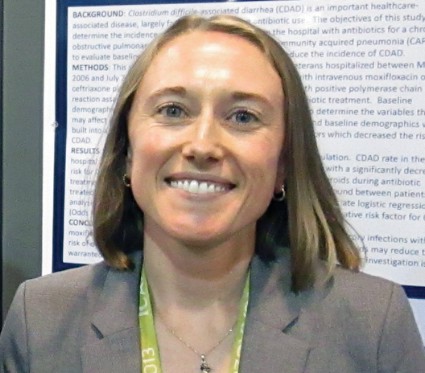
Expanded role seen for handy new spirometers
ESTES PARK, COLO. – The new generation of portable, user-friendly spirometry devices is likely to gain widespread acceptance among primary care physicians, one pulmonary expert predicted.
"Every subspecialist has their fifth vital sign. Mine is spirometry. Some of these handheld spirometers are really easy to use, and I think they’re going to make their way into office practice," said Dr. Robert L. Keith, professor of medicine at the University of Colorado, Denver.
Spirometry is a tool crucial to diagnosing chronic obstructive pulmonary disease in symptomatic patients. Plus, the forced expiratory volume in 1 second (FEV1) as measured using spirometry is the guideline-recommended means of categorizing patients as to disease stage and the most appropriate choice of treatment in individuals with COPD (Ann. Intern. Med. 2011;155:179-91).

Moreover, spirometry also provides an objective way to assess the effectiveness of treatment, the pulmonologist observed at a conference on internal medicine sponsored by the university.
"One of the neat things about the new software is it can provide quick data on lung age," Dr. Keith explained. "I can see a guy and tell him, ‘I’ve got your spirometry results, and your FEV1 is 41% and your FEV1/forced vital capacity ratio is 0.5,’ and he’s looking at me like, ‘What does that mean, doc?’
"But if I can say, ‘You’re 61 years old and your lungs are 75,’ that’s a take-home message pretty much anyone can understand," said Dr. Keith.
"I also use spirometry to follow patients, so I can say, ‘You’ve quit smoking and are using your medications, and guess what? Your lung age has improved from 75 to age 70,’ " he added.
Examples of state-of-the-art handheld spirometry devices on the market today include the Vitalograph copd-6, the PulmoLife, and PiKo-6, Dr. Keith noted.
"We tend to have a very rural population in Colorado that flows into Denver to be seen at the VA," [Veterans Affairs] he explained. "We give patients handheld spirometers to take back home to measure their disease and report in about their lung function."
Peak expiratory flow rate underestimates COPD severity, Dr. Keith cautioned, and cannot be used to diagnose COPD. Instead, peak expiratory flow is a spirometry measurement used as a tool in managing asthma.
He reported serving on speakers bureaus for Pfizer and Boehringer-Ingelheim.
ESTES PARK, COLO. – The new generation of portable, user-friendly spirometry devices is likely to gain widespread acceptance among primary care physicians, one pulmonary expert predicted.
"Every subspecialist has their fifth vital sign. Mine is spirometry. Some of these handheld spirometers are really easy to use, and I think they’re going to make their way into office practice," said Dr. Robert L. Keith, professor of medicine at the University of Colorado, Denver.
Spirometry is a tool crucial to diagnosing chronic obstructive pulmonary disease in symptomatic patients. Plus, the forced expiratory volume in 1 second (FEV1) as measured using spirometry is the guideline-recommended means of categorizing patients as to disease stage and the most appropriate choice of treatment in individuals with COPD (Ann. Intern. Med. 2011;155:179-91).
Moreover, spirometry also provides an objective way to assess the effectiveness of treatment, the pulmonologist observed at a conference on internal medicine sponsored by the university.
"One of the neat things about the new software is it can provide quick data on lung age," Dr. Keith explained. "I can see a guy and tell him, ‘I’ve got your spirometry results, and your FEV1 is 41% and your FEV1/forced vital capacity ratio is 0.5,’ and he’s looking at me like, ‘What does that mean, doc?’
"But if I can say, ‘You’re 61 years old and your lungs are 75,’ that’s a take-home message pretty much anyone can understand," said Dr. Keith.
"I also use spirometry to follow patients, so I can say, ‘You’ve quit smoking and are using your medications, and guess what? Your lung age has improved from 75 to age 70,’ " he added.
Examples of state-of-the-art handheld spirometry devices on the market today include the Vitalograph copd-6, the PulmoLife, and PiKo-6, Dr. Keith noted.
"We tend to have a very rural population in Colorado that flows into Denver to be seen at the VA," [Veterans Affairs] he explained. "We give patients handheld spirometers to take back home to measure their disease and report in about their lung function."
Peak expiratory flow rate underestimates COPD severity, Dr. Keith cautioned, and cannot be used to diagnose COPD. Instead, peak expiratory flow is a spirometry measurement used as a tool in managing asthma.
He reported serving on speakers bureaus for Pfizer and Boehringer-Ingelheim.
ESTES PARK, COLO. – The new generation of portable, user-friendly spirometry devices is likely to gain widespread acceptance among primary care physicians, one pulmonary expert predicted.
"Every subspecialist has their fifth vital sign. Mine is spirometry. Some of these handheld spirometers are really easy to use, and I think they’re going to make their way into office practice," said Dr. Robert L. Keith, professor of medicine at the University of Colorado, Denver.
Spirometry is a tool crucial to diagnosing chronic obstructive pulmonary disease in symptomatic patients. Plus, the forced expiratory volume in 1 second (FEV1) as measured using spirometry is the guideline-recommended means of categorizing patients as to disease stage and the most appropriate choice of treatment in individuals with COPD (Ann. Intern. Med. 2011;155:179-91).
Moreover, spirometry also provides an objective way to assess the effectiveness of treatment, the pulmonologist observed at a conference on internal medicine sponsored by the university.
"One of the neat things about the new software is it can provide quick data on lung age," Dr. Keith explained. "I can see a guy and tell him, ‘I’ve got your spirometry results, and your FEV1 is 41% and your FEV1/forced vital capacity ratio is 0.5,’ and he’s looking at me like, ‘What does that mean, doc?’
"But if I can say, ‘You’re 61 years old and your lungs are 75,’ that’s a take-home message pretty much anyone can understand," said Dr. Keith.
"I also use spirometry to follow patients, so I can say, ‘You’ve quit smoking and are using your medications, and guess what? Your lung age has improved from 75 to age 70,’ " he added.
Examples of state-of-the-art handheld spirometry devices on the market today include the Vitalograph copd-6, the PulmoLife, and PiKo-6, Dr. Keith noted.
"We tend to have a very rural population in Colorado that flows into Denver to be seen at the VA," [Veterans Affairs] he explained. "We give patients handheld spirometers to take back home to measure their disease and report in about their lung function."
Peak expiratory flow rate underestimates COPD severity, Dr. Keith cautioned, and cannot be used to diagnose COPD. Instead, peak expiratory flow is a spirometry measurement used as a tool in managing asthma.
He reported serving on speakers bureaus for Pfizer and Boehringer-Ingelheim.
EXPERT ANALYSIS FROM THE ANNUAL INTERNAL MEDICINE PROGRAM