User login
Thrombectomy fails to improve PCI outcomes, ups stroke risk
SAN DIEGO – Routine manual thrombectomy before percutaneous coronary intervention did not improve 180-day outcomes and was linked with an increased risk of stroke in patients with acute ST-segment elevation MI in the TOTAL trial.
Routine thrombectomy had no effect on the primary outcome of cardiovascular death, MI, cardiogenic shock, or New York Heart Association class IV heart failure, occurring in 6.9% of thrombectomy patients and 7% of PCI-only patients.
However, the study’s primary safety endpoint of stroke at 30 days doubled in patients undergoing routine thrombectomy before PCI to 33 events (0.7%), compared with those who had PCI with only bailout thrombectomy (16 events [0.3%]; P = .015).

The same pattern was observed with stroke or transient ischemic attack within 30 days (42 vs. 19 events; hazard ratio, 2.21; P = .003) and continued for stroke within 180 days (52 vs. 25 events; HR, 2.08; P = .002).
“The stroke findings are unexpected and we believe require confirmation in other datasets. A detailed case-by-case review is underway to help us understand the etiology and the relationship with the procedure,” lead author Dr. Sanjit S. Jolly said at the annual meeting of the American College of Cardiology.
Enthusiasm for manual thrombus aspiration was sparked by a survival benefit observed in the single-center, prospective TAPAS trial in ST-segment elevation MI patients (STEMI), and the procedure was widely adopted.
The more recent, multicenter TASTE trial, however, reported that routine thrombectomy before PCI failed to significantly reduce 30-day mortality in 7,244 STEMI patients, though there were trends toward reductions in stent thrombosis and hospitalization for recurrent MI.
TOTAL (Manual Aspiration Thrombectomy Plus PCI vs. PCI Alone in STEMI) randomly assigned 10,063 patients within 12 hours of STEMI symptoms to primary PCI either with upfront manual thrombectomy or only bailout thrombectomy if the PCI strategy failed.
The lack of significant differences between groups in the primary outcome was also true in all the components of the primary outcome. Furthermore, there was no effect on the primary outcome based on thrombotic burden, a question that remained unanswered after TASTE, Dr. Jolly reported. The TOTAL results were published online simultaneously with his report (N. Engl. J. Med. 2015 March 16 [doi:10.1056/NEJMoa1415098]).
“TOTAL and TASTE emphasize the need to conduct large randomized trials of common interventions, even when small trials appear positive,” Dr. Jolly said.
Discussant Dr. Steven Nissen, chair of cardiovascular medicine at Cleveland Clinic, described the routine use of thrombectomy as “a sad story about device regulation in the United States” in that the evidence level needed to get a medical device on the market is so far below that required for drug approval that patients undergo procedures without good randomized trial evidence to show they even work.
“We dodged a bullet recently with renal denervation when everyone thought it would work, and when you finally tested it, it didn’t,” Dr. Nissen said. “Let this be a lesson to us: We need to have more rigorous studies of medical devices before they get to market and get used in very large numbers of people.”
Currently, aspiration thrombectomy carries a IIa recommendation for use with PCI in the most recent ACC/American Heart Association guidelines for the management of patients with STEMI (J. Am. Coll. Cardiol. 2009;54:2205-41).
When asked whether the guidelines should change based on the TOTAL and TASTE results, Dr. Jolly said there should be a clear recommendation that routine thrombus aspiration should not be the appropriate approach, while the issue of bailout aspiration may be left to clinician judgment.
The finding of late strokes is difficult to understand and should be interpreted with caution because of the small number of strokes occurring between 30 and 180 days, he said. Detailed analysis of all strokes will be presented at a later meeting, but Rankin Scale scores show several strokes were “very debilitating.” There is a consistency in the data, as a meta-analysis of smaller trials also identified an increased stroke risk with adjunctive thrombectomy.

Discussant Dr. Gregg W. Stone, director of cardiovascular research and education at Columbia University Medical Center in New York, said a mechanism for periprocedural stroke with aspiration can be envisioned, but that understanding the risk of ongoing, late stroke is more difficult.
As for why thrombectomy didn’t work, “aspiration is incredibly inefficient, thromboemboli still occur before, during, and after aspiration, the timing of aspiration is often too late to benefit most patients,” and other mechanisms of myonecrosis may predominate, such as reperfusion injury, he observed.
Dr. Stone said the TOTAL results should change practice and that the guideline recommendation should be downgraded to IIb.
“There are some patients who have a very large thrombus burden who have trouble dealing with all that thrombus in the cath lab who might benefit, and it is impossible to design randomized trials for small sections and groups of patients,” he said. “I wouldn’t make it class III by any means, but I think it’ll take a long time for that reduction in use to actually transmit through clinical practice, because I must say interventional cardiologists love the idea of simply removing thrombus with a relatively easy-to-use device.”
Dr. David Kandzari, director of interventional cardiology at the Piedmont Heart Center in Atlanta, said in an interview that TOTAL will make operators much more selective and cautious in their performance of thrombectomy until further insights into the stroke issue are available. Thrombectomy should be reserved for bailout instances and not as a front-line therapy, he said.
On the other hand, the stroke rate in the early phase was not significantly different between groups in an as-treated analysis, and an opportunity exists to investigate potential differences between stroke and nonstroke patients to determine whether other comorbidities rather than thrombectomy per se may account for the stroke signal, Dr. Kandzari observed.
TOTAL was funded by the Canadian Institutes of Health Research, Canadian Network and Centre for Trials Internationally, and Medtronic. Dr. Jolly disclosed receiving consulting fees and honoraria from AstraZeneca, speaking fees for St. Jude, and research grants from Medtronic. Dr. Nissen has received research support from and is a consultant/adviser to numerous pharmaceutical companies; all honoraria or consulting fees go directly to charity so that he receives neither income nor a tax deduction. Dr. Stone reported consulting honoraria from Guided Delivery Systems, Miracor, and Reva, and ownership interest or partnership in Arstasis, Caliber, VNT, Micardia, Biostar family funds, and Medfocus family funds. Dr. Kandzari reported research and grant support from Medtronic, Biotronic, Abbott Vascular, and Boston Scientific.
SAN DIEGO – Routine manual thrombectomy before percutaneous coronary intervention did not improve 180-day outcomes and was linked with an increased risk of stroke in patients with acute ST-segment elevation MI in the TOTAL trial.
Routine thrombectomy had no effect on the primary outcome of cardiovascular death, MI, cardiogenic shock, or New York Heart Association class IV heart failure, occurring in 6.9% of thrombectomy patients and 7% of PCI-only patients.
However, the study’s primary safety endpoint of stroke at 30 days doubled in patients undergoing routine thrombectomy before PCI to 33 events (0.7%), compared with those who had PCI with only bailout thrombectomy (16 events [0.3%]; P = .015).
The same pattern was observed with stroke or transient ischemic attack within 30 days (42 vs. 19 events; hazard ratio, 2.21; P = .003) and continued for stroke within 180 days (52 vs. 25 events; HR, 2.08; P = .002).
“The stroke findings are unexpected and we believe require confirmation in other datasets. A detailed case-by-case review is underway to help us understand the etiology and the relationship with the procedure,” lead author Dr. Sanjit S. Jolly said at the annual meeting of the American College of Cardiology.
Enthusiasm for manual thrombus aspiration was sparked by a survival benefit observed in the single-center, prospective TAPAS trial in ST-segment elevation MI patients (STEMI), and the procedure was widely adopted.
The more recent, multicenter TASTE trial, however, reported that routine thrombectomy before PCI failed to significantly reduce 30-day mortality in 7,244 STEMI patients, though there were trends toward reductions in stent thrombosis and hospitalization for recurrent MI.
TOTAL (Manual Aspiration Thrombectomy Plus PCI vs. PCI Alone in STEMI) randomly assigned 10,063 patients within 12 hours of STEMI symptoms to primary PCI either with upfront manual thrombectomy or only bailout thrombectomy if the PCI strategy failed.
The lack of significant differences between groups in the primary outcome was also true in all the components of the primary outcome. Furthermore, there was no effect on the primary outcome based on thrombotic burden, a question that remained unanswered after TASTE, Dr. Jolly reported. The TOTAL results were published online simultaneously with his report (N. Engl. J. Med. 2015 March 16 [doi:10.1056/NEJMoa1415098]).
“TOTAL and TASTE emphasize the need to conduct large randomized trials of common interventions, even when small trials appear positive,” Dr. Jolly said.
Discussant Dr. Steven Nissen, chair of cardiovascular medicine at Cleveland Clinic, described the routine use of thrombectomy as “a sad story about device regulation in the United States” in that the evidence level needed to get a medical device on the market is so far below that required for drug approval that patients undergo procedures without good randomized trial evidence to show they even work.
“We dodged a bullet recently with renal denervation when everyone thought it would work, and when you finally tested it, it didn’t,” Dr. Nissen said. “Let this be a lesson to us: We need to have more rigorous studies of medical devices before they get to market and get used in very large numbers of people.”
Currently, aspiration thrombectomy carries a IIa recommendation for use with PCI in the most recent ACC/American Heart Association guidelines for the management of patients with STEMI (J. Am. Coll. Cardiol. 2009;54:2205-41).
When asked whether the guidelines should change based on the TOTAL and TASTE results, Dr. Jolly said there should be a clear recommendation that routine thrombus aspiration should not be the appropriate approach, while the issue of bailout aspiration may be left to clinician judgment.
The finding of late strokes is difficult to understand and should be interpreted with caution because of the small number of strokes occurring between 30 and 180 days, he said. Detailed analysis of all strokes will be presented at a later meeting, but Rankin Scale scores show several strokes were “very debilitating.” There is a consistency in the data, as a meta-analysis of smaller trials also identified an increased stroke risk with adjunctive thrombectomy.
Discussant Dr. Gregg W. Stone, director of cardiovascular research and education at Columbia University Medical Center in New York, said a mechanism for periprocedural stroke with aspiration can be envisioned, but that understanding the risk of ongoing, late stroke is more difficult.
As for why thrombectomy didn’t work, “aspiration is incredibly inefficient, thromboemboli still occur before, during, and after aspiration, the timing of aspiration is often too late to benefit most patients,” and other mechanisms of myonecrosis may predominate, such as reperfusion injury, he observed.
Dr. Stone said the TOTAL results should change practice and that the guideline recommendation should be downgraded to IIb.
“There are some patients who have a very large thrombus burden who have trouble dealing with all that thrombus in the cath lab who might benefit, and it is impossible to design randomized trials for small sections and groups of patients,” he said. “I wouldn’t make it class III by any means, but I think it’ll take a long time for that reduction in use to actually transmit through clinical practice, because I must say interventional cardiologists love the idea of simply removing thrombus with a relatively easy-to-use device.”
Dr. David Kandzari, director of interventional cardiology at the Piedmont Heart Center in Atlanta, said in an interview that TOTAL will make operators much more selective and cautious in their performance of thrombectomy until further insights into the stroke issue are available. Thrombectomy should be reserved for bailout instances and not as a front-line therapy, he said.
On the other hand, the stroke rate in the early phase was not significantly different between groups in an as-treated analysis, and an opportunity exists to investigate potential differences between stroke and nonstroke patients to determine whether other comorbidities rather than thrombectomy per se may account for the stroke signal, Dr. Kandzari observed.
TOTAL was funded by the Canadian Institutes of Health Research, Canadian Network and Centre for Trials Internationally, and Medtronic. Dr. Jolly disclosed receiving consulting fees and honoraria from AstraZeneca, speaking fees for St. Jude, and research grants from Medtronic. Dr. Nissen has received research support from and is a consultant/adviser to numerous pharmaceutical companies; all honoraria or consulting fees go directly to charity so that he receives neither income nor a tax deduction. Dr. Stone reported consulting honoraria from Guided Delivery Systems, Miracor, and Reva, and ownership interest or partnership in Arstasis, Caliber, VNT, Micardia, Biostar family funds, and Medfocus family funds. Dr. Kandzari reported research and grant support from Medtronic, Biotronic, Abbott Vascular, and Boston Scientific.
SAN DIEGO – Routine manual thrombectomy before percutaneous coronary intervention did not improve 180-day outcomes and was linked with an increased risk of stroke in patients with acute ST-segment elevation MI in the TOTAL trial.
Routine thrombectomy had no effect on the primary outcome of cardiovascular death, MI, cardiogenic shock, or New York Heart Association class IV heart failure, occurring in 6.9% of thrombectomy patients and 7% of PCI-only patients.
However, the study’s primary safety endpoint of stroke at 30 days doubled in patients undergoing routine thrombectomy before PCI to 33 events (0.7%), compared with those who had PCI with only bailout thrombectomy (16 events [0.3%]; P = .015).
The same pattern was observed with stroke or transient ischemic attack within 30 days (42 vs. 19 events; hazard ratio, 2.21; P = .003) and continued for stroke within 180 days (52 vs. 25 events; HR, 2.08; P = .002).
“The stroke findings are unexpected and we believe require confirmation in other datasets. A detailed case-by-case review is underway to help us understand the etiology and the relationship with the procedure,” lead author Dr. Sanjit S. Jolly said at the annual meeting of the American College of Cardiology.
Enthusiasm for manual thrombus aspiration was sparked by a survival benefit observed in the single-center, prospective TAPAS trial in ST-segment elevation MI patients (STEMI), and the procedure was widely adopted.
The more recent, multicenter TASTE trial, however, reported that routine thrombectomy before PCI failed to significantly reduce 30-day mortality in 7,244 STEMI patients, though there were trends toward reductions in stent thrombosis and hospitalization for recurrent MI.
TOTAL (Manual Aspiration Thrombectomy Plus PCI vs. PCI Alone in STEMI) randomly assigned 10,063 patients within 12 hours of STEMI symptoms to primary PCI either with upfront manual thrombectomy or only bailout thrombectomy if the PCI strategy failed.
The lack of significant differences between groups in the primary outcome was also true in all the components of the primary outcome. Furthermore, there was no effect on the primary outcome based on thrombotic burden, a question that remained unanswered after TASTE, Dr. Jolly reported. The TOTAL results were published online simultaneously with his report (N. Engl. J. Med. 2015 March 16 [doi:10.1056/NEJMoa1415098]).
“TOTAL and TASTE emphasize the need to conduct large randomized trials of common interventions, even when small trials appear positive,” Dr. Jolly said.
Discussant Dr. Steven Nissen, chair of cardiovascular medicine at Cleveland Clinic, described the routine use of thrombectomy as “a sad story about device regulation in the United States” in that the evidence level needed to get a medical device on the market is so far below that required for drug approval that patients undergo procedures without good randomized trial evidence to show they even work.
“We dodged a bullet recently with renal denervation when everyone thought it would work, and when you finally tested it, it didn’t,” Dr. Nissen said. “Let this be a lesson to us: We need to have more rigorous studies of medical devices before they get to market and get used in very large numbers of people.”
Currently, aspiration thrombectomy carries a IIa recommendation for use with PCI in the most recent ACC/American Heart Association guidelines for the management of patients with STEMI (J. Am. Coll. Cardiol. 2009;54:2205-41).
When asked whether the guidelines should change based on the TOTAL and TASTE results, Dr. Jolly said there should be a clear recommendation that routine thrombus aspiration should not be the appropriate approach, while the issue of bailout aspiration may be left to clinician judgment.
The finding of late strokes is difficult to understand and should be interpreted with caution because of the small number of strokes occurring between 30 and 180 days, he said. Detailed analysis of all strokes will be presented at a later meeting, but Rankin Scale scores show several strokes were “very debilitating.” There is a consistency in the data, as a meta-analysis of smaller trials also identified an increased stroke risk with adjunctive thrombectomy.
Discussant Dr. Gregg W. Stone, director of cardiovascular research and education at Columbia University Medical Center in New York, said a mechanism for periprocedural stroke with aspiration can be envisioned, but that understanding the risk of ongoing, late stroke is more difficult.
As for why thrombectomy didn’t work, “aspiration is incredibly inefficient, thromboemboli still occur before, during, and after aspiration, the timing of aspiration is often too late to benefit most patients,” and other mechanisms of myonecrosis may predominate, such as reperfusion injury, he observed.
Dr. Stone said the TOTAL results should change practice and that the guideline recommendation should be downgraded to IIb.
“There are some patients who have a very large thrombus burden who have trouble dealing with all that thrombus in the cath lab who might benefit, and it is impossible to design randomized trials for small sections and groups of patients,” he said. “I wouldn’t make it class III by any means, but I think it’ll take a long time for that reduction in use to actually transmit through clinical practice, because I must say interventional cardiologists love the idea of simply removing thrombus with a relatively easy-to-use device.”
Dr. David Kandzari, director of interventional cardiology at the Piedmont Heart Center in Atlanta, said in an interview that TOTAL will make operators much more selective and cautious in their performance of thrombectomy until further insights into the stroke issue are available. Thrombectomy should be reserved for bailout instances and not as a front-line therapy, he said.
On the other hand, the stroke rate in the early phase was not significantly different between groups in an as-treated analysis, and an opportunity exists to investigate potential differences between stroke and nonstroke patients to determine whether other comorbidities rather than thrombectomy per se may account for the stroke signal, Dr. Kandzari observed.
TOTAL was funded by the Canadian Institutes of Health Research, Canadian Network and Centre for Trials Internationally, and Medtronic. Dr. Jolly disclosed receiving consulting fees and honoraria from AstraZeneca, speaking fees for St. Jude, and research grants from Medtronic. Dr. Nissen has received research support from and is a consultant/adviser to numerous pharmaceutical companies; all honoraria or consulting fees go directly to charity so that he receives neither income nor a tax deduction. Dr. Stone reported consulting honoraria from Guided Delivery Systems, Miracor, and Reva, and ownership interest or partnership in Arstasis, Caliber, VNT, Micardia, Biostar family funds, and Medfocus family funds. Dr. Kandzari reported research and grant support from Medtronic, Biotronic, Abbott Vascular, and Boston Scientific.
AT ACC 2015
Key clinical point: Routine manual thrombectomy did not improve 180-day outcomes and increased the risk of stroke, compared with PCI alone.
Major finding: Thrombectomy plus PCI did not improve the primary outcome vs. PCI alone (6.9% vs. 7%) and doubled the 30-day stroke rate (0.7% vs. 0.3%).
Data source: Prospective study in 10,063 patients with STEMI.
Disclosures: TOTAL was funded by the Canadian Institutes of Health Research, Canadian Network and Centre for Trials Internationally, and Medtronic. Dr. Jolly disclosed receiving consulting fees and honoraria from AstraZeneca, speaking fees for St. Jude, and research grants from Medtronic.

Environmental factors affect bloodstream infections
New research suggests environmental factors can affect the development of catheter-related bloodstream infections (CRBSIs) in patients who
receive parenteral nutrition therapy at home.
Using a peripherally inserted central venous catheter (PICC) for 1 additional infusion day per week significantly reduced the amount of time before a first CRBSI, and using a tunneled vascular access device managed by a home care nurse increased the mean incidence of CRBSIs.
Laura Fuglsang Bech, of Aalborg University in Denmark, and her colleagues reported these results in the Journal of Parenteral and Enteral Nutrition.
The researchers set out to determine if environmental factors play a role in the development of bloodstream infections among patients receiving parenteral nutrition therapy via vascular access devices or PICCs, the 2 most commonly used catheters.
The team looked at factors such as smoking, catheter management by a home care nurse, colectomy with stoma, number of infusion days per week, and C-reactive protein values at catheter insertion day.
Adult patients suffering from intestinal failure and receiving home parenteral nutrition were included in the study. There were 295 catheters—169 tunneled vascular access devices and 126 PICCs—used in 136 patients.
The researchers found that using a PICC for 1 additional infusion day per week significantly reduced the amount of time before a first bloodstream infection. The time to first CRBSI decreased by a factor of 2.47 with 1 additional infusion day per week (P=0.04).
The team also found that using a tunneled vascular access device managed by a home care nurse increased the mean incidence of bloodstream infections. The mean CRBSI incidence per 1000 catheter days was 1.45± 0.68 for catheters managed by a home care nurse and 0.56 ± 0.24 for catheters that were not (P<0.001).
None of the other factors the researchers analyzed had any significant impact on the timing or incidence of CRBSIs.
Based on these results, the researchers recommended revisions to current home care guidelines. They advised using PICCs only for short-term home therapy and when few infusion days per week are needed. And they said management of tunneled vascular access devices by home care nurses should be further specialized. 
New research suggests environmental factors can affect the development of catheter-related bloodstream infections (CRBSIs) in patients who
receive parenteral nutrition therapy at home.
Using a peripherally inserted central venous catheter (PICC) for 1 additional infusion day per week significantly reduced the amount of time before a first CRBSI, and using a tunneled vascular access device managed by a home care nurse increased the mean incidence of CRBSIs.
Laura Fuglsang Bech, of Aalborg University in Denmark, and her colleagues reported these results in the Journal of Parenteral and Enteral Nutrition.
The researchers set out to determine if environmental factors play a role in the development of bloodstream infections among patients receiving parenteral nutrition therapy via vascular access devices or PICCs, the 2 most commonly used catheters.
The team looked at factors such as smoking, catheter management by a home care nurse, colectomy with stoma, number of infusion days per week, and C-reactive protein values at catheter insertion day.
Adult patients suffering from intestinal failure and receiving home parenteral nutrition were included in the study. There were 295 catheters—169 tunneled vascular access devices and 126 PICCs—used in 136 patients.
The researchers found that using a PICC for 1 additional infusion day per week significantly reduced the amount of time before a first bloodstream infection. The time to first CRBSI decreased by a factor of 2.47 with 1 additional infusion day per week (P=0.04).
The team also found that using a tunneled vascular access device managed by a home care nurse increased the mean incidence of bloodstream infections. The mean CRBSI incidence per 1000 catheter days was 1.45± 0.68 for catheters managed by a home care nurse and 0.56 ± 0.24 for catheters that were not (P<0.001).
None of the other factors the researchers analyzed had any significant impact on the timing or incidence of CRBSIs.
Based on these results, the researchers recommended revisions to current home care guidelines. They advised using PICCs only for short-term home therapy and when few infusion days per week are needed. And they said management of tunneled vascular access devices by home care nurses should be further specialized.
New research suggests environmental factors can affect the development of catheter-related bloodstream infections (CRBSIs) in patients who
receive parenteral nutrition therapy at home.
Using a peripherally inserted central venous catheter (PICC) for 1 additional infusion day per week significantly reduced the amount of time before a first CRBSI, and using a tunneled vascular access device managed by a home care nurse increased the mean incidence of CRBSIs.
Laura Fuglsang Bech, of Aalborg University in Denmark, and her colleagues reported these results in the Journal of Parenteral and Enteral Nutrition.
The researchers set out to determine if environmental factors play a role in the development of bloodstream infections among patients receiving parenteral nutrition therapy via vascular access devices or PICCs, the 2 most commonly used catheters.
The team looked at factors such as smoking, catheter management by a home care nurse, colectomy with stoma, number of infusion days per week, and C-reactive protein values at catheter insertion day.
Adult patients suffering from intestinal failure and receiving home parenteral nutrition were included in the study. There were 295 catheters—169 tunneled vascular access devices and 126 PICCs—used in 136 patients.
The researchers found that using a PICC for 1 additional infusion day per week significantly reduced the amount of time before a first bloodstream infection. The time to first CRBSI decreased by a factor of 2.47 with 1 additional infusion day per week (P=0.04).
The team also found that using a tunneled vascular access device managed by a home care nurse increased the mean incidence of bloodstream infections. The mean CRBSI incidence per 1000 catheter days was 1.45± 0.68 for catheters managed by a home care nurse and 0.56 ± 0.24 for catheters that were not (P<0.001).
None of the other factors the researchers analyzed had any significant impact on the timing or incidence of CRBSIs.
Based on these results, the researchers recommended revisions to current home care guidelines. They advised using PICCs only for short-term home therapy and when few infusion days per week are needed. And they said management of tunneled vascular access devices by home care nurses should be further specialized.
Cholinergic Urticaria With Anaphylaxis: Hazardous Duty of a Deployed US Marine
Cholinergic urticaria (CU) is a condition that primarily affects young adults. It can severely limit their activity levels and therefore job performance. Rarely, this condition can be associated with anaphylaxis, requiring a high index of suspicion by the clinician to ensure proper evaluation and treatment to prevent future respiratory compromise. We present the case of a 27-year-old US Marine with CU and anaphylaxis confirmed by a water challenge test in a warm bath.
Case Report
An otherwise healthy 27-year-old white man who was a US Marine presented with a concern of hives that appeared during strenuous exercise when he was deployed in Afghanistan approximately 1 year earlier. He initially began to experience urticarial lesions when taking warm showers with concomitant shortness of breath and wheezing. He reported no history of hives or asthma. Despite using diphenhydramine as needed to control symptoms for several months, he noted that the episodes of urticaria occurred with light-headedness, dizziness, or vomiting even with mild physical activity or common daily activities. Symptoms typically would resolve 30 to 90 minutes after he stopped exercising or cooled off. Over the course of approximately 1 year, the patient was prescribed a variety of sedating and nonsedating antihistamines (eg, diphenhydramine, hydroxyzine, doxepin, cetirizine, loratadine, fexofenadine, montelukast) by primary care while deployed, some of which mitigated his symptoms during warm showers and outdoor activities but not during exercise.
After returning from his deployment, the patient was initially referred to the dermatology department. No lesions were noted on physical examination. Based on his history, he was advised to avoid strenuous exercise and activity. During subsequent visits to dermatology an exercise challenge test was considered but not initiated due to lack of facilities to provide appropriate airway monitoring. The allergy department was consulted and the patient also was prescribed leukotriene receptor antagonists in addition to the antihistamines he was already taking. It was decided that a water challenge test in a warm bath would be performed in lieu of an exercise challenge to confirm a diagnosis of CU versus CU with anaphylaxis. If the patient did not have a reaction to the water challenge test, an exercise challenge would be offered.
After stopping treatment with antihistamines and leukotriene receptor antagonists for 1 week, a water challenge test was performed. A heparin lock was placed in the untested left arm for intravenous access. The right arm was immersed in a warm bath for 5 minutes without incident. After confirming no reaction, the arm was immersed for another 5 minutes, after which the patient reported flushing, warmth, and itching with visible 2- to 3-mm urticarial lesions on the back (Figure, A) and chest (Figure, B). The arm was subsequently removed from the water. No lesions were noted on either of the arms. The patient developed a cough after removing the arm from the water and his peak expiratory flow rate dropped from 520 to 440 L/min. After 5 minutes his peak expiratory flow rate recovered to 500 L/min and the coughing subsided. He also reported mild nausea and a headache. He was rapidly cooled with ice to abort any further reaction. An epinephrine autoinjector was on hand but was not used due to rapidly resolving symptoms. The diagnosis of CU with anaphylaxis was confirmed.
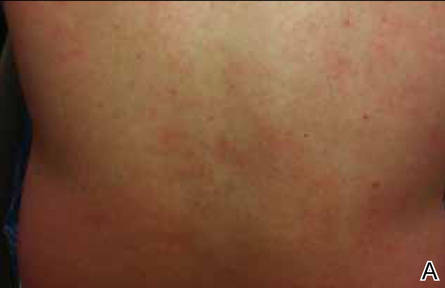
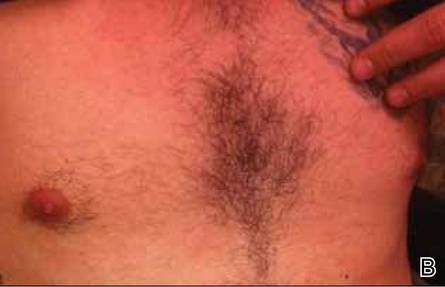
Erythematous eruption with 2- to 3-mm urticarial lesions on the back (A) and chest (B). |
Comment
Urticaria is a heterogeneous group of disorders that includes both cholinergic and exercise-induced variants. Cholinergic urticaria affects as many as 11.2% of young adults aged 15 to 35 years, with a peak incidence of 20% between 26 and 28 years of age.1 Clinical presentation consists of wheals (central swelling with peripheral erythema) that are 1 to 5 mm in diameter2 with associated itching/burning that typically resolves within 1 to 24 hours. Cholinergic urticaria is the result of a rise in core body temperature independent of exercise status; it is distinguished from exercise-induced urticaria, which occurs in response to vigorous exercise and is not related to a rise in body temperature.3 In particular, these forms of urticaria can severely impact the lives and careers of young servicemen and servicewomen who are routinely deployed to warm environments.
A provocation test is recommended by Magerl et al4 in patients with a suspected diagnosis of CU. First, an exercise challenge test using a bicycle, treadmill, or similar equipment is recommended, with the patient exercising for 15 minutes beyond the start of sweating. Readings for urticaria are made immediately following the test and 10 minutes later. If the test is positive, a water challenge test in a hot bath (42°C) is then recommended for 15 minutes beyond an increase of 1°C in baseline core body temperature.4 One study demonstrated that 43% (13/30) of patients with CU experienced bronchial hyperresponsiveness on methacholine challenge testing.5 These findings suggest a possible utility in testing CU patients for potential disease-related respiratory compromise. A practical limitation of this study was that it did not examine a link between bronchial hyperresponsiveness and anaphylaxis during cholinergic urticarial flares. An exercise challenge test was not performed in our patient due to a history of wheezing and shortness of breath with exercise; instead we went directly to the water challenge test. We felt that limited immersion in the water (ie, only 1 arm) further minimized the risk for anaphylaxis compared with full-body immersion.
Any activity that raises core body temperature in a patient with CU can induce onset of lesions. One case report described a patient who experienced symptoms while undergoing hemodialysis, which resolved when the dialysate temperature was decreased from the normal 36.5°C to 35°C.6 However, most cases are triggered by daily activities or work. The mainstay of treatment of CU is nonsedating antihistamines. Cetirizine has demonstrated particular efficacy.7 For unresponsive cases, treatments include scopolamine butylbromide8,9; ketotifen10; combinations of cetirizine, montelukast, and propanolol11; and danazol.12
Conclusion
Cholinergic urticaria is mostly prevalent among young adults, with highest incidence in the late 20s. Active duty servicemen and servicewomen are among those who are at the greatest risk for developing CU, especially those deployed to tropical environments. Frequently, CU is associated with bronchial hyperresponsiveness and also can be associated with anaphylaxis, as was seen in our patient. Care must be taken before provocative tests are conducted in these patients and should be done in a controlled environment in which airway compromise can be properly assessed and treated if anaphylaxis were to occur.
1. Zuberbier T, Althaus C, Chantraine-Hess S, et al. Prevalence of cholinergic urticaria in young adults. J Am Acad Dermatol. 1994;31:978-981.
2. Kontou-Fili K, Borici-Mazi R, Kapp A, et al. Physical urticaria: classification and diagnostic guidelines. an EAACI position paper. Allergy. 1997;52:504-513.
3. Zuberbier T, Asero R, Bindslev-Jensen C, et al; Dermatology Section of the European Academy of Allergology and Immunology; Global Allergy and Asthma European Network; European Dermatology Forum; World Allergy Organization. EAACI/GA(2)LEN/EDF/WAO guideline: definition, classification and diagnosis of urticaria. Allergy. 2009;64:1417-1426.
4. Magerl M, Borzova E, Giménez-Arnau A, et al; EAACI/GA2LEN/EDF/UNEV. The definition and diagnostic testing of physical and cholinergic urticarias—EAACI/GA2LEN/EDF/UNEV consensus panel recommendations [published online ahead of print September 30, 2009]. Allergy. 2009;64:1715-1721.
5. Petalas K, Kontou-Fili K, Gratziou C. Bronchial hyperresponsiveness in patients with cholinergic urticaria. Ann Allergy Asthma Immunol. 2009;102:416-421.
6. Morel V, Hauser C. Generalized cholinergic heat urticaria induced by hemodialysis. Kidney Int. 2006;70:230.
7. Zuberbier T, Aberer W, Burtin B, et al. Efficacy of cetirizine in cholinergic urticaria. Acta Derm Venereol. 1995;75:147-149.
8. Tsunemi Y, Ihn H, Saeki H, et al. Cholinergic urticaria successfully treated with scopolamine butylbromide. Int J Dermatol. 2003;42:850.
9. Ujiie H, Shimizu T, Natsuga K, et al. Severe cholinergic urticaria successfully treated with scopolamine butylbromide in addition to antihistamines. Clin Exp Dermatol. 2006;31:588-589.
10. McClean SP, Arreaza EE, Lett-Brown MA, et al. Refractory cholinergic urticaria successfully treated with ketotifen. J Allergy Clin Immunol. 1989;83:738-741.
11. Feinberg JH, Toner CB. Successful treatment of disabling cholinergic urticaria. Mil Med. 2008;173:217-220.
12. La Shell MS, England RW. Severe refractory cholinergic urticaria treated with danazol. J Drugs Dermatol. 2006;5:664-667.
Cholinergic urticaria (CU) is a condition that primarily affects young adults. It can severely limit their activity levels and therefore job performance. Rarely, this condition can be associated with anaphylaxis, requiring a high index of suspicion by the clinician to ensure proper evaluation and treatment to prevent future respiratory compromise. We present the case of a 27-year-old US Marine with CU and anaphylaxis confirmed by a water challenge test in a warm bath.
Case Report
An otherwise healthy 27-year-old white man who was a US Marine presented with a concern of hives that appeared during strenuous exercise when he was deployed in Afghanistan approximately 1 year earlier. He initially began to experience urticarial lesions when taking warm showers with concomitant shortness of breath and wheezing. He reported no history of hives or asthma. Despite using diphenhydramine as needed to control symptoms for several months, he noted that the episodes of urticaria occurred with light-headedness, dizziness, or vomiting even with mild physical activity or common daily activities. Symptoms typically would resolve 30 to 90 minutes after he stopped exercising or cooled off. Over the course of approximately 1 year, the patient was prescribed a variety of sedating and nonsedating antihistamines (eg, diphenhydramine, hydroxyzine, doxepin, cetirizine, loratadine, fexofenadine, montelukast) by primary care while deployed, some of which mitigated his symptoms during warm showers and outdoor activities but not during exercise.
After returning from his deployment, the patient was initially referred to the dermatology department. No lesions were noted on physical examination. Based on his history, he was advised to avoid strenuous exercise and activity. During subsequent visits to dermatology an exercise challenge test was considered but not initiated due to lack of facilities to provide appropriate airway monitoring. The allergy department was consulted and the patient also was prescribed leukotriene receptor antagonists in addition to the antihistamines he was already taking. It was decided that a water challenge test in a warm bath would be performed in lieu of an exercise challenge to confirm a diagnosis of CU versus CU with anaphylaxis. If the patient did not have a reaction to the water challenge test, an exercise challenge would be offered.
After stopping treatment with antihistamines and leukotriene receptor antagonists for 1 week, a water challenge test was performed. A heparin lock was placed in the untested left arm for intravenous access. The right arm was immersed in a warm bath for 5 minutes without incident. After confirming no reaction, the arm was immersed for another 5 minutes, after which the patient reported flushing, warmth, and itching with visible 2- to 3-mm urticarial lesions on the back (Figure, A) and chest (Figure, B). The arm was subsequently removed from the water. No lesions were noted on either of the arms. The patient developed a cough after removing the arm from the water and his peak expiratory flow rate dropped from 520 to 440 L/min. After 5 minutes his peak expiratory flow rate recovered to 500 L/min and the coughing subsided. He also reported mild nausea and a headache. He was rapidly cooled with ice to abort any further reaction. An epinephrine autoinjector was on hand but was not used due to rapidly resolving symptoms. The diagnosis of CU with anaphylaxis was confirmed.
|
Erythematous eruption with 2- to 3-mm urticarial lesions on the back (A) and chest (B). |
Comment
Urticaria is a heterogeneous group of disorders that includes both cholinergic and exercise-induced variants. Cholinergic urticaria affects as many as 11.2% of young adults aged 15 to 35 years, with a peak incidence of 20% between 26 and 28 years of age.1 Clinical presentation consists of wheals (central swelling with peripheral erythema) that are 1 to 5 mm in diameter2 with associated itching/burning that typically resolves within 1 to 24 hours. Cholinergic urticaria is the result of a rise in core body temperature independent of exercise status; it is distinguished from exercise-induced urticaria, which occurs in response to vigorous exercise and is not related to a rise in body temperature.3 In particular, these forms of urticaria can severely impact the lives and careers of young servicemen and servicewomen who are routinely deployed to warm environments.
A provocation test is recommended by Magerl et al4 in patients with a suspected diagnosis of CU. First, an exercise challenge test using a bicycle, treadmill, or similar equipment is recommended, with the patient exercising for 15 minutes beyond the start of sweating. Readings for urticaria are made immediately following the test and 10 minutes later. If the test is positive, a water challenge test in a hot bath (42°C) is then recommended for 15 minutes beyond an increase of 1°C in baseline core body temperature.4 One study demonstrated that 43% (13/30) of patients with CU experienced bronchial hyperresponsiveness on methacholine challenge testing.5 These findings suggest a possible utility in testing CU patients for potential disease-related respiratory compromise. A practical limitation of this study was that it did not examine a link between bronchial hyperresponsiveness and anaphylaxis during cholinergic urticarial flares. An exercise challenge test was not performed in our patient due to a history of wheezing and shortness of breath with exercise; instead we went directly to the water challenge test. We felt that limited immersion in the water (ie, only 1 arm) further minimized the risk for anaphylaxis compared with full-body immersion.
Any activity that raises core body temperature in a patient with CU can induce onset of lesions. One case report described a patient who experienced symptoms while undergoing hemodialysis, which resolved when the dialysate temperature was decreased from the normal 36.5°C to 35°C.6 However, most cases are triggered by daily activities or work. The mainstay of treatment of CU is nonsedating antihistamines. Cetirizine has demonstrated particular efficacy.7 For unresponsive cases, treatments include scopolamine butylbromide8,9; ketotifen10; combinations of cetirizine, montelukast, and propanolol11; and danazol.12
Conclusion
Cholinergic urticaria is mostly prevalent among young adults, with highest incidence in the late 20s. Active duty servicemen and servicewomen are among those who are at the greatest risk for developing CU, especially those deployed to tropical environments. Frequently, CU is associated with bronchial hyperresponsiveness and also can be associated with anaphylaxis, as was seen in our patient. Care must be taken before provocative tests are conducted in these patients and should be done in a controlled environment in which airway compromise can be properly assessed and treated if anaphylaxis were to occur.
Cholinergic urticaria (CU) is a condition that primarily affects young adults. It can severely limit their activity levels and therefore job performance. Rarely, this condition can be associated with anaphylaxis, requiring a high index of suspicion by the clinician to ensure proper evaluation and treatment to prevent future respiratory compromise. We present the case of a 27-year-old US Marine with CU and anaphylaxis confirmed by a water challenge test in a warm bath.
Case Report
An otherwise healthy 27-year-old white man who was a US Marine presented with a concern of hives that appeared during strenuous exercise when he was deployed in Afghanistan approximately 1 year earlier. He initially began to experience urticarial lesions when taking warm showers with concomitant shortness of breath and wheezing. He reported no history of hives or asthma. Despite using diphenhydramine as needed to control symptoms for several months, he noted that the episodes of urticaria occurred with light-headedness, dizziness, or vomiting even with mild physical activity or common daily activities. Symptoms typically would resolve 30 to 90 minutes after he stopped exercising or cooled off. Over the course of approximately 1 year, the patient was prescribed a variety of sedating and nonsedating antihistamines (eg, diphenhydramine, hydroxyzine, doxepin, cetirizine, loratadine, fexofenadine, montelukast) by primary care while deployed, some of which mitigated his symptoms during warm showers and outdoor activities but not during exercise.
After returning from his deployment, the patient was initially referred to the dermatology department. No lesions were noted on physical examination. Based on his history, he was advised to avoid strenuous exercise and activity. During subsequent visits to dermatology an exercise challenge test was considered but not initiated due to lack of facilities to provide appropriate airway monitoring. The allergy department was consulted and the patient also was prescribed leukotriene receptor antagonists in addition to the antihistamines he was already taking. It was decided that a water challenge test in a warm bath would be performed in lieu of an exercise challenge to confirm a diagnosis of CU versus CU with anaphylaxis. If the patient did not have a reaction to the water challenge test, an exercise challenge would be offered.
After stopping treatment with antihistamines and leukotriene receptor antagonists for 1 week, a water challenge test was performed. A heparin lock was placed in the untested left arm for intravenous access. The right arm was immersed in a warm bath for 5 minutes without incident. After confirming no reaction, the arm was immersed for another 5 minutes, after which the patient reported flushing, warmth, and itching with visible 2- to 3-mm urticarial lesions on the back (Figure, A) and chest (Figure, B). The arm was subsequently removed from the water. No lesions were noted on either of the arms. The patient developed a cough after removing the arm from the water and his peak expiratory flow rate dropped from 520 to 440 L/min. After 5 minutes his peak expiratory flow rate recovered to 500 L/min and the coughing subsided. He also reported mild nausea and a headache. He was rapidly cooled with ice to abort any further reaction. An epinephrine autoinjector was on hand but was not used due to rapidly resolving symptoms. The diagnosis of CU with anaphylaxis was confirmed.
|
Erythematous eruption with 2- to 3-mm urticarial lesions on the back (A) and chest (B). |
Comment
Urticaria is a heterogeneous group of disorders that includes both cholinergic and exercise-induced variants. Cholinergic urticaria affects as many as 11.2% of young adults aged 15 to 35 years, with a peak incidence of 20% between 26 and 28 years of age.1 Clinical presentation consists of wheals (central swelling with peripheral erythema) that are 1 to 5 mm in diameter2 with associated itching/burning that typically resolves within 1 to 24 hours. Cholinergic urticaria is the result of a rise in core body temperature independent of exercise status; it is distinguished from exercise-induced urticaria, which occurs in response to vigorous exercise and is not related to a rise in body temperature.3 In particular, these forms of urticaria can severely impact the lives and careers of young servicemen and servicewomen who are routinely deployed to warm environments.
A provocation test is recommended by Magerl et al4 in patients with a suspected diagnosis of CU. First, an exercise challenge test using a bicycle, treadmill, or similar equipment is recommended, with the patient exercising for 15 minutes beyond the start of sweating. Readings for urticaria are made immediately following the test and 10 minutes later. If the test is positive, a water challenge test in a hot bath (42°C) is then recommended for 15 minutes beyond an increase of 1°C in baseline core body temperature.4 One study demonstrated that 43% (13/30) of patients with CU experienced bronchial hyperresponsiveness on methacholine challenge testing.5 These findings suggest a possible utility in testing CU patients for potential disease-related respiratory compromise. A practical limitation of this study was that it did not examine a link between bronchial hyperresponsiveness and anaphylaxis during cholinergic urticarial flares. An exercise challenge test was not performed in our patient due to a history of wheezing and shortness of breath with exercise; instead we went directly to the water challenge test. We felt that limited immersion in the water (ie, only 1 arm) further minimized the risk for anaphylaxis compared with full-body immersion.
Any activity that raises core body temperature in a patient with CU can induce onset of lesions. One case report described a patient who experienced symptoms while undergoing hemodialysis, which resolved when the dialysate temperature was decreased from the normal 36.5°C to 35°C.6 However, most cases are triggered by daily activities or work. The mainstay of treatment of CU is nonsedating antihistamines. Cetirizine has demonstrated particular efficacy.7 For unresponsive cases, treatments include scopolamine butylbromide8,9; ketotifen10; combinations of cetirizine, montelukast, and propanolol11; and danazol.12
Conclusion
Cholinergic urticaria is mostly prevalent among young adults, with highest incidence in the late 20s. Active duty servicemen and servicewomen are among those who are at the greatest risk for developing CU, especially those deployed to tropical environments. Frequently, CU is associated with bronchial hyperresponsiveness and also can be associated with anaphylaxis, as was seen in our patient. Care must be taken before provocative tests are conducted in these patients and should be done in a controlled environment in which airway compromise can be properly assessed and treated if anaphylaxis were to occur.
1. Zuberbier T, Althaus C, Chantraine-Hess S, et al. Prevalence of cholinergic urticaria in young adults. J Am Acad Dermatol. 1994;31:978-981.
2. Kontou-Fili K, Borici-Mazi R, Kapp A, et al. Physical urticaria: classification and diagnostic guidelines. an EAACI position paper. Allergy. 1997;52:504-513.
3. Zuberbier T, Asero R, Bindslev-Jensen C, et al; Dermatology Section of the European Academy of Allergology and Immunology; Global Allergy and Asthma European Network; European Dermatology Forum; World Allergy Organization. EAACI/GA(2)LEN/EDF/WAO guideline: definition, classification and diagnosis of urticaria. Allergy. 2009;64:1417-1426.
4. Magerl M, Borzova E, Giménez-Arnau A, et al; EAACI/GA2LEN/EDF/UNEV. The definition and diagnostic testing of physical and cholinergic urticarias—EAACI/GA2LEN/EDF/UNEV consensus panel recommendations [published online ahead of print September 30, 2009]. Allergy. 2009;64:1715-1721.
5. Petalas K, Kontou-Fili K, Gratziou C. Bronchial hyperresponsiveness in patients with cholinergic urticaria. Ann Allergy Asthma Immunol. 2009;102:416-421.
6. Morel V, Hauser C. Generalized cholinergic heat urticaria induced by hemodialysis. Kidney Int. 2006;70:230.
7. Zuberbier T, Aberer W, Burtin B, et al. Efficacy of cetirizine in cholinergic urticaria. Acta Derm Venereol. 1995;75:147-149.
8. Tsunemi Y, Ihn H, Saeki H, et al. Cholinergic urticaria successfully treated with scopolamine butylbromide. Int J Dermatol. 2003;42:850.
9. Ujiie H, Shimizu T, Natsuga K, et al. Severe cholinergic urticaria successfully treated with scopolamine butylbromide in addition to antihistamines. Clin Exp Dermatol. 2006;31:588-589.
10. McClean SP, Arreaza EE, Lett-Brown MA, et al. Refractory cholinergic urticaria successfully treated with ketotifen. J Allergy Clin Immunol. 1989;83:738-741.
11. Feinberg JH, Toner CB. Successful treatment of disabling cholinergic urticaria. Mil Med. 2008;173:217-220.
12. La Shell MS, England RW. Severe refractory cholinergic urticaria treated with danazol. J Drugs Dermatol. 2006;5:664-667.
1. Zuberbier T, Althaus C, Chantraine-Hess S, et al. Prevalence of cholinergic urticaria in young adults. J Am Acad Dermatol. 1994;31:978-981.
2. Kontou-Fili K, Borici-Mazi R, Kapp A, et al. Physical urticaria: classification and diagnostic guidelines. an EAACI position paper. Allergy. 1997;52:504-513.
3. Zuberbier T, Asero R, Bindslev-Jensen C, et al; Dermatology Section of the European Academy of Allergology and Immunology; Global Allergy and Asthma European Network; European Dermatology Forum; World Allergy Organization. EAACI/GA(2)LEN/EDF/WAO guideline: definition, classification and diagnosis of urticaria. Allergy. 2009;64:1417-1426.
4. Magerl M, Borzova E, Giménez-Arnau A, et al; EAACI/GA2LEN/EDF/UNEV. The definition and diagnostic testing of physical and cholinergic urticarias—EAACI/GA2LEN/EDF/UNEV consensus panel recommendations [published online ahead of print September 30, 2009]. Allergy. 2009;64:1715-1721.
5. Petalas K, Kontou-Fili K, Gratziou C. Bronchial hyperresponsiveness in patients with cholinergic urticaria. Ann Allergy Asthma Immunol. 2009;102:416-421.
6. Morel V, Hauser C. Generalized cholinergic heat urticaria induced by hemodialysis. Kidney Int. 2006;70:230.
7. Zuberbier T, Aberer W, Burtin B, et al. Efficacy of cetirizine in cholinergic urticaria. Acta Derm Venereol. 1995;75:147-149.
8. Tsunemi Y, Ihn H, Saeki H, et al. Cholinergic urticaria successfully treated with scopolamine butylbromide. Int J Dermatol. 2003;42:850.
9. Ujiie H, Shimizu T, Natsuga K, et al. Severe cholinergic urticaria successfully treated with scopolamine butylbromide in addition to antihistamines. Clin Exp Dermatol. 2006;31:588-589.
10. McClean SP, Arreaza EE, Lett-Brown MA, et al. Refractory cholinergic urticaria successfully treated with ketotifen. J Allergy Clin Immunol. 1989;83:738-741.
11. Feinberg JH, Toner CB. Successful treatment of disabling cholinergic urticaria. Mil Med. 2008;173:217-220.
12. La Shell MS, England RW. Severe refractory cholinergic urticaria treated with danazol. J Drugs Dermatol. 2006;5:664-667.
Practice Points
- Cholinergic urticaria can be a life-threatening condition and should be diagnosed in a controlled clinical setting where airway can be maintained.
- Cholinergic urticaria can be a profession-limiting condition, affecting people whose work involves exposure to heat or physical activity such as members of the military.

Product News: 04 2015
Antirougeurs FORT Relief Concentrate
Pierre Fabre Dermo-Cosmétique USA introduces Avène Antirougeurs FORT Relief Concentrate for chronic redness. This advanced spot treatment is indicated for localized redness and small visible blood vessels, chronic persistent to permanent redness, and rosacea. It is formulated with Ruscus extract (0.3%) to induce contraction of the smooth muscle in blood vessel walls to encourage microcirculation and inhibit the formation of new blood vessels. Results have been seen after 3 months of once nightly application. Antirougeurs FORT Relief Concentrate is available exclusively in physicians’ offices. For more information, visit www.aveneusa.com.
Cosentyx
Novartis Pharmaceuticals Corporation announces US Food and Drug Administration approval of Cosentyx (secukinumab) for the treatment of moderate to severe plaque psoriasis in adult patients who are candidates for systemic therapy or phototherapy. Cosentyx is a human monoclonal antibody that selectively binds to IL-17A and inhibits its reaction with the IL-17 receptor. For more information, visit www.novartis.com.
DEJ Face Cream
Revision Skincare adds DEJ face cream to the antiaging collection. It is formulated with rosemary extract, goji fruit extract, coenzyme Q10, and vitamins C and E for antioxidant benefits. The cream also contains peptides palmitoyl tripeptide-38 and acetyl tetrapeptide-2 to tighten the dermoepidermal junction and reduce the appearance of fine lines and wrinkles as well as a copper complex to provide energy to aging cells. A blend of 3 ceramides provides moisturization. Results have shown a reduction in redness, hyperpigmentation, and fine lines and wrinkles, as well as better overall appearance. DEJ face cream is available exclusively through dermatologists, plastic surgeons, and medical spas, and can be layered with other products. For more information, visit www.revisionskincare.com.
If you would like your product included in Product News, please e-mail a press release to the Editorial Office at cutis@frontlinemedcom.com.
Antirougeurs FORT Relief Concentrate
Pierre Fabre Dermo-Cosmétique USA introduces Avène Antirougeurs FORT Relief Concentrate for chronic redness. This advanced spot treatment is indicated for localized redness and small visible blood vessels, chronic persistent to permanent redness, and rosacea. It is formulated with Ruscus extract (0.3%) to induce contraction of the smooth muscle in blood vessel walls to encourage microcirculation and inhibit the formation of new blood vessels. Results have been seen after 3 months of once nightly application. Antirougeurs FORT Relief Concentrate is available exclusively in physicians’ offices. For more information, visit www.aveneusa.com.
Cosentyx
Novartis Pharmaceuticals Corporation announces US Food and Drug Administration approval of Cosentyx (secukinumab) for the treatment of moderate to severe plaque psoriasis in adult patients who are candidates for systemic therapy or phototherapy. Cosentyx is a human monoclonal antibody that selectively binds to IL-17A and inhibits its reaction with the IL-17 receptor. For more information, visit www.novartis.com.
DEJ Face Cream
Revision Skincare adds DEJ face cream to the antiaging collection. It is formulated with rosemary extract, goji fruit extract, coenzyme Q10, and vitamins C and E for antioxidant benefits. The cream also contains peptides palmitoyl tripeptide-38 and acetyl tetrapeptide-2 to tighten the dermoepidermal junction and reduce the appearance of fine lines and wrinkles as well as a copper complex to provide energy to aging cells. A blend of 3 ceramides provides moisturization. Results have shown a reduction in redness, hyperpigmentation, and fine lines and wrinkles, as well as better overall appearance. DEJ face cream is available exclusively through dermatologists, plastic surgeons, and medical spas, and can be layered with other products. For more information, visit www.revisionskincare.com.
If you would like your product included in Product News, please e-mail a press release to the Editorial Office at cutis@frontlinemedcom.com.
Antirougeurs FORT Relief Concentrate
Pierre Fabre Dermo-Cosmétique USA introduces Avène Antirougeurs FORT Relief Concentrate for chronic redness. This advanced spot treatment is indicated for localized redness and small visible blood vessels, chronic persistent to permanent redness, and rosacea. It is formulated with Ruscus extract (0.3%) to induce contraction of the smooth muscle in blood vessel walls to encourage microcirculation and inhibit the formation of new blood vessels. Results have been seen after 3 months of once nightly application. Antirougeurs FORT Relief Concentrate is available exclusively in physicians’ offices. For more information, visit www.aveneusa.com.
Cosentyx
Novartis Pharmaceuticals Corporation announces US Food and Drug Administration approval of Cosentyx (secukinumab) for the treatment of moderate to severe plaque psoriasis in adult patients who are candidates for systemic therapy or phototherapy. Cosentyx is a human monoclonal antibody that selectively binds to IL-17A and inhibits its reaction with the IL-17 receptor. For more information, visit www.novartis.com.
DEJ Face Cream
Revision Skincare adds DEJ face cream to the antiaging collection. It is formulated with rosemary extract, goji fruit extract, coenzyme Q10, and vitamins C and E for antioxidant benefits. The cream also contains peptides palmitoyl tripeptide-38 and acetyl tetrapeptide-2 to tighten the dermoepidermal junction and reduce the appearance of fine lines and wrinkles as well as a copper complex to provide energy to aging cells. A blend of 3 ceramides provides moisturization. Results have shown a reduction in redness, hyperpigmentation, and fine lines and wrinkles, as well as better overall appearance. DEJ face cream is available exclusively through dermatologists, plastic surgeons, and medical spas, and can be layered with other products. For more information, visit www.revisionskincare.com.
If you would like your product included in Product News, please e-mail a press release to the Editorial Office at cutis@frontlinemedcom.com.

Failure to warn or report
Question: A patient who is a school bus driver is also an alcoholic, but he continues to drive despite his physician’s warning against drinking and driving. He already has had one prior driving under the influence (DUI) conviction. Fearing a potential vehicular accident with injuries to the schoolchildren, the physician, with permission, informed the patient’s wife of the situation; but that did not make a difference.
Under the circumstances, which of the following is best?
A. The physician has discharged his professional duty by warning the patient and informing his wife.
B. It is unethical for the physician to report this to the employer, because it violates the principle of confidentiality.
C. The physician may have an ethical and legal duty to report, because the risk of harm to the school children is foreseeable and outweighs other considerations.
D. A and B.
E. A and C.
Answer: C. The issue in this hypothetical revolves around the failure to warn and report when a doctor has determined that his or her patient poses a significant societal risk. It places the health care provider in a dilemma, because it pits patient confidentiality against the public interest in safety.
There does not appear to be an appellate case precisely on point, but the well known case of Tarasoff1 offers useful insight.
In Tarasoff, a California court imposed a legal duty on a college psychologist to warn an intended victim of harm, even though that meant breaching confidentiality in a professional relationship. A jilted patient had confided in the university psychologist his intention to kill his ex-girlfriend. The information, though shared with campus security, was not released to the intended victim, the girlfriend, whom the patient stabbed to death 2 months later.
The California court found the psychologist and the University of California (as the psychologist’s employer) liable, reasoning that the protection of public safety was more important than the sanctity of the doctor-patient confidentiality relationship.
The court wrote: “We recognize the public interest in supporting effective treatment of mental illness and in protecting the rights of patients to privacy and the consequent public importance of safeguarding the confidential character of psychotherapeutic communication. Against this interest, however, we must weigh the public interest in safety from violent assault. ... In this risk-infested society, we can hardly tolerate the further exposure to danger that would result from a concealed knowledge of the therapist that his patient was lethal.”
However, the duty to warn a third party may not be as clear cut where there is no readily identifiable victim.2
Further, the law is unsettled regarding a physician’s duty to report negligent conduct that poses a significant risk to public safety, e.g., where a patient insists on operating a vehicle against medical advice. Obviously, the doctor should spare no effort in trying to persuade such a patient to discontinue driving. When this fails, however, and depending on the circumstances, the physician should seriously consider breaching patent confidentiality by notifying the driving licensing bureau.
This opinion is in accord with the AMA Code of Medical Ethics: “Physicians should use their best judgment when determining when to report impairments that could limit a patient’s ability to drive safely. In situations where clear evidence of substantial driving impairment implies a strong threat to patient and public safety, and where the physician’s advice to discontinue driving privileges is ignored, it is desirable and ethical to notify the department of motor vehicles.”3
What about informing the patient’s employer if the risk of harm arises in the work setting?
The duty to report is clearer if the physician is a company doctor specifically charged with the task of determining whether an employee is fit for work. However, a patient’s personal physician may be a different matter, because he or she does not share the same contractual obligation as a company employed doctor.
Still, the circumstances may well dictate the need to report. In the hypothetical scenario posed above, the patient is refusing to heed the advice of physician and spouse, and given the history of a DUI, can be said to be placing innocent children and others at risk. The physician may need to go beyond warning the patient and wife, even though revealing a patient’s diagnosis violates the principle of confidentiality.
Arguably controversial, the physician’s justification is that there is a higher ethical and legal duty to report, as the risk of harm to the school children is both unreasonable and foreseeable, outweighing other considerations.
The same analysis concerning reporting may be applied in uncooperative patients with certain medical diagnoses (e.g., uncontrolled epilepsy, serious mental illness, or disabling cardiac or cerebrovascular disease, to name a few) and in those taking mind-altering prescription medications or illicit drugs.
A key inquiry is whether the patient’s work activity is potentially hazardous, as in those who are entrusted with public transportation, e.g., bus drivers, pilots and train/ship engineers, or those who operate heavy machinery.
The most familiar example of the failure to warn (as opposed to report) is of course in informed consent litigation, where the physician is faulted for not warning the patient of the risk of harm and the patient in fact suffers that harm. It is framed as the failure to disclose material risks. The California Supreme Court has stated that “material information is that which the physician knows or should know would be regarded as significant by a reasonable person in the patient’s position when deciding to accept or reject the recommended medical procedure”; that “a (material) fact must also be one which is not commonly appreciated”; and the scope of disclosure may be expanded in patients with “unique concerns or lack of familiarity with medical procedures.”4 There is, however, no legal requirement to deliver a “mini-course in medical science.”5
Another situation where there may have been a failure to warn is in medical products liability. Here, the plaintiff alleges that the defective product has caused injuries because the manufacturer has issued no prior warning to the health care provider or end user. A prime example is the current Lipitor and diabetes class action lawsuit against Pfizer.
In failing to warn a patient, a doctor may incur liability not only for injuries to the patient but also to nonpatient third parties.
In a 2002 Hawaii case, a car suddenly veered across five lanes of traffic, striking an 11-year-old girl and crushing her against a cement planter.6 The driver alleged that the prescription medication prazosin caused him to develop hypotension and lose control of the car, and that the treating physician was negligent in failing to warn of this potential side effect.
The Hawaii Supreme Court held that physicians have a duty to their patients to warn of potential adverse effects, and this responsibility should therefore extend to third parties.
Court decisions elsewhere have also found liability where, for public policy reasons, a “special relationship” is deemed to exist between the doctor and the injured third party. Foreseeability is one important factor in construing its existence, notwithstanding the absence of the traditional doctor-patient relationship.
References
1. Tarasoff v. Regents of University of California, 551 P.2d 334 (Cal. 1976).
2. Furr v. Spring Grove State Hospital, 454 A.2d 414 (Md. 1983).
3. AMA Code of Medical Ethics [2.24 (3), 2012-2013 ed.].
4. Truman v. Thomas, 27 Cal.3d 285 (1980).
5. Cobbs v. Grant, 8 Cal.3d 229 (1972).
6. McKenzie v. Hawaii Permanente Medical Group, 47 P.3d 1209 (Haw. 2002).
Dr. Tan is emeritus professor of medicine and former adjunct professor of law at the University of Hawaii. He currently directs the St. Francis International Center for Healthcare Ethics in Honolulu. This article is meant to be educational and does not constitute medical, ethical, or legal advice. For additional information, readers may contact the author at siang@hawaii.edu.
Question: A patient who is a school bus driver is also an alcoholic, but he continues to drive despite his physician’s warning against drinking and driving. He already has had one prior driving under the influence (DUI) conviction. Fearing a potential vehicular accident with injuries to the schoolchildren, the physician, with permission, informed the patient’s wife of the situation; but that did not make a difference.
Under the circumstances, which of the following is best?
A. The physician has discharged his professional duty by warning the patient and informing his wife.
B. It is unethical for the physician to report this to the employer, because it violates the principle of confidentiality.
C. The physician may have an ethical and legal duty to report, because the risk of harm to the school children is foreseeable and outweighs other considerations.
D. A and B.
E. A and C.
Answer: C. The issue in this hypothetical revolves around the failure to warn and report when a doctor has determined that his or her patient poses a significant societal risk. It places the health care provider in a dilemma, because it pits patient confidentiality against the public interest in safety.
There does not appear to be an appellate case precisely on point, but the well known case of Tarasoff1 offers useful insight.
In Tarasoff, a California court imposed a legal duty on a college psychologist to warn an intended victim of harm, even though that meant breaching confidentiality in a professional relationship. A jilted patient had confided in the university psychologist his intention to kill his ex-girlfriend. The information, though shared with campus security, was not released to the intended victim, the girlfriend, whom the patient stabbed to death 2 months later.
The California court found the psychologist and the University of California (as the psychologist’s employer) liable, reasoning that the protection of public safety was more important than the sanctity of the doctor-patient confidentiality relationship.
The court wrote: “We recognize the public interest in supporting effective treatment of mental illness and in protecting the rights of patients to privacy and the consequent public importance of safeguarding the confidential character of psychotherapeutic communication. Against this interest, however, we must weigh the public interest in safety from violent assault. ... In this risk-infested society, we can hardly tolerate the further exposure to danger that would result from a concealed knowledge of the therapist that his patient was lethal.”
However, the duty to warn a third party may not be as clear cut where there is no readily identifiable victim.2
Further, the law is unsettled regarding a physician’s duty to report negligent conduct that poses a significant risk to public safety, e.g., where a patient insists on operating a vehicle against medical advice. Obviously, the doctor should spare no effort in trying to persuade such a patient to discontinue driving. When this fails, however, and depending on the circumstances, the physician should seriously consider breaching patent confidentiality by notifying the driving licensing bureau.
This opinion is in accord with the AMA Code of Medical Ethics: “Physicians should use their best judgment when determining when to report impairments that could limit a patient’s ability to drive safely. In situations where clear evidence of substantial driving impairment implies a strong threat to patient and public safety, and where the physician’s advice to discontinue driving privileges is ignored, it is desirable and ethical to notify the department of motor vehicles.”3
What about informing the patient’s employer if the risk of harm arises in the work setting?
The duty to report is clearer if the physician is a company doctor specifically charged with the task of determining whether an employee is fit for work. However, a patient’s personal physician may be a different matter, because he or she does not share the same contractual obligation as a company employed doctor.
Still, the circumstances may well dictate the need to report. In the hypothetical scenario posed above, the patient is refusing to heed the advice of physician and spouse, and given the history of a DUI, can be said to be placing innocent children and others at risk. The physician may need to go beyond warning the patient and wife, even though revealing a patient’s diagnosis violates the principle of confidentiality.
Arguably controversial, the physician’s justification is that there is a higher ethical and legal duty to report, as the risk of harm to the school children is both unreasonable and foreseeable, outweighing other considerations.
The same analysis concerning reporting may be applied in uncooperative patients with certain medical diagnoses (e.g., uncontrolled epilepsy, serious mental illness, or disabling cardiac or cerebrovascular disease, to name a few) and in those taking mind-altering prescription medications or illicit drugs.
A key inquiry is whether the patient’s work activity is potentially hazardous, as in those who are entrusted with public transportation, e.g., bus drivers, pilots and train/ship engineers, or those who operate heavy machinery.
The most familiar example of the failure to warn (as opposed to report) is of course in informed consent litigation, where the physician is faulted for not warning the patient of the risk of harm and the patient in fact suffers that harm. It is framed as the failure to disclose material risks. The California Supreme Court has stated that “material information is that which the physician knows or should know would be regarded as significant by a reasonable person in the patient’s position when deciding to accept or reject the recommended medical procedure”; that “a (material) fact must also be one which is not commonly appreciated”; and the scope of disclosure may be expanded in patients with “unique concerns or lack of familiarity with medical procedures.”4 There is, however, no legal requirement to deliver a “mini-course in medical science.”5
Another situation where there may have been a failure to warn is in medical products liability. Here, the plaintiff alleges that the defective product has caused injuries because the manufacturer has issued no prior warning to the health care provider or end user. A prime example is the current Lipitor and diabetes class action lawsuit against Pfizer.
In failing to warn a patient, a doctor may incur liability not only for injuries to the patient but also to nonpatient third parties.
In a 2002 Hawaii case, a car suddenly veered across five lanes of traffic, striking an 11-year-old girl and crushing her against a cement planter.6 The driver alleged that the prescription medication prazosin caused him to develop hypotension and lose control of the car, and that the treating physician was negligent in failing to warn of this potential side effect.
The Hawaii Supreme Court held that physicians have a duty to their patients to warn of potential adverse effects, and this responsibility should therefore extend to third parties.
Court decisions elsewhere have also found liability where, for public policy reasons, a “special relationship” is deemed to exist between the doctor and the injured third party. Foreseeability is one important factor in construing its existence, notwithstanding the absence of the traditional doctor-patient relationship.
References
1. Tarasoff v. Regents of University of California, 551 P.2d 334 (Cal. 1976).
2. Furr v. Spring Grove State Hospital, 454 A.2d 414 (Md. 1983).
3. AMA Code of Medical Ethics [2.24 (3), 2012-2013 ed.].
4. Truman v. Thomas, 27 Cal.3d 285 (1980).
5. Cobbs v. Grant, 8 Cal.3d 229 (1972).
6. McKenzie v. Hawaii Permanente Medical Group, 47 P.3d 1209 (Haw. 2002).
Dr. Tan is emeritus professor of medicine and former adjunct professor of law at the University of Hawaii. He currently directs the St. Francis International Center for Healthcare Ethics in Honolulu. This article is meant to be educational and does not constitute medical, ethical, or legal advice. For additional information, readers may contact the author at siang@hawaii.edu.
Question: A patient who is a school bus driver is also an alcoholic, but he continues to drive despite his physician’s warning against drinking and driving. He already has had one prior driving under the influence (DUI) conviction. Fearing a potential vehicular accident with injuries to the schoolchildren, the physician, with permission, informed the patient’s wife of the situation; but that did not make a difference.
Under the circumstances, which of the following is best?
A. The physician has discharged his professional duty by warning the patient and informing his wife.
B. It is unethical for the physician to report this to the employer, because it violates the principle of confidentiality.
C. The physician may have an ethical and legal duty to report, because the risk of harm to the school children is foreseeable and outweighs other considerations.
D. A and B.
E. A and C.
Answer: C. The issue in this hypothetical revolves around the failure to warn and report when a doctor has determined that his or her patient poses a significant societal risk. It places the health care provider in a dilemma, because it pits patient confidentiality against the public interest in safety.
There does not appear to be an appellate case precisely on point, but the well known case of Tarasoff1 offers useful insight.
In Tarasoff, a California court imposed a legal duty on a college psychologist to warn an intended victim of harm, even though that meant breaching confidentiality in a professional relationship. A jilted patient had confided in the university psychologist his intention to kill his ex-girlfriend. The information, though shared with campus security, was not released to the intended victim, the girlfriend, whom the patient stabbed to death 2 months later.
The California court found the psychologist and the University of California (as the psychologist’s employer) liable, reasoning that the protection of public safety was more important than the sanctity of the doctor-patient confidentiality relationship.
The court wrote: “We recognize the public interest in supporting effective treatment of mental illness and in protecting the rights of patients to privacy and the consequent public importance of safeguarding the confidential character of psychotherapeutic communication. Against this interest, however, we must weigh the public interest in safety from violent assault. ... In this risk-infested society, we can hardly tolerate the further exposure to danger that would result from a concealed knowledge of the therapist that his patient was lethal.”
However, the duty to warn a third party may not be as clear cut where there is no readily identifiable victim.2
Further, the law is unsettled regarding a physician’s duty to report negligent conduct that poses a significant risk to public safety, e.g., where a patient insists on operating a vehicle against medical advice. Obviously, the doctor should spare no effort in trying to persuade such a patient to discontinue driving. When this fails, however, and depending on the circumstances, the physician should seriously consider breaching patent confidentiality by notifying the driving licensing bureau.
This opinion is in accord with the AMA Code of Medical Ethics: “Physicians should use their best judgment when determining when to report impairments that could limit a patient’s ability to drive safely. In situations where clear evidence of substantial driving impairment implies a strong threat to patient and public safety, and where the physician’s advice to discontinue driving privileges is ignored, it is desirable and ethical to notify the department of motor vehicles.”3
What about informing the patient’s employer if the risk of harm arises in the work setting?
The duty to report is clearer if the physician is a company doctor specifically charged with the task of determining whether an employee is fit for work. However, a patient’s personal physician may be a different matter, because he or she does not share the same contractual obligation as a company employed doctor.
Still, the circumstances may well dictate the need to report. In the hypothetical scenario posed above, the patient is refusing to heed the advice of physician and spouse, and given the history of a DUI, can be said to be placing innocent children and others at risk. The physician may need to go beyond warning the patient and wife, even though revealing a patient’s diagnosis violates the principle of confidentiality.
Arguably controversial, the physician’s justification is that there is a higher ethical and legal duty to report, as the risk of harm to the school children is both unreasonable and foreseeable, outweighing other considerations.
The same analysis concerning reporting may be applied in uncooperative patients with certain medical diagnoses (e.g., uncontrolled epilepsy, serious mental illness, or disabling cardiac or cerebrovascular disease, to name a few) and in those taking mind-altering prescription medications or illicit drugs.
A key inquiry is whether the patient’s work activity is potentially hazardous, as in those who are entrusted with public transportation, e.g., bus drivers, pilots and train/ship engineers, or those who operate heavy machinery.
The most familiar example of the failure to warn (as opposed to report) is of course in informed consent litigation, where the physician is faulted for not warning the patient of the risk of harm and the patient in fact suffers that harm. It is framed as the failure to disclose material risks. The California Supreme Court has stated that “material information is that which the physician knows or should know would be regarded as significant by a reasonable person in the patient’s position when deciding to accept or reject the recommended medical procedure”; that “a (material) fact must also be one which is not commonly appreciated”; and the scope of disclosure may be expanded in patients with “unique concerns or lack of familiarity with medical procedures.”4 There is, however, no legal requirement to deliver a “mini-course in medical science.”5
Another situation where there may have been a failure to warn is in medical products liability. Here, the plaintiff alleges that the defective product has caused injuries because the manufacturer has issued no prior warning to the health care provider or end user. A prime example is the current Lipitor and diabetes class action lawsuit against Pfizer.
In failing to warn a patient, a doctor may incur liability not only for injuries to the patient but also to nonpatient third parties.
In a 2002 Hawaii case, a car suddenly veered across five lanes of traffic, striking an 11-year-old girl and crushing her against a cement planter.6 The driver alleged that the prescription medication prazosin caused him to develop hypotension and lose control of the car, and that the treating physician was negligent in failing to warn of this potential side effect.
The Hawaii Supreme Court held that physicians have a duty to their patients to warn of potential adverse effects, and this responsibility should therefore extend to third parties.
Court decisions elsewhere have also found liability where, for public policy reasons, a “special relationship” is deemed to exist between the doctor and the injured third party. Foreseeability is one important factor in construing its existence, notwithstanding the absence of the traditional doctor-patient relationship.
References
1. Tarasoff v. Regents of University of California, 551 P.2d 334 (Cal. 1976).
2. Furr v. Spring Grove State Hospital, 454 A.2d 414 (Md. 1983).
3. AMA Code of Medical Ethics [2.24 (3), 2012-2013 ed.].
4. Truman v. Thomas, 27 Cal.3d 285 (1980).
5. Cobbs v. Grant, 8 Cal.3d 229 (1972).
6. McKenzie v. Hawaii Permanente Medical Group, 47 P.3d 1209 (Haw. 2002).
Dr. Tan is emeritus professor of medicine and former adjunct professor of law at the University of Hawaii. He currently directs the St. Francis International Center for Healthcare Ethics in Honolulu. This article is meant to be educational and does not constitute medical, ethical, or legal advice. For additional information, readers may contact the author at siang@hawaii.edu.

Cosmetic procedures in pregnancy
Cosmetic procedures in general should be postponed until after pregnancy. Factors to consider in a pregnant patient include the hormonal and physiologic changes of the patient during pregnancy, as well as the risk to the fetus.
Many dermatologic changes occur during a pregnancy. Pregnant women may develop hyperpigmentation, formation of vascular lesions and varicose veins, hirsutism, striae, acne, and increased skin growths. These changes may lead pregnant women to seek cosmetic treatments.

However, physiologic changes such as increased blood volume, decreased hematocrit, increased flushing, increased melanocyte stimulation, and decreased wound healing should prompt a delay of cosmetic procedures until 3-6 months after the postpartum period, when these factors return to normal and the risk of complications is reduced.
The safety of many cosmetic treatments during pregnancy remains unknown. This includes microdermabrasion, chemical peels, and laser treatments. Given the increased risk of postinflammatory hyperpigmentation, as well as poor wound healing and increased risk of hypertrophic and keloidal scarring in pregnancy, these procedures are often avoided.
The safety of injectable treatments during pregnancy, such as liquid sclerosants and fillers, has not been evaluated. However, the manufacturers list pregnancy and breastfeeding as contraindications to treatment. Neurotoxins are also avoided during pregnancy and breastfeeding, based on teratogenicity in animal studies. There have been no controlled trials in humans.
Though there have been incidental exposures of botulinum toxin in women who did not know they were pregnant, no documented reports of fetal anomaly during these incidental exposures has been reported. In addition, no studies have been conducted to evaluate whether the toxin is excreted in breast milk, or when it is safe to use neurotoxins, fillers, or liquid sclerosants prior to conception.
The 10 months of pregnancy and many months of nursing can be a long stretch to wait for women who get regular cosmetic treatments. The skin changes of pregnancy can be bothersome; however, the risks of complications to the mother and the fetus outweigh the transient benefits of cosmetic procedures. The hormonal and physiologic changes of pregnancy are widely different in each woman, and sometimes the long-term side effects and complications can be completely unpredictable. Thus, patience and thorough counseling are the best strategies for treating our pregnant and nursing moms.
References
Nussbaum, R. and Benedetto, A.V. Cosmetic aspects of pregnancy. Clinics in Dermatology 2006;24:133-41.
Morgan, J.C. et al. Botulinum Toxin and Pregnancy Skinmed 2006;5:308.
Monteiro, E. Botulinum toxin A during pregnancy: a survey of treating physicians. J. Neurol. Neurosurg. Psychiatry 2006;77:117-9.
Lee, K.C., et al. Safety of cosmetic dermatologic procedures during pregnancy. Dermatol. Surg. 2013;39:1573-86.
Goldberg, D. and Maloney, M. Dermatologic surgery and cosmetic procedures during pregnancy and the postpartum period. Dermatologic Therapy 2013;26:321-30.
Dr. Talakoub and Dr. Wesley are co-contributors to a monthly Aesthetic Dermatology column in Dermatology News. Dr. Talakoub is in private practice in McLean, Va. Dr. Wesley practices dermatology in Beverly Hills, Calif. This month’s column is by Dr. Talakoub.
Cosmetic procedures in general should be postponed until after pregnancy. Factors to consider in a pregnant patient include the hormonal and physiologic changes of the patient during pregnancy, as well as the risk to the fetus.
Many dermatologic changes occur during a pregnancy. Pregnant women may develop hyperpigmentation, formation of vascular lesions and varicose veins, hirsutism, striae, acne, and increased skin growths. These changes may lead pregnant women to seek cosmetic treatments.
However, physiologic changes such as increased blood volume, decreased hematocrit, increased flushing, increased melanocyte stimulation, and decreased wound healing should prompt a delay of cosmetic procedures until 3-6 months after the postpartum period, when these factors return to normal and the risk of complications is reduced.
The safety of many cosmetic treatments during pregnancy remains unknown. This includes microdermabrasion, chemical peels, and laser treatments. Given the increased risk of postinflammatory hyperpigmentation, as well as poor wound healing and increased risk of hypertrophic and keloidal scarring in pregnancy, these procedures are often avoided.
The safety of injectable treatments during pregnancy, such as liquid sclerosants and fillers, has not been evaluated. However, the manufacturers list pregnancy and breastfeeding as contraindications to treatment. Neurotoxins are also avoided during pregnancy and breastfeeding, based on teratogenicity in animal studies. There have been no controlled trials in humans.
Though there have been incidental exposures of botulinum toxin in women who did not know they were pregnant, no documented reports of fetal anomaly during these incidental exposures has been reported. In addition, no studies have been conducted to evaluate whether the toxin is excreted in breast milk, or when it is safe to use neurotoxins, fillers, or liquid sclerosants prior to conception.
The 10 months of pregnancy and many months of nursing can be a long stretch to wait for women who get regular cosmetic treatments. The skin changes of pregnancy can be bothersome; however, the risks of complications to the mother and the fetus outweigh the transient benefits of cosmetic procedures. The hormonal and physiologic changes of pregnancy are widely different in each woman, and sometimes the long-term side effects and complications can be completely unpredictable. Thus, patience and thorough counseling are the best strategies for treating our pregnant and nursing moms.
References
Nussbaum, R. and Benedetto, A.V. Cosmetic aspects of pregnancy. Clinics in Dermatology 2006;24:133-41.
Morgan, J.C. et al. Botulinum Toxin and Pregnancy Skinmed 2006;5:308.
Monteiro, E. Botulinum toxin A during pregnancy: a survey of treating physicians. J. Neurol. Neurosurg. Psychiatry 2006;77:117-9.
Lee, K.C., et al. Safety of cosmetic dermatologic procedures during pregnancy. Dermatol. Surg. 2013;39:1573-86.
Goldberg, D. and Maloney, M. Dermatologic surgery and cosmetic procedures during pregnancy and the postpartum period. Dermatologic Therapy 2013;26:321-30.
Dr. Talakoub and Dr. Wesley are co-contributors to a monthly Aesthetic Dermatology column in Dermatology News. Dr. Talakoub is in private practice in McLean, Va. Dr. Wesley practices dermatology in Beverly Hills, Calif. This month’s column is by Dr. Talakoub.
Cosmetic procedures in general should be postponed until after pregnancy. Factors to consider in a pregnant patient include the hormonal and physiologic changes of the patient during pregnancy, as well as the risk to the fetus.
Many dermatologic changes occur during a pregnancy. Pregnant women may develop hyperpigmentation, formation of vascular lesions and varicose veins, hirsutism, striae, acne, and increased skin growths. These changes may lead pregnant women to seek cosmetic treatments.
However, physiologic changes such as increased blood volume, decreased hematocrit, increased flushing, increased melanocyte stimulation, and decreased wound healing should prompt a delay of cosmetic procedures until 3-6 months after the postpartum period, when these factors return to normal and the risk of complications is reduced.
The safety of many cosmetic treatments during pregnancy remains unknown. This includes microdermabrasion, chemical peels, and laser treatments. Given the increased risk of postinflammatory hyperpigmentation, as well as poor wound healing and increased risk of hypertrophic and keloidal scarring in pregnancy, these procedures are often avoided.
The safety of injectable treatments during pregnancy, such as liquid sclerosants and fillers, has not been evaluated. However, the manufacturers list pregnancy and breastfeeding as contraindications to treatment. Neurotoxins are also avoided during pregnancy and breastfeeding, based on teratogenicity in animal studies. There have been no controlled trials in humans.
Though there have been incidental exposures of botulinum toxin in women who did not know they were pregnant, no documented reports of fetal anomaly during these incidental exposures has been reported. In addition, no studies have been conducted to evaluate whether the toxin is excreted in breast milk, or when it is safe to use neurotoxins, fillers, or liquid sclerosants prior to conception.
The 10 months of pregnancy and many months of nursing can be a long stretch to wait for women who get regular cosmetic treatments. The skin changes of pregnancy can be bothersome; however, the risks of complications to the mother and the fetus outweigh the transient benefits of cosmetic procedures. The hormonal and physiologic changes of pregnancy are widely different in each woman, and sometimes the long-term side effects and complications can be completely unpredictable. Thus, patience and thorough counseling are the best strategies for treating our pregnant and nursing moms.
References
Nussbaum, R. and Benedetto, A.V. Cosmetic aspects of pregnancy. Clinics in Dermatology 2006;24:133-41.
Morgan, J.C. et al. Botulinum Toxin and Pregnancy Skinmed 2006;5:308.
Monteiro, E. Botulinum toxin A during pregnancy: a survey of treating physicians. J. Neurol. Neurosurg. Psychiatry 2006;77:117-9.
Lee, K.C., et al. Safety of cosmetic dermatologic procedures during pregnancy. Dermatol. Surg. 2013;39:1573-86.
Goldberg, D. and Maloney, M. Dermatologic surgery and cosmetic procedures during pregnancy and the postpartum period. Dermatologic Therapy 2013;26:321-30.
Dr. Talakoub and Dr. Wesley are co-contributors to a monthly Aesthetic Dermatology column in Dermatology News. Dr. Talakoub is in private practice in McLean, Va. Dr. Wesley practices dermatology in Beverly Hills, Calif. This month’s column is by Dr. Talakoub.

What Is Your Diagnosis? New World Cutaneous Leishmaniasis
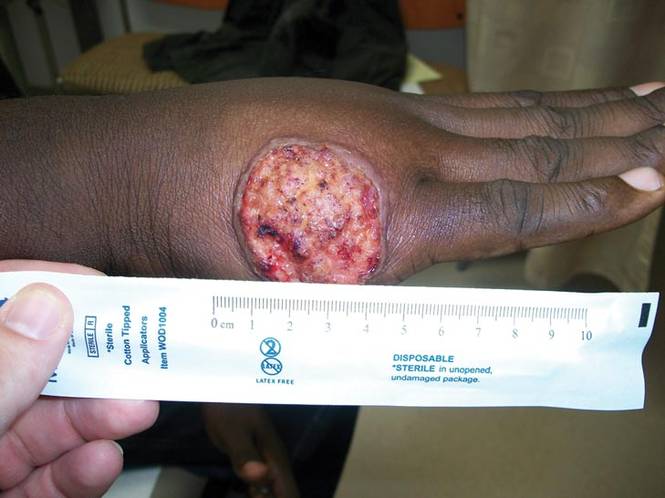
A 40-year-old man presented with a nonhealing ulcer on the right hand of 2 months’ duration. The lesion had started as a pruritic papule while he was visiting Guyana 2 months prior. The area had slowly enlarged with progressive ulceration. He denied any systemic signs including fever, chills, or weight loss, and his medical history was unremarkable. Physical examination revealed a 4-cm fungating ulceration with heaped-up borders on the dorsal aspect of the right hand.
The Diagnosis: New World Cutaneous Leishmaniasis
In addition to the ulceration on the right hand, a 2-cm ulcerated plaque also had developed on the right side of the chin a few days later (Figure 1). A biopsy was obtained from the lesion on the hand. Histopathologic examination revealed granulomatous inflammation with numerous histiocytes containing intracellular organisms (Figure 2). The microorganisms had pale pink nuclei with basophilic kinetoplasts (Figure 3). Tissue culture showed a mixed growth of gram-positive and gram-negative organisms but no predominant organism. Fungal and mycobacterial cultures were negative. A diagnosis of New World cutaneous leishmaniasis (CL) was made due to visualization of intracellular microorganisms containing basophilic kinetoplasts. Polymerase chain reaction on the tissue block confirmed the presence of Leishmania guyanensis.
|
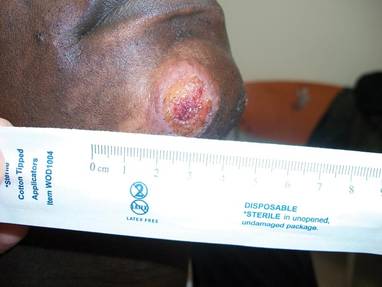
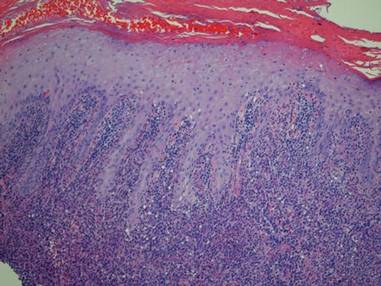
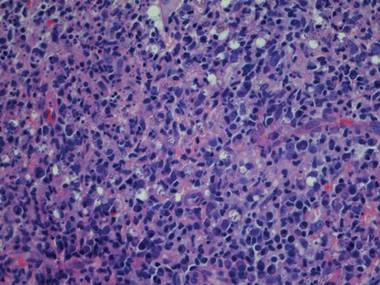
Cutaneous leishmaniasis is caused by protozoa from the Leishmania species and is transmitted by the bite of the female sandfly. There are 2 classifications for the disease: Old World and New World. Old World CL is transmitted by the sandfly of the genus Phlebotomus, which is endemic in Asia, Africa, the Mediterranean, and the Middle East. New World CL is transmitted by the sandflies of the genus Lutzomyia, which are endemic in Mexico, Central America, and South America. There have been occasional cases of autochthonous transmission reported in Texas and Oklahoma,1 but there has been no known transmission of CL in Australia or the Pacific Islands.2 Human infection can be transmitted by 21 species of Leishmania and can be speciated by designated laboratories such as the US Centers for Disease Control and Prevention (CDC) and the Walter Reed Army Institute of Research (Silver Spring, Maryland) using tissue culture and polymerase chain reaction.1 The CDC can assist with the collection of specimens and supply of culture medium for cases occurring in the United States. Identification of the species is important because there are associated implications for treatment and prognosis.
There are 3 major forms of leishmaniasis: cutaneous, mucocutaneous, and visceral. Cutaneous leishmaniasis is the most common form. There are approximately 1.5 million new cases of CL each year worldwide,3 and more than 90% of these cases occur in Afghanistan, Algeria, Iran, Iraq, Saudi Arabia, Syria, Brazil, and Peru.1 New World CL is caused by 2 species complexes: Leishmania mexicana and Leishmania viannia, including the subspecies L guyanensis, which was seen in our patient.
Cutaneous leishmaniasis usually begins as a small, well-defined papule at the site of the insect bite that then enlarges and becomes a nodule or plaque. Next, the lesion becomes ulcerated with raised borders (Figure 1). The ulcer typically is painless unless there is secondary bacterial or fungal infection.3,4 The incubation period usually is 2 to 8 weeks and multiple lesions may be present, as seen in our patient.4
Old World CL can resolve without treatment, but New World CL is less likely to spontaneously resolve. Additionally, there is a greater risk for spread of the infection to mucous membranes or for systemic dissemination if New World CL is left untreated.2,5 Patients with multiple lesions (ie, ≥3); large lesions (ie, >2.5 cm); lesions on the face, hands, feet, or joints; and those who are immunocompromised should be treated promptly.2 Pentavalent antimonials (eg, meglumine antimoniate, sodium stibogluconate) are the treatment of choice for New World CL, except for infections caused by L guyanensis. The most common pentavalent antimonial agent used in the United States is sodium stibogluconate and is given at a standard intravenous dose of 20 mg antimony/kg daily for 20 days.2 The drug is only available through the CDC’s Drug Service under an Investigational New Drug protocol.1
Intramuscular pentamidine (3 mg/kg daily every other day for 4 doses) is the first-line treatment of CL caused by L guyanensis because systemic antimony usually is not effective.2,6,7 Intralesional injection with pentavalent antimonials usually is not recommended for treatment of New World CL because of the possibility of disseminated disease.2 Liposomal amphotericin B has mainly been used to treat visceral and mucosal leishmaniasis, but there have been some small studies and case reports that have showed it to be successful in treating CL.8-10 Larger controlled studies need to be performed. Oral antifungal drugs (eg, fluconazole, ketoconazole, itraconazole) also have been used to treat CL with variable results depending on the Leishmania species.11
There currently are no vaccines or drugs available to prevent against leishmaniasis. Preventive measures such as avoiding outdoor activities from dusk to dawn when sandflies are the most active, wearing protective clothing, and applying insect repellent that contains DEET (diethyltoluamide) can help reduce a traveler’s risk for becoming infected. Mosquito nets also should be treated with permethrin, which acts as an insect repellent, as sandflies are so small that they can penetrate mosquito nets.1,3,11
Acknowledgements—We would like to thank Francis Steurer, MS, and Barbara Herwaldt, MD, MPH, at the CDC in Atlanta, Georgia, for their help with the identification of the Leishmania species.
1. Herwaldt BL, Magill AJ. Infectious diseases related to travel: leishmaniasis, cutaneous. Centers for Disease Control and Prevention Web site. http://wwwnc.cdc.gov/travel/yellowbook/2010/chapter-5/cutaneous-leish maniasis.htm. Published August 1, 2013. Accessed March 5, 2015.
2. Mitropolos P, Konidas P, Durkin-Konidas M. New World cutaneous leishmaniasis: updated review of current and future diagnosis and treatment. J Am Acad Dermatol. 2010;63:309-322.
3. Hepburn NC. Cutaneous leishmaniasis: an overview. J Postgrad Med. 2003;49:50-54.
4. Markle WH, Makhoul K. Cutaneous leishmaniasis: recognition and treatment. Am Fam Physician. 2004;69:1455-1460.
5. Couppié P, Clyti E, Sainte Marie D, et al. Disseminated cutaneous leishmaniasis due to Leishmania guyanensis: case of a patient with 425 lesions. Am J Trop Med Hyg. 2004;71:558-560.
6. Nacher M, Carme B, Sainte Marie D, et al. Influence of clinical presentation on the efficacy of a short course of pentamidine in the treatment of cutaneous leishmaniasis in French Guiana. Ann Trop Med Parasitol. 2001;95:331-336.
7. Minodier P, Parola P. Cutaneous leishmaniasis treatment. Trav Med Inf Dis. 2007;5:150-158.
8. Solomon M, Baum S, Barzilai A, et al. Liposomal amphotericin B in comparison to sodium stibogluconate for cutaneous infection due to Leishmania braziliensis. J Am Acad Dermatol. 2007;56:612-616.
9. Konecny P, Stark DJ. An Australian case of New World cutaneous leishmaniasis. Med J Aust. 2007;186:315-317.
10. Brown M, Noursadeghi M, Boyle J, et al. Successful liposomal amphotericin B treatment of Leishmania braziliensis cutaneous leishmaniasis. Br J Dermatol. 2005;153:203-205.
11. Parasites: leishmaniasis. Centers for Disease Control and Prevention Web site. http://www.cdc.gov/parasites/leishmaniasis/index.html. Updated January 10, 2013. Accessed March 5, 2015.
A 40-year-old man presented with a nonhealing ulcer on the right hand of 2 months’ duration. The lesion had started as a pruritic papule while he was visiting Guyana 2 months prior. The area had slowly enlarged with progressive ulceration. He denied any systemic signs including fever, chills, or weight loss, and his medical history was unremarkable. Physical examination revealed a 4-cm fungating ulceration with heaped-up borders on the dorsal aspect of the right hand.
The Diagnosis: New World Cutaneous Leishmaniasis
In addition to the ulceration on the right hand, a 2-cm ulcerated plaque also had developed on the right side of the chin a few days later (Figure 1). A biopsy was obtained from the lesion on the hand. Histopathologic examination revealed granulomatous inflammation with numerous histiocytes containing intracellular organisms (Figure 2). The microorganisms had pale pink nuclei with basophilic kinetoplasts (Figure 3). Tissue culture showed a mixed growth of gram-positive and gram-negative organisms but no predominant organism. Fungal and mycobacterial cultures were negative. A diagnosis of New World cutaneous leishmaniasis (CL) was made due to visualization of intracellular microorganisms containing basophilic kinetoplasts. Polymerase chain reaction on the tissue block confirmed the presence of Leishmania guyanensis.
|
Cutaneous leishmaniasis is caused by protozoa from the Leishmania species and is transmitted by the bite of the female sandfly. There are 2 classifications for the disease: Old World and New World. Old World CL is transmitted by the sandfly of the genus Phlebotomus, which is endemic in Asia, Africa, the Mediterranean, and the Middle East. New World CL is transmitted by the sandflies of the genus Lutzomyia, which are endemic in Mexico, Central America, and South America. There have been occasional cases of autochthonous transmission reported in Texas and Oklahoma,1 but there has been no known transmission of CL in Australia or the Pacific Islands.2 Human infection can be transmitted by 21 species of Leishmania and can be speciated by designated laboratories such as the US Centers for Disease Control and Prevention (CDC) and the Walter Reed Army Institute of Research (Silver Spring, Maryland) using tissue culture and polymerase chain reaction.1 The CDC can assist with the collection of specimens and supply of culture medium for cases occurring in the United States. Identification of the species is important because there are associated implications for treatment and prognosis.
There are 3 major forms of leishmaniasis: cutaneous, mucocutaneous, and visceral. Cutaneous leishmaniasis is the most common form. There are approximately 1.5 million new cases of CL each year worldwide,3 and more than 90% of these cases occur in Afghanistan, Algeria, Iran, Iraq, Saudi Arabia, Syria, Brazil, and Peru.1 New World CL is caused by 2 species complexes: Leishmania mexicana and Leishmania viannia, including the subspecies L guyanensis, which was seen in our patient.
Cutaneous leishmaniasis usually begins as a small, well-defined papule at the site of the insect bite that then enlarges and becomes a nodule or plaque. Next, the lesion becomes ulcerated with raised borders (Figure 1). The ulcer typically is painless unless there is secondary bacterial or fungal infection.3,4 The incubation period usually is 2 to 8 weeks and multiple lesions may be present, as seen in our patient.4
Old World CL can resolve without treatment, but New World CL is less likely to spontaneously resolve. Additionally, there is a greater risk for spread of the infection to mucous membranes or for systemic dissemination if New World CL is left untreated.2,5 Patients with multiple lesions (ie, ≥3); large lesions (ie, >2.5 cm); lesions on the face, hands, feet, or joints; and those who are immunocompromised should be treated promptly.2 Pentavalent antimonials (eg, meglumine antimoniate, sodium stibogluconate) are the treatment of choice for New World CL, except for infections caused by L guyanensis. The most common pentavalent antimonial agent used in the United States is sodium stibogluconate and is given at a standard intravenous dose of 20 mg antimony/kg daily for 20 days.2 The drug is only available through the CDC’s Drug Service under an Investigational New Drug protocol.1
Intramuscular pentamidine (3 mg/kg daily every other day for 4 doses) is the first-line treatment of CL caused by L guyanensis because systemic antimony usually is not effective.2,6,7 Intralesional injection with pentavalent antimonials usually is not recommended for treatment of New World CL because of the possibility of disseminated disease.2 Liposomal amphotericin B has mainly been used to treat visceral and mucosal leishmaniasis, but there have been some small studies and case reports that have showed it to be successful in treating CL.8-10 Larger controlled studies need to be performed. Oral antifungal drugs (eg, fluconazole, ketoconazole, itraconazole) also have been used to treat CL with variable results depending on the Leishmania species.11
There currently are no vaccines or drugs available to prevent against leishmaniasis. Preventive measures such as avoiding outdoor activities from dusk to dawn when sandflies are the most active, wearing protective clothing, and applying insect repellent that contains DEET (diethyltoluamide) can help reduce a traveler’s risk for becoming infected. Mosquito nets also should be treated with permethrin, which acts as an insect repellent, as sandflies are so small that they can penetrate mosquito nets.1,3,11
Acknowledgements—We would like to thank Francis Steurer, MS, and Barbara Herwaldt, MD, MPH, at the CDC in Atlanta, Georgia, for their help with the identification of the Leishmania species.
A 40-year-old man presented with a nonhealing ulcer on the right hand of 2 months’ duration. The lesion had started as a pruritic papule while he was visiting Guyana 2 months prior. The area had slowly enlarged with progressive ulceration. He denied any systemic signs including fever, chills, or weight loss, and his medical history was unremarkable. Physical examination revealed a 4-cm fungating ulceration with heaped-up borders on the dorsal aspect of the right hand.
The Diagnosis: New World Cutaneous Leishmaniasis
In addition to the ulceration on the right hand, a 2-cm ulcerated plaque also had developed on the right side of the chin a few days later (Figure 1). A biopsy was obtained from the lesion on the hand. Histopathologic examination revealed granulomatous inflammation with numerous histiocytes containing intracellular organisms (Figure 2). The microorganisms had pale pink nuclei with basophilic kinetoplasts (Figure 3). Tissue culture showed a mixed growth of gram-positive and gram-negative organisms but no predominant organism. Fungal and mycobacterial cultures were negative. A diagnosis of New World cutaneous leishmaniasis (CL) was made due to visualization of intracellular microorganisms containing basophilic kinetoplasts. Polymerase chain reaction on the tissue block confirmed the presence of Leishmania guyanensis.
|
Cutaneous leishmaniasis is caused by protozoa from the Leishmania species and is transmitted by the bite of the female sandfly. There are 2 classifications for the disease: Old World and New World. Old World CL is transmitted by the sandfly of the genus Phlebotomus, which is endemic in Asia, Africa, the Mediterranean, and the Middle East. New World CL is transmitted by the sandflies of the genus Lutzomyia, which are endemic in Mexico, Central America, and South America. There have been occasional cases of autochthonous transmission reported in Texas and Oklahoma,1 but there has been no known transmission of CL in Australia or the Pacific Islands.2 Human infection can be transmitted by 21 species of Leishmania and can be speciated by designated laboratories such as the US Centers for Disease Control and Prevention (CDC) and the Walter Reed Army Institute of Research (Silver Spring, Maryland) using tissue culture and polymerase chain reaction.1 The CDC can assist with the collection of specimens and supply of culture medium for cases occurring in the United States. Identification of the species is important because there are associated implications for treatment and prognosis.
There are 3 major forms of leishmaniasis: cutaneous, mucocutaneous, and visceral. Cutaneous leishmaniasis is the most common form. There are approximately 1.5 million new cases of CL each year worldwide,3 and more than 90% of these cases occur in Afghanistan, Algeria, Iran, Iraq, Saudi Arabia, Syria, Brazil, and Peru.1 New World CL is caused by 2 species complexes: Leishmania mexicana and Leishmania viannia, including the subspecies L guyanensis, which was seen in our patient.
Cutaneous leishmaniasis usually begins as a small, well-defined papule at the site of the insect bite that then enlarges and becomes a nodule or plaque. Next, the lesion becomes ulcerated with raised borders (Figure 1). The ulcer typically is painless unless there is secondary bacterial or fungal infection.3,4 The incubation period usually is 2 to 8 weeks and multiple lesions may be present, as seen in our patient.4
Old World CL can resolve without treatment, but New World CL is less likely to spontaneously resolve. Additionally, there is a greater risk for spread of the infection to mucous membranes or for systemic dissemination if New World CL is left untreated.2,5 Patients with multiple lesions (ie, ≥3); large lesions (ie, >2.5 cm); lesions on the face, hands, feet, or joints; and those who are immunocompromised should be treated promptly.2 Pentavalent antimonials (eg, meglumine antimoniate, sodium stibogluconate) are the treatment of choice for New World CL, except for infections caused by L guyanensis. The most common pentavalent antimonial agent used in the United States is sodium stibogluconate and is given at a standard intravenous dose of 20 mg antimony/kg daily for 20 days.2 The drug is only available through the CDC’s Drug Service under an Investigational New Drug protocol.1
Intramuscular pentamidine (3 mg/kg daily every other day for 4 doses) is the first-line treatment of CL caused by L guyanensis because systemic antimony usually is not effective.2,6,7 Intralesional injection with pentavalent antimonials usually is not recommended for treatment of New World CL because of the possibility of disseminated disease.2 Liposomal amphotericin B has mainly been used to treat visceral and mucosal leishmaniasis, but there have been some small studies and case reports that have showed it to be successful in treating CL.8-10 Larger controlled studies need to be performed. Oral antifungal drugs (eg, fluconazole, ketoconazole, itraconazole) also have been used to treat CL with variable results depending on the Leishmania species.11
There currently are no vaccines or drugs available to prevent against leishmaniasis. Preventive measures such as avoiding outdoor activities from dusk to dawn when sandflies are the most active, wearing protective clothing, and applying insect repellent that contains DEET (diethyltoluamide) can help reduce a traveler’s risk for becoming infected. Mosquito nets also should be treated with permethrin, which acts as an insect repellent, as sandflies are so small that they can penetrate mosquito nets.1,3,11
Acknowledgements—We would like to thank Francis Steurer, MS, and Barbara Herwaldt, MD, MPH, at the CDC in Atlanta, Georgia, for their help with the identification of the Leishmania species.
1. Herwaldt BL, Magill AJ. Infectious diseases related to travel: leishmaniasis, cutaneous. Centers for Disease Control and Prevention Web site. http://wwwnc.cdc.gov/travel/yellowbook/2010/chapter-5/cutaneous-leish maniasis.htm. Published August 1, 2013. Accessed March 5, 2015.
2. Mitropolos P, Konidas P, Durkin-Konidas M. New World cutaneous leishmaniasis: updated review of current and future diagnosis and treatment. J Am Acad Dermatol. 2010;63:309-322.
3. Hepburn NC. Cutaneous leishmaniasis: an overview. J Postgrad Med. 2003;49:50-54.
4. Markle WH, Makhoul K. Cutaneous leishmaniasis: recognition and treatment. Am Fam Physician. 2004;69:1455-1460.
5. Couppié P, Clyti E, Sainte Marie D, et al. Disseminated cutaneous leishmaniasis due to Leishmania guyanensis: case of a patient with 425 lesions. Am J Trop Med Hyg. 2004;71:558-560.
6. Nacher M, Carme B, Sainte Marie D, et al. Influence of clinical presentation on the efficacy of a short course of pentamidine in the treatment of cutaneous leishmaniasis in French Guiana. Ann Trop Med Parasitol. 2001;95:331-336.
7. Minodier P, Parola P. Cutaneous leishmaniasis treatment. Trav Med Inf Dis. 2007;5:150-158.
8. Solomon M, Baum S, Barzilai A, et al. Liposomal amphotericin B in comparison to sodium stibogluconate for cutaneous infection due to Leishmania braziliensis. J Am Acad Dermatol. 2007;56:612-616.
9. Konecny P, Stark DJ. An Australian case of New World cutaneous leishmaniasis. Med J Aust. 2007;186:315-317.
10. Brown M, Noursadeghi M, Boyle J, et al. Successful liposomal amphotericin B treatment of Leishmania braziliensis cutaneous leishmaniasis. Br J Dermatol. 2005;153:203-205.
11. Parasites: leishmaniasis. Centers for Disease Control and Prevention Web site. http://www.cdc.gov/parasites/leishmaniasis/index.html. Updated January 10, 2013. Accessed March 5, 2015.
1. Herwaldt BL, Magill AJ. Infectious diseases related to travel: leishmaniasis, cutaneous. Centers for Disease Control and Prevention Web site. http://wwwnc.cdc.gov/travel/yellowbook/2010/chapter-5/cutaneous-leish maniasis.htm. Published August 1, 2013. Accessed March 5, 2015.
2. Mitropolos P, Konidas P, Durkin-Konidas M. New World cutaneous leishmaniasis: updated review of current and future diagnosis and treatment. J Am Acad Dermatol. 2010;63:309-322.
3. Hepburn NC. Cutaneous leishmaniasis: an overview. J Postgrad Med. 2003;49:50-54.
4. Markle WH, Makhoul K. Cutaneous leishmaniasis: recognition and treatment. Am Fam Physician. 2004;69:1455-1460.
5. Couppié P, Clyti E, Sainte Marie D, et al. Disseminated cutaneous leishmaniasis due to Leishmania guyanensis: case of a patient with 425 lesions. Am J Trop Med Hyg. 2004;71:558-560.
6. Nacher M, Carme B, Sainte Marie D, et al. Influence of clinical presentation on the efficacy of a short course of pentamidine in the treatment of cutaneous leishmaniasis in French Guiana. Ann Trop Med Parasitol. 2001;95:331-336.
7. Minodier P, Parola P. Cutaneous leishmaniasis treatment. Trav Med Inf Dis. 2007;5:150-158.
8. Solomon M, Baum S, Barzilai A, et al. Liposomal amphotericin B in comparison to sodium stibogluconate for cutaneous infection due to Leishmania braziliensis. J Am Acad Dermatol. 2007;56:612-616.
9. Konecny P, Stark DJ. An Australian case of New World cutaneous leishmaniasis. Med J Aust. 2007;186:315-317.
10. Brown M, Noursadeghi M, Boyle J, et al. Successful liposomal amphotericin B treatment of Leishmania braziliensis cutaneous leishmaniasis. Br J Dermatol. 2005;153:203-205.
11. Parasites: leishmaniasis. Centers for Disease Control and Prevention Web site. http://www.cdc.gov/parasites/leishmaniasis/index.html. Updated January 10, 2013. Accessed March 5, 2015.
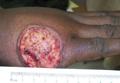
Team discovers transmissible leukemia in clams
Photo by Michael J. Metzger
Results of a new study indicate that leukemia may be contagious—at least in clams.
Researchers found that outbreaks of leukemia in soft-shell clams along the east coast of North America can be explained by the spread of cancerous cells from one clam to another.
“The evidence indicates that the tumor cells themselves are contagious—that the cells can spread from one animal to another in the ocean,” said Stephen Goff, PhD, of Columbia University in New York, New York.
“We know this must be true because the genotypes of the tumor cells do not match those of the host animals that acquire the disease, but instead all derive from a single lineage of tumor cells.”
In other words, a leukemia that has killed many clams can be traced to one incidence of disease. The cancer originated in some unfortunate clam and has persisted ever since, as those cancerous cells divide, break free, and make their way to other clams.
Dr Goff and his colleagues described this discovery in Cell.
The researchers noted that only 2 other examples of transmissible cancer are known in the wild. These include the canine transmissible venereal tumor, transmitted by sexual contact, and the Tasmanian devil facial tumor disease, transmitted through biting.
In early studies of the leukemia in clams, Dr Goff and his colleagues found high levels of a particular sequence of DNA they named “Steamer.” While normal cells contain only 2 to 5 copies of Steamer, leukemic cells can have 150 copies. The researchers initially thought this difference was the result of a genetic amplification process occurring within each individual clam.
But when the team analyzed the genomes of leukemia cells collected in New York, Maine, and Prince Edward Island, they discovered something else entirely. The cancerous cells they had collected from clams living at different locations were nearly identical to one another at the genetic level.
“We were astonished to realize that the tumors did not arise from the cells of their diseased host animals, but rather from a rogue clonal cell line spreading over huge geographical distances,” Dr Goff said.
The results showed the cells can survive in seawater long enough to reach and sicken a new host. It is not yet known whether this leukemia can spread to other molluscs or whether there are mechanisms that recognize the malignant cells as foreign invaders and attack them.
Dr Goff said there is plenty the researchers don’t know about this leukemia, including when it first arose and how it spreads from one clam to another. They don’t know what role Steamer played in the cancer’s origin, if any. And they don’t know how often these sorts of cancers might arise in molluscs or other marine animals.
But the findings do suggest that transmissible cancers are more common than anyone suspected.
Photo by Michael J. Metzger
Results of a new study indicate that leukemia may be contagious—at least in clams.
Researchers found that outbreaks of leukemia in soft-shell clams along the east coast of North America can be explained by the spread of cancerous cells from one clam to another.
“The evidence indicates that the tumor cells themselves are contagious—that the cells can spread from one animal to another in the ocean,” said Stephen Goff, PhD, of Columbia University in New York, New York.
“We know this must be true because the genotypes of the tumor cells do not match those of the host animals that acquire the disease, but instead all derive from a single lineage of tumor cells.”
In other words, a leukemia that has killed many clams can be traced to one incidence of disease. The cancer originated in some unfortunate clam and has persisted ever since, as those cancerous cells divide, break free, and make their way to other clams.
Dr Goff and his colleagues described this discovery in Cell.
The researchers noted that only 2 other examples of transmissible cancer are known in the wild. These include the canine transmissible venereal tumor, transmitted by sexual contact, and the Tasmanian devil facial tumor disease, transmitted through biting.
In early studies of the leukemia in clams, Dr Goff and his colleagues found high levels of a particular sequence of DNA they named “Steamer.” While normal cells contain only 2 to 5 copies of Steamer, leukemic cells can have 150 copies. The researchers initially thought this difference was the result of a genetic amplification process occurring within each individual clam.
But when the team analyzed the genomes of leukemia cells collected in New York, Maine, and Prince Edward Island, they discovered something else entirely. The cancerous cells they had collected from clams living at different locations were nearly identical to one another at the genetic level.
“We were astonished to realize that the tumors did not arise from the cells of their diseased host animals, but rather from a rogue clonal cell line spreading over huge geographical distances,” Dr Goff said.
The results showed the cells can survive in seawater long enough to reach and sicken a new host. It is not yet known whether this leukemia can spread to other molluscs or whether there are mechanisms that recognize the malignant cells as foreign invaders and attack them.
Dr Goff said there is plenty the researchers don’t know about this leukemia, including when it first arose and how it spreads from one clam to another. They don’t know what role Steamer played in the cancer’s origin, if any. And they don’t know how often these sorts of cancers might arise in molluscs or other marine animals.
But the findings do suggest that transmissible cancers are more common than anyone suspected.
Photo by Michael J. Metzger
Results of a new study indicate that leukemia may be contagious—at least in clams.
Researchers found that outbreaks of leukemia in soft-shell clams along the east coast of North America can be explained by the spread of cancerous cells from one clam to another.
“The evidence indicates that the tumor cells themselves are contagious—that the cells can spread from one animal to another in the ocean,” said Stephen Goff, PhD, of Columbia University in New York, New York.
“We know this must be true because the genotypes of the tumor cells do not match those of the host animals that acquire the disease, but instead all derive from a single lineage of tumor cells.”
In other words, a leukemia that has killed many clams can be traced to one incidence of disease. The cancer originated in some unfortunate clam and has persisted ever since, as those cancerous cells divide, break free, and make their way to other clams.
Dr Goff and his colleagues described this discovery in Cell.
The researchers noted that only 2 other examples of transmissible cancer are known in the wild. These include the canine transmissible venereal tumor, transmitted by sexual contact, and the Tasmanian devil facial tumor disease, transmitted through biting.
In early studies of the leukemia in clams, Dr Goff and his colleagues found high levels of a particular sequence of DNA they named “Steamer.” While normal cells contain only 2 to 5 copies of Steamer, leukemic cells can have 150 copies. The researchers initially thought this difference was the result of a genetic amplification process occurring within each individual clam.
But when the team analyzed the genomes of leukemia cells collected in New York, Maine, and Prince Edward Island, they discovered something else entirely. The cancerous cells they had collected from clams living at different locations were nearly identical to one another at the genetic level.
“We were astonished to realize that the tumors did not arise from the cells of their diseased host animals, but rather from a rogue clonal cell line spreading over huge geographical distances,” Dr Goff said.
The results showed the cells can survive in seawater long enough to reach and sicken a new host. It is not yet known whether this leukemia can spread to other molluscs or whether there are mechanisms that recognize the malignant cells as foreign invaders and attack them.
Dr Goff said there is plenty the researchers don’t know about this leukemia, including when it first arose and how it spreads from one clam to another. They don’t know what role Steamer played in the cancer’s origin, if any. And they don’t know how often these sorts of cancers might arise in molluscs or other marine animals.
But the findings do suggest that transmissible cancers are more common than anyone suspected.
Regulatory monocytes can inhibit GVHD

Image courtesy of PLOS ONE
Researchers believe they have identified a population of monocytes that can protect against graft-vs-host disease (GVHD).
While analyzing peripheral blood stem cells from healthy donors, the team found CD34+ cells with the features of mature monocytes.
They said these cells are transcriptionally distinct from myeloid and monocytic precursors, but they are similar to mature monocytes and endowed with immunosuppressive properties.
Maud D’Aveni, MD, of INSERM in Paris, France, and colleagues described these cells and their abilities in Science Translational Medicine.
The researchers found that granulocyte colony-stimulating factor mobilized the monocytes, which strongly suppressed the activation of donor T cells.
In fact, patients who received peripheral blood stem cells containing high levels of the monocytes had lower rates of GVHD.
Experiments in mice revealed that the monocytes release nitric oxide, which triggers reactive T cells to self-destruct and activates a subset of T cells that suppress the immune system to produce immune tolerance.
The researchers said these results indicate that boosting this population of monocytes could help prevent GVHD in transplant recipients.
Image courtesy of PLOS ONE
Researchers believe they have identified a population of monocytes that can protect against graft-vs-host disease (GVHD).
While analyzing peripheral blood stem cells from healthy donors, the team found CD34+ cells with the features of mature monocytes.
They said these cells are transcriptionally distinct from myeloid and monocytic precursors, but they are similar to mature monocytes and endowed with immunosuppressive properties.
Maud D’Aveni, MD, of INSERM in Paris, France, and colleagues described these cells and their abilities in Science Translational Medicine.
The researchers found that granulocyte colony-stimulating factor mobilized the monocytes, which strongly suppressed the activation of donor T cells.
In fact, patients who received peripheral blood stem cells containing high levels of the monocytes had lower rates of GVHD.
Experiments in mice revealed that the monocytes release nitric oxide, which triggers reactive T cells to self-destruct and activates a subset of T cells that suppress the immune system to produce immune tolerance.
The researchers said these results indicate that boosting this population of monocytes could help prevent GVHD in transplant recipients.
Image courtesy of PLOS ONE
Researchers believe they have identified a population of monocytes that can protect against graft-vs-host disease (GVHD).
While analyzing peripheral blood stem cells from healthy donors, the team found CD34+ cells with the features of mature monocytes.
They said these cells are transcriptionally distinct from myeloid and monocytic precursors, but they are similar to mature monocytes and endowed with immunosuppressive properties.
Maud D’Aveni, MD, of INSERM in Paris, France, and colleagues described these cells and their abilities in Science Translational Medicine.
The researchers found that granulocyte colony-stimulating factor mobilized the monocytes, which strongly suppressed the activation of donor T cells.
In fact, patients who received peripheral blood stem cells containing high levels of the monocytes had lower rates of GVHD.
Experiments in mice revealed that the monocytes release nitric oxide, which triggers reactive T cells to self-destruct and activates a subset of T cells that suppress the immune system to produce immune tolerance.
The researchers said these results indicate that boosting this population of monocytes could help prevent GVHD in transplant recipients.
Imaging the endometrioma and mature cystic teratoma
The preferred imaging method to evaluate the majority of adnexal cysts is ultrasonography, which can help characterize the cyst type. Common benign adnexal cyst types include simple, hemorrhagic, endometrioma, and mature teratoma (dermoid cyst). In this part 2 of a 4-part series on cystic adnexal pathology, we focus on imaging signs for, and follow-up of, endometriomas and mature teratomas.
Endometriomas
Endometriomas are common, typically benign, cysts that produce homogenous, low-level internal echoes and a “ground glass” appearance on ultrasonography. No internal flow is apparent on color Doppler. The presence of tiny echogenic wall foci can distinguish an endometrioma from a hemorrhagic cyst.
Rarely, endometriomas may undergo malignant transformation. Usually this occurs with cysts greater than 9 cm and in patients aged 45 years or older. A malignancy often exhibits rapid growth or the development of a solid nodule with flow on color Doppler.
Management
Although surgery remains the first-line management for women with symptomatic or enlarging endometriomas, there appears to be a role for sonographic observation, with continuous progestational treatment, in women with small (< 5 cm) asymptomatic endometriomas.
The Society of Radiologists in Ultrasound 2010 Consensus Conference Statement recommended1:
- Short-interval follow-up (6 to 12 weeks) in reproductive-aged women to ensure acute hemorrhagic cysts are not mistaken for endometriomas
- If not removed surgically, sonographic follow-up is recommended, with frequency of follow up based on patient age and symptoms and cyst size and characteristics.
In FIGURES 1 through 11 (slides of image collections), we present several cases, including one of a 25-year-old patient presenting with pelvic pain and dyspareunia who was later found to have bilateral endometriomas.
Mature teratomas
Mature cystic teratomas display several telltale signs on imaging, including:
- hyperechoic lines/dots (“dermoid mesh”) corresponding to hair/skeletal components
- “Rokitanski nodule” – a peripherally placed mass of sebum, bones, and hair
- posterior acoustic shadowing
- cystic or floating spherical structures
- no internal flow on color Doppler
Rarely, dermoid cysts may undergo malignant transformation. Usually this occurs in cysts greater than 10 cm and in patients aged 50 years or older. Internal flow on color Doppler, branching, or invasion into adjacent structures can indicate malignancy.
Management
The traditional treatment for dermoid cysts is surgical. However, given the ability for accurate diagnosis with vaginal ultrasonography, there appears to be a role for sonographic observation in asymptomatic women with small dermoids.2
If the cyst is not surgically removed, the Society of Radiologists in Ultrasound 2010 Consensus Conference Statement recommended initial sonographic follow up at no more than 6 months to 1 year to ensure no change in size or internal architecture.1
In FIGURES 12 through 24 below (slides of image collections), we offer imaging from the case presentation and follow-up of a 19-year-old patient with pelvic pain who has a history of ovarian cystectomy for dermoid cyst, as well as 6 additional case illustrations.
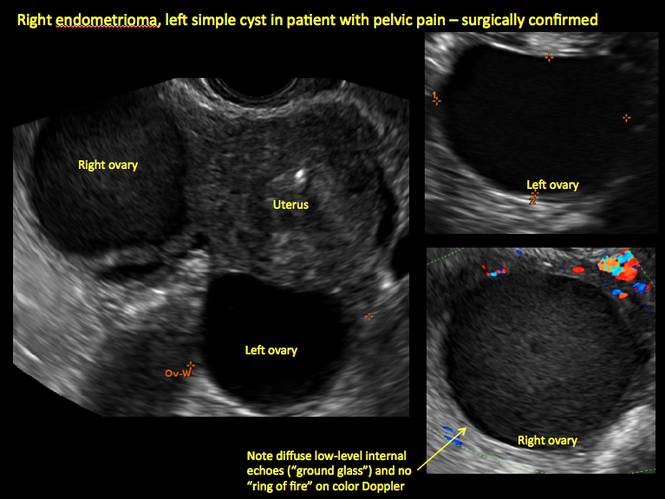
Figure 1
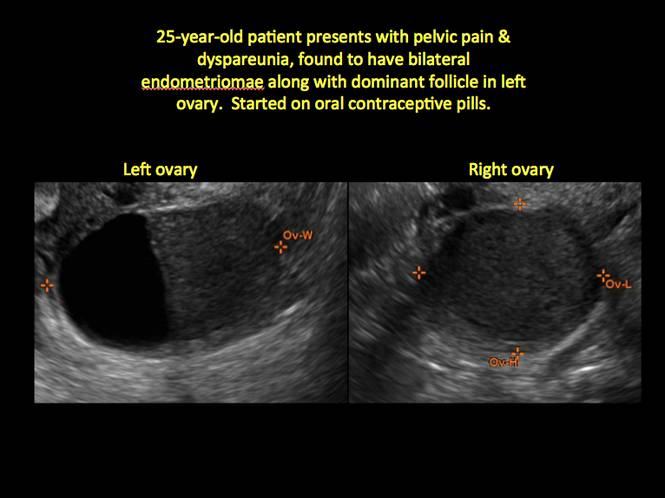
Figure 2
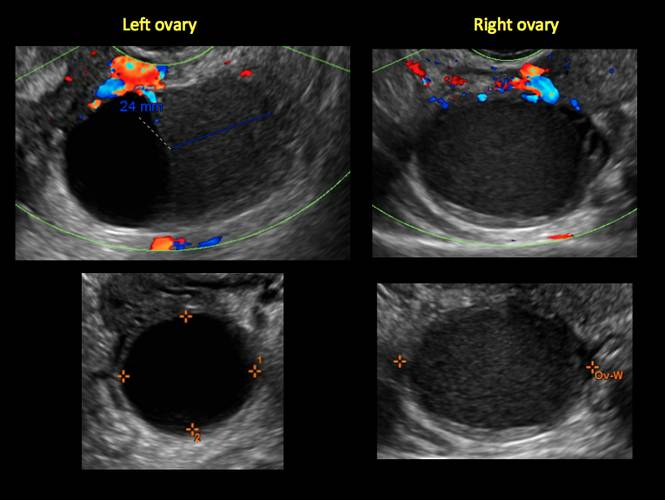
Figure 3
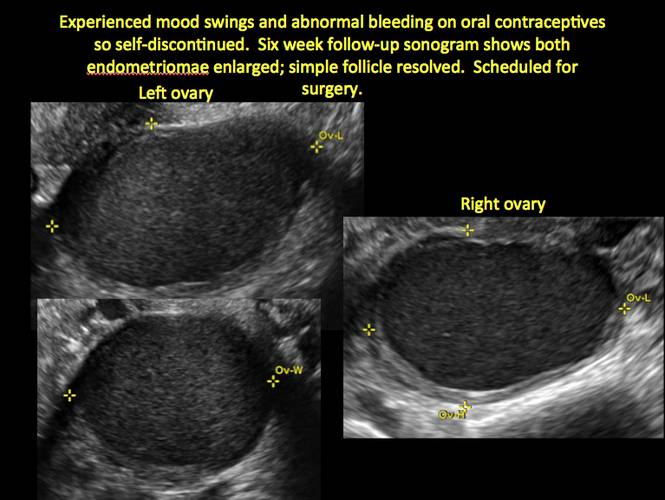
Figure 4
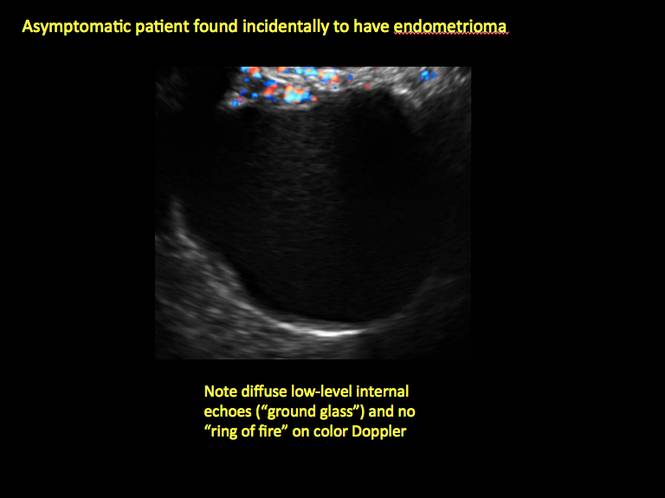
Figure 5
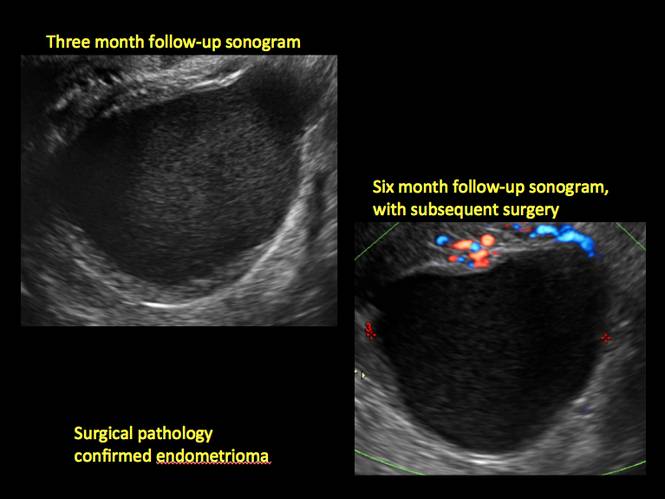
Figure 6
Figure 7
Figure 8
Figure 9
Figure 10
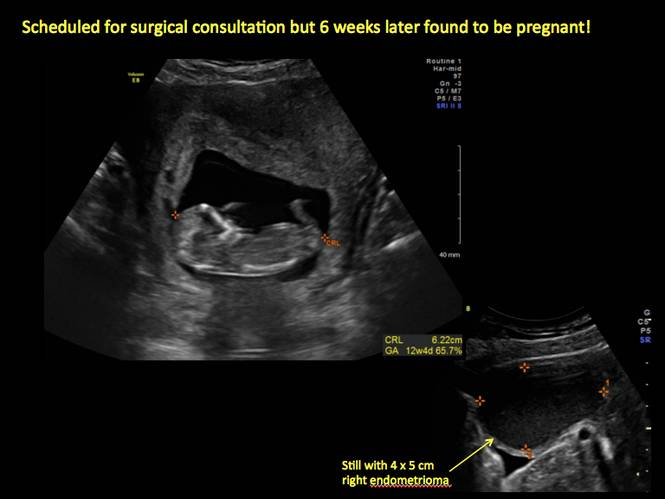
Figure 11
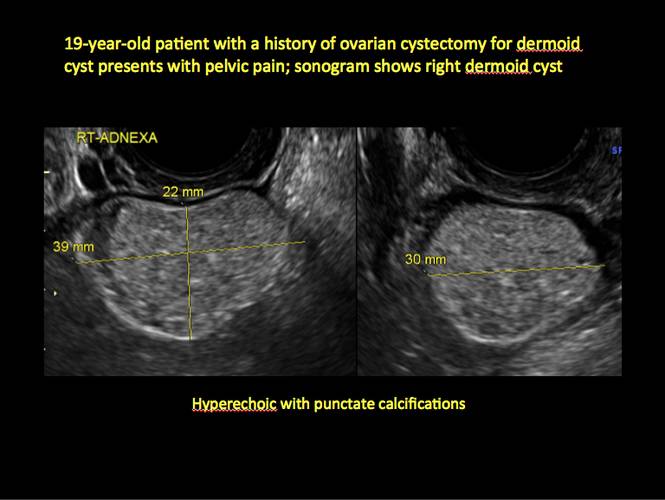
Figure 12
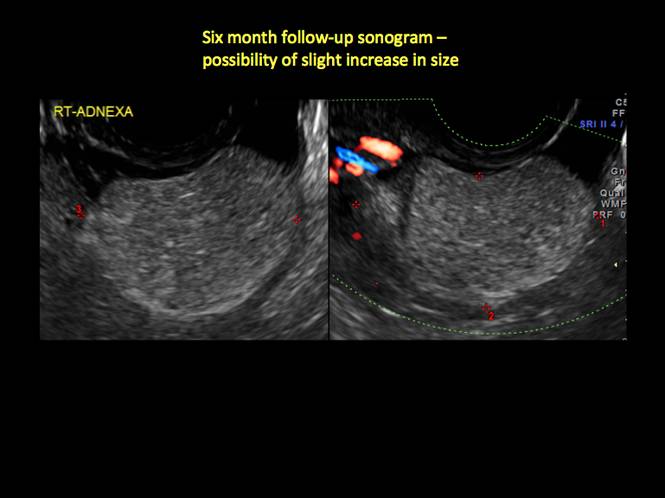
Figure 13
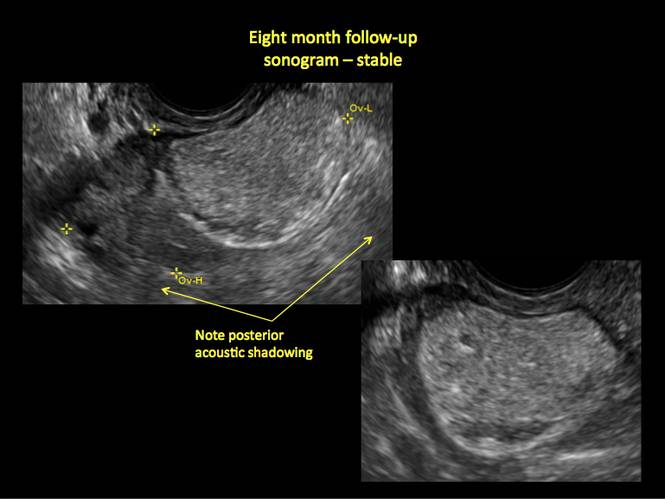
Figure 14
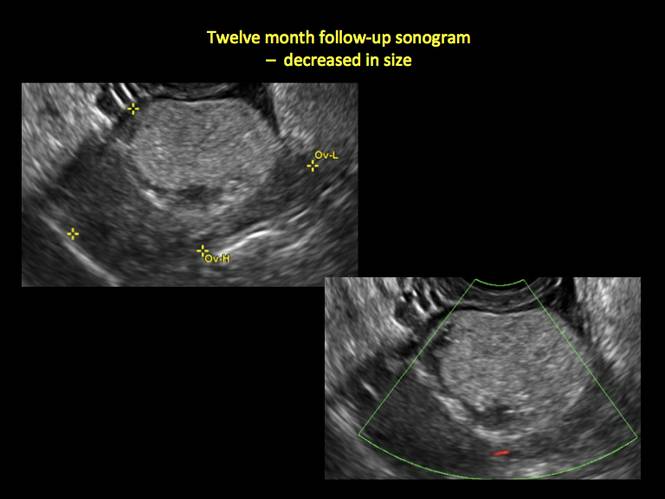
Figure 15
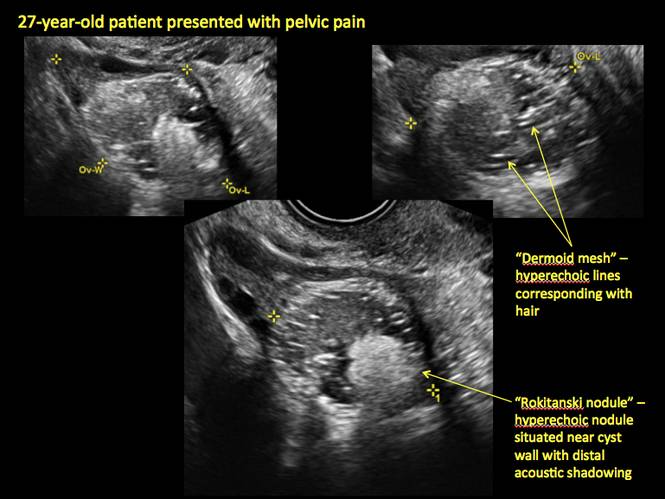
Figure 16
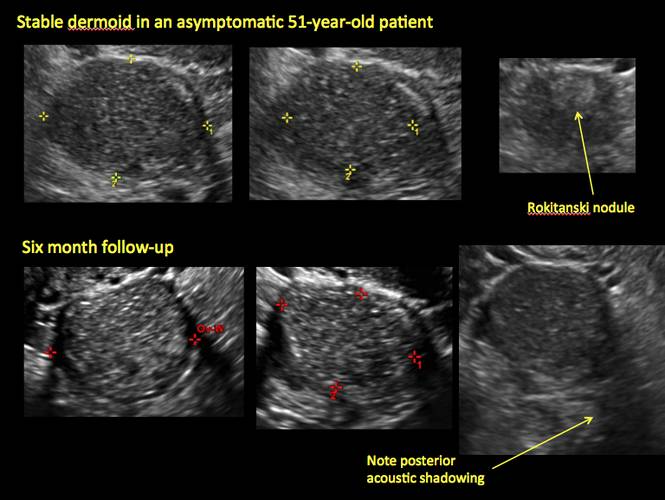
Figure 17
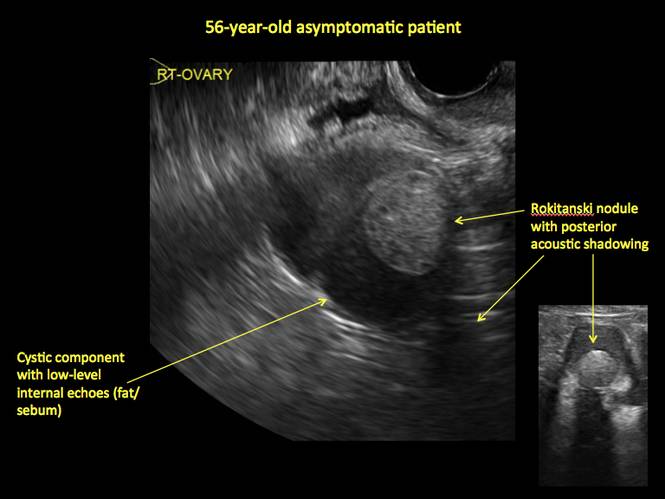
Figure 18
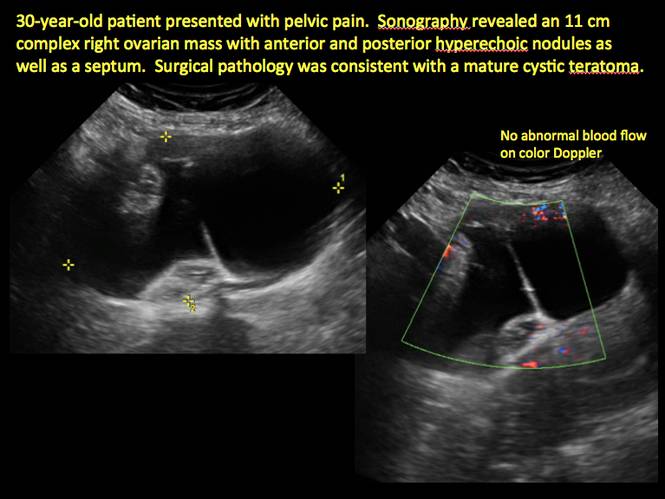
Figure 19
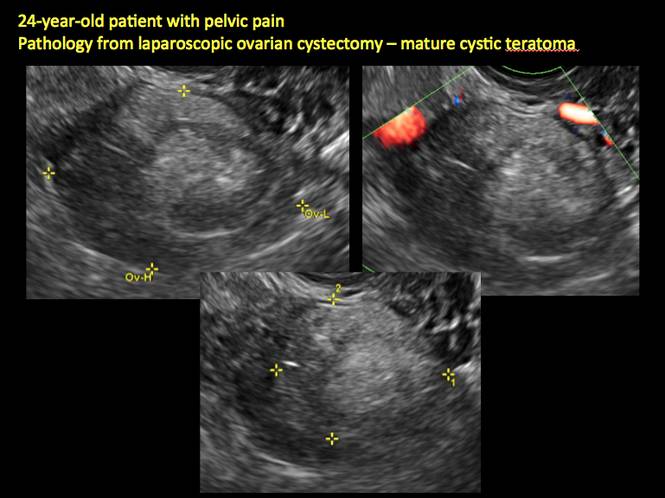
Figure 20
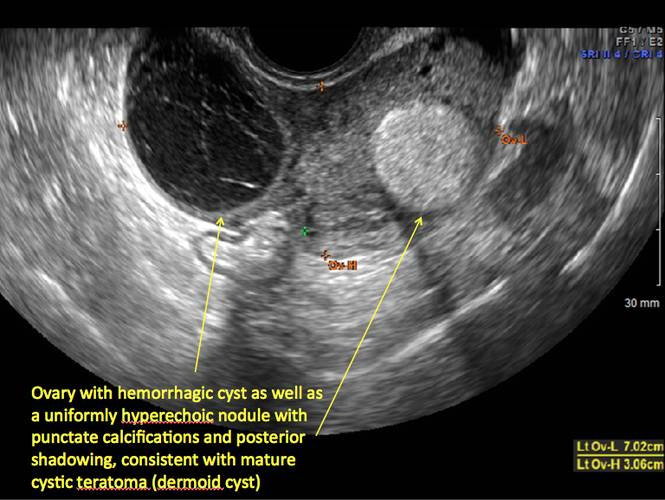
Figure 21
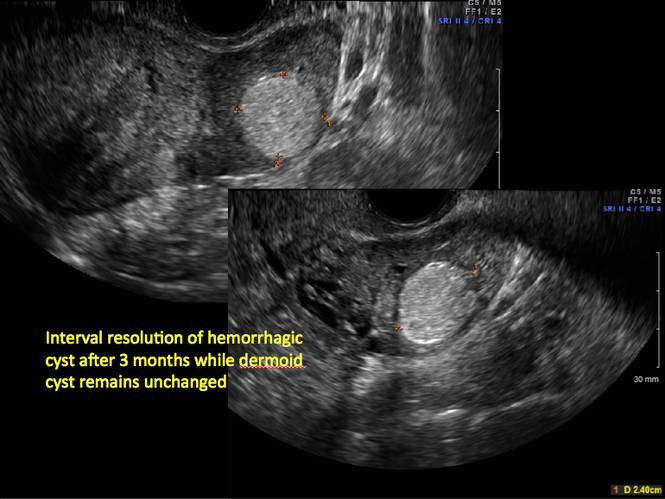
Figure 22
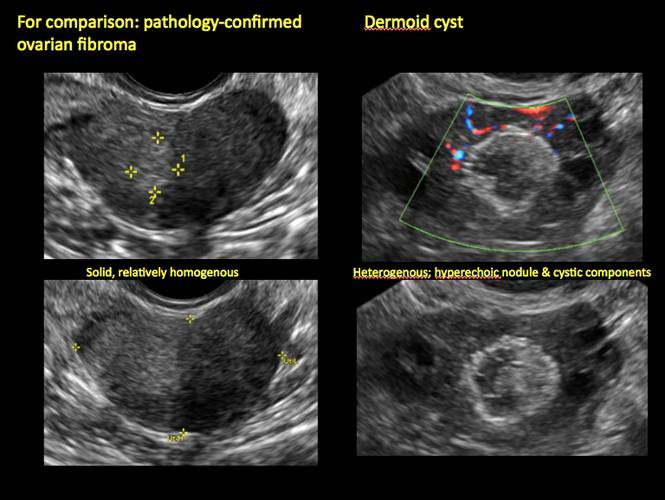
Figure 23
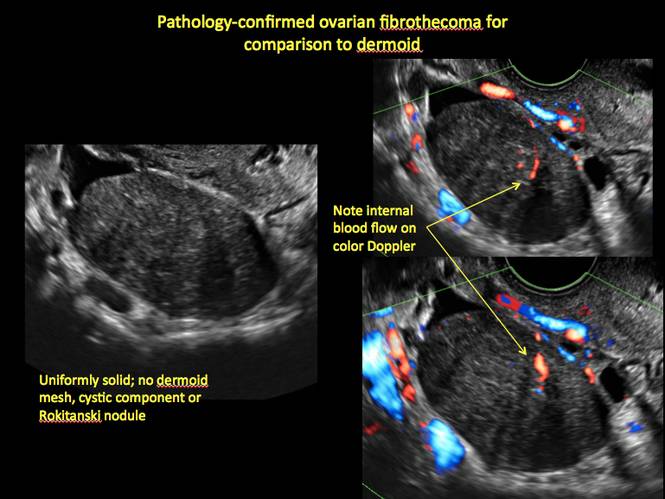
Figure 24
Share your thoughts on this article! Send your Letter to the Editor to rbarbieri@frontlinemedcom.com. Please include your name and the city and state in which you practice.
1. Levine D, Brown DL, Andreotti RF, et al. Management of asymptomatic ovarian and other adnexal cysts imaged at US: Society of Radiologists in Ultrasound Consensus Conference Statement. Radiology. 2010;256(3):943–954.
2. Hoo WL, Yazbek WL, Holland T, Mavrelos D, Tong EN, Jurkovic D. Expectant management of ultrasonically diagnosed ovarian dermoid cysts: is it possible to predict outcome? Ultrasound Obstet Gynecol. 2010;36(2): 235–240.

Dr. Ozcan is Assistant Professor and Associate Program Director, Obstetrics and Gynecology Residency, Department of Obstetrics and Gynecology, at the University of Florida College of Medicine–Jacksonville.

Dr. Kaunitz is University of Florida Research Foundation Professor and Associate Chairman, Department of Obstetrics and Gynecology, at the University of Florida College of Medicine–Jacksonville. Dr. Kaunitz serves on the OBG Management Board of Editors.
The authors report no financial relationships relevant to this article.
Dr. Ozcan is Assistant Professor and Associate Program Director, Obstetrics and Gynecology Residency, Department of Obstetrics and Gynecology, at the University of Florida College of Medicine–Jacksonville.
Dr. Kaunitz is University of Florida Research Foundation Professor and Associate Chairman, Department of Obstetrics and Gynecology, at the University of Florida College of Medicine–Jacksonville. Dr. Kaunitz serves on the OBG Management Board of Editors.
The authors report no financial relationships relevant to this article.
Dr. Ozcan is Assistant Professor and Associate Program Director, Obstetrics and Gynecology Residency, Department of Obstetrics and Gynecology, at the University of Florida College of Medicine–Jacksonville.
Dr. Kaunitz is University of Florida Research Foundation Professor and Associate Chairman, Department of Obstetrics and Gynecology, at the University of Florida College of Medicine–Jacksonville. Dr. Kaunitz serves on the OBG Management Board of Editors.
The authors report no financial relationships relevant to this article.
The preferred imaging method to evaluate the majority of adnexal cysts is ultrasonography, which can help characterize the cyst type. Common benign adnexal cyst types include simple, hemorrhagic, endometrioma, and mature teratoma (dermoid cyst). In this part 2 of a 4-part series on cystic adnexal pathology, we focus on imaging signs for, and follow-up of, endometriomas and mature teratomas.
Endometriomas
Endometriomas are common, typically benign, cysts that produce homogenous, low-level internal echoes and a “ground glass” appearance on ultrasonography. No internal flow is apparent on color Doppler. The presence of tiny echogenic wall foci can distinguish an endometrioma from a hemorrhagic cyst.
Rarely, endometriomas may undergo malignant transformation. Usually this occurs with cysts greater than 9 cm and in patients aged 45 years or older. A malignancy often exhibits rapid growth or the development of a solid nodule with flow on color Doppler.
Management
Although surgery remains the first-line management for women with symptomatic or enlarging endometriomas, there appears to be a role for sonographic observation, with continuous progestational treatment, in women with small (< 5 cm) asymptomatic endometriomas.
The Society of Radiologists in Ultrasound 2010 Consensus Conference Statement recommended1:
- Short-interval follow-up (6 to 12 weeks) in reproductive-aged women to ensure acute hemorrhagic cysts are not mistaken for endometriomas
- If not removed surgically, sonographic follow-up is recommended, with frequency of follow up based on patient age and symptoms and cyst size and characteristics.
In FIGURES 1 through 11 (slides of image collections), we present several cases, including one of a 25-year-old patient presenting with pelvic pain and dyspareunia who was later found to have bilateral endometriomas.
Mature teratomas
Mature cystic teratomas display several telltale signs on imaging, including:
- hyperechoic lines/dots (“dermoid mesh”) corresponding to hair/skeletal components
- “Rokitanski nodule” – a peripherally placed mass of sebum, bones, and hair
- posterior acoustic shadowing
- cystic or floating spherical structures
- no internal flow on color Doppler
Rarely, dermoid cysts may undergo malignant transformation. Usually this occurs in cysts greater than 10 cm and in patients aged 50 years or older. Internal flow on color Doppler, branching, or invasion into adjacent structures can indicate malignancy.
Management
The traditional treatment for dermoid cysts is surgical. However, given the ability for accurate diagnosis with vaginal ultrasonography, there appears to be a role for sonographic observation in asymptomatic women with small dermoids.2
If the cyst is not surgically removed, the Society of Radiologists in Ultrasound 2010 Consensus Conference Statement recommended initial sonographic follow up at no more than 6 months to 1 year to ensure no change in size or internal architecture.1
In FIGURES 12 through 24 below (slides of image collections), we offer imaging from the case presentation and follow-up of a 19-year-old patient with pelvic pain who has a history of ovarian cystectomy for dermoid cyst, as well as 6 additional case illustrations.
Figure 1
Figure 2
Figure 3
Figure 4
Figure 5
Figure 6
Figure 7
Figure 8
Figure 9
Figure 10
Figure 11
Figure 12
Figure 13
Figure 14
Figure 15
Figure 16
Figure 17
Figure 18
Figure 19
Figure 20
Figure 21
Figure 22
Figure 23
Figure 24
Share your thoughts on this article! Send your Letter to the Editor to rbarbieri@frontlinemedcom.com. Please include your name and the city and state in which you practice.
The preferred imaging method to evaluate the majority of adnexal cysts is ultrasonography, which can help characterize the cyst type. Common benign adnexal cyst types include simple, hemorrhagic, endometrioma, and mature teratoma (dermoid cyst). In this part 2 of a 4-part series on cystic adnexal pathology, we focus on imaging signs for, and follow-up of, endometriomas and mature teratomas.
Endometriomas
Endometriomas are common, typically benign, cysts that produce homogenous, low-level internal echoes and a “ground glass” appearance on ultrasonography. No internal flow is apparent on color Doppler. The presence of tiny echogenic wall foci can distinguish an endometrioma from a hemorrhagic cyst.
Rarely, endometriomas may undergo malignant transformation. Usually this occurs with cysts greater than 9 cm and in patients aged 45 years or older. A malignancy often exhibits rapid growth or the development of a solid nodule with flow on color Doppler.
Management
Although surgery remains the first-line management for women with symptomatic or enlarging endometriomas, there appears to be a role for sonographic observation, with continuous progestational treatment, in women with small (< 5 cm) asymptomatic endometriomas.
The Society of Radiologists in Ultrasound 2010 Consensus Conference Statement recommended1:
- Short-interval follow-up (6 to 12 weeks) in reproductive-aged women to ensure acute hemorrhagic cysts are not mistaken for endometriomas
- If not removed surgically, sonographic follow-up is recommended, with frequency of follow up based on patient age and symptoms and cyst size and characteristics.
In FIGURES 1 through 11 (slides of image collections), we present several cases, including one of a 25-year-old patient presenting with pelvic pain and dyspareunia who was later found to have bilateral endometriomas.
Mature teratomas
Mature cystic teratomas display several telltale signs on imaging, including:
- hyperechoic lines/dots (“dermoid mesh”) corresponding to hair/skeletal components
- “Rokitanski nodule” – a peripherally placed mass of sebum, bones, and hair
- posterior acoustic shadowing
- cystic or floating spherical structures
- no internal flow on color Doppler
Rarely, dermoid cysts may undergo malignant transformation. Usually this occurs in cysts greater than 10 cm and in patients aged 50 years or older. Internal flow on color Doppler, branching, or invasion into adjacent structures can indicate malignancy.
Management
The traditional treatment for dermoid cysts is surgical. However, given the ability for accurate diagnosis with vaginal ultrasonography, there appears to be a role for sonographic observation in asymptomatic women with small dermoids.2
If the cyst is not surgically removed, the Society of Radiologists in Ultrasound 2010 Consensus Conference Statement recommended initial sonographic follow up at no more than 6 months to 1 year to ensure no change in size or internal architecture.1
In FIGURES 12 through 24 below (slides of image collections), we offer imaging from the case presentation and follow-up of a 19-year-old patient with pelvic pain who has a history of ovarian cystectomy for dermoid cyst, as well as 6 additional case illustrations.
Figure 1
Figure 2
Figure 3
Figure 4
Figure 5
Figure 6
Figure 7
Figure 8
Figure 9
Figure 10
Figure 11
Figure 12
Figure 13
Figure 14
Figure 15
Figure 16
Figure 17
Figure 18
Figure 19
Figure 20
Figure 21
Figure 22
Figure 23
Figure 24
Share your thoughts on this article! Send your Letter to the Editor to rbarbieri@frontlinemedcom.com. Please include your name and the city and state in which you practice.
1. Levine D, Brown DL, Andreotti RF, et al. Management of asymptomatic ovarian and other adnexal cysts imaged at US: Society of Radiologists in Ultrasound Consensus Conference Statement. Radiology. 2010;256(3):943–954.
2. Hoo WL, Yazbek WL, Holland T, Mavrelos D, Tong EN, Jurkovic D. Expectant management of ultrasonically diagnosed ovarian dermoid cysts: is it possible to predict outcome? Ultrasound Obstet Gynecol. 2010;36(2): 235–240.
1. Levine D, Brown DL, Andreotti RF, et al. Management of asymptomatic ovarian and other adnexal cysts imaged at US: Society of Radiologists in Ultrasound Consensus Conference Statement. Radiology. 2010;256(3):943–954.
2. Hoo WL, Yazbek WL, Holland T, Mavrelos D, Tong EN, Jurkovic D. Expectant management of ultrasonically diagnosed ovarian dermoid cysts: is it possible to predict outcome? Ultrasound Obstet Gynecol. 2010;36(2): 235–240.