User login
Treat-to-target in RA: Questions remain about adoption, measurement
The roots of treat-to-target (T2T) in rheumatology extend back over 30 years to the development of the 28-joint Disease Activity Score. Although it has been shown to be effective in clinical trials and has been included in guidelines, it has yet to be widely adopted in practice. The question remains: What is the role of T2T in rheumatology?
That’s what Jack Cush, MD, and Martin Bergman, MD, sought to answer in a point-counterpoint session at the 2022 Rheumatology Winter Clinical Symposium.

“I do think that this is a concept we need to keep in mind, and it is a concept whose time is long overdue,” Dr. Bergman said in his presentation arguing in favor of T2T. “As good as you think you are – your ability to see the patient and determine how they’re doing – you’re not.”
But metrics alone are not enough to make clinical decisions, said Dr. Bergman, clinical professor of medicine at Drexel University, Philadelphia, citing a recommendation from 2014 recommendations on T2T published in Annals of the Rheumatic Diseases. “You don’t just follow a number. You have to take into consideration structural changes, functional impairment, comorbidities – and that’s going to adjust how you approach your patient and what you do with them.”
However, implementation of T2T to make changes in clinical practice in RA has been inconsistent. Referencing an abstract from the 2021 American College of Rheumatology annual meeting on 15-year follow-up for changing therapy in RA, Dr. Bergman argued it is not the patient who is unwilling to switch treatments. Between 2006 and 2021, patient unwillingness to change therapies decreased from 64% to 51%.
“What’s driving it mostly here [is] the doctor’s recommendation,” Dr. Bergman said. “And we know this is true because we’ve seen it in other studies.”
Many rheumatologists are “asleep at the wheel” when it comes to administering T2T, he said. “What we need to do is, after we wake up from this nap, we need to get back on the highway and drive to where we should be, which is treat-to-target.”
Dr. Bergman also shared his paradigm for administering T2T, which he noted does not typically take more than a few minutes to administer regardless of the measure chosen. “Pick a measure. I don’t care which measure you take. I personally use two: I like the RAPID3 and the CDAI,” he said. “But then, after you have the measure, evaluate the entire patient. Don’t just look at the number. Look at the patient, what’s going on, solid history, solid physical. And most importantly: Be a doctor, don’t be a computer screen.”
Problems in measurement of RA remission and adoption of T2T
Dr. Cush, who admitted early in his presentation that he is in favor of T2T, delivered his counterpoint somewhat tongue-in-cheek. However, he pointed out that there are several concerns about the goals in measuring outcomes in RA with T2T.
The goal in RA is disease remission, but how you define remission can vary, especially since sometimes there is evidence of synovitis or other disease activity visible through an exam or imaging, said Dr. Cush, a rheumatologist based in Dallas, and executive editor of RheumNow.com. Most of the evidence for T2T is in clinical trials, but adoption is inconsistent in clinical practice, and patients in general appear to be improving without widespread adoption, he argued.
“Are clinical trials the same as clinical practice?” he asked. “I think that this boils down to: Is this a quest for remissions, or the best-you-can-get, low disease activity state? Or is this a quest for physician change, which is actually the path you have to go through to get to remissions?”
“In the end, evidence that the metrics should drive prescribing, especially in private practice is, I think, lacking,” he said.

Roy Fleischmann, MD, agreed with Dr. Cush’s point of how one defines disease remission, as well as Dr. Bergman’s paradigm for T2T. “If you’re a good rheumatologist, you really do examine joints,” but you also “take a look at patient function, patient global [assessment], your global [assessment], joint count,” he said. “You can put a number to it, but you have to take a look at all of that. Really, treat-to-target – it is all of that. It isn’t just looking at a number, it’s looking at everything. And the better that the patient can do, assuming comorbidities and everything else, the better it is.”
“The problem isn’t the patient. The problem isn’t the metric. The problem is the rheumatologist, because the rheumatologist isn’t putting in enough effort in order to reach that goal,” added Dr. Fleischmann, clinical professor of medicine at the University of Texas, Dallas, and codirector of the Metroplex Clinical Research Center, also in in Dallas.
Eric Ruderman, MD, professor of rheumatology at Northwestern University, Chicago, commented that T2T is “great for somebody who’s been doing it for a while, and seeing a lot of patients and has that comfort zone,” but he questioned whether new rheumatologists without a lot of clinical experience could apply the approach. “What information do they use to integrate, and how do they get to that point?” he asked. “I don’t have the answer to that.”
During a rebuttal, Dr. Bergman pushed back on the idea that clinical experience alone was enough. “You need something. You need a benchmark. You need something more than, ‘I say so.’ ”
“The problem is, we still haven’t convinced people to adopt them,” Dr. Bergman said. “And I think it’s failure of training because, in my opinion, I don’t know how you can do a modern current fellowship program and not teach metrics.”
Dr. Cush and Dr. Bergman used the same trials to argue for their side. “I think that us using the same slides, but maybe having different points, speaks to the problem,” Dr. Cush said. “And I choose not to make it the problem of the rheumatologists.”
“You’re in the field of pattern recognition,” Dr. Cush argued. “It’s a visual art. You can have all the numbers you want. You make the most of your decisions based on pattern recognition, which is not rooted in metrics, and that’s why you’re successful at what you do.
“I am a big believer in T2T, but I think you have to measure something, and you have to use it,” Dr. Cush closed. “And the problem is, we can’t be forced into this.”
Dr. Bergman and Dr. Cush reported having financial relationships with numerous pharmaceutical companies.
The roots of treat-to-target (T2T) in rheumatology extend back over 30 years to the development of the 28-joint Disease Activity Score. Although it has been shown to be effective in clinical trials and has been included in guidelines, it has yet to be widely adopted in practice. The question remains: What is the role of T2T in rheumatology?
That’s what Jack Cush, MD, and Martin Bergman, MD, sought to answer in a point-counterpoint session at the 2022 Rheumatology Winter Clinical Symposium.
“I do think that this is a concept we need to keep in mind, and it is a concept whose time is long overdue,” Dr. Bergman said in his presentation arguing in favor of T2T. “As good as you think you are – your ability to see the patient and determine how they’re doing – you’re not.”
But metrics alone are not enough to make clinical decisions, said Dr. Bergman, clinical professor of medicine at Drexel University, Philadelphia, citing a recommendation from 2014 recommendations on T2T published in Annals of the Rheumatic Diseases. “You don’t just follow a number. You have to take into consideration structural changes, functional impairment, comorbidities – and that’s going to adjust how you approach your patient and what you do with them.”
However, implementation of T2T to make changes in clinical practice in RA has been inconsistent. Referencing an abstract from the 2021 American College of Rheumatology annual meeting on 15-year follow-up for changing therapy in RA, Dr. Bergman argued it is not the patient who is unwilling to switch treatments. Between 2006 and 2021, patient unwillingness to change therapies decreased from 64% to 51%.
“What’s driving it mostly here [is] the doctor’s recommendation,” Dr. Bergman said. “And we know this is true because we’ve seen it in other studies.”
Many rheumatologists are “asleep at the wheel” when it comes to administering T2T, he said. “What we need to do is, after we wake up from this nap, we need to get back on the highway and drive to where we should be, which is treat-to-target.”
Dr. Bergman also shared his paradigm for administering T2T, which he noted does not typically take more than a few minutes to administer regardless of the measure chosen. “Pick a measure. I don’t care which measure you take. I personally use two: I like the RAPID3 and the CDAI,” he said. “But then, after you have the measure, evaluate the entire patient. Don’t just look at the number. Look at the patient, what’s going on, solid history, solid physical. And most importantly: Be a doctor, don’t be a computer screen.”
Problems in measurement of RA remission and adoption of T2T
Dr. Cush, who admitted early in his presentation that he is in favor of T2T, delivered his counterpoint somewhat tongue-in-cheek. However, he pointed out that there are several concerns about the goals in measuring outcomes in RA with T2T.
The goal in RA is disease remission, but how you define remission can vary, especially since sometimes there is evidence of synovitis or other disease activity visible through an exam or imaging, said Dr. Cush, a rheumatologist based in Dallas, and executive editor of RheumNow.com. Most of the evidence for T2T is in clinical trials, but adoption is inconsistent in clinical practice, and patients in general appear to be improving without widespread adoption, he argued.
“Are clinical trials the same as clinical practice?” he asked. “I think that this boils down to: Is this a quest for remissions, or the best-you-can-get, low disease activity state? Or is this a quest for physician change, which is actually the path you have to go through to get to remissions?”
“In the end, evidence that the metrics should drive prescribing, especially in private practice is, I think, lacking,” he said.
Roy Fleischmann, MD, agreed with Dr. Cush’s point of how one defines disease remission, as well as Dr. Bergman’s paradigm for T2T. “If you’re a good rheumatologist, you really do examine joints,” but you also “take a look at patient function, patient global [assessment], your global [assessment], joint count,” he said. “You can put a number to it, but you have to take a look at all of that. Really, treat-to-target – it is all of that. It isn’t just looking at a number, it’s looking at everything. And the better that the patient can do, assuming comorbidities and everything else, the better it is.”
“The problem isn’t the patient. The problem isn’t the metric. The problem is the rheumatologist, because the rheumatologist isn’t putting in enough effort in order to reach that goal,” added Dr. Fleischmann, clinical professor of medicine at the University of Texas, Dallas, and codirector of the Metroplex Clinical Research Center, also in in Dallas.
Eric Ruderman, MD, professor of rheumatology at Northwestern University, Chicago, commented that T2T is “great for somebody who’s been doing it for a while, and seeing a lot of patients and has that comfort zone,” but he questioned whether new rheumatologists without a lot of clinical experience could apply the approach. “What information do they use to integrate, and how do they get to that point?” he asked. “I don’t have the answer to that.”
During a rebuttal, Dr. Bergman pushed back on the idea that clinical experience alone was enough. “You need something. You need a benchmark. You need something more than, ‘I say so.’ ”
“The problem is, we still haven’t convinced people to adopt them,” Dr. Bergman said. “And I think it’s failure of training because, in my opinion, I don’t know how you can do a modern current fellowship program and not teach metrics.”
Dr. Cush and Dr. Bergman used the same trials to argue for their side. “I think that us using the same slides, but maybe having different points, speaks to the problem,” Dr. Cush said. “And I choose not to make it the problem of the rheumatologists.”
“You’re in the field of pattern recognition,” Dr. Cush argued. “It’s a visual art. You can have all the numbers you want. You make the most of your decisions based on pattern recognition, which is not rooted in metrics, and that’s why you’re successful at what you do.
“I am a big believer in T2T, but I think you have to measure something, and you have to use it,” Dr. Cush closed. “And the problem is, we can’t be forced into this.”
Dr. Bergman and Dr. Cush reported having financial relationships with numerous pharmaceutical companies.
The roots of treat-to-target (T2T) in rheumatology extend back over 30 years to the development of the 28-joint Disease Activity Score. Although it has been shown to be effective in clinical trials and has been included in guidelines, it has yet to be widely adopted in practice. The question remains: What is the role of T2T in rheumatology?
That’s what Jack Cush, MD, and Martin Bergman, MD, sought to answer in a point-counterpoint session at the 2022 Rheumatology Winter Clinical Symposium.
“I do think that this is a concept we need to keep in mind, and it is a concept whose time is long overdue,” Dr. Bergman said in his presentation arguing in favor of T2T. “As good as you think you are – your ability to see the patient and determine how they’re doing – you’re not.”
But metrics alone are not enough to make clinical decisions, said Dr. Bergman, clinical professor of medicine at Drexel University, Philadelphia, citing a recommendation from 2014 recommendations on T2T published in Annals of the Rheumatic Diseases. “You don’t just follow a number. You have to take into consideration structural changes, functional impairment, comorbidities – and that’s going to adjust how you approach your patient and what you do with them.”
However, implementation of T2T to make changes in clinical practice in RA has been inconsistent. Referencing an abstract from the 2021 American College of Rheumatology annual meeting on 15-year follow-up for changing therapy in RA, Dr. Bergman argued it is not the patient who is unwilling to switch treatments. Between 2006 and 2021, patient unwillingness to change therapies decreased from 64% to 51%.
“What’s driving it mostly here [is] the doctor’s recommendation,” Dr. Bergman said. “And we know this is true because we’ve seen it in other studies.”
Many rheumatologists are “asleep at the wheel” when it comes to administering T2T, he said. “What we need to do is, after we wake up from this nap, we need to get back on the highway and drive to where we should be, which is treat-to-target.”
Dr. Bergman also shared his paradigm for administering T2T, which he noted does not typically take more than a few minutes to administer regardless of the measure chosen. “Pick a measure. I don’t care which measure you take. I personally use two: I like the RAPID3 and the CDAI,” he said. “But then, after you have the measure, evaluate the entire patient. Don’t just look at the number. Look at the patient, what’s going on, solid history, solid physical. And most importantly: Be a doctor, don’t be a computer screen.”
Problems in measurement of RA remission and adoption of T2T
Dr. Cush, who admitted early in his presentation that he is in favor of T2T, delivered his counterpoint somewhat tongue-in-cheek. However, he pointed out that there are several concerns about the goals in measuring outcomes in RA with T2T.
The goal in RA is disease remission, but how you define remission can vary, especially since sometimes there is evidence of synovitis or other disease activity visible through an exam or imaging, said Dr. Cush, a rheumatologist based in Dallas, and executive editor of RheumNow.com. Most of the evidence for T2T is in clinical trials, but adoption is inconsistent in clinical practice, and patients in general appear to be improving without widespread adoption, he argued.
“Are clinical trials the same as clinical practice?” he asked. “I think that this boils down to: Is this a quest for remissions, or the best-you-can-get, low disease activity state? Or is this a quest for physician change, which is actually the path you have to go through to get to remissions?”
“In the end, evidence that the metrics should drive prescribing, especially in private practice is, I think, lacking,” he said.
Roy Fleischmann, MD, agreed with Dr. Cush’s point of how one defines disease remission, as well as Dr. Bergman’s paradigm for T2T. “If you’re a good rheumatologist, you really do examine joints,” but you also “take a look at patient function, patient global [assessment], your global [assessment], joint count,” he said. “You can put a number to it, but you have to take a look at all of that. Really, treat-to-target – it is all of that. It isn’t just looking at a number, it’s looking at everything. And the better that the patient can do, assuming comorbidities and everything else, the better it is.”
“The problem isn’t the patient. The problem isn’t the metric. The problem is the rheumatologist, because the rheumatologist isn’t putting in enough effort in order to reach that goal,” added Dr. Fleischmann, clinical professor of medicine at the University of Texas, Dallas, and codirector of the Metroplex Clinical Research Center, also in in Dallas.
Eric Ruderman, MD, professor of rheumatology at Northwestern University, Chicago, commented that T2T is “great for somebody who’s been doing it for a while, and seeing a lot of patients and has that comfort zone,” but he questioned whether new rheumatologists without a lot of clinical experience could apply the approach. “What information do they use to integrate, and how do they get to that point?” he asked. “I don’t have the answer to that.”
During a rebuttal, Dr. Bergman pushed back on the idea that clinical experience alone was enough. “You need something. You need a benchmark. You need something more than, ‘I say so.’ ”
“The problem is, we still haven’t convinced people to adopt them,” Dr. Bergman said. “And I think it’s failure of training because, in my opinion, I don’t know how you can do a modern current fellowship program and not teach metrics.”
Dr. Cush and Dr. Bergman used the same trials to argue for their side. “I think that us using the same slides, but maybe having different points, speaks to the problem,” Dr. Cush said. “And I choose not to make it the problem of the rheumatologists.”
“You’re in the field of pattern recognition,” Dr. Cush argued. “It’s a visual art. You can have all the numbers you want. You make the most of your decisions based on pattern recognition, which is not rooted in metrics, and that’s why you’re successful at what you do.
“I am a big believer in T2T, but I think you have to measure something, and you have to use it,” Dr. Cush closed. “And the problem is, we can’t be forced into this.”
Dr. Bergman and Dr. Cush reported having financial relationships with numerous pharmaceutical companies.
FROM RWCS 2022

Burnout rates rising among psychiatrists
The lingering effects of the COVID-19 pandemic continue to take a toll on the happiness, well-being, and lifestyles of many segments of the population, especially those in the health care field, including psychiatrists.
The newly released Medscape Psychiatrist Lifestyle, Happiness & Burnout Report 2022 explores psychiatrists’ happiness in their personal and professional lives and how they are maintaining mental and physical health.
Prior to the global pandemic, 79% of psychiatrists said they were “very” or “somewhat” happy outside of work, like physicians overall (81%).
But as the pandemic has worn on, feelings have shifted, and there are clear signs of stress and strain on those in the health care field.
Higher in women
In last year’s report, overall 42% of psychiatrists reported burnout; that’s risen to 47% this year.
When it comes to burnout, psychiatrists are in the lower range of burned-out physicians. Perhaps not surprising, given the challenges of the COVID-19 pandemic, burnout rates are highest in emergency medicine and critical care specialists.
About half of psychiatrists (52%) reported that they were more burned out now than during the initial quarantine months of the pandemic, similar to physicians overall (55%). About one-third said their burnout was the same.
Female psychiatrists reported being burned out at a greater rate than their male colleagues (46% vs. 30%).
“There’s no question that women have reported far more role strain during the pandemic than men,” said Carol A. Bernstein, MD, psychiatrist at Montefiore Health System and professor and vice chair for faculty development and well-being at Albert Einstein College of Medicine, New York.
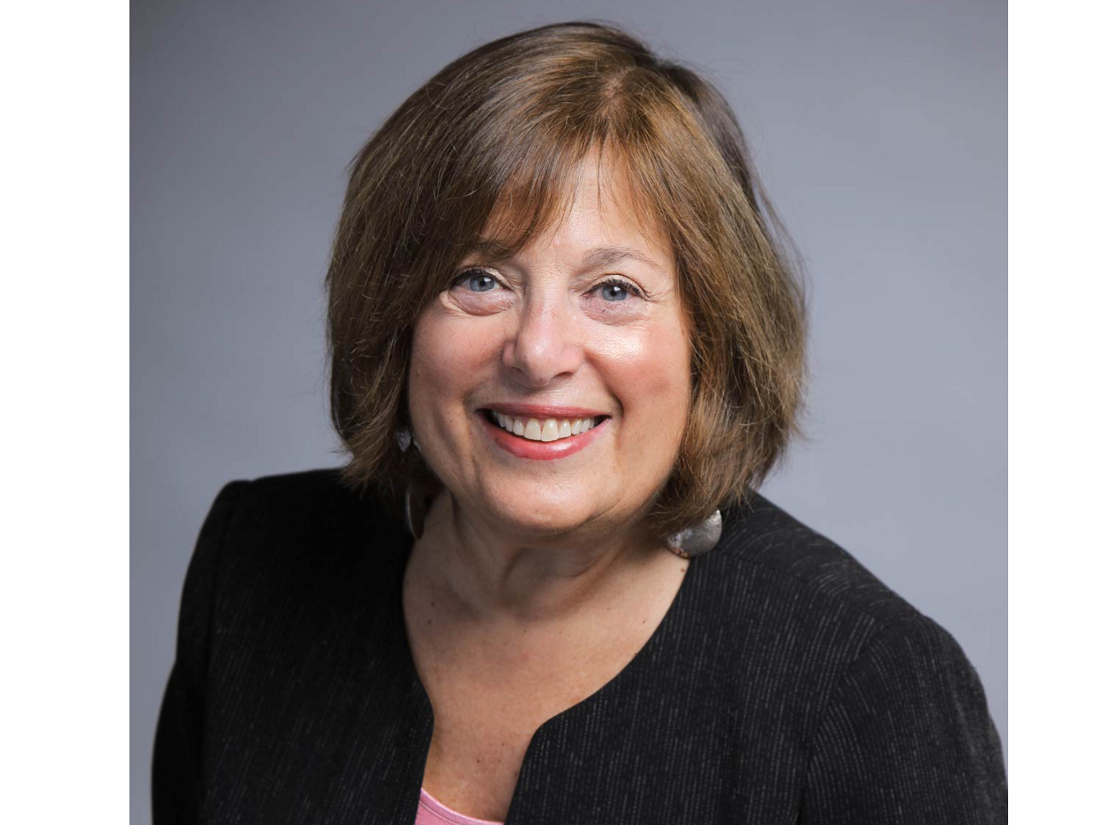
“Often women assumed more of the childcare and home schooling responsibilities in their households. As [a] result, we know that more women dropped out of the workforce. Also, past studies indicate that women are more likely to report feelings of burnout than men,” Dr. Bernstein noted.
The volume of bureaucratic tasks is the main contributor to psychiatrist burnout (69%), even more so than for physicians overall (60%).
Too many work hours, lack of respect from colleagues, lack of control or autonomy, and increasing use of electronic health records (EHRs) and other technology are also major drivers of burnout in this year’s report.
To quell burnout, psychiatrists reduce their hours on the job and participate in meditation or other stress-reduction techniques.
Thirty-eight percent of psychiatrists feel that their personality type contributes to their burnout. Nearly seven in 10 psychiatrists say burnout affects their relationships, about the same proportion as for physicians overall (68%).
Work-life balance
More than half of psychiatrists (53%) report they are willing to take a cut in pay in order to achieve a better work-life balance or have more free time. This is similar among physicians overall (55%).
More than one-third (39%) of psychiatrists reported clinical depression (severe depression lasting some time and not caused by grief), while 44% reported colloquial depression (feeling down, blue, sad).
About half of depressed psychiatrists said their depression does not have an impact on relationships with patients. Of those who saw an impact, the major behaviors they reported were being easily exasperated with patients and feeling less motivated to take patient notes carefully.
To maintain happiness and mental health, psychiatrists choose to spend time with loved ones, do the things they enjoy, exercise, and get plenty of sleep.
Perhaps not surprisingly, more psychiatrists were happy with their work-life balance before the pandemic (68% vs. 54%). The same holds for physicians overall.
Before the pandemic, 17% of psychiatrists reported being unhappy with their work-life balance. That has risen to 29% this year.
The vast majority of psychiatrists are currently in a committed relationship, with 76% either married or living with a partner. A somewhat higher percentage (83%) of physicians overall report being in a committed relationship.
About eight in 10 psychiatrists (81%) describe their marriage as good or very good – the same as last year.
A little more than half of psychiatrists have life partners who do not work in medicine. This is similar to the proportion among all physicians (56%).
Among psychiatrists balancing parenthood and a medical career, female psychiatrists noted feeling conflicted more often than their male counterparts (36% vs. 22% were “very conflicted” or “conflicted”).
This general attitude is reflected in almost all occupations, according to a Pew Research survey, which found that larger shares of mothers than fathers struggled with childcare responsibilities during the pandemic.
Findings from Medscape’s latest happiness, wellness, and lifestyle survey are based on 13,069 Medscape member physicians (61% male) practicing in the United States who completed an online survey conducted between June 29 and Sept. 26, 2021. Most respondents were between 35 and 64 years old.
A version of this article first appeared on Medscape.com.
The lingering effects of the COVID-19 pandemic continue to take a toll on the happiness, well-being, and lifestyles of many segments of the population, especially those in the health care field, including psychiatrists.
The newly released Medscape Psychiatrist Lifestyle, Happiness & Burnout Report 2022 explores psychiatrists’ happiness in their personal and professional lives and how they are maintaining mental and physical health.
Prior to the global pandemic, 79% of psychiatrists said they were “very” or “somewhat” happy outside of work, like physicians overall (81%).
But as the pandemic has worn on, feelings have shifted, and there are clear signs of stress and strain on those in the health care field.
Higher in women
In last year’s report, overall 42% of psychiatrists reported burnout; that’s risen to 47% this year.
When it comes to burnout, psychiatrists are in the lower range of burned-out physicians. Perhaps not surprising, given the challenges of the COVID-19 pandemic, burnout rates are highest in emergency medicine and critical care specialists.
About half of psychiatrists (52%) reported that they were more burned out now than during the initial quarantine months of the pandemic, similar to physicians overall (55%). About one-third said their burnout was the same.
Female psychiatrists reported being burned out at a greater rate than their male colleagues (46% vs. 30%).
“There’s no question that women have reported far more role strain during the pandemic than men,” said Carol A. Bernstein, MD, psychiatrist at Montefiore Health System and professor and vice chair for faculty development and well-being at Albert Einstein College of Medicine, New York.
“Often women assumed more of the childcare and home schooling responsibilities in their households. As [a] result, we know that more women dropped out of the workforce. Also, past studies indicate that women are more likely to report feelings of burnout than men,” Dr. Bernstein noted.
The volume of bureaucratic tasks is the main contributor to psychiatrist burnout (69%), even more so than for physicians overall (60%).
Too many work hours, lack of respect from colleagues, lack of control or autonomy, and increasing use of electronic health records (EHRs) and other technology are also major drivers of burnout in this year’s report.
To quell burnout, psychiatrists reduce their hours on the job and participate in meditation or other stress-reduction techniques.
Thirty-eight percent of psychiatrists feel that their personality type contributes to their burnout. Nearly seven in 10 psychiatrists say burnout affects their relationships, about the same proportion as for physicians overall (68%).
Work-life balance
More than half of psychiatrists (53%) report they are willing to take a cut in pay in order to achieve a better work-life balance or have more free time. This is similar among physicians overall (55%).
More than one-third (39%) of psychiatrists reported clinical depression (severe depression lasting some time and not caused by grief), while 44% reported colloquial depression (feeling down, blue, sad).
About half of depressed psychiatrists said their depression does not have an impact on relationships with patients. Of those who saw an impact, the major behaviors they reported were being easily exasperated with patients and feeling less motivated to take patient notes carefully.
To maintain happiness and mental health, psychiatrists choose to spend time with loved ones, do the things they enjoy, exercise, and get plenty of sleep.
Perhaps not surprisingly, more psychiatrists were happy with their work-life balance before the pandemic (68% vs. 54%). The same holds for physicians overall.
Before the pandemic, 17% of psychiatrists reported being unhappy with their work-life balance. That has risen to 29% this year.
The vast majority of psychiatrists are currently in a committed relationship, with 76% either married or living with a partner. A somewhat higher percentage (83%) of physicians overall report being in a committed relationship.
About eight in 10 psychiatrists (81%) describe their marriage as good or very good – the same as last year.
A little more than half of psychiatrists have life partners who do not work in medicine. This is similar to the proportion among all physicians (56%).
Among psychiatrists balancing parenthood and a medical career, female psychiatrists noted feeling conflicted more often than their male counterparts (36% vs. 22% were “very conflicted” or “conflicted”).
This general attitude is reflected in almost all occupations, according to a Pew Research survey, which found that larger shares of mothers than fathers struggled with childcare responsibilities during the pandemic.
Findings from Medscape’s latest happiness, wellness, and lifestyle survey are based on 13,069 Medscape member physicians (61% male) practicing in the United States who completed an online survey conducted between June 29 and Sept. 26, 2021. Most respondents were between 35 and 64 years old.
A version of this article first appeared on Medscape.com.
The lingering effects of the COVID-19 pandemic continue to take a toll on the happiness, well-being, and lifestyles of many segments of the population, especially those in the health care field, including psychiatrists.
The newly released Medscape Psychiatrist Lifestyle, Happiness & Burnout Report 2022 explores psychiatrists’ happiness in their personal and professional lives and how they are maintaining mental and physical health.
Prior to the global pandemic, 79% of psychiatrists said they were “very” or “somewhat” happy outside of work, like physicians overall (81%).
But as the pandemic has worn on, feelings have shifted, and there are clear signs of stress and strain on those in the health care field.
Higher in women
In last year’s report, overall 42% of psychiatrists reported burnout; that’s risen to 47% this year.
When it comes to burnout, psychiatrists are in the lower range of burned-out physicians. Perhaps not surprising, given the challenges of the COVID-19 pandemic, burnout rates are highest in emergency medicine and critical care specialists.
About half of psychiatrists (52%) reported that they were more burned out now than during the initial quarantine months of the pandemic, similar to physicians overall (55%). About one-third said their burnout was the same.
Female psychiatrists reported being burned out at a greater rate than their male colleagues (46% vs. 30%).
“There’s no question that women have reported far more role strain during the pandemic than men,” said Carol A. Bernstein, MD, psychiatrist at Montefiore Health System and professor and vice chair for faculty development and well-being at Albert Einstein College of Medicine, New York.
“Often women assumed more of the childcare and home schooling responsibilities in their households. As [a] result, we know that more women dropped out of the workforce. Also, past studies indicate that women are more likely to report feelings of burnout than men,” Dr. Bernstein noted.
The volume of bureaucratic tasks is the main contributor to psychiatrist burnout (69%), even more so than for physicians overall (60%).
Too many work hours, lack of respect from colleagues, lack of control or autonomy, and increasing use of electronic health records (EHRs) and other technology are also major drivers of burnout in this year’s report.
To quell burnout, psychiatrists reduce their hours on the job and participate in meditation or other stress-reduction techniques.
Thirty-eight percent of psychiatrists feel that their personality type contributes to their burnout. Nearly seven in 10 psychiatrists say burnout affects their relationships, about the same proportion as for physicians overall (68%).
Work-life balance
More than half of psychiatrists (53%) report they are willing to take a cut in pay in order to achieve a better work-life balance or have more free time. This is similar among physicians overall (55%).
More than one-third (39%) of psychiatrists reported clinical depression (severe depression lasting some time and not caused by grief), while 44% reported colloquial depression (feeling down, blue, sad).
About half of depressed psychiatrists said their depression does not have an impact on relationships with patients. Of those who saw an impact, the major behaviors they reported were being easily exasperated with patients and feeling less motivated to take patient notes carefully.
To maintain happiness and mental health, psychiatrists choose to spend time with loved ones, do the things they enjoy, exercise, and get plenty of sleep.
Perhaps not surprisingly, more psychiatrists were happy with their work-life balance before the pandemic (68% vs. 54%). The same holds for physicians overall.
Before the pandemic, 17% of psychiatrists reported being unhappy with their work-life balance. That has risen to 29% this year.
The vast majority of psychiatrists are currently in a committed relationship, with 76% either married or living with a partner. A somewhat higher percentage (83%) of physicians overall report being in a committed relationship.
About eight in 10 psychiatrists (81%) describe their marriage as good or very good – the same as last year.
A little more than half of psychiatrists have life partners who do not work in medicine. This is similar to the proportion among all physicians (56%).
Among psychiatrists balancing parenthood and a medical career, female psychiatrists noted feeling conflicted more often than their male counterparts (36% vs. 22% were “very conflicted” or “conflicted”).
This general attitude is reflected in almost all occupations, according to a Pew Research survey, which found that larger shares of mothers than fathers struggled with childcare responsibilities during the pandemic.
Findings from Medscape’s latest happiness, wellness, and lifestyle survey are based on 13,069 Medscape member physicians (61% male) practicing in the United States who completed an online survey conducted between June 29 and Sept. 26, 2021. Most respondents were between 35 and 64 years old.
A version of this article first appeared on Medscape.com.
Healthy gut tied to better cognition
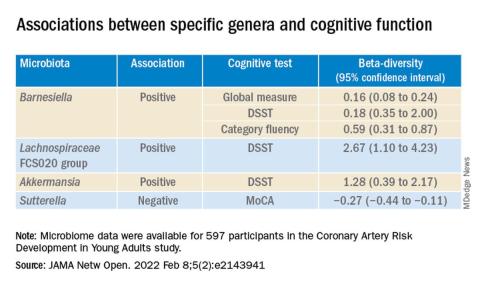
Investigators conducted cognitive testing and analyzed stool samples in close to 600 adults and found that beta-diversity, which is a between-person measure of gut microbial community composition, was significantly associated with cognitive scores.
Three specific bacterial genera showed a positive association with performance on at least one cognitive test, while one showed a negative association.
“Data from our study support an association between the gut microbial community and measure of cognitive function – results that are consistent with findings from other human and animal research,” study investigator Katie Meyer, ScD, assistant professor, department of nutrition, UNC Gillings School of Public Health, Chapel Hill, N.C., told this news organization.
“However, it is also important to recognize that we are still learning about how to characterize the role of this dynamic ecological community and delineate mechanistic pathways,” she said.
The study was published online Feb 8 in JAMA Network Open.
‘Novel’ research
“Communication pathways between gut bacteria and neurologic function (referred to as the ‘gut-brain axis’) have emerged as a novel area of research into potential mechanisms regulating brain health through immunologic, metabolic, and endocrine pathways,” the authors wrote.
A number of studies have “shown associations between gut microbial measures and neurological outcomes, including cognitive function and dementia,” but mechanisms underlying these associations “have not been fully established.”
Animal and small-scale human studies have suggested that reduced microbial diversity is associated with poorer cognition, but studies have not been conducted in community-based large and diverse populations.
The researchers therefore examined cross-sectional associations of gut microbial diversity and taxonomic composition with cognitive status in a large group of community-dwelling, sociodemographically diverse Black and White adults living in four metropolitan areas who were participants in the Coronary Artery Risk Development in Young Adults (CARDIA) study.
They hypothesized that microbial diversity would be positively associated with global as well as domain-specific cognitive status and that higher cognitive status would be associated with specific taxonomic groups involved in short-chain fatty acid production.
The CARDIA’s year 30 follow-up examination took place during 2015-2016, when the original participants ranged in age from 48 to 60 years. During that examination, participants took a battery of cognitive assessments, and 615 also provided a stool sample for a microbiome substudy; of these, 597 (mean [SD] age, 55.2 [3.5] years, 44.7% Black, 45.2% White) had both stool DNA available for sequencing and a complete complement of cognitive tests and were included in the current study.
The cognitive tests included the Digit Symbol Substitution Test (DSST); Rey-Auditory Verbal Learning Test (RAVLT); the timed Stroop test; letter fluency and category fluency; and the Montreal Cognitive Assessment (MoCA).
Covariates that might confound associations between microbial and cognitive measures, including body mass index, diabetes, age, sex, race, field center, education, physical activity, current smoking, diet quality, number of medications, and hypertension, were included in the analyses.
The investigators conducted three standard microbial analyses: within-person alpha-diversity; between-person beta-diversity; and individual taxa.
Potential pathways
The strongest associations in the variance tests for beta-diversity, which were significant for all cognition measures in multivariable-adjusted principal coordinates analysis (all Ps = .001 except for the Stroop, which was .007). However, the association with letter fluency was not deemed significant (P = .07).
After fully adjusting for sociodemographic variables, health behaviors, and clinical covariates, the researchers found that three genera were positively associated, while one was negatively associated with cognitive measures.
“The strongest results from our study were from a multivariate analysis that can be considered a test of the overall community,” said Dr. Meyer.
She pointed to several pathways through which gut microbiota can contribute to brain health.
“We know from mechanistic studies in animal models that the gut microbiota is involved in systemic inflammation, which is a risk factor for brain pathology,” she said.
Moreover, “the gut microbiota is involved in the production of metabolites that may impact the brain, including tryptophan metabolites and short-chain fatty acids, many of which derive from dietary components, which may help explain associations between diet and cognition (e.g., the Mediterranean-style diet can be protective),” she added.
Starting point
Commenting for this news organization, Timothy Dinan, MD, PhD, professor of psychiatry and an investigator, APC Microbiome Institute, University College Cork, Ireland, said, “This is an important study, adding to the growing body of evidence that gut microbes influence brain function.”
Dr. Dinan, who was not involved with the study, continued: “In an impressively large sample, an association between cognition and gut microbiota architecture was demonstrated.”
He cautioned that the study “is limited by the fact that it is cross-sectional, and the relationships are correlational.” Nevertheless, “despite these obvious caveats, the paper undoubtedly advances the field.”
Dr. Meyer agreed, noting that there is “a paucity of biomarkers that can be used to predict cognitive decline and dementia,” but because their study was cross-sectional, “we cannot assess temporality (i.e., whether gut microbiota predicts cognitive decline); but, as a start, we can assess associations.”
She added that “at this point, we know far more about modifiable risk factors that have been shown to be positively associated with cognitive function,” including eating a Mediterranean diet and engaging in physical activity.
“It is possible that protective effects of diet and activity may, in part, operate thorough the gut microbiota,” Dr. Meyer suggested.
The CARDIA study is supported by the National Heart, Lung, and Blood Institute, the Intramural Research Program of the National Institute on Aging, and the University of North Carolina Nutrition Research Institute. Dr. Meyer and coauthors and Dr. Dinan report no relevant financial relationships.
A version of this article first appeared on Medscape.com.
Investigators conducted cognitive testing and analyzed stool samples in close to 600 adults and found that beta-diversity, which is a between-person measure of gut microbial community composition, was significantly associated with cognitive scores.
Three specific bacterial genera showed a positive association with performance on at least one cognitive test, while one showed a negative association.
“Data from our study support an association between the gut microbial community and measure of cognitive function – results that are consistent with findings from other human and animal research,” study investigator Katie Meyer, ScD, assistant professor, department of nutrition, UNC Gillings School of Public Health, Chapel Hill, N.C., told this news organization.
“However, it is also important to recognize that we are still learning about how to characterize the role of this dynamic ecological community and delineate mechanistic pathways,” she said.
The study was published online Feb 8 in JAMA Network Open.
‘Novel’ research
“Communication pathways between gut bacteria and neurologic function (referred to as the ‘gut-brain axis’) have emerged as a novel area of research into potential mechanisms regulating brain health through immunologic, metabolic, and endocrine pathways,” the authors wrote.
A number of studies have “shown associations between gut microbial measures and neurological outcomes, including cognitive function and dementia,” but mechanisms underlying these associations “have not been fully established.”
Animal and small-scale human studies have suggested that reduced microbial diversity is associated with poorer cognition, but studies have not been conducted in community-based large and diverse populations.
The researchers therefore examined cross-sectional associations of gut microbial diversity and taxonomic composition with cognitive status in a large group of community-dwelling, sociodemographically diverse Black and White adults living in four metropolitan areas who were participants in the Coronary Artery Risk Development in Young Adults (CARDIA) study.
They hypothesized that microbial diversity would be positively associated with global as well as domain-specific cognitive status and that higher cognitive status would be associated with specific taxonomic groups involved in short-chain fatty acid production.
The CARDIA’s year 30 follow-up examination took place during 2015-2016, when the original participants ranged in age from 48 to 60 years. During that examination, participants took a battery of cognitive assessments, and 615 also provided a stool sample for a microbiome substudy; of these, 597 (mean [SD] age, 55.2 [3.5] years, 44.7% Black, 45.2% White) had both stool DNA available for sequencing and a complete complement of cognitive tests and were included in the current study.
The cognitive tests included the Digit Symbol Substitution Test (DSST); Rey-Auditory Verbal Learning Test (RAVLT); the timed Stroop test; letter fluency and category fluency; and the Montreal Cognitive Assessment (MoCA).
Covariates that might confound associations between microbial and cognitive measures, including body mass index, diabetes, age, sex, race, field center, education, physical activity, current smoking, diet quality, number of medications, and hypertension, were included in the analyses.
The investigators conducted three standard microbial analyses: within-person alpha-diversity; between-person beta-diversity; and individual taxa.
Potential pathways
The strongest associations in the variance tests for beta-diversity, which were significant for all cognition measures in multivariable-adjusted principal coordinates analysis (all Ps = .001 except for the Stroop, which was .007). However, the association with letter fluency was not deemed significant (P = .07).
After fully adjusting for sociodemographic variables, health behaviors, and clinical covariates, the researchers found that three genera were positively associated, while one was negatively associated with cognitive measures.
“The strongest results from our study were from a multivariate analysis that can be considered a test of the overall community,” said Dr. Meyer.
She pointed to several pathways through which gut microbiota can contribute to brain health.
“We know from mechanistic studies in animal models that the gut microbiota is involved in systemic inflammation, which is a risk factor for brain pathology,” she said.
Moreover, “the gut microbiota is involved in the production of metabolites that may impact the brain, including tryptophan metabolites and short-chain fatty acids, many of which derive from dietary components, which may help explain associations between diet and cognition (e.g., the Mediterranean-style diet can be protective),” she added.
Starting point
Commenting for this news organization, Timothy Dinan, MD, PhD, professor of psychiatry and an investigator, APC Microbiome Institute, University College Cork, Ireland, said, “This is an important study, adding to the growing body of evidence that gut microbes influence brain function.”
Dr. Dinan, who was not involved with the study, continued: “In an impressively large sample, an association between cognition and gut microbiota architecture was demonstrated.”
He cautioned that the study “is limited by the fact that it is cross-sectional, and the relationships are correlational.” Nevertheless, “despite these obvious caveats, the paper undoubtedly advances the field.”
Dr. Meyer agreed, noting that there is “a paucity of biomarkers that can be used to predict cognitive decline and dementia,” but because their study was cross-sectional, “we cannot assess temporality (i.e., whether gut microbiota predicts cognitive decline); but, as a start, we can assess associations.”
She added that “at this point, we know far more about modifiable risk factors that have been shown to be positively associated with cognitive function,” including eating a Mediterranean diet and engaging in physical activity.
“It is possible that protective effects of diet and activity may, in part, operate thorough the gut microbiota,” Dr. Meyer suggested.
The CARDIA study is supported by the National Heart, Lung, and Blood Institute, the Intramural Research Program of the National Institute on Aging, and the University of North Carolina Nutrition Research Institute. Dr. Meyer and coauthors and Dr. Dinan report no relevant financial relationships.
A version of this article first appeared on Medscape.com.
Investigators conducted cognitive testing and analyzed stool samples in close to 600 adults and found that beta-diversity, which is a between-person measure of gut microbial community composition, was significantly associated with cognitive scores.
Three specific bacterial genera showed a positive association with performance on at least one cognitive test, while one showed a negative association.
“Data from our study support an association between the gut microbial community and measure of cognitive function – results that are consistent with findings from other human and animal research,” study investigator Katie Meyer, ScD, assistant professor, department of nutrition, UNC Gillings School of Public Health, Chapel Hill, N.C., told this news organization.
“However, it is also important to recognize that we are still learning about how to characterize the role of this dynamic ecological community and delineate mechanistic pathways,” she said.
The study was published online Feb 8 in JAMA Network Open.
‘Novel’ research
“Communication pathways between gut bacteria and neurologic function (referred to as the ‘gut-brain axis’) have emerged as a novel area of research into potential mechanisms regulating brain health through immunologic, metabolic, and endocrine pathways,” the authors wrote.
A number of studies have “shown associations between gut microbial measures and neurological outcomes, including cognitive function and dementia,” but mechanisms underlying these associations “have not been fully established.”
Animal and small-scale human studies have suggested that reduced microbial diversity is associated with poorer cognition, but studies have not been conducted in community-based large and diverse populations.
The researchers therefore examined cross-sectional associations of gut microbial diversity and taxonomic composition with cognitive status in a large group of community-dwelling, sociodemographically diverse Black and White adults living in four metropolitan areas who were participants in the Coronary Artery Risk Development in Young Adults (CARDIA) study.
They hypothesized that microbial diversity would be positively associated with global as well as domain-specific cognitive status and that higher cognitive status would be associated with specific taxonomic groups involved in short-chain fatty acid production.
The CARDIA’s year 30 follow-up examination took place during 2015-2016, when the original participants ranged in age from 48 to 60 years. During that examination, participants took a battery of cognitive assessments, and 615 also provided a stool sample for a microbiome substudy; of these, 597 (mean [SD] age, 55.2 [3.5] years, 44.7% Black, 45.2% White) had both stool DNA available for sequencing and a complete complement of cognitive tests and were included in the current study.
The cognitive tests included the Digit Symbol Substitution Test (DSST); Rey-Auditory Verbal Learning Test (RAVLT); the timed Stroop test; letter fluency and category fluency; and the Montreal Cognitive Assessment (MoCA).
Covariates that might confound associations between microbial and cognitive measures, including body mass index, diabetes, age, sex, race, field center, education, physical activity, current smoking, diet quality, number of medications, and hypertension, were included in the analyses.
The investigators conducted three standard microbial analyses: within-person alpha-diversity; between-person beta-diversity; and individual taxa.
Potential pathways
The strongest associations in the variance tests for beta-diversity, which were significant for all cognition measures in multivariable-adjusted principal coordinates analysis (all Ps = .001 except for the Stroop, which was .007). However, the association with letter fluency was not deemed significant (P = .07).
After fully adjusting for sociodemographic variables, health behaviors, and clinical covariates, the researchers found that three genera were positively associated, while one was negatively associated with cognitive measures.
“The strongest results from our study were from a multivariate analysis that can be considered a test of the overall community,” said Dr. Meyer.
She pointed to several pathways through which gut microbiota can contribute to brain health.
“We know from mechanistic studies in animal models that the gut microbiota is involved in systemic inflammation, which is a risk factor for brain pathology,” she said.
Moreover, “the gut microbiota is involved in the production of metabolites that may impact the brain, including tryptophan metabolites and short-chain fatty acids, many of which derive from dietary components, which may help explain associations between diet and cognition (e.g., the Mediterranean-style diet can be protective),” she added.
Starting point
Commenting for this news organization, Timothy Dinan, MD, PhD, professor of psychiatry and an investigator, APC Microbiome Institute, University College Cork, Ireland, said, “This is an important study, adding to the growing body of evidence that gut microbes influence brain function.”
Dr. Dinan, who was not involved with the study, continued: “In an impressively large sample, an association between cognition and gut microbiota architecture was demonstrated.”
He cautioned that the study “is limited by the fact that it is cross-sectional, and the relationships are correlational.” Nevertheless, “despite these obvious caveats, the paper undoubtedly advances the field.”
Dr. Meyer agreed, noting that there is “a paucity of biomarkers that can be used to predict cognitive decline and dementia,” but because their study was cross-sectional, “we cannot assess temporality (i.e., whether gut microbiota predicts cognitive decline); but, as a start, we can assess associations.”
She added that “at this point, we know far more about modifiable risk factors that have been shown to be positively associated with cognitive function,” including eating a Mediterranean diet and engaging in physical activity.
“It is possible that protective effects of diet and activity may, in part, operate thorough the gut microbiota,” Dr. Meyer suggested.
The CARDIA study is supported by the National Heart, Lung, and Blood Institute, the Intramural Research Program of the National Institute on Aging, and the University of North Carolina Nutrition Research Institute. Dr. Meyer and coauthors and Dr. Dinan report no relevant financial relationships.
A version of this article first appeared on Medscape.com.
FROM JAMA NETWORK OPEN
Liquid embolism of AVM tied to high cure rate
new observational data suggest. In a prospective, real-world study of more than 100 patients, use of the Onyx system was associated with a cure rate of 86% for cAVMs smaller than 3 cm.
“Endovascular treatment using Onyx is able to achieve, on its own, a very efficient cure rate with a low morbidity and mortality rate,” said investigator Laurent Spelle, MD, PhD, professor of neuroradiology at Paris-Saclay University and chair of NEURI, the Brain Vascular Center, Bicêtre Hospital, also in Paris.
Dr. Spelle presented the findings at the International Stroke Conference sponsored by the American Heart Association.
Prospective, multicenter study
Currently, the main treatment options for cAVM are embolization, neurosurgery, and radiosurgery. The Onyx liquid system, one method of providing embolization, uses a biocompatible ethylene vinyl alcohol copolymer.
It has been used in Europe for 22 years as a curative treatment and as a treatment before radiosurgery or neurosurgery. In the United States, Onyx is indicated for presurgical and preradiotherapy treatment only.
For this analysis, the researchers conducted a prospective, multicenter study to evaluate the long-term safety and efficacy of Onyx for the embolization of cAVM as curative treatment or preoperative preparation.
They enrolled 165 patients in the nonrandomized, observational study, which was conducted at 15 hospitals in France. Eligible participants had an untreated cAVM.
Patients were assigned to one of three groups, according to the hospital’s standard of care. One group underwent embolization with Onyx as curative treatment, one received Onyx as preparation for neurosurgery, and one underwent embolization with Onyx as preparation for radiosurgery.
The study’s safety endpoints were device- and procedure-related serious adverse events at 1 month after each embolization. The efficacy endpoints were recovery at 12 months after the last embolization or neurosurgery, or at a minimum of 36 months after radiosurgery.
The researchers defined morbidity as a worsening of modified Rankin Scale score of 2 or more points for patients presenting with baseline mRS of 0 or 1, or a worsening of 1 or more points for patients with an mRS of 2 or greater at baseline. An independent clinical events committee and core laboratory adjudicated the results.
‘A fantastic result’
In all, 140 patients were prospectively included, and 212 embolization procedures were performed. The population’s mean age was 41.4 years, and 60% of participants were men. About 61% of patients presented with symptoms, the most common of which were progressive neurologic deficit (41.2%) and headache (36.5%).
Approximately 64% of the cAVMs were ruptured. Most (75.7%) were smaller than 3 cm, and the remainder were between 3 and 6 cm. Most patients (59.3%) did not have an aneurysm.
Eight (3.8%) adverse events were associated with the use of Onyx. The rate of procedure-related neurologic serious adverse events was 7.1% within 1 month post embolization. Three deaths occurred (2.1%), one of which was considered device or procedure related.
A total of 87 patients underwent embolization alone, 14 of whom did not complete the study (2 died, 5 were lost to follow-up, and 7 withdrew). Of the 73 who completed the study, 58 (79.5%) had complete occlusion and full recovery at last follow-up. An additional 6.8% had 99% occlusion.
In addition, 3.4% of the population had significant morbidity, and 18.4% presented at baseline with mRS scores of 3-5. Of the latter group, 81.3% had mRS scores of 0-2 at last visit.
Of 21 patients who underwent subsequent neurosurgery, 18 completed follow-up. Of this group, 94.4% had complete occlusion. Of 32 patients receiving subsequent radiosurgery, 54.8% had complete occlusion, which was “a little bit disappointing,” said Dr. Spelle.
Overall, most patients (92.9%) had improved or stable mRS score. The overall mortality rate was 2.9%, and the rate of significant morbidity was 4.3%.
The rate of improved or stable mRS score was 94.3% for patients who underwent embolization alone, 85.7% for patients who also underwent neurosurgery, and 93.75% for patients who also underwent radiosurgery.
The mortality rate was 3.4% for patients who underwent embolization alone, 4.8% for patients who also underwent neurosurgery, and 0% for patients who also underwent radiosurgery.
The rate of significant morbidity was 2.3% for patients who underwent embolization alone, 9.5% for those who also underwent neurosurgery, and 6.25% for those who also underwent radiosurgery.
“We knew that this treatment was very effective, but this effectiveness was only known in a limited number of centers with a very high level of expertise,” said Dr. Spelle. “We were very pleasantly surprised that a larger-scale, multicenter study conducted in 15 different hospitals in France could achieve such a fantastic result.”
The study sites, however, were all departments in university hospitals with great experience in endovascular treatment of cAVM, he added.
Effective in unruptured AVMs?
Commenting on the findings, Mitchell Elkind, MD, professor of neurology and epidemiology, Columbia University, New York, said: “Arteriovenous malformations remain a relatively uncommon but serious cerebrovascular disorder. Any additional tool in the armamentarium to treat these lesions is welcome.”
The study results are encouraging, said Dr. Elkind, who was not involved in the study. They suggest that Onyx embolization can play an important role in the care of these patients. The treatment is associated with “low morbidity and excellent efficacy, particularly in combination with other surgical and radiographic approaches.”
The lack of a direct comparison with alternative embolization materials is a limitation of the study, however. “It is hard to compare Onyx to other agents based on these results,” said Dr. Elkind.
“It is also notable that one-third of the patients in the study had unruptured AVMs, which at least in one randomized trial, ARUBA, were not clearly shown to benefit from an intervention at all,” he continued.
It would have been valuable for the researchers to stratify the study results by ruptured versus unruptured AVMs, Dr. Elkind said.
The study was funded by Medtronic. Dr. Spelle reported receiving honoraria from the company. Dr. Elkind disclosed no relevant financial relationships.
A version of this article first appeared on Medscape.com.
new observational data suggest. In a prospective, real-world study of more than 100 patients, use of the Onyx system was associated with a cure rate of 86% for cAVMs smaller than 3 cm.
“Endovascular treatment using Onyx is able to achieve, on its own, a very efficient cure rate with a low morbidity and mortality rate,” said investigator Laurent Spelle, MD, PhD, professor of neuroradiology at Paris-Saclay University and chair of NEURI, the Brain Vascular Center, Bicêtre Hospital, also in Paris.
Dr. Spelle presented the findings at the International Stroke Conference sponsored by the American Heart Association.
Prospective, multicenter study
Currently, the main treatment options for cAVM are embolization, neurosurgery, and radiosurgery. The Onyx liquid system, one method of providing embolization, uses a biocompatible ethylene vinyl alcohol copolymer.
It has been used in Europe for 22 years as a curative treatment and as a treatment before radiosurgery or neurosurgery. In the United States, Onyx is indicated for presurgical and preradiotherapy treatment only.
For this analysis, the researchers conducted a prospective, multicenter study to evaluate the long-term safety and efficacy of Onyx for the embolization of cAVM as curative treatment or preoperative preparation.
They enrolled 165 patients in the nonrandomized, observational study, which was conducted at 15 hospitals in France. Eligible participants had an untreated cAVM.
Patients were assigned to one of three groups, according to the hospital’s standard of care. One group underwent embolization with Onyx as curative treatment, one received Onyx as preparation for neurosurgery, and one underwent embolization with Onyx as preparation for radiosurgery.
The study’s safety endpoints were device- and procedure-related serious adverse events at 1 month after each embolization. The efficacy endpoints were recovery at 12 months after the last embolization or neurosurgery, or at a minimum of 36 months after radiosurgery.
The researchers defined morbidity as a worsening of modified Rankin Scale score of 2 or more points for patients presenting with baseline mRS of 0 or 1, or a worsening of 1 or more points for patients with an mRS of 2 or greater at baseline. An independent clinical events committee and core laboratory adjudicated the results.
‘A fantastic result’
In all, 140 patients were prospectively included, and 212 embolization procedures were performed. The population’s mean age was 41.4 years, and 60% of participants were men. About 61% of patients presented with symptoms, the most common of which were progressive neurologic deficit (41.2%) and headache (36.5%).
Approximately 64% of the cAVMs were ruptured. Most (75.7%) were smaller than 3 cm, and the remainder were between 3 and 6 cm. Most patients (59.3%) did not have an aneurysm.
Eight (3.8%) adverse events were associated with the use of Onyx. The rate of procedure-related neurologic serious adverse events was 7.1% within 1 month post embolization. Three deaths occurred (2.1%), one of which was considered device or procedure related.
A total of 87 patients underwent embolization alone, 14 of whom did not complete the study (2 died, 5 were lost to follow-up, and 7 withdrew). Of the 73 who completed the study, 58 (79.5%) had complete occlusion and full recovery at last follow-up. An additional 6.8% had 99% occlusion.
In addition, 3.4% of the population had significant morbidity, and 18.4% presented at baseline with mRS scores of 3-5. Of the latter group, 81.3% had mRS scores of 0-2 at last visit.
Of 21 patients who underwent subsequent neurosurgery, 18 completed follow-up. Of this group, 94.4% had complete occlusion. Of 32 patients receiving subsequent radiosurgery, 54.8% had complete occlusion, which was “a little bit disappointing,” said Dr. Spelle.
Overall, most patients (92.9%) had improved or stable mRS score. The overall mortality rate was 2.9%, and the rate of significant morbidity was 4.3%.
The rate of improved or stable mRS score was 94.3% for patients who underwent embolization alone, 85.7% for patients who also underwent neurosurgery, and 93.75% for patients who also underwent radiosurgery.
The mortality rate was 3.4% for patients who underwent embolization alone, 4.8% for patients who also underwent neurosurgery, and 0% for patients who also underwent radiosurgery.
The rate of significant morbidity was 2.3% for patients who underwent embolization alone, 9.5% for those who also underwent neurosurgery, and 6.25% for those who also underwent radiosurgery.
“We knew that this treatment was very effective, but this effectiveness was only known in a limited number of centers with a very high level of expertise,” said Dr. Spelle. “We were very pleasantly surprised that a larger-scale, multicenter study conducted in 15 different hospitals in France could achieve such a fantastic result.”
The study sites, however, were all departments in university hospitals with great experience in endovascular treatment of cAVM, he added.
Effective in unruptured AVMs?
Commenting on the findings, Mitchell Elkind, MD, professor of neurology and epidemiology, Columbia University, New York, said: “Arteriovenous malformations remain a relatively uncommon but serious cerebrovascular disorder. Any additional tool in the armamentarium to treat these lesions is welcome.”
The study results are encouraging, said Dr. Elkind, who was not involved in the study. They suggest that Onyx embolization can play an important role in the care of these patients. The treatment is associated with “low morbidity and excellent efficacy, particularly in combination with other surgical and radiographic approaches.”
The lack of a direct comparison with alternative embolization materials is a limitation of the study, however. “It is hard to compare Onyx to other agents based on these results,” said Dr. Elkind.
“It is also notable that one-third of the patients in the study had unruptured AVMs, which at least in one randomized trial, ARUBA, were not clearly shown to benefit from an intervention at all,” he continued.
It would have been valuable for the researchers to stratify the study results by ruptured versus unruptured AVMs, Dr. Elkind said.
The study was funded by Medtronic. Dr. Spelle reported receiving honoraria from the company. Dr. Elkind disclosed no relevant financial relationships.
A version of this article first appeared on Medscape.com.
new observational data suggest. In a prospective, real-world study of more than 100 patients, use of the Onyx system was associated with a cure rate of 86% for cAVMs smaller than 3 cm.
“Endovascular treatment using Onyx is able to achieve, on its own, a very efficient cure rate with a low morbidity and mortality rate,” said investigator Laurent Spelle, MD, PhD, professor of neuroradiology at Paris-Saclay University and chair of NEURI, the Brain Vascular Center, Bicêtre Hospital, also in Paris.
Dr. Spelle presented the findings at the International Stroke Conference sponsored by the American Heart Association.
Prospective, multicenter study
Currently, the main treatment options for cAVM are embolization, neurosurgery, and radiosurgery. The Onyx liquid system, one method of providing embolization, uses a biocompatible ethylene vinyl alcohol copolymer.
It has been used in Europe for 22 years as a curative treatment and as a treatment before radiosurgery or neurosurgery. In the United States, Onyx is indicated for presurgical and preradiotherapy treatment only.
For this analysis, the researchers conducted a prospective, multicenter study to evaluate the long-term safety and efficacy of Onyx for the embolization of cAVM as curative treatment or preoperative preparation.
They enrolled 165 patients in the nonrandomized, observational study, which was conducted at 15 hospitals in France. Eligible participants had an untreated cAVM.
Patients were assigned to one of three groups, according to the hospital’s standard of care. One group underwent embolization with Onyx as curative treatment, one received Onyx as preparation for neurosurgery, and one underwent embolization with Onyx as preparation for radiosurgery.
The study’s safety endpoints were device- and procedure-related serious adverse events at 1 month after each embolization. The efficacy endpoints were recovery at 12 months after the last embolization or neurosurgery, or at a minimum of 36 months after radiosurgery.
The researchers defined morbidity as a worsening of modified Rankin Scale score of 2 or more points for patients presenting with baseline mRS of 0 or 1, or a worsening of 1 or more points for patients with an mRS of 2 or greater at baseline. An independent clinical events committee and core laboratory adjudicated the results.
‘A fantastic result’
In all, 140 patients were prospectively included, and 212 embolization procedures were performed. The population’s mean age was 41.4 years, and 60% of participants were men. About 61% of patients presented with symptoms, the most common of which were progressive neurologic deficit (41.2%) and headache (36.5%).
Approximately 64% of the cAVMs were ruptured. Most (75.7%) were smaller than 3 cm, and the remainder were between 3 and 6 cm. Most patients (59.3%) did not have an aneurysm.
Eight (3.8%) adverse events were associated with the use of Onyx. The rate of procedure-related neurologic serious adverse events was 7.1% within 1 month post embolization. Three deaths occurred (2.1%), one of which was considered device or procedure related.
A total of 87 patients underwent embolization alone, 14 of whom did not complete the study (2 died, 5 were lost to follow-up, and 7 withdrew). Of the 73 who completed the study, 58 (79.5%) had complete occlusion and full recovery at last follow-up. An additional 6.8% had 99% occlusion.
In addition, 3.4% of the population had significant morbidity, and 18.4% presented at baseline with mRS scores of 3-5. Of the latter group, 81.3% had mRS scores of 0-2 at last visit.
Of 21 patients who underwent subsequent neurosurgery, 18 completed follow-up. Of this group, 94.4% had complete occlusion. Of 32 patients receiving subsequent radiosurgery, 54.8% had complete occlusion, which was “a little bit disappointing,” said Dr. Spelle.
Overall, most patients (92.9%) had improved or stable mRS score. The overall mortality rate was 2.9%, and the rate of significant morbidity was 4.3%.
The rate of improved or stable mRS score was 94.3% for patients who underwent embolization alone, 85.7% for patients who also underwent neurosurgery, and 93.75% for patients who also underwent radiosurgery.
The mortality rate was 3.4% for patients who underwent embolization alone, 4.8% for patients who also underwent neurosurgery, and 0% for patients who also underwent radiosurgery.
The rate of significant morbidity was 2.3% for patients who underwent embolization alone, 9.5% for those who also underwent neurosurgery, and 6.25% for those who also underwent radiosurgery.
“We knew that this treatment was very effective, but this effectiveness was only known in a limited number of centers with a very high level of expertise,” said Dr. Spelle. “We were very pleasantly surprised that a larger-scale, multicenter study conducted in 15 different hospitals in France could achieve such a fantastic result.”
The study sites, however, were all departments in university hospitals with great experience in endovascular treatment of cAVM, he added.
Effective in unruptured AVMs?
Commenting on the findings, Mitchell Elkind, MD, professor of neurology and epidemiology, Columbia University, New York, said: “Arteriovenous malformations remain a relatively uncommon but serious cerebrovascular disorder. Any additional tool in the armamentarium to treat these lesions is welcome.”
The study results are encouraging, said Dr. Elkind, who was not involved in the study. They suggest that Onyx embolization can play an important role in the care of these patients. The treatment is associated with “low morbidity and excellent efficacy, particularly in combination with other surgical and radiographic approaches.”
The lack of a direct comparison with alternative embolization materials is a limitation of the study, however. “It is hard to compare Onyx to other agents based on these results,” said Dr. Elkind.
“It is also notable that one-third of the patients in the study had unruptured AVMs, which at least in one randomized trial, ARUBA, were not clearly shown to benefit from an intervention at all,” he continued.
It would have been valuable for the researchers to stratify the study results by ruptured versus unruptured AVMs, Dr. Elkind said.
The study was funded by Medtronic. Dr. Spelle reported receiving honoraria from the company. Dr. Elkind disclosed no relevant financial relationships.
A version of this article first appeared on Medscape.com.
FROM ISC 2022
The migraine-go-round
Any other docs out there have patients on what I call the migraine-go-round?
I first discovered this ride when I started in practice, though back then it was with triptans. You know the game, you’d start someone on one drug because you had samples, or a coupon, or both. A few months later the coupon had run out, and their insurance wouldn’t cover it, so you’d move them to another drug. Maxalt to Imitrex to Zomig to Relpax to Axert to Maxalt.
The ride continued until the majority had gone generic, and I’d almost forgotten about it. You can’t do it with seizure patients or Parkinson’s disease.
But with the advent of the CGRP era, it seems to have started again. Coverage coupons have a limited number of refills, or the deal changes, or a pharmacy stops taking them, or an insurance company changes their mind, or whatever. So we go from Aimovig to Emgality to Qulipta to Ajovy to Nurtec to Aimovig (not necessarily in that order).
It’s annoying (not just for the patients, but for me and my staff as we try to keep up with it), and obviously it doesn’t work for everyone because each patient responds differently. But, if it works, it at least gets some degree of coverage until an insurance company finally approves a given drug for that person. And even then a patient’s own financial circumstances or changing job situation can keep things spinning.
When you finally step off the ride you have to pore back through the chart to figure out which, if any, worked best, or had side effects, or whatever.
A good part of modern medicine is adapting to these sorts of things. Sometimes we have to play the game to get things done.
The trick is learning the rules on the fly – for all involved.
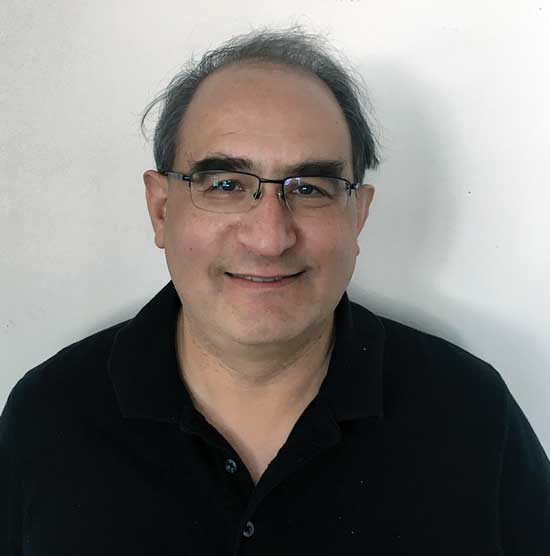
Dr. Block has a solo neurology practice in Scottsdale, Ariz.
Any other docs out there have patients on what I call the migraine-go-round?
I first discovered this ride when I started in practice, though back then it was with triptans. You know the game, you’d start someone on one drug because you had samples, or a coupon, or both. A few months later the coupon had run out, and their insurance wouldn’t cover it, so you’d move them to another drug. Maxalt to Imitrex to Zomig to Relpax to Axert to Maxalt.
The ride continued until the majority had gone generic, and I’d almost forgotten about it. You can’t do it with seizure patients or Parkinson’s disease.
But with the advent of the CGRP era, it seems to have started again. Coverage coupons have a limited number of refills, or the deal changes, or a pharmacy stops taking them, or an insurance company changes their mind, or whatever. So we go from Aimovig to Emgality to Qulipta to Ajovy to Nurtec to Aimovig (not necessarily in that order).
It’s annoying (not just for the patients, but for me and my staff as we try to keep up with it), and obviously it doesn’t work for everyone because each patient responds differently. But, if it works, it at least gets some degree of coverage until an insurance company finally approves a given drug for that person. And even then a patient’s own financial circumstances or changing job situation can keep things spinning.
When you finally step off the ride you have to pore back through the chart to figure out which, if any, worked best, or had side effects, or whatever.
A good part of modern medicine is adapting to these sorts of things. Sometimes we have to play the game to get things done.
The trick is learning the rules on the fly – for all involved.
Dr. Block has a solo neurology practice in Scottsdale, Ariz.
Any other docs out there have patients on what I call the migraine-go-round?
I first discovered this ride when I started in practice, though back then it was with triptans. You know the game, you’d start someone on one drug because you had samples, or a coupon, or both. A few months later the coupon had run out, and their insurance wouldn’t cover it, so you’d move them to another drug. Maxalt to Imitrex to Zomig to Relpax to Axert to Maxalt.
The ride continued until the majority had gone generic, and I’d almost forgotten about it. You can’t do it with seizure patients or Parkinson’s disease.
But with the advent of the CGRP era, it seems to have started again. Coverage coupons have a limited number of refills, or the deal changes, or a pharmacy stops taking them, or an insurance company changes their mind, or whatever. So we go from Aimovig to Emgality to Qulipta to Ajovy to Nurtec to Aimovig (not necessarily in that order).
It’s annoying (not just for the patients, but for me and my staff as we try to keep up with it), and obviously it doesn’t work for everyone because each patient responds differently. But, if it works, it at least gets some degree of coverage until an insurance company finally approves a given drug for that person. And even then a patient’s own financial circumstances or changing job situation can keep things spinning.
When you finally step off the ride you have to pore back through the chart to figure out which, if any, worked best, or had side effects, or whatever.
A good part of modern medicine is adapting to these sorts of things. Sometimes we have to play the game to get things done.
The trick is learning the rules on the fly – for all involved.
Dr. Block has a solo neurology practice in Scottsdale, Ariz.

Twitter storm over ‘reprehensible behavior’ at conference podium
, held in San Francisco and also online. One of the panelists was accused of being less than professional in handling questions from the floor.
It began with a tweet from Sumanta Pal, MD, of the City of Hope, when he called out the behavior, although he did not identify the perpetrator.
“Yesterday we saw some reprehensible behavior emanating from the @ASCO #GU22 podium, with a well known investigator insulting (in a manner deeply imbued w microaggressions) an esteemed colleague at the mic. It’s a teachable moment & the lesson is simple: be kind to ur colleagues.”
It was not immediately clear what had occurred, and several people asked him to identify the people involved. One physician responded, “If it was bad enough to infer and share on Twitter, name the name.”
But even without details, the post provoked a reaction.
Erika Hamilton, MD, wrote, “I am not aware of this incident, but I always wonder ... if someone would do that from the podium, what would they/have they done and said when they didn’t think everyone was watching?”
Another tweet questioned why there were no codes of conduct in place, so that situations like this one wouldn’t happen.
“[It is] about time professional societies had codes of conduct in place for invited speakers, moderators of sessions etc,” wrote Deborah Verran, MD. “Then if it is breached the individual concerned is not invited back. This kind of incident also needs to be mentioned as part of the conference feedback process.”
As the number of clinicians chiming in increased, it soon became apparent that others were aware of the incident, and one posted a video clip, putting the mystery to rest.
Moderator quips, ‘Behave ... children’
The exchange occurred immediately following the oral abstract presentations on prostate cancer on Feb. 17. Two of these abstracts featured new data from large clinical trials investigating the use of PARP inhibitors in metastatic prostate cancer, which had slightly different results, leading to some debate. The PROpel trial with olaparib showed a benefit in all patients, irrespective of gene mutation status, but the MAGNITUDE trial with niraparib showed a benefit only in patients with gene alterations, and especially in those with BRCA1/2 mutations.
The invited discussant, Celestia Higano, MD, from the University of British Columbia, Vancouver, compared and contrasted the two trials and the differing results.
During the question-and-answer session that followed, Neeraj Agarwal, MD, from the Huntsman Cancer Institute, University of Utah, directed a question to Fred Saad, MD, who had presented the results of the PROpel trial.*
“As a practicing oncologist, I am very intrigued by the different results of the MAGNITUDE and PROpel trials. I am trying to figure out what do I do in my practice,” Dr. Agarwal began.
He continued on, explaining that he didn’t think that olaparib and niraparib were that different from one another for the two studies to have such differing results, when both of the drugs were given in combination with abiraterone.
The inclusion criteria for PROpel stipulated that patients undergo testing by ctDNA to determine if they were biomarker positive or not, but he pointed out that it is possible for testing to miss patients who might otherwise be positive for homologous recombination repair (HRR) gene alterations. He posed the question, could some of the patients deemed biomarker negative in fact have been positive but whose status was not detected by ctDNA testing?
At that point, Dr. Higano interrupted him before he had completed his question and asked, “Can I make a comment? Were you listening to my discussion?”
She then continued, pointing out that “you can’t talk about comparing olaparib and niraparib – these two trials had two very different populations.”
She emphasized that this was about the combinations in the populations being studied and not about olaparib and niraparib. “I clearly wasn’t very clear,” she said.
Dr. Agarwal then repeated that he wanted to know what to do with his patients and asked again about the accuracy of ctDNA testing.
“That’s a good question,” Dr. Higano said, “But the other comments you made weren’t.”
At that point, the moderator chimed in. “Let’s all calm down ... children.”
After a brief applause following the moderator’s comment, Dr. Saad then addressed the question.
When the video clip of this exchange was posted, a flood of tweets poured in, supporting Dr. Pal’s initial summation of the situation.
Alison Birtle, MD, tweeted, “I’m even more appalled having seen this exchange. Unacceptable. You don’t humiliate either the speaker or the delegate and the questions were entirely valid in my opinion. Basically what do I do tomorrow with these data so why ask were you listening. That’s just rude.”
Jason Kovac, MD, tweeted: “It’s absolutely not a proper way to behave. Whether it’s behind the scenes or to your face. You can hear the arrogance from everyone including the moderator with his children comment. This is the true face of medicine.”
Jarey Wang, MD, PhD, however, liked the moderator’s input. “Love it. ‘Let’s all calm down children.’ Good for the moderator.”
Several of the physicians who commented thought that the issue should have been addressed at the time it happened. Don S. Dizon, MD, wrote, “Calling out microagressions as they occur is so important. And very difficult. Agree, the teachable moment must be met with bravery. But it should happen in real time too.”
After 2 days of bantering on Twitter, with the thread growing increasingly longer and with the vast majority of posts supporting Dr. Pal’s initial assessment, Dr. Higano finally entered the discussion and defended her comments: “What you do not know is that the questioner and I are good colleagues,” she tweeted. “I have been involved in two of his academic promotions. My main concern was his comment re: how the two trials could have ‘so different results with the same combination.’ I sought to rectify wrong message.”
There were no direct replies to Dr. Higano’s tweet.
Perhaps the line to draw under this affair is the tweet from Simon Kim, MD, MPH, who wrote: “We can do better!”
A version of this article first appeared on Medscape.com.
Correction, 2/24/22: Dr. Fred Saad's name was misstated in an earlier version of this article.
, held in San Francisco and also online. One of the panelists was accused of being less than professional in handling questions from the floor.
It began with a tweet from Sumanta Pal, MD, of the City of Hope, when he called out the behavior, although he did not identify the perpetrator.
“Yesterday we saw some reprehensible behavior emanating from the @ASCO #GU22 podium, with a well known investigator insulting (in a manner deeply imbued w microaggressions) an esteemed colleague at the mic. It’s a teachable moment & the lesson is simple: be kind to ur colleagues.”
It was not immediately clear what had occurred, and several people asked him to identify the people involved. One physician responded, “If it was bad enough to infer and share on Twitter, name the name.”
But even without details, the post provoked a reaction.
Erika Hamilton, MD, wrote, “I am not aware of this incident, but I always wonder ... if someone would do that from the podium, what would they/have they done and said when they didn’t think everyone was watching?”
Another tweet questioned why there were no codes of conduct in place, so that situations like this one wouldn’t happen.
“[It is] about time professional societies had codes of conduct in place for invited speakers, moderators of sessions etc,” wrote Deborah Verran, MD. “Then if it is breached the individual concerned is not invited back. This kind of incident also needs to be mentioned as part of the conference feedback process.”
As the number of clinicians chiming in increased, it soon became apparent that others were aware of the incident, and one posted a video clip, putting the mystery to rest.
Moderator quips, ‘Behave ... children’
The exchange occurred immediately following the oral abstract presentations on prostate cancer on Feb. 17. Two of these abstracts featured new data from large clinical trials investigating the use of PARP inhibitors in metastatic prostate cancer, which had slightly different results, leading to some debate. The PROpel trial with olaparib showed a benefit in all patients, irrespective of gene mutation status, but the MAGNITUDE trial with niraparib showed a benefit only in patients with gene alterations, and especially in those with BRCA1/2 mutations.
The invited discussant, Celestia Higano, MD, from the University of British Columbia, Vancouver, compared and contrasted the two trials and the differing results.
During the question-and-answer session that followed, Neeraj Agarwal, MD, from the Huntsman Cancer Institute, University of Utah, directed a question to Fred Saad, MD, who had presented the results of the PROpel trial.*
“As a practicing oncologist, I am very intrigued by the different results of the MAGNITUDE and PROpel trials. I am trying to figure out what do I do in my practice,” Dr. Agarwal began.
He continued on, explaining that he didn’t think that olaparib and niraparib were that different from one another for the two studies to have such differing results, when both of the drugs were given in combination with abiraterone.
The inclusion criteria for PROpel stipulated that patients undergo testing by ctDNA to determine if they were biomarker positive or not, but he pointed out that it is possible for testing to miss patients who might otherwise be positive for homologous recombination repair (HRR) gene alterations. He posed the question, could some of the patients deemed biomarker negative in fact have been positive but whose status was not detected by ctDNA testing?
At that point, Dr. Higano interrupted him before he had completed his question and asked, “Can I make a comment? Were you listening to my discussion?”
She then continued, pointing out that “you can’t talk about comparing olaparib and niraparib – these two trials had two very different populations.”
She emphasized that this was about the combinations in the populations being studied and not about olaparib and niraparib. “I clearly wasn’t very clear,” she said.
Dr. Agarwal then repeated that he wanted to know what to do with his patients and asked again about the accuracy of ctDNA testing.
“That’s a good question,” Dr. Higano said, “But the other comments you made weren’t.”
At that point, the moderator chimed in. “Let’s all calm down ... children.”
After a brief applause following the moderator’s comment, Dr. Saad then addressed the question.
When the video clip of this exchange was posted, a flood of tweets poured in, supporting Dr. Pal’s initial summation of the situation.
Alison Birtle, MD, tweeted, “I’m even more appalled having seen this exchange. Unacceptable. You don’t humiliate either the speaker or the delegate and the questions were entirely valid in my opinion. Basically what do I do tomorrow with these data so why ask were you listening. That’s just rude.”
Jason Kovac, MD, tweeted: “It’s absolutely not a proper way to behave. Whether it’s behind the scenes or to your face. You can hear the arrogance from everyone including the moderator with his children comment. This is the true face of medicine.”
Jarey Wang, MD, PhD, however, liked the moderator’s input. “Love it. ‘Let’s all calm down children.’ Good for the moderator.”
Several of the physicians who commented thought that the issue should have been addressed at the time it happened. Don S. Dizon, MD, wrote, “Calling out microagressions as they occur is so important. And very difficult. Agree, the teachable moment must be met with bravery. But it should happen in real time too.”
After 2 days of bantering on Twitter, with the thread growing increasingly longer and with the vast majority of posts supporting Dr. Pal’s initial assessment, Dr. Higano finally entered the discussion and defended her comments: “What you do not know is that the questioner and I are good colleagues,” she tweeted. “I have been involved in two of his academic promotions. My main concern was his comment re: how the two trials could have ‘so different results with the same combination.’ I sought to rectify wrong message.”
There were no direct replies to Dr. Higano’s tweet.
Perhaps the line to draw under this affair is the tweet from Simon Kim, MD, MPH, who wrote: “We can do better!”
A version of this article first appeared on Medscape.com.
Correction, 2/24/22: Dr. Fred Saad's name was misstated in an earlier version of this article.
, held in San Francisco and also online. One of the panelists was accused of being less than professional in handling questions from the floor.
It began with a tweet from Sumanta Pal, MD, of the City of Hope, when he called out the behavior, although he did not identify the perpetrator.
“Yesterday we saw some reprehensible behavior emanating from the @ASCO #GU22 podium, with a well known investigator insulting (in a manner deeply imbued w microaggressions) an esteemed colleague at the mic. It’s a teachable moment & the lesson is simple: be kind to ur colleagues.”
It was not immediately clear what had occurred, and several people asked him to identify the people involved. One physician responded, “If it was bad enough to infer and share on Twitter, name the name.”
But even without details, the post provoked a reaction.
Erika Hamilton, MD, wrote, “I am not aware of this incident, but I always wonder ... if someone would do that from the podium, what would they/have they done and said when they didn’t think everyone was watching?”
Another tweet questioned why there were no codes of conduct in place, so that situations like this one wouldn’t happen.
“[It is] about time professional societies had codes of conduct in place for invited speakers, moderators of sessions etc,” wrote Deborah Verran, MD. “Then if it is breached the individual concerned is not invited back. This kind of incident also needs to be mentioned as part of the conference feedback process.”
As the number of clinicians chiming in increased, it soon became apparent that others were aware of the incident, and one posted a video clip, putting the mystery to rest.
Moderator quips, ‘Behave ... children’
The exchange occurred immediately following the oral abstract presentations on prostate cancer on Feb. 17. Two of these abstracts featured new data from large clinical trials investigating the use of PARP inhibitors in metastatic prostate cancer, which had slightly different results, leading to some debate. The PROpel trial with olaparib showed a benefit in all patients, irrespective of gene mutation status, but the MAGNITUDE trial with niraparib showed a benefit only in patients with gene alterations, and especially in those with BRCA1/2 mutations.
The invited discussant, Celestia Higano, MD, from the University of British Columbia, Vancouver, compared and contrasted the two trials and the differing results.
During the question-and-answer session that followed, Neeraj Agarwal, MD, from the Huntsman Cancer Institute, University of Utah, directed a question to Fred Saad, MD, who had presented the results of the PROpel trial.*
“As a practicing oncologist, I am very intrigued by the different results of the MAGNITUDE and PROpel trials. I am trying to figure out what do I do in my practice,” Dr. Agarwal began.
He continued on, explaining that he didn’t think that olaparib and niraparib were that different from one another for the two studies to have such differing results, when both of the drugs were given in combination with abiraterone.
The inclusion criteria for PROpel stipulated that patients undergo testing by ctDNA to determine if they were biomarker positive or not, but he pointed out that it is possible for testing to miss patients who might otherwise be positive for homologous recombination repair (HRR) gene alterations. He posed the question, could some of the patients deemed biomarker negative in fact have been positive but whose status was not detected by ctDNA testing?
At that point, Dr. Higano interrupted him before he had completed his question and asked, “Can I make a comment? Were you listening to my discussion?”
She then continued, pointing out that “you can’t talk about comparing olaparib and niraparib – these two trials had two very different populations.”
She emphasized that this was about the combinations in the populations being studied and not about olaparib and niraparib. “I clearly wasn’t very clear,” she said.
Dr. Agarwal then repeated that he wanted to know what to do with his patients and asked again about the accuracy of ctDNA testing.
“That’s a good question,” Dr. Higano said, “But the other comments you made weren’t.”
At that point, the moderator chimed in. “Let’s all calm down ... children.”
After a brief applause following the moderator’s comment, Dr. Saad then addressed the question.
When the video clip of this exchange was posted, a flood of tweets poured in, supporting Dr. Pal’s initial summation of the situation.
Alison Birtle, MD, tweeted, “I’m even more appalled having seen this exchange. Unacceptable. You don’t humiliate either the speaker or the delegate and the questions were entirely valid in my opinion. Basically what do I do tomorrow with these data so why ask were you listening. That’s just rude.”
Jason Kovac, MD, tweeted: “It’s absolutely not a proper way to behave. Whether it’s behind the scenes or to your face. You can hear the arrogance from everyone including the moderator with his children comment. This is the true face of medicine.”
Jarey Wang, MD, PhD, however, liked the moderator’s input. “Love it. ‘Let’s all calm down children.’ Good for the moderator.”
Several of the physicians who commented thought that the issue should have been addressed at the time it happened. Don S. Dizon, MD, wrote, “Calling out microagressions as they occur is so important. And very difficult. Agree, the teachable moment must be met with bravery. But it should happen in real time too.”
After 2 days of bantering on Twitter, with the thread growing increasingly longer and with the vast majority of posts supporting Dr. Pal’s initial assessment, Dr. Higano finally entered the discussion and defended her comments: “What you do not know is that the questioner and I are good colleagues,” she tweeted. “I have been involved in two of his academic promotions. My main concern was his comment re: how the two trials could have ‘so different results with the same combination.’ I sought to rectify wrong message.”
There were no direct replies to Dr. Higano’s tweet.
Perhaps the line to draw under this affair is the tweet from Simon Kim, MD, MPH, who wrote: “We can do better!”
A version of this article first appeared on Medscape.com.
Correction, 2/24/22: Dr. Fred Saad's name was misstated in an earlier version of this article.
FROM ASCO GU 2022
Alarming rates of self-harm in adults with autism expose a broken system
When a recent study from Columbia University reported that suicide and self-harm were nearly four times more likely in adults with autism spectrum disorder (ASD) than in the general population, the findings were sobering. But to many in the field, they were not surprising.
Previous analyses showed individuals with ASD were up to six times more likely to attempt suicide and nearly eight times as likely to succeed. However, the recent study published in JAMA Network Open is one of only a few on self-harm and suicide in autism spectrum disorder (ASD) to include a focus on adults.
“Previously there was relatively little information about adults with autism in general and on injury risk among adults with autism specifically,” study investigator Guohua Li, DrPH, MD, professor of epidemiology at Columbia University Mailman School of Public Health, New York, told this news organization.
“How to continue to provide social support and health care services to adults with autism presents a real challenge to society and is a public health issue,” Dr. Li said.
Falling off a ‘services cliff’
The ASD rate among children is at a record-high in the United States, which means the number of adults on the spectrum will also continue to climb. The incidence of adults with newly diagnosed ASD, who are sometimes described as the “lost generation,” is also increasing. Despite these realities, adults with ASD remain largely underserved and understudied.
The data that are available paint a concerning picture. Adolescents with ASD face a “services cliff” as they transition to adulthood and fall into a landscape with a serious lack of services, support, and clinicians trained to treat adults with ASD.
Compared with young adults without ASD, those on the spectrum have significantly lower college graduation rates, have a harder time finding and keeping a job, are more likely to have a co-occurring mental illness, and are far less likely to live independently.
Before 2020, there were no national data on the number of U.S. adults with autism. That year, the Centers for Disease Control and Prevention released its first-ever report on adult autism prevalence, estimated to be 5.4 million.
That figure is almost definitely low, Matthew Maenner, PhD, autism surveillance team lead with the CDC’s National Center on Birth Defects and Developmental Disabilities, told this news organization.
Researchers use school and medical records to calculate child ASD rates, but counting adults with the disorder is far more difficult.
The CDC’s estimate was based on modeling reports from 2017 state-based population and mortality records and parent-reported survey data of U.S. children diagnosed with ASD. It was inexact, said Dr. Maenner, but it was a start.
“There are no good data on the prevalence of autism in adults. Anywhere,” he added.
Masking and camouflaging
Only about 3.5% of published studies on autism focus on adults, one review showed. In the recently published “The Lancet Commission on the future of care and clinical research in autism,” the section on research on adolescents and adults was a mere 189 words long.
“The brevity of this paragraph reflects the little data available in this area, not its importance” the authors write.
The recent report of higher self-harm risk in adults on the spectrum offers further evidence that “there just aren’t enough services and research on adults on [the] autism spectrum,” Edward S. Brodkin, MD, associate professor of psychiatry and director of the Adult Autism Spectrum Program at the University of Pennsylvania Perelman School of Medicine in Philadelphia, told this news organization.
Founded by Dr. Brodkin in 2013, the program provides ASD diagnostic and support services for adults with ASD. Like others in the field, Dr. Brodkin has noted a sharp increase in the number of previously undiagnosed adults seeking evaluation for possible ASD.
Many of his patients have recently diagnosed children and realized they share some of the same ASD symptoms. Others have long recognized traits common in autism but have engaged in what clinicians call “masking” or “camouflaging.” This is particularly true in women, who are diagnosed with autism at far lower rates than men.
The “lost generation” of adults who receive an ASD diagnosis later in life have a lower quality of life, studies suggest, and have the highest risk for suicide among all individuals with autism.
The recent study from Dr. Li and colleagues offers new evidence in both children and adults. But although the systematic review and meta-analysis of 31 studies showed high rates of self-injurious behavior and suicidality in both groups, Dr. Li said it’s the data on adults that was most alarming.
The OR of suicidality in children was 2.53, but the risk in adults was significantly higher, with an odds ratio (OR) of 3.84.
Adults were at greater risk for self-harm than children (OR, 1.45; 95% confidence interval, 1.04-2.03), with higher odds of self-injurious behavior (OR, 3.38; 95% CI, 2.54-4.50) and suicidality (OR, 3.84; 95% CI, 2.78-5.30), compared with children (OR, 2.99; 95% CI, 1.93-4.64 for self-injurious behavior, and OR, 2.53; 95% CI, 1.70-3.76 for suicidality).
Lightbulb moment?
Commenting for this news organization, Brenna Maddox, PhD, assistant professor of psychiatry at UNC Chapel Hill and co-chair of the American Association of Suicidology’s Autism and Suicide Committee, said “the sad reality” is that these findings won’t be surprising to many who work in the field.
“But for some clinicians and the public, this will be a lightbulb kind of moment, increasing awareness about a problem many of us have been talking about for a while,” said Dr. Maddox, who was not involved with the current research.
In January, she launched a 5-year, $9 million study to compare the efficacy of two suicide intervention programs in adolescents and young adults with autism.
The interventions use a well-known suicide prevention tool that has been newly modified for use in people with autism. One program would rely on the intervention alone, and the other would add a structured clinical follow-up.
“There has to be much more than awareness. We need more training for clinicians, we need more tools, we need to know which tools are going to work,” Dr. Maddox said.
Her new project could address all of those needs. Funded by the nonprofit Patient-Centered Outcomes Research Institute (PCORI), it will train 150 clinicians at centers in four states to identify suicidal risk among young adults with autism, utilize the prevention tool, and collect data on its efficacy alone or with follow-up.
Clinician training will begin this spring, and researchers hope to have the first patient data in the fall.
Scaling the ‘services cliff’
While Dr. Maddox’s study could yield a potential suicide prevention tool, she is quick to point out that the ultimate goal would be to have fewer people reach the point where such a tool is needed. However, that will take a multidisciplinary approach that begins with access to clinical care, including mental health care, she noted.
“Our mental health care system in general is not great for people on the spectrum, but it’s even worse for adults,” Dr. Maddox said.
Compared with neurotypical adults, adults with autism use more mental health services, have higher hospitalization rates, and are more likely to use primary care services, one recent study showed. The problem, Dr. Maddox notes, is that there are too few clinicians in those areas who are trained in autism care.
One way to address that issue is to mandate autism instruction in the medical curriculum, Catherine Lord, PhD, told this news organization when asked for comment. Dr. Lord is cochair of The Lancet commission on the future of care and clinical research in autism and professor of psychiatry at the Semel Institute for Neuroscience and Human Behavior at UCLA.
“Medical schools offer very little training on ASD, even in standard psychiatry training. For people who don’t specialize in child or adolescence psychiatry, there’s almost none,” Dr. Lord said.
Dr. Maddox agrees. One goal of the PCORI study is to turn their findings into a transportable training program, perhaps available via a webinar for clinicians, crisis center staff, and others who may encounter an adult with autism who is contemplating suicide.
“This is a life and death situation,” Dr. Maddox said. “We have to marshal every resource we have, and we have to do it now. We can’t waste time.”
Dr. Li’s study was funded by the Eunice Kennedy Shriver National Institute of Child Health and Human Development of the National Institutes of Health. Study authors and other sources reported no relevant financial relationships.
A version of this article first appeared on Medscape.com.
When a recent study from Columbia University reported that suicide and self-harm were nearly four times more likely in adults with autism spectrum disorder (ASD) than in the general population, the findings were sobering. But to many in the field, they were not surprising.
Previous analyses showed individuals with ASD were up to six times more likely to attempt suicide and nearly eight times as likely to succeed. However, the recent study published in JAMA Network Open is one of only a few on self-harm and suicide in autism spectrum disorder (ASD) to include a focus on adults.
“Previously there was relatively little information about adults with autism in general and on injury risk among adults with autism specifically,” study investigator Guohua Li, DrPH, MD, professor of epidemiology at Columbia University Mailman School of Public Health, New York, told this news organization.
“How to continue to provide social support and health care services to adults with autism presents a real challenge to society and is a public health issue,” Dr. Li said.
Falling off a ‘services cliff’
The ASD rate among children is at a record-high in the United States, which means the number of adults on the spectrum will also continue to climb. The incidence of adults with newly diagnosed ASD, who are sometimes described as the “lost generation,” is also increasing. Despite these realities, adults with ASD remain largely underserved and understudied.
The data that are available paint a concerning picture. Adolescents with ASD face a “services cliff” as they transition to adulthood and fall into a landscape with a serious lack of services, support, and clinicians trained to treat adults with ASD.
Compared with young adults without ASD, those on the spectrum have significantly lower college graduation rates, have a harder time finding and keeping a job, are more likely to have a co-occurring mental illness, and are far less likely to live independently.
Before 2020, there were no national data on the number of U.S. adults with autism. That year, the Centers for Disease Control and Prevention released its first-ever report on adult autism prevalence, estimated to be 5.4 million.
That figure is almost definitely low, Matthew Maenner, PhD, autism surveillance team lead with the CDC’s National Center on Birth Defects and Developmental Disabilities, told this news organization.
Researchers use school and medical records to calculate child ASD rates, but counting adults with the disorder is far more difficult.
The CDC’s estimate was based on modeling reports from 2017 state-based population and mortality records and parent-reported survey data of U.S. children diagnosed with ASD. It was inexact, said Dr. Maenner, but it was a start.
“There are no good data on the prevalence of autism in adults. Anywhere,” he added.
Masking and camouflaging
Only about 3.5% of published studies on autism focus on adults, one review showed. In the recently published “The Lancet Commission on the future of care and clinical research in autism,” the section on research on adolescents and adults was a mere 189 words long.
“The brevity of this paragraph reflects the little data available in this area, not its importance” the authors write.
The recent report of higher self-harm risk in adults on the spectrum offers further evidence that “there just aren’t enough services and research on adults on [the] autism spectrum,” Edward S. Brodkin, MD, associate professor of psychiatry and director of the Adult Autism Spectrum Program at the University of Pennsylvania Perelman School of Medicine in Philadelphia, told this news organization.
Founded by Dr. Brodkin in 2013, the program provides ASD diagnostic and support services for adults with ASD. Like others in the field, Dr. Brodkin has noted a sharp increase in the number of previously undiagnosed adults seeking evaluation for possible ASD.
Many of his patients have recently diagnosed children and realized they share some of the same ASD symptoms. Others have long recognized traits common in autism but have engaged in what clinicians call “masking” or “camouflaging.” This is particularly true in women, who are diagnosed with autism at far lower rates than men.
The “lost generation” of adults who receive an ASD diagnosis later in life have a lower quality of life, studies suggest, and have the highest risk for suicide among all individuals with autism.
The recent study from Dr. Li and colleagues offers new evidence in both children and adults. But although the systematic review and meta-analysis of 31 studies showed high rates of self-injurious behavior and suicidality in both groups, Dr. Li said it’s the data on adults that was most alarming.
The OR of suicidality in children was 2.53, but the risk in adults was significantly higher, with an odds ratio (OR) of 3.84.
Adults were at greater risk for self-harm than children (OR, 1.45; 95% confidence interval, 1.04-2.03), with higher odds of self-injurious behavior (OR, 3.38; 95% CI, 2.54-4.50) and suicidality (OR, 3.84; 95% CI, 2.78-5.30), compared with children (OR, 2.99; 95% CI, 1.93-4.64 for self-injurious behavior, and OR, 2.53; 95% CI, 1.70-3.76 for suicidality).
Lightbulb moment?
Commenting for this news organization, Brenna Maddox, PhD, assistant professor of psychiatry at UNC Chapel Hill and co-chair of the American Association of Suicidology’s Autism and Suicide Committee, said “the sad reality” is that these findings won’t be surprising to many who work in the field.
“But for some clinicians and the public, this will be a lightbulb kind of moment, increasing awareness about a problem many of us have been talking about for a while,” said Dr. Maddox, who was not involved with the current research.
In January, she launched a 5-year, $9 million study to compare the efficacy of two suicide intervention programs in adolescents and young adults with autism.
The interventions use a well-known suicide prevention tool that has been newly modified for use in people with autism. One program would rely on the intervention alone, and the other would add a structured clinical follow-up.
“There has to be much more than awareness. We need more training for clinicians, we need more tools, we need to know which tools are going to work,” Dr. Maddox said.
Her new project could address all of those needs. Funded by the nonprofit Patient-Centered Outcomes Research Institute (PCORI), it will train 150 clinicians at centers in four states to identify suicidal risk among young adults with autism, utilize the prevention tool, and collect data on its efficacy alone or with follow-up.
Clinician training will begin this spring, and researchers hope to have the first patient data in the fall.
Scaling the ‘services cliff’
While Dr. Maddox’s study could yield a potential suicide prevention tool, she is quick to point out that the ultimate goal would be to have fewer people reach the point where such a tool is needed. However, that will take a multidisciplinary approach that begins with access to clinical care, including mental health care, she noted.
“Our mental health care system in general is not great for people on the spectrum, but it’s even worse for adults,” Dr. Maddox said.
Compared with neurotypical adults, adults with autism use more mental health services, have higher hospitalization rates, and are more likely to use primary care services, one recent study showed. The problem, Dr. Maddox notes, is that there are too few clinicians in those areas who are trained in autism care.
One way to address that issue is to mandate autism instruction in the medical curriculum, Catherine Lord, PhD, told this news organization when asked for comment. Dr. Lord is cochair of The Lancet commission on the future of care and clinical research in autism and professor of psychiatry at the Semel Institute for Neuroscience and Human Behavior at UCLA.
“Medical schools offer very little training on ASD, even in standard psychiatry training. For people who don’t specialize in child or adolescence psychiatry, there’s almost none,” Dr. Lord said.
Dr. Maddox agrees. One goal of the PCORI study is to turn their findings into a transportable training program, perhaps available via a webinar for clinicians, crisis center staff, and others who may encounter an adult with autism who is contemplating suicide.
“This is a life and death situation,” Dr. Maddox said. “We have to marshal every resource we have, and we have to do it now. We can’t waste time.”
Dr. Li’s study was funded by the Eunice Kennedy Shriver National Institute of Child Health and Human Development of the National Institutes of Health. Study authors and other sources reported no relevant financial relationships.
A version of this article first appeared on Medscape.com.
When a recent study from Columbia University reported that suicide and self-harm were nearly four times more likely in adults with autism spectrum disorder (ASD) than in the general population, the findings were sobering. But to many in the field, they were not surprising.
Previous analyses showed individuals with ASD were up to six times more likely to attempt suicide and nearly eight times as likely to succeed. However, the recent study published in JAMA Network Open is one of only a few on self-harm and suicide in autism spectrum disorder (ASD) to include a focus on adults.
“Previously there was relatively little information about adults with autism in general and on injury risk among adults with autism specifically,” study investigator Guohua Li, DrPH, MD, professor of epidemiology at Columbia University Mailman School of Public Health, New York, told this news organization.
“How to continue to provide social support and health care services to adults with autism presents a real challenge to society and is a public health issue,” Dr. Li said.
Falling off a ‘services cliff’
The ASD rate among children is at a record-high in the United States, which means the number of adults on the spectrum will also continue to climb. The incidence of adults with newly diagnosed ASD, who are sometimes described as the “lost generation,” is also increasing. Despite these realities, adults with ASD remain largely underserved and understudied.
The data that are available paint a concerning picture. Adolescents with ASD face a “services cliff” as they transition to adulthood and fall into a landscape with a serious lack of services, support, and clinicians trained to treat adults with ASD.
Compared with young adults without ASD, those on the spectrum have significantly lower college graduation rates, have a harder time finding and keeping a job, are more likely to have a co-occurring mental illness, and are far less likely to live independently.
Before 2020, there were no national data on the number of U.S. adults with autism. That year, the Centers for Disease Control and Prevention released its first-ever report on adult autism prevalence, estimated to be 5.4 million.
That figure is almost definitely low, Matthew Maenner, PhD, autism surveillance team lead with the CDC’s National Center on Birth Defects and Developmental Disabilities, told this news organization.
Researchers use school and medical records to calculate child ASD rates, but counting adults with the disorder is far more difficult.
The CDC’s estimate was based on modeling reports from 2017 state-based population and mortality records and parent-reported survey data of U.S. children diagnosed with ASD. It was inexact, said Dr. Maenner, but it was a start.
“There are no good data on the prevalence of autism in adults. Anywhere,” he added.
Masking and camouflaging
Only about 3.5% of published studies on autism focus on adults, one review showed. In the recently published “The Lancet Commission on the future of care and clinical research in autism,” the section on research on adolescents and adults was a mere 189 words long.
“The brevity of this paragraph reflects the little data available in this area, not its importance” the authors write.
The recent report of higher self-harm risk in adults on the spectrum offers further evidence that “there just aren’t enough services and research on adults on [the] autism spectrum,” Edward S. Brodkin, MD, associate professor of psychiatry and director of the Adult Autism Spectrum Program at the University of Pennsylvania Perelman School of Medicine in Philadelphia, told this news organization.
Founded by Dr. Brodkin in 2013, the program provides ASD diagnostic and support services for adults with ASD. Like others in the field, Dr. Brodkin has noted a sharp increase in the number of previously undiagnosed adults seeking evaluation for possible ASD.
Many of his patients have recently diagnosed children and realized they share some of the same ASD symptoms. Others have long recognized traits common in autism but have engaged in what clinicians call “masking” or “camouflaging.” This is particularly true in women, who are diagnosed with autism at far lower rates than men.
The “lost generation” of adults who receive an ASD diagnosis later in life have a lower quality of life, studies suggest, and have the highest risk for suicide among all individuals with autism.
The recent study from Dr. Li and colleagues offers new evidence in both children and adults. But although the systematic review and meta-analysis of 31 studies showed high rates of self-injurious behavior and suicidality in both groups, Dr. Li said it’s the data on adults that was most alarming.
The OR of suicidality in children was 2.53, but the risk in adults was significantly higher, with an odds ratio (OR) of 3.84.
Adults were at greater risk for self-harm than children (OR, 1.45; 95% confidence interval, 1.04-2.03), with higher odds of self-injurious behavior (OR, 3.38; 95% CI, 2.54-4.50) and suicidality (OR, 3.84; 95% CI, 2.78-5.30), compared with children (OR, 2.99; 95% CI, 1.93-4.64 for self-injurious behavior, and OR, 2.53; 95% CI, 1.70-3.76 for suicidality).
Lightbulb moment?
Commenting for this news organization, Brenna Maddox, PhD, assistant professor of psychiatry at UNC Chapel Hill and co-chair of the American Association of Suicidology’s Autism and Suicide Committee, said “the sad reality” is that these findings won’t be surprising to many who work in the field.
“But for some clinicians and the public, this will be a lightbulb kind of moment, increasing awareness about a problem many of us have been talking about for a while,” said Dr. Maddox, who was not involved with the current research.
In January, she launched a 5-year, $9 million study to compare the efficacy of two suicide intervention programs in adolescents and young adults with autism.
The interventions use a well-known suicide prevention tool that has been newly modified for use in people with autism. One program would rely on the intervention alone, and the other would add a structured clinical follow-up.
“There has to be much more than awareness. We need more training for clinicians, we need more tools, we need to know which tools are going to work,” Dr. Maddox said.
Her new project could address all of those needs. Funded by the nonprofit Patient-Centered Outcomes Research Institute (PCORI), it will train 150 clinicians at centers in four states to identify suicidal risk among young adults with autism, utilize the prevention tool, and collect data on its efficacy alone or with follow-up.
Clinician training will begin this spring, and researchers hope to have the first patient data in the fall.
Scaling the ‘services cliff’
While Dr. Maddox’s study could yield a potential suicide prevention tool, she is quick to point out that the ultimate goal would be to have fewer people reach the point where such a tool is needed. However, that will take a multidisciplinary approach that begins with access to clinical care, including mental health care, she noted.
“Our mental health care system in general is not great for people on the spectrum, but it’s even worse for adults,” Dr. Maddox said.
Compared with neurotypical adults, adults with autism use more mental health services, have higher hospitalization rates, and are more likely to use primary care services, one recent study showed. The problem, Dr. Maddox notes, is that there are too few clinicians in those areas who are trained in autism care.
One way to address that issue is to mandate autism instruction in the medical curriculum, Catherine Lord, PhD, told this news organization when asked for comment. Dr. Lord is cochair of The Lancet commission on the future of care and clinical research in autism and professor of psychiatry at the Semel Institute for Neuroscience and Human Behavior at UCLA.
“Medical schools offer very little training on ASD, even in standard psychiatry training. For people who don’t specialize in child or adolescence psychiatry, there’s almost none,” Dr. Lord said.
Dr. Maddox agrees. One goal of the PCORI study is to turn their findings into a transportable training program, perhaps available via a webinar for clinicians, crisis center staff, and others who may encounter an adult with autism who is contemplating suicide.
“This is a life and death situation,” Dr. Maddox said. “We have to marshal every resource we have, and we have to do it now. We can’t waste time.”
Dr. Li’s study was funded by the Eunice Kennedy Shriver National Institute of Child Health and Human Development of the National Institutes of Health. Study authors and other sources reported no relevant financial relationships.
A version of this article first appeared on Medscape.com.
Old age and liver stiffness on transient elastography may predict HCC occurrence after HCV eradication
Key clinical point: Advanced age and liver stiffness measurement (LSM) on transient elastography, both pretreatment and at 24-week sustained virological response (SVR24), may aid in predicting the risk of hepatocellular carcinoma (HCC) in patients with hepatitis C virus (HCV) who achieved SVR to interferon (IFN)-free direct-acting antivirals (DAA).
Main finding: Multivariate analysis revealed age ≥71 years (adjusted hazard ratio [aHR] 3.402; P = .005) and LSM ≥9.2 kPa (aHR 6.328; P < .001) to be the significant predictive factors at pretreatment and age ≥71 years (aHR 2.689; P = .014) and LSM ≥8.4 kPa (aHR 6.642; P < .001) at SVR24.
Study details: This was a multicenter retrospective study including 567 patients with no history of HCC but with HCV infection treated with DAAs and who achieved SVR24.
Disclosures: The study was sponsored by the Ministry of Education, Culture, Sports, Science, and Technology of Japan; Japan Society for the Promotion of Science; Japan Agency for Medical Research and Development; and Ministry of Health, Labor, and Welfare of Japan. Some authors declared receiving speaker fees/research grants from various pharmaceutical companies.
Source: Nakai M et al. Sci Rep. 2022;12:1449 (Jan 27). Doi: 10.1038/s41598-022-05492-5.
Key clinical point: Advanced age and liver stiffness measurement (LSM) on transient elastography, both pretreatment and at 24-week sustained virological response (SVR24), may aid in predicting the risk of hepatocellular carcinoma (HCC) in patients with hepatitis C virus (HCV) who achieved SVR to interferon (IFN)-free direct-acting antivirals (DAA).
Main finding: Multivariate analysis revealed age ≥71 years (adjusted hazard ratio [aHR] 3.402; P = .005) and LSM ≥9.2 kPa (aHR 6.328; P < .001) to be the significant predictive factors at pretreatment and age ≥71 years (aHR 2.689; P = .014) and LSM ≥8.4 kPa (aHR 6.642; P < .001) at SVR24.
Study details: This was a multicenter retrospective study including 567 patients with no history of HCC but with HCV infection treated with DAAs and who achieved SVR24.
Disclosures: The study was sponsored by the Ministry of Education, Culture, Sports, Science, and Technology of Japan; Japan Society for the Promotion of Science; Japan Agency for Medical Research and Development; and Ministry of Health, Labor, and Welfare of Japan. Some authors declared receiving speaker fees/research grants from various pharmaceutical companies.
Source: Nakai M et al. Sci Rep. 2022;12:1449 (Jan 27). Doi: 10.1038/s41598-022-05492-5.
Key clinical point: Advanced age and liver stiffness measurement (LSM) on transient elastography, both pretreatment and at 24-week sustained virological response (SVR24), may aid in predicting the risk of hepatocellular carcinoma (HCC) in patients with hepatitis C virus (HCV) who achieved SVR to interferon (IFN)-free direct-acting antivirals (DAA).
Main finding: Multivariate analysis revealed age ≥71 years (adjusted hazard ratio [aHR] 3.402; P = .005) and LSM ≥9.2 kPa (aHR 6.328; P < .001) to be the significant predictive factors at pretreatment and age ≥71 years (aHR 2.689; P = .014) and LSM ≥8.4 kPa (aHR 6.642; P < .001) at SVR24.
Study details: This was a multicenter retrospective study including 567 patients with no history of HCC but with HCV infection treated with DAAs and who achieved SVR24.
Disclosures: The study was sponsored by the Ministry of Education, Culture, Sports, Science, and Technology of Japan; Japan Society for the Promotion of Science; Japan Agency for Medical Research and Development; and Ministry of Health, Labor, and Welfare of Japan. Some authors declared receiving speaker fees/research grants from various pharmaceutical companies.
Source: Nakai M et al. Sci Rep. 2022;12:1449 (Jan 27). Doi: 10.1038/s41598-022-05492-5.
Liver resection in HCC: Robot-assisted and laparoscopic vs. open
Key clinical point: Robot-assisted liver resection (RALR) and laparoscopic liver resection (LLR) show similar long-term oncological outcomes to open liver resection (OLR) in the treatment of Barcelona Clinic Liver Cancer (BCLC) stage 0-A hepatocellular carcinoma (HCC) along with allowing faster patient recovery.
Main finding: OLR, LLR, and RALR achieved 5-year overall survival rates of 78.6%, 76.8%, and 74.4% (P = .90) and 5-year disease-free survival rates of 57.9%, 51.3%, and 51.8% (P = .64), respectively. Patients undergoing LLR (6 days) or RALR (8 days) vs. OLR (12 days) recovered faster (both P < .001).
Study details: The data come from a single-center prospective study that compared 3 propensity score-matched cohorts of 56 patients each who were aged 14-75 years and received no previous treatment before undergoing either ALR, LLR, or OLR due to BCLC stage 0-A HCC.
Disclosures: The study was supported by the Key Project of Science and Technology in Hubei Province, General Project of Natural Science Foundation of Hubei Province, and General Project of Health Commission of Hubei Province. No conflicts of interest were disclosed.
Source: Zhu P et al. Ann Surg. 2022 (Jan 25). Doi: 10.1097/SLA.0000000000005380.
Key clinical point: Robot-assisted liver resection (RALR) and laparoscopic liver resection (LLR) show similar long-term oncological outcomes to open liver resection (OLR) in the treatment of Barcelona Clinic Liver Cancer (BCLC) stage 0-A hepatocellular carcinoma (HCC) along with allowing faster patient recovery.
Main finding: OLR, LLR, and RALR achieved 5-year overall survival rates of 78.6%, 76.8%, and 74.4% (P = .90) and 5-year disease-free survival rates of 57.9%, 51.3%, and 51.8% (P = .64), respectively. Patients undergoing LLR (6 days) or RALR (8 days) vs. OLR (12 days) recovered faster (both P < .001).
Study details: The data come from a single-center prospective study that compared 3 propensity score-matched cohorts of 56 patients each who were aged 14-75 years and received no previous treatment before undergoing either ALR, LLR, or OLR due to BCLC stage 0-A HCC.
Disclosures: The study was supported by the Key Project of Science and Technology in Hubei Province, General Project of Natural Science Foundation of Hubei Province, and General Project of Health Commission of Hubei Province. No conflicts of interest were disclosed.
Source: Zhu P et al. Ann Surg. 2022 (Jan 25). Doi: 10.1097/SLA.0000000000005380.
Key clinical point: Robot-assisted liver resection (RALR) and laparoscopic liver resection (LLR) show similar long-term oncological outcomes to open liver resection (OLR) in the treatment of Barcelona Clinic Liver Cancer (BCLC) stage 0-A hepatocellular carcinoma (HCC) along with allowing faster patient recovery.
Main finding: OLR, LLR, and RALR achieved 5-year overall survival rates of 78.6%, 76.8%, and 74.4% (P = .90) and 5-year disease-free survival rates of 57.9%, 51.3%, and 51.8% (P = .64), respectively. Patients undergoing LLR (6 days) or RALR (8 days) vs. OLR (12 days) recovered faster (both P < .001).
Study details: The data come from a single-center prospective study that compared 3 propensity score-matched cohorts of 56 patients each who were aged 14-75 years and received no previous treatment before undergoing either ALR, LLR, or OLR due to BCLC stage 0-A HCC.
Disclosures: The study was supported by the Key Project of Science and Technology in Hubei Province, General Project of Natural Science Foundation of Hubei Province, and General Project of Health Commission of Hubei Province. No conflicts of interest were disclosed.
Source: Zhu P et al. Ann Surg. 2022 (Jan 25). Doi: 10.1097/SLA.0000000000005380.
Tenofovir disoproxil fumarate vs. entecavir: Curtailing the risk of chronic hepatitis B-induced HCC
Key clinical point: In treatment-naive patients with chronic hepatitis B, therapy with tenofovir disoproxil fumarate (TDF) vs. entecavir (ETV) is associated with a lower risk of developing hepatocellular carcinoma (HCC) in the future.
Main finding: During the follow-up, patients receiving TDF showed a lower crude HCC incidence rate than those receiving ETV (0.30 vs. 0.62 per 100 person-years). TDF vs. ETV was associated with a significantly reduced risk of HCC occurrence (adjusted subdistribution hazard ratio 0.58; P = .01).
Study details: The data come from a retrospective cohort study including 10,061 adult treatment-naive patients with chronic hepatitis B but no evidence of HCC and who initiated therapy with ETV (n = 3,934) or TDF (n = 6,127).
Disclosures: The study was sponsored by Gilead Sciences. WR Kim, M Lu, and S Gordon declared serving as an advisory board member and consultant for or receiving research funding from Gilead Sciences. The rest of the authors are current or former employees and stockholders of Gilead Sciences.
Source: Kim WR et al. Aliment Pharmacol Ther. 2022 (Feb 8). Doi: 10.1111/apt.16786.
Key clinical point: In treatment-naive patients with chronic hepatitis B, therapy with tenofovir disoproxil fumarate (TDF) vs. entecavir (ETV) is associated with a lower risk of developing hepatocellular carcinoma (HCC) in the future.
Main finding: During the follow-up, patients receiving TDF showed a lower crude HCC incidence rate than those receiving ETV (0.30 vs. 0.62 per 100 person-years). TDF vs. ETV was associated with a significantly reduced risk of HCC occurrence (adjusted subdistribution hazard ratio 0.58; P = .01).
Study details: The data come from a retrospective cohort study including 10,061 adult treatment-naive patients with chronic hepatitis B but no evidence of HCC and who initiated therapy with ETV (n = 3,934) or TDF (n = 6,127).
Disclosures: The study was sponsored by Gilead Sciences. WR Kim, M Lu, and S Gordon declared serving as an advisory board member and consultant for or receiving research funding from Gilead Sciences. The rest of the authors are current or former employees and stockholders of Gilead Sciences.
Source: Kim WR et al. Aliment Pharmacol Ther. 2022 (Feb 8). Doi: 10.1111/apt.16786.
Key clinical point: In treatment-naive patients with chronic hepatitis B, therapy with tenofovir disoproxil fumarate (TDF) vs. entecavir (ETV) is associated with a lower risk of developing hepatocellular carcinoma (HCC) in the future.
Main finding: During the follow-up, patients receiving TDF showed a lower crude HCC incidence rate than those receiving ETV (0.30 vs. 0.62 per 100 person-years). TDF vs. ETV was associated with a significantly reduced risk of HCC occurrence (adjusted subdistribution hazard ratio 0.58; P = .01).
Study details: The data come from a retrospective cohort study including 10,061 adult treatment-naive patients with chronic hepatitis B but no evidence of HCC and who initiated therapy with ETV (n = 3,934) or TDF (n = 6,127).
Disclosures: The study was sponsored by Gilead Sciences. WR Kim, M Lu, and S Gordon declared serving as an advisory board member and consultant for or receiving research funding from Gilead Sciences. The rest of the authors are current or former employees and stockholders of Gilead Sciences.
Source: Kim WR et al. Aliment Pharmacol Ther. 2022 (Feb 8). Doi: 10.1111/apt.16786.