User login
Perception of Aortic Valve Surgery Risk May Be Exaggerated
CHICAGO – Despite a steady rise in the number of patients presenting with aortic stenosis, many patients are not being referred for surgery because of the perception that the surgical risk is too high, according to Dr. Leonard Girardi.
The challenge for surgeons is to get the message out to their cardiology colleagues and to an increasingly sophisticated patient population what the real risks of aortic valve replacement are, Dr. Girardi said at Heart Valve Summit 2011.

Asymptomatic severe aortic stenosis has generally been considered a benign prognosis, and thus the American College of Cardiology/American Heart Association guidelines have not recommended aortic valve replacement (AVR) for patients with isolated asymptomatic severe stenosis in the absence of concomitant cardiac or aortic surgery. Data from three large trials, however, show that the probability of patients with severe aortic stenosis remaining symptom- or event-free at 2 years is 21%-67%.
Moreover, in a study of 740 patients with severe aortic stenosis, mean survival more than doubled from 3.9 years without AVR to 8.2 years with surgery among asymptomatic patients, and from 2.9 years to 6.5 years among symptomatic patients (Annals Thor. Surg. 2006;82:2116-22). While 10% of patients in the cohort opted not to have surgery, a full 50% were not even referred for surgery because their cardiologist deemed them too high risk, said Dr. Girardi, the O. Wayne Isom Professor of Cardiothoracic Surgery at Weill Cornell Medical College in New York.
Given that most centers have an operating mortality of 3% overall and 1% or less among low-risk patients, there is ever-increasing evidence that surgery is the right thing to do, he said.
Accurate risk assessment for AVR is problematic, however, because all of the risk stratification algorithms are flawed and overestimate mortality risk. The Society of Thoracic Surgeons (STS) PROM algorithm is the most accurate, but it has no way to report ejection fraction (EF) – a variable that would clearly stratify a patient with an EF of 20% from one with an EF of 60%, he said.
The logistic and additive EuroSCORES do not take into account cerebral vascular accident or presence of a previous stroke. Instead, they use the vague classification of "neurological dysfunction," which simply means neurologic activity affecting daily function.
Finally, the Ambler risk score, which was recently developed for valve surgery, takes into account only 13 variables, Dr. Girardi said at the meeting, cosponsored by the American Association for Thoracic Surgery and the American College of Cardiology Foundation.
Researchers at Cornell used the four different algorithms to calculate the risk of mortality among 638 patients requiring AVR, in whom actual mortality was 3.76%. The STS PROM score was the closest at 4.26%, while estimated mortality came in at a whopping 13.21% using the logistic EuroSCORE, 7.46% with the additive EuroSCORE, and 6.99% with the Ambler score, Dr. Girardi said. The ability of these algorithms to estimate mortality risk in high-risk patients – even those in the upper 10th percentile of risk – proved even worse, he added.
So what’s a surgeon to do?
The answer may be homegrown. "You have to look at your local and regional databases to see what surgeons are doing, because I think they’re certainly doing a lot better job than these scoring systems are suggesting they are," Dr. Girardi said.
New York State has one of the nation’s oldest databases – all New York cardiac surgery centers are required to participate in it, and the State Department of Health routinely audits it. The 40,000-patient database puts the mortality risk for AVR among all comers at 2.6%, increasing to 4.5% when AVR is combined with coronary artery bypass grafting (CABG). The outcomes are similar at 2.7% and 4.2%, respectively, based on data from the latest STS database, Dr. Girardi said.
Mortality risk estimates must also be coupled with complication rates, particularly given the increased risk of stroke with transcatheter aortic valve implantation. At Cornell, the risk of AVR and AVR/CABG was 1.1% in 2009 and 0.4% in 2010. During the same period, the stroke rate for these patients was 0.7%, acute renal failure 0.5%, and respiratory failure rate 5%, but that includes intubation for more than 72 hours, he pointed out.
Data should also be analyzed for the increasingly important population of octogenarians. Over the past 5 years, there was a 30% increase in the overall number of AVR patients in New York State but a 70% increase in the number of octogenarians undergoing AVR with or without CABG, Dr. Girardi observed. For 2009 and 2010, the mortality rate at Cornell for octogenarians – of whom 25% were older than 90 years – was 1.1% among all comers, with a stroke rate of 1% and a respiratory failure rate of 7%, largely because of increased patient frailty.
"High-risk cohorts clearly need even more analysis to figure out what we can do with them," he said. "But I think we’re going to have to get better at this as we compare our therapies with less invasive therapies coming along."
Dr. Girardi reported no relevant conflicts of interest.
CHICAGO – Despite a steady rise in the number of patients presenting with aortic stenosis, many patients are not being referred for surgery because of the perception that the surgical risk is too high, according to Dr. Leonard Girardi.
The challenge for surgeons is to get the message out to their cardiology colleagues and to an increasingly sophisticated patient population what the real risks of aortic valve replacement are, Dr. Girardi said at Heart Valve Summit 2011.
Asymptomatic severe aortic stenosis has generally been considered a benign prognosis, and thus the American College of Cardiology/American Heart Association guidelines have not recommended aortic valve replacement (AVR) for patients with isolated asymptomatic severe stenosis in the absence of concomitant cardiac or aortic surgery. Data from three large trials, however, show that the probability of patients with severe aortic stenosis remaining symptom- or event-free at 2 years is 21%-67%.
Moreover, in a study of 740 patients with severe aortic stenosis, mean survival more than doubled from 3.9 years without AVR to 8.2 years with surgery among asymptomatic patients, and from 2.9 years to 6.5 years among symptomatic patients (Annals Thor. Surg. 2006;82:2116-22). While 10% of patients in the cohort opted not to have surgery, a full 50% were not even referred for surgery because their cardiologist deemed them too high risk, said Dr. Girardi, the O. Wayne Isom Professor of Cardiothoracic Surgery at Weill Cornell Medical College in New York.
Given that most centers have an operating mortality of 3% overall and 1% or less among low-risk patients, there is ever-increasing evidence that surgery is the right thing to do, he said.
Accurate risk assessment for AVR is problematic, however, because all of the risk stratification algorithms are flawed and overestimate mortality risk. The Society of Thoracic Surgeons (STS) PROM algorithm is the most accurate, but it has no way to report ejection fraction (EF) – a variable that would clearly stratify a patient with an EF of 20% from one with an EF of 60%, he said.
The logistic and additive EuroSCORES do not take into account cerebral vascular accident or presence of a previous stroke. Instead, they use the vague classification of "neurological dysfunction," which simply means neurologic activity affecting daily function.
Finally, the Ambler risk score, which was recently developed for valve surgery, takes into account only 13 variables, Dr. Girardi said at the meeting, cosponsored by the American Association for Thoracic Surgery and the American College of Cardiology Foundation.
Researchers at Cornell used the four different algorithms to calculate the risk of mortality among 638 patients requiring AVR, in whom actual mortality was 3.76%. The STS PROM score was the closest at 4.26%, while estimated mortality came in at a whopping 13.21% using the logistic EuroSCORE, 7.46% with the additive EuroSCORE, and 6.99% with the Ambler score, Dr. Girardi said. The ability of these algorithms to estimate mortality risk in high-risk patients – even those in the upper 10th percentile of risk – proved even worse, he added.
So what’s a surgeon to do?
The answer may be homegrown. "You have to look at your local and regional databases to see what surgeons are doing, because I think they’re certainly doing a lot better job than these scoring systems are suggesting they are," Dr. Girardi said.
New York State has one of the nation’s oldest databases – all New York cardiac surgery centers are required to participate in it, and the State Department of Health routinely audits it. The 40,000-patient database puts the mortality risk for AVR among all comers at 2.6%, increasing to 4.5% when AVR is combined with coronary artery bypass grafting (CABG). The outcomes are similar at 2.7% and 4.2%, respectively, based on data from the latest STS database, Dr. Girardi said.
Mortality risk estimates must also be coupled with complication rates, particularly given the increased risk of stroke with transcatheter aortic valve implantation. At Cornell, the risk of AVR and AVR/CABG was 1.1% in 2009 and 0.4% in 2010. During the same period, the stroke rate for these patients was 0.7%, acute renal failure 0.5%, and respiratory failure rate 5%, but that includes intubation for more than 72 hours, he pointed out.
Data should also be analyzed for the increasingly important population of octogenarians. Over the past 5 years, there was a 30% increase in the overall number of AVR patients in New York State but a 70% increase in the number of octogenarians undergoing AVR with or without CABG, Dr. Girardi observed. For 2009 and 2010, the mortality rate at Cornell for octogenarians – of whom 25% were older than 90 years – was 1.1% among all comers, with a stroke rate of 1% and a respiratory failure rate of 7%, largely because of increased patient frailty.
"High-risk cohorts clearly need even more analysis to figure out what we can do with them," he said. "But I think we’re going to have to get better at this as we compare our therapies with less invasive therapies coming along."
Dr. Girardi reported no relevant conflicts of interest.
CHICAGO – Despite a steady rise in the number of patients presenting with aortic stenosis, many patients are not being referred for surgery because of the perception that the surgical risk is too high, according to Dr. Leonard Girardi.
The challenge for surgeons is to get the message out to their cardiology colleagues and to an increasingly sophisticated patient population what the real risks of aortic valve replacement are, Dr. Girardi said at Heart Valve Summit 2011.
Asymptomatic severe aortic stenosis has generally been considered a benign prognosis, and thus the American College of Cardiology/American Heart Association guidelines have not recommended aortic valve replacement (AVR) for patients with isolated asymptomatic severe stenosis in the absence of concomitant cardiac or aortic surgery. Data from three large trials, however, show that the probability of patients with severe aortic stenosis remaining symptom- or event-free at 2 years is 21%-67%.
Moreover, in a study of 740 patients with severe aortic stenosis, mean survival more than doubled from 3.9 years without AVR to 8.2 years with surgery among asymptomatic patients, and from 2.9 years to 6.5 years among symptomatic patients (Annals Thor. Surg. 2006;82:2116-22). While 10% of patients in the cohort opted not to have surgery, a full 50% were not even referred for surgery because their cardiologist deemed them too high risk, said Dr. Girardi, the O. Wayne Isom Professor of Cardiothoracic Surgery at Weill Cornell Medical College in New York.
Given that most centers have an operating mortality of 3% overall and 1% or less among low-risk patients, there is ever-increasing evidence that surgery is the right thing to do, he said.
Accurate risk assessment for AVR is problematic, however, because all of the risk stratification algorithms are flawed and overestimate mortality risk. The Society of Thoracic Surgeons (STS) PROM algorithm is the most accurate, but it has no way to report ejection fraction (EF) – a variable that would clearly stratify a patient with an EF of 20% from one with an EF of 60%, he said.
The logistic and additive EuroSCORES do not take into account cerebral vascular accident or presence of a previous stroke. Instead, they use the vague classification of "neurological dysfunction," which simply means neurologic activity affecting daily function.
Finally, the Ambler risk score, which was recently developed for valve surgery, takes into account only 13 variables, Dr. Girardi said at the meeting, cosponsored by the American Association for Thoracic Surgery and the American College of Cardiology Foundation.
Researchers at Cornell used the four different algorithms to calculate the risk of mortality among 638 patients requiring AVR, in whom actual mortality was 3.76%. The STS PROM score was the closest at 4.26%, while estimated mortality came in at a whopping 13.21% using the logistic EuroSCORE, 7.46% with the additive EuroSCORE, and 6.99% with the Ambler score, Dr. Girardi said. The ability of these algorithms to estimate mortality risk in high-risk patients – even those in the upper 10th percentile of risk – proved even worse, he added.
So what’s a surgeon to do?
The answer may be homegrown. "You have to look at your local and regional databases to see what surgeons are doing, because I think they’re certainly doing a lot better job than these scoring systems are suggesting they are," Dr. Girardi said.
New York State has one of the nation’s oldest databases – all New York cardiac surgery centers are required to participate in it, and the State Department of Health routinely audits it. The 40,000-patient database puts the mortality risk for AVR among all comers at 2.6%, increasing to 4.5% when AVR is combined with coronary artery bypass grafting (CABG). The outcomes are similar at 2.7% and 4.2%, respectively, based on data from the latest STS database, Dr. Girardi said.
Mortality risk estimates must also be coupled with complication rates, particularly given the increased risk of stroke with transcatheter aortic valve implantation. At Cornell, the risk of AVR and AVR/CABG was 1.1% in 2009 and 0.4% in 2010. During the same period, the stroke rate for these patients was 0.7%, acute renal failure 0.5%, and respiratory failure rate 5%, but that includes intubation for more than 72 hours, he pointed out.
Data should also be analyzed for the increasingly important population of octogenarians. Over the past 5 years, there was a 30% increase in the overall number of AVR patients in New York State but a 70% increase in the number of octogenarians undergoing AVR with or without CABG, Dr. Girardi observed. For 2009 and 2010, the mortality rate at Cornell for octogenarians – of whom 25% were older than 90 years – was 1.1% among all comers, with a stroke rate of 1% and a respiratory failure rate of 7%, largely because of increased patient frailty.
"High-risk cohorts clearly need even more analysis to figure out what we can do with them," he said. "But I think we’re going to have to get better at this as we compare our therapies with less invasive therapies coming along."
Dr. Girardi reported no relevant conflicts of interest.
EXPERT ANALYSIS FROM HEART VALVE SUMMIT 2011
Risk Assessment Systems Found Flawed, Imprecise
CHICAGO – Risk scoring systems are increasingly being used to assign an indication for therapy and to guide reimbursement, but they are rarely sufficiently calibrated and discriminatory to direct individual patient decisions, according to Dr. Anelechi Anyanwu.
"Risk models are designed as tools to define risks of a population and not risks in the individual patient," Dr. Anyanwu said at the Heart Valve Summit 2011.
Dr. Anyanwu, a cardiothoracic surgeon at Mount Sinai Medical Center in New York City, ran through a checklist of what’s missing in today’s risk scoring systems, starting with the absence of all relevant risk factors. Models can adjust only for known risk factors or things that can be measured easily and objectively, but don’t adjust for unproven, unknown, or rare risk factors. "The reality is that most of the variance in outcome is not explained," he said.
Even such known and probable risk factors as poor lung reserve, unclampable aorta, cirrhosis, frailty, radiation, and socioeconomic status are not included in the scoring systems, but almost certainly influence outcome. A study of 230 patients undergoing cardiac surgery after thoracic radiation found worse in-hospital mortality, respiratory complications, and 4-year survival among those receiving extensive radiation vs. variable or tangential radiation – even though the extensively irradiated group was the youngest at 51 years vs. 64 years and 72 years, respectively (J. Thorac. Cardiovasc. Surg. 2007;133:404-13).
Differential Effect of Risk
Risk systems also don’t allow for the fact that risk factors can vary, or their relevance can disappear over time like the once-worrisome variable of 90% stenosis of the left main artery during primary isolated coronary artery bypass grafting (CABG), Dr. Anyanwu said.
The effect of the same risk fact can also differ in various patient subsets. For example, the EuroSCORE identifies a creatinine level of more than 200 mmol/L as a risk factor, but assumes similar risk for the subsets of creatinine clearance 30 mL/min, creatinine clearance 50 mL/min, and dialysis patients.
"Risk systems are imprecise and need further development to allow for more robust prediction."
Risk systems also assume equal weighting in all geographic regions, he said. The EuroSCORE Study Group reported that the predictive value of its scoring system among the six largest national samples in its database varied from "excellent" in Finland (area under the ROC curve 0.87) to "good" in Spain (AUC 0.74) (Eur. J. Cardiothorac. Surg. 2000;18:27-30).
Certainty
Scoring systems can never be 100% specific, Dr. Anyanwu reminded the audience. Quite often the probability range is broad, with imprecision greater if subjective or poorly defined predictor variables have been included in the model.
A high severity score cannot indicate absolute poor risk, and low severity scores cannot guarantee against poor outcome. "At the end of the day, outcome is always uncertain," he said.
Gaming the System
Patient selection is a powerful risk modification tool that cannot be captured by risk models. The more selective a center or surgeon is, the less the effect a specific risk factor will have, Dr. Anyanwu said. A low ejection fraction of less than 30% denotes poor prognosis in aortic valve replacement (AVR), and is accounted for in all risk systems. But not all low ejection fractions are the same, and surgeons can game the system by cherry-picking the better ones, he said.
He cited a study among 81 consecutive patients with symptomatic, calcified low-flow/low-gradient aortic stenosis that reported an operative mortality of 67% in the subgroup of patients with a mean pressure gradient of 20 mm Hg or less, compared with 16% in patients with an mean pressure gradient of more than 20 mm Hg. Moreover, if a surgeon opted not to perform CABG at the time of the AVR, operative mortality was just 10%, compared with 53% for patients in whom CABG was performed at the time of AVR (J. Am. Coll. Cardiol. 2009;53:1865-73).
Other Considerations
Numerous systems show varied outcome by different geographic regions, centers, and surgeons, and by surgical volume. In one study, the risk-adjusted odds of death among patients undergoing first-time elective surgery for mitral regurgitation was 0.71 at centers with an annual volume of 36-70 mitral operations, 0.74 at centers performing 71-140 mitral operations, and just 0.48 at the highest volume centers doing more than 140 mitral operations per year (Circulation 2007;115:881-7).
Despite such variations, risk scores will predict the same outcome for patient groups that clearly have different outcomes in practice, Dr. Anyanwu said at the meeting, sponsored by the American Association for Thoracic Surgery, American College of Cardiology Foundation, and The Society of Thoracic Surgeons.
He suggested that a good risk system has to be recalibrated frequently, and that further study is needed to allow for incorporation of nonpatient factors in risk prediction.
"Risk systems are imprecise and need further development to allow for more robust prediction," he concluded.
Dr. Anyanwu reported no relevant conflicts of interest.
CHICAGO – Risk scoring systems are increasingly being used to assign an indication for therapy and to guide reimbursement, but they are rarely sufficiently calibrated and discriminatory to direct individual patient decisions, according to Dr. Anelechi Anyanwu.
"Risk models are designed as tools to define risks of a population and not risks in the individual patient," Dr. Anyanwu said at the Heart Valve Summit 2011.
Dr. Anyanwu, a cardiothoracic surgeon at Mount Sinai Medical Center in New York City, ran through a checklist of what’s missing in today’s risk scoring systems, starting with the absence of all relevant risk factors. Models can adjust only for known risk factors or things that can be measured easily and objectively, but don’t adjust for unproven, unknown, or rare risk factors. "The reality is that most of the variance in outcome is not explained," he said.
Even such known and probable risk factors as poor lung reserve, unclampable aorta, cirrhosis, frailty, radiation, and socioeconomic status are not included in the scoring systems, but almost certainly influence outcome. A study of 230 patients undergoing cardiac surgery after thoracic radiation found worse in-hospital mortality, respiratory complications, and 4-year survival among those receiving extensive radiation vs. variable or tangential radiation – even though the extensively irradiated group was the youngest at 51 years vs. 64 years and 72 years, respectively (J. Thorac. Cardiovasc. Surg. 2007;133:404-13).
Differential Effect of Risk
Risk systems also don’t allow for the fact that risk factors can vary, or their relevance can disappear over time like the once-worrisome variable of 90% stenosis of the left main artery during primary isolated coronary artery bypass grafting (CABG), Dr. Anyanwu said.
The effect of the same risk fact can also differ in various patient subsets. For example, the EuroSCORE identifies a creatinine level of more than 200 mmol/L as a risk factor, but assumes similar risk for the subsets of creatinine clearance 30 mL/min, creatinine clearance 50 mL/min, and dialysis patients.
"Risk systems are imprecise and need further development to allow for more robust prediction."
Risk systems also assume equal weighting in all geographic regions, he said. The EuroSCORE Study Group reported that the predictive value of its scoring system among the six largest national samples in its database varied from "excellent" in Finland (area under the ROC curve 0.87) to "good" in Spain (AUC 0.74) (Eur. J. Cardiothorac. Surg. 2000;18:27-30).
Certainty
Scoring systems can never be 100% specific, Dr. Anyanwu reminded the audience. Quite often the probability range is broad, with imprecision greater if subjective or poorly defined predictor variables have been included in the model.
A high severity score cannot indicate absolute poor risk, and low severity scores cannot guarantee against poor outcome. "At the end of the day, outcome is always uncertain," he said.
Gaming the System
Patient selection is a powerful risk modification tool that cannot be captured by risk models. The more selective a center or surgeon is, the less the effect a specific risk factor will have, Dr. Anyanwu said. A low ejection fraction of less than 30% denotes poor prognosis in aortic valve replacement (AVR), and is accounted for in all risk systems. But not all low ejection fractions are the same, and surgeons can game the system by cherry-picking the better ones, he said.
He cited a study among 81 consecutive patients with symptomatic, calcified low-flow/low-gradient aortic stenosis that reported an operative mortality of 67% in the subgroup of patients with a mean pressure gradient of 20 mm Hg or less, compared with 16% in patients with an mean pressure gradient of more than 20 mm Hg. Moreover, if a surgeon opted not to perform CABG at the time of the AVR, operative mortality was just 10%, compared with 53% for patients in whom CABG was performed at the time of AVR (J. Am. Coll. Cardiol. 2009;53:1865-73).
Other Considerations
Numerous systems show varied outcome by different geographic regions, centers, and surgeons, and by surgical volume. In one study, the risk-adjusted odds of death among patients undergoing first-time elective surgery for mitral regurgitation was 0.71 at centers with an annual volume of 36-70 mitral operations, 0.74 at centers performing 71-140 mitral operations, and just 0.48 at the highest volume centers doing more than 140 mitral operations per year (Circulation 2007;115:881-7).
Despite such variations, risk scores will predict the same outcome for patient groups that clearly have different outcomes in practice, Dr. Anyanwu said at the meeting, sponsored by the American Association for Thoracic Surgery, American College of Cardiology Foundation, and The Society of Thoracic Surgeons.
He suggested that a good risk system has to be recalibrated frequently, and that further study is needed to allow for incorporation of nonpatient factors in risk prediction.
"Risk systems are imprecise and need further development to allow for more robust prediction," he concluded.
Dr. Anyanwu reported no relevant conflicts of interest.
CHICAGO – Risk scoring systems are increasingly being used to assign an indication for therapy and to guide reimbursement, but they are rarely sufficiently calibrated and discriminatory to direct individual patient decisions, according to Dr. Anelechi Anyanwu.
"Risk models are designed as tools to define risks of a population and not risks in the individual patient," Dr. Anyanwu said at the Heart Valve Summit 2011.
Dr. Anyanwu, a cardiothoracic surgeon at Mount Sinai Medical Center in New York City, ran through a checklist of what’s missing in today’s risk scoring systems, starting with the absence of all relevant risk factors. Models can adjust only for known risk factors or things that can be measured easily and objectively, but don’t adjust for unproven, unknown, or rare risk factors. "The reality is that most of the variance in outcome is not explained," he said.
Even such known and probable risk factors as poor lung reserve, unclampable aorta, cirrhosis, frailty, radiation, and socioeconomic status are not included in the scoring systems, but almost certainly influence outcome. A study of 230 patients undergoing cardiac surgery after thoracic radiation found worse in-hospital mortality, respiratory complications, and 4-year survival among those receiving extensive radiation vs. variable or tangential radiation – even though the extensively irradiated group was the youngest at 51 years vs. 64 years and 72 years, respectively (J. Thorac. Cardiovasc. Surg. 2007;133:404-13).
Differential Effect of Risk
Risk systems also don’t allow for the fact that risk factors can vary, or their relevance can disappear over time like the once-worrisome variable of 90% stenosis of the left main artery during primary isolated coronary artery bypass grafting (CABG), Dr. Anyanwu said.
The effect of the same risk fact can also differ in various patient subsets. For example, the EuroSCORE identifies a creatinine level of more than 200 mmol/L as a risk factor, but assumes similar risk for the subsets of creatinine clearance 30 mL/min, creatinine clearance 50 mL/min, and dialysis patients.
"Risk systems are imprecise and need further development to allow for more robust prediction."
Risk systems also assume equal weighting in all geographic regions, he said. The EuroSCORE Study Group reported that the predictive value of its scoring system among the six largest national samples in its database varied from "excellent" in Finland (area under the ROC curve 0.87) to "good" in Spain (AUC 0.74) (Eur. J. Cardiothorac. Surg. 2000;18:27-30).
Certainty
Scoring systems can never be 100% specific, Dr. Anyanwu reminded the audience. Quite often the probability range is broad, with imprecision greater if subjective or poorly defined predictor variables have been included in the model.
A high severity score cannot indicate absolute poor risk, and low severity scores cannot guarantee against poor outcome. "At the end of the day, outcome is always uncertain," he said.
Gaming the System
Patient selection is a powerful risk modification tool that cannot be captured by risk models. The more selective a center or surgeon is, the less the effect a specific risk factor will have, Dr. Anyanwu said. A low ejection fraction of less than 30% denotes poor prognosis in aortic valve replacement (AVR), and is accounted for in all risk systems. But not all low ejection fractions are the same, and surgeons can game the system by cherry-picking the better ones, he said.
He cited a study among 81 consecutive patients with symptomatic, calcified low-flow/low-gradient aortic stenosis that reported an operative mortality of 67% in the subgroup of patients with a mean pressure gradient of 20 mm Hg or less, compared with 16% in patients with an mean pressure gradient of more than 20 mm Hg. Moreover, if a surgeon opted not to perform CABG at the time of the AVR, operative mortality was just 10%, compared with 53% for patients in whom CABG was performed at the time of AVR (J. Am. Coll. Cardiol. 2009;53:1865-73).
Other Considerations
Numerous systems show varied outcome by different geographic regions, centers, and surgeons, and by surgical volume. In one study, the risk-adjusted odds of death among patients undergoing first-time elective surgery for mitral regurgitation was 0.71 at centers with an annual volume of 36-70 mitral operations, 0.74 at centers performing 71-140 mitral operations, and just 0.48 at the highest volume centers doing more than 140 mitral operations per year (Circulation 2007;115:881-7).
Despite such variations, risk scores will predict the same outcome for patient groups that clearly have different outcomes in practice, Dr. Anyanwu said at the meeting, sponsored by the American Association for Thoracic Surgery, American College of Cardiology Foundation, and The Society of Thoracic Surgeons.
He suggested that a good risk system has to be recalibrated frequently, and that further study is needed to allow for incorporation of nonpatient factors in risk prediction.
"Risk systems are imprecise and need further development to allow for more robust prediction," he concluded.
Dr. Anyanwu reported no relevant conflicts of interest.
EXPERT ANALYSIS FROM THE HEART VALVE SUMMIT 2011
Clinical Use of TAVI Poses Potential Quandaries
CHICAGO – Approval of the first transcatheter aortic valve will transform heart valve repair in the United States and prompt a range of inevitable clinical quandaries, experts suggest.
The Edwards SAPIEN transcatheter valve was approved Nov. 2 for inoperable patients with severe tricuspid aortic stenosis, but already transcatheter aortic valve implantation (TAVI) is being eyed for congenital bicuspid aortic valves and as an alternative strategy for patients with degenerating bioprostheses, Dr. Howard Herrmann said at the 2011 Heart Valve Summit.
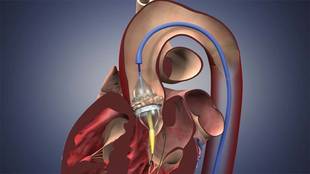
The feasibility of TAVI in symptomatic, severe bicuspid aortic valve was recently demonstrated in 11 patients, aged 52-90 years, with one case of malpositioning and late migration at 63 days, but no more aortic insufficiency than in tri-leaflet aortic valves (J. Am. Coll. Cardiol. Intv. 2010;3:1122-25).
"At the moment, young patients are not the ideal candidates for PARTNER or TAVI valves, but by the same token, we do see bicuspid valves in the 80-plus group and I think there are still some unknowns about how to use this device in that setting," said Dr. Herrmann, director of the interventional cardiology program and cardiac catheterization laboratories at the University of Pennsylvania Medical Center in Philadelphia.
Unknowns include the risk of malposition, long-term outcome, aortic insufficiency and the effect of calcification, and anatomy such as bulky leaflets and dilated root.
Successes with "valve-in-valve" implantations have been mostly transapical to date, Dr. Herrmann said at the meeting, cosponsored by the American Association for Thoracic Surgery and American College of Cardiology Foundation. Use of the transapical approach resulted in a success rate of 96% among 24 high-risk patients with failed bioprostheses (Circulation 2010;121;1848-57). The stroke rate was 4% and there were no postprocedure embolizations.
"This has clearly already altered the discussion we have with patients," Dr. Herrmann said. "I see patients in my office all the time who are 50 to 55 [years old] who want a bioprosthetic valve because they don’t want to be on Coumadin, but expect us to figure out how to put a transcatheter valve in them in 15 years.
"There are certainly unknowns, but it’s out there in the community and something we have to think about, so that we can give intelligent answers to these patients."
The overall TAVI landscape is expected to change even more in light of the European approval in recent weeks of two second-generation transapical TAVI devices – JenaValve Technology’s JenaValve both available in three sizes covering aortic annulus diameters from 21 mm to 27 mm.
In November, Medtronic also announced that its CoreValve system, currently limited to investigational use in the United States, has gained approval in Europe as the first transcatheter valve to be delivered using direct aortic access.
Dr. David H. Adams, coprincipal investigator of the CoreValve-Medtronic U.S. Pivotal trial and professor and chair of cardiothoracic surgery at Mount Sinai Medical Center in New York City, said alternative arterial access is being evaluated in both the ongoing CoreValve Extreme Risk and High Risk studies, which has implications because patients treated with apical access in the PARTNER (Placement of AoRTic TraNcathetER Valve) trial had more adverse events.

The use of smaller devices like Medtronic’s 18-French CoreValve prosthesis also has implications for clinical practice because the smaller system can access small femoral arteries and more diseased femoral vessels, he said. Among 126 patients with calcific aortic stenosis, including 54 patients with moderate surgical risk, the overall success rate with the 18-F CoreValve device was 83% and 30-day all-cause mortality 15% (J. Am. Coll. Cardiol. 2011;57:1650-7). All-cause mortality at 2 years was significantly improved among moderate-risk patients, but this was attributed to an increased risk of noncardiac mortality among high-risk patients.
The approval of the Edwards SAPIEN and CoreValve in Europe in 2007 has led to what some describe as a "runaway train" in Europe, where patients and physicians are voting with their feet. TAVI procedures made up just 1.2% of valve procedures in 2007, but are expected to exceed 30% in the first half of 2011 in some countries, Dr. Herrmann said. Symetis, which is launching a 150-patient pivotal trial of its new device in the U.S., estimates that the TAVI market will exceed $2 billion by 2014.
This explosive growth in Europe has been driven by reimbursement, and has resulted in a drift in TAVI usage among lower-risk patients. The mean logistic EuroScore now in some series has fallen below 15% or comparable to a Society of Thoracic Surgery (STS) score of 5%, Dr. Herrmann said.
Dr. Adams cautioned that it will be important to duplicate the rigorous risk assessment process of clinical trials at individual centers and urged clinical estimation of surgical mortality to take into account all incremental risks associated with a patient, as is being done in the CoreValve pivotal trial through the use of an incremental scoring system. For example, a 70-year-old patient with New York Heart Association Class III disease, a history of peripheral vascular disease, pulmonary hypertension, Child’s Class A liver dysfunction and one prior open heart surgery may have a STS mortality risk score of around 8%, but the total incremental mortality risk reaches close to 20% after accounting for the pulmonary hypertension and liver dysfunction, neither of which is part of the STS scoring system at this time.
When audience members asked about the learning curve for TAVI, Dr. Herrmann said it takes a minimum of 10 to 30 cases to even know what you’re doing, and that this number differs as to whether patients are treated with a transfemoral or transapical approach. He noted that Edwards Lifesciences and the U.S. Food and Drug Administration are setting up an intensive training program with simulations, an expert review of cases, and a proctoring system. Only four sites will be designated to train American physicians in the procedure.
Still, the challenge for Edwards and other companies that will follow will be enormous in terms of launching this technology outside the clinical trial setting, Dr. Adams said.
"You cannot overestimate the amount of company support you’re going to need to do these things safely," he said. "This is not a new widget you can pick up and get comfortable with in one or two cases like a new repair ring or new stent ... It’s a whole new process."
Dr. Herrmann reported financial relationships with Abbott, Edwards Lifesciences, Medtronic, St. Jude Medical, and Micro Interventional Devices. Dr. Adams reported royalties as an inventor for Edwards and Medtronic and serving as an uncompensated coprincipal investigator for the Medtronic CoreValve U.S. trial.
CHICAGO – Approval of the first transcatheter aortic valve will transform heart valve repair in the United States and prompt a range of inevitable clinical quandaries, experts suggest.
The Edwards SAPIEN transcatheter valve was approved Nov. 2 for inoperable patients with severe tricuspid aortic stenosis, but already transcatheter aortic valve implantation (TAVI) is being eyed for congenital bicuspid aortic valves and as an alternative strategy for patients with degenerating bioprostheses, Dr. Howard Herrmann said at the 2011 Heart Valve Summit.
The feasibility of TAVI in symptomatic, severe bicuspid aortic valve was recently demonstrated in 11 patients, aged 52-90 years, with one case of malpositioning and late migration at 63 days, but no more aortic insufficiency than in tri-leaflet aortic valves (J. Am. Coll. Cardiol. Intv. 2010;3:1122-25).
"At the moment, young patients are not the ideal candidates for PARTNER or TAVI valves, but by the same token, we do see bicuspid valves in the 80-plus group and I think there are still some unknowns about how to use this device in that setting," said Dr. Herrmann, director of the interventional cardiology program and cardiac catheterization laboratories at the University of Pennsylvania Medical Center in Philadelphia.
Unknowns include the risk of malposition, long-term outcome, aortic insufficiency and the effect of calcification, and anatomy such as bulky leaflets and dilated root.
Successes with "valve-in-valve" implantations have been mostly transapical to date, Dr. Herrmann said at the meeting, cosponsored by the American Association for Thoracic Surgery and American College of Cardiology Foundation. Use of the transapical approach resulted in a success rate of 96% among 24 high-risk patients with failed bioprostheses (Circulation 2010;121;1848-57). The stroke rate was 4% and there were no postprocedure embolizations.
"This has clearly already altered the discussion we have with patients," Dr. Herrmann said. "I see patients in my office all the time who are 50 to 55 [years old] who want a bioprosthetic valve because they don’t want to be on Coumadin, but expect us to figure out how to put a transcatheter valve in them in 15 years.
"There are certainly unknowns, but it’s out there in the community and something we have to think about, so that we can give intelligent answers to these patients."
The overall TAVI landscape is expected to change even more in light of the European approval in recent weeks of two second-generation transapical TAVI devices – JenaValve Technology’s JenaValve both available in three sizes covering aortic annulus diameters from 21 mm to 27 mm.
In November, Medtronic also announced that its CoreValve system, currently limited to investigational use in the United States, has gained approval in Europe as the first transcatheter valve to be delivered using direct aortic access.
Dr. David H. Adams, coprincipal investigator of the CoreValve-Medtronic U.S. Pivotal trial and professor and chair of cardiothoracic surgery at Mount Sinai Medical Center in New York City, said alternative arterial access is being evaluated in both the ongoing CoreValve Extreme Risk and High Risk studies, which has implications because patients treated with apical access in the PARTNER (Placement of AoRTic TraNcathetER Valve) trial had more adverse events.
The use of smaller devices like Medtronic’s 18-French CoreValve prosthesis also has implications for clinical practice because the smaller system can access small femoral arteries and more diseased femoral vessels, he said. Among 126 patients with calcific aortic stenosis, including 54 patients with moderate surgical risk, the overall success rate with the 18-F CoreValve device was 83% and 30-day all-cause mortality 15% (J. Am. Coll. Cardiol. 2011;57:1650-7). All-cause mortality at 2 years was significantly improved among moderate-risk patients, but this was attributed to an increased risk of noncardiac mortality among high-risk patients.
The approval of the Edwards SAPIEN and CoreValve in Europe in 2007 has led to what some describe as a "runaway train" in Europe, where patients and physicians are voting with their feet. TAVI procedures made up just 1.2% of valve procedures in 2007, but are expected to exceed 30% in the first half of 2011 in some countries, Dr. Herrmann said. Symetis, which is launching a 150-patient pivotal trial of its new device in the U.S., estimates that the TAVI market will exceed $2 billion by 2014.
This explosive growth in Europe has been driven by reimbursement, and has resulted in a drift in TAVI usage among lower-risk patients. The mean logistic EuroScore now in some series has fallen below 15% or comparable to a Society of Thoracic Surgery (STS) score of 5%, Dr. Herrmann said.
Dr. Adams cautioned that it will be important to duplicate the rigorous risk assessment process of clinical trials at individual centers and urged clinical estimation of surgical mortality to take into account all incremental risks associated with a patient, as is being done in the CoreValve pivotal trial through the use of an incremental scoring system. For example, a 70-year-old patient with New York Heart Association Class III disease, a history of peripheral vascular disease, pulmonary hypertension, Child’s Class A liver dysfunction and one prior open heart surgery may have a STS mortality risk score of around 8%, but the total incremental mortality risk reaches close to 20% after accounting for the pulmonary hypertension and liver dysfunction, neither of which is part of the STS scoring system at this time.
When audience members asked about the learning curve for TAVI, Dr. Herrmann said it takes a minimum of 10 to 30 cases to even know what you’re doing, and that this number differs as to whether patients are treated with a transfemoral or transapical approach. He noted that Edwards Lifesciences and the U.S. Food and Drug Administration are setting up an intensive training program with simulations, an expert review of cases, and a proctoring system. Only four sites will be designated to train American physicians in the procedure.
Still, the challenge for Edwards and other companies that will follow will be enormous in terms of launching this technology outside the clinical trial setting, Dr. Adams said.
"You cannot overestimate the amount of company support you’re going to need to do these things safely," he said. "This is not a new widget you can pick up and get comfortable with in one or two cases like a new repair ring or new stent ... It’s a whole new process."
Dr. Herrmann reported financial relationships with Abbott, Edwards Lifesciences, Medtronic, St. Jude Medical, and Micro Interventional Devices. Dr. Adams reported royalties as an inventor for Edwards and Medtronic and serving as an uncompensated coprincipal investigator for the Medtronic CoreValve U.S. trial.
CHICAGO – Approval of the first transcatheter aortic valve will transform heart valve repair in the United States and prompt a range of inevitable clinical quandaries, experts suggest.
The Edwards SAPIEN transcatheter valve was approved Nov. 2 for inoperable patients with severe tricuspid aortic stenosis, but already transcatheter aortic valve implantation (TAVI) is being eyed for congenital bicuspid aortic valves and as an alternative strategy for patients with degenerating bioprostheses, Dr. Howard Herrmann said at the 2011 Heart Valve Summit.
The feasibility of TAVI in symptomatic, severe bicuspid aortic valve was recently demonstrated in 11 patients, aged 52-90 years, with one case of malpositioning and late migration at 63 days, but no more aortic insufficiency than in tri-leaflet aortic valves (J. Am. Coll. Cardiol. Intv. 2010;3:1122-25).
"At the moment, young patients are not the ideal candidates for PARTNER or TAVI valves, but by the same token, we do see bicuspid valves in the 80-plus group and I think there are still some unknowns about how to use this device in that setting," said Dr. Herrmann, director of the interventional cardiology program and cardiac catheterization laboratories at the University of Pennsylvania Medical Center in Philadelphia.
Unknowns include the risk of malposition, long-term outcome, aortic insufficiency and the effect of calcification, and anatomy such as bulky leaflets and dilated root.
Successes with "valve-in-valve" implantations have been mostly transapical to date, Dr. Herrmann said at the meeting, cosponsored by the American Association for Thoracic Surgery and American College of Cardiology Foundation. Use of the transapical approach resulted in a success rate of 96% among 24 high-risk patients with failed bioprostheses (Circulation 2010;121;1848-57). The stroke rate was 4% and there were no postprocedure embolizations.
"This has clearly already altered the discussion we have with patients," Dr. Herrmann said. "I see patients in my office all the time who are 50 to 55 [years old] who want a bioprosthetic valve because they don’t want to be on Coumadin, but expect us to figure out how to put a transcatheter valve in them in 15 years.
"There are certainly unknowns, but it’s out there in the community and something we have to think about, so that we can give intelligent answers to these patients."
The overall TAVI landscape is expected to change even more in light of the European approval in recent weeks of two second-generation transapical TAVI devices – JenaValve Technology’s JenaValve both available in three sizes covering aortic annulus diameters from 21 mm to 27 mm.
In November, Medtronic also announced that its CoreValve system, currently limited to investigational use in the United States, has gained approval in Europe as the first transcatheter valve to be delivered using direct aortic access.
Dr. David H. Adams, coprincipal investigator of the CoreValve-Medtronic U.S. Pivotal trial and professor and chair of cardiothoracic surgery at Mount Sinai Medical Center in New York City, said alternative arterial access is being evaluated in both the ongoing CoreValve Extreme Risk and High Risk studies, which has implications because patients treated with apical access in the PARTNER (Placement of AoRTic TraNcathetER Valve) trial had more adverse events.
The use of smaller devices like Medtronic’s 18-French CoreValve prosthesis also has implications for clinical practice because the smaller system can access small femoral arteries and more diseased femoral vessels, he said. Among 126 patients with calcific aortic stenosis, including 54 patients with moderate surgical risk, the overall success rate with the 18-F CoreValve device was 83% and 30-day all-cause mortality 15% (J. Am. Coll. Cardiol. 2011;57:1650-7). All-cause mortality at 2 years was significantly improved among moderate-risk patients, but this was attributed to an increased risk of noncardiac mortality among high-risk patients.
The approval of the Edwards SAPIEN and CoreValve in Europe in 2007 has led to what some describe as a "runaway train" in Europe, where patients and physicians are voting with their feet. TAVI procedures made up just 1.2% of valve procedures in 2007, but are expected to exceed 30% in the first half of 2011 in some countries, Dr. Herrmann said. Symetis, which is launching a 150-patient pivotal trial of its new device in the U.S., estimates that the TAVI market will exceed $2 billion by 2014.
This explosive growth in Europe has been driven by reimbursement, and has resulted in a drift in TAVI usage among lower-risk patients. The mean logistic EuroScore now in some series has fallen below 15% or comparable to a Society of Thoracic Surgery (STS) score of 5%, Dr. Herrmann said.
Dr. Adams cautioned that it will be important to duplicate the rigorous risk assessment process of clinical trials at individual centers and urged clinical estimation of surgical mortality to take into account all incremental risks associated with a patient, as is being done in the CoreValve pivotal trial through the use of an incremental scoring system. For example, a 70-year-old patient with New York Heart Association Class III disease, a history of peripheral vascular disease, pulmonary hypertension, Child’s Class A liver dysfunction and one prior open heart surgery may have a STS mortality risk score of around 8%, but the total incremental mortality risk reaches close to 20% after accounting for the pulmonary hypertension and liver dysfunction, neither of which is part of the STS scoring system at this time.
When audience members asked about the learning curve for TAVI, Dr. Herrmann said it takes a minimum of 10 to 30 cases to even know what you’re doing, and that this number differs as to whether patients are treated with a transfemoral or transapical approach. He noted that Edwards Lifesciences and the U.S. Food and Drug Administration are setting up an intensive training program with simulations, an expert review of cases, and a proctoring system. Only four sites will be designated to train American physicians in the procedure.
Still, the challenge for Edwards and other companies that will follow will be enormous in terms of launching this technology outside the clinical trial setting, Dr. Adams said.
"You cannot overestimate the amount of company support you’re going to need to do these things safely," he said. "This is not a new widget you can pick up and get comfortable with in one or two cases like a new repair ring or new stent ... It’s a whole new process."
Dr. Herrmann reported financial relationships with Abbott, Edwards Lifesciences, Medtronic, St. Jude Medical, and Micro Interventional Devices. Dr. Adams reported royalties as an inventor for Edwards and Medtronic and serving as an uncompensated coprincipal investigator for the Medtronic CoreValve U.S. trial.
EXPERT ANALYSIS FROM THE 2011 HEART VALVE SUMMIT