User login
AVAHO
div[contains(@class, 'header__large-screen')]
div[contains(@class, 'read-next-article')]
div[contains(@class, 'nav-primary')]
nav[contains(@class, 'nav-primary')]
section[contains(@class, 'footer-nav-section-wrapper')]
footer[@id='footer']
div[contains(@class, 'main-prefix')]
section[contains(@class, 'nav-hidden')]
div[contains(@class, 'ce-card-content')]
nav[contains(@class, 'nav-ce-stack')]

KRAS inhibitor improved survival in phase 2 lung cancer trial
The first KRAS inhibitor approved for the treatment of lung cancer provided a clinically meaningful overall survival benefit in an updated analysis of a phase 2 study.
Treatment with sotorasib yielded a median overall survival (OS) of 12.5 months in patients with previously treated KRAS p.G12C-mutated non-small cell lung cancer (NSCLC), according to an analysis of the phase 2 CodeBreaK 100 trial data presented at the American Society of Clinical Oncology Annual Meeting.
Median progression-free survival (PFS) was 6.8 months in this update, which included a median follow-up of more than 15 months, according to investigator Ferdinandos Skoulidis, MD, PhD, assistant professor of thoracic/head and neck medical oncology at the University of Texas MD Anderson Cancer Center in Houston.
Efficacy responses
The confirmed objective response rate was 37.1%, including a 3.2% complete response rate and a median duration of response of 11.1 months, according to the report by Dr. Skoulidis.
In exploratory analyses, the benefit of sotorasib was consistent across patient subgroups, Dr. Skoulidis said in his presentation (Abstract 9003).
In particular, efficacy was observed in subgroups with co-occurring mutations in TP53, STK11, and KEAP1, which are molecular indicators of suboptimal outcomes on standard systemic treatments, according to Dr. Skoulidis.
This update on the registrational phase 2 CodeBreaK100 trial, published concurrently in the New England Journal of Medicine , came just one week after the U.S. Food and Drug Administration (FDA) granted accelerated approval to sotorasib.
Sotorasib was approved for the treatment of patients with previously treated KRAS G12C‑mutated locally advanced or metastatic NSCLC on the basis of previously reported results from CodeBreaK100.
This sotorasib indication represents a “historic milestone,” Dr. Skoulidis said in an interview.
No previously studied selective KRAS inhibitor has been approved despite scientific research efforts that stretch back nearly four decades, he explained.
“In a way, one can say that we have dealt KRAS-mutant lung cancer a knockdown blow, however, I should point out that the fight is not over,” he added.
“These clinical results will no doubt spearhead and galvanize further efforts to develop even more effective therapeutic combinations in the future, as well as identify and either forestall or overcome the eventual development of acquired resistance,” he said.
Only 1 out of 8 patients
The KRAS p.G12C mutation is present in about 13% of lung adenocarcinomas, or about one in every eight patients with nonsquamous NSCLC, Dr. Skoulidis said in the interview.
“We are estimating that this is in the region of 13,000 patients newly diagnosed every year in the U.S., and approximately 13,000 patients or so that are currently being treated in the second- or third-line setting,” he said.
The CodeBreaK100 trial included 126 patients with locally advanced or metastatic NSCLC and KRAS p.G12C mutation who had progressed on prior systemic therapies. About 43% had one prior line of treatment, while 35% had two lines, and 22% had three lines. A total of 81% had previously received both platinum-based chemotherapy and PD-1/PD-L1 axis inhibitors.
Most treatment-related adverse events in the study were grade 1-2 and generally manageable, according to Dr. Skoulidis. About 20% of patients experienced grade 3 treatment-related adverse events, which were mostly diarrhea or increases in aspartate aminotransferase and alanine aminotransferase levels. A grade 4 treatment-related adverse event, pneumonitis and dyspnea, was reported in one patient or approximately 1%.
Confirmatory trial
Although CodeBreak100 is not a randomized trial, the median OS of 12.5 months compares favorably to median OS times in the range of 7.9-10.3 months reported in randomized phase 3 clinical trials and subgroup analysis of randomized phase 3 trials of docetaxel for patients with KRAS-mutant lung adenocarcinoma, Dr. Skoulidis said in a question-and-answer session.
A confirmatory phase 3 CodeBreaK200 trial of sotorasib versus docetaxel in patients with previously treated KRAS p.G12C-mutated NSCLC is underway. That trial is evaluating PFS as a primary endpoint and OS as a secondary endpoint.
“If the same magnitude of benefit, 12.5 months median overall survival, is confirmed in the larger phase 3 clinical trial, as a clinician I would consider that beneficial for patients, compared to the standard of care,” Dr. Skoulidis said during the session.
Mature data
The updated analysis of the phase 2 CodeBreaK100 study is notable for its mature OS data, updated safety and the first molecular subgroup analyses, according to discussant Christine Marie Lovly, MD, PhD, of the division of hematology-oncology at Vanderbilt University Medical Center in Nashville.
“The objective response rate was 37.1%,” she added. “This is a little bit lower than we’re used to for targeted therapies, but remember, this is a different mutation and a very different class of drugs.”
The KRAS G12C inhibitors, several of which are under clinical development, are not tyrosine kinase inhibitors (TKIs), but rather allele-specific inhibitors that target mutant KRAS, trapping it in an inactive conformation, she explained.
Dr. Lovly referenced the exploratory analyses demonstrating efficacy in molecularly defined subgroups, calling it “interesting” that there was no difference in objective response rate between TP53 wild type and mutant tumors.
“We do have data that mutant TP53 seems to confer inferior outcomes for EGFR TKI-directed therapy in patients with EGFR-mutant lung cancer,” she said.
CodeBreaK100 was supported by Amgen, Inc. and partly by a National Institutes of Health Cancer Center Support Grant at Memorial Sloan Kettering Cancer Center.
Dr. Skoulidis reported honoraria from Bristol-Myers Squibb; research funding from AIMM Therapeutics and Amgen; and travel, accommodations, or expenses from Tango Therapeutics. Dr. Lovly reported disclosures related to Amgen, AstraZeneca, Genentech, Novartis, and Pfizer, among others.
The first KRAS inhibitor approved for the treatment of lung cancer provided a clinically meaningful overall survival benefit in an updated analysis of a phase 2 study.
Treatment with sotorasib yielded a median overall survival (OS) of 12.5 months in patients with previously treated KRAS p.G12C-mutated non-small cell lung cancer (NSCLC), according to an analysis of the phase 2 CodeBreaK 100 trial data presented at the American Society of Clinical Oncology Annual Meeting.
Median progression-free survival (PFS) was 6.8 months in this update, which included a median follow-up of more than 15 months, according to investigator Ferdinandos Skoulidis, MD, PhD, assistant professor of thoracic/head and neck medical oncology at the University of Texas MD Anderson Cancer Center in Houston.
Efficacy responses
The confirmed objective response rate was 37.1%, including a 3.2% complete response rate and a median duration of response of 11.1 months, according to the report by Dr. Skoulidis.
In exploratory analyses, the benefit of sotorasib was consistent across patient subgroups, Dr. Skoulidis said in his presentation (Abstract 9003).
In particular, efficacy was observed in subgroups with co-occurring mutations in TP53, STK11, and KEAP1, which are molecular indicators of suboptimal outcomes on standard systemic treatments, according to Dr. Skoulidis.
This update on the registrational phase 2 CodeBreaK100 trial, published concurrently in the New England Journal of Medicine , came just one week after the U.S. Food and Drug Administration (FDA) granted accelerated approval to sotorasib.
Sotorasib was approved for the treatment of patients with previously treated KRAS G12C‑mutated locally advanced or metastatic NSCLC on the basis of previously reported results from CodeBreaK100.
This sotorasib indication represents a “historic milestone,” Dr. Skoulidis said in an interview.
No previously studied selective KRAS inhibitor has been approved despite scientific research efforts that stretch back nearly four decades, he explained.
“In a way, one can say that we have dealt KRAS-mutant lung cancer a knockdown blow, however, I should point out that the fight is not over,” he added.
“These clinical results will no doubt spearhead and galvanize further efforts to develop even more effective therapeutic combinations in the future, as well as identify and either forestall or overcome the eventual development of acquired resistance,” he said.
Only 1 out of 8 patients
The KRAS p.G12C mutation is present in about 13% of lung adenocarcinomas, or about one in every eight patients with nonsquamous NSCLC, Dr. Skoulidis said in the interview.
“We are estimating that this is in the region of 13,000 patients newly diagnosed every year in the U.S., and approximately 13,000 patients or so that are currently being treated in the second- or third-line setting,” he said.
The CodeBreaK100 trial included 126 patients with locally advanced or metastatic NSCLC and KRAS p.G12C mutation who had progressed on prior systemic therapies. About 43% had one prior line of treatment, while 35% had two lines, and 22% had three lines. A total of 81% had previously received both platinum-based chemotherapy and PD-1/PD-L1 axis inhibitors.
Most treatment-related adverse events in the study were grade 1-2 and generally manageable, according to Dr. Skoulidis. About 20% of patients experienced grade 3 treatment-related adverse events, which were mostly diarrhea or increases in aspartate aminotransferase and alanine aminotransferase levels. A grade 4 treatment-related adverse event, pneumonitis and dyspnea, was reported in one patient or approximately 1%.
Confirmatory trial
Although CodeBreak100 is not a randomized trial, the median OS of 12.5 months compares favorably to median OS times in the range of 7.9-10.3 months reported in randomized phase 3 clinical trials and subgroup analysis of randomized phase 3 trials of docetaxel for patients with KRAS-mutant lung adenocarcinoma, Dr. Skoulidis said in a question-and-answer session.
A confirmatory phase 3 CodeBreaK200 trial of sotorasib versus docetaxel in patients with previously treated KRAS p.G12C-mutated NSCLC is underway. That trial is evaluating PFS as a primary endpoint and OS as a secondary endpoint.
“If the same magnitude of benefit, 12.5 months median overall survival, is confirmed in the larger phase 3 clinical trial, as a clinician I would consider that beneficial for patients, compared to the standard of care,” Dr. Skoulidis said during the session.
Mature data
The updated analysis of the phase 2 CodeBreaK100 study is notable for its mature OS data, updated safety and the first molecular subgroup analyses, according to discussant Christine Marie Lovly, MD, PhD, of the division of hematology-oncology at Vanderbilt University Medical Center in Nashville.
“The objective response rate was 37.1%,” she added. “This is a little bit lower than we’re used to for targeted therapies, but remember, this is a different mutation and a very different class of drugs.”
The KRAS G12C inhibitors, several of which are under clinical development, are not tyrosine kinase inhibitors (TKIs), but rather allele-specific inhibitors that target mutant KRAS, trapping it in an inactive conformation, she explained.
Dr. Lovly referenced the exploratory analyses demonstrating efficacy in molecularly defined subgroups, calling it “interesting” that there was no difference in objective response rate between TP53 wild type and mutant tumors.
“We do have data that mutant TP53 seems to confer inferior outcomes for EGFR TKI-directed therapy in patients with EGFR-mutant lung cancer,” she said.
CodeBreaK100 was supported by Amgen, Inc. and partly by a National Institutes of Health Cancer Center Support Grant at Memorial Sloan Kettering Cancer Center.
Dr. Skoulidis reported honoraria from Bristol-Myers Squibb; research funding from AIMM Therapeutics and Amgen; and travel, accommodations, or expenses from Tango Therapeutics. Dr. Lovly reported disclosures related to Amgen, AstraZeneca, Genentech, Novartis, and Pfizer, among others.
The first KRAS inhibitor approved for the treatment of lung cancer provided a clinically meaningful overall survival benefit in an updated analysis of a phase 2 study.
Treatment with sotorasib yielded a median overall survival (OS) of 12.5 months in patients with previously treated KRAS p.G12C-mutated non-small cell lung cancer (NSCLC), according to an analysis of the phase 2 CodeBreaK 100 trial data presented at the American Society of Clinical Oncology Annual Meeting.
Median progression-free survival (PFS) was 6.8 months in this update, which included a median follow-up of more than 15 months, according to investigator Ferdinandos Skoulidis, MD, PhD, assistant professor of thoracic/head and neck medical oncology at the University of Texas MD Anderson Cancer Center in Houston.
Efficacy responses
The confirmed objective response rate was 37.1%, including a 3.2% complete response rate and a median duration of response of 11.1 months, according to the report by Dr. Skoulidis.
In exploratory analyses, the benefit of sotorasib was consistent across patient subgroups, Dr. Skoulidis said in his presentation (Abstract 9003).
In particular, efficacy was observed in subgroups with co-occurring mutations in TP53, STK11, and KEAP1, which are molecular indicators of suboptimal outcomes on standard systemic treatments, according to Dr. Skoulidis.
This update on the registrational phase 2 CodeBreaK100 trial, published concurrently in the New England Journal of Medicine , came just one week after the U.S. Food and Drug Administration (FDA) granted accelerated approval to sotorasib.
Sotorasib was approved for the treatment of patients with previously treated KRAS G12C‑mutated locally advanced or metastatic NSCLC on the basis of previously reported results from CodeBreaK100.
This sotorasib indication represents a “historic milestone,” Dr. Skoulidis said in an interview.
No previously studied selective KRAS inhibitor has been approved despite scientific research efforts that stretch back nearly four decades, he explained.
“In a way, one can say that we have dealt KRAS-mutant lung cancer a knockdown blow, however, I should point out that the fight is not over,” he added.
“These clinical results will no doubt spearhead and galvanize further efforts to develop even more effective therapeutic combinations in the future, as well as identify and either forestall or overcome the eventual development of acquired resistance,” he said.
Only 1 out of 8 patients
The KRAS p.G12C mutation is present in about 13% of lung adenocarcinomas, or about one in every eight patients with nonsquamous NSCLC, Dr. Skoulidis said in the interview.
“We are estimating that this is in the region of 13,000 patients newly diagnosed every year in the U.S., and approximately 13,000 patients or so that are currently being treated in the second- or third-line setting,” he said.
The CodeBreaK100 trial included 126 patients with locally advanced or metastatic NSCLC and KRAS p.G12C mutation who had progressed on prior systemic therapies. About 43% had one prior line of treatment, while 35% had two lines, and 22% had three lines. A total of 81% had previously received both platinum-based chemotherapy and PD-1/PD-L1 axis inhibitors.
Most treatment-related adverse events in the study were grade 1-2 and generally manageable, according to Dr. Skoulidis. About 20% of patients experienced grade 3 treatment-related adverse events, which were mostly diarrhea or increases in aspartate aminotransferase and alanine aminotransferase levels. A grade 4 treatment-related adverse event, pneumonitis and dyspnea, was reported in one patient or approximately 1%.
Confirmatory trial
Although CodeBreak100 is not a randomized trial, the median OS of 12.5 months compares favorably to median OS times in the range of 7.9-10.3 months reported in randomized phase 3 clinical trials and subgroup analysis of randomized phase 3 trials of docetaxel for patients with KRAS-mutant lung adenocarcinoma, Dr. Skoulidis said in a question-and-answer session.
A confirmatory phase 3 CodeBreaK200 trial of sotorasib versus docetaxel in patients with previously treated KRAS p.G12C-mutated NSCLC is underway. That trial is evaluating PFS as a primary endpoint and OS as a secondary endpoint.
“If the same magnitude of benefit, 12.5 months median overall survival, is confirmed in the larger phase 3 clinical trial, as a clinician I would consider that beneficial for patients, compared to the standard of care,” Dr. Skoulidis said during the session.
Mature data
The updated analysis of the phase 2 CodeBreaK100 study is notable for its mature OS data, updated safety and the first molecular subgroup analyses, according to discussant Christine Marie Lovly, MD, PhD, of the division of hematology-oncology at Vanderbilt University Medical Center in Nashville.
“The objective response rate was 37.1%,” she added. “This is a little bit lower than we’re used to for targeted therapies, but remember, this is a different mutation and a very different class of drugs.”
The KRAS G12C inhibitors, several of which are under clinical development, are not tyrosine kinase inhibitors (TKIs), but rather allele-specific inhibitors that target mutant KRAS, trapping it in an inactive conformation, she explained.
Dr. Lovly referenced the exploratory analyses demonstrating efficacy in molecularly defined subgroups, calling it “interesting” that there was no difference in objective response rate between TP53 wild type and mutant tumors.
“We do have data that mutant TP53 seems to confer inferior outcomes for EGFR TKI-directed therapy in patients with EGFR-mutant lung cancer,” she said.
CodeBreaK100 was supported by Amgen, Inc. and partly by a National Institutes of Health Cancer Center Support Grant at Memorial Sloan Kettering Cancer Center.
Dr. Skoulidis reported honoraria from Bristol-Myers Squibb; research funding from AIMM Therapeutics and Amgen; and travel, accommodations, or expenses from Tango Therapeutics. Dr. Lovly reported disclosures related to Amgen, AstraZeneca, Genentech, Novartis, and Pfizer, among others.
FROM ASCO 2021
NSCLC: Immune-related AEs during checkpoint inhibitor therapy may predict outcomes
Experiencing an immune-related adverse event during checkpoint inhibitor treatment may predict outcomes in patients with non-small cell lung cancer, exploratory analyses of phase 3 trials suggest.
Immune-related adverse events (irAEs) were tied to longer overall survival (OS) in exploratory pooled analyses of three phase 3 clinical trials evaluating atezolizumab-based regimens, according to investigator Mark A. Socinski, MD, of AdventHealth Cancer Institute, Orlando, Fla.
Median OS approached 26 months for patients who received first-line atezolizumab and experienced an irAE, compared with just 13 months for those who did not experience an irAE, according to results reported at the American Society of Clinical Oncology Annual Meeting (Abstract 9002).
Atezolizumab-treated patients with grade 3 or greater irAEs had the shortest OS, shorter than those atezolizumab-treated patients who experienced grade 1-2 irAEs or no irAEs at all. That short OS may be due to treatment interruptions or discontinuations, said Dr. Socinski.
“Data from these analyses suggest an association between irAEs and efficacy in patients with [non-small cell cancer] NSCLC,” he stated in his presentation of the results.
A lot more to learn about irAEs
Similar linkages between irAEs and outcomes were observed in pooled analyses of patients enrolled in the control arms of the phase 3 trials, with a median OS of about 20 months for control patients experiencing an irAE, versus about 13 months for those who did not.
That linkage in the control arm prompted a question from an ASCO attendee about why an effect of irAEs, commonly associated with immune checkpoint inhibitor therapy, would be evident in analyses of patients who did not receive those agents.
In his response, Dr. Socinski characterized the finding as “a surprise” and said the finding may either reflect how adverse events are characterized or how chemotherapy impacts the immune system.
“I don’t know that our definition of irAEs is perfect,” he said, “and maybe we don’t understand what impact chemotherapy may have on the immune system, and may actually engender what historically we’ve always seen as an adverse event, but didn’t necessarily classify as an immune-related adverse event.”
More work is needed to better understand the connection between irAES and outcomes, and whether anything can be done as a result of that improved understanding, said discussant Mary Weber Redman, PhD.
“The question is, ‘what is actionable?’” added Dr. Redman, a biostatistician at the Fred Hutchinson Cancer Research Center, Seattle.
A firmer understanding of the relationship between irAEs and outcomes could change how clinicians monitor patients for irAEs, lead to better prediction of which patients may experience higher grade irAEs, and ultimately impact treatment selection potentially to avoid those higher grade events, Dr. Redman said in her remarks.
“Doing these types of analyses are quite important, because we have to look at the breadth of information that we have to be able to interpret that and think about what are future questions,” she said in the question-and-answer session accompanying Dr. Socinski’s presentation.
“I think the key is that we shouldn’t use these analyses to be definitive, but we should use them as to be hypothesis generating,” she added.
More evidence to link irAEs and outcomes
Immune-related AEs caused by off-target immune and inflammatory activity have been reported in up to 80% of patients receiving immune checkpoint inhibitors as monotherapy and up to 95% in combination regimens, Dr. Socinski said in his presentation.
“Increasing evidence suggests that the occurrence of immune-related adverse events with PD-L1 or PD-1 inhibitor therapy may be predictive of improved outcomes in cancers such as NSCLC, “ he added.
In their exploratory pooled analyses, Dr. Socinski and co-investigators looked at data from the phase 3 IMpower130 and IMpower132 trials, which evaluated first-line atezolizumab and chemotherapy for NSCLC, and the phase 3 IMpower150 trial, which evaluated atezolizumab plus chemotherapy with or without bevacizumab.
In all, they analyzed data for 1,557 atezolizumab-treated patients, and 900 patients who had been in the control arms of the studies.
Forty-eight percent of atezolizumab-treated patients experienced irAEs of any grade, while 11% experienced irAEs of grade 3-5, according to the presented data. In the control arm, 32% experienced irAEs of any grade and 5% experienced grade 3-5 irAEs.
The most common irAEs of any grade were rash, hepatitis, and hypothyroidism, occurring in 28%, 15%, and 12% of atezolizumab-treated patients, respectively.
Median OS in the atezolizumab arm was 25.7 months for patients with irAEs and 13.0 for patients with no irAEs, with a hazard ratio (HR) of 0.69 using a time-dependent Cox model.
Median OS in the control arm was 20.2 months for patients with irAEs and 12.8 months for patients with no irAEs, with an HR of 0.82.
The overall response rate (ORR) in the atezolizumab arm was 61.1% for patients with irAEs and 37.2% for those without irAEs; in the control arm, ORR was 42.2% for patients with irAEs and 34.0% for those with no irAEs.
Atezolizumab-treated patients who experienced grade 3-5 irAEs had the shortest OS, according to Dr. Socinski. The HRs for OS at 1, 3, 6, and 12 months in atezolizumab-treated patients with grade 3-5 irAEs (compared with those without irAEs) ranged from 1.25 to 0.87. By contrast, HRs at those time points for patients with grade 1-2 irAEs ranged from 0.78 to 0.72, Dr. Socinski said.
Dr. Socinski reported disclosures related to AstraZeneca/MedImmune, Bayer, Boehringer Ingelheim, Bristol-Myers Squibb, Celgene, Genentech, Guardant Health, Janssen, Lilly, Merck, Novartis, Roche/Genentech, and Spectrum Pharmaceuticals. Dr. Redman reported a consulting or advisory role with AstraZeneca.
Experiencing an immune-related adverse event during checkpoint inhibitor treatment may predict outcomes in patients with non-small cell lung cancer, exploratory analyses of phase 3 trials suggest.
Immune-related adverse events (irAEs) were tied to longer overall survival (OS) in exploratory pooled analyses of three phase 3 clinical trials evaluating atezolizumab-based regimens, according to investigator Mark A. Socinski, MD, of AdventHealth Cancer Institute, Orlando, Fla.
Median OS approached 26 months for patients who received first-line atezolizumab and experienced an irAE, compared with just 13 months for those who did not experience an irAE, according to results reported at the American Society of Clinical Oncology Annual Meeting (Abstract 9002).
Atezolizumab-treated patients with grade 3 or greater irAEs had the shortest OS, shorter than those atezolizumab-treated patients who experienced grade 1-2 irAEs or no irAEs at all. That short OS may be due to treatment interruptions or discontinuations, said Dr. Socinski.
“Data from these analyses suggest an association between irAEs and efficacy in patients with [non-small cell cancer] NSCLC,” he stated in his presentation of the results.
A lot more to learn about irAEs
Similar linkages between irAEs and outcomes were observed in pooled analyses of patients enrolled in the control arms of the phase 3 trials, with a median OS of about 20 months for control patients experiencing an irAE, versus about 13 months for those who did not.
That linkage in the control arm prompted a question from an ASCO attendee about why an effect of irAEs, commonly associated with immune checkpoint inhibitor therapy, would be evident in analyses of patients who did not receive those agents.
In his response, Dr. Socinski characterized the finding as “a surprise” and said the finding may either reflect how adverse events are characterized or how chemotherapy impacts the immune system.
“I don’t know that our definition of irAEs is perfect,” he said, “and maybe we don’t understand what impact chemotherapy may have on the immune system, and may actually engender what historically we’ve always seen as an adverse event, but didn’t necessarily classify as an immune-related adverse event.”
More work is needed to better understand the connection between irAES and outcomes, and whether anything can be done as a result of that improved understanding, said discussant Mary Weber Redman, PhD.
“The question is, ‘what is actionable?’” added Dr. Redman, a biostatistician at the Fred Hutchinson Cancer Research Center, Seattle.
A firmer understanding of the relationship between irAEs and outcomes could change how clinicians monitor patients for irAEs, lead to better prediction of which patients may experience higher grade irAEs, and ultimately impact treatment selection potentially to avoid those higher grade events, Dr. Redman said in her remarks.
“Doing these types of analyses are quite important, because we have to look at the breadth of information that we have to be able to interpret that and think about what are future questions,” she said in the question-and-answer session accompanying Dr. Socinski’s presentation.
“I think the key is that we shouldn’t use these analyses to be definitive, but we should use them as to be hypothesis generating,” she added.
More evidence to link irAEs and outcomes
Immune-related AEs caused by off-target immune and inflammatory activity have been reported in up to 80% of patients receiving immune checkpoint inhibitors as monotherapy and up to 95% in combination regimens, Dr. Socinski said in his presentation.
“Increasing evidence suggests that the occurrence of immune-related adverse events with PD-L1 or PD-1 inhibitor therapy may be predictive of improved outcomes in cancers such as NSCLC, “ he added.
In their exploratory pooled analyses, Dr. Socinski and co-investigators looked at data from the phase 3 IMpower130 and IMpower132 trials, which evaluated first-line atezolizumab and chemotherapy for NSCLC, and the phase 3 IMpower150 trial, which evaluated atezolizumab plus chemotherapy with or without bevacizumab.
In all, they analyzed data for 1,557 atezolizumab-treated patients, and 900 patients who had been in the control arms of the studies.
Forty-eight percent of atezolizumab-treated patients experienced irAEs of any grade, while 11% experienced irAEs of grade 3-5, according to the presented data. In the control arm, 32% experienced irAEs of any grade and 5% experienced grade 3-5 irAEs.
The most common irAEs of any grade were rash, hepatitis, and hypothyroidism, occurring in 28%, 15%, and 12% of atezolizumab-treated patients, respectively.
Median OS in the atezolizumab arm was 25.7 months for patients with irAEs and 13.0 for patients with no irAEs, with a hazard ratio (HR) of 0.69 using a time-dependent Cox model.
Median OS in the control arm was 20.2 months for patients with irAEs and 12.8 months for patients with no irAEs, with an HR of 0.82.
The overall response rate (ORR) in the atezolizumab arm was 61.1% for patients with irAEs and 37.2% for those without irAEs; in the control arm, ORR was 42.2% for patients with irAEs and 34.0% for those with no irAEs.
Atezolizumab-treated patients who experienced grade 3-5 irAEs had the shortest OS, according to Dr. Socinski. The HRs for OS at 1, 3, 6, and 12 months in atezolizumab-treated patients with grade 3-5 irAEs (compared with those without irAEs) ranged from 1.25 to 0.87. By contrast, HRs at those time points for patients with grade 1-2 irAEs ranged from 0.78 to 0.72, Dr. Socinski said.
Dr. Socinski reported disclosures related to AstraZeneca/MedImmune, Bayer, Boehringer Ingelheim, Bristol-Myers Squibb, Celgene, Genentech, Guardant Health, Janssen, Lilly, Merck, Novartis, Roche/Genentech, and Spectrum Pharmaceuticals. Dr. Redman reported a consulting or advisory role with AstraZeneca.
Experiencing an immune-related adverse event during checkpoint inhibitor treatment may predict outcomes in patients with non-small cell lung cancer, exploratory analyses of phase 3 trials suggest.
Immune-related adverse events (irAEs) were tied to longer overall survival (OS) in exploratory pooled analyses of three phase 3 clinical trials evaluating atezolizumab-based regimens, according to investigator Mark A. Socinski, MD, of AdventHealth Cancer Institute, Orlando, Fla.
Median OS approached 26 months for patients who received first-line atezolizumab and experienced an irAE, compared with just 13 months for those who did not experience an irAE, according to results reported at the American Society of Clinical Oncology Annual Meeting (Abstract 9002).
Atezolizumab-treated patients with grade 3 or greater irAEs had the shortest OS, shorter than those atezolizumab-treated patients who experienced grade 1-2 irAEs or no irAEs at all. That short OS may be due to treatment interruptions or discontinuations, said Dr. Socinski.
“Data from these analyses suggest an association between irAEs and efficacy in patients with [non-small cell cancer] NSCLC,” he stated in his presentation of the results.
A lot more to learn about irAEs
Similar linkages between irAEs and outcomes were observed in pooled analyses of patients enrolled in the control arms of the phase 3 trials, with a median OS of about 20 months for control patients experiencing an irAE, versus about 13 months for those who did not.
That linkage in the control arm prompted a question from an ASCO attendee about why an effect of irAEs, commonly associated with immune checkpoint inhibitor therapy, would be evident in analyses of patients who did not receive those agents.
In his response, Dr. Socinski characterized the finding as “a surprise” and said the finding may either reflect how adverse events are characterized or how chemotherapy impacts the immune system.
“I don’t know that our definition of irAEs is perfect,” he said, “and maybe we don’t understand what impact chemotherapy may have on the immune system, and may actually engender what historically we’ve always seen as an adverse event, but didn’t necessarily classify as an immune-related adverse event.”
More work is needed to better understand the connection between irAES and outcomes, and whether anything can be done as a result of that improved understanding, said discussant Mary Weber Redman, PhD.
“The question is, ‘what is actionable?’” added Dr. Redman, a biostatistician at the Fred Hutchinson Cancer Research Center, Seattle.
A firmer understanding of the relationship between irAEs and outcomes could change how clinicians monitor patients for irAEs, lead to better prediction of which patients may experience higher grade irAEs, and ultimately impact treatment selection potentially to avoid those higher grade events, Dr. Redman said in her remarks.
“Doing these types of analyses are quite important, because we have to look at the breadth of information that we have to be able to interpret that and think about what are future questions,” she said in the question-and-answer session accompanying Dr. Socinski’s presentation.
“I think the key is that we shouldn’t use these analyses to be definitive, but we should use them as to be hypothesis generating,” she added.
More evidence to link irAEs and outcomes
Immune-related AEs caused by off-target immune and inflammatory activity have been reported in up to 80% of patients receiving immune checkpoint inhibitors as monotherapy and up to 95% in combination regimens, Dr. Socinski said in his presentation.
“Increasing evidence suggests that the occurrence of immune-related adverse events with PD-L1 or PD-1 inhibitor therapy may be predictive of improved outcomes in cancers such as NSCLC, “ he added.
In their exploratory pooled analyses, Dr. Socinski and co-investigators looked at data from the phase 3 IMpower130 and IMpower132 trials, which evaluated first-line atezolizumab and chemotherapy for NSCLC, and the phase 3 IMpower150 trial, which evaluated atezolizumab plus chemotherapy with or without bevacizumab.
In all, they analyzed data for 1,557 atezolizumab-treated patients, and 900 patients who had been in the control arms of the studies.
Forty-eight percent of atezolizumab-treated patients experienced irAEs of any grade, while 11% experienced irAEs of grade 3-5, according to the presented data. In the control arm, 32% experienced irAEs of any grade and 5% experienced grade 3-5 irAEs.
The most common irAEs of any grade were rash, hepatitis, and hypothyroidism, occurring in 28%, 15%, and 12% of atezolizumab-treated patients, respectively.
Median OS in the atezolizumab arm was 25.7 months for patients with irAEs and 13.0 for patients with no irAEs, with a hazard ratio (HR) of 0.69 using a time-dependent Cox model.
Median OS in the control arm was 20.2 months for patients with irAEs and 12.8 months for patients with no irAEs, with an HR of 0.82.
The overall response rate (ORR) in the atezolizumab arm was 61.1% for patients with irAEs and 37.2% for those without irAEs; in the control arm, ORR was 42.2% for patients with irAEs and 34.0% for those with no irAEs.
Atezolizumab-treated patients who experienced grade 3-5 irAEs had the shortest OS, according to Dr. Socinski. The HRs for OS at 1, 3, 6, and 12 months in atezolizumab-treated patients with grade 3-5 irAEs (compared with those without irAEs) ranged from 1.25 to 0.87. By contrast, HRs at those time points for patients with grade 1-2 irAEs ranged from 0.78 to 0.72, Dr. Socinski said.
Dr. Socinski reported disclosures related to AstraZeneca/MedImmune, Bayer, Boehringer Ingelheim, Bristol-Myers Squibb, Celgene, Genentech, Guardant Health, Janssen, Lilly, Merck, Novartis, Roche/Genentech, and Spectrum Pharmaceuticals. Dr. Redman reported a consulting or advisory role with AstraZeneca.
REPORTING FROM ASCO 2021
Drug conjugate extends life in HER2+ end-stage metastatic colorectal cancer
, according to a phase 2 report.
Among the 53 patients with the highest expression in the study – defined as 3+ expression on immune histochemical staining or 2+ with positive in situ hybridization – median progression median progression-free survival (mPFS) was 6.9 months after failure of a median of four prior regimens.
With standard drugs, mPFS would be expected to be about 2 months or less, said investigator Kanwal Pratap Singh Raghav, MD, an associate professor of GI medical oncology at MD Anderson Cancer Center, Houston.
Many of the 86 study participants were enrolled at MD Anderson, and “they all derived some benefit from the conjugate. “It’s fairly well tolerated,” and “our experience has been pretty good; I think it’s actually a pretty good drug,” Dr. Raghav said shortly before presenting the findings at the American Society of Clinical Oncology Annual Meeting.
HER2 is over-expressed in about 5% of colorectal cancer patients. The conjugate is a kind of “smart bomb” for them that combines the anti-HER2 antibody trastuzumab (Herceptin) with a potent topoisomerase I inhibitor. The trastuzumab portion of the combination zeros in on cancer cells expressing HER2, delivering the cytotoxic agent directly to them.
“The amount of [cytotoxic] drug delivered by the antibody inside the cell is far in excess” to the standard approach of delivering chemotherapy agents individually, Dr. Raghav said.
“Single-agent treatments targeting HER2 only have modest activity. Seeing a response rate of [almost] 50% in colorectal cancer tumors that have high expression of HER2 is very exciting,” Muhammad Beg, MD, a GI oncologist and associate professor at UT Southwestern Medical Center, Dallas, said when asked for comment.
Trastuzumab deruxtecan already is approved for metastatic HER2-positive breast cancer after at least two anti-HER2-based regimens and locally advanced or metastatic HER2-positive gastric or gastroesophageal junction adenocarcinoma after a prior trastuzumab-based regime.
The phase 2 study, dubbed DESTINY-CRC01, divided patients by HER2 expression. In addition to the 53 “high-expressors,” there were 15 medium-expressors – defined as 2+ on immunohistochemical staining and no in situ hybridization – and 18 low-expressors with 1+ HER2 expression.
The patients had run out of other options, having experienced progression on 2 to 11 previous regimens. All participants had been on the topoisomerase I inhibitor irinotecan before, and almost a third of the high-expressors had been on anti-HER2 regimen.
They were treated with 6.4 mg/kg trastuzumab deruxtecan every 3 weeks for a median of 3 months. There was no control group.
The overall response rate was 45.3% among high-expressors. In addition to the mPFS of 6.9 months, median overall survival was 15.5 months. Among those on prior anti-HER2 therapy, the overall response rate was 43.8%.
Benefit was minimal in the lower-expression groups, with a mPFS of 2.1 months and overall survival of 7.3 months in medium-expressors and a mPFS of 1.4 months and overall survival of 7.7 months in low-expressors.
Sixty-five percent of patients (56) had treatment-emergent grade 3 or worse adverse events, most commonly hematologic and gastrointestinal; 13 subjects (15.1%) discontinued due to adverse events.
Eight patients (9.3%) developed interstitial lung disease, a particular concern with trastuzumab deruxtecan; it was fatal for three. “We need to study the lung toxicity. It will become a bigger factor as we think about using this drug for earlier lines of treatment,” Dr. Beg noted.
The median age in the study was 58.5 years, just over half the subjects were men, and more than 90% had left-sided colon or rectum cancer.
The next step in development is a randomized trial in unresectable/metastatic HER2-positive colorectal cancer dubbed DESTINY-CRC02, comparing the 6.4 mg dose with 5.4 mg. It’s already started recruiting.
The work was funded by trastuzumab deruxtecan maker Daiichi Sankyo. Dr. Raghav is an advisor and researcher for the company; Dr. Beg had no relationships with it.
, according to a phase 2 report.
Among the 53 patients with the highest expression in the study – defined as 3+ expression on immune histochemical staining or 2+ with positive in situ hybridization – median progression median progression-free survival (mPFS) was 6.9 months after failure of a median of four prior regimens.
With standard drugs, mPFS would be expected to be about 2 months or less, said investigator Kanwal Pratap Singh Raghav, MD, an associate professor of GI medical oncology at MD Anderson Cancer Center, Houston.
Many of the 86 study participants were enrolled at MD Anderson, and “they all derived some benefit from the conjugate. “It’s fairly well tolerated,” and “our experience has been pretty good; I think it’s actually a pretty good drug,” Dr. Raghav said shortly before presenting the findings at the American Society of Clinical Oncology Annual Meeting.
HER2 is over-expressed in about 5% of colorectal cancer patients. The conjugate is a kind of “smart bomb” for them that combines the anti-HER2 antibody trastuzumab (Herceptin) with a potent topoisomerase I inhibitor. The trastuzumab portion of the combination zeros in on cancer cells expressing HER2, delivering the cytotoxic agent directly to them.
“The amount of [cytotoxic] drug delivered by the antibody inside the cell is far in excess” to the standard approach of delivering chemotherapy agents individually, Dr. Raghav said.
“Single-agent treatments targeting HER2 only have modest activity. Seeing a response rate of [almost] 50% in colorectal cancer tumors that have high expression of HER2 is very exciting,” Muhammad Beg, MD, a GI oncologist and associate professor at UT Southwestern Medical Center, Dallas, said when asked for comment.
Trastuzumab deruxtecan already is approved for metastatic HER2-positive breast cancer after at least two anti-HER2-based regimens and locally advanced or metastatic HER2-positive gastric or gastroesophageal junction adenocarcinoma after a prior trastuzumab-based regime.
The phase 2 study, dubbed DESTINY-CRC01, divided patients by HER2 expression. In addition to the 53 “high-expressors,” there were 15 medium-expressors – defined as 2+ on immunohistochemical staining and no in situ hybridization – and 18 low-expressors with 1+ HER2 expression.
The patients had run out of other options, having experienced progression on 2 to 11 previous regimens. All participants had been on the topoisomerase I inhibitor irinotecan before, and almost a third of the high-expressors had been on anti-HER2 regimen.
They were treated with 6.4 mg/kg trastuzumab deruxtecan every 3 weeks for a median of 3 months. There was no control group.
The overall response rate was 45.3% among high-expressors. In addition to the mPFS of 6.9 months, median overall survival was 15.5 months. Among those on prior anti-HER2 therapy, the overall response rate was 43.8%.
Benefit was minimal in the lower-expression groups, with a mPFS of 2.1 months and overall survival of 7.3 months in medium-expressors and a mPFS of 1.4 months and overall survival of 7.7 months in low-expressors.
Sixty-five percent of patients (56) had treatment-emergent grade 3 or worse adverse events, most commonly hematologic and gastrointestinal; 13 subjects (15.1%) discontinued due to adverse events.
Eight patients (9.3%) developed interstitial lung disease, a particular concern with trastuzumab deruxtecan; it was fatal for three. “We need to study the lung toxicity. It will become a bigger factor as we think about using this drug for earlier lines of treatment,” Dr. Beg noted.
The median age in the study was 58.5 years, just over half the subjects were men, and more than 90% had left-sided colon or rectum cancer.
The next step in development is a randomized trial in unresectable/metastatic HER2-positive colorectal cancer dubbed DESTINY-CRC02, comparing the 6.4 mg dose with 5.4 mg. It’s already started recruiting.
The work was funded by trastuzumab deruxtecan maker Daiichi Sankyo. Dr. Raghav is an advisor and researcher for the company; Dr. Beg had no relationships with it.
, according to a phase 2 report.
Among the 53 patients with the highest expression in the study – defined as 3+ expression on immune histochemical staining or 2+ with positive in situ hybridization – median progression median progression-free survival (mPFS) was 6.9 months after failure of a median of four prior regimens.
With standard drugs, mPFS would be expected to be about 2 months or less, said investigator Kanwal Pratap Singh Raghav, MD, an associate professor of GI medical oncology at MD Anderson Cancer Center, Houston.
Many of the 86 study participants were enrolled at MD Anderson, and “they all derived some benefit from the conjugate. “It’s fairly well tolerated,” and “our experience has been pretty good; I think it’s actually a pretty good drug,” Dr. Raghav said shortly before presenting the findings at the American Society of Clinical Oncology Annual Meeting.
HER2 is over-expressed in about 5% of colorectal cancer patients. The conjugate is a kind of “smart bomb” for them that combines the anti-HER2 antibody trastuzumab (Herceptin) with a potent topoisomerase I inhibitor. The trastuzumab portion of the combination zeros in on cancer cells expressing HER2, delivering the cytotoxic agent directly to them.
“The amount of [cytotoxic] drug delivered by the antibody inside the cell is far in excess” to the standard approach of delivering chemotherapy agents individually, Dr. Raghav said.
“Single-agent treatments targeting HER2 only have modest activity. Seeing a response rate of [almost] 50% in colorectal cancer tumors that have high expression of HER2 is very exciting,” Muhammad Beg, MD, a GI oncologist and associate professor at UT Southwestern Medical Center, Dallas, said when asked for comment.
Trastuzumab deruxtecan already is approved for metastatic HER2-positive breast cancer after at least two anti-HER2-based regimens and locally advanced or metastatic HER2-positive gastric or gastroesophageal junction adenocarcinoma after a prior trastuzumab-based regime.
The phase 2 study, dubbed DESTINY-CRC01, divided patients by HER2 expression. In addition to the 53 “high-expressors,” there were 15 medium-expressors – defined as 2+ on immunohistochemical staining and no in situ hybridization – and 18 low-expressors with 1+ HER2 expression.
The patients had run out of other options, having experienced progression on 2 to 11 previous regimens. All participants had been on the topoisomerase I inhibitor irinotecan before, and almost a third of the high-expressors had been on anti-HER2 regimen.
They were treated with 6.4 mg/kg trastuzumab deruxtecan every 3 weeks for a median of 3 months. There was no control group.
The overall response rate was 45.3% among high-expressors. In addition to the mPFS of 6.9 months, median overall survival was 15.5 months. Among those on prior anti-HER2 therapy, the overall response rate was 43.8%.
Benefit was minimal in the lower-expression groups, with a mPFS of 2.1 months and overall survival of 7.3 months in medium-expressors and a mPFS of 1.4 months and overall survival of 7.7 months in low-expressors.
Sixty-five percent of patients (56) had treatment-emergent grade 3 or worse adverse events, most commonly hematologic and gastrointestinal; 13 subjects (15.1%) discontinued due to adverse events.
Eight patients (9.3%) developed interstitial lung disease, a particular concern with trastuzumab deruxtecan; it was fatal for three. “We need to study the lung toxicity. It will become a bigger factor as we think about using this drug for earlier lines of treatment,” Dr. Beg noted.
The median age in the study was 58.5 years, just over half the subjects were men, and more than 90% had left-sided colon or rectum cancer.
The next step in development is a randomized trial in unresectable/metastatic HER2-positive colorectal cancer dubbed DESTINY-CRC02, comparing the 6.4 mg dose with 5.4 mg. It’s already started recruiting.
The work was funded by trastuzumab deruxtecan maker Daiichi Sankyo. Dr. Raghav is an advisor and researcher for the company; Dr. Beg had no relationships with it.
FROM ASCO 2021
Noses can be electronic, and toilets can be smart
Cancer loses … by a nose
Since the human nose is unpredictable at best, we’ve learned to rely on animals for our detailed nozzle needs. But researchers have found the next best thing to man’s best friend to accurately identify cancers.
A team at the University of Pennsylvania has developed an electronic olfaction, or “e-nose,” that has a 95% accuracy rate in distinguishing benign and malignant pancreatic and ovarian cancer cells from a single blood sample. How?
The e-nose system is equipped with nanosensors that are able to detect the volatile organic compounds (VOCs) emitted by cells in a blood sample. Not only does this create an opportunity for an easier, noninvasive screening practice, but it’s fast. The e-nose can distinguish VOCs from healthy to cancerous blood cells in 20 minutes or less and is just as effective in picking up on early- and late-stage cancers.

The investigators hope that this innovative technology can pave the way for similar devices with other uses. Thanks to the e-nose, a handheld device is in development that may be able to sniff out the signature odor of people with COVID-19.
That’s one smart schnoz.
Do you think this is a (food) game?
Dieting and eating healthy is tough, even during the best of times, and it has not been the best of times. With all respect to Charles Dickens, it’s been the worst of times, full stop. Millions of people have spent the past year sitting around their homes doing nothing, and it’s only natural that many would let their discipline slide.
Naturally, the solution to unhealthy eating habits is to sit down and play with your phone. No, that’s not the joke, the Food Trainer app, available on all cellular devices near you, is designed to encourage healthy eating by turning it into a game of sorts. When users open the app, they’re presented with images of food, and they’re trained to tap on images of healthy food and pass on images of unhealthy ones. The process takes less than 5 minutes.
It sounds really simple, but in a study of more than 1,000 people, consumption of junk food fell by 1 point on an 8-point scale (ranging from four times per day to zero to one time per month), participants lost about half a kilogram (a little over one pound), and more healthy food was eaten. Those who used the app more regularly, along the lines of 10 times per month or more, saw greater benefits.

The authors did acknowledge that those who used the app more may have been more motivated to lose weight anyway, which perhaps limits the overall benefit, but reviews on Google Play were overall quite positive, and if there’s one great truth in this world, it’s that Internet reviewers are almost impossible to please. So perhaps this app is worth looking into if you’re like the LOTME staff and you’re up at the top end of that 8-point scale. What, pizza is delicious, who wouldn’t eat it four times a day? And you can also get it from your phone!
It’s time for a little mass kickin’
The universe, scientists tell us, is a big place. Really big. Chromosomes, scientists tell us, are small. Really small. But despite this very fundamental difference, the universe and chromosomes share a deep, dark secret: unexplained mass.
This being a medical publication, we’ll start with chromosomes. A group of researchers measured their mass with x-rays for the first time and found that “the 46 chromosomes in each of our cells weigh 242 picograms (trillionths of a gram). This is heavier than we would expect, and, if replicated, points to unexplained excess mass in chromosomes,” Ian K. Robinson, PhD, said in a written statement.
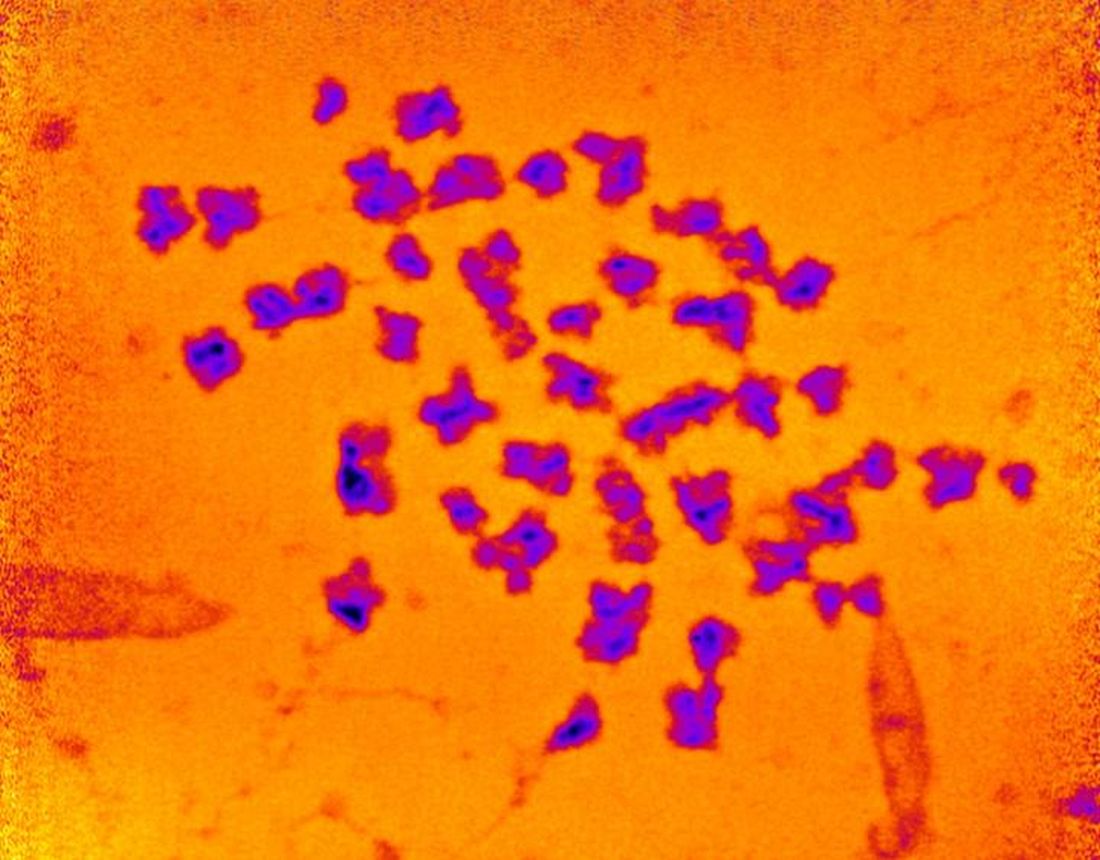
We’re not just talking about a bit of a beer belly here. “The chromosomes were about 20 times heavier than the DNA they contained,” according to the investigators.
Now to the universe. Here’s what CERN, the European Council for Nuclear Research, has to say about the mass of the universe: “Galaxies in our universe … are rotating with such speed that the gravity generated by their observable matter could not possibly hold them together. … which leads scientists to believe that something we cannot see is at work. They think something we have yet to detect directly is giving these galaxies extra mass.”
But wait, there’s more! “The matter we know and that makes up all stars and galaxies only accounts for 5% of the content of the universe!”
So chromosomes are about 20 times heavier than the DNA they contain, and the universe is about 20 times heavier than the matter that can be seen. Interesting.
We are, of course, happy to share this news with our readers, but there is one catch: Don’t tell Neil deGrasse Tyson. He’ll want to reclassify our genetic solar system into 45 chromosomes and one dwarf chromosome.
A photo finish for the Smart Toilet
We know that poop can tell us a lot about our health, but new research by scientists at Duke University is really on a roll. Their Smart Toilet has been created to help people keep an eye on their bowel health. The device takes pictures of poop after it is flushed and can tell whether the consistency is loose, bloody, or normal.
The Smart Toilet can really help people with issues such as irritable bowel syndrome and inflammatory bowel disease by helping them, and their doctors, keep tabs on their poop. “Typically, gastroenterologists have to rely on patient self-reported information about their stool to help determine the cause of their gastrointestinal health issues, which can be very unreliable,” study lead author Deborah Fisher said.

Not many people look too closely at their poop before it’s flushed, so the fecal photos can make a big difference. The Smart Toilet is installed into the pipes of a toilet and does its thing when the toilet is flushed, so there doesn’t seem to be much work on the patient’s end. Other than the, um, you know, usual work from the patient’s end.
Cancer loses … by a nose
Since the human nose is unpredictable at best, we’ve learned to rely on animals for our detailed nozzle needs. But researchers have found the next best thing to man’s best friend to accurately identify cancers.
A team at the University of Pennsylvania has developed an electronic olfaction, or “e-nose,” that has a 95% accuracy rate in distinguishing benign and malignant pancreatic and ovarian cancer cells from a single blood sample. How?
The e-nose system is equipped with nanosensors that are able to detect the volatile organic compounds (VOCs) emitted by cells in a blood sample. Not only does this create an opportunity for an easier, noninvasive screening practice, but it’s fast. The e-nose can distinguish VOCs from healthy to cancerous blood cells in 20 minutes or less and is just as effective in picking up on early- and late-stage cancers.
The investigators hope that this innovative technology can pave the way for similar devices with other uses. Thanks to the e-nose, a handheld device is in development that may be able to sniff out the signature odor of people with COVID-19.
That’s one smart schnoz.
Do you think this is a (food) game?
Dieting and eating healthy is tough, even during the best of times, and it has not been the best of times. With all respect to Charles Dickens, it’s been the worst of times, full stop. Millions of people have spent the past year sitting around their homes doing nothing, and it’s only natural that many would let their discipline slide.
Naturally, the solution to unhealthy eating habits is to sit down and play with your phone. No, that’s not the joke, the Food Trainer app, available on all cellular devices near you, is designed to encourage healthy eating by turning it into a game of sorts. When users open the app, they’re presented with images of food, and they’re trained to tap on images of healthy food and pass on images of unhealthy ones. The process takes less than 5 minutes.
It sounds really simple, but in a study of more than 1,000 people, consumption of junk food fell by 1 point on an 8-point scale (ranging from four times per day to zero to one time per month), participants lost about half a kilogram (a little over one pound), and more healthy food was eaten. Those who used the app more regularly, along the lines of 10 times per month or more, saw greater benefits.
The authors did acknowledge that those who used the app more may have been more motivated to lose weight anyway, which perhaps limits the overall benefit, but reviews on Google Play were overall quite positive, and if there’s one great truth in this world, it’s that Internet reviewers are almost impossible to please. So perhaps this app is worth looking into if you’re like the LOTME staff and you’re up at the top end of that 8-point scale. What, pizza is delicious, who wouldn’t eat it four times a day? And you can also get it from your phone!
It’s time for a little mass kickin’
The universe, scientists tell us, is a big place. Really big. Chromosomes, scientists tell us, are small. Really small. But despite this very fundamental difference, the universe and chromosomes share a deep, dark secret: unexplained mass.
This being a medical publication, we’ll start with chromosomes. A group of researchers measured their mass with x-rays for the first time and found that “the 46 chromosomes in each of our cells weigh 242 picograms (trillionths of a gram). This is heavier than we would expect, and, if replicated, points to unexplained excess mass in chromosomes,” Ian K. Robinson, PhD, said in a written statement.
We’re not just talking about a bit of a beer belly here. “The chromosomes were about 20 times heavier than the DNA they contained,” according to the investigators.
Now to the universe. Here’s what CERN, the European Council for Nuclear Research, has to say about the mass of the universe: “Galaxies in our universe … are rotating with such speed that the gravity generated by their observable matter could not possibly hold them together. … which leads scientists to believe that something we cannot see is at work. They think something we have yet to detect directly is giving these galaxies extra mass.”
But wait, there’s more! “The matter we know and that makes up all stars and galaxies only accounts for 5% of the content of the universe!”
So chromosomes are about 20 times heavier than the DNA they contain, and the universe is about 20 times heavier than the matter that can be seen. Interesting.
We are, of course, happy to share this news with our readers, but there is one catch: Don’t tell Neil deGrasse Tyson. He’ll want to reclassify our genetic solar system into 45 chromosomes and one dwarf chromosome.
A photo finish for the Smart Toilet
We know that poop can tell us a lot about our health, but new research by scientists at Duke University is really on a roll. Their Smart Toilet has been created to help people keep an eye on their bowel health. The device takes pictures of poop after it is flushed and can tell whether the consistency is loose, bloody, or normal.
The Smart Toilet can really help people with issues such as irritable bowel syndrome and inflammatory bowel disease by helping them, and their doctors, keep tabs on their poop. “Typically, gastroenterologists have to rely on patient self-reported information about their stool to help determine the cause of their gastrointestinal health issues, which can be very unreliable,” study lead author Deborah Fisher said.
Not many people look too closely at their poop before it’s flushed, so the fecal photos can make a big difference. The Smart Toilet is installed into the pipes of a toilet and does its thing when the toilet is flushed, so there doesn’t seem to be much work on the patient’s end. Other than the, um, you know, usual work from the patient’s end.
Cancer loses … by a nose
Since the human nose is unpredictable at best, we’ve learned to rely on animals for our detailed nozzle needs. But researchers have found the next best thing to man’s best friend to accurately identify cancers.
A team at the University of Pennsylvania has developed an electronic olfaction, or “e-nose,” that has a 95% accuracy rate in distinguishing benign and malignant pancreatic and ovarian cancer cells from a single blood sample. How?
The e-nose system is equipped with nanosensors that are able to detect the volatile organic compounds (VOCs) emitted by cells in a blood sample. Not only does this create an opportunity for an easier, noninvasive screening practice, but it’s fast. The e-nose can distinguish VOCs from healthy to cancerous blood cells in 20 minutes or less and is just as effective in picking up on early- and late-stage cancers.
The investigators hope that this innovative technology can pave the way for similar devices with other uses. Thanks to the e-nose, a handheld device is in development that may be able to sniff out the signature odor of people with COVID-19.
That’s one smart schnoz.
Do you think this is a (food) game?
Dieting and eating healthy is tough, even during the best of times, and it has not been the best of times. With all respect to Charles Dickens, it’s been the worst of times, full stop. Millions of people have spent the past year sitting around their homes doing nothing, and it’s only natural that many would let their discipline slide.
Naturally, the solution to unhealthy eating habits is to sit down and play with your phone. No, that’s not the joke, the Food Trainer app, available on all cellular devices near you, is designed to encourage healthy eating by turning it into a game of sorts. When users open the app, they’re presented with images of food, and they’re trained to tap on images of healthy food and pass on images of unhealthy ones. The process takes less than 5 minutes.
It sounds really simple, but in a study of more than 1,000 people, consumption of junk food fell by 1 point on an 8-point scale (ranging from four times per day to zero to one time per month), participants lost about half a kilogram (a little over one pound), and more healthy food was eaten. Those who used the app more regularly, along the lines of 10 times per month or more, saw greater benefits.
The authors did acknowledge that those who used the app more may have been more motivated to lose weight anyway, which perhaps limits the overall benefit, but reviews on Google Play were overall quite positive, and if there’s one great truth in this world, it’s that Internet reviewers are almost impossible to please. So perhaps this app is worth looking into if you’re like the LOTME staff and you’re up at the top end of that 8-point scale. What, pizza is delicious, who wouldn’t eat it four times a day? And you can also get it from your phone!
It’s time for a little mass kickin’
The universe, scientists tell us, is a big place. Really big. Chromosomes, scientists tell us, are small. Really small. But despite this very fundamental difference, the universe and chromosomes share a deep, dark secret: unexplained mass.
This being a medical publication, we’ll start with chromosomes. A group of researchers measured their mass with x-rays for the first time and found that “the 46 chromosomes in each of our cells weigh 242 picograms (trillionths of a gram). This is heavier than we would expect, and, if replicated, points to unexplained excess mass in chromosomes,” Ian K. Robinson, PhD, said in a written statement.
We’re not just talking about a bit of a beer belly here. “The chromosomes were about 20 times heavier than the DNA they contained,” according to the investigators.
Now to the universe. Here’s what CERN, the European Council for Nuclear Research, has to say about the mass of the universe: “Galaxies in our universe … are rotating with such speed that the gravity generated by their observable matter could not possibly hold them together. … which leads scientists to believe that something we cannot see is at work. They think something we have yet to detect directly is giving these galaxies extra mass.”
But wait, there’s more! “The matter we know and that makes up all stars and galaxies only accounts for 5% of the content of the universe!”
So chromosomes are about 20 times heavier than the DNA they contain, and the universe is about 20 times heavier than the matter that can be seen. Interesting.
We are, of course, happy to share this news with our readers, but there is one catch: Don’t tell Neil deGrasse Tyson. He’ll want to reclassify our genetic solar system into 45 chromosomes and one dwarf chromosome.
A photo finish for the Smart Toilet
We know that poop can tell us a lot about our health, but new research by scientists at Duke University is really on a roll. Their Smart Toilet has been created to help people keep an eye on their bowel health. The device takes pictures of poop after it is flushed and can tell whether the consistency is loose, bloody, or normal.
The Smart Toilet can really help people with issues such as irritable bowel syndrome and inflammatory bowel disease by helping them, and their doctors, keep tabs on their poop. “Typically, gastroenterologists have to rely on patient self-reported information about their stool to help determine the cause of their gastrointestinal health issues, which can be very unreliable,” study lead author Deborah Fisher said.
Not many people look too closely at their poop before it’s flushed, so the fecal photos can make a big difference. The Smart Toilet is installed into the pipes of a toilet and does its thing when the toilet is flushed, so there doesn’t seem to be much work on the patient’s end. Other than the, um, you know, usual work from the patient’s end.
Elevated factor VIII troughs can lead to a higher proportion of zero bleeds in hemophilia
Rurioctocog alfa pegol prophylaxis was linked to fewer bleeding episodes in people with hemophilia A when it targeted higher levels of factor VIII (FVIII) troughs, according to a report published in Blood (2021;137[13]:1818-27).
Earlier studies demonstrated that the treatment effectively prevented bleeds with an acceptable safety profile in people with hemophilia A. The current prospective, randomized, open label PROPEL trial compared safety and efficacy of two target FVIII troughs in this population. Targeting 1%-3% and 8%-12% FVIII troughs was efficacious, with fewer bleeds in the latter arm and acceptable safety across both, according to Robert Klamroth, MD, of Vivantes Klinikum Friedrichshain, Berlin, and colleagues.
The PROPEL trial (NCT02585960) population comprised 155 patients with hepatitis A, aged 12-65 years, with severe disease and an annualized bleeding rate of at least 2 during the 12 months before enrollment in the study. All had previous FVIII treatment. Patients were randomized to 12 months’ pharmacokinetic rurioctocog alfa pegol prophylaxis targeting FVIII troughs of 1%-3% (reference arm) or 8%-12%.
The primary endpoint was absence of bleeds during the second 6-month period. A total of 95 patients completed the protocol.
Promising results
In the 1%-3% and 8%-12% arms, the proportions of patients who completed the protocol and had no bleeds were 40% and 67% respectively (P = .015). Serious adverse events occurred in 7 of 115 (6%) patients, including one treatment-related event in the 8%-12% arm. There were no deaths, serious thrombotic events, or adverse event-related discontinuations.
“Targeting 8% to 12% FVIII troughs resulted in a higher proportion of [patients] with no bleeds than prophylaxis that targeted 1% to 3% FVIII troughs. These results support the hypothesis that an elevated FVIII trough can benefit [patients]without changing the safety profile,” the researchers reported. Personalized treatment in this patient population should be considered, they added.
Problems remain
In an invited commentary, Christine L. Kempton, MD, of Emory University, Atlanta, pointed out that the study did not answer the question of what trough level is best, and that the target trough level may be up to a patient’s individual clinician to decide. “Many participants (42%) treated with the target trough level of 1% to 3% had no bleeding events during the study period, but some (38%) continued to have bleeding events despite higher target trough levels,” Dr. Kempton wrote. She added that, beyond this concern, the presence of subclinical bleeding is difficult to study and quantify, but its presence is supported in the literature by magnetic resonance imaging that demonstrated joint damage despite a lack of clinically evident bleeding.
“Thus, targeting zero clinical bleeding events does not mean that all joint disease, dysfunction, and pain will be eliminated. This reality underscores the need for better, not just more convenient, therapies,” she concluded.
The authors reported numerous relationships with a variety of pharmaceutical companies including grants, honoraria, and participation in speakers bureaus. Dr. Kempton reported honoraria from Takeda, Spark, Octapharma, and Pfizer, and research grants from Novo Nordisk.
Rurioctocog alfa pegol prophylaxis was linked to fewer bleeding episodes in people with hemophilia A when it targeted higher levels of factor VIII (FVIII) troughs, according to a report published in Blood (2021;137[13]:1818-27).
Earlier studies demonstrated that the treatment effectively prevented bleeds with an acceptable safety profile in people with hemophilia A. The current prospective, randomized, open label PROPEL trial compared safety and efficacy of two target FVIII troughs in this population. Targeting 1%-3% and 8%-12% FVIII troughs was efficacious, with fewer bleeds in the latter arm and acceptable safety across both, according to Robert Klamroth, MD, of Vivantes Klinikum Friedrichshain, Berlin, and colleagues.
The PROPEL trial (NCT02585960) population comprised 155 patients with hepatitis A, aged 12-65 years, with severe disease and an annualized bleeding rate of at least 2 during the 12 months before enrollment in the study. All had previous FVIII treatment. Patients were randomized to 12 months’ pharmacokinetic rurioctocog alfa pegol prophylaxis targeting FVIII troughs of 1%-3% (reference arm) or 8%-12%.
The primary endpoint was absence of bleeds during the second 6-month period. A total of 95 patients completed the protocol.
Promising results
In the 1%-3% and 8%-12% arms, the proportions of patients who completed the protocol and had no bleeds were 40% and 67% respectively (P = .015). Serious adverse events occurred in 7 of 115 (6%) patients, including one treatment-related event in the 8%-12% arm. There were no deaths, serious thrombotic events, or adverse event-related discontinuations.
“Targeting 8% to 12% FVIII troughs resulted in a higher proportion of [patients] with no bleeds than prophylaxis that targeted 1% to 3% FVIII troughs. These results support the hypothesis that an elevated FVIII trough can benefit [patients]without changing the safety profile,” the researchers reported. Personalized treatment in this patient population should be considered, they added.
Problems remain
In an invited commentary, Christine L. Kempton, MD, of Emory University, Atlanta, pointed out that the study did not answer the question of what trough level is best, and that the target trough level may be up to a patient’s individual clinician to decide. “Many participants (42%) treated with the target trough level of 1% to 3% had no bleeding events during the study period, but some (38%) continued to have bleeding events despite higher target trough levels,” Dr. Kempton wrote. She added that, beyond this concern, the presence of subclinical bleeding is difficult to study and quantify, but its presence is supported in the literature by magnetic resonance imaging that demonstrated joint damage despite a lack of clinically evident bleeding.
“Thus, targeting zero clinical bleeding events does not mean that all joint disease, dysfunction, and pain will be eliminated. This reality underscores the need for better, not just more convenient, therapies,” she concluded.
The authors reported numerous relationships with a variety of pharmaceutical companies including grants, honoraria, and participation in speakers bureaus. Dr. Kempton reported honoraria from Takeda, Spark, Octapharma, and Pfizer, and research grants from Novo Nordisk.
Rurioctocog alfa pegol prophylaxis was linked to fewer bleeding episodes in people with hemophilia A when it targeted higher levels of factor VIII (FVIII) troughs, according to a report published in Blood (2021;137[13]:1818-27).
Earlier studies demonstrated that the treatment effectively prevented bleeds with an acceptable safety profile in people with hemophilia A. The current prospective, randomized, open label PROPEL trial compared safety and efficacy of two target FVIII troughs in this population. Targeting 1%-3% and 8%-12% FVIII troughs was efficacious, with fewer bleeds in the latter arm and acceptable safety across both, according to Robert Klamroth, MD, of Vivantes Klinikum Friedrichshain, Berlin, and colleagues.
The PROPEL trial (NCT02585960) population comprised 155 patients with hepatitis A, aged 12-65 years, with severe disease and an annualized bleeding rate of at least 2 during the 12 months before enrollment in the study. All had previous FVIII treatment. Patients were randomized to 12 months’ pharmacokinetic rurioctocog alfa pegol prophylaxis targeting FVIII troughs of 1%-3% (reference arm) or 8%-12%.
The primary endpoint was absence of bleeds during the second 6-month period. A total of 95 patients completed the protocol.
Promising results
In the 1%-3% and 8%-12% arms, the proportions of patients who completed the protocol and had no bleeds were 40% and 67% respectively (P = .015). Serious adverse events occurred in 7 of 115 (6%) patients, including one treatment-related event in the 8%-12% arm. There were no deaths, serious thrombotic events, or adverse event-related discontinuations.
“Targeting 8% to 12% FVIII troughs resulted in a higher proportion of [patients] with no bleeds than prophylaxis that targeted 1% to 3% FVIII troughs. These results support the hypothesis that an elevated FVIII trough can benefit [patients]without changing the safety profile,” the researchers reported. Personalized treatment in this patient population should be considered, they added.
Problems remain
In an invited commentary, Christine L. Kempton, MD, of Emory University, Atlanta, pointed out that the study did not answer the question of what trough level is best, and that the target trough level may be up to a patient’s individual clinician to decide. “Many participants (42%) treated with the target trough level of 1% to 3% had no bleeding events during the study period, but some (38%) continued to have bleeding events despite higher target trough levels,” Dr. Kempton wrote. She added that, beyond this concern, the presence of subclinical bleeding is difficult to study and quantify, but its presence is supported in the literature by magnetic resonance imaging that demonstrated joint damage despite a lack of clinically evident bleeding.
“Thus, targeting zero clinical bleeding events does not mean that all joint disease, dysfunction, and pain will be eliminated. This reality underscores the need for better, not just more convenient, therapies,” she concluded.
The authors reported numerous relationships with a variety of pharmaceutical companies including grants, honoraria, and participation in speakers bureaus. Dr. Kempton reported honoraria from Takeda, Spark, Octapharma, and Pfizer, and research grants from Novo Nordisk.
FROM BLOOD
Freefall: How Skydiving Is Like Cancer Surgery
Cancer surgery is filled with moments of fear, even for doctors. Our cameras follow as an oncologist confronts this anxiety in the second episode of our video series The Oncologists.
Medscape Oncology © 2021 WebMD, LLC
Any views expressed above are the author's own and do not necessarily reflect the views of WebMD or Medscape.
Cite this: A Pivotal Moment in Cancer Surgery, Captured on Film - Medscape - Feb 18, 2021.
Cancer surgery is filled with moments of fear, even for doctors. Our cameras follow as an oncologist confronts this anxiety in the second episode of our video series The Oncologists.
Medscape Oncology © 2021 WebMD, LLC
Any views expressed above are the author's own and do not necessarily reflect the views of WebMD or Medscape.
Cite this: A Pivotal Moment in Cancer Surgery, Captured on Film - Medscape - Feb 18, 2021.
Cancer surgery is filled with moments of fear, even for doctors. Our cameras follow as an oncologist confronts this anxiety in the second episode of our video series The Oncologists.
Medscape Oncology © 2021 WebMD, LLC
Any views expressed above are the author's own and do not necessarily reflect the views of WebMD or Medscape.
Cite this: A Pivotal Moment in Cancer Surgery, Captured on Film - Medscape - Feb 18, 2021.
First drug for lung cancer with KRAS mutation gains FDA approval
The first drug to target KRAS mutations in non–small cell lung cancer (NSCLC) has been approved by the Food and Drug Administration.
KRAS mutations are the most common mutations to occur in NSCLC tumors, accounting for about 25% of them, but for a long time they appeared to be resistant to drug therapy.
The new drug, sotorasib (Lumakras), specifically targets the KRAS G12C mutation, which accounts for about 13% of NSCLC mutations.
It is considered to be something of a breakthrough in cancer research. When clinical data on the new drug (from 126 patients) were presented last year at the World Conference on Lung Cancer, lung cancer experts greeted the results enthusiastically, as reported by Medscape Medical News at the time.
“This is a historic milestone in lung cancer therapy. After four decades of scientific efforts in targeting KRAS, sotorasib has potential to be the first targeted treatment option for this patient population with a high unmet need,” Bob T. Li, MD, PhD, of Memorial Sloan Kettering Cancer Center in New York, said at the time.
Now, in a press release from the manufacturer, Amgen, he said: “Sotorasib represents a major advancement in oncology and changes the treatment paradigm for patients with KRAS G12C-mutated non–small cell lung cancer.
“Patients with non–small cell lung cancer who have progressed beyond first-line treatment face a poor prognosis and have limited treatment options available to them. Sotorasib delivers a new option for these patients, and it is the first KRAS-targeted therapy to be approved after nearly four decades of research,” he added.
Details of clinical data
This is an accelerated approval based on response rate data.
The FDA notes that the clinical data come from a study of 124 patients with locally advanced or metastatic KRAS G12C-mutated NSCLC with disease progression after receiving an immune checkpoint inhibitor and/or platinum-based chemotherapy.
The major outcome measured was overall response rate (ORR), which was 36%. Of the patients who responded, 58% had a duration of response of 6 months or longer.
Sotorasib was approved at a dose of 960 mg, and this dose was based on available clinical data as well as pharmacokinetic and pharmacodynamic modeling, the FDA noted. As part of the evaluation for this accelerated approval, the agency is requiring a postmarketing trial to investigate whether a lower dose will have a similar clinical effect.
The most common side effects include diarrhea, musculoskeletal pain, nausea, fatigue, liver damage, and cough. Sotorasib should not be used if patients develop symptoms of interstitial lung disease, and should be permanently discontinued if interstitial lung disease is confirmed.
Patients on sotorasib should have liver function tests prior to starting and while taking the drug; if liver damage develops, the drug should be stopped or the dose reduced. Patients should avoid taking acid-reducing agents, drugs that induce or are substrates for certain enzymes in the liver, and drugs that are substrates of P-glycoprotein (P-gp).
Companion diagnostic tests also approved
Along with the new drug, the FDA approved two companion diagnostic tests – the QIAGEN therascreen KRAS RGQ PCR kit (approval granted to QIAGEN GmbH) for analyzing tumor tissue and the Guardant360 CDx (approval granted to Guardant Health) for analyzing plasma specimens to determine if the KRAS G12C mutation is present. The agency notes that if the plasma test comes back negative, the patient’s tumor tissue should be tested.
A version of this article first appeared on Medscape.com.
The first drug to target KRAS mutations in non–small cell lung cancer (NSCLC) has been approved by the Food and Drug Administration.
KRAS mutations are the most common mutations to occur in NSCLC tumors, accounting for about 25% of them, but for a long time they appeared to be resistant to drug therapy.
The new drug, sotorasib (Lumakras), specifically targets the KRAS G12C mutation, which accounts for about 13% of NSCLC mutations.
It is considered to be something of a breakthrough in cancer research. When clinical data on the new drug (from 126 patients) were presented last year at the World Conference on Lung Cancer, lung cancer experts greeted the results enthusiastically, as reported by Medscape Medical News at the time.
“This is a historic milestone in lung cancer therapy. After four decades of scientific efforts in targeting KRAS, sotorasib has potential to be the first targeted treatment option for this patient population with a high unmet need,” Bob T. Li, MD, PhD, of Memorial Sloan Kettering Cancer Center in New York, said at the time.
Now, in a press release from the manufacturer, Amgen, he said: “Sotorasib represents a major advancement in oncology and changes the treatment paradigm for patients with KRAS G12C-mutated non–small cell lung cancer.
“Patients with non–small cell lung cancer who have progressed beyond first-line treatment face a poor prognosis and have limited treatment options available to them. Sotorasib delivers a new option for these patients, and it is the first KRAS-targeted therapy to be approved after nearly four decades of research,” he added.
Details of clinical data
This is an accelerated approval based on response rate data.
The FDA notes that the clinical data come from a study of 124 patients with locally advanced or metastatic KRAS G12C-mutated NSCLC with disease progression after receiving an immune checkpoint inhibitor and/or platinum-based chemotherapy.
The major outcome measured was overall response rate (ORR), which was 36%. Of the patients who responded, 58% had a duration of response of 6 months or longer.
Sotorasib was approved at a dose of 960 mg, and this dose was based on available clinical data as well as pharmacokinetic and pharmacodynamic modeling, the FDA noted. As part of the evaluation for this accelerated approval, the agency is requiring a postmarketing trial to investigate whether a lower dose will have a similar clinical effect.
The most common side effects include diarrhea, musculoskeletal pain, nausea, fatigue, liver damage, and cough. Sotorasib should not be used if patients develop symptoms of interstitial lung disease, and should be permanently discontinued if interstitial lung disease is confirmed.
Patients on sotorasib should have liver function tests prior to starting and while taking the drug; if liver damage develops, the drug should be stopped or the dose reduced. Patients should avoid taking acid-reducing agents, drugs that induce or are substrates for certain enzymes in the liver, and drugs that are substrates of P-glycoprotein (P-gp).
Companion diagnostic tests also approved
Along with the new drug, the FDA approved two companion diagnostic tests – the QIAGEN therascreen KRAS RGQ PCR kit (approval granted to QIAGEN GmbH) for analyzing tumor tissue and the Guardant360 CDx (approval granted to Guardant Health) for analyzing plasma specimens to determine if the KRAS G12C mutation is present. The agency notes that if the plasma test comes back negative, the patient’s tumor tissue should be tested.
A version of this article first appeared on Medscape.com.
The first drug to target KRAS mutations in non–small cell lung cancer (NSCLC) has been approved by the Food and Drug Administration.
KRAS mutations are the most common mutations to occur in NSCLC tumors, accounting for about 25% of them, but for a long time they appeared to be resistant to drug therapy.
The new drug, sotorasib (Lumakras), specifically targets the KRAS G12C mutation, which accounts for about 13% of NSCLC mutations.
It is considered to be something of a breakthrough in cancer research. When clinical data on the new drug (from 126 patients) were presented last year at the World Conference on Lung Cancer, lung cancer experts greeted the results enthusiastically, as reported by Medscape Medical News at the time.
“This is a historic milestone in lung cancer therapy. After four decades of scientific efforts in targeting KRAS, sotorasib has potential to be the first targeted treatment option for this patient population with a high unmet need,” Bob T. Li, MD, PhD, of Memorial Sloan Kettering Cancer Center in New York, said at the time.
Now, in a press release from the manufacturer, Amgen, he said: “Sotorasib represents a major advancement in oncology and changes the treatment paradigm for patients with KRAS G12C-mutated non–small cell lung cancer.
“Patients with non–small cell lung cancer who have progressed beyond first-line treatment face a poor prognosis and have limited treatment options available to them. Sotorasib delivers a new option for these patients, and it is the first KRAS-targeted therapy to be approved after nearly four decades of research,” he added.
Details of clinical data
This is an accelerated approval based on response rate data.
The FDA notes that the clinical data come from a study of 124 patients with locally advanced or metastatic KRAS G12C-mutated NSCLC with disease progression after receiving an immune checkpoint inhibitor and/or platinum-based chemotherapy.
The major outcome measured was overall response rate (ORR), which was 36%. Of the patients who responded, 58% had a duration of response of 6 months or longer.
Sotorasib was approved at a dose of 960 mg, and this dose was based on available clinical data as well as pharmacokinetic and pharmacodynamic modeling, the FDA noted. As part of the evaluation for this accelerated approval, the agency is requiring a postmarketing trial to investigate whether a lower dose will have a similar clinical effect.
The most common side effects include diarrhea, musculoskeletal pain, nausea, fatigue, liver damage, and cough. Sotorasib should not be used if patients develop symptoms of interstitial lung disease, and should be permanently discontinued if interstitial lung disease is confirmed.
Patients on sotorasib should have liver function tests prior to starting and while taking the drug; if liver damage develops, the drug should be stopped or the dose reduced. Patients should avoid taking acid-reducing agents, drugs that induce or are substrates for certain enzymes in the liver, and drugs that are substrates of P-glycoprotein (P-gp).
Companion diagnostic tests also approved
Along with the new drug, the FDA approved two companion diagnostic tests – the QIAGEN therascreen KRAS RGQ PCR kit (approval granted to QIAGEN GmbH) for analyzing tumor tissue and the Guardant360 CDx (approval granted to Guardant Health) for analyzing plasma specimens to determine if the KRAS G12C mutation is present. The agency notes that if the plasma test comes back negative, the patient’s tumor tissue should be tested.
A version of this article first appeared on Medscape.com.
Racial and ethnic minorities underrepresented in pancreatic cancer clinical trials
Pancreatic cancer clinical trials conducted in the United States over the past few decades have not adequately reported or included racial and ethnic minority populations, results of a recent study suggest.
Adequate inclusion of underrepresented minorities in clinical trials is critical to reducing health care disparities and improving patient outcomes, according to investigator Kelly M. Herremans, MD, a surgical research fellow at the University of Florida in Gainesville. For the trials that did report race and ethnicity, Black, Asian/Pacific Islander, American Indian/Alaskan Native, and Hispanic patients were significantly underrepresented, according to the study, which was reported at the annual Digestive Disease Week® (DDW).
“It is unfortunate that we still have not made much headway regarding diversity in clinical trials in order to truly understand the impact that therapeutics may have on the population as a whole,” Dr. Herremans said in a media briefing. “We need to have an accurate representation of the entire population reflected in these studies.”
Only about half of the U.S. pancreatic cancer studies reported the race of participants, and slightly more than one-third reported ethnicity, Dr. Herremans said. She noted that certain racial and ethnic minorities, and in particular Black Americans, have a higher incidence of pancreatic cancer, are diagnosed at younger ages, and die sooner.
Racial and ethnic differences in pancreatic tumor biology have also been reported. Dr. Herremans said patients of African ancestry have both somatic and germline mutations when compared with other subgroups, meaning they may potentially respond differently to specific treatments. “Having diversity in trial participants is critical to ensuring that these differences can be clinically tested,” she said.
Objective data on an uncomfortable truth
This review of pancreatic cancer trials is an “excellent and much needed study,” said Antonio H. Mendoza-Ladd, MD, of the division of gastroenterology at Texas Tech University Health Sciences Center, El Paso. “It contributes objective data that brings to the mainstream an unspoken and uncomfortable truth: Systemic racism, bias, and discrimination exist in the medical system,” Dr. Mendoza-Ladd said in an interview.
Pancreatic cancer is one of deadliest malignancies in the world, and underrepresented minorities bear the brunt of its lethality, according to Dr. Mendoza-Ladd. He said researchers should follow the recommendations of the study authors to ensure that underrepresented minorities are enrolled in clinical trials in sufficient numbers. “Pancreatic cancer does not discriminate by ethnicity or socioeconomic status, even if the medical system does,” he said.
Pancreatic cancer trial disparities
In their study, Dr. Herremans and colleagues analyzed 207 clinical trials in the United States for pancreatic ductal adenocarcinoma between 2008 and 2020. They identified the studies using ClinicalTrials.gov, a national registry of clinical trial data, then gathered trial data and demographics on 8,429 participants from reported study results and related publications. Using that data, they were able to evaluate the rates at which race, ethnicity, and gender have been reported over the past few decades, as well as the rates of inclusion of racial and ethnic minorities in the studies.
Fewer than half of the trials (49.3%) reported race, and only about one-third (34.7%) reported ethnicity. By comparison, 99% of the studies reported gender. Results did suggest an increase over time in reporting of race and ethnicity, according to Dr. Herremans, particularly since October 2016, when the Food and Drug Administration clarified its expectations on the collection and reporting of race and ethnicity data in clinical trials. However, the clinical trial data suggest minorities were substantially underrepresented in clinical trials during the study period. “Despite this change, we’re not seeing the actual diversity improve in these clinical trials,” Dr Herremans said in an interview.
Black patients represented 8.2% of clinical trial participants despite constituting 12.4% of U.S. incident pancreatic cancer cases (P < .0001), according to data presented by Dr. Herremans. Likewise, the data show that Hispanic patients account for 8.5% of incident cases but made up 6.0% of clinical trial participants; Asian/Pacific Islanders total 3.3% of U.S. incident pancreatic cancer cases but represented 2.4% of trial participants; and American Indian/Alaskan Native patients constitute 0.4% of incident cases versus being 0.3% of participants (P < .0001 for all). Conversely, Dr. Herremans noted that White patients account for 82.3% of the incident cases but made up 84.7% of total trial participants (P = .002).
Dr. Herremans reported no financial disclosures related to the research. Dr. Mendoza-Ladd reported a relationship with ConMed.
Pancreatic cancer clinical trials conducted in the United States over the past few decades have not adequately reported or included racial and ethnic minority populations, results of a recent study suggest.
Adequate inclusion of underrepresented minorities in clinical trials is critical to reducing health care disparities and improving patient outcomes, according to investigator Kelly M. Herremans, MD, a surgical research fellow at the University of Florida in Gainesville. For the trials that did report race and ethnicity, Black, Asian/Pacific Islander, American Indian/Alaskan Native, and Hispanic patients were significantly underrepresented, according to the study, which was reported at the annual Digestive Disease Week® (DDW).
“It is unfortunate that we still have not made much headway regarding diversity in clinical trials in order to truly understand the impact that therapeutics may have on the population as a whole,” Dr. Herremans said in a media briefing. “We need to have an accurate representation of the entire population reflected in these studies.”
Only about half of the U.S. pancreatic cancer studies reported the race of participants, and slightly more than one-third reported ethnicity, Dr. Herremans said. She noted that certain racial and ethnic minorities, and in particular Black Americans, have a higher incidence of pancreatic cancer, are diagnosed at younger ages, and die sooner.
Racial and ethnic differences in pancreatic tumor biology have also been reported. Dr. Herremans said patients of African ancestry have both somatic and germline mutations when compared with other subgroups, meaning they may potentially respond differently to specific treatments. “Having diversity in trial participants is critical to ensuring that these differences can be clinically tested,” she said.
Objective data on an uncomfortable truth
This review of pancreatic cancer trials is an “excellent and much needed study,” said Antonio H. Mendoza-Ladd, MD, of the division of gastroenterology at Texas Tech University Health Sciences Center, El Paso. “It contributes objective data that brings to the mainstream an unspoken and uncomfortable truth: Systemic racism, bias, and discrimination exist in the medical system,” Dr. Mendoza-Ladd said in an interview.
Pancreatic cancer is one of deadliest malignancies in the world, and underrepresented minorities bear the brunt of its lethality, according to Dr. Mendoza-Ladd. He said researchers should follow the recommendations of the study authors to ensure that underrepresented minorities are enrolled in clinical trials in sufficient numbers. “Pancreatic cancer does not discriminate by ethnicity or socioeconomic status, even if the medical system does,” he said.
Pancreatic cancer trial disparities
In their study, Dr. Herremans and colleagues analyzed 207 clinical trials in the United States for pancreatic ductal adenocarcinoma between 2008 and 2020. They identified the studies using ClinicalTrials.gov, a national registry of clinical trial data, then gathered trial data and demographics on 8,429 participants from reported study results and related publications. Using that data, they were able to evaluate the rates at which race, ethnicity, and gender have been reported over the past few decades, as well as the rates of inclusion of racial and ethnic minorities in the studies.
Fewer than half of the trials (49.3%) reported race, and only about one-third (34.7%) reported ethnicity. By comparison, 99% of the studies reported gender. Results did suggest an increase over time in reporting of race and ethnicity, according to Dr. Herremans, particularly since October 2016, when the Food and Drug Administration clarified its expectations on the collection and reporting of race and ethnicity data in clinical trials. However, the clinical trial data suggest minorities were substantially underrepresented in clinical trials during the study period. “Despite this change, we’re not seeing the actual diversity improve in these clinical trials,” Dr Herremans said in an interview.
Black patients represented 8.2% of clinical trial participants despite constituting 12.4% of U.S. incident pancreatic cancer cases (P < .0001), according to data presented by Dr. Herremans. Likewise, the data show that Hispanic patients account for 8.5% of incident cases but made up 6.0% of clinical trial participants; Asian/Pacific Islanders total 3.3% of U.S. incident pancreatic cancer cases but represented 2.4% of trial participants; and American Indian/Alaskan Native patients constitute 0.4% of incident cases versus being 0.3% of participants (P < .0001 for all). Conversely, Dr. Herremans noted that White patients account for 82.3% of the incident cases but made up 84.7% of total trial participants (P = .002).
Dr. Herremans reported no financial disclosures related to the research. Dr. Mendoza-Ladd reported a relationship with ConMed.
Pancreatic cancer clinical trials conducted in the United States over the past few decades have not adequately reported or included racial and ethnic minority populations, results of a recent study suggest.
Adequate inclusion of underrepresented minorities in clinical trials is critical to reducing health care disparities and improving patient outcomes, according to investigator Kelly M. Herremans, MD, a surgical research fellow at the University of Florida in Gainesville. For the trials that did report race and ethnicity, Black, Asian/Pacific Islander, American Indian/Alaskan Native, and Hispanic patients were significantly underrepresented, according to the study, which was reported at the annual Digestive Disease Week® (DDW).
“It is unfortunate that we still have not made much headway regarding diversity in clinical trials in order to truly understand the impact that therapeutics may have on the population as a whole,” Dr. Herremans said in a media briefing. “We need to have an accurate representation of the entire population reflected in these studies.”
Only about half of the U.S. pancreatic cancer studies reported the race of participants, and slightly more than one-third reported ethnicity, Dr. Herremans said. She noted that certain racial and ethnic minorities, and in particular Black Americans, have a higher incidence of pancreatic cancer, are diagnosed at younger ages, and die sooner.
Racial and ethnic differences in pancreatic tumor biology have also been reported. Dr. Herremans said patients of African ancestry have both somatic and germline mutations when compared with other subgroups, meaning they may potentially respond differently to specific treatments. “Having diversity in trial participants is critical to ensuring that these differences can be clinically tested,” she said.
Objective data on an uncomfortable truth
This review of pancreatic cancer trials is an “excellent and much needed study,” said Antonio H. Mendoza-Ladd, MD, of the division of gastroenterology at Texas Tech University Health Sciences Center, El Paso. “It contributes objective data that brings to the mainstream an unspoken and uncomfortable truth: Systemic racism, bias, and discrimination exist in the medical system,” Dr. Mendoza-Ladd said in an interview.
Pancreatic cancer is one of deadliest malignancies in the world, and underrepresented minorities bear the brunt of its lethality, according to Dr. Mendoza-Ladd. He said researchers should follow the recommendations of the study authors to ensure that underrepresented minorities are enrolled in clinical trials in sufficient numbers. “Pancreatic cancer does not discriminate by ethnicity or socioeconomic status, even if the medical system does,” he said.
Pancreatic cancer trial disparities
In their study, Dr. Herremans and colleagues analyzed 207 clinical trials in the United States for pancreatic ductal adenocarcinoma between 2008 and 2020. They identified the studies using ClinicalTrials.gov, a national registry of clinical trial data, then gathered trial data and demographics on 8,429 participants from reported study results and related publications. Using that data, they were able to evaluate the rates at which race, ethnicity, and gender have been reported over the past few decades, as well as the rates of inclusion of racial and ethnic minorities in the studies.
Fewer than half of the trials (49.3%) reported race, and only about one-third (34.7%) reported ethnicity. By comparison, 99% of the studies reported gender. Results did suggest an increase over time in reporting of race and ethnicity, according to Dr. Herremans, particularly since October 2016, when the Food and Drug Administration clarified its expectations on the collection and reporting of race and ethnicity data in clinical trials. However, the clinical trial data suggest minorities were substantially underrepresented in clinical trials during the study period. “Despite this change, we’re not seeing the actual diversity improve in these clinical trials,” Dr Herremans said in an interview.
Black patients represented 8.2% of clinical trial participants despite constituting 12.4% of U.S. incident pancreatic cancer cases (P < .0001), according to data presented by Dr. Herremans. Likewise, the data show that Hispanic patients account for 8.5% of incident cases but made up 6.0% of clinical trial participants; Asian/Pacific Islanders total 3.3% of U.S. incident pancreatic cancer cases but represented 2.4% of trial participants; and American Indian/Alaskan Native patients constitute 0.4% of incident cases versus being 0.3% of participants (P < .0001 for all). Conversely, Dr. Herremans noted that White patients account for 82.3% of the incident cases but made up 84.7% of total trial participants (P = .002).
Dr. Herremans reported no financial disclosures related to the research. Dr. Mendoza-Ladd reported a relationship with ConMed.
FROM DDW 2021
FDA OKs nivolumab after surgery for esophageal or GEJ cancer: Practice-changing use of immunotherapy
The Food and Drug Administration has approved the adjuvant use of nivolumab (Opdivo) in patients with resected esophageal or gastroesophageal junction (GEJ) cancer who have received neoadjuvant chemoradiotherapy and have residual pathological disease following surgery.
The approval addresses an unmet need among these patients, who have a high risk of recurrence but for whom surveillance is the only current management option after the above-described standard treatment, according to experts.
The FDA’s approval is based on results from the CheckMate 577 study, which showed a significant improvement in disease-free survival compared with placebo.
This was described as “a practice-changing trial in the treatment of esophageal cancer” by David H. Ilson, MD, PhD, Memorial Sloan Kettering Cancer Center, New York, in an editorial in The New England Journal of Medicine that accompanied the published study results.
“The trial shows the first true advance in the adjuvant therapy of esophageal cancer in recent years,” wrote Dr. Ilson.
In the randomized, double-blind, phase 3 trial, patients with resected stage II or III esophageal or GEJ cancer were randomly assigned in a 2:1 ratio to receive nivolumab (at a dose of 240 mg every 2 weeks for 16 weeks, followed by a dose of 480 mg every 4 weeks) or placebo. The maximum duration of the intervention period was 1 year.
All of these patients had received neoadjuvant chemoradiotherapy and had residual pathological disease, as noted in the new indication. Patients were enrolled regardless of programmed death ligand 1 (PD-L1) expression.
For the primary endpoint of disease-free survival, the median was 22.4 months for the nivolumab group (n = 532) versus 11.0 months for the placebo group (n = 262; hazard ratio [HR] for disease recurrence or death, 0.69; 96.4% confidence interval [CI], 0.56-0.86; P < .001).
The median follow-up was 24.4 months.
Disease-free survival favored nivolumab across multiple preplanned subgroups.
However, as Dr. Ilson noted in the editorial, the efficacy of nivolumab varied, with more benefit seen for patients with squamous cell cancer (HR, 0.61) than for those with adenocarcinoma (HR, 0.75). Patients with esophageal tumors also had greater benefit (HR, 0.61) than did those with GEJ tumors (HR, 0.87).
There was benefit in patients with node-negative disease (HR, 0.74) and node-positive disease (HR, 0.67) and benefit in patients with tumors that were PD-L1–negative (HR, 0.73) and PD-L1–positive (HR, 0.75).
There were fewer distant recurrences in the nivolumab group than in the placebo group (29% vs. 39%) and fewer locoregional recurrences (12% vs. 17%).
No new safety signals were observed, and 9% of the nivolumab patients discontinued the drug because of treatment-related adverse events versus 3% of placebo patients. In addition, a 1-year course of adjuvant nivolumab did not negatively impact patient-reported quality of life, the trialists reported.
Grade 3 or 4 adverse events of any cause were more frequent in the nivolumab group versus the placebo group (34% vs. 32%) as were those related to the intervention (13% vs. 6%).
Although overall survival data are not mature, “the doubling of median disease-free survival will almost certainly translate into an overall survival benefit,” Dr. Ilson wrote.
Notably, the trial’s original co-primary endpoint was overall survival, but was dropped to a secondary endpoint after enrollment “challenges.”
When the now-published data were first presented at the 2020 annual meeting of the European Society for Medical Oncology, the invited discussant, Andrés Cervantes, MD, PhD, University of Valencia, Spain, raised several issues with the trial.
Preoperative chemoradiation is not “universally accepted” as the standard of care in this setting, said Dr. Cervantes, president-elect of ESMO.
Dr. Ilson acknowledged as much. “A debate is ongoing about whether chemotherapy alone or combined chemoradiotherapy is the preferred treatment for esophageal cancer before surgery,” he wrote.
In addition, Dr. Cervantes noted that disease-free survival is not currently validated as a major endpoint in gastroesophageal cancers, and the median follow-up was short.
A version of this article first appeared on Medscape.com.
The Food and Drug Administration has approved the adjuvant use of nivolumab (Opdivo) in patients with resected esophageal or gastroesophageal junction (GEJ) cancer who have received neoadjuvant chemoradiotherapy and have residual pathological disease following surgery.
The approval addresses an unmet need among these patients, who have a high risk of recurrence but for whom surveillance is the only current management option after the above-described standard treatment, according to experts.
The FDA’s approval is based on results from the CheckMate 577 study, which showed a significant improvement in disease-free survival compared with placebo.
This was described as “a practice-changing trial in the treatment of esophageal cancer” by David H. Ilson, MD, PhD, Memorial Sloan Kettering Cancer Center, New York, in an editorial in The New England Journal of Medicine that accompanied the published study results.
“The trial shows the first true advance in the adjuvant therapy of esophageal cancer in recent years,” wrote Dr. Ilson.
In the randomized, double-blind, phase 3 trial, patients with resected stage II or III esophageal or GEJ cancer were randomly assigned in a 2:1 ratio to receive nivolumab (at a dose of 240 mg every 2 weeks for 16 weeks, followed by a dose of 480 mg every 4 weeks) or placebo. The maximum duration of the intervention period was 1 year.
All of these patients had received neoadjuvant chemoradiotherapy and had residual pathological disease, as noted in the new indication. Patients were enrolled regardless of programmed death ligand 1 (PD-L1) expression.
For the primary endpoint of disease-free survival, the median was 22.4 months for the nivolumab group (n = 532) versus 11.0 months for the placebo group (n = 262; hazard ratio [HR] for disease recurrence or death, 0.69; 96.4% confidence interval [CI], 0.56-0.86; P < .001).
The median follow-up was 24.4 months.
Disease-free survival favored nivolumab across multiple preplanned subgroups.
However, as Dr. Ilson noted in the editorial, the efficacy of nivolumab varied, with more benefit seen for patients with squamous cell cancer (HR, 0.61) than for those with adenocarcinoma (HR, 0.75). Patients with esophageal tumors also had greater benefit (HR, 0.61) than did those with GEJ tumors (HR, 0.87).
There was benefit in patients with node-negative disease (HR, 0.74) and node-positive disease (HR, 0.67) and benefit in patients with tumors that were PD-L1–negative (HR, 0.73) and PD-L1–positive (HR, 0.75).
There were fewer distant recurrences in the nivolumab group than in the placebo group (29% vs. 39%) and fewer locoregional recurrences (12% vs. 17%).
No new safety signals were observed, and 9% of the nivolumab patients discontinued the drug because of treatment-related adverse events versus 3% of placebo patients. In addition, a 1-year course of adjuvant nivolumab did not negatively impact patient-reported quality of life, the trialists reported.
Grade 3 or 4 adverse events of any cause were more frequent in the nivolumab group versus the placebo group (34% vs. 32%) as were those related to the intervention (13% vs. 6%).
Although overall survival data are not mature, “the doubling of median disease-free survival will almost certainly translate into an overall survival benefit,” Dr. Ilson wrote.
Notably, the trial’s original co-primary endpoint was overall survival, but was dropped to a secondary endpoint after enrollment “challenges.”
When the now-published data were first presented at the 2020 annual meeting of the European Society for Medical Oncology, the invited discussant, Andrés Cervantes, MD, PhD, University of Valencia, Spain, raised several issues with the trial.
Preoperative chemoradiation is not “universally accepted” as the standard of care in this setting, said Dr. Cervantes, president-elect of ESMO.
Dr. Ilson acknowledged as much. “A debate is ongoing about whether chemotherapy alone or combined chemoradiotherapy is the preferred treatment for esophageal cancer before surgery,” he wrote.
In addition, Dr. Cervantes noted that disease-free survival is not currently validated as a major endpoint in gastroesophageal cancers, and the median follow-up was short.
A version of this article first appeared on Medscape.com.
The Food and Drug Administration has approved the adjuvant use of nivolumab (Opdivo) in patients with resected esophageal or gastroesophageal junction (GEJ) cancer who have received neoadjuvant chemoradiotherapy and have residual pathological disease following surgery.
The approval addresses an unmet need among these patients, who have a high risk of recurrence but for whom surveillance is the only current management option after the above-described standard treatment, according to experts.
The FDA’s approval is based on results from the CheckMate 577 study, which showed a significant improvement in disease-free survival compared with placebo.
This was described as “a practice-changing trial in the treatment of esophageal cancer” by David H. Ilson, MD, PhD, Memorial Sloan Kettering Cancer Center, New York, in an editorial in The New England Journal of Medicine that accompanied the published study results.
“The trial shows the first true advance in the adjuvant therapy of esophageal cancer in recent years,” wrote Dr. Ilson.
In the randomized, double-blind, phase 3 trial, patients with resected stage II or III esophageal or GEJ cancer were randomly assigned in a 2:1 ratio to receive nivolumab (at a dose of 240 mg every 2 weeks for 16 weeks, followed by a dose of 480 mg every 4 weeks) or placebo. The maximum duration of the intervention period was 1 year.
All of these patients had received neoadjuvant chemoradiotherapy and had residual pathological disease, as noted in the new indication. Patients were enrolled regardless of programmed death ligand 1 (PD-L1) expression.
For the primary endpoint of disease-free survival, the median was 22.4 months for the nivolumab group (n = 532) versus 11.0 months for the placebo group (n = 262; hazard ratio [HR] for disease recurrence or death, 0.69; 96.4% confidence interval [CI], 0.56-0.86; P < .001).
The median follow-up was 24.4 months.
Disease-free survival favored nivolumab across multiple preplanned subgroups.
However, as Dr. Ilson noted in the editorial, the efficacy of nivolumab varied, with more benefit seen for patients with squamous cell cancer (HR, 0.61) than for those with adenocarcinoma (HR, 0.75). Patients with esophageal tumors also had greater benefit (HR, 0.61) than did those with GEJ tumors (HR, 0.87).
There was benefit in patients with node-negative disease (HR, 0.74) and node-positive disease (HR, 0.67) and benefit in patients with tumors that were PD-L1–negative (HR, 0.73) and PD-L1–positive (HR, 0.75).
There were fewer distant recurrences in the nivolumab group than in the placebo group (29% vs. 39%) and fewer locoregional recurrences (12% vs. 17%).
No new safety signals were observed, and 9% of the nivolumab patients discontinued the drug because of treatment-related adverse events versus 3% of placebo patients. In addition, a 1-year course of adjuvant nivolumab did not negatively impact patient-reported quality of life, the trialists reported.
Grade 3 or 4 adverse events of any cause were more frequent in the nivolumab group versus the placebo group (34% vs. 32%) as were those related to the intervention (13% vs. 6%).
Although overall survival data are not mature, “the doubling of median disease-free survival will almost certainly translate into an overall survival benefit,” Dr. Ilson wrote.
Notably, the trial’s original co-primary endpoint was overall survival, but was dropped to a secondary endpoint after enrollment “challenges.”
When the now-published data were first presented at the 2020 annual meeting of the European Society for Medical Oncology, the invited discussant, Andrés Cervantes, MD, PhD, University of Valencia, Spain, raised several issues with the trial.
Preoperative chemoradiation is not “universally accepted” as the standard of care in this setting, said Dr. Cervantes, president-elect of ESMO.
Dr. Ilson acknowledged as much. “A debate is ongoing about whether chemotherapy alone or combined chemoradiotherapy is the preferred treatment for esophageal cancer before surgery,” he wrote.
In addition, Dr. Cervantes noted that disease-free survival is not currently validated as a major endpoint in gastroesophageal cancers, and the median follow-up was short.
A version of this article first appeared on Medscape.com.
Novel immunotherapy relatlimab in advanced melanoma
Adding the novel immune checkpoint inhibitor relatlimab to the more established nivolumab (Opdivo) significantly extended the progression-free survival (PFS) of patients with previously untreated advanced melanoma in comparison with nivolumab alone in the phase 3 RELATIVITY-047 trial.
Both drugs are from Bristol-Myers Squibb, which funded the study.
“Our findings demonstrate that relatlimab plus nivolumab is a potential novel treatment option for this patient population,” said lead researcher Evan J. Lipson, MD, Sidney Kimmel Comprehensive Cancer Center, Johns Hopkins University, Baltimore.
Relatlimab has a different mechanism of action from currently available immune checkpoint inhibitors, such as nivolumab and similar agents, which act as inhibitors of the programmed cell death protein–1 (PD-1) or programmed cell death–ligand-1 (PD-L1). In contrast, relatlimab acts as an antibody that targets lymphocyte-activation gene 3 (LAG-3), which inhibits T cells and thus helps cancer cells evade immune attack.
“This is the first phase 3 study to validate inhibition of the LAG-3 immune checkpoint as a therapeutic strategy for patients with cancer, and it establishes the LAG-3 pathway as the third immune checkpoint pathway in history, after CLTA-4 and PD-1, for which blockade appears to have clinical benefit,” Dr. Lipson said at a press briefing ahead of the annual meeting of the American Society of Clinical Oncology (ASCO), where this study will be presented (abstract 9503).
Commenting for ASCO, Julie R. Gralow, MD, chief medical officer and executive vice president, agreed that “these results provide validation of the LAG-3 immune checkpoint as a therapeutic target ... and they also support combination treatment with immunotherapies that act on different parts of the immune system.”
When Dr. Lipson was asked whether he would recommend the combination of relatlimab plus nivolumab as a first-line treatment for this patient population, he said that “for many patients,” the first-line treatment choice is made on a “case-by-case” basis.
“We are fortunate in melanoma that we have an ever-expanding list of seemingly effective options, and I think we’ll find at some point this will be added to that list,” he said. “Whether this is the first-line choice for any given patient really depends on a lot of factors,” he added.
Dr. Gralow added a note of caution. “The combination was clearly more toxic, and so I think there will be a lot of discussion” as to when it would be used and for which patients, she said.
In the absence of head-to-head comparisons, “I’m not sure that we have one answer” as to which treatment to choose, she added. With the ever-increasing number of options available in melanoma, the individual treatment choice is “getting more complicated,” she said.
Study details
The global RELATIVITY-047 study was conducted in 714 patients with previously untreated unresectable or metastatic melanoma. The participants were randomly assigned to receive either relatlimab plus nivolumab or nivolumab alone.
Dr. Lipson explained that the treatments were given as a fixed-dosed combination, meaning the preparation of relatlimab and nivolumab was given in the “same medication phial and administered as a single intravenous infusion in order to reduce preparation and infusion times and minimize the risk of administration errors.”
PFS, as determined on blinded independent central review, was significantly longer with the combination therapy than with nivolumab alone, at a median of 10.12 months vs. 4.63 months (hazard ratio, 0.75; P = .0055).
At 12 months, the PFS rate among patients given relatlimab plus nivolumab was 47.7%, versus 36.0% among those given nivolumab alone.
“This significant improvement meant that the study met its primary endpoint,” Dr. Lipson said, adding that the PFS benefit “appeared relatively early in the course of therapy.” The curves separated at 12 weeks, and benefit was “sustained” over the course of follow-up.
He added that the performance of nivolumab alone was “in the range” of that seen in previous studies, although he underlined that cross-trial comparison is difficult, given the differences in study design.
“In general, treatment-related adverse events” associated with the combination therapy were “manageable and reflected the safety profile that we typically see with immune checkpoint inhibitors,” he noted.
The results showed that 40.3% of patients who received the combination therapy experienced a grade 3-4 adverse event, compared with 33.4% of those given nivolumab alone. Grade 3-4 treatment-related adverse events leading to discontinuation occurred in 8.5% and 3.1% of patients, respectively.
Three treatment-related deaths occurred in the relatlimab and nivolumab arm. Two such deaths occurred in the nivolumab-alone group.
The study was funded by Bristol Myers Squibb. Dr. Lipson has relationships with Array BioPharma, Bristol Myers Squibb, EMD Serono, Genentech, Macrogenics, Merck, Millennium, Novartis, Sanofi/Regeneron, and Sysmex (inst). Dr. Gralow has relationships with AstraZeneca, Genentech, Sandoz, and Immunomedics.
A version of this article first appeared on Medscape.com.
Adding the novel immune checkpoint inhibitor relatlimab to the more established nivolumab (Opdivo) significantly extended the progression-free survival (PFS) of patients with previously untreated advanced melanoma in comparison with nivolumab alone in the phase 3 RELATIVITY-047 trial.
Both drugs are from Bristol-Myers Squibb, which funded the study.
“Our findings demonstrate that relatlimab plus nivolumab is a potential novel treatment option for this patient population,” said lead researcher Evan J. Lipson, MD, Sidney Kimmel Comprehensive Cancer Center, Johns Hopkins University, Baltimore.
Relatlimab has a different mechanism of action from currently available immune checkpoint inhibitors, such as nivolumab and similar agents, which act as inhibitors of the programmed cell death protein–1 (PD-1) or programmed cell death–ligand-1 (PD-L1). In contrast, relatlimab acts as an antibody that targets lymphocyte-activation gene 3 (LAG-3), which inhibits T cells and thus helps cancer cells evade immune attack.
“This is the first phase 3 study to validate inhibition of the LAG-3 immune checkpoint as a therapeutic strategy for patients with cancer, and it establishes the LAG-3 pathway as the third immune checkpoint pathway in history, after CLTA-4 and PD-1, for which blockade appears to have clinical benefit,” Dr. Lipson said at a press briefing ahead of the annual meeting of the American Society of Clinical Oncology (ASCO), where this study will be presented (abstract 9503).
Commenting for ASCO, Julie R. Gralow, MD, chief medical officer and executive vice president, agreed that “these results provide validation of the LAG-3 immune checkpoint as a therapeutic target ... and they also support combination treatment with immunotherapies that act on different parts of the immune system.”
When Dr. Lipson was asked whether he would recommend the combination of relatlimab plus nivolumab as a first-line treatment for this patient population, he said that “for many patients,” the first-line treatment choice is made on a “case-by-case” basis.
“We are fortunate in melanoma that we have an ever-expanding list of seemingly effective options, and I think we’ll find at some point this will be added to that list,” he said. “Whether this is the first-line choice for any given patient really depends on a lot of factors,” he added.
Dr. Gralow added a note of caution. “The combination was clearly more toxic, and so I think there will be a lot of discussion” as to when it would be used and for which patients, she said.
In the absence of head-to-head comparisons, “I’m not sure that we have one answer” as to which treatment to choose, she added. With the ever-increasing number of options available in melanoma, the individual treatment choice is “getting more complicated,” she said.
Study details
The global RELATIVITY-047 study was conducted in 714 patients with previously untreated unresectable or metastatic melanoma. The participants were randomly assigned to receive either relatlimab plus nivolumab or nivolumab alone.
Dr. Lipson explained that the treatments were given as a fixed-dosed combination, meaning the preparation of relatlimab and nivolumab was given in the “same medication phial and administered as a single intravenous infusion in order to reduce preparation and infusion times and minimize the risk of administration errors.”
PFS, as determined on blinded independent central review, was significantly longer with the combination therapy than with nivolumab alone, at a median of 10.12 months vs. 4.63 months (hazard ratio, 0.75; P = .0055).
At 12 months, the PFS rate among patients given relatlimab plus nivolumab was 47.7%, versus 36.0% among those given nivolumab alone.
“This significant improvement meant that the study met its primary endpoint,” Dr. Lipson said, adding that the PFS benefit “appeared relatively early in the course of therapy.” The curves separated at 12 weeks, and benefit was “sustained” over the course of follow-up.
He added that the performance of nivolumab alone was “in the range” of that seen in previous studies, although he underlined that cross-trial comparison is difficult, given the differences in study design.
“In general, treatment-related adverse events” associated with the combination therapy were “manageable and reflected the safety profile that we typically see with immune checkpoint inhibitors,” he noted.
The results showed that 40.3% of patients who received the combination therapy experienced a grade 3-4 adverse event, compared with 33.4% of those given nivolumab alone. Grade 3-4 treatment-related adverse events leading to discontinuation occurred in 8.5% and 3.1% of patients, respectively.
Three treatment-related deaths occurred in the relatlimab and nivolumab arm. Two such deaths occurred in the nivolumab-alone group.
The study was funded by Bristol Myers Squibb. Dr. Lipson has relationships with Array BioPharma, Bristol Myers Squibb, EMD Serono, Genentech, Macrogenics, Merck, Millennium, Novartis, Sanofi/Regeneron, and Sysmex (inst). Dr. Gralow has relationships with AstraZeneca, Genentech, Sandoz, and Immunomedics.
A version of this article first appeared on Medscape.com.
Adding the novel immune checkpoint inhibitor relatlimab to the more established nivolumab (Opdivo) significantly extended the progression-free survival (PFS) of patients with previously untreated advanced melanoma in comparison with nivolumab alone in the phase 3 RELATIVITY-047 trial.
Both drugs are from Bristol-Myers Squibb, which funded the study.
“Our findings demonstrate that relatlimab plus nivolumab is a potential novel treatment option for this patient population,” said lead researcher Evan J. Lipson, MD, Sidney Kimmel Comprehensive Cancer Center, Johns Hopkins University, Baltimore.
Relatlimab has a different mechanism of action from currently available immune checkpoint inhibitors, such as nivolumab and similar agents, which act as inhibitors of the programmed cell death protein–1 (PD-1) or programmed cell death–ligand-1 (PD-L1). In contrast, relatlimab acts as an antibody that targets lymphocyte-activation gene 3 (LAG-3), which inhibits T cells and thus helps cancer cells evade immune attack.
“This is the first phase 3 study to validate inhibition of the LAG-3 immune checkpoint as a therapeutic strategy for patients with cancer, and it establishes the LAG-3 pathway as the third immune checkpoint pathway in history, after CLTA-4 and PD-1, for which blockade appears to have clinical benefit,” Dr. Lipson said at a press briefing ahead of the annual meeting of the American Society of Clinical Oncology (ASCO), where this study will be presented (abstract 9503).
Commenting for ASCO, Julie R. Gralow, MD, chief medical officer and executive vice president, agreed that “these results provide validation of the LAG-3 immune checkpoint as a therapeutic target ... and they also support combination treatment with immunotherapies that act on different parts of the immune system.”
When Dr. Lipson was asked whether he would recommend the combination of relatlimab plus nivolumab as a first-line treatment for this patient population, he said that “for many patients,” the first-line treatment choice is made on a “case-by-case” basis.
“We are fortunate in melanoma that we have an ever-expanding list of seemingly effective options, and I think we’ll find at some point this will be added to that list,” he said. “Whether this is the first-line choice for any given patient really depends on a lot of factors,” he added.
Dr. Gralow added a note of caution. “The combination was clearly more toxic, and so I think there will be a lot of discussion” as to when it would be used and for which patients, she said.
In the absence of head-to-head comparisons, “I’m not sure that we have one answer” as to which treatment to choose, she added. With the ever-increasing number of options available in melanoma, the individual treatment choice is “getting more complicated,” she said.
Study details
The global RELATIVITY-047 study was conducted in 714 patients with previously untreated unresectable or metastatic melanoma. The participants were randomly assigned to receive either relatlimab plus nivolumab or nivolumab alone.
Dr. Lipson explained that the treatments were given as a fixed-dosed combination, meaning the preparation of relatlimab and nivolumab was given in the “same medication phial and administered as a single intravenous infusion in order to reduce preparation and infusion times and minimize the risk of administration errors.”
PFS, as determined on blinded independent central review, was significantly longer with the combination therapy than with nivolumab alone, at a median of 10.12 months vs. 4.63 months (hazard ratio, 0.75; P = .0055).
At 12 months, the PFS rate among patients given relatlimab plus nivolumab was 47.7%, versus 36.0% among those given nivolumab alone.
“This significant improvement meant that the study met its primary endpoint,” Dr. Lipson said, adding that the PFS benefit “appeared relatively early in the course of therapy.” The curves separated at 12 weeks, and benefit was “sustained” over the course of follow-up.
He added that the performance of nivolumab alone was “in the range” of that seen in previous studies, although he underlined that cross-trial comparison is difficult, given the differences in study design.
“In general, treatment-related adverse events” associated with the combination therapy were “manageable and reflected the safety profile that we typically see with immune checkpoint inhibitors,” he noted.
The results showed that 40.3% of patients who received the combination therapy experienced a grade 3-4 adverse event, compared with 33.4% of those given nivolumab alone. Grade 3-4 treatment-related adverse events leading to discontinuation occurred in 8.5% and 3.1% of patients, respectively.
Three treatment-related deaths occurred in the relatlimab and nivolumab arm. Two such deaths occurred in the nivolumab-alone group.
The study was funded by Bristol Myers Squibb. Dr. Lipson has relationships with Array BioPharma, Bristol Myers Squibb, EMD Serono, Genentech, Macrogenics, Merck, Millennium, Novartis, Sanofi/Regeneron, and Sysmex (inst). Dr. Gralow has relationships with AstraZeneca, Genentech, Sandoz, and Immunomedics.
A version of this article first appeared on Medscape.com.