User login
Bringing you the latest news, research and reviews, exclusive interviews, podcasts, quizzes, and more.
div[contains(@class, 'header__large-screen')]
div[contains(@class, 'read-next-article')]
div[contains(@class, 'nav-primary')]
nav[contains(@class, 'nav-primary')]
section[contains(@class, 'footer-nav-section-wrapper')]
footer[@id='footer']
div[contains(@class, 'main-prefix')]
section[contains(@class, 'nav-hidden')]
div[contains(@class, 'ce-card-content')]
nav[contains(@class, 'nav-ce-stack')]
The differential diagnosis you’re missing
I’m not the smartest dermatologist in our department. We’re fortunate to have a few super-smarties, you know, the ones who can still recite all the genes in Jean Bolognia’s dermatology textbook and have “Dermpath Bowl Champion” plaques covering their walls. Yet as our chief, I often get requests for a second or third opinion, hoping somehow I’ll discover a diagnosis that others missed. Sometimes they are real diagnostic dilemmas. Oftentimes they’re just itchy.
Recently an itchy 73-year-old woman came to see me. She had seen several competent dermatologists, had comprehensive workups, and had reasonable, even aggressive, attempts at treating. Not much interesting in her history. Nothing on exam. Cancer workup was negative as was pretty much any autoimmune or allergic cause. Biopsy? Maybe a touch of “dermal hypersensitivity.” She was still upset at being told previously she might have scabies. “Scabies!” she said indignantly. “How could I have scabies? No one has touched this body in nearly 4 years!” That’s interesting, I thought.
The electronic medical record holds a lot of useful information. We spend hours combing through histories, labs, pathology, scans, drugs to search for clues that might help with diagnoses. One tab we hardly visit is demographics. Why should that matter, of course? Age, phone number, and address are typically not contributory. But for this woman there was a bit of data that mattered; I checked right after her remark. Marital status: Widowed. She couldn’t have had scabies because no one touches her. Anymore. As our comprehensive workup did not find a cause nor did treatments mitigate her symptoms, I wondered if loneliness might be a contributing factor. I asked if anyone else was itching, any family, any friends? “No, I live alone. I don’t have anyone.”
, and dementia for example. According to the U.S. Surgeon General, it increases the risk for premature death comparable to smoking 15 cigarettes a day. Yet, we rarely (ever?) ask people if they’re lonely. In part because we don’t have good treatments. Remedies for loneliness are mostly societal – reaching out to the widowed, creating spaces that encourage connection, organizing events that bring people together. I cannot type any of these into the EMR orders. However, merely mentioning that a patient could be lonely can be therapeutic. They might not recognize its impact or that they have agency to make it better. They also might not see how their lives still have meaning, an important comorbidity of loneliness.
Not long after her appointment was a 63-year-old man who complained of a burning scrotum. He worked as a knife sharpener, setting up a folding table at local groceries and farmers markets. COVID killed most of his gigs. Like the woman who didn’t have scabies, comprehensive workups turned up nothing. And seemingly nothing, including antibiotics, gabapentin, indomethacin, lidocaine, helped. At his last visit, we talked about his condition. We had also talked about the proper way to sharpen a knife. I came in prepared to offer something dramatic this visit, methotrexate, dupilumab? But before I could speak, he opened a recycled plastic grocery bag and dumped out knives of various sizes. Also a small ax. He then proceeded to show me how each knife has to be sharpened in its own way. Before leaving he handed me a well-worn Arkansas sharpening stone. “For you,” he said. I gave him no additional recommendations or treatments. He hasn’t been back to dermatology since.
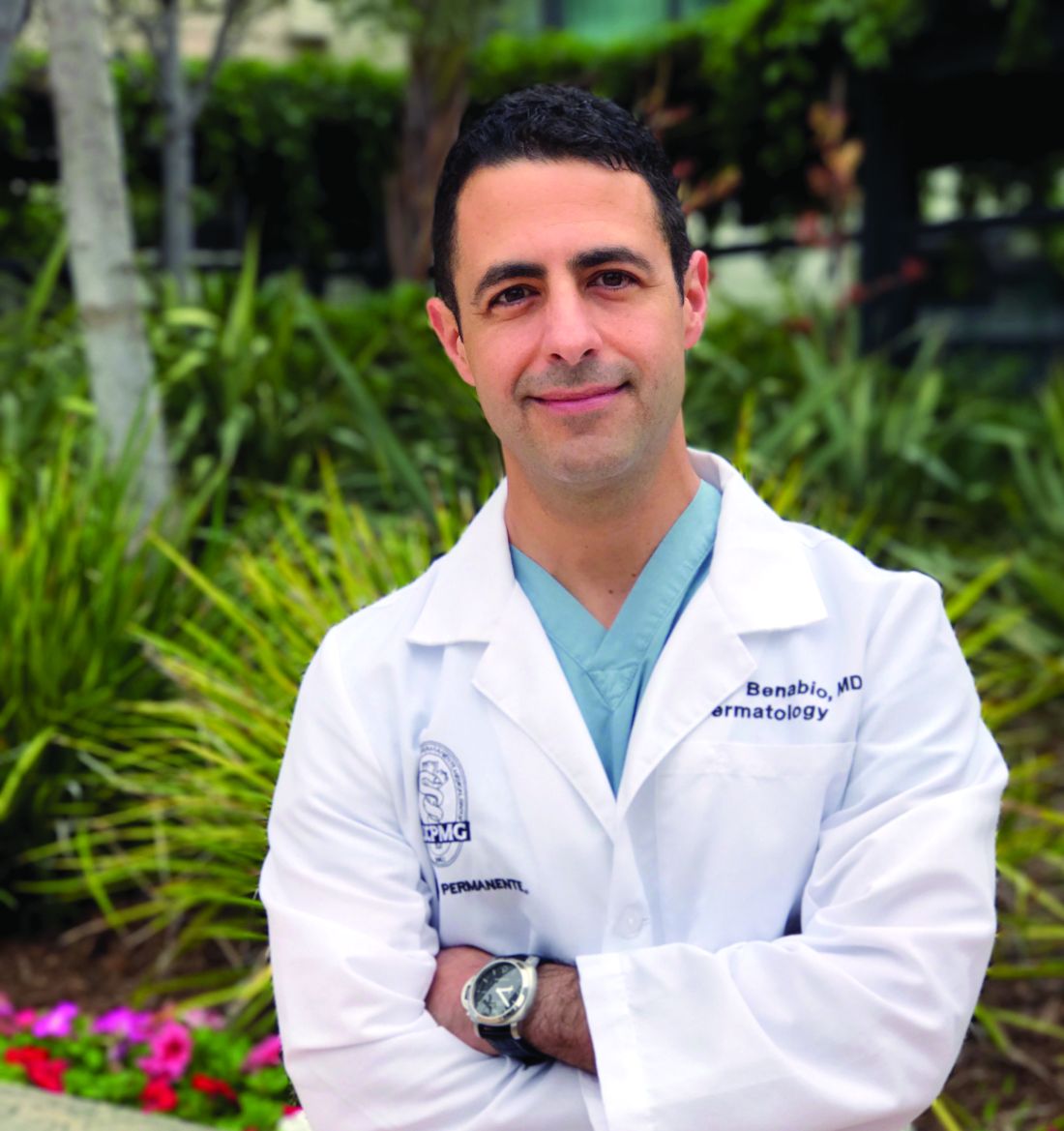
Dr. Benabio is director of Healthcare Transformation and chief of dermatology at Kaiser Permanente San Diego. The opinions expressed in this column are his own and do not represent those of Kaiser Permanente. Dr. Benabio is @Dermdoc on Twitter. Write to him at dermnews@mdedge.com.
I’m not the smartest dermatologist in our department. We’re fortunate to have a few super-smarties, you know, the ones who can still recite all the genes in Jean Bolognia’s dermatology textbook and have “Dermpath Bowl Champion” plaques covering their walls. Yet as our chief, I often get requests for a second or third opinion, hoping somehow I’ll discover a diagnosis that others missed. Sometimes they are real diagnostic dilemmas. Oftentimes they’re just itchy.
Recently an itchy 73-year-old woman came to see me. She had seen several competent dermatologists, had comprehensive workups, and had reasonable, even aggressive, attempts at treating. Not much interesting in her history. Nothing on exam. Cancer workup was negative as was pretty much any autoimmune or allergic cause. Biopsy? Maybe a touch of “dermal hypersensitivity.” She was still upset at being told previously she might have scabies. “Scabies!” she said indignantly. “How could I have scabies? No one has touched this body in nearly 4 years!” That’s interesting, I thought.
The electronic medical record holds a lot of useful information. We spend hours combing through histories, labs, pathology, scans, drugs to search for clues that might help with diagnoses. One tab we hardly visit is demographics. Why should that matter, of course? Age, phone number, and address are typically not contributory. But for this woman there was a bit of data that mattered; I checked right after her remark. Marital status: Widowed. She couldn’t have had scabies because no one touches her. Anymore. As our comprehensive workup did not find a cause nor did treatments mitigate her symptoms, I wondered if loneliness might be a contributing factor. I asked if anyone else was itching, any family, any friends? “No, I live alone. I don’t have anyone.”
, and dementia for example. According to the U.S. Surgeon General, it increases the risk for premature death comparable to smoking 15 cigarettes a day. Yet, we rarely (ever?) ask people if they’re lonely. In part because we don’t have good treatments. Remedies for loneliness are mostly societal – reaching out to the widowed, creating spaces that encourage connection, organizing events that bring people together. I cannot type any of these into the EMR orders. However, merely mentioning that a patient could be lonely can be therapeutic. They might not recognize its impact or that they have agency to make it better. They also might not see how their lives still have meaning, an important comorbidity of loneliness.
Not long after her appointment was a 63-year-old man who complained of a burning scrotum. He worked as a knife sharpener, setting up a folding table at local groceries and farmers markets. COVID killed most of his gigs. Like the woman who didn’t have scabies, comprehensive workups turned up nothing. And seemingly nothing, including antibiotics, gabapentin, indomethacin, lidocaine, helped. At his last visit, we talked about his condition. We had also talked about the proper way to sharpen a knife. I came in prepared to offer something dramatic this visit, methotrexate, dupilumab? But before I could speak, he opened a recycled plastic grocery bag and dumped out knives of various sizes. Also a small ax. He then proceeded to show me how each knife has to be sharpened in its own way. Before leaving he handed me a well-worn Arkansas sharpening stone. “For you,” he said. I gave him no additional recommendations or treatments. He hasn’t been back to dermatology since.
Dr. Benabio is director of Healthcare Transformation and chief of dermatology at Kaiser Permanente San Diego. The opinions expressed in this column are his own and do not represent those of Kaiser Permanente. Dr. Benabio is @Dermdoc on Twitter. Write to him at dermnews@mdedge.com.
I’m not the smartest dermatologist in our department. We’re fortunate to have a few super-smarties, you know, the ones who can still recite all the genes in Jean Bolognia’s dermatology textbook and have “Dermpath Bowl Champion” plaques covering their walls. Yet as our chief, I often get requests for a second or third opinion, hoping somehow I’ll discover a diagnosis that others missed. Sometimes they are real diagnostic dilemmas. Oftentimes they’re just itchy.
Recently an itchy 73-year-old woman came to see me. She had seen several competent dermatologists, had comprehensive workups, and had reasonable, even aggressive, attempts at treating. Not much interesting in her history. Nothing on exam. Cancer workup was negative as was pretty much any autoimmune or allergic cause. Biopsy? Maybe a touch of “dermal hypersensitivity.” She was still upset at being told previously she might have scabies. “Scabies!” she said indignantly. “How could I have scabies? No one has touched this body in nearly 4 years!” That’s interesting, I thought.
The electronic medical record holds a lot of useful information. We spend hours combing through histories, labs, pathology, scans, drugs to search for clues that might help with diagnoses. One tab we hardly visit is demographics. Why should that matter, of course? Age, phone number, and address are typically not contributory. But for this woman there was a bit of data that mattered; I checked right after her remark. Marital status: Widowed. She couldn’t have had scabies because no one touches her. Anymore. As our comprehensive workup did not find a cause nor did treatments mitigate her symptoms, I wondered if loneliness might be a contributing factor. I asked if anyone else was itching, any family, any friends? “No, I live alone. I don’t have anyone.”
, and dementia for example. According to the U.S. Surgeon General, it increases the risk for premature death comparable to smoking 15 cigarettes a day. Yet, we rarely (ever?) ask people if they’re lonely. In part because we don’t have good treatments. Remedies for loneliness are mostly societal – reaching out to the widowed, creating spaces that encourage connection, organizing events that bring people together. I cannot type any of these into the EMR orders. However, merely mentioning that a patient could be lonely can be therapeutic. They might not recognize its impact or that they have agency to make it better. They also might not see how their lives still have meaning, an important comorbidity of loneliness.
Not long after her appointment was a 63-year-old man who complained of a burning scrotum. He worked as a knife sharpener, setting up a folding table at local groceries and farmers markets. COVID killed most of his gigs. Like the woman who didn’t have scabies, comprehensive workups turned up nothing. And seemingly nothing, including antibiotics, gabapentin, indomethacin, lidocaine, helped. At his last visit, we talked about his condition. We had also talked about the proper way to sharpen a knife. I came in prepared to offer something dramatic this visit, methotrexate, dupilumab? But before I could speak, he opened a recycled plastic grocery bag and dumped out knives of various sizes. Also a small ax. He then proceeded to show me how each knife has to be sharpened in its own way. Before leaving he handed me a well-worn Arkansas sharpening stone. “For you,” he said. I gave him no additional recommendations or treatments. He hasn’t been back to dermatology since.
Dr. Benabio is director of Healthcare Transformation and chief of dermatology at Kaiser Permanente San Diego. The opinions expressed in this column are his own and do not represent those of Kaiser Permanente. Dr. Benabio is @Dermdoc on Twitter. Write to him at dermnews@mdedge.com.
The top tax breaks that physicians use
Plenty of perks come along with earning a physician’s salary, but a low tax rate isn’t among them. Medscape’s Physicians and Taxes Report 2023 shows that last year, doctors paid an average of nearly $100,000 in state and federal taxes, and three-quarters of them thought that they were paying too much to Uncle Sam. In most cases, it’s impossible to eliminate that tax bill, but physicians told us they have found ways to minimize it.
“The percentage you have to pay in taxes escalates as you earn more money, and most doctors are at the maximum rate,” says Paul Joseph, a certified public accountant and founder of Joseph & Joseph Tax & Payroll in Williamston, Mich. “So every dollar you can deduct from your income is worth more.”
To claim most of these options, you’ll need to itemize your deductions when filing your taxes.
Contribute to charity
Claimed by 70% of physicians in 2022.
Who’s eligible: Anyone.
How it works: If you itemize your taxes, you can deduct the value of cash, securities, or property donations to 501(c)(3) organizations. You’ll need a receipt from the charity and a third-party appraisal for any property donations worth more than $5,000.
Pro tip: Donating stocks that have appreciated in value can deliver additional tax benefits: You get to write off both the value of the contribution and avoid capital gains taxes that you’d face for selling the security.
Contribute to a pre-tax 401(k) account
Claimed by 60% of physicians in 2022.
Who’s eligible: Those who work for a company that sponsors a 401(k) plan.
How it works: Contributions to a 401(k) or 403(b) account come directly out of your paycheck, pre-tax, and grow tax-free until you withdraw them in retirement. Many companies offer a match on contributions. In 2023, you can contribute up to $22,500 ($30,000 if you’re age 50 or older) to a 401(k) account.
Pro tip: If you’re maxing out your 401(k) account, you can stash money in other tax-advantaged accounts such as a health savings account (if you have a high-deductible health plan) or an individual retirement account (IRA). Although employees with access to a 401(k) may not get the pre-tax advantage of the IRA contributions, the money will grow tax-free through retirement, and you may have access to additional investment options unavailable in your workplace plan.
“You want to maximize your retirement contributions,” says Mark Steber, the chief tax information officer for Jackson Hewitt Tax Services. “If you’re not taking full advantage of them, you’re probably leaving some tax dollars on the table.”
If you’re self-employed and don’t have access to a workplace plan, there are several options for tax-advantaged retirement savings, including a SEP IRA and a solo 401(k).
Deduct interest on a home mortgage
Claimed by 52% of physicians.
Who’s eligible: Most homeowners who have a mortgage.
How it works: Homeowners can deduct the interest paid on the first $750,000 of their mortgage. (Those who have had the same mortgage since before December 16, 2007, can deduct interest on the first $1 million of their loan.)
Pro tip: If you purchased a home this year and bought points to reduce the rate, you may be able to deduct the cost of those points on your taxes.
Physicians might also be eligible for other home-related tax benefits, such as for green home improvements under the Inflation Reduction Act or for home equity loans used to improve the value of your home.
Write off eligible business expenses
Claimed by 46% of physicians.
Who’s eligible: Physicians who own all or a portion of their practice, as well as those who work as consultants or contractors paid with a 1099.
How it works: Doctors who run their business using an LLC or S corporation can itemize the deductions on their Schedule C. There are dozens of deductions that might qualify, including for office space and supplies, medical equipment, uniforms, staff wages and benefits, and state and local tax payments. Physicians who work as consultants can deduct home office expenses, travel costs, and the price of supplies purchased for the job.
“For business expenses, you want to make sure that you’re tracking those expenses on an ongoing basis, rather than trying to reconstruct something at the end of the year from 8 months ago,” Mr. Joseph says. “You want to have a system in place that’s calculating those expenses every single day.”
Pro tip: The Tax Cuts and Jobs Act of 2017 also allows owners of pass-through businesses to deduct up to 20% of their business income.
“Not all physicians will qualify for that, because they are in a service-based business and many of them make too much money, but it’s always a good idea to look at whether that’s something they’re eligible for and make sure that they claim it,” says Eric Bronnenkant, head of tax at New York–based investment company Betterment.
Contribute to a 529 college savings plan
Claimed by 27% of physicians.
Who’s eligible: Those who live in the 37 states that offer a credit or deduction for 529 plan contributions.
How it works: The rules and amounts that qualify vary significantly by state. Most states offer benefits for contributions to in-state accounts only, whereas others offer a tax break for contributions to any 529 account.
Although there is no federal income tax benefit for contributions to a 529 plan, the money grows tax-free until tapped for qualified education expenses, which include both private primary and high school tuition and college costs. Starting in 2024, up to $35,000 in unused funds can roll over into a Roth IRA for the beneficiary.
“It’s not just about the immediate deduction with a 529 account,” says Brian Copeland, partner and director of financial planning with Hightower Wealth Advisors in St. Louis. “It’s not saving you a lot on day one; it’s more about as that account grows, you don’t have to pay taxes on it along the way, so you’re sheltering it from taxes for the 18 years you’re saving for your kids’ college.”
Pro tip: Even if you live in a state without a state income tax or without a tax break for 529 contributions, opening an account can be a smart financial move. Because you don’t need to choose an in-state plan for the tax breaks, look for one that offers low fees and investment options that you like.
Sell investments at a loss
Claimed by 22% of physicians.
Who’s eligible: Anyone who has sold stocks, mutual funds, or other investments at a loss.
How it works: After selling a security that has lost value, you can deduct the value of that loss on your taxes to offset capital gains in the same year. If you have more losses than gains, you can use the losses to offset up to $3,000 in ordinary income per year. If you have more than $3,000 in losses, you can carry those losses forward to offset future income or capital gains.
Pro tip: In years with a lot of market volatility, such as this one, there’s potential to engage in “tax loss harvesting” in which you intentionally sell securities that have lost value to realize the losses for the tax benefits. Keep in mind that if you sell a security at a loss, you cannot repurchase the same security within 30 days – the IRS sees that as a “wash sale,” which does not qualify for a capital loss for tax purposes.
Contribute to a backdoor Roth IRA
Claimed by 20% of physicians.
Who’s eligible: Anyone who wishes to contribute to a Roth IRA but is not allowed to do so because their income is too high.
How it works: High earners typically don’t qualify for contributions to a Roth IRA, in which contributions go in after taxes but grow tax-free and distributions in retirement are also tax-free. But there are no income requirements for making after-tax contributions to a traditional and then converting it to a Roth IRA.
There are, however, complex tax rules for those who also have a traditional IRA that’s funded with pre-tax dollars. If that’s the case, work with a tax pro or financial advisor to determine whether a backdoor Roth conversion is the most tax-efficient approach for your situation.
Pro tip: A growing number of workplace retirement plans now include an option for Roth contributions. There are no income limits on a Roth 401(k), so contributing to that type of an account could be a smart route for taxpayers for whom a backdoor conversion doesn’t make sense.
A version of this article appeared on Medscape.com.
Plenty of perks come along with earning a physician’s salary, but a low tax rate isn’t among them. Medscape’s Physicians and Taxes Report 2023 shows that last year, doctors paid an average of nearly $100,000 in state and federal taxes, and three-quarters of them thought that they were paying too much to Uncle Sam. In most cases, it’s impossible to eliminate that tax bill, but physicians told us they have found ways to minimize it.
“The percentage you have to pay in taxes escalates as you earn more money, and most doctors are at the maximum rate,” says Paul Joseph, a certified public accountant and founder of Joseph & Joseph Tax & Payroll in Williamston, Mich. “So every dollar you can deduct from your income is worth more.”
To claim most of these options, you’ll need to itemize your deductions when filing your taxes.
Contribute to charity
Claimed by 70% of physicians in 2022.
Who’s eligible: Anyone.
How it works: If you itemize your taxes, you can deduct the value of cash, securities, or property donations to 501(c)(3) organizations. You’ll need a receipt from the charity and a third-party appraisal for any property donations worth more than $5,000.
Pro tip: Donating stocks that have appreciated in value can deliver additional tax benefits: You get to write off both the value of the contribution and avoid capital gains taxes that you’d face for selling the security.
Contribute to a pre-tax 401(k) account
Claimed by 60% of physicians in 2022.
Who’s eligible: Those who work for a company that sponsors a 401(k) plan.
How it works: Contributions to a 401(k) or 403(b) account come directly out of your paycheck, pre-tax, and grow tax-free until you withdraw them in retirement. Many companies offer a match on contributions. In 2023, you can contribute up to $22,500 ($30,000 if you’re age 50 or older) to a 401(k) account.
Pro tip: If you’re maxing out your 401(k) account, you can stash money in other tax-advantaged accounts such as a health savings account (if you have a high-deductible health plan) or an individual retirement account (IRA). Although employees with access to a 401(k) may not get the pre-tax advantage of the IRA contributions, the money will grow tax-free through retirement, and you may have access to additional investment options unavailable in your workplace plan.
“You want to maximize your retirement contributions,” says Mark Steber, the chief tax information officer for Jackson Hewitt Tax Services. “If you’re not taking full advantage of them, you’re probably leaving some tax dollars on the table.”
If you’re self-employed and don’t have access to a workplace plan, there are several options for tax-advantaged retirement savings, including a SEP IRA and a solo 401(k).
Deduct interest on a home mortgage
Claimed by 52% of physicians.
Who’s eligible: Most homeowners who have a mortgage.
How it works: Homeowners can deduct the interest paid on the first $750,000 of their mortgage. (Those who have had the same mortgage since before December 16, 2007, can deduct interest on the first $1 million of their loan.)
Pro tip: If you purchased a home this year and bought points to reduce the rate, you may be able to deduct the cost of those points on your taxes.
Physicians might also be eligible for other home-related tax benefits, such as for green home improvements under the Inflation Reduction Act or for home equity loans used to improve the value of your home.
Write off eligible business expenses
Claimed by 46% of physicians.
Who’s eligible: Physicians who own all or a portion of their practice, as well as those who work as consultants or contractors paid with a 1099.
How it works: Doctors who run their business using an LLC or S corporation can itemize the deductions on their Schedule C. There are dozens of deductions that might qualify, including for office space and supplies, medical equipment, uniforms, staff wages and benefits, and state and local tax payments. Physicians who work as consultants can deduct home office expenses, travel costs, and the price of supplies purchased for the job.
“For business expenses, you want to make sure that you’re tracking those expenses on an ongoing basis, rather than trying to reconstruct something at the end of the year from 8 months ago,” Mr. Joseph says. “You want to have a system in place that’s calculating those expenses every single day.”
Pro tip: The Tax Cuts and Jobs Act of 2017 also allows owners of pass-through businesses to deduct up to 20% of their business income.
“Not all physicians will qualify for that, because they are in a service-based business and many of them make too much money, but it’s always a good idea to look at whether that’s something they’re eligible for and make sure that they claim it,” says Eric Bronnenkant, head of tax at New York–based investment company Betterment.
Contribute to a 529 college savings plan
Claimed by 27% of physicians.
Who’s eligible: Those who live in the 37 states that offer a credit or deduction for 529 plan contributions.
How it works: The rules and amounts that qualify vary significantly by state. Most states offer benefits for contributions to in-state accounts only, whereas others offer a tax break for contributions to any 529 account.
Although there is no federal income tax benefit for contributions to a 529 plan, the money grows tax-free until tapped for qualified education expenses, which include both private primary and high school tuition and college costs. Starting in 2024, up to $35,000 in unused funds can roll over into a Roth IRA for the beneficiary.
“It’s not just about the immediate deduction with a 529 account,” says Brian Copeland, partner and director of financial planning with Hightower Wealth Advisors in St. Louis. “It’s not saving you a lot on day one; it’s more about as that account grows, you don’t have to pay taxes on it along the way, so you’re sheltering it from taxes for the 18 years you’re saving for your kids’ college.”
Pro tip: Even if you live in a state without a state income tax or without a tax break for 529 contributions, opening an account can be a smart financial move. Because you don’t need to choose an in-state plan for the tax breaks, look for one that offers low fees and investment options that you like.
Sell investments at a loss
Claimed by 22% of physicians.
Who’s eligible: Anyone who has sold stocks, mutual funds, or other investments at a loss.
How it works: After selling a security that has lost value, you can deduct the value of that loss on your taxes to offset capital gains in the same year. If you have more losses than gains, you can use the losses to offset up to $3,000 in ordinary income per year. If you have more than $3,000 in losses, you can carry those losses forward to offset future income or capital gains.
Pro tip: In years with a lot of market volatility, such as this one, there’s potential to engage in “tax loss harvesting” in which you intentionally sell securities that have lost value to realize the losses for the tax benefits. Keep in mind that if you sell a security at a loss, you cannot repurchase the same security within 30 days – the IRS sees that as a “wash sale,” which does not qualify for a capital loss for tax purposes.
Contribute to a backdoor Roth IRA
Claimed by 20% of physicians.
Who’s eligible: Anyone who wishes to contribute to a Roth IRA but is not allowed to do so because their income is too high.
How it works: High earners typically don’t qualify for contributions to a Roth IRA, in which contributions go in after taxes but grow tax-free and distributions in retirement are also tax-free. But there are no income requirements for making after-tax contributions to a traditional and then converting it to a Roth IRA.
There are, however, complex tax rules for those who also have a traditional IRA that’s funded with pre-tax dollars. If that’s the case, work with a tax pro or financial advisor to determine whether a backdoor Roth conversion is the most tax-efficient approach for your situation.
Pro tip: A growing number of workplace retirement plans now include an option for Roth contributions. There are no income limits on a Roth 401(k), so contributing to that type of an account could be a smart route for taxpayers for whom a backdoor conversion doesn’t make sense.
A version of this article appeared on Medscape.com.
Plenty of perks come along with earning a physician’s salary, but a low tax rate isn’t among them. Medscape’s Physicians and Taxes Report 2023 shows that last year, doctors paid an average of nearly $100,000 in state and federal taxes, and three-quarters of them thought that they were paying too much to Uncle Sam. In most cases, it’s impossible to eliminate that tax bill, but physicians told us they have found ways to minimize it.
“The percentage you have to pay in taxes escalates as you earn more money, and most doctors are at the maximum rate,” says Paul Joseph, a certified public accountant and founder of Joseph & Joseph Tax & Payroll in Williamston, Mich. “So every dollar you can deduct from your income is worth more.”
To claim most of these options, you’ll need to itemize your deductions when filing your taxes.
Contribute to charity
Claimed by 70% of physicians in 2022.
Who’s eligible: Anyone.
How it works: If you itemize your taxes, you can deduct the value of cash, securities, or property donations to 501(c)(3) organizations. You’ll need a receipt from the charity and a third-party appraisal for any property donations worth more than $5,000.
Pro tip: Donating stocks that have appreciated in value can deliver additional tax benefits: You get to write off both the value of the contribution and avoid capital gains taxes that you’d face for selling the security.
Contribute to a pre-tax 401(k) account
Claimed by 60% of physicians in 2022.
Who’s eligible: Those who work for a company that sponsors a 401(k) plan.
How it works: Contributions to a 401(k) or 403(b) account come directly out of your paycheck, pre-tax, and grow tax-free until you withdraw them in retirement. Many companies offer a match on contributions. In 2023, you can contribute up to $22,500 ($30,000 if you’re age 50 or older) to a 401(k) account.
Pro tip: If you’re maxing out your 401(k) account, you can stash money in other tax-advantaged accounts such as a health savings account (if you have a high-deductible health plan) or an individual retirement account (IRA). Although employees with access to a 401(k) may not get the pre-tax advantage of the IRA contributions, the money will grow tax-free through retirement, and you may have access to additional investment options unavailable in your workplace plan.
“You want to maximize your retirement contributions,” says Mark Steber, the chief tax information officer for Jackson Hewitt Tax Services. “If you’re not taking full advantage of them, you’re probably leaving some tax dollars on the table.”
If you’re self-employed and don’t have access to a workplace plan, there are several options for tax-advantaged retirement savings, including a SEP IRA and a solo 401(k).
Deduct interest on a home mortgage
Claimed by 52% of physicians.
Who’s eligible: Most homeowners who have a mortgage.
How it works: Homeowners can deduct the interest paid on the first $750,000 of their mortgage. (Those who have had the same mortgage since before December 16, 2007, can deduct interest on the first $1 million of their loan.)
Pro tip: If you purchased a home this year and bought points to reduce the rate, you may be able to deduct the cost of those points on your taxes.
Physicians might also be eligible for other home-related tax benefits, such as for green home improvements under the Inflation Reduction Act or for home equity loans used to improve the value of your home.
Write off eligible business expenses
Claimed by 46% of physicians.
Who’s eligible: Physicians who own all or a portion of their practice, as well as those who work as consultants or contractors paid with a 1099.
How it works: Doctors who run their business using an LLC or S corporation can itemize the deductions on their Schedule C. There are dozens of deductions that might qualify, including for office space and supplies, medical equipment, uniforms, staff wages and benefits, and state and local tax payments. Physicians who work as consultants can deduct home office expenses, travel costs, and the price of supplies purchased for the job.
“For business expenses, you want to make sure that you’re tracking those expenses on an ongoing basis, rather than trying to reconstruct something at the end of the year from 8 months ago,” Mr. Joseph says. “You want to have a system in place that’s calculating those expenses every single day.”
Pro tip: The Tax Cuts and Jobs Act of 2017 also allows owners of pass-through businesses to deduct up to 20% of their business income.
“Not all physicians will qualify for that, because they are in a service-based business and many of them make too much money, but it’s always a good idea to look at whether that’s something they’re eligible for and make sure that they claim it,” says Eric Bronnenkant, head of tax at New York–based investment company Betterment.
Contribute to a 529 college savings plan
Claimed by 27% of physicians.
Who’s eligible: Those who live in the 37 states that offer a credit or deduction for 529 plan contributions.
How it works: The rules and amounts that qualify vary significantly by state. Most states offer benefits for contributions to in-state accounts only, whereas others offer a tax break for contributions to any 529 account.
Although there is no federal income tax benefit for contributions to a 529 plan, the money grows tax-free until tapped for qualified education expenses, which include both private primary and high school tuition and college costs. Starting in 2024, up to $35,000 in unused funds can roll over into a Roth IRA for the beneficiary.
“It’s not just about the immediate deduction with a 529 account,” says Brian Copeland, partner and director of financial planning with Hightower Wealth Advisors in St. Louis. “It’s not saving you a lot on day one; it’s more about as that account grows, you don’t have to pay taxes on it along the way, so you’re sheltering it from taxes for the 18 years you’re saving for your kids’ college.”
Pro tip: Even if you live in a state without a state income tax or without a tax break for 529 contributions, opening an account can be a smart financial move. Because you don’t need to choose an in-state plan for the tax breaks, look for one that offers low fees and investment options that you like.
Sell investments at a loss
Claimed by 22% of physicians.
Who’s eligible: Anyone who has sold stocks, mutual funds, or other investments at a loss.
How it works: After selling a security that has lost value, you can deduct the value of that loss on your taxes to offset capital gains in the same year. If you have more losses than gains, you can use the losses to offset up to $3,000 in ordinary income per year. If you have more than $3,000 in losses, you can carry those losses forward to offset future income or capital gains.
Pro tip: In years with a lot of market volatility, such as this one, there’s potential to engage in “tax loss harvesting” in which you intentionally sell securities that have lost value to realize the losses for the tax benefits. Keep in mind that if you sell a security at a loss, you cannot repurchase the same security within 30 days – the IRS sees that as a “wash sale,” which does not qualify for a capital loss for tax purposes.
Contribute to a backdoor Roth IRA
Claimed by 20% of physicians.
Who’s eligible: Anyone who wishes to contribute to a Roth IRA but is not allowed to do so because their income is too high.
How it works: High earners typically don’t qualify for contributions to a Roth IRA, in which contributions go in after taxes but grow tax-free and distributions in retirement are also tax-free. But there are no income requirements for making after-tax contributions to a traditional and then converting it to a Roth IRA.
There are, however, complex tax rules for those who also have a traditional IRA that’s funded with pre-tax dollars. If that’s the case, work with a tax pro or financial advisor to determine whether a backdoor Roth conversion is the most tax-efficient approach for your situation.
Pro tip: A growing number of workplace retirement plans now include an option for Roth contributions. There are no income limits on a Roth 401(k), so contributing to that type of an account could be a smart route for taxpayers for whom a backdoor conversion doesn’t make sense.
A version of this article appeared on Medscape.com.
Fish oil labels make health claims, despite lack of data
Overall, about 74% of more than 2,800 supplements that were examined had labels that made at least one health claim, and only 19% included a U.S. Food and Drug Administration–reviewed qualified health claim (QHC).

The authors say “additional regulation” of the claims may be needed to prevent consumer misinformation. Notably, 20% of adults older than 60 years take fish oil supplements for heart health despite the fact that multiple randomized trials show no cardiovascular benefit.
“Based on what I’ve seen personally in the grocery store and pharmacy, I was not surprised to find such high rates of health claims on fish oil supplements,” lead author Joanna Assadourian, BSA, of UT Southwestern Medical Center, Dallas, said in an interview. “What was surprising, though, was just how broad the types of claims being made were – from heart and brain health to joint health, eye health, and immune function.”
Principal author Ann Marie Navar, MD, PhD, also of UT Southwestern, added, “As a preventive cardiologist, I tell my patients that if they are taking fish oil to try to avoid heart disease, then they can stop taking it because it’s not helping them. Their money would be better spent on something that will actually prevent a heart attack, like more fresh vegetables, their blood pressure or cholesterol medication, or a gym membership.”
The study was published online in JAMA Cardiology.
‘Vague statements’
To evaluate health claims made on fish oil supplement labels in the United States and to examine doses of eicosapentaenoic acid (EPA) and docosahexaenoic acid (DHA) in commonly available formulations, the investigators analyzed labels on supplements obtained from the National Institutes of Health Dietary Supplement Label Database.
The main outcomes were the frequency and types of health claims made on the labels, including use of an FDA-reviewed QHC versus a structure/function claim and the organ system referenced, as well as the total daily doses in combined EPA and DHA supplements from leading manufacturers and retailers.
QHCs are statements regarding a supplement’s or food’s potential to treatment or prevent disease. Such claims undergo evidence review by the FDA and include qualifying language that reflects lack of scientific consensus or uncertainty.
An example: “Consuming EPA and DHA combined may reduce the risk of CHD [coronary heart disease] by lowering blood pressure. However, FDA has concluded that the evidence is inconsistent and inconclusive. One serving of [name of the food or dietary supplement] provides [ ] gram(s) of EPA and DHA.”
By contrast, structure/function claims “describe the role of a nutrient or dietary ingredient intended to affect the structure or function in humans” but do not state that the supplement prevents, treats, or cures any disease. Such a claim “does not require any mitigating language regarding potential scientific uncertainty of the statement.”
Structure/function claims commonly state that the supplement “maintains,” “supports,” or “promotes” the function of certain organs. Examples are “promotes heart health” and “supports heart, mind and mood.”
Among 2,819 fish oil supplements, 2,082 (73.9%) made at least one health claim. Of these, only 399 (19.2%) used a QHC; the rest made only structure/function claims. In addition to heart-health claims, many fish oil supplements also have labels that make claims implying benefit to other organ systems, such as brain/mental health, joint health, and eye health – despite a lack of data from randomized clinical trials that support benefit.
The dose analysis of 255 fish oil supplements across 16 major brands found “substantial variability” in the daily dose of EPA (median interquartile range, 340 [135-647] mg/d), DHA (median IQR, 270 [140-500] mg/d), and total EPA+DHA (median IQR, 600 [300-1,100] mg/d).
Twenty-four (9.4%) of the supplements contained a daily dose of 2 g or more EPA+DHA.
“Significant heterogeneity exists in the daily dose of EPA+DHA in available supplements, leading to potential variability in safety and efficacy between supplements,” the authors conclude. “Increasing regulation of dietary supplement labeling may be needed to prevent consumer misinformation.”
Dr. Navar added, “We now need to understand what consumers are taking away from vague statements like ‘promotes brain health’ or ‘supports joint function’ – and test what language we can use to accurately describe the state of the science around fish oil and heart health.”
Enthusiasm vs. evidence
“I agree with these concerns and think that the enthusiasm for these supplements outpaces the evidence from rigorous randomized clinical trials,” JoAnn E. Manson, MD, MPH, DrPH, chief of the Division of Preventive Medicine at Brigham and Women’s Hospital, Boston, said in an interview. “Results of the observational studies have tended to be much more favorable than the randomized clinical trials.
“The labels can be very misleading to the general public,” she noted. “People are confronted with a dizzying array of dietary supplements, many of which include structure/function claims that require minimal, if any, evidence of efficacy. Clinicians should emphasize with patients that a dietary supplement will never be a substitute for a heart-healthy diet and that many supplements are not helpful for people who already follow a healthy diet,” she said.
The VITAL trial, for which Dr. Manson was principal investigator, showed that supplementation with n-3 fatty acids did not lead to a lower incidence of major cardiovascular events or cancer, compared with placebo.
A subgroup analysis showed that 1 g/d conferred a 20% reduction in major events only for participants who ate less than 1.5 servings of fish per week, Dr. Manson said.
Regarding supplement labels, clinicians should recommend that patients look for a U.S. Pharmacopoeia seal or a seal from the National Science Foundation or ConsumerLab, she advised. These seals ensure that the product has been audited for purity and consistency of content and that the dose in the capsule is consistent with what is on the label.
Dr. Manson also would like to see labels explain that most of the products have not been reviewed by the FDA. “Many members of the general public are misled by these labels into thinking that they’re going to receive health benefits. They’re spending a lot of money on supplements that likely provide no benefit and may even be associated with increased risks.”
No funding for the study was reported. Dr. Navar has received grants from BMS, Esperion, Amgen, and Janssen and personal fees from AstraZeneca, Boehringer Ingelheim, Bayer, BMS, Esperion, Janssen, Eli Lilly, Merck, Silence Therapeutics, Novo Nordisk, Novartis, New Amsterdam, and Pfizer outside the submitted work and serves as deputy editor for equity, diversity, and inclusion at JAMA Cardiology.
A version of this article first appeared on Medscape.com.
Overall, about 74% of more than 2,800 supplements that were examined had labels that made at least one health claim, and only 19% included a U.S. Food and Drug Administration–reviewed qualified health claim (QHC).
The authors say “additional regulation” of the claims may be needed to prevent consumer misinformation. Notably, 20% of adults older than 60 years take fish oil supplements for heart health despite the fact that multiple randomized trials show no cardiovascular benefit.
“Based on what I’ve seen personally in the grocery store and pharmacy, I was not surprised to find such high rates of health claims on fish oil supplements,” lead author Joanna Assadourian, BSA, of UT Southwestern Medical Center, Dallas, said in an interview. “What was surprising, though, was just how broad the types of claims being made were – from heart and brain health to joint health, eye health, and immune function.”
Principal author Ann Marie Navar, MD, PhD, also of UT Southwestern, added, “As a preventive cardiologist, I tell my patients that if they are taking fish oil to try to avoid heart disease, then they can stop taking it because it’s not helping them. Their money would be better spent on something that will actually prevent a heart attack, like more fresh vegetables, their blood pressure or cholesterol medication, or a gym membership.”
The study was published online in JAMA Cardiology.
‘Vague statements’
To evaluate health claims made on fish oil supplement labels in the United States and to examine doses of eicosapentaenoic acid (EPA) and docosahexaenoic acid (DHA) in commonly available formulations, the investigators analyzed labels on supplements obtained from the National Institutes of Health Dietary Supplement Label Database.
The main outcomes were the frequency and types of health claims made on the labels, including use of an FDA-reviewed QHC versus a structure/function claim and the organ system referenced, as well as the total daily doses in combined EPA and DHA supplements from leading manufacturers and retailers.
QHCs are statements regarding a supplement’s or food’s potential to treatment or prevent disease. Such claims undergo evidence review by the FDA and include qualifying language that reflects lack of scientific consensus or uncertainty.
An example: “Consuming EPA and DHA combined may reduce the risk of CHD [coronary heart disease] by lowering blood pressure. However, FDA has concluded that the evidence is inconsistent and inconclusive. One serving of [name of the food or dietary supplement] provides [ ] gram(s) of EPA and DHA.”
By contrast, structure/function claims “describe the role of a nutrient or dietary ingredient intended to affect the structure or function in humans” but do not state that the supplement prevents, treats, or cures any disease. Such a claim “does not require any mitigating language regarding potential scientific uncertainty of the statement.”
Structure/function claims commonly state that the supplement “maintains,” “supports,” or “promotes” the function of certain organs. Examples are “promotes heart health” and “supports heart, mind and mood.”
Among 2,819 fish oil supplements, 2,082 (73.9%) made at least one health claim. Of these, only 399 (19.2%) used a QHC; the rest made only structure/function claims. In addition to heart-health claims, many fish oil supplements also have labels that make claims implying benefit to other organ systems, such as brain/mental health, joint health, and eye health – despite a lack of data from randomized clinical trials that support benefit.
The dose analysis of 255 fish oil supplements across 16 major brands found “substantial variability” in the daily dose of EPA (median interquartile range, 340 [135-647] mg/d), DHA (median IQR, 270 [140-500] mg/d), and total EPA+DHA (median IQR, 600 [300-1,100] mg/d).
Twenty-four (9.4%) of the supplements contained a daily dose of 2 g or more EPA+DHA.
“Significant heterogeneity exists in the daily dose of EPA+DHA in available supplements, leading to potential variability in safety and efficacy between supplements,” the authors conclude. “Increasing regulation of dietary supplement labeling may be needed to prevent consumer misinformation.”
Dr. Navar added, “We now need to understand what consumers are taking away from vague statements like ‘promotes brain health’ or ‘supports joint function’ – and test what language we can use to accurately describe the state of the science around fish oil and heart health.”
Enthusiasm vs. evidence
“I agree with these concerns and think that the enthusiasm for these supplements outpaces the evidence from rigorous randomized clinical trials,” JoAnn E. Manson, MD, MPH, DrPH, chief of the Division of Preventive Medicine at Brigham and Women’s Hospital, Boston, said in an interview. “Results of the observational studies have tended to be much more favorable than the randomized clinical trials.
“The labels can be very misleading to the general public,” she noted. “People are confronted with a dizzying array of dietary supplements, many of which include structure/function claims that require minimal, if any, evidence of efficacy. Clinicians should emphasize with patients that a dietary supplement will never be a substitute for a heart-healthy diet and that many supplements are not helpful for people who already follow a healthy diet,” she said.
The VITAL trial, for which Dr. Manson was principal investigator, showed that supplementation with n-3 fatty acids did not lead to a lower incidence of major cardiovascular events or cancer, compared with placebo.
A subgroup analysis showed that 1 g/d conferred a 20% reduction in major events only for participants who ate less than 1.5 servings of fish per week, Dr. Manson said.
Regarding supplement labels, clinicians should recommend that patients look for a U.S. Pharmacopoeia seal or a seal from the National Science Foundation or ConsumerLab, she advised. These seals ensure that the product has been audited for purity and consistency of content and that the dose in the capsule is consistent with what is on the label.
Dr. Manson also would like to see labels explain that most of the products have not been reviewed by the FDA. “Many members of the general public are misled by these labels into thinking that they’re going to receive health benefits. They’re spending a lot of money on supplements that likely provide no benefit and may even be associated with increased risks.”
No funding for the study was reported. Dr. Navar has received grants from BMS, Esperion, Amgen, and Janssen and personal fees from AstraZeneca, Boehringer Ingelheim, Bayer, BMS, Esperion, Janssen, Eli Lilly, Merck, Silence Therapeutics, Novo Nordisk, Novartis, New Amsterdam, and Pfizer outside the submitted work and serves as deputy editor for equity, diversity, and inclusion at JAMA Cardiology.
A version of this article first appeared on Medscape.com.
Overall, about 74% of more than 2,800 supplements that were examined had labels that made at least one health claim, and only 19% included a U.S. Food and Drug Administration–reviewed qualified health claim (QHC).
The authors say “additional regulation” of the claims may be needed to prevent consumer misinformation. Notably, 20% of adults older than 60 years take fish oil supplements for heart health despite the fact that multiple randomized trials show no cardiovascular benefit.
“Based on what I’ve seen personally in the grocery store and pharmacy, I was not surprised to find such high rates of health claims on fish oil supplements,” lead author Joanna Assadourian, BSA, of UT Southwestern Medical Center, Dallas, said in an interview. “What was surprising, though, was just how broad the types of claims being made were – from heart and brain health to joint health, eye health, and immune function.”
Principal author Ann Marie Navar, MD, PhD, also of UT Southwestern, added, “As a preventive cardiologist, I tell my patients that if they are taking fish oil to try to avoid heart disease, then they can stop taking it because it’s not helping them. Their money would be better spent on something that will actually prevent a heart attack, like more fresh vegetables, their blood pressure or cholesterol medication, or a gym membership.”
The study was published online in JAMA Cardiology.
‘Vague statements’
To evaluate health claims made on fish oil supplement labels in the United States and to examine doses of eicosapentaenoic acid (EPA) and docosahexaenoic acid (DHA) in commonly available formulations, the investigators analyzed labels on supplements obtained from the National Institutes of Health Dietary Supplement Label Database.
The main outcomes were the frequency and types of health claims made on the labels, including use of an FDA-reviewed QHC versus a structure/function claim and the organ system referenced, as well as the total daily doses in combined EPA and DHA supplements from leading manufacturers and retailers.
QHCs are statements regarding a supplement’s or food’s potential to treatment or prevent disease. Such claims undergo evidence review by the FDA and include qualifying language that reflects lack of scientific consensus or uncertainty.
An example: “Consuming EPA and DHA combined may reduce the risk of CHD [coronary heart disease] by lowering blood pressure. However, FDA has concluded that the evidence is inconsistent and inconclusive. One serving of [name of the food or dietary supplement] provides [ ] gram(s) of EPA and DHA.”
By contrast, structure/function claims “describe the role of a nutrient or dietary ingredient intended to affect the structure or function in humans” but do not state that the supplement prevents, treats, or cures any disease. Such a claim “does not require any mitigating language regarding potential scientific uncertainty of the statement.”
Structure/function claims commonly state that the supplement “maintains,” “supports,” or “promotes” the function of certain organs. Examples are “promotes heart health” and “supports heart, mind and mood.”
Among 2,819 fish oil supplements, 2,082 (73.9%) made at least one health claim. Of these, only 399 (19.2%) used a QHC; the rest made only structure/function claims. In addition to heart-health claims, many fish oil supplements also have labels that make claims implying benefit to other organ systems, such as brain/mental health, joint health, and eye health – despite a lack of data from randomized clinical trials that support benefit.
The dose analysis of 255 fish oil supplements across 16 major brands found “substantial variability” in the daily dose of EPA (median interquartile range, 340 [135-647] mg/d), DHA (median IQR, 270 [140-500] mg/d), and total EPA+DHA (median IQR, 600 [300-1,100] mg/d).
Twenty-four (9.4%) of the supplements contained a daily dose of 2 g or more EPA+DHA.
“Significant heterogeneity exists in the daily dose of EPA+DHA in available supplements, leading to potential variability in safety and efficacy between supplements,” the authors conclude. “Increasing regulation of dietary supplement labeling may be needed to prevent consumer misinformation.”
Dr. Navar added, “We now need to understand what consumers are taking away from vague statements like ‘promotes brain health’ or ‘supports joint function’ – and test what language we can use to accurately describe the state of the science around fish oil and heart health.”
Enthusiasm vs. evidence
“I agree with these concerns and think that the enthusiasm for these supplements outpaces the evidence from rigorous randomized clinical trials,” JoAnn E. Manson, MD, MPH, DrPH, chief of the Division of Preventive Medicine at Brigham and Women’s Hospital, Boston, said in an interview. “Results of the observational studies have tended to be much more favorable than the randomized clinical trials.
“The labels can be very misleading to the general public,” she noted. “People are confronted with a dizzying array of dietary supplements, many of which include structure/function claims that require minimal, if any, evidence of efficacy. Clinicians should emphasize with patients that a dietary supplement will never be a substitute for a heart-healthy diet and that many supplements are not helpful for people who already follow a healthy diet,” she said.
The VITAL trial, for which Dr. Manson was principal investigator, showed that supplementation with n-3 fatty acids did not lead to a lower incidence of major cardiovascular events or cancer, compared with placebo.
A subgroup analysis showed that 1 g/d conferred a 20% reduction in major events only for participants who ate less than 1.5 servings of fish per week, Dr. Manson said.
Regarding supplement labels, clinicians should recommend that patients look for a U.S. Pharmacopoeia seal or a seal from the National Science Foundation or ConsumerLab, she advised. These seals ensure that the product has been audited for purity and consistency of content and that the dose in the capsule is consistent with what is on the label.
Dr. Manson also would like to see labels explain that most of the products have not been reviewed by the FDA. “Many members of the general public are misled by these labels into thinking that they’re going to receive health benefits. They’re spending a lot of money on supplements that likely provide no benefit and may even be associated with increased risks.”
No funding for the study was reported. Dr. Navar has received grants from BMS, Esperion, Amgen, and Janssen and personal fees from AstraZeneca, Boehringer Ingelheim, Bayer, BMS, Esperion, Janssen, Eli Lilly, Merck, Silence Therapeutics, Novo Nordisk, Novartis, New Amsterdam, and Pfizer outside the submitted work and serves as deputy editor for equity, diversity, and inclusion at JAMA Cardiology.
A version of this article first appeared on Medscape.com.
FROM JAMA CARDIOLOGY
Should clinic BP be routinely measured lying down?
new preliminary research suggests.
An analysis of data from a long-running Atherosclerosis Risk in Communities (ARIC) study of more than 11,000 adults showed that those who had hypertension while supine were at elevated risk for cardiovascular disease (CVD) independently of their having hypertension while seated.
“If blood pressure is only measured while people are seated upright, cardiovascular disease risk may be missed if not measured also while they are lying supine on their backs,” lead investigator Duc M. Giao, a researcher and a fourth-year medical student at Harvard Medical School, Boston, said in a news release.
Mr. Giao presented the findings at the Hypertension Scientific Sessions.
Take seated and supine BP in clinic?
Hypertension while asleep is strongly associated with CVD and death, but whether hypertension detected in clinic while the patient is lying flat is a risk factor for CVD independently of the patient’s BP while seated remains unclear.
To investigate, Mr. Giao and colleagues reviewed health data for 11,369 adults (mean age, 54 years; 56% women; 25% Black persons) from the longitudinal ARIC study. None had a history of coronary heart disease (CHD), heart failure (HF), or stroke at baseline.
As part of the study, data on supine and seated BP were obtained during the enrollment period at ARIC visit 1, which took place between 1987 and 1989. Both seated and supine hypertension were defined as systolic BP ≥ 130 mm Hg or diastolic BP ≥ 80 mm Hg.
The data revealed that 16% of those without seated hypertension had supine hypertension, while 74% of those with seated hypertension had supine hypertension.
Despite adjusting for seated hypertension, during a median follow-up of 25-28 years, supine hypertension was associated with an increased risk for incident CHD (adjusted hazard ratio, 1.60; 95% confidence interval, 1.45-1.76), HF (aHR, 1.83; 95% CI, 1.68-2.01), stroke (aHR, 1.86; 95% CI, 1.63-2.13), fatal CHD (aHR, 2.18; 95% CI, 1.84-2.59), and all-cause mortality (aHR, 1.43; 95% CI, 1.35-1.52).
The results did not differ by antihypertensive medication use (P > .05).
For patients who had hypertension while supine but not while seated, elevations in risk were similar to those of peers who had hypertension while both seated and supine.
“Our findings suggest people with known risk factors for heart disease and stroke may benefit from having their blood pressure checked while lying flat on their backs,” Mr. Giao said in the conference news release.
“Efforts to manage blood pressure during daily life may help lower blood pressure while sleeping. Future research should compare supine blood pressure measurements in the clinic with overnight measurements,” Mr. Giao added.
Busy clinical practice
In a comment, Wanpen Vongpatanasin, MD, clinical chair for the conference, sponsored by the American Heart Association, said, “This finding highlights the importance of sustained control of BP in all body positions.”
She noted that many population-based studies have shown that nighttime BP independently predicts CV outcomes. “It’s unclear whether the timing of BP measurement (night vs. day) or the position (as most people sleep in supine position at night) explains this phenomenon.”
The study by Mr. Giao and colleagues suggests that “supine BP may be one explanation, as it has as much impact on long-term CV outcome as seated BP,” said Dr. Vongpatanasin, professor of internal medicine and director of the hypertension section, cardiology division, UT Southwestern Medical Center in Dallas.
However, “in busy clinical practice, it is impossible to do both seated and supine, as well as standing BP,” said Dr. Vongpatanasin.
“Additional studies are needed to determine what is considered to be the cutoff for normal supine BP and how to incorporate it in management of hypertension,” she added.
The study had no commercial funding. Mr. Giao and Dr. Vongpatanasin have disclosed no relevant financial relationships.
A version of this article first appeared on Medscape.com.
new preliminary research suggests.
An analysis of data from a long-running Atherosclerosis Risk in Communities (ARIC) study of more than 11,000 adults showed that those who had hypertension while supine were at elevated risk for cardiovascular disease (CVD) independently of their having hypertension while seated.
“If blood pressure is only measured while people are seated upright, cardiovascular disease risk may be missed if not measured also while they are lying supine on their backs,” lead investigator Duc M. Giao, a researcher and a fourth-year medical student at Harvard Medical School, Boston, said in a news release.
Mr. Giao presented the findings at the Hypertension Scientific Sessions.
Take seated and supine BP in clinic?
Hypertension while asleep is strongly associated with CVD and death, but whether hypertension detected in clinic while the patient is lying flat is a risk factor for CVD independently of the patient’s BP while seated remains unclear.
To investigate, Mr. Giao and colleagues reviewed health data for 11,369 adults (mean age, 54 years; 56% women; 25% Black persons) from the longitudinal ARIC study. None had a history of coronary heart disease (CHD), heart failure (HF), or stroke at baseline.
As part of the study, data on supine and seated BP were obtained during the enrollment period at ARIC visit 1, which took place between 1987 and 1989. Both seated and supine hypertension were defined as systolic BP ≥ 130 mm Hg or diastolic BP ≥ 80 mm Hg.
The data revealed that 16% of those without seated hypertension had supine hypertension, while 74% of those with seated hypertension had supine hypertension.
Despite adjusting for seated hypertension, during a median follow-up of 25-28 years, supine hypertension was associated with an increased risk for incident CHD (adjusted hazard ratio, 1.60; 95% confidence interval, 1.45-1.76), HF (aHR, 1.83; 95% CI, 1.68-2.01), stroke (aHR, 1.86; 95% CI, 1.63-2.13), fatal CHD (aHR, 2.18; 95% CI, 1.84-2.59), and all-cause mortality (aHR, 1.43; 95% CI, 1.35-1.52).
The results did not differ by antihypertensive medication use (P > .05).
For patients who had hypertension while supine but not while seated, elevations in risk were similar to those of peers who had hypertension while both seated and supine.
“Our findings suggest people with known risk factors for heart disease and stroke may benefit from having their blood pressure checked while lying flat on their backs,” Mr. Giao said in the conference news release.
“Efforts to manage blood pressure during daily life may help lower blood pressure while sleeping. Future research should compare supine blood pressure measurements in the clinic with overnight measurements,” Mr. Giao added.
Busy clinical practice
In a comment, Wanpen Vongpatanasin, MD, clinical chair for the conference, sponsored by the American Heart Association, said, “This finding highlights the importance of sustained control of BP in all body positions.”
She noted that many population-based studies have shown that nighttime BP independently predicts CV outcomes. “It’s unclear whether the timing of BP measurement (night vs. day) or the position (as most people sleep in supine position at night) explains this phenomenon.”
The study by Mr. Giao and colleagues suggests that “supine BP may be one explanation, as it has as much impact on long-term CV outcome as seated BP,” said Dr. Vongpatanasin, professor of internal medicine and director of the hypertension section, cardiology division, UT Southwestern Medical Center in Dallas.
However, “in busy clinical practice, it is impossible to do both seated and supine, as well as standing BP,” said Dr. Vongpatanasin.
“Additional studies are needed to determine what is considered to be the cutoff for normal supine BP and how to incorporate it in management of hypertension,” she added.
The study had no commercial funding. Mr. Giao and Dr. Vongpatanasin have disclosed no relevant financial relationships.
A version of this article first appeared on Medscape.com.
new preliminary research suggests.
An analysis of data from a long-running Atherosclerosis Risk in Communities (ARIC) study of more than 11,000 adults showed that those who had hypertension while supine were at elevated risk for cardiovascular disease (CVD) independently of their having hypertension while seated.
“If blood pressure is only measured while people are seated upright, cardiovascular disease risk may be missed if not measured also while they are lying supine on their backs,” lead investigator Duc M. Giao, a researcher and a fourth-year medical student at Harvard Medical School, Boston, said in a news release.
Mr. Giao presented the findings at the Hypertension Scientific Sessions.
Take seated and supine BP in clinic?
Hypertension while asleep is strongly associated with CVD and death, but whether hypertension detected in clinic while the patient is lying flat is a risk factor for CVD independently of the patient’s BP while seated remains unclear.
To investigate, Mr. Giao and colleagues reviewed health data for 11,369 adults (mean age, 54 years; 56% women; 25% Black persons) from the longitudinal ARIC study. None had a history of coronary heart disease (CHD), heart failure (HF), or stroke at baseline.
As part of the study, data on supine and seated BP were obtained during the enrollment period at ARIC visit 1, which took place between 1987 and 1989. Both seated and supine hypertension were defined as systolic BP ≥ 130 mm Hg or diastolic BP ≥ 80 mm Hg.
The data revealed that 16% of those without seated hypertension had supine hypertension, while 74% of those with seated hypertension had supine hypertension.
Despite adjusting for seated hypertension, during a median follow-up of 25-28 years, supine hypertension was associated with an increased risk for incident CHD (adjusted hazard ratio, 1.60; 95% confidence interval, 1.45-1.76), HF (aHR, 1.83; 95% CI, 1.68-2.01), stroke (aHR, 1.86; 95% CI, 1.63-2.13), fatal CHD (aHR, 2.18; 95% CI, 1.84-2.59), and all-cause mortality (aHR, 1.43; 95% CI, 1.35-1.52).
The results did not differ by antihypertensive medication use (P > .05).
For patients who had hypertension while supine but not while seated, elevations in risk were similar to those of peers who had hypertension while both seated and supine.
“Our findings suggest people with known risk factors for heart disease and stroke may benefit from having their blood pressure checked while lying flat on their backs,” Mr. Giao said in the conference news release.
“Efforts to manage blood pressure during daily life may help lower blood pressure while sleeping. Future research should compare supine blood pressure measurements in the clinic with overnight measurements,” Mr. Giao added.
Busy clinical practice
In a comment, Wanpen Vongpatanasin, MD, clinical chair for the conference, sponsored by the American Heart Association, said, “This finding highlights the importance of sustained control of BP in all body positions.”
She noted that many population-based studies have shown that nighttime BP independently predicts CV outcomes. “It’s unclear whether the timing of BP measurement (night vs. day) or the position (as most people sleep in supine position at night) explains this phenomenon.”
The study by Mr. Giao and colleagues suggests that “supine BP may be one explanation, as it has as much impact on long-term CV outcome as seated BP,” said Dr. Vongpatanasin, professor of internal medicine and director of the hypertension section, cardiology division, UT Southwestern Medical Center in Dallas.
However, “in busy clinical practice, it is impossible to do both seated and supine, as well as standing BP,” said Dr. Vongpatanasin.
“Additional studies are needed to determine what is considered to be the cutoff for normal supine BP and how to incorporate it in management of hypertension,” she added.
The study had no commercial funding. Mr. Giao and Dr. Vongpatanasin have disclosed no relevant financial relationships.
A version of this article first appeared on Medscape.com.
FROM HYPERTENSION 2023
Smartphones for children with type 1 diabetes: Cause for concern?
My young patient with type 1 diabetes (T1D) had her cell phone out to provide a share code for her Dexcom clarity app as she was checking into her visit. As my nurse was recording the code, the patient asked him, “Hey, can you add me on Snapchat?”
Her father scrolled through his own Facebook feed in the chair next to her, showing no concern that his daughter was looking to connect with an adult on a social media platform. Meanwhile, we were all grateful that the little girl, who had had a seizure due to hypoglycemia in her preschool and pre–continuous glucose monitoring (CGM) years, had access to the tools harnessed within the sparkly encased phone she held in her small hands. But did anyone in the room fully understand the potential dangers?
We are living in an exhilarating era of diabetes technology, a treatment environment that I couldn’t have dreamed of during my pediatric endocrinology fellowship. T1D is a volatile condition that changes day to day, especially in growing children. A short decade ago, the best CGM available was a bulky device on loan to patients for 3 days at a time. Information was later downloaded in-office to get a better idea of general glucose trends, if insurance would approve its use at all.
Now, we have a variety of very wearable and accurate disposable CGMs accessible to most patients. Every major insulin pump has available closed-loop capabilities. Some patients can dose from apps on their cell phones rather than juggle another device or draw attention to an insulin pump at the cafeteria table.
These developments have been game changers for children and teenagers with diabetes and for their families. When wondering whether an athlete’s dazed appearance on a soccer field was due to hypoglycemia, a parent no longer must demand that a coach pull the player – a quick glance at a smartphone app can verify the blood glucose and change rate. Children can use programs and search engines to quickly verify carbohydrate counts. Life360 and other tracking programs have increased parental feelings of security, especially with young drivers living with a chronic medical condition.
The inevitable outcome of this available technology is that children living with T1D are given cell phones far earlier than are their siblings or peers owing to “necessity.” Parents understandably want a means to stay in close contact with their children in case of a medical emergency. As a physician and mother of young children, I am thankful for the technology that keeps my patients safer and that allows them to fully participate in everything from sports to travel to an uninterrupted night’s sleep.
Smartphone presence in classrooms empowers teachers, students, parents, and school nurses to be aware of glycemic trends and prevent hypoglycemic emergencies. Smartphones have also shown to be a major distraction in that setting, causing many schools to ban their use entirely. Video apps such as YouTube and TikTok can provide a wealth of support and medical information but may also open the door to misinformation and dangerous social contagion, particularly surrounding disordered eating. Informative podcasts such as The Juicebox Podcast and online forums provide incredible support for families, but the constant siren call of a phone in their pockets leads to distracted parents constantly tending to other conversations or responding to ever more demanding employers rather than focusing on face-to-face education sessions.
The Surgeon General recently released a report concerning social media use in children. This eye-opening report revealed that one-third of children admitted to using their cell phones “almost constantly.” Social media use is associated with higher rates of anxiety and depression, especially in teen girls. This is particularly concerning for children with T1D, who are more likely to suffer from these conditions.
Beyond mental health concerns, especially to developing brains, unfettered Internet use increases the risk that children are exposed to predators and harmful content. The online safety monitoring platform Bark shared data from its 2021 surveillance. Bark found that 72% of tweens and 85% of teens were involved in an online bullying situation. Sixty-nine percent of tweens and 91% of teens encountered nudity or sexual content. Ten percent of tweens and 21% of teens encountered predatory behavior.
These alarming finds mirror the prevalence suggested by conversations in my office. I hear reports of my patients sneaking out at night to meet adults they met through social media, having suicidal ideation and attempts after Internet bullying, and sharing earnest belief in bizarre conspiracy theories gleaned from online forums that lead to dangerous health care practices.
Furthermore, time is a finite resource. Teens who are spending an average of 3.5 hours daily on their devices are running out of time to play, study, and grow extracurricular interests. My friend who coaches high school baseball lamented recently the poor athleticism in his recent teams. He theorized that his players had spent their summers on tablets rather than playing catch or climbing trees. The resulting declines in exercise in young people only serve to worsen the childhood obesity epidemic.
What is a concerned parent to do? First, all phones have controls that allow parents to choose which apps are allowed and which are blocked. Caregivers must understand how various social media platforms work. Installing programs such as Bark provides an additional layer of monitoring, though these are no substitute for parental vigilance. Importantly, parents should talk to their children about their concerns regarding social media.
Sadly, I have often noticed that caregivers pity the extra hardships their children endure as the result of T1D and other chronic diseases. Being lax with rules to attempt to compensate for other suffering is far too tempting. The goal is for children and teens living with T1D to have a full and normal childhood, and unrestricted smartphone access and early social media use should not be the goal for any child. For every family, a media use plan is a smart approach. The American Academy of Pediatrics suggests several commonsense steps to use technology wisely, and parents often must address their own relationships with their devices to model healthy engagement.
As health care professionals, we owe it to our patients to discuss the ups and downs of technology with our patients. We can’t ostrich our way through this. We can point our patients and families to supportive groups such as Osprey (Old School Parents Raising Engaged Youth), founded by Ben and Erin Napier from the HGTV show Home Town along with my college friends Taylor and Dr. Catherine Sledge. Wait Until 8th provides information and motivation for parents to make wise choices regarding phone use for their children. The documentary Childhood 2.0 is another compelling resource developed by pediatric emergency physician Dr. Free Hess and her team that summarizes many of these concerns.
In another decade, many of these dangers will be far clearer. As ubiquitous as smartphone misuse is in our society, I remain hopeful that our society will change its behaviors. Just because “everyone else” allows an unhealthy relationship with technology doesn’t mean that we should for our children.
When I was a child, smoking was glamorized in movies and restaurants had dedicated smoking sections. After strong public policy efforts, many geared toward children, smoking is now almost unthinkable. My 8-year-old asked me lately whether a lady smoking a cigarette in the car next to us would have to go to jail. I chose a career in pediatrics because I am an optimist at my very core. We can’t ignore the dangers associated with the wide door opened by mobile devices. We can celebrate the benefits while clearly facing the pitfalls.
Dr. Lilley is director of the pediatric diabetes and lipid program at the Mississippi Center for Advanced Medicine, Madison. She reported no relevant conflicts of interest.
A version of this article first appeared on Medscape.com.
My young patient with type 1 diabetes (T1D) had her cell phone out to provide a share code for her Dexcom clarity app as she was checking into her visit. As my nurse was recording the code, the patient asked him, “Hey, can you add me on Snapchat?”
Her father scrolled through his own Facebook feed in the chair next to her, showing no concern that his daughter was looking to connect with an adult on a social media platform. Meanwhile, we were all grateful that the little girl, who had had a seizure due to hypoglycemia in her preschool and pre–continuous glucose monitoring (CGM) years, had access to the tools harnessed within the sparkly encased phone she held in her small hands. But did anyone in the room fully understand the potential dangers?
We are living in an exhilarating era of diabetes technology, a treatment environment that I couldn’t have dreamed of during my pediatric endocrinology fellowship. T1D is a volatile condition that changes day to day, especially in growing children. A short decade ago, the best CGM available was a bulky device on loan to patients for 3 days at a time. Information was later downloaded in-office to get a better idea of general glucose trends, if insurance would approve its use at all.
Now, we have a variety of very wearable and accurate disposable CGMs accessible to most patients. Every major insulin pump has available closed-loop capabilities. Some patients can dose from apps on their cell phones rather than juggle another device or draw attention to an insulin pump at the cafeteria table.
These developments have been game changers for children and teenagers with diabetes and for their families. When wondering whether an athlete’s dazed appearance on a soccer field was due to hypoglycemia, a parent no longer must demand that a coach pull the player – a quick glance at a smartphone app can verify the blood glucose and change rate. Children can use programs and search engines to quickly verify carbohydrate counts. Life360 and other tracking programs have increased parental feelings of security, especially with young drivers living with a chronic medical condition.
The inevitable outcome of this available technology is that children living with T1D are given cell phones far earlier than are their siblings or peers owing to “necessity.” Parents understandably want a means to stay in close contact with their children in case of a medical emergency. As a physician and mother of young children, I am thankful for the technology that keeps my patients safer and that allows them to fully participate in everything from sports to travel to an uninterrupted night’s sleep.
Smartphone presence in classrooms empowers teachers, students, parents, and school nurses to be aware of glycemic trends and prevent hypoglycemic emergencies. Smartphones have also shown to be a major distraction in that setting, causing many schools to ban their use entirely. Video apps such as YouTube and TikTok can provide a wealth of support and medical information but may also open the door to misinformation and dangerous social contagion, particularly surrounding disordered eating. Informative podcasts such as The Juicebox Podcast and online forums provide incredible support for families, but the constant siren call of a phone in their pockets leads to distracted parents constantly tending to other conversations or responding to ever more demanding employers rather than focusing on face-to-face education sessions.
The Surgeon General recently released a report concerning social media use in children. This eye-opening report revealed that one-third of children admitted to using their cell phones “almost constantly.” Social media use is associated with higher rates of anxiety and depression, especially in teen girls. This is particularly concerning for children with T1D, who are more likely to suffer from these conditions.
Beyond mental health concerns, especially to developing brains, unfettered Internet use increases the risk that children are exposed to predators and harmful content. The online safety monitoring platform Bark shared data from its 2021 surveillance. Bark found that 72% of tweens and 85% of teens were involved in an online bullying situation. Sixty-nine percent of tweens and 91% of teens encountered nudity or sexual content. Ten percent of tweens and 21% of teens encountered predatory behavior.
These alarming finds mirror the prevalence suggested by conversations in my office. I hear reports of my patients sneaking out at night to meet adults they met through social media, having suicidal ideation and attempts after Internet bullying, and sharing earnest belief in bizarre conspiracy theories gleaned from online forums that lead to dangerous health care practices.
Furthermore, time is a finite resource. Teens who are spending an average of 3.5 hours daily on their devices are running out of time to play, study, and grow extracurricular interests. My friend who coaches high school baseball lamented recently the poor athleticism in his recent teams. He theorized that his players had spent their summers on tablets rather than playing catch or climbing trees. The resulting declines in exercise in young people only serve to worsen the childhood obesity epidemic.
What is a concerned parent to do? First, all phones have controls that allow parents to choose which apps are allowed and which are blocked. Caregivers must understand how various social media platforms work. Installing programs such as Bark provides an additional layer of monitoring, though these are no substitute for parental vigilance. Importantly, parents should talk to their children about their concerns regarding social media.
Sadly, I have often noticed that caregivers pity the extra hardships their children endure as the result of T1D and other chronic diseases. Being lax with rules to attempt to compensate for other suffering is far too tempting. The goal is for children and teens living with T1D to have a full and normal childhood, and unrestricted smartphone access and early social media use should not be the goal for any child. For every family, a media use plan is a smart approach. The American Academy of Pediatrics suggests several commonsense steps to use technology wisely, and parents often must address their own relationships with their devices to model healthy engagement.
As health care professionals, we owe it to our patients to discuss the ups and downs of technology with our patients. We can’t ostrich our way through this. We can point our patients and families to supportive groups such as Osprey (Old School Parents Raising Engaged Youth), founded by Ben and Erin Napier from the HGTV show Home Town along with my college friends Taylor and Dr. Catherine Sledge. Wait Until 8th provides information and motivation for parents to make wise choices regarding phone use for their children. The documentary Childhood 2.0 is another compelling resource developed by pediatric emergency physician Dr. Free Hess and her team that summarizes many of these concerns.
In another decade, many of these dangers will be far clearer. As ubiquitous as smartphone misuse is in our society, I remain hopeful that our society will change its behaviors. Just because “everyone else” allows an unhealthy relationship with technology doesn’t mean that we should for our children.
When I was a child, smoking was glamorized in movies and restaurants had dedicated smoking sections. After strong public policy efforts, many geared toward children, smoking is now almost unthinkable. My 8-year-old asked me lately whether a lady smoking a cigarette in the car next to us would have to go to jail. I chose a career in pediatrics because I am an optimist at my very core. We can’t ignore the dangers associated with the wide door opened by mobile devices. We can celebrate the benefits while clearly facing the pitfalls.
Dr. Lilley is director of the pediatric diabetes and lipid program at the Mississippi Center for Advanced Medicine, Madison. She reported no relevant conflicts of interest.
A version of this article first appeared on Medscape.com.
My young patient with type 1 diabetes (T1D) had her cell phone out to provide a share code for her Dexcom clarity app as she was checking into her visit. As my nurse was recording the code, the patient asked him, “Hey, can you add me on Snapchat?”
Her father scrolled through his own Facebook feed in the chair next to her, showing no concern that his daughter was looking to connect with an adult on a social media platform. Meanwhile, we were all grateful that the little girl, who had had a seizure due to hypoglycemia in her preschool and pre–continuous glucose monitoring (CGM) years, had access to the tools harnessed within the sparkly encased phone she held in her small hands. But did anyone in the room fully understand the potential dangers?
We are living in an exhilarating era of diabetes technology, a treatment environment that I couldn’t have dreamed of during my pediatric endocrinology fellowship. T1D is a volatile condition that changes day to day, especially in growing children. A short decade ago, the best CGM available was a bulky device on loan to patients for 3 days at a time. Information was later downloaded in-office to get a better idea of general glucose trends, if insurance would approve its use at all.
Now, we have a variety of very wearable and accurate disposable CGMs accessible to most patients. Every major insulin pump has available closed-loop capabilities. Some patients can dose from apps on their cell phones rather than juggle another device or draw attention to an insulin pump at the cafeteria table.
These developments have been game changers for children and teenagers with diabetes and for their families. When wondering whether an athlete’s dazed appearance on a soccer field was due to hypoglycemia, a parent no longer must demand that a coach pull the player – a quick glance at a smartphone app can verify the blood glucose and change rate. Children can use programs and search engines to quickly verify carbohydrate counts. Life360 and other tracking programs have increased parental feelings of security, especially with young drivers living with a chronic medical condition.
The inevitable outcome of this available technology is that children living with T1D are given cell phones far earlier than are their siblings or peers owing to “necessity.” Parents understandably want a means to stay in close contact with their children in case of a medical emergency. As a physician and mother of young children, I am thankful for the technology that keeps my patients safer and that allows them to fully participate in everything from sports to travel to an uninterrupted night’s sleep.
Smartphone presence in classrooms empowers teachers, students, parents, and school nurses to be aware of glycemic trends and prevent hypoglycemic emergencies. Smartphones have also shown to be a major distraction in that setting, causing many schools to ban their use entirely. Video apps such as YouTube and TikTok can provide a wealth of support and medical information but may also open the door to misinformation and dangerous social contagion, particularly surrounding disordered eating. Informative podcasts such as The Juicebox Podcast and online forums provide incredible support for families, but the constant siren call of a phone in their pockets leads to distracted parents constantly tending to other conversations or responding to ever more demanding employers rather than focusing on face-to-face education sessions.
The Surgeon General recently released a report concerning social media use in children. This eye-opening report revealed that one-third of children admitted to using their cell phones “almost constantly.” Social media use is associated with higher rates of anxiety and depression, especially in teen girls. This is particularly concerning for children with T1D, who are more likely to suffer from these conditions.
Beyond mental health concerns, especially to developing brains, unfettered Internet use increases the risk that children are exposed to predators and harmful content. The online safety monitoring platform Bark shared data from its 2021 surveillance. Bark found that 72% of tweens and 85% of teens were involved in an online bullying situation. Sixty-nine percent of tweens and 91% of teens encountered nudity or sexual content. Ten percent of tweens and 21% of teens encountered predatory behavior.
These alarming finds mirror the prevalence suggested by conversations in my office. I hear reports of my patients sneaking out at night to meet adults they met through social media, having suicidal ideation and attempts after Internet bullying, and sharing earnest belief in bizarre conspiracy theories gleaned from online forums that lead to dangerous health care practices.
Furthermore, time is a finite resource. Teens who are spending an average of 3.5 hours daily on their devices are running out of time to play, study, and grow extracurricular interests. My friend who coaches high school baseball lamented recently the poor athleticism in his recent teams. He theorized that his players had spent their summers on tablets rather than playing catch or climbing trees. The resulting declines in exercise in young people only serve to worsen the childhood obesity epidemic.
What is a concerned parent to do? First, all phones have controls that allow parents to choose which apps are allowed and which are blocked. Caregivers must understand how various social media platforms work. Installing programs such as Bark provides an additional layer of monitoring, though these are no substitute for parental vigilance. Importantly, parents should talk to their children about their concerns regarding social media.
Sadly, I have often noticed that caregivers pity the extra hardships their children endure as the result of T1D and other chronic diseases. Being lax with rules to attempt to compensate for other suffering is far too tempting. The goal is for children and teens living with T1D to have a full and normal childhood, and unrestricted smartphone access and early social media use should not be the goal for any child. For every family, a media use plan is a smart approach. The American Academy of Pediatrics suggests several commonsense steps to use technology wisely, and parents often must address their own relationships with their devices to model healthy engagement.
As health care professionals, we owe it to our patients to discuss the ups and downs of technology with our patients. We can’t ostrich our way through this. We can point our patients and families to supportive groups such as Osprey (Old School Parents Raising Engaged Youth), founded by Ben and Erin Napier from the HGTV show Home Town along with my college friends Taylor and Dr. Catherine Sledge. Wait Until 8th provides information and motivation for parents to make wise choices regarding phone use for their children. The documentary Childhood 2.0 is another compelling resource developed by pediatric emergency physician Dr. Free Hess and her team that summarizes many of these concerns.
In another decade, many of these dangers will be far clearer. As ubiquitous as smartphone misuse is in our society, I remain hopeful that our society will change its behaviors. Just because “everyone else” allows an unhealthy relationship with technology doesn’t mean that we should for our children.
When I was a child, smoking was glamorized in movies and restaurants had dedicated smoking sections. After strong public policy efforts, many geared toward children, smoking is now almost unthinkable. My 8-year-old asked me lately whether a lady smoking a cigarette in the car next to us would have to go to jail. I chose a career in pediatrics because I am an optimist at my very core. We can’t ignore the dangers associated with the wide door opened by mobile devices. We can celebrate the benefits while clearly facing the pitfalls.
Dr. Lilley is director of the pediatric diabetes and lipid program at the Mississippi Center for Advanced Medicine, Madison. She reported no relevant conflicts of interest.
A version of this article first appeared on Medscape.com.
MASLD: Promising treatments for a newly renamed disease
In the week leading up to this, Intercept Pharmaceuticals announced that their program to develop obeticholic acid (OCA) as a first-to-market, long-awaited potential drug therapy for metabolic dysfunction–associated steatohepatitis (MASH), the more pathogenic form of this disease, was being abandoned after the Food and Drug Administration Gastrointestinal Drugs Advisory Committee voted against accelerated approval of the drug. This decision was made in large part owing to data showing modest efficacy coupled with multiple drug-related side effects, including worsening metabolic dysfunction.
The juxtaposition of these two events highlights what could be a fundamental change in perspective when it comes to the management of patients with MASLD and the development of therapies for this disease.
A more precise nomenclature for a broad-spectrum disease
The updating of the NAFLD nomenclature to MASLD represents an important change in the way that the medical community is being asked to view and approach the disease of “fatty liver.”
The previous nomenclature clarified that pathogenic liver steatosis can exist in the absence of alcohol. However, it failed to define the primary drivers of the most common form of NAFLD: that is, metabolic syndrome diseases. The new nomenclature not only better defines the broad spectrum of steatotic liver diseases (alcohol, metabolic, drug/genetic, cryptogenic) but also refocuses the attention of providers on the fundamental basis of MASLD as a critical member of the metabolic syndrome spectrum of diseases.
This is in line with the recently updated American Association for the Study of Liver Disease Practice Guidelines for NAFLD (now MASLD), which focus on active screening to identify patients at risk for advanced MASLD, in particular those with medically complicated obesity or high-risk metabolic characteristics such as diabetes. This is a change from previous versions of the guidelines that were cautious to recommend broad screening guidelines in part owing to the lack of “available therapies.”
The increasing clinical burden of MASH has led to the recognition that patients do not have the luxury of waiting for “anticipated therapies” that have frequently shown only marginal or insignificant efficacy. As a result, some providers have refocused their efforts on the development of care pathways that can efficiently provide comprehensive lifestyle interventions to treat MASH and related metabolic comorbidities within hepatology or other subspecialty clinics.
Learning from OCA’s limitations
The approach to drug development for MASH seems to be shifting in a similar, metabolic syndrome–focused way.
The risk-benefit analysis from the FDA advisory committee evaluating OCA noted that the drug provided only modest (albeit statistically significant) benefits over placebo in achieving one of two primary clinical endpoints (improvement in fibrosis by one stage without worsening of NASH), but was associated with toxicity as well as significant drug-related side effects, including new or worsening dyslipidemia, accelerated progression to prediabetes or diabetes, and worsening glycemic control in patients with diabetes.
Worsening clinical markers of metabolic health were an important factor in the advisory committee’s decision to not provide accelerated approval of OCA. This informs the criteria upon which future MASH therapies will be evaluated for approval: that an ideal agent for MASH not only will have a significant impact on MASH pathophysiology but will also provide benefit for (or at least not worsen) the metabolic comorbidities associated with MASH.
New treatments on the horizon
Fortunately, several new MASH therapeutics in development seem to have promising metabolic profiles.
In the phase 3 MAESTRO-NASH biopsy trial, treatment with resmetirom, a thyroid hormone receptor–beta selective agonist versus placebo resulted in a clinically significant improvement in liver fibrosis by one stage or more (26% vs. 14%) and NASH resolution (30% vs. 10%). Unlike OCA, resmetirom was associated with a clinically significant reduction in LDL cholesterol (–16% compared with placebo).
Resmetirom has received a breakthrough therapy designation, and Madrigal Pharmaceuticals recently completed submission of a new drug application for accelerated approval of this agent to the FDA.
Semaglutide is a glucagonlike peptide–1 receptor agonist that is already FDA approved for treatment of diabetes and obesity and is being studied in a phase 3 analysis for NASH.
In a phase 2 trial, daily dosing of semaglutide vs placebo led to clinically significant improvement in NASH resolution (59% vs. 17%) but not significant improvement in fibrosis (43% vs 33%). Although it is impossible to make a meaningful comparison in outcomes between clinical trials, it should be noted that the absolute rate of response in this trial was higher than is routinely seen in other NASH trials and that the placebo rate for improvement in fibrosis was higher than expected, a common problem with NASH trials.
As expected, treatment with semaglutide was associated with dose-dependent reduction in body weight and hemoglobin A1c, highlighting the global metabolic benefit of this agent.
Another major class of agents being studied for NASH treatment are the fibroblast growth factor (FGF) 21 analogs.
In the recently published phase 2b ENLIVEN trial, treatment with the FGF21 analog pegozafermin versus placebo led to a statistically significant improvement in liver fibrosis by one stage (27% vs. 7%) and a numerical improvement in NASH resolution (26% vs. 2%).
In addition to its effects directly in the liver, FGF21 has been associated with promoting positive global metabolic effects, including improved peripheral insulin sensitivity and amelioration of dyslipidemia. Consistent with this, treatment with pegozafermin resulted in a decrease in serum triglycerides and an increase in serum HDL cholesterol and adiponectin levels.
Ultimately, the best therapeutic strategy for MASH may be one that uses combination therapy to maximize liver-directed effects and also ameliorate concomitant or contributing metabolic dysfunction. This approach is already being investigated. What seems clear, however, is that MASH therapy without concurrent treatment of metabolic comorbidities is probably destined to be ineffective, if not counterproductive.
So, what’s in a name? When it comes to MASLD, it seems quite a bit.
Dr. Janardhan is an assistant professor, department of internal medicine, at Rush University Medical Center, Chicago. Dr. Reau is a professor, department of internal medicine, Rush University. Dr. Janardhan reported conflicts of interest with Target RWE, Novo Nordisk, Intercept, and Enanta. Dr. Reau reported conflicts of interest with AbbVie, Gilead, and AASLD.
A version of this article appeared on Medscape.com.
In the week leading up to this, Intercept Pharmaceuticals announced that their program to develop obeticholic acid (OCA) as a first-to-market, long-awaited potential drug therapy for metabolic dysfunction–associated steatohepatitis (MASH), the more pathogenic form of this disease, was being abandoned after the Food and Drug Administration Gastrointestinal Drugs Advisory Committee voted against accelerated approval of the drug. This decision was made in large part owing to data showing modest efficacy coupled with multiple drug-related side effects, including worsening metabolic dysfunction.
The juxtaposition of these two events highlights what could be a fundamental change in perspective when it comes to the management of patients with MASLD and the development of therapies for this disease.
A more precise nomenclature for a broad-spectrum disease
The updating of the NAFLD nomenclature to MASLD represents an important change in the way that the medical community is being asked to view and approach the disease of “fatty liver.”
The previous nomenclature clarified that pathogenic liver steatosis can exist in the absence of alcohol. However, it failed to define the primary drivers of the most common form of NAFLD: that is, metabolic syndrome diseases. The new nomenclature not only better defines the broad spectrum of steatotic liver diseases (alcohol, metabolic, drug/genetic, cryptogenic) but also refocuses the attention of providers on the fundamental basis of MASLD as a critical member of the metabolic syndrome spectrum of diseases.
This is in line with the recently updated American Association for the Study of Liver Disease Practice Guidelines for NAFLD (now MASLD), which focus on active screening to identify patients at risk for advanced MASLD, in particular those with medically complicated obesity or high-risk metabolic characteristics such as diabetes. This is a change from previous versions of the guidelines that were cautious to recommend broad screening guidelines in part owing to the lack of “available therapies.”
The increasing clinical burden of MASH has led to the recognition that patients do not have the luxury of waiting for “anticipated therapies” that have frequently shown only marginal or insignificant efficacy. As a result, some providers have refocused their efforts on the development of care pathways that can efficiently provide comprehensive lifestyle interventions to treat MASH and related metabolic comorbidities within hepatology or other subspecialty clinics.
Learning from OCA’s limitations
The approach to drug development for MASH seems to be shifting in a similar, metabolic syndrome–focused way.
The risk-benefit analysis from the FDA advisory committee evaluating OCA noted that the drug provided only modest (albeit statistically significant) benefits over placebo in achieving one of two primary clinical endpoints (improvement in fibrosis by one stage without worsening of NASH), but was associated with toxicity as well as significant drug-related side effects, including new or worsening dyslipidemia, accelerated progression to prediabetes or diabetes, and worsening glycemic control in patients with diabetes.
Worsening clinical markers of metabolic health were an important factor in the advisory committee’s decision to not provide accelerated approval of OCA. This informs the criteria upon which future MASH therapies will be evaluated for approval: that an ideal agent for MASH not only will have a significant impact on MASH pathophysiology but will also provide benefit for (or at least not worsen) the metabolic comorbidities associated with MASH.
New treatments on the horizon
Fortunately, several new MASH therapeutics in development seem to have promising metabolic profiles.
In the phase 3 MAESTRO-NASH biopsy trial, treatment with resmetirom, a thyroid hormone receptor–beta selective agonist versus placebo resulted in a clinically significant improvement in liver fibrosis by one stage or more (26% vs. 14%) and NASH resolution (30% vs. 10%). Unlike OCA, resmetirom was associated with a clinically significant reduction in LDL cholesterol (–16% compared with placebo).
Resmetirom has received a breakthrough therapy designation, and Madrigal Pharmaceuticals recently completed submission of a new drug application for accelerated approval of this agent to the FDA.
Semaglutide is a glucagonlike peptide–1 receptor agonist that is already FDA approved for treatment of diabetes and obesity and is being studied in a phase 3 analysis for NASH.
In a phase 2 trial, daily dosing of semaglutide vs placebo led to clinically significant improvement in NASH resolution (59% vs. 17%) but not significant improvement in fibrosis (43% vs 33%). Although it is impossible to make a meaningful comparison in outcomes between clinical trials, it should be noted that the absolute rate of response in this trial was higher than is routinely seen in other NASH trials and that the placebo rate for improvement in fibrosis was higher than expected, a common problem with NASH trials.
As expected, treatment with semaglutide was associated with dose-dependent reduction in body weight and hemoglobin A1c, highlighting the global metabolic benefit of this agent.
Another major class of agents being studied for NASH treatment are the fibroblast growth factor (FGF) 21 analogs.
In the recently published phase 2b ENLIVEN trial, treatment with the FGF21 analog pegozafermin versus placebo led to a statistically significant improvement in liver fibrosis by one stage (27% vs. 7%) and a numerical improvement in NASH resolution (26% vs. 2%).
In addition to its effects directly in the liver, FGF21 has been associated with promoting positive global metabolic effects, including improved peripheral insulin sensitivity and amelioration of dyslipidemia. Consistent with this, treatment with pegozafermin resulted in a decrease in serum triglycerides and an increase in serum HDL cholesterol and adiponectin levels.
Ultimately, the best therapeutic strategy for MASH may be one that uses combination therapy to maximize liver-directed effects and also ameliorate concomitant or contributing metabolic dysfunction. This approach is already being investigated. What seems clear, however, is that MASH therapy without concurrent treatment of metabolic comorbidities is probably destined to be ineffective, if not counterproductive.
So, what’s in a name? When it comes to MASLD, it seems quite a bit.
Dr. Janardhan is an assistant professor, department of internal medicine, at Rush University Medical Center, Chicago. Dr. Reau is a professor, department of internal medicine, Rush University. Dr. Janardhan reported conflicts of interest with Target RWE, Novo Nordisk, Intercept, and Enanta. Dr. Reau reported conflicts of interest with AbbVie, Gilead, and AASLD.
A version of this article appeared on Medscape.com.
In the week leading up to this, Intercept Pharmaceuticals announced that their program to develop obeticholic acid (OCA) as a first-to-market, long-awaited potential drug therapy for metabolic dysfunction–associated steatohepatitis (MASH), the more pathogenic form of this disease, was being abandoned after the Food and Drug Administration Gastrointestinal Drugs Advisory Committee voted against accelerated approval of the drug. This decision was made in large part owing to data showing modest efficacy coupled with multiple drug-related side effects, including worsening metabolic dysfunction.
The juxtaposition of these two events highlights what could be a fundamental change in perspective when it comes to the management of patients with MASLD and the development of therapies for this disease.
A more precise nomenclature for a broad-spectrum disease
The updating of the NAFLD nomenclature to MASLD represents an important change in the way that the medical community is being asked to view and approach the disease of “fatty liver.”
The previous nomenclature clarified that pathogenic liver steatosis can exist in the absence of alcohol. However, it failed to define the primary drivers of the most common form of NAFLD: that is, metabolic syndrome diseases. The new nomenclature not only better defines the broad spectrum of steatotic liver diseases (alcohol, metabolic, drug/genetic, cryptogenic) but also refocuses the attention of providers on the fundamental basis of MASLD as a critical member of the metabolic syndrome spectrum of diseases.
This is in line with the recently updated American Association for the Study of Liver Disease Practice Guidelines for NAFLD (now MASLD), which focus on active screening to identify patients at risk for advanced MASLD, in particular those with medically complicated obesity or high-risk metabolic characteristics such as diabetes. This is a change from previous versions of the guidelines that were cautious to recommend broad screening guidelines in part owing to the lack of “available therapies.”
The increasing clinical burden of MASH has led to the recognition that patients do not have the luxury of waiting for “anticipated therapies” that have frequently shown only marginal or insignificant efficacy. As a result, some providers have refocused their efforts on the development of care pathways that can efficiently provide comprehensive lifestyle interventions to treat MASH and related metabolic comorbidities within hepatology or other subspecialty clinics.
Learning from OCA’s limitations
The approach to drug development for MASH seems to be shifting in a similar, metabolic syndrome–focused way.
The risk-benefit analysis from the FDA advisory committee evaluating OCA noted that the drug provided only modest (albeit statistically significant) benefits over placebo in achieving one of two primary clinical endpoints (improvement in fibrosis by one stage without worsening of NASH), but was associated with toxicity as well as significant drug-related side effects, including new or worsening dyslipidemia, accelerated progression to prediabetes or diabetes, and worsening glycemic control in patients with diabetes.
Worsening clinical markers of metabolic health were an important factor in the advisory committee’s decision to not provide accelerated approval of OCA. This informs the criteria upon which future MASH therapies will be evaluated for approval: that an ideal agent for MASH not only will have a significant impact on MASH pathophysiology but will also provide benefit for (or at least not worsen) the metabolic comorbidities associated with MASH.
New treatments on the horizon
Fortunately, several new MASH therapeutics in development seem to have promising metabolic profiles.
In the phase 3 MAESTRO-NASH biopsy trial, treatment with resmetirom, a thyroid hormone receptor–beta selective agonist versus placebo resulted in a clinically significant improvement in liver fibrosis by one stage or more (26% vs. 14%) and NASH resolution (30% vs. 10%). Unlike OCA, resmetirom was associated with a clinically significant reduction in LDL cholesterol (–16% compared with placebo).
Resmetirom has received a breakthrough therapy designation, and Madrigal Pharmaceuticals recently completed submission of a new drug application for accelerated approval of this agent to the FDA.
Semaglutide is a glucagonlike peptide–1 receptor agonist that is already FDA approved for treatment of diabetes and obesity and is being studied in a phase 3 analysis for NASH.
In a phase 2 trial, daily dosing of semaglutide vs placebo led to clinically significant improvement in NASH resolution (59% vs. 17%) but not significant improvement in fibrosis (43% vs 33%). Although it is impossible to make a meaningful comparison in outcomes between clinical trials, it should be noted that the absolute rate of response in this trial was higher than is routinely seen in other NASH trials and that the placebo rate for improvement in fibrosis was higher than expected, a common problem with NASH trials.
As expected, treatment with semaglutide was associated with dose-dependent reduction in body weight and hemoglobin A1c, highlighting the global metabolic benefit of this agent.
Another major class of agents being studied for NASH treatment are the fibroblast growth factor (FGF) 21 analogs.
In the recently published phase 2b ENLIVEN trial, treatment with the FGF21 analog pegozafermin versus placebo led to a statistically significant improvement in liver fibrosis by one stage (27% vs. 7%) and a numerical improvement in NASH resolution (26% vs. 2%).
In addition to its effects directly in the liver, FGF21 has been associated with promoting positive global metabolic effects, including improved peripheral insulin sensitivity and amelioration of dyslipidemia. Consistent with this, treatment with pegozafermin resulted in a decrease in serum triglycerides and an increase in serum HDL cholesterol and adiponectin levels.
Ultimately, the best therapeutic strategy for MASH may be one that uses combination therapy to maximize liver-directed effects and also ameliorate concomitant or contributing metabolic dysfunction. This approach is already being investigated. What seems clear, however, is that MASH therapy without concurrent treatment of metabolic comorbidities is probably destined to be ineffective, if not counterproductive.
So, what’s in a name? When it comes to MASLD, it seems quite a bit.
Dr. Janardhan is an assistant professor, department of internal medicine, at Rush University Medical Center, Chicago. Dr. Reau is a professor, department of internal medicine, Rush University. Dr. Janardhan reported conflicts of interest with Target RWE, Novo Nordisk, Intercept, and Enanta. Dr. Reau reported conflicts of interest with AbbVie, Gilead, and AASLD.
A version of this article appeared on Medscape.com.
Artificial intelligence in your office
It is difficult to go through any publication or website these days without finding an article about artificial intelligence (AI). Many discuss its current status, while others speculate on potential future applications. Often, AI is described as an “existential threat to human health” by commentators who aren’t even aware of the definition of that term as Kierkegaard conceived it, the role of the individual to breathe meaning into life. Others characterize such cataclysmic predictions as “overblown and misdirected”.
The long-term potential for abuse of AI requires discussion, and should be addressed by policy makers, but that is beyond the scope of this column.

Meanwhile, with no “existential” threat to anybody.
The most popular current AI-based medical applications are automated scribes. They transcribe live consultations between physician and patient automatically and create a searchable report, plus notes for charts and billing.
I’ve written about AI scribes before, but the quality and user-friendliness of these products have improved dramatically in recent years. Language processing capabilities now permit you to speak naturally, without having to memorize specific commands. Some scribes can mimic your writing style based on sample notes that you enter into the system. Others allow you to integrate your own knowledge base, or a bibliography of research studies. With some systems, you can dictate notes directly into most EHR software, ask questions regarding medication dosages, or access a patient’s medical history from hospitals or other offices.
Current popular medical scribe products include DeepCura, DeepScribe, Nuance, Suki, Augmedix, Tali AI, Iodine Software, and ScribeLink. Amazon Web Services recently launched its own product, HealthScribe, as well. (As always, I have no financial interest in any product or service mentioned in this column.)
AI scribes aren’t entirely autonomous, of course; you need to read the output and check for potential inaccuracies. Still, users claim that they substantially reduce documentation and charting time, permitting more patient visits and less after-hours work.
AI can also be used to provide useful content for your patients. If you are not particularly good at writing, or don’t have the time for it, generative algorithms like the much-vaunted ChatGPT can generate posts, FAQs, and other informational content for your website, blog, or social media pages. You can ask for ideas about timely health topics and write general information articles, or create content specific to your location or specialty. You can use it to write emails informing your patients about upcoming office events or educate them on a range of topics, from getting their annual flu shots to scheduling regular screening skin exams.
With some of the same techniques and additional software, you can create entire videos for your website at a fraction of the cost of hiring a video production team. After using ChatGPT to write the content – for example, a 5-minute script on the importance of sunscreen in preventing skin cancer – you can employ a text-to-speech algorithm such as Revoicer to transform the script into audio content, and then a preproduction algorithm like Yepic or Synthesia to generate a video with a synthetic human.
If you are unhappy with your current online presence, you can use AI to create an entire website. Through a series of questions, AI website builders such as Wix ADI, Jimdo, Hostinger, and 10Web gather all the information needed to set up a website draft that is already personalized with medical-specific content. Most offer the option to connect to Instagram, Facebook, Google My Business, and similar sites, to which they can import your office’s logo, images, and descriptive texts.
Some of them are capable of pulling up responsive site pages that automatically adjust to the device – mobile or computer – that the visitor is using. This is important, as I’ve written before, because more than half of all searches for doctors are now made on smartphones, so the more “mobile friendly” your site is, the higher it will be ranked. You can test how easily a visitor can use your website on a mobile device with Google’s free Mobile-Friendly Test.
If you give talks at medical meetings, you know how cumbersome and time-consuming it can be to create Powerpoint presentations. Once again, AI can save you time and trouble. Presentation designers such as Presentations.AI, Deck Robot, iA Presenter, and Beautiful.AI can assemble very acceptable presentations from your primary inputs. You typically choose a template, input your basic data, and AI will format the slides and offer you visuals, animations, voice-overs, and other fancy features. You will also have flexibility in changing segments or images or sizes you don’t like.
Dr. Eastern practices dermatology and dermatologic surgery in Belleville, N.J. He is the author of numerous articles and textbook chapters, and is a longtime monthly columnist for Dermatology News. Write to him at dermnews@mdedge.com.
It is difficult to go through any publication or website these days without finding an article about artificial intelligence (AI). Many discuss its current status, while others speculate on potential future applications. Often, AI is described as an “existential threat to human health” by commentators who aren’t even aware of the definition of that term as Kierkegaard conceived it, the role of the individual to breathe meaning into life. Others characterize such cataclysmic predictions as “overblown and misdirected”.
The long-term potential for abuse of AI requires discussion, and should be addressed by policy makers, but that is beyond the scope of this column.
Meanwhile, with no “existential” threat to anybody.
The most popular current AI-based medical applications are automated scribes. They transcribe live consultations between physician and patient automatically and create a searchable report, plus notes for charts and billing.
I’ve written about AI scribes before, but the quality and user-friendliness of these products have improved dramatically in recent years. Language processing capabilities now permit you to speak naturally, without having to memorize specific commands. Some scribes can mimic your writing style based on sample notes that you enter into the system. Others allow you to integrate your own knowledge base, or a bibliography of research studies. With some systems, you can dictate notes directly into most EHR software, ask questions regarding medication dosages, or access a patient’s medical history from hospitals or other offices.
Current popular medical scribe products include DeepCura, DeepScribe, Nuance, Suki, Augmedix, Tali AI, Iodine Software, and ScribeLink. Amazon Web Services recently launched its own product, HealthScribe, as well. (As always, I have no financial interest in any product or service mentioned in this column.)
AI scribes aren’t entirely autonomous, of course; you need to read the output and check for potential inaccuracies. Still, users claim that they substantially reduce documentation and charting time, permitting more patient visits and less after-hours work.
AI can also be used to provide useful content for your patients. If you are not particularly good at writing, or don’t have the time for it, generative algorithms like the much-vaunted ChatGPT can generate posts, FAQs, and other informational content for your website, blog, or social media pages. You can ask for ideas about timely health topics and write general information articles, or create content specific to your location or specialty. You can use it to write emails informing your patients about upcoming office events or educate them on a range of topics, from getting their annual flu shots to scheduling regular screening skin exams.
With some of the same techniques and additional software, you can create entire videos for your website at a fraction of the cost of hiring a video production team. After using ChatGPT to write the content – for example, a 5-minute script on the importance of sunscreen in preventing skin cancer – you can employ a text-to-speech algorithm such as Revoicer to transform the script into audio content, and then a preproduction algorithm like Yepic or Synthesia to generate a video with a synthetic human.
If you are unhappy with your current online presence, you can use AI to create an entire website. Through a series of questions, AI website builders such as Wix ADI, Jimdo, Hostinger, and 10Web gather all the information needed to set up a website draft that is already personalized with medical-specific content. Most offer the option to connect to Instagram, Facebook, Google My Business, and similar sites, to which they can import your office’s logo, images, and descriptive texts.
Some of them are capable of pulling up responsive site pages that automatically adjust to the device – mobile or computer – that the visitor is using. This is important, as I’ve written before, because more than half of all searches for doctors are now made on smartphones, so the more “mobile friendly” your site is, the higher it will be ranked. You can test how easily a visitor can use your website on a mobile device with Google’s free Mobile-Friendly Test.
If you give talks at medical meetings, you know how cumbersome and time-consuming it can be to create Powerpoint presentations. Once again, AI can save you time and trouble. Presentation designers such as Presentations.AI, Deck Robot, iA Presenter, and Beautiful.AI can assemble very acceptable presentations from your primary inputs. You typically choose a template, input your basic data, and AI will format the slides and offer you visuals, animations, voice-overs, and other fancy features. You will also have flexibility in changing segments or images or sizes you don’t like.
Dr. Eastern practices dermatology and dermatologic surgery in Belleville, N.J. He is the author of numerous articles and textbook chapters, and is a longtime monthly columnist for Dermatology News. Write to him at dermnews@mdedge.com.
It is difficult to go through any publication or website these days without finding an article about artificial intelligence (AI). Many discuss its current status, while others speculate on potential future applications. Often, AI is described as an “existential threat to human health” by commentators who aren’t even aware of the definition of that term as Kierkegaard conceived it, the role of the individual to breathe meaning into life. Others characterize such cataclysmic predictions as “overblown and misdirected”.
The long-term potential for abuse of AI requires discussion, and should be addressed by policy makers, but that is beyond the scope of this column.
Meanwhile, with no “existential” threat to anybody.
The most popular current AI-based medical applications are automated scribes. They transcribe live consultations between physician and patient automatically and create a searchable report, plus notes for charts and billing.
I’ve written about AI scribes before, but the quality and user-friendliness of these products have improved dramatically in recent years. Language processing capabilities now permit you to speak naturally, without having to memorize specific commands. Some scribes can mimic your writing style based on sample notes that you enter into the system. Others allow you to integrate your own knowledge base, or a bibliography of research studies. With some systems, you can dictate notes directly into most EHR software, ask questions regarding medication dosages, or access a patient’s medical history from hospitals or other offices.
Current popular medical scribe products include DeepCura, DeepScribe, Nuance, Suki, Augmedix, Tali AI, Iodine Software, and ScribeLink. Amazon Web Services recently launched its own product, HealthScribe, as well. (As always, I have no financial interest in any product or service mentioned in this column.)
AI scribes aren’t entirely autonomous, of course; you need to read the output and check for potential inaccuracies. Still, users claim that they substantially reduce documentation and charting time, permitting more patient visits and less after-hours work.
AI can also be used to provide useful content for your patients. If you are not particularly good at writing, or don’t have the time for it, generative algorithms like the much-vaunted ChatGPT can generate posts, FAQs, and other informational content for your website, blog, or social media pages. You can ask for ideas about timely health topics and write general information articles, or create content specific to your location or specialty. You can use it to write emails informing your patients about upcoming office events or educate them on a range of topics, from getting their annual flu shots to scheduling regular screening skin exams.
With some of the same techniques and additional software, you can create entire videos for your website at a fraction of the cost of hiring a video production team. After using ChatGPT to write the content – for example, a 5-minute script on the importance of sunscreen in preventing skin cancer – you can employ a text-to-speech algorithm such as Revoicer to transform the script into audio content, and then a preproduction algorithm like Yepic or Synthesia to generate a video with a synthetic human.
If you are unhappy with your current online presence, you can use AI to create an entire website. Through a series of questions, AI website builders such as Wix ADI, Jimdo, Hostinger, and 10Web gather all the information needed to set up a website draft that is already personalized with medical-specific content. Most offer the option to connect to Instagram, Facebook, Google My Business, and similar sites, to which they can import your office’s logo, images, and descriptive texts.
Some of them are capable of pulling up responsive site pages that automatically adjust to the device – mobile or computer – that the visitor is using. This is important, as I’ve written before, because more than half of all searches for doctors are now made on smartphones, so the more “mobile friendly” your site is, the higher it will be ranked. You can test how easily a visitor can use your website on a mobile device with Google’s free Mobile-Friendly Test.
If you give talks at medical meetings, you know how cumbersome and time-consuming it can be to create Powerpoint presentations. Once again, AI can save you time and trouble. Presentation designers such as Presentations.AI, Deck Robot, iA Presenter, and Beautiful.AI can assemble very acceptable presentations from your primary inputs. You typically choose a template, input your basic data, and AI will format the slides and offer you visuals, animations, voice-overs, and other fancy features. You will also have flexibility in changing segments or images or sizes you don’t like.
Dr. Eastern practices dermatology and dermatologic surgery in Belleville, N.J. He is the author of numerous articles and textbook chapters, and is a longtime monthly columnist for Dermatology News. Write to him at dermnews@mdedge.com.
PCPs facing increased patient demand for knowledgeable menopause care
In 2017, a survey of 20 U.S. residency programs in family medicine, internal medicine, and ob.gyn. showed that only 6.8% of residents felt they were being adequately prepared to manage menopausal patients effectively, including how to use hormone therapy (HT).
Of the 177 residents who responded to the survey, 102 (56%) were in either family medicine or internal medicine.
“My guess is that there has been no substantial evolution in medical training to this day,” said lead survey study author Juliana Kling, MD, MPH, professor of medicine, chair of women’s health internal medicine, and dean, Mayo Clinic Alix School of Medicine, Scottsdale, Ariz.
The survey showed that overall 98% of residents thought it was important to know about menopause. However, 34% said they wouldn’t recommend HT in a severely symptomatic woman with no contraindications, and 60% said they wouldn’t recommend HT until at least the natural age of menopause in a prematurely menopausal woman. Some even recommended against it.
“Hormone therapy is effective, and for most healthy women younger than 60, the benefits are going to outweigh the risks,” said Dr. Kling. “We need to be comfortable, even in internal medicine, with prescribing hormones for the right women.”
The researchers concluded that “residual ambivalence about [hormone therapy] on the part of educators” may have played a role in curriculums that didn’t acknowledge the clinical relevance of menopause or include current evidence on the use of HT. Physicians should be taught to recognize menopausal symptoms, know the risks and benefits of HT and the alternatives, and how to select suitable candidates, they said.
Up to 80% of women in the United States are affected by menopausal vasomotor symptoms, but only one in four receive treatment, Dr. Kling pointed out. “Women will spend about a third of their lives after menopause, so being prepared to manage the consequences of menopause, such as bone health, vaginal dryness and painful intercourse, and increased cardiovascular disease risk, is critically important to all of us caring for women,” she emphasized. “These aren’t just ‘bothersome symptoms.’ ”
It is estimated that by 2060, there will be 90 million postmenopausal women in the United States. “Given the number of women who will experience symptoms of menopause and the considerable associated burden to their health and to the health care system, it is important to invest in educating future clinicians to provide evidence-based, comprehensive menopause management,” said Dr. Kling and coauthors in a February 2023 review of menopause treatments.
HT is the standard for the treatment of hot flashes and night sweats, and is highly effective for the prevention of bone loss and managing genitourinary syndrome of menopause. Among the alternatives to HT, the nonhormonal pharmacologic fezolinetant (Veozah) was approved by the U.S. Food and Drug Administration last May.
Following the early negative reports from the Women’s Health Initiative study of HT in 2002 and 2004, however, steep declines in HT prescription rates were seen among internists and family medicine practitioners. By 2009, only 18% of all HT prescriptions were written by primary care providers, and today, many remain wary about prescribing HT, despite evidence of its clinical value and safety.
“I think there’s a whole generation of family physicians who were taught that [hormone therapy] is dangerous and still feel very uncomfortable about using it to treat menopausal symptoms,” said Santina J.G. Wheat, MD, MPH, associate professor of family and community medicine at Northwestern University, Chicago. “These are the physicians educating the next generation of physicians,” said Dr. Wheat, who is program director for the McGaw Northwestern Family Medicine Residency Erie Humboldt Park.
Heather Hirsch, MD, an internist who specializes in menopause medicine in Columbus, Ohio, estimates that there are 300 internists among the 1,000 or so health care providers currently certified in menopause medicine through The Menopause Society (formerly the North American Menopause Society or NAMS). With 63 million women in the United States between the ages of 34 and 65, “that adds up to one doctor for several million patients,” she pointed out.
“In my opinion, the impact on menopausal care is profound,” said Jennifer T. Allen, MD, associate professor of obstetrics and gynecology, and director of menopause and midlife health at the Medical College of Georgia, Augusta. “If a physician was not exposed to menopause medicine in medical school or residency and does not choose to learn about menopause after training, then the opportunity to fully care for perimenopausal and postmenopausal women is extinguished.”
Not everyone agrees. “There’s no question that women’s health in general and menopausal issues specifically are a critical part of health care that is typically covered in most family medicine curriculums,” said Neil S. Skolnik, MD, professor of family and community medicine at the Sidney Kimmel Medical College in Philadelphia. “In family medicine, we really do attend to women’s health – particularly women’s health around menopause – as an important part of resident physician training,” emphasized Dr. Skolnik who is also and also associate director of the family medicine residency program at Abington Jefferson Health in Jenkintown, Penn.
"Family physicians are in a unique position to offer female patients effective care at perimenopause and beyond," added Karen L. Smith, MD, a family physician from Raeford, N.C., who is a board member of the American Academy of Family Physicians.*
Even so, many primary care physicians remain unsure about the use of HT, according to William E. Golden, MD, an internist and geriatrician, and professor of medicine and public health at the University of Arkansas for Medical Sciences, Little Rock.
“On the whole area of hot flashes and vasomotor instability, I think we’re in a state of significant flux and confusion,” Dr. Golden said in an interview. “For a long time, a lot of doctors told patients, ‘It’s okay, you’ll age out of it.’ Then the data started showing that the vasomotor symptoms continued for years so physicians began to reevaluate how to manage them. Now, the pendulum has swung back to giving estrogen.”
Many family physicians have been left to their own devices to figure out how to manage menopausal patients, said Dr. Wheat. “When there are significant changes to clinical management – or in the case of HT, a real reversal in how menopausal symptoms are managed – getting information out to physicians can be challenging.”
Meanwhile, patient demand for answers to their questions about menopause and the use of HT is changing the conversation, where it’s taking place, and with whom.
Some media-savvy doctors have taken to TikTok, where a lot of women started educating themselves about menopause during the pandemic. Dr. Hirsch is one of them. She uses the social media platform to talk about menopause and FDA-approved HT, but warned that for every clinician who is certified in menopause medicine “there are five more selling snake oil.”
Mainstream media has also jumped on the menopause bandwagon. The New York Times was one of the first, declaring that “menopause is having a moment.” On Feb. 1, the newspaper stormed the gates of the medical establishment with an article asking why more doctors weren’t offering HT to women experiencing hot flashes, sleeplessness, and pain during sex. The headline: “Women have been misled about menopause.”
On April 5, “The Menopause Talk” was posted to Oprah Daily, along with a menopause curriculum to give viewers “the tools to stay firmly in the driver’s seat as you navigate perimenopause and then menopause.” Popular topics included how to get your sex life back, premature menopause survival, and ways to work with insurers so that treatment is affordable.
“There’s been a sea-change in the culture that’s being driven by patient demand,” said Dr. Kling. “The conversation, colloquially, in the media, and with our patients, is evolving. Menopause is no longer such a taboo topic, and our patients are really demanding that we have answers for them. Clinicians are recognizing that they need better training in menopause and seeking that out.”
Last June, “Transforming Women’s Health” – the Mayo Clinic’s annual CME program held in partnership with The Menopause Society – had record physician attendance. “We’re going to make sure that our trainees are learning the up-to-date recommendations, not the ones from 20 years ago when the initial WHI reports made everyone fearful of hormones,” said Dr. Kling.
Dr. Kling disclosed that she is a medical editor for Everyday Health, and has a relationship with Evolve Medical Education. Dr. Skolnik reported relationships with numerous pharmaceutical companies. He is an MDedge Family Medicine board member. Dr. Golden is an MDedge Internal Medicine board member, and Dr. Wheat is an MDedge Family Medicine board member. Dr. Allen reported having no potential conflicts of interest.
* This story was updated on Sept 18, 2023. The quotation is attributable to Dr. Smith, not Dr. Skolnik.
In 2017, a survey of 20 U.S. residency programs in family medicine, internal medicine, and ob.gyn. showed that only 6.8% of residents felt they were being adequately prepared to manage menopausal patients effectively, including how to use hormone therapy (HT).
Of the 177 residents who responded to the survey, 102 (56%) were in either family medicine or internal medicine.
“My guess is that there has been no substantial evolution in medical training to this day,” said lead survey study author Juliana Kling, MD, MPH, professor of medicine, chair of women’s health internal medicine, and dean, Mayo Clinic Alix School of Medicine, Scottsdale, Ariz.
The survey showed that overall 98% of residents thought it was important to know about menopause. However, 34% said they wouldn’t recommend HT in a severely symptomatic woman with no contraindications, and 60% said they wouldn’t recommend HT until at least the natural age of menopause in a prematurely menopausal woman. Some even recommended against it.
“Hormone therapy is effective, and for most healthy women younger than 60, the benefits are going to outweigh the risks,” said Dr. Kling. “We need to be comfortable, even in internal medicine, with prescribing hormones for the right women.”
The researchers concluded that “residual ambivalence about [hormone therapy] on the part of educators” may have played a role in curriculums that didn’t acknowledge the clinical relevance of menopause or include current evidence on the use of HT. Physicians should be taught to recognize menopausal symptoms, know the risks and benefits of HT and the alternatives, and how to select suitable candidates, they said.
Up to 80% of women in the United States are affected by menopausal vasomotor symptoms, but only one in four receive treatment, Dr. Kling pointed out. “Women will spend about a third of their lives after menopause, so being prepared to manage the consequences of menopause, such as bone health, vaginal dryness and painful intercourse, and increased cardiovascular disease risk, is critically important to all of us caring for women,” she emphasized. “These aren’t just ‘bothersome symptoms.’ ”
It is estimated that by 2060, there will be 90 million postmenopausal women in the United States. “Given the number of women who will experience symptoms of menopause and the considerable associated burden to their health and to the health care system, it is important to invest in educating future clinicians to provide evidence-based, comprehensive menopause management,” said Dr. Kling and coauthors in a February 2023 review of menopause treatments.
HT is the standard for the treatment of hot flashes and night sweats, and is highly effective for the prevention of bone loss and managing genitourinary syndrome of menopause. Among the alternatives to HT, the nonhormonal pharmacologic fezolinetant (Veozah) was approved by the U.S. Food and Drug Administration last May.
Following the early negative reports from the Women’s Health Initiative study of HT in 2002 and 2004, however, steep declines in HT prescription rates were seen among internists and family medicine practitioners. By 2009, only 18% of all HT prescriptions were written by primary care providers, and today, many remain wary about prescribing HT, despite evidence of its clinical value and safety.
“I think there’s a whole generation of family physicians who were taught that [hormone therapy] is dangerous and still feel very uncomfortable about using it to treat menopausal symptoms,” said Santina J.G. Wheat, MD, MPH, associate professor of family and community medicine at Northwestern University, Chicago. “These are the physicians educating the next generation of physicians,” said Dr. Wheat, who is program director for the McGaw Northwestern Family Medicine Residency Erie Humboldt Park.
Heather Hirsch, MD, an internist who specializes in menopause medicine in Columbus, Ohio, estimates that there are 300 internists among the 1,000 or so health care providers currently certified in menopause medicine through The Menopause Society (formerly the North American Menopause Society or NAMS). With 63 million women in the United States between the ages of 34 and 65, “that adds up to one doctor for several million patients,” she pointed out.
“In my opinion, the impact on menopausal care is profound,” said Jennifer T. Allen, MD, associate professor of obstetrics and gynecology, and director of menopause and midlife health at the Medical College of Georgia, Augusta. “If a physician was not exposed to menopause medicine in medical school or residency and does not choose to learn about menopause after training, then the opportunity to fully care for perimenopausal and postmenopausal women is extinguished.”
Not everyone agrees. “There’s no question that women’s health in general and menopausal issues specifically are a critical part of health care that is typically covered in most family medicine curriculums,” said Neil S. Skolnik, MD, professor of family and community medicine at the Sidney Kimmel Medical College in Philadelphia. “In family medicine, we really do attend to women’s health – particularly women’s health around menopause – as an important part of resident physician training,” emphasized Dr. Skolnik who is also and also associate director of the family medicine residency program at Abington Jefferson Health in Jenkintown, Penn.
"Family physicians are in a unique position to offer female patients effective care at perimenopause and beyond," added Karen L. Smith, MD, a family physician from Raeford, N.C., who is a board member of the American Academy of Family Physicians.*
Even so, many primary care physicians remain unsure about the use of HT, according to William E. Golden, MD, an internist and geriatrician, and professor of medicine and public health at the University of Arkansas for Medical Sciences, Little Rock.
“On the whole area of hot flashes and vasomotor instability, I think we’re in a state of significant flux and confusion,” Dr. Golden said in an interview. “For a long time, a lot of doctors told patients, ‘It’s okay, you’ll age out of it.’ Then the data started showing that the vasomotor symptoms continued for years so physicians began to reevaluate how to manage them. Now, the pendulum has swung back to giving estrogen.”
Many family physicians have been left to their own devices to figure out how to manage menopausal patients, said Dr. Wheat. “When there are significant changes to clinical management – or in the case of HT, a real reversal in how menopausal symptoms are managed – getting information out to physicians can be challenging.”
Meanwhile, patient demand for answers to their questions about menopause and the use of HT is changing the conversation, where it’s taking place, and with whom.
Some media-savvy doctors have taken to TikTok, where a lot of women started educating themselves about menopause during the pandemic. Dr. Hirsch is one of them. She uses the social media platform to talk about menopause and FDA-approved HT, but warned that for every clinician who is certified in menopause medicine “there are five more selling snake oil.”
Mainstream media has also jumped on the menopause bandwagon. The New York Times was one of the first, declaring that “menopause is having a moment.” On Feb. 1, the newspaper stormed the gates of the medical establishment with an article asking why more doctors weren’t offering HT to women experiencing hot flashes, sleeplessness, and pain during sex. The headline: “Women have been misled about menopause.”
On April 5, “The Menopause Talk” was posted to Oprah Daily, along with a menopause curriculum to give viewers “the tools to stay firmly in the driver’s seat as you navigate perimenopause and then menopause.” Popular topics included how to get your sex life back, premature menopause survival, and ways to work with insurers so that treatment is affordable.
“There’s been a sea-change in the culture that’s being driven by patient demand,” said Dr. Kling. “The conversation, colloquially, in the media, and with our patients, is evolving. Menopause is no longer such a taboo topic, and our patients are really demanding that we have answers for them. Clinicians are recognizing that they need better training in menopause and seeking that out.”
Last June, “Transforming Women’s Health” – the Mayo Clinic’s annual CME program held in partnership with The Menopause Society – had record physician attendance. “We’re going to make sure that our trainees are learning the up-to-date recommendations, not the ones from 20 years ago when the initial WHI reports made everyone fearful of hormones,” said Dr. Kling.
Dr. Kling disclosed that she is a medical editor for Everyday Health, and has a relationship with Evolve Medical Education. Dr. Skolnik reported relationships with numerous pharmaceutical companies. He is an MDedge Family Medicine board member. Dr. Golden is an MDedge Internal Medicine board member, and Dr. Wheat is an MDedge Family Medicine board member. Dr. Allen reported having no potential conflicts of interest.
* This story was updated on Sept 18, 2023. The quotation is attributable to Dr. Smith, not Dr. Skolnik.
In 2017, a survey of 20 U.S. residency programs in family medicine, internal medicine, and ob.gyn. showed that only 6.8% of residents felt they were being adequately prepared to manage menopausal patients effectively, including how to use hormone therapy (HT).
Of the 177 residents who responded to the survey, 102 (56%) were in either family medicine or internal medicine.
“My guess is that there has been no substantial evolution in medical training to this day,” said lead survey study author Juliana Kling, MD, MPH, professor of medicine, chair of women’s health internal medicine, and dean, Mayo Clinic Alix School of Medicine, Scottsdale, Ariz.
The survey showed that overall 98% of residents thought it was important to know about menopause. However, 34% said they wouldn’t recommend HT in a severely symptomatic woman with no contraindications, and 60% said they wouldn’t recommend HT until at least the natural age of menopause in a prematurely menopausal woman. Some even recommended against it.
“Hormone therapy is effective, and for most healthy women younger than 60, the benefits are going to outweigh the risks,” said Dr. Kling. “We need to be comfortable, even in internal medicine, with prescribing hormones for the right women.”
The researchers concluded that “residual ambivalence about [hormone therapy] on the part of educators” may have played a role in curriculums that didn’t acknowledge the clinical relevance of menopause or include current evidence on the use of HT. Physicians should be taught to recognize menopausal symptoms, know the risks and benefits of HT and the alternatives, and how to select suitable candidates, they said.
Up to 80% of women in the United States are affected by menopausal vasomotor symptoms, but only one in four receive treatment, Dr. Kling pointed out. “Women will spend about a third of their lives after menopause, so being prepared to manage the consequences of menopause, such as bone health, vaginal dryness and painful intercourse, and increased cardiovascular disease risk, is critically important to all of us caring for women,” she emphasized. “These aren’t just ‘bothersome symptoms.’ ”
It is estimated that by 2060, there will be 90 million postmenopausal women in the United States. “Given the number of women who will experience symptoms of menopause and the considerable associated burden to their health and to the health care system, it is important to invest in educating future clinicians to provide evidence-based, comprehensive menopause management,” said Dr. Kling and coauthors in a February 2023 review of menopause treatments.
HT is the standard for the treatment of hot flashes and night sweats, and is highly effective for the prevention of bone loss and managing genitourinary syndrome of menopause. Among the alternatives to HT, the nonhormonal pharmacologic fezolinetant (Veozah) was approved by the U.S. Food and Drug Administration last May.
Following the early negative reports from the Women’s Health Initiative study of HT in 2002 and 2004, however, steep declines in HT prescription rates were seen among internists and family medicine practitioners. By 2009, only 18% of all HT prescriptions were written by primary care providers, and today, many remain wary about prescribing HT, despite evidence of its clinical value and safety.
“I think there’s a whole generation of family physicians who were taught that [hormone therapy] is dangerous and still feel very uncomfortable about using it to treat menopausal symptoms,” said Santina J.G. Wheat, MD, MPH, associate professor of family and community medicine at Northwestern University, Chicago. “These are the physicians educating the next generation of physicians,” said Dr. Wheat, who is program director for the McGaw Northwestern Family Medicine Residency Erie Humboldt Park.
Heather Hirsch, MD, an internist who specializes in menopause medicine in Columbus, Ohio, estimates that there are 300 internists among the 1,000 or so health care providers currently certified in menopause medicine through The Menopause Society (formerly the North American Menopause Society or NAMS). With 63 million women in the United States between the ages of 34 and 65, “that adds up to one doctor for several million patients,” she pointed out.
“In my opinion, the impact on menopausal care is profound,” said Jennifer T. Allen, MD, associate professor of obstetrics and gynecology, and director of menopause and midlife health at the Medical College of Georgia, Augusta. “If a physician was not exposed to menopause medicine in medical school or residency and does not choose to learn about menopause after training, then the opportunity to fully care for perimenopausal and postmenopausal women is extinguished.”
Not everyone agrees. “There’s no question that women’s health in general and menopausal issues specifically are a critical part of health care that is typically covered in most family medicine curriculums,” said Neil S. Skolnik, MD, professor of family and community medicine at the Sidney Kimmel Medical College in Philadelphia. “In family medicine, we really do attend to women’s health – particularly women’s health around menopause – as an important part of resident physician training,” emphasized Dr. Skolnik who is also and also associate director of the family medicine residency program at Abington Jefferson Health in Jenkintown, Penn.
"Family physicians are in a unique position to offer female patients effective care at perimenopause and beyond," added Karen L. Smith, MD, a family physician from Raeford, N.C., who is a board member of the American Academy of Family Physicians.*
Even so, many primary care physicians remain unsure about the use of HT, according to William E. Golden, MD, an internist and geriatrician, and professor of medicine and public health at the University of Arkansas for Medical Sciences, Little Rock.
“On the whole area of hot flashes and vasomotor instability, I think we’re in a state of significant flux and confusion,” Dr. Golden said in an interview. “For a long time, a lot of doctors told patients, ‘It’s okay, you’ll age out of it.’ Then the data started showing that the vasomotor symptoms continued for years so physicians began to reevaluate how to manage them. Now, the pendulum has swung back to giving estrogen.”
Many family physicians have been left to their own devices to figure out how to manage menopausal patients, said Dr. Wheat. “When there are significant changes to clinical management – or in the case of HT, a real reversal in how menopausal symptoms are managed – getting information out to physicians can be challenging.”
Meanwhile, patient demand for answers to their questions about menopause and the use of HT is changing the conversation, where it’s taking place, and with whom.
Some media-savvy doctors have taken to TikTok, where a lot of women started educating themselves about menopause during the pandemic. Dr. Hirsch is one of them. She uses the social media platform to talk about menopause and FDA-approved HT, but warned that for every clinician who is certified in menopause medicine “there are five more selling snake oil.”
Mainstream media has also jumped on the menopause bandwagon. The New York Times was one of the first, declaring that “menopause is having a moment.” On Feb. 1, the newspaper stormed the gates of the medical establishment with an article asking why more doctors weren’t offering HT to women experiencing hot flashes, sleeplessness, and pain during sex. The headline: “Women have been misled about menopause.”
On April 5, “The Menopause Talk” was posted to Oprah Daily, along with a menopause curriculum to give viewers “the tools to stay firmly in the driver’s seat as you navigate perimenopause and then menopause.” Popular topics included how to get your sex life back, premature menopause survival, and ways to work with insurers so that treatment is affordable.
“There’s been a sea-change in the culture that’s being driven by patient demand,” said Dr. Kling. “The conversation, colloquially, in the media, and with our patients, is evolving. Menopause is no longer such a taboo topic, and our patients are really demanding that we have answers for them. Clinicians are recognizing that they need better training in menopause and seeking that out.”
Last June, “Transforming Women’s Health” – the Mayo Clinic’s annual CME program held in partnership with The Menopause Society – had record physician attendance. “We’re going to make sure that our trainees are learning the up-to-date recommendations, not the ones from 20 years ago when the initial WHI reports made everyone fearful of hormones,” said Dr. Kling.
Dr. Kling disclosed that she is a medical editor for Everyday Health, and has a relationship with Evolve Medical Education. Dr. Skolnik reported relationships with numerous pharmaceutical companies. He is an MDedge Family Medicine board member. Dr. Golden is an MDedge Internal Medicine board member, and Dr. Wheat is an MDedge Family Medicine board member. Dr. Allen reported having no potential conflicts of interest.
* This story was updated on Sept 18, 2023. The quotation is attributable to Dr. Smith, not Dr. Skolnik.
COVID booster may transiently raise glucose levels in T1D
TOPLINE:
METHODOLOGY:
- In a single-center prospective cohort study of 21 adults with type 1 diabetes, patients were given a blinded Dexcom G6 Pro continuous glucose monitor (CGM) at the first research clinic visit.
- After 3-4 days, participants received a COVID-19 booster vaccine.
- They returned to the clinic 10 days after the initial visit (5-6 days after booster vaccination) to have the CGM removed and glycemia assessed.
TAKEAWAY:
- Compared with baseline, the mean daily glucose level was significantly increased at day 2 (162.9 mg/dL vs. 172.8 mg/dL; P = .04) and day 3 (173.1 mg/dL; P = .02) post vaccination.
- Glucose excursions at day 0 (173.2 mg/dL; P = .058) and day 1 (173.1 mg/dL; P = .078) didn’t quite reach statistical significance.
- One participant experienced increases in glucose of 36%, 69%, 35%, 26%, 22%, and 19% on days 0-5, respectively, compared with baseline.
- Glucose excursions of at least 25% above baseline occurred in four participants on day 0 and day 1 and in three participants on days 2 and 5.
- Insulin resistance, as measured by Total Daily Insulin Resistance (a metric that integrates daily mean glucose concentration with total daily insulin dose), was also significantly increased from baseline to day 2 post vaccination (7,171 mg/dL vs. 8,070 mg/dL units; P = .03).
- No other measures of glycemia differed significantly, compared with baseline.
- Outcomes didn’t differ significantly by sex, age, or vaccine manufacturer.
IN PRACTICE:
- “To our knowledge this is the first study investigating the effect of the COVID-19 booster vaccine on glycemia specifically in people with type 1 diabetes,” say the authors.
- “Clinicians, pharmacists, and other health care providers may need to counsel people with T1D to be more vigilant with glucose testing and insulin dosing for the first 5 days after vaccination. Most importantly, insulin, required to control glycemia, may need to be transiently increased.”
- “Further studies are warranted to investigate whether other vaccines have similar glycemic effects, and which individuals are at highest risk for profound glucose perturbations post vaccination.”
SOURCE:
The study was conducted by Mihail Zilbermint, MD, of the division of hospital medicine, Johns Hopkins Medicine, Bethesda, Md., and colleagues. It was published in Diabetes Research and Clinical Practice.
LIMITATIONS:
- The sample size was small.
- There were no measurements of inflammatory markers, dietary intake, physical activity, or survey patient symptomatology to adjust for variables that may have influenced glycemic control.
- In the study cohort, glycemia was moderately well controlled at baseline.
DISCLOSURES:
The study was supported by an investigator-initiated study grant from DexCom Inc. Dr. Zilbermint has consulted for EMD Serono.
A version of this article first appeared on Medscape.com.
TOPLINE:
METHODOLOGY:
- In a single-center prospective cohort study of 21 adults with type 1 diabetes, patients were given a blinded Dexcom G6 Pro continuous glucose monitor (CGM) at the first research clinic visit.
- After 3-4 days, participants received a COVID-19 booster vaccine.
- They returned to the clinic 10 days after the initial visit (5-6 days after booster vaccination) to have the CGM removed and glycemia assessed.
TAKEAWAY:
- Compared with baseline, the mean daily glucose level was significantly increased at day 2 (162.9 mg/dL vs. 172.8 mg/dL; P = .04) and day 3 (173.1 mg/dL; P = .02) post vaccination.
- Glucose excursions at day 0 (173.2 mg/dL; P = .058) and day 1 (173.1 mg/dL; P = .078) didn’t quite reach statistical significance.
- One participant experienced increases in glucose of 36%, 69%, 35%, 26%, 22%, and 19% on days 0-5, respectively, compared with baseline.
- Glucose excursions of at least 25% above baseline occurred in four participants on day 0 and day 1 and in three participants on days 2 and 5.
- Insulin resistance, as measured by Total Daily Insulin Resistance (a metric that integrates daily mean glucose concentration with total daily insulin dose), was also significantly increased from baseline to day 2 post vaccination (7,171 mg/dL vs. 8,070 mg/dL units; P = .03).
- No other measures of glycemia differed significantly, compared with baseline.
- Outcomes didn’t differ significantly by sex, age, or vaccine manufacturer.
IN PRACTICE:
- “To our knowledge this is the first study investigating the effect of the COVID-19 booster vaccine on glycemia specifically in people with type 1 diabetes,” say the authors.
- “Clinicians, pharmacists, and other health care providers may need to counsel people with T1D to be more vigilant with glucose testing and insulin dosing for the first 5 days after vaccination. Most importantly, insulin, required to control glycemia, may need to be transiently increased.”
- “Further studies are warranted to investigate whether other vaccines have similar glycemic effects, and which individuals are at highest risk for profound glucose perturbations post vaccination.”
SOURCE:
The study was conducted by Mihail Zilbermint, MD, of the division of hospital medicine, Johns Hopkins Medicine, Bethesda, Md., and colleagues. It was published in Diabetes Research and Clinical Practice.
LIMITATIONS:
- The sample size was small.
- There were no measurements of inflammatory markers, dietary intake, physical activity, or survey patient symptomatology to adjust for variables that may have influenced glycemic control.
- In the study cohort, glycemia was moderately well controlled at baseline.
DISCLOSURES:
The study was supported by an investigator-initiated study grant from DexCom Inc. Dr. Zilbermint has consulted for EMD Serono.
A version of this article first appeared on Medscape.com.
TOPLINE:
METHODOLOGY:
- In a single-center prospective cohort study of 21 adults with type 1 diabetes, patients were given a blinded Dexcom G6 Pro continuous glucose monitor (CGM) at the first research clinic visit.
- After 3-4 days, participants received a COVID-19 booster vaccine.
- They returned to the clinic 10 days after the initial visit (5-6 days after booster vaccination) to have the CGM removed and glycemia assessed.
TAKEAWAY:
- Compared with baseline, the mean daily glucose level was significantly increased at day 2 (162.9 mg/dL vs. 172.8 mg/dL; P = .04) and day 3 (173.1 mg/dL; P = .02) post vaccination.
- Glucose excursions at day 0 (173.2 mg/dL; P = .058) and day 1 (173.1 mg/dL; P = .078) didn’t quite reach statistical significance.
- One participant experienced increases in glucose of 36%, 69%, 35%, 26%, 22%, and 19% on days 0-5, respectively, compared with baseline.
- Glucose excursions of at least 25% above baseline occurred in four participants on day 0 and day 1 and in three participants on days 2 and 5.
- Insulin resistance, as measured by Total Daily Insulin Resistance (a metric that integrates daily mean glucose concentration with total daily insulin dose), was also significantly increased from baseline to day 2 post vaccination (7,171 mg/dL vs. 8,070 mg/dL units; P = .03).
- No other measures of glycemia differed significantly, compared with baseline.
- Outcomes didn’t differ significantly by sex, age, or vaccine manufacturer.
IN PRACTICE:
- “To our knowledge this is the first study investigating the effect of the COVID-19 booster vaccine on glycemia specifically in people with type 1 diabetes,” say the authors.
- “Clinicians, pharmacists, and other health care providers may need to counsel people with T1D to be more vigilant with glucose testing and insulin dosing for the first 5 days after vaccination. Most importantly, insulin, required to control glycemia, may need to be transiently increased.”
- “Further studies are warranted to investigate whether other vaccines have similar glycemic effects, and which individuals are at highest risk for profound glucose perturbations post vaccination.”
SOURCE:
The study was conducted by Mihail Zilbermint, MD, of the division of hospital medicine, Johns Hopkins Medicine, Bethesda, Md., and colleagues. It was published in Diabetes Research and Clinical Practice.
LIMITATIONS:
- The sample size was small.
- There were no measurements of inflammatory markers, dietary intake, physical activity, or survey patient symptomatology to adjust for variables that may have influenced glycemic control.
- In the study cohort, glycemia was moderately well controlled at baseline.
DISCLOSURES:
The study was supported by an investigator-initiated study grant from DexCom Inc. Dr. Zilbermint has consulted for EMD Serono.
A version of this article first appeared on Medscape.com.
FROM DIABETES RESEARCH AND CLINICAL PRACTICE
SGLT2 inhibitors: No benefit or harm in hospitalized COVID-19
A new meta-analysis has shown that SGLT2 inhibitors do not lead to lower 28-day all-cause mortality, compared with usual care or placebo, in patients hospitalized with COVID-19.
However, no major safety issues were identified with the use of SGLT2 inhibitors in these acutely ill patients, the researchers report.
“While these findings do not support the use of SGLT2-inhibitors as standard of care for patients hospitalized with COVID-19, I think the most important take home message here is that the use of these medications appears to be safe even in really acutely ill hospitalized patients,” lead investigator of the meta-analysis, Mikhail Kosiborod, MD, Saint Luke’s Mid America Heart Institute, Kansas City, Mo., concluded.
He said this was important because the list of indications for SGLT2 inhibitors is rapidly growing.
“These medications are being used in more and more patients. And we know that when we discontinue medications in the hospital they frequently don’t get restarted, which can lead to real risks if SGLT2 inhibitors are stopped in patients with heart failure, chronic kidney disease, or diabetes. So, ,” he added.
The new meta-analysis was presented at the recent annual congress of the European Society of Cardiology, held in Amsterdam.
Discussant of the presentation at the ESC Hotline session, Muthiah Vaduganathan, MD, MPH, Brigham and Women’s Hospital, Boston, agreed with Dr. Kosiborod’s interpretation.
“Until today we have had very limited information on the safety of SGLT2-inhibitors in acute illness, as the pivotal trials which established the use of these drugs in diabetes and chronic kidney disease largely excluded patients who were hospitalized,” Dr. Vaduganathan said.
“While the overall results of this meta-analysis are neutral and SGLT2 inhibitors will not be added as drugs to be used in the primary care of patients with COVID-19, it certainly sends a strong message of safety in acutely ill patients,” he added.
Dr. Vaduganathan explained that from the beginning of the COVID-19 pandemic, there was great interest in repurposing established therapies for alternative indications for their use in the management of COVID-19.
“Conditions that strongly predispose to adverse COVID outcomes strongly overlap with established indications for SGLT2-inhibitors. So many wondered whether these drugs may be an ideal treatment candidate for the management of COVID-19. However, there have been many safety concerns about the use of SGLT2-inhibitors in this acute setting, with worries that they may induce hemodynamic changes such an excessive lowering of blood pressure, or metabolic changes such as ketoacidosis in acutely ill patients,” he noted.
The initial DARE-19 study investigating SGLT2-inhibitors in COVID-19, with 1,250 participants, found a 20% reduction in the primary outcome of organ dysfunction or death, but this did not reach statistical significance, and no safety issues were seen. This “intriguing” result led to two further larger trials – the ACTIV-4a and RECOVERY trials, Dr. Vaduganathan reported.
“Those early signals of benefit seen in DARE-19 were largely not substantiated in the ACTIV-4A and RECOVERY trials, or in this new meta-analysis, and now we have this much larger body of evidence and more stable estimates about the efficacy of these drugs in acutely ill COVID-19 patients,” he said.
“But the story that we will all take forward is one of safety. This set of trials was arguably conducted in some of the sickest patients we’ve seen who have been exposed to SGLT2-inhibitors, and they strongly affirm that these agents can be safely continued in the setting of acute illness, with very low rates of ketoacidosis and kidney injury, and there was no prolongation of hospital stay,” he commented.
In his presentation, Dr. Kosiborod explained that treatments targeting COVID-19 pathobiology such as dysregulated immune responses, endothelial damage, microvascular thrombosis, and inflammation have been shown to improve the key outcomes in this patient group.
SGLT2 inhibitors, which modulate similar pathobiology, provide cardiovascular protection and prevent the progression of kidney disease in patients at risk for these events, including those with type 2 diabetes, heart failure, and kidney disease, and may also lead to organ protection in a setting of acute illness such as COVID-19, he noted. However, the role of SGLT2 inhibitors in patients hospitalized with COVID-19 remains uncertain.
To address the need for more definitive efficacy data, the World Health Organization Rapid Evidence Appraisal for COVID-19 Therapies (REACT) Working Group conducted a prospective meta-analysis using data from the three randomized controlled trials, DARE-19, RECOVERY, and ACTIV-4a, evaluating SGLT2 inhibitors in patients hospitalized with COVID-19.
Overall, these trials randomized 6,096 participants: 3,025 to SGLT2 inhibitors and 3,071 to usual care or placebo. The average age of participants ranged between 62 and 73 years across the trials, 39% were women, and 25% had type 2 diabetes.
By 28 days after randomization, all-cause mortality, the primary endpoint, had occurred in 11.6% of the SGLT2-inhibitor patients, compared with 12.4% of those randomized to usual care or placebo, giving an odds ratio of 0.93 (95% confidence interval, 0.79-1.08; P = .33) for SGLT2 inhibitors, with consistency across trials.
Data on in-hospital and 90-day all-cause mortality were only available for two out of three trials (DARE-19 and ACTIV-4a), but the results were similar to the primary endpoint showing nonsignificant trends toward a possible benefit in the SGLT2-inhibitor group.
The results were also similar for the secondary outcomes of progression to acute kidney injury or requirement for dialysis or death, and progression to invasive mechanical ventilation, extracorporeal membrane oxygenation, or death, both assessed at 28 days.
The primary safety outcome of ketoacidosis by 28 days was observed in seven and two patients allocated to SGLT2 inhibitors and usual care or placebo, respectively, and overall, the incidence of reported serious adverse events was balanced between treatment groups.
The RECOVERY trial was supported by grants to the University of Oxford from UK Research and Innovation, the National Institute for Health and Care Research, and Wellcome. The ACTIV-4a platform was sponsored by the National Heart, Lung, and Blood Institute. DARE-19 was an investigator-initiated collaborative trial supported by AstraZeneca. Dr. Kosiborod reported numerous conflicts of interest.
A version of this article first appeared on Medscape.com.
A new meta-analysis has shown that SGLT2 inhibitors do not lead to lower 28-day all-cause mortality, compared with usual care or placebo, in patients hospitalized with COVID-19.
However, no major safety issues were identified with the use of SGLT2 inhibitors in these acutely ill patients, the researchers report.
“While these findings do not support the use of SGLT2-inhibitors as standard of care for patients hospitalized with COVID-19, I think the most important take home message here is that the use of these medications appears to be safe even in really acutely ill hospitalized patients,” lead investigator of the meta-analysis, Mikhail Kosiborod, MD, Saint Luke’s Mid America Heart Institute, Kansas City, Mo., concluded.
He said this was important because the list of indications for SGLT2 inhibitors is rapidly growing.
“These medications are being used in more and more patients. And we know that when we discontinue medications in the hospital they frequently don’t get restarted, which can lead to real risks if SGLT2 inhibitors are stopped in patients with heart failure, chronic kidney disease, or diabetes. So, ,” he added.
The new meta-analysis was presented at the recent annual congress of the European Society of Cardiology, held in Amsterdam.
Discussant of the presentation at the ESC Hotline session, Muthiah Vaduganathan, MD, MPH, Brigham and Women’s Hospital, Boston, agreed with Dr. Kosiborod’s interpretation.
“Until today we have had very limited information on the safety of SGLT2-inhibitors in acute illness, as the pivotal trials which established the use of these drugs in diabetes and chronic kidney disease largely excluded patients who were hospitalized,” Dr. Vaduganathan said.
“While the overall results of this meta-analysis are neutral and SGLT2 inhibitors will not be added as drugs to be used in the primary care of patients with COVID-19, it certainly sends a strong message of safety in acutely ill patients,” he added.
Dr. Vaduganathan explained that from the beginning of the COVID-19 pandemic, there was great interest in repurposing established therapies for alternative indications for their use in the management of COVID-19.
“Conditions that strongly predispose to adverse COVID outcomes strongly overlap with established indications for SGLT2-inhibitors. So many wondered whether these drugs may be an ideal treatment candidate for the management of COVID-19. However, there have been many safety concerns about the use of SGLT2-inhibitors in this acute setting, with worries that they may induce hemodynamic changes such an excessive lowering of blood pressure, or metabolic changes such as ketoacidosis in acutely ill patients,” he noted.
The initial DARE-19 study investigating SGLT2-inhibitors in COVID-19, with 1,250 participants, found a 20% reduction in the primary outcome of organ dysfunction or death, but this did not reach statistical significance, and no safety issues were seen. This “intriguing” result led to two further larger trials – the ACTIV-4a and RECOVERY trials, Dr. Vaduganathan reported.
“Those early signals of benefit seen in DARE-19 were largely not substantiated in the ACTIV-4A and RECOVERY trials, or in this new meta-analysis, and now we have this much larger body of evidence and more stable estimates about the efficacy of these drugs in acutely ill COVID-19 patients,” he said.
“But the story that we will all take forward is one of safety. This set of trials was arguably conducted in some of the sickest patients we’ve seen who have been exposed to SGLT2-inhibitors, and they strongly affirm that these agents can be safely continued in the setting of acute illness, with very low rates of ketoacidosis and kidney injury, and there was no prolongation of hospital stay,” he commented.
In his presentation, Dr. Kosiborod explained that treatments targeting COVID-19 pathobiology such as dysregulated immune responses, endothelial damage, microvascular thrombosis, and inflammation have been shown to improve the key outcomes in this patient group.
SGLT2 inhibitors, which modulate similar pathobiology, provide cardiovascular protection and prevent the progression of kidney disease in patients at risk for these events, including those with type 2 diabetes, heart failure, and kidney disease, and may also lead to organ protection in a setting of acute illness such as COVID-19, he noted. However, the role of SGLT2 inhibitors in patients hospitalized with COVID-19 remains uncertain.
To address the need for more definitive efficacy data, the World Health Organization Rapid Evidence Appraisal for COVID-19 Therapies (REACT) Working Group conducted a prospective meta-analysis using data from the three randomized controlled trials, DARE-19, RECOVERY, and ACTIV-4a, evaluating SGLT2 inhibitors in patients hospitalized with COVID-19.
Overall, these trials randomized 6,096 participants: 3,025 to SGLT2 inhibitors and 3,071 to usual care or placebo. The average age of participants ranged between 62 and 73 years across the trials, 39% were women, and 25% had type 2 diabetes.
By 28 days after randomization, all-cause mortality, the primary endpoint, had occurred in 11.6% of the SGLT2-inhibitor patients, compared with 12.4% of those randomized to usual care or placebo, giving an odds ratio of 0.93 (95% confidence interval, 0.79-1.08; P = .33) for SGLT2 inhibitors, with consistency across trials.
Data on in-hospital and 90-day all-cause mortality were only available for two out of three trials (DARE-19 and ACTIV-4a), but the results were similar to the primary endpoint showing nonsignificant trends toward a possible benefit in the SGLT2-inhibitor group.
The results were also similar for the secondary outcomes of progression to acute kidney injury or requirement for dialysis or death, and progression to invasive mechanical ventilation, extracorporeal membrane oxygenation, or death, both assessed at 28 days.
The primary safety outcome of ketoacidosis by 28 days was observed in seven and two patients allocated to SGLT2 inhibitors and usual care or placebo, respectively, and overall, the incidence of reported serious adverse events was balanced between treatment groups.
The RECOVERY trial was supported by grants to the University of Oxford from UK Research and Innovation, the National Institute for Health and Care Research, and Wellcome. The ACTIV-4a platform was sponsored by the National Heart, Lung, and Blood Institute. DARE-19 was an investigator-initiated collaborative trial supported by AstraZeneca. Dr. Kosiborod reported numerous conflicts of interest.
A version of this article first appeared on Medscape.com.
A new meta-analysis has shown that SGLT2 inhibitors do not lead to lower 28-day all-cause mortality, compared with usual care or placebo, in patients hospitalized with COVID-19.
However, no major safety issues were identified with the use of SGLT2 inhibitors in these acutely ill patients, the researchers report.
“While these findings do not support the use of SGLT2-inhibitors as standard of care for patients hospitalized with COVID-19, I think the most important take home message here is that the use of these medications appears to be safe even in really acutely ill hospitalized patients,” lead investigator of the meta-analysis, Mikhail Kosiborod, MD, Saint Luke’s Mid America Heart Institute, Kansas City, Mo., concluded.
He said this was important because the list of indications for SGLT2 inhibitors is rapidly growing.
“These medications are being used in more and more patients. And we know that when we discontinue medications in the hospital they frequently don’t get restarted, which can lead to real risks if SGLT2 inhibitors are stopped in patients with heart failure, chronic kidney disease, or diabetes. So, ,” he added.
The new meta-analysis was presented at the recent annual congress of the European Society of Cardiology, held in Amsterdam.
Discussant of the presentation at the ESC Hotline session, Muthiah Vaduganathan, MD, MPH, Brigham and Women’s Hospital, Boston, agreed with Dr. Kosiborod’s interpretation.
“Until today we have had very limited information on the safety of SGLT2-inhibitors in acute illness, as the pivotal trials which established the use of these drugs in diabetes and chronic kidney disease largely excluded patients who were hospitalized,” Dr. Vaduganathan said.
“While the overall results of this meta-analysis are neutral and SGLT2 inhibitors will not be added as drugs to be used in the primary care of patients with COVID-19, it certainly sends a strong message of safety in acutely ill patients,” he added.
Dr. Vaduganathan explained that from the beginning of the COVID-19 pandemic, there was great interest in repurposing established therapies for alternative indications for their use in the management of COVID-19.
“Conditions that strongly predispose to adverse COVID outcomes strongly overlap with established indications for SGLT2-inhibitors. So many wondered whether these drugs may be an ideal treatment candidate for the management of COVID-19. However, there have been many safety concerns about the use of SGLT2-inhibitors in this acute setting, with worries that they may induce hemodynamic changes such an excessive lowering of blood pressure, or metabolic changes such as ketoacidosis in acutely ill patients,” he noted.
The initial DARE-19 study investigating SGLT2-inhibitors in COVID-19, with 1,250 participants, found a 20% reduction in the primary outcome of organ dysfunction or death, but this did not reach statistical significance, and no safety issues were seen. This “intriguing” result led to two further larger trials – the ACTIV-4a and RECOVERY trials, Dr. Vaduganathan reported.
“Those early signals of benefit seen in DARE-19 were largely not substantiated in the ACTIV-4A and RECOVERY trials, or in this new meta-analysis, and now we have this much larger body of evidence and more stable estimates about the efficacy of these drugs in acutely ill COVID-19 patients,” he said.
“But the story that we will all take forward is one of safety. This set of trials was arguably conducted in some of the sickest patients we’ve seen who have been exposed to SGLT2-inhibitors, and they strongly affirm that these agents can be safely continued in the setting of acute illness, with very low rates of ketoacidosis and kidney injury, and there was no prolongation of hospital stay,” he commented.
In his presentation, Dr. Kosiborod explained that treatments targeting COVID-19 pathobiology such as dysregulated immune responses, endothelial damage, microvascular thrombosis, and inflammation have been shown to improve the key outcomes in this patient group.
SGLT2 inhibitors, which modulate similar pathobiology, provide cardiovascular protection and prevent the progression of kidney disease in patients at risk for these events, including those with type 2 diabetes, heart failure, and kidney disease, and may also lead to organ protection in a setting of acute illness such as COVID-19, he noted. However, the role of SGLT2 inhibitors in patients hospitalized with COVID-19 remains uncertain.
To address the need for more definitive efficacy data, the World Health Organization Rapid Evidence Appraisal for COVID-19 Therapies (REACT) Working Group conducted a prospective meta-analysis using data from the three randomized controlled trials, DARE-19, RECOVERY, and ACTIV-4a, evaluating SGLT2 inhibitors in patients hospitalized with COVID-19.
Overall, these trials randomized 6,096 participants: 3,025 to SGLT2 inhibitors and 3,071 to usual care or placebo. The average age of participants ranged between 62 and 73 years across the trials, 39% were women, and 25% had type 2 diabetes.
By 28 days after randomization, all-cause mortality, the primary endpoint, had occurred in 11.6% of the SGLT2-inhibitor patients, compared with 12.4% of those randomized to usual care or placebo, giving an odds ratio of 0.93 (95% confidence interval, 0.79-1.08; P = .33) for SGLT2 inhibitors, with consistency across trials.
Data on in-hospital and 90-day all-cause mortality were only available for two out of three trials (DARE-19 and ACTIV-4a), but the results were similar to the primary endpoint showing nonsignificant trends toward a possible benefit in the SGLT2-inhibitor group.
The results were also similar for the secondary outcomes of progression to acute kidney injury or requirement for dialysis or death, and progression to invasive mechanical ventilation, extracorporeal membrane oxygenation, or death, both assessed at 28 days.
The primary safety outcome of ketoacidosis by 28 days was observed in seven and two patients allocated to SGLT2 inhibitors and usual care or placebo, respectively, and overall, the incidence of reported serious adverse events was balanced between treatment groups.
The RECOVERY trial was supported by grants to the University of Oxford from UK Research and Innovation, the National Institute for Health and Care Research, and Wellcome. The ACTIV-4a platform was sponsored by the National Heart, Lung, and Blood Institute. DARE-19 was an investigator-initiated collaborative trial supported by AstraZeneca. Dr. Kosiborod reported numerous conflicts of interest.
A version of this article first appeared on Medscape.com.
FROM ESC CONGRESS 2023