User login
Bringing you the latest news, research and reviews, exclusive interviews, podcasts, quizzes, and more.
div[contains(@class, 'header__large-screen')]
div[contains(@class, 'read-next-article')]
div[contains(@class, 'nav-primary')]
nav[contains(@class, 'nav-primary')]
section[contains(@class, 'footer-nav-section-wrapper')]
footer[@id='footer']
div[contains(@class, 'main-prefix')]
section[contains(@class, 'nav-hidden')]
div[contains(@class, 'ce-card-content')]
nav[contains(@class, 'nav-ce-stack')]
Already-available drug could help treat type 1 diabetes
“I think we have lots of potential to improve people’s quality of life who are living with type 1 diabetes if we can increase their endogenous insulin secretion. ... I think long-term combination therapy is going to be the answer,” study author Emily K. Sims, MD, a pediatric endocrinologist at Indiana University, Indianapolis, said in an interview.
DFMO inhibits the polyamine biosynthesis pathway, which plays a role in the inflammatory responses in autoimmune diseases, including type 1 diabetes. It’s sold under the name eflornithine as an intravenous treatment for African sleeping sickness (trypanosomiasis) and as a cream for unwanted hair growth in women. It also has orphan designations for treating various cancers, including neuroblastoma.
In type 1 diabetes, the immune system destroys insulin-producing pancreatic beta cells. Insulin treatment is required. Recently, the monoclonal antibody teplizumab (Tzield, Sanofi) was approved as a treatment for delaying the onset of type 1 diabetes in people with autoantibodies that signify a preclinical stage of the condition. As yet, no agent has been approved for preserving beta-cell function after the onset of type 1 diabetes, but many are under investigation.
The new safety study by Dr. Sims and colleagues, which was published in Cell Medicine Reports, enrolled 41 people with type 1 diabetes who had been diagnosed within the previous 8 months, including 31 children. Participants were randomly assigned to undergo oral treatment with DFMO at one of five doses or placebo for 3 months, with 3 additional months of follow-up.
Following a mixed-meal tolerance test at 6 months, the C-peptide area under the curve – a measure of beta-cell function – was significantly higher with the three highest DFMO doses compared to placebo (P = .02, .03, and .02 for 125 mg/m2, 750 mg/m2, and 1,000 mg/m2, respectively).
Two individuals dropped out, one because of anaphylaxis. There were no dose-limiting toxicities or serious adverse events, while mild gastrointestinal events, anemia, and headache were common. “Although there’s no [Food and Drug Administration] approval for the oral form right now, there’s a lot of safety data, including in kids from the neuroblastoma studies,” Dr. Sims explained.
There were no differences in C-peptide at 3 months or in hemoglobin A1c at any time point. Glucose areas under the curve were significantly lower for DFMO, compared with placebo in the 125-mg/m2 and 750-mg/m2 treatment groups at the 6-month time point (P = .03 and .04, respectively).
In their article, Dr. Sims and colleagues also reported confirmatory analyses in mice, as well as testing in the humans showing that there didn’t appear to be significant immune system modulation. “So, we can envision giving DFMO in addition to something that targets the immune system, as a combination therapy,” said Dr. Sims, who also worked on the pivotal study of teplizumab.
“I’m excited. The sample size is small, so I was kind of expecting no efficacy signals. ... It’s definitely worth following up,” she said.
However, she noted, “it wasn’t a slam-dunk huge effect. It was subtle. It seemed that things were kind of more stable compared to placebo over time versus ... a big increase in C-peptide over time.”
But, she added, “I believe that even teplizumab will need to be used in combination. It delays the onset of type 1 diabetes and improves C-peptide, but it didn’t get everyone off insulin. I don’t think we’ve seen any drug that won’t need to be used in combination.”
Dr. Sims pointed to other investigational agents, such as verapamil and various Janus kinase inhibitors, that may also serve in combination to forestall or reduce insulin dependency for people with either new-onset type 1 diabetes or those who have been identified via screening as having type 1 diabetes–related autoantibodies. “I think there are a lot of potential different interventions.”
Dr. Sims and colleagues are now conducting a larger six-center JDRF-funded study of DFMO in early-onset type 1 diabetes that will be fully powered and that will use the highest tolerated doses from the preliminary study.
She believes there will likely be benefit even if the agent doesn’t completely reverse the disease. “The people who are making more insulin are just easier to manage, with more time in range and less hypoglycemia.” Even if the drugs only delay but don’t prevent type 1 diabetes entirely in those at risk, “the improvement in quality of life of being able to delay insulin for a few years is really palpable. ... I’m really optimistic.”
Dr. Sims disclosed no relevant financial relationships. Three other authors are coauthors on a patent application for the use of DFMO for the treatment of beta-cell dysfunction in type 1 diabetes; one of those three authors is an employee of Cancer Prevention Pharmaceuticals.
A version of this article first appeared on Medscape.com.
“I think we have lots of potential to improve people’s quality of life who are living with type 1 diabetes if we can increase their endogenous insulin secretion. ... I think long-term combination therapy is going to be the answer,” study author Emily K. Sims, MD, a pediatric endocrinologist at Indiana University, Indianapolis, said in an interview.
DFMO inhibits the polyamine biosynthesis pathway, which plays a role in the inflammatory responses in autoimmune diseases, including type 1 diabetes. It’s sold under the name eflornithine as an intravenous treatment for African sleeping sickness (trypanosomiasis) and as a cream for unwanted hair growth in women. It also has orphan designations for treating various cancers, including neuroblastoma.
In type 1 diabetes, the immune system destroys insulin-producing pancreatic beta cells. Insulin treatment is required. Recently, the monoclonal antibody teplizumab (Tzield, Sanofi) was approved as a treatment for delaying the onset of type 1 diabetes in people with autoantibodies that signify a preclinical stage of the condition. As yet, no agent has been approved for preserving beta-cell function after the onset of type 1 diabetes, but many are under investigation.
The new safety study by Dr. Sims and colleagues, which was published in Cell Medicine Reports, enrolled 41 people with type 1 diabetes who had been diagnosed within the previous 8 months, including 31 children. Participants were randomly assigned to undergo oral treatment with DFMO at one of five doses or placebo for 3 months, with 3 additional months of follow-up.
Following a mixed-meal tolerance test at 6 months, the C-peptide area under the curve – a measure of beta-cell function – was significantly higher with the three highest DFMO doses compared to placebo (P = .02, .03, and .02 for 125 mg/m2, 750 mg/m2, and 1,000 mg/m2, respectively).
Two individuals dropped out, one because of anaphylaxis. There were no dose-limiting toxicities or serious adverse events, while mild gastrointestinal events, anemia, and headache were common. “Although there’s no [Food and Drug Administration] approval for the oral form right now, there’s a lot of safety data, including in kids from the neuroblastoma studies,” Dr. Sims explained.
There were no differences in C-peptide at 3 months or in hemoglobin A1c at any time point. Glucose areas under the curve were significantly lower for DFMO, compared with placebo in the 125-mg/m2 and 750-mg/m2 treatment groups at the 6-month time point (P = .03 and .04, respectively).
In their article, Dr. Sims and colleagues also reported confirmatory analyses in mice, as well as testing in the humans showing that there didn’t appear to be significant immune system modulation. “So, we can envision giving DFMO in addition to something that targets the immune system, as a combination therapy,” said Dr. Sims, who also worked on the pivotal study of teplizumab.
“I’m excited. The sample size is small, so I was kind of expecting no efficacy signals. ... It’s definitely worth following up,” she said.
However, she noted, “it wasn’t a slam-dunk huge effect. It was subtle. It seemed that things were kind of more stable compared to placebo over time versus ... a big increase in C-peptide over time.”
But, she added, “I believe that even teplizumab will need to be used in combination. It delays the onset of type 1 diabetes and improves C-peptide, but it didn’t get everyone off insulin. I don’t think we’ve seen any drug that won’t need to be used in combination.”
Dr. Sims pointed to other investigational agents, such as verapamil and various Janus kinase inhibitors, that may also serve in combination to forestall or reduce insulin dependency for people with either new-onset type 1 diabetes or those who have been identified via screening as having type 1 diabetes–related autoantibodies. “I think there are a lot of potential different interventions.”
Dr. Sims and colleagues are now conducting a larger six-center JDRF-funded study of DFMO in early-onset type 1 diabetes that will be fully powered and that will use the highest tolerated doses from the preliminary study.
She believes there will likely be benefit even if the agent doesn’t completely reverse the disease. “The people who are making more insulin are just easier to manage, with more time in range and less hypoglycemia.” Even if the drugs only delay but don’t prevent type 1 diabetes entirely in those at risk, “the improvement in quality of life of being able to delay insulin for a few years is really palpable. ... I’m really optimistic.”
Dr. Sims disclosed no relevant financial relationships. Three other authors are coauthors on a patent application for the use of DFMO for the treatment of beta-cell dysfunction in type 1 diabetes; one of those three authors is an employee of Cancer Prevention Pharmaceuticals.
A version of this article first appeared on Medscape.com.
“I think we have lots of potential to improve people’s quality of life who are living with type 1 diabetes if we can increase their endogenous insulin secretion. ... I think long-term combination therapy is going to be the answer,” study author Emily K. Sims, MD, a pediatric endocrinologist at Indiana University, Indianapolis, said in an interview.
DFMO inhibits the polyamine biosynthesis pathway, which plays a role in the inflammatory responses in autoimmune diseases, including type 1 diabetes. It’s sold under the name eflornithine as an intravenous treatment for African sleeping sickness (trypanosomiasis) and as a cream for unwanted hair growth in women. It also has orphan designations for treating various cancers, including neuroblastoma.
In type 1 diabetes, the immune system destroys insulin-producing pancreatic beta cells. Insulin treatment is required. Recently, the monoclonal antibody teplizumab (Tzield, Sanofi) was approved as a treatment for delaying the onset of type 1 diabetes in people with autoantibodies that signify a preclinical stage of the condition. As yet, no agent has been approved for preserving beta-cell function after the onset of type 1 diabetes, but many are under investigation.
The new safety study by Dr. Sims and colleagues, which was published in Cell Medicine Reports, enrolled 41 people with type 1 diabetes who had been diagnosed within the previous 8 months, including 31 children. Participants were randomly assigned to undergo oral treatment with DFMO at one of five doses or placebo for 3 months, with 3 additional months of follow-up.
Following a mixed-meal tolerance test at 6 months, the C-peptide area under the curve – a measure of beta-cell function – was significantly higher with the three highest DFMO doses compared to placebo (P = .02, .03, and .02 for 125 mg/m2, 750 mg/m2, and 1,000 mg/m2, respectively).
Two individuals dropped out, one because of anaphylaxis. There were no dose-limiting toxicities or serious adverse events, while mild gastrointestinal events, anemia, and headache were common. “Although there’s no [Food and Drug Administration] approval for the oral form right now, there’s a lot of safety data, including in kids from the neuroblastoma studies,” Dr. Sims explained.
There were no differences in C-peptide at 3 months or in hemoglobin A1c at any time point. Glucose areas under the curve were significantly lower for DFMO, compared with placebo in the 125-mg/m2 and 750-mg/m2 treatment groups at the 6-month time point (P = .03 and .04, respectively).
In their article, Dr. Sims and colleagues also reported confirmatory analyses in mice, as well as testing in the humans showing that there didn’t appear to be significant immune system modulation. “So, we can envision giving DFMO in addition to something that targets the immune system, as a combination therapy,” said Dr. Sims, who also worked on the pivotal study of teplizumab.
“I’m excited. The sample size is small, so I was kind of expecting no efficacy signals. ... It’s definitely worth following up,” she said.
However, she noted, “it wasn’t a slam-dunk huge effect. It was subtle. It seemed that things were kind of more stable compared to placebo over time versus ... a big increase in C-peptide over time.”
But, she added, “I believe that even teplizumab will need to be used in combination. It delays the onset of type 1 diabetes and improves C-peptide, but it didn’t get everyone off insulin. I don’t think we’ve seen any drug that won’t need to be used in combination.”
Dr. Sims pointed to other investigational agents, such as verapamil and various Janus kinase inhibitors, that may also serve in combination to forestall or reduce insulin dependency for people with either new-onset type 1 diabetes or those who have been identified via screening as having type 1 diabetes–related autoantibodies. “I think there are a lot of potential different interventions.”
Dr. Sims and colleagues are now conducting a larger six-center JDRF-funded study of DFMO in early-onset type 1 diabetes that will be fully powered and that will use the highest tolerated doses from the preliminary study.
She believes there will likely be benefit even if the agent doesn’t completely reverse the disease. “The people who are making more insulin are just easier to manage, with more time in range and less hypoglycemia.” Even if the drugs only delay but don’t prevent type 1 diabetes entirely in those at risk, “the improvement in quality of life of being able to delay insulin for a few years is really palpable. ... I’m really optimistic.”
Dr. Sims disclosed no relevant financial relationships. Three other authors are coauthors on a patent application for the use of DFMO for the treatment of beta-cell dysfunction in type 1 diabetes; one of those three authors is an employee of Cancer Prevention Pharmaceuticals.
A version of this article first appeared on Medscape.com.
FROM CELL MEDICINE REPORTS
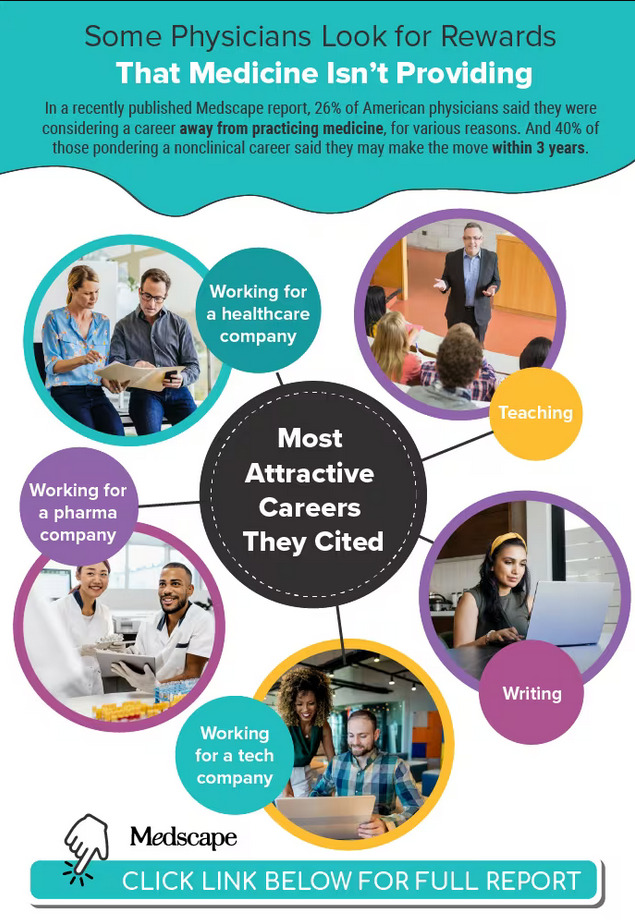
Infographic: Careers that tempt doctors to leave medicine
In a recently published Medscape report, 26% of American physicians said they were considering a career away from practicing medicine, for various reasons. Becoming a teacher was one of the nonclinical careers that most enthused them. What were the others?
For more details, check out the Medscape Physicians and Nonclinical Careers Report 2023.
A version of this article first appeared on Medscape.com.
In a recently published Medscape report, 26% of American physicians said they were considering a career away from practicing medicine, for various reasons. Becoming a teacher was one of the nonclinical careers that most enthused them. What were the others?
For more details, check out the Medscape Physicians and Nonclinical Careers Report 2023.
A version of this article first appeared on Medscape.com.
In a recently published Medscape report, 26% of American physicians said they were considering a career away from practicing medicine, for various reasons. Becoming a teacher was one of the nonclinical careers that most enthused them. What were the others?
For more details, check out the Medscape Physicians and Nonclinical Careers Report 2023.
A version of this article first appeared on Medscape.com.
WHO: Smoking cessation reduces risk of type 2 diabetes up to 40%
TOPLINE:
, and quitting even after one has developed type 2 diabetes is important in preventing a worsening of the disease’s many serious comorbidities, according to a new policy brief jointly issued by the World Health Organization, the International Diabetes Federation (IDF), and the University of Newcastle, Callaghan, Australia.
With type 2 diabetes representing one of the most prevalent chronic diseases worldwide and the ninth cause of death globally, the potential to reduce the risk and worsening of the disease by quitting smoking adds to the urgency of smoking cessation as a public health interest.
METHODOLOGY:
- The policy brief summarizes the evidence on the health impacts of type 2 diabetes, tobacco smoking, and the pathophysiology of tobacco use and its role in the development of type 2 diabetes.
- The brief also describes the latest data on newer products that target smokers or potential smokers, including smokeless tobacco, new nicotine and tobacco products, and their relationship with type 2 diabetes. For instance, evidence suggests that even with smokeless tobacco, heavy use or high consumption increases the risk of developing type 2 diabetes, as the products often contain nicotine, known to contribute to the development of type 2 diabetes and related health conditions.
- Evidence on the effectiveness of tobacco control interventions among those with type 2 diabetes is also summarized, including discussion of a systematic review of six studies suggesting that interventions focusing on education and the involvement of health care professionals and pharmacists can be beneficial for people with type 2 diabetes.
TAKEAWAY:
- Smoking exacerbates the known serious complications of diabetic neuropathy and foot ulcers with type 2 diabetes, while further impeding wound healing.
- Smoking also causes damage to retinal blood vessels already at risk with type 2 diabetes, increasing the risk of diabetic retinopathy and vision loss.
- Quitting tobacco use can help prevent those and other major health complications already linked to diabetes, including kidney failure and cardiovascular events.
- Studies show that key misconceptions among smokers with type 2 diabetes that can prevent cessation include concerns about post-cessation weight gain, the influence of peers who smoke, and the psychological aspect of addiction.
- Clinicians are urged to provide advice on how to stop smoking to all tobacco users during the course of a routine consultation or interaction, which can be accomplished in only a few minutes.
IN PRACTICE:
“Health professionals play a vital role in motivating and guiding individuals with type 2 diabetes in their journey to quit tobacco,” Ruediger Krech, MD, director of the Department of Health Promotion at the World Health Organization in Geneva, Switzerland, said in a press statement on the policy brief.
“Simultaneously, governments must take the crucial step of ensuring all indoor public places, workplaces, and public transport are completely smoke-free. These interventions are essential safeguards against the onset and progression of this and many other chronic diseases,” he emphasized.
SOURCE:
The policy brief was jointly developed by the World Health Organization, the International Diabetes Federation, and the University of Newcastle.
The detailed policy brief can be downloaded on the IDF website.
LIMITATIONS:
Research remains limited on some issues, including the effectiveness of tobacco control interventions and smoking cessation methods for people with type 2 diabetes.
Likewise, specific guidelines for smoking cessation in the type 2 diabetes population are lacking. However, the general approaches of building patient motivation, behavioral interventions, and pharmacological treatments are advised.
“These interventions should be at least as intensive as those for the general population, while considering the unique characteristics of the disease and the individual,” the authors asserted.
DISCLOSURES:
The authors reported no relevant financial relationships.
A version of this article first appeared on Medscape.com.
TOPLINE:
, and quitting even after one has developed type 2 diabetes is important in preventing a worsening of the disease’s many serious comorbidities, according to a new policy brief jointly issued by the World Health Organization, the International Diabetes Federation (IDF), and the University of Newcastle, Callaghan, Australia.
With type 2 diabetes representing one of the most prevalent chronic diseases worldwide and the ninth cause of death globally, the potential to reduce the risk and worsening of the disease by quitting smoking adds to the urgency of smoking cessation as a public health interest.
METHODOLOGY:
- The policy brief summarizes the evidence on the health impacts of type 2 diabetes, tobacco smoking, and the pathophysiology of tobacco use and its role in the development of type 2 diabetes.
- The brief also describes the latest data on newer products that target smokers or potential smokers, including smokeless tobacco, new nicotine and tobacco products, and their relationship with type 2 diabetes. For instance, evidence suggests that even with smokeless tobacco, heavy use or high consumption increases the risk of developing type 2 diabetes, as the products often contain nicotine, known to contribute to the development of type 2 diabetes and related health conditions.
- Evidence on the effectiveness of tobacco control interventions among those with type 2 diabetes is also summarized, including discussion of a systematic review of six studies suggesting that interventions focusing on education and the involvement of health care professionals and pharmacists can be beneficial for people with type 2 diabetes.
TAKEAWAY:
- Smoking exacerbates the known serious complications of diabetic neuropathy and foot ulcers with type 2 diabetes, while further impeding wound healing.
- Smoking also causes damage to retinal blood vessels already at risk with type 2 diabetes, increasing the risk of diabetic retinopathy and vision loss.
- Quitting tobacco use can help prevent those and other major health complications already linked to diabetes, including kidney failure and cardiovascular events.
- Studies show that key misconceptions among smokers with type 2 diabetes that can prevent cessation include concerns about post-cessation weight gain, the influence of peers who smoke, and the psychological aspect of addiction.
- Clinicians are urged to provide advice on how to stop smoking to all tobacco users during the course of a routine consultation or interaction, which can be accomplished in only a few minutes.
IN PRACTICE:
“Health professionals play a vital role in motivating and guiding individuals with type 2 diabetes in their journey to quit tobacco,” Ruediger Krech, MD, director of the Department of Health Promotion at the World Health Organization in Geneva, Switzerland, said in a press statement on the policy brief.
“Simultaneously, governments must take the crucial step of ensuring all indoor public places, workplaces, and public transport are completely smoke-free. These interventions are essential safeguards against the onset and progression of this and many other chronic diseases,” he emphasized.
SOURCE:
The policy brief was jointly developed by the World Health Organization, the International Diabetes Federation, and the University of Newcastle.
The detailed policy brief can be downloaded on the IDF website.
LIMITATIONS:
Research remains limited on some issues, including the effectiveness of tobacco control interventions and smoking cessation methods for people with type 2 diabetes.
Likewise, specific guidelines for smoking cessation in the type 2 diabetes population are lacking. However, the general approaches of building patient motivation, behavioral interventions, and pharmacological treatments are advised.
“These interventions should be at least as intensive as those for the general population, while considering the unique characteristics of the disease and the individual,” the authors asserted.
DISCLOSURES:
The authors reported no relevant financial relationships.
A version of this article first appeared on Medscape.com.
TOPLINE:
, and quitting even after one has developed type 2 diabetes is important in preventing a worsening of the disease’s many serious comorbidities, according to a new policy brief jointly issued by the World Health Organization, the International Diabetes Federation (IDF), and the University of Newcastle, Callaghan, Australia.
With type 2 diabetes representing one of the most prevalent chronic diseases worldwide and the ninth cause of death globally, the potential to reduce the risk and worsening of the disease by quitting smoking adds to the urgency of smoking cessation as a public health interest.
METHODOLOGY:
- The policy brief summarizes the evidence on the health impacts of type 2 diabetes, tobacco smoking, and the pathophysiology of tobacco use and its role in the development of type 2 diabetes.
- The brief also describes the latest data on newer products that target smokers or potential smokers, including smokeless tobacco, new nicotine and tobacco products, and their relationship with type 2 diabetes. For instance, evidence suggests that even with smokeless tobacco, heavy use or high consumption increases the risk of developing type 2 diabetes, as the products often contain nicotine, known to contribute to the development of type 2 diabetes and related health conditions.
- Evidence on the effectiveness of tobacco control interventions among those with type 2 diabetes is also summarized, including discussion of a systematic review of six studies suggesting that interventions focusing on education and the involvement of health care professionals and pharmacists can be beneficial for people with type 2 diabetes.
TAKEAWAY:
- Smoking exacerbates the known serious complications of diabetic neuropathy and foot ulcers with type 2 diabetes, while further impeding wound healing.
- Smoking also causes damage to retinal blood vessels already at risk with type 2 diabetes, increasing the risk of diabetic retinopathy and vision loss.
- Quitting tobacco use can help prevent those and other major health complications already linked to diabetes, including kidney failure and cardiovascular events.
- Studies show that key misconceptions among smokers with type 2 diabetes that can prevent cessation include concerns about post-cessation weight gain, the influence of peers who smoke, and the psychological aspect of addiction.
- Clinicians are urged to provide advice on how to stop smoking to all tobacco users during the course of a routine consultation or interaction, which can be accomplished in only a few minutes.
IN PRACTICE:
“Health professionals play a vital role in motivating and guiding individuals with type 2 diabetes in their journey to quit tobacco,” Ruediger Krech, MD, director of the Department of Health Promotion at the World Health Organization in Geneva, Switzerland, said in a press statement on the policy brief.
“Simultaneously, governments must take the crucial step of ensuring all indoor public places, workplaces, and public transport are completely smoke-free. These interventions are essential safeguards against the onset and progression of this and many other chronic diseases,” he emphasized.
SOURCE:
The policy brief was jointly developed by the World Health Organization, the International Diabetes Federation, and the University of Newcastle.
The detailed policy brief can be downloaded on the IDF website.
LIMITATIONS:
Research remains limited on some issues, including the effectiveness of tobacco control interventions and smoking cessation methods for people with type 2 diabetes.
Likewise, specific guidelines for smoking cessation in the type 2 diabetes population are lacking. However, the general approaches of building patient motivation, behavioral interventions, and pharmacological treatments are advised.
“These interventions should be at least as intensive as those for the general population, while considering the unique characteristics of the disease and the individual,” the authors asserted.
DISCLOSURES:
The authors reported no relevant financial relationships.
A version of this article first appeared on Medscape.com.
A better way to control blood pressure
My Bing AI engine, when prompted, tells me that there are about 87 journals, 45 conferences, and 53 workshops presently dedicated exclusively to hypertension. All of that attention, and yet ...
What is going on?
The top killers of Americans remain coronary artery heart disease (26%), cancer (22%), and stroke (6%). The precursors and attributable risk factors for coronary artery heart disease include hypertension (40%), obesity (20%), diabetes (15%), and combustible tobacco use (15%). The key precursors and attributable risk factors for stroke are hypertension (53%), obesity (37%), diabetes (9%), and combustible tobacco use (11%). Obviously, these are estimates, with substantial overlap.
It’s pretty obvious that
We have addressed improving tobacco control and preventing obesity and diabetes on these pages many times, and lamented the medical, public health, and societal failings. Today we turn our attention to the control of hypertension. That is much easier and far less expensive.
All physicians and medical organizations know that hypertension is a major attributable cause of many serious, expensive, and fatal illnesses. As many as 119 million (48%) of American adults have hypertension. The American Heart Association (AHA), American Medical Association (AMA), American College of Cardiology (ACC), and hundreds of other organizations have set a new target of 130/80 (revised from 140/90) for blood pressure control and have launched a major initiative, Target: BP, to reach it.
That is just great. We all wish this massive effort to succeed where few others have. But do AHA, AMA, ACC, and others understand why most efforts to this point have failed? The blame is typically aimed at patients failing to adhere to their instructions. Maybe, but why? And how does Target: BP intend to convert chronic failure into success if it just continues to do everything they have been trying to do that doesn’t work?
At this point, the Centers for Disease Control and Prevention reports that fewer than 48% of American patients with hypertension meet even the less stringent historical 140/90 goal.
A group practice in Ohio, PriMed Physicians, has consistently exceeded 90% or even 95% blood pressure control for its patients with hypertension for more than 10 years. Exemplary. How do they do it? This video of the 13th annual Lundberg Institute lecture describes this unique and successful program.
PriMed’s clinicians use the MedsEngine AI tool from MediSync and the NICaS (noninvasive cardiac system with impedance cardiography) to determine each patient’s unique blood pressure pathophysiology. Clinicians and patients understand that the simplest explanation of this pathophysiology encompasses three factors: (1) the volume of “water” (blood) in the system; (2) the strength of the pumping (pulsatile) process; and (3) the tightness (resistance) of the tubes that carry the blood. Patients “get it” when it is explained this way, and they cooperate.
At the first patient encounter, the Food and Drug Administration–approved PhysioFlow is employed to assess those three vital hemodynamic factors. The individual patient’s data are loaded into a tightly programed EHR-based algorithm with 37 clinical factors and five classes of drugs, providing multiple ways to influence the three key pathophysiologic processes. In this way, they arrive at the precise drug(s) and dosages for that patient. During the second visit, most patients are already showing improvement. By the third visit, the blood pressures of most patients have reached target control. After that, it is maintenance and tweaking.
These factors summarize why it works:
- Senior management belief, commitment, and leadership
- Informed buy-in from clinicians and patients
- A test that determines root causes of too much fluid, too strong pump action, or too tight pipes, and their proportionality
- An AI tool that matches those three pathophysiologic factors and 35 other clinical factors with the best drug or drugs (of many, not just a few) and dosages
- Persistent clinician-patient follow-up
- Refusal to accept failure
Since this approach is so successful, why is its use not everywhere?
It is not as if nobody noticed, even if you and many organizations have not. The American Medical Group Association recognized the program’s success by giving its top award to PriMed in 2015.
Klepper and Rodis wrote about this approach for managing multiple chronic conditions in 2021. Here’s a background article and an explainer, Clinical use of impedance cardiography for hemodynamic assessment of early cardiovascular disease and management of hypertension.
I found one pragmatic controlled clinical trial of impedance cardiography with a decision-support system from Beijing that did demonstrate clinical and statistical significance.
Frankly, we do need more rigorous, unbiased, large, controlled clinical trials assessing the MedsEngine and NICaS approach to managing blood pressure to facilitate a massive switch from the old and established (but failing) approach to a starkly better way.
Almost no one ever “completes a database.” All decision makers must act based upon the best data to which they have access. Data are often incomplete. The difference between success and mediocrity is often the ability of an individual or system to decide when enough information is enough and act accordingly.
Cost-effectiveness studies in three countries (United Kingdom, United States, and China) confirm sharply lower lifelong costs when blood pressure is well controlled. Of course.
For the American medical-industrial complex, lowered costs for managing common serious diseases may be an undesired rather than a good thing. In money-driven medicine, lower costs to the payer and purchaser translate to less revenue for the providers. Imagine all of those invasive and noninvasive diagnostic and therapeutic procedures forgone by prevention of hypertension. Is it possible that such an underlying truth is the real reason why American medicine is habitually unsuccessful at controlling blood pressure?
Right now, if my blood pressure were not well controlled (it is), I would find my way to Cincinnati, to give PriMed physicians, MediSync, and MedsEngine a crack at prolonging my useful life.
Dr. Lundberg is editor in chief of Cancer Commons. He disclosed no relevant conflicts of interest.
A version of this article first appeared on Medscape.com.
My Bing AI engine, when prompted, tells me that there are about 87 journals, 45 conferences, and 53 workshops presently dedicated exclusively to hypertension. All of that attention, and yet ...
What is going on?
The top killers of Americans remain coronary artery heart disease (26%), cancer (22%), and stroke (6%). The precursors and attributable risk factors for coronary artery heart disease include hypertension (40%), obesity (20%), diabetes (15%), and combustible tobacco use (15%). The key precursors and attributable risk factors for stroke are hypertension (53%), obesity (37%), diabetes (9%), and combustible tobacco use (11%). Obviously, these are estimates, with substantial overlap.
It’s pretty obvious that
We have addressed improving tobacco control and preventing obesity and diabetes on these pages many times, and lamented the medical, public health, and societal failings. Today we turn our attention to the control of hypertension. That is much easier and far less expensive.
All physicians and medical organizations know that hypertension is a major attributable cause of many serious, expensive, and fatal illnesses. As many as 119 million (48%) of American adults have hypertension. The American Heart Association (AHA), American Medical Association (AMA), American College of Cardiology (ACC), and hundreds of other organizations have set a new target of 130/80 (revised from 140/90) for blood pressure control and have launched a major initiative, Target: BP, to reach it.
That is just great. We all wish this massive effort to succeed where few others have. But do AHA, AMA, ACC, and others understand why most efforts to this point have failed? The blame is typically aimed at patients failing to adhere to their instructions. Maybe, but why? And how does Target: BP intend to convert chronic failure into success if it just continues to do everything they have been trying to do that doesn’t work?
At this point, the Centers for Disease Control and Prevention reports that fewer than 48% of American patients with hypertension meet even the less stringent historical 140/90 goal.
A group practice in Ohio, PriMed Physicians, has consistently exceeded 90% or even 95% blood pressure control for its patients with hypertension for more than 10 years. Exemplary. How do they do it? This video of the 13th annual Lundberg Institute lecture describes this unique and successful program.
PriMed’s clinicians use the MedsEngine AI tool from MediSync and the NICaS (noninvasive cardiac system with impedance cardiography) to determine each patient’s unique blood pressure pathophysiology. Clinicians and patients understand that the simplest explanation of this pathophysiology encompasses three factors: (1) the volume of “water” (blood) in the system; (2) the strength of the pumping (pulsatile) process; and (3) the tightness (resistance) of the tubes that carry the blood. Patients “get it” when it is explained this way, and they cooperate.
At the first patient encounter, the Food and Drug Administration–approved PhysioFlow is employed to assess those three vital hemodynamic factors. The individual patient’s data are loaded into a tightly programed EHR-based algorithm with 37 clinical factors and five classes of drugs, providing multiple ways to influence the three key pathophysiologic processes. In this way, they arrive at the precise drug(s) and dosages for that patient. During the second visit, most patients are already showing improvement. By the third visit, the blood pressures of most patients have reached target control. After that, it is maintenance and tweaking.
These factors summarize why it works:
- Senior management belief, commitment, and leadership
- Informed buy-in from clinicians and patients
- A test that determines root causes of too much fluid, too strong pump action, or too tight pipes, and their proportionality
- An AI tool that matches those three pathophysiologic factors and 35 other clinical factors with the best drug or drugs (of many, not just a few) and dosages
- Persistent clinician-patient follow-up
- Refusal to accept failure
Since this approach is so successful, why is its use not everywhere?
It is not as if nobody noticed, even if you and many organizations have not. The American Medical Group Association recognized the program’s success by giving its top award to PriMed in 2015.
Klepper and Rodis wrote about this approach for managing multiple chronic conditions in 2021. Here’s a background article and an explainer, Clinical use of impedance cardiography for hemodynamic assessment of early cardiovascular disease and management of hypertension.
I found one pragmatic controlled clinical trial of impedance cardiography with a decision-support system from Beijing that did demonstrate clinical and statistical significance.
Frankly, we do need more rigorous, unbiased, large, controlled clinical trials assessing the MedsEngine and NICaS approach to managing blood pressure to facilitate a massive switch from the old and established (but failing) approach to a starkly better way.
Almost no one ever “completes a database.” All decision makers must act based upon the best data to which they have access. Data are often incomplete. The difference between success and mediocrity is often the ability of an individual or system to decide when enough information is enough and act accordingly.
Cost-effectiveness studies in three countries (United Kingdom, United States, and China) confirm sharply lower lifelong costs when blood pressure is well controlled. Of course.
For the American medical-industrial complex, lowered costs for managing common serious diseases may be an undesired rather than a good thing. In money-driven medicine, lower costs to the payer and purchaser translate to less revenue for the providers. Imagine all of those invasive and noninvasive diagnostic and therapeutic procedures forgone by prevention of hypertension. Is it possible that such an underlying truth is the real reason why American medicine is habitually unsuccessful at controlling blood pressure?
Right now, if my blood pressure were not well controlled (it is), I would find my way to Cincinnati, to give PriMed physicians, MediSync, and MedsEngine a crack at prolonging my useful life.
Dr. Lundberg is editor in chief of Cancer Commons. He disclosed no relevant conflicts of interest.
A version of this article first appeared on Medscape.com.
My Bing AI engine, when prompted, tells me that there are about 87 journals, 45 conferences, and 53 workshops presently dedicated exclusively to hypertension. All of that attention, and yet ...
What is going on?
The top killers of Americans remain coronary artery heart disease (26%), cancer (22%), and stroke (6%). The precursors and attributable risk factors for coronary artery heart disease include hypertension (40%), obesity (20%), diabetes (15%), and combustible tobacco use (15%). The key precursors and attributable risk factors for stroke are hypertension (53%), obesity (37%), diabetes (9%), and combustible tobacco use (11%). Obviously, these are estimates, with substantial overlap.
It’s pretty obvious that
We have addressed improving tobacco control and preventing obesity and diabetes on these pages many times, and lamented the medical, public health, and societal failings. Today we turn our attention to the control of hypertension. That is much easier and far less expensive.
All physicians and medical organizations know that hypertension is a major attributable cause of many serious, expensive, and fatal illnesses. As many as 119 million (48%) of American adults have hypertension. The American Heart Association (AHA), American Medical Association (AMA), American College of Cardiology (ACC), and hundreds of other organizations have set a new target of 130/80 (revised from 140/90) for blood pressure control and have launched a major initiative, Target: BP, to reach it.
That is just great. We all wish this massive effort to succeed where few others have. But do AHA, AMA, ACC, and others understand why most efforts to this point have failed? The blame is typically aimed at patients failing to adhere to their instructions. Maybe, but why? And how does Target: BP intend to convert chronic failure into success if it just continues to do everything they have been trying to do that doesn’t work?
At this point, the Centers for Disease Control and Prevention reports that fewer than 48% of American patients with hypertension meet even the less stringent historical 140/90 goal.
A group practice in Ohio, PriMed Physicians, has consistently exceeded 90% or even 95% blood pressure control for its patients with hypertension for more than 10 years. Exemplary. How do they do it? This video of the 13th annual Lundberg Institute lecture describes this unique and successful program.
PriMed’s clinicians use the MedsEngine AI tool from MediSync and the NICaS (noninvasive cardiac system with impedance cardiography) to determine each patient’s unique blood pressure pathophysiology. Clinicians and patients understand that the simplest explanation of this pathophysiology encompasses three factors: (1) the volume of “water” (blood) in the system; (2) the strength of the pumping (pulsatile) process; and (3) the tightness (resistance) of the tubes that carry the blood. Patients “get it” when it is explained this way, and they cooperate.
At the first patient encounter, the Food and Drug Administration–approved PhysioFlow is employed to assess those three vital hemodynamic factors. The individual patient’s data are loaded into a tightly programed EHR-based algorithm with 37 clinical factors and five classes of drugs, providing multiple ways to influence the three key pathophysiologic processes. In this way, they arrive at the precise drug(s) and dosages for that patient. During the second visit, most patients are already showing improvement. By the third visit, the blood pressures of most patients have reached target control. After that, it is maintenance and tweaking.
These factors summarize why it works:
- Senior management belief, commitment, and leadership
- Informed buy-in from clinicians and patients
- A test that determines root causes of too much fluid, too strong pump action, or too tight pipes, and their proportionality
- An AI tool that matches those three pathophysiologic factors and 35 other clinical factors with the best drug or drugs (of many, not just a few) and dosages
- Persistent clinician-patient follow-up
- Refusal to accept failure
Since this approach is so successful, why is its use not everywhere?
It is not as if nobody noticed, even if you and many organizations have not. The American Medical Group Association recognized the program’s success by giving its top award to PriMed in 2015.
Klepper and Rodis wrote about this approach for managing multiple chronic conditions in 2021. Here’s a background article and an explainer, Clinical use of impedance cardiography for hemodynamic assessment of early cardiovascular disease and management of hypertension.
I found one pragmatic controlled clinical trial of impedance cardiography with a decision-support system from Beijing that did demonstrate clinical and statistical significance.
Frankly, we do need more rigorous, unbiased, large, controlled clinical trials assessing the MedsEngine and NICaS approach to managing blood pressure to facilitate a massive switch from the old and established (but failing) approach to a starkly better way.
Almost no one ever “completes a database.” All decision makers must act based upon the best data to which they have access. Data are often incomplete. The difference between success and mediocrity is often the ability of an individual or system to decide when enough information is enough and act accordingly.
Cost-effectiveness studies in three countries (United Kingdom, United States, and China) confirm sharply lower lifelong costs when blood pressure is well controlled. Of course.
For the American medical-industrial complex, lowered costs for managing common serious diseases may be an undesired rather than a good thing. In money-driven medicine, lower costs to the payer and purchaser translate to less revenue for the providers. Imagine all of those invasive and noninvasive diagnostic and therapeutic procedures forgone by prevention of hypertension. Is it possible that such an underlying truth is the real reason why American medicine is habitually unsuccessful at controlling blood pressure?
Right now, if my blood pressure were not well controlled (it is), I would find my way to Cincinnati, to give PriMed physicians, MediSync, and MedsEngine a crack at prolonging my useful life.
Dr. Lundberg is editor in chief of Cancer Commons. He disclosed no relevant conflicts of interest.
A version of this article first appeared on Medscape.com.
A mid-marathon cardiac arrest, an MD’s crisis of confidence
I was running my 25th New York City Marathon. It was 2018, and I almost pulled out of running that year. I wasn’t myself, and maybe that’s an understatement.
A month earlier, I had been involved in a malpractice case. I was found liable for $10 million. My colleagues didn’t think I had done anything wrong, but the jury did. And the local newspapers made me look like a villain.
I was devastated. But my priest, my friends, and my family all told me, “You can’t quit.” So, I decided to run for them.
I started on the Verrazzano-Narrows Bridge that morning with some friends from work. I usually listen to music as I’m running, but I didn’t that year. I was just in my zone, enjoying the crowds. They’re huge. Millions of people on the streets.
I was running well. I did half the race in an hour and 57 minutes. My family always meets me at mile 17, and I was almost there. I had reached 59th Street and was about to make the turn onto First Avenue.
That’s one of the noisiest places in the marathon. There’s a kind of tunnel, and with the crowd and the throng of runners, it’s incredibly loud. But somehow, I heard somebody yell, “Help!”
Now, how I heard that, I don’t know. And if I’d been listening to music like I always do, no way I would’ve heard it. I could swear it was an angel on my shoulder that said, “Turn around, dummy. You’ve got a person that needs your help to your left.”
I turned around and about 30 feet behind me, I saw a woman waving her hands and a runner on the ground. I thought, Somebody fainted. I pushed through the crowd to get to them. The woman was crying, saying, “My friend went down to tie her shoe and she fell back. I think she’s seizing or something.”
I got down and tried to wake the other woman up. I lifted her legs up. But I quickly realized there was more to the story.
Some volunteers and police started coming toward us. The police officers looked at me like, What’s this guy doing? I explained that I was a physician, and one of them began helping me with the CPR. As we did that, someone brought a defibrillator.
Meanwhile, runners were going past, almost over us. The police officers were trying to create a barrier.
The machine gave the woman a shock, but we didn’t get a response, so we resumed CPR. At that point, my legs began to cramp so badly I couldn’t go on. So the police officer took over, and I yelled, “I need an ambu bag!” Somebody brought one, and I started giving her oxygen.
At that point, a paramedic team arrived with a bigger defibrillator. We shocked her again. And again. That time we got results, but she quickly went out again. The fourth time, we got her heart back and she started breathing on her own.
We finally got her into an ambulance. I wanted to go with them, but the woman’s friend needed to get in, so there wasn’t enough room.
And then they were gone, and I was just standing there.
A police officer put his arm around me. He said, “Doc, you’re amazing. What do you need? Where can I take you?”
I said, “Take me? My wife is waiting for me at mile 17.”
I took off and ran. When I got to my wife and kids, they were so worried. We all wear tracking devices, and they could see that I had stopped for more than 20 minutes.
I fell into my wife’s arms and told her what had happened. I was crying. “I don’t know what to do. I need to get to the hospital.”
And she said, “No, you need to go finish the race.”
So, I did. It was painful because of the cramps, but I was numb at that point. I was thinking about the woman the whole way. My time was 5 hours and 20 minutes.
As soon as I finished, I went to every police officer I could find, but nobody knew anything. Suddenly, I remembered my cousin. He had previously been the head of EMS for New York City. I called him. “Abdo, it’s Ted, you’ve got to do me a favor.”
“What?” he said. “Are you delirious from running the marathon?”
I told him what I needed. He called me back 5 minutes later and said, “Ted, what’d you do? Everybody wants to know who you are and where you are! The woman just went out again at New York Cornell. But they got her back, and they’re bringing her up to the cath lab.”
After every marathon that I run, we host a big party at our house. My family and friends and neighbors all celebrate while I’m dying on the couch. That night, my daughter told everyone the story of what happened.
But I was still not right. Still thinking about the malpractice suit.
Yes, I just did something great. But I’d recently been called the worst physician in the world. The distraction of the marathon was gone, and I was back to thinking, What am I going to do with my life? Who’s ever going to want to see me again? I’m a pariah.
Everybody said, “Ted, what happened a month ago isn’t you. What happened today was you.”
I told them to leave it alone, but my daughter and my neighbor started calling people anyway. The next day I got a call from the local newspaper. It was the same journalist who had written about me from the trial. I told him I didn’t want to talk. I was actually pretty nasty.
But my wife said, “Ted, what are you doing? That guy was trying to help you.” So, I called back and apologized.
“Dr. Strange, we knew that story wasn’t right,” he said. “We have to write this story.”
After the article came out, I started getting more calls from the media. Channel 7 News and CBS News did segments. The New York Knicks invited us to a game and presented me with a watch. It was incredible. But I was also really embarrassed by it.
People started calling me a hero. I’m not a hero. I just did what I’m supposed to do, what I’m trained to do. Shame on me if I don’t do that. Good guy and hopefully good physician, sure, but not a hero.
I also give credit to the City of New York Police Department, the FDNY, and the volunteers. Without them, I couldn’t have done what I did. It was a true team effort.
A few weeks later, the woman went home to Minnesota. She’ll never run a marathon again, but she’s still alive to this day. It turned out she had a single lesion called the “widow-maker” lesion. She was in perfect health and had just completed an ultramarathon a few months before; but she had a genetic predisposition. She still calls me every December to thank me for another Christmas.
There’s more.
One year after this whole thing, almost to the date, I got a call from my attorney. “The court just threw out the malpractice verdict,” he said. “You didn’t do anything wrong.”
I’m a man of faith. And I believe all this happened for a reason. Maybe God was sending me a message, and that’s why I heard a call for help on 59th Street in my 25th marathon among millions of people in a crowd.
I ran the marathon the next year. And when I got to that spot, I stopped and reflected. Nobody knew why I was standing there, but I knew. To this day, I could take you to that spot.
I turn 65 next July, and I plan to keep on running the race.
Dr. Strange is chair of medicine at Staten Island University Hospital, associate ambulatory physician executive of the Staten Island Region, and an internal medicine and geriatric medicine physician with Northwell Health.
A version of this article first appeared on Medscape.com.
I was running my 25th New York City Marathon. It was 2018, and I almost pulled out of running that year. I wasn’t myself, and maybe that’s an understatement.
A month earlier, I had been involved in a malpractice case. I was found liable for $10 million. My colleagues didn’t think I had done anything wrong, but the jury did. And the local newspapers made me look like a villain.
I was devastated. But my priest, my friends, and my family all told me, “You can’t quit.” So, I decided to run for them.
I started on the Verrazzano-Narrows Bridge that morning with some friends from work. I usually listen to music as I’m running, but I didn’t that year. I was just in my zone, enjoying the crowds. They’re huge. Millions of people on the streets.
I was running well. I did half the race in an hour and 57 minutes. My family always meets me at mile 17, and I was almost there. I had reached 59th Street and was about to make the turn onto First Avenue.
That’s one of the noisiest places in the marathon. There’s a kind of tunnel, and with the crowd and the throng of runners, it’s incredibly loud. But somehow, I heard somebody yell, “Help!”
Now, how I heard that, I don’t know. And if I’d been listening to music like I always do, no way I would’ve heard it. I could swear it was an angel on my shoulder that said, “Turn around, dummy. You’ve got a person that needs your help to your left.”
I turned around and about 30 feet behind me, I saw a woman waving her hands and a runner on the ground. I thought, Somebody fainted. I pushed through the crowd to get to them. The woman was crying, saying, “My friend went down to tie her shoe and she fell back. I think she’s seizing or something.”
I got down and tried to wake the other woman up. I lifted her legs up. But I quickly realized there was more to the story.
Some volunteers and police started coming toward us. The police officers looked at me like, What’s this guy doing? I explained that I was a physician, and one of them began helping me with the CPR. As we did that, someone brought a defibrillator.
Meanwhile, runners were going past, almost over us. The police officers were trying to create a barrier.
The machine gave the woman a shock, but we didn’t get a response, so we resumed CPR. At that point, my legs began to cramp so badly I couldn’t go on. So the police officer took over, and I yelled, “I need an ambu bag!” Somebody brought one, and I started giving her oxygen.
At that point, a paramedic team arrived with a bigger defibrillator. We shocked her again. And again. That time we got results, but she quickly went out again. The fourth time, we got her heart back and she started breathing on her own.
We finally got her into an ambulance. I wanted to go with them, but the woman’s friend needed to get in, so there wasn’t enough room.
And then they were gone, and I was just standing there.
A police officer put his arm around me. He said, “Doc, you’re amazing. What do you need? Where can I take you?”
I said, “Take me? My wife is waiting for me at mile 17.”
I took off and ran. When I got to my wife and kids, they were so worried. We all wear tracking devices, and they could see that I had stopped for more than 20 minutes.
I fell into my wife’s arms and told her what had happened. I was crying. “I don’t know what to do. I need to get to the hospital.”
And she said, “No, you need to go finish the race.”
So, I did. It was painful because of the cramps, but I was numb at that point. I was thinking about the woman the whole way. My time was 5 hours and 20 minutes.
As soon as I finished, I went to every police officer I could find, but nobody knew anything. Suddenly, I remembered my cousin. He had previously been the head of EMS for New York City. I called him. “Abdo, it’s Ted, you’ve got to do me a favor.”
“What?” he said. “Are you delirious from running the marathon?”
I told him what I needed. He called me back 5 minutes later and said, “Ted, what’d you do? Everybody wants to know who you are and where you are! The woman just went out again at New York Cornell. But they got her back, and they’re bringing her up to the cath lab.”
After every marathon that I run, we host a big party at our house. My family and friends and neighbors all celebrate while I’m dying on the couch. That night, my daughter told everyone the story of what happened.
But I was still not right. Still thinking about the malpractice suit.
Yes, I just did something great. But I’d recently been called the worst physician in the world. The distraction of the marathon was gone, and I was back to thinking, What am I going to do with my life? Who’s ever going to want to see me again? I’m a pariah.
Everybody said, “Ted, what happened a month ago isn’t you. What happened today was you.”
I told them to leave it alone, but my daughter and my neighbor started calling people anyway. The next day I got a call from the local newspaper. It was the same journalist who had written about me from the trial. I told him I didn’t want to talk. I was actually pretty nasty.
But my wife said, “Ted, what are you doing? That guy was trying to help you.” So, I called back and apologized.
“Dr. Strange, we knew that story wasn’t right,” he said. “We have to write this story.”
After the article came out, I started getting more calls from the media. Channel 7 News and CBS News did segments. The New York Knicks invited us to a game and presented me with a watch. It was incredible. But I was also really embarrassed by it.
People started calling me a hero. I’m not a hero. I just did what I’m supposed to do, what I’m trained to do. Shame on me if I don’t do that. Good guy and hopefully good physician, sure, but not a hero.
I also give credit to the City of New York Police Department, the FDNY, and the volunteers. Without them, I couldn’t have done what I did. It was a true team effort.
A few weeks later, the woman went home to Minnesota. She’ll never run a marathon again, but she’s still alive to this day. It turned out she had a single lesion called the “widow-maker” lesion. She was in perfect health and had just completed an ultramarathon a few months before; but she had a genetic predisposition. She still calls me every December to thank me for another Christmas.
There’s more.
One year after this whole thing, almost to the date, I got a call from my attorney. “The court just threw out the malpractice verdict,” he said. “You didn’t do anything wrong.”
I’m a man of faith. And I believe all this happened for a reason. Maybe God was sending me a message, and that’s why I heard a call for help on 59th Street in my 25th marathon among millions of people in a crowd.
I ran the marathon the next year. And when I got to that spot, I stopped and reflected. Nobody knew why I was standing there, but I knew. To this day, I could take you to that spot.
I turn 65 next July, and I plan to keep on running the race.
Dr. Strange is chair of medicine at Staten Island University Hospital, associate ambulatory physician executive of the Staten Island Region, and an internal medicine and geriatric medicine physician with Northwell Health.
A version of this article first appeared on Medscape.com.
I was running my 25th New York City Marathon. It was 2018, and I almost pulled out of running that year. I wasn’t myself, and maybe that’s an understatement.
A month earlier, I had been involved in a malpractice case. I was found liable for $10 million. My colleagues didn’t think I had done anything wrong, but the jury did. And the local newspapers made me look like a villain.
I was devastated. But my priest, my friends, and my family all told me, “You can’t quit.” So, I decided to run for them.
I started on the Verrazzano-Narrows Bridge that morning with some friends from work. I usually listen to music as I’m running, but I didn’t that year. I was just in my zone, enjoying the crowds. They’re huge. Millions of people on the streets.
I was running well. I did half the race in an hour and 57 minutes. My family always meets me at mile 17, and I was almost there. I had reached 59th Street and was about to make the turn onto First Avenue.
That’s one of the noisiest places in the marathon. There’s a kind of tunnel, and with the crowd and the throng of runners, it’s incredibly loud. But somehow, I heard somebody yell, “Help!”
Now, how I heard that, I don’t know. And if I’d been listening to music like I always do, no way I would’ve heard it. I could swear it was an angel on my shoulder that said, “Turn around, dummy. You’ve got a person that needs your help to your left.”
I turned around and about 30 feet behind me, I saw a woman waving her hands and a runner on the ground. I thought, Somebody fainted. I pushed through the crowd to get to them. The woman was crying, saying, “My friend went down to tie her shoe and she fell back. I think she’s seizing or something.”
I got down and tried to wake the other woman up. I lifted her legs up. But I quickly realized there was more to the story.
Some volunteers and police started coming toward us. The police officers looked at me like, What’s this guy doing? I explained that I was a physician, and one of them began helping me with the CPR. As we did that, someone brought a defibrillator.
Meanwhile, runners were going past, almost over us. The police officers were trying to create a barrier.
The machine gave the woman a shock, but we didn’t get a response, so we resumed CPR. At that point, my legs began to cramp so badly I couldn’t go on. So the police officer took over, and I yelled, “I need an ambu bag!” Somebody brought one, and I started giving her oxygen.
At that point, a paramedic team arrived with a bigger defibrillator. We shocked her again. And again. That time we got results, but she quickly went out again. The fourth time, we got her heart back and she started breathing on her own.
We finally got her into an ambulance. I wanted to go with them, but the woman’s friend needed to get in, so there wasn’t enough room.
And then they were gone, and I was just standing there.
A police officer put his arm around me. He said, “Doc, you’re amazing. What do you need? Where can I take you?”
I said, “Take me? My wife is waiting for me at mile 17.”
I took off and ran. When I got to my wife and kids, they were so worried. We all wear tracking devices, and they could see that I had stopped for more than 20 minutes.
I fell into my wife’s arms and told her what had happened. I was crying. “I don’t know what to do. I need to get to the hospital.”
And she said, “No, you need to go finish the race.”
So, I did. It was painful because of the cramps, but I was numb at that point. I was thinking about the woman the whole way. My time was 5 hours and 20 minutes.
As soon as I finished, I went to every police officer I could find, but nobody knew anything. Suddenly, I remembered my cousin. He had previously been the head of EMS for New York City. I called him. “Abdo, it’s Ted, you’ve got to do me a favor.”
“What?” he said. “Are you delirious from running the marathon?”
I told him what I needed. He called me back 5 minutes later and said, “Ted, what’d you do? Everybody wants to know who you are and where you are! The woman just went out again at New York Cornell. But they got her back, and they’re bringing her up to the cath lab.”
After every marathon that I run, we host a big party at our house. My family and friends and neighbors all celebrate while I’m dying on the couch. That night, my daughter told everyone the story of what happened.
But I was still not right. Still thinking about the malpractice suit.
Yes, I just did something great. But I’d recently been called the worst physician in the world. The distraction of the marathon was gone, and I was back to thinking, What am I going to do with my life? Who’s ever going to want to see me again? I’m a pariah.
Everybody said, “Ted, what happened a month ago isn’t you. What happened today was you.”
I told them to leave it alone, but my daughter and my neighbor started calling people anyway. The next day I got a call from the local newspaper. It was the same journalist who had written about me from the trial. I told him I didn’t want to talk. I was actually pretty nasty.
But my wife said, “Ted, what are you doing? That guy was trying to help you.” So, I called back and apologized.
“Dr. Strange, we knew that story wasn’t right,” he said. “We have to write this story.”
After the article came out, I started getting more calls from the media. Channel 7 News and CBS News did segments. The New York Knicks invited us to a game and presented me with a watch. It was incredible. But I was also really embarrassed by it.
People started calling me a hero. I’m not a hero. I just did what I’m supposed to do, what I’m trained to do. Shame on me if I don’t do that. Good guy and hopefully good physician, sure, but not a hero.
I also give credit to the City of New York Police Department, the FDNY, and the volunteers. Without them, I couldn’t have done what I did. It was a true team effort.
A few weeks later, the woman went home to Minnesota. She’ll never run a marathon again, but she’s still alive to this day. It turned out she had a single lesion called the “widow-maker” lesion. She was in perfect health and had just completed an ultramarathon a few months before; but she had a genetic predisposition. She still calls me every December to thank me for another Christmas.
There’s more.
One year after this whole thing, almost to the date, I got a call from my attorney. “The court just threw out the malpractice verdict,” he said. “You didn’t do anything wrong.”
I’m a man of faith. And I believe all this happened for a reason. Maybe God was sending me a message, and that’s why I heard a call for help on 59th Street in my 25th marathon among millions of people in a crowd.
I ran the marathon the next year. And when I got to that spot, I stopped and reflected. Nobody knew why I was standing there, but I knew. To this day, I could take you to that spot.
I turn 65 next July, and I plan to keep on running the race.
Dr. Strange is chair of medicine at Staten Island University Hospital, associate ambulatory physician executive of the Staten Island Region, and an internal medicine and geriatric medicine physician with Northwell Health.
A version of this article first appeared on Medscape.com.
Promising first results with DNA editing to lower LDL
PHILADELPHIA –
While one of four patients in the highest-dose groups had a myocardial infarction the day after getting the treatment, investigators have enough confidence to go forward with the next phase of study.
“The HEART-1trial demonstrated the first human proof of concept for in vivo DNA-based editing,” said Andrew Bellinger, MD, PhD, chief scientific officer of Verve Therapeutics, the company developing the treatment. “We saw dose-dependent–based reductions in LDL and the PCSK9 protein.”
The HEART-1 study was a phase 1b trial of VERVE-101, a CRISPR-based gene editing mechanism designed to inactivate the liver gene PCSK9, which contributes to raising cholesterol. “Human genetics suggest that turning off the cholesterol-raising gene PCSK9 in the liver will durably reduce LDL cholesterol,” Dr. Bellinger said in presenting the results at the annual scientific sessions of the American Heart Association.
Lipid nanoparticle
VERVE-101 is designed to be a single-course treatment to specifically treat HeFH, Dr. Bellinger said. He explained how the therapy, given by intravenous infusion, differs from adeno-associated virus vectors that have dominated gene therapy platforms.
“It’s a lipid nanoparticle encapsulating two RNA nanoparticles that are taken up by hepatocytes in the liver from the blood by the LDL receptor,” he explained. “Then the A-to-G–based editor protein and the guide mRNA protein together find the PCSK9 gene in the liver.” That single DNA-base change in one position of the PCSK9 gene is able to turn off PCSK9 production in those liver cells.
Dr. Bellinger presented interim results of the first 10 patients treated in the open-label, single ascending dose study. The patients were male and female, ages 18-75, with HeFH, established atherosclerotic cardiovascular disease and uncontrolled hypercholesterolemia despite being on maximally tolerated lipid-lowering therapy.
They received four different doses: Three patients each received 0.1, 0.3, and 0.45 mg/kg; and one patient received 0.6 mg/kg.
Reductions in blood PCSK9 levels were measured across all dosing groups at 4 weeks, but they were most pronounced in the two highest groups, Dr. Bellinger said. Two patients in the 0.45-mg/kg group had reductions of 59% and 84%. The sole patient in the 0.6-mg/kg arm had a reduction of 47%.
Regarding the 84% reduction in one individual, Dr. Bellinger said, “Roughly 85% of PCSK9 comes from the liver. These data suggest that we have successfully made a single base pair change in both copies of the PCSK9 gene in nearly every hepatocyte in the liver of this individual.”
Those benefits carried over to LDL cholesterol measures, with the highest-dose patients registering 39%, 48% and 55% reductions.
Safety outcomes
Two patients had serious cardiovascular (CV) events. One in the 0.3-mg/kg arm died from cardiac arrest 5 weeks after receiving the infusion. A patient in the 0.45-mg/kg arm had a myocardial infarction a day after getting the infusion and then nonsustained ventricular tachycardia (NSVT) 4 weeks later. Dr. Bellinger said an independent review panel determined that the CV events were in line with outcomes for high-risk patients and weren’t directly related to treatment.
He added, “Increased liver transaminases were seen in patients treated in the higher-dose cohorts. It’s transient, asymptomatic, and it resolved quickly.”
The next step involves pursuing only the 0.45- and 0.6-mg/kg doses in the next dose-escalation phase and enrolling an expansion cohort in 2024, Dr. Bellinger said, with a plan to initiate a randomized, placebo-controlled phase 2 trial in 2025.
First, do no harm
Karol Watson, MD, PhD, a women’s cardiovascular disease specialist at UCLA, said the promise of gene therapy was “revolutionary,” but that proving safety was critical going forward.
“You’re changing the genome forever,” she said. “Safety is going to be of the utmost importance especially because there are currently safe and efficacious strategies available for lipid lowering. This is a strategy that could be revolutionary, but we have to make sure that it’s safe.”
She pointed to a multinational study from earlier this year that warned about pathogenic consequences from CRISPR-based gene editing. “There are concerns about gene editing,” Dr. Watson said. “This was a whole-genome analysis showing atypical nonhomologous on-target effects of genome editing. Of course this is a very different strategy from what we heard today, but, again, we have to know that this is safe.”
Despite the small sample size from the two highest-dose groups in the study, Dr. Watson said the investigators have reason for going forward. “I think the preclinical data supports moving forward, but the next studies will have to be scrutinized carefully,” she said. “This is a preventive therapy; the first tenet is to do no harm.”
Dr. Bellinger is an employee of Verve Therapeutics, which sponsored the trial. Dr. Watson disclosed relationships with Boehringer-Ingelheim, Amgen, Lilly and Novartis.
PHILADELPHIA –
While one of four patients in the highest-dose groups had a myocardial infarction the day after getting the treatment, investigators have enough confidence to go forward with the next phase of study.
“The HEART-1trial demonstrated the first human proof of concept for in vivo DNA-based editing,” said Andrew Bellinger, MD, PhD, chief scientific officer of Verve Therapeutics, the company developing the treatment. “We saw dose-dependent–based reductions in LDL and the PCSK9 protein.”
The HEART-1 study was a phase 1b trial of VERVE-101, a CRISPR-based gene editing mechanism designed to inactivate the liver gene PCSK9, which contributes to raising cholesterol. “Human genetics suggest that turning off the cholesterol-raising gene PCSK9 in the liver will durably reduce LDL cholesterol,” Dr. Bellinger said in presenting the results at the annual scientific sessions of the American Heart Association.
Lipid nanoparticle
VERVE-101 is designed to be a single-course treatment to specifically treat HeFH, Dr. Bellinger said. He explained how the therapy, given by intravenous infusion, differs from adeno-associated virus vectors that have dominated gene therapy platforms.
“It’s a lipid nanoparticle encapsulating two RNA nanoparticles that are taken up by hepatocytes in the liver from the blood by the LDL receptor,” he explained. “Then the A-to-G–based editor protein and the guide mRNA protein together find the PCSK9 gene in the liver.” That single DNA-base change in one position of the PCSK9 gene is able to turn off PCSK9 production in those liver cells.
Dr. Bellinger presented interim results of the first 10 patients treated in the open-label, single ascending dose study. The patients were male and female, ages 18-75, with HeFH, established atherosclerotic cardiovascular disease and uncontrolled hypercholesterolemia despite being on maximally tolerated lipid-lowering therapy.
They received four different doses: Three patients each received 0.1, 0.3, and 0.45 mg/kg; and one patient received 0.6 mg/kg.
Reductions in blood PCSK9 levels were measured across all dosing groups at 4 weeks, but they were most pronounced in the two highest groups, Dr. Bellinger said. Two patients in the 0.45-mg/kg group had reductions of 59% and 84%. The sole patient in the 0.6-mg/kg arm had a reduction of 47%.
Regarding the 84% reduction in one individual, Dr. Bellinger said, “Roughly 85% of PCSK9 comes from the liver. These data suggest that we have successfully made a single base pair change in both copies of the PCSK9 gene in nearly every hepatocyte in the liver of this individual.”
Those benefits carried over to LDL cholesterol measures, with the highest-dose patients registering 39%, 48% and 55% reductions.
Safety outcomes
Two patients had serious cardiovascular (CV) events. One in the 0.3-mg/kg arm died from cardiac arrest 5 weeks after receiving the infusion. A patient in the 0.45-mg/kg arm had a myocardial infarction a day after getting the infusion and then nonsustained ventricular tachycardia (NSVT) 4 weeks later. Dr. Bellinger said an independent review panel determined that the CV events were in line with outcomes for high-risk patients and weren’t directly related to treatment.
He added, “Increased liver transaminases were seen in patients treated in the higher-dose cohorts. It’s transient, asymptomatic, and it resolved quickly.”
The next step involves pursuing only the 0.45- and 0.6-mg/kg doses in the next dose-escalation phase and enrolling an expansion cohort in 2024, Dr. Bellinger said, with a plan to initiate a randomized, placebo-controlled phase 2 trial in 2025.
First, do no harm
Karol Watson, MD, PhD, a women’s cardiovascular disease specialist at UCLA, said the promise of gene therapy was “revolutionary,” but that proving safety was critical going forward.
“You’re changing the genome forever,” she said. “Safety is going to be of the utmost importance especially because there are currently safe and efficacious strategies available for lipid lowering. This is a strategy that could be revolutionary, but we have to make sure that it’s safe.”
She pointed to a multinational study from earlier this year that warned about pathogenic consequences from CRISPR-based gene editing. “There are concerns about gene editing,” Dr. Watson said. “This was a whole-genome analysis showing atypical nonhomologous on-target effects of genome editing. Of course this is a very different strategy from what we heard today, but, again, we have to know that this is safe.”
Despite the small sample size from the two highest-dose groups in the study, Dr. Watson said the investigators have reason for going forward. “I think the preclinical data supports moving forward, but the next studies will have to be scrutinized carefully,” she said. “This is a preventive therapy; the first tenet is to do no harm.”
Dr. Bellinger is an employee of Verve Therapeutics, which sponsored the trial. Dr. Watson disclosed relationships with Boehringer-Ingelheim, Amgen, Lilly and Novartis.
PHILADELPHIA –
While one of four patients in the highest-dose groups had a myocardial infarction the day after getting the treatment, investigators have enough confidence to go forward with the next phase of study.
“The HEART-1trial demonstrated the first human proof of concept for in vivo DNA-based editing,” said Andrew Bellinger, MD, PhD, chief scientific officer of Verve Therapeutics, the company developing the treatment. “We saw dose-dependent–based reductions in LDL and the PCSK9 protein.”
The HEART-1 study was a phase 1b trial of VERVE-101, a CRISPR-based gene editing mechanism designed to inactivate the liver gene PCSK9, which contributes to raising cholesterol. “Human genetics suggest that turning off the cholesterol-raising gene PCSK9 in the liver will durably reduce LDL cholesterol,” Dr. Bellinger said in presenting the results at the annual scientific sessions of the American Heart Association.
Lipid nanoparticle
VERVE-101 is designed to be a single-course treatment to specifically treat HeFH, Dr. Bellinger said. He explained how the therapy, given by intravenous infusion, differs from adeno-associated virus vectors that have dominated gene therapy platforms.
“It’s a lipid nanoparticle encapsulating two RNA nanoparticles that are taken up by hepatocytes in the liver from the blood by the LDL receptor,” he explained. “Then the A-to-G–based editor protein and the guide mRNA protein together find the PCSK9 gene in the liver.” That single DNA-base change in one position of the PCSK9 gene is able to turn off PCSK9 production in those liver cells.
Dr. Bellinger presented interim results of the first 10 patients treated in the open-label, single ascending dose study. The patients were male and female, ages 18-75, with HeFH, established atherosclerotic cardiovascular disease and uncontrolled hypercholesterolemia despite being on maximally tolerated lipid-lowering therapy.
They received four different doses: Three patients each received 0.1, 0.3, and 0.45 mg/kg; and one patient received 0.6 mg/kg.
Reductions in blood PCSK9 levels were measured across all dosing groups at 4 weeks, but they were most pronounced in the two highest groups, Dr. Bellinger said. Two patients in the 0.45-mg/kg group had reductions of 59% and 84%. The sole patient in the 0.6-mg/kg arm had a reduction of 47%.
Regarding the 84% reduction in one individual, Dr. Bellinger said, “Roughly 85% of PCSK9 comes from the liver. These data suggest that we have successfully made a single base pair change in both copies of the PCSK9 gene in nearly every hepatocyte in the liver of this individual.”
Those benefits carried over to LDL cholesterol measures, with the highest-dose patients registering 39%, 48% and 55% reductions.
Safety outcomes
Two patients had serious cardiovascular (CV) events. One in the 0.3-mg/kg arm died from cardiac arrest 5 weeks after receiving the infusion. A patient in the 0.45-mg/kg arm had a myocardial infarction a day after getting the infusion and then nonsustained ventricular tachycardia (NSVT) 4 weeks later. Dr. Bellinger said an independent review panel determined that the CV events were in line with outcomes for high-risk patients and weren’t directly related to treatment.
He added, “Increased liver transaminases were seen in patients treated in the higher-dose cohorts. It’s transient, asymptomatic, and it resolved quickly.”
The next step involves pursuing only the 0.45- and 0.6-mg/kg doses in the next dose-escalation phase and enrolling an expansion cohort in 2024, Dr. Bellinger said, with a plan to initiate a randomized, placebo-controlled phase 2 trial in 2025.
First, do no harm
Karol Watson, MD, PhD, a women’s cardiovascular disease specialist at UCLA, said the promise of gene therapy was “revolutionary,” but that proving safety was critical going forward.
“You’re changing the genome forever,” she said. “Safety is going to be of the utmost importance especially because there are currently safe and efficacious strategies available for lipid lowering. This is a strategy that could be revolutionary, but we have to make sure that it’s safe.”
She pointed to a multinational study from earlier this year that warned about pathogenic consequences from CRISPR-based gene editing. “There are concerns about gene editing,” Dr. Watson said. “This was a whole-genome analysis showing atypical nonhomologous on-target effects of genome editing. Of course this is a very different strategy from what we heard today, but, again, we have to know that this is safe.”
Despite the small sample size from the two highest-dose groups in the study, Dr. Watson said the investigators have reason for going forward. “I think the preclinical data supports moving forward, but the next studies will have to be scrutinized carefully,” she said. “This is a preventive therapy; the first tenet is to do no harm.”
Dr. Bellinger is an employee of Verve Therapeutics, which sponsored the trial. Dr. Watson disclosed relationships with Boehringer-Ingelheim, Amgen, Lilly and Novartis.
AT AHA 2023
Bipolar disorder may raise risk of polycystic ovarian syndrome
Previous studies suggest that the prevalence of polycystic ovarian syndrome (PCOS) is higher in bipolar disorder (BD) patients compared with individuals not diagnosed with BD, wrote Jieyu Liu, PhD, of the Second Xiangya Hospital of Central South University, Hunan, China, and colleagues.
However, studies have been limited to drug-treated BD patients, and data on the effects of BD on the development of PCOS are limited, they said. Data from previous studies also indicate that serum testosterone levels, serum androstenedione levels, and polycystic ovarian morphology (PCOM) are increased in BD patients compared with women without BD.
In a study published in the Journal of Affective Disorders, the researchers recruited 72 BD patients on long-term medication, 72 drug-naive patients, and 98 healthy controls between March 2022 and November 2022.
PCOM was assessed using ≥ 8 MHz transvaginal transducers to determine the number of follicles and ovarian volume. PCOS was then defined using the Rotterdam criteria, in which patients met two of three qualifications: oligoovulation or anovulation; hyperandrogenemia; or PCOM (excluding other endocrine diseases).
In a multivariate analysis, drug-naive women with BD had significantly higher rates of PCOS compared with healthy controls (odds ratio 3.02). The drug-naive BD patients also had a greater prevalence of oligoamenorrhea compared with healthy controls (36.36% vs. 12.12%) and higher levels of anti-mullerian hormone, luteinizing hormone, and follicle stimulating hormone compared to the controls.
A further regression analysis showed that those on long-term valproate treatment had the highest risk (OR 3.89) and the prevalence of PCOS was significantly higher among patients treated with valproate compared with drug-naive patients (53.3% vs. 30.6%). Younger age and the presence of insulin resistance also were associated with increased risk of PCOS (OR 0.37 and OR 1.73, respectively).
“Unexpectedly, no significant differences in serum androgen levels, including TT, FAI, androstenedione, and [dehydroepiandrosterone sulfate] levels, were observed between drug-naive BD patients and the HCs,” the researchers wrote in their discussion. This difference may stem from multiple causes including demographic variables, inclusion of PCOM as a diagnostic criterion, and the impact of genetic and environmental factors, they said.
The findings were limited by several factors including the small study population, which prevented conclusions of causality and comparison of the effects of different mood stabilizers on PCOS, the researchers noted. Other limitations included the relatively homogeneous population from a single region in China, and the inability to account for the effects of diet and lifestyle.
More research is needed to explore the impact of mediations, but the results suggest that BD patients are susceptible to PCOS; therefore, they should evaluate their reproductive health before starting any medication, and review reproductive health regularly, the researchers concluded.
The study was supported by the National Natural Science Foundation of China. The researchers had no financial conflicts to disclose.
Previous studies suggest that the prevalence of polycystic ovarian syndrome (PCOS) is higher in bipolar disorder (BD) patients compared with individuals not diagnosed with BD, wrote Jieyu Liu, PhD, of the Second Xiangya Hospital of Central South University, Hunan, China, and colleagues.
However, studies have been limited to drug-treated BD patients, and data on the effects of BD on the development of PCOS are limited, they said. Data from previous studies also indicate that serum testosterone levels, serum androstenedione levels, and polycystic ovarian morphology (PCOM) are increased in BD patients compared with women without BD.
In a study published in the Journal of Affective Disorders, the researchers recruited 72 BD patients on long-term medication, 72 drug-naive patients, and 98 healthy controls between March 2022 and November 2022.
PCOM was assessed using ≥ 8 MHz transvaginal transducers to determine the number of follicles and ovarian volume. PCOS was then defined using the Rotterdam criteria, in which patients met two of three qualifications: oligoovulation or anovulation; hyperandrogenemia; or PCOM (excluding other endocrine diseases).
In a multivariate analysis, drug-naive women with BD had significantly higher rates of PCOS compared with healthy controls (odds ratio 3.02). The drug-naive BD patients also had a greater prevalence of oligoamenorrhea compared with healthy controls (36.36% vs. 12.12%) and higher levels of anti-mullerian hormone, luteinizing hormone, and follicle stimulating hormone compared to the controls.
A further regression analysis showed that those on long-term valproate treatment had the highest risk (OR 3.89) and the prevalence of PCOS was significantly higher among patients treated with valproate compared with drug-naive patients (53.3% vs. 30.6%). Younger age and the presence of insulin resistance also were associated with increased risk of PCOS (OR 0.37 and OR 1.73, respectively).
“Unexpectedly, no significant differences in serum androgen levels, including TT, FAI, androstenedione, and [dehydroepiandrosterone sulfate] levels, were observed between drug-naive BD patients and the HCs,” the researchers wrote in their discussion. This difference may stem from multiple causes including demographic variables, inclusion of PCOM as a diagnostic criterion, and the impact of genetic and environmental factors, they said.
The findings were limited by several factors including the small study population, which prevented conclusions of causality and comparison of the effects of different mood stabilizers on PCOS, the researchers noted. Other limitations included the relatively homogeneous population from a single region in China, and the inability to account for the effects of diet and lifestyle.
More research is needed to explore the impact of mediations, but the results suggest that BD patients are susceptible to PCOS; therefore, they should evaluate their reproductive health before starting any medication, and review reproductive health regularly, the researchers concluded.
The study was supported by the National Natural Science Foundation of China. The researchers had no financial conflicts to disclose.
Previous studies suggest that the prevalence of polycystic ovarian syndrome (PCOS) is higher in bipolar disorder (BD) patients compared with individuals not diagnosed with BD, wrote Jieyu Liu, PhD, of the Second Xiangya Hospital of Central South University, Hunan, China, and colleagues.
However, studies have been limited to drug-treated BD patients, and data on the effects of BD on the development of PCOS are limited, they said. Data from previous studies also indicate that serum testosterone levels, serum androstenedione levels, and polycystic ovarian morphology (PCOM) are increased in BD patients compared with women without BD.
In a study published in the Journal of Affective Disorders, the researchers recruited 72 BD patients on long-term medication, 72 drug-naive patients, and 98 healthy controls between March 2022 and November 2022.
PCOM was assessed using ≥ 8 MHz transvaginal transducers to determine the number of follicles and ovarian volume. PCOS was then defined using the Rotterdam criteria, in which patients met two of three qualifications: oligoovulation or anovulation; hyperandrogenemia; or PCOM (excluding other endocrine diseases).
In a multivariate analysis, drug-naive women with BD had significantly higher rates of PCOS compared with healthy controls (odds ratio 3.02). The drug-naive BD patients also had a greater prevalence of oligoamenorrhea compared with healthy controls (36.36% vs. 12.12%) and higher levels of anti-mullerian hormone, luteinizing hormone, and follicle stimulating hormone compared to the controls.
A further regression analysis showed that those on long-term valproate treatment had the highest risk (OR 3.89) and the prevalence of PCOS was significantly higher among patients treated with valproate compared with drug-naive patients (53.3% vs. 30.6%). Younger age and the presence of insulin resistance also were associated with increased risk of PCOS (OR 0.37 and OR 1.73, respectively).
“Unexpectedly, no significant differences in serum androgen levels, including TT, FAI, androstenedione, and [dehydroepiandrosterone sulfate] levels, were observed between drug-naive BD patients and the HCs,” the researchers wrote in their discussion. This difference may stem from multiple causes including demographic variables, inclusion of PCOM as a diagnostic criterion, and the impact of genetic and environmental factors, they said.
The findings were limited by several factors including the small study population, which prevented conclusions of causality and comparison of the effects of different mood stabilizers on PCOS, the researchers noted. Other limitations included the relatively homogeneous population from a single region in China, and the inability to account for the effects of diet and lifestyle.
More research is needed to explore the impact of mediations, but the results suggest that BD patients are susceptible to PCOS; therefore, they should evaluate their reproductive health before starting any medication, and review reproductive health regularly, the researchers concluded.
The study was supported by the National Natural Science Foundation of China. The researchers had no financial conflicts to disclose.
FROM THE JOURNAL OF AFFECTIVE DISORDERS
Low-dose aspirin reduces liver fat, inflammation markers
BOSTON – Patients with metabolic-associated steatotic liver disease (MASLD, formerly NAFLD) without cirrhosis who took daily low-dose aspirin in a double-blind randomized trial demonstrated significant reductions in liver fat content over 6 months compared with similar patients who took a placebo, study results show.
“In MASLD without cirrhosis, low-dose aspirin, 81 milligrams daily, led to decreases in liver fat and improved markers of hepatic inflammation and fibrosis,” reported Robert M. Wilechansky, MD, a transplant hepatology fellow at Massachusetts General Hospital in Boston.
“It was safe and well tolerated in this study, but we would like to see larger, longer-term clinical trials to test the efficacy of aspirin for improving histology and preventing adverse outcomes in MASLD,” he said at the annual meeting of the American Association for the Study of Liver Diseases.
“We don’t have current plans, to my knowledge, to test full-dose aspirin,” he said in an interview. “I’m encouraged by the results with low-dose aspirin, and I think that, given the risk profile, using a lower dose is preferable.”
Reduction in inflammation
Although promising therapies for MASLD are in development, none are currently approved by the Food and Drug Administration, prompting Dr. Wilechansky and colleagues to investigate aspirin, with its anti-inflammatory properties, as a potential treatment.
In preclinical studies, aspirin has been shown to have both anti-inflammatory and antitumor effects in the liver through inhibition of cycloxygenase-2 and platelet-derived growth factor signaling, as well as through modulation of bioactive lipids, Dr. Wilechansky said.
In observational studies, use of aspirin was associated with a reduction in the prevalence of hepatic steatosis and fibrosis progression in patients with MASLD, and there was a decrease in the incidence of hepatocellular carcinoma and liver-related mortality among patients with viral hepatitis, he noted.
As for the potential mechanism of action of aspirin for patients with MASLD, Dr. Wilechansky noted that there may be some reduction in steatosis, and “if there is a reduction in inflammation, we may see some reduction in steatohepatitis.”
Study details
To see whether the so-called “wonder drug” could work wonders for patients with MASLD without cirrhosis, the researchers recruited 80 adults with MASLD and randomly assigned them to receive either aspirin 81 mg once daily or placebo for 6 months.
Patients with baseline cirrhosis or other liver disease, heavy drinkers, those who had used aspirin within 6 months, or those who used other antiplatelet or anticoagulant agents were excluded, as were patients with severe renal or cardiovascular disease, active cancer, pregnancy, were breastfeeding, had thrombocytopenia, or had undergone bariatric surgery within the past 2 years.
At baseline, 36.3% of all patients had F2-F3 fibrosis, as determined by vibration-controlled transient elastography (VCTE), and of 44 patients who had previously undergone liver biopsy, 37 (84.1%) were confirmed to have steatohepatitis.
At 6 months, the absolute change in hepatic fat fraction (HFF) from baseline, the primary endpoint, was a decline of 6.1% for patients taking aspirin, compared with a 4.2% increase for patients taking placebo, which translates into a 10.3% difference in favor of aspirin (P = .009).
The relative change in HFF, a secondary endpoint, for aspirin versus placebo was –59.2% (P = .003).
In addition, the use of aspirin was associated with a relative reduction in HFF of at least 30% among 16 of the 40 patients who received it.
Aspirin was significantly better than placebo for the secondary endpoints of absolute change in hepatic fat by MRI proton-density fat fraction, with –2.9% versus placebo (P = .018), and the relative change in hepatic fat by MRI-PDFF, with a difference of –24.8% versus placebo (P = .009).
Aspirin was also associated with significantly greater reductions in liver transaminase levels and liver stiffness by VCTE.
About one-third of patients in each study arm had at least one adverse event. There was only one aspirin-related adverse event (heartburn) that led to discontinuation. There were no serious bleeding events in either arm.
“We’re going to have to consider stratifying by aspirin use now in our trials,” said Mark Hartman, MD, from Eli Lilly in Indianapolis.
Significant weight gain in placebo group
Mary E. McCarthy Rinella, MD, FAASLD, professor of medicine at the University of Chicago, commented that the 4% increase in liver fat in the control arm “is kind of a lot for a placebo, and I’m wondering how much that accounts for the [difference] that you saw.” Dr. Rinella served as a comoderator of the session.
Dr. Wilechansky said that there were a few outliers in the placebo group who experienced significant weight gain during the study, including one patient who gained 15 kg over 6 months.
A post hoc analysis suggested that most of the increase in hepatic fat among patients who took placebo could have been among that handful of patients, he added. When those patients were removed in an adjusted analysis, the difference between the aspirin and placebo groups was smaller but remained significant.
The trial was sponsored by Massachusetts General Hospital. Dr. Wilechansky, Dr. Rinella, and Dr. Hartman had no relevant disclosures.
A version of this article first appeared on Medscape.com.
BOSTON – Patients with metabolic-associated steatotic liver disease (MASLD, formerly NAFLD) without cirrhosis who took daily low-dose aspirin in a double-blind randomized trial demonstrated significant reductions in liver fat content over 6 months compared with similar patients who took a placebo, study results show.
“In MASLD without cirrhosis, low-dose aspirin, 81 milligrams daily, led to decreases in liver fat and improved markers of hepatic inflammation and fibrosis,” reported Robert M. Wilechansky, MD, a transplant hepatology fellow at Massachusetts General Hospital in Boston.
“It was safe and well tolerated in this study, but we would like to see larger, longer-term clinical trials to test the efficacy of aspirin for improving histology and preventing adverse outcomes in MASLD,” he said at the annual meeting of the American Association for the Study of Liver Diseases.
“We don’t have current plans, to my knowledge, to test full-dose aspirin,” he said in an interview. “I’m encouraged by the results with low-dose aspirin, and I think that, given the risk profile, using a lower dose is preferable.”
Reduction in inflammation
Although promising therapies for MASLD are in development, none are currently approved by the Food and Drug Administration, prompting Dr. Wilechansky and colleagues to investigate aspirin, with its anti-inflammatory properties, as a potential treatment.
In preclinical studies, aspirin has been shown to have both anti-inflammatory and antitumor effects in the liver through inhibition of cycloxygenase-2 and platelet-derived growth factor signaling, as well as through modulation of bioactive lipids, Dr. Wilechansky said.
In observational studies, use of aspirin was associated with a reduction in the prevalence of hepatic steatosis and fibrosis progression in patients with MASLD, and there was a decrease in the incidence of hepatocellular carcinoma and liver-related mortality among patients with viral hepatitis, he noted.
As for the potential mechanism of action of aspirin for patients with MASLD, Dr. Wilechansky noted that there may be some reduction in steatosis, and “if there is a reduction in inflammation, we may see some reduction in steatohepatitis.”
Study details
To see whether the so-called “wonder drug” could work wonders for patients with MASLD without cirrhosis, the researchers recruited 80 adults with MASLD and randomly assigned them to receive either aspirin 81 mg once daily or placebo for 6 months.
Patients with baseline cirrhosis or other liver disease, heavy drinkers, those who had used aspirin within 6 months, or those who used other antiplatelet or anticoagulant agents were excluded, as were patients with severe renal or cardiovascular disease, active cancer, pregnancy, were breastfeeding, had thrombocytopenia, or had undergone bariatric surgery within the past 2 years.
At baseline, 36.3% of all patients had F2-F3 fibrosis, as determined by vibration-controlled transient elastography (VCTE), and of 44 patients who had previously undergone liver biopsy, 37 (84.1%) were confirmed to have steatohepatitis.
At 6 months, the absolute change in hepatic fat fraction (HFF) from baseline, the primary endpoint, was a decline of 6.1% for patients taking aspirin, compared with a 4.2% increase for patients taking placebo, which translates into a 10.3% difference in favor of aspirin (P = .009).
The relative change in HFF, a secondary endpoint, for aspirin versus placebo was –59.2% (P = .003).
In addition, the use of aspirin was associated with a relative reduction in HFF of at least 30% among 16 of the 40 patients who received it.
Aspirin was significantly better than placebo for the secondary endpoints of absolute change in hepatic fat by MRI proton-density fat fraction, with –2.9% versus placebo (P = .018), and the relative change in hepatic fat by MRI-PDFF, with a difference of –24.8% versus placebo (P = .009).
Aspirin was also associated with significantly greater reductions in liver transaminase levels and liver stiffness by VCTE.
About one-third of patients in each study arm had at least one adverse event. There was only one aspirin-related adverse event (heartburn) that led to discontinuation. There were no serious bleeding events in either arm.
“We’re going to have to consider stratifying by aspirin use now in our trials,” said Mark Hartman, MD, from Eli Lilly in Indianapolis.
Significant weight gain in placebo group
Mary E. McCarthy Rinella, MD, FAASLD, professor of medicine at the University of Chicago, commented that the 4% increase in liver fat in the control arm “is kind of a lot for a placebo, and I’m wondering how much that accounts for the [difference] that you saw.” Dr. Rinella served as a comoderator of the session.
Dr. Wilechansky said that there were a few outliers in the placebo group who experienced significant weight gain during the study, including one patient who gained 15 kg over 6 months.
A post hoc analysis suggested that most of the increase in hepatic fat among patients who took placebo could have been among that handful of patients, he added. When those patients were removed in an adjusted analysis, the difference between the aspirin and placebo groups was smaller but remained significant.
The trial was sponsored by Massachusetts General Hospital. Dr. Wilechansky, Dr. Rinella, and Dr. Hartman had no relevant disclosures.
A version of this article first appeared on Medscape.com.
BOSTON – Patients with metabolic-associated steatotic liver disease (MASLD, formerly NAFLD) without cirrhosis who took daily low-dose aspirin in a double-blind randomized trial demonstrated significant reductions in liver fat content over 6 months compared with similar patients who took a placebo, study results show.
“In MASLD without cirrhosis, low-dose aspirin, 81 milligrams daily, led to decreases in liver fat and improved markers of hepatic inflammation and fibrosis,” reported Robert M. Wilechansky, MD, a transplant hepatology fellow at Massachusetts General Hospital in Boston.
“It was safe and well tolerated in this study, but we would like to see larger, longer-term clinical trials to test the efficacy of aspirin for improving histology and preventing adverse outcomes in MASLD,” he said at the annual meeting of the American Association for the Study of Liver Diseases.
“We don’t have current plans, to my knowledge, to test full-dose aspirin,” he said in an interview. “I’m encouraged by the results with low-dose aspirin, and I think that, given the risk profile, using a lower dose is preferable.”
Reduction in inflammation
Although promising therapies for MASLD are in development, none are currently approved by the Food and Drug Administration, prompting Dr. Wilechansky and colleagues to investigate aspirin, with its anti-inflammatory properties, as a potential treatment.
In preclinical studies, aspirin has been shown to have both anti-inflammatory and antitumor effects in the liver through inhibition of cycloxygenase-2 and platelet-derived growth factor signaling, as well as through modulation of bioactive lipids, Dr. Wilechansky said.
In observational studies, use of aspirin was associated with a reduction in the prevalence of hepatic steatosis and fibrosis progression in patients with MASLD, and there was a decrease in the incidence of hepatocellular carcinoma and liver-related mortality among patients with viral hepatitis, he noted.
As for the potential mechanism of action of aspirin for patients with MASLD, Dr. Wilechansky noted that there may be some reduction in steatosis, and “if there is a reduction in inflammation, we may see some reduction in steatohepatitis.”
Study details
To see whether the so-called “wonder drug” could work wonders for patients with MASLD without cirrhosis, the researchers recruited 80 adults with MASLD and randomly assigned them to receive either aspirin 81 mg once daily or placebo for 6 months.
Patients with baseline cirrhosis or other liver disease, heavy drinkers, those who had used aspirin within 6 months, or those who used other antiplatelet or anticoagulant agents were excluded, as were patients with severe renal or cardiovascular disease, active cancer, pregnancy, were breastfeeding, had thrombocytopenia, or had undergone bariatric surgery within the past 2 years.
At baseline, 36.3% of all patients had F2-F3 fibrosis, as determined by vibration-controlled transient elastography (VCTE), and of 44 patients who had previously undergone liver biopsy, 37 (84.1%) were confirmed to have steatohepatitis.
At 6 months, the absolute change in hepatic fat fraction (HFF) from baseline, the primary endpoint, was a decline of 6.1% for patients taking aspirin, compared with a 4.2% increase for patients taking placebo, which translates into a 10.3% difference in favor of aspirin (P = .009).
The relative change in HFF, a secondary endpoint, for aspirin versus placebo was –59.2% (P = .003).
In addition, the use of aspirin was associated with a relative reduction in HFF of at least 30% among 16 of the 40 patients who received it.
Aspirin was significantly better than placebo for the secondary endpoints of absolute change in hepatic fat by MRI proton-density fat fraction, with –2.9% versus placebo (P = .018), and the relative change in hepatic fat by MRI-PDFF, with a difference of –24.8% versus placebo (P = .009).
Aspirin was also associated with significantly greater reductions in liver transaminase levels and liver stiffness by VCTE.
About one-third of patients in each study arm had at least one adverse event. There was only one aspirin-related adverse event (heartburn) that led to discontinuation. There were no serious bleeding events in either arm.
“We’re going to have to consider stratifying by aspirin use now in our trials,” said Mark Hartman, MD, from Eli Lilly in Indianapolis.
Significant weight gain in placebo group
Mary E. McCarthy Rinella, MD, FAASLD, professor of medicine at the University of Chicago, commented that the 4% increase in liver fat in the control arm “is kind of a lot for a placebo, and I’m wondering how much that accounts for the [difference] that you saw.” Dr. Rinella served as a comoderator of the session.
Dr. Wilechansky said that there were a few outliers in the placebo group who experienced significant weight gain during the study, including one patient who gained 15 kg over 6 months.
A post hoc analysis suggested that most of the increase in hepatic fat among patients who took placebo could have been among that handful of patients, he added. When those patients were removed in an adjusted analysis, the difference between the aspirin and placebo groups was smaller but remained significant.
The trial was sponsored by Massachusetts General Hospital. Dr. Wilechansky, Dr. Rinella, and Dr. Hartman had no relevant disclosures.
A version of this article first appeared on Medscape.com.
AT THE LIVER MEETING 2023
Sleeping beats sitting? What a new study means for your patients
Sit less, move more. Or stand more. Or sleep more.
Replacing 30 minutes of sitting a day with equal time standing or even sleeping could improve obesity markers like body weight and waist circumference, according to a new cross-sectional study investigating the impact of movement behavior on cardiometabolic health.
The findings suggest that, while higher-intensity activity may confer benefits sooner, adding more light activity or more standing, or even going to bed earlier, could improve heart health measures over time.
“Our study highlights that replacing sedentary behavior with any other behavior can be beneficial,” said study author Joanna M. Blodgett, PhD, a researcher at University College London’s Institute of Sport, Exercise and Health, and department of targeted intervention.
The study builds on a large and growing body of evidence that movement behaviors impact cardiometabolic health. Increasing physical activity to 150 minutes a week has been shown to reduce the risk for cardiovascular disease by 17% and type 2 diabetes by 26%. Other studies suggest that even modest increases in physical activity can be beneficial. A prospective study published in October found that even short activity bouts of a few minutes a day may lower risks for heart attack, stroke, and early death.
In the new study, researchers analyzed data from six studies and more than 15,000 participants, ranking behaviors according to their association with heart health. Moderate-to-vigorous activity was linked to the greatest benefit, followed by light activity, standing, sleeping, and finally – dead last on the list – sitting.
A thigh-worn device tracked participants’ activity throughout the day, and six measures gauged heart health: body mass index (BMI), waist circumference, HDL cholesterol, total-cholesterol-to-HDL ratio, triglycerides, and glycated hemoglobin.
Researchers modeled what would happen if people swapped various amounts of one activity for another every day for a week. Replacing just 4-13 minutes of sitting with moderate to vigorous activity improved heart health markers.
The cardiovascular demands of regular intense activity like running, cycling, dancing, or playing sports – even in small bouts – strengthen the heart and improve blood flow throughout the body, Dr. Blodgett said. “This can lower cholesterol, blood pressure, and resting heart rate.”
Even if adding moderate to vigorous activity is not an option, the findings suggest that people can still see benefits by replacing sitting with virtually any other activity – walking, standing, even sleeping.
Limitations
Because the study was observational, results can’t be used to infer causality.
“We cannot directly lean on the study results to guide prescriptions for particular exercise or lifestyle changes,” said Matthew Tomey, MD, a cardiologist with the Mount Sinai Health System, New York, who was not involved with the study. An interventional trial would be needed to confirm the findings.
The finding that sleep was better for participants than sitting is a good example. The benefits of replacing sitting with sleep were “clear” for adiposity measures like BMI and waist circumference, but negligible for blood markers such as cholesterol, triglycerides, and blood glucose, Dr. Blodgett said.
One explanation: “The negative impact of sitting on these obesity measures is likely due to related unhealthy behaviors like snacking rather than the physiological benefits of sleep itself,” Dr. Blodgett said.
What’s more, study participants were relatively young, healthy, and active. The average age was 54, and they averaged nearly 8 hours of sleep, 10 hours of sitting, 3 hours of standing, 1.5 hours of light activity, and more than an hour of moderate to vigorous activity per day. So it’s difficult to draw conclusions about patients who don’t fit those metrics.
Impact on patient care
That said, the results could help tailor recommendations for patients, Dr. Blodgett said.
If a patient is struggling to exercise or is unable to exercise because of health or ability restrictions, you could help them find ways to add a lighter activity to their day, such as taking the stairs or walking briskly to catch the bus. Even swapping a regular desk for a standing one, or going to bed 30 minutes earlier, could be a more practical and effective suggestion.
More than that: The research could be used to educate patients on the power of small changes. It shows that shifting daily habits even in small ways can make a difference, and people who are the least active stand to benefit the most.
You can also remind patients that moderate or vigorous activity doesn’t need to happen at the gym. It could be lawn work, taking a walk, or moving heavy boxes. In fact, many activities can be “moderate” or even “vigorous” depending on the effort put into them.
Share this rule of thumb: “An activity is classified as moderate intensity if you can talk but not sing while doing it, and an activity is generally considered vigorous intensity if you can’t say more than a few words without stopping to breathe,” Dr. Blodgett said.
The study also has implications for the potential of wearable activity trackers to monitor progress. Combining objective activity data with results from studies like this, and longer prospective studies, could help inform more helpful advice.
“Ultimately, this research helps move us closer to more personalized guidance of how changing behaviors can improve your health,” Dr. Blodgett said.
A version of this article first appeared on Medscape.com.
Sit less, move more. Or stand more. Or sleep more.
Replacing 30 minutes of sitting a day with equal time standing or even sleeping could improve obesity markers like body weight and waist circumference, according to a new cross-sectional study investigating the impact of movement behavior on cardiometabolic health.
The findings suggest that, while higher-intensity activity may confer benefits sooner, adding more light activity or more standing, or even going to bed earlier, could improve heart health measures over time.
“Our study highlights that replacing sedentary behavior with any other behavior can be beneficial,” said study author Joanna M. Blodgett, PhD, a researcher at University College London’s Institute of Sport, Exercise and Health, and department of targeted intervention.
The study builds on a large and growing body of evidence that movement behaviors impact cardiometabolic health. Increasing physical activity to 150 minutes a week has been shown to reduce the risk for cardiovascular disease by 17% and type 2 diabetes by 26%. Other studies suggest that even modest increases in physical activity can be beneficial. A prospective study published in October found that even short activity bouts of a few minutes a day may lower risks for heart attack, stroke, and early death.
In the new study, researchers analyzed data from six studies and more than 15,000 participants, ranking behaviors according to their association with heart health. Moderate-to-vigorous activity was linked to the greatest benefit, followed by light activity, standing, sleeping, and finally – dead last on the list – sitting.
A thigh-worn device tracked participants’ activity throughout the day, and six measures gauged heart health: body mass index (BMI), waist circumference, HDL cholesterol, total-cholesterol-to-HDL ratio, triglycerides, and glycated hemoglobin.
Researchers modeled what would happen if people swapped various amounts of one activity for another every day for a week. Replacing just 4-13 minutes of sitting with moderate to vigorous activity improved heart health markers.
The cardiovascular demands of regular intense activity like running, cycling, dancing, or playing sports – even in small bouts – strengthen the heart and improve blood flow throughout the body, Dr. Blodgett said. “This can lower cholesterol, blood pressure, and resting heart rate.”
Even if adding moderate to vigorous activity is not an option, the findings suggest that people can still see benefits by replacing sitting with virtually any other activity – walking, standing, even sleeping.
Limitations
Because the study was observational, results can’t be used to infer causality.
“We cannot directly lean on the study results to guide prescriptions for particular exercise or lifestyle changes,” said Matthew Tomey, MD, a cardiologist with the Mount Sinai Health System, New York, who was not involved with the study. An interventional trial would be needed to confirm the findings.
The finding that sleep was better for participants than sitting is a good example. The benefits of replacing sitting with sleep were “clear” for adiposity measures like BMI and waist circumference, but negligible for blood markers such as cholesterol, triglycerides, and blood glucose, Dr. Blodgett said.
One explanation: “The negative impact of sitting on these obesity measures is likely due to related unhealthy behaviors like snacking rather than the physiological benefits of sleep itself,” Dr. Blodgett said.
What’s more, study participants were relatively young, healthy, and active. The average age was 54, and they averaged nearly 8 hours of sleep, 10 hours of sitting, 3 hours of standing, 1.5 hours of light activity, and more than an hour of moderate to vigorous activity per day. So it’s difficult to draw conclusions about patients who don’t fit those metrics.
Impact on patient care
That said, the results could help tailor recommendations for patients, Dr. Blodgett said.
If a patient is struggling to exercise or is unable to exercise because of health or ability restrictions, you could help them find ways to add a lighter activity to their day, such as taking the stairs or walking briskly to catch the bus. Even swapping a regular desk for a standing one, or going to bed 30 minutes earlier, could be a more practical and effective suggestion.
More than that: The research could be used to educate patients on the power of small changes. It shows that shifting daily habits even in small ways can make a difference, and people who are the least active stand to benefit the most.
You can also remind patients that moderate or vigorous activity doesn’t need to happen at the gym. It could be lawn work, taking a walk, or moving heavy boxes. In fact, many activities can be “moderate” or even “vigorous” depending on the effort put into them.
Share this rule of thumb: “An activity is classified as moderate intensity if you can talk but not sing while doing it, and an activity is generally considered vigorous intensity if you can’t say more than a few words without stopping to breathe,” Dr. Blodgett said.
The study also has implications for the potential of wearable activity trackers to monitor progress. Combining objective activity data with results from studies like this, and longer prospective studies, could help inform more helpful advice.
“Ultimately, this research helps move us closer to more personalized guidance of how changing behaviors can improve your health,” Dr. Blodgett said.
A version of this article first appeared on Medscape.com.
Sit less, move more. Or stand more. Or sleep more.
Replacing 30 minutes of sitting a day with equal time standing or even sleeping could improve obesity markers like body weight and waist circumference, according to a new cross-sectional study investigating the impact of movement behavior on cardiometabolic health.
The findings suggest that, while higher-intensity activity may confer benefits sooner, adding more light activity or more standing, or even going to bed earlier, could improve heart health measures over time.
“Our study highlights that replacing sedentary behavior with any other behavior can be beneficial,” said study author Joanna M. Blodgett, PhD, a researcher at University College London’s Institute of Sport, Exercise and Health, and department of targeted intervention.
The study builds on a large and growing body of evidence that movement behaviors impact cardiometabolic health. Increasing physical activity to 150 minutes a week has been shown to reduce the risk for cardiovascular disease by 17% and type 2 diabetes by 26%. Other studies suggest that even modest increases in physical activity can be beneficial. A prospective study published in October found that even short activity bouts of a few minutes a day may lower risks for heart attack, stroke, and early death.
In the new study, researchers analyzed data from six studies and more than 15,000 participants, ranking behaviors according to their association with heart health. Moderate-to-vigorous activity was linked to the greatest benefit, followed by light activity, standing, sleeping, and finally – dead last on the list – sitting.
A thigh-worn device tracked participants’ activity throughout the day, and six measures gauged heart health: body mass index (BMI), waist circumference, HDL cholesterol, total-cholesterol-to-HDL ratio, triglycerides, and glycated hemoglobin.
Researchers modeled what would happen if people swapped various amounts of one activity for another every day for a week. Replacing just 4-13 minutes of sitting with moderate to vigorous activity improved heart health markers.
The cardiovascular demands of regular intense activity like running, cycling, dancing, or playing sports – even in small bouts – strengthen the heart and improve blood flow throughout the body, Dr. Blodgett said. “This can lower cholesterol, blood pressure, and resting heart rate.”
Even if adding moderate to vigorous activity is not an option, the findings suggest that people can still see benefits by replacing sitting with virtually any other activity – walking, standing, even sleeping.
Limitations
Because the study was observational, results can’t be used to infer causality.
“We cannot directly lean on the study results to guide prescriptions for particular exercise or lifestyle changes,” said Matthew Tomey, MD, a cardiologist with the Mount Sinai Health System, New York, who was not involved with the study. An interventional trial would be needed to confirm the findings.
The finding that sleep was better for participants than sitting is a good example. The benefits of replacing sitting with sleep were “clear” for adiposity measures like BMI and waist circumference, but negligible for blood markers such as cholesterol, triglycerides, and blood glucose, Dr. Blodgett said.
One explanation: “The negative impact of sitting on these obesity measures is likely due to related unhealthy behaviors like snacking rather than the physiological benefits of sleep itself,” Dr. Blodgett said.
What’s more, study participants were relatively young, healthy, and active. The average age was 54, and they averaged nearly 8 hours of sleep, 10 hours of sitting, 3 hours of standing, 1.5 hours of light activity, and more than an hour of moderate to vigorous activity per day. So it’s difficult to draw conclusions about patients who don’t fit those metrics.
Impact on patient care
That said, the results could help tailor recommendations for patients, Dr. Blodgett said.
If a patient is struggling to exercise or is unable to exercise because of health or ability restrictions, you could help them find ways to add a lighter activity to their day, such as taking the stairs or walking briskly to catch the bus. Even swapping a regular desk for a standing one, or going to bed 30 minutes earlier, could be a more practical and effective suggestion.
More than that: The research could be used to educate patients on the power of small changes. It shows that shifting daily habits even in small ways can make a difference, and people who are the least active stand to benefit the most.
You can also remind patients that moderate or vigorous activity doesn’t need to happen at the gym. It could be lawn work, taking a walk, or moving heavy boxes. In fact, many activities can be “moderate” or even “vigorous” depending on the effort put into them.
Share this rule of thumb: “An activity is classified as moderate intensity if you can talk but not sing while doing it, and an activity is generally considered vigorous intensity if you can’t say more than a few words without stopping to breathe,” Dr. Blodgett said.
The study also has implications for the potential of wearable activity trackers to monitor progress. Combining objective activity data with results from studies like this, and longer prospective studies, could help inform more helpful advice.
“Ultimately, this research helps move us closer to more personalized guidance of how changing behaviors can improve your health,” Dr. Blodgett said.
A version of this article first appeared on Medscape.com.
FROM THE EUROPEAN HEART JOURNAL
‘Love more’: Why doctors should promote social connection
Those who embrace lifestyle medicine are familiar with the slogan Dean Ornish, MD, likes to use: Eat well, move more, stress less, love more.
That last one, love, was the renowned physician and author’s focus at the recent American College of Lifestyle Medicine Conference in Denver. That’s because love – essentially the support, connectedness, and caring that patients feel when they join a lifestyle-change program – is “where healing occurs at the deepest level.”
Indeed, social connectedness is emerging as a vital pillar in the burgeoning field of lifestyle medicine, a specialty that uses lifestyle interventions to treat chronic conditions. About 300 lifestyle medicine programs are now integrated into residencies in medical schools across the country, up from a handful just 5 years ago, said Meagan Grega, MD, the conference chair.
“The energy and growth in American lifestyle medicine is unparalleled by anything else I see in the health care world right now,” said Dr. Grega, a family physician for 25 years in eastern Pennsylvania.
The field applies volumes of research, from the 1990s to today, demonstrating the healing effects of lifestyle changes. Dr. Ornish’s Preventive Medicine Research Institute has published research on small changes (like pomegranate juice helping blood flow in the heart) and huge ones: Coronary heart patients reversed the narrowing of arteries without lipid-lowering drugs after 1 year of lifestyle changes, including a vegetarian diet, aerobic exercise, stress management, and group support.
Ranking alongside bedrocks such as healthy diet, sleep, exercise, and stress management is positive social connection. That part, the “love more” part, often draws skepticism but is vital, said Dr. Ornish, who is sometimes referred to as the father of lifestyle medicine.
It’s “invariably the part that’s the most meaningful – that sense of connection to community that can come when you bring total strangers together,” Dr. Ornish said. “The ‘love more’ part, in many ways, is not only as important, but in some ways even more because everything really flows from that.”
Patients in a support group, who can “let down their emotional defenses and talk openly and authentically,” are much more likely to make and maintain healthy changes, Dr. Ornish said.
Love as medicine
Mounting evidence links loneliness and isolation with a range of health issues, from mood disorders such as depression to chronic conditions such as cardiovascular disease. What’s more, data suggest that loneliness and social isolation in the United States are on the rise, and the COVID pandemic made that more clear. In May 2023, Surgeon General Vivek Murthy, MD, called loneliness, isolation, and lack of connection in the United States a “public health crisis.”
“Good relationships keep us happier and healthier,” said Robert Waldinger, MD, a psychiatrist at Massachusetts General Hospital, Boston.
Dr. Waldinger, who was not affiliated with the conference, is head of the Harvard Study of Adult Development, one of the longest studies of adult life. Beginning in 1938, the study has tracked 724 people plus more than 1,300 of their descendants and found that embracing community and close relationships helps us live longer and be happier.
In the study, the people who were most satisfied with their relationships at age 50 years were the healthiest at age 80 years. Knowing you have someone to rely on protects the brain: “Those people’s memories stay sharper longer,” Dr. Waldinger said.
He draws a distinction between connection and love. “Love is, I think, more of a feeling,” Dr. Waldinger noted. “Connection is a feeling, but it’s also an activity.”
One in five Americans say they’re lonely, he said, “and loneliness is a stressor.” People who are isolated don’t sleep as well, he added. Their health declines earlier in midlife, brain function slips sooner, and their lives are shorter.
“You don’t have anyone to complain to,” he said. If you do, “you can feel your body start to calm down.” Those without social connections may stay in a low-level “fight-or-flight mode.”
“What we think happens is that you have low levels of inflammation chronically, and those can gradually break down body systems.” Moreover, higher rates of cardiac reactivity, for instance, a racing heartbeat when upset, can lead to high blood pressure and lower immune function.
In his talk, Dr. Ornish said, “Anger is that one emotion that has consistently been shown to make heart disease worse.”
Helping people in those straits is gratifying, Dr. Ornish said. “If we can work with people as lifestyle medicine practitioners when they’re suffering, there’s an opportunity for transformation.”
Future
Of course, that can be easier said than done. Dr. Ornish relayed a patient’s typical reaction to a lifestyle program: “This is kind of weird stuff. Like, I get diet. But a plant-based diet, really? Meditation? Loving more? Really?”
He told the conference, “Part of our job as lifestyle medicine practitioners is to spend a little extra time with them. It doesn’t even take that much time. And to really help them understand what brings them a sense of hope and meaning and purpose.”
The results can be motivating. “Most people feel so much better so quickly,” Dr. Ornish said. “It reframes the reason for change from fear of dying to joy of living.”
Dr. Grega, for one, is optimistic for the future, citing survey results showing that 95% of medical students think that they›d be better counselors with lifestyle training. ‘They passionately want this type of thing,” she said.
A version of this article first appeared on Medscape.com.
Those who embrace lifestyle medicine are familiar with the slogan Dean Ornish, MD, likes to use: Eat well, move more, stress less, love more.
That last one, love, was the renowned physician and author’s focus at the recent American College of Lifestyle Medicine Conference in Denver. That’s because love – essentially the support, connectedness, and caring that patients feel when they join a lifestyle-change program – is “where healing occurs at the deepest level.”
Indeed, social connectedness is emerging as a vital pillar in the burgeoning field of lifestyle medicine, a specialty that uses lifestyle interventions to treat chronic conditions. About 300 lifestyle medicine programs are now integrated into residencies in medical schools across the country, up from a handful just 5 years ago, said Meagan Grega, MD, the conference chair.
“The energy and growth in American lifestyle medicine is unparalleled by anything else I see in the health care world right now,” said Dr. Grega, a family physician for 25 years in eastern Pennsylvania.
The field applies volumes of research, from the 1990s to today, demonstrating the healing effects of lifestyle changes. Dr. Ornish’s Preventive Medicine Research Institute has published research on small changes (like pomegranate juice helping blood flow in the heart) and huge ones: Coronary heart patients reversed the narrowing of arteries without lipid-lowering drugs after 1 year of lifestyle changes, including a vegetarian diet, aerobic exercise, stress management, and group support.
Ranking alongside bedrocks such as healthy diet, sleep, exercise, and stress management is positive social connection. That part, the “love more” part, often draws skepticism but is vital, said Dr. Ornish, who is sometimes referred to as the father of lifestyle medicine.
It’s “invariably the part that’s the most meaningful – that sense of connection to community that can come when you bring total strangers together,” Dr. Ornish said. “The ‘love more’ part, in many ways, is not only as important, but in some ways even more because everything really flows from that.”
Patients in a support group, who can “let down their emotional defenses and talk openly and authentically,” are much more likely to make and maintain healthy changes, Dr. Ornish said.
Love as medicine
Mounting evidence links loneliness and isolation with a range of health issues, from mood disorders such as depression to chronic conditions such as cardiovascular disease. What’s more, data suggest that loneliness and social isolation in the United States are on the rise, and the COVID pandemic made that more clear. In May 2023, Surgeon General Vivek Murthy, MD, called loneliness, isolation, and lack of connection in the United States a “public health crisis.”
“Good relationships keep us happier and healthier,” said Robert Waldinger, MD, a psychiatrist at Massachusetts General Hospital, Boston.
Dr. Waldinger, who was not affiliated with the conference, is head of the Harvard Study of Adult Development, one of the longest studies of adult life. Beginning in 1938, the study has tracked 724 people plus more than 1,300 of their descendants and found that embracing community and close relationships helps us live longer and be happier.
In the study, the people who were most satisfied with their relationships at age 50 years were the healthiest at age 80 years. Knowing you have someone to rely on protects the brain: “Those people’s memories stay sharper longer,” Dr. Waldinger said.
He draws a distinction between connection and love. “Love is, I think, more of a feeling,” Dr. Waldinger noted. “Connection is a feeling, but it’s also an activity.”
One in five Americans say they’re lonely, he said, “and loneliness is a stressor.” People who are isolated don’t sleep as well, he added. Their health declines earlier in midlife, brain function slips sooner, and their lives are shorter.
“You don’t have anyone to complain to,” he said. If you do, “you can feel your body start to calm down.” Those without social connections may stay in a low-level “fight-or-flight mode.”
“What we think happens is that you have low levels of inflammation chronically, and those can gradually break down body systems.” Moreover, higher rates of cardiac reactivity, for instance, a racing heartbeat when upset, can lead to high blood pressure and lower immune function.
In his talk, Dr. Ornish said, “Anger is that one emotion that has consistently been shown to make heart disease worse.”
Helping people in those straits is gratifying, Dr. Ornish said. “If we can work with people as lifestyle medicine practitioners when they’re suffering, there’s an opportunity for transformation.”
Future
Of course, that can be easier said than done. Dr. Ornish relayed a patient’s typical reaction to a lifestyle program: “This is kind of weird stuff. Like, I get diet. But a plant-based diet, really? Meditation? Loving more? Really?”
He told the conference, “Part of our job as lifestyle medicine practitioners is to spend a little extra time with them. It doesn’t even take that much time. And to really help them understand what brings them a sense of hope and meaning and purpose.”
The results can be motivating. “Most people feel so much better so quickly,” Dr. Ornish said. “It reframes the reason for change from fear of dying to joy of living.”
Dr. Grega, for one, is optimistic for the future, citing survey results showing that 95% of medical students think that they›d be better counselors with lifestyle training. ‘They passionately want this type of thing,” she said.
A version of this article first appeared on Medscape.com.
Those who embrace lifestyle medicine are familiar with the slogan Dean Ornish, MD, likes to use: Eat well, move more, stress less, love more.
That last one, love, was the renowned physician and author’s focus at the recent American College of Lifestyle Medicine Conference in Denver. That’s because love – essentially the support, connectedness, and caring that patients feel when they join a lifestyle-change program – is “where healing occurs at the deepest level.”
Indeed, social connectedness is emerging as a vital pillar in the burgeoning field of lifestyle medicine, a specialty that uses lifestyle interventions to treat chronic conditions. About 300 lifestyle medicine programs are now integrated into residencies in medical schools across the country, up from a handful just 5 years ago, said Meagan Grega, MD, the conference chair.
“The energy and growth in American lifestyle medicine is unparalleled by anything else I see in the health care world right now,” said Dr. Grega, a family physician for 25 years in eastern Pennsylvania.
The field applies volumes of research, from the 1990s to today, demonstrating the healing effects of lifestyle changes. Dr. Ornish’s Preventive Medicine Research Institute has published research on small changes (like pomegranate juice helping blood flow in the heart) and huge ones: Coronary heart patients reversed the narrowing of arteries without lipid-lowering drugs after 1 year of lifestyle changes, including a vegetarian diet, aerobic exercise, stress management, and group support.
Ranking alongside bedrocks such as healthy diet, sleep, exercise, and stress management is positive social connection. That part, the “love more” part, often draws skepticism but is vital, said Dr. Ornish, who is sometimes referred to as the father of lifestyle medicine.
It’s “invariably the part that’s the most meaningful – that sense of connection to community that can come when you bring total strangers together,” Dr. Ornish said. “The ‘love more’ part, in many ways, is not only as important, but in some ways even more because everything really flows from that.”
Patients in a support group, who can “let down their emotional defenses and talk openly and authentically,” are much more likely to make and maintain healthy changes, Dr. Ornish said.
Love as medicine
Mounting evidence links loneliness and isolation with a range of health issues, from mood disorders such as depression to chronic conditions such as cardiovascular disease. What’s more, data suggest that loneliness and social isolation in the United States are on the rise, and the COVID pandemic made that more clear. In May 2023, Surgeon General Vivek Murthy, MD, called loneliness, isolation, and lack of connection in the United States a “public health crisis.”
“Good relationships keep us happier and healthier,” said Robert Waldinger, MD, a psychiatrist at Massachusetts General Hospital, Boston.
Dr. Waldinger, who was not affiliated with the conference, is head of the Harvard Study of Adult Development, one of the longest studies of adult life. Beginning in 1938, the study has tracked 724 people plus more than 1,300 of their descendants and found that embracing community and close relationships helps us live longer and be happier.
In the study, the people who were most satisfied with their relationships at age 50 years were the healthiest at age 80 years. Knowing you have someone to rely on protects the brain: “Those people’s memories stay sharper longer,” Dr. Waldinger said.
He draws a distinction between connection and love. “Love is, I think, more of a feeling,” Dr. Waldinger noted. “Connection is a feeling, but it’s also an activity.”
One in five Americans say they’re lonely, he said, “and loneliness is a stressor.” People who are isolated don’t sleep as well, he added. Their health declines earlier in midlife, brain function slips sooner, and their lives are shorter.
“You don’t have anyone to complain to,” he said. If you do, “you can feel your body start to calm down.” Those without social connections may stay in a low-level “fight-or-flight mode.”
“What we think happens is that you have low levels of inflammation chronically, and those can gradually break down body systems.” Moreover, higher rates of cardiac reactivity, for instance, a racing heartbeat when upset, can lead to high blood pressure and lower immune function.
In his talk, Dr. Ornish said, “Anger is that one emotion that has consistently been shown to make heart disease worse.”
Helping people in those straits is gratifying, Dr. Ornish said. “If we can work with people as lifestyle medicine practitioners when they’re suffering, there’s an opportunity for transformation.”
Future
Of course, that can be easier said than done. Dr. Ornish relayed a patient’s typical reaction to a lifestyle program: “This is kind of weird stuff. Like, I get diet. But a plant-based diet, really? Meditation? Loving more? Really?”
He told the conference, “Part of our job as lifestyle medicine practitioners is to spend a little extra time with them. It doesn’t even take that much time. And to really help them understand what brings them a sense of hope and meaning and purpose.”
The results can be motivating. “Most people feel so much better so quickly,” Dr. Ornish said. “It reframes the reason for change from fear of dying to joy of living.”
Dr. Grega, for one, is optimistic for the future, citing survey results showing that 95% of medical students think that they›d be better counselors with lifestyle training. ‘They passionately want this type of thing,” she said.
A version of this article first appeared on Medscape.com.