User login
Bringing you the latest news, research and reviews, exclusive interviews, podcasts, quizzes, and more.
div[contains(@class, 'header__large-screen')]
div[contains(@class, 'read-next-article')]
div[contains(@class, 'nav-primary')]
nav[contains(@class, 'nav-primary')]
section[contains(@class, 'footer-nav-section-wrapper')]
footer[@id='footer']
div[contains(@class, 'main-prefix')]
section[contains(@class, 'nav-hidden')]
div[contains(@class, 'ce-card-content')]
nav[contains(@class, 'nav-ce-stack')]
Anti-Rheumatic Drugs Linked to Reduced Thyroid Disease Incidence
TOPLINE:
Patients with rheumatoid arthritis (RA) in a large Swedish population cohort show a reduced incidence of autoimmune thyroid diseases, such as hypothyroidism or hyperthyroidism, after being diagnosed with RA, with the effect being more pronounced among those treated with disease-modifying anti-rheumatic drugs (DMARDs), particularly TNF-inhibitors.
Although DMARDs are commonly used in the treatment of RA, the drugs are rarely used to treat autoimmune thyroid diseases. The new results support theories raised in previous smaller studies that DMARDs could have a protective effect against thyroid disease.
METHODOLOGY:
- The study involved 13,731 patients with new-onset RA who were listed in the Swedish Rheumatology Quality Register between 2006 and 2018.
- The patients were matched for sex, age, and residential area with up to five reference individuals in the general population of 63,201 comparators.
- Overall, patients with RA were 64.7% female, with a mean age of 59. They were followed up with their matched comparators until the development of autoimmune thyroid disease, death, emigration, or the end of the study period, December 2019.
- The relative risks of autoimmune thyroid disease following a diagnosis of RA and with treatment with DMARDs were compared with those risks in the general population.
- Participants with a non-autoimmune cause for thyroxine prescription were excluded, as were those with an autoimmune thyroid disease at the time of RA diagnosis.
TAKEAWAY:
- Following their RA diagnosis, 321 (2.3%) of patients developed an autoimmune thyroid disease, compared with 1838 (2.9%) in the general population comparators, representing an incidence of 3.7 vs 4.6 per 1000 person-years (hazard ratio [HR], 0.81).
- The lower incidence of autoimmune thyroid disease was more pronounced with longer RA duration. For instance, at 10-14 years after an RA diagnosis, the incidence was 2.9 vs. 4.5 autoimmune thyroid disease events per 1000 person-years, respectively (HR, 0.64).
- The decreased risk of incident autoimmune thyroid disease among RA patients compared with the general population was strongest among patients treated with biologic DMARDs (bDMARD), with an HR of 0.54.
- The reduced incidence of autoimmune thyroid disease with bDMARD use was most pronounced among users of TNF-inhibitors (HR, 0.67).
- The lower incidence of autoimmune thyroid disease following a diagnosis of RA contrasts with previous studies showing an increased risk for thyroid disease associated with RA.
- However, the decreased risk of thyroid disease following bDMARD treatment supports the theory that immunomodulatory treatment could also have an effect of blunting the inflammatory processes that can lead to overt clinical autoimmune thyroid disease.
IN PRACTICE:
“To our knowledge, no previous study has investigated whether the risk of new-onset autoimmune thyroid disease is affected by RA treatment in early RA,” the authors report.
“Our results demonstrate that compared to the general population, patients with RA treated with bDMARDs, TNF-inhibitors in particular, are at decreased risk of developing autoimmune thyroid disease, a finding that calls for replication and may open for drug-repurposing studies,” they note.
SOURCE:
The study was conducted by first author Kristin Waldenlind, PhD, of the Department of Medicine, Solna, Division of Clinical Epidemiology, Karolinska Institutet, Stockholm, Sweden, and colleagues. It was published online November 27 in the Journal of Internal Medicine.
LIMITATIONS:
The study lacked details on participants’ thyroid autoantibody and hormone levels.
The presence of autoimmune thyroid disease was determined based on prescriptions for thyroxine, hence the authors cannot exclude the possibility of a lower threshold for thyroxine prescription among patients treated with DMARDs.
Information was not available on potential risk factors for RA and autoimmune thyroid disease that might have introduced confounding, such as smoking or obesity.
DISCLOSURES:
The study received funding from the Swedish Research Council, the Swedish Heart Lung Foundation, Vinnova, and Region Stockholm/Karolinska Institutet (ALF). The authors’ disclosures are detailed in the published study.
A version of this article appeared on Medscape.com.
TOPLINE:
Patients with rheumatoid arthritis (RA) in a large Swedish population cohort show a reduced incidence of autoimmune thyroid diseases, such as hypothyroidism or hyperthyroidism, after being diagnosed with RA, with the effect being more pronounced among those treated with disease-modifying anti-rheumatic drugs (DMARDs), particularly TNF-inhibitors.
Although DMARDs are commonly used in the treatment of RA, the drugs are rarely used to treat autoimmune thyroid diseases. The new results support theories raised in previous smaller studies that DMARDs could have a protective effect against thyroid disease.
METHODOLOGY:
- The study involved 13,731 patients with new-onset RA who were listed in the Swedish Rheumatology Quality Register between 2006 and 2018.
- The patients were matched for sex, age, and residential area with up to five reference individuals in the general population of 63,201 comparators.
- Overall, patients with RA were 64.7% female, with a mean age of 59. They were followed up with their matched comparators until the development of autoimmune thyroid disease, death, emigration, or the end of the study period, December 2019.
- The relative risks of autoimmune thyroid disease following a diagnosis of RA and with treatment with DMARDs were compared with those risks in the general population.
- Participants with a non-autoimmune cause for thyroxine prescription were excluded, as were those with an autoimmune thyroid disease at the time of RA diagnosis.
TAKEAWAY:
- Following their RA diagnosis, 321 (2.3%) of patients developed an autoimmune thyroid disease, compared with 1838 (2.9%) in the general population comparators, representing an incidence of 3.7 vs 4.6 per 1000 person-years (hazard ratio [HR], 0.81).
- The lower incidence of autoimmune thyroid disease was more pronounced with longer RA duration. For instance, at 10-14 years after an RA diagnosis, the incidence was 2.9 vs. 4.5 autoimmune thyroid disease events per 1000 person-years, respectively (HR, 0.64).
- The decreased risk of incident autoimmune thyroid disease among RA patients compared with the general population was strongest among patients treated with biologic DMARDs (bDMARD), with an HR of 0.54.
- The reduced incidence of autoimmune thyroid disease with bDMARD use was most pronounced among users of TNF-inhibitors (HR, 0.67).
- The lower incidence of autoimmune thyroid disease following a diagnosis of RA contrasts with previous studies showing an increased risk for thyroid disease associated with RA.
- However, the decreased risk of thyroid disease following bDMARD treatment supports the theory that immunomodulatory treatment could also have an effect of blunting the inflammatory processes that can lead to overt clinical autoimmune thyroid disease.
IN PRACTICE:
“To our knowledge, no previous study has investigated whether the risk of new-onset autoimmune thyroid disease is affected by RA treatment in early RA,” the authors report.
“Our results demonstrate that compared to the general population, patients with RA treated with bDMARDs, TNF-inhibitors in particular, are at decreased risk of developing autoimmune thyroid disease, a finding that calls for replication and may open for drug-repurposing studies,” they note.
SOURCE:
The study was conducted by first author Kristin Waldenlind, PhD, of the Department of Medicine, Solna, Division of Clinical Epidemiology, Karolinska Institutet, Stockholm, Sweden, and colleagues. It was published online November 27 in the Journal of Internal Medicine.
LIMITATIONS:
The study lacked details on participants’ thyroid autoantibody and hormone levels.
The presence of autoimmune thyroid disease was determined based on prescriptions for thyroxine, hence the authors cannot exclude the possibility of a lower threshold for thyroxine prescription among patients treated with DMARDs.
Information was not available on potential risk factors for RA and autoimmune thyroid disease that might have introduced confounding, such as smoking or obesity.
DISCLOSURES:
The study received funding from the Swedish Research Council, the Swedish Heart Lung Foundation, Vinnova, and Region Stockholm/Karolinska Institutet (ALF). The authors’ disclosures are detailed in the published study.
A version of this article appeared on Medscape.com.
TOPLINE:
Patients with rheumatoid arthritis (RA) in a large Swedish population cohort show a reduced incidence of autoimmune thyroid diseases, such as hypothyroidism or hyperthyroidism, after being diagnosed with RA, with the effect being more pronounced among those treated with disease-modifying anti-rheumatic drugs (DMARDs), particularly TNF-inhibitors.
Although DMARDs are commonly used in the treatment of RA, the drugs are rarely used to treat autoimmune thyroid diseases. The new results support theories raised in previous smaller studies that DMARDs could have a protective effect against thyroid disease.
METHODOLOGY:
- The study involved 13,731 patients with new-onset RA who were listed in the Swedish Rheumatology Quality Register between 2006 and 2018.
- The patients were matched for sex, age, and residential area with up to five reference individuals in the general population of 63,201 comparators.
- Overall, patients with RA were 64.7% female, with a mean age of 59. They were followed up with their matched comparators until the development of autoimmune thyroid disease, death, emigration, or the end of the study period, December 2019.
- The relative risks of autoimmune thyroid disease following a diagnosis of RA and with treatment with DMARDs were compared with those risks in the general population.
- Participants with a non-autoimmune cause for thyroxine prescription were excluded, as were those with an autoimmune thyroid disease at the time of RA diagnosis.
TAKEAWAY:
- Following their RA diagnosis, 321 (2.3%) of patients developed an autoimmune thyroid disease, compared with 1838 (2.9%) in the general population comparators, representing an incidence of 3.7 vs 4.6 per 1000 person-years (hazard ratio [HR], 0.81).
- The lower incidence of autoimmune thyroid disease was more pronounced with longer RA duration. For instance, at 10-14 years after an RA diagnosis, the incidence was 2.9 vs. 4.5 autoimmune thyroid disease events per 1000 person-years, respectively (HR, 0.64).
- The decreased risk of incident autoimmune thyroid disease among RA patients compared with the general population was strongest among patients treated with biologic DMARDs (bDMARD), with an HR of 0.54.
- The reduced incidence of autoimmune thyroid disease with bDMARD use was most pronounced among users of TNF-inhibitors (HR, 0.67).
- The lower incidence of autoimmune thyroid disease following a diagnosis of RA contrasts with previous studies showing an increased risk for thyroid disease associated with RA.
- However, the decreased risk of thyroid disease following bDMARD treatment supports the theory that immunomodulatory treatment could also have an effect of blunting the inflammatory processes that can lead to overt clinical autoimmune thyroid disease.
IN PRACTICE:
“To our knowledge, no previous study has investigated whether the risk of new-onset autoimmune thyroid disease is affected by RA treatment in early RA,” the authors report.
“Our results demonstrate that compared to the general population, patients with RA treated with bDMARDs, TNF-inhibitors in particular, are at decreased risk of developing autoimmune thyroid disease, a finding that calls for replication and may open for drug-repurposing studies,” they note.
SOURCE:
The study was conducted by first author Kristin Waldenlind, PhD, of the Department of Medicine, Solna, Division of Clinical Epidemiology, Karolinska Institutet, Stockholm, Sweden, and colleagues. It was published online November 27 in the Journal of Internal Medicine.
LIMITATIONS:
The study lacked details on participants’ thyroid autoantibody and hormone levels.
The presence of autoimmune thyroid disease was determined based on prescriptions for thyroxine, hence the authors cannot exclude the possibility of a lower threshold for thyroxine prescription among patients treated with DMARDs.
Information was not available on potential risk factors for RA and autoimmune thyroid disease that might have introduced confounding, such as smoking or obesity.
DISCLOSURES:
The study received funding from the Swedish Research Council, the Swedish Heart Lung Foundation, Vinnova, and Region Stockholm/Karolinska Institutet (ALF). The authors’ disclosures are detailed in the published study.
A version of this article appeared on Medscape.com.
ADA issues new screening, obesity management recommendations
for 2024.
“The Standards of Care are essentially the global guidelines for the care of individuals with diabetes and those at risk,” ADA chief scientific and medical officer Robert Gabbay, MD, PhD, said during a briefing announcing the new Standards.
The document was developed via a scientific literature review by the ADA’s Professional Practice Committee. The panel comprises 21 professionals, including physicians from many specialties, nurse practitioners, certified diabetes care and education specialists, dietitians, and pharmacists. The chair is Nuha A. El Sayed, MD, ADA’s senior vice president of healthcare improvement.
Specific sections of the 2024 document have been endorsed by the American College of Cardiology, the American Society of Bone and Mineral Research, and the Obesity Society. It was published on December 11, 2023, as a supplement in Diabetes Care.
An introductory section summarizing the changes for 2024 spans six pages. Those addressed during the briefing included the following:
Heart Failure Screening: Two new recommendations have been added to include screening of adults with diabetes for asymptomatic heart failure by measuring natriuretic peptide levels to facilitate the prevention or progression to symptomatic stages of heart failure.
“This is a really important and exciting area. We know that people with type 2 diabetes in particular are at high risk for heart failure,” Dr. Gabbay said, adding that these recommendations “are to really more aggressively screen those at high risk for heart failure with a simple blood test and, based on those values, then be able to move on to further evaluation and echocardiography, for example. The recommendations are really to screen a broad number of individuals with type 2 diabetes because many are at risk, [particularly] those without symptoms.”
PAD Screening: A new strong recommendation is to screen for PAD with ankle-brachial index testing in asymptomatic people with diabetes who are aged ≥ 50 years and have microvascular disease in any location, foot complications, or any end-organ damage from diabetes. The document also advises consideration of PAD screening for all individuals who have had diabetes for ≥ 10 years.
Dr. Gabbay commented, “We know that amputation rates are rising, unlike many other complications. We know that there are incredible health disparities. Blacks are two to four times more likely than Whites to have an amputation.”
Dr. El Sayed added, “Many patients don’t show the common symptoms of peripheral arterial disease. Screening is the most important way to find out if they have it or not because it can be a very devastating disease.”
Type 1 Diabetes Screening: This involves several new recommendations, including a framework for investigating suspected type 1 diabetes in newly diagnosed adults using islet autoantibody tests and diagnostic criteria for preclinical stages based on the recent approval of teplizumab for delaying the onset of type 1 diabetes.
“Screening and capturing disease earlier so that we can intervene is really an important consideration here. That includes screening for type 1 diabetes and thinking about therapeutic options to delay the development of frank type 1 diabetes,” Dr. Gabbay said.
Screening first-degree relatives of people with type 1 diabetes is a high priority because they’re at an elevated risk, he added.
Obesity Management: New recommendations here include the use of anthropomorphic measurements beyond body mass index to include waist circumference and waist:hip ratio and individual assessment of body fat mass and distribution.
Individualization of obesity management including behavioral, pharmacologic, and surgical approaches is encouraged. The use of a glucagon-like peptide-1 (GLP-1) receptor agonist or a dual glucose-dependent insulinotropic polypeptide and GLP-1 receptor agonist with greater weight loss efficacy is preferred for obesity management in people with diabetes.
“Obesity management is one of the biggest changes over this last year,” Dr. Gabbay commented.
Other New Recommendations: Among the many other revisions in the 2024 document are new recommendations about regular evaluation and treatment for bone health, assessment of disability and guidance for referral, and alignment of guidance for liver disease screening and management with those of other professional societies. Regarding the last item, Dr. Gabbay noted, “I don’t think it’s gotten the attention it deserves. Diabetes and obesity are becoming the leading causes of liver disease.”
Clinicians can also download the Standards of Care app on their smartphones. “That can be really helpful when questions come up since you can’t remember everything in there. Here you can look it up in a matter of seconds,” Dr. Gabbay said.
Dr. El Sayed added that asking patients about their priorities is also important. “If they aren’t brought up during the visit, it’s unlikely to be as fruitful as it should be.”
Dr. El Sayed has no disclosures. Dr. Gabbay serves as a consultant and/or advisor for HealthReveal, Lark Technologies, Onduo, StartUp Health, Sweetech, and Vida Health.
A version of this article appeared on Medscape.com.
for 2024.
“The Standards of Care are essentially the global guidelines for the care of individuals with diabetes and those at risk,” ADA chief scientific and medical officer Robert Gabbay, MD, PhD, said during a briefing announcing the new Standards.
The document was developed via a scientific literature review by the ADA’s Professional Practice Committee. The panel comprises 21 professionals, including physicians from many specialties, nurse practitioners, certified diabetes care and education specialists, dietitians, and pharmacists. The chair is Nuha A. El Sayed, MD, ADA’s senior vice president of healthcare improvement.
Specific sections of the 2024 document have been endorsed by the American College of Cardiology, the American Society of Bone and Mineral Research, and the Obesity Society. It was published on December 11, 2023, as a supplement in Diabetes Care.
An introductory section summarizing the changes for 2024 spans six pages. Those addressed during the briefing included the following:
Heart Failure Screening: Two new recommendations have been added to include screening of adults with diabetes for asymptomatic heart failure by measuring natriuretic peptide levels to facilitate the prevention or progression to symptomatic stages of heart failure.
“This is a really important and exciting area. We know that people with type 2 diabetes in particular are at high risk for heart failure,” Dr. Gabbay said, adding that these recommendations “are to really more aggressively screen those at high risk for heart failure with a simple blood test and, based on those values, then be able to move on to further evaluation and echocardiography, for example. The recommendations are really to screen a broad number of individuals with type 2 diabetes because many are at risk, [particularly] those without symptoms.”
PAD Screening: A new strong recommendation is to screen for PAD with ankle-brachial index testing in asymptomatic people with diabetes who are aged ≥ 50 years and have microvascular disease in any location, foot complications, or any end-organ damage from diabetes. The document also advises consideration of PAD screening for all individuals who have had diabetes for ≥ 10 years.
Dr. Gabbay commented, “We know that amputation rates are rising, unlike many other complications. We know that there are incredible health disparities. Blacks are two to four times more likely than Whites to have an amputation.”
Dr. El Sayed added, “Many patients don’t show the common symptoms of peripheral arterial disease. Screening is the most important way to find out if they have it or not because it can be a very devastating disease.”
Type 1 Diabetes Screening: This involves several new recommendations, including a framework for investigating suspected type 1 diabetes in newly diagnosed adults using islet autoantibody tests and diagnostic criteria for preclinical stages based on the recent approval of teplizumab for delaying the onset of type 1 diabetes.
“Screening and capturing disease earlier so that we can intervene is really an important consideration here. That includes screening for type 1 diabetes and thinking about therapeutic options to delay the development of frank type 1 diabetes,” Dr. Gabbay said.
Screening first-degree relatives of people with type 1 diabetes is a high priority because they’re at an elevated risk, he added.
Obesity Management: New recommendations here include the use of anthropomorphic measurements beyond body mass index to include waist circumference and waist:hip ratio and individual assessment of body fat mass and distribution.
Individualization of obesity management including behavioral, pharmacologic, and surgical approaches is encouraged. The use of a glucagon-like peptide-1 (GLP-1) receptor agonist or a dual glucose-dependent insulinotropic polypeptide and GLP-1 receptor agonist with greater weight loss efficacy is preferred for obesity management in people with diabetes.
“Obesity management is one of the biggest changes over this last year,” Dr. Gabbay commented.
Other New Recommendations: Among the many other revisions in the 2024 document are new recommendations about regular evaluation and treatment for bone health, assessment of disability and guidance for referral, and alignment of guidance for liver disease screening and management with those of other professional societies. Regarding the last item, Dr. Gabbay noted, “I don’t think it’s gotten the attention it deserves. Diabetes and obesity are becoming the leading causes of liver disease.”
Clinicians can also download the Standards of Care app on their smartphones. “That can be really helpful when questions come up since you can’t remember everything in there. Here you can look it up in a matter of seconds,” Dr. Gabbay said.
Dr. El Sayed added that asking patients about their priorities is also important. “If they aren’t brought up during the visit, it’s unlikely to be as fruitful as it should be.”
Dr. El Sayed has no disclosures. Dr. Gabbay serves as a consultant and/or advisor for HealthReveal, Lark Technologies, Onduo, StartUp Health, Sweetech, and Vida Health.
A version of this article appeared on Medscape.com.
for 2024.
“The Standards of Care are essentially the global guidelines for the care of individuals with diabetes and those at risk,” ADA chief scientific and medical officer Robert Gabbay, MD, PhD, said during a briefing announcing the new Standards.
The document was developed via a scientific literature review by the ADA’s Professional Practice Committee. The panel comprises 21 professionals, including physicians from many specialties, nurse practitioners, certified diabetes care and education specialists, dietitians, and pharmacists. The chair is Nuha A. El Sayed, MD, ADA’s senior vice president of healthcare improvement.
Specific sections of the 2024 document have been endorsed by the American College of Cardiology, the American Society of Bone and Mineral Research, and the Obesity Society. It was published on December 11, 2023, as a supplement in Diabetes Care.
An introductory section summarizing the changes for 2024 spans six pages. Those addressed during the briefing included the following:
Heart Failure Screening: Two new recommendations have been added to include screening of adults with diabetes for asymptomatic heart failure by measuring natriuretic peptide levels to facilitate the prevention or progression to symptomatic stages of heart failure.
“This is a really important and exciting area. We know that people with type 2 diabetes in particular are at high risk for heart failure,” Dr. Gabbay said, adding that these recommendations “are to really more aggressively screen those at high risk for heart failure with a simple blood test and, based on those values, then be able to move on to further evaluation and echocardiography, for example. The recommendations are really to screen a broad number of individuals with type 2 diabetes because many are at risk, [particularly] those without symptoms.”
PAD Screening: A new strong recommendation is to screen for PAD with ankle-brachial index testing in asymptomatic people with diabetes who are aged ≥ 50 years and have microvascular disease in any location, foot complications, or any end-organ damage from diabetes. The document also advises consideration of PAD screening for all individuals who have had diabetes for ≥ 10 years.
Dr. Gabbay commented, “We know that amputation rates are rising, unlike many other complications. We know that there are incredible health disparities. Blacks are two to four times more likely than Whites to have an amputation.”
Dr. El Sayed added, “Many patients don’t show the common symptoms of peripheral arterial disease. Screening is the most important way to find out if they have it or not because it can be a very devastating disease.”
Type 1 Diabetes Screening: This involves several new recommendations, including a framework for investigating suspected type 1 diabetes in newly diagnosed adults using islet autoantibody tests and diagnostic criteria for preclinical stages based on the recent approval of teplizumab for delaying the onset of type 1 diabetes.
“Screening and capturing disease earlier so that we can intervene is really an important consideration here. That includes screening for type 1 diabetes and thinking about therapeutic options to delay the development of frank type 1 diabetes,” Dr. Gabbay said.
Screening first-degree relatives of people with type 1 diabetes is a high priority because they’re at an elevated risk, he added.
Obesity Management: New recommendations here include the use of anthropomorphic measurements beyond body mass index to include waist circumference and waist:hip ratio and individual assessment of body fat mass and distribution.
Individualization of obesity management including behavioral, pharmacologic, and surgical approaches is encouraged. The use of a glucagon-like peptide-1 (GLP-1) receptor agonist or a dual glucose-dependent insulinotropic polypeptide and GLP-1 receptor agonist with greater weight loss efficacy is preferred for obesity management in people with diabetes.
“Obesity management is one of the biggest changes over this last year,” Dr. Gabbay commented.
Other New Recommendations: Among the many other revisions in the 2024 document are new recommendations about regular evaluation and treatment for bone health, assessment of disability and guidance for referral, and alignment of guidance for liver disease screening and management with those of other professional societies. Regarding the last item, Dr. Gabbay noted, “I don’t think it’s gotten the attention it deserves. Diabetes and obesity are becoming the leading causes of liver disease.”
Clinicians can also download the Standards of Care app on their smartphones. “That can be really helpful when questions come up since you can’t remember everything in there. Here you can look it up in a matter of seconds,” Dr. Gabbay said.
Dr. El Sayed added that asking patients about their priorities is also important. “If they aren’t brought up during the visit, it’s unlikely to be as fruitful as it should be.”
Dr. El Sayed has no disclosures. Dr. Gabbay serves as a consultant and/or advisor for HealthReveal, Lark Technologies, Onduo, StartUp Health, Sweetech, and Vida Health.
A version of this article appeared on Medscape.com.
Telemedicine in diabetes care associated with worse outcomes
TOPLINE:
Adult patients with type 2 diabetes and complex care needs receiving endocrinology treatment through telemedicine alone show worse glycemic outcomes compared with those receiving treatment either in-person or in mixed-care models.
The findings contrast with some previous studies showing similar glycemic outcomes with telemedicine care vs in-person care for type 2 diabetes management.
The study is believed to be the first to examine telemedicine care outcomes specifically in the endocrinology setting and based on clinical factors that affect treatment complexity.
METHODOLOGY:
- The retrospective cohort study included 3778 adults with type 2 diabetes in a single, large integrated US health system who had received either telemedicine-only, in-person, or a mix of telemedicine and in-person care between May and October 2020.
- Patients were followed up through May 2022 and evaluated for estimated A1c change after 12 months within each treatment cohort, as well as factors associated with any changes.
- Of the patients, 1182 received telemedicine-only, 1049 received in-person, and 1547 received mixed care. Mean ages in the groups ranged from 57 to 63 years, and women made up between 55% and 63%.
TAKEAWAY:
- Over the 12-month evaluation period, patients receiving telemedicine-only care had no significant changes or improvements in adjusted A1c (−0.06; P = .55), those receiving in-person care had an improvement of 0.37% (P < .001), and those receiving mixed care had an improvement of 0.22% (P = .004).
- The glycemic outcome patterns were similar among patients with a baseline A1c of 8% or higher.
- Of those prescribed multiple daily injections vs no insulin, estimated changes in A1c were 0.25% higher for those receiving telemedicine than for those receiving in-person care (P = .03).
- No associations were observed between changes in A1c and comorbidities.
- Regarding reasons for the differences, the authors noted that “the strategies to support glycemic improvement that are available during in-person appointments have not consistently been translated to telemedicine care.”
- Essential components of telemedicine such as self-management education support may not currently be routinely available through telemedicine or at the point-of-care during telemedicine visits, they added.
- “In our prior work in this care setting, practitioners described how inferior availability of glucose data limited their ability to intensify treatment through telemedicine.”
- “Implementation of approaches to overcome these differences, such as team-based virtual care and technological tools to automate blood glucose data sharing, are needed to ensure all patients receive high-quality diabetes care regardless of care modality.”
IN PRACTICE:
“These findings suggest that patients with type 2 diabetes who rely on telemedicine alone to access endocrinology care may require additional support to achieve glycemic goals,” the authors reported.
“Since some patients with barriers to in-person endocrinology care will continue to rely on telemedicine to access care, structured approaches to ensure routine delivery of high-quality team-based diabetes care are needed,” they asserted.
“Translation of successful strategies from clinical trials into routine telemedicine care, especially targeted toward adults with more complex diabetes, is critical to improve clinical outcomes for patients who rely on this care modality.”
SOURCE:
The study was conducted by first author Margaret F. Zupa, MD, of the division of endocrinology and metabolism, University of Pittsburgh School of Medicine, Pennsylvania, and colleagues.
It was published in JAMA Network Open.
LIMITATIONS:
While demographic differences between the groups were included as covariates, the treatment modality cohorts were not balanced based on baseline characteristics that could be confounders.
Various factors, such as treatment complexity, glycemic control, and transportation barriers, could have affected whether patients received care with telemedicine; therefore, causal associations could not be established.
DISCLOSURES:
The study received funding from the National Center for Advancing Translational Sciences, National Institutes of Health, Pittsburgh Foundation, and Fraternal Order of the Eagles Charity Foundation Diabetes Fund. The authors’ disclosures are detailed in the study.
A version of this article appeared on Medscape.com.
TOPLINE:
Adult patients with type 2 diabetes and complex care needs receiving endocrinology treatment through telemedicine alone show worse glycemic outcomes compared with those receiving treatment either in-person or in mixed-care models.
The findings contrast with some previous studies showing similar glycemic outcomes with telemedicine care vs in-person care for type 2 diabetes management.
The study is believed to be the first to examine telemedicine care outcomes specifically in the endocrinology setting and based on clinical factors that affect treatment complexity.
METHODOLOGY:
- The retrospective cohort study included 3778 adults with type 2 diabetes in a single, large integrated US health system who had received either telemedicine-only, in-person, or a mix of telemedicine and in-person care between May and October 2020.
- Patients were followed up through May 2022 and evaluated for estimated A1c change after 12 months within each treatment cohort, as well as factors associated with any changes.
- Of the patients, 1182 received telemedicine-only, 1049 received in-person, and 1547 received mixed care. Mean ages in the groups ranged from 57 to 63 years, and women made up between 55% and 63%.
TAKEAWAY:
- Over the 12-month evaluation period, patients receiving telemedicine-only care had no significant changes or improvements in adjusted A1c (−0.06; P = .55), those receiving in-person care had an improvement of 0.37% (P < .001), and those receiving mixed care had an improvement of 0.22% (P = .004).
- The glycemic outcome patterns were similar among patients with a baseline A1c of 8% or higher.
- Of those prescribed multiple daily injections vs no insulin, estimated changes in A1c were 0.25% higher for those receiving telemedicine than for those receiving in-person care (P = .03).
- No associations were observed between changes in A1c and comorbidities.
- Regarding reasons for the differences, the authors noted that “the strategies to support glycemic improvement that are available during in-person appointments have not consistently been translated to telemedicine care.”
- Essential components of telemedicine such as self-management education support may not currently be routinely available through telemedicine or at the point-of-care during telemedicine visits, they added.
- “In our prior work in this care setting, practitioners described how inferior availability of glucose data limited their ability to intensify treatment through telemedicine.”
- “Implementation of approaches to overcome these differences, such as team-based virtual care and technological tools to automate blood glucose data sharing, are needed to ensure all patients receive high-quality diabetes care regardless of care modality.”
IN PRACTICE:
“These findings suggest that patients with type 2 diabetes who rely on telemedicine alone to access endocrinology care may require additional support to achieve glycemic goals,” the authors reported.
“Since some patients with barriers to in-person endocrinology care will continue to rely on telemedicine to access care, structured approaches to ensure routine delivery of high-quality team-based diabetes care are needed,” they asserted.
“Translation of successful strategies from clinical trials into routine telemedicine care, especially targeted toward adults with more complex diabetes, is critical to improve clinical outcomes for patients who rely on this care modality.”
SOURCE:
The study was conducted by first author Margaret F. Zupa, MD, of the division of endocrinology and metabolism, University of Pittsburgh School of Medicine, Pennsylvania, and colleagues.
It was published in JAMA Network Open.
LIMITATIONS:
While demographic differences between the groups were included as covariates, the treatment modality cohorts were not balanced based on baseline characteristics that could be confounders.
Various factors, such as treatment complexity, glycemic control, and transportation barriers, could have affected whether patients received care with telemedicine; therefore, causal associations could not be established.
DISCLOSURES:
The study received funding from the National Center for Advancing Translational Sciences, National Institutes of Health, Pittsburgh Foundation, and Fraternal Order of the Eagles Charity Foundation Diabetes Fund. The authors’ disclosures are detailed in the study.
A version of this article appeared on Medscape.com.
TOPLINE:
Adult patients with type 2 diabetes and complex care needs receiving endocrinology treatment through telemedicine alone show worse glycemic outcomes compared with those receiving treatment either in-person or in mixed-care models.
The findings contrast with some previous studies showing similar glycemic outcomes with telemedicine care vs in-person care for type 2 diabetes management.
The study is believed to be the first to examine telemedicine care outcomes specifically in the endocrinology setting and based on clinical factors that affect treatment complexity.
METHODOLOGY:
- The retrospective cohort study included 3778 adults with type 2 diabetes in a single, large integrated US health system who had received either telemedicine-only, in-person, or a mix of telemedicine and in-person care between May and October 2020.
- Patients were followed up through May 2022 and evaluated for estimated A1c change after 12 months within each treatment cohort, as well as factors associated with any changes.
- Of the patients, 1182 received telemedicine-only, 1049 received in-person, and 1547 received mixed care. Mean ages in the groups ranged from 57 to 63 years, and women made up between 55% and 63%.
TAKEAWAY:
- Over the 12-month evaluation period, patients receiving telemedicine-only care had no significant changes or improvements in adjusted A1c (−0.06; P = .55), those receiving in-person care had an improvement of 0.37% (P < .001), and those receiving mixed care had an improvement of 0.22% (P = .004).
- The glycemic outcome patterns were similar among patients with a baseline A1c of 8% or higher.
- Of those prescribed multiple daily injections vs no insulin, estimated changes in A1c were 0.25% higher for those receiving telemedicine than for those receiving in-person care (P = .03).
- No associations were observed between changes in A1c and comorbidities.
- Regarding reasons for the differences, the authors noted that “the strategies to support glycemic improvement that are available during in-person appointments have not consistently been translated to telemedicine care.”
- Essential components of telemedicine such as self-management education support may not currently be routinely available through telemedicine or at the point-of-care during telemedicine visits, they added.
- “In our prior work in this care setting, practitioners described how inferior availability of glucose data limited their ability to intensify treatment through telemedicine.”
- “Implementation of approaches to overcome these differences, such as team-based virtual care and technological tools to automate blood glucose data sharing, are needed to ensure all patients receive high-quality diabetes care regardless of care modality.”
IN PRACTICE:
“These findings suggest that patients with type 2 diabetes who rely on telemedicine alone to access endocrinology care may require additional support to achieve glycemic goals,” the authors reported.
“Since some patients with barriers to in-person endocrinology care will continue to rely on telemedicine to access care, structured approaches to ensure routine delivery of high-quality team-based diabetes care are needed,” they asserted.
“Translation of successful strategies from clinical trials into routine telemedicine care, especially targeted toward adults with more complex diabetes, is critical to improve clinical outcomes for patients who rely on this care modality.”
SOURCE:
The study was conducted by first author Margaret F. Zupa, MD, of the division of endocrinology and metabolism, University of Pittsburgh School of Medicine, Pennsylvania, and colleagues.
It was published in JAMA Network Open.
LIMITATIONS:
While demographic differences between the groups were included as covariates, the treatment modality cohorts were not balanced based on baseline characteristics that could be confounders.
Various factors, such as treatment complexity, glycemic control, and transportation barriers, could have affected whether patients received care with telemedicine; therefore, causal associations could not be established.
DISCLOSURES:
The study received funding from the National Center for Advancing Translational Sciences, National Institutes of Health, Pittsburgh Foundation, and Fraternal Order of the Eagles Charity Foundation Diabetes Fund. The authors’ disclosures are detailed in the study.
A version of this article appeared on Medscape.com.
MASLD often is worse in slim patients
PARIS — Although metabolic liver diseases are mainly seen in patients with obesity or type 2 diabetes, studies have shown that non-alcoholic fatty liver disease, recently renamed metabolic dysfunction-associated steatotic liver disease (MASLD), also affects slim patients. Moreover, the condition could be particularly severe in this population.
A recent study carried out using data from the French Constance cohort showed that of the 25,753 patients with MASLD, 16.3% were lean (BMI of less than 25 kg/m²). In addition, 50% of these patients had no metabolic risk factors.
These slim patients with MASLD were most often young patients, for the most part female, and less likely to present with symptoms of metabolic syndrome. Asian patients were overrepresented in this group.
“These patients probably have genetic and/or environmental risk factors,” commented senior author Lawrence Serfaty, MD, PhD, head of the metabolic liver unit at the new Strasbourg public hospital, during a press conference at the Paris NASH meeting.
The disease was more severe in slim subjects. Overall, 3.6% of the slim subjects had advanced fibrosis (Forns index > 6.9) vs 1.7% of patients with overweight or obesity (P < .001), regardless of demographic variables, metabolic risk factors, and lifestyle. They also had higher alanine aminotransferase levels.
In addition, over the course of a mean follow-up of 3.8 years, liver events (eg, cirrhosis, decompensated cirrhosis, and liver cancer), chronic kidney diseases, and all-cause mortality were much more common in these patients than in patients with overweight or obesity (adjusted hazard ratios of 5.84, 2.49, and 3.01, respectively). It should be noted that these clinical results were linked to fibrosis severity in both slim and overweight subjects with MASLD.
Nonetheless, cardiovascular events remained more common in patients with overweight or obesity, suggesting that obesity itself is a major risk factor for cardiovascular diseases, regardless of MASLD.
“Armed with these results, which confirm those obtained from other studies, we must seek to understand the pathogenesis of the disease in slim patients and study the role of the microbiota, genetics, and diet, as well as determining the effects of alcohol and tobacco, consumption of which was slightly more common in this subpopulation,” said Dr. Serfaty.
According to the study authors, sarcopenia and bile acids could also be involved in the pathogenesis of MASLD in slim patients. The researchers concluded that “due to the relatively low rate of MASLD in slim subjects, screening should target patients presenting with metabolic anomalies and/or unexplained cytolysis.”
This article was translated from the Medscape French edition.
PARIS — Although metabolic liver diseases are mainly seen in patients with obesity or type 2 diabetes, studies have shown that non-alcoholic fatty liver disease, recently renamed metabolic dysfunction-associated steatotic liver disease (MASLD), also affects slim patients. Moreover, the condition could be particularly severe in this population.
A recent study carried out using data from the French Constance cohort showed that of the 25,753 patients with MASLD, 16.3% were lean (BMI of less than 25 kg/m²). In addition, 50% of these patients had no metabolic risk factors.
These slim patients with MASLD were most often young patients, for the most part female, and less likely to present with symptoms of metabolic syndrome. Asian patients were overrepresented in this group.
“These patients probably have genetic and/or environmental risk factors,” commented senior author Lawrence Serfaty, MD, PhD, head of the metabolic liver unit at the new Strasbourg public hospital, during a press conference at the Paris NASH meeting.
The disease was more severe in slim subjects. Overall, 3.6% of the slim subjects had advanced fibrosis (Forns index > 6.9) vs 1.7% of patients with overweight or obesity (P < .001), regardless of demographic variables, metabolic risk factors, and lifestyle. They also had higher alanine aminotransferase levels.
In addition, over the course of a mean follow-up of 3.8 years, liver events (eg, cirrhosis, decompensated cirrhosis, and liver cancer), chronic kidney diseases, and all-cause mortality were much more common in these patients than in patients with overweight or obesity (adjusted hazard ratios of 5.84, 2.49, and 3.01, respectively). It should be noted that these clinical results were linked to fibrosis severity in both slim and overweight subjects with MASLD.
Nonetheless, cardiovascular events remained more common in patients with overweight or obesity, suggesting that obesity itself is a major risk factor for cardiovascular diseases, regardless of MASLD.
“Armed with these results, which confirm those obtained from other studies, we must seek to understand the pathogenesis of the disease in slim patients and study the role of the microbiota, genetics, and diet, as well as determining the effects of alcohol and tobacco, consumption of which was slightly more common in this subpopulation,” said Dr. Serfaty.
According to the study authors, sarcopenia and bile acids could also be involved in the pathogenesis of MASLD in slim patients. The researchers concluded that “due to the relatively low rate of MASLD in slim subjects, screening should target patients presenting with metabolic anomalies and/or unexplained cytolysis.”
This article was translated from the Medscape French edition.
PARIS — Although metabolic liver diseases are mainly seen in patients with obesity or type 2 diabetes, studies have shown that non-alcoholic fatty liver disease, recently renamed metabolic dysfunction-associated steatotic liver disease (MASLD), also affects slim patients. Moreover, the condition could be particularly severe in this population.
A recent study carried out using data from the French Constance cohort showed that of the 25,753 patients with MASLD, 16.3% were lean (BMI of less than 25 kg/m²). In addition, 50% of these patients had no metabolic risk factors.
These slim patients with MASLD were most often young patients, for the most part female, and less likely to present with symptoms of metabolic syndrome. Asian patients were overrepresented in this group.
“These patients probably have genetic and/or environmental risk factors,” commented senior author Lawrence Serfaty, MD, PhD, head of the metabolic liver unit at the new Strasbourg public hospital, during a press conference at the Paris NASH meeting.
The disease was more severe in slim subjects. Overall, 3.6% of the slim subjects had advanced fibrosis (Forns index > 6.9) vs 1.7% of patients with overweight or obesity (P < .001), regardless of demographic variables, metabolic risk factors, and lifestyle. They also had higher alanine aminotransferase levels.
In addition, over the course of a mean follow-up of 3.8 years, liver events (eg, cirrhosis, decompensated cirrhosis, and liver cancer), chronic kidney diseases, and all-cause mortality were much more common in these patients than in patients with overweight or obesity (adjusted hazard ratios of 5.84, 2.49, and 3.01, respectively). It should be noted that these clinical results were linked to fibrosis severity in both slim and overweight subjects with MASLD.
Nonetheless, cardiovascular events remained more common in patients with overweight or obesity, suggesting that obesity itself is a major risk factor for cardiovascular diseases, regardless of MASLD.
“Armed with these results, which confirm those obtained from other studies, we must seek to understand the pathogenesis of the disease in slim patients and study the role of the microbiota, genetics, and diet, as well as determining the effects of alcohol and tobacco, consumption of which was slightly more common in this subpopulation,” said Dr. Serfaty.
According to the study authors, sarcopenia and bile acids could also be involved in the pathogenesis of MASLD in slim patients. The researchers concluded that “due to the relatively low rate of MASLD in slim subjects, screening should target patients presenting with metabolic anomalies and/or unexplained cytolysis.”
This article was translated from the Medscape French edition.
Personalized nutrition therapy promotes diabetes remission
LEIPZIG, GERMANY — For patients newly diagnosed with type 2 diabetes, nutrition therapy is highly effective at achieving remission. “The greater the reduction in body weight, the higher the chances that blood sugar levels will normalize,” Diana Rubin, MD, said at the fall press conference of the German Diabetes Society (DDG). Dr. Rubin is conference president and chief physician of the Center for Nutritional Medicine and Diabetology at Vivantes Humboldt Hospital and the Spandau Hospital, Berlin, Germany.
Because of the development of modern medicines, nutrition therapy has increasingly been pushed into the background over the past 50 years. However, nutrition therapy and weight reduction can effectively delay diabetes for years, said Dr. Rubin. The patients are healthy, without being healed.
Nevertheless, the remission is rarely permanent. Most of the patients develop type 2 diabetes again after 5 years.
Personalized Nutrition Therapy
It is not just developments in medicine that have pushed nutrition therapy into the background. Another contributing factor is that statutory health insurance companies do not cover personalized nutrition counseling as standard, said Dr. Rubin.
Modern research in nutrition therapy has shown that patients with diabetes should receive personalized treatment. However, this idea is not taken into consideration in current diabetes training programs, which are the only forms of nutrition therapy covered by statutory health insurance companies.
Instead, nutrition information is mostly conveyed through group training sessions. Individuals do not necessarily find each other again. What’s more, these sessions are seldom led by nutrition experts. “It is rarely helpful to use a ‘one size fits all’ approach, as is often the case with these group training sessions,” said Dr. Rubin.
The DiRECT study, in which patients reduced their weight by 15 kg and achieved remission rates of almost 90%, is an example of how nutrition therapy can be highly effective. This is especially true if the aims and methods are determined on an individual basis and if there is frequent contact with a therapist. German and international guidelines, including the DDG’s best practice guides from 2022, highlight the importance of personalized nutrition therapy.
Telemedicine Encourages Adherence
“It is very important to consider the current living situation of the person concerned,” said Dr. Rubin. “It is important to set small objectives that can also be implemented in everyday life.” This can only succeed with a professional face-to-face consultation. “Achieving this objective then also becomes realistic — i.e., losing 10% to 15% body weight and maintaining this loss,” she said. “Long-term monitoring is needed to maintain this weight.”
Weight reduction methods should generally be determined according to the preferences of the person concerned, since dietary habits and environments are personal. For example, reducing the intake of carbohydrates and fats, intermittent fasting, or using meal replacement drinks can all be considered.
New data also show that digital apps available on prescription (DiGA) can be helpful for support; this idea is reflected in the DDG’s nutrition best practice guides for patients with type 2 diabetes.
“Studies show that adherence is highly dependent on the amount of contact with therapists and the long-term nature of the treatment,” said Dr. Rubin. She referred to the need for long-term monitoring, during which the patient can be repeatedly reminded of the therapeutic objective. “In this respect, I see a lot of potential in digital apps, and also in telemedicine, to cater to the short-term contact with the person concerned.”
A 2015 meta-analysis of 92 studies revealed a significant reduction in A1c for patients with type 1 or type 2 diabetes when using telemedicine nutrition therapy. Dr. Rubin frequently prescribes DiGAs, which are approved for obesity, “simply because I can recognize it makes it easier for many patients to stick to their goals.”
Dr. Rubin also recommends connecting with sport groups and self-help groups. “Maintaining the weight is a long-term project.”
Abdominal Fat Decisive
Prediabetes is a precursor to type 2 diabetes and entails an increased risk of heart attack, kidney and eye diseases, and various kinds of cancer. To date, physicians have tried to delay the onset of type 2 diabetes by aiming to reduce the weight of patients with prediabetes. However, scientists at the German Center for Diabetes Research showed with the Prediabetes Lifestyle Intervention Study that abdominal fat plays an important role in the remission of prediabetes.
The 1-year program with a healthy diet and increased physical activity was followed by 1105 patients with prediabetes. When every subject lost at least 5% of their weight, it turned out that some achieved remission, and others did not.
People who achieved remission exhibited better insulin sensitivity and had lost more visceral abdominal fat. Visceral abdominal fat can influence insulin sensitivity, not least by an inflammatory reaction in the fatty tissue.
Reducing visceral abdominal fat is clearly crucially important in achieving prediabetes remission. Subjects who achieved remission in the study had a strongly reduced risk for type 2 diabetes for up to 2 years after the end of the program. They had improved kidney function, and their blood vessels were in better condition.
Waist Circumference
According to the new results, the chances of remission increase if body weight is reduced by 5% and waist circumference is reduced by around 4 cm in women and 7 cm in men.
“Based on the new data, remission should be the new therapeutic objective in people with prediabetes. This could potentially change clinical practice and minimize the complication rate for our patients, both male and female,” said author Reiner Jumpertz-von Schwartzenberg, MD, a researcher at the Tübingen University Hospital in Germany.
Prediabetes remission can be assumed if the fasting blood glucose falls below 100 mg/dL (5.6 mmol/L), the 2-hour glucose below 140 mg/dL (7.8 mmol/L), and the A1c value below 5.7%. From the new findings, it can be seen that the chances of remission increase the more the body weight decreases.
Dr. Jumpertz-von Schwartzenberg and his colleagues want to investigate whether this strategy is cost-effective so that the support of payers can also be ensured.
This article was translated from the Medscape German edition.
A version of this article appeared on Medscape.com.
LEIPZIG, GERMANY — For patients newly diagnosed with type 2 diabetes, nutrition therapy is highly effective at achieving remission. “The greater the reduction in body weight, the higher the chances that blood sugar levels will normalize,” Diana Rubin, MD, said at the fall press conference of the German Diabetes Society (DDG). Dr. Rubin is conference president and chief physician of the Center for Nutritional Medicine and Diabetology at Vivantes Humboldt Hospital and the Spandau Hospital, Berlin, Germany.
Because of the development of modern medicines, nutrition therapy has increasingly been pushed into the background over the past 50 years. However, nutrition therapy and weight reduction can effectively delay diabetes for years, said Dr. Rubin. The patients are healthy, without being healed.
Nevertheless, the remission is rarely permanent. Most of the patients develop type 2 diabetes again after 5 years.
Personalized Nutrition Therapy
It is not just developments in medicine that have pushed nutrition therapy into the background. Another contributing factor is that statutory health insurance companies do not cover personalized nutrition counseling as standard, said Dr. Rubin.
Modern research in nutrition therapy has shown that patients with diabetes should receive personalized treatment. However, this idea is not taken into consideration in current diabetes training programs, which are the only forms of nutrition therapy covered by statutory health insurance companies.
Instead, nutrition information is mostly conveyed through group training sessions. Individuals do not necessarily find each other again. What’s more, these sessions are seldom led by nutrition experts. “It is rarely helpful to use a ‘one size fits all’ approach, as is often the case with these group training sessions,” said Dr. Rubin.
The DiRECT study, in which patients reduced their weight by 15 kg and achieved remission rates of almost 90%, is an example of how nutrition therapy can be highly effective. This is especially true if the aims and methods are determined on an individual basis and if there is frequent contact with a therapist. German and international guidelines, including the DDG’s best practice guides from 2022, highlight the importance of personalized nutrition therapy.
Telemedicine Encourages Adherence
“It is very important to consider the current living situation of the person concerned,” said Dr. Rubin. “It is important to set small objectives that can also be implemented in everyday life.” This can only succeed with a professional face-to-face consultation. “Achieving this objective then also becomes realistic — i.e., losing 10% to 15% body weight and maintaining this loss,” she said. “Long-term monitoring is needed to maintain this weight.”
Weight reduction methods should generally be determined according to the preferences of the person concerned, since dietary habits and environments are personal. For example, reducing the intake of carbohydrates and fats, intermittent fasting, or using meal replacement drinks can all be considered.
New data also show that digital apps available on prescription (DiGA) can be helpful for support; this idea is reflected in the DDG’s nutrition best practice guides for patients with type 2 diabetes.
“Studies show that adherence is highly dependent on the amount of contact with therapists and the long-term nature of the treatment,” said Dr. Rubin. She referred to the need for long-term monitoring, during which the patient can be repeatedly reminded of the therapeutic objective. “In this respect, I see a lot of potential in digital apps, and also in telemedicine, to cater to the short-term contact with the person concerned.”
A 2015 meta-analysis of 92 studies revealed a significant reduction in A1c for patients with type 1 or type 2 diabetes when using telemedicine nutrition therapy. Dr. Rubin frequently prescribes DiGAs, which are approved for obesity, “simply because I can recognize it makes it easier for many patients to stick to their goals.”
Dr. Rubin also recommends connecting with sport groups and self-help groups. “Maintaining the weight is a long-term project.”
Abdominal Fat Decisive
Prediabetes is a precursor to type 2 diabetes and entails an increased risk of heart attack, kidney and eye diseases, and various kinds of cancer. To date, physicians have tried to delay the onset of type 2 diabetes by aiming to reduce the weight of patients with prediabetes. However, scientists at the German Center for Diabetes Research showed with the Prediabetes Lifestyle Intervention Study that abdominal fat plays an important role in the remission of prediabetes.
The 1-year program with a healthy diet and increased physical activity was followed by 1105 patients with prediabetes. When every subject lost at least 5% of their weight, it turned out that some achieved remission, and others did not.
People who achieved remission exhibited better insulin sensitivity and had lost more visceral abdominal fat. Visceral abdominal fat can influence insulin sensitivity, not least by an inflammatory reaction in the fatty tissue.
Reducing visceral abdominal fat is clearly crucially important in achieving prediabetes remission. Subjects who achieved remission in the study had a strongly reduced risk for type 2 diabetes for up to 2 years after the end of the program. They had improved kidney function, and their blood vessels were in better condition.
Waist Circumference
According to the new results, the chances of remission increase if body weight is reduced by 5% and waist circumference is reduced by around 4 cm in women and 7 cm in men.
“Based on the new data, remission should be the new therapeutic objective in people with prediabetes. This could potentially change clinical practice and minimize the complication rate for our patients, both male and female,” said author Reiner Jumpertz-von Schwartzenberg, MD, a researcher at the Tübingen University Hospital in Germany.
Prediabetes remission can be assumed if the fasting blood glucose falls below 100 mg/dL (5.6 mmol/L), the 2-hour glucose below 140 mg/dL (7.8 mmol/L), and the A1c value below 5.7%. From the new findings, it can be seen that the chances of remission increase the more the body weight decreases.
Dr. Jumpertz-von Schwartzenberg and his colleagues want to investigate whether this strategy is cost-effective so that the support of payers can also be ensured.
This article was translated from the Medscape German edition.
A version of this article appeared on Medscape.com.
LEIPZIG, GERMANY — For patients newly diagnosed with type 2 diabetes, nutrition therapy is highly effective at achieving remission. “The greater the reduction in body weight, the higher the chances that blood sugar levels will normalize,” Diana Rubin, MD, said at the fall press conference of the German Diabetes Society (DDG). Dr. Rubin is conference president and chief physician of the Center for Nutritional Medicine and Diabetology at Vivantes Humboldt Hospital and the Spandau Hospital, Berlin, Germany.
Because of the development of modern medicines, nutrition therapy has increasingly been pushed into the background over the past 50 years. However, nutrition therapy and weight reduction can effectively delay diabetes for years, said Dr. Rubin. The patients are healthy, without being healed.
Nevertheless, the remission is rarely permanent. Most of the patients develop type 2 diabetes again after 5 years.
Personalized Nutrition Therapy
It is not just developments in medicine that have pushed nutrition therapy into the background. Another contributing factor is that statutory health insurance companies do not cover personalized nutrition counseling as standard, said Dr. Rubin.
Modern research in nutrition therapy has shown that patients with diabetes should receive personalized treatment. However, this idea is not taken into consideration in current diabetes training programs, which are the only forms of nutrition therapy covered by statutory health insurance companies.
Instead, nutrition information is mostly conveyed through group training sessions. Individuals do not necessarily find each other again. What’s more, these sessions are seldom led by nutrition experts. “It is rarely helpful to use a ‘one size fits all’ approach, as is often the case with these group training sessions,” said Dr. Rubin.
The DiRECT study, in which patients reduced their weight by 15 kg and achieved remission rates of almost 90%, is an example of how nutrition therapy can be highly effective. This is especially true if the aims and methods are determined on an individual basis and if there is frequent contact with a therapist. German and international guidelines, including the DDG’s best practice guides from 2022, highlight the importance of personalized nutrition therapy.
Telemedicine Encourages Adherence
“It is very important to consider the current living situation of the person concerned,” said Dr. Rubin. “It is important to set small objectives that can also be implemented in everyday life.” This can only succeed with a professional face-to-face consultation. “Achieving this objective then also becomes realistic — i.e., losing 10% to 15% body weight and maintaining this loss,” she said. “Long-term monitoring is needed to maintain this weight.”
Weight reduction methods should generally be determined according to the preferences of the person concerned, since dietary habits and environments are personal. For example, reducing the intake of carbohydrates and fats, intermittent fasting, or using meal replacement drinks can all be considered.
New data also show that digital apps available on prescription (DiGA) can be helpful for support; this idea is reflected in the DDG’s nutrition best practice guides for patients with type 2 diabetes.
“Studies show that adherence is highly dependent on the amount of contact with therapists and the long-term nature of the treatment,” said Dr. Rubin. She referred to the need for long-term monitoring, during which the patient can be repeatedly reminded of the therapeutic objective. “In this respect, I see a lot of potential in digital apps, and also in telemedicine, to cater to the short-term contact with the person concerned.”
A 2015 meta-analysis of 92 studies revealed a significant reduction in A1c for patients with type 1 or type 2 diabetes when using telemedicine nutrition therapy. Dr. Rubin frequently prescribes DiGAs, which are approved for obesity, “simply because I can recognize it makes it easier for many patients to stick to their goals.”
Dr. Rubin also recommends connecting with sport groups and self-help groups. “Maintaining the weight is a long-term project.”
Abdominal Fat Decisive
Prediabetes is a precursor to type 2 diabetes and entails an increased risk of heart attack, kidney and eye diseases, and various kinds of cancer. To date, physicians have tried to delay the onset of type 2 diabetes by aiming to reduce the weight of patients with prediabetes. However, scientists at the German Center for Diabetes Research showed with the Prediabetes Lifestyle Intervention Study that abdominal fat plays an important role in the remission of prediabetes.
The 1-year program with a healthy diet and increased physical activity was followed by 1105 patients with prediabetes. When every subject lost at least 5% of their weight, it turned out that some achieved remission, and others did not.
People who achieved remission exhibited better insulin sensitivity and had lost more visceral abdominal fat. Visceral abdominal fat can influence insulin sensitivity, not least by an inflammatory reaction in the fatty tissue.
Reducing visceral abdominal fat is clearly crucially important in achieving prediabetes remission. Subjects who achieved remission in the study had a strongly reduced risk for type 2 diabetes for up to 2 years after the end of the program. They had improved kidney function, and their blood vessels were in better condition.
Waist Circumference
According to the new results, the chances of remission increase if body weight is reduced by 5% and waist circumference is reduced by around 4 cm in women and 7 cm in men.
“Based on the new data, remission should be the new therapeutic objective in people with prediabetes. This could potentially change clinical practice and minimize the complication rate for our patients, both male and female,” said author Reiner Jumpertz-von Schwartzenberg, MD, a researcher at the Tübingen University Hospital in Germany.
Prediabetes remission can be assumed if the fasting blood glucose falls below 100 mg/dL (5.6 mmol/L), the 2-hour glucose below 140 mg/dL (7.8 mmol/L), and the A1c value below 5.7%. From the new findings, it can be seen that the chances of remission increase the more the body weight decreases.
Dr. Jumpertz-von Schwartzenberg and his colleagues want to investigate whether this strategy is cost-effective so that the support of payers can also be ensured.
This article was translated from the Medscape German edition.
A version of this article appeared on Medscape.com.
Link between vitamin D deficiency and obesity unclear
MADRID — The role of vitamin D in the risk for overweight and obesity has been the subject of multiple studies. Though there’s still not enough evidence to reach a decisive conclusion, several ongoing debates are setting the stage for future research.
Irene Bretón, MD, PhD, discussed these debates in a presentation titled “Vitamin D Deficiency and Obesity: Cause or Consequence?” delivered at the 64th Congress of the Spanish Society of Endocrinology and Nutrition (SEEN). Dr. Bretón is president of the Foundation of the Spanish Society of Endocrinology and Nutrition.
“Vitamin D deficiency can arise from different causes. The percentage that can be attributed to solar radiation is extremely variable. Some studies put it at 80%, while others suggest lower figures. Many diseases have also been associated with vitamin D deficiency or with low vitamin D levels (which are not always at the level of deficiency). Nonetheless, we still have a lot to learn about these associations,” she said.
Dr. Bretón pointed out that many of these studies overlook parathyroid hormone testing. “I also think it’s more appropriate to discuss nutritional status of vitamin D as opposed to serum levels, because these data can be misleading. It would be interesting to focus more on vitamin D metabolism and not just plasma levels.”
Vitamin Deficiency
To answer whether obesity and its complications could be related to low vitamin D levels, Dr. Bretón pointed to this vitamin’s profile in various regions of the world and called attention to the fact that none of the studies on this topic include populations with roughly adequate levels of this vitamin.
“This highlights the prevalence of vitamin D deficiency worldwide. It affects approximately 50% of the population, has been described in all age groups, and affects both men and women — particularly pregnant women and those in menopause — and older adults,” said Dr. Bretón.
She also cited the figures backing this fact: 88% have 25-hydroxyvitamin D levels < 30 ng/mL, 37% have levels < 20 ng/mL, and 7% have levels < 10 ng/mL.
“These percentages have brought us to consider their potential link to the current obesity epidemic. Studies in humans have observed a relationship between low plasma levels and markers for obesity and adiposity. Free 25-hydroxyvitamin D and 1,25-dihydroxyvitamin D are known to be reduced in obesity, and treatments to correct vitamin D deficiency are less effective in people with the disease,” she noted.
Regarding the impact in “the opposite direction,” that is, whether obesity affects the nutritional status of vitamin D, Bretón explained that observational studies have generally found a relationship between overweight and obesity and lower plasma levels of vitamin D. “Data from these studies show that each kg/m2 increase in [body mass index (BMI)] is associated with a 1.15% decrease in 25-hydroxyvitamin D. These studies also show that the prevalence of vitamin D deficiency is 35% higher in patients with obesity and 24% higher in those that are overweight compared with individuals of normal weight. A relationship has been observed between vitamin D deficiency and body fat percentage in men and women and in all age groups,” explained Dr. Bretón.
Dr. Bretón noted that the diseases most closely associated with obesity are type 2 diabetes, hypertension, ischemic heart disease, cancer (colon, breast, prostate, and ovarian), inflammatory liver disease, asthma, and inflammatory diseases.
Mechanisms Involved
“People with obesity may experience less solar exposure (more of their body is covered, or they spend more time indoors), but reduced exposure to the sun is known to have less of an influence on vitamin D levels. Studies where people were given radiation to test how their plasma levels of vitamin D respond have found that there is a smaller effect in people with obesity, and that the effect is inversely correlated with BMI: the higher the BMI, the less vitamin D levels increase under exposure to solar radiation.”
Another mechanism is sequestration in adipose tissue, which is the largest reservoir of vitamin D in the body. Nevertheless, factors such as vitamin D concentration in this tissue, regulation of local metabolism, and vitamin uptake and release are less understood. It is therefore unclear whether this mechanism acts to regulate plasma levels.
“This is why severe vitamin D deficiencies (and deficiencies of other fat-soluble vitamins) that occur after bariatric surgery are often not seen in the first year after surgery but develop much later, when the vitamin that has accumulated in adipose tissue is released as weight is lost,” said Dr. Bretón.
“On the other hand, the volumetric dilution in blood that occurs in relation to total body fat content may explain the variability of plasma levels and the response to treatment. Predictive equations have been described,” she explained.
The Prenatal Stage
Dr. Bretón mentioned that the best setting for studying the impact of vitamin D and preventing future obesity is during the initial stages of life, when adipogenesis and fetal programming are occurring.
“Studies in animals have shown how maternal vitamin D deficiency (due to nongenetic or nonepigenetic mechanisms) leads to changes in adipogenesis and programming of adipose reserves. A fetal or perinatal environment with low vitamin D levels programs all these mechanisms differently, and not just adipogenesis and adipocyte differentiation in utero,” she added.
Various mechanisms involved in vitamin D deficiency as a cause of obesity are currently being studied in the prenatal setting. One such mechanism is the interaction between the vitamin D receptor and 1 alpha–hydroxylase, which are present in the adipose tissue and help modulate lipid metabolism.
“The vitamin D receptor is particularly expressed in the early stages of adipocyte differentiation, but its expression drops off as the differentiation process continues. Vitamin D receptor knockout mice have a slender phenotype and are resistant to diet-induced obesity. They also accumulate less fat with age and a high-fat diet,” explained Dr. Bretón.
“However, vitamin D also influences the production of inflammatory adipokines in these early stages of life. It specifically plays a central role in modulating the inflammatory response in adipose tissue. These anti-inflammatory effects appear to be mediated by inhibition of [NF–kappa B] and MAPK signaling pathways. All of this suggests that vitamin D influences both adipogenesis and how the adipose tissue functions,” she added.
Weight Loss
When considering the link between vitamin D and obesity in the context of weight loss, Dr. Bretón explained that studies in this area suggest that weight loss per se is not sufficient to increase serum 25-hydroxyvitamin D. Rather, increased synthesis by the skin or increased dietary intake are the most relevant factors for the nutritional status of this vitamin.
“A recent systematic review looking at the relationship between vitamin D levels and weight loss via caloric restriction and exercise showed a small but significant effect in the sense that weight loss increases vitamin D levels. However, other meta-analyses have not found significant results in this area,” she said.
“In my opinion, these results depend on how long the intervention is performed. If a lot of weight is lost in a short time frame, vitamin D is released into the adipose tissue, a process that doesn’t have any significant impact on the nutritional status of this vitamin. Generally, the effect of this relationship is small (1.5 ng/mL) and of little clinical relevance. Moreover, many systematic reviews have analyzed this relationship following bariatric surgery and have also come up with inconclusive results,” Dr. Bretón added.
What role do treatments play in correcting vitamin D deficiency? Dr. Bretón explained that studies that have examined how fortified foods affect obesity show that though these foods don’t cause significant weight changes, they do affect fat mass and waist circumference. This finding suggests that fortified foods have some impact, not necessarily on weight but perhaps on adiposity.
“To rightly value all this data, one has to pay special attention to the environment and the context where the research took place (children or adults, baseline vitamin D levels, and so on). If fortified foods are directly supplemented with cholecalciferol, the results are very inconsistent. We therefore cannot say that treatment with vitamin D can reduce body weight and adiposity,” she said.
When it comes to the complications from obesity, studies of vitamin D supplementation, cancer, and cardiovascular disease did not find any beneficial effect on preventing these pathologies.
For obesity’s impact on vitamin D supplementation, it is known that the levels achieved are lower in patients with obesity compared with patients of normal weight. “Compared with other interventions, however, these levels (15.27 ng/mL) are clinically relevant,” she noted.
Future Directions
Dr. Bretón explained that all this evidence has revealed many debates regarding the association of vitamin D levels with obesity. “For example, it appears that obesity could predict low vitamin D levels (not necessarily a deficiency). In turn, these low levels could cause obesity, especially during embryonic development, when programming of adipocyte physiology is taking place.”
Dr. Bretón sees many confounding factors that will need to be elucidated in the future. “One factor is that we aren’t sure whether the patient we’re seeing has vitamin D deficiency or if other factors are in play, like time since weight loss, laboratory technique used to measure vitamin D, nutritional status, geographic location, time of year when the test is performed, et cetera. You also have to assess other factors having to do with obesity, like how adiposity is being measured and whether BMI reflects that adiposity.”
Last, the expert reviewed the major research efforts underway that are based on evidence that vitamin D is associated with insulin resistance. Studies are being performed on pancreatic function, the role of vitamin D levels in ovarian physiology related to insulin resistance (specifically, the role of hyperandrogenism), adipose tissue (vitamin D receptor expression, volumetric dilution), and other components of metabolic syndrome to determine how this vitamin’s status influences the renin-angiotensin system, apoptosis, and cardiovascular risk.
“There is also plenty of research going on surrounding metabolic liver disease, which has a lot to do with the microbiota. So, they’re studying the relationship between vitamin D and dysbiosis, especially regarding local immunomodulation in the gut in relation to the microbiota,” she added.
Another area of research is cancer, focusing primarily on analyzing the nutritional status of vitamin D in relation to the microbiome and how this status may affect the therapeutic effect of chemotherapy and radiation therapy. “It would be interesting to find out whether the effect of immunotherapy varies depending on the patient’s vitamin D status,” concluded Dr. Bretón.
Dr. Bretón’s lecture at the 64th Congress of the SEEN was sponsored by the Foundation for Analysis and Social Studies (FAES).
This article was translated from the Medscape Spanish edition. A version of this article appeared on Medscape.com.
MADRID — The role of vitamin D in the risk for overweight and obesity has been the subject of multiple studies. Though there’s still not enough evidence to reach a decisive conclusion, several ongoing debates are setting the stage for future research.
Irene Bretón, MD, PhD, discussed these debates in a presentation titled “Vitamin D Deficiency and Obesity: Cause or Consequence?” delivered at the 64th Congress of the Spanish Society of Endocrinology and Nutrition (SEEN). Dr. Bretón is president of the Foundation of the Spanish Society of Endocrinology and Nutrition.
“Vitamin D deficiency can arise from different causes. The percentage that can be attributed to solar radiation is extremely variable. Some studies put it at 80%, while others suggest lower figures. Many diseases have also been associated with vitamin D deficiency or with low vitamin D levels (which are not always at the level of deficiency). Nonetheless, we still have a lot to learn about these associations,” she said.
Dr. Bretón pointed out that many of these studies overlook parathyroid hormone testing. “I also think it’s more appropriate to discuss nutritional status of vitamin D as opposed to serum levels, because these data can be misleading. It would be interesting to focus more on vitamin D metabolism and not just plasma levels.”
Vitamin Deficiency
To answer whether obesity and its complications could be related to low vitamin D levels, Dr. Bretón pointed to this vitamin’s profile in various regions of the world and called attention to the fact that none of the studies on this topic include populations with roughly adequate levels of this vitamin.
“This highlights the prevalence of vitamin D deficiency worldwide. It affects approximately 50% of the population, has been described in all age groups, and affects both men and women — particularly pregnant women and those in menopause — and older adults,” said Dr. Bretón.
She also cited the figures backing this fact: 88% have 25-hydroxyvitamin D levels < 30 ng/mL, 37% have levels < 20 ng/mL, and 7% have levels < 10 ng/mL.
“These percentages have brought us to consider their potential link to the current obesity epidemic. Studies in humans have observed a relationship between low plasma levels and markers for obesity and adiposity. Free 25-hydroxyvitamin D and 1,25-dihydroxyvitamin D are known to be reduced in obesity, and treatments to correct vitamin D deficiency are less effective in people with the disease,” she noted.
Regarding the impact in “the opposite direction,” that is, whether obesity affects the nutritional status of vitamin D, Bretón explained that observational studies have generally found a relationship between overweight and obesity and lower plasma levels of vitamin D. “Data from these studies show that each kg/m2 increase in [body mass index (BMI)] is associated with a 1.15% decrease in 25-hydroxyvitamin D. These studies also show that the prevalence of vitamin D deficiency is 35% higher in patients with obesity and 24% higher in those that are overweight compared with individuals of normal weight. A relationship has been observed between vitamin D deficiency and body fat percentage in men and women and in all age groups,” explained Dr. Bretón.
Dr. Bretón noted that the diseases most closely associated with obesity are type 2 diabetes, hypertension, ischemic heart disease, cancer (colon, breast, prostate, and ovarian), inflammatory liver disease, asthma, and inflammatory diseases.
Mechanisms Involved
“People with obesity may experience less solar exposure (more of their body is covered, or they spend more time indoors), but reduced exposure to the sun is known to have less of an influence on vitamin D levels. Studies where people were given radiation to test how their plasma levels of vitamin D respond have found that there is a smaller effect in people with obesity, and that the effect is inversely correlated with BMI: the higher the BMI, the less vitamin D levels increase under exposure to solar radiation.”
Another mechanism is sequestration in adipose tissue, which is the largest reservoir of vitamin D in the body. Nevertheless, factors such as vitamin D concentration in this tissue, regulation of local metabolism, and vitamin uptake and release are less understood. It is therefore unclear whether this mechanism acts to regulate plasma levels.
“This is why severe vitamin D deficiencies (and deficiencies of other fat-soluble vitamins) that occur after bariatric surgery are often not seen in the first year after surgery but develop much later, when the vitamin that has accumulated in adipose tissue is released as weight is lost,” said Dr. Bretón.
“On the other hand, the volumetric dilution in blood that occurs in relation to total body fat content may explain the variability of plasma levels and the response to treatment. Predictive equations have been described,” she explained.
The Prenatal Stage
Dr. Bretón mentioned that the best setting for studying the impact of vitamin D and preventing future obesity is during the initial stages of life, when adipogenesis and fetal programming are occurring.
“Studies in animals have shown how maternal vitamin D deficiency (due to nongenetic or nonepigenetic mechanisms) leads to changes in adipogenesis and programming of adipose reserves. A fetal or perinatal environment with low vitamin D levels programs all these mechanisms differently, and not just adipogenesis and adipocyte differentiation in utero,” she added.
Various mechanisms involved in vitamin D deficiency as a cause of obesity are currently being studied in the prenatal setting. One such mechanism is the interaction between the vitamin D receptor and 1 alpha–hydroxylase, which are present in the adipose tissue and help modulate lipid metabolism.
“The vitamin D receptor is particularly expressed in the early stages of adipocyte differentiation, but its expression drops off as the differentiation process continues. Vitamin D receptor knockout mice have a slender phenotype and are resistant to diet-induced obesity. They also accumulate less fat with age and a high-fat diet,” explained Dr. Bretón.
“However, vitamin D also influences the production of inflammatory adipokines in these early stages of life. It specifically plays a central role in modulating the inflammatory response in adipose tissue. These anti-inflammatory effects appear to be mediated by inhibition of [NF–kappa B] and MAPK signaling pathways. All of this suggests that vitamin D influences both adipogenesis and how the adipose tissue functions,” she added.
Weight Loss
When considering the link between vitamin D and obesity in the context of weight loss, Dr. Bretón explained that studies in this area suggest that weight loss per se is not sufficient to increase serum 25-hydroxyvitamin D. Rather, increased synthesis by the skin or increased dietary intake are the most relevant factors for the nutritional status of this vitamin.
“A recent systematic review looking at the relationship between vitamin D levels and weight loss via caloric restriction and exercise showed a small but significant effect in the sense that weight loss increases vitamin D levels. However, other meta-analyses have not found significant results in this area,” she said.
“In my opinion, these results depend on how long the intervention is performed. If a lot of weight is lost in a short time frame, vitamin D is released into the adipose tissue, a process that doesn’t have any significant impact on the nutritional status of this vitamin. Generally, the effect of this relationship is small (1.5 ng/mL) and of little clinical relevance. Moreover, many systematic reviews have analyzed this relationship following bariatric surgery and have also come up with inconclusive results,” Dr. Bretón added.
What role do treatments play in correcting vitamin D deficiency? Dr. Bretón explained that studies that have examined how fortified foods affect obesity show that though these foods don’t cause significant weight changes, they do affect fat mass and waist circumference. This finding suggests that fortified foods have some impact, not necessarily on weight but perhaps on adiposity.
“To rightly value all this data, one has to pay special attention to the environment and the context where the research took place (children or adults, baseline vitamin D levels, and so on). If fortified foods are directly supplemented with cholecalciferol, the results are very inconsistent. We therefore cannot say that treatment with vitamin D can reduce body weight and adiposity,” she said.
When it comes to the complications from obesity, studies of vitamin D supplementation, cancer, and cardiovascular disease did not find any beneficial effect on preventing these pathologies.
For obesity’s impact on vitamin D supplementation, it is known that the levels achieved are lower in patients with obesity compared with patients of normal weight. “Compared with other interventions, however, these levels (15.27 ng/mL) are clinically relevant,” she noted.
Future Directions
Dr. Bretón explained that all this evidence has revealed many debates regarding the association of vitamin D levels with obesity. “For example, it appears that obesity could predict low vitamin D levels (not necessarily a deficiency). In turn, these low levels could cause obesity, especially during embryonic development, when programming of adipocyte physiology is taking place.”
Dr. Bretón sees many confounding factors that will need to be elucidated in the future. “One factor is that we aren’t sure whether the patient we’re seeing has vitamin D deficiency or if other factors are in play, like time since weight loss, laboratory technique used to measure vitamin D, nutritional status, geographic location, time of year when the test is performed, et cetera. You also have to assess other factors having to do with obesity, like how adiposity is being measured and whether BMI reflects that adiposity.”
Last, the expert reviewed the major research efforts underway that are based on evidence that vitamin D is associated with insulin resistance. Studies are being performed on pancreatic function, the role of vitamin D levels in ovarian physiology related to insulin resistance (specifically, the role of hyperandrogenism), adipose tissue (vitamin D receptor expression, volumetric dilution), and other components of metabolic syndrome to determine how this vitamin’s status influences the renin-angiotensin system, apoptosis, and cardiovascular risk.
“There is also plenty of research going on surrounding metabolic liver disease, which has a lot to do with the microbiota. So, they’re studying the relationship between vitamin D and dysbiosis, especially regarding local immunomodulation in the gut in relation to the microbiota,” she added.
Another area of research is cancer, focusing primarily on analyzing the nutritional status of vitamin D in relation to the microbiome and how this status may affect the therapeutic effect of chemotherapy and radiation therapy. “It would be interesting to find out whether the effect of immunotherapy varies depending on the patient’s vitamin D status,” concluded Dr. Bretón.
Dr. Bretón’s lecture at the 64th Congress of the SEEN was sponsored by the Foundation for Analysis and Social Studies (FAES).
This article was translated from the Medscape Spanish edition. A version of this article appeared on Medscape.com.
MADRID — The role of vitamin D in the risk for overweight and obesity has been the subject of multiple studies. Though there’s still not enough evidence to reach a decisive conclusion, several ongoing debates are setting the stage for future research.
Irene Bretón, MD, PhD, discussed these debates in a presentation titled “Vitamin D Deficiency and Obesity: Cause or Consequence?” delivered at the 64th Congress of the Spanish Society of Endocrinology and Nutrition (SEEN). Dr. Bretón is president of the Foundation of the Spanish Society of Endocrinology and Nutrition.
“Vitamin D deficiency can arise from different causes. The percentage that can be attributed to solar radiation is extremely variable. Some studies put it at 80%, while others suggest lower figures. Many diseases have also been associated with vitamin D deficiency or with low vitamin D levels (which are not always at the level of deficiency). Nonetheless, we still have a lot to learn about these associations,” she said.
Dr. Bretón pointed out that many of these studies overlook parathyroid hormone testing. “I also think it’s more appropriate to discuss nutritional status of vitamin D as opposed to serum levels, because these data can be misleading. It would be interesting to focus more on vitamin D metabolism and not just plasma levels.”
Vitamin Deficiency
To answer whether obesity and its complications could be related to low vitamin D levels, Dr. Bretón pointed to this vitamin’s profile in various regions of the world and called attention to the fact that none of the studies on this topic include populations with roughly adequate levels of this vitamin.
“This highlights the prevalence of vitamin D deficiency worldwide. It affects approximately 50% of the population, has been described in all age groups, and affects both men and women — particularly pregnant women and those in menopause — and older adults,” said Dr. Bretón.
She also cited the figures backing this fact: 88% have 25-hydroxyvitamin D levels < 30 ng/mL, 37% have levels < 20 ng/mL, and 7% have levels < 10 ng/mL.
“These percentages have brought us to consider their potential link to the current obesity epidemic. Studies in humans have observed a relationship between low plasma levels and markers for obesity and adiposity. Free 25-hydroxyvitamin D and 1,25-dihydroxyvitamin D are known to be reduced in obesity, and treatments to correct vitamin D deficiency are less effective in people with the disease,” she noted.
Regarding the impact in “the opposite direction,” that is, whether obesity affects the nutritional status of vitamin D, Bretón explained that observational studies have generally found a relationship between overweight and obesity and lower plasma levels of vitamin D. “Data from these studies show that each kg/m2 increase in [body mass index (BMI)] is associated with a 1.15% decrease in 25-hydroxyvitamin D. These studies also show that the prevalence of vitamin D deficiency is 35% higher in patients with obesity and 24% higher in those that are overweight compared with individuals of normal weight. A relationship has been observed between vitamin D deficiency and body fat percentage in men and women and in all age groups,” explained Dr. Bretón.
Dr. Bretón noted that the diseases most closely associated with obesity are type 2 diabetes, hypertension, ischemic heart disease, cancer (colon, breast, prostate, and ovarian), inflammatory liver disease, asthma, and inflammatory diseases.
Mechanisms Involved
“People with obesity may experience less solar exposure (more of their body is covered, or they spend more time indoors), but reduced exposure to the sun is known to have less of an influence on vitamin D levels. Studies where people were given radiation to test how their plasma levels of vitamin D respond have found that there is a smaller effect in people with obesity, and that the effect is inversely correlated with BMI: the higher the BMI, the less vitamin D levels increase under exposure to solar radiation.”
Another mechanism is sequestration in adipose tissue, which is the largest reservoir of vitamin D in the body. Nevertheless, factors such as vitamin D concentration in this tissue, regulation of local metabolism, and vitamin uptake and release are less understood. It is therefore unclear whether this mechanism acts to regulate plasma levels.
“This is why severe vitamin D deficiencies (and deficiencies of other fat-soluble vitamins) that occur after bariatric surgery are often not seen in the first year after surgery but develop much later, when the vitamin that has accumulated in adipose tissue is released as weight is lost,” said Dr. Bretón.
“On the other hand, the volumetric dilution in blood that occurs in relation to total body fat content may explain the variability of plasma levels and the response to treatment. Predictive equations have been described,” she explained.
The Prenatal Stage
Dr. Bretón mentioned that the best setting for studying the impact of vitamin D and preventing future obesity is during the initial stages of life, when adipogenesis and fetal programming are occurring.
“Studies in animals have shown how maternal vitamin D deficiency (due to nongenetic or nonepigenetic mechanisms) leads to changes in adipogenesis and programming of adipose reserves. A fetal or perinatal environment with low vitamin D levels programs all these mechanisms differently, and not just adipogenesis and adipocyte differentiation in utero,” she added.
Various mechanisms involved in vitamin D deficiency as a cause of obesity are currently being studied in the prenatal setting. One such mechanism is the interaction between the vitamin D receptor and 1 alpha–hydroxylase, which are present in the adipose tissue and help modulate lipid metabolism.
“The vitamin D receptor is particularly expressed in the early stages of adipocyte differentiation, but its expression drops off as the differentiation process continues. Vitamin D receptor knockout mice have a slender phenotype and are resistant to diet-induced obesity. They also accumulate less fat with age and a high-fat diet,” explained Dr. Bretón.
“However, vitamin D also influences the production of inflammatory adipokines in these early stages of life. It specifically plays a central role in modulating the inflammatory response in adipose tissue. These anti-inflammatory effects appear to be mediated by inhibition of [NF–kappa B] and MAPK signaling pathways. All of this suggests that vitamin D influences both adipogenesis and how the adipose tissue functions,” she added.
Weight Loss
When considering the link between vitamin D and obesity in the context of weight loss, Dr. Bretón explained that studies in this area suggest that weight loss per se is not sufficient to increase serum 25-hydroxyvitamin D. Rather, increased synthesis by the skin or increased dietary intake are the most relevant factors for the nutritional status of this vitamin.
“A recent systematic review looking at the relationship between vitamin D levels and weight loss via caloric restriction and exercise showed a small but significant effect in the sense that weight loss increases vitamin D levels. However, other meta-analyses have not found significant results in this area,” she said.
“In my opinion, these results depend on how long the intervention is performed. If a lot of weight is lost in a short time frame, vitamin D is released into the adipose tissue, a process that doesn’t have any significant impact on the nutritional status of this vitamin. Generally, the effect of this relationship is small (1.5 ng/mL) and of little clinical relevance. Moreover, many systematic reviews have analyzed this relationship following bariatric surgery and have also come up with inconclusive results,” Dr. Bretón added.
What role do treatments play in correcting vitamin D deficiency? Dr. Bretón explained that studies that have examined how fortified foods affect obesity show that though these foods don’t cause significant weight changes, they do affect fat mass and waist circumference. This finding suggests that fortified foods have some impact, not necessarily on weight but perhaps on adiposity.
“To rightly value all this data, one has to pay special attention to the environment and the context where the research took place (children or adults, baseline vitamin D levels, and so on). If fortified foods are directly supplemented with cholecalciferol, the results are very inconsistent. We therefore cannot say that treatment with vitamin D can reduce body weight and adiposity,” she said.
When it comes to the complications from obesity, studies of vitamin D supplementation, cancer, and cardiovascular disease did not find any beneficial effect on preventing these pathologies.
For obesity’s impact on vitamin D supplementation, it is known that the levels achieved are lower in patients with obesity compared with patients of normal weight. “Compared with other interventions, however, these levels (15.27 ng/mL) are clinically relevant,” she noted.
Future Directions
Dr. Bretón explained that all this evidence has revealed many debates regarding the association of vitamin D levels with obesity. “For example, it appears that obesity could predict low vitamin D levels (not necessarily a deficiency). In turn, these low levels could cause obesity, especially during embryonic development, when programming of adipocyte physiology is taking place.”
Dr. Bretón sees many confounding factors that will need to be elucidated in the future. “One factor is that we aren’t sure whether the patient we’re seeing has vitamin D deficiency or if other factors are in play, like time since weight loss, laboratory technique used to measure vitamin D, nutritional status, geographic location, time of year when the test is performed, et cetera. You also have to assess other factors having to do with obesity, like how adiposity is being measured and whether BMI reflects that adiposity.”
Last, the expert reviewed the major research efforts underway that are based on evidence that vitamin D is associated with insulin resistance. Studies are being performed on pancreatic function, the role of vitamin D levels in ovarian physiology related to insulin resistance (specifically, the role of hyperandrogenism), adipose tissue (vitamin D receptor expression, volumetric dilution), and other components of metabolic syndrome to determine how this vitamin’s status influences the renin-angiotensin system, apoptosis, and cardiovascular risk.
“There is also plenty of research going on surrounding metabolic liver disease, which has a lot to do with the microbiota. So, they’re studying the relationship between vitamin D and dysbiosis, especially regarding local immunomodulation in the gut in relation to the microbiota,” she added.
Another area of research is cancer, focusing primarily on analyzing the nutritional status of vitamin D in relation to the microbiome and how this status may affect the therapeutic effect of chemotherapy and radiation therapy. “It would be interesting to find out whether the effect of immunotherapy varies depending on the patient’s vitamin D status,” concluded Dr. Bretón.
Dr. Bretón’s lecture at the 64th Congress of the SEEN was sponsored by the Foundation for Analysis and Social Studies (FAES).
This article was translated from the Medscape Spanish edition. A version of this article appeared on Medscape.com.
Most stop taking weight loss drugs within 1 year
Patients receiving semaglutide for weight loss show a significantly higher rate of continuing the medication at 1 year compared with less effective anti-obesity drugs. However, even among those patients, continuation declines to fewer than half of patients.
“We now have effective US Food and Drug Administration–approved anti-obesity medications; [however], this study shows that in a real-world setting, the vast majority of patients discontinued their prescription fills within the first year,” said first author Hamlet Gasoyan, PhD, lead author of the study and a researcher with Cleveland Clinic’s Center for Value-Based Care Research, said in a press statement.
The study was published online in the journal Obesity.
While breakthrough drugs such as glucagon-like peptide-1 (GLP-1) receptor agonists have shown high efficacy in achieving weight loss while providing a host of other health benefits, their discontinuation has been shown to potentially result in a rapid regaining of weight that was lost, as well as a reversal of the other health benefits, such as cardiometabolic improvements, the study authors wrote.
To evaluate rates of persistence with those along with other weight loss medications and factors associated with discontinuation, Dr. Gasoyan and colleagues conducted a retrospective cohort study, identifying 1911 patients with obesity, who had an initial anti-obesity medication prescription filled between 2015 and 2022 at Cleveland Clinic centers in Ohio and Florida.
Over the study period, 25% of patients filled a prescription for semaglutide, 34% for naltrexone-bupropion, 26% for phentermine-topiramate, 14% for liraglutide, and 0.9% for orlistat.
The patients had a median baseline BMI of 38, with obesity defined as a BMI of 30 or higher.
Medication Continuation Drops After 3 Months
With a median follow-up time of 2.4 years, the rate of persistence to the medications overall dropped from 44% at 3 months to 33% at 6 months and just 19% at 12 months.
In a multivariate analysis, semaglutide was associated with the highest odds of 1-year persistence (adjusted odds ratio [AOR], 4.26), while naltrexone-bupropion had the lowest odds (AOR, 0.68), compared with phentermine-topiramate. The other agents did not have significantly different odds of persistence.
Semaglutide and liraglutide also had the highest persistence rates overall, including at 3 months (63% and 52%, respectively) and 6 months (56% and 37%, respectively).
Those with higher weight loss at 6 months had a higher likelihood of remaining on the weight loss medication at 1 year, with a 1% increase in weight loss at 6 months associated with 6% increased odds of still being persistent at year 1 (adjusted odds ratio, 1.06).
Those who did continue medications at 1 year had a mean of 10% weight loss at 12 months compared with just 2% among individuals who were not persistent (P <.001).
Most patients (84%) in the study were privately insured, and weight loss drug adherence varied significantly based on the insurance carrier.
Studies demonstrating the effects of discontinuing treatment with semaglutide include the STEP 1 trial extension, which showed that 1 year after discontinuation of treatment and lifestyle intervention, participants regained two thirds of their lost weight on average, and the cardiometabolic improvements with the weight loss were reversed.
In light of those findings, “the current scientific knowledge favors using anti-obesity medications longer term for weight loss maintenance if they are well-tolerated and have resulted in clinically meaningful weight loss,” Dr. Gasoyan told this news organization.
Paradoxically, the possible regaining of weight could be a factor in some insurers denying longer-term coverage, he noted.
Discontinuing Medications Means Regaining Appetite
Anne Peters, MD, a professor of medicine at USC’s Keck School of Medicine in Los Angeles and director of the USC Clinical Diabetes Programs, underscored that the possibility of regaining weight with discontinuation of GLP-1 receptor agonists is indeed “a big concern because your appetite comes back in spades when you take away the effect of these hormones,” she told this news organization. “For that reason, I don’t ever tell people to stop cold turkey.”
Regarding the question of how long patients should remain on the medications, Peters said the scenario might be compared to the need for patients with type 1 diabetes to be on insulin, which is a gut hormone.
“These medications are also gut hormones, and some patients may need to also be on them for life to maintain the benefits,” she said.
“If a patient for some reason wishes to come off of the medication, for instance in order to be on less medicine, I have them titrate down and usually there will be a dose where they actually need only a small dose.
“I even have some patients who just take semaglutide once a month who are able to manage to maintain their weight loss,” Dr. Peters noted.
“But the whole goal in people who are overweight or obese is to establish a new set point and maintain whatever that new target weight is.”
Dr. Peters agreed that the loss of insurance coverage for the medications can throw a big wrench into that maintenance, presenting adverse effects of its own by causing a lack of treatment continuity.
“When you lose weight, you lose lean body mass and fat mass, but when you regain, it’s primary fat mass, so if you go on and off these drugs, it can contribute to a loss of lean mass. Therefore, these drugs should not be taken if someone is going to go on and off them repeatedly.”
The study received funding from the National Cancer Institute. Dr. Peters has consulted for Eli Lilly in the past.
A version of this article appeared on Medscape.com.
Patients receiving semaglutide for weight loss show a significantly higher rate of continuing the medication at 1 year compared with less effective anti-obesity drugs. However, even among those patients, continuation declines to fewer than half of patients.
“We now have effective US Food and Drug Administration–approved anti-obesity medications; [however], this study shows that in a real-world setting, the vast majority of patients discontinued their prescription fills within the first year,” said first author Hamlet Gasoyan, PhD, lead author of the study and a researcher with Cleveland Clinic’s Center for Value-Based Care Research, said in a press statement.
The study was published online in the journal Obesity.
While breakthrough drugs such as glucagon-like peptide-1 (GLP-1) receptor agonists have shown high efficacy in achieving weight loss while providing a host of other health benefits, their discontinuation has been shown to potentially result in a rapid regaining of weight that was lost, as well as a reversal of the other health benefits, such as cardiometabolic improvements, the study authors wrote.
To evaluate rates of persistence with those along with other weight loss medications and factors associated with discontinuation, Dr. Gasoyan and colleagues conducted a retrospective cohort study, identifying 1911 patients with obesity, who had an initial anti-obesity medication prescription filled between 2015 and 2022 at Cleveland Clinic centers in Ohio and Florida.
Over the study period, 25% of patients filled a prescription for semaglutide, 34% for naltrexone-bupropion, 26% for phentermine-topiramate, 14% for liraglutide, and 0.9% for orlistat.
The patients had a median baseline BMI of 38, with obesity defined as a BMI of 30 or higher.
Medication Continuation Drops After 3 Months
With a median follow-up time of 2.4 years, the rate of persistence to the medications overall dropped from 44% at 3 months to 33% at 6 months and just 19% at 12 months.
In a multivariate analysis, semaglutide was associated with the highest odds of 1-year persistence (adjusted odds ratio [AOR], 4.26), while naltrexone-bupropion had the lowest odds (AOR, 0.68), compared with phentermine-topiramate. The other agents did not have significantly different odds of persistence.
Semaglutide and liraglutide also had the highest persistence rates overall, including at 3 months (63% and 52%, respectively) and 6 months (56% and 37%, respectively).
Those with higher weight loss at 6 months had a higher likelihood of remaining on the weight loss medication at 1 year, with a 1% increase in weight loss at 6 months associated with 6% increased odds of still being persistent at year 1 (adjusted odds ratio, 1.06).
Those who did continue medications at 1 year had a mean of 10% weight loss at 12 months compared with just 2% among individuals who were not persistent (P <.001).
Most patients (84%) in the study were privately insured, and weight loss drug adherence varied significantly based on the insurance carrier.
Studies demonstrating the effects of discontinuing treatment with semaglutide include the STEP 1 trial extension, which showed that 1 year after discontinuation of treatment and lifestyle intervention, participants regained two thirds of their lost weight on average, and the cardiometabolic improvements with the weight loss were reversed.
In light of those findings, “the current scientific knowledge favors using anti-obesity medications longer term for weight loss maintenance if they are well-tolerated and have resulted in clinically meaningful weight loss,” Dr. Gasoyan told this news organization.
Paradoxically, the possible regaining of weight could be a factor in some insurers denying longer-term coverage, he noted.
Discontinuing Medications Means Regaining Appetite
Anne Peters, MD, a professor of medicine at USC’s Keck School of Medicine in Los Angeles and director of the USC Clinical Diabetes Programs, underscored that the possibility of regaining weight with discontinuation of GLP-1 receptor agonists is indeed “a big concern because your appetite comes back in spades when you take away the effect of these hormones,” she told this news organization. “For that reason, I don’t ever tell people to stop cold turkey.”
Regarding the question of how long patients should remain on the medications, Peters said the scenario might be compared to the need for patients with type 1 diabetes to be on insulin, which is a gut hormone.
“These medications are also gut hormones, and some patients may need to also be on them for life to maintain the benefits,” she said.
“If a patient for some reason wishes to come off of the medication, for instance in order to be on less medicine, I have them titrate down and usually there will be a dose where they actually need only a small dose.
“I even have some patients who just take semaglutide once a month who are able to manage to maintain their weight loss,” Dr. Peters noted.
“But the whole goal in people who are overweight or obese is to establish a new set point and maintain whatever that new target weight is.”
Dr. Peters agreed that the loss of insurance coverage for the medications can throw a big wrench into that maintenance, presenting adverse effects of its own by causing a lack of treatment continuity.
“When you lose weight, you lose lean body mass and fat mass, but when you regain, it’s primary fat mass, so if you go on and off these drugs, it can contribute to a loss of lean mass. Therefore, these drugs should not be taken if someone is going to go on and off them repeatedly.”
The study received funding from the National Cancer Institute. Dr. Peters has consulted for Eli Lilly in the past.
A version of this article appeared on Medscape.com.
Patients receiving semaglutide for weight loss show a significantly higher rate of continuing the medication at 1 year compared with less effective anti-obesity drugs. However, even among those patients, continuation declines to fewer than half of patients.
“We now have effective US Food and Drug Administration–approved anti-obesity medications; [however], this study shows that in a real-world setting, the vast majority of patients discontinued their prescription fills within the first year,” said first author Hamlet Gasoyan, PhD, lead author of the study and a researcher with Cleveland Clinic’s Center for Value-Based Care Research, said in a press statement.
The study was published online in the journal Obesity.
While breakthrough drugs such as glucagon-like peptide-1 (GLP-1) receptor agonists have shown high efficacy in achieving weight loss while providing a host of other health benefits, their discontinuation has been shown to potentially result in a rapid regaining of weight that was lost, as well as a reversal of the other health benefits, such as cardiometabolic improvements, the study authors wrote.
To evaluate rates of persistence with those along with other weight loss medications and factors associated with discontinuation, Dr. Gasoyan and colleagues conducted a retrospective cohort study, identifying 1911 patients with obesity, who had an initial anti-obesity medication prescription filled between 2015 and 2022 at Cleveland Clinic centers in Ohio and Florida.
Over the study period, 25% of patients filled a prescription for semaglutide, 34% for naltrexone-bupropion, 26% for phentermine-topiramate, 14% for liraglutide, and 0.9% for orlistat.
The patients had a median baseline BMI of 38, with obesity defined as a BMI of 30 or higher.
Medication Continuation Drops After 3 Months
With a median follow-up time of 2.4 years, the rate of persistence to the medications overall dropped from 44% at 3 months to 33% at 6 months and just 19% at 12 months.
In a multivariate analysis, semaglutide was associated with the highest odds of 1-year persistence (adjusted odds ratio [AOR], 4.26), while naltrexone-bupropion had the lowest odds (AOR, 0.68), compared with phentermine-topiramate. The other agents did not have significantly different odds of persistence.
Semaglutide and liraglutide also had the highest persistence rates overall, including at 3 months (63% and 52%, respectively) and 6 months (56% and 37%, respectively).
Those with higher weight loss at 6 months had a higher likelihood of remaining on the weight loss medication at 1 year, with a 1% increase in weight loss at 6 months associated with 6% increased odds of still being persistent at year 1 (adjusted odds ratio, 1.06).
Those who did continue medications at 1 year had a mean of 10% weight loss at 12 months compared with just 2% among individuals who were not persistent (P <.001).
Most patients (84%) in the study were privately insured, and weight loss drug adherence varied significantly based on the insurance carrier.
Studies demonstrating the effects of discontinuing treatment with semaglutide include the STEP 1 trial extension, which showed that 1 year after discontinuation of treatment and lifestyle intervention, participants regained two thirds of their lost weight on average, and the cardiometabolic improvements with the weight loss were reversed.
In light of those findings, “the current scientific knowledge favors using anti-obesity medications longer term for weight loss maintenance if they are well-tolerated and have resulted in clinically meaningful weight loss,” Dr. Gasoyan told this news organization.
Paradoxically, the possible regaining of weight could be a factor in some insurers denying longer-term coverage, he noted.
Discontinuing Medications Means Regaining Appetite
Anne Peters, MD, a professor of medicine at USC’s Keck School of Medicine in Los Angeles and director of the USC Clinical Diabetes Programs, underscored that the possibility of regaining weight with discontinuation of GLP-1 receptor agonists is indeed “a big concern because your appetite comes back in spades when you take away the effect of these hormones,” she told this news organization. “For that reason, I don’t ever tell people to stop cold turkey.”
Regarding the question of how long patients should remain on the medications, Peters said the scenario might be compared to the need for patients with type 1 diabetes to be on insulin, which is a gut hormone.
“These medications are also gut hormones, and some patients may need to also be on them for life to maintain the benefits,” she said.
“If a patient for some reason wishes to come off of the medication, for instance in order to be on less medicine, I have them titrate down and usually there will be a dose where they actually need only a small dose.
“I even have some patients who just take semaglutide once a month who are able to manage to maintain their weight loss,” Dr. Peters noted.
“But the whole goal in people who are overweight or obese is to establish a new set point and maintain whatever that new target weight is.”
Dr. Peters agreed that the loss of insurance coverage for the medications can throw a big wrench into that maintenance, presenting adverse effects of its own by causing a lack of treatment continuity.
“When you lose weight, you lose lean body mass and fat mass, but when you regain, it’s primary fat mass, so if you go on and off these drugs, it can contribute to a loss of lean mass. Therefore, these drugs should not be taken if someone is going to go on and off them repeatedly.”
The study received funding from the National Cancer Institute. Dr. Peters has consulted for Eli Lilly in the past.
A version of this article appeared on Medscape.com.
FROM OBESITY
Vegan diet may curb hot flashes by altering the gut microbiome
TOPLINE:
METHODOLOGY:
- For this exploratory analysis, postmenopausal women with two or more moderate to severe hot flashes daily were randomly assigned in two successive cohorts to consume a low-fat vegan diet with cooked soybeans or their usual diet.
- Over a 12-week period, frequency and severity of hot flashes were recorded on a mobile application.
- Researchers used deep shotgun metagenomic sequencing to analyze the gut microbiome at baseline and 12 weeks in a subset of 11 women in the dietary intervention group.
TAKEAWAY:
- In the subset receiving microbiome analysis, total hot flashes decreased by 95%, moderate to severe hot flashes decreased by 96%, and severe hot flashes disappeared during the dietary intervention.
- The relative abundance of Porphyromonas and Prevotella corporis decreased in participants on the diet intervention, and this correlated with a reduction in severe daytime hot flashes.
- The relative abundance of Clostridium asparagiforme also decreased in participants on the low-fat vegan diet, and this change correlated with a reduction in total severe and severe nighttime hot flashes.
- However, after correction for multiple comparisons, these associations were no longer significant.
IN PRACTICE:
“The targeted and untargeted gut microbiome analysis was robust and revealed important changes in the gut microbiome composition in response to a low-fat vegan diet and large correlations with symptomatic changes,” the authors write. “Larger randomized clinical trials are needed to further investigate these findings.”
SOURCE:
The study, with first author Hana Kahleova, MD, PhD, with the Physicians Committee for Responsible Medicine, in Washington, DC, was published online November 8 in Complementary Therapies in Medicine.
LIMITATIONS:
The gut microbiome analysis was only performed in a small subset of women on the diet intervention, with no control group. Although strong associations were noted between several gut bacteria and changes in hot flash frequency, and nominally statistically significant relative abundance changes were observed, robust statistical significance cannot be concluded for any of the reported gut microbiome assessments when the modestly large number of total comparisons is taken into account.
DISCLOSURES:
The study was funded by the Physicians Committee for Responsible Medicine. The authors report no conflicts of interest.
A version of this article appeared on Medscape.com.
TOPLINE:
METHODOLOGY:
- For this exploratory analysis, postmenopausal women with two or more moderate to severe hot flashes daily were randomly assigned in two successive cohorts to consume a low-fat vegan diet with cooked soybeans or their usual diet.
- Over a 12-week period, frequency and severity of hot flashes were recorded on a mobile application.
- Researchers used deep shotgun metagenomic sequencing to analyze the gut microbiome at baseline and 12 weeks in a subset of 11 women in the dietary intervention group.
TAKEAWAY:
- In the subset receiving microbiome analysis, total hot flashes decreased by 95%, moderate to severe hot flashes decreased by 96%, and severe hot flashes disappeared during the dietary intervention.
- The relative abundance of Porphyromonas and Prevotella corporis decreased in participants on the diet intervention, and this correlated with a reduction in severe daytime hot flashes.
- The relative abundance of Clostridium asparagiforme also decreased in participants on the low-fat vegan diet, and this change correlated with a reduction in total severe and severe nighttime hot flashes.
- However, after correction for multiple comparisons, these associations were no longer significant.
IN PRACTICE:
“The targeted and untargeted gut microbiome analysis was robust and revealed important changes in the gut microbiome composition in response to a low-fat vegan diet and large correlations with symptomatic changes,” the authors write. “Larger randomized clinical trials are needed to further investigate these findings.”
SOURCE:
The study, with first author Hana Kahleova, MD, PhD, with the Physicians Committee for Responsible Medicine, in Washington, DC, was published online November 8 in Complementary Therapies in Medicine.
LIMITATIONS:
The gut microbiome analysis was only performed in a small subset of women on the diet intervention, with no control group. Although strong associations were noted between several gut bacteria and changes in hot flash frequency, and nominally statistically significant relative abundance changes were observed, robust statistical significance cannot be concluded for any of the reported gut microbiome assessments when the modestly large number of total comparisons is taken into account.
DISCLOSURES:
The study was funded by the Physicians Committee for Responsible Medicine. The authors report no conflicts of interest.
A version of this article appeared on Medscape.com.
TOPLINE:
METHODOLOGY:
- For this exploratory analysis, postmenopausal women with two or more moderate to severe hot flashes daily were randomly assigned in two successive cohorts to consume a low-fat vegan diet with cooked soybeans or their usual diet.
- Over a 12-week period, frequency and severity of hot flashes were recorded on a mobile application.
- Researchers used deep shotgun metagenomic sequencing to analyze the gut microbiome at baseline and 12 weeks in a subset of 11 women in the dietary intervention group.
TAKEAWAY:
- In the subset receiving microbiome analysis, total hot flashes decreased by 95%, moderate to severe hot flashes decreased by 96%, and severe hot flashes disappeared during the dietary intervention.
- The relative abundance of Porphyromonas and Prevotella corporis decreased in participants on the diet intervention, and this correlated with a reduction in severe daytime hot flashes.
- The relative abundance of Clostridium asparagiforme also decreased in participants on the low-fat vegan diet, and this change correlated with a reduction in total severe and severe nighttime hot flashes.
- However, after correction for multiple comparisons, these associations were no longer significant.
IN PRACTICE:
“The targeted and untargeted gut microbiome analysis was robust and revealed important changes in the gut microbiome composition in response to a low-fat vegan diet and large correlations with symptomatic changes,” the authors write. “Larger randomized clinical trials are needed to further investigate these findings.”
SOURCE:
The study, with first author Hana Kahleova, MD, PhD, with the Physicians Committee for Responsible Medicine, in Washington, DC, was published online November 8 in Complementary Therapies in Medicine.
LIMITATIONS:
The gut microbiome analysis was only performed in a small subset of women on the diet intervention, with no control group. Although strong associations were noted between several gut bacteria and changes in hot flash frequency, and nominally statistically significant relative abundance changes were observed, robust statistical significance cannot be concluded for any of the reported gut microbiome assessments when the modestly large number of total comparisons is taken into account.
DISCLOSURES:
The study was funded by the Physicians Committee for Responsible Medicine. The authors report no conflicts of interest.
A version of this article appeared on Medscape.com.
Vegan diet confers cardiometabolic benefits
TOPLINE:
Compared with a healthy omnivore diet, low-density lipoprotein cholesterol (LDL-C) as well as fasting insulin and weight loss in a randomized controlled trial of identical twins.
METHODOLOGY:
- Researchers randomly assigned 22 pairs of healthy adult identical twins (34 women, mean age 39 years, mean body mass index 25.9) to a healthy vegan or omnivore diet (1 twin per pair) for 8 weeks.
- For the first 4 weeks, diet-specific meals were provided via a meal delivery service. For the final 4 weeks, participants prepared their own diet-appropriate meals/snacks.
- The primary outcome was change in LDL-C; secondary outcomes included changes in body weight and fasting insulin.
TAKEAWAY:
- After 8 weeks, twins eating a vegan diet showed a significant mean decrease of 13.9 mg/dL in LDL-C compared with twins eating an omnivorous diet.
- The vegan diet also led to a significant mean decrease of 2.9 Times New RomanμIU/mL in fasting insulin and 1.9 kg in body weight after 8 weeks compared with the omnivore diet, although weight loss was observed in both diet groups.
- The vegan diet group also had a larger but nonsignificant absolute median decrease in fasting HDL-C triglycerides, vitamin B12, glucose, and trimethylamine N-oxide levels at 8 weeks.
IN PRACTICE:
“Our results corroborate a previous finding showing that eating a vegan diet can improve cardiovascular health. Clinicians may consider recommending plant-based diets to reduce cardiometabolic risk factors, as well as aligning with environmental benefits,” the researchers concluded.
SOURCE:
The study, with first author Matthew J. Landry, PhD, RDN, Stanford Prevention Research Center, Stanford University School of Medicine, California, was published online November 30 in JAMA Network Open.
LIMITATIONS:
The adult twin population was generally healthy and findings may not be generalizable to other populations. The sample size was small, and the duration of intervention was short and there was no follow-up period, which limits insights on stability and sustainability of the diets.
DISCLOSURES:
Funding was provided by the Vogt Foundation, and grants from Stanford University and the National Heart, Lung, and Blood Institute. Dr. Landry has no relevant disclosures. One author reported receiving funding from Beyond Meat outside of this study.
A version of this article appeared on Medscape.com.
TOPLINE:
Compared with a healthy omnivore diet, low-density lipoprotein cholesterol (LDL-C) as well as fasting insulin and weight loss in a randomized controlled trial of identical twins.
METHODOLOGY:
- Researchers randomly assigned 22 pairs of healthy adult identical twins (34 women, mean age 39 years, mean body mass index 25.9) to a healthy vegan or omnivore diet (1 twin per pair) for 8 weeks.
- For the first 4 weeks, diet-specific meals were provided via a meal delivery service. For the final 4 weeks, participants prepared their own diet-appropriate meals/snacks.
- The primary outcome was change in LDL-C; secondary outcomes included changes in body weight and fasting insulin.
TAKEAWAY:
- After 8 weeks, twins eating a vegan diet showed a significant mean decrease of 13.9 mg/dL in LDL-C compared with twins eating an omnivorous diet.
- The vegan diet also led to a significant mean decrease of 2.9 Times New RomanμIU/mL in fasting insulin and 1.9 kg in body weight after 8 weeks compared with the omnivore diet, although weight loss was observed in both diet groups.
- The vegan diet group also had a larger but nonsignificant absolute median decrease in fasting HDL-C triglycerides, vitamin B12, glucose, and trimethylamine N-oxide levels at 8 weeks.
IN PRACTICE:
“Our results corroborate a previous finding showing that eating a vegan diet can improve cardiovascular health. Clinicians may consider recommending plant-based diets to reduce cardiometabolic risk factors, as well as aligning with environmental benefits,” the researchers concluded.
SOURCE:
The study, with first author Matthew J. Landry, PhD, RDN, Stanford Prevention Research Center, Stanford University School of Medicine, California, was published online November 30 in JAMA Network Open.
LIMITATIONS:
The adult twin population was generally healthy and findings may not be generalizable to other populations. The sample size was small, and the duration of intervention was short and there was no follow-up period, which limits insights on stability and sustainability of the diets.
DISCLOSURES:
Funding was provided by the Vogt Foundation, and grants from Stanford University and the National Heart, Lung, and Blood Institute. Dr. Landry has no relevant disclosures. One author reported receiving funding from Beyond Meat outside of this study.
A version of this article appeared on Medscape.com.
TOPLINE:
Compared with a healthy omnivore diet, low-density lipoprotein cholesterol (LDL-C) as well as fasting insulin and weight loss in a randomized controlled trial of identical twins.
METHODOLOGY:
- Researchers randomly assigned 22 pairs of healthy adult identical twins (34 women, mean age 39 years, mean body mass index 25.9) to a healthy vegan or omnivore diet (1 twin per pair) for 8 weeks.
- For the first 4 weeks, diet-specific meals were provided via a meal delivery service. For the final 4 weeks, participants prepared their own diet-appropriate meals/snacks.
- The primary outcome was change in LDL-C; secondary outcomes included changes in body weight and fasting insulin.
TAKEAWAY:
- After 8 weeks, twins eating a vegan diet showed a significant mean decrease of 13.9 mg/dL in LDL-C compared with twins eating an omnivorous diet.
- The vegan diet also led to a significant mean decrease of 2.9 Times New RomanμIU/mL in fasting insulin and 1.9 kg in body weight after 8 weeks compared with the omnivore diet, although weight loss was observed in both diet groups.
- The vegan diet group also had a larger but nonsignificant absolute median decrease in fasting HDL-C triglycerides, vitamin B12, glucose, and trimethylamine N-oxide levels at 8 weeks.
IN PRACTICE:
“Our results corroborate a previous finding showing that eating a vegan diet can improve cardiovascular health. Clinicians may consider recommending plant-based diets to reduce cardiometabolic risk factors, as well as aligning with environmental benefits,” the researchers concluded.
SOURCE:
The study, with first author Matthew J. Landry, PhD, RDN, Stanford Prevention Research Center, Stanford University School of Medicine, California, was published online November 30 in JAMA Network Open.
LIMITATIONS:
The adult twin population was generally healthy and findings may not be generalizable to other populations. The sample size was small, and the duration of intervention was short and there was no follow-up period, which limits insights on stability and sustainability of the diets.
DISCLOSURES:
Funding was provided by the Vogt Foundation, and grants from Stanford University and the National Heart, Lung, and Blood Institute. Dr. Landry has no relevant disclosures. One author reported receiving funding from Beyond Meat outside of this study.
A version of this article appeared on Medscape.com.
Are you sure your patient is alive?
This transcript has been edited for clarity.
Much of my research focuses on what is known as clinical decision support — prompts and messages to providers to help them make good decisions for their patients. I know that these things can be annoying, which is exactly why I study them — to figure out which ones actually help.
When I got started on this about 10 years ago, we were learning a lot about how best to message providers about their patients. My team had developed a simple alert for acute kidney injury (AKI). We knew that providers often missed the diagnosis, so maybe letting them know would improve patient outcomes.
As we tested the alert, we got feedback, and I have kept an email from an ICU doctor from those early days. It read:
Dear Dr. Wilson: Thank you for the automated alert informing me that my patient had AKI. Regrettably, the alert fired about an hour after the patient had died. I feel that the information is less than actionable at this time.
Our early system had neglected to add a conditional flag ensuring that the patient was still alive at the time it sent the alert message. A small oversight, but one that had very large implications. Future studies would show that “false positive” alerts like this seriously degrade physician confidence in the system. And why wouldn’t they?
Not knowing the vital status of a patient can have major consequences.
Health systems send messages to their patients all the time: reminders of appointments, reminders for preventive care, reminders for vaccinations, and so on.
But what if the patient being reminded has died? It’s a waste of resources, of course, but more than that, it can be painful for their families and reflects poorly on the health care system. Of all the people who should know whether someone is alive or dead, shouldn’t their doctor be at the top of the list?
A new study in JAMA Internal Medicine quantifies this very phenomenon.
Researchers examined 11,658 primary care patients in their health system who met the criteria of being “seriously ill” and followed them for 2 years. During that period of time, 25% were recorded as deceased in the electronic health record. But 30.8% had died. That left 676 patients who had died, but were not known to have died, left in the system.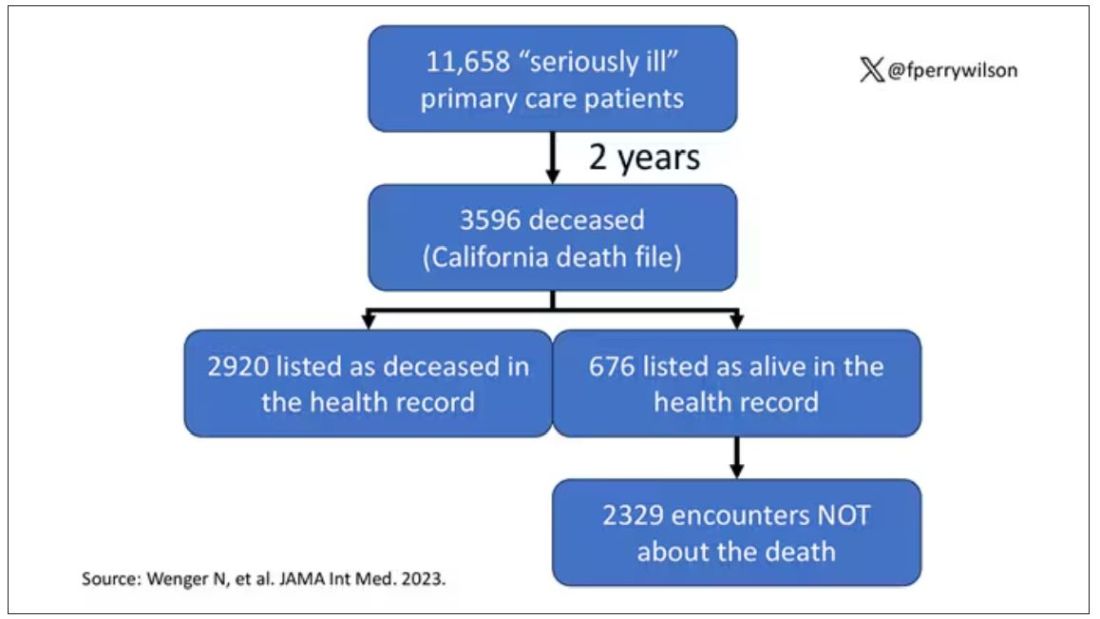
And those 676 were not left to rest in peace. They received 221 telephone and 338 health portal messages not related to death, and 920 letters reminding them about unmet primary care metrics like flu shots and cancer screening. Orders were entered into the health record for things like vaccines and routine screenings for 158 patients, and 310 future appointments — destined to be no-shows — were still on the books. One can only imagine the frustration of families checking their mail and finding yet another letter reminding their deceased loved one to get a mammogram.
How did the researchers figure out who had died? It turns out it’s not that hard. California keeps a record of all deaths in the state; they simply had to search it. Like all state death records, they tend to lag a bit so it’s not clinically terribly useful, but it works. California and most other states also have a very accurate and up-to-date death file which can only be used by law enforcement to investigate criminal activity and fraud; health care is left in the lurch.
Nationwide, there is the real-time fact of death service, supported by the National Association for Public Health Statistics and Information Systems. This allows employers to verify, in real time, whether the person applying for a job is alive. Healthcare systems are not allowed to use it.
Let’s also remember that very few people die in this country without some health care agency knowing about it and recording it. But sharing of medical information is so poor in the United States that your patient could die in a hospital one city away from you and you might not find out until you’re calling them to see why they missed a scheduled follow-up appointment.
These events — the embarrassing lack of knowledge about the very vital status of our patients — highlight a huge problem with health care in our country. The fragmented health care system is terrible at data sharing, in part because of poor protocols, in part because of unfounded concerns about patient privacy, and in part because of a tendency to hoard data that might be valuable in the future. It has to stop. We need to know how our patients are doing even when they are not sitting in front of us. When it comes to life and death, the knowledge is out there; we just can’t access it. Seems like a pretty easy fix.
Dr. Wilson is associate professor of medicine and public health and director of the Clinical and Translational Research Accelerator at Yale University, New Haven, Connecticut. He has disclosed no relevant financial relationships.
A version of this article first appeared on Medscape.com .
This transcript has been edited for clarity.
Much of my research focuses on what is known as clinical decision support — prompts and messages to providers to help them make good decisions for their patients. I know that these things can be annoying, which is exactly why I study them — to figure out which ones actually help.
When I got started on this about 10 years ago, we were learning a lot about how best to message providers about their patients. My team had developed a simple alert for acute kidney injury (AKI). We knew that providers often missed the diagnosis, so maybe letting them know would improve patient outcomes.
As we tested the alert, we got feedback, and I have kept an email from an ICU doctor from those early days. It read:
Dear Dr. Wilson: Thank you for the automated alert informing me that my patient had AKI. Regrettably, the alert fired about an hour after the patient had died. I feel that the information is less than actionable at this time.
Our early system had neglected to add a conditional flag ensuring that the patient was still alive at the time it sent the alert message. A small oversight, but one that had very large implications. Future studies would show that “false positive” alerts like this seriously degrade physician confidence in the system. And why wouldn’t they?
Not knowing the vital status of a patient can have major consequences.
Health systems send messages to their patients all the time: reminders of appointments, reminders for preventive care, reminders for vaccinations, and so on.
But what if the patient being reminded has died? It’s a waste of resources, of course, but more than that, it can be painful for their families and reflects poorly on the health care system. Of all the people who should know whether someone is alive or dead, shouldn’t their doctor be at the top of the list?
A new study in JAMA Internal Medicine quantifies this very phenomenon.
Researchers examined 11,658 primary care patients in their health system who met the criteria of being “seriously ill” and followed them for 2 years. During that period of time, 25% were recorded as deceased in the electronic health record. But 30.8% had died. That left 676 patients who had died, but were not known to have died, left in the system.
And those 676 were not left to rest in peace. They received 221 telephone and 338 health portal messages not related to death, and 920 letters reminding them about unmet primary care metrics like flu shots and cancer screening. Orders were entered into the health record for things like vaccines and routine screenings for 158 patients, and 310 future appointments — destined to be no-shows — were still on the books. One can only imagine the frustration of families checking their mail and finding yet another letter reminding their deceased loved one to get a mammogram.
How did the researchers figure out who had died? It turns out it’s not that hard. California keeps a record of all deaths in the state; they simply had to search it. Like all state death records, they tend to lag a bit so it’s not clinically terribly useful, but it works. California and most other states also have a very accurate and up-to-date death file which can only be used by law enforcement to investigate criminal activity and fraud; health care is left in the lurch.
Nationwide, there is the real-time fact of death service, supported by the National Association for Public Health Statistics and Information Systems. This allows employers to verify, in real time, whether the person applying for a job is alive. Healthcare systems are not allowed to use it.
Let’s also remember that very few people die in this country without some health care agency knowing about it and recording it. But sharing of medical information is so poor in the United States that your patient could die in a hospital one city away from you and you might not find out until you’re calling them to see why they missed a scheduled follow-up appointment.
These events — the embarrassing lack of knowledge about the very vital status of our patients — highlight a huge problem with health care in our country. The fragmented health care system is terrible at data sharing, in part because of poor protocols, in part because of unfounded concerns about patient privacy, and in part because of a tendency to hoard data that might be valuable in the future. It has to stop. We need to know how our patients are doing even when they are not sitting in front of us. When it comes to life and death, the knowledge is out there; we just can’t access it. Seems like a pretty easy fix.
Dr. Wilson is associate professor of medicine and public health and director of the Clinical and Translational Research Accelerator at Yale University, New Haven, Connecticut. He has disclosed no relevant financial relationships.
A version of this article first appeared on Medscape.com .
This transcript has been edited for clarity.
Much of my research focuses on what is known as clinical decision support — prompts and messages to providers to help them make good decisions for their patients. I know that these things can be annoying, which is exactly why I study them — to figure out which ones actually help.
When I got started on this about 10 years ago, we were learning a lot about how best to message providers about their patients. My team had developed a simple alert for acute kidney injury (AKI). We knew that providers often missed the diagnosis, so maybe letting them know would improve patient outcomes.
As we tested the alert, we got feedback, and I have kept an email from an ICU doctor from those early days. It read:
Dear Dr. Wilson: Thank you for the automated alert informing me that my patient had AKI. Regrettably, the alert fired about an hour after the patient had died. I feel that the information is less than actionable at this time.
Our early system had neglected to add a conditional flag ensuring that the patient was still alive at the time it sent the alert message. A small oversight, but one that had very large implications. Future studies would show that “false positive” alerts like this seriously degrade physician confidence in the system. And why wouldn’t they?
Not knowing the vital status of a patient can have major consequences.
Health systems send messages to their patients all the time: reminders of appointments, reminders for preventive care, reminders for vaccinations, and so on.
But what if the patient being reminded has died? It’s a waste of resources, of course, but more than that, it can be painful for their families and reflects poorly on the health care system. Of all the people who should know whether someone is alive or dead, shouldn’t their doctor be at the top of the list?
A new study in JAMA Internal Medicine quantifies this very phenomenon.
Researchers examined 11,658 primary care patients in their health system who met the criteria of being “seriously ill” and followed them for 2 years. During that period of time, 25% were recorded as deceased in the electronic health record. But 30.8% had died. That left 676 patients who had died, but were not known to have died, left in the system.
And those 676 were not left to rest in peace. They received 221 telephone and 338 health portal messages not related to death, and 920 letters reminding them about unmet primary care metrics like flu shots and cancer screening. Orders were entered into the health record for things like vaccines and routine screenings for 158 patients, and 310 future appointments — destined to be no-shows — were still on the books. One can only imagine the frustration of families checking their mail and finding yet another letter reminding their deceased loved one to get a mammogram.
How did the researchers figure out who had died? It turns out it’s not that hard. California keeps a record of all deaths in the state; they simply had to search it. Like all state death records, they tend to lag a bit so it’s not clinically terribly useful, but it works. California and most other states also have a very accurate and up-to-date death file which can only be used by law enforcement to investigate criminal activity and fraud; health care is left in the lurch.
Nationwide, there is the real-time fact of death service, supported by the National Association for Public Health Statistics and Information Systems. This allows employers to verify, in real time, whether the person applying for a job is alive. Healthcare systems are not allowed to use it.
Let’s also remember that very few people die in this country without some health care agency knowing about it and recording it. But sharing of medical information is so poor in the United States that your patient could die in a hospital one city away from you and you might not find out until you’re calling them to see why they missed a scheduled follow-up appointment.
These events — the embarrassing lack of knowledge about the very vital status of our patients — highlight a huge problem with health care in our country. The fragmented health care system is terrible at data sharing, in part because of poor protocols, in part because of unfounded concerns about patient privacy, and in part because of a tendency to hoard data that might be valuable in the future. It has to stop. We need to know how our patients are doing even when they are not sitting in front of us. When it comes to life and death, the knowledge is out there; we just can’t access it. Seems like a pretty easy fix.
Dr. Wilson is associate professor of medicine and public health and director of the Clinical and Translational Research Accelerator at Yale University, New Haven, Connecticut. He has disclosed no relevant financial relationships.
A version of this article first appeared on Medscape.com .