User login
Bringing you the latest news, research and reviews, exclusive interviews, podcasts, quizzes, and more.
div[contains(@class, 'header__large-screen')]
div[contains(@class, 'read-next-article')]
div[contains(@class, 'nav-primary')]
nav[contains(@class, 'nav-primary')]
section[contains(@class, 'footer-nav-section-wrapper')]
footer[@id='footer']
div[contains(@class, 'main-prefix')]
section[contains(@class, 'nav-hidden')]
div[contains(@class, 'ce-card-content')]
nav[contains(@class, 'nav-ce-stack')]
Children with type 2 diabetes face dire complications as young adults
SAN DIEGO – , show findings from the TODAY prospective, longitudinal study of 699 U.S. children newly diagnosed with type 2 diabetes.
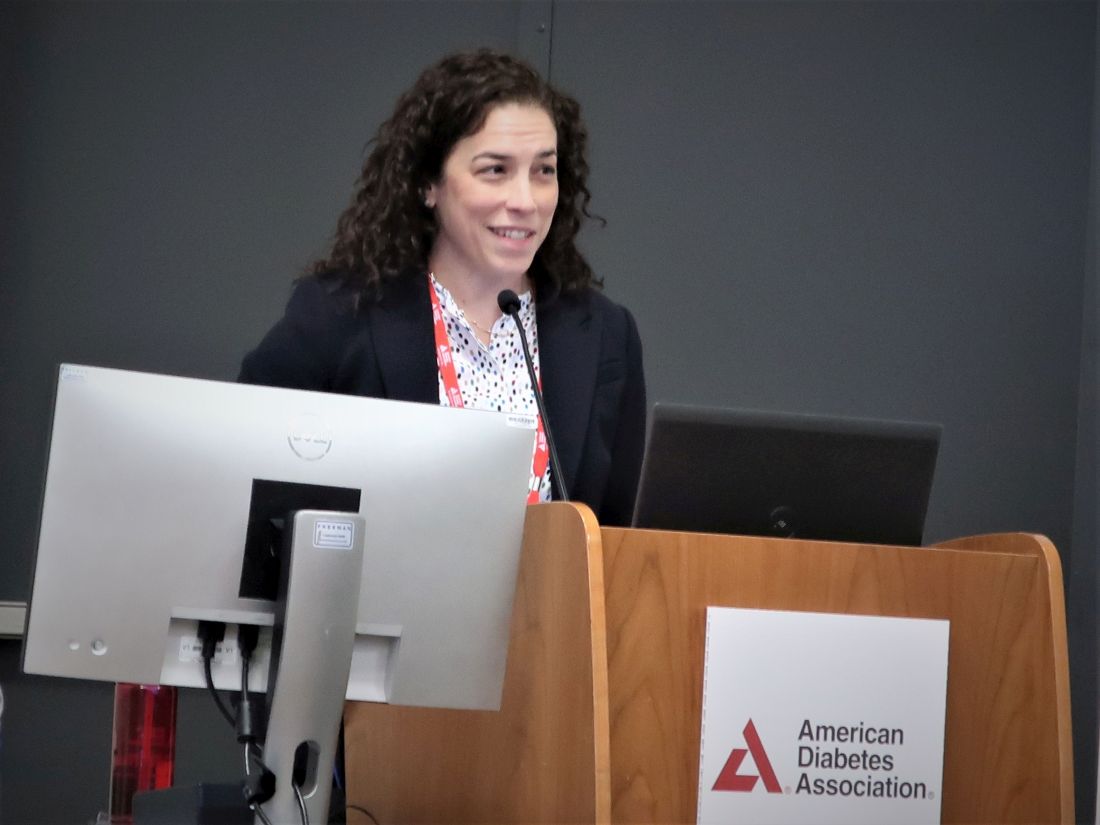
Arterial stiffness and worsened cardiac function often appear in these children within 2-5 years of diagnosis and seem driven in part by the development of hypertension and worsening hemoglobin A1c levels, said Rachelle G. Gandica, MD, at the annual scientific sessions of the American Diabetes Association.
Indeed, an A1c greater than 6.2% at study entry generally predicts these children will fail treatment and is a red flag, said Dr. Gandica. “I teach fellows this all the time, that if a child’s A1c is above 6.2% they will fail, and you have to watch for that,” she noted.
The results from the Treatment Options for Type 2 Diabetes in Adolescents and Youth (TODAY) study showed, for example, an overall cardiovascular event rate of 3.7/1,000 patient-years in a population that had just reached an average age of 26 years old, with type 2 diabetes diagnosed for an average of more than 13 years.
During follow-up, there were six cases of congestive heart failure, four myocardial infarctions, four strokes, and three cases of coronary artery disease in the cohort. Hypertension ballooned from a prevalence of 19% at study entry to 68% by the end of follow-up.
Dr. Gandica called these and other findings “sobering details” that document the toll type 2 diabetes takes on children, who averaged 14 years old at the time they entered the study – when their diabetes had been diagnosed for an average of about 8 months – and then underwent an average 12.6 years of follow-up.
Investigators also found:
- After more than 12 years of type 2 diabetes, 49% of the cohort had developed diabetic retinopathy, with 3.5% having macular edema.
- Kidney damage (diabetic nephropathy) affected 8% of the cohort at entry, and then increased to a prevalence of 55% after up to 14 years of follow-up.
- Among the 452 girls who entered the study, 141 (31%) later became pregnant, with a total of 260 pregnancies. A quarter of the pregnancies resulted in preterm deliveries (43% went to term), 25% resulted in miscarriage or fetal demise, with the remaining 8% having elective terminations or unknown outcomes.
- Complications in neonates were common, including hypoglycemia (29%), respiratory disorder (19%), and cardiac issues (10%).
Dire prognosis a reason to aggressively treat these patients
It has become apparent from this and other studies in youth with type 2 diabetes that the difference in outcomes between youth and adults is stark and could indicate that type 2 diabetes in childhood or adolescence likely has a different underlying pathology and natural history, with a more aggressive disease course.
The dire prognosis is therefore a reason to aggressively treat these patients with antidiabetic medications from drug classes with proven cardiovascular disease protection, specifically sodium-glucose cotransporter 2 (SGLT2) inhibitors and glucagonlike peptide-1 (GLP-1) agonists, said Dr. Gandica, a pediatric endocrinologist at Columbia University Medical Center in New York.
“It’s fair to say we now more aggressively use [these agents] in children,” she said in an interview, and noted the very recent approval, just last week, by the U.S. Food and Drug Administration of the SGLT2 inhibitor empagliflozin (Jardiance, Boehringer Ingelheim/Lilly) for children as young as 10 years.
“I look forward to prescribing empagliflozin to children with type 2 diabetes to lower their blood pressure and get additional cardiovascular disease benefits,” Dr. Gandica said.
Other newer type 2 diabetes medications approved for U.S. children in the past few years include the once-weekly injectable GLP-1 agonist exenatide extended release (Bydureon/Bydureon BCise, AstraZeneca) for children with type 2 diabetes aged 10 and older, in 2021, and the daily injectable GLP-1 agonist liraglutide (Victoza, Novo Nordisk) in 2019.
A1c spike heralds treatment failure: ‘Watch for that’
TODAY enrolled 699 children with type 2 diabetes for an average of 8 months since diagnosis at 16 U.S. sites starting in 2004. The protocol began with a run-in phase of up to 6 months, when participating children came off any preexisting antidiabetes medications and then began a metformin-only regimen to bring A1c below 8.0%. If achieved, patients were eligible to continue to randomization.
Participants were randomized to one of three treatment groups: metformin alone, metformin plus lifestyle interventions, or metformin plus rosiglitazone (Avandia, GSK). The primary endpoint was the incidence of treatment failure, defined as A1c that rose back above 8.0% for at least 6 months or persistent metabolic decompensation during initial follow-up, for an average of just under 4 years.
The results showed that only metformin plus rosiglitazone significantly surpassed metformin alone for preventing treatment failure, reported in 2012 in the New England Journal of Medicine
More recent reports on findings from longer-term follow-up have appeared in several journals, including the cardiovascular disease results, reported in 2021 also in the New England Journal of Medicine.
Another key finding from TODAY is the importance of A1c as a risk marker for impending treatment failure. Study findingsshow that an A1c of 6.2% or higher when children entered the study best predicted loss of glycemic control during follow-up. Also, a rise in A1c of at least 0.5 percentage points was significantly associated with loss of glycemic control within the following 3-6 months.
That’s an important message for clinicians, Dr. Gandica concluded.
TODAY and TODAY2 received no commercial funding. Dr. Gandica has reported no relevant financial relationships.
A version of this article originally appeared on Medscape.com.
SAN DIEGO – , show findings from the TODAY prospective, longitudinal study of 699 U.S. children newly diagnosed with type 2 diabetes.
Arterial stiffness and worsened cardiac function often appear in these children within 2-5 years of diagnosis and seem driven in part by the development of hypertension and worsening hemoglobin A1c levels, said Rachelle G. Gandica, MD, at the annual scientific sessions of the American Diabetes Association.
Indeed, an A1c greater than 6.2% at study entry generally predicts these children will fail treatment and is a red flag, said Dr. Gandica. “I teach fellows this all the time, that if a child’s A1c is above 6.2% they will fail, and you have to watch for that,” she noted.
The results from the Treatment Options for Type 2 Diabetes in Adolescents and Youth (TODAY) study showed, for example, an overall cardiovascular event rate of 3.7/1,000 patient-years in a population that had just reached an average age of 26 years old, with type 2 diabetes diagnosed for an average of more than 13 years.
During follow-up, there were six cases of congestive heart failure, four myocardial infarctions, four strokes, and three cases of coronary artery disease in the cohort. Hypertension ballooned from a prevalence of 19% at study entry to 68% by the end of follow-up.
Dr. Gandica called these and other findings “sobering details” that document the toll type 2 diabetes takes on children, who averaged 14 years old at the time they entered the study – when their diabetes had been diagnosed for an average of about 8 months – and then underwent an average 12.6 years of follow-up.
Investigators also found:
- After more than 12 years of type 2 diabetes, 49% of the cohort had developed diabetic retinopathy, with 3.5% having macular edema.
- Kidney damage (diabetic nephropathy) affected 8% of the cohort at entry, and then increased to a prevalence of 55% after up to 14 years of follow-up.
- Among the 452 girls who entered the study, 141 (31%) later became pregnant, with a total of 260 pregnancies. A quarter of the pregnancies resulted in preterm deliveries (43% went to term), 25% resulted in miscarriage or fetal demise, with the remaining 8% having elective terminations or unknown outcomes.
- Complications in neonates were common, including hypoglycemia (29%), respiratory disorder (19%), and cardiac issues (10%).
Dire prognosis a reason to aggressively treat these patients
It has become apparent from this and other studies in youth with type 2 diabetes that the difference in outcomes between youth and adults is stark and could indicate that type 2 diabetes in childhood or adolescence likely has a different underlying pathology and natural history, with a more aggressive disease course.
The dire prognosis is therefore a reason to aggressively treat these patients with antidiabetic medications from drug classes with proven cardiovascular disease protection, specifically sodium-glucose cotransporter 2 (SGLT2) inhibitors and glucagonlike peptide-1 (GLP-1) agonists, said Dr. Gandica, a pediatric endocrinologist at Columbia University Medical Center in New York.
“It’s fair to say we now more aggressively use [these agents] in children,” she said in an interview, and noted the very recent approval, just last week, by the U.S. Food and Drug Administration of the SGLT2 inhibitor empagliflozin (Jardiance, Boehringer Ingelheim/Lilly) for children as young as 10 years.
“I look forward to prescribing empagliflozin to children with type 2 diabetes to lower their blood pressure and get additional cardiovascular disease benefits,” Dr. Gandica said.
Other newer type 2 diabetes medications approved for U.S. children in the past few years include the once-weekly injectable GLP-1 agonist exenatide extended release (Bydureon/Bydureon BCise, AstraZeneca) for children with type 2 diabetes aged 10 and older, in 2021, and the daily injectable GLP-1 agonist liraglutide (Victoza, Novo Nordisk) in 2019.
A1c spike heralds treatment failure: ‘Watch for that’
TODAY enrolled 699 children with type 2 diabetes for an average of 8 months since diagnosis at 16 U.S. sites starting in 2004. The protocol began with a run-in phase of up to 6 months, when participating children came off any preexisting antidiabetes medications and then began a metformin-only regimen to bring A1c below 8.0%. If achieved, patients were eligible to continue to randomization.
Participants were randomized to one of three treatment groups: metformin alone, metformin plus lifestyle interventions, or metformin plus rosiglitazone (Avandia, GSK). The primary endpoint was the incidence of treatment failure, defined as A1c that rose back above 8.0% for at least 6 months or persistent metabolic decompensation during initial follow-up, for an average of just under 4 years.
The results showed that only metformin plus rosiglitazone significantly surpassed metformin alone for preventing treatment failure, reported in 2012 in the New England Journal of Medicine
More recent reports on findings from longer-term follow-up have appeared in several journals, including the cardiovascular disease results, reported in 2021 also in the New England Journal of Medicine.
Another key finding from TODAY is the importance of A1c as a risk marker for impending treatment failure. Study findingsshow that an A1c of 6.2% or higher when children entered the study best predicted loss of glycemic control during follow-up. Also, a rise in A1c of at least 0.5 percentage points was significantly associated with loss of glycemic control within the following 3-6 months.
That’s an important message for clinicians, Dr. Gandica concluded.
TODAY and TODAY2 received no commercial funding. Dr. Gandica has reported no relevant financial relationships.
A version of this article originally appeared on Medscape.com.
SAN DIEGO – , show findings from the TODAY prospective, longitudinal study of 699 U.S. children newly diagnosed with type 2 diabetes.
Arterial stiffness and worsened cardiac function often appear in these children within 2-5 years of diagnosis and seem driven in part by the development of hypertension and worsening hemoglobin A1c levels, said Rachelle G. Gandica, MD, at the annual scientific sessions of the American Diabetes Association.
Indeed, an A1c greater than 6.2% at study entry generally predicts these children will fail treatment and is a red flag, said Dr. Gandica. “I teach fellows this all the time, that if a child’s A1c is above 6.2% they will fail, and you have to watch for that,” she noted.
The results from the Treatment Options for Type 2 Diabetes in Adolescents and Youth (TODAY) study showed, for example, an overall cardiovascular event rate of 3.7/1,000 patient-years in a population that had just reached an average age of 26 years old, with type 2 diabetes diagnosed for an average of more than 13 years.
During follow-up, there were six cases of congestive heart failure, four myocardial infarctions, four strokes, and three cases of coronary artery disease in the cohort. Hypertension ballooned from a prevalence of 19% at study entry to 68% by the end of follow-up.
Dr. Gandica called these and other findings “sobering details” that document the toll type 2 diabetes takes on children, who averaged 14 years old at the time they entered the study – when their diabetes had been diagnosed for an average of about 8 months – and then underwent an average 12.6 years of follow-up.
Investigators also found:
- After more than 12 years of type 2 diabetes, 49% of the cohort had developed diabetic retinopathy, with 3.5% having macular edema.
- Kidney damage (diabetic nephropathy) affected 8% of the cohort at entry, and then increased to a prevalence of 55% after up to 14 years of follow-up.
- Among the 452 girls who entered the study, 141 (31%) later became pregnant, with a total of 260 pregnancies. A quarter of the pregnancies resulted in preterm deliveries (43% went to term), 25% resulted in miscarriage or fetal demise, with the remaining 8% having elective terminations or unknown outcomes.
- Complications in neonates were common, including hypoglycemia (29%), respiratory disorder (19%), and cardiac issues (10%).
Dire prognosis a reason to aggressively treat these patients
It has become apparent from this and other studies in youth with type 2 diabetes that the difference in outcomes between youth and adults is stark and could indicate that type 2 diabetes in childhood or adolescence likely has a different underlying pathology and natural history, with a more aggressive disease course.
The dire prognosis is therefore a reason to aggressively treat these patients with antidiabetic medications from drug classes with proven cardiovascular disease protection, specifically sodium-glucose cotransporter 2 (SGLT2) inhibitors and glucagonlike peptide-1 (GLP-1) agonists, said Dr. Gandica, a pediatric endocrinologist at Columbia University Medical Center in New York.
“It’s fair to say we now more aggressively use [these agents] in children,” she said in an interview, and noted the very recent approval, just last week, by the U.S. Food and Drug Administration of the SGLT2 inhibitor empagliflozin (Jardiance, Boehringer Ingelheim/Lilly) for children as young as 10 years.
“I look forward to prescribing empagliflozin to children with type 2 diabetes to lower their blood pressure and get additional cardiovascular disease benefits,” Dr. Gandica said.
Other newer type 2 diabetes medications approved for U.S. children in the past few years include the once-weekly injectable GLP-1 agonist exenatide extended release (Bydureon/Bydureon BCise, AstraZeneca) for children with type 2 diabetes aged 10 and older, in 2021, and the daily injectable GLP-1 agonist liraglutide (Victoza, Novo Nordisk) in 2019.
A1c spike heralds treatment failure: ‘Watch for that’
TODAY enrolled 699 children with type 2 diabetes for an average of 8 months since diagnosis at 16 U.S. sites starting in 2004. The protocol began with a run-in phase of up to 6 months, when participating children came off any preexisting antidiabetes medications and then began a metformin-only regimen to bring A1c below 8.0%. If achieved, patients were eligible to continue to randomization.
Participants were randomized to one of three treatment groups: metformin alone, metformin plus lifestyle interventions, or metformin plus rosiglitazone (Avandia, GSK). The primary endpoint was the incidence of treatment failure, defined as A1c that rose back above 8.0% for at least 6 months or persistent metabolic decompensation during initial follow-up, for an average of just under 4 years.
The results showed that only metformin plus rosiglitazone significantly surpassed metformin alone for preventing treatment failure, reported in 2012 in the New England Journal of Medicine
More recent reports on findings from longer-term follow-up have appeared in several journals, including the cardiovascular disease results, reported in 2021 also in the New England Journal of Medicine.
Another key finding from TODAY is the importance of A1c as a risk marker for impending treatment failure. Study findingsshow that an A1c of 6.2% or higher when children entered the study best predicted loss of glycemic control during follow-up. Also, a rise in A1c of at least 0.5 percentage points was significantly associated with loss of glycemic control within the following 3-6 months.
That’s an important message for clinicians, Dr. Gandica concluded.
TODAY and TODAY2 received no commercial funding. Dr. Gandica has reported no relevant financial relationships.
A version of this article originally appeared on Medscape.com.
AT ADA 2023
Cagrilintide with semaglutide: A way to prevent diabesity?
SAN DIEGO – Coadministration of the long-acting amylin analog cagrilintide plus the glucagonlike peptide–1 (GLP-1) agonist semaglutide, dubbed CagriSema, resulted in significantly greater weight loss, along with improved measures of glucose control, than either agent alone, in a small, short phase 2 trial of patients with type 2 diabetes.
Juan P. Frias, MD, presented the findings at the annual scientific sessions of the American Diabetes Association, which were simultaneously published in The Lancet.
“Overall, in this phase 2 trial with pharmacotherapies in this population. CagriSema also had an acceptable safety profile,” the researchers summarized.
“These data support further investigation of CagriSema in people with type 2 diabetes in longer and larger phase 3 studies,” said Dr. Frias, from Velocity Clinical Research, Los Angeles.
In reply to audience questions, he said he was “pleasantly surprised” with the low gastrointestinal adverse events, which may have been related to the slower dosing titration. He also noted that patients in the study did not receive dietary counseling, unlike in the STEP-2 trial, where weight loss with semaglutide was greater than in this study.
Time in normal blood glucose range in the CagriSema group went from 40% at baseline to 89% at week 32, Chantal Mathieu, MD, PhD, reported during a follow-up presentation that focused on the trial’s CGM findings.
“I was extremely happy that we were allowed to include CGM measurement because it does give you more information, especially in a short-term trial,” said Dr. Mathieu, from the Katholieke Universiteit Leuven (Belgium). The CGM data were collected for 10 days preceding baseline and at weeks 20 and 32.
“At this point in time, it is difficult to make a final determination” about potential future clinical applications, session chair Elisabetta Patorno, MD, DrPH, from Harvard Medical School, Boston, said in an interview. “This was a phase 2 randomized controlled trial, so more patients are needed.
“It’s very interesting what was found with the use of CGM, which makes us think whether they should always be part of [trials] versus the more traditional A1c assessment,” Dr. Patorno added.
‘Synergistic effect for both glycemic control and weight loss’
“CagriSema is the next in a series of gut hormone analogs with the potential to herald a new era in treating obesity and preventing diabesity,” the coexistence of type 2 diabetes and obesity, Caroline M. Apovian, MD, and Marie E. McDonnell, MD, both also from Harvard Medical School, wrote in an accompanying editorial in The Lancet.
Cagrilintide plus semaglutide each “effectively delay gastric emptying, suppress glucagon release, and are involved in the regulation of appetite and satiety in the brain,” they noted.
The results – a substantial difference in effect size between the combination drug and each component alone – show that “there is a synergistic effect for both glycemic control and weight loss.
“The weight loss seen in this phase 2 trial of CagriSema in 32 weeks could predict a phase 3 trial result over 1 year that might surpass that of semaglutide (14.9%) and tirzepatide (20.9%) in a population without type 2 diabetes, and might equal that of bariatric surgery (23.5%-30.4%),” they speculated.
However, it’s still early days, the editorialists cautioned. Study limitations include that it was a small trial and the mean duration of type 2 diabetes at baseline was shorter in the CagriSema group (6.4 years) than in the semaglutide or cagrilintide alone groups (9.2 years and 10.7 years, respectively).
The rate of gastrointestinal adverse events was also higher in the CagriSema group (58%) than in the other two groups (about 33%). However, the adverse events “were all mild or moderate and not severe enough to lead to participant withdrawal,” they noted. “Remarkably, only one participant, from the semaglutide group, withdrew due to adverse events during the 32-week trial across all groups.
“Although bariatric surgery remains the most effective treatment for severe obesity, offering the most robust weight reduction, remission of type 2 diabetes, and reduced cardiovascular mortality,” the study suggests that “combination metabolic hormonal therapy could offer all three of these outcomes in the near future,” Dr. Apovian and Dr. McDonnell wrote.
92 patients randomized to three treatments
In the study, researchers randomized 92 adults with type 2 diabetes and a body mass index of at least 27 kg/m2 taking metformin alone (73%) or metformin plus a sodium-glucose cotransporter 2 inhibitor (27%), at 17 sites in the United States, between August and October 2021.
Patients were a mean age of 58 years and 64% were men. Mean A1c was 8.4% and mean bodyweight was 106 kg (234 lb).
They were randomized 1:1:1 to receive up to maximal once-weekly doses of 2.4 mg semaglutide and 2.4 mg cagrilintide (CagriSema, given in two injector pens), 2.4 mg semaglutide (plus placebo), or 2.4 mg cagrilintide (plus placebo).
Both cagrilintide and semaglutide are manufactured by the Danish company Novo Nordisk. Semaglutide is already approved in the United States for type 2 diabetes, as Ozempic, and as the weight-loss drug Wegovy. Cagrilintide is not yet approved.
Treatment doses were escalated every 4 weeks from 0.25 to 0.5 to 1.0 to 1.7 mg to a maintenance dose of 2.4 mg at 16 weeks. Patients then entered a 16-week maintenance phase followed by a 5-week follow-up period.
Among the key findings, the reduction in A1c at 32 weeks, compared with baseline (primary outcome), was –2.2% with CagriSema, –1.8% with semaglutide, and –0.9% with cagrilintide, but was not significantly greater with CagriSema versus semaglutide (–0.4%; P = .07).
However, in a secondary outcome, there was a significantly greater difference in A1c at 32 weeks with CagriSema versus cagrilintide (–1.3%; P < .0001). Moreover, 89% of patients in the CagriSema group reached an A1c less than 7%.
In other secondary outcomes, there was a significantly greater reduction in body weight at 32 weeks with CagriSema versus cagrilintide or semaglutide, with 71% of patients in the CagriSema group achieving greater than 10% reduction in body weight. Patients in the CagriSema group also had clinically relevant improvements in blood pressure, lipids, and high-sensitivity C-reactive protein.
Adverse events – reported in 68% of patients with CagriSema versus 71% with semaglutide and 80% with cagrilintide – were mostly mild or moderate gastrointestinal events, consistent with those seen in these two drug classes.
At week 32, time in range was 89% with CagriSema versus 76% with semaglutide and 72% with cagrilintide.
“Our phase 2 clinical trial is the first study to report efficacy and safety data for treatment with the combination of a GLP-1 agonist and an amylin analog in participants with type 2 diabetes,” the researchers summarize. “These data support further investigation of CagriSema in this population in longer and larger phase 3 studies.”
This trial was sponsored by Novo Nordisk. Dr. Frias, Dr. Mathieu, Dr. Apovian, and Dr. McDonnell reported financial relationships with a number of companies.
A version of this article first appeared on Medscape.com.
SAN DIEGO – Coadministration of the long-acting amylin analog cagrilintide plus the glucagonlike peptide–1 (GLP-1) agonist semaglutide, dubbed CagriSema, resulted in significantly greater weight loss, along with improved measures of glucose control, than either agent alone, in a small, short phase 2 trial of patients with type 2 diabetes.
Juan P. Frias, MD, presented the findings at the annual scientific sessions of the American Diabetes Association, which were simultaneously published in The Lancet.
“Overall, in this phase 2 trial with pharmacotherapies in this population. CagriSema also had an acceptable safety profile,” the researchers summarized.
“These data support further investigation of CagriSema in people with type 2 diabetes in longer and larger phase 3 studies,” said Dr. Frias, from Velocity Clinical Research, Los Angeles.
In reply to audience questions, he said he was “pleasantly surprised” with the low gastrointestinal adverse events, which may have been related to the slower dosing titration. He also noted that patients in the study did not receive dietary counseling, unlike in the STEP-2 trial, where weight loss with semaglutide was greater than in this study.
Time in normal blood glucose range in the CagriSema group went from 40% at baseline to 89% at week 32, Chantal Mathieu, MD, PhD, reported during a follow-up presentation that focused on the trial’s CGM findings.
“I was extremely happy that we were allowed to include CGM measurement because it does give you more information, especially in a short-term trial,” said Dr. Mathieu, from the Katholieke Universiteit Leuven (Belgium). The CGM data were collected for 10 days preceding baseline and at weeks 20 and 32.
“At this point in time, it is difficult to make a final determination” about potential future clinical applications, session chair Elisabetta Patorno, MD, DrPH, from Harvard Medical School, Boston, said in an interview. “This was a phase 2 randomized controlled trial, so more patients are needed.
“It’s very interesting what was found with the use of CGM, which makes us think whether they should always be part of [trials] versus the more traditional A1c assessment,” Dr. Patorno added.
‘Synergistic effect for both glycemic control and weight loss’
“CagriSema is the next in a series of gut hormone analogs with the potential to herald a new era in treating obesity and preventing diabesity,” the coexistence of type 2 diabetes and obesity, Caroline M. Apovian, MD, and Marie E. McDonnell, MD, both also from Harvard Medical School, wrote in an accompanying editorial in The Lancet.
Cagrilintide plus semaglutide each “effectively delay gastric emptying, suppress glucagon release, and are involved in the regulation of appetite and satiety in the brain,” they noted.
The results – a substantial difference in effect size between the combination drug and each component alone – show that “there is a synergistic effect for both glycemic control and weight loss.
“The weight loss seen in this phase 2 trial of CagriSema in 32 weeks could predict a phase 3 trial result over 1 year that might surpass that of semaglutide (14.9%) and tirzepatide (20.9%) in a population without type 2 diabetes, and might equal that of bariatric surgery (23.5%-30.4%),” they speculated.
However, it’s still early days, the editorialists cautioned. Study limitations include that it was a small trial and the mean duration of type 2 diabetes at baseline was shorter in the CagriSema group (6.4 years) than in the semaglutide or cagrilintide alone groups (9.2 years and 10.7 years, respectively).
The rate of gastrointestinal adverse events was also higher in the CagriSema group (58%) than in the other two groups (about 33%). However, the adverse events “were all mild or moderate and not severe enough to lead to participant withdrawal,” they noted. “Remarkably, only one participant, from the semaglutide group, withdrew due to adverse events during the 32-week trial across all groups.
“Although bariatric surgery remains the most effective treatment for severe obesity, offering the most robust weight reduction, remission of type 2 diabetes, and reduced cardiovascular mortality,” the study suggests that “combination metabolic hormonal therapy could offer all three of these outcomes in the near future,” Dr. Apovian and Dr. McDonnell wrote.
92 patients randomized to three treatments
In the study, researchers randomized 92 adults with type 2 diabetes and a body mass index of at least 27 kg/m2 taking metformin alone (73%) or metformin plus a sodium-glucose cotransporter 2 inhibitor (27%), at 17 sites in the United States, between August and October 2021.
Patients were a mean age of 58 years and 64% were men. Mean A1c was 8.4% and mean bodyweight was 106 kg (234 lb).
They were randomized 1:1:1 to receive up to maximal once-weekly doses of 2.4 mg semaglutide and 2.4 mg cagrilintide (CagriSema, given in two injector pens), 2.4 mg semaglutide (plus placebo), or 2.4 mg cagrilintide (plus placebo).
Both cagrilintide and semaglutide are manufactured by the Danish company Novo Nordisk. Semaglutide is already approved in the United States for type 2 diabetes, as Ozempic, and as the weight-loss drug Wegovy. Cagrilintide is not yet approved.
Treatment doses were escalated every 4 weeks from 0.25 to 0.5 to 1.0 to 1.7 mg to a maintenance dose of 2.4 mg at 16 weeks. Patients then entered a 16-week maintenance phase followed by a 5-week follow-up period.
Among the key findings, the reduction in A1c at 32 weeks, compared with baseline (primary outcome), was –2.2% with CagriSema, –1.8% with semaglutide, and –0.9% with cagrilintide, but was not significantly greater with CagriSema versus semaglutide (–0.4%; P = .07).
However, in a secondary outcome, there was a significantly greater difference in A1c at 32 weeks with CagriSema versus cagrilintide (–1.3%; P < .0001). Moreover, 89% of patients in the CagriSema group reached an A1c less than 7%.
In other secondary outcomes, there was a significantly greater reduction in body weight at 32 weeks with CagriSema versus cagrilintide or semaglutide, with 71% of patients in the CagriSema group achieving greater than 10% reduction in body weight. Patients in the CagriSema group also had clinically relevant improvements in blood pressure, lipids, and high-sensitivity C-reactive protein.
Adverse events – reported in 68% of patients with CagriSema versus 71% with semaglutide and 80% with cagrilintide – were mostly mild or moderate gastrointestinal events, consistent with those seen in these two drug classes.
At week 32, time in range was 89% with CagriSema versus 76% with semaglutide and 72% with cagrilintide.
“Our phase 2 clinical trial is the first study to report efficacy and safety data for treatment with the combination of a GLP-1 agonist and an amylin analog in participants with type 2 diabetes,” the researchers summarize. “These data support further investigation of CagriSema in this population in longer and larger phase 3 studies.”
This trial was sponsored by Novo Nordisk. Dr. Frias, Dr. Mathieu, Dr. Apovian, and Dr. McDonnell reported financial relationships with a number of companies.
A version of this article first appeared on Medscape.com.
SAN DIEGO – Coadministration of the long-acting amylin analog cagrilintide plus the glucagonlike peptide–1 (GLP-1) agonist semaglutide, dubbed CagriSema, resulted in significantly greater weight loss, along with improved measures of glucose control, than either agent alone, in a small, short phase 2 trial of patients with type 2 diabetes.
Juan P. Frias, MD, presented the findings at the annual scientific sessions of the American Diabetes Association, which were simultaneously published in The Lancet.
“Overall, in this phase 2 trial with pharmacotherapies in this population. CagriSema also had an acceptable safety profile,” the researchers summarized.
“These data support further investigation of CagriSema in people with type 2 diabetes in longer and larger phase 3 studies,” said Dr. Frias, from Velocity Clinical Research, Los Angeles.
In reply to audience questions, he said he was “pleasantly surprised” with the low gastrointestinal adverse events, which may have been related to the slower dosing titration. He also noted that patients in the study did not receive dietary counseling, unlike in the STEP-2 trial, where weight loss with semaglutide was greater than in this study.
Time in normal blood glucose range in the CagriSema group went from 40% at baseline to 89% at week 32, Chantal Mathieu, MD, PhD, reported during a follow-up presentation that focused on the trial’s CGM findings.
“I was extremely happy that we were allowed to include CGM measurement because it does give you more information, especially in a short-term trial,” said Dr. Mathieu, from the Katholieke Universiteit Leuven (Belgium). The CGM data were collected for 10 days preceding baseline and at weeks 20 and 32.
“At this point in time, it is difficult to make a final determination” about potential future clinical applications, session chair Elisabetta Patorno, MD, DrPH, from Harvard Medical School, Boston, said in an interview. “This was a phase 2 randomized controlled trial, so more patients are needed.
“It’s very interesting what was found with the use of CGM, which makes us think whether they should always be part of [trials] versus the more traditional A1c assessment,” Dr. Patorno added.
‘Synergistic effect for both glycemic control and weight loss’
“CagriSema is the next in a series of gut hormone analogs with the potential to herald a new era in treating obesity and preventing diabesity,” the coexistence of type 2 diabetes and obesity, Caroline M. Apovian, MD, and Marie E. McDonnell, MD, both also from Harvard Medical School, wrote in an accompanying editorial in The Lancet.
Cagrilintide plus semaglutide each “effectively delay gastric emptying, suppress glucagon release, and are involved in the regulation of appetite and satiety in the brain,” they noted.
The results – a substantial difference in effect size between the combination drug and each component alone – show that “there is a synergistic effect for both glycemic control and weight loss.
“The weight loss seen in this phase 2 trial of CagriSema in 32 weeks could predict a phase 3 trial result over 1 year that might surpass that of semaglutide (14.9%) and tirzepatide (20.9%) in a population without type 2 diabetes, and might equal that of bariatric surgery (23.5%-30.4%),” they speculated.
However, it’s still early days, the editorialists cautioned. Study limitations include that it was a small trial and the mean duration of type 2 diabetes at baseline was shorter in the CagriSema group (6.4 years) than in the semaglutide or cagrilintide alone groups (9.2 years and 10.7 years, respectively).
The rate of gastrointestinal adverse events was also higher in the CagriSema group (58%) than in the other two groups (about 33%). However, the adverse events “were all mild or moderate and not severe enough to lead to participant withdrawal,” they noted. “Remarkably, only one participant, from the semaglutide group, withdrew due to adverse events during the 32-week trial across all groups.
“Although bariatric surgery remains the most effective treatment for severe obesity, offering the most robust weight reduction, remission of type 2 diabetes, and reduced cardiovascular mortality,” the study suggests that “combination metabolic hormonal therapy could offer all three of these outcomes in the near future,” Dr. Apovian and Dr. McDonnell wrote.
92 patients randomized to three treatments
In the study, researchers randomized 92 adults with type 2 diabetes and a body mass index of at least 27 kg/m2 taking metformin alone (73%) or metformin plus a sodium-glucose cotransporter 2 inhibitor (27%), at 17 sites in the United States, between August and October 2021.
Patients were a mean age of 58 years and 64% were men. Mean A1c was 8.4% and mean bodyweight was 106 kg (234 lb).
They were randomized 1:1:1 to receive up to maximal once-weekly doses of 2.4 mg semaglutide and 2.4 mg cagrilintide (CagriSema, given in two injector pens), 2.4 mg semaglutide (plus placebo), or 2.4 mg cagrilintide (plus placebo).
Both cagrilintide and semaglutide are manufactured by the Danish company Novo Nordisk. Semaglutide is already approved in the United States for type 2 diabetes, as Ozempic, and as the weight-loss drug Wegovy. Cagrilintide is not yet approved.
Treatment doses were escalated every 4 weeks from 0.25 to 0.5 to 1.0 to 1.7 mg to a maintenance dose of 2.4 mg at 16 weeks. Patients then entered a 16-week maintenance phase followed by a 5-week follow-up period.
Among the key findings, the reduction in A1c at 32 weeks, compared with baseline (primary outcome), was –2.2% with CagriSema, –1.8% with semaglutide, and –0.9% with cagrilintide, but was not significantly greater with CagriSema versus semaglutide (–0.4%; P = .07).
However, in a secondary outcome, there was a significantly greater difference in A1c at 32 weeks with CagriSema versus cagrilintide (–1.3%; P < .0001). Moreover, 89% of patients in the CagriSema group reached an A1c less than 7%.
In other secondary outcomes, there was a significantly greater reduction in body weight at 32 weeks with CagriSema versus cagrilintide or semaglutide, with 71% of patients in the CagriSema group achieving greater than 10% reduction in body weight. Patients in the CagriSema group also had clinically relevant improvements in blood pressure, lipids, and high-sensitivity C-reactive protein.
Adverse events – reported in 68% of patients with CagriSema versus 71% with semaglutide and 80% with cagrilintide – were mostly mild or moderate gastrointestinal events, consistent with those seen in these two drug classes.
At week 32, time in range was 89% with CagriSema versus 76% with semaglutide and 72% with cagrilintide.
“Our phase 2 clinical trial is the first study to report efficacy and safety data for treatment with the combination of a GLP-1 agonist and an amylin analog in participants with type 2 diabetes,” the researchers summarize. “These data support further investigation of CagriSema in this population in longer and larger phase 3 studies.”
This trial was sponsored by Novo Nordisk. Dr. Frias, Dr. Mathieu, Dr. Apovian, and Dr. McDonnell reported financial relationships with a number of companies.
A version of this article first appeared on Medscape.com.
AT ADA 2023
OASIS and PIONEER PLUS support high-dose oral semaglutide
according to the results of two new phase 3 clinical trials.
The two trials, OASIS in patients with overweight or obesity without diabetes and PIONEER PLUS in patients with inadequately controlled type 2 diabetes, were presented at the annual scientific sessions of the American Diabetes Association and simultaneously published in The Lancet.

Filip K. Knop, MD, PhD, University of Copenhagen, presented highlights of the OASIS-1 results, and Vanita R. Aroda, MD, Brigham and Women’s Hospital and Harvard University, Boston, presented key findings of PIONEER PLUS, during a press briefing prior to the ADA session.
OASIS-1 showed that “oral semaglutide 50 mg may represent an effective option for the treatment of obesity, particularly in patients who prefer oral administration,” Dr. Knop summarized.
And “the PIONEER PLUS trial showed superior glycemic control and body-weight loss and improvement in cardiometabolic risk factors, with higher doses of once-daily oral semaglutide (25 mg and 50 mg) compared with the currently [highest] approved 14-mg dose,” said Dr. Aroda.
Session chair Marion Pragnell, PhD, vice president of research & science at ADA, said in an interview there is a need for multiple treatment options, as different patients respond differently to individual drugs. The oral dose of semaglutide has to be higher than that approved for subcutaneous injection (as Ozempic or Wegovy) because of bioavailability, but small-molecule research is advancing such that in future lower doses of oral drugs may have the same effect as the current lower subcutaneous doses of the drug.
The oral version of semaglutide (Rybelsus) was approved in the United States for type 2 diabetes in doses of 7 mg or 14 mg per day in 2019; it has not been approved for use in obesity.
Dr. Knop remarked that, in his clinical practice, about 25% of patients with type 2 diabetes prefer daily oral semaglutide and the rest prefer weekly injected semaglutide.
“Having an oral formulation of semaglutide in addition to the subcutaneous, or injectable, formula available will allow people who struggle to lose weight with diet and physical activity alone to take this effective medication in a way that best suits them,” he added.
Participants in OASIS and PIONEER PLUS were instructed to take the once-daily study drug tablet in the morning, in the fasting state, with up to half a glass of water (120 mL) at least 30 minutes before intake of any other food, beverage, or oral medication.
OASIS: 50-mg daily pill in adults with overweight or obesity
OASIS is, to their knowledge, “the first trial to assess the bodyweight-lowering effect of an oral GLP-1 agonist (semaglutide 50 mg taken once per day) in adults with overweight or obesity, without type 2 diabetes,” Dr. Knop and colleagues wrote.
The 50-mg dose induced clinically meaningful reductions in bodyweight, with accompanying improvements in cardiometabolic risk factors, consistent with results reported for subcutaneous semaglutide 2.4 mg once weekly (Wegovy) in a similar population.
As an adjunct to diet and physical activity, oral semaglutide 50 mg led to a mean bodyweight reduction of 15.1%, compared with 2.4% in the placebo group, and greater percentages of participants reaching bodyweight reduction targets of at least 5%, 10%, 15%, and 20%.
Body-weight reductions were accompanied by significant improvements in cardiometabolic risk factors, compared with placebo.
“These results indicate that oral semaglutide 50 mg could provide an effective, future option for people with overweight or obesity who would benefit from a GLP-1 receptor agonist,” they concluded.
PIONEER PLUS: Inadequately controlled type 2 diabetes
Reporting the PIONEER PLUS data, Dr. Aroda and colleagues said: “For people with inadequately controlled type 2 diabetes on a stable dose of one to three oral glucose-lowering drugs, higher doses (25 mg and 50 mg) of once-daily oral semaglutide provided more effective glycemic control and greater bodyweight loss than 14 mg semaglutide, without additional safety concerns.”
PIONEER PLUS is the first study to indicate that these bigger doses of semaglutide might provide a highly effective oral option to improve both glycemic control and weight loss in type 2 diabetes.
“This trial provides compelling evidence that the availability of a wider range of doses of oral semaglutide will allow for individualized dosing to the desired effect, and the ability to intensify treatment as needed,” said Dr. Aroda. “We are hopeful that these results encourage earlier effective management of type 2 diabetes and allow for broader management in the primary care setting.”
In an accompanying editorial Christina H. Sherrill, PharmD, and Andrew Y. Hwang, PharmD, write: “This expansion in dosing titration might provide clinicians with more opportunities to obtain the maximum efficacy of this oral GLP-1 agonist.”
But additional investigations “to establish whether the superior glycemic reduction seen at these higher doses translates into cardiovascular risk reduction” are needed, said Dr. Sherrill, of High Point (N.C.) University, and Dr. Hwang, of Massachusetts College of Pharmacy and Health Sciences University, Boston.
Such investigations “would further elucidate the place in therapy of high-dose oral semaglutide,” they concluded.
Dr. Aroda and colleagues agreed: “Future real-world studies will be needed to investigate the clinical impact of the availability of higher doses of oral semaglutide.”
The trials were funded by Novo Nordisk.
A version of this article originally appeared on Medscape.com.
according to the results of two new phase 3 clinical trials.
The two trials, OASIS in patients with overweight or obesity without diabetes and PIONEER PLUS in patients with inadequately controlled type 2 diabetes, were presented at the annual scientific sessions of the American Diabetes Association and simultaneously published in The Lancet.
Filip K. Knop, MD, PhD, University of Copenhagen, presented highlights of the OASIS-1 results, and Vanita R. Aroda, MD, Brigham and Women’s Hospital and Harvard University, Boston, presented key findings of PIONEER PLUS, during a press briefing prior to the ADA session.
OASIS-1 showed that “oral semaglutide 50 mg may represent an effective option for the treatment of obesity, particularly in patients who prefer oral administration,” Dr. Knop summarized.
And “the PIONEER PLUS trial showed superior glycemic control and body-weight loss and improvement in cardiometabolic risk factors, with higher doses of once-daily oral semaglutide (25 mg and 50 mg) compared with the currently [highest] approved 14-mg dose,” said Dr. Aroda.
Session chair Marion Pragnell, PhD, vice president of research & science at ADA, said in an interview there is a need for multiple treatment options, as different patients respond differently to individual drugs. The oral dose of semaglutide has to be higher than that approved for subcutaneous injection (as Ozempic or Wegovy) because of bioavailability, but small-molecule research is advancing such that in future lower doses of oral drugs may have the same effect as the current lower subcutaneous doses of the drug.
The oral version of semaglutide (Rybelsus) was approved in the United States for type 2 diabetes in doses of 7 mg or 14 mg per day in 2019; it has not been approved for use in obesity.
Dr. Knop remarked that, in his clinical practice, about 25% of patients with type 2 diabetes prefer daily oral semaglutide and the rest prefer weekly injected semaglutide.
“Having an oral formulation of semaglutide in addition to the subcutaneous, or injectable, formula available will allow people who struggle to lose weight with diet and physical activity alone to take this effective medication in a way that best suits them,” he added.
Participants in OASIS and PIONEER PLUS were instructed to take the once-daily study drug tablet in the morning, in the fasting state, with up to half a glass of water (120 mL) at least 30 minutes before intake of any other food, beverage, or oral medication.
OASIS: 50-mg daily pill in adults with overweight or obesity
OASIS is, to their knowledge, “the first trial to assess the bodyweight-lowering effect of an oral GLP-1 agonist (semaglutide 50 mg taken once per day) in adults with overweight or obesity, without type 2 diabetes,” Dr. Knop and colleagues wrote.
The 50-mg dose induced clinically meaningful reductions in bodyweight, with accompanying improvements in cardiometabolic risk factors, consistent with results reported for subcutaneous semaglutide 2.4 mg once weekly (Wegovy) in a similar population.
As an adjunct to diet and physical activity, oral semaglutide 50 mg led to a mean bodyweight reduction of 15.1%, compared with 2.4% in the placebo group, and greater percentages of participants reaching bodyweight reduction targets of at least 5%, 10%, 15%, and 20%.
Body-weight reductions were accompanied by significant improvements in cardiometabolic risk factors, compared with placebo.
“These results indicate that oral semaglutide 50 mg could provide an effective, future option for people with overweight or obesity who would benefit from a GLP-1 receptor agonist,” they concluded.
PIONEER PLUS: Inadequately controlled type 2 diabetes
Reporting the PIONEER PLUS data, Dr. Aroda and colleagues said: “For people with inadequately controlled type 2 diabetes on a stable dose of one to three oral glucose-lowering drugs, higher doses (25 mg and 50 mg) of once-daily oral semaglutide provided more effective glycemic control and greater bodyweight loss than 14 mg semaglutide, without additional safety concerns.”
PIONEER PLUS is the first study to indicate that these bigger doses of semaglutide might provide a highly effective oral option to improve both glycemic control and weight loss in type 2 diabetes.
“This trial provides compelling evidence that the availability of a wider range of doses of oral semaglutide will allow for individualized dosing to the desired effect, and the ability to intensify treatment as needed,” said Dr. Aroda. “We are hopeful that these results encourage earlier effective management of type 2 diabetes and allow for broader management in the primary care setting.”
In an accompanying editorial Christina H. Sherrill, PharmD, and Andrew Y. Hwang, PharmD, write: “This expansion in dosing titration might provide clinicians with more opportunities to obtain the maximum efficacy of this oral GLP-1 agonist.”
But additional investigations “to establish whether the superior glycemic reduction seen at these higher doses translates into cardiovascular risk reduction” are needed, said Dr. Sherrill, of High Point (N.C.) University, and Dr. Hwang, of Massachusetts College of Pharmacy and Health Sciences University, Boston.
Such investigations “would further elucidate the place in therapy of high-dose oral semaglutide,” they concluded.
Dr. Aroda and colleagues agreed: “Future real-world studies will be needed to investigate the clinical impact of the availability of higher doses of oral semaglutide.”
The trials were funded by Novo Nordisk.
A version of this article originally appeared on Medscape.com.
according to the results of two new phase 3 clinical trials.
The two trials, OASIS in patients with overweight or obesity without diabetes and PIONEER PLUS in patients with inadequately controlled type 2 diabetes, were presented at the annual scientific sessions of the American Diabetes Association and simultaneously published in The Lancet.
Filip K. Knop, MD, PhD, University of Copenhagen, presented highlights of the OASIS-1 results, and Vanita R. Aroda, MD, Brigham and Women’s Hospital and Harvard University, Boston, presented key findings of PIONEER PLUS, during a press briefing prior to the ADA session.
OASIS-1 showed that “oral semaglutide 50 mg may represent an effective option for the treatment of obesity, particularly in patients who prefer oral administration,” Dr. Knop summarized.
And “the PIONEER PLUS trial showed superior glycemic control and body-weight loss and improvement in cardiometabolic risk factors, with higher doses of once-daily oral semaglutide (25 mg and 50 mg) compared with the currently [highest] approved 14-mg dose,” said Dr. Aroda.
Session chair Marion Pragnell, PhD, vice president of research & science at ADA, said in an interview there is a need for multiple treatment options, as different patients respond differently to individual drugs. The oral dose of semaglutide has to be higher than that approved for subcutaneous injection (as Ozempic or Wegovy) because of bioavailability, but small-molecule research is advancing such that in future lower doses of oral drugs may have the same effect as the current lower subcutaneous doses of the drug.
The oral version of semaglutide (Rybelsus) was approved in the United States for type 2 diabetes in doses of 7 mg or 14 mg per day in 2019; it has not been approved for use in obesity.
Dr. Knop remarked that, in his clinical practice, about 25% of patients with type 2 diabetes prefer daily oral semaglutide and the rest prefer weekly injected semaglutide.
“Having an oral formulation of semaglutide in addition to the subcutaneous, or injectable, formula available will allow people who struggle to lose weight with diet and physical activity alone to take this effective medication in a way that best suits them,” he added.
Participants in OASIS and PIONEER PLUS were instructed to take the once-daily study drug tablet in the morning, in the fasting state, with up to half a glass of water (120 mL) at least 30 minutes before intake of any other food, beverage, or oral medication.
OASIS: 50-mg daily pill in adults with overweight or obesity
OASIS is, to their knowledge, “the first trial to assess the bodyweight-lowering effect of an oral GLP-1 agonist (semaglutide 50 mg taken once per day) in adults with overweight or obesity, without type 2 diabetes,” Dr. Knop and colleagues wrote.
The 50-mg dose induced clinically meaningful reductions in bodyweight, with accompanying improvements in cardiometabolic risk factors, consistent with results reported for subcutaneous semaglutide 2.4 mg once weekly (Wegovy) in a similar population.
As an adjunct to diet and physical activity, oral semaglutide 50 mg led to a mean bodyweight reduction of 15.1%, compared with 2.4% in the placebo group, and greater percentages of participants reaching bodyweight reduction targets of at least 5%, 10%, 15%, and 20%.
Body-weight reductions were accompanied by significant improvements in cardiometabolic risk factors, compared with placebo.
“These results indicate that oral semaglutide 50 mg could provide an effective, future option for people with overweight or obesity who would benefit from a GLP-1 receptor agonist,” they concluded.
PIONEER PLUS: Inadequately controlled type 2 diabetes
Reporting the PIONEER PLUS data, Dr. Aroda and colleagues said: “For people with inadequately controlled type 2 diabetes on a stable dose of one to three oral glucose-lowering drugs, higher doses (25 mg and 50 mg) of once-daily oral semaglutide provided more effective glycemic control and greater bodyweight loss than 14 mg semaglutide, without additional safety concerns.”
PIONEER PLUS is the first study to indicate that these bigger doses of semaglutide might provide a highly effective oral option to improve both glycemic control and weight loss in type 2 diabetes.
“This trial provides compelling evidence that the availability of a wider range of doses of oral semaglutide will allow for individualized dosing to the desired effect, and the ability to intensify treatment as needed,” said Dr. Aroda. “We are hopeful that these results encourage earlier effective management of type 2 diabetes and allow for broader management in the primary care setting.”
In an accompanying editorial Christina H. Sherrill, PharmD, and Andrew Y. Hwang, PharmD, write: “This expansion in dosing titration might provide clinicians with more opportunities to obtain the maximum efficacy of this oral GLP-1 agonist.”
But additional investigations “to establish whether the superior glycemic reduction seen at these higher doses translates into cardiovascular risk reduction” are needed, said Dr. Sherrill, of High Point (N.C.) University, and Dr. Hwang, of Massachusetts College of Pharmacy and Health Sciences University, Boston.
Such investigations “would further elucidate the place in therapy of high-dose oral semaglutide,” they concluded.
Dr. Aroda and colleagues agreed: “Future real-world studies will be needed to investigate the clinical impact of the availability of higher doses of oral semaglutide.”
The trials were funded by Novo Nordisk.
A version of this article originally appeared on Medscape.com.
FROM ADA 2023
In defense of artificial sweeteners
More than 140 million Americans use artificial sweeteners, a habit driven by the irrefutable fact that excess sugar is harmful. But I’m continually amazed by alarmist headlines on the topic.
In May, the World Health Organization (WHO) released a report to support its “conditional recommendation” against the use of non-sugar sweeteners (NSS) for weight control. Despite the WHO’s goal “to provide evidence-informed guidance,” the report includes the disclaimer that “The recommendation is based on evidence of low certainty.”
Low certainty is an accurate descriptor for the findings of many of the 280-plus studies in the report. That the guidance does not apply to patients with diabetes was easily lost in the repeated mentions of the perceived dangers of these sugar alternatives.
The review included various table-top and beverage sweeteners, including acesulfame K, aspartame, saccharin, sucralose, stevia, and stevia derivatives. Low-calorie sugars and sugar alcohols such as erythritol were excluded.
The WHO looked at long- and short-term trials, randomized controlled trials (RCTs), prospective studies, and case-control studies measuring a wide range of endpoints, from dental caries to cancer. The report highlighted that some findings cannot be attributed directly to NSS use but may simply be due to their substitution for sugar. Differences in outcomes due to sex, ethnicity, and body weight status could not be assessed either. And the WHO conceded the possibility of reverse causation in observational studies wherein higher-risk individuals may consume more NSS.
Nonnutritive sweeteners are given little credit for weight loss. “A significant difference in body weight and BMI was only observed in trials that reported a reduction in energy intake ... rather than primarily by an inherent property of NSS that can modulate body weight (independently of energy intake),” the report reads. But isn’t the desired effect of using an artificial sweetener instead of table sugar that you lower your calorie intake?
The WHO noted that weight loss was not sustained – a finding in nearly every weight loss trial in history and something more attributable to human nature than the sweetener one chooses.
The document outlines that meta-analyses of prospective cohort studies show that higher intakes of NSS were associated with an increased risk for type 2 diabetes and elevated fasting glucose, while meta-analyses of randomized trials suggest no significant effect on “biomarkers used in the assessment and diagnosis of diabetes and insulin resistance, including fasting glucose, fasting insulin and hemoglobin A1c.”
Similar disparities are noted with cardiovascular risk. Prospective trials suggest an increased risk for CVD, including stroke and its precursor, hypertension; but again, the RCT data found no evidence to suggest a significant effect “on biomarkers used in the assessment and diagnosis of CVDs, including blood pressure, low-density lipoprotein cholesterol and other blood lipids.”
Splenda and stevia under fire
Predictably, some in the nonnutritive sweetener industry are incensed.
Ted Gelov, CEO of Heartland Food Products Group, maker of Splenda, responded in a press release, “Every few years now it seems I have to come to you and clarify misleading headlines ... Suggesting that sweeteners like Splenda cannot have long-term benefits is a disservice to healthcare providers, their patients, and all consumers.”
Splenda has been on the U.S. market since 1999, and Mr. Gelov reportedly uses three to eight packets daily in his coffee and tea.
I reached out to Heartland and they sent me an eight-page document consisting of over 50 statements, summaries, and clinical trials supporting the safety of artificial sweeteners, including sucralose, an ingredient in Splenda. In 2016, Mr. Gelov rebutted claims that sucralose was linked to cancer in Swiss male mice. These “dramatized headlines are based on one flawed study by an isolated Italian research laboratory, the Ramazzini Institute,” Mr. Gelov wrote.
Another recent headline was about the DNA-damaging effects of sucralose-6-acetate (S6A) seen in an in vitro study published in the Journal of Toxicology and Environmental Health. According to the authors, commercial sucralose samples contain up to 0.67% S6A, a manufacturing impurity.
Despite many reports linking this study to Splenda, Heartland wrote that “Splenda and its ingredients were never studied or tested in this research. We, and our suppliers, rigorously and routinely test and monitor for any impurities in our products. We can confirm that S6A is not present in Splenda Brand sucralose down to the lowest detection limit possible, which is .001% sensitivity level.”
F. Perry Wilson, MD, director of Clinical and Translational Research Accelerator at Yale and a regular contributor to this news organization, took to Twitter to put this study in context: “The human exposure equivalent to sucralose would be 60 packets per day,” he pointed out. And the blood levels of S6A with normal consumption would not “come close to the DNA damage threshold noted in the article.”
Perhaps the most concerning scientific data suggesting a link between artificial sweetener use and ill health is a Cleveland Clinic study showing an association between higher blood levels of erythritol and adverse cardiovascular outcomes such as heart attack, stroke, or death. The researchers also found that erythritol, which is found in stevia and some keto food products, made platelet activation and clot formation easier.
When I asked about these findings, Heartland stated, “The study was primarily conducted on patients who were at an elevated risk of cardiovascular events due to their advanced age, elevated body mass and presence of pre-existing health conditions ... the stated findings were only an association and cannot imply causation.”
The main conclusion I’ve drawn on the topic of artificial sweeteners is that a lot of resources were wasted in performing underpowered, poorly designed trials on compounds that are already generally regarded as safe (GRAS) by the FDA. The WHO “conditional guideline” is, by its own description, based on a plethora of “low certainty” to “very low certainty” evidence.
The monies to produce the WHO report and many of these trials would have been better spent educating the public on the difference between simple and complex carbohydrates; the inflammatory and disease-producing effects of excess sugars; and how to prevent, diagnose, and treat diabetes.
If more trials on artificial sweeteners are planned, they should be performed on people doing human things – which does not include ingesting 60 packets of any sweetener in a single day.
In my personal N-of-1 trial, consuming sugar makes me crave more, feel sluggish, and gain weight. I don’t believe that NSS alone will control my weight. But I’ll continue to drink two cups of stevia-laced coffee every morning, take walks, avoid alcohol, eat my vegetables, and hope for the best.
Dr. Walton-Shirley is a clinical cardiologist in Nashville, Tenn. She disclosed no relevant conflicts of interest.
A version of this article first appeared on Medscape.com.
More than 140 million Americans use artificial sweeteners, a habit driven by the irrefutable fact that excess sugar is harmful. But I’m continually amazed by alarmist headlines on the topic.
In May, the World Health Organization (WHO) released a report to support its “conditional recommendation” against the use of non-sugar sweeteners (NSS) for weight control. Despite the WHO’s goal “to provide evidence-informed guidance,” the report includes the disclaimer that “The recommendation is based on evidence of low certainty.”
Low certainty is an accurate descriptor for the findings of many of the 280-plus studies in the report. That the guidance does not apply to patients with diabetes was easily lost in the repeated mentions of the perceived dangers of these sugar alternatives.
The review included various table-top and beverage sweeteners, including acesulfame K, aspartame, saccharin, sucralose, stevia, and stevia derivatives. Low-calorie sugars and sugar alcohols such as erythritol were excluded.
The WHO looked at long- and short-term trials, randomized controlled trials (RCTs), prospective studies, and case-control studies measuring a wide range of endpoints, from dental caries to cancer. The report highlighted that some findings cannot be attributed directly to NSS use but may simply be due to their substitution for sugar. Differences in outcomes due to sex, ethnicity, and body weight status could not be assessed either. And the WHO conceded the possibility of reverse causation in observational studies wherein higher-risk individuals may consume more NSS.
Nonnutritive sweeteners are given little credit for weight loss. “A significant difference in body weight and BMI was only observed in trials that reported a reduction in energy intake ... rather than primarily by an inherent property of NSS that can modulate body weight (independently of energy intake),” the report reads. But isn’t the desired effect of using an artificial sweetener instead of table sugar that you lower your calorie intake?
The WHO noted that weight loss was not sustained – a finding in nearly every weight loss trial in history and something more attributable to human nature than the sweetener one chooses.
The document outlines that meta-analyses of prospective cohort studies show that higher intakes of NSS were associated with an increased risk for type 2 diabetes and elevated fasting glucose, while meta-analyses of randomized trials suggest no significant effect on “biomarkers used in the assessment and diagnosis of diabetes and insulin resistance, including fasting glucose, fasting insulin and hemoglobin A1c.”
Similar disparities are noted with cardiovascular risk. Prospective trials suggest an increased risk for CVD, including stroke and its precursor, hypertension; but again, the RCT data found no evidence to suggest a significant effect “on biomarkers used in the assessment and diagnosis of CVDs, including blood pressure, low-density lipoprotein cholesterol and other blood lipids.”
Splenda and stevia under fire
Predictably, some in the nonnutritive sweetener industry are incensed.
Ted Gelov, CEO of Heartland Food Products Group, maker of Splenda, responded in a press release, “Every few years now it seems I have to come to you and clarify misleading headlines ... Suggesting that sweeteners like Splenda cannot have long-term benefits is a disservice to healthcare providers, their patients, and all consumers.”
Splenda has been on the U.S. market since 1999, and Mr. Gelov reportedly uses three to eight packets daily in his coffee and tea.
I reached out to Heartland and they sent me an eight-page document consisting of over 50 statements, summaries, and clinical trials supporting the safety of artificial sweeteners, including sucralose, an ingredient in Splenda. In 2016, Mr. Gelov rebutted claims that sucralose was linked to cancer in Swiss male mice. These “dramatized headlines are based on one flawed study by an isolated Italian research laboratory, the Ramazzini Institute,” Mr. Gelov wrote.
Another recent headline was about the DNA-damaging effects of sucralose-6-acetate (S6A) seen in an in vitro study published in the Journal of Toxicology and Environmental Health. According to the authors, commercial sucralose samples contain up to 0.67% S6A, a manufacturing impurity.
Despite many reports linking this study to Splenda, Heartland wrote that “Splenda and its ingredients were never studied or tested in this research. We, and our suppliers, rigorously and routinely test and monitor for any impurities in our products. We can confirm that S6A is not present in Splenda Brand sucralose down to the lowest detection limit possible, which is .001% sensitivity level.”
F. Perry Wilson, MD, director of Clinical and Translational Research Accelerator at Yale and a regular contributor to this news organization, took to Twitter to put this study in context: “The human exposure equivalent to sucralose would be 60 packets per day,” he pointed out. And the blood levels of S6A with normal consumption would not “come close to the DNA damage threshold noted in the article.”
Perhaps the most concerning scientific data suggesting a link between artificial sweetener use and ill health is a Cleveland Clinic study showing an association between higher blood levels of erythritol and adverse cardiovascular outcomes such as heart attack, stroke, or death. The researchers also found that erythritol, which is found in stevia and some keto food products, made platelet activation and clot formation easier.
When I asked about these findings, Heartland stated, “The study was primarily conducted on patients who were at an elevated risk of cardiovascular events due to their advanced age, elevated body mass and presence of pre-existing health conditions ... the stated findings were only an association and cannot imply causation.”
The main conclusion I’ve drawn on the topic of artificial sweeteners is that a lot of resources were wasted in performing underpowered, poorly designed trials on compounds that are already generally regarded as safe (GRAS) by the FDA. The WHO “conditional guideline” is, by its own description, based on a plethora of “low certainty” to “very low certainty” evidence.
The monies to produce the WHO report and many of these trials would have been better spent educating the public on the difference between simple and complex carbohydrates; the inflammatory and disease-producing effects of excess sugars; and how to prevent, diagnose, and treat diabetes.
If more trials on artificial sweeteners are planned, they should be performed on people doing human things – which does not include ingesting 60 packets of any sweetener in a single day.
In my personal N-of-1 trial, consuming sugar makes me crave more, feel sluggish, and gain weight. I don’t believe that NSS alone will control my weight. But I’ll continue to drink two cups of stevia-laced coffee every morning, take walks, avoid alcohol, eat my vegetables, and hope for the best.
Dr. Walton-Shirley is a clinical cardiologist in Nashville, Tenn. She disclosed no relevant conflicts of interest.
A version of this article first appeared on Medscape.com.
More than 140 million Americans use artificial sweeteners, a habit driven by the irrefutable fact that excess sugar is harmful. But I’m continually amazed by alarmist headlines on the topic.
In May, the World Health Organization (WHO) released a report to support its “conditional recommendation” against the use of non-sugar sweeteners (NSS) for weight control. Despite the WHO’s goal “to provide evidence-informed guidance,” the report includes the disclaimer that “The recommendation is based on evidence of low certainty.”
Low certainty is an accurate descriptor for the findings of many of the 280-plus studies in the report. That the guidance does not apply to patients with diabetes was easily lost in the repeated mentions of the perceived dangers of these sugar alternatives.
The review included various table-top and beverage sweeteners, including acesulfame K, aspartame, saccharin, sucralose, stevia, and stevia derivatives. Low-calorie sugars and sugar alcohols such as erythritol were excluded.
The WHO looked at long- and short-term trials, randomized controlled trials (RCTs), prospective studies, and case-control studies measuring a wide range of endpoints, from dental caries to cancer. The report highlighted that some findings cannot be attributed directly to NSS use but may simply be due to their substitution for sugar. Differences in outcomes due to sex, ethnicity, and body weight status could not be assessed either. And the WHO conceded the possibility of reverse causation in observational studies wherein higher-risk individuals may consume more NSS.
Nonnutritive sweeteners are given little credit for weight loss. “A significant difference in body weight and BMI was only observed in trials that reported a reduction in energy intake ... rather than primarily by an inherent property of NSS that can modulate body weight (independently of energy intake),” the report reads. But isn’t the desired effect of using an artificial sweetener instead of table sugar that you lower your calorie intake?
The WHO noted that weight loss was not sustained – a finding in nearly every weight loss trial in history and something more attributable to human nature than the sweetener one chooses.
The document outlines that meta-analyses of prospective cohort studies show that higher intakes of NSS were associated with an increased risk for type 2 diabetes and elevated fasting glucose, while meta-analyses of randomized trials suggest no significant effect on “biomarkers used in the assessment and diagnosis of diabetes and insulin resistance, including fasting glucose, fasting insulin and hemoglobin A1c.”
Similar disparities are noted with cardiovascular risk. Prospective trials suggest an increased risk for CVD, including stroke and its precursor, hypertension; but again, the RCT data found no evidence to suggest a significant effect “on biomarkers used in the assessment and diagnosis of CVDs, including blood pressure, low-density lipoprotein cholesterol and other blood lipids.”
Splenda and stevia under fire
Predictably, some in the nonnutritive sweetener industry are incensed.
Ted Gelov, CEO of Heartland Food Products Group, maker of Splenda, responded in a press release, “Every few years now it seems I have to come to you and clarify misleading headlines ... Suggesting that sweeteners like Splenda cannot have long-term benefits is a disservice to healthcare providers, their patients, and all consumers.”
Splenda has been on the U.S. market since 1999, and Mr. Gelov reportedly uses three to eight packets daily in his coffee and tea.
I reached out to Heartland and they sent me an eight-page document consisting of over 50 statements, summaries, and clinical trials supporting the safety of artificial sweeteners, including sucralose, an ingredient in Splenda. In 2016, Mr. Gelov rebutted claims that sucralose was linked to cancer in Swiss male mice. These “dramatized headlines are based on one flawed study by an isolated Italian research laboratory, the Ramazzini Institute,” Mr. Gelov wrote.
Another recent headline was about the DNA-damaging effects of sucralose-6-acetate (S6A) seen in an in vitro study published in the Journal of Toxicology and Environmental Health. According to the authors, commercial sucralose samples contain up to 0.67% S6A, a manufacturing impurity.
Despite many reports linking this study to Splenda, Heartland wrote that “Splenda and its ingredients were never studied or tested in this research. We, and our suppliers, rigorously and routinely test and monitor for any impurities in our products. We can confirm that S6A is not present in Splenda Brand sucralose down to the lowest detection limit possible, which is .001% sensitivity level.”
F. Perry Wilson, MD, director of Clinical and Translational Research Accelerator at Yale and a regular contributor to this news organization, took to Twitter to put this study in context: “The human exposure equivalent to sucralose would be 60 packets per day,” he pointed out. And the blood levels of S6A with normal consumption would not “come close to the DNA damage threshold noted in the article.”
Perhaps the most concerning scientific data suggesting a link between artificial sweetener use and ill health is a Cleveland Clinic study showing an association between higher blood levels of erythritol and adverse cardiovascular outcomes such as heart attack, stroke, or death. The researchers also found that erythritol, which is found in stevia and some keto food products, made platelet activation and clot formation easier.
When I asked about these findings, Heartland stated, “The study was primarily conducted on patients who were at an elevated risk of cardiovascular events due to their advanced age, elevated body mass and presence of pre-existing health conditions ... the stated findings were only an association and cannot imply causation.”
The main conclusion I’ve drawn on the topic of artificial sweeteners is that a lot of resources were wasted in performing underpowered, poorly designed trials on compounds that are already generally regarded as safe (GRAS) by the FDA. The WHO “conditional guideline” is, by its own description, based on a plethora of “low certainty” to “very low certainty” evidence.
The monies to produce the WHO report and many of these trials would have been better spent educating the public on the difference between simple and complex carbohydrates; the inflammatory and disease-producing effects of excess sugars; and how to prevent, diagnose, and treat diabetes.
If more trials on artificial sweeteners are planned, they should be performed on people doing human things – which does not include ingesting 60 packets of any sweetener in a single day.
In my personal N-of-1 trial, consuming sugar makes me crave more, feel sluggish, and gain weight. I don’t believe that NSS alone will control my weight. But I’ll continue to drink two cups of stevia-laced coffee every morning, take walks, avoid alcohol, eat my vegetables, and hope for the best.
Dr. Walton-Shirley is a clinical cardiologist in Nashville, Tenn. She disclosed no relevant conflicts of interest.
A version of this article first appeared on Medscape.com.
New law allows international medical graduates to bypass U.S. residency
Pediatric nephrologist Bryan Carmody, MD, recalls working alongside an extremely experienced neonatologist during his residency. She had managed a neonatal intensive care unit in her home country of Lithuania, but because she wanted to practice in the United States, it took years of repeat training before she was eligible for a medical license.
“She was very accomplished, and she was wonderful to have as a coresident at the time,” Dr. Carmody said in an interview.
The neonatologist now practices at a U.S. academic medical center, but to obtain that position, she had to complete 3 years of pediatric residency and 3 years of fellowship in the United States, Dr. Carmody said.
Such training for international medical graduates (IMGs) is a routine part of obtaining a U.S. medical license, but
The American Medical Association took similar measures at its recent annual meeting, making it easier for IMGs to gain licensure. Because the pandemic and Russia’s invasion of Ukraine disrupted the process by which some IMGs had their licenses verified, the AMA is now encouraging state licensing boards and other credentialing institutions to accept certification from the Educational Commission for Foreign Medical Graduates as verification, rather than requiring documents directly from international medical schools.
When it comes to Tennessee’s new law, signed by Gov. Bill Lee in April, experienced IMGs who have received medical training abroad can skip U.S. residency requirements and obtain a temporary license to practice medicine in Tennessee if they meet certain qualifications.
The international doctors must demonstrate competency, as determined by the state medical board. In addition, they must have completed a 3-year postgraduate training program in the graduate’s licensing country or otherwise have practiced as a medical professional in which they performed the duties of a physician for at least 3 of the past 5 years outside the United States, according to the new law.
To be approved, IMGs must also have received an employment offer from a Tennessee health care provider that has a residency program accredited by the Accreditation Council for Graduate Medical Education.
If physicians remain in good standing for 2 years, the board will grant them a full and unrestricted license to practice in Tennessee.
“The new legislation opens up a lot of doors for international medical graduates and is also a lifeline for a lot of underserved areas in Tennessee,” said Asim Ansari, MD, a Canadian who attended medical school in the Caribbean and is an advocate for IMGs.
Dr. Ansari is participating in a child and adolescent psychiatry fellowship at the University of Kansas Medical Center, Kansas City, until he can apply for the sixth time to a residency program. “This could possibly be a model that other states may want to implement in a few years.”
What’s behind the law?
A predicted physician shortage in Tennessee drove the legislation, said Rep. Sabi “Doc” Kumar, MD, vice chair for the Tennessee House Health Committee and a cosponsor of the legislation. Legislators hope the law will mitigate that shortage and boost the number of physicians practicing in underserved areas of the state.
“Considering that one in four physicians in the U.S. are international medical gradates, it was important for us to be able to attract those physicians to Tennessee,” he said.
The Tennessee Board of Medical Examiners will develop administrative rules for the law, which may take up to a year, Rep. Kumar said. He expects the program to be available to IMGs beginning in mid-2024.
Upon completion of the program, IMGs will be able to practice general medicine in Tennessee, not a specialty. Requirements for specialty certification would have to be met through the specialties’ respective boards.
Dr. Carmody, who blogs about medical education, including the new legislation, said in an interview the law will greatly benefit experienced IMGs, who often are bypassed as residency candidates because they graduated years ago. Hospitals also win because they can fill positions that otherwise might sit vacant, he said.
Family physician Sahil Bawa, MD, an IMG from India who recently matched into his specialty, said the Tennessee legislation will help fellow IMGs find U.S. medical jobs.
“It’s very difficult for IMGs to get into residency in the U.S.,” he said. “I’ve seen people with medical degrees from other countries drive Uber or do odd jobs to sustain themselves here. I’ve known a few people who have left and gone back to their home country because they were not accepted into a residency.”
Who benefits most?
Dr. Bawa noted that the legislation would not have helped him, as he needed a visa to practice in the United States and the law does not include the sponsoring of visas. The legislation requires IMGs to show evidence of citizenship or evidence that they are legally entitled to live or work in the United States.
U.S. citizen IMGs who haven’t completed residency or who practiced in another country also are left out of the law, Dr. Carmody said.
“This law is designed to take the most accomplished cream of the crop international medical graduates with the most experience and the most sophisticated skill set and send them to Tennessee. I think that’s the intent,” he said. “But many international medical graduates are U.S. citizens who don’t have the opportunity to practice in countries other than United States or do residencies. A lot of these people are sitting on the sidelines, unable to secure residency positions. I’m sure they would be desperate for a program like this.”
Questions remain
“Just because the doctor can get a [temporary] license without the training doesn’t mean employers are going to be interested in sponsoring those doctors,” said Adam Cohen, an immigration attorney who practices in Memphis. “What is the inclination of these employers to hire these physicians who have undergone training outside the U.S.? And will there be skepticism on the part of employers about the competence of these doctors?”
“Hospital systems will be able to hire experienced practitioners for a very low cost,” Dr. Ansari said. “So now you have these additional bodies who can do the work of a physician, but you don’t have to pay them as much as a physician for 2 years. And because some are desperate to work, they will take lower pay as long as they have a pathway to full licensure in Tennessee. What are the protections for these physicians? Who will cover their insurance? Who will be responsible for them, the attendees? And will the attendees be willing to put their license on the line for them?”
In addition, Dr. Carmody questions what, if anything, will encourage IMGs to work in underserved areas in Tennessee after their 2 years are up and whether there will be any incentives to guide them. He wonders, too, whether the physicians will be stuck practicing in Tennessee following completion of the program.
“Will these physicians only be able to work in Tennessee?” he asked. “I think that’s probably going to be the case, because they’ll be licensed in Tennessee, but to go to another state, they would be missing the required residency training. So it might be these folks are stuck in Tennessee unless other states develop reciprocal arrangements.”
Other states would have to decide whether to recognize the Tennessee license acquired through this pathway, Rep. Kumar said.
He explained that the sponsoring sites would be responsible for providing work-hour restrictions and liability protections. There are currently no incentives in the legislation for IMGs to practice in rural, underserved areas, but the hospitals and communities there generally offer incentives when recruiting, Rep. Kumar said.
“The law definitely has the potential to be helpful,” Mr. Cohen said, “because there’s an ability to place providers in the state without having to go through the bottleneck of limited residency slots. If other states see a positive effect on Tennessee or are exploring ways to alleviate their own shortages, it’s possible [they] might follow suit.”
Rep. Kumar agreed that other states will be watching Tennessee to weigh the law’s success.
“I think the law will have to prove itself and show that Tennessee has benefited from it and that the results have been good,” he said. “We are providing a pioneering way for attracting medical graduates and making it easier for them to obtain a license. I would think other states would want to do that.”
A version of this article first appeared on Medscape.com.
Pediatric nephrologist Bryan Carmody, MD, recalls working alongside an extremely experienced neonatologist during his residency. She had managed a neonatal intensive care unit in her home country of Lithuania, but because she wanted to practice in the United States, it took years of repeat training before she was eligible for a medical license.
“She was very accomplished, and she was wonderful to have as a coresident at the time,” Dr. Carmody said in an interview.
The neonatologist now practices at a U.S. academic medical center, but to obtain that position, she had to complete 3 years of pediatric residency and 3 years of fellowship in the United States, Dr. Carmody said.
Such training for international medical graduates (IMGs) is a routine part of obtaining a U.S. medical license, but
The American Medical Association took similar measures at its recent annual meeting, making it easier for IMGs to gain licensure. Because the pandemic and Russia’s invasion of Ukraine disrupted the process by which some IMGs had their licenses verified, the AMA is now encouraging state licensing boards and other credentialing institutions to accept certification from the Educational Commission for Foreign Medical Graduates as verification, rather than requiring documents directly from international medical schools.
When it comes to Tennessee’s new law, signed by Gov. Bill Lee in April, experienced IMGs who have received medical training abroad can skip U.S. residency requirements and obtain a temporary license to practice medicine in Tennessee if they meet certain qualifications.
The international doctors must demonstrate competency, as determined by the state medical board. In addition, they must have completed a 3-year postgraduate training program in the graduate’s licensing country or otherwise have practiced as a medical professional in which they performed the duties of a physician for at least 3 of the past 5 years outside the United States, according to the new law.
To be approved, IMGs must also have received an employment offer from a Tennessee health care provider that has a residency program accredited by the Accreditation Council for Graduate Medical Education.
If physicians remain in good standing for 2 years, the board will grant them a full and unrestricted license to practice in Tennessee.
“The new legislation opens up a lot of doors for international medical graduates and is also a lifeline for a lot of underserved areas in Tennessee,” said Asim Ansari, MD, a Canadian who attended medical school in the Caribbean and is an advocate for IMGs.
Dr. Ansari is participating in a child and adolescent psychiatry fellowship at the University of Kansas Medical Center, Kansas City, until he can apply for the sixth time to a residency program. “This could possibly be a model that other states may want to implement in a few years.”
What’s behind the law?
A predicted physician shortage in Tennessee drove the legislation, said Rep. Sabi “Doc” Kumar, MD, vice chair for the Tennessee House Health Committee and a cosponsor of the legislation. Legislators hope the law will mitigate that shortage and boost the number of physicians practicing in underserved areas of the state.
“Considering that one in four physicians in the U.S. are international medical gradates, it was important for us to be able to attract those physicians to Tennessee,” he said.
The Tennessee Board of Medical Examiners will develop administrative rules for the law, which may take up to a year, Rep. Kumar said. He expects the program to be available to IMGs beginning in mid-2024.
Upon completion of the program, IMGs will be able to practice general medicine in Tennessee, not a specialty. Requirements for specialty certification would have to be met through the specialties’ respective boards.
Dr. Carmody, who blogs about medical education, including the new legislation, said in an interview the law will greatly benefit experienced IMGs, who often are bypassed as residency candidates because they graduated years ago. Hospitals also win because they can fill positions that otherwise might sit vacant, he said.
Family physician Sahil Bawa, MD, an IMG from India who recently matched into his specialty, said the Tennessee legislation will help fellow IMGs find U.S. medical jobs.
“It’s very difficult for IMGs to get into residency in the U.S.,” he said. “I’ve seen people with medical degrees from other countries drive Uber or do odd jobs to sustain themselves here. I’ve known a few people who have left and gone back to their home country because they were not accepted into a residency.”
Who benefits most?
Dr. Bawa noted that the legislation would not have helped him, as he needed a visa to practice in the United States and the law does not include the sponsoring of visas. The legislation requires IMGs to show evidence of citizenship or evidence that they are legally entitled to live or work in the United States.
U.S. citizen IMGs who haven’t completed residency or who practiced in another country also are left out of the law, Dr. Carmody said.
“This law is designed to take the most accomplished cream of the crop international medical graduates with the most experience and the most sophisticated skill set and send them to Tennessee. I think that’s the intent,” he said. “But many international medical graduates are U.S. citizens who don’t have the opportunity to practice in countries other than United States or do residencies. A lot of these people are sitting on the sidelines, unable to secure residency positions. I’m sure they would be desperate for a program like this.”
Questions remain
“Just because the doctor can get a [temporary] license without the training doesn’t mean employers are going to be interested in sponsoring those doctors,” said Adam Cohen, an immigration attorney who practices in Memphis. “What is the inclination of these employers to hire these physicians who have undergone training outside the U.S.? And will there be skepticism on the part of employers about the competence of these doctors?”
“Hospital systems will be able to hire experienced practitioners for a very low cost,” Dr. Ansari said. “So now you have these additional bodies who can do the work of a physician, but you don’t have to pay them as much as a physician for 2 years. And because some are desperate to work, they will take lower pay as long as they have a pathway to full licensure in Tennessee. What are the protections for these physicians? Who will cover their insurance? Who will be responsible for them, the attendees? And will the attendees be willing to put their license on the line for them?”
In addition, Dr. Carmody questions what, if anything, will encourage IMGs to work in underserved areas in Tennessee after their 2 years are up and whether there will be any incentives to guide them. He wonders, too, whether the physicians will be stuck practicing in Tennessee following completion of the program.
“Will these physicians only be able to work in Tennessee?” he asked. “I think that’s probably going to be the case, because they’ll be licensed in Tennessee, but to go to another state, they would be missing the required residency training. So it might be these folks are stuck in Tennessee unless other states develop reciprocal arrangements.”
Other states would have to decide whether to recognize the Tennessee license acquired through this pathway, Rep. Kumar said.
He explained that the sponsoring sites would be responsible for providing work-hour restrictions and liability protections. There are currently no incentives in the legislation for IMGs to practice in rural, underserved areas, but the hospitals and communities there generally offer incentives when recruiting, Rep. Kumar said.
“The law definitely has the potential to be helpful,” Mr. Cohen said, “because there’s an ability to place providers in the state without having to go through the bottleneck of limited residency slots. If other states see a positive effect on Tennessee or are exploring ways to alleviate their own shortages, it’s possible [they] might follow suit.”
Rep. Kumar agreed that other states will be watching Tennessee to weigh the law’s success.
“I think the law will have to prove itself and show that Tennessee has benefited from it and that the results have been good,” he said. “We are providing a pioneering way for attracting medical graduates and making it easier for them to obtain a license. I would think other states would want to do that.”
A version of this article first appeared on Medscape.com.
Pediatric nephrologist Bryan Carmody, MD, recalls working alongside an extremely experienced neonatologist during his residency. She had managed a neonatal intensive care unit in her home country of Lithuania, but because she wanted to practice in the United States, it took years of repeat training before she was eligible for a medical license.
“She was very accomplished, and she was wonderful to have as a coresident at the time,” Dr. Carmody said in an interview.
The neonatologist now practices at a U.S. academic medical center, but to obtain that position, she had to complete 3 years of pediatric residency and 3 years of fellowship in the United States, Dr. Carmody said.
Such training for international medical graduates (IMGs) is a routine part of obtaining a U.S. medical license, but
The American Medical Association took similar measures at its recent annual meeting, making it easier for IMGs to gain licensure. Because the pandemic and Russia’s invasion of Ukraine disrupted the process by which some IMGs had their licenses verified, the AMA is now encouraging state licensing boards and other credentialing institutions to accept certification from the Educational Commission for Foreign Medical Graduates as verification, rather than requiring documents directly from international medical schools.
When it comes to Tennessee’s new law, signed by Gov. Bill Lee in April, experienced IMGs who have received medical training abroad can skip U.S. residency requirements and obtain a temporary license to practice medicine in Tennessee if they meet certain qualifications.
The international doctors must demonstrate competency, as determined by the state medical board. In addition, they must have completed a 3-year postgraduate training program in the graduate’s licensing country or otherwise have practiced as a medical professional in which they performed the duties of a physician for at least 3 of the past 5 years outside the United States, according to the new law.
To be approved, IMGs must also have received an employment offer from a Tennessee health care provider that has a residency program accredited by the Accreditation Council for Graduate Medical Education.
If physicians remain in good standing for 2 years, the board will grant them a full and unrestricted license to practice in Tennessee.
“The new legislation opens up a lot of doors for international medical graduates and is also a lifeline for a lot of underserved areas in Tennessee,” said Asim Ansari, MD, a Canadian who attended medical school in the Caribbean and is an advocate for IMGs.
Dr. Ansari is participating in a child and adolescent psychiatry fellowship at the University of Kansas Medical Center, Kansas City, until he can apply for the sixth time to a residency program. “This could possibly be a model that other states may want to implement in a few years.”
What’s behind the law?
A predicted physician shortage in Tennessee drove the legislation, said Rep. Sabi “Doc” Kumar, MD, vice chair for the Tennessee House Health Committee and a cosponsor of the legislation. Legislators hope the law will mitigate that shortage and boost the number of physicians practicing in underserved areas of the state.
“Considering that one in four physicians in the U.S. are international medical gradates, it was important for us to be able to attract those physicians to Tennessee,” he said.
The Tennessee Board of Medical Examiners will develop administrative rules for the law, which may take up to a year, Rep. Kumar said. He expects the program to be available to IMGs beginning in mid-2024.
Upon completion of the program, IMGs will be able to practice general medicine in Tennessee, not a specialty. Requirements for specialty certification would have to be met through the specialties’ respective boards.
Dr. Carmody, who blogs about medical education, including the new legislation, said in an interview the law will greatly benefit experienced IMGs, who often are bypassed as residency candidates because they graduated years ago. Hospitals also win because they can fill positions that otherwise might sit vacant, he said.
Family physician Sahil Bawa, MD, an IMG from India who recently matched into his specialty, said the Tennessee legislation will help fellow IMGs find U.S. medical jobs.
“It’s very difficult for IMGs to get into residency in the U.S.,” he said. “I’ve seen people with medical degrees from other countries drive Uber or do odd jobs to sustain themselves here. I’ve known a few people who have left and gone back to their home country because they were not accepted into a residency.”
Who benefits most?
Dr. Bawa noted that the legislation would not have helped him, as he needed a visa to practice in the United States and the law does not include the sponsoring of visas. The legislation requires IMGs to show evidence of citizenship or evidence that they are legally entitled to live or work in the United States.
U.S. citizen IMGs who haven’t completed residency or who practiced in another country also are left out of the law, Dr. Carmody said.
“This law is designed to take the most accomplished cream of the crop international medical graduates with the most experience and the most sophisticated skill set and send them to Tennessee. I think that’s the intent,” he said. “But many international medical graduates are U.S. citizens who don’t have the opportunity to practice in countries other than United States or do residencies. A lot of these people are sitting on the sidelines, unable to secure residency positions. I’m sure they would be desperate for a program like this.”
Questions remain
“Just because the doctor can get a [temporary] license without the training doesn’t mean employers are going to be interested in sponsoring those doctors,” said Adam Cohen, an immigration attorney who practices in Memphis. “What is the inclination of these employers to hire these physicians who have undergone training outside the U.S.? And will there be skepticism on the part of employers about the competence of these doctors?”
“Hospital systems will be able to hire experienced practitioners for a very low cost,” Dr. Ansari said. “So now you have these additional bodies who can do the work of a physician, but you don’t have to pay them as much as a physician for 2 years. And because some are desperate to work, they will take lower pay as long as they have a pathway to full licensure in Tennessee. What are the protections for these physicians? Who will cover their insurance? Who will be responsible for them, the attendees? And will the attendees be willing to put their license on the line for them?”
In addition, Dr. Carmody questions what, if anything, will encourage IMGs to work in underserved areas in Tennessee after their 2 years are up and whether there will be any incentives to guide them. He wonders, too, whether the physicians will be stuck practicing in Tennessee following completion of the program.
“Will these physicians only be able to work in Tennessee?” he asked. “I think that’s probably going to be the case, because they’ll be licensed in Tennessee, but to go to another state, they would be missing the required residency training. So it might be these folks are stuck in Tennessee unless other states develop reciprocal arrangements.”
Other states would have to decide whether to recognize the Tennessee license acquired through this pathway, Rep. Kumar said.
He explained that the sponsoring sites would be responsible for providing work-hour restrictions and liability protections. There are currently no incentives in the legislation for IMGs to practice in rural, underserved areas, but the hospitals and communities there generally offer incentives when recruiting, Rep. Kumar said.
“The law definitely has the potential to be helpful,” Mr. Cohen said, “because there’s an ability to place providers in the state without having to go through the bottleneck of limited residency slots. If other states see a positive effect on Tennessee or are exploring ways to alleviate their own shortages, it’s possible [they] might follow suit.”
Rep. Kumar agreed that other states will be watching Tennessee to weigh the law’s success.
“I think the law will have to prove itself and show that Tennessee has benefited from it and that the results have been good,” he said. “We are providing a pioneering way for attracting medical graduates and making it easier for them to obtain a license. I would think other states would want to do that.”
A version of this article first appeared on Medscape.com.
Tackle education and mindset to reduce diabetes distress
, according to two new studies in patients with type 1 diabetes presented at the annual scientific sessions of the American Diabetes Association.
Danielle Hessler Jones, PhD, presented findings from Behavioral Approaches to Reducing Diabetes Distress and Improving Glycemic Control (EMBARK) in adults with type 1 diabetes during an oral session.
The three-arm randomized trial found that patients had the greatest improvements in feelings of powerlessness after a 3-month behavioral intervention that combined type 1 diabetes education plus specific attention to diabetes distress.
And in a late-breaking poster, “Do The Right Thing: Behavioral Intervention for At-Risk T1D Youth,” David V. Wagner, PhD, showed that a behavioral intervention not only improved glycemic management but also reduced cost of care in disadvantaged youth.
“Diabetes distress is the emotional response to living with diabetes, the burden of relentless daily self-management, and the prospect of its long-term complications,” said Dr. Hessler Jones, professor and vice chair for research in the department of family and community medicine at the University of California, San Francisco.
It is common, experienced by 20%-58% of people with type 1 and type 2 diabetes, and is different from depression, as it is associated with glycemic control and disease management. It “is also chronic and does not disappear on its own without intervention,” she stressed.
“It is the expected worries, concerns, and fears that are associated with struggling with a demanding and progressive chronic disease and its management,” she added.
The findings from EMBARK “suggest that distress reductions are greatest when interventions integrate education alongside approaches to address the emotional side of diabetes,” she said.
The group is also analyzing changes in A1c with the three different interventions in EMBARK, with results expected this fall.
Dr. Hessler Jones said they also just received funding for DDASSIST, which will answer the question: “How do I translate this into care in my clinic?” The aim of the clinic training program is to bring the intervention to the diabetes care team.
“Could this program be delivered by somebody else, other than a psychologist?” an audience member asked. They will be looking at this, she replied.
‘Do the right thing’
For the late-breaking poster by Dr. Wagner and colleagues, researchers evaluated direct cost data from three health care systems provided for youth with type 1 diabetes who received an intensive behavioral health intervention, Novel Interventions in Children’s Healthcare (NICH).
Youths were included in the analyses if they had type 1 diabetes and at least 1 year of cost data prior to and following NICH enrollment. Outpatient, emergency department, and inpatient costs were combined. The analysis included 53 youth with the following characteristics: mean age, 14.2 years; 87% Medicaid; 58% female; 32% Black, 29% Non-Hispanic White, 28% Hispanic/Latinx, 7% Pacific Islander, 2% Asian, and 2% other racial and ethnic groups.
Average yearly costs significantly decreased from $20,400 per youth prior to NICH to $9,500 per youth afterward, largely due to inpatient charges.
“These results highlight the benefits of providing access to intensive interventions to pediatric populations experiencing health disparities,” said Dr. Wagner. “Investing early in the lives of youth experiencing health disparities is not only the right thing to do to improve patients’ health but it could also have a positive economic impact down the road.”
Three interventions in 300 adults with type 1 diabetes
Meanwhile, EMBARK recruited 300 patients with type 1 diabetes in the United States from clinics and community organizations who were aged 21 and older and had an elevated type 1 diabetes distress score (> 2.0) and A1c greater than or equal to 7.5%.
Participants were a mean age of 46 years, 79% were female, and 89% were White. They had a type 1 diabetes distress score of 2.8, a mean A1c of 8.3%, and 71% used an insulin pump and 79% used a continuous glucose monitor.
Participants were randomized to one of three interventions:
- Streamline: A traditional diabetes educator-led education and management program.
- Tuned-in: A psychologist-led program focused exclusively on reducing diabetes distress.
- Fixit: An integration of the two programs.
Interventions were given virtually over 3 months to small groups of 8-12 individuals and included initial workshops, one-to-one phone calls, and follow-up group meetings. Participants were then followed for 8 months.
Researchers found statistically significant and substantial reductions in overall diabetes distress in all three interventions, with the greatest reductions in the combined intervention group, which were greater than in the educational approach alone group (P = .005).
The percentage of participants who no longer reported elevated diabetes distress at follow-up was 25% in Streamline, 37% in Tuned-in, and 42% in Fixit.
The percentage of participants who reported a minimal clinically important difference – the smallest change in a treatment outcome that an individual would identify as important – was also greatest in those in the Fixit intervention group (82%) than in the Tuned-in (74%) or Streamline (65%) interventions.
‘Adding the psychologist is where the real magic happens’
“The certified diabetes care specialist intervention is really a very standard thing that most clinicians would have access to; they tend to focus on knowledge and problem solving and some of the psychosocial issues,” Robert Gabbay, MD, PhD, chief scientific and medical officer for the ADA, said in an interview.
The EMBARK trial found a “graded response: CDCS alone, psychologist really focused on diabetes distress, and the two together, which would be the ideal practice model,” he noted.
There are these validated ways of measuring diabetes distress using a diabetes distress survey tool, which is also underutilized.
“Adding the psychologist is really where the real magic happens in terms of diabetes distress,” Dr. Gabbay said.
“As you can imagine, [if] somebody ... feels powerless, it is going to be tough to manage their diabetes and unlikely to be terribly successful,” he observed. Often, these individuals are just not doing well. This study highlighted the importance of identifying this.
“I’m encouraged by the findings from the studies presented during this year’s Scientific Sessions as we continue to seek out innovative, evidence-based solutions that support people living with diabetes when they need it the most,” Dr. Gabbay concluded.
A version of this article originally appeared on Medscape.com.
, according to two new studies in patients with type 1 diabetes presented at the annual scientific sessions of the American Diabetes Association.
Danielle Hessler Jones, PhD, presented findings from Behavioral Approaches to Reducing Diabetes Distress and Improving Glycemic Control (EMBARK) in adults with type 1 diabetes during an oral session.
The three-arm randomized trial found that patients had the greatest improvements in feelings of powerlessness after a 3-month behavioral intervention that combined type 1 diabetes education plus specific attention to diabetes distress.
And in a late-breaking poster, “Do The Right Thing: Behavioral Intervention for At-Risk T1D Youth,” David V. Wagner, PhD, showed that a behavioral intervention not only improved glycemic management but also reduced cost of care in disadvantaged youth.
“Diabetes distress is the emotional response to living with diabetes, the burden of relentless daily self-management, and the prospect of its long-term complications,” said Dr. Hessler Jones, professor and vice chair for research in the department of family and community medicine at the University of California, San Francisco.
It is common, experienced by 20%-58% of people with type 1 and type 2 diabetes, and is different from depression, as it is associated with glycemic control and disease management. It “is also chronic and does not disappear on its own without intervention,” she stressed.
“It is the expected worries, concerns, and fears that are associated with struggling with a demanding and progressive chronic disease and its management,” she added.
The findings from EMBARK “suggest that distress reductions are greatest when interventions integrate education alongside approaches to address the emotional side of diabetes,” she said.
The group is also analyzing changes in A1c with the three different interventions in EMBARK, with results expected this fall.
Dr. Hessler Jones said they also just received funding for DDASSIST, which will answer the question: “How do I translate this into care in my clinic?” The aim of the clinic training program is to bring the intervention to the diabetes care team.
“Could this program be delivered by somebody else, other than a psychologist?” an audience member asked. They will be looking at this, she replied.
‘Do the right thing’
For the late-breaking poster by Dr. Wagner and colleagues, researchers evaluated direct cost data from three health care systems provided for youth with type 1 diabetes who received an intensive behavioral health intervention, Novel Interventions in Children’s Healthcare (NICH).
Youths were included in the analyses if they had type 1 diabetes and at least 1 year of cost data prior to and following NICH enrollment. Outpatient, emergency department, and inpatient costs were combined. The analysis included 53 youth with the following characteristics: mean age, 14.2 years; 87% Medicaid; 58% female; 32% Black, 29% Non-Hispanic White, 28% Hispanic/Latinx, 7% Pacific Islander, 2% Asian, and 2% other racial and ethnic groups.
Average yearly costs significantly decreased from $20,400 per youth prior to NICH to $9,500 per youth afterward, largely due to inpatient charges.
“These results highlight the benefits of providing access to intensive interventions to pediatric populations experiencing health disparities,” said Dr. Wagner. “Investing early in the lives of youth experiencing health disparities is not only the right thing to do to improve patients’ health but it could also have a positive economic impact down the road.”
Three interventions in 300 adults with type 1 diabetes
Meanwhile, EMBARK recruited 300 patients with type 1 diabetes in the United States from clinics and community organizations who were aged 21 and older and had an elevated type 1 diabetes distress score (> 2.0) and A1c greater than or equal to 7.5%.
Participants were a mean age of 46 years, 79% were female, and 89% were White. They had a type 1 diabetes distress score of 2.8, a mean A1c of 8.3%, and 71% used an insulin pump and 79% used a continuous glucose monitor.
Participants were randomized to one of three interventions:
- Streamline: A traditional diabetes educator-led education and management program.
- Tuned-in: A psychologist-led program focused exclusively on reducing diabetes distress.
- Fixit: An integration of the two programs.
Interventions were given virtually over 3 months to small groups of 8-12 individuals and included initial workshops, one-to-one phone calls, and follow-up group meetings. Participants were then followed for 8 months.
Researchers found statistically significant and substantial reductions in overall diabetes distress in all three interventions, with the greatest reductions in the combined intervention group, which were greater than in the educational approach alone group (P = .005).
The percentage of participants who no longer reported elevated diabetes distress at follow-up was 25% in Streamline, 37% in Tuned-in, and 42% in Fixit.
The percentage of participants who reported a minimal clinically important difference – the smallest change in a treatment outcome that an individual would identify as important – was also greatest in those in the Fixit intervention group (82%) than in the Tuned-in (74%) or Streamline (65%) interventions.
‘Adding the psychologist is where the real magic happens’
“The certified diabetes care specialist intervention is really a very standard thing that most clinicians would have access to; they tend to focus on knowledge and problem solving and some of the psychosocial issues,” Robert Gabbay, MD, PhD, chief scientific and medical officer for the ADA, said in an interview.
The EMBARK trial found a “graded response: CDCS alone, psychologist really focused on diabetes distress, and the two together, which would be the ideal practice model,” he noted.
There are these validated ways of measuring diabetes distress using a diabetes distress survey tool, which is also underutilized.
“Adding the psychologist is really where the real magic happens in terms of diabetes distress,” Dr. Gabbay said.
“As you can imagine, [if] somebody ... feels powerless, it is going to be tough to manage their diabetes and unlikely to be terribly successful,” he observed. Often, these individuals are just not doing well. This study highlighted the importance of identifying this.
“I’m encouraged by the findings from the studies presented during this year’s Scientific Sessions as we continue to seek out innovative, evidence-based solutions that support people living with diabetes when they need it the most,” Dr. Gabbay concluded.
A version of this article originally appeared on Medscape.com.
, according to two new studies in patients with type 1 diabetes presented at the annual scientific sessions of the American Diabetes Association.
Danielle Hessler Jones, PhD, presented findings from Behavioral Approaches to Reducing Diabetes Distress and Improving Glycemic Control (EMBARK) in adults with type 1 diabetes during an oral session.
The three-arm randomized trial found that patients had the greatest improvements in feelings of powerlessness after a 3-month behavioral intervention that combined type 1 diabetes education plus specific attention to diabetes distress.
And in a late-breaking poster, “Do The Right Thing: Behavioral Intervention for At-Risk T1D Youth,” David V. Wagner, PhD, showed that a behavioral intervention not only improved glycemic management but also reduced cost of care in disadvantaged youth.
“Diabetes distress is the emotional response to living with diabetes, the burden of relentless daily self-management, and the prospect of its long-term complications,” said Dr. Hessler Jones, professor and vice chair for research in the department of family and community medicine at the University of California, San Francisco.
It is common, experienced by 20%-58% of people with type 1 and type 2 diabetes, and is different from depression, as it is associated with glycemic control and disease management. It “is also chronic and does not disappear on its own without intervention,” she stressed.
“It is the expected worries, concerns, and fears that are associated with struggling with a demanding and progressive chronic disease and its management,” she added.
The findings from EMBARK “suggest that distress reductions are greatest when interventions integrate education alongside approaches to address the emotional side of diabetes,” she said.
The group is also analyzing changes in A1c with the three different interventions in EMBARK, with results expected this fall.
Dr. Hessler Jones said they also just received funding for DDASSIST, which will answer the question: “How do I translate this into care in my clinic?” The aim of the clinic training program is to bring the intervention to the diabetes care team.
“Could this program be delivered by somebody else, other than a psychologist?” an audience member asked. They will be looking at this, she replied.
‘Do the right thing’
For the late-breaking poster by Dr. Wagner and colleagues, researchers evaluated direct cost data from three health care systems provided for youth with type 1 diabetes who received an intensive behavioral health intervention, Novel Interventions in Children’s Healthcare (NICH).
Youths were included in the analyses if they had type 1 diabetes and at least 1 year of cost data prior to and following NICH enrollment. Outpatient, emergency department, and inpatient costs were combined. The analysis included 53 youth with the following characteristics: mean age, 14.2 years; 87% Medicaid; 58% female; 32% Black, 29% Non-Hispanic White, 28% Hispanic/Latinx, 7% Pacific Islander, 2% Asian, and 2% other racial and ethnic groups.
Average yearly costs significantly decreased from $20,400 per youth prior to NICH to $9,500 per youth afterward, largely due to inpatient charges.
“These results highlight the benefits of providing access to intensive interventions to pediatric populations experiencing health disparities,” said Dr. Wagner. “Investing early in the lives of youth experiencing health disparities is not only the right thing to do to improve patients’ health but it could also have a positive economic impact down the road.”
Three interventions in 300 adults with type 1 diabetes
Meanwhile, EMBARK recruited 300 patients with type 1 diabetes in the United States from clinics and community organizations who were aged 21 and older and had an elevated type 1 diabetes distress score (> 2.0) and A1c greater than or equal to 7.5%.
Participants were a mean age of 46 years, 79% were female, and 89% were White. They had a type 1 diabetes distress score of 2.8, a mean A1c of 8.3%, and 71% used an insulin pump and 79% used a continuous glucose monitor.
Participants were randomized to one of three interventions:
- Streamline: A traditional diabetes educator-led education and management program.
- Tuned-in: A psychologist-led program focused exclusively on reducing diabetes distress.
- Fixit: An integration of the two programs.
Interventions were given virtually over 3 months to small groups of 8-12 individuals and included initial workshops, one-to-one phone calls, and follow-up group meetings. Participants were then followed for 8 months.
Researchers found statistically significant and substantial reductions in overall diabetes distress in all three interventions, with the greatest reductions in the combined intervention group, which were greater than in the educational approach alone group (P = .005).
The percentage of participants who no longer reported elevated diabetes distress at follow-up was 25% in Streamline, 37% in Tuned-in, and 42% in Fixit.
The percentage of participants who reported a minimal clinically important difference – the smallest change in a treatment outcome that an individual would identify as important – was also greatest in those in the Fixit intervention group (82%) than in the Tuned-in (74%) or Streamline (65%) interventions.
‘Adding the psychologist is where the real magic happens’
“The certified diabetes care specialist intervention is really a very standard thing that most clinicians would have access to; they tend to focus on knowledge and problem solving and some of the psychosocial issues,” Robert Gabbay, MD, PhD, chief scientific and medical officer for the ADA, said in an interview.
The EMBARK trial found a “graded response: CDCS alone, psychologist really focused on diabetes distress, and the two together, which would be the ideal practice model,” he noted.
There are these validated ways of measuring diabetes distress using a diabetes distress survey tool, which is also underutilized.
“Adding the psychologist is really where the real magic happens in terms of diabetes distress,” Dr. Gabbay said.
“As you can imagine, [if] somebody ... feels powerless, it is going to be tough to manage their diabetes and unlikely to be terribly successful,” he observed. Often, these individuals are just not doing well. This study highlighted the importance of identifying this.
“I’m encouraged by the findings from the studies presented during this year’s Scientific Sessions as we continue to seek out innovative, evidence-based solutions that support people living with diabetes when they need it the most,” Dr. Gabbay concluded.
A version of this article originally appeared on Medscape.com.
FROM ADA 2023
‘Striking’ benefit of lipid lowering in primary prevention
SAN DIEGO – two-thirds of whom also had type 2 diabetes, leading to calls for more attention to be paid to this group of patients.
The main results of the CLEAR Outcomes trial of bempedoic acid (Nexletol, Esperion) in a mixed secondary and primary prevention population intolerant to statins, presented in March at the 2023 joint scientific sessions of the American College of Cardiology and the World Heart Federation, showed a 13% relative risk reduction in the main primary endpoint, a composite of cardiovascular death, myocardial infarction, stroke, or coronary revascularization.
This new analysis of the 4,206 high-risk primary prevention patients in the study – 67% of whom also had type 2 diabetes – has shown a 30% relative risk reduction in the same endpoint.
Other key endpoints were reduced to a similar or even greater extent, with the composite of cardiovascular death/stroke/MI showing a 36% relative risk reduction, and a 39% relative risk reduction for cardiovascular death and MI individually.

“These results are frankly striking,” lead investigator Steve Nissen, MD, said in an interview.
“These are really large reductions. These results are telling us that high-risk primary prevention patients, although their absolute event rate is lower than secondary prevention patients, can have very impressive relative risk reductions in major cardiovascular events with lipid-lowering therapy,” he said.
But Dr. Nissen, chief academic officer at the Heart Vascular & Thoracic Institute at the Cleveland Clinic, pointed out that this population of patients is not well treated.
“This is the problem: Less than half of high-risk primary prevention patients in the U.S., and in virtually every other developed country, are receiving cholesterol-lowering medication. These patients tend to get ignored,” he stressed.
Asked what advice he would give to clinicians based on the current findings, Dr. Nissen said: “If a patient is at high risk of developing cardiovascular disease, particularly those with [type 2] diabetes, they need to go on a lipid-lowering drug.”
“If patients can tolerate a statin then that should be the first choice. We know statins work, and they are now inexpensive. They are likely to give the exact same benefit as we have shown in this study with bempedoic acid, as the two drug classes work by very similar mechanisms. But if patients can’t tolerate a statin, then treat them with bempedoic acid. The bottom line is that these patients just need to be treated,” he said.
‘Wake-up call’
He said these new results are a “wake-up call for the medical community that we need to pay far more attention to high-risk primary prevention patients.”
Dr. Nissen does not believe the effect is specific to bempedoic acid; rather, it is more likely an effect of lowering LDL cholesterol (LDL-C) levels.
“This message is not about bempedoic acid, in particular. We have seen similar findings in historical studies with the statins, but that seems to have been forgotten. The message is about lowering LDL in patients who are at high risk of having a first cardiovascular event. We need to identify patients at high risk for a first cardiac event and get them on a cholesterol-lowering drug – and in most cases that will be a statin.”
Dr. Nissen presented the new analysis from the CLEAR OUTCOMES trial at the annual scientific sessions of the American Diabetes Association. It was simultaneously published online in JAMA.
He pointed out that large trials of lipid-lowering therapy in the primary prevention population have not been done for many years.
“All the contemporary trials with lipid-lowering therapy have only included secondary prevention patients and they often enroll patients after an acute coronary syndrome event.
“But for the CLEAR OUTCOMES trial, we included a significant amount of primary prevention patients – those with risk factors such as [type 2] diabetes and hypertension who are considered to be at high risk of developing cardiovascular disease,” he explained.
CLEAR OUTCOMES was a masked, randomized, trial that enrolled 13,970 statin-intolerant patients. The new analysis included 4,206 of those patients with risk factors for heart disease but without a prior cardiovascular event – the primary prevention group. The mean age of these participants was 68 years, 67% had diabetes, and 59% were women.
Treatment with bempedoic acid showed a 22% reduction in LDL-C, compared with placebo, with a reduction of 30.2 mg/dL from a mean baseline of 142.5 mg/dL. High-sensitivity C-reactive protein (CRP) levels were also reduced by 0.56 mg/L (21.5%), from a median baseline of 2.4 mg/L.
Dr. Nissen told a press briefing at the ADA meeting that he believes “it’s the combination of LDL lowering and reduction in CRP that might have been the driver [for the effects we saw in the trial]. Certainly, bempedoic acid lowers both.”
And he noted the recent U.S. approval of a new low dose of colchicine 0.5 mg (Lodoco, Agepha Pharma) with a broad indication for use in atherosclerotic cardiovascular disease (ASCVD), which represents a completely new approach to treatment, specifically targeting inflammation as a driver of atherosclerosis.
Bempedoic acid is a prodrug that works along the same pathways as statins but does not cause muscle pain, which makes many people intolerant to statins. Bempedoic acid was first approved by the Food and Drug Administration in 2020 for the treatment of adults with heterozygous familial hypercholesterolemia or established ASCVD who require additional LDL-C lowering.
Greater benefit in primary prevention?
In this primary prevention group, treatment with bempedoic acid for 40 months was associated with a significant risk reduction for the primary endpoint – a composite of cardiovascular death, nonfatal MI, nonfatal stroke, or coronary revascularization – which occurred in 5.3% of the treatment group versus 7.6% in the placebo group (adjusted hazard ratio, 0.70; P = .002). This represents a 30% relative risk reduction in major cardiovascular events.
Other key secondary endpoints also showed impressive reductions.
The rate of the composite endpoint of cardiovascular death, MI, or stroke was 6.4% in the placebo group and 4.0% with bempedoic acid (HR, 0.64; P < .001); MI occurred in 2.2% versus 1.4% (HR, 0.61), cardiovascular death in 3.1% versus 1.8% (HR, 0.61), and all-cause mortality in 5.2% versus 3.6% (HR, 0.73), respectively.
Adverse effects with bempedoic acid included a higher incidence of gout (2.6% vs 2.0%), cholelithiasis (2.5% vs. 1.1%), and increases in serum creatinine, uric acid, and hepatic enzyme levels.
Dr. Nissen believed these results suggest that there may be a greater benefit of lipid lowering in high-risk primary prevention patients than in the secondary prevention population.
“It may seem paradoxical, but there is actually some history that this may be the case,” he said.
He pointed out that the JUPITER trial of rosuvastatin in 2008 was the last major primary prevention trial of a lipid-lowering agent, which was stopped early with a 44% reduction of the primary endpoint.
He noted that one of the arguments against the use of statins in primary prevention is the belief that absolute risk reductions are quite modest.
“But in this analysis, we found an absolute risk reduction of 2.3% for the primary endpoint. That’s a number needed to treat to prevent 1 event of 43. That’s pretty good,” he said.
Trying to explain why there may be more benefit in the primary prevention population, Dr. Nissen suggested that these patients may have more vulnerable plaques.
“I think high-risk primary prevention patients probably have a lot of lipid-laden plaque – some people call it ‘vulnerable’ plaque. These are softer, cholesterol-laden plaque. We know that treatment with cholesterol-lowering medication causes these plaques to shrink. The lipid core is delipidated and the plaque stabilizes,” he explained. “It may be that in secondary prevention patients to some extent the horse is already out of the barn – they have advanced disease. But primary prevention patients may have plaques that are more amenable to modification by cholesterol lowering.”
He admitted that the idea is only speculation. “But that is a potential explanation for our observations.”
Editorial cautious
In an accompanying editorial, also published in JAMA, Dhruv S. Kazi, MD, Beth Israel Deaconess Medical Center, Boston, said the findings need to be interpreted with caution as they come from one of many subgroup analyses of a larger trial.
Dr. Kazi pointed out that the intervention and control survival curves separate right away, on the first day of follow-up, whereas the true effect of lipid-lowering therapy for primary prevention would be expected to have a somewhat delayed onset, an observation he says supports the argument that this is a chance finding.
Dr. Kazi also reminded clinicians that bempedoic acid should not be regarded as a substitute for statins, which should remain the first-line therapy for primary prevention.
“For now, available evidence suggests that, although bempedoic acid is not a perfect substitute for a statin, it is a reasonable therapeutic choice for primary prevention of ASCVD events in high-risk, statin-intolerant patients,” he concluded.
A version of this article first appeared on Medscape.com.
SAN DIEGO – two-thirds of whom also had type 2 diabetes, leading to calls for more attention to be paid to this group of patients.
The main results of the CLEAR Outcomes trial of bempedoic acid (Nexletol, Esperion) in a mixed secondary and primary prevention population intolerant to statins, presented in March at the 2023 joint scientific sessions of the American College of Cardiology and the World Heart Federation, showed a 13% relative risk reduction in the main primary endpoint, a composite of cardiovascular death, myocardial infarction, stroke, or coronary revascularization.
This new analysis of the 4,206 high-risk primary prevention patients in the study – 67% of whom also had type 2 diabetes – has shown a 30% relative risk reduction in the same endpoint.
Other key endpoints were reduced to a similar or even greater extent, with the composite of cardiovascular death/stroke/MI showing a 36% relative risk reduction, and a 39% relative risk reduction for cardiovascular death and MI individually.
“These results are frankly striking,” lead investigator Steve Nissen, MD, said in an interview.
“These are really large reductions. These results are telling us that high-risk primary prevention patients, although their absolute event rate is lower than secondary prevention patients, can have very impressive relative risk reductions in major cardiovascular events with lipid-lowering therapy,” he said.
But Dr. Nissen, chief academic officer at the Heart Vascular & Thoracic Institute at the Cleveland Clinic, pointed out that this population of patients is not well treated.
“This is the problem: Less than half of high-risk primary prevention patients in the U.S., and in virtually every other developed country, are receiving cholesterol-lowering medication. These patients tend to get ignored,” he stressed.
Asked what advice he would give to clinicians based on the current findings, Dr. Nissen said: “If a patient is at high risk of developing cardiovascular disease, particularly those with [type 2] diabetes, they need to go on a lipid-lowering drug.”
“If patients can tolerate a statin then that should be the first choice. We know statins work, and they are now inexpensive. They are likely to give the exact same benefit as we have shown in this study with bempedoic acid, as the two drug classes work by very similar mechanisms. But if patients can’t tolerate a statin, then treat them with bempedoic acid. The bottom line is that these patients just need to be treated,” he said.
‘Wake-up call’
He said these new results are a “wake-up call for the medical community that we need to pay far more attention to high-risk primary prevention patients.”
Dr. Nissen does not believe the effect is specific to bempedoic acid; rather, it is more likely an effect of lowering LDL cholesterol (LDL-C) levels.
“This message is not about bempedoic acid, in particular. We have seen similar findings in historical studies with the statins, but that seems to have been forgotten. The message is about lowering LDL in patients who are at high risk of having a first cardiovascular event. We need to identify patients at high risk for a first cardiac event and get them on a cholesterol-lowering drug – and in most cases that will be a statin.”
Dr. Nissen presented the new analysis from the CLEAR OUTCOMES trial at the annual scientific sessions of the American Diabetes Association. It was simultaneously published online in JAMA.
He pointed out that large trials of lipid-lowering therapy in the primary prevention population have not been done for many years.
“All the contemporary trials with lipid-lowering therapy have only included secondary prevention patients and they often enroll patients after an acute coronary syndrome event.
“But for the CLEAR OUTCOMES trial, we included a significant amount of primary prevention patients – those with risk factors such as [type 2] diabetes and hypertension who are considered to be at high risk of developing cardiovascular disease,” he explained.
CLEAR OUTCOMES was a masked, randomized, trial that enrolled 13,970 statin-intolerant patients. The new analysis included 4,206 of those patients with risk factors for heart disease but without a prior cardiovascular event – the primary prevention group. The mean age of these participants was 68 years, 67% had diabetes, and 59% were women.
Treatment with bempedoic acid showed a 22% reduction in LDL-C, compared with placebo, with a reduction of 30.2 mg/dL from a mean baseline of 142.5 mg/dL. High-sensitivity C-reactive protein (CRP) levels were also reduced by 0.56 mg/L (21.5%), from a median baseline of 2.4 mg/L.
Dr. Nissen told a press briefing at the ADA meeting that he believes “it’s the combination of LDL lowering and reduction in CRP that might have been the driver [for the effects we saw in the trial]. Certainly, bempedoic acid lowers both.”
And he noted the recent U.S. approval of a new low dose of colchicine 0.5 mg (Lodoco, Agepha Pharma) with a broad indication for use in atherosclerotic cardiovascular disease (ASCVD), which represents a completely new approach to treatment, specifically targeting inflammation as a driver of atherosclerosis.
Bempedoic acid is a prodrug that works along the same pathways as statins but does not cause muscle pain, which makes many people intolerant to statins. Bempedoic acid was first approved by the Food and Drug Administration in 2020 for the treatment of adults with heterozygous familial hypercholesterolemia or established ASCVD who require additional LDL-C lowering.
Greater benefit in primary prevention?
In this primary prevention group, treatment with bempedoic acid for 40 months was associated with a significant risk reduction for the primary endpoint – a composite of cardiovascular death, nonfatal MI, nonfatal stroke, or coronary revascularization – which occurred in 5.3% of the treatment group versus 7.6% in the placebo group (adjusted hazard ratio, 0.70; P = .002). This represents a 30% relative risk reduction in major cardiovascular events.
Other key secondary endpoints also showed impressive reductions.
The rate of the composite endpoint of cardiovascular death, MI, or stroke was 6.4% in the placebo group and 4.0% with bempedoic acid (HR, 0.64; P < .001); MI occurred in 2.2% versus 1.4% (HR, 0.61), cardiovascular death in 3.1% versus 1.8% (HR, 0.61), and all-cause mortality in 5.2% versus 3.6% (HR, 0.73), respectively.
Adverse effects with bempedoic acid included a higher incidence of gout (2.6% vs 2.0%), cholelithiasis (2.5% vs. 1.1%), and increases in serum creatinine, uric acid, and hepatic enzyme levels.
Dr. Nissen believed these results suggest that there may be a greater benefit of lipid lowering in high-risk primary prevention patients than in the secondary prevention population.
“It may seem paradoxical, but there is actually some history that this may be the case,” he said.
He pointed out that the JUPITER trial of rosuvastatin in 2008 was the last major primary prevention trial of a lipid-lowering agent, which was stopped early with a 44% reduction of the primary endpoint.
He noted that one of the arguments against the use of statins in primary prevention is the belief that absolute risk reductions are quite modest.
“But in this analysis, we found an absolute risk reduction of 2.3% for the primary endpoint. That’s a number needed to treat to prevent 1 event of 43. That’s pretty good,” he said.
Trying to explain why there may be more benefit in the primary prevention population, Dr. Nissen suggested that these patients may have more vulnerable plaques.
“I think high-risk primary prevention patients probably have a lot of lipid-laden plaque – some people call it ‘vulnerable’ plaque. These are softer, cholesterol-laden plaque. We know that treatment with cholesterol-lowering medication causes these plaques to shrink. The lipid core is delipidated and the plaque stabilizes,” he explained. “It may be that in secondary prevention patients to some extent the horse is already out of the barn – they have advanced disease. But primary prevention patients may have plaques that are more amenable to modification by cholesterol lowering.”
He admitted that the idea is only speculation. “But that is a potential explanation for our observations.”
Editorial cautious
In an accompanying editorial, also published in JAMA, Dhruv S. Kazi, MD, Beth Israel Deaconess Medical Center, Boston, said the findings need to be interpreted with caution as they come from one of many subgroup analyses of a larger trial.
Dr. Kazi pointed out that the intervention and control survival curves separate right away, on the first day of follow-up, whereas the true effect of lipid-lowering therapy for primary prevention would be expected to have a somewhat delayed onset, an observation he says supports the argument that this is a chance finding.
Dr. Kazi also reminded clinicians that bempedoic acid should not be regarded as a substitute for statins, which should remain the first-line therapy for primary prevention.
“For now, available evidence suggests that, although bempedoic acid is not a perfect substitute for a statin, it is a reasonable therapeutic choice for primary prevention of ASCVD events in high-risk, statin-intolerant patients,” he concluded.
A version of this article first appeared on Medscape.com.
SAN DIEGO – two-thirds of whom also had type 2 diabetes, leading to calls for more attention to be paid to this group of patients.
The main results of the CLEAR Outcomes trial of bempedoic acid (Nexletol, Esperion) in a mixed secondary and primary prevention population intolerant to statins, presented in March at the 2023 joint scientific sessions of the American College of Cardiology and the World Heart Federation, showed a 13% relative risk reduction in the main primary endpoint, a composite of cardiovascular death, myocardial infarction, stroke, or coronary revascularization.
This new analysis of the 4,206 high-risk primary prevention patients in the study – 67% of whom also had type 2 diabetes – has shown a 30% relative risk reduction in the same endpoint.
Other key endpoints were reduced to a similar or even greater extent, with the composite of cardiovascular death/stroke/MI showing a 36% relative risk reduction, and a 39% relative risk reduction for cardiovascular death and MI individually.
“These results are frankly striking,” lead investigator Steve Nissen, MD, said in an interview.
“These are really large reductions. These results are telling us that high-risk primary prevention patients, although their absolute event rate is lower than secondary prevention patients, can have very impressive relative risk reductions in major cardiovascular events with lipid-lowering therapy,” he said.
But Dr. Nissen, chief academic officer at the Heart Vascular & Thoracic Institute at the Cleveland Clinic, pointed out that this population of patients is not well treated.
“This is the problem: Less than half of high-risk primary prevention patients in the U.S., and in virtually every other developed country, are receiving cholesterol-lowering medication. These patients tend to get ignored,” he stressed.
Asked what advice he would give to clinicians based on the current findings, Dr. Nissen said: “If a patient is at high risk of developing cardiovascular disease, particularly those with [type 2] diabetes, they need to go on a lipid-lowering drug.”
“If patients can tolerate a statin then that should be the first choice. We know statins work, and they are now inexpensive. They are likely to give the exact same benefit as we have shown in this study with bempedoic acid, as the two drug classes work by very similar mechanisms. But if patients can’t tolerate a statin, then treat them with bempedoic acid. The bottom line is that these patients just need to be treated,” he said.
‘Wake-up call’
He said these new results are a “wake-up call for the medical community that we need to pay far more attention to high-risk primary prevention patients.”
Dr. Nissen does not believe the effect is specific to bempedoic acid; rather, it is more likely an effect of lowering LDL cholesterol (LDL-C) levels.
“This message is not about bempedoic acid, in particular. We have seen similar findings in historical studies with the statins, but that seems to have been forgotten. The message is about lowering LDL in patients who are at high risk of having a first cardiovascular event. We need to identify patients at high risk for a first cardiac event and get them on a cholesterol-lowering drug – and in most cases that will be a statin.”
Dr. Nissen presented the new analysis from the CLEAR OUTCOMES trial at the annual scientific sessions of the American Diabetes Association. It was simultaneously published online in JAMA.
He pointed out that large trials of lipid-lowering therapy in the primary prevention population have not been done for many years.
“All the contemporary trials with lipid-lowering therapy have only included secondary prevention patients and they often enroll patients after an acute coronary syndrome event.
“But for the CLEAR OUTCOMES trial, we included a significant amount of primary prevention patients – those with risk factors such as [type 2] diabetes and hypertension who are considered to be at high risk of developing cardiovascular disease,” he explained.
CLEAR OUTCOMES was a masked, randomized, trial that enrolled 13,970 statin-intolerant patients. The new analysis included 4,206 of those patients with risk factors for heart disease but without a prior cardiovascular event – the primary prevention group. The mean age of these participants was 68 years, 67% had diabetes, and 59% were women.
Treatment with bempedoic acid showed a 22% reduction in LDL-C, compared with placebo, with a reduction of 30.2 mg/dL from a mean baseline of 142.5 mg/dL. High-sensitivity C-reactive protein (CRP) levels were also reduced by 0.56 mg/L (21.5%), from a median baseline of 2.4 mg/L.
Dr. Nissen told a press briefing at the ADA meeting that he believes “it’s the combination of LDL lowering and reduction in CRP that might have been the driver [for the effects we saw in the trial]. Certainly, bempedoic acid lowers both.”
And he noted the recent U.S. approval of a new low dose of colchicine 0.5 mg (Lodoco, Agepha Pharma) with a broad indication for use in atherosclerotic cardiovascular disease (ASCVD), which represents a completely new approach to treatment, specifically targeting inflammation as a driver of atherosclerosis.
Bempedoic acid is a prodrug that works along the same pathways as statins but does not cause muscle pain, which makes many people intolerant to statins. Bempedoic acid was first approved by the Food and Drug Administration in 2020 for the treatment of adults with heterozygous familial hypercholesterolemia or established ASCVD who require additional LDL-C lowering.
Greater benefit in primary prevention?
In this primary prevention group, treatment with bempedoic acid for 40 months was associated with a significant risk reduction for the primary endpoint – a composite of cardiovascular death, nonfatal MI, nonfatal stroke, or coronary revascularization – which occurred in 5.3% of the treatment group versus 7.6% in the placebo group (adjusted hazard ratio, 0.70; P = .002). This represents a 30% relative risk reduction in major cardiovascular events.
Other key secondary endpoints also showed impressive reductions.
The rate of the composite endpoint of cardiovascular death, MI, or stroke was 6.4% in the placebo group and 4.0% with bempedoic acid (HR, 0.64; P < .001); MI occurred in 2.2% versus 1.4% (HR, 0.61), cardiovascular death in 3.1% versus 1.8% (HR, 0.61), and all-cause mortality in 5.2% versus 3.6% (HR, 0.73), respectively.
Adverse effects with bempedoic acid included a higher incidence of gout (2.6% vs 2.0%), cholelithiasis (2.5% vs. 1.1%), and increases in serum creatinine, uric acid, and hepatic enzyme levels.
Dr. Nissen believed these results suggest that there may be a greater benefit of lipid lowering in high-risk primary prevention patients than in the secondary prevention population.
“It may seem paradoxical, but there is actually some history that this may be the case,” he said.
He pointed out that the JUPITER trial of rosuvastatin in 2008 was the last major primary prevention trial of a lipid-lowering agent, which was stopped early with a 44% reduction of the primary endpoint.
He noted that one of the arguments against the use of statins in primary prevention is the belief that absolute risk reductions are quite modest.
“But in this analysis, we found an absolute risk reduction of 2.3% for the primary endpoint. That’s a number needed to treat to prevent 1 event of 43. That’s pretty good,” he said.
Trying to explain why there may be more benefit in the primary prevention population, Dr. Nissen suggested that these patients may have more vulnerable plaques.
“I think high-risk primary prevention patients probably have a lot of lipid-laden plaque – some people call it ‘vulnerable’ plaque. These are softer, cholesterol-laden plaque. We know that treatment with cholesterol-lowering medication causes these plaques to shrink. The lipid core is delipidated and the plaque stabilizes,” he explained. “It may be that in secondary prevention patients to some extent the horse is already out of the barn – they have advanced disease. But primary prevention patients may have plaques that are more amenable to modification by cholesterol lowering.”
He admitted that the idea is only speculation. “But that is a potential explanation for our observations.”
Editorial cautious
In an accompanying editorial, also published in JAMA, Dhruv S. Kazi, MD, Beth Israel Deaconess Medical Center, Boston, said the findings need to be interpreted with caution as they come from one of many subgroup analyses of a larger trial.
Dr. Kazi pointed out that the intervention and control survival curves separate right away, on the first day of follow-up, whereas the true effect of lipid-lowering therapy for primary prevention would be expected to have a somewhat delayed onset, an observation he says supports the argument that this is a chance finding.
Dr. Kazi also reminded clinicians that bempedoic acid should not be regarded as a substitute for statins, which should remain the first-line therapy for primary prevention.
“For now, available evidence suggests that, although bempedoic acid is not a perfect substitute for a statin, it is a reasonable therapeutic choice for primary prevention of ASCVD events in high-risk, statin-intolerant patients,” he concluded.
A version of this article first appeared on Medscape.com.
AT ADA 2023
SURMOUNT-2: Tirzepatide rings up major weight loss in type 2 diabetes
SAN DIEGO – in the SURMOUNT-2 pivotal trial, a finding that will likely lead to Food and Drug Administration approval of a new indication for weight loss for tirzepatide.
Tirzepatide received FDA approval as a treatment for type 2 diabetes in adults, marketed as Mounjaro, in 2022. The agent – a “twincretin” that acts as an agonist at both the glucagon-like peptide-1 (GLP-1) receptor and glucose-dependent insulinotropic polypeptide (GIP) receptor – had also previously scored a decisive win for weight loss in adults with overweight or obesity without diabetes in the SURMOUNT-1 pivotal trial.
Taken together, results from SURMOUNT-1 and SURMOUNT-2 appear to make a good case for a weight-loss indication that will not depend on whether a patient also has type 2 diabetes.
“We anticipate that tirzepatide will be [FDA] approved for weight loss later this year,” W. Timothy Garvey, MD, lead researcher for SURMOUNT-2, said during a press briefing at the annual scientific sessions of the American Diabetes Association.
Tirzepatide ‘fills the gap’
Tirzepatide “fills the gap to get [medication-driven] weight loss in the range of 15% of baseline weight or better,” Dr. Garvey noted, which puts it in a favorable position relative to a 2.4-mg weekly subcutaneous injection with the GLP-1 agonist semaglutide (Wegovy), which produced an average weight loss from baseline of about 9.6% in people with type 2 diabetes in the STEP-2 trial.

Although tirzepatide has not been compared head-to-head for weight loss with any of the several available GLP-1 agonists, the reported weight-loss numbers seem to favor tirzepatide, said Dr. Garvey, director of the Diabetes Research Center of the University of Alabama at Birmingham.
“If you look at the degree of weight loss across trials, we see a clinically significant difference in weight loss” compared with semaglutide and other agents that only act on the GLP-1 receptor, he noted. (Although cross-trial comparisons of different medications often have uncertain reliability.)
“The data suggest an incremental effect from tirzepatide” compared with the GLP-1 agonists now approved for weight loss, said Marlon Pragnell, PhD, vice president, research and science, ADA, who was not involved in the tirzepatide studies.
This is a “step forward for treating people with obesity and type 2 diabetes; it’s a very promising treatment option,” Dr. Pragnell said in an interview.
Tirzepatide the ‘most effective agent’
Ildiko Lingvay, MD, the designated discussant for the SURMOUNT-2 presentation at the meeting, fully agreed. The new findings “confirm that tirzepatide is the most effective agent currently on the [U.S.] market to help achieve the two coprimary goals for patients with type 2 diabetes – weight loss and glycemic control – while also having favorable effects on cardiovascular risk factors,” said Dr. Lingvay, an endocrinologist at UT Southwestern Medical Center in Dallas, who was not involved with the SURMOUNT studies.

Dr. Lingvay offered as evidence the performance of tirzepatide’s main rival for weight loss semaglutide (Wegovy), delivered at the 2.4 mg/week subcutaneous injected dosage approved for weight loss. The semaglutide trial that SURMOUNT-2 most resembles is the STEP-2 trial, she said, which showed as its primary outcome a 9.6% average weight loss from baseline after 68 weeks of weekly semaglutide that compares, in a cross-trial way, with the 14.7% average drop from baseline weight with 15 mg tirzepatide weekly for 72 weeks and an average 12.8% weight loss with a weekly 10-mg tirzepatide dose.
“It’s fair to say that tirzepatide has an edge,” despite the limitations of cross-trial comparisons, Dr. Lingvay said in an interview.
But she acknowledged that superior weight loss efficacy takes a back seat in U.S. practice to access and affordability when making a prescribing decision for individual patients as these newer drugs are all expensive.
Affordability and access will remain a ‘big problem’
Dr. Garvey, too, cautioned that access and affordability of tirzepatide as well as other GLP-1 agonists remains a major sticking point.
“These medications are very expensive – more than $1,000 a dose – and this cost limits access ... [which is] a big problem,” Dr. Garvey noted. U.S. health care payers “do not want to open the gates [to expensive treatments] for a disorder that’s as common as obesity.”
“Access and affordability are always an issue for these medications,” agreed Janet Brown-Friday, RN, president, health care and education, ADA, who had no role in the tirzepatide studies.
SURMOUNT-2 randomized 938 adults with type 2 diabetes and overweight or obesity at 77 centers in seven countries including the United States from March 2021 to April 2023. The study had two primary outcomes: Average percent change in body weight from baseline to week 72, and percentage of participants who achieved a weight reduction from baseline of at least 5% after 72 weeks.
In-trial weight loss of 12.8%-14.7%
The in-trial analysis showed that a 10-mg weekly subcutaneous dose of tirzepatide resulted in an average 12.8% weight loss from baseline, and a 15-mg weekly subcutaneous dose led to an average 14.7% drop from baseline weight. People randomized to receive a placebo injection averaged a 3.2% drop from their baseline weight after 72 weeks, a finding that documents significant improvements compared with placebo with both tirzepatide doses.
The percentage of patients who achieved at least a 5% reduction in weight from baseline was 79% with the 10-mg dose of tirzepatide, 83% with the 15-mg dose, and 32% with placebo; these improvements were significant for both tirzepatide doses compared with placebo.
A 15% or greater reduction in weight from baseline occurred in 40%-48% of people who received tirzepatide compared with 3% of those who received placebo. A reduction in weight of this magnitude from baseline “will prevent a broad array of complications,” Dr. Garvey noted.
The results were simulatenously published online in The Lancet.
Glucose control without severe hypoglycemia
The safety profile of tirzepatide in SURMOUNT-2 was consistent with prior studies of the agent, as well as with other medications in the GLP-1 agonist class, with gastrointestinal adverse effects such as nausea and vomiting predominating, especially during the dose-escalation phase at treatment onset.
Dr. Garvey especially highlighted the overall safety of tirzepatide, and particularly its ability to produce clinically important reductions in A1c that averaged more than two percentage points from baseline values without producing a single episode of severe hypoglycemia, and an incidence of milder hypoglycemia of less than a 5%.
The absence of any severe hypoglycemia was “amazing,” Dr. Garvey said, especially given that 46%-49% of people taking tirzepatide in SURMOUNT-2 achieved normalization of their A1c to less than 5.7% on treatment compared with 4% of participants taking placebo.
The results also showed the benefit of a “big reduction in fasting insulin levels,” which averaged a 41% cut from baseline in those who received the 15-mg subcutaneous weekly dose of tirzepatide, coupled with increased insulin sensitivity, Dr. Garvey said.
Dr. Garvey disclosed ties to Eli Lilly, which sponsored SURMOUNT-2 and markets tirzepatide (Mounjaro), as well Boehringer Ingelheim, Novo Nordisk, Pfizer, Fractyl Health, Alnylam Pharmaceuticals, Inogen, and Merck. He has been an investigator for studies sponsored by Novo Nordisk, Epitomee, Neurovalens, and Pfizer. Dr. Pragnell and Dr. Brown-Friday have disclosed no relevant financial relationships.
A version of this article first appeared on Medscape.com.
SAN DIEGO – in the SURMOUNT-2 pivotal trial, a finding that will likely lead to Food and Drug Administration approval of a new indication for weight loss for tirzepatide.
Tirzepatide received FDA approval as a treatment for type 2 diabetes in adults, marketed as Mounjaro, in 2022. The agent – a “twincretin” that acts as an agonist at both the glucagon-like peptide-1 (GLP-1) receptor and glucose-dependent insulinotropic polypeptide (GIP) receptor – had also previously scored a decisive win for weight loss in adults with overweight or obesity without diabetes in the SURMOUNT-1 pivotal trial.
Taken together, results from SURMOUNT-1 and SURMOUNT-2 appear to make a good case for a weight-loss indication that will not depend on whether a patient also has type 2 diabetes.
“We anticipate that tirzepatide will be [FDA] approved for weight loss later this year,” W. Timothy Garvey, MD, lead researcher for SURMOUNT-2, said during a press briefing at the annual scientific sessions of the American Diabetes Association.
Tirzepatide ‘fills the gap’
Tirzepatide “fills the gap to get [medication-driven] weight loss in the range of 15% of baseline weight or better,” Dr. Garvey noted, which puts it in a favorable position relative to a 2.4-mg weekly subcutaneous injection with the GLP-1 agonist semaglutide (Wegovy), which produced an average weight loss from baseline of about 9.6% in people with type 2 diabetes in the STEP-2 trial.
Although tirzepatide has not been compared head-to-head for weight loss with any of the several available GLP-1 agonists, the reported weight-loss numbers seem to favor tirzepatide, said Dr. Garvey, director of the Diabetes Research Center of the University of Alabama at Birmingham.
“If you look at the degree of weight loss across trials, we see a clinically significant difference in weight loss” compared with semaglutide and other agents that only act on the GLP-1 receptor, he noted. (Although cross-trial comparisons of different medications often have uncertain reliability.)
“The data suggest an incremental effect from tirzepatide” compared with the GLP-1 agonists now approved for weight loss, said Marlon Pragnell, PhD, vice president, research and science, ADA, who was not involved in the tirzepatide studies.
This is a “step forward for treating people with obesity and type 2 diabetes; it’s a very promising treatment option,” Dr. Pragnell said in an interview.
Tirzepatide the ‘most effective agent’
Ildiko Lingvay, MD, the designated discussant for the SURMOUNT-2 presentation at the meeting, fully agreed. The new findings “confirm that tirzepatide is the most effective agent currently on the [U.S.] market to help achieve the two coprimary goals for patients with type 2 diabetes – weight loss and glycemic control – while also having favorable effects on cardiovascular risk factors,” said Dr. Lingvay, an endocrinologist at UT Southwestern Medical Center in Dallas, who was not involved with the SURMOUNT studies.
Dr. Lingvay offered as evidence the performance of tirzepatide’s main rival for weight loss semaglutide (Wegovy), delivered at the 2.4 mg/week subcutaneous injected dosage approved for weight loss. The semaglutide trial that SURMOUNT-2 most resembles is the STEP-2 trial, she said, which showed as its primary outcome a 9.6% average weight loss from baseline after 68 weeks of weekly semaglutide that compares, in a cross-trial way, with the 14.7% average drop from baseline weight with 15 mg tirzepatide weekly for 72 weeks and an average 12.8% weight loss with a weekly 10-mg tirzepatide dose.
“It’s fair to say that tirzepatide has an edge,” despite the limitations of cross-trial comparisons, Dr. Lingvay said in an interview.
But she acknowledged that superior weight loss efficacy takes a back seat in U.S. practice to access and affordability when making a prescribing decision for individual patients as these newer drugs are all expensive.
Affordability and access will remain a ‘big problem’
Dr. Garvey, too, cautioned that access and affordability of tirzepatide as well as other GLP-1 agonists remains a major sticking point.
“These medications are very expensive – more than $1,000 a dose – and this cost limits access ... [which is] a big problem,” Dr. Garvey noted. U.S. health care payers “do not want to open the gates [to expensive treatments] for a disorder that’s as common as obesity.”
“Access and affordability are always an issue for these medications,” agreed Janet Brown-Friday, RN, president, health care and education, ADA, who had no role in the tirzepatide studies.
SURMOUNT-2 randomized 938 adults with type 2 diabetes and overweight or obesity at 77 centers in seven countries including the United States from March 2021 to April 2023. The study had two primary outcomes: Average percent change in body weight from baseline to week 72, and percentage of participants who achieved a weight reduction from baseline of at least 5% after 72 weeks.
In-trial weight loss of 12.8%-14.7%
The in-trial analysis showed that a 10-mg weekly subcutaneous dose of tirzepatide resulted in an average 12.8% weight loss from baseline, and a 15-mg weekly subcutaneous dose led to an average 14.7% drop from baseline weight. People randomized to receive a placebo injection averaged a 3.2% drop from their baseline weight after 72 weeks, a finding that documents significant improvements compared with placebo with both tirzepatide doses.
The percentage of patients who achieved at least a 5% reduction in weight from baseline was 79% with the 10-mg dose of tirzepatide, 83% with the 15-mg dose, and 32% with placebo; these improvements were significant for both tirzepatide doses compared with placebo.
A 15% or greater reduction in weight from baseline occurred in 40%-48% of people who received tirzepatide compared with 3% of those who received placebo. A reduction in weight of this magnitude from baseline “will prevent a broad array of complications,” Dr. Garvey noted.
The results were simulatenously published online in The Lancet.
Glucose control without severe hypoglycemia
The safety profile of tirzepatide in SURMOUNT-2 was consistent with prior studies of the agent, as well as with other medications in the GLP-1 agonist class, with gastrointestinal adverse effects such as nausea and vomiting predominating, especially during the dose-escalation phase at treatment onset.
Dr. Garvey especially highlighted the overall safety of tirzepatide, and particularly its ability to produce clinically important reductions in A1c that averaged more than two percentage points from baseline values without producing a single episode of severe hypoglycemia, and an incidence of milder hypoglycemia of less than a 5%.
The absence of any severe hypoglycemia was “amazing,” Dr. Garvey said, especially given that 46%-49% of people taking tirzepatide in SURMOUNT-2 achieved normalization of their A1c to less than 5.7% on treatment compared with 4% of participants taking placebo.
The results also showed the benefit of a “big reduction in fasting insulin levels,” which averaged a 41% cut from baseline in those who received the 15-mg subcutaneous weekly dose of tirzepatide, coupled with increased insulin sensitivity, Dr. Garvey said.
Dr. Garvey disclosed ties to Eli Lilly, which sponsored SURMOUNT-2 and markets tirzepatide (Mounjaro), as well Boehringer Ingelheim, Novo Nordisk, Pfizer, Fractyl Health, Alnylam Pharmaceuticals, Inogen, and Merck. He has been an investigator for studies sponsored by Novo Nordisk, Epitomee, Neurovalens, and Pfizer. Dr. Pragnell and Dr. Brown-Friday have disclosed no relevant financial relationships.
A version of this article first appeared on Medscape.com.
SAN DIEGO – in the SURMOUNT-2 pivotal trial, a finding that will likely lead to Food and Drug Administration approval of a new indication for weight loss for tirzepatide.
Tirzepatide received FDA approval as a treatment for type 2 diabetes in adults, marketed as Mounjaro, in 2022. The agent – a “twincretin” that acts as an agonist at both the glucagon-like peptide-1 (GLP-1) receptor and glucose-dependent insulinotropic polypeptide (GIP) receptor – had also previously scored a decisive win for weight loss in adults with overweight or obesity without diabetes in the SURMOUNT-1 pivotal trial.
Taken together, results from SURMOUNT-1 and SURMOUNT-2 appear to make a good case for a weight-loss indication that will not depend on whether a patient also has type 2 diabetes.
“We anticipate that tirzepatide will be [FDA] approved for weight loss later this year,” W. Timothy Garvey, MD, lead researcher for SURMOUNT-2, said during a press briefing at the annual scientific sessions of the American Diabetes Association.
Tirzepatide ‘fills the gap’
Tirzepatide “fills the gap to get [medication-driven] weight loss in the range of 15% of baseline weight or better,” Dr. Garvey noted, which puts it in a favorable position relative to a 2.4-mg weekly subcutaneous injection with the GLP-1 agonist semaglutide (Wegovy), which produced an average weight loss from baseline of about 9.6% in people with type 2 diabetes in the STEP-2 trial.
Although tirzepatide has not been compared head-to-head for weight loss with any of the several available GLP-1 agonists, the reported weight-loss numbers seem to favor tirzepatide, said Dr. Garvey, director of the Diabetes Research Center of the University of Alabama at Birmingham.
“If you look at the degree of weight loss across trials, we see a clinically significant difference in weight loss” compared with semaglutide and other agents that only act on the GLP-1 receptor, he noted. (Although cross-trial comparisons of different medications often have uncertain reliability.)
“The data suggest an incremental effect from tirzepatide” compared with the GLP-1 agonists now approved for weight loss, said Marlon Pragnell, PhD, vice president, research and science, ADA, who was not involved in the tirzepatide studies.
This is a “step forward for treating people with obesity and type 2 diabetes; it’s a very promising treatment option,” Dr. Pragnell said in an interview.
Tirzepatide the ‘most effective agent’
Ildiko Lingvay, MD, the designated discussant for the SURMOUNT-2 presentation at the meeting, fully agreed. The new findings “confirm that tirzepatide is the most effective agent currently on the [U.S.] market to help achieve the two coprimary goals for patients with type 2 diabetes – weight loss and glycemic control – while also having favorable effects on cardiovascular risk factors,” said Dr. Lingvay, an endocrinologist at UT Southwestern Medical Center in Dallas, who was not involved with the SURMOUNT studies.
Dr. Lingvay offered as evidence the performance of tirzepatide’s main rival for weight loss semaglutide (Wegovy), delivered at the 2.4 mg/week subcutaneous injected dosage approved for weight loss. The semaglutide trial that SURMOUNT-2 most resembles is the STEP-2 trial, she said, which showed as its primary outcome a 9.6% average weight loss from baseline after 68 weeks of weekly semaglutide that compares, in a cross-trial way, with the 14.7% average drop from baseline weight with 15 mg tirzepatide weekly for 72 weeks and an average 12.8% weight loss with a weekly 10-mg tirzepatide dose.
“It’s fair to say that tirzepatide has an edge,” despite the limitations of cross-trial comparisons, Dr. Lingvay said in an interview.
But she acknowledged that superior weight loss efficacy takes a back seat in U.S. practice to access and affordability when making a prescribing decision for individual patients as these newer drugs are all expensive.
Affordability and access will remain a ‘big problem’
Dr. Garvey, too, cautioned that access and affordability of tirzepatide as well as other GLP-1 agonists remains a major sticking point.
“These medications are very expensive – more than $1,000 a dose – and this cost limits access ... [which is] a big problem,” Dr. Garvey noted. U.S. health care payers “do not want to open the gates [to expensive treatments] for a disorder that’s as common as obesity.”
“Access and affordability are always an issue for these medications,” agreed Janet Brown-Friday, RN, president, health care and education, ADA, who had no role in the tirzepatide studies.
SURMOUNT-2 randomized 938 adults with type 2 diabetes and overweight or obesity at 77 centers in seven countries including the United States from March 2021 to April 2023. The study had two primary outcomes: Average percent change in body weight from baseline to week 72, and percentage of participants who achieved a weight reduction from baseline of at least 5% after 72 weeks.
In-trial weight loss of 12.8%-14.7%
The in-trial analysis showed that a 10-mg weekly subcutaneous dose of tirzepatide resulted in an average 12.8% weight loss from baseline, and a 15-mg weekly subcutaneous dose led to an average 14.7% drop from baseline weight. People randomized to receive a placebo injection averaged a 3.2% drop from their baseline weight after 72 weeks, a finding that documents significant improvements compared with placebo with both tirzepatide doses.
The percentage of patients who achieved at least a 5% reduction in weight from baseline was 79% with the 10-mg dose of tirzepatide, 83% with the 15-mg dose, and 32% with placebo; these improvements were significant for both tirzepatide doses compared with placebo.
A 15% or greater reduction in weight from baseline occurred in 40%-48% of people who received tirzepatide compared with 3% of those who received placebo. A reduction in weight of this magnitude from baseline “will prevent a broad array of complications,” Dr. Garvey noted.
The results were simulatenously published online in The Lancet.
Glucose control without severe hypoglycemia
The safety profile of tirzepatide in SURMOUNT-2 was consistent with prior studies of the agent, as well as with other medications in the GLP-1 agonist class, with gastrointestinal adverse effects such as nausea and vomiting predominating, especially during the dose-escalation phase at treatment onset.
Dr. Garvey especially highlighted the overall safety of tirzepatide, and particularly its ability to produce clinically important reductions in A1c that averaged more than two percentage points from baseline values without producing a single episode of severe hypoglycemia, and an incidence of milder hypoglycemia of less than a 5%.
The absence of any severe hypoglycemia was “amazing,” Dr. Garvey said, especially given that 46%-49% of people taking tirzepatide in SURMOUNT-2 achieved normalization of their A1c to less than 5.7% on treatment compared with 4% of participants taking placebo.
The results also showed the benefit of a “big reduction in fasting insulin levels,” which averaged a 41% cut from baseline in those who received the 15-mg subcutaneous weekly dose of tirzepatide, coupled with increased insulin sensitivity, Dr. Garvey said.
Dr. Garvey disclosed ties to Eli Lilly, which sponsored SURMOUNT-2 and markets tirzepatide (Mounjaro), as well Boehringer Ingelheim, Novo Nordisk, Pfizer, Fractyl Health, Alnylam Pharmaceuticals, Inogen, and Merck. He has been an investigator for studies sponsored by Novo Nordisk, Epitomee, Neurovalens, and Pfizer. Dr. Pragnell and Dr. Brown-Friday have disclosed no relevant financial relationships.
A version of this article first appeared on Medscape.com.
AT ADA 2023
Multiprong strategy makes clinical trials less White
CHICAGO – Clinical trials are so White. Only a small percentage of eligible patients participate in clinical trials in the first place, and very few come from racial and ethnic minority groups.
For example, according to the Food and Drug Administration, in trials that resulted in drug approvals from 2017 to 2020, only 2%-5% of participants were Black patients.
When clinical trials lack diverse patient populations, those who are left out have fewer opportunities to get new therapies. Moreover, the scope of the research is limited by smaller phenotypic and genotypic samples, and the trial results are applicable only to more homogeneous patient groups.
There has been a push to include more underrepresented patients in clinical trials. One group reported its success in doing so here at the annual meeting of the American Society of Clinical Oncology.
a period that included a pandemic-induced hiatus in clinical trials in general.
Alliance member Electra D. Paskett, PhD, from the College of Public Health at the Ohio State University in Columbus, presented accrual data from 117 trials led by the Alliance from 2014 to 2022.
During this period, accrual of racial and ethnic minority patients increased from 13.6% to 25.3% for cancer treatment trials and from 13% to 21.5% for cancer control trials.
Overall, the recruitment program resulted in an absolute increase from 13.5 % to 23.6% of underrepresented populations, which translated into a relative 74.8% improvement.
“We’re focusing now on monitoring accrual of women, rural populations, younger AYAs [adolescents and young adults] and older patients, and we’ll see what strategies we need to implement,” Dr. Packett told this news organization.
The Alliance has implemented a real-time accrual dashboard on its website that allows individual sites to review accrual by trial and overall for all of the identified underrepresented populations, she noted.
Program to increase underrepresented patient accrual
The impetus for the program to increase enrollment of underrepresented patients came from the goal set by Monica M. Bertagnolli, MD, group chair of the Alliance from 2011 to 2022 and currently the director of the U.S. National Cancer Institute.
“Our leader, Dr. Bertagnolli, set out a group-wide goal for accrual of underrepresented minorities to our trials of 20%, and that gave us permission to implement a whole host of new strategies,” Dr. Paskett said in an interview.
“These strategies follow the Accrual of Clinical Trials framework, which essentially says that the interaction between the patient and the provider for going on a clinical trial is not just an interaction between the patient and provider but recognizes, for example, that the provider has coworkers and they have norms and beliefs and attitudes, and the patient comes from a family with their own values. And then there are system-level barriers, and there are community barriers that all relate to this interaction about going on a trial,” Dr. Packett said.
What works?
The study was presented as a poster at the meeting. During the poster discussion session, comoderator Victoria S. Blinder, MD, from Memorial Sloan Kettering Cancer Center in New York, asked Dr. Paskett, “If you had a certain amount of money and you really wanted to use that resource to focus on one area, where would you put that resource?”
“I’m going to violate the rules of your question,” Dr. Paskett replied.
“You cannot change this problem by focusing on one thing, and that’s what we showed in our Alliance poster, and what I’ve said is based on over 30 years of work in this area,” she said.
She cited what she considered as the two most important components for improving accrual of underrepresented populations: a commitment by leadership to a recruitment goal, and the development of protocols with specific accrual goals for minority populations.
Still, those are only two components of a comprehensive program that includes the aforementioned accrual goal set by Dr. Bertagnolli, as well as the following:
- Funding of minority junior investigators and research that focuses on issues of concern to underrepresented populations.
- Establishment of work groups that focus on specific populations with the Alliance health disparities committee.
- Translation of informational materials for patients.
- Opening studies at National Cancer Institute Community. Oncology Research Program–designated minority underserved sites.
- Real-time monitoring of accrual demographics by the Alliance and at the trial site.
- Closing protocol enrollment to majority populations.
- Increasing the study sample sizes to enroll additional minority participants and to allow for subgroup analyses.
The study was funded by the National Institutes of Health. Dr. Packett and Dr. Blinder reported no relevant financial relationships.
A version of this article originally appeared on Medscape.com.
CHICAGO – Clinical trials are so White. Only a small percentage of eligible patients participate in clinical trials in the first place, and very few come from racial and ethnic minority groups.
For example, according to the Food and Drug Administration, in trials that resulted in drug approvals from 2017 to 2020, only 2%-5% of participants were Black patients.
When clinical trials lack diverse patient populations, those who are left out have fewer opportunities to get new therapies. Moreover, the scope of the research is limited by smaller phenotypic and genotypic samples, and the trial results are applicable only to more homogeneous patient groups.
There has been a push to include more underrepresented patients in clinical trials. One group reported its success in doing so here at the annual meeting of the American Society of Clinical Oncology.
a period that included a pandemic-induced hiatus in clinical trials in general.
Alliance member Electra D. Paskett, PhD, from the College of Public Health at the Ohio State University in Columbus, presented accrual data from 117 trials led by the Alliance from 2014 to 2022.
During this period, accrual of racial and ethnic minority patients increased from 13.6% to 25.3% for cancer treatment trials and from 13% to 21.5% for cancer control trials.
Overall, the recruitment program resulted in an absolute increase from 13.5 % to 23.6% of underrepresented populations, which translated into a relative 74.8% improvement.
“We’re focusing now on monitoring accrual of women, rural populations, younger AYAs [adolescents and young adults] and older patients, and we’ll see what strategies we need to implement,” Dr. Packett told this news organization.
The Alliance has implemented a real-time accrual dashboard on its website that allows individual sites to review accrual by trial and overall for all of the identified underrepresented populations, she noted.
Program to increase underrepresented patient accrual
The impetus for the program to increase enrollment of underrepresented patients came from the goal set by Monica M. Bertagnolli, MD, group chair of the Alliance from 2011 to 2022 and currently the director of the U.S. National Cancer Institute.
“Our leader, Dr. Bertagnolli, set out a group-wide goal for accrual of underrepresented minorities to our trials of 20%, and that gave us permission to implement a whole host of new strategies,” Dr. Paskett said in an interview.
“These strategies follow the Accrual of Clinical Trials framework, which essentially says that the interaction between the patient and the provider for going on a clinical trial is not just an interaction between the patient and provider but recognizes, for example, that the provider has coworkers and they have norms and beliefs and attitudes, and the patient comes from a family with their own values. And then there are system-level barriers, and there are community barriers that all relate to this interaction about going on a trial,” Dr. Packett said.
What works?
The study was presented as a poster at the meeting. During the poster discussion session, comoderator Victoria S. Blinder, MD, from Memorial Sloan Kettering Cancer Center in New York, asked Dr. Paskett, “If you had a certain amount of money and you really wanted to use that resource to focus on one area, where would you put that resource?”
“I’m going to violate the rules of your question,” Dr. Paskett replied.
“You cannot change this problem by focusing on one thing, and that’s what we showed in our Alliance poster, and what I’ve said is based on over 30 years of work in this area,” she said.
She cited what she considered as the two most important components for improving accrual of underrepresented populations: a commitment by leadership to a recruitment goal, and the development of protocols with specific accrual goals for minority populations.
Still, those are only two components of a comprehensive program that includes the aforementioned accrual goal set by Dr. Bertagnolli, as well as the following:
- Funding of minority junior investigators and research that focuses on issues of concern to underrepresented populations.
- Establishment of work groups that focus on specific populations with the Alliance health disparities committee.
- Translation of informational materials for patients.
- Opening studies at National Cancer Institute Community. Oncology Research Program–designated minority underserved sites.
- Real-time monitoring of accrual demographics by the Alliance and at the trial site.
- Closing protocol enrollment to majority populations.
- Increasing the study sample sizes to enroll additional minority participants and to allow for subgroup analyses.
The study was funded by the National Institutes of Health. Dr. Packett and Dr. Blinder reported no relevant financial relationships.
A version of this article originally appeared on Medscape.com.
CHICAGO – Clinical trials are so White. Only a small percentage of eligible patients participate in clinical trials in the first place, and very few come from racial and ethnic minority groups.
For example, according to the Food and Drug Administration, in trials that resulted in drug approvals from 2017 to 2020, only 2%-5% of participants were Black patients.
When clinical trials lack diverse patient populations, those who are left out have fewer opportunities to get new therapies. Moreover, the scope of the research is limited by smaller phenotypic and genotypic samples, and the trial results are applicable only to more homogeneous patient groups.
There has been a push to include more underrepresented patients in clinical trials. One group reported its success in doing so here at the annual meeting of the American Society of Clinical Oncology.
a period that included a pandemic-induced hiatus in clinical trials in general.
Alliance member Electra D. Paskett, PhD, from the College of Public Health at the Ohio State University in Columbus, presented accrual data from 117 trials led by the Alliance from 2014 to 2022.
During this period, accrual of racial and ethnic minority patients increased from 13.6% to 25.3% for cancer treatment trials and from 13% to 21.5% for cancer control trials.
Overall, the recruitment program resulted in an absolute increase from 13.5 % to 23.6% of underrepresented populations, which translated into a relative 74.8% improvement.
“We’re focusing now on monitoring accrual of women, rural populations, younger AYAs [adolescents and young adults] and older patients, and we’ll see what strategies we need to implement,” Dr. Packett told this news organization.
The Alliance has implemented a real-time accrual dashboard on its website that allows individual sites to review accrual by trial and overall for all of the identified underrepresented populations, she noted.
Program to increase underrepresented patient accrual
The impetus for the program to increase enrollment of underrepresented patients came from the goal set by Monica M. Bertagnolli, MD, group chair of the Alliance from 2011 to 2022 and currently the director of the U.S. National Cancer Institute.
“Our leader, Dr. Bertagnolli, set out a group-wide goal for accrual of underrepresented minorities to our trials of 20%, and that gave us permission to implement a whole host of new strategies,” Dr. Paskett said in an interview.
“These strategies follow the Accrual of Clinical Trials framework, which essentially says that the interaction between the patient and the provider for going on a clinical trial is not just an interaction between the patient and provider but recognizes, for example, that the provider has coworkers and they have norms and beliefs and attitudes, and the patient comes from a family with their own values. And then there are system-level barriers, and there are community barriers that all relate to this interaction about going on a trial,” Dr. Packett said.
What works?
The study was presented as a poster at the meeting. During the poster discussion session, comoderator Victoria S. Blinder, MD, from Memorial Sloan Kettering Cancer Center in New York, asked Dr. Paskett, “If you had a certain amount of money and you really wanted to use that resource to focus on one area, where would you put that resource?”
“I’m going to violate the rules of your question,” Dr. Paskett replied.
“You cannot change this problem by focusing on one thing, and that’s what we showed in our Alliance poster, and what I’ve said is based on over 30 years of work in this area,” she said.
She cited what she considered as the two most important components for improving accrual of underrepresented populations: a commitment by leadership to a recruitment goal, and the development of protocols with specific accrual goals for minority populations.
Still, those are only two components of a comprehensive program that includes the aforementioned accrual goal set by Dr. Bertagnolli, as well as the following:
- Funding of minority junior investigators and research that focuses on issues of concern to underrepresented populations.
- Establishment of work groups that focus on specific populations with the Alliance health disparities committee.
- Translation of informational materials for patients.
- Opening studies at National Cancer Institute Community. Oncology Research Program–designated minority underserved sites.
- Real-time monitoring of accrual demographics by the Alliance and at the trial site.
- Closing protocol enrollment to majority populations.
- Increasing the study sample sizes to enroll additional minority participants and to allow for subgroup analyses.
The study was funded by the National Institutes of Health. Dr. Packett and Dr. Blinder reported no relevant financial relationships.
A version of this article originally appeared on Medscape.com.
AT ASCO 2023
Does ‘skeletal age’ describe fracture impact on mortality?
Thach Tran, MD, and colleagues introduced the concept of “skeletal age” in a recently published paper that aims to incorporate the impact of fragility, or low trauma, fractures – which can occur in patients with osteoporosis – on mortality risk.
They defined “skeletal age” as the age of the skeleton following a fragility fracture. This is calculated as the chronological age of the individual plus the number of years of “life lost” as a consequence of the specific fracture.
The risk for premature death following fragility fractures is concerning, with 22%-58% of patients with hip fracture dying within a year (Brauer et al.; Rapp et al.). Thus, it’s important to treat osteoporosis in a timely fashion to reduce the risk for such fractures and the excess mortality risk associated with them.
Implementation and uptake of such treatment, however, either before or after a fragility fracture, is far from optimal (Solomon et al). This may be because patients don’t fully understand the consequence of such a fracture, and outcomes measures currently in use (such as relative risk or hazard of mortality) are difficult to communicate to patients.
In the recent paper by Dr. Tran and colleagues, the authors examined the association between fractures and mortality based on sex, age, associated comorbidities, and fracture site. They pooled this information to create a “skeletal age” for each fracture site, using data from the Danish National Hospital Discharge Registry, which documents fractures and related mortality for all Danish people.
They examined mortality over a period of at least 2 years following a fragility fracture in individuals aged 50 or older, and reported that occurrence of any fragility fracture is associated with a 30%-45% increased risk for death, with the highest risk noted for hip and femur fractures (twofold increase). Fractures of the pelvis, vertebrae, humerus, ribs, clavicle, and lower leg were also associated with increased mortality risk, but no increase was seen with fractures of the forearm, knee, ankle, hand, or foot.
The number of years of life lost at any age depending on the fracture site is represented as a linear graph of skeletal age for any chronological age, for specific fracture sites, separated by sex.
For example, the skeletal age of a 50-year-old man who has a hip fracture is 57 years (7 years of life lost as a consequence of the fracture), while that for a 70-year-old man with the same fracture is 75 years (5 years of life lost because of the fracture). Similarly, the skeletal age of a 50-year-old man with a fracture of the pelvis, femur, vertebrae, and humerus is 55 years (5 years of life lost). Fractures of the lower leg, humerus, and clavicle lead to fewer lost years of life.
The authors are to be commended for creating a simple strategy to quantify mortality risk following low-impact or fragility fractures in older individuals; this could enable providers to communicate the importance of osteoporosis treatment more effectively to patients on the basis of their skeletal age, and for patients to better understand this information.
The study design appears reasonably robust as the authors considered many factors that might affect mortality risk, such as sex, age, and comorbidities, and the results are based on information from a very large number of people – 1.6 million.
However, there’s a major issue with the concept of “skeletal age” as proposed by Dr. Tran and colleagues. The term is already in use and defines the maturity of bones in children and adolescents, also called “bone age” (Greulich and Pyle 1959; Skeletal Age, Radiology Key). This is a real oversight and could cause confusion in interpreting “skeletal age.”
Skeletal age as currently defined in children and adolescents is influenced by chronological age, exposure to certain hormones, nutritional deficiencies, and systemic diseases, and is a predictor of adult height based on the skeletal age and current height. This concept is completely different from that being proposed by the authors in this paper. Dr. Tran and colleagues (and the reviewers of this paper) are probably not familiar with the use of the terminology in youth, which is a major oversight; they should consider changing the terminology given this overlap.
Further, fragility fractures can occur from osteoporosis at any age, and this study doesn’t provide information regarding years of life lost from occurrence of fragility fractures at younger ages, or the age at which mortality risk starts to increase (as the study was performed only in those aged 50 or older).
While the study takes into account general comorbidities in developing the model to define years of life lost, it doesn’t account for other factors that can influence fracture risk, such as lifestyle factors, activity level, and genetic risk (family history of osteoporosis, for example). Of note, the impact of additional fractures isn’t considered either and should be factored into future investigations.
Overall, the study is robust and important and provides valuable information regarding mortality risk from a fragility fracture in older people. However, there are some flaws that need to be considered and addressed, the most serious of which is that the term “skeletal age” has been in existence for decades, applied to a much younger age group, and its implications are completely different from those being proposed by the authors here.
A version of this article first appeared on Medscape.com.
Thach Tran, MD, and colleagues introduced the concept of “skeletal age” in a recently published paper that aims to incorporate the impact of fragility, or low trauma, fractures – which can occur in patients with osteoporosis – on mortality risk.
They defined “skeletal age” as the age of the skeleton following a fragility fracture. This is calculated as the chronological age of the individual plus the number of years of “life lost” as a consequence of the specific fracture.
The risk for premature death following fragility fractures is concerning, with 22%-58% of patients with hip fracture dying within a year (Brauer et al.; Rapp et al.). Thus, it’s important to treat osteoporosis in a timely fashion to reduce the risk for such fractures and the excess mortality risk associated with them.
Implementation and uptake of such treatment, however, either before or after a fragility fracture, is far from optimal (Solomon et al). This may be because patients don’t fully understand the consequence of such a fracture, and outcomes measures currently in use (such as relative risk or hazard of mortality) are difficult to communicate to patients.
In the recent paper by Dr. Tran and colleagues, the authors examined the association between fractures and mortality based on sex, age, associated comorbidities, and fracture site. They pooled this information to create a “skeletal age” for each fracture site, using data from the Danish National Hospital Discharge Registry, which documents fractures and related mortality for all Danish people.
They examined mortality over a period of at least 2 years following a fragility fracture in individuals aged 50 or older, and reported that occurrence of any fragility fracture is associated with a 30%-45% increased risk for death, with the highest risk noted for hip and femur fractures (twofold increase). Fractures of the pelvis, vertebrae, humerus, ribs, clavicle, and lower leg were also associated with increased mortality risk, but no increase was seen with fractures of the forearm, knee, ankle, hand, or foot.
The number of years of life lost at any age depending on the fracture site is represented as a linear graph of skeletal age for any chronological age, for specific fracture sites, separated by sex.
For example, the skeletal age of a 50-year-old man who has a hip fracture is 57 years (7 years of life lost as a consequence of the fracture), while that for a 70-year-old man with the same fracture is 75 years (5 years of life lost because of the fracture). Similarly, the skeletal age of a 50-year-old man with a fracture of the pelvis, femur, vertebrae, and humerus is 55 years (5 years of life lost). Fractures of the lower leg, humerus, and clavicle lead to fewer lost years of life.
The authors are to be commended for creating a simple strategy to quantify mortality risk following low-impact or fragility fractures in older individuals; this could enable providers to communicate the importance of osteoporosis treatment more effectively to patients on the basis of their skeletal age, and for patients to better understand this information.
The study design appears reasonably robust as the authors considered many factors that might affect mortality risk, such as sex, age, and comorbidities, and the results are based on information from a very large number of people – 1.6 million.
However, there’s a major issue with the concept of “skeletal age” as proposed by Dr. Tran and colleagues. The term is already in use and defines the maturity of bones in children and adolescents, also called “bone age” (Greulich and Pyle 1959; Skeletal Age, Radiology Key). This is a real oversight and could cause confusion in interpreting “skeletal age.”
Skeletal age as currently defined in children and adolescents is influenced by chronological age, exposure to certain hormones, nutritional deficiencies, and systemic diseases, and is a predictor of adult height based on the skeletal age and current height. This concept is completely different from that being proposed by the authors in this paper. Dr. Tran and colleagues (and the reviewers of this paper) are probably not familiar with the use of the terminology in youth, which is a major oversight; they should consider changing the terminology given this overlap.
Further, fragility fractures can occur from osteoporosis at any age, and this study doesn’t provide information regarding years of life lost from occurrence of fragility fractures at younger ages, or the age at which mortality risk starts to increase (as the study was performed only in those aged 50 or older).
While the study takes into account general comorbidities in developing the model to define years of life lost, it doesn’t account for other factors that can influence fracture risk, such as lifestyle factors, activity level, and genetic risk (family history of osteoporosis, for example). Of note, the impact of additional fractures isn’t considered either and should be factored into future investigations.
Overall, the study is robust and important and provides valuable information regarding mortality risk from a fragility fracture in older people. However, there are some flaws that need to be considered and addressed, the most serious of which is that the term “skeletal age” has been in existence for decades, applied to a much younger age group, and its implications are completely different from those being proposed by the authors here.
A version of this article first appeared on Medscape.com.
Thach Tran, MD, and colleagues introduced the concept of “skeletal age” in a recently published paper that aims to incorporate the impact of fragility, or low trauma, fractures – which can occur in patients with osteoporosis – on mortality risk.
They defined “skeletal age” as the age of the skeleton following a fragility fracture. This is calculated as the chronological age of the individual plus the number of years of “life lost” as a consequence of the specific fracture.
The risk for premature death following fragility fractures is concerning, with 22%-58% of patients with hip fracture dying within a year (Brauer et al.; Rapp et al.). Thus, it’s important to treat osteoporosis in a timely fashion to reduce the risk for such fractures and the excess mortality risk associated with them.
Implementation and uptake of such treatment, however, either before or after a fragility fracture, is far from optimal (Solomon et al). This may be because patients don’t fully understand the consequence of such a fracture, and outcomes measures currently in use (such as relative risk or hazard of mortality) are difficult to communicate to patients.
In the recent paper by Dr. Tran and colleagues, the authors examined the association between fractures and mortality based on sex, age, associated comorbidities, and fracture site. They pooled this information to create a “skeletal age” for each fracture site, using data from the Danish National Hospital Discharge Registry, which documents fractures and related mortality for all Danish people.
They examined mortality over a period of at least 2 years following a fragility fracture in individuals aged 50 or older, and reported that occurrence of any fragility fracture is associated with a 30%-45% increased risk for death, with the highest risk noted for hip and femur fractures (twofold increase). Fractures of the pelvis, vertebrae, humerus, ribs, clavicle, and lower leg were also associated with increased mortality risk, but no increase was seen with fractures of the forearm, knee, ankle, hand, or foot.
The number of years of life lost at any age depending on the fracture site is represented as a linear graph of skeletal age for any chronological age, for specific fracture sites, separated by sex.
For example, the skeletal age of a 50-year-old man who has a hip fracture is 57 years (7 years of life lost as a consequence of the fracture), while that for a 70-year-old man with the same fracture is 75 years (5 years of life lost because of the fracture). Similarly, the skeletal age of a 50-year-old man with a fracture of the pelvis, femur, vertebrae, and humerus is 55 years (5 years of life lost). Fractures of the lower leg, humerus, and clavicle lead to fewer lost years of life.
The authors are to be commended for creating a simple strategy to quantify mortality risk following low-impact or fragility fractures in older individuals; this could enable providers to communicate the importance of osteoporosis treatment more effectively to patients on the basis of their skeletal age, and for patients to better understand this information.
The study design appears reasonably robust as the authors considered many factors that might affect mortality risk, such as sex, age, and comorbidities, and the results are based on information from a very large number of people – 1.6 million.
However, there’s a major issue with the concept of “skeletal age” as proposed by Dr. Tran and colleagues. The term is already in use and defines the maturity of bones in children and adolescents, also called “bone age” (Greulich and Pyle 1959; Skeletal Age, Radiology Key). This is a real oversight and could cause confusion in interpreting “skeletal age.”
Skeletal age as currently defined in children and adolescents is influenced by chronological age, exposure to certain hormones, nutritional deficiencies, and systemic diseases, and is a predictor of adult height based on the skeletal age and current height. This concept is completely different from that being proposed by the authors in this paper. Dr. Tran and colleagues (and the reviewers of this paper) are probably not familiar with the use of the terminology in youth, which is a major oversight; they should consider changing the terminology given this overlap.
Further, fragility fractures can occur from osteoporosis at any age, and this study doesn’t provide information regarding years of life lost from occurrence of fragility fractures at younger ages, or the age at which mortality risk starts to increase (as the study was performed only in those aged 50 or older).
While the study takes into account general comorbidities in developing the model to define years of life lost, it doesn’t account for other factors that can influence fracture risk, such as lifestyle factors, activity level, and genetic risk (family history of osteoporosis, for example). Of note, the impact of additional fractures isn’t considered either and should be factored into future investigations.
Overall, the study is robust and important and provides valuable information regarding mortality risk from a fragility fracture in older people. However, there are some flaws that need to be considered and addressed, the most serious of which is that the term “skeletal age” has been in existence for decades, applied to a much younger age group, and its implications are completely different from those being proposed by the authors here.
A version of this article first appeared on Medscape.com.