User login
Azathioprine Beats Mycophenolate Mofetil in Vasculitis Relapse Prevention
Azathioprine was more effective than was mycophenolate mofetil for the prevention of relapse in antineutrophil cytoplasmic antibody–associated vasculitis.
"Although mycophenolate mofetil may be considered in refractory cases, it should not be considered the first-line remission maintenance therapy in AAV," wrote Dr. Thomas F. Hiemstra and colleagues in an article published online Nov. 8 in JAMA (doi:10.1001/jama.2010.1658).
Dr. Hiemstra of the University of Cambridge, England, looked at 156 patients in an open-label, multicenter, randomized controlled trial known as IMPROVE (International Mycophenolate Mofetil Protocol to Reduce Outbreaks of Vasculitides).
Patients were aged at least 18 years with a new diagnosis of either Wegener granulomatosis or microscopic polyangiitis, recruited between April, 2002 and January, 2009. All patients had a positive indirect immunofluorescence or enzyme-linked immunosorbent assay test result for antineutrophil cytoplasmic antibodies, or ANCAs.
Initially, all study participants received cyclophosphamide and glucocorticoids for induction of remission. Once remission was established, patients were divided into two groups, to receive either azathioprine or mycophenolate mofetil.
A total of 80 patients in the azathioprine group were given 2 mg/kg per day of azathioprine, up to 200 mg. The dose was titrated to 1.5 mg/kg per day after 12 months of treatment, down to 1 mg/kg per day after 18 months, and discontinued after 42 months.
The remaining 76 patients received mycophenolate mofetil at 2,000 mg/day. The dose was reduced to 1,500 mg/day after 12 months, to 1,000 mg/day after 18 months and withdrawn after 42 months.
The median follow-up for both groups was 39 months. All participants were counted in an intent-to-treat analysis.
Dr. Hiemstra recorded 42 relapses in the mycophenolate mofetil group, out of 76 patients (55%), compared with the azathioprine group, which had 30 relapses out of 80 patients (38%).
That amounted to an unadjusted hazard ratio for relapse of 1.69 among mycophenolate mofetil users (95% confidence interval, 1.06-2.70; P = .03).
"After adjustment for the prespecified factors of age, sex, diagnostic subtype, route of cyclophosphamide administration [during initial treatment], and baseline creatinine level, the HR for relapses associated with mycophenolate mofetil use was 1.80 (95% CI, 1.10-2.93; P = .02)," added the researchers.
There were no significant adverse event rate differences between the groups. According to Dr. Hiemstra, there were 22 severe adverse events in 13 patients in the azathioprine group, and 8 events in 8 patients in the mycophenolate mofetil group.
These included severe infection (8 in the azathioprine group and 3 in the mycophenolate mofetil group); leukopenia (11 episodes in the azathioprine group and 5 in the mycophenolate mofetil group); and malignancies (2 bladder cancers and 3 skin cancers in the azathioprine group, versus 1 skin malignancy among mycophenolate mofetil users).
Intolerance led to discontinuation of therapy among six azathioprine and two mycophenolate mofetil users.
"Although mycophenolate mofetil is frequently regarded as a potent alternative to azathioprine, we found no evidence to support its use as the initial remission maintenance therapy for patients with AAV," they investigators said.
Moreover, "we found no significant advantages to the use of mycophenolate mofetil in terms of safety or tolerability," they added.
Dr. Hiemstra reported receiving honoraria from Amgen, and several coinvestigators disclosed financial relationships with other drug makers. The study was partially funded by Hoffmann-La Roche Ltd., which markets mycophenolate mofetil as CellCept.
Dr. Gary S. Hoffman of the Cleveland Clinic wrote that while there have been "major contributions" in the field of vasculitis over the last several decades, data on these rare diseases are still lacking.
"The difficulty inherent in the organization of this trial is implied by noting that recruitment of 175 newly diagnosed patients with [antineutrophil cytoplasmic antibody]-positive Wegener's granulomatosis and microscopic polyangiitis required 42 centers from 11 European countries over 7 years," he said.
Indeed, while the current trial "provides important and reliable new knowledge for the clinician," several issues remain unresolved, he added.
For one, "as in other trials involving patients with WG and MPA, severe infections and leukopenia continue to be a major concern," Dr. Hoffman pointed out.
Moreover, the authors only included ANCA-positive patients.
"Approximately 10% of patients with identical clinical phenotypes might be ANCA-negative and also respond to all anti-inflammatory or immunosuppressive therapies shown to be effective for those who are seropositive," he wrote.
Finally, given the side-effect profile, "the risk-benefit formulas of long-term maintenance therapy vs. discontinuation and treatment of relapses require further study."
"Although the therapeutic options have expanded, clinicians face difficult treatment decisions when patients in remission are unable to tolerate or have contraindications to maintenance agents such as methotrexate or azathioprine," he concluded.
Gary S. Hoffman, M.D., holds the Harold C. Schott Chair for Rheumatic and Immunologic Diseases at the Cleveland Clinic, and is director of the Center for Vasculitis Care and Research at the Cleveland Clinic Foundation. His comments were taken from an editorial accompanying the study (JAMA 2010 Nov. 8 [doi:10.1001/jama.2010.1676]). He reported having no financial disclosures.
Dr. Gary S. Hoffman of the Cleveland Clinic wrote that while there have been "major contributions" in the field of vasculitis over the last several decades, data on these rare diseases are still lacking.
"The difficulty inherent in the organization of this trial is implied by noting that recruitment of 175 newly diagnosed patients with [antineutrophil cytoplasmic antibody]-positive Wegener's granulomatosis and microscopic polyangiitis required 42 centers from 11 European countries over 7 years," he said.
Indeed, while the current trial "provides important and reliable new knowledge for the clinician," several issues remain unresolved, he added.
For one, "as in other trials involving patients with WG and MPA, severe infections and leukopenia continue to be a major concern," Dr. Hoffman pointed out.
Moreover, the authors only included ANCA-positive patients.
"Approximately 10% of patients with identical clinical phenotypes might be ANCA-negative and also respond to all anti-inflammatory or immunosuppressive therapies shown to be effective for those who are seropositive," he wrote.
Finally, given the side-effect profile, "the risk-benefit formulas of long-term maintenance therapy vs. discontinuation and treatment of relapses require further study."
"Although the therapeutic options have expanded, clinicians face difficult treatment decisions when patients in remission are unable to tolerate or have contraindications to maintenance agents such as methotrexate or azathioprine," he concluded.
Gary S. Hoffman, M.D., holds the Harold C. Schott Chair for Rheumatic and Immunologic Diseases at the Cleveland Clinic, and is director of the Center for Vasculitis Care and Research at the Cleveland Clinic Foundation. His comments were taken from an editorial accompanying the study (JAMA 2010 Nov. 8 [doi:10.1001/jama.2010.1676]). He reported having no financial disclosures.
Dr. Gary S. Hoffman of the Cleveland Clinic wrote that while there have been "major contributions" in the field of vasculitis over the last several decades, data on these rare diseases are still lacking.
"The difficulty inherent in the organization of this trial is implied by noting that recruitment of 175 newly diagnosed patients with [antineutrophil cytoplasmic antibody]-positive Wegener's granulomatosis and microscopic polyangiitis required 42 centers from 11 European countries over 7 years," he said.
Indeed, while the current trial "provides important and reliable new knowledge for the clinician," several issues remain unresolved, he added.
For one, "as in other trials involving patients with WG and MPA, severe infections and leukopenia continue to be a major concern," Dr. Hoffman pointed out.
Moreover, the authors only included ANCA-positive patients.
"Approximately 10% of patients with identical clinical phenotypes might be ANCA-negative and also respond to all anti-inflammatory or immunosuppressive therapies shown to be effective for those who are seropositive," he wrote.
Finally, given the side-effect profile, "the risk-benefit formulas of long-term maintenance therapy vs. discontinuation and treatment of relapses require further study."
"Although the therapeutic options have expanded, clinicians face difficult treatment decisions when patients in remission are unable to tolerate or have contraindications to maintenance agents such as methotrexate or azathioprine," he concluded.
Gary S. Hoffman, M.D., holds the Harold C. Schott Chair for Rheumatic and Immunologic Diseases at the Cleveland Clinic, and is director of the Center for Vasculitis Care and Research at the Cleveland Clinic Foundation. His comments were taken from an editorial accompanying the study (JAMA 2010 Nov. 8 [doi:10.1001/jama.2010.1676]). He reported having no financial disclosures.
Azathioprine was more effective than was mycophenolate mofetil for the prevention of relapse in antineutrophil cytoplasmic antibody–associated vasculitis.
"Although mycophenolate mofetil may be considered in refractory cases, it should not be considered the first-line remission maintenance therapy in AAV," wrote Dr. Thomas F. Hiemstra and colleagues in an article published online Nov. 8 in JAMA (doi:10.1001/jama.2010.1658).
Dr. Hiemstra of the University of Cambridge, England, looked at 156 patients in an open-label, multicenter, randomized controlled trial known as IMPROVE (International Mycophenolate Mofetil Protocol to Reduce Outbreaks of Vasculitides).
Patients were aged at least 18 years with a new diagnosis of either Wegener granulomatosis or microscopic polyangiitis, recruited between April, 2002 and January, 2009. All patients had a positive indirect immunofluorescence or enzyme-linked immunosorbent assay test result for antineutrophil cytoplasmic antibodies, or ANCAs.
Initially, all study participants received cyclophosphamide and glucocorticoids for induction of remission. Once remission was established, patients were divided into two groups, to receive either azathioprine or mycophenolate mofetil.
A total of 80 patients in the azathioprine group were given 2 mg/kg per day of azathioprine, up to 200 mg. The dose was titrated to 1.5 mg/kg per day after 12 months of treatment, down to 1 mg/kg per day after 18 months, and discontinued after 42 months.
The remaining 76 patients received mycophenolate mofetil at 2,000 mg/day. The dose was reduced to 1,500 mg/day after 12 months, to 1,000 mg/day after 18 months and withdrawn after 42 months.
The median follow-up for both groups was 39 months. All participants were counted in an intent-to-treat analysis.
Dr. Hiemstra recorded 42 relapses in the mycophenolate mofetil group, out of 76 patients (55%), compared with the azathioprine group, which had 30 relapses out of 80 patients (38%).
That amounted to an unadjusted hazard ratio for relapse of 1.69 among mycophenolate mofetil users (95% confidence interval, 1.06-2.70; P = .03).
"After adjustment for the prespecified factors of age, sex, diagnostic subtype, route of cyclophosphamide administration [during initial treatment], and baseline creatinine level, the HR for relapses associated with mycophenolate mofetil use was 1.80 (95% CI, 1.10-2.93; P = .02)," added the researchers.
There were no significant adverse event rate differences between the groups. According to Dr. Hiemstra, there were 22 severe adverse events in 13 patients in the azathioprine group, and 8 events in 8 patients in the mycophenolate mofetil group.
These included severe infection (8 in the azathioprine group and 3 in the mycophenolate mofetil group); leukopenia (11 episodes in the azathioprine group and 5 in the mycophenolate mofetil group); and malignancies (2 bladder cancers and 3 skin cancers in the azathioprine group, versus 1 skin malignancy among mycophenolate mofetil users).
Intolerance led to discontinuation of therapy among six azathioprine and two mycophenolate mofetil users.
"Although mycophenolate mofetil is frequently regarded as a potent alternative to azathioprine, we found no evidence to support its use as the initial remission maintenance therapy for patients with AAV," they investigators said.
Moreover, "we found no significant advantages to the use of mycophenolate mofetil in terms of safety or tolerability," they added.
Dr. Hiemstra reported receiving honoraria from Amgen, and several coinvestigators disclosed financial relationships with other drug makers. The study was partially funded by Hoffmann-La Roche Ltd., which markets mycophenolate mofetil as CellCept.
Azathioprine was more effective than was mycophenolate mofetil for the prevention of relapse in antineutrophil cytoplasmic antibody–associated vasculitis.
"Although mycophenolate mofetil may be considered in refractory cases, it should not be considered the first-line remission maintenance therapy in AAV," wrote Dr. Thomas F. Hiemstra and colleagues in an article published online Nov. 8 in JAMA (doi:10.1001/jama.2010.1658).
Dr. Hiemstra of the University of Cambridge, England, looked at 156 patients in an open-label, multicenter, randomized controlled trial known as IMPROVE (International Mycophenolate Mofetil Protocol to Reduce Outbreaks of Vasculitides).
Patients were aged at least 18 years with a new diagnosis of either Wegener granulomatosis or microscopic polyangiitis, recruited between April, 2002 and January, 2009. All patients had a positive indirect immunofluorescence or enzyme-linked immunosorbent assay test result for antineutrophil cytoplasmic antibodies, or ANCAs.
Initially, all study participants received cyclophosphamide and glucocorticoids for induction of remission. Once remission was established, patients were divided into two groups, to receive either azathioprine or mycophenolate mofetil.
A total of 80 patients in the azathioprine group were given 2 mg/kg per day of azathioprine, up to 200 mg. The dose was titrated to 1.5 mg/kg per day after 12 months of treatment, down to 1 mg/kg per day after 18 months, and discontinued after 42 months.
The remaining 76 patients received mycophenolate mofetil at 2,000 mg/day. The dose was reduced to 1,500 mg/day after 12 months, to 1,000 mg/day after 18 months and withdrawn after 42 months.
The median follow-up for both groups was 39 months. All participants were counted in an intent-to-treat analysis.
Dr. Hiemstra recorded 42 relapses in the mycophenolate mofetil group, out of 76 patients (55%), compared with the azathioprine group, which had 30 relapses out of 80 patients (38%).
That amounted to an unadjusted hazard ratio for relapse of 1.69 among mycophenolate mofetil users (95% confidence interval, 1.06-2.70; P = .03).
"After adjustment for the prespecified factors of age, sex, diagnostic subtype, route of cyclophosphamide administration [during initial treatment], and baseline creatinine level, the HR for relapses associated with mycophenolate mofetil use was 1.80 (95% CI, 1.10-2.93; P = .02)," added the researchers.
There were no significant adverse event rate differences between the groups. According to Dr. Hiemstra, there were 22 severe adverse events in 13 patients in the azathioprine group, and 8 events in 8 patients in the mycophenolate mofetil group.
These included severe infection (8 in the azathioprine group and 3 in the mycophenolate mofetil group); leukopenia (11 episodes in the azathioprine group and 5 in the mycophenolate mofetil group); and malignancies (2 bladder cancers and 3 skin cancers in the azathioprine group, versus 1 skin malignancy among mycophenolate mofetil users).
Intolerance led to discontinuation of therapy among six azathioprine and two mycophenolate mofetil users.
"Although mycophenolate mofetil is frequently regarded as a potent alternative to azathioprine, we found no evidence to support its use as the initial remission maintenance therapy for patients with AAV," they investigators said.
Moreover, "we found no significant advantages to the use of mycophenolate mofetil in terms of safety or tolerability," they added.
Dr. Hiemstra reported receiving honoraria from Amgen, and several coinvestigators disclosed financial relationships with other drug makers. The study was partially funded by Hoffmann-La Roche Ltd., which markets mycophenolate mofetil as CellCept.
FROM JAMA
Major Finding: Patients taking mycophenolate mofetil had a 1.80 adjusted hazard ratio for relapse of ANCA-associated vasculitis, compared with azathioprine patients.
Data Source: The International Mycophenolate Mofetil Protocol to Reduce Outbreaks of Vasculitides (IMPROVE) trial, an open-label, randomized controlled study.
Disclosures: Dr. Hiemstra reported receiving honoraria from Amgen, and several coinvestigators disclosed financial relationships with other drug makers. The study was partially funded by Hoffmann-La Roche Ltd., which markets mycophenolate mofetil as CellCept.
New Evidence Defines Optimal Methotrexate Dosing Regimen in Psoriasis
GOTHENBURG, SWEDEN - New evidence identifying the optimal dosing regimen for methotrexate in psoriasis comes from a just-completed year-long randomized clinical trial.
"There's a huge long-standing discussion about which is the best dosing regimen for methotrexate. I think we will be able to give you an answer today," promised Dr. Kristian Reich.
That he did, highlighting the oral methotrexate arm of a new phase-III randomized trial of briakinumab, an investigational, fully human monoclonal antibody–targeting interleukin-12 and interleukin-23, in which the biologic agent was compared to oral methotrexate used in a dosing regimen designed to minimize potential toxicities.
The take-home messages regarding methotrexate from the M10-255 study:
• Nearly 60% of psoriasis patients who are started on methotrexate will discontinue the drug during the first year due to lack of efficacy.
• A starting dose of 15 mg once weekly is well tolerated and effective; in only a small percentage of patients is up-titration beneficial.
• Patients who show a good response to methotrexate 15 mg/week by week 6-8 have a high probability of having a full PASI 75 response after 52 weeks.
• Methotrexate’s safety profile in psoriasis patients is better than it’s often painted, based upon the favorable results of the briakinumab study and phase-III trials of two other biologic agents featuring methotrexate arms.
• The peak response to methotrexate is seen by week 16-20 and thereafter declines steadily.
"I think that for many dermatologists there was a perception that the longer we give methotrexate, the better this drug is going to be. Wrong!" declared Dr. Reich, professor of dermatology at the University of Göttingen, Germany.
Confirmation on this score comes from the methotrexate arm of the phase-III Raptiva (efalizumab) Evaluation of Safety and Treatment Optimization (RESTORE) study. The highest PASI 75 response rate to methotrexate in RESTORE was seen at week 16, when patients were on 15 or 20 mg/week. This was followed by a nearly 12% absolute decline in PASI 75 responders between weeks 16 and 26, he added at the satellite symposium supported by Abbott.
"I think these studies may change the way we view methotrexate," Dr. Reich observed.
The M10-255 trial involved 317 psoriasis patients with a mean baseline PASI score of 18 and a 19-year history of the disease. They were randomized to briakinumab or to oral methotrexate with folic acid on the following schedule: 5 mg of methotrexate on week 1, 10 mg during week 2, 15 mg/week for weeks 3-9, and then an increase to 20 mg/week if a PASI 75 wasn’t achieved on week 10. If a PASI 75 was not reached by week 16, the weekly dose could be further increased to 25 mg.
Of the patients in the methotrexate arm, 72% had discontinued the drug by week 52, with lack of efficacy the reason for 80% of dropouts. Only 6% of subjects discontinued methotrexate due to adverse events.
A PASI 75 efficacy end point was achieved in 40% of patients in the methotrexate arm at 24 weeks and in 24% at week 52.
"In only a low percentage of patients was the week-10 increase to 20 mg/week necessary and helpful to make them achieve a PASI 75 response. And there is no evidence that the further increase to 25 mg is doing any good to the patient," Dr. Reich reported.
This 40% PASI 75 response at week 24 is quite similar to what was seen earlier in the methotrexate arms of the RESTORE and Comparative Study of Humira vs. Methotrexate vs. Placebo in Psoriasis Patients (CHAMPION) trials, which recorded week-16 PASI 75s of 36% and 42%, respectively.
"These three trials used three different methotrexate dosing regimens. Let's get this straight: The methotrexate efficacy was independent of the dosing regimens. No matter if you started with a low dose of 5 mg or with 15 mg straight away, the efficacy was the same. The safety profile of methotrexate was also very similar across these trials," the dermatologist continued.
Dr. Reich said these three trials have changed the way he approaches methotrexate therapy in psoriasis.
"I will no longer use the Weinstein regimen or start with a 5-mg test dose. I think it's fair to say, based on these data, that we can start with 15 mg right away. However, it is now for me absolutely clear that methotrexate is going to produce a good response in 35%-40% of patients, and that's it. And it's not true that the longer we give methotrexate the higher the clinical response will be. We are going to see a decrease, as with every psoriasis drug, beyond week 16-20," according to Dr. Reich.
He disclosed that he has served as a consultant and speaker for and/or participated in clinical trials sponsored by Abbott, which funded the M10-255 trial, as well as Biogen Idec, Bristol-Myers-Squibb, Centocor, Merck Serono, Schering-Plough, UCB Pharma, and Wyeth.
GOTHENBURG, SWEDEN - New evidence identifying the optimal dosing regimen for methotrexate in psoriasis comes from a just-completed year-long randomized clinical trial.
"There's a huge long-standing discussion about which is the best dosing regimen for methotrexate. I think we will be able to give you an answer today," promised Dr. Kristian Reich.
That he did, highlighting the oral methotrexate arm of a new phase-III randomized trial of briakinumab, an investigational, fully human monoclonal antibody–targeting interleukin-12 and interleukin-23, in which the biologic agent was compared to oral methotrexate used in a dosing regimen designed to minimize potential toxicities.
The take-home messages regarding methotrexate from the M10-255 study:
• Nearly 60% of psoriasis patients who are started on methotrexate will discontinue the drug during the first year due to lack of efficacy.
• A starting dose of 15 mg once weekly is well tolerated and effective; in only a small percentage of patients is up-titration beneficial.
• Patients who show a good response to methotrexate 15 mg/week by week 6-8 have a high probability of having a full PASI 75 response after 52 weeks.
• Methotrexate’s safety profile in psoriasis patients is better than it’s often painted, based upon the favorable results of the briakinumab study and phase-III trials of two other biologic agents featuring methotrexate arms.
• The peak response to methotrexate is seen by week 16-20 and thereafter declines steadily.
"I think that for many dermatologists there was a perception that the longer we give methotrexate, the better this drug is going to be. Wrong!" declared Dr. Reich, professor of dermatology at the University of Göttingen, Germany.
Confirmation on this score comes from the methotrexate arm of the phase-III Raptiva (efalizumab) Evaluation of Safety and Treatment Optimization (RESTORE) study. The highest PASI 75 response rate to methotrexate in RESTORE was seen at week 16, when patients were on 15 or 20 mg/week. This was followed by a nearly 12% absolute decline in PASI 75 responders between weeks 16 and 26, he added at the satellite symposium supported by Abbott.
"I think these studies may change the way we view methotrexate," Dr. Reich observed.
The M10-255 trial involved 317 psoriasis patients with a mean baseline PASI score of 18 and a 19-year history of the disease. They were randomized to briakinumab or to oral methotrexate with folic acid on the following schedule: 5 mg of methotrexate on week 1, 10 mg during week 2, 15 mg/week for weeks 3-9, and then an increase to 20 mg/week if a PASI 75 wasn’t achieved on week 10. If a PASI 75 was not reached by week 16, the weekly dose could be further increased to 25 mg.
Of the patients in the methotrexate arm, 72% had discontinued the drug by week 52, with lack of efficacy the reason for 80% of dropouts. Only 6% of subjects discontinued methotrexate due to adverse events.
A PASI 75 efficacy end point was achieved in 40% of patients in the methotrexate arm at 24 weeks and in 24% at week 52.
"In only a low percentage of patients was the week-10 increase to 20 mg/week necessary and helpful to make them achieve a PASI 75 response. And there is no evidence that the further increase to 25 mg is doing any good to the patient," Dr. Reich reported.
This 40% PASI 75 response at week 24 is quite similar to what was seen earlier in the methotrexate arms of the RESTORE and Comparative Study of Humira vs. Methotrexate vs. Placebo in Psoriasis Patients (CHAMPION) trials, which recorded week-16 PASI 75s of 36% and 42%, respectively.
"These three trials used three different methotrexate dosing regimens. Let's get this straight: The methotrexate efficacy was independent of the dosing regimens. No matter if you started with a low dose of 5 mg or with 15 mg straight away, the efficacy was the same. The safety profile of methotrexate was also very similar across these trials," the dermatologist continued.
Dr. Reich said these three trials have changed the way he approaches methotrexate therapy in psoriasis.
"I will no longer use the Weinstein regimen or start with a 5-mg test dose. I think it's fair to say, based on these data, that we can start with 15 mg right away. However, it is now for me absolutely clear that methotrexate is going to produce a good response in 35%-40% of patients, and that's it. And it's not true that the longer we give methotrexate the higher the clinical response will be. We are going to see a decrease, as with every psoriasis drug, beyond week 16-20," according to Dr. Reich.
He disclosed that he has served as a consultant and speaker for and/or participated in clinical trials sponsored by Abbott, which funded the M10-255 trial, as well as Biogen Idec, Bristol-Myers-Squibb, Centocor, Merck Serono, Schering-Plough, UCB Pharma, and Wyeth.
GOTHENBURG, SWEDEN - New evidence identifying the optimal dosing regimen for methotrexate in psoriasis comes from a just-completed year-long randomized clinical trial.
"There's a huge long-standing discussion about which is the best dosing regimen for methotrexate. I think we will be able to give you an answer today," promised Dr. Kristian Reich.
That he did, highlighting the oral methotrexate arm of a new phase-III randomized trial of briakinumab, an investigational, fully human monoclonal antibody–targeting interleukin-12 and interleukin-23, in which the biologic agent was compared to oral methotrexate used in a dosing regimen designed to minimize potential toxicities.
The take-home messages regarding methotrexate from the M10-255 study:
• Nearly 60% of psoriasis patients who are started on methotrexate will discontinue the drug during the first year due to lack of efficacy.
• A starting dose of 15 mg once weekly is well tolerated and effective; in only a small percentage of patients is up-titration beneficial.
• Patients who show a good response to methotrexate 15 mg/week by week 6-8 have a high probability of having a full PASI 75 response after 52 weeks.
• Methotrexate’s safety profile in psoriasis patients is better than it’s often painted, based upon the favorable results of the briakinumab study and phase-III trials of two other biologic agents featuring methotrexate arms.
• The peak response to methotrexate is seen by week 16-20 and thereafter declines steadily.
"I think that for many dermatologists there was a perception that the longer we give methotrexate, the better this drug is going to be. Wrong!" declared Dr. Reich, professor of dermatology at the University of Göttingen, Germany.
Confirmation on this score comes from the methotrexate arm of the phase-III Raptiva (efalizumab) Evaluation of Safety and Treatment Optimization (RESTORE) study. The highest PASI 75 response rate to methotrexate in RESTORE was seen at week 16, when patients were on 15 or 20 mg/week. This was followed by a nearly 12% absolute decline in PASI 75 responders between weeks 16 and 26, he added at the satellite symposium supported by Abbott.
"I think these studies may change the way we view methotrexate," Dr. Reich observed.
The M10-255 trial involved 317 psoriasis patients with a mean baseline PASI score of 18 and a 19-year history of the disease. They were randomized to briakinumab or to oral methotrexate with folic acid on the following schedule: 5 mg of methotrexate on week 1, 10 mg during week 2, 15 mg/week for weeks 3-9, and then an increase to 20 mg/week if a PASI 75 wasn’t achieved on week 10. If a PASI 75 was not reached by week 16, the weekly dose could be further increased to 25 mg.
Of the patients in the methotrexate arm, 72% had discontinued the drug by week 52, with lack of efficacy the reason for 80% of dropouts. Only 6% of subjects discontinued methotrexate due to adverse events.
A PASI 75 efficacy end point was achieved in 40% of patients in the methotrexate arm at 24 weeks and in 24% at week 52.
"In only a low percentage of patients was the week-10 increase to 20 mg/week necessary and helpful to make them achieve a PASI 75 response. And there is no evidence that the further increase to 25 mg is doing any good to the patient," Dr. Reich reported.
This 40% PASI 75 response at week 24 is quite similar to what was seen earlier in the methotrexate arms of the RESTORE and Comparative Study of Humira vs. Methotrexate vs. Placebo in Psoriasis Patients (CHAMPION) trials, which recorded week-16 PASI 75s of 36% and 42%, respectively.
"These three trials used three different methotrexate dosing regimens. Let's get this straight: The methotrexate efficacy was independent of the dosing regimens. No matter if you started with a low dose of 5 mg or with 15 mg straight away, the efficacy was the same. The safety profile of methotrexate was also very similar across these trials," the dermatologist continued.
Dr. Reich said these three trials have changed the way he approaches methotrexate therapy in psoriasis.
"I will no longer use the Weinstein regimen or start with a 5-mg test dose. I think it's fair to say, based on these data, that we can start with 15 mg right away. However, it is now for me absolutely clear that methotrexate is going to produce a good response in 35%-40% of patients, and that's it. And it's not true that the longer we give methotrexate the higher the clinical response will be. We are going to see a decrease, as with every psoriasis drug, beyond week 16-20," according to Dr. Reich.
He disclosed that he has served as a consultant and speaker for and/or participated in clinical trials sponsored by Abbott, which funded the M10-255 trial, as well as Biogen Idec, Bristol-Myers-Squibb, Centocor, Merck Serono, Schering-Plough, UCB Pharma, and Wyeth.
FROM THE ANNUAL CONGRESS OF THE EUROPEAN ACADEMY OF DERMATOLOGY AND VENEREOLOGY
Major Finding: Patients who show a good response to methotrexate 15 mg/week by week 6-8 have a high probability of having a full PASI 75 response after 52 weeks.
Data Source: The M10-255 trial, which involved 317 psoriasis patients with a mean baseline PASI score of 18 and a 19-year history of the disease.
Disclosures: Dr. Reich disclosed that he has served as a consultant and speaker for and/or participated in clinical trials sponsored by Abbott, which funded the M10-255 trial, as well as Biogen Idec, Bristol-Myers-Squibb, Centocor, Merck Serono, Schering-Plough, UCB Pharma, and Wyeth.
Methotrexate, Cyclosporine Present Unique Clinical Challenges
Methotrexate and cyclosporine are proven effective treatments for psoriasis, but each presents unique clinical challenges, according to Dr. Bruce Strober.
"Both drugs are effective and safe if used correctly," said Dr. Strober of the New York University. Despite being relatively "old" medications, they remain important tools for the dermatologist, because not every patient is a good candidate for the newer biologics. Additionally, Dr. Strober noted at the Las Vegas Dermatology Seminar sponsored by Skin Disease Education Foundation (SDEF), "Biologics may fail as monotherapy, but succeed in combination with these traditional systemic medications." They can also be useful rescue therapies in tough clinical scenarios.

Methotrexate is especially attractive because of its moderate efficacy, simplicity of dosing, and low cost. Dr. Strober maintained that methotrexate should be considered as a first-line agent for many patients, whether they have Medicare, private insurance, or no insurance.
The downside of methotrexate can be its GI side effects; it also can exert some stress on the liver. Folic acid can help with both of those problems. "Folate supplementation reduces the incidence of hepatotoxicity and gastrointestinal intolerance without impairing the efficacy of methotrexate," Dr. Strober said. Folic acid and folinic acid are both equally effective, although folic acid is less expensive, and folinic acid must be dosed more than 6 hours from the dose of methotrexate.
Methotrexate must never be administered to women who are trying to conceive, are pregnant or breastfeeding, he added. There are also some relative contraindications, including high alcohol intake; renal or liver disease, including fatty liver; hematologic abnormalities; active infectious disease; and latent infections with hepatitis B and C.
Although the risk of liver damage is low for cumulative doses of less than 3 g of methotrexate, higher doses and long-term therapy can raise the chance of hepatotoxicity as much as 25%. A liver biopsy should be considered in patients who surpass this cumulative level. But the liver biopsy should be viewed as an imperfect test with poor sensitivity, specificity, and procedural risks, he said.
Patients taking methotrexate should always undergo a complete blood count, liver function tests, a blood urea nitrogen and creatinine level check, and hepatitis serologies at baseline; blood counts and liver function tests should be monitored periodically throughout the treatment period.
Although rare, patients may experience idiopathic pulmonary disease due to methotrexate; therefore, unexplained cough and shortness of breath should be evaluated immediately.
Cyclosporine is more suited for patients with severe disease that requires rapid clearing. Also, cyclosporine is safe for pregnant patients and can be used for those who fail other treatments. At lower doses, it can be combined with biologics, noted Dr. Strober.
It is associated with more potential adverse effects than is methotrexate, however. Nephrotoxicity, hypertension, and an increased risk of some cancers are the primary risks, he reported. The drug can also cause electrolyte imbalances (including hypomagnesemia), increase lipid levels, and can cause headache or nausea, hypertrichosis, gingival hyperplasia, and paresthesias. "Cyclosporine has predictable toxicities, and, therefore, its use needs to be short in duration," said Dr. Strober.
Cyclosporine is relatively contraindicated in hypertensive patients, those with a history of nonmelanoma skin cancer, and patients with kidney problems, significant cardiovascular disease, or infections.
Baseline monitoring should include a complete blood count, a metabolic profile, serum magnesium, tuberculosis skin testing, and blood pressure. "Stress the risk of drug interactions to the patient, because cyclosporine is associated with many."
Dr. Strober is a consultant and on the advisory boards of Abbott, Amgen, Centocor Ortho Biotech, Pfizer, and Celgene. He has received honoraria from Abbott, Amgen, Centocor, and Pfizer. SDEF and this news organization are owned by Elsevier.
Methotrexate and cyclosporine are proven effective treatments for psoriasis, but each presents unique clinical challenges, according to Dr. Bruce Strober.
"Both drugs are effective and safe if used correctly," said Dr. Strober of the New York University. Despite being relatively "old" medications, they remain important tools for the dermatologist, because not every patient is a good candidate for the newer biologics. Additionally, Dr. Strober noted at the Las Vegas Dermatology Seminar sponsored by Skin Disease Education Foundation (SDEF), "Biologics may fail as monotherapy, but succeed in combination with these traditional systemic medications." They can also be useful rescue therapies in tough clinical scenarios.
Methotrexate is especially attractive because of its moderate efficacy, simplicity of dosing, and low cost. Dr. Strober maintained that methotrexate should be considered as a first-line agent for many patients, whether they have Medicare, private insurance, or no insurance.
The downside of methotrexate can be its GI side effects; it also can exert some stress on the liver. Folic acid can help with both of those problems. "Folate supplementation reduces the incidence of hepatotoxicity and gastrointestinal intolerance without impairing the efficacy of methotrexate," Dr. Strober said. Folic acid and folinic acid are both equally effective, although folic acid is less expensive, and folinic acid must be dosed more than 6 hours from the dose of methotrexate.
Methotrexate must never be administered to women who are trying to conceive, are pregnant or breastfeeding, he added. There are also some relative contraindications, including high alcohol intake; renal or liver disease, including fatty liver; hematologic abnormalities; active infectious disease; and latent infections with hepatitis B and C.
Although the risk of liver damage is low for cumulative doses of less than 3 g of methotrexate, higher doses and long-term therapy can raise the chance of hepatotoxicity as much as 25%. A liver biopsy should be considered in patients who surpass this cumulative level. But the liver biopsy should be viewed as an imperfect test with poor sensitivity, specificity, and procedural risks, he said.
Patients taking methotrexate should always undergo a complete blood count, liver function tests, a blood urea nitrogen and creatinine level check, and hepatitis serologies at baseline; blood counts and liver function tests should be monitored periodically throughout the treatment period.
Although rare, patients may experience idiopathic pulmonary disease due to methotrexate; therefore, unexplained cough and shortness of breath should be evaluated immediately.
Cyclosporine is more suited for patients with severe disease that requires rapid clearing. Also, cyclosporine is safe for pregnant patients and can be used for those who fail other treatments. At lower doses, it can be combined with biologics, noted Dr. Strober.
It is associated with more potential adverse effects than is methotrexate, however. Nephrotoxicity, hypertension, and an increased risk of some cancers are the primary risks, he reported. The drug can also cause electrolyte imbalances (including hypomagnesemia), increase lipid levels, and can cause headache or nausea, hypertrichosis, gingival hyperplasia, and paresthesias. "Cyclosporine has predictable toxicities, and, therefore, its use needs to be short in duration," said Dr. Strober.
Cyclosporine is relatively contraindicated in hypertensive patients, those with a history of nonmelanoma skin cancer, and patients with kidney problems, significant cardiovascular disease, or infections.
Baseline monitoring should include a complete blood count, a metabolic profile, serum magnesium, tuberculosis skin testing, and blood pressure. "Stress the risk of drug interactions to the patient, because cyclosporine is associated with many."
Dr. Strober is a consultant and on the advisory boards of Abbott, Amgen, Centocor Ortho Biotech, Pfizer, and Celgene. He has received honoraria from Abbott, Amgen, Centocor, and Pfizer. SDEF and this news organization are owned by Elsevier.
Methotrexate and cyclosporine are proven effective treatments for psoriasis, but each presents unique clinical challenges, according to Dr. Bruce Strober.
"Both drugs are effective and safe if used correctly," said Dr. Strober of the New York University. Despite being relatively "old" medications, they remain important tools for the dermatologist, because not every patient is a good candidate for the newer biologics. Additionally, Dr. Strober noted at the Las Vegas Dermatology Seminar sponsored by Skin Disease Education Foundation (SDEF), "Biologics may fail as monotherapy, but succeed in combination with these traditional systemic medications." They can also be useful rescue therapies in tough clinical scenarios.
Methotrexate is especially attractive because of its moderate efficacy, simplicity of dosing, and low cost. Dr. Strober maintained that methotrexate should be considered as a first-line agent for many patients, whether they have Medicare, private insurance, or no insurance.
The downside of methotrexate can be its GI side effects; it also can exert some stress on the liver. Folic acid can help with both of those problems. "Folate supplementation reduces the incidence of hepatotoxicity and gastrointestinal intolerance without impairing the efficacy of methotrexate," Dr. Strober said. Folic acid and folinic acid are both equally effective, although folic acid is less expensive, and folinic acid must be dosed more than 6 hours from the dose of methotrexate.
Methotrexate must never be administered to women who are trying to conceive, are pregnant or breastfeeding, he added. There are also some relative contraindications, including high alcohol intake; renal or liver disease, including fatty liver; hematologic abnormalities; active infectious disease; and latent infections with hepatitis B and C.
Although the risk of liver damage is low for cumulative doses of less than 3 g of methotrexate, higher doses and long-term therapy can raise the chance of hepatotoxicity as much as 25%. A liver biopsy should be considered in patients who surpass this cumulative level. But the liver biopsy should be viewed as an imperfect test with poor sensitivity, specificity, and procedural risks, he said.
Patients taking methotrexate should always undergo a complete blood count, liver function tests, a blood urea nitrogen and creatinine level check, and hepatitis serologies at baseline; blood counts and liver function tests should be monitored periodically throughout the treatment period.
Although rare, patients may experience idiopathic pulmonary disease due to methotrexate; therefore, unexplained cough and shortness of breath should be evaluated immediately.
Cyclosporine is more suited for patients with severe disease that requires rapid clearing. Also, cyclosporine is safe for pregnant patients and can be used for those who fail other treatments. At lower doses, it can be combined with biologics, noted Dr. Strober.
It is associated with more potential adverse effects than is methotrexate, however. Nephrotoxicity, hypertension, and an increased risk of some cancers are the primary risks, he reported. The drug can also cause electrolyte imbalances (including hypomagnesemia), increase lipid levels, and can cause headache or nausea, hypertrichosis, gingival hyperplasia, and paresthesias. "Cyclosporine has predictable toxicities, and, therefore, its use needs to be short in duration," said Dr. Strober.
Cyclosporine is relatively contraindicated in hypertensive patients, those with a history of nonmelanoma skin cancer, and patients with kidney problems, significant cardiovascular disease, or infections.
Baseline monitoring should include a complete blood count, a metabolic profile, serum magnesium, tuberculosis skin testing, and blood pressure. "Stress the risk of drug interactions to the patient, because cyclosporine is associated with many."
Dr. Strober is a consultant and on the advisory boards of Abbott, Amgen, Centocor Ortho Biotech, Pfizer, and Celgene. He has received honoraria from Abbott, Amgen, Centocor, and Pfizer. SDEF and this news organization are owned by Elsevier.
EXPERT ANALYSIS FROM THE SDEF LAS VEGAS DERMATOLOGY SEMINAR
Comorbidities Are Common in Lupus
GOTHENBURG, SWEDEN – Swedes with systemic lupus erythematosus tend to die early and at a substantially higher rate than does the general population.
During 13 years of prospective follow-up, 20% of 208 Swedish SLE patients died at a mean age of 60 years. That translates into an age-adjusted 3.3-fold increased rate of all-cause mortality, Dr. Elisabet Svenungsson reported at the annual congress of the European Academy of Dermatology and Venereology.

Cardiovascular disease accounted for 52% of the deaths, a proportion similar to what's seen in the general population. The difference is that cardiovascular death in the SLE cohort occurred predominantly in women at a substantially younger age than is common in women without SLE, observed Dr. Svenungsson, a rheumatologist at Karolinska University Hospital in Stockholm.
In addition to cardiovascular disease, patients with SLE have a number of other comorbidities, including osteoporosis, Sjögren's syndrome, and autoimmune thyroid disease, she reported.
Vascular disease is one of the most common of the many comorbidities associated with SLE, she noted. In a cross-sectional study of 597 patients in the Swedish SLE Network, 11% had ischemic heart disease, 10% had ischemic cerebrovascular disease, and 16% had a history of venous thromboembolism.
The conventional Framingham risk factors don't explain the accelerated atherosclerosis present in patients with SLE. In a prospective cohort study involving 182 SLE patients with a mean age of 44 years, all of whom were free of known cardiovascular disease at baseline, Dr. Svenungsson and coworkers found that the incidence of a first cardiovascular event was 13% during a mean 8.3 years of follow-up. In an age-adjusted, Cox multivariate regression analysis, the only conventional risk factors independently associated with a first cardiovascular event were smoking and age. Smokers with SLE were 2.6-fold more likely to experience an event than were nonsmokers. The risk rose 2.4-fold per 10 years of age.
The other independent predictors of a first cardiovascular event were the presence of any positive antiphospholipid antibody test, which conferred a 4.2-fold increased risk; an elevated von Willebrand factor level, associated with a 2.0-fold risk; and the presence of thrombocytopenia, which was a protective factor associated with a 65% reduction in the risk of a cardiovascular event, Dr. Svenungsson said in her keynote lecture at the meeting of the European Society of Cutaneous Lupus Erythematosus, which was held in conjunction with the EADV congress.
Multiple studies have established that one or more antiphospholipid antibodies are present in 30%-50% of SLE patients. Among a cohort of 320 SLE patients who were being followed by Dr. Svenungsson and her associates, 18% fulfilled strict 2006 criteria for antiphospholipid syndrome. SLE patients with antiphospholipid syndrome have a high rate of thrombotic events that don't track with SLE disease activity.
"They just hit here and there; you never really know when," she said.
Turning to osteoporosis and SLE, Dr. Svenungsson cited a new cross-sectional study by physicians at the University of Gothenburg, who obtained x-rays of the thoracic and lumbar spine in 150 women with SLE who had a median age of 47 years and disease duration of 11 years. Although 29% of the SLE patients had at least one radiologic vertebral compression fracture, only 4% had been diagnosed with a compression fracture.
"You have here a lot of women with a subclinical history of vertebral fractures. That we don't detect most of these fractures may be one reason why patients with SLE often complain about pain," according to Dr. Svenungsson.
In the Gothenburg study, advanced age was an independent risk factor for one or more vertebral fractures at any site, whereas low bone mineral density in the total hip was associated with vertebral fracture in the lumbar spine. Interestingly, cumulative glucocorticoid dose wasn't predictive of vertebral fracture risk (Arthritis Res. Ther. 2010 Aug. 2 [doi:10.1186/ar3104]).
A number of autoimmune diseases commonly overlap with SLE. Among them is autoimmune thyroid disease, which was present in 17% of 331 SLE patients being followed by Dr. Svenungsson and her associates at Karolinska, compared with 8% of matched controls. Hypothyroidism was far more common than hyperthyroid disease in the Karolinska cohort, as has been reported in other SLE studies.
Another autoimmune disease commonly overlapping with SLE is Sj?gren’s syndrome. In the Karolinska cohort, 25% of SLE patients met strict diagnostic criteria for Sjögren's syndrome. Dry mouth was reported by 40% of patients, compared with 7% of matched controls. Dry eyes were reported by 32% of SLE patients vs. 7% of controls.
In addition to cardiovascular disease, osteoporosis, Sjögren's syndrome, antiphospholipid syndrome, and autoimmune thyroid disease, other conditions that occur at an increased rate in patients with SLE include malignancies, rheumatoid arthritis, systemic sclerosis, myositis, vasculitis, autoimmune hepatitis, and infections.
"Lupus is an imitator. It's difficult to say what is comorbidity and what is really a manifestation of lupus," Dr. Svenungsson concluded.
She reported having no relevant financial interests.
GOTHENBURG, SWEDEN – Swedes with systemic lupus erythematosus tend to die early and at a substantially higher rate than does the general population.
During 13 years of prospective follow-up, 20% of 208 Swedish SLE patients died at a mean age of 60 years. That translates into an age-adjusted 3.3-fold increased rate of all-cause mortality, Dr. Elisabet Svenungsson reported at the annual congress of the European Academy of Dermatology and Venereology.
Cardiovascular disease accounted for 52% of the deaths, a proportion similar to what's seen in the general population. The difference is that cardiovascular death in the SLE cohort occurred predominantly in women at a substantially younger age than is common in women without SLE, observed Dr. Svenungsson, a rheumatologist at Karolinska University Hospital in Stockholm.
In addition to cardiovascular disease, patients with SLE have a number of other comorbidities, including osteoporosis, Sjögren's syndrome, and autoimmune thyroid disease, she reported.
Vascular disease is one of the most common of the many comorbidities associated with SLE, she noted. In a cross-sectional study of 597 patients in the Swedish SLE Network, 11% had ischemic heart disease, 10% had ischemic cerebrovascular disease, and 16% had a history of venous thromboembolism.
The conventional Framingham risk factors don't explain the accelerated atherosclerosis present in patients with SLE. In a prospective cohort study involving 182 SLE patients with a mean age of 44 years, all of whom were free of known cardiovascular disease at baseline, Dr. Svenungsson and coworkers found that the incidence of a first cardiovascular event was 13% during a mean 8.3 years of follow-up. In an age-adjusted, Cox multivariate regression analysis, the only conventional risk factors independently associated with a first cardiovascular event were smoking and age. Smokers with SLE were 2.6-fold more likely to experience an event than were nonsmokers. The risk rose 2.4-fold per 10 years of age.
The other independent predictors of a first cardiovascular event were the presence of any positive antiphospholipid antibody test, which conferred a 4.2-fold increased risk; an elevated von Willebrand factor level, associated with a 2.0-fold risk; and the presence of thrombocytopenia, which was a protective factor associated with a 65% reduction in the risk of a cardiovascular event, Dr. Svenungsson said in her keynote lecture at the meeting of the European Society of Cutaneous Lupus Erythematosus, which was held in conjunction with the EADV congress.
Multiple studies have established that one or more antiphospholipid antibodies are present in 30%-50% of SLE patients. Among a cohort of 320 SLE patients who were being followed by Dr. Svenungsson and her associates, 18% fulfilled strict 2006 criteria for antiphospholipid syndrome. SLE patients with antiphospholipid syndrome have a high rate of thrombotic events that don't track with SLE disease activity.
"They just hit here and there; you never really know when," she said.
Turning to osteoporosis and SLE, Dr. Svenungsson cited a new cross-sectional study by physicians at the University of Gothenburg, who obtained x-rays of the thoracic and lumbar spine in 150 women with SLE who had a median age of 47 years and disease duration of 11 years. Although 29% of the SLE patients had at least one radiologic vertebral compression fracture, only 4% had been diagnosed with a compression fracture.
"You have here a lot of women with a subclinical history of vertebral fractures. That we don't detect most of these fractures may be one reason why patients with SLE often complain about pain," according to Dr. Svenungsson.
In the Gothenburg study, advanced age was an independent risk factor for one or more vertebral fractures at any site, whereas low bone mineral density in the total hip was associated with vertebral fracture in the lumbar spine. Interestingly, cumulative glucocorticoid dose wasn't predictive of vertebral fracture risk (Arthritis Res. Ther. 2010 Aug. 2 [doi:10.1186/ar3104]).
A number of autoimmune diseases commonly overlap with SLE. Among them is autoimmune thyroid disease, which was present in 17% of 331 SLE patients being followed by Dr. Svenungsson and her associates at Karolinska, compared with 8% of matched controls. Hypothyroidism was far more common than hyperthyroid disease in the Karolinska cohort, as has been reported in other SLE studies.
Another autoimmune disease commonly overlapping with SLE is Sj?gren’s syndrome. In the Karolinska cohort, 25% of SLE patients met strict diagnostic criteria for Sjögren's syndrome. Dry mouth was reported by 40% of patients, compared with 7% of matched controls. Dry eyes were reported by 32% of SLE patients vs. 7% of controls.
In addition to cardiovascular disease, osteoporosis, Sjögren's syndrome, antiphospholipid syndrome, and autoimmune thyroid disease, other conditions that occur at an increased rate in patients with SLE include malignancies, rheumatoid arthritis, systemic sclerosis, myositis, vasculitis, autoimmune hepatitis, and infections.
"Lupus is an imitator. It's difficult to say what is comorbidity and what is really a manifestation of lupus," Dr. Svenungsson concluded.
She reported having no relevant financial interests.
GOTHENBURG, SWEDEN – Swedes with systemic lupus erythematosus tend to die early and at a substantially higher rate than does the general population.
During 13 years of prospective follow-up, 20% of 208 Swedish SLE patients died at a mean age of 60 years. That translates into an age-adjusted 3.3-fold increased rate of all-cause mortality, Dr. Elisabet Svenungsson reported at the annual congress of the European Academy of Dermatology and Venereology.
Cardiovascular disease accounted for 52% of the deaths, a proportion similar to what's seen in the general population. The difference is that cardiovascular death in the SLE cohort occurred predominantly in women at a substantially younger age than is common in women without SLE, observed Dr. Svenungsson, a rheumatologist at Karolinska University Hospital in Stockholm.
In addition to cardiovascular disease, patients with SLE have a number of other comorbidities, including osteoporosis, Sjögren's syndrome, and autoimmune thyroid disease, she reported.
Vascular disease is one of the most common of the many comorbidities associated with SLE, she noted. In a cross-sectional study of 597 patients in the Swedish SLE Network, 11% had ischemic heart disease, 10% had ischemic cerebrovascular disease, and 16% had a history of venous thromboembolism.
The conventional Framingham risk factors don't explain the accelerated atherosclerosis present in patients with SLE. In a prospective cohort study involving 182 SLE patients with a mean age of 44 years, all of whom were free of known cardiovascular disease at baseline, Dr. Svenungsson and coworkers found that the incidence of a first cardiovascular event was 13% during a mean 8.3 years of follow-up. In an age-adjusted, Cox multivariate regression analysis, the only conventional risk factors independently associated with a first cardiovascular event were smoking and age. Smokers with SLE were 2.6-fold more likely to experience an event than were nonsmokers. The risk rose 2.4-fold per 10 years of age.
The other independent predictors of a first cardiovascular event were the presence of any positive antiphospholipid antibody test, which conferred a 4.2-fold increased risk; an elevated von Willebrand factor level, associated with a 2.0-fold risk; and the presence of thrombocytopenia, which was a protective factor associated with a 65% reduction in the risk of a cardiovascular event, Dr. Svenungsson said in her keynote lecture at the meeting of the European Society of Cutaneous Lupus Erythematosus, which was held in conjunction with the EADV congress.
Multiple studies have established that one or more antiphospholipid antibodies are present in 30%-50% of SLE patients. Among a cohort of 320 SLE patients who were being followed by Dr. Svenungsson and her associates, 18% fulfilled strict 2006 criteria for antiphospholipid syndrome. SLE patients with antiphospholipid syndrome have a high rate of thrombotic events that don't track with SLE disease activity.
"They just hit here and there; you never really know when," she said.
Turning to osteoporosis and SLE, Dr. Svenungsson cited a new cross-sectional study by physicians at the University of Gothenburg, who obtained x-rays of the thoracic and lumbar spine in 150 women with SLE who had a median age of 47 years and disease duration of 11 years. Although 29% of the SLE patients had at least one radiologic vertebral compression fracture, only 4% had been diagnosed with a compression fracture.
"You have here a lot of women with a subclinical history of vertebral fractures. That we don't detect most of these fractures may be one reason why patients with SLE often complain about pain," according to Dr. Svenungsson.
In the Gothenburg study, advanced age was an independent risk factor for one or more vertebral fractures at any site, whereas low bone mineral density in the total hip was associated with vertebral fracture in the lumbar spine. Interestingly, cumulative glucocorticoid dose wasn't predictive of vertebral fracture risk (Arthritis Res. Ther. 2010 Aug. 2 [doi:10.1186/ar3104]).
A number of autoimmune diseases commonly overlap with SLE. Among them is autoimmune thyroid disease, which was present in 17% of 331 SLE patients being followed by Dr. Svenungsson and her associates at Karolinska, compared with 8% of matched controls. Hypothyroidism was far more common than hyperthyroid disease in the Karolinska cohort, as has been reported in other SLE studies.
Another autoimmune disease commonly overlapping with SLE is Sj?gren’s syndrome. In the Karolinska cohort, 25% of SLE patients met strict diagnostic criteria for Sjögren's syndrome. Dry mouth was reported by 40% of patients, compared with 7% of matched controls. Dry eyes were reported by 32% of SLE patients vs. 7% of controls.
In addition to cardiovascular disease, osteoporosis, Sjögren's syndrome, antiphospholipid syndrome, and autoimmune thyroid disease, other conditions that occur at an increased rate in patients with SLE include malignancies, rheumatoid arthritis, systemic sclerosis, myositis, vasculitis, autoimmune hepatitis, and infections.
"Lupus is an imitator. It's difficult to say what is comorbidity and what is really a manifestation of lupus," Dr. Svenungsson concluded.
She reported having no relevant financial interests.
EXPERT ANALYSIS FROM THE ANNUAL CONGRESS OF THE EUROPEAN ACADEMY OF DERMATOLOGY AND VENEREOLOGY
Tonsillectomy Reduces Strep-Triggered Psoriasis
GOTHENBURG, SWEDEN - Tonsillectomy has beneficial clinical and immunologic effects on chronic plaque psoriasis in patients who get exacerbations associated with streptococcal throat infections, according to a small, prospective, randomized trial.
The proposed mechanism of benefit from the surgery is that it removes an important source of circulating pathogenic T-cells generated in the palatine tonsils. The T-cells respond to antigenic short peptides common to streptococcal M-protein and skin keratins, Dr. Ragna Hlin Thorleifsdottir explained at the annual congress of the European Academy of Dermatology and Venereology.

"Streptococcal M-protein contains a number of amino acid sequences also found in keratins that are upregulated in psoriatic lesions. It’s possible that T-cells that recognize such M-protein sequences in the tonsils also recognize corresponding sequences in the skin. We have identified such cross-reactive T-cells in the blood of psoriasis patients," said Dr. Thorleifsdottir of Landspitali University Hospital, Reykjavik, Iceland.
She reported on 29 patients with chronic plaque psoriasis and a history of exacerbations linked to strep throat randomized to tonsillectomy or a nonsurgical control group. Participants were followed prospectively for 2 years by blinded observers who assessed them every 6 months by Psoriasis Area and Severity Index (PASI) scores and quality of life instruments. Patients remained on their pre-enrollment psoriasis therapies.
Thirteen of 15 tonsillectomy patients showed significant improvement, with reductions of 30%-90% in PASI scores during 2 years of follow-up. The reduction in PASI scores peaked a mean of 18 months post-surgery, at which point 9 of 15 patients (60%) reached PASI 50 (50% improvement), compared with baseline. At 24 months, the tonsillectomy group still had a mean 32% reduction in PASI scores. In contrast, PASI scores did not change significantly over time in the control group.
The improvement in PASI scores in the tonsillectomy group was strongly correlated with a reduction in circulating, cross-reactive, skin-homing CLA+ CD8+ T-cells responsive to 16 homologous M-protein and skin keratin peptides. Skin-homing CLA+ CD4+ T-cells also declined with decreasing PASI scores in the tonsillectomy patients, although this association, while significant, was not as strong as for CD8+ T-cells.
Other investigators have anecdotally reported in uncontrolled series that tonsillectomy appears to have a beneficial effect on psoriasis, said Dr. Thorleifsdottir. What distinguishes the Iceland study is that it was randomized, prospective, and blinded, and it evaluated a specific proposed mechanism involving cross-reactive T-cells. Whether the observed clinical improvement will be maintained beyond 2 years remains to be seen.
Dr. Thorleifsdottir said she had no financial conflicts regarding the tonsillectomy study, which was funded by the University of Iceland Research Fund.
GOTHENBURG, SWEDEN - Tonsillectomy has beneficial clinical and immunologic effects on chronic plaque psoriasis in patients who get exacerbations associated with streptococcal throat infections, according to a small, prospective, randomized trial.
The proposed mechanism of benefit from the surgery is that it removes an important source of circulating pathogenic T-cells generated in the palatine tonsils. The T-cells respond to antigenic short peptides common to streptococcal M-protein and skin keratins, Dr. Ragna Hlin Thorleifsdottir explained at the annual congress of the European Academy of Dermatology and Venereology.
"Streptococcal M-protein contains a number of amino acid sequences also found in keratins that are upregulated in psoriatic lesions. It’s possible that T-cells that recognize such M-protein sequences in the tonsils also recognize corresponding sequences in the skin. We have identified such cross-reactive T-cells in the blood of psoriasis patients," said Dr. Thorleifsdottir of Landspitali University Hospital, Reykjavik, Iceland.
She reported on 29 patients with chronic plaque psoriasis and a history of exacerbations linked to strep throat randomized to tonsillectomy or a nonsurgical control group. Participants were followed prospectively for 2 years by blinded observers who assessed them every 6 months by Psoriasis Area and Severity Index (PASI) scores and quality of life instruments. Patients remained on their pre-enrollment psoriasis therapies.
Thirteen of 15 tonsillectomy patients showed significant improvement, with reductions of 30%-90% in PASI scores during 2 years of follow-up. The reduction in PASI scores peaked a mean of 18 months post-surgery, at which point 9 of 15 patients (60%) reached PASI 50 (50% improvement), compared with baseline. At 24 months, the tonsillectomy group still had a mean 32% reduction in PASI scores. In contrast, PASI scores did not change significantly over time in the control group.
The improvement in PASI scores in the tonsillectomy group was strongly correlated with a reduction in circulating, cross-reactive, skin-homing CLA+ CD8+ T-cells responsive to 16 homologous M-protein and skin keratin peptides. Skin-homing CLA+ CD4+ T-cells also declined with decreasing PASI scores in the tonsillectomy patients, although this association, while significant, was not as strong as for CD8+ T-cells.
Other investigators have anecdotally reported in uncontrolled series that tonsillectomy appears to have a beneficial effect on psoriasis, said Dr. Thorleifsdottir. What distinguishes the Iceland study is that it was randomized, prospective, and blinded, and it evaluated a specific proposed mechanism involving cross-reactive T-cells. Whether the observed clinical improvement will be maintained beyond 2 years remains to be seen.
Dr. Thorleifsdottir said she had no financial conflicts regarding the tonsillectomy study, which was funded by the University of Iceland Research Fund.
GOTHENBURG, SWEDEN - Tonsillectomy has beneficial clinical and immunologic effects on chronic plaque psoriasis in patients who get exacerbations associated with streptococcal throat infections, according to a small, prospective, randomized trial.
The proposed mechanism of benefit from the surgery is that it removes an important source of circulating pathogenic T-cells generated in the palatine tonsils. The T-cells respond to antigenic short peptides common to streptococcal M-protein and skin keratins, Dr. Ragna Hlin Thorleifsdottir explained at the annual congress of the European Academy of Dermatology and Venereology.
"Streptococcal M-protein contains a number of amino acid sequences also found in keratins that are upregulated in psoriatic lesions. It’s possible that T-cells that recognize such M-protein sequences in the tonsils also recognize corresponding sequences in the skin. We have identified such cross-reactive T-cells in the blood of psoriasis patients," said Dr. Thorleifsdottir of Landspitali University Hospital, Reykjavik, Iceland.
She reported on 29 patients with chronic plaque psoriasis and a history of exacerbations linked to strep throat randomized to tonsillectomy or a nonsurgical control group. Participants were followed prospectively for 2 years by blinded observers who assessed them every 6 months by Psoriasis Area and Severity Index (PASI) scores and quality of life instruments. Patients remained on their pre-enrollment psoriasis therapies.
Thirteen of 15 tonsillectomy patients showed significant improvement, with reductions of 30%-90% in PASI scores during 2 years of follow-up. The reduction in PASI scores peaked a mean of 18 months post-surgery, at which point 9 of 15 patients (60%) reached PASI 50 (50% improvement), compared with baseline. At 24 months, the tonsillectomy group still had a mean 32% reduction in PASI scores. In contrast, PASI scores did not change significantly over time in the control group.
The improvement in PASI scores in the tonsillectomy group was strongly correlated with a reduction in circulating, cross-reactive, skin-homing CLA+ CD8+ T-cells responsive to 16 homologous M-protein and skin keratin peptides. Skin-homing CLA+ CD4+ T-cells also declined with decreasing PASI scores in the tonsillectomy patients, although this association, while significant, was not as strong as for CD8+ T-cells.
Other investigators have anecdotally reported in uncontrolled series that tonsillectomy appears to have a beneficial effect on psoriasis, said Dr. Thorleifsdottir. What distinguishes the Iceland study is that it was randomized, prospective, and blinded, and it evaluated a specific proposed mechanism involving cross-reactive T-cells. Whether the observed clinical improvement will be maintained beyond 2 years remains to be seen.
Dr. Thorleifsdottir said she had no financial conflicts regarding the tonsillectomy study, which was funded by the University of Iceland Research Fund.
FROM THE ANNUAL CONGRESS OF THE EUROPEAN ACADEMY OF DERMATOLOGY AND VENEREOLOGY
Major Finding: Thirteen of 15 tonsillectomy patients showed significant improvement, with reductions of 30%-90% in PASI scores during 2 years of follow-up.
Data Source: Patients with chronic plaque psoriasis (n = 29) and a history of exacerbations linked to strep throat were randomized to tonsillectomy or a nonsurgical control group.
Disclosures: Dr. Thorleifsdottir said she had no financial conflicts regarding the tonsillectomy study, which was funded by the University of Iceland Research Fund.
Sandoz Voluntarily Recalls All Methotrexate Lots
Sandoz Inc. has voluntarily recalled all lots of Methotrexate Injection, after small glass flakes were found in four lots.
The glass flakes were found by Sandoz quality control, and are a result of delamination of the glass that is used to manufacture the vials, according to a statement released by Sandoz.
The manufacturer noted that lodging of the particles could lead to serious adverse events that could result in disability or death.
More information, including lot numbers, label type, and expiration date can be found on the Sandoz and Food and Drug Administration websites.
Patients should discontinue use of the product immediately.
Sandoz Inc. has voluntarily recalled all lots of Methotrexate Injection, after small glass flakes were found in four lots.
The glass flakes were found by Sandoz quality control, and are a result of delamination of the glass that is used to manufacture the vials, according to a statement released by Sandoz.
The manufacturer noted that lodging of the particles could lead to serious adverse events that could result in disability or death.
More information, including lot numbers, label type, and expiration date can be found on the Sandoz and Food and Drug Administration websites.
Patients should discontinue use of the product immediately.
Sandoz Inc. has voluntarily recalled all lots of Methotrexate Injection, after small glass flakes were found in four lots.
The glass flakes were found by Sandoz quality control, and are a result of delamination of the glass that is used to manufacture the vials, according to a statement released by Sandoz.
The manufacturer noted that lodging of the particles could lead to serious adverse events that could result in disability or death.
More information, including lot numbers, label type, and expiration date can be found on the Sandoz and Food and Drug Administration websites.
Patients should discontinue use of the product immediately.
EADV: Patients Often Unaware of Infliximab Infusion Risk
GOTHENBURG, SWEDEN - More than one-fifth of infliximab patients who had a temporary medical situation contraindicating administration of the biologic presented for their scheduled infusion unaware treatment would be inappropriate at that time.
The finding from the RemiTRAC Infusion Registry – a large, prospective, observational Canadian registry of patients on infliximab for any indication – underscores the importance of reviewing the full list of contraindications to infliximab with every patient prior to each infusion, said Dr. Warren J. Winkelman said at the annual congress of the European Academy of Dermatology and Venereology. This is the key to minimizing infusion reactions.
The most common medical conditions RemiTRAC participants mistakenly perceived as not being a problem were flulike symptoms and upper respiratory infections, despite the fact patients were informed that these symptoms increased the risk of adverse events as part of standard pretreatment education.
The lesson provided by RemiTRAC is that it is particularly important to inquire about flulike symptoms and colds before administering an infliximab infusion, according to Dr. Winkelman of the University of Toronto.
He reported on 718 patients on infliximab for any indication at more than a dozen Canadian sites participating in the RemiTRAC Infusion Registry. The indication for the antitumor necrosis factor (TNF)–alpha agent was rheumatoid arthritis in 51% of patients, ankylosing spondylitis in 17%, Crohn’s disease in 11%, psoriasis in 9%, psoriatic arthritis in 6%, and ulcerative colitis in 4%.
Participants in the registry received a mean of 15 infliximab infusions during more than 900 patient-years of exposure to the biologic agent. Of 8,051 scheduled infusions, 6% were not administered because of clinical reasons. Sixty-two percent of these cancelled infusions were scotched because of infections, mainly upper respiratory infections or flulike symptoms. Another 9% of cancelled treatments were the result of scheduled surgery.
In 22% of instances of cancelled infusion, patients came to the clinic for their infusion unaware that their health status at that particular time was inappropriate for administration of anti-TNF therapy, according to Dr. Winkelman.
The overall incidence of infusion reactions was 2.1%. The rate was 2.6% in patients being treated for rheumatoid arthritis, 1.9% in those with psoriasis, 0.7% in those with psoriatic arthritis, and 1.3% in patients with ankylosing spondylitis.
The RemiTRAC Infusion Registry was supported by Schering-Plough Canada, which is now part of Merck. Dr. Winkelman disclosed serving as a consultant to the company.
GOTHENBURG, SWEDEN - More than one-fifth of infliximab patients who had a temporary medical situation contraindicating administration of the biologic presented for their scheduled infusion unaware treatment would be inappropriate at that time.
The finding from the RemiTRAC Infusion Registry – a large, prospective, observational Canadian registry of patients on infliximab for any indication – underscores the importance of reviewing the full list of contraindications to infliximab with every patient prior to each infusion, said Dr. Warren J. Winkelman said at the annual congress of the European Academy of Dermatology and Venereology. This is the key to minimizing infusion reactions.
The most common medical conditions RemiTRAC participants mistakenly perceived as not being a problem were flulike symptoms and upper respiratory infections, despite the fact patients were informed that these symptoms increased the risk of adverse events as part of standard pretreatment education.
The lesson provided by RemiTRAC is that it is particularly important to inquire about flulike symptoms and colds before administering an infliximab infusion, according to Dr. Winkelman of the University of Toronto.
He reported on 718 patients on infliximab for any indication at more than a dozen Canadian sites participating in the RemiTRAC Infusion Registry. The indication for the antitumor necrosis factor (TNF)–alpha agent was rheumatoid arthritis in 51% of patients, ankylosing spondylitis in 17%, Crohn’s disease in 11%, psoriasis in 9%, psoriatic arthritis in 6%, and ulcerative colitis in 4%.
Participants in the registry received a mean of 15 infliximab infusions during more than 900 patient-years of exposure to the biologic agent. Of 8,051 scheduled infusions, 6% were not administered because of clinical reasons. Sixty-two percent of these cancelled infusions were scotched because of infections, mainly upper respiratory infections or flulike symptoms. Another 9% of cancelled treatments were the result of scheduled surgery.
In 22% of instances of cancelled infusion, patients came to the clinic for their infusion unaware that their health status at that particular time was inappropriate for administration of anti-TNF therapy, according to Dr. Winkelman.
The overall incidence of infusion reactions was 2.1%. The rate was 2.6% in patients being treated for rheumatoid arthritis, 1.9% in those with psoriasis, 0.7% in those with psoriatic arthritis, and 1.3% in patients with ankylosing spondylitis.
The RemiTRAC Infusion Registry was supported by Schering-Plough Canada, which is now part of Merck. Dr. Winkelman disclosed serving as a consultant to the company.
GOTHENBURG, SWEDEN - More than one-fifth of infliximab patients who had a temporary medical situation contraindicating administration of the biologic presented for their scheduled infusion unaware treatment would be inappropriate at that time.
The finding from the RemiTRAC Infusion Registry – a large, prospective, observational Canadian registry of patients on infliximab for any indication – underscores the importance of reviewing the full list of contraindications to infliximab with every patient prior to each infusion, said Dr. Warren J. Winkelman said at the annual congress of the European Academy of Dermatology and Venereology. This is the key to minimizing infusion reactions.
The most common medical conditions RemiTRAC participants mistakenly perceived as not being a problem were flulike symptoms and upper respiratory infections, despite the fact patients were informed that these symptoms increased the risk of adverse events as part of standard pretreatment education.
The lesson provided by RemiTRAC is that it is particularly important to inquire about flulike symptoms and colds before administering an infliximab infusion, according to Dr. Winkelman of the University of Toronto.
He reported on 718 patients on infliximab for any indication at more than a dozen Canadian sites participating in the RemiTRAC Infusion Registry. The indication for the antitumor necrosis factor (TNF)–alpha agent was rheumatoid arthritis in 51% of patients, ankylosing spondylitis in 17%, Crohn’s disease in 11%, psoriasis in 9%, psoriatic arthritis in 6%, and ulcerative colitis in 4%.
Participants in the registry received a mean of 15 infliximab infusions during more than 900 patient-years of exposure to the biologic agent. Of 8,051 scheduled infusions, 6% were not administered because of clinical reasons. Sixty-two percent of these cancelled infusions were scotched because of infections, mainly upper respiratory infections or flulike symptoms. Another 9% of cancelled treatments were the result of scheduled surgery.
In 22% of instances of cancelled infusion, patients came to the clinic for their infusion unaware that their health status at that particular time was inappropriate for administration of anti-TNF therapy, according to Dr. Winkelman.
The overall incidence of infusion reactions was 2.1%. The rate was 2.6% in patients being treated for rheumatoid arthritis, 1.9% in those with psoriasis, 0.7% in those with psoriatic arthritis, and 1.3% in patients with ankylosing spondylitis.
The RemiTRAC Infusion Registry was supported by Schering-Plough Canada, which is now part of Merck. Dr. Winkelman disclosed serving as a consultant to the company.
FROM THE ANNUAL CONGRESS OF THE EUROPEAN ACADEMY OF DERMATOLOGY AND VENEREOLOGY
Major Finding: In 22% of instances of cancelled infusion, patients came to the clinic for their infusion unaware that their health status at that particular time was inappropriate for administration of anti-TNF therapy.
Data Source: 718 patients on infliximab for any indication at more than a dozen Canadian sites participating in the RemiTRAC Infusion Registry
Disclosures: The RemiTRAC Infusion Registry was supported by Schering-Plough Canada, which is now part of Merck. Dr. Winkelman disclosed serving as a consultant to the company.
Expert Panel: Switch Methotrexate Nonresponders to Subcutaneous Form
GOTHENBURG, Sweden - A psoriasis patient should not be considered a methotrexate nonresponder before a subcutaneous dose is tried, an expert panel from the International Psoriasis Council said at the annual congress of the European Academy of Dermatology and Venereology.
"Improvement in psoriasis with methotrexate is dependent on the blood level. And we know that absorption of methotrexate in the gastrointestinal tract is incomplete and quite variable from person to person, especially at higher doses. You can turn a patient into a responder by switching from oral to subcutaneous administration," said Dr. Knud Kragballe, professor of dermatology at Aarhus (Denmark) University Hospital.
Methotrexate is a dermatologic tradition, and most dermatologists were trained to administer the drug orally, said Dr. Kragballe. The oral form is easier to use than injectable methotrexate, and a logical starting place; however, some patients who do not get sufficient benefit because oral methotrexate’s bioavailability is about 30% less than that of the subcutaneous form, he added.
The switch is a straightforward matter. The subcutaneous dose is equivalent to the oral dose. If a patient is not showing sufficient benefit, for example, on 20 mg of oral methotrexate once weekly, try 20 mg subcutaneously once weekly, he said.
The widespread dermatologic reluctance to use subcutaneous methotrexate is partly a matter of training, but is also a function of the plethora of biologic agents available, according to Dr. Kragballe.
"I think it’s important to utilize the full potential of any drug before switching to another drug. We have too many cases dismissed as methotrexate nonresponders when the problem is the drug is not being used at the proper dose and route of administration," he said.
An audience show of hands indicated only a minority of attendees at the International Psoriasis Council–sponsored meet-the-experts session now utilize subcutaneous methotrexate. But the subcutaneous route is not the hassle many dermatologists imagine, according to Dr. Wolfram Sterry.

"We switched 3 or 4 years ago in my department, and now we do only subcutaneous methotrexate. That way you know 10 mg is 10 mg, and that’s it. I haven’t yet found a patient who is uncomfortable with subcutaneous administration," said Dr. Sterry, professor and chairman of the department of dermatology and allergy at Charité University Hospital, Berlin.
Dr. Craig Leonardi said that he, like Dr. Kragballe, typically starts patients on oral methotrexate because it is easier, and that’s how he was trained, but he doesn’t hesitate to shift to the subcutaneous form.
In the United States, another reason to favor subcutaneous methotrexate, besides better bioavailability, is that the cost is only about one-tenth that of tablets.

"If a patient comes in who doesn’t have insurance and really can’t afford to pay for medications, subcutaneous methotrexate is the most cost-effective way to get the job done," said Dr. Leonardi a dermatologist and psoriasis specialist at St. Louis University.
International Psoriasis Council President, Dr. Alan Menter, commented that even though dermatologists have been using methotrexate for 40 years, the pharmacokinetics of the drug is still unclear.
Dr. Menter and his coworkers at Baylor University Medical Center, Dallas, where he is chief of dermatology, have been investigating a novel form of aminopterin – an antineoplastic drug closely related to methotrexate – which in preliminary phase I and II studies offered significant advantages over methotrexate: more predictable oral absorption, less uptake in cerebrospinal fluid, and less hepatotoxicity.

Speaking of hepatotoxicity, Dr. Menter said he and his colleagues have not conducted a liver biopsy in years, even though they have patients who have been on methotrexate for 2 decades.
"I think our gastroenterologists can now scan livers and look at early fibrosis much better than we can," Dr. Menter said.
Panelists noted there is no consensus on how to give folic acid to patients on methotrexate. Dr. Leonardi has patients take 1 mg daily. He thinks it is easier for patients to follow a daily routine.
Dr. Kragballe, in contrast, gives folic acid once per week 2 days after the methotrexate. "But there’s no science behind it," he noted. The important thing is that every psoriasis patient on methotrexate be on folic acid.
All of the International Psoriasis Council panelists disclosed serving as consultants, speakers, and investigators for numerous companies that market psoriasis therapies.
GOTHENBURG, Sweden - A psoriasis patient should not be considered a methotrexate nonresponder before a subcutaneous dose is tried, an expert panel from the International Psoriasis Council said at the annual congress of the European Academy of Dermatology and Venereology.
"Improvement in psoriasis with methotrexate is dependent on the blood level. And we know that absorption of methotrexate in the gastrointestinal tract is incomplete and quite variable from person to person, especially at higher doses. You can turn a patient into a responder by switching from oral to subcutaneous administration," said Dr. Knud Kragballe, professor of dermatology at Aarhus (Denmark) University Hospital.
Methotrexate is a dermatologic tradition, and most dermatologists were trained to administer the drug orally, said Dr. Kragballe. The oral form is easier to use than injectable methotrexate, and a logical starting place; however, some patients who do not get sufficient benefit because oral methotrexate’s bioavailability is about 30% less than that of the subcutaneous form, he added.
The switch is a straightforward matter. The subcutaneous dose is equivalent to the oral dose. If a patient is not showing sufficient benefit, for example, on 20 mg of oral methotrexate once weekly, try 20 mg subcutaneously once weekly, he said.
The widespread dermatologic reluctance to use subcutaneous methotrexate is partly a matter of training, but is also a function of the plethora of biologic agents available, according to Dr. Kragballe.
"I think it’s important to utilize the full potential of any drug before switching to another drug. We have too many cases dismissed as methotrexate nonresponders when the problem is the drug is not being used at the proper dose and route of administration," he said.
An audience show of hands indicated only a minority of attendees at the International Psoriasis Council–sponsored meet-the-experts session now utilize subcutaneous methotrexate. But the subcutaneous route is not the hassle many dermatologists imagine, according to Dr. Wolfram Sterry.
"We switched 3 or 4 years ago in my department, and now we do only subcutaneous methotrexate. That way you know 10 mg is 10 mg, and that’s it. I haven’t yet found a patient who is uncomfortable with subcutaneous administration," said Dr. Sterry, professor and chairman of the department of dermatology and allergy at Charité University Hospital, Berlin.
Dr. Craig Leonardi said that he, like Dr. Kragballe, typically starts patients on oral methotrexate because it is easier, and that’s how he was trained, but he doesn’t hesitate to shift to the subcutaneous form.
In the United States, another reason to favor subcutaneous methotrexate, besides better bioavailability, is that the cost is only about one-tenth that of tablets.
"If a patient comes in who doesn’t have insurance and really can’t afford to pay for medications, subcutaneous methotrexate is the most cost-effective way to get the job done," said Dr. Leonardi a dermatologist and psoriasis specialist at St. Louis University.
International Psoriasis Council President, Dr. Alan Menter, commented that even though dermatologists have been using methotrexate for 40 years, the pharmacokinetics of the drug is still unclear.
Dr. Menter and his coworkers at Baylor University Medical Center, Dallas, where he is chief of dermatology, have been investigating a novel form of aminopterin – an antineoplastic drug closely related to methotrexate – which in preliminary phase I and II studies offered significant advantages over methotrexate: more predictable oral absorption, less uptake in cerebrospinal fluid, and less hepatotoxicity.
Speaking of hepatotoxicity, Dr. Menter said he and his colleagues have not conducted a liver biopsy in years, even though they have patients who have been on methotrexate for 2 decades.
"I think our gastroenterologists can now scan livers and look at early fibrosis much better than we can," Dr. Menter said.
Panelists noted there is no consensus on how to give folic acid to patients on methotrexate. Dr. Leonardi has patients take 1 mg daily. He thinks it is easier for patients to follow a daily routine.
Dr. Kragballe, in contrast, gives folic acid once per week 2 days after the methotrexate. "But there’s no science behind it," he noted. The important thing is that every psoriasis patient on methotrexate be on folic acid.
All of the International Psoriasis Council panelists disclosed serving as consultants, speakers, and investigators for numerous companies that market psoriasis therapies.
GOTHENBURG, Sweden - A psoriasis patient should not be considered a methotrexate nonresponder before a subcutaneous dose is tried, an expert panel from the International Psoriasis Council said at the annual congress of the European Academy of Dermatology and Venereology.
"Improvement in psoriasis with methotrexate is dependent on the blood level. And we know that absorption of methotrexate in the gastrointestinal tract is incomplete and quite variable from person to person, especially at higher doses. You can turn a patient into a responder by switching from oral to subcutaneous administration," said Dr. Knud Kragballe, professor of dermatology at Aarhus (Denmark) University Hospital.
Methotrexate is a dermatologic tradition, and most dermatologists were trained to administer the drug orally, said Dr. Kragballe. The oral form is easier to use than injectable methotrexate, and a logical starting place; however, some patients who do not get sufficient benefit because oral methotrexate’s bioavailability is about 30% less than that of the subcutaneous form, he added.
The switch is a straightforward matter. The subcutaneous dose is equivalent to the oral dose. If a patient is not showing sufficient benefit, for example, on 20 mg of oral methotrexate once weekly, try 20 mg subcutaneously once weekly, he said.
The widespread dermatologic reluctance to use subcutaneous methotrexate is partly a matter of training, but is also a function of the plethora of biologic agents available, according to Dr. Kragballe.
"I think it’s important to utilize the full potential of any drug before switching to another drug. We have too many cases dismissed as methotrexate nonresponders when the problem is the drug is not being used at the proper dose and route of administration," he said.
An audience show of hands indicated only a minority of attendees at the International Psoriasis Council–sponsored meet-the-experts session now utilize subcutaneous methotrexate. But the subcutaneous route is not the hassle many dermatologists imagine, according to Dr. Wolfram Sterry.
"We switched 3 or 4 years ago in my department, and now we do only subcutaneous methotrexate. That way you know 10 mg is 10 mg, and that’s it. I haven’t yet found a patient who is uncomfortable with subcutaneous administration," said Dr. Sterry, professor and chairman of the department of dermatology and allergy at Charité University Hospital, Berlin.
Dr. Craig Leonardi said that he, like Dr. Kragballe, typically starts patients on oral methotrexate because it is easier, and that’s how he was trained, but he doesn’t hesitate to shift to the subcutaneous form.
In the United States, another reason to favor subcutaneous methotrexate, besides better bioavailability, is that the cost is only about one-tenth that of tablets.
"If a patient comes in who doesn’t have insurance and really can’t afford to pay for medications, subcutaneous methotrexate is the most cost-effective way to get the job done," said Dr. Leonardi a dermatologist and psoriasis specialist at St. Louis University.
International Psoriasis Council President, Dr. Alan Menter, commented that even though dermatologists have been using methotrexate for 40 years, the pharmacokinetics of the drug is still unclear.
Dr. Menter and his coworkers at Baylor University Medical Center, Dallas, where he is chief of dermatology, have been investigating a novel form of aminopterin – an antineoplastic drug closely related to methotrexate – which in preliminary phase I and II studies offered significant advantages over methotrexate: more predictable oral absorption, less uptake in cerebrospinal fluid, and less hepatotoxicity.
Speaking of hepatotoxicity, Dr. Menter said he and his colleagues have not conducted a liver biopsy in years, even though they have patients who have been on methotrexate for 2 decades.
"I think our gastroenterologists can now scan livers and look at early fibrosis much better than we can," Dr. Menter said.
Panelists noted there is no consensus on how to give folic acid to patients on methotrexate. Dr. Leonardi has patients take 1 mg daily. He thinks it is easier for patients to follow a daily routine.
Dr. Kragballe, in contrast, gives folic acid once per week 2 days after the methotrexate. "But there’s no science behind it," he noted. The important thing is that every psoriasis patient on methotrexate be on folic acid.
All of the International Psoriasis Council panelists disclosed serving as consultants, speakers, and investigators for numerous companies that market psoriasis therapies.
EXPERT ANALYSIS FROM THE ANNUAL CONGRESS OF THE EUROPEAN ACADEMY OF DERMATOLOGY AND VENEREOLOGY
AMG 827 Trial Participants Show Improvement of Chronic Plaque Psoriasis
GOTHENBURG, SWEDEN – Blockade of the receptor for the proinflammatory cytokine interleukin-17 using a novel fully human IgG2 monoclonal antibody has shown promise as a treatment for chronic plaque psoriasis.
In a small, phase I, double-blind randomized study, a single dose of AMG 827 was well tolerated and led to rapid clinical improvement accompanied by reversal of the molecular, cellular, and histologic hallmarks of the disease, Dr. David A. Martin reported at the annual congress of the European Academy of Dermatology and Venereology.
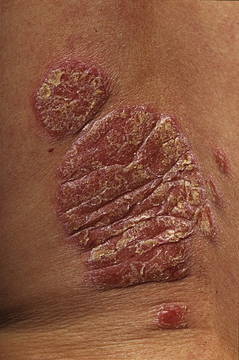
Based upon these findings, a phase II study of AMG 827 in patients with plaque psoriasis is underway, added Dr. Martin, an employee of the drug’s manufacturer and study sponsor, Amgen (Seattle).
He reported on 20 psoriasis patients who were randomized 4:4:1 to a single IV dose of AMG 827 at either 350 mg or 700 mg or to placebo. Biopsies were obtained from lesional and nonlesional skin at baseline and from lesional skin on days 8, 15, and 43.
By day 15 the 16 patients who received AMG 827 showed roughly a mean 60% improvement over baseline in terms of Psoriasis Area and Severity Index (PASI) scores. By day 43 the group treated with the 700-mg dose showed continued gains, with an 85% improvement in PASI scores over baseline. A PASI 75, or a 75% improvement over baseline, was achieved by day 43 in five of eight patients in the 350-mg group, seven of eight who got 700 mg of AMG 827, and none of four placebo-treated controls.
Physician’s Global Assessment ratings of psoriasis as "clear" or "minimal" were attained by all eight patients in the 700-mg group, five of eight who received 350 mg, and none of four controls.
At baseline, roughly 10,000 gene expression sequences were abnormally up- or downregulated in lesional skin. By day 8, this was reduced to about 2,000 abnormally expressed gene sequences. By day 15, the abnormal gene expression signature in the 700-mg group had dropped to roughly 500 abnormal sequences, nearly the same as in nonlesional skin at baseline.
The low level of abnormal gene expression was maintained in the 700-mg group out to day 43. Meanwhile, the abnormal gene expression signature in the 350-mg group improved from 2,000 sequences on day 8 to about 1,000 on day 43, Dr. Martin said.
Histopathologic findings in lesional skin included significant reductions in epidermal thickness, keratin-16 mRNA levels, Ki-67 cell counts, and the number of infiltrating leukocyte subsets by day 15, with further improvements noted by day 43.
AMG 827 is also under study for the treatment of rheumatoid arthritis and other inflammatory diseases. Interleukin-17 is known to activate local expression of a range of cytokines, metalloproteinases, chemokines, and antimicrobial peptides.
GOTHENBURG, SWEDEN – Blockade of the receptor for the proinflammatory cytokine interleukin-17 using a novel fully human IgG2 monoclonal antibody has shown promise as a treatment for chronic plaque psoriasis.
In a small, phase I, double-blind randomized study, a single dose of AMG 827 was well tolerated and led to rapid clinical improvement accompanied by reversal of the molecular, cellular, and histologic hallmarks of the disease, Dr. David A. Martin reported at the annual congress of the European Academy of Dermatology and Venereology.
Based upon these findings, a phase II study of AMG 827 in patients with plaque psoriasis is underway, added Dr. Martin, an employee of the drug’s manufacturer and study sponsor, Amgen (Seattle).
He reported on 20 psoriasis patients who were randomized 4:4:1 to a single IV dose of AMG 827 at either 350 mg or 700 mg or to placebo. Biopsies were obtained from lesional and nonlesional skin at baseline and from lesional skin on days 8, 15, and 43.
By day 15 the 16 patients who received AMG 827 showed roughly a mean 60% improvement over baseline in terms of Psoriasis Area and Severity Index (PASI) scores. By day 43 the group treated with the 700-mg dose showed continued gains, with an 85% improvement in PASI scores over baseline. A PASI 75, or a 75% improvement over baseline, was achieved by day 43 in five of eight patients in the 350-mg group, seven of eight who got 700 mg of AMG 827, and none of four placebo-treated controls.
Physician’s Global Assessment ratings of psoriasis as "clear" or "minimal" were attained by all eight patients in the 700-mg group, five of eight who received 350 mg, and none of four controls.
At baseline, roughly 10,000 gene expression sequences were abnormally up- or downregulated in lesional skin. By day 8, this was reduced to about 2,000 abnormally expressed gene sequences. By day 15, the abnormal gene expression signature in the 700-mg group had dropped to roughly 500 abnormal sequences, nearly the same as in nonlesional skin at baseline.
The low level of abnormal gene expression was maintained in the 700-mg group out to day 43. Meanwhile, the abnormal gene expression signature in the 350-mg group improved from 2,000 sequences on day 8 to about 1,000 on day 43, Dr. Martin said.
Histopathologic findings in lesional skin included significant reductions in epidermal thickness, keratin-16 mRNA levels, Ki-67 cell counts, and the number of infiltrating leukocyte subsets by day 15, with further improvements noted by day 43.
AMG 827 is also under study for the treatment of rheumatoid arthritis and other inflammatory diseases. Interleukin-17 is known to activate local expression of a range of cytokines, metalloproteinases, chemokines, and antimicrobial peptides.
GOTHENBURG, SWEDEN – Blockade of the receptor for the proinflammatory cytokine interleukin-17 using a novel fully human IgG2 monoclonal antibody has shown promise as a treatment for chronic plaque psoriasis.
In a small, phase I, double-blind randomized study, a single dose of AMG 827 was well tolerated and led to rapid clinical improvement accompanied by reversal of the molecular, cellular, and histologic hallmarks of the disease, Dr. David A. Martin reported at the annual congress of the European Academy of Dermatology and Venereology.
Based upon these findings, a phase II study of AMG 827 in patients with plaque psoriasis is underway, added Dr. Martin, an employee of the drug’s manufacturer and study sponsor, Amgen (Seattle).
He reported on 20 psoriasis patients who were randomized 4:4:1 to a single IV dose of AMG 827 at either 350 mg or 700 mg or to placebo. Biopsies were obtained from lesional and nonlesional skin at baseline and from lesional skin on days 8, 15, and 43.
By day 15 the 16 patients who received AMG 827 showed roughly a mean 60% improvement over baseline in terms of Psoriasis Area and Severity Index (PASI) scores. By day 43 the group treated with the 700-mg dose showed continued gains, with an 85% improvement in PASI scores over baseline. A PASI 75, or a 75% improvement over baseline, was achieved by day 43 in five of eight patients in the 350-mg group, seven of eight who got 700 mg of AMG 827, and none of four placebo-treated controls.
Physician’s Global Assessment ratings of psoriasis as "clear" or "minimal" were attained by all eight patients in the 700-mg group, five of eight who received 350 mg, and none of four controls.
At baseline, roughly 10,000 gene expression sequences were abnormally up- or downregulated in lesional skin. By day 8, this was reduced to about 2,000 abnormally expressed gene sequences. By day 15, the abnormal gene expression signature in the 700-mg group had dropped to roughly 500 abnormal sequences, nearly the same as in nonlesional skin at baseline.
The low level of abnormal gene expression was maintained in the 700-mg group out to day 43. Meanwhile, the abnormal gene expression signature in the 350-mg group improved from 2,000 sequences on day 8 to about 1,000 on day 43, Dr. Martin said.
Histopathologic findings in lesional skin included significant reductions in epidermal thickness, keratin-16 mRNA levels, Ki-67 cell counts, and the number of infiltrating leukocyte subsets by day 15, with further improvements noted by day 43.
AMG 827 is also under study for the treatment of rheumatoid arthritis and other inflammatory diseases. Interleukin-17 is known to activate local expression of a range of cytokines, metalloproteinases, chemokines, and antimicrobial peptides.
FROM THE ANNUAL CONGRESS OF THE EUROPEAN ACADEMY OF DERMATOLOGY AND VENEREOLOGY
Major Finding: PASI 75 was achieved by day 43 in five of eight patients who received 350 mg AMG 827, in seven of eight who got 700 mg, and none of four placebo-treated controls.
Data Source: A phase II study of AMG 827 of 20 patients with plaque psoriasis who were randomized 4:4:1 to a single intravenous dose of AMG 827 at either 350 mg or 700 mg or to placebo.
Disclosures: Dr. Martin is an employee of the AMG 827 manufacturer and study sponsor, Amgen (Seattle).
EADV: Study Points to Optimal Etanercept Regimen for Psoriasis, PsA
GOTHENBURG, Sweden - In patients with both plaque psoriasis and psoriatic arthritis, initial treatment with etanercept at 50 mg twice weekly resulted in faster clearance of skin lesions than 50 mg once weekly.
The twice-weekly regimen, however, offered no advantage for treatment of joint and tendon symptoms. These were the key findings of the Psoriasis Randomized Etanercept Study in Subjects with Psoriatic Arthritis (PRESTA), a collaborative study that paired dermatologists and rheumatologists in an effort to determine how to optimize the use of etanercept to treat both skin and rheumatologic symptoms in these dual-diagnosis patients.

The PRESTA results will enable physicians to individualize treatment of such patients with a degree of confidence not before possible, Dr. Wolfram Sterry, one of the study investigators, said at the annual congress of the European Academy of Dermatology and Venereology.
PRESTA findings suggest that patients with more severe cutaneous disease are best off with an initial 12 weeks of etanercept (Enbrel) at 50 mg twice weekly before stepping down to 50 mg once weekly, while 50 mg/week from the outset is sufficient in patients with milder skin involvement, explained Dr. Sterry, professor and chair of the department of dermatology and allergy at Charité University Hospital, Berlin.
PRESTA also showed the ideal dosing regimen for psoriatic arthritis to be closer to that employed in rheumatoid arthritis than for that used in psoriasis, he added.
PRESTA was a 24-week, multicenter, randomized, double-blind clinical trial in 752 patients with both psoriasis evaluated by dermatologists and psoriatic arthritis evaluated by rheumatologists. Participants were assigned to subcutaneous etanercept at either 50 mg once or twice weekly for 12 weeks, after which everyone received open-label etanercept at 50 mg/week for a further 12 weeks.
The primary efficacy end point was the number of patients achieving “clear” or “almost clear” on the Physician’s Global Assessment of psoriasis at 12 weeks. This outcome was obtained in 46% (176 of 379) of patients on twice-weekly therapy, compared with 32% (119 of 373) of patients on once-weekly treatment, a significant difference, said Dr. Sterry. In addition, the twice-weekly etanercept group showed significantly greater improvement from baseline to week 12 in the Psoriasis Area and Severity Index: 71%, compared with 62% for once-weekly therapy.
In contrast, both groups were equally likely to meet American College of Rheumatology (ACR) criteria for treatment response. At week 12, an ACR 20% response was achieved by 66% of patients on twice-weekly and 61% on once-weekly etanercept. An ACR 50% response was documented in 45% of those on twice-weekly and 41% on once-weekly etanercept. An ACR 70% response occurred in 20% on twice-weekly and 22% on once-weekly therapy, he noted.
By week 24, 66% of patients who initially got twice-weekly etanercept had an ACR 20% response and 35% had an ACR 70% response, as did 61% and 37%, respectively, of patients on 50 mg once weekly for the full 24 weeks.
Of note, by 24 weeks both patient groups achieved comparable improvements in their skin disease. Patients who initially received twice-weekly etanercept had a 78% improvement from baseline in the psoriasis area and severity index, while those on once-weekly therapy all along had a 74% improvement.
Another noteworthy finding, said Dr. Sterry, is that the study showed definitively, for the first time, that etanercept significantly improves two clinically important extra-articular manifestations of psoriatic arthritis: dactylitis and enthesis. These disease manifestations were present at baseline in 42% and 38% of patients, respectively. By week 24, dactylitis scores had improved by a mean of 85%, compared with baseline in both study arms, while enthesis scores improved by 81%.
There were no significant differences in the safety profiles between the two study arms.
The prevalence of psoriatic arthritis among psoriasis patients is estimated to be up to 30%, noted Dr. Sterry. The arthritis component typically does not present until about a decade after onset of the skin disease. This was true in PRESTA: Participants had a mean 18.9-year duration of psoriasis, with psoriatic arthritis appearing 11.9 years after the skin disease.
Dr. Sterry disclosed that he has received consulting fees from Wyeth, which sponsored PRESTA, as well as from Abbott, Schering-Plough, and Janssen-Cilag.
GOTHENBURG, Sweden - In patients with both plaque psoriasis and psoriatic arthritis, initial treatment with etanercept at 50 mg twice weekly resulted in faster clearance of skin lesions than 50 mg once weekly.
The twice-weekly regimen, however, offered no advantage for treatment of joint and tendon symptoms. These were the key findings of the Psoriasis Randomized Etanercept Study in Subjects with Psoriatic Arthritis (PRESTA), a collaborative study that paired dermatologists and rheumatologists in an effort to determine how to optimize the use of etanercept to treat both skin and rheumatologic symptoms in these dual-diagnosis patients.
The PRESTA results will enable physicians to individualize treatment of such patients with a degree of confidence not before possible, Dr. Wolfram Sterry, one of the study investigators, said at the annual congress of the European Academy of Dermatology and Venereology.
PRESTA findings suggest that patients with more severe cutaneous disease are best off with an initial 12 weeks of etanercept (Enbrel) at 50 mg twice weekly before stepping down to 50 mg once weekly, while 50 mg/week from the outset is sufficient in patients with milder skin involvement, explained Dr. Sterry, professor and chair of the department of dermatology and allergy at Charité University Hospital, Berlin.
PRESTA also showed the ideal dosing regimen for psoriatic arthritis to be closer to that employed in rheumatoid arthritis than for that used in psoriasis, he added.
PRESTA was a 24-week, multicenter, randomized, double-blind clinical trial in 752 patients with both psoriasis evaluated by dermatologists and psoriatic arthritis evaluated by rheumatologists. Participants were assigned to subcutaneous etanercept at either 50 mg once or twice weekly for 12 weeks, after which everyone received open-label etanercept at 50 mg/week for a further 12 weeks.
The primary efficacy end point was the number of patients achieving “clear” or “almost clear” on the Physician’s Global Assessment of psoriasis at 12 weeks. This outcome was obtained in 46% (176 of 379) of patients on twice-weekly therapy, compared with 32% (119 of 373) of patients on once-weekly treatment, a significant difference, said Dr. Sterry. In addition, the twice-weekly etanercept group showed significantly greater improvement from baseline to week 12 in the Psoriasis Area and Severity Index: 71%, compared with 62% for once-weekly therapy.
In contrast, both groups were equally likely to meet American College of Rheumatology (ACR) criteria for treatment response. At week 12, an ACR 20% response was achieved by 66% of patients on twice-weekly and 61% on once-weekly etanercept. An ACR 50% response was documented in 45% of those on twice-weekly and 41% on once-weekly etanercept. An ACR 70% response occurred in 20% on twice-weekly and 22% on once-weekly therapy, he noted.
By week 24, 66% of patients who initially got twice-weekly etanercept had an ACR 20% response and 35% had an ACR 70% response, as did 61% and 37%, respectively, of patients on 50 mg once weekly for the full 24 weeks.
Of note, by 24 weeks both patient groups achieved comparable improvements in their skin disease. Patients who initially received twice-weekly etanercept had a 78% improvement from baseline in the psoriasis area and severity index, while those on once-weekly therapy all along had a 74% improvement.
Another noteworthy finding, said Dr. Sterry, is that the study showed definitively, for the first time, that etanercept significantly improves two clinically important extra-articular manifestations of psoriatic arthritis: dactylitis and enthesis. These disease manifestations were present at baseline in 42% and 38% of patients, respectively. By week 24, dactylitis scores had improved by a mean of 85%, compared with baseline in both study arms, while enthesis scores improved by 81%.
There were no significant differences in the safety profiles between the two study arms.
The prevalence of psoriatic arthritis among psoriasis patients is estimated to be up to 30%, noted Dr. Sterry. The arthritis component typically does not present until about a decade after onset of the skin disease. This was true in PRESTA: Participants had a mean 18.9-year duration of psoriasis, with psoriatic arthritis appearing 11.9 years after the skin disease.
Dr. Sterry disclosed that he has received consulting fees from Wyeth, which sponsored PRESTA, as well as from Abbott, Schering-Plough, and Janssen-Cilag.
GOTHENBURG, Sweden - In patients with both plaque psoriasis and psoriatic arthritis, initial treatment with etanercept at 50 mg twice weekly resulted in faster clearance of skin lesions than 50 mg once weekly.
The twice-weekly regimen, however, offered no advantage for treatment of joint and tendon symptoms. These were the key findings of the Psoriasis Randomized Etanercept Study in Subjects with Psoriatic Arthritis (PRESTA), a collaborative study that paired dermatologists and rheumatologists in an effort to determine how to optimize the use of etanercept to treat both skin and rheumatologic symptoms in these dual-diagnosis patients.
The PRESTA results will enable physicians to individualize treatment of such patients with a degree of confidence not before possible, Dr. Wolfram Sterry, one of the study investigators, said at the annual congress of the European Academy of Dermatology and Venereology.
PRESTA findings suggest that patients with more severe cutaneous disease are best off with an initial 12 weeks of etanercept (Enbrel) at 50 mg twice weekly before stepping down to 50 mg once weekly, while 50 mg/week from the outset is sufficient in patients with milder skin involvement, explained Dr. Sterry, professor and chair of the department of dermatology and allergy at Charité University Hospital, Berlin.
PRESTA also showed the ideal dosing regimen for psoriatic arthritis to be closer to that employed in rheumatoid arthritis than for that used in psoriasis, he added.
PRESTA was a 24-week, multicenter, randomized, double-blind clinical trial in 752 patients with both psoriasis evaluated by dermatologists and psoriatic arthritis evaluated by rheumatologists. Participants were assigned to subcutaneous etanercept at either 50 mg once or twice weekly for 12 weeks, after which everyone received open-label etanercept at 50 mg/week for a further 12 weeks.
The primary efficacy end point was the number of patients achieving “clear” or “almost clear” on the Physician’s Global Assessment of psoriasis at 12 weeks. This outcome was obtained in 46% (176 of 379) of patients on twice-weekly therapy, compared with 32% (119 of 373) of patients on once-weekly treatment, a significant difference, said Dr. Sterry. In addition, the twice-weekly etanercept group showed significantly greater improvement from baseline to week 12 in the Psoriasis Area and Severity Index: 71%, compared with 62% for once-weekly therapy.
In contrast, both groups were equally likely to meet American College of Rheumatology (ACR) criteria for treatment response. At week 12, an ACR 20% response was achieved by 66% of patients on twice-weekly and 61% on once-weekly etanercept. An ACR 50% response was documented in 45% of those on twice-weekly and 41% on once-weekly etanercept. An ACR 70% response occurred in 20% on twice-weekly and 22% on once-weekly therapy, he noted.
By week 24, 66% of patients who initially got twice-weekly etanercept had an ACR 20% response and 35% had an ACR 70% response, as did 61% and 37%, respectively, of patients on 50 mg once weekly for the full 24 weeks.
Of note, by 24 weeks both patient groups achieved comparable improvements in their skin disease. Patients who initially received twice-weekly etanercept had a 78% improvement from baseline in the psoriasis area and severity index, while those on once-weekly therapy all along had a 74% improvement.
Another noteworthy finding, said Dr. Sterry, is that the study showed definitively, for the first time, that etanercept significantly improves two clinically important extra-articular manifestations of psoriatic arthritis: dactylitis and enthesis. These disease manifestations were present at baseline in 42% and 38% of patients, respectively. By week 24, dactylitis scores had improved by a mean of 85%, compared with baseline in both study arms, while enthesis scores improved by 81%.
There were no significant differences in the safety profiles between the two study arms.
The prevalence of psoriatic arthritis among psoriasis patients is estimated to be up to 30%, noted Dr. Sterry. The arthritis component typically does not present until about a decade after onset of the skin disease. This was true in PRESTA: Participants had a mean 18.9-year duration of psoriasis, with psoriatic arthritis appearing 11.9 years after the skin disease.
Dr. Sterry disclosed that he has received consulting fees from Wyeth, which sponsored PRESTA, as well as from Abbott, Schering-Plough, and Janssen-Cilag.
Annual Congress of the European Academy of Dermatology and Venereology
Major Finding: After 24 weeks of etanercept therapy, dactylitis scores had improved by a mean of 85%, compared with baseline, while enthesis scores improved by 81%.
Data Source: A 24-week, multicenter, randomized, double-blind clinical trial of 752 patients with both psoriasis and psoriatic arthritis.
Disclosures: Dr. Sterry disclosed that he has received consulting fees from Wyeth, which sponsored PRESTA, as well as from Abbott, Schering-Plough, and Janssen-Cilag.