User login
LAS VEGAS - Practical phototherapy means not thinking strictly in terms of protocols, according to Dr. Kenneth B. Gordon.
Many protocols have been published for psoriasis phototherapy, and good ones were published by the American Academy of Dermatology in early 2010 (J. Amer. Acad. Dermatol. 2010;62:114-35), said Dr. Gordon of the University of Chicago. The guidelines emphasize tailoring therapy to meet the individual patient’s needs, and physicians should consider the best treatment for each patient.
"Simple, published protocols are not sufficient if you really do phototherapy," Dr. Gordon said.
He challenged the audience members with a quiz to test their knowledge of practical phototherapy in particular cases. The cases excluded patients with psoriatic arthritis.
"There are no right answers to these questions," Dr. Gordon said. "There are some wrong answers to these questions, however."
The Quiz Cases
– Case 1: What method of phototherapy would you use to treat a young woman with limited plaque psoriasis, primarily on her elbows? (a) Whole-body narrow-band UVB, (b) Targeted narrow-band-UVB with excimer laser, or (c) Topical psoralen plus long-wave UVA (PUVA).
– Case 2: What type of phototherapy would you use for a 50-year-old woman with extensive plaque psoriasis and type II skin who has not responded to topical therapy? She lives across the street from your office, can come for treatment in the middle of the day, and has no copay on her insurance. (a) Targeted narrow-band UVB, (b) Broad-band UVB, (c) Narrow-band UVB, (d) Retinoids plus UVB, or (e) PUVA.
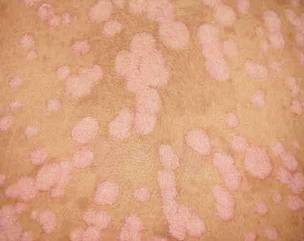
– Case 3: How would you treat an 18-year-old man having an acute outbreak of guttate psoriasis, with explosive small plaques all over the body? (a) Narrow-band UVB with expectation for short-term treatment, (b) Narrow-band UVB with expectation of long-term maintenance, (c) PUVA, or (d) Biologic immunotherapy.
– Case 4: What’s the best phototherapy for a 59-year-old woman with palmar psoriasis that is interfering with her family business, a packing company? (a) Targeted narrow-band UVB phototherapy using an excimer laser, (b) Phototherapy using a using a hand-foot narrow-band UVB unit, (c) Oral PUVA with a hand-foot UVA unit, or (d) Topical PUVA with a hand-foot UVA unit.

– Case 5: Which phototherapy would you choose for a 53-year-old man with extensive plaque psoriasis with big, thick plaques, including many on his back? (a) Targeted UVB with excimer laser, (b) Narrow-band UVB, (c) Retinoids plus narrow-band UVB, or (d) PUVA.
– Case 6: How would you treat a 52-year-old man with type I skin who has had plaque psoriasis for years but has become erythrodermic over the past 6 months? (a) Narrow-band UVB, (b) Retinoids plus UVB, (c) PUVA, (d) Targeted phototherapy with excimer laser, or (e) None of the above.
Answers
– Case 1: Dr. Gordon said he would choose (b) Targeted narrow-band UVB with excimer laser, although topical PUVA may be the solution sometimes, he added.
Targeted narrow-band UVB with excimer laser is "not so easy," he cautioned. On the plus side, two or three treatments per week for 6-12 weeks have a high chance of success, with more than 75% of patients achieving a Psoriasis Area and Severity Index (PASI) score of 75, or even better if you treat with higher-than-usual fluences. This method only treats involved areas and avoids treating normal skin. Perhaps more than half of patients will have long-term clearing of those limited areas at 1 year after treatment.
On the down side, severe and permanent hyperpigmentation is always a risk with the excimer laser, particularly when higher fluences are used, so it’s important to discuss this with patients when considering targeted UVB therapy. There also may be temporary blistering and pain.
"Application to extensive body surface areas is, in a scientific word, silly," Dr. Gordon said. "I bring that up because I have people in our community who are using it for people who have 20%-30% body surface area involved in psoriasis." In those cases, it’s better to refer the patient for other therapy or consider alternatives such as topical treatments or intralesional injections.
– Case 2: Broad-band UVB may be effective for this patient, though not as effective as narrow-band UVB. Retinoids plus UVB is a reasonable option in a postmenopausal 50-year-old woman. He does not use PUVA therapy "because of biases that I developed during my residency," he said.
Narrow-band UVB (c) would be Dr. Gordon’s choice, although other answers are reasonable. A clearly wrong answer is (a) Targeted narrow-band UVB, which should not be used for extensive psoriasis.
He said that he would begin treating the patient with narrow-band UVB three times per week. Some published protocols suggest starting at 400 mJ/cm2, but based on her type II skin, he said he would start at 200 mJ/m2 and increase the dose by 25-mJ increments over time. "Why 200 mJ instead of 220 mJ? The math is easier. For the people who work with me, I want the math to be really easy," he said.
Applying petrolatum or mineral oil before phototherapy can eliminate the reflectiveness of the scale to help the light penetrate, but make sure the patient is willing to do this for every treatment. "If they don’t have it as you’re building up the dose, and then they start using it, that’s when people get burned," he explained. "You just have to be consistent."
Four to 6 weeks of thrice-weekly treatments should produce a good response. There’s a dearth of data to help clinicians decide what to do after that. Some reports suggest more patients will remain clear at 1 year if treatment is decreased to twice weekly for 4 weeks and then once weekly instead of stopping phototherapy. Ultimately, this may entail fewer phototherapy sessions than stopping phototherapy and having to resume thrice-weekly sessions if the psoriasis flares again.
"Maintenance therapy is a real way to make life easier for patients with phototherapy. I think it’s a very underused process," he said. Dr. Gordon does not decrease the dose when shifting to maintenance phototherapy, but others recommend decreasing the dose by 25% during once-weekly sessions.
Data on the safety of long-term narrow-band UVB in patients with psoriasis are insufficient, but European studies suggest it does not significantly increase the incidence of nonmelanoma skin cancer. "I leave it up to the patient" to decide if this is acceptable, he said.
– Case 3: Dr. Gordon chose (a) Narrow-band UVB with expectation for short-term treatment. Unlike chronic psoriasis, guttate psoriasis is basically a self-limited disease, so short-term phototherapy is more appropriate than chronic therapy or biologics. Patients tend to respond quickly to narrow-band UVB therapy. PUVA therapy also might be a reasonable treatment, but Dr. Gordon said he has not used it for guttate psoriasis.
"Later on in life, many of these patients will come back and have plaque psoriasis," and then other treatments may be appropriate, he noted.
– Case 4: There’s no clear answer for this case because of a lack of data, according to Dr. Gordon, but he would choose (d) Topical PUVA with a hand-foot UVA unit. "The decision rests on what you sense is best for the patient," but this method is most effective in his experience, he said.
His second choice would be targeted narrow-band UVB with excimer laser, which may be effective at higher fluences but carries the risk of hyperpigmentation. The hand-foot narrow-band UVB unit also is somewhat effective. With limited disease such as this palmar psoriasis, he tries to avoid use of oral psoralen, so would not choose oral PUVA with a hand-foot UVA unit.
– Case 5: For this patient, Dr. Gordon would choose (c) Retinoids plus narrow-band UVB. Erythrodermic psoriasis features inflamed, fine-scaled skin, which is distinct from extensive plaque psoriasis. The patient’s extensive disease needs a high rate of response, so Dr. Gordon would add a retinoid to the UVB to try to boost the treatment benefit.
He advised starting acitretin first for about 1 month to make sure the patient tolerates it and to see if the disease clears on the retinoid alone, without the need for phototherapy. The protocol for UVB should account for the addition of this photosensitizing agent. Dr. Gordon usually decreases the phototherapy dose by one skin type to account for the retinoid. Others suggest decreasing the dose by 25-50 mJ/cm2.
– Case 6: No one in the audience at the meeting picked the correct answer, (d) None of the above. Phototherapy often will worsen erythrodermic psoriasis in people with light skin. Avoid phototherapy in these patients. "If you put somebody like this in a light box, you’ll be in real trouble," he warned. This patient responded well to biologic therapy.
Dr. Gordon has been a consultant for or received grants from Abbott, Amgen, Centocor, Galderma, Lilly, Pfizer, Celgene, and Merck. Also, a partner in his practice derives income from phototherapy.
SDEF and this news organization are owned by Elsevier.
LAS VEGAS - Practical phototherapy means not thinking strictly in terms of protocols, according to Dr. Kenneth B. Gordon.
Many protocols have been published for psoriasis phototherapy, and good ones were published by the American Academy of Dermatology in early 2010 (J. Amer. Acad. Dermatol. 2010;62:114-35), said Dr. Gordon of the University of Chicago. The guidelines emphasize tailoring therapy to meet the individual patient’s needs, and physicians should consider the best treatment for each patient.
"Simple, published protocols are not sufficient if you really do phototherapy," Dr. Gordon said.
He challenged the audience members with a quiz to test their knowledge of practical phototherapy in particular cases. The cases excluded patients with psoriatic arthritis.
"There are no right answers to these questions," Dr. Gordon said. "There are some wrong answers to these questions, however."
The Quiz Cases
– Case 1: What method of phototherapy would you use to treat a young woman with limited plaque psoriasis, primarily on her elbows? (a) Whole-body narrow-band UVB, (b) Targeted narrow-band-UVB with excimer laser, or (c) Topical psoralen plus long-wave UVA (PUVA).
– Case 2: What type of phototherapy would you use for a 50-year-old woman with extensive plaque psoriasis and type II skin who has not responded to topical therapy? She lives across the street from your office, can come for treatment in the middle of the day, and has no copay on her insurance. (a) Targeted narrow-band UVB, (b) Broad-band UVB, (c) Narrow-band UVB, (d) Retinoids plus UVB, or (e) PUVA.
– Case 3: How would you treat an 18-year-old man having an acute outbreak of guttate psoriasis, with explosive small plaques all over the body? (a) Narrow-band UVB with expectation for short-term treatment, (b) Narrow-band UVB with expectation of long-term maintenance, (c) PUVA, or (d) Biologic immunotherapy.
– Case 4: What’s the best phototherapy for a 59-year-old woman with palmar psoriasis that is interfering with her family business, a packing company? (a) Targeted narrow-band UVB phototherapy using an excimer laser, (b) Phototherapy using a using a hand-foot narrow-band UVB unit, (c) Oral PUVA with a hand-foot UVA unit, or (d) Topical PUVA with a hand-foot UVA unit.
– Case 5: Which phototherapy would you choose for a 53-year-old man with extensive plaque psoriasis with big, thick plaques, including many on his back? (a) Targeted UVB with excimer laser, (b) Narrow-band UVB, (c) Retinoids plus narrow-band UVB, or (d) PUVA.
– Case 6: How would you treat a 52-year-old man with type I skin who has had plaque psoriasis for years but has become erythrodermic over the past 6 months? (a) Narrow-band UVB, (b) Retinoids plus UVB, (c) PUVA, (d) Targeted phototherapy with excimer laser, or (e) None of the above.
Answers
– Case 1: Dr. Gordon said he would choose (b) Targeted narrow-band UVB with excimer laser, although topical PUVA may be the solution sometimes, he added.
Targeted narrow-band UVB with excimer laser is "not so easy," he cautioned. On the plus side, two or three treatments per week for 6-12 weeks have a high chance of success, with more than 75% of patients achieving a Psoriasis Area and Severity Index (PASI) score of 75, or even better if you treat with higher-than-usual fluences. This method only treats involved areas and avoids treating normal skin. Perhaps more than half of patients will have long-term clearing of those limited areas at 1 year after treatment.
On the down side, severe and permanent hyperpigmentation is always a risk with the excimer laser, particularly when higher fluences are used, so it’s important to discuss this with patients when considering targeted UVB therapy. There also may be temporary blistering and pain.
"Application to extensive body surface areas is, in a scientific word, silly," Dr. Gordon said. "I bring that up because I have people in our community who are using it for people who have 20%-30% body surface area involved in psoriasis." In those cases, it’s better to refer the patient for other therapy or consider alternatives such as topical treatments or intralesional injections.
– Case 2: Broad-band UVB may be effective for this patient, though not as effective as narrow-band UVB. Retinoids plus UVB is a reasonable option in a postmenopausal 50-year-old woman. He does not use PUVA therapy "because of biases that I developed during my residency," he said.
Narrow-band UVB (c) would be Dr. Gordon’s choice, although other answers are reasonable. A clearly wrong answer is (a) Targeted narrow-band UVB, which should not be used for extensive psoriasis.
He said that he would begin treating the patient with narrow-band UVB three times per week. Some published protocols suggest starting at 400 mJ/cm2, but based on her type II skin, he said he would start at 200 mJ/m2 and increase the dose by 25-mJ increments over time. "Why 200 mJ instead of 220 mJ? The math is easier. For the people who work with me, I want the math to be really easy," he said.
Applying petrolatum or mineral oil before phototherapy can eliminate the reflectiveness of the scale to help the light penetrate, but make sure the patient is willing to do this for every treatment. "If they don’t have it as you’re building up the dose, and then they start using it, that’s when people get burned," he explained. "You just have to be consistent."
Four to 6 weeks of thrice-weekly treatments should produce a good response. There’s a dearth of data to help clinicians decide what to do after that. Some reports suggest more patients will remain clear at 1 year if treatment is decreased to twice weekly for 4 weeks and then once weekly instead of stopping phototherapy. Ultimately, this may entail fewer phototherapy sessions than stopping phototherapy and having to resume thrice-weekly sessions if the psoriasis flares again.
"Maintenance therapy is a real way to make life easier for patients with phototherapy. I think it’s a very underused process," he said. Dr. Gordon does not decrease the dose when shifting to maintenance phototherapy, but others recommend decreasing the dose by 25% during once-weekly sessions.
Data on the safety of long-term narrow-band UVB in patients with psoriasis are insufficient, but European studies suggest it does not significantly increase the incidence of nonmelanoma skin cancer. "I leave it up to the patient" to decide if this is acceptable, he said.
– Case 3: Dr. Gordon chose (a) Narrow-band UVB with expectation for short-term treatment. Unlike chronic psoriasis, guttate psoriasis is basically a self-limited disease, so short-term phototherapy is more appropriate than chronic therapy or biologics. Patients tend to respond quickly to narrow-band UVB therapy. PUVA therapy also might be a reasonable treatment, but Dr. Gordon said he has not used it for guttate psoriasis.
"Later on in life, many of these patients will come back and have plaque psoriasis," and then other treatments may be appropriate, he noted.
– Case 4: There’s no clear answer for this case because of a lack of data, according to Dr. Gordon, but he would choose (d) Topical PUVA with a hand-foot UVA unit. "The decision rests on what you sense is best for the patient," but this method is most effective in his experience, he said.
His second choice would be targeted narrow-band UVB with excimer laser, which may be effective at higher fluences but carries the risk of hyperpigmentation. The hand-foot narrow-band UVB unit also is somewhat effective. With limited disease such as this palmar psoriasis, he tries to avoid use of oral psoralen, so would not choose oral PUVA with a hand-foot UVA unit.
– Case 5: For this patient, Dr. Gordon would choose (c) Retinoids plus narrow-band UVB. Erythrodermic psoriasis features inflamed, fine-scaled skin, which is distinct from extensive plaque psoriasis. The patient’s extensive disease needs a high rate of response, so Dr. Gordon would add a retinoid to the UVB to try to boost the treatment benefit.
He advised starting acitretin first for about 1 month to make sure the patient tolerates it and to see if the disease clears on the retinoid alone, without the need for phototherapy. The protocol for UVB should account for the addition of this photosensitizing agent. Dr. Gordon usually decreases the phototherapy dose by one skin type to account for the retinoid. Others suggest decreasing the dose by 25-50 mJ/cm2.
– Case 6: No one in the audience at the meeting picked the correct answer, (d) None of the above. Phototherapy often will worsen erythrodermic psoriasis in people with light skin. Avoid phototherapy in these patients. "If you put somebody like this in a light box, you’ll be in real trouble," he warned. This patient responded well to biologic therapy.
Dr. Gordon has been a consultant for or received grants from Abbott, Amgen, Centocor, Galderma, Lilly, Pfizer, Celgene, and Merck. Also, a partner in his practice derives income from phototherapy.
SDEF and this news organization are owned by Elsevier.
LAS VEGAS - Practical phototherapy means not thinking strictly in terms of protocols, according to Dr. Kenneth B. Gordon.
Many protocols have been published for psoriasis phototherapy, and good ones were published by the American Academy of Dermatology in early 2010 (J. Amer. Acad. Dermatol. 2010;62:114-35), said Dr. Gordon of the University of Chicago. The guidelines emphasize tailoring therapy to meet the individual patient’s needs, and physicians should consider the best treatment for each patient.
"Simple, published protocols are not sufficient if you really do phototherapy," Dr. Gordon said.
He challenged the audience members with a quiz to test their knowledge of practical phototherapy in particular cases. The cases excluded patients with psoriatic arthritis.
"There are no right answers to these questions," Dr. Gordon said. "There are some wrong answers to these questions, however."
The Quiz Cases
– Case 1: What method of phototherapy would you use to treat a young woman with limited plaque psoriasis, primarily on her elbows? (a) Whole-body narrow-band UVB, (b) Targeted narrow-band-UVB with excimer laser, or (c) Topical psoralen plus long-wave UVA (PUVA).
– Case 2: What type of phototherapy would you use for a 50-year-old woman with extensive plaque psoriasis and type II skin who has not responded to topical therapy? She lives across the street from your office, can come for treatment in the middle of the day, and has no copay on her insurance. (a) Targeted narrow-band UVB, (b) Broad-band UVB, (c) Narrow-band UVB, (d) Retinoids plus UVB, or (e) PUVA.
– Case 3: How would you treat an 18-year-old man having an acute outbreak of guttate psoriasis, with explosive small plaques all over the body? (a) Narrow-band UVB with expectation for short-term treatment, (b) Narrow-band UVB with expectation of long-term maintenance, (c) PUVA, or (d) Biologic immunotherapy.
– Case 4: What’s the best phototherapy for a 59-year-old woman with palmar psoriasis that is interfering with her family business, a packing company? (a) Targeted narrow-band UVB phototherapy using an excimer laser, (b) Phototherapy using a using a hand-foot narrow-band UVB unit, (c) Oral PUVA with a hand-foot UVA unit, or (d) Topical PUVA with a hand-foot UVA unit.
– Case 5: Which phototherapy would you choose for a 53-year-old man with extensive plaque psoriasis with big, thick plaques, including many on his back? (a) Targeted UVB with excimer laser, (b) Narrow-band UVB, (c) Retinoids plus narrow-band UVB, or (d) PUVA.
– Case 6: How would you treat a 52-year-old man with type I skin who has had plaque psoriasis for years but has become erythrodermic over the past 6 months? (a) Narrow-band UVB, (b) Retinoids plus UVB, (c) PUVA, (d) Targeted phototherapy with excimer laser, or (e) None of the above.
Answers
– Case 1: Dr. Gordon said he would choose (b) Targeted narrow-band UVB with excimer laser, although topical PUVA may be the solution sometimes, he added.
Targeted narrow-band UVB with excimer laser is "not so easy," he cautioned. On the plus side, two or three treatments per week for 6-12 weeks have a high chance of success, with more than 75% of patients achieving a Psoriasis Area and Severity Index (PASI) score of 75, or even better if you treat with higher-than-usual fluences. This method only treats involved areas and avoids treating normal skin. Perhaps more than half of patients will have long-term clearing of those limited areas at 1 year after treatment.
On the down side, severe and permanent hyperpigmentation is always a risk with the excimer laser, particularly when higher fluences are used, so it’s important to discuss this with patients when considering targeted UVB therapy. There also may be temporary blistering and pain.
"Application to extensive body surface areas is, in a scientific word, silly," Dr. Gordon said. "I bring that up because I have people in our community who are using it for people who have 20%-30% body surface area involved in psoriasis." In those cases, it’s better to refer the patient for other therapy or consider alternatives such as topical treatments or intralesional injections.
– Case 2: Broad-band UVB may be effective for this patient, though not as effective as narrow-band UVB. Retinoids plus UVB is a reasonable option in a postmenopausal 50-year-old woman. He does not use PUVA therapy "because of biases that I developed during my residency," he said.
Narrow-band UVB (c) would be Dr. Gordon’s choice, although other answers are reasonable. A clearly wrong answer is (a) Targeted narrow-band UVB, which should not be used for extensive psoriasis.
He said that he would begin treating the patient with narrow-band UVB three times per week. Some published protocols suggest starting at 400 mJ/cm2, but based on her type II skin, he said he would start at 200 mJ/m2 and increase the dose by 25-mJ increments over time. "Why 200 mJ instead of 220 mJ? The math is easier. For the people who work with me, I want the math to be really easy," he said.
Applying petrolatum or mineral oil before phototherapy can eliminate the reflectiveness of the scale to help the light penetrate, but make sure the patient is willing to do this for every treatment. "If they don’t have it as you’re building up the dose, and then they start using it, that’s when people get burned," he explained. "You just have to be consistent."
Four to 6 weeks of thrice-weekly treatments should produce a good response. There’s a dearth of data to help clinicians decide what to do after that. Some reports suggest more patients will remain clear at 1 year if treatment is decreased to twice weekly for 4 weeks and then once weekly instead of stopping phototherapy. Ultimately, this may entail fewer phototherapy sessions than stopping phototherapy and having to resume thrice-weekly sessions if the psoriasis flares again.
"Maintenance therapy is a real way to make life easier for patients with phototherapy. I think it’s a very underused process," he said. Dr. Gordon does not decrease the dose when shifting to maintenance phototherapy, but others recommend decreasing the dose by 25% during once-weekly sessions.
Data on the safety of long-term narrow-band UVB in patients with psoriasis are insufficient, but European studies suggest it does not significantly increase the incidence of nonmelanoma skin cancer. "I leave it up to the patient" to decide if this is acceptable, he said.
– Case 3: Dr. Gordon chose (a) Narrow-band UVB with expectation for short-term treatment. Unlike chronic psoriasis, guttate psoriasis is basically a self-limited disease, so short-term phototherapy is more appropriate than chronic therapy or biologics. Patients tend to respond quickly to narrow-band UVB therapy. PUVA therapy also might be a reasonable treatment, but Dr. Gordon said he has not used it for guttate psoriasis.
"Later on in life, many of these patients will come back and have plaque psoriasis," and then other treatments may be appropriate, he noted.
– Case 4: There’s no clear answer for this case because of a lack of data, according to Dr. Gordon, but he would choose (d) Topical PUVA with a hand-foot UVA unit. "The decision rests on what you sense is best for the patient," but this method is most effective in his experience, he said.
His second choice would be targeted narrow-band UVB with excimer laser, which may be effective at higher fluences but carries the risk of hyperpigmentation. The hand-foot narrow-band UVB unit also is somewhat effective. With limited disease such as this palmar psoriasis, he tries to avoid use of oral psoralen, so would not choose oral PUVA with a hand-foot UVA unit.
– Case 5: For this patient, Dr. Gordon would choose (c) Retinoids plus narrow-band UVB. Erythrodermic psoriasis features inflamed, fine-scaled skin, which is distinct from extensive plaque psoriasis. The patient’s extensive disease needs a high rate of response, so Dr. Gordon would add a retinoid to the UVB to try to boost the treatment benefit.
He advised starting acitretin first for about 1 month to make sure the patient tolerates it and to see if the disease clears on the retinoid alone, without the need for phototherapy. The protocol for UVB should account for the addition of this photosensitizing agent. Dr. Gordon usually decreases the phototherapy dose by one skin type to account for the retinoid. Others suggest decreasing the dose by 25-50 mJ/cm2.
– Case 6: No one in the audience at the meeting picked the correct answer, (d) None of the above. Phototherapy often will worsen erythrodermic psoriasis in people with light skin. Avoid phototherapy in these patients. "If you put somebody like this in a light box, you’ll be in real trouble," he warned. This patient responded well to biologic therapy.
Dr. Gordon has been a consultant for or received grants from Abbott, Amgen, Centocor, Galderma, Lilly, Pfizer, Celgene, and Merck. Also, a partner in his practice derives income from phototherapy.
SDEF and this news organization are owned by Elsevier.
EXPERT ANALYSIS FROM A DERMATOLOGY SEMINAR