User login
Percutaneous closure of a patent foramen ovale in adults who’ve had cryptogenic stroke or embolism was no more effective than medical therapy alone at preventing a recurrent event, according to two separate reports published online March 20 in the New England Journal of Medicine.
However, one study may have been underpowered to detect a clinically relevant benefit with PFO closure, and secondary analyses of data from the second study suggested that PFO closure with an occlusive device might be beneficial, particularly in certain subgroups of patients.
The findings of these two large, international, randomized clinical trials have long been awaited with anticipation, because it has been unclear whether the benefits of closing a patent foramen ovale outweighed the risks. Observational studies and some meta-analyses have indicated a clear benefit with the procedure, while other meta-analyses and the only clinical trial that examined the issue to date have suggested that it leads to a poorer clinical course than medical therapy does.
Parsing the PC Trial
The first of the two current clinical studies, the PC Trial, was initiated 14 years ago and conducted at 29 sites in Europe, Canada, Brazil, and Australia. It involved 414 adults under age 60 (mean age, 44 years) who had a radiologically verified ischemic stroke, transient ischemic attack (TIA) with a cerebral ischemic lesion, or extracranial thrombolic event, all with no identifiable cause other than a PFO.
The study subjects were randomly assigned either to undergo percutaneous closure of the PFO using an occlusive device manufactured by the study sponsor, St. Jude Medical (204 patients), or to receive antithrombotic agents according to the discretion of the treating physician (210 patients), said Dr. Bernhard Meier of the cardiology department at Bern (Switzerland) University Hospital, and his associates.
The primary endpoint, a composite of death, nonfatal stroke, TIA, or peripheral embolism, occurred in 7 patients (3.4%) in the closure group and 11 patients (5.2%) in the medical therapy group, a nonsignificant difference.
"There were fewer strokes in the closure group; but overall, few patients had a stroke, and the difference was not significant," the investigators reported (N. Engl. J. Med. 2013;368:1083-91).
Thus, closure of the PFO using this method was no more effective than medical therapy at reducing the risk of recurrent embolic events or death.
However, the lower-than-anticipated event rate means that this trial may have been subject to a type II error, the investigators cautioned. Thus, "a clinically relevant benefit of the closure of PFO might exist, but we were unable to detect it."
Analysis of the individual components of this composite endpoint yielded similar results: The rates of recurrent stroke (0.5% and 2.4%, respectively) and of TIA (2.5% and 3.3%, respectively) also were not significantly different between the two study groups.
Similarly, analyses of important subgroups of patients showed that PFO closure was no more beneficial than medical therapy with regard to patient age (older or younger than 45 years), the presence or absence of septal aneurysm, the type of the index embolic event, or the presence or absence of a history of cardiovascular events.
There were 113 adverse events in 71 patients in the closure group (34.8%) and 120 events in 62 patients in the medical therapy group (29.5%). The rates of serious adverse events were similar between the two groups, at 21.1% and 17.6%, respectively. In particular, new-onset atrial fibrillation developed in 6 patients (2.9%) in the closure group and 2 patients (1.0%) in the medical therapy group.
In addition to the possible type II error, this trial was limited by its composite endpoint, which was not specific to the condition studied (embolic events). The study also had an unusually long recruitment period and a selected patient population, which may limit the generalizability of the findings. In addition, a lower-than-expected rate of patient retention might have caused attrition bias, and the clinical events committee "discounted potential primary-end-point events more often in the medical therapy group than in the closure group," Dr. Meier and his associates in the PC Trial said.
Showing RESPECT results
In the second trial, the RESPECT (Randomized Evaluation of Recurrent Stroke Comparing PFO Closure to Established Current Standard of Care Treatment) study, 980 patients with cryptogenic ischemic stroke and a PFO were assessed at 69 sites in the United States and Canada. They were randomly assigned either to undergo percutaneous closure of the PFO using an occlusive device manufactured by the study sponsor (St. Jude Medical) or to receive medical therapy alone.
The primary endpoint was a composite of recurrent nonfatal ischemic stroke, fatal ischemic stroke, or early death (within 45 days of randomization), said Dr. John D. Carroll of the University of Colorado Hospital, Aurora, and his associates.
During a mean follow-up of 2.6 years, 25 such events – all of them nonfatal ischemic strokes – occurred. Nine of these strokes occurred in the closure group and 16 in the medical therapy group, a nonsignificant difference.
In this primary intention-to-treat analysis, there was a "nominal" 51% risk reduction with the closure procedure, but the difference between the two study groups did not reach statistical significance, the investigators reported (N. Engl. J. Med. 2013;368:1092-1100).
However, in a per-protocol analysis and an as-treated analysis, closure of the PFO was found superior to medical therapy alone in preventing recurrent stroke.
An exploratory subgroup analysis suggested that patients with an atrial-septal aneurysm and patients with exceptionally large shunt size also benefited more from PFO closure than from medical therapy alone. And a post hoc analysis suggested that PFO closure was more effective than medical therapy at preventing larger strokes.
The rates of serious adverse events did not differ significantly between the closure group (23.0%) and the medical therapy group (21.6%). A total of 22 serious adverse events in the closure group were attributed to the procedure or the device, including two cases of pericardial tamponade.
Like the PC Trial, the RESPECT study had several limitations. There was a significant difference between the two study groups in the dropout rate, the authors noted, "which resulted in unequal duration of exposure to the risk of recurrence." Also, both entry and retention biases may have occurred, because the highest-risk patients "were preferentially treated outside the trial," Dr. Carroll and his associates said.
Both the PC Trial and RESPECT study were funded by St. Jude Medical, maker of the percutaneous PFO closure device used in both studies. Dr. Meier reported receiving consulting fees from St. Jude Medical and grant support to his institution from Abbott, Cordis, and Medtronic; and his associates reported numerous ties to industry sources. Dr. Carroll reported ties to St. Jude Medical, Philips Healthcare, and W.L. Gore, and his associates reported numerous ties to industry sources.
The findings of these long-awaited randomized controlled trials may not settle the controversy over PFO closure, noted Dr. Steven R. Messé and Dr. David M. Kent.
Proponents of closure will focus on the positive findings in RESPECT’s per-protocol and as-treated analyses, while those who favor medical therapy will emphasize that three randomized clinical trials have now failed to show a benefit with the procedure.
|
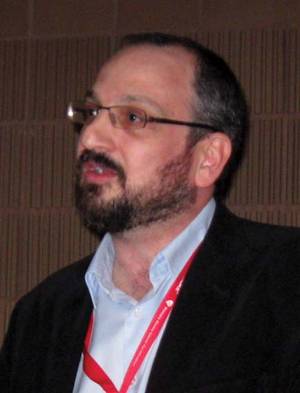
| Dr. David M. Kent |
Given that potentially disastrous complications can occur with PFO closure as with any cardiac intervention, that medical therapy appears safe and effective, and that PFO is highly prevalent in the general population – so there is "enormous potential for overuse of percutaneous closure of PFO" – the routine use of PFO closure "seems unwise without a clearer view of who, if anyone, is likely to benefit," Dr. Messé and Dr. Kent said.
Steven R. Messé, M.D., is at the Hospital of the University of Pennsylvania, Philadelphia. David M. Kent, M.D, is at Tufts University, Boston. Dr. Messé reported ties to GlaxoSmithKline, NMT Medical, W.L. Gore, and UpToDate. Dr. Kent reported ties to W.L. Gore. These remarks were taken from their editorial accompanying both reports (N. Engl. J. Med. 2013;368:1152-3).
The findings of these long-awaited randomized controlled trials may not settle the controversy over PFO closure, noted Dr. Steven R. Messé and Dr. David M. Kent.
Proponents of closure will focus on the positive findings in RESPECT’s per-protocol and as-treated analyses, while those who favor medical therapy will emphasize that three randomized clinical trials have now failed to show a benefit with the procedure.
|
|
| Dr. David M. Kent |
Given that potentially disastrous complications can occur with PFO closure as with any cardiac intervention, that medical therapy appears safe and effective, and that PFO is highly prevalent in the general population – so there is "enormous potential for overuse of percutaneous closure of PFO" – the routine use of PFO closure "seems unwise without a clearer view of who, if anyone, is likely to benefit," Dr. Messé and Dr. Kent said.
Steven R. Messé, M.D., is at the Hospital of the University of Pennsylvania, Philadelphia. David M. Kent, M.D, is at Tufts University, Boston. Dr. Messé reported ties to GlaxoSmithKline, NMT Medical, W.L. Gore, and UpToDate. Dr. Kent reported ties to W.L. Gore. These remarks were taken from their editorial accompanying both reports (N. Engl. J. Med. 2013;368:1152-3).
The findings of these long-awaited randomized controlled trials may not settle the controversy over PFO closure, noted Dr. Steven R. Messé and Dr. David M. Kent.
Proponents of closure will focus on the positive findings in RESPECT’s per-protocol and as-treated analyses, while those who favor medical therapy will emphasize that three randomized clinical trials have now failed to show a benefit with the procedure.
|
|
| Dr. David M. Kent |
Given that potentially disastrous complications can occur with PFO closure as with any cardiac intervention, that medical therapy appears safe and effective, and that PFO is highly prevalent in the general population – so there is "enormous potential for overuse of percutaneous closure of PFO" – the routine use of PFO closure "seems unwise without a clearer view of who, if anyone, is likely to benefit," Dr. Messé and Dr. Kent said.
Steven R. Messé, M.D., is at the Hospital of the University of Pennsylvania, Philadelphia. David M. Kent, M.D, is at Tufts University, Boston. Dr. Messé reported ties to GlaxoSmithKline, NMT Medical, W.L. Gore, and UpToDate. Dr. Kent reported ties to W.L. Gore. These remarks were taken from their editorial accompanying both reports (N. Engl. J. Med. 2013;368:1152-3).
Percutaneous closure of a patent foramen ovale in adults who’ve had cryptogenic stroke or embolism was no more effective than medical therapy alone at preventing a recurrent event, according to two separate reports published online March 20 in the New England Journal of Medicine.
However, one study may have been underpowered to detect a clinically relevant benefit with PFO closure, and secondary analyses of data from the second study suggested that PFO closure with an occlusive device might be beneficial, particularly in certain subgroups of patients.
The findings of these two large, international, randomized clinical trials have long been awaited with anticipation, because it has been unclear whether the benefits of closing a patent foramen ovale outweighed the risks. Observational studies and some meta-analyses have indicated a clear benefit with the procedure, while other meta-analyses and the only clinical trial that examined the issue to date have suggested that it leads to a poorer clinical course than medical therapy does.
Parsing the PC Trial
The first of the two current clinical studies, the PC Trial, was initiated 14 years ago and conducted at 29 sites in Europe, Canada, Brazil, and Australia. It involved 414 adults under age 60 (mean age, 44 years) who had a radiologically verified ischemic stroke, transient ischemic attack (TIA) with a cerebral ischemic lesion, or extracranial thrombolic event, all with no identifiable cause other than a PFO.
The study subjects were randomly assigned either to undergo percutaneous closure of the PFO using an occlusive device manufactured by the study sponsor, St. Jude Medical (204 patients), or to receive antithrombotic agents according to the discretion of the treating physician (210 patients), said Dr. Bernhard Meier of the cardiology department at Bern (Switzerland) University Hospital, and his associates.
The primary endpoint, a composite of death, nonfatal stroke, TIA, or peripheral embolism, occurred in 7 patients (3.4%) in the closure group and 11 patients (5.2%) in the medical therapy group, a nonsignificant difference.
"There were fewer strokes in the closure group; but overall, few patients had a stroke, and the difference was not significant," the investigators reported (N. Engl. J. Med. 2013;368:1083-91).
Thus, closure of the PFO using this method was no more effective than medical therapy at reducing the risk of recurrent embolic events or death.
However, the lower-than-anticipated event rate means that this trial may have been subject to a type II error, the investigators cautioned. Thus, "a clinically relevant benefit of the closure of PFO might exist, but we were unable to detect it."
Analysis of the individual components of this composite endpoint yielded similar results: The rates of recurrent stroke (0.5% and 2.4%, respectively) and of TIA (2.5% and 3.3%, respectively) also were not significantly different between the two study groups.
Similarly, analyses of important subgroups of patients showed that PFO closure was no more beneficial than medical therapy with regard to patient age (older or younger than 45 years), the presence or absence of septal aneurysm, the type of the index embolic event, or the presence or absence of a history of cardiovascular events.
There were 113 adverse events in 71 patients in the closure group (34.8%) and 120 events in 62 patients in the medical therapy group (29.5%). The rates of serious adverse events were similar between the two groups, at 21.1% and 17.6%, respectively. In particular, new-onset atrial fibrillation developed in 6 patients (2.9%) in the closure group and 2 patients (1.0%) in the medical therapy group.
In addition to the possible type II error, this trial was limited by its composite endpoint, which was not specific to the condition studied (embolic events). The study also had an unusually long recruitment period and a selected patient population, which may limit the generalizability of the findings. In addition, a lower-than-expected rate of patient retention might have caused attrition bias, and the clinical events committee "discounted potential primary-end-point events more often in the medical therapy group than in the closure group," Dr. Meier and his associates in the PC Trial said.
Showing RESPECT results
In the second trial, the RESPECT (Randomized Evaluation of Recurrent Stroke Comparing PFO Closure to Established Current Standard of Care Treatment) study, 980 patients with cryptogenic ischemic stroke and a PFO were assessed at 69 sites in the United States and Canada. They were randomly assigned either to undergo percutaneous closure of the PFO using an occlusive device manufactured by the study sponsor (St. Jude Medical) or to receive medical therapy alone.
The primary endpoint was a composite of recurrent nonfatal ischemic stroke, fatal ischemic stroke, or early death (within 45 days of randomization), said Dr. John D. Carroll of the University of Colorado Hospital, Aurora, and his associates.
During a mean follow-up of 2.6 years, 25 such events – all of them nonfatal ischemic strokes – occurred. Nine of these strokes occurred in the closure group and 16 in the medical therapy group, a nonsignificant difference.
In this primary intention-to-treat analysis, there was a "nominal" 51% risk reduction with the closure procedure, but the difference between the two study groups did not reach statistical significance, the investigators reported (N. Engl. J. Med. 2013;368:1092-1100).
However, in a per-protocol analysis and an as-treated analysis, closure of the PFO was found superior to medical therapy alone in preventing recurrent stroke.
An exploratory subgroup analysis suggested that patients with an atrial-septal aneurysm and patients with exceptionally large shunt size also benefited more from PFO closure than from medical therapy alone. And a post hoc analysis suggested that PFO closure was more effective than medical therapy at preventing larger strokes.
The rates of serious adverse events did not differ significantly between the closure group (23.0%) and the medical therapy group (21.6%). A total of 22 serious adverse events in the closure group were attributed to the procedure or the device, including two cases of pericardial tamponade.
Like the PC Trial, the RESPECT study had several limitations. There was a significant difference between the two study groups in the dropout rate, the authors noted, "which resulted in unequal duration of exposure to the risk of recurrence." Also, both entry and retention biases may have occurred, because the highest-risk patients "were preferentially treated outside the trial," Dr. Carroll and his associates said.
Both the PC Trial and RESPECT study were funded by St. Jude Medical, maker of the percutaneous PFO closure device used in both studies. Dr. Meier reported receiving consulting fees from St. Jude Medical and grant support to his institution from Abbott, Cordis, and Medtronic; and his associates reported numerous ties to industry sources. Dr. Carroll reported ties to St. Jude Medical, Philips Healthcare, and W.L. Gore, and his associates reported numerous ties to industry sources.
Percutaneous closure of a patent foramen ovale in adults who’ve had cryptogenic stroke or embolism was no more effective than medical therapy alone at preventing a recurrent event, according to two separate reports published online March 20 in the New England Journal of Medicine.
However, one study may have been underpowered to detect a clinically relevant benefit with PFO closure, and secondary analyses of data from the second study suggested that PFO closure with an occlusive device might be beneficial, particularly in certain subgroups of patients.
The findings of these two large, international, randomized clinical trials have long been awaited with anticipation, because it has been unclear whether the benefits of closing a patent foramen ovale outweighed the risks. Observational studies and some meta-analyses have indicated a clear benefit with the procedure, while other meta-analyses and the only clinical trial that examined the issue to date have suggested that it leads to a poorer clinical course than medical therapy does.
Parsing the PC Trial
The first of the two current clinical studies, the PC Trial, was initiated 14 years ago and conducted at 29 sites in Europe, Canada, Brazil, and Australia. It involved 414 adults under age 60 (mean age, 44 years) who had a radiologically verified ischemic stroke, transient ischemic attack (TIA) with a cerebral ischemic lesion, or extracranial thrombolic event, all with no identifiable cause other than a PFO.
The study subjects were randomly assigned either to undergo percutaneous closure of the PFO using an occlusive device manufactured by the study sponsor, St. Jude Medical (204 patients), or to receive antithrombotic agents according to the discretion of the treating physician (210 patients), said Dr. Bernhard Meier of the cardiology department at Bern (Switzerland) University Hospital, and his associates.
The primary endpoint, a composite of death, nonfatal stroke, TIA, or peripheral embolism, occurred in 7 patients (3.4%) in the closure group and 11 patients (5.2%) in the medical therapy group, a nonsignificant difference.
"There were fewer strokes in the closure group; but overall, few patients had a stroke, and the difference was not significant," the investigators reported (N. Engl. J. Med. 2013;368:1083-91).
Thus, closure of the PFO using this method was no more effective than medical therapy at reducing the risk of recurrent embolic events or death.
However, the lower-than-anticipated event rate means that this trial may have been subject to a type II error, the investigators cautioned. Thus, "a clinically relevant benefit of the closure of PFO might exist, but we were unable to detect it."
Analysis of the individual components of this composite endpoint yielded similar results: The rates of recurrent stroke (0.5% and 2.4%, respectively) and of TIA (2.5% and 3.3%, respectively) also were not significantly different between the two study groups.
Similarly, analyses of important subgroups of patients showed that PFO closure was no more beneficial than medical therapy with regard to patient age (older or younger than 45 years), the presence or absence of septal aneurysm, the type of the index embolic event, or the presence or absence of a history of cardiovascular events.
There were 113 adverse events in 71 patients in the closure group (34.8%) and 120 events in 62 patients in the medical therapy group (29.5%). The rates of serious adverse events were similar between the two groups, at 21.1% and 17.6%, respectively. In particular, new-onset atrial fibrillation developed in 6 patients (2.9%) in the closure group and 2 patients (1.0%) in the medical therapy group.
In addition to the possible type II error, this trial was limited by its composite endpoint, which was not specific to the condition studied (embolic events). The study also had an unusually long recruitment period and a selected patient population, which may limit the generalizability of the findings. In addition, a lower-than-expected rate of patient retention might have caused attrition bias, and the clinical events committee "discounted potential primary-end-point events more often in the medical therapy group than in the closure group," Dr. Meier and his associates in the PC Trial said.
Showing RESPECT results
In the second trial, the RESPECT (Randomized Evaluation of Recurrent Stroke Comparing PFO Closure to Established Current Standard of Care Treatment) study, 980 patients with cryptogenic ischemic stroke and a PFO were assessed at 69 sites in the United States and Canada. They were randomly assigned either to undergo percutaneous closure of the PFO using an occlusive device manufactured by the study sponsor (St. Jude Medical) or to receive medical therapy alone.
The primary endpoint was a composite of recurrent nonfatal ischemic stroke, fatal ischemic stroke, or early death (within 45 days of randomization), said Dr. John D. Carroll of the University of Colorado Hospital, Aurora, and his associates.
During a mean follow-up of 2.6 years, 25 such events – all of them nonfatal ischemic strokes – occurred. Nine of these strokes occurred in the closure group and 16 in the medical therapy group, a nonsignificant difference.
In this primary intention-to-treat analysis, there was a "nominal" 51% risk reduction with the closure procedure, but the difference between the two study groups did not reach statistical significance, the investigators reported (N. Engl. J. Med. 2013;368:1092-1100).
However, in a per-protocol analysis and an as-treated analysis, closure of the PFO was found superior to medical therapy alone in preventing recurrent stroke.
An exploratory subgroup analysis suggested that patients with an atrial-septal aneurysm and patients with exceptionally large shunt size also benefited more from PFO closure than from medical therapy alone. And a post hoc analysis suggested that PFO closure was more effective than medical therapy at preventing larger strokes.
The rates of serious adverse events did not differ significantly between the closure group (23.0%) and the medical therapy group (21.6%). A total of 22 serious adverse events in the closure group were attributed to the procedure or the device, including two cases of pericardial tamponade.
Like the PC Trial, the RESPECT study had several limitations. There was a significant difference between the two study groups in the dropout rate, the authors noted, "which resulted in unequal duration of exposure to the risk of recurrence." Also, both entry and retention biases may have occurred, because the highest-risk patients "were preferentially treated outside the trial," Dr. Carroll and his associates said.
Both the PC Trial and RESPECT study were funded by St. Jude Medical, maker of the percutaneous PFO closure device used in both studies. Dr. Meier reported receiving consulting fees from St. Jude Medical and grant support to his institution from Abbott, Cordis, and Medtronic; and his associates reported numerous ties to industry sources. Dr. Carroll reported ties to St. Jude Medical, Philips Healthcare, and W.L. Gore, and his associates reported numerous ties to industry sources.
FROM THE NEW ENGLAND JOURNAL OF MEDICINE
Major finding: In the PC Trial, the primary endpoint, a composite of death, nonfatal stroke, TIA, or peripheral embolism, occurred in 7 patients (3.4%) in the closure group and 11 patients (5.2%) in the medical therapy group, a nonsignificant difference. In RESPECT, 9 primary endpoints (nonfatal ischemic strokes) occurred in the closure group and 16 in the medical therapy group, a nonsignificant difference.
Data source: Two prospective, international, randomized clinical trials involving 1,394 adults with cryptogenic stroke or embolism and PFO who were followed for a mean of 2-4 years.
Disclosures: Both the PC Trial and RESPECT study were funded by St. Jude Medical, maker of the percutaneous PFO closure device used in both studies. Dr. Meier reported receiving consulting fees from St. Jude Medical and grant support to his institution from Abbott, Cordis, and Medtronic; and his associates reported numerous ties to industry sources. Dr. Carroll reported ties to St. Jude Medical, Philips Healthcare, and W.L. Gore, and his associates reported numerous ties to industry sources.