User login
CHICAGO – Exposure to erionite, a fibrous, cancer-causing mineral more lethal than asbestos, is becoming a public health hazard in the United States.
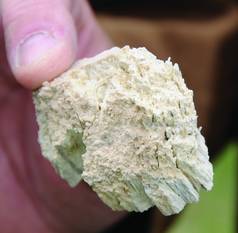
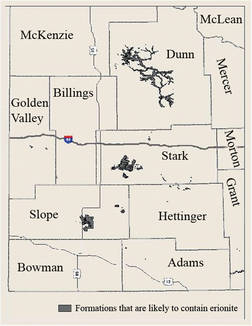
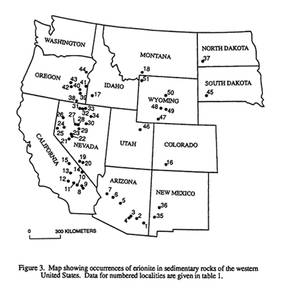
Erionite was originally thought to be a peculiarity of Turkey, but naturally occurring deposits have been identified throughout the western United States. A new study shows that concentrations of airborne erionite in Dunn County, N.D., equal or exceed those in Boyali, a Turkish village with a 6.25% mesothelioma-related mortality rate.
Moreover, the study found no significant difference in the physical characteristics or biological activity of erionite from North Dakota and that from Cappadocia, Turkey, where in some villages 50% of all deaths are due to mesothelioma. Turkish homes made of stone laced with erionite from nearby mountains have been tagged as "houses of death" by residents resettled with the help of the Turkish Ministry of Health and researchers.
"We have a unique opportunity to implement novel prevention and early detection programs in erionite-rich regions of the United States, similar to what has been done in Turkey," researcher Dr. Michele Carbone said at the Chicago Multidisciplinary Symposium in Thoracic Oncology, where he presented the new study.

Erionite-contaminated gravel has been used in North Dakota for 2-3 decades to pave more than 300 miles of roads, including school bus routes, parking lots, and other public areas. The North Dakota Department of Health became aware of the health problem in 2006, and the following year recommended discontinuing use of erionite-containing gravel for roads and testing for erionite prior to new or continued gravel mining. The recommendations slowed the use of erionite-containing gravel in North Dakota, but it continues to be shipped outside the state, said Dr. Carbone, director of the Cancer Research Center of Hawaii and professor and chair of pathology at the University of Hawaii, both in Honolulu.
After a baseball field with erionite-containing gravel was closed in 2008 in the tiny town of Killdeer, N.D., the Associated Press quoted a state legislator as telling state and federal officials they were making a "mountain out of a molehill with what little data you have" and that taxpayers were having a "tough time trying to swallow this." One resident said she used the bright white gravel on her flower beds, while an area rancher said concerns over erionite were "one of those sky-is-falling kinds of deals."
Part of the battle over public opinion may be due to timing. No increase in mesotheliomas has been observed in Dunn County, but we are just now approaching the latency period where cancers would begin to develop, Dr. Carbone said. "We are in the same situation we were in the United States in the ’20s and ’30s with asbestos, and hopefully we will not repeat the same mistakes when danger was ignored until many people died of mesothelioma," he said, pointing out that mesothelioma kills about 3,000 Americans each year.
Dr. Carbone drew a parallel between Dunn County and Libby, Montana, where vermiculite containing asbestiform amphiboles were mined from 1920 to 1990 and given free of charge for insulation and to build driveways and ball fields. In 2004, researchers at the Center for Asbestos Related Disease in Libby identified accelerated loss of lung function in 94 of 123 miners, family members, and residents (Am. J. Med. 2004;46:219-25) and more recently reported on 11 new cases of mesothelioma in people with environmental exposure to contamination in the community, surrounding forest, and Kootenai river and railroad tracks used to haul the vermiculite (Am. J. Med. 2008; 51:877-80). The authors conclude that, "An epidemic of mesothelioma can likely be expected from this type of asbestos contamination over the next 20-plus years."
Despite prior identification of asbestos in the mine and illness among workers, the situation went unnoticed and unaddressed by health authorities for over a decade until a Seattle Times newspaper article appeared in November 1999, noted Dr. Aubrey K. Miller, a coresearcher and senior medical adviser with the National Institute of Environmental Health Sciences in Bethesda, Md.
"Thus, individuals in North Dakota should be concerned," he said in an interview. "Erionite is a very hazardous substance and we should not wait for disease to occur to start taking actions to protect public health. There is no excuse based on our current knowledge to play a wait-and-see game."
Lung screening was offered to Dunn County residents exposed to erionite, but only 34 residents, including gravel pit and road maintenance workers, enrolled in the study. A significant increase in interstitial changes above background prevalence was observed on high-resolution computed tomography in 17.6% of residents, compared with 1.5% for male urban transportation workers with low cumulative asbestos fiber exposure, Dr. Carbone said.
Transmission electron microscopy (TEM) revealed higher total concentrations of erionite fibers in air samples taken street-side in Dunn County (mean 0.108 structures per cubic centimeter [s/cc]) than from samples taken from the streets of five Turkish villages including Boyali (mean 0.00 s/cc), he said. Total TEM erionite concentrations were also higher indoors in Dunn County than in Boyali (mean 0.175 s/cc vs. 0.043 s/cc).
Research in Turkey has shown that increased industrialization significantly increases airborne particulates, an observation that is particularly worrisome since oil production activity has increased road traffic in Dunn County and development has grown in states such as Nevada where erionite deposits are far more common than in North Dakota.
Equally worrisome is that unlike asbestos, erionite has no current health benchmarks nor is it regulated by the U.S. Environmental Protection Agency or other agencies, Dr. Miller said. "The horse is out of the barn for some, but I think we can do a lot more to protect others," he said. "You can’t ban a natural substance, but I’d certainly like to see contaminated materials and disturbance of problem areas managed more effectively."
Dr. Carbone stressed the need to reduce erionite exposure, but is also working to isolate mesothelioma-susceptibility genes that might help to explain the pathogenesis of the disease and to identify high-risk patients for early treatment. The U.S. Early Detection Research Network, a branch of the National Cancer Institute, has funded a clinical trial that is prospectively evaluating osteopontin and mesothelin as early markers for the detection of mesothelioma. The 800-patient trial is expected to begin in 2011 and to be completed sometime in 2014, said Dr. Carbone, its coprincipal investigator together with thoracic surgeon Dr. Harvey I. Pass, professor and chief of the thoracic surgery division at New York University’s Langone Medical Center in New York City.
Dr. Carbone and his team are also looking to identify some point in the evolution of mesothelioma process that is vulnerable to intervention. Dr. Haining Yang, now also at the University of Hawaii Cancer Center, was the first author of a previous report that tumor necrois factor–alpha inhibits asbestos-induced cytotoxicity via a nuclear factor-kappa B-dependent mechanism that increases the percentage of human mesothelial cells that survive asbestos exposure, thus increasing the pool of asbestos-damaged cells susceptible to malignant transformation (Proc. Natl. Acad. Sci. USA. 2006;103:10397-402).
In tissue culture, North Dakota, Oregon, and Turkish erionite have been found to induce high-mobility group protein B1 (HMGB1) and TNF-alpha release from human mesothelial cells and macrophages, Dr. Yang et al also reported. When coupled with chronic inflammation of the peritoneum and pleura, HMGB1 and TNF-alpha release have been linked to malignant mesothelioma in mice and in humans (Proc. Natl. Acad. Sci. USA, 2010;107:12611-6).
Dr. Carbone called for a larger, more detailed epidemiologic survey of the health implications of erionite in North Dakota, as was performed for Libby, and said that it should include mine and road workers with direct exposure as well as adults and children with environmental exposure. This also should include correlative studies that exploit recent findings regarding biomarkers involved in fiber carcinogenesis, as is being done in Libby, he said.
The study was partially funded by a National Cancer Institute investigator grant. Dr. Carbone and Dr. Miller reported no conflicts of interest. Coauthors report funding from Rosetta Genomics, Celera, Soma Logic, and SourceMDX and a leadership role in the American College of Radiology Imaging Network.
CHICAGO – Exposure to erionite, a fibrous, cancer-causing mineral more lethal than asbestos, is becoming a public health hazard in the United States.
Erionite was originally thought to be a peculiarity of Turkey, but naturally occurring deposits have been identified throughout the western United States. A new study shows that concentrations of airborne erionite in Dunn County, N.D., equal or exceed those in Boyali, a Turkish village with a 6.25% mesothelioma-related mortality rate.
Moreover, the study found no significant difference in the physical characteristics or biological activity of erionite from North Dakota and that from Cappadocia, Turkey, where in some villages 50% of all deaths are due to mesothelioma. Turkish homes made of stone laced with erionite from nearby mountains have been tagged as "houses of death" by residents resettled with the help of the Turkish Ministry of Health and researchers.
"We have a unique opportunity to implement novel prevention and early detection programs in erionite-rich regions of the United States, similar to what has been done in Turkey," researcher Dr. Michele Carbone said at the Chicago Multidisciplinary Symposium in Thoracic Oncology, where he presented the new study.
Erionite-contaminated gravel has been used in North Dakota for 2-3 decades to pave more than 300 miles of roads, including school bus routes, parking lots, and other public areas. The North Dakota Department of Health became aware of the health problem in 2006, and the following year recommended discontinuing use of erionite-containing gravel for roads and testing for erionite prior to new or continued gravel mining. The recommendations slowed the use of erionite-containing gravel in North Dakota, but it continues to be shipped outside the state, said Dr. Carbone, director of the Cancer Research Center of Hawaii and professor and chair of pathology at the University of Hawaii, both in Honolulu.
After a baseball field with erionite-containing gravel was closed in 2008 in the tiny town of Killdeer, N.D., the Associated Press quoted a state legislator as telling state and federal officials they were making a "mountain out of a molehill with what little data you have" and that taxpayers were having a "tough time trying to swallow this." One resident said she used the bright white gravel on her flower beds, while an area rancher said concerns over erionite were "one of those sky-is-falling kinds of deals."
Part of the battle over public opinion may be due to timing. No increase in mesotheliomas has been observed in Dunn County, but we are just now approaching the latency period where cancers would begin to develop, Dr. Carbone said. "We are in the same situation we were in the United States in the ’20s and ’30s with asbestos, and hopefully we will not repeat the same mistakes when danger was ignored until many people died of mesothelioma," he said, pointing out that mesothelioma kills about 3,000 Americans each year.
Dr. Carbone drew a parallel between Dunn County and Libby, Montana, where vermiculite containing asbestiform amphiboles were mined from 1920 to 1990 and given free of charge for insulation and to build driveways and ball fields. In 2004, researchers at the Center for Asbestos Related Disease in Libby identified accelerated loss of lung function in 94 of 123 miners, family members, and residents (Am. J. Med. 2004;46:219-25) and more recently reported on 11 new cases of mesothelioma in people with environmental exposure to contamination in the community, surrounding forest, and Kootenai river and railroad tracks used to haul the vermiculite (Am. J. Med. 2008; 51:877-80). The authors conclude that, "An epidemic of mesothelioma can likely be expected from this type of asbestos contamination over the next 20-plus years."
Despite prior identification of asbestos in the mine and illness among workers, the situation went unnoticed and unaddressed by health authorities for over a decade until a Seattle Times newspaper article appeared in November 1999, noted Dr. Aubrey K. Miller, a coresearcher and senior medical adviser with the National Institute of Environmental Health Sciences in Bethesda, Md.
"Thus, individuals in North Dakota should be concerned," he said in an interview. "Erionite is a very hazardous substance and we should not wait for disease to occur to start taking actions to protect public health. There is no excuse based on our current knowledge to play a wait-and-see game."
Lung screening was offered to Dunn County residents exposed to erionite, but only 34 residents, including gravel pit and road maintenance workers, enrolled in the study. A significant increase in interstitial changes above background prevalence was observed on high-resolution computed tomography in 17.6% of residents, compared with 1.5% for male urban transportation workers with low cumulative asbestos fiber exposure, Dr. Carbone said.
Transmission electron microscopy (TEM) revealed higher total concentrations of erionite fibers in air samples taken street-side in Dunn County (mean 0.108 structures per cubic centimeter [s/cc]) than from samples taken from the streets of five Turkish villages including Boyali (mean 0.00 s/cc), he said. Total TEM erionite concentrations were also higher indoors in Dunn County than in Boyali (mean 0.175 s/cc vs. 0.043 s/cc).
Research in Turkey has shown that increased industrialization significantly increases airborne particulates, an observation that is particularly worrisome since oil production activity has increased road traffic in Dunn County and development has grown in states such as Nevada where erionite deposits are far more common than in North Dakota.
Equally worrisome is that unlike asbestos, erionite has no current health benchmarks nor is it regulated by the U.S. Environmental Protection Agency or other agencies, Dr. Miller said. "The horse is out of the barn for some, but I think we can do a lot more to protect others," he said. "You can’t ban a natural substance, but I’d certainly like to see contaminated materials and disturbance of problem areas managed more effectively."
Dr. Carbone stressed the need to reduce erionite exposure, but is also working to isolate mesothelioma-susceptibility genes that might help to explain the pathogenesis of the disease and to identify high-risk patients for early treatment. The U.S. Early Detection Research Network, a branch of the National Cancer Institute, has funded a clinical trial that is prospectively evaluating osteopontin and mesothelin as early markers for the detection of mesothelioma. The 800-patient trial is expected to begin in 2011 and to be completed sometime in 2014, said Dr. Carbone, its coprincipal investigator together with thoracic surgeon Dr. Harvey I. Pass, professor and chief of the thoracic surgery division at New York University’s Langone Medical Center in New York City.
Dr. Carbone and his team are also looking to identify some point in the evolution of mesothelioma process that is vulnerable to intervention. Dr. Haining Yang, now also at the University of Hawaii Cancer Center, was the first author of a previous report that tumor necrois factor–alpha inhibits asbestos-induced cytotoxicity via a nuclear factor-kappa B-dependent mechanism that increases the percentage of human mesothelial cells that survive asbestos exposure, thus increasing the pool of asbestos-damaged cells susceptible to malignant transformation (Proc. Natl. Acad. Sci. USA. 2006;103:10397-402).
In tissue culture, North Dakota, Oregon, and Turkish erionite have been found to induce high-mobility group protein B1 (HMGB1) and TNF-alpha release from human mesothelial cells and macrophages, Dr. Yang et al also reported. When coupled with chronic inflammation of the peritoneum and pleura, HMGB1 and TNF-alpha release have been linked to malignant mesothelioma in mice and in humans (Proc. Natl. Acad. Sci. USA, 2010;107:12611-6).
Dr. Carbone called for a larger, more detailed epidemiologic survey of the health implications of erionite in North Dakota, as was performed for Libby, and said that it should include mine and road workers with direct exposure as well as adults and children with environmental exposure. This also should include correlative studies that exploit recent findings regarding biomarkers involved in fiber carcinogenesis, as is being done in Libby, he said.
The study was partially funded by a National Cancer Institute investigator grant. Dr. Carbone and Dr. Miller reported no conflicts of interest. Coauthors report funding from Rosetta Genomics, Celera, Soma Logic, and SourceMDX and a leadership role in the American College of Radiology Imaging Network.
CHICAGO – Exposure to erionite, a fibrous, cancer-causing mineral more lethal than asbestos, is becoming a public health hazard in the United States.
Erionite was originally thought to be a peculiarity of Turkey, but naturally occurring deposits have been identified throughout the western United States. A new study shows that concentrations of airborne erionite in Dunn County, N.D., equal or exceed those in Boyali, a Turkish village with a 6.25% mesothelioma-related mortality rate.
Moreover, the study found no significant difference in the physical characteristics or biological activity of erionite from North Dakota and that from Cappadocia, Turkey, where in some villages 50% of all deaths are due to mesothelioma. Turkish homes made of stone laced with erionite from nearby mountains have been tagged as "houses of death" by residents resettled with the help of the Turkish Ministry of Health and researchers.
"We have a unique opportunity to implement novel prevention and early detection programs in erionite-rich regions of the United States, similar to what has been done in Turkey," researcher Dr. Michele Carbone said at the Chicago Multidisciplinary Symposium in Thoracic Oncology, where he presented the new study.
Erionite-contaminated gravel has been used in North Dakota for 2-3 decades to pave more than 300 miles of roads, including school bus routes, parking lots, and other public areas. The North Dakota Department of Health became aware of the health problem in 2006, and the following year recommended discontinuing use of erionite-containing gravel for roads and testing for erionite prior to new or continued gravel mining. The recommendations slowed the use of erionite-containing gravel in North Dakota, but it continues to be shipped outside the state, said Dr. Carbone, director of the Cancer Research Center of Hawaii and professor and chair of pathology at the University of Hawaii, both in Honolulu.
After a baseball field with erionite-containing gravel was closed in 2008 in the tiny town of Killdeer, N.D., the Associated Press quoted a state legislator as telling state and federal officials they were making a "mountain out of a molehill with what little data you have" and that taxpayers were having a "tough time trying to swallow this." One resident said she used the bright white gravel on her flower beds, while an area rancher said concerns over erionite were "one of those sky-is-falling kinds of deals."
Part of the battle over public opinion may be due to timing. No increase in mesotheliomas has been observed in Dunn County, but we are just now approaching the latency period where cancers would begin to develop, Dr. Carbone said. "We are in the same situation we were in the United States in the ’20s and ’30s with asbestos, and hopefully we will not repeat the same mistakes when danger was ignored until many people died of mesothelioma," he said, pointing out that mesothelioma kills about 3,000 Americans each year.
Dr. Carbone drew a parallel between Dunn County and Libby, Montana, where vermiculite containing asbestiform amphiboles were mined from 1920 to 1990 and given free of charge for insulation and to build driveways and ball fields. In 2004, researchers at the Center for Asbestos Related Disease in Libby identified accelerated loss of lung function in 94 of 123 miners, family members, and residents (Am. J. Med. 2004;46:219-25) and more recently reported on 11 new cases of mesothelioma in people with environmental exposure to contamination in the community, surrounding forest, and Kootenai river and railroad tracks used to haul the vermiculite (Am. J. Med. 2008; 51:877-80). The authors conclude that, "An epidemic of mesothelioma can likely be expected from this type of asbestos contamination over the next 20-plus years."
Despite prior identification of asbestos in the mine and illness among workers, the situation went unnoticed and unaddressed by health authorities for over a decade until a Seattle Times newspaper article appeared in November 1999, noted Dr. Aubrey K. Miller, a coresearcher and senior medical adviser with the National Institute of Environmental Health Sciences in Bethesda, Md.
"Thus, individuals in North Dakota should be concerned," he said in an interview. "Erionite is a very hazardous substance and we should not wait for disease to occur to start taking actions to protect public health. There is no excuse based on our current knowledge to play a wait-and-see game."
Lung screening was offered to Dunn County residents exposed to erionite, but only 34 residents, including gravel pit and road maintenance workers, enrolled in the study. A significant increase in interstitial changes above background prevalence was observed on high-resolution computed tomography in 17.6% of residents, compared with 1.5% for male urban transportation workers with low cumulative asbestos fiber exposure, Dr. Carbone said.
Transmission electron microscopy (TEM) revealed higher total concentrations of erionite fibers in air samples taken street-side in Dunn County (mean 0.108 structures per cubic centimeter [s/cc]) than from samples taken from the streets of five Turkish villages including Boyali (mean 0.00 s/cc), he said. Total TEM erionite concentrations were also higher indoors in Dunn County than in Boyali (mean 0.175 s/cc vs. 0.043 s/cc).
Research in Turkey has shown that increased industrialization significantly increases airborne particulates, an observation that is particularly worrisome since oil production activity has increased road traffic in Dunn County and development has grown in states such as Nevada where erionite deposits are far more common than in North Dakota.
Equally worrisome is that unlike asbestos, erionite has no current health benchmarks nor is it regulated by the U.S. Environmental Protection Agency or other agencies, Dr. Miller said. "The horse is out of the barn for some, but I think we can do a lot more to protect others," he said. "You can’t ban a natural substance, but I’d certainly like to see contaminated materials and disturbance of problem areas managed more effectively."
Dr. Carbone stressed the need to reduce erionite exposure, but is also working to isolate mesothelioma-susceptibility genes that might help to explain the pathogenesis of the disease and to identify high-risk patients for early treatment. The U.S. Early Detection Research Network, a branch of the National Cancer Institute, has funded a clinical trial that is prospectively evaluating osteopontin and mesothelin as early markers for the detection of mesothelioma. The 800-patient trial is expected to begin in 2011 and to be completed sometime in 2014, said Dr. Carbone, its coprincipal investigator together with thoracic surgeon Dr. Harvey I. Pass, professor and chief of the thoracic surgery division at New York University’s Langone Medical Center in New York City.
Dr. Carbone and his team are also looking to identify some point in the evolution of mesothelioma process that is vulnerable to intervention. Dr. Haining Yang, now also at the University of Hawaii Cancer Center, was the first author of a previous report that tumor necrois factor–alpha inhibits asbestos-induced cytotoxicity via a nuclear factor-kappa B-dependent mechanism that increases the percentage of human mesothelial cells that survive asbestos exposure, thus increasing the pool of asbestos-damaged cells susceptible to malignant transformation (Proc. Natl. Acad. Sci. USA. 2006;103:10397-402).
In tissue culture, North Dakota, Oregon, and Turkish erionite have been found to induce high-mobility group protein B1 (HMGB1) and TNF-alpha release from human mesothelial cells and macrophages, Dr. Yang et al also reported. When coupled with chronic inflammation of the peritoneum and pleura, HMGB1 and TNF-alpha release have been linked to malignant mesothelioma in mice and in humans (Proc. Natl. Acad. Sci. USA, 2010;107:12611-6).
Dr. Carbone called for a larger, more detailed epidemiologic survey of the health implications of erionite in North Dakota, as was performed for Libby, and said that it should include mine and road workers with direct exposure as well as adults and children with environmental exposure. This also should include correlative studies that exploit recent findings regarding biomarkers involved in fiber carcinogenesis, as is being done in Libby, he said.
The study was partially funded by a National Cancer Institute investigator grant. Dr. Carbone and Dr. Miller reported no conflicts of interest. Coauthors report funding from Rosetta Genomics, Celera, Soma Logic, and SourceMDX and a leadership role in the American College of Radiology Imaging Network.
FROM THE CHICAGO MULTIDISCIPLINARY SYMPOSIUM IN THORACIC ONCOLOGY
Major Finding: Concentrations of airborne erionite in a North Dakota county equal or exceed those in a Turkish village with a 6.25% mesothelioma-related mortality rate.
Data Source: A study examining air samples, erionite microchemistry and morphology, chest x-rays and CT, and other factors.
Disclosures: Partially funded by a National Cancer Institute investigator grant. Dr. Carbone and Dr. Miller reported no conflicts of interest. Coauthors report funding from Rosetta Genomics, Celera, Soma Logic, and SourceMDX and a leadership role in the American College of Radiology Imaging Network.