User login
Dr. Amir K. Jaffer, who serves as the division chief of hospital medicine at the University of Miami, came to the program in 2007 when it had only five physicians. Just 2 years later, he had expanded the program to 26 hospitalists.
Today, Dr. Jaffer is involved in patient care, teaching, quality improvement, administration, and research. He also heads up a continuing medical education conference each year in March that focuses on perioperative medicine. Hospitalist News spoke with Dr. Jaffer about some of the challenges facing the specialty and what he enjoys about hospital medicine.
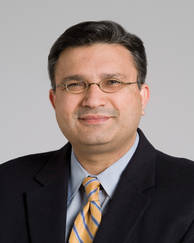
HN: What were some of the biggest challenges you faced in expanding the hospitalist program at the University of Miami?
Dr. Jaffer: First, we needed financial support from the health system hospitals. Second, we needed to show value for the work that we do. We had to show how we were valuable in terms of having a 24-7 presence and in delivering high-quality care with utmost satisfaction for both patients and our referring physicians. We also worked hard to set up an infrastructure where we were able to communicate with our referring physicians and subspecialist physicians, making sure we were able to send them an admission note, as well as a discharge summary about their patients. Establishing strong clinical operations was a very important aspect of putting together this division of hospital medicine.
HN: You’ve worked to make hospital medicine a more academic discipline. Why is this important?
Dr. Jaffer: I believe that there is need for it at academic centers and the specialty can drive innovations surrounding inpatient health care delivery systems, education, and quality improvement. The academic part helps us study interventions, new delivery systems, and implement them in practice. In the process, it allows us to publish the work and advance the specialty. I have always felt that as part of the academic mission, we really need to not only take care of patients, but also teach, innovate, and advance the specialty, thereby setting ourselves apart from community hospital medicine programs by being the “trendsetter.” For example, early on in our program, we set up a program where in an apprenticeship model we had medical students in their fourth year work one-on-one with hospitalists to do sub-internships in medicine. We also set up a hospital medicine track to help train future hospitalists by educating them in the core competencies areas that they don’t receive enough training for, such as patient safety, quality improvement, palliative care, perioperative medicine, procedures, neurology, and practice administration. On the systems side, we put together a procedure service to teach residents how to do procedures by first having them work on models, then observing them, and finally performing them on patients.
HN: What advice do you give to your students about becoming hospitalists?
I have checked the following facts in my story: (Please initial each.)
Dr. Jaffer: It is a challenging and young field, but high impact. You really need to enjoy interacting with patients, nurses, specialists, and health care professionals in the hospital. You are akin to the conductor of an orchestra in terms of getting all your musicians to play together. Although the patient and their families are your focus, you need to work with a multidisciplinary team to produce the best results. What I tell them is that they need to enjoy this aspect of medicine. As a hospitalist, that is what you do.
HN: How do you see the hospital medicine field changing in the next 5 years, especially in light of the implementation of the Affordable Care Act?
Dr. Jaffer: Although, there will be a huge number of changes that will be brought about with the Affordable Care Act, some specific ones that focus on the inpatient setting and in which hospitalists will be asked to help, include reducing Medicare payments to hospitals for readmissions and for hospital-acquired conditions. So there will be more and more focus on how hospitals can develop systems to cut down readmissions, improve discharge safety, or prevent hospital-acquired conditions. I feel like hospitalists will be the architects in creating these systems and solutions to help their institutions. <[qm]
Dr. Amir K. Jaffer, who serves as the division chief of hospital medicine at the University of Miami, came to the program in 2007 when it had only five physicians. Just 2 years later, he had expanded the program to 26 hospitalists.
Today, Dr. Jaffer is involved in patient care, teaching, quality improvement, administration, and research. He also heads up a continuing medical education conference each year in March that focuses on perioperative medicine. Hospitalist News spoke with Dr. Jaffer about some of the challenges facing the specialty and what he enjoys about hospital medicine.
HN: What were some of the biggest challenges you faced in expanding the hospitalist program at the University of Miami?
Dr. Jaffer: First, we needed financial support from the health system hospitals. Second, we needed to show value for the work that we do. We had to show how we were valuable in terms of having a 24-7 presence and in delivering high-quality care with utmost satisfaction for both patients and our referring physicians. We also worked hard to set up an infrastructure where we were able to communicate with our referring physicians and subspecialist physicians, making sure we were able to send them an admission note, as well as a discharge summary about their patients. Establishing strong clinical operations was a very important aspect of putting together this division of hospital medicine.
HN: You’ve worked to make hospital medicine a more academic discipline. Why is this important?
Dr. Jaffer: I believe that there is need for it at academic centers and the specialty can drive innovations surrounding inpatient health care delivery systems, education, and quality improvement. The academic part helps us study interventions, new delivery systems, and implement them in practice. In the process, it allows us to publish the work and advance the specialty. I have always felt that as part of the academic mission, we really need to not only take care of patients, but also teach, innovate, and advance the specialty, thereby setting ourselves apart from community hospital medicine programs by being the “trendsetter.” For example, early on in our program, we set up a program where in an apprenticeship model we had medical students in their fourth year work one-on-one with hospitalists to do sub-internships in medicine. We also set up a hospital medicine track to help train future hospitalists by educating them in the core competencies areas that they don’t receive enough training for, such as patient safety, quality improvement, palliative care, perioperative medicine, procedures, neurology, and practice administration. On the systems side, we put together a procedure service to teach residents how to do procedures by first having them work on models, then observing them, and finally performing them on patients.
HN: What advice do you give to your students about becoming hospitalists?
I have checked the following facts in my story: (Please initial each.)
Dr. Jaffer: It is a challenging and young field, but high impact. You really need to enjoy interacting with patients, nurses, specialists, and health care professionals in the hospital. You are akin to the conductor of an orchestra in terms of getting all your musicians to play together. Although the patient and their families are your focus, you need to work with a multidisciplinary team to produce the best results. What I tell them is that they need to enjoy this aspect of medicine. As a hospitalist, that is what you do.
HN: How do you see the hospital medicine field changing in the next 5 years, especially in light of the implementation of the Affordable Care Act?
Dr. Jaffer: Although, there will be a huge number of changes that will be brought about with the Affordable Care Act, some specific ones that focus on the inpatient setting and in which hospitalists will be asked to help, include reducing Medicare payments to hospitals for readmissions and for hospital-acquired conditions. So there will be more and more focus on how hospitals can develop systems to cut down readmissions, improve discharge safety, or prevent hospital-acquired conditions. I feel like hospitalists will be the architects in creating these systems and solutions to help their institutions. <[qm]
Dr. Amir K. Jaffer, who serves as the division chief of hospital medicine at the University of Miami, came to the program in 2007 when it had only five physicians. Just 2 years later, he had expanded the program to 26 hospitalists.
Today, Dr. Jaffer is involved in patient care, teaching, quality improvement, administration, and research. He also heads up a continuing medical education conference each year in March that focuses on perioperative medicine. Hospitalist News spoke with Dr. Jaffer about some of the challenges facing the specialty and what he enjoys about hospital medicine.
HN: What were some of the biggest challenges you faced in expanding the hospitalist program at the University of Miami?
Dr. Jaffer: First, we needed financial support from the health system hospitals. Second, we needed to show value for the work that we do. We had to show how we were valuable in terms of having a 24-7 presence and in delivering high-quality care with utmost satisfaction for both patients and our referring physicians. We also worked hard to set up an infrastructure where we were able to communicate with our referring physicians and subspecialist physicians, making sure we were able to send them an admission note, as well as a discharge summary about their patients. Establishing strong clinical operations was a very important aspect of putting together this division of hospital medicine.
HN: You’ve worked to make hospital medicine a more academic discipline. Why is this important?
Dr. Jaffer: I believe that there is need for it at academic centers and the specialty can drive innovations surrounding inpatient health care delivery systems, education, and quality improvement. The academic part helps us study interventions, new delivery systems, and implement them in practice. In the process, it allows us to publish the work and advance the specialty. I have always felt that as part of the academic mission, we really need to not only take care of patients, but also teach, innovate, and advance the specialty, thereby setting ourselves apart from community hospital medicine programs by being the “trendsetter.” For example, early on in our program, we set up a program where in an apprenticeship model we had medical students in their fourth year work one-on-one with hospitalists to do sub-internships in medicine. We also set up a hospital medicine track to help train future hospitalists by educating them in the core competencies areas that they don’t receive enough training for, such as patient safety, quality improvement, palliative care, perioperative medicine, procedures, neurology, and practice administration. On the systems side, we put together a procedure service to teach residents how to do procedures by first having them work on models, then observing them, and finally performing them on patients.
HN: What advice do you give to your students about becoming hospitalists?
I have checked the following facts in my story: (Please initial each.)
Dr. Jaffer: It is a challenging and young field, but high impact. You really need to enjoy interacting with patients, nurses, specialists, and health care professionals in the hospital. You are akin to the conductor of an orchestra in terms of getting all your musicians to play together. Although the patient and their families are your focus, you need to work with a multidisciplinary team to produce the best results. What I tell them is that they need to enjoy this aspect of medicine. As a hospitalist, that is what you do.
HN: How do you see the hospital medicine field changing in the next 5 years, especially in light of the implementation of the Affordable Care Act?
Dr. Jaffer: Although, there will be a huge number of changes that will be brought about with the Affordable Care Act, some specific ones that focus on the inpatient setting and in which hospitalists will be asked to help, include reducing Medicare payments to hospitals for readmissions and for hospital-acquired conditions. So there will be more and more focus on how hospitals can develop systems to cut down readmissions, improve discharge safety, or prevent hospital-acquired conditions. I feel like hospitalists will be the architects in creating these systems and solutions to help their institutions. <[qm]