User login
For the first time, researchers say they have established benchmarks for the rates of in-hospital venous thromboembolism that occur after total or partial hip arthroplasty and after total or partial knee arthroplasty.
In a meta-analysis of 47 studies published in JAMA that documented venous thromboembolism (VTE) event rates in nearly 45,000 patients who received recommended prophylaxis during hospitalization for knee or hip arthroplasty, investigators estimated that approximately 1 in every 100 patients undergoing knee arthroplasty and 1 in every 200 undergoing hip arthroplasty will develop symptomatic VTE before discharge.
"These estimates are of value to individual patients and clinicians in the consideration of risks and benefits" of the two procedures. They also are important because rates of in-hospital VTE are increasingly used as indicators of patient safety at individual medical centers, even though the expected background rates haven’t been established until now, said Jean-Marie Januel, a registered nurse with the Institute of Social and Preventive Medicine, Lausanne (Switzerland) University Hospital, and his associates.
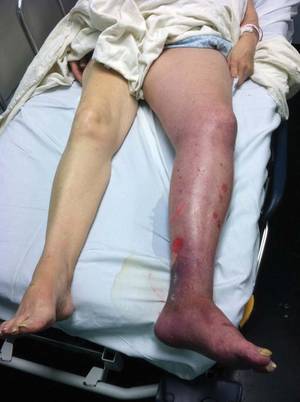
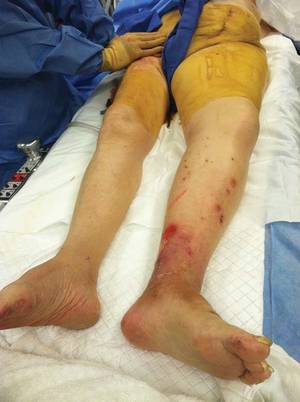
Mr. Januel and his colleagues analyzed 41 randomized clinical trials and 6 observational studies performed between 1996 and 2011 in which subjects having hip or knee arthroplasty received VTE prophylaxis according to published guidelines, including either low-molecular-weight heparin or inhibitors of factor Xa or IIa.
A total of 22 of the studies were performed in Europe, 14 were in North America, and 11 were in other regions. The mean duration of follow-up after either surgery was 13 days. This included 21 studies of partial or total hip arthroplasty, 20 of partial or total knee arthroplasty, and 6 studies of both procedures, with a total of 44,844 subjects.
There were 443 cases of symptomatic postoperative VTE that developed before hospital discharge: 288 in the 23,475 knee patients and 155 in the 23,475 hip patients. The pooled incidence rates of VTE were approximately 1% after knee arthroplasty and approximately 0.5% after hip arthroplasty. (JAMA 2012;307:294-303). When the data were broken down by type of VTE, the pooled incidence rates were 0.26% for deep vein thrombosis and 0.14% for pulmonary embolism after knee arthroplasty. The corresponding rates were 0.63% for deep vein thrombosis and 0.27% for pulmonary embolism after hip arthroplasty.
The pooled incidence rates of deep vein thrombosis were lower for both knee patients and hip patients when factor Xa or IIa inhibitors, rather than low-molecular-weight heparin, were given for prophylaxis. "However, we cannot make assertions regarding comparative efficacy among treatments, because our meta-analysis did not directly compare [these agents]," they said.
They reported no financial conflicts.
This is an important meta-analysis in that it provides what may be the lowest expected incidence of in-hospital development of VTE complications following orthopedic surgery. However, as the authors point out, real world incidence may be higher since it is generally accepted that adequate prophylaxis is not being implemented in many institutions. More importantly, this report may instill a false sense of security about the actual postoperative incidence of VTE after total knee or hip reconstructions since many VTE occur after discharge. It is suggested that as many as 70% may actually occur at home. Accordingly, the recent guidelines on antithrombotic therapy as published in Chest (2012;141:7S-47S) recommend extending VTE prophylaxis well into the outpatient setting.
Dr. Russell H. Samson is a clinical associate professor of surgery (vascular) at Florida State University, and an attending surgeon at Sarasota Vascular Specialists, and associate medical editor of Vascular Specialist.
This is an important meta-analysis in that it provides what may be the lowest expected incidence of in-hospital development of VTE complications following orthopedic surgery. However, as the authors point out, real world incidence may be higher since it is generally accepted that adequate prophylaxis is not being implemented in many institutions. More importantly, this report may instill a false sense of security about the actual postoperative incidence of VTE after total knee or hip reconstructions since many VTE occur after discharge. It is suggested that as many as 70% may actually occur at home. Accordingly, the recent guidelines on antithrombotic therapy as published in Chest (2012;141:7S-47S) recommend extending VTE prophylaxis well into the outpatient setting.
Dr. Russell H. Samson is a clinical associate professor of surgery (vascular) at Florida State University, and an attending surgeon at Sarasota Vascular Specialists, and associate medical editor of Vascular Specialist.
This is an important meta-analysis in that it provides what may be the lowest expected incidence of in-hospital development of VTE complications following orthopedic surgery. However, as the authors point out, real world incidence may be higher since it is generally accepted that adequate prophylaxis is not being implemented in many institutions. More importantly, this report may instill a false sense of security about the actual postoperative incidence of VTE after total knee or hip reconstructions since many VTE occur after discharge. It is suggested that as many as 70% may actually occur at home. Accordingly, the recent guidelines on antithrombotic therapy as published in Chest (2012;141:7S-47S) recommend extending VTE prophylaxis well into the outpatient setting.
Dr. Russell H. Samson is a clinical associate professor of surgery (vascular) at Florida State University, and an attending surgeon at Sarasota Vascular Specialists, and associate medical editor of Vascular Specialist.
For the first time, researchers say they have established benchmarks for the rates of in-hospital venous thromboembolism that occur after total or partial hip arthroplasty and after total or partial knee arthroplasty.
In a meta-analysis of 47 studies published in JAMA that documented venous thromboembolism (VTE) event rates in nearly 45,000 patients who received recommended prophylaxis during hospitalization for knee or hip arthroplasty, investigators estimated that approximately 1 in every 100 patients undergoing knee arthroplasty and 1 in every 200 undergoing hip arthroplasty will develop symptomatic VTE before discharge.
"These estimates are of value to individual patients and clinicians in the consideration of risks and benefits" of the two procedures. They also are important because rates of in-hospital VTE are increasingly used as indicators of patient safety at individual medical centers, even though the expected background rates haven’t been established until now, said Jean-Marie Januel, a registered nurse with the Institute of Social and Preventive Medicine, Lausanne (Switzerland) University Hospital, and his associates.
Mr. Januel and his colleagues analyzed 41 randomized clinical trials and 6 observational studies performed between 1996 and 2011 in which subjects having hip or knee arthroplasty received VTE prophylaxis according to published guidelines, including either low-molecular-weight heparin or inhibitors of factor Xa or IIa.
A total of 22 of the studies were performed in Europe, 14 were in North America, and 11 were in other regions. The mean duration of follow-up after either surgery was 13 days. This included 21 studies of partial or total hip arthroplasty, 20 of partial or total knee arthroplasty, and 6 studies of both procedures, with a total of 44,844 subjects.
There were 443 cases of symptomatic postoperative VTE that developed before hospital discharge: 288 in the 23,475 knee patients and 155 in the 23,475 hip patients. The pooled incidence rates of VTE were approximately 1% after knee arthroplasty and approximately 0.5% after hip arthroplasty. (JAMA 2012;307:294-303). When the data were broken down by type of VTE, the pooled incidence rates were 0.26% for deep vein thrombosis and 0.14% for pulmonary embolism after knee arthroplasty. The corresponding rates were 0.63% for deep vein thrombosis and 0.27% for pulmonary embolism after hip arthroplasty.
The pooled incidence rates of deep vein thrombosis were lower for both knee patients and hip patients when factor Xa or IIa inhibitors, rather than low-molecular-weight heparin, were given for prophylaxis. "However, we cannot make assertions regarding comparative efficacy among treatments, because our meta-analysis did not directly compare [these agents]," they said.
They reported no financial conflicts.
For the first time, researchers say they have established benchmarks for the rates of in-hospital venous thromboembolism that occur after total or partial hip arthroplasty and after total or partial knee arthroplasty.
In a meta-analysis of 47 studies published in JAMA that documented venous thromboembolism (VTE) event rates in nearly 45,000 patients who received recommended prophylaxis during hospitalization for knee or hip arthroplasty, investigators estimated that approximately 1 in every 100 patients undergoing knee arthroplasty and 1 in every 200 undergoing hip arthroplasty will develop symptomatic VTE before discharge.
"These estimates are of value to individual patients and clinicians in the consideration of risks and benefits" of the two procedures. They also are important because rates of in-hospital VTE are increasingly used as indicators of patient safety at individual medical centers, even though the expected background rates haven’t been established until now, said Jean-Marie Januel, a registered nurse with the Institute of Social and Preventive Medicine, Lausanne (Switzerland) University Hospital, and his associates.
Mr. Januel and his colleagues analyzed 41 randomized clinical trials and 6 observational studies performed between 1996 and 2011 in which subjects having hip or knee arthroplasty received VTE prophylaxis according to published guidelines, including either low-molecular-weight heparin or inhibitors of factor Xa or IIa.
A total of 22 of the studies were performed in Europe, 14 were in North America, and 11 were in other regions. The mean duration of follow-up after either surgery was 13 days. This included 21 studies of partial or total hip arthroplasty, 20 of partial or total knee arthroplasty, and 6 studies of both procedures, with a total of 44,844 subjects.
There were 443 cases of symptomatic postoperative VTE that developed before hospital discharge: 288 in the 23,475 knee patients and 155 in the 23,475 hip patients. The pooled incidence rates of VTE were approximately 1% after knee arthroplasty and approximately 0.5% after hip arthroplasty. (JAMA 2012;307:294-303). When the data were broken down by type of VTE, the pooled incidence rates were 0.26% for deep vein thrombosis and 0.14% for pulmonary embolism after knee arthroplasty. The corresponding rates were 0.63% for deep vein thrombosis and 0.27% for pulmonary embolism after hip arthroplasty.
The pooled incidence rates of deep vein thrombosis were lower for both knee patients and hip patients when factor Xa or IIa inhibitors, rather than low-molecular-weight heparin, were given for prophylaxis. "However, we cannot make assertions regarding comparative efficacy among treatments, because our meta-analysis did not directly compare [these agents]," they said.
They reported no financial conflicts.
Major Finding: 443 cases of VTE developed during hospitalization, for an incidence of approximately 1 in every 100 patients undergoing knee arthroplasty and 1 in every 200 patients undergoing hip arthroplasty.
Data Source: A meta-analysis of 47 randomized clinical trials and observational studies from 1996 to 2011 that documented VTE rates in 44,844 patients undergoing total or partial hip or knee arthroplasty.
Disclosures: This study was supported by Alberta Innovates Health Solutions, a government research funding agency, and the International Methodology Consortium for Coded Health Information, a collaboration of health sciences researchers to promote quality of care. No financial conflicts of interest were reported.