User login
Clinical Endocrinology News is an independent news source that provides endocrinologists with timely and relevant news and commentary about clinical developments and the impact of health care policy on the endocrinologist's practice. Specialty topics include Diabetes, Lipid & Metabolic Disorders Menopause, Obesity, Osteoporosis, Pediatric Endocrinology, Pituitary, Thyroid & Adrenal Disorders, and Reproductive Endocrinology. Featured content includes Commentaries, Implementin Health Reform, Law & Medicine, and In the Loop, the blog of Clinical Endocrinology News. Clinical Endocrinology News is owned by Frontline Medical Communications.
addict
addicted
addicting
addiction
adult sites
alcohol
antibody
ass
attorney
audit
auditor
babies
babpa
baby
ban
banned
banning
best
bisexual
bitch
bleach
blog
blow job
bondage
boobs
booty
buy
cannabis
certificate
certification
certified
cheap
cheapest
class action
cocaine
cock
counterfeit drug
crack
crap
crime
criminal
cunt
curable
cure
dangerous
dangers
dead
deadly
death
defend
defended
depedent
dependence
dependent
detergent
dick
die
dildo
drug abuse
drug recall
dying
fag
fake
fatal
fatalities
fatality
free
fuck
gangs
gingivitis
guns
hardcore
herbal
herbs
heroin
herpes
home remedies
homo
horny
hypersensitivity
hypoglycemia treatment
illegal drug use
illegal use of prescription
incest
infant
infants
job
ketoacidosis
kill
killer
killing
kinky
law suit
lawsuit
lawyer
lesbian
marijuana
medicine for hypoglycemia
murder
naked
natural
newborn
nigger
noise
nude
nudity
orgy
over the counter
overdosage
overdose
overdosed
overdosing
penis
pimp
pistol
porn
porno
pornographic
pornography
prison
profanity
purchase
purchasing
pussy
queer
rape
rapist
recall
recreational drug
rob
robberies
sale
sales
sex
sexual
shit
shoot
slut
slutty
stole
stolen
store
sue
suicidal
suicide
supplements
supply company
theft
thief
thieves
tit
toddler
toddlers
toxic
toxin
tragedy
treating dka
treating hypoglycemia
treatment for hypoglycemia
vagina
violence
whore
withdrawal
without prescription
section[contains(@class, 'nav-hidden')]
footer[@id='footer']
div[contains(@class, 'pane-pub-article-imn')]
div[contains(@class, 'pane-pub-home-imn')]
div[contains(@class, 'pane-pub-topic-imn')]
div[contains(@class, 'panel-panel-inner')]
div[contains(@class, 'pane-node-field-article-topics')]
section[contains(@class, 'footer-nav-section-wrapper')]
Testosterone therapy linked to CV risk in men with HIV
Men with HIV are likely prone to the same cardiovascular risks from testosterone therapy as other men, according to new research.
There’s no reason to think they weren’t, but it hadn’t been demonstrated until now, and men with HIV are already at increased risk for cardiovascular disease. The take-home message is that “it would be prudent for clinicians to monitor closely for cardiovascular risk factors and recommend intervention to lower cardiovascular risk among men with HIV on or considering testosterone therapy,” lead investigator Sabina Haberlen, PhD, an assistant scientist in the infectious disease epidemiology division of Johns Hopkins University, Baltimore, said in a poster that was presented as part of the Conference on Retroviruses & Opportunistic Infections, which was presented online this year. CROI organizers chose to hold a virtual meeting because concerns about the spread of COVID-19.
Testosterone therapy is common among middle-aged and older men with HIV to counter the hypogonadism associated with infection. The investigators turned to the Multicenter AIDS Cohort Study – a 30-year, four-city study of HIV-1 infection in men who have sex with men – to gauge its effect.
The 300 men in the study had a baseline coronary CT angiogram in 2010-2013 and a repeat study a mean of 4.5 years later. They had no history of coronary interventions or kidney dysfunction at baseline and were aged 40-70 years, with a median age of 51 years. About 70% reported never using testosterone, 8% were former users before entering the study, 7% started using testosterone between the two CTs, and 15% entered the study on testosterone and stayed on it.
Adjusting for age, race, cardiovascular risk factors, baseline serum testosterone levels, and other potential confounders, the risk of significant coronary artery calcium (CAC) progression was 2 times greater among continuous users (P = .03) and 2.4 times greater among new users (P = .01), compared with former users, who the investigators used as a control group because, at some point, they too had indications for testosterone replacement and so were more medically similar than never users.
The risk of noncalcified plaque volume progression was also more than twice as high among ongoing users, and elevated, although not significantly so, among ongoing users.
In short, “our findings are similar to those on subclinical atherosclerotic progression” in trials of older men in the general population on testosterone replacement, Dr. Haberlen said.
About half the subjects were white, 41% were at high risk for cardiovascular disease, 91% were on antiretroviral therapy, and 81% had undetectable HIV viral loads. Median total testosterone was 606 ng/dL. CAC progression was defined by incident CAC, at least a 10 Agatston unit/year increase if the baseline CAC score was 1-100, and a 10% or more annual increase if the baseline score was above 100.
Lower baseline serum testosterone was also associated with an increased risk of CAC progression, although not progression of noncalcified plaques.
The work was funded by the National Institutes of Health. Dr. Haberlen didn’t report any relevant disclosures.
SOURCE: Haberlen S et al. CROI 2020, Abstract 662.
Men with HIV are likely prone to the same cardiovascular risks from testosterone therapy as other men, according to new research.
There’s no reason to think they weren’t, but it hadn’t been demonstrated until now, and men with HIV are already at increased risk for cardiovascular disease. The take-home message is that “it would be prudent for clinicians to monitor closely for cardiovascular risk factors and recommend intervention to lower cardiovascular risk among men with HIV on or considering testosterone therapy,” lead investigator Sabina Haberlen, PhD, an assistant scientist in the infectious disease epidemiology division of Johns Hopkins University, Baltimore, said in a poster that was presented as part of the Conference on Retroviruses & Opportunistic Infections, which was presented online this year. CROI organizers chose to hold a virtual meeting because concerns about the spread of COVID-19.
Testosterone therapy is common among middle-aged and older men with HIV to counter the hypogonadism associated with infection. The investigators turned to the Multicenter AIDS Cohort Study – a 30-year, four-city study of HIV-1 infection in men who have sex with men – to gauge its effect.
The 300 men in the study had a baseline coronary CT angiogram in 2010-2013 and a repeat study a mean of 4.5 years later. They had no history of coronary interventions or kidney dysfunction at baseline and were aged 40-70 years, with a median age of 51 years. About 70% reported never using testosterone, 8% were former users before entering the study, 7% started using testosterone between the two CTs, and 15% entered the study on testosterone and stayed on it.
Adjusting for age, race, cardiovascular risk factors, baseline serum testosterone levels, and other potential confounders, the risk of significant coronary artery calcium (CAC) progression was 2 times greater among continuous users (P = .03) and 2.4 times greater among new users (P = .01), compared with former users, who the investigators used as a control group because, at some point, they too had indications for testosterone replacement and so were more medically similar than never users.
The risk of noncalcified plaque volume progression was also more than twice as high among ongoing users, and elevated, although not significantly so, among ongoing users.
In short, “our findings are similar to those on subclinical atherosclerotic progression” in trials of older men in the general population on testosterone replacement, Dr. Haberlen said.
About half the subjects were white, 41% were at high risk for cardiovascular disease, 91% were on antiretroviral therapy, and 81% had undetectable HIV viral loads. Median total testosterone was 606 ng/dL. CAC progression was defined by incident CAC, at least a 10 Agatston unit/year increase if the baseline CAC score was 1-100, and a 10% or more annual increase if the baseline score was above 100.
Lower baseline serum testosterone was also associated with an increased risk of CAC progression, although not progression of noncalcified plaques.
The work was funded by the National Institutes of Health. Dr. Haberlen didn’t report any relevant disclosures.
SOURCE: Haberlen S et al. CROI 2020, Abstract 662.
Men with HIV are likely prone to the same cardiovascular risks from testosterone therapy as other men, according to new research.
There’s no reason to think they weren’t, but it hadn’t been demonstrated until now, and men with HIV are already at increased risk for cardiovascular disease. The take-home message is that “it would be prudent for clinicians to monitor closely for cardiovascular risk factors and recommend intervention to lower cardiovascular risk among men with HIV on or considering testosterone therapy,” lead investigator Sabina Haberlen, PhD, an assistant scientist in the infectious disease epidemiology division of Johns Hopkins University, Baltimore, said in a poster that was presented as part of the Conference on Retroviruses & Opportunistic Infections, which was presented online this year. CROI organizers chose to hold a virtual meeting because concerns about the spread of COVID-19.
Testosterone therapy is common among middle-aged and older men with HIV to counter the hypogonadism associated with infection. The investigators turned to the Multicenter AIDS Cohort Study – a 30-year, four-city study of HIV-1 infection in men who have sex with men – to gauge its effect.
The 300 men in the study had a baseline coronary CT angiogram in 2010-2013 and a repeat study a mean of 4.5 years later. They had no history of coronary interventions or kidney dysfunction at baseline and were aged 40-70 years, with a median age of 51 years. About 70% reported never using testosterone, 8% were former users before entering the study, 7% started using testosterone between the two CTs, and 15% entered the study on testosterone and stayed on it.
Adjusting for age, race, cardiovascular risk factors, baseline serum testosterone levels, and other potential confounders, the risk of significant coronary artery calcium (CAC) progression was 2 times greater among continuous users (P = .03) and 2.4 times greater among new users (P = .01), compared with former users, who the investigators used as a control group because, at some point, they too had indications for testosterone replacement and so were more medically similar than never users.
The risk of noncalcified plaque volume progression was also more than twice as high among ongoing users, and elevated, although not significantly so, among ongoing users.
In short, “our findings are similar to those on subclinical atherosclerotic progression” in trials of older men in the general population on testosterone replacement, Dr. Haberlen said.
About half the subjects were white, 41% were at high risk for cardiovascular disease, 91% were on antiretroviral therapy, and 81% had undetectable HIV viral loads. Median total testosterone was 606 ng/dL. CAC progression was defined by incident CAC, at least a 10 Agatston unit/year increase if the baseline CAC score was 1-100, and a 10% or more annual increase if the baseline score was above 100.
Lower baseline serum testosterone was also associated with an increased risk of CAC progression, although not progression of noncalcified plaques.
The work was funded by the National Institutes of Health. Dr. Haberlen didn’t report any relevant disclosures.
SOURCE: Haberlen S et al. CROI 2020, Abstract 662.
FROM CROI 2020
Study: Glycemic control improved in fasting diabetic Muslims
according to results from a randomized trial.
Ramadan is a challenge for Muslims with diabetes worldwide. Observing the month-long fast requires a dramatic break from normal eating patterns, which includes abstaining from food and liquids, including medications, from dawn to dusk. Not adjusting medications during fasting may harm glycemic control, and though international guidelines have become available in recent years, a large multinational study showed that fewer than 40% of people with diabetes got help from clinicians on medication management during Ramadan (Diabet Med. 2015;32[6]:819-828).
The Fasting Algorithm for Singaporeans With Type 2 Diabetes (FAST), developed and validated in 2018 by Joyce Lee, PharmD, and her colleagues at the National University of Singapore, is a clinical decision-making tool for both clinicians and patients. It involves clinicians engaging in risk-assessment screening of patients and educating patients on self-monitoring of blood glucose timing and technique, hypoglycemia management, nutrition, and Ramadan-related misconceptions. FAST also provides glucose-lowering medication modification guidance for clinicians along with patient self-dose adjustment guidance based on self-monitoring of blood glucose four times a day. The algorithm specifically requires patients to check their blood glucose levels before their sunset meal, two hours after their sunset meal, before their predawn meal, and a fourth time each day of their choice.
For their new study, published March 9 in Annals of Family Medicine, Dr. Lee and colleagues tested the algorithm in a clinical trial in which patients and clinicians were randomized to follow FAST protocols or receive and provide standard care. All patients (n = 97; mean age 59.5 years; 60% female) had glycated hemoglobin of 9.5% or higher, no history of recurrent hypoglycemia, and an estimated glomerular filtration rate of less than 30 mL/min at baseline (before Ramadan). These patients partook in Ramadan fasting and were willing to self-monitor blood glucose during the study. Pregnant women and people taking corticosteroids were excluded.
The trial took place during two different Ramadan cycles during 2017-2018, and the main endpoint was glycemic control pre- and post-Ramadan. Dr. Lee and her colleagues reported that patients in the algorithm arm (n = 46), showed four times the amount of improvement in HbA1c (–0.4%; –4.4 mmol/mol), compared with subjects receiving standard care (–0.1%; P = .049).
Mean fasting blood glucose decreased in the intervention group (–3.6 mg/dL) and increased in the control group (+20.9 mg/dL) over the study period (P = .034). The control group saw more confirmed incidents of minor hypoglycemia than did the intervention group, but these did not reach statistical significance.
“Before this study, the effect of Ramadan fasting on glycemic control was found to be affected by support from health care clinicians,” Dr. Lee and colleagues wrote in their analysis. “By standardizing diabetes care with the FAST tool, intervention participants showed four times the amount of improvement in glycemic control,” compared with controls. The investigators described the open-label design and the potential for different management practices among the participating clinicians having been used as weaknesses of the study.
In an editorial comment accompanying the article by Dr. Lee and colleagues, Jonathan G. Gabison, MD, of the University of Michigan in Ann Arbor, praised the study as demonstrating “that persons with type 2 diabetes can, with the help of their physicians, engage in safe fasting practices, and they can attain positive health benefits” (Ann Fam Med. 2020;18:98-99). Patients observing the FAST protocol “are less likely to avoid their doctors and have an improved therapeutic relationship with the medical community in their time of spiritual work.” But the study has implications beyond the observant Muslim community, Dr. Gabison argued, as “people with or without diabetes are more frequently engaging in the practice of fasting ... Although a controversial topic in the medical and nutritional community, patients, including those with type 2 diabetes, are increasingly using it as a strategy for weight loss or health benefits.”
While more research is needed, Dr. Gabison wrote, “a protocol to manage diabetes medications safely with intermittent fasting may help keep patients safe while we learn more about the use of these strategies to help combat obesity and diabetes.”
The Singapore Ministry of Education funded Dr. Lee and colleagues’ study. The investigators disclosed no conflicts of interest, and Dr. Gabison also reported no conflicts related to his editorial.
SOURCE: Lee et al. Ann Family Med. 2020;18:139-47.
according to results from a randomized trial.
Ramadan is a challenge for Muslims with diabetes worldwide. Observing the month-long fast requires a dramatic break from normal eating patterns, which includes abstaining from food and liquids, including medications, from dawn to dusk. Not adjusting medications during fasting may harm glycemic control, and though international guidelines have become available in recent years, a large multinational study showed that fewer than 40% of people with diabetes got help from clinicians on medication management during Ramadan (Diabet Med. 2015;32[6]:819-828).
The Fasting Algorithm for Singaporeans With Type 2 Diabetes (FAST), developed and validated in 2018 by Joyce Lee, PharmD, and her colleagues at the National University of Singapore, is a clinical decision-making tool for both clinicians and patients. It involves clinicians engaging in risk-assessment screening of patients and educating patients on self-monitoring of blood glucose timing and technique, hypoglycemia management, nutrition, and Ramadan-related misconceptions. FAST also provides glucose-lowering medication modification guidance for clinicians along with patient self-dose adjustment guidance based on self-monitoring of blood glucose four times a day. The algorithm specifically requires patients to check their blood glucose levels before their sunset meal, two hours after their sunset meal, before their predawn meal, and a fourth time each day of their choice.
For their new study, published March 9 in Annals of Family Medicine, Dr. Lee and colleagues tested the algorithm in a clinical trial in which patients and clinicians were randomized to follow FAST protocols or receive and provide standard care. All patients (n = 97; mean age 59.5 years; 60% female) had glycated hemoglobin of 9.5% or higher, no history of recurrent hypoglycemia, and an estimated glomerular filtration rate of less than 30 mL/min at baseline (before Ramadan). These patients partook in Ramadan fasting and were willing to self-monitor blood glucose during the study. Pregnant women and people taking corticosteroids were excluded.
The trial took place during two different Ramadan cycles during 2017-2018, and the main endpoint was glycemic control pre- and post-Ramadan. Dr. Lee and her colleagues reported that patients in the algorithm arm (n = 46), showed four times the amount of improvement in HbA1c (–0.4%; –4.4 mmol/mol), compared with subjects receiving standard care (–0.1%; P = .049).
Mean fasting blood glucose decreased in the intervention group (–3.6 mg/dL) and increased in the control group (+20.9 mg/dL) over the study period (P = .034). The control group saw more confirmed incidents of minor hypoglycemia than did the intervention group, but these did not reach statistical significance.
“Before this study, the effect of Ramadan fasting on glycemic control was found to be affected by support from health care clinicians,” Dr. Lee and colleagues wrote in their analysis. “By standardizing diabetes care with the FAST tool, intervention participants showed four times the amount of improvement in glycemic control,” compared with controls. The investigators described the open-label design and the potential for different management practices among the participating clinicians having been used as weaknesses of the study.
In an editorial comment accompanying the article by Dr. Lee and colleagues, Jonathan G. Gabison, MD, of the University of Michigan in Ann Arbor, praised the study as demonstrating “that persons with type 2 diabetes can, with the help of their physicians, engage in safe fasting practices, and they can attain positive health benefits” (Ann Fam Med. 2020;18:98-99). Patients observing the FAST protocol “are less likely to avoid their doctors and have an improved therapeutic relationship with the medical community in their time of spiritual work.” But the study has implications beyond the observant Muslim community, Dr. Gabison argued, as “people with or without diabetes are more frequently engaging in the practice of fasting ... Although a controversial topic in the medical and nutritional community, patients, including those with type 2 diabetes, are increasingly using it as a strategy for weight loss or health benefits.”
While more research is needed, Dr. Gabison wrote, “a protocol to manage diabetes medications safely with intermittent fasting may help keep patients safe while we learn more about the use of these strategies to help combat obesity and diabetes.”
The Singapore Ministry of Education funded Dr. Lee and colleagues’ study. The investigators disclosed no conflicts of interest, and Dr. Gabison also reported no conflicts related to his editorial.
SOURCE: Lee et al. Ann Family Med. 2020;18:139-47.
according to results from a randomized trial.
Ramadan is a challenge for Muslims with diabetes worldwide. Observing the month-long fast requires a dramatic break from normal eating patterns, which includes abstaining from food and liquids, including medications, from dawn to dusk. Not adjusting medications during fasting may harm glycemic control, and though international guidelines have become available in recent years, a large multinational study showed that fewer than 40% of people with diabetes got help from clinicians on medication management during Ramadan (Diabet Med. 2015;32[6]:819-828).
The Fasting Algorithm for Singaporeans With Type 2 Diabetes (FAST), developed and validated in 2018 by Joyce Lee, PharmD, and her colleagues at the National University of Singapore, is a clinical decision-making tool for both clinicians and patients. It involves clinicians engaging in risk-assessment screening of patients and educating patients on self-monitoring of blood glucose timing and technique, hypoglycemia management, nutrition, and Ramadan-related misconceptions. FAST also provides glucose-lowering medication modification guidance for clinicians along with patient self-dose adjustment guidance based on self-monitoring of blood glucose four times a day. The algorithm specifically requires patients to check their blood glucose levels before their sunset meal, two hours after their sunset meal, before their predawn meal, and a fourth time each day of their choice.
For their new study, published March 9 in Annals of Family Medicine, Dr. Lee and colleagues tested the algorithm in a clinical trial in which patients and clinicians were randomized to follow FAST protocols or receive and provide standard care. All patients (n = 97; mean age 59.5 years; 60% female) had glycated hemoglobin of 9.5% or higher, no history of recurrent hypoglycemia, and an estimated glomerular filtration rate of less than 30 mL/min at baseline (before Ramadan). These patients partook in Ramadan fasting and were willing to self-monitor blood glucose during the study. Pregnant women and people taking corticosteroids were excluded.
The trial took place during two different Ramadan cycles during 2017-2018, and the main endpoint was glycemic control pre- and post-Ramadan. Dr. Lee and her colleagues reported that patients in the algorithm arm (n = 46), showed four times the amount of improvement in HbA1c (–0.4%; –4.4 mmol/mol), compared with subjects receiving standard care (–0.1%; P = .049).
Mean fasting blood glucose decreased in the intervention group (–3.6 mg/dL) and increased in the control group (+20.9 mg/dL) over the study period (P = .034). The control group saw more confirmed incidents of minor hypoglycemia than did the intervention group, but these did not reach statistical significance.
“Before this study, the effect of Ramadan fasting on glycemic control was found to be affected by support from health care clinicians,” Dr. Lee and colleagues wrote in their analysis. “By standardizing diabetes care with the FAST tool, intervention participants showed four times the amount of improvement in glycemic control,” compared with controls. The investigators described the open-label design and the potential for different management practices among the participating clinicians having been used as weaknesses of the study.
In an editorial comment accompanying the article by Dr. Lee and colleagues, Jonathan G. Gabison, MD, of the University of Michigan in Ann Arbor, praised the study as demonstrating “that persons with type 2 diabetes can, with the help of their physicians, engage in safe fasting practices, and they can attain positive health benefits” (Ann Fam Med. 2020;18:98-99). Patients observing the FAST protocol “are less likely to avoid their doctors and have an improved therapeutic relationship with the medical community in their time of spiritual work.” But the study has implications beyond the observant Muslim community, Dr. Gabison argued, as “people with or without diabetes are more frequently engaging in the practice of fasting ... Although a controversial topic in the medical and nutritional community, patients, including those with type 2 diabetes, are increasingly using it as a strategy for weight loss or health benefits.”
While more research is needed, Dr. Gabison wrote, “a protocol to manage diabetes medications safely with intermittent fasting may help keep patients safe while we learn more about the use of these strategies to help combat obesity and diabetes.”
The Singapore Ministry of Education funded Dr. Lee and colleagues’ study. The investigators disclosed no conflicts of interest, and Dr. Gabison also reported no conflicts related to his editorial.
SOURCE: Lee et al. Ann Family Med. 2020;18:139-47.
FROM ANNALS OF FAMILY MEDICINE
Key clinical point: A clinical algorithm helped Muslims who fasted during Ramadan maintain glycemic control, compared with standard care.
Major finding: Subjects randomized to the algorithm saw four times more HbA1c reduction during Ramadan (–0.4% vs. –0.1%, P = .049).
Study details: A randomized, open-label clinical trial with results from 97 patients with T2D in two sites in Singapore.
Disclosures: The government of Singapore supported the study; investigators disclosed no conflicts of interest.
Source: Lee et al. Ann Family Med 2020;18:139-47.
Is there empathy erosion?
You learned a lot of things in medical school. But there must have been some things that you unlearned on the way to your degree. For instance, you unlearned that you could catch a cold by playing outside on a cold damp day without your jacket. You unlearned that handling a toad would give you warts.

The authors of a recent study suggest that over your 4 years in medical school you also unlearned how to be empathetic (“Does Empathy Decline in the Clinical Phase of Medical Education? A Nationwide, Multi-institutional, Cross-Sectional Study of Students at DO-Granting Medical Schools,” Acad Med. 2020 Jan 21. doi: 10.1097/ACM.0000000000003175). The researchers surveyed more than 10,000 medical students at nearly 50 DO-granting medical schools using standardized questionnaire called the Jefferson Scale of Empathy. They discovered that the students in the clinical phase (years 3 and 4) had lower “empathy scores” than the students in the preclinical phase of their education (years 1 and 2). This decline was statistically significant but “negligible” in magnitude. One wonders why they even chose to publish their results, particularly when the number of respondents to the web-based survey declined with each successive year in medical school. Having looked at the a sample of some of the questions being asked, I can understand why third- and fourth-year students couldn’t be bothered to respond. They were too busy to answer a few dozen “lame” questions.
There may be a decline in empathy over the course our medical training, but I’m not sure that this study can speak to it. An older study found that although medical students scores on a self-administered scale declined between the second and third year, the observed empathetic behavior actually increased. If I had to choose, I would lean more heavily on the results of the behavioral observations.
Certainly, we all changed over the course of our medical education. Including postgraduate training, it may have lasted a decade or more. We saw hundreds of patients, observed life and death on a scale and with an intensity that most of us previously had never experienced. Our perspective changed from being a naive observer to playing the role of an active participant. Did that change include a decline in our capacity for empathy?
Something had to change. We found quickly that we didn’t have the time or emotional energy to learn as much about the person hiding behind every complaint as we once thought we should. We had to cut corners. Sometimes we cut too many. On the other hand, as we saw more patients we may have learned more efficient ways of discovering what we needed to know about them to become an effective and caring physician. If we found ourselves in a specialty in which patients have a high mortality, we were forced to learn ways of protecting ourselves from the emotional damage.
What would you call this process? Was it empathy erosion? Was it a hardening or toughening? Or was it simply maturation? Whatever term you use, it was an obligatory process if we hoped to survive. However, not all of us have done it well. Some of us have narrowed our focus to see only the complaint and the diagnosis, and we too often fail to see the human hiding in plain sight.

For those of us who completed our training with our empathy intact, was this the result of a genetic gift or the atmosphere our parents had created at home? I suspect that in most cases our capacity for empathy as physicians was nurtured and enhanced by the role models we encountered during our training. The mentors we most revered were those who had already been through the annealing process of medical school and specialty training and become even more skilled at caring than when they left college. It is an intangible that can’t be taught. Sadly, there is no way of guaranteeing that everyone who enters medical school will be exposed to or benefit from even one of these master physicians.
Dr. Wilkoff practiced primary care pediatrics in Brunswick, Maine for nearly 40 years. He has authored several books on behavioral pediatrics, including “How to Say No to Your Toddler.” Email him at pdnews@mdedge.com.
You learned a lot of things in medical school. But there must have been some things that you unlearned on the way to your degree. For instance, you unlearned that you could catch a cold by playing outside on a cold damp day without your jacket. You unlearned that handling a toad would give you warts.
The authors of a recent study suggest that over your 4 years in medical school you also unlearned how to be empathetic (“Does Empathy Decline in the Clinical Phase of Medical Education? A Nationwide, Multi-institutional, Cross-Sectional Study of Students at DO-Granting Medical Schools,” Acad Med. 2020 Jan 21. doi: 10.1097/ACM.0000000000003175). The researchers surveyed more than 10,000 medical students at nearly 50 DO-granting medical schools using standardized questionnaire called the Jefferson Scale of Empathy. They discovered that the students in the clinical phase (years 3 and 4) had lower “empathy scores” than the students in the preclinical phase of their education (years 1 and 2). This decline was statistically significant but “negligible” in magnitude. One wonders why they even chose to publish their results, particularly when the number of respondents to the web-based survey declined with each successive year in medical school. Having looked at the a sample of some of the questions being asked, I can understand why third- and fourth-year students couldn’t be bothered to respond. They were too busy to answer a few dozen “lame” questions.
There may be a decline in empathy over the course our medical training, but I’m not sure that this study can speak to it. An older study found that although medical students scores on a self-administered scale declined between the second and third year, the observed empathetic behavior actually increased. If I had to choose, I would lean more heavily on the results of the behavioral observations.
Certainly, we all changed over the course of our medical education. Including postgraduate training, it may have lasted a decade or more. We saw hundreds of patients, observed life and death on a scale and with an intensity that most of us previously had never experienced. Our perspective changed from being a naive observer to playing the role of an active participant. Did that change include a decline in our capacity for empathy?
Something had to change. We found quickly that we didn’t have the time or emotional energy to learn as much about the person hiding behind every complaint as we once thought we should. We had to cut corners. Sometimes we cut too many. On the other hand, as we saw more patients we may have learned more efficient ways of discovering what we needed to know about them to become an effective and caring physician. If we found ourselves in a specialty in which patients have a high mortality, we were forced to learn ways of protecting ourselves from the emotional damage.
What would you call this process? Was it empathy erosion? Was it a hardening or toughening? Or was it simply maturation? Whatever term you use, it was an obligatory process if we hoped to survive. However, not all of us have done it well. Some of us have narrowed our focus to see only the complaint and the diagnosis, and we too often fail to see the human hiding in plain sight.
For those of us who completed our training with our empathy intact, was this the result of a genetic gift or the atmosphere our parents had created at home? I suspect that in most cases our capacity for empathy as physicians was nurtured and enhanced by the role models we encountered during our training. The mentors we most revered were those who had already been through the annealing process of medical school and specialty training and become even more skilled at caring than when they left college. It is an intangible that can’t be taught. Sadly, there is no way of guaranteeing that everyone who enters medical school will be exposed to or benefit from even one of these master physicians.
Dr. Wilkoff practiced primary care pediatrics in Brunswick, Maine for nearly 40 years. He has authored several books on behavioral pediatrics, including “How to Say No to Your Toddler.” Email him at pdnews@mdedge.com.
You learned a lot of things in medical school. But there must have been some things that you unlearned on the way to your degree. For instance, you unlearned that you could catch a cold by playing outside on a cold damp day without your jacket. You unlearned that handling a toad would give you warts.
The authors of a recent study suggest that over your 4 years in medical school you also unlearned how to be empathetic (“Does Empathy Decline in the Clinical Phase of Medical Education? A Nationwide, Multi-institutional, Cross-Sectional Study of Students at DO-Granting Medical Schools,” Acad Med. 2020 Jan 21. doi: 10.1097/ACM.0000000000003175). The researchers surveyed more than 10,000 medical students at nearly 50 DO-granting medical schools using standardized questionnaire called the Jefferson Scale of Empathy. They discovered that the students in the clinical phase (years 3 and 4) had lower “empathy scores” than the students in the preclinical phase of their education (years 1 and 2). This decline was statistically significant but “negligible” in magnitude. One wonders why they even chose to publish their results, particularly when the number of respondents to the web-based survey declined with each successive year in medical school. Having looked at the a sample of some of the questions being asked, I can understand why third- and fourth-year students couldn’t be bothered to respond. They were too busy to answer a few dozen “lame” questions.
There may be a decline in empathy over the course our medical training, but I’m not sure that this study can speak to it. An older study found that although medical students scores on a self-administered scale declined between the second and third year, the observed empathetic behavior actually increased. If I had to choose, I would lean more heavily on the results of the behavioral observations.
Certainly, we all changed over the course of our medical education. Including postgraduate training, it may have lasted a decade or more. We saw hundreds of patients, observed life and death on a scale and with an intensity that most of us previously had never experienced. Our perspective changed from being a naive observer to playing the role of an active participant. Did that change include a decline in our capacity for empathy?
Something had to change. We found quickly that we didn’t have the time or emotional energy to learn as much about the person hiding behind every complaint as we once thought we should. We had to cut corners. Sometimes we cut too many. On the other hand, as we saw more patients we may have learned more efficient ways of discovering what we needed to know about them to become an effective and caring physician. If we found ourselves in a specialty in which patients have a high mortality, we were forced to learn ways of protecting ourselves from the emotional damage.
What would you call this process? Was it empathy erosion? Was it a hardening or toughening? Or was it simply maturation? Whatever term you use, it was an obligatory process if we hoped to survive. However, not all of us have done it well. Some of us have narrowed our focus to see only the complaint and the diagnosis, and we too often fail to see the human hiding in plain sight.
For those of us who completed our training with our empathy intact, was this the result of a genetic gift or the atmosphere our parents had created at home? I suspect that in most cases our capacity for empathy as physicians was nurtured and enhanced by the role models we encountered during our training. The mentors we most revered were those who had already been through the annealing process of medical school and specialty training and become even more skilled at caring than when they left college. It is an intangible that can’t be taught. Sadly, there is no way of guaranteeing that everyone who enters medical school will be exposed to or benefit from even one of these master physicians.
Dr. Wilkoff practiced primary care pediatrics in Brunswick, Maine for nearly 40 years. He has authored several books on behavioral pediatrics, including “How to Say No to Your Toddler.” Email him at pdnews@mdedge.com.
TBI deaths from falls on the rise
A 17% surge in mortality from fall-related traumatic brain injuries from 2008 to 2017 was driven largely by increases among those aged 75 years and older, according to investigators from the Centers for Disease Control and Prevention.
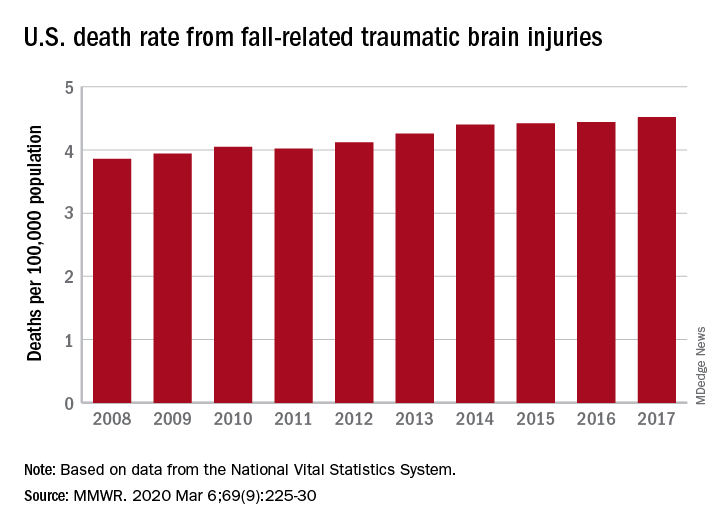
Nationally, the rate of deaths from traumatic brain injuries (TBIs) caused by unintentional falls rose from 3.86 per 100,000 population in 2008 to 4.52 per 100,000 in 2017, as the number of deaths went from 12,311 to 17,408, said Alexis B. Peterson, PhD, and Scott R. Kegler, PhD, of the CDC’s National Center for Injury Prevention and Control in Atlanta.
“This increase might be explained by longer survival following the onset of common diseases such as stroke, cancer, and heart disease or be attributable to the increasing population of older adults in the United States,” they suggested in the Mortality and Morbidity Weekly Report.
The rate of fall-related TBI among Americans aged 75 years and older increased by an average of 2.6% per year from 2008 to 2017, compared with 1.8% in those aged 55-74. Over that same time, death rates dropped for those aged 35-44 (–0.3%), 18-34 (–1.1%), and 0-17 (–4.3%), they said, based on data from the National Vital Statistics System’s multiple cause-of-death database.
The death rate increased fastest in residents of rural areas (2.9% per year), but deaths from fall-related TBI were up at all levels of urbanization. The largest central cities and fringe metro areas were up by 1.4% a year, with larger annual increases seen in medium-size cities (2.1%), small cities (2.2%), and small towns (2.1%), Dr. Peterson and Dr. Kegler said.
Rates of TBI-related mortality in general are higher in rural areas, they noted, and “heterogeneity in the availability and accessibility of resources (e.g., access to high-level trauma centers and rehabilitative services) can result in disparities in postinjury outcomes.”
State-specific rates increased in 45 states, although Alaska was excluded from the analysis because of its small number of cases (less than 20). Increases were significant in 29 states, but none of the changes were significant in the 4 states with lower rates at the end of the study period, the investigators reported.
“In older adults, evidence-based fall prevention strategies can prevent falls and avert costly medical expenditures,” Dr. Peterson and Dr. Kegler said, suggesting that health care providers “consider prescribing exercises that incorporate balance, strength and gait activities, such as tai chi, and reviewing and managing medications linked to falls.”
SOURCE: Peterson AB, Kegler SR. MMWR. 2019 Mar 6;69(9):225-30.
A 17% surge in mortality from fall-related traumatic brain injuries from 2008 to 2017 was driven largely by increases among those aged 75 years and older, according to investigators from the Centers for Disease Control and Prevention.
Nationally, the rate of deaths from traumatic brain injuries (TBIs) caused by unintentional falls rose from 3.86 per 100,000 population in 2008 to 4.52 per 100,000 in 2017, as the number of deaths went from 12,311 to 17,408, said Alexis B. Peterson, PhD, and Scott R. Kegler, PhD, of the CDC’s National Center for Injury Prevention and Control in Atlanta.
“This increase might be explained by longer survival following the onset of common diseases such as stroke, cancer, and heart disease or be attributable to the increasing population of older adults in the United States,” they suggested in the Mortality and Morbidity Weekly Report.
The rate of fall-related TBI among Americans aged 75 years and older increased by an average of 2.6% per year from 2008 to 2017, compared with 1.8% in those aged 55-74. Over that same time, death rates dropped for those aged 35-44 (–0.3%), 18-34 (–1.1%), and 0-17 (–4.3%), they said, based on data from the National Vital Statistics System’s multiple cause-of-death database.
The death rate increased fastest in residents of rural areas (2.9% per year), but deaths from fall-related TBI were up at all levels of urbanization. The largest central cities and fringe metro areas were up by 1.4% a year, with larger annual increases seen in medium-size cities (2.1%), small cities (2.2%), and small towns (2.1%), Dr. Peterson and Dr. Kegler said.
Rates of TBI-related mortality in general are higher in rural areas, they noted, and “heterogeneity in the availability and accessibility of resources (e.g., access to high-level trauma centers and rehabilitative services) can result in disparities in postinjury outcomes.”
State-specific rates increased in 45 states, although Alaska was excluded from the analysis because of its small number of cases (less than 20). Increases were significant in 29 states, but none of the changes were significant in the 4 states with lower rates at the end of the study period, the investigators reported.
“In older adults, evidence-based fall prevention strategies can prevent falls and avert costly medical expenditures,” Dr. Peterson and Dr. Kegler said, suggesting that health care providers “consider prescribing exercises that incorporate balance, strength and gait activities, such as tai chi, and reviewing and managing medications linked to falls.”
SOURCE: Peterson AB, Kegler SR. MMWR. 2019 Mar 6;69(9):225-30.
A 17% surge in mortality from fall-related traumatic brain injuries from 2008 to 2017 was driven largely by increases among those aged 75 years and older, according to investigators from the Centers for Disease Control and Prevention.
Nationally, the rate of deaths from traumatic brain injuries (TBIs) caused by unintentional falls rose from 3.86 per 100,000 population in 2008 to 4.52 per 100,000 in 2017, as the number of deaths went from 12,311 to 17,408, said Alexis B. Peterson, PhD, and Scott R. Kegler, PhD, of the CDC’s National Center for Injury Prevention and Control in Atlanta.
“This increase might be explained by longer survival following the onset of common diseases such as stroke, cancer, and heart disease or be attributable to the increasing population of older adults in the United States,” they suggested in the Mortality and Morbidity Weekly Report.
The rate of fall-related TBI among Americans aged 75 years and older increased by an average of 2.6% per year from 2008 to 2017, compared with 1.8% in those aged 55-74. Over that same time, death rates dropped for those aged 35-44 (–0.3%), 18-34 (–1.1%), and 0-17 (–4.3%), they said, based on data from the National Vital Statistics System’s multiple cause-of-death database.
The death rate increased fastest in residents of rural areas (2.9% per year), but deaths from fall-related TBI were up at all levels of urbanization. The largest central cities and fringe metro areas were up by 1.4% a year, with larger annual increases seen in medium-size cities (2.1%), small cities (2.2%), and small towns (2.1%), Dr. Peterson and Dr. Kegler said.
Rates of TBI-related mortality in general are higher in rural areas, they noted, and “heterogeneity in the availability and accessibility of resources (e.g., access to high-level trauma centers and rehabilitative services) can result in disparities in postinjury outcomes.”
State-specific rates increased in 45 states, although Alaska was excluded from the analysis because of its small number of cases (less than 20). Increases were significant in 29 states, but none of the changes were significant in the 4 states with lower rates at the end of the study period, the investigators reported.
“In older adults, evidence-based fall prevention strategies can prevent falls and avert costly medical expenditures,” Dr. Peterson and Dr. Kegler said, suggesting that health care providers “consider prescribing exercises that incorporate balance, strength and gait activities, such as tai chi, and reviewing and managing medications linked to falls.”
SOURCE: Peterson AB, Kegler SR. MMWR. 2019 Mar 6;69(9):225-30.
FROM MMWR
Fezolinetant safe, effective for menopausal vasomotor symptoms
The selective neurokinin 3 receptor antagonist Graeme L. Fraser, PhD, of Ogeda, a subsidiary of Astellas Pharma, and associates reported in Menopause.

The investigators conducted a randomized, double-blind, placebo-controlled, dose-ranging, parallel-group study between July 19, 2017, and Sept. 19, 2018, in 287 women who completed the full 12-week trial. The women were aged between 41 and 65 years, were menopausal, and had moderate to severe vasomotor symptoms (VMS) with an incidence of at least 50 episodes per week. The majority of the women were white, 25% were black, 1% were Asian, and 1% were “other.”
The reduction in VMS episodes in patients who received fezolinetant ranged from 1.9 to 3.5 episodes per day at week 4 and from 1.8 to 2.6 per day at week 12. The mean difference from placebo in VMS severity score was –0.4 to –1 at week 4 and was –0.2 to –0.6 at week 12. At least a 50% reduction in VMS frequency at week 12 was achieved by 81%-95% of patients who received fezolinetant, compared with 59% of those who received placebo.
Treatment-emergent adverse events were generally mild to moderate, with the most common events including nausea, diarrhea, fatigue, urinary tract infection, upper respiratory tract infections, sinusitis, headache, and cough. Of the five severe adverse events reported, only two were considered related to treatment – cholelithiasis and drug-induced liver injury. A total of 21 patients discontinued because of adverse events.
“Further evaluation of fezolinetant in larger and longer phase 3 trials of women with VMS associated with menopause is warranted to more fully characterize its efficacy and safety profile,” Dr. Fraser and colleagues concluded.
The study was funded by Astellas Pharma. The investigators reported numerous conflicts of interest with pharmaceutical companies.
SOURCE: Fraser GL et al. Menopause. 2020 Feb 24. doi: 10.1097/GME.0000000000001510.
The selective neurokinin 3 receptor antagonist Graeme L. Fraser, PhD, of Ogeda, a subsidiary of Astellas Pharma, and associates reported in Menopause.
The investigators conducted a randomized, double-blind, placebo-controlled, dose-ranging, parallel-group study between July 19, 2017, and Sept. 19, 2018, in 287 women who completed the full 12-week trial. The women were aged between 41 and 65 years, were menopausal, and had moderate to severe vasomotor symptoms (VMS) with an incidence of at least 50 episodes per week. The majority of the women were white, 25% were black, 1% were Asian, and 1% were “other.”
The reduction in VMS episodes in patients who received fezolinetant ranged from 1.9 to 3.5 episodes per day at week 4 and from 1.8 to 2.6 per day at week 12. The mean difference from placebo in VMS severity score was –0.4 to –1 at week 4 and was –0.2 to –0.6 at week 12. At least a 50% reduction in VMS frequency at week 12 was achieved by 81%-95% of patients who received fezolinetant, compared with 59% of those who received placebo.
Treatment-emergent adverse events were generally mild to moderate, with the most common events including nausea, diarrhea, fatigue, urinary tract infection, upper respiratory tract infections, sinusitis, headache, and cough. Of the five severe adverse events reported, only two were considered related to treatment – cholelithiasis and drug-induced liver injury. A total of 21 patients discontinued because of adverse events.
“Further evaluation of fezolinetant in larger and longer phase 3 trials of women with VMS associated with menopause is warranted to more fully characterize its efficacy and safety profile,” Dr. Fraser and colleagues concluded.
The study was funded by Astellas Pharma. The investigators reported numerous conflicts of interest with pharmaceutical companies.
SOURCE: Fraser GL et al. Menopause. 2020 Feb 24. doi: 10.1097/GME.0000000000001510.
The selective neurokinin 3 receptor antagonist Graeme L. Fraser, PhD, of Ogeda, a subsidiary of Astellas Pharma, and associates reported in Menopause.
The investigators conducted a randomized, double-blind, placebo-controlled, dose-ranging, parallel-group study between July 19, 2017, and Sept. 19, 2018, in 287 women who completed the full 12-week trial. The women were aged between 41 and 65 years, were menopausal, and had moderate to severe vasomotor symptoms (VMS) with an incidence of at least 50 episodes per week. The majority of the women were white, 25% were black, 1% were Asian, and 1% were “other.”
The reduction in VMS episodes in patients who received fezolinetant ranged from 1.9 to 3.5 episodes per day at week 4 and from 1.8 to 2.6 per day at week 12. The mean difference from placebo in VMS severity score was –0.4 to –1 at week 4 and was –0.2 to –0.6 at week 12. At least a 50% reduction in VMS frequency at week 12 was achieved by 81%-95% of patients who received fezolinetant, compared with 59% of those who received placebo.
Treatment-emergent adverse events were generally mild to moderate, with the most common events including nausea, diarrhea, fatigue, urinary tract infection, upper respiratory tract infections, sinusitis, headache, and cough. Of the five severe adverse events reported, only two were considered related to treatment – cholelithiasis and drug-induced liver injury. A total of 21 patients discontinued because of adverse events.
“Further evaluation of fezolinetant in larger and longer phase 3 trials of women with VMS associated with menopause is warranted to more fully characterize its efficacy and safety profile,” Dr. Fraser and colleagues concluded.
The study was funded by Astellas Pharma. The investigators reported numerous conflicts of interest with pharmaceutical companies.
SOURCE: Fraser GL et al. Menopause. 2020 Feb 24. doi: 10.1097/GME.0000000000001510.
FROM MENOPAUSE
Rotavirus vaccination is not a risk factor for type 1 diabetes
published in JAMA Pediatrics.
Previous findings from a number of studies have indicated a possible association between rotavirus and type 1 diabetes, according to Jason M. Glanz, PhD, and colleagues. “Epidemiologic data suggest an association between gastrointestinal infection and incidence of type 1 diabetes in children followed from birth to age 10 years. Given these findings, it is biologically plausible that live, attenuated rotavirus vaccine could either increase or decrease the risk for type 1 diabetes in early childhood,” they wrote.
To examine the association between rotavirus vaccination and the incidence of type 1 diabetes in a cohort of U.S. children, Dr. Glanz, a senior investigator at the Kaiser Permanente Colorado Institute for Health Research in Aurora, and colleagues retrospectively analyzed data from seven health care organizations that participate in the Vaccine Safety Datalink.
The researchers identified children born between 2006 and 2014 who had continuous enrollment from age 6 weeks to 2 years. They excluded children with a medical contraindication to vaccination or fewer than two well-child visits by age 12 months. They followed children until a type 1 diabetes diagnosis, disenrollment, or Dec. 31, 2017. The researchers adjusted for sex, birth year, mother’s age, birth weight, gestational age, and race or ethnicity.
The cohort included 386,937 children who were followed up a median of 5.4 years for a total person-time follow-up of 2,253,879 years. In all, 386,937 children (93.1%) were fully exposed to rotavirus vaccination; 15,765 (4.1%) were partially exposed to rotavirus vaccination, meaning that they received some, but not all, vaccine doses; and 11,003 (2.8%) were unexposed to rotavirus vaccination but had received all other recommended vaccines.
There were 464 cases of type 1 diabetes in the cohort, with an incidence rate of 20 cases per 100,000 person-years in the fully exposed group, 31.2 cases per 100,000 person-years in the partially exposed group, and 22.4 cases per 100,000 person-years in the unexposed group.
The incidence of type 1 diabetes was not significantly different across the rotavirus vaccine–exposure groups. The researchers reported that, compared with children unexposed to rotavirus vaccination, the adjusted hazard ratio for children fully exposed to rotavirus vaccination was 1.03 (95% confidence interval, 0.62-1.72), and for those partially exposed to the vaccination, it was 1.50 (95% CI, 0.81-2.77).
“Since licensure, rotavirus vaccination has been associated with a reduction in morbidity and mortality due to rotavirus infection in the United States and worldwide. ... Although rotavirus vaccination may not prevent type 1 diabetes, these results should provide additional reassurance to the public that rotavirus vaccination can be safely administered to infants,” they wrote.
The limited follow-up duration and relatively small proportion of patients unexposed to rotavirus vaccination are limitations of the study, the authors noted.
The Centers for Disease Control and Prevention funded the study. Several authors reported having received grants from the CDC. One author received grants from the National Institute of Diabetes and Digestive and Kidney Diseases, and another from pharmaceutical companies not involved in the study.
SOURCE: Glanz JM et al. JAMA Pediatr. 2020 Mar 9. doi: 10.1001/jamapediatrics.2019.6324.
published in JAMA Pediatrics.
Previous findings from a number of studies have indicated a possible association between rotavirus and type 1 diabetes, according to Jason M. Glanz, PhD, and colleagues. “Epidemiologic data suggest an association between gastrointestinal infection and incidence of type 1 diabetes in children followed from birth to age 10 years. Given these findings, it is biologically plausible that live, attenuated rotavirus vaccine could either increase or decrease the risk for type 1 diabetes in early childhood,” they wrote.
To examine the association between rotavirus vaccination and the incidence of type 1 diabetes in a cohort of U.S. children, Dr. Glanz, a senior investigator at the Kaiser Permanente Colorado Institute for Health Research in Aurora, and colleagues retrospectively analyzed data from seven health care organizations that participate in the Vaccine Safety Datalink.
The researchers identified children born between 2006 and 2014 who had continuous enrollment from age 6 weeks to 2 years. They excluded children with a medical contraindication to vaccination or fewer than two well-child visits by age 12 months. They followed children until a type 1 diabetes diagnosis, disenrollment, or Dec. 31, 2017. The researchers adjusted for sex, birth year, mother’s age, birth weight, gestational age, and race or ethnicity.
The cohort included 386,937 children who were followed up a median of 5.4 years for a total person-time follow-up of 2,253,879 years. In all, 386,937 children (93.1%) were fully exposed to rotavirus vaccination; 15,765 (4.1%) were partially exposed to rotavirus vaccination, meaning that they received some, but not all, vaccine doses; and 11,003 (2.8%) were unexposed to rotavirus vaccination but had received all other recommended vaccines.
There were 464 cases of type 1 diabetes in the cohort, with an incidence rate of 20 cases per 100,000 person-years in the fully exposed group, 31.2 cases per 100,000 person-years in the partially exposed group, and 22.4 cases per 100,000 person-years in the unexposed group.
The incidence of type 1 diabetes was not significantly different across the rotavirus vaccine–exposure groups. The researchers reported that, compared with children unexposed to rotavirus vaccination, the adjusted hazard ratio for children fully exposed to rotavirus vaccination was 1.03 (95% confidence interval, 0.62-1.72), and for those partially exposed to the vaccination, it was 1.50 (95% CI, 0.81-2.77).
“Since licensure, rotavirus vaccination has been associated with a reduction in morbidity and mortality due to rotavirus infection in the United States and worldwide. ... Although rotavirus vaccination may not prevent type 1 diabetes, these results should provide additional reassurance to the public that rotavirus vaccination can be safely administered to infants,” they wrote.
The limited follow-up duration and relatively small proportion of patients unexposed to rotavirus vaccination are limitations of the study, the authors noted.
The Centers for Disease Control and Prevention funded the study. Several authors reported having received grants from the CDC. One author received grants from the National Institute of Diabetes and Digestive and Kidney Diseases, and another from pharmaceutical companies not involved in the study.
SOURCE: Glanz JM et al. JAMA Pediatr. 2020 Mar 9. doi: 10.1001/jamapediatrics.2019.6324.
published in JAMA Pediatrics.
Previous findings from a number of studies have indicated a possible association between rotavirus and type 1 diabetes, according to Jason M. Glanz, PhD, and colleagues. “Epidemiologic data suggest an association between gastrointestinal infection and incidence of type 1 diabetes in children followed from birth to age 10 years. Given these findings, it is biologically plausible that live, attenuated rotavirus vaccine could either increase or decrease the risk for type 1 diabetes in early childhood,” they wrote.
To examine the association between rotavirus vaccination and the incidence of type 1 diabetes in a cohort of U.S. children, Dr. Glanz, a senior investigator at the Kaiser Permanente Colorado Institute for Health Research in Aurora, and colleagues retrospectively analyzed data from seven health care organizations that participate in the Vaccine Safety Datalink.
The researchers identified children born between 2006 and 2014 who had continuous enrollment from age 6 weeks to 2 years. They excluded children with a medical contraindication to vaccination or fewer than two well-child visits by age 12 months. They followed children until a type 1 diabetes diagnosis, disenrollment, or Dec. 31, 2017. The researchers adjusted for sex, birth year, mother’s age, birth weight, gestational age, and race or ethnicity.
The cohort included 386,937 children who were followed up a median of 5.4 years for a total person-time follow-up of 2,253,879 years. In all, 386,937 children (93.1%) were fully exposed to rotavirus vaccination; 15,765 (4.1%) were partially exposed to rotavirus vaccination, meaning that they received some, but not all, vaccine doses; and 11,003 (2.8%) were unexposed to rotavirus vaccination but had received all other recommended vaccines.
There were 464 cases of type 1 diabetes in the cohort, with an incidence rate of 20 cases per 100,000 person-years in the fully exposed group, 31.2 cases per 100,000 person-years in the partially exposed group, and 22.4 cases per 100,000 person-years in the unexposed group.
The incidence of type 1 diabetes was not significantly different across the rotavirus vaccine–exposure groups. The researchers reported that, compared with children unexposed to rotavirus vaccination, the adjusted hazard ratio for children fully exposed to rotavirus vaccination was 1.03 (95% confidence interval, 0.62-1.72), and for those partially exposed to the vaccination, it was 1.50 (95% CI, 0.81-2.77).
“Since licensure, rotavirus vaccination has been associated with a reduction in morbidity and mortality due to rotavirus infection in the United States and worldwide. ... Although rotavirus vaccination may not prevent type 1 diabetes, these results should provide additional reassurance to the public that rotavirus vaccination can be safely administered to infants,” they wrote.
The limited follow-up duration and relatively small proportion of patients unexposed to rotavirus vaccination are limitations of the study, the authors noted.
The Centers for Disease Control and Prevention funded the study. Several authors reported having received grants from the CDC. One author received grants from the National Institute of Diabetes and Digestive and Kidney Diseases, and another from pharmaceutical companies not involved in the study.
SOURCE: Glanz JM et al. JAMA Pediatr. 2020 Mar 9. doi: 10.1001/jamapediatrics.2019.6324.
FROM JAMA PEDIATRICS
Key clinical point: Rotavirus vaccination is not associated with the incidence of type 1 diabetes and can be safely administered to infants.
Major finding: Compared with children unexposed to rotavirus vaccination, the adjusted hazard ratio for developing type 1 diabetes for children fully exposed to the vaccination was 1.03 (95% confidence interval, 0.62-1.72), and for those partially exposed to it, the aHR was 1.50 (95% CI, 0.81-2.77).
Study details: A retrospective cohort study of 386,937 children using data from the Vaccine Safety Datalink.
Disclosures: The Centers for Disease Control and Prevention funded the study. Several authors reported having received grants from the CDC. One author received grants from the National Institute of Diabetes and Digestive and Kidney Diseases, and another from pharmaceutical companies not involved in the study.
Source: Glanz JM et al. JAMA Pediatr. 2020 Mar 9. doi: 10.1001/jamapediatrics.2019.6324.
Biomarker pattern flags risk for microalbuminuria in diabetes patients
A high-risk profile from the urinary biomarker CKD273 was significantly associated with an increased risk of microalbuminuria in patients with diabetes, according to findings from a multicenter European trial.
“Although microalbuminuria is the earliest clinical index of renal damage, histological changes might already be advanced by the time it is detectable. Thus, earlier identification of at-risk individuals is essential to guide targeted preventive therapy,” wrote Nete Tofte, MD, of the Steno Diabetes Center in Copenhagen, and colleagues.
“Increases in urinary albumin to microalbuminuria levels, or higher, are not only strongly associated with progression to more serious clinical endpoints, such as clinically significant loss of renal function and eventually, end-stage kidney disease, but also with an increased risk of cardiovascular complications,” the researchers noted in the Lancet Diabetes & Endocrinology.
They identified 1,775 adults with type 2 diabetes who had normal albumin levels and preserved renal function at baseline. The average age of the patients was 62 years, and 62% were men. The participants underwent urine proteomics testing via capillary electrophoresis–mass spectrometry analysis to generate a renal risk profile based on 273 peptides (CKD273). On the basis of their CKD273 scores, 216 patients (12%) were designated to the high-risk group, and 1,556 (88%) to the low-risk group.
Over a median follow-up of 2.5 years, 61 patients (28%) in the high-risk group progressed to microalbuminuria (the primary endpoint), compared with 139 patients (9%) in the low-risk group.
Of the original 216 high-risk patients, 209 were randomized to treatment with 25 mg of the mineralocorticoid receptor antagonist spironolactone (102 patients) or placebo (107) to examine whether spironolactone would stall progression to microalbuminuria.
The researchers found, however, that spironolactone did not prevent progression to microalbuminuria. In all, 26 of the 102 patients (25%) patients in the spironolactone group developed microalbuminuria, and 35 of the 107 patients (33%) in the placebo group developed it (hazard ratio, 0.81; 95% confidence interval, 0.49-1.34; P = .41).
The total number of adverse events was not significantly different between the spironolactone and placebo groups (312 vs. 321, respectively), although more patients in the spironolactone group experienced adverse events that led to drug discontinuation (25 vs. 9, respectively).
The study findings were limited by several factors, including the use of a single urine sample for risk stratification; the lower-than-expected number of high-risk patients; not testing spironolactone in the low-risk group; and the fact that microalbuminuria, although an accepted surrogate for diabetic kidney disease, is not approved as such by regulatory agencies, the researchers noted. However, the results were strengthened by the large study population and prospective design, as well as the additional register-based follow-up that is planned when possible.
In an accompanying editorial, Susanne B. Nicholas, MD, of the University of California, Los Angeles, reiterated that microalbuminuria cannot be used to track responses to therapy even if it is an acceptable indicator of potential renal damage.
“In fact, regression from microalbuminuria to normoalbuminuria is more likely than progression toward overt proteinuria, [which exposes] a need for a more dependable biomarker for diabetic kidney disease,” she wrote.
However, Dr. Nicholas supported the potential of proteomics as a tool “that could bridge the gap between discovery of diabetic kidney disease – possibly providing a panel, rather than a single or few urinary indicators of structural changes that predate microalbuminuria – and response to therapy, given the promise of targeted therapies for this complex disease.” Additional research into patient selection, comparators to verify findings, and cost containment is needed before proteomics can become part of routine care, she added.
The study was supported by the European Union Seventh Framework Programme. Dr. Tofte had no financial conflicts to disclose. Several other authors disclosed relationships with multiple companies, including Amgen, AstraZeneca, Boehringer Ingelheim, Novo Nordisk, and Sanofi. Dr. Nicholas had no financial conflicts to disclose.
SOURCES: Tofte N et al. Lancet Diabetes Endocrinol. 2020 Mar 2. doi: 10.1016/S2213-8587(20)30026-7; Nicholas SB. Lancet Diabetes Endocrinol. 2020 Mar 2. doi: 10.1016/S2213-8587(20)30067-X.
A high-risk profile from the urinary biomarker CKD273 was significantly associated with an increased risk of microalbuminuria in patients with diabetes, according to findings from a multicenter European trial.
“Although microalbuminuria is the earliest clinical index of renal damage, histological changes might already be advanced by the time it is detectable. Thus, earlier identification of at-risk individuals is essential to guide targeted preventive therapy,” wrote Nete Tofte, MD, of the Steno Diabetes Center in Copenhagen, and colleagues.
“Increases in urinary albumin to microalbuminuria levels, or higher, are not only strongly associated with progression to more serious clinical endpoints, such as clinically significant loss of renal function and eventually, end-stage kidney disease, but also with an increased risk of cardiovascular complications,” the researchers noted in the Lancet Diabetes & Endocrinology.
They identified 1,775 adults with type 2 diabetes who had normal albumin levels and preserved renal function at baseline. The average age of the patients was 62 years, and 62% were men. The participants underwent urine proteomics testing via capillary electrophoresis–mass spectrometry analysis to generate a renal risk profile based on 273 peptides (CKD273). On the basis of their CKD273 scores, 216 patients (12%) were designated to the high-risk group, and 1,556 (88%) to the low-risk group.
Over a median follow-up of 2.5 years, 61 patients (28%) in the high-risk group progressed to microalbuminuria (the primary endpoint), compared with 139 patients (9%) in the low-risk group.
Of the original 216 high-risk patients, 209 were randomized to treatment with 25 mg of the mineralocorticoid receptor antagonist spironolactone (102 patients) or placebo (107) to examine whether spironolactone would stall progression to microalbuminuria.
The researchers found, however, that spironolactone did not prevent progression to microalbuminuria. In all, 26 of the 102 patients (25%) patients in the spironolactone group developed microalbuminuria, and 35 of the 107 patients (33%) in the placebo group developed it (hazard ratio, 0.81; 95% confidence interval, 0.49-1.34; P = .41).
The total number of adverse events was not significantly different between the spironolactone and placebo groups (312 vs. 321, respectively), although more patients in the spironolactone group experienced adverse events that led to drug discontinuation (25 vs. 9, respectively).
The study findings were limited by several factors, including the use of a single urine sample for risk stratification; the lower-than-expected number of high-risk patients; not testing spironolactone in the low-risk group; and the fact that microalbuminuria, although an accepted surrogate for diabetic kidney disease, is not approved as such by regulatory agencies, the researchers noted. However, the results were strengthened by the large study population and prospective design, as well as the additional register-based follow-up that is planned when possible.
In an accompanying editorial, Susanne B. Nicholas, MD, of the University of California, Los Angeles, reiterated that microalbuminuria cannot be used to track responses to therapy even if it is an acceptable indicator of potential renal damage.
“In fact, regression from microalbuminuria to normoalbuminuria is more likely than progression toward overt proteinuria, [which exposes] a need for a more dependable biomarker for diabetic kidney disease,” she wrote.
However, Dr. Nicholas supported the potential of proteomics as a tool “that could bridge the gap between discovery of diabetic kidney disease – possibly providing a panel, rather than a single or few urinary indicators of structural changes that predate microalbuminuria – and response to therapy, given the promise of targeted therapies for this complex disease.” Additional research into patient selection, comparators to verify findings, and cost containment is needed before proteomics can become part of routine care, she added.
The study was supported by the European Union Seventh Framework Programme. Dr. Tofte had no financial conflicts to disclose. Several other authors disclosed relationships with multiple companies, including Amgen, AstraZeneca, Boehringer Ingelheim, Novo Nordisk, and Sanofi. Dr. Nicholas had no financial conflicts to disclose.
SOURCES: Tofte N et al. Lancet Diabetes Endocrinol. 2020 Mar 2. doi: 10.1016/S2213-8587(20)30026-7; Nicholas SB. Lancet Diabetes Endocrinol. 2020 Mar 2. doi: 10.1016/S2213-8587(20)30067-X.
A high-risk profile from the urinary biomarker CKD273 was significantly associated with an increased risk of microalbuminuria in patients with diabetes, according to findings from a multicenter European trial.
“Although microalbuminuria is the earliest clinical index of renal damage, histological changes might already be advanced by the time it is detectable. Thus, earlier identification of at-risk individuals is essential to guide targeted preventive therapy,” wrote Nete Tofte, MD, of the Steno Diabetes Center in Copenhagen, and colleagues.
“Increases in urinary albumin to microalbuminuria levels, or higher, are not only strongly associated with progression to more serious clinical endpoints, such as clinically significant loss of renal function and eventually, end-stage kidney disease, but also with an increased risk of cardiovascular complications,” the researchers noted in the Lancet Diabetes & Endocrinology.
They identified 1,775 adults with type 2 diabetes who had normal albumin levels and preserved renal function at baseline. The average age of the patients was 62 years, and 62% were men. The participants underwent urine proteomics testing via capillary electrophoresis–mass spectrometry analysis to generate a renal risk profile based on 273 peptides (CKD273). On the basis of their CKD273 scores, 216 patients (12%) were designated to the high-risk group, and 1,556 (88%) to the low-risk group.
Over a median follow-up of 2.5 years, 61 patients (28%) in the high-risk group progressed to microalbuminuria (the primary endpoint), compared with 139 patients (9%) in the low-risk group.
Of the original 216 high-risk patients, 209 were randomized to treatment with 25 mg of the mineralocorticoid receptor antagonist spironolactone (102 patients) or placebo (107) to examine whether spironolactone would stall progression to microalbuminuria.
The researchers found, however, that spironolactone did not prevent progression to microalbuminuria. In all, 26 of the 102 patients (25%) patients in the spironolactone group developed microalbuminuria, and 35 of the 107 patients (33%) in the placebo group developed it (hazard ratio, 0.81; 95% confidence interval, 0.49-1.34; P = .41).
The total number of adverse events was not significantly different between the spironolactone and placebo groups (312 vs. 321, respectively), although more patients in the spironolactone group experienced adverse events that led to drug discontinuation (25 vs. 9, respectively).
The study findings were limited by several factors, including the use of a single urine sample for risk stratification; the lower-than-expected number of high-risk patients; not testing spironolactone in the low-risk group; and the fact that microalbuminuria, although an accepted surrogate for diabetic kidney disease, is not approved as such by regulatory agencies, the researchers noted. However, the results were strengthened by the large study population and prospective design, as well as the additional register-based follow-up that is planned when possible.
In an accompanying editorial, Susanne B. Nicholas, MD, of the University of California, Los Angeles, reiterated that microalbuminuria cannot be used to track responses to therapy even if it is an acceptable indicator of potential renal damage.
“In fact, regression from microalbuminuria to normoalbuminuria is more likely than progression toward overt proteinuria, [which exposes] a need for a more dependable biomarker for diabetic kidney disease,” she wrote.
However, Dr. Nicholas supported the potential of proteomics as a tool “that could bridge the gap between discovery of diabetic kidney disease – possibly providing a panel, rather than a single or few urinary indicators of structural changes that predate microalbuminuria – and response to therapy, given the promise of targeted therapies for this complex disease.” Additional research into patient selection, comparators to verify findings, and cost containment is needed before proteomics can become part of routine care, she added.
The study was supported by the European Union Seventh Framework Programme. Dr. Tofte had no financial conflicts to disclose. Several other authors disclosed relationships with multiple companies, including Amgen, AstraZeneca, Boehringer Ingelheim, Novo Nordisk, and Sanofi. Dr. Nicholas had no financial conflicts to disclose.
SOURCES: Tofte N et al. Lancet Diabetes Endocrinol. 2020 Mar 2. doi: 10.1016/S2213-8587(20)30026-7; Nicholas SB. Lancet Diabetes Endocrinol. 2020 Mar 2. doi: 10.1016/S2213-8587(20)30067-X.
FROM THE LANCET DIABETES & ENDOCRINOLOGY
RYGB tops sleeve gastrectomy in long-term outcomes for diabetes
Patients with type 2 diabetes who underwent Roux-en-Y gastric bypass (RYGB) surgery experienced higher rates of diabetes remission, improved glycemic control, greater weight loss, and fewer diabetes relapse events, compared with those who had sleeve gastrectomy, according to findings from nearly 10,000 patients.
“Remission of type 2 diabetes is common after bariatric surgery and may reduce risk for subsequent microvascular and macrovascular disease,” but it is not clear which of the two most common procedures, RYGB or sleeve gastrectomy, has better long-term diabetes and weight outcomes, wrote Kathleen M. McTigue, MD, of the University of Pittsburgh, and colleagues in JAMA Surgery.
To examine the effectiveness of the two procedures, the researchers identified 9,710 adults with type 2 diabetes who were part of the National Patient-Centered Clinical Research Network Bariatric Study. They compared diabetes outcomes for up to 5 years after surgery for 6,233 patients who underwent RYGB and 3,477 who underwent sleeve gastrectomy. The average age of the patients was 50 years, and 73% were women. The average preoperative body mass index was 49 kg/m2.
Overall, 6,141 patients experienced diabetes remission. The estimated adjusted cumulative remission rates for the RYGB and sleeve gastrectomy groups after 1 year were 59% and 56%, respectively, and after 5 years were 86% and 84%.
Weight loss was significantly greater in RYGB patients, compared with those who had the sleeve gastrectomy, with average differences in percentage points of 6.3 at 1 year and 8.1 at year 5. RYGB patients also showed significantly better long-term glycemic control, compared with sleeve gastrectomy patients. At 5 years, hemoglobin A1c levels were 0.80 percentage points below baseline in the RYGB group, and 0.35 percentage points below baseline in the sleeve gastrectomy group.
In addition, after 1 year, diabetes relapse rates in the RYGB and sleeve gastrectomy groups were 8% and 11%, respectively, and 33% and 42% after 5 years.
The findings were limited by several factors, including the observational design of the study and the potential for confounding and coding inaccuracies, the researchers noted, adding that future studies should address the impact of weight loss on diabetes remission and relapse in bariatric surgery patients.
They also noted that their results were in contrast to findings in previous studies that established no significant differences in outcomes between the procedures, but emphasized that most previous studies were smaller and controlled and that outcome differences may be greater in clinical practice.
“For patients, clinicians, and policy makers to make informed decisions about which procedure is best suited to patients’ personal situations, additional data are needed to understand the adverse event profile of the procedures, as well as patient values regarding procedure choice and the role of surgery relative to other aspects of lifelong weight management,” they concluded.
In an accompanying commentary, Natalie Liu, MD, and Luke M. Funk, MD, of the department of surgery, University of Wisconsin–Madison, said the analysis made an important contribution to the existing literature, despite its limitations.
“It included long-term electronic health record data from a large cohort of U.S. patients who had bariatric surgery in a real-world setting,” they wrote, adding that, although the remission rates were high, the relapse rate in both treatment groups deserved further study.
Dr. Liu and Dr. Funk emphasized that the overall high remission rates for either surgery, compared with lifestyle interventions, suggest the need for continued advocacy for better insurance coverage of, and access to, bariatric surgery procedures for patients with type 2 diabetes, notably those with class 1 obesity.
The study was conducted using the National Patient-Centered Clinical Research Network, which was funded by the Patient-Centered Outcomes Research Institute. Dr. McTigue and Dr. Liu had reported no conflicts of interest. Dr. Funk disclosed a Veterans Affairs Health Services Research & Development Career Development Award, and grants from the VA, National Institutes of Health, and American College of Surgeons.
SOURCES: McTigue KM et al. JAMA Surg. 2020 Mar 4. doi: 10.1001/jamasurg.2020.0087; Lui N, Funk LM. JAMA Surg. 2020 Mar 4. doi: 10.1001/jamasurg.2020.0088.
Patients with type 2 diabetes who underwent Roux-en-Y gastric bypass (RYGB) surgery experienced higher rates of diabetes remission, improved glycemic control, greater weight loss, and fewer diabetes relapse events, compared with those who had sleeve gastrectomy, according to findings from nearly 10,000 patients.
“Remission of type 2 diabetes is common after bariatric surgery and may reduce risk for subsequent microvascular and macrovascular disease,” but it is not clear which of the two most common procedures, RYGB or sleeve gastrectomy, has better long-term diabetes and weight outcomes, wrote Kathleen M. McTigue, MD, of the University of Pittsburgh, and colleagues in JAMA Surgery.
To examine the effectiveness of the two procedures, the researchers identified 9,710 adults with type 2 diabetes who were part of the National Patient-Centered Clinical Research Network Bariatric Study. They compared diabetes outcomes for up to 5 years after surgery for 6,233 patients who underwent RYGB and 3,477 who underwent sleeve gastrectomy. The average age of the patients was 50 years, and 73% were women. The average preoperative body mass index was 49 kg/m2.
Overall, 6,141 patients experienced diabetes remission. The estimated adjusted cumulative remission rates for the RYGB and sleeve gastrectomy groups after 1 year were 59% and 56%, respectively, and after 5 years were 86% and 84%.
Weight loss was significantly greater in RYGB patients, compared with those who had the sleeve gastrectomy, with average differences in percentage points of 6.3 at 1 year and 8.1 at year 5. RYGB patients also showed significantly better long-term glycemic control, compared with sleeve gastrectomy patients. At 5 years, hemoglobin A1c levels were 0.80 percentage points below baseline in the RYGB group, and 0.35 percentage points below baseline in the sleeve gastrectomy group.
In addition, after 1 year, diabetes relapse rates in the RYGB and sleeve gastrectomy groups were 8% and 11%, respectively, and 33% and 42% after 5 years.
The findings were limited by several factors, including the observational design of the study and the potential for confounding and coding inaccuracies, the researchers noted, adding that future studies should address the impact of weight loss on diabetes remission and relapse in bariatric surgery patients.
They also noted that their results were in contrast to findings in previous studies that established no significant differences in outcomes between the procedures, but emphasized that most previous studies were smaller and controlled and that outcome differences may be greater in clinical practice.
“For patients, clinicians, and policy makers to make informed decisions about which procedure is best suited to patients’ personal situations, additional data are needed to understand the adverse event profile of the procedures, as well as patient values regarding procedure choice and the role of surgery relative to other aspects of lifelong weight management,” they concluded.
In an accompanying commentary, Natalie Liu, MD, and Luke M. Funk, MD, of the department of surgery, University of Wisconsin–Madison, said the analysis made an important contribution to the existing literature, despite its limitations.
“It included long-term electronic health record data from a large cohort of U.S. patients who had bariatric surgery in a real-world setting,” they wrote, adding that, although the remission rates were high, the relapse rate in both treatment groups deserved further study.
Dr. Liu and Dr. Funk emphasized that the overall high remission rates for either surgery, compared with lifestyle interventions, suggest the need for continued advocacy for better insurance coverage of, and access to, bariatric surgery procedures for patients with type 2 diabetes, notably those with class 1 obesity.
The study was conducted using the National Patient-Centered Clinical Research Network, which was funded by the Patient-Centered Outcomes Research Institute. Dr. McTigue and Dr. Liu had reported no conflicts of interest. Dr. Funk disclosed a Veterans Affairs Health Services Research & Development Career Development Award, and grants from the VA, National Institutes of Health, and American College of Surgeons.
SOURCES: McTigue KM et al. JAMA Surg. 2020 Mar 4. doi: 10.1001/jamasurg.2020.0087; Lui N, Funk LM. JAMA Surg. 2020 Mar 4. doi: 10.1001/jamasurg.2020.0088.
Patients with type 2 diabetes who underwent Roux-en-Y gastric bypass (RYGB) surgery experienced higher rates of diabetes remission, improved glycemic control, greater weight loss, and fewer diabetes relapse events, compared with those who had sleeve gastrectomy, according to findings from nearly 10,000 patients.
“Remission of type 2 diabetes is common after bariatric surgery and may reduce risk for subsequent microvascular and macrovascular disease,” but it is not clear which of the two most common procedures, RYGB or sleeve gastrectomy, has better long-term diabetes and weight outcomes, wrote Kathleen M. McTigue, MD, of the University of Pittsburgh, and colleagues in JAMA Surgery.
To examine the effectiveness of the two procedures, the researchers identified 9,710 adults with type 2 diabetes who were part of the National Patient-Centered Clinical Research Network Bariatric Study. They compared diabetes outcomes for up to 5 years after surgery for 6,233 patients who underwent RYGB and 3,477 who underwent sleeve gastrectomy. The average age of the patients was 50 years, and 73% were women. The average preoperative body mass index was 49 kg/m2.
Overall, 6,141 patients experienced diabetes remission. The estimated adjusted cumulative remission rates for the RYGB and sleeve gastrectomy groups after 1 year were 59% and 56%, respectively, and after 5 years were 86% and 84%.
Weight loss was significantly greater in RYGB patients, compared with those who had the sleeve gastrectomy, with average differences in percentage points of 6.3 at 1 year and 8.1 at year 5. RYGB patients also showed significantly better long-term glycemic control, compared with sleeve gastrectomy patients. At 5 years, hemoglobin A1c levels were 0.80 percentage points below baseline in the RYGB group, and 0.35 percentage points below baseline in the sleeve gastrectomy group.
In addition, after 1 year, diabetes relapse rates in the RYGB and sleeve gastrectomy groups were 8% and 11%, respectively, and 33% and 42% after 5 years.
The findings were limited by several factors, including the observational design of the study and the potential for confounding and coding inaccuracies, the researchers noted, adding that future studies should address the impact of weight loss on diabetes remission and relapse in bariatric surgery patients.
They also noted that their results were in contrast to findings in previous studies that established no significant differences in outcomes between the procedures, but emphasized that most previous studies were smaller and controlled and that outcome differences may be greater in clinical practice.
“For patients, clinicians, and policy makers to make informed decisions about which procedure is best suited to patients’ personal situations, additional data are needed to understand the adverse event profile of the procedures, as well as patient values regarding procedure choice and the role of surgery relative to other aspects of lifelong weight management,” they concluded.
In an accompanying commentary, Natalie Liu, MD, and Luke M. Funk, MD, of the department of surgery, University of Wisconsin–Madison, said the analysis made an important contribution to the existing literature, despite its limitations.
“It included long-term electronic health record data from a large cohort of U.S. patients who had bariatric surgery in a real-world setting,” they wrote, adding that, although the remission rates were high, the relapse rate in both treatment groups deserved further study.
Dr. Liu and Dr. Funk emphasized that the overall high remission rates for either surgery, compared with lifestyle interventions, suggest the need for continued advocacy for better insurance coverage of, and access to, bariatric surgery procedures for patients with type 2 diabetes, notably those with class 1 obesity.
The study was conducted using the National Patient-Centered Clinical Research Network, which was funded by the Patient-Centered Outcomes Research Institute. Dr. McTigue and Dr. Liu had reported no conflicts of interest. Dr. Funk disclosed a Veterans Affairs Health Services Research & Development Career Development Award, and grants from the VA, National Institutes of Health, and American College of Surgeons.
SOURCES: McTigue KM et al. JAMA Surg. 2020 Mar 4. doi: 10.1001/jamasurg.2020.0087; Lui N, Funk LM. JAMA Surg. 2020 Mar 4. doi: 10.1001/jamasurg.2020.0088.
FROM JAMA SURGERY
First guidelines to address thyroid disease surgery
offering evidence-based recommendations on the wide-ranging aspects of thyroidectomy and the management of benign, as well as malignant, thyroid nodules and cancer.
Whereas various endocrine and thyroid societies issue guidelines on many aspects of the management of thyroid disease, the new AAES guidelines are the first specifically to address surgical management of thyroid disease in adults.
“These guidelines truly focus on the surgical decision-making and management of thyroid disease. However, there is something for all clinicians who take care of patients with thyroid disease,” lead author Kepal N. Patel, MD, of NYU Langone Health in New York City, said in an interview.
The guidelines, published in the Annals of Surgery, include a total of 66 recommendations from a multidisciplinary panel of 19 experts who reviewed medical literature spanning 1985-2018.
More than 100,000 thyroidectomies are performed each year in the United States alone, and as surgical indications and treatment paradigms evolve, the need for surgical guidance is more important than ever, Dr. Patel said.
“Such transformations have propagated differences in clinical interpretation and management, and as a result, clinical uncertainty, and even controversy, have emerged,” he said. “Recognizing the importance of these changes, the AAES determined that evidence-based clinical guidelines were necessary to enhance the safe and effective surgical treatment of benign and malignant thyroid disease.”
Key areas addressed in the guidelines include the addition of new cytologic and pathologic diagnostic criteria, molecular profiling tests, operative techniques, and adjuncts, as well as the nuances surrounding the sometimes challenging newer concept of “borderline” thyroid tumors, Dr. Patel noted.
In terms of imaging recommendations, for instance, the guidelines recommend the preoperative use of computed tomography or magnetic resonance imaging, as stated in Recommendation 6: “CT or MRI with intravenous contrast should be used preoperatively as an adjunct to ultrasound in selected patients with clinical suspicion for advanced locoregional thyroid cancer.” The recommendation is cited as being “strong,” with a “low quality of evidence.”
Further diagnostic recommendations cover issues that include voice assessment, the risk for vocal fold dysfunction related to thyroid disease and surgery, and the use of fine-needle aspiration biopsy in evaluating suspicious thyroid nodules and lymph nodes.
The guidelines also address the indications for thyroidectomy, with recommendations regarding the extent and outcomes of surgery spanning different categories of thyroid disease. A key recommendation along those lines, for instance, indicates that, when possible, thyroidectomy should be performed by surgeons who perform a high volume of such procedures.
Approaches for safe and effective perioperative management are also covered, and include measures to prevent complications and the use of thyroid tissue diagnosis during surgery, such as core-needle biopsy of the thyroid and cervical lymph nodes, and incisional biopsy of the thyroid, nodal dissection, and concurrent parathyroidectomy.
Other recommendations address the optimal management of thyroid cancer, with an emphasis on a personalized, evidence-based approach tailored to the patient’s situation and preferences.
The authors underscored that, as technology rapidly evolves, “in the future, this work will certainly and rightly need to be done again.” In the meantime, they wrote, recommendations should be relevant to “the target audience [of] the practicing surgeon in a community hospital, academic center, or training program.”
An AAES press release noted that “the members of the expert panel hope their efforts will meet the need for evidence-based recommendations to ‘define practice, personalize care, stratify risk, reduce health care costs, improve outcomes, and identify rational challenges for future efforts.’ ”
The authors of the guidelines reported no conflicts of interest in regard to the guidelines, although the article lists disclosures for six authors.
This article first appeared on Medscape.com.
offering evidence-based recommendations on the wide-ranging aspects of thyroidectomy and the management of benign, as well as malignant, thyroid nodules and cancer.
Whereas various endocrine and thyroid societies issue guidelines on many aspects of the management of thyroid disease, the new AAES guidelines are the first specifically to address surgical management of thyroid disease in adults.
“These guidelines truly focus on the surgical decision-making and management of thyroid disease. However, there is something for all clinicians who take care of patients with thyroid disease,” lead author Kepal N. Patel, MD, of NYU Langone Health in New York City, said in an interview.
The guidelines, published in the Annals of Surgery, include a total of 66 recommendations from a multidisciplinary panel of 19 experts who reviewed medical literature spanning 1985-2018.
More than 100,000 thyroidectomies are performed each year in the United States alone, and as surgical indications and treatment paradigms evolve, the need for surgical guidance is more important than ever, Dr. Patel said.
“Such transformations have propagated differences in clinical interpretation and management, and as a result, clinical uncertainty, and even controversy, have emerged,” he said. “Recognizing the importance of these changes, the AAES determined that evidence-based clinical guidelines were necessary to enhance the safe and effective surgical treatment of benign and malignant thyroid disease.”
Key areas addressed in the guidelines include the addition of new cytologic and pathologic diagnostic criteria, molecular profiling tests, operative techniques, and adjuncts, as well as the nuances surrounding the sometimes challenging newer concept of “borderline” thyroid tumors, Dr. Patel noted.
In terms of imaging recommendations, for instance, the guidelines recommend the preoperative use of computed tomography or magnetic resonance imaging, as stated in Recommendation 6: “CT or MRI with intravenous contrast should be used preoperatively as an adjunct to ultrasound in selected patients with clinical suspicion for advanced locoregional thyroid cancer.” The recommendation is cited as being “strong,” with a “low quality of evidence.”
Further diagnostic recommendations cover issues that include voice assessment, the risk for vocal fold dysfunction related to thyroid disease and surgery, and the use of fine-needle aspiration biopsy in evaluating suspicious thyroid nodules and lymph nodes.
The guidelines also address the indications for thyroidectomy, with recommendations regarding the extent and outcomes of surgery spanning different categories of thyroid disease. A key recommendation along those lines, for instance, indicates that, when possible, thyroidectomy should be performed by surgeons who perform a high volume of such procedures.
Approaches for safe and effective perioperative management are also covered, and include measures to prevent complications and the use of thyroid tissue diagnosis during surgery, such as core-needle biopsy of the thyroid and cervical lymph nodes, and incisional biopsy of the thyroid, nodal dissection, and concurrent parathyroidectomy.
Other recommendations address the optimal management of thyroid cancer, with an emphasis on a personalized, evidence-based approach tailored to the patient’s situation and preferences.
The authors underscored that, as technology rapidly evolves, “in the future, this work will certainly and rightly need to be done again.” In the meantime, they wrote, recommendations should be relevant to “the target audience [of] the practicing surgeon in a community hospital, academic center, or training program.”
An AAES press release noted that “the members of the expert panel hope their efforts will meet the need for evidence-based recommendations to ‘define practice, personalize care, stratify risk, reduce health care costs, improve outcomes, and identify rational challenges for future efforts.’ ”
The authors of the guidelines reported no conflicts of interest in regard to the guidelines, although the article lists disclosures for six authors.
This article first appeared on Medscape.com.
offering evidence-based recommendations on the wide-ranging aspects of thyroidectomy and the management of benign, as well as malignant, thyroid nodules and cancer.
Whereas various endocrine and thyroid societies issue guidelines on many aspects of the management of thyroid disease, the new AAES guidelines are the first specifically to address surgical management of thyroid disease in adults.
“These guidelines truly focus on the surgical decision-making and management of thyroid disease. However, there is something for all clinicians who take care of patients with thyroid disease,” lead author Kepal N. Patel, MD, of NYU Langone Health in New York City, said in an interview.
The guidelines, published in the Annals of Surgery, include a total of 66 recommendations from a multidisciplinary panel of 19 experts who reviewed medical literature spanning 1985-2018.
More than 100,000 thyroidectomies are performed each year in the United States alone, and as surgical indications and treatment paradigms evolve, the need for surgical guidance is more important than ever, Dr. Patel said.
“Such transformations have propagated differences in clinical interpretation and management, and as a result, clinical uncertainty, and even controversy, have emerged,” he said. “Recognizing the importance of these changes, the AAES determined that evidence-based clinical guidelines were necessary to enhance the safe and effective surgical treatment of benign and malignant thyroid disease.”
Key areas addressed in the guidelines include the addition of new cytologic and pathologic diagnostic criteria, molecular profiling tests, operative techniques, and adjuncts, as well as the nuances surrounding the sometimes challenging newer concept of “borderline” thyroid tumors, Dr. Patel noted.
In terms of imaging recommendations, for instance, the guidelines recommend the preoperative use of computed tomography or magnetic resonance imaging, as stated in Recommendation 6: “CT or MRI with intravenous contrast should be used preoperatively as an adjunct to ultrasound in selected patients with clinical suspicion for advanced locoregional thyroid cancer.” The recommendation is cited as being “strong,” with a “low quality of evidence.”
Further diagnostic recommendations cover issues that include voice assessment, the risk for vocal fold dysfunction related to thyroid disease and surgery, and the use of fine-needle aspiration biopsy in evaluating suspicious thyroid nodules and lymph nodes.
The guidelines also address the indications for thyroidectomy, with recommendations regarding the extent and outcomes of surgery spanning different categories of thyroid disease. A key recommendation along those lines, for instance, indicates that, when possible, thyroidectomy should be performed by surgeons who perform a high volume of such procedures.
Approaches for safe and effective perioperative management are also covered, and include measures to prevent complications and the use of thyroid tissue diagnosis during surgery, such as core-needle biopsy of the thyroid and cervical lymph nodes, and incisional biopsy of the thyroid, nodal dissection, and concurrent parathyroidectomy.
Other recommendations address the optimal management of thyroid cancer, with an emphasis on a personalized, evidence-based approach tailored to the patient’s situation and preferences.
The authors underscored that, as technology rapidly evolves, “in the future, this work will certainly and rightly need to be done again.” In the meantime, they wrote, recommendations should be relevant to “the target audience [of] the practicing surgeon in a community hospital, academic center, or training program.”
An AAES press release noted that “the members of the expert panel hope their efforts will meet the need for evidence-based recommendations to ‘define practice, personalize care, stratify risk, reduce health care costs, improve outcomes, and identify rational challenges for future efforts.’ ”
The authors of the guidelines reported no conflicts of interest in regard to the guidelines, although the article lists disclosures for six authors.
This article first appeared on Medscape.com.
Putting diabetes tools ‘in the pocket’ improves HbA1c control
Patients with type 2 diabetes who were part of a health care plan and used a computer and/or app on a mobile device to access a portal (website) with tools for managing diabetes were more adherent with prescription refills and had improved hemoglobin A1c levels, according to findings from a 33-month study published online in JAMA Network Open.
The improvements were greater in patients without prior portal usage, who began accessing the portal via a mobile device (smartphone or tablet) app as well as computer, compared with those who used only a computer.
Moreover, the improvements were greatest in patients with poorly controlled diabetes (HbA1c greater than 8%) who began accessing the portal by both means.
“ lead author Ilana Graetz, PhD, an associate professor at the Rollins School of Health Policy and Management, Emory University, Atlanta, observed in a statement from Kaiser Permanente.
The results show that “patients can use technology to better manage their own care, their medications, and their diabetes,” added senior author Mary Reed, DrPH, a research scientist at the Kaiser Permanente Division of Research, Oakland, California. “This is an example of how the health care system, by offering patients access to their own information and the ability to manage their health care online, can improve their health.”
“Offering this in a mobile-friendly way can give even more patients the ability to engage with their health care,” Dr. Reed noted. “It literally puts the access to these tools in the patient’s own pocket wherever they go.”
Checking refills and lab results
Dr. Graetz and colleagues performed a retrospective analysis of data from 111,463 adults with type 2 diabetes who were not receiving insulin but were taking oral diabetes medications and were covered by a health care plan with Kaiser Permanente Northern California from April 1, 2015 to December 31, 2017. The patients were a mean age of 64 years, and 54% were men.
Patients could register online for free access to a portal that allowed them to get general health information and see their laboratory test results, as well as securely send and receive messages to and from their health care providers, make medical appointments, and request prescription refills.
Study outcomes were change in oral diabetes medication adherence and HbA1c levels at 33 months.
At baseline, 28% of patients had poor medication adherence (monthly days covered, less than 80%), and 20% had poor glycemic control.
After 33 months, the proportion of patients who never accessed the diabetes management portal dropped from 35% to 25%, and the proportion who accessed it from both a computer and an app increased from 34% to 62%.
Among patients with no prior portal access and who began accessing the portal by computer only, medication adherence increased by 1.16% and A1c dropped by 0.06%.
However, among patients with no prior portal access who began to access it using both a computer and an app, diabetes management improvement was greater: medication adherence increased by 1.67% and HbA1c levels dropped by 0.13%.
And among patients with no prior portal usage who had an initial HbA1c level of more than 8.0% and began to access the website by both means, medication adherence increased by 5.09%, equivalent to an added 1.5 medication-adherent days per month, and HbA1c levels fell by 0.19%.
There was also “a more modest, but still statistically significant increase,” of about 0.5 added medication-adherent days per month in patients with lower initial A1c levels who began accessing the portal both ways.
“Although medication adherence measured by medication dispensed cannot guarantee which medications were actually used by patients,” the authors wrote, “our findings of concurrent improvements in [HbA1c] levels confirm physiological improvements in diabetes control.”
“Convenient access to portal self-management tools through a mobile device could significantly improve diabetes management,” they conclude.
The study was supported by a grant from the National Institute of Diabetes and Digestive and Kidney Diseases. The authors reported no relevant financial relationships.
This article first appeared on Medscape.com.
Patients with type 2 diabetes who were part of a health care plan and used a computer and/or app on a mobile device to access a portal (website) with tools for managing diabetes were more adherent with prescription refills and had improved hemoglobin A1c levels, according to findings from a 33-month study published online in JAMA Network Open.
The improvements were greater in patients without prior portal usage, who began accessing the portal via a mobile device (smartphone or tablet) app as well as computer, compared with those who used only a computer.
Moreover, the improvements were greatest in patients with poorly controlled diabetes (HbA1c greater than 8%) who began accessing the portal by both means.
“ lead author Ilana Graetz, PhD, an associate professor at the Rollins School of Health Policy and Management, Emory University, Atlanta, observed in a statement from Kaiser Permanente.
The results show that “patients can use technology to better manage their own care, their medications, and their diabetes,” added senior author Mary Reed, DrPH, a research scientist at the Kaiser Permanente Division of Research, Oakland, California. “This is an example of how the health care system, by offering patients access to their own information and the ability to manage their health care online, can improve their health.”
“Offering this in a mobile-friendly way can give even more patients the ability to engage with their health care,” Dr. Reed noted. “It literally puts the access to these tools in the patient’s own pocket wherever they go.”
Checking refills and lab results
Dr. Graetz and colleagues performed a retrospective analysis of data from 111,463 adults with type 2 diabetes who were not receiving insulin but were taking oral diabetes medications and were covered by a health care plan with Kaiser Permanente Northern California from April 1, 2015 to December 31, 2017. The patients were a mean age of 64 years, and 54% were men.
Patients could register online for free access to a portal that allowed them to get general health information and see their laboratory test results, as well as securely send and receive messages to and from their health care providers, make medical appointments, and request prescription refills.
Study outcomes were change in oral diabetes medication adherence and HbA1c levels at 33 months.
At baseline, 28% of patients had poor medication adherence (monthly days covered, less than 80%), and 20% had poor glycemic control.
After 33 months, the proportion of patients who never accessed the diabetes management portal dropped from 35% to 25%, and the proportion who accessed it from both a computer and an app increased from 34% to 62%.
Among patients with no prior portal access and who began accessing the portal by computer only, medication adherence increased by 1.16% and A1c dropped by 0.06%.
However, among patients with no prior portal access who began to access it using both a computer and an app, diabetes management improvement was greater: medication adherence increased by 1.67% and HbA1c levels dropped by 0.13%.
And among patients with no prior portal usage who had an initial HbA1c level of more than 8.0% and began to access the website by both means, medication adherence increased by 5.09%, equivalent to an added 1.5 medication-adherent days per month, and HbA1c levels fell by 0.19%.
There was also “a more modest, but still statistically significant increase,” of about 0.5 added medication-adherent days per month in patients with lower initial A1c levels who began accessing the portal both ways.
“Although medication adherence measured by medication dispensed cannot guarantee which medications were actually used by patients,” the authors wrote, “our findings of concurrent improvements in [HbA1c] levels confirm physiological improvements in diabetes control.”
“Convenient access to portal self-management tools through a mobile device could significantly improve diabetes management,” they conclude.
The study was supported by a grant from the National Institute of Diabetes and Digestive and Kidney Diseases. The authors reported no relevant financial relationships.
This article first appeared on Medscape.com.
Patients with type 2 diabetes who were part of a health care plan and used a computer and/or app on a mobile device to access a portal (website) with tools for managing diabetes were more adherent with prescription refills and had improved hemoglobin A1c levels, according to findings from a 33-month study published online in JAMA Network Open.
The improvements were greater in patients without prior portal usage, who began accessing the portal via a mobile device (smartphone or tablet) app as well as computer, compared with those who used only a computer.
Moreover, the improvements were greatest in patients with poorly controlled diabetes (HbA1c greater than 8%) who began accessing the portal by both means.
“ lead author Ilana Graetz, PhD, an associate professor at the Rollins School of Health Policy and Management, Emory University, Atlanta, observed in a statement from Kaiser Permanente.
The results show that “patients can use technology to better manage their own care, their medications, and their diabetes,” added senior author Mary Reed, DrPH, a research scientist at the Kaiser Permanente Division of Research, Oakland, California. “This is an example of how the health care system, by offering patients access to their own information and the ability to manage their health care online, can improve their health.”
“Offering this in a mobile-friendly way can give even more patients the ability to engage with their health care,” Dr. Reed noted. “It literally puts the access to these tools in the patient’s own pocket wherever they go.”
Checking refills and lab results
Dr. Graetz and colleagues performed a retrospective analysis of data from 111,463 adults with type 2 diabetes who were not receiving insulin but were taking oral diabetes medications and were covered by a health care plan with Kaiser Permanente Northern California from April 1, 2015 to December 31, 2017. The patients were a mean age of 64 years, and 54% were men.
Patients could register online for free access to a portal that allowed them to get general health information and see their laboratory test results, as well as securely send and receive messages to and from their health care providers, make medical appointments, and request prescription refills.
Study outcomes were change in oral diabetes medication adherence and HbA1c levels at 33 months.
At baseline, 28% of patients had poor medication adherence (monthly days covered, less than 80%), and 20% had poor glycemic control.
After 33 months, the proportion of patients who never accessed the diabetes management portal dropped from 35% to 25%, and the proportion who accessed it from both a computer and an app increased from 34% to 62%.
Among patients with no prior portal access and who began accessing the portal by computer only, medication adherence increased by 1.16% and A1c dropped by 0.06%.
However, among patients with no prior portal access who began to access it using both a computer and an app, diabetes management improvement was greater: medication adherence increased by 1.67% and HbA1c levels dropped by 0.13%.
And among patients with no prior portal usage who had an initial HbA1c level of more than 8.0% and began to access the website by both means, medication adherence increased by 5.09%, equivalent to an added 1.5 medication-adherent days per month, and HbA1c levels fell by 0.19%.
There was also “a more modest, but still statistically significant increase,” of about 0.5 added medication-adherent days per month in patients with lower initial A1c levels who began accessing the portal both ways.
“Although medication adherence measured by medication dispensed cannot guarantee which medications were actually used by patients,” the authors wrote, “our findings of concurrent improvements in [HbA1c] levels confirm physiological improvements in diabetes control.”
“Convenient access to portal self-management tools through a mobile device could significantly improve diabetes management,” they conclude.
The study was supported by a grant from the National Institute of Diabetes and Digestive and Kidney Diseases. The authors reported no relevant financial relationships.
This article first appeared on Medscape.com.