User login
Resident Involvement Implicated in General Surgery Outcomes
CHICAGO – The involvement of surgical residents in seven common general surgery procedures was associated with higher morbidity, but lower mortality in an analysis of 37,907 operations.
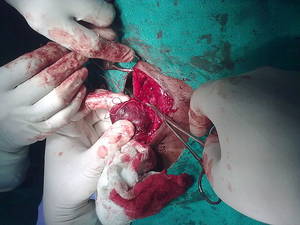
Absolute 30-day morbidity for all cases was 3% in those with surgical residents and 1% in those without surgical resident involvement (SRI).
Absolute 30-day mortality rates for all cases with and without SRI were 0.1% and 0.08%, respectively, Dr. Warren Tseng and his colleagues at the University of California, Davis, reported at the annual meeting of the Western Surgical Association.
In risk-adjusted analyses, SRI was associated with a significant 14% increase in morbidity (odds ratio, 1.14) and a 58% decrease in the risk of death (OR, 0.42).
Not surprisingly, mean incision-to-closing operative times were significantly longer for all procedures with SRI at 98 minutes, compared with 75 minutes without SRI.
Surgical residents were involved in 71% (or 27,039) of the 37,907 procedures identified from 2005 to 2007 in the American College of Surgeons’ NSQIP (National Surgical Quality Improvement Program) database.
The seven procedures and corresponding percentages of SRI were 12,829 open hernia repairs (69%), 3,404 laparoscopic hernia repairs (65%), 6,017 laparoscopic cholecystectomies (76%), 731 open right colectomies (74%), 2,614 total thyroidectomies (82%), 2,940 laparoscopic Nissen fundoplication cases (79%), and 9,372 laparoscopic Roux-en-Y bypass procedures (68%).
In risk-adjusted analysis, SRI was associated with significantly lower mortality for open right colectomy (OR, 0.32), said Dr. Tseng, a general surgery resident at the UC Davis.
"Surgical resident training is safe with respect to these seven procedures," he said, but suggested that future studies are needed to investigate the potential causes for the observed differences.
During a discussion of the study, Dr. Steven Stain of Albany (N.Y.) Medical College said that if it’s commonly believed that resident involvement increases morbidity, there will be patients, payers, and others who won’t want residents involved with cases.
"I’m sure your results are supported by the data, but my concern is that if the implications of this study are taken to the extreme, it’s going to hurt our ability to train residents," he said. "And ultimately, I believe that patients get better care with residents’ involvement, and I’m not sure that your study would support that assertion."
Dr. Stain added that although the NSQIP database is robust, it does not fully account for differences among hospitals, and thus it is not the same surgeon performing, for example, a thyroidectomy – with or without a resident.
Dr. Karen Borman of the Abington (Penn.) Memorial Hospital observed that resident involvement can be a bit of a proxy for other things at an institution, such as increased interruptions and traffic into the OR that could affect infection rates and outcomes. She also questioned whether there may be a selection bias behind cases without SRIs, as they may have been straightforward cases involving uncomplicated patients.
Dr. Richard Thirlby of Virginia Mason Medical Center, Seattle, took issue with the lack of procedure-specific mortality and relative risk calculations.
Invited discussant Dr. Amalia Cochran of the University of Utah, Salt Lake City, described the study as an important extension of previous studies, and said that it stands out for its sheer magnitude. She asked the authors to explain how they chose the seven procedures and how the working relationship between the attending surgeon and resident might influence operative times.
Dr. David Wisner, the study’s senior author, said that they selected procedures with minimal variability, whereas complicated procedures like a Whipple surgery could skew the results. He described the relationship between attending physician and resident as complicated, and said that one of the virtues of the NSQIP database is that some variables are weeded out in an analysis of more than 30,000 patients.
Dr. Wisner agreed that factors other than direct resident involvement could influence outcomes, and said that several exclusion criteria were applied to reduce the risk of selection bias. The study excluded cases with concomitant procedures, nonelective cases, moribund ASA (American Society of Anesthesiologists) category 5 patients, and cases with unknown SRI.
Residents of all levels were included as long as they were part of an Accreditation Council for Graduate Medical Education–accredited training program.
Dr. Tseng and Dr. Wisner disclosed no conflicts of interest. None of the discussants disclosed conflicts.
CHICAGO – The involvement of surgical residents in seven common general surgery procedures was associated with higher morbidity, but lower mortality in an analysis of 37,907 operations.
Absolute 30-day morbidity for all cases was 3% in those with surgical residents and 1% in those without surgical resident involvement (SRI).
Absolute 30-day mortality rates for all cases with and without SRI were 0.1% and 0.08%, respectively, Dr. Warren Tseng and his colleagues at the University of California, Davis, reported at the annual meeting of the Western Surgical Association.
In risk-adjusted analyses, SRI was associated with a significant 14% increase in morbidity (odds ratio, 1.14) and a 58% decrease in the risk of death (OR, 0.42).
Not surprisingly, mean incision-to-closing operative times were significantly longer for all procedures with SRI at 98 minutes, compared with 75 minutes without SRI.
Surgical residents were involved in 71% (or 27,039) of the 37,907 procedures identified from 2005 to 2007 in the American College of Surgeons’ NSQIP (National Surgical Quality Improvement Program) database.
The seven procedures and corresponding percentages of SRI were 12,829 open hernia repairs (69%), 3,404 laparoscopic hernia repairs (65%), 6,017 laparoscopic cholecystectomies (76%), 731 open right colectomies (74%), 2,614 total thyroidectomies (82%), 2,940 laparoscopic Nissen fundoplication cases (79%), and 9,372 laparoscopic Roux-en-Y bypass procedures (68%).
In risk-adjusted analysis, SRI was associated with significantly lower mortality for open right colectomy (OR, 0.32), said Dr. Tseng, a general surgery resident at the UC Davis.
"Surgical resident training is safe with respect to these seven procedures," he said, but suggested that future studies are needed to investigate the potential causes for the observed differences.
During a discussion of the study, Dr. Steven Stain of Albany (N.Y.) Medical College said that if it’s commonly believed that resident involvement increases morbidity, there will be patients, payers, and others who won’t want residents involved with cases.
"I’m sure your results are supported by the data, but my concern is that if the implications of this study are taken to the extreme, it’s going to hurt our ability to train residents," he said. "And ultimately, I believe that patients get better care with residents’ involvement, and I’m not sure that your study would support that assertion."
Dr. Stain added that although the NSQIP database is robust, it does not fully account for differences among hospitals, and thus it is not the same surgeon performing, for example, a thyroidectomy – with or without a resident.
Dr. Karen Borman of the Abington (Penn.) Memorial Hospital observed that resident involvement can be a bit of a proxy for other things at an institution, such as increased interruptions and traffic into the OR that could affect infection rates and outcomes. She also questioned whether there may be a selection bias behind cases without SRIs, as they may have been straightforward cases involving uncomplicated patients.
Dr. Richard Thirlby of Virginia Mason Medical Center, Seattle, took issue with the lack of procedure-specific mortality and relative risk calculations.
Invited discussant Dr. Amalia Cochran of the University of Utah, Salt Lake City, described the study as an important extension of previous studies, and said that it stands out for its sheer magnitude. She asked the authors to explain how they chose the seven procedures and how the working relationship between the attending surgeon and resident might influence operative times.
Dr. David Wisner, the study’s senior author, said that they selected procedures with minimal variability, whereas complicated procedures like a Whipple surgery could skew the results. He described the relationship between attending physician and resident as complicated, and said that one of the virtues of the NSQIP database is that some variables are weeded out in an analysis of more than 30,000 patients.
Dr. Wisner agreed that factors other than direct resident involvement could influence outcomes, and said that several exclusion criteria were applied to reduce the risk of selection bias. The study excluded cases with concomitant procedures, nonelective cases, moribund ASA (American Society of Anesthesiologists) category 5 patients, and cases with unknown SRI.
Residents of all levels were included as long as they were part of an Accreditation Council for Graduate Medical Education–accredited training program.
Dr. Tseng and Dr. Wisner disclosed no conflicts of interest. None of the discussants disclosed conflicts.
CHICAGO – The involvement of surgical residents in seven common general surgery procedures was associated with higher morbidity, but lower mortality in an analysis of 37,907 operations.
Absolute 30-day morbidity for all cases was 3% in those with surgical residents and 1% in those without surgical resident involvement (SRI).
Absolute 30-day mortality rates for all cases with and without SRI were 0.1% and 0.08%, respectively, Dr. Warren Tseng and his colleagues at the University of California, Davis, reported at the annual meeting of the Western Surgical Association.
In risk-adjusted analyses, SRI was associated with a significant 14% increase in morbidity (odds ratio, 1.14) and a 58% decrease in the risk of death (OR, 0.42).
Not surprisingly, mean incision-to-closing operative times were significantly longer for all procedures with SRI at 98 minutes, compared with 75 minutes without SRI.
Surgical residents were involved in 71% (or 27,039) of the 37,907 procedures identified from 2005 to 2007 in the American College of Surgeons’ NSQIP (National Surgical Quality Improvement Program) database.
The seven procedures and corresponding percentages of SRI were 12,829 open hernia repairs (69%), 3,404 laparoscopic hernia repairs (65%), 6,017 laparoscopic cholecystectomies (76%), 731 open right colectomies (74%), 2,614 total thyroidectomies (82%), 2,940 laparoscopic Nissen fundoplication cases (79%), and 9,372 laparoscopic Roux-en-Y bypass procedures (68%).
In risk-adjusted analysis, SRI was associated with significantly lower mortality for open right colectomy (OR, 0.32), said Dr. Tseng, a general surgery resident at the UC Davis.
"Surgical resident training is safe with respect to these seven procedures," he said, but suggested that future studies are needed to investigate the potential causes for the observed differences.
During a discussion of the study, Dr. Steven Stain of Albany (N.Y.) Medical College said that if it’s commonly believed that resident involvement increases morbidity, there will be patients, payers, and others who won’t want residents involved with cases.
"I’m sure your results are supported by the data, but my concern is that if the implications of this study are taken to the extreme, it’s going to hurt our ability to train residents," he said. "And ultimately, I believe that patients get better care with residents’ involvement, and I’m not sure that your study would support that assertion."
Dr. Stain added that although the NSQIP database is robust, it does not fully account for differences among hospitals, and thus it is not the same surgeon performing, for example, a thyroidectomy – with or without a resident.
Dr. Karen Borman of the Abington (Penn.) Memorial Hospital observed that resident involvement can be a bit of a proxy for other things at an institution, such as increased interruptions and traffic into the OR that could affect infection rates and outcomes. She also questioned whether there may be a selection bias behind cases without SRIs, as they may have been straightforward cases involving uncomplicated patients.
Dr. Richard Thirlby of Virginia Mason Medical Center, Seattle, took issue with the lack of procedure-specific mortality and relative risk calculations.
Invited discussant Dr. Amalia Cochran of the University of Utah, Salt Lake City, described the study as an important extension of previous studies, and said that it stands out for its sheer magnitude. She asked the authors to explain how they chose the seven procedures and how the working relationship between the attending surgeon and resident might influence operative times.
Dr. David Wisner, the study’s senior author, said that they selected procedures with minimal variability, whereas complicated procedures like a Whipple surgery could skew the results. He described the relationship between attending physician and resident as complicated, and said that one of the virtues of the NSQIP database is that some variables are weeded out in an analysis of more than 30,000 patients.
Dr. Wisner agreed that factors other than direct resident involvement could influence outcomes, and said that several exclusion criteria were applied to reduce the risk of selection bias. The study excluded cases with concomitant procedures, nonelective cases, moribund ASA (American Society of Anesthesiologists) category 5 patients, and cases with unknown SRI.
Residents of all levels were included as long as they were part of an Accreditation Council for Graduate Medical Education–accredited training program.
Dr. Tseng and Dr. Wisner disclosed no conflicts of interest. None of the discussants disclosed conflicts.
Resident Involvement Implicated in General Surgery Outcomes
CHICAGO – The involvement of surgical residents in seven common general surgery procedures was associated with higher morbidity, but lower mortality in an analysis of 37,907 operations.
Absolute 30-day morbidity for all cases was 3% in those with surgical residents and 1% in those without surgical resident involvement (SRI).
Absolute 30-day mortality rates for all cases with and without SRI were 0.1% and 0.08%, respectively, Dr. Warren Tseng and his colleagues at the University of California, Davis, reported at the annual meeting of the Western Surgical Association.
In risk-adjusted analyses, SRI was associated with a significant 14% increase in morbidity (odds ratio, 1.14) and a 58% decrease in the risk of death (OR, 0.42).
Not surprisingly, mean incision-to-closing operative times were significantly longer for all procedures with SRI at 98 minutes, compared with 75 minutes without SRI.
Surgical residents were involved in 71% (or 27,039) of the 37,907 procedures identified from 2005 to 2007 in the American College of Surgeons’ NSQIP (National Surgical Quality Improvement Program) database.
The seven procedures and corresponding percentages of SRI were 12,829 open hernia repairs (69%), 3,404 laparoscopic hernia repairs (65%), 6,017 laparoscopic cholecystectomies (76%), 731 open right colectomies (74%), 2,614 total thyroidectomies (82%), 2,940 laparoscopic Nissen fundoplication cases (79%), and 9,372 laparoscopic Roux-en-Y bypass procedures (68%).
In risk-adjusted analysis, SRI was associated with significantly lower mortality for open right colectomy (OR, 0.32), said Dr. Tseng, a general surgery resident at the UC Davis.
"Surgical resident training is safe with respect to these seven procedures," he said, but suggested that future studies are needed to investigate the potential causes for the observed differences.
During a discussion of the study, Dr. Steven Stain of Albany (N.Y.) Medical College said that if it’s commonly believed that resident involvement increases morbidity, there will be patients, payers, and others who won’t want residents involved with cases.
"I’m sure your results are supported by the data, but my concern is that if the implications of this study are taken to the extreme, it’s going to hurt our ability to train residents," he said. "And ultimately, I believe that patients get better care with residents’ involvement, and I’m not sure that your study would support that assertion."
Dr. Stain added that although the NSQIP database is robust, it does not fully account for differences among hospitals, and thus it is not the same surgeon performing, for example, a thyroidectomy – with or without a resident.
Dr. Karen Borman of the Abington (Penn.) Memorial Hospital observed that resident involvement can be a bit of a proxy for other things at an institution, such as increased interruptions and traffic into the OR that could affect infection rates and outcomes. She also questioned whether there may be a selection bias behind cases without SRIs, as they may have been straightforward cases involving uncomplicated patients.
Dr. Richard Thirlby of Virginia Mason Medical Center, Seattle, took issue with the lack of procedure-specific mortality and relative risk calculations.
Invited discussant Dr. Amalia Cochran of the University of Utah, Salt Lake City, described the study as an important extension of previous studies, and said that it stands out for its sheer magnitude. She asked the authors to explain how they chose the seven procedures and how the working relationship between the attending surgeon and resident might influence operative times.
Dr. David Wisner, the study’s senior author, said that they selected procedures with minimal variability, whereas complicated procedures like a Whipple surgery could skew the results. He described the relationship between attending physician and resident as complicated, and said that one of the virtues of the NSQIP database is that some variables are weeded out in an analysis of more than 30,000 patients.
Dr. Wisner agreed that factors other than direct resident involvement could influence outcomes, and said that several exclusion criteria were applied to reduce the risk of selection bias. The study excluded cases with concomitant procedures, nonelective cases, moribund ASA (American Society of Anesthesiologists) category 5 patients, and cases with unknown SRI.
Residents of all levels were included as long as they were part of an Accreditation Council for Graduate Medical Education–accredited training program.
Dr. Tseng and Dr. Wisner disclosed no conflicts of interest. None of the discussants disclosed conflicts.
CHICAGO – The involvement of surgical residents in seven common general surgery procedures was associated with higher morbidity, but lower mortality in an analysis of 37,907 operations.
Absolute 30-day morbidity for all cases was 3% in those with surgical residents and 1% in those without surgical resident involvement (SRI).
Absolute 30-day mortality rates for all cases with and without SRI were 0.1% and 0.08%, respectively, Dr. Warren Tseng and his colleagues at the University of California, Davis, reported at the annual meeting of the Western Surgical Association.
In risk-adjusted analyses, SRI was associated with a significant 14% increase in morbidity (odds ratio, 1.14) and a 58% decrease in the risk of death (OR, 0.42).
Not surprisingly, mean incision-to-closing operative times were significantly longer for all procedures with SRI at 98 minutes, compared with 75 minutes without SRI.
Surgical residents were involved in 71% (or 27,039) of the 37,907 procedures identified from 2005 to 2007 in the American College of Surgeons’ NSQIP (National Surgical Quality Improvement Program) database.
The seven procedures and corresponding percentages of SRI were 12,829 open hernia repairs (69%), 3,404 laparoscopic hernia repairs (65%), 6,017 laparoscopic cholecystectomies (76%), 731 open right colectomies (74%), 2,614 total thyroidectomies (82%), 2,940 laparoscopic Nissen fundoplication cases (79%), and 9,372 laparoscopic Roux-en-Y bypass procedures (68%).
In risk-adjusted analysis, SRI was associated with significantly lower mortality for open right colectomy (OR, 0.32), said Dr. Tseng, a general surgery resident at the UC Davis.
"Surgical resident training is safe with respect to these seven procedures," he said, but suggested that future studies are needed to investigate the potential causes for the observed differences.
During a discussion of the study, Dr. Steven Stain of Albany (N.Y.) Medical College said that if it’s commonly believed that resident involvement increases morbidity, there will be patients, payers, and others who won’t want residents involved with cases.
"I’m sure your results are supported by the data, but my concern is that if the implications of this study are taken to the extreme, it’s going to hurt our ability to train residents," he said. "And ultimately, I believe that patients get better care with residents’ involvement, and I’m not sure that your study would support that assertion."
Dr. Stain added that although the NSQIP database is robust, it does not fully account for differences among hospitals, and thus it is not the same surgeon performing, for example, a thyroidectomy – with or without a resident.
Dr. Karen Borman of the Abington (Penn.) Memorial Hospital observed that resident involvement can be a bit of a proxy for other things at an institution, such as increased interruptions and traffic into the OR that could affect infection rates and outcomes. She also questioned whether there may be a selection bias behind cases without SRIs, as they may have been straightforward cases involving uncomplicated patients.
Dr. Richard Thirlby of Virginia Mason Medical Center, Seattle, took issue with the lack of procedure-specific mortality and relative risk calculations.
Invited discussant Dr. Amalia Cochran of the University of Utah, Salt Lake City, described the study as an important extension of previous studies, and said that it stands out for its sheer magnitude. She asked the authors to explain how they chose the seven procedures and how the working relationship between the attending surgeon and resident might influence operative times.
Dr. David Wisner, the study’s senior author, said that they selected procedures with minimal variability, whereas complicated procedures like a Whipple surgery could skew the results. He described the relationship between attending physician and resident as complicated, and said that one of the virtues of the NSQIP database is that some variables are weeded out in an analysis of more than 30,000 patients.
Dr. Wisner agreed that factors other than direct resident involvement could influence outcomes, and said that several exclusion criteria were applied to reduce the risk of selection bias. The study excluded cases with concomitant procedures, nonelective cases, moribund ASA (American Society of Anesthesiologists) category 5 patients, and cases with unknown SRI.
Residents of all levels were included as long as they were part of an Accreditation Council for Graduate Medical Education–accredited training program.
Dr. Tseng and Dr. Wisner disclosed no conflicts of interest. None of the discussants disclosed conflicts.
CHICAGO – The involvement of surgical residents in seven common general surgery procedures was associated with higher morbidity, but lower mortality in an analysis of 37,907 operations.
Absolute 30-day morbidity for all cases was 3% in those with surgical residents and 1% in those without surgical resident involvement (SRI).
Absolute 30-day mortality rates for all cases with and without SRI were 0.1% and 0.08%, respectively, Dr. Warren Tseng and his colleagues at the University of California, Davis, reported at the annual meeting of the Western Surgical Association.
In risk-adjusted analyses, SRI was associated with a significant 14% increase in morbidity (odds ratio, 1.14) and a 58% decrease in the risk of death (OR, 0.42).
Not surprisingly, mean incision-to-closing operative times were significantly longer for all procedures with SRI at 98 minutes, compared with 75 minutes without SRI.
Surgical residents were involved in 71% (or 27,039) of the 37,907 procedures identified from 2005 to 2007 in the American College of Surgeons’ NSQIP (National Surgical Quality Improvement Program) database.
The seven procedures and corresponding percentages of SRI were 12,829 open hernia repairs (69%), 3,404 laparoscopic hernia repairs (65%), 6,017 laparoscopic cholecystectomies (76%), 731 open right colectomies (74%), 2,614 total thyroidectomies (82%), 2,940 laparoscopic Nissen fundoplication cases (79%), and 9,372 laparoscopic Roux-en-Y bypass procedures (68%).
In risk-adjusted analysis, SRI was associated with significantly lower mortality for open right colectomy (OR, 0.32), said Dr. Tseng, a general surgery resident at the UC Davis.
"Surgical resident training is safe with respect to these seven procedures," he said, but suggested that future studies are needed to investigate the potential causes for the observed differences.
During a discussion of the study, Dr. Steven Stain of Albany (N.Y.) Medical College said that if it’s commonly believed that resident involvement increases morbidity, there will be patients, payers, and others who won’t want residents involved with cases.
"I’m sure your results are supported by the data, but my concern is that if the implications of this study are taken to the extreme, it’s going to hurt our ability to train residents," he said. "And ultimately, I believe that patients get better care with residents’ involvement, and I’m not sure that your study would support that assertion."
Dr. Stain added that although the NSQIP database is robust, it does not fully account for differences among hospitals, and thus it is not the same surgeon performing, for example, a thyroidectomy – with or without a resident.
Dr. Karen Borman of the Abington (Penn.) Memorial Hospital observed that resident involvement can be a bit of a proxy for other things at an institution, such as increased interruptions and traffic into the OR that could affect infection rates and outcomes. She also questioned whether there may be a selection bias behind cases without SRIs, as they may have been straightforward cases involving uncomplicated patients.
Dr. Richard Thirlby of Virginia Mason Medical Center, Seattle, took issue with the lack of procedure-specific mortality and relative risk calculations.
Invited discussant Dr. Amalia Cochran of the University of Utah, Salt Lake City, described the study as an important extension of previous studies, and said that it stands out for its sheer magnitude. She asked the authors to explain how they chose the seven procedures and how the working relationship between the attending surgeon and resident might influence operative times.
Dr. David Wisner, the study’s senior author, said that they selected procedures with minimal variability, whereas complicated procedures like a Whipple surgery could skew the results. He described the relationship between attending physician and resident as complicated, and said that one of the virtues of the NSQIP database is that some variables are weeded out in an analysis of more than 30,000 patients.
Dr. Wisner agreed that factors other than direct resident involvement could influence outcomes, and said that several exclusion criteria were applied to reduce the risk of selection bias. The study excluded cases with concomitant procedures, nonelective cases, moribund ASA (American Society of Anesthesiologists) category 5 patients, and cases with unknown SRI.
Residents of all levels were included as long as they were part of an Accreditation Council for Graduate Medical Education–accredited training program.
Dr. Tseng and Dr. Wisner disclosed no conflicts of interest. None of the discussants disclosed conflicts.
Omega-3 Fails to Halt Recurrent Atrial Fibrillation
CHICAGO – High-dose, prescription omega-3 fatty acids did no better than placebo in preventing the recurrence of symptomatic paroxysmal atrial fibrillation episodes in the P-OM3 trial.
At 24 weeks, the primary end point of symptomatic recurrence of atrial fibrillation (AF) or flutter in patients with paroxysmal AF occurred in 52% of those receiving prescription omega-3 and 48% of those given placebo, a nonsignificant difference.
Those results were consistent across all prespecified subgroups, including age; gender; smoking status; and use of ACE inhibitors, angiotensin II receptor blockers, or statins, Dr. Peter R. Kowey reported at the annual scientific sessions of the American Heart Association.
In addition, the median annualized numbers of AF/flutter rescue episodes were similar: 2.17 in the placebo group vs. 2.24 in the prescription omega-3 group.
Patients with symptomatic paroxysmal AF made up the majority (82%) of the 663-patient trial, as this group was thought most likely to respond to omega-3 polyunsaturated fatty acids. All patients were without substantial structural heart disease and in normal sinus rhythm at baseline without the use of antiarrhythmic drugs.
Secondary analyses showed no statistically significant differences in the rates of symptomatic AF or flutter among patients with persistent AF treated with prescription omega-3 (50%) or placebo (33%), and between treatment groups when both the paroxysmal and persistent AF patients were combined (52% vs. 46%, respectively), he said.
Although previous trials have produced mixed results regarding the efficacy of omega-3 fatty acids in atrial fibrillation, the current trial "demonstrated incontrovertibly" that patients with paroxysmal AF who received this drug did no better than those who received placebo, Dr. Kowey, chief of cardiovascular disease with Main Line Health, Lankenau Hospital in Wynnewood, Pa., said during a press briefing.
Invited discussant Dr. Christine Albert of Brigham and Women’s Hospital in Boston said that the current data are sorely needed because of the large number of patients taking omega-3 fatty acids, but that patients should wait before abandoning the popular drug. She pointed out that observational studies of fish intake and AF have shown a benefit in elderly patients as well as a potentially negative effect in younger patients, suggesting that omega-3 fatty acids may have different effects in different patient populations.
This raises the question of whether subtypes of AF may still benefit from omega-3, including post-operative AF, older patients with chronic heart failure or structural heart disease, and those with persistent or chronic AF, Dr. Albert said.
The phase III OPERA trial is currently testing whether peri-operative omega-3 fatty acids will decrease the occurrence of post-op AF, compared with placebo, in patients undergoing cardiac surgery. She also noted that P-OM3 did not address the longer-term effects of omega-3, whether lower doses could be more effective, and whether omega-3 fatty acids could be useful in the primary prevention of AF.
"The take-home point is that right now we really don’t have any evidence that these omega-3 fatty acids prevent symptomatic atrial fibrillation in paroxysmal patients," Dr. Albert said. "I do think there is a role for further large-scale randomized trials, which are ongoing."
As expected, prescription-grade omega-3 was extremely well tolerated in P-OM3, with a very low incidence of any adverse event and no difference in rates of serious adverse events, Dr. Kowey said. In all, 5% of the placebo group and 4% of the omega-3 group discontinued therapy because of an adverse event.
The trial randomized 542 patients with symptomatic paroxysmal AF and 121 patients with persistent AF to 8 g/day of prescription omega-3 for 7 days and 4 g/day thereafter or placebo. Of these, 527 paroxysmal patients and 118 persistent AF patients were evaluable, with the remainder lost to follow-up, excluded for lack of ECG monitoring data, or withdrawing.
GlaxoSmithKline funded the P-OM3 trial. Dr. Kowey has served as a consultant for Reliant Pharmaceuticals and GSK. Dr. Albert disclosed consulting fees and honoraria from Novartis and research grants from Siemens and St. Jude Medical.
CHICAGO – High-dose, prescription omega-3 fatty acids did no better than placebo in preventing the recurrence of symptomatic paroxysmal atrial fibrillation episodes in the P-OM3 trial.
At 24 weeks, the primary end point of symptomatic recurrence of atrial fibrillation (AF) or flutter in patients with paroxysmal AF occurred in 52% of those receiving prescription omega-3 and 48% of those given placebo, a nonsignificant difference.
Those results were consistent across all prespecified subgroups, including age; gender; smoking status; and use of ACE inhibitors, angiotensin II receptor blockers, or statins, Dr. Peter R. Kowey reported at the annual scientific sessions of the American Heart Association.
In addition, the median annualized numbers of AF/flutter rescue episodes were similar: 2.17 in the placebo group vs. 2.24 in the prescription omega-3 group.
Patients with symptomatic paroxysmal AF made up the majority (82%) of the 663-patient trial, as this group was thought most likely to respond to omega-3 polyunsaturated fatty acids. All patients were without substantial structural heart disease and in normal sinus rhythm at baseline without the use of antiarrhythmic drugs.
Secondary analyses showed no statistically significant differences in the rates of symptomatic AF or flutter among patients with persistent AF treated with prescription omega-3 (50%) or placebo (33%), and between treatment groups when both the paroxysmal and persistent AF patients were combined (52% vs. 46%, respectively), he said.
Although previous trials have produced mixed results regarding the efficacy of omega-3 fatty acids in atrial fibrillation, the current trial "demonstrated incontrovertibly" that patients with paroxysmal AF who received this drug did no better than those who received placebo, Dr. Kowey, chief of cardiovascular disease with Main Line Health, Lankenau Hospital in Wynnewood, Pa., said during a press briefing.
Invited discussant Dr. Christine Albert of Brigham and Women’s Hospital in Boston said that the current data are sorely needed because of the large number of patients taking omega-3 fatty acids, but that patients should wait before abandoning the popular drug. She pointed out that observational studies of fish intake and AF have shown a benefit in elderly patients as well as a potentially negative effect in younger patients, suggesting that omega-3 fatty acids may have different effects in different patient populations.
This raises the question of whether subtypes of AF may still benefit from omega-3, including post-operative AF, older patients with chronic heart failure or structural heart disease, and those with persistent or chronic AF, Dr. Albert said.
The phase III OPERA trial is currently testing whether peri-operative omega-3 fatty acids will decrease the occurrence of post-op AF, compared with placebo, in patients undergoing cardiac surgery. She also noted that P-OM3 did not address the longer-term effects of omega-3, whether lower doses could be more effective, and whether omega-3 fatty acids could be useful in the primary prevention of AF.
"The take-home point is that right now we really don’t have any evidence that these omega-3 fatty acids prevent symptomatic atrial fibrillation in paroxysmal patients," Dr. Albert said. "I do think there is a role for further large-scale randomized trials, which are ongoing."
As expected, prescription-grade omega-3 was extremely well tolerated in P-OM3, with a very low incidence of any adverse event and no difference in rates of serious adverse events, Dr. Kowey said. In all, 5% of the placebo group and 4% of the omega-3 group discontinued therapy because of an adverse event.
The trial randomized 542 patients with symptomatic paroxysmal AF and 121 patients with persistent AF to 8 g/day of prescription omega-3 for 7 days and 4 g/day thereafter or placebo. Of these, 527 paroxysmal patients and 118 persistent AF patients were evaluable, with the remainder lost to follow-up, excluded for lack of ECG monitoring data, or withdrawing.
GlaxoSmithKline funded the P-OM3 trial. Dr. Kowey has served as a consultant for Reliant Pharmaceuticals and GSK. Dr. Albert disclosed consulting fees and honoraria from Novartis and research grants from Siemens and St. Jude Medical.
CHICAGO – High-dose, prescription omega-3 fatty acids did no better than placebo in preventing the recurrence of symptomatic paroxysmal atrial fibrillation episodes in the P-OM3 trial.
At 24 weeks, the primary end point of symptomatic recurrence of atrial fibrillation (AF) or flutter in patients with paroxysmal AF occurred in 52% of those receiving prescription omega-3 and 48% of those given placebo, a nonsignificant difference.
Those results were consistent across all prespecified subgroups, including age; gender; smoking status; and use of ACE inhibitors, angiotensin II receptor blockers, or statins, Dr. Peter R. Kowey reported at the annual scientific sessions of the American Heart Association.
In addition, the median annualized numbers of AF/flutter rescue episodes were similar: 2.17 in the placebo group vs. 2.24 in the prescription omega-3 group.
Patients with symptomatic paroxysmal AF made up the majority (82%) of the 663-patient trial, as this group was thought most likely to respond to omega-3 polyunsaturated fatty acids. All patients were without substantial structural heart disease and in normal sinus rhythm at baseline without the use of antiarrhythmic drugs.
Secondary analyses showed no statistically significant differences in the rates of symptomatic AF or flutter among patients with persistent AF treated with prescription omega-3 (50%) or placebo (33%), and between treatment groups when both the paroxysmal and persistent AF patients were combined (52% vs. 46%, respectively), he said.
Although previous trials have produced mixed results regarding the efficacy of omega-3 fatty acids in atrial fibrillation, the current trial "demonstrated incontrovertibly" that patients with paroxysmal AF who received this drug did no better than those who received placebo, Dr. Kowey, chief of cardiovascular disease with Main Line Health, Lankenau Hospital in Wynnewood, Pa., said during a press briefing.
Invited discussant Dr. Christine Albert of Brigham and Women’s Hospital in Boston said that the current data are sorely needed because of the large number of patients taking omega-3 fatty acids, but that patients should wait before abandoning the popular drug. She pointed out that observational studies of fish intake and AF have shown a benefit in elderly patients as well as a potentially negative effect in younger patients, suggesting that omega-3 fatty acids may have different effects in different patient populations.
This raises the question of whether subtypes of AF may still benefit from omega-3, including post-operative AF, older patients with chronic heart failure or structural heart disease, and those with persistent or chronic AF, Dr. Albert said.
The phase III OPERA trial is currently testing whether peri-operative omega-3 fatty acids will decrease the occurrence of post-op AF, compared with placebo, in patients undergoing cardiac surgery. She also noted that P-OM3 did not address the longer-term effects of omega-3, whether lower doses could be more effective, and whether omega-3 fatty acids could be useful in the primary prevention of AF.
"The take-home point is that right now we really don’t have any evidence that these omega-3 fatty acids prevent symptomatic atrial fibrillation in paroxysmal patients," Dr. Albert said. "I do think there is a role for further large-scale randomized trials, which are ongoing."
As expected, prescription-grade omega-3 was extremely well tolerated in P-OM3, with a very low incidence of any adverse event and no difference in rates of serious adverse events, Dr. Kowey said. In all, 5% of the placebo group and 4% of the omega-3 group discontinued therapy because of an adverse event.
The trial randomized 542 patients with symptomatic paroxysmal AF and 121 patients with persistent AF to 8 g/day of prescription omega-3 for 7 days and 4 g/day thereafter or placebo. Of these, 527 paroxysmal patients and 118 persistent AF patients were evaluable, with the remainder lost to follow-up, excluded for lack of ECG monitoring data, or withdrawing.
GlaxoSmithKline funded the P-OM3 trial. Dr. Kowey has served as a consultant for Reliant Pharmaceuticals and GSK. Dr. Albert disclosed consulting fees and honoraria from Novartis and research grants from Siemens and St. Jude Medical.
Omega-3 Fails to Halt Recurrent Atrial Fibrillation
CHICAGO – High-dose, prescription omega-3 fatty acids did no better than placebo in preventing the recurrence of symptomatic paroxysmal atrial fibrillation episodes in the P-OM3 trial.
At 24 weeks, the primary end point of symptomatic recurrence of atrial fibrillation (AF) or flutter in patients with paroxysmal AF occurred in 52% of those receiving prescription omega-3 and 48% of those given placebo, a nonsignificant difference.
Those results were consistent across all prespecified subgroups, including age; gender; smoking status; and use of ACE inhibitors, angiotensin II receptor blockers, or statins, Dr. Peter R. Kowey reported at the annual scientific sessions of the American Heart Association.
In addition, the median annualized numbers of AF/flutter rescue episodes were similar: 2.17 in the placebo group vs. 2.24 in the prescription omega-3 group.
Patients with symptomatic paroxysmal AF made up the majority (82%) of the 663-patient trial, as this group was thought most likely to respond to omega-3 polyunsaturated fatty acids. All patients were without substantial structural heart disease and in normal sinus rhythm at baseline without the use of antiarrhythmic drugs.
Secondary analyses showed no statistically significant differences in the rates of symptomatic AF or flutter among patients with persistent AF treated with prescription omega-3 (50%) or placebo (33%), and between treatment groups when both the paroxysmal and persistent AF patients were combined (52% vs. 46%, respectively), he said.
Although previous trials have produced mixed results regarding the efficacy of omega-3 fatty acids in atrial fibrillation, the current trial "demonstrated incontrovertibly" that patients with paroxysmal AF who received this drug did no better than those who received placebo, Dr. Kowey, chief of cardiovascular disease with Main Line Health, Lankenau Hospital in Wynnewood, Pa., said during a press briefing.
Invited discussant Dr. Christine Albert of Brigham and Women’s Hospital in Boston said that the current data are sorely needed because of the large number of patients taking omega-3 fatty acids, but that patients should wait before abandoning the popular drug. She pointed out that observational studies of fish intake and AF have shown a benefit in elderly patients as well as a potentially negative effect in younger patients, suggesting that omega-3 fatty acids may have different effects in different patient populations.
This raises the question of whether subtypes of AF may still benefit from omega-3, including post-operative AF, older patients with chronic heart failure or structural heart disease, and those with persistent or chronic AF, Dr. Albert said.
The phase III OPERA trial is currently testing whether peri-operative omega-3 fatty acids will decrease the occurrence of post-op AF, compared with placebo, in patients undergoing cardiac surgery. She also noted that P-OM3 did not address the longer-term effects of omega-3, whether lower doses could be more effective, and whether omega-3 fatty acids could be useful in the primary prevention of AF.
"The take-home point is that right now we really don’t have any evidence that these omega-3 fatty acids prevent symptomatic atrial fibrillation in paroxysmal patients," Dr. Albert said. "I do think there is a role for further large-scale randomized trials, which are ongoing."
As expected, prescription-grade omega-3 was extremely well tolerated in P-OM3, with a very low incidence of any adverse event and no difference in rates of serious adverse events, Dr. Kowey said. In all, 5% of the placebo group and 4% of the omega-3 group discontinued therapy because of an adverse event.
The trial randomized 542 patients with symptomatic paroxysmal AF and 121 patients with persistent AF to 8 g/day of prescription omega-3 for 7 days and 4 g/day thereafter or placebo. Of these, 527 paroxysmal patients and 118 persistent AF patients were evaluable, with the remainder lost to follow-up, excluded for lack of ECG monitoring data, or withdrawing.
GlaxoSmithKline funded the P-OM3 trial. Dr. Kowey has served as a consultant for Reliant Pharmaceuticals and GSK. Dr. Albert disclosed consulting fees and honoraria from Novartis and research grants from Siemens and St. Jude Medical.
CHICAGO – High-dose, prescription omega-3 fatty acids did no better than placebo in preventing the recurrence of symptomatic paroxysmal atrial fibrillation episodes in the P-OM3 trial.
At 24 weeks, the primary end point of symptomatic recurrence of atrial fibrillation (AF) or flutter in patients with paroxysmal AF occurred in 52% of those receiving prescription omega-3 and 48% of those given placebo, a nonsignificant difference.
Those results were consistent across all prespecified subgroups, including age; gender; smoking status; and use of ACE inhibitors, angiotensin II receptor blockers, or statins, Dr. Peter R. Kowey reported at the annual scientific sessions of the American Heart Association.
In addition, the median annualized numbers of AF/flutter rescue episodes were similar: 2.17 in the placebo group vs. 2.24 in the prescription omega-3 group.
Patients with symptomatic paroxysmal AF made up the majority (82%) of the 663-patient trial, as this group was thought most likely to respond to omega-3 polyunsaturated fatty acids. All patients were without substantial structural heart disease and in normal sinus rhythm at baseline without the use of antiarrhythmic drugs.
Secondary analyses showed no statistically significant differences in the rates of symptomatic AF or flutter among patients with persistent AF treated with prescription omega-3 (50%) or placebo (33%), and between treatment groups when both the paroxysmal and persistent AF patients were combined (52% vs. 46%, respectively), he said.
Although previous trials have produced mixed results regarding the efficacy of omega-3 fatty acids in atrial fibrillation, the current trial "demonstrated incontrovertibly" that patients with paroxysmal AF who received this drug did no better than those who received placebo, Dr. Kowey, chief of cardiovascular disease with Main Line Health, Lankenau Hospital in Wynnewood, Pa., said during a press briefing.
Invited discussant Dr. Christine Albert of Brigham and Women’s Hospital in Boston said that the current data are sorely needed because of the large number of patients taking omega-3 fatty acids, but that patients should wait before abandoning the popular drug. She pointed out that observational studies of fish intake and AF have shown a benefit in elderly patients as well as a potentially negative effect in younger patients, suggesting that omega-3 fatty acids may have different effects in different patient populations.
This raises the question of whether subtypes of AF may still benefit from omega-3, including post-operative AF, older patients with chronic heart failure or structural heart disease, and those with persistent or chronic AF, Dr. Albert said.
The phase III OPERA trial is currently testing whether peri-operative omega-3 fatty acids will decrease the occurrence of post-op AF, compared with placebo, in patients undergoing cardiac surgery. She also noted that P-OM3 did not address the longer-term effects of omega-3, whether lower doses could be more effective, and whether omega-3 fatty acids could be useful in the primary prevention of AF.
"The take-home point is that right now we really don’t have any evidence that these omega-3 fatty acids prevent symptomatic atrial fibrillation in paroxysmal patients," Dr. Albert said. "I do think there is a role for further large-scale randomized trials, which are ongoing."
As expected, prescription-grade omega-3 was extremely well tolerated in P-OM3, with a very low incidence of any adverse event and no difference in rates of serious adverse events, Dr. Kowey said. In all, 5% of the placebo group and 4% of the omega-3 group discontinued therapy because of an adverse event.
The trial randomized 542 patients with symptomatic paroxysmal AF and 121 patients with persistent AF to 8 g/day of prescription omega-3 for 7 days and 4 g/day thereafter or placebo. Of these, 527 paroxysmal patients and 118 persistent AF patients were evaluable, with the remainder lost to follow-up, excluded for lack of ECG monitoring data, or withdrawing.
GlaxoSmithKline funded the P-OM3 trial. Dr. Kowey has served as a consultant for Reliant Pharmaceuticals and GSK. Dr. Albert disclosed consulting fees and honoraria from Novartis and research grants from Siemens and St. Jude Medical.
CHICAGO – High-dose, prescription omega-3 fatty acids did no better than placebo in preventing the recurrence of symptomatic paroxysmal atrial fibrillation episodes in the P-OM3 trial.
At 24 weeks, the primary end point of symptomatic recurrence of atrial fibrillation (AF) or flutter in patients with paroxysmal AF occurred in 52% of those receiving prescription omega-3 and 48% of those given placebo, a nonsignificant difference.
Those results were consistent across all prespecified subgroups, including age; gender; smoking status; and use of ACE inhibitors, angiotensin II receptor blockers, or statins, Dr. Peter R. Kowey reported at the annual scientific sessions of the American Heart Association.
In addition, the median annualized numbers of AF/flutter rescue episodes were similar: 2.17 in the placebo group vs. 2.24 in the prescription omega-3 group.
Patients with symptomatic paroxysmal AF made up the majority (82%) of the 663-patient trial, as this group was thought most likely to respond to omega-3 polyunsaturated fatty acids. All patients were without substantial structural heart disease and in normal sinus rhythm at baseline without the use of antiarrhythmic drugs.
Secondary analyses showed no statistically significant differences in the rates of symptomatic AF or flutter among patients with persistent AF treated with prescription omega-3 (50%) or placebo (33%), and between treatment groups when both the paroxysmal and persistent AF patients were combined (52% vs. 46%, respectively), he said.
Although previous trials have produced mixed results regarding the efficacy of omega-3 fatty acids in atrial fibrillation, the current trial "demonstrated incontrovertibly" that patients with paroxysmal AF who received this drug did no better than those who received placebo, Dr. Kowey, chief of cardiovascular disease with Main Line Health, Lankenau Hospital in Wynnewood, Pa., said during a press briefing.
Invited discussant Dr. Christine Albert of Brigham and Women’s Hospital in Boston said that the current data are sorely needed because of the large number of patients taking omega-3 fatty acids, but that patients should wait before abandoning the popular drug. She pointed out that observational studies of fish intake and AF have shown a benefit in elderly patients as well as a potentially negative effect in younger patients, suggesting that omega-3 fatty acids may have different effects in different patient populations.
This raises the question of whether subtypes of AF may still benefit from omega-3, including post-operative AF, older patients with chronic heart failure or structural heart disease, and those with persistent or chronic AF, Dr. Albert said.
The phase III OPERA trial is currently testing whether peri-operative omega-3 fatty acids will decrease the occurrence of post-op AF, compared with placebo, in patients undergoing cardiac surgery. She also noted that P-OM3 did not address the longer-term effects of omega-3, whether lower doses could be more effective, and whether omega-3 fatty acids could be useful in the primary prevention of AF.
"The take-home point is that right now we really don’t have any evidence that these omega-3 fatty acids prevent symptomatic atrial fibrillation in paroxysmal patients," Dr. Albert said. "I do think there is a role for further large-scale randomized trials, which are ongoing."
As expected, prescription-grade omega-3 was extremely well tolerated in P-OM3, with a very low incidence of any adverse event and no difference in rates of serious adverse events, Dr. Kowey said. In all, 5% of the placebo group and 4% of the omega-3 group discontinued therapy because of an adverse event.
The trial randomized 542 patients with symptomatic paroxysmal AF and 121 patients with persistent AF to 8 g/day of prescription omega-3 for 7 days and 4 g/day thereafter or placebo. Of these, 527 paroxysmal patients and 118 persistent AF patients were evaluable, with the remainder lost to follow-up, excluded for lack of ECG monitoring data, or withdrawing.
GlaxoSmithKline funded the P-OM3 trial. Dr. Kowey has served as a consultant for Reliant Pharmaceuticals and GSK. Dr. Albert disclosed consulting fees and honoraria from Novartis and research grants from Siemens and St. Jude Medical.
Major Finding: At 24 weeks, the primary end point of symptomatic recurrence of atrial fibrillation or flutter in patients with paroxysmal AF occurred among 52% of those randomized to prescription omega-3 and 48% of those given placebo.
Data Source: Double-blind, prospective randomized trial of 663 patients with paroxysmal or persistent atrial fibrillation.
Disclosures: GlaxoSmithKline funded the P-OM3 trial. Dr. Kowey has served as a consultant for Reliant Pharmaceuticals and GSK. Dr. Albert disclosed consulting fees and honoraria from Novartis and research grants from Siemens and St. Jude Medical.
Single-Incision Laparoscopic Colectomy Offers Benefits Beyond Cosmesis
CHICAGO – Single-incision laparoscopy is a safe approach for right colectomy and reduces both length of stay and early postoperative pain, compared with established laparoscopic techniques, according to Dr. Harry T. Papaconstantinou.

"I had one patient ask if he could do sit-ups the day after surgery," the physician said. "These patients were actually asking me to go home."
Although single-incision laparoscopy (SIL) is gaining momentum as an advance in laparoscopic colectomy, direct comparisons of outcomes between SIL and established techniques are lacking.
Dr. Papaconstantinou and his colleagues at Scott & White Memorial Hospital in Temple, Tex., compared their first 29 SIL right colectomy cases to an equivalent number of standard laparoscopic (LAP) and hand-assisted laparoscopic (HAL) cases matched for age, sex, body mass index (BMI), American Society of Anesthesiologists score, and pathology.
Operating time was similar for SIL, LAP, and HAL (128.8 min. vs. 128.3 min. vs. 116.2 min., respectively), as was estimated blood loss (60 mL, 90 mL, and 71 mL), Dr. Papaconstantinou reported at the annual meeting of the Western Surgical Association.
Although the mean incision length was similar for the SIL and LAP groups (4.5 cm and 5.1 cm), both had significantly shorter incisions than the HAL patients at 7.2 cm (P less than .001).
"Our operating times are a little longer and incision length larger, but I don’t think it should dissuade an experienced laparoscopist from doing a colectomy single incision," he said.
One SIL patient (3.4%) was converted to the HAL technique, and four conversions occurred in both the LAP group (two to HAL and two to open surgery) and HAL group (four to open surgery).
The median length of stay was 1 day shorter at 3 days in the SIL group, compared with 4 days for both the LAP and HAL groups (P less than .05), said Dr. Papaconstantinou, chief of colon and rectal surgery at Scott & White Memorial Hospital.
Maximum pain scores on a 10-point visual analog scale were significantly higher in the LAP and HAL groups than in the SIL group on postoperative day 1 (6.0 vs. 6.0 vs. 4.7, respectively) and on post-op day 2 (5.1 vs. 5.0 vs. 3.8); however, pain at the time of discharge was similar among the LAP, HAL, and SIL groups (1.6 vs. 1.4 vs. 1.0).
Four SIL patients were readmitted, compared with two in the LAP group and three in the HAL group. The reasons for SIL readmissions included one anastomotic leak, one presumed ileus that resolved after a bowel movement, and two cases of nonocclusive portal vein thrombus that were treated with anticoagulation. These patients had other risk factors for venous thrombosis including a BMI greater than 30 kg/m2 and visceral malignancy. No patients in any of the groups died.
Dr. Papaconstantinou acknowledged having initial concerns about impaired visualization and triangulation during the technically demanding surgery, but said that SIL is safe and feasible, even in obese patients. He said he routinely extends the incision to reduce traction on the mesenteric vessels in larger patients, and has found that curved instruments actually hinder, rather than facilitate, the operation.
"One of the things that is critical is a flexible-tip 5-mm camera because it allows you to move the camera driver away from the surgeon’s hands," he said. "Then you can actually come in at an angle, so you get a side view rather than an on-axis view [of the operative field]."
Using instruments of variable length (standard and bariatric length), and maintaining the instrument handles in a different orientation and plane, also avoids collision.
Invited discussant Dr. Alessandro Fichera, with the University of Chicago Medical Center, said, "There is no doubt in my mind that single-incision laparoscopy is here to stay and that it provides advantages that go way beyond cosmesis, including decreased postoperative pain, narcotic use, and length of stay."
He said that the retrospective nature of the study may introduce a selection bias, and asked who the authors would recommend as candidates for SIL.
"I’ve done all comers, including those with a BMI greater than 40 [kg/m2]," said Dr. Papaconstantinou. Patients in the study had an average age of about 60 years, 55% were women, the average BMI was about 30 kg/m2, and one-third had a history of previous abdominal surgery. Cases included 15 with adenocarcinomas, 12 with polyps, and 2 with Crohn’s disease.
Dr. Papaconstantinou reported receiving honoraria from Covidien for speaking and teaching activities.
CHICAGO – Single-incision laparoscopy is a safe approach for right colectomy and reduces both length of stay and early postoperative pain, compared with established laparoscopic techniques, according to Dr. Harry T. Papaconstantinou.
"I had one patient ask if he could do sit-ups the day after surgery," the physician said. "These patients were actually asking me to go home."
Although single-incision laparoscopy (SIL) is gaining momentum as an advance in laparoscopic colectomy, direct comparisons of outcomes between SIL and established techniques are lacking.
Dr. Papaconstantinou and his colleagues at Scott & White Memorial Hospital in Temple, Tex., compared their first 29 SIL right colectomy cases to an equivalent number of standard laparoscopic (LAP) and hand-assisted laparoscopic (HAL) cases matched for age, sex, body mass index (BMI), American Society of Anesthesiologists score, and pathology.
Operating time was similar for SIL, LAP, and HAL (128.8 min. vs. 128.3 min. vs. 116.2 min., respectively), as was estimated blood loss (60 mL, 90 mL, and 71 mL), Dr. Papaconstantinou reported at the annual meeting of the Western Surgical Association.
Although the mean incision length was similar for the SIL and LAP groups (4.5 cm and 5.1 cm), both had significantly shorter incisions than the HAL patients at 7.2 cm (P less than .001).
"Our operating times are a little longer and incision length larger, but I don’t think it should dissuade an experienced laparoscopist from doing a colectomy single incision," he said.
One SIL patient (3.4%) was converted to the HAL technique, and four conversions occurred in both the LAP group (two to HAL and two to open surgery) and HAL group (four to open surgery).
The median length of stay was 1 day shorter at 3 days in the SIL group, compared with 4 days for both the LAP and HAL groups (P less than .05), said Dr. Papaconstantinou, chief of colon and rectal surgery at Scott & White Memorial Hospital.
Maximum pain scores on a 10-point visual analog scale were significantly higher in the LAP and HAL groups than in the SIL group on postoperative day 1 (6.0 vs. 6.0 vs. 4.7, respectively) and on post-op day 2 (5.1 vs. 5.0 vs. 3.8); however, pain at the time of discharge was similar among the LAP, HAL, and SIL groups (1.6 vs. 1.4 vs. 1.0).
Four SIL patients were readmitted, compared with two in the LAP group and three in the HAL group. The reasons for SIL readmissions included one anastomotic leak, one presumed ileus that resolved after a bowel movement, and two cases of nonocclusive portal vein thrombus that were treated with anticoagulation. These patients had other risk factors for venous thrombosis including a BMI greater than 30 kg/m2 and visceral malignancy. No patients in any of the groups died.
Dr. Papaconstantinou acknowledged having initial concerns about impaired visualization and triangulation during the technically demanding surgery, but said that SIL is safe and feasible, even in obese patients. He said he routinely extends the incision to reduce traction on the mesenteric vessels in larger patients, and has found that curved instruments actually hinder, rather than facilitate, the operation.
"One of the things that is critical is a flexible-tip 5-mm camera because it allows you to move the camera driver away from the surgeon’s hands," he said. "Then you can actually come in at an angle, so you get a side view rather than an on-axis view [of the operative field]."
Using instruments of variable length (standard and bariatric length), and maintaining the instrument handles in a different orientation and plane, also avoids collision.
Invited discussant Dr. Alessandro Fichera, with the University of Chicago Medical Center, said, "There is no doubt in my mind that single-incision laparoscopy is here to stay and that it provides advantages that go way beyond cosmesis, including decreased postoperative pain, narcotic use, and length of stay."
He said that the retrospective nature of the study may introduce a selection bias, and asked who the authors would recommend as candidates for SIL.
"I’ve done all comers, including those with a BMI greater than 40 [kg/m2]," said Dr. Papaconstantinou. Patients in the study had an average age of about 60 years, 55% were women, the average BMI was about 30 kg/m2, and one-third had a history of previous abdominal surgery. Cases included 15 with adenocarcinomas, 12 with polyps, and 2 with Crohn’s disease.
Dr. Papaconstantinou reported receiving honoraria from Covidien for speaking and teaching activities.
CHICAGO – Single-incision laparoscopy is a safe approach for right colectomy and reduces both length of stay and early postoperative pain, compared with established laparoscopic techniques, according to Dr. Harry T. Papaconstantinou.
"I had one patient ask if he could do sit-ups the day after surgery," the physician said. "These patients were actually asking me to go home."
Although single-incision laparoscopy (SIL) is gaining momentum as an advance in laparoscopic colectomy, direct comparisons of outcomes between SIL and established techniques are lacking.
Dr. Papaconstantinou and his colleagues at Scott & White Memorial Hospital in Temple, Tex., compared their first 29 SIL right colectomy cases to an equivalent number of standard laparoscopic (LAP) and hand-assisted laparoscopic (HAL) cases matched for age, sex, body mass index (BMI), American Society of Anesthesiologists score, and pathology.
Operating time was similar for SIL, LAP, and HAL (128.8 min. vs. 128.3 min. vs. 116.2 min., respectively), as was estimated blood loss (60 mL, 90 mL, and 71 mL), Dr. Papaconstantinou reported at the annual meeting of the Western Surgical Association.
Although the mean incision length was similar for the SIL and LAP groups (4.5 cm and 5.1 cm), both had significantly shorter incisions than the HAL patients at 7.2 cm (P less than .001).
"Our operating times are a little longer and incision length larger, but I don’t think it should dissuade an experienced laparoscopist from doing a colectomy single incision," he said.
One SIL patient (3.4%) was converted to the HAL technique, and four conversions occurred in both the LAP group (two to HAL and two to open surgery) and HAL group (four to open surgery).
The median length of stay was 1 day shorter at 3 days in the SIL group, compared with 4 days for both the LAP and HAL groups (P less than .05), said Dr. Papaconstantinou, chief of colon and rectal surgery at Scott & White Memorial Hospital.
Maximum pain scores on a 10-point visual analog scale were significantly higher in the LAP and HAL groups than in the SIL group on postoperative day 1 (6.0 vs. 6.0 vs. 4.7, respectively) and on post-op day 2 (5.1 vs. 5.0 vs. 3.8); however, pain at the time of discharge was similar among the LAP, HAL, and SIL groups (1.6 vs. 1.4 vs. 1.0).
Four SIL patients were readmitted, compared with two in the LAP group and three in the HAL group. The reasons for SIL readmissions included one anastomotic leak, one presumed ileus that resolved after a bowel movement, and two cases of nonocclusive portal vein thrombus that were treated with anticoagulation. These patients had other risk factors for venous thrombosis including a BMI greater than 30 kg/m2 and visceral malignancy. No patients in any of the groups died.
Dr. Papaconstantinou acknowledged having initial concerns about impaired visualization and triangulation during the technically demanding surgery, but said that SIL is safe and feasible, even in obese patients. He said he routinely extends the incision to reduce traction on the mesenteric vessels in larger patients, and has found that curved instruments actually hinder, rather than facilitate, the operation.
"One of the things that is critical is a flexible-tip 5-mm camera because it allows you to move the camera driver away from the surgeon’s hands," he said. "Then you can actually come in at an angle, so you get a side view rather than an on-axis view [of the operative field]."
Using instruments of variable length (standard and bariatric length), and maintaining the instrument handles in a different orientation and plane, also avoids collision.
Invited discussant Dr. Alessandro Fichera, with the University of Chicago Medical Center, said, "There is no doubt in my mind that single-incision laparoscopy is here to stay and that it provides advantages that go way beyond cosmesis, including decreased postoperative pain, narcotic use, and length of stay."
He said that the retrospective nature of the study may introduce a selection bias, and asked who the authors would recommend as candidates for SIL.
"I’ve done all comers, including those with a BMI greater than 40 [kg/m2]," said Dr. Papaconstantinou. Patients in the study had an average age of about 60 years, 55% were women, the average BMI was about 30 kg/m2, and one-third had a history of previous abdominal surgery. Cases included 15 with adenocarcinomas, 12 with polyps, and 2 with Crohn’s disease.
Dr. Papaconstantinou reported receiving honoraria from Covidien for speaking and teaching activities.
FROM THE ANNUAL MEETING OF THE WESTERN SURGICAL ASSOCIATION
Single-Incision Laparoscopic Colectomy Offers Benefits Beyond Cosmesis
CHICAGO – Single-incision laparoscopy is a safe approach for right colectomy and reduces both length of stay and early postoperative pain, compared with established laparoscopic techniques, according to Dr. Harry T. Papaconstantinou.
"I had one patient ask if he could do sit-ups the day after surgery," the physician said. "These patients were actually asking me to go home."
Although single-incision laparoscopy (SIL) is gaining momentum as an advance in laparoscopic colectomy, direct comparisons of outcomes between SIL and established techniques are lacking.
Dr. Papaconstantinou and his colleagues at Scott & White Memorial Hospital in Temple, Tex., compared their first 29 SIL right colectomy cases to an equivalent number of standard laparoscopic (LAP) and hand-assisted laparoscopic (HAL) cases matched for age, sex, body mass index (BMI), American Society of Anesthesiologists score, and pathology.
Operating time was similar for SIL, LAP, and HAL (128.8 min. vs. 128.3 min. vs. 116.2 min., respectively), as was estimated blood loss (60 mL, 90 mL, and 71 mL), Dr. Papaconstantinou reported at the annual meeting of the Western Surgical Association.
Although the mean incision length was similar for the SIL and LAP groups (4.5 cm and 5.1 cm), both had significantly shorter incisions than the HAL patients at 7.2 cm (P less than .001).
"Our operating times are a little longer and incision length larger, but I don’t think it should dissuade an experienced laparoscopist from doing a colectomy single incision," he said.
One SIL patient (3.4%) was converted to the HAL technique, and four conversions occurred in both the LAP group (two to HAL and two to open surgery) and HAL group (four to open surgery).
The median length of stay was 1 day shorter at 3 days in the SIL group, compared with 4 days for both the LAP and HAL groups (P less than .05), said Dr. Papaconstantinou, chief of colon and rectal surgery at Scott & White Memorial Hospital.
Maximum pain scores on a 10-point visual analog scale were significantly higher in the LAP and HAL groups than in the SIL group on postoperative day 1 (6.0 vs. 6.0 vs. 4.7, respectively) and on post-op day 2 (5.1 vs. 5.0 vs. 3.8); however, pain at the time of discharge was similar among the LAP, HAL, and SIL groups (1.6 vs. 1.4 vs. 1.0).
Four SIL patients were readmitted, compared with two in the LAP group and three in the HAL group. The reasons for SIL readmissions included one anastomotic leak, one presumed ileus that resolved after a bowel movement, and two cases of nonocclusive portal vein thrombus that were treated with anticoagulation. These patients had other risk factors for venous thrombosis including a BMI greater than 30 kg/m2 and visceral malignancy. No patients in any of the groups died.
Dr. Papaconstantinou acknowledged having initial concerns about impaired visualization and triangulation during the technically demanding surgery, but said that SIL is safe and feasible, even in obese patients. He said he routinely extends the incision to reduce traction on the mesenteric vessels in larger patients, and has found that curved instruments actually hinder, rather than facilitate, the operation.
"One of the things that is critical is a flexible-tip 5-mm camera because it allows you to move the camera driver away from the surgeon’s hands," he said. "Then you can actually come in at an angle, so you get a side view rather than an on-axis view [of the operative field]."
Using instruments of variable length (standard and bariatric length), and maintaining the instrument handles in a different orientation and plane, also avoids collision.
Invited discussant Dr. Alessandro Fichera, with the University of Chicago Medical Center, said, "There is no doubt in my mind that single-incision laparoscopy is here to stay and that it provides advantages that go way beyond cosmesis, including decreased postoperative pain, narcotic use, and length of stay."
He said that the retrospective nature of the study may introduce a selection bias, and asked who the authors would recommend as candidates for SIL.
"I’ve done all comers, including those with a BMI greater than 40 [kg/m2]," said Dr. Papaconstantinou. Patients in the study had an average age of about 60 years, 55% were women, the average BMI was about 30 kg/m2, and one-third had a history of previous abdominal surgery. Cases included 15 with adenocarcinomas, 12 with polyps, and 2 with Crohn’s disease.
Dr. Papaconstantinou reported receiving honoraria from Covidien for speaking and teaching activities.
CHICAGO – Single-incision laparoscopy is a safe approach for right colectomy and reduces both length of stay and early postoperative pain, compared with established laparoscopic techniques, according to Dr. Harry T. Papaconstantinou.
"I had one patient ask if he could do sit-ups the day after surgery," the physician said. "These patients were actually asking me to go home."
Although single-incision laparoscopy (SIL) is gaining momentum as an advance in laparoscopic colectomy, direct comparisons of outcomes between SIL and established techniques are lacking.
Dr. Papaconstantinou and his colleagues at Scott & White Memorial Hospital in Temple, Tex., compared their first 29 SIL right colectomy cases to an equivalent number of standard laparoscopic (LAP) and hand-assisted laparoscopic (HAL) cases matched for age, sex, body mass index (BMI), American Society of Anesthesiologists score, and pathology.
Operating time was similar for SIL, LAP, and HAL (128.8 min. vs. 128.3 min. vs. 116.2 min., respectively), as was estimated blood loss (60 mL, 90 mL, and 71 mL), Dr. Papaconstantinou reported at the annual meeting of the Western Surgical Association.
Although the mean incision length was similar for the SIL and LAP groups (4.5 cm and 5.1 cm), both had significantly shorter incisions than the HAL patients at 7.2 cm (P less than .001).
"Our operating times are a little longer and incision length larger, but I don’t think it should dissuade an experienced laparoscopist from doing a colectomy single incision," he said.
One SIL patient (3.4%) was converted to the HAL technique, and four conversions occurred in both the LAP group (two to HAL and two to open surgery) and HAL group (four to open surgery).
The median length of stay was 1 day shorter at 3 days in the SIL group, compared with 4 days for both the LAP and HAL groups (P less than .05), said Dr. Papaconstantinou, chief of colon and rectal surgery at Scott & White Memorial Hospital.
Maximum pain scores on a 10-point visual analog scale were significantly higher in the LAP and HAL groups than in the SIL group on postoperative day 1 (6.0 vs. 6.0 vs. 4.7, respectively) and on post-op day 2 (5.1 vs. 5.0 vs. 3.8); however, pain at the time of discharge was similar among the LAP, HAL, and SIL groups (1.6 vs. 1.4 vs. 1.0).
Four SIL patients were readmitted, compared with two in the LAP group and three in the HAL group. The reasons for SIL readmissions included one anastomotic leak, one presumed ileus that resolved after a bowel movement, and two cases of nonocclusive portal vein thrombus that were treated with anticoagulation. These patients had other risk factors for venous thrombosis including a BMI greater than 30 kg/m2 and visceral malignancy. No patients in any of the groups died.
Dr. Papaconstantinou acknowledged having initial concerns about impaired visualization and triangulation during the technically demanding surgery, but said that SIL is safe and feasible, even in obese patients. He said he routinely extends the incision to reduce traction on the mesenteric vessels in larger patients, and has found that curved instruments actually hinder, rather than facilitate, the operation.
"One of the things that is critical is a flexible-tip 5-mm camera because it allows you to move the camera driver away from the surgeon’s hands," he said. "Then you can actually come in at an angle, so you get a side view rather than an on-axis view [of the operative field]."
Using instruments of variable length (standard and bariatric length), and maintaining the instrument handles in a different orientation and plane, also avoids collision.
Invited discussant Dr. Alessandro Fichera, with the University of Chicago Medical Center, said, "There is no doubt in my mind that single-incision laparoscopy is here to stay and that it provides advantages that go way beyond cosmesis, including decreased postoperative pain, narcotic use, and length of stay."
He said that the retrospective nature of the study may introduce a selection bias, and asked who the authors would recommend as candidates for SIL.
"I’ve done all comers, including those with a BMI greater than 40 [kg/m2]," said Dr. Papaconstantinou. Patients in the study had an average age of about 60 years, 55% were women, the average BMI was about 30 kg/m2, and one-third had a history of previous abdominal surgery. Cases included 15 with adenocarcinomas, 12 with polyps, and 2 with Crohn’s disease.
Dr. Papaconstantinou reported receiving honoraria from Covidien for speaking and teaching activities.
CHICAGO – Single-incision laparoscopy is a safe approach for right colectomy and reduces both length of stay and early postoperative pain, compared with established laparoscopic techniques, according to Dr. Harry T. Papaconstantinou.
"I had one patient ask if he could do sit-ups the day after surgery," the physician said. "These patients were actually asking me to go home."
Although single-incision laparoscopy (SIL) is gaining momentum as an advance in laparoscopic colectomy, direct comparisons of outcomes between SIL and established techniques are lacking.
Dr. Papaconstantinou and his colleagues at Scott & White Memorial Hospital in Temple, Tex., compared their first 29 SIL right colectomy cases to an equivalent number of standard laparoscopic (LAP) and hand-assisted laparoscopic (HAL) cases matched for age, sex, body mass index (BMI), American Society of Anesthesiologists score, and pathology.
Operating time was similar for SIL, LAP, and HAL (128.8 min. vs. 128.3 min. vs. 116.2 min., respectively), as was estimated blood loss (60 mL, 90 mL, and 71 mL), Dr. Papaconstantinou reported at the annual meeting of the Western Surgical Association.
Although the mean incision length was similar for the SIL and LAP groups (4.5 cm and 5.1 cm), both had significantly shorter incisions than the HAL patients at 7.2 cm (P less than .001).
"Our operating times are a little longer and incision length larger, but I don’t think it should dissuade an experienced laparoscopist from doing a colectomy single incision," he said.
One SIL patient (3.4%) was converted to the HAL technique, and four conversions occurred in both the LAP group (two to HAL and two to open surgery) and HAL group (four to open surgery).
The median length of stay was 1 day shorter at 3 days in the SIL group, compared with 4 days for both the LAP and HAL groups (P less than .05), said Dr. Papaconstantinou, chief of colon and rectal surgery at Scott & White Memorial Hospital.
Maximum pain scores on a 10-point visual analog scale were significantly higher in the LAP and HAL groups than in the SIL group on postoperative day 1 (6.0 vs. 6.0 vs. 4.7, respectively) and on post-op day 2 (5.1 vs. 5.0 vs. 3.8); however, pain at the time of discharge was similar among the LAP, HAL, and SIL groups (1.6 vs. 1.4 vs. 1.0).
Four SIL patients were readmitted, compared with two in the LAP group and three in the HAL group. The reasons for SIL readmissions included one anastomotic leak, one presumed ileus that resolved after a bowel movement, and two cases of nonocclusive portal vein thrombus that were treated with anticoagulation. These patients had other risk factors for venous thrombosis including a BMI greater than 30 kg/m2 and visceral malignancy. No patients in any of the groups died.
Dr. Papaconstantinou acknowledged having initial concerns about impaired visualization and triangulation during the technically demanding surgery, but said that SIL is safe and feasible, even in obese patients. He said he routinely extends the incision to reduce traction on the mesenteric vessels in larger patients, and has found that curved instruments actually hinder, rather than facilitate, the operation.
"One of the things that is critical is a flexible-tip 5-mm camera because it allows you to move the camera driver away from the surgeon’s hands," he said. "Then you can actually come in at an angle, so you get a side view rather than an on-axis view [of the operative field]."
Using instruments of variable length (standard and bariatric length), and maintaining the instrument handles in a different orientation and plane, also avoids collision.
Invited discussant Dr. Alessandro Fichera, with the University of Chicago Medical Center, said, "There is no doubt in my mind that single-incision laparoscopy is here to stay and that it provides advantages that go way beyond cosmesis, including decreased postoperative pain, narcotic use, and length of stay."
He said that the retrospective nature of the study may introduce a selection bias, and asked who the authors would recommend as candidates for SIL.
"I’ve done all comers, including those with a BMI greater than 40 [kg/m2]," said Dr. Papaconstantinou. Patients in the study had an average age of about 60 years, 55% were women, the average BMI was about 30 kg/m2, and one-third had a history of previous abdominal surgery. Cases included 15 with adenocarcinomas, 12 with polyps, and 2 with Crohn’s disease.
Dr. Papaconstantinou reported receiving honoraria from Covidien for speaking and teaching activities.
FROM THE ANNUAL MEETING OF THE WESTERN SURGICAL ASSOCIATION
Major Finding: Median length of stay was 1 day shorter at 3 days in the single-incision laparoscopic colectomy group, compared with 4 days for both the standard laparoscopic and hand-assisted laparoscopic groups (P less than .05).
Data Source: Retrospective case-matched study of 87 right colectomy patients.
Disclosures: Dr. Papaconstantinou reported receiving honorarium from Covidien for speaking and teaching activities.
Survival Improved After Colorectal Liver/Lung Mets Resection
CHICAGO – Resection of liver and lung colorectal metastases produced superior survival, compared with resection of liver metastases alone, in a retrospective analysis of 1,260 consecutive patients.
After a median follow-up of 49 months, 5-year overall survival was 40% in patients with colorectal cancer who underwent resection of liver metastases alone, compared with 50% in those who underwent resection of both liver and lung metastases (P = .01), Dr. Eddie Abdalla reported at the annual meeting of the Western Surgical Association.
"Survival following resection of liver and lung metastases is excellent, and may even be better than [survival] for the general population that undergoes resection for colorectal lung metastases alone," he said.
Overall survival at 5 years is about 40% in patients with resected colorectal lung metastases, and ranges from 11% to 31% in the limited studies involving patients with colorectal liver-plus-lung metastases.
The presumed explanation for the improved survival is that patients with liver and lung metastases had less-extensive recurrence (27%) than did the rest of the cohort (69%), said Dr. Abdalla of the University of Texas M.D. Anderson Cancer Center in Houston. Recurrence also was seen in 33% of patients with lung-only metastases and in 22% with liver-only metastases.
Although recurrence in the study was substantial, it can often be retreated, he observed. Among 78 patients who developed recurrence, 33 (42%) were retreated with resection, radiofrequency ablation, or chemotherapy, resulting in a 5-year disease-free survival of 25%.
Extrahepatic disease, long associated with poor outcome, has been considered a contraindication to resection. More recent studies are challenging this belief, citing advances in systemic chemotherapy and surgical technique as well as improved multidisciplinary management and patient selection.
In multivariate analysis, the only significant predictors of worse survival in patients with resection of both liver and lung metastases were a rectal primary tumor (P = .004; hazard ratio, 2.9) and a carcinoembryonic antigen (CEA) level before resection of liver metastases of more than 5 ng/mL (P = .04; HR, 2.1), Dr. Abdalla said. Interestingly, liver metastasis greater than 5 cm, positive margins at resection of liver metastases, synchronous lung metastases, and even disease-free intervals were not significant.
"Occurrence of lung metastases that are subsequently resected is not a poor prognostic factor or a contraindication to resection of colorectal liver metastases," he said.
In all, 32 of the 112 patients with liver-plus-lung metastases had a rectal primary tumor, compared with 254 of the 1,148 patients with liver-only metastases. Their median preoperative CEA levels were 3.2 and 3.7, respectively. Preoperative chemotherapy was used in 69% of patients before resection of liver metastases and in 50% of patients before resection of lung metastases.
Invited discussant Dr. John Brems of Loyola University Medical Center in Maywood, Ill., asked whether the survival outcomes were influenced by selecting patients with a higher rate of chemotherapy utilization in the liver-plus-lung group, and by considering patients for surgery if they had no increase in tumor size on chemotherapy.
"There’s no question that we are selecting patients, and the objective of selection is to deliver treatment to patients who will benefit," Dr. Abdalla said. "Response to chemotherapy appears to be a good way to select patients for resection of colorectal liver metastases."
Dr. Abdalla referenced a recent study he coauthored that reported a significantly longer overall survival among patients with colorectal liver metastases who had an optimal morphological response on imaging to bevacizumab-containing chemotherapy prior to hepatic resection, compared with those who had an incomplete or no response (median, 31 months vs. 19 months) (JAMA. 2009;302:2338-44).
During the discussion, Dr. Anton Bilchik of the University of California, Los Angeles, asked whether the researchers treat disappearing lung and liver lesions in the same manner.
Dr. Abdalla said that they tend to follow the disappearing lung lesion, but resect the disappearing liver lesion. "At this point, if you have a patient with a tiny liver lesion that disappears, it’s difficult to propose a major hepatectomy to take out a central disappearing lesion," he said. "However, we know from follow-up and resection studies that most of those – certainly over 90% – will recur. We don’t have that kind of data in the lung."
None of the speakers disclosed any conflicts of interest.
CHICAGO – Resection of liver and lung colorectal metastases produced superior survival, compared with resection of liver metastases alone, in a retrospective analysis of 1,260 consecutive patients.
After a median follow-up of 49 months, 5-year overall survival was 40% in patients with colorectal cancer who underwent resection of liver metastases alone, compared with 50% in those who underwent resection of both liver and lung metastases (P = .01), Dr. Eddie Abdalla reported at the annual meeting of the Western Surgical Association.
"Survival following resection of liver and lung metastases is excellent, and may even be better than [survival] for the general population that undergoes resection for colorectal lung metastases alone," he said.
Overall survival at 5 years is about 40% in patients with resected colorectal lung metastases, and ranges from 11% to 31% in the limited studies involving patients with colorectal liver-plus-lung metastases.
The presumed explanation for the improved survival is that patients with liver and lung metastases had less-extensive recurrence (27%) than did the rest of the cohort (69%), said Dr. Abdalla of the University of Texas M.D. Anderson Cancer Center in Houston. Recurrence also was seen in 33% of patients with lung-only metastases and in 22% with liver-only metastases.
Although recurrence in the study was substantial, it can often be retreated, he observed. Among 78 patients who developed recurrence, 33 (42%) were retreated with resection, radiofrequency ablation, or chemotherapy, resulting in a 5-year disease-free survival of 25%.
Extrahepatic disease, long associated with poor outcome, has been considered a contraindication to resection. More recent studies are challenging this belief, citing advances in systemic chemotherapy and surgical technique as well as improved multidisciplinary management and patient selection.
In multivariate analysis, the only significant predictors of worse survival in patients with resection of both liver and lung metastases were a rectal primary tumor (P = .004; hazard ratio, 2.9) and a carcinoembryonic antigen (CEA) level before resection of liver metastases of more than 5 ng/mL (P = .04; HR, 2.1), Dr. Abdalla said. Interestingly, liver metastasis greater than 5 cm, positive margins at resection of liver metastases, synchronous lung metastases, and even disease-free intervals were not significant.
"Occurrence of lung metastases that are subsequently resected is not a poor prognostic factor or a contraindication to resection of colorectal liver metastases," he said.
In all, 32 of the 112 patients with liver-plus-lung metastases had a rectal primary tumor, compared with 254 of the 1,148 patients with liver-only metastases. Their median preoperative CEA levels were 3.2 and 3.7, respectively. Preoperative chemotherapy was used in 69% of patients before resection of liver metastases and in 50% of patients before resection of lung metastases.
Invited discussant Dr. John Brems of Loyola University Medical Center in Maywood, Ill., asked whether the survival outcomes were influenced by selecting patients with a higher rate of chemotherapy utilization in the liver-plus-lung group, and by considering patients for surgery if they had no increase in tumor size on chemotherapy.
"There’s no question that we are selecting patients, and the objective of selection is to deliver treatment to patients who will benefit," Dr. Abdalla said. "Response to chemotherapy appears to be a good way to select patients for resection of colorectal liver metastases."
Dr. Abdalla referenced a recent study he coauthored that reported a significantly longer overall survival among patients with colorectal liver metastases who had an optimal morphological response on imaging to bevacizumab-containing chemotherapy prior to hepatic resection, compared with those who had an incomplete or no response (median, 31 months vs. 19 months) (JAMA. 2009;302:2338-44).
During the discussion, Dr. Anton Bilchik of the University of California, Los Angeles, asked whether the researchers treat disappearing lung and liver lesions in the same manner.
Dr. Abdalla said that they tend to follow the disappearing lung lesion, but resect the disappearing liver lesion. "At this point, if you have a patient with a tiny liver lesion that disappears, it’s difficult to propose a major hepatectomy to take out a central disappearing lesion," he said. "However, we know from follow-up and resection studies that most of those – certainly over 90% – will recur. We don’t have that kind of data in the lung."
None of the speakers disclosed any conflicts of interest.
CHICAGO – Resection of liver and lung colorectal metastases produced superior survival, compared with resection of liver metastases alone, in a retrospective analysis of 1,260 consecutive patients.
After a median follow-up of 49 months, 5-year overall survival was 40% in patients with colorectal cancer who underwent resection of liver metastases alone, compared with 50% in those who underwent resection of both liver and lung metastases (P = .01), Dr. Eddie Abdalla reported at the annual meeting of the Western Surgical Association.
"Survival following resection of liver and lung metastases is excellent, and may even be better than [survival] for the general population that undergoes resection for colorectal lung metastases alone," he said.
Overall survival at 5 years is about 40% in patients with resected colorectal lung metastases, and ranges from 11% to 31% in the limited studies involving patients with colorectal liver-plus-lung metastases.
The presumed explanation for the improved survival is that patients with liver and lung metastases had less-extensive recurrence (27%) than did the rest of the cohort (69%), said Dr. Abdalla of the University of Texas M.D. Anderson Cancer Center in Houston. Recurrence also was seen in 33% of patients with lung-only metastases and in 22% with liver-only metastases.
Although recurrence in the study was substantial, it can often be retreated, he observed. Among 78 patients who developed recurrence, 33 (42%) were retreated with resection, radiofrequency ablation, or chemotherapy, resulting in a 5-year disease-free survival of 25%.
Extrahepatic disease, long associated with poor outcome, has been considered a contraindication to resection. More recent studies are challenging this belief, citing advances in systemic chemotherapy and surgical technique as well as improved multidisciplinary management and patient selection.
In multivariate analysis, the only significant predictors of worse survival in patients with resection of both liver and lung metastases were a rectal primary tumor (P = .004; hazard ratio, 2.9) and a carcinoembryonic antigen (CEA) level before resection of liver metastases of more than 5 ng/mL (P = .04; HR, 2.1), Dr. Abdalla said. Interestingly, liver metastasis greater than 5 cm, positive margins at resection of liver metastases, synchronous lung metastases, and even disease-free intervals were not significant.
"Occurrence of lung metastases that are subsequently resected is not a poor prognostic factor or a contraindication to resection of colorectal liver metastases," he said.
In all, 32 of the 112 patients with liver-plus-lung metastases had a rectal primary tumor, compared with 254 of the 1,148 patients with liver-only metastases. Their median preoperative CEA levels were 3.2 and 3.7, respectively. Preoperative chemotherapy was used in 69% of patients before resection of liver metastases and in 50% of patients before resection of lung metastases.
Invited discussant Dr. John Brems of Loyola University Medical Center in Maywood, Ill., asked whether the survival outcomes were influenced by selecting patients with a higher rate of chemotherapy utilization in the liver-plus-lung group, and by considering patients for surgery if they had no increase in tumor size on chemotherapy.
"There’s no question that we are selecting patients, and the objective of selection is to deliver treatment to patients who will benefit," Dr. Abdalla said. "Response to chemotherapy appears to be a good way to select patients for resection of colorectal liver metastases."
Dr. Abdalla referenced a recent study he coauthored that reported a significantly longer overall survival among patients with colorectal liver metastases who had an optimal morphological response on imaging to bevacizumab-containing chemotherapy prior to hepatic resection, compared with those who had an incomplete or no response (median, 31 months vs. 19 months) (JAMA. 2009;302:2338-44).
During the discussion, Dr. Anton Bilchik of the University of California, Los Angeles, asked whether the researchers treat disappearing lung and liver lesions in the same manner.
Dr. Abdalla said that they tend to follow the disappearing lung lesion, but resect the disappearing liver lesion. "At this point, if you have a patient with a tiny liver lesion that disappears, it’s difficult to propose a major hepatectomy to take out a central disappearing lesion," he said. "However, we know from follow-up and resection studies that most of those – certainly over 90% – will recur. We don’t have that kind of data in the lung."
None of the speakers disclosed any conflicts of interest.
Survival Improved After Colorectal Liver/Lung Mets Resection
CHICAGO – Resection of liver and lung colorectal metastases produced superior survival, compared with resection of liver metastases alone, in a retrospective analysis of 1,260 consecutive patients.
After a median follow-up of 49 months, 5-year overall survival was 40% in patients with colorectal cancer who underwent resection of liver metastases alone, compared with 50% in those who underwent resection of both liver and lung metastases (P = .01), Dr. Eddie Abdalla reported at the annual meeting of the Western Surgical Association.
"Survival following resection of liver and lung metastases is excellent, and may even be better than [survival] for the general population that undergoes resection for colorectal lung metastases alone," he said.
Overall survival at 5 years is about 40% in patients with resected colorectal lung metastases, and ranges from 11% to 31% in the limited studies involving patients with colorectal liver-plus-lung metastases.
The presumed explanation for the improved survival is that patients with liver and lung metastases had less-extensive recurrence (27%) than did the rest of the cohort (69%), said Dr. Abdalla of the University of Texas M.D. Anderson Cancer Center in Houston. Recurrence also was seen in 33% of patients with lung-only metastases and in 22% with liver-only metastases.
Although recurrence in the study was substantial, it can often be retreated, he observed. Among 78 patients who developed recurrence, 33 (42%) were retreated with resection, radiofrequency ablation, or chemotherapy, resulting in a 5-year disease-free survival of 25%.
Extrahepatic disease, long associated with poor outcome, has been considered a contraindication to resection. More recent studies are challenging this belief, citing advances in systemic chemotherapy and surgical technique as well as improved multidisciplinary management and patient selection.
In multivariate analysis, the only significant predictors of worse survival in patients with resection of both liver and lung metastases were a rectal primary tumor (P = .004; hazard ratio, 2.9) and a carcinoembryonic antigen (CEA) level before resection of liver metastases of more than 5 ng/mL (P = .04; HR, 2.1), Dr. Abdalla said. Interestingly, liver metastasis greater than 5 cm, positive margins at resection of liver metastases, synchronous lung metastases, and even disease-free intervals were not significant.
"Occurrence of lung metastases that are subsequently resected is not a poor prognostic factor or a contraindication to resection of colorectal liver metastases," he said.
In all, 32 of the 112 patients with liver-plus-lung metastases had a rectal primary tumor, compared with 254 of the 1,148 patients with liver-only metastases. Their median preoperative CEA levels were 3.2 and 3.7, respectively. Preoperative chemotherapy was used in 69% of patients before resection of liver metastases and in 50% of patients before resection of lung metastases.
Invited discussant Dr. John Brems of Loyola University Medical Center in Maywood, Ill., asked whether the survival outcomes were influenced by selecting patients with a higher rate of chemotherapy utilization in the liver-plus-lung group, and by considering patients for surgery if they had no increase in tumor size on chemotherapy.
"There’s no question that we are selecting patients, and the objective of selection is to deliver treatment to patients who will benefit," Dr. Abdalla said. "Response to chemotherapy appears to be a good way to select patients for resection of colorectal liver metastases."
Dr. Abdalla referenced a recent study he coauthored that reported a significantly longer overall survival among patients with colorectal liver metastases who had an optimal morphological response on imaging to bevacizumab-containing chemotherapy prior to hepatic resection, compared with those who had an incomplete or no response (median, 31 months vs. 19 months) (JAMA. 2009;302:2338-44).
During the discussion, Dr. Anton Bilchik of the University of California, Los Angeles, asked whether the researchers treat disappearing lung and liver lesions in the same manner.
Dr. Abdalla said that they tend to follow the disappearing lung lesion, but resect the disappearing liver lesion. "At this point, if you have a patient with a tiny liver lesion that disappears, it’s difficult to propose a major hepatectomy to take out a central disappearing lesion," he said. "However, we know from follow-up and resection studies that most of those – certainly over 90% – will recur. We don’t have that kind of data in the lung."
None of the speakers disclosed any conflicts of interest.
CHICAGO – Resection of liver and lung colorectal metastases produced superior survival, compared with resection of liver metastases alone, in a retrospective analysis of 1,260 consecutive patients.
After a median follow-up of 49 months, 5-year overall survival was 40% in patients with colorectal cancer who underwent resection of liver metastases alone, compared with 50% in those who underwent resection of both liver and lung metastases (P = .01), Dr. Eddie Abdalla reported at the annual meeting of the Western Surgical Association.
"Survival following resection of liver and lung metastases is excellent, and may even be better than [survival] for the general population that undergoes resection for colorectal lung metastases alone," he said.
Overall survival at 5 years is about 40% in patients with resected colorectal lung metastases, and ranges from 11% to 31% in the limited studies involving patients with colorectal liver-plus-lung metastases.
The presumed explanation for the improved survival is that patients with liver and lung metastases had less-extensive recurrence (27%) than did the rest of the cohort (69%), said Dr. Abdalla of the University of Texas M.D. Anderson Cancer Center in Houston. Recurrence also was seen in 33% of patients with lung-only metastases and in 22% with liver-only metastases.
Although recurrence in the study was substantial, it can often be retreated, he observed. Among 78 patients who developed recurrence, 33 (42%) were retreated with resection, radiofrequency ablation, or chemotherapy, resulting in a 5-year disease-free survival of 25%.
Extrahepatic disease, long associated with poor outcome, has been considered a contraindication to resection. More recent studies are challenging this belief, citing advances in systemic chemotherapy and surgical technique as well as improved multidisciplinary management and patient selection.
In multivariate analysis, the only significant predictors of worse survival in patients with resection of both liver and lung metastases were a rectal primary tumor (P = .004; hazard ratio, 2.9) and a carcinoembryonic antigen (CEA) level before resection of liver metastases of more than 5 ng/mL (P = .04; HR, 2.1), Dr. Abdalla said. Interestingly, liver metastasis greater than 5 cm, positive margins at resection of liver metastases, synchronous lung metastases, and even disease-free intervals were not significant.
"Occurrence of lung metastases that are subsequently resected is not a poor prognostic factor or a contraindication to resection of colorectal liver metastases," he said.
In all, 32 of the 112 patients with liver-plus-lung metastases had a rectal primary tumor, compared with 254 of the 1,148 patients with liver-only metastases. Their median preoperative CEA levels were 3.2 and 3.7, respectively. Preoperative chemotherapy was used in 69% of patients before resection of liver metastases and in 50% of patients before resection of lung metastases.
Invited discussant Dr. John Brems of Loyola University Medical Center in Maywood, Ill., asked whether the survival outcomes were influenced by selecting patients with a higher rate of chemotherapy utilization in the liver-plus-lung group, and by considering patients for surgery if they had no increase in tumor size on chemotherapy.
"There’s no question that we are selecting patients, and the objective of selection is to deliver treatment to patients who will benefit," Dr. Abdalla said. "Response to chemotherapy appears to be a good way to select patients for resection of colorectal liver metastases."
Dr. Abdalla referenced a recent study he coauthored that reported a significantly longer overall survival among patients with colorectal liver metastases who had an optimal morphological response on imaging to bevacizumab-containing chemotherapy prior to hepatic resection, compared with those who had an incomplete or no response (median, 31 months vs. 19 months) (JAMA. 2009;302:2338-44).
During the discussion, Dr. Anton Bilchik of the University of California, Los Angeles, asked whether the researchers treat disappearing lung and liver lesions in the same manner.
Dr. Abdalla said that they tend to follow the disappearing lung lesion, but resect the disappearing liver lesion. "At this point, if you have a patient with a tiny liver lesion that disappears, it’s difficult to propose a major hepatectomy to take out a central disappearing lesion," he said. "However, we know from follow-up and resection studies that most of those – certainly over 90% – will recur. We don’t have that kind of data in the lung."
None of the speakers disclosed any conflicts of interest.
CHICAGO – Resection of liver and lung colorectal metastases produced superior survival, compared with resection of liver metastases alone, in a retrospective analysis of 1,260 consecutive patients.
After a median follow-up of 49 months, 5-year overall survival was 40% in patients with colorectal cancer who underwent resection of liver metastases alone, compared with 50% in those who underwent resection of both liver and lung metastases (P = .01), Dr. Eddie Abdalla reported at the annual meeting of the Western Surgical Association.
"Survival following resection of liver and lung metastases is excellent, and may even be better than [survival] for the general population that undergoes resection for colorectal lung metastases alone," he said.
Overall survival at 5 years is about 40% in patients with resected colorectal lung metastases, and ranges from 11% to 31% in the limited studies involving patients with colorectal liver-plus-lung metastases.
The presumed explanation for the improved survival is that patients with liver and lung metastases had less-extensive recurrence (27%) than did the rest of the cohort (69%), said Dr. Abdalla of the University of Texas M.D. Anderson Cancer Center in Houston. Recurrence also was seen in 33% of patients with lung-only metastases and in 22% with liver-only metastases.
Although recurrence in the study was substantial, it can often be retreated, he observed. Among 78 patients who developed recurrence, 33 (42%) were retreated with resection, radiofrequency ablation, or chemotherapy, resulting in a 5-year disease-free survival of 25%.
Extrahepatic disease, long associated with poor outcome, has been considered a contraindication to resection. More recent studies are challenging this belief, citing advances in systemic chemotherapy and surgical technique as well as improved multidisciplinary management and patient selection.
In multivariate analysis, the only significant predictors of worse survival in patients with resection of both liver and lung metastases were a rectal primary tumor (P = .004; hazard ratio, 2.9) and a carcinoembryonic antigen (CEA) level before resection of liver metastases of more than 5 ng/mL (P = .04; HR, 2.1), Dr. Abdalla said. Interestingly, liver metastasis greater than 5 cm, positive margins at resection of liver metastases, synchronous lung metastases, and even disease-free intervals were not significant.
"Occurrence of lung metastases that are subsequently resected is not a poor prognostic factor or a contraindication to resection of colorectal liver metastases," he said.
In all, 32 of the 112 patients with liver-plus-lung metastases had a rectal primary tumor, compared with 254 of the 1,148 patients with liver-only metastases. Their median preoperative CEA levels were 3.2 and 3.7, respectively. Preoperative chemotherapy was used in 69% of patients before resection of liver metastases and in 50% of patients before resection of lung metastases.
Invited discussant Dr. John Brems of Loyola University Medical Center in Maywood, Ill., asked whether the survival outcomes were influenced by selecting patients with a higher rate of chemotherapy utilization in the liver-plus-lung group, and by considering patients for surgery if they had no increase in tumor size on chemotherapy.
"There’s no question that we are selecting patients, and the objective of selection is to deliver treatment to patients who will benefit," Dr. Abdalla said. "Response to chemotherapy appears to be a good way to select patients for resection of colorectal liver metastases."
Dr. Abdalla referenced a recent study he coauthored that reported a significantly longer overall survival among patients with colorectal liver metastases who had an optimal morphological response on imaging to bevacizumab-containing chemotherapy prior to hepatic resection, compared with those who had an incomplete or no response (median, 31 months vs. 19 months) (JAMA. 2009;302:2338-44).
During the discussion, Dr. Anton Bilchik of the University of California, Los Angeles, asked whether the researchers treat disappearing lung and liver lesions in the same manner.
Dr. Abdalla said that they tend to follow the disappearing lung lesion, but resect the disappearing liver lesion. "At this point, if you have a patient with a tiny liver lesion that disappears, it’s difficult to propose a major hepatectomy to take out a central disappearing lesion," he said. "However, we know from follow-up and resection studies that most of those – certainly over 90% – will recur. We don’t have that kind of data in the lung."
None of the speakers disclosed any conflicts of interest.
Major Finding: Overall survival at 5 years was 40% in patients with resected colorectal liver metastases alone vs. 50% in those with resected colorectal liver and lung metastases.
Data Source: Retrospective analysis of 1,260 patients undergoing resection for metastatic colorectal cancer.
Disclosures: None of the speakers disclosed any conflicts of interest.
Protocol Improves Open Abdominal Closure
CHICAGO – A standardized sequential closure protocol significantly increased fascial closure rates in a prospective, observational study of 51 consecutive patients with open abdomens after damage-control surgery.
Primary fascial closure was achieved in all 29 patients in whom the protocol was followed versus 55% of 22 patients in whom it was not followed, Dr. Clay C. Burlew said at the annual meeting of the Western Surgical Association.
The average time to fascial closure in the protocol group was 7 days (range, 3-19 days) vs. 4.3 days (range, 2-9 days) among the 12 nonprotocol patients in whom fascial closure was obtained. The average number of laparotomies to closure was five vs. three, respectively. In the 10 nonprotocol patients who could not attain fascial closure, coverage of the viscera was obtained at day 10 (range, 7-16) following six (range, four to eight) operative procedures.
"Preventing fascial retraction appears to be a critical component of abdominal closure," she said. "Moreover, one of the keys to obtaining fascial closure is returning to the operating room every other day, regardless of how hectic the OR schedule becomes."
In all, 73% of protocol violations were due to failure to return to the OR within 48 hours, said Dr. Burlew, director of the surgical ICU at Denver Health Medical Center.
The protocol has been in place since 2005, and is based in part on the vacuum-assisted closure (VAC) technique developed to avoid a ventral hernia, with later reconstruction in open-abdomen patients unable to undergo fascial closure after initial laparotomy (J. Trauma 2002;53:843-9). Instead of using the VAC itself to provide constant fascial tension, Dr. Burlew’s team placed direct sutures through the fascia to provide graded tension and used two layers of VAC sponges. They also implemented a stringent protocol for return to the OR every other day.
The sequential closure technique begins by placing VAC white sponges over the bowel and stapling them together before placing the sponges under the midline fascia. The fascial edges are then placed under moderate tension using interrupted No. 1 polydioxanone sutures placed about 5 cm apart in full-thickness fascial bites of at least 1.5 cm, she said.
Clear, sticky plastic VAC covering is placed over the patchwork of white sponges and the adjacent 5-10 cm of skin. This is then trimmed along the skin edge and the center removed to provide skin protection. The black VAC sponge is placed across the wound and adjacent protected skin, and affixed with an occlusive dressing. A standard suction tube is tunneled into the black sponge.
Patients are returned to the OR every 2 days where the superior and inferior fascia are closed several centimeters and the "sponge sandwich" replaced until the number of white sponges under the closed fascia diminishes, Dr. Burlew said. The team does not routinely reexplore the abdomen, investigate the integrity of the suture lines, or eviscerate the bowel at each repeat operation.
"We currently use this closure technique in all patients with an open abdomen," she said.
The team’s first experience with the protocol resulted in 100% fascial closure in an average of 7.5 days in 14 patients requiring postinjury damage-control surgery or decompressive laparotomy for abdominal compartment syndrome (Am. J. Surg. 2006;192:238-42).
In the current series, 57% of patients experienced blunt trauma, 80% were male, and their average age was 35 years. There were no differences between groups in patient demographics or mean injury severity score (37), abdominal trauma index (26), base deficit (16), or 24-hour red blood cell transfusions (20 U), Dr. Burlew said.
The overall abdominal complication rate was 41%, with nine abscesses and one anastomotic leak in the protocol group and eight abscesses and three enterocutaneous fistulas in the nonprotocol group, she said. There was one death in each group.
Invited discussant Dr. Peter Lopez of Wayne State University in Detroit commended the authors on their overall fascial closure rate of 90% and said their technique enhances the success of open-abdomen closure by burying the suture and staple lines within the abdomen, preventing the abdominal contents from freezing to the fascia and peritoneal side walls to avoid the contents becoming vapor locked, and keeping the fascia from tracking down and away from the midline.
He asked why the protocol stresses returning to the OR within 48 hours and whether it has been modified since the investigators’ initial experience.
Dr. Burlew said that the protocol has remained unchanged and that she pursued the study in part because some of her colleagues were not convinced that adherence to each element in the protocol would make a difference.
"I think this shows that the protocol does make a difference. ... This is really what we feel is the best way to accomplish closure in very complex patients. One patient had a [superior mesenteric vein] transection and you can only imagine the bowel edema associated with that patient, and we were still able to get that patient closed by 3 weeks," she said.
Dr. Lopez also asked whether the lack of bowel evisceration may have contributed to the low fistula rate. Dr. Burlew explained that the VAC sponges and fascial sutures are exchanged without evisceration of the bowel because manipulation of the suture lines or marked movement of enteral access sites could cause injury with fistula formation. For this reason, gastrostomy and jejunostomy tubes are also not placed until well into the sequential closure technique, with nasojejunal access an alternative option. Only in patients with increasing white counts or unexplained fever is the abdomen explored, with culture of the abdominal fluid performed regardless of the appearance of the abdomen, she said.
Dr. Burlew and her coinvestigators reported no relevant financial disclosures. Dr. Lopez also reported having no financial conflicts.
CHICAGO – A standardized sequential closure protocol significantly increased fascial closure rates in a prospective, observational study of 51 consecutive patients with open abdomens after damage-control surgery.
Primary fascial closure was achieved in all 29 patients in whom the protocol was followed versus 55% of 22 patients in whom it was not followed, Dr. Clay C. Burlew said at the annual meeting of the Western Surgical Association.
The average time to fascial closure in the protocol group was 7 days (range, 3-19 days) vs. 4.3 days (range, 2-9 days) among the 12 nonprotocol patients in whom fascial closure was obtained. The average number of laparotomies to closure was five vs. three, respectively. In the 10 nonprotocol patients who could not attain fascial closure, coverage of the viscera was obtained at day 10 (range, 7-16) following six (range, four to eight) operative procedures.
"Preventing fascial retraction appears to be a critical component of abdominal closure," she said. "Moreover, one of the keys to obtaining fascial closure is returning to the operating room every other day, regardless of how hectic the OR schedule becomes."
In all, 73% of protocol violations were due to failure to return to the OR within 48 hours, said Dr. Burlew, director of the surgical ICU at Denver Health Medical Center.
The protocol has been in place since 2005, and is based in part on the vacuum-assisted closure (VAC) technique developed to avoid a ventral hernia, with later reconstruction in open-abdomen patients unable to undergo fascial closure after initial laparotomy (J. Trauma 2002;53:843-9). Instead of using the VAC itself to provide constant fascial tension, Dr. Burlew’s team placed direct sutures through the fascia to provide graded tension and used two layers of VAC sponges. They also implemented a stringent protocol for return to the OR every other day.
The sequential closure technique begins by placing VAC white sponges over the bowel and stapling them together before placing the sponges under the midline fascia. The fascial edges are then placed under moderate tension using interrupted No. 1 polydioxanone sutures placed about 5 cm apart in full-thickness fascial bites of at least 1.5 cm, she said.
Clear, sticky plastic VAC covering is placed over the patchwork of white sponges and the adjacent 5-10 cm of skin. This is then trimmed along the skin edge and the center removed to provide skin protection. The black VAC sponge is placed across the wound and adjacent protected skin, and affixed with an occlusive dressing. A standard suction tube is tunneled into the black sponge.
Patients are returned to the OR every 2 days where the superior and inferior fascia are closed several centimeters and the "sponge sandwich" replaced until the number of white sponges under the closed fascia diminishes, Dr. Burlew said. The team does not routinely reexplore the abdomen, investigate the integrity of the suture lines, or eviscerate the bowel at each repeat operation.
"We currently use this closure technique in all patients with an open abdomen," she said.
The team’s first experience with the protocol resulted in 100% fascial closure in an average of 7.5 days in 14 patients requiring postinjury damage-control surgery or decompressive laparotomy for abdominal compartment syndrome (Am. J. Surg. 2006;192:238-42).
In the current series, 57% of patients experienced blunt trauma, 80% were male, and their average age was 35 years. There were no differences between groups in patient demographics or mean injury severity score (37), abdominal trauma index (26), base deficit (16), or 24-hour red blood cell transfusions (20 U), Dr. Burlew said.
The overall abdominal complication rate was 41%, with nine abscesses and one anastomotic leak in the protocol group and eight abscesses and three enterocutaneous fistulas in the nonprotocol group, she said. There was one death in each group.
Invited discussant Dr. Peter Lopez of Wayne State University in Detroit commended the authors on their overall fascial closure rate of 90% and said their technique enhances the success of open-abdomen closure by burying the suture and staple lines within the abdomen, preventing the abdominal contents from freezing to the fascia and peritoneal side walls to avoid the contents becoming vapor locked, and keeping the fascia from tracking down and away from the midline.
He asked why the protocol stresses returning to the OR within 48 hours and whether it has been modified since the investigators’ initial experience.
Dr. Burlew said that the protocol has remained unchanged and that she pursued the study in part because some of her colleagues were not convinced that adherence to each element in the protocol would make a difference.
"I think this shows that the protocol does make a difference. ... This is really what we feel is the best way to accomplish closure in very complex patients. One patient had a [superior mesenteric vein] transection and you can only imagine the bowel edema associated with that patient, and we were still able to get that patient closed by 3 weeks," she said.
Dr. Lopez also asked whether the lack of bowel evisceration may have contributed to the low fistula rate. Dr. Burlew explained that the VAC sponges and fascial sutures are exchanged without evisceration of the bowel because manipulation of the suture lines or marked movement of enteral access sites could cause injury with fistula formation. For this reason, gastrostomy and jejunostomy tubes are also not placed until well into the sequential closure technique, with nasojejunal access an alternative option. Only in patients with increasing white counts or unexplained fever is the abdomen explored, with culture of the abdominal fluid performed regardless of the appearance of the abdomen, she said.
Dr. Burlew and her coinvestigators reported no relevant financial disclosures. Dr. Lopez also reported having no financial conflicts.
CHICAGO – A standardized sequential closure protocol significantly increased fascial closure rates in a prospective, observational study of 51 consecutive patients with open abdomens after damage-control surgery.
Primary fascial closure was achieved in all 29 patients in whom the protocol was followed versus 55% of 22 patients in whom it was not followed, Dr. Clay C. Burlew said at the annual meeting of the Western Surgical Association.
The average time to fascial closure in the protocol group was 7 days (range, 3-19 days) vs. 4.3 days (range, 2-9 days) among the 12 nonprotocol patients in whom fascial closure was obtained. The average number of laparotomies to closure was five vs. three, respectively. In the 10 nonprotocol patients who could not attain fascial closure, coverage of the viscera was obtained at day 10 (range, 7-16) following six (range, four to eight) operative procedures.
"Preventing fascial retraction appears to be a critical component of abdominal closure," she said. "Moreover, one of the keys to obtaining fascial closure is returning to the operating room every other day, regardless of how hectic the OR schedule becomes."
In all, 73% of protocol violations were due to failure to return to the OR within 48 hours, said Dr. Burlew, director of the surgical ICU at Denver Health Medical Center.
The protocol has been in place since 2005, and is based in part on the vacuum-assisted closure (VAC) technique developed to avoid a ventral hernia, with later reconstruction in open-abdomen patients unable to undergo fascial closure after initial laparotomy (J. Trauma 2002;53:843-9). Instead of using the VAC itself to provide constant fascial tension, Dr. Burlew’s team placed direct sutures through the fascia to provide graded tension and used two layers of VAC sponges. They also implemented a stringent protocol for return to the OR every other day.
The sequential closure technique begins by placing VAC white sponges over the bowel and stapling them together before placing the sponges under the midline fascia. The fascial edges are then placed under moderate tension using interrupted No. 1 polydioxanone sutures placed about 5 cm apart in full-thickness fascial bites of at least 1.5 cm, she said.
Clear, sticky plastic VAC covering is placed over the patchwork of white sponges and the adjacent 5-10 cm of skin. This is then trimmed along the skin edge and the center removed to provide skin protection. The black VAC sponge is placed across the wound and adjacent protected skin, and affixed with an occlusive dressing. A standard suction tube is tunneled into the black sponge.
Patients are returned to the OR every 2 days where the superior and inferior fascia are closed several centimeters and the "sponge sandwich" replaced until the number of white sponges under the closed fascia diminishes, Dr. Burlew said. The team does not routinely reexplore the abdomen, investigate the integrity of the suture lines, or eviscerate the bowel at each repeat operation.
"We currently use this closure technique in all patients with an open abdomen," she said.
The team’s first experience with the protocol resulted in 100% fascial closure in an average of 7.5 days in 14 patients requiring postinjury damage-control surgery or decompressive laparotomy for abdominal compartment syndrome (Am. J. Surg. 2006;192:238-42).
In the current series, 57% of patients experienced blunt trauma, 80% were male, and their average age was 35 years. There were no differences between groups in patient demographics or mean injury severity score (37), abdominal trauma index (26), base deficit (16), or 24-hour red blood cell transfusions (20 U), Dr. Burlew said.
The overall abdominal complication rate was 41%, with nine abscesses and one anastomotic leak in the protocol group and eight abscesses and three enterocutaneous fistulas in the nonprotocol group, she said. There was one death in each group.
Invited discussant Dr. Peter Lopez of Wayne State University in Detroit commended the authors on their overall fascial closure rate of 90% and said their technique enhances the success of open-abdomen closure by burying the suture and staple lines within the abdomen, preventing the abdominal contents from freezing to the fascia and peritoneal side walls to avoid the contents becoming vapor locked, and keeping the fascia from tracking down and away from the midline.
He asked why the protocol stresses returning to the OR within 48 hours and whether it has been modified since the investigators’ initial experience.
Dr. Burlew said that the protocol has remained unchanged and that she pursued the study in part because some of her colleagues were not convinced that adherence to each element in the protocol would make a difference.
"I think this shows that the protocol does make a difference. ... This is really what we feel is the best way to accomplish closure in very complex patients. One patient had a [superior mesenteric vein] transection and you can only imagine the bowel edema associated with that patient, and we were still able to get that patient closed by 3 weeks," she said.
Dr. Lopez also asked whether the lack of bowel evisceration may have contributed to the low fistula rate. Dr. Burlew explained that the VAC sponges and fascial sutures are exchanged without evisceration of the bowel because manipulation of the suture lines or marked movement of enteral access sites could cause injury with fistula formation. For this reason, gastrostomy and jejunostomy tubes are also not placed until well into the sequential closure technique, with nasojejunal access an alternative option. Only in patients with increasing white counts or unexplained fever is the abdomen explored, with culture of the abdominal fluid performed regardless of the appearance of the abdomen, she said.
Dr. Burlew and her coinvestigators reported no relevant financial disclosures. Dr. Lopez also reported having no financial conflicts.
FROM THE ANNUAL MEETING OF THE WESTERN SURGICAL ASSOCIATION
Nonsurgical Approaches to Esophageal Perforation Are Rising
CHICAGO – Nonsurgical approaches are beginning to dominate the management of acute esophageal perforations.
An analysis of 81 consecutive acute esophageal perforation cases between June 1989 and March 2009 revealed that nonsurgical management jumped from 0% during the first 4 years of the study to 75% in the last 4 years (P value less than .001).
The average length of stay declined significantly over the same period, from 26 days to 20 days (P less than .001), while complications trended downward from 50% vs. 33%, Dr. Michal Hubka reported on behalf of lead author Dr. Madhan Kumar Kuppusamy and their colleagues at Virginia Mason Medical Center in Seattle.
In all, 33 patients were managed nonoperatively and 48 surgically. Primary repair was the most common surgical approach (34 cases). Nonsurgical treatments included endoscopic stenting (11 cases), drainage procedures including mediastinal drainage (13 cases), total parenteral nutrition (7 cases), Dobhoff feeding tube (5 cases), gastrostomy (5 cases), endoscopic repair with clips or glue (3 cases), and feeding jejunostomy (3 cases).
"Nonoperative treatment options are increasing and surgeons must be able to apply these techniques to improve outcomes," Dr. Hubka said at the annual meeting of the Western Surgical Association.
Hybrid-type management was performed in 21% of patients, and most often took the form of endoscopic stents or drainage at the time of open or thorascopic drainage or decortication.
The nonoperative group was less likely than the operative group to experience pneumonia (4 patients vs. 7 patients) and dysrhythmias (4 patients vs. 11 patients), but more likely to experience persistent leak at the 14th day (3 vs. 2), stent migration (3 vs. 0), sepsis (1 vs. 0), and renal failure (1 vs. 0), Dr. Hubka said. Deep vein thrombosis occurred in one patient in each group.
Two patients managed medically died vs. one treated surgically (6% vs. 2%), for an overall mortality rate of 3.7%. A historical comparison of nine other studies involving nonoperative management of esophageal perforations presented by Dr. Hubka showed mortality rates reaching a high of 24% between 1973 and 1993 and a low of 3.8% between 1990 and 2001.
One of those nine studies identified a stepwise increase in mortality as time from perforation to diagnosis increased, with 5% of 75 patients dying with an immediate diagnosis vs. 14% with a diagnosis within 24 hours and 44% if the diagnosis occurred after 24 hours (Eur. J. Cardiothorac. Surg. 2003;23:799-804).
In all, 57 patients in the current analysis were treated within 24 hours and 24 were treated after 24 hours. Length of stay was significantly shorter in the early-treatment group at 15.6 days vs. 29.4 days in the late-treatment group; however, complications (20 vs. 11) and mortality (1 vs. 2) were similar, Dr. Hubka said.
"Time to diagnosis continues to be important; however, management in an experienced center facile with all current management techniques is the major issue affecting outcomes," he said.
The percentage of cases referred to the tertiary referral center was 50% from 1989 to 1992 and 79% from 2005 to 2009. Referred patients were significantly more likely to be treated more than 24 hours after perforation.
The improvement in outcomes is likely related to increasing diversity of treatment techniques and management in specialty centers, Dr. Hubka said.
Invited discussant Dr. Jeffrey Peters from the University of Rochester (N. Y.) Medical Center said, "What you heard was an increasing chorus of a paradigm change, if you will, that’s sort of paradoxical to most of us – that someone with a hole in their esophagus does better if you don’t operate on them. I still struggle trying not to do that when patients present in the emergency room with these issues."
Still, he described the improvement in outcomes as true progress for patients. Dr. Peters noted that the etiology of acute perforations has changed over time, with most now iatrogenic, and thus the benefit of early treatment may not be as critical as in years past. He said referral to a tertiary center is important, but that the paper did not prove a causal effect.
Based on the findings, Dr. Peters asked when surgeons should operate, how the size of the injury and presence of underlying disease should be taken into account in treatment decisions, and when surgery should be considered if nonoperative therapy fails.
Dr. Hubka said patients with larger esophageal tears or injuries and moderate mediastinal pleural contamination who can tolerate surgery are the ones who proceed to the operating room. He suggested that the study’s operative rate would likely have been higher if patients with perforations due to neoplasia or cancer had been included and that the presence of such underlying disease would surely push them toward operative management in clinical practice. Finally, if a patient becomes unstable or their level of contamination increases despite nonsurgical management, they would proceed to surgery and decontamination.
"A point of our study is that this management, whether it’s endoscopic or operative, should be performed by surgeons because we have all the tools to manage all patients appropriately," Dr. Hubka said.
The study authors and discussant said that they had no financial disclosures.
CHICAGO – Nonsurgical approaches are beginning to dominate the management of acute esophageal perforations.
An analysis of 81 consecutive acute esophageal perforation cases between June 1989 and March 2009 revealed that nonsurgical management jumped from 0% during the first 4 years of the study to 75% in the last 4 years (P value less than .001).
The average length of stay declined significantly over the same period, from 26 days to 20 days (P less than .001), while complications trended downward from 50% vs. 33%, Dr. Michal Hubka reported on behalf of lead author Dr. Madhan Kumar Kuppusamy and their colleagues at Virginia Mason Medical Center in Seattle.
In all, 33 patients were managed nonoperatively and 48 surgically. Primary repair was the most common surgical approach (34 cases). Nonsurgical treatments included endoscopic stenting (11 cases), drainage procedures including mediastinal drainage (13 cases), total parenteral nutrition (7 cases), Dobhoff feeding tube (5 cases), gastrostomy (5 cases), endoscopic repair with clips or glue (3 cases), and feeding jejunostomy (3 cases).
"Nonoperative treatment options are increasing and surgeons must be able to apply these techniques to improve outcomes," Dr. Hubka said at the annual meeting of the Western Surgical Association.
Hybrid-type management was performed in 21% of patients, and most often took the form of endoscopic stents or drainage at the time of open or thorascopic drainage or decortication.
The nonoperative group was less likely than the operative group to experience pneumonia (4 patients vs. 7 patients) and dysrhythmias (4 patients vs. 11 patients), but more likely to experience persistent leak at the 14th day (3 vs. 2), stent migration (3 vs. 0), sepsis (1 vs. 0), and renal failure (1 vs. 0), Dr. Hubka said. Deep vein thrombosis occurred in one patient in each group.
Two patients managed medically died vs. one treated surgically (6% vs. 2%), for an overall mortality rate of 3.7%. A historical comparison of nine other studies involving nonoperative management of esophageal perforations presented by Dr. Hubka showed mortality rates reaching a high of 24% between 1973 and 1993 and a low of 3.8% between 1990 and 2001.
One of those nine studies identified a stepwise increase in mortality as time from perforation to diagnosis increased, with 5% of 75 patients dying with an immediate diagnosis vs. 14% with a diagnosis within 24 hours and 44% if the diagnosis occurred after 24 hours (Eur. J. Cardiothorac. Surg. 2003;23:799-804).
In all, 57 patients in the current analysis were treated within 24 hours and 24 were treated after 24 hours. Length of stay was significantly shorter in the early-treatment group at 15.6 days vs. 29.4 days in the late-treatment group; however, complications (20 vs. 11) and mortality (1 vs. 2) were similar, Dr. Hubka said.
"Time to diagnosis continues to be important; however, management in an experienced center facile with all current management techniques is the major issue affecting outcomes," he said.
The percentage of cases referred to the tertiary referral center was 50% from 1989 to 1992 and 79% from 2005 to 2009. Referred patients were significantly more likely to be treated more than 24 hours after perforation.
The improvement in outcomes is likely related to increasing diversity of treatment techniques and management in specialty centers, Dr. Hubka said.
Invited discussant Dr. Jeffrey Peters from the University of Rochester (N. Y.) Medical Center said, "What you heard was an increasing chorus of a paradigm change, if you will, that’s sort of paradoxical to most of us – that someone with a hole in their esophagus does better if you don’t operate on them. I still struggle trying not to do that when patients present in the emergency room with these issues."
Still, he described the improvement in outcomes as true progress for patients. Dr. Peters noted that the etiology of acute perforations has changed over time, with most now iatrogenic, and thus the benefit of early treatment may not be as critical as in years past. He said referral to a tertiary center is important, but that the paper did not prove a causal effect.
Based on the findings, Dr. Peters asked when surgeons should operate, how the size of the injury and presence of underlying disease should be taken into account in treatment decisions, and when surgery should be considered if nonoperative therapy fails.
Dr. Hubka said patients with larger esophageal tears or injuries and moderate mediastinal pleural contamination who can tolerate surgery are the ones who proceed to the operating room. He suggested that the study’s operative rate would likely have been higher if patients with perforations due to neoplasia or cancer had been included and that the presence of such underlying disease would surely push them toward operative management in clinical practice. Finally, if a patient becomes unstable or their level of contamination increases despite nonsurgical management, they would proceed to surgery and decontamination.
"A point of our study is that this management, whether it’s endoscopic or operative, should be performed by surgeons because we have all the tools to manage all patients appropriately," Dr. Hubka said.
The study authors and discussant said that they had no financial disclosures.
CHICAGO – Nonsurgical approaches are beginning to dominate the management of acute esophageal perforations.
An analysis of 81 consecutive acute esophageal perforation cases between June 1989 and March 2009 revealed that nonsurgical management jumped from 0% during the first 4 years of the study to 75% in the last 4 years (P value less than .001).
The average length of stay declined significantly over the same period, from 26 days to 20 days (P less than .001), while complications trended downward from 50% vs. 33%, Dr. Michal Hubka reported on behalf of lead author Dr. Madhan Kumar Kuppusamy and their colleagues at Virginia Mason Medical Center in Seattle.
In all, 33 patients were managed nonoperatively and 48 surgically. Primary repair was the most common surgical approach (34 cases). Nonsurgical treatments included endoscopic stenting (11 cases), drainage procedures including mediastinal drainage (13 cases), total parenteral nutrition (7 cases), Dobhoff feeding tube (5 cases), gastrostomy (5 cases), endoscopic repair with clips or glue (3 cases), and feeding jejunostomy (3 cases).
"Nonoperative treatment options are increasing and surgeons must be able to apply these techniques to improve outcomes," Dr. Hubka said at the annual meeting of the Western Surgical Association.
Hybrid-type management was performed in 21% of patients, and most often took the form of endoscopic stents or drainage at the time of open or thorascopic drainage or decortication.
The nonoperative group was less likely than the operative group to experience pneumonia (4 patients vs. 7 patients) and dysrhythmias (4 patients vs. 11 patients), but more likely to experience persistent leak at the 14th day (3 vs. 2), stent migration (3 vs. 0), sepsis (1 vs. 0), and renal failure (1 vs. 0), Dr. Hubka said. Deep vein thrombosis occurred in one patient in each group.
Two patients managed medically died vs. one treated surgically (6% vs. 2%), for an overall mortality rate of 3.7%. A historical comparison of nine other studies involving nonoperative management of esophageal perforations presented by Dr. Hubka showed mortality rates reaching a high of 24% between 1973 and 1993 and a low of 3.8% between 1990 and 2001.
One of those nine studies identified a stepwise increase in mortality as time from perforation to diagnosis increased, with 5% of 75 patients dying with an immediate diagnosis vs. 14% with a diagnosis within 24 hours and 44% if the diagnosis occurred after 24 hours (Eur. J. Cardiothorac. Surg. 2003;23:799-804).
In all, 57 patients in the current analysis were treated within 24 hours and 24 were treated after 24 hours. Length of stay was significantly shorter in the early-treatment group at 15.6 days vs. 29.4 days in the late-treatment group; however, complications (20 vs. 11) and mortality (1 vs. 2) were similar, Dr. Hubka said.
"Time to diagnosis continues to be important; however, management in an experienced center facile with all current management techniques is the major issue affecting outcomes," he said.
The percentage of cases referred to the tertiary referral center was 50% from 1989 to 1992 and 79% from 2005 to 2009. Referred patients were significantly more likely to be treated more than 24 hours after perforation.
The improvement in outcomes is likely related to increasing diversity of treatment techniques and management in specialty centers, Dr. Hubka said.
Invited discussant Dr. Jeffrey Peters from the University of Rochester (N. Y.) Medical Center said, "What you heard was an increasing chorus of a paradigm change, if you will, that’s sort of paradoxical to most of us – that someone with a hole in their esophagus does better if you don’t operate on them. I still struggle trying not to do that when patients present in the emergency room with these issues."
Still, he described the improvement in outcomes as true progress for patients. Dr. Peters noted that the etiology of acute perforations has changed over time, with most now iatrogenic, and thus the benefit of early treatment may not be as critical as in years past. He said referral to a tertiary center is important, but that the paper did not prove a causal effect.
Based on the findings, Dr. Peters asked when surgeons should operate, how the size of the injury and presence of underlying disease should be taken into account in treatment decisions, and when surgery should be considered if nonoperative therapy fails.
Dr. Hubka said patients with larger esophageal tears or injuries and moderate mediastinal pleural contamination who can tolerate surgery are the ones who proceed to the operating room. He suggested that the study’s operative rate would likely have been higher if patients with perforations due to neoplasia or cancer had been included and that the presence of such underlying disease would surely push them toward operative management in clinical practice. Finally, if a patient becomes unstable or their level of contamination increases despite nonsurgical management, they would proceed to surgery and decontamination.
"A point of our study is that this management, whether it’s endoscopic or operative, should be performed by surgeons because we have all the tools to manage all patients appropriately," Dr. Hubka said.
The study authors and discussant said that they had no financial disclosures.
FROM THE ANNUAL MEETING OF THE WESTERN SURGICAL ASSOCIATION