User login
Myocardial Viability Not Associated With Treatment Outcome in STICH Substudy
NEW ORLEANS – Myocardial viability failed to predict a significant survival benefit from coronary bypass surgery in patients with coronary artery disease and left ventricular dysfunction in the STICH Viability substudy.
The data are surprising and call into question the long-standing practice of assessing myocardial viability as a means to predict clinical benefit from coronary bypass surgery.

The substudy included 610 of the 1,212 patients in the Surgical Treatment for Ischemic Heart Failure (STICH) trial who underwent baseline myocardial viability testing using SPECT or dobutamine echocardiography, or both, and were randomly assigned to aggressive medical therapy with or without coronary artery bypass surgery (CABG).
At a median follow-up of 5 years, 51% of patients without viable myocardium and 37% with viable myocardium died. The presence of viable myocardium significantly reduced the risk of all-cause mortality by 36%, but the survival advantage lost statistical significance in a multivariable analysis that included other prognostic variables, Dr. Robert Bonow reported at the annual meeting of the American College of Cardiology.
The secondary outcome of cardiovascular mortality was also significantly lower in patients with myocardial viability compared with those without myocardial viability, at 29% and 43%, respectively, but once again, the association lost significance in multivariable analysis.
Notably, the secondary composite end point of death plus cardiovascular hospitalization, which is commonly used in heart failure trials, retained significance in multivariable analysis in favor of patients with myocardial viability, occurring in 63% of patients with viable myocardium and 82% of those without.
There was no significant interaction, however, between myocardial viability status and medical versus surgical treatment with respect to mortality, whether assessed according to treatment assigned or to the treatment actually received, said Dr. Bonow, professor of cardiology at Northwestern University in Chicago. Five-year all-cause mortality rates among the 114 patients without myocardial viability were 56% with medical therapy and 42% with CABG. Among the 487 patients with myocardial viability the rates were 35% vs. 31%, respectively.
"The lack of interaction between myocardial viability and benefit from CABG in this study indicates that assessment of myocardial viability, independent of other relevant variables, should not be the deciding factor in selecting the best therapy for patients with ischemic left ventricular function," he said.
Discussant Bernard Gersh, professor of medicine at Mayo Clinic in Rochester, Minn., asked what clinicians should analyze to determine which of their patients with heart failure and coronary disease to send to surgery, particularly in light of the benefits observed with CABG in the primary STICH analysis. Those data showed a 5% reduction in all-cause mortality at 6 years with the addition of CABG to medical therapy.
Dr. Bonow replied, "I think viability may be something you look at in some patients, but the point would be that there are other clinical variables, perhaps coronary anatomy, that one would bring into play."
Dr. Steven Bollings, with the Cardiovascular Center at the University of Michigan in Ann Arbor, said the primary STICH results provide a clear answer that patients with heart failure and left ventricular dysfunction benefit from coronary bypass surgery, but that the viability substudy raises a number of questions. He said that myocardial "may not be the No. 1 criterion by which we send patients to the operating room" and that other variables such as whether the patient has clear distal targets or is robust may be more important.
Dr. Gregg W. Stone of Columbia University, New York, said, "While I admit this is the clearly the best and most important viability study ever done, I don’t know that it definitively answers the question for us that viability doesn’t matter."
He pointed out that the viability data were based on only half of the STICH participants, the subsets were unbalanced with 80% of patients having viable myocardium and that some would say it’s not appropriate to look for interaction testing off of a negative end point.
"What I take away from this is that if there’s viability, I really want to be sure to revascularize," said Dr. Ted E. Feldman of NorthShore University HealthSystem in Evanston, Ill. "But prior to seeing these results, I was inclined to say if there wasn’t viability, not to vascularize. And the results of the trial challenge that historic bias," he added.
STICH Viability was supported by grants from the National Heart, Lung, and Blood Institute and Abbott Laboratories. Dr. Bonow had no relevant disclosures.
NEW ORLEANS – Myocardial viability failed to predict a significant survival benefit from coronary bypass surgery in patients with coronary artery disease and left ventricular dysfunction in the STICH Viability substudy.
The data are surprising and call into question the long-standing practice of assessing myocardial viability as a means to predict clinical benefit from coronary bypass surgery.
The substudy included 610 of the 1,212 patients in the Surgical Treatment for Ischemic Heart Failure (STICH) trial who underwent baseline myocardial viability testing using SPECT or dobutamine echocardiography, or both, and were randomly assigned to aggressive medical therapy with or without coronary artery bypass surgery (CABG).
At a median follow-up of 5 years, 51% of patients without viable myocardium and 37% with viable myocardium died. The presence of viable myocardium significantly reduced the risk of all-cause mortality by 36%, but the survival advantage lost statistical significance in a multivariable analysis that included other prognostic variables, Dr. Robert Bonow reported at the annual meeting of the American College of Cardiology.
The secondary outcome of cardiovascular mortality was also significantly lower in patients with myocardial viability compared with those without myocardial viability, at 29% and 43%, respectively, but once again, the association lost significance in multivariable analysis.
Notably, the secondary composite end point of death plus cardiovascular hospitalization, which is commonly used in heart failure trials, retained significance in multivariable analysis in favor of patients with myocardial viability, occurring in 63% of patients with viable myocardium and 82% of those without.
There was no significant interaction, however, between myocardial viability status and medical versus surgical treatment with respect to mortality, whether assessed according to treatment assigned or to the treatment actually received, said Dr. Bonow, professor of cardiology at Northwestern University in Chicago. Five-year all-cause mortality rates among the 114 patients without myocardial viability were 56% with medical therapy and 42% with CABG. Among the 487 patients with myocardial viability the rates were 35% vs. 31%, respectively.
"The lack of interaction between myocardial viability and benefit from CABG in this study indicates that assessment of myocardial viability, independent of other relevant variables, should not be the deciding factor in selecting the best therapy for patients with ischemic left ventricular function," he said.
Discussant Bernard Gersh, professor of medicine at Mayo Clinic in Rochester, Minn., asked what clinicians should analyze to determine which of their patients with heart failure and coronary disease to send to surgery, particularly in light of the benefits observed with CABG in the primary STICH analysis. Those data showed a 5% reduction in all-cause mortality at 6 years with the addition of CABG to medical therapy.
Dr. Bonow replied, "I think viability may be something you look at in some patients, but the point would be that there are other clinical variables, perhaps coronary anatomy, that one would bring into play."
Dr. Steven Bollings, with the Cardiovascular Center at the University of Michigan in Ann Arbor, said the primary STICH results provide a clear answer that patients with heart failure and left ventricular dysfunction benefit from coronary bypass surgery, but that the viability substudy raises a number of questions. He said that myocardial "may not be the No. 1 criterion by which we send patients to the operating room" and that other variables such as whether the patient has clear distal targets or is robust may be more important.
Dr. Gregg W. Stone of Columbia University, New York, said, "While I admit this is the clearly the best and most important viability study ever done, I don’t know that it definitively answers the question for us that viability doesn’t matter."
He pointed out that the viability data were based on only half of the STICH participants, the subsets were unbalanced with 80% of patients having viable myocardium and that some would say it’s not appropriate to look for interaction testing off of a negative end point.
"What I take away from this is that if there’s viability, I really want to be sure to revascularize," said Dr. Ted E. Feldman of NorthShore University HealthSystem in Evanston, Ill. "But prior to seeing these results, I was inclined to say if there wasn’t viability, not to vascularize. And the results of the trial challenge that historic bias," he added.
STICH Viability was supported by grants from the National Heart, Lung, and Blood Institute and Abbott Laboratories. Dr. Bonow had no relevant disclosures.
NEW ORLEANS – Myocardial viability failed to predict a significant survival benefit from coronary bypass surgery in patients with coronary artery disease and left ventricular dysfunction in the STICH Viability substudy.
The data are surprising and call into question the long-standing practice of assessing myocardial viability as a means to predict clinical benefit from coronary bypass surgery.
The substudy included 610 of the 1,212 patients in the Surgical Treatment for Ischemic Heart Failure (STICH) trial who underwent baseline myocardial viability testing using SPECT or dobutamine echocardiography, or both, and were randomly assigned to aggressive medical therapy with or without coronary artery bypass surgery (CABG).
At a median follow-up of 5 years, 51% of patients without viable myocardium and 37% with viable myocardium died. The presence of viable myocardium significantly reduced the risk of all-cause mortality by 36%, but the survival advantage lost statistical significance in a multivariable analysis that included other prognostic variables, Dr. Robert Bonow reported at the annual meeting of the American College of Cardiology.
The secondary outcome of cardiovascular mortality was also significantly lower in patients with myocardial viability compared with those without myocardial viability, at 29% and 43%, respectively, but once again, the association lost significance in multivariable analysis.
Notably, the secondary composite end point of death plus cardiovascular hospitalization, which is commonly used in heart failure trials, retained significance in multivariable analysis in favor of patients with myocardial viability, occurring in 63% of patients with viable myocardium and 82% of those without.
There was no significant interaction, however, between myocardial viability status and medical versus surgical treatment with respect to mortality, whether assessed according to treatment assigned or to the treatment actually received, said Dr. Bonow, professor of cardiology at Northwestern University in Chicago. Five-year all-cause mortality rates among the 114 patients without myocardial viability were 56% with medical therapy and 42% with CABG. Among the 487 patients with myocardial viability the rates were 35% vs. 31%, respectively.
"The lack of interaction between myocardial viability and benefit from CABG in this study indicates that assessment of myocardial viability, independent of other relevant variables, should not be the deciding factor in selecting the best therapy for patients with ischemic left ventricular function," he said.
Discussant Bernard Gersh, professor of medicine at Mayo Clinic in Rochester, Minn., asked what clinicians should analyze to determine which of their patients with heart failure and coronary disease to send to surgery, particularly in light of the benefits observed with CABG in the primary STICH analysis. Those data showed a 5% reduction in all-cause mortality at 6 years with the addition of CABG to medical therapy.
Dr. Bonow replied, "I think viability may be something you look at in some patients, but the point would be that there are other clinical variables, perhaps coronary anatomy, that one would bring into play."
Dr. Steven Bollings, with the Cardiovascular Center at the University of Michigan in Ann Arbor, said the primary STICH results provide a clear answer that patients with heart failure and left ventricular dysfunction benefit from coronary bypass surgery, but that the viability substudy raises a number of questions. He said that myocardial "may not be the No. 1 criterion by which we send patients to the operating room" and that other variables such as whether the patient has clear distal targets or is robust may be more important.
Dr. Gregg W. Stone of Columbia University, New York, said, "While I admit this is the clearly the best and most important viability study ever done, I don’t know that it definitively answers the question for us that viability doesn’t matter."
He pointed out that the viability data were based on only half of the STICH participants, the subsets were unbalanced with 80% of patients having viable myocardium and that some would say it’s not appropriate to look for interaction testing off of a negative end point.
"What I take away from this is that if there’s viability, I really want to be sure to revascularize," said Dr. Ted E. Feldman of NorthShore University HealthSystem in Evanston, Ill. "But prior to seeing these results, I was inclined to say if there wasn’t viability, not to vascularize. And the results of the trial challenge that historic bias," he added.
STICH Viability was supported by grants from the National Heart, Lung, and Blood Institute and Abbott Laboratories. Dr. Bonow had no relevant disclosures.
FROM THE ANNUAL MEETING OF THE AMERICAN COLLEGE OF CARDIOLOGY
Major Finding: At a median follow-up of 5 years, 51% of patients without viable myocardium and 37% with viable myocardium died, which was not significant in multivariable analysis.
Data Source: Substudy of 610 patients with myocardial viability data in the STICH study.
Disclosures: STICH Viability was supported by grants from the National Heart, Lung, and Blood Institute and Abbott Laboratories. Dr. Bonow had no relevant disclosures.
Myocardial Viability Not Associated With Treatment Outcome in STICH Substudy
NEW ORLEANS – Myocardial viability failed to predict a significant survival benefit from coronary bypass surgery in patients with coronary artery disease and left ventricular dysfunction in the STICH Viability substudy.
The data are surprising and call into question the long-standing practice of assessing myocardial viability as a means to predict clinical benefit from coronary bypass surgery.
The substudy included 610 of the 1,212 patients in the Surgical Treatment for Ischemic Heart Failure (STICH) trial who underwent baseline myocardial viability testing using SPECT or dobutamine echocardiography, or both, and were randomly assigned to aggressive medical therapy with or without coronary artery bypass surgery (CABG).
At a median follow-up of 5 years, 51% of patients without viable myocardium and 37% with viable myocardium died. The presence of viable myocardium significantly reduced the risk of all-cause mortality by 36%, but the survival advantage lost statistical significance in a multivariable analysis that included other prognostic variables, Dr. Robert Bonow reported at the annual meeting of the American College of Cardiology.
The secondary outcome of cardiovascular mortality was also significantly lower in patients with myocardial viability compared with those without myocardial viability, at 29% and 43%, respectively, but once again, the association lost significance in multivariable analysis.
Notably, the secondary composite end point of death plus cardiovascular hospitalization, which is commonly used in heart failure trials, retained significance in multivariable analysis in favor of patients with myocardial viability, occurring in 63% of patients with viable myocardium and 82% of those without.
There was no significant interaction, however, between myocardial viability status and medical versus surgical treatment with respect to mortality, whether assessed according to treatment assigned or to the treatment actually received, said Dr. Bonow, professor of cardiology at Northwestern University in Chicago. Five-year all-cause mortality rates among the 114 patients without myocardial viability were 56% with medical therapy and 42% with CABG. Among the 487 patients with myocardial viability the rates were 35% vs. 31%, respectively.
"The lack of interaction between myocardial viability and benefit from CABG in this study indicates that assessment of myocardial viability, independent of other relevant variables, should not be the deciding factor in selecting the best therapy for patients with ischemic left ventricular function," he said.
Discussant Bernard Gersh, professor of medicine at Mayo Clinic in Rochester, Minn., asked what clinicians should analyze to determine which of their patients with heart failure and coronary disease to send to surgery, particularly in light of the benefits observed with CABG in the primary STICH analysis. Those data showed a 5% reduction in all-cause mortality at 6 years with the addition of CABG to medical therapy.
Dr. Bonow replied, "I think viability may be something you look at in some patients, but the point would be that there are other clinical variables, perhaps coronary anatomy, that one would bring into play."
Dr. Steven Bollings, with the Cardiovascular Center at the University of Michigan in Ann Arbor, said the primary STICH results provide a clear answer that patients with heart failure and left ventricular dysfunction benefit from coronary bypass surgery, but that the viability substudy raises a number of questions. He said that myocardial "may not be the No. 1 criterion by which we send patients to the operating room" and that other variables such as whether the patient has clear distal targets or is robust may be more important.
Dr. Gregg W. Stone of Columbia University, New York, said, "While I admit this is the clearly the best and most important viability study ever done, I don’t know that it definitively answers the question for us that viability doesn’t matter."
He pointed out that the viability data were based on only half of the STICH participants, the subsets were unbalanced with 80% of patients having viable myocardium and that some would say it’s not appropriate to look for interaction testing off of a negative end point.
"What I take away from this is that if there’s viability, I really want to be sure to revascularize," said Dr. Ted E. Feldman of NorthShore University HealthSystem in Evanston, Ill. "But prior to seeing these results, I was inclined to say if there wasn’t viability, not to vascularize. And the results of the trial challenge that historic bias," he added.
STICH Viability was supported by grants from the National Heart, Lung, and Blood Institute and Abbott Laboratories. Dr. Bonow had no relevant disclosures.
NEW ORLEANS – Myocardial viability failed to predict a significant survival benefit from coronary bypass surgery in patients with coronary artery disease and left ventricular dysfunction in the STICH Viability substudy.
The data are surprising and call into question the long-standing practice of assessing myocardial viability as a means to predict clinical benefit from coronary bypass surgery.
The substudy included 610 of the 1,212 patients in the Surgical Treatment for Ischemic Heart Failure (STICH) trial who underwent baseline myocardial viability testing using SPECT or dobutamine echocardiography, or both, and were randomly assigned to aggressive medical therapy with or without coronary artery bypass surgery (CABG).
At a median follow-up of 5 years, 51% of patients without viable myocardium and 37% with viable myocardium died. The presence of viable myocardium significantly reduced the risk of all-cause mortality by 36%, but the survival advantage lost statistical significance in a multivariable analysis that included other prognostic variables, Dr. Robert Bonow reported at the annual meeting of the American College of Cardiology.
The secondary outcome of cardiovascular mortality was also significantly lower in patients with myocardial viability compared with those without myocardial viability, at 29% and 43%, respectively, but once again, the association lost significance in multivariable analysis.
Notably, the secondary composite end point of death plus cardiovascular hospitalization, which is commonly used in heart failure trials, retained significance in multivariable analysis in favor of patients with myocardial viability, occurring in 63% of patients with viable myocardium and 82% of those without.
There was no significant interaction, however, between myocardial viability status and medical versus surgical treatment with respect to mortality, whether assessed according to treatment assigned or to the treatment actually received, said Dr. Bonow, professor of cardiology at Northwestern University in Chicago. Five-year all-cause mortality rates among the 114 patients without myocardial viability were 56% with medical therapy and 42% with CABG. Among the 487 patients with myocardial viability the rates were 35% vs. 31%, respectively.
"The lack of interaction between myocardial viability and benefit from CABG in this study indicates that assessment of myocardial viability, independent of other relevant variables, should not be the deciding factor in selecting the best therapy for patients with ischemic left ventricular function," he said.
Discussant Bernard Gersh, professor of medicine at Mayo Clinic in Rochester, Minn., asked what clinicians should analyze to determine which of their patients with heart failure and coronary disease to send to surgery, particularly in light of the benefits observed with CABG in the primary STICH analysis. Those data showed a 5% reduction in all-cause mortality at 6 years with the addition of CABG to medical therapy.
Dr. Bonow replied, "I think viability may be something you look at in some patients, but the point would be that there are other clinical variables, perhaps coronary anatomy, that one would bring into play."
Dr. Steven Bollings, with the Cardiovascular Center at the University of Michigan in Ann Arbor, said the primary STICH results provide a clear answer that patients with heart failure and left ventricular dysfunction benefit from coronary bypass surgery, but that the viability substudy raises a number of questions. He said that myocardial "may not be the No. 1 criterion by which we send patients to the operating room" and that other variables such as whether the patient has clear distal targets or is robust may be more important.
Dr. Gregg W. Stone of Columbia University, New York, said, "While I admit this is the clearly the best and most important viability study ever done, I don’t know that it definitively answers the question for us that viability doesn’t matter."
He pointed out that the viability data were based on only half of the STICH participants, the subsets were unbalanced with 80% of patients having viable myocardium and that some would say it’s not appropriate to look for interaction testing off of a negative end point.
"What I take away from this is that if there’s viability, I really want to be sure to revascularize," said Dr. Ted E. Feldman of NorthShore University HealthSystem in Evanston, Ill. "But prior to seeing these results, I was inclined to say if there wasn’t viability, not to vascularize. And the results of the trial challenge that historic bias," he added.
STICH Viability was supported by grants from the National Heart, Lung, and Blood Institute and Abbott Laboratories. Dr. Bonow had no relevant disclosures.
NEW ORLEANS – Myocardial viability failed to predict a significant survival benefit from coronary bypass surgery in patients with coronary artery disease and left ventricular dysfunction in the STICH Viability substudy.
The data are surprising and call into question the long-standing practice of assessing myocardial viability as a means to predict clinical benefit from coronary bypass surgery.
The substudy included 610 of the 1,212 patients in the Surgical Treatment for Ischemic Heart Failure (STICH) trial who underwent baseline myocardial viability testing using SPECT or dobutamine echocardiography, or both, and were randomly assigned to aggressive medical therapy with or without coronary artery bypass surgery (CABG).
At a median follow-up of 5 years, 51% of patients without viable myocardium and 37% with viable myocardium died. The presence of viable myocardium significantly reduced the risk of all-cause mortality by 36%, but the survival advantage lost statistical significance in a multivariable analysis that included other prognostic variables, Dr. Robert Bonow reported at the annual meeting of the American College of Cardiology.
The secondary outcome of cardiovascular mortality was also significantly lower in patients with myocardial viability compared with those without myocardial viability, at 29% and 43%, respectively, but once again, the association lost significance in multivariable analysis.
Notably, the secondary composite end point of death plus cardiovascular hospitalization, which is commonly used in heart failure trials, retained significance in multivariable analysis in favor of patients with myocardial viability, occurring in 63% of patients with viable myocardium and 82% of those without.
There was no significant interaction, however, between myocardial viability status and medical versus surgical treatment with respect to mortality, whether assessed according to treatment assigned or to the treatment actually received, said Dr. Bonow, professor of cardiology at Northwestern University in Chicago. Five-year all-cause mortality rates among the 114 patients without myocardial viability were 56% with medical therapy and 42% with CABG. Among the 487 patients with myocardial viability the rates were 35% vs. 31%, respectively.
"The lack of interaction between myocardial viability and benefit from CABG in this study indicates that assessment of myocardial viability, independent of other relevant variables, should not be the deciding factor in selecting the best therapy for patients with ischemic left ventricular function," he said.
Discussant Bernard Gersh, professor of medicine at Mayo Clinic in Rochester, Minn., asked what clinicians should analyze to determine which of their patients with heart failure and coronary disease to send to surgery, particularly in light of the benefits observed with CABG in the primary STICH analysis. Those data showed a 5% reduction in all-cause mortality at 6 years with the addition of CABG to medical therapy.
Dr. Bonow replied, "I think viability may be something you look at in some patients, but the point would be that there are other clinical variables, perhaps coronary anatomy, that one would bring into play."
Dr. Steven Bollings, with the Cardiovascular Center at the University of Michigan in Ann Arbor, said the primary STICH results provide a clear answer that patients with heart failure and left ventricular dysfunction benefit from coronary bypass surgery, but that the viability substudy raises a number of questions. He said that myocardial "may not be the No. 1 criterion by which we send patients to the operating room" and that other variables such as whether the patient has clear distal targets or is robust may be more important.
Dr. Gregg W. Stone of Columbia University, New York, said, "While I admit this is the clearly the best and most important viability study ever done, I don’t know that it definitively answers the question for us that viability doesn’t matter."
He pointed out that the viability data were based on only half of the STICH participants, the subsets were unbalanced with 80% of patients having viable myocardium and that some would say it’s not appropriate to look for interaction testing off of a negative end point.
"What I take away from this is that if there’s viability, I really want to be sure to revascularize," said Dr. Ted E. Feldman of NorthShore University HealthSystem in Evanston, Ill. "But prior to seeing these results, I was inclined to say if there wasn’t viability, not to vascularize. And the results of the trial challenge that historic bias," he added.
STICH Viability was supported by grants from the National Heart, Lung, and Blood Institute and Abbott Laboratories. Dr. Bonow had no relevant disclosures.
FROM THE ANNUAL MEETING OF THE AMERICAN COLLEGE OF CARDIOLOGY
Major Finding: At a median follow-up of 5 years, 51% of patients without viable myocardium and 37% with viable myocardium died, which was not significant in multivariable analysis.
Data Source: Substudy of 610 patients with myocardial viability data in the STICH study.
Disclosures: STICH Viability was supported by grants from the National Heart, Lung, and Blood Institute and Abbott Laboratories. Dr. Bonow had no relevant disclosures.
Delcasertib Fails to Prevent Reperfusion Injury Post MI
NEW ORLEANS – The investigational agent delcasertib failed to reduce myocardial infarct size or improve clinical outcomes when given during percutaneous coronary intervention for acute MI in the phase IIb PROTECTION AMI trial.
Delcasertib is a highly selective inhibitor of delta protein kinase C, which has been implicated in mitochondrial injury during ischemic reperfusion injury and apoptosis or necrosis. Based on a previous study showing delcasertib reduced biomarkers of infarct size, "we had expected a 20% reduction in infarct size, and we did not observe that across all dosages," lead author Dr. A. Michael Lincoff said in presenting the results of the phase IIb PROTECTION AMI trial at the annual meeting of the American College of Cardiology.
During a panel discussion of the findings, Dr. Sanjay Kaul of Cedars Sinai Medical Center, Los Angeles, said delcasertib joins a long list of treatments targeting reperfusion injury where the promise of cardioprotection seen in experimental models has not translated into clinical trial evidence.
"Congratulations, Dr. Lincoff, on a well-performed and well-presented study, but unfortunately, another one bites the dust," he said.
Dr. Kaul said there are critical differences between animal models and humans – most notably that the timing of ischemia in humans is uncertain – and he asked whether the treatment was given too late, the dose was incorrect, and the intravenous route of administration was appropriate.
Dr. Lincoff replied that the lack of virtually any side effects associated with delcasertib, previously known as KAI-9803, allowed them to use very high doses that were shown to provide blood and tissue levels similar to those observed with intracoronary administration. Animal studies were also performed comparing intravenous with intracoronary administration and the effect was the same, even when delcasertib was administered after the ischemia had started. Typically, the drug was on board 17 minutes before PCI began.
Based on the results, Bristol-Myers Squibb has decided not to continue development of delcasertib, although study cosponsor KAI Pharmaceuticals has continued interest in evaluating the drug for such indications as stroke, coronary bypass surgery and kidney damage, said Dr. Lincoff, director of the Cleveland Clinic Coordinating Center for Clinical Research.
The phase IIb PROTECTION AMI analysis included 1,176 patients with acute ST-segment elevation myocardial infarction (STEMI), cardiac ischemia for at least 30 minutes, arriving for PCI within 6 hours of symptom onset and randomly assigned them to placebo or delcasertib IV infusion at 50 mg per hour, 150 mg/hour or 450 mg/hour immediately before PCI.
Among 911 evaluable anterior STEMI patients, there was no significant difference in the primary end point of infarct size as assessed by creatine kinase-MB area under the curve (AUC) between the placebo arm (6,471 ng-hr/mL) and delcasertib at the 50-mg dose (5,917 ng-hr/mL), the 150-mg dose (5,650 ng-hr/mL) or 450-mg dose (6,204 ng-hr/mL), Dr. Lincoff said.
ST segment recovery AUC on 24-hour ECG monitoring was also similar at 8,377 microvolt per minute, 7,707 microV-min., 7,779 microV-min. and 8,188 microV-min., respectively.
At 3-month follow-up, 8.6% of placebo-treated patients had a left ventricular ejection fraction of 30% or more compared with 5.1% treated with 50 mg delcasertib, 7.3% with 150 mg and 9.0% with 450 mg. Outcomes were also similar among 156 patients with inferior STEMI.
Recognizing that some patients may have arrived at the PCI lab and received delcasertib after already experiencing reperfusion injury, the researchers evaluated a prospectively defined subgroup of anterior MI patients based on pre-PCI TIMI (Thrombolysis in Myocardial Infarction) scores. Among these patients, there was a soft trend toward improved CK-MB AUC with delcasertib in patients with occluded TIMI flow (score 0/1), suggesting there may be some biological activity with the agent, Dr. Lincoff said. CK-MB AUC was 8,013 ng-hr/mL with placebo, 7,232 ng-hr/mL with delcasertib 50 mg, 6,872 ng-hr/mL with 150 mg, and 6,879 ng-hr/mL with 450 mg.
PROTECTION AMI was supported by Bristol-Myers Squibb and KAI Pharmaceuticals. Dr. Lincoff reported research funding and travel reimbursement from KAI and Bristol-Myers Squibb and has been an advisor to Bristol-Myers Squibb.
NEW ORLEANS – The investigational agent delcasertib failed to reduce myocardial infarct size or improve clinical outcomes when given during percutaneous coronary intervention for acute MI in the phase IIb PROTECTION AMI trial.
Delcasertib is a highly selective inhibitor of delta protein kinase C, which has been implicated in mitochondrial injury during ischemic reperfusion injury and apoptosis or necrosis. Based on a previous study showing delcasertib reduced biomarkers of infarct size, "we had expected a 20% reduction in infarct size, and we did not observe that across all dosages," lead author Dr. A. Michael Lincoff said in presenting the results of the phase IIb PROTECTION AMI trial at the annual meeting of the American College of Cardiology.
During a panel discussion of the findings, Dr. Sanjay Kaul of Cedars Sinai Medical Center, Los Angeles, said delcasertib joins a long list of treatments targeting reperfusion injury where the promise of cardioprotection seen in experimental models has not translated into clinical trial evidence.
"Congratulations, Dr. Lincoff, on a well-performed and well-presented study, but unfortunately, another one bites the dust," he said.
Dr. Kaul said there are critical differences between animal models and humans – most notably that the timing of ischemia in humans is uncertain – and he asked whether the treatment was given too late, the dose was incorrect, and the intravenous route of administration was appropriate.
Dr. Lincoff replied that the lack of virtually any side effects associated with delcasertib, previously known as KAI-9803, allowed them to use very high doses that were shown to provide blood and tissue levels similar to those observed with intracoronary administration. Animal studies were also performed comparing intravenous with intracoronary administration and the effect was the same, even when delcasertib was administered after the ischemia had started. Typically, the drug was on board 17 minutes before PCI began.
Based on the results, Bristol-Myers Squibb has decided not to continue development of delcasertib, although study cosponsor KAI Pharmaceuticals has continued interest in evaluating the drug for such indications as stroke, coronary bypass surgery and kidney damage, said Dr. Lincoff, director of the Cleveland Clinic Coordinating Center for Clinical Research.
The phase IIb PROTECTION AMI analysis included 1,176 patients with acute ST-segment elevation myocardial infarction (STEMI), cardiac ischemia for at least 30 minutes, arriving for PCI within 6 hours of symptom onset and randomly assigned them to placebo or delcasertib IV infusion at 50 mg per hour, 150 mg/hour or 450 mg/hour immediately before PCI.
Among 911 evaluable anterior STEMI patients, there was no significant difference in the primary end point of infarct size as assessed by creatine kinase-MB area under the curve (AUC) between the placebo arm (6,471 ng-hr/mL) and delcasertib at the 50-mg dose (5,917 ng-hr/mL), the 150-mg dose (5,650 ng-hr/mL) or 450-mg dose (6,204 ng-hr/mL), Dr. Lincoff said.
ST segment recovery AUC on 24-hour ECG monitoring was also similar at 8,377 microvolt per minute, 7,707 microV-min., 7,779 microV-min. and 8,188 microV-min., respectively.
At 3-month follow-up, 8.6% of placebo-treated patients had a left ventricular ejection fraction of 30% or more compared with 5.1% treated with 50 mg delcasertib, 7.3% with 150 mg and 9.0% with 450 mg. Outcomes were also similar among 156 patients with inferior STEMI.
Recognizing that some patients may have arrived at the PCI lab and received delcasertib after already experiencing reperfusion injury, the researchers evaluated a prospectively defined subgroup of anterior MI patients based on pre-PCI TIMI (Thrombolysis in Myocardial Infarction) scores. Among these patients, there was a soft trend toward improved CK-MB AUC with delcasertib in patients with occluded TIMI flow (score 0/1), suggesting there may be some biological activity with the agent, Dr. Lincoff said. CK-MB AUC was 8,013 ng-hr/mL with placebo, 7,232 ng-hr/mL with delcasertib 50 mg, 6,872 ng-hr/mL with 150 mg, and 6,879 ng-hr/mL with 450 mg.
PROTECTION AMI was supported by Bristol-Myers Squibb and KAI Pharmaceuticals. Dr. Lincoff reported research funding and travel reimbursement from KAI and Bristol-Myers Squibb and has been an advisor to Bristol-Myers Squibb.
NEW ORLEANS – The investigational agent delcasertib failed to reduce myocardial infarct size or improve clinical outcomes when given during percutaneous coronary intervention for acute MI in the phase IIb PROTECTION AMI trial.
Delcasertib is a highly selective inhibitor of delta protein kinase C, which has been implicated in mitochondrial injury during ischemic reperfusion injury and apoptosis or necrosis. Based on a previous study showing delcasertib reduced biomarkers of infarct size, "we had expected a 20% reduction in infarct size, and we did not observe that across all dosages," lead author Dr. A. Michael Lincoff said in presenting the results of the phase IIb PROTECTION AMI trial at the annual meeting of the American College of Cardiology.
During a panel discussion of the findings, Dr. Sanjay Kaul of Cedars Sinai Medical Center, Los Angeles, said delcasertib joins a long list of treatments targeting reperfusion injury where the promise of cardioprotection seen in experimental models has not translated into clinical trial evidence.
"Congratulations, Dr. Lincoff, on a well-performed and well-presented study, but unfortunately, another one bites the dust," he said.
Dr. Kaul said there are critical differences between animal models and humans – most notably that the timing of ischemia in humans is uncertain – and he asked whether the treatment was given too late, the dose was incorrect, and the intravenous route of administration was appropriate.
Dr. Lincoff replied that the lack of virtually any side effects associated with delcasertib, previously known as KAI-9803, allowed them to use very high doses that were shown to provide blood and tissue levels similar to those observed with intracoronary administration. Animal studies were also performed comparing intravenous with intracoronary administration and the effect was the same, even when delcasertib was administered after the ischemia had started. Typically, the drug was on board 17 minutes before PCI began.
Based on the results, Bristol-Myers Squibb has decided not to continue development of delcasertib, although study cosponsor KAI Pharmaceuticals has continued interest in evaluating the drug for such indications as stroke, coronary bypass surgery and kidney damage, said Dr. Lincoff, director of the Cleveland Clinic Coordinating Center for Clinical Research.
The phase IIb PROTECTION AMI analysis included 1,176 patients with acute ST-segment elevation myocardial infarction (STEMI), cardiac ischemia for at least 30 minutes, arriving for PCI within 6 hours of symptom onset and randomly assigned them to placebo or delcasertib IV infusion at 50 mg per hour, 150 mg/hour or 450 mg/hour immediately before PCI.
Among 911 evaluable anterior STEMI patients, there was no significant difference in the primary end point of infarct size as assessed by creatine kinase-MB area under the curve (AUC) between the placebo arm (6,471 ng-hr/mL) and delcasertib at the 50-mg dose (5,917 ng-hr/mL), the 150-mg dose (5,650 ng-hr/mL) or 450-mg dose (6,204 ng-hr/mL), Dr. Lincoff said.
ST segment recovery AUC on 24-hour ECG monitoring was also similar at 8,377 microvolt per minute, 7,707 microV-min., 7,779 microV-min. and 8,188 microV-min., respectively.
At 3-month follow-up, 8.6% of placebo-treated patients had a left ventricular ejection fraction of 30% or more compared with 5.1% treated with 50 mg delcasertib, 7.3% with 150 mg and 9.0% with 450 mg. Outcomes were also similar among 156 patients with inferior STEMI.
Recognizing that some patients may have arrived at the PCI lab and received delcasertib after already experiencing reperfusion injury, the researchers evaluated a prospectively defined subgroup of anterior MI patients based on pre-PCI TIMI (Thrombolysis in Myocardial Infarction) scores. Among these patients, there was a soft trend toward improved CK-MB AUC with delcasertib in patients with occluded TIMI flow (score 0/1), suggesting there may be some biological activity with the agent, Dr. Lincoff said. CK-MB AUC was 8,013 ng-hr/mL with placebo, 7,232 ng-hr/mL with delcasertib 50 mg, 6,872 ng-hr/mL with 150 mg, and 6,879 ng-hr/mL with 450 mg.
PROTECTION AMI was supported by Bristol-Myers Squibb and KAI Pharmaceuticals. Dr. Lincoff reported research funding and travel reimbursement from KAI and Bristol-Myers Squibb and has been an advisor to Bristol-Myers Squibb.
FROM THE ANNUAL MEETING OF THE AMERICAN COLLEGE OF CARDIOLOGY
Major Finding: Creatine kinase-MB area under the curve was similar with placebo at 6,471 ng-hr/mL vs. 5,917 ng-hr/mL with a 50-mg dose of delcasertib, 5,650 ng-hr/mL with a 150-mg dose and 6,204 ng-hr/mL with a 450-mg dose.
Data Source: Phase IIb PROTECTION AMI study in 1,176 patients undergoing percutaneous coronary intervention after a heart attack.
Disclosures: PROTECTION AMI was supported by Bristol-Myers Squibb and KAI Pharmaceuticals. Dr. Lincoff reported research funding and travel reimbursement from KAI and Bristol-Myers Squibb, and an advisory role with B-MS.
Delcasertib Fails to Prevent Reperfusion Injury Post MI
NEW ORLEANS – The investigational agent delcasertib failed to reduce myocardial infarct size or improve clinical outcomes when given during percutaneous coronary intervention for acute MI in the phase IIb PROTECTION AMI trial.
Delcasertib is a highly selective inhibitor of delta protein kinase C, which has been implicated in mitochondrial injury during ischemic reperfusion injury and apoptosis or necrosis. Based on a previous study showing delcasertib reduced biomarkers of infarct size, "we had expected a 20% reduction in infarct size, and we did not observe that across all dosages," lead author Dr. A. Michael Lincoff said in presenting the results of the phase IIb PROTECTION AMI trial at the annual meeting of the American College of Cardiology.
During a panel discussion of the findings, Dr. Sanjay Kaul of Cedars Sinai Medical Center, Los Angeles, said delcasertib joins a long list of treatments targeting reperfusion injury where the promise of cardioprotection seen in experimental models has not translated into clinical trial evidence.
"Congratulations, Dr. Lincoff, on a well-performed and well-presented study, but unfortunately, another one bites the dust," he said.
Dr. Kaul said there are critical differences between animal models and humans – most notably that the timing of ischemia in humans is uncertain – and he asked whether the treatment was given too late, the dose was incorrect, and the intravenous route of administration was appropriate.
Dr. Lincoff replied that the lack of virtually any side effects associated with delcasertib, previously known as KAI-9803, allowed them to use very high doses that were shown to provide blood and tissue levels similar to those observed with intracoronary administration. Animal studies were also performed comparing intravenous with intracoronary administration and the effect was the same, even when delcasertib was administered after the ischemia had started. Typically, the drug was on board 17 minutes before PCI began.
Based on the results, Bristol-Myers Squibb has decided not to continue development of delcasertib, although study cosponsor KAI Pharmaceuticals has continued interest in evaluating the drug for such indications as stroke, coronary bypass surgery and kidney damage, said Dr. Lincoff, director of the Cleveland Clinic Coordinating Center for Clinical Research.
The phase IIb PROTECTION AMI analysis included 1,176 patients with acute ST-segment elevation myocardial infarction (STEMI), cardiac ischemia for at least 30 minutes, arriving for PCI within 6 hours of symptom onset and randomly assigned them to placebo or delcasertib IV infusion at 50 mg per hour, 150 mg/hour or 450 mg/hour immediately before PCI.
Among 911 evaluable anterior STEMI patients, there was no significant difference in the primary end point of infarct size as assessed by creatine kinase-MB area under the curve (AUC) between the placebo arm (6,471 ng-hr/mL) and delcasertib at the 50-mg dose (5,917 ng-hr/mL), the 150-mg dose (5,650 ng-hr/mL) or 450-mg dose (6,204 ng-hr/mL), Dr. Lincoff said.
ST segment recovery AUC on 24-hour ECG monitoring was also similar at 8,377 microvolt per minute, 7,707 microV-min., 7,779 microV-min. and 8,188 microV-min., respectively.
At 3-month follow-up, 8.6% of placebo-treated patients had a left ventricular ejection fraction of 30% or more compared with 5.1% treated with 50 mg delcasertib, 7.3% with 150 mg and 9.0% with 450 mg. Outcomes were also similar among 156 patients with inferior STEMI.
Recognizing that some patients may have arrived at the PCI lab and received delcasertib after already experiencing reperfusion injury, the researchers evaluated a prospectively defined subgroup of anterior MI patients based on pre-PCI TIMI (Thrombolysis in Myocardial Infarction) scores. Among these patients, there was a soft trend toward improved CK-MB AUC with delcasertib in patients with occluded TIMI flow (score 0/1), suggesting there may be some biological activity with the agent, Dr. Lincoff said. CK-MB AUC was 8,013 ng-hr/mL with placebo, 7,232 ng-hr/mL with delcasertib 50 mg, 6,872 ng-hr/mL with 150 mg, and 6,879 ng-hr/mL with 450 mg.
PROTECTION AMI was supported by Bristol-Myers Squibb and KAI Pharmaceuticals. Dr. Lincoff reported research funding and travel reimbursement from KAI and Bristol-Myers Squibb and has been an advisor to Bristol-Myers Squibb.
NEW ORLEANS – The investigational agent delcasertib failed to reduce myocardial infarct size or improve clinical outcomes when given during percutaneous coronary intervention for acute MI in the phase IIb PROTECTION AMI trial.
Delcasertib is a highly selective inhibitor of delta protein kinase C, which has been implicated in mitochondrial injury during ischemic reperfusion injury and apoptosis or necrosis. Based on a previous study showing delcasertib reduced biomarkers of infarct size, "we had expected a 20% reduction in infarct size, and we did not observe that across all dosages," lead author Dr. A. Michael Lincoff said in presenting the results of the phase IIb PROTECTION AMI trial at the annual meeting of the American College of Cardiology.
During a panel discussion of the findings, Dr. Sanjay Kaul of Cedars Sinai Medical Center, Los Angeles, said delcasertib joins a long list of treatments targeting reperfusion injury where the promise of cardioprotection seen in experimental models has not translated into clinical trial evidence.
"Congratulations, Dr. Lincoff, on a well-performed and well-presented study, but unfortunately, another one bites the dust," he said.
Dr. Kaul said there are critical differences between animal models and humans – most notably that the timing of ischemia in humans is uncertain – and he asked whether the treatment was given too late, the dose was incorrect, and the intravenous route of administration was appropriate.
Dr. Lincoff replied that the lack of virtually any side effects associated with delcasertib, previously known as KAI-9803, allowed them to use very high doses that were shown to provide blood and tissue levels similar to those observed with intracoronary administration. Animal studies were also performed comparing intravenous with intracoronary administration and the effect was the same, even when delcasertib was administered after the ischemia had started. Typically, the drug was on board 17 minutes before PCI began.
Based on the results, Bristol-Myers Squibb has decided not to continue development of delcasertib, although study cosponsor KAI Pharmaceuticals has continued interest in evaluating the drug for such indications as stroke, coronary bypass surgery and kidney damage, said Dr. Lincoff, director of the Cleveland Clinic Coordinating Center for Clinical Research.
The phase IIb PROTECTION AMI analysis included 1,176 patients with acute ST-segment elevation myocardial infarction (STEMI), cardiac ischemia for at least 30 minutes, arriving for PCI within 6 hours of symptom onset and randomly assigned them to placebo or delcasertib IV infusion at 50 mg per hour, 150 mg/hour or 450 mg/hour immediately before PCI.
Among 911 evaluable anterior STEMI patients, there was no significant difference in the primary end point of infarct size as assessed by creatine kinase-MB area under the curve (AUC) between the placebo arm (6,471 ng-hr/mL) and delcasertib at the 50-mg dose (5,917 ng-hr/mL), the 150-mg dose (5,650 ng-hr/mL) or 450-mg dose (6,204 ng-hr/mL), Dr. Lincoff said.
ST segment recovery AUC on 24-hour ECG monitoring was also similar at 8,377 microvolt per minute, 7,707 microV-min., 7,779 microV-min. and 8,188 microV-min., respectively.
At 3-month follow-up, 8.6% of placebo-treated patients had a left ventricular ejection fraction of 30% or more compared with 5.1% treated with 50 mg delcasertib, 7.3% with 150 mg and 9.0% with 450 mg. Outcomes were also similar among 156 patients with inferior STEMI.
Recognizing that some patients may have arrived at the PCI lab and received delcasertib after already experiencing reperfusion injury, the researchers evaluated a prospectively defined subgroup of anterior MI patients based on pre-PCI TIMI (Thrombolysis in Myocardial Infarction) scores. Among these patients, there was a soft trend toward improved CK-MB AUC with delcasertib in patients with occluded TIMI flow (score 0/1), suggesting there may be some biological activity with the agent, Dr. Lincoff said. CK-MB AUC was 8,013 ng-hr/mL with placebo, 7,232 ng-hr/mL with delcasertib 50 mg, 6,872 ng-hr/mL with 150 mg, and 6,879 ng-hr/mL with 450 mg.
PROTECTION AMI was supported by Bristol-Myers Squibb and KAI Pharmaceuticals. Dr. Lincoff reported research funding and travel reimbursement from KAI and Bristol-Myers Squibb and has been an advisor to Bristol-Myers Squibb.
NEW ORLEANS – The investigational agent delcasertib failed to reduce myocardial infarct size or improve clinical outcomes when given during percutaneous coronary intervention for acute MI in the phase IIb PROTECTION AMI trial.
Delcasertib is a highly selective inhibitor of delta protein kinase C, which has been implicated in mitochondrial injury during ischemic reperfusion injury and apoptosis or necrosis. Based on a previous study showing delcasertib reduced biomarkers of infarct size, "we had expected a 20% reduction in infarct size, and we did not observe that across all dosages," lead author Dr. A. Michael Lincoff said in presenting the results of the phase IIb PROTECTION AMI trial at the annual meeting of the American College of Cardiology.
During a panel discussion of the findings, Dr. Sanjay Kaul of Cedars Sinai Medical Center, Los Angeles, said delcasertib joins a long list of treatments targeting reperfusion injury where the promise of cardioprotection seen in experimental models has not translated into clinical trial evidence.
"Congratulations, Dr. Lincoff, on a well-performed and well-presented study, but unfortunately, another one bites the dust," he said.
Dr. Kaul said there are critical differences between animal models and humans – most notably that the timing of ischemia in humans is uncertain – and he asked whether the treatment was given too late, the dose was incorrect, and the intravenous route of administration was appropriate.
Dr. Lincoff replied that the lack of virtually any side effects associated with delcasertib, previously known as KAI-9803, allowed them to use very high doses that were shown to provide blood and tissue levels similar to those observed with intracoronary administration. Animal studies were also performed comparing intravenous with intracoronary administration and the effect was the same, even when delcasertib was administered after the ischemia had started. Typically, the drug was on board 17 minutes before PCI began.
Based on the results, Bristol-Myers Squibb has decided not to continue development of delcasertib, although study cosponsor KAI Pharmaceuticals has continued interest in evaluating the drug for such indications as stroke, coronary bypass surgery and kidney damage, said Dr. Lincoff, director of the Cleveland Clinic Coordinating Center for Clinical Research.
The phase IIb PROTECTION AMI analysis included 1,176 patients with acute ST-segment elevation myocardial infarction (STEMI), cardiac ischemia for at least 30 minutes, arriving for PCI within 6 hours of symptom onset and randomly assigned them to placebo or delcasertib IV infusion at 50 mg per hour, 150 mg/hour or 450 mg/hour immediately before PCI.
Among 911 evaluable anterior STEMI patients, there was no significant difference in the primary end point of infarct size as assessed by creatine kinase-MB area under the curve (AUC) between the placebo arm (6,471 ng-hr/mL) and delcasertib at the 50-mg dose (5,917 ng-hr/mL), the 150-mg dose (5,650 ng-hr/mL) or 450-mg dose (6,204 ng-hr/mL), Dr. Lincoff said.
ST segment recovery AUC on 24-hour ECG monitoring was also similar at 8,377 microvolt per minute, 7,707 microV-min., 7,779 microV-min. and 8,188 microV-min., respectively.
At 3-month follow-up, 8.6% of placebo-treated patients had a left ventricular ejection fraction of 30% or more compared with 5.1% treated with 50 mg delcasertib, 7.3% with 150 mg and 9.0% with 450 mg. Outcomes were also similar among 156 patients with inferior STEMI.
Recognizing that some patients may have arrived at the PCI lab and received delcasertib after already experiencing reperfusion injury, the researchers evaluated a prospectively defined subgroup of anterior MI patients based on pre-PCI TIMI (Thrombolysis in Myocardial Infarction) scores. Among these patients, there was a soft trend toward improved CK-MB AUC with delcasertib in patients with occluded TIMI flow (score 0/1), suggesting there may be some biological activity with the agent, Dr. Lincoff said. CK-MB AUC was 8,013 ng-hr/mL with placebo, 7,232 ng-hr/mL with delcasertib 50 mg, 6,872 ng-hr/mL with 150 mg, and 6,879 ng-hr/mL with 450 mg.
PROTECTION AMI was supported by Bristol-Myers Squibb and KAI Pharmaceuticals. Dr. Lincoff reported research funding and travel reimbursement from KAI and Bristol-Myers Squibb and has been an advisor to Bristol-Myers Squibb.
FROM THE ANNUAL MEETING OF THE AMERICAN COLLEGE OF CARDIOLOGY
Delcasertib Fails to Prevent Reperfusion Injury Post MI
NEW ORLEANS – The investigational agent delcasertib failed to reduce myocardial infarct size or improve clinical outcomes when given during percutaneous coronary intervention for acute MI in the phase IIb PROTECTION AMI trial.
Delcasertib is a highly selective inhibitor of delta protein kinase C, which has been implicated in mitochondrial injury during ischemic reperfusion injury and apoptosis or necrosis. Based on a previous study showing delcasertib reduced biomarkers of infarct size, "we had expected a 20% reduction in infarct size, and we did not observe that across all dosages," lead author Dr. A. Michael Lincoff said in presenting the results of the phase IIb PROTECTION AMI trial at the annual meeting of the American College of Cardiology.
During a panel discussion of the findings, Dr. Sanjay Kaul of Cedars Sinai Medical Center, Los Angeles, said delcasertib joins a long list of treatments targeting reperfusion injury where the promise of cardioprotection seen in experimental models has not translated into clinical trial evidence.
"Congratulations, Dr. Lincoff, on a well-performed and well-presented study, but unfortunately, another one bites the dust," he said.
Dr. Kaul said there are critical differences between animal models and humans – most notably that the timing of ischemia in humans is uncertain – and he asked whether the treatment was given too late, the dose was incorrect, and the intravenous route of administration was appropriate.
Dr. Lincoff replied that the lack of virtually any side effects associated with delcasertib, previously known as KAI-9803, allowed them to use very high doses that were shown to provide blood and tissue levels similar to those observed with intracoronary administration. Animal studies were also performed comparing intravenous with intracoronary administration and the effect was the same, even when delcasertib was administered after the ischemia had started. Typically, the drug was on board 17 minutes before PCI began.
Based on the results, Bristol-Myers Squibb has decided not to continue development of delcasertib, although study cosponsor KAI Pharmaceuticals has continued interest in evaluating the drug for such indications as stroke, coronary bypass surgery and kidney damage, said Dr. Lincoff, director of the Cleveland Clinic Coordinating Center for Clinical Research.
The phase IIb PROTECTION AMI analysis included 1,176 patients with acute ST-segment elevation myocardial infarction (STEMI), cardiac ischemia for at least 30 minutes, arriving for PCI within 6 hours of symptom onset and randomly assigned them to placebo or delcasertib IV infusion at 50 mg per hour, 150 mg/hour or 450 mg/hour immediately before PCI.
Among 911 evaluable anterior STEMI patients, there was no significant difference in the primary end point of infarct size as assessed by creatine kinase-MB area under the curve (AUC) between the placebo arm (6,471 ng-hr/mL) and delcasertib at the 50-mg dose (5,917 ng-hr/mL), the 150-mg dose (5,650 ng-hr/mL) or 450-mg dose (6,204 ng-hr/mL), Dr. Lincoff said.
ST segment recovery AUC on 24-hour ECG monitoring was also similar at 8,377 microvolt per minute, 7,707 microV-min., 7,779 microV-min. and 8,188 microV-min., respectively.
At 3-month follow-up, 8.6% of placebo-treated patients had a left ventricular ejection fraction of 30% or more compared with 5.1% treated with 50 mg delcasertib, 7.3% with 150 mg and 9.0% with 450 mg. Outcomes were also similar among 156 patients with inferior STEMI.
Recognizing that some patients may have arrived at the PCI lab and received delcasertib after already experiencing reperfusion injury, the researchers evaluated a prospectively defined subgroup of anterior MI patients based on pre-PCI TIMI (Thrombolysis in Myocardial Infarction) scores. Among these patients, there was a soft trend toward improved CK-MB AUC with delcasertib in patients with occluded TIMI flow (score 0/1), suggesting there may be some biological activity with the agent, Dr. Lincoff said. CK-MB AUC was 8,013 ng-hr/mL with placebo, 7,232 ng-hr/mL with delcasertib 50 mg, 6,872 ng-hr/mL with 150 mg, and 6,879 ng-hr/mL with 450 mg.
PROTECTION AMI was supported by Bristol-Myers Squibb and KAI Pharmaceuticals. Dr. Lincoff reported research funding and travel reimbursement from KAI and Bristol-Myers Squibb and has been an advisor to Bristol-Myers Squibb.
NEW ORLEANS – The investigational agent delcasertib failed to reduce myocardial infarct size or improve clinical outcomes when given during percutaneous coronary intervention for acute MI in the phase IIb PROTECTION AMI trial.
Delcasertib is a highly selective inhibitor of delta protein kinase C, which has been implicated in mitochondrial injury during ischemic reperfusion injury and apoptosis or necrosis. Based on a previous study showing delcasertib reduced biomarkers of infarct size, "we had expected a 20% reduction in infarct size, and we did not observe that across all dosages," lead author Dr. A. Michael Lincoff said in presenting the results of the phase IIb PROTECTION AMI trial at the annual meeting of the American College of Cardiology.
During a panel discussion of the findings, Dr. Sanjay Kaul of Cedars Sinai Medical Center, Los Angeles, said delcasertib joins a long list of treatments targeting reperfusion injury where the promise of cardioprotection seen in experimental models has not translated into clinical trial evidence.
"Congratulations, Dr. Lincoff, on a well-performed and well-presented study, but unfortunately, another one bites the dust," he said.
Dr. Kaul said there are critical differences between animal models and humans – most notably that the timing of ischemia in humans is uncertain – and he asked whether the treatment was given too late, the dose was incorrect, and the intravenous route of administration was appropriate.
Dr. Lincoff replied that the lack of virtually any side effects associated with delcasertib, previously known as KAI-9803, allowed them to use very high doses that were shown to provide blood and tissue levels similar to those observed with intracoronary administration. Animal studies were also performed comparing intravenous with intracoronary administration and the effect was the same, even when delcasertib was administered after the ischemia had started. Typically, the drug was on board 17 minutes before PCI began.
Based on the results, Bristol-Myers Squibb has decided not to continue development of delcasertib, although study cosponsor KAI Pharmaceuticals has continued interest in evaluating the drug for such indications as stroke, coronary bypass surgery and kidney damage, said Dr. Lincoff, director of the Cleveland Clinic Coordinating Center for Clinical Research.
The phase IIb PROTECTION AMI analysis included 1,176 patients with acute ST-segment elevation myocardial infarction (STEMI), cardiac ischemia for at least 30 minutes, arriving for PCI within 6 hours of symptom onset and randomly assigned them to placebo or delcasertib IV infusion at 50 mg per hour, 150 mg/hour or 450 mg/hour immediately before PCI.
Among 911 evaluable anterior STEMI patients, there was no significant difference in the primary end point of infarct size as assessed by creatine kinase-MB area under the curve (AUC) between the placebo arm (6,471 ng-hr/mL) and delcasertib at the 50-mg dose (5,917 ng-hr/mL), the 150-mg dose (5,650 ng-hr/mL) or 450-mg dose (6,204 ng-hr/mL), Dr. Lincoff said.
ST segment recovery AUC on 24-hour ECG monitoring was also similar at 8,377 microvolt per minute, 7,707 microV-min., 7,779 microV-min. and 8,188 microV-min., respectively.
At 3-month follow-up, 8.6% of placebo-treated patients had a left ventricular ejection fraction of 30% or more compared with 5.1% treated with 50 mg delcasertib, 7.3% with 150 mg and 9.0% with 450 mg. Outcomes were also similar among 156 patients with inferior STEMI.
Recognizing that some patients may have arrived at the PCI lab and received delcasertib after already experiencing reperfusion injury, the researchers evaluated a prospectively defined subgroup of anterior MI patients based on pre-PCI TIMI (Thrombolysis in Myocardial Infarction) scores. Among these patients, there was a soft trend toward improved CK-MB AUC with delcasertib in patients with occluded TIMI flow (score 0/1), suggesting there may be some biological activity with the agent, Dr. Lincoff said. CK-MB AUC was 8,013 ng-hr/mL with placebo, 7,232 ng-hr/mL with delcasertib 50 mg, 6,872 ng-hr/mL with 150 mg, and 6,879 ng-hr/mL with 450 mg.
PROTECTION AMI was supported by Bristol-Myers Squibb and KAI Pharmaceuticals. Dr. Lincoff reported research funding and travel reimbursement from KAI and Bristol-Myers Squibb and has been an advisor to Bristol-Myers Squibb.
NEW ORLEANS – The investigational agent delcasertib failed to reduce myocardial infarct size or improve clinical outcomes when given during percutaneous coronary intervention for acute MI in the phase IIb PROTECTION AMI trial.
Delcasertib is a highly selective inhibitor of delta protein kinase C, which has been implicated in mitochondrial injury during ischemic reperfusion injury and apoptosis or necrosis. Based on a previous study showing delcasertib reduced biomarkers of infarct size, "we had expected a 20% reduction in infarct size, and we did not observe that across all dosages," lead author Dr. A. Michael Lincoff said in presenting the results of the phase IIb PROTECTION AMI trial at the annual meeting of the American College of Cardiology.
During a panel discussion of the findings, Dr. Sanjay Kaul of Cedars Sinai Medical Center, Los Angeles, said delcasertib joins a long list of treatments targeting reperfusion injury where the promise of cardioprotection seen in experimental models has not translated into clinical trial evidence.
"Congratulations, Dr. Lincoff, on a well-performed and well-presented study, but unfortunately, another one bites the dust," he said.
Dr. Kaul said there are critical differences between animal models and humans – most notably that the timing of ischemia in humans is uncertain – and he asked whether the treatment was given too late, the dose was incorrect, and the intravenous route of administration was appropriate.
Dr. Lincoff replied that the lack of virtually any side effects associated with delcasertib, previously known as KAI-9803, allowed them to use very high doses that were shown to provide blood and tissue levels similar to those observed with intracoronary administration. Animal studies were also performed comparing intravenous with intracoronary administration and the effect was the same, even when delcasertib was administered after the ischemia had started. Typically, the drug was on board 17 minutes before PCI began.
Based on the results, Bristol-Myers Squibb has decided not to continue development of delcasertib, although study cosponsor KAI Pharmaceuticals has continued interest in evaluating the drug for such indications as stroke, coronary bypass surgery and kidney damage, said Dr. Lincoff, director of the Cleveland Clinic Coordinating Center for Clinical Research.
The phase IIb PROTECTION AMI analysis included 1,176 patients with acute ST-segment elevation myocardial infarction (STEMI), cardiac ischemia for at least 30 minutes, arriving for PCI within 6 hours of symptom onset and randomly assigned them to placebo or delcasertib IV infusion at 50 mg per hour, 150 mg/hour or 450 mg/hour immediately before PCI.
Among 911 evaluable anterior STEMI patients, there was no significant difference in the primary end point of infarct size as assessed by creatine kinase-MB area under the curve (AUC) between the placebo arm (6,471 ng-hr/mL) and delcasertib at the 50-mg dose (5,917 ng-hr/mL), the 150-mg dose (5,650 ng-hr/mL) or 450-mg dose (6,204 ng-hr/mL), Dr. Lincoff said.
ST segment recovery AUC on 24-hour ECG monitoring was also similar at 8,377 microvolt per minute, 7,707 microV-min., 7,779 microV-min. and 8,188 microV-min., respectively.
At 3-month follow-up, 8.6% of placebo-treated patients had a left ventricular ejection fraction of 30% or more compared with 5.1% treated with 50 mg delcasertib, 7.3% with 150 mg and 9.0% with 450 mg. Outcomes were also similar among 156 patients with inferior STEMI.
Recognizing that some patients may have arrived at the PCI lab and received delcasertib after already experiencing reperfusion injury, the researchers evaluated a prospectively defined subgroup of anterior MI patients based on pre-PCI TIMI (Thrombolysis in Myocardial Infarction) scores. Among these patients, there was a soft trend toward improved CK-MB AUC with delcasertib in patients with occluded TIMI flow (score 0/1), suggesting there may be some biological activity with the agent, Dr. Lincoff said. CK-MB AUC was 8,013 ng-hr/mL with placebo, 7,232 ng-hr/mL with delcasertib 50 mg, 6,872 ng-hr/mL with 150 mg, and 6,879 ng-hr/mL with 450 mg.
PROTECTION AMI was supported by Bristol-Myers Squibb and KAI Pharmaceuticals. Dr. Lincoff reported research funding and travel reimbursement from KAI and Bristol-Myers Squibb and has been an advisor to Bristol-Myers Squibb.
FROM THE ANNUAL MEETING OF THE AMERICAN COLLEGE OF CARDIOLOGY
Major Finding: Creatine kinase-MB area under the curve was similar with placebo at 6,471 ng-hr/mL vs. 5,917 ng-hr/mL with a 50-mg dose of delcasertib, 5,650 ng-hr/mL with a 150-mg dose and 6,204 ng-hr/mL with a 450-mg dose.
Data Source: Phase IIb PROTECTION AMI study in 1,176 patients undergoing percutaneous coronary intervention after a heart attack.
Disclosures: PROTECTION AMI was supported by Bristol-Myers Squibb and KAI Pharmaceuticals. Dr. Lincoff reported research funding and travel reimbursement from KAI and Bristol-Myers Squibb, and an advisory role with B-MS.
Antral Follicle Counts Feasible in Very Young
CHICAGO – Transabdominal antral follicle count measurements are obtainable in girls as young as 4 years and were highly correlated with serum anti-müllerian hormone assays in a cross-sectional substudy.
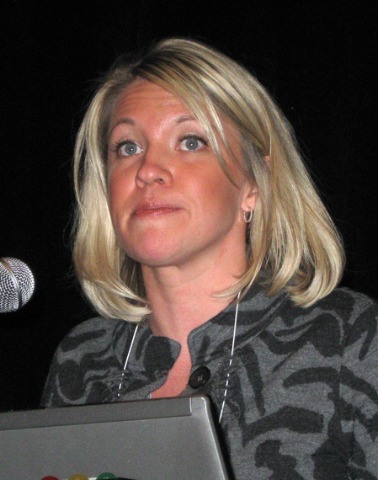
"These may prove to be very useful measurements of ovarian reserve in these young girls, as they are in reproductive-aged women," lead author Dr. Amber R. Cooper said at the annual meetingof the North American Society for Pediatric and Adolescent Gynecology.
Ovarian reserve screening is frequently used to predict response to gonadotropin stimulation during assisted reproductive technology treatment and for counseling adult women on their overall chance for conception. Data are very scarce on measures of ovarian reserve in premenarchal girls, although several factors such as chemotherapeutic agents, radiation, environmental triggers, and underlying genetic conditions can potentially threaten the oocyte pool and thus fertility.
"There are a lot of patients that you can potentially consider using ovarian reserve screening [for], and in a much younger age group than you probably anticipated," she said. "Those that may have a larger threat to their oocyte pool may ultimately, as technology progresses, warrant discussion about fertility preservation options."
Dr. Cooper and her colleagues screened ovarian reserves at scheduled intervals over a 2-year period in 41 premenarchal girls, aged 4-14 years, who were enrolled in an ongoing prospective study of juvenile and adult rheumatoid arthritis. The girls were subdivided into prepubertal and pubertal based on the onset of breast development. Antral follicle counts were obtained using transabdominal ultrasonography (2-5 MHz) when the patients had a full bladder, and were compared with mean ovarian volume, serum anti-müllerian hormone (AMH) level measured by Elisa assay, and follicle stimulating hormone level. Data from the ongoing parent trial on 31 menarchal girls, within 3 years of menarche, were also used for comparison.
The mean age was 7.2 years for the 28 prepubertal girls (range, 4-12 years); 10.8 years for the 13 pubertal girls (range, 8-13 years); and 13.7 years for the early menarchal girls (range, 10-16 years). The girls had a mean body mass index (BMI) of 16 kg/m2, 23.5 kg/m2, and 22.8 kg/m2, respectively.
The mean antral follicle count was 15.9 in the prepubertal group, 21.5 in the pubertal group, and 20.4 in the early menarchal group, said Dr. Cooper of the division of reproductive endocrinology and infertility at Washington University in St. Louis.
One ovary was visualized on ultrasound in 94% of prepubertal girls and 86% of pubertal girls, and both ovaries were visualized in 71% and 57%. By comparison, a single ovary was visualized in 94% of girls with early menarche and two ovaries in 83%.
The mean AMH level was 2.97 ng/mL in the prepubertal group and 3.46 ng/mL in the pubertal group, vs. 3.74 ng/mL in the early menarchal girls.
Same-day AMH level was correlated with antral follicle count in all premenarchal girls, with a correlation coefficient, or r value, of 0.6, she said. The r value was 0.7 for the menarchal girls and 0.6 for reproductive-age women in the parent trial.
In multivariable regression analysis that controlled for BMI, hormonal contraception, and number of ovaries visualized, the AMH level was significantly associated with the antral follicle count (P value less than .001).
When asked by the audience whether the researchers controlled for variability that exists between sonographers, Dr. Cooper replied that the study used three dedicated sonographers and that intra- and intersonography correlation was very good when analyzed.
Another attendee questioned whether transabdominal antral follicle count data are transferable to data obtained with transvaginal scans.
Dr. Cooper replied, "I just don’t think we have enough data yet to say we can use transabdominal scans in these young girls, and that’s intentionally why I tried to correlate it with the same-day AMH measure to show that these measures are correlated," she said. "I think it is something that we can consider and further study."
An international group of specialist reproductive medicine clinicians and scientists recently convened to provide practical recommendations addressing the considerable variability that exists in the clinical definitions and technical methods used to count and measure antral follicles in research trials and clinical practice (Fertil. Steril. 2010;94:1044-51). In clinical practice, they recommend selecting patients with regular menstrual cycles, counting follicles between days 2 and 4 of a spontaneous menstrual or oral contraceptive cycle, and including all antral follicles 2-10 mm in diameter. It is suggested that a limited number of staff, adequately trained in transvaginal sonography, should perform antral follicle counts using real-time, two-dimensional imaging with a transvaginal transducer and a probe with a minimum frequency of 7 MHz.
Dr. Cooper said she has received study support for the ongoing study from Washington University and the National Institutes of Health. Provision of the serum assays to an independent lab was provided by Beckman Coulter.
CHICAGO – Transabdominal antral follicle count measurements are obtainable in girls as young as 4 years and were highly correlated with serum anti-müllerian hormone assays in a cross-sectional substudy.
"These may prove to be very useful measurements of ovarian reserve in these young girls, as they are in reproductive-aged women," lead author Dr. Amber R. Cooper said at the annual meetingof the North American Society for Pediatric and Adolescent Gynecology.
Ovarian reserve screening is frequently used to predict response to gonadotropin stimulation during assisted reproductive technology treatment and for counseling adult women on their overall chance for conception. Data are very scarce on measures of ovarian reserve in premenarchal girls, although several factors such as chemotherapeutic agents, radiation, environmental triggers, and underlying genetic conditions can potentially threaten the oocyte pool and thus fertility.
"There are a lot of patients that you can potentially consider using ovarian reserve screening [for], and in a much younger age group than you probably anticipated," she said. "Those that may have a larger threat to their oocyte pool may ultimately, as technology progresses, warrant discussion about fertility preservation options."
Dr. Cooper and her colleagues screened ovarian reserves at scheduled intervals over a 2-year period in 41 premenarchal girls, aged 4-14 years, who were enrolled in an ongoing prospective study of juvenile and adult rheumatoid arthritis. The girls were subdivided into prepubertal and pubertal based on the onset of breast development. Antral follicle counts were obtained using transabdominal ultrasonography (2-5 MHz) when the patients had a full bladder, and were compared with mean ovarian volume, serum anti-müllerian hormone (AMH) level measured by Elisa assay, and follicle stimulating hormone level. Data from the ongoing parent trial on 31 menarchal girls, within 3 years of menarche, were also used for comparison.
The mean age was 7.2 years for the 28 prepubertal girls (range, 4-12 years); 10.8 years for the 13 pubertal girls (range, 8-13 years); and 13.7 years for the early menarchal girls (range, 10-16 years). The girls had a mean body mass index (BMI) of 16 kg/m2, 23.5 kg/m2, and 22.8 kg/m2, respectively.
The mean antral follicle count was 15.9 in the prepubertal group, 21.5 in the pubertal group, and 20.4 in the early menarchal group, said Dr. Cooper of the division of reproductive endocrinology and infertility at Washington University in St. Louis.
One ovary was visualized on ultrasound in 94% of prepubertal girls and 86% of pubertal girls, and both ovaries were visualized in 71% and 57%. By comparison, a single ovary was visualized in 94% of girls with early menarche and two ovaries in 83%.
The mean AMH level was 2.97 ng/mL in the prepubertal group and 3.46 ng/mL in the pubertal group, vs. 3.74 ng/mL in the early menarchal girls.
Same-day AMH level was correlated with antral follicle count in all premenarchal girls, with a correlation coefficient, or r value, of 0.6, she said. The r value was 0.7 for the menarchal girls and 0.6 for reproductive-age women in the parent trial.
In multivariable regression analysis that controlled for BMI, hormonal contraception, and number of ovaries visualized, the AMH level was significantly associated with the antral follicle count (P value less than .001).
When asked by the audience whether the researchers controlled for variability that exists between sonographers, Dr. Cooper replied that the study used three dedicated sonographers and that intra- and intersonography correlation was very good when analyzed.
Another attendee questioned whether transabdominal antral follicle count data are transferable to data obtained with transvaginal scans.
Dr. Cooper replied, "I just don’t think we have enough data yet to say we can use transabdominal scans in these young girls, and that’s intentionally why I tried to correlate it with the same-day AMH measure to show that these measures are correlated," she said. "I think it is something that we can consider and further study."
An international group of specialist reproductive medicine clinicians and scientists recently convened to provide practical recommendations addressing the considerable variability that exists in the clinical definitions and technical methods used to count and measure antral follicles in research trials and clinical practice (Fertil. Steril. 2010;94:1044-51). In clinical practice, they recommend selecting patients with regular menstrual cycles, counting follicles between days 2 and 4 of a spontaneous menstrual or oral contraceptive cycle, and including all antral follicles 2-10 mm in diameter. It is suggested that a limited number of staff, adequately trained in transvaginal sonography, should perform antral follicle counts using real-time, two-dimensional imaging with a transvaginal transducer and a probe with a minimum frequency of 7 MHz.
Dr. Cooper said she has received study support for the ongoing study from Washington University and the National Institutes of Health. Provision of the serum assays to an independent lab was provided by Beckman Coulter.
CHICAGO – Transabdominal antral follicle count measurements are obtainable in girls as young as 4 years and were highly correlated with serum anti-müllerian hormone assays in a cross-sectional substudy.
"These may prove to be very useful measurements of ovarian reserve in these young girls, as they are in reproductive-aged women," lead author Dr. Amber R. Cooper said at the annual meetingof the North American Society for Pediatric and Adolescent Gynecology.
Ovarian reserve screening is frequently used to predict response to gonadotropin stimulation during assisted reproductive technology treatment and for counseling adult women on their overall chance for conception. Data are very scarce on measures of ovarian reserve in premenarchal girls, although several factors such as chemotherapeutic agents, radiation, environmental triggers, and underlying genetic conditions can potentially threaten the oocyte pool and thus fertility.
"There are a lot of patients that you can potentially consider using ovarian reserve screening [for], and in a much younger age group than you probably anticipated," she said. "Those that may have a larger threat to their oocyte pool may ultimately, as technology progresses, warrant discussion about fertility preservation options."
Dr. Cooper and her colleagues screened ovarian reserves at scheduled intervals over a 2-year period in 41 premenarchal girls, aged 4-14 years, who were enrolled in an ongoing prospective study of juvenile and adult rheumatoid arthritis. The girls were subdivided into prepubertal and pubertal based on the onset of breast development. Antral follicle counts were obtained using transabdominal ultrasonography (2-5 MHz) when the patients had a full bladder, and were compared with mean ovarian volume, serum anti-müllerian hormone (AMH) level measured by Elisa assay, and follicle stimulating hormone level. Data from the ongoing parent trial on 31 menarchal girls, within 3 years of menarche, were also used for comparison.
The mean age was 7.2 years for the 28 prepubertal girls (range, 4-12 years); 10.8 years for the 13 pubertal girls (range, 8-13 years); and 13.7 years for the early menarchal girls (range, 10-16 years). The girls had a mean body mass index (BMI) of 16 kg/m2, 23.5 kg/m2, and 22.8 kg/m2, respectively.
The mean antral follicle count was 15.9 in the prepubertal group, 21.5 in the pubertal group, and 20.4 in the early menarchal group, said Dr. Cooper of the division of reproductive endocrinology and infertility at Washington University in St. Louis.
One ovary was visualized on ultrasound in 94% of prepubertal girls and 86% of pubertal girls, and both ovaries were visualized in 71% and 57%. By comparison, a single ovary was visualized in 94% of girls with early menarche and two ovaries in 83%.
The mean AMH level was 2.97 ng/mL in the prepubertal group and 3.46 ng/mL in the pubertal group, vs. 3.74 ng/mL in the early menarchal girls.
Same-day AMH level was correlated with antral follicle count in all premenarchal girls, with a correlation coefficient, or r value, of 0.6, she said. The r value was 0.7 for the menarchal girls and 0.6 for reproductive-age women in the parent trial.
In multivariable regression analysis that controlled for BMI, hormonal contraception, and number of ovaries visualized, the AMH level was significantly associated with the antral follicle count (P value less than .001).
When asked by the audience whether the researchers controlled for variability that exists between sonographers, Dr. Cooper replied that the study used three dedicated sonographers and that intra- and intersonography correlation was very good when analyzed.
Another attendee questioned whether transabdominal antral follicle count data are transferable to data obtained with transvaginal scans.
Dr. Cooper replied, "I just don’t think we have enough data yet to say we can use transabdominal scans in these young girls, and that’s intentionally why I tried to correlate it with the same-day AMH measure to show that these measures are correlated," she said. "I think it is something that we can consider and further study."
An international group of specialist reproductive medicine clinicians and scientists recently convened to provide practical recommendations addressing the considerable variability that exists in the clinical definitions and technical methods used to count and measure antral follicles in research trials and clinical practice (Fertil. Steril. 2010;94:1044-51). In clinical practice, they recommend selecting patients with regular menstrual cycles, counting follicles between days 2 and 4 of a spontaneous menstrual or oral contraceptive cycle, and including all antral follicles 2-10 mm in diameter. It is suggested that a limited number of staff, adequately trained in transvaginal sonography, should perform antral follicle counts using real-time, two-dimensional imaging with a transvaginal transducer and a probe with a minimum frequency of 7 MHz.
Dr. Cooper said she has received study support for the ongoing study from Washington University and the National Institutes of Health. Provision of the serum assays to an independent lab was provided by Beckman Coulter.
FROM THE ANNUAL MEETING OF THE NORTH AMERICAN SOCIETY FOR PEDIATRIC AND ADOLESCENT GYNECOLOGY
Major Finding: The mean antral follicle count was 15.9 in prepubertal girls, 21.5 in pubertal girls and 20.4 in early menarchal girls.
Data Source: Nested cross-sectional substudy in 72 prepubertal and pubertal girls.
Disclosures: Dr. Cooper said she has received study support for the ongoing study from Washington University and the National Institutes of Health. Provision of the serum assays to an independent lab was provided by Beckman Coulter.
Antral Follicle Counts Feasible in Very Young
CHICAGO – Transabdominal antral follicle count measurements are obtainable in girls as young as 4 years and were highly correlated with serum anti-müllerian hormone assays in a cross-sectional substudy.
"These may prove to be very useful measurements of ovarian reserve in these young girls, as they are in reproductive-aged women," lead author Dr. Amber R. Cooper said at the annual meetingof the North American Society for Pediatric and Adolescent Gynecology.
Ovarian reserve screening is frequently used to predict response to gonadotropin stimulation during assisted reproductive technology treatment and for counseling adult women on their overall chance for conception. Data are very scarce on measures of ovarian reserve in premenarchal girls, although several factors such as chemotherapeutic agents, radiation, environmental triggers, and underlying genetic conditions can potentially threaten the oocyte pool and thus fertility.
"There are a lot of patients that you can potentially consider using ovarian reserve screening [for], and in a much younger age group than you probably anticipated," she said. "Those that may have a larger threat to their oocyte pool may ultimately, as technology progresses, warrant discussion about fertility preservation options."
Dr. Cooper and her colleagues screened ovarian reserves at scheduled intervals over a 2-year period in 41 premenarchal girls, aged 4-14 years, who were enrolled in an ongoing prospective study of juvenile and adult rheumatoid arthritis. The girls were subdivided into prepubertal and pubertal based on the onset of breast development. Antral follicle counts were obtained using transabdominal ultrasonography (2-5 MHz) when the patients had a full bladder, and were compared with mean ovarian volume, serum anti-müllerian hormone (AMH) level measured by Elisa assay, and follicle stimulating hormone level. Data from the ongoing parent trial on 31 menarchal girls, within 3 years of menarche, were also used for comparison.
The mean age was 7.2 years for the 28 prepubertal girls (range, 4-12 years); 10.8 years for the 13 pubertal girls (range, 8-13 years); and 13.7 years for the early menarchal girls (range, 10-16 years). The girls had a mean body mass index (BMI) of 16 kg/m2, 23.5 kg/m2, and 22.8 kg/m2, respectively.
The mean antral follicle count was 15.9 in the prepubertal group, 21.5 in the pubertal group, and 20.4 in the early menarchal group, said Dr. Cooper of the division of reproductive endocrinology and infertility at Washington University in St. Louis.
One ovary was visualized on ultrasound in 94% of prepubertal girls and 86% of pubertal girls, and both ovaries were visualized in 71% and 57%. By comparison, a single ovary was visualized in 94% of girls with early menarche and two ovaries in 83%.
The mean AMH level was 2.97 ng/mL in the prepubertal group and 3.46 ng/mL in the pubertal group, vs. 3.74 ng/mL in the early menarchal girls.
Same-day AMH level was correlated with antral follicle count in all premenarchal girls, with a correlation coefficient, or r value, of 0.6, she said. The r value was 0.7 for the menarchal girls and 0.6 for reproductive-age women in the parent trial.
In multivariable regression analysis that controlled for BMI, hormonal contraception, and number of ovaries visualized, the AMH level was significantly associated with the antral follicle count (P value less than .001).
When asked by the audience whether the researchers controlled for variability that exists between sonographers, Dr. Cooper replied that the study used three dedicated sonographers and that intra- and intersonography correlation was very good when analyzed.
Another attendee questioned whether transabdominal antral follicle count data are transferable to data obtained with transvaginal scans.
Dr. Cooper replied, "I just don’t think we have enough data yet to say we can use transabdominal scans in these young girls, and that’s intentionally why I tried to correlate it with the same-day AMH measure to show that these measures are correlated," she said. "I think it is something that we can consider and further study."
An international group of specialist reproductive medicine clinicians and scientists recently convened to provide practical recommendations addressing the considerable variability that exists in the clinical definitions and technical methods used to count and measure antral follicles in research trials and clinical practice (Fertil. Steril. 2010;94:1044-51). In clinical practice, they recommend selecting patients with regular menstrual cycles, counting follicles between days 2 and 4 of a spontaneous menstrual or oral contraceptive cycle, and including all antral follicles 2-10 mm in diameter. It is suggested that a limited number of staff, adequately trained in transvaginal sonography, should perform antral follicle counts using real-time, two-dimensional imaging with a transvaginal transducer and a probe with a minimum frequency of 7 MHz.
Dr. Cooper said she has received study support for the ongoing study from Washington University and the National Institutes of Health. Provision of the serum assays to an independent lab was provided by Beckman Coulter.
CHICAGO – Transabdominal antral follicle count measurements are obtainable in girls as young as 4 years and were highly correlated with serum anti-müllerian hormone assays in a cross-sectional substudy.
"These may prove to be very useful measurements of ovarian reserve in these young girls, as they are in reproductive-aged women," lead author Dr. Amber R. Cooper said at the annual meetingof the North American Society for Pediatric and Adolescent Gynecology.
Ovarian reserve screening is frequently used to predict response to gonadotropin stimulation during assisted reproductive technology treatment and for counseling adult women on their overall chance for conception. Data are very scarce on measures of ovarian reserve in premenarchal girls, although several factors such as chemotherapeutic agents, radiation, environmental triggers, and underlying genetic conditions can potentially threaten the oocyte pool and thus fertility.
"There are a lot of patients that you can potentially consider using ovarian reserve screening [for], and in a much younger age group than you probably anticipated," she said. "Those that may have a larger threat to their oocyte pool may ultimately, as technology progresses, warrant discussion about fertility preservation options."
Dr. Cooper and her colleagues screened ovarian reserves at scheduled intervals over a 2-year period in 41 premenarchal girls, aged 4-14 years, who were enrolled in an ongoing prospective study of juvenile and adult rheumatoid arthritis. The girls were subdivided into prepubertal and pubertal based on the onset of breast development. Antral follicle counts were obtained using transabdominal ultrasonography (2-5 MHz) when the patients had a full bladder, and were compared with mean ovarian volume, serum anti-müllerian hormone (AMH) level measured by Elisa assay, and follicle stimulating hormone level. Data from the ongoing parent trial on 31 menarchal girls, within 3 years of menarche, were also used for comparison.
The mean age was 7.2 years for the 28 prepubertal girls (range, 4-12 years); 10.8 years for the 13 pubertal girls (range, 8-13 years); and 13.7 years for the early menarchal girls (range, 10-16 years). The girls had a mean body mass index (BMI) of 16 kg/m2, 23.5 kg/m2, and 22.8 kg/m2, respectively.
The mean antral follicle count was 15.9 in the prepubertal group, 21.5 in the pubertal group, and 20.4 in the early menarchal group, said Dr. Cooper of the division of reproductive endocrinology and infertility at Washington University in St. Louis.
One ovary was visualized on ultrasound in 94% of prepubertal girls and 86% of pubertal girls, and both ovaries were visualized in 71% and 57%. By comparison, a single ovary was visualized in 94% of girls with early menarche and two ovaries in 83%.
The mean AMH level was 2.97 ng/mL in the prepubertal group and 3.46 ng/mL in the pubertal group, vs. 3.74 ng/mL in the early menarchal girls.
Same-day AMH level was correlated with antral follicle count in all premenarchal girls, with a correlation coefficient, or r value, of 0.6, she said. The r value was 0.7 for the menarchal girls and 0.6 for reproductive-age women in the parent trial.
In multivariable regression analysis that controlled for BMI, hormonal contraception, and number of ovaries visualized, the AMH level was significantly associated with the antral follicle count (P value less than .001).
When asked by the audience whether the researchers controlled for variability that exists between sonographers, Dr. Cooper replied that the study used three dedicated sonographers and that intra- and intersonography correlation was very good when analyzed.
Another attendee questioned whether transabdominal antral follicle count data are transferable to data obtained with transvaginal scans.
Dr. Cooper replied, "I just don’t think we have enough data yet to say we can use transabdominal scans in these young girls, and that’s intentionally why I tried to correlate it with the same-day AMH measure to show that these measures are correlated," she said. "I think it is something that we can consider and further study."
An international group of specialist reproductive medicine clinicians and scientists recently convened to provide practical recommendations addressing the considerable variability that exists in the clinical definitions and technical methods used to count and measure antral follicles in research trials and clinical practice (Fertil. Steril. 2010;94:1044-51). In clinical practice, they recommend selecting patients with regular menstrual cycles, counting follicles between days 2 and 4 of a spontaneous menstrual or oral contraceptive cycle, and including all antral follicles 2-10 mm in diameter. It is suggested that a limited number of staff, adequately trained in transvaginal sonography, should perform antral follicle counts using real-time, two-dimensional imaging with a transvaginal transducer and a probe with a minimum frequency of 7 MHz.
Dr. Cooper said she has received study support for the ongoing study from Washington University and the National Institutes of Health. Provision of the serum assays to an independent lab was provided by Beckman Coulter.
CHICAGO – Transabdominal antral follicle count measurements are obtainable in girls as young as 4 years and were highly correlated with serum anti-müllerian hormone assays in a cross-sectional substudy.
"These may prove to be very useful measurements of ovarian reserve in these young girls, as they are in reproductive-aged women," lead author Dr. Amber R. Cooper said at the annual meetingof the North American Society for Pediatric and Adolescent Gynecology.
Ovarian reserve screening is frequently used to predict response to gonadotropin stimulation during assisted reproductive technology treatment and for counseling adult women on their overall chance for conception. Data are very scarce on measures of ovarian reserve in premenarchal girls, although several factors such as chemotherapeutic agents, radiation, environmental triggers, and underlying genetic conditions can potentially threaten the oocyte pool and thus fertility.
"There are a lot of patients that you can potentially consider using ovarian reserve screening [for], and in a much younger age group than you probably anticipated," she said. "Those that may have a larger threat to their oocyte pool may ultimately, as technology progresses, warrant discussion about fertility preservation options."
Dr. Cooper and her colleagues screened ovarian reserves at scheduled intervals over a 2-year period in 41 premenarchal girls, aged 4-14 years, who were enrolled in an ongoing prospective study of juvenile and adult rheumatoid arthritis. The girls were subdivided into prepubertal and pubertal based on the onset of breast development. Antral follicle counts were obtained using transabdominal ultrasonography (2-5 MHz) when the patients had a full bladder, and were compared with mean ovarian volume, serum anti-müllerian hormone (AMH) level measured by Elisa assay, and follicle stimulating hormone level. Data from the ongoing parent trial on 31 menarchal girls, within 3 years of menarche, were also used for comparison.
The mean age was 7.2 years for the 28 prepubertal girls (range, 4-12 years); 10.8 years for the 13 pubertal girls (range, 8-13 years); and 13.7 years for the early menarchal girls (range, 10-16 years). The girls had a mean body mass index (BMI) of 16 kg/m2, 23.5 kg/m2, and 22.8 kg/m2, respectively.
The mean antral follicle count was 15.9 in the prepubertal group, 21.5 in the pubertal group, and 20.4 in the early menarchal group, said Dr. Cooper of the division of reproductive endocrinology and infertility at Washington University in St. Louis.
One ovary was visualized on ultrasound in 94% of prepubertal girls and 86% of pubertal girls, and both ovaries were visualized in 71% and 57%. By comparison, a single ovary was visualized in 94% of girls with early menarche and two ovaries in 83%.
The mean AMH level was 2.97 ng/mL in the prepubertal group and 3.46 ng/mL in the pubertal group, vs. 3.74 ng/mL in the early menarchal girls.
Same-day AMH level was correlated with antral follicle count in all premenarchal girls, with a correlation coefficient, or r value, of 0.6, she said. The r value was 0.7 for the menarchal girls and 0.6 for reproductive-age women in the parent trial.
In multivariable regression analysis that controlled for BMI, hormonal contraception, and number of ovaries visualized, the AMH level was significantly associated with the antral follicle count (P value less than .001).
When asked by the audience whether the researchers controlled for variability that exists between sonographers, Dr. Cooper replied that the study used three dedicated sonographers and that intra- and intersonography correlation was very good when analyzed.
Another attendee questioned whether transabdominal antral follicle count data are transferable to data obtained with transvaginal scans.
Dr. Cooper replied, "I just don’t think we have enough data yet to say we can use transabdominal scans in these young girls, and that’s intentionally why I tried to correlate it with the same-day AMH measure to show that these measures are correlated," she said. "I think it is something that we can consider and further study."
An international group of specialist reproductive medicine clinicians and scientists recently convened to provide practical recommendations addressing the considerable variability that exists in the clinical definitions and technical methods used to count and measure antral follicles in research trials and clinical practice (Fertil. Steril. 2010;94:1044-51). In clinical practice, they recommend selecting patients with regular menstrual cycles, counting follicles between days 2 and 4 of a spontaneous menstrual or oral contraceptive cycle, and including all antral follicles 2-10 mm in diameter. It is suggested that a limited number of staff, adequately trained in transvaginal sonography, should perform antral follicle counts using real-time, two-dimensional imaging with a transvaginal transducer and a probe with a minimum frequency of 7 MHz.
Dr. Cooper said she has received study support for the ongoing study from Washington University and the National Institutes of Health. Provision of the serum assays to an independent lab was provided by Beckman Coulter.
FROM THE ANNUAL MEETING OF THE NORTH AMERICAN SOCIETY FOR PEDIATRIC AND ADOLESCENT GYNECOLOGY
Major Finding: The mean antral follicle count was 15.9 in prepubertal girls, 21.5 in pubertal girls and 20.4 in early menarchal girls.
Data Source: Nested cross-sectional substudy in 72 prepubertal and pubertal girls.
Disclosures: Dr. Cooper said she has received study support for the ongoing study from Washington University and the National Institutes of Health. Provision of the serum assays to an independent lab was provided by Beckman Coulter.
Study Supports Nonrigid Fixation for Chest Wall Reconstruction
DETROIT – Chest wall reconstruction that uses nonrigid mesh or autologous tissue without rigid fixation was safe and provided excellent respiratory outcomes in one of the largest series to date.
"Our recommendations are to reconstruct with autologous tissue alone whenever possible," Dr. Waël Hanna said. "If you have to use mesh because you cannot reapproximate the chest wall or there’s not enough muscle to construct a flap, then nonrigid mesh should be favored over rigid fixation."
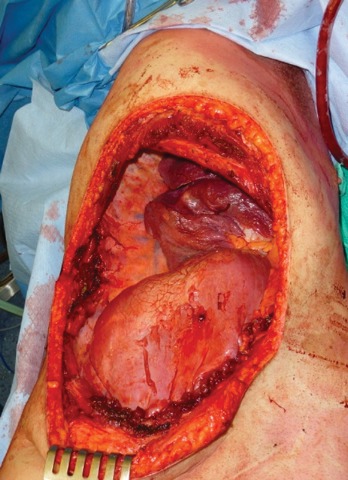
Rigid fixation with methacrylate or metallic plates and screws has conventionally been advocated as the best method to achieve chest wall stability and to maintain respiratory integrity following resection of chest wall tumors. However, these approaches are frequently complicated by motion deformities of the shoulder girdle, long-term cosmetic deformities, pain that limits daily activities, and a high morbidity of infection, Dr. Hanna explained at the annual meeting of the Central Surgical Association.
He reported on 37 patients who underwent major chest wall reconstruction in 2003-2010 with autologous tissue alone or with a soft prosthetic mesh. No patient underwent rigid fixation with methacrylate or plates and screws. The study excluded patients with concomitant lung or pleural resection to avoid confounding the respiratory outcomes.
Nine patients had a small defect (less than 60 cm2) and 28 patients had a large defect (greater than 60 cm2); no defect measured exactly 60 cm2, according to Dr. Hanna. The large-defect group was further divided into a subgroup of 16 patients who were reconstructed with soft mesh alone and a subgroup of 12 patients whose reconstruction was with autologous tissue alone and no mesh. Soft mesh was used in only one small-defect patient.
"We have turned away from using rigid prosthetics or methacrylate at our institution," said Dr. Hanna, a fifth-year resident with McGill University in Montreal.
Sarcoma was the most common indication for resection, followed by metastases to the chest wall, neurofibromas, and desmoid tumors. Reconstruction parameters were similar between the small- and large-defect cohorts, except for the mean size of the defect that was created in the chest wall (51 cm2 vs. 149 cm2), the dissection of three or more ribs (0% vs. 50%), and the use of soft mesh only (11% vs. 61%). A muscle flap to cover the prosthesis was used equally in both cohorts (56% vs. 75%).
The rate of immediate postoperative extubation was similar, at 100% in the small-defect cohort and 89% in the large-defect cohort, Dr. Hanna said. Only one patient was reintubated on postop day 1 and remained intubated for 3 days in the ICU.
None of the small-defect group went to the ICU for ventilation or flap monitoring, whereas 11% and 18% of the large-defect cohort did (P = .006 for both subgroups).
Pneumonia developed in three patients with large defects and in none with small defects (11% vs. 0%). One patient had to be re-extubated postoperatively, he said.
Secondary outcomes were also similar between the small- and large-defect groups, including site infection (0% vs. 7%) and reoperation rates (0% vs. 11%).
A subgroup analysis comparing patients with and without mesh revealed no significant differences in the primary outcomes of immediate extubation (100% vs. 75%), ICU stay for ventilation (6% vs. 25%), ICU stay for flap monitoring (13% vs. 17%), or pneumonia (6% vs. 8%).
The mesh and no-mesh subgroups were also nonsignificantly different with regard to site infection (13% vs. 0%) and reoperation (19% vs. 0%).
After a mean follow-up of 42 months (range, 36-84 months), there were no reports of infections beyond 30 postoperative days, long-term pain, restriction of mobility, or cosmetic disturbances. Patients were seen every 3 months for the first 2 years and every 6 months thereafter.
"For chest wall defects smaller than 60 cm2, reconstruction without a prosthesis has excellent outcomes," Dr. Hanna concluded. "For [defects] larger than 60 cm2, there does not seem to be any major difference between autologous tissue alone vs. nonrigid prosthesis reconstruction.
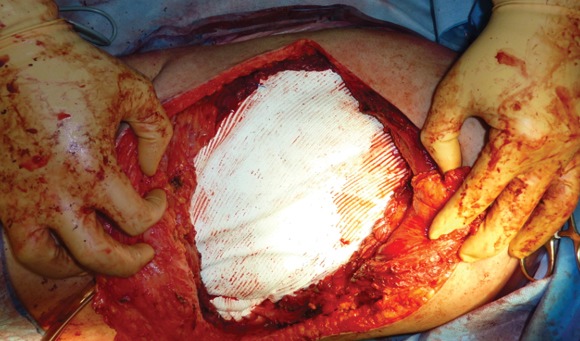
"Finally, nonrigid mesh seems to offer better short-term and long-term outcomes," compared with the historical data on rigid fixation, he said.
Invited discussant Dr. Fred Luchette, professor of surgery at Loyola University Medical Center in Chicago asked how the surgeons manage the often catastrophic event of mesh infection, and whether any long-term pulmonary function data were available, as the defects would likely prompt the development of some degree of paradoxical chest wall motion, even with the soft mesh.
Dr. Hanna replied that the retrospective nature of the series did not allow pulmonary function testing, and that the thoracic surgery community views such testing as less than ideal after reconstruction of the chest wall. A better measure is home oxygen use or limitation of daily activities, neither of which were observed in the cohort.
Dr. Hanna agreed that mesh infection is a highly morbid situation, especially with methacrylate or metallic prostheses, and that one of the benefits of soft prostheses like Vicryl or Gore-Tex is that they are able to respond to antibiotics.
Dr. Gerald Larson of University Surgical Associates in Louisville, Ky., who was also invited to discuss the study, asked how closure was achieved when mesh and a flap were not used, and why mesh and a muscle flap weren’t used for all patients.
Dr. Hanna responded that the risk of surgical site infection kept them from closing all patients with mesh and a muscle flap. The ideal method for closure is to mobilize enough local muscle that is present in the chest wall to reapproximate the muscle, and to close with skin without having to rotate a pedicle flap. When this is impossible, the defect has to be filled, and most surgeons at his institution elect to use soft mesh for the larger defects.
"In 75% of the time, on top of the mesh, we still mobilize a subcutaneous flap to cover the mesh because of the theoretical perception that a flap on top of the mesh would provide a good oxygenated environment and would decrease the rate of infection," Dr. Hanna said. The risk of surgical site infection kept them from closing all patients with mesh and a muscle flap, he added.
Dr. Hanna and his coauthors reported no relevant conflicts of interest.
DETROIT – Chest wall reconstruction that uses nonrigid mesh or autologous tissue without rigid fixation was safe and provided excellent respiratory outcomes in one of the largest series to date.
"Our recommendations are to reconstruct with autologous tissue alone whenever possible," Dr. Waël Hanna said. "If you have to use mesh because you cannot reapproximate the chest wall or there’s not enough muscle to construct a flap, then nonrigid mesh should be favored over rigid fixation."
Rigid fixation with methacrylate or metallic plates and screws has conventionally been advocated as the best method to achieve chest wall stability and to maintain respiratory integrity following resection of chest wall tumors. However, these approaches are frequently complicated by motion deformities of the shoulder girdle, long-term cosmetic deformities, pain that limits daily activities, and a high morbidity of infection, Dr. Hanna explained at the annual meeting of the Central Surgical Association.
He reported on 37 patients who underwent major chest wall reconstruction in 2003-2010 with autologous tissue alone or with a soft prosthetic mesh. No patient underwent rigid fixation with methacrylate or plates and screws. The study excluded patients with concomitant lung or pleural resection to avoid confounding the respiratory outcomes.
Nine patients had a small defect (less than 60 cm2) and 28 patients had a large defect (greater than 60 cm2); no defect measured exactly 60 cm2, according to Dr. Hanna. The large-defect group was further divided into a subgroup of 16 patients who were reconstructed with soft mesh alone and a subgroup of 12 patients whose reconstruction was with autologous tissue alone and no mesh. Soft mesh was used in only one small-defect patient.
"We have turned away from using rigid prosthetics or methacrylate at our institution," said Dr. Hanna, a fifth-year resident with McGill University in Montreal.
Sarcoma was the most common indication for resection, followed by metastases to the chest wall, neurofibromas, and desmoid tumors. Reconstruction parameters were similar between the small- and large-defect cohorts, except for the mean size of the defect that was created in the chest wall (51 cm2 vs. 149 cm2), the dissection of three or more ribs (0% vs. 50%), and the use of soft mesh only (11% vs. 61%). A muscle flap to cover the prosthesis was used equally in both cohorts (56% vs. 75%).
The rate of immediate postoperative extubation was similar, at 100% in the small-defect cohort and 89% in the large-defect cohort, Dr. Hanna said. Only one patient was reintubated on postop day 1 and remained intubated for 3 days in the ICU.
None of the small-defect group went to the ICU for ventilation or flap monitoring, whereas 11% and 18% of the large-defect cohort did (P = .006 for both subgroups).
Pneumonia developed in three patients with large defects and in none with small defects (11% vs. 0%). One patient had to be re-extubated postoperatively, he said.
Secondary outcomes were also similar between the small- and large-defect groups, including site infection (0% vs. 7%) and reoperation rates (0% vs. 11%).
A subgroup analysis comparing patients with and without mesh revealed no significant differences in the primary outcomes of immediate extubation (100% vs. 75%), ICU stay for ventilation (6% vs. 25%), ICU stay for flap monitoring (13% vs. 17%), or pneumonia (6% vs. 8%).
The mesh and no-mesh subgroups were also nonsignificantly different with regard to site infection (13% vs. 0%) and reoperation (19% vs. 0%).
After a mean follow-up of 42 months (range, 36-84 months), there were no reports of infections beyond 30 postoperative days, long-term pain, restriction of mobility, or cosmetic disturbances. Patients were seen every 3 months for the first 2 years and every 6 months thereafter.
"For chest wall defects smaller than 60 cm2, reconstruction without a prosthesis has excellent outcomes," Dr. Hanna concluded. "For [defects] larger than 60 cm2, there does not seem to be any major difference between autologous tissue alone vs. nonrigid prosthesis reconstruction.
"Finally, nonrigid mesh seems to offer better short-term and long-term outcomes," compared with the historical data on rigid fixation, he said.
Invited discussant Dr. Fred Luchette, professor of surgery at Loyola University Medical Center in Chicago asked how the surgeons manage the often catastrophic event of mesh infection, and whether any long-term pulmonary function data were available, as the defects would likely prompt the development of some degree of paradoxical chest wall motion, even with the soft mesh.
Dr. Hanna replied that the retrospective nature of the series did not allow pulmonary function testing, and that the thoracic surgery community views such testing as less than ideal after reconstruction of the chest wall. A better measure is home oxygen use or limitation of daily activities, neither of which were observed in the cohort.
Dr. Hanna agreed that mesh infection is a highly morbid situation, especially with methacrylate or metallic prostheses, and that one of the benefits of soft prostheses like Vicryl or Gore-Tex is that they are able to respond to antibiotics.
Dr. Gerald Larson of University Surgical Associates in Louisville, Ky., who was also invited to discuss the study, asked how closure was achieved when mesh and a flap were not used, and why mesh and a muscle flap weren’t used for all patients.
Dr. Hanna responded that the risk of surgical site infection kept them from closing all patients with mesh and a muscle flap. The ideal method for closure is to mobilize enough local muscle that is present in the chest wall to reapproximate the muscle, and to close with skin without having to rotate a pedicle flap. When this is impossible, the defect has to be filled, and most surgeons at his institution elect to use soft mesh for the larger defects.
"In 75% of the time, on top of the mesh, we still mobilize a subcutaneous flap to cover the mesh because of the theoretical perception that a flap on top of the mesh would provide a good oxygenated environment and would decrease the rate of infection," Dr. Hanna said. The risk of surgical site infection kept them from closing all patients with mesh and a muscle flap, he added.
Dr. Hanna and his coauthors reported no relevant conflicts of interest.
DETROIT – Chest wall reconstruction that uses nonrigid mesh or autologous tissue without rigid fixation was safe and provided excellent respiratory outcomes in one of the largest series to date.
"Our recommendations are to reconstruct with autologous tissue alone whenever possible," Dr. Waël Hanna said. "If you have to use mesh because you cannot reapproximate the chest wall or there’s not enough muscle to construct a flap, then nonrigid mesh should be favored over rigid fixation."
Rigid fixation with methacrylate or metallic plates and screws has conventionally been advocated as the best method to achieve chest wall stability and to maintain respiratory integrity following resection of chest wall tumors. However, these approaches are frequently complicated by motion deformities of the shoulder girdle, long-term cosmetic deformities, pain that limits daily activities, and a high morbidity of infection, Dr. Hanna explained at the annual meeting of the Central Surgical Association.
He reported on 37 patients who underwent major chest wall reconstruction in 2003-2010 with autologous tissue alone or with a soft prosthetic mesh. No patient underwent rigid fixation with methacrylate or plates and screws. The study excluded patients with concomitant lung or pleural resection to avoid confounding the respiratory outcomes.
Nine patients had a small defect (less than 60 cm2) and 28 patients had a large defect (greater than 60 cm2); no defect measured exactly 60 cm2, according to Dr. Hanna. The large-defect group was further divided into a subgroup of 16 patients who were reconstructed with soft mesh alone and a subgroup of 12 patients whose reconstruction was with autologous tissue alone and no mesh. Soft mesh was used in only one small-defect patient.
"We have turned away from using rigid prosthetics or methacrylate at our institution," said Dr. Hanna, a fifth-year resident with McGill University in Montreal.
Sarcoma was the most common indication for resection, followed by metastases to the chest wall, neurofibromas, and desmoid tumors. Reconstruction parameters were similar between the small- and large-defect cohorts, except for the mean size of the defect that was created in the chest wall (51 cm2 vs. 149 cm2), the dissection of three or more ribs (0% vs. 50%), and the use of soft mesh only (11% vs. 61%). A muscle flap to cover the prosthesis was used equally in both cohorts (56% vs. 75%).
The rate of immediate postoperative extubation was similar, at 100% in the small-defect cohort and 89% in the large-defect cohort, Dr. Hanna said. Only one patient was reintubated on postop day 1 and remained intubated for 3 days in the ICU.
None of the small-defect group went to the ICU for ventilation or flap monitoring, whereas 11% and 18% of the large-defect cohort did (P = .006 for both subgroups).
Pneumonia developed in three patients with large defects and in none with small defects (11% vs. 0%). One patient had to be re-extubated postoperatively, he said.
Secondary outcomes were also similar between the small- and large-defect groups, including site infection (0% vs. 7%) and reoperation rates (0% vs. 11%).
A subgroup analysis comparing patients with and without mesh revealed no significant differences in the primary outcomes of immediate extubation (100% vs. 75%), ICU stay for ventilation (6% vs. 25%), ICU stay for flap monitoring (13% vs. 17%), or pneumonia (6% vs. 8%).
The mesh and no-mesh subgroups were also nonsignificantly different with regard to site infection (13% vs. 0%) and reoperation (19% vs. 0%).
After a mean follow-up of 42 months (range, 36-84 months), there were no reports of infections beyond 30 postoperative days, long-term pain, restriction of mobility, or cosmetic disturbances. Patients were seen every 3 months for the first 2 years and every 6 months thereafter.
"For chest wall defects smaller than 60 cm2, reconstruction without a prosthesis has excellent outcomes," Dr. Hanna concluded. "For [defects] larger than 60 cm2, there does not seem to be any major difference between autologous tissue alone vs. nonrigid prosthesis reconstruction.
"Finally, nonrigid mesh seems to offer better short-term and long-term outcomes," compared with the historical data on rigid fixation, he said.
Invited discussant Dr. Fred Luchette, professor of surgery at Loyola University Medical Center in Chicago asked how the surgeons manage the often catastrophic event of mesh infection, and whether any long-term pulmonary function data were available, as the defects would likely prompt the development of some degree of paradoxical chest wall motion, even with the soft mesh.
Dr. Hanna replied that the retrospective nature of the series did not allow pulmonary function testing, and that the thoracic surgery community views such testing as less than ideal after reconstruction of the chest wall. A better measure is home oxygen use or limitation of daily activities, neither of which were observed in the cohort.
Dr. Hanna agreed that mesh infection is a highly morbid situation, especially with methacrylate or metallic prostheses, and that one of the benefits of soft prostheses like Vicryl or Gore-Tex is that they are able to respond to antibiotics.
Dr. Gerald Larson of University Surgical Associates in Louisville, Ky., who was also invited to discuss the study, asked how closure was achieved when mesh and a flap were not used, and why mesh and a muscle flap weren’t used for all patients.
Dr. Hanna responded that the risk of surgical site infection kept them from closing all patients with mesh and a muscle flap. The ideal method for closure is to mobilize enough local muscle that is present in the chest wall to reapproximate the muscle, and to close with skin without having to rotate a pedicle flap. When this is impossible, the defect has to be filled, and most surgeons at his institution elect to use soft mesh for the larger defects.
"In 75% of the time, on top of the mesh, we still mobilize a subcutaneous flap to cover the mesh because of the theoretical perception that a flap on top of the mesh would provide a good oxygenated environment and would decrease the rate of infection," Dr. Hanna said. The risk of surgical site infection kept them from closing all patients with mesh and a muscle flap, he added.
Dr. Hanna and his coauthors reported no relevant conflicts of interest.
FROM THE ANNUAL MEETING OF THE CENTRAL SURGICAL ASSOCIATION
Major Finding: For chest wall defects smaller than 60 cm2, reconstruction without prosthesis was recommended. For larger defects, no major differences were seen between autologous tissue alone vs. nonrigid prosthesis reconstruction. Nonrigid mesh showed better short- and long-term outcomes, compared with historical data on rigid fixation.
Data Source: Retrospective analysis of 37 patients who underwent complex chest wall reconstruction.
Disclosures: Dr. Hanna and his coauthors reported no relevant conflicts of interest.
Antibiotics Alone May Suffice for Uncomplicated Acute Appendicitis
DETROIT – Uncomplicated acute appendicitis can be safely treated by antibiotics alone, a systematic meta-analysis suggests.
Use of antibiotics may prevent unnecessary appendectomy and reduce overall complication rates, lead author Dr. Katherine J. Liu said at the annual meeting of the Central Surgical Association.
"Appendectomy may be reserved for antibiotic treatment failure and recurrent appendicitis," she said.

Dr. Liu pointed out that antibiotics have become progressively more powerful in the last 30 years and that spontaneous resolution of acute appendicitis occurs in 24-48 hours without any treatment in up to 20% of patients in large series. A recently published study found that the negative appendectomy rate in the era of computed tomography is 5% with CT and 10% without CT (Ann. Surg. 2008;248:557-63). Also, perforated and nonperforated appendicitis are probably two separate disease entities, based on several very large epidemiologic studies, she said.
The authors identified 398 studies in 1970-2009 that reported antibiotics in the treatment of acute appendicitis. Only six studies compared antibiotic treatment with appendectomy and met the selection criteria. Studies were excluded if they did not specify patient selection criteria, included patients with known abscess or symptoms for more than 3 days prior to presentation, or included only pediatric patients.
The six remaining trials included four randomized, one prospective, and one retrospective study, comprising 1,201 patients. Methodological quality was assessed by the Newcastle-Ottawa Scale, resulting in a mean score of 6.8.
The complication rate in all six studies was lower for antibiotic treatment (range, 0%-21%) than for appendectomy (range, 4.4%-34%). In five studies, complications occurred only in patients who had antibiotic treatment failure, interval appendectomy, or appendectomy for recurrence, said Dr. Liu, professor of surgery at Rush University in Chicago. No patient in either treatment group died, and all were followed for at least 1 year.
The average antibiotic failure rate was 7% (range, 5%-12%), and the average recurrence rate was 14% (range, 5.3%-35%) among the 433 patients in the antibiotic group. Two of the patients who were judged to be antibiotic-treatment failures were found to have normal appendix at appendectomy. None of the patients who failed to respond to antibiotics had perforation at appendectomy in one of the studies, suggesting that there might have been an overestimation of antibiotic failure, she said.
A normal appendix was identified in an average of 7.3% of patients undergoing appendectomy (range, 3.2%-15%).
Dr. Liu acknowledged that the meta-analysis had several limitations: Different types of studies were included, patients might not have been comparable in the two treatment groups, and the definition of complications may have varied among studies. In addition, antibiotic regimens and treatment duration were varied, and the criteria for antibiotic treatment failure might have been different.
"Nonetheless, all six studies consistently demonstrated that uncomplicated acute appendicitis can be safely treated by antibiotics alone," Dr. Liu concluded. "Antibiotics may avoid unnecessary appendectomy and its associated morbidity and mortality in up to 25% of patients."
Invited discussant Dr. C. Max Schmidt, a surgeon at Indiana University in Indianapolis, asked what the rate of serious complications was and what Dr. Liu recommends for clinicians who treat adult appendicitis.
Major complications were reported in only one study, with 29 complications occurring in 10% of patients treated for appendectomy. Three major complications occurred in 2.5% of patients treated with antibiotics, but all three events were from subsequent appendectomy, she said.
Dr. Liu currently treats acute uncomplicated appendicitis with surgery, unless risk factors (such as morbid obesity or smoking) are present that would increase the risk of complications or mortality. Dr. Liu said that the study was sparked by just such a case involving a 70-year-old man who had chronic obstructive pulmonary disease, was on home oxygen, and had a surgical mortality risk that was estimated to be 50% by the medical consult. So she decided to give antibiotic treatment a try and was surprised to find that the patient responded successfully.
When pressed by the audience of surgeons on whether surgery should remain the standard of care for acute uncomplicated appendicitis, Dr. Liu said that standard of care is dependent on how one’s peers would treat a particular patient. Ultimately, she said, surgery should be the first choice in most cases, but surgeons should be open to the possibility of using antibiotics, and she likened the potential paradigm shift away from automatic surgery for appendicitis to that observed in the treatment of diverticulitis. Dr. Liu also called for prospective randomized trials to clarify the role of appendectomy and antibiotic treatment in appendicitis.
Finally, the provocative study elicited a series of personal anecdotes from the audience, including a surgeon who used antibiotics to successfully treat an attorney who refused appendectomy because he was arguing a case before the Supreme Court the next day. A Canadian surgeon told the story of Patrick Roy, a star goalie who was successfully managed with antibiotics during a Stanley Cup match, prompting fellow Canadians to demand the nonoperative treatment for their appendicitis. The situation got so out of hand that the Quebec Association of Surgeons issued a statement that antibiotics are not appropriate treatment for all cases of appendicitis.
Yet before the conversation could sway the crowd too far from its surgical roots, an attendee reminded the audience that they were sitting just a few miles from Detroit’s Grace Hospital, where Harry Houdini died in 1926 as a result of peritonitis secondary to a ruptured appendix (albeit before the advent of antibiotics).
The authors disclosed no relevant conflicts of interest.
DETROIT – Uncomplicated acute appendicitis can be safely treated by antibiotics alone, a systematic meta-analysis suggests.
Use of antibiotics may prevent unnecessary appendectomy and reduce overall complication rates, lead author Dr. Katherine J. Liu said at the annual meeting of the Central Surgical Association.
"Appendectomy may be reserved for antibiotic treatment failure and recurrent appendicitis," she said.
Dr. Liu pointed out that antibiotics have become progressively more powerful in the last 30 years and that spontaneous resolution of acute appendicitis occurs in 24-48 hours without any treatment in up to 20% of patients in large series. A recently published study found that the negative appendectomy rate in the era of computed tomography is 5% with CT and 10% without CT (Ann. Surg. 2008;248:557-63). Also, perforated and nonperforated appendicitis are probably two separate disease entities, based on several very large epidemiologic studies, she said.
The authors identified 398 studies in 1970-2009 that reported antibiotics in the treatment of acute appendicitis. Only six studies compared antibiotic treatment with appendectomy and met the selection criteria. Studies were excluded if they did not specify patient selection criteria, included patients with known abscess or symptoms for more than 3 days prior to presentation, or included only pediatric patients.
The six remaining trials included four randomized, one prospective, and one retrospective study, comprising 1,201 patients. Methodological quality was assessed by the Newcastle-Ottawa Scale, resulting in a mean score of 6.8.
The complication rate in all six studies was lower for antibiotic treatment (range, 0%-21%) than for appendectomy (range, 4.4%-34%). In five studies, complications occurred only in patients who had antibiotic treatment failure, interval appendectomy, or appendectomy for recurrence, said Dr. Liu, professor of surgery at Rush University in Chicago. No patient in either treatment group died, and all were followed for at least 1 year.
The average antibiotic failure rate was 7% (range, 5%-12%), and the average recurrence rate was 14% (range, 5.3%-35%) among the 433 patients in the antibiotic group. Two of the patients who were judged to be antibiotic-treatment failures were found to have normal appendix at appendectomy. None of the patients who failed to respond to antibiotics had perforation at appendectomy in one of the studies, suggesting that there might have been an overestimation of antibiotic failure, she said.
A normal appendix was identified in an average of 7.3% of patients undergoing appendectomy (range, 3.2%-15%).
Dr. Liu acknowledged that the meta-analysis had several limitations: Different types of studies were included, patients might not have been comparable in the two treatment groups, and the definition of complications may have varied among studies. In addition, antibiotic regimens and treatment duration were varied, and the criteria for antibiotic treatment failure might have been different.
"Nonetheless, all six studies consistently demonstrated that uncomplicated acute appendicitis can be safely treated by antibiotics alone," Dr. Liu concluded. "Antibiotics may avoid unnecessary appendectomy and its associated morbidity and mortality in up to 25% of patients."
Invited discussant Dr. C. Max Schmidt, a surgeon at Indiana University in Indianapolis, asked what the rate of serious complications was and what Dr. Liu recommends for clinicians who treat adult appendicitis.
Major complications were reported in only one study, with 29 complications occurring in 10% of patients treated for appendectomy. Three major complications occurred in 2.5% of patients treated with antibiotics, but all three events were from subsequent appendectomy, she said.
Dr. Liu currently treats acute uncomplicated appendicitis with surgery, unless risk factors (such as morbid obesity or smoking) are present that would increase the risk of complications or mortality. Dr. Liu said that the study was sparked by just such a case involving a 70-year-old man who had chronic obstructive pulmonary disease, was on home oxygen, and had a surgical mortality risk that was estimated to be 50% by the medical consult. So she decided to give antibiotic treatment a try and was surprised to find that the patient responded successfully.
When pressed by the audience of surgeons on whether surgery should remain the standard of care for acute uncomplicated appendicitis, Dr. Liu said that standard of care is dependent on how one’s peers would treat a particular patient. Ultimately, she said, surgery should be the first choice in most cases, but surgeons should be open to the possibility of using antibiotics, and she likened the potential paradigm shift away from automatic surgery for appendicitis to that observed in the treatment of diverticulitis. Dr. Liu also called for prospective randomized trials to clarify the role of appendectomy and antibiotic treatment in appendicitis.
Finally, the provocative study elicited a series of personal anecdotes from the audience, including a surgeon who used antibiotics to successfully treat an attorney who refused appendectomy because he was arguing a case before the Supreme Court the next day. A Canadian surgeon told the story of Patrick Roy, a star goalie who was successfully managed with antibiotics during a Stanley Cup match, prompting fellow Canadians to demand the nonoperative treatment for their appendicitis. The situation got so out of hand that the Quebec Association of Surgeons issued a statement that antibiotics are not appropriate treatment for all cases of appendicitis.
Yet before the conversation could sway the crowd too far from its surgical roots, an attendee reminded the audience that they were sitting just a few miles from Detroit’s Grace Hospital, where Harry Houdini died in 1926 as a result of peritonitis secondary to a ruptured appendix (albeit before the advent of antibiotics).
The authors disclosed no relevant conflicts of interest.
DETROIT – Uncomplicated acute appendicitis can be safely treated by antibiotics alone, a systematic meta-analysis suggests.
Use of antibiotics may prevent unnecessary appendectomy and reduce overall complication rates, lead author Dr. Katherine J. Liu said at the annual meeting of the Central Surgical Association.
"Appendectomy may be reserved for antibiotic treatment failure and recurrent appendicitis," she said.
Dr. Liu pointed out that antibiotics have become progressively more powerful in the last 30 years and that spontaneous resolution of acute appendicitis occurs in 24-48 hours without any treatment in up to 20% of patients in large series. A recently published study found that the negative appendectomy rate in the era of computed tomography is 5% with CT and 10% without CT (Ann. Surg. 2008;248:557-63). Also, perforated and nonperforated appendicitis are probably two separate disease entities, based on several very large epidemiologic studies, she said.
The authors identified 398 studies in 1970-2009 that reported antibiotics in the treatment of acute appendicitis. Only six studies compared antibiotic treatment with appendectomy and met the selection criteria. Studies were excluded if they did not specify patient selection criteria, included patients with known abscess or symptoms for more than 3 days prior to presentation, or included only pediatric patients.
The six remaining trials included four randomized, one prospective, and one retrospective study, comprising 1,201 patients. Methodological quality was assessed by the Newcastle-Ottawa Scale, resulting in a mean score of 6.8.
The complication rate in all six studies was lower for antibiotic treatment (range, 0%-21%) than for appendectomy (range, 4.4%-34%). In five studies, complications occurred only in patients who had antibiotic treatment failure, interval appendectomy, or appendectomy for recurrence, said Dr. Liu, professor of surgery at Rush University in Chicago. No patient in either treatment group died, and all were followed for at least 1 year.
The average antibiotic failure rate was 7% (range, 5%-12%), and the average recurrence rate was 14% (range, 5.3%-35%) among the 433 patients in the antibiotic group. Two of the patients who were judged to be antibiotic-treatment failures were found to have normal appendix at appendectomy. None of the patients who failed to respond to antibiotics had perforation at appendectomy in one of the studies, suggesting that there might have been an overestimation of antibiotic failure, she said.
A normal appendix was identified in an average of 7.3% of patients undergoing appendectomy (range, 3.2%-15%).
Dr. Liu acknowledged that the meta-analysis had several limitations: Different types of studies were included, patients might not have been comparable in the two treatment groups, and the definition of complications may have varied among studies. In addition, antibiotic regimens and treatment duration were varied, and the criteria for antibiotic treatment failure might have been different.
"Nonetheless, all six studies consistently demonstrated that uncomplicated acute appendicitis can be safely treated by antibiotics alone," Dr. Liu concluded. "Antibiotics may avoid unnecessary appendectomy and its associated morbidity and mortality in up to 25% of patients."
Invited discussant Dr. C. Max Schmidt, a surgeon at Indiana University in Indianapolis, asked what the rate of serious complications was and what Dr. Liu recommends for clinicians who treat adult appendicitis.
Major complications were reported in only one study, with 29 complications occurring in 10% of patients treated for appendectomy. Three major complications occurred in 2.5% of patients treated with antibiotics, but all three events were from subsequent appendectomy, she said.
Dr. Liu currently treats acute uncomplicated appendicitis with surgery, unless risk factors (such as morbid obesity or smoking) are present that would increase the risk of complications or mortality. Dr. Liu said that the study was sparked by just such a case involving a 70-year-old man who had chronic obstructive pulmonary disease, was on home oxygen, and had a surgical mortality risk that was estimated to be 50% by the medical consult. So she decided to give antibiotic treatment a try and was surprised to find that the patient responded successfully.
When pressed by the audience of surgeons on whether surgery should remain the standard of care for acute uncomplicated appendicitis, Dr. Liu said that standard of care is dependent on how one’s peers would treat a particular patient. Ultimately, she said, surgery should be the first choice in most cases, but surgeons should be open to the possibility of using antibiotics, and she likened the potential paradigm shift away from automatic surgery for appendicitis to that observed in the treatment of diverticulitis. Dr. Liu also called for prospective randomized trials to clarify the role of appendectomy and antibiotic treatment in appendicitis.
Finally, the provocative study elicited a series of personal anecdotes from the audience, including a surgeon who used antibiotics to successfully treat an attorney who refused appendectomy because he was arguing a case before the Supreme Court the next day. A Canadian surgeon told the story of Patrick Roy, a star goalie who was successfully managed with antibiotics during a Stanley Cup match, prompting fellow Canadians to demand the nonoperative treatment for their appendicitis. The situation got so out of hand that the Quebec Association of Surgeons issued a statement that antibiotics are not appropriate treatment for all cases of appendicitis.
Yet before the conversation could sway the crowd too far from its surgical roots, an attendee reminded the audience that they were sitting just a few miles from Detroit’s Grace Hospital, where Harry Houdini died in 1926 as a result of peritonitis secondary to a ruptured appendix (albeit before the advent of antibiotics).
The authors disclosed no relevant conflicts of interest.
FROM THE ANNUAL MEETING OF THE CENTRAL SURGICAL ASSOCIATION
Antibiotics Alone May Suffice for Uncomplicated Acute Appendicitis
DETROIT – Uncomplicated acute appendicitis can be safely treated by antibiotics alone, a systematic meta-analysis suggests.
Use of antibiotics may prevent unnecessary appendectomy and reduce overall complication rates, lead author Dr. Katherine J. Liu said at the annual meeting of the Central Surgical Association.
"Appendectomy may be reserved for antibiotic treatment failure and recurrent appendicitis," she said.
Dr. Liu pointed out that antibiotics have become progressively more powerful in the last 30 years and that spontaneous resolution of acute appendicitis occurs in 24-48 hours without any treatment in up to 20% of patients in large series. A recently published study found that the negative appendectomy rate in the era of computed tomography is 5% with CT and 10% without CT (Ann. Surg. 2008;248:557-63). Also, perforated and nonperforated appendicitis are probably two separate disease entities, based on several very large epidemiologic studies, she said.
The authors identified 398 studies in 1970-2009 that reported antibiotics in the treatment of acute appendicitis. Only six studies compared antibiotic treatment with appendectomy and met the selection criteria. Studies were excluded if they did not specify patient selection criteria, included patients with known abscess or symptoms for more than 3 days prior to presentation, or included only pediatric patients.
The six remaining trials included four randomized, one prospective, and one retrospective study, comprising 1,201 patients. Methodological quality was assessed by the Newcastle-Ottawa Scale, resulting in a mean score of 6.8.
The complication rate in all six studies was lower for antibiotic treatment (range, 0%-21%) than for appendectomy (range, 4.4%-34%). In five studies, complications occurred only in patients who had antibiotic treatment failure, interval appendectomy, or appendectomy for recurrence, said Dr. Liu, professor of surgery at Rush University in Chicago. No patient in either treatment group died, and all were followed for at least 1 year.
The average antibiotic failure rate was 7% (range, 5%-12%), and the average recurrence rate was 14% (range, 5.3%-35%) among the 433 patients in the antibiotic group. Two of the patients who were judged to be antibiotic-treatment failures were found to have normal appendix at appendectomy. None of the patients who failed to respond to antibiotics had perforation at appendectomy in one of the studies, suggesting that there might have been an overestimation of antibiotic failure, she said.
A normal appendix was identified in an average of 7.3% of patients undergoing appendectomy (range, 3.2%-15%).
Dr. Liu acknowledged that the meta-analysis had several limitations: Different types of studies were included, patients might not have been comparable in the two treatment groups, and the definition of complications may have varied among studies. In addition, antibiotic regimens and treatment duration were varied, and the criteria for antibiotic treatment failure might have been different.
"Nonetheless, all six studies consistently demonstrated that uncomplicated acute appendicitis can be safely treated by antibiotics alone," Dr. Liu concluded. "Antibiotics may avoid unnecessary appendectomy and its associated morbidity and mortality in up to 25% of patients."
Invited discussant Dr. C. Max Schmidt, a surgeon at Indiana University in Indianapolis, asked what the rate of serious complications was and what Dr. Liu recommends for clinicians who treat adult appendicitis.
Major complications were reported in only one study, with 29 complications occurring in 10% of patients treated for appendectomy. Three major complications occurred in 2.5% of patients treated with antibiotics, but all three events were from subsequent appendectomy, she said.
Dr. Liu currently treats acute uncomplicated appendicitis with surgery, unless risk factors (such as morbid obesity or smoking) are present that would increase the risk of complications or mortality. Dr. Liu said that the study was sparked by just such a case involving a 70-year-old man who had chronic obstructive pulmonary disease, was on home oxygen, and had a surgical mortality risk that was estimated to be 50% by the medical consult. So she decided to give antibiotic treatment a try and was surprised to find that the patient responded successfully.
When pressed by the audience of surgeons on whether surgery should remain the standard of care for acute uncomplicated appendicitis, Dr. Liu said that standard of care is dependent on how one’s peers would treat a particular patient. Ultimately, she said, surgery should be the first choice in most cases, but surgeons should be open to the possibility of using antibiotics, and she likened the potential paradigm shift away from automatic surgery for appendicitis to that observed in the treatment of diverticulitis. Dr. Liu also called for prospective randomized trials to clarify the role of appendectomy and antibiotic treatment in appendicitis.
Finally, the provocative study elicited a series of personal anecdotes from the audience, including a surgeon who used antibiotics to successfully treat an attorney who refused appendectomy because he was arguing a case before the Supreme Court the next day. A Canadian surgeon told the story of Patrick Roy, a star goalie who was successfully managed with antibiotics during a Stanley Cup match, prompting fellow Canadians to demand the nonoperative treatment for their appendicitis. The situation got so out of hand that the Quebec Association of Surgeons issued a statement that antibiotics are not appropriate treatment for all cases of appendicitis.
Yet before the conversation could sway the crowd too far from its surgical roots, an attendee reminded the audience that they were sitting just a few miles from Detroit’s Grace Hospital, where Harry Houdini died in 1926 as a result of peritonitis secondary to a ruptured appendix (albeit before the advent of antibiotics).
The authors disclosed no relevant conflicts of interest.
DETROIT – Uncomplicated acute appendicitis can be safely treated by antibiotics alone, a systematic meta-analysis suggests.
Use of antibiotics may prevent unnecessary appendectomy and reduce overall complication rates, lead author Dr. Katherine J. Liu said at the annual meeting of the Central Surgical Association.
"Appendectomy may be reserved for antibiotic treatment failure and recurrent appendicitis," she said.
Dr. Liu pointed out that antibiotics have become progressively more powerful in the last 30 years and that spontaneous resolution of acute appendicitis occurs in 24-48 hours without any treatment in up to 20% of patients in large series. A recently published study found that the negative appendectomy rate in the era of computed tomography is 5% with CT and 10% without CT (Ann. Surg. 2008;248:557-63). Also, perforated and nonperforated appendicitis are probably two separate disease entities, based on several very large epidemiologic studies, she said.
The authors identified 398 studies in 1970-2009 that reported antibiotics in the treatment of acute appendicitis. Only six studies compared antibiotic treatment with appendectomy and met the selection criteria. Studies were excluded if they did not specify patient selection criteria, included patients with known abscess or symptoms for more than 3 days prior to presentation, or included only pediatric patients.
The six remaining trials included four randomized, one prospective, and one retrospective study, comprising 1,201 patients. Methodological quality was assessed by the Newcastle-Ottawa Scale, resulting in a mean score of 6.8.
The complication rate in all six studies was lower for antibiotic treatment (range, 0%-21%) than for appendectomy (range, 4.4%-34%). In five studies, complications occurred only in patients who had antibiotic treatment failure, interval appendectomy, or appendectomy for recurrence, said Dr. Liu, professor of surgery at Rush University in Chicago. No patient in either treatment group died, and all were followed for at least 1 year.
The average antibiotic failure rate was 7% (range, 5%-12%), and the average recurrence rate was 14% (range, 5.3%-35%) among the 433 patients in the antibiotic group. Two of the patients who were judged to be antibiotic-treatment failures were found to have normal appendix at appendectomy. None of the patients who failed to respond to antibiotics had perforation at appendectomy in one of the studies, suggesting that there might have been an overestimation of antibiotic failure, she said.
A normal appendix was identified in an average of 7.3% of patients undergoing appendectomy (range, 3.2%-15%).
Dr. Liu acknowledged that the meta-analysis had several limitations: Different types of studies were included, patients might not have been comparable in the two treatment groups, and the definition of complications may have varied among studies. In addition, antibiotic regimens and treatment duration were varied, and the criteria for antibiotic treatment failure might have been different.
"Nonetheless, all six studies consistently demonstrated that uncomplicated acute appendicitis can be safely treated by antibiotics alone," Dr. Liu concluded. "Antibiotics may avoid unnecessary appendectomy and its associated morbidity and mortality in up to 25% of patients."
Invited discussant Dr. C. Max Schmidt, a surgeon at Indiana University in Indianapolis, asked what the rate of serious complications was and what Dr. Liu recommends for clinicians who treat adult appendicitis.
Major complications were reported in only one study, with 29 complications occurring in 10% of patients treated for appendectomy. Three major complications occurred in 2.5% of patients treated with antibiotics, but all three events were from subsequent appendectomy, she said.
Dr. Liu currently treats acute uncomplicated appendicitis with surgery, unless risk factors (such as morbid obesity or smoking) are present that would increase the risk of complications or mortality. Dr. Liu said that the study was sparked by just such a case involving a 70-year-old man who had chronic obstructive pulmonary disease, was on home oxygen, and had a surgical mortality risk that was estimated to be 50% by the medical consult. So she decided to give antibiotic treatment a try and was surprised to find that the patient responded successfully.
When pressed by the audience of surgeons on whether surgery should remain the standard of care for acute uncomplicated appendicitis, Dr. Liu said that standard of care is dependent on how one’s peers would treat a particular patient. Ultimately, she said, surgery should be the first choice in most cases, but surgeons should be open to the possibility of using antibiotics, and she likened the potential paradigm shift away from automatic surgery for appendicitis to that observed in the treatment of diverticulitis. Dr. Liu also called for prospective randomized trials to clarify the role of appendectomy and antibiotic treatment in appendicitis.
Finally, the provocative study elicited a series of personal anecdotes from the audience, including a surgeon who used antibiotics to successfully treat an attorney who refused appendectomy because he was arguing a case before the Supreme Court the next day. A Canadian surgeon told the story of Patrick Roy, a star goalie who was successfully managed with antibiotics during a Stanley Cup match, prompting fellow Canadians to demand the nonoperative treatment for their appendicitis. The situation got so out of hand that the Quebec Association of Surgeons issued a statement that antibiotics are not appropriate treatment for all cases of appendicitis.
Yet before the conversation could sway the crowd too far from its surgical roots, an attendee reminded the audience that they were sitting just a few miles from Detroit’s Grace Hospital, where Harry Houdini died in 1926 as a result of peritonitis secondary to a ruptured appendix (albeit before the advent of antibiotics).
The authors disclosed no relevant conflicts of interest.
DETROIT – Uncomplicated acute appendicitis can be safely treated by antibiotics alone, a systematic meta-analysis suggests.
Use of antibiotics may prevent unnecessary appendectomy and reduce overall complication rates, lead author Dr. Katherine J. Liu said at the annual meeting of the Central Surgical Association.
"Appendectomy may be reserved for antibiotic treatment failure and recurrent appendicitis," she said.
Dr. Liu pointed out that antibiotics have become progressively more powerful in the last 30 years and that spontaneous resolution of acute appendicitis occurs in 24-48 hours without any treatment in up to 20% of patients in large series. A recently published study found that the negative appendectomy rate in the era of computed tomography is 5% with CT and 10% without CT (Ann. Surg. 2008;248:557-63). Also, perforated and nonperforated appendicitis are probably two separate disease entities, based on several very large epidemiologic studies, she said.
The authors identified 398 studies in 1970-2009 that reported antibiotics in the treatment of acute appendicitis. Only six studies compared antibiotic treatment with appendectomy and met the selection criteria. Studies were excluded if they did not specify patient selection criteria, included patients with known abscess or symptoms for more than 3 days prior to presentation, or included only pediatric patients.
The six remaining trials included four randomized, one prospective, and one retrospective study, comprising 1,201 patients. Methodological quality was assessed by the Newcastle-Ottawa Scale, resulting in a mean score of 6.8.
The complication rate in all six studies was lower for antibiotic treatment (range, 0%-21%) than for appendectomy (range, 4.4%-34%). In five studies, complications occurred only in patients who had antibiotic treatment failure, interval appendectomy, or appendectomy for recurrence, said Dr. Liu, professor of surgery at Rush University in Chicago. No patient in either treatment group died, and all were followed for at least 1 year.
The average antibiotic failure rate was 7% (range, 5%-12%), and the average recurrence rate was 14% (range, 5.3%-35%) among the 433 patients in the antibiotic group. Two of the patients who were judged to be antibiotic-treatment failures were found to have normal appendix at appendectomy. None of the patients who failed to respond to antibiotics had perforation at appendectomy in one of the studies, suggesting that there might have been an overestimation of antibiotic failure, she said.
A normal appendix was identified in an average of 7.3% of patients undergoing appendectomy (range, 3.2%-15%).
Dr. Liu acknowledged that the meta-analysis had several limitations: Different types of studies were included, patients might not have been comparable in the two treatment groups, and the definition of complications may have varied among studies. In addition, antibiotic regimens and treatment duration were varied, and the criteria for antibiotic treatment failure might have been different.
"Nonetheless, all six studies consistently demonstrated that uncomplicated acute appendicitis can be safely treated by antibiotics alone," Dr. Liu concluded. "Antibiotics may avoid unnecessary appendectomy and its associated morbidity and mortality in up to 25% of patients."
Invited discussant Dr. C. Max Schmidt, a surgeon at Indiana University in Indianapolis, asked what the rate of serious complications was and what Dr. Liu recommends for clinicians who treat adult appendicitis.
Major complications were reported in only one study, with 29 complications occurring in 10% of patients treated for appendectomy. Three major complications occurred in 2.5% of patients treated with antibiotics, but all three events were from subsequent appendectomy, she said.
Dr. Liu currently treats acute uncomplicated appendicitis with surgery, unless risk factors (such as morbid obesity or smoking) are present that would increase the risk of complications or mortality. Dr. Liu said that the study was sparked by just such a case involving a 70-year-old man who had chronic obstructive pulmonary disease, was on home oxygen, and had a surgical mortality risk that was estimated to be 50% by the medical consult. So she decided to give antibiotic treatment a try and was surprised to find that the patient responded successfully.
When pressed by the audience of surgeons on whether surgery should remain the standard of care for acute uncomplicated appendicitis, Dr. Liu said that standard of care is dependent on how one’s peers would treat a particular patient. Ultimately, she said, surgery should be the first choice in most cases, but surgeons should be open to the possibility of using antibiotics, and she likened the potential paradigm shift away from automatic surgery for appendicitis to that observed in the treatment of diverticulitis. Dr. Liu also called for prospective randomized trials to clarify the role of appendectomy and antibiotic treatment in appendicitis.
Finally, the provocative study elicited a series of personal anecdotes from the audience, including a surgeon who used antibiotics to successfully treat an attorney who refused appendectomy because he was arguing a case before the Supreme Court the next day. A Canadian surgeon told the story of Patrick Roy, a star goalie who was successfully managed with antibiotics during a Stanley Cup match, prompting fellow Canadians to demand the nonoperative treatment for their appendicitis. The situation got so out of hand that the Quebec Association of Surgeons issued a statement that antibiotics are not appropriate treatment for all cases of appendicitis.
Yet before the conversation could sway the crowd too far from its surgical roots, an attendee reminded the audience that they were sitting just a few miles from Detroit’s Grace Hospital, where Harry Houdini died in 1926 as a result of peritonitis secondary to a ruptured appendix (albeit before the advent of antibiotics).
The authors disclosed no relevant conflicts of interest.
FROM THE ANNUAL MEETING OF THE CENTRAL SURGICAL ASSOCIATION
Major Finding: In patients with uncomplicated acute appendicitis, the average antibiotic failure rate was 7% (range 5%-12%), and the average recurrence rate was 14% (range 5.3%-35%).
Data Source: Meta-analysis of six studies involving 1,201 patients with uncomplicated acute appendicitis.
Disclosures: The authors disclosed no relevant conflicts of interest.