User login
Norethindrone Acetate Eases Pain, Bleeding in Teen Endometriosis
CHICAGO – Norethindrone acetate is a well-tolerated, effective option to decrease both endometriosis-related pain and bleeding among adolescents.
The synthetic progestin was effective for all stages of endometriosis in a retrospective analysis, and 67% of patients reported no side effects, Dr. Daniel Kaser said at the annual meeting of the North American Society for Pediatric and Adolescent Gynecology.
"We conclude that progestin-only oral therapy should be considered a valuable tool in adolescents with endometriosis, regardless of stage of disease," he said.
Norethindrone acetate is used in clinical practice in combination with other hormones for contraception and for hormonal suppression of endometriosis-associated pain. To date, there have been no reported studies on the efficacy of oral progestins in adolescents with endometriosis, said Dr. Kaser, a gynecologist with Children’s Hospital Boston.

Dr. Kaser and his colleague, Dr. Mark Laufer, chief of gynecology at Children’s, reported on 129 adolescents with surgically diagnosed endometriosis treated with norethindrone acetate from 1992 to 2010 by one gynecologist at a single children’s hospital. From a starting dose of 5 mg, patients were asked to self-titrate by increasing doses of 2.5-mg increments over the course of 2 weeks until they induced amenorrhea and had decreased pain. In the analysis, 68% achieved the maximum approved dose of 15 mg.
Consistent with clinical experience and other reports, most of the patients had early-stage disease (100 patients had stage 1, 25 had stage 2, none had stage 3, and 4 had stage 4). Their mean age was 16.4 years (range, 12-21 years) and mean body mass index was 23.9 kg/m2 (range 12-37 kg/m2).
The most common indication for progestin-only therapy was failure of combined oral contraceptives (53.5%), followed by migraine headaches with aura (25%), he said.
When all stages of endometriosis were pooled, norethindrone acetate significantly reduced the self-reported mean pain score from 5.6 to 2.6 and mean bleeding score from 7.2 to 3.4, Dr. Kaser said. When stratified by disease severity, norethindrone acetate still significantly reduced pain and bleeding scores in all stages of endometriosis.
Mean pain scores decreased for patients with stage-1 disease from 7.2 at baseline to 3.4 at the most recent clinic visit or upon discontinuation, from 5.6 to 2.8 for stage 2, and from 7 to 1.3 for stage 4. Mean bleeding scores decreased from 2.1 to 0.5 (stage 1), from 1.6 to 0.2 (stage 2), and from 1.5 to 0 (stage 4).
"Due to the fact that all of these patients have surgically confirmed endometriosis, we feel the study population is homogenous and the results should be externally valid to adolescents with endometriosis," he said.
The average duration of therapy was 11.3 months (range, 1-36 months), with 69% of patients still using norethindrone acetate at their most recent visit. Among those who stopped therapy, 70% did so because of persistent pain or bleeding. Interestingly, 15.5% of patients actually down-titrated their dose because of the persistence of pain, and of those who did, 60% had success on the lower dose, he said.
The most common side effects, reported by 14% of patients each, were weight gain and mood swings. Acne was reported by 10%, hot flushes by 8%, headache by 4%, and nausea by 3%.
The most common prescription upon discontinuation was GnRH-agonists plus add-back therapy with norethindrone acetate (52.5%), followed by continuous estrogen/progesterone (32.5%), Dr. Kaser said.
Dr. Kaser and Dr. Laufer reports no conflicts of interest.
CHICAGO – Norethindrone acetate is a well-tolerated, effective option to decrease both endometriosis-related pain and bleeding among adolescents.
The synthetic progestin was effective for all stages of endometriosis in a retrospective analysis, and 67% of patients reported no side effects, Dr. Daniel Kaser said at the annual meeting of the North American Society for Pediatric and Adolescent Gynecology.
"We conclude that progestin-only oral therapy should be considered a valuable tool in adolescents with endometriosis, regardless of stage of disease," he said.
Norethindrone acetate is used in clinical practice in combination with other hormones for contraception and for hormonal suppression of endometriosis-associated pain. To date, there have been no reported studies on the efficacy of oral progestins in adolescents with endometriosis, said Dr. Kaser, a gynecologist with Children’s Hospital Boston.
Dr. Kaser and his colleague, Dr. Mark Laufer, chief of gynecology at Children’s, reported on 129 adolescents with surgically diagnosed endometriosis treated with norethindrone acetate from 1992 to 2010 by one gynecologist at a single children’s hospital. From a starting dose of 5 mg, patients were asked to self-titrate by increasing doses of 2.5-mg increments over the course of 2 weeks until they induced amenorrhea and had decreased pain. In the analysis, 68% achieved the maximum approved dose of 15 mg.
Consistent with clinical experience and other reports, most of the patients had early-stage disease (100 patients had stage 1, 25 had stage 2, none had stage 3, and 4 had stage 4). Their mean age was 16.4 years (range, 12-21 years) and mean body mass index was 23.9 kg/m2 (range 12-37 kg/m2).
The most common indication for progestin-only therapy was failure of combined oral contraceptives (53.5%), followed by migraine headaches with aura (25%), he said.
When all stages of endometriosis were pooled, norethindrone acetate significantly reduced the self-reported mean pain score from 5.6 to 2.6 and mean bleeding score from 7.2 to 3.4, Dr. Kaser said. When stratified by disease severity, norethindrone acetate still significantly reduced pain and bleeding scores in all stages of endometriosis.
Mean pain scores decreased for patients with stage-1 disease from 7.2 at baseline to 3.4 at the most recent clinic visit or upon discontinuation, from 5.6 to 2.8 for stage 2, and from 7 to 1.3 for stage 4. Mean bleeding scores decreased from 2.1 to 0.5 (stage 1), from 1.6 to 0.2 (stage 2), and from 1.5 to 0 (stage 4).
"Due to the fact that all of these patients have surgically confirmed endometriosis, we feel the study population is homogenous and the results should be externally valid to adolescents with endometriosis," he said.
The average duration of therapy was 11.3 months (range, 1-36 months), with 69% of patients still using norethindrone acetate at their most recent visit. Among those who stopped therapy, 70% did so because of persistent pain or bleeding. Interestingly, 15.5% of patients actually down-titrated their dose because of the persistence of pain, and of those who did, 60% had success on the lower dose, he said.
The most common side effects, reported by 14% of patients each, were weight gain and mood swings. Acne was reported by 10%, hot flushes by 8%, headache by 4%, and nausea by 3%.
The most common prescription upon discontinuation was GnRH-agonists plus add-back therapy with norethindrone acetate (52.5%), followed by continuous estrogen/progesterone (32.5%), Dr. Kaser said.
Dr. Kaser and Dr. Laufer reports no conflicts of interest.
CHICAGO – Norethindrone acetate is a well-tolerated, effective option to decrease both endometriosis-related pain and bleeding among adolescents.
The synthetic progestin was effective for all stages of endometriosis in a retrospective analysis, and 67% of patients reported no side effects, Dr. Daniel Kaser said at the annual meeting of the North American Society for Pediatric and Adolescent Gynecology.
"We conclude that progestin-only oral therapy should be considered a valuable tool in adolescents with endometriosis, regardless of stage of disease," he said.
Norethindrone acetate is used in clinical practice in combination with other hormones for contraception and for hormonal suppression of endometriosis-associated pain. To date, there have been no reported studies on the efficacy of oral progestins in adolescents with endometriosis, said Dr. Kaser, a gynecologist with Children’s Hospital Boston.
Dr. Kaser and his colleague, Dr. Mark Laufer, chief of gynecology at Children’s, reported on 129 adolescents with surgically diagnosed endometriosis treated with norethindrone acetate from 1992 to 2010 by one gynecologist at a single children’s hospital. From a starting dose of 5 mg, patients were asked to self-titrate by increasing doses of 2.5-mg increments over the course of 2 weeks until they induced amenorrhea and had decreased pain. In the analysis, 68% achieved the maximum approved dose of 15 mg.
Consistent with clinical experience and other reports, most of the patients had early-stage disease (100 patients had stage 1, 25 had stage 2, none had stage 3, and 4 had stage 4). Their mean age was 16.4 years (range, 12-21 years) and mean body mass index was 23.9 kg/m2 (range 12-37 kg/m2).
The most common indication for progestin-only therapy was failure of combined oral contraceptives (53.5%), followed by migraine headaches with aura (25%), he said.
When all stages of endometriosis were pooled, norethindrone acetate significantly reduced the self-reported mean pain score from 5.6 to 2.6 and mean bleeding score from 7.2 to 3.4, Dr. Kaser said. When stratified by disease severity, norethindrone acetate still significantly reduced pain and bleeding scores in all stages of endometriosis.
Mean pain scores decreased for patients with stage-1 disease from 7.2 at baseline to 3.4 at the most recent clinic visit or upon discontinuation, from 5.6 to 2.8 for stage 2, and from 7 to 1.3 for stage 4. Mean bleeding scores decreased from 2.1 to 0.5 (stage 1), from 1.6 to 0.2 (stage 2), and from 1.5 to 0 (stage 4).
"Due to the fact that all of these patients have surgically confirmed endometriosis, we feel the study population is homogenous and the results should be externally valid to adolescents with endometriosis," he said.
The average duration of therapy was 11.3 months (range, 1-36 months), with 69% of patients still using norethindrone acetate at their most recent visit. Among those who stopped therapy, 70% did so because of persistent pain or bleeding. Interestingly, 15.5% of patients actually down-titrated their dose because of the persistence of pain, and of those who did, 60% had success on the lower dose, he said.
The most common side effects, reported by 14% of patients each, were weight gain and mood swings. Acne was reported by 10%, hot flushes by 8%, headache by 4%, and nausea by 3%.
The most common prescription upon discontinuation was GnRH-agonists plus add-back therapy with norethindrone acetate (52.5%), followed by continuous estrogen/progesterone (32.5%), Dr. Kaser said.
Dr. Kaser and Dr. Laufer reports no conflicts of interest.
FROM THE ANNUAL MEETING OF THE NORTH AMERICAN SOCIETY FOR PEDIATRIC AND ADOLESCENT GYNECOLOGY
Norethindrone Acetate Eases Pain, Bleeding in Teen Endometriosis
CHICAGO – Norethindrone acetate is a well-tolerated, effective option to decrease both endometriosis-related pain and bleeding among adolescents.
The synthetic progestin was effective for all stages of endometriosis in a retrospective analysis, and 67% of patients reported no side effects, Dr. Daniel Kaser said at the annual meeting of the North American Society for Pediatric and Adolescent Gynecology.
"We conclude that progestin-only oral therapy should be considered a valuable tool in adolescents with endometriosis, regardless of stage of disease," he said.
Norethindrone acetate is used in clinical practice in combination with other hormones for contraception and for hormonal suppression of endometriosis-associated pain. To date, there have been no reported studies on the efficacy of oral progestins in adolescents with endometriosis, said Dr. Kaser, a gynecologist with Children’s Hospital Boston.
Dr. Kaser and his colleague, Dr. Mark Laufer, chief of gynecology at Children’s, reported on 129 adolescents with surgically diagnosed endometriosis treated with norethindrone acetate from 1992 to 2010 by one gynecologist at a single children’s hospital. From a starting dose of 5 mg, patients were asked to self-titrate by increasing doses of 2.5-mg increments over the course of 2 weeks until they induced amenorrhea and had decreased pain. In the analysis, 68% achieved the maximum approved dose of 15 mg.
Consistent with clinical experience and other reports, most of the patients had early-stage disease (100 patients had stage 1, 25 had stage 2, none had stage 3, and 4 had stage 4). Their mean age was 16.4 years (range, 12-21 years) and mean body mass index was 23.9 kg/m2 (range 12-37 kg/m2).
The most common indication for progestin-only therapy was failure of combined oral contraceptives (53.5%), followed by migraine headaches with aura (25%), he said.
When all stages of endometriosis were pooled, norethindrone acetate significantly reduced the self-reported mean pain score from 5.6 to 2.6 and mean bleeding score from 7.2 to 3.4, Dr. Kaser said. When stratified by disease severity, norethindrone acetate still significantly reduced pain and bleeding scores in all stages of endometriosis.
Mean pain scores decreased for patients with stage-1 disease from 7.2 at baseline to 3.4 at the most recent clinic visit or upon discontinuation, from 5.6 to 2.8 for stage 2, and from 7 to 1.3 for stage 4. Mean bleeding scores decreased from 2.1 to 0.5 (stage 1), from 1.6 to 0.2 (stage 2), and from 1.5 to 0 (stage 4).
"Due to the fact that all of these patients have surgically confirmed endometriosis, we feel the study population is homogenous and the results should be externally valid to adolescents with endometriosis," he said.
The average duration of therapy was 11.3 months (range, 1-36 months), with 69% of patients still using norethindrone acetate at their most recent visit. Among those who stopped therapy, 70% did so because of persistent pain or bleeding. Interestingly, 15.5% of patients actually down-titrated their dose because of the persistence of pain, and of those who did, 60% had success on the lower dose, he said.
The most common side effects, reported by 14% of patients each, were weight gain and mood swings. Acne was reported by 10%, hot flushes by 8%, headache by 4%, and nausea by 3%.
The most common prescription upon discontinuation was GnRH-agonists plus add-back therapy with norethindrone acetate (52.5%), followed by continuous estrogen/progesterone (32.5%), Dr. Kaser said.
Dr. Kaser and Dr. Laufer reports no conflicts of interest.
CHICAGO – Norethindrone acetate is a well-tolerated, effective option to decrease both endometriosis-related pain and bleeding among adolescents.
The synthetic progestin was effective for all stages of endometriosis in a retrospective analysis, and 67% of patients reported no side effects, Dr. Daniel Kaser said at the annual meeting of the North American Society for Pediatric and Adolescent Gynecology.
"We conclude that progestin-only oral therapy should be considered a valuable tool in adolescents with endometriosis, regardless of stage of disease," he said.
Norethindrone acetate is used in clinical practice in combination with other hormones for contraception and for hormonal suppression of endometriosis-associated pain. To date, there have been no reported studies on the efficacy of oral progestins in adolescents with endometriosis, said Dr. Kaser, a gynecologist with Children’s Hospital Boston.
Dr. Kaser and his colleague, Dr. Mark Laufer, chief of gynecology at Children’s, reported on 129 adolescents with surgically diagnosed endometriosis treated with norethindrone acetate from 1992 to 2010 by one gynecologist at a single children’s hospital. From a starting dose of 5 mg, patients were asked to self-titrate by increasing doses of 2.5-mg increments over the course of 2 weeks until they induced amenorrhea and had decreased pain. In the analysis, 68% achieved the maximum approved dose of 15 mg.
Consistent with clinical experience and other reports, most of the patients had early-stage disease (100 patients had stage 1, 25 had stage 2, none had stage 3, and 4 had stage 4). Their mean age was 16.4 years (range, 12-21 years) and mean body mass index was 23.9 kg/m2 (range 12-37 kg/m2).
The most common indication for progestin-only therapy was failure of combined oral contraceptives (53.5%), followed by migraine headaches with aura (25%), he said.
When all stages of endometriosis were pooled, norethindrone acetate significantly reduced the self-reported mean pain score from 5.6 to 2.6 and mean bleeding score from 7.2 to 3.4, Dr. Kaser said. When stratified by disease severity, norethindrone acetate still significantly reduced pain and bleeding scores in all stages of endometriosis.
Mean pain scores decreased for patients with stage-1 disease from 7.2 at baseline to 3.4 at the most recent clinic visit or upon discontinuation, from 5.6 to 2.8 for stage 2, and from 7 to 1.3 for stage 4. Mean bleeding scores decreased from 2.1 to 0.5 (stage 1), from 1.6 to 0.2 (stage 2), and from 1.5 to 0 (stage 4).
"Due to the fact that all of these patients have surgically confirmed endometriosis, we feel the study population is homogenous and the results should be externally valid to adolescents with endometriosis," he said.
The average duration of therapy was 11.3 months (range, 1-36 months), with 69% of patients still using norethindrone acetate at their most recent visit. Among those who stopped therapy, 70% did so because of persistent pain or bleeding. Interestingly, 15.5% of patients actually down-titrated their dose because of the persistence of pain, and of those who did, 60% had success on the lower dose, he said.
The most common side effects, reported by 14% of patients each, were weight gain and mood swings. Acne was reported by 10%, hot flushes by 8%, headache by 4%, and nausea by 3%.
The most common prescription upon discontinuation was GnRH-agonists plus add-back therapy with norethindrone acetate (52.5%), followed by continuous estrogen/progesterone (32.5%), Dr. Kaser said.
Dr. Kaser and Dr. Laufer reports no conflicts of interest.
CHICAGO – Norethindrone acetate is a well-tolerated, effective option to decrease both endometriosis-related pain and bleeding among adolescents.
The synthetic progestin was effective for all stages of endometriosis in a retrospective analysis, and 67% of patients reported no side effects, Dr. Daniel Kaser said at the annual meeting of the North American Society for Pediatric and Adolescent Gynecology.
"We conclude that progestin-only oral therapy should be considered a valuable tool in adolescents with endometriosis, regardless of stage of disease," he said.
Norethindrone acetate is used in clinical practice in combination with other hormones for contraception and for hormonal suppression of endometriosis-associated pain. To date, there have been no reported studies on the efficacy of oral progestins in adolescents with endometriosis, said Dr. Kaser, a gynecologist with Children’s Hospital Boston.
Dr. Kaser and his colleague, Dr. Mark Laufer, chief of gynecology at Children’s, reported on 129 adolescents with surgically diagnosed endometriosis treated with norethindrone acetate from 1992 to 2010 by one gynecologist at a single children’s hospital. From a starting dose of 5 mg, patients were asked to self-titrate by increasing doses of 2.5-mg increments over the course of 2 weeks until they induced amenorrhea and had decreased pain. In the analysis, 68% achieved the maximum approved dose of 15 mg.
Consistent with clinical experience and other reports, most of the patients had early-stage disease (100 patients had stage 1, 25 had stage 2, none had stage 3, and 4 had stage 4). Their mean age was 16.4 years (range, 12-21 years) and mean body mass index was 23.9 kg/m2 (range 12-37 kg/m2).
The most common indication for progestin-only therapy was failure of combined oral contraceptives (53.5%), followed by migraine headaches with aura (25%), he said.
When all stages of endometriosis were pooled, norethindrone acetate significantly reduced the self-reported mean pain score from 5.6 to 2.6 and mean bleeding score from 7.2 to 3.4, Dr. Kaser said. When stratified by disease severity, norethindrone acetate still significantly reduced pain and bleeding scores in all stages of endometriosis.
Mean pain scores decreased for patients with stage-1 disease from 7.2 at baseline to 3.4 at the most recent clinic visit or upon discontinuation, from 5.6 to 2.8 for stage 2, and from 7 to 1.3 for stage 4. Mean bleeding scores decreased from 2.1 to 0.5 (stage 1), from 1.6 to 0.2 (stage 2), and from 1.5 to 0 (stage 4).
"Due to the fact that all of these patients have surgically confirmed endometriosis, we feel the study population is homogenous and the results should be externally valid to adolescents with endometriosis," he said.
The average duration of therapy was 11.3 months (range, 1-36 months), with 69% of patients still using norethindrone acetate at their most recent visit. Among those who stopped therapy, 70% did so because of persistent pain or bleeding. Interestingly, 15.5% of patients actually down-titrated their dose because of the persistence of pain, and of those who did, 60% had success on the lower dose, he said.
The most common side effects, reported by 14% of patients each, were weight gain and mood swings. Acne was reported by 10%, hot flushes by 8%, headache by 4%, and nausea by 3%.
The most common prescription upon discontinuation was GnRH-agonists plus add-back therapy with norethindrone acetate (52.5%), followed by continuous estrogen/progesterone (32.5%), Dr. Kaser said.
Dr. Kaser and Dr. Laufer reports no conflicts of interest.
FROM THE ANNUAL MEETING OF THE NORTH AMERICAN SOCIETY FOR PEDIATRIC AND ADOLESCENT GYNECOLOGY
Major Finding: Norethindrone acetate significantly reduced the mean pain score from 5.6 to 2.6 and mean bleeding score from 7.2 to 3.4.
Data Source: Retrospective cohort study of 129 adolescents with endometriosis.
Disclosures: Dr. Kaser and Dr. Laufer reported no conflicts of interest.
Norethindrone Acetate Eases Pain, Bleeding in Teen Endometriosis
CHICAGO – Norethindrone acetate is a well-tolerated, effective option to decrease both endometriosis-related pain and bleeding among adolescents.
The synthetic progestin was effective for all stages of endometriosis in a retrospective analysis, and 67% of patients reported no side effects, Dr. Daniel Kaser said at the annual meeting of the North American Society for Pediatric and Adolescent Gynecology.
"We conclude that progestin-only oral therapy should be considered a valuable tool in adolescents with endometriosis, regardless of stage of disease," he said.
Norethindrone acetate is used in clinical practice in combination with other hormones for contraception and for hormonal suppression of endometriosis-associated pain. To date, there have been no reported studies on the efficacy of oral progestins in adolescents with endometriosis, said Dr. Kaser, a gynecologist with Children’s Hospital Boston.
Dr. Kaser and his colleague, Dr. Mark Laufer, chief of gynecology at Children’s, reported on 129 adolescents with surgically diagnosed endometriosis treated with norethindrone acetate from 1992 to 2010 by one gynecologist at a single children’s hospital. From a starting dose of 5 mg, patients were asked to self-titrate by increasing doses of 2.5-mg increments over the course of 2 weeks until they induced amenorrhea and had decreased pain. In the analysis, 68% achieved the maximum approved dose of 15 mg.
Consistent with clinical experience and other reports, most of the patients had early-stage disease (100 patients had stage 1, 25 had stage 2, none had stage 3, and 4 had stage 4). Their mean age was 16.4 years (range, 12-21 years) and mean body mass index was 23.9 kg/m2 (range 12-37 kg/m2).
The most common indication for progestin-only therapy was failure of combined oral contraceptives (53.5%), followed by migraine headaches with aura (25%), he said.
When all stages of endometriosis were pooled, norethindrone acetate significantly reduced the self-reported mean pain score from 5.6 to 2.6 and mean bleeding score from 7.2 to 3.4, Dr. Kaser said. When stratified by disease severity, norethindrone acetate still significantly reduced pain and bleeding scores in all stages of endometriosis.
Mean pain scores decreased for patients with stage-1 disease from 7.2 at baseline to 3.4 at the most recent clinic visit or upon discontinuation, from 5.6 to 2.8 for stage 2, and from 7 to 1.3 for stage 4. Mean bleeding scores decreased from 2.1 to 0.5 (stage 1), from 1.6 to 0.2 (stage 2), and from 1.5 to 0 (stage 4).
"Due to the fact that all of these patients have surgically confirmed endometriosis, we feel the study population is homogenous and the results should be externally valid to adolescents with endometriosis," he said.
The average duration of therapy was 11.3 months (range, 1-36 months), with 69% of patients still using norethindrone acetate at their most recent visit. Among those who stopped therapy, 70% did so because of persistent pain or bleeding. Interestingly, 15.5% of patients actually down-titrated their dose because of the persistence of pain, and of those who did, 60% had success on the lower dose, he said.
The most common side effects, reported by 14% of patients each, were weight gain and mood swings. Acne was reported by 10%, hot flushes by 8%, headache by 4%, and nausea by 3%.
The most common prescription upon discontinuation was GnRH-agonists plus add-back therapy with norethindrone acetate (52.5%), followed by continuous estrogen/progesterone (32.5%), Dr. Kaser said.
Dr. Kaser and Dr. Laufer reports no conflicts of interest.
CHICAGO – Norethindrone acetate is a well-tolerated, effective option to decrease both endometriosis-related pain and bleeding among adolescents.
The synthetic progestin was effective for all stages of endometriosis in a retrospective analysis, and 67% of patients reported no side effects, Dr. Daniel Kaser said at the annual meeting of the North American Society for Pediatric and Adolescent Gynecology.
"We conclude that progestin-only oral therapy should be considered a valuable tool in adolescents with endometriosis, regardless of stage of disease," he said.
Norethindrone acetate is used in clinical practice in combination with other hormones for contraception and for hormonal suppression of endometriosis-associated pain. To date, there have been no reported studies on the efficacy of oral progestins in adolescents with endometriosis, said Dr. Kaser, a gynecologist with Children’s Hospital Boston.
Dr. Kaser and his colleague, Dr. Mark Laufer, chief of gynecology at Children’s, reported on 129 adolescents with surgically diagnosed endometriosis treated with norethindrone acetate from 1992 to 2010 by one gynecologist at a single children’s hospital. From a starting dose of 5 mg, patients were asked to self-titrate by increasing doses of 2.5-mg increments over the course of 2 weeks until they induced amenorrhea and had decreased pain. In the analysis, 68% achieved the maximum approved dose of 15 mg.
Consistent with clinical experience and other reports, most of the patients had early-stage disease (100 patients had stage 1, 25 had stage 2, none had stage 3, and 4 had stage 4). Their mean age was 16.4 years (range, 12-21 years) and mean body mass index was 23.9 kg/m2 (range 12-37 kg/m2).
The most common indication for progestin-only therapy was failure of combined oral contraceptives (53.5%), followed by migraine headaches with aura (25%), he said.
When all stages of endometriosis were pooled, norethindrone acetate significantly reduced the self-reported mean pain score from 5.6 to 2.6 and mean bleeding score from 7.2 to 3.4, Dr. Kaser said. When stratified by disease severity, norethindrone acetate still significantly reduced pain and bleeding scores in all stages of endometriosis.
Mean pain scores decreased for patients with stage-1 disease from 7.2 at baseline to 3.4 at the most recent clinic visit or upon discontinuation, from 5.6 to 2.8 for stage 2, and from 7 to 1.3 for stage 4. Mean bleeding scores decreased from 2.1 to 0.5 (stage 1), from 1.6 to 0.2 (stage 2), and from 1.5 to 0 (stage 4).
"Due to the fact that all of these patients have surgically confirmed endometriosis, we feel the study population is homogenous and the results should be externally valid to adolescents with endometriosis," he said.
The average duration of therapy was 11.3 months (range, 1-36 months), with 69% of patients still using norethindrone acetate at their most recent visit. Among those who stopped therapy, 70% did so because of persistent pain or bleeding. Interestingly, 15.5% of patients actually down-titrated their dose because of the persistence of pain, and of those who did, 60% had success on the lower dose, he said.
The most common side effects, reported by 14% of patients each, were weight gain and mood swings. Acne was reported by 10%, hot flushes by 8%, headache by 4%, and nausea by 3%.
The most common prescription upon discontinuation was GnRH-agonists plus add-back therapy with norethindrone acetate (52.5%), followed by continuous estrogen/progesterone (32.5%), Dr. Kaser said.
Dr. Kaser and Dr. Laufer reports no conflicts of interest.
CHICAGO – Norethindrone acetate is a well-tolerated, effective option to decrease both endometriosis-related pain and bleeding among adolescents.
The synthetic progestin was effective for all stages of endometriosis in a retrospective analysis, and 67% of patients reported no side effects, Dr. Daniel Kaser said at the annual meeting of the North American Society for Pediatric and Adolescent Gynecology.
"We conclude that progestin-only oral therapy should be considered a valuable tool in adolescents with endometriosis, regardless of stage of disease," he said.
Norethindrone acetate is used in clinical practice in combination with other hormones for contraception and for hormonal suppression of endometriosis-associated pain. To date, there have been no reported studies on the efficacy of oral progestins in adolescents with endometriosis, said Dr. Kaser, a gynecologist with Children’s Hospital Boston.
Dr. Kaser and his colleague, Dr. Mark Laufer, chief of gynecology at Children’s, reported on 129 adolescents with surgically diagnosed endometriosis treated with norethindrone acetate from 1992 to 2010 by one gynecologist at a single children’s hospital. From a starting dose of 5 mg, patients were asked to self-titrate by increasing doses of 2.5-mg increments over the course of 2 weeks until they induced amenorrhea and had decreased pain. In the analysis, 68% achieved the maximum approved dose of 15 mg.
Consistent with clinical experience and other reports, most of the patients had early-stage disease (100 patients had stage 1, 25 had stage 2, none had stage 3, and 4 had stage 4). Their mean age was 16.4 years (range, 12-21 years) and mean body mass index was 23.9 kg/m2 (range 12-37 kg/m2).
The most common indication for progestin-only therapy was failure of combined oral contraceptives (53.5%), followed by migraine headaches with aura (25%), he said.
When all stages of endometriosis were pooled, norethindrone acetate significantly reduced the self-reported mean pain score from 5.6 to 2.6 and mean bleeding score from 7.2 to 3.4, Dr. Kaser said. When stratified by disease severity, norethindrone acetate still significantly reduced pain and bleeding scores in all stages of endometriosis.
Mean pain scores decreased for patients with stage-1 disease from 7.2 at baseline to 3.4 at the most recent clinic visit or upon discontinuation, from 5.6 to 2.8 for stage 2, and from 7 to 1.3 for stage 4. Mean bleeding scores decreased from 2.1 to 0.5 (stage 1), from 1.6 to 0.2 (stage 2), and from 1.5 to 0 (stage 4).
"Due to the fact that all of these patients have surgically confirmed endometriosis, we feel the study population is homogenous and the results should be externally valid to adolescents with endometriosis," he said.
The average duration of therapy was 11.3 months (range, 1-36 months), with 69% of patients still using norethindrone acetate at their most recent visit. Among those who stopped therapy, 70% did so because of persistent pain or bleeding. Interestingly, 15.5% of patients actually down-titrated their dose because of the persistence of pain, and of those who did, 60% had success on the lower dose, he said.
The most common side effects, reported by 14% of patients each, were weight gain and mood swings. Acne was reported by 10%, hot flushes by 8%, headache by 4%, and nausea by 3%.
The most common prescription upon discontinuation was GnRH-agonists plus add-back therapy with norethindrone acetate (52.5%), followed by continuous estrogen/progesterone (32.5%), Dr. Kaser said.
Dr. Kaser and Dr. Laufer reports no conflicts of interest.
FROM THE ANNUAL MEETING OF THE NORTH AMERICAN SOCIETY FOR PEDIATRIC AND ADOLESCENT GYNECOLOGY
Major Finding: Norethindrone acetate significantly reduced the mean pain score from 5.6 to 2.6 and mean bleeding score from 7.2 to 3.4.
Data Source: Retrospective cohort study of 129 adolescents with endometriosis.
Disclosures: Dr. Kaser and Dr. Laufer reported no conflicts of interest.
Telaprevir Ups Response Rates Across IL28B Genotypes in Hepatitis C
CHICAGO – The addition of telaprevir to standard hepatitis C treatment substantially improved sustained virologic response rates across all IL28B genotypes in an unplanned post hoc analysis of the phase III ADVANCE trial.
The sustained virologic response (SVR) rate doubled and even tripled in patients with the CT or TT allele, and those with the CC allele also experienced an increase in SVR when telaprevir (Incivek) was included in the regimen, lead investigator Dr. Ira M. Jacobson reported in a late-breaking abstract session at the annual Digestive Disease Week.
Single nucleotide polymorphisms in the region of the IL28B gene have been strongly associated with response to standard treatment with pegylated interferon and ribavirin in patients infected with genotype 1 hepatitis C virus (HCV).
The current findings will change the physician dialogue with patients disheartened by early IL28B findings indicating that patients with the CC allele achieved much better responses than those with the CT or TT alleles, session cochair Dr. Andrew J. Muir said in an interview.
"From a clinical standpoint, some of my patients who did not know if they were CC or TT were very concerned," he said. "This changes that discussion a lot. All those patients can see they all get a benefit from this treatment. The CC [patients] still do better, but the fact that the TT and CT do very well is what the important message is for those patients."
The other benefit is that a shorter course of hepatitis C treatment might be possible for patients with the CC allele, said Dr. Muir, clinical director of hepatology at Duke University, Durham, N.C.
At press time, U.S. Food and Drug Administration approval of the protease inhibitors telaprevir and boceprevir was considered imminent, after the two drugs garnered unanimous support in late April from an FDA advisory committee. Pivotal data from the ADVANCE trial in patients with untreated HCV infection showed SVR rates of 75% for patients on a 12-week regimen of telaprevir plus standard treatment with pegylated interferon and ribavirin (PR) followed by 12 or 36 weeks of PR alone; 69% for those on 8 weeks of telaprevir plus PR followed by 4 weeks of placebo plus PR, followed by 12 or 36 weeks of PR alone; and just 44% for those on PR for 48 weeks (with placebo for telaprevir during the first 12 weeks).
The dosages used were: telaprevir, 750 mg every 8 hours; peginterferon alfa-2a, 180 mcg/week; and ribavirin, 1,000 or 1,200 mg/day.
The researchers conducted the genotype analysis during evaluation of an exploratory diagnostic assay that characterizes genetic polymorphisms near the IL28B gene. Using leftover, deidentified samples, test results were available for 454 (42%) of the 1,088 HCV genotype 1 patients at ADVANCE sites in the United States. Only white patients were genotyped for IL28B because of the small number of patients of other races.
The allele distribution was consistent with previous reports about treatment-naive patients, with 49% of patients having the CT allele, 33% the CC allele, and 18% the TT allele, said Dr. Jacobson, chief of the division of gastroenterology and hepatology at New York-Presbyterian Hospital/Weill Cornell Medical Center in New York.
SVR rates among patients with the CC allele were 90% with 12-week telaprevir plus PR, 84% with 8-week telaprevir plus PR, and 64% with PR alone.
The largest improvements in response, however, were observed in patients with the CT and TT alleles – the addition of telaprevir doubled and even tripled SVR rates, Dr. Jacobson said. SVR rates in the CT group reached 71% with 12-week telaprevir plus PR, 57% with 8-week telaprevir plus PR, and 25% with PR alone. SVR rates in the TT group were 73%, 59% and 23%, respectively.
"The impact of 12- and 8-week telaprevir appear to be greater in patients with a T allele than with a CC allele," he said.
Rapid virologic response (RVR) rate, defined as undetectable HCV RNA at week 4, and eRVR, defined as undetectable HCV RNA at weeks 4 and 12, were improved with the telaprevir-based regimens across all IL-28B genotypes, compared to PR alone.
The RVR rates in patients with the CC allele were 84% with the 12-week telaprevir regimen plus PR vs. 71% with 8-week telaprevir plus PR and 16% for PR alone. Corresponding data for the CT allele were 60%, 62%, and 2%, and for the TT allele were 59%, 50%, and 0%.
Most eRVR patients achieved SVR to telaprevir with PR in all allele groups: CC at 95%, CT at 92%, and TT at 80%, Dr. Jacobson said. Patients with the CT and TT alleles who did not achieve eRVR had lower SVR rates than CC patients.
Further research, including studies on nonwhites, is needed to confirm these findings, Dr. Jacobson said.
Dr. Jacobson disclosed numerous financial relationships with industry including grant support and other financial benefits from Tibotec and Vertex Pharmaceuticals, which are developing telaprevir together. Several coauthors also disclosed financial relationships including employment with Vertex.
CHICAGO – The addition of telaprevir to standard hepatitis C treatment substantially improved sustained virologic response rates across all IL28B genotypes in an unplanned post hoc analysis of the phase III ADVANCE trial.
The sustained virologic response (SVR) rate doubled and even tripled in patients with the CT or TT allele, and those with the CC allele also experienced an increase in SVR when telaprevir (Incivek) was included in the regimen, lead investigator Dr. Ira M. Jacobson reported in a late-breaking abstract session at the annual Digestive Disease Week.
Single nucleotide polymorphisms in the region of the IL28B gene have been strongly associated with response to standard treatment with pegylated interferon and ribavirin in patients infected with genotype 1 hepatitis C virus (HCV).
The current findings will change the physician dialogue with patients disheartened by early IL28B findings indicating that patients with the CC allele achieved much better responses than those with the CT or TT alleles, session cochair Dr. Andrew J. Muir said in an interview.
"From a clinical standpoint, some of my patients who did not know if they were CC or TT were very concerned," he said. "This changes that discussion a lot. All those patients can see they all get a benefit from this treatment. The CC [patients] still do better, but the fact that the TT and CT do very well is what the important message is for those patients."
The other benefit is that a shorter course of hepatitis C treatment might be possible for patients with the CC allele, said Dr. Muir, clinical director of hepatology at Duke University, Durham, N.C.
At press time, U.S. Food and Drug Administration approval of the protease inhibitors telaprevir and boceprevir was considered imminent, after the two drugs garnered unanimous support in late April from an FDA advisory committee. Pivotal data from the ADVANCE trial in patients with untreated HCV infection showed SVR rates of 75% for patients on a 12-week regimen of telaprevir plus standard treatment with pegylated interferon and ribavirin (PR) followed by 12 or 36 weeks of PR alone; 69% for those on 8 weeks of telaprevir plus PR followed by 4 weeks of placebo plus PR, followed by 12 or 36 weeks of PR alone; and just 44% for those on PR for 48 weeks (with placebo for telaprevir during the first 12 weeks).
The dosages used were: telaprevir, 750 mg every 8 hours; peginterferon alfa-2a, 180 mcg/week; and ribavirin, 1,000 or 1,200 mg/day.
The researchers conducted the genotype analysis during evaluation of an exploratory diagnostic assay that characterizes genetic polymorphisms near the IL28B gene. Using leftover, deidentified samples, test results were available for 454 (42%) of the 1,088 HCV genotype 1 patients at ADVANCE sites in the United States. Only white patients were genotyped for IL28B because of the small number of patients of other races.
The allele distribution was consistent with previous reports about treatment-naive patients, with 49% of patients having the CT allele, 33% the CC allele, and 18% the TT allele, said Dr. Jacobson, chief of the division of gastroenterology and hepatology at New York-Presbyterian Hospital/Weill Cornell Medical Center in New York.
SVR rates among patients with the CC allele were 90% with 12-week telaprevir plus PR, 84% with 8-week telaprevir plus PR, and 64% with PR alone.
The largest improvements in response, however, were observed in patients with the CT and TT alleles – the addition of telaprevir doubled and even tripled SVR rates, Dr. Jacobson said. SVR rates in the CT group reached 71% with 12-week telaprevir plus PR, 57% with 8-week telaprevir plus PR, and 25% with PR alone. SVR rates in the TT group were 73%, 59% and 23%, respectively.
"The impact of 12- and 8-week telaprevir appear to be greater in patients with a T allele than with a CC allele," he said.
Rapid virologic response (RVR) rate, defined as undetectable HCV RNA at week 4, and eRVR, defined as undetectable HCV RNA at weeks 4 and 12, were improved with the telaprevir-based regimens across all IL-28B genotypes, compared to PR alone.
The RVR rates in patients with the CC allele were 84% with the 12-week telaprevir regimen plus PR vs. 71% with 8-week telaprevir plus PR and 16% for PR alone. Corresponding data for the CT allele were 60%, 62%, and 2%, and for the TT allele were 59%, 50%, and 0%.
Most eRVR patients achieved SVR to telaprevir with PR in all allele groups: CC at 95%, CT at 92%, and TT at 80%, Dr. Jacobson said. Patients with the CT and TT alleles who did not achieve eRVR had lower SVR rates than CC patients.
Further research, including studies on nonwhites, is needed to confirm these findings, Dr. Jacobson said.
Dr. Jacobson disclosed numerous financial relationships with industry including grant support and other financial benefits from Tibotec and Vertex Pharmaceuticals, which are developing telaprevir together. Several coauthors also disclosed financial relationships including employment with Vertex.
CHICAGO – The addition of telaprevir to standard hepatitis C treatment substantially improved sustained virologic response rates across all IL28B genotypes in an unplanned post hoc analysis of the phase III ADVANCE trial.
The sustained virologic response (SVR) rate doubled and even tripled in patients with the CT or TT allele, and those with the CC allele also experienced an increase in SVR when telaprevir (Incivek) was included in the regimen, lead investigator Dr. Ira M. Jacobson reported in a late-breaking abstract session at the annual Digestive Disease Week.
Single nucleotide polymorphisms in the region of the IL28B gene have been strongly associated with response to standard treatment with pegylated interferon and ribavirin in patients infected with genotype 1 hepatitis C virus (HCV).
The current findings will change the physician dialogue with patients disheartened by early IL28B findings indicating that patients with the CC allele achieved much better responses than those with the CT or TT alleles, session cochair Dr. Andrew J. Muir said in an interview.
"From a clinical standpoint, some of my patients who did not know if they were CC or TT were very concerned," he said. "This changes that discussion a lot. All those patients can see they all get a benefit from this treatment. The CC [patients] still do better, but the fact that the TT and CT do very well is what the important message is for those patients."
The other benefit is that a shorter course of hepatitis C treatment might be possible for patients with the CC allele, said Dr. Muir, clinical director of hepatology at Duke University, Durham, N.C.
At press time, U.S. Food and Drug Administration approval of the protease inhibitors telaprevir and boceprevir was considered imminent, after the two drugs garnered unanimous support in late April from an FDA advisory committee. Pivotal data from the ADVANCE trial in patients with untreated HCV infection showed SVR rates of 75% for patients on a 12-week regimen of telaprevir plus standard treatment with pegylated interferon and ribavirin (PR) followed by 12 or 36 weeks of PR alone; 69% for those on 8 weeks of telaprevir plus PR followed by 4 weeks of placebo plus PR, followed by 12 or 36 weeks of PR alone; and just 44% for those on PR for 48 weeks (with placebo for telaprevir during the first 12 weeks).
The dosages used were: telaprevir, 750 mg every 8 hours; peginterferon alfa-2a, 180 mcg/week; and ribavirin, 1,000 or 1,200 mg/day.
The researchers conducted the genotype analysis during evaluation of an exploratory diagnostic assay that characterizes genetic polymorphisms near the IL28B gene. Using leftover, deidentified samples, test results were available for 454 (42%) of the 1,088 HCV genotype 1 patients at ADVANCE sites in the United States. Only white patients were genotyped for IL28B because of the small number of patients of other races.
The allele distribution was consistent with previous reports about treatment-naive patients, with 49% of patients having the CT allele, 33% the CC allele, and 18% the TT allele, said Dr. Jacobson, chief of the division of gastroenterology and hepatology at New York-Presbyterian Hospital/Weill Cornell Medical Center in New York.
SVR rates among patients with the CC allele were 90% with 12-week telaprevir plus PR, 84% with 8-week telaprevir plus PR, and 64% with PR alone.
The largest improvements in response, however, were observed in patients with the CT and TT alleles – the addition of telaprevir doubled and even tripled SVR rates, Dr. Jacobson said. SVR rates in the CT group reached 71% with 12-week telaprevir plus PR, 57% with 8-week telaprevir plus PR, and 25% with PR alone. SVR rates in the TT group were 73%, 59% and 23%, respectively.
"The impact of 12- and 8-week telaprevir appear to be greater in patients with a T allele than with a CC allele," he said.
Rapid virologic response (RVR) rate, defined as undetectable HCV RNA at week 4, and eRVR, defined as undetectable HCV RNA at weeks 4 and 12, were improved with the telaprevir-based regimens across all IL-28B genotypes, compared to PR alone.
The RVR rates in patients with the CC allele were 84% with the 12-week telaprevir regimen plus PR vs. 71% with 8-week telaprevir plus PR and 16% for PR alone. Corresponding data for the CT allele were 60%, 62%, and 2%, and for the TT allele were 59%, 50%, and 0%.
Most eRVR patients achieved SVR to telaprevir with PR in all allele groups: CC at 95%, CT at 92%, and TT at 80%, Dr. Jacobson said. Patients with the CT and TT alleles who did not achieve eRVR had lower SVR rates than CC patients.
Further research, including studies on nonwhites, is needed to confirm these findings, Dr. Jacobson said.
Dr. Jacobson disclosed numerous financial relationships with industry including grant support and other financial benefits from Tibotec and Vertex Pharmaceuticals, which are developing telaprevir together. Several coauthors also disclosed financial relationships including employment with Vertex.
FROM THE ANNUAL DIGESTIVE DISEASE WEEK
Major Finding: Sustained virologic response rates in patients with the CT allele for IL28B were 71% with 12-week telaprevir plus pegylated interferon and ribavirin (PR), 57% with 8-week telaprevir plus PR, and 25% with PR alone, and in patients with the TT allele, rates were 73%, 59% and 23%, respectively.
Data Source: Unplanned post hoc genotype analysis of 454 patients in the phase III ADVANCE trial.
Disclosures: Dr. Jacobson disclosed numerous financial relationships with industry including grant support and other financial benefits from Tibotec and Vertex Pharmaceuticals, co-developers of telaprevir. Several co-authors also disclosed financial relationships including employment with Vertex.
Telaprevir Ups Response Rates Across IL28B Genotypes in Hepatitis C
CHICAGO – The addition of telaprevir to standard hepatitis C treatment substantially improved sustained virologic response rates across all IL28B genotypes in an unplanned post hoc analysis of the phase III ADVANCE trial.
The sustained virologic response (SVR) rate doubled and even tripled in patients with the CT or TT allele, and those with the CC allele also experienced an increase in SVR when telaprevir (Incivek) was included in the regimen, lead investigator Dr. Ira M. Jacobson reported in a late-breaking abstract session at the annual Digestive Disease Week.
Single nucleotide polymorphisms in the region of the IL28B gene have been strongly associated with response to standard treatment with pegylated interferon and ribavirin in patients infected with genotype 1 hepatitis C virus (HCV).
The current findings will change the physician dialogue with patients disheartened by early IL28B findings indicating that patients with the CC allele achieved much better responses than those with the CT or TT alleles, session cochair Dr. Andrew J. Muir said in an interview.
"From a clinical standpoint, some of my patients who did not know if they were CC or TT were very concerned," he said. "This changes that discussion a lot. All those patients can see they all get a benefit from this treatment. The CC [patients] still do better, but the fact that the TT and CT do very well is what the important message is for those patients."
The other benefit is that a shorter course of hepatitis C treatment might be possible for patients with the CC allele, said Dr. Muir, clinical director of hepatology at Duke University, Durham, N.C.
At press time, U.S. Food and Drug Administration approval of the protease inhibitors telaprevir and boceprevir was considered imminent, after the two drugs garnered unanimous support in late April from an FDA advisory committee. Pivotal data from the ADVANCE trial in patients with untreated HCV infection showed SVR rates of 75% for patients on a 12-week regimen of telaprevir plus standard treatment with pegylated interferon and ribavirin (PR) followed by 12 or 36 weeks of PR alone; 69% for those on 8 weeks of telaprevir plus PR followed by 4 weeks of placebo plus PR, followed by 12 or 36 weeks of PR alone; and just 44% for those on PR for 48 weeks (with placebo for telaprevir during the first 12 weeks).
The dosages used were: telaprevir, 750 mg every 8 hours; peginterferon alfa-2a, 180 mcg/week; and ribavirin, 1,000 or 1,200 mg/day.
The researchers conducted the genotype analysis during evaluation of an exploratory diagnostic assay that characterizes genetic polymorphisms near the IL28B gene. Using leftover, deidentified samples, test results were available for 454 (42%) of the 1,088 HCV genotype 1 patients at ADVANCE sites in the United States. Only white patients were genotyped for IL28B because of the small number of patients of other races.
The allele distribution was consistent with previous reports about treatment-naive patients, with 49% of patients having the CT allele, 33% the CC allele, and 18% the TT allele, said Dr. Jacobson, chief of the division of gastroenterology and hepatology at New York-Presbyterian Hospital/Weill Cornell Medical Center in New York.
SVR rates among patients with the CC allele were 90% with 12-week telaprevir plus PR, 84% with 8-week telaprevir plus PR, and 64% with PR alone.
The largest improvements in response, however, were observed in patients with the CT and TT alleles – the addition of telaprevir doubled and even tripled SVR rates, Dr. Jacobson said. SVR rates in the CT group reached 71% with 12-week telaprevir plus PR, 57% with 8-week telaprevir plus PR, and 25% with PR alone. SVR rates in the TT group were 73%, 59% and 23%, respectively.
"The impact of 12- and 8-week telaprevir appear to be greater in patients with a T allele than with a CC allele," he said.
Rapid virologic response (RVR) rate, defined as undetectable HCV RNA at week 4, and eRVR, defined as undetectable HCV RNA at weeks 4 and 12, were improved with the telaprevir-based regimens across all IL-28B genotypes, compared to PR alone.
The RVR rates in patients with the CC allele were 84% with the 12-week telaprevir regimen plus PR vs. 71% with 8-week telaprevir plus PR and 16% for PR alone. Corresponding data for the CT allele were 60%, 62%, and 2%, and for the TT allele were 59%, 50%, and 0%.
Most eRVR patients achieved SVR to telaprevir with PR in all allele groups: CC at 95%, CT at 92%, and TT at 80%, Dr. Jacobson said. Patients with the CT and TT alleles who did not achieve eRVR had lower SVR rates than CC patients.
Further research, including studies on nonwhites, is needed to confirm these findings, Dr. Jacobson said.
Dr. Jacobson disclosed numerous financial relationships with industry including grant support and other financial benefits from Tibotec and Vertex Pharmaceuticals, which are developing telaprevir together. Several coauthors also disclosed financial relationships including employment with Vertex.
CHICAGO – The addition of telaprevir to standard hepatitis C treatment substantially improved sustained virologic response rates across all IL28B genotypes in an unplanned post hoc analysis of the phase III ADVANCE trial.
The sustained virologic response (SVR) rate doubled and even tripled in patients with the CT or TT allele, and those with the CC allele also experienced an increase in SVR when telaprevir (Incivek) was included in the regimen, lead investigator Dr. Ira M. Jacobson reported in a late-breaking abstract session at the annual Digestive Disease Week.
Single nucleotide polymorphisms in the region of the IL28B gene have been strongly associated with response to standard treatment with pegylated interferon and ribavirin in patients infected with genotype 1 hepatitis C virus (HCV).
The current findings will change the physician dialogue with patients disheartened by early IL28B findings indicating that patients with the CC allele achieved much better responses than those with the CT or TT alleles, session cochair Dr. Andrew J. Muir said in an interview.
"From a clinical standpoint, some of my patients who did not know if they were CC or TT were very concerned," he said. "This changes that discussion a lot. All those patients can see they all get a benefit from this treatment. The CC [patients] still do better, but the fact that the TT and CT do very well is what the important message is for those patients."
The other benefit is that a shorter course of hepatitis C treatment might be possible for patients with the CC allele, said Dr. Muir, clinical director of hepatology at Duke University, Durham, N.C.
At press time, U.S. Food and Drug Administration approval of the protease inhibitors telaprevir and boceprevir was considered imminent, after the two drugs garnered unanimous support in late April from an FDA advisory committee. Pivotal data from the ADVANCE trial in patients with untreated HCV infection showed SVR rates of 75% for patients on a 12-week regimen of telaprevir plus standard treatment with pegylated interferon and ribavirin (PR) followed by 12 or 36 weeks of PR alone; 69% for those on 8 weeks of telaprevir plus PR followed by 4 weeks of placebo plus PR, followed by 12 or 36 weeks of PR alone; and just 44% for those on PR for 48 weeks (with placebo for telaprevir during the first 12 weeks).
The dosages used were: telaprevir, 750 mg every 8 hours; peginterferon alfa-2a, 180 mcg/week; and ribavirin, 1,000 or 1,200 mg/day.
The researchers conducted the genotype analysis during evaluation of an exploratory diagnostic assay that characterizes genetic polymorphisms near the IL28B gene. Using leftover, deidentified samples, test results were available for 454 (42%) of the 1,088 HCV genotype 1 patients at ADVANCE sites in the United States. Only white patients were genotyped for IL28B because of the small number of patients of other races.
The allele distribution was consistent with previous reports about treatment-naive patients, with 49% of patients having the CT allele, 33% the CC allele, and 18% the TT allele, said Dr. Jacobson, chief of the division of gastroenterology and hepatology at New York-Presbyterian Hospital/Weill Cornell Medical Center in New York.
SVR rates among patients with the CC allele were 90% with 12-week telaprevir plus PR, 84% with 8-week telaprevir plus PR, and 64% with PR alone.
The largest improvements in response, however, were observed in patients with the CT and TT alleles – the addition of telaprevir doubled and even tripled SVR rates, Dr. Jacobson said. SVR rates in the CT group reached 71% with 12-week telaprevir plus PR, 57% with 8-week telaprevir plus PR, and 25% with PR alone. SVR rates in the TT group were 73%, 59% and 23%, respectively.
"The impact of 12- and 8-week telaprevir appear to be greater in patients with a T allele than with a CC allele," he said.
Rapid virologic response (RVR) rate, defined as undetectable HCV RNA at week 4, and eRVR, defined as undetectable HCV RNA at weeks 4 and 12, were improved with the telaprevir-based regimens across all IL-28B genotypes, compared to PR alone.
The RVR rates in patients with the CC allele were 84% with the 12-week telaprevir regimen plus PR vs. 71% with 8-week telaprevir plus PR and 16% for PR alone. Corresponding data for the CT allele were 60%, 62%, and 2%, and for the TT allele were 59%, 50%, and 0%.
Most eRVR patients achieved SVR to telaprevir with PR in all allele groups: CC at 95%, CT at 92%, and TT at 80%, Dr. Jacobson said. Patients with the CT and TT alleles who did not achieve eRVR had lower SVR rates than CC patients.
Further research, including studies on nonwhites, is needed to confirm these findings, Dr. Jacobson said.
Dr. Jacobson disclosed numerous financial relationships with industry including grant support and other financial benefits from Tibotec and Vertex Pharmaceuticals, which are developing telaprevir together. Several coauthors also disclosed financial relationships including employment with Vertex.
CHICAGO – The addition of telaprevir to standard hepatitis C treatment substantially improved sustained virologic response rates across all IL28B genotypes in an unplanned post hoc analysis of the phase III ADVANCE trial.
The sustained virologic response (SVR) rate doubled and even tripled in patients with the CT or TT allele, and those with the CC allele also experienced an increase in SVR when telaprevir (Incivek) was included in the regimen, lead investigator Dr. Ira M. Jacobson reported in a late-breaking abstract session at the annual Digestive Disease Week.
Single nucleotide polymorphisms in the region of the IL28B gene have been strongly associated with response to standard treatment with pegylated interferon and ribavirin in patients infected with genotype 1 hepatitis C virus (HCV).
The current findings will change the physician dialogue with patients disheartened by early IL28B findings indicating that patients with the CC allele achieved much better responses than those with the CT or TT alleles, session cochair Dr. Andrew J. Muir said in an interview.
"From a clinical standpoint, some of my patients who did not know if they were CC or TT were very concerned," he said. "This changes that discussion a lot. All those patients can see they all get a benefit from this treatment. The CC [patients] still do better, but the fact that the TT and CT do very well is what the important message is for those patients."
The other benefit is that a shorter course of hepatitis C treatment might be possible for patients with the CC allele, said Dr. Muir, clinical director of hepatology at Duke University, Durham, N.C.
At press time, U.S. Food and Drug Administration approval of the protease inhibitors telaprevir and boceprevir was considered imminent, after the two drugs garnered unanimous support in late April from an FDA advisory committee. Pivotal data from the ADVANCE trial in patients with untreated HCV infection showed SVR rates of 75% for patients on a 12-week regimen of telaprevir plus standard treatment with pegylated interferon and ribavirin (PR) followed by 12 or 36 weeks of PR alone; 69% for those on 8 weeks of telaprevir plus PR followed by 4 weeks of placebo plus PR, followed by 12 or 36 weeks of PR alone; and just 44% for those on PR for 48 weeks (with placebo for telaprevir during the first 12 weeks).
The dosages used were: telaprevir, 750 mg every 8 hours; peginterferon alfa-2a, 180 mcg/week; and ribavirin, 1,000 or 1,200 mg/day.
The researchers conducted the genotype analysis during evaluation of an exploratory diagnostic assay that characterizes genetic polymorphisms near the IL28B gene. Using leftover, deidentified samples, test results were available for 454 (42%) of the 1,088 HCV genotype 1 patients at ADVANCE sites in the United States. Only white patients were genotyped for IL28B because of the small number of patients of other races.
The allele distribution was consistent with previous reports about treatment-naive patients, with 49% of patients having the CT allele, 33% the CC allele, and 18% the TT allele, said Dr. Jacobson, chief of the division of gastroenterology and hepatology at New York-Presbyterian Hospital/Weill Cornell Medical Center in New York.
SVR rates among patients with the CC allele were 90% with 12-week telaprevir plus PR, 84% with 8-week telaprevir plus PR, and 64% with PR alone.
The largest improvements in response, however, were observed in patients with the CT and TT alleles – the addition of telaprevir doubled and even tripled SVR rates, Dr. Jacobson said. SVR rates in the CT group reached 71% with 12-week telaprevir plus PR, 57% with 8-week telaprevir plus PR, and 25% with PR alone. SVR rates in the TT group were 73%, 59% and 23%, respectively.
"The impact of 12- and 8-week telaprevir appear to be greater in patients with a T allele than with a CC allele," he said.
Rapid virologic response (RVR) rate, defined as undetectable HCV RNA at week 4, and eRVR, defined as undetectable HCV RNA at weeks 4 and 12, were improved with the telaprevir-based regimens across all IL-28B genotypes, compared to PR alone.
The RVR rates in patients with the CC allele were 84% with the 12-week telaprevir regimen plus PR vs. 71% with 8-week telaprevir plus PR and 16% for PR alone. Corresponding data for the CT allele were 60%, 62%, and 2%, and for the TT allele were 59%, 50%, and 0%.
Most eRVR patients achieved SVR to telaprevir with PR in all allele groups: CC at 95%, CT at 92%, and TT at 80%, Dr. Jacobson said. Patients with the CT and TT alleles who did not achieve eRVR had lower SVR rates than CC patients.
Further research, including studies on nonwhites, is needed to confirm these findings, Dr. Jacobson said.
Dr. Jacobson disclosed numerous financial relationships with industry including grant support and other financial benefits from Tibotec and Vertex Pharmaceuticals, which are developing telaprevir together. Several coauthors also disclosed financial relationships including employment with Vertex.
FROM THE ANNUAL DIGESTIVE DISEASE WEEK
Telaprevir Ups Response Rates Across IL28B Genotypes in Hepatitis C
CHICAGO – The addition of telaprevir to standard hepatitis C treatment substantially improved sustained virologic response rates across all IL28B genotypes in an unplanned post hoc analysis of the phase III ADVANCE trial.
The sustained virologic response (SVR) rate doubled and even tripled in patients with the CT or TT allele, and those with the CC allele also experienced an increase in SVR when telaprevir (Incivek) was included in the regimen, lead investigator Dr. Ira M. Jacobson reported in a late-breaking abstract session at the annual Digestive Disease Week.
Single nucleotide polymorphisms in the region of the IL28B gene have been strongly associated with response to standard treatment with pegylated interferon and ribavirin in patients infected with genotype 1 hepatitis C virus (HCV).
The current findings will change the physician dialogue with patients disheartened by early IL28B findings indicating that patients with the CC allele achieved much better responses than those with the CT or TT alleles, session cochair Dr. Andrew J. Muir said in an interview.
"From a clinical standpoint, some of my patients who did not know if they were CC or TT were very concerned," he said. "This changes that discussion a lot. All those patients can see they all get a benefit from this treatment. The CC [patients] still do better, but the fact that the TT and CT do very well is what the important message is for those patients."
The other benefit is that a shorter course of hepatitis C treatment might be possible for patients with the CC allele, said Dr. Muir, clinical director of hepatology at Duke University, Durham, N.C.
At press time, U.S. Food and Drug Administration approval of the protease inhibitors telaprevir and boceprevir was considered imminent, after the two drugs garnered unanimous support in late April from an FDA advisory committee. Pivotal data from the ADVANCE trial in patients with untreated HCV infection showed SVR rates of 75% for patients on a 12-week regimen of telaprevir plus standard treatment with pegylated interferon and ribavirin (PR) followed by 12 or 36 weeks of PR alone; 69% for those on 8 weeks of telaprevir plus PR followed by 4 weeks of placebo plus PR, followed by 12 or 36 weeks of PR alone; and just 44% for those on PR for 48 weeks (with placebo for telaprevir during the first 12 weeks).
The dosages used were: telaprevir, 750 mg every 8 hours; peginterferon alfa-2a, 180 mcg/week; and ribavirin, 1,000 or 1,200 mg/day.
The researchers conducted the genotype analysis during evaluation of an exploratory diagnostic assay that characterizes genetic polymorphisms near the IL28B gene. Using leftover, deidentified samples, test results were available for 454 (42%) of the 1,088 HCV genotype 1 patients at ADVANCE sites in the United States. Only white patients were genotyped for IL28B because of the small number of patients of other races.
The allele distribution was consistent with previous reports about treatment-naive patients, with 49% of patients having the CT allele, 33% the CC allele, and 18% the TT allele, said Dr. Jacobson, chief of the division of gastroenterology and hepatology at New York-Presbyterian Hospital/Weill Cornell Medical Center in New York.
SVR rates among patients with the CC allele were 90% with 12-week telaprevir plus PR, 84% with 8-week telaprevir plus PR, and 64% with PR alone.
The largest improvements in response, however, were observed in patients with the CT and TT alleles – the addition of telaprevir doubled and even tripled SVR rates, Dr. Jacobson said. SVR rates in the CT group reached 71% with 12-week telaprevir plus PR, 57% with 8-week telaprevir plus PR, and 25% with PR alone. SVR rates in the TT group were 73%, 59% and 23%, respectively.
"The impact of 12- and 8-week telaprevir appear to be greater in patients with a T allele than with a CC allele," he said.
Rapid virologic response (RVR) rate, defined as undetectable HCV RNA at week 4, and eRVR, defined as undetectable HCV RNA at weeks 4 and 12, were improved with the telaprevir-based regimens across all IL-28B genotypes, compared to PR alone.
The RVR rates in patients with the CC allele were 84% with the 12-week telaprevir regimen plus PR vs. 71% with 8-week telaprevir plus PR and 16% for PR alone. Corresponding data for the CT allele were 60%, 62%, and 2%, and for the TT allele were 59%, 50%, and 0%.
Most eRVR patients achieved SVR to telaprevir with PR in all allele groups: CC at 95%, CT at 92%, and TT at 80%, Dr. Jacobson said. Patients with the CT and TT alleles who did not achieve eRVR had lower SVR rates than CC patients.
Further research, including studies on nonwhites, is needed to confirm these findings, Dr. Jacobson said.
Dr. Jacobson disclosed numerous financial relationships with industry including grant support and other financial benefits from Tibotec and Vertex Pharmaceuticals, which are developing telaprevir together. Several coauthors also disclosed financial relationships including employment with Vertex.
CHICAGO – The addition of telaprevir to standard hepatitis C treatment substantially improved sustained virologic response rates across all IL28B genotypes in an unplanned post hoc analysis of the phase III ADVANCE trial.
The sustained virologic response (SVR) rate doubled and even tripled in patients with the CT or TT allele, and those with the CC allele also experienced an increase in SVR when telaprevir (Incivek) was included in the regimen, lead investigator Dr. Ira M. Jacobson reported in a late-breaking abstract session at the annual Digestive Disease Week.
Single nucleotide polymorphisms in the region of the IL28B gene have been strongly associated with response to standard treatment with pegylated interferon and ribavirin in patients infected with genotype 1 hepatitis C virus (HCV).
The current findings will change the physician dialogue with patients disheartened by early IL28B findings indicating that patients with the CC allele achieved much better responses than those with the CT or TT alleles, session cochair Dr. Andrew J. Muir said in an interview.
"From a clinical standpoint, some of my patients who did not know if they were CC or TT were very concerned," he said. "This changes that discussion a lot. All those patients can see they all get a benefit from this treatment. The CC [patients] still do better, but the fact that the TT and CT do very well is what the important message is for those patients."
The other benefit is that a shorter course of hepatitis C treatment might be possible for patients with the CC allele, said Dr. Muir, clinical director of hepatology at Duke University, Durham, N.C.
At press time, U.S. Food and Drug Administration approval of the protease inhibitors telaprevir and boceprevir was considered imminent, after the two drugs garnered unanimous support in late April from an FDA advisory committee. Pivotal data from the ADVANCE trial in patients with untreated HCV infection showed SVR rates of 75% for patients on a 12-week regimen of telaprevir plus standard treatment with pegylated interferon and ribavirin (PR) followed by 12 or 36 weeks of PR alone; 69% for those on 8 weeks of telaprevir plus PR followed by 4 weeks of placebo plus PR, followed by 12 or 36 weeks of PR alone; and just 44% for those on PR for 48 weeks (with placebo for telaprevir during the first 12 weeks).
The dosages used were: telaprevir, 750 mg every 8 hours; peginterferon alfa-2a, 180 mcg/week; and ribavirin, 1,000 or 1,200 mg/day.
The researchers conducted the genotype analysis during evaluation of an exploratory diagnostic assay that characterizes genetic polymorphisms near the IL28B gene. Using leftover, deidentified samples, test results were available for 454 (42%) of the 1,088 HCV genotype 1 patients at ADVANCE sites in the United States. Only white patients were genotyped for IL28B because of the small number of patients of other races.
The allele distribution was consistent with previous reports about treatment-naive patients, with 49% of patients having the CT allele, 33% the CC allele, and 18% the TT allele, said Dr. Jacobson, chief of the division of gastroenterology and hepatology at New York-Presbyterian Hospital/Weill Cornell Medical Center in New York.
SVR rates among patients with the CC allele were 90% with 12-week telaprevir plus PR, 84% with 8-week telaprevir plus PR, and 64% with PR alone.
The largest improvements in response, however, were observed in patients with the CT and TT alleles – the addition of telaprevir doubled and even tripled SVR rates, Dr. Jacobson said. SVR rates in the CT group reached 71% with 12-week telaprevir plus PR, 57% with 8-week telaprevir plus PR, and 25% with PR alone. SVR rates in the TT group were 73%, 59% and 23%, respectively.
"The impact of 12- and 8-week telaprevir appear to be greater in patients with a T allele than with a CC allele," he said.
Rapid virologic response (RVR) rate, defined as undetectable HCV RNA at week 4, and eRVR, defined as undetectable HCV RNA at weeks 4 and 12, were improved with the telaprevir-based regimens across all IL-28B genotypes, compared to PR alone.
The RVR rates in patients with the CC allele were 84% with the 12-week telaprevir regimen plus PR vs. 71% with 8-week telaprevir plus PR and 16% for PR alone. Corresponding data for the CT allele were 60%, 62%, and 2%, and for the TT allele were 59%, 50%, and 0%.
Most eRVR patients achieved SVR to telaprevir with PR in all allele groups: CC at 95%, CT at 92%, and TT at 80%, Dr. Jacobson said. Patients with the CT and TT alleles who did not achieve eRVR had lower SVR rates than CC patients.
Further research, including studies on nonwhites, is needed to confirm these findings, Dr. Jacobson said.
Dr. Jacobson disclosed numerous financial relationships with industry including grant support and other financial benefits from Tibotec and Vertex Pharmaceuticals, which are developing telaprevir together. Several coauthors also disclosed financial relationships including employment with Vertex.
CHICAGO – The addition of telaprevir to standard hepatitis C treatment substantially improved sustained virologic response rates across all IL28B genotypes in an unplanned post hoc analysis of the phase III ADVANCE trial.
The sustained virologic response (SVR) rate doubled and even tripled in patients with the CT or TT allele, and those with the CC allele also experienced an increase in SVR when telaprevir (Incivek) was included in the regimen, lead investigator Dr. Ira M. Jacobson reported in a late-breaking abstract session at the annual Digestive Disease Week.
Single nucleotide polymorphisms in the region of the IL28B gene have been strongly associated with response to standard treatment with pegylated interferon and ribavirin in patients infected with genotype 1 hepatitis C virus (HCV).
The current findings will change the physician dialogue with patients disheartened by early IL28B findings indicating that patients with the CC allele achieved much better responses than those with the CT or TT alleles, session cochair Dr. Andrew J. Muir said in an interview.
"From a clinical standpoint, some of my patients who did not know if they were CC or TT were very concerned," he said. "This changes that discussion a lot. All those patients can see they all get a benefit from this treatment. The CC [patients] still do better, but the fact that the TT and CT do very well is what the important message is for those patients."
The other benefit is that a shorter course of hepatitis C treatment might be possible for patients with the CC allele, said Dr. Muir, clinical director of hepatology at Duke University, Durham, N.C.
At press time, U.S. Food and Drug Administration approval of the protease inhibitors telaprevir and boceprevir was considered imminent, after the two drugs garnered unanimous support in late April from an FDA advisory committee. Pivotal data from the ADVANCE trial in patients with untreated HCV infection showed SVR rates of 75% for patients on a 12-week regimen of telaprevir plus standard treatment with pegylated interferon and ribavirin (PR) followed by 12 or 36 weeks of PR alone; 69% for those on 8 weeks of telaprevir plus PR followed by 4 weeks of placebo plus PR, followed by 12 or 36 weeks of PR alone; and just 44% for those on PR for 48 weeks (with placebo for telaprevir during the first 12 weeks).
The dosages used were: telaprevir, 750 mg every 8 hours; peginterferon alfa-2a, 180 mcg/week; and ribavirin, 1,000 or 1,200 mg/day.
The researchers conducted the genotype analysis during evaluation of an exploratory diagnostic assay that characterizes genetic polymorphisms near the IL28B gene. Using leftover, deidentified samples, test results were available for 454 (42%) of the 1,088 HCV genotype 1 patients at ADVANCE sites in the United States. Only white patients were genotyped for IL28B because of the small number of patients of other races.
The allele distribution was consistent with previous reports about treatment-naive patients, with 49% of patients having the CT allele, 33% the CC allele, and 18% the TT allele, said Dr. Jacobson, chief of the division of gastroenterology and hepatology at New York-Presbyterian Hospital/Weill Cornell Medical Center in New York.
SVR rates among patients with the CC allele were 90% with 12-week telaprevir plus PR, 84% with 8-week telaprevir plus PR, and 64% with PR alone.
The largest improvements in response, however, were observed in patients with the CT and TT alleles – the addition of telaprevir doubled and even tripled SVR rates, Dr. Jacobson said. SVR rates in the CT group reached 71% with 12-week telaprevir plus PR, 57% with 8-week telaprevir plus PR, and 25% with PR alone. SVR rates in the TT group were 73%, 59% and 23%, respectively.
"The impact of 12- and 8-week telaprevir appear to be greater in patients with a T allele than with a CC allele," he said.
Rapid virologic response (RVR) rate, defined as undetectable HCV RNA at week 4, and eRVR, defined as undetectable HCV RNA at weeks 4 and 12, were improved with the telaprevir-based regimens across all IL-28B genotypes, compared to PR alone.
The RVR rates in patients with the CC allele were 84% with the 12-week telaprevir regimen plus PR vs. 71% with 8-week telaprevir plus PR and 16% for PR alone. Corresponding data for the CT allele were 60%, 62%, and 2%, and for the TT allele were 59%, 50%, and 0%.
Most eRVR patients achieved SVR to telaprevir with PR in all allele groups: CC at 95%, CT at 92%, and TT at 80%, Dr. Jacobson said. Patients with the CT and TT alleles who did not achieve eRVR had lower SVR rates than CC patients.
Further research, including studies on nonwhites, is needed to confirm these findings, Dr. Jacobson said.
Dr. Jacobson disclosed numerous financial relationships with industry including grant support and other financial benefits from Tibotec and Vertex Pharmaceuticals, which are developing telaprevir together. Several coauthors also disclosed financial relationships including employment with Vertex.
FROM THE ANNUAL DIGESTIVE DISEASE WEEK
Major Finding: Sustained virologic response rates in patients with the CT allele for IL28B were 71% with 12-week telaprevir plus pegylated interferon and ribavirin (PR), 57% with 8-week telaprevir plus PR, and 25% with PR alone, and in patients with the TT allele, rates were 73%, 59% and 23%, respectively.
Data Source: Unplanned post hoc genotype analysis of 454 patients in the phase III ADVANCE trial.
Disclosures: Dr. Jacobson disclosed numerous financial relationships with industry including grant support and other financial benefits from Tibotec and Vertex Pharmaceuticals, co-developers of telaprevir. Several co-authors also disclosed financial relationships including employment with Vertex.
Platelet Aggregation Testing Flawed in Teens
CHICAGO – Standard platelet aggregation studies were not sufficiently sensitive in detecting platelet function disorders in 40% of 35 adolescents with menorrhagia, a study has shown.
All 14 teens were subsequently diagnosed with dense granule platelet storage pool deficiency by electron microscopy, Dr. Lawrence Amesse said at the annual meeting of the North American Society for Pediatric and Adolescent Gynecology.
"Normal platelet aggregation testing in this subset does not exclude additional studies, particularly if there’s a high clinical suspicion and a family history of bleeding tendencies," he said. "Further studies to consider are electron microscopy or lumi-aggregometry, if available, to identify or exclude storage pool deficiencies."
He pointed out that electron microscopy is not feasible in all patients at roughly $500 vs. just $100 for standard platelet aggregation testing, which is increasingly being used to identify platelet function disorders (PFDs) as an etiology of menorrhagia.
Still, standard aggregation testing is difficult and time consuming to conduct, is subject to a wide range of variables, and lacks standardization. Testing with at least two agonists is associated with a significantly higher likelihood of detecting true PFDs, but also creates a clinical dilemma because it would exclude patients having impaired aggregation with only one agonist, explained Dr. Amesse, professor of obstetrics and gynecology and professor of pediatrics at Wright State University in Dayton, Ohio.
He reported on a retrospective analysis of 35 adolescents with PFDs and unexplained menorrhagia who underwent light transmission aggregometry studies using a PACKS-4 (Platelet Aggregation Chromogenic Kinetics System-4) aggregometer with five standard agonists. Aggregation was considered defective when the maximum percentage for platelet aggregation responsiveness was less than reference ranges with at least one agonist.
Interestingly, the girls had normal values of hematocrit, mean corpuscular volume, platelet counts and morphology, prothrombin time, and activated partial thromboplastin time, he said. They were negative for all von Willebrand factor assay studies and had an average pictorial blood loss assessment chart score of more than 100. Their average age was 14.5 years and they began menstruating at a mean age of 11.8 years. The majority (81%) were white and 84% had a family history of bleeding tendencies.
In all, 21 girls (60%) had abnormal aggregation responsiveness with at least one agonist, Dr. Amesse said. Nine girls (43%) had impaired responsiveness with one agonist, six girls (28.6%) with two agonists, and six girls (28.6%) with three or more agonists.
Epinephrine was the most common agonist to elicit reduced aggregation responsiveness (57%), followed by adenosine diphosphate, or ADP (48%), ristocetin (38%), arachidonic acid (24%), and collagen (9.5%).
Of the 14 girls who had impaired platelet aggregation responsiveness with epinephrine, 64% also had reduced aggregation responsiveness with other agonists. The same was true for 70% of the girls who had abnormal aggregation responsiveness with ADP, and for 100% with ristocetin, 80% with arachidonic acid, and 50% with collagen.
"Impaired agonist-induced aggregation patterns showed marked variability," he said.
Overall, 14 of the 35 teens (40%) had normal platelet aggregation responsiveness with all five agonists, and, as noted, were subsequently diagnosed with dense granule storage pool deficiency using electron microscopy. Dense granule deficiency is one of four major types of congenital platelet storage pool disorders that have been identified, and is thought to result in prolonged bleeding times because of reduced release of ADP by platelet-dense granules. Clinical features of storage pool disorders include nosebleeds, menorrhagia, easy bruising, recurrent anemia, and obstetric or surgical bleeding.
An audience member asked whether the girls had other bleeding symptoms and whether they started off with normal periods and developed menorrhagia later on. Dr. Amesse replied that two-thirds had other bleeding symptoms such as nosebleeds and easy bruising, and that most began menstruating normally. He pointed out that contrary to other studies in von Willebrand’s disease, all of the girls had normal hematocrit and hemoglobin levels, suggesting a chronic rather than an acute presentation.
When asked how the girls were treated, he said they were typically treated with oral contraceptives.
Dr. Amesse reported receiving a grant from the CSL Behring Foundation.
CHICAGO – Standard platelet aggregation studies were not sufficiently sensitive in detecting platelet function disorders in 40% of 35 adolescents with menorrhagia, a study has shown.
All 14 teens were subsequently diagnosed with dense granule platelet storage pool deficiency by electron microscopy, Dr. Lawrence Amesse said at the annual meeting of the North American Society for Pediatric and Adolescent Gynecology.
"Normal platelet aggregation testing in this subset does not exclude additional studies, particularly if there’s a high clinical suspicion and a family history of bleeding tendencies," he said. "Further studies to consider are electron microscopy or lumi-aggregometry, if available, to identify or exclude storage pool deficiencies."
He pointed out that electron microscopy is not feasible in all patients at roughly $500 vs. just $100 for standard platelet aggregation testing, which is increasingly being used to identify platelet function disorders (PFDs) as an etiology of menorrhagia.
Still, standard aggregation testing is difficult and time consuming to conduct, is subject to a wide range of variables, and lacks standardization. Testing with at least two agonists is associated with a significantly higher likelihood of detecting true PFDs, but also creates a clinical dilemma because it would exclude patients having impaired aggregation with only one agonist, explained Dr. Amesse, professor of obstetrics and gynecology and professor of pediatrics at Wright State University in Dayton, Ohio.
He reported on a retrospective analysis of 35 adolescents with PFDs and unexplained menorrhagia who underwent light transmission aggregometry studies using a PACKS-4 (Platelet Aggregation Chromogenic Kinetics System-4) aggregometer with five standard agonists. Aggregation was considered defective when the maximum percentage for platelet aggregation responsiveness was less than reference ranges with at least one agonist.
Interestingly, the girls had normal values of hematocrit, mean corpuscular volume, platelet counts and morphology, prothrombin time, and activated partial thromboplastin time, he said. They were negative for all von Willebrand factor assay studies and had an average pictorial blood loss assessment chart score of more than 100. Their average age was 14.5 years and they began menstruating at a mean age of 11.8 years. The majority (81%) were white and 84% had a family history of bleeding tendencies.
In all, 21 girls (60%) had abnormal aggregation responsiveness with at least one agonist, Dr. Amesse said. Nine girls (43%) had impaired responsiveness with one agonist, six girls (28.6%) with two agonists, and six girls (28.6%) with three or more agonists.
Epinephrine was the most common agonist to elicit reduced aggregation responsiveness (57%), followed by adenosine diphosphate, or ADP (48%), ristocetin (38%), arachidonic acid (24%), and collagen (9.5%).
Of the 14 girls who had impaired platelet aggregation responsiveness with epinephrine, 64% also had reduced aggregation responsiveness with other agonists. The same was true for 70% of the girls who had abnormal aggregation responsiveness with ADP, and for 100% with ristocetin, 80% with arachidonic acid, and 50% with collagen.
"Impaired agonist-induced aggregation patterns showed marked variability," he said.
Overall, 14 of the 35 teens (40%) had normal platelet aggregation responsiveness with all five agonists, and, as noted, were subsequently diagnosed with dense granule storage pool deficiency using electron microscopy. Dense granule deficiency is one of four major types of congenital platelet storage pool disorders that have been identified, and is thought to result in prolonged bleeding times because of reduced release of ADP by platelet-dense granules. Clinical features of storage pool disorders include nosebleeds, menorrhagia, easy bruising, recurrent anemia, and obstetric or surgical bleeding.
An audience member asked whether the girls had other bleeding symptoms and whether they started off with normal periods and developed menorrhagia later on. Dr. Amesse replied that two-thirds had other bleeding symptoms such as nosebleeds and easy bruising, and that most began menstruating normally. He pointed out that contrary to other studies in von Willebrand’s disease, all of the girls had normal hematocrit and hemoglobin levels, suggesting a chronic rather than an acute presentation.
When asked how the girls were treated, he said they were typically treated with oral contraceptives.
Dr. Amesse reported receiving a grant from the CSL Behring Foundation.
CHICAGO – Standard platelet aggregation studies were not sufficiently sensitive in detecting platelet function disorders in 40% of 35 adolescents with menorrhagia, a study has shown.
All 14 teens were subsequently diagnosed with dense granule platelet storage pool deficiency by electron microscopy, Dr. Lawrence Amesse said at the annual meeting of the North American Society for Pediatric and Adolescent Gynecology.
"Normal platelet aggregation testing in this subset does not exclude additional studies, particularly if there’s a high clinical suspicion and a family history of bleeding tendencies," he said. "Further studies to consider are electron microscopy or lumi-aggregometry, if available, to identify or exclude storage pool deficiencies."
He pointed out that electron microscopy is not feasible in all patients at roughly $500 vs. just $100 for standard platelet aggregation testing, which is increasingly being used to identify platelet function disorders (PFDs) as an etiology of menorrhagia.
Still, standard aggregation testing is difficult and time consuming to conduct, is subject to a wide range of variables, and lacks standardization. Testing with at least two agonists is associated with a significantly higher likelihood of detecting true PFDs, but also creates a clinical dilemma because it would exclude patients having impaired aggregation with only one agonist, explained Dr. Amesse, professor of obstetrics and gynecology and professor of pediatrics at Wright State University in Dayton, Ohio.
He reported on a retrospective analysis of 35 adolescents with PFDs and unexplained menorrhagia who underwent light transmission aggregometry studies using a PACKS-4 (Platelet Aggregation Chromogenic Kinetics System-4) aggregometer with five standard agonists. Aggregation was considered defective when the maximum percentage for platelet aggregation responsiveness was less than reference ranges with at least one agonist.
Interestingly, the girls had normal values of hematocrit, mean corpuscular volume, platelet counts and morphology, prothrombin time, and activated partial thromboplastin time, he said. They were negative for all von Willebrand factor assay studies and had an average pictorial blood loss assessment chart score of more than 100. Their average age was 14.5 years and they began menstruating at a mean age of 11.8 years. The majority (81%) were white and 84% had a family history of bleeding tendencies.
In all, 21 girls (60%) had abnormal aggregation responsiveness with at least one agonist, Dr. Amesse said. Nine girls (43%) had impaired responsiveness with one agonist, six girls (28.6%) with two agonists, and six girls (28.6%) with three or more agonists.
Epinephrine was the most common agonist to elicit reduced aggregation responsiveness (57%), followed by adenosine diphosphate, or ADP (48%), ristocetin (38%), arachidonic acid (24%), and collagen (9.5%).
Of the 14 girls who had impaired platelet aggregation responsiveness with epinephrine, 64% also had reduced aggregation responsiveness with other agonists. The same was true for 70% of the girls who had abnormal aggregation responsiveness with ADP, and for 100% with ristocetin, 80% with arachidonic acid, and 50% with collagen.
"Impaired agonist-induced aggregation patterns showed marked variability," he said.
Overall, 14 of the 35 teens (40%) had normal platelet aggregation responsiveness with all five agonists, and, as noted, were subsequently diagnosed with dense granule storage pool deficiency using electron microscopy. Dense granule deficiency is one of four major types of congenital platelet storage pool disorders that have been identified, and is thought to result in prolonged bleeding times because of reduced release of ADP by platelet-dense granules. Clinical features of storage pool disorders include nosebleeds, menorrhagia, easy bruising, recurrent anemia, and obstetric or surgical bleeding.
An audience member asked whether the girls had other bleeding symptoms and whether they started off with normal periods and developed menorrhagia later on. Dr. Amesse replied that two-thirds had other bleeding symptoms such as nosebleeds and easy bruising, and that most began menstruating normally. He pointed out that contrary to other studies in von Willebrand’s disease, all of the girls had normal hematocrit and hemoglobin levels, suggesting a chronic rather than an acute presentation.
When asked how the girls were treated, he said they were typically treated with oral contraceptives.
Dr. Amesse reported receiving a grant from the CSL Behring Foundation.
FROM THE ANNUAL MEETING OF THE NORTH AMERICAN SOCIETY FOR PEDIATRIC AND ADOLESCENT GYNECOLOGY
Major Finding: Fourteen, or 40%, of teens had normal platelet function testing, despite later being diagnosed with storage pool deficiency.
Data Source: Retrospective analysis of 35 adolescent girls with platelet function disorders and menorrhagia.
Disclosures: Dr. Amesse reported receiving a grant from the CSL Behring Foundation.
Platelet Aggregation Testing Flawed in Teens
CHICAGO – Standard platelet aggregation studies were not sufficiently sensitive in detecting platelet function disorders in 40% of 35 adolescents with menorrhagia, a study has shown.
All 14 teens were subsequently diagnosed with dense granule platelet storage pool deficiency by electron microscopy, Dr. Lawrence Amesse said at the annual meeting of the North American Society for Pediatric and Adolescent Gynecology.
"Normal platelet aggregation testing in this subset does not exclude additional studies, particularly if there’s a high clinical suspicion and a family history of bleeding tendencies," he said. "Further studies to consider are electron microscopy or lumi-aggregometry, if available, to identify or exclude storage pool deficiencies."
He pointed out that electron microscopy is not feasible in all patients at roughly $500 vs. just $100 for standard platelet aggregation testing, which is increasingly being used to identify platelet function disorders (PFDs) as an etiology of menorrhagia.
Still, standard aggregation testing is difficult and time consuming to conduct, is subject to a wide range of variables, and lacks standardization. Testing with at least two agonists is associated with a significantly higher likelihood of detecting true PFDs, but also creates a clinical dilemma because it would exclude patients having impaired aggregation with only one agonist, explained Dr. Amesse, professor of obstetrics and gynecology and professor of pediatrics at Wright State University in Dayton, Ohio.
He reported on a retrospective analysis of 35 adolescents with PFDs and unexplained menorrhagia who underwent light transmission aggregometry studies using a PACKS-4 (Platelet Aggregation Chromogenic Kinetics System-4) aggregometer with five standard agonists. Aggregation was considered defective when the maximum percentage for platelet aggregation responsiveness was less than reference ranges with at least one agonist.
Interestingly, the girls had normal values of hematocrit, mean corpuscular volume, platelet counts and morphology, prothrombin time, and activated partial thromboplastin time, he said. They were negative for all von Willebrand factor assay studies and had an average pictorial blood loss assessment chart score of more than 100. Their average age was 14.5 years and they began menstruating at a mean age of 11.8 years. The majority (81%) were white and 84% had a family history of bleeding tendencies.
In all, 21 girls (60%) had abnormal aggregation responsiveness with at least one agonist, Dr. Amesse said. Nine girls (43%) had impaired responsiveness with one agonist, six girls (28.6%) with two agonists, and six girls (28.6%) with three or more agonists.
Epinephrine was the most common agonist to elicit reduced aggregation responsiveness (57%), followed by adenosine diphosphate, or ADP (48%), ristocetin (38%), arachidonic acid (24%), and collagen (9.5%).
Of the 14 girls who had impaired platelet aggregation responsiveness with epinephrine, 64% also had reduced aggregation responsiveness with other agonists. The same was true for 70% of the girls who had abnormal aggregation responsiveness with ADP, and for 100% with ristocetin, 80% with arachidonic acid, and 50% with collagen.
"Impaired agonist-induced aggregation patterns showed marked variability," he said.
Overall, 14 of the 35 teens (40%) had normal platelet aggregation responsiveness with all five agonists, and, as noted, were subsequently diagnosed with dense granule storage pool deficiency using electron microscopy. Dense granule deficiency is one of four major types of congenital platelet storage pool disorders that have been identified, and is thought to result in prolonged bleeding times because of reduced release of ADP by platelet-dense granules. Clinical features of storage pool disorders include nosebleeds, menorrhagia, easy bruising, recurrent anemia, and obstetric or surgical bleeding.
An audience member asked whether the girls had other bleeding symptoms and whether they started off with normal periods and developed menorrhagia later on. Dr. Amesse replied that two-thirds had other bleeding symptoms such as nosebleeds and easy bruising, and that most began menstruating normally. He pointed out that contrary to other studies in von Willebrand’s disease, all of the girls had normal hematocrit and hemoglobin levels, suggesting a chronic rather than an acute presentation.
When asked how the girls were treated, he said they were typically treated with oral contraceptives.
Dr. Amesse reported receiving a grant from the CSL Behring Foundation.
CHICAGO – Standard platelet aggregation studies were not sufficiently sensitive in detecting platelet function disorders in 40% of 35 adolescents with menorrhagia, a study has shown.
All 14 teens were subsequently diagnosed with dense granule platelet storage pool deficiency by electron microscopy, Dr. Lawrence Amesse said at the annual meeting of the North American Society for Pediatric and Adolescent Gynecology.
"Normal platelet aggregation testing in this subset does not exclude additional studies, particularly if there’s a high clinical suspicion and a family history of bleeding tendencies," he said. "Further studies to consider are electron microscopy or lumi-aggregometry, if available, to identify or exclude storage pool deficiencies."
He pointed out that electron microscopy is not feasible in all patients at roughly $500 vs. just $100 for standard platelet aggregation testing, which is increasingly being used to identify platelet function disorders (PFDs) as an etiology of menorrhagia.
Still, standard aggregation testing is difficult and time consuming to conduct, is subject to a wide range of variables, and lacks standardization. Testing with at least two agonists is associated with a significantly higher likelihood of detecting true PFDs, but also creates a clinical dilemma because it would exclude patients having impaired aggregation with only one agonist, explained Dr. Amesse, professor of obstetrics and gynecology and professor of pediatrics at Wright State University in Dayton, Ohio.
He reported on a retrospective analysis of 35 adolescents with PFDs and unexplained menorrhagia who underwent light transmission aggregometry studies using a PACKS-4 (Platelet Aggregation Chromogenic Kinetics System-4) aggregometer with five standard agonists. Aggregation was considered defective when the maximum percentage for platelet aggregation responsiveness was less than reference ranges with at least one agonist.
Interestingly, the girls had normal values of hematocrit, mean corpuscular volume, platelet counts and morphology, prothrombin time, and activated partial thromboplastin time, he said. They were negative for all von Willebrand factor assay studies and had an average pictorial blood loss assessment chart score of more than 100. Their average age was 14.5 years and they began menstruating at a mean age of 11.8 years. The majority (81%) were white and 84% had a family history of bleeding tendencies.
In all, 21 girls (60%) had abnormal aggregation responsiveness with at least one agonist, Dr. Amesse said. Nine girls (43%) had impaired responsiveness with one agonist, six girls (28.6%) with two agonists, and six girls (28.6%) with three or more agonists.
Epinephrine was the most common agonist to elicit reduced aggregation responsiveness (57%), followed by adenosine diphosphate, or ADP (48%), ristocetin (38%), arachidonic acid (24%), and collagen (9.5%).
Of the 14 girls who had impaired platelet aggregation responsiveness with epinephrine, 64% also had reduced aggregation responsiveness with other agonists. The same was true for 70% of the girls who had abnormal aggregation responsiveness with ADP, and for 100% with ristocetin, 80% with arachidonic acid, and 50% with collagen.
"Impaired agonist-induced aggregation patterns showed marked variability," he said.
Overall, 14 of the 35 teens (40%) had normal platelet aggregation responsiveness with all five agonists, and, as noted, were subsequently diagnosed with dense granule storage pool deficiency using electron microscopy. Dense granule deficiency is one of four major types of congenital platelet storage pool disorders that have been identified, and is thought to result in prolonged bleeding times because of reduced release of ADP by platelet-dense granules. Clinical features of storage pool disorders include nosebleeds, menorrhagia, easy bruising, recurrent anemia, and obstetric or surgical bleeding.
An audience member asked whether the girls had other bleeding symptoms and whether they started off with normal periods and developed menorrhagia later on. Dr. Amesse replied that two-thirds had other bleeding symptoms such as nosebleeds and easy bruising, and that most began menstruating normally. He pointed out that contrary to other studies in von Willebrand’s disease, all of the girls had normal hematocrit and hemoglobin levels, suggesting a chronic rather than an acute presentation.
When asked how the girls were treated, he said they were typically treated with oral contraceptives.
Dr. Amesse reported receiving a grant from the CSL Behring Foundation.
CHICAGO – Standard platelet aggregation studies were not sufficiently sensitive in detecting platelet function disorders in 40% of 35 adolescents with menorrhagia, a study has shown.
All 14 teens were subsequently diagnosed with dense granule platelet storage pool deficiency by electron microscopy, Dr. Lawrence Amesse said at the annual meeting of the North American Society for Pediatric and Adolescent Gynecology.
"Normal platelet aggregation testing in this subset does not exclude additional studies, particularly if there’s a high clinical suspicion and a family history of bleeding tendencies," he said. "Further studies to consider are electron microscopy or lumi-aggregometry, if available, to identify or exclude storage pool deficiencies."
He pointed out that electron microscopy is not feasible in all patients at roughly $500 vs. just $100 for standard platelet aggregation testing, which is increasingly being used to identify platelet function disorders (PFDs) as an etiology of menorrhagia.
Still, standard aggregation testing is difficult and time consuming to conduct, is subject to a wide range of variables, and lacks standardization. Testing with at least two agonists is associated with a significantly higher likelihood of detecting true PFDs, but also creates a clinical dilemma because it would exclude patients having impaired aggregation with only one agonist, explained Dr. Amesse, professor of obstetrics and gynecology and professor of pediatrics at Wright State University in Dayton, Ohio.
He reported on a retrospective analysis of 35 adolescents with PFDs and unexplained menorrhagia who underwent light transmission aggregometry studies using a PACKS-4 (Platelet Aggregation Chromogenic Kinetics System-4) aggregometer with five standard agonists. Aggregation was considered defective when the maximum percentage for platelet aggregation responsiveness was less than reference ranges with at least one agonist.
Interestingly, the girls had normal values of hematocrit, mean corpuscular volume, platelet counts and morphology, prothrombin time, and activated partial thromboplastin time, he said. They were negative for all von Willebrand factor assay studies and had an average pictorial blood loss assessment chart score of more than 100. Their average age was 14.5 years and they began menstruating at a mean age of 11.8 years. The majority (81%) were white and 84% had a family history of bleeding tendencies.
In all, 21 girls (60%) had abnormal aggregation responsiveness with at least one agonist, Dr. Amesse said. Nine girls (43%) had impaired responsiveness with one agonist, six girls (28.6%) with two agonists, and six girls (28.6%) with three or more agonists.
Epinephrine was the most common agonist to elicit reduced aggregation responsiveness (57%), followed by adenosine diphosphate, or ADP (48%), ristocetin (38%), arachidonic acid (24%), and collagen (9.5%).
Of the 14 girls who had impaired platelet aggregation responsiveness with epinephrine, 64% also had reduced aggregation responsiveness with other agonists. The same was true for 70% of the girls who had abnormal aggregation responsiveness with ADP, and for 100% with ristocetin, 80% with arachidonic acid, and 50% with collagen.
"Impaired agonist-induced aggregation patterns showed marked variability," he said.
Overall, 14 of the 35 teens (40%) had normal platelet aggregation responsiveness with all five agonists, and, as noted, were subsequently diagnosed with dense granule storage pool deficiency using electron microscopy. Dense granule deficiency is one of four major types of congenital platelet storage pool disorders that have been identified, and is thought to result in prolonged bleeding times because of reduced release of ADP by platelet-dense granules. Clinical features of storage pool disorders include nosebleeds, menorrhagia, easy bruising, recurrent anemia, and obstetric or surgical bleeding.
An audience member asked whether the girls had other bleeding symptoms and whether they started off with normal periods and developed menorrhagia later on. Dr. Amesse replied that two-thirds had other bleeding symptoms such as nosebleeds and easy bruising, and that most began menstruating normally. He pointed out that contrary to other studies in von Willebrand’s disease, all of the girls had normal hematocrit and hemoglobin levels, suggesting a chronic rather than an acute presentation.
When asked how the girls were treated, he said they were typically treated with oral contraceptives.
Dr. Amesse reported receiving a grant from the CSL Behring Foundation.
FROM THE ANNUAL MEETING OF THE NORTH AMERICAN SOCIETY FOR PEDIATRIC AND ADOLESCENT GYNECOLOGY
Major Finding: Fourteen, or 40%, of teens had normal platelet function testing, despite later being diagnosed with storage pool deficiency.
Data Source: Retrospective analysis of 35 adolescent girls with platelet function disorders and menorrhagia.
Disclosures: Dr. Amesse reported receiving a grant from the CSL Behring Foundation.
Steroid-Eluting Sinus Stent May Minimize Postop Events
CHICAGO – A bioabsorbable steroid-eluting stent preserved sinus patency following endoscopic sinus surgery in 50 patients with chronic rhinosinusitis in a prospective, multicenter study.

The stent was associated with low rates of polyp formation, inflammation, and adhesions, despite a challenging patient population and withholding of postoperative oral and topical steroids for 30 days, lead author Dr. Keith D. Forwith said at the Combined Otolaryngology Spring Meetings.
The results were consistent across different patient populations and consistent with the pilot study in 43 patients (Int. Forum Allergy Rhinol. 2011;1:23-32).
"I think with any kind of new technique or device, the ultimate thing is how the surgeon feels about it and his or her results," he said. "What I noticed most of all when we stopped doing the study is that I missed using this device. Patients I had used it in during the study had very clean results, very easy debridements. ... We’re very pleased with the results and think it’s a promising technology."

Study sponsor Intersect ENT Inc. has submitted the investigational stent for federal review and hopes to market the device within 6-9 months.
The springlike stent maintains patency by propping open the sinus cavity and releasing mometasone furoate into the sinus lining over 30 days before being resorbed. If approved, it could provide patients with an alternative to space-filling packing materials and silicone stents, and reduce the use of systemic steroids.
The current study involved 50 adults from seven centers with chronic rhinosinusitis for at least 8 consecutive weeks that was confirmed by CT scan (mean CT stage, 11.2). Antibiotics could be prescribed per physician standard of care, and saline irrigation was permitted postoperatively as needed. Polyps were present in 66% of patients, and 28% had undergone a prior sinus procedure. Their mean age was 44 years, and 52% were male.

Ethmoidectomy and maxillary antrostomy were performed in all 50 patients, with 28 also undergoing frontal sinusotomy and 31 sphenoidotomy. Stents were placed unilaterally in 10 patients and bilaterally in 40 patients. Device placement was successful in 100% of sinuses treated, and the implants were resorbed as predicted, Dr. Forwith said. At postoperative day 30, 15% of the material remained and 0.2% remained at day 60.
Endoscopic follow-up at 1 month revealed polypoid edema in 10% of patients, significant adhesion formation in 1%, and middle turbinate lateralization in only 4.4%, said Dr. Forwith, who is in private practice in Louisville, Ky.
When patients were asked about the procedure, their mean score on the 22-question Sino-Nasal Outcome Test improved significantly from baseline through 6 months. The same was true using the Rhinosinusitis Disability Index. "We were pretty pleased that our patients liked the results of the intervention," he said.

No clinically significant changes from baseline occurred in lens opacities or intraocular pressure, which was a theoretical concern given the close proximity of the device. The patients’ mean intraocular pressure was 15 mm Hg at baseline and 14.3 mm Hg at day 30.
One patient experienced headache with sinus pressure/irritation at day 21 that was determined to be related primarily to the surgery and was exacerbated in intensity by the presence of crust on the device. The device was removed and the event resolved without sequelae by day 28.
When asked during a discussion of the study whether the drug-eluting stent resulted in any systemic complications or adrenal corticol suppression, Dr. Forwith replied that they did not specifically look at adrenal suppression, but added that the 370-mcg dose of mometasone furoate is lower than the dose patients receive with most b.i.d. nasal spray administration.
Stent maker Intersect ENT provided funding, administrative support, and materials for the study. Dr. Forwith reported no conflicts of interest.
CHICAGO – A bioabsorbable steroid-eluting stent preserved sinus patency following endoscopic sinus surgery in 50 patients with chronic rhinosinusitis in a prospective, multicenter study.
The stent was associated with low rates of polyp formation, inflammation, and adhesions, despite a challenging patient population and withholding of postoperative oral and topical steroids for 30 days, lead author Dr. Keith D. Forwith said at the Combined Otolaryngology Spring Meetings.
The results were consistent across different patient populations and consistent with the pilot study in 43 patients (Int. Forum Allergy Rhinol. 2011;1:23-32).
"I think with any kind of new technique or device, the ultimate thing is how the surgeon feels about it and his or her results," he said. "What I noticed most of all when we stopped doing the study is that I missed using this device. Patients I had used it in during the study had very clean results, very easy debridements. ... We’re very pleased with the results and think it’s a promising technology."
Study sponsor Intersect ENT Inc. has submitted the investigational stent for federal review and hopes to market the device within 6-9 months.
The springlike stent maintains patency by propping open the sinus cavity and releasing mometasone furoate into the sinus lining over 30 days before being resorbed. If approved, it could provide patients with an alternative to space-filling packing materials and silicone stents, and reduce the use of systemic steroids.
The current study involved 50 adults from seven centers with chronic rhinosinusitis for at least 8 consecutive weeks that was confirmed by CT scan (mean CT stage, 11.2). Antibiotics could be prescribed per physician standard of care, and saline irrigation was permitted postoperatively as needed. Polyps were present in 66% of patients, and 28% had undergone a prior sinus procedure. Their mean age was 44 years, and 52% were male.
Ethmoidectomy and maxillary antrostomy were performed in all 50 patients, with 28 also undergoing frontal sinusotomy and 31 sphenoidotomy. Stents were placed unilaterally in 10 patients and bilaterally in 40 patients. Device placement was successful in 100% of sinuses treated, and the implants were resorbed as predicted, Dr. Forwith said. At postoperative day 30, 15% of the material remained and 0.2% remained at day 60.
Endoscopic follow-up at 1 month revealed polypoid edema in 10% of patients, significant adhesion formation in 1%, and middle turbinate lateralization in only 4.4%, said Dr. Forwith, who is in private practice in Louisville, Ky.
When patients were asked about the procedure, their mean score on the 22-question Sino-Nasal Outcome Test improved significantly from baseline through 6 months. The same was true using the Rhinosinusitis Disability Index. "We were pretty pleased that our patients liked the results of the intervention," he said.
No clinically significant changes from baseline occurred in lens opacities or intraocular pressure, which was a theoretical concern given the close proximity of the device. The patients’ mean intraocular pressure was 15 mm Hg at baseline and 14.3 mm Hg at day 30.
One patient experienced headache with sinus pressure/irritation at day 21 that was determined to be related primarily to the surgery and was exacerbated in intensity by the presence of crust on the device. The device was removed and the event resolved without sequelae by day 28.
When asked during a discussion of the study whether the drug-eluting stent resulted in any systemic complications or adrenal corticol suppression, Dr. Forwith replied that they did not specifically look at adrenal suppression, but added that the 370-mcg dose of mometasone furoate is lower than the dose patients receive with most b.i.d. nasal spray administration.
Stent maker Intersect ENT provided funding, administrative support, and materials for the study. Dr. Forwith reported no conflicts of interest.
CHICAGO – A bioabsorbable steroid-eluting stent preserved sinus patency following endoscopic sinus surgery in 50 patients with chronic rhinosinusitis in a prospective, multicenter study.
The stent was associated with low rates of polyp formation, inflammation, and adhesions, despite a challenging patient population and withholding of postoperative oral and topical steroids for 30 days, lead author Dr. Keith D. Forwith said at the Combined Otolaryngology Spring Meetings.
The results were consistent across different patient populations and consistent with the pilot study in 43 patients (Int. Forum Allergy Rhinol. 2011;1:23-32).
"I think with any kind of new technique or device, the ultimate thing is how the surgeon feels about it and his or her results," he said. "What I noticed most of all when we stopped doing the study is that I missed using this device. Patients I had used it in during the study had very clean results, very easy debridements. ... We’re very pleased with the results and think it’s a promising technology."
Study sponsor Intersect ENT Inc. has submitted the investigational stent for federal review and hopes to market the device within 6-9 months.
The springlike stent maintains patency by propping open the sinus cavity and releasing mometasone furoate into the sinus lining over 30 days before being resorbed. If approved, it could provide patients with an alternative to space-filling packing materials and silicone stents, and reduce the use of systemic steroids.
The current study involved 50 adults from seven centers with chronic rhinosinusitis for at least 8 consecutive weeks that was confirmed by CT scan (mean CT stage, 11.2). Antibiotics could be prescribed per physician standard of care, and saline irrigation was permitted postoperatively as needed. Polyps were present in 66% of patients, and 28% had undergone a prior sinus procedure. Their mean age was 44 years, and 52% were male.
Ethmoidectomy and maxillary antrostomy were performed in all 50 patients, with 28 also undergoing frontal sinusotomy and 31 sphenoidotomy. Stents were placed unilaterally in 10 patients and bilaterally in 40 patients. Device placement was successful in 100% of sinuses treated, and the implants were resorbed as predicted, Dr. Forwith said. At postoperative day 30, 15% of the material remained and 0.2% remained at day 60.
Endoscopic follow-up at 1 month revealed polypoid edema in 10% of patients, significant adhesion formation in 1%, and middle turbinate lateralization in only 4.4%, said Dr. Forwith, who is in private practice in Louisville, Ky.
When patients were asked about the procedure, their mean score on the 22-question Sino-Nasal Outcome Test improved significantly from baseline through 6 months. The same was true using the Rhinosinusitis Disability Index. "We were pretty pleased that our patients liked the results of the intervention," he said.
No clinically significant changes from baseline occurred in lens opacities or intraocular pressure, which was a theoretical concern given the close proximity of the device. The patients’ mean intraocular pressure was 15 mm Hg at baseline and 14.3 mm Hg at day 30.
One patient experienced headache with sinus pressure/irritation at day 21 that was determined to be related primarily to the surgery and was exacerbated in intensity by the presence of crust on the device. The device was removed and the event resolved without sequelae by day 28.
When asked during a discussion of the study whether the drug-eluting stent resulted in any systemic complications or adrenal corticol suppression, Dr. Forwith replied that they did not specifically look at adrenal suppression, but added that the 370-mcg dose of mometasone furoate is lower than the dose patients receive with most b.i.d. nasal spray administration.
Stent maker Intersect ENT provided funding, administrative support, and materials for the study. Dr. Forwith reported no conflicts of interest.
FROM THE COMBINED OTOLARYNGOLOGY SPRING MEETINGS
Major Finding: At 1 month follow-up, the occurrence of polypoid edema was 10%, significant adhesion formation 1%, and middle turbinate lateralization 4.4%.
Data Source: Prospective, multicenter study in 50 patients with chronic rhinosinusitis undergoing endoscopic sinus surgery.
Disclosures: Stent maker Intersect ENT provided funding, administrative support, and materials for the study. Dr. Forwith reported no conflicts of interest.
Steroid-Eluting Sinus Stent May Minimize Postop Events
CHICAGO – A bioabsorbable steroid-eluting stent preserved sinus patency following endoscopic sinus surgery in 50 patients with chronic rhinosinusitis in a prospective, multicenter study.
The stent was associated with low rates of polyp formation, inflammation, and adhesions, despite a challenging patient population and withholding of postoperative oral and topical steroids for 30 days, lead author Dr. Keith D. Forwith said at the Combined Otolaryngology Spring Meetings.
The results were consistent across different patient populations and consistent with the pilot study in 43 patients (Int. Forum Allergy Rhinol. 2011;1:23-32).
"I think with any kind of new technique or device, the ultimate thing is how the surgeon feels about it and his or her results," he said. "What I noticed most of all when we stopped doing the study is that I missed using this device. Patients I had used it in during the study had very clean results, very easy debridements. ... We’re very pleased with the results and think it’s a promising technology."
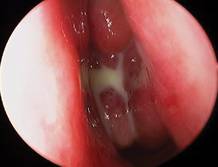
Study sponsor Intersect ENT Inc. has submitted the investigational stent for federal review and hopes to market the device within 6-9 months.
The springlike stent maintains patency by propping open the sinus cavity and releasing mometasone furoate into the sinus lining over 30 days before being resorbed. If approved, it could provide patients with an alternative to space-filling packing materials and silicone stents, and reduce the use of systemic steroids.
The current study involved 50 adults from seven centers with chronic rhinosinusitis for at least 8 consecutive weeks that was confirmed by CT scan (mean CT stage, 11.2). Antibiotics could be prescribed per physician standard of care, and saline irrigation was permitted postoperatively as needed. Polyps were present in 66% of patients, and 28% had undergone a prior sinus procedure. Their mean age was 44 years, and 52% were male.
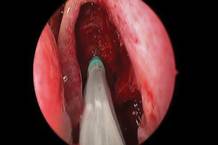
Ethmoidectomy and maxillary antrostomy were performed in all 50 patients, with 28 also undergoing frontal sinusotomy and 31 sphenoidotomy. Stents were placed unilaterally in 10 patients and bilaterally in 40 patients. Device placement was successful in 100% of sinuses treated, and the implants were resorbed as predicted, Dr. Forwith said. At postoperative day 30, 15% of the material remained and 0.2% remained at day 60.
Endoscopic follow-up at 1 month revealed polypoid edema in 10% of patients, significant adhesion formation in 1%, and middle turbinate lateralization in only 4.4%, said Dr. Forwith, who is in private practice in Louisville, Ky.
When patients were asked about the procedure, their mean score on the 22-question Sino-Nasal Outcome Test improved significantly from baseline through 6 months. The same was true using the Rhinosinusitis Disability Index. "We were pretty pleased that our patients liked the results of the intervention," he said.

No clinically significant changes from baseline occurred in lens opacities or intraocular pressure, which was a theoretical concern given the close proximity of the device. The patients’ mean intraocular pressure was 15 mm Hg at baseline and 14.3 mm Hg at day 30.
One patient experienced headache with sinus pressure/irritation at day 21 that was determined to be related primarily to the surgery and was exacerbated in intensity by the presence of crust on the device. The device was removed and the event resolved without sequelae by day 28.
When asked during a discussion of the study whether the drug-eluting stent resulted in any systemic complications or adrenal corticol suppression, Dr. Forwith replied that they did not specifically look at adrenal suppression, but added that the 370-mcg dose of mometasone furoate is lower than the dose patients receive with most b.i.d. nasal spray administration.
Stent maker Intersect ENT provided funding, administrative support, and materials for the study. Dr. Forwith reported no conflicts of interest.
CHICAGO – A bioabsorbable steroid-eluting stent preserved sinus patency following endoscopic sinus surgery in 50 patients with chronic rhinosinusitis in a prospective, multicenter study.
The stent was associated with low rates of polyp formation, inflammation, and adhesions, despite a challenging patient population and withholding of postoperative oral and topical steroids for 30 days, lead author Dr. Keith D. Forwith said at the Combined Otolaryngology Spring Meetings.
The results were consistent across different patient populations and consistent with the pilot study in 43 patients (Int. Forum Allergy Rhinol. 2011;1:23-32).
"I think with any kind of new technique or device, the ultimate thing is how the surgeon feels about it and his or her results," he said. "What I noticed most of all when we stopped doing the study is that I missed using this device. Patients I had used it in during the study had very clean results, very easy debridements. ... We’re very pleased with the results and think it’s a promising technology."
Study sponsor Intersect ENT Inc. has submitted the investigational stent for federal review and hopes to market the device within 6-9 months.
The springlike stent maintains patency by propping open the sinus cavity and releasing mometasone furoate into the sinus lining over 30 days before being resorbed. If approved, it could provide patients with an alternative to space-filling packing materials and silicone stents, and reduce the use of systemic steroids.
The current study involved 50 adults from seven centers with chronic rhinosinusitis for at least 8 consecutive weeks that was confirmed by CT scan (mean CT stage, 11.2). Antibiotics could be prescribed per physician standard of care, and saline irrigation was permitted postoperatively as needed. Polyps were present in 66% of patients, and 28% had undergone a prior sinus procedure. Their mean age was 44 years, and 52% were male.
Ethmoidectomy and maxillary antrostomy were performed in all 50 patients, with 28 also undergoing frontal sinusotomy and 31 sphenoidotomy. Stents were placed unilaterally in 10 patients and bilaterally in 40 patients. Device placement was successful in 100% of sinuses treated, and the implants were resorbed as predicted, Dr. Forwith said. At postoperative day 30, 15% of the material remained and 0.2% remained at day 60.
Endoscopic follow-up at 1 month revealed polypoid edema in 10% of patients, significant adhesion formation in 1%, and middle turbinate lateralization in only 4.4%, said Dr. Forwith, who is in private practice in Louisville, Ky.
When patients were asked about the procedure, their mean score on the 22-question Sino-Nasal Outcome Test improved significantly from baseline through 6 months. The same was true using the Rhinosinusitis Disability Index. "We were pretty pleased that our patients liked the results of the intervention," he said.
No clinically significant changes from baseline occurred in lens opacities or intraocular pressure, which was a theoretical concern given the close proximity of the device. The patients’ mean intraocular pressure was 15 mm Hg at baseline and 14.3 mm Hg at day 30.
One patient experienced headache with sinus pressure/irritation at day 21 that was determined to be related primarily to the surgery and was exacerbated in intensity by the presence of crust on the device. The device was removed and the event resolved without sequelae by day 28.
When asked during a discussion of the study whether the drug-eluting stent resulted in any systemic complications or adrenal corticol suppression, Dr. Forwith replied that they did not specifically look at adrenal suppression, but added that the 370-mcg dose of mometasone furoate is lower than the dose patients receive with most b.i.d. nasal spray administration.
Stent maker Intersect ENT provided funding, administrative support, and materials for the study. Dr. Forwith reported no conflicts of interest.
CHICAGO – A bioabsorbable steroid-eluting stent preserved sinus patency following endoscopic sinus surgery in 50 patients with chronic rhinosinusitis in a prospective, multicenter study.
The stent was associated with low rates of polyp formation, inflammation, and adhesions, despite a challenging patient population and withholding of postoperative oral and topical steroids for 30 days, lead author Dr. Keith D. Forwith said at the Combined Otolaryngology Spring Meetings.
The results were consistent across different patient populations and consistent with the pilot study in 43 patients (Int. Forum Allergy Rhinol. 2011;1:23-32).
"I think with any kind of new technique or device, the ultimate thing is how the surgeon feels about it and his or her results," he said. "What I noticed most of all when we stopped doing the study is that I missed using this device. Patients I had used it in during the study had very clean results, very easy debridements. ... We’re very pleased with the results and think it’s a promising technology."
Study sponsor Intersect ENT Inc. has submitted the investigational stent for federal review and hopes to market the device within 6-9 months.
The springlike stent maintains patency by propping open the sinus cavity and releasing mometasone furoate into the sinus lining over 30 days before being resorbed. If approved, it could provide patients with an alternative to space-filling packing materials and silicone stents, and reduce the use of systemic steroids.
The current study involved 50 adults from seven centers with chronic rhinosinusitis for at least 8 consecutive weeks that was confirmed by CT scan (mean CT stage, 11.2). Antibiotics could be prescribed per physician standard of care, and saline irrigation was permitted postoperatively as needed. Polyps were present in 66% of patients, and 28% had undergone a prior sinus procedure. Their mean age was 44 years, and 52% were male.
Ethmoidectomy and maxillary antrostomy were performed in all 50 patients, with 28 also undergoing frontal sinusotomy and 31 sphenoidotomy. Stents were placed unilaterally in 10 patients and bilaterally in 40 patients. Device placement was successful in 100% of sinuses treated, and the implants were resorbed as predicted, Dr. Forwith said. At postoperative day 30, 15% of the material remained and 0.2% remained at day 60.
Endoscopic follow-up at 1 month revealed polypoid edema in 10% of patients, significant adhesion formation in 1%, and middle turbinate lateralization in only 4.4%, said Dr. Forwith, who is in private practice in Louisville, Ky.
When patients were asked about the procedure, their mean score on the 22-question Sino-Nasal Outcome Test improved significantly from baseline through 6 months. The same was true using the Rhinosinusitis Disability Index. "We were pretty pleased that our patients liked the results of the intervention," he said.
No clinically significant changes from baseline occurred in lens opacities or intraocular pressure, which was a theoretical concern given the close proximity of the device. The patients’ mean intraocular pressure was 15 mm Hg at baseline and 14.3 mm Hg at day 30.
One patient experienced headache with sinus pressure/irritation at day 21 that was determined to be related primarily to the surgery and was exacerbated in intensity by the presence of crust on the device. The device was removed and the event resolved without sequelae by day 28.
When asked during a discussion of the study whether the drug-eluting stent resulted in any systemic complications or adrenal corticol suppression, Dr. Forwith replied that they did not specifically look at adrenal suppression, but added that the 370-mcg dose of mometasone furoate is lower than the dose patients receive with most b.i.d. nasal spray administration.
Stent maker Intersect ENT provided funding, administrative support, and materials for the study. Dr. Forwith reported no conflicts of interest.
FROM THE COMBINED OTOLARYNGOLOGY SPRING MEETINGS